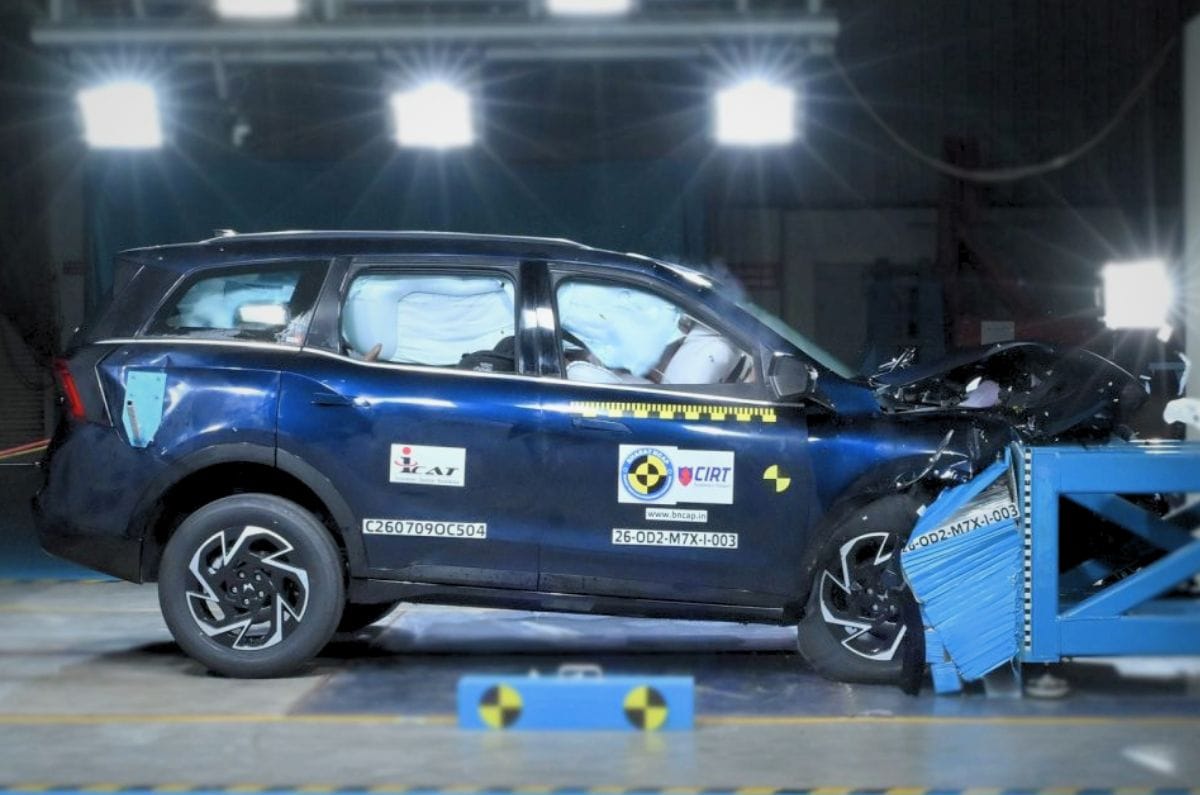
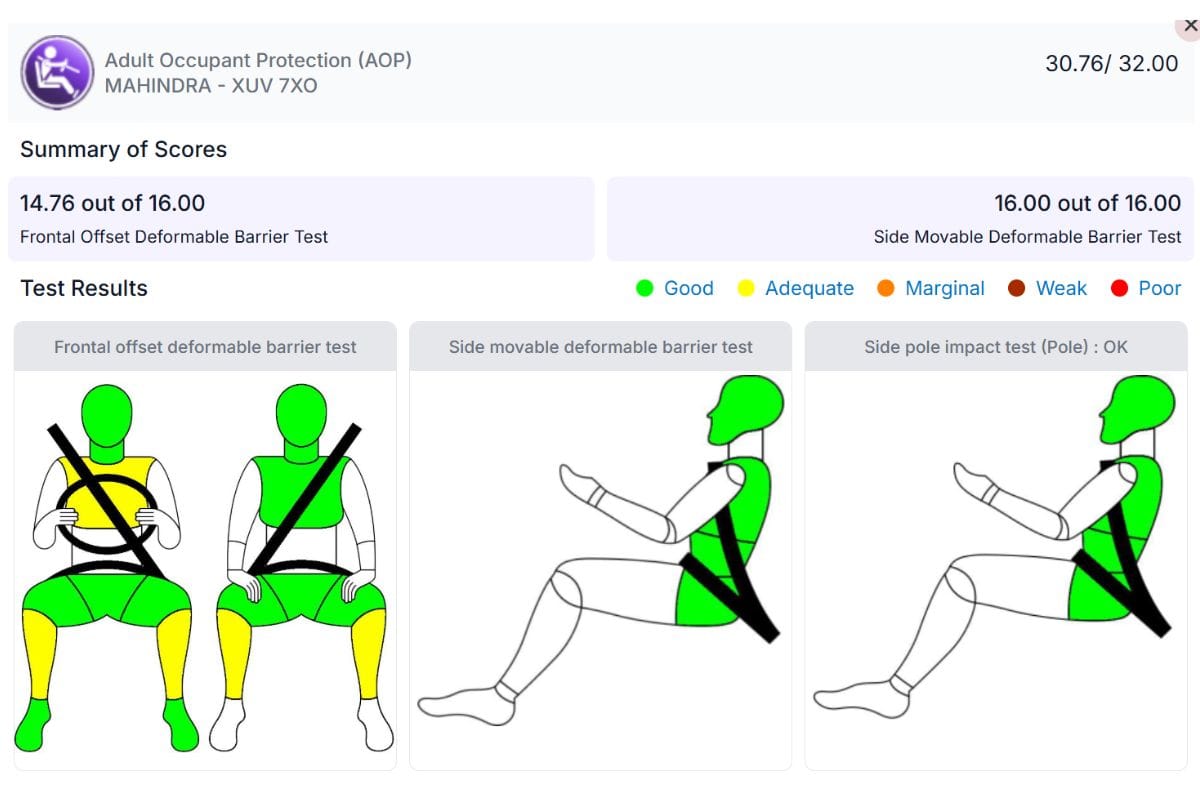
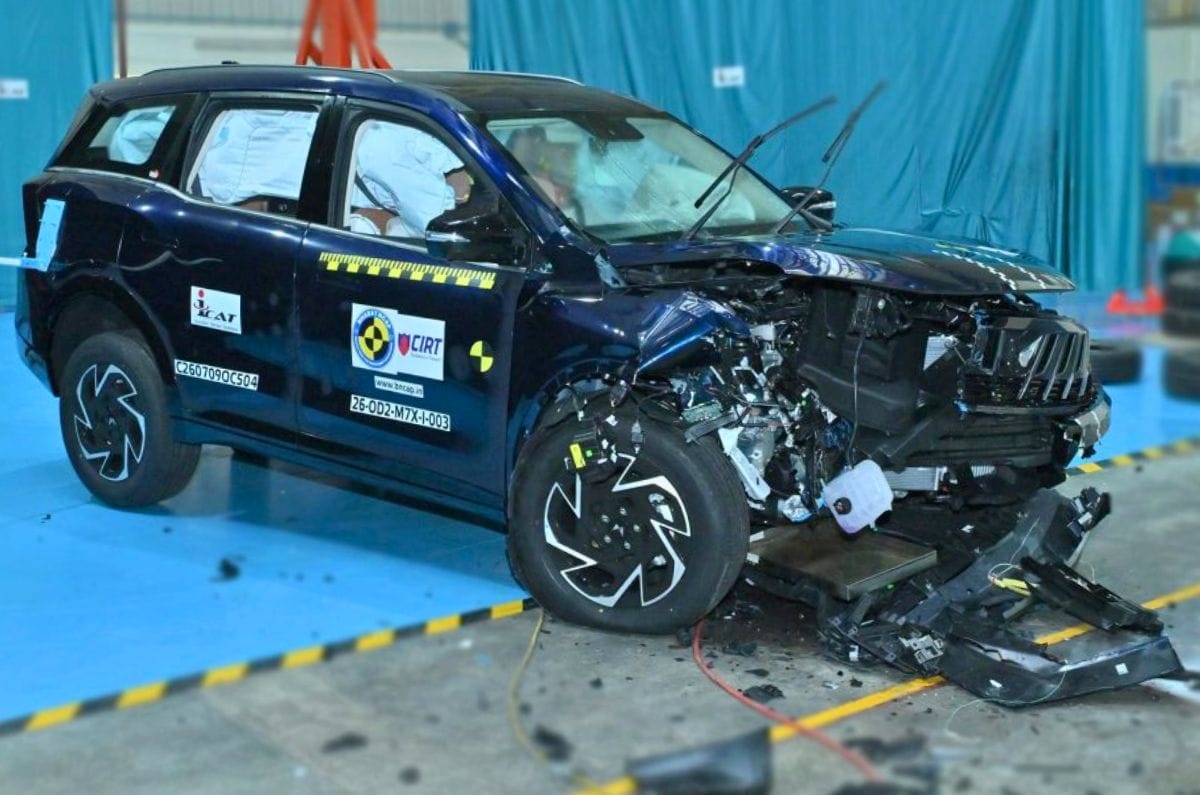
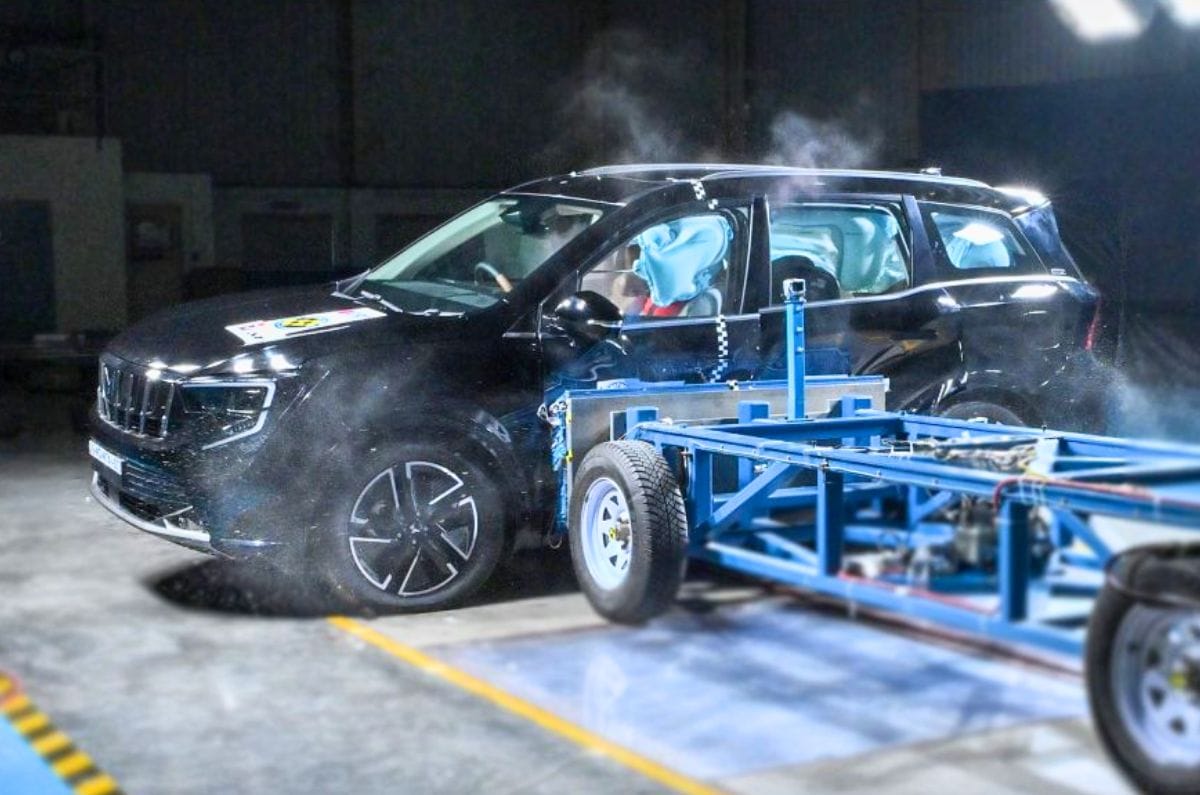
The Mahindra XUV 7XO has received a 5-star safety rating from Bharat NCAP for both adult and child occupant protection. It scored 30.76 out of 32 points in the Adult Occupant Protection (AOP) test and 44.97 out of 49 points in the Child Occupant Protection (COP) test. Bharat NCAP tested the 7-seater AX7 diesel-automatic FWD and AWD variants, but the 5-star safety rating applies to all variants of the XUV 7XO.
In the frontal offset deformable barrier test, the driver’s head, neck, pelvis, thighs and feet received ‘good’ protection, while protection to the chest and tibia was ‘adequate’. Except for the co-driver’s tibiae, which received ‘adequate’ protection, all other critical parts received ‘good’ protection.
In the side-movable deformable barrier test, all critical parts of the passenger, including head, chest, abdomen and pelvis, received ‘good’ protection. In the side pole impact test (pole), the verdict was ‘OK’.
For the COP tests, the child seats of both the 18-month-old and 3-year-old dummies in the XUV 7XO were rearward-facing. The test report suggests that the frontal crash test on the 18-month-old dummy resulted in 7.97 points out of 8, while the 3-year-old dummy received a full 8 out of 8 points. Both dummies, however, scored a full 4 out of 4 points in the side crash test.
This reduction of 0.03 points resulted in the Mahindra XUV 7XO achieving 23.97 out of 24 points in the dynamic child protection score. It further received a CRS installation score of 12 out of 12, but lost 4 points in the vehicle assessment score, resulting in an overall score of 44.97 out of 49 points.
Mahindra used the 7-seater AX7 diesel-automatic FWD and AWD variants to conduct the crash test. The results apply to all SUV variants. Standard safety features on the XUV 7XO include 6 airbags, hill-hold and hill-descent assists, ISOFIX child seat anchorages, traction control and ESC. Higher variants also get a 360-degree camera, Level 2 advanced driver assistance systems (ADAS), and a tyre pressure monitoring system (TPMS).
Notably, the pre-facelift model, called the XUV700, was crash-tested in 2021 by Global NCAP and received a 5-star safety rating for AOP and a lower 4-star rating for COP.
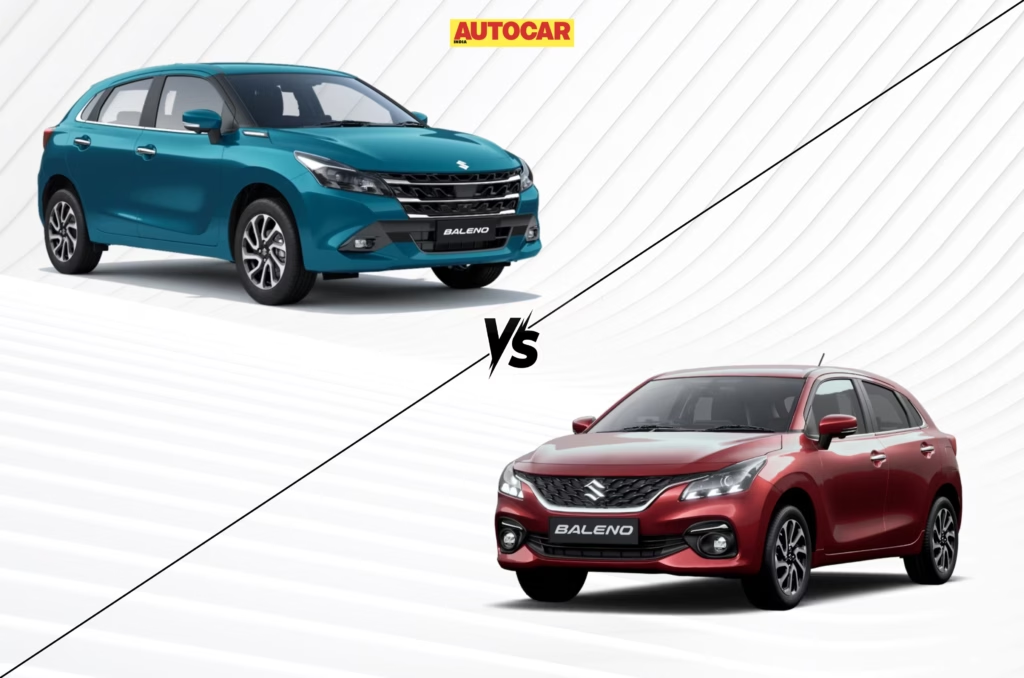
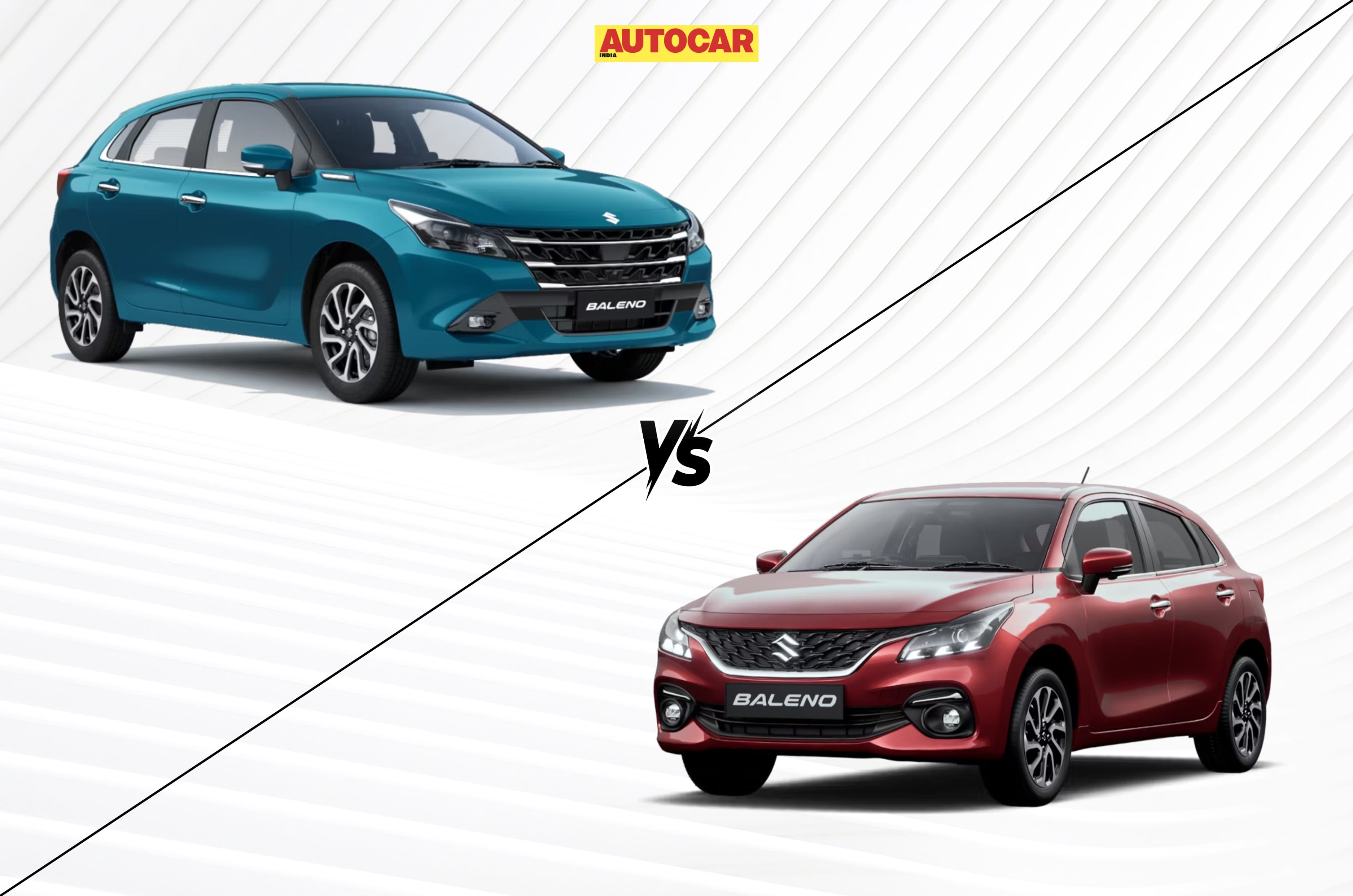
Over four years since its introduction, Maruti has given the second-generation Baleno a facelift. The premium hatchback sold via the brand’s Nexa dealerships continues to drive volumes for Maruti and consistently ranks among the top 10 best-selling cars in India every month. If you’re keen on finding out everything that’s new on the Baleno facelift, look no further, as we take a deep dive into the changes and similarities compared to its predecessor.
2026 Maruti Baleno vs old: Powertrain
New Z-Series engine low on power but high on efficiency
2026 Maruti Baleno vs old: Powertrain
2026 Baleno
Old Baleno
Powertrain
Naturally aspirated petrol | CNG
Naturally aspirated petrol | CNG
Capacity
1.2-litre
1.2-litre
No of cylinders
3
4
Power (hp)
82 | 70
90 | 78
Torque (Nm)
112 | 102
113 | 99
Gearbox
5MT / 5AMT | 5MT
5MT / 5AMT | 5MT
Claimed fuel efficiency
23.80 (MT) 24.77kpl (AMT) | 33.61km/kg
22.35 (MT) 22.94 (AMT) | 30.61km/kg
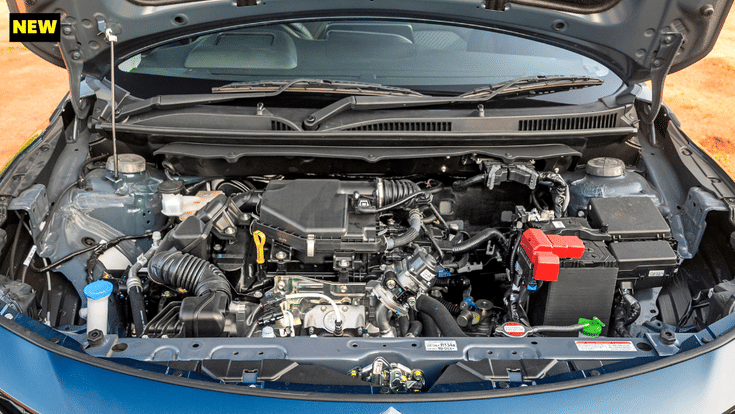
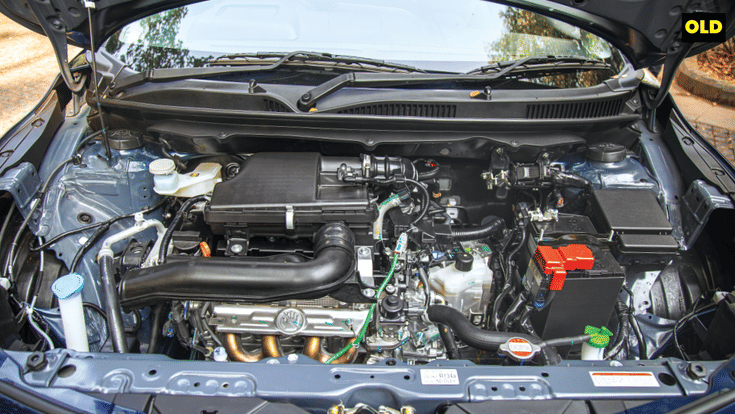
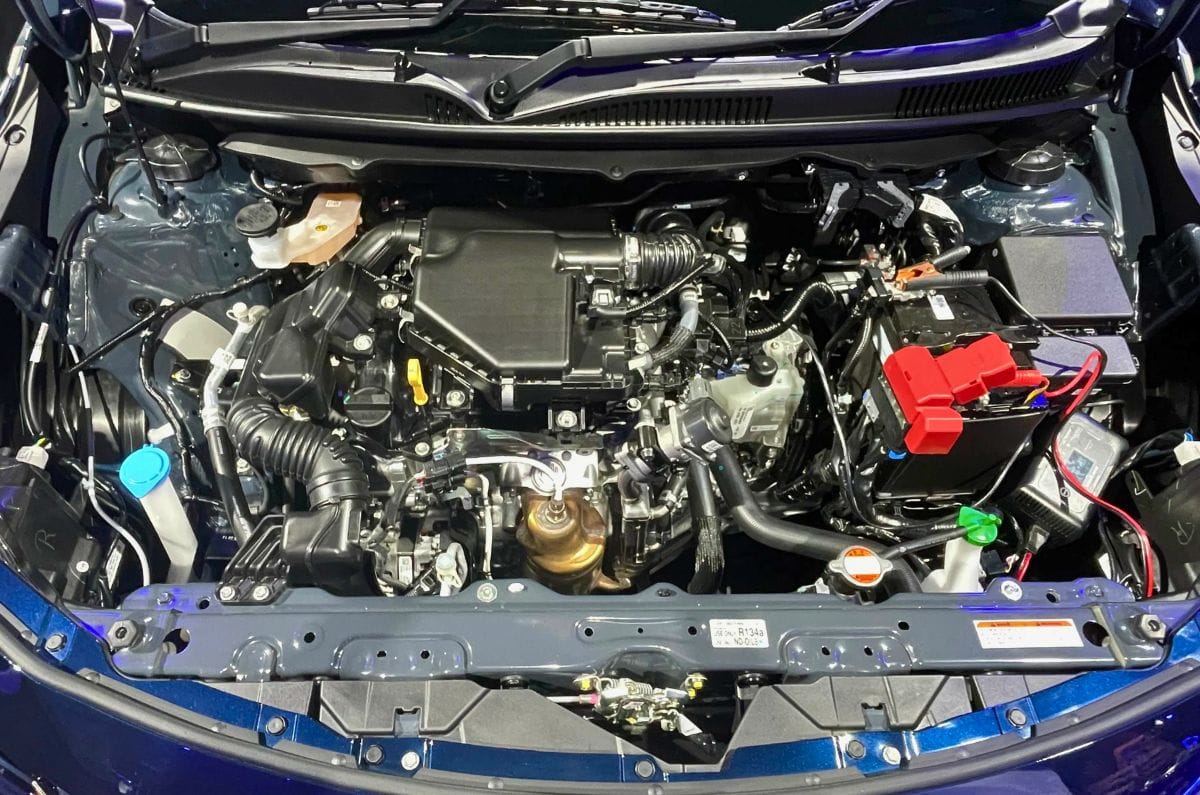
The new Baleno gets Maruti’s Z-Series engine, which is already used in the Swift and Dzire. In comparison to the pre-facelift Baleno’s K-Series engine, the Z-Series engine has the same capacity but drops a cylinder. Additionally, the latter develops lower power figures than the former in petrol guise, but the CNG version sees a slight bump in torque.
Though the new Baleno develops lower power figures, fuel efficiency, on the other hand, has increased. Company-claimed fuel efficiencies of the facelift’s petrol and CNG versions have increased by up to 1.83kpl and 3km/kg, respectively.
2026 Maruti Baleno vs old: Exterior
Revised fascia gets a bolder design
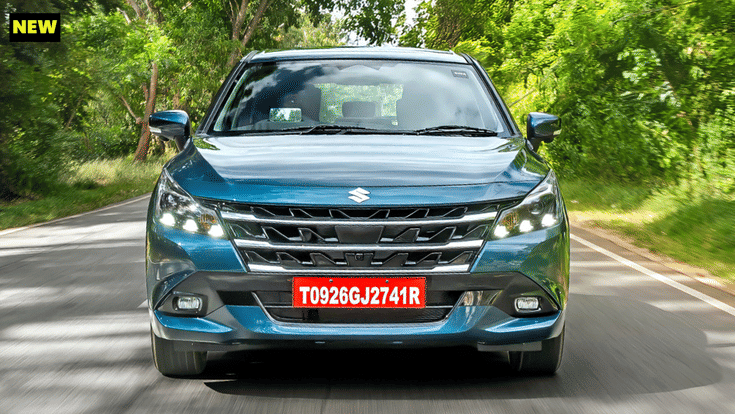
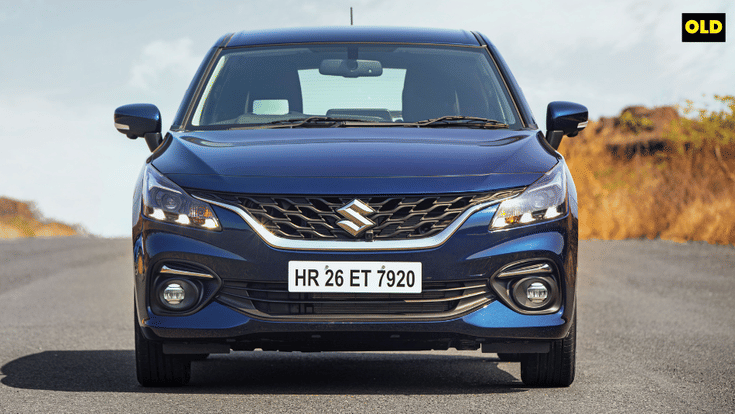
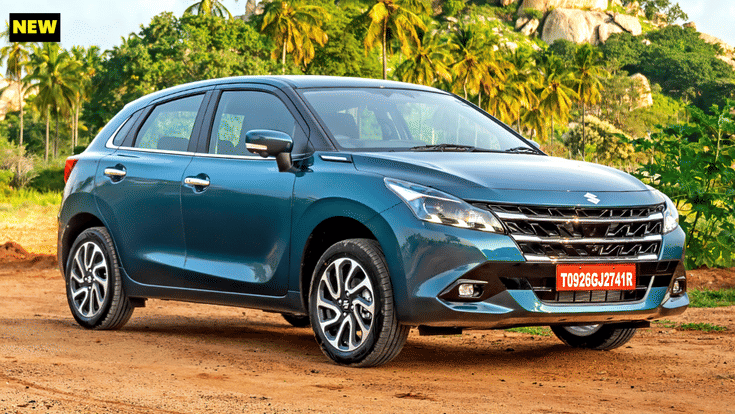
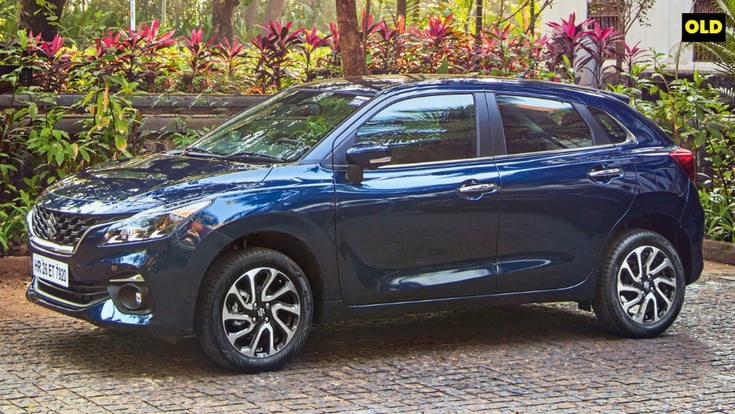
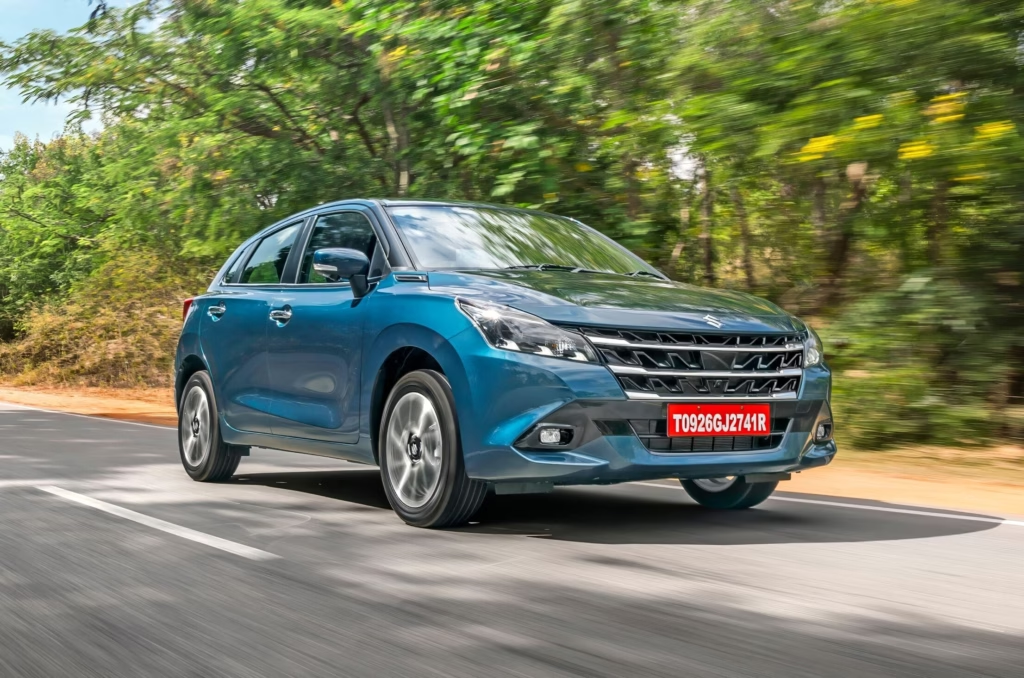
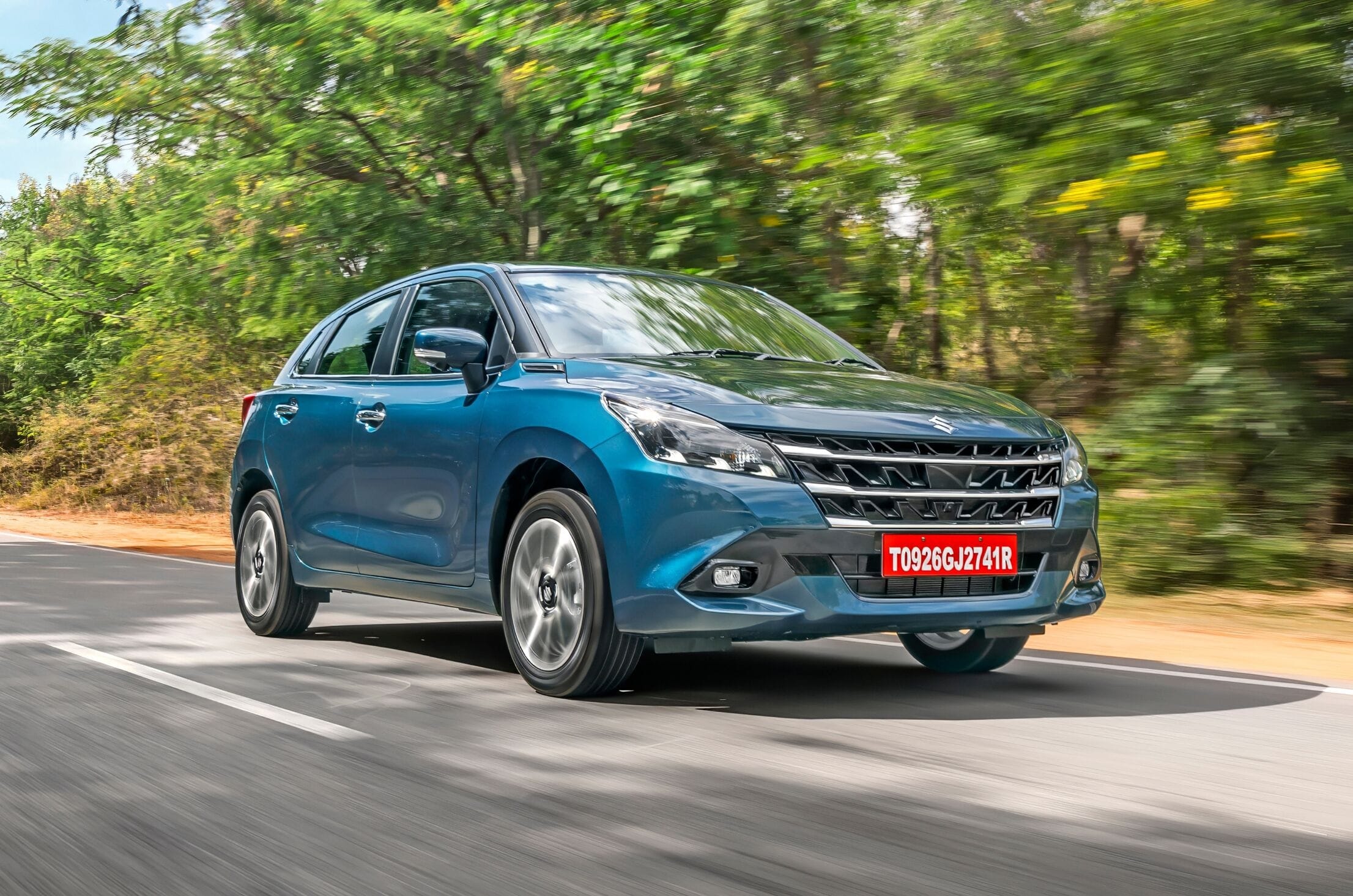
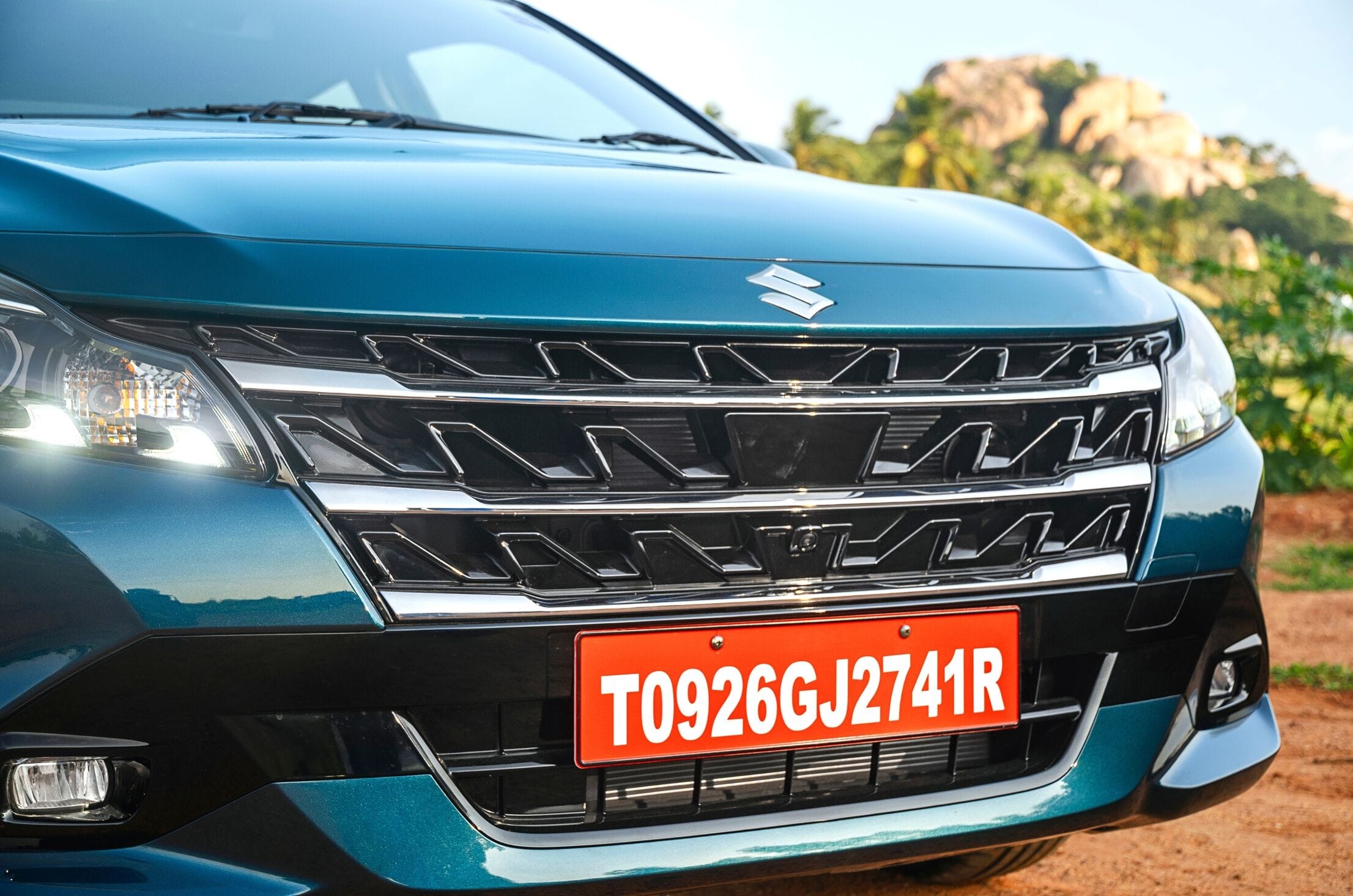
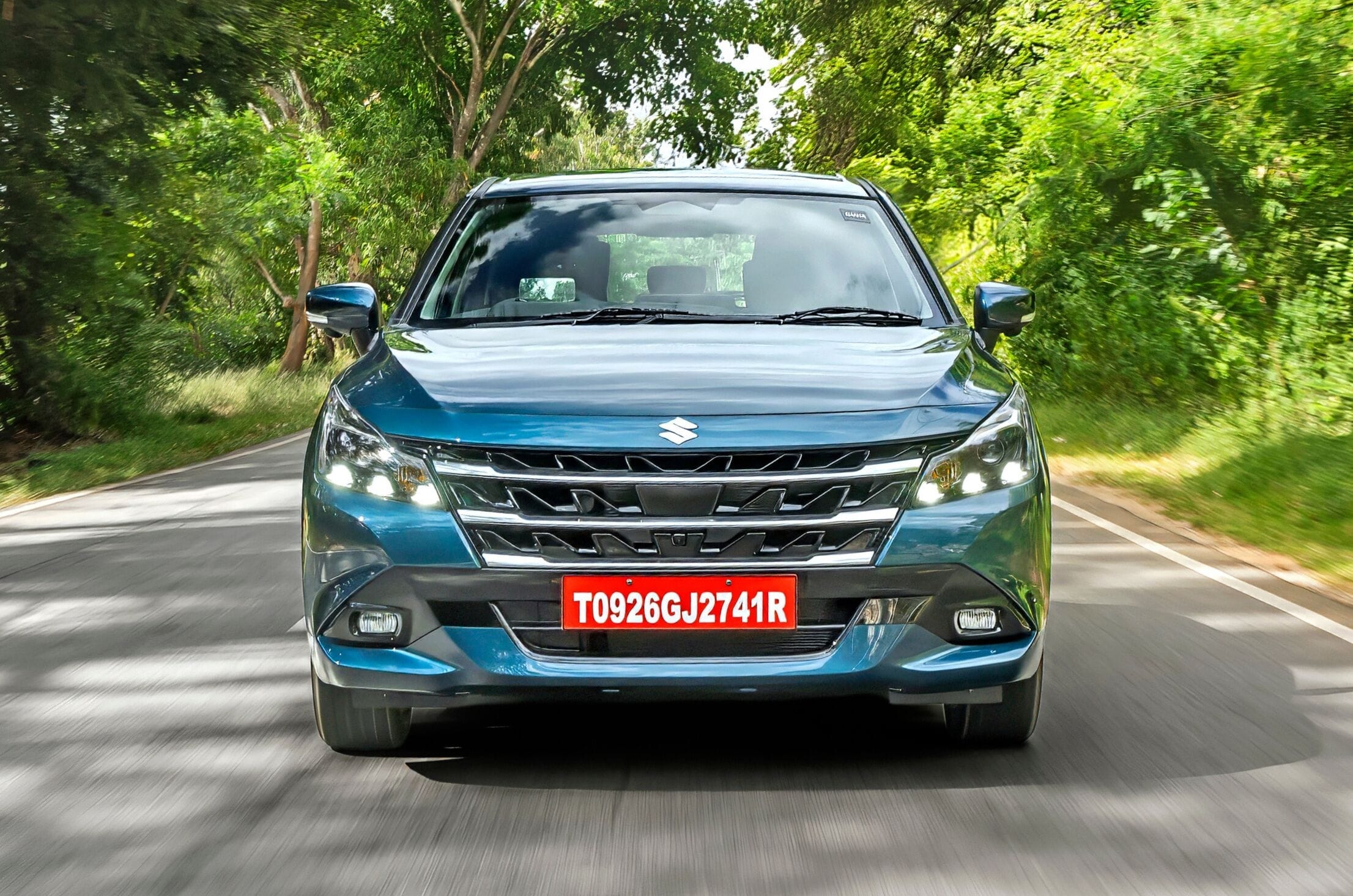
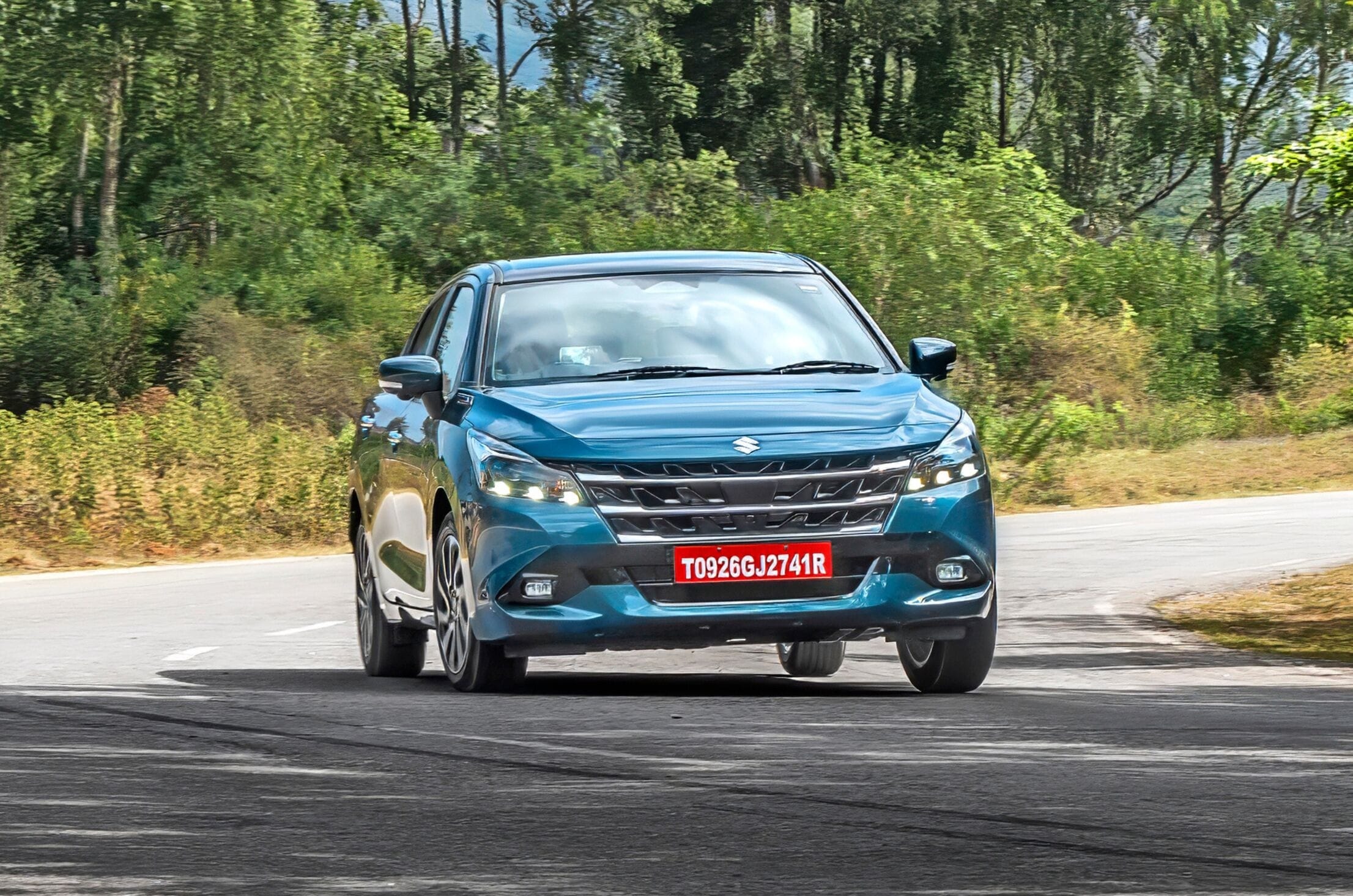
Visually, a majority of the changes to the Baleno facelift are mainly focused on the fascia. Over its predecessor, it gets a much larger grille with three chrome strips and the Suzuki badge repositioned above it. The bumper is restyled with a width-long black trim, giving it a dual-tone look, and it encases rectangular LED fog lamps. Other exterior updates include a shark fin antenna and a chrome garnish on the front fenders.
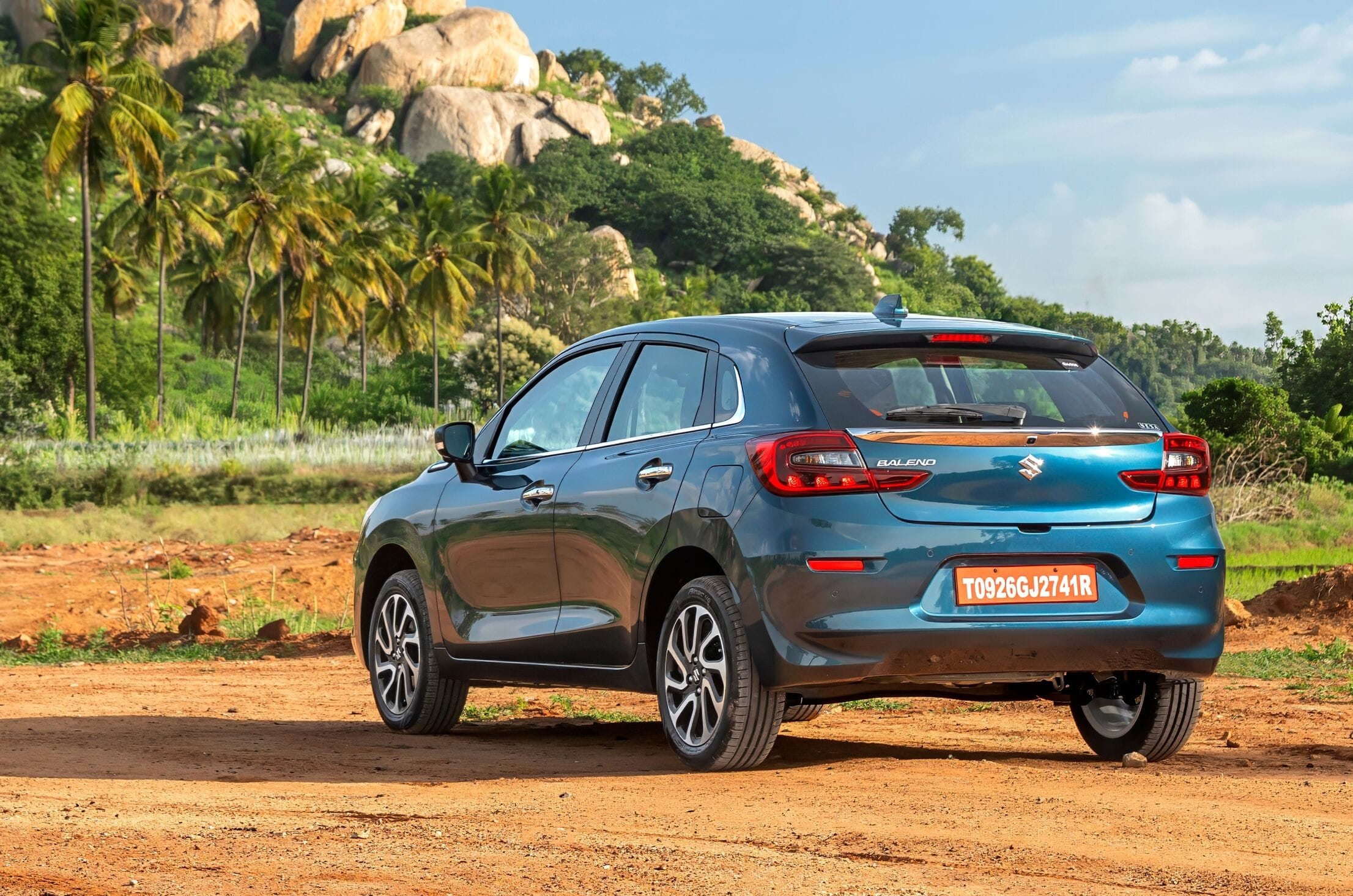
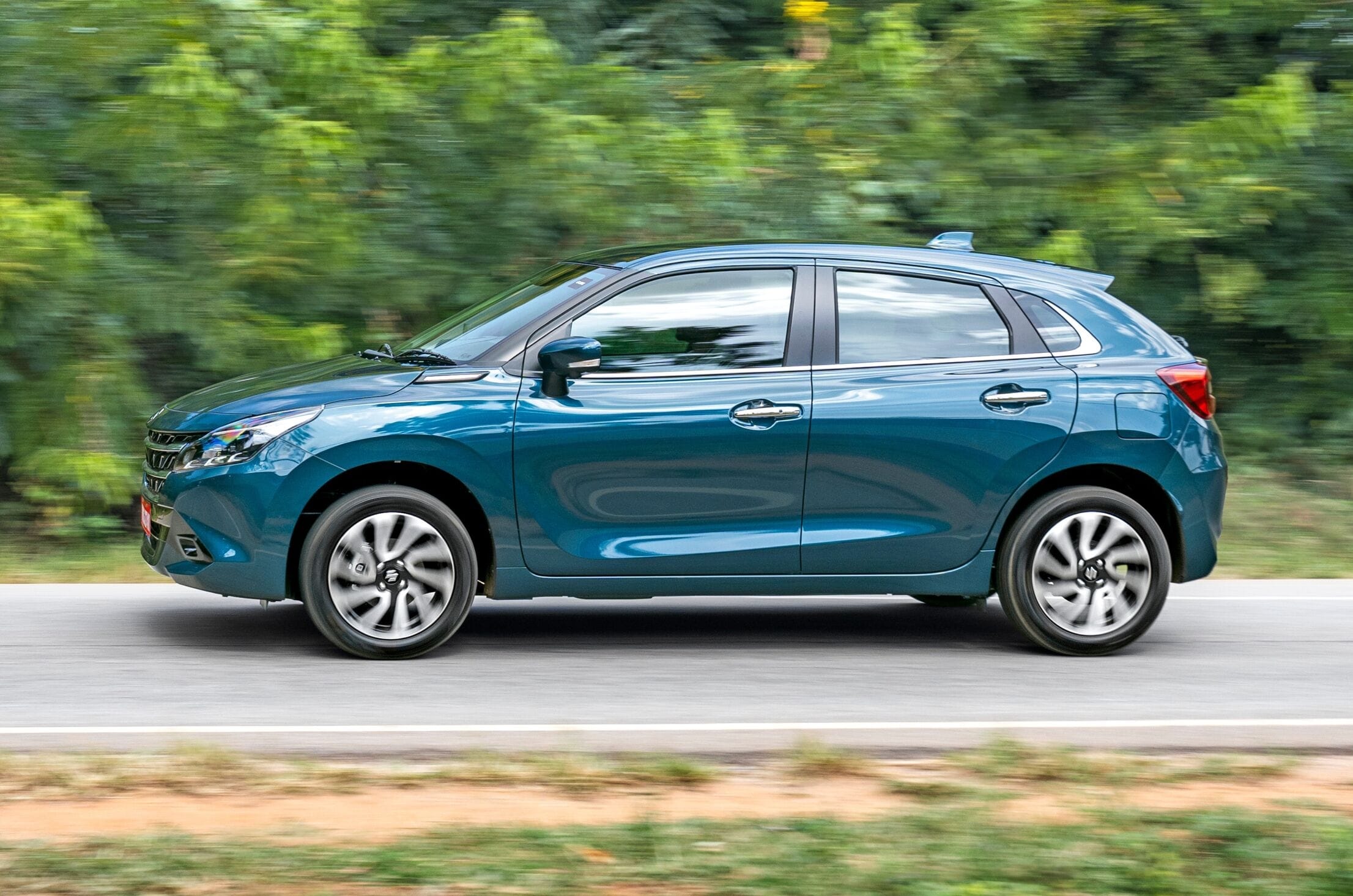
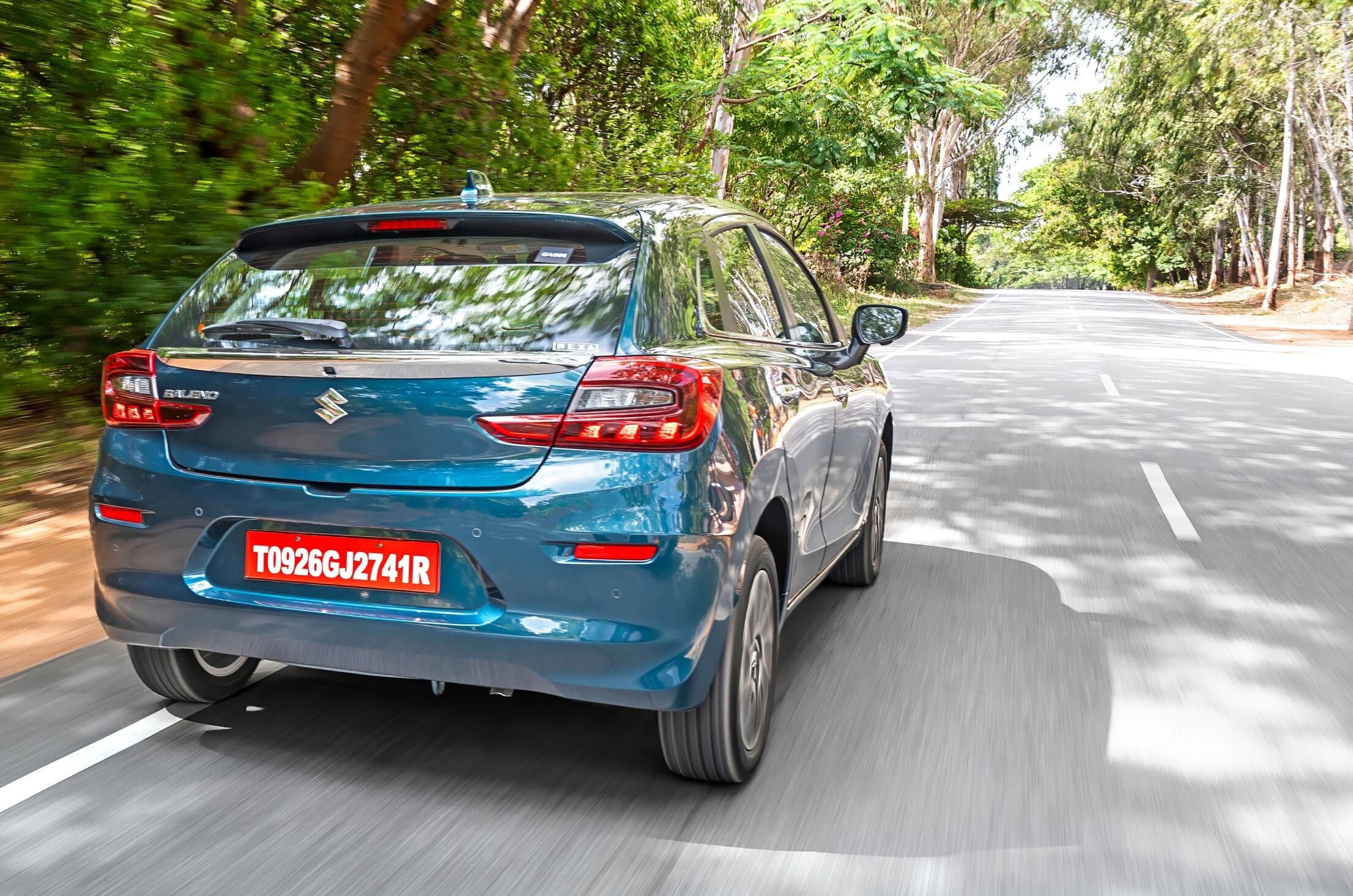
Apart from these updates, pretty much everything else remains the same. The overall silhouette is retained, and you continue to get the same alloy wheel design, chrome door handles, chrome window beltline, and subtle body moulding on the sides. Place the rear ends of both versions side by side, and it won’t take long to notice that both look identical in this regard.
2026 Maruti Baleno vs old: Features and safety
Baleno facelift gets an improved feature suite and safety kit
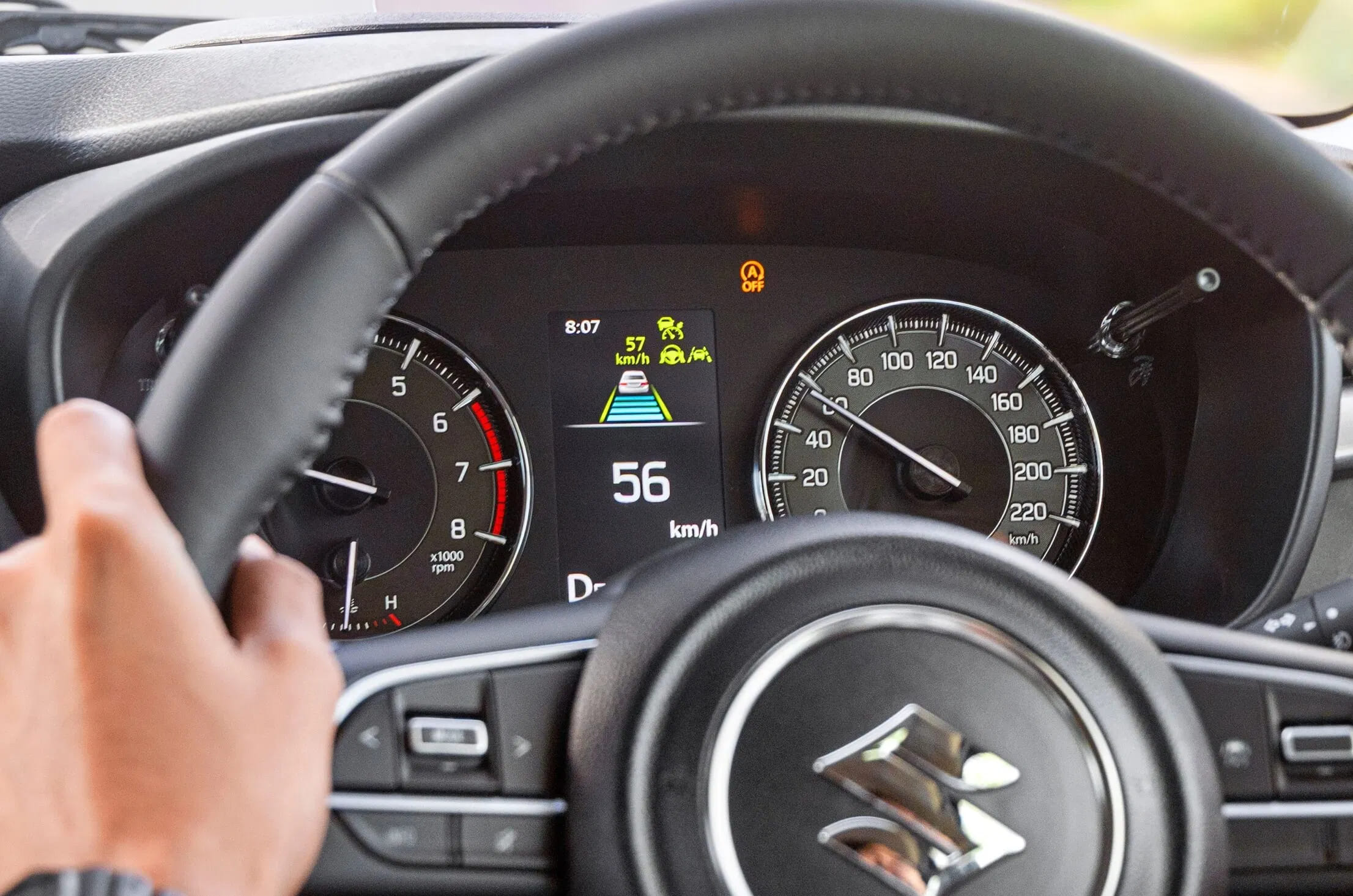
L2 ADAS in the 2026 Maruti Baleno
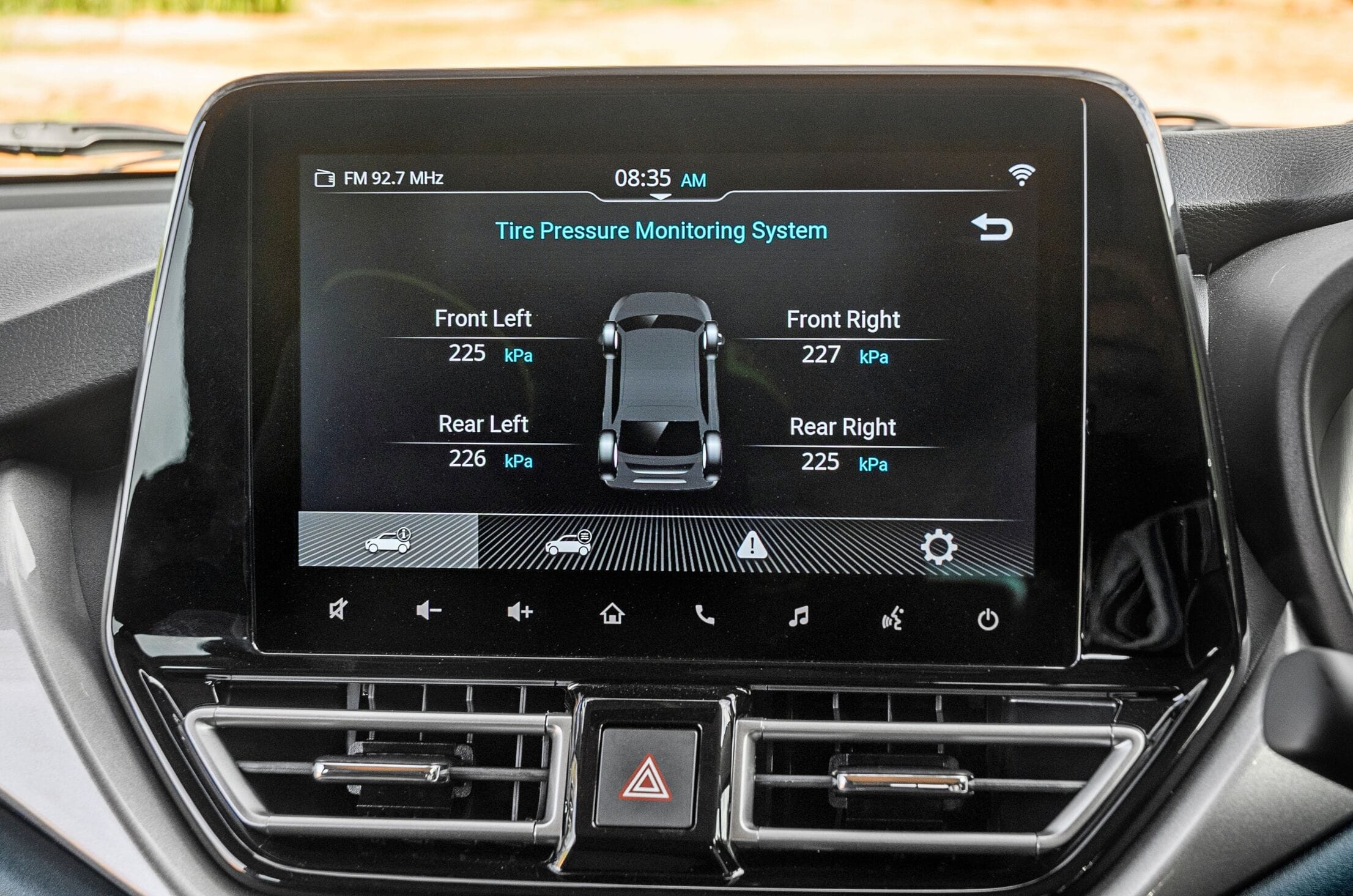
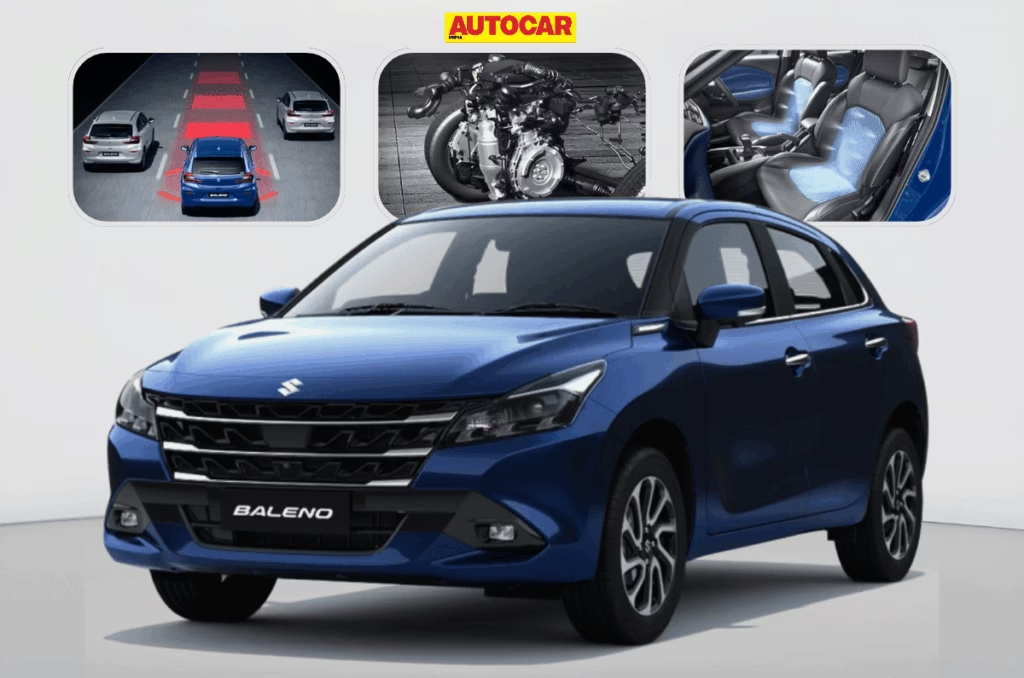
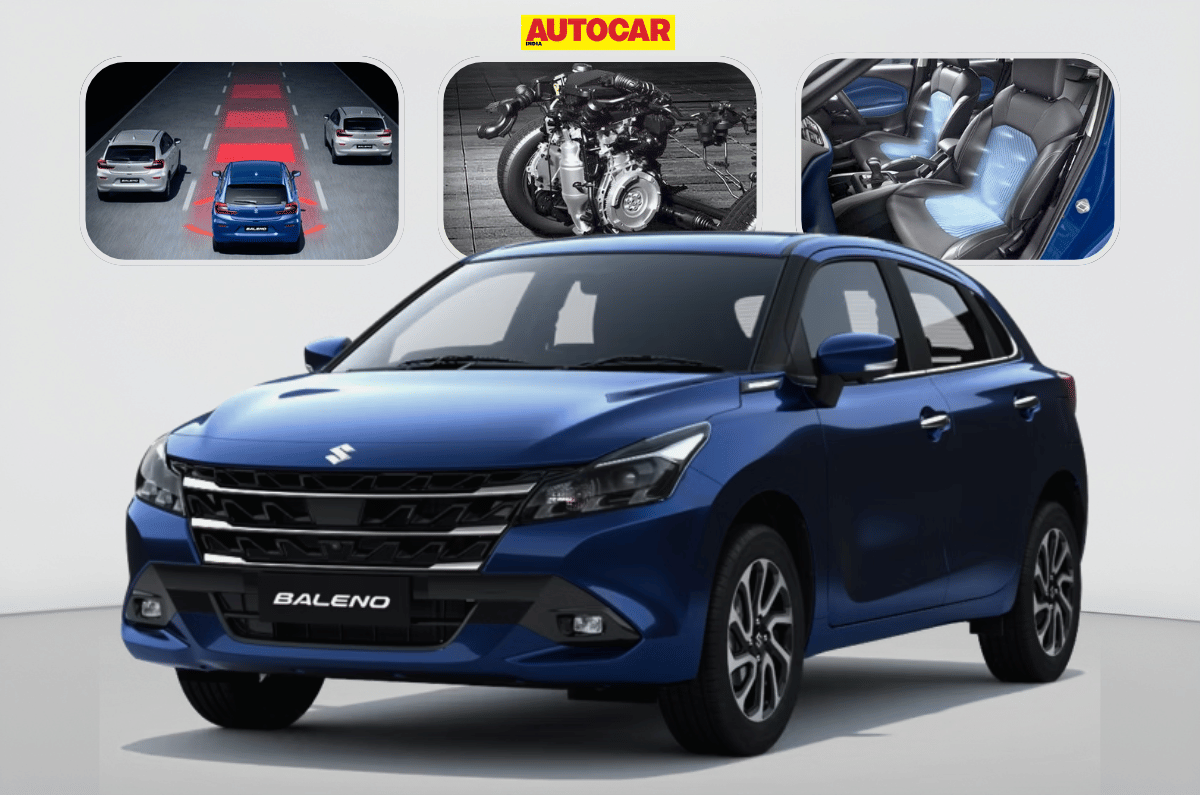
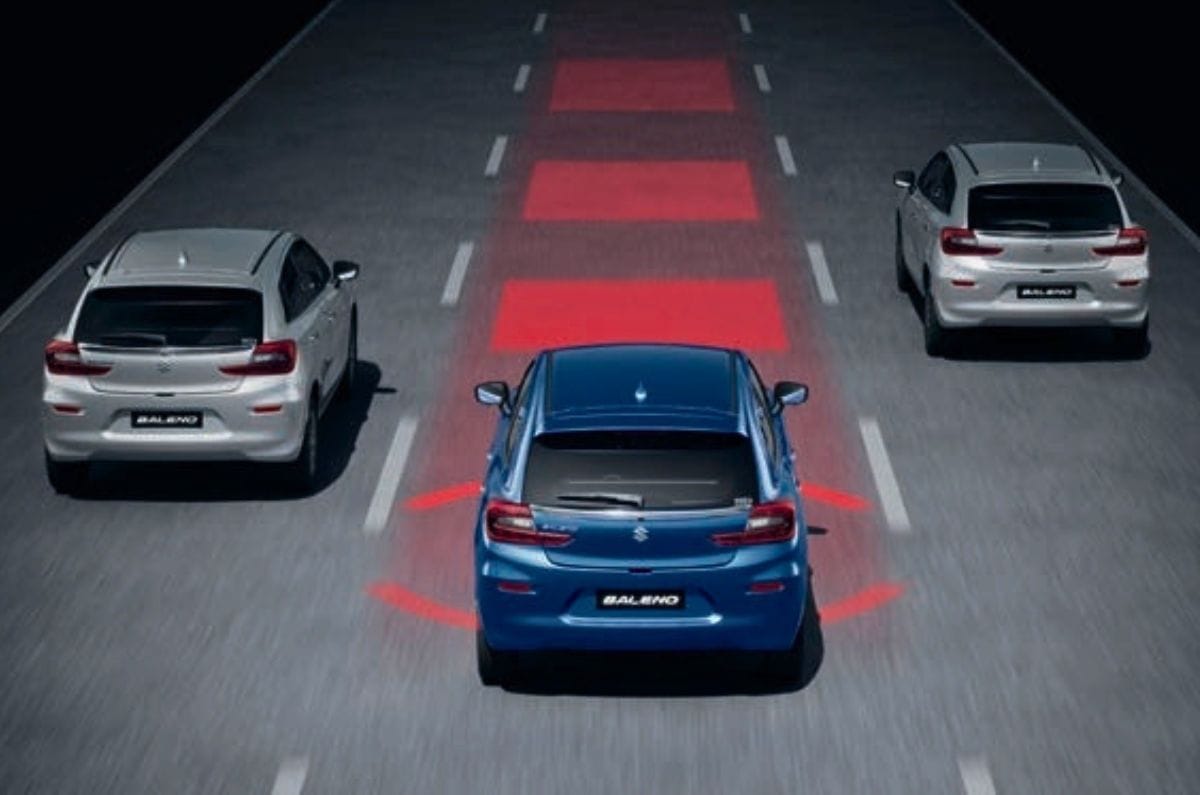
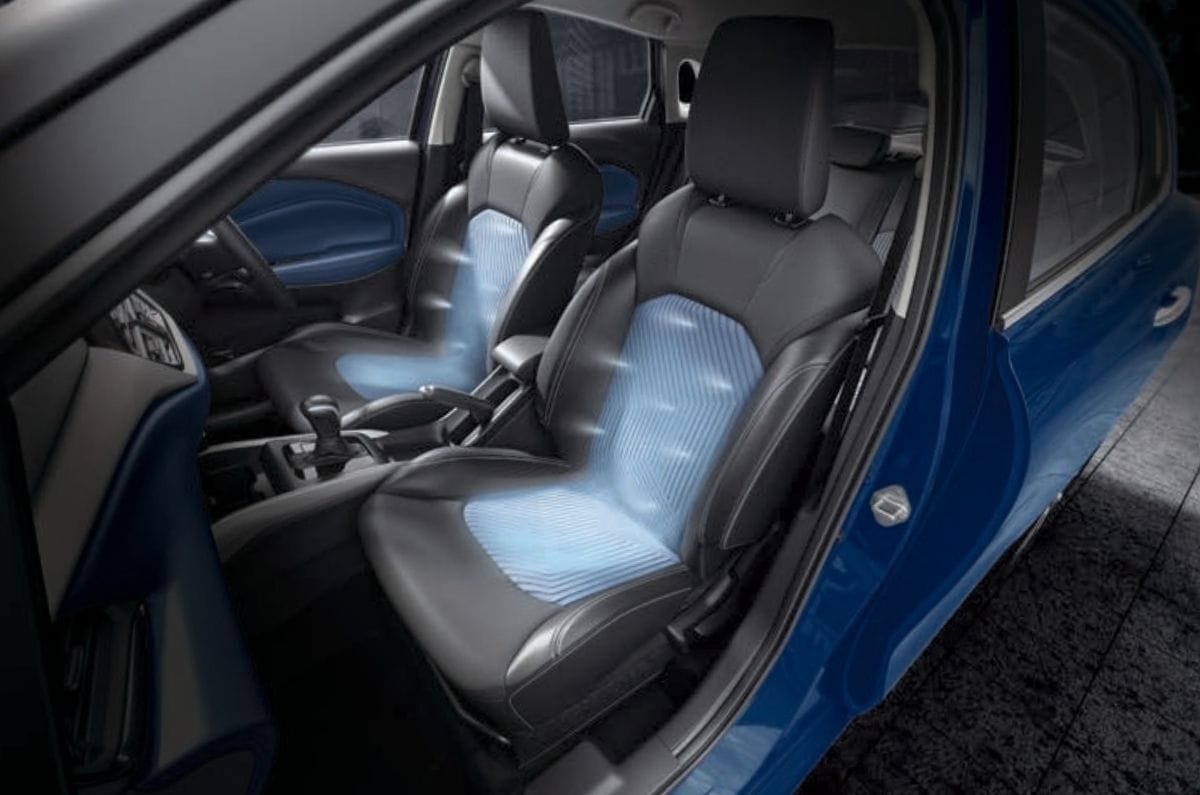
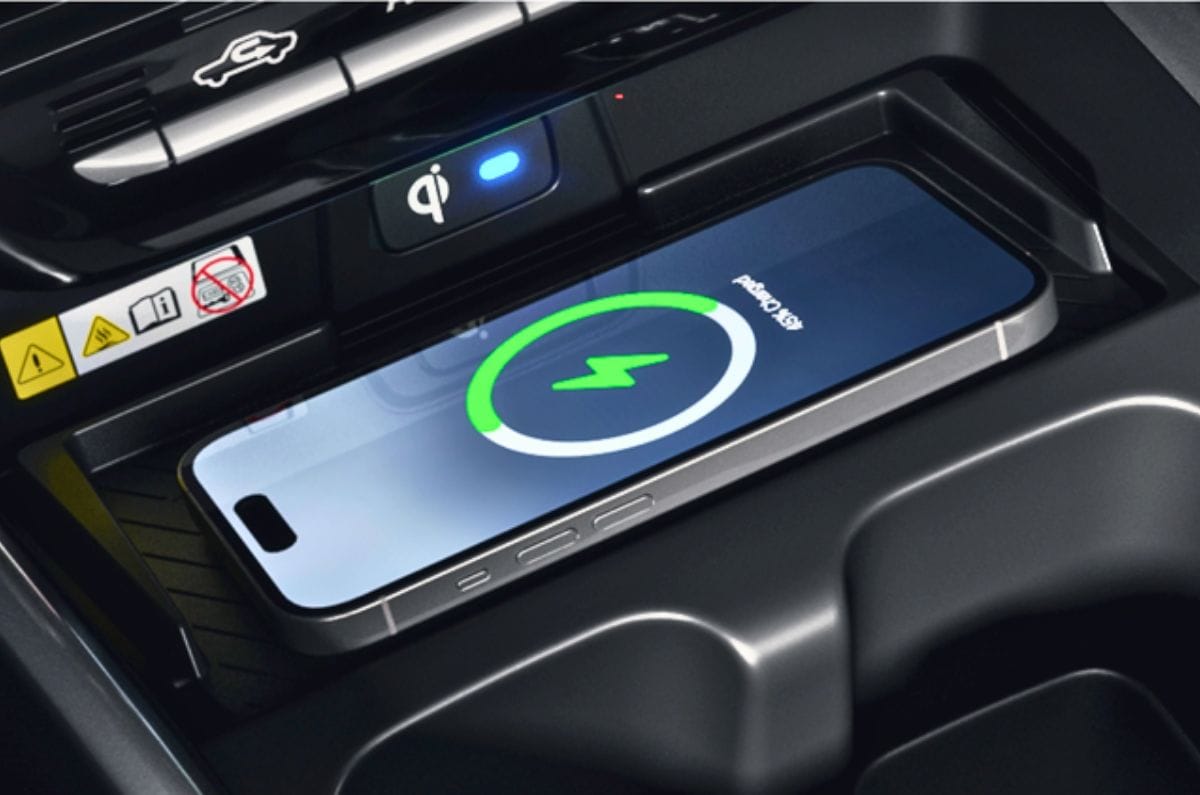
Maruti has heavily bolstered the features and safety kit on the Baleno facelift over its predecessor. New goodies are a wireless phone charger with active cooling, a Clarion sound system, and front-seat ventilation, a segment-only feature. On the safety front, Maruti has made much-needed improvements. These include six airbags fitted as standard across the lineup, a dedicated head restraint and a three-point seatbelt for the central rear passenger, and a tyre pressure monitoring system. Additionally, the Baleno facelift also gets a Level 2 ADAS suite, which is another segment-only feature. The inclusion of ADAS in the Baleno makes it Maruti’s only compact model and the only mainstream hatchback in India to have this tech.
2026 Maruti Baleno vs old: Interior
The facelift retains much of the predecessor’s cabin layout
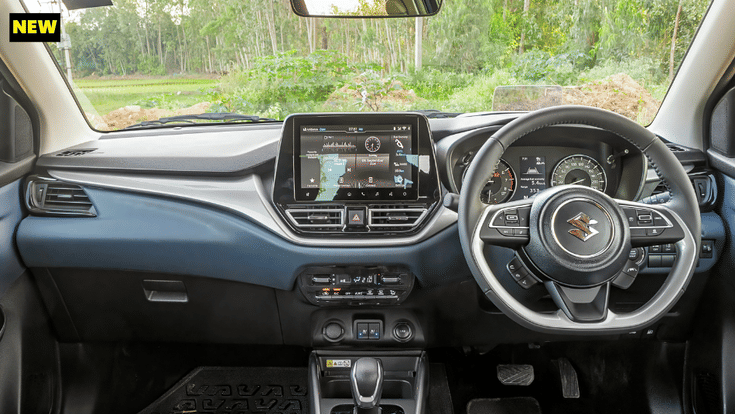
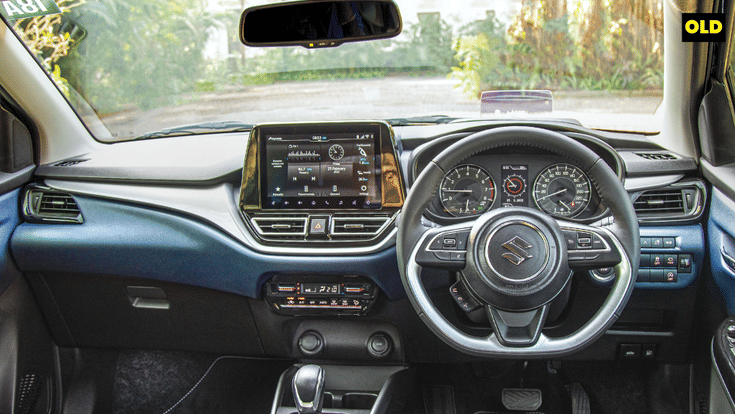
Changes to the interior of the Maruti Baleno facelift are minimal. It retains the black and blue theme and the multi-layered dashboard design from the pre-facelift model. However, the central lower section of the dashboard sees revisions to accommodate the new wireless phone charger and seat ventilation controls. Additionally, the fabric seats from the pre-facelift have been upgraded to semi-leatherette upholstery in the facelift.
2026 Maruti Baleno vs old: Price
Updates make the facelift pricier than the older model
At Rs 6.10 lakh, the Baleno facelift is pricier than the pre-facelift’s starting price of Rs 5.99 lakh. Though a variant-wise price list is awaited, the former is expected to come at a premium over the latter, especially considering the powertrain and feature additions. While the Sigma, Delta, Zeta, and Alpha trims continue to be part of the Baleno lineup, the facelift sees the addition of a new Alpha(O) trim. It sits above the Alpha trim and gets the Level 2 ADAS suite.
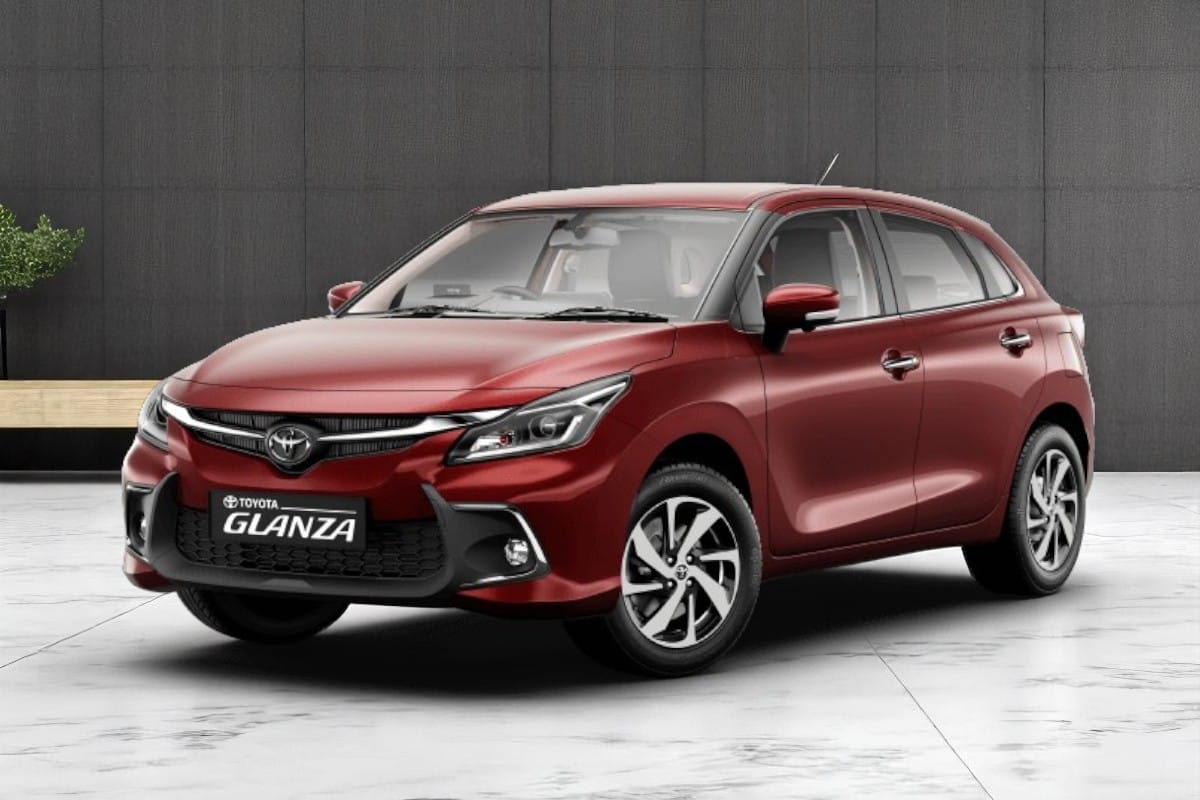
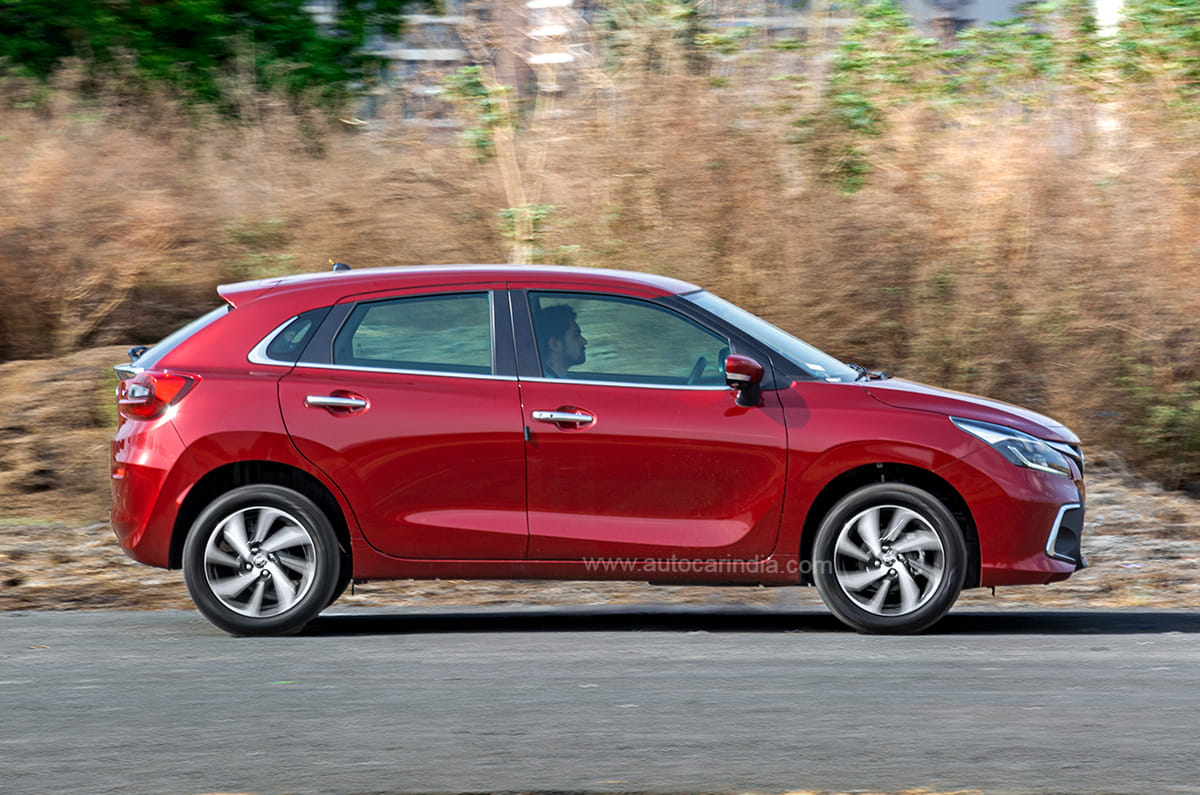
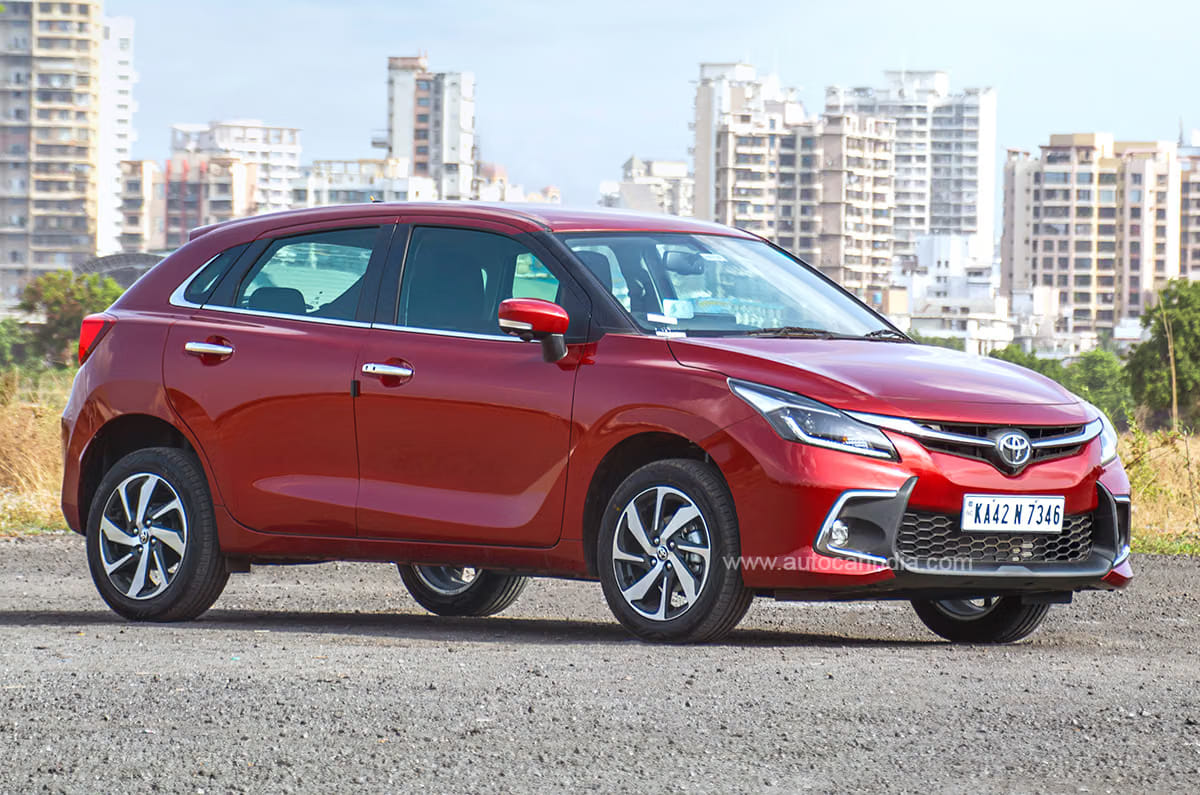
Our dealer sources suggest the Toyota Glanza facelift will debut on October 14, about a month after its Maruti sibling, the Baleno facelift, launched. Changes on board the facelifted Glanza are expected to mirror those of the Baleno facelift, including the new 1.2-litre 3-cylinder petrol engine, a new grille, and added features.
Exterior changes may include a redesigned grille and a new front bumper
New features may include ADAS, ventilated front seats, and a wireless phone charger
Toyota Glanza facelift: Expected changes
Expected to get the Baleno’s new 3-cylinder petrol engine
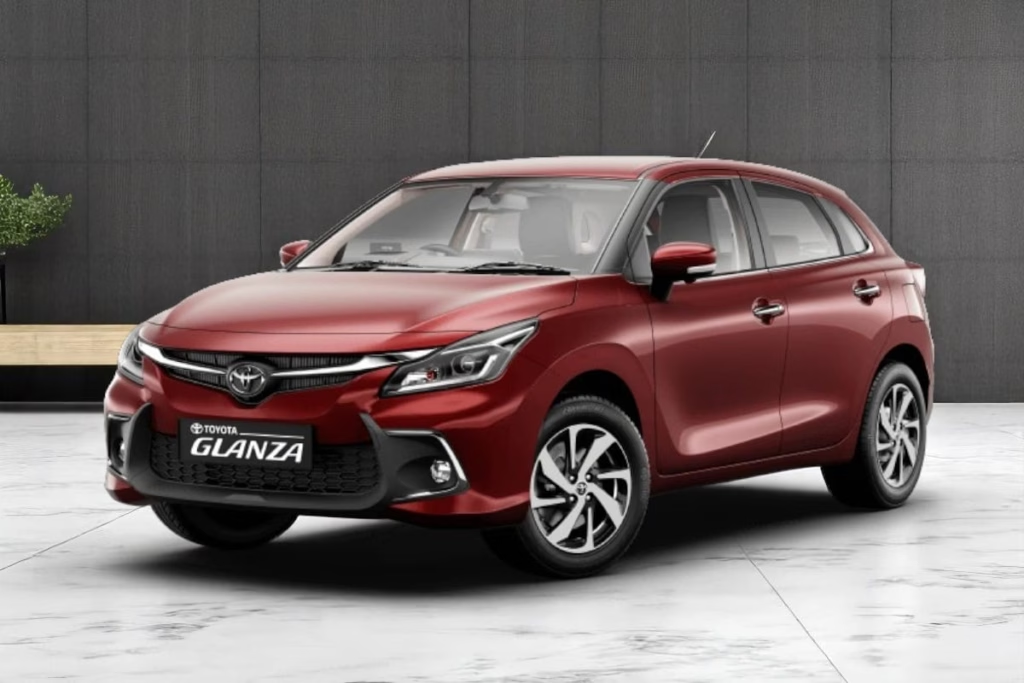
Current-spec Glanza’s image is used for representative purposes only.
With the facelift, Toyota is expected to replace the Glanza’s K12N 1.2-litre 4-cylinder petrol engine with the facelifted Baleno’s new Z12E 1.2-litre 3-cylinder naturally aspirated petrol engine, which produces 83hp and 112Nm. On the Baleno, this engine is offered with a 5-speed manual gearbox and an automated manual transmission (AMT), which is expected on the Glanza facelift too. A 70hp CNG option is also expected with a manual transmission option.
Exterior design changes could be minimal
Current-spec Glanza’s image is used for representative purposes only.
The current Glanza shares most of its design with the pre-facelift Baleno, except the fascia. This distinction is expected to continue with the facelifted Glanza, which could get a redesigned grille and a different front bumper. Other than this, the lighting elements, alloy wheels, and rear bumper could be the same as the current Glanza.
Expected to be offered with new convenience and safety tech
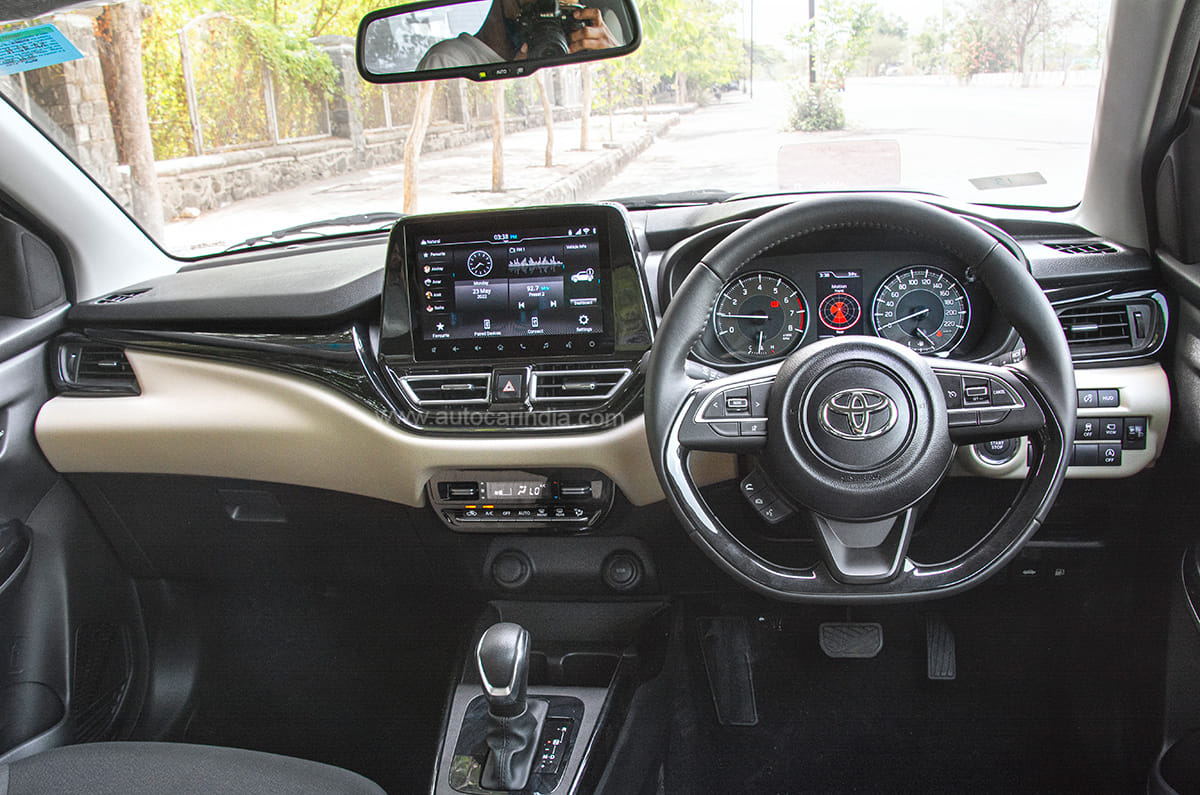
Current-spec Glanza’s dashboard image is used for representative purposes only.
The cabin design is expected to be the same. Some new features introduced on the Baleno facelift could be added to the facelifted Glanza. These include a Level 2 advanced driver assistance system (ADAS), ventilated front seats, a wireless phone charger with ventilation, and a tyre pressure monitoring system (TPMS). A sunroof or a digital driver’s display, however, will be off the cards.
With the facelift, Toyota is expected to price the Glanza at a slight premium over the current model’s Rs 6.73 lakh to Rs 9.99 lakh range (ex-showroom). It will continue to lock horns with premium hatchbacks like the Maruti Suzuki Baleno, Toyota Altroz and Hyundai i20.
The Maruti Suzuki Baleno has proven to be hugely successful, with the premium hatchback going home to 1.9 million buyers since its introduction in 2015. And in a time when compact SUVs are all the rage, the Baleno continues to buck the trend and bring in the numbers for the brand. And now in a bid to keep it fresh and relevant, Maruti Suzuki has updated it with a tweaked design, new comfort and safety features and even a new petrol engine.
Maruti Baleno Exterior Design and Engineering – 7/10
Being a mid-life-cycle update, the Baleno doesn’t get a design overhaul but rather tweaked styling with the bulk of the design changes concentrated at the front end. The grille is now much larger than before with three horizontal chrome slats and gloss black detailing, with a radar module in the centre for the new ADAS tech. The bumper is new too and features a gloss black trim that links the new LED fog lamps and the Suzuki logo has also been moved above the grille. Otherwise, the clamshell bonnet with the two character lines and the LED headlamps with the three-block DRL signature are carried over unchanged.
Gets a new larger grille with chrome slats, a new bumper and new fog lamps.
Changes along the sides are minimal, with the only distinguishing factors being a chrome garnish on the front fender and a shark fin antenna on the roof. The facelift retains the older Baleno’s chrome lining under the windows that extends up till the C-pillar, chrome door handles and the dual-tone 16-inch alloy wheels on this top-spec Alpha (O) variant.
The rear however, stays identical to the pre-facelift Baleno with its C-shaped LED taillamps that also feature the three-block pattern, a chrome band running across the tailgate and a small, roof-mounted spoiler. There’s also a new Enigmatic Teal Green paint shade as seen in the pictures here. Overall, the Baleno sticks to the formula that’s made it as successful as it is with minor tweaks in order to keep it fresh. The front grille, though, splits opinion and certainly doesn’t appear as cohesive as the one on the model it replaces.
Rear stays identical to the pre-facelift model, with the same dual-tone alloys as well
Maruti Baleno Interior Space and Comfort – 8/10
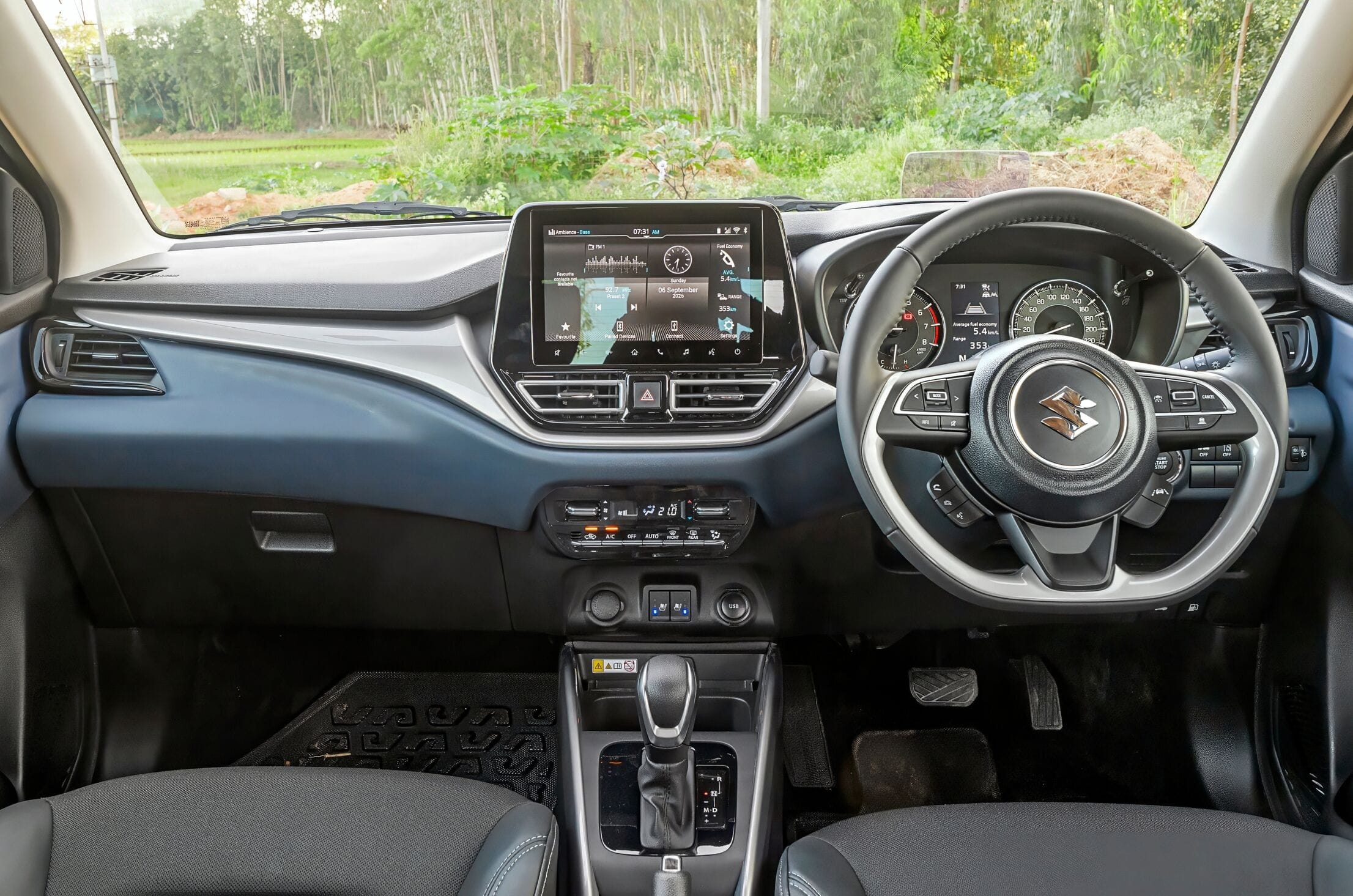
The interior of the Baleno facelift stays near-identical, with the same layered, V-shaped dashboard, flat-bottom three-spoke steering wheel and dual-tone black and blue colour scheme. There have been some tweaks however. The steering now features buttons on the right side for the adaptive cruise control and lane keep assist, there are more buttons on the right of the steering too (near the start/stop button) to turn off certain ADAS features and the seats now feature part-leatherette upholstery. The seats still majorly feature fabric upholstery but the outer edges are now finished in leatherette, which helps up the premium feel.
Layered dashboard with a dual-tone black-and-blue interior theme is carried over unchanged
Otherwise, this cabin is made up of good quality materials, particularly the soft touch leather wrapped steering and the padded elbow rests on the doorcards. The only sore points are the hard plastics and the simple woven roofliner. It’s a practical place too, with big door pockets, a decent-sized glovebox and storage in the centre console, with big cupholders and a small bin under the centre armrest.
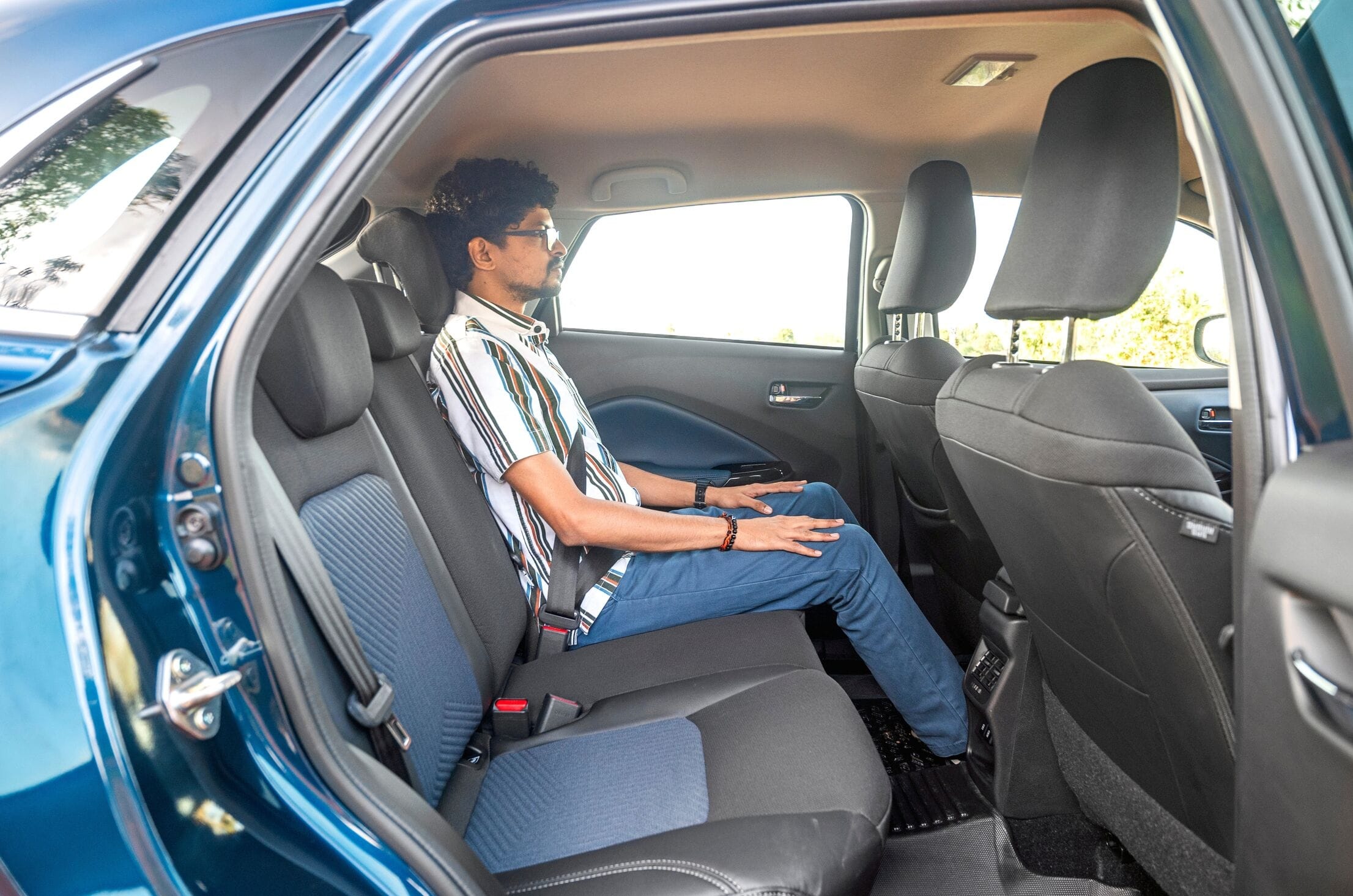
The front seats are unchanged and that’s a good thing as they are accommodating, supportive and offer nice cushioning. Thanks to the height adjustable driver’s seat and tilt/telescopic steering, finding an ideal driving position is an easy affair. Space at the rear is excellent, and even tall passengers won’t find a shortage of headroom or legroom. There’s good underthigh support, the seat cushioning is on point and on the whole, this is a comfy place to be. A welcome addition is an adjustable headrest and three-point seatbelt for the rear centre passenger. Rear passengers also get dedicated AC vents and USB charging ports.
Rear seat space is excellent and even tall passengers won’t find a shortage of headroom or legroom
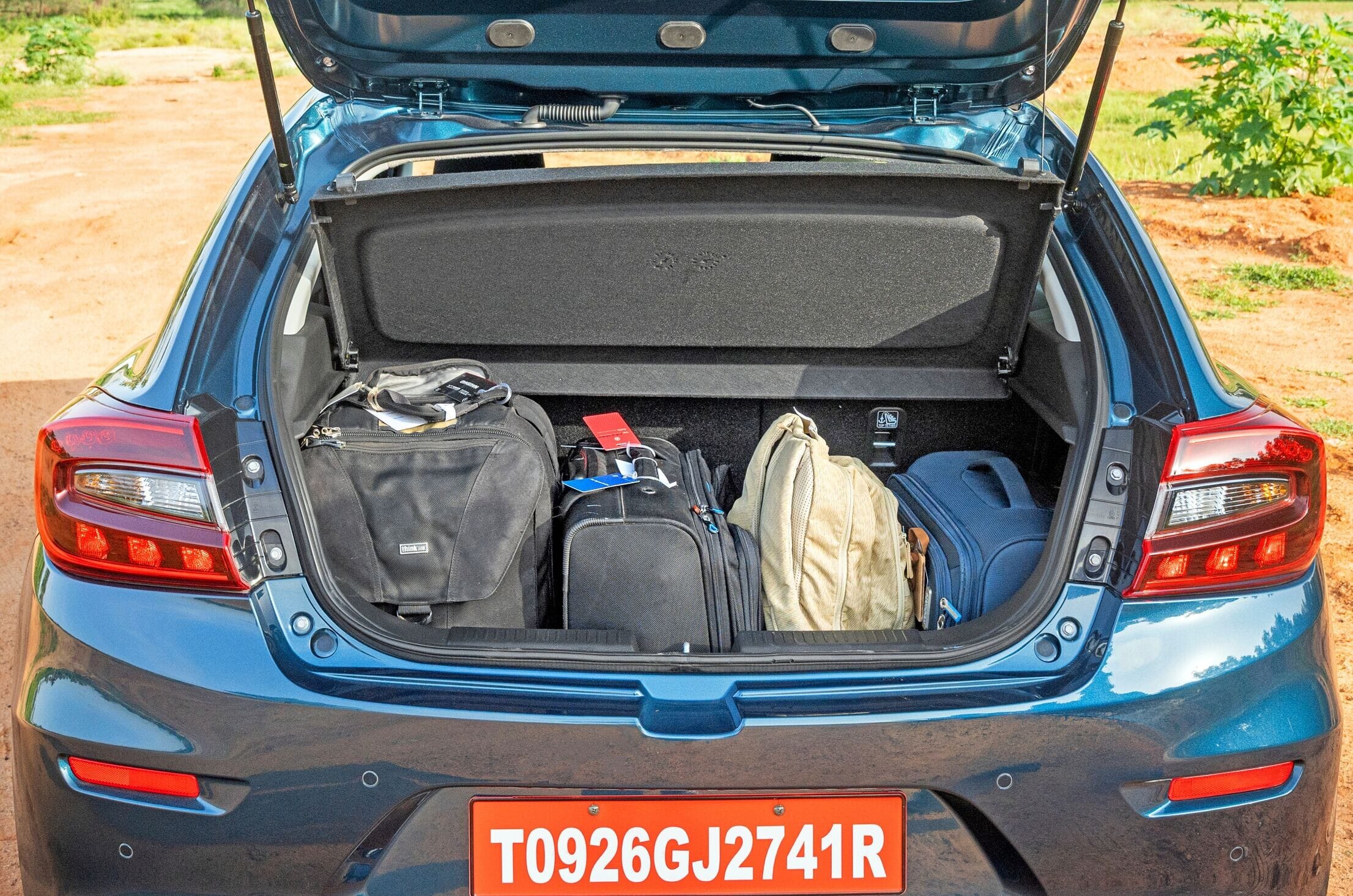
What further enhances overall comfort are the UV-cut glasses, which helps keep the heat out. As for boot space, it’s a sizable 318 litres, though the loading lip is quite high. It’s also nice to see that it retains a spare tyre under the boot floor, when many modern cars are pivoting to puncture repair kits.
Boot is a sizeable 318-litres though the loading lip is quite high; continues to get a spare tyre
Maruti Baleno Features and Safety – 9/10
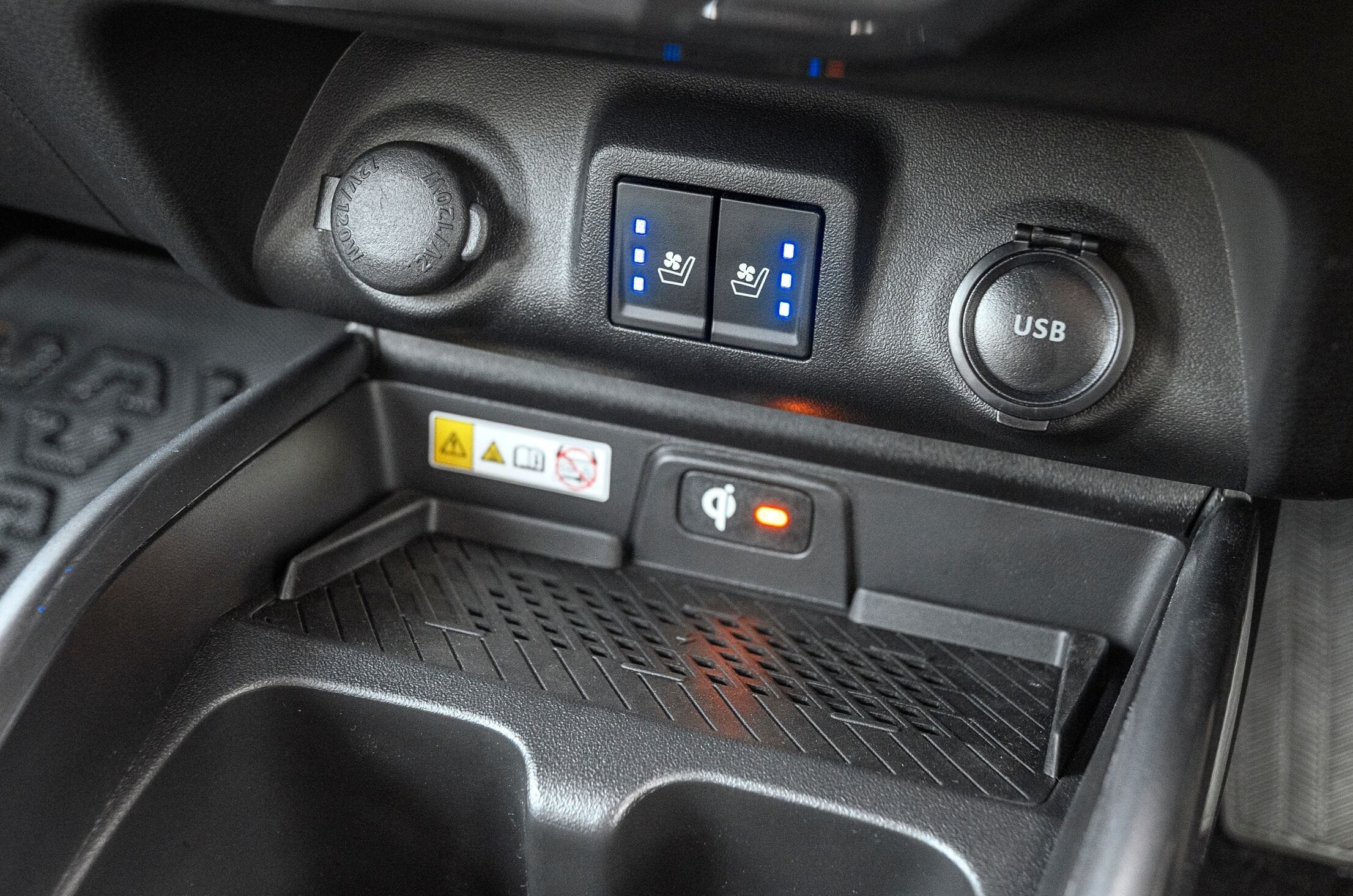
There have been some important additions when it comes to features, as the Baleno now gets ventilated front seats, a cooled wireless phone charger, a tyre pressure monitoring system, a Clarion sound system, and perhaps most importantly, segment-first ADAS Level 2 features.
Ventilated front seats and a cooled wireless charging pad are among the new additions
Other than that, the features list was fairly expansive as is, with this top-spec Alpha (O) also getting a 9-inch infotainment touchscreen with wireless smartphone integration, auto climate control, a heads-up display, colour MID, auto headlamps, auto-dimming IRVM, keyless entry and go, rear wiper/washer, connected car tech and more. Safety kit includes 6 airbags as standard, traction control, a 360-degree parking camera (its quite low res though) and ISOFIX child seat mounts. The outgoing Baleno had a 4-star crash safety rating from Bharat NCAP and that should be the case for this one as well.
9-inch touchscreen has been retained; now features a TPMS
Of the newer features, the ventilated front seats work effectively though the blower is quite audible while the wireless charger charges your phone’s battery at a good rate without overheating it. The TPMS too worked as intended, while the Clarion audio system is better than the outgoing model’s it still falls short of what rivals offer.
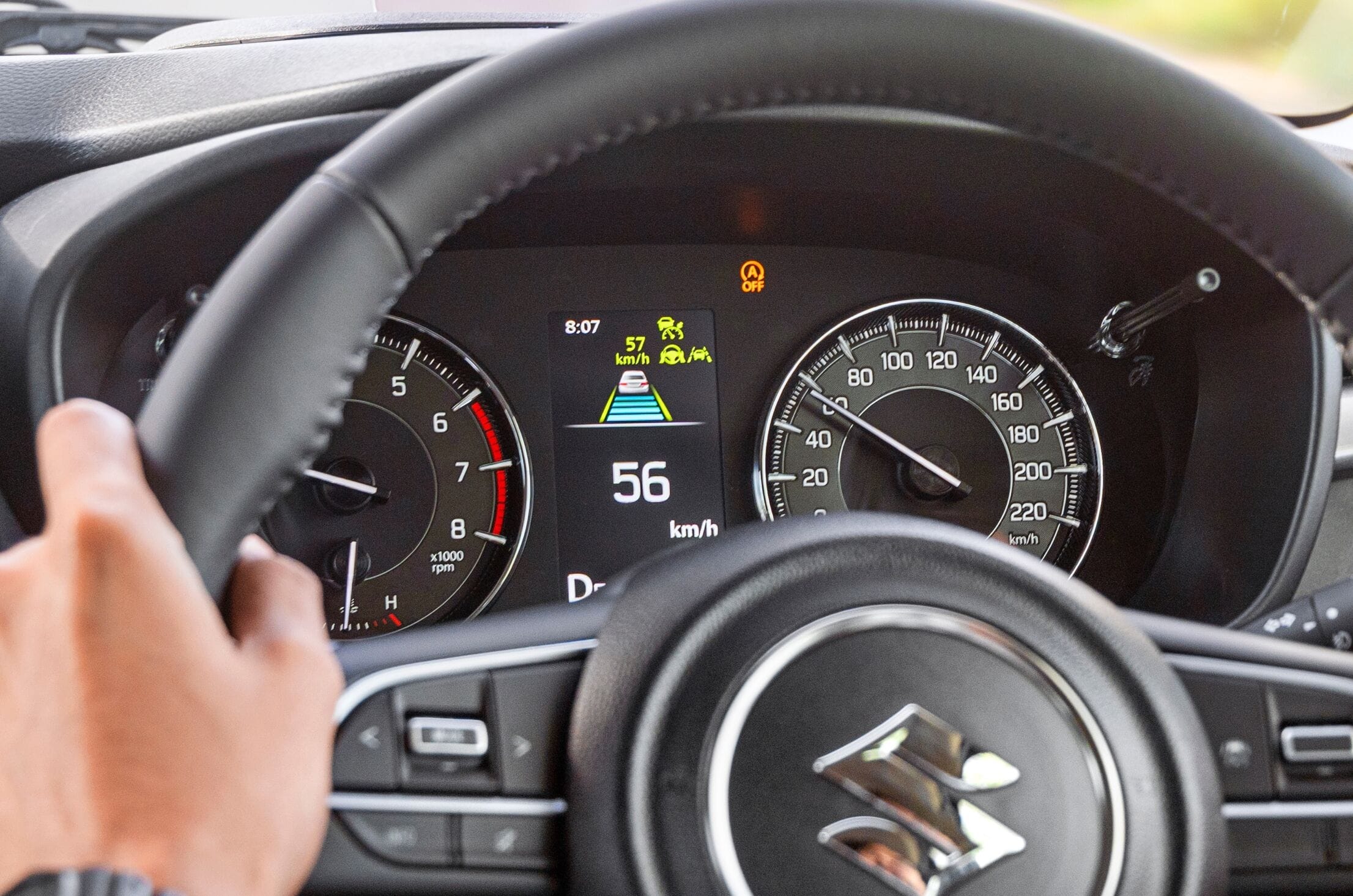
The addition of Level 2 ADAS tech however, greatly boosts the Baleno’s safety quotient. It’s a camera and radar-based system that brings in features like auto emergency braking, adaptive cruise control, lane keep assist, lane departure warning and more. On our brief test drive, the ADAS features worked as intended and seemed well calibrated as they weren’t overly intrusive. However, if you turn off the ADAS features they will automatically switch back on everytime you start the car.
Gets segment-first Level 2 ADAS features which seemed well calibrated for our conditions
As for features then, the Baleno facelift takes a step up and almost has all bases covered. Only things missing are a rear centre armrest and a sunroof, both of which its rivals offer.
Maruti Baleno Performance and Refinement – 8/10
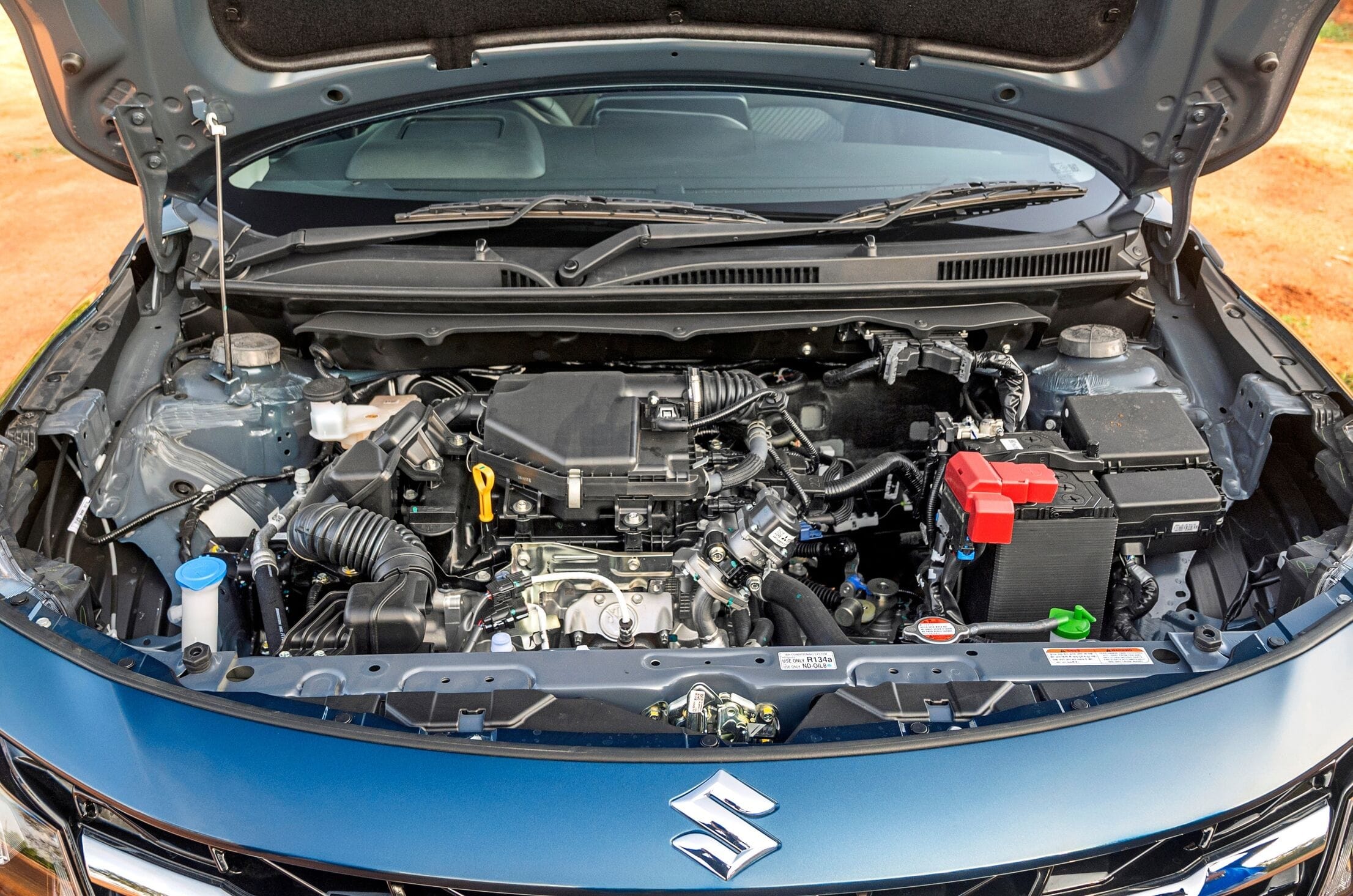
By far the biggest change with the facelift comes under the hood and it’s rare that we get to see a new engine with a facelift. Out goes the 1.2-litre, four-cylinder, K-series engine and in comes the 1.2-litre, three-cylinder, Z-series engine from the likes of the Swift and the Dzire. Yes, the Baleno is down a cylinder and as such, down on output too. The Z12E engine makes 83hp and 112Nm, which is 7hp and 1Nm lower than the older K12N engine. Maruti has moved to this engine as it is newer, is less polluting, more efficient and also opens it up to the possibility of hybridisation in the future.
New Z-series engine impresses with its drivability, low end response and promises more efficiency
This Z-series naturally aspirated engine is one of the most refined three-cylinder engines around. There is some of that typical three-cylinder thrum at idle but that smoothens out as the revs climb. It’s fairly quiet too at idle and it’s only when you’re at the top of the rev range that it becomes audible inside the cabin.
As we’ve experienced in the Swift and Dzire, this Z-series engine impresses with its low-end response and drivability. Power builds in a smooth linear manner, it moves off the line cleanly and part-throttle responses are good too. However, it doesn’t feel as peppy as the older K-series engine and doesn’t feel as strong at the top of the rev range. And considering that it’s down on power and heavier than the outgoing car, it isn’t as quick in terms of outright acceleration. But for a daily urban runabout, this engine is up to the task. For reference, we managed a 0-100kph time of 13.03sec and 15.89sec for the Swift MT and Swift AMT, respectively and you can expect the Baleno to be slightly slower than this owing to its higher kerb weight.
Power builds in a smooth linear manner and part-throttle responses are good, too.
As was the case earlier, the Baleno facelift can be had with either a 5-speed manual or a 5-speed AMT automatic. The manual gearbox is particularly impressive with its effortlessness and our pick of the two. The clutch pedal is light and easy to modulate, while the gearbox is smooth and has nice, short throws and well defined gates.
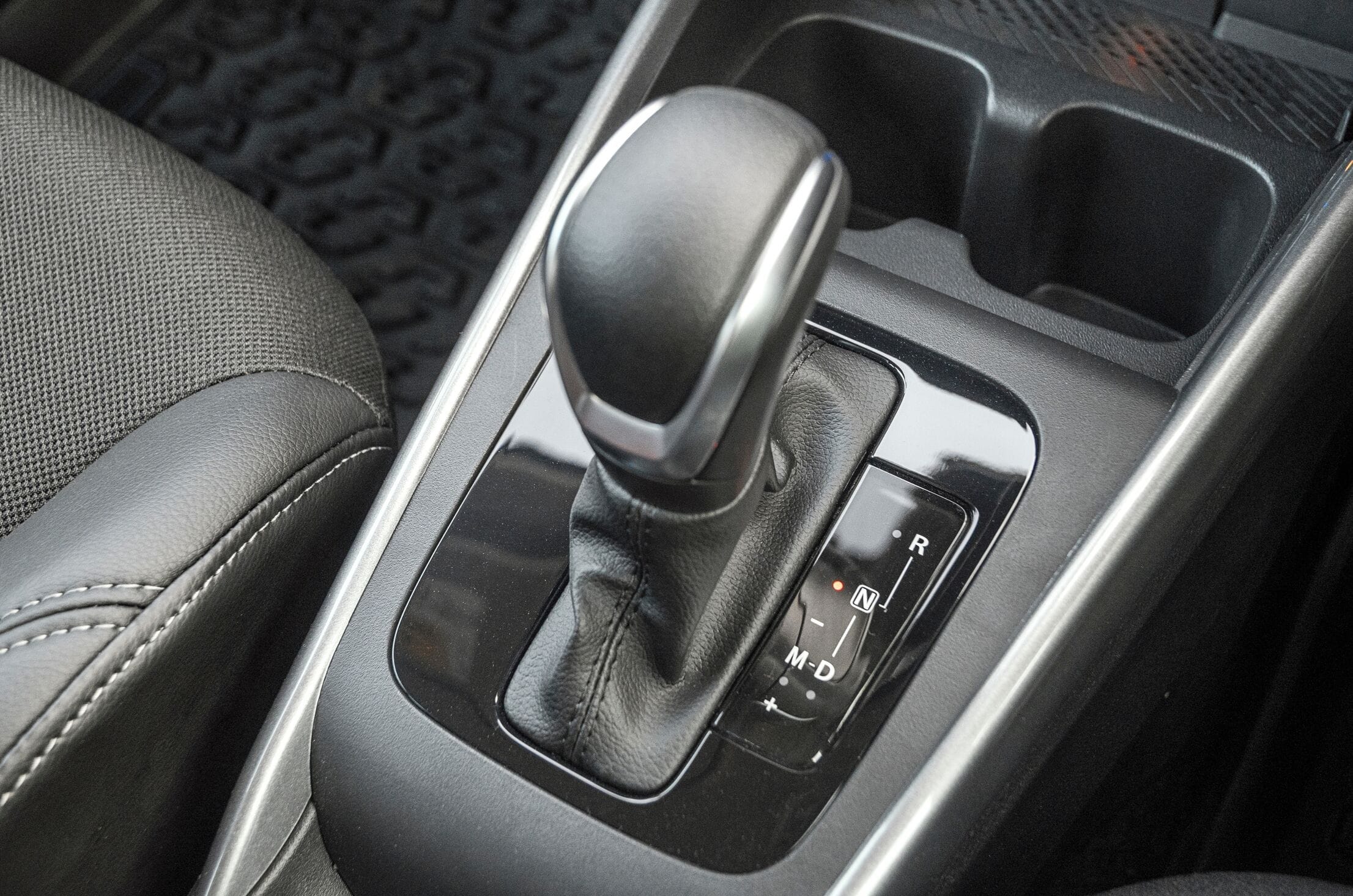
In comparison to its rivals, which offer more sophisticated automatics in the form of a CVT and a DCT, the Baleno only comes with a simpler, more cost-effective AMT. The AMT makes for a good option for those who wish for greater convenience and it’s smooth as far as AMTs go. There is still that noticeable headnod effect that you get between shifts and it is hesitant when you try to make a quick overtake, as it takes some time to downshift. That can be alleviated however, by shifting to manual mode via the gear lever and what’s nice is that it won’t auto upshift in this mode.
AMT adds a layer of convenience but feels hesitant when you try to make a quick overtake
A factory-fitted CNG option is also available with the Baleno facelift. It uses the same engine but power and torque outputs fall to 70hp and 102Nm, respectively, when run on CNG, and it can only be had with the 5-speed manual gearbox. However, we’re yet to experience the Baleno facelift CNG.
Maruti Baleno Mileage and Efficiency – 9/10
Both manual and AMT variants see an improvement in claimed efficiency with the new engine.
The biggest advantage with the move to the Z-series engine comes in the form of fuel efficiency. The Baleno petrol-manual is now claimed to return 23.80kpl (1.45kpl more), while the AMT is said to do 24.77kpl, which is a 1.83kpl improvement. The Baleno CNG meanwhile, sees an improvement of 3km/kg, with a claimed 33.61km/kg. As always, these are claimed figures tested in ideal conditions and expect real-world fuel efficiency to be lower. What’s interesting is that the Baleno has become more efficient despite becoming up to 30kg heavier than the outgoing version.
Maruti Baleno Ride Comfort and Handling – 8/10
As before, the Baleno continues to impress with its ride comfort. The suspension has a softness to it, which means low speed ride is excellent and it’s only the sharpest bumps and big potholes that manage to unsettle it. It also manages to iron out road imperfections with considerable ease and stays composed at higher speeds, with well-contained vertical and side-to-side movements.
Good body control with minimal roll and the steering weighs up nicely as you pick up the pace
Handling isn’t its strongest suit but the Baleno displays good body control with minimal roll around the corners. The steering, meanwhile, is light at low speeds, which aids city driving, but it adds some reassuring weight as you pick up the pace which is confidence-inspiring. It’s not particularly feelsome but that’s nothing to complain about, given its an urban premium hatchback. As for braking, it continues with the same discs up front and drums at the rear setup and the stopping power is more than adequate. On the whole then, the Baleno feels mature and composed on the move.
Maruti Baleno Value for Money – 8/10
The Maruti Baleno facelift is priced from Rs 6.10 lakh (ex-showroom, India), though this is a special festive price and Maruti is yet to disclose complete variant-wise pricing. It continues to get a 3 year/1,00,000km standard warranty and as before, rivals other premium hatchbacks in the Hyundai i20 and Tata Altroz, both of which are priced from Rs 6 lakh (ex-showroom, India).
The added features and the promise of greater fuel efficiency just further enhance the Baleno’s appeal
There are some drawbacks of course, like the hesitant AMT automatic and it doesn’t feel as peppy as the older K-series Baleno. But those pale in comparison to the Baleno’s inherent strengths of a spacious and comfortable cabin, an effortless drive thanks to its light controls, a refined engine and a good ride comfort and handling balance. The added comfort and safety features and the promise of greater fuel efficiency with the new engine just further enhance its appeal. As such, the Baleno is all set to retain its spot at the top of the premium hatchback chain.
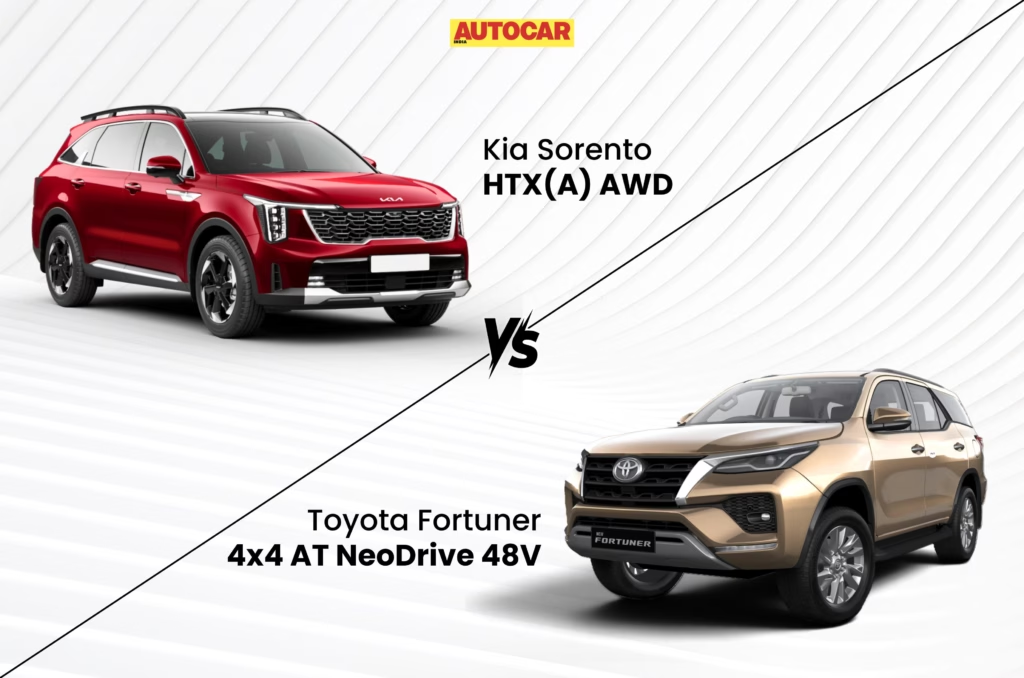
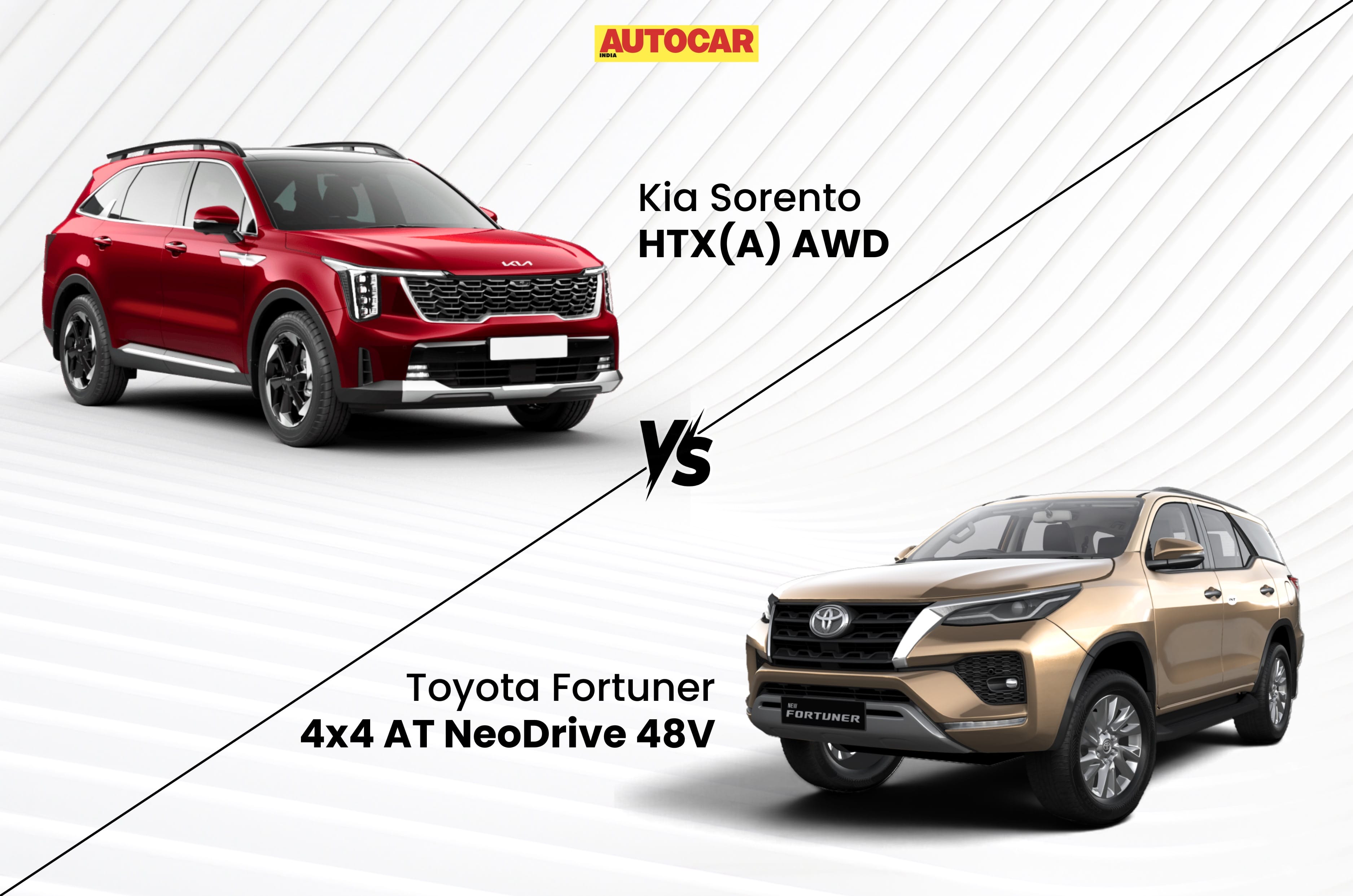
The Kia Sorento is now on sale in India as the Korean carmaker’s flagship ICE-powered SUV. It contends in the three-row premium SUV segment, directly rivalling the likes of the monocoque-based Skoda Kodiaq, Volkswagen Tayron, and Jeep Meridian. Additionally, the Sorento’s pricing overlaps with that of the ladder-frame-based Toyota Fortuner, which is one of the most popular SUVs in the Rs 30 lakh-50 lakh price bracket.
While the Fortuner isn’t as up-to-date or premium as the Sorento is, the Toyota SUV has accrued a reputation for toughness, reliability, and off-road prowess. Below, we’ve put together the top-spec diesel variants of the Sorento and Fortuner – the HTX(A) and 4×4 AT NeoDrive 48V, respectively – to see which one delivers more bang for your buck.
Kia Sorento vs Toyota Fortuner: Top-spec variant dimensions
Sorento is longer and wider, while Fortuner is taller
Sorento HTX(A)
Fortuner 4×4 AT NeoDrive 48V
Length (mm)
4,815
4,795
Width (mm)
1,900
1,855
Height (mm)
1,785
1,835
Wheelbase (mm)
2,815
2,745
Seating capacity
6/7
7
Wheel size (inches)
19
18
The Sorento is just 20mm longer than the Fortuner overall, but the Kia SUV’s wheelbase is 70mm longer. It’s also 5mm wider than the Fortuner, comes with larger wheels, and even offers a 6-seat layout with second-row captain’s chairs. However, the Fortuner does claw back some points on the height front, sitting 50mm taller than the Sorento.
Kia Sorento vs Toyota Fortuner: Top-spec diesel variant powertrains
Syros EV is quicker, e Vitara claims higher range and has a bigger battery
Sorento HTX(A)
Fortuner 4×4 AT NeoDrive 48V
Engine
2.2-litre, 4 cyls
2.8-litre, 4 cyls
Power (hp)
193
204
Torque (Nm)
442
500
Gearbox
8-speed DCT
6-speed AT
Mild hybrid system
No
Yes, 48V
Drive layout
FWD, AWD
AWD
The Fortuner undoubtedly has a larger and more powerful diesel engine than that of the Sorento, that too paired with a 48-volt mild hybrid system for functions like torque assist under load, engine start/stop, and brake energy recuperation. On the other hand, the Sorento comes with an 8-speed gearbox instead of a 6-speed one, which could enable better fuel efficiency on the highway. The top-spec Sorento diesel variant also offers a front-wheel drive layout for buyers who don’t need the enhanced go-anywhere capabilities afforded by all-wheel drive.
Kia Sorento vs Toyota Fortuner: Top-spec diesel variant exterior features
Sorento offers sequential indicators and more colours, while Fortuner gets more lighting
Sorento HTX(A)
Fortuner 4×4 AT NeoDrive 48V
LED auto headlamps
Yes
Yes
Front LED fog lamps
Yes
Yes
Rear fog lamps
No
Yes
LED tail-lamps
Yes
Yes
Puddle lamps
No
Yes
Roof rails
Yes
Yes
Powered ORVMs
Yes
Yes
Sequential indicators
Yes
No
Powered tailgate
Yes
Yes
Rear spoiler
Yes
Yes
Colour options
8, monotone
5, monotone
In this department, both SUVs are fairly well matched. The Sorento is uniquely equipped with sequential indicators, while the Fortuner is the only one here to offer rear fog lamps and puddle lamps. As for colour options, both are sold in monotone finishes only, with the Sorento offering two more than the Fortuner does.
Kia Sorento vs Toyota Fortuner: Top-spec diesel variant interior features
Sorento easily takes the win here
Sorento HTX(A)
Fortuner 4×4 AT NeoDrive 48V
Infotainment screen
12.3-inch
8-inch
Instrument cluster
12.3-inch digital
Analogue w/ MID
Heads-up display
Yes
No
Sunroof
Panoramic
No
Wireless charger
Yes
No*
Powered front seats
Yes
Yes
Ventilated front seats
Yes
Yes
Second-row ventilation
Yes
No
Dual-zone climate control
Yes
Yes
Ambient lighting
Yes
No
Sound system
12-speaker Bose
11-speaker JBL
Apple CarPlay & Android Auto
Wireless
Wired
Connected car tech
Yes
Yes
IRVM
Digital
Auto-dimming
Rear centre armrest
Yes
Yes
Sliding, reclining rear seats
Yes
Yes
*Available as an optional accessory.
The Sorento is majorly ahead of the Fortuner in terms of creature comforts. The Kia SUV has larger screens, a big sunroof, more speakers, wireless phone connectivity, rear-seat ventilation, ambient lighting, a fully digital IRVM, and more.
Kia Sorento vs Toyota Fortuner: Top-spec diesel variant driving features
Sorento gets more drive modes, adaptive cruise control, and auto park assist
Sorento HTX(A)
Fortuner 4×4 AT NeoDrive 48V
Drive modes
4
3
Terrain modes
3
6
Auto park assist
Yes
No
Paddle shifters
Yes
Yes
Cruise control
Adaptive
Yes
While the Sorento gets one additional drive mode (Eco, Sport, Smart, Normal) over the Fortuner (Eco, Normal, Sport), the latter signals its off-road focus by offering two more terrain modes (Mud, Sand, Rock, Dirt, Deep Snow) than the Kia SUV (Snow, Mud, Sand) does. However, the Sorento ups the convenience ante by including a smart park assist function, as well as adaptive cruise control, which can automatically adjust the car’s speed.
Kia Sorento vs Toyota Fortuner: Top-spec diesel variant safety features
Sorento packs several more safety features than the Fortuner does
Sorento HTX(A)
Fortuner 4×4 AT NeoDrive 48V
ADAS
Yes
No
Airbags
10
7
ABS w/ EBD
Yes
Yes
ESC
Yes
Yes
Hill hold control
Yes
Yes
TPMS
Yes
No*
360-degree camera
Yes
No*
Parking sensors
Front, rear, side
Front, rear
Built-in dashcams
Yes
No
Electronic parking brake
Yes
No
Rain-sensing wipers
Yes
No
ISOFIX child seat anchors
Yes
Yes
Disc brakes
Front, rear
Front, rear
*Available as an optional accessory.
Much like interior features, it’s a square win for the Sorento on the safety front. It not only packs side parking sensors and three more airbags over the Fortuner, but gets features completely missing from the Toyota SUV, like Level 2+ ADAS, rain-sensing wipers, an electronic parking brake with auto-hold, a tyre pressure monitoring system, a 360-degree camera, built-in dual-channel dashcam, and more.
Kia Sorento vs Toyota Fortuner: Top-spec diesel variant prices
Sorento is more affordable despite all the additional features
Sorento HTX(A)
Fortuner 4×4 AT NeoDrive 48V
Price (Rs, lakh)
38.49-38.69
43.12
Not only is the top-spec Sorento diesel much more feature-packed than the Fortuner, it’s cheaper by around Rs 4.5 lakh as well. The Fortuner is nearly a decade old, and it shows when compared to a more modern car like the Sorento. If you primarily drive on paved roads and want your car to be packed with bells and whistles, the Sorento is the obvious choice. However, if off-roadability, power, and outright durability are your main concerns, there’s still some merit in buying a Fortuner.
The Maruti Baleno facelift has been launched with prices starting at Rs 6.10 lakh (ex-showroom). It is offered in five trims: Sigma, Delta, Zeta, Alpha and Alpha (O), although Maruti is yet to reveal the full variant-wise pricing. The facelifted Baleno gets an updated fascia along with several functional additions. Here’s a look at these new features:
1.2-litre 3-cylinder ‘Z12E’ petrol engine
Gets the same engine as the Swift and Dzire
With the facelifted model, Maruti has replaced the older model’s K12N four-cylinder engine with a new Z12E 1.2-litre, three-cylinder naturally aspirated petrol engine producing 83hp and 112Nm. It is paired with either a 5-speed manual or a 5-speed automated manual gearbox (AMT), and is the same engine that powers the Swift and Dzire. While it makes 7hp and 1Nm less than the outgoing engine, fuel efficiency has improved to 23.80kpl with the MT (up by 1.45kpl) and 24.77kpl with the AMT (up by 1.83kpl).
The 1.2-litre engine is also available with CNG in the mid-spec Delta and Zeta trims, only with the manual gearbox. In this guise, it produces 70hp and 102Nm and delivers a claimed 33.61km per kg, which is 3km per kg more than the previous model.
Level 2 ADAS
Third Maruti model to come with an ADAS suite
The Maruti Baleno is offered with a Level 2 advanced driver assistance system (ADAS) suite, making it the only car in its segment to offer the technology. The suite includes features such as adaptive cruise control, automatic emergency braking, lane keep assist and high-beam assist. It is available only on the top-spec Alpha (O) trim. With the addition of ADAS, the Baleno becomes the third Maruti model in India to offer the technology, after the Victoris and e Vitara.
Ventilated front seats
Only car in the segment currently to offer this feature
Ventilated seats have become an important feature in India, particularly given the country’s hot and humid climate. The Maruti Baleno gets them on the higher-spec Alpha and Alpha (O) trims, making it the only car in its segment to offer the feature. The Tata Altroz Racer also offered ventilated seats, but it was discontinued in 2025 and was not carried over to the facelifted Altroz.
Wireless phone charger
Zeta, Alpha and Alpha(O) trims are offered with this feature
The Maruti Baleno facelift is also equipped with a wireless phone charger with a cooling function that helps keep the phone cool while charging. It is offered from the mid-spec Zeta trim onwards.
Clairon sound system
Higher-spec Alpha and Alpha (O) trims get this sound system
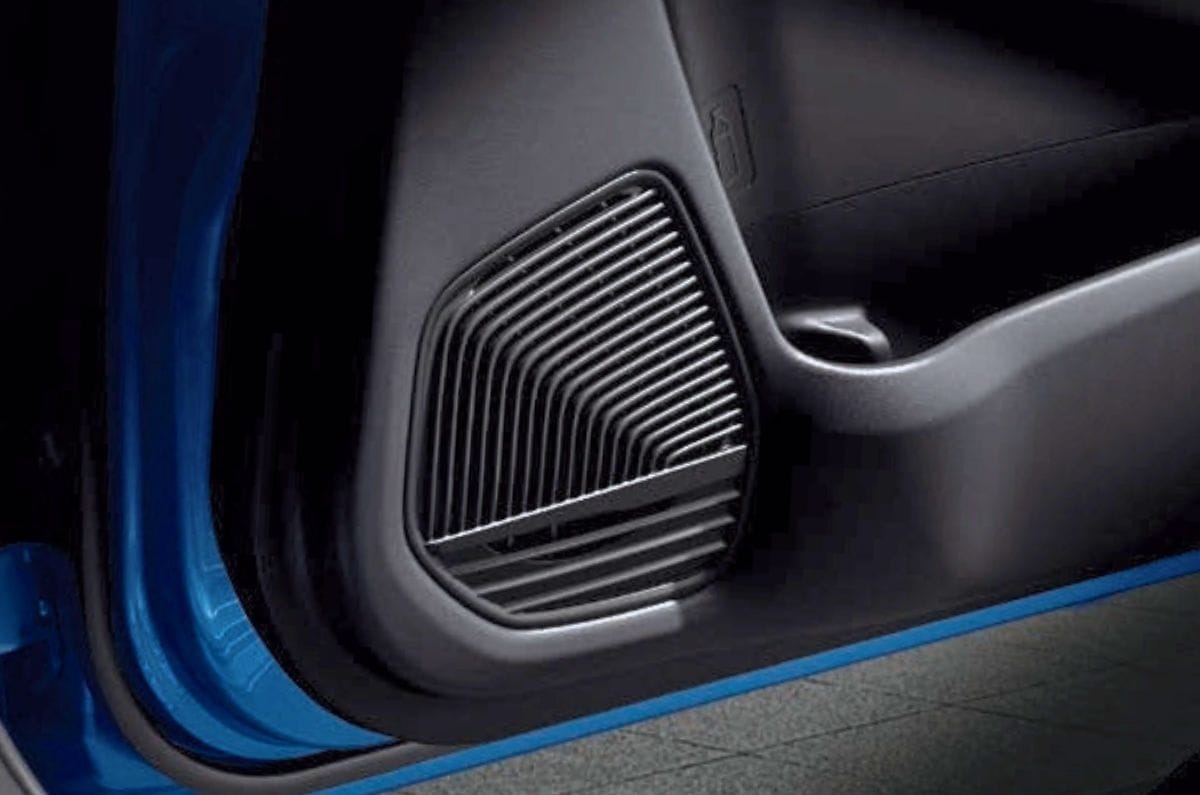
The Maruti Baleno facelift gets a new Clarion sound system with four speakers and two tweeters, offered on the higher-spec Alpha and Alpha (O) trims. The previous model also featured a four-speaker, two-tweeter setup on these trims, but it was not a branded unit.
Tyre pressure monitoring system
Offered with all trims except the base-spec Sigma
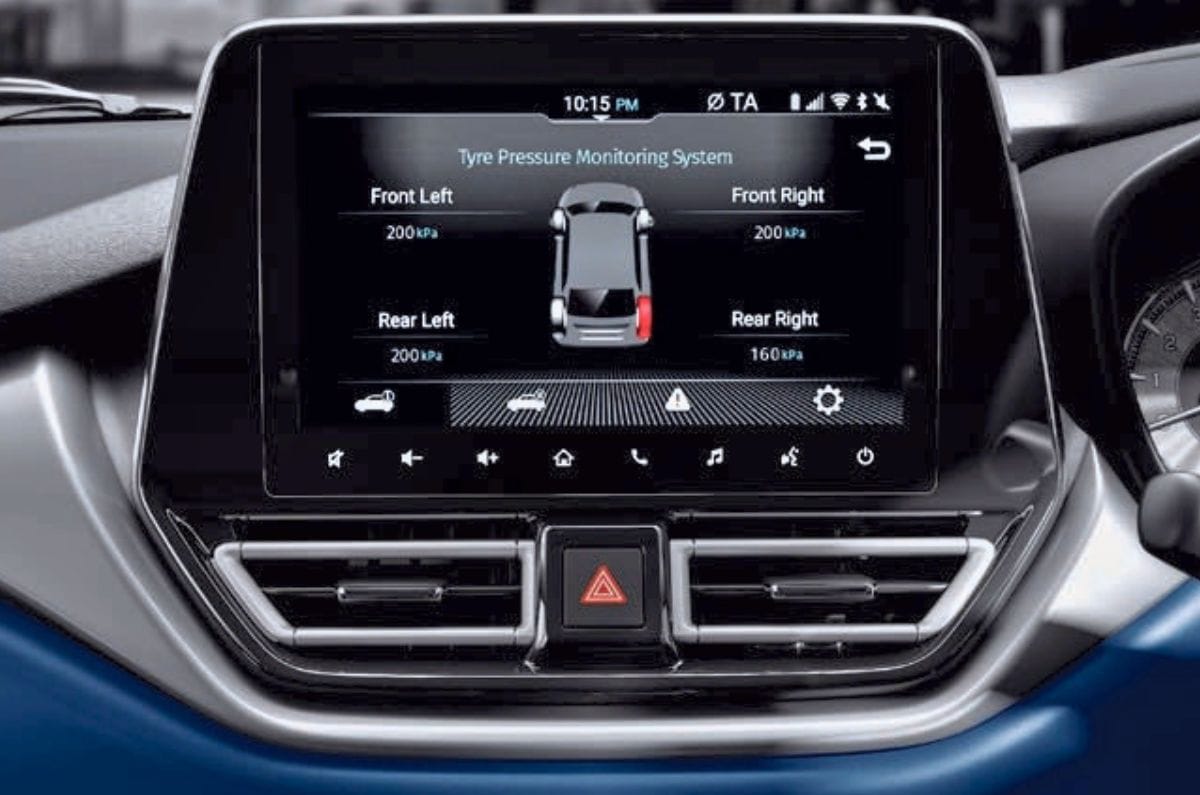
A tyre pressure monitoring system (TPMS) has become one of the most crucial safety features in cars today, and the Baleno facelift now gets it as a new addition. However, it is offered only from the Zeta trim onwards, leaving the base Delta without the feature.
As mentioned earlier, Maruti is yet to reveal the full variant-wise pricing of the Baleno facelift, which is expected to be announced soon. Once revealed, the pricing will give a clearer picture of how the facelifted premium hatchback stacks up against rivals such as the Tata Altroz, Hyundai i20 and Toyota Glanza.
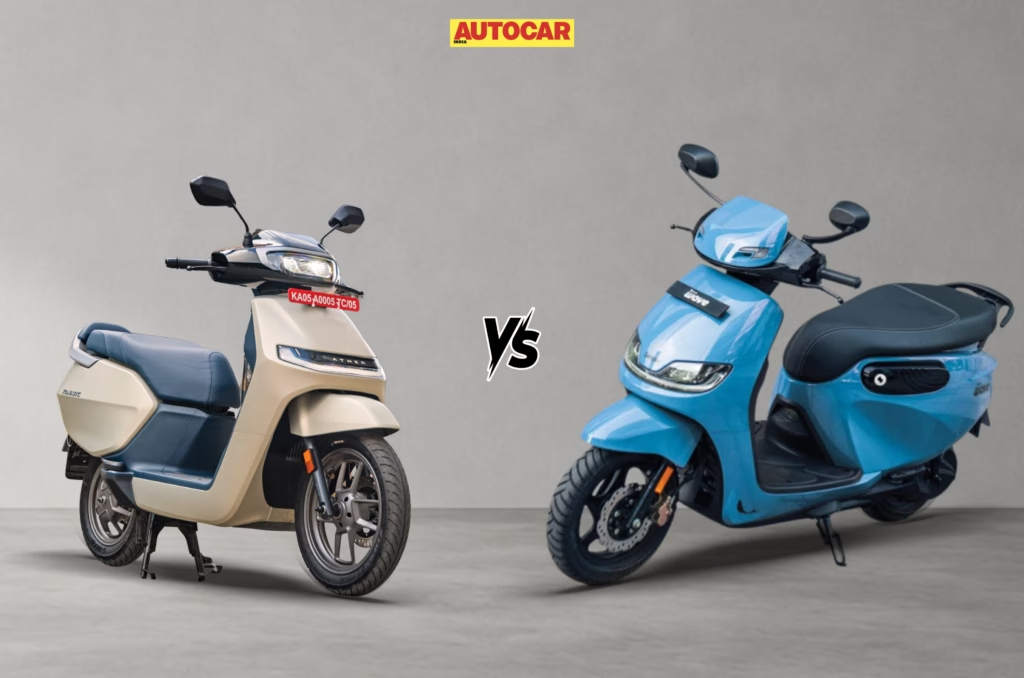
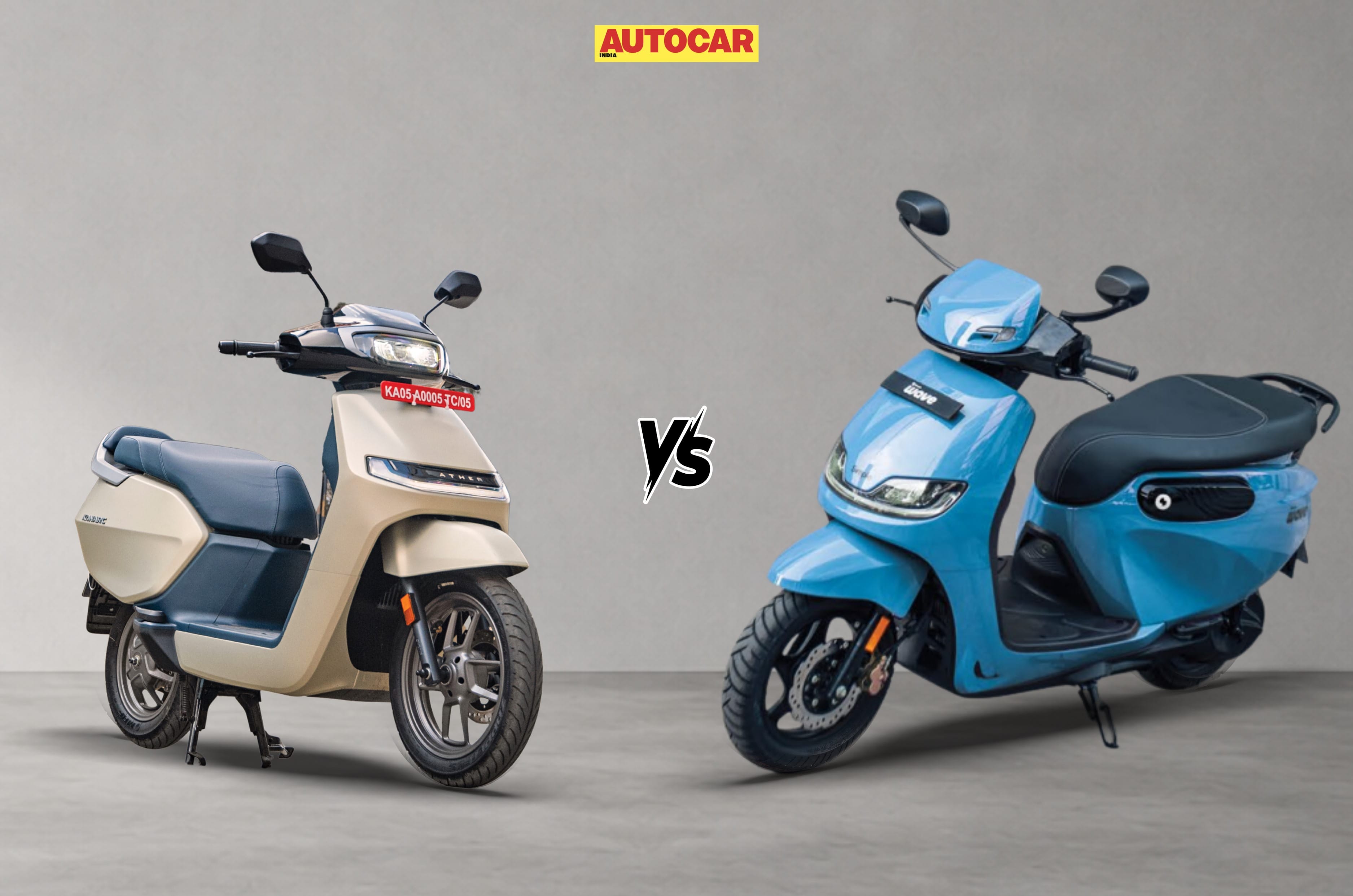
The Indian two-wheeler EV market is gaining momentum with legacy manufacturers expected to sell close to 10 lakh units by the end of the year. But the EV start-ups look to put up a tough fight to the sales numbers with Ather and Simple, both Bengaluru based EV makers, launching new EV family scooters. The Ather Konarc S 161 will be available from later this month and Simple has announced that deliveries for the Wave also start this month. Let’s see how both of them compare on paper.
Simple Wave vs Ather Konarc S 161: Motor, battery, and charging
Simple offers more power, battery, and faster standard charger
Simple Wave
Ather Konarc S 161
Peak motor power
6.4kW
4.7kW
Rated torque
NA
16Nm
Claimed top speed
90kph
70kph
Battery capacity
3.7kWh
3.5kWh
Claimed charging time (0-80 percent)
4hr
5h40m
IDC range
171km
161km
Simple’s scooter brings in a strong first punch with a higher powered motor and a marginally bigger battery than the Ather Konarc S. It also has a notably higher top speed as compared to the Konarc. The Wave comes bundled with a faster 750W off-board charger which enables it to charge to 80 percent almost two hours faster than the Konarc, which gets a 450W on-board charger as standard. However, Ather gives the option to add another 450W off-board charger to enable faster 900W charging. Simple currently doesn’t offer such an option for the Wave.
Simple Wave vs Ather Konarc S 161: Dimensions and underpinnings
Konarc gets a lower seat, but weighs more
Simple Wave
Ather Konarc S 161
Wheelbase
1347mm
1352mm
Seat height
775mm
770mm
Ground clearance
175mm
NA
Kerb weight
124.5kg
129kg
On paper, the Konarc has a marginally longer wheelbase than the Wave, but do note that the Wave boasts the longest seat in the country at 920mm, a title earlier held by Ather’s Rizta. For what it’s worth, we did not face any issues with the Konarc, space-wise or comfort-wise. Ather’s scooter also has a slightly lower seat height but it’s a negligible difference to most users. What’s not negligible is its 4.5kg additional weight over the Simple Wave, but it’s explained by the Konarc using metal body panels.
Simple Wave vs Ather Konarc S 161: Brakes, tyres, and suspension
Konarc gets larger tyres
Simple Wave
Ather Konarc S 161
Tyres (F,R)
90/90-12, 90/90-12
90/90-14, 100/90-12
Brakes (F,R)
220mm disc, drum
220mm disc, 130mm drum
Suspension (F,R)
Telescopic, twin shock
Telescopic, monoshock
The Ather Konarc is the first Ather to get a 14-inch tyre, even if it’s just at the front; and its rear tyre is larger than the Wave, which sticks to a 12-inch at both ends. Both scooters have a front disc brake and a rear drum brake although Simple hasn’t clarified the size of the Wave’s rear drum. On the suspension side of things, the major difference is that the Wave uses a twin shock rear suspension, whereas the Konarc gets a monoshock unit.
Simple Wave vs Ather Konarc S 161: Features
Features filled to the brim, for an added price
Features have been the trump card for almost all EVs from their inception and Ather has led that charge from the front. Simple appears to have caught up to Ather with both the scooters matching each other on features like fall safe, hill-hold, smartphone connectivity, and a TFT cluster on the top variants and a LCD cluster on the lower variants. Simple does offer you a choice between the TFT and the LCD cluster on the Wave (TFT costs Rs 15,000 extra), whereas Ather has reserved the TFT cluster for the Z line, due to launch next year. Features-wise, both companies offer turn-by-turn navigation, call and SMS alerts, GPS tracking, etc., Ather Konarc S’ gets most of those features in its LCD cluster, but Simple has reserved all of these for the TFT cluster variants.
A majority of these features do require additional subscriptions. Ather’s is a one-time cost of Rs 17,000 (Ather StackPro) for the Konarc S 161 variant. Simple, on the other hand, offers two kinds of subscription plans. The first plan is a one-time purchase to add Tyre Pressure Monitoring System (TPMS) and Connectivity modules. The second plan is a yearly subscription that enables all the smart features the company has to offer. At the time of writing, Simple hasn’t revealed the prices for the Wave line-up yet. Just for perspective, for the One scooter with a 5kWh battery, you have to pay a Rs 3,687 one-time payment for the first plan and Rs 2,999 per year for the second plan. To be clear, it’s possible to buy and use either scooter without subscribing to these add-ons, but the experience will feel a lot like a typical ICE scooter.
Simple Wave vs Ather Konarc S 161: Price
Ather gets the better starting price
Simple Wave
Ather Konarc S 161
Price (ex-showroom, Bengaluru)
Rs 1.60-1.75 lakh
Rs 1.45 lakh
For all that it offers and the longest seat in the scooter industry and 63L boot space and and additional 7 litres of cubby storage, spread across the scooter with innovative spots like Pill-storage, the Simple Wave costs Rs 1.60 lakh for the LCD cluster variant and Rs 15,000 extra for the TFT variant. The Ather Konarc without Ather StackPro comes in at Rs 1.45 lakh and with it would go up to Rs 1.60 lakh. While Ather has officially announced that the Konarc S 161 variant will be available from later this month, Simple hasn’t clarified if their “deliveries in September” claim applies to all six of their variants. If you’re interested in either scooter, we’d suggest that you check out and test ride them before deciding.
kia sorento launched : किआ इंडिया ने भारत के प्रीमियम थ्री-रो SUV सेगमेंट में कदम रखते हुए अपनी ग्लोबल SUV Kia Sorento को भारत में लॉन्च कर दिया है। इसकी शुरुआती एक्स-शोरूम कीमत ₹27.99 लाख रखी गई है। वहीं, इसका Hybrid मॉडल ₹29.99 लाख की शुरुआती कीमत पर उपलब्ध होगा।
Kia Sorento के साथ कंपनी ने भारत में पहली बार Hybrid पावरट्रेन पेश किया है। इसके अलावा, भारत-स्पेक Sorento में Kia AI Assistant भी पेश किया गया है, जिसमें रियल-टाइम Generative AI की क्षमता है। कंपनी के मुताबिक, यह तकनीक पहली बार वैश्विक स्तर पर Sorento में पेश की गई है। Kia Sorento की आधिकारिक डिलीवरी 4 सितंबर 2026 से देशभर में शुरू हो गई है।
भारत में पहली बार Hybrid पावरट्रेन
Kia Sorento को Hybrid और Diesel, दो पावरट्रेन विकल्पों के साथ पेश किया गया है। Hybrid मॉडल में Smartstream 1.6 Turbo GDI Hybrid इंजन मिलता है। इस इंजन से 180 PS की पावर और 265 Nm का टॉर्क मिलता है। इसके साथ 65 PS का इलेक्ट्रिक मोटर दिया गया है, जो 264 Nm का टॉर्क पैदा करता है। Hybrid पावरट्रेन को 6-स्पीड ऑटोमैटिक गियरबॉक्स से जोड़ा गया है।
दूसरा विकल्प Smartstream 2.2 Diesel इंजन है, जो 193 PS की पावर और 442 Nm का टॉर्क देता है। इसे 8-स्पीड Dual Clutch Transmission (8DCT) के साथ जोड़ा गया है। दोनों पावरट्रेन में Eco, Normal, Smart और Sport ड्राइव मोड दिए गए हैं।
Hybrid के साथ AWD का भी विकल्प
Kia Sorento अपने सेगमेंट की पहली SUV है जिसमें Hybrid पावरट्रेन के साथ All-Wheel Drive (AWD) का विकल्प दिया गया है। Hybrid और Diesel दोनों पावरट्रेन AWD के साथ उपलब्ध हैं। इनमें Snow, Sand और Mud जैसे Terrain Modes दिए गए हैं, जो अलग-अलग परिस्थितियों में बेहतर ट्रैक्शन और टॉर्क डिस्ट्रीब्यूशन में मदद करते हैं।
4,815 mm लंबी और 1,900 mm चौड़ी SUV
Sorento को Kia के ग्लोबल N3 प्लेटफॉर्म पर तैयार किया गया है। इसकी लंबाई 4,815 mm, चौड़ाई 1,900 mm, व्हीलबेस 2,815 mm और रूफ रेल्स के साथ ऊंचाई 1,785 mm है। कंपनी के अनुसार, यह अपने सेगमेंट की सबसे लंबी और चौड़ी SUV है। इसका बड़ा आकार तीनों रो में ज्यादा जगह उपलब्ध कराने में मदद करता है। SUV के फ्रंट में Kia Digital Tiger Face, Crystal Cube LED Projection Headlamps और Star Map LED DRLs दिए गए हैं। पीछे Star Map LED Tail Lamps मिलते हैं। इसके अलावा SUV में Satin Chrome फिनिश वाली फ्रंट और रियर स्किड प्लेट, Satin Chrome बेल्टलाइन और इंटीग्रेटेड रियर स्पॉयलर भी दिया गया है। Sorento में 18-इंच Sporty Crystal Cut Alloy Wheels और 19-इंच Premium Crystal Cut Alloy Wheels का विकल्प मिलता है।
प्रीमियम केबिन में 12.3-इंच के दो डिस्प्ले
Kia Sorento के केबिन को प्रीमियम और टेक्नोलॉजी से लैस बनाया गया है। इसमें Panoramic Curved Display Panel मिलता है, जिसमें 31.24 cm यानी 12.3-इंच HD Touchscreen Navigation Cockpit और 12.3-इंच HD Digital Instrument Cluster शामिल हैं। इसके साथ Windshield Head-Up Display और Advanced Digital IRVM दिया गया है। SUV में Smoky Black & Grey और टॉप HTX वेरिएंट में Black & Olive Brown इंटीरियर थीम का विकल्प मिलता है। इसमें Dual Pane Panoramic Sunroof और 64-कलर Ambient Mood Lighting भी दी गई है।
6 और 7-सीटर दोनों विकल्प
Kia Sorento को 6-सीटर और 7-सीटर कॉन्फिगरेशन में पेश किया गया है। पहली रो में 10-Way Power Driver और Co-Passenger Seats, Lumbar Adjustment, Relaxation Power Seats, Driver Seat Ergo Function और Integrated Memory System जैसे फीचर्स दिए गए हैं। Sorento की खासियत यह है कि इसमें पहली रो के अलावा दूसरी रो में भी Ventilated Seats मिलती हैं। सीटों में 3-स्टेप कूलिंग फंक्शन दिया गया है। 6-सीटर मॉडल में दूसरी रो में Captain Seats मिलती हैं, जबकि 7-सीटर मॉडल में 60:40 स्प्लिट रियर सीटें दी गई हैं। दोनों में Slide, Recline और Walk-in फंक्शन मिलता है।
इसके अलावा 4-Way Power Boss Mode, Wing Type Headrests, तीसरी रो में 50:50 Split-Folding Seats और दूसरी-तीसरी रो के लिए Rear AC Vents दिए गए हैं।
Kia Sorento में पहली बार Real-Time Generative AI
Kia Sorento का सबसे बड़ा टेक्नोलॉजी अपडेट इसका Kia AI Assistant है। भारत-स्पेक Sorento में यह तकनीक पहली बार वैश्विक स्तर पर पेश की गई है। Kia AI Assistant रियल-टाइम सर्च पर आधारित जानकारी उपलब्ध कराता है। यह सामान्य बातचीत को समझने के साथ Follow-up Questions का जवाब भी दे सकता है। “Hey Kia” Wake Word के जरिए इसे हैंड्स-फ्री इस्तेमाल किया जा सकता है। यह चुनिंदा वाहन फंक्शंस, जैसे Air Conditioning और Windows को भी कंट्रोल कर सकता है।
इसके अलावा Sorento में:
Remote Vehicle Immobilization
Kia Connect 2.0 के 85+ कनेक्टेड कार फीचर्स
30 कंट्रोलर्स के लिए OTA Software Updates
Digital Key 2.0
Wireless Android Auto
Wireless Apple CarPlay
जैसे फीचर्स मिलते हैं।
Disney, Marvel और Pixar थीम से कर सकेंगे कार को पर्सनलाइज
Kia ने पहली बार भारत में Personalized Display Themes भी पेश किए हैं। Sorento के Cluster और Infotainment सिस्टम में Disney, Marvel और Pixar पर आधारित कुल 9 थीम मिलेंगी। इन थीम के जरिए ग्राहक डैशबोर्ड के रंग, एनिमेशन और स्क्रीन लेआउट को अपनी पसंद के अनुसार बदल सकेंगे। दिसंबर 2026 से Kia Connect Store भी Sorento के लिए शुरू किया जाएगा। इसके जरिए ग्राहक चुनिंदा Feature-on-Demand सेवाओं को खरीद सकेंगे।
30 ADAS फीचर्स और 10 एयरबैग तक
सेफ्टी के मामले में भी Sorento को काफी एडवांस बनाया गया है। SUV में ADAS Level 2+ के 30 फीचर्स दिए गए हैं।
इनमें:
Forward Collision Warning
Forward Collision-Avoidance Assist
Lane Keeping Assist
Lane Following Assist
Highway Driving Assist
Smart Cruise Control
Blind Spot Collision Avoidance
Rear Cross Traffic Collision Avoidance
Safe Exit Warning
Remote Smart Parking Assist
जैसे फीचर्स शामिल हैं।
Kia का Robust 26 Standard Safety Package भी मिलता है। इसमें 7 एयरबैग स्टैंडर्ड हैं, जबकि टॉप वेरिएंट में अतिरिक्त Rear Side और Centre Side Airbags के साथ कुल 10 एयरबैग तक मिलते हैं।
इसके अलावा 360-डिग्री कैमरा, Blind View Monitor, 12 पार्किंग सेंसर, पांच रडार और Dynamic Guidelines वाला रियर कैमरा भी दिया गया है।
भारत में बनी, भारतीय ग्राहकों के हिसाब से तैयार
Kia Sorento का उत्पादन भारत में Kia India की अनंतपुर, आंध्र प्रदेश स्थित मैन्युफैक्चरिंग फैसिलिटी में किया गया है। कंपनी ने भारतीय सड़कों और ग्राहकों की जरूरतों को ध्यान में रखते हुए इसमें कई बदलाव किए हैं। इनमें India-specific grille detailing, Acoustic Windshield और Black High Glossy Bridge Type Roof Rails शामिल हैं। कंपनी का दावा है कि Acoustic Windshield, Door Trim Insulator और अन्य इंजीनियरिंग सुधारों की वजह से Sorento में बेहद शांत केबिन और बेहतर NVH प्रदर्शन मिलता है।
ये प्रमुख फीचर्स भी मिलेंगे
Kia Sorento में कई प्रीमियम और सेगमेंट-फर्स्ट फीचर्स दिए गए हैं, जिनमें शामिल हैं:
Smart Power Tailgate with Anti-Pinch
Dual Pane Panoramic Sunroof
Bose Premium Sound System with 12 Speakers
Smart Dashcam with Front & Rear Camera
Remote Smart Parking Assist
220V Power Outlet
Digital IRVM
Head-Up Display
Wireless Smartphone Charger
Dual-Zone Automatic Climate Control
Tyre Pressure Monitoring System
Electronic Parking Brake with Auto Hold
Front और Rear Seat Side Airbags
Driver Knee Airbag
All-Wheel Disc Brakes
ISOFIX
Rear Occupant Alert
Kia Sorento की कीमत और वेरिएंट
Kia Sorento को तीन मुख्य ट्रिम्स और उनके Option Pack के साथ पेश किया गया है। Diesel 7-Seater की शुरुआती कीमत ₹27.99 लाख है, जबकि Hybrid 7-Seater की शुरुआती कीमत ₹29.49 लाख है। टॉप वेरिएंट में कीमत करीब ₹40.19 लाख एक्स-शोरूम तक जाती है।
प्रमुख कीमतें
पावरट्रेनसीटिंगशुरुआती कीमतटॉप कीमत
2.2 Diesel 8DCT7-सीटर₹27.99 लाख₹38.69 लाख
2.2 Diesel 8DCT6-सीटर₹32.69 लाख₹38.89 लाख
1.6 Turbo Hybrid 6AT7-सीटर₹29.49 लाख₹40.19 लाख
1.6 Turbo Hybrid 6AT6-सीटर₹34.19 लाख₹40.39 लाख
आठ एक्सटीरियर कलर का विकल्प
Kia Sorento को आठ मोनो-टोन एक्सटीरियर कलर में पेश किया गया है:
Glacier White Pearl
Gravity Gray
Imperial Blue
Magma Red
Pewter Olive
Ivory Silver Gloss
Aurora Black Pearl
Matte Dark Gun Metal
इसके अलावा पहली बार Kia India लाइन-अप में Black Line Trim भी पेश किया गया है। इसमें Kia और Sorento बैज, 19-इंच Premium Crystal Cut Alloy Wheels, Fender Garnish और Beltline सहित कई एक्सटीरियर एलिमेंट्स को ब्लैक फिनिश दी गई है।
4.8 मिलियन से ज्यादा ग्राहकों का भरोसा
Kia Sorento पिछले 24 वर्षों और चार पीढ़ियों के दौरान 132 देशों में 4.8 मिलियन से ज्यादा ग्राहकों तक पहुंच चुकी है। यही वजह है कि यह Kia की सबसे सफल ग्लोबल SUV नेमप्लेट में शामिल है। भारत में नई Sorento के साथ Kia ने पहली बार प्रीमियम थ्री-रो SUV सेगमेंट में कदम रखा है। Hybrid पावरट्रेन, AWD, ADAS Level 2+, 10 एयरबैग तक और Real-Time Generative AI वाला Kia AI Assistant इसे इस सेगमेंट की एक टेक्नोलॉजी-फोकस्ड SUV बनाते हैं।
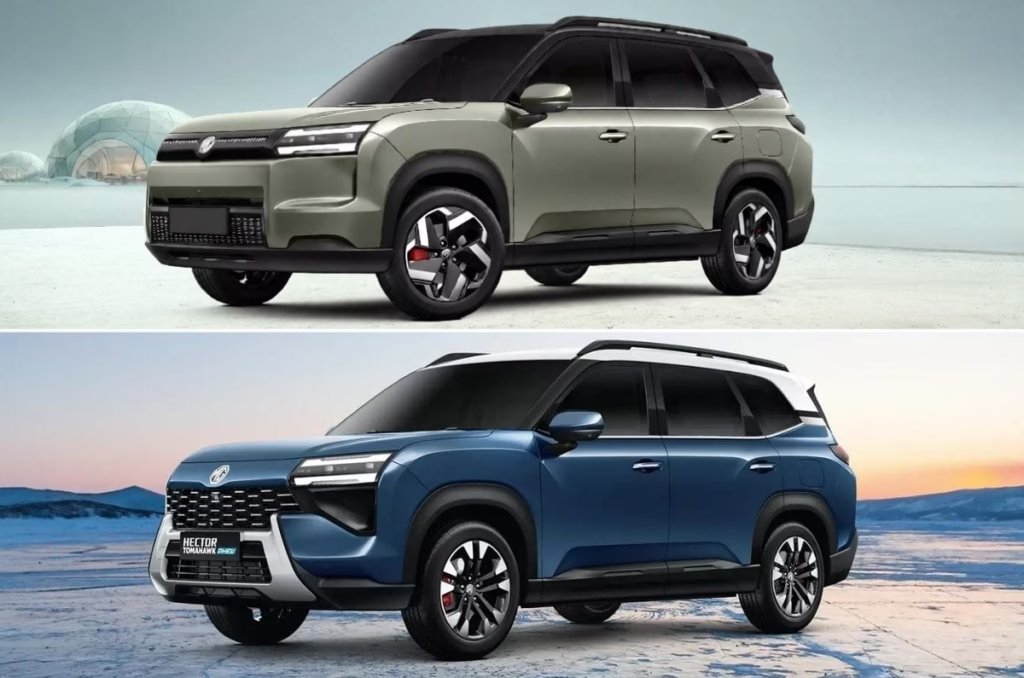
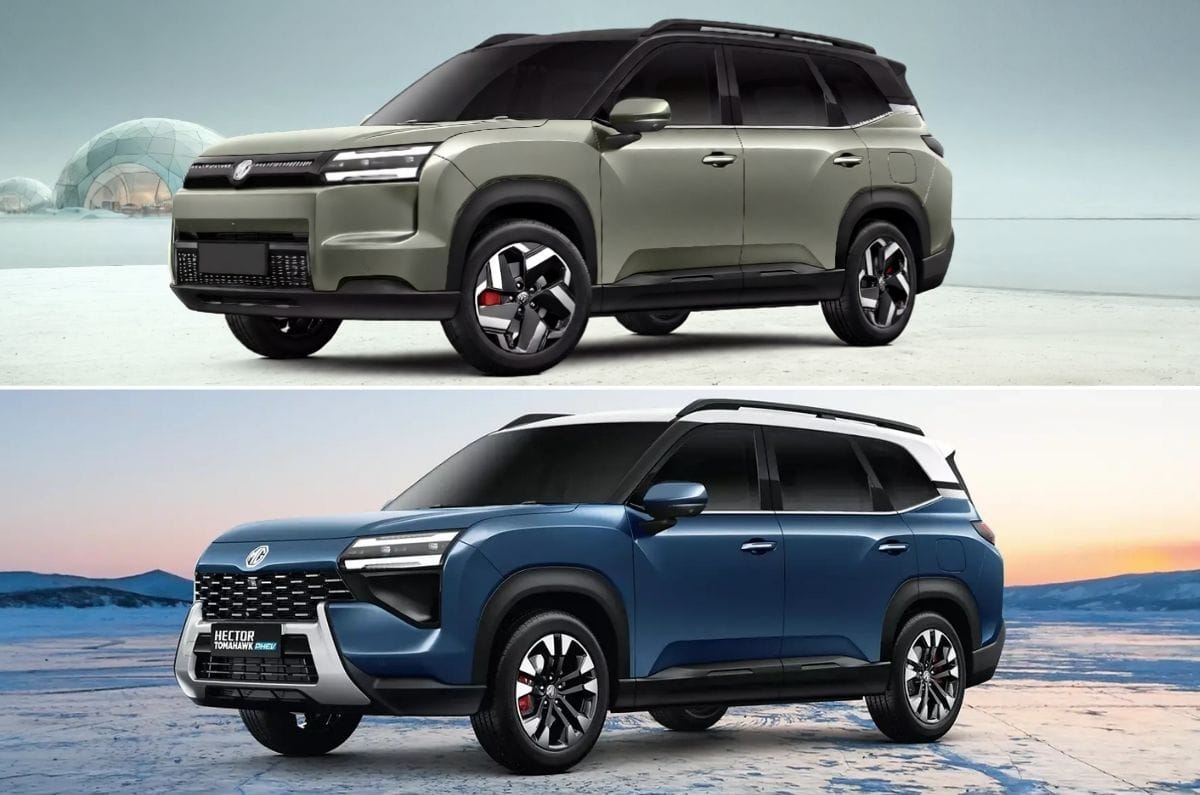
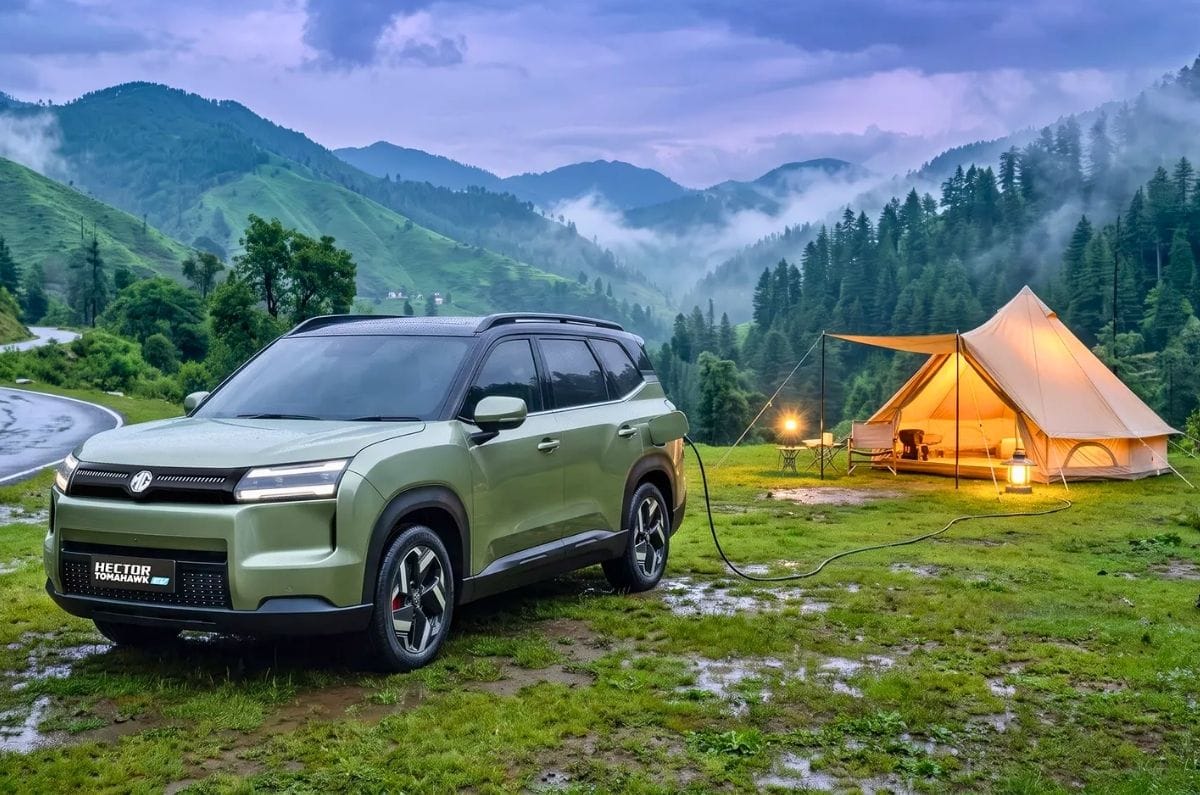
MG launched the Hector Tomahawk in India in both all-electric (EV) and plug-in hybrid (PHEV) versions, with prices starting from Rs 19.50 lakh and Rs 25.70 lakh, respectively. Both models are offered with a lot of new-age technology and have piqued the interest of enthusiasts. Here’s everything you need to know about the MG Hector Tomahawk EV and Hector Tomahawk PHEV.
1. What are the exterior differences between the EV and PHEV?
Both versions get different grilles, front bumpers, and alloy wheels
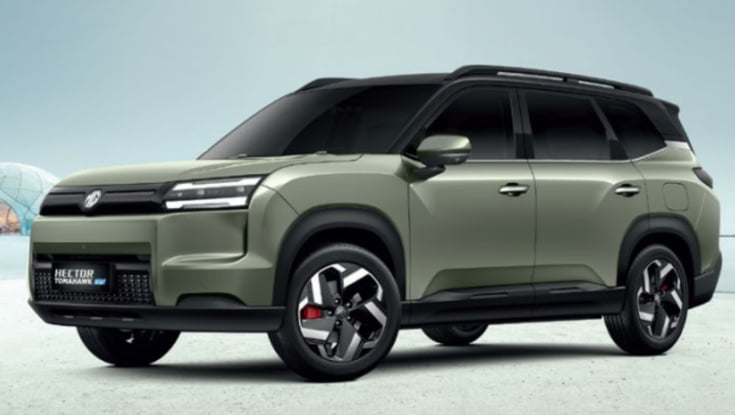
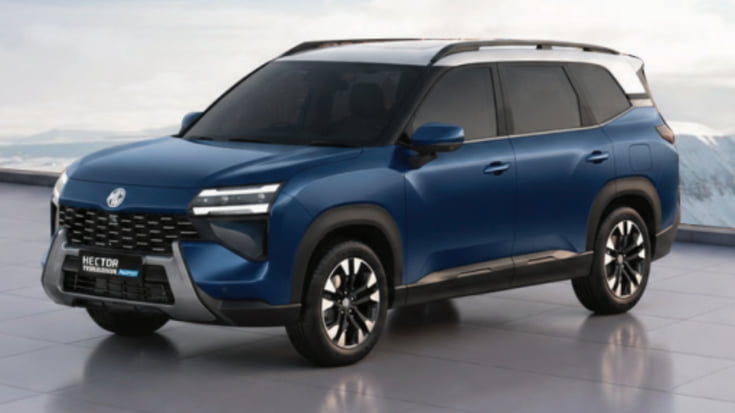
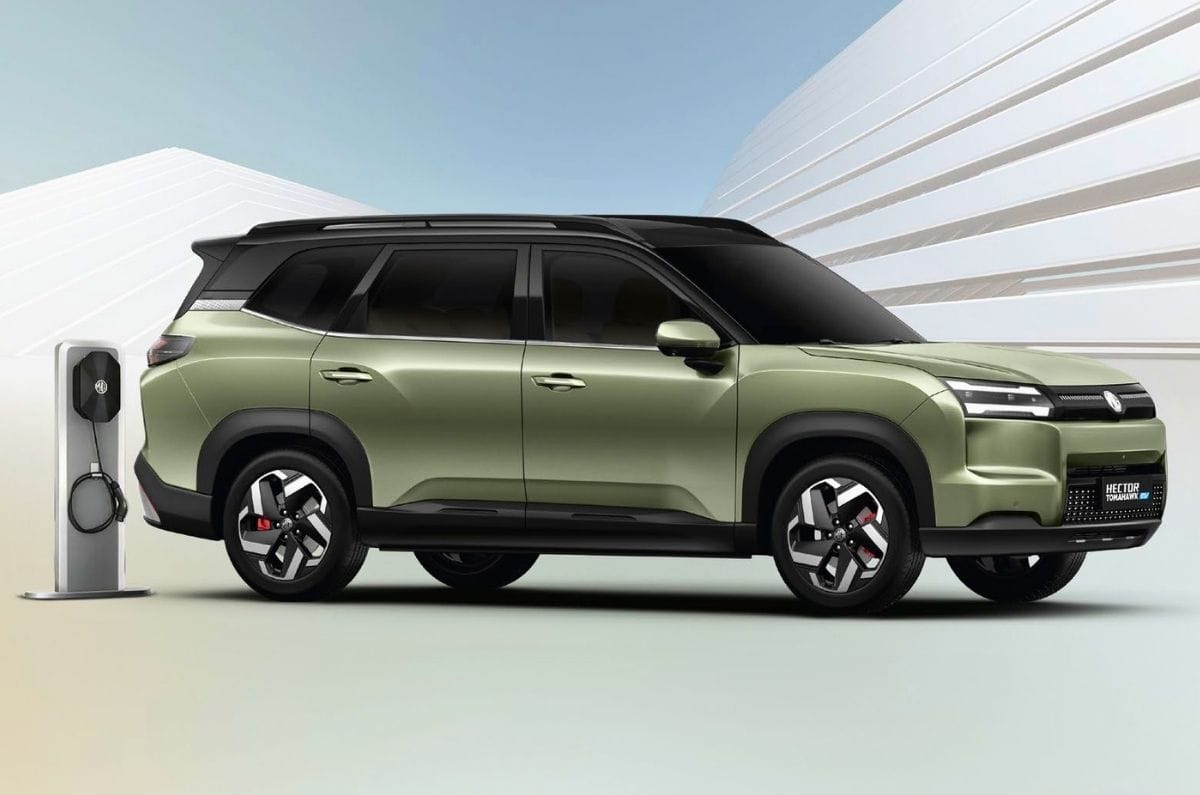
Both the Hector Tomahawk’s EV and PHEV versions have some design differences. While the EV gets a blanked-off gloss-black grille, the PHEV gets a functional grille with chrome inserts and black trims underneath the headlights. The front bumper design is also different, with the PHEV getting a silver bullbar-like element in the centre that the EV misses. The headlights and illuminated MG logo are, however, shared.
Not much is different in the side profile, except for the 18-inch alloy designs and red callipers on the top-spec Hector Tomahawk PHEV. If you opt for a dual-tone shade, the EV will have a black roof, while the PHEV will have a white roof. The rear design, however, is identical for both versions of the SUV.
2. What are the interior differences between the EV and PHEV?
Save for a luggage cover and different cabin themes, everything else is the same
MG Hector Tomahawk EV gets a beige and black cabin theme.
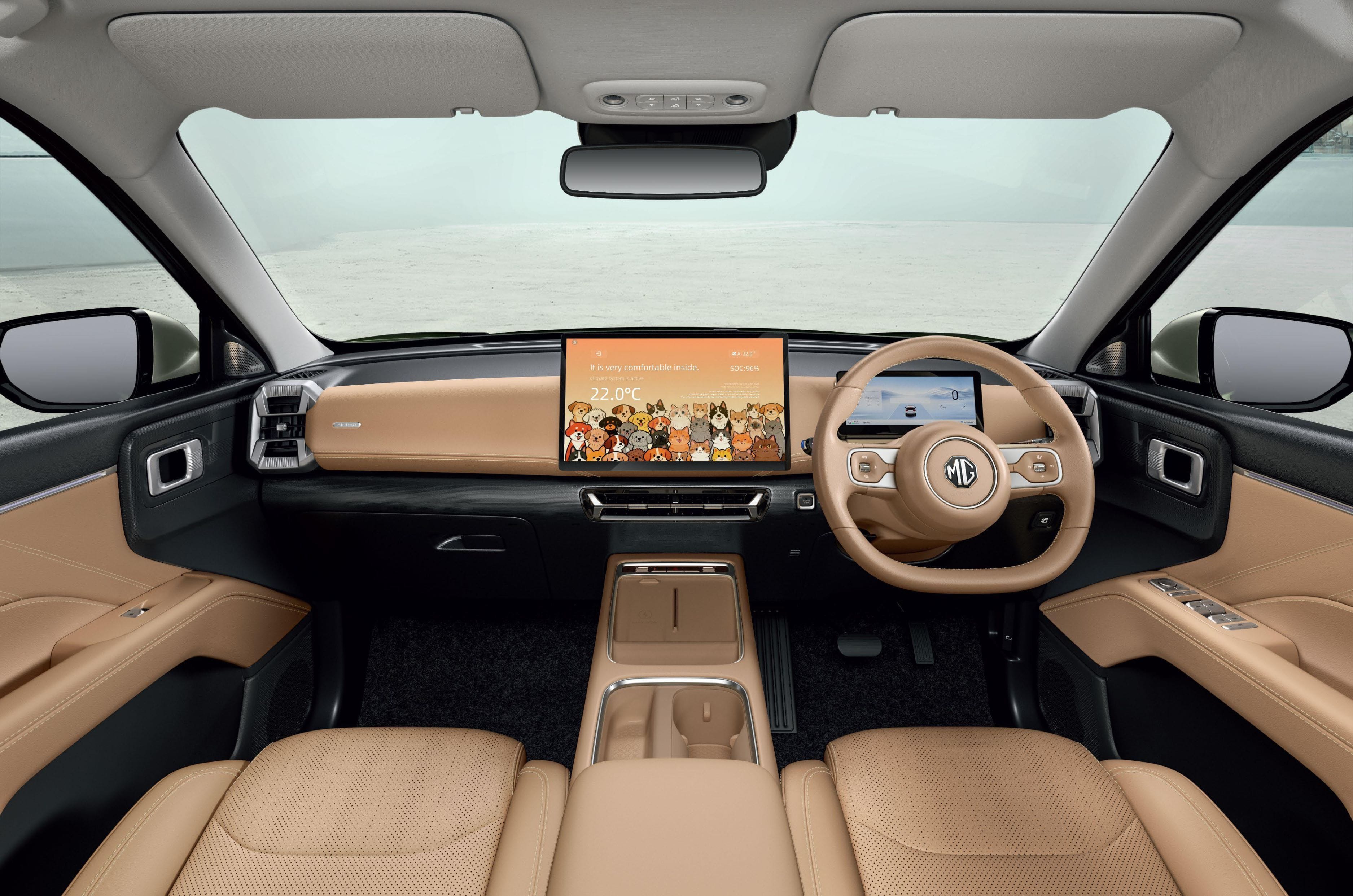
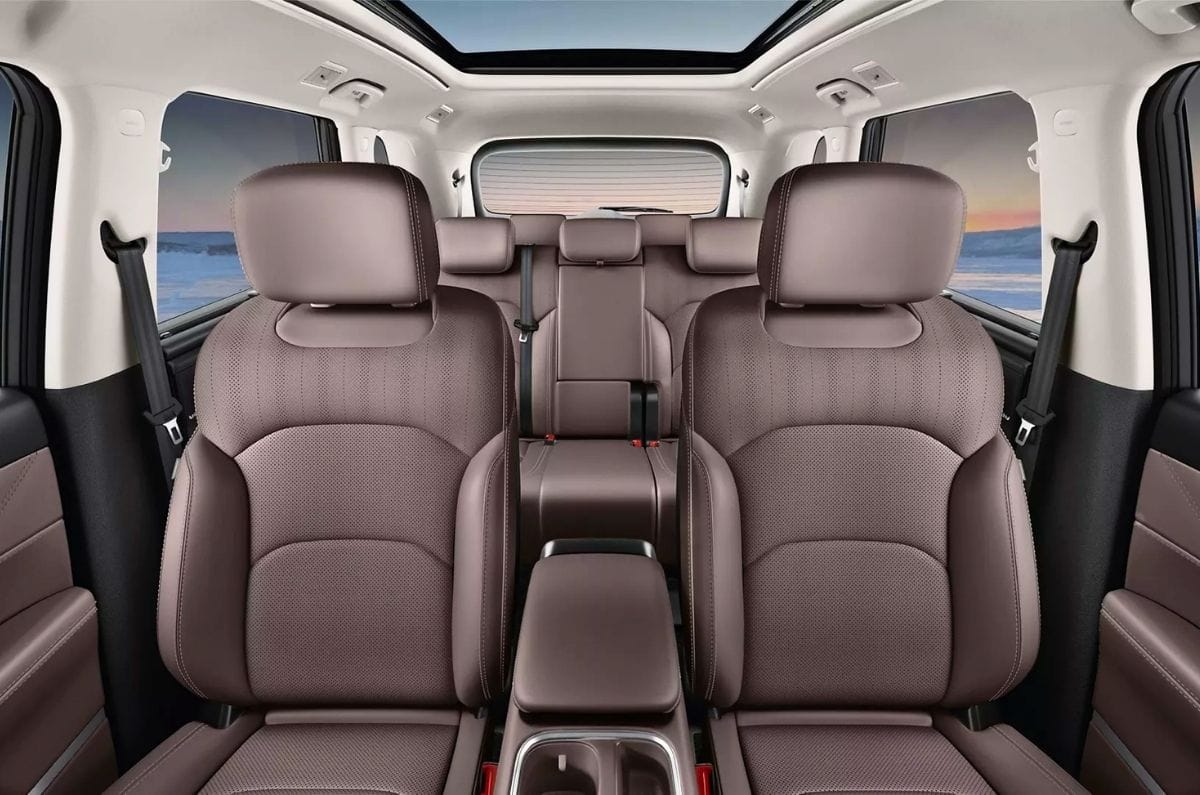
Save for a rolling luggage shade on the 5-seater variants of the EV, and a different cabin theme – brown and black on the EV and a darker brown and black on the PHEV – there is no visible difference. Everything else is the same, including the feature suite: a 15.6-inch touchscreen infotainment system, an 8.8-inch digital driver’s display, a 10-speaker Infinity sound system, a panoramic sunroof, powered and ventilated front seats with memory function for the driver’s seat, and a 50W fast wireless charger.
MG Hector Tomahawk PHEV gets a brown and black cabin theme.
The safety suite is also identical in both Hector Tomahawk versions, which includes 6 airbags, a 360-degree camera with an under-bonnet view, Level 2 advanced driver assistance systems (ADAS) and a tyre pressure monitoring system (TPMS).
3. What is the boot space on the MG Hector Tomahawk EV and PHEV?
EV and PHEV versions offer up to 610 litres and 192 litres of boot space, respectively
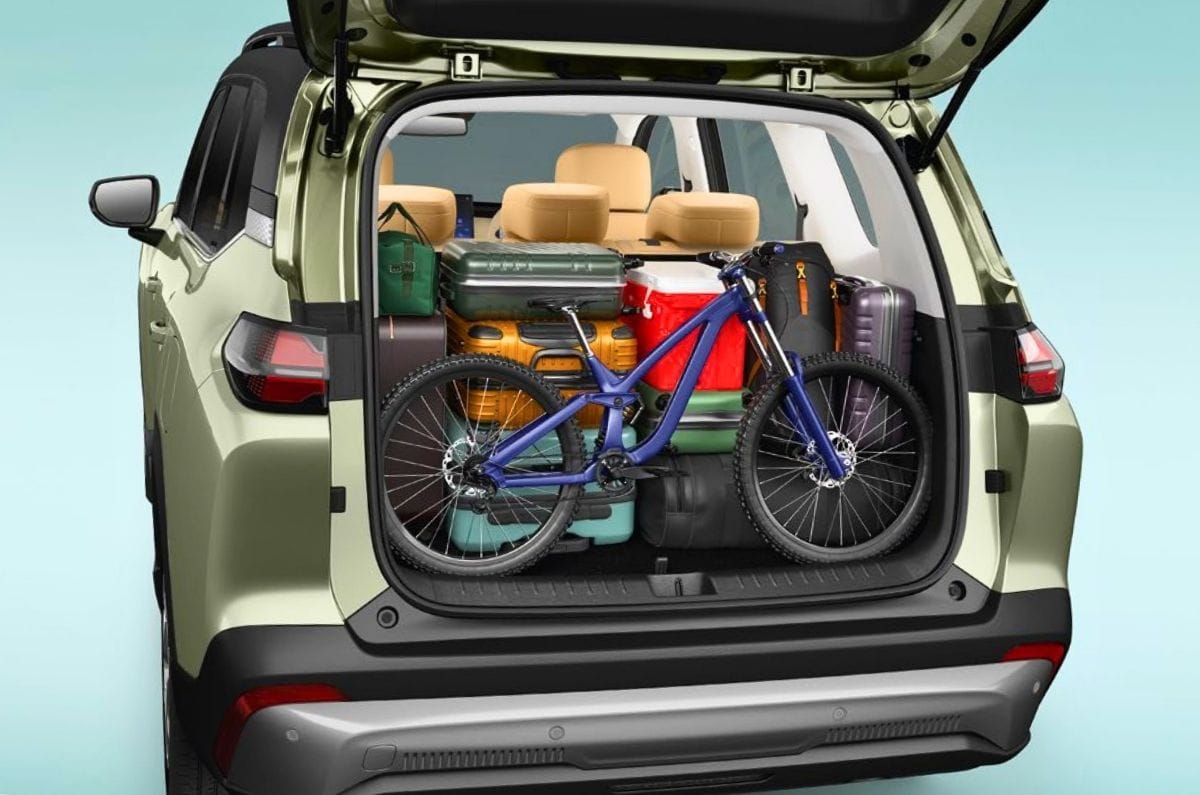
5-seater MG Hector Tomahawk EV’s boot space.
The MG Hector Tomahawk EV is offered in either a 5-seater or a 7-seater version. The 5-seater offers 610-litre boot space, with all rows up, which can be expanded to 1,053 litres by folding down the rear row. The 7-seater version offers a 192-litre boot space with all rows up, and 528 litres when the third row is folded.
The PHEV, offered only as a 7-seater, offers 192-litre boot space like the EV’s 7-seater version, expandable to 528 litres by folding the third row. Neither the EV nor the PHEV version of the Hector Tomahawk are offered with a frunk (storage space under the bonnet).
4. What are the powertrain specifications of the MG Hector Tomahawk PHEV and EV?
PHEV gets a 1.5L engine and 20.5kWh battery; EV offers a 69.2kWh battery pack
The MG Hector Tomahawk PHEV gets a 1.5-litre naturally aspirated petrol engine and a 20.5kWh battery pack, offering a combined output of 198hp and 230Nm. The front-wheel-drive (FWD) SUV has an all-electric range of around 115km and a total range including the petrol engine of around 1,100km.
The MG Hector Tomahawk EV, on the other hand, gets a 69.2kWh battery pack, mated to a front-axle-mounted electric motor producing 204hp and 310Nm. It has a claimed range of 517km.
5. Can the Hector Tomahawk PHEV be charged at a public EV charging station?
It supports 25kW DC fast charging
Yes, being a plug-in hybrid (PHEV), the MG Hector Tomahawk PHEV supports 25kW DC fast charging. This can replenish the battery from 30 to 80 percent in 35 minutes, like a typical EV. MG is also offering it with a 3.3kW home charger, which can recharge the battery pack from 10 to 100 percent in 7.5 hours.
6. Are the MG Tomahawk EV and PHEV more affordable with BaaS?
BaaS reduces the EV’s and PHEV’s initial prices by up to Rs 6.01 lakh and 3.91 lakh, respectively
MG Hector Tomahawk EV, PHEV BaaS vs non-BaaS prices (in Rs, lakh)
Without BaaS
With BaaS
Initial cost difference
EV
19.50 to 23.50
13.99 to 17.49*
Up to 6.01
PHEV
25.70 to 27.80
21.79 to 23.89^
3.91
*Battery subscription fee is Rs 4.9 per km per month
^Asks for a battery subscription fee of Rs 3.2 per km per month
The BaaS (Battery-as-a-Service) option reduces the upfront price of the MG Hector Tomahawk EV by Rs 6.01 lakh and the PHEV by Rs 3.91 lakh. However, you then pay a battery rental fee for every kilometre you drive: Rs 4.90 per km for the EV and Rs 3.20 per km for the PHEV. At these rates, the upfront savings from BaaS are effectively used up after around 1.22 lakh km. The break-even point is 1,22,653 km for the EV and 1,22,187 km for the PHEV.
In simple terms, if you expect to drive less than 1.22 lakh km over the entire ownership period, BaaS could be the more affordable option because of its lower initial cost. However, if you plan to drive more than 1.22 lakh km, buying the Hector Tomahawk with the battery included is likely to save you more money in the long run.
There is also another factor to consider. Under the BaaS plan, you do not own the battery, so your long-term costs depend on the rental agreement. If MG increases the per-kilometre fee or changes the contract in the future, your running costs could also increase. So, while BaaS would be more affordable for most buyers, purchasing the vehicle with the battery included may offer greater certainty in running cost calculations.
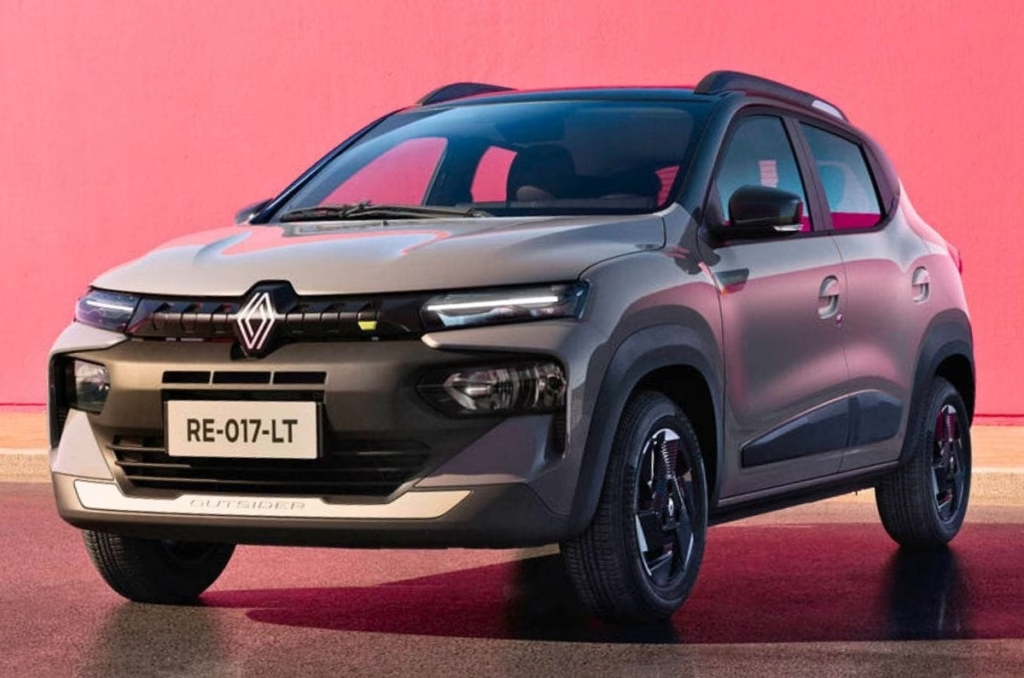
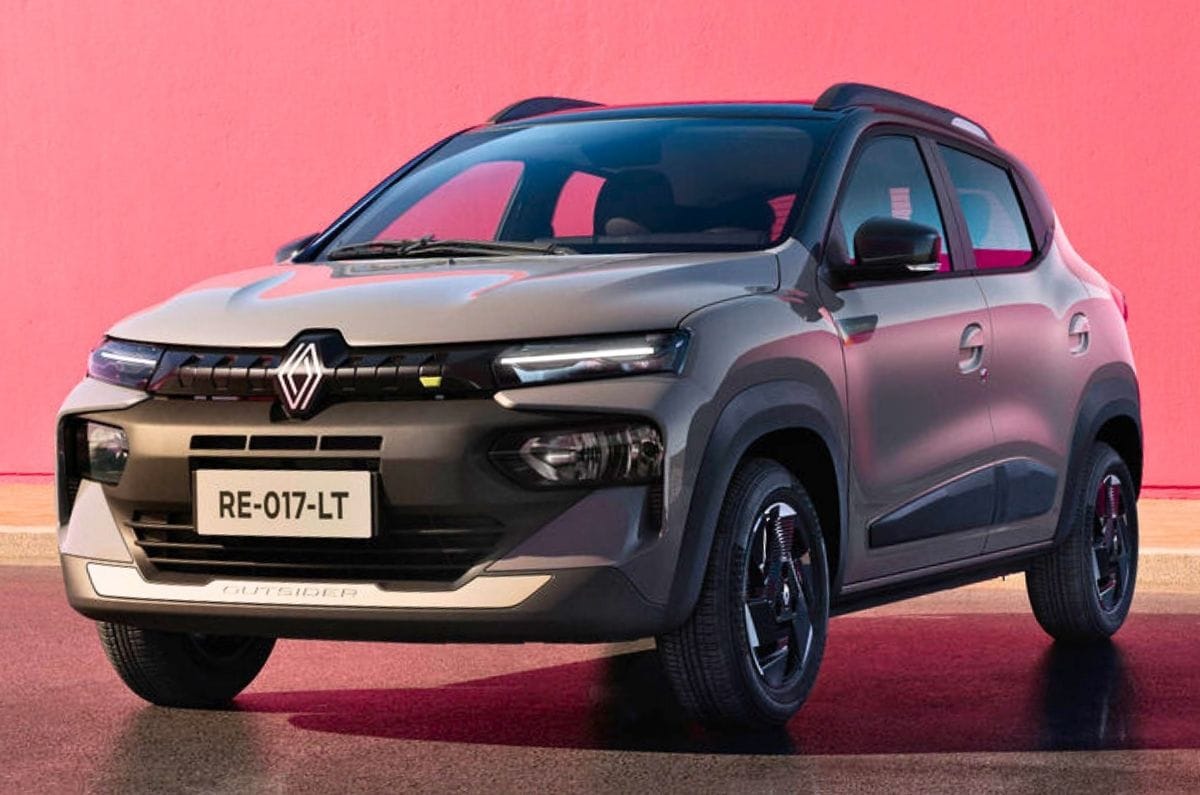
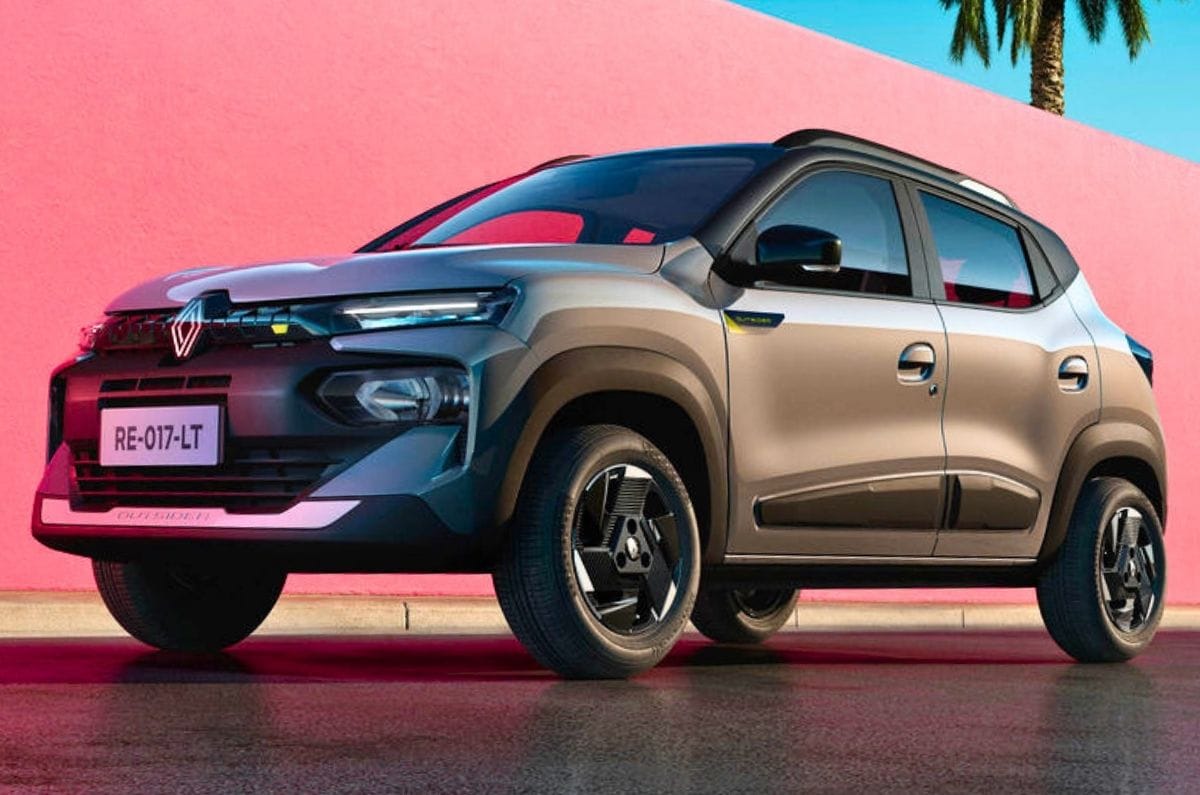
Renault has revealed the Kwid facelift for the Brazilian market, featuring subtle exterior design revisions and a completely revamped interior. The updated hatchback is available in three trims – Evolution, Techno, and Outsider.
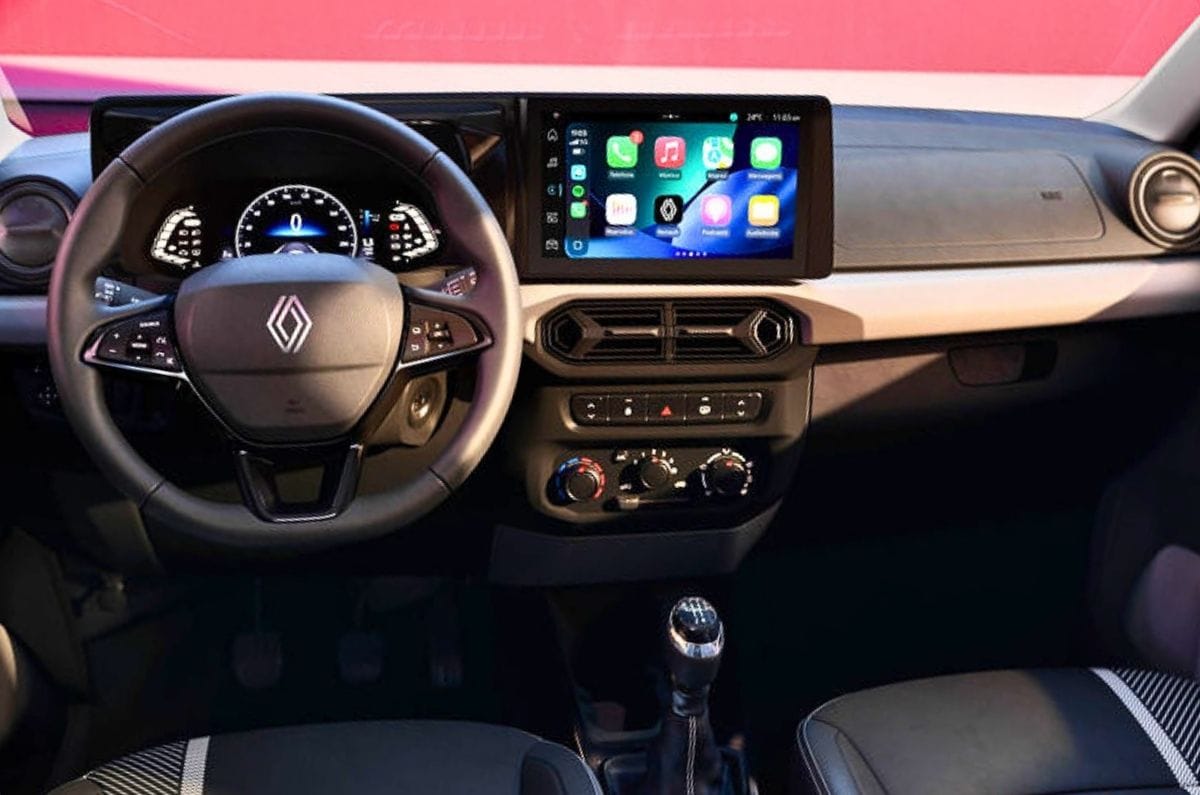
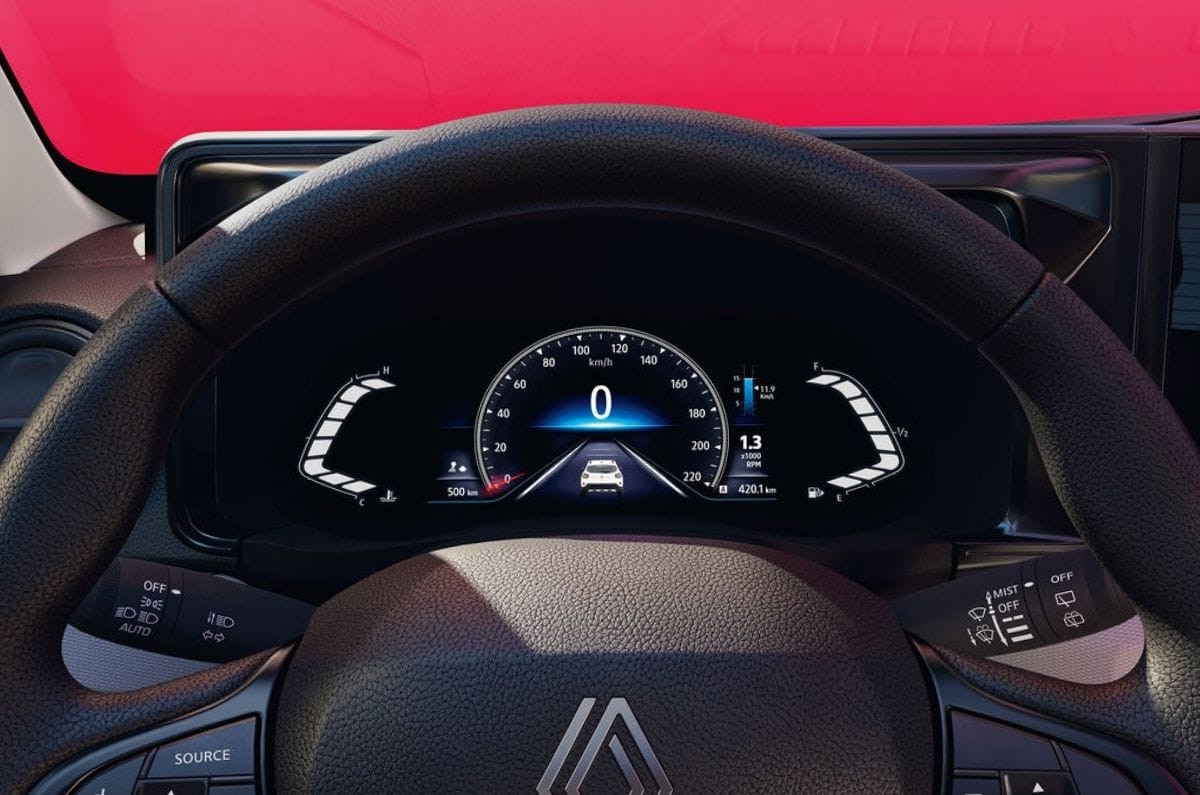
Gets a new 7-inch digital driver’s display and a 10.1-inch infotainment system
Has a cleaner-looking but hard plastic-only dashboard without the ‘Kwid’ inscription
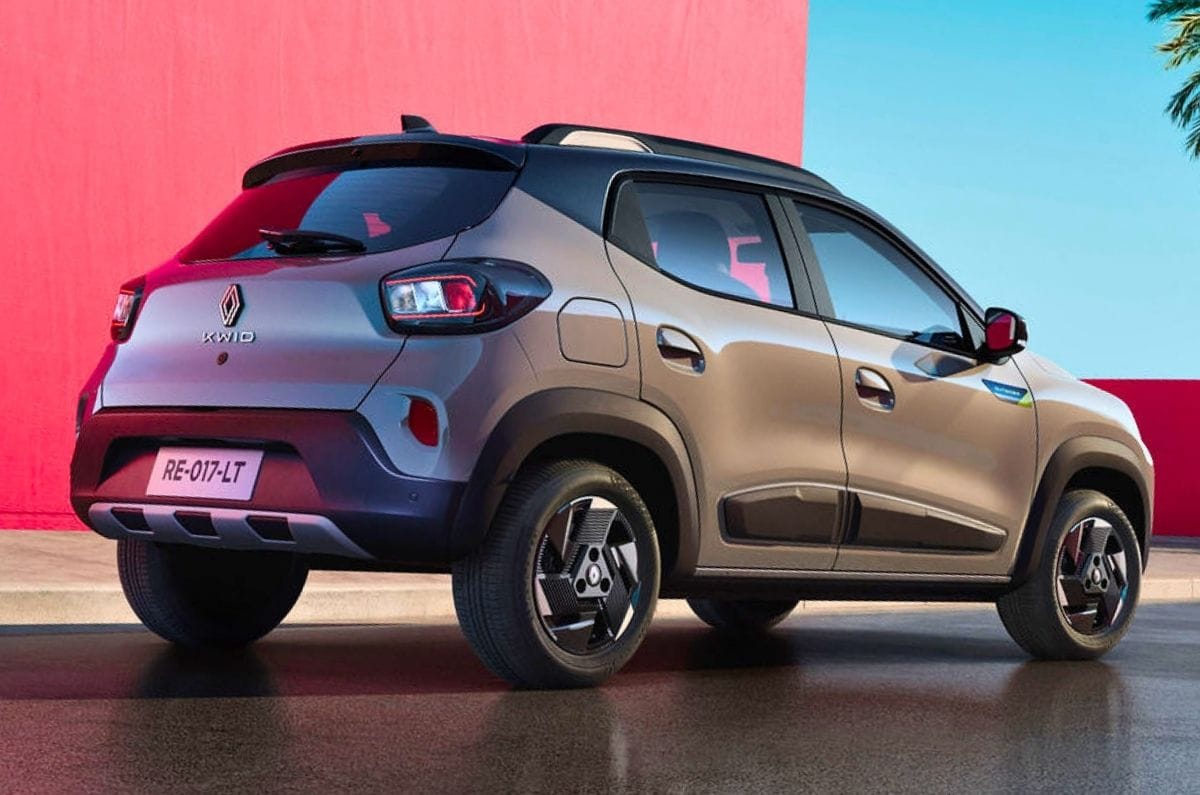
Features a Kiger-like grille, 14-inch alloy wheels and redesigned taillight elements
Notably, the India-spec Kwid was also updated earlier this year, receiving new 3D badges, fresh wheel covers, and a Kiger-inspired steering wheel. However, compared to the India-spec model, the Brazil-spec Kwid gets more extensive updates as part of its facelift.
Brazil-spec Renault Kwid facelift: What are the changes?
Gets a revamped dashboard with two screens
The biggest update on the Brazil-spec Kwid is inside the cabin, which now features a cleaner-looking dashboard with two displays: a 7-inch digital driver’s display and a free-standing 10.1-inch touchscreen infotainment system. While the dashboard continues to use hard plastic, the overall design looks more premium than the India-spec Kwid, which gets a semi-digital driver’s display and a smaller 8-inch infotainment screen.
Other features include manual air conditioning, two Type-C USB charging ports, power-operated front windows, and electrically adjustable outside rearview mirrors. Safety equipment includes four airbags as standard, along with hill-start assist, a reverse parking camera with sensors, and a tyre pressure monitoring system. Most of these features are also available on the India-spec Kwid, although the top-spec Climber variant gets six airbags.
Gets a new grille, alloy wheels and LED taillight elements
At the front, the Brazil-spec Renault Kwid gets a new grille with vertical slats, similar to the Renault Kiger, along with a new 3D Renault logo. It also features LED DRL bars and halogen headlamps, similar to the India-spec model. The front bumper design is also more aggressive and features a lot of blackened elements.
In profile, the Brazil-spec Kwid gets 14-inch dual-tone alloy wheels, giving it a more upmarket appearance than the Indian model, which comes with 14-inch steel wheels with plastic covers. At the rear, the facelifted Kwid gets revised LED taillight elements, while the tailgate and bumper designs remain unchanged.
The Brazil-spec Kwid has the same 2,423mm wheelbase as the India-spec model, but offers a larger 290-litre boot, which is 11 litres more than the Indian version. Ground clearance stands at 185mm, identical to the India-spec Kwid.
Gets the same engine as the India-spec model, but only with MT
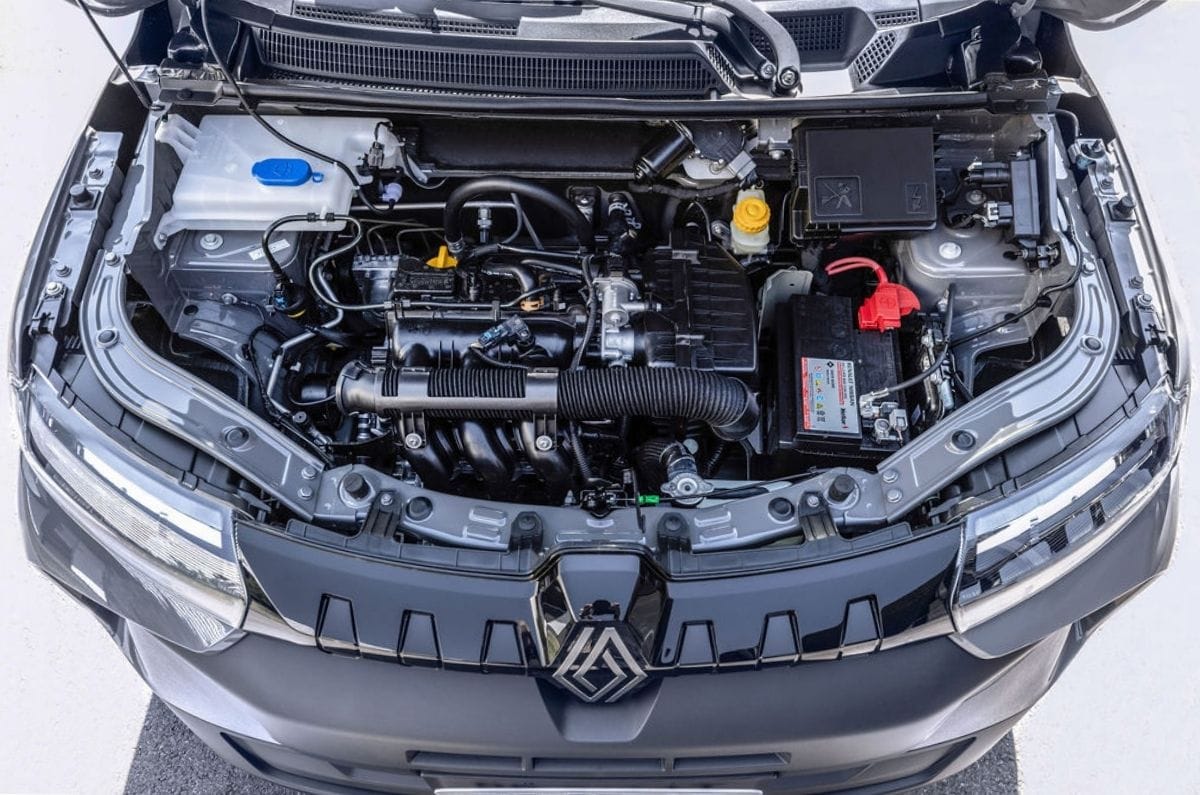
The Brazil-spec Renault Kwid is powered by a 1.0-litre 3-cylinder naturally aspirated petrol engine that produces 71hp and 98Nm with ethanol, and 68hp and 92Nm with petrol. This is the same engine as the one offered in the Indian model. However, the Brazil-spec Kwid gets a 5-speed manual transmission, while the Indian model also offers a 5-speed AMT option.
The Brazil-spec Renault Kwid facelift is unlikely to make its way to India, especially since the India-spec hatchback was updated just last month. Declining hatchback sales in the country are another factor that could discourage Renault from making a fresh investment to bring the Brazil-spec model here. The India-spec Renault Kwid is currently offered in two trims: Evolution and Climber, with prices ranging from Rs 4.53 lakh to Rs 5.61 lakh (ex-showroom).