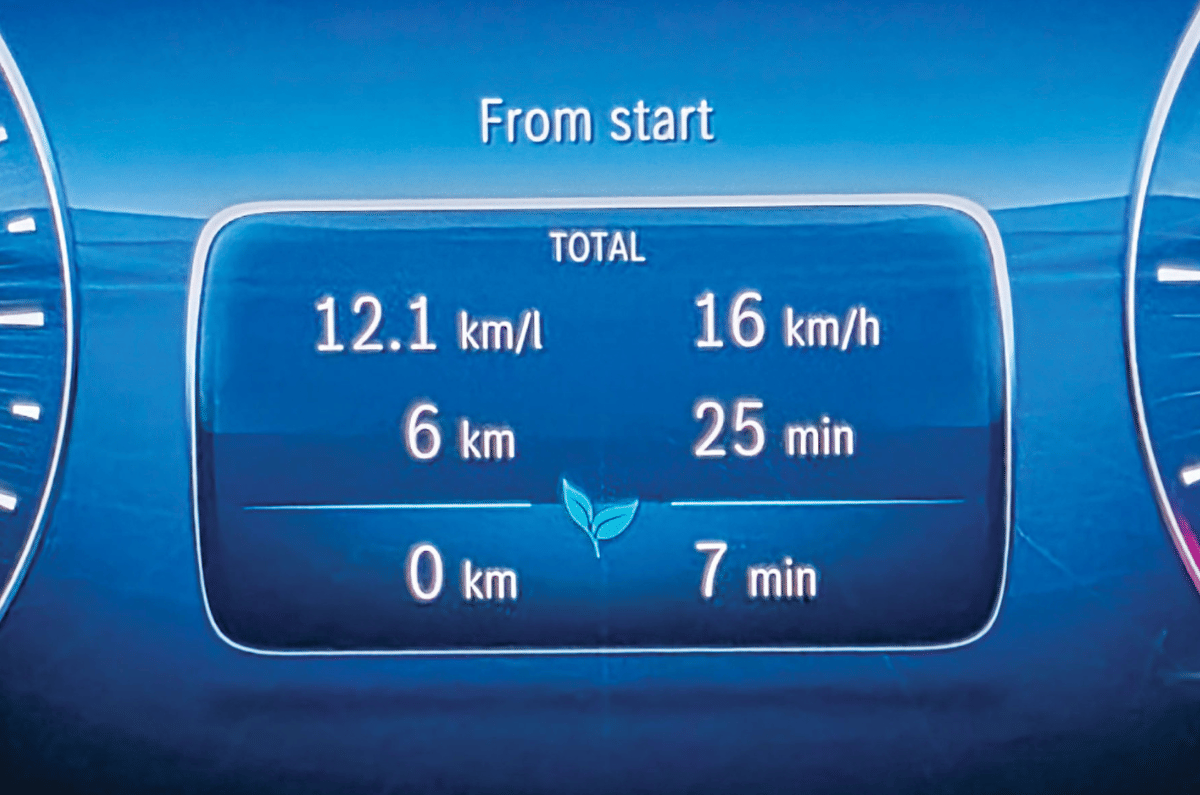
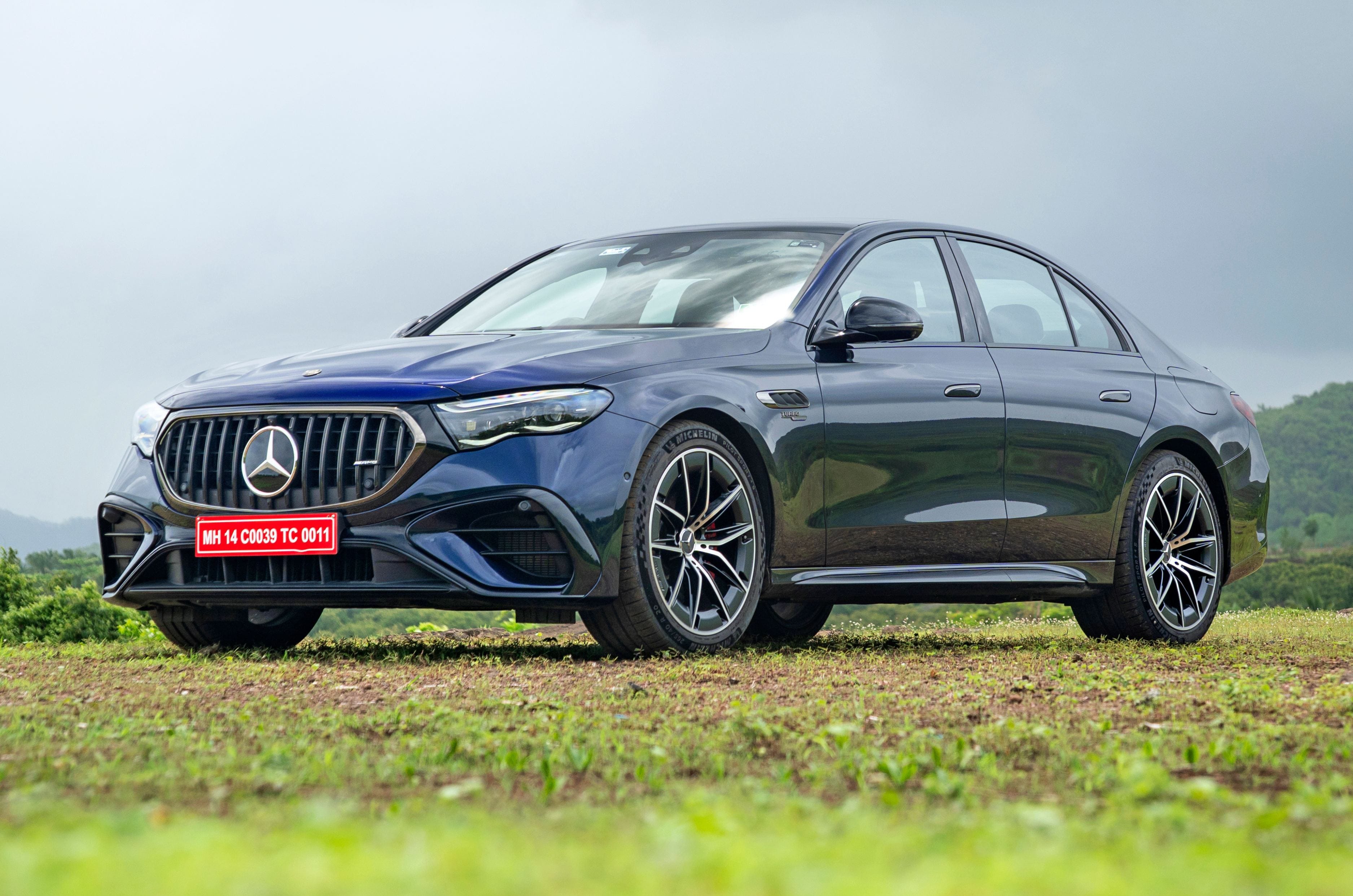
Double-digit fuel economy figures – I haven’t seen those on my daily commute in years! Part of the reason is that I’ve been driving mostly EVs lately, and they don’t use any fuel. And the other is that there are so few diesels, and those that remain have taken quite a hit on the economy front with all those emissions upgrades and various weight increases. So imagine my surprise when this large, heavy, super-luxurious limousine showed me upwards of 12kpl on my traffic-heavy 9km commute.
Smooth 2.0-litre diesel delivers exceptional economy even in this large and heavy limousine.
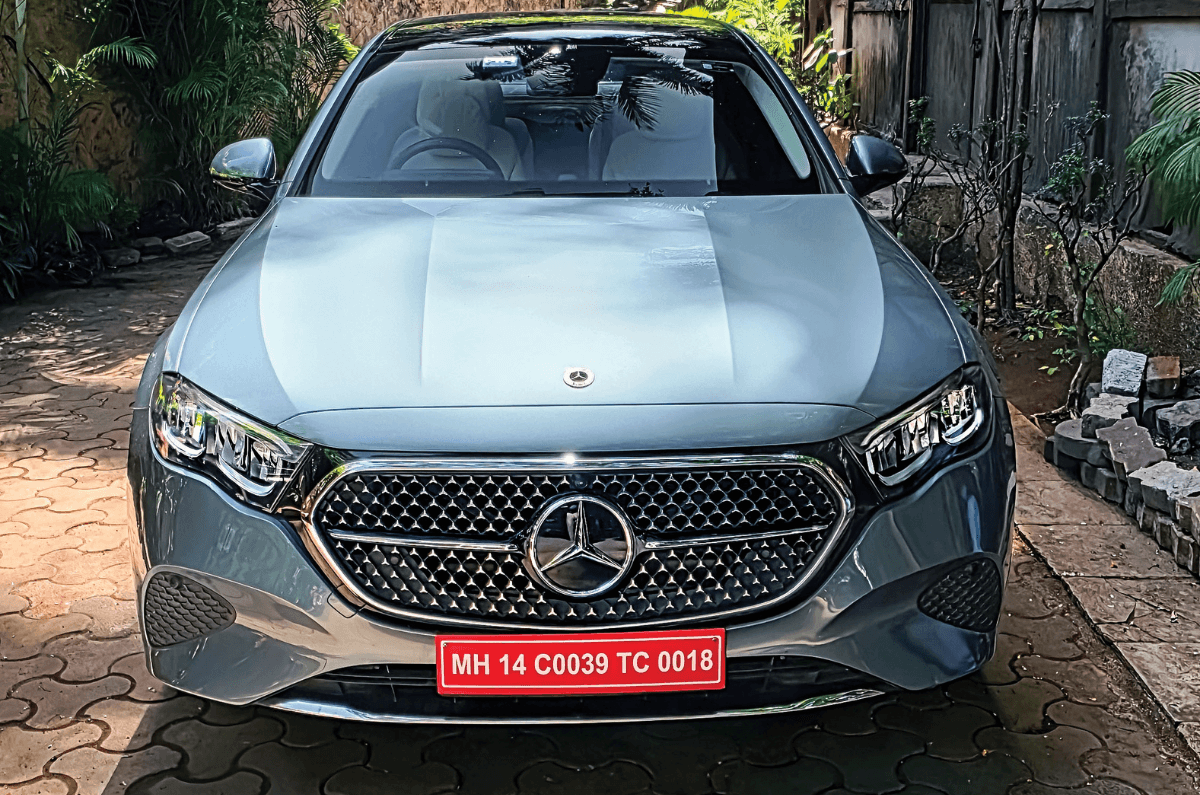
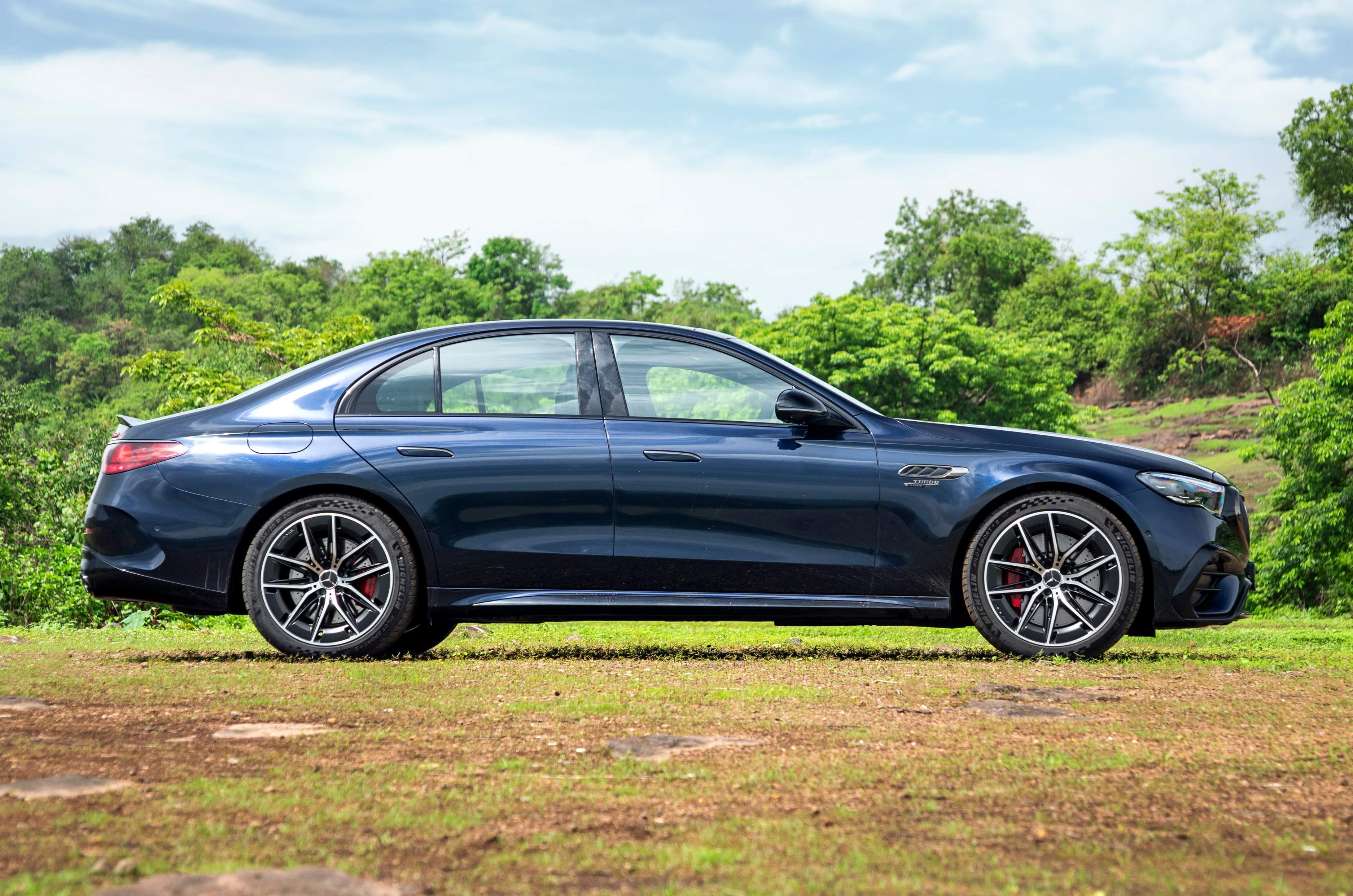
The fuel economy is but one of many bright blips on a limo that wastes no time showing you why it’s India’s favourite luxury car. And that’s despite its on-road price knocking on the door of a crore. It looks tremendous, more so in this Verde Silver paint, a shade I’m glad Mercedes added to its otherwise monochrome palette. It’s big but not ungainly, and its 18-inch wheels are a triumph of design – looking elegant and bigger than they actually are.
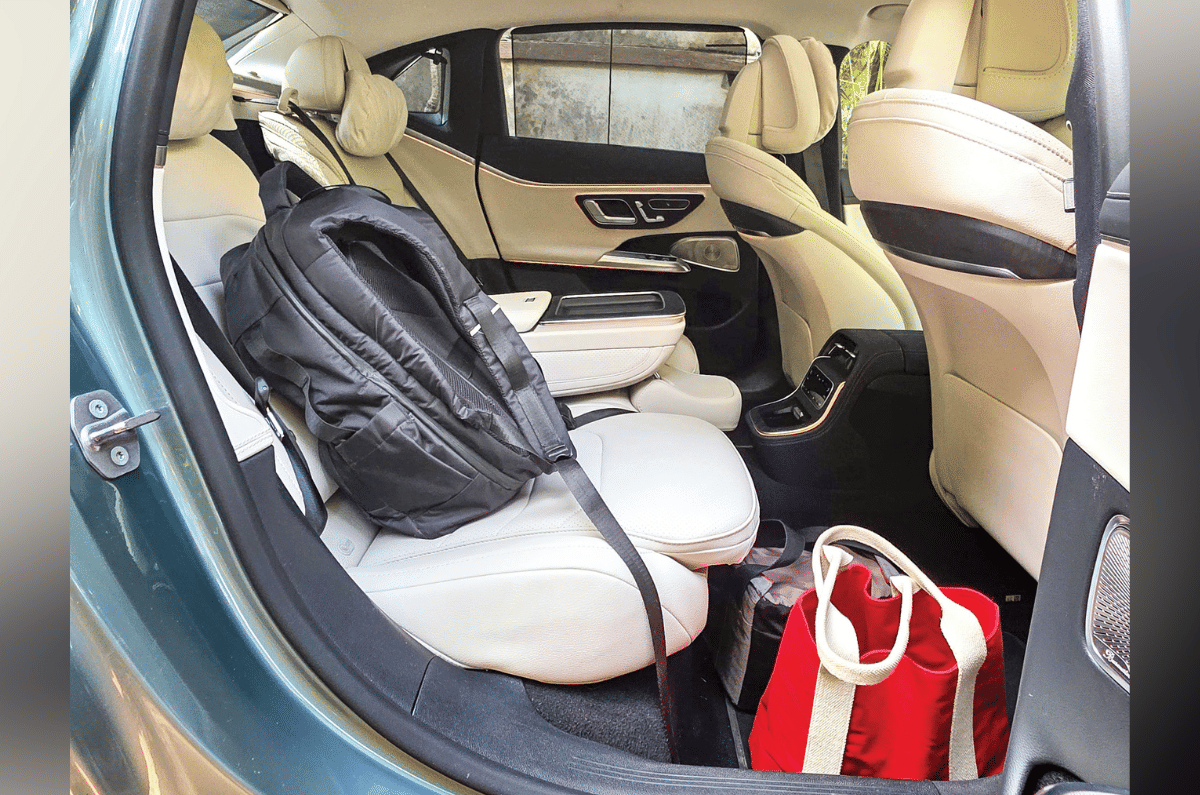
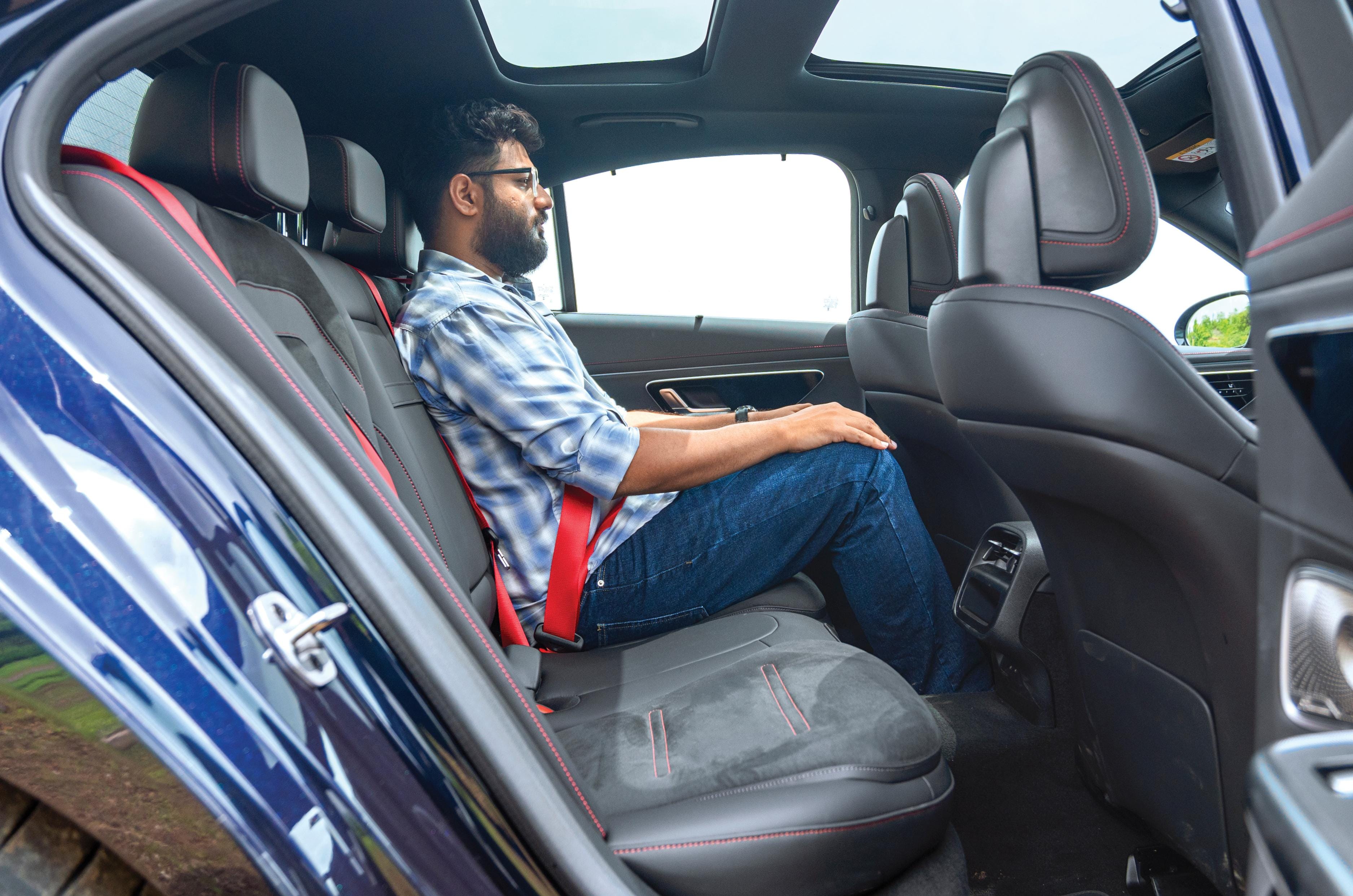
Back seats enjoyed mostly by bags for now.
Sadly, I don’t have a chauffeur, so I can’t experience the best seats the E-Class has to offer; that privilege goes to my bags every day.
Firm pedal resistance, along with turbo and gearbox lag, can make for abrupt starts from a standstill.
However, the big limo is surprisingly nice from behind the wheel too. I took little time to adjust to its large dimensions, and the steering is quick and responsive, so it wasn’t long before I was pointing its long nose into lanes only just about wide enough for it. My one grouse is the accelerator pedal, which doesn’t feel consistently weighted, and when combined with some reasonable turbo and gearbox lag, can make for an un-Merc-like lurch if you’re not careful.
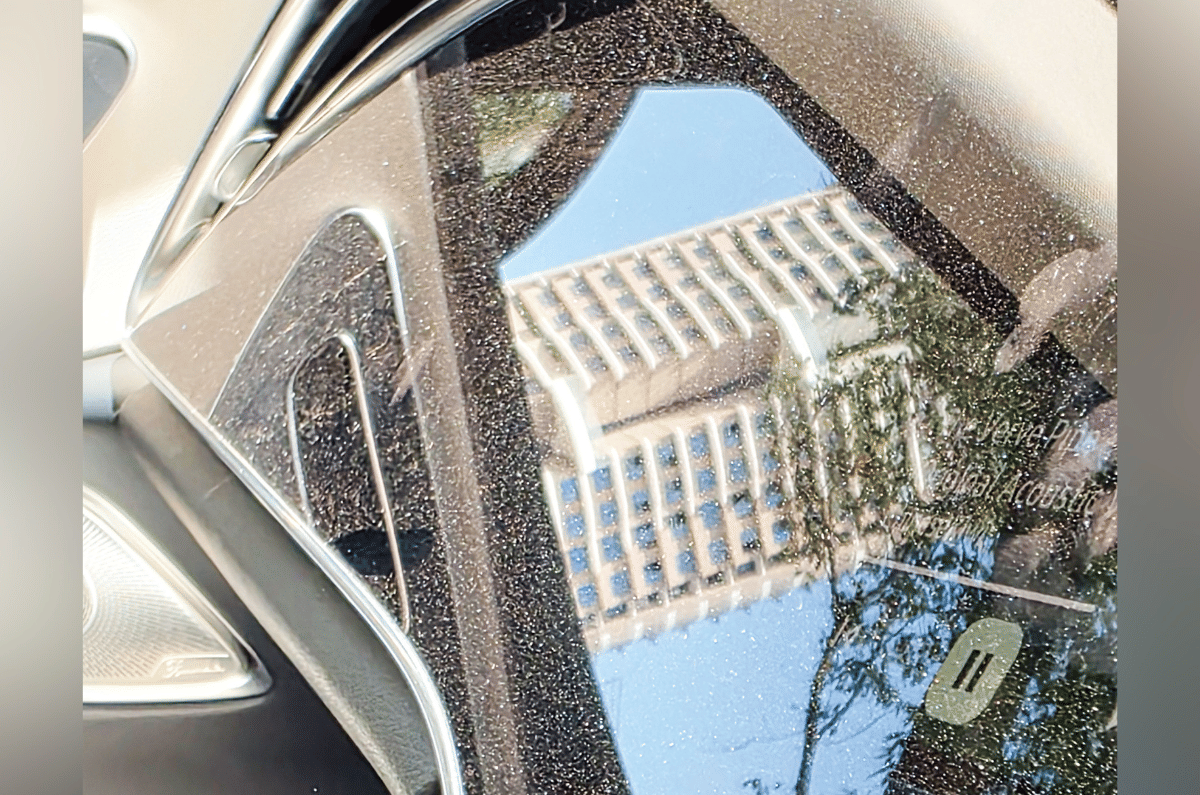
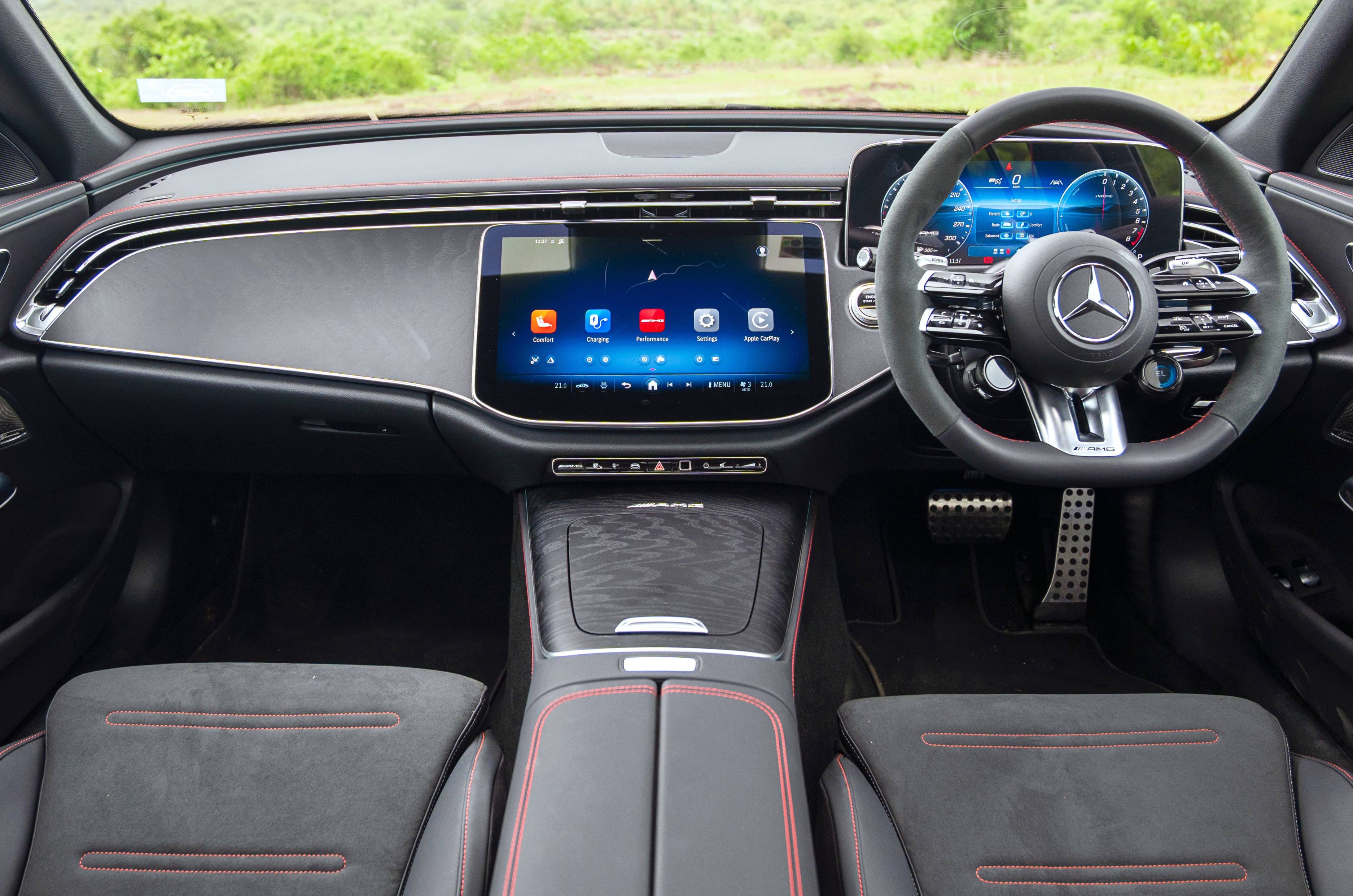
‘Superscreen’ dashboard collects dust easily and catches a lot of reflections that distract the driver.
A big talking point of this new E-Class was the decision to replace the wood and leather dashboard with a giant panel of screens. I’m glad they’ve retained some rich-feeling open-pore wood on the dash, doors and seats though. The central screen is hugely impressive – bright, crisp and full of detail. But having a glass surface for a dashboard invites dust and reflections, which became a pain when driving in the afternoon sunlight. But that’s a problem for your chauffeur, and if you have an E-Class, chances are you have one in your employ too.
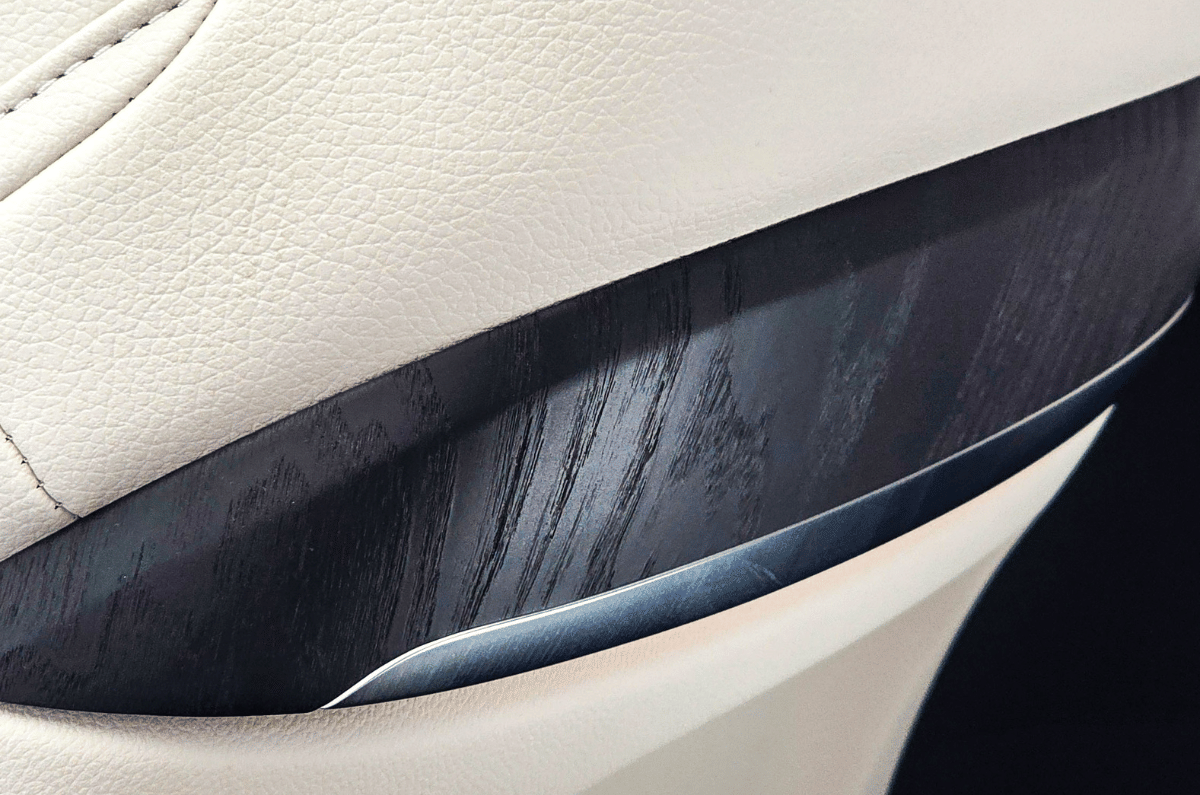
Despite the screens, a generous use of open-pore wood anchors the interior in old-world luxury.
The E 220d is the last diesel standing in its segment, and it’s all the better for it. Once the most vilified fuel in the country, the uncertainty around petrol these days might even turn people back to the black pump. And the smooth, refined, efficient E is a shining example of how good that can be.
हिंदू धर्म के पवित्र त्योहार सावन के महीने की शुरुआत हो गई है। सावन के महीने में सोमवार को भगवान शिव की पूजा होती है। वहीं सावन का पहला सोमवार 3 अगस्त को है। सावन के पहले सोमवार और कांवड़ यात्रा को ध्यान में रखते हुए कई राज्यों में सुरक्षा बढ़ा दी गई है। कांवड़ यात्रा शुरू होने के बाद उत्तर प्रदेश, उत्तराखंड, दिल्ली-एनसीआर और आसपास के राज्यों में सुरक्षा व्यवस्था कड़ी कर दी गई है। श्रद्धालुओं की बढ़ती संख्या को देखते हुए कई जगह ट्रैफिक ट्रैफिक डायवर्जन किए गए हैं। वहीं लोगों की सुविधा के लिए जरूरी दिशा-निर्देश भी जारी किए गए हैं, ताकि कांवड़ियों और आम लोगों की आवाजाही सुचारु बनी रहे।
सावन के पहले सोमवार पर शिव मंदिरों में बड़ी संख्या में भक्तों के पहुंचने की उम्मीद रहती है। प्रशासन ने श्रद्धालुओं से भीड़ कम होने के समय मंदिर आने और पुलिस व सुरक्षा कर्मियों के निर्देशों का पालन करने की अपील की है।
इन जगहों पर किया गया डायवर्जन
कांवड़ यात्रा और सावन के पहले सोमवार पर श्रद्धालुओं की भारी भीड़ को देखते हुए कई राज्यों में ट्रैफिक व्यवस्था में बदलाव किया गया है। उत्तर प्रदेश, उत्तराखंड और दिल्ली-एनसीआर के कई इलाकों में कुछ रास्तों पर वाहनों का रूट बदला गया है, जबकि कांवड़ियों के लिए कई मार्ग रिजर्व किए गए हैं। प्रशासन ने लोगों से यात्रा से पहले स्थानीय ट्रैफिक एडवाइजरी देखने की सलाह दी है। वहीं, मेरठ सहित कई जिलों में भीड़ और सुरक्षा व्यवस्था को ध्यान में रखते हुए कुछ समय के लिए स्कूल और कॉलेज बंद रखने का फैसला भी लिया गया है।
सीसीटीवी से की जाएगी निगरानी
सावन और कांवड़ यात्रा के दौरान सुरक्षा व्यवस्था को और मजबूत कर दिया गया है। बड़े शिव मंदिरों और कांवड़ मार्गों पर अतिरिक्त पुलिस बल तैनात किया गया है। इसके साथ ही सीसीटीवी कैमरों, ड्रोन और विशेष सुरक्षा टीमों की मदद से लगातार निगरानी की जा रही है। हाल ही में मिली सुरक्षा संबंधी सूचनाओं को देखते हुए उत्तर प्रदेश में प्रशासन और पुलिस को पूरी तरह सतर्क रहने के निर्देश भी दिए गए हैं।
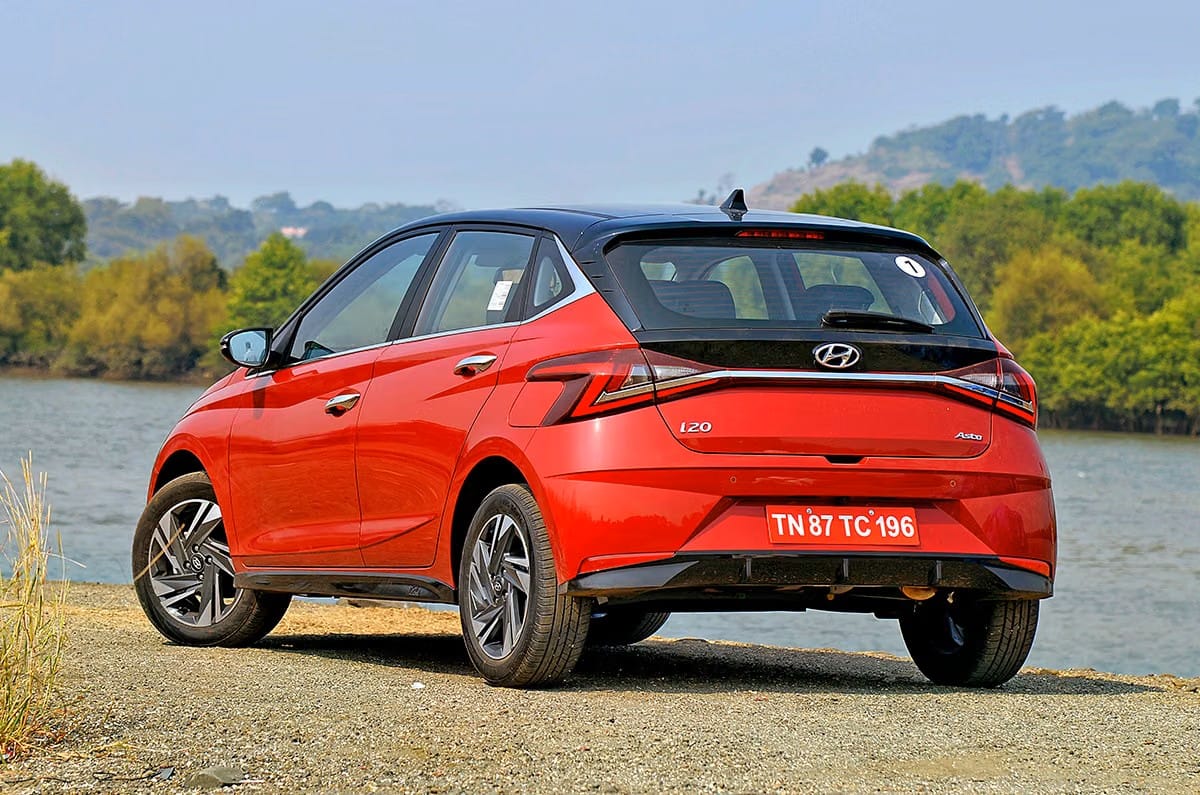
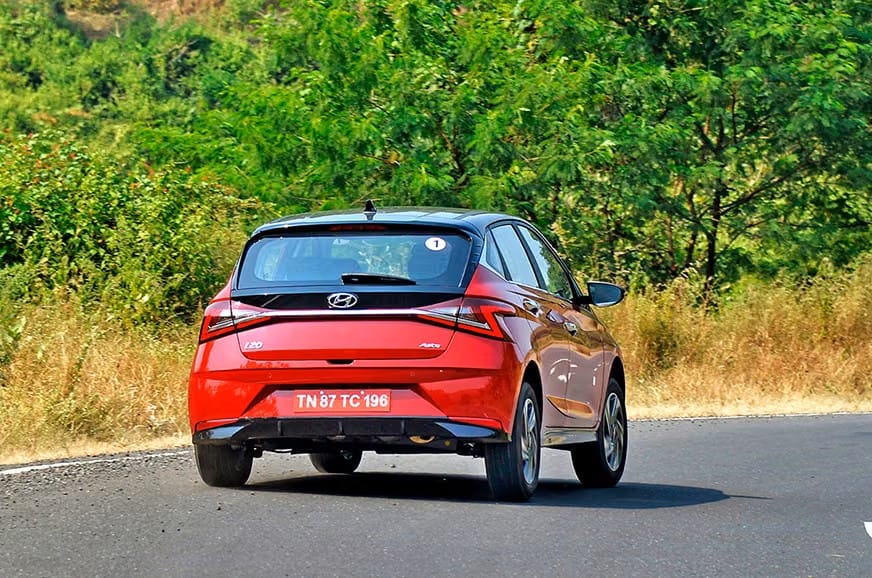
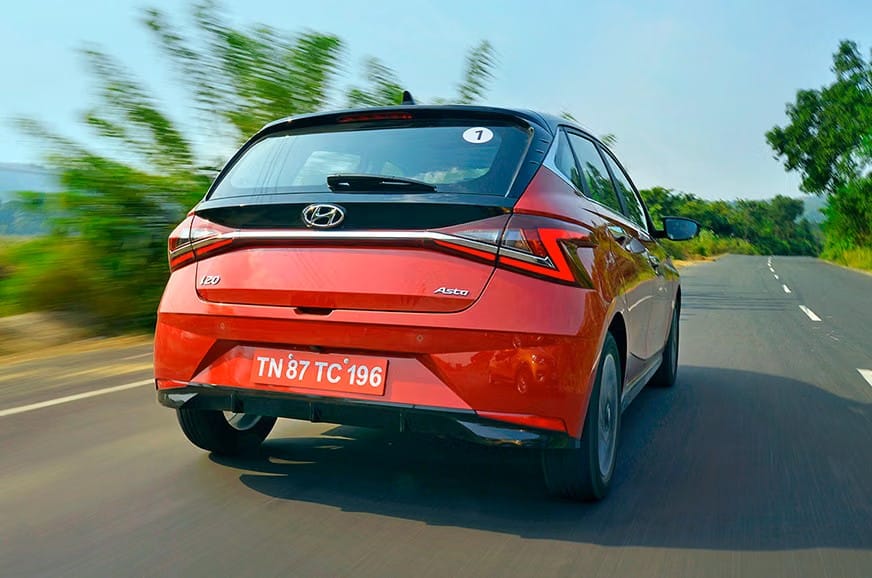
The Hyundai i20 has long been one of the benchmarks in the premium hatchback segment. Along with a spacious cabin, comfortable ride and a feature-rich interior, it offers buyers a choice of manual and automatic transmissions, while those seeking more performance can opt for the sportier i20 N Line. However, its premium pricing (Rs 6 lakh to Rs 11.59 lakh) means it faces stiff competition from both premium hatchbacks and similarly priced compact SUVs. Here’s a look at the Hyundai i20’s biggest strengths and weaknesses.
Pros
1. Spacious and comfortable cabin
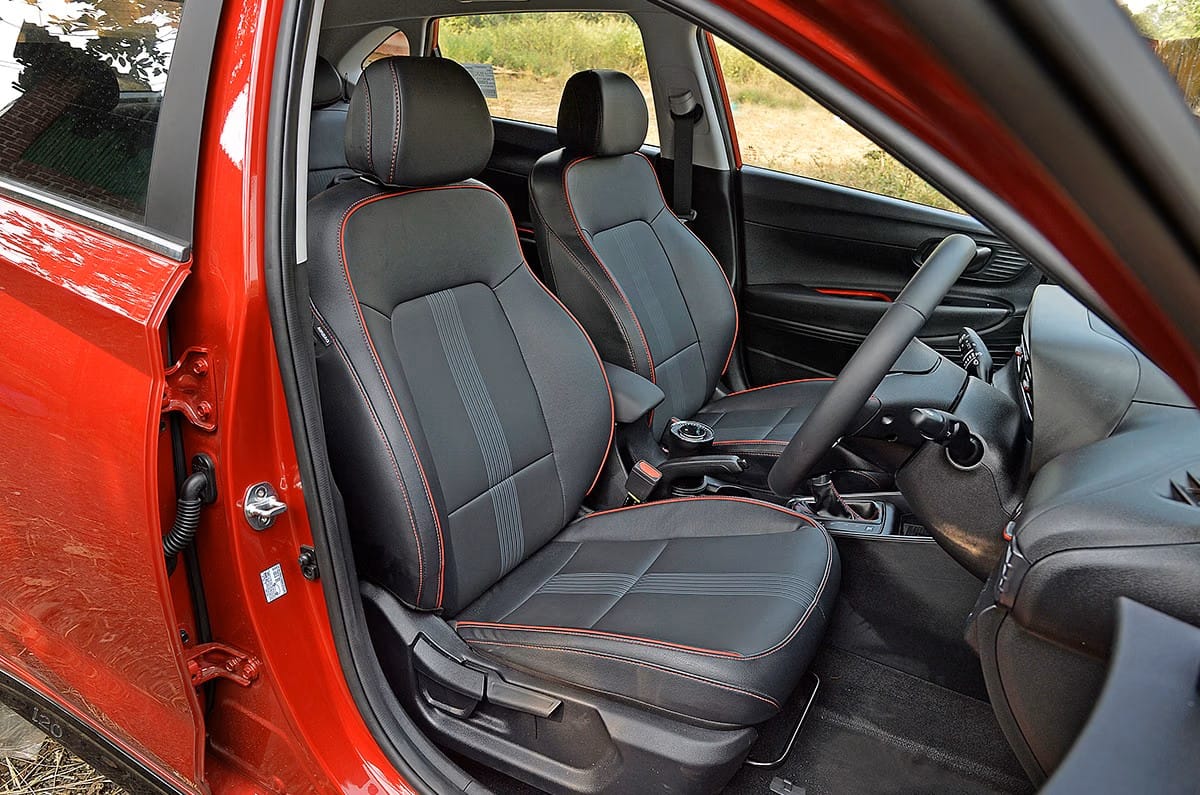
One of the i20’s biggest strengths is its cabin. It offers generous rear-seat space for a premium hatchback, with enough legroom and headroom to comfortably accommodate taller passengers. The front seats are supportive, the dashboard layout is intuitive, and the cabin feels airy thanks to its low-set dashboard. Practicality is another strong point, with a 311-litre boot that’s well suited to everyday use and weekend trips.
2. Well-equipped across the range
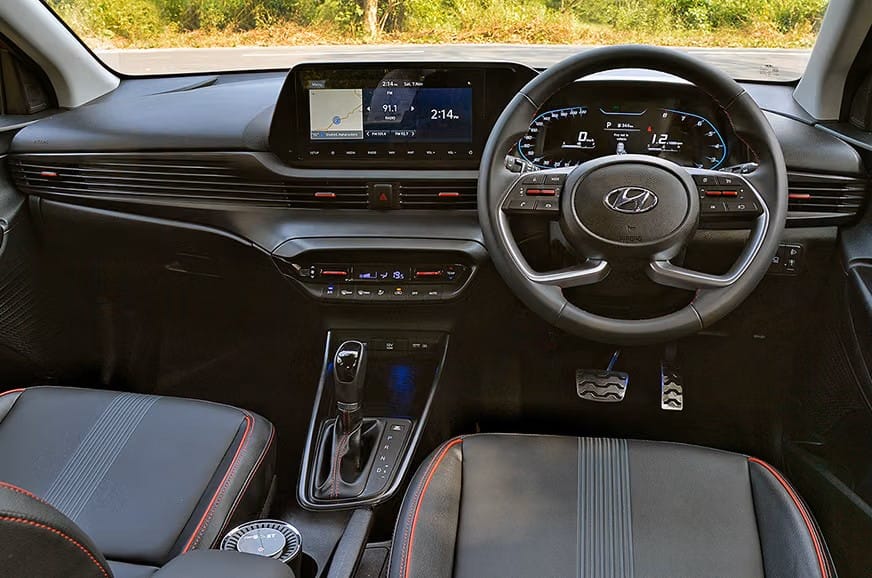
The i20 continues to offer one of the strongest feature lists in its class. Higher variants come with a 10.25-inch touchscreen infotainment system, a digital instrument cluster, connected car technology, a Bose sound system, wireless phone charging, automatic climate control, a sunroof and ambient lighting. Safety equipment is equally comprehensive, with six airbags, electronic stability control (ESC), a tyre-pressure monitoring system (TPMS) and Isofix child-seat mounts available on higher trims.
3. Comfortable ride and refined road manners
The i20 is tuned with comfort in mind. Its suspension absorbs broken roads well without feeling unsettled, while the light steering makes it easy to manoeuvre in the city. On the highway, the hatchback feels stable and composed, giving it a more mature driving experience than many of its rivals. Overall, it strikes a good balance between everyday comfort and confident handling.
Cons
1. Expensive for its segment
The i20 is among the most expensive premium hatchbacks on sale. While its cabin quality, comfort and equipment help justify the asking price, buyers shopping in this price bracket also have the option of several compact SUVs, which offer greater ground clearance and a stronger road presence for similar money.
2. The 1.2-litre petrol engine isn’t particularly peppy
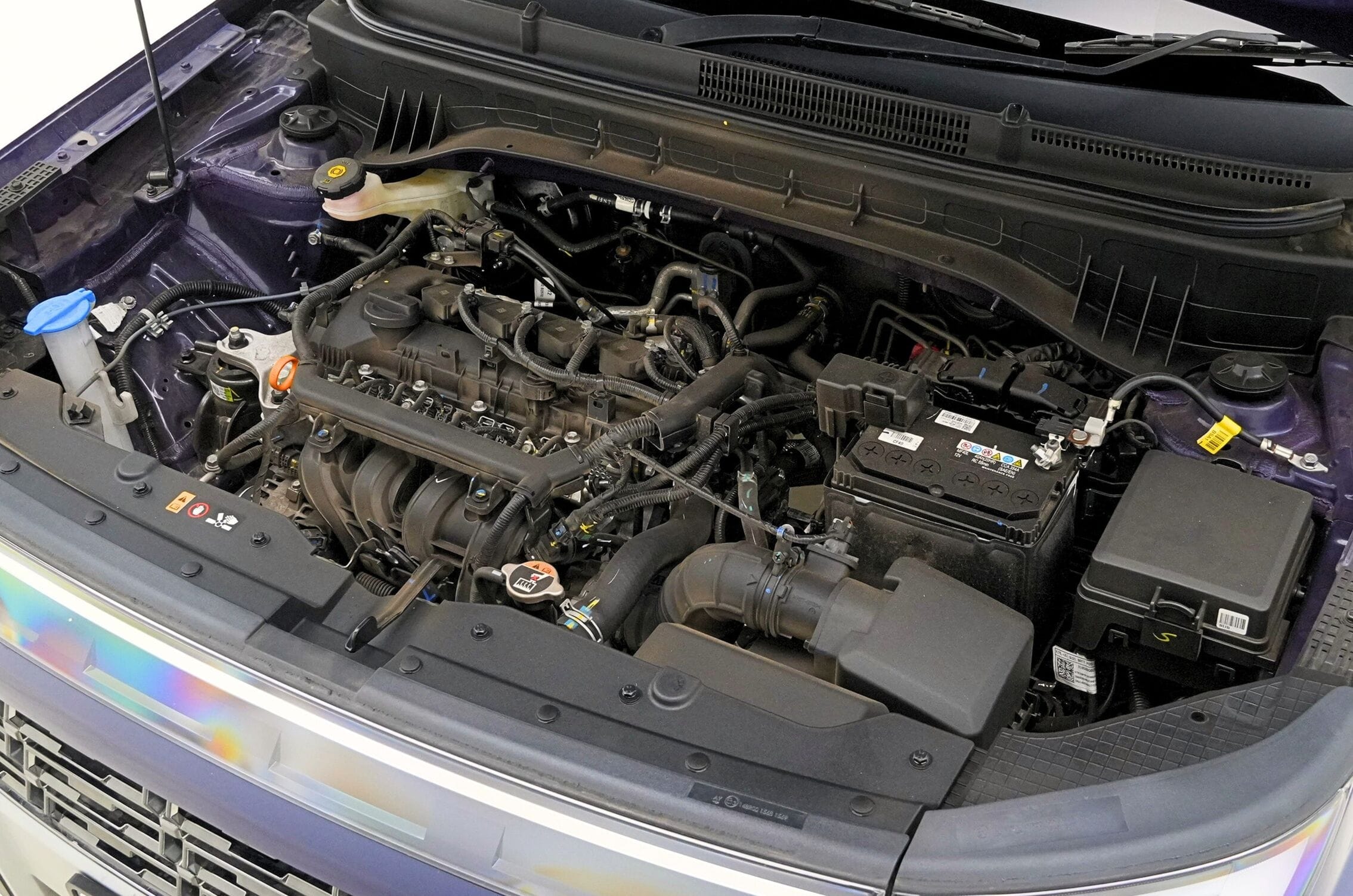
Hyundai 1.2 Kappa engine.
The naturally aspirated 1.2-litre petrol engine is smooth and refined, but it isn’t particularly strong at lower engine speeds. It often requires downshifts to gather pace in stop-start traffic or during overtaking manoeuvres, making it feel less effortless than some turbo-petrol rivals. Buyers looking for stronger performance may find the standard i20’s engine lacking. The i20 does come with a punchier 1.0-litre turbo-petrol engine on the N Line variants but for a much higher asking price.
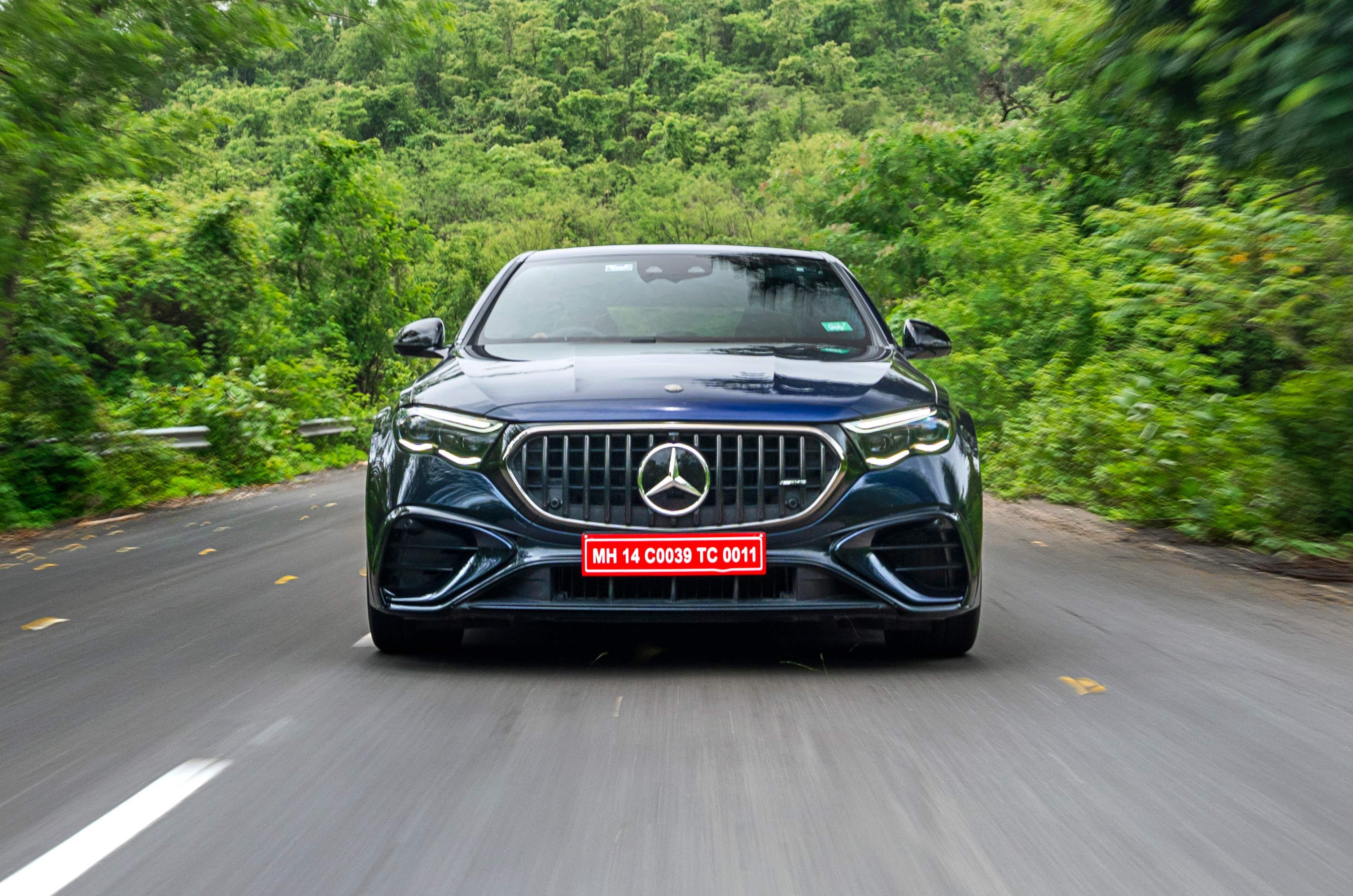
The Mercedes-AMG E53 Hybrid 4MATIC+ arrives at a time when performance cars are being asked to do more than simply go fast. It has to deliver the pace and character expected of an AMG while embracing electrification to meet increasingly stringent emissions norms and changing buyer expectations. The result is a plug-in hybrid performance sedan that combines a 3.0-litre turbo-petrol inline-six engine with an electric motor for a formidable system output of 585hp, while also offering enough electric-only range for mundane daily drives.
But this isn’t just an E-Class with a bigger battery and more power. The E53 gets AMG-specific chassis hardware, all-wheel drive, rear-wheel steering and a suite of performance-focused electronics designed to counter the added weight. Can this electrified AMG still deliver the thrills enthusiasts expect while remaining a genuinely usable luxury sedan every day?
Mercedes-AMG E53 Exterior Design and Engineering
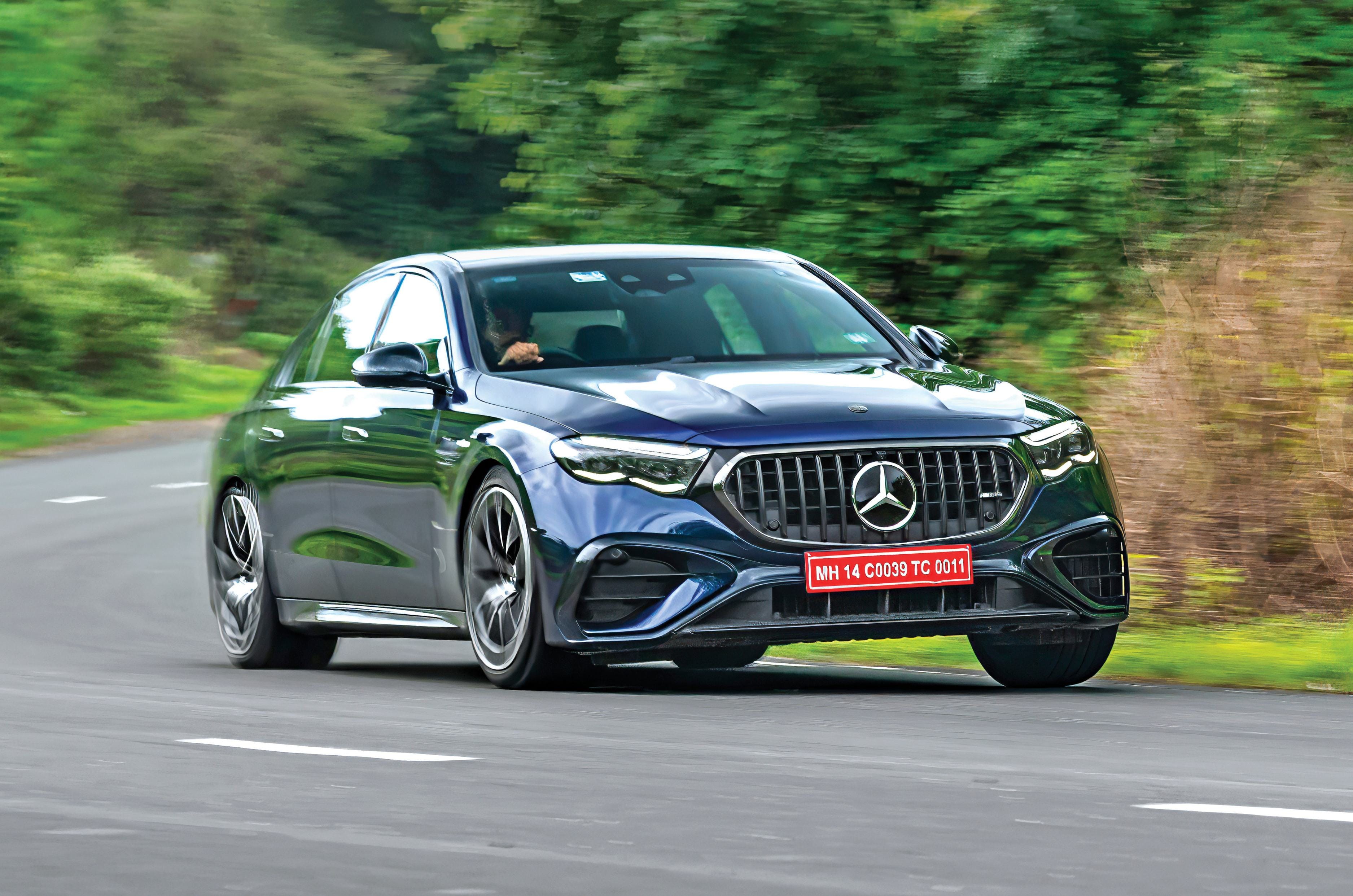
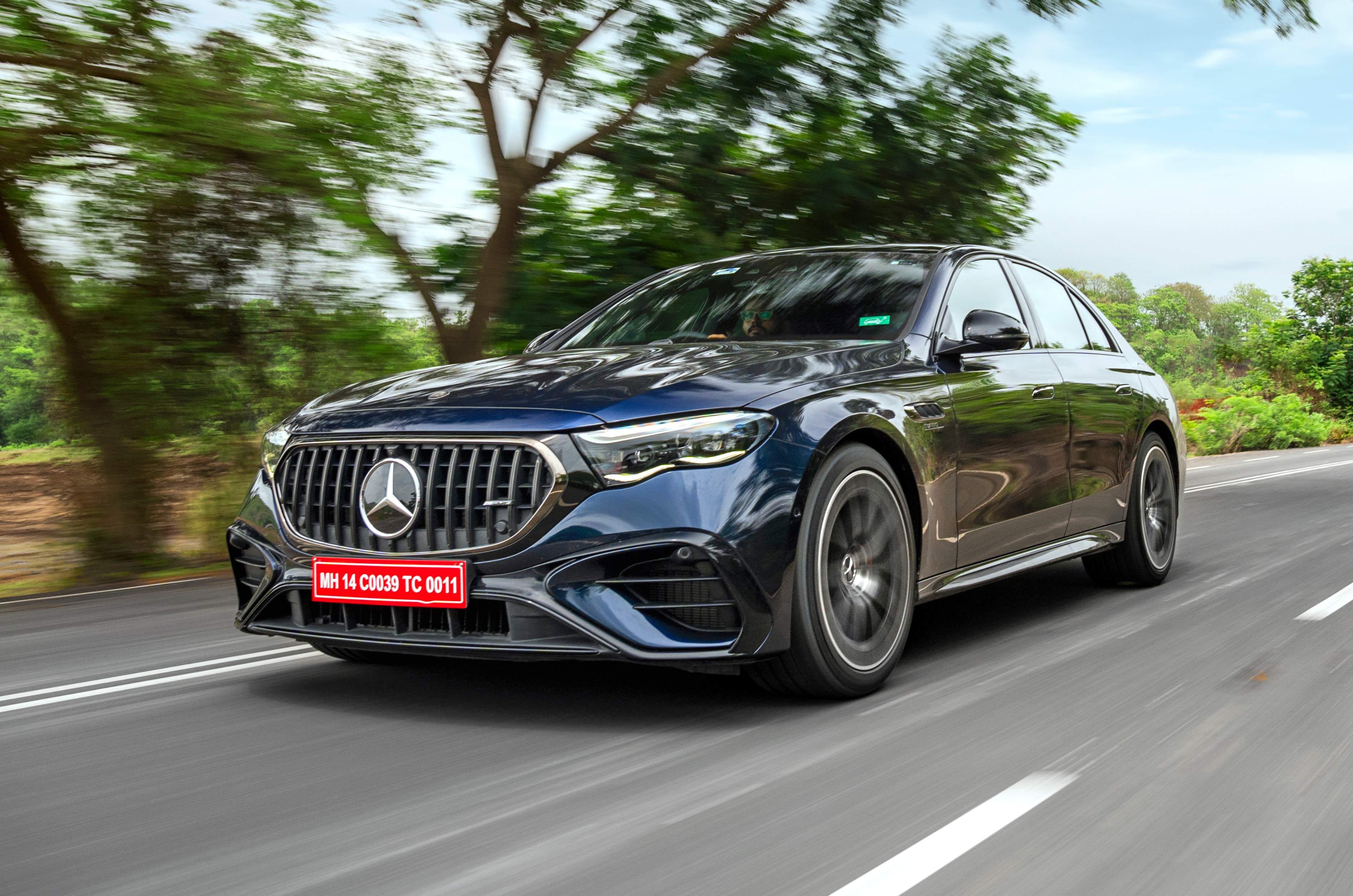
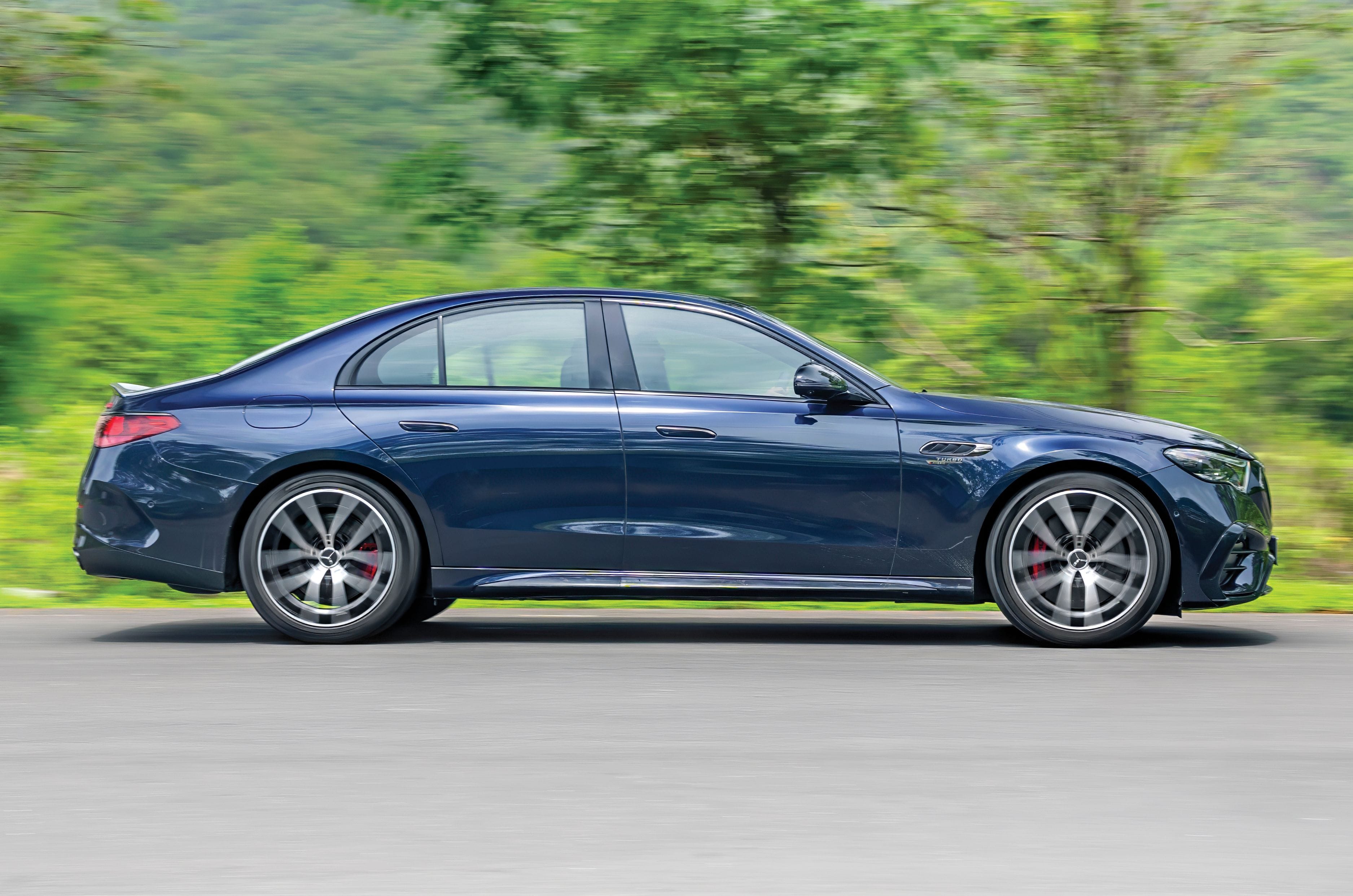
Expectedly, the E 53 has put on quite a bit of muscle. The front bumper is sportier, with large air dams. The Panamericana grille gets illuminated surrounds and is wide enough to gulp massive amounts of air to cool the engine, while the power lines on the bonnet add more intent to its character.
The E53 has good amount of muscle with aggressive bumpers, big grille and power lines
The profile flaunts flared wheel arches, larger 20-inch wheels (the last-gen E 53 featured 19-inchers) and, like before, a standard wheelbase, giving it sportier proportions than the long-wheelbase E-Class.
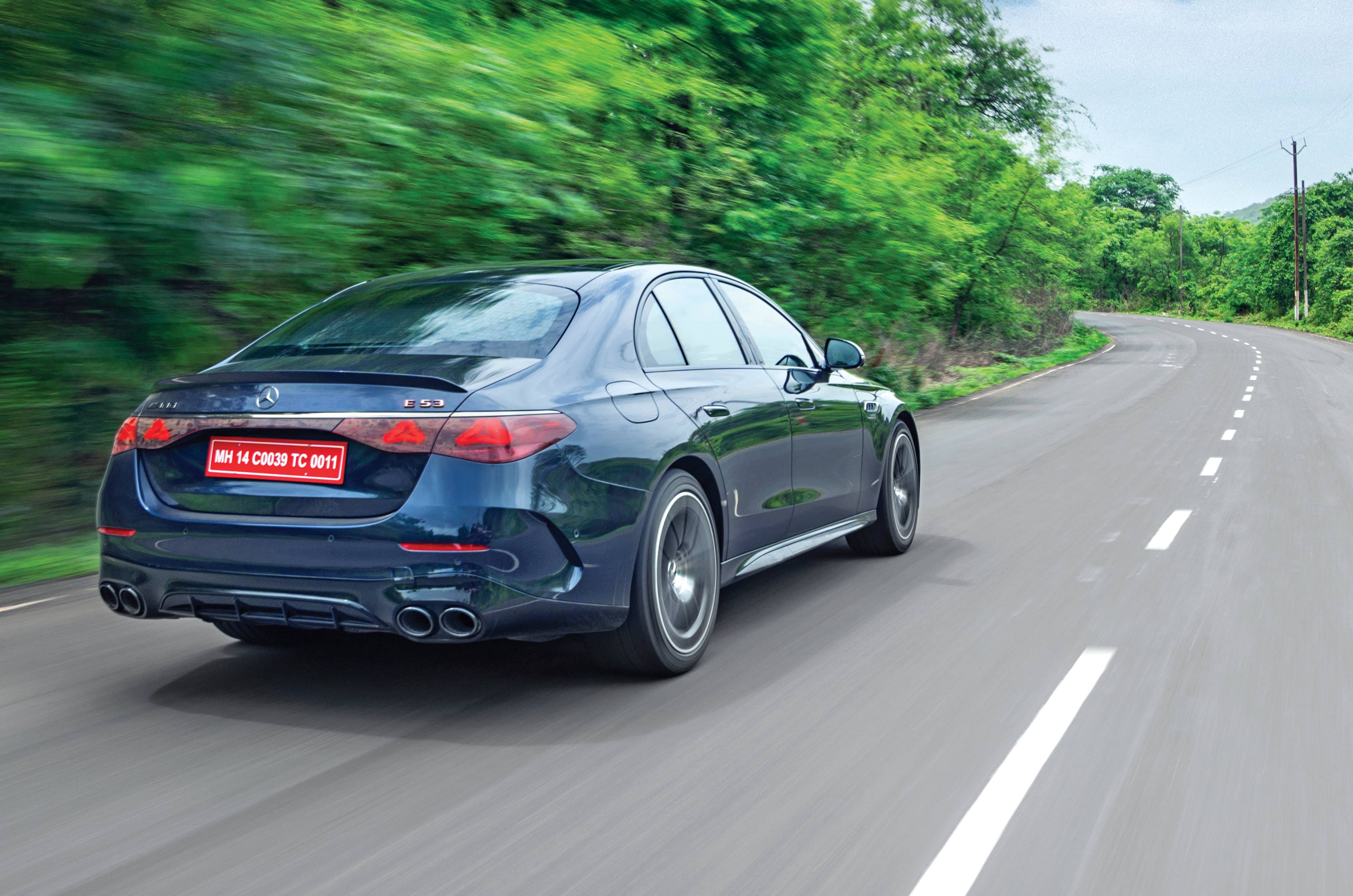
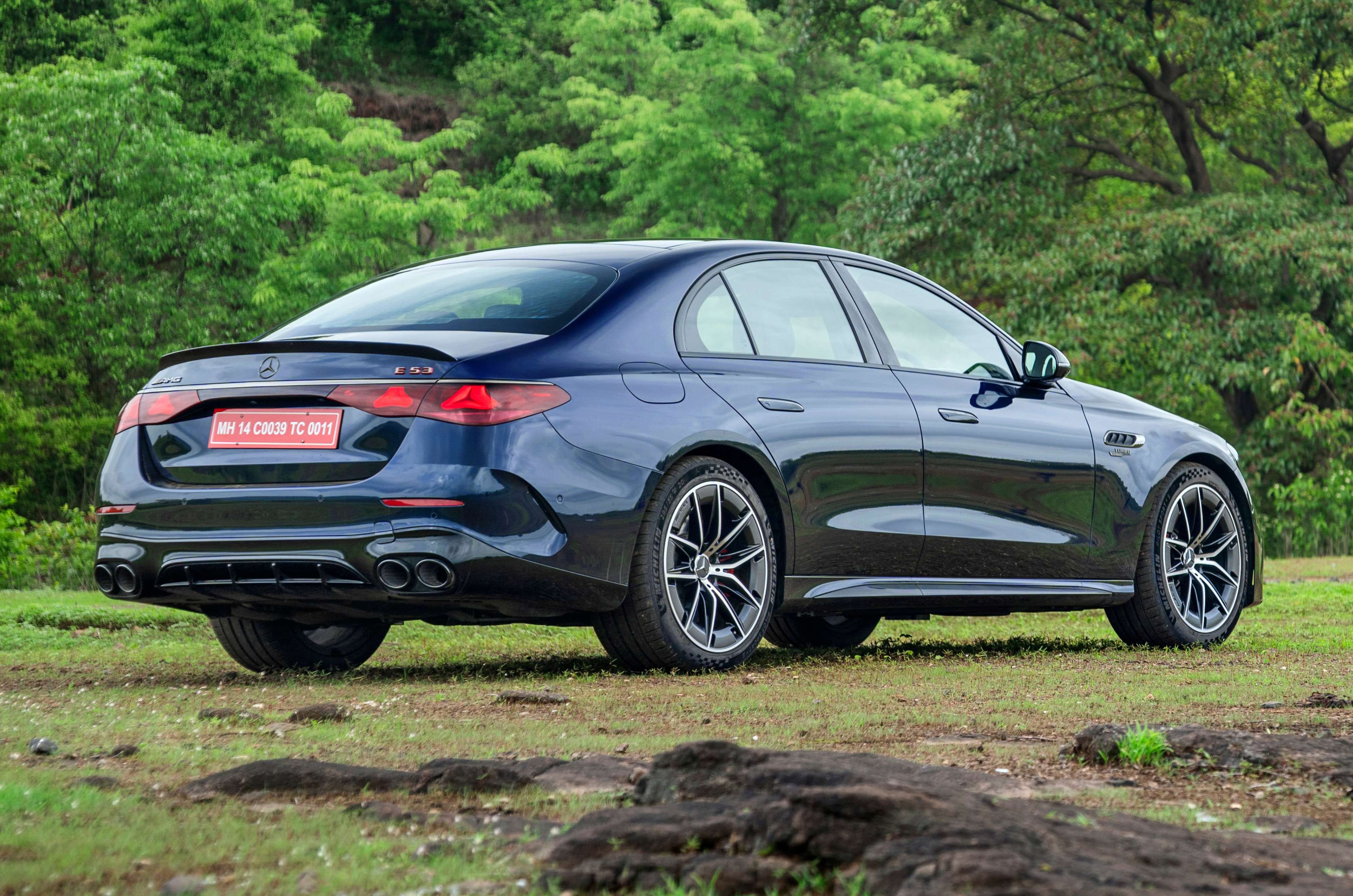
At the rear, there’s an E 53 badge with red highlights, a quad-exhaust setup that isn’t actually connected to the exhaust pipes, a diffuser and a ducktail spoiler that’s large enough to be noticed but won’t do much for downforce.
Not being a long wheelbase gives it perfect proportions
Overall, it’s a handsome-looking car with just the right amount of restraint. However, if you’re looking for a bit more visual drama, you’ll have to pay extra for the MANUFAKTUR paint finishes, as the standard colour palette is more E-Class than AMG.
Mercedes-AMG E53 Interior Space and Comfort
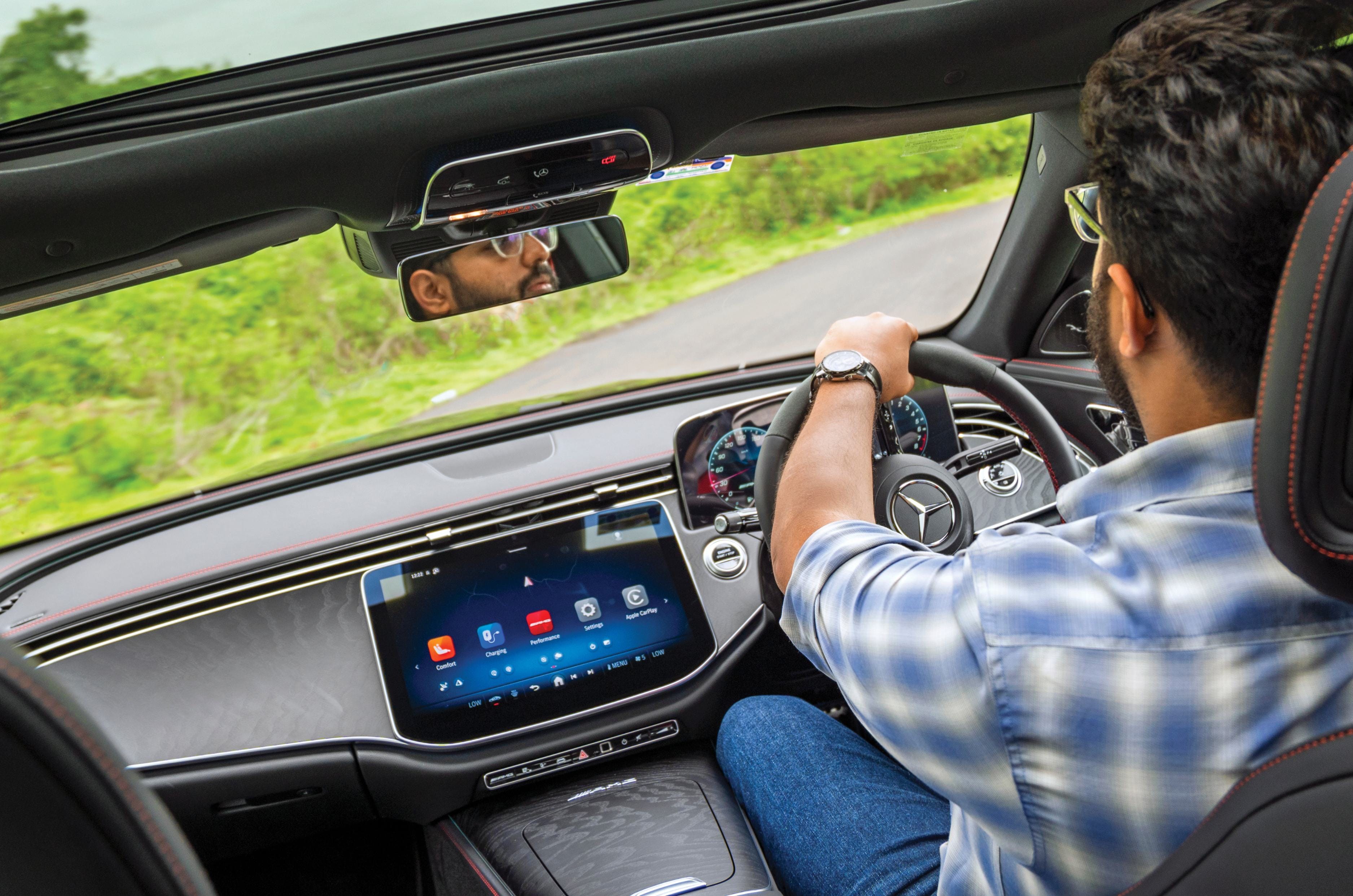
Inside, the E 53 strikes an appealing balance between luxury and sportiness. Instead of carbon-fibre or piano-black trim, Mercedes has used open-pore wood that feels rich and tactile. A large central MBUX touchscreen dominates the dashboard, while the passenger display found on the standard E is absent – not particularly bothersome given how good the main screen is.
Red and black upholstery looks racy while open pore wood adds luxe factor
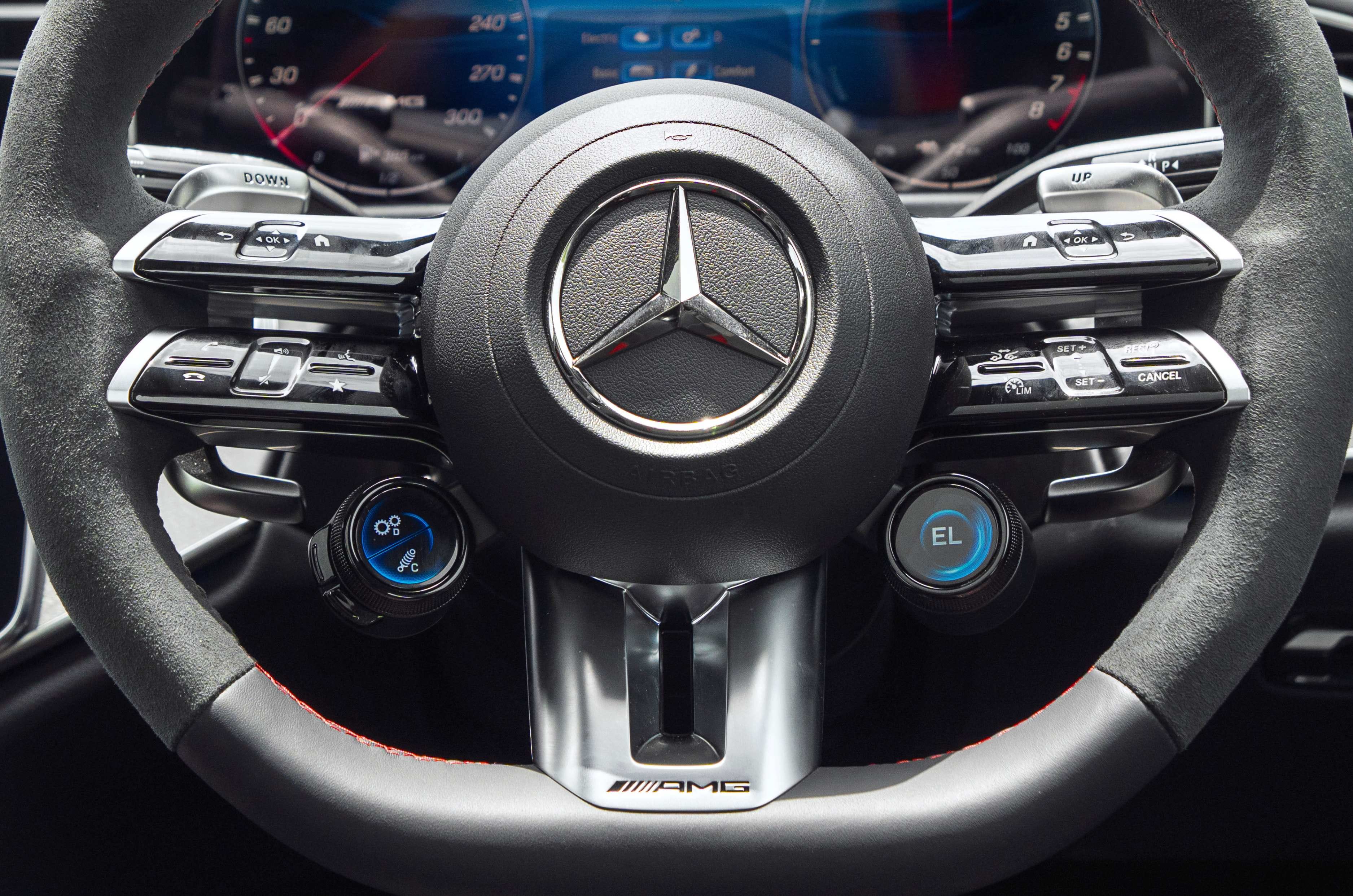
The AMG sports seats offer plenty of support and adjustment, although ventilated and massage functions are missing. Likewise, the chunky AMG steering wheel feels superb in hand but is cluttered with touch-sensitive controls that remain frustrating to use.
Rear-seat space is naturally tighter than the long-wheelbase E-Class, but there’s still enough room for two adults to travel comfortably. Manual sunblinds and a panoramic sunroof add to the ambience, although the large transmission tunnel makes this a strict four-seater.
There’s good space in the rear despite this not being a long wheelbase
The boot, however, sees the biggest compromise. At 370 litres, it’s 170 litres smaller than the standard E-Class because the battery sits beneath the floor. There’s no spare wheel either, with its space instead occupied by the charging cable and puncture repair kit.
Mercedes-AMG E53 Features and Safety
The E 53 is a well-equipped sedan despite missing features such as ventilated seats. The centre screen is the brains of the operation and, unfortunately, many of the controls are routed through it, making them difficult to operate on the move.
We’ve praised the MBUX infotainment system for its clear interface and high-resolution display, but usability isn’t its strongest suit. The large screen makes it difficult to accurately select the desired function while driving.
Too many controls on the steering is distracting
The E 53 gets a comprehensive suite of driver assistance systems, including Lane Keep Assist, Automatic Emergency Braking, Rear Cross Traffic Alert and Blind Spot Monitoring. Thankfully, these systems can also be switched off manually if required.
The 360-degree camera is crisp and high-resolution, while the 17-speaker Burmester 4D audio system delivers an exceptional listening experience. As impressive as the sound system is, however, it ultimately plays second fiddle to the performance on offer.
Mercedes-AMG E53 Performance and Refinement
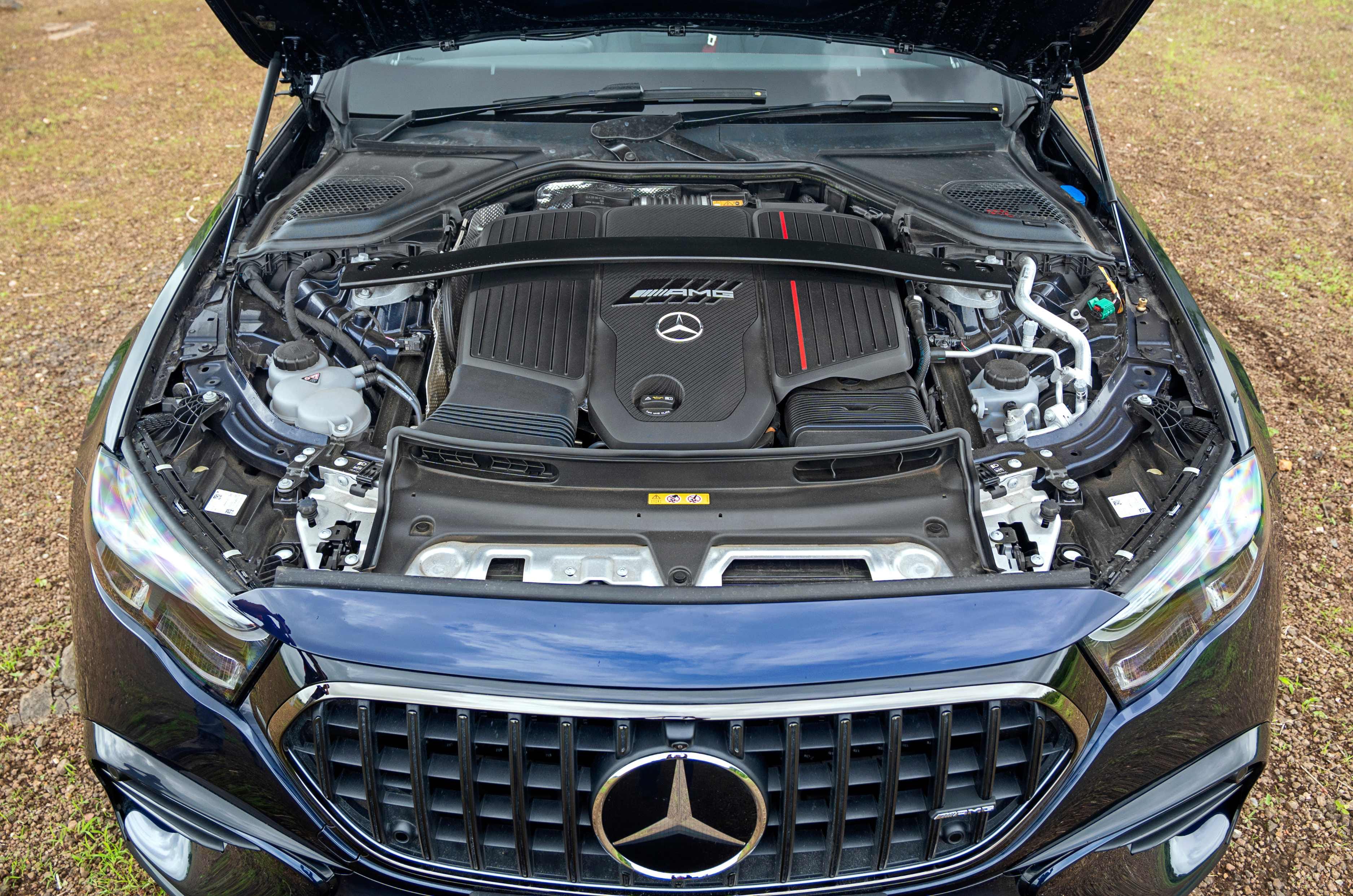
Like before, the new E 53 is powered by a 3.0-litre turbo-petrol straight-six engine. This time, however, it gets support from a 28.6kWh battery pack and an electric motor, taking the combined output to 585hp and 750Nm.
585hp six-cylinder engine makes 150hp more than before
Unlike the bigger PHEV AMGs, the E 53 isn’t an ‘E PERFORMANCE’ model, which means the electric motor is mounted within the gearbox housing rather than integrated into the rear axle. Power is sent to all four wheels via the familiar 9-speed automatic transmission, and the E 53 gets a host of drive modes that are noticeably different from one another.
‘Individual’ lets you tailor the engine, gearbox and suspension to your liking. ‘Battery Hold’ prevents the car from using the battery charge, saving it for when you truly need it. ‘EL’ is the full-electric mode, provided there’s sufficient charge in the battery. ‘Comfort’ offers a more relaxed setup, ‘Sport’ sharpens the responses, and ‘Sport+’ is the most aggressive setting.
Naturally, Sport+ is the mode you’ll spend most of your time in if you want the E 53 to feel like a proper AMG. The exhaust note, the urgency of the power delivery and the firmer suspension all come together beautifully. With the engine and electric motor working at full tilt, straight-line performance is genuinely rapid. Acceleration is smooth yet thrilling, as the engine piles on speed rapidly without the neck-snapping brutality of a powerful EV. Power delivery is strong and linear across the rev range, and the gearbox complements the aggressive character of Sport+ perfectly. 0-100kph takes just 4 secs with the ‘Race Start’ which is essentially launch control included in the AMG Dynamic Plus package as power jumps up to 612hp.
For greater driver involvement, you can also engage ‘M’ mode, which gives you full manual control of the gearbox. It will happily bounce off the limiter without automatically upshifting until you pull a paddle.
The exhaust note is a bit of a mixed bag. It’s genuine, but it’s also channelled into the cabin through the speakers and a subwoofer in the boot. It’s not the ideal solution because, outside the car, the engine and exhaust produce a genuinely enjoyable snarl. Still, in an era of synthesised, computer-generated soundtracks, a real exhaust note—even if it’s amplified through the speakers—is worth appreciation.
Switch to Comfort mode and the E 53 adopts an entirely different character. It’s calm, refined and smooth, with gentler power delivery that’s well suited to long-distance cruising.
Where the powertrain disappoints is in city traffic and slow stop-start driving. The gearbox is simply too eager and, even in Comfort mode, it feels a bit like walking an overexcited Rottweiler. It’s constantly trying to surge forward and grab the next gear before you’ve asked it to. The constant shuffling through the lower gears results in unnecessary jerks that spoil the experience.
The solution is to engage EL mode. It’s almost as if it was designed specifically for this scenario. In EL, the E 53 feels smooth and effortless. There’s very little noise apart from the drone generated by the Michelin Pilot Sport 4S tyres, which can be quite rumbly, especially on concrete surfaces.
Braking is less convincing, however. Despite massive 390mm front discs and regenerative braking, the pedal never delivers a natural or consistent feel. Stopping power is strong, but the spongy, inconsistent pedal detracts from an otherwise polished driving experience.
Mercedes-AMG E53 Mileage and Efficiency
One of the biggest talking points of the new E 53 isn’t its staggering performance, but the fact that it can deliver it without constantly visiting a fuel station. This plug-in hybrid marks a significant shift in AMG’s philosophy, combining electrification with a silky-smooth six-cylinder engine to create a performance sedan that’s as comfortable commuting as it is attacking a mountain road.
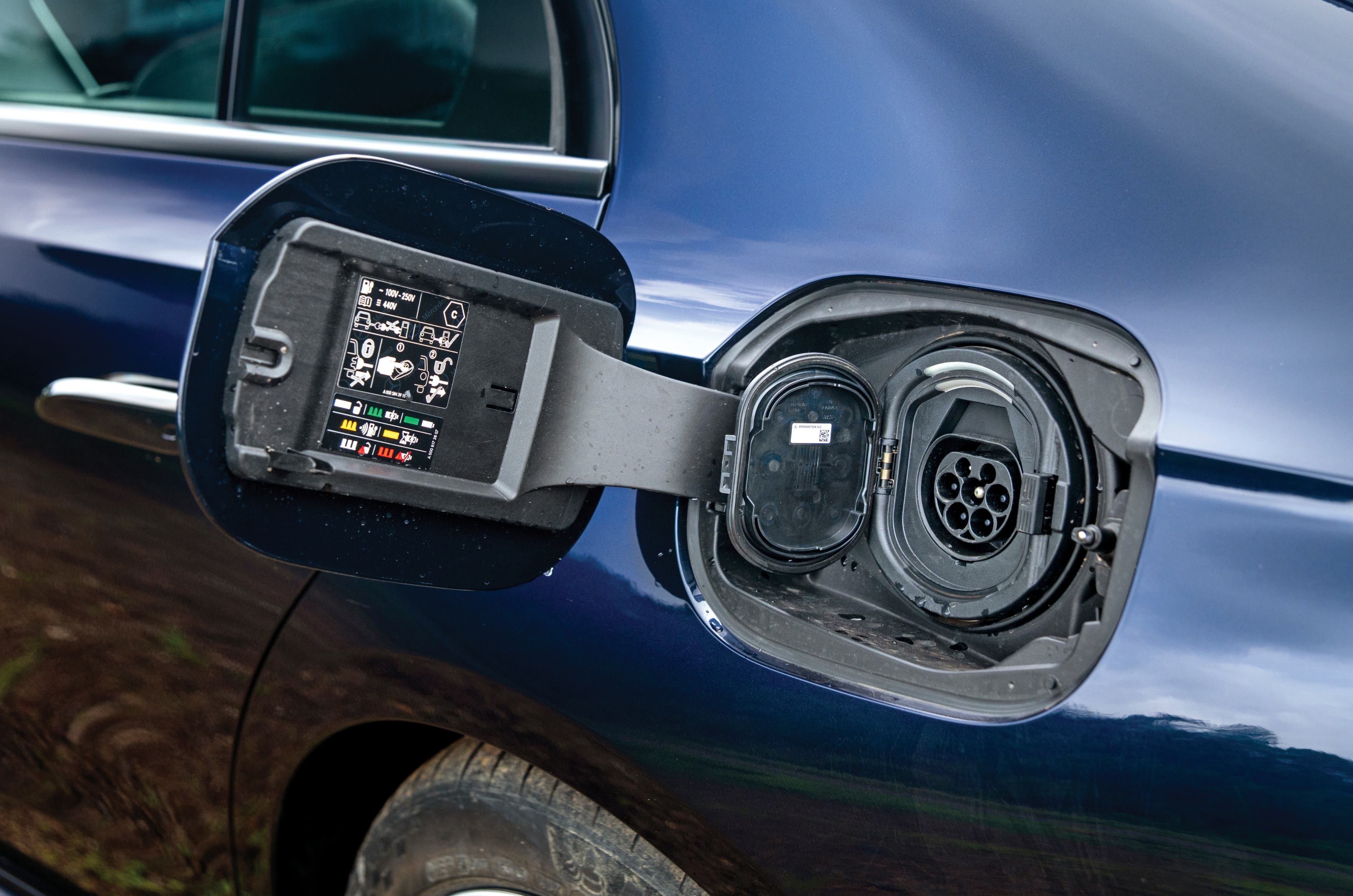
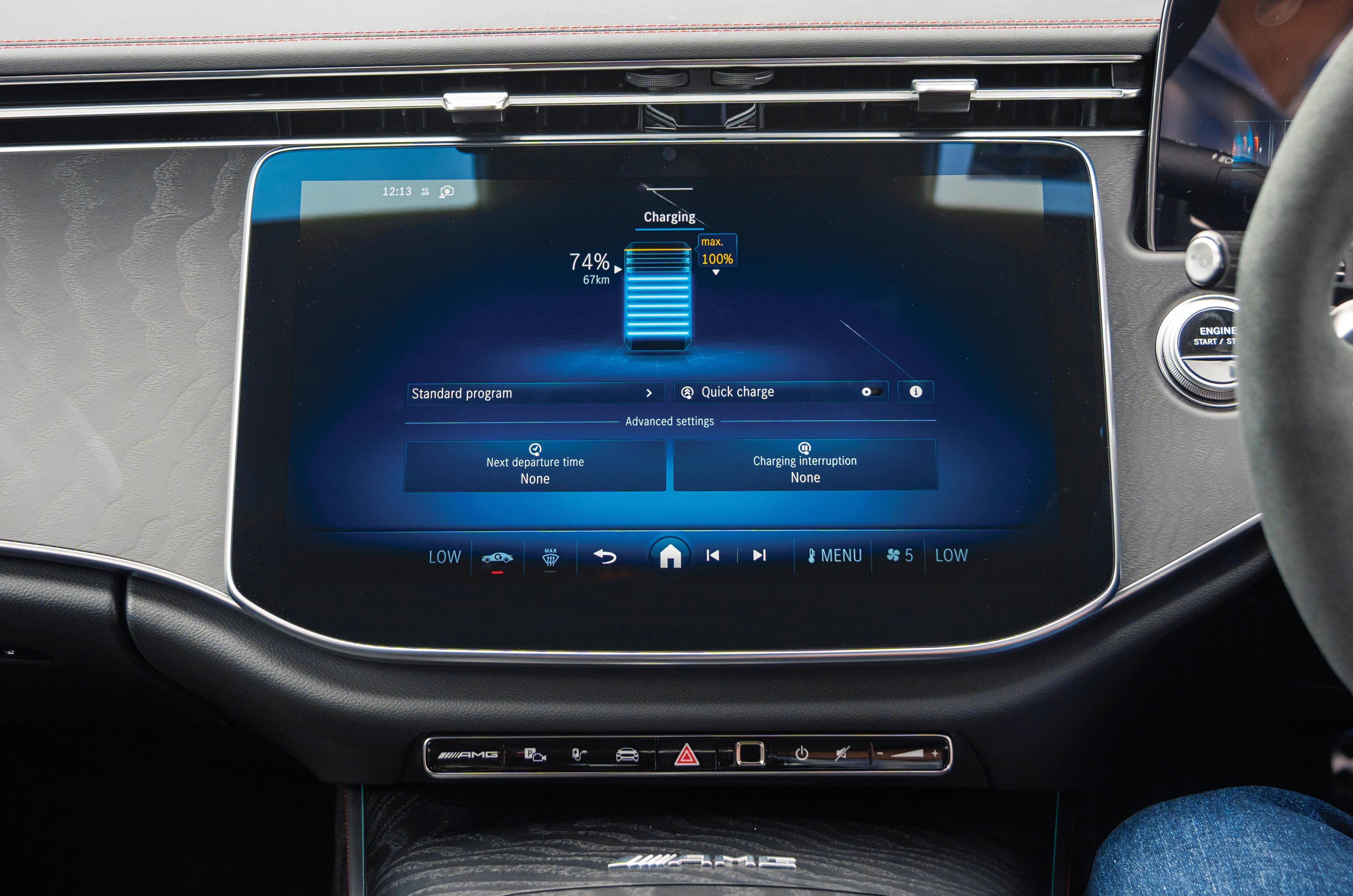
Charging via an 11kW AC charger will replenish the battery in 2.25 hrs; No DC charging option
The headline figure is a claimed electric-only range of up to 100km, courtesy a 28.6kWh battery pack. You can expect 75-90km on electric power alone making it entirely possible to complete daily urban commutes without firing up the engine.
Once the battery begins to deplete, the turbocharged 3.0-litre inline-six takes centre stage. Even then, the hybrid system continues to contribute through regenerative braking and electric assistance, ensuring the E 53 feels responsive while reducing fuel consumption compared to a conventional performance sedan. Mercedes has also equipped the car with four regenerative braking modes, allowing drivers to maximise energy recovery or opt for a more natural driving experience. For owners with access to home or workplace charging, fuel stops could become surprisingly infrequent. Charging is equally convenient, with the 11kW AC onboard charger replenishing the battery in around three hours.
28.6kWh battery allows for an electric-only range of 100km
Mercedes-AMG E53 Ride Comfort and Handling
For those who enjoy being behind the wheel, the E 53 delivers in abundance. Despite carrying the additional weight of a sizable battery pack, it feels remarkably composed. In Sport and Sport+, the car tightens up noticeably. Body roll is kept firmly in check, the dampers become more alert, and the steering gains welcome heft. What impresses most is how well the chassis disguises its mass. The battery may add considerable weight, but it’s mounted low in the car, lowering the centre of gravity and lending the E 53 impressive stability through fast corners.
The rear-biased 4MATIC+ all-wheel-drive system plays a major role here. The rear wheels can turn up to 2.5 degrees, which isn’t a huge amount, as you’ll still find yourself making the occasional three-point turn. Above 60kph, however, they turn in the same direction as the front wheels, adding another layer of stability through corners.
It is over 400kg heavier than the last-gen model but you just can’t feel it from behind the wheel
The Michelin Pilot Sport 4S tyres aren’t the quietest, but they allow the driver to deploy the combined output with confidence, even when exiting slower bends. Turn-in is crisp, and while the steering isn’t overflowing with feedback, it’s accurate enough to place the car confidently on a winding road.
At low speeds, the adaptive AMG Ride Control suspension does an admirable job of filtering out broken tarmac, expansion joints and sharp-edged potholes. It isn’t perfect, though. Compared with the last-generation E 53, which rode on smaller 19-inch wheels with taller-profile tyres, the new car’s 20-inch wheels have sacrificed a degree of ride compliance. As a result, the low-profile tyres transmit the occasional thud over particularly nasty potholes.
The adaptive dampers mated with the active engine mounts offer terrific stability
Ultimately, the Mercedes-AMG E 53 Hybrid 4MATIC+ isn’t as razor-sharp as a dedicated sports sedan, nor is it as pillowy as the standard E-Class. Instead, it strikes an impressive middle ground, blending everyday comfort with genuine driver engagement. It’s a car that feels just as at home soaking up kilometres on the expressway as it does carving through a series of fast, flowing corners.
Mercedes-AMG E53 Value for Money
Prices start at Rs 1.45 crore for the Performance Edition and Rs 1.48 crore for the Racing Edition. In this price range, there isn’t a direct rival to the E 53. The BMW M5 is both more powerful and considerably more expensive, while the BMW M4 is effectively rivalled by the Mercedes-AMG CLE 53 as a two-door coupe. The Audi RS5, meanwhile, hasn’t been launched in India yet.
The E 53 succeeds because it doesn’t try to be everything at once. It delivers the pace, handling and character expected of an AMG while introducing meaningful electric-only capability that genuinely enhances everyday usability. The brakes may lack the natural feel you’d expect from a performance sedan, and the gearbox can feel over-eager in slow-moving traffic, but these shortcomings do little to overshadow what is otherwise a remarkably accomplished package.
Fast, engaging and surprisingly efficient, the new E53 Hybrid is one of the most complete performance sedans on sale today. More importantly, it proves that electrification doesn’t have to dilute the AMG experience—it can make it even more usable.
The Maruti Brezza may be one of the oldest compact SUVs in the market, but it remains one of the best-selling ones by a reasonable margin. Maruti has now given it a fresh lease of life with a mid-cycle update for 2026, bringing a brand-new engine option and thereby addressing one of the biggest gripes about the Brezza – lack of multiple engine options. It’s the Boosterjet turbo-petrol engine from the Fronx, finally bringing the Brezza in the sub-4m tax slab and also a much-needed dose of performance. So, here are two reasons why you should consider buying the new Brezza Turbo, and two reasons why you might want to look elsewhere.
Reasons to buy the Maruti Brezza Turbo
1. Boosterjet engine is smooth and tractable
The 1.0-litre, three-cylinder Boosterjet engine produces 110hp and 170Nm on the Brezza, which means the numbers are up by 10hp and 23Nm compared to the Fronx. What’s most impressive about this engine on the Brezza is its refinement and driveability – it gets off the line effortlessly, with almost no lag. In fact, you can set off in second or even third with little issue. It’s only when you wring it out that you’ll get some hint of three-cylinder thrum. The 6-speed manual gearbox offered with this engine is also a joy to use, offering satisfying and progressive shifts, and the clutch too is light and easy to modulate.
The Brezza’s faimiliar 1.5-litre naturally aspirated petrol engine also remains on offer alongside the new Boosterjet engine, but it’s expectedly more expensive as it attracts a higher 40 percent GST.
2. Spacious interior and boot
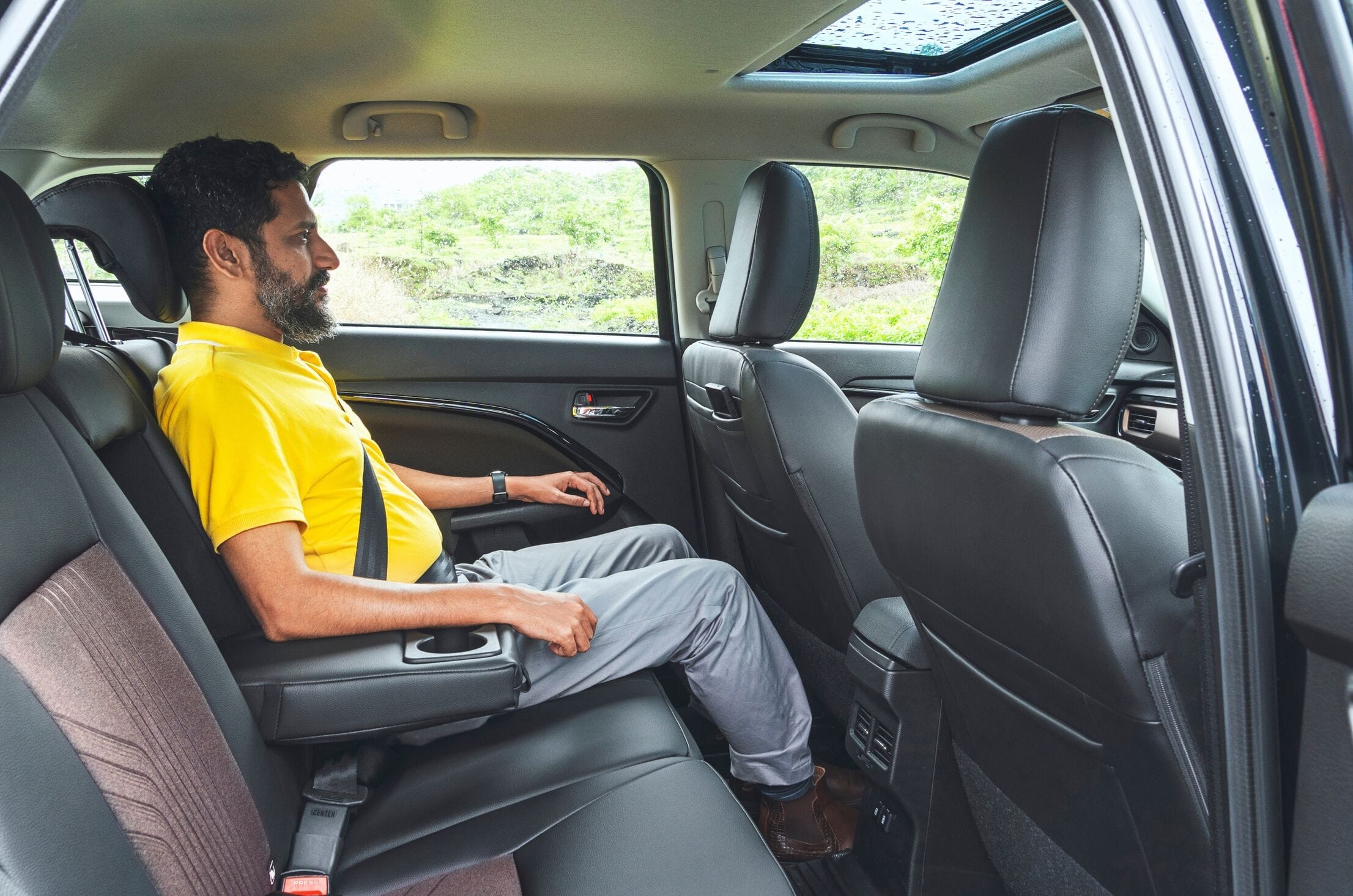
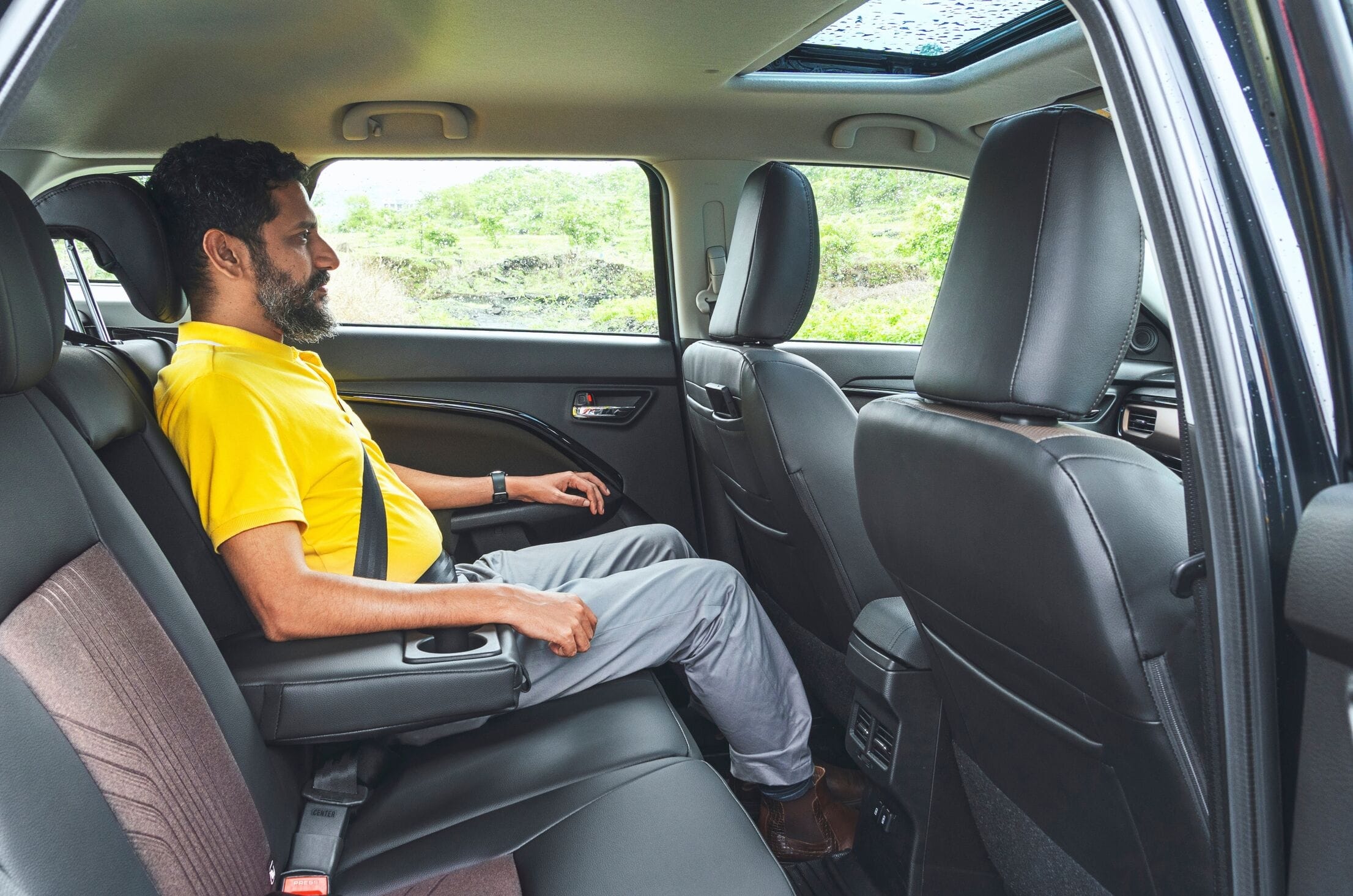
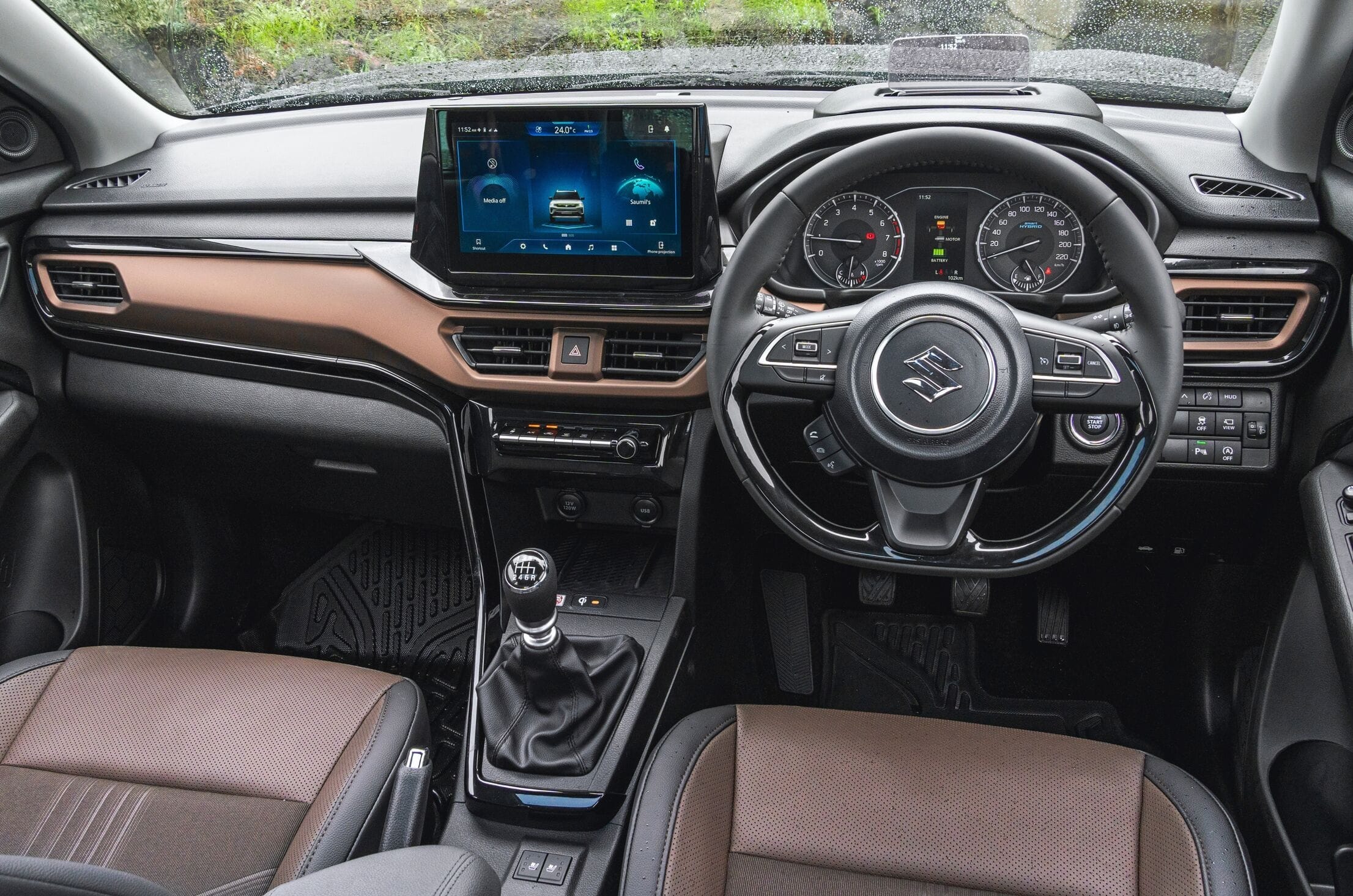
Packaging has always been one of Maruti’s strengths, and it has been true for the Brezza as well. Not much has changed on the inside of the updated Brezza, which means it remains one of the more spacious models in its segment. It’s still one of the few models where you can sit three adults abreast at the rear in reasonable comfort, and the front seats are suitable for large frames, too. Maruti has also introduced a new brown and black leatherette upholstery with this update which looks more premium and classier than before. That said, seat comfort is only adequate, erring more on the firm than the outright soft side.
As for the boot, overall volume remains the same at 328 litres, and as always, its square shape offers up more practicality than the number suggests.
Reasons not to buy the Maruti Brezza Turbo
Lacks the outright punch of a turbo engine
While performance from the new turbo engine is smooth and linear, it doesn’t have outright punch you’d expect or what some rivals offer. In our preliminary tests, the 1.0 Turbo accelerated from 0-100kph in a modest 12.36sec, just 0.3sec quicker than the old 1.5 NA petrol manual version (with the 5-speed manual). We also found ourselves downshifting one or two gears to overtake out on the highway, and through the rev range, some flat spots and hesitation did appear.
Still missing some features, lack of a spare tyre
The Brezza has seen the addition of some key features with this update, including front ventilated seats, a larger touchscreen, updated UX/UI and also new safety features. But while all these are welcome additions, there are still many sought-after features offered by rivals that are missing on the Brezza. These include powered front seats, rear window blinds and a panoramic sunroof – the Brezza continues with a single-pane unit. It also doesn’t get a full ADAS suite that’s offered by some rivals, but only a few driver assist features such as blind-spot warning and rear cross-traffic alert.
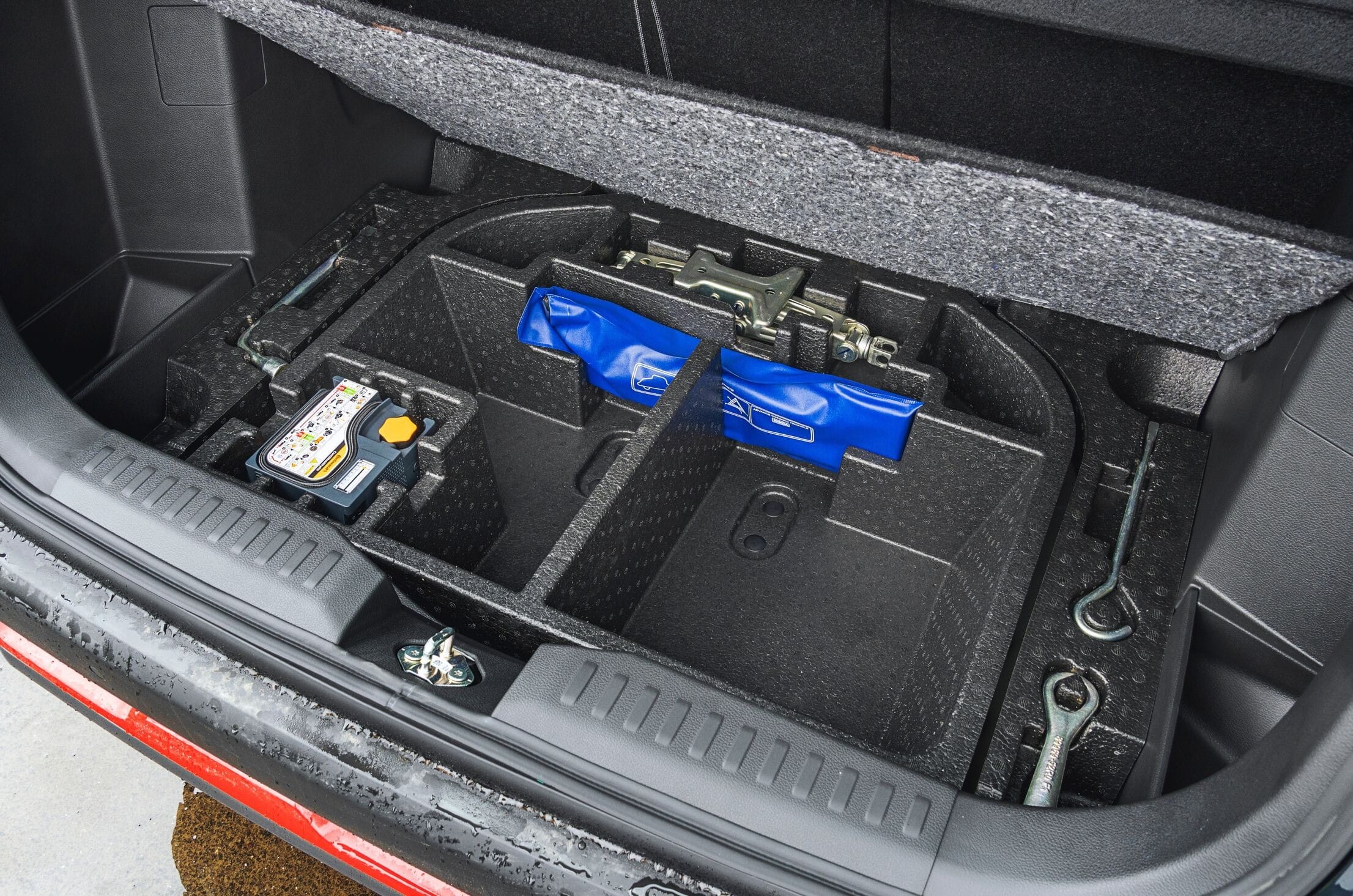
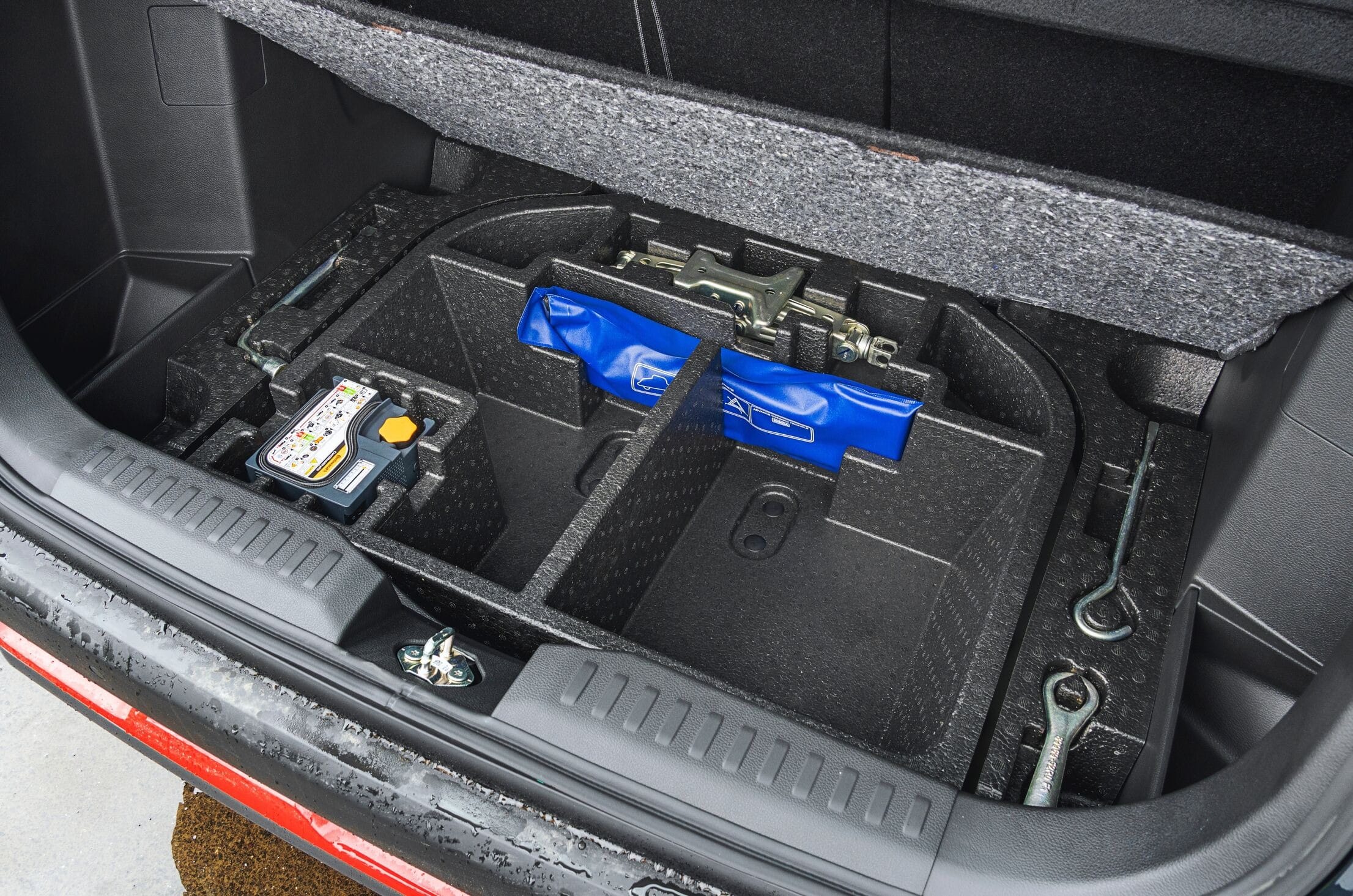
Maruti has also removed the spare tyre from the Brezza, and is now only offering a puncture repair kit and a tyre inflator. This is because CNG models have moved to an underfloor tank design to free up more luggage space, and that’s resulted in the removal of the spare tyre in all models.
While not the first compact SUV to hit the market, the Maruti Suzuki Vitara Brezza didn’t take long to zoom past its peers and rise to the top of its segment. It wasn’t the best looking, most exciting, most powerful or best equipped, but instead, and in true Maruti fashion, it locked in perfectly to what the average Indian wanted more. It was well priced, it was spacious and practical, it was reliable and it had incredibly good fuel economy.
That was almost a decade ago, and now in its second generation, with the ‘Vitara’ dropped from its name, the Brezza has retained those same safe and stable qualities. The compact SUV customer, however, has evolved and in 2026, perhaps playing it safe isn’t the silver bullet it once was. It’s no surprise then, that the brand has tried to introduce some excitement in the form of the 1.0-litre Boosterjet turbo-petrol, an engine it has been very selective in its use of.
With the engine has come some mild cosmetic updates and a few feature additions, and we’ve spent a day with the car to see if they all add up to make for a more compelling package.
2026 Maruti Brezza Exterior Design and Engineering – 7/10
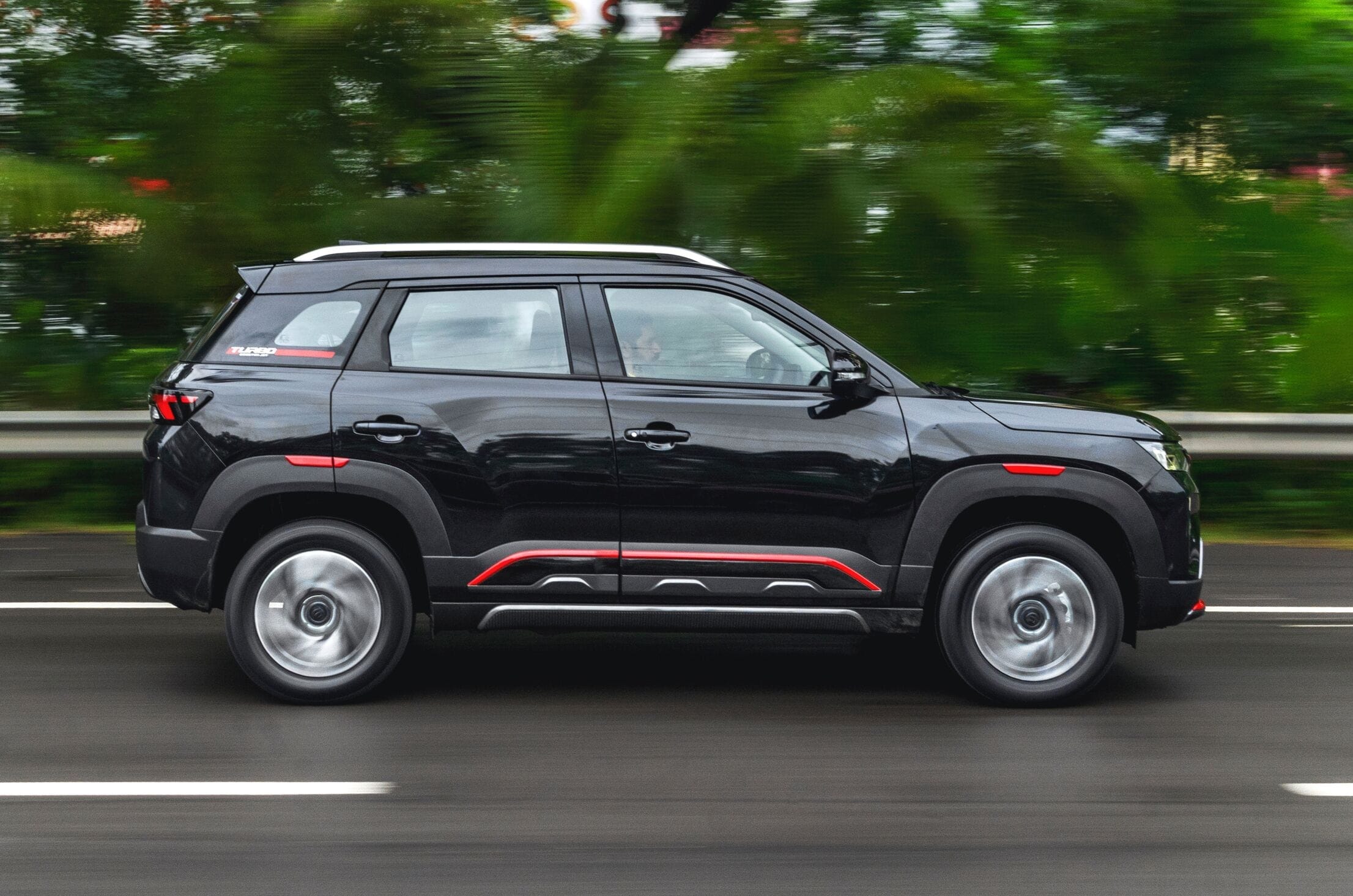
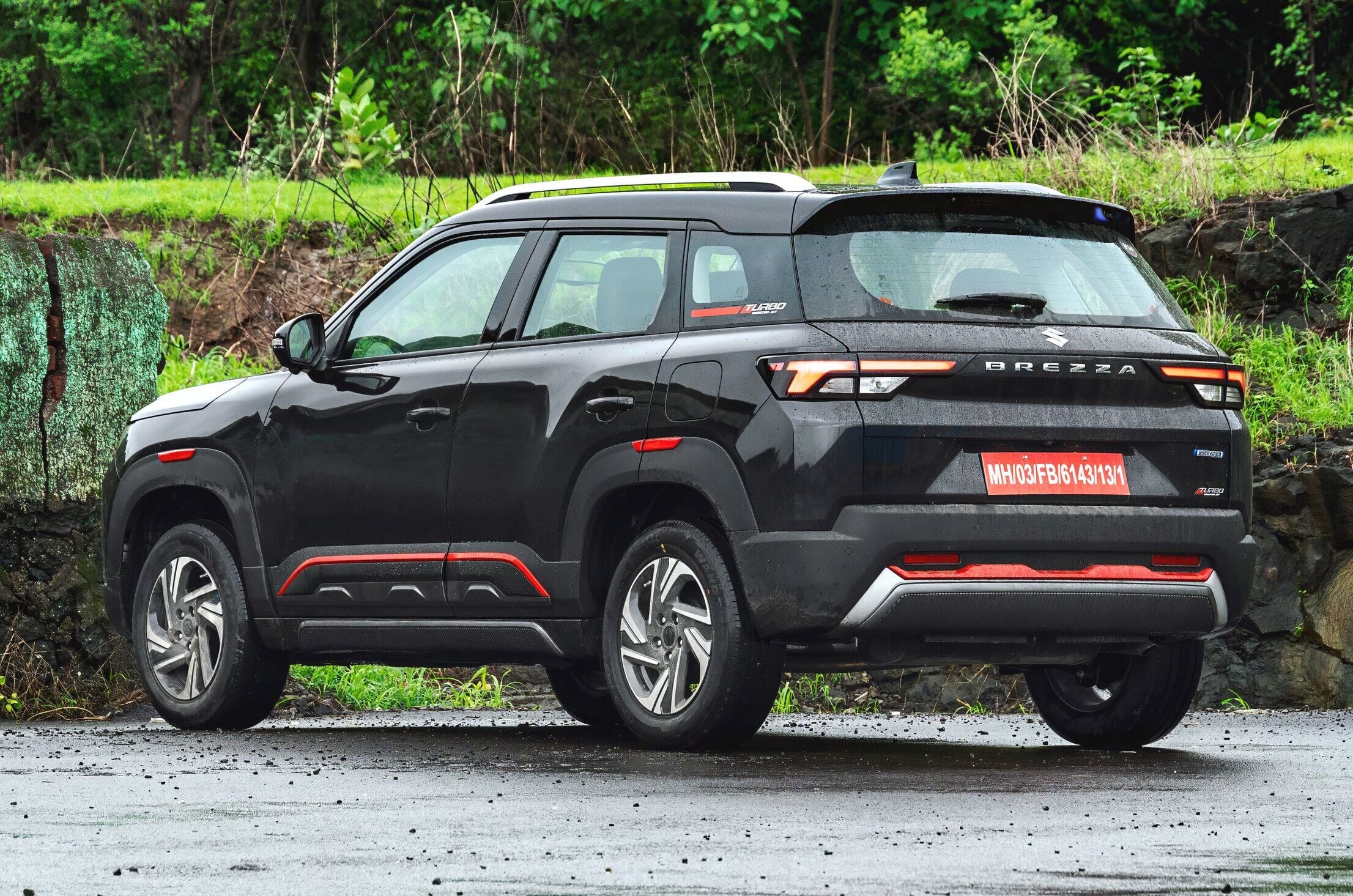
Boxy shape that hints at big interior space; red Turbo accents feel a bit forced.
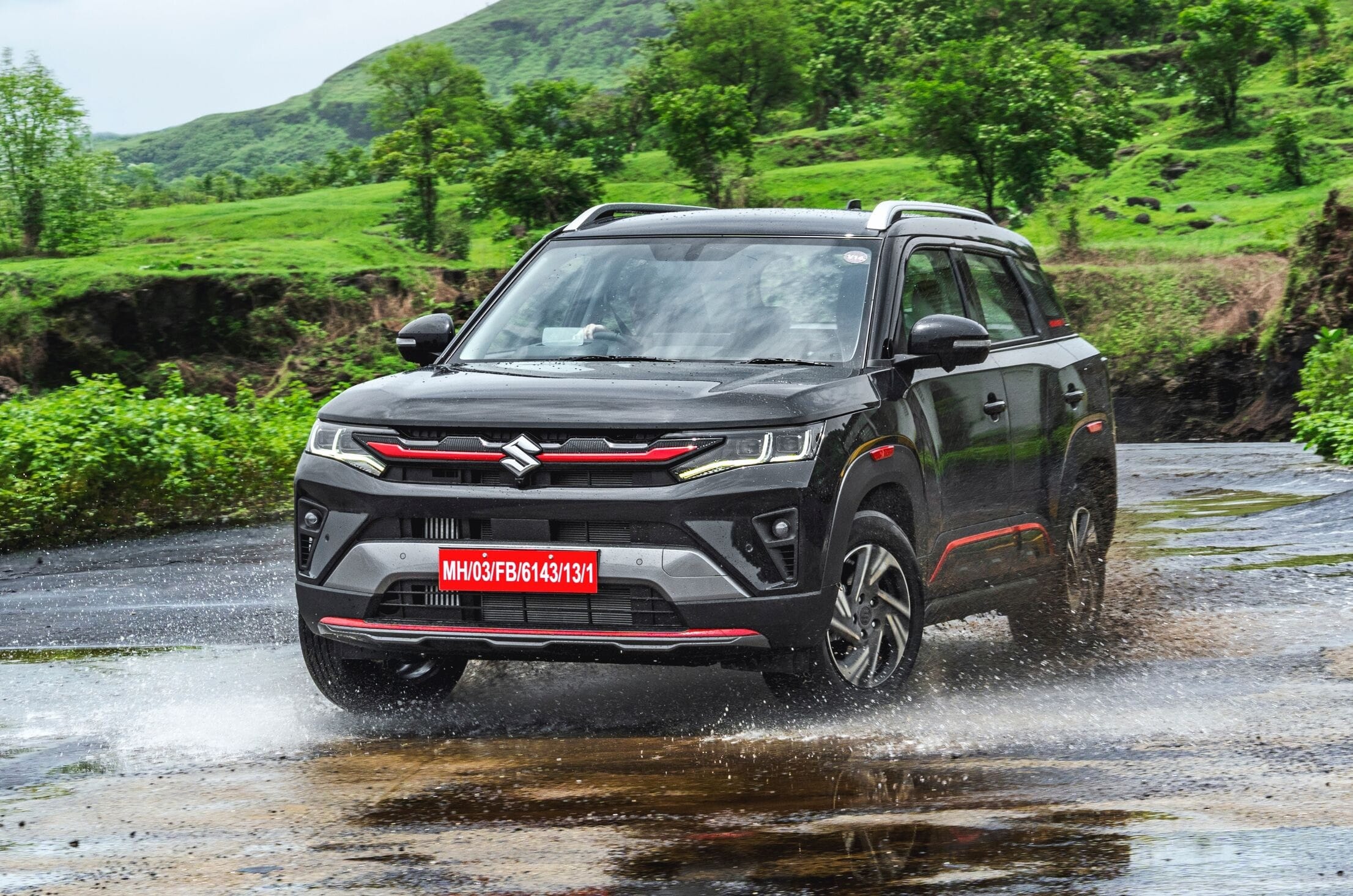
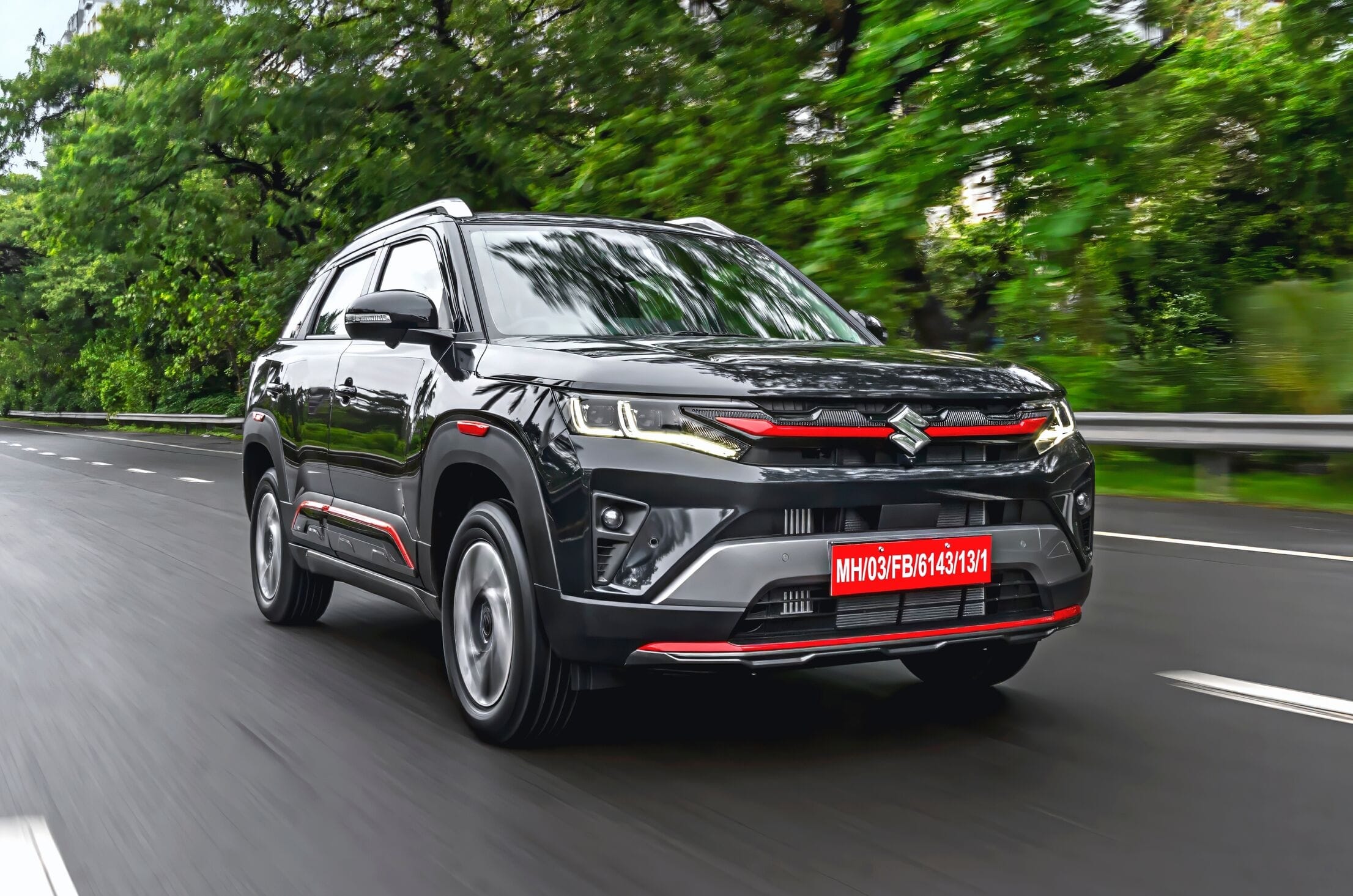
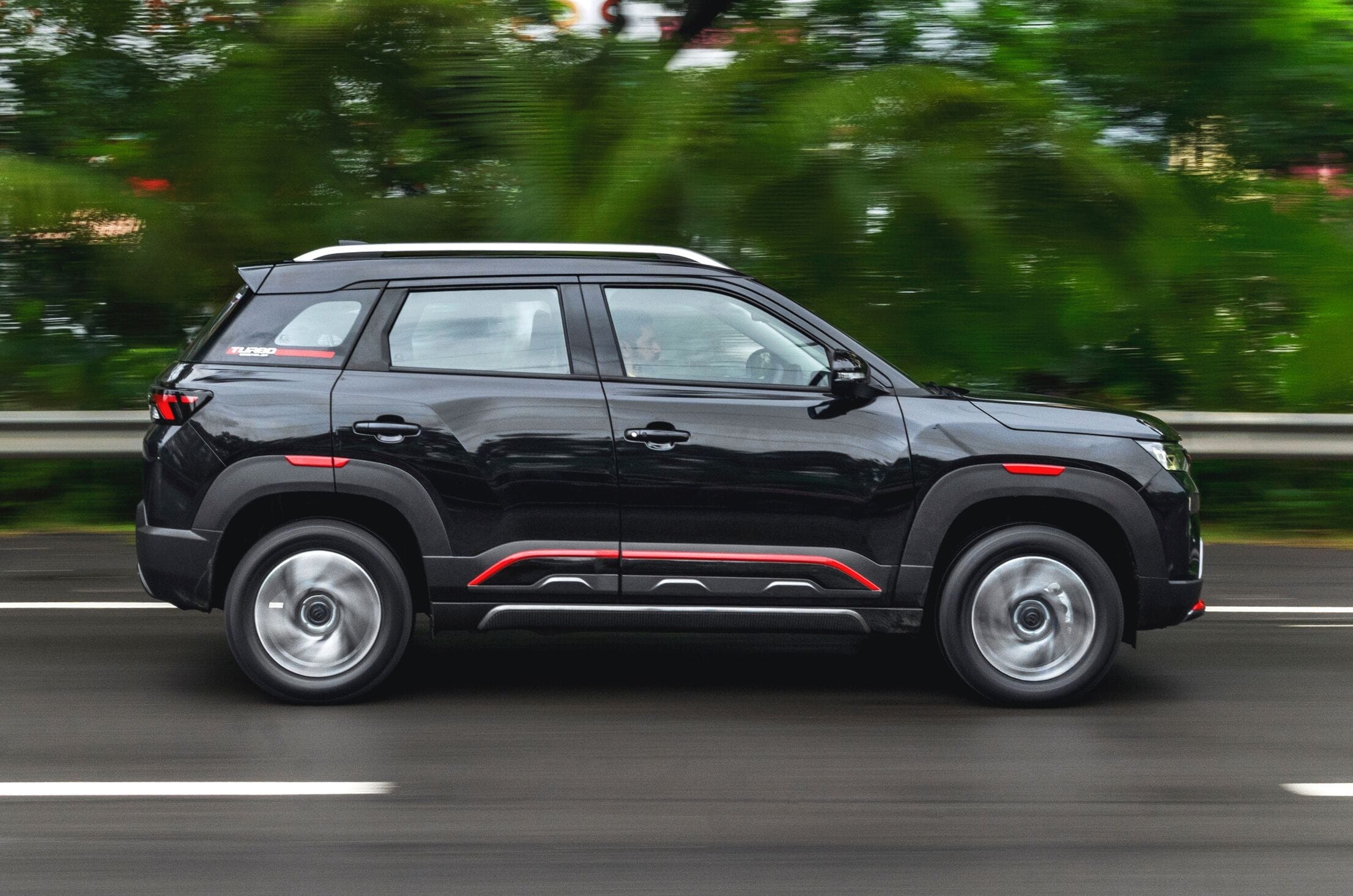
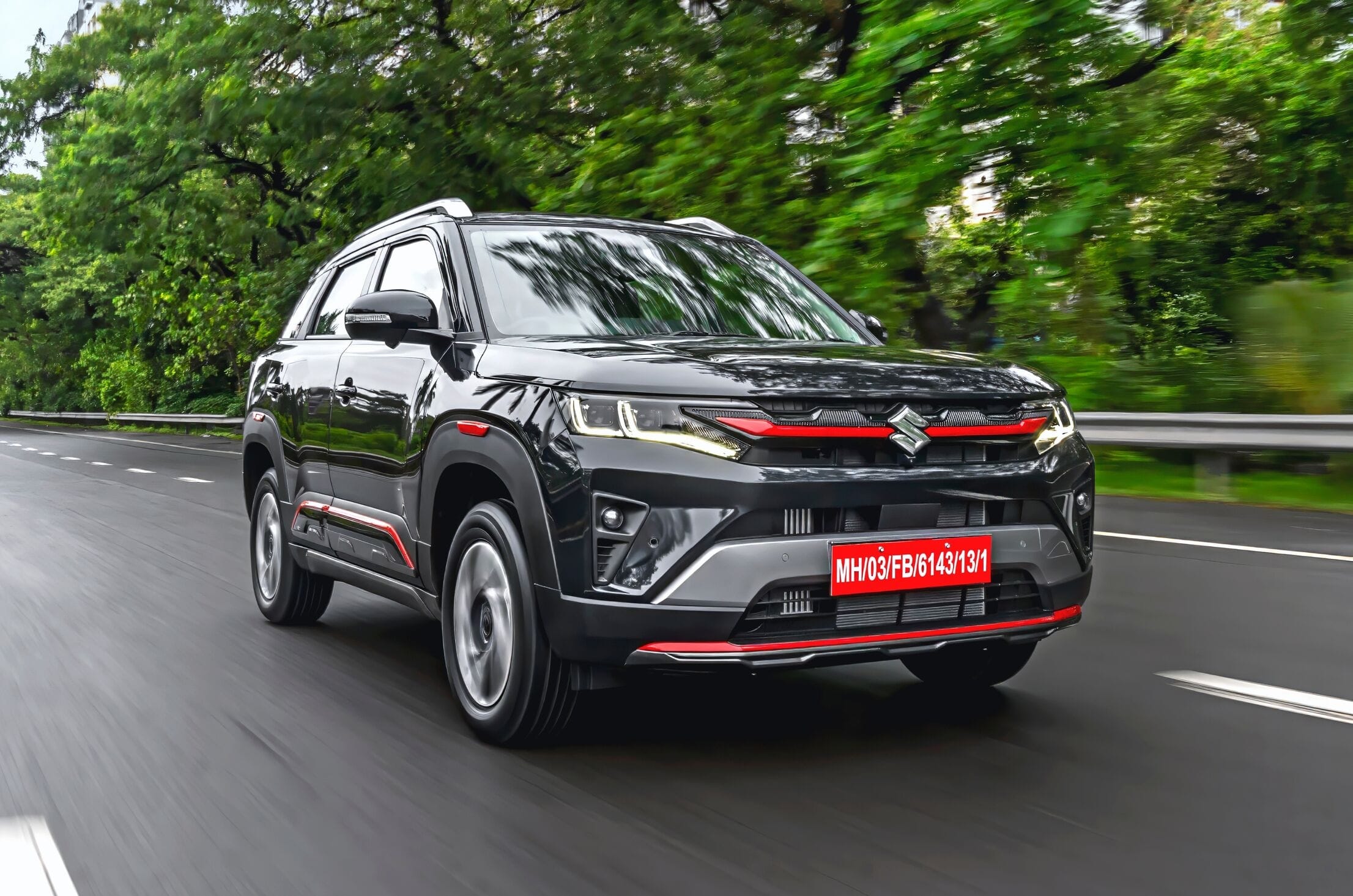
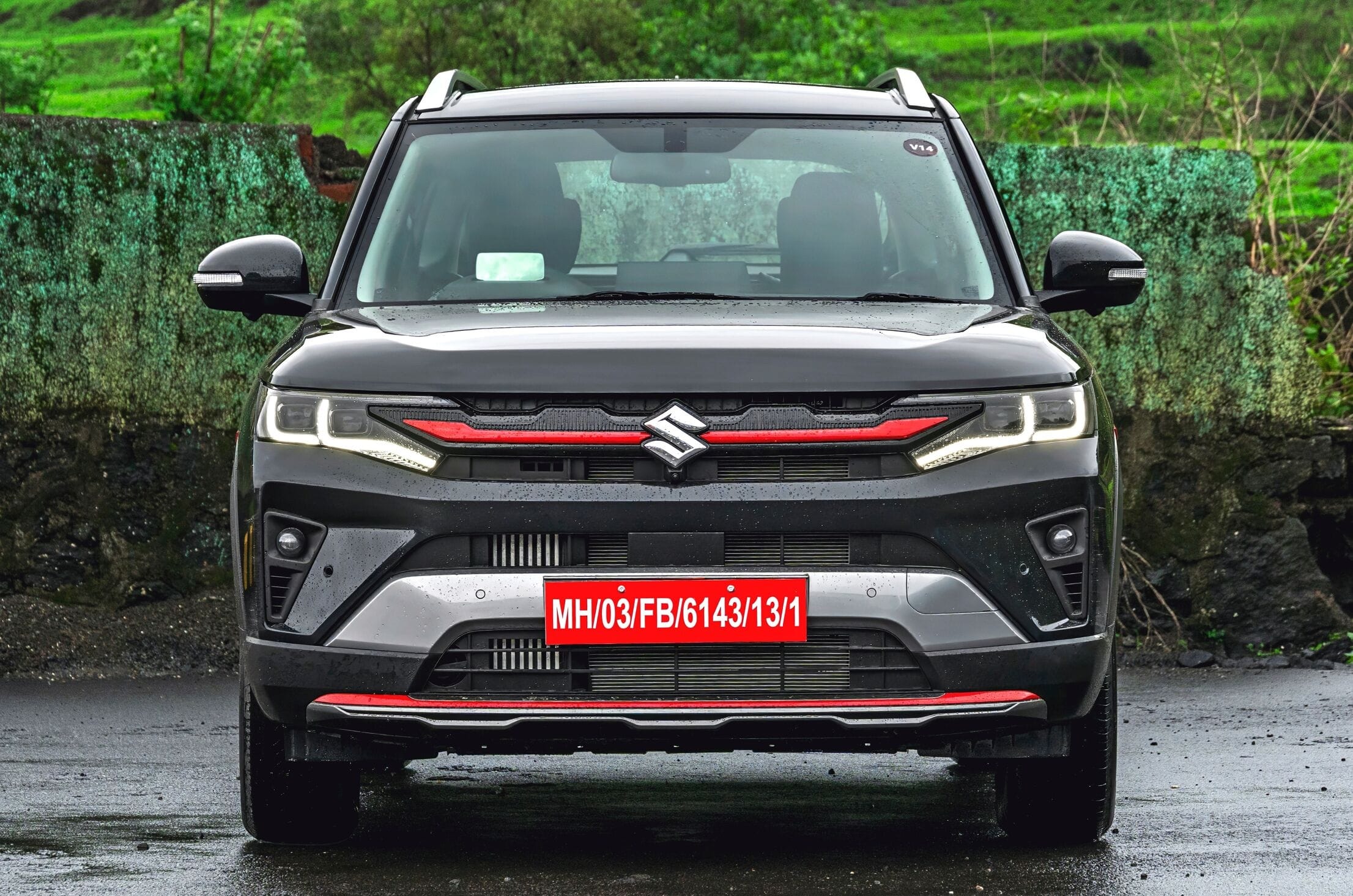
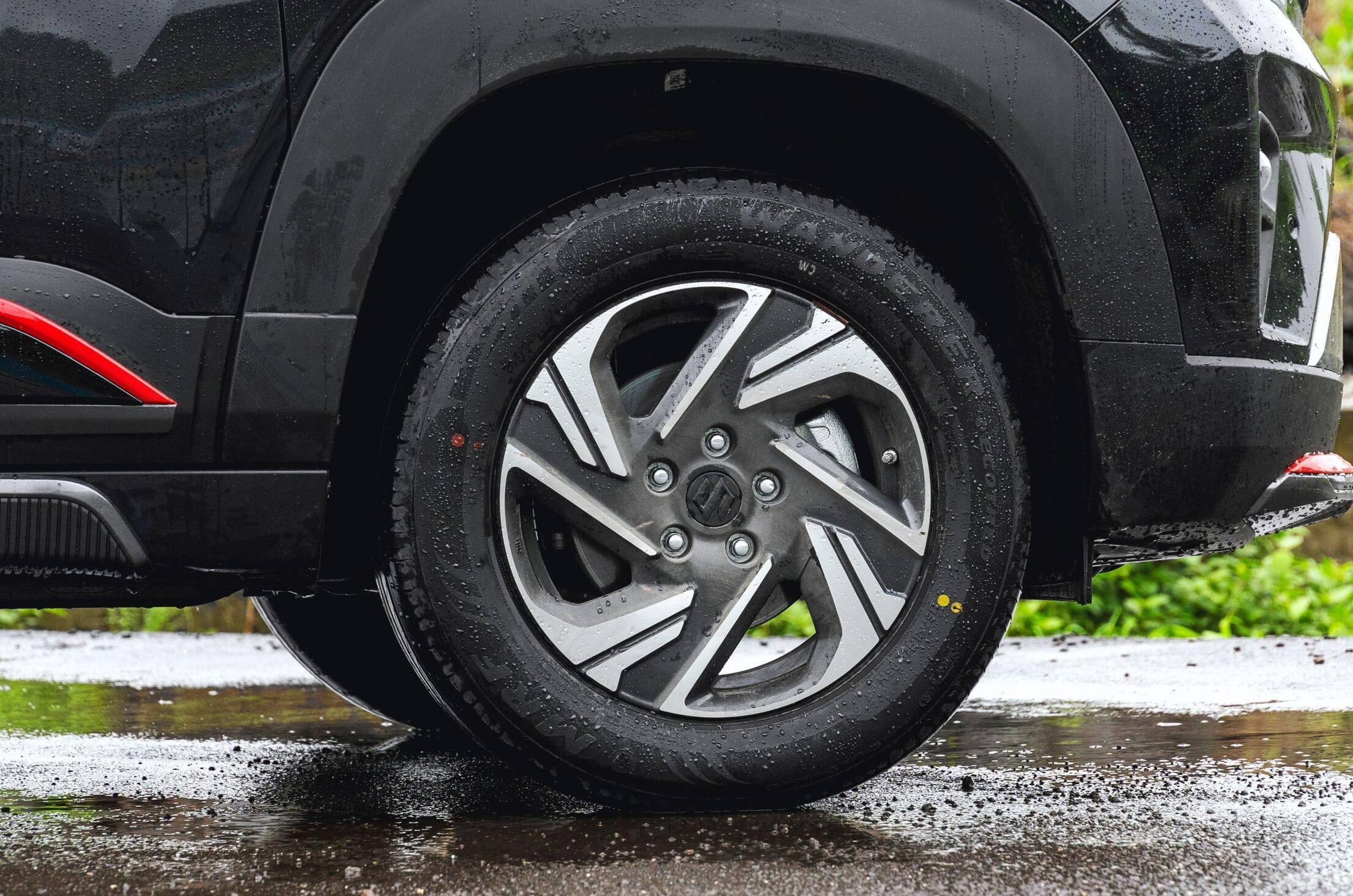
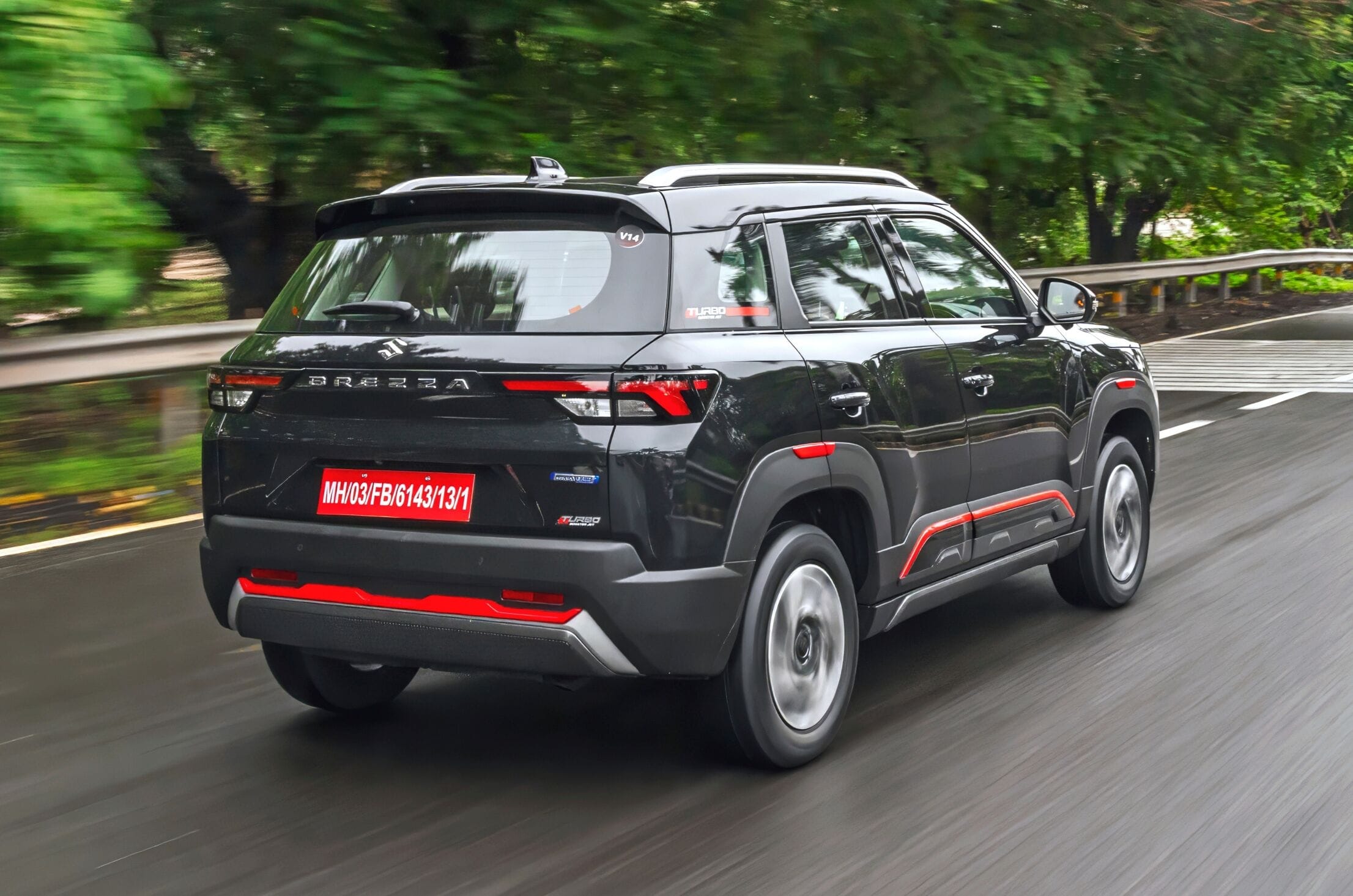
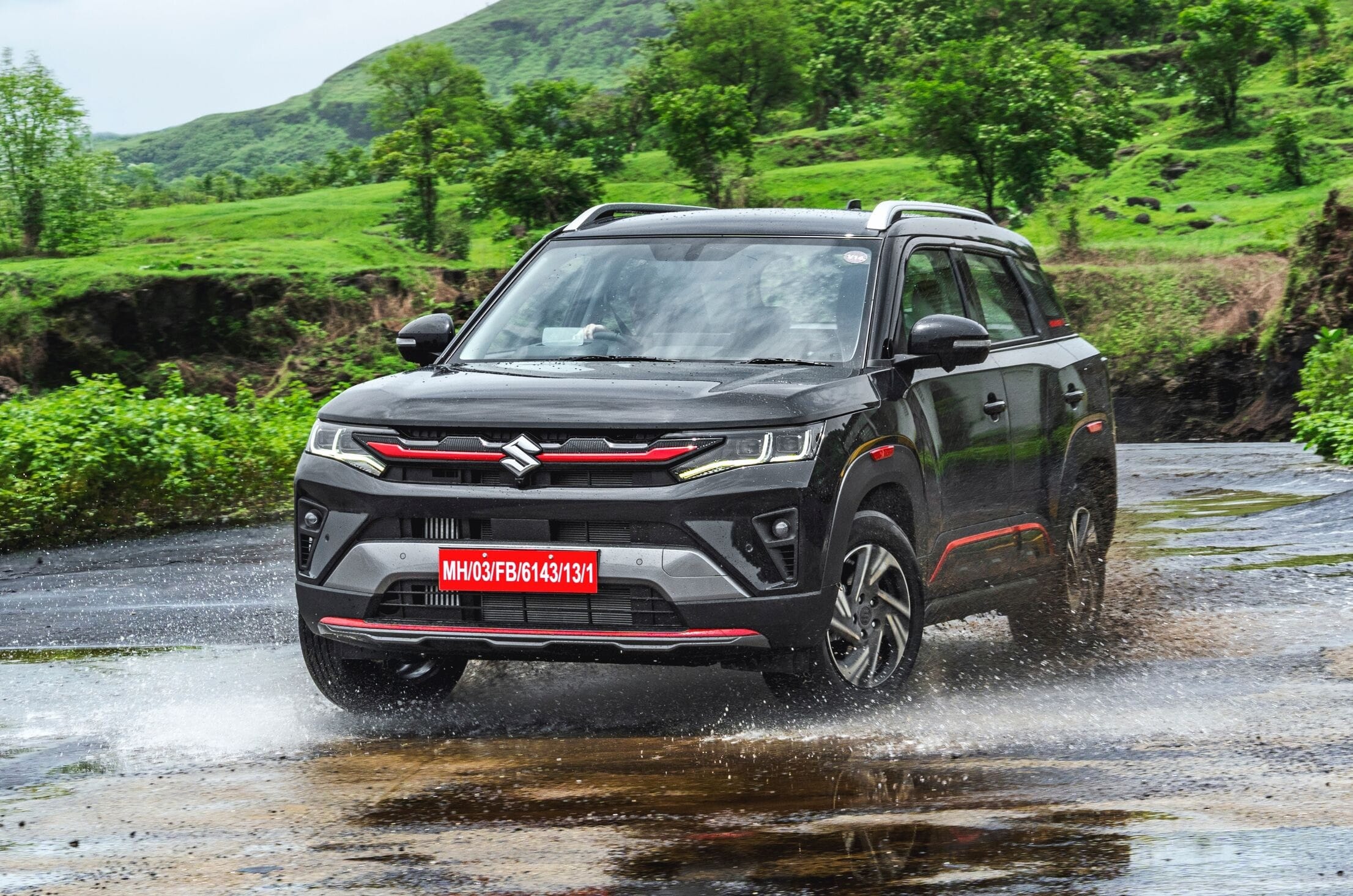
In typical Maruti fashion, this is a very mild facelift, and only if you’ve regularly lived with the outgoing model might you be able to spot the changes. Up front, the grille trim has been revised slightly, the front bumper looks cleaner and less like a bull bar, and there are triangular housings for the fog lamps. There are almost no changes to the sides or rear, save for a bit more garnish on the side cladding, a new four-spoke dual-tone design for the 16-inch alloy wheels and some vertical slats in the base of the rear bumper, unique to the turbo model.
Also unique to turbo-petrol models are smatterings of red trim everywhere, from the grille, to the side skirts, to the bumpers and even on the wheel arches. While the idea is to give the turbo models a sporty identity, the execution feels lazy – more like aftermarket accessories than a special body kit, like what was offered on the old Baleno RS.
There are no other changes to the outside, and you get the same square and boxy shape as before, pointing to the space on the inside. As before, the body appears a bit too large for the chassis, with the wheels looking disproportionately small and inset compared to the bodywork.
Boot volume remains the same at 328 litres, and as always, its square shape offers up more practicality than the number suggests. A big change, however, is that there is no longer a spare tyre on offer; just a puncture repair kit and tyre inflator. This is because CNG models have moved to an underfloor tank design to free up more luggage space, and like in the Victoris, that’s resulted in the removal of the spare tyre in all models.
2026 Maruti Brezza Interior Space and Comfort – 8/10
Remains one of the most spacious in the segment; decent quality levels all around.
The tall, unabashedly boxy shape has meant that interior space is good, and the Brezza remains one of the few compact SUVs that can seat five adults in true comfort. Seat comfort is adequate, erring more on the firm than the outright soft side, but the design is accommodating for even large adults. The seats are trimmed, on this top ZXi+ variant, in a new bronze and black leatherette upholstery, which looks classier than before.
In fact, bronze and black is the theme for this interior, replacing the maroon and brushed silver of before, and you can see that mainly in the dashboard trim and door cards. The other subtle visual difference is that the once single-colour ambient lighting can now be set to one of 64 colours selectable from the touchscreen.
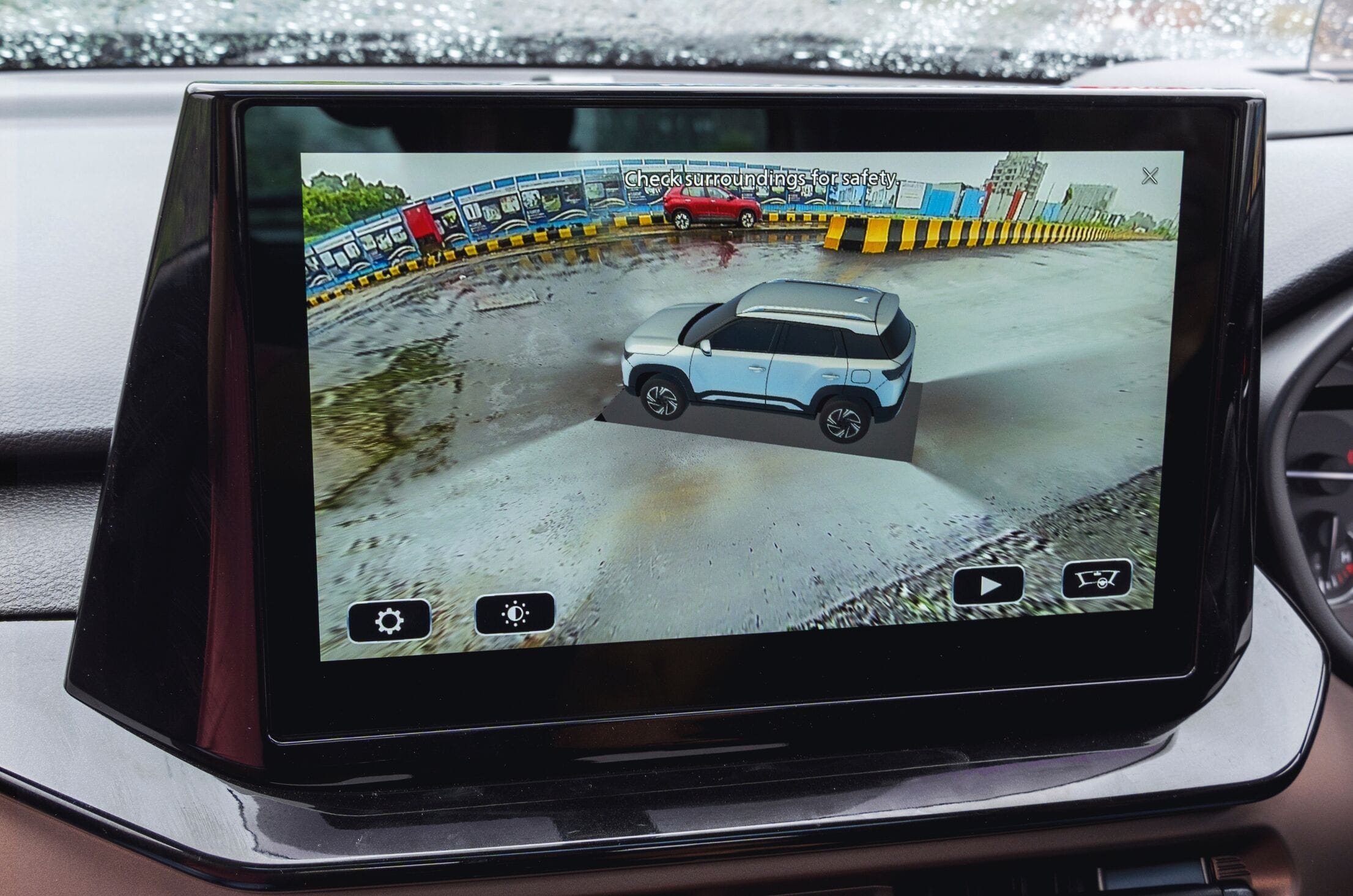
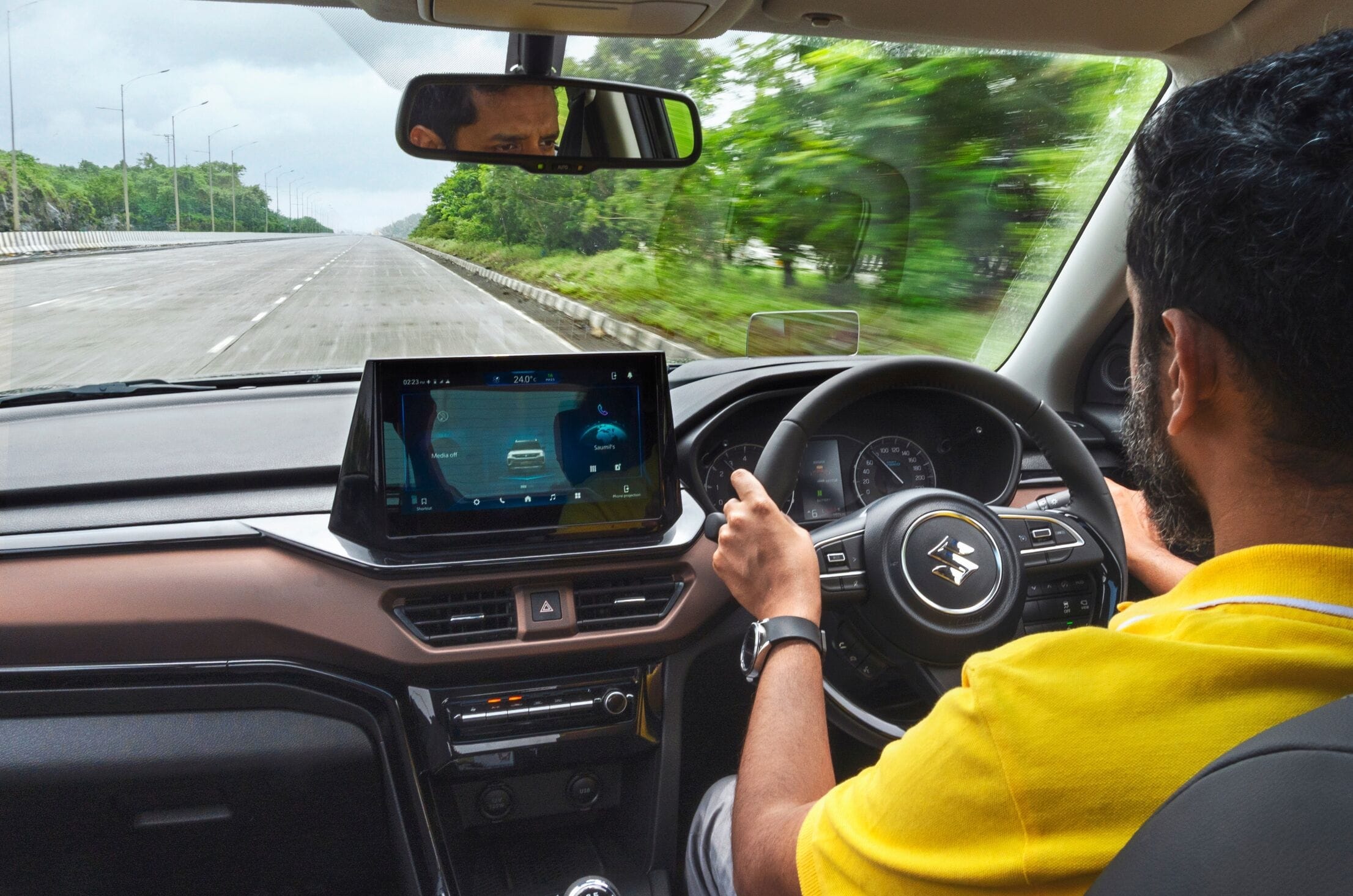
And finally, the touchscreen on the top variants is the 10.1-inch unit from the Victoris, though the large, free-standing housing it sits in hasn’t changed and still feels like a visual distraction while driving. While the cabin doesn’t immediately scream ‘quality’ like some newer entrants to the segment, in true Japanese car fashion, it feels hardy and well put together in an understated way.
2026 Maruti Brezza Features and Safety – 7/10
Gets some key feature enhancements, but still not up there with the segment best.
With the new touchscreen hardware comes the updated ‘Smartplay Pro X’ software we saw on the Victoris as well. It’s smoother and looks more up-to-date, and features a host of connectivity features, including wireless Apple CarPlay and Android Auto. There is still no digital driver’s display, but the analogue dials are clear and easy to read, and there’s always the flip-open HUD to look at as well.
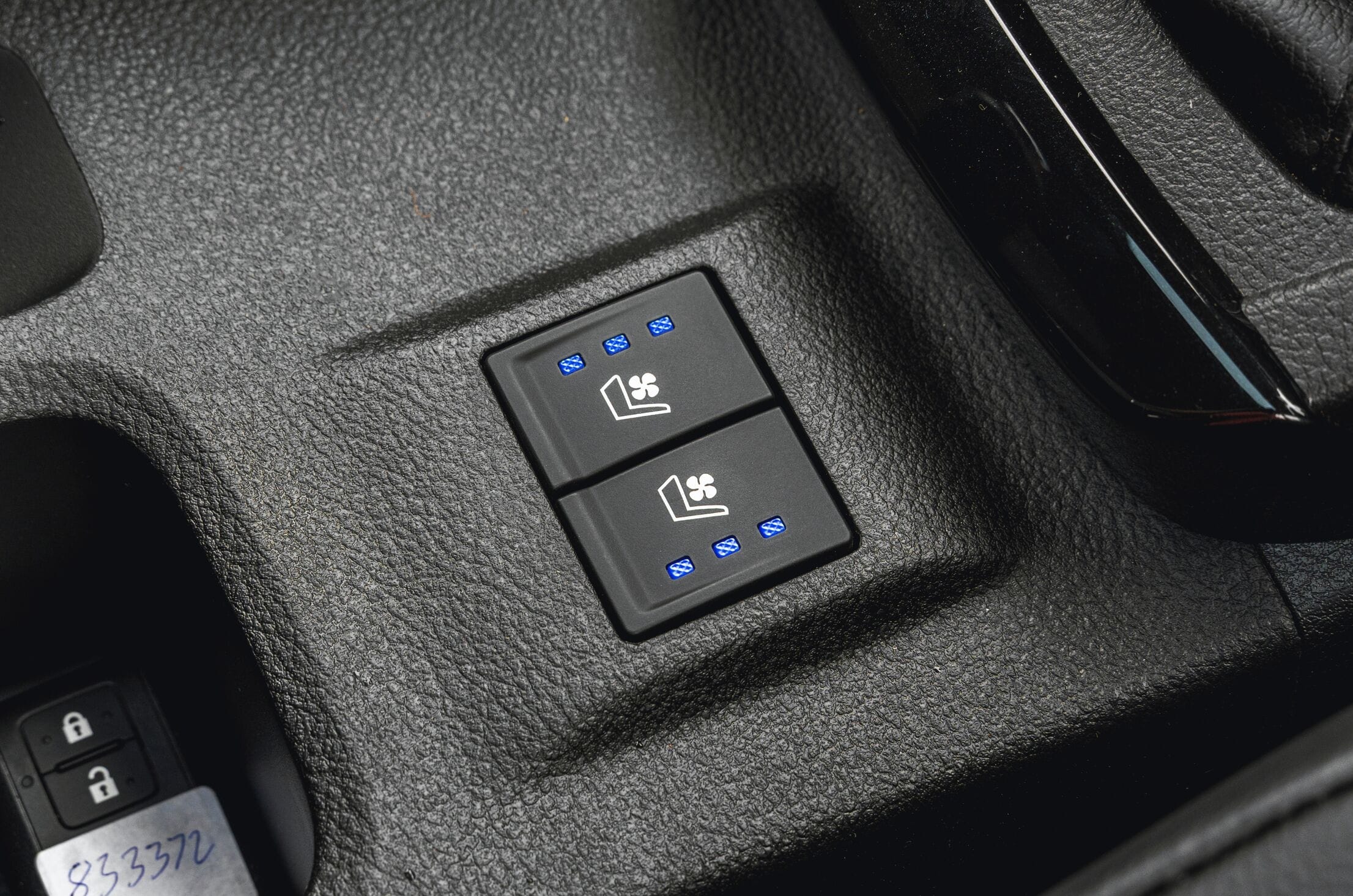
Other additions include a ventilation function for the wireless charger, and ventilated front seats, but sought-after features rivals offer that aren’t found here include powered front seats, rear window blinds and a panoramic sunroof – the Brezza continues with a single-pane unit.
On the safety front, there have been a few additions too, most notable of which are front parking sensors. This has enabled a few more advanced driver assists, such as blind-spot warning and rear cross-traffic alert, though it’s not the full ADAS system that you get in the Victoris, or which rivals offer. Still, the Brezza now holds a 5-star Bharat NCAP crash test rating, which should reassure some buyers who were on the fence about the SUV.
2026 Maruti Brezza Performance and Refinement – 7/10
Turbo-petrol engine lacks outright punch but instead aces driveability.
The Brezza was thus far unique in the segment for having a 1.5-litre naturally aspirated petrol engine. While this larger-displacement engine prevented it from availing of compact-car tax benefits, Maruti still managed to price it quite competitively. The engine itself was brilliant, feeling far more effortless than the 1.2-litre naturally aspirated engines of rivals, while being incredibly fuel efficient. This engine continues in the updated Brezza, and remains the only way to have an automatic gearbox.
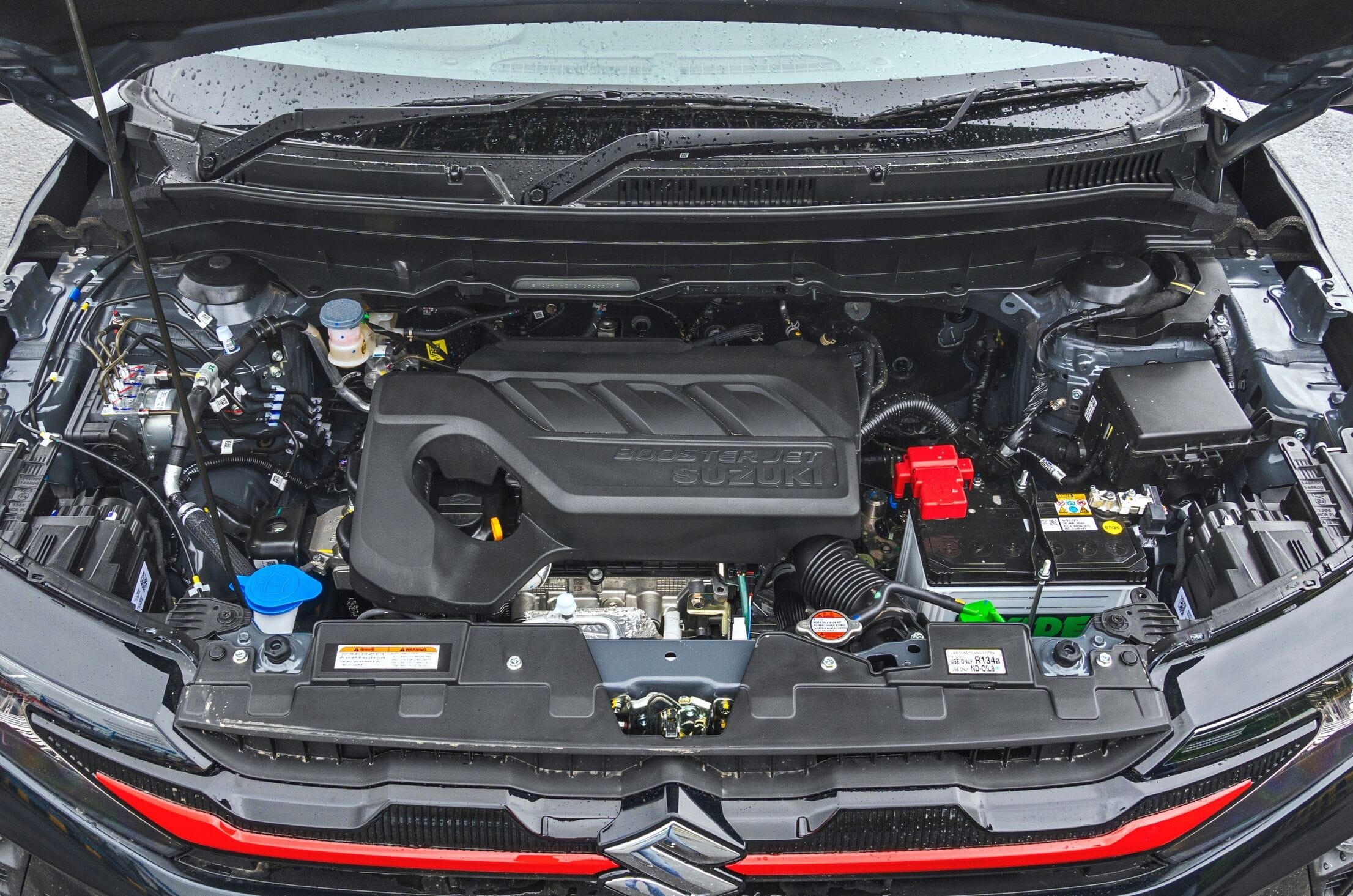
What we’re driving today, however, is the new addition to the range, which is the 1.0-litre ‘Boosterjet’ direct-injection turbo-petrol engine, finally letting the Brezza to join every other compact SUV in the segment in offering a turbo option. First seen briefly in the Gen 1 Baleno RS, this engine was then locally assembled and re-introduced in the Fronx (and its cousin the Toyota Taisor), and now has finally made its way into the Brezza, with an uprated power output of 110hp and torque output of 170Nm.
What strikes you immediately is refinement, and only when you absolutely wring it out will you get some hint of that three-cylinder thrum; commendably, it’s more audible outside than in the car. The next thing is driveability, which is excellent. There’s very little hesitation at low revs – something you typically find in 1.0-litre turbo-petrol compact SUVs – and the Brezza Turbo sets off smoothly, with almost no lag. In fact, you can set off in second or even third with little issue.
Some credit must go to the satisfying and progressive 6-speed manual (which replaces the 5-speed in the 1.5-litre engine as well), as well as the light and easy-to-modulate clutch, both of which are a joy to use.
Though it makes 31Nm more than the 1.5-litre naturally aspirated petrol, and does so from just 2,000rpm, it is tuned to be so smooth and linear, you don’t really feel the added punch. In our tests, the 1.0 Turbo accelerated from 0-100kph in a modest 12.36sec, just 0.3sec quicker than the old 1.5 NA petrol manual version (with the 5-speed manual). The added mid-range boost was more apparent in in-gear acceleration, where it was a few seconds quicker than the 1.5 from 20-80kph in third gear and 40-100kph in fourth.
While off-the line performance was smooth and general tractability in any gear was commendable, we did find ourselves downshifting one or two gears to overtake on the highway, and through the rev range, some flat spots and hesitation did appear. All things considered, the 1.0 Boosterjet is a welcome addition to the Brezza line-up.
2026 Maruti Brezza Mileage and Efficiency – 9/10
Bucks the downsized turbo petrol trend by being spectacularly efficient.
Though they make more power and torque than their naturally aspirated brethren, downsized direct-injection turbo petrols are often earn higher official fuel efficiency ratings due to these being tested in a lab under ideal conditions. In the real world, however, the reality proves to be different, as once the turbo comes into effect, fuel consumptions spikes.
The Brezza Turbo flips the script with an official rating slightly lower than the 1.5 NA, but still incredibly high at 19.96kpl for the higher variants and 20.47kpl for the lower variants.
The best news is that in the real world, the fuel economy seems like it will be excellent too. Despite our day of hard driving and non-stop shooting, the onboard fuel computer showed anywhere between 11 and 14kpl, while other turbo petrols have dropped into single digits with the advent of E20 petrol. Maruti’s mild-hybrid system with a bit of electric assist no doubt helps deliver these numbers, but we wish the engine stop/start was a little quicker to engage. Stay tuned, however, for the full Autocar India real world mileage test, which we will do soon.
2026 Maruti Brezza Ride Comfort and Handling – 8/10
Not the most enthusiastic handler but rides comfortably enough.
Where the pre-facelift Brezza had a light and loose steering that wouldn’t automatically return to the centre position, which was typical of Marutis of that era, this has been corrected to a great extent with the facelift. It still doesn’t have a lot of feel or feedback, but some weight has been dialled in and it returns to centre on its own now. This has robbed some low-speed ease of manoeuvrability, but a small and near-imperceptible amount.
High-speed lane changes, as a result of this added weight, feel a lot more secure to perform. For the most part, the Brezza feels planted, but its tall and boxy form on a narrow footprint make it quite susceptible to cross winds. In corners, too, it feels quite top heavy, and combined with the disconnected steering, doesn’t encourage you to push it hard around corners.
Ride quality is decent but should have been a bit better. Considering this engine is undoubtedly lighter than the 1.5 and the wheel size hasn’t gone up from 16 inches, Maruti could have taken the opportunity to relax the suspension setup a bit. It continues to err on the brittle side, but far from the point of being uncomfortable.
2026 Maruti Brezza Value for Money – 8/10
Turbo engine offered across entire model range, and priced lower than 1.5.
The biggest news is that Maruti hasn’t positioned the 1.0 Turbo above the 1.5 petrol, and has instead passed on the sub-4m tax benefits to the customer. The Boosterjet is available across all four variants – LXi, VXi, ZXi and ZXi+, while the 1.5 NA manual, auto and CNG skip one variant each. It’s a big price difference too, with a 1.5 AT costing over Rs 2 lakh more than the equivalent 1.0 MT. One can only wonder if Maruti will offer the 6-speed AT with the Boosterjet at some stage, as it does in the Fronx.
The Turbo is a welcome addition to the range, even if not necessarily from an outright performance standpoint, but simply from one of positioning. While the Boosterjet may have felt premature for Maruti in 2017, with far greater acceptance of downsized engines today, the huge tax benefits and the engine being locally assembled now, it was a no-brainer to introduce it in the Brezza. It’s a strong and confident statement, and we hope it finds its way into the hatchbacks too.
Given the aggressive pricing of Rs 7.4 lakh to Rs 13.55 lakh, the Brezza’s positioning in the segment has only improved, and you can forgive that it doesn’t have all the features of some newer rivals; the updates it has got are welcome. Similarly, you can forgive that the design hasn’t changed too much or that the turbo’s performance is not explosive, given that these fit perfectly with Maruti’s – and the Brezza’s – positioning of reliable, efficient and no-nonsense motoring.
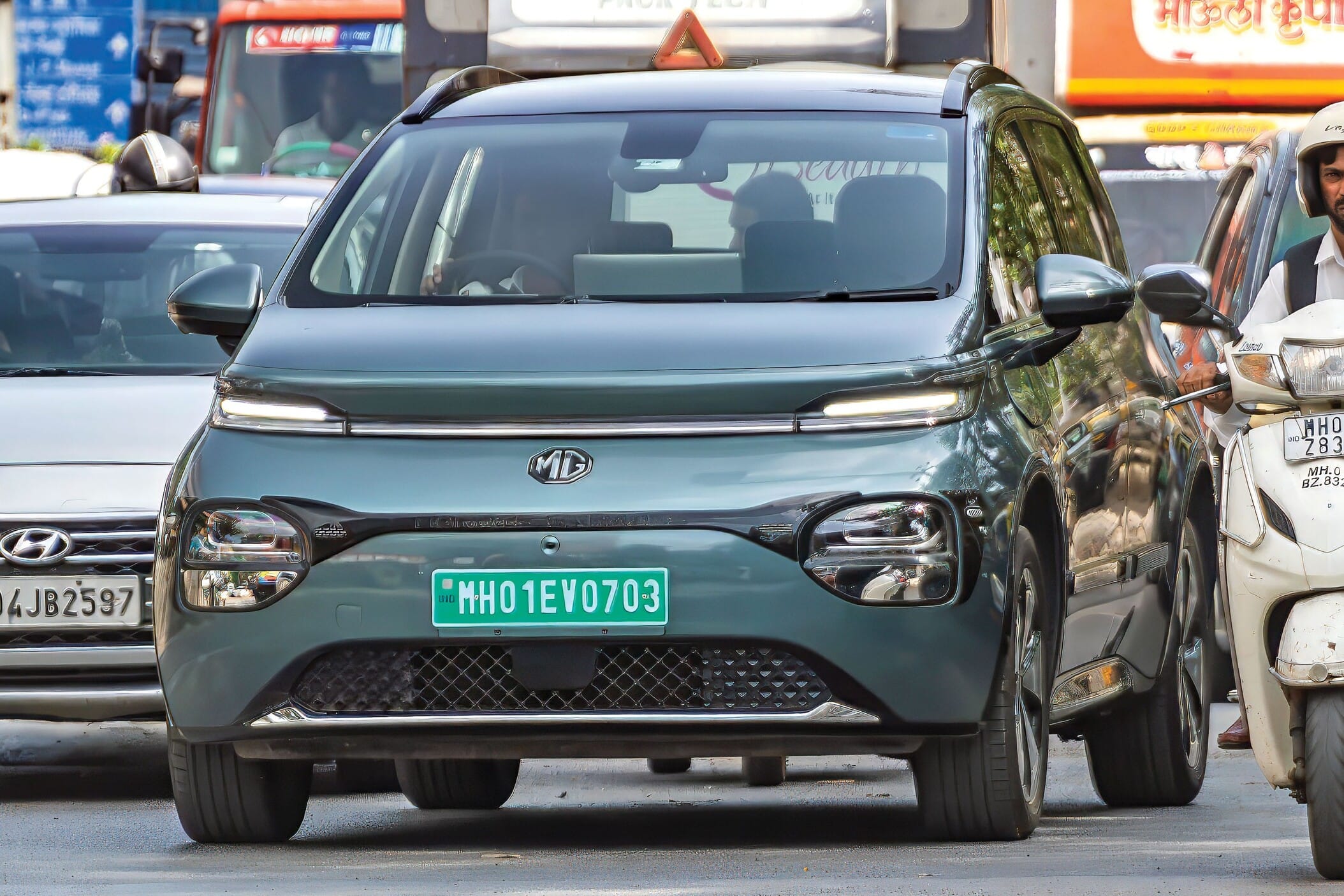
The more time I spend with our long-term MG Windsor EV, the easier it becomes to understand why it is India’s bestselling EV. It is one of those cars that slips effortlessly into daily life.
Its biggest strength is how easy it is to drive. The motor delivers power smoothly and predictably, making city commutes stress-free, while the regenerative braking is among the best-calibrated in the segment. Even in its strongest setting, it feels intuitive rather than abrupt. A proper single-pedal mode would have been welcome, but the Windsor remains one of the most user-friendly EVs around.
Smooth power delivery and well-calibrated regen make the Windsor one of the most user-friendly city cars.
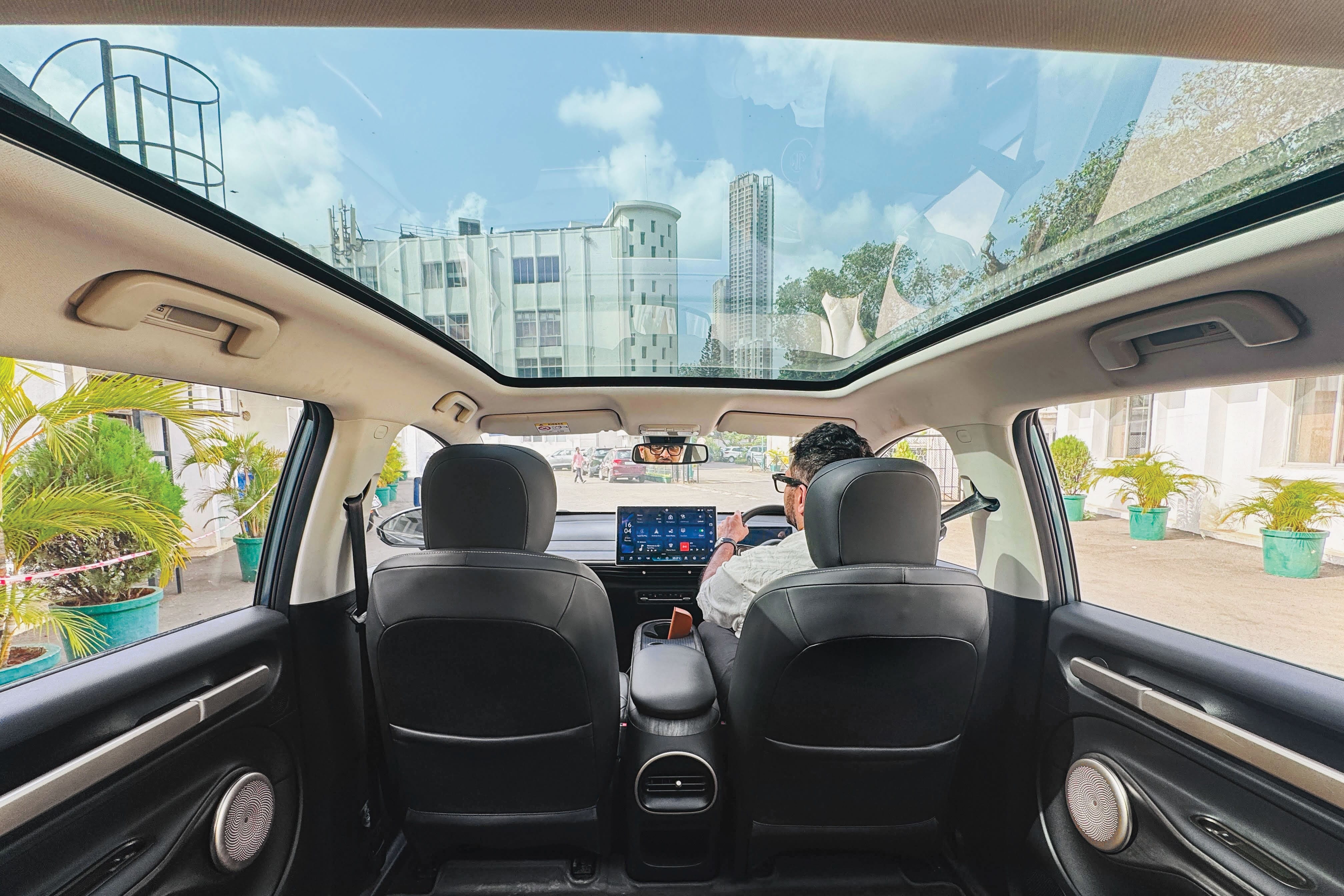
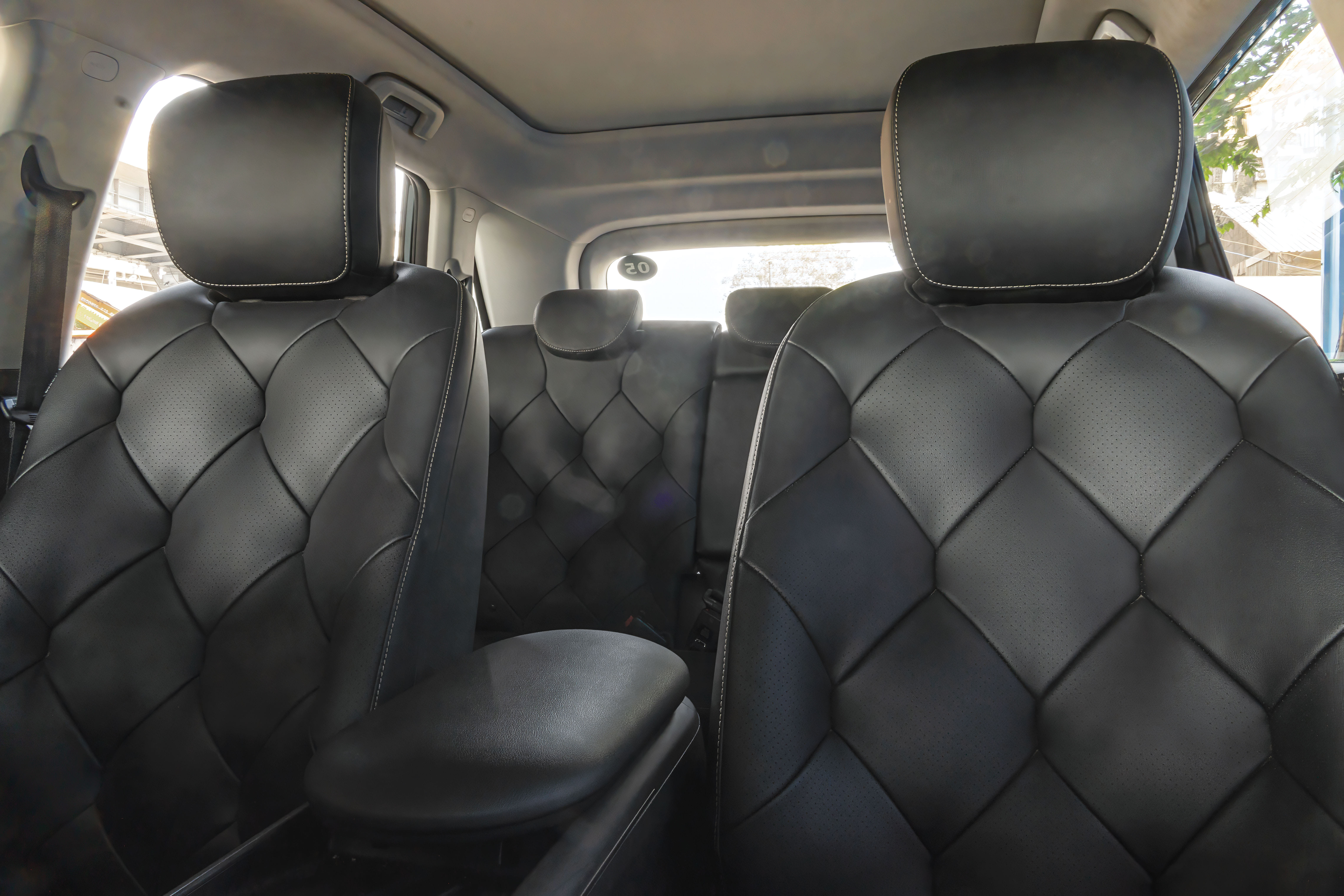
The spacious cabin continues to be a highlight. The combination of a cab-forward design, large windows and generous dimensions creates an airy feel, while rear-seat passengers enjoy excellent headroom and legroom. My family was genuinely surprised by the amount of space on offer, and while the heavily quilted seats look premium, slimmer occupants may find them uncomfortable over a longer drive.
The cab-forward design and generous glass area create a genuinely spacious and airy ambience.
Performance has also impressed. Whether in city traffic or on my regular Mumbai-to-Pune drives, the Windsor has never felt short of power. It cruises comfortably at highway speeds, has enough performance in reserve for overtakes, and offers sufficient real-world range to complete the journey without any charging stops.
Not everything is perfect, though. The large glass area can make the cabin heat up quickly when parked in the sun, and the black leatherette upholstery does little to help. Highway refinement could also be better, with noticeable road noise filtering into the cabin. The ride remains comfortable for the most part, but sharp bumps and expansion joints can occasionally catch it out.
Road noise becomes noticeable at high speeds, taking away an otherwise refined experience.
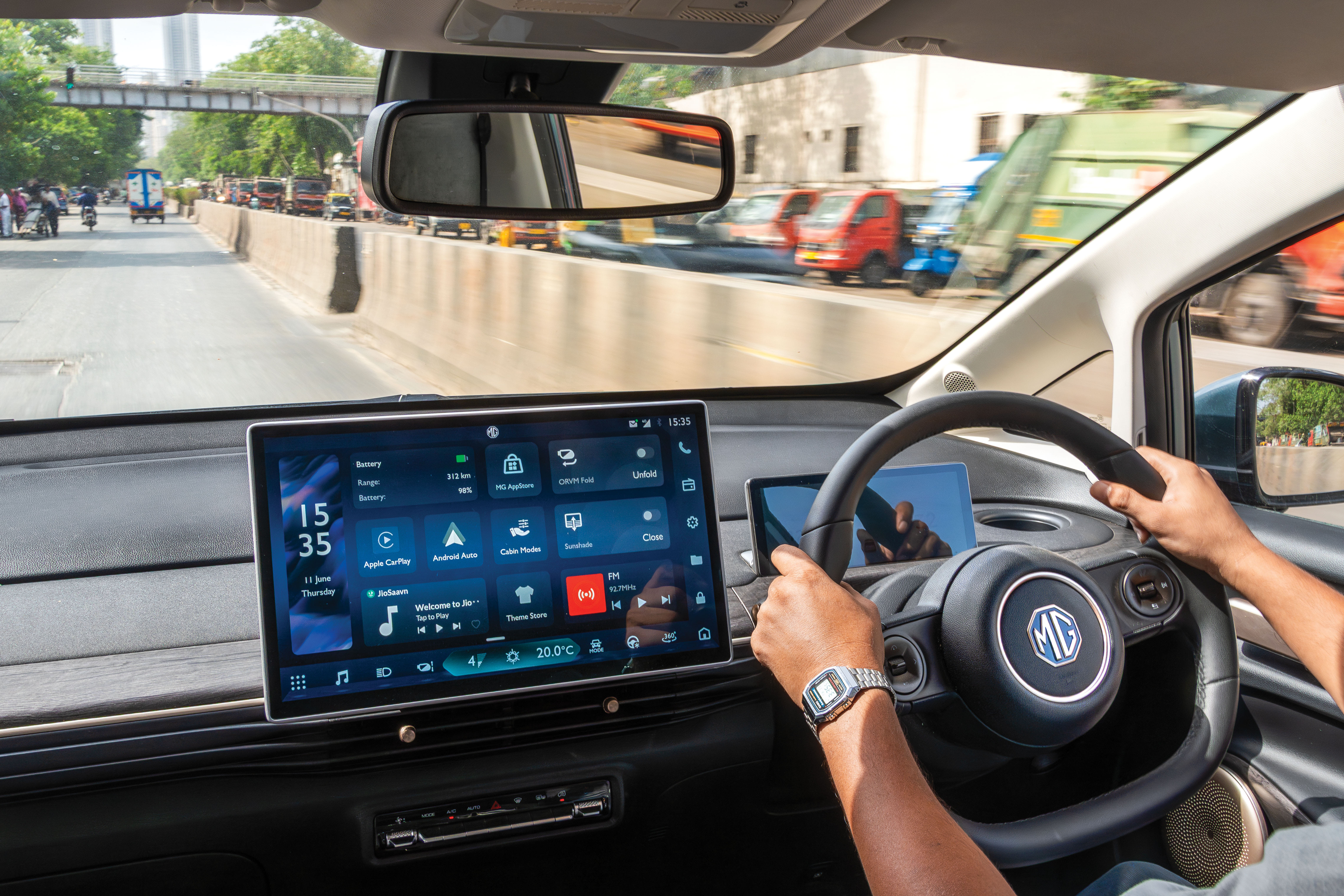
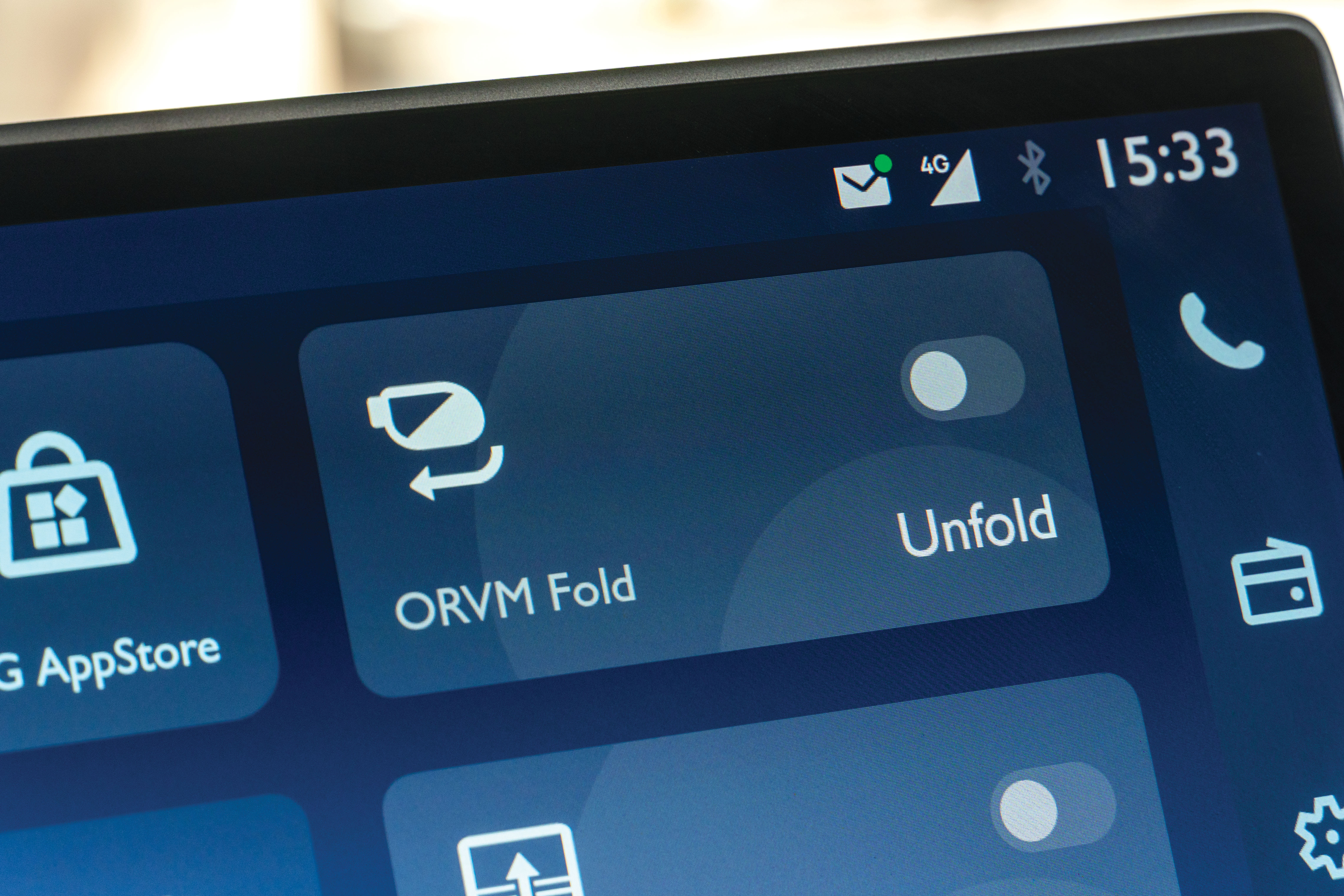
The touchscreen-based controls still require acclimatisation. While shortcuts on the steering wheel make tasks such as mirror adjustment easier over time, physical controls would have been more convenient. The 15-inch display also feels slightly too large, requiring a stretch to reach functions at the far end.
Touch mirror and sunshade controls are too bad; physical controls would be far more convenient.
Even so, the Windsor EV continues to impress as an all-round package. Its blend of space, ease of driving, performance and usable range explains exactly why it has resonated so strongly with Indian buyers and why I’m going to hang on to it for a while longer.
Mercedes-Benz’s Research and Development centre in Bengaluru has evolved from a hardware-focused engineering hub into one of the company’s key global R&D centres, with teams working across software, ADAS, electric powertrains and physical vehicle development. In this interview, Jörg Burzer, Member of the Board and Chief Technology Officer, Development & Procurement at Mercedes-Benz Group AG, discusses the centre’s expanding capabilities, the role of AI in vehicle development, the future of autonomous driving, and why he believes every Mercedes-Benz has “a bit of India” in it.
A lot of global auto OEMs have large R&D centres in India. Beyond cost, what are the benefits of having such large setups in India
Yes, it’s not only cost; you see, the competence level is so high. If you look at our centre, we will be celebrating its 30th anniversary here in India, and over these years, it has only grown in size and capability. We started with hardware, but now it’s massively into software, infotainment and autonomous driving. The team in India is contributing heavily on ADAS, for instance, and we are working on Level 3 and Level 4 with the team in India. So, all in all, I would say it’s competence, speed and agility that are good here.
Is the Mercedes development centre mainly a digital unit, or is physical development also being undertaken here?
Oh certainly, we have lots of hardware development. There are many test benches, and you’ll see lots of physical testing and development taking place here. Even beyond powertrain, there’s a lot of physical development taking place along with our vendors here too. And then, on electric vehicles, we’re working on the powertrains and batteries too. And yes, on the digital side, there’s lots of AI work, not just on the product, but also on process development. So yes, the centre is a full-scope R&D centre, a blend of the digital and physical. For example, we do a lot of work on the simulation of sheet metal forming and welding here.
Besides engineering, does the India centre also do design and styling work for your products?
On the design side, at Mercedes, we have this philosophy that we are creating a global product, and so we have a global design. This might change a little bit – obviously, we are adapting our design, which might be enriched by certain market trends – but for us, it’s very important that it is a global design, so we have one design hat. So, our styling team is based in Germany, where we have our design centre, and that’s important for us to maintain the global approach.
Software is today a leveller, even phone manufacturers can make a car today. Do you view this as a threat?
I see this as an opportunity because, for instance, you can develop a software stack for ADAS, but at the end you have to apply it to hardware. One interesting bit, to my knowledge, is that we are the only OEM doing a Level 2++ ADAS with a combustion engine, otherwise you only see this on EVs. To do this in a combustion engine environment, you know, with things like a transmission, it’s more complicated, so that’s where our expertise in traditional technologies, along with our developments in software, has an advantage. And of course, we have tremendous respect for our competitors and we are seeing what they are doing, but for me, I think if you do this mix right, you will be at the forefront of development.
Past Mercedes cars stood for robust engineering. What do you think a Mercedes 10 years from now would be all about?
Obviously there will be tech, but there will be more. I can give you a good example, one of the most important characteristics and values of a Mercedes-Benz is safety. We do plenty of crash tests every year for our cars that we launch, plus there’s a lot that we are doing with autonomous driving too, for instance, what we are doing with Nvidia. And here we have a lot of redundancy. We have a traditional software stack with massive amounts of info like what is a stop sign in every different market, for example. But there’s an end-to-end stack where the software is trained by the behaviour of the driver in traffic, but what we are doing is we have both stacks, so if the end-to-end system does not know what to do, then it can fall back to the classic system. So, we create a safety environment, where we know there is always a solution.
On redundancy, what is your view of a wide sensor stack like radars, lidars and cameras, or is AI with cameras only fine?
We are using AI, yes, but we have radars too. We have to use AI to create efficiency in the simulation and training, but you have to also think about the sensor set, and for me, I am convinced you have to have a multiple sensor set, not just one type. So, like on the S Class, we have multiple cameras, radars and ultrasonic sensors too.
Does the India R&D centre develop products or platforms independently of headquarters, or is it more synergetic?
For us, it’s very important that we do everything as a team. So, for me personally, it’s very important to have a global perspective in R&D because the innovations and technology solutions are so complex that you can only master them as a team. There are a lot of competencies, but there is not one single team in the world that can say, ‘I am the one that can create a platform.’ It’s always teamwork, and if you look at all industries, automotive engineering is the ultimate for teamwork. So for us, R&D is one big team. And with regards to the India centre, I love to say that in each and every Mercedes, there is a bit of India in it.
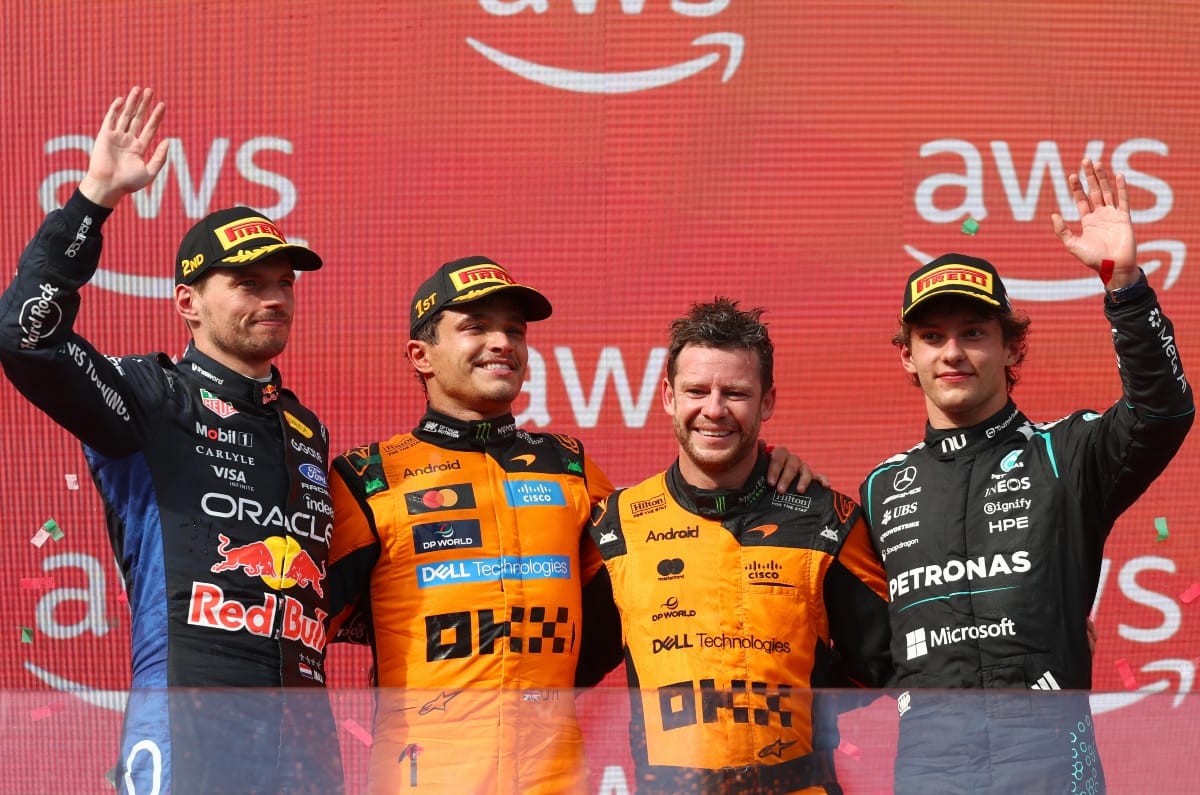
Lando Norris converted pole position into victory at the Hungarian GP, securing his and McLaren’s first win of the 2026 season. He finished over 15 seconds clear of Max Verstappen, while Kimi Antonelli completed the podium to further extend his championship lead.
Norris wins, 15.080 sec from Verstappen
Hamilton moves up to second overall in drivers’ championship
Norris scores first win of F1 2026
Piastri retires with gearbox issue
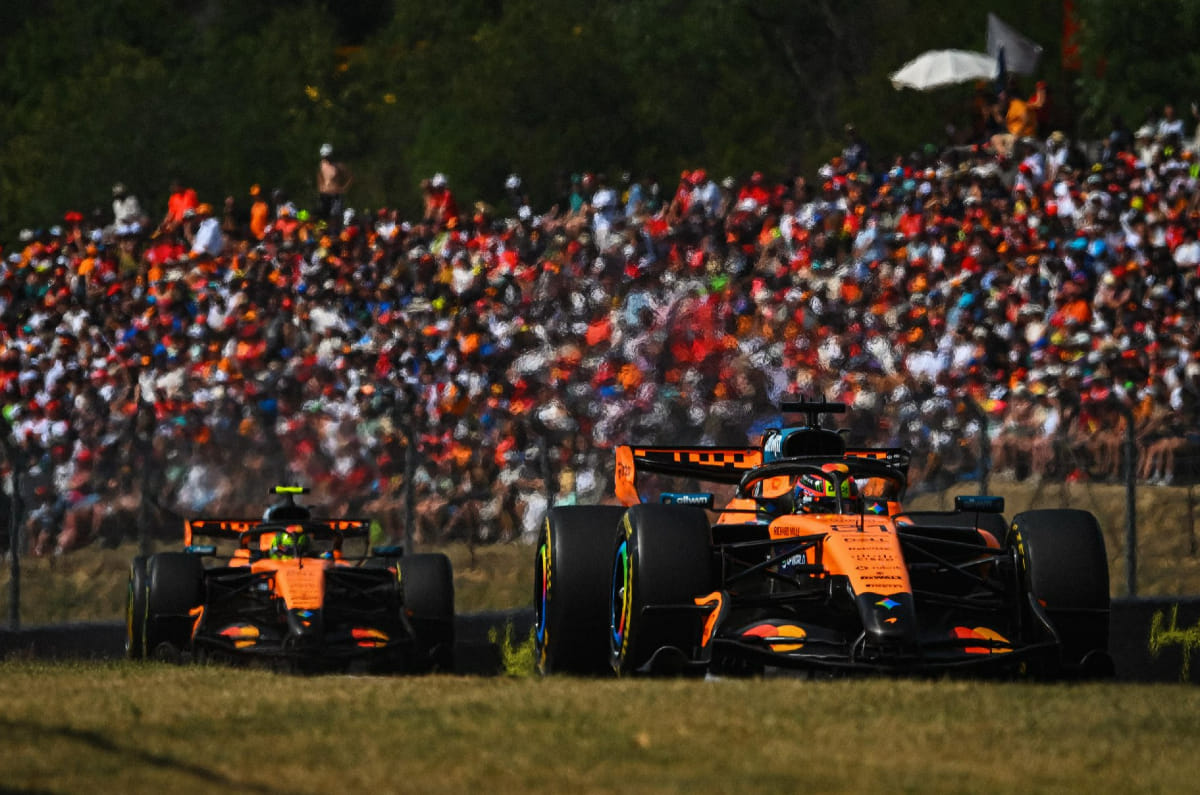
Oscar Piastri grabbed the lead from his McLaren teammate at Turn 2 on the opening lap. The duo held position for the first half of the race, but Piastri found himself released in traffic after his second pit stop, caught up in the battle between Carlos Sainz and Fernando Alonso. The McLaren driver ended up making contact with Sainz, with the latter being handed a five-second penalty for ignoring blue flags.
Out at front Norris was lapping significantly faster, and gained enough time to pit and re-join the track in the lead. Things went from bad to worse for Piastri as he stopped on lap 56 with an apparent gearbox failure.
A controlled drive thereafter handed Norris his first win of the 2026 F1 season. “My pace today was probably some of the best pace I’ve ever had. The car was beautiful to drive and I felt very confident, so a great race. To get it back in terms of going long, which is certainly not what I was expecting, but the pace was so good I could always extend the stints, and fresh tyres then always won me the race. I’m just happy to be back and see the number one again,” the reigning world champion said.
Verstappen, Antonelli complete podium
Piastri’s retirement triggered the Virtual Safety Car that shuffled the order. Verstappen and Antonelli, who had just pitted for fresh tyres, stayed out and inherited P2 and P3 ahead of the Ferrari duo of Lewis Hamilton and Charles Leclerc.
Hamilton’s hopes of finishing on the podium were dashed when he was handed a five-second penalty for speeding in the pitlane. He dropped to fifth place in the final classifications after the penalty was applied, behind his teammate Leclerc.
Isack Hadjar crossed the finish line in sixth place. George Russell recovered to P7 after a disastrous start that saw him drop as low as P19 after his anti-stall kicked in. Both Racing Bull drivers scored points, with Liam Lawson P8 and Arvid Lindblad P10. Audi’s Nico Hulkenberg separated the two in ninth place.
2026 F1 championship standings
Antonelli heads into the summer break with a 50-point lead at the top of the standings. Russell’s recent misfortune, meanwhile, has dropped him to third in the championship, while Hamilton moves up to second place overall with nine points separating the two.
The 2026 F1 season will resume with the Dutch GP at Zandvoort on August 21-23.
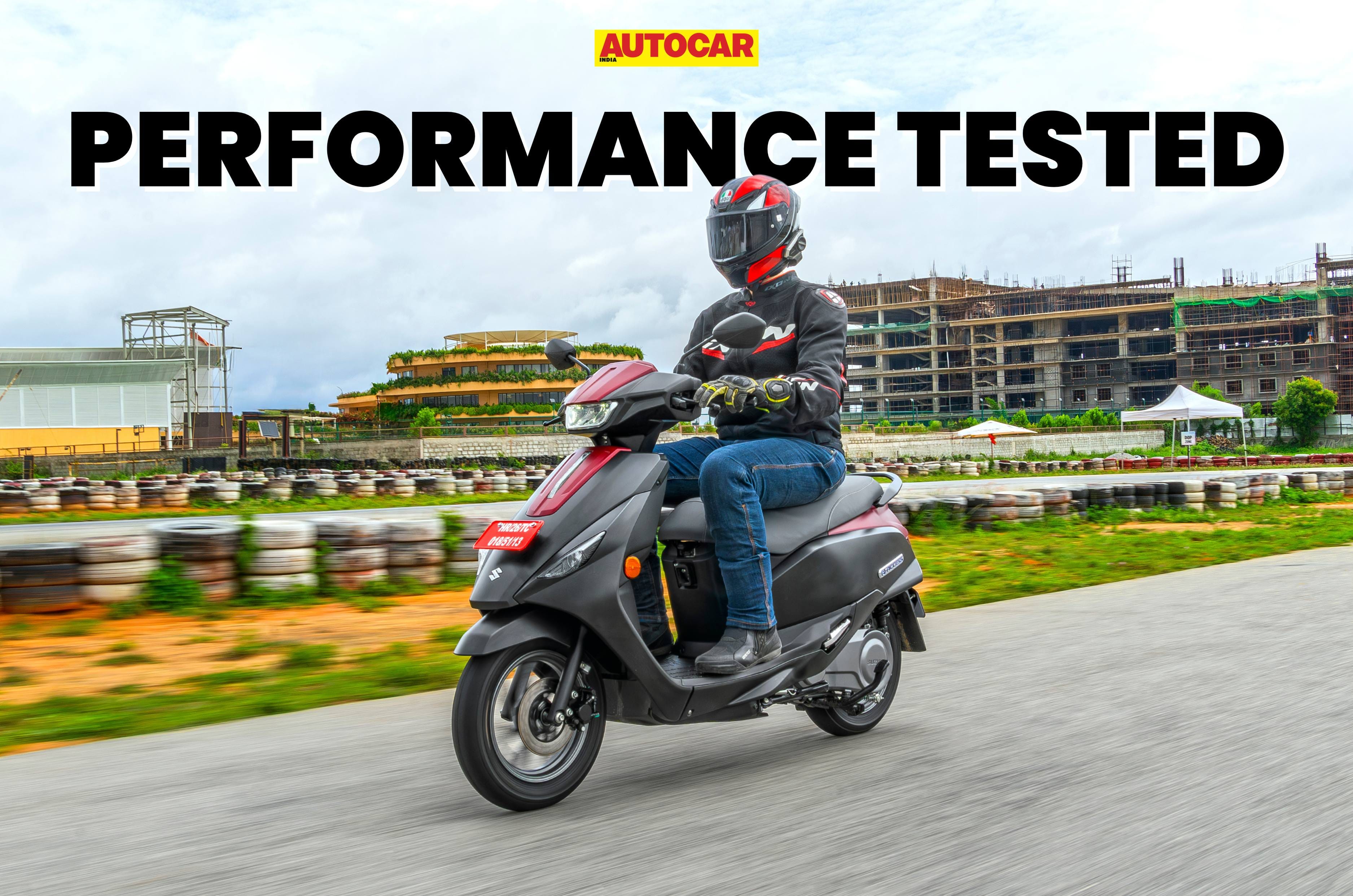
The Suzuki e-Access is the first electric two-wheeler from Suzuki Motorcycle India. It is powered by a hub-mounted permanent magnet synchronous motor producing 4.1kW of peak power and 15Nm of torque. The battery is a 3kWh LFP (Lithium Ferrous Phosphate) pack and Suzuki claims an IDC range of 95km on a full charge.
Suzuki e-Access: Acceleration
During our test, the conditions were dry.
Acceleration
Time
0-20kph
2.05 seconds
0-40kph
4.94 seconds
0-60kph
11.93 seconds
The e-Access gets three riding modes including Ride A, Ride B, and Eco. Ride A and Ride B modes offer similar performance with the only difference being level of regenerative braking. We conducted this acceleration test in Ride A with the battery state of charge above 97 percent. In this riding mode, acceleration to 20kph and 40kph took 2.05 seconds and 4.94 seconds respectively and acceleration becomes more gradual towards 60kph. Overall, the scooter offers decent performance for commuting in the city.
Suzuki e-Access: Roll-On Acceleration
The scooter delivers 6kW (8.04hp) of peak power.
Roll-On Acceleration
Time
20-50kph
5.46 seconds
30-70kph
17.01 seconds
In our roll-on acceleration tests, the scooter took 5.46 seconds to get from 20-50kph and 17.01 seconds from 30-70kph. In the city, it is able to make overtakes while riding in Ride A or Ride B mode. Eco mode is usable for the most part, but not the most potent for when you want to commute quickly.
Suzuki e-Access: Braking
Decent braking performance with good regenerative braking as well.
Braking
Distance
60-0kph
24.64 metres
The e-Access gets a disc brake at the front and a drum brake at the rear. The regenerative braking is also strong and at slow speeds, allows a rider to smoothly filter through stop-go traffic without having to constantly apply the brakes. From higher speeds, grabbing the rear brake lever too hard will cause the rear to lock up and slide.
Suzuki e-Access: Specifications and price
The Suzuki e-Access is built on an entirely new platform developed in-house rather than shared with the petrol Access 125.
Peak Power
4.1kW
Max Torque
15Nm
Battery Capacity
3kWh
Kerb Weight
122kg
Brakes (F/R)
Disc / Drum
Tyres (F/R)
90/90-12 / 100/80-12
Price (ex-showroom)
Rs 1.88 lakh (ex-showroom, Delhi)
The Suzuki e-Access is available in a single variant priced at Rs 1.88 lakh (ex-showroom, Delhi).