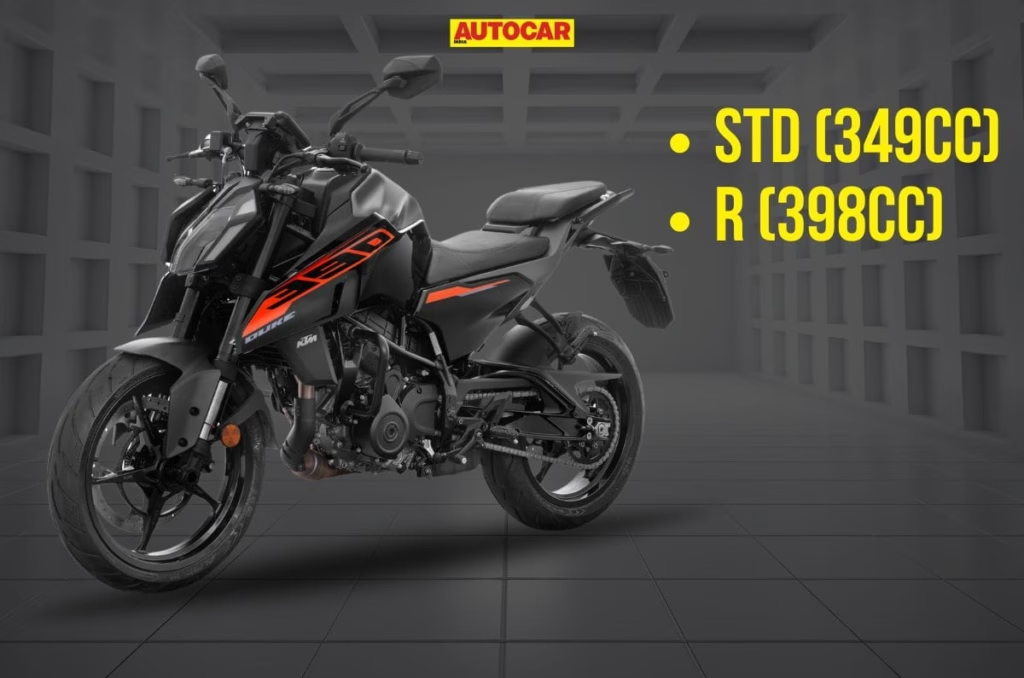
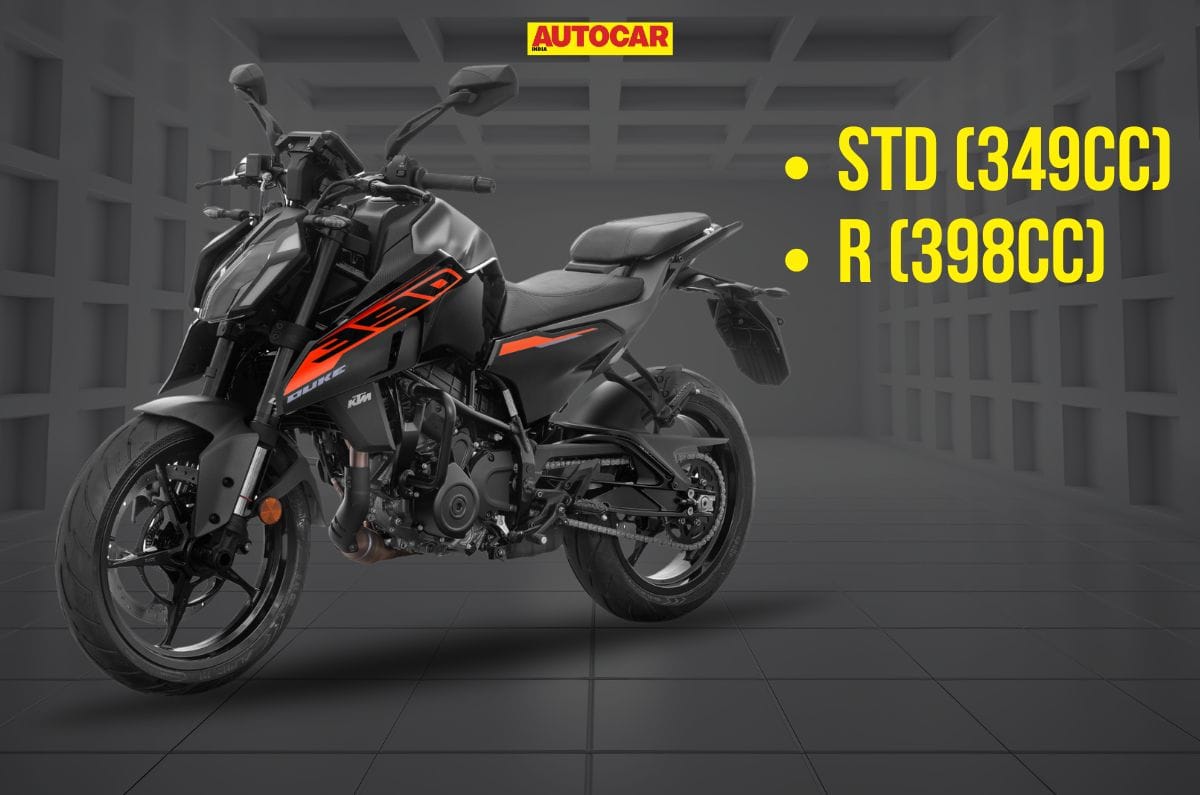
Ever since it burst onto the scene in 2013, the KTM 390 Duke has been synonymous with thrilling performance without breaking the bank. However, today the story has changed and KTM India now offers you two variants of the 390 Duke to choose from – both of which look very similar but have different engines and pricing. Here, we’ll break down what each variant offers and how much it costs.
All prices ex-showroom, Delhi
KTM 390 Duke variant breakdown
Standard
Before we elaborate on the differences between the two variants, let’s first recap what’s unchanged. The body panels, styling, chassis and feature-set are shared across both variants. Where the difference lies is primarily in the engine and the different pricing owing to the varying GST rates levied upon the motorcycles.
To benefit from the lower 18 percent GST, Bajaj has downsized the 398cc engine to 349cc via a shorter stroke while keeping the bore intact. The result is that peak output on the standard 390 Duke stands at 41.5hp and 33.5Nm of torque. As a consequence of the lower taxation, the 390 Duke’s price is Rs 2.84 lakh
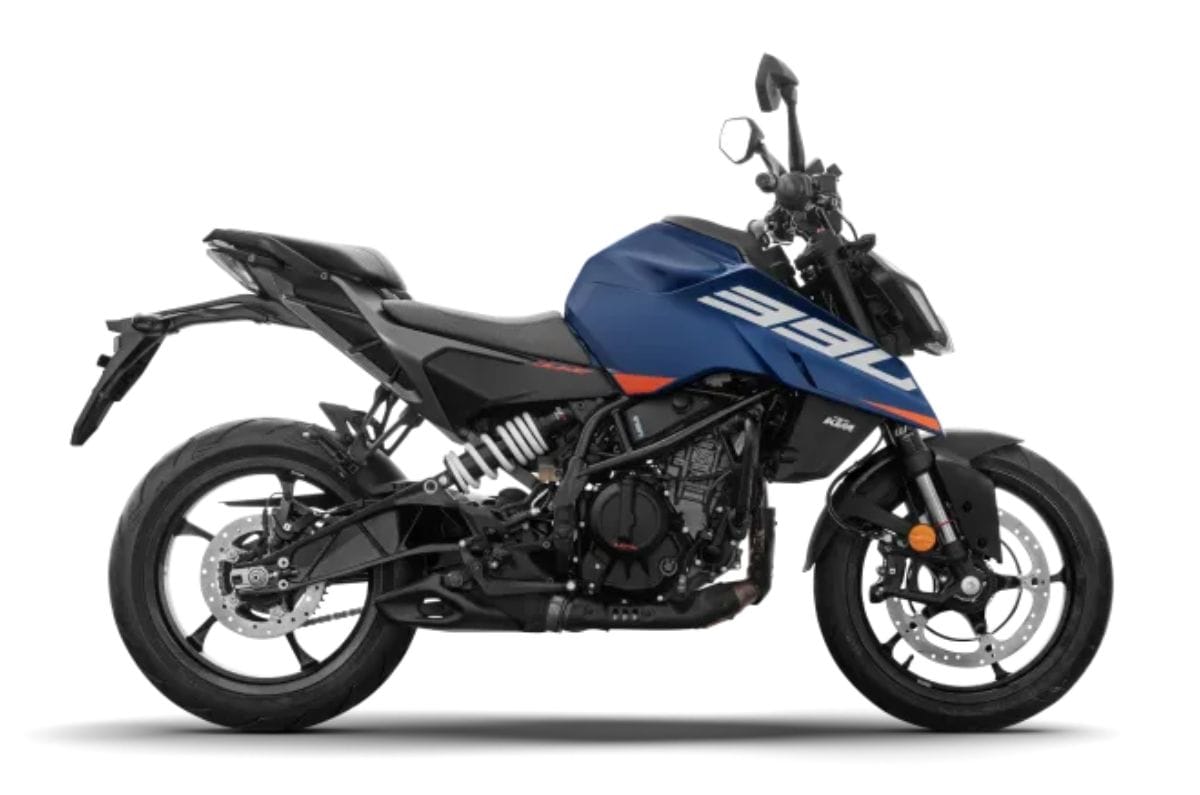
Another differentiating factor is the different colours and graphics used on the 390 Duke to differentiate it from the higher R variant. You have a choice of three colours – orange, black and blue – which is applicable to the tank and body panels while the frame and wheels are both finished in black.
R
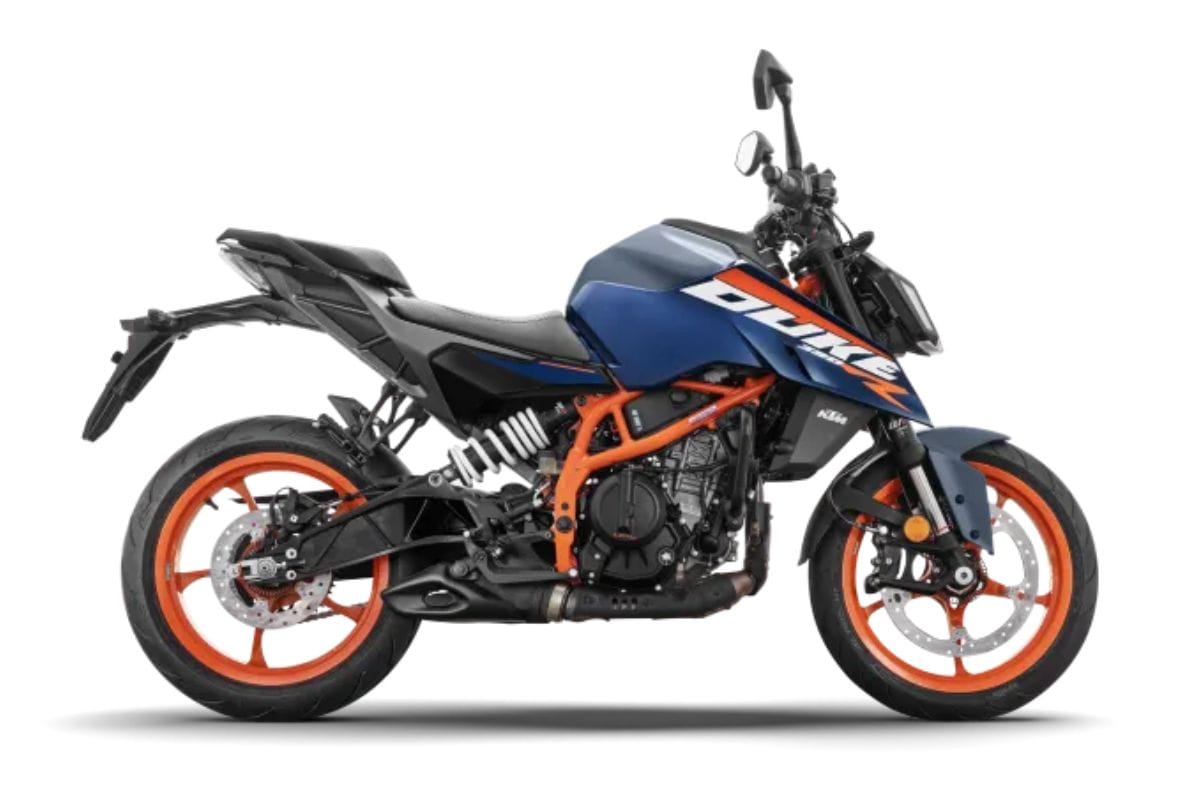
The R variant is the 398cc 390 Duke that came out in 2023 unchanged from before. To recap, the engine is rated for 46hp/39Nm of torque and as a consequence of the 40 percent GST levied here, its price is substantially more, at Rs 3.45 lakh. The most obvious difference between the base model and the 390 Duke R is that the latter comes with an orange frame and wheels as well as a prominent ‘R’ sticker on its side panels.
A long-wheelbase BMW X1 isn’t a new idea. China has had an extended-length X1 for years, and we got it in India last year in the form of the all-electric iX1 LWB. The X1 LWB brings the formula to the ICE X1 range. BMW says the standard-wheelbase X1 will continue to sell, though we assume the LWB will be the only X1 down the road.
BMW X1 LWB Exterior Design and Engineering – 7/10
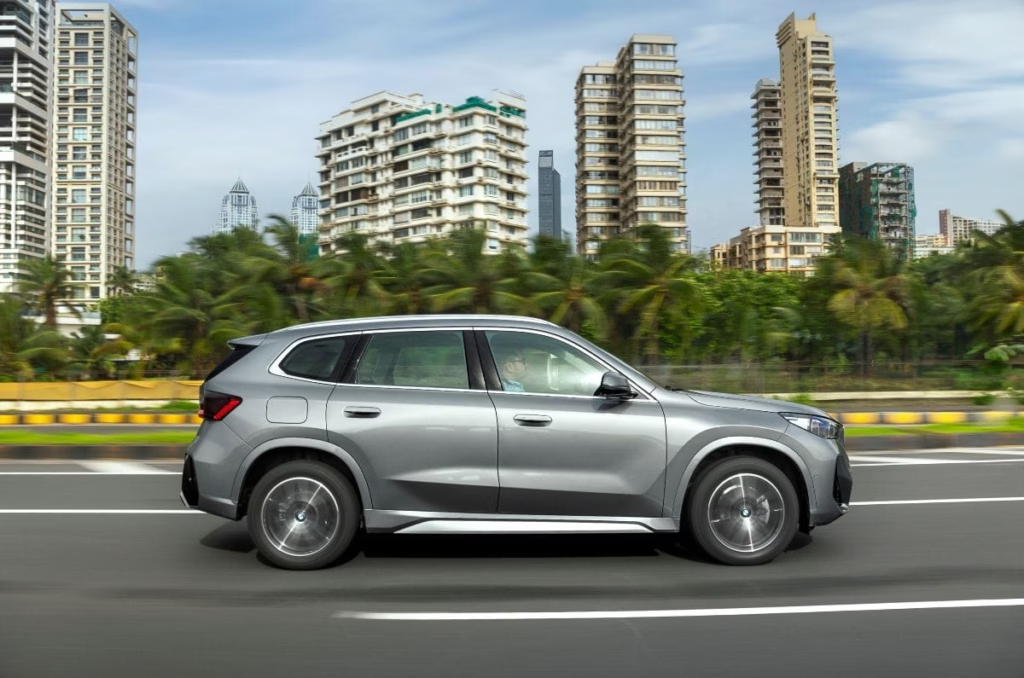
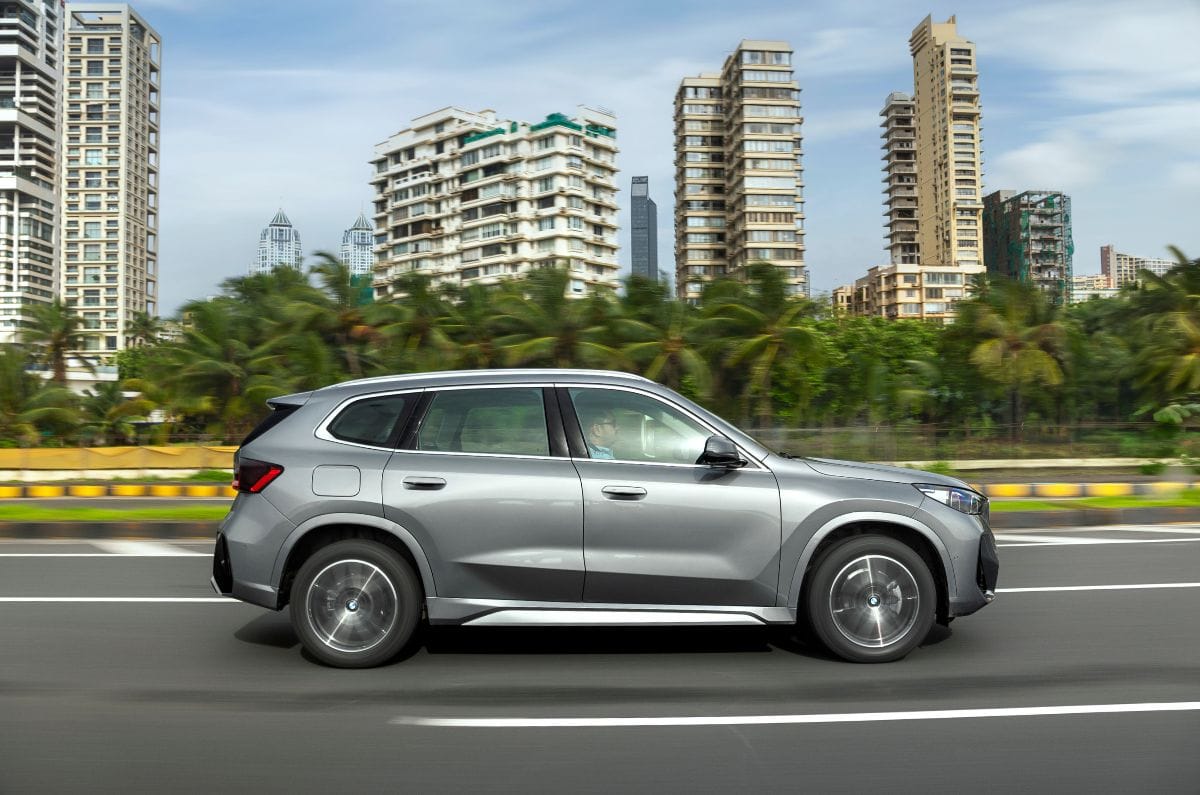
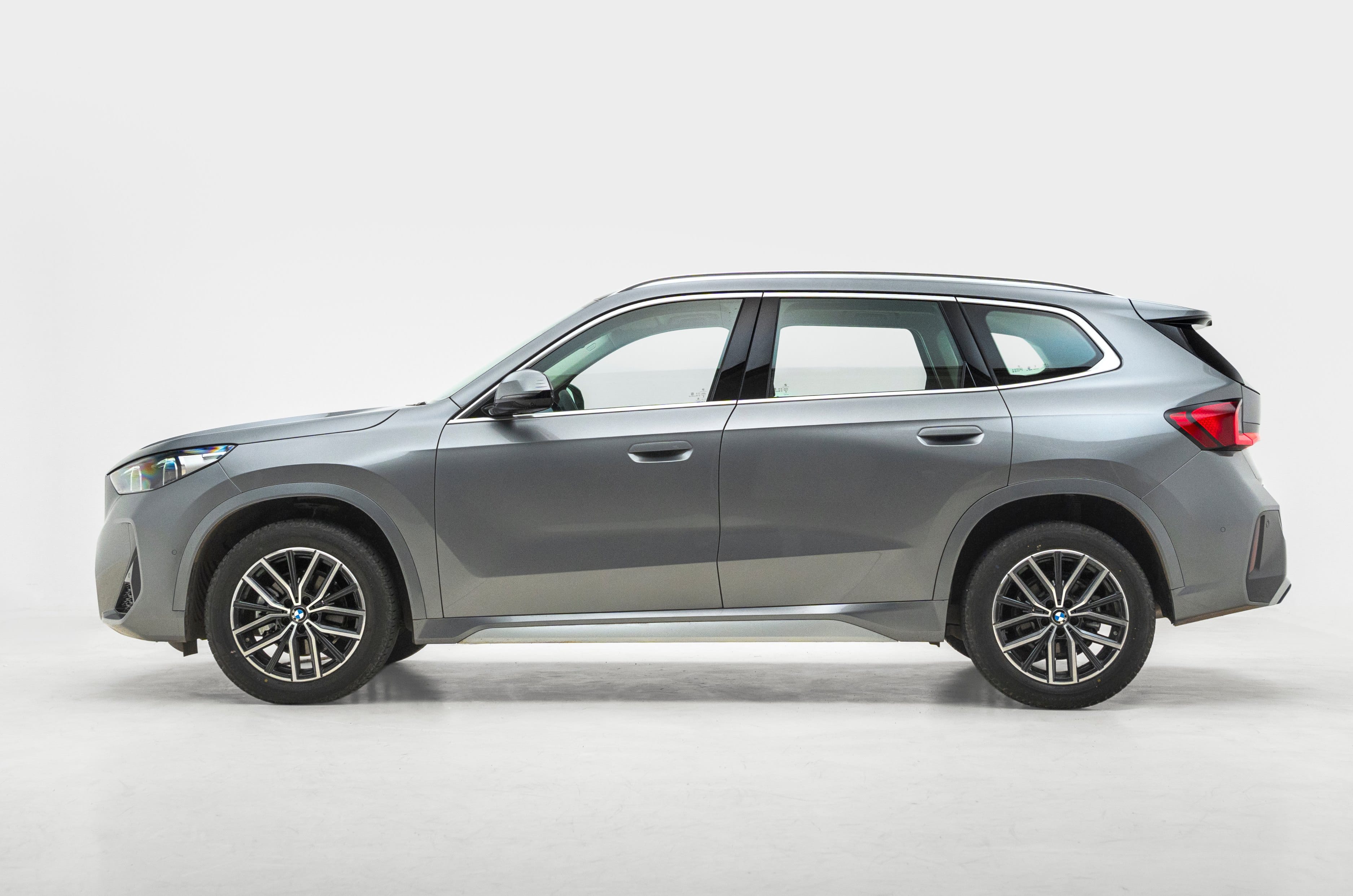
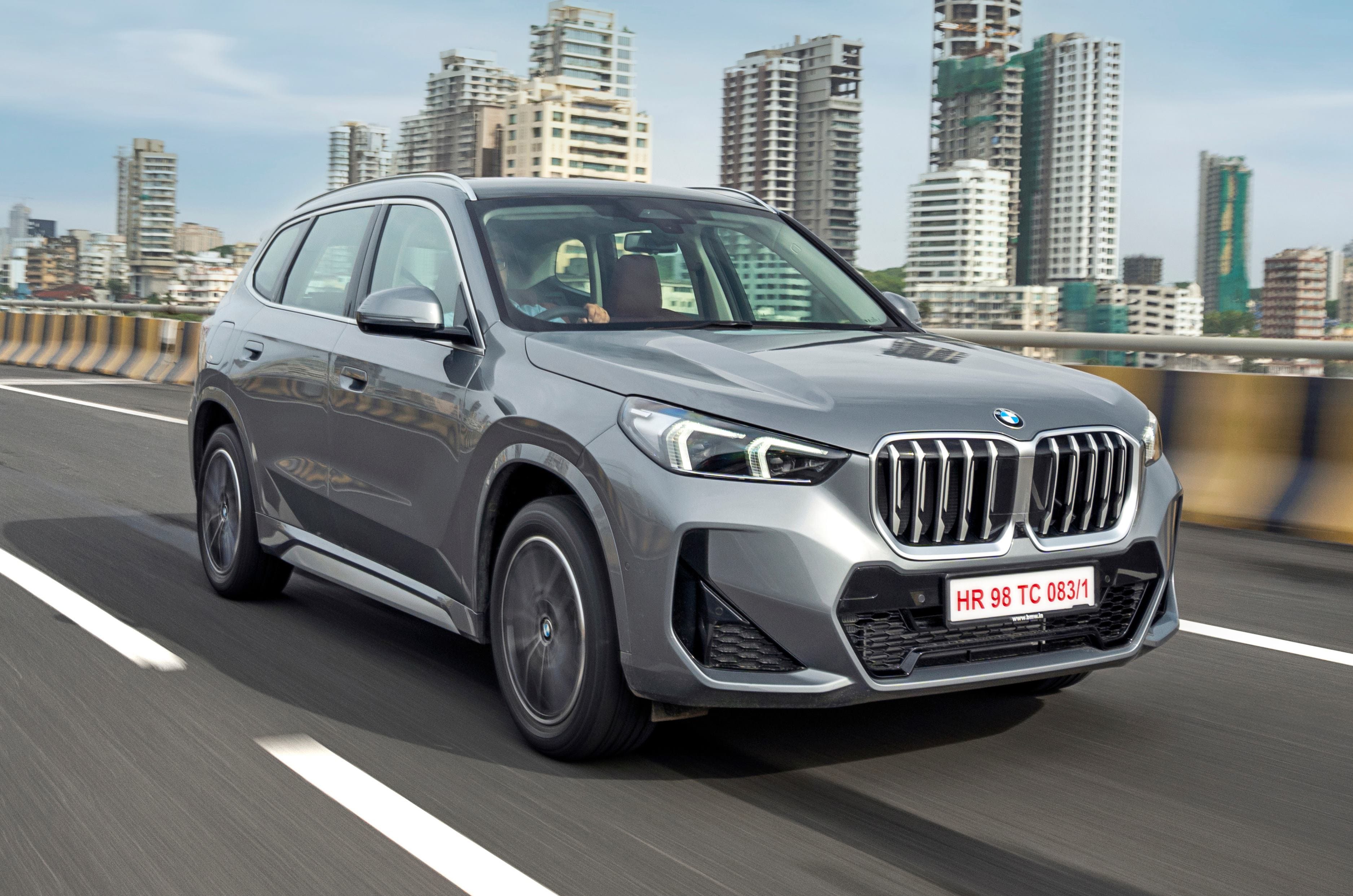
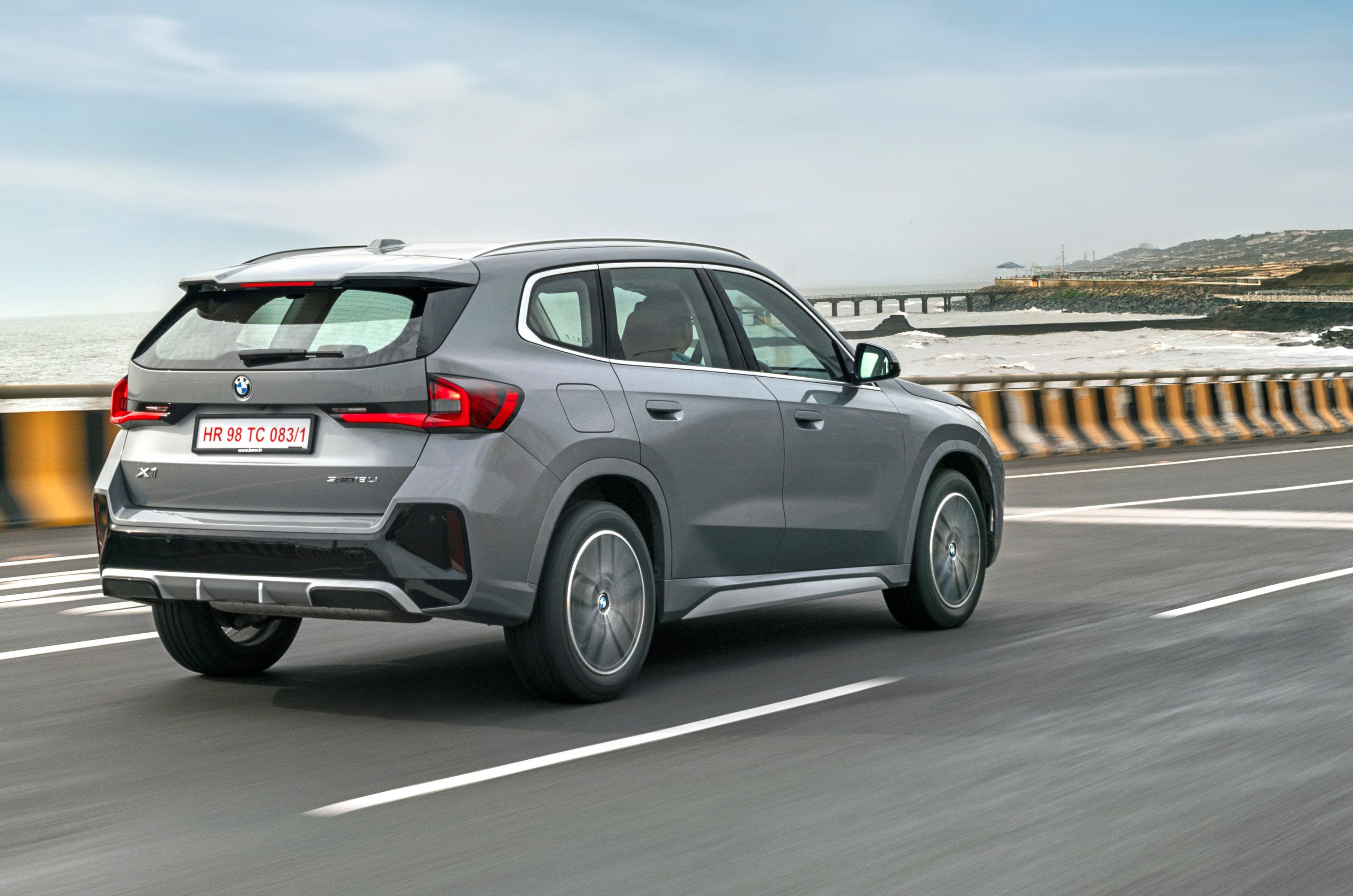
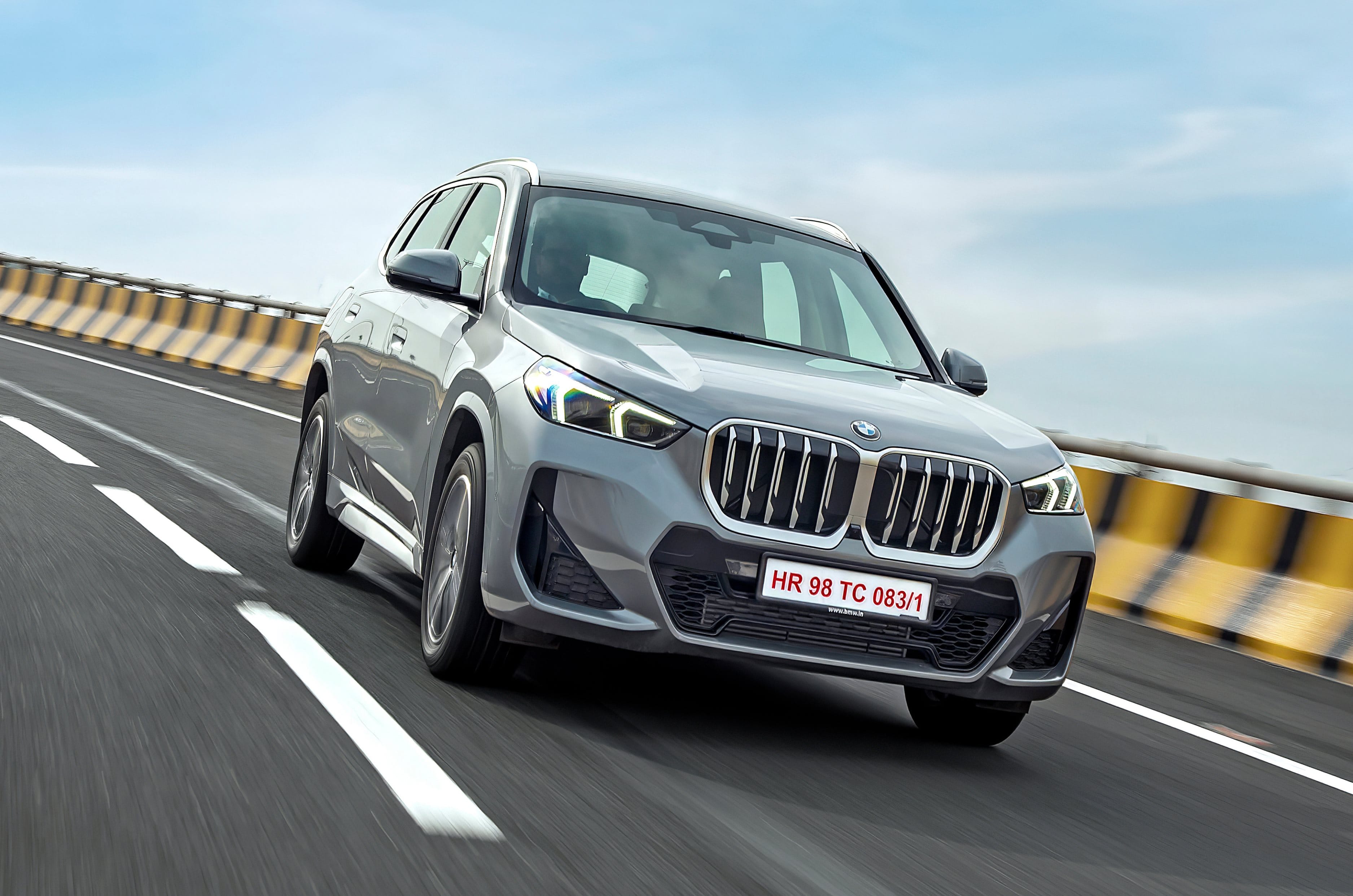
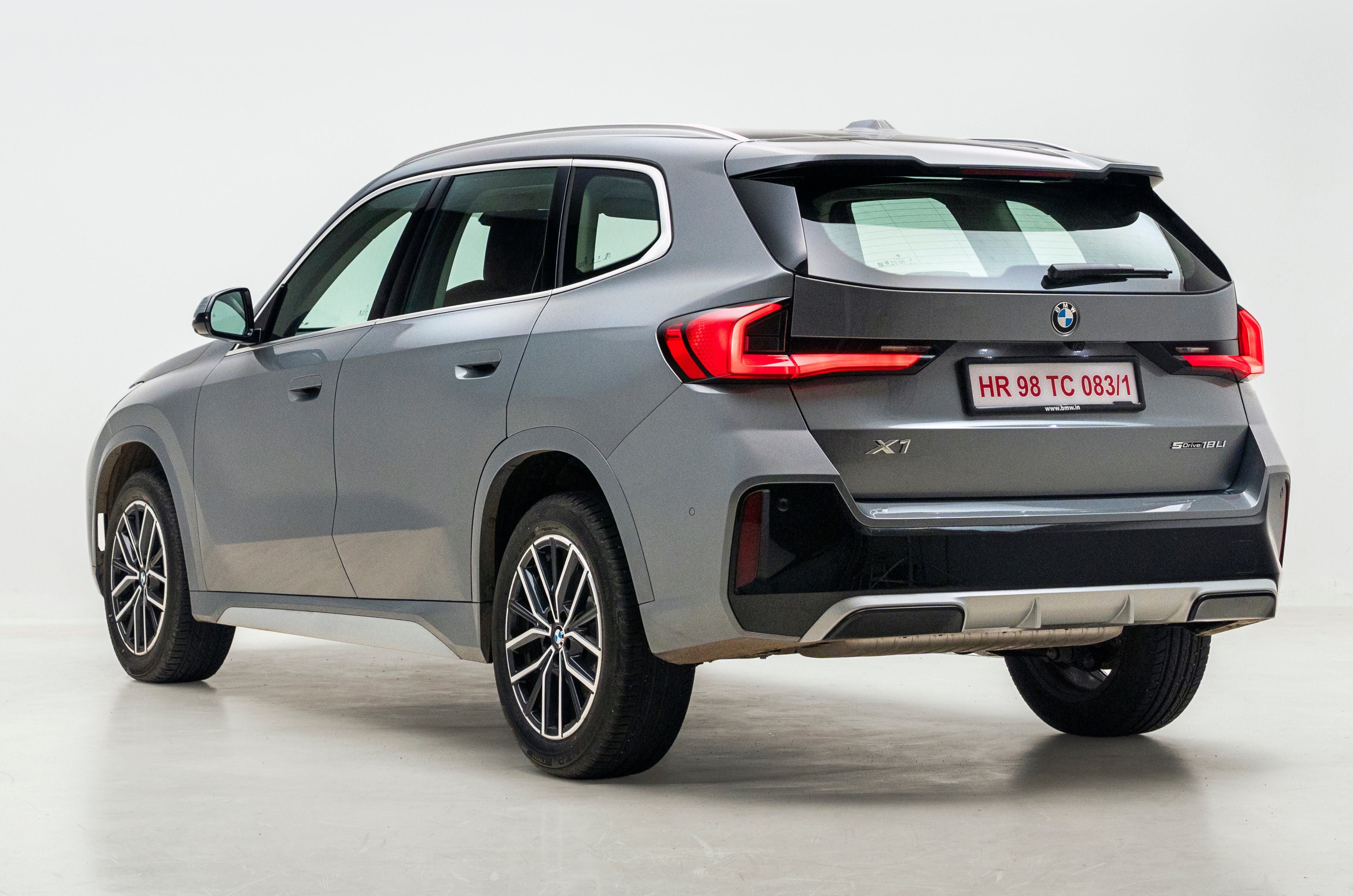
The X1 might be BMW’s smallest SUV, but it’s not particularly small anymore. It’s 116mm longer overall with 108mm of that added length at the wheelbase alone. Importantly, the longer wheelbase doesn’t look unusually long, and so the proportions work.
Lengthened body but well-proportioned design
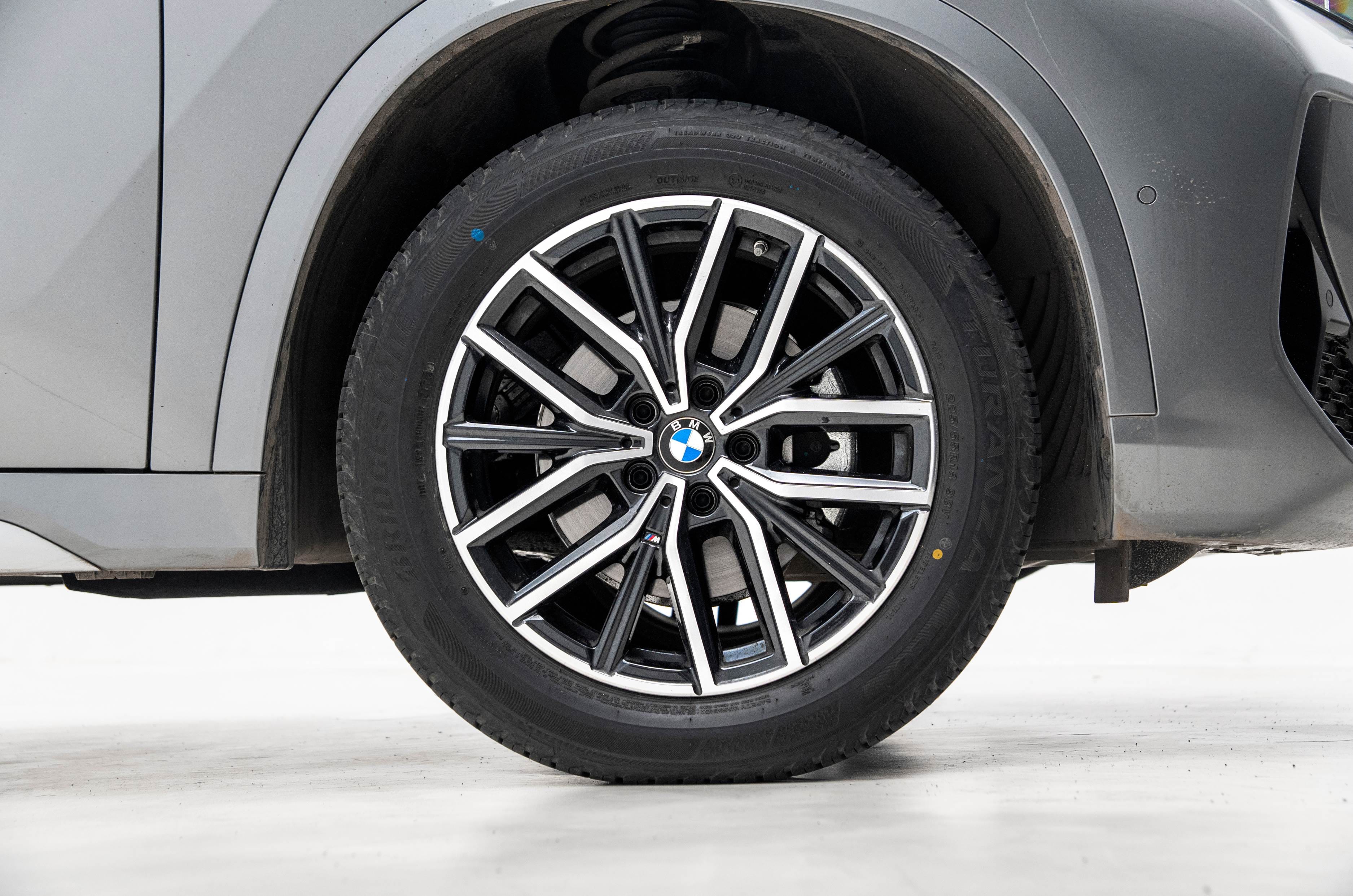
In person, the X1 LWB doesn’t look vastly different to the standard wheelbase model. It’s got the same peeled back headlamps, same M Sport styling pack and same edgy tail lights. The 18-inch rims are shared with the other X1s, but a more exciting design and or a larger size would have done much for the look. A chrome surround for the large windows is a small detail distinction to the standard X1 that uses a black effect, while the conventional grille here serves as a distinguishing element to the iX1 that sports a closed-off grille.
18-inch wheels shared with regular X1; larger wheels would have done much for the look.
BMW X1 LWB Interior Space and Comfort – 8/10
Long wheelbase opens up huge space at the back
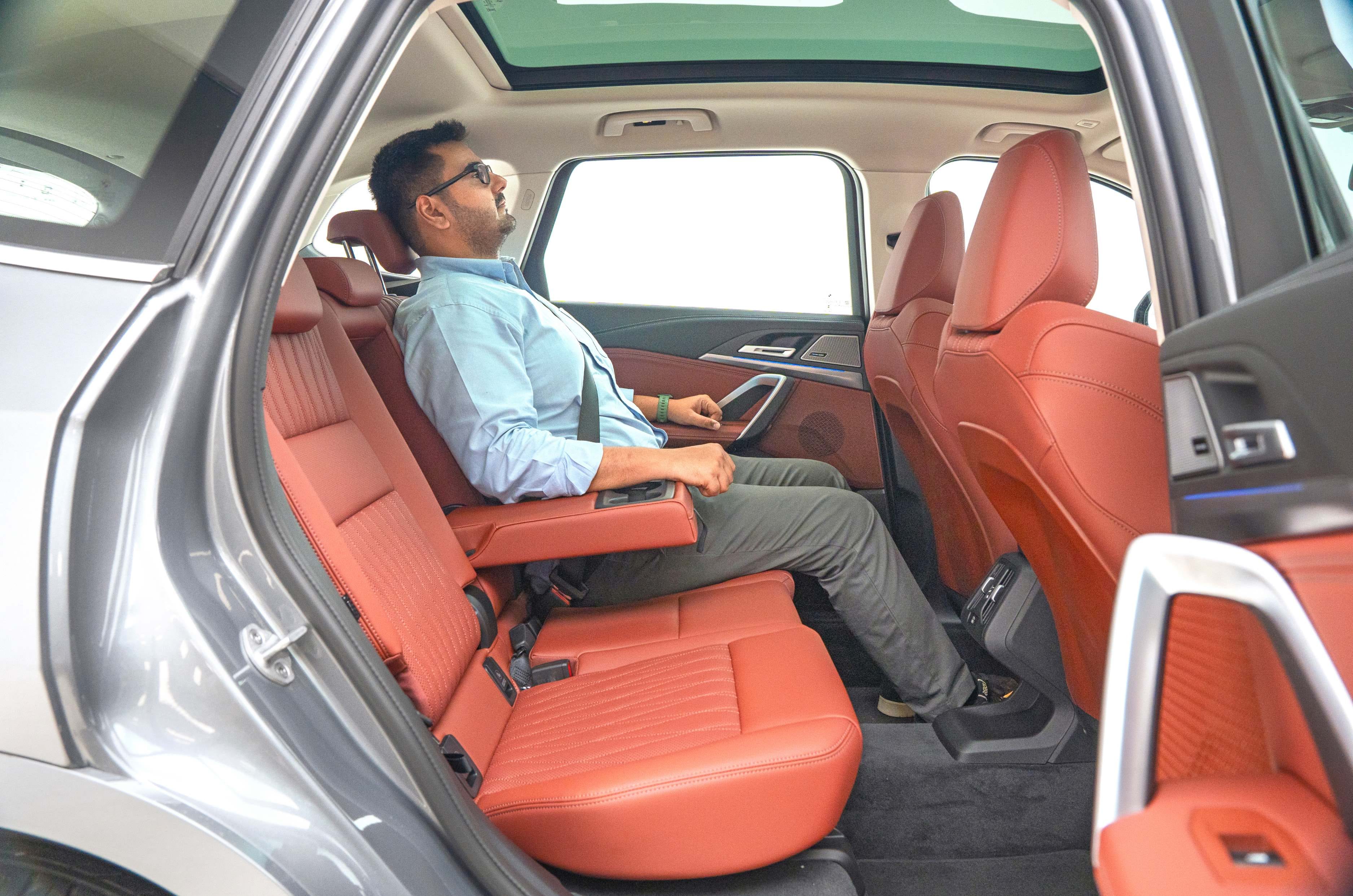
Thanks to wide opening rear doors and a large door aperture, getting into the back of the X1 LWB is very convenient. And once you’re inside, you’ll be amazed by the sense of space that you get there.
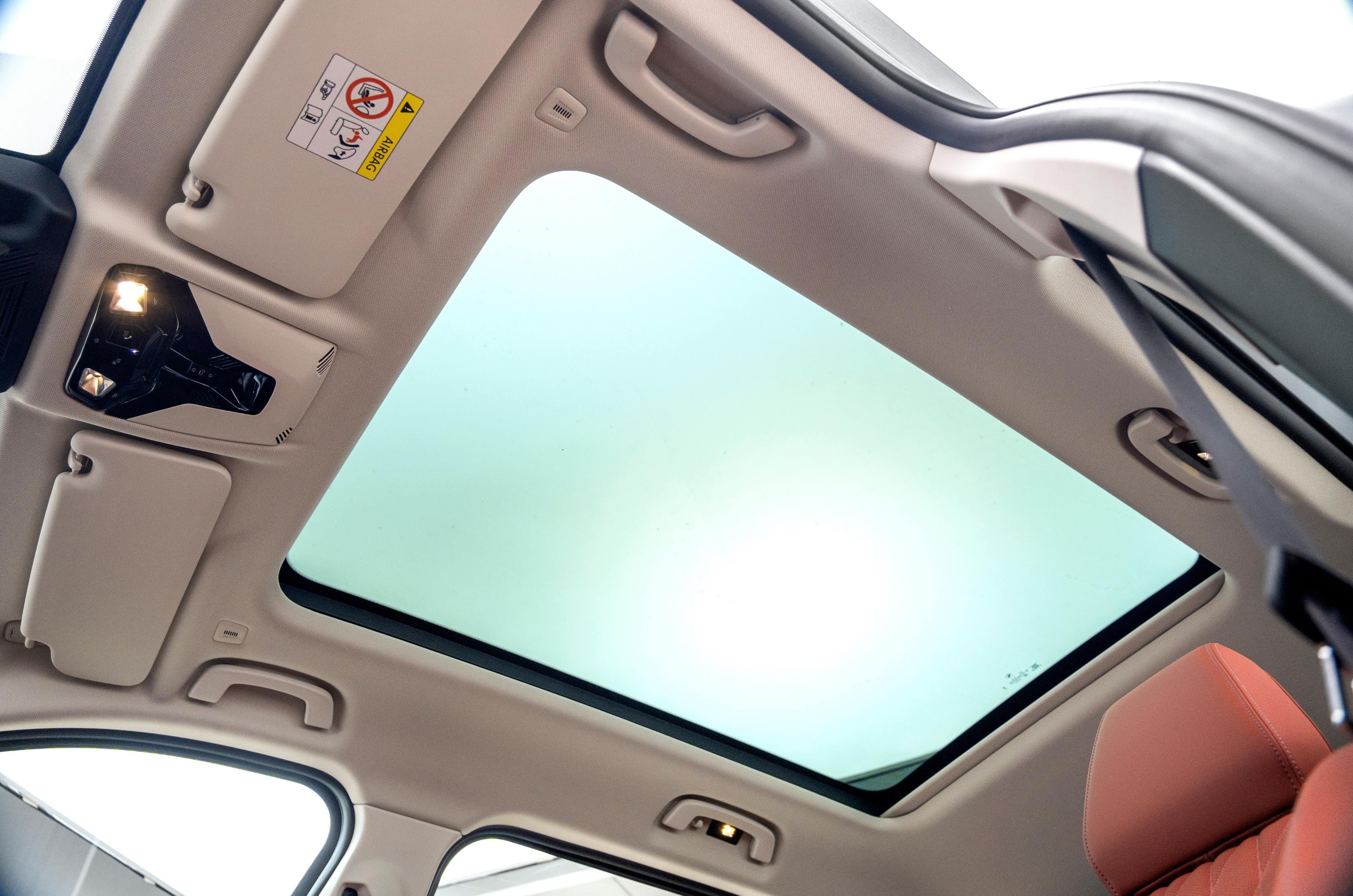
Even six footers will find legroom generous and helping the feeling of space is the large glasshouse. The panoramic glass roof (it doesn’t open) lets in lots of light and the rear windows are also large. Pity, they don’t get adjustable sunshades.
Rear seat gets a longer base and enhanced cushioning for better comfort.
Like the iX1 LWB, the X1 LWB also benefits from a redone rear seat. There’s enhanced cushioning while a 15mm longer seat base adds a bit more by way of thigh support. The seating position itself is very good, and if you want a more relaxed setting, you also have the option to recline the backrest by a couple of degrees. The extra leg room also makes the X1 LWB that little bit comfier for a middle passenger who will have more space to keep his or her feet on either side of the high centre tunnel. Still, the rear seat is best for two.
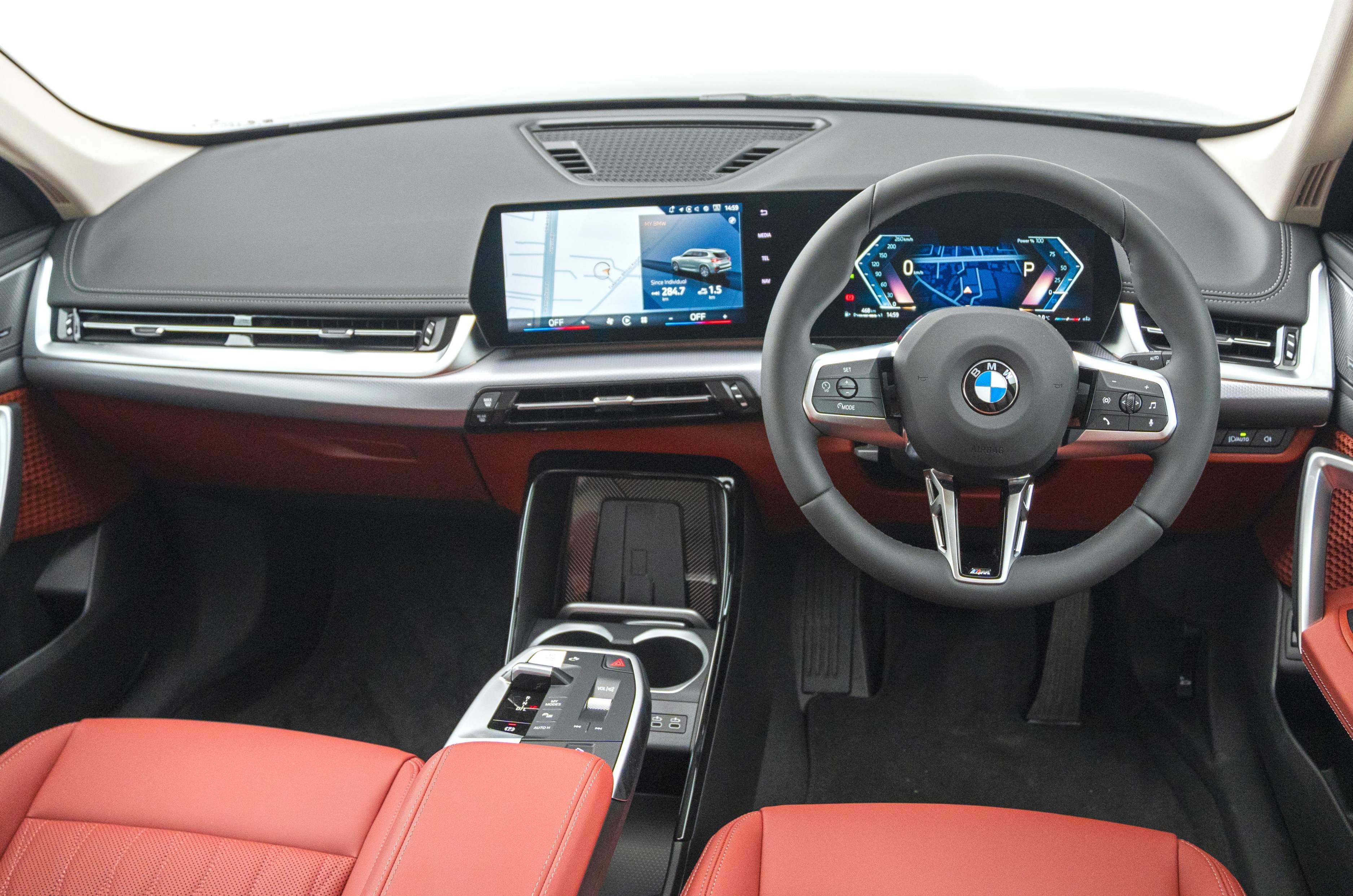
Dashboard is identical to the standard wheelbase X1.
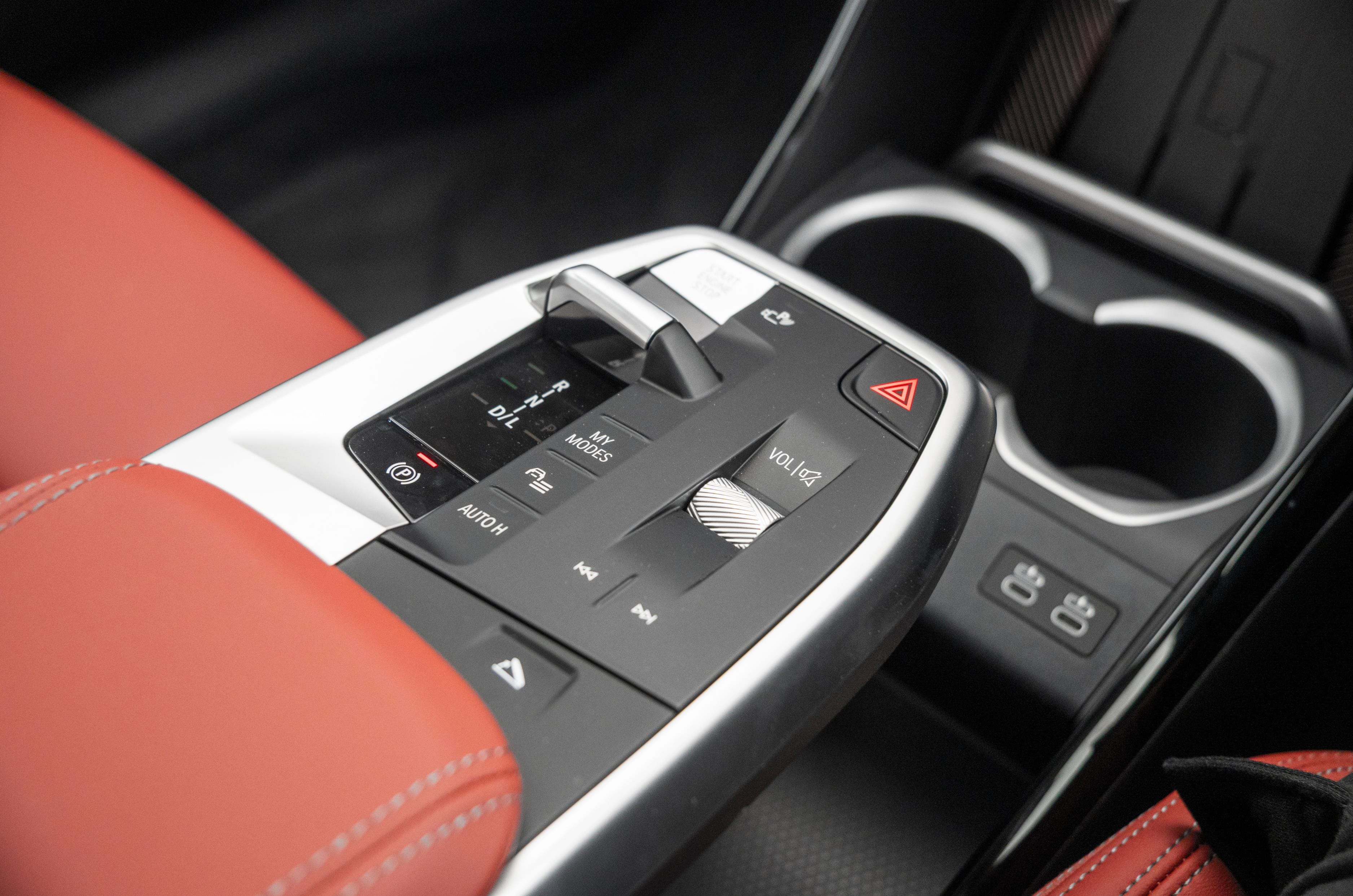
Up front, the X1 LWB is no different to the standard wheelbase X1. The dash with its asymmetric AC vents looks youthful and what also adds some flavour to the X1’s cabin is the upright wireless phone charging pad at the base of the dash. There’s also a floating centre console, which houses a few key buttons, such as for the gear selector, volume control and driving modes. There’s some storage under the front centre armrest but oddly, the lid opens towards the passenger side.
Floating centre console gets a few physical controls and some storage underneath.
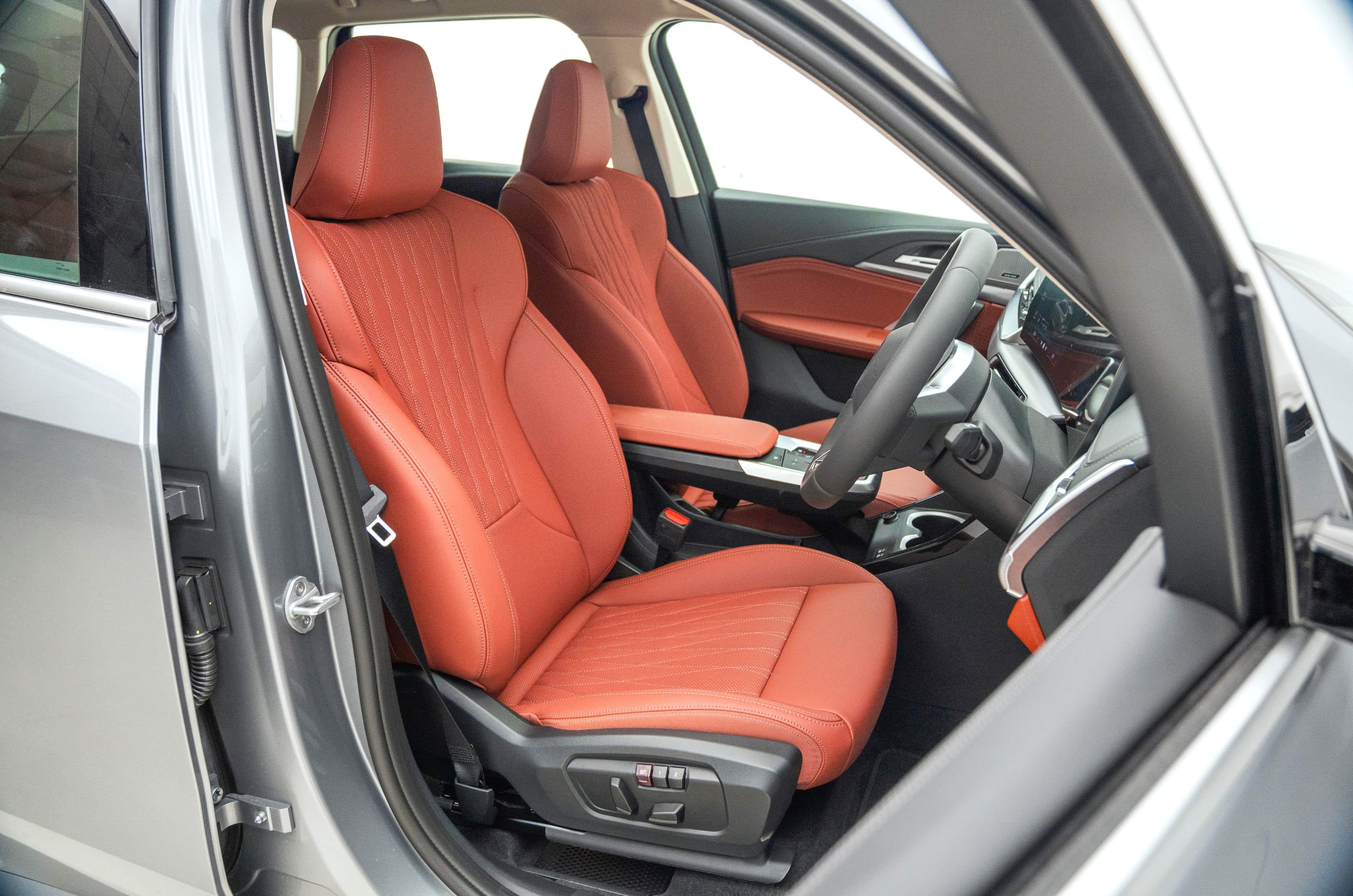
Upholstery choices include the brown you see here as well as a white on black theme which we suspect would be a pain to keep clean. The front seats themselves look sporty and also hold you really well, but unfortunately, the X1’s seat massage function has been dropped on the long wheelbase model. There’s also no seat ventilation function. An M Sport steering is standard but feels a bit too chunky in most hands, and also misses on paddleshifters.
Front seats are sporty, but they miss out on ventilation and massage functions.
In terms of quality, key touch points look and feel good. There are padded materials on the dash and the textured metal-like effect is nicely done. However, it’s not quite got the same attention to detail as pricier BMWs. The USB slots on the dash, for one, aren’t backlit, so you’ll fumble with wires in the dark. The ambient lighting, too, isn’t as vibrant as, say, in a Mercedes GLA. BMW says boot capacity stands at 540 litres and there is plenty of space for large bags. Packaged under the boot floor is a space-saver spare tyre.
BMW X1 LWB Features and Safety – 7/10
X1 LWB is available in a single M Sport trim
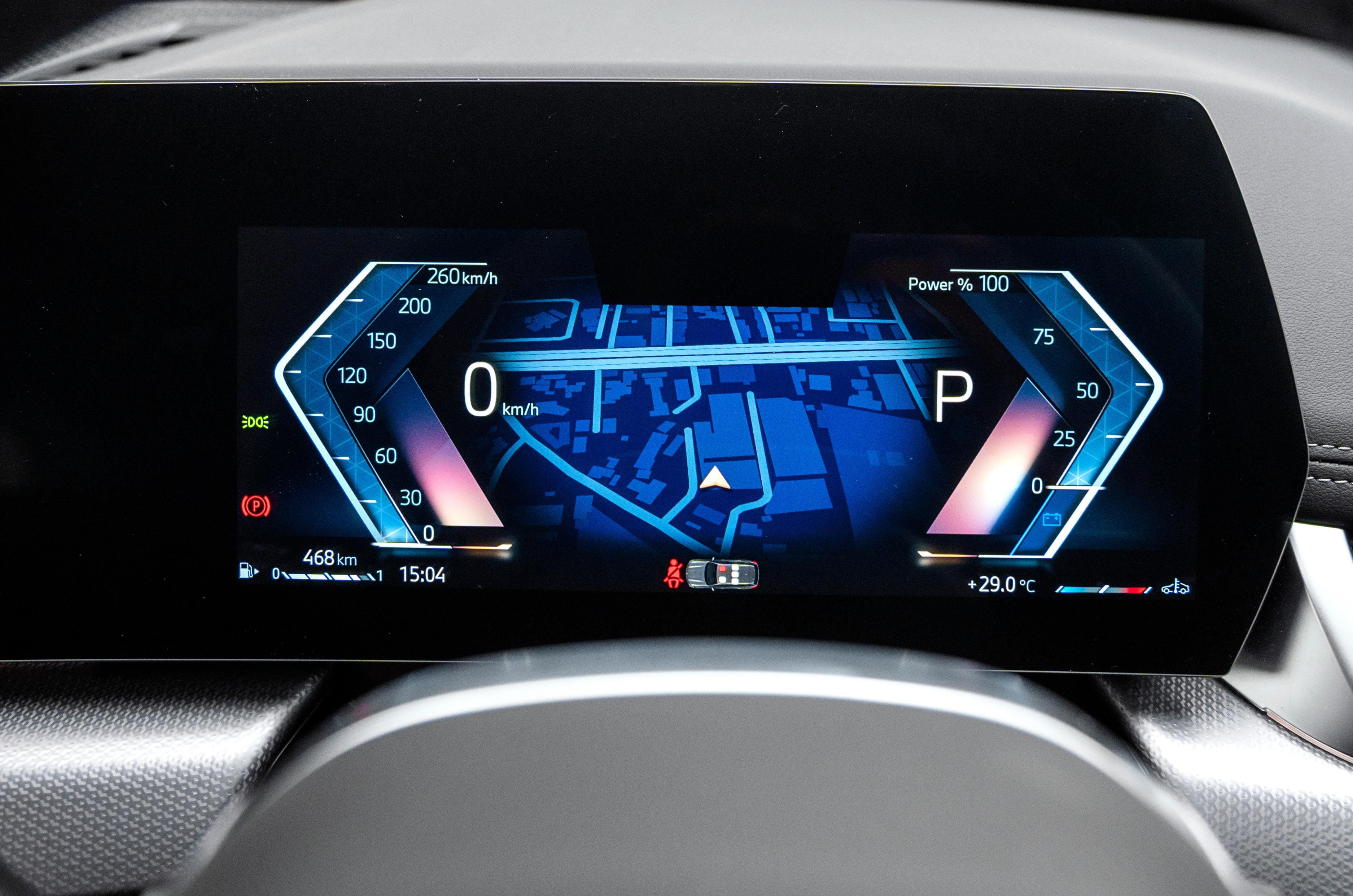
The X1 LWB sports BMW’s twin screen Curved Display. The 10.25-inch digital instrument cluster does give all the info you need, but the presentation with hexagonal themes isn’t appealing even after all these years. The 10.7-inch touchscreen has its highs and lows, too. It’s crisp and responsive, but packs in way too much, including the climate control settings. The menus, frankly, can feel overwhelming on the go. The crisp 360-degree camera does get our vote. A Reversing Assistant that retraces the path in and automatically backs out (up to 50m) is a handy function to get you out of tricky situations.
Instrument cluster offers lots of information, but the presentation with hexagonal themes isn’t appealing.
Interestingly, BMW offers a subscription service to unlock more advanced maps, customizable icons, and more screen themes and modes. Other features include a digital key, allowing you to share access with up to 18 friends and family members, while the 12-speaker Harman Kardon sound system is rather nice, too.
Headlining the list of comfort features is the panoramic glass roof, and there’s power adjust for both front seats. Rear seat passengers get dedicated rear AC vents but there’s no dedicated zone for the rear section of the cabin. A fold-down armrest and USB type C charging port are other functions at the back.
Panoramic glass roof lets in lots of light, but isn’t openable.
Safety kit includes 8 airbags, ABS, ESC and Isofix child seat mounts among other features. The X1 LWB also packs in a few ADAS functions such as auto emergency braking and lane departure warning and assist. Adaptive cruise control, however, is missed.
BMW X1 LWB Performance and Refinement – 7/10
1.5-litre, three-cylinder turbo-petrol is only engine on X1 LWB
BMW is launching the X1 LWB in S-Drive 18 Li form, which is a complicated way of saying that it’s powered by a 1.5-litre three-cylinder turbo petrol engine. Yes, you read that right. The engine is E25 compliant, but there’s no diesel option for the moment, and buzz is there won’t be one in the future either.
Performance is adequate but unexciting
The X1 LWB’s petrol engine makes 156hp and 230Nm and all the power goes to the front wheels only, via a seven-speed dual-clutch transmission. A fact to note, 156hp is the upgraded power figure. On the standard wheelbase X1, the engine makes 136 horsepower.
Unfortunately, the power bump doesn’t magically transform the X1 LWB into something sporty. In ordinary city driving, you really won’t have a problem with the performance on hand. There’s enough power for the urban grind. It’s just that when you pick up the pace, you’ll miss that reserve of power that you just expect in a luxury car.
Refinement is good but the engine thrums when extended
Sport mode does make the engine feel a bit more urgent, but it’s also in Sport mode that the engine can’t hide its three-cylinder-ness. When it’s time to overtake, for instance, and you press down on the accelerator pedal, there is a bit of a delay, then you hear the engine thrum, and that’s not a very BMW sound. Performance is also not very BMW. We managed a 0-100 kph time of 9.58 seconds.
Then again, the X1 LWB’s USP is the rear seat, and there will be buyers who rarely, if ever, take the wheel. If you’ve instructed your chauffeur to drive in an easygoing manner, you will note that engine noise is actually pretty well-contained.
BMW X1 LWB Mileage and Efficiency – 8/10
While we haven’t put the X1 LWB to the full test it should prove to be more efficient than rivals’ four-cylinder turbo-petrol units. Of course, it won’t be outright frugal because the X1 LWB is a substantial vehicle. We expect real-world fuel economy in the 7-10kpl band with the figure rising to 9-12kpl over highway drives.
BMW X1 LWB Ride Comfort and Handling – 8/10
Suspension has been tweaked for better comfort on the X1 LWB
The X1 LWB might be front-wheel drive only but there is a crispness to the way it changes direction. You will like the feel at the steering wheel and you get a good sense of connect too. Unfortunately, the handling isn’t supported by the engine. Long story short, this is not the BMW for keen drivers.
As for ride comfort, BMW has tweaked the suspension for the X1 LWB, and they’ve done a pretty good job of things. The suspension works quiet, it feels absorbent, and it’s only when you’re really paying attention that you’ll notice a distant firmness to the setup.
BMW X1 LWB price and verdict – 8/10
X1 LWB makes for a great backseat SUV
Prices for the X1 LWB will be announced on August 21. We expect BMW to keep pricing within the Rs 50-55 lakh (estimated, ex-showroom) band, which would make the X1 LWB a very enticing proposition.
Rear seat space is the highlight and immediately gives the BMW bragging rights over the Mercedes GLA and Audi Q3. Thing is, the X1 LWB’s appeal is almost too tied to the rear seat experience. The drive experience is just so-so. Performance is fine for the daily grind but the three cylinder unit does little to excite. If that’s not a deal breaker for you, the BMW X1 LWB is sure worth a long, hard look.
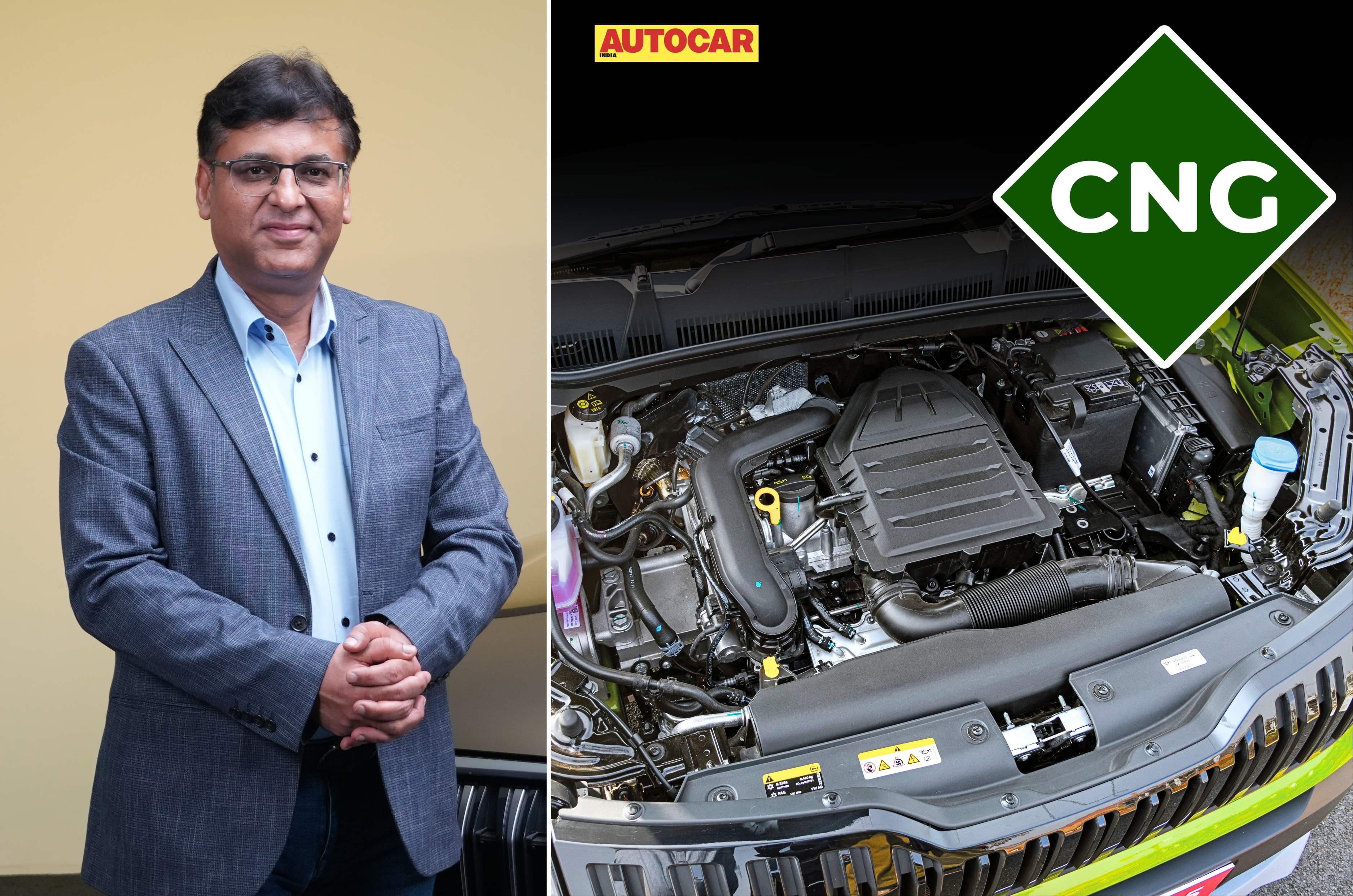
Skoda is planning to expand its product portfolio in India, including the possible introduction of a CNG powertrain with the 1.0-litre turbo-petrol engine powering the Kylaq, Slavia and Kushaq. Speaking about the plans, Skoda India brand director Ashish Gupta told our sister publication Autocar Professional, “The 1.0-litre engine and the MQB A0-IN platform are common across the Kylaq, Kushaq and Slavia. So, all three products are open.”
Skoda’s CNG plans in India
Skoda’s powertrain diversification plan is an attempt to stay relevant in India
Talking about the CNG plans, Gupta further said, “The Middle East crisis and policy noise on ethanol blending have affected consumer sentiment on petrol, resulting in a drop in market share. To stay relevant, we have to diversify.” “The Kylaq segment is the priority where we are trying to tackle CNG,” he added.
The Skoda Kylaq is powered by a 1.0-litre, three-cylinder, direct-injection turbo-petrol engine, which it shares with the larger Slavia and Kushaq. The engine produces 115hp and 172Nm and is available with both manual and automatic transmission options.
For the potential CNG version, Skoda is evaluating how to balance fuel efficiency with the performance expected from its models. Gupta said, “Compared to petrol, a 10-15 percent drop in performance with CNG is acceptable to customers. So I have to make sure that I get the right product, right solution, at the right value proposition, at the right time.”
Gupta also believes there is scope for CNG-powered cars at relatively higher price points, beyond the traditionally budget-focused segment. “There is a potential for the right car at the right price point. Even premium customers who are okay with buying a CNG car purely for the economic benefits they derive,” he said.
Skoda expects to finalise its search for an Indian partner this year, global CEO Klaus Zellmer said on the sidelines of the new Slavia’s launch in Mumbai on Tuesday. “We are in discussions. I’m deeply convinced that our momentum can be much stronger if we have a local partner with strong roots…But I’m confident that this year we are going to nail it,” he added.
This comes a few weeks after we exclusively reported that Skoda Auto Volkswagen India (SAVWPL), which oversees both VW and Skoda brands here, and the JSW Group are in the final stages of talks for a manufacturing joint venture. We also reported that the two companies are likely to sign a non-binding memorandum of understanding within the next two months. Zellmer’s latest comments are the clearest sign yet that Skoda expects the partnership talks to be wrapped up in 2026.
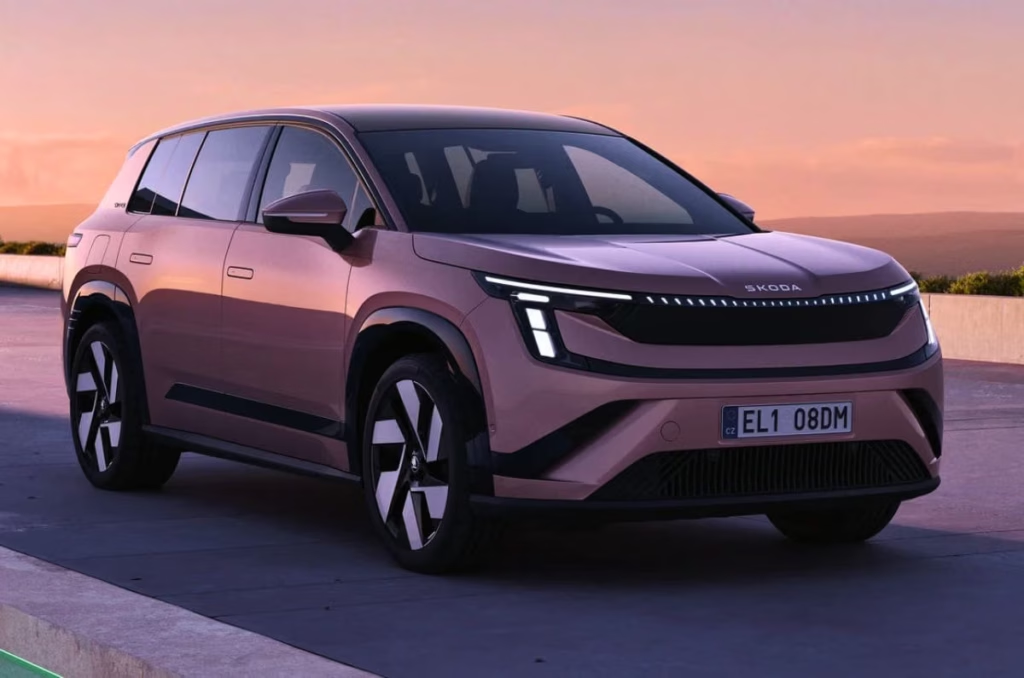
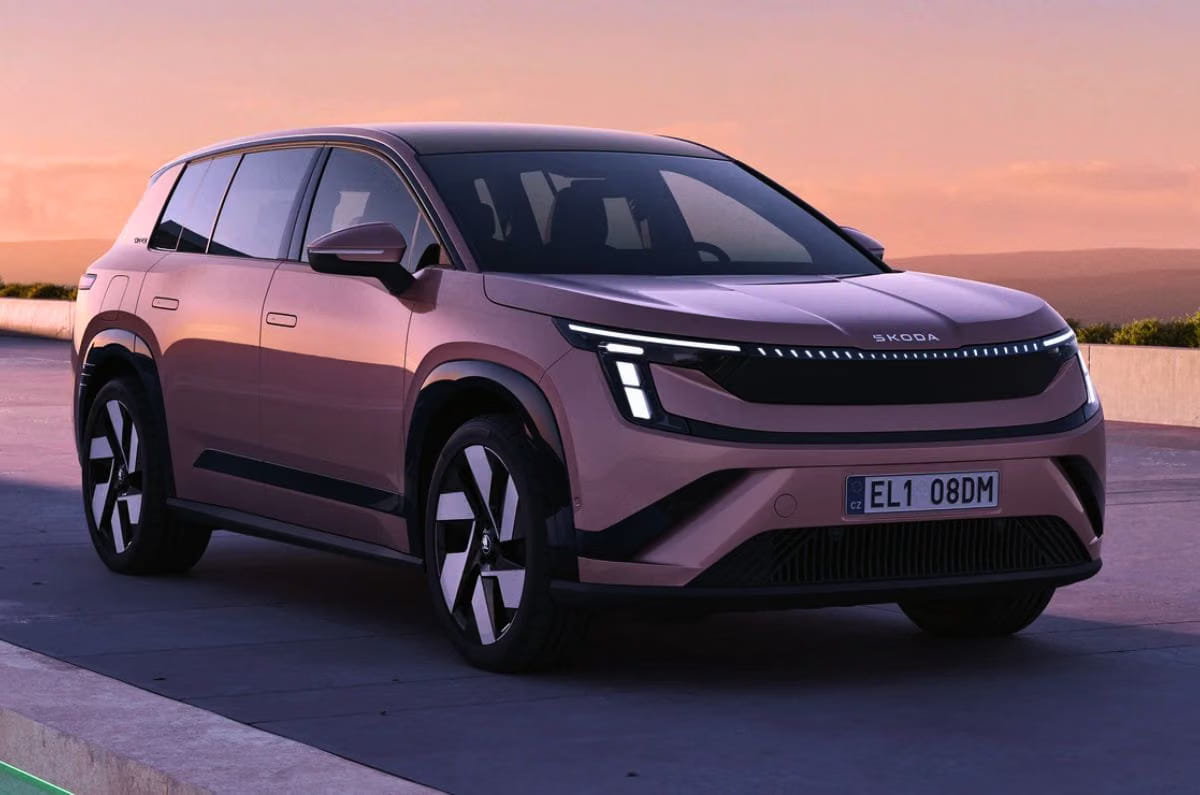
Skoda Auto India plans to bring electric vehicles from its global portfolio to India in limited volumes next year as the Czech automaker looks to establish its presence in the EV market. According to Ashish Gupta, Brand Director, Skoda Auto India, the company needs an electric vehicle in its portfolio not only to meet future regulatory requirements but also to remain relevant as EV adoption gathers pace in India.
Skoda India to bring EVs: Additional details
“A lot of things are under discussion. So, for meeting the CAFÉ norms, there are a lot of opportunities available along with electrification, which has to be the cornerstone of meeting all compliance regulations. So that is something which we are aggressively working on,” Gupta told our sister publication, Autocar Professional.
Gupta added that the company needs an electric car in its portfolio since adoption has grown in the last 3 months owing to increasing fuel prices. While Skoda has yet to announce a specific locally manufactured EV for India, Gupta confirmed that the company plans to introduce EVs from its global line-up next year.
“It may not be a local EV, but yes, we just had two blockbuster launches globally of the Epiq and the Peaq. The Elroq is the best-selling EV in Europe. So these are opportunities available to us in limited batches,” he said. He added that in the current duty structure, it will not be possible to bring them at price points that will get volumes. “But definitely we need to urgently showcase our EV credentials and the proof point to India,” he added.
This will allow Skoda to establish a presence in the EV market without immediately committing to the significant investment required to localise an electric model. With imported EVs still facing a challenging cost structure, Gupta said the initial objective would be to demonstrate the brand’s technology and capabilities rather than chase mass-market volumes.
Skoda India’s hybrid ambitions take a slow gear
Skoda’s approach to hybrids, meanwhile, appears less certain. Gupta said the company had previously viewed hybrids as a potentially stronger opportunity than EVs in India, but market data over the past two years has changed his assessment.
“Two years ago, I would have said I would take a bet on hybrid more than EV. But the tax structure has not helped anybody. In the last year, pure hybrids have stayed at 2% of the market. They have not gone beyond that. So, I am not sure whether hybrid is the right way to go. And what the last 6 months have also shown us is that people are more than willing to go for EVs now,” he said.
The current trade and taxation structure also influences the company’s hesitation. Gupta said the India-EU Free Trade Agreement, while potentially creating opportunities for imported petrol and diesel models, does not provide similar benefits for EVs and hybrid electric vehicles. “I think from a global portfolio point of view, and if I want to bring the cars from the global portfolio with the contours of the FTA as they are, petrol and diesel will definitely be an opportunity. The diesel opportunity opens up; HEVs and electrics do not have any benefit, unfortunately,” he said.
Gupta said the brand’s positioning in India is a bit above mass and below luxury. “That’s our natural positioning; that’s why customers buy us as well, and if we try to sell to cheap customers, they don’t buy us. If we try to sell to expensive customers, they don’t buy from us. So we have to stay true to our positioning and how customers see us,” he said. The immediate priority, Gupta adds, is to get EVs into the country as the company continues to assess which powertrains can deliver the right combination of regulatory compliance, customer demand and commercial viability.
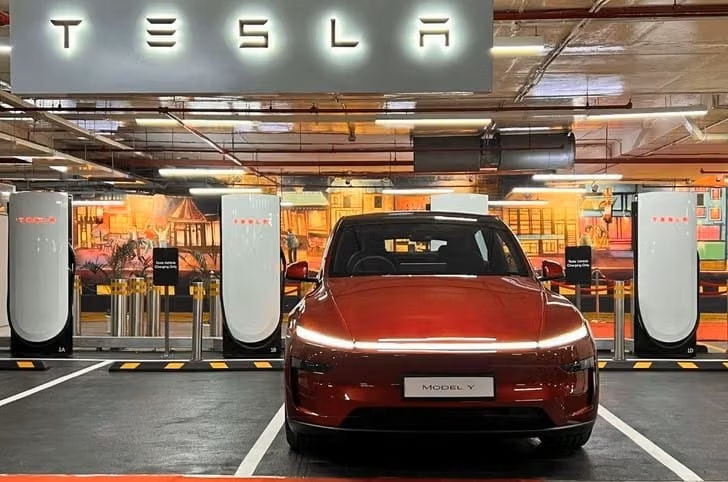
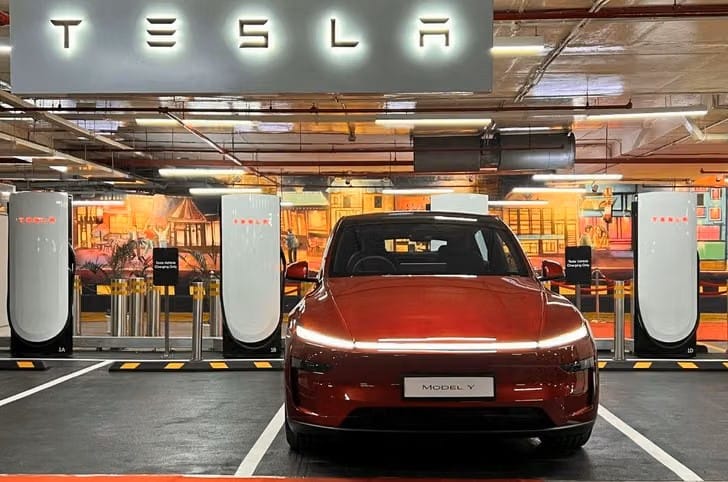
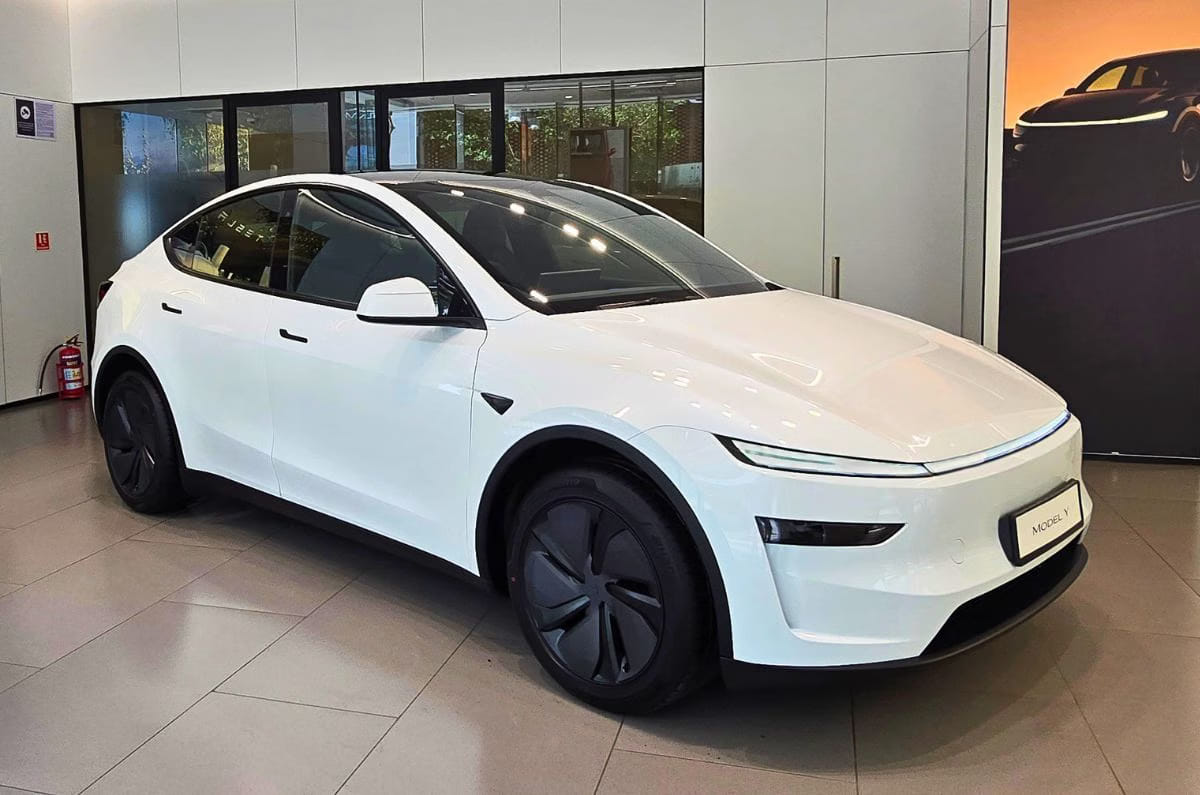
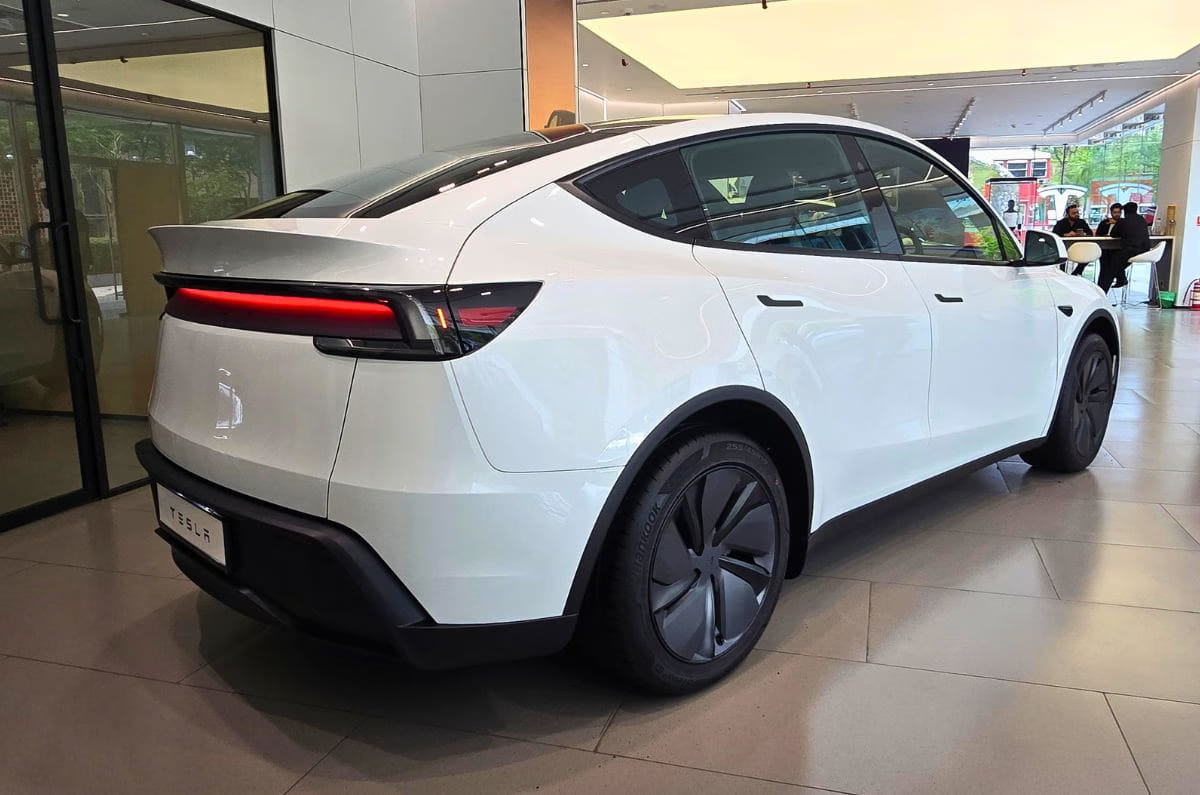
Tesla India recorded its highest-ever monthly retail sales in July 2026, delivering 115 Model Y SUVs according to Vahan data. The American EV maker’s previous best stood at 69 units, achieved in September and December 2025. The strong performance follows Tesla’s Rs 9 lakh price cut for the Model Y in June, which lowered its starting price to Rs 50.89 lakh (ex-showroom).
Tesla holds a 16 percent share of the luxury EVs sold in July
Over 600 units of cumulative sales so far
Tesla Model Y priced between Rs 50.89 lakh and Rs 61.99 lakh (ex-showroom)
Tesla Model Y price cut drives July sales
Tesla delivered 115 Model Ys in July, up 203 percent from 38 units sold in June. The sharp increase came after the company reduced the Model Y’s starting price by Rs 9 lakh to Rs 50.89 lakh in June, improving its competitiveness in the luxury EV segment. Before the price revision, demand for the electric SUV had remained relatively limited.
Tesla becomes third-largest luxury EV brand
The July performance gave Tesla a 16 percent share of the 736 luxury electric passenger vehicles retailed during the month, placing it behind BMW India (390 units) and Mercedes-Benz India (174 units), while ahead of Volvo Auto India (51 units). Tesla’s cumulative India sales have now reached 578 units since deliveries began in September 2025, giving it an 8 percent share of the 6,825 luxury EVs sold during the same period. The company has already retailed 60 vehicles in the first 16 days of August, taking cumulative sales past the 600-unit mark.
Tesla’s record monthly sales also contributed to India’s highest-ever monthly electric passenger vehicle retail sales of 34,033 units in July. The company accounted for 0.33 percent of the overall electric passenger vehicle market during the month.
Tesla currently offers the Model Y in five-seat and six-seat Model Y L versions, priced between Rs 50.89 lakh and Rs 61.99 lakh (ex-showroom). The five-seat Premium RWD variant uses a 64kWh battery with a claimed 500km WLTP range, while the Premium Long Range RWD gets an 84.2kWh battery with a claimed 661km WLTP range. Tesla says the six-seat Model Y L features a dual-motor all-wheel-drive setup with a claimed 681km WLTP range. The Model Y also is now available in India with new artificial intelligence features, the most significant being the Grok AI assistant.
Market news : खराब ग्लोबल संकतों से भारतीय बाजारों के सेंटिमेंट कमजोर हो सकते हैं। गिफ्ट निफ्टी में हल्का दबाव है। FIIs की कैश में खरीदारी देखने को मिली है। लेकिन वायदा में तगड़ी बिकवाली हुई है। FIIs के नेट शॉर्ट कॉन्ट्रैक्ट भी दो लाख के करीब पहुंच गए हैं। यहां हम आपके लिए तमाम समाचार प्लेटफॉर्मों पर चल रही आज की ऐसी अहम खबरों की एक सूची जारी कर रहें हैं जो भारतीय और अंतर्राष्ट्रीय बाजारों को प्रभावित कर सकते हैं।
मार्केट ओवरव्यू
18 अगस्त को भारतीय बेंचमार्क इंडेक्स लाल निशान में बंद हुए,निफ्टी 24,200 के निशान से नीचे फिसल गया और लगातार छठे सेशन में गिरावट का सिलसिला जारी रहा। ईरान और US के बीच बढ़ते तनाव के बीच बड़े पैमाने पर बिकवाली और कच्चे तेल की कीमतों में तेज बढ़ोतरी की वजह से यह गिरावट आई। कारोबारी सत्र के अंत में सेंसेक्स 492.70 अंक या 0.63 प्रतिशत गिरकर 77,235.46 पर और निफ्टी 132.75 अंक या 0.55 प्रतिशत गिरकर 24,154.90 पर बंद हुआ। निफ्टी मिडकैप इंडेक्स 0.4 प्रतिशत और स्मॉलकैप इंडेक्स 0.4 प्रतिशत गिरा।
हॉर्मुज को लेकर टेंशन बढ़ी
हॉर्मुज को लेकर टेंशन बढ़ गई है। ट्रंप ने नक्शा जारी करके बताया है कि हॉर्मुज अमेरिका का हिस्सा है। इधर ईरान ने किसी भी बातचीत से इनकार किया है। विदेश मंत्री अराघची ने कहा है कि बातचीत हमारी शर्तों पर ही होगी। US- ईरान टेंशन से कच्चा तेल लगातार चौथे दिन चढ़ा है। इसके भाव 92 डॉलर के करीब पहुंच गए हैं।
अमेरिकी और एशियाई बाजार
अमेरिकी बाजार दूसरे दिन भी फिसले हैं। क्रूड के साथ बाजारों को US बॉन्ड यील्ड की भी टेंशन है। 30 साल की बॉन्ड यील्ड 19 साल की ऊंचाई पर आ गई है। 10 साल की बॉन्ड यील्ड 4.7% के ऊपर बरकरार है। इधर अमेरिकी बाजारों में दूसरे दिन भी दबाव रहा। चिप शेयरों में 9% तक की भारी बिकवाली से नैस्डैक 1.25 फीसदी से ज्यादा फिसला है। चिप शेयरों की पिटाई से कॉस्पी 4 फीसदी से ज्यादा नीचे आया है। निक्केई में भी 2.5 फीसदी की गिरावट है।
IT कंपनियों के लिए सेंटिमेंट पॉजिटिव, इंफोसिस का ADR करीब 2% चढ़ा
चिप शेयरों की बिकवाली से IT कंपनियों के सेंटिमेंट पॉजिटिव दिख रहे हैं। कल अमेरिका में एक्सेंचर,सेल्सफोर्स और एडोबी जैसी सॉफ्टवेयर कंपनियां दो से चार फीसदी उछलीं। इंफोसिस का ADR भी करीब 2% चढ़ा।
Aster DM में आज बड़ी ब्लॉक डील संभव
Aster DM में आज करीब 4,780 करोड़ रुपए की ब्लॉक डील संभव है। सेंटेला मॉरिशस होल्डिंग्स (Centella Mauritius Holdings) 7.2% हिस्सा बेच सकता है। इसके लिए 6.3% डिस्काउंट पर 766 रुपए प्रति शेयर फ्लोर प्राइस तय की गई है।
घरेलू PNG कनेक्शन के लिए इन्सेंटिव स्कीम
घरेलू PNG कनेक्शन के लिए इन्सेंटिव स्कीम को सरकार ने मंजूरी दे दी है। PNG कनेक्शन के लिए सिटी गैस डिस्ट्रीब्यूशन कंपनियों के प्रोत्साहन के लिए यह स्कीम 1 सितंबर से लागू होगी। इस खबर के चलते आज IGL, MGL और गुजरात एनर्जी के शेयरों में एक्शन आज बढ़ सकता है
एफआईआई और डीआईआई फंड फ्लो
18 अगस्त को विदेशी संस्थागत निवेशकों ने ₹1,651 करोड़ के शेयर खरीदे और वे नेट खरीदार बन गए। वहीं,घरेलू संस्थागत निवेशकों ने लगातार छठे सेशन में भी खरीदारी जारी रखी और भारतीय शेयरों में ₹2,579 करोड़ का निवेश किया।
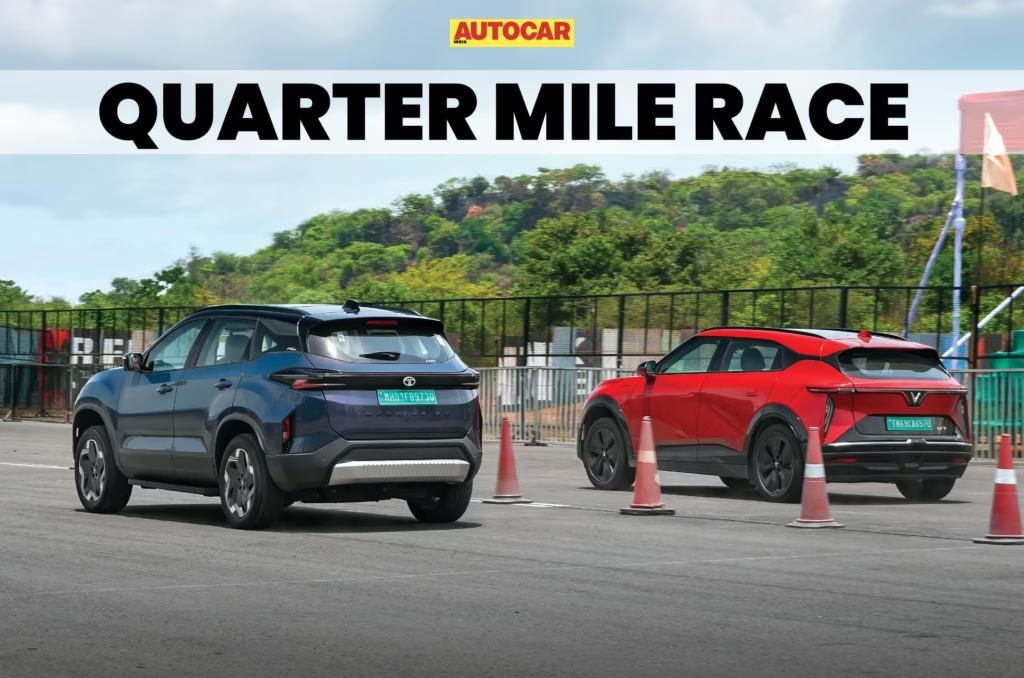
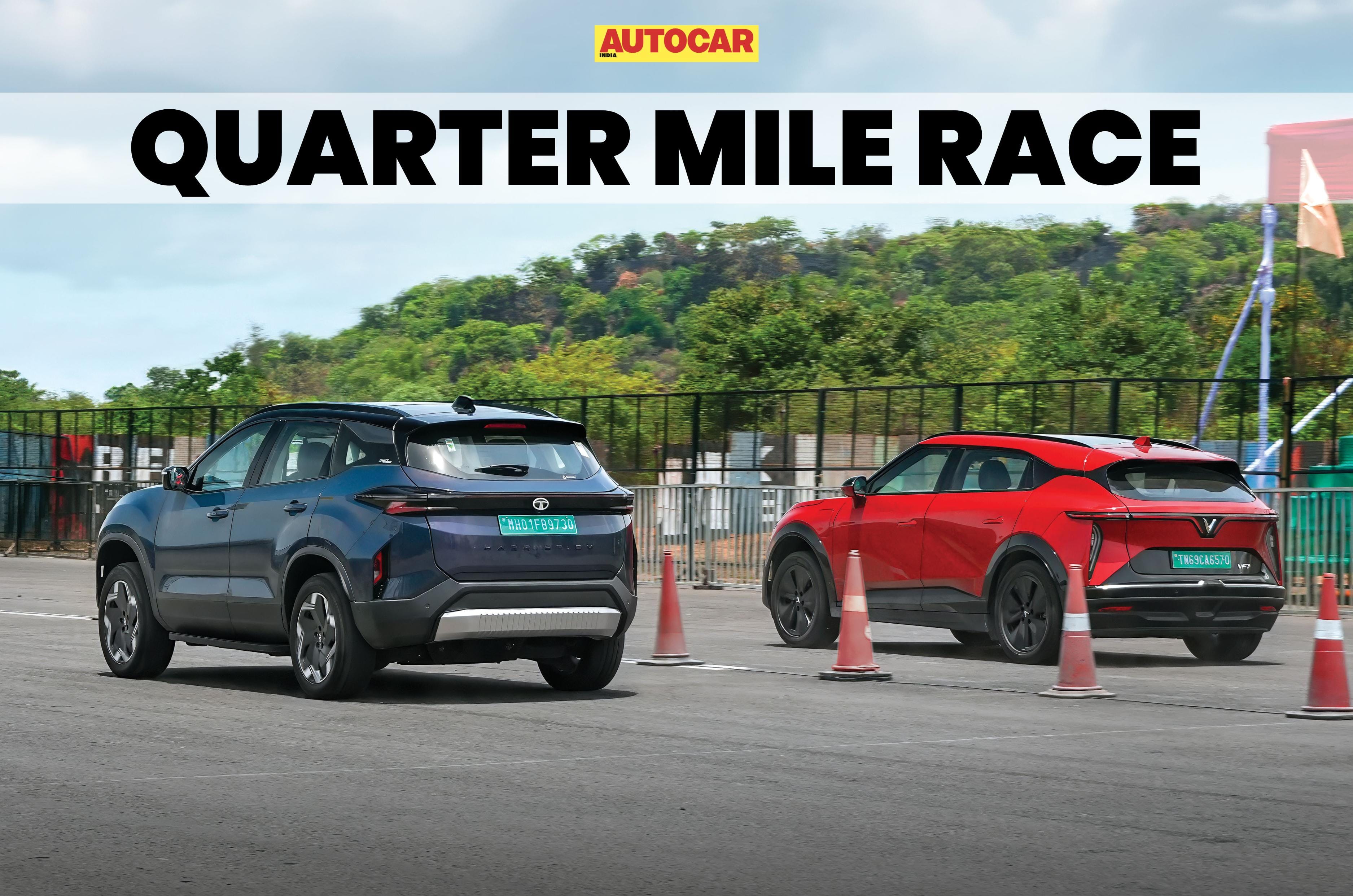
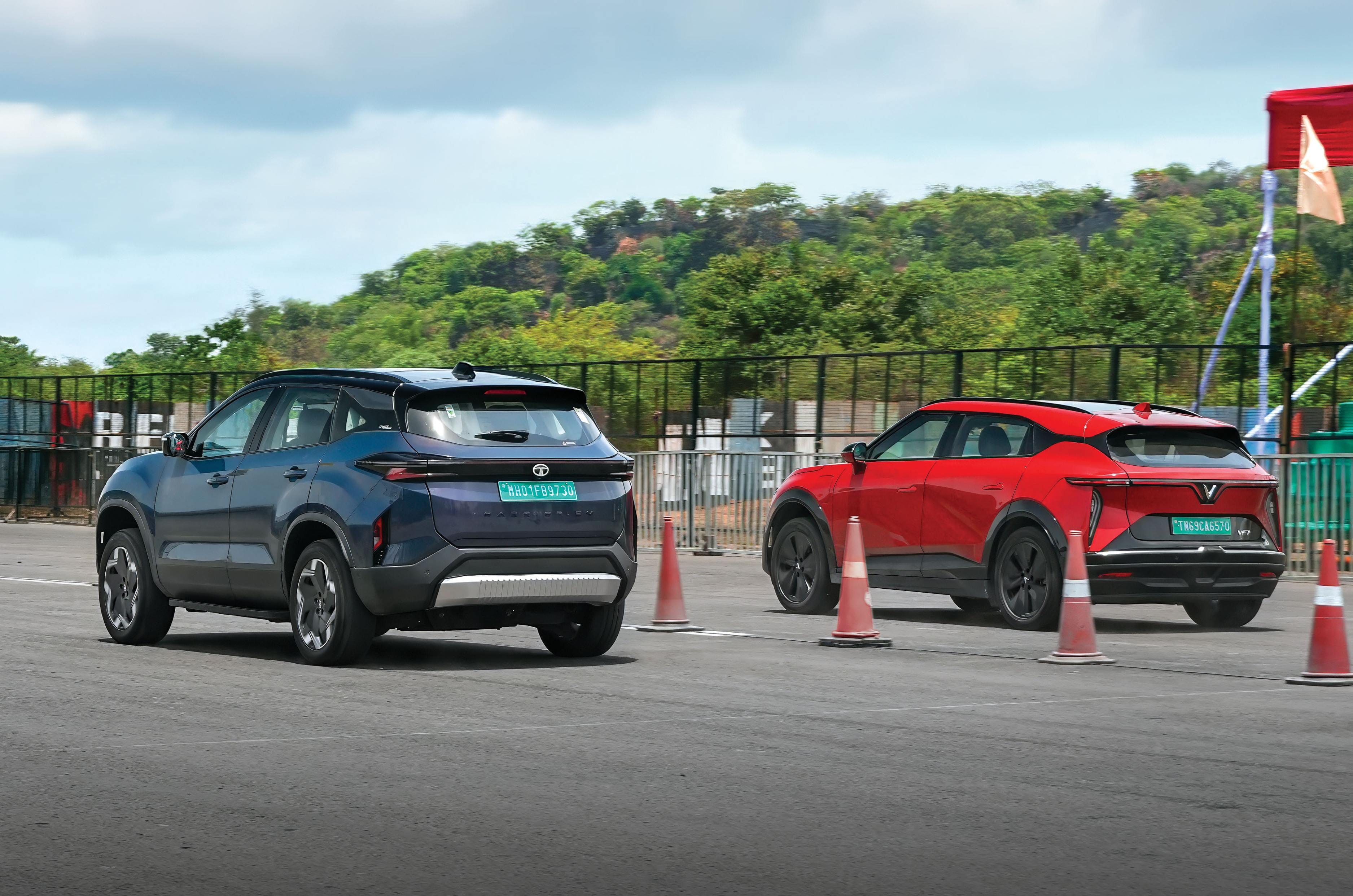
There’s no simpler way to compare one car’s performance to another than with a head-to-head quarter-mile race. Following the shootout between the newest crop of midsize SUVs, in this edition of Autocar India’s quarter-mile racing series, we’ve brought together three premium electric SUVs including the Tata Harrier EV, the Mahindra XEV 9e and the Vinfast VF7. Let’s find out which one here is the quickest down the drag strip.
Round 1: Tata Harrier EV vs Mahindra XEV 9e
Model
Tata Harrier EV
Mahindra XEV 9e
Battery
75kWh
79kWh
Electric Motor setup
Dual Motor, AWD
Single Motor, RWD
Power
313hp
286hp
Torque
504Nm
380Nm
Weight
2335kg
2201kg
Between these two homegrown EVs, the Harrier EV has an advantage for not only being more powerful, but it also has all-wheel drive as opposed to XEV 9e’s rear-wheel drive setup. Both SUVs are heavy-weights, but the Mahindra has an advantage for being 134kg lighter. On whose favour will the scales tip? Let’s find out.
The Harrier EV’s all-wheel drive system gives it a clear advantage in this race, giving it a comfortable win in Race 1 by a big margin of over seven tenths. Despite not being able to turn off traction control, the grip from the AWD system is enough for it to gap the Mahindra. Race 2 is a repeat, but the Mahindra does manage to close the gap, losing by half a second this time around.
Model
Tata Harrier EV
Mahindra XEV 9e
Race 1
14.35 sec
15.02 sec
Race 2
14.26 sec
14.92 sec
Round 2: Tata Harrier EV vs Vinfast VF 7
Model
Tata Harrier EV
Vinfast VF 7
Battery
75kWh
70kWh
Electric Motor setup
Dual Motor, AWD
Dual Motor, AWD
Power
313hp
353hp
Torque
504Nm
500Nm
Weight
2335kg
2218kg
After winning the home-grown battle, the Harrier EV is lined up against another similarly powered, similarly priced and AWD-equipped EV in the form of the Vietnamese Vinfast VF7. This time, however, the Harrier EV is on the back foot – it’s less powerful, weighs more and the advantage of all-wheel drive has been wiped away.
The Vinfast does allow you to turn traction control off, which results in a much better launch than the Harrier EV. In Race 1, both SUVs are neck-and-neck off the line, but the VF7 soon builds a lead and manages to maintain it all the way till the finish, crossing the line four tenths faster than the Tata. The Harrier EV does manage to narrow the gap in Race 2, but the advantage the VF7 gains at launch is hard for the Tata to overcome, and it loses out by 0.29sec.
Model
Tata Harrier EV
Vinfast VF7
Race 1
13.85 sec
14.25 sec
Race 2
13.94 sec
14.23 sec
Autocar India’s testing standards
Before we conduct our performance tests, we check and maintain tyre pressures based on the manufacturer’s recommendation and ensure the car has a full tank of fuel. The car is then tested in a controlled environment and the data is collected via highly accurate GPS-based timing equipment.
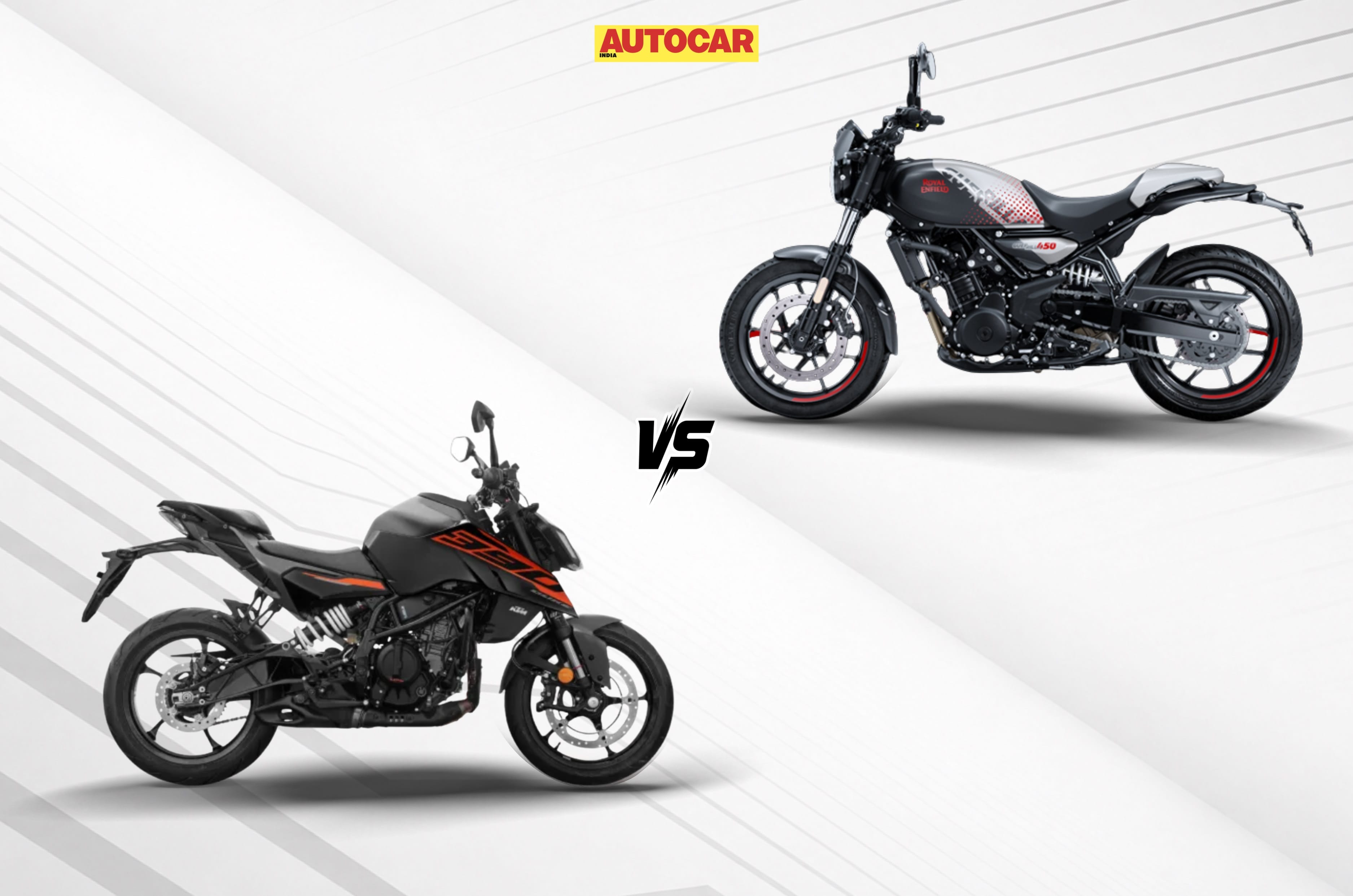
When the Guerrilla 450 first launched in 2024, comparisons to the KTM390 Duke (now known as the Duke R) were inevitable. In 2026 though, things have changed because, following the revised GST structure on motorcycles, Bajaj decided to downsize all of its 400cc manufactured bikes to fall below the 350cc threshold. So, we now have a 390 Duke with a 349cc engine and the 398cc version continues on as the 390 Duke R. Meanwhile, the Royal Enfield Guerrilla 450 is now available in a new, sportier Apex variant. Let’s see how the motorcycles compare on paper with these redrawn boundaries.
KTM 390 Duke vs Royal Enfield Guerrilla 450 Apex: Engine and output
KTM has more power, Guerrilla has more torque
KTM 390 Duke
Royal Enfield Guerrilla 450 Apex
Engine
349.32cc, single-cylinder, liquid-cooled
452cc, single-cylinder, liquid-cooled
Power
41.5hp at 8,600rpm
40.02hp at 8,000rpm
Torque
33.5Nm at 7,000rpm
40Nm at 5,500rpm
Transmission
6-speed
6-speed
Power-to-weight ratio
246.58hp/tonne
216.32hp/tonne
The biggest reason for this comparison is the KTM’s downsized 349cc engine. It now makes 41.5hp of power (vs 46hp on the Duke R) and 33.5Nm of torque (vs 39Nm on the Duke R). Both are now delivered slightly later in rev range as well. KTM achieved this with an 8mm shorter stroke length, although the bore remains unchanged. The Guerrilla 450 Apex, on the other hand, has not changed on the engine front and retains its 452cc engine with the same power and torque figures. Thus, the Guerrilla offers quite a bit more torque than the Duke and it’s delivered much earlier in the rev range too. Which means you will have to work the throttle and gearbox comparatively less on the Royal Enfield. Thus, if you spend most of your time in the city, it will be the less cumbersome bike to ride in this regard.
KTM 390 Duke vs Royal Enfield Guerrilla 450 Apex: Dimensions and weight
Duke is lighter despite a 30 percent larger fuel tank
KTM 390 Duke
Royal Enfield Guerrilla 450 Apex
Fuel tank capacity
15 litres
11 litres
Ground clearance
183mm
169mm
Kerb weight
168.3kg
185kg
Seat height
800mm
780mm
Wheelbase
1357mm
1440mm
The 390 Duke continues to be far lighter than the Guerrilla, which weighs a staggering 17kg more. Another pertinent detail is that despite the lower weight, the Duke gets a 4-litre larger fuel tank compared to the Guerrilla. The Guerrilla does get a 20mm lower seat height and its ground clearance is 14mm lesser than the Duke. However, it’s worth noting that both bikes are perfectly usable on our roads, pothole-ridden or otherwise.
KTM 390 Duke vs Royal Enfield Guerrilla 450 Apex: Tyres, brakes, and suspension
Duke has adjustable suspension and better brakes
KTM 390 Duke
Royal Enfield Guerrilla 450 Apex
Tyres (F, R)
110/70R17, 150/60R17
120/70R17, 160/60R17
Brakes (F, R)
320mm front disc, 240mm rear disc; dual-channel ABS
310mm front disc, 270mm rear disc; dual-channel ABS
Suspension (F, R)
43mm USD fork, monoshock
43mm RSU fork, linkage monoshock
Moving on to one of the most important links between the rider and the tarmac, the tyres. The Guerrilla gets slightly wider tyres than the Duke at both ends, but the disc brakes on the Guerrilla are slightly smaller at the front, and slightly larger at the rear. However, the KTM comes with a more sophisticated radial calliper at the front, whereas the Guerrilla makes do with a simpler axial unit. As for suspension, the Duke gives you an USD fork which is compression and rebound adjustable; and the rear monoshock is rebound and preload adjustable. The only adjustability the Guerrilla gets is for its rear preload.
KTM 390 Duke vs Royal Enfield Guerrilla 450 Apex: Features
KTM continues its tech-forward approach
KTM has always offered a myriad of tech features and rider aids on its motorcycles. Royal Enfield on the other hand has always been restrained on that front, prioritizing simplicity and ease of use instead. Depending on your preferences, you will gravitate towards one or the other. KTM offers you slip-and-assist clutch, ride modes, traction control, launch control, lean-sensitive ABS, bi-directional quickshifter, cruise control, turn-by-turn navigation, track screen, and a type-C charging port. Royal Enfield, to its credit, has given the Guerrilla a decent feature-set comprising a TFT instrument cluster which allows you to screencast Google Maps, two ride modes and a slip-and-assist clutch.
KTM 390 Duke vs Royal Enfield Guerrilla 450 Apex: Price
Guerrilla is more affordable with a bigger engine but has less features
KTM 390 Duke
Royal Enfield Guerrilla 450 Apex
Price
Rs 2.84 lakh (ex-showroom, Delhi)
Rs 2.51 lakh (ex-showroom, Chennai)
Last but not least, the other reason necessitating the comparison, is the price. With its downsized engine KTM was able to meet a lower GST slab and thus the 390 Duke now costs Rs 2.84 lakh (ex-showroom, Delhi). The Guerrilla 450 Apex still manages to undercut it and by a good deal, starting at Rs 2.51 lakh and going up to Rs 2.58 lakh for the Apex Green colour.
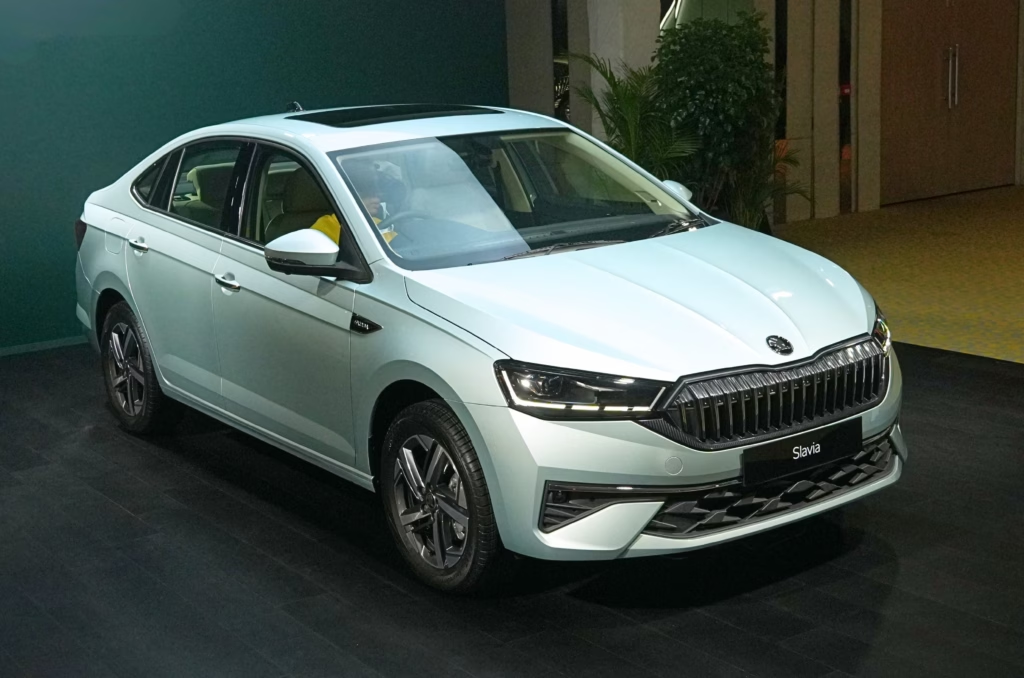
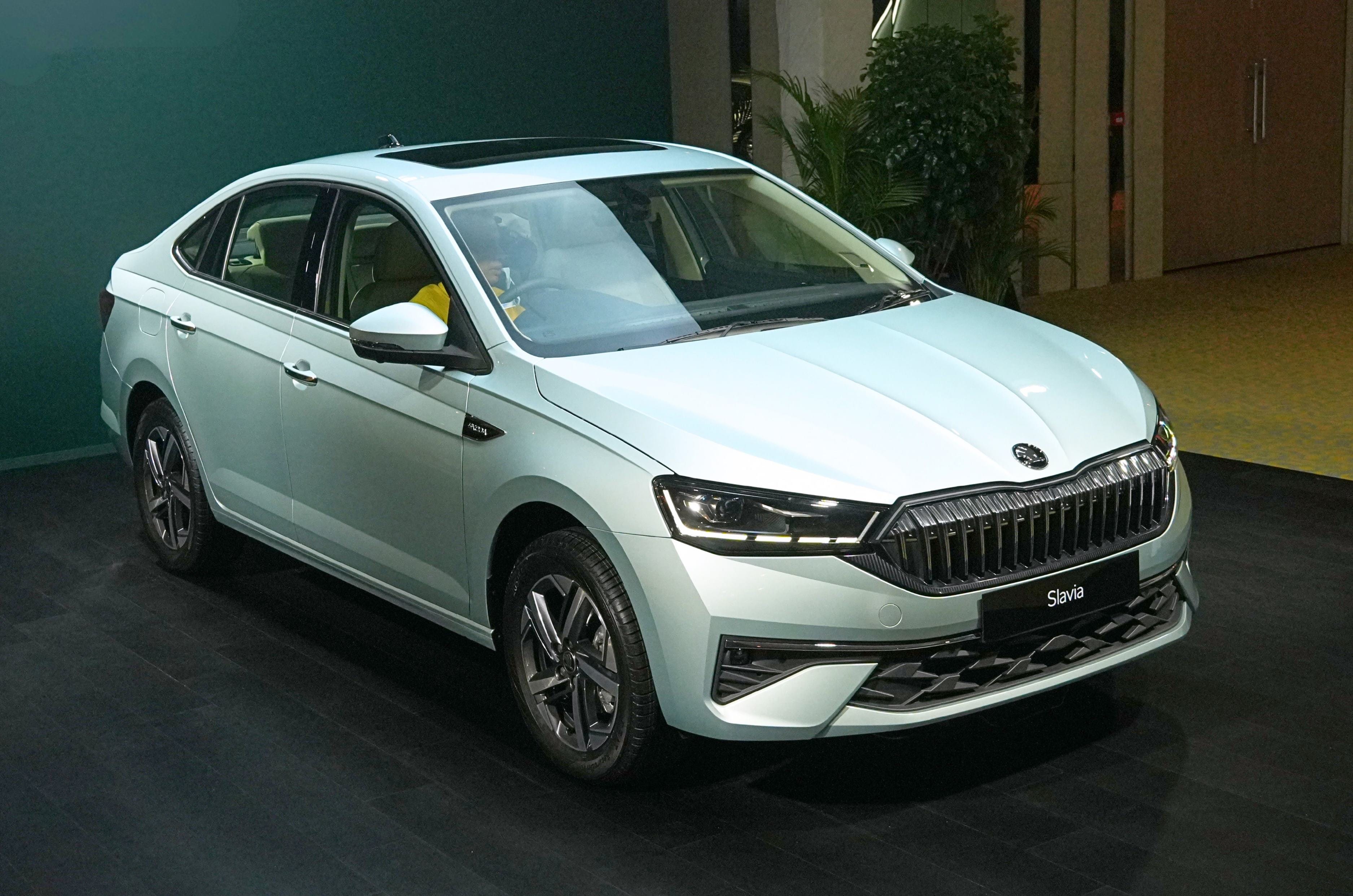
The much-awaited Skoda Slavia facelift has finally been revealed. The mid-lifecycle update brings several cosmetic changes and new features, along with an automatic gearbox upgrade for the 1.0 TSI petrol engine. The prices will be announced in the first week of October and pre-bookings for the Skoda sedan are underway. Meanwhile, deliveries will begin this festive season.
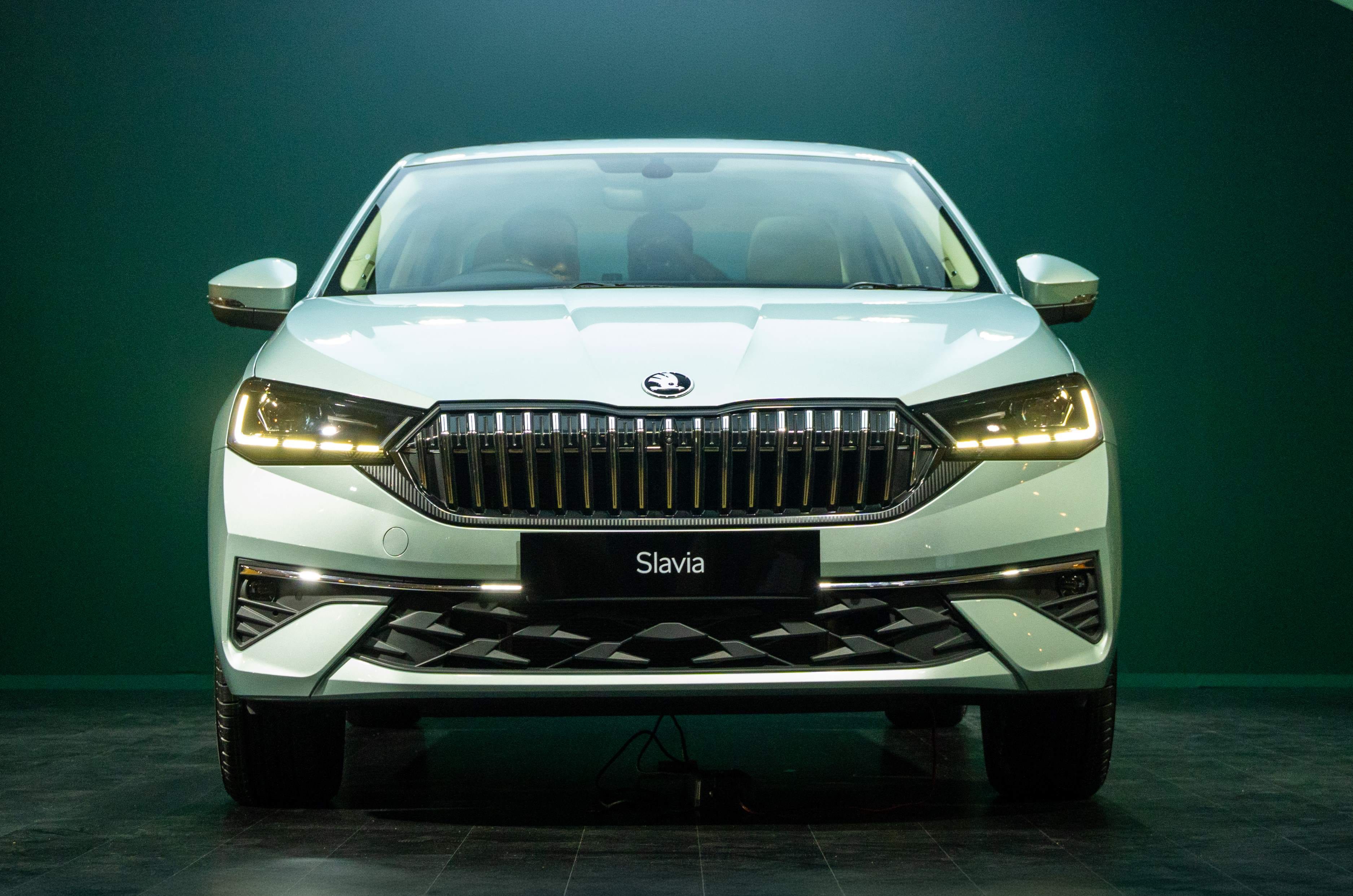
360-degree camera, LEDs integrated into the front grille have been added
Kushaq-like rear sear massaging function available as well
New 8AT option introduced for the 1.0 TSI mill instead of the 6AT unit
New Skoda Slavia exterior highlights
New LED DRL signatures and bumper grille come courtesy of the facelift.
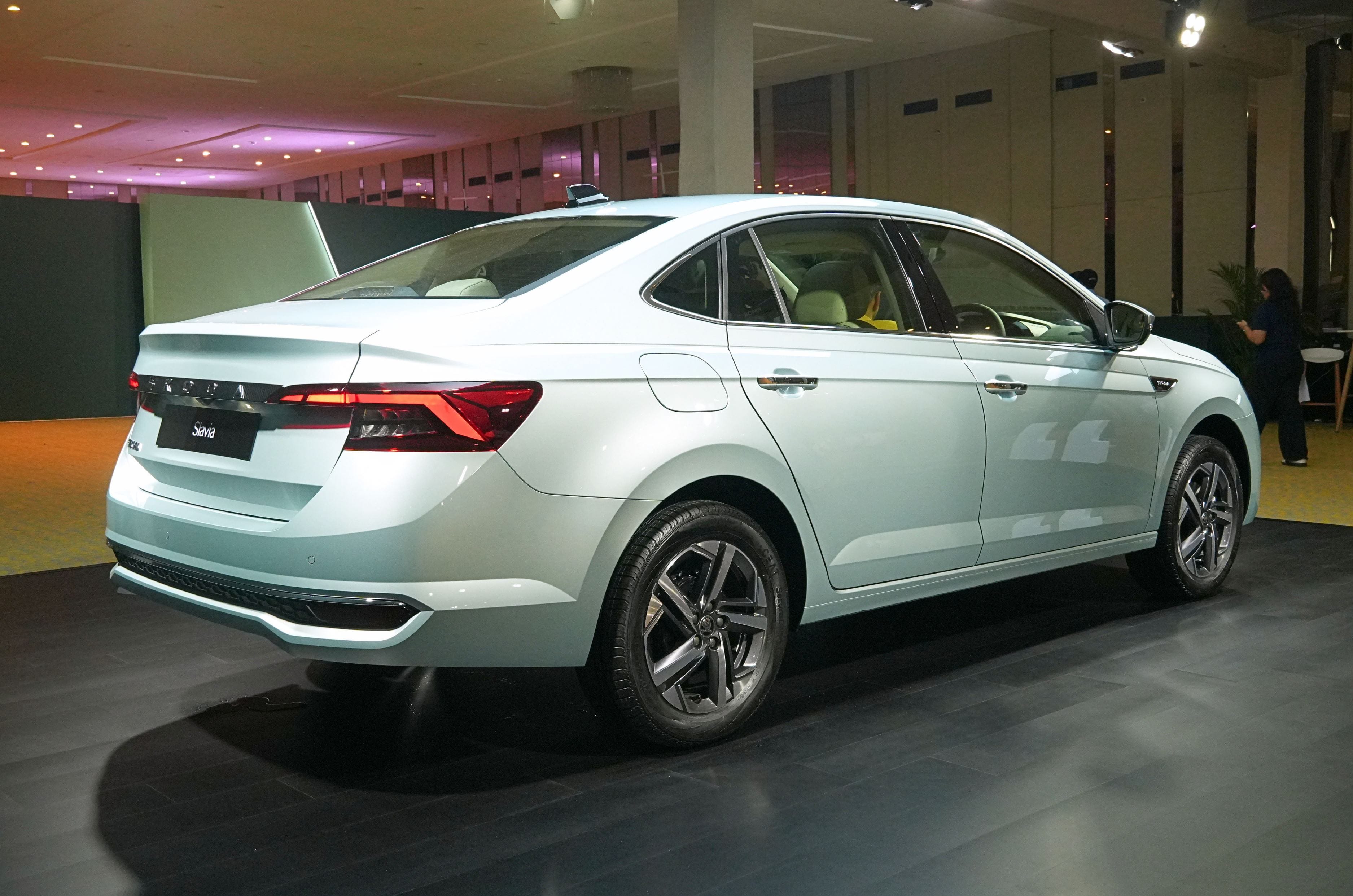
Being a facelift, the overall silhouette of the mid-size sedan has been carried over. Parts like the headlights, tail-lights, front grille and air dam, and alloy wheels have been refreshed. It also gets Skoda Kushaq-like segmented LEDs integrated into the grille and sequential turn indicators at the rear. A new trim between the tail-lights with the ‘SKODA’ lettering has also been added.
Side profile is largely unchanged.
Arctic Silver and Cappuccino Beige are among the new colours, however, deliveries for the latter will only start from December. Other colour option on offer are Shimla Green, Brilliant Silver, Candy White, Carbon Steel, Steel Grey, Lava Blue, Cherry Red and Deep Black.
New Skoda Slavia interior features
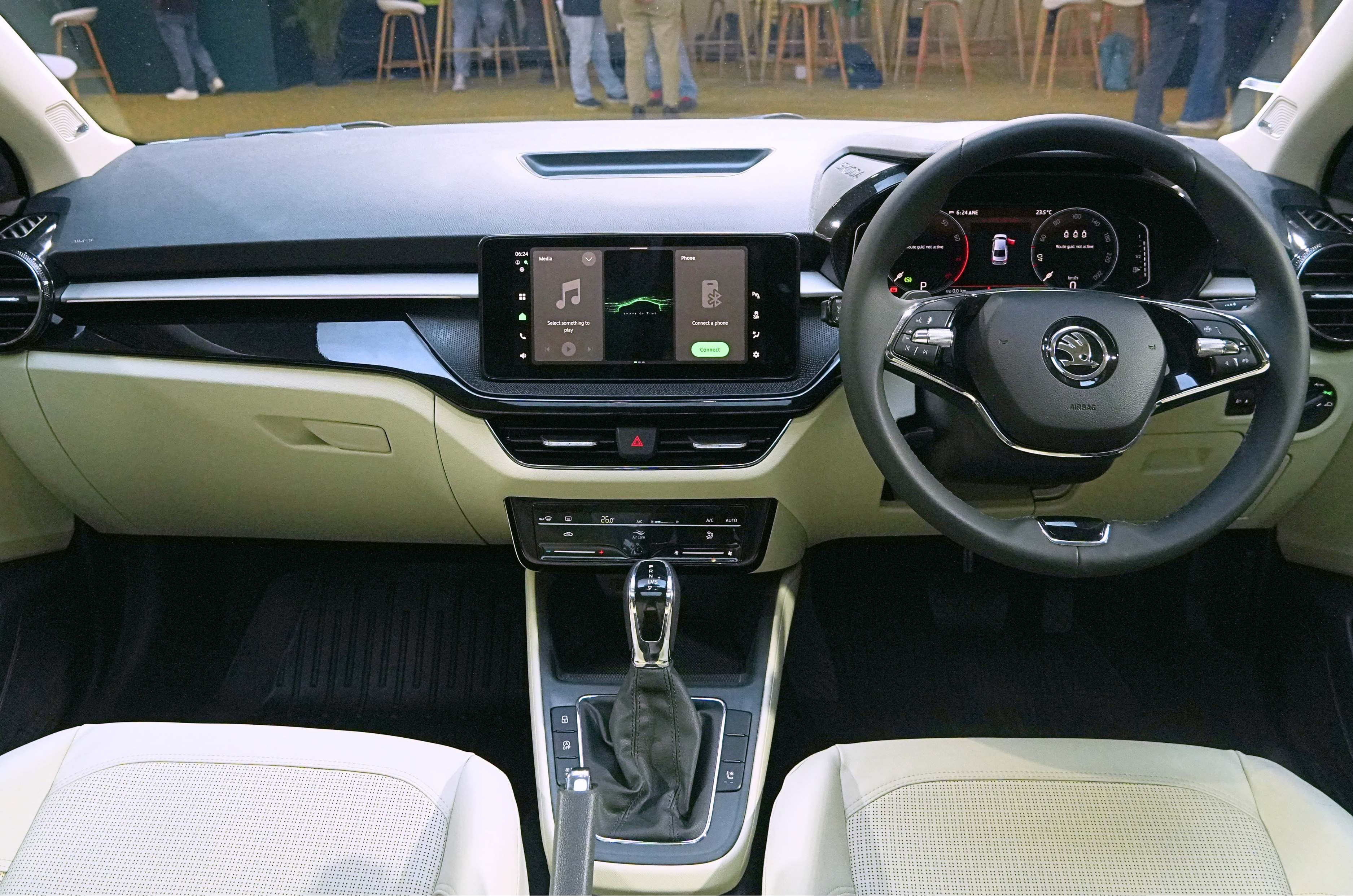
The interior layout has been carried over.
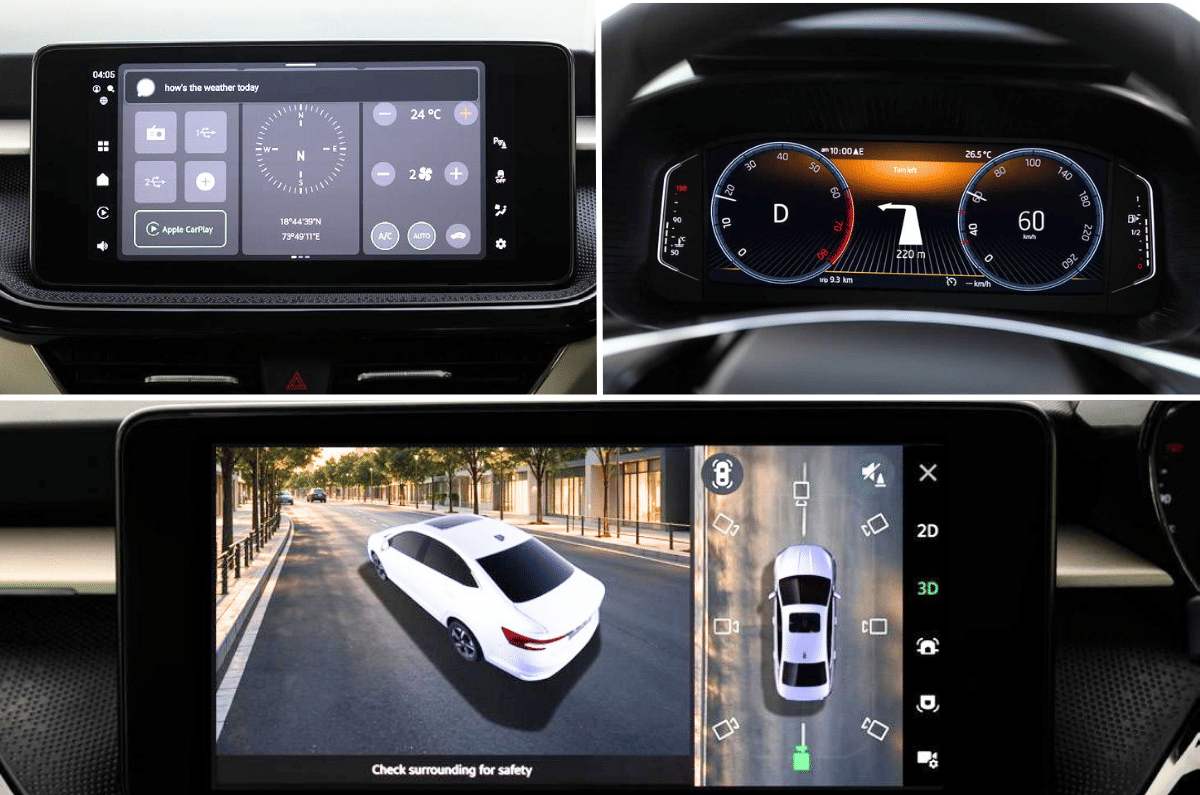
The Slavia facelift gets a segment-first rear-seat massaging function. It also gets larger screens, with a 10.1-inch touchscreen replacing the erstwhile 10-inch unit, while a 10.25-inch driver’s display has been added in place of the 8-inch unit. Both of them come with new graphics and features. A panoramic sunroof is still not part of the package, and it continues with a single-pane unit.
Top: 10.1 inch touchscreen (L), 10.25 inch driver’s display (R); bottom: 360-degree camera view.
A 360-degree camera replaces the previous rear-only unit and like the Kushaq; however, an ADAS suite remains absent.
New Skoda Slavia engine and gearbox choices
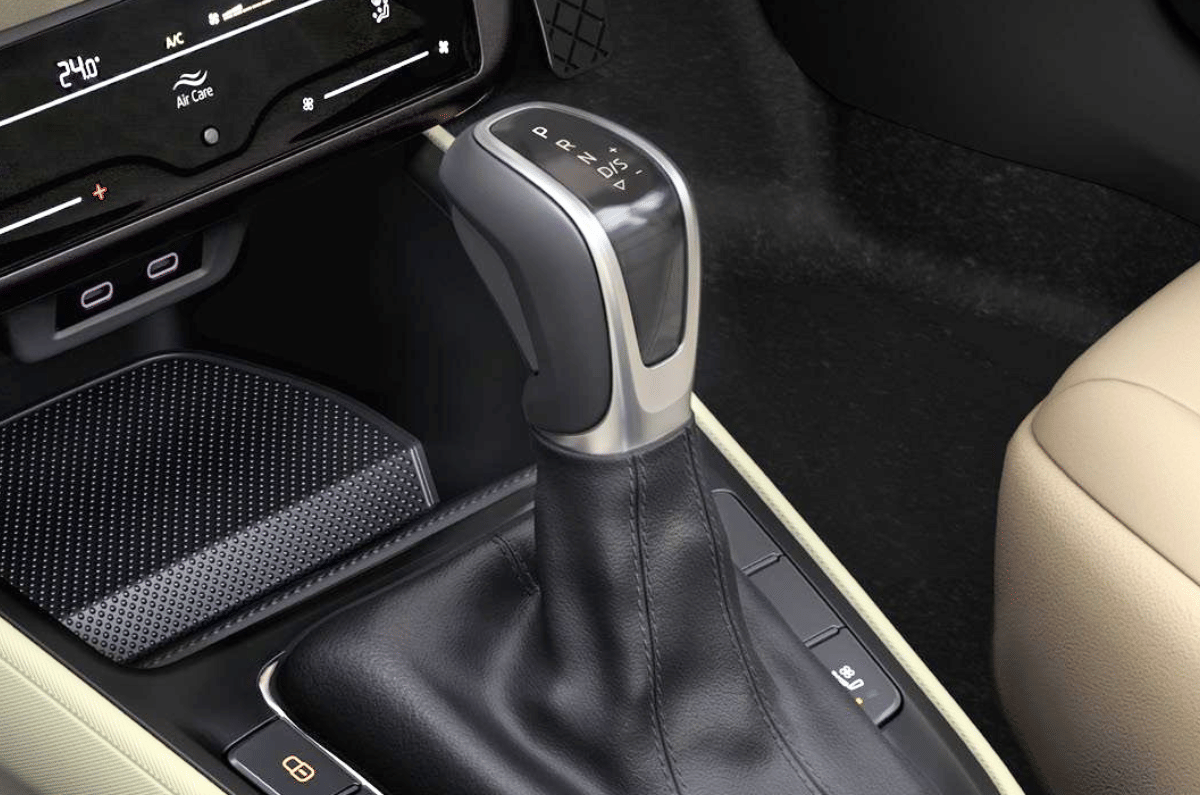
New 8-speed torque converter gearbox replaces the 6-speed unit.
The 2026 Slavia continues with the familiar set of 115hp 1.0 TSI and 150hp 1.5 TSI turbo-petrol engines. The 1.0 TSI gets a 6-speed manual, while the 1.5 TSI continues with a 7-speed dual-clutch automatic. The key change is to the 1.0 TSI automatic, which now is an 8-speed torque-converter unit instead of the earlier 6-speed gearbox.
With this update, Skoda aims to keep the Slavia competitive against the Hyundai Verna and Honda City, both of which received facelifts earlier this year. Meanwhile, the Volkswagen Virtus is likley to get an update later this year. The outgoing Slavia is priced between Rs 10 lakh and Rs 18.19 lakh, ex-showroom. With the facelift, a price hike of up to Rs 85,000 is likely.