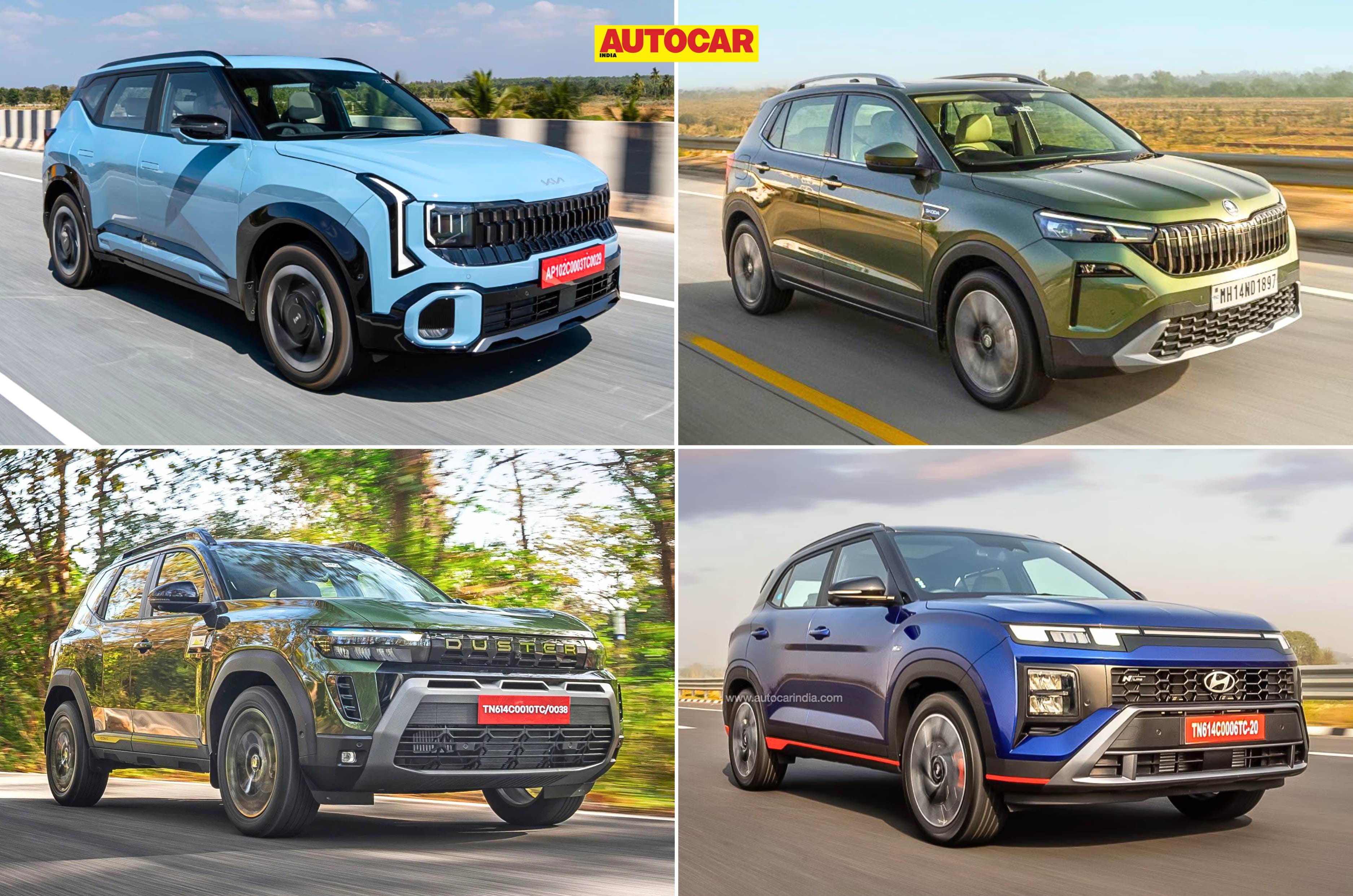
The midsize SUV segment is among the most contested in India, with popular models such as the Hyundai Creta, Tata Sierra, Kia Seltos and Skoda Kushaq fighting for space. A majority of SUVs in this segment come with turbo-petrol engines, which are known to offer good performance and deliver respectable fuel efficiency when driven efficiently. Here, we have compiled a list of the most fuel-efficient turbo-petrol midsize SUVs in India, from lowest to highest. Do note that the list is based on ARAI figures, with real-world numbers expected to vary depending on driving conditions and styles.
Note: The claimed ARAI fuel-efficiency figures for the Mahindra Thar Roxx’s 2.0-litre turbo-petrol and Tata Curvv’s 1.2-litre turbo-petrol engines are yet to be revealed.
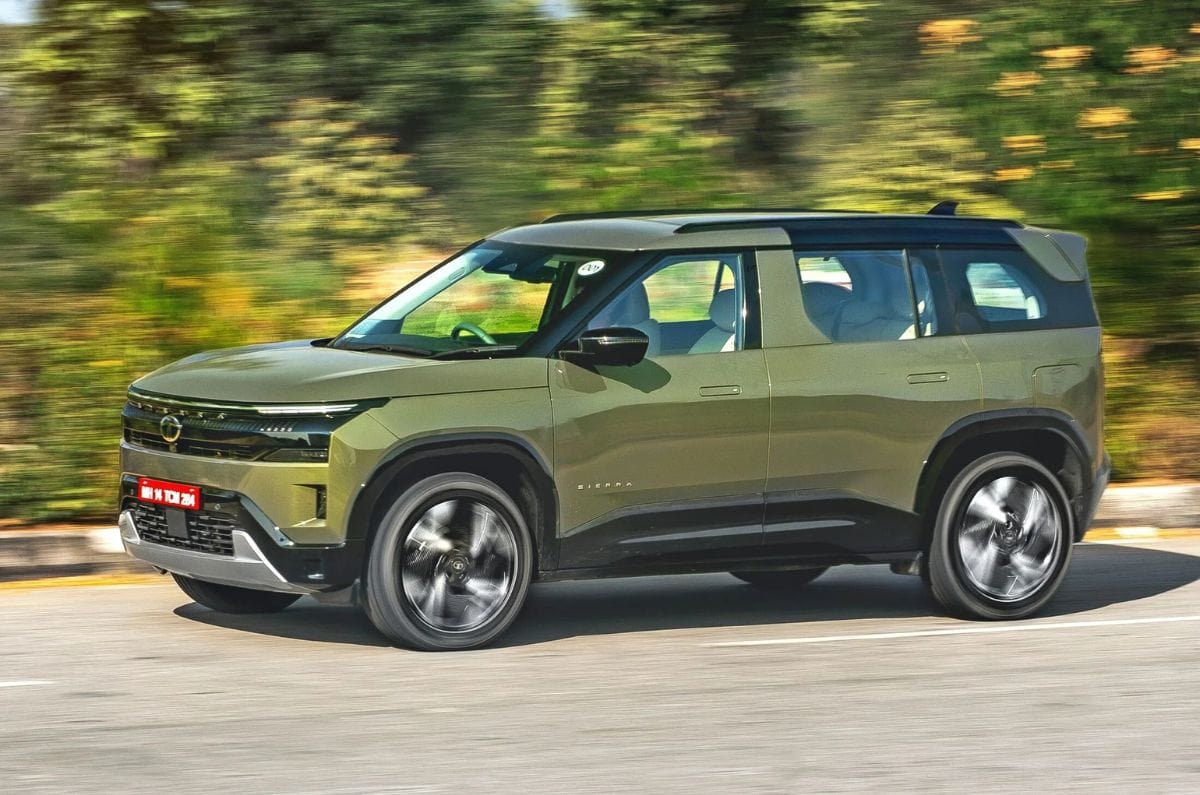
13. Tata Sierra: 1.5-litre turbo-petrol
Claimed mileage of up to 15.3kpl
The Tata Sierra is offered with three engine options: two petrols and a diesel. Of these, the 1.5-litre turbo-petrol is the least frugal, with a claimed mileage of 15.3kpl. Incidentally, the Sierra is also the least fuel-efficient turbo-petrol midsize SUV on this list. The 1.5-litre engine produces 160hp and 255Nm, and is paired only with a 6-speed automatic transmission. This engine is also offered in the bigger Harrier and Safari SUVs but in a higher state of tune.
Tata Sierra ARAI mileage for 1.5-litre turbo-petrol engine
AT claimed mileage
15.30kpl
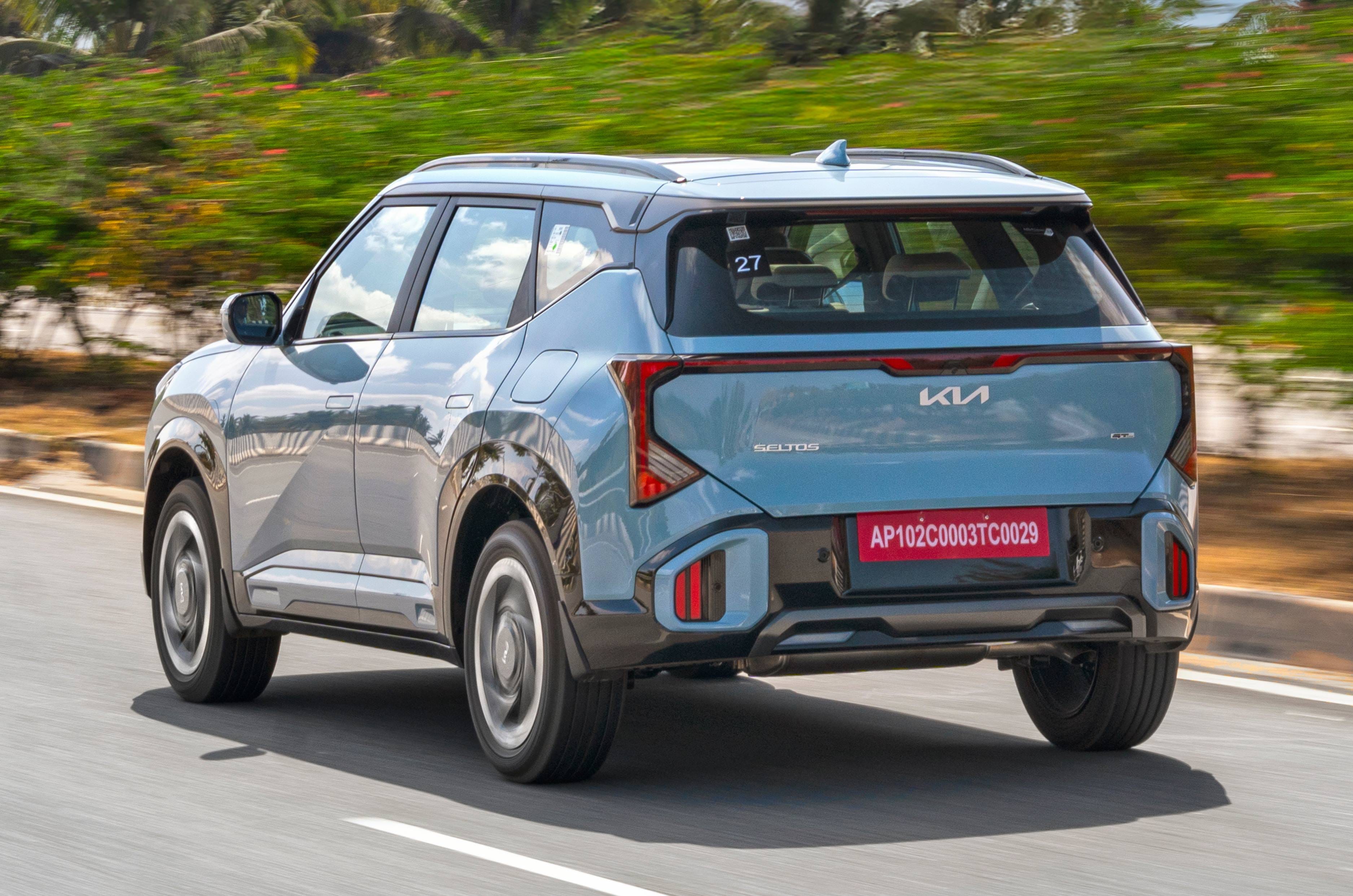
12. Kia Seltos: 1.5-litre turbo-petrol
Claimed mileage of up to 17.50kpl
The Kia Seltos comes with two petrol engine options. The more powerful 160hp, 250Nm 1.5-litre turbo-petrol engine is offered with two gearbox options. While the version with a dual-clutch automatic transmission has a claimed fuel efficiency of 17.5kpl, the one with iMT (clutchless manual) returns 15.60kpl, which is almost 2kpl less than the former – the highest difference for any vehicle in the list.
Kia Seltos ARAI mileage for 1.5-litre turbo-petrol engine
iMT claimed mileage
15.60kpl
DCT claimed mileage
17.50kpl
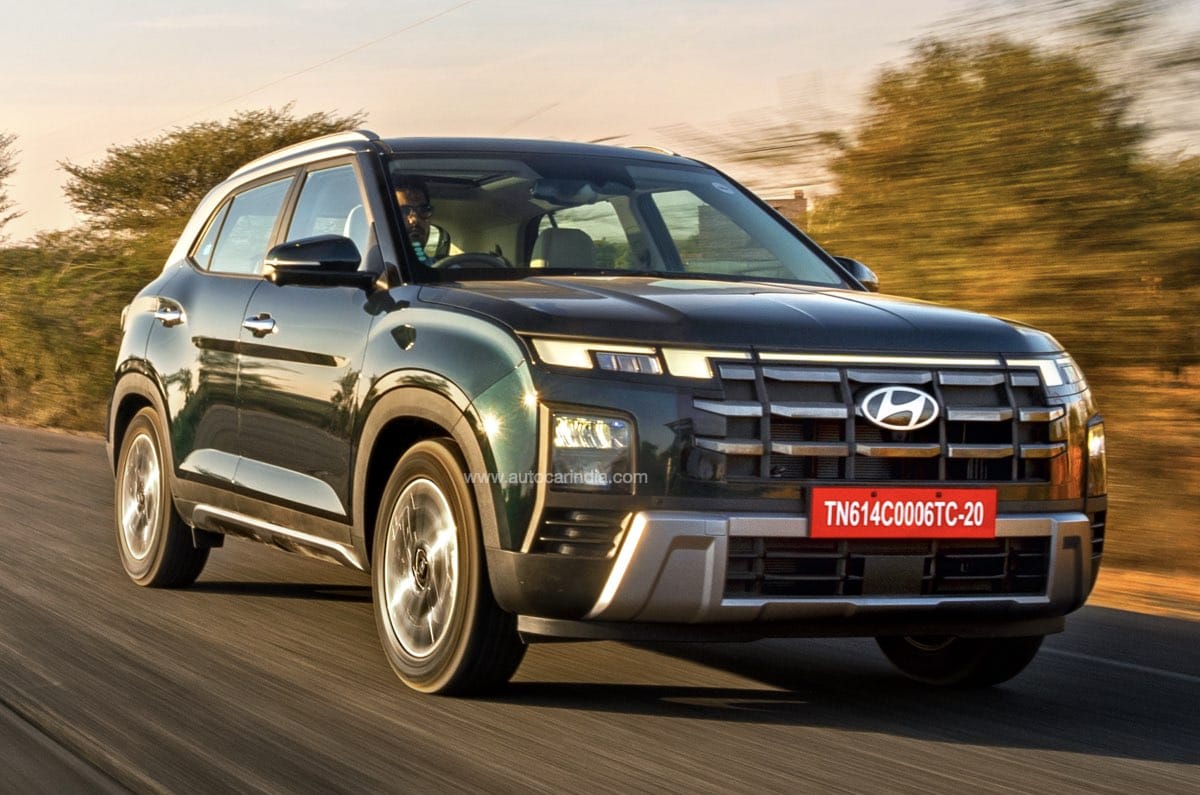
11. Hyundai Creta: 1.5-litre turbo-petrol
Claimed mileage of up to 18.40kpl
The Hyundai Creta has been the bestselling midsize SUV in India for a long time now. It gets the same turbo-petrol engine as the Seltos with exactly the same outputs, yet it delivers better fuel efficiency figures. This could be because the Creta is smaller than the new Seltos and has a lower kerb weight. While the standard Creta turbo-petrol comes only with a DCT, the Creta N Line is offered with a manual as well.
Hyundai Creta ARAI mileage for 1.5-litre turbo-petrol engine
MT claimed mileage
N-Line: 18kpl
DCT claimed mileage
Standard: 18.4kpl, N-Line: 18.2kpl
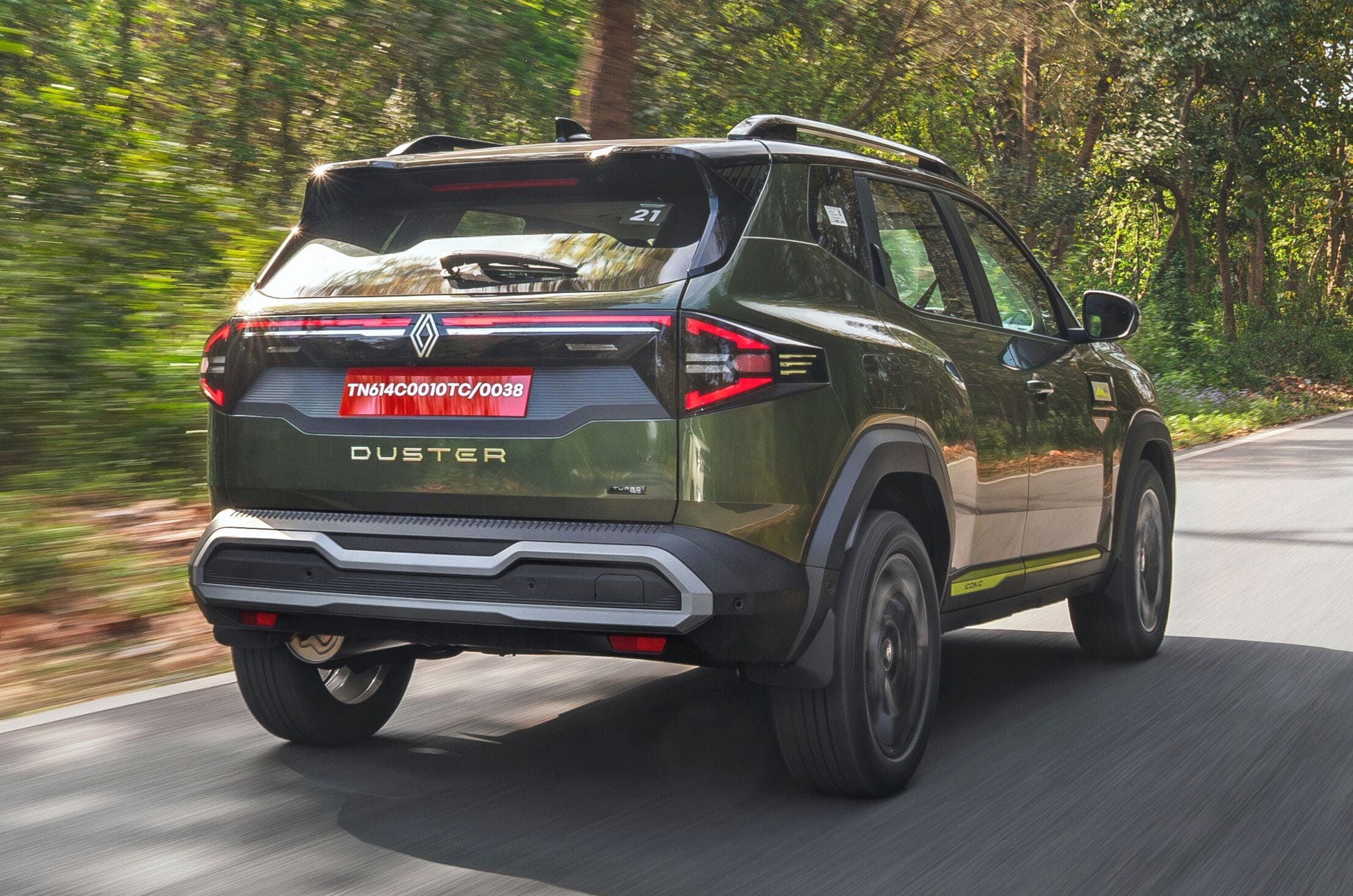
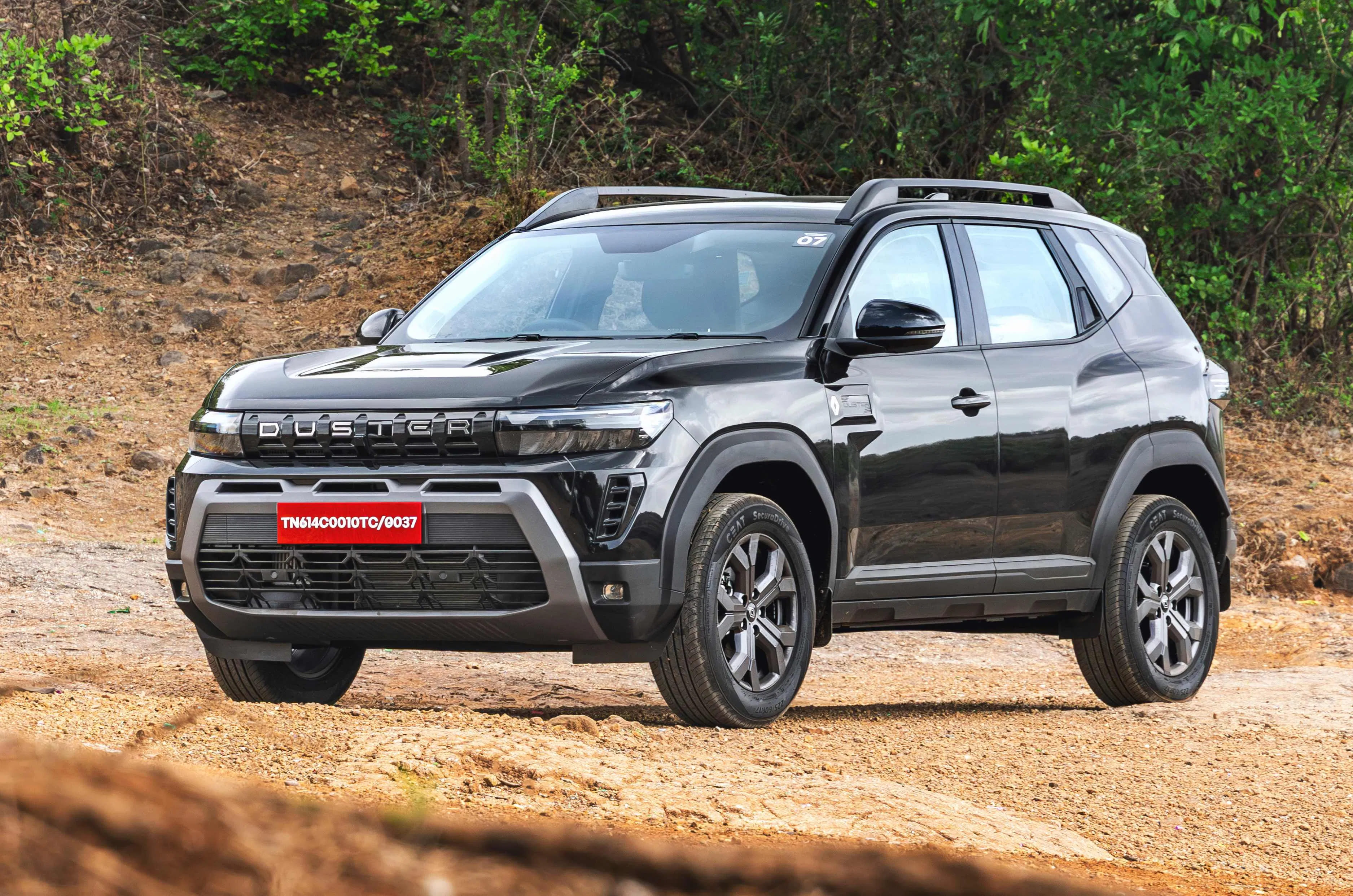
10. Renault Duster: 1.3-litre turbo-petrol
Claimed mileage of up to 18.45kpl
The Duster’s 1.3-litre turbo-petrol engine develops 163hp and 280Nm and is offered with 6-speed manual and 6-speed dual-clutch automatic gearboxes. Interestingly, the DCT version is 0.7kpl more efficient on paper, with a claimed 18.45kpl compared to the manual’s 17.75kpl.
Renault Duster ARAI mileage for 1.3-litre turbo-petrol engine
MT claimed mileage
17.75kpl
AT claimed mileage
18.45kpl
9. Citroen Aircross: 1.2-litre turbo-petrol
Claimed mileage of up to 18.50kpl
The Citroen Aircross is one of the most affordable midsize SUVs in India. It is offered with a choice of naturally aspirated and turbo-petrol engines, the latter of which is available with both manual and automatic transmission options. The Aircross’s turbo-petrol mill produces 110hp, but torque varies by transmission: 190Nm in the manual and 205Nm in the automatic. In terms of ARAI mileage, the manual is 0.9kpl more efficient than the automatic.
Citroen Aircross ARAI mileage for 1.2-litre turbo-petrol engine
MT claimed mileage
18.5kpl
AT claimed mileage
17.6kpl
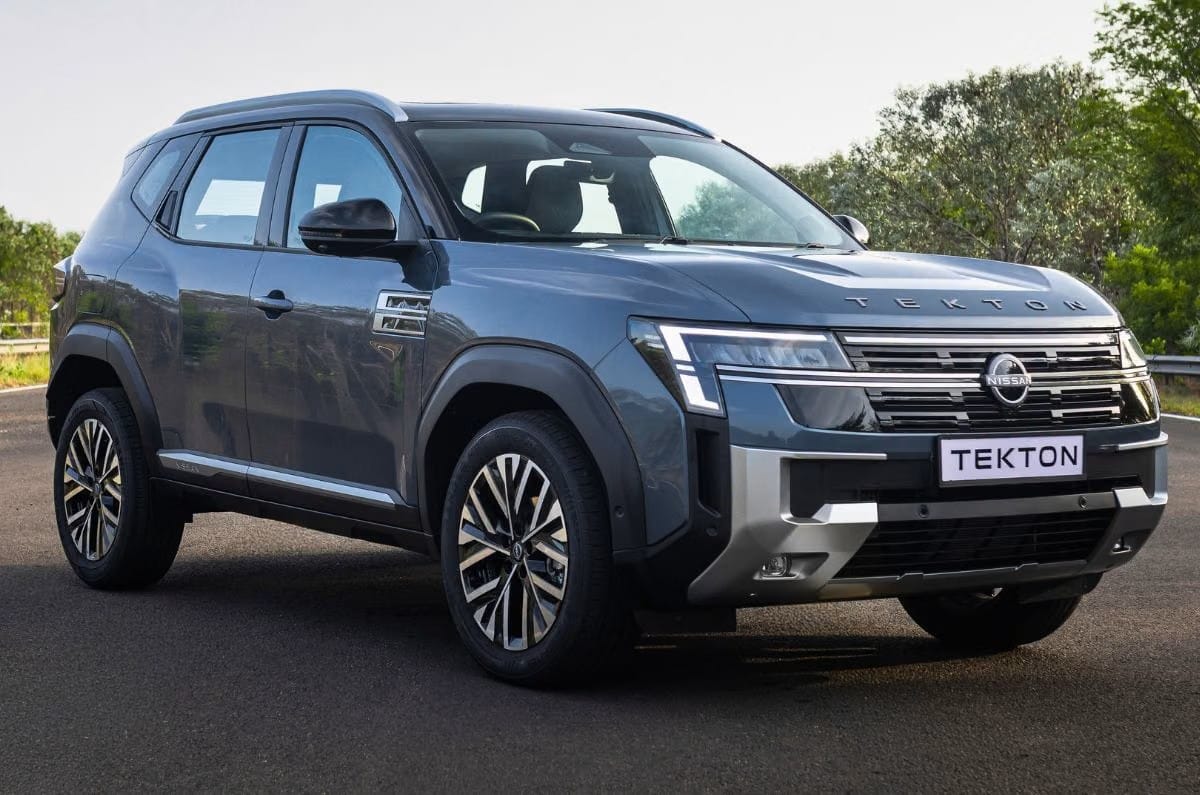
8. Nissan Tekton: 1.3-litre turbo-petrol
Claimed mileage of up to 18.50kpl
The Nissan Tekton shares its 1.3-litre turbo-petrol engine with the Renault Duster, producing the same 163hp and 280Nm. It is also offered with 6-speed manual and 6-speed dual-clutch automatic gearbox options. The DCT is the more fuel-efficient version, with a claimed 18.5kpl, while the manual returns 17.8kpl. This puts the Tekton’s automatic marginally ahead of the equivalent Duster DCT, which is rated at 18.45kpl.
Nissan Tekton ARAI mileage for 1.3-litre turbo-petrol engine
MT claimed mileage
17.8kpl
DCT claimed mileage
18.5kpl
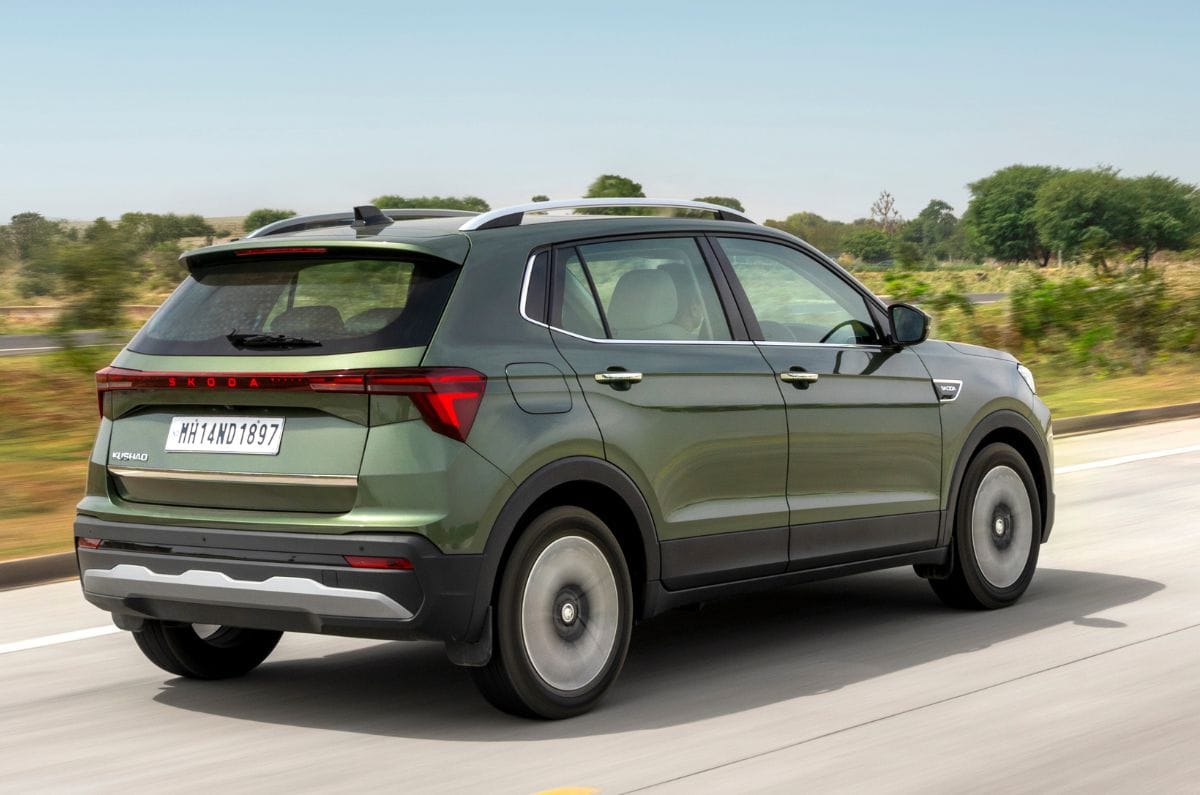
7. Skoda Kushaq: 1.5-litre turbo-petrol
Claimed mileage of 18.72kpl
The Skoda Kushaq is offered with two turbo-petrol engine options: a 1.0-litre and a 1.5-litre. Among these, the 1.5-litre engine is more powerful with outputs of 150hp and 250Nm torque. However, it is only paired with a 7-speed DCT gearbox, as a 6-speed manual, originally offered with the Kushaq since its introduction in 2021, was discontinued in late 2024.
Skoda Kushaq ARAI mileage for 1.5-litre turbo-petrol engine
DCT claimed mileage
18.72kpl
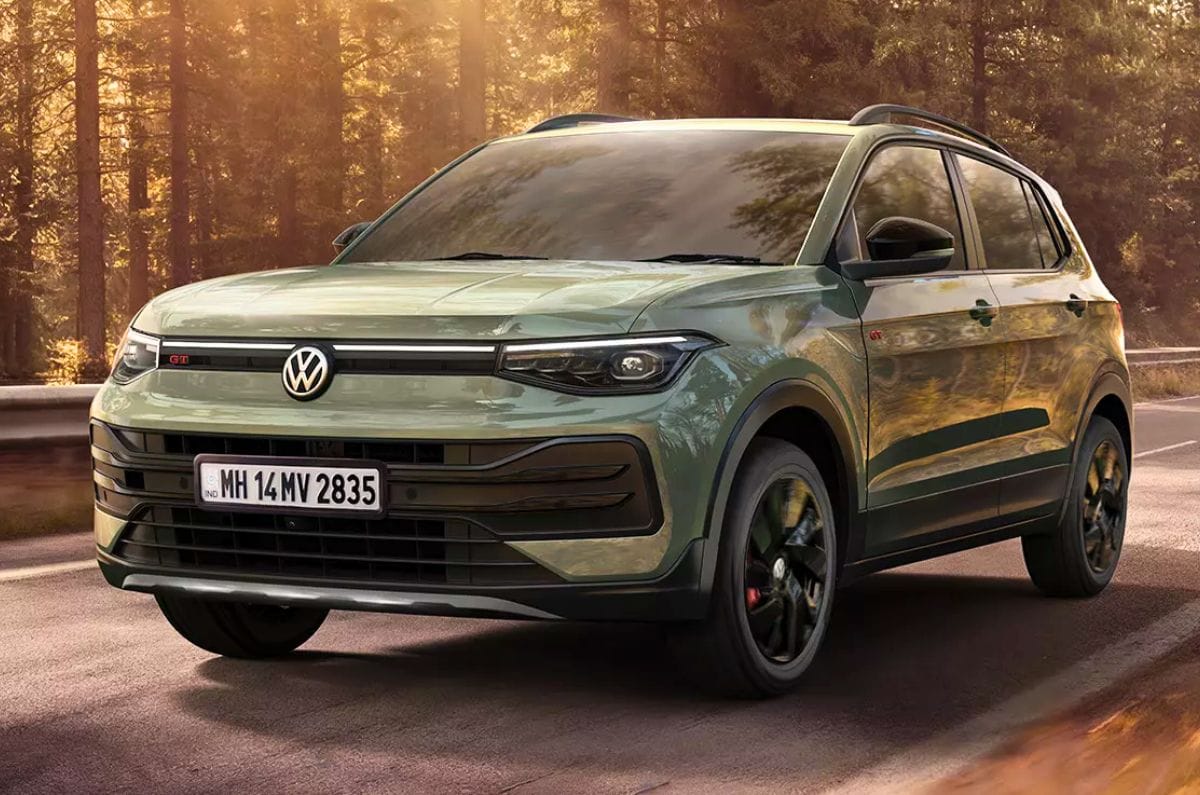
6. Volkswagen Taigun: 1.5-litre turbo-petrol
Claimed mileage of 18.85kpl
The Kushaq’s 1.5-litre turbo-petrol engine is also available on the Volkswagen Taigun in the same state of tune, that too with only the DCT option. However, the Taigun is 0.13kpl more efficient, likely because it has a kerb weight of up to 1,320kg, which is 2 kg lighter than the Kushaq with a similar powertrain.
Volkswagen Taigun ARAI mileage for 1.5-litre turbo-petrol engine
DCT claimed mileage
18.85kpl
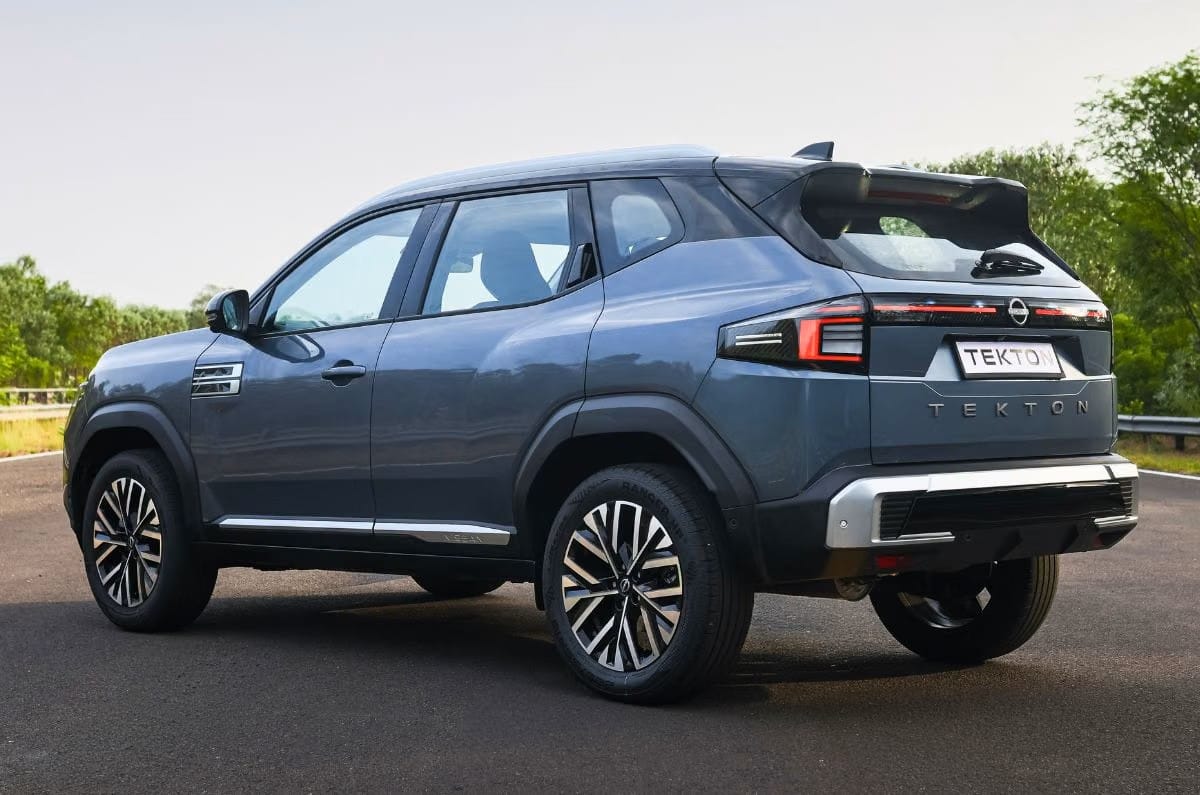
5. Nissan Tekton: 1.0-litre turbo-petrol
Claimed mileage of 19.40kpl
The Tekton’s smaller 1.0-litre three-cylinder turbo-petrol engine develops 100hp and 166Nm and is currently paired only with a 6-speed manual gearbox. With a claimed fuel efficiency of 19.4kpl, it is 1.6kpl more frugal than the Tekton’s 1.3-litre turbo-manual and sits close to the similarly powered Duster’s 19.41kpl figure.
Nissan Tekton ARAI mileage for 1.0-litre turbo-petrol engine
MT claimed mileage
19.40kpl
4. Renault Duster: 1.0-litre turbo-petrol
Claimed mileage of 19.41kpl
The Duster’s 100hp, 166Nm 1.0-litre turbo-petrol engine is paired with a 6-speed manual gearbox and returns a claimed 19.41kpl. It is just 0.01kpl more efficient than the Tekton with the same engine and gearbox combination.
Renault Duster ARAI mileage for 1.0-litre turbo-petrol engine
MT claimed mileage
19.41kpl
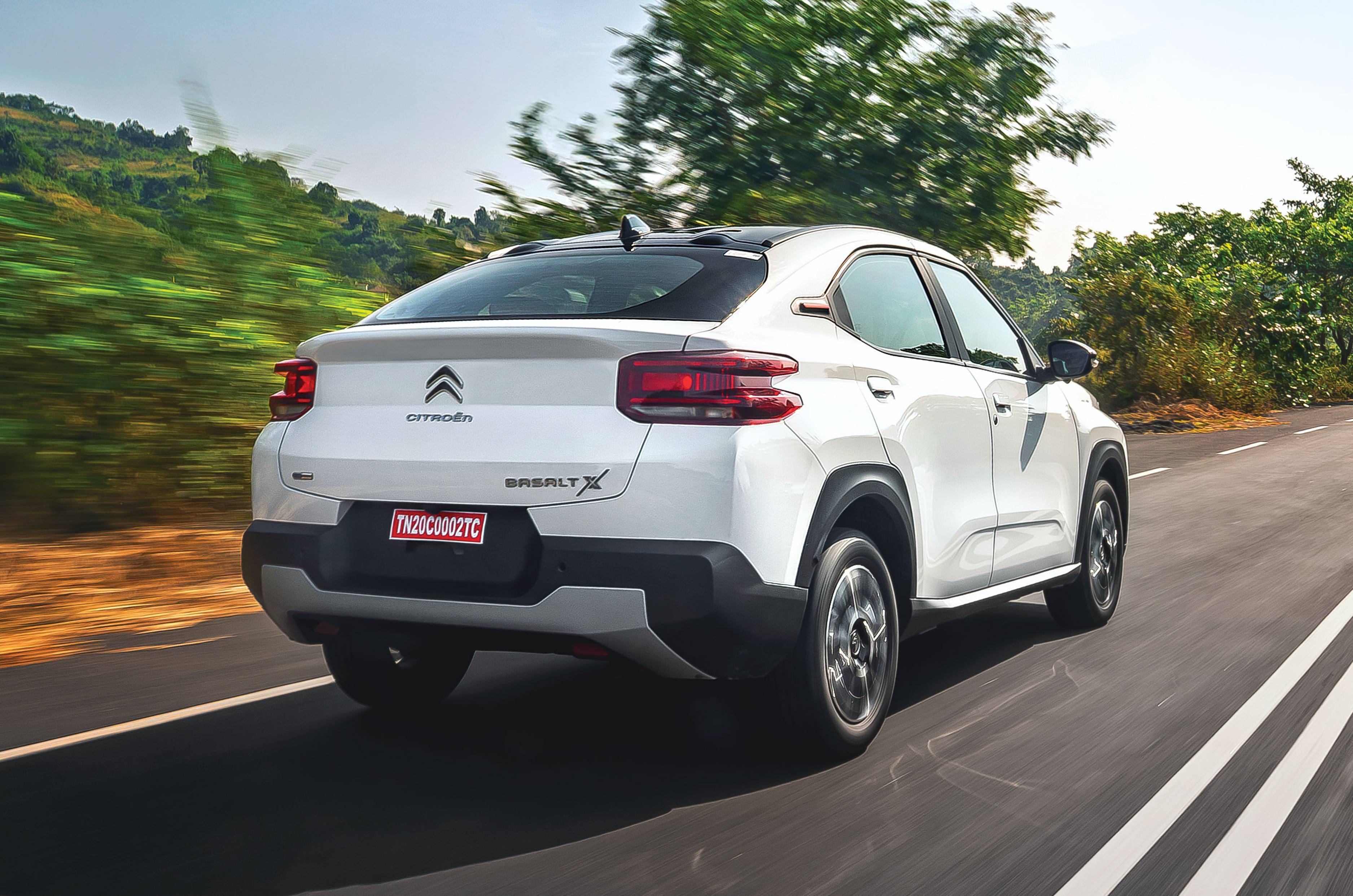
3. Citroen Basalt: 1.2-litre turbo-petrol
Claimed mileage of up to 19.50kpl
The Citroen Basalt gets the same 1.2-litre turbo-petrol engine as the Aircross, but it is more efficient – by 1kpl in the MT version and by 1.1kpl in the AT guise. This could be because of its more aerodynamic coupe-SUV shape, making it one of the only two midsize offerings currently featuring this body style. Moreover, the Aircross is offered with an optional third row, taking its kerb weight to 1,320kg, which is 80kg more than the Basalt’s. Even in its 5-seater configuration, the Aircross weighs 35kg more than the Basalt.
Citroen Basalt ARAI mileage for 1.2-litre turbo-petrol engine
MT claimed mileage
19.5kpl
AT claimed mileage
18.7kpl
2. Skoda Kushaq: 1.0-litre turbo-petrol
Claimed mileage of up to 19.66kpl
The Skoda Kushaq’s 116hp 1.0-litre turbo-petrol engine is offered with an 8-speed torque-converter automatic, but unlike the bigger 1.5-litre engine, it is available with a 6-speed manual option as well. The manual version is 0.57kpl more frugal than the automatic one, mainly because of its 35kg lighter weight.
Skoda Kushaq ARAI mileage for 1.0-litre turbo-petrol engine
MT claimed mileage
19.66kpl
AT claimed mileage
19.09kpl
1. Volkswagen Taigun: 1.0-litre turbo-petrol
Claimed mileage of up to 19.98kpl
With the same 1.0-litre turbo-petrol engine as the Kushaq but higher claimed mileage figures of 19.98kpl with a manual transmission and 19.54kpl with an automatic gearbox, the Volkswagen Taigun is the most fuel-efficient turbo-petrol midsize SUV in India. As with the weight difference between their 1.5-litre versions, the Taigun’s 1.0-litre TSI variants are up to 17kg lighter than the Kushaq with the same powertrain, which explains the higher ARAI-rated mileage.
Volkswagen Taigun ARAI mileage for 1.0-litre turbo-petrol engine
LOOK OUT FOR: Suspension rattles, Infotainment issues
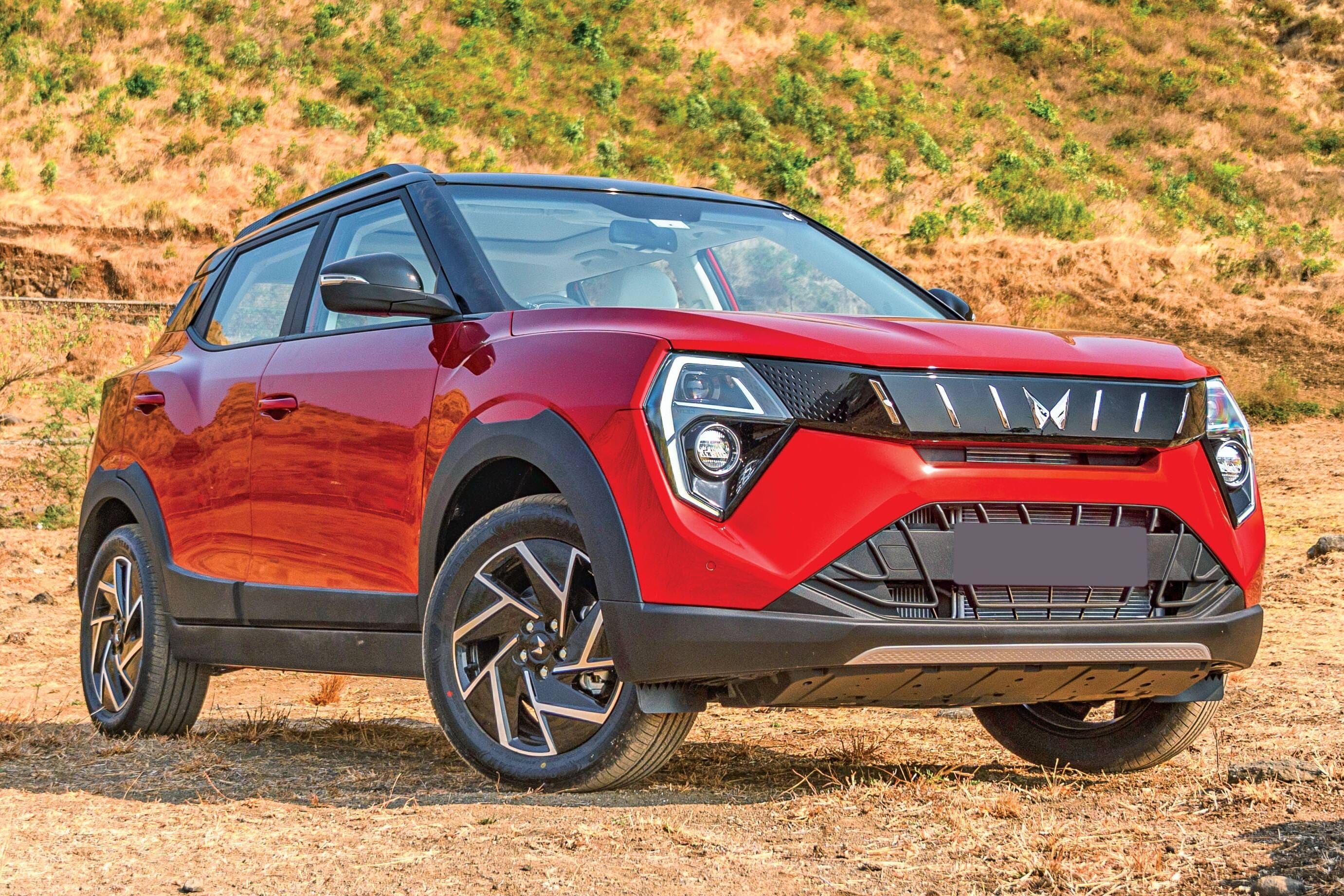
The Mahindra XUV 3XO was launched in 2024 as a replacement for the XUV300. But instead of a mild facelift, Mahindra went all out and gave the compact SUV an overhauled exterior, a thoroughly reworked interior, some segment-first features, a new class-leading petrol powertrain and a new name. Mahindra’s smallest offering stands out in the crowded compact SUV segment for its roomy and premium interior and many powertrain options, making it worth considering as a used buy. Here’s what to keep in mind.
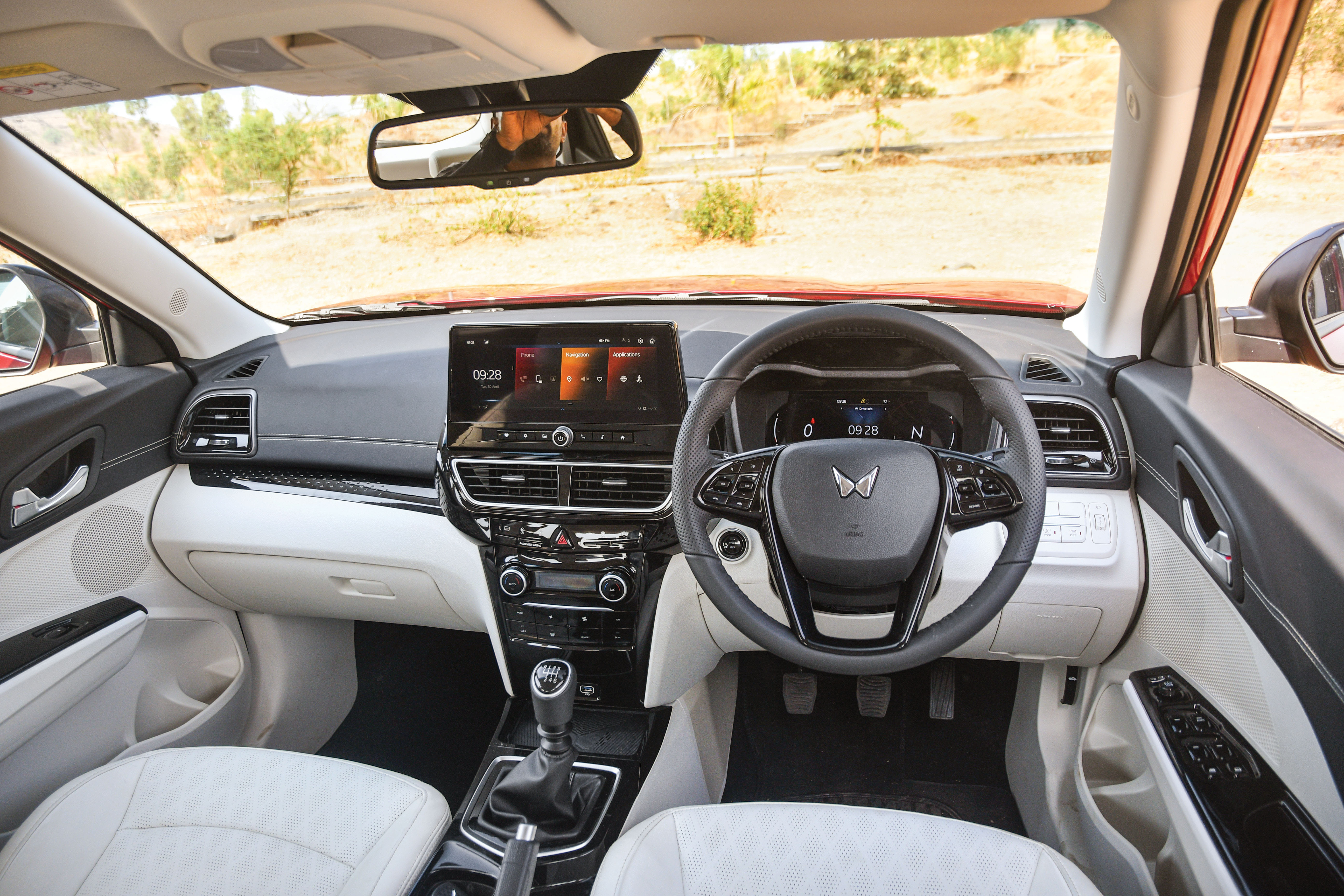
Despite the redesigned exterior, the 3XO’s rear section still looks abruptly chopped off, though it doesn’t look as awkward as the XUV300’s. The front styling, too, is bold, distinctive and splits opinion. Inside, quality took a huge step up, with the 3XO’s interior feeling genuinely premium. It’s very good on space too, and can easily accommodate five adults, though the trade-off is one of the smallest boots in the segment.
Petrol, turbo-petrol, and diesel engines; up to 21.8kpl claimed mileage
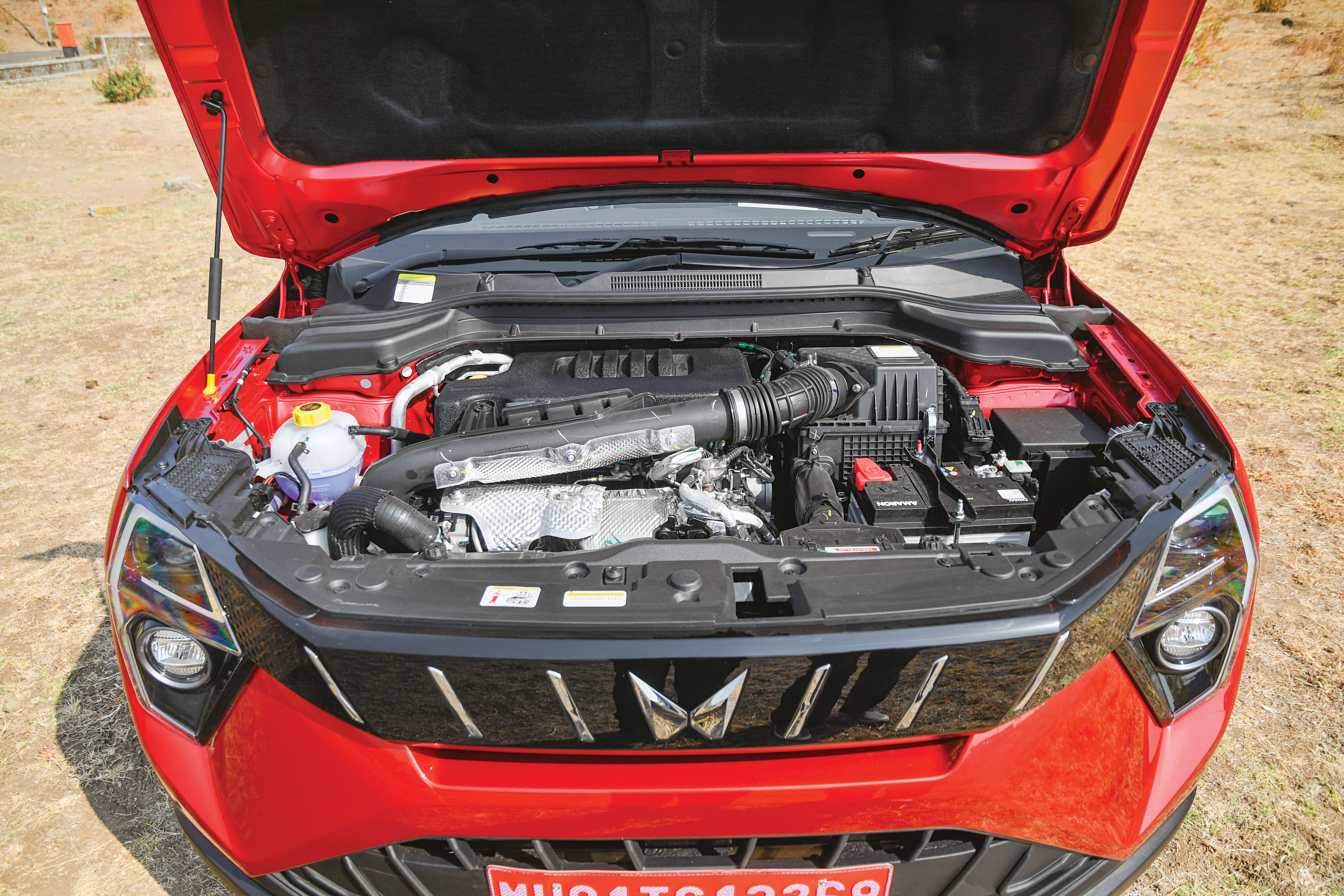
Mahindra offers the XUV 3XO with three engine options – two petrols and one diesel. The range starts with a 111hp, 1.2-litre, MPFi, turbo-petrol engine that can be had with a 6-speed manual (ARAI-rated 18.89kpl fuel economy) or a 6-speed torque converter automatic (17.96kpl) option. Then there’s a 117hp, 1.5-litre diesel, which comes with a 6-speed manual (20.6kpl) and 6-speed AMT (21.2kpl). Meanwhile, the range topper is a 131hp, 1.2-litre direct-injection turbo-petrol unit, which is available with an Aisin-sourced 6-speed torque converter automatic (18.2kpl) and a 6-speed manual option (20.1kpl).
The diesel makes sense for high-mileage users or for those who do frequent road trips owing to its higher real-world efficiency. Enthusiasts will enjoy the 131hp turbo-petrol for its punchy character and the performance it packs in. However, for most users, the 111hp turbo-petrol will do the job just fine, as it has a good balance of performance, drivability and efficiency. What’s great is that every engine option can be had with an automatic gearbox option for greater convenience.
Mahindra XUV 3XO variants and features
Twin 10.25-inch screens, panoramic sunroof
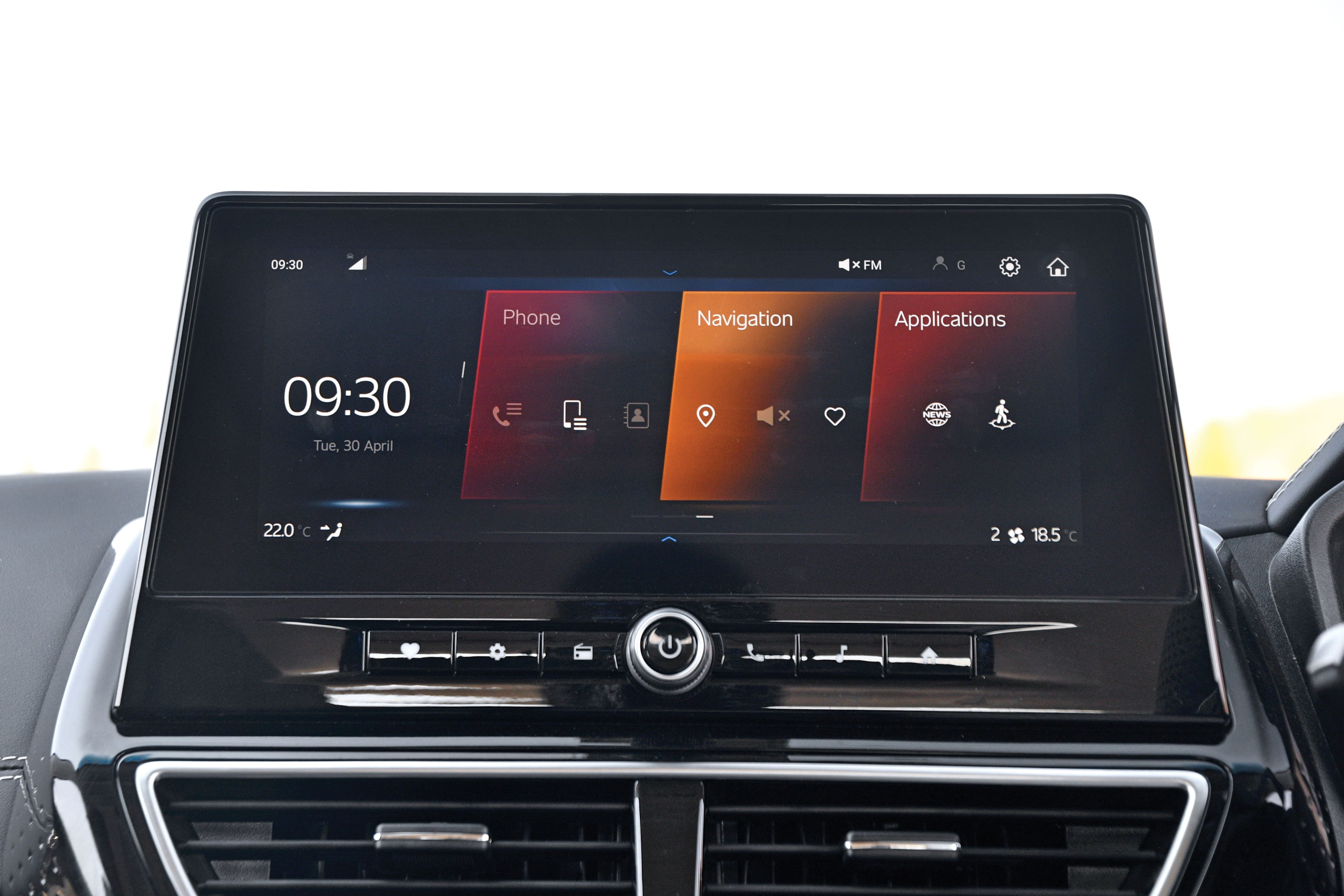
At launch, there were nine trim lines on offer – MX1, MX2, MX2 Pro, MX3, MX3 Pro, AX5, AX5 L, AX7 and AX7 L. Mahindra later launched a mid-spec RevX trim for the XUV 3XO too. As for features, the top-spec AX7L gets all-LED lighting, a seven-speaker Harman Kardon audio system with a 380W amplifier, a 10.25-inch infotainment screen and driver’s display, panoramic sunroof, AdrenoX Connect connectivity suite, wireless Android Auto and Apple CarPlay, a wireless charger, rear AC vents, and more.
All variants get safety features like 6 airbags, rear disc brakes, ESP and ISOFIX anchors. Higher-spec versions get an electronic parking brake with auto-hold, hill-start and hill-descent assist, a 360-degree camera, a blind spot monitor and Level 2 ADAS. As always, the range-topping variant will give you the best experience given all that it packs in, but for most users, the mid-spec AX5 will also suffice, as it has a good balance of features.
XUV 3XO warranty details
The XUV 3XO is a reliable SUV, with problems few and far between, and it’s backed up by Mahindra’s widespread service network throughout the country. What’s nice is that it comes with a standard warranty of 3 years / 1,00,000km, which can be extended to a total of 5 years or 1,50,000km.
What to look out for in a used Mahindra XUV 3XO
Suspension rattles
Some owners have reported rattling or thudding sounds coming from the suspension when driven through rough patches or potholes. This is often linked to worn out lower control arms. Take a test drive and drive through a rough patch of road, and listen out for any thudding or rattling from the suspension. Many of the suspension components are covered under warranty too, so this is something to keep in mind.
Infotainment issues
Owners have faced issues with the XUV 3XO’s AdrenoX infotainment system like Apple CarPlay/Android Auto disconnections, screen freezing and the reverse camera display getting stuck on a black screen. Before purchasing, check that it functions smoothly, pairs up with your phone easily, and that the system’s software is up to date.
Braking trouble
Mahindra XUV 3XO owners have reported a few distinct brake issues, ranging from inconsistent, spongy brake pedal feel to hissing noises and overly sensitive Automatic Emergency Braking (AEB). Before purchasing, it’s worth getting the brakes checked by an authorised service center.
Second hand Mahindra XUV 3XO price and resale value
Rs 6 lakh-10 lakh
Being a new model that’s still on sale, the XUV 3XO commands good value in the resale market. With such a wide spread of trim levels and powertrain options, you’ll find used options across a wide price range, but refrain from spending over Rs 10 lakh. Look for an example with the extended warranty package, as that’ll give you added peace of mind.
HDFC Bank Q1 Results Preview: देश के सबसे बड़े प्राइवेट बैंक HDFC Bank का बोर्ड 18 जुलाई (शनिवार) को मीटिंग करेगा। इस दौरान जून तिमाही (Q1FY27) के स्टैंडअलोन और कंसोलिडेटेड वित्तीय नतीजों को मंजूरी दी जाएगी।
बिजनेस अपडेट में क्या रहा?
पिछले बैंक ने जून तिमाही का बिजनेस अपडेट जारी किया था। इसके मुताबिक, ग्रॉस एडवांस सालाना आधार पर 15.4% बढ़कर ₹30.61 लाख करोड़ हो गया। पिछले साल इसी अवधि में यह ₹26.53 लाख करोड़ था।
बैंक के एडवांस अंडर मैनेजमेंट भी बढ़कर ₹31.27 लाख करोड़ पहुंच गए। यह पिछले साल के मुकाबले 12.4% ज्यादा है।
डिपॉजिट में भी अच्छी बढ़त
जून तिमाही के आखिर तक बैंक का कुल डिपॉजिट सालाना आधार पर 14.7% बढ़कर ₹31.71 लाख करोड़ हो गया। एक साल पहले यह ₹27.64 लाख करोड़ था।
वहीं, CASA (करंट अकाउंट और सेविंग अकाउंट) डिपॉजिट 9.4% बढ़कर ₹10.26 लाख करोड़ पहुंच गया। पिछले साल यह ₹9.37 लाख करोड़ था।
एक्सपर्ट्स को क्या उम्मीद?
ब्रोकरेज हाउस Motilal Oswal का अनुमान है कि बैंक का प्रदर्शन इस बार भी मजबूत रहेगा। लोन ग्रोथ और नेट इंटरेस्ट इनकम (NII) में बढ़त देखने को मिल सकती है। हालांकि, बढ़ते ऑपरेटिंग खर्च की वजह से मुनाफे पर कुछ दबाव रह सकता है।
ब्रोकरेज के मुताबिक, NII 8.5% बढ़कर ₹34,103 करोड़ रह सकता है प्री-प्रोविजन ऑपरेटिंग प्रॉफिट (PPOP) 19.9% घटकर ₹28,615.6 करोड़ रहने का अनुमान है। वहीं, शुद्ध मुनाफा 5.9% बढ़कर ₹19,229.3 करोड़ पहुंच सकता है।
InCred Equities का अनुमान
ब्रोकरेज InCred Equities ने भी बैंक के लिए मजबूत तिमाही का अनुमान जताया है। InCred के मुताबिक,
NII करीब ₹34,100 करोड़ रहने का अनुमान है, जो सालाना आधार पर 8.3% ज्यादा होगा।
PPOP करीब ₹28,900 करोड़ रह सकता है। यह पिछले साल के मुकाबले 19.2% कम, लेकिन पिछली तिमाही से 3.9% ज्यादा होगा।
PAT (शुद्ध मुनाफा) करीब ₹19,100 करोड़ रहने का अनुमान है। यह सालाना आधार पर 5.3% की बढ़त होगी।
ब्रोकरेज का मानना है कि बैंक का नेट इंटरेस्ट मार्जिन (NIM) 3.4% पर स्थिर रह सकता है। वहीं, क्रेडिट कॉस्ट 45 बेसिस प्वाइंट रहने का अनुमान है, जो पिछली तिमाही से थोड़ा ज्यादा लेकिन पिछले साल के मुकाबले काफी कम है।
18 जुलाई को इन बैंकों पर भी रहेगी नजर
18 जुलाई को सिर्फ HDFC Bank ही नहीं, बल्कि Axis Bank, ICICI Bank, Kotak Mahindra Bank और Yes Bank भी जून तिमाही के नतीजे जारी करेंगे। ऐसे में बैंकिंग सेक्टर पर निवेशकों की खास नजर रहेगी। इन बैंकों के नतीजों से लोन ग्रोथ, डिपॉजिट, मार्जिन और एसेट क्वालिटी की तस्वीर भी साफ होगी।
Disclaimer: मनीकंट्रोल.कॉम पर दिए गए सलाह या विचार एक्सपर्ट/ब्रोकरेज फर्म के अपने निजी विचार होते हैं। वेबसाइट या मैनेजमेंट इसके लिए उत्तरदायी नहीं है। यूजर्स को मनीकंट्रोल की सलाह है कि कोई भी निवेश निर्णय लेने से पहले हमेशा सर्टिफाइड एक्सपर्ट की सलाह लें।
We’ve said in the past, the Sierra is the best Tata model on sale currently, representing the best of the brand’s learnings over the years. We’ve also said Tata’s electric powertrains are better than the equivalent combustion engines on offer. So, combine the two, and it’s undoubtedly a winning formula. But with EV tech and customer expectations moving so rapidly these days, is that necessarily a foregone conclusion?
2026 Tata Sierra EV exterior design and engineering – 9/10
Retains the ICE version’s sharp looks and practicality while incorporating a large battery.
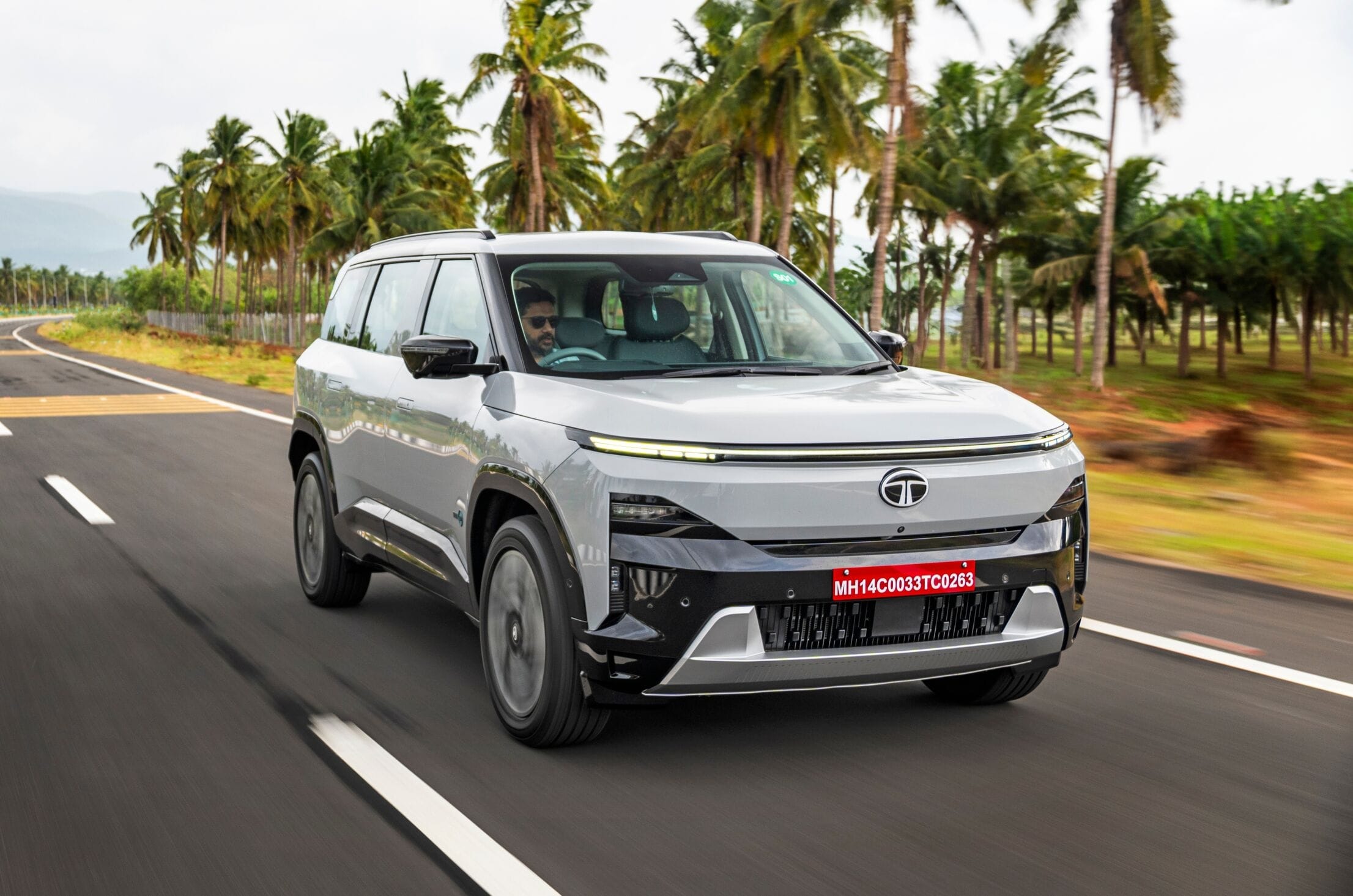
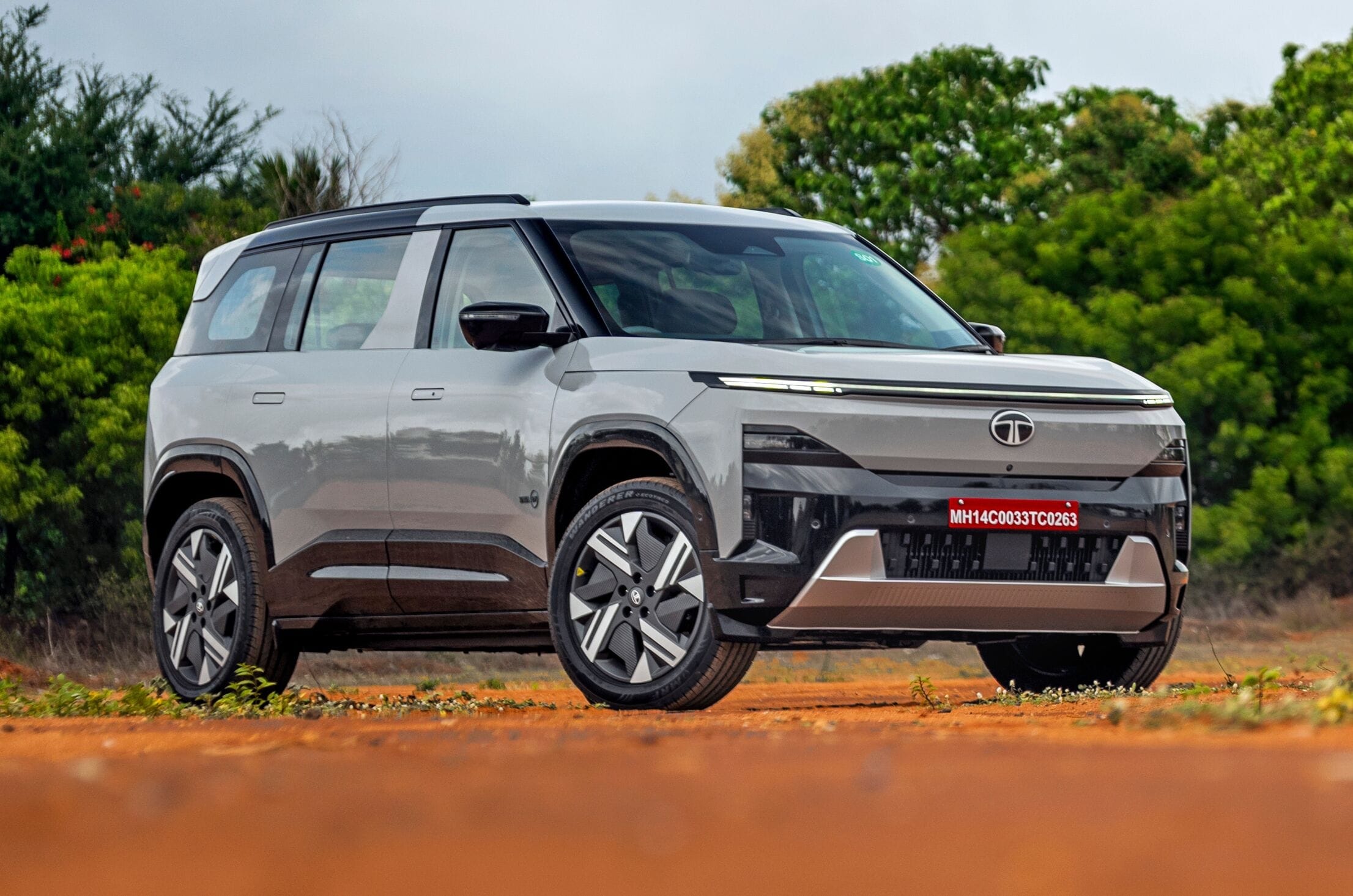
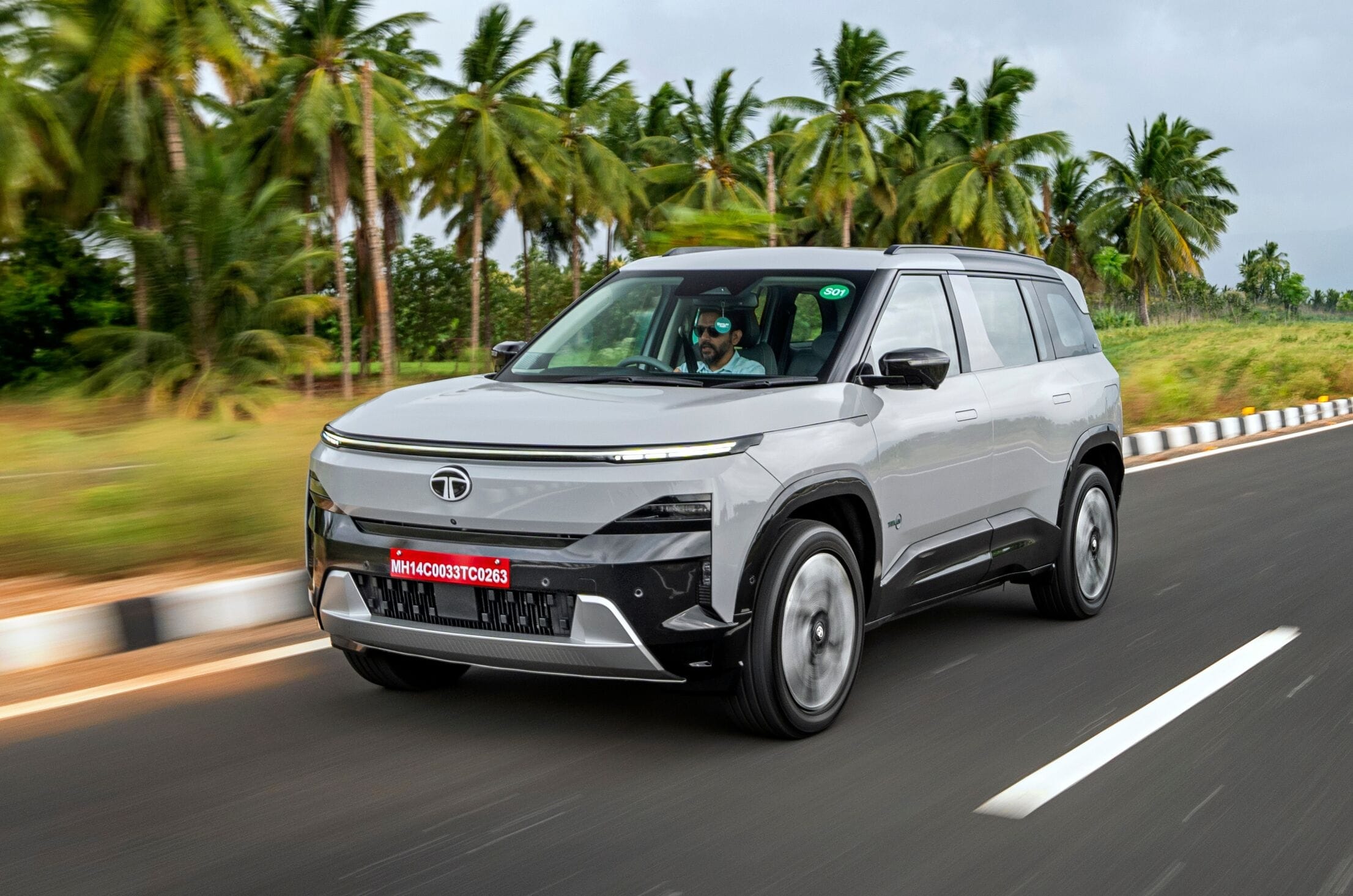
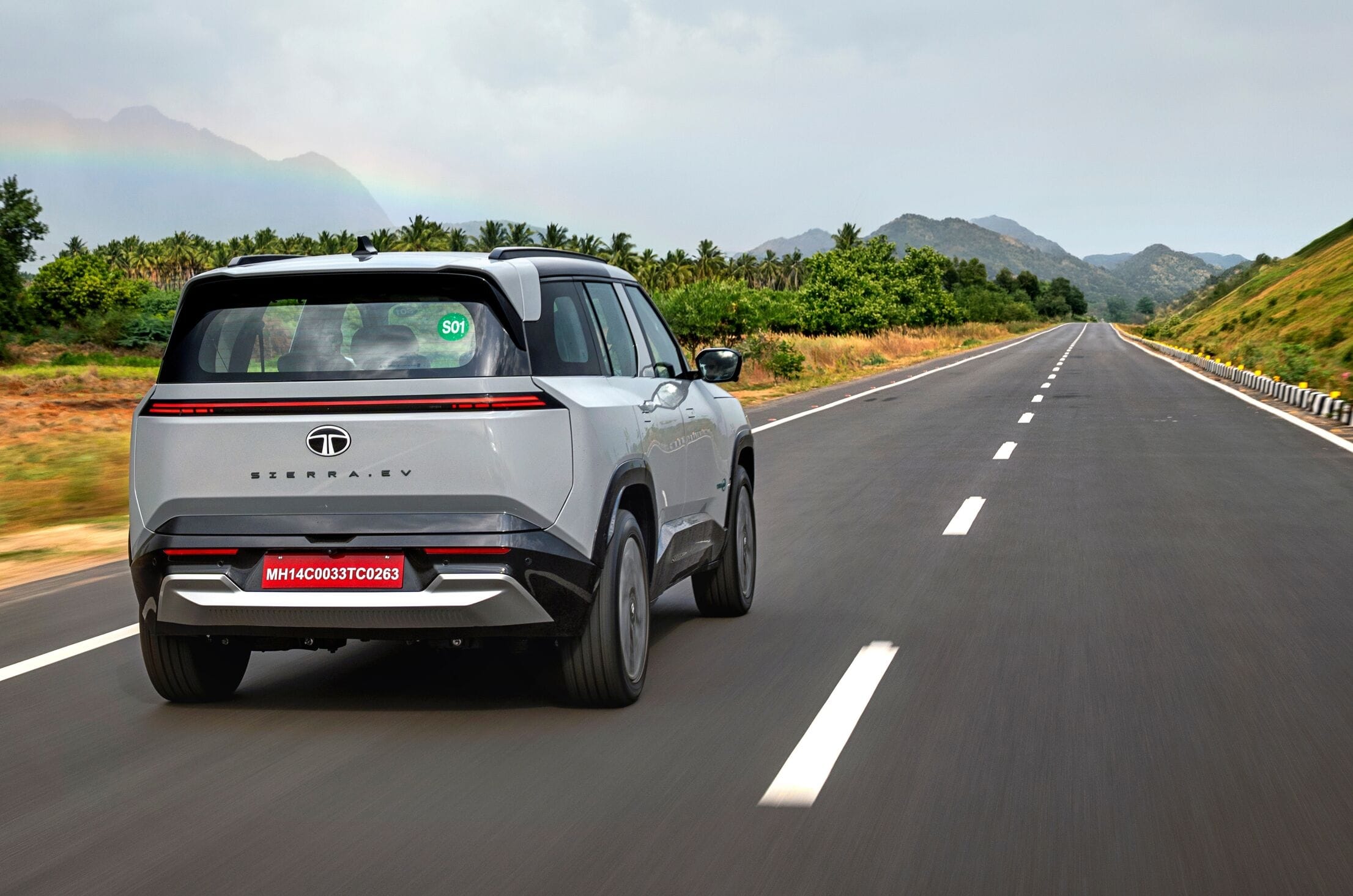
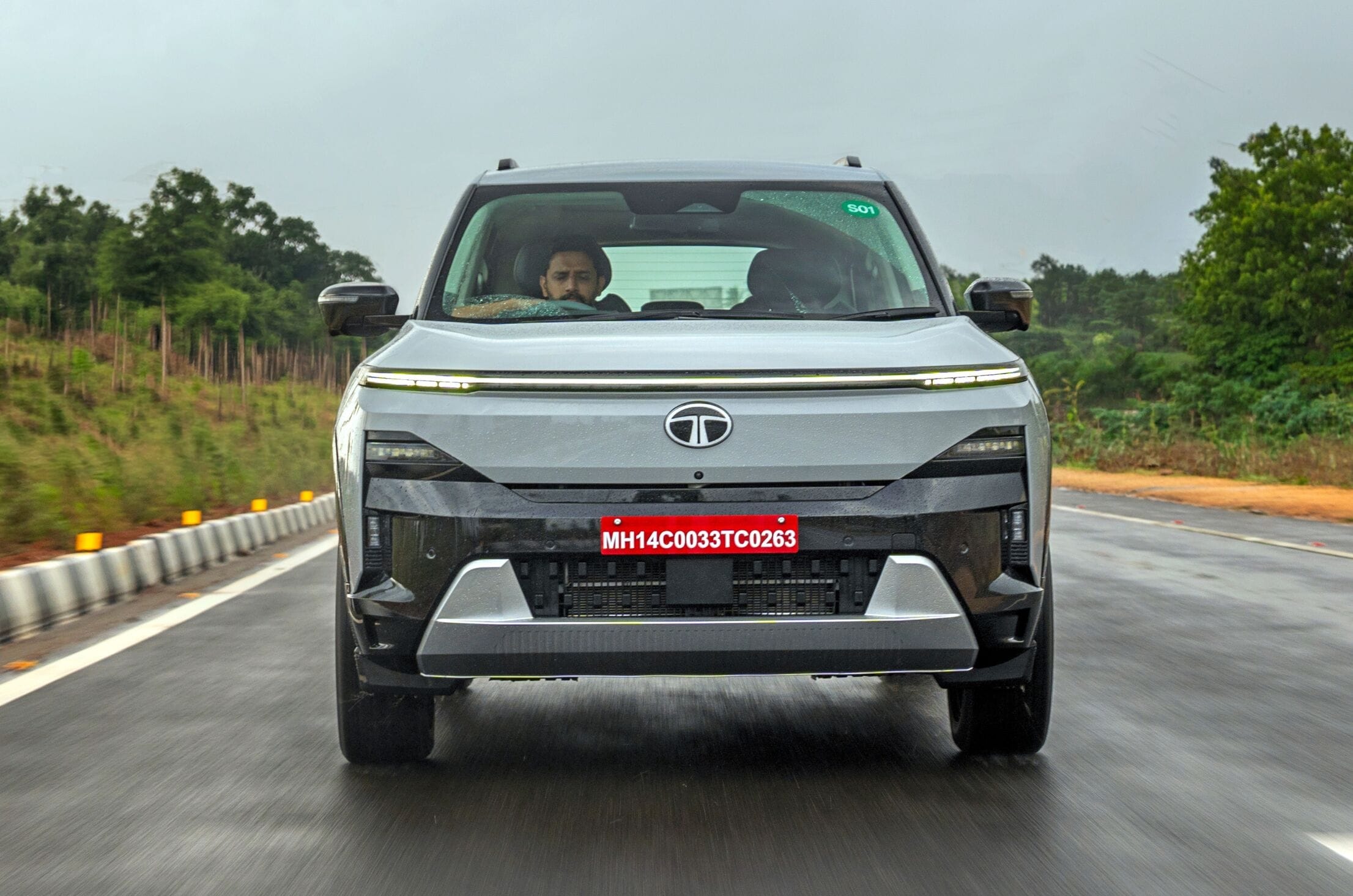
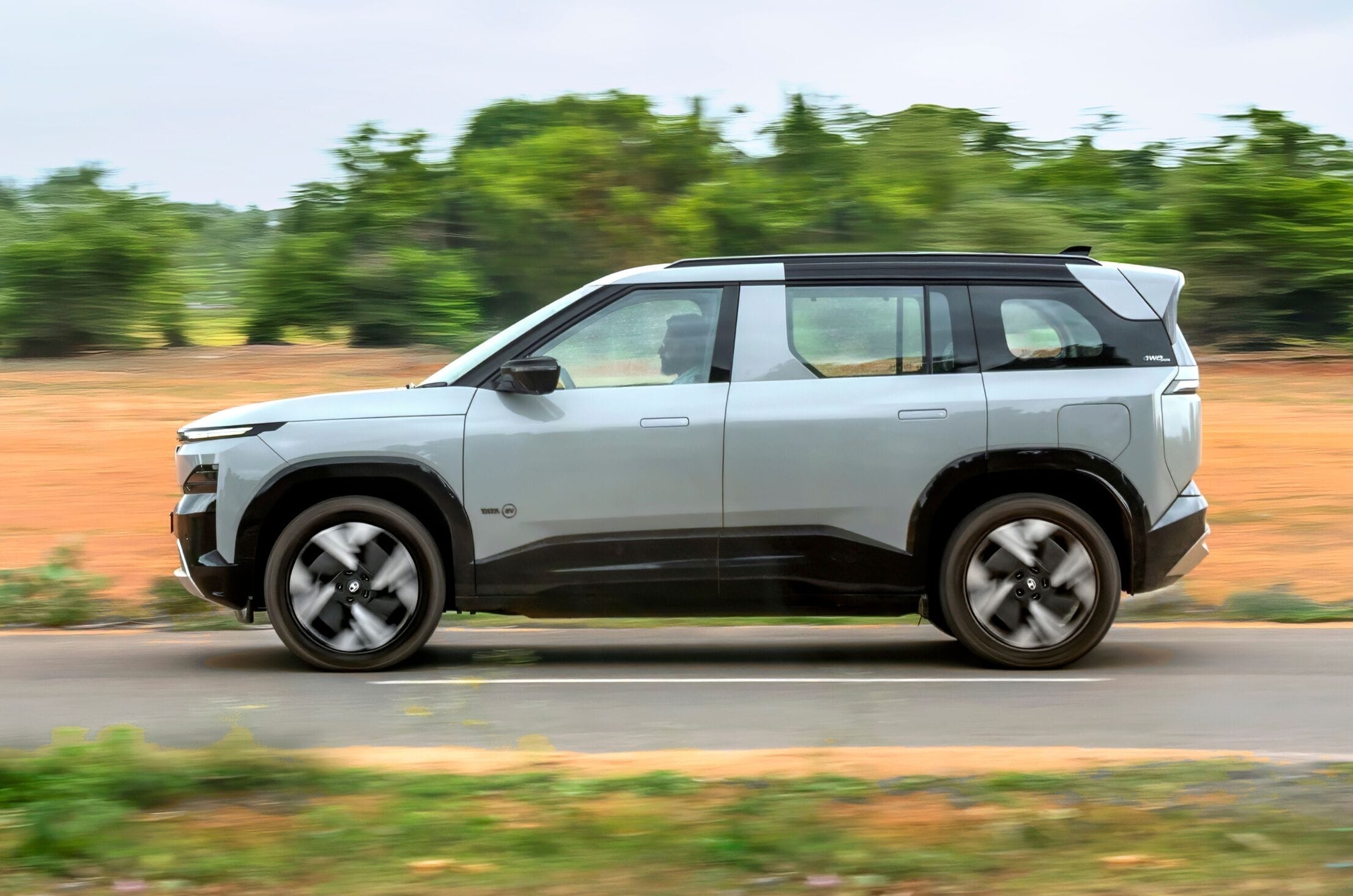
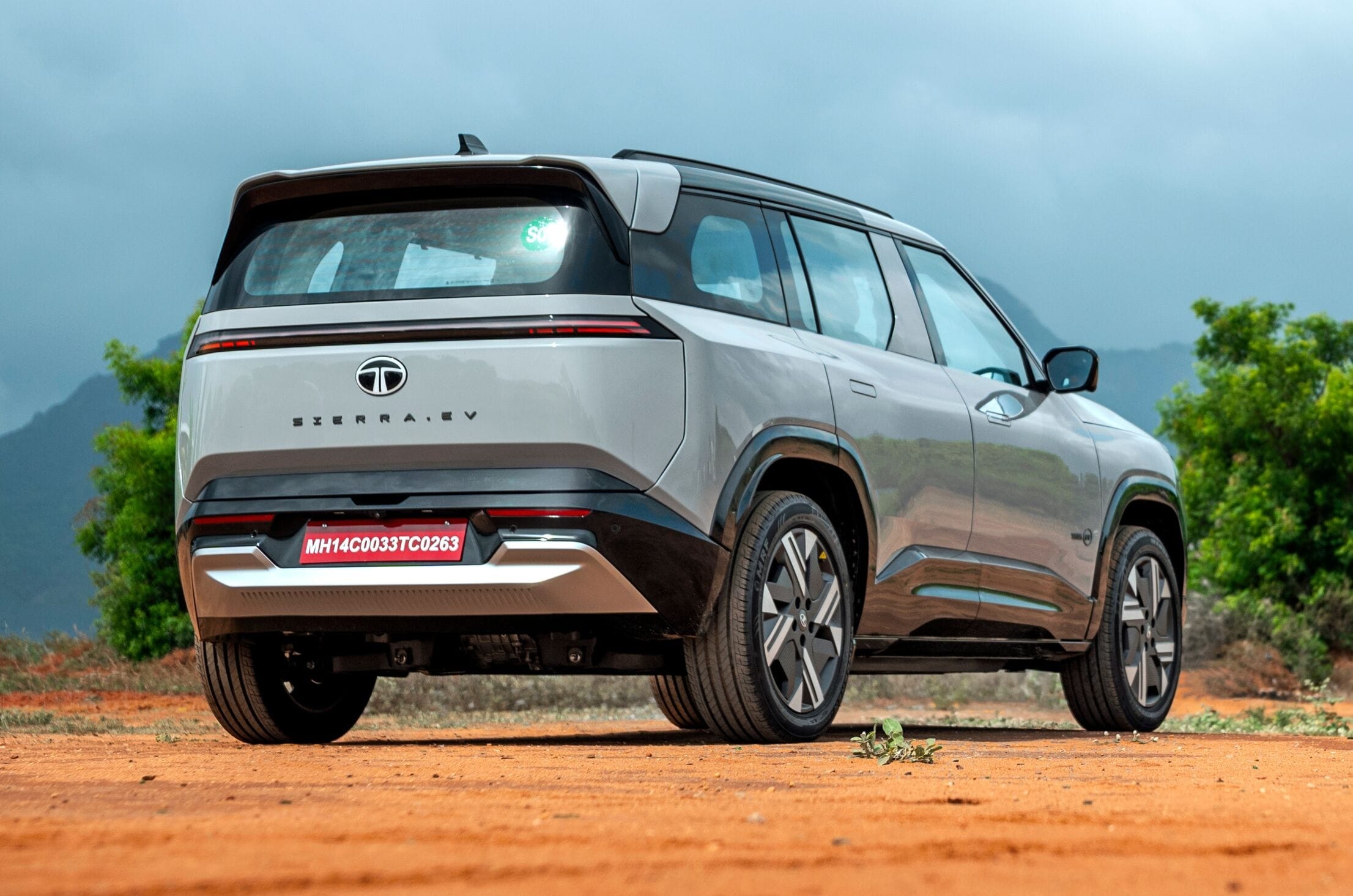
The new Sierra is a bold piece of design, and this has been carried over to – and perhaps even improved – on the electric version. It’s a welcome departure from the notion that all EVs need to be shaped like bars of soap for better aero efficiency. Instead, it is upright and boxy, albeit smoothed out just enough for air to flow over it a bit better.
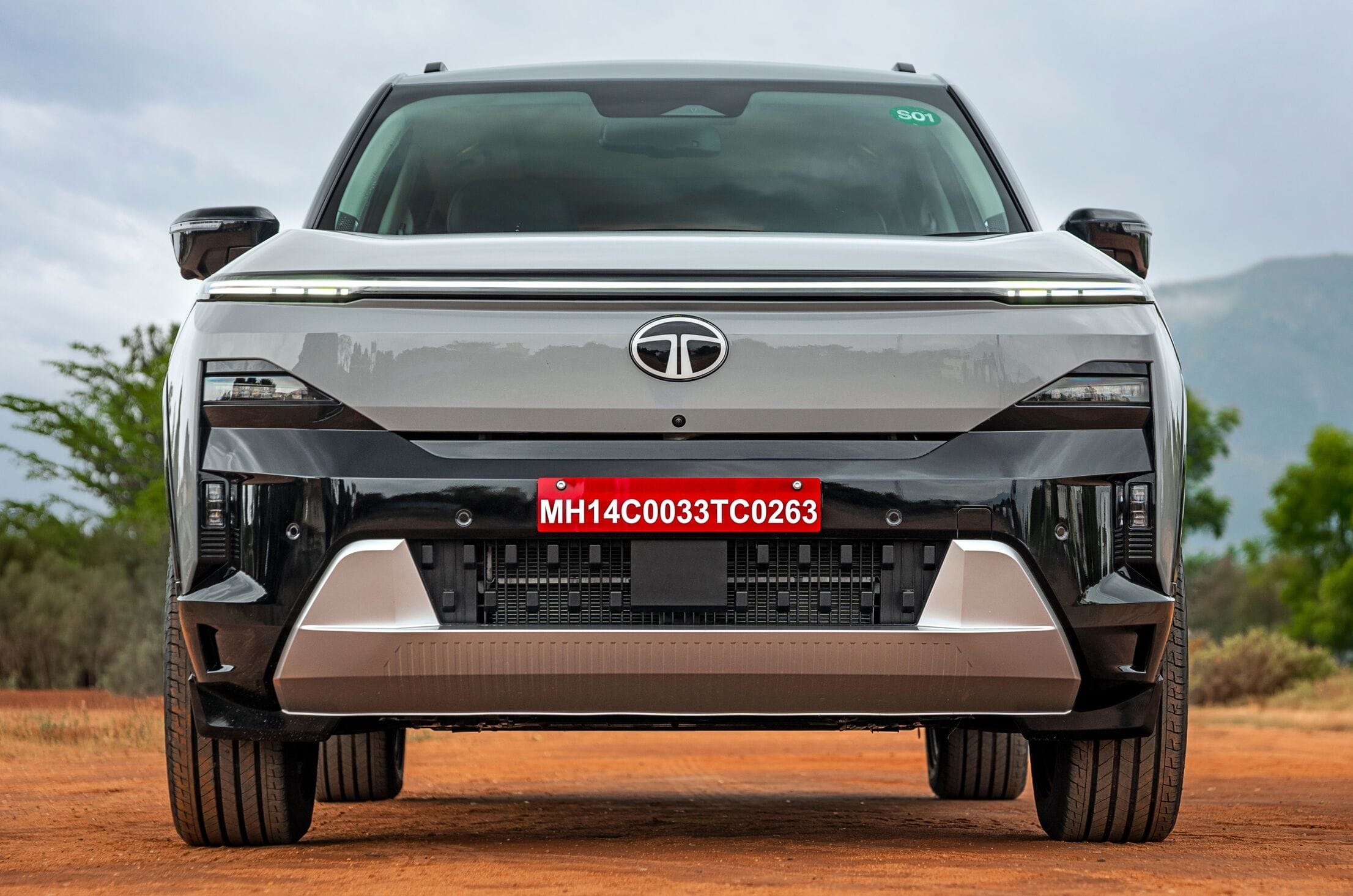
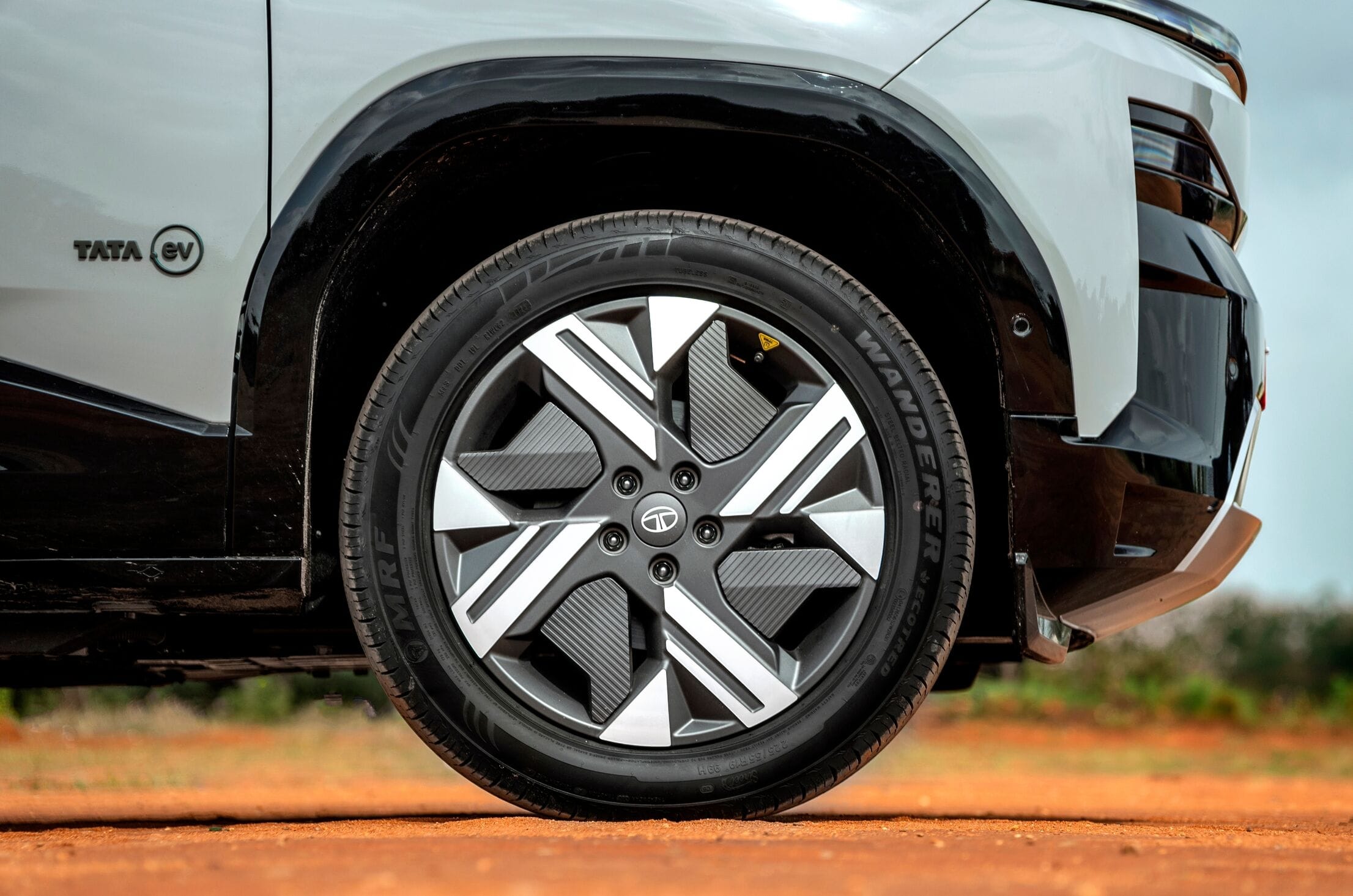
The difference is up front, where the gloss black surround for the headlamps found in the ICE version has been replaced by a body-coloured panel to give that EV-typical ‘grille-less’ look. For contrast, the gloss black treatment has been applied lower down in the bumper instead. Perhaps the wheels could have been more different – they are the same design as the ICE model, albeit in a matte finish rather than gloss. The badges now say ‘Sierra.ev’ on the sides and rear, and have a blue-coloured outer edge.
To the untrained eye, it might not immediately be apparent which version is which, but conversely, this is unmistakably a Sierra, and that is perhaps more important.
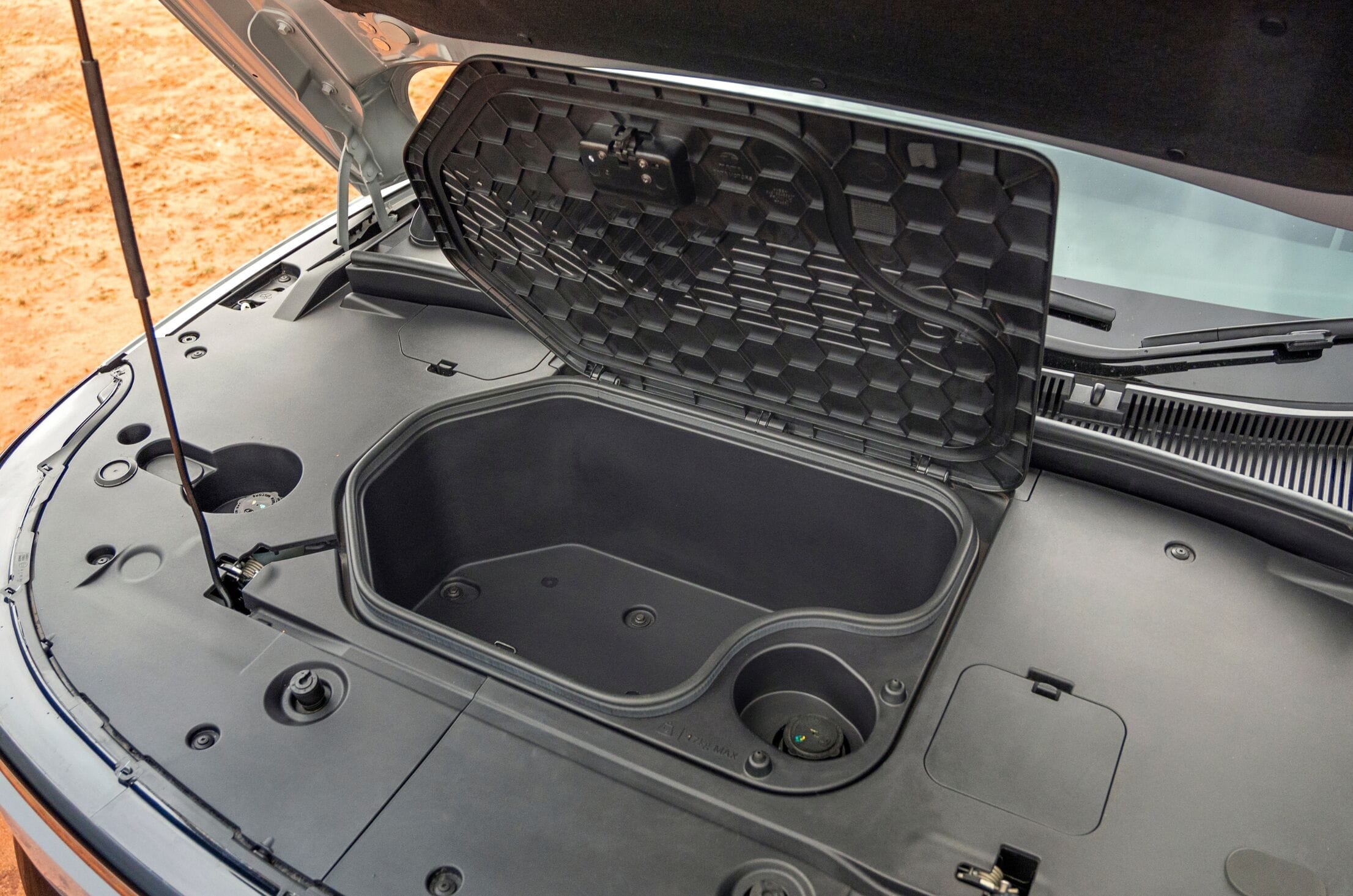
Little practicality has been lost in the move to electric; in fact, some has been gained. Almost as if to drive the point home that, despite the similar looks, this is a pure EV underneath, it gets a frunk that holds 55 litres in the single-motor models, and 35 litres in the dual-motor version. Good enough for the charging cable or small valuables you don’t want to keep in the main boot.
There’s also still 205mm of ground clearance, despite the battery pack, and thanks to its use of prismatic cells and C2P (cell to pack) packaging, it doesn’t weigh or impede on cabin and boot space as much as conventional batteries of similar capacity (like the ones in the Harrier EV).
2026 Tata Sierra EV interior space and comfort – 7/10
Superb space and comfort, though quality inconsistencies and ergonomic gaffes remain.
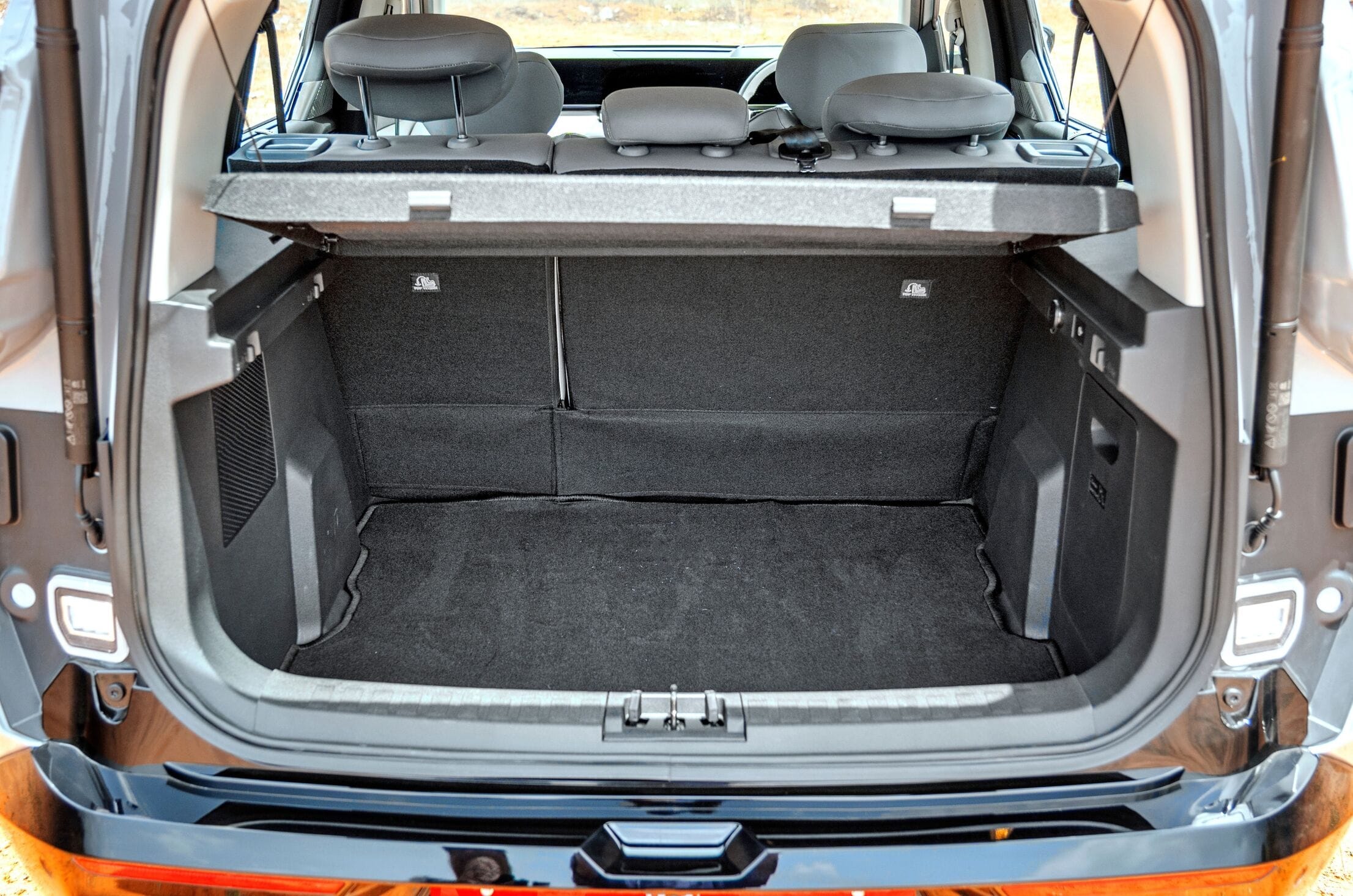
However, while boot space has been retained at a cavernous 622 litres (floor to roof), a casualty of the battery pack is the spare wheel, which was previously mounted under the body. You now only get a puncture repair kit.
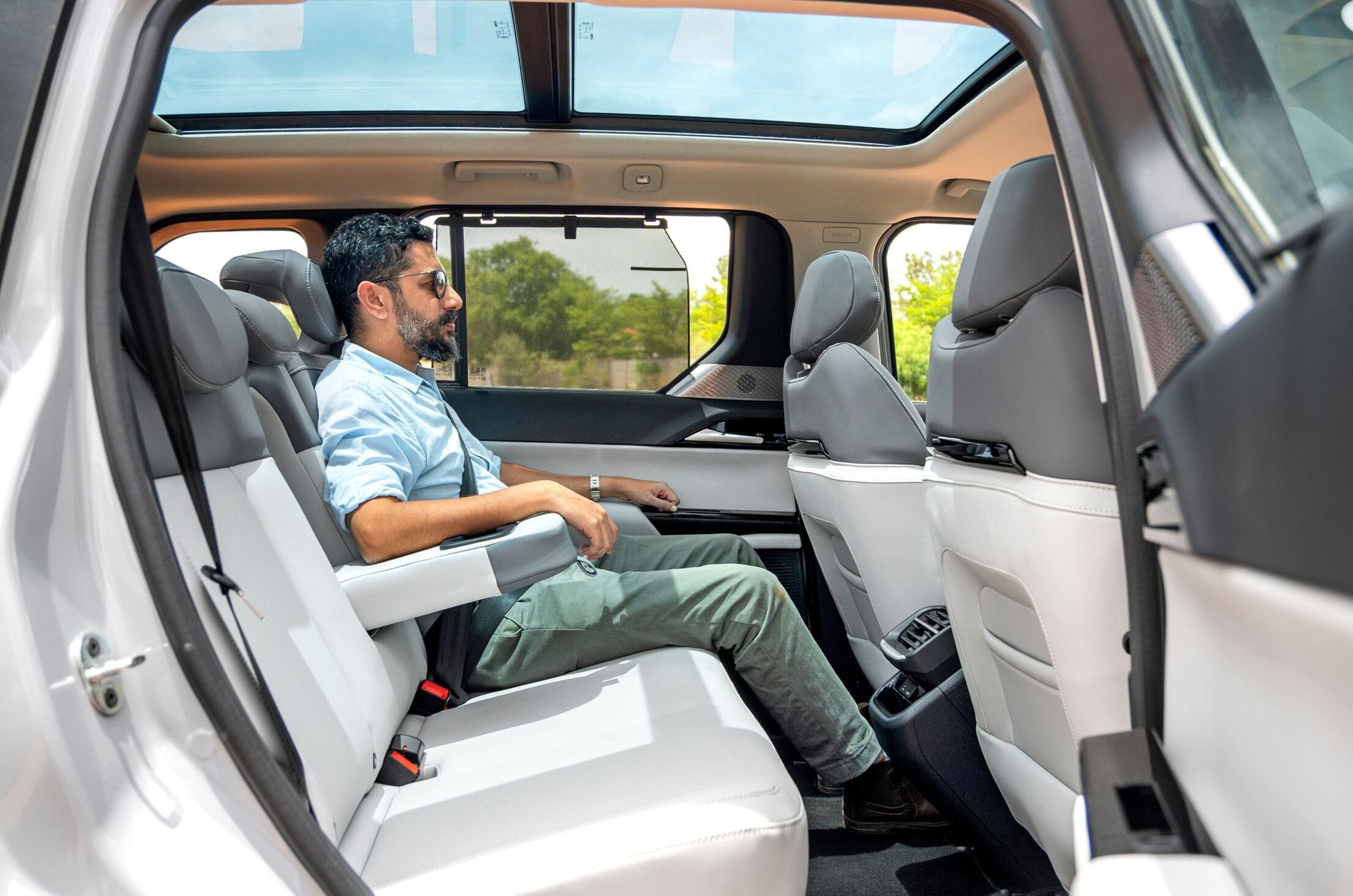
There’s seemingly no compromise to space or comfort in the cabin in the move to electric power. Engineers say the floor height has gone up by less than an inch compared to the ICE Sierra, and in truth there is no perceptible difference when you’re sat in the back seat. It remains spacious and comfortable, and even gets a small amount of backrest recline. The awkward L-shaped B-pillar returns, leaving a conspicuous gap next to the sun blind that could have easily been avoided. As before, you get a gigantic sunroof on top-spec trims that lets in a lot of light.
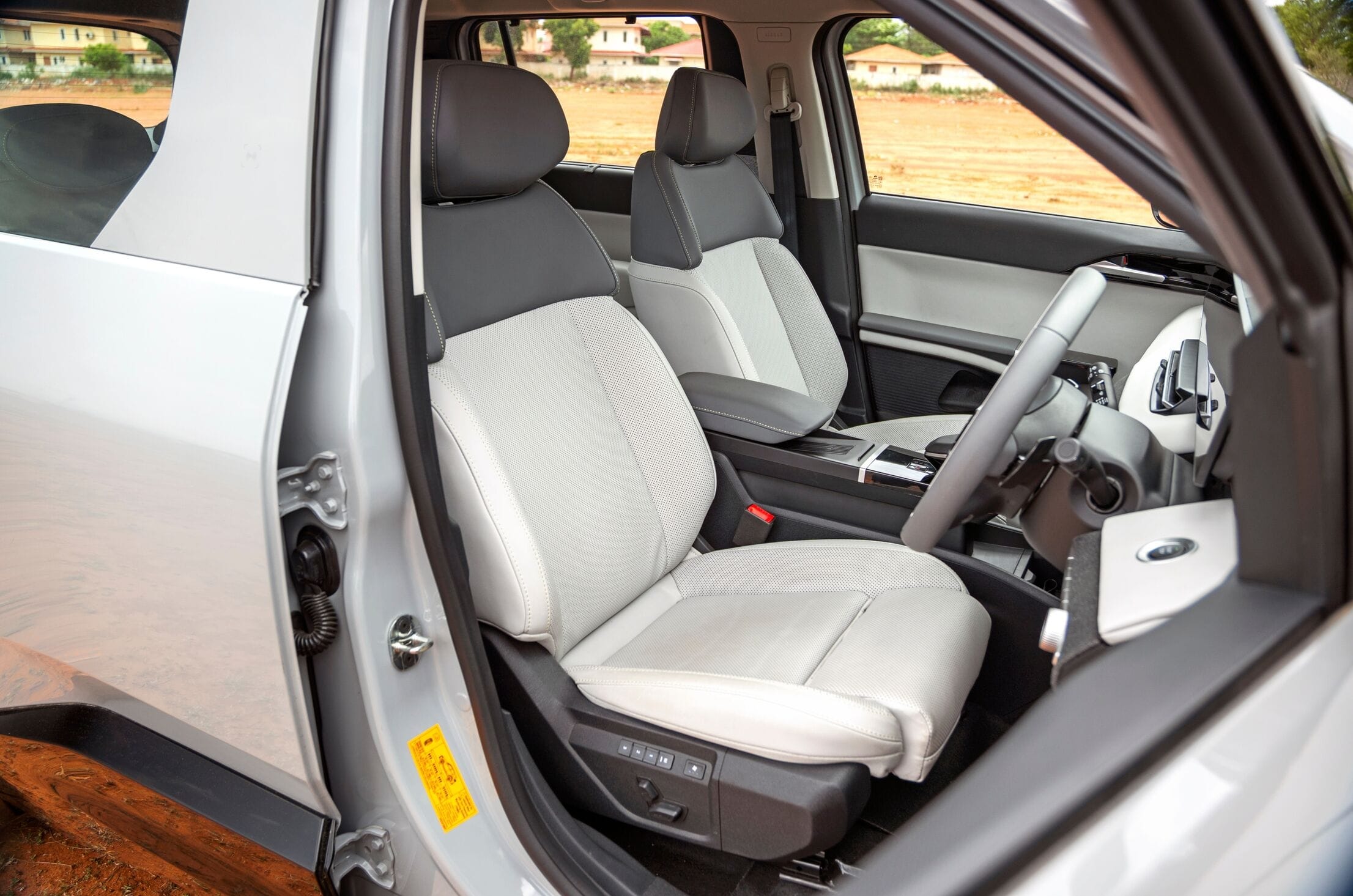
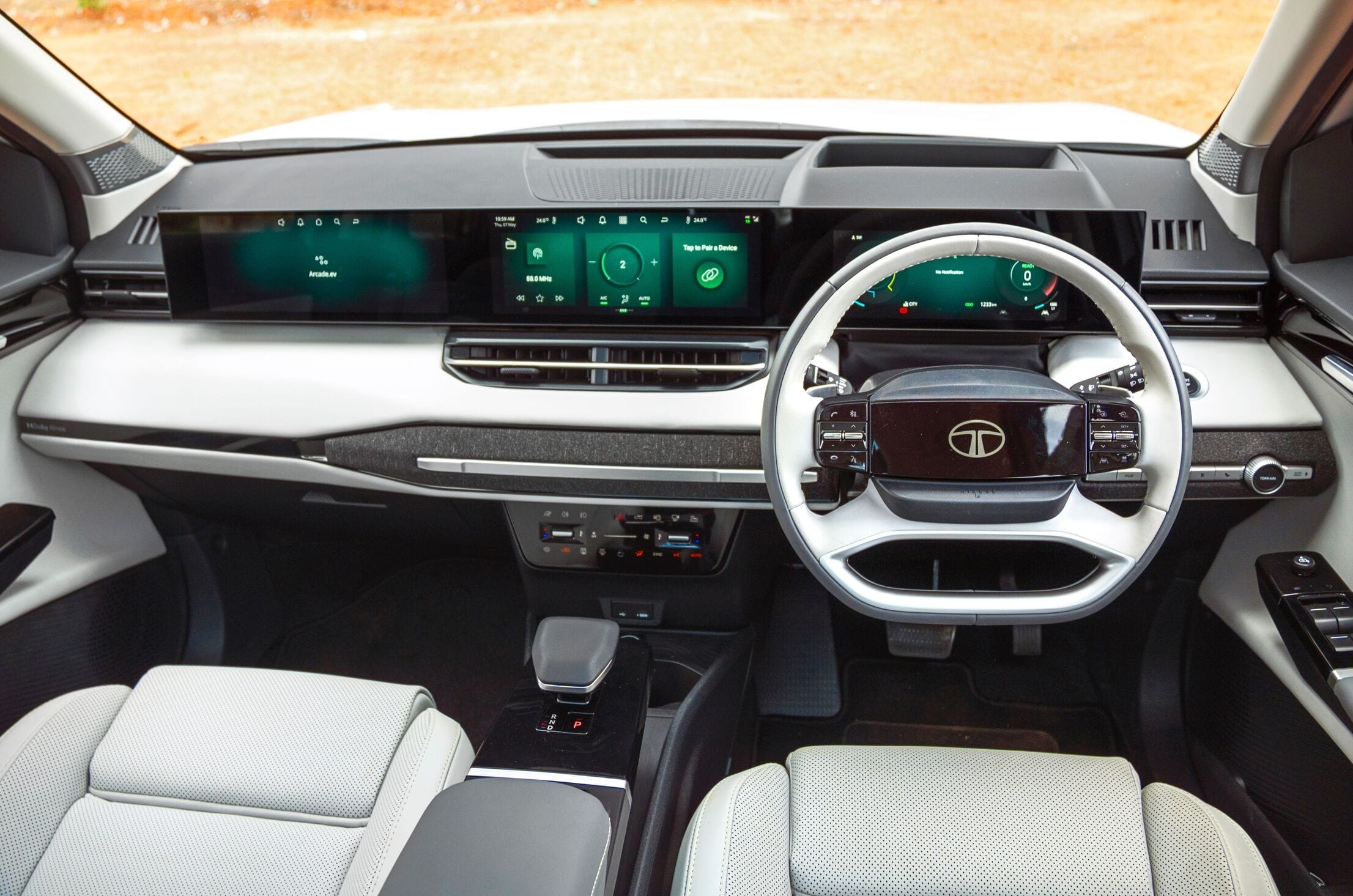
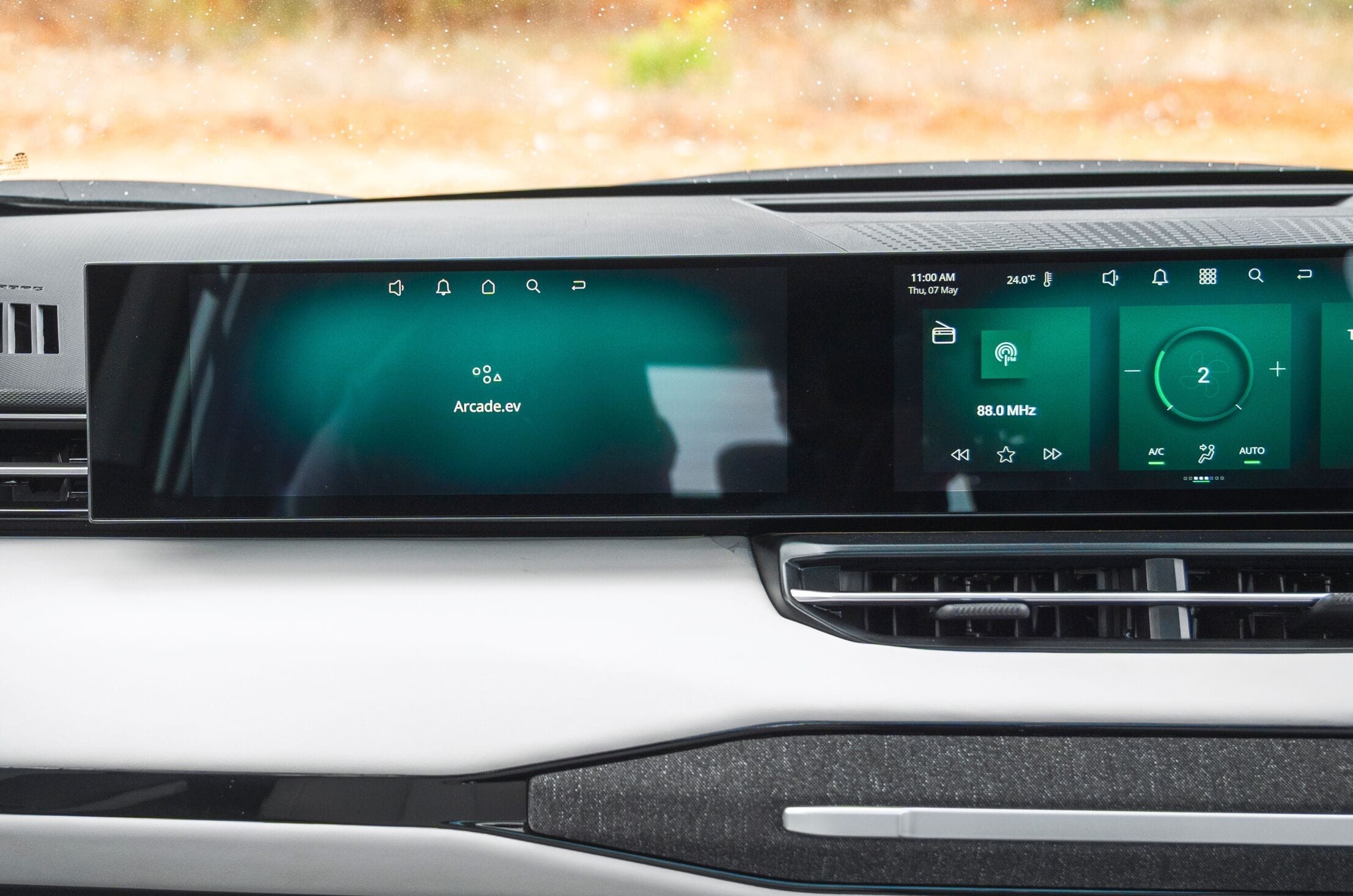
Up front, the lounge-like ambiance remains, with a cream-coloured, leatherette-bound dashboard and a textured fabric surface for the ‘sound bar’ central speaker. The three-screen stack adds a techy vibe to this atmosphere, and between the seats is a pedestal for the drive selector. The front seats are very comfortable and offer a good amount of shoulder support – something often overlooked in seat design.
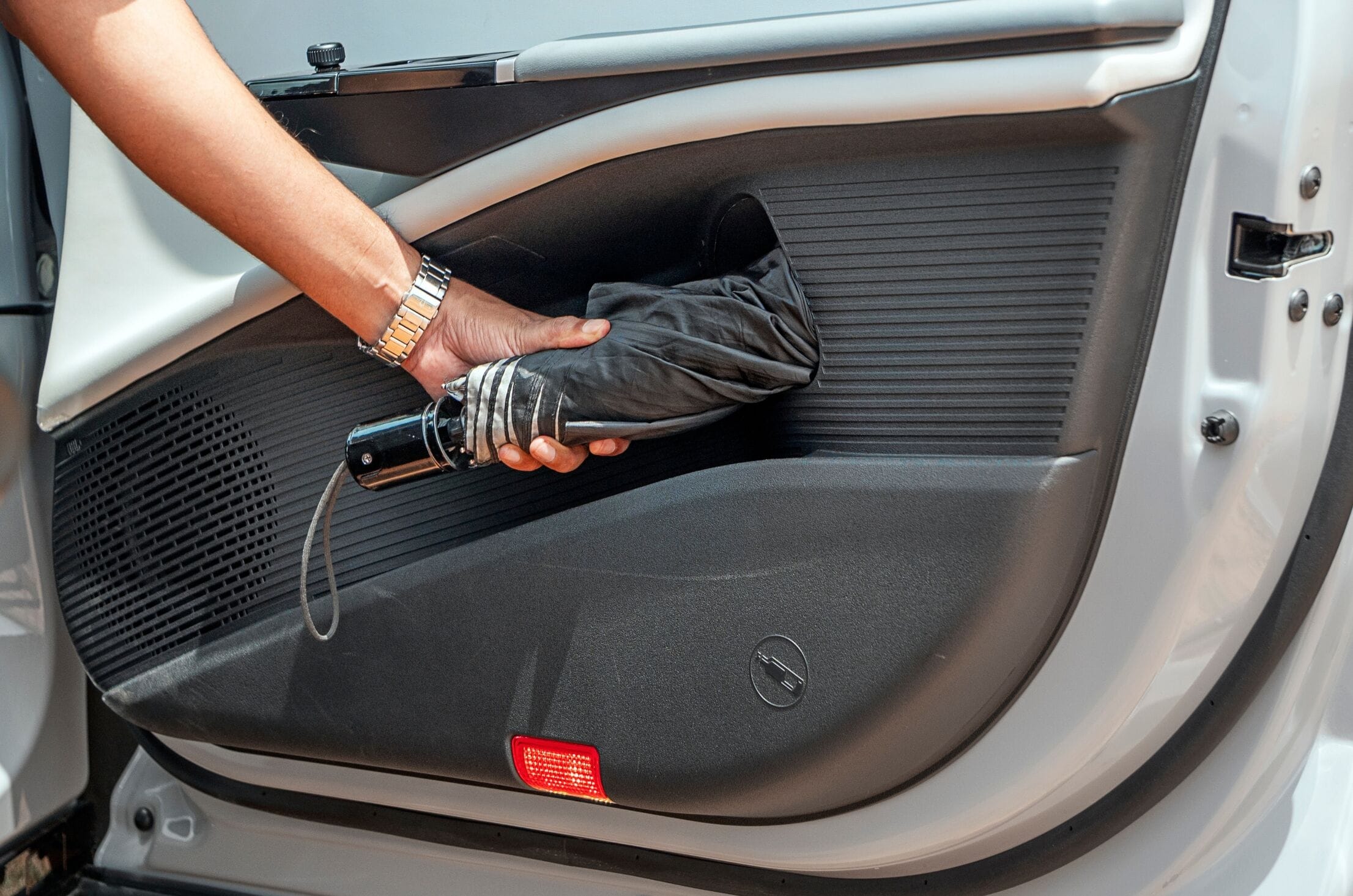
For every soft surface and attractive trim piece, however, there is visible hard plastic, rough edges, crooked stitching and misaligned panel fit, which are an eyesore, especially at this price. And while the design is attractive, its execution could have been far better considered from a practicality and ergonomics standpoint. For example, the pedestal-mounted drive selector is set at a comfortable height, but wastes the space below it. Consequently, the storage box behind it is narrow, tall and harder to reach, while the cupholders are tiny and forced to the base of the dashboard. And while the inclusion of small umbrella holders in the door cards is a nice touch, there is no drain plug, so surplus water will collect in the door pockets. Good intentions; poor execution.
2026 Tata Sierra EV features and safety – 9/10
Packed to the gills with safety and tech, more so even than the ICE version.
Tata in the last few years has caught up to the features freight train that has the Indian car industry in a stranglehold. The Sierra EV is, thus, one of if not the best equipped in its segment, with every conceivable gizmo imaginable on the top-spec Empowered A variant. And as always, the EV gets a small edge on its ICE counterpart, which comes in the form of a powered front passenger seat, as well as an HUD alongside the three-screen layout (instead of either one or the other).
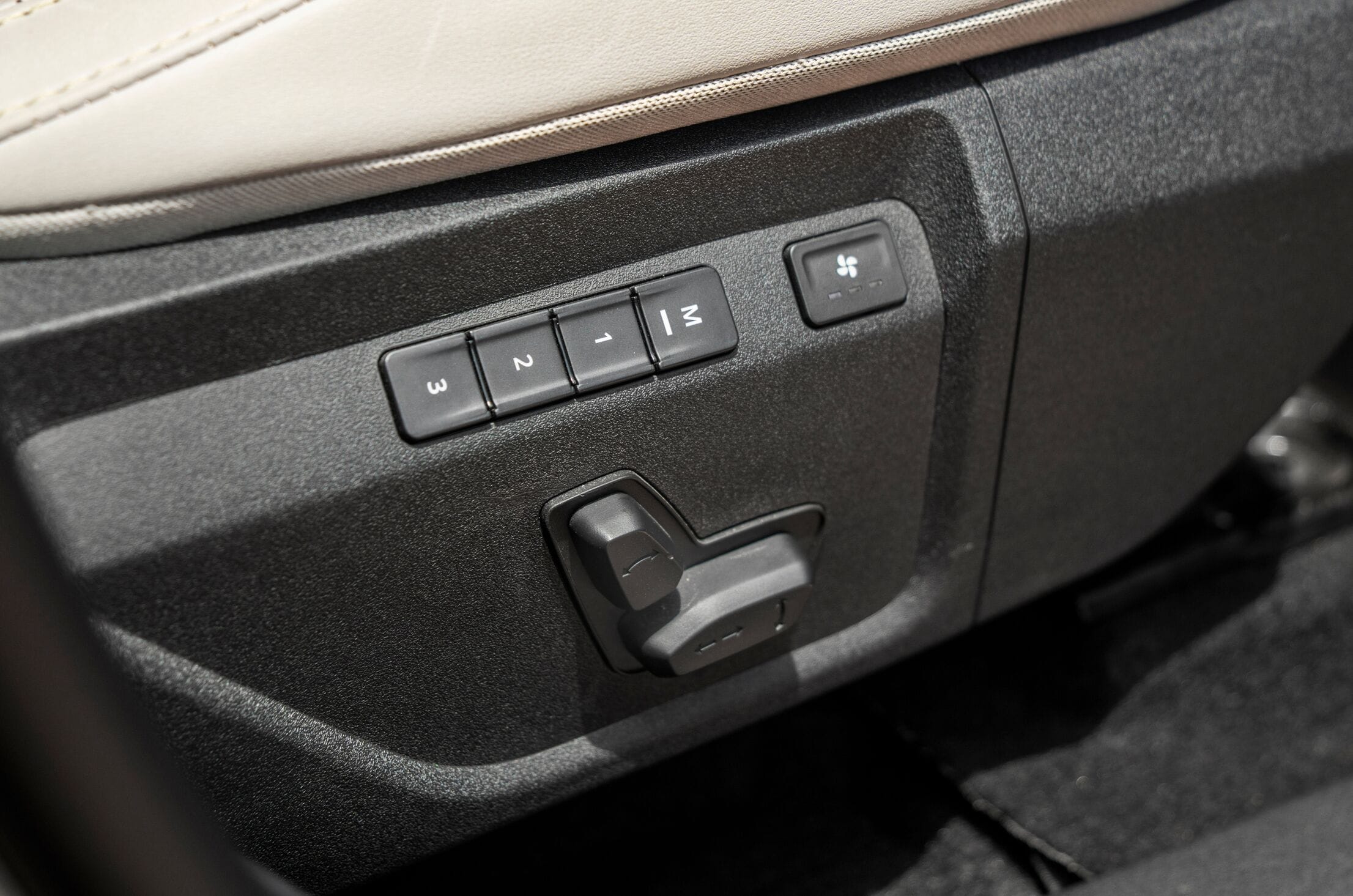
Those front seats are ventilated too, and the driver gets a memory function. There’s a full ADAS suite, drive modes, regen modes and terrain modes, the panoramic sunroof, dual-zone auto climate control, a 12-speaker JBL Black sound system with Dolby Atmos, an onboard air purifier, connected car tech and much, much more. There’s also a clever integration with Google Maps that predicts what the car’s SOC will be when you reach your destination, helping you plan better.
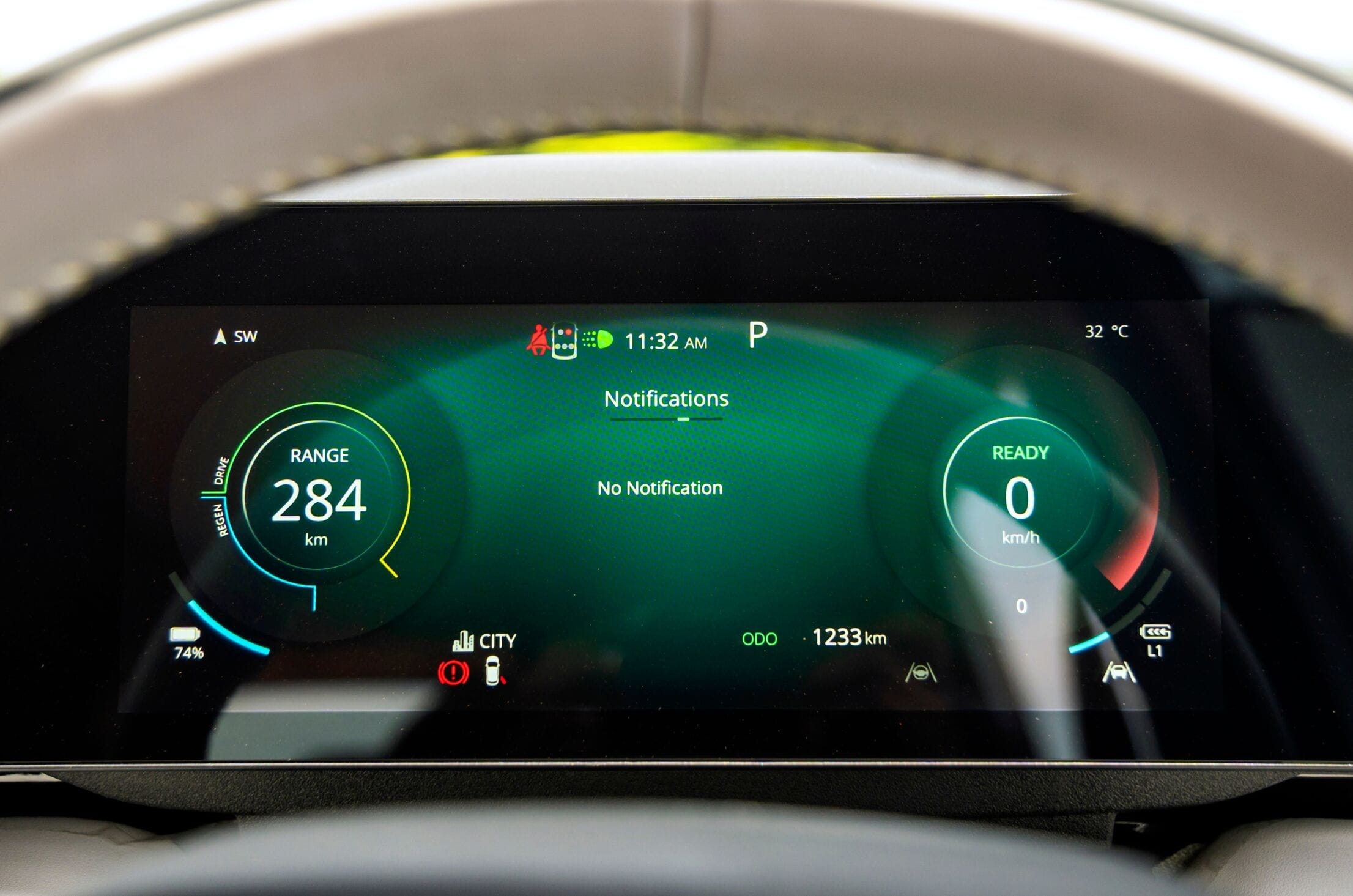
The screens are crisp and smooth in their animations, although as before, the 10.25-inch driver’s display feels a bit too cluttered; the HUD actually provides a cleaner and more focused driver display. And while Tata is not the first brand to do it, the passenger screen feels like a gimmick, more so now that there is a multiplayer gaming suite that lets all passengers connect their phones to the car and play from their own device.
While there hasn’t been a crash test of the EV specifically, the ICE Sierra scored a 5-star Bharat NCAP rating, which should feasibly carry forward to this car too. Apart from an extensive ADAS suite on the top trim, there are 6 airbags as standard, as well as several other safety features.
2026 Tata Sierra EV performance and refinement – 8/10
Dual-motor QWD version brings AWD to the segment and delivers class-best performance.
The Sierra EV can be had in one of three powertrain configurations – a 63kWh battery with a rear motor, a 75kWh battery with a rear motor, or the one we’ve got to test drive – the 75kWh battery with dual motors. This makes the Sierra the first to bring AWD to this segment and is, expectedly, the most potent version, with a class-leading output of 306hp and 504Nm. Despite weighing in at around 2.1 tonnes, the SUV can sprint to 100kph from a standstill in a claimed 5.8sec. However, while it is undoubtedly capable of that, it doesn’t feel neck-snappingly quick off the line. Instead, it is quite undramatic, and frankly that is fine in a family SUV such as this. It’s a smooth and refined powertrain, as we’ve come to expect from Tata Motors’ EVs over the years.
That said, it perhaps feels a bit too similar to older Tata EVs, considering this is a new-generation model. Where newer EVs now have greater responsiveness off the line, this one still has a small dead zone at the start of the pedal travel, after which power comes in abruptly, and this requires care in stop-go traffic. Thereafter, it’s delivered in a constant lump of torque, where others have managed to program in some sort of progression. A minor criticism, and it’s still a far better experience than any ICE powertrain, but the EV game has since moved on.
There are drive modes, though apart from a noticeable dullness in Eco mode, the rest – City, Sport and Boost – don’t feel too different from one another. Similarly, the regen modes – easily accessible using the steering-mounted paddles – don’t feel all that different from one another.
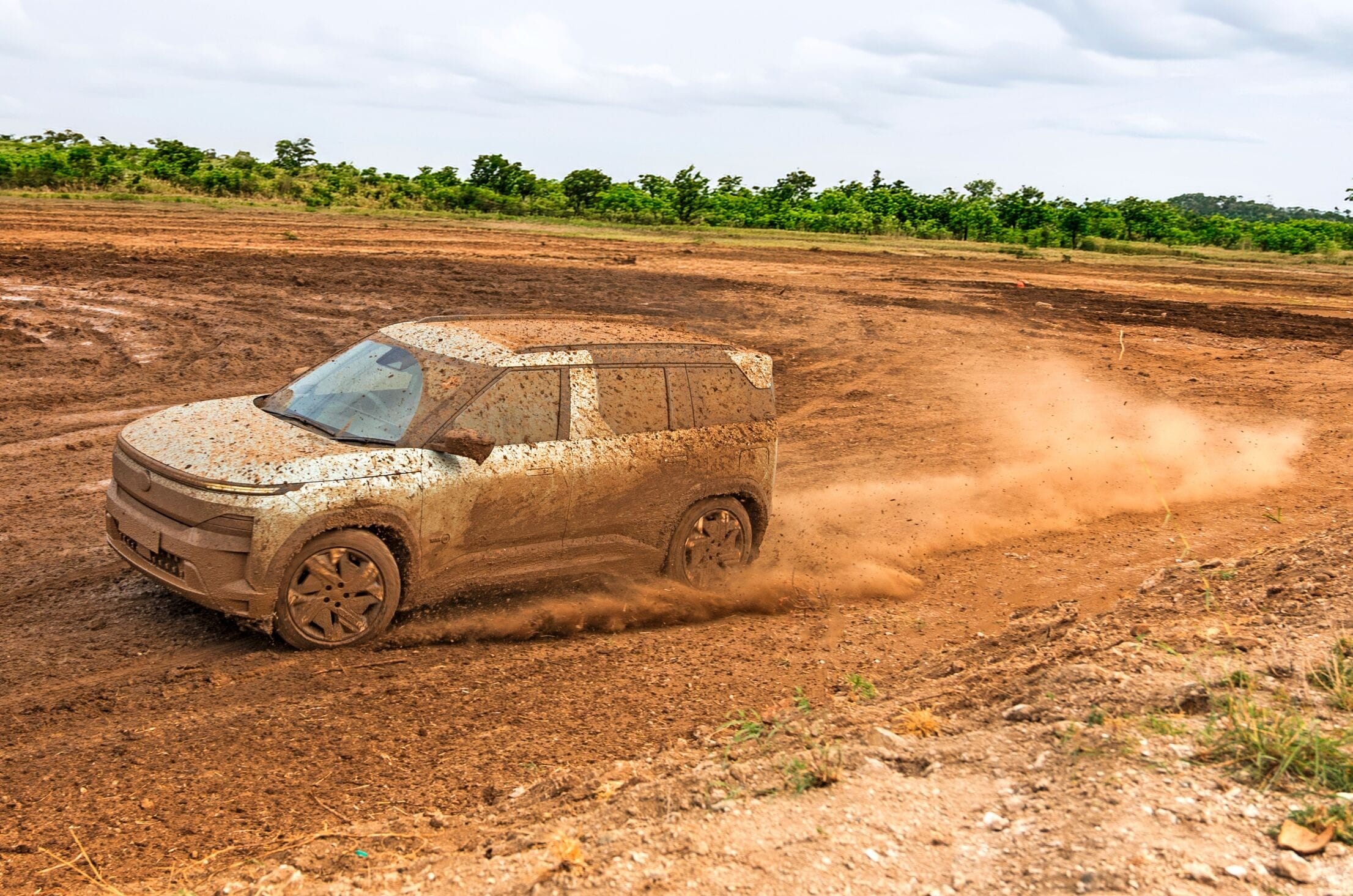
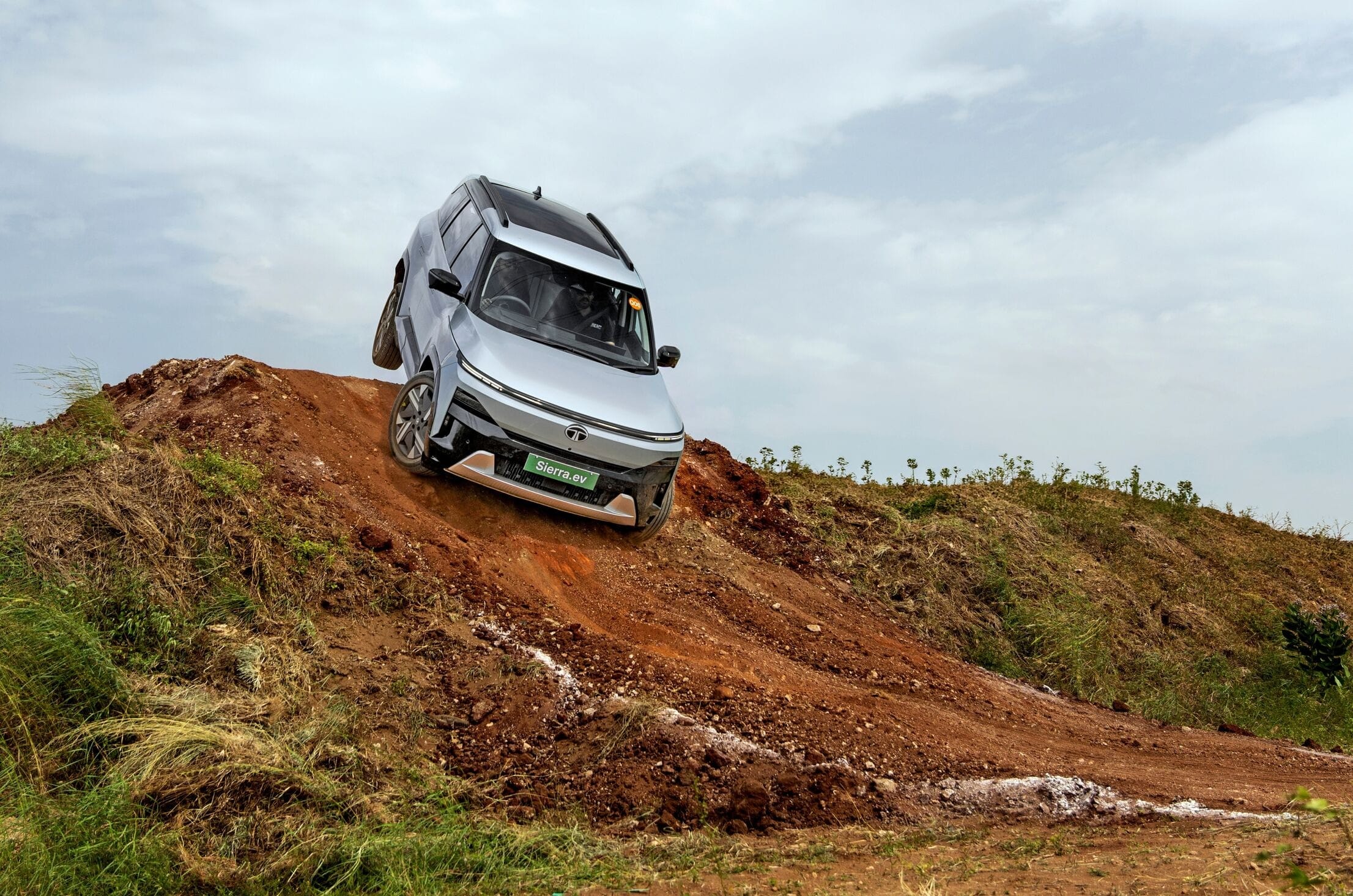
The Sierra EV QWD was rather impressive on the off-road course Tata Motors set up for it, which wasn’t the usual walk in the park, and had some pretty significant obstacles. Put it down to the short overhangs that improve approach and departure angles, or the responsiveness of the e-motors, but the result was surprisingly effortless. We didn’t even need to delve into the terrain modes for the most part, though there were instances where it would fumble shifting torque between the left and right wheels mid obstacle.
2026 Tata Sierra EV range and efficiency – 8/10
Big battery means big numbers, though a real-world test remains.
63kWh and 75kWh are among the bigger batteries offered in this segment, with only the Mahindra BE 6 offering a larger 78kWh unit. The Sierra’s smaller pack is rated at 565km on the MIDC, while the larger at 665km for the single motor and 624km for the dual motor. Tata itself says the MIDC rating won’t be achieved in real-world use, but that the larger battery can deliver upwards of 500km realistically.
When it comes to charging, on a 7.2kW AC charger, the 63kWh pack will take 8.9 hours to get from 10-100 percent, while the 75kWh pack will take 10.5 hours. On a 120kW DC charger, meanwhile, both will do a 20-80 percent top-up in about 26 minutes. At what rate the car actually accepts charge, however, remains to be seen. Tata offers a 15-year warranty on the battery of the Sierra EV, which is reassuring.
2026 Tata Sierra EV ride comfort and handling – 8/10
No compromise on comfort, despite added weight. Handles amicably too.
Tata SUVs have always been great in the dynamics department, and that continues here too. Despite the 19-inch wheels and the 2.1-tonne kerb weight, the Sierra EV can handle any manner of surface with equal composure and comfort. Put it down to the frequency dependent dampers (FDD) but no pothole is too big, nor surface too broken to upset the SUV.
It holds its line well at high speeds and lane change manoeuvres can be made with confidence and little effort. Similarly, at low speeds, the steering is light without feeling loose, letting you change direction easily even in traffic.
High-speed handling too is also pretty engaging, helped no doubt by its lower centre of gravity, and if you really wanted to, you could lean onto the Sierra EV quite hard. That said, it is a tall, high-riding vehicle, so an acceptable amount of body roll is present. The boxy profile, however, does result in some wind noise around the A-pillars at high speed, made more apparent by the silent powertrain.
2026 Tata Sierra EV price and verdict – 7/10
Overlaps with Curvv and Harrier, but feels the better EV than either of them.
It’s not much of a surprise that the Sierra EV is the best Tata you can buy right now, as it the latest product of the brand’s strategy of constant evolution and improvement. It’s not without its flaws, of course, but these feel less like huge deal breakers, and more like matters of finesse in manufacturing and calibration that Tata should take the time to address.
Apart from being a great EV, it’s also just a very good family car, offering space, comfort and the features Indian buyers now expect. The bigger problem for Tata could be where it fits between the Curvv and Harrier EVs, because there is some price overlap, and in our opinion, it surpasses them both overall. And while, at Rs 18.79 lakh to Rs 25.99 lakh, it is priced at the upper end of its segment, it does pack in a lot, and sits on par with the BE 6, which doesn’t have an AWD variant. Which of these two is better is a question for another time, but for now, the Sierra EV has the makings of a winner.
Conceived with no concessions to internal combustion propulsion, ‘born electrics’ were heralded as the future. Manufacturers poured millions into their development, and it is estimated that globally $1.2 trillion was committed to the entire EV ecosystem, $500 billion of which was from automakers.
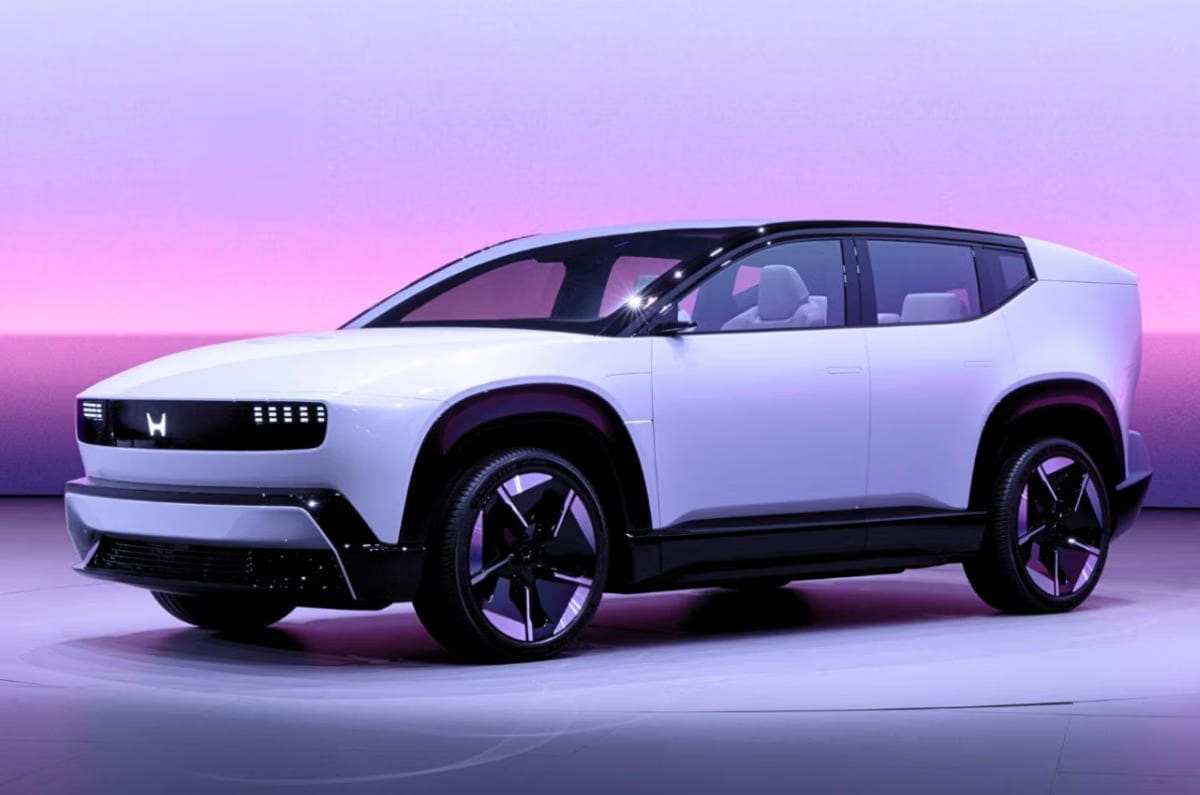
But with global EV sales well below projections, manufacturers are left with hard decisions. The Stellantis group, for instance, confirmed a $26 billion write-off over its EV projects, while Honda said its annual operating loss would be between 270-570 billion yen, due to losses associated with the reassessment of its electrification strategy. Earlier this year, the Japanese carmaker scrapped its much-hyped ‘0 Series’ EV project, though the made-in-India 0 Alpha SUV, which is said to use components from the Elevate, is still on track.
Honda has cancelled its 0 Series EV Project altogether
The write-offs and cancellations are understandable in the context of born-electrics, as while there have been many ICE-to-EV conversions, it’s a lot harder the other way around. Conceived with no engine and gearbox in mind, space to accommodate this bulky hardware is the first hurdle they need to clear. There’s also space needed for subsystems like driveshafts, fuel and exhaust systems which leads to the other complication of thermal management. Beyond the exhaust system, internal combustion engines have higher cooling requirements than EVs, and thus airflow management needs to be addressed.
Another challenge is crashworthiness. Again, having never had to hold an engine and gearbox, the crash structure of these cars was never designed with this massive mass in mind. These changes thus require time and expensive re-engineering.
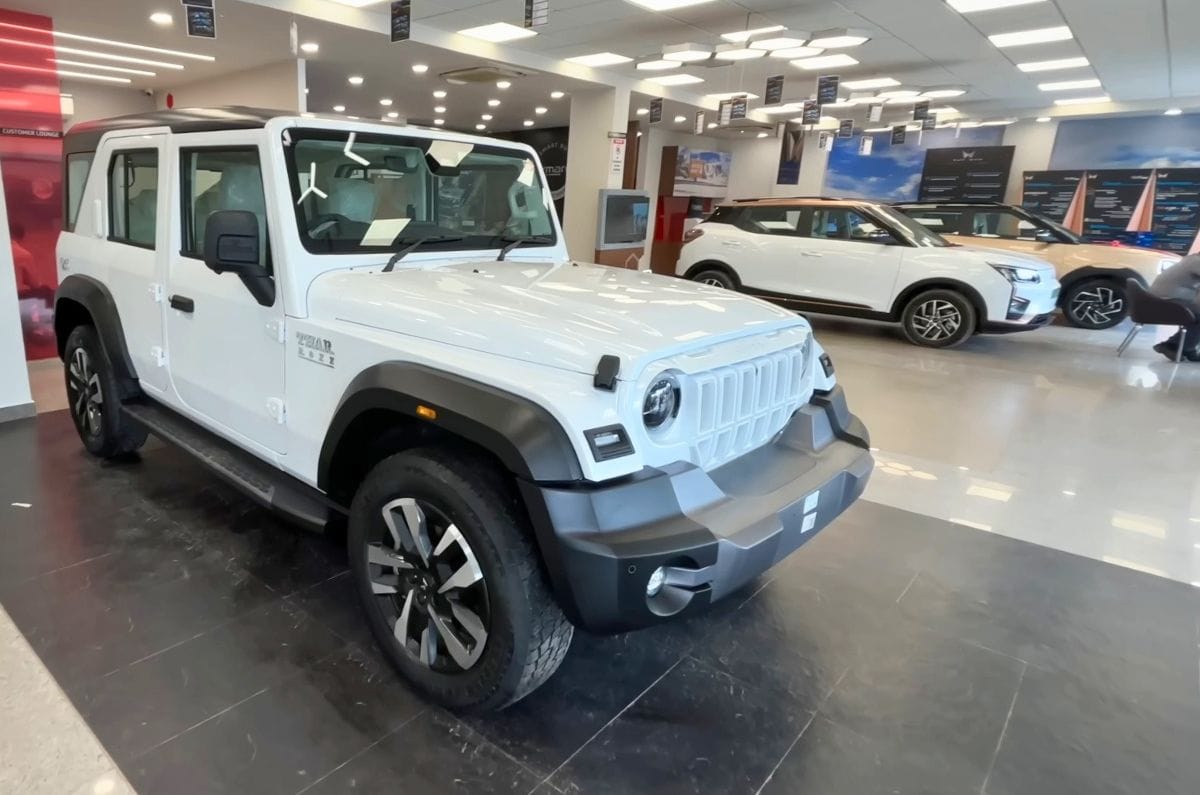
However, tough as it is, some brands are looking at re-engineering born-EVs to use some form of internal combustion. The VW Group is one such example, as is homegrown automaker Mahindra. While it sold about 16,000 EVs in FY2026 – the bulk of them coming from its born-electric line-up – it needs higher volumes given the investments in their development. The Chinese, too, who were very quick with born-electrics, are looking at the ICE switch.
Ice Age 2.0
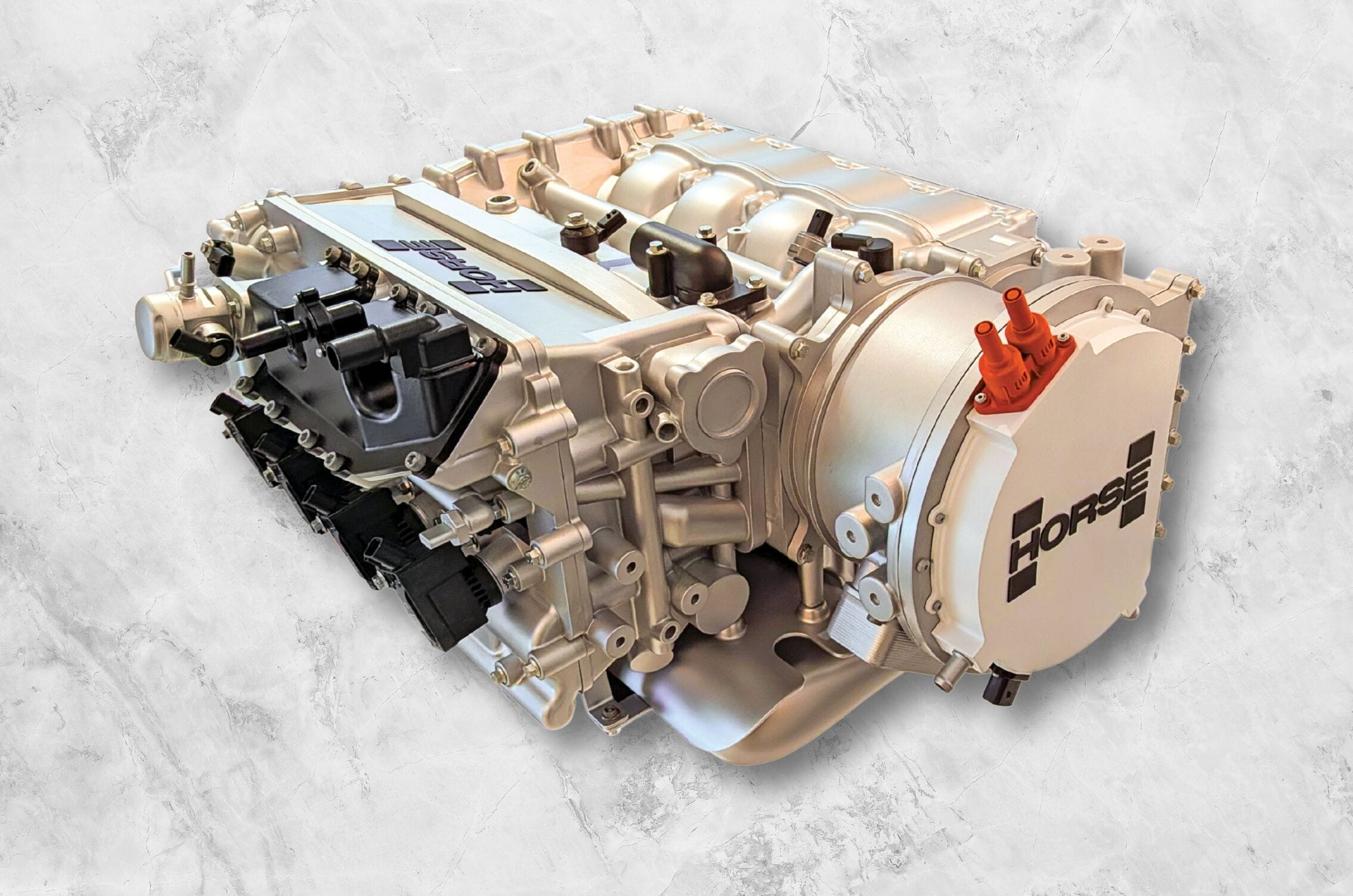
In this scenario, Horse Powertrain might hold the panacea – the C15 powertrain. Showcased at the Vienna Motor Symposium in April this year, the C15 unit is a compact, all-in-one powertrain designed to replace the electric drive unit of a born-electric and transform it into a range-extender hybrid. The integrated unit consists of a 1.5-litre, 4-cylinder engine, hybrid transmission, electric motor and the full suite of power electronics.
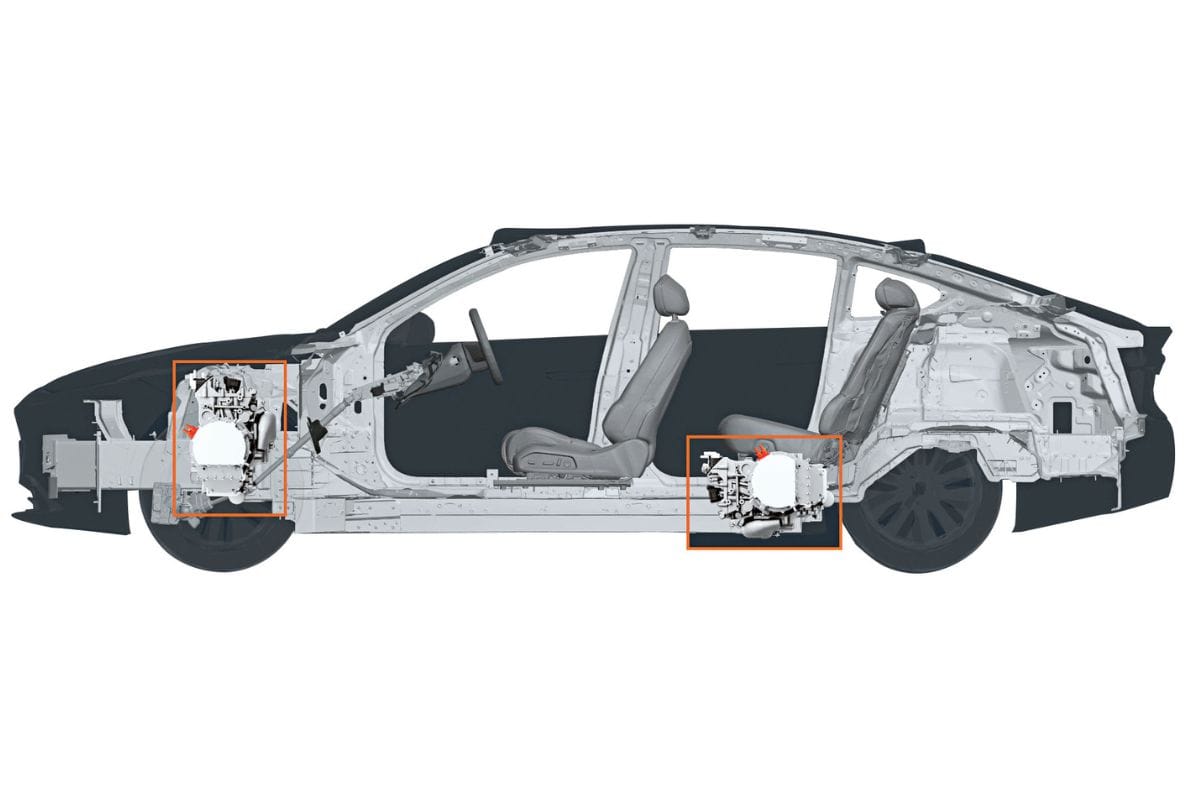
C15 powertrain can be installed at the front or rear and in either a vertical or horizontal orientation.
Furthermore, Horse says the unit is modular and can have further systems bolted on, depending on manufacturer requirements, like turbocharging or even a traditional gearbox, should direct-to-wheel drive be required. Adding to its flexibility, the engine can be packaged vertically or even horizontally, and the company says systems like lubrication are capable for either installation type. It can also be located at the front or rear of the vehicle, so as to warrant fewer modifications and re-engineering for a brand. 64 percent of its components are parts from existing powertrains, and this, Horse says, brings down the unit’s cost. So far, there’s no word on when it would come to market, but the brand says work is already underway, and the first model with the C15 unit should see the light of day by 2028.
On the face of it, converting a born-electric to ICE might seem like a retrograde step in the journey towards electrification. However, it’s clear this journey is far longer than previously thought, and a born-electric-to-ICE conversion will certainly help a manufacturer’s business viability in the immediate term. Furthermore, in this scenario of internal combustion living longer, hybridisation helps lowering fuel consumption and emissions. Thus, a retrograde step this might be, but one that can help build the future.
Q&A Jesus Frances Busto – Strategy & RAE Director, Horse Technologies
On the company structure
Horse Powertrain is a joint venture between Renault, Geely and Saudi Aramco, but we are an independent global powertrain supplier. So we can supply, work with, and integrate this (C15) with any manufacturer that is interested in it. It’s part of our new story at Horse Powertrain.
On the C15’s requirement
Brands have invested a lot into born-electric platforms, and many have even got the products ready and out into the market. But yes, they now would need to have an option to cope with this adoption towards EVs, and a hybrid with a range-extender setup is a good possibility for this.
On the C15’s specialities
The C15 solves the problem of space, and we have solved it not by miniaturisation, but with innovative redesign and repackaging. We can install this vertically or even horizontally, and when we do this, one of the points we have to solve is lubrication, so we have a scavenge function circulating oil through and through correctly.
On a market launch
As you would understand, we cannot disclose our clients at the moment or specific launch dates, but we are working with brands, and we should see this in the market by early 2028.
अपने आस-पास, शहरों और देश को साफ-सुथरा रखना हर नागरिक का फर्ज है, लेकिन कभी-कभी किसी एक व्यक्ति का दृढ़ संकल्प हमें उन चीजों की अहमियत याद दिलाता है, जिन्हें हम अक्सर नजरअंदाज कर देते हैं। जोधपुर के ऐतिहासिक शहर में, आयरलैंड के रहने वाले एक 80 वर्षीय बुज़ुर्ग ने एक दशक से ज्यादा समय तक भुला दी गई बावड़ियों की सफाई की है और पानी के इन पारंपरिक ढांचों की ओर लोगों का ध्यान फिर से खींचा है।
‘द बेटर इंडिया’ की रिपोर्ट के मुताबिक, कैरॉन रॉन्सली – जिन्हें स्थानीय लोग “पागल साहब” के नाम से जानते हैं – जोधपुर एक पर्यटक के तौर पर आए थे, लेकिन धीरे-धीरे वे शहर की धरोहर की देखभाल करने वाले बन गए। उपेक्षित बावड़ियों और झालरों (सीढ़ीदार जल-कुंडों) को अपने हाथों से ठीक करने की उनकी कोशिशों की अब बिजनेसमैन आनंद महिंद्रा ने भी तारीफ की है।
जहां बहुत से लोग जोधपुर की पुरानी बावड़ियों की सुंदरता की तारीफ करते थे, वहीं रॉन्सली ने कुछ ऐसा देखा जिस पर अक्सर दूसरों का ध्यान नहीं जाता था। बारीक कारीगरी और ऐतिहासिक महत्व के पीछे ऐसी संरचनाएं थीं, जो कचरे से भरी हुई थीं और धीरे-धीरे भुला दी जा रही थीं। वहां से चले जाने के बजाय, उन्होंने इनकी मरम्मत की जिम्मेदारी उठाने का फैसला किया।
महिंद्रा ने हाल ही में अपने X हैंडल पर एक प्रेरणादायक वीडियो शेयर किया, जिसमें जोधपुर में पुरानी और उपेक्षित बावड़ियों की सफाई करने के रॉन्सली के सफर को दिखाया गया है। इस वीडियो पर प्रतिक्रिया देते हुए महिंद्रा ने लिखा, “जोधपुर की बावड़ियों और झालरों की सफाई के प्रति अपने जुनून के कारण 80 वर्षीय आयरिश व्यक्ति कैरन रॉन्सले को ‘पागल साहब’ का उपनाम दिया गया था। सौभाग्य से, आज भारत की बावड़ियों को पुनर्जीवित करने के लिए खुद को समर्पित करने के लिए आपको ‘पागल’ या ‘फिरंगी’ होने की आवश्यकता नहीं है।”
They nicknamed 80 year old Irishman, Caron Rawnsley, ‘Paagal Saab’ for his obsession with cleaning Jodhpur’s Bawris & Jhalaras.
Fortunately, today, you don’t need to be either ‘paagal’ or ‘phirang’ to devote yourself to reviving India’s stepwells.
महिंद्रा ने कहा कि विरासत को बचाने के लिए लोगों का एक्सपर्ट होना या किसी खास जगह का होना जरूरी नहीं है। उन्होंने कहा कि लगन रखने वाला कोई भी व्यक्ति भारत की ऐतिहासिक इमारतों को बचाने में योगदान दे सकता है। उन्होंने चांद बावड़ी के बारे में अपनी पुरानी सोशल मीडिया पोस्ट को भी याद किया, जिसमें उन्होंने मशहूर सीढ़ीदार कुएं (stepwell) को बनाए रखने के लिए की जा रही कोशिशों की तारीफ़ की थी। महिंद्रा ने बताया कि पूरे भारत में संरक्षणवादी, स्थानीय वॉलंटियर और ग्रामीण समुदाय इन शानदार इमारतों को फिर से ठीक करने के लिए काम कर रहे हैं।
ये बावड़ियां सिर्फ पत्थर से बनी पुरानी संरचनाएं नहीं हैं। सदियों से, इन्होंने समुदायों को पानी इकट्ठा करने और उसे जमा करने में मदद करने में अहम भूमिका निभाई है, खासकर राजस्थान जैसे इलाकों में जहां पानी की कमी हमेशा से एक चुनौती रही है। पानी के स्रोत होने के अलावा, बावड़ियां ऐसी जगहें भी बन गईं जहां लोग इकट्ठा होते थे, आराम करते थे और एक-दूसरे से जुड़ते थे। इनके डिज़ाइन पुरानी पीढ़ियों की इंजीनियरिंग कुशलता और सांस्कृतिक परंपराओं को दर्शाते थे।
हालांकि, बदलती जीवनशैली और पानी की आधुनिक सप्लाई प्रणालियों के आने से, कई बावड़ियों का महत्व धीरे-धीरे खत्म हो गया। कई बावड़ियों को नज़रअंदाज़ कर दिया गया और कुछ तो कचरा फेंकने की जगह बन गईं। रॉन्सली के लिए इन ऐतिहासिक ढांचों को ऐसी हालत में देखना मुश्किल था। उन्होंने अपना समय इन्हें साफ़ करने और एक-एक करके इनकी मरम्मत करने में लगाने का फैसला किया।
‘द बेटर इंडिया’ से बात करते हुए रॉन्सली ने कहा, “जब मैं 2014 के आखिर में जोधपुर आया, तो मैंने ये खूबसूरत बावड़ियां देखीं। लेकिन मैं यह देखकर हैरान रह गया कि पानी जमा करने के ये पुराने और अनोखे सिस्टम खराब हालत में थे। इसलिए, मैंने अपना समय इन जगहों की सफाई करने और उन्हें फिर से अच्छी हालत में लाने की कोशिश में लगाने का फैसला किया।”
तब से, रॉन्सली ने जोधपुर में कई बावड़ियों पर काम किया है, जिनमें रामबाउरी और गुलाब सागर शामिल हैं। उन्होंने अपनी मेहनत से वहां से कचरा हटाया और शहर के इन भुला दिए गए हिस्सों की ओर लोगों का ध्यान फिर से खींचा। महिंद्रा ने भारतीय विरासत के प्रति रॉन्सली के समर्पण के लिए उनके प्रति सम्मान भी जाहिर किया। उन्होंने लिखा, “मैं जोधपुर के प्रति उनके प्यार और हमारी विरासत के लिए उनकी निस्वार्थ भावना और जुनून के लिए ‘पागल साहब कैरॉन’ को सलाम करना चाहता हूं। उनका काम कभी न रुके…”
आनंद महिंद्रा द्वारा रॉन्सली की कहानी शेयर किए जाने के बाद, कई यूज़र्स ने इस आयरिश व्यक्ति के समर्पण और जोधपुर की विरासत को बचाने की उनकी कोशिशों की तारीफ़ की। एक यूज़र ने कमेंट किया, “किसी जगह के लिए सच्चा प्यार काम से दिखता है, राष्ट्रीयता से नहीं। ‘पागल साहब’ को सम्मान।”
एक और यूजर ने लिखा, “कितनी अजीब बात है कि उन्हें ‘पागल’ कहा गया, जबकि वे सबसे समझदारी भरा काम कर रहे थे।” एक यूजर ने कहा, “कुछ विदेशी सच में भारत में अपने प्रेरणादायक काम के लिए हमारे सम्मान और समर्थन के हकदार हैं!”
एक और यूज़र ने कहा, “यह एक बहुत अच्छी बात है कि किसी जगह के लिए प्यार इस बात से नहीं मापा जाता कि आप कहां पैदा हुए हैं, बल्कि इस बात से मापा जाता है कि आप उसकी कितनी परवाह करते हैं। कैरॉन रॉन्सली, ‘पागल साहब’ और उन सभी वॉलंटियर्स को सलाम जो चुपचाप हमारी बावड़ियों और विरासत को ठीक करते हैं। उनकी कोशिशें न सिर्फ़ इतिहास को बचाती हैं, बल्कि पानी, संस्कृति और आने वाली पीढ़ियों के लिए उम्मीद को भी सुरक्षित रखती हैं। उम्मीद है कि यह भावना और भी लोगों को प्रेरित करेगी।”
एक यूज़र ने लिखा, “मज़ेदार बात है कि कभी-कभी किसी बाहरी व्यक्ति को ही स्थानीय लोगों को यह याद दिलाना पड़ता है कि विरासत सिर्फ पोस्टकार्ड के लिए नहीं, बल्कि एक इंफ्रास्ट्रक्चर है। इतिहास के बारे में सिर्फ बातें करने के बजाय उसे ज़िंदा रखने के लिए सभी का सम्मान।”
Mahindra has hiked its car prices by up to 2.7 percent today. According to the manufacturer, the price increase is due to “commodity cost escalations.” This is the second cumulative price increase of the year, following the 2.5 per cent increase in April 2026.
XEV 9S’ starting price increased by Rs 70,000 – the most for any Mahindra
XUV 3XO EV, Scorpio N, BE 6, XEV 9e prices unaffected by the price hike
New vs old price range of Mahindra cars (ICE and EVs)
The three-row XEV 9S is the only EV to record a price hike
Mahindra new vs old price range after July 10 hike (Rs, lakh)
New price range
Old price range
XUV 3XO
7.79-15.04
7.54-14.89
Bolero
8.49-9.99
8-9.91
Bolero Neo*
8.99-12.49
8.85-12
Thar (3-door)
10.32-18
10-17.63
Thar Roxx
12.52-23.53
12.40-22.82
Scorpio Classic
13.37-17.40
13-17
Scorpio N
13.49-24.95
13.49-24.95
XUV 7XO
13.99-25.79
13.66-24.92
XUV 3XO EV
13.89-14.96
13.89-14.96
BE 6
18.90-26.90
18.90-26.90
XEV 9S
20.65-29.95
19.95-29.45
XEV 9e
21.90-30.50
21.90-30.50
*Bolero Neo prices include those of the Bolero Neo+ too.
Mahindra has increased the prices of all its combustion-powered cars, except the Scorpio N. The Mahindra Bolero has received the highest base price hike of Rs 49,000 for any ICE car in the manufacturer’s line-up. On the EV front, the flagship XEV 9S is the only all-electric model to see a price hike. Its starting price has been increased by Rs 70,000, the highest overall for any Mahindra car.
Stocks to Watch: शुक्रवार, 10 जुलाई के कारोबार में कई शेयरों पर निवेशकों की नजर रहेगी। तिमाही नतीजे, जून सेल्स, नए प्रोजेक्ट, बड़ी साझेदारियां और अहम कॉरपोरेट अपडेट के चलते इनमें तेज हलचल देखने को मिल सकती है। आइए जानते हैं आज किन 13 शेयरों पर बाजार की खास नजर रहेगी।
Tata Consultancy Services
टाटा ग्रुप की आईटी कंपनी Tata Consultancy Services (TCS) ने अप्रैल-जून तिमाही के नतीजे जारी किए। कंपनी का प्रदर्शन बाजार के अनुमान के मुताबिक रहा। तिमाही में रेवेन्यू 2.2% बढ़कर 72,275 करोड़ रुपये रहा। मार्च तिमाही में यह 70,698 करोड़ रुपये था।
Mahindra & Mahindra
ऑटो कंपनी Mahindra & Mahindra की कुल बिक्री जून 2026 में सालाना आधार पर 32.5% बढ़कर 1.04 लाख यूनिट रही। पिछले साल जून में कंपनी ने 78,142 यूनिट बेची थीं।
Anand Rathi Wealth
वेल्थ मैनेजमेंट कंपनी Anand Rathi Wealth का कंसोलिडेटेड नेट प्रॉफिट जून तिमाही में 73.6% बढ़कर 163 करोड़ रुपये हो गया। रेवेन्यू 17.5% बढ़कर 322 करोड़ रुपये रहा। हालांकि, EBITDA 15% घटकर 109 करोड़ रुपये रह गया। EBITDA मार्जिन भी 46.6% से घटकर 33.7% पर आ गया।
Torrent Pharmaceuticals
फार्मा कंपनी Torrent Pharmaceuticals ने Semalix Injection Disposable Pen के कुछ बैच स्वेच्छा से वापस मंगाने का फैसला किया है। यह कदम Dr. Reddy’s Laboratories की रिकॉल नोटिस के बाद उठाया गया है। कंपनी प्रोडक्ट की तकनीकी जांच कराएगी।
Power Grid Corporation
सरकारी पावर ट्रांसमिशन कंपनी Power Grid Corporation को Bhadla-III, Ramgarh PS और Kanpur (PG) इंटरस्टेट ट्रांसमिशन प्रोजेक्ट मिला है। कंपनी इसे BOOT मॉडल के तहत विकसित करेगी। यह प्रोजेक्ट टैरिफ बेस्ड कॉम्पिटिटिव बिडिंग (TBCB) के जरिए मिला है।
Havells India
कंज्यूमर इलेक्ट्रिकल कंपनी Havells India ने बैटरी एनर्जी स्टोरेज सिस्टम (BESS) कारोबार में एंट्री की है। कंपनी ने नॉर्वे की एनर्जी स्टोरेज कंपनी Pixii AS के साथ रणनीतिक साझेदारी की है।
Pace Digitek
इलेक्ट्रिकल और पावर सॉल्यूशंस कंपनी Pace Digitek की सब्सिडियरी Lineage Power ने Onward Solar Power और Kalpa Power के साथ MoU किया है। इसके तहत कंपनी बैटरी एनर्जी स्टोरेज सिस्टम्स (BESS) की सप्लाई करेगी।
Great Eastern Shipping
शिपिंग कंपनी Great Eastern Shipping ने 2015 में बने LR2 टैंकर ‘Jag Laxman’ की डिलीवरी ले ली है। इसकी क्षमता करीब 1,09,990 डेडवेट टन (DWT) है। इस खरीद का पूरा भुगतान कंपनी ने अपनी आंतरिक नकदी से किया है।
Muthoot Microfin
माइक्रोफाइनेंस कंपनी Muthoot Microfin का एसेट अंडर मैनेजमेंट (AUM) जून तिमाही में सालाना आधार पर 18% बढ़ा। कंपनी ने इसका श्रेय मजबूत लोन वितरण और बेहतर कलेक्शन एफिशिएंसी को दिया है।
CONCOR & GAIL
सरकारी लॉजिस्टिक्स कंपनी Container Corporation of India (CONCOR) और सरकारी गैस कंपनी GAIL (India) ने 15 साल का समझौता किया है। दोनों अहमदाबाद के Khodiyar Inland Container Depot (ICD) में LNG डिस्पेंसिंग स्टेशन स्थापित करेंगे।
Vikram Solar
सोलर कंपनी Vikram Solar ने Evervolt Solar Tech के साथ 130 मेगावाट क्षमता के सोलर सेल की सप्लाई का समझौता किया है। इस डील से कंपनी की ऑर्डर बुक और सोलर कारोबार को मजबूती मिलने की उम्मीद है।
AWL Agri Business
FMCG कंपनी AWL Agri Business ने अपने Regenerative Mustard Programme का विस्तार करने का ऐलान किया है। कंपनी के मुताबिक, इस कार्यक्रम के तहत सरसों की उपज में 30% तक बढ़ोतरी दर्ज की गई है।
Vijaya Diagnostic
डायग्नोस्टिक सर्विसेज कंपनी Vijaya Diagnostic ने Narasimha Raju K.A. को नया मुख्य वित्तीय अधिकारी (CFO) नियुक्त किया है। उनकी नियुक्ति 9 जुलाई 2026 से प्रभावी हो गई है।
Disclaimer: यहां मुहैया जानकारी सिर्फ सूचना के लिए दी जा रही है। यहां बताना जरूरी है कि मार्केट में निवेश बाजार जोखिमों के अधीन है। निवेशक के तौर पर पैसा लगाने से पहले हमेशा एक्सपर्ट से सलाह लें। मनीकंट्रोल की तरफ से किसी को भी पैसा लगाने की यहां कभी भी सलाह नहीं दी जाती है।
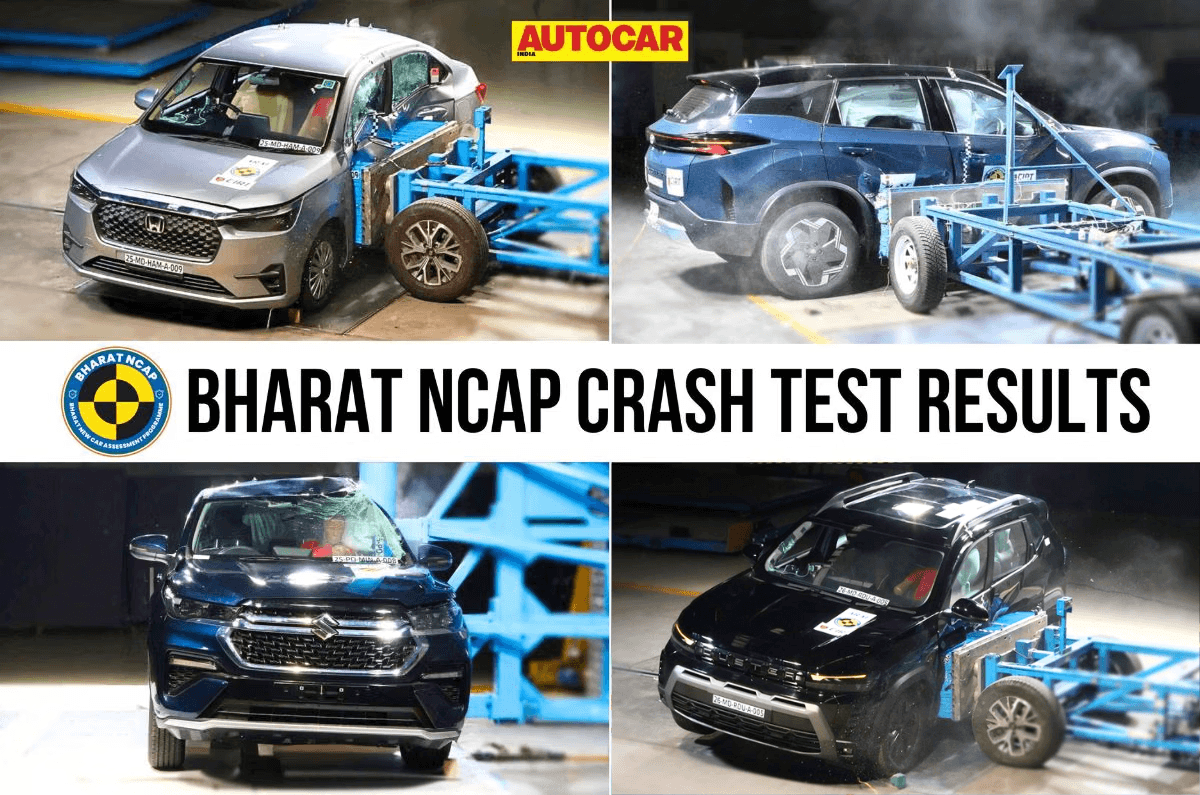
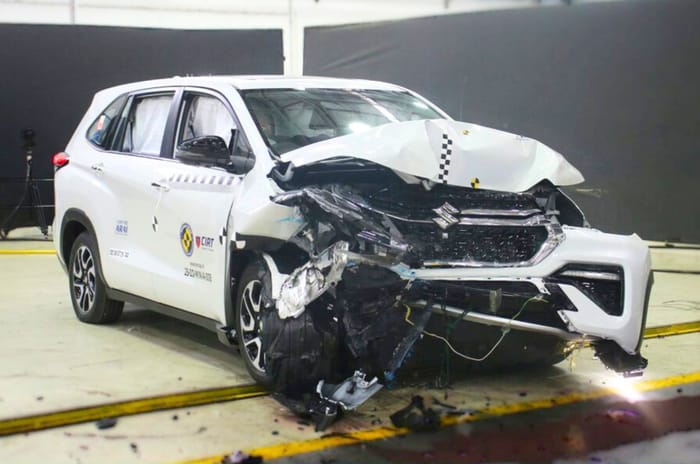
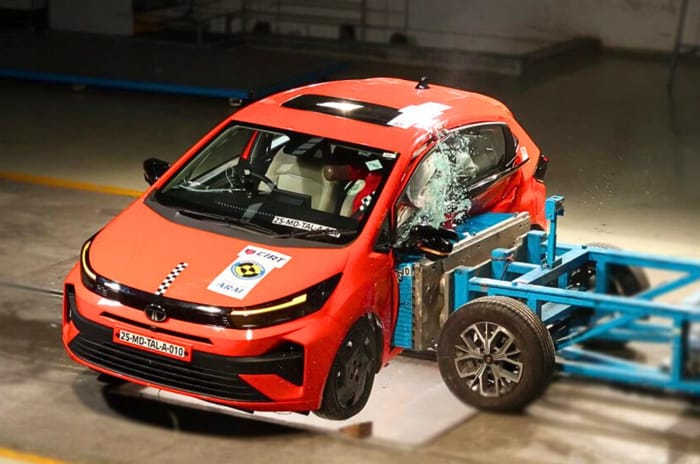
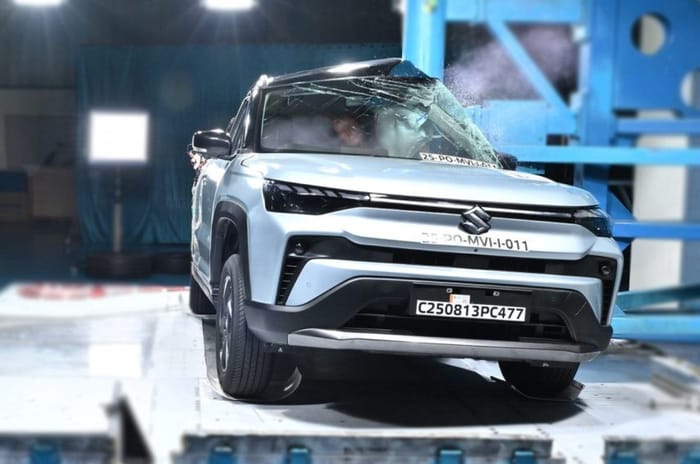
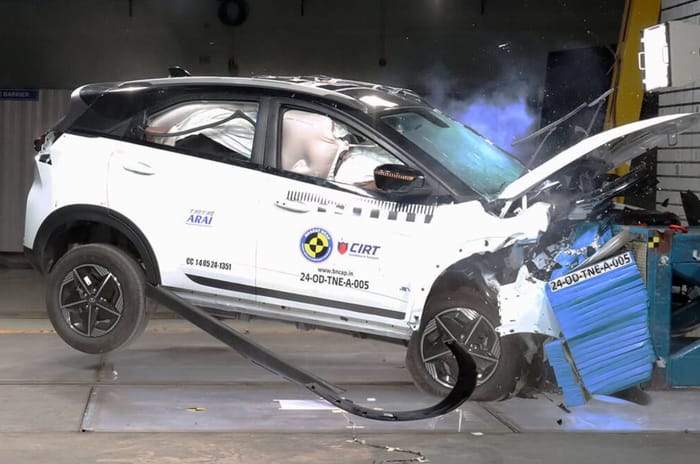
Introduced by the central government in 2023, the Bharat New Car Assessment Program (BNCAP) is responsible for conducting crash tests and awarding scores to cars sold in the country. The government hopes this will help buyers make more informed purchase decisions. Since its inception, Bharat NCAP has tested 31 vehicles, primarily SUVs. Below are the results detailing the crash safety performance of the models that are currently on sale.
1. Nissan Tekton
BNCAP rating: 5 stars
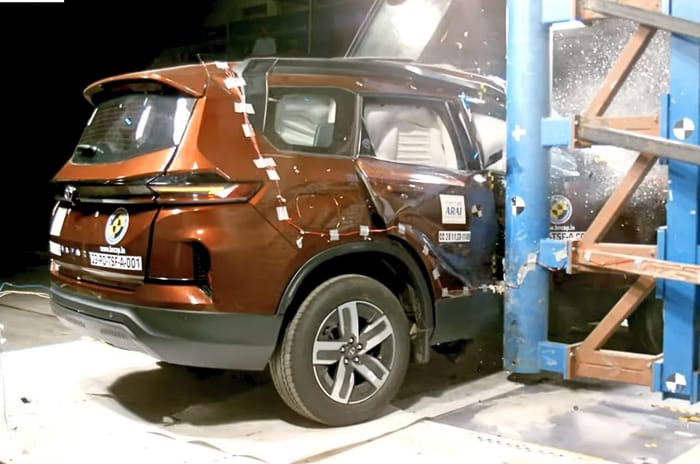
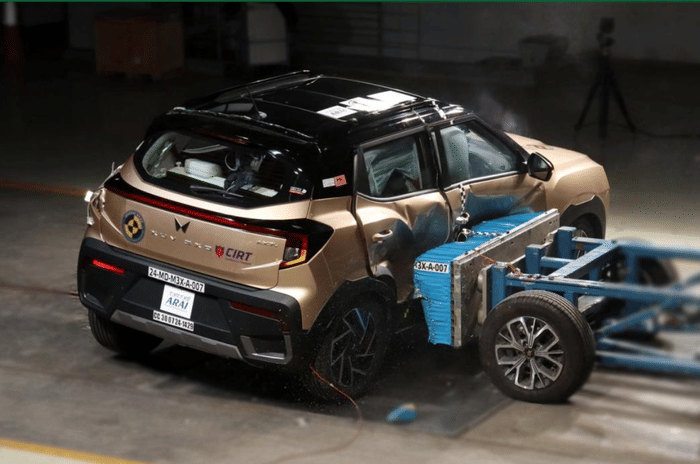
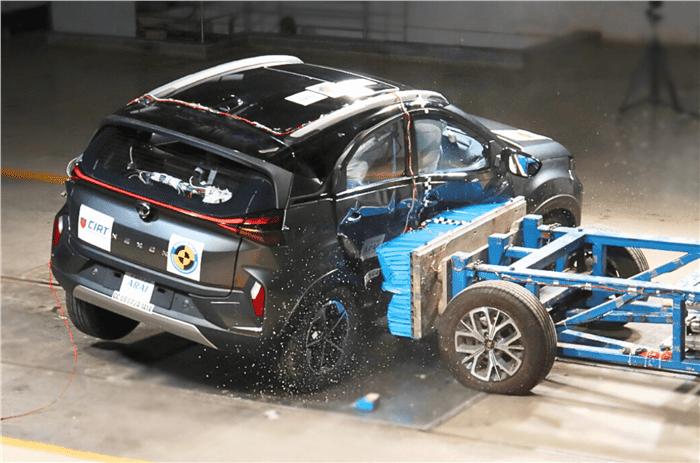
Crash-tested in June 2026 (representational image).
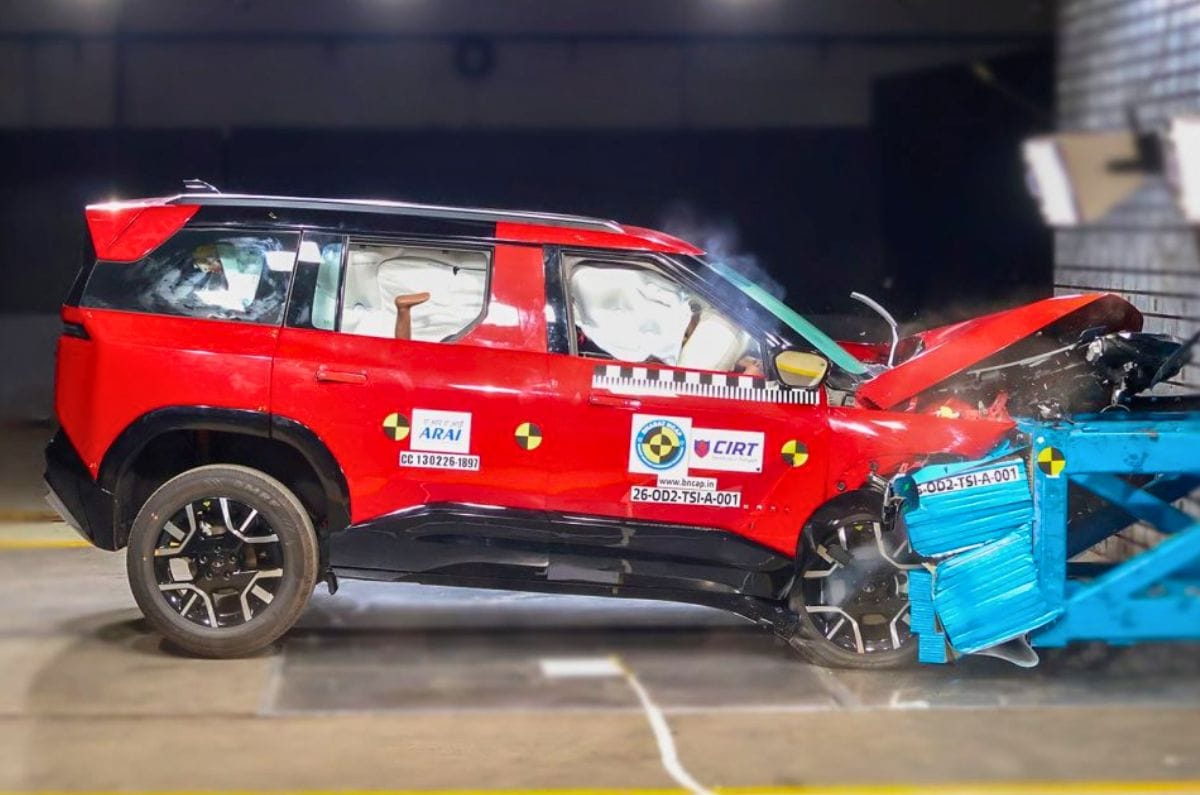
The Nissan Tekton is the latest model to be crash tested by Bharat NCAP, earning a full 5-star safety rating. The SUV scored 30.49 out of 32 points for adult occupant protection (AOP) and 45 out of 49 points for child occupant protection (COP). This 5-star rating applies to all variants of the Tekton. Standard safety features include six airbags, electronic stability control, hill start assist, a tyre pressure monitoring system, and three-point seatbelts for all occupants.
2. Renault Duster
BNCAP rating: 5 stars
Crash-tested in April 2026.
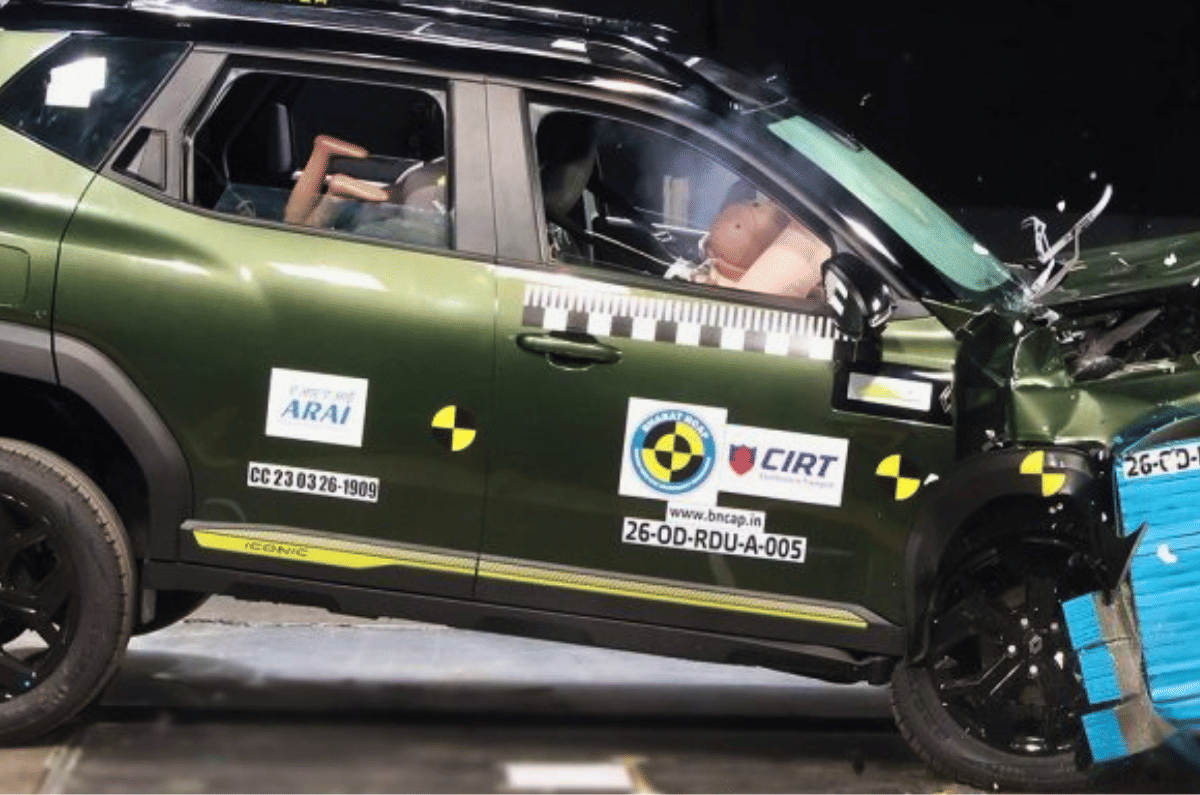
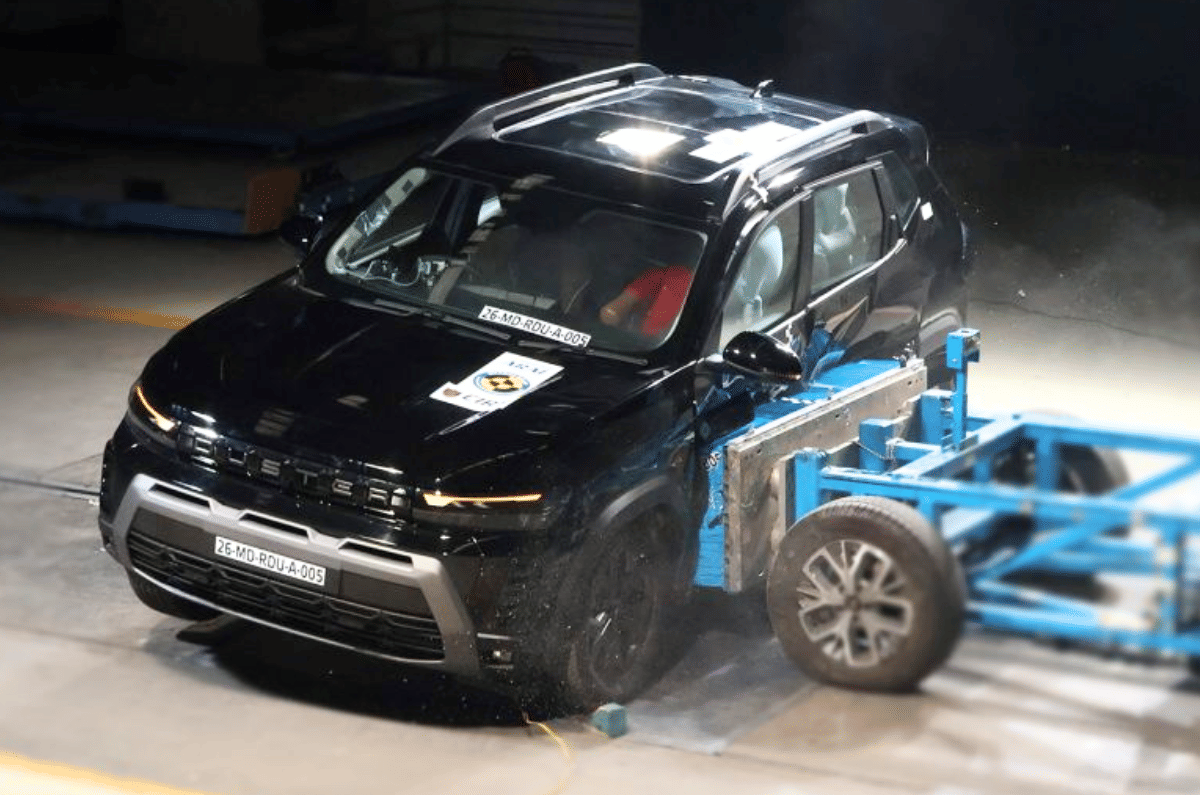
The Renault Duster was crash tested before its badge-engineered sibling, the Tekton, and both SUVs received identical BNCAP scores. All Duster variants feature 6 airbags, along with ABS, ESP, traction control and a tyre-pressure monitoring system.
3. Hyundai Venue
BNCAP rating: 5 stars
Crash-tested in March 2026.
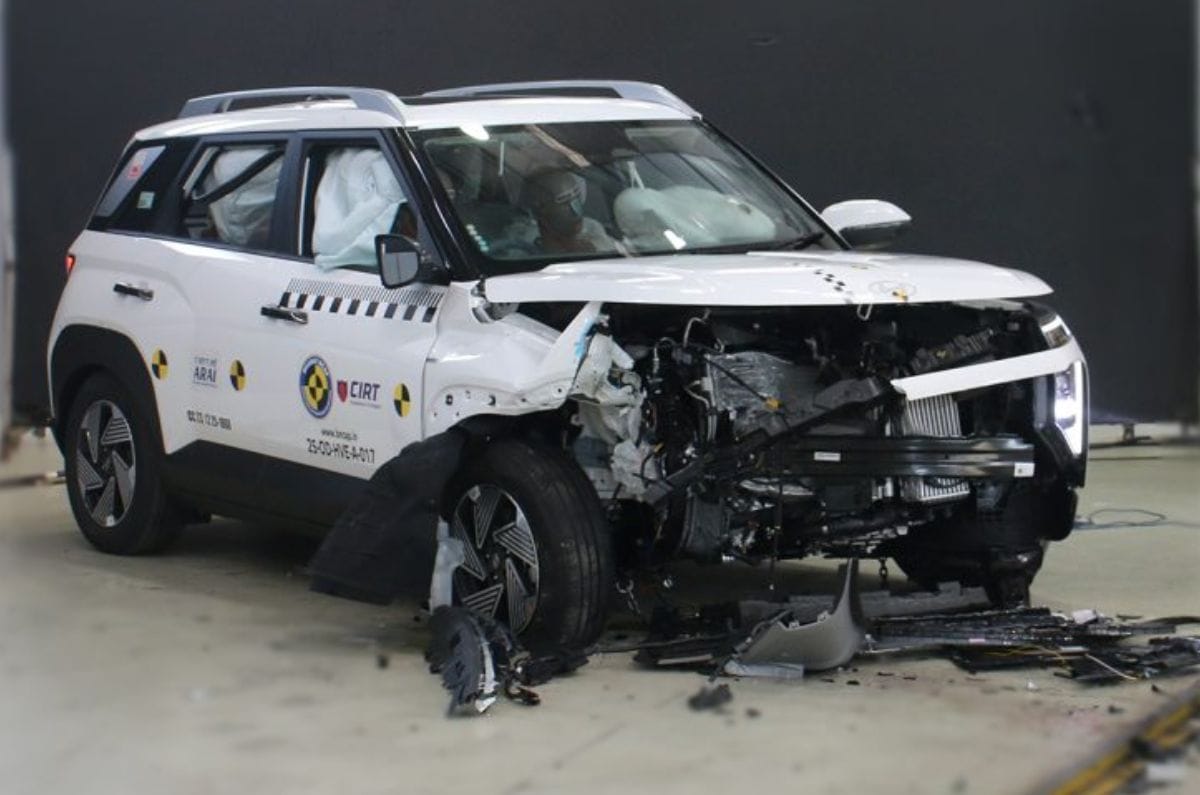
The Hyundai Venue has received a 5-star safety rating from Bharat NCAP, which tested its HX2 diesel-manual and HX10 diesel-automatic variants, but the ratings apply to the entire line-up, including the N Line version. The Venue scored 31.15 out of 32 points in AOP and 44.46 out of 49 in COP. The Hyundai Venue is equipped with 6 airbags, hill-start assist, a tyre-pressure monitoring system (TPMS), 3-point seatbelts with reminders for all seats, rear parking sensors and ISOFIX child-seat anchorages as standard.
4. Kia Seltos
BNCAP rating: 5 stars
Crash-tested in March 2026.
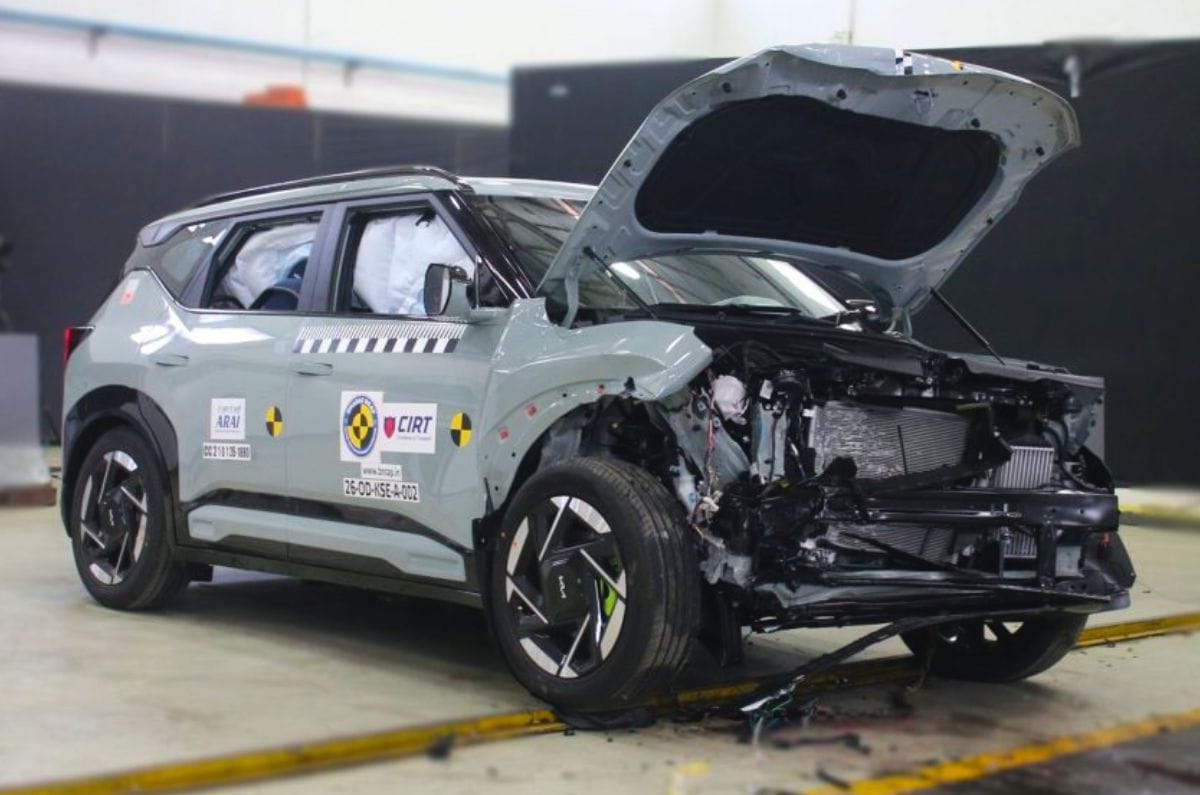
The Kia Seltos is the second car from the brand after the Syros to receive a 5-star safety rating in the Bharat NCAP crash tests. It scored 31.70 points in AOP and 45 in COP. Only the diesel-powered HTE(O) and GTX variants were tested, but the results apply to all variants of the Seltos. The standard safety kit on the Kia Seltos includes 6 airbags, TPMS, a rear parking camera with sensors, disc brakes on all wheels, hill-start and hill-descent control and ISOFIX child-seat anchorages.
5. Tata Sierra
BNCAP rating: 5 stars
Crash-tested in March 2026.
The Sierra is one of the latest Tata model on this list to receive a 5-star safety rating in both AOP and COP, securing 31.14 and 44.43 points, respectively. While BNCAP tested only the midsize SUV’s Adventure+ and Accomplished+ diesel variants, the ratings apply to its entire line-up. As standard, the Sierra gets 6 airbags, rear parking sensors, all-wheel disc brakes, ABS, EBD, ESC, traction control and more.
6. Vinfast VF7
BNCAP rating: 5 stars
Crash-tested in January 2026.
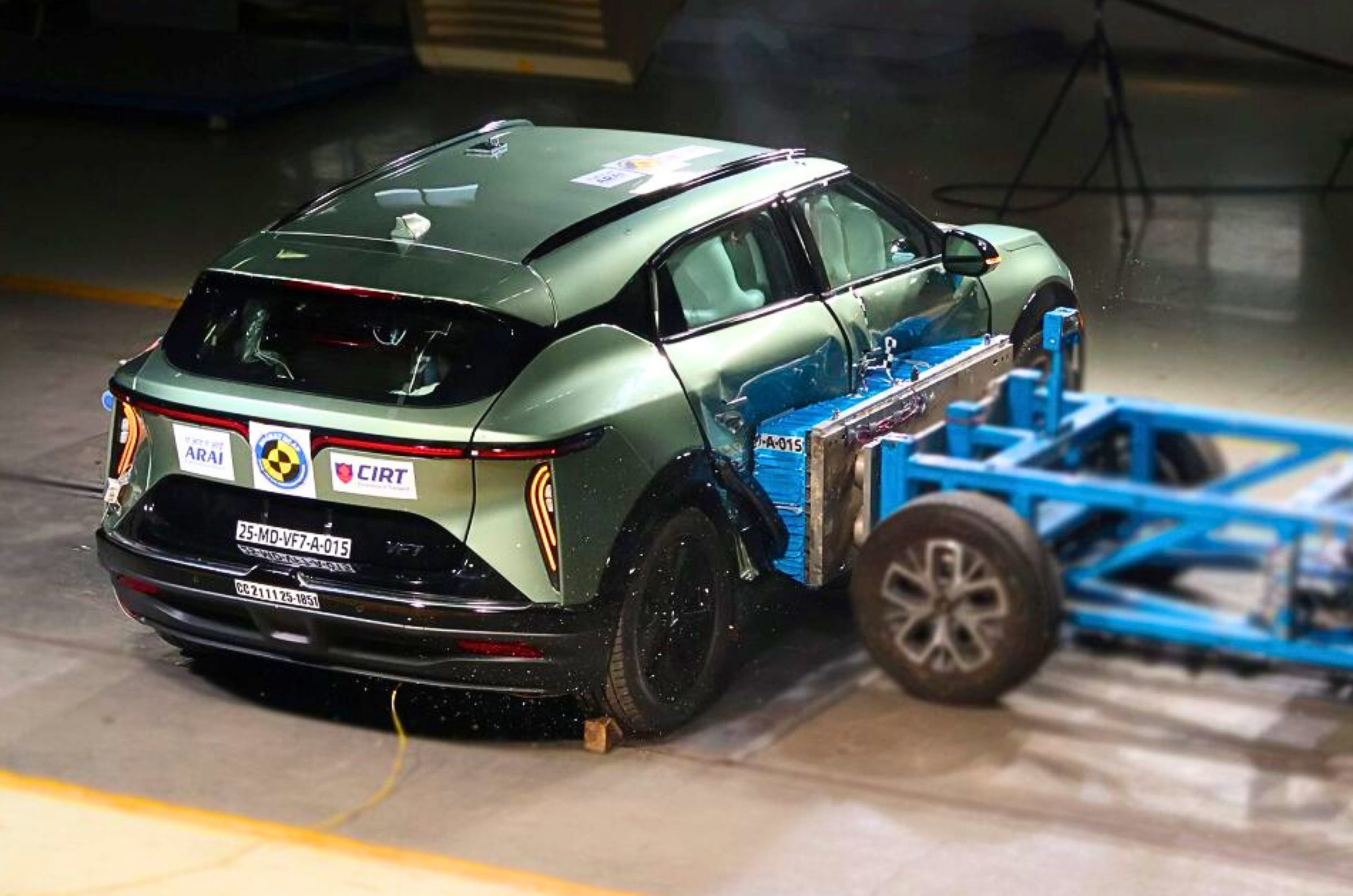
The Vinfast VF7, too, has secured a 5-star safety rating in both adult and child occupant protection, with 28.54 and 45.25 points, respectively. Though Bharat NCAP tested only the VF7 Wind and Sky variants, the rating applies to the entire range. The VF7 offers 7 airbags, ISOFIX anchors, ESC, and more as standard.
7. Vinfast VF6
BNCAP rating: 5 stars
Crash-tested in January 2026.
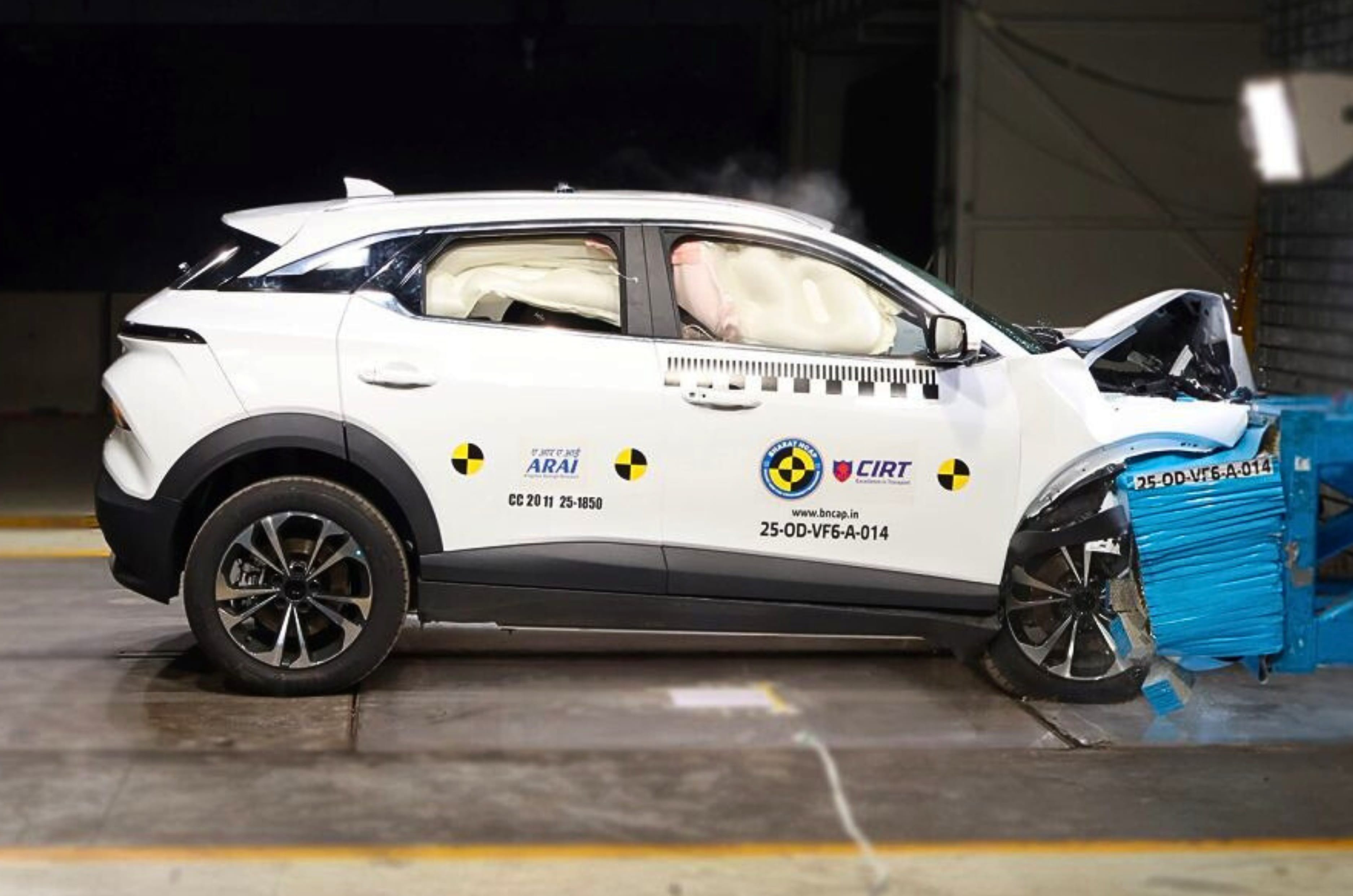
Also receiving a 5-star rating in both adult and child occupant protection, the Vinfast VF6 scored 27.13/32 in AOP and 44.41/49 in COP. Bharat NCAP tested all trims of the VF6 – Earth, Wind and Sky. As standard, the VF6 comes equipped with 7 airbags, including a driver knee airbag, and 3-point seat belts with reminders for all passengers, ESC and ISOFIX anchors for rear outboard seats.
8. Tata Punch
BNCAP rating: 5 stars
Crash-tested in January 2026.
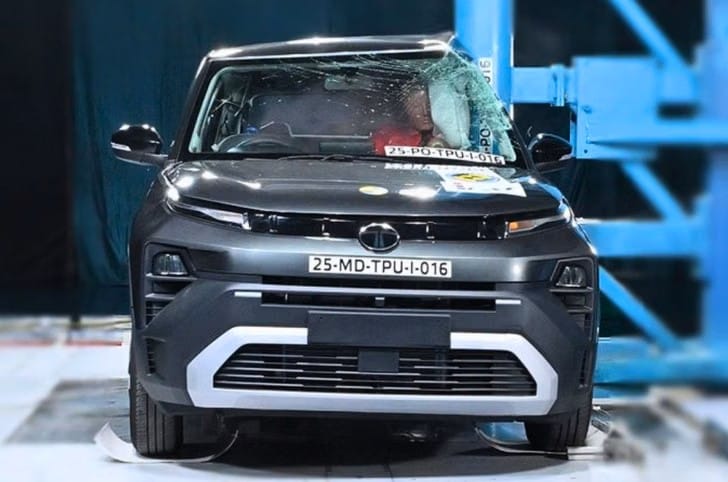
The Tata Punch, with 30.58 points in AOP and 45 points in COP, received a 5-star safety rating in both. The variants tested by Bharat NCAP were the Punch Pure+ CNG AMT and Accomplish CNG MT, but the rating applies to the entire line-up. The Punch’s safety suite features 6 airbags as standard, ESP, rear parking sensors, a tyre-pressure monitoring system, hill-hold and hill-descent control, ISOFIX child-seat anchorages, auto headlamps and rain-sensing wipers.
9. Maruti Suzuki e Vitara
BNCAP rating: 5 stars
Crash-tested in December 2025.
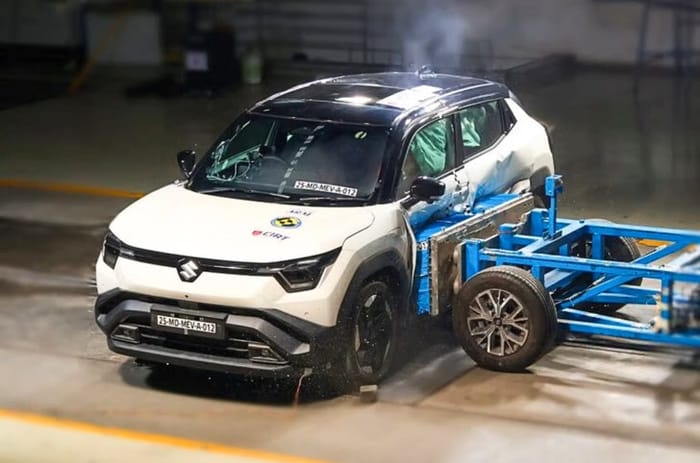
The Maruti Suzuki e Vitara has been awarded a 5-star rating in both AOP and COP, scoring 31.49/32 and 43/49, respectively. Bharat NCAP tested the top-spec Alpha variant with a 61kWh battery pack, and the rating applies to the entire range. Safety features of the e Vitara include 7 airbags, a tyre-pressure monitoring system (TPMS), a Level 2 ADAS suite with lane-keep assist, adaptive cruise control and AEB, rear disc brakes, ISOFIX mounts and a 360-degree camera.
10. Honda Amaze
BNCAP rating: 5 stars
Crash-tested in November 2025.
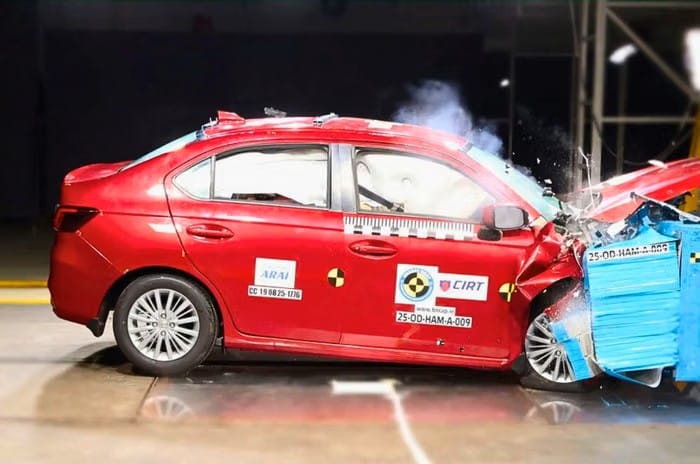
The third-gen Honda Amaze has been awarded a 5-star safety rating by Bharat NCAP, becoming the second sedan to be tested by the road safety organisation. The Amaze has secured 5 stars in AOP (28.33 out of 32 points) and 4 stars in COP (40.81/49 points). In terms of safety kit, all six variants are equipped with 6 airbags, ISOFIX child-seat anchors, ESC, ABS, rear parking sensors and seat belt reminders as standard.
11. Citroen Aircross
BNCAP rating: 5 stars
Crash-tested in September 2025.
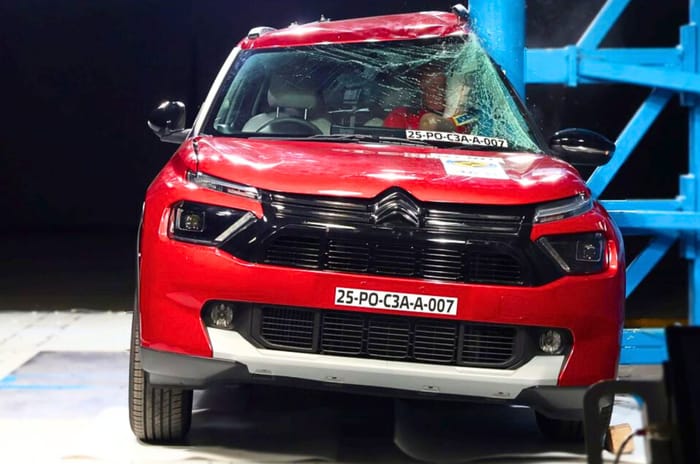
The Citroen Aircross, sold in 5- and 7-seat configurations, was awarded 5 stars in AOP and 4 stars in COP. Notably, the AOP and COP crash-safety test ratings are valid for the Aircross 5-seat version’s 1.2-litre petrol and turbo-petrol variants. The Aircross received an AOP score of 27.05/32 and a COP score of 40/49. As standard, the Aircross comes with safety features like 6 airbags, ISOFIX child-seat mounts, electronic stability control, TPMS and hill-hold assist.
12. Maruti Suzuki Invicto
BNCAP rating: 5 stars
Crash-tested in September 2025.
Like most cars on this list, the Maruti Invicto MPV scored a 5-star rating for both adult and child occupant protection. Maruti’s flagship MPV was awarded 30.43 out of 32 in AOP and 44.90 out of 49 in COP. These safety ratings are applicable to all variants, which have 6 airbags, ABS with EBD, rear disc brakes, and 3-point seatbelts for all passengers as standard. The top-spec Invicto Alpha+ variant adds a 360-degree camera, TPMS, rear defogger and an anti-theft security system.
13. Tata Altroz
BNCAP rating: 5 stars
Crash-tested in September 2025.
The Tata Altroz has scored a 5-star rating for both adult and child occupant protection. The premium Tata hatchback was awarded 29.65 points out of 32 in AOP and 44.90 out of 49 in COP. These safety ratings are applicable to all variants of the Altroz. Starting from the base model, the Altroz hatchback comes equipped with 6 airbags, ABS, ESC and 3-point seat belts for all passengers. Higher Altroz variants add a 360-degree camera, a blind-spot monitor and TPMS.
14. Maruti Suzuki Victoris
BNCAP rating: 5 stars
Crash-tested in September 2025.
The Maruti Victoris got a 5-star safety rating in both adult and child occupant protection. The Maruti SUV secured 31.66 points out of 32 in AOP and 43 points out of 49 in COP. While BNCAP tested hybrid and petrol-AT variants of Victoris, the safety rating is applicable to the entire line-up. As standard, the Victoris comes equipped with 6 airbags, 3-point seat belts with reminders for all passengers, ESC and ISOFIX anchors for rear outboard seats. Top-spec trims even get a Level 2 ADAS suite.
15. Toyota Innova Hycross
BNCAP rating: 5 stars
Crash-tested in June 2025.
The Toyota Innova Hycross has a 5-star safety rating for both adult and child occupant protection, with 30.47/32 and 45/49 points, respectively. Bharat NCAP tested both petrol and hybrid variants, and the rating applies to the entire Innova Hycross range. As standard, the Innova Hycross comes equipped with 6 airbags, 3-point seat belts with reminders for all passengers, ESC and ISOFIX anchors; top-spec trim also gets an ADAS suite.
16. Tata Harrier EV
BNCAP rating: 5 stars
Crash-tested in June 2025.
The Tata Harrier EV has been rated 5 stars in both adult and child occupant protection, scoring a full 32 points in AOP and 45 out of 49 points in COP. It is only the second vehicle tested by BNCAP to secure maximum points in AOP, the other being the Mahindra XEV 9e. The Harrier EV comes with 6 airbags (7 on Fearless and Empowered), 3-point seat belts with reminders for all passengers, ESC and ISOFIX anchors as standard. Notably, it has slightly better AOP and COP scores than the combustion-powered Harrier, which also has a 5-star BNCAP rating.
17. Maruti Suzuki Dzire
BNCAP rating: 5 stars
Crash-tested in June 2025.
As the first sedan to be tested by Bharat NCAP, the Maruti Suzuki Dzire took home an impressive 5-star safety rating. The compact sedan scored 29.46 out of 32 points for AOP and 41.57 out of 49 points for COP. BNCAP tested the Dzire’s base LXI trim, which comes with standard safety equipment like 6 airbags, ESC, reverse parking sensors, hill-hold assist, and overspeed alerts, among other features, thereby extending the 5-star rating to all variants.
18. Maruti Suzuki Baleno
BNCAP rating: 4 stars
Crash-tested in June 2025.
Maruti Baleno scored four stars in BNCAP’s crash tests; this rating applies to the respective MT and AMT models of Zeta and Alpha variants. Out of 32 points, the AOP score for the Zeta and Alpha variants scored 26.52 points. The COP score was 34.81 for all variants. Standard safety features for the Baleno include 6 airbags, ABS with EBD, brake assist, ESC, hill-hold assist and 3-point seat belts with reminders for all passengers.
19. Tata Nexon EV
BNCAP rating: 5 stars
Crash-tested in April 2025.
The 30kWh and now-discontinued 40.5kWh variants of the Tata Nexon EV achieved a 5-star Bharat NCAP rating for both adult and child protection in May 2024, scoring 29.86/32 and 44.95/49 points, respectively. In April 2025, BNCAP also tested the current range-topping 45kWh variants of the Nexon EV, which received identical AOP and COP scores and, therefore, a 5-star rating. The standard safety features for the Nexon EV include ABS with EBD, 6 airbags, ESP, hill-hold control, ISOFIX child-seat anchor points, rear parking sensors, a rear camera and TPMS.
20. Kia Syros
BNCAP rating: 5 stars
Crash-tested in April 2025.
The Kia Syros compact SUV, with 30.21 out of 32 points in AOP and 44.42 out of 49 points in COP, secured 5-star ratings in both parameters. These ratings are applicable to the entire Syros petrol range. It should be noted that the Syros is Kia’s first SUV to get a 5-star safety rating in a crash test done by BNCAP or GNCAP. Although it uses the K1 platform as the Hyundai Grand i10 (which got 2 stars in the 2020 GNCAP), Kia achieved the top rating by using a reinforced K1 base and adding many hot-stamped parts to the body shell. The Syros offers ABS with EBD, TPMS and 6 airbags (with a passenger-side airbag cut-off switch) as standard safety features.
21. Skoda Kylaq
BNCAP rating: 5 stars
Crash-tested in January 2025.
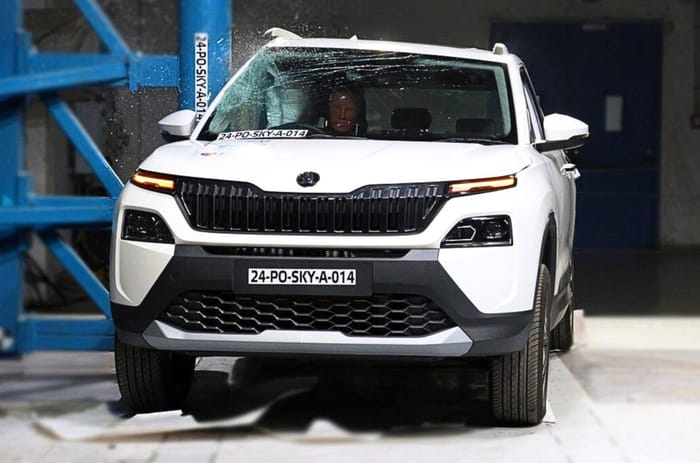
The Skoda Kylaq compact SUV also got a 5-star rating in both adult and child occupant protection in the BNCAP crash test. Skoda’s compact SUV scored 30.88 out of 32 in AOP and 45 out of 49 in COP. ESC, 6 airbags, 3-point seat belts with reminders for all passengers and ISOFIX anchors for rear outboard seats are some safety features available across its variants.
22. Mahindra XEV 9e
BNCAP rating: 5 stars
Crash-tested in January 2025.
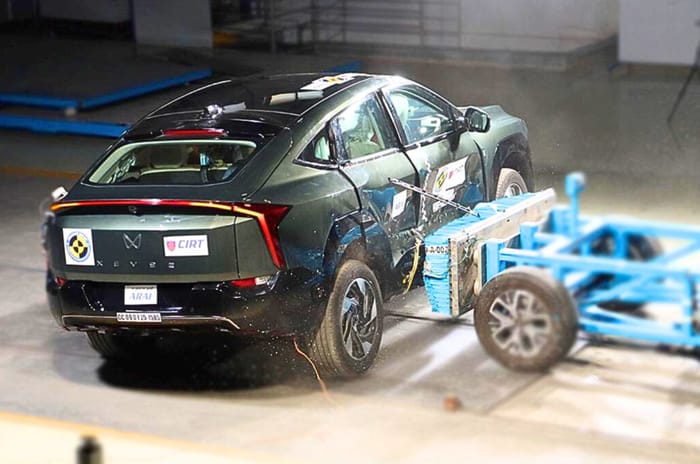
The Mahindra XEV 9e coupe-SUV was awarded a 5-star rating. The electric SUV scored a full 32 points in AOP and 45 out of 49 points in COP. The model tested by BNCAP was the top-spec XEV 9e Pack Three. Safety features like 6 airbags, ISOFIX anchors, rear disc brakes and tyre-pressure monitors are offered starting with the XEV 9e Pack One.
23. Mahindra BE 6
BNCAP rating: 5 stars
Crash-tested in January 2025.
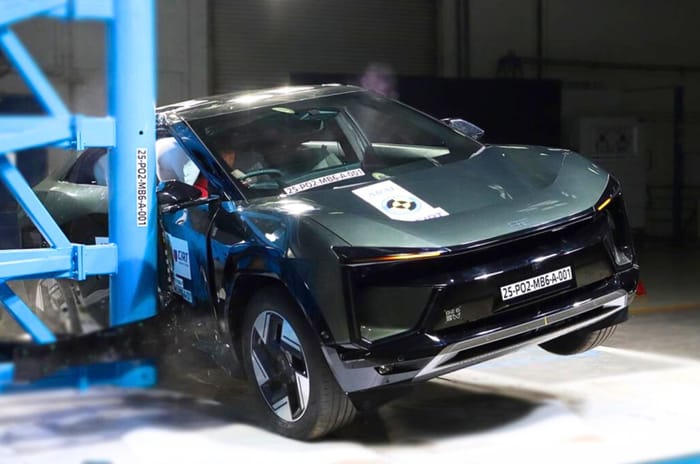
Another electric offering from the SUV specialist, the Mahindra BE 6, also scored a 5-star rating in both AOP and COP. In AOP, the EV received 31.97 points out of 32, and in COP, it got 45 points out of 49. Just like the XEV 9e, the BNCAP crash-tested the range-topping BE 6 Pack Three trim, but Mahindra claims that this rating applies to the base Pack One as well. In terms of standard safety equipment, the BE 6 comes with 6 airbags, a rear camera, parking sensors, TPMS and a driver drowsiness detection system.
24. Mahindra Thar Roxx
BNCAP rating: 5 stars
Crash-tested in November 2024.
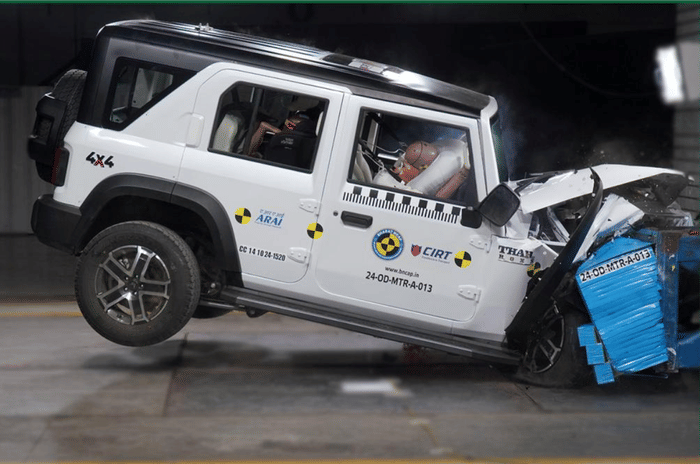
The 5-star rating for the Mahindra Thar Roxx consisted of AOP and COP scores of 31.09 and 45, respectively. This safety rating applies to all the variants of the 5-door SUV. The Thar Roxx complies with AIS-100 pedestrian protection norms for keeping the occupants as well as pedestrians safe when on the go. As standard, it features 6 airbags and a cut-off switch for the passenger-side airbag. Additionally, ISOFIX child-seat anchor points, all 3-point seatbelts with reminders and ESC are offered throughout the range. Like with the XUV 3XO, an ADAS suite is offered in the AX5L and AX7L variants.
25. Mahindra XUV 3XO
BNCAP rating: 5 stars
Crash-tested in November 2024.
Next up, the Mahindra XUV 3XO continued the 5-star streak with scores of 29.36 in AOP and 43 in COP. BNCAP reported that the MX2 and AX7 L variants were sent by the homegrown brand for testing, but the results apply to the entire XUV 3XO line-up. Also, all trims of the subcompact SUV have 6 airbags, 3-point seatbelts with reminders, ESC, ISOFIX seats and a passenger-side airbag cut-off switch among the standard safety assist technologies. Level 2 ADAS suite, however, is reserved for the AX5 L and AX7 variants.
26. Tata Nexon
BNCAP rating: 5 stars
Crash-tested in October 2024.
The Tata Nexon secured a perfect 5-star rating for AOP and COP, scoring 29.41 and 43.83 points, respectively. Standard safety features include 6 airbags, ESC, ABS with EBD, ISOFIX child-seat anchor points, rear parking sensors and hill-hold control.
27. Tata Curvv
BNCAP rating: 5 stars
Crash-tested in October 2024.
The Tata Curvv’s crash-test result was revealed alongside the Nexon, and just like the compact SUV, the coupe-SUV scored 5 stars for both adult and child occupant protection. It secured 29.50 points for AOP and 43.66 points for COP. On the safety front, the Curvv gets ABS with EBD, ESC, 6 airbags, hill-hold control and ISOFIX child-seat anchor points as standard across the range.
28. Tata Curvv EV
BNCAP rating: 5 stars
Crash-tested in October 2024.
The Tata Curvv EV secured 5 stars for AOP and COP, scoring 30.81 and 44.83 points, respectively. It gets 6 airbags, ESP, all-wheel disc brakes, a rear camera and rear parking sensors as standard. Higher variants of the electric vehicle also get Level 2 ADAS, just like its ICE twin.
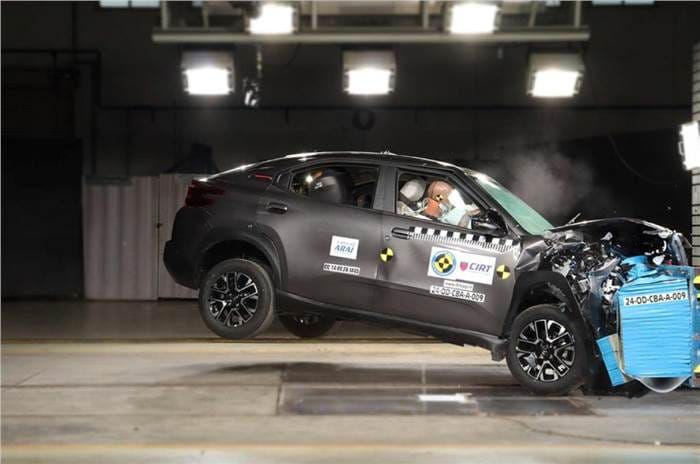
29. Citroen Basalt
BNCAP rating: 4 stars
Crash-tested in October 2024.
The Citroen Basalt was the first car from the brand to have been crash-tested by Bharat NCAP. The coupe-SUV managed to secure 4 stars for AOP (26.19/32) and 4 stars for COP (35.90/49). The Citroen offers the Basalt with 6 airbags, ESP, hill-hold, TPMS, a rearview camera, rear parking sensors and ISOFIX child-seat anchor points.
30. Tata Harrier
BNCAP rating: 5 stars
Crash-tested in December 2023 (representational image).
Tested in December 2023, the Tata Harrier SUV received a 5-star safety rating for both adult and child occupants’ safety, achieving an AOP score of 30.08 and a COP score of 44.54. Tata offers the Harrier with ABS and EBD, corner stability control, 6 airbags, ESP, hill-hold control, ISOFIX child-seat anchor points, traction control and rear parking sensors as standard.
31. Tata Safari
BNCAP rating: 5 stars
Crash-tested in December 2023.
The Tata Safari was also crash-tested in December 2023, securing a 5-star safety rating, matching the Harrier with an AOP score of 30.08 and a COP score of 44.54. As standard, the Tata Safari gets all-wheel disc brakes, 6 airbags, ABS with EBD, corner stability control, ESP, hill-hold control, ISOFIX child-seat anchor points, rear parking sensors, roll-over mitigation and traction control.
Conducted in association with Spinny, India’s leading pre-owned car platform, the fourth edition of our Used Car Study analyses real-world resale values across a broad spectrum of vehicles sold in the Indian market to assess depreciation trends over a five-year ownership period. The study is based on actual transactional data shared by Spinny for vehicles sold between January 1 and August 31, 2025.
In this part of the resale value study series, we take a look at the executive SUV segment:
Executive SUVs resale value
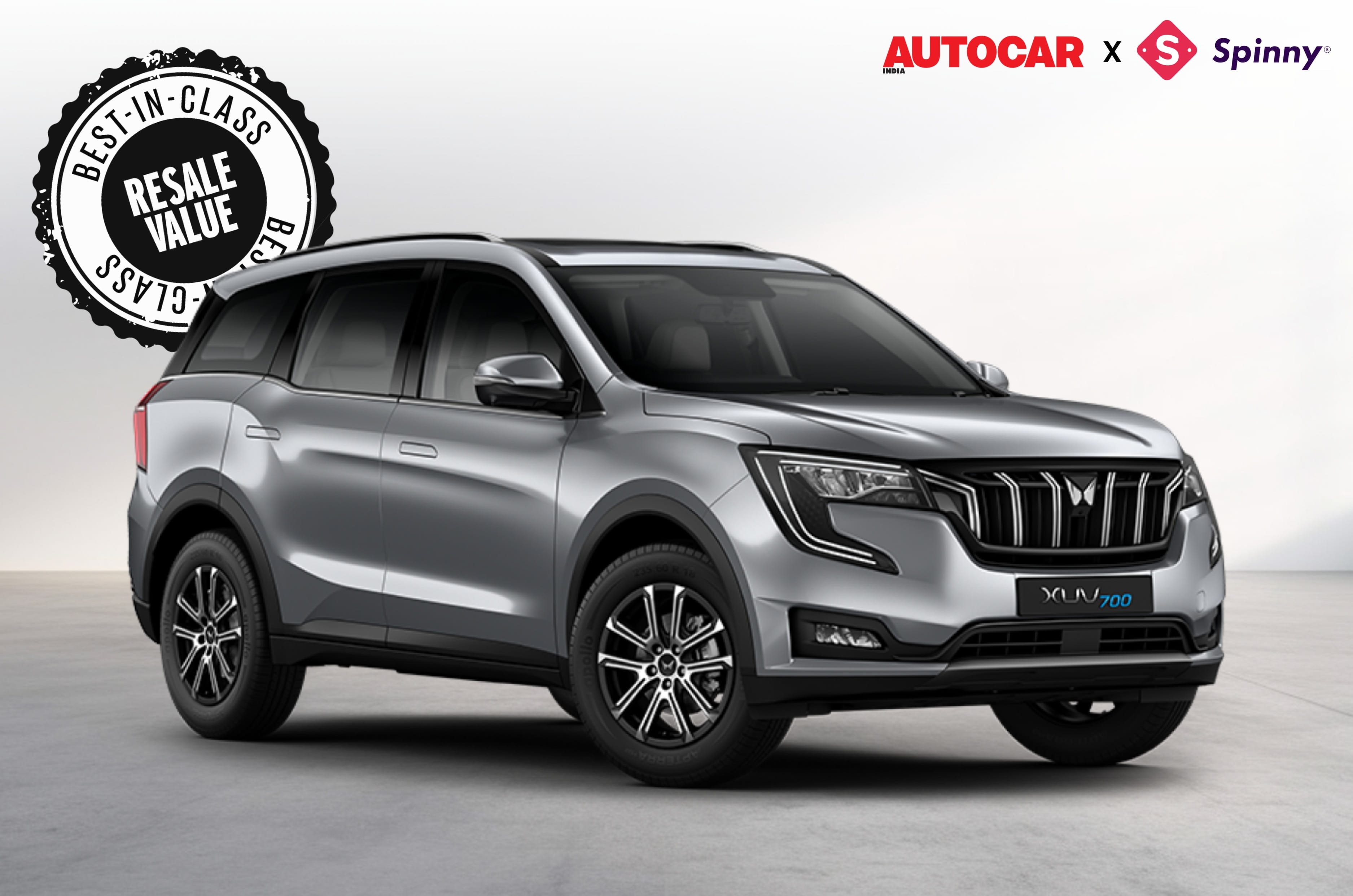
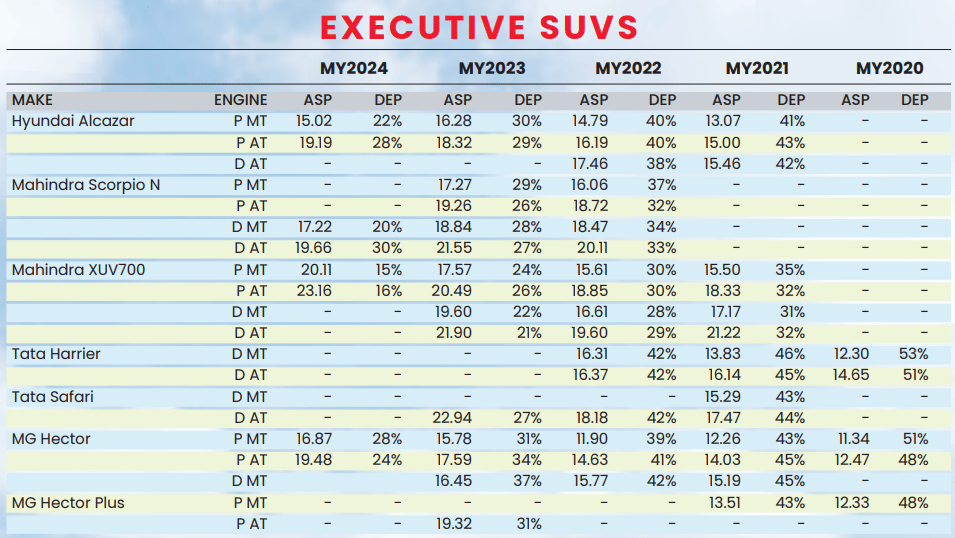
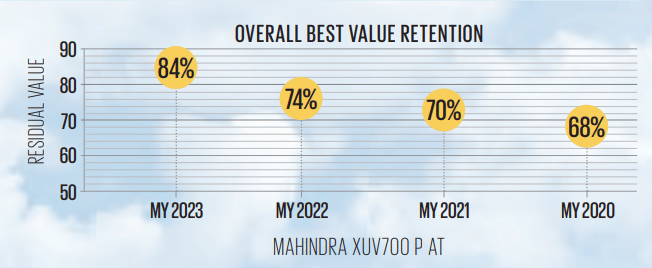
The Mahindra XUV700 has emerged as one of the strongest performers in the used car market, with all variants retaining value impressively well. Particularly noteworthy are the petrol variants, which display the flattest depreciation curves over a four-year period. In fact, one-year-old used examples are trading at only 15-16 percent below their average on-road prices, underlining the SUV’s exceptionally strong market demand.
By comparison, five-year-old examples of the Tata Harrier and MG Hector depreciate significantly more, with resale values falling to less than half of their original purchase prices. The Mahindra Scorpio N also holds better value than its rivals, and overall, the Mahindra SUVs display slower depreciation than their Tata counterparts.
As per the study, the average selling price of a five-year-old executive SUV retailed through Spinny was Rs 12.6 lakh. Comparable figures for three-year-old and one-year-old executive SUVs were Rs 16.80 lakh and Rs 18.84 lakh, respectively. Average depreciation over the same periods worked out to 50 percent, 36.41 percent and 22.90 percent, respectively.
Autocar-Spinny resale value study methodology
The analysis covers the average selling prices (ASPs) of vehicles retailed through Spinny’s network across nine cities – Delhi-NCR, Bengaluru, Hyderabad, Pune, Chennai, Mumbai, Lucknow, Ahmedabad and Kolkata.
For the purposes of this study, depreciation has been defined as the percentage difference between a vehicle’s original on-road price in its year of manufacture and its resale value in 2025. In instances where a model was offered with multiple engine options using the same fuel type, the data has been consolidated and averaged. Variant-wise differences have similarly been averaged out.
Discontinued models and powertrain options have been excluded. Additionally, premium vehicles priced above Rs 30 lakh, electric vehicles and certain low-volume models have not been included due to limited transaction data and insufficient sample sizes.



(18).jpg)






.jpg?w=700&c=0)
.jpg?w=700&c=0)
.jpg?w=700&c=0)
.jpg?w=700&c=0)
.jpg?w=700&c=0)
.png?w=700&c=0)