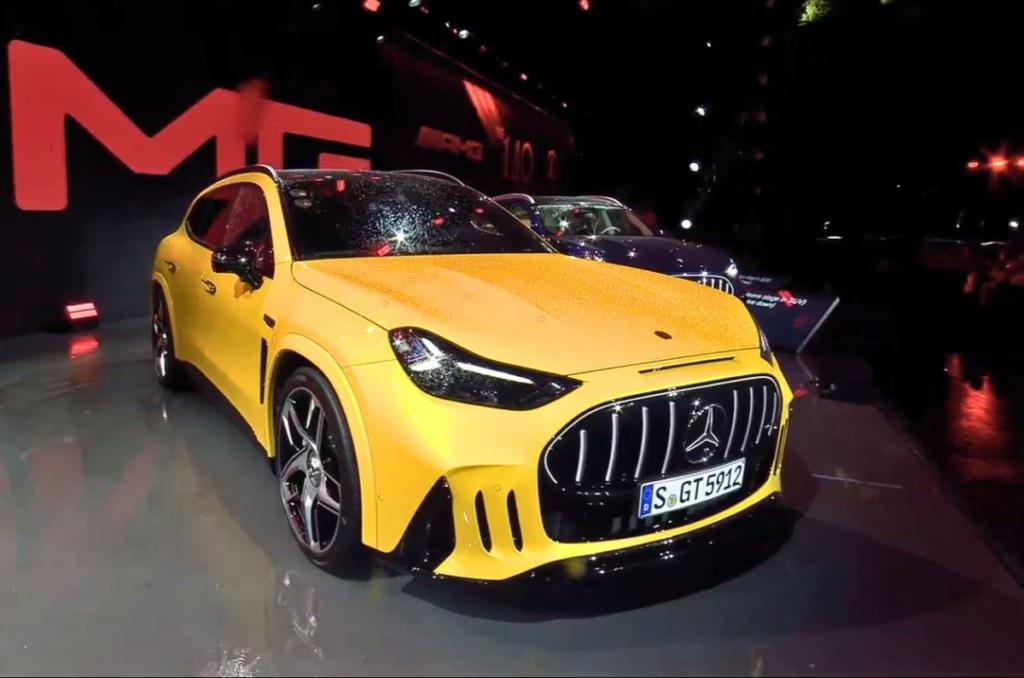
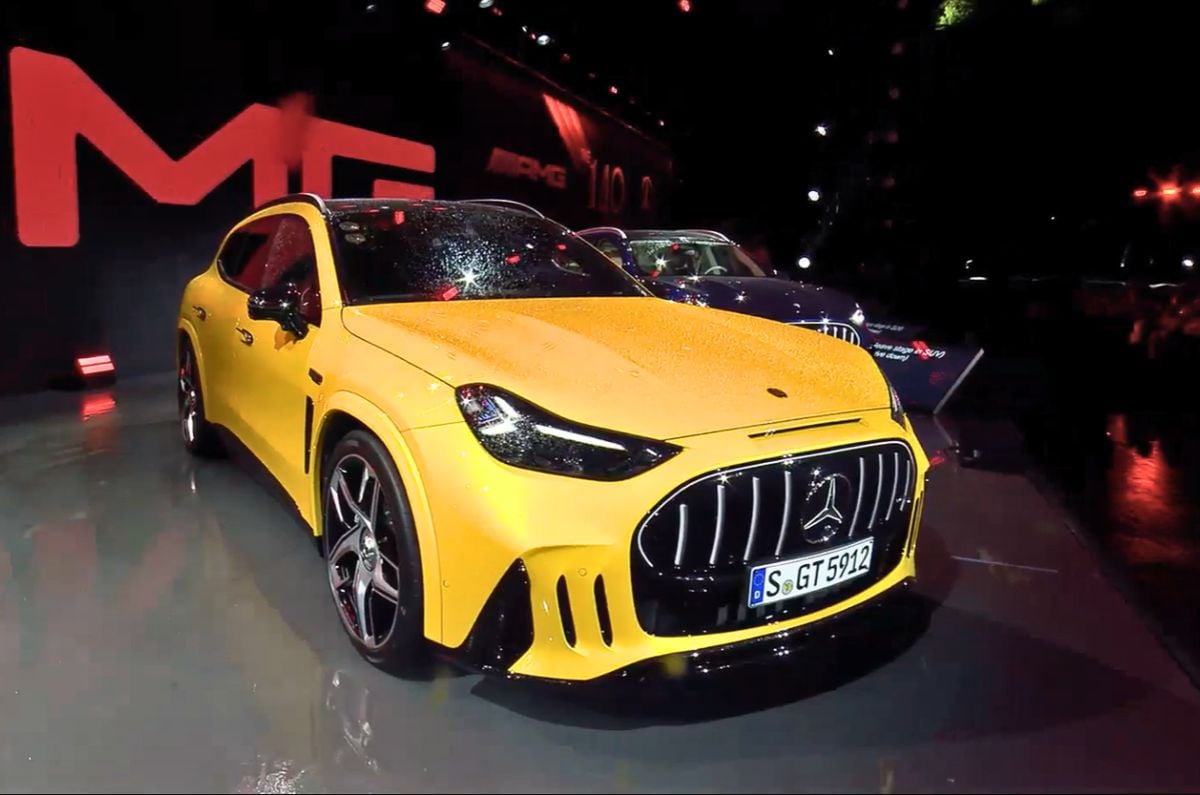
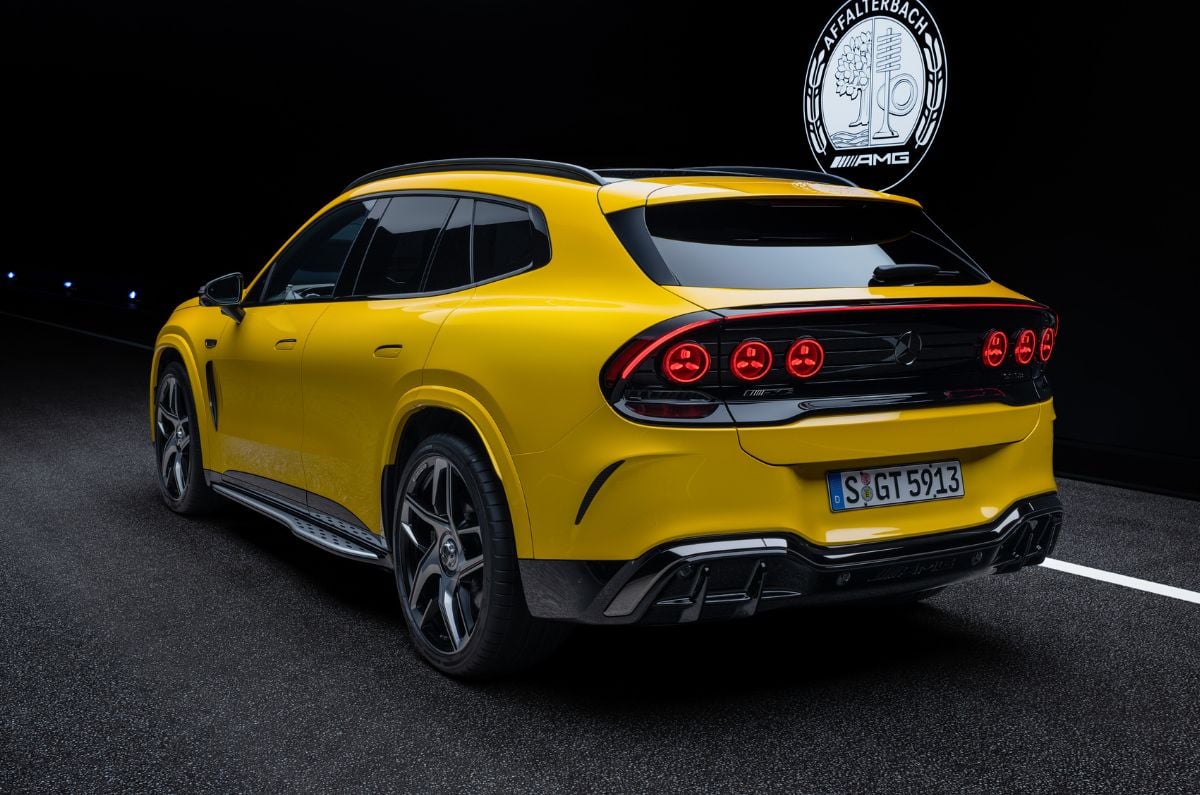
Mercedes has taken the wraps off the AMG GT SUV which, according to the German marque, is the first full-size SUV it has developed completely in-house. The five-seat performance EV shares its underpinnings with the fully electric GT 4-Door Coupe, and will be available in GT 53, GT 55 and GT 63 guises, the last of which makes up to 1,169hp. The GT 53 will be the first to go on sale, with the more powerful variants joining the line-up in spring 2027.
Star-shaped DRLs, illuminated badging, active aero and more.
Personalisation options from the Manufaktur programme.
Three digital displays, built-in AI assistants, AMG-specific apps and more.
Claimed WLTP range of up to 700km, with DC fast charging of up to 710kW.
Mercedes-AMG GT SUV exterior
Illuminated badging, sloping roofline, active aerodynamics, Manufaktur paint options and more
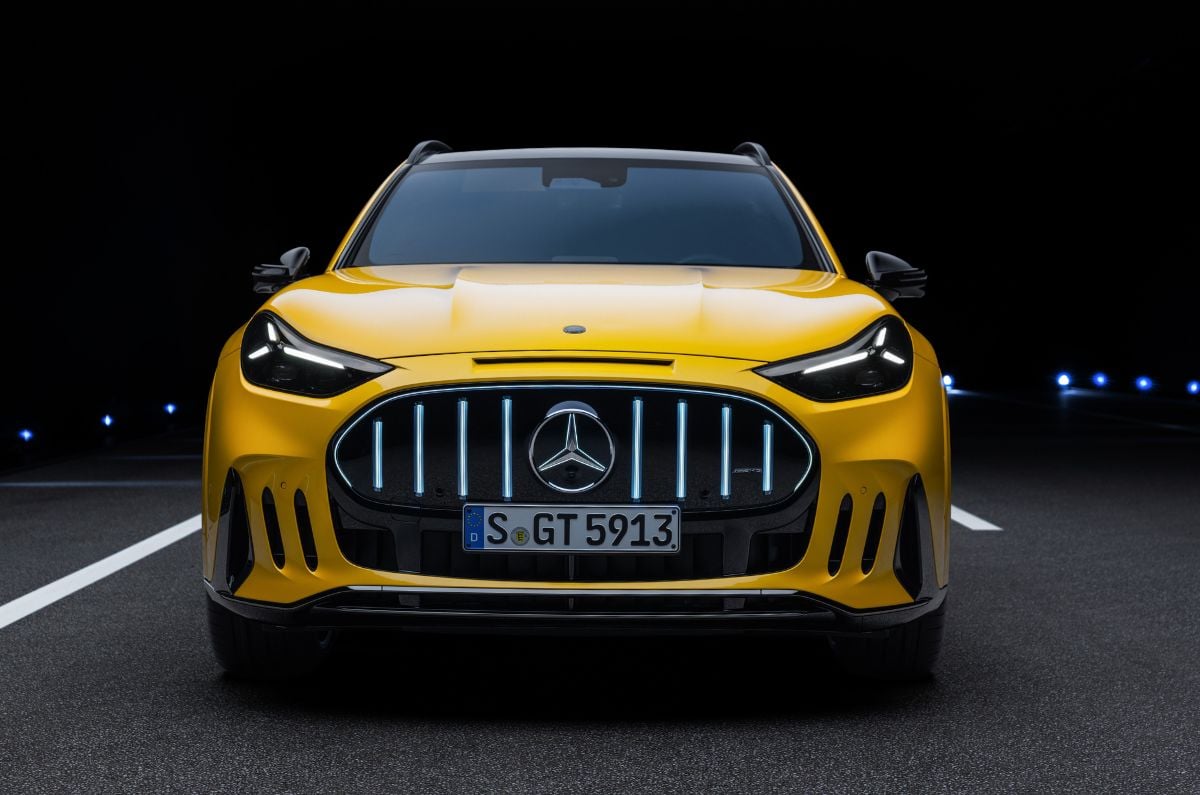
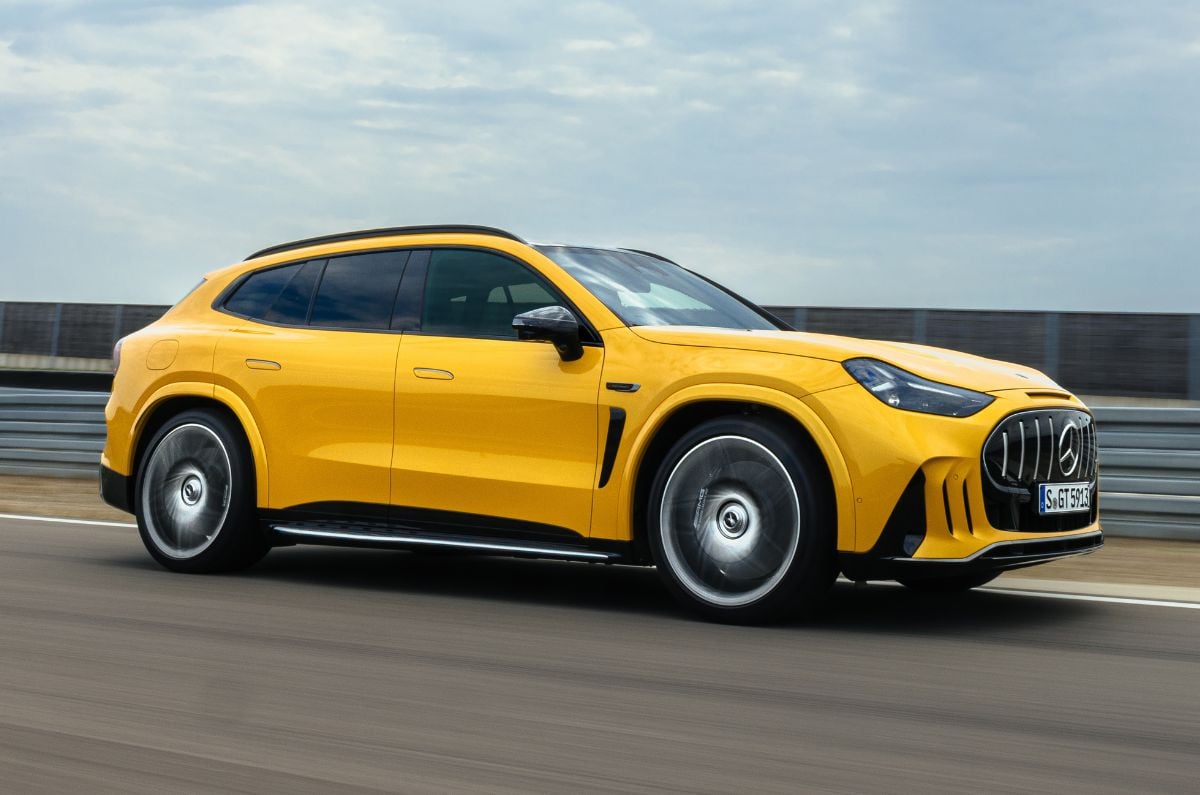
The Mercedes-AMG GT SUV comes in at 5,084mm long, 2,001mm wide and 1,656mm tall, and it has a wheelbase of 3,040mm. The front fascia sports AMG’s vertical-slat grille and Mercedes star, both of which can be optionally illuminated, flanking which are LED headlamps with star-shaped DRLs (daytime running lights). The front bumper features active slats, which only open when components need extra cooling.
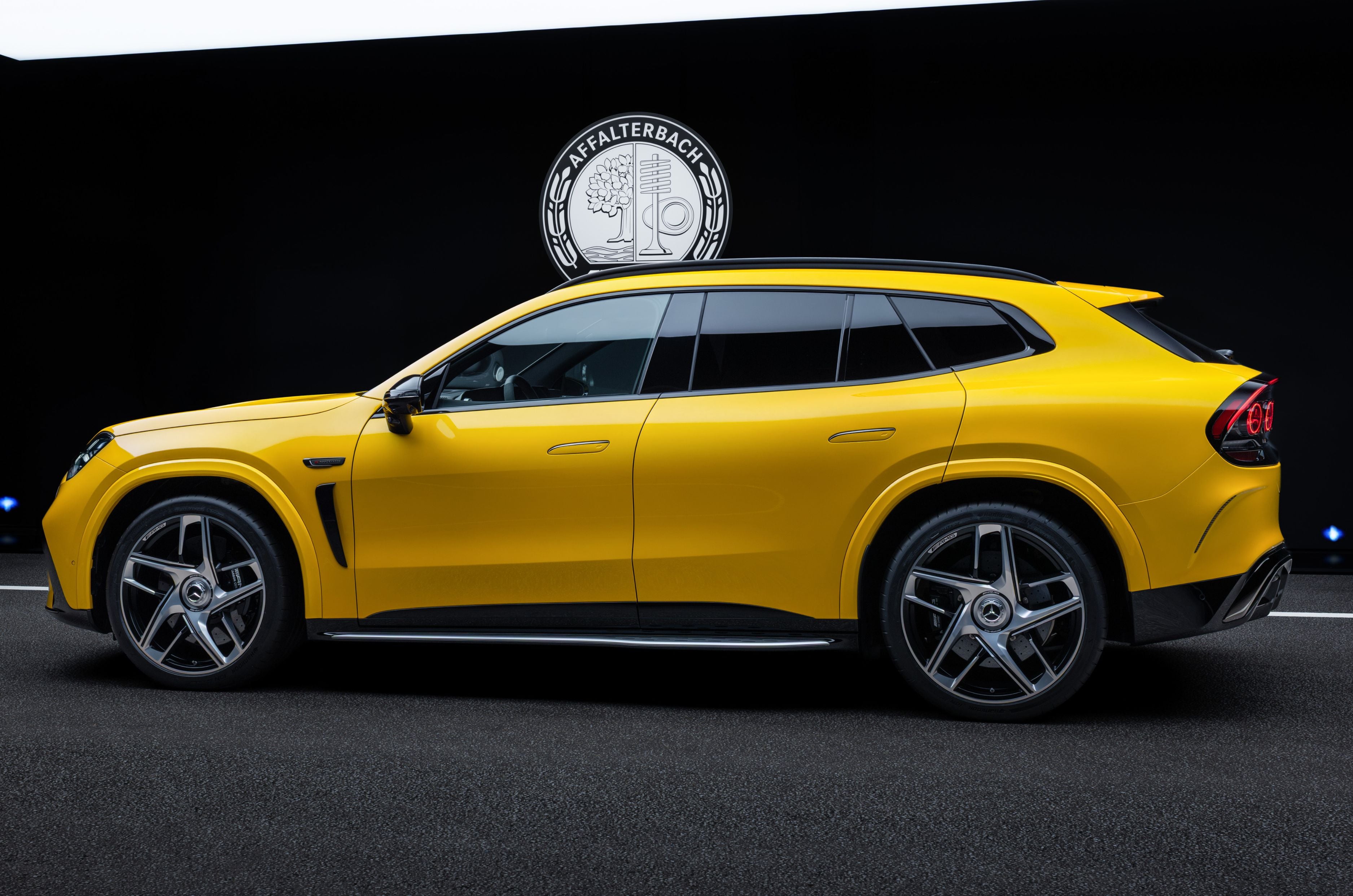
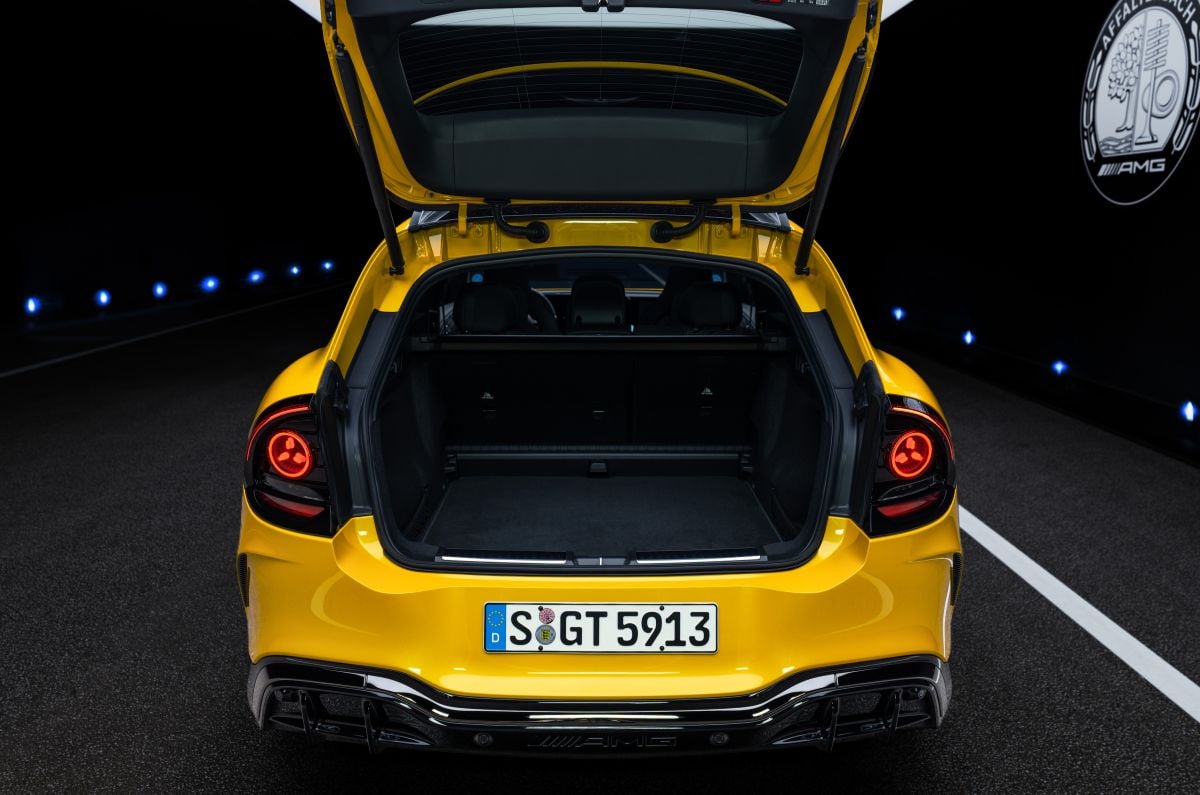
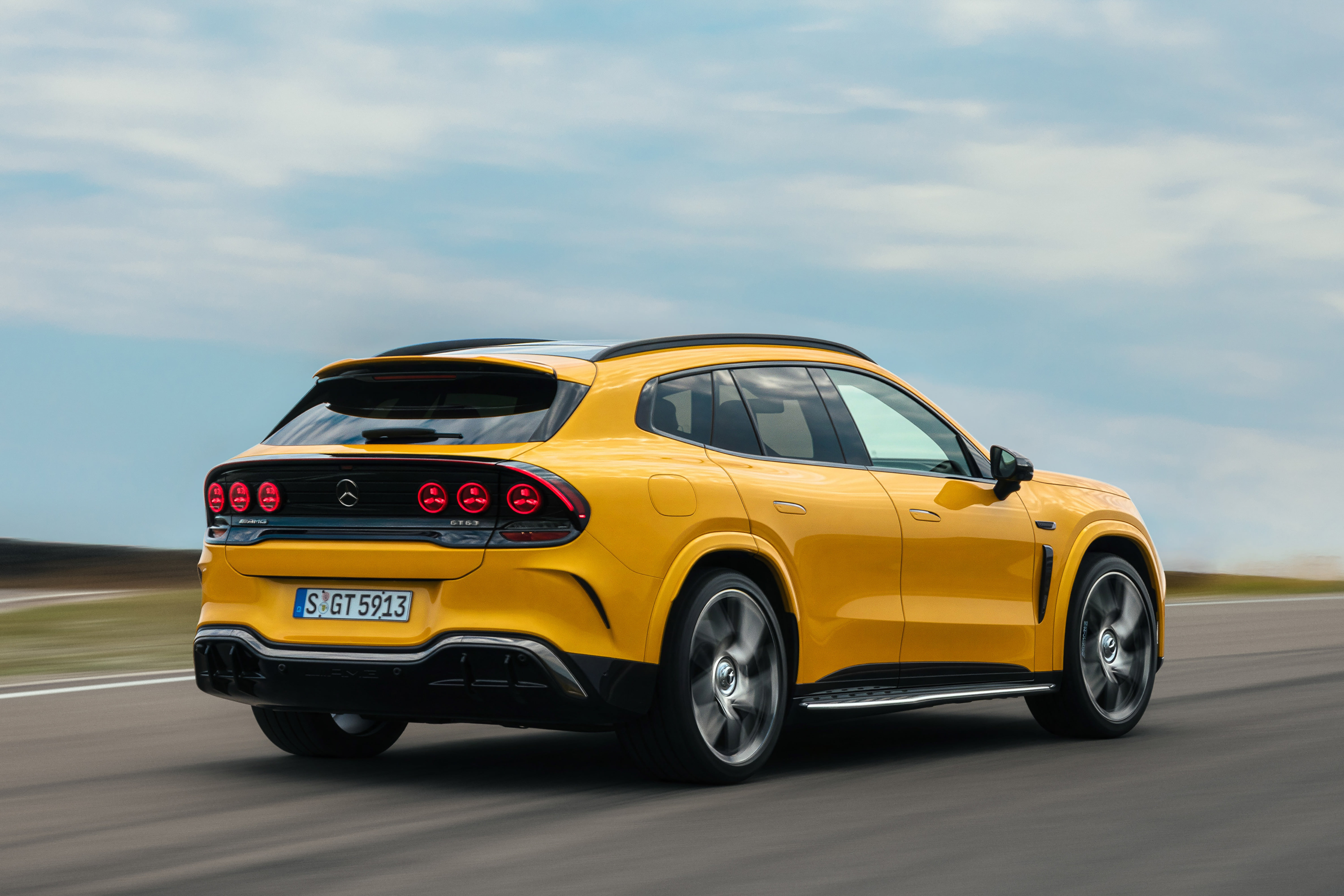
The profile showcases a low-slung roofline that slopes towards the rear along with pronounced wheel arches. Other details here include frameless side windows and compact wing mirrors. Moving to the rear of the AMG GT SUV reveals six circular tail-lamps as seen on the GT 4-Door Coupe, and customers can also opt for a full-width light strip.
Stepping up to the GT 55 and GT 63 means an active rear spoiler that remains flush with the roof until 150kph, changing its angle depending on the driving scenario. Mercedes-AMG also claims a drag coefficient of 0.28 for the GT 53, while the other two are rated at 0.27. The main boot has a claimed capacity of 607 litres, with the frunk capable of accommodating 78 litres worth of luggage.
Buyers can personalise the GT SUV through the brand’s Manufaktur programme, which presents over 60 paint options. Customers can also opt for AMG’s forged wheels in colour accents, which includes Matt Vanadium Silver and Matt Copper, Matt Black with a rim flange in Angel Blue, Sunny Lime, or Orange Flame.
Mercedes-AMG GT SUV interior and features
Stand-out tech includes dual 14-inch screens, AI assistants and AMG-specific apps
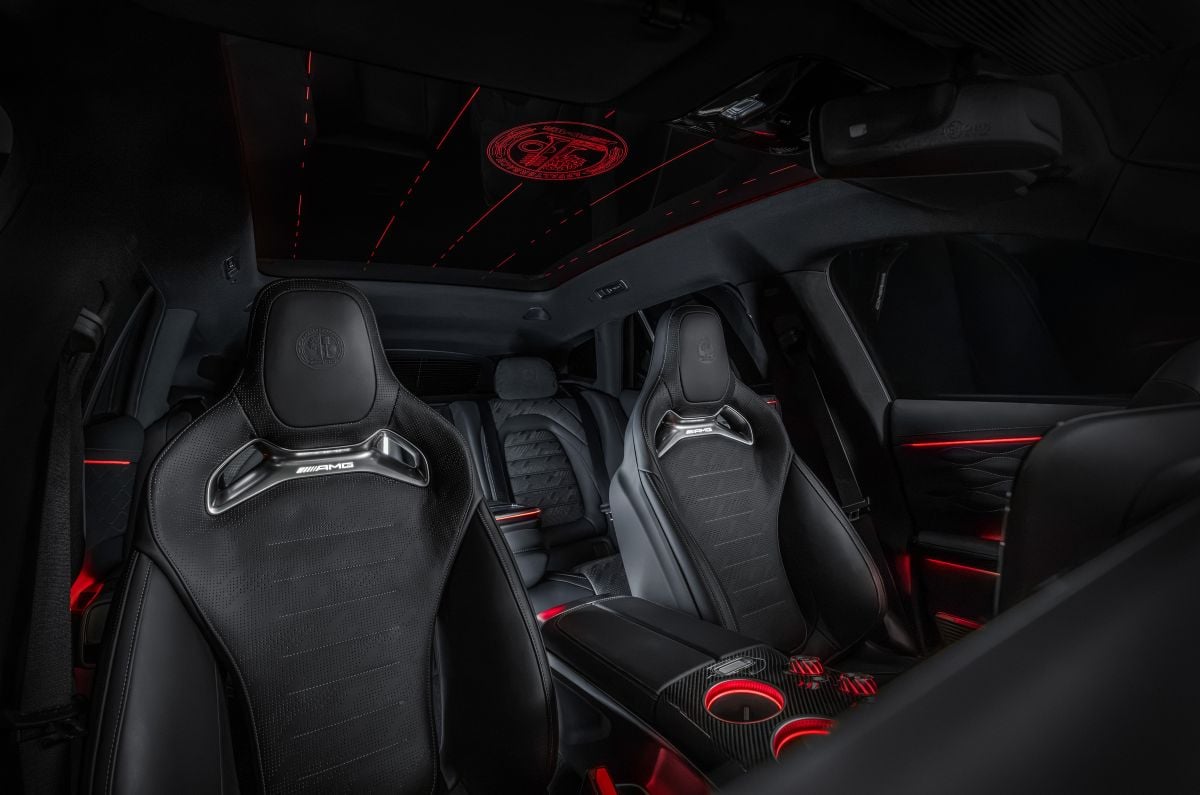
Just like the exterior, the interior of the Mercedes-AMG GT SUV can be personalised using the Manufaktur catalogue. Some of the options that will be offered to customers include accent colours and seatbelts trimmed in Fjord Blue, Green Hell or Orange Flame. The automaker claims that the seating position here is akin to that of a sports car rather than an SUV. Providing comfort up front are multi-way power-adjustable seats, while the three-seat rear bench gets power-folding headrests.
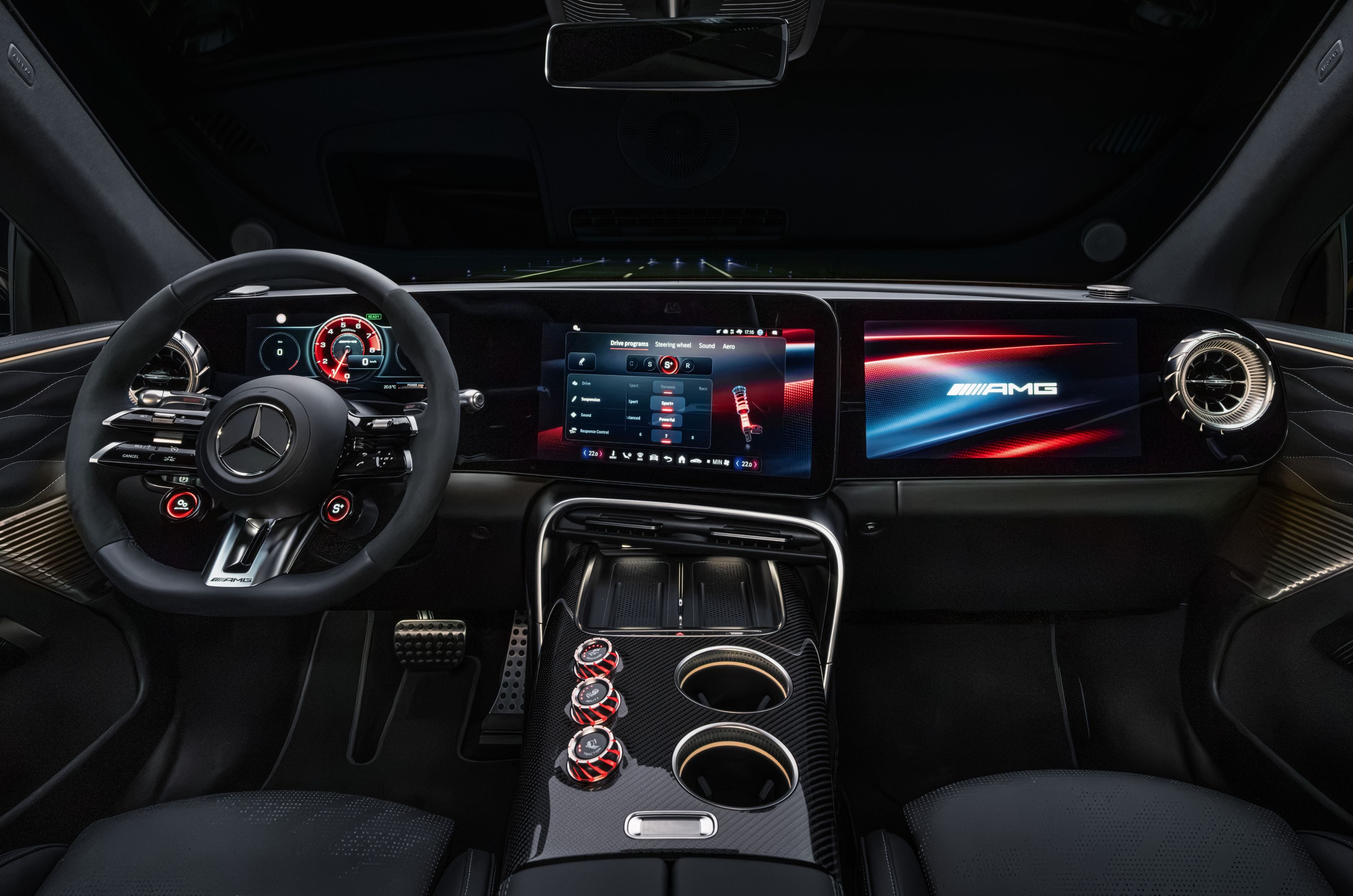
The dashboard pairs a 10.2-inch digital instrument cluster with a 14-inch touchscreen that’s angled towards the driver, while a 14-inch screen is optional for the front occupant. The AMG Performance steering wheel is equipped with paddles to adjust brake-regen levels, while adding to the design are door panels with floating armrests and diamond-pattern stitching. There’s also multi-colour ambient lighting whose colours can be matched to the bevy of displays and controls.
The infotainment system features the German brand’s latest MBUX software, which is based on the MB.OS (Mercedes-Benz Operating System). It integrates AI agents such as ChatGPT, Microsoft Bing and Google Gemini. This luxury SUV also comes with three AMG-specific apps. Firstly, there’s ‘AMG Performance Menu’, which displays real-time data on power, tyre temperatures and active aero status.
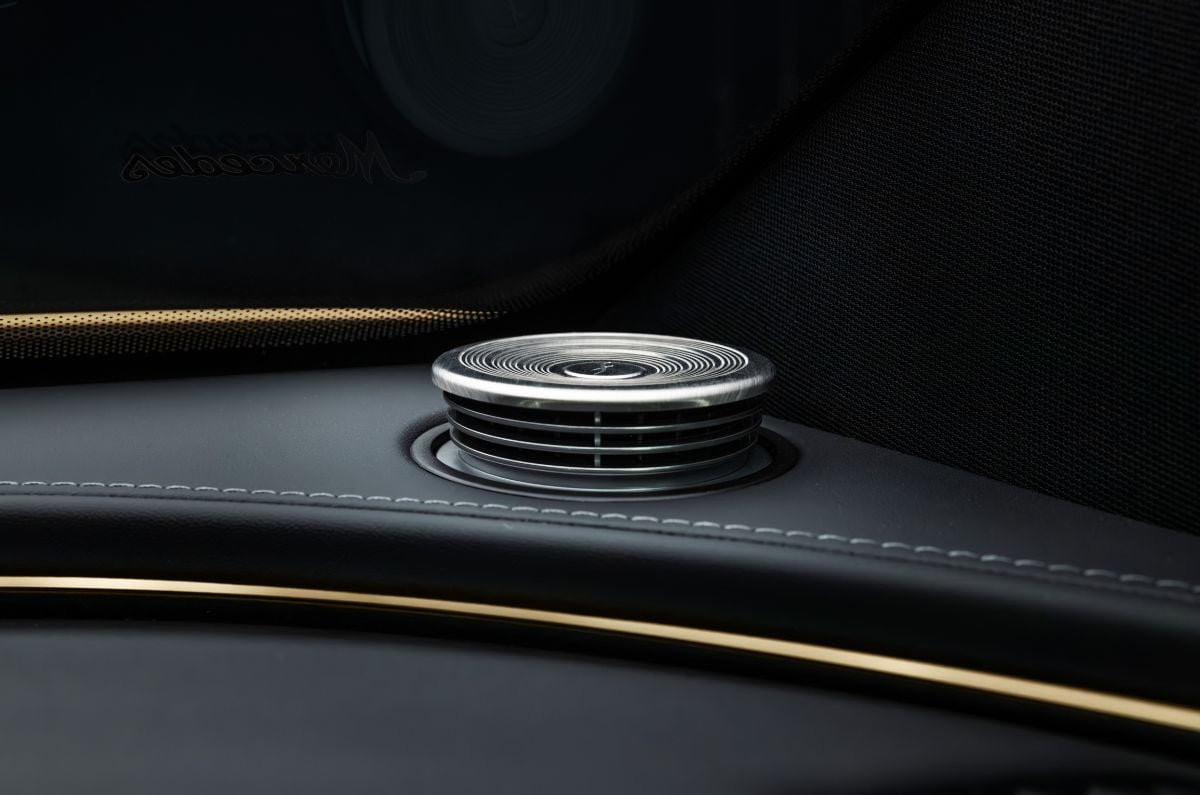
Second is ‘AMG Set-up’ – this lets the driver customise the buttons on the steering wheel as well as aero settings. Finally, there’s ‘AMG Track Pace’, which records lap times and telemetry. Drivers can also use it to show optimal braking points and the ideal racing line in the head-up display. Meanwhile, the optional dashcam allows laps to be recorded with data overlays. The AMG GT SUV is also available with an electrically dimming panoramic glass roof, AMG lighting effects, AMG Performance seats and a Burmester 4D audio system, among many optional features.
Mercedes-AMG GT SUV powertrain and performance
The EV gets up to three electric motors and a WLTP range of up to 700km
The entry-level GT 53 variant of the Mercedes-AMG GT SUV uses two synchronous motors – one on each axle – with a two-speed gearbox located at the rear. Its output is rated at 544hp and 800Nm, with Mercedes-AMG claiming a 0-100kph time of 4.2 seconds and a top speed of 250kph. Then there are the mid-spec GT 55 and the top-spec GT 63. These come with two axial flux motors at the rear and one at the front, the latter disengaging when not needed to save energy.
The tri-motor setup of the GT 55 outputs 816hp and 1,860Nm, allowing for a claimed 0-100kph time of 3.1 seconds. Sitting at the top of the Mercedes-AMG GT SUV line-up is the GT 63, which is rated at 1,169hp and 2,000Nm and does 0-100kph in 2.7 seconds. Regardless, the all-wheel-drive GT 55 and GT 63 have a claimed top speed of 270kph with the optional Driver’s Package.
The GT 53’s 106kWh battery pack offers a claimed WLTP range of up to 668km, while the 128kWh battery of the GT 55 and GT 63 is rated at up to 700km. These 800V packs offer DC fast charging of 600kW and 710kW, respectively. Mercedes-AMG claims that charging these batteries from 10-80 percent takes 11-12 minutes, though it also says that these figures are preliminary.
The GT SUV gets rear-wheel steering as standard while also debuting AMG’s new ‘Active Ride Control+’ suspension. The latter, which is standard on the top-spec GT 63, replaces traditional anti-roll bars with hydraulic units that, according to the automaker, curb body roll and pitch. The top-spec variant also gets carbon-ceramic brakes as standard.
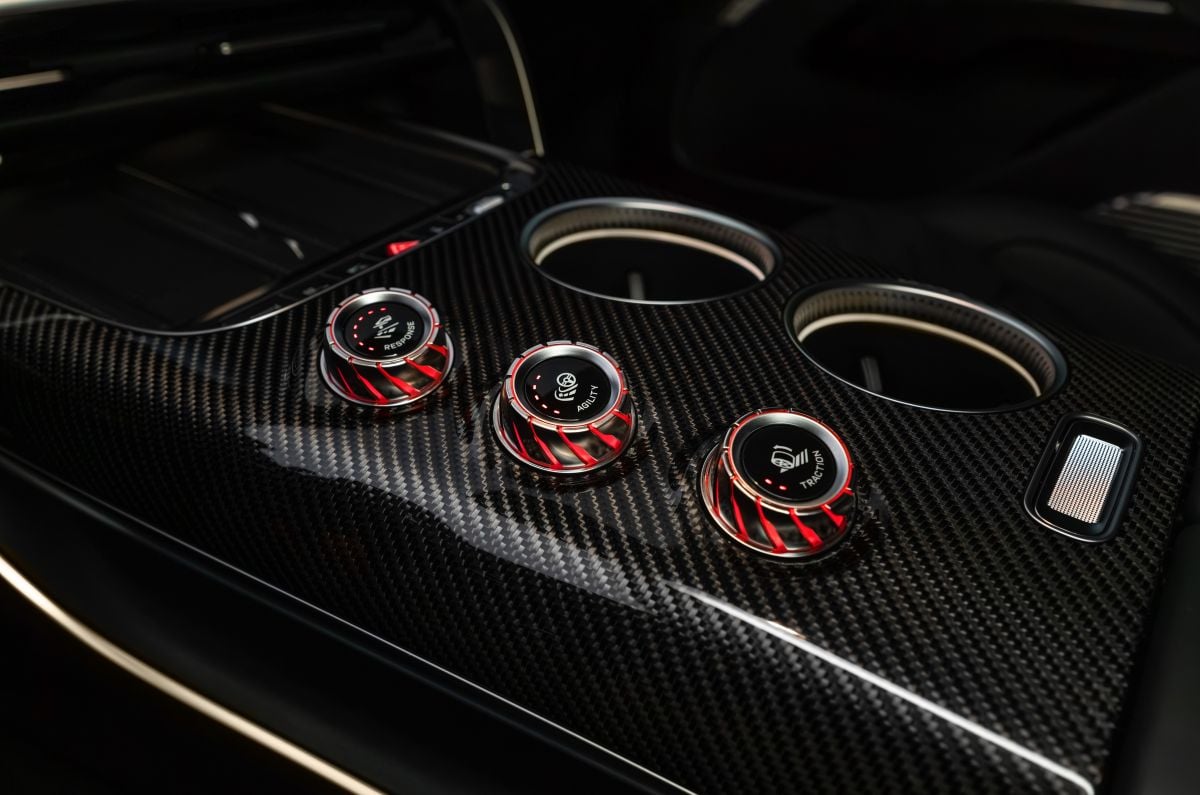
In the tri-motor variants, drivers can adjust the throttle response, cornering behaviour and traction control using dials on the centre console. Mercedes-AMG also said that the ‘AMGForce Sport+’ mode recreates the sound of an AMG V8 (or a six-cylinder in the GT 53) along with simulated gearshifts. As for India, the German marque is yet to reveal its plans for the AMG GT SUV.
अगर आप घर पर ही बड़ी स्क्रीन पर फिल्में और वेब सीरीज देखने का मजा लेना चाहते हैं, तो Lumio Arc 7 (2026) आपके लिए दिलचस्प विकल्प हो सकता है। कंपनी ने भारत में अपना नया Google TV प्रोजेक्टर लॉन्च किया है, जिसमें पहले के मुकाबले ज्यादा ब्राइटनेस, ज्यादा स्टोरेज और बड़ी स्क्रीन पर प्रोजेक्शन की सुविधा दी गई है।
Lumio Arc 7 (2026) की कीमत
Lumio ने भारत में Arc 7 (2026) को ₹34,999 की कीमत पर लॉन्च किया है। यह प्रोजेक्टर 8 अक्टूबर से बिक्री के लिए उपलब्ध होगा। ग्राहक इसे कंपनी के ऑनलाइन स्टोर के अलावा Amazon India और Flipkart से भी खरीद सकेंगे।
इस प्रोजेक्टर के साथ एक साल की कॉम्प्रिहेंसिव वारंटी मिलती है और इसे Lumio के देश भर में फैले 300 से ज्यादा सेंटर्स वाले सर्विस नेटवर्क का सपोर्ट भी मिलता है।
Lumio Arc 7 (2026) के फीचर्स
Lumio Arc 7 (2026) में कंपनी का Arc Light Engine 2 दिया गया है। इसे सील्ड डिजाइन के साथ बनाया गया है, जिससे प्रोजेक्टर के अंदर मौजूद जरूरी हिस्सों को धूल से बचाने में मदद मिलती है। कंपनी के मुताबिक, नया मॉडल 500 ANSI ल्यूमेंस की ब्राइटनेस देता है, जो पिछले मॉडल की तुलना में 25% ज्यादा है।
प्रोजेक्टर के कॉन्ट्रास्ट रेशियो को भी 15% बढ़ाकर 1700:1 कर दिया गया है। वहीं, DCI-P3 कलर कवरेज में 10% सुधार किया गया है। कंपनी का कहना है कि इन अपग्रेड का मकसद स्क्रीन पर ज्यादा ब्राइट तस्वीर, बेहतर कलर और अच्छा कॉन्ट्रास्ट देना है।
120 इंच तक बड़ी स्क्रीन
नया Arc 7 (2026) 120 इंच तक की स्क्रीन पर तस्वीर प्रोजेक्ट कर सकता है। पिछले मॉडल में 100 इंच तक की स्क्रीन के लिए इसे इस्तेमाल करने की सलाह दी गई थी। यानी नए मॉडल के साथ बड़ी स्क्रीन पर फिल्में और दूसरे वीडियो देखने का अनुभव लिया जा सकता है।
प्रोजेक्टर में STR8 ऑटो-कीस्टोन करेक्शन, TOF ऑटोफोकस और ऑब्स्टेकल अवॉइडेंस जैसे फीचर्स भी मिलते हैं। ये फीचर्स स्क्रीन को सही तरीके से सेट करने और प्रोजेक्शन के दौरान सामने आने वाली रुकावटों से बचने में मदद करते हैं।
ऑडियो के लिए, प्रोजेक्टर में डॉल्बी ऑडियो सपोर्ट वाले डुअल 8W स्टीरियो स्पीकर दिए गए हैं। इसके साथ मिलने वाले ‘मिनियन नॉयर’ रिमोट में गूगल असिस्टेंट का सपोर्ट भी है।
सॉफ्टवेयर और स्टोरेज
नए Lumio प्रोजेक्टर में 32GB की इंटरनल स्टोरेज है, जो पिछले Arc 7 की क्षमता से दोगुनी है। यह Android 14 पर आधारित Google TV पर चलता है और Google TV व Netflix सर्टिफाइड है।
Lumio का कहना है कि प्रोजेक्टर में Google TV पर लेटेस्ट Gemini एक्सपीरियंस भी पहले से ही मिलता है, जिससे यूजर्स को स्ट्रीमिंग और दूसरे स्मार्ट TV फंक्शंस के साथ-साथ Google के AI-पावर्ड फीचर्स का भी एक्सेस मिलता है। Arc 7 (2026) भारत में बना है और इसे धूल, तापमान में बदलाव और पावर में उतार-चढ़ाव जैसी स्थितियों के लिए टेस्ट किया गया है। यह भारत में ₹34,999 में उपलब्ध है।
त्योहारी सीजन से पहले Amazon अपनी अगली बड़ी सेल Great Indian Festival शुरू करने की तैयारी में है। इस सेल के दौरान स्मार्टफोन, लैपटॉप, टैबलेट और दूसरे इलेक्ट्रॉनिक गैजेट्स समेत कई कैटेगरी के प्रोडक्ट्स पर बड़े डिस्काउंट और ऑफर्स मिलने की उम्मीद है। वहीं, सेल शुरू होने से पहले ही Amazon ने कुछ चुनिंदा डिवाइस की संभावित सेल कीमतों के संकेत देने शुरू कर दिए हैं। इनमें से एक जानकारी Samsung Galaxy Z Fold7 को लेकर है, जिससे पता चलता है कि इस प्रीमियम फोल्डेबल फोन की कीमत में बड़ी कटौती हो सकती है।
फिलहाल, Amazon पर Samsung Galaxy Z Fold7 के 12GB RAM और 256GB स्टोरेज वेरिएंट की कीमत 1,74,999 रुपये लिस्टेड है। हालांकि, Amazon की Great Indian Festival Sale के टीजर से संकेत मिल रहा है कि सेल के दौरान इस फोल्डेबल स्मार्टफोन की कीमत 1 लाख रुपये से कम हो सकती है।
सेल से पहले Samsung Galaxy Z Fold7 की कीमत का टीजर आया
Amazon ने अभी तक Galaxy Z Fold7 की पूरी सेल कीमत का खुलासा नहीं किया है। हालांकि, टीजर में फोन की कीमत को लेकर एक अहम हिंट दिया गया है। टीजर में कीमत 5 अंकों के फॉर्मेट में दिखाई गई है, जिसका आखिरी अंक 9 है। बाकी अंकों को बार लगाकर छिपाया गया है।
इससे पता चलता है कि फाइनल सेलिंग प्राइस मौजूदा छह-अंकों वाली कीमत ₹1,74,999 के बजाय पांच-अंकों वाली होगी। दूसरे शब्दों में, Amazon ₹1 लाख से कम कीमत का संकेत दे रहा है, हालांकि सही आंकड़ा अभी भी छिपा हुआ है।
टीजर में दिखाया गया आखिरी अंक 9 है, जिससे पता चलता है कि फाइनल कीमत शायद 9 पर खत्म होगी। Amazon की मौजूदा लिस्टिंग में Galaxy Z Fold7 की कीमत ₹1,74,999 दिखाई गई है, जबकि इसकी MRP ₹2,04,999 है।
लिस्टिंग में बैंक और पेमेंट से जुड़े अतिरिक्त ऑफर भी दिखाए गए हैं, जिनसे असल कीमत और कम हो सकती है।
Galaxy Z Fold7 के फीचर्स
Galaxy Z Fold7 Samsung का लेटेस्ट बुक-स्टाइल फोल्डेबल स्मार्टफोन है। Amazon पर लिस्ट किए गए मॉडल में 12GB RAM और 256GB स्टोरेज है और यह Snapdragon 8 Elite चिपसेट पर चलता है। फोटोग्राफी के लिए, इस स्मार्टफोन में 200MP का प्राइमरी रियर कैमरा और साथ ही अन्य रियर कैमरे भी दिए गए हैं।
फोन में Samsung के Galaxy AI फीचर्स और Google Gemini का सपोर्ट भी मिलता है। इसमें अंदर की तरफ एक फोल्डेबल बड़ी डिस्प्ले और बाहर की तरफ कवर स्क्रीन दी गई है। फोन को मोड़ने पर इसे सामान्य स्मार्टफोन की तरह इस्तेमाल किया जा सकता है, जबकि खोलने पर बड़ी स्क्रीन का फायदा मिलता है।
Galaxy Z Fold7 की Great Indian Festival में कीमत
फिलहाल, Amazon ने अभी तक Galaxy Z Fold7 की Great Indian Festival सेल की सही कीमत का खुलासा नहीं किया है। हालांकि, टीजर में दिख रही पांच अंकों वाली कीमत ₹1 लाख से कम की ओर इशारा करती है। यह इसकी मौजूदा कीमत ₹1,74,999 से काफी कम होगी और Z Fold7 के लॉन्च के बाद से अब तक का सबसे बड़ा डिस्काउंट होगा।
असली सेल प्राइस, साथ ही बैंक डिस्काउंट, एक्सचेंज ऑफर और दूसरे फायदों के बारे में जानकारी ‘Great Indian Festival Sale’ के दौरान या उससे कुछ समय पहले पता चल सकती है।
क्याआपकोइसेखरीदनाचाहिए?
Galaxy Z Fold7 में स्लिम फोल्डेबल डिजाइन के साथ बड़ी इनर डिस्प्ले, Snapdragon 8 Elite प्रोसेसर और 200MP का प्राइमरी कैमरा मिलता है। इसमें Galaxy AI फीचर्स और मल्टीटास्किंग की क्षमताएं भी हैं, जो इसे उन यूजर्स के लिए सही बनाता है जो एक ऐसा प्रीमियम फोल्डेबल चाहते हैं जो प्रोडक्टिविटी और एंटरटेनमेंट, दोनों को अच्छे से संभाल सके।
आज के समय में स्मार्टफोन खरीदते समय लोग ऐसा फोन चाहते हैं, जिसमें बड़ी स्क्रीन, दमदार बैटरी और अच्छा प्रोसेसर मिले। इसी को ध्यान में रखते हुए Xiaomi ने भारत में अपना नया बजट स्मार्टफोन Redmi 17C 5G लॉन्च कर दिया है। इस फोन में 6.9 इंच की बड़ी डिस्प्ले और 6,000mAh की बैटरी दी गई है। इसके अलावा, फोन में MediaTek Dimensity 6300 प्रोसेसर मिलता है। बता दें कि यह स्मार्टफोन Dark Night, Coffee Brew और Purple Dawn समेत तीन कलर ऑप्शन में उपलब्ध होगा।
Redmi 17C 5G की कीमत और उपलब्धता
भारत में Redmi 17C 5G की शुरुआती कीमत 20,999 रुपये है। यह कीमत फोन के 4GB RAM और 128GB स्टोरेज वाले वेरिएंट के लिए है। वहीं, इसके 6GB RAM और 128GB स्टोरेज वाले मॉडल की कीमत 22,999 रुपये रखी गई है।
इस स्मार्टफोन की बिक्री 7 अक्टूबर को दोपहर 12 बजे से शुरू होगी। ग्राहक इसे mi.com, Amazon.in और Xiaomi के रिटेल स्टोर से खरीद सकेंगे।
Redmi 17C 5G के स्पेसिफिकेशन्स
Redmi 17C 5G में 6.9-इंच का डिस्प्ले है, जिसका रिफ्रेश रेट 120Hz AdaptiveSync तक है। Xiaomi ने इसमें Low Blue Light, Flicker Free और Circadian Friendly व्यूइंग के लिए TÜV Rheinland सर्टिफिकेशन भी शामिल किए हैं, ताकि लंबे समय तक इस्तेमाल करने पर भी स्क्रीन आरामदायक रहे।
Redmi 17C 5G में धूल और पानी से बचाव के लिए IP64 रेटिंग दी गई है। इसके अलावा, फोन में Wet Touch Technology 2.0 भी मिलती है। इसकी मदद से उंगलियां गीली, तैलीय या साबुन लगी होने पर भी फोन की स्क्रीन काम करती रहती है।
इस स्मार्टफोन में 6,000mAh की बैटरी है और यह 33W फास्ट चार्जिंग को सपोर्ट करता है। Xiaomi का कहना है कि इसका स्मार्ट चार्जिंग इंजन समय के साथ चार्जिंग की क्षमता और बैटरी की हेल्थ को बेहतर बनाने के लिए बनाया गया है।
कंपनी के अनुसार, इंटरनल टेस्टिंग के आधार पर, 1,000 बार पूरी तरह चार्ज होने के बाद भी बैटरी अपनी क्षमता का कम से कम 80% बनाए रख सकती है।
परफॉर्मेंस की बात करें तो, यह डिवाइस MediaTek Dimensity 6300 प्रोसेसर पर चलता है। इसमें 6GB तक की फिजिकल RAM मिलती है। इसके अलावा, फोन में Memory Extension फीचर भी दिया गया है। इसकी मदद से RAM को बढ़ाकर 12GB तक किया जा सकता है, जिससे एक साथ कई ऐप इस्तेमाल करने पर फोन आसानी से काम कर सकेगा।
फोटोग्राफी के लिए, Redmi 17C 5G में 50MP का AI रियर कैमरा है, जिसमें Ultra HD, Portrait और Night Mode जैसे फीचर्स हैं। इसमें सेल्फी और वीडियो कॉल के लिए 8MP का फ्रंट कैमरा भी है।
यह फोन HyperOS 3 पर चलता है और Xiaomi इंटरकनेक्टिविटी, कॉल सिंक और शेयर्ड क्लिपबोर्ड जैसे फीचर्स को सपोर्ट करता है। इसमें उपलब्धता और डिवाइस की कम्पैटिबिलिटी के आधार पर Google Gemini और Circle to Search भी मिलते हैं।
अन्य फीचर्स में साइड-माउंटेड फिंगरप्रिंट सेंसर, 3.5mm हेडफोन जैक और 200% वॉल्यूम बूस्ट शामिल हैं।
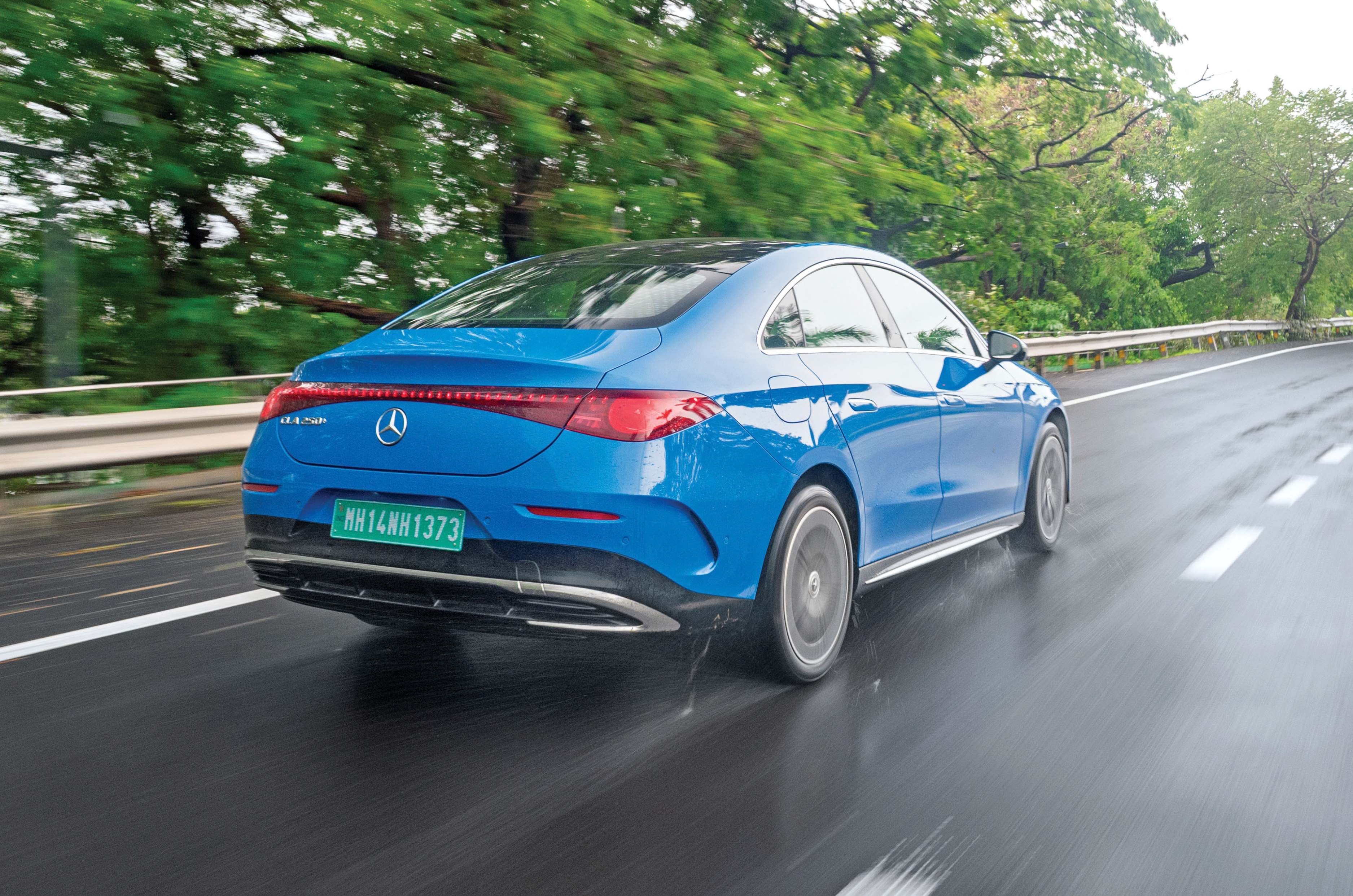
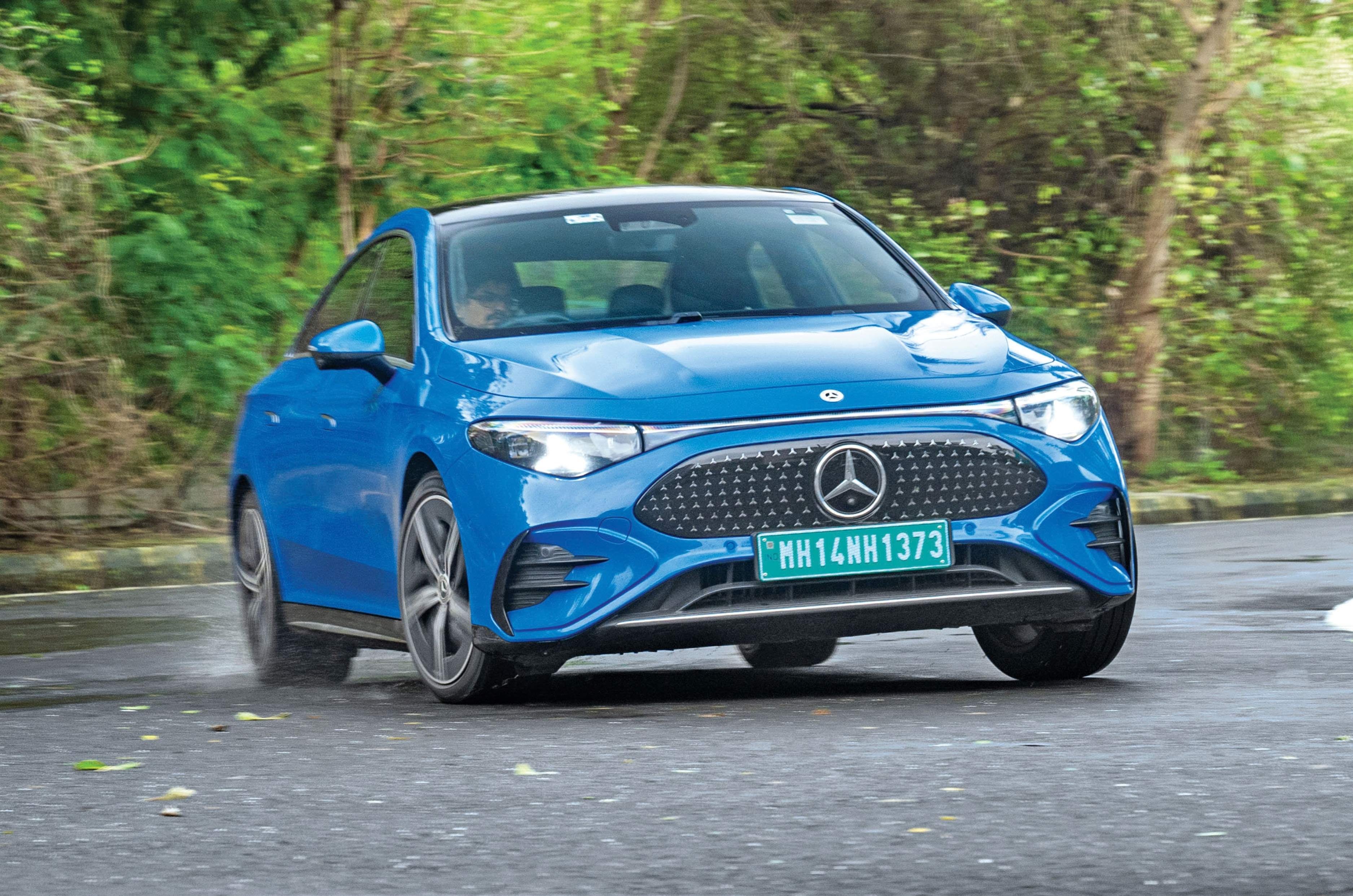
When we first drove the all-new, all-electric Mercedes-Benz CLA, we came away impressed with its smooth powertrain and its promise of a substantial real-world range. We’ve now subjected it to our real-world performance and efficiency tests to see if it delivers on that promise.
Mercedes CLA 250+ exterior design and engineering – 8/10
Polarising, aero-efficient design; based on new MMA platform.
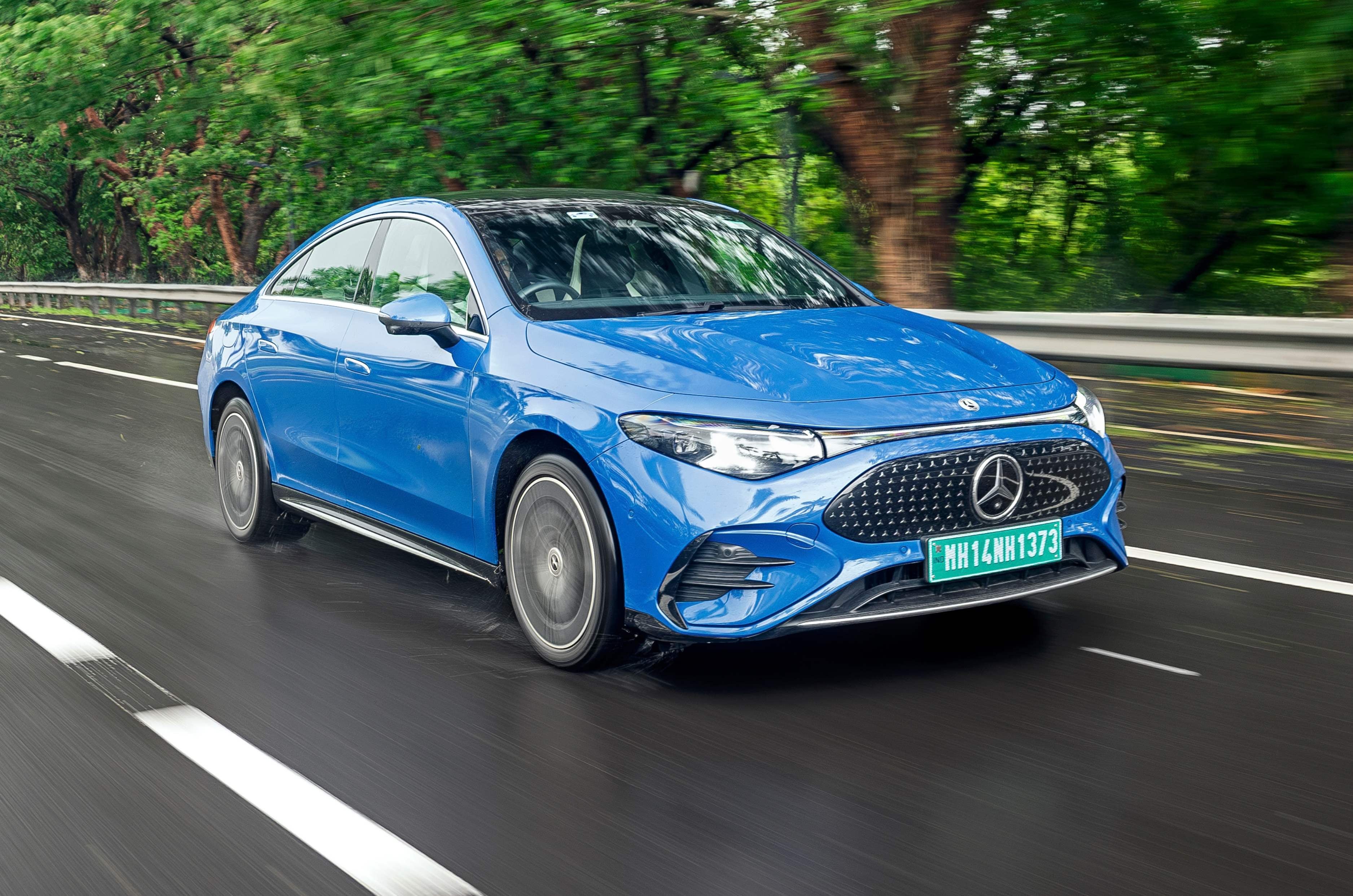
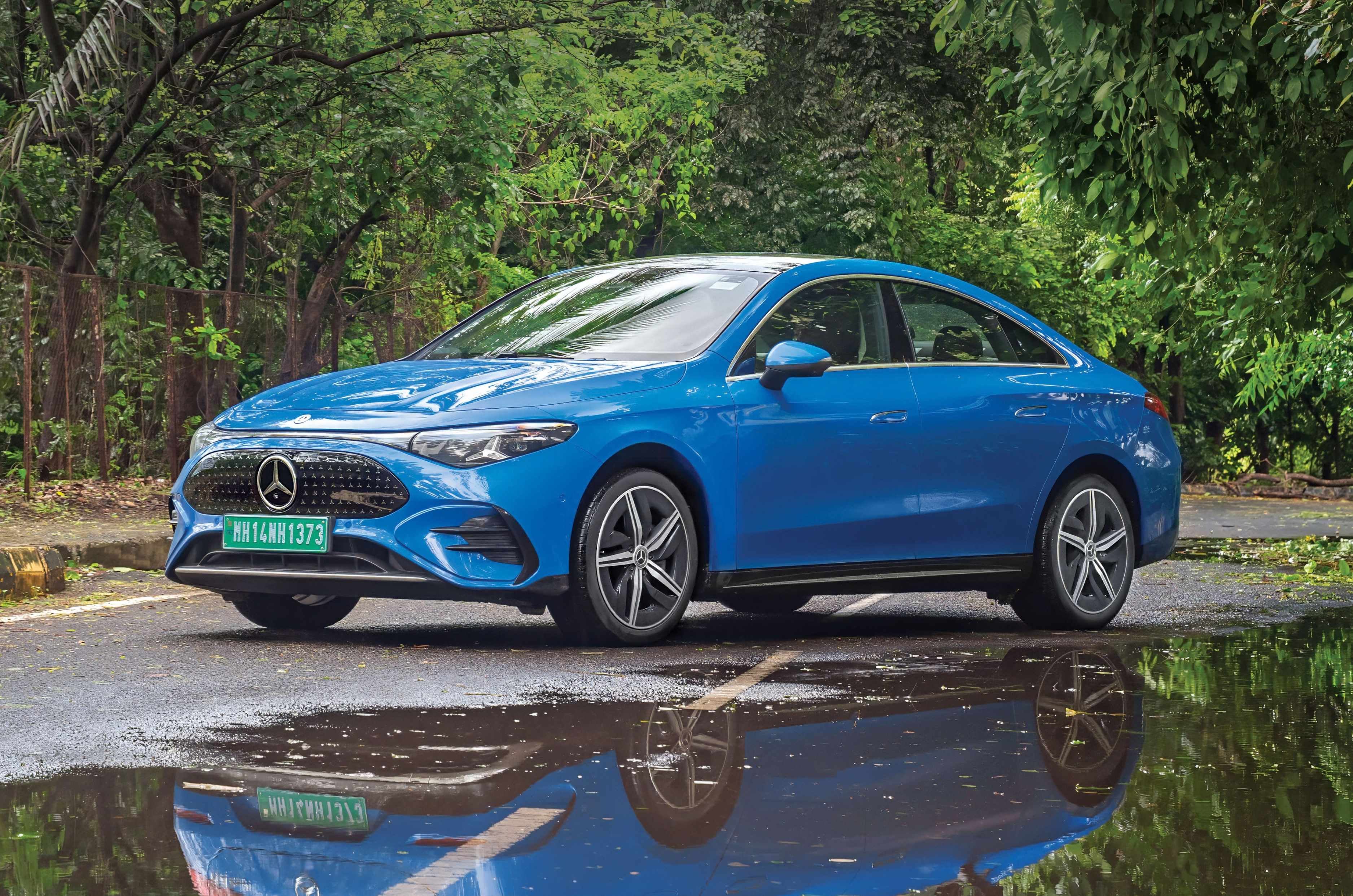
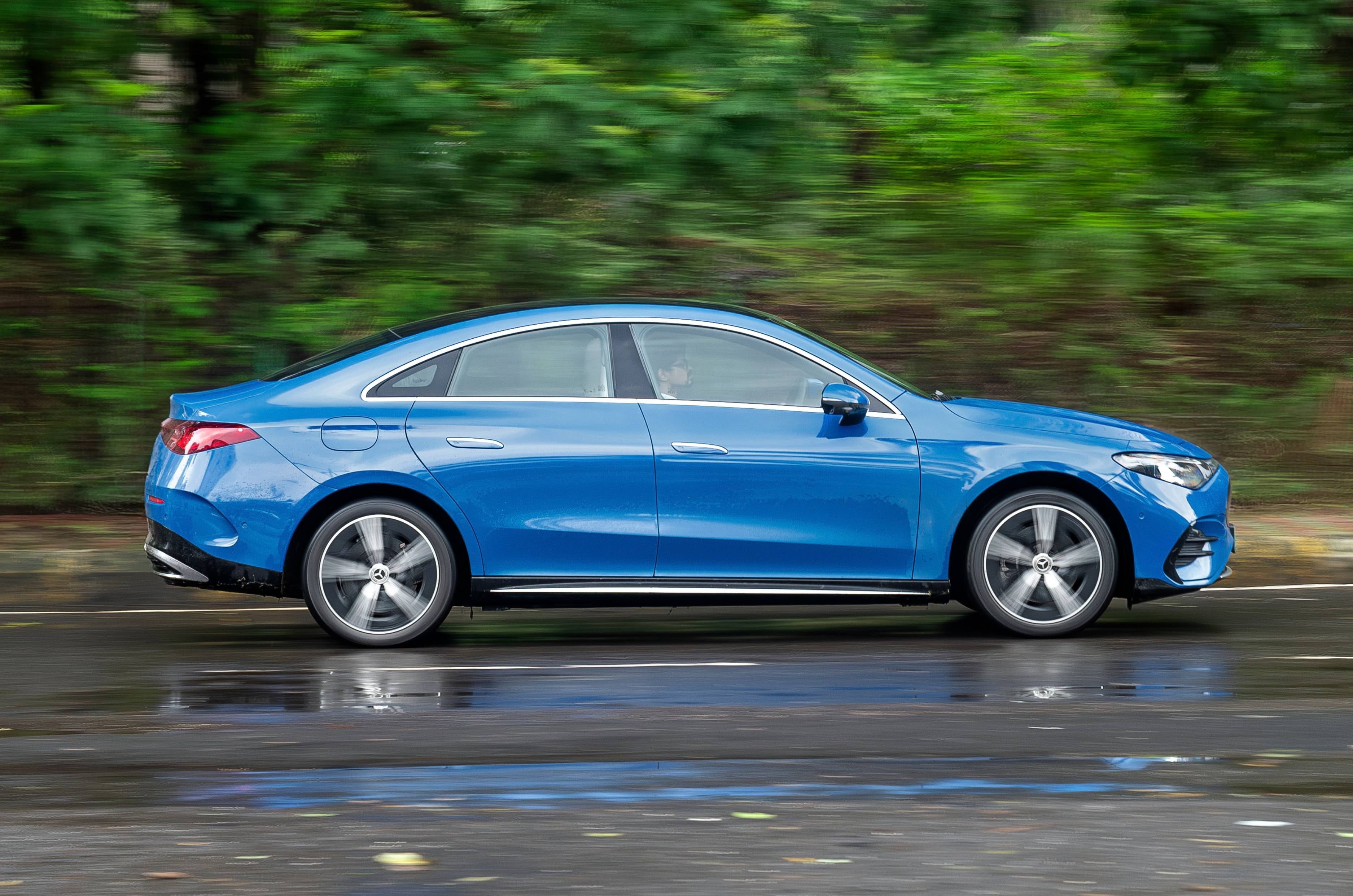
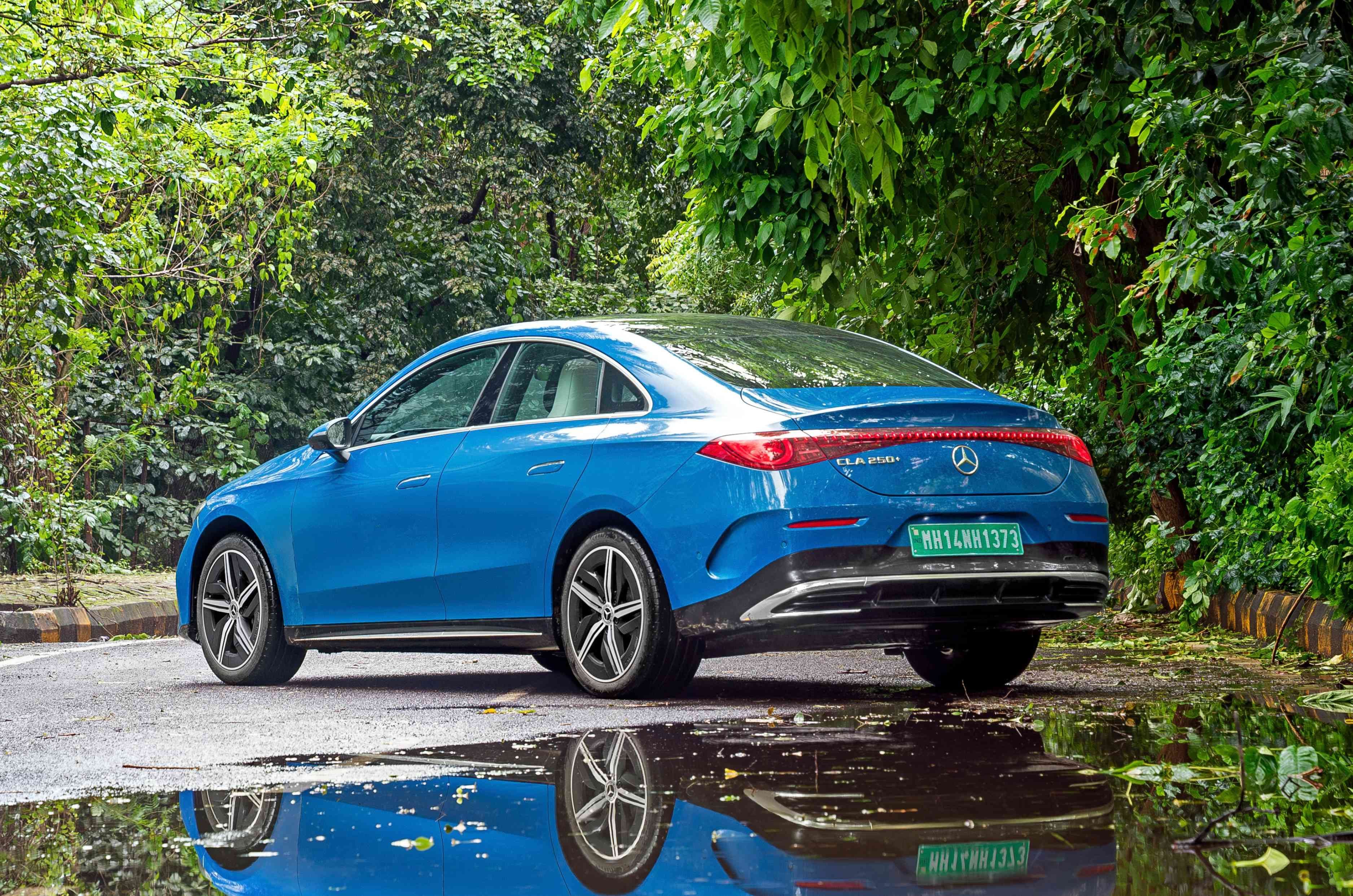
The new CLA has been designed with efficiency very much in mind, but Mercedes hasn’t completely abandoned the visual character that made the original car appealing. Its smooth, rounded silhouette is familiar from other Mercedes EVs, yet the low-slung, coupé-like roofline and frameless doors give it a distinct identity. Flush-fitting door handles, a sealed-off grille, aero-optimised 18-inch AMG alloys and a fully sealed underbody all contribute to an exceptionally slippery shape, with a drag coefficient of just 0.21Cd.
Mercedes’ three-pointed star features prominently across the CLA, appearing on the bonnet, grille, headlamps and tail-lamps. The grille itself gets 142 illuminated stars, which might sound excessive on paper, but they do give the CLA a distinctive look and, in person, seem to work rather well.
More significant, however, is what lies underneath. The CLA EV is the first Mercedes to use the new Modular Architecture (MMA) skateboard platform, which will also underpin future models. At over 4.7m long, more than 1.8m wide and over 1.4m tall, with a wheelbase approaching 2.8m, it is roughly the same size as a BYD Seal.
Mercedes CLA 250+ interior space and comfort – 7/10
Impresses with tech and quality; cramped rear with high floor.
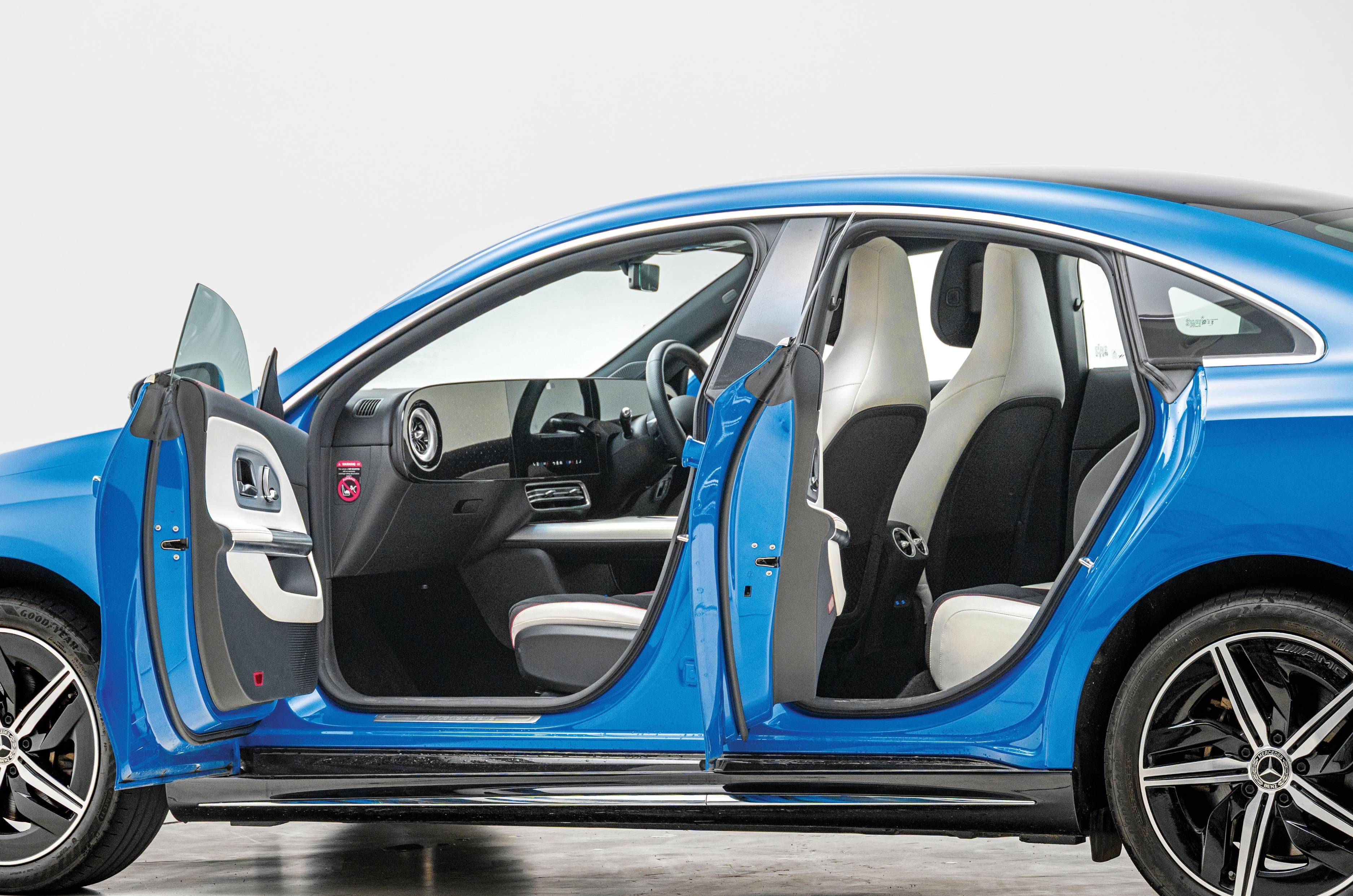
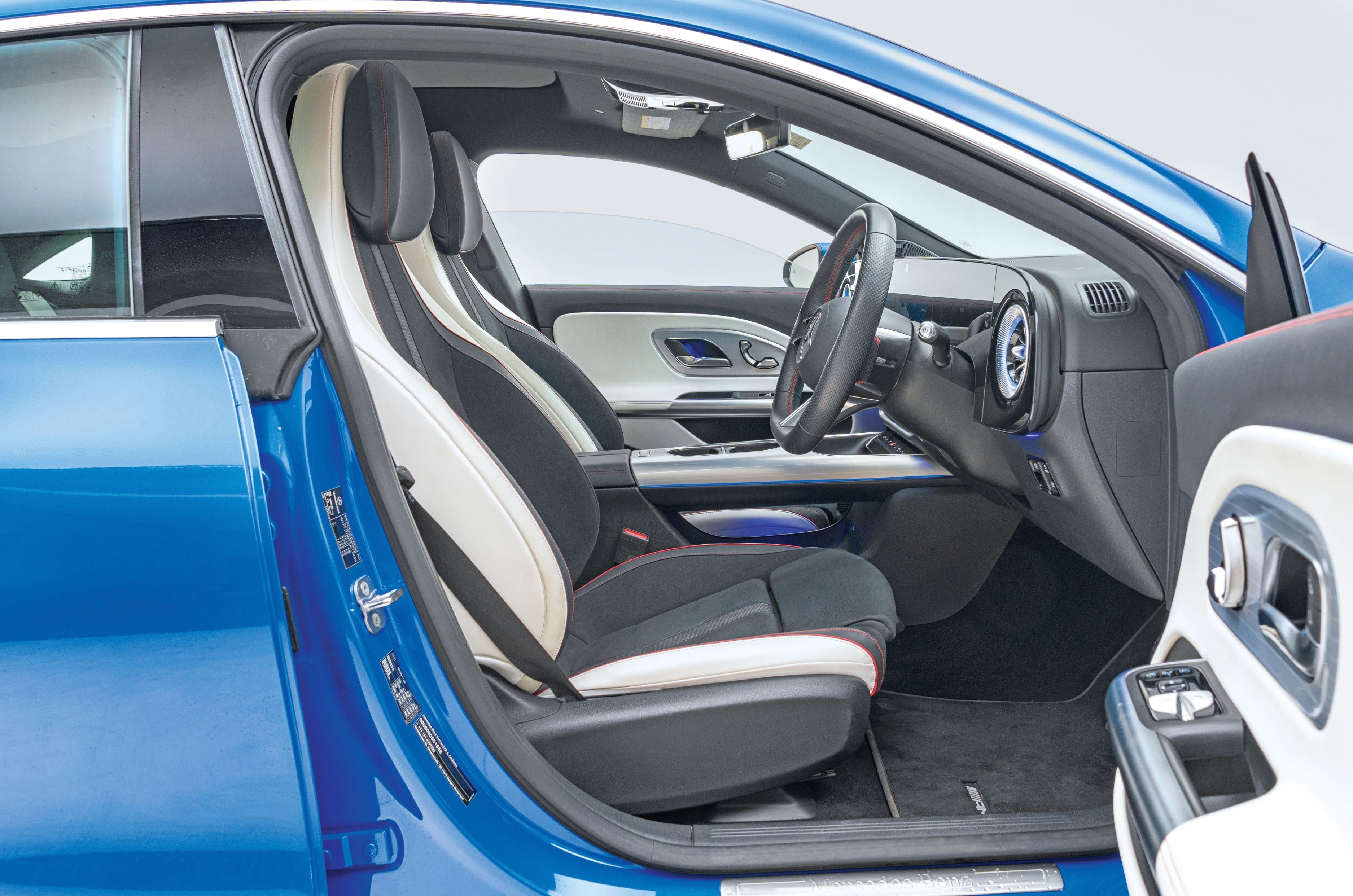
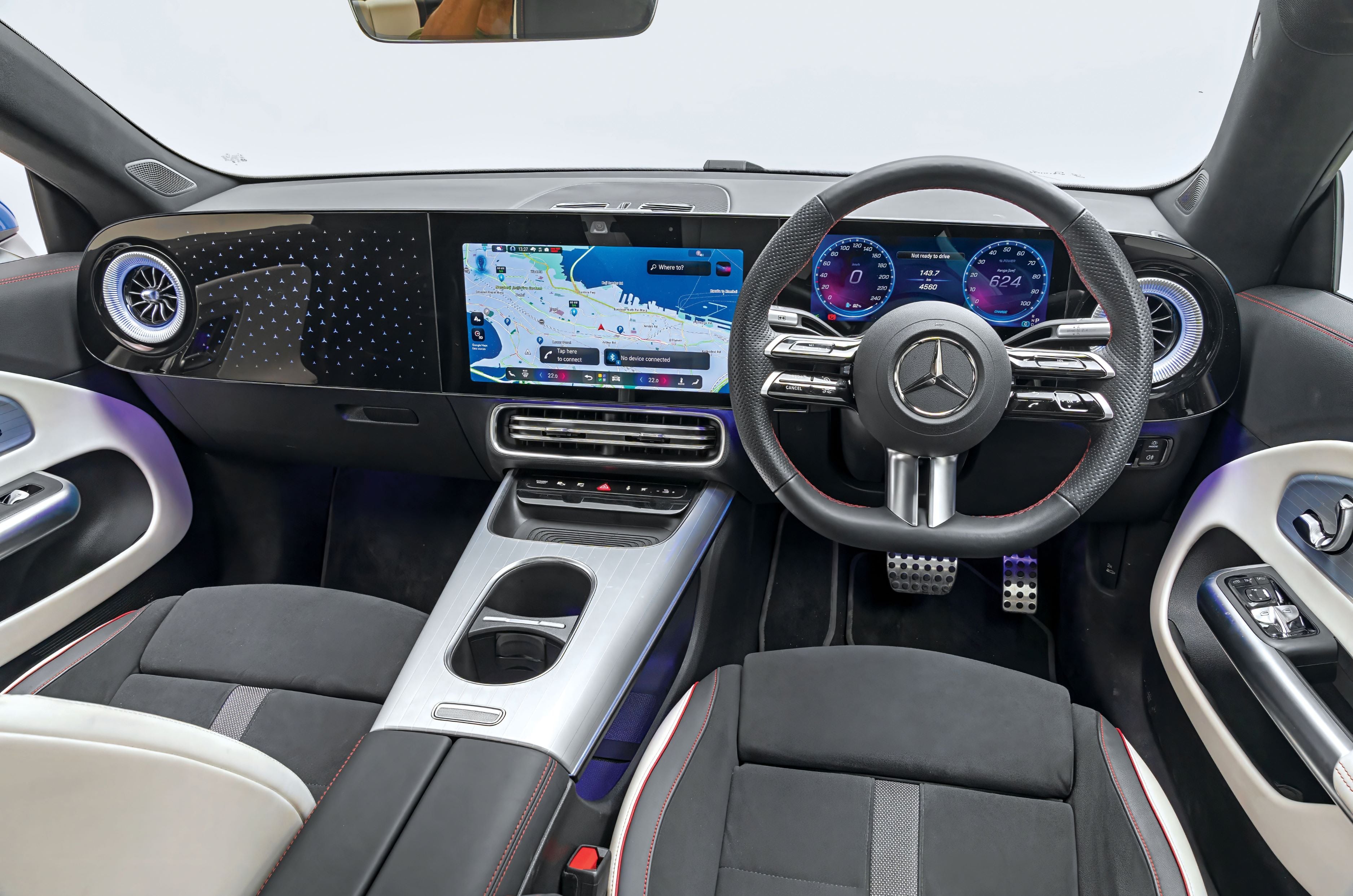
The CLA makes a good first impression inside. Its doors open wide for easy access, while the cabin combines smart design with good materials and build quality. The CLA 250+ is offered in AMG Line trim, so you get a flat-bottomed AMG steering wheel, sporty metal pedals and AMG-spec upholstery.
Doors open wide to aid access to the cabin; retains the stylish frameless doors.
The dashboard is dominated by a large gloss-black panel housing the digital displays. The graphics are sharp, the interface is clean, and the system is easy to navigate. What isn’t quite as convincing is the near-total absence of physical controls. Apart from a few capacitive shortcuts for functions such as volume and drive modes, most functions are accessed through the touchscreen, which isn’t ideal while on the move.
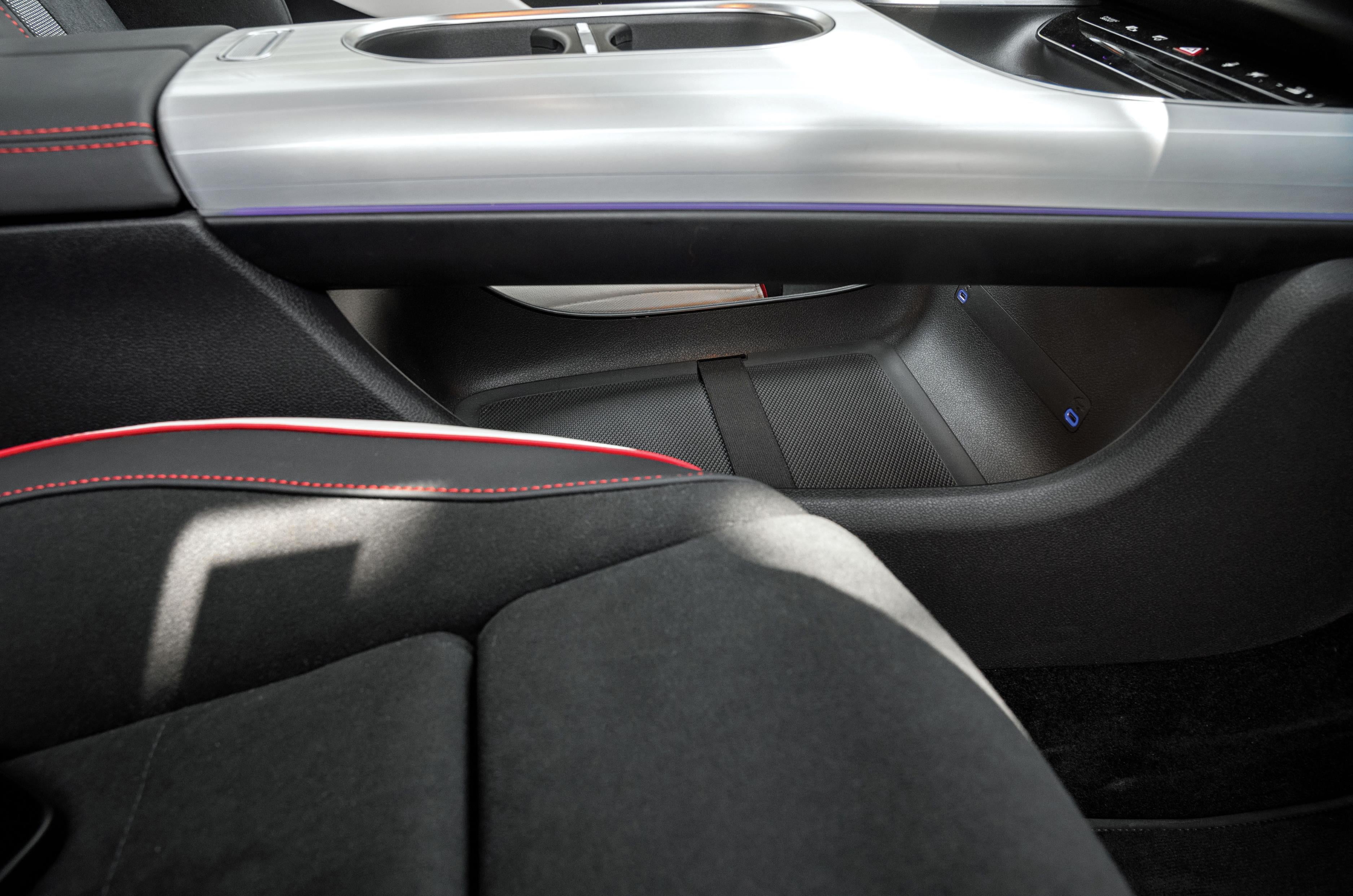
Centre console has two levels, with the top featuring cupholders and a wireless charger, and a large cubby space below.
The third passenger display offered in the 250+ Launch Edition has been omitted here, with its place taken by a gloss-black panel featuring illuminated Mercedes stars. The turbine-style air vents at either end of the dashboard are a nice touch, though, and are particularly satisfying to operate.
There is decent storage, too. You get a large glovebox, storage beneath the centre armrest, bottle holders in the doors and a floating centre console with cupholders and a wireless charger on top, along with a large storage area underneath.
AMG Line brings Alcantara and leather trim for the snug and supportive seats; relatively knees-up seating here too.
The front seats are supportive and well padded, although larger occupants might find them a little snug. More importantly, the relatively high floor means you sit with your knees raised even in the front. At the rear, this issue is more pronounced.
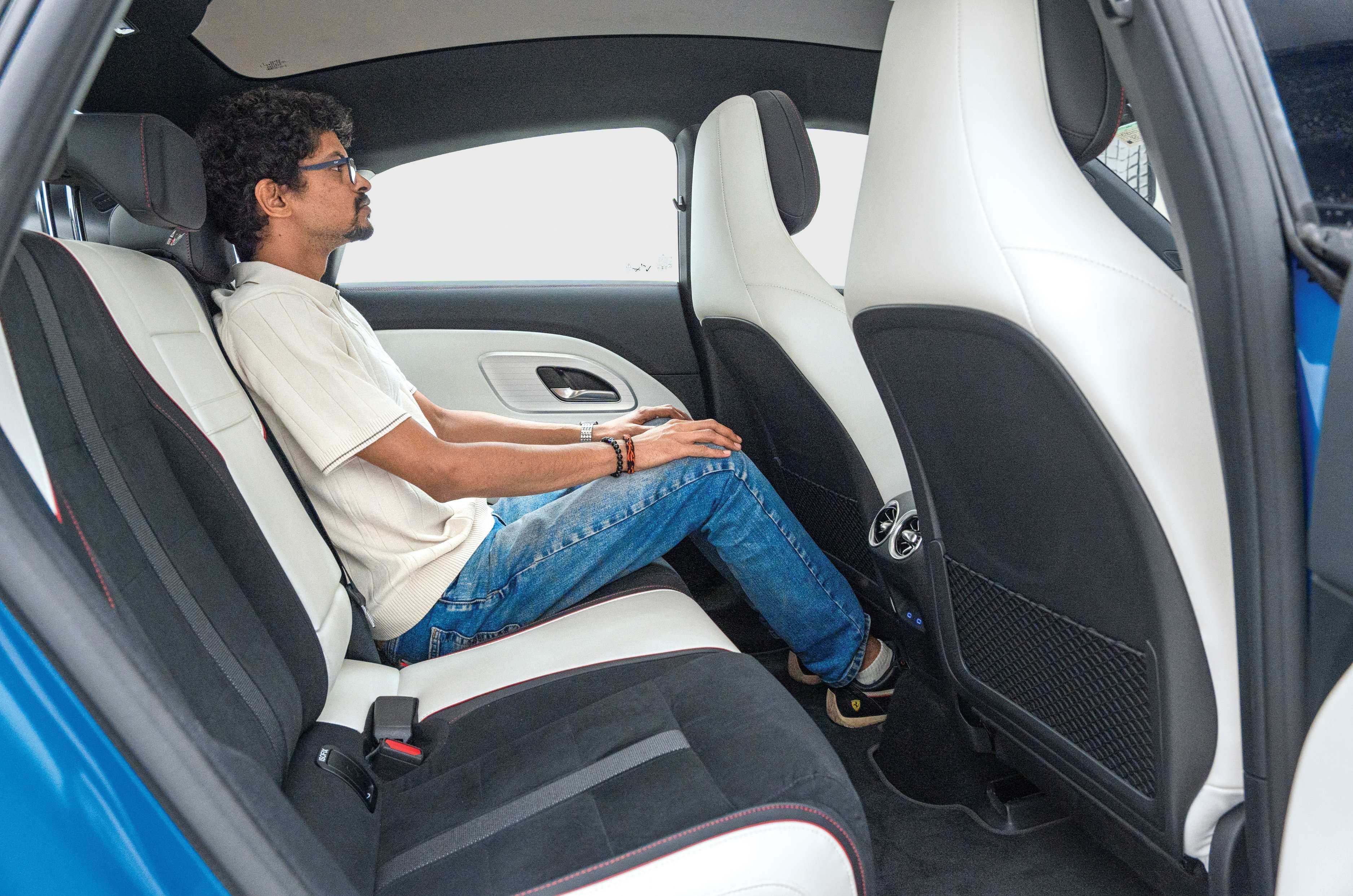
High floor results in knees-up seating, upright backrest and sloping roof further compromise rear seat’s comfort.
Although the CLA has a longer wheelbase than its predecessor, which improves knee room, the battery beneath the floor eats into under-thigh support and results in a knees-up seating position. The upright backrest and sloping roofline further compromise comfort, particularly for taller passengers. There is a centre armrest with cupholders and dedicated rear AC vents, but this still isn’t a car we’d recommend for regular chauffeur-driven use.
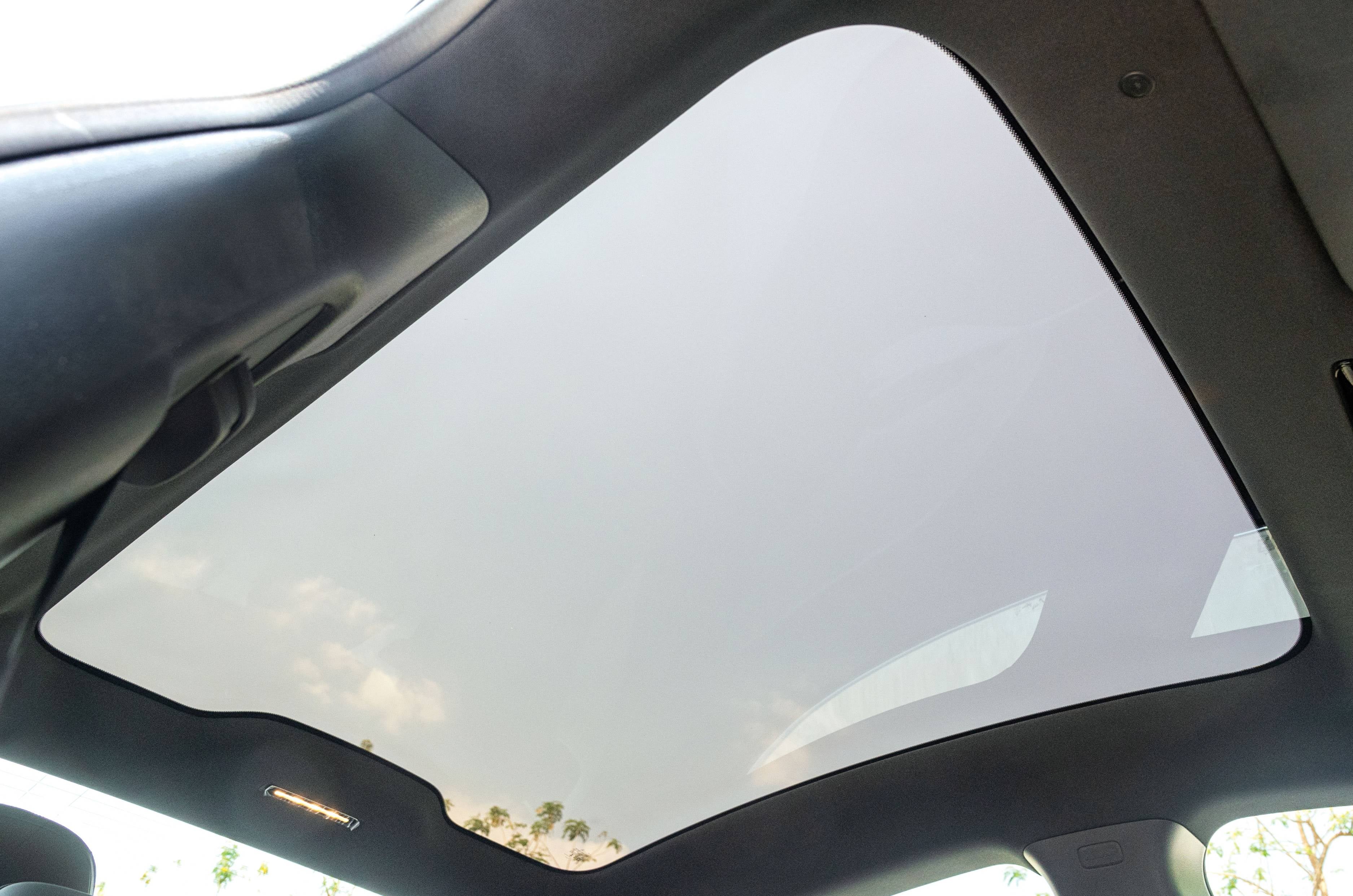
There is a large fixed panoramic glass roof that does make the cabin feel more spacious. Mercedes says the glass is heat-insulated, but a sunshade would have been welcome, particularly in our climate. It also misses sunblinds for the rear windows, meaning the rear AC has to work particularly hard to keep the back of the cabin cool.
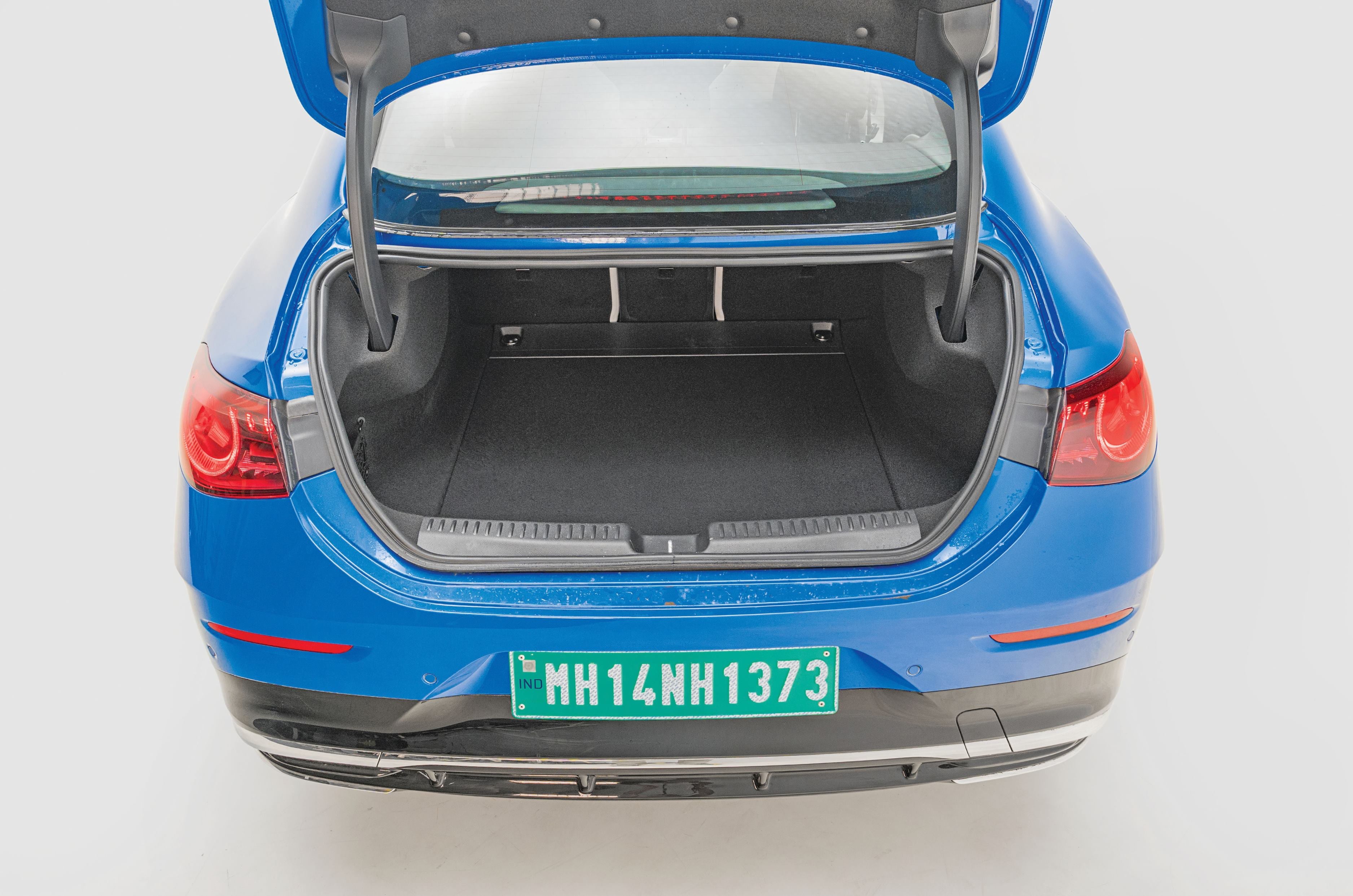
Cargo space is a useful 405 litres; boot opening isn’t large, though.
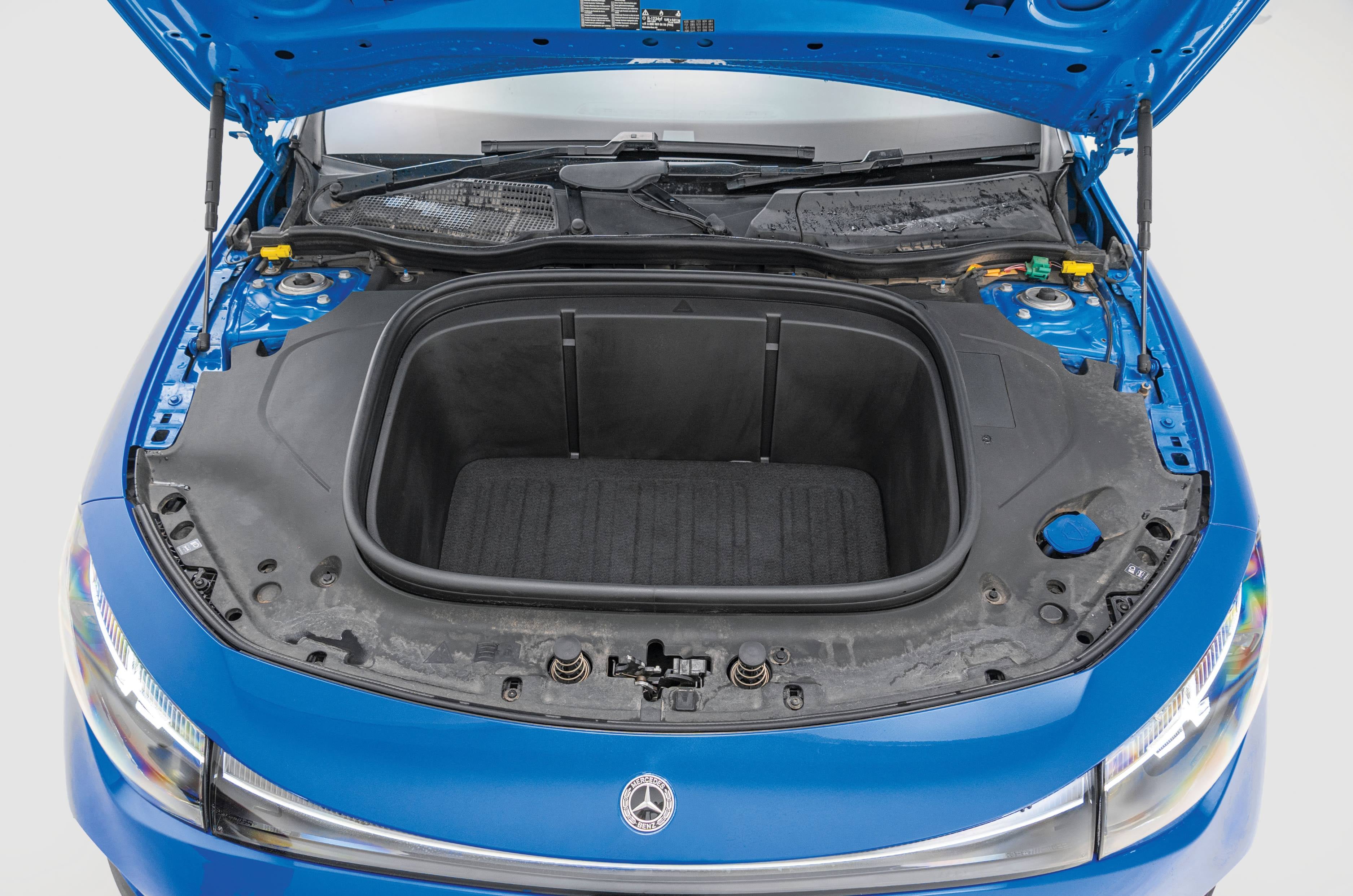
Boot space stands at a useful 405 litres. More interestingly, the CLA gets a 101-litre front trunk – the first time Mercedes has offered a frunk on one of its EVs.
In a first for Mercedes-Benz EVs, there’s a convenient 101-litre front trunk.
Mercedes CLA 250+ features and safety – 9/10
Packed with cutting-edge tech and features; no seat ventilation.
The CLA is a showcase for Mercedes’ latest technology. Four supercomputers provide the computing power, which Mercedes says is more than 200 times that of the previous CLA. It is also the first Mercedes to use the company’s new MB.OS infotainment operating system.
With the AMG Line styling package, the 250+ gets a flat-bottomed AMG steering, metal pedals and AMG seat upholstery; third passenger screen is reserved for the Launch Edition; cabin is practical with loads of storage, and overall fit/finish is good.
An Nvidia processor allows for quick responses, while over-the-air updates mean the system can be updated without a visit to the workshop. There’s also a new MBUX Virtual Assistant, which learns about the driver, including their language, accent and mood. It uses AI tools, including ChatGPT, Gemini and Bing, to further make your life easier, and you can ask them to do just about anything from setting navigation to changing the AC and so much more.
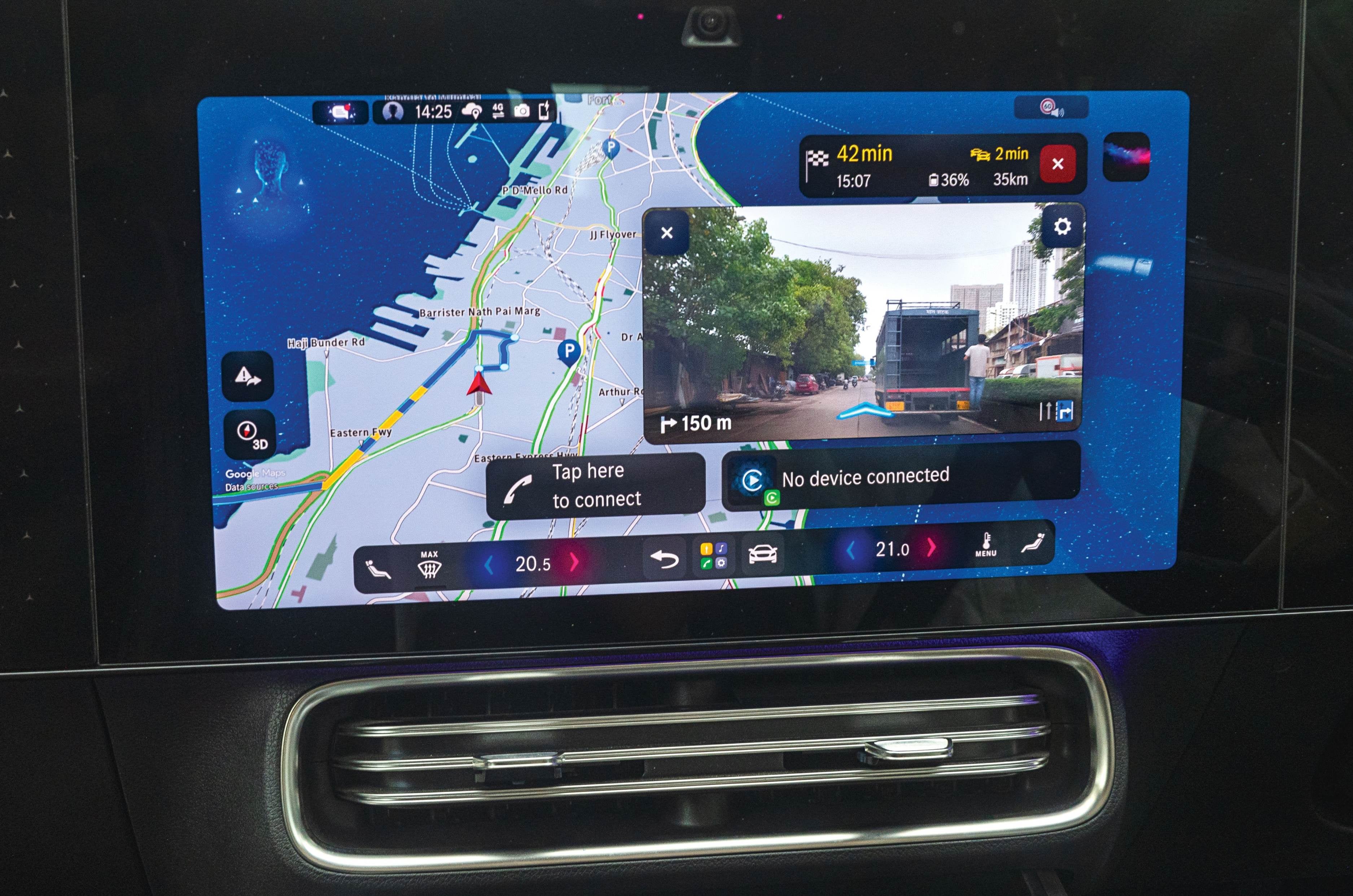
Screen is slick, has sharp graphics and native maps, which show directions in real-time using the camera feed.
The CLA also gets the new MB.Charge app, which brings charging providers together in one place. It can locate chargers, show their real-time availability, help plan a journey and even handle payment for a charging session.
The feature list is extensive. Highlights include a 14-inch central touchscreen, 10.25-inch digital driver’s display, powered, heated and massaging front seats, dual-zone climate control, configurable ambient lighting, a panoramic glass roof, Burmester 3D audio, wireless phone charging and auto parking. Ventilated front seats, however, aren’t offered.
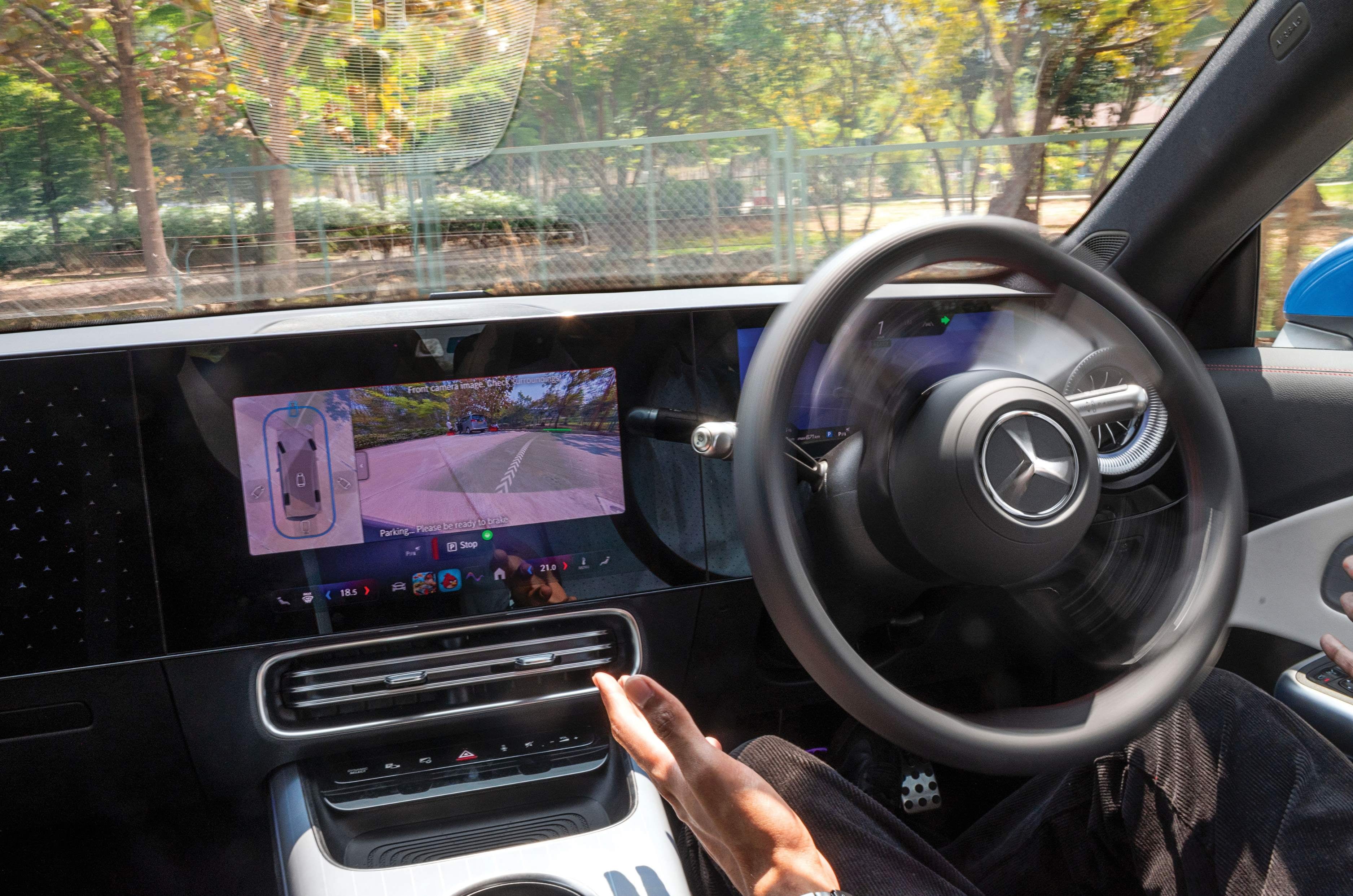
CLA 250+ packs in an auto park feature, which works very well in unmarked spaces too.
Safety equipment is comprehensive, with six airbags, a 360-degree camera and Level 2+ ADAS, which Mercedes calls MB.Drive. It includes adaptive cruise control, lane-keep assist, blind-spot monitoring, autonomous emergency braking and semi-autonomous driving functions. The system uses a combination of radar sensors and cameras and didn’t feel overly intrusive; better than previous Mercs, which feel trigger-happy with emergency braking. The CLA was also the safest car tested by Euro NCAP in 2025.
Mercedes CLA 250+ performance and refinement – 9/10
Smooth, progressive powertrain; refinement is impressive.
The CLA 250+ uses a rear-mounted electric motor producing 272hp and 335Nm. Performance is brisk, but what stands out more than outright acceleration is the way it delivers its performance.
Unlike some performance EVs that deliver power aggressively from the moment you bury the accelerator, the CLA builds speed in a smooth, progressive manner. The power delivery is linear, and there’s always enough performance on tap. Sport mode sharpens the response, while synthesised sounds played through the speakers add a little more theatre.
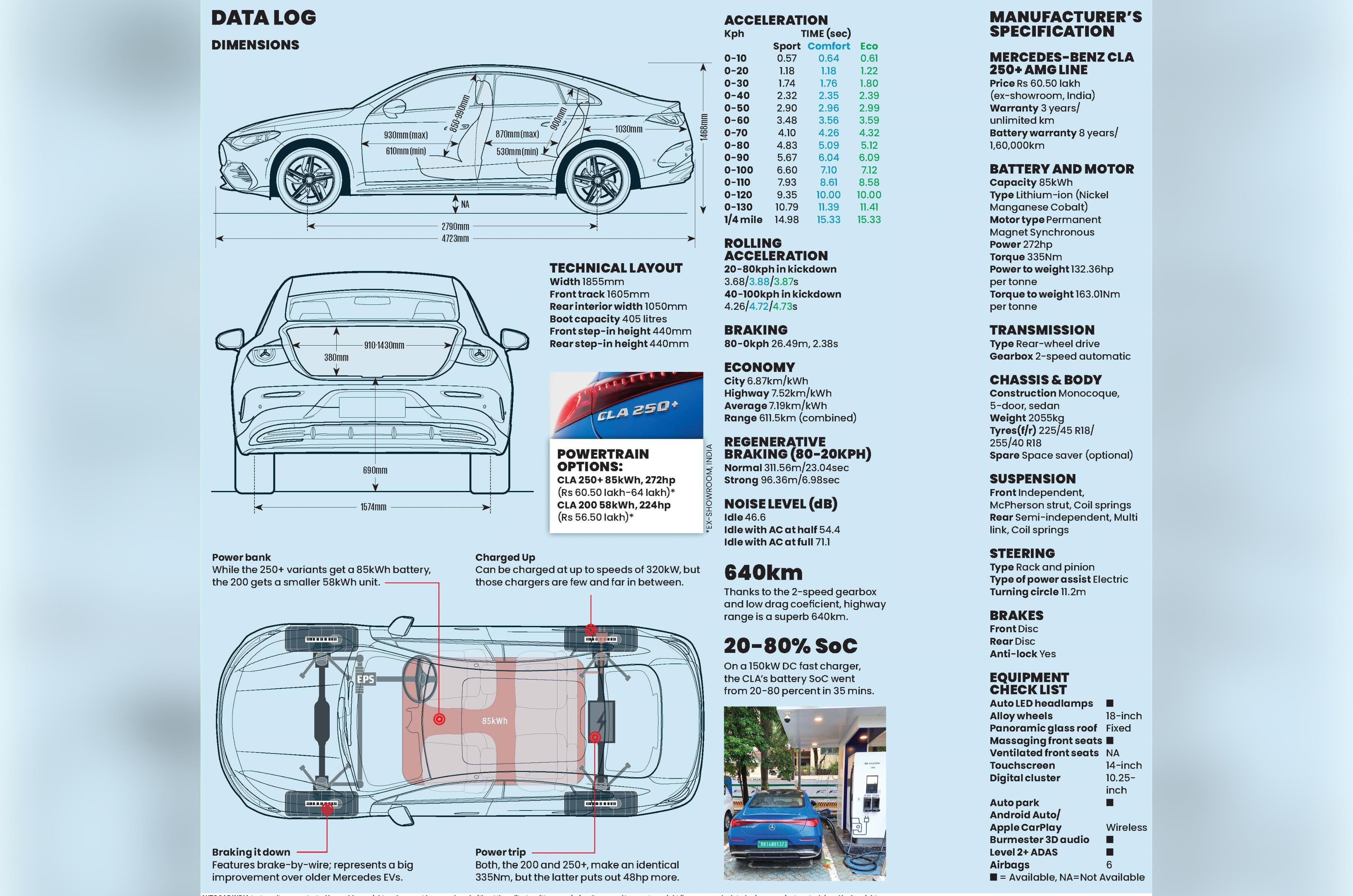
In our performance tests, it managed a 0-100kph time of 6.6sec in Sport mode, narrowly beating the claimed time of 6.7sec. Rolling acceleration is impressive too, with 20-80kph in Sport taking 3.68sec, and 40-100kph being dealt with in 4.26sec. Naturally, performance in the Comfort and Eco drive modes is more sedate than Sport, with the difference between the former two being almost negligible.
Mercedes has also opted for a two-speed gearbox, which is unusual for an EV, but makes sense here. The short 11:1 first gear helps with initial acceleration, while the taller 5:1 second gear is intended to improve efficiency at higher speeds. And from behind the wheel, you can feel when it shifts gears. Mercedes claims a drivetrain efficiency of 93 percent, and that plays an important role in the CLA’s impressive range.
The new brake-by-wire system is another area where the CLA makes a big improvement over older Mercedes EVs. Brake response is reassuring, with a good bite and a natural, consistent feel. In our braking test, the CLA came to a halt from 80kph in 26.49m despite it being on a damp surface.
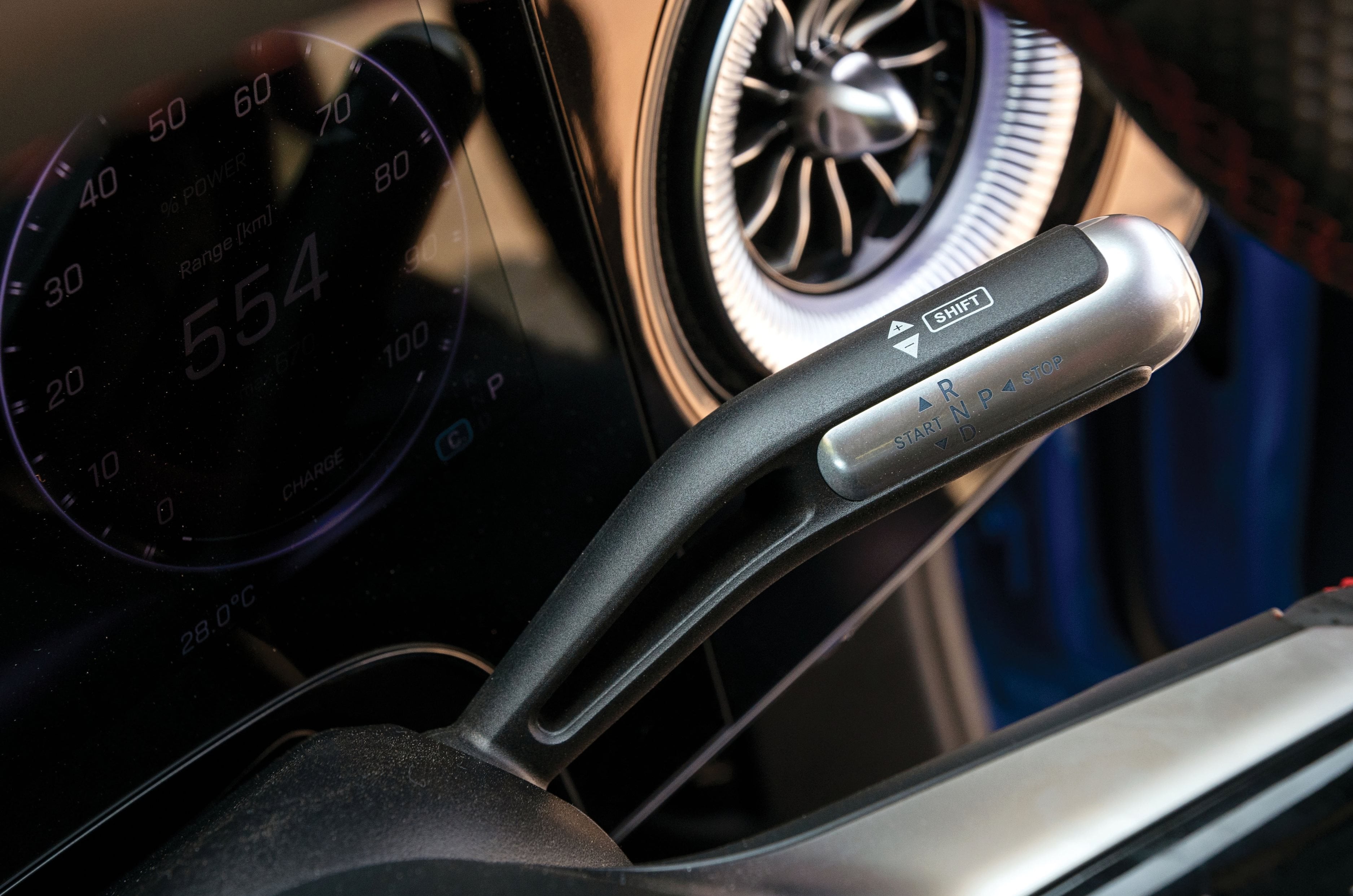
Control stalk now houses the start/stop button, the drive selector, and is also used to toggle between regen braking modes.
There are four levels of regenerative braking, including a one-pedal mode and an adaptive setting. They work well, with the Normal setting bringing it from 80-20kph in 311.56m, while the Strong setting takes 96.36m for the same. It’s worth noting, however, that Mercedes has moved the controls for the regen from the steering-mounted paddles used on some EVs to the gear selector stalk. You push or pull the stalk to change the regen level, and this isn’t quite as intuitive. The same stalk also incorporates the start/stop button.
Where the CLA really impresses is refinement. The absence of an engine obviously helps, but Mercedes has also done an excellent job of keeping wind and road noise out. At speed, the cabin remains remarkably quiet. A CLA 200 variant is also available in India, using the same rear-mounted motor layout but producing a lower 224hp and 335Nm. However, we’re yet to test this version.
Mercedes CLA 250+ tested acceleration times (sec)
Sport
Comfort
Eco
0-10kph
0.57
0.64
0.61
0-20kph
1.18
1.18
1.22
0-30kph
1.74
1.76
1.80
0-40kph
2.32
2.35
2.39
0-50kph
2.90
2.96
2.99
0-60kph
3.48
3.56
3.59
0-70kph
4.10
4.26
4.32
0-80kph
4.83
5.09
5.12
0-90kph
5.67
6.04
6.09
0-100kph
6.60
7.10
7.12
0-110kph
7.93
8.61
8.58
0-120kph
9.35
10
10
0-130kph
10.79
11.39
11.41
1/4 mile
14.98
15.33
15.33
20-80kph (rolling)
3.68
3.88
3.87
40-100kph (rolling)
4.26
4.72
4.73
Mercedes CLA 250+ range and efficiency – 9/10
Low drag, efficient powertrain mean superb real-world range.
Mercedes claims a WLTP range of 792km from the 85kWh (net) NMC battery, although, predictably, the real-world range is lower. In the city, with the regen set to the strongest mode, it delivered an efficiency of 6.87km/kWh that translates to a range of 584km. On the highway, with the regen set to ‘Normal’, it delivered an efficiency of 7.52km/kWh for a 640km range. With an average efficiency of 7.2km/kWh, you can expect a real-world range of 612km on a single charge, which is very impressive.
In the city, the strongest regen setting enabled it to recoup energy effectively, which helped boost efficiency, while the two-speed gearbox, with its taller 5:1 second gear, enabled greater efficiency at higher speeds and thus contributed to the EV’s highway efficiency. Combined with the low 0.21Cd drag coefficient and the normal regen mode that allows for more coasting, it proved even more efficient on the highway, which isn’t usually the case with EVs.
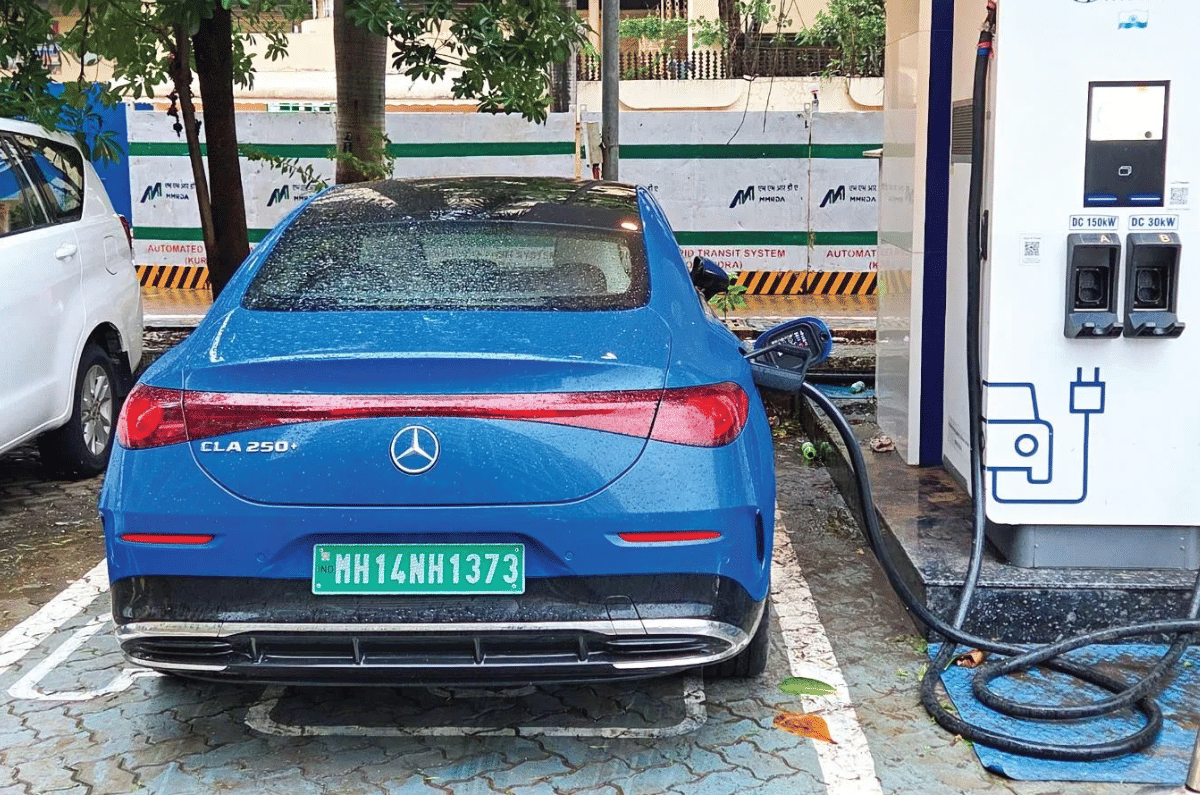
The CLA 250+ uses an 800V electrical architecture and supports charging at up to 320kW, but chargers capable of delivering that output remain few and far between in India. In our charging test using a 150kW DC fast charger, we saw an average charging speed of around 92kW with a peak charging speed of 125kW. To charge from 20-80 percent, it took 35 minutes and consumed 53.89kWh in total. This, combined with the efficiency and large real-world range, should make long-distance driving relatively stress-free.
Mercedes CLA 250+ tested range
City (km/kWh)
6.87
Highway (km/kWh)
7.52
Average (km/kWh)
7.19
Range (km)
611.5
Mercedes CLA 250+ ride comfort and handling – 8/10
Strikes a mature balance between ride and handling.
The CLA’s rear-wheel-drive layout gives it an enjoyable character on a winding road, and the steering is one of its stronger points. With no drive being sent through the front wheels, it feels precise, building up weight progressively with speed. It’s light enough at low speeds to make manoeuvring easy, yet gains enough weight as you go faster.
Thanks to the CLA’s rear-wheel-drive setup and precise steering, it feels agile and good fun around corners.
Mercedes has increased the Euro-spec CLA’s 107mm ground clearance for India and made suspension changes to better suit our roads, and both have worked. There’s enough clearance to deal with regular-sized speed breakers, while the additional height hasn’t really compromised the car’s handling or comfort. Around corners, the CLA remains agile, and body roll is well controlled. The ride does have a hint of firmness to it, but it deals with road imperfections without fuss and feels composed at both low and high speeds. Overall, it’s a mature combination of ride comfort, stability and handling.
Mercedes CLA 250+ value for money – 8/10
Refined and efficient powertrain, long range and sorted ride and handling make it Merc’s best EV yet.
Priced at Rs 60.50 lakh (ex-showroom), the CLA 250+ is a fairly compelling proposition, considering what it brings to the table. There are shortcomings, most notably the cramped rear seat, knees-up seating even at the front, and the absence of sunshades for the panoramic roof and rear windows. But if you’re going to drive yourself and want a luxury EV that’s distinctive, the CLA makes a strong case for itself.
Its powertrain is smooth and refined, its efficiency is excellent, it has an impressive real-world range of over 600km, and it strikes a very good balance between ride comfort and handling. Add to that a cabin packed with cutting-edge tech, and the new CLA emerges as one of the company’s most accomplished EVs yet.
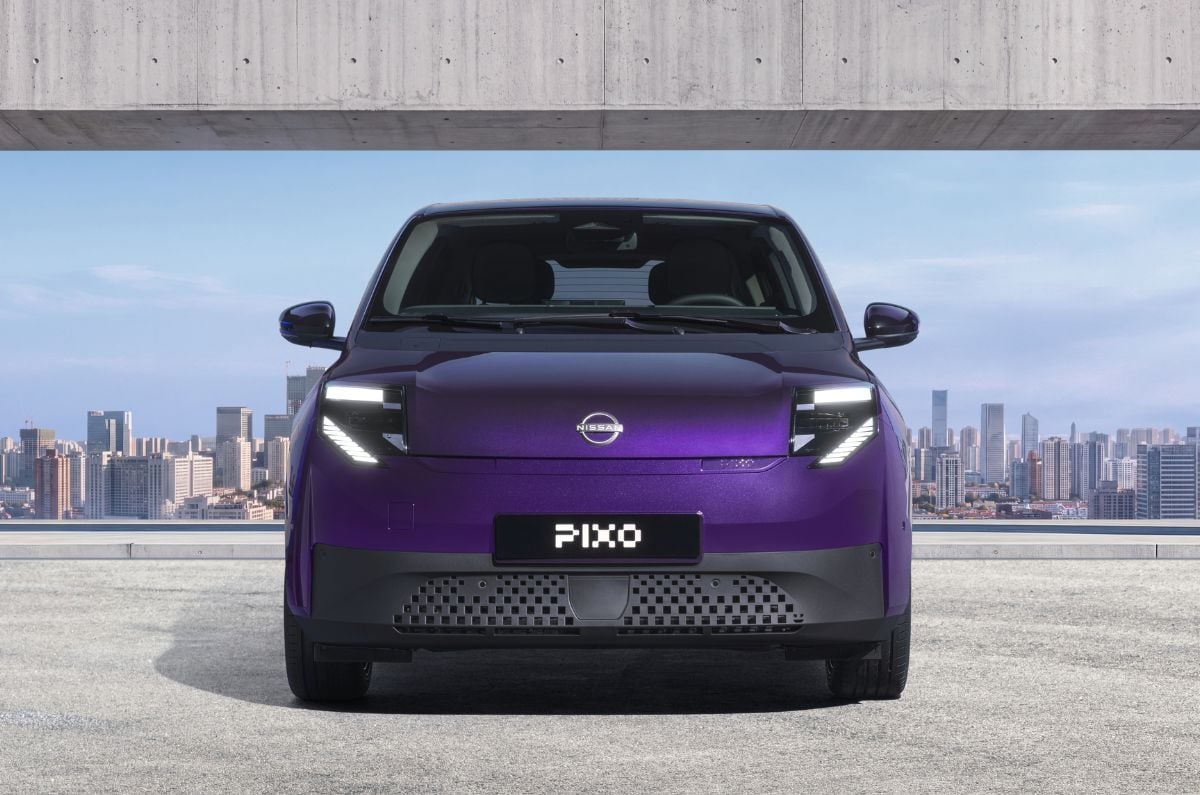
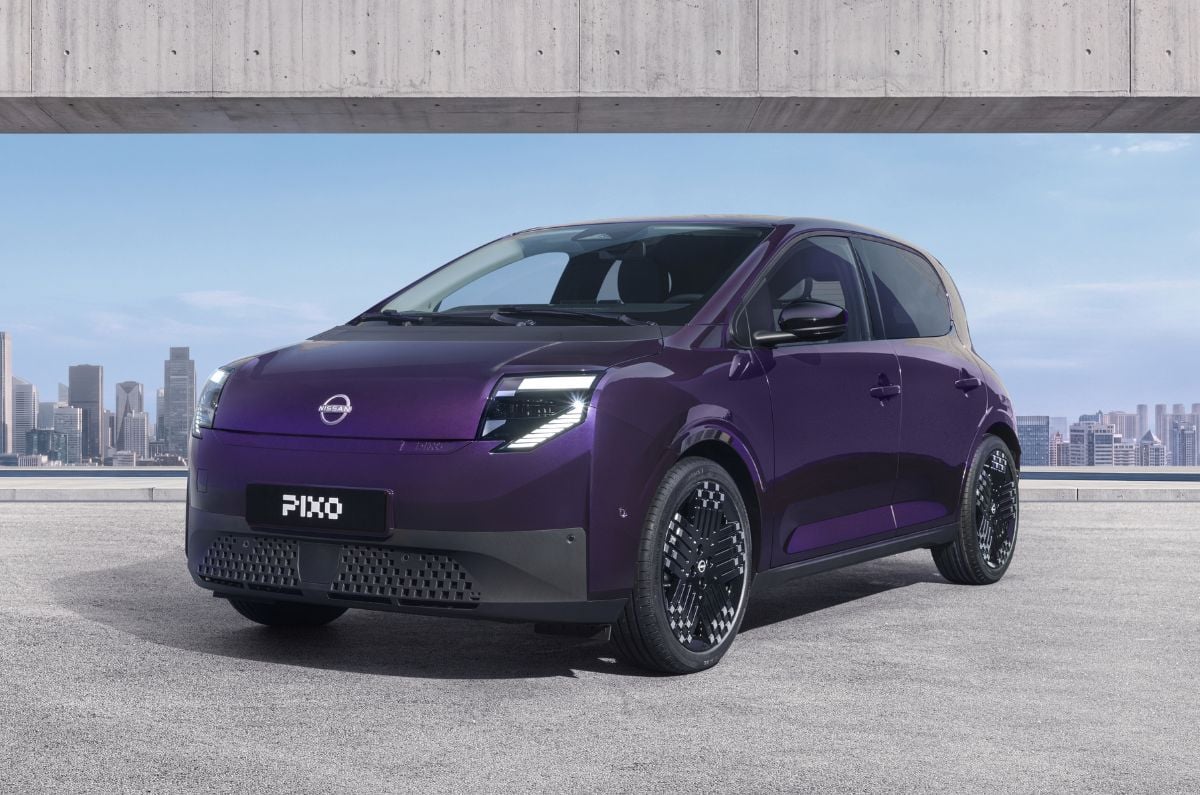
Nissan has pulled the covers off the Pixo, which is an A-segment EV specifically meant to cater to the urban buyer in Europe, according to the automaker. The Pixo is the result of a collaboration between NDE (Nissan Design Europe) and alliance partner Renault, and is manufactured at the latter’s Novo Mesto facility in Slovenia.
Design highlights include pixel-inspired lighting and “robot face” front bumper.
3,796mm long, 1,790mm wide and seats up to four adults.
Sliding rear seats, 10-inch touchscreen, Google built-in, ADAS and more.
27.5kWh battery, 82hp motor and up to 259km WLTP range.
Nissan Pixo exterior and dimensions
The Pixo features striking colour options and cube-inspired proportions
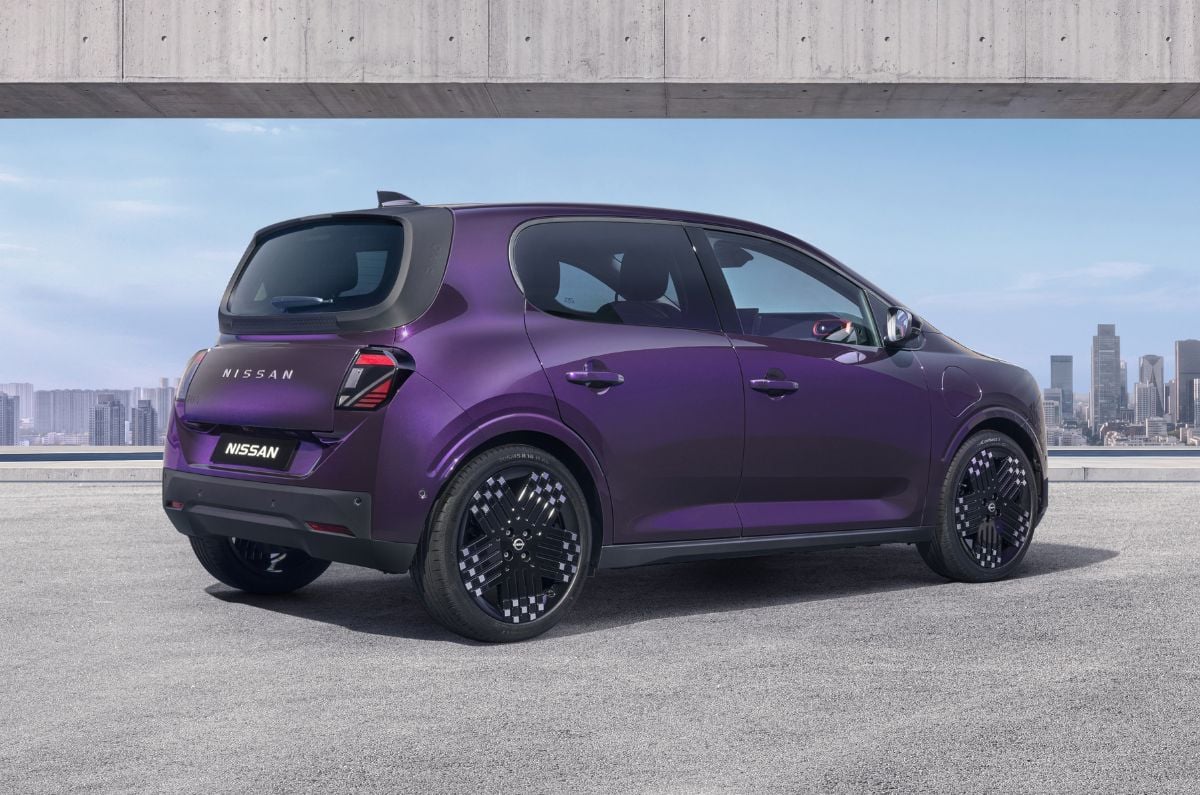
The Nissan Pixo features the Japanese brand’s latest design language meant specifically for EVs. The cube-inspired proportions of the Pixo are accompanied by what the brand says are pixel-inspired lighting and a “robot face” front bumper. ‘Pixo’ lettering aside, there are also ‘2-3’ markings to denote ‘Ni-San’ in Japanese. There are pixel-like highlights on the 18-inch wheels, while ‘Nissan’ is spelled out on the tailgate.
Nissan says that the Wonder Purple and Gear Blue paint options are meant to reinforce the Pixo’s youthful urban character, and these striking colours are contrasted by black trim bits on select surfaces. At 3,796mm long and 1,790mm wide, Nissan claims that the Pixo’s dimensions are specifically meant to fit European cities without compromising space on the inside. Meanwhile, it has a 9.9-meter turning circle.
Nissan Pixo interior design and features
This EV has been designed to carry up to four adults and sports a vertically stacked dashboard
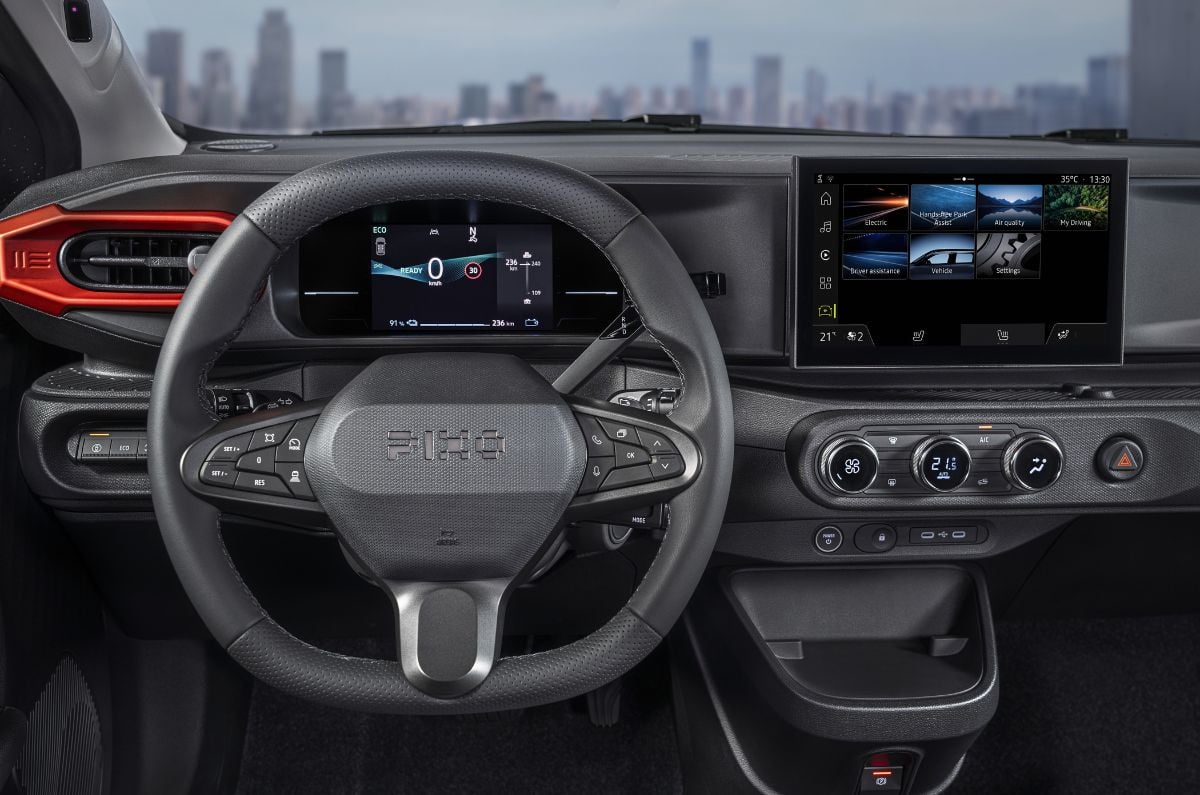
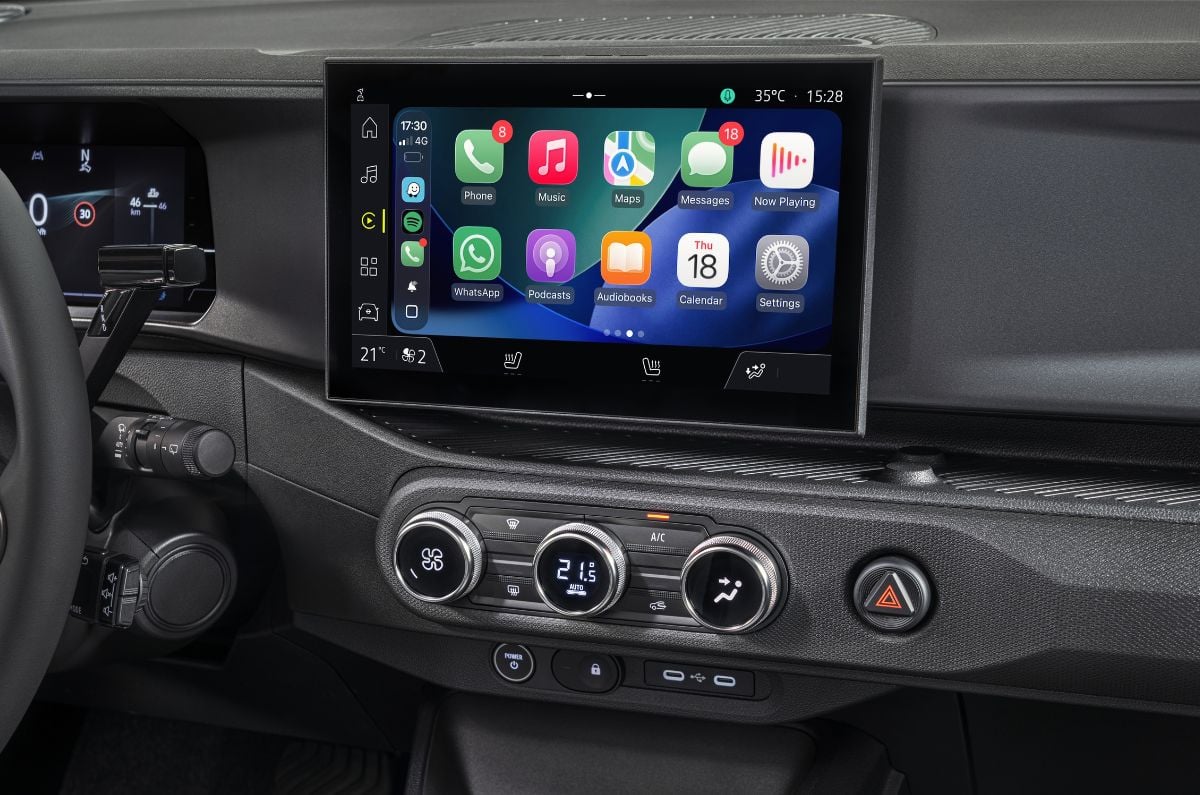
The Nissan Pixo has a relatively modern but simple-looking interior. However, it does get a vertically stacked dashboard with a textured finish and orange accents around the AC vents. There are physical buttons and dials to control the automatic climate control system, with a large drive-selector stalk behind the steering wheel. The dash also integrates a 7-inch digital driver’s display and a tablet-style 10-inch touch-infotainment screen.
Equipment highlights of the Nissan Pixo include Google Gemini, which the brand claims is ‘first-in-segment’ and that it will be offered in 16 languages and dialects. Adding to this list will be Google built-in features, MyNissan app and Face ID with the capability of recognising different drivers and remembering their personalised settings. The Nissan Pixo will be available with ADAS (advanced driver assistance systems), integrating adaptive cruise control, lane-departure warning and ‘Hands-Free Parking’.
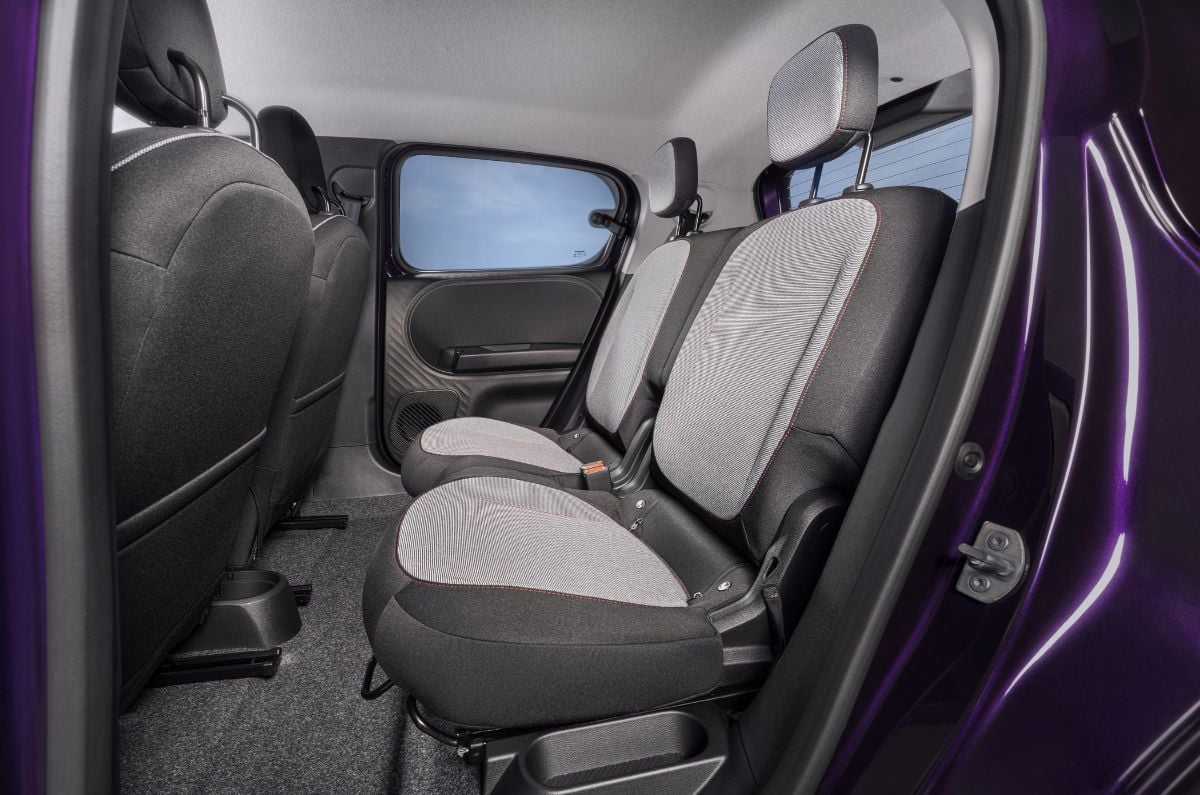
There are dual-tone fabric seats that look simple, and there’s enough space to carry four adults, with the rear units capable of being individually slid forward or backward based on cargo-space requirements. Nissan says that the Pixo can accommodate up to 356 litres of cargo in the boot – out of which 50 litres is taken up by the charging cable. “We’ve worked hard to maximise the space within the Pixo’s compact dimensions, creating a cabin that feels open, practical and surprisingly roomy,” said Masato Koyama, Lead Exterior Designer at Nissan Global Design.
Nissan Pixo powertrain and charging
This electric powertrain comprises a lithium iron phosphate battery and a single electric motor
The Nissan Pixo is equipped with a 27.5kWh lithium iron phosphate (LFP) battery pack, which energises a single electric motor capable of producing 82hp. While Nissan hasn’t released torque or performance figures of the Pixo yet, it does claim a WLTP range of 259km on a full charge.
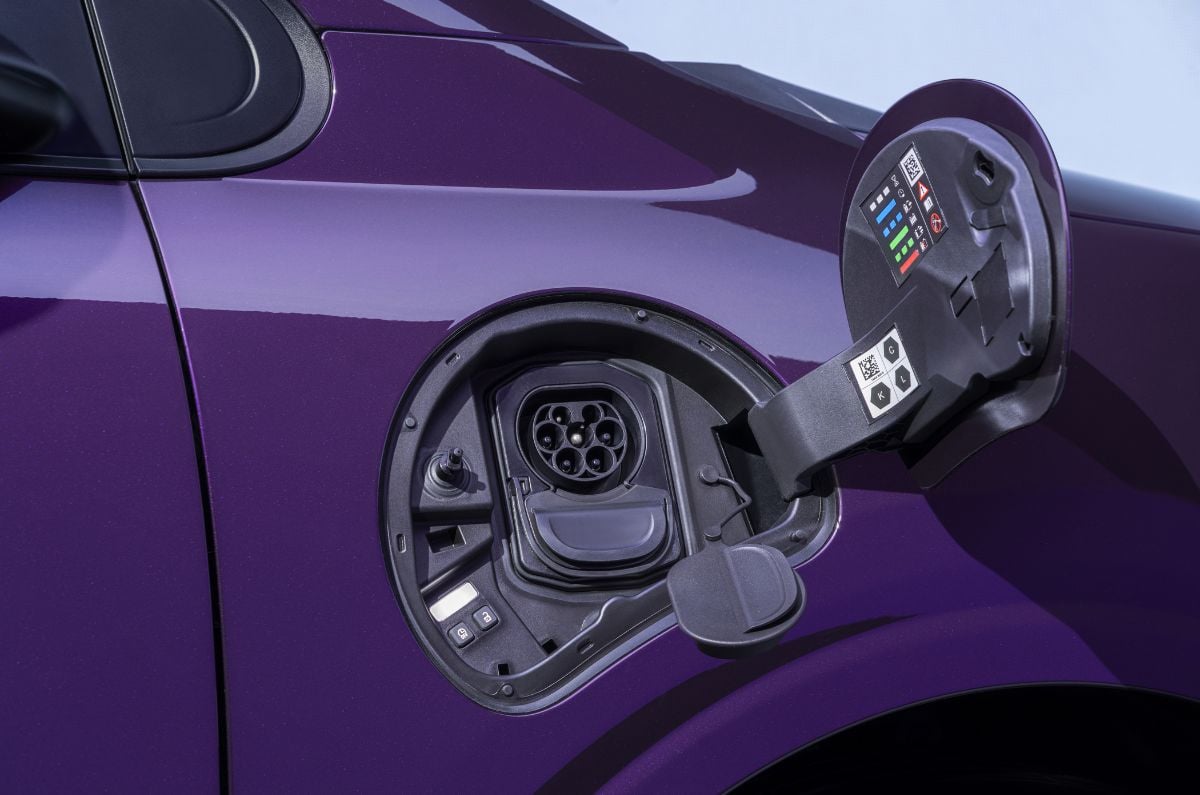
The Pixo supports DC fast-charging at up to 50kW, which the brand says can take the state of charge from 15-80 percent in around 28 minutes. The Nissan Pixo also supports bi-directional AC charging of 11kW. Nissan is yet to announce the price of the Pixo, though customer deliveries in Europe are scheduled start in early 2027.
Samsung Galaxy S26 FE को सोमवार को भारत में कंपनी के लेटेस्ट ‘फैन एडिशन’ मॉडल के तौर पर लॉन्च किया गया। यह पिछले साल के Galaxy S26 FE का सक्सेसर है और इसमें 120Hz रिफ्रेश रेट वाला 6.7-इंच का Dynamic AMOLED 2X डिस्प्ले दिया गया है। इसके अलावा, इस हैंडसेट में Exynos 2500 प्रोसेसर और 50MP के प्राइमरी सेंसर दिए गए हैं।
भारत में Samsung Galaxy S26 FE की कीमत और उपलब्धता
भारत में Samsung Galaxy S26 FE के 8GB RAM और 256GB ऑनबोर्ड स्टोरेज वाले एकमात्र वेरिएंट की कीमत 79,999 रुपये है। यह Pistachio, Blueberry और Graphite कलर ऑप्शन में उपलब्ध है।
लॉन्च ऑफर के तहत, ग्राहक पुराना स्मार्टफोन एक्सचेंज करके 8,000 रुपये तक का अपग्रेड बोनस पा सकते हैं। साथ ही, चुनिंदा NBFC पार्टनर के जरिए 30 महीने तक की नो-कॉस्ट EMI और 3,000 रुपये का अतिरिक्त अपग्रेड बोनस पाने का विकल्प भी है।
इसके अलावा, ग्राहक प्रमुख बैंक कार्ड से पेमेंट करने पर 7,000 रुपये तक का कैशबैक पा सकते हैं। वहीं, 12 महीने की नो-कॉस्ट बैंक EMI का विकल्प भी चुना जा सकता है। Samsung के ई-स्टोर से खरीदारी करने वाले ग्राहकों को 18 महीने की बैंक EMI का विकल्प भी मिलेगा।
Samsung Galaxy S26 FE के फीचर्स और स्पेसिफिकेशन्स
डुअल-सिम (नैनो + नैनो) वाला Samsung Galaxy S26 FE, Android 17 पर आधारित One UI 9 पर चलता है। इसमें सात साल तक सॉफ्टवेयर और सिक्योरिटी अपडेट मिलने का वादा किया गया है। इस फोन में 6.7-इंच का FHD+ Dynamic AMOLED 2X डिस्प्ले है, जिसका रिफ्रेश रेट 120Hz है और ब्राइटनेस 1,900 निट्स तक है।
फोन के अंदर Exynos 2500 प्रोसेसर लगा है, जिसे 3nm प्रोसेस से बनाया गया है। इसके साथ 8GB RAM और 256GB स्टोरेज मिलती है। कैमरे की बात करें तो Galaxy S26 FE में ट्रिपल रियर कैमरा सेटअप है, जिसमें OIS के साथ 50MP का वाइड कैमरा, 123-डिग्री फील्ड ऑफ व्यू वाला 12MP का अल्ट्रा-वाइड कैमरा और OIS व 3x ऑप्टिकल जूम वाला 8MP का टेलीफोटो कैमरा शामिल है। वहीं, सेल्फी और वीडियो कॉल के लिए इसमें 12MP का फ्रंट कैमरा भी है।
यह फोन Gemini Omni को भी सपोर्ट करता है, जो गैलरी में मौजूद फोटो और वीडियो का इस्तेमाल करके वीडियो क्लिप बना और एडिट कर सकता है। हैंडसेट में कनेक्टिविटी के लिए 5G, 4G LTE, Wi-Fi 6E, Wi-Fi Direct और Bluetooth 5.4 जैसे ऑप्शन दिए गए हैं।
बैटरी की बात करें तो, Samsung Galaxy में 4,900mAh की बैटरी है जो 45W वायर्ड चार्जिंग को सपोर्ट करती है। Samsung का दावा है कि 45W एडॉप्टर का इस्तेमाल करके यह फोन लगभग 30 मिनट में 69% तक चार्ज हो सकता है। यह 15W फास्ट वायरलेस चार्जिंग और वायरलेस पावरशेयर को भी सपोर्ट करता है। फोन का साइज 161.6 x 76.9 x 7.4 mm है और वजन 193 ग्राम है। इसमें धूल और पानी से बचाव के लिए IP68 रेटिंग भी दी गई है।
Volvo has updated its entire 40 series range, which includes the XC40, EX40, and EC40. The Swedish carmaker has brought in subtle exterior revisions, new interior decor options, updated tech, and safety enhancements.
New 11.2-inch infotainment with Google Gemini integration.
Level 2 ADAS and a 360-degree camera are optional fitments.
There’s no confirmation on whether the facelifted EC40 will arrive here, considering it’s the only 40 series SUV sold in India. Volvo has delisted the EX40 from its India website; the XC40 was discontinued in 2023
Volvo 40 Series: What’s new?
The front-end on all models receives revisions for the matrix LED headlamps with ‘Thor’s Hammer’ DRL signatures and a cleaner look for the bumper. There’s also a new grille design for the XC40 that helps set it apart from the EC40 and EX40, which get a blanked-off finish. At the rear, only the XC40 and EX40 sport new LED tail-lamps and a revised tailgate and bumper. The alloy wheels on all models have been restyled, with the XC40 now offering 18- to 20-inch rims. Black Editions are also available, which come with blacked-out exterior elements.
Inside, there’s a larger 11.2-inch infotainment system with Volvo’s latest operating system. There’s also Google Gemini integration onboard, which helps drivers have natural conversations with the in-car assistant. Volvo has also introduced new upholstery and decor options for the interior.
Volvo says that, as standard, all models respond to potential collisions in real time with features like automatic emergency steering and braking. Optional safety features include a Level 2 ADAS suite and a 360-degree camera. The Swedish carmaker says that the XC40, EX40 and EC40 will “improve over time” with OTA updates.
Under the hood, the XC40 is powered by a 2.0-litre turbocharged petrol engine available in two states of tune. Lower-spec versions produce 163hp and 265Nm while higher-spec versions deliver 197hp and 300Nm. Power is sent to the front wheels via a 7-speed DCT. The EC40 and EX40 provide multiple battery choices ranging from 66kWh to 79kWh. Depending on the variant, you either get a rear-mounted motor or a dual-motor setup that enables AWD. The maximum e-motor power output is 442hp and 670 Nm, and WLTP-certified range figures for the EX40 and EC40 are 575km and 584km, respectively.
Xiaomi ने चुनिंदा ग्लोबल मार्केट में Redmi Note 17 Pro Max 5G लॉन्च कर दिया है, जिसमें 6.83-इंच का AMOLED डिस्प्ले, Snapdragon 6 Gen 5 चिपसेट और 512GB तक की स्टोरेज दी गई है। इस स्मार्टफोन में OIS के साथ 50MP का मेन कैमरा, 32MP का फ्रंट कैमरा और 100W वायर्ड चार्जिंग वाली 10,000mAh की सिलिकॉन-कार्बन बैटरी भी दी गई है। अब चलिए जानते हैं फोन के स्पेसिफिकेशन्स और कीमत के बारे में।
Redmi Note 17 Pro Max 5G की कीमत और उपलब्धता
जापान में Redmi Note 17 Pro Max 5G के 8GB + 256GB वेरिएंट की कीमत JPY 79,980 (लगभग ₹47,900) और 8GB + 512GB मॉडल की कीमत JPY 99,980 (लगभग ₹59,900) है। यह Cloudbrush, Purple और Black कलर ऑप्शन में उपलब्ध है।
Redmi Note 17 Pro Max 5G के फीचर्स और स्पेसिफिकेशन्स
Redmi Note 17 Pro Max 5G में 6.83-इंच का AMOLED डिस्प्ले है, जिसका रिजॉल्यूशन 1.5K और रिफ्रेश रेट 120Hz तक है। यह पैनल 3,500 निट्स तक की ब्राइटनेस को सपोर्ट करता है और इसमें 12-बिट कलर डेप्थ, DCI-P3 कलर गैमट, HDR10+ और डॉल्बी विजन जैसे फीचर्स शामिल हैं। इसे कॉर्निंग गोरिल्ला ग्लास विक्टस 2 से सुरक्षा दी गई है और यह 3,840Hz PWM डिमिंग और वेट टच टेक्नोलॉजी 2.0 को भी सपोर्ट करता है।
Redmi Note 17 5G सीरीज के Pro Max वेरिएंट में Snapdragon 6 Gen 5 SoC प्रोसेसर है, जिसके साथ 8GB LPDDR5X RAM और 512GB तक UFS 4.1 ऑनबोर्ड स्टोरेज मिलता है। यह फोन Android 16 पर आधारित Xiaomi के HyperOS 3 पर चलता है और इसमें AI Eraser Pro, AI Reflection Removal, AI Image Enhancement, AI Sky और AI Bokeh जैसे AI फीचर्स दिए गए हैं। फोन Google Gemini फीचर्स को भी सपोर्ट करता है, हालांकि Xiaomi का कहना है कि इनकी उपलब्धता इलाके और सॉफ्टवेयर वर्जन के हिसाब से अलग-अलग हो सकती है।
कैमरे की बात करें तो, फोन में OIS के साथ 50MP का प्राइमरी रियर कैमरा और 8MP का अल्ट्रावाइड कैमरा है। रियर कैमरा 30fps पर 4K वीडियो रिकॉर्डिंग को सपोर्ट करता है। वहीं, सेल्फी और वीडियो कॉल के लिए फोन में 32MP का फ्रंट कैमरा दिया गया है। फ्रंट कैमरा भी 30fps पर 4K वीडियो रिकॉर्डिंग को सपोर्ट करता है।
कनेक्टिविटी के लिए फोन में 5G, डुअल सिम, Wi-Fi 6, Bluetooth 6.0 और NFC का सपोर्ट मिलता है। इसमें इन्फ्रारेड ब्लास्टर भी दिया गया है, जिसकी मदद से फोन को कुछ इलेक्ट्रॉनिक डिवाइस के रिमोट की तरह इस्तेमाल किया जा सकता है।
सेंसर की बात करें तो फोन में एक्सेलेरोमीटर, जायरोस्कोप, इलेक्ट्रॉनिक कंपास, प्रॉक्सिमिटी सेंसर और एम्बिएंट लाइट सेंसर दिए गए हैं।
बैटरी और सिक्योरिटी
Redmi Note 17 Pro Max 5G में 10,000mAh की सिलिकॉन-कार्बन बैटरी है और यह 100W वायर्ड चार्जिंग को सपोर्ट करता है। यह 27W तक की वायर्ड रिवर्स चार्जिंग को भी सपोर्ट करता है। सुरक्षा के लिए, इसमें इन-स्क्रीन फिंगरप्रिंट सेंसर और फेशियल रिकग्निशन की सुविधा है।
Redmi का दावा है कि Note 17 Pro Max 5G मॉडल पानी और धूल से बचाव के लिए IP66 और IP68 रेटिंग को पूरा करता है। इसके अलावा, फोन की ऊंचाई 163.44mm, चौड़ाई 78.27mm और मोटाई 8.65mm है, जबकि Cloudbrush वेरिएंट की मोटाई 8.57mm है। इसका वजन 229.5 ग्राम है।
Stocks to Watch: शुक्रवार, 28 अगस्त के कारोबार में कई शेयर खबरों के चलते फोकस में रह सकते हैं। कहीं AI से जुड़ा बड़ा अपडेट है। कहीं ब्लॉक डील और ऑर्डर की खबर है। वहीं कुछ कंपनियों में निवेश और मैनेजमेंट से जुड़े अहम अपडेट आए हैं।
Adani Power
पावर कंपनी Adani Power ने अपनी सब्सिडियरी कंपनी Chandenvalle Infra Park में पूरी हिस्सेदारी बेचने का समझौता किया है। यह हिस्सेदारी AdaniConneX Private Limited को बेची जाएगी। डील की वैल्यू करीब ₹535.69 करोड़ है। अंतिम रकम क्लोजिंग डेट के बदलावों पर निर्भर करेगी।
New India Assurance Company
सरकारी इंश्योरेंस कंपनी New India Assurance Company को ₹781.39 करोड़ का इनकम टैक्स रिफंड मिला है। इसमें ₹59.63 करोड़ का ब्याज भी शामिल है। यह रिफंड असेसमेंट ईयर 2022-23 से जुड़ा है। इनकम टैक्स विभाग ने शिकायत के समाधान के बाद यह रकम जारी की है।
Lenskart
आईवियर रिटेल कंपनी Lenskart में बड़ी ब्लॉक डील हो सकती है। सूत्रों के मुताबिक Alphawave करीब 1.2% हिस्सेदारी बेच सकता है। डील का आकार करीब ₹1,313 करोड़ है। फ्लोर प्राइस ₹630 प्रति शेयर रखा गया है, जो मौजूदा भाव से करीब 1.7% कम है।
NBCC (India)
सरकारी कंस्ट्रक्शन कंपनी NBCC को पांच नए वर्क ऑर्डर मिले हैं। इनकी कुल वैल्यू ₹134.27 करोड़ है। इसमें स्कूल कैंपस, एजुकेशन सेंटर और Canara Bank की बिल्डिंग से जुड़े प्रोजेक्ट शामिल हैं। ऑर्डर में तीन केंद्रीय विद्यालयों के प्रोजेक्ट भी हैं।
Wipro
आईटी सर्विसेज कंपनी Wipro ने Google Cloud के साथ अपनी पार्टनरशिप बढ़ाई है। इसका मकसद Gemini Enterprise और AI को बड़े स्तर पर अपनाना है। Wipro अपने कारोबार में भी Gemini Enterprise का इस्तेमाल करेगी। साथ ही 10,000 से ज्यादा AI सर्टिफाइड विशेषज्ञों को इस टेक्नोलॉजी के लिए तैयार किया जाएगा।
Life Insurance Corporation of India
सरकारी इंश्योरेंस कंपनी LIC ने Bajaj Finance के NCD में ₹5,000 करोड़ का निवेश किया है। LIC ने ₹1 लाख फेस वैल्यू वाले 5 लाख NCD खरीदे हैं। यह निवेश कंपनी ने रेगुलेटरी फाइलिंग में बताया है। NCD यानी नॉन कन्वर्टिबल डिबेंचर एक तरह का डेट इंस्ट्रूमेंट है।
RPP Infra Projects
इंफ्रास्ट्रक्चर कंपनी RPP Infra Projects को बड़ा झटका लगा है। तमिलनाडु सरकार ने चेन्नई में प्रस्तावित Global Sports City प्रोजेक्ट को नए सिरे से तैयार करने का फैसला किया है। इसके चलते कंपनी का ₹205.89 करोड़ का कॉन्ट्रैक्ट खत्म हो गया है।
Bharat Petroleum Corporation
सरकारी ऑयल मार्केटिंग कंपनी Bharat Petroleum Corporation (BPCL) के चेयरमैन और MD संजय खन्ना ने कहा कि एनर्जी सेक्टर में उतार-चढ़ाव बना रहेगा। उन्होंने कहा कि ग्राहकों को E10 पेट्रोल का विकल्प दिया जा सकता है। लेकिन, E20 को बंद नहीं किया जाएगा।
Zee Entertainment Enterprises
मीडिया कंपनी Zee Entertainment Enterprises से जुड़ा अहम अपडेट आया है। NCLT ने सुभाष चंद्रा की पर्सनल इनसॉल्वेंसी रिजॉल्यूशन प्रक्रिया में प्रस्तावित रिपेमेंट प्लान को मंजूरी दे दी है। HDFC Bank इस आदेश के खिलाफ NCLAT में अपील करने के विकल्प पर विचार कर रहा है।
RVNL
सरकारी रेलवे इंफ्रास्ट्रक्चर कंपनी RVNL ने राकेश भल्ला को दोबारा Additional Director नियुक्त किया है। उन्हें इंडिपेंडेंट डायरेक्टर की जिम्मेदारी दी गई है। उनकी दोबारा नियुक्ति 25 अगस्त 2026 से प्रभावी है। इससे पहले उन्हें 13 अगस्त को इस पद पर नियुक्त किया गया था।
Disclaimer: यहां मुहैया जानकारी सिर्फ सूचना के लिए दी जा रही है। यहां बताना जरूरी है कि मार्केट में निवेश बाजार जोखिमों के अधीन है। निवेशक के तौर पर पैसा लगाने से पहले हमेशा एक्सपर्ट से सलाह लें। मनीकंट्रोल की तरफ से किसी को भी पैसा लगाने की यहां कभी भी सलाह नहीं दी जाती है।