अब्रॉड में रहने वाले इंडियन (NRI) अब भारत में घर और प्रॉपर्टी (property) खरीदने में पहले से ज्यादा दिलचस्पी दिखा रहे हैं। अच्छी कमाई, बेहतर रिटर्न (returns) और भारत के रियल एस्टेट बाजार (real estate market) में बढ़ते भरोसे की वजह से वे बड़े शहरों में तेजी से इन्वेस्टमेंट कर रहे हैं, इन शहरों में सबसे ज्यादा इन्वेस्टमेंट कर रहे हैं NRI:
Delhi-NCR (दिल्ली-एनसीआर)
दिल्ली-एनसीआर, खासकर गुरुग्राम (Bengaluru), NRI इंवेटर्स की पसंदीदा जगहों में शामिल है। यहां लग्जरी प्रोजेक्ट्स, अच्छी सड़क और मेट्रो कनेक्टिविटी (metro connectivity), बड़े कॉर्पोरेट ऑफिस (corporate office) और तेजी से डेवलप हो रहे इंफ्रास्ट्रक्चर के कारण प्रॉपर्टी की मांग लगातार बढ़ रही है। यही वजह है कि यहां इन्वेस्टमेंट करने पर अच्छे रिटर्न (return) की उम्मीद रहती है।
Bengaluru (बेंगलुरु)
बेंगलुरु को भारत की IT केपिटल कहा जाता है। यहां देश-विदेश की बड़ी टेक कंपनियां (tech companies) मौजूद हैं, जिससे नौकरी के अवसर लगातार बढ़ रहे हैं। बढ़ती आबादी और किराये के घरों की मांग के कारण NRI इस शहर को लंबे समय के इन्वेस्टमेंट के लिए अच्छा ऑप्शन मानते हैं।
Hyderabad (हैदराबाद)
हैदराबाद तेजी से आगे बढ़ता हुआ रियल एस्टेट (real estate) बाजार है। यहां बेहतर इंफ्रास्ट्रक्चर, आईटी सेक्टर (IT sector) का विस्तार और दूसरे बड़े शहरों की तुलना में किफायती प्रॉपर्टी कीमतें इन्वेस्टर्स को अट्रैक्ट करती हैं। यही कारण है कि हाल के वर्षों में NRI का रुझान इस शहर की ओर तेजी से बढ़ा है।
Mumbai (मुंबई)
मुंबई देश की आर्थिक राजधानी होने के साथ-साथ NRI इन्वेस्टर्स की सबसे पसंदीदा रियल एस्टेट मार्केट भी है। यहां लग्जरी अपार्टमेंट, प्रीमियम प्रोजेक्ट्स और ऊंची प्रॉपर्टी वैल्यू (property value) इन्वेस्टर्स को अट्रैक्ट करती है। 2024 में भारतीय रियल एस्टेट के प्राइवेट इक्विटी इन्वेस्टमेंट का लगभग 50% हिस्सा मुंबई को मिला, जिससे इसकी पॉपुलैरिटी और मजबूत हुई।
अच्छे रिटर्न (Good Returns) की उम्मीद
भारत के कई शहरों में प्रॉपर्टी की कीमतें लगातार बढ़ रही हैं। ऐसे में NRI मानते हैं कि आज किया गया इन्वेस्टमेंट आने वाले वर्षों में अच्छा प्रॉफिट दे सकता है। इसी वजह से वे रियल एस्टेट को सिक्योर और फायदेमंद इन्वेस्टमेंट मानते हैं।
किराये से कमाई (Rental Income) का मौका
कई NRI भारत में घर खरीदकर उसे किराये पर दे देते हैं। इससे उन्हें हर महीने रेगुलर इनकम होती है और साथ ही समय के साथ प्रॉपर्टी की कीमत (property’s value) बढ़ने का भी फायदा मिलता है।
निवेश (Investment) करना हुआ आसान
सरकार ने NRI के लिए प्रॉपर्टी खरीदने की प्रोसेस पहले से ज्यादा आसान बना दी है। डिजिटल बैंकिंग (digital banking), ऑनलाइन डॉक्यूमेंटेशन (documentation) और सिंपल रेगुलेशन की वजह से अब विदेश में रहकर भी भारत में इन्वेस्टमेंट करना आसान हो गया है।
परिवार (Family) और भविष्य (Future) की जरूरत
कई NRI अपने माता-पिता या परिवार के रहने के लिए भारत में घर खरीदते हैं। वहीं कुछ लोग रिटायरमेंट (retirement) के बाद भारत लौटने की प्लानिंग बनाकर पहले से ही प्रॉपर्टी में इन्वेस्टमेंट कर रहे हैं।
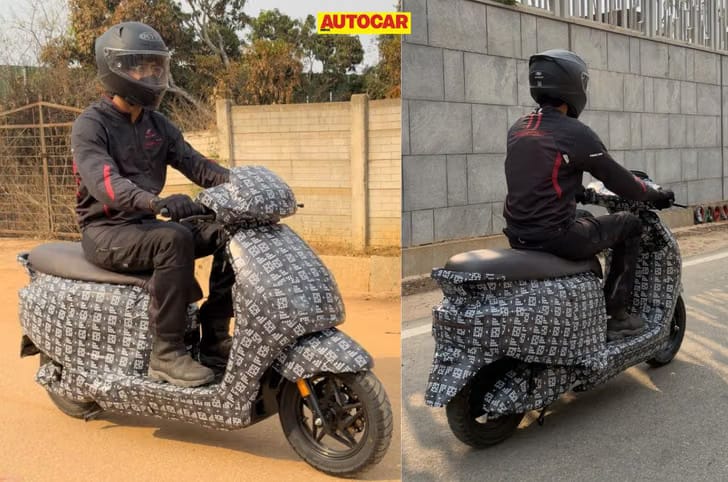
Simple Energy has announced that it will unveil its first family-oriented electric scooter on September 2, 2026. We first spotted the scooter, expected to be called the Arrive, undergoing testing in March, and the announced unveil date now confirms that its launch is imminent.
New model likely to be called the Simple Arrive
Will rival the Ather Rizta, TVS iQube and Bajaj Chetak
Features a more family-oriented design than the existing Simple One and Simple OneS
Simple Energy family scooter: What we know
Upcoming model gets a more conventional design than the Simple One
From images of the scooter testing earlier this year, the Arrive adopts a notably different design approach from Simple’s existing range. While the One and OneS feature sharp, angular styling, the Arrive opts for a more rounded, conventional silhouette aimed at family scooter buyers.
Key details visible on the test mule included a flat single-piece seat, twin rear shock absorbers, a centre stand, and a front disc brake paired with a rear drum brake – a more cost-effective and practical setup than the disc-at-both-ends configuration on the One range. A front storage cubby and a TFT display also appear to be part of the package, while the headlight is mounted on the apron with a short wind deflector above it.
Simple Energy has also announced that it has become the first Indian OEM to commercially manufacture heavy rare-earth-free electric motors, a technology that is expected to make its way to the new scooter. Apart from confirming the September 2 unveil date, the company has not revealed any additional details. We will update this story as more information becomes available.
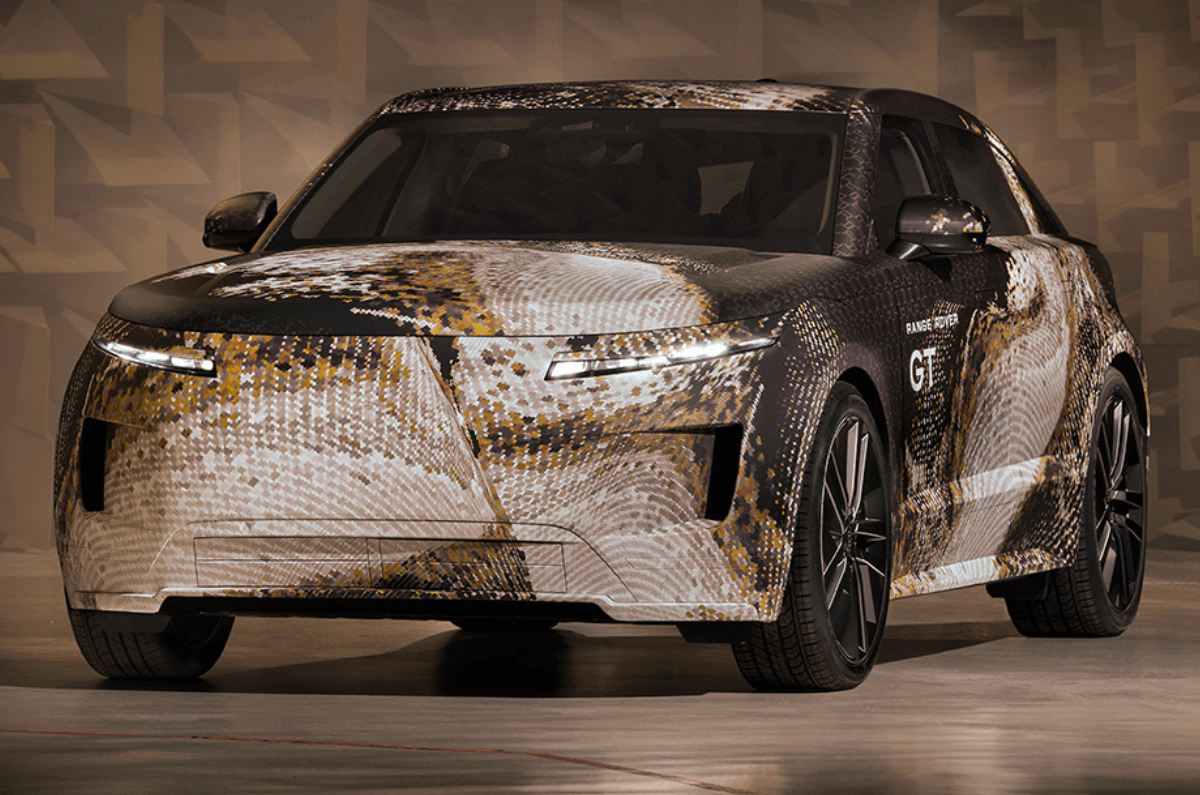
It’s not often that Range Rover adds a fresh member to the family. The last wholly new addition to the range was the Velar in 2017. Now comes something far more radical – the Range Rover GT, a grand tourer that ditches the SUV playbook, goes all-electric and pushes the brand into uncharted territory.
Shape of a new Range Rover
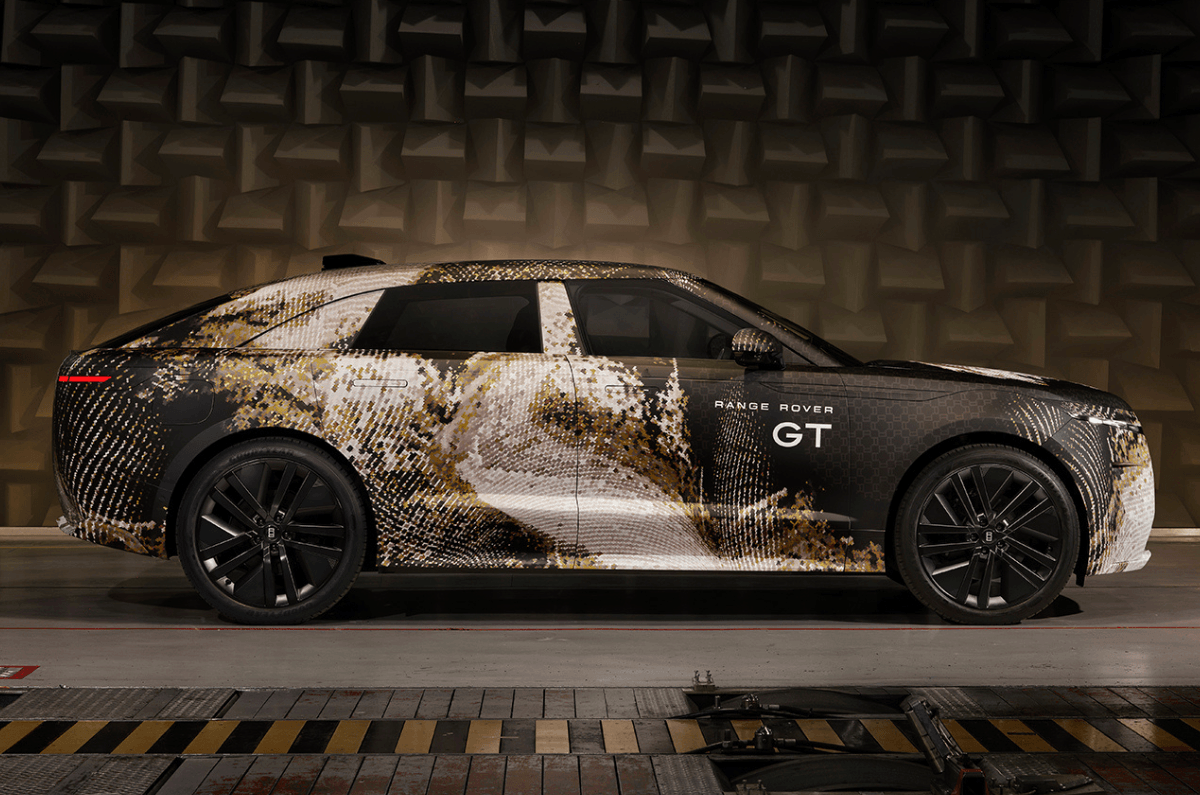
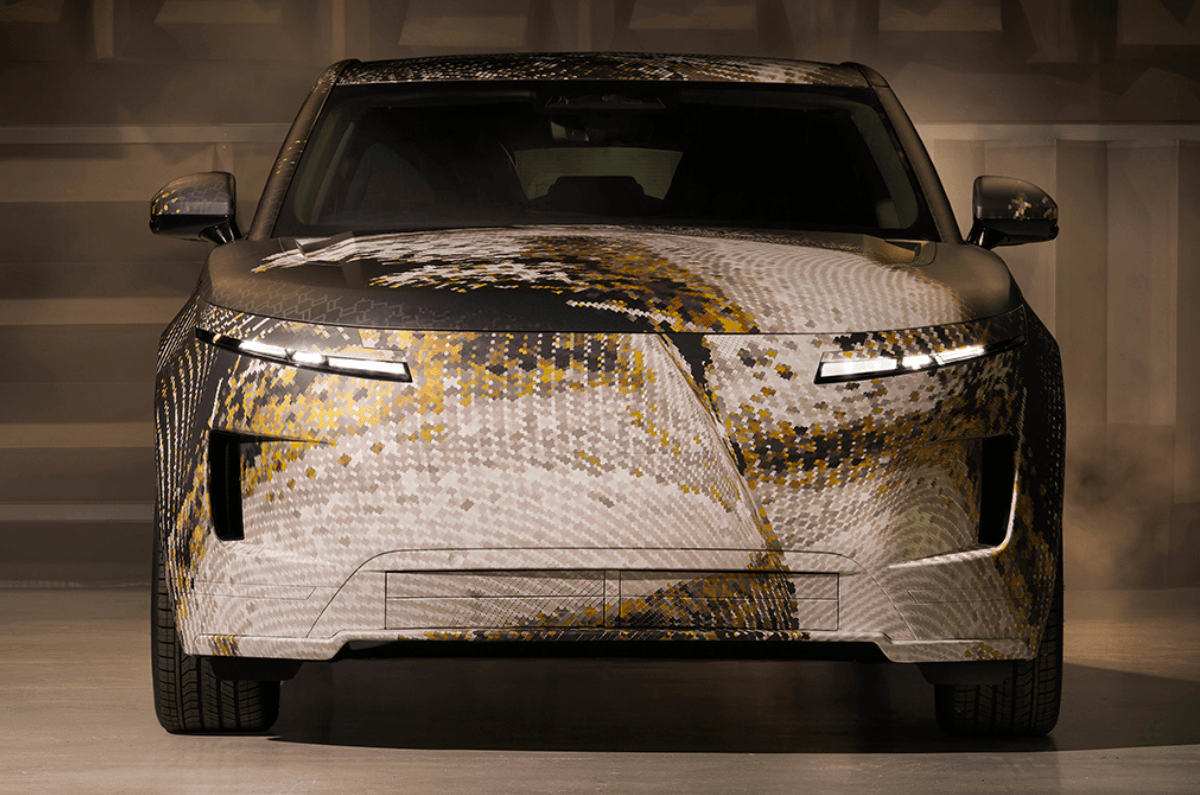
Even under the elaborate gold-on-black camouflage, the GT’s form is impossible to miss. The silhouette is long, low and almost coupe-like, with a roofline that seems to run on forever and exaggerates the car’s length.
Range Rover says the GT is longer than the standard-wheelbase Range Rover and, crucially, the lowest Range Rover yet. It also sits lower than a Porsche Macan while stretching beyond a Range Rover Sport. Those proportions immediately change what you expect a Range Rover to be. There’s still the familiar clean surfacing and tight detailing, but the GT comes across more like a fast, long-legged cruiser than a traditional go-anywhere SUV. And of course, like every Range Rover, it still drives all four wheels. The wheelbase looks to be well over three metres, which should suit the kind of high-speed stability and relaxed continent-eating ability the GT name promises.
Underpinning this shift is a clean break from the MLA architecture used by the Range Rover and Range Rover Sport Electrics. The GT rides on JLR’s new EMA platform, a born-electric architecture that gives the design and engineering teams far more freedom than a chassis that is shared with ICE powertrains.
Born-electric, engineered for refinement
EMA’s packaging advantages are obvious here. Despite the low roofline, Range Rover says there’s enough headroom for six-footers in both rows, helped by a fixed panoramic glass roof, the largest the brand has fitted yet, which adds 40mm of headroom.
The battery uses longer cells in a single layer rather than a double-stacked layout, so the floor need not be pushed up. That should help keep the seating position natural, and the cabin feel properly spacious. There’s even a frunk up front, something you don’t get on the MLA-based Range Rover Electrics, which underlines how different this car is beneath the skin.
Refinement is clearly central to the brief. Martin Limpert, Managing Director of Range Rover, calls it “the quietest Range Rover yet”, claiming it to be 7dB quieter than the ICE Range Rover, which in acoustic terms is an exponential improvement. Besides, the inherent smoothness of an EV powertrain promises to give the GT a special calm, unhurried character that proper grand tourers are built on.
No hard figures have been released, but the wheelbase and EMA’s potential point to a sizeable battery pack and serious long-distance ability. Expect the GT to be built for fewer charge interruptions and more time spent crossing countries in near silence. Initially, the GT will be offered as a pure battery-electric vehicle, with a hybrid option planned later in the lifecycle.
A warm, reductive cabin
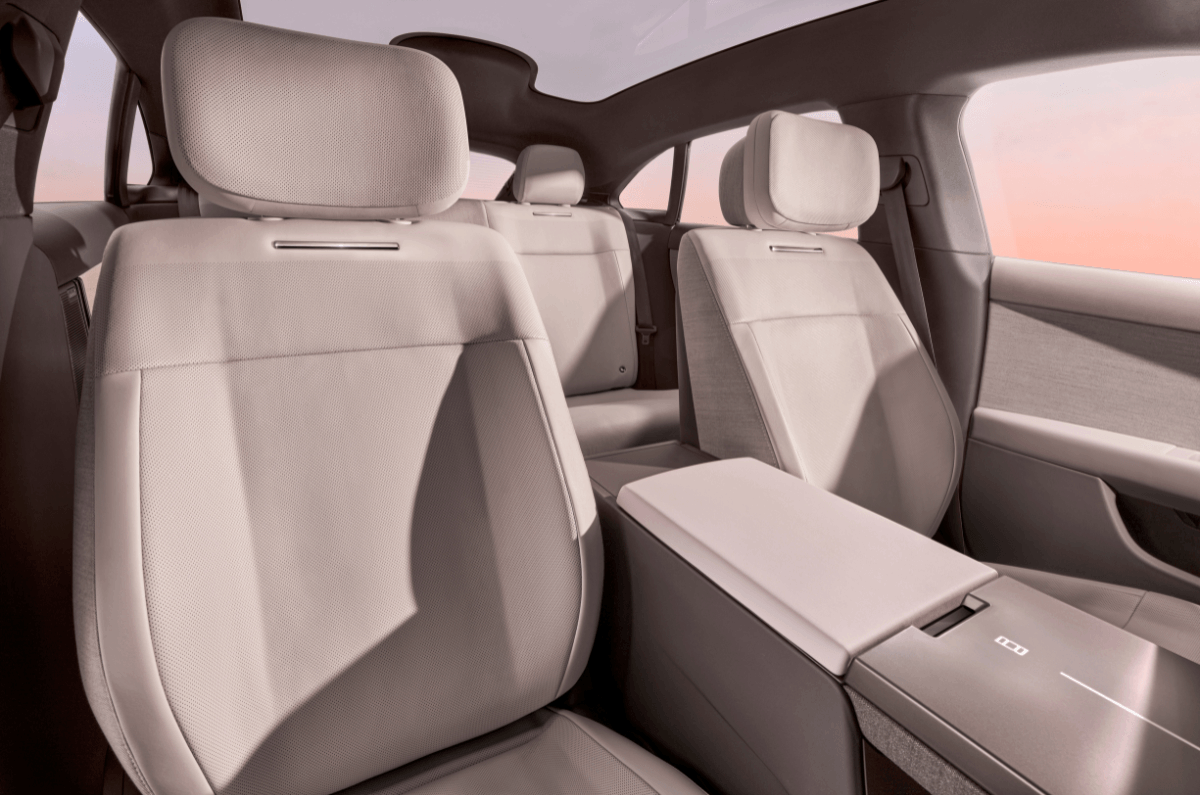
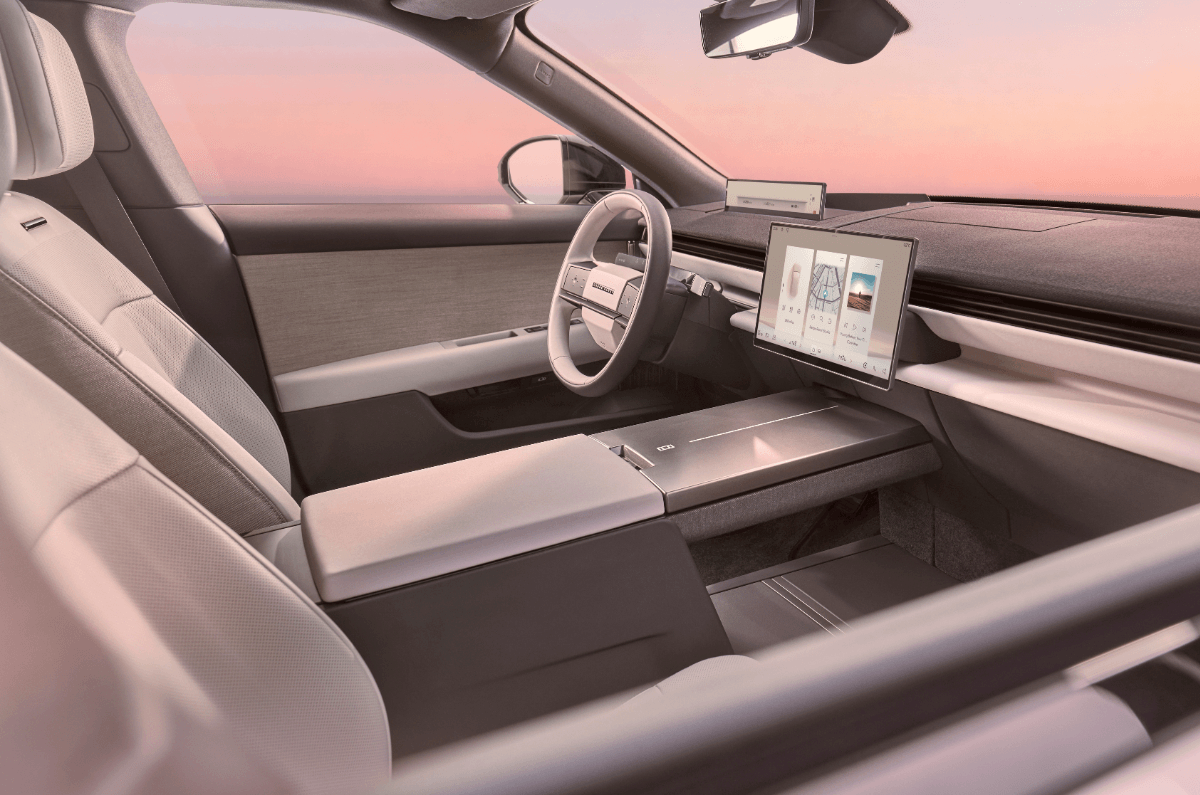
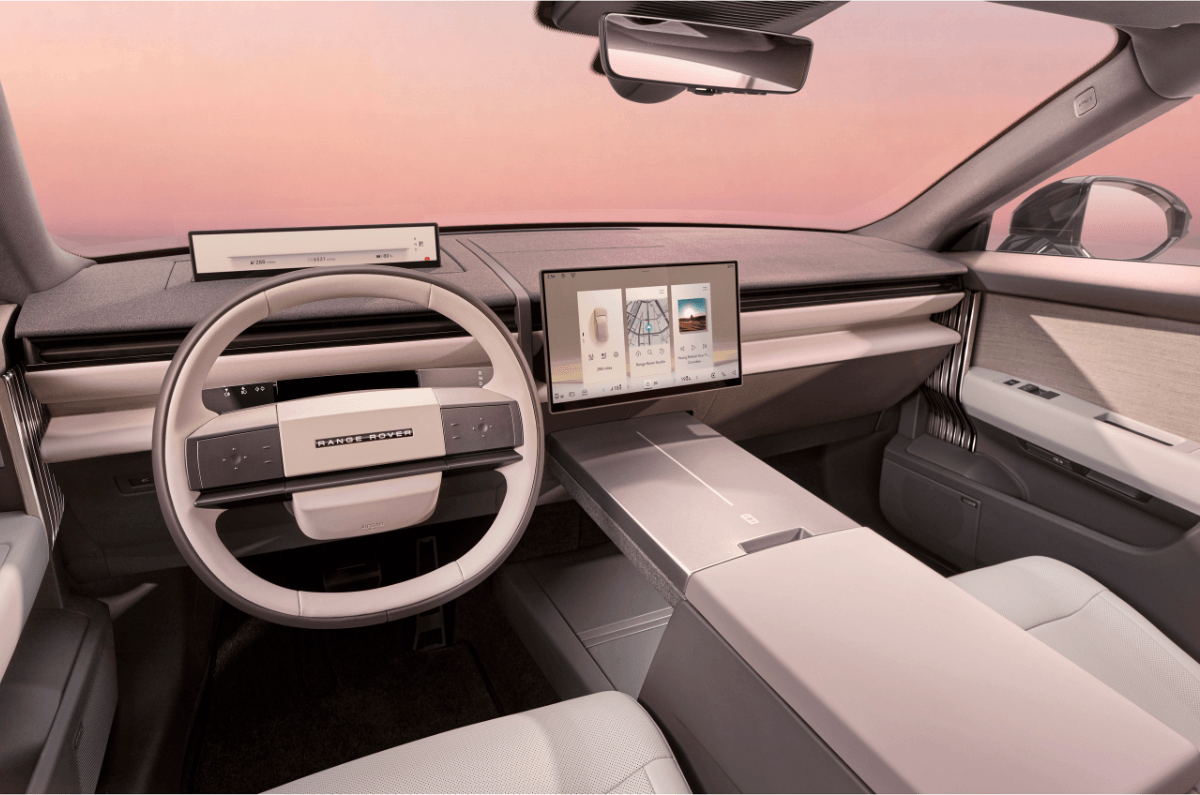
Inside, the GT continues Range Rover’s reductive design language, but in a more architectural, lounge-like way. The cabin is defined by strong horizontal lines, with a single central OLED screen paired with a compact driver display in place of a conventional instrument cluster.
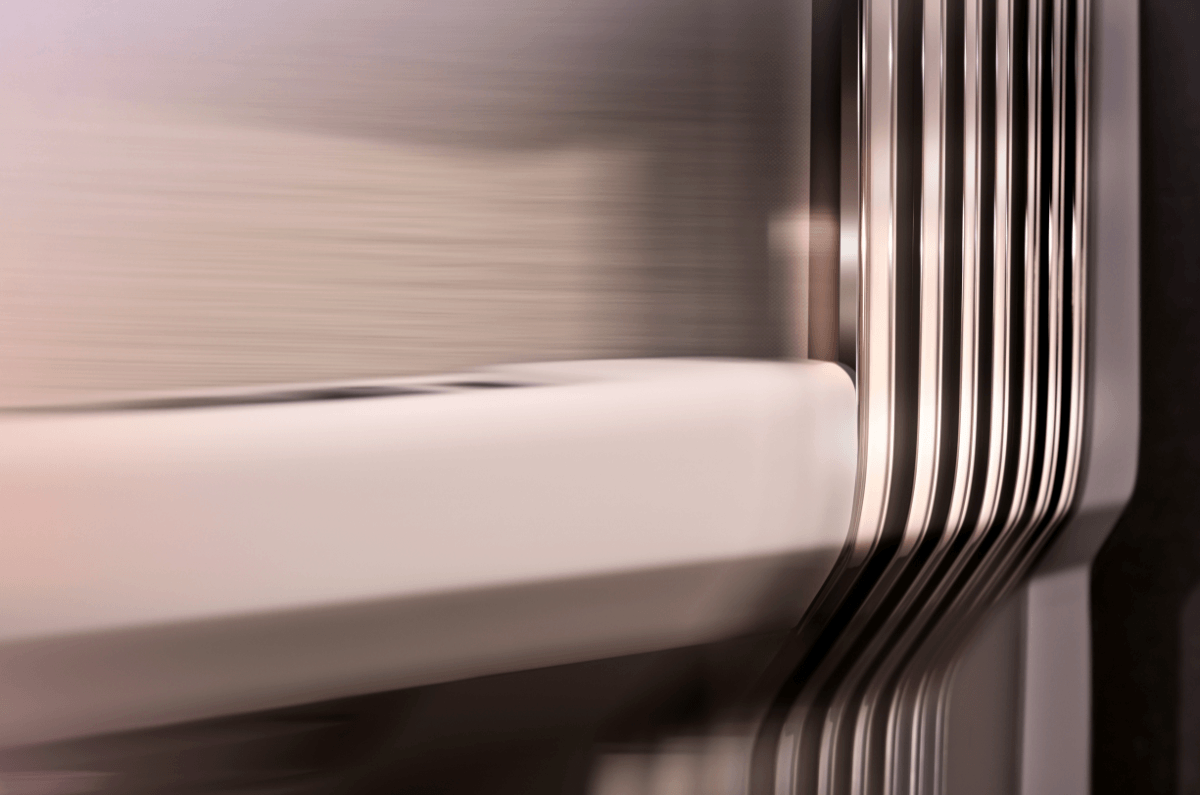
That smaller display is not just a styling move. It is meant to cut clutter and reduce the amount of information the driver has to process. A concealed air vent runs the width of the dash, creating a clean horizontal graphic that ties the cabin together, while the dashboard is wrapped in a woven textile that hides the speakers within its form.
Range Rover talks about hidden technology and reduced visual and acoustic clutter, and that comes through in the way the cabin is put together. Purists may rue to the fact that there are very few hard buttons, but the controls are said to be simplified to make the interface more user-friendly.
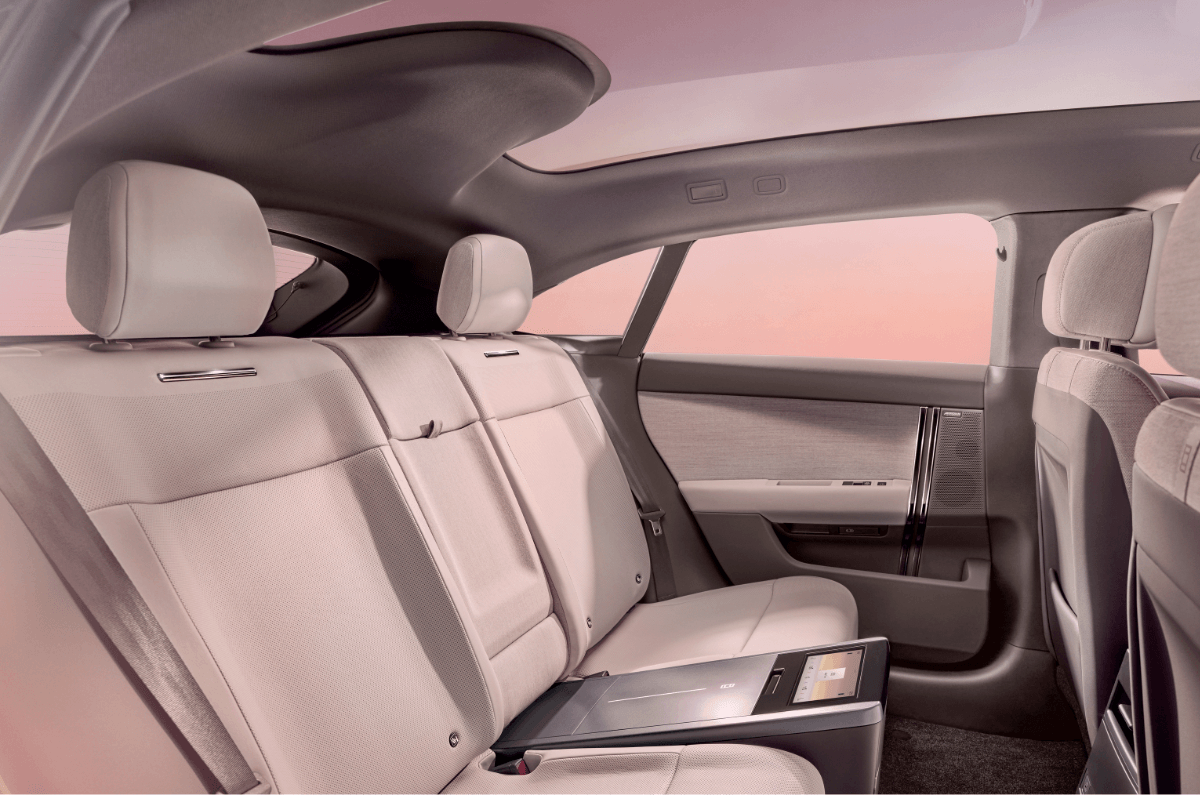
Second-row legroom is said to be class-leading, and the stretched body and EMA packaging make that claim believable. This is clearly a car designed to make the rear seat a proper place to be, not just somewhere to sit while the driver has all the fun.
Camouflage, character and what it means
The prototype fleet now running global tests wears a bespoke camouflage inspired by the landscape around Gaydon, home to Range Rover’s design and engineering teams. The topographic pattern gives the car a graphic, almost digital feel, while also hinting at the shape beneath.
Range Rover calls the GT its most technologically sophisticated model yet. The EMA platform, deep software integration and a vast suite of driver assistance features should make it more advanced than any Range Rover before it.
Limpert’s point is that the GT is meant to blend effortless EV performance, long-haul refinement and all-terrain ability in a way no conventional GT can. That is the real story here. This is not just a lower, sleeker Range Rover. It is a new interpretation of what the badge can be when the brand is no longer tied to the old packaging rules.
Built in Halewood alongside ICE and hybrid models, the GT is the car that finally drags Range Rover’s grand touring ambitions fully into the electric era – and it does so with a shape and stance that make it look every bit as disruptive as the brief suggests.
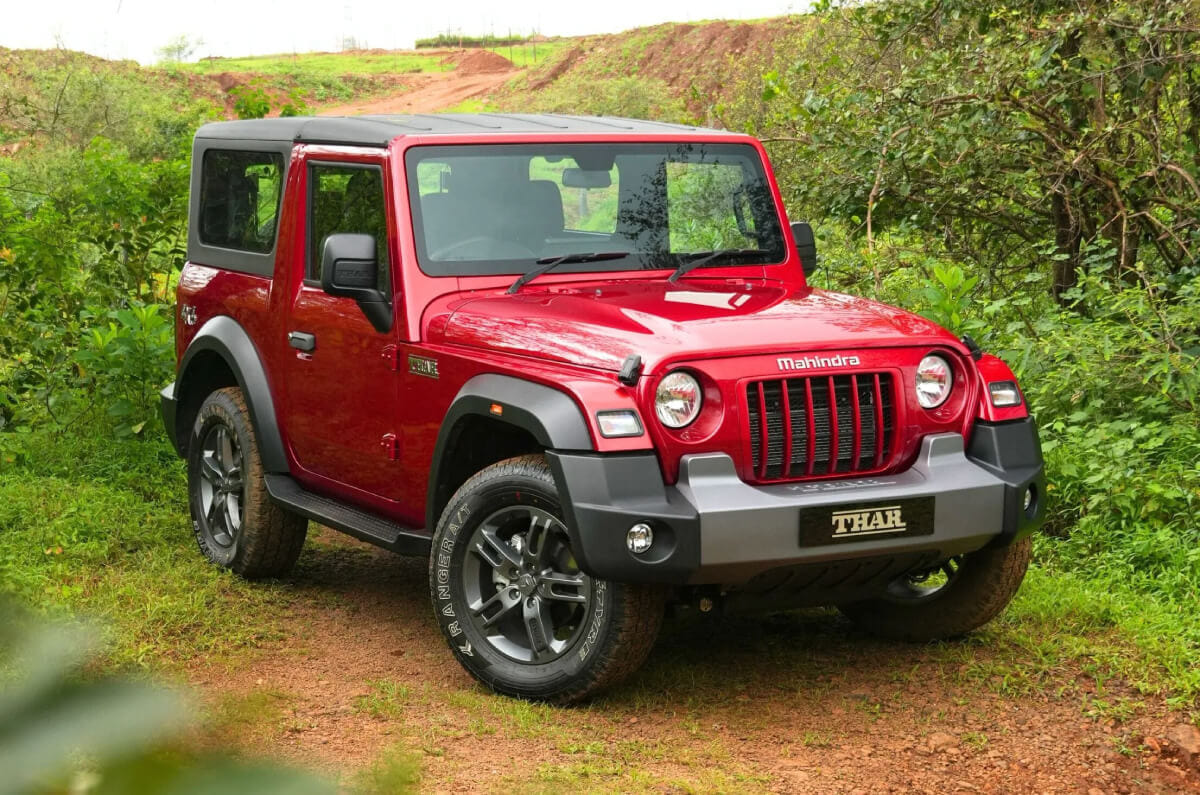
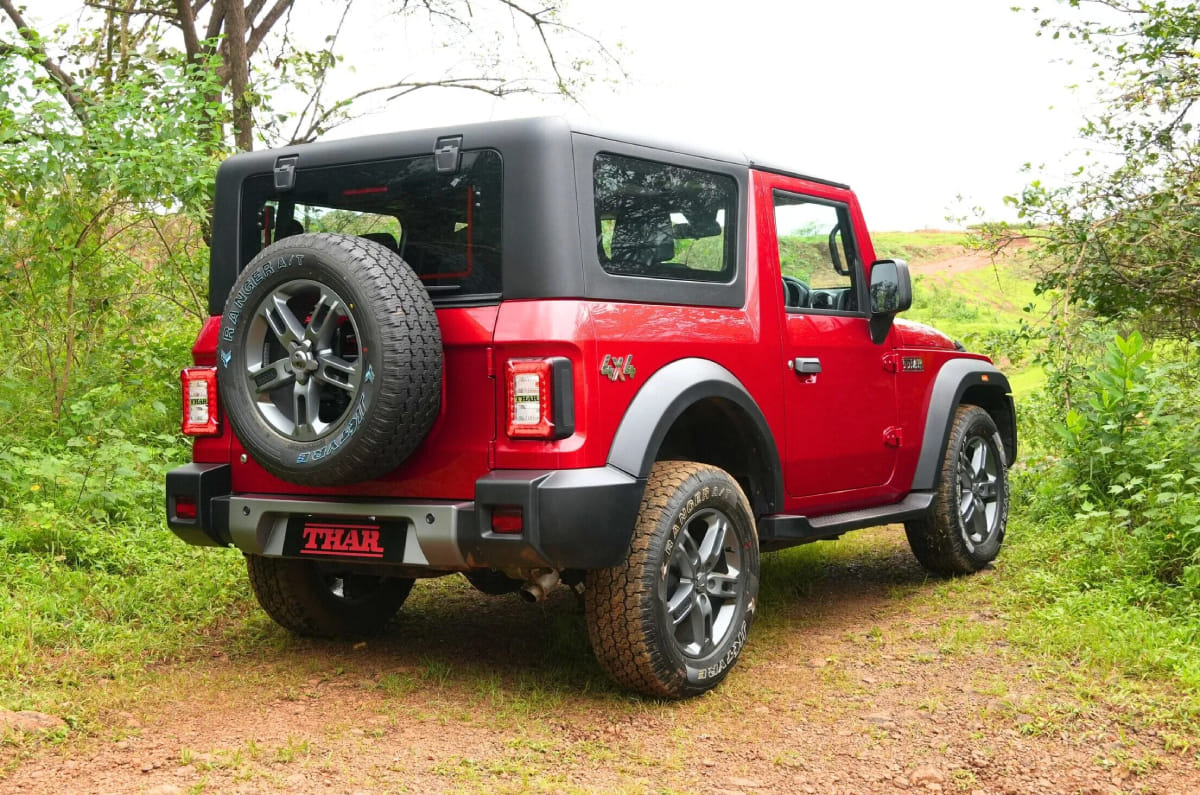
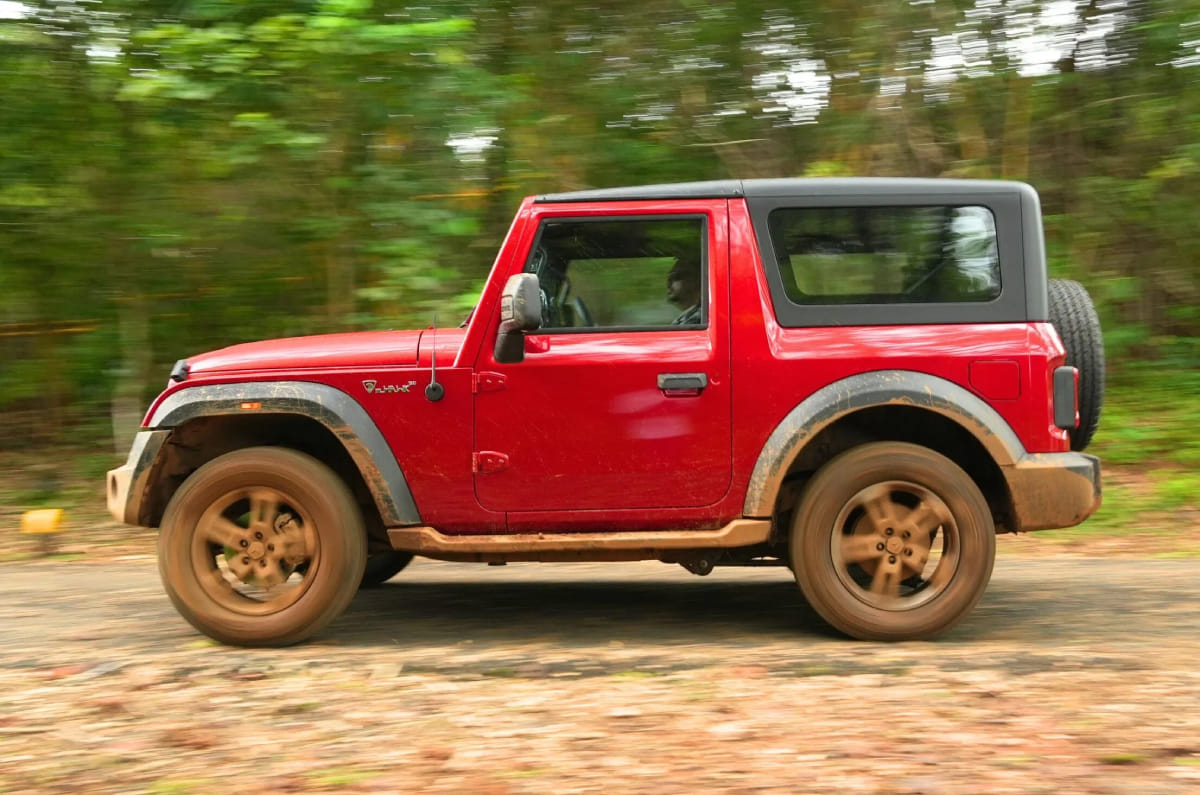
The Mahindra Thar is one of India’s most capable off-road SUVs and is available with petrol and diesel engines, rear-wheel drive and four-wheel drive options. Priced from Rs 10.32 lakh (ex-showroom), it prioritises off-road ability over outright practicality. Here are three reasons to buy the Thar and three reasons why you may want to look elsewhere.
Reasons to buy
Built for serious off-roading
Purpose-built hardware makes it exceptionally capable off road
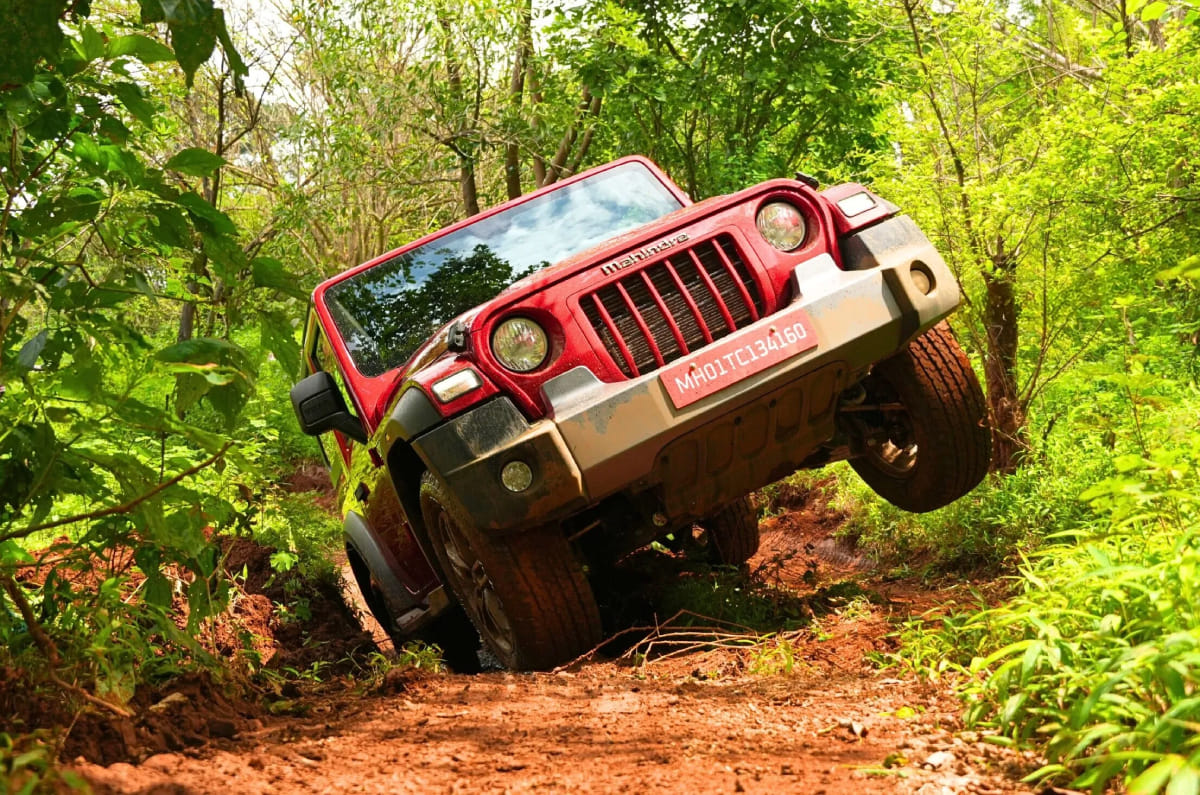
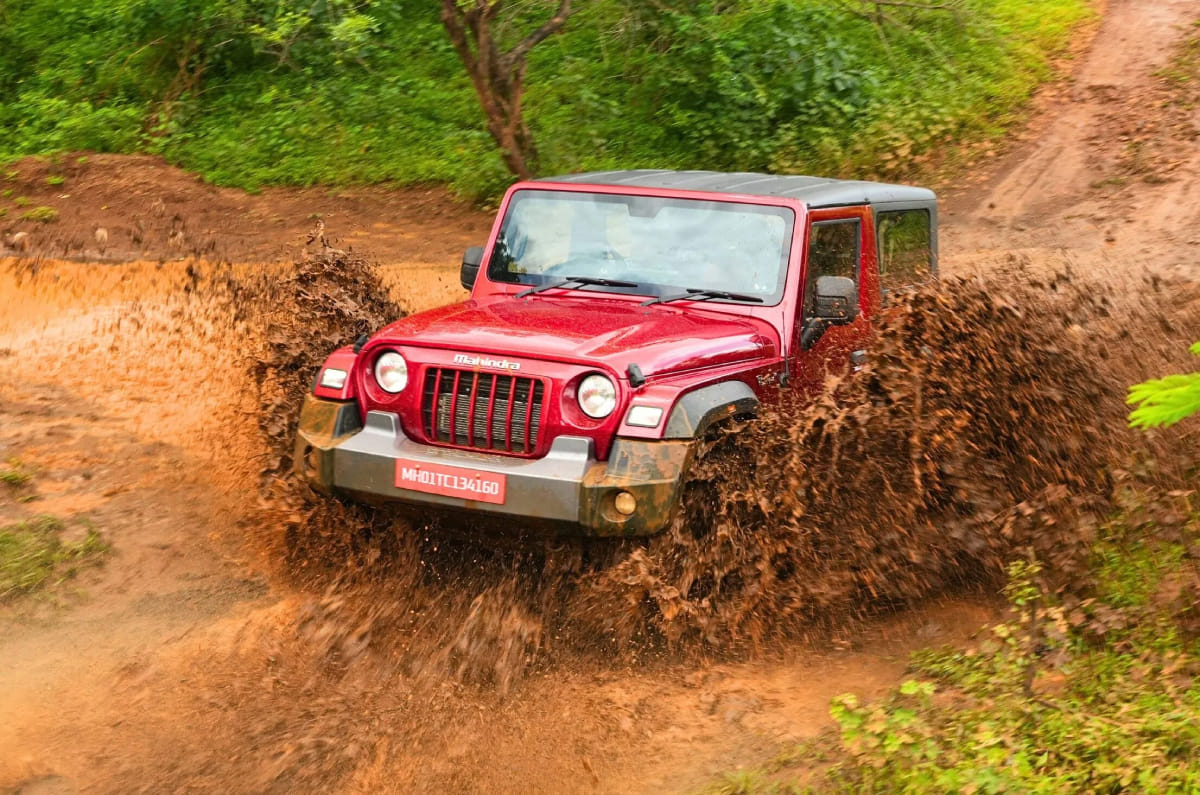
Few SUVs at this price can match the performance of the Thar once the road ends. Its ladder-frame construction, low-range transfer case and mechanical locking differential on 4×4 variants allow it to tackle steep climbs, deep ruts and loose surfaces with confidence. Even difficult trails are handled with surprising ease, making the Thar one of the most capable off-road SUVs currently on sale.
Strong petrol and diesel engines
Both petrol and diesel engines are refined and offer strong performance
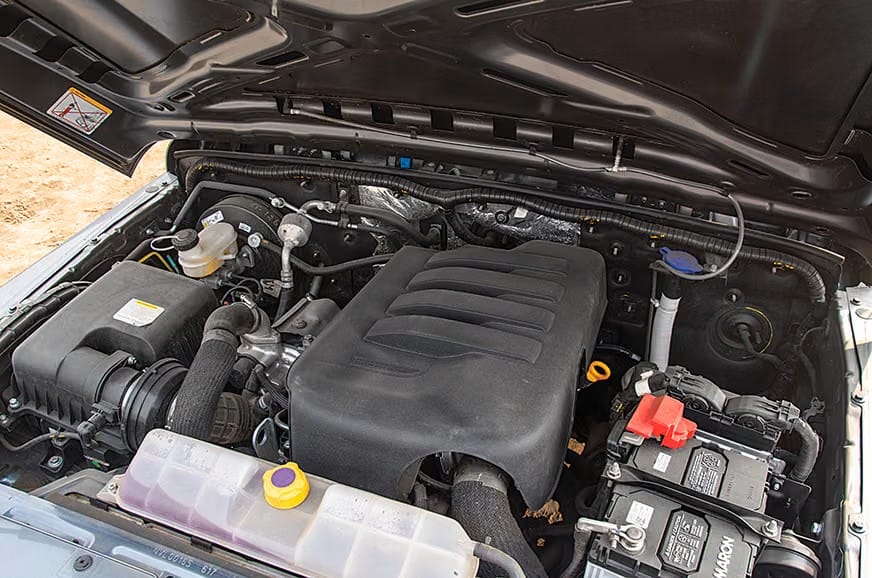
The Thar is available with three engine options. The 1.5-litre diesel (4×2 only) produces 119hp and 300Nm, while the larger 2.2-litre diesel develops 132hp and 300Nm. The 2.0-litre turbo-petrol, meanwhile, makes 152hp and 300Nm. All engines come paired with a 6-speed manual gearbox, while the 2.2-litre diesel and 2.0-litre petrol can also be had with a 6-speed torque-converter automatic.
The diesel engine stands out for its refinement and strong low-end torque, making it particularly well-suited to off-road driving. Buyers looking for stronger on-road performance, meanwhile, will appreciate the punch of the turbo-petrol engine.
Better equipped than before
Recent updates make the cabin easier to live with
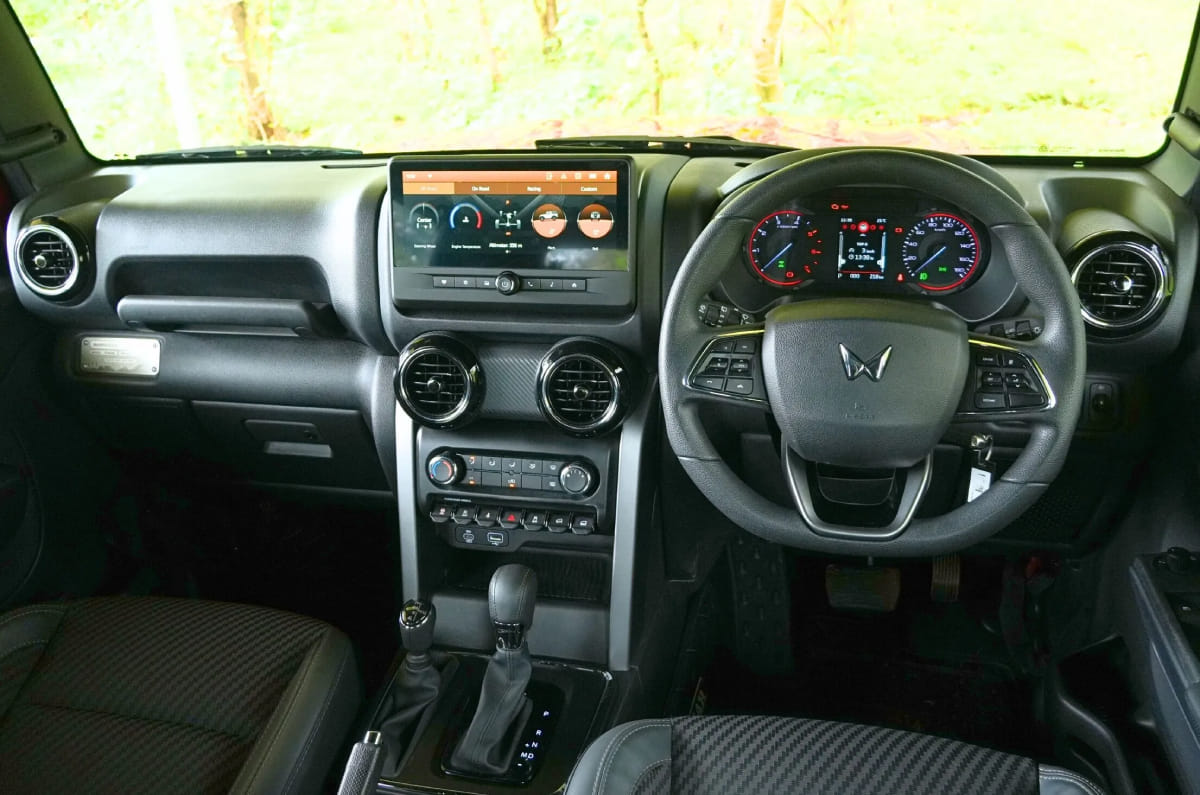
The latest updates have addressed several everyday usability issues. The Thar now gets a larger 10.25-inch touchscreen, rear-view camera, rear washer and wiper, rear AC vents, Type-C charging port, revised centre console with an adjustable armrest, grab handles on the A-pillars and relocated power window switches. While these are relatively small changes individually, together they make the Thar noticeably easier to use every day.
Reasons to skip
Rear-seat access remains inconvenient
Three-door body style limits practicality
Getting into the rear seats remains one of the Thar’s biggest compromises. The front seats need to be folded and slid forward, making access inconvenient, particularly for older passengers and those travelling with children. Boot space is also limited, leaving little room for luggage when all four seats are occupied. Buyers who frequently travel with family or need a more practical everyday SUV may find five-door alternatives better suited to their needs.
Ride comfort isn’t its forte
Suspension prioritises off-road ability over comfort
The Thar’s suspension is designed primarily for off-road use and it feels bouncy over broken roads. While Mahindra has improved the setup over the years, it isn’t as settled or comfortable as most monocoque SUVs. The hydraulically assisted steering is heavier than the electrically assisted systems used by most rivals and can kick back when driving over potholes or other sharp road imperfections.
Not particularly fuel efficient
Petrol and diesel engines aren’t efficiency focused
The Thar’s engines deliver strong performance, but fuel efficiency is not one of its strengths. In our 2021 Thar road test, the petrol automatic returned 7kpl in the city and 9.3kpl on the highway. The diesel manual performed better, managing 12kpl in the city and 12.6kpl on the highway, but it still trails many similarly priced monocoque SUVs. Buyers covering high annual running may find more economical alternatives elsewhere.
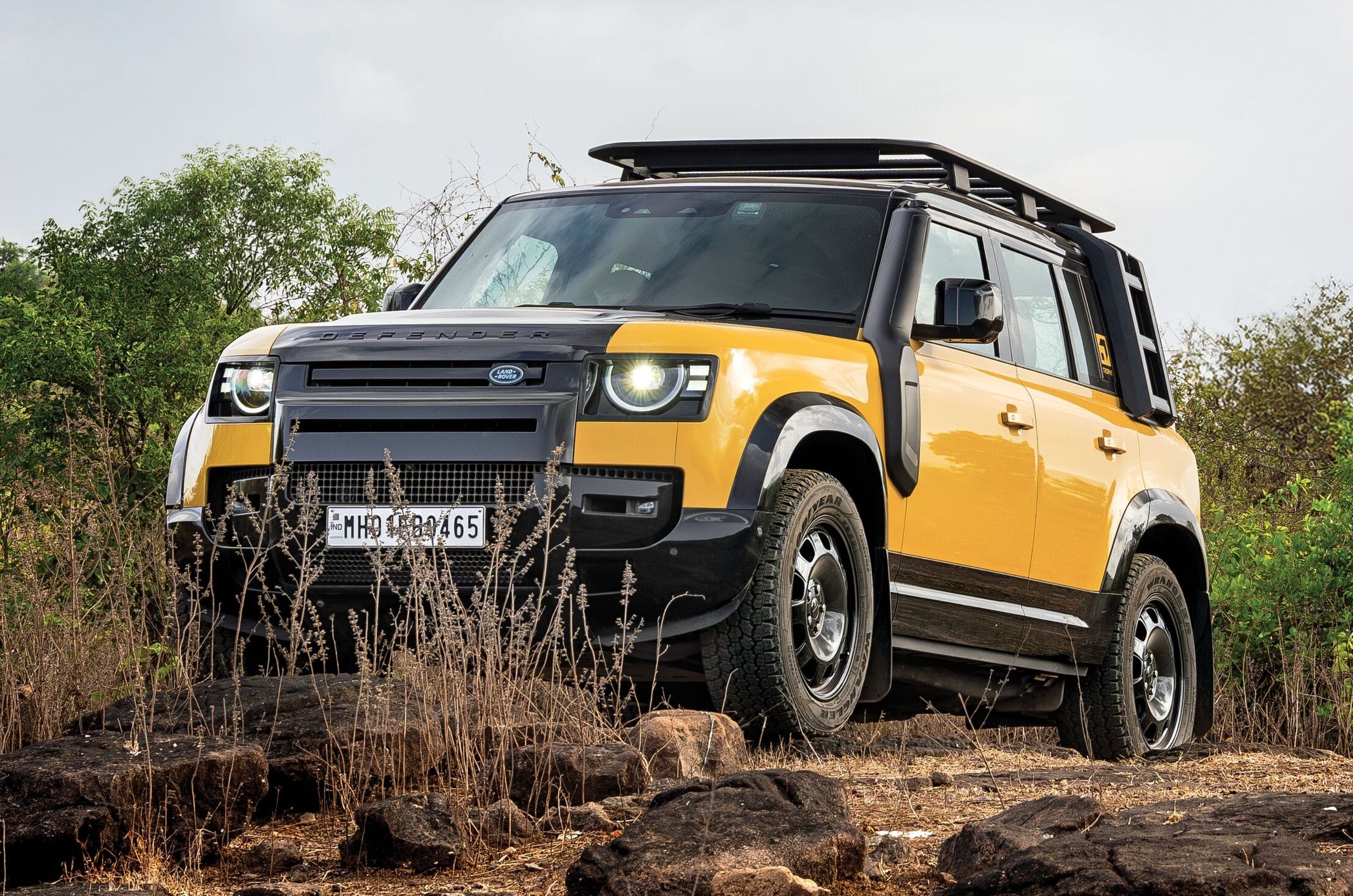
There are few cars with the sheer variety of powertrains as the Land Rover Defender. From a four-pot to a choice of V8s, there is seemingly something for everyone. One stands out, though – the D350 3.0-litre inline-six twin-turbocharged diesel. More power than the base petrol, more torque than the 5.0 V8, with the frugality of a diesel. It’s the only motor the Trophy Edition comes with, so is this engine the sweet spot in the range?
Land Rover Defender Trophy Edition exterior design and engineering – 9/10
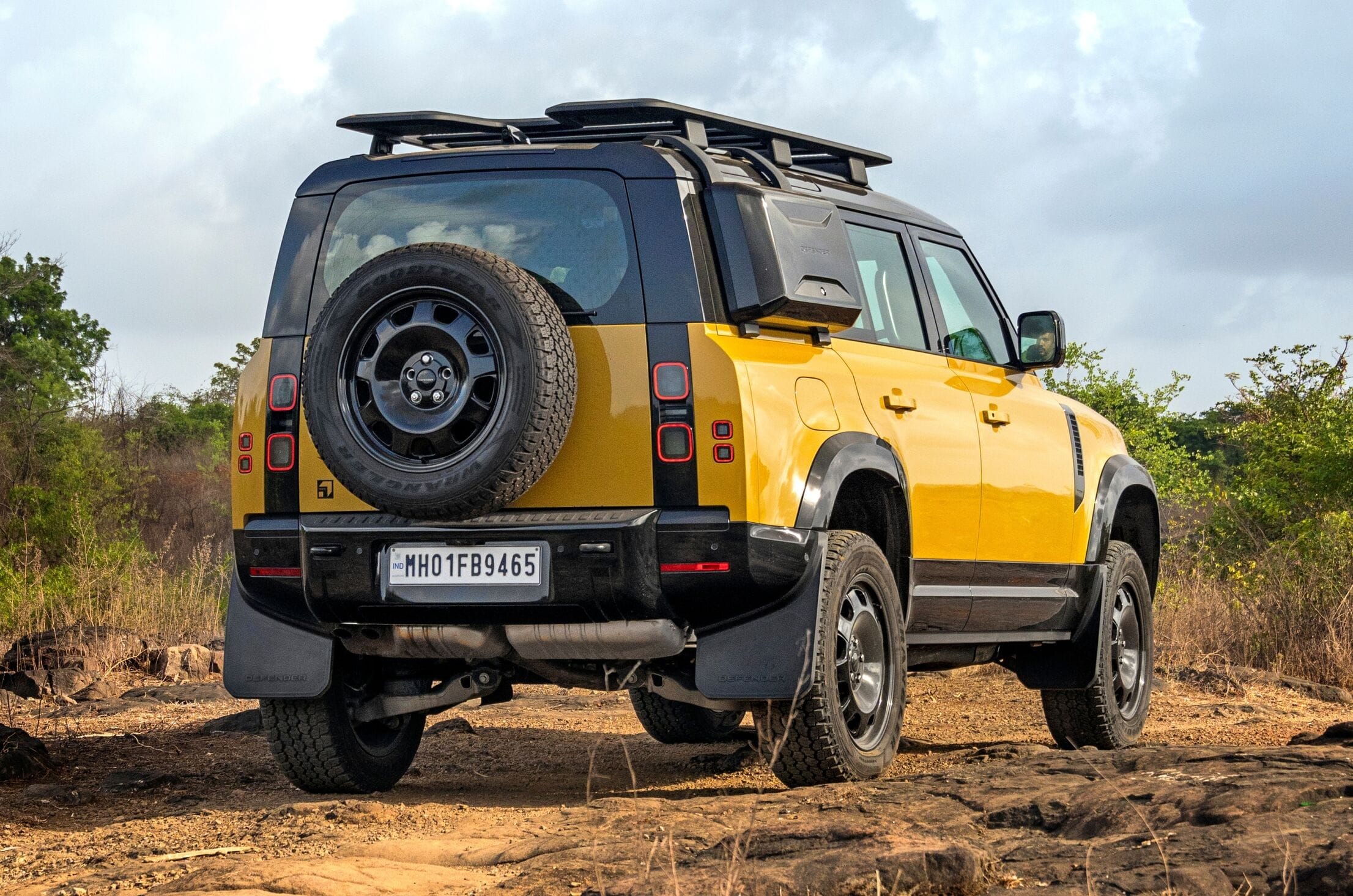
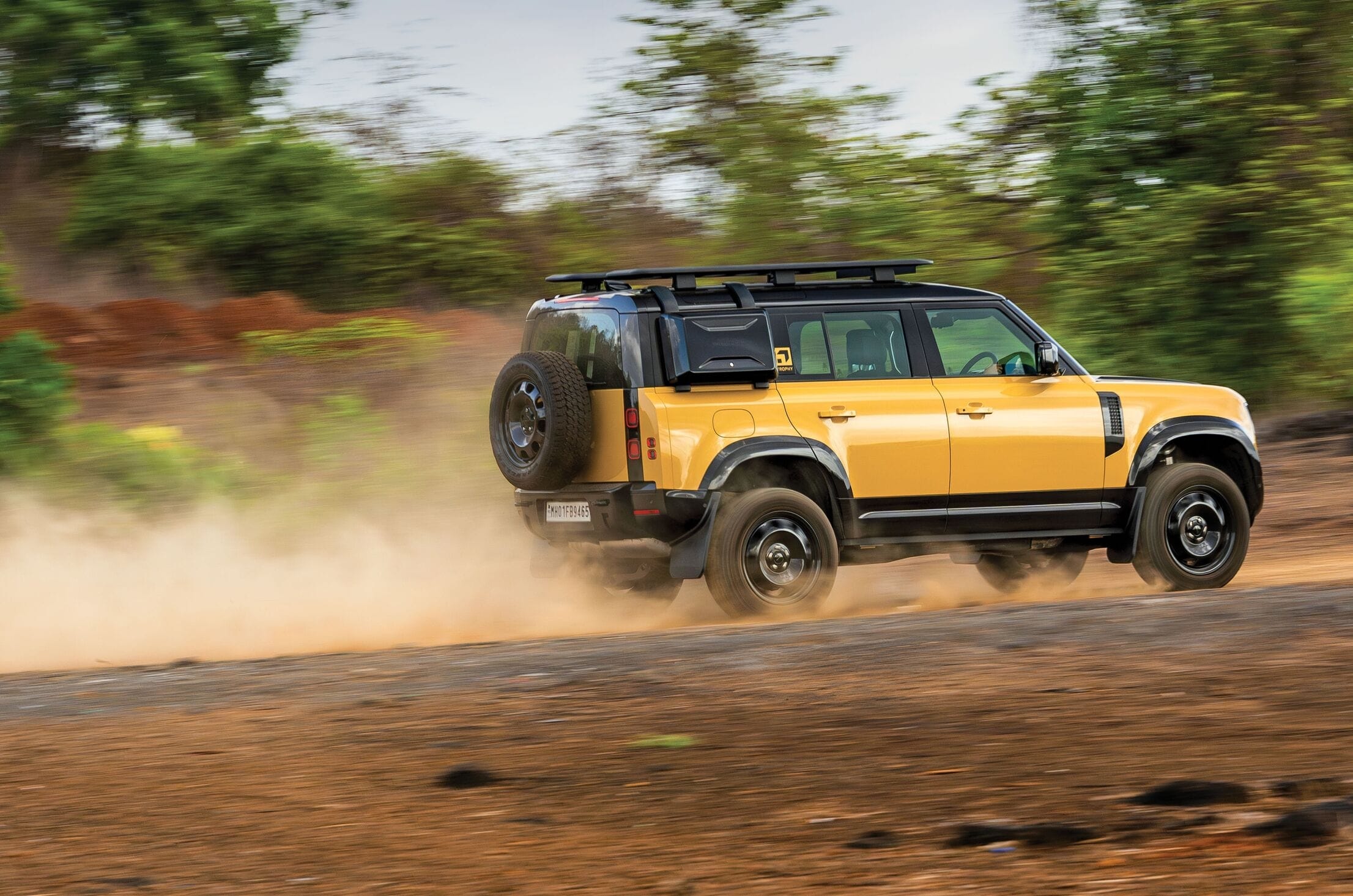
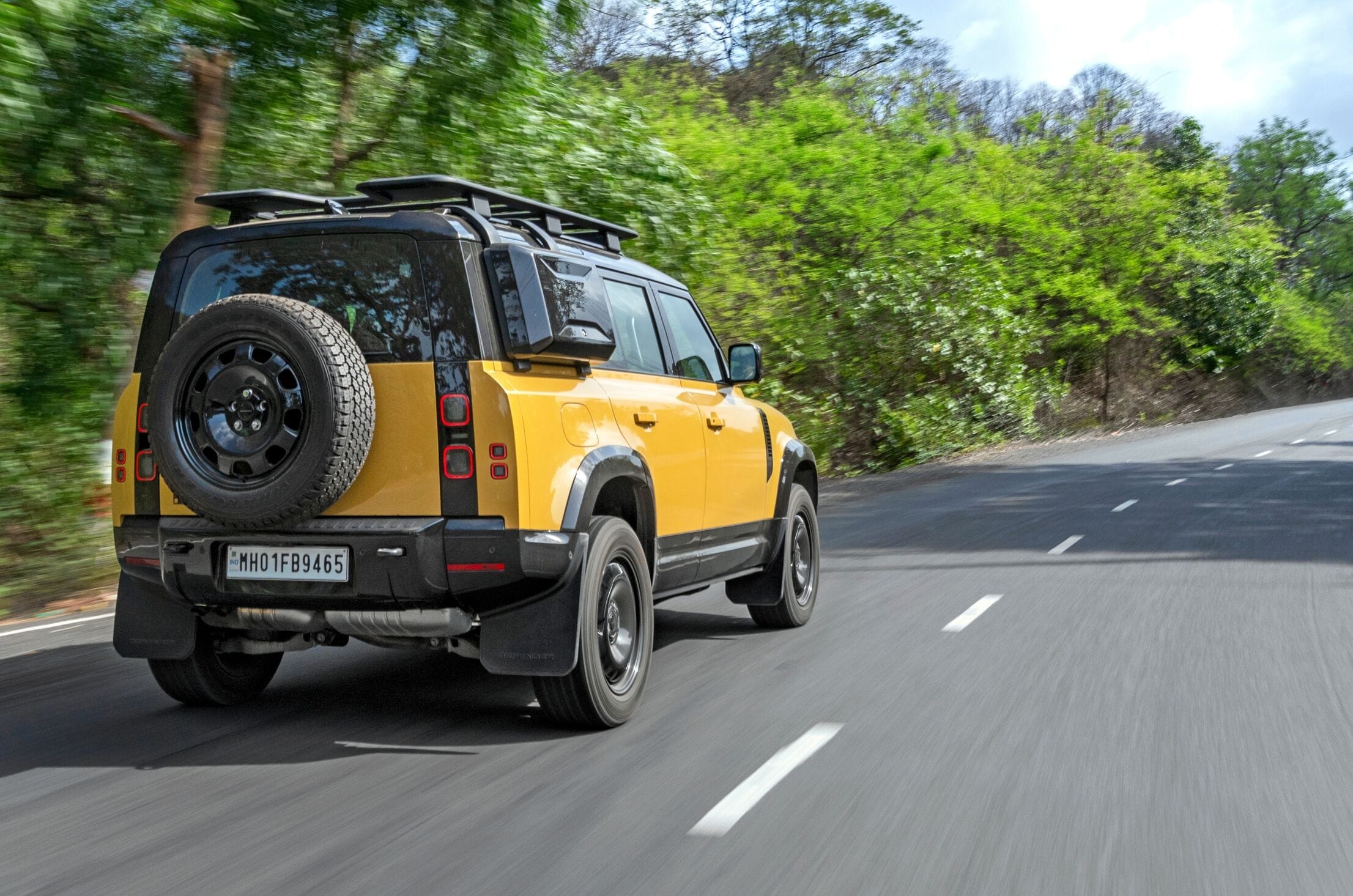
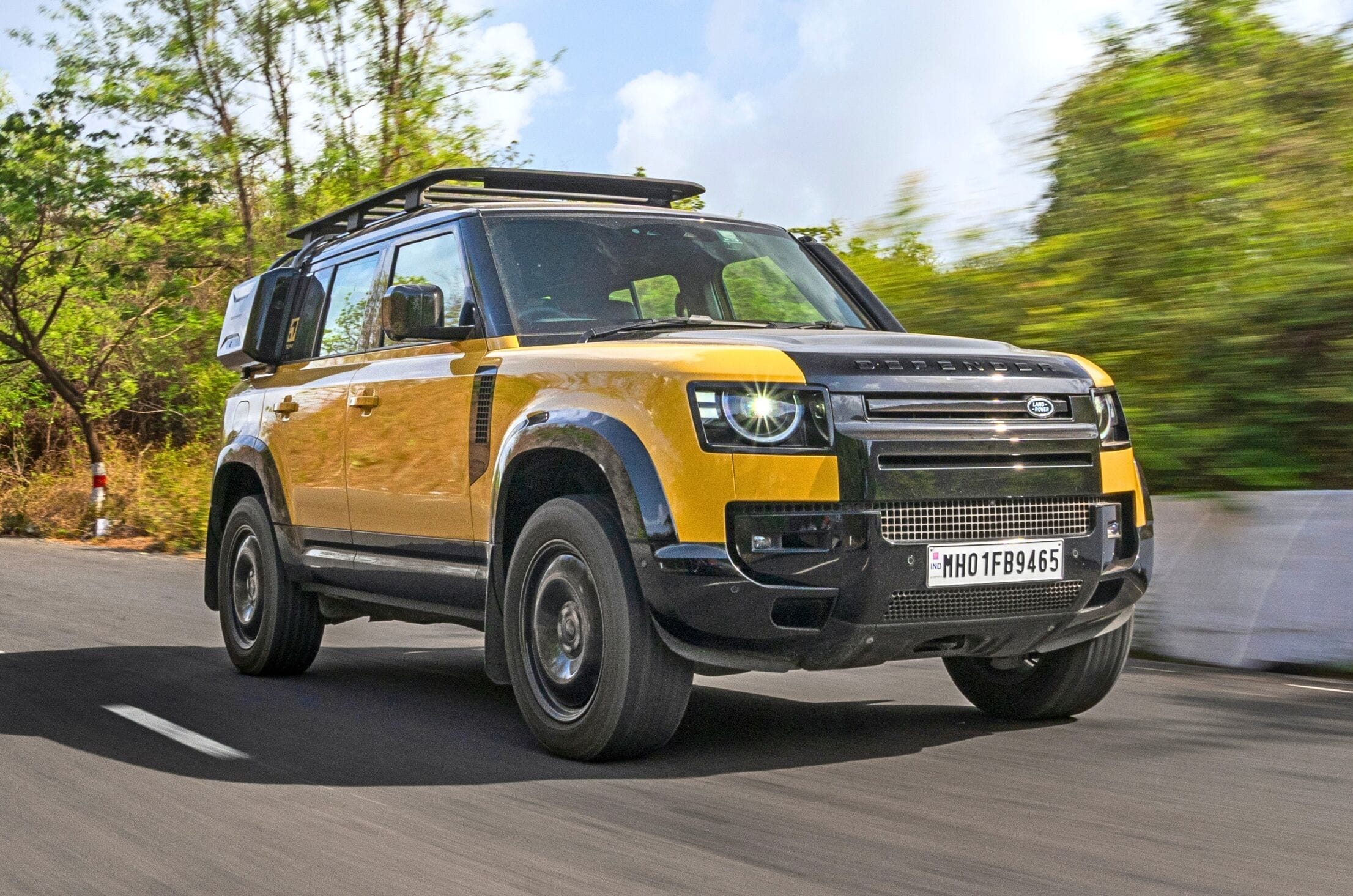
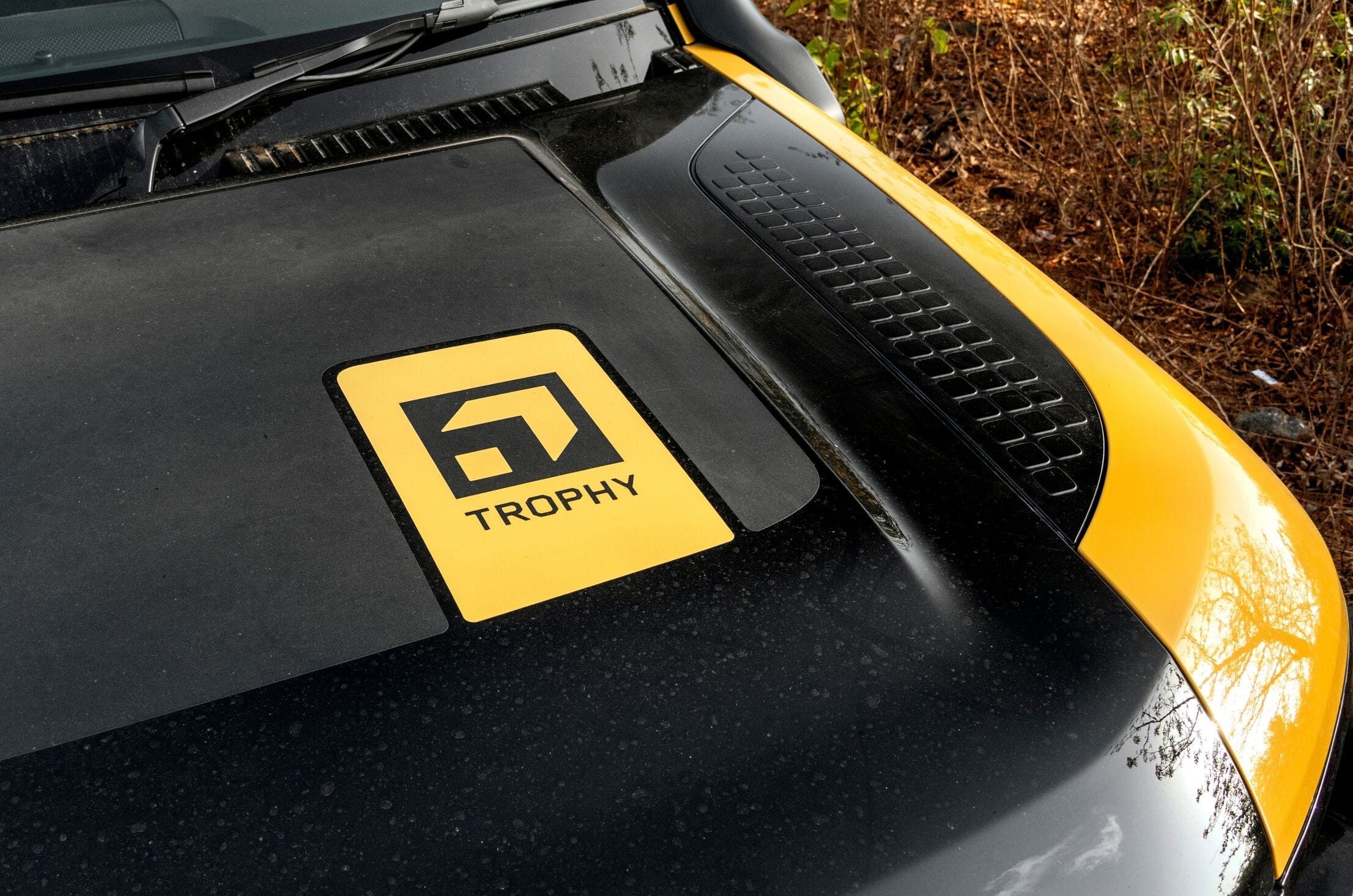
The Defender’s design hasn’t changed since it launched in 2020, but it certainly isn’t wanting for a facelift. It still looks fresh and modern with subtle nods to the original, without resorting to an overtly retro aesthetic. The Trophy Edition brings a choice of Deep Sandglow Yellow or Keswick Green – the former being the signature finish of the iconic Camel Trophy cars – with gloss black on the roof, bonnet, cladding and lower bumper for contrast. To go with the rugged look, it rides on all-terrain rubber shod 20-inch wheels that mimic steelies but are actually alloys. Additionally, there is Trophy branding on the bonnet, C-pillar and tailgate.
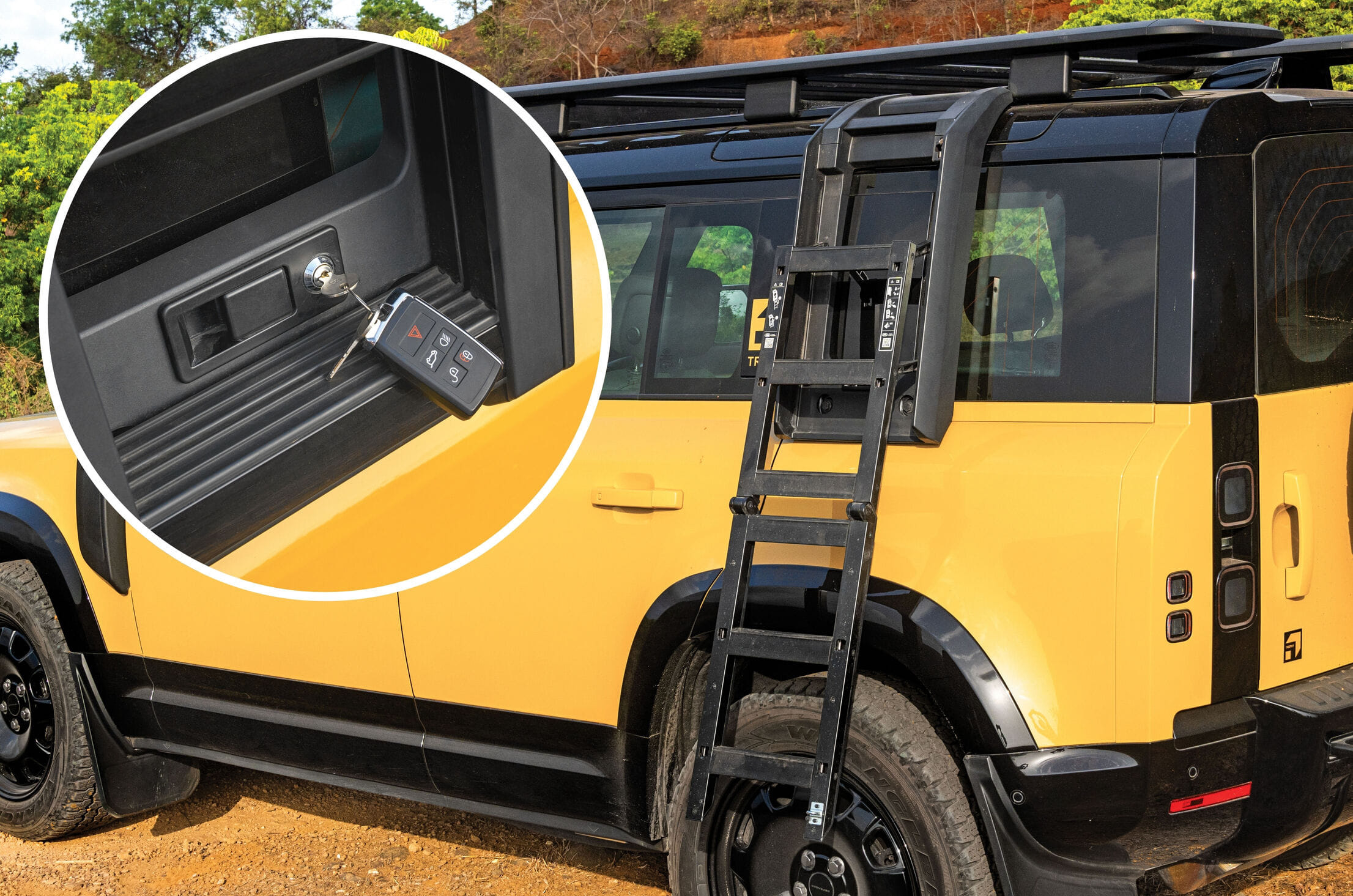
Sturdy ladder rated for 110kg; needs a seperate key to unlock.
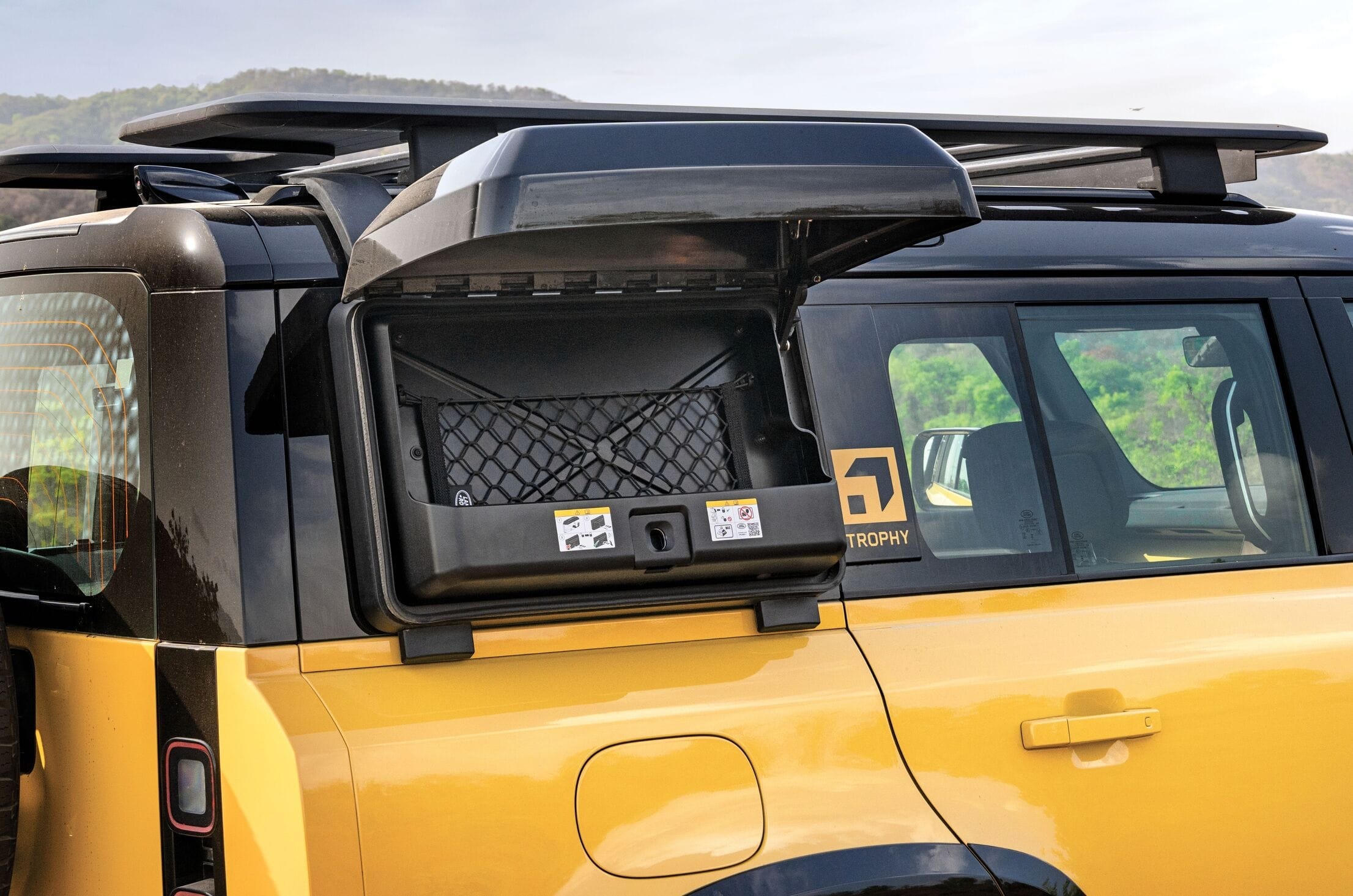
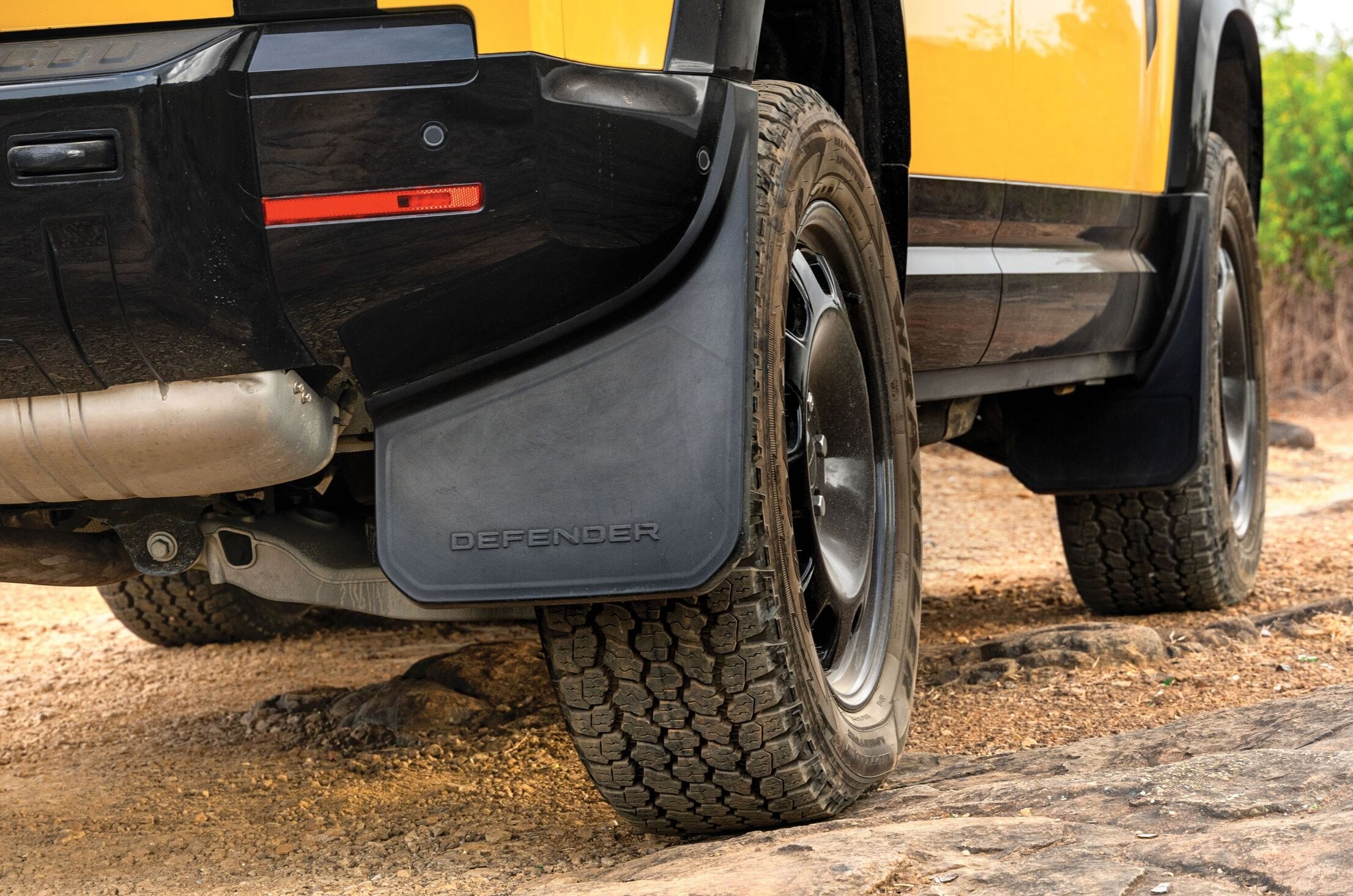
This particular example is also equipped with the optional Rs 5.35 Lakh Trophy Pack, which brings a roof rack, with a ladder to reach it on one side and an external storage box on the other. There’s big flexible mud flaps and a raised air intake – though it doesn’t raise the already lofty 900mm water wading ability, but helps with keeping sand out during dune bashing. All of this kit can be optioned on the regular Defender too, but here it ties in rather well with the whole Amazonian adventurer theme.
Land Rover Defender Trophy Edition interior space and comfort – 7/10
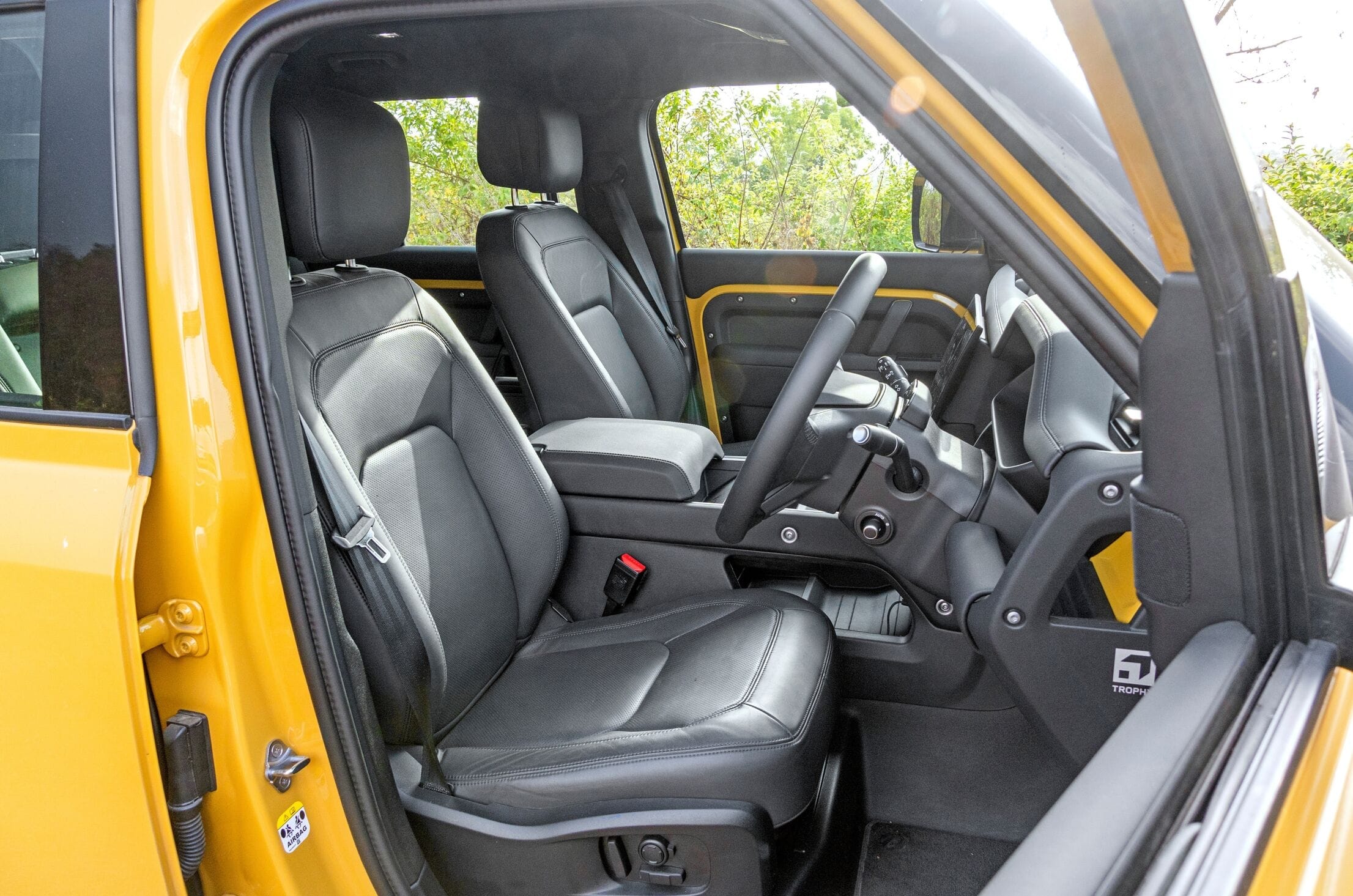
Electric front seats offer heating and ventilation.
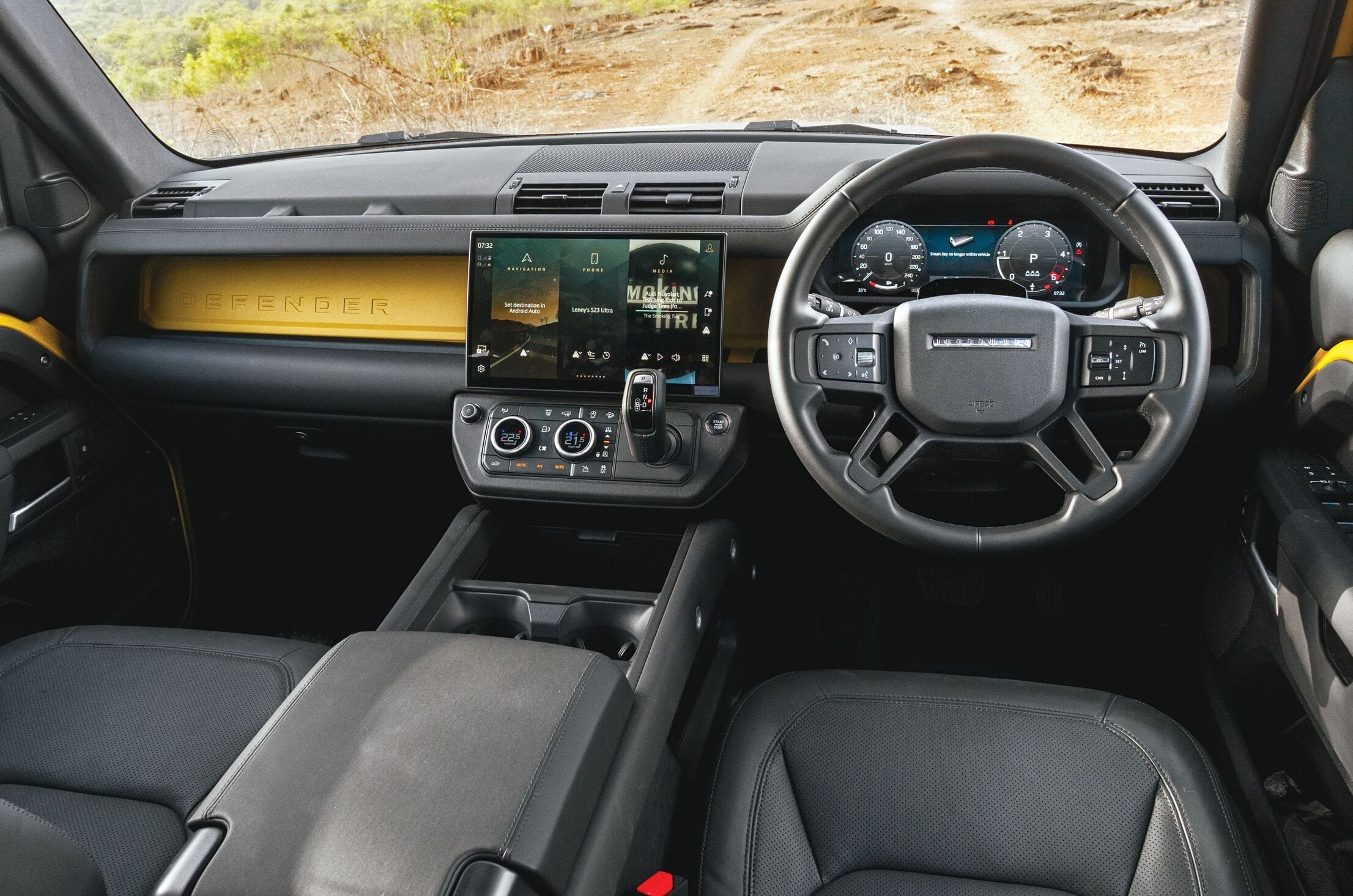
Inside, it is standard Defender fare apart from some body-coloured trim on the dash, while the rest is finished in black. Comfort up front is excellent, with a lofty driving position that has you towering over conventionally large SUVs. The seat itself is wide and comfortable, with electrical adjustment as well as ventilation. The dashboard and centre console offer plenty of utility and storage spaces, while the quality of materials and finish elevates the premium quotient.
The rear is spacious and comfy, but climbing in takes effort.
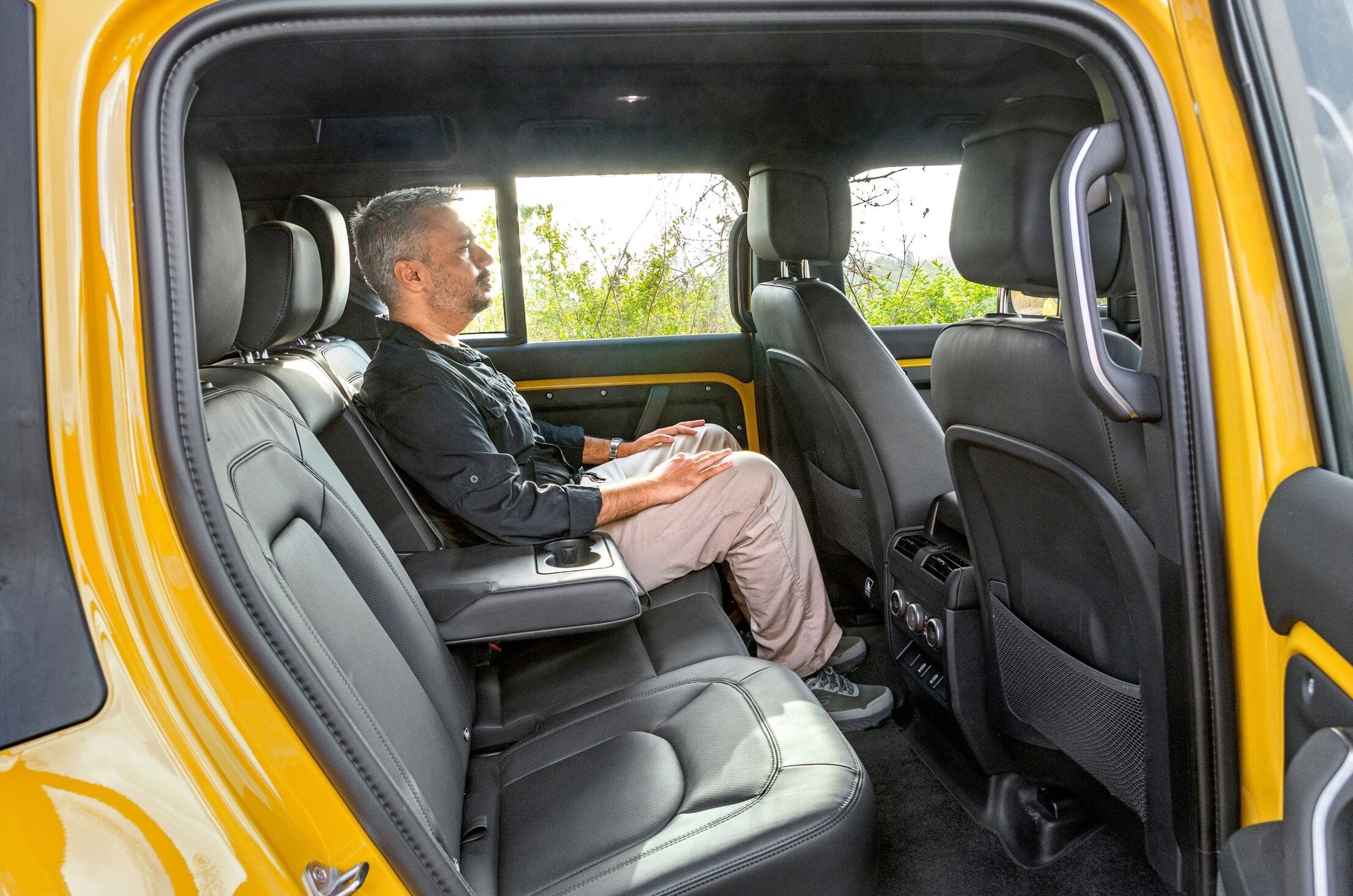
For those who prefer to be chauffeured, the rear compartment is very comfortable and gets its own climate zone. There is plenty of room all around, and the bench is wide and supportive. It is, however, a task climbing into the Defender, even with the air suspension at its lowest position. Cargo room is also vast, with 786-litres of space with the second row up, expandable to 1875-litres with it stowed.
Land Rover Defender Trophy Edition features and safety – 8/10
Based on the X-Dynamic HSE, the Trophy Edition is also very well equipped, with highlights including a sharp 13.1-inch infotainment system, Meridian sound system and a panoramic sunroof. However, some of the serious off-road kit from the X trim, like air suspension, the Electronic Active Differential and Terrain Response 2, are optional extras.
Box for items you don’t want soiling the boot.
Safety is also well taken care of, with 6 airbags, Dynamic Stability Control, Roll Stability Control and Hill Descent Control. A sharp 360-degree parking camera helps when guiding this big SUV through tight spaces, and while adaptive cruise control is offered, other ADAS features like lane keep assist and autonomous emergency braking are not available in India.
Land Rover Defender Trophy Edition performance and refinement – 9/10
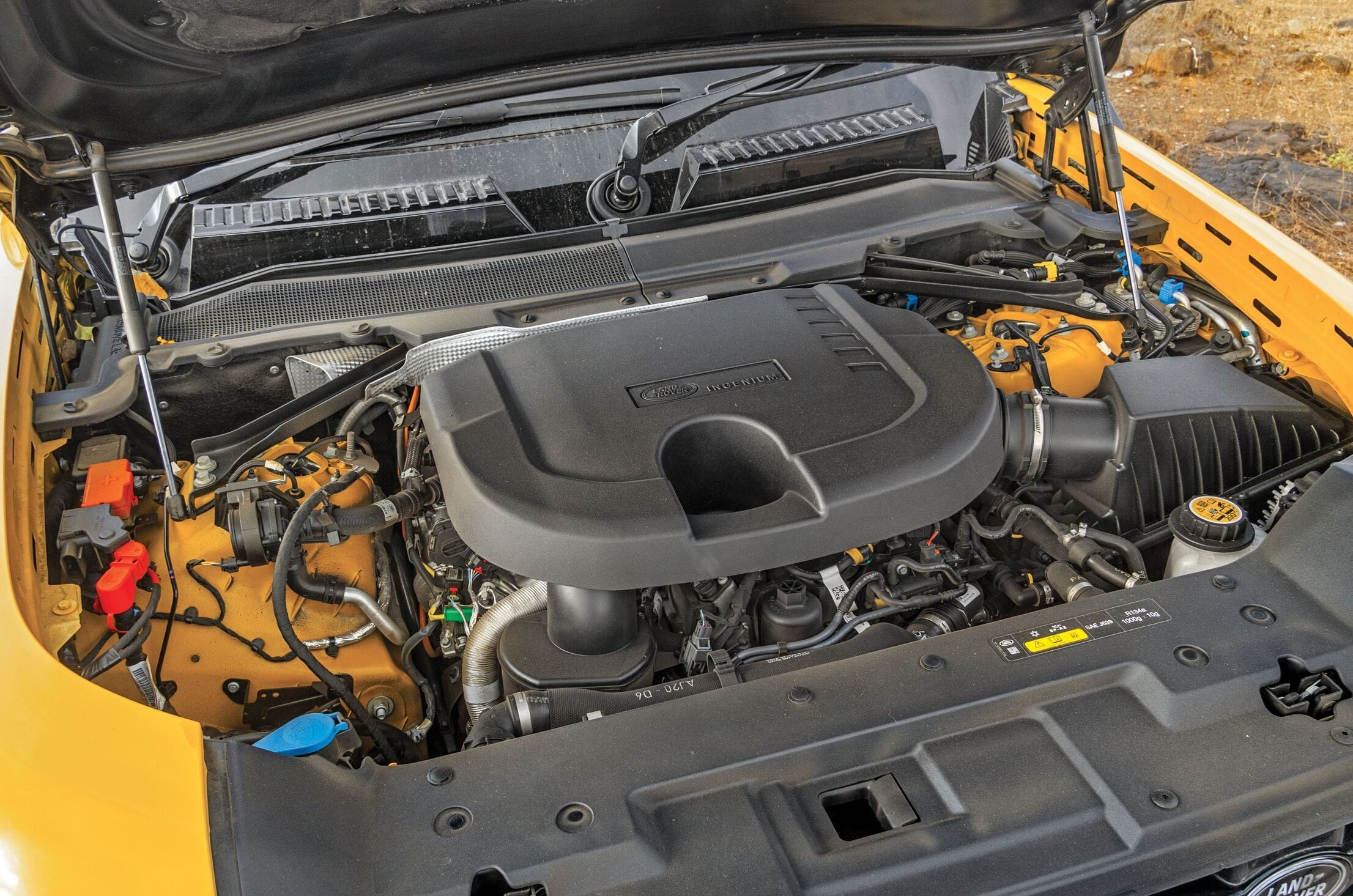
D350 diesel makes more torque than the P425 5.0L supercharged V8.
Under the hood is the 3.0-litre inline-six twin-turbo diesel from the Ingenium family, which makes 350hp and a whopping 700Nm – only the Octa beats it on torque, and that too by just 50Nm. Sending power to all four wheels is a slick 8-speed auto, which at times feels like too many cogs. At highway speeds, most overtakes are completed without the need for a downshift, and at city speeds merely tickling the throttle is enough to keep up with traffic. Push the right pedal harder, though, and it quickly drops a cog, the bonnet rises, and it accelerates as hard as you’d ever really need to in something this big.
Optional air springs iron out rough trails remarkably well.
A quick Vbox test confirmed a 0-100kph time of 6.79sec – slightly slower than the claimed time of 6.4sec. 20-80kph is dispatched in an equally rapid 4.19sec, while 40-100kph takes 4.98sec. Refinement is good too, and not just for a diesel. Outside the vehicle, the diesel clatter is very muted at idle, while inside, most passengers won’t be able to tell they’re in an oil burner. As revs rise, so do the decibels, but it sounds muscular and rather pleasant for a diesel. One gripe is at highway speeds, there is noticeable wind noise from the bolted-on accessories.
Land Rover Defender Trophy Edition range and efficiency – 7/10
While we didn’t get a chance to put it through our real-world fuel-efficiency run, the diesel is comfortably the most frugal of all the available Defender powertrains. On a steady highway run, it will regularly deliver double-digit fuel economy, which means the 89-litre tank will take you pretty far between fill-ups.
Land Rover Defender Trophy Edition ride comfort and handling – 8/10
The diesel feels like a natural fit for the Defender’s use case.
Our test car was equipped with air suspension, which is an option well worth ticking. Not only does it bring the ability to raise the car to clear obstacles or lower it to make getting in and out easier, but the ride is also superb. It feels very absorbent even on the roughest patches, and keeps the body quite flat and the cabin nicely isolated.
While it certainly has no sporting pretensions, it feels surprisingly fluid through corners too. There is no escaping the body roll, but it feels well controlled, surefooted and rather enjoyable to hustle. Also noteworthy is the steering; the large-diameter wheel feels great to hold and steer with, and the effort is perfectly weighted to boot.
Mudflaps suit the theme.
Off-road ability is a strength, but what’s impressive is the ease with which it conquers the rough stuff. Terrain Response offers presets for different surfaces, and advanced users can even configure individual settings, but generally leaving it in Auto works well enough for most scenarios. Low range will only ever need to be engaged to clear the sort of challenges that used to be thrown at Camel Trophy participants. Its size is intimidating off-road, but the array of cameras, including a transparent bonnet function, does help maneuverability.
Land Rover Defender Trophy Edition price and verdict – 8/10
At Rs 1.30 crore, the Trophy Edition is just over a lakh more than the X-Dynamic HSE. While that isn’t a lot of extra outlay in this context, what it buys you is essentially a unique paint scheme. If the history of the Camel Trophy, the exclusivity and the aesthetics appeal to you, this might seem like a bargain, but to others, that money would be better spent on the off-road packs.
But if getting muddy isn’t your thing, the standard Defender is still charming enough to seduce most. With the 6-cylinder petrol discontinued, this D350 diesel is now the default recommendation – much more performance than the 2.0-litre four-pot and way more frugal than the 5.0-litre V8. Sure the V8 has a greater sense of occasion, but the diesel feels like a more natural fit for the Defender’s use case – ergo, the sweet spot.
थरूर ने जंतर-मंतर पर प्रदर्शन कर रहे युवाओं के नाम एक खुला पत्र लिखते हुए कहा कि मैं आज आपको एक राजनेता या सांसद के रूप में नहीं, बल्कि एक ऐसे व्यक्ति के रूप में संबोधित कर रहा हूं जो भारतीय युवाओं की वर्तमान पीढ़ी के साथ हो रहे अन्याय से बेहद आहत है।
मैं आज आपको एक राजनेता या सांसद के रूप में नहीं, बल्कि एक ऐसे व्यक्ति के रूप में संबोधित कर रहा हूं जो भारतीय युवाओं की वर्तमान पीढ़ी के साथ हो रहे अन्याय से बेहद आहत है।
उन्होंने कहा कि यह मेरे लिए एक व्यक्तिगत मामला है। मेरा जन्म एक मध्यमवर्गीय परिवार में हुआ था। मेरे पिता समाचार पत्र में एक वेतनभोगी कर्मचारी थे और मेरी मां एक गृहणी थीं, जिन्हें एक ही आय में तीन बच्चों को पढ़ाना-लिखाना था। हमारे जैसे परिवार के लिए, 'योग्यता' (मेरिट) कोई नारा नहीं थी। स्कॉलरशिप, निष्पक्ष परीक्षाएं, ईमानदारी से आने वाले परिणाम — यही एकमात्र जरिया थे जिससे एक वेतन पर तीन बच्चों के सपनों को पूरा किया जा सकता था।
An Open Letter to the Jantar Mantar protestors:
My dear young friends,
I address you today not as a politician or an MP, but as someone deeply troubled by what is happening to your generation of young Indians.
This is personal for me. I was born to a middle-class family: my…
थरूर ने कहा कि मैंने मुंबई और कोलकाता में स्कूल की पढ़ाई की, यहाँ दिल्ली में कॉलेज की पढ़ाई की, यूनिवर्सिटी टॉप की और आईआईएम (IIM) में दाखिला पाया — लेकिन इसके बजाय मैंने स्कॉलरशिप पर अमेरिका में अंतरराष्ट्रीय मामलों के प्रति अपने जुनून को आगे बढ़ाने का फैसला किया। मुझे कुछ भी विरासत में नहीं मिला था; सब कुछ कड़ी मेहनत और हां, परीक्षाओं के बल पर कमाया गया था। इसलिए मैं जानता हूं कि एक निष्पक्ष और योग्यता-आधारित व्यवस्था ही निम्न और मध्यम आय वाले परिवारों के युवाओं के लिए आगे बढ़ने की एकमात्र सीढ़ी है। ALSO READ: 18 दिन से अनशन पर बैठे सोनम वांगचुक की हालत गंभीर, 8.5 किलो वजन घटा; अनशन खत्म कराने के लिए हाईकोर्ट पहुंचा मामला
पत्र में उन्होंने कहा कि जब वह सीढ़ी टूट जाती है (पेपर लीक होते हैं, परीक्षाएं रद्द होती हैं, भरोसा टूटता है) तो अमीर और ताकतवर लोगों के बच्चों को नुकसान नहीं होता। उनके पास दूसरी सीढ़ियाँ होती हैं। धोखा आपके सपनों और आपके परिवारों के बलिदानों के साथ (और दुखद रूप से, कुछ घरों में युवाओं की कीमती जानों के साथ) होता है।
कांग्रेस सांसद ने कहा कि जंतर-मंतर पर इकट्ठा हुए युवाओं और पूरे भारत में शांतिपूर्ण ढंग से अपनी आवाज बुलंद करने वाले साथियों: यह देश आपकी आवाज सुन रहा है। आपका गुस्सा कोई अनुशासनहीनता नहीं है — यह उस पीढ़ी की पीड़ा है जिसने सब कुछ सही किया और फिर भी जिसे धोखा मिला। आप अकेले नहीं हैं।
और चुपचाप देख रहे करोड़ों युवा भारतीयों से मैं कहना चाहता हूं: आपकी पीढ़ी कोई ऐसी समस्या नहीं है जिसे सिर्फ 'मैनेज' किया जाए। आप भारत के भविष्य का जवाब हैं। उम्मीद मत खोइए। यह सीढ़ी फिर से बनाई जाएगी — आपके द्वारा, और आपके साथ खड़े हर भारतीय द्वारा।
उन्होंने सोनम वांगचुक से अनशन समाप्त करने की भावुक अपील की। उन्होंने कहा कि आपने देश की अंतरात्मा को जगा दिया है; अनशन का मकसद भी यही होता है। आने वाले लंबे रास्ते के लिए भारत को आपकी आवाज की जरूरत है।
कांग्रेस नेता ने कहा कि सोमवार से संसद का सत्र फिर से शुरू हो रहा है, ऐसे में हमारे पास हमारे लोकतंत्र के सर्वोच्च मंच पर छात्रों के मुद्दों को उठाने का अवसर होगा। इस समस्या का समाधान वहीं होना चाहिए, न कि आमरण अनशन के जरिए। कृपया मेरी प्रार्थना स्वीकार करें।
थरूर ने सरकार से आग्रह करते हुए कहा कि आप आगे बढ़ें और उस संवाद की शुरुआत करें जो हमारा लोकतंत्र अपने युवा नागरिकों का कर्जदार है। यह कमजोरी नहीं है; यह एक कुशल नेतृत्व और दूरदर्शिता है।
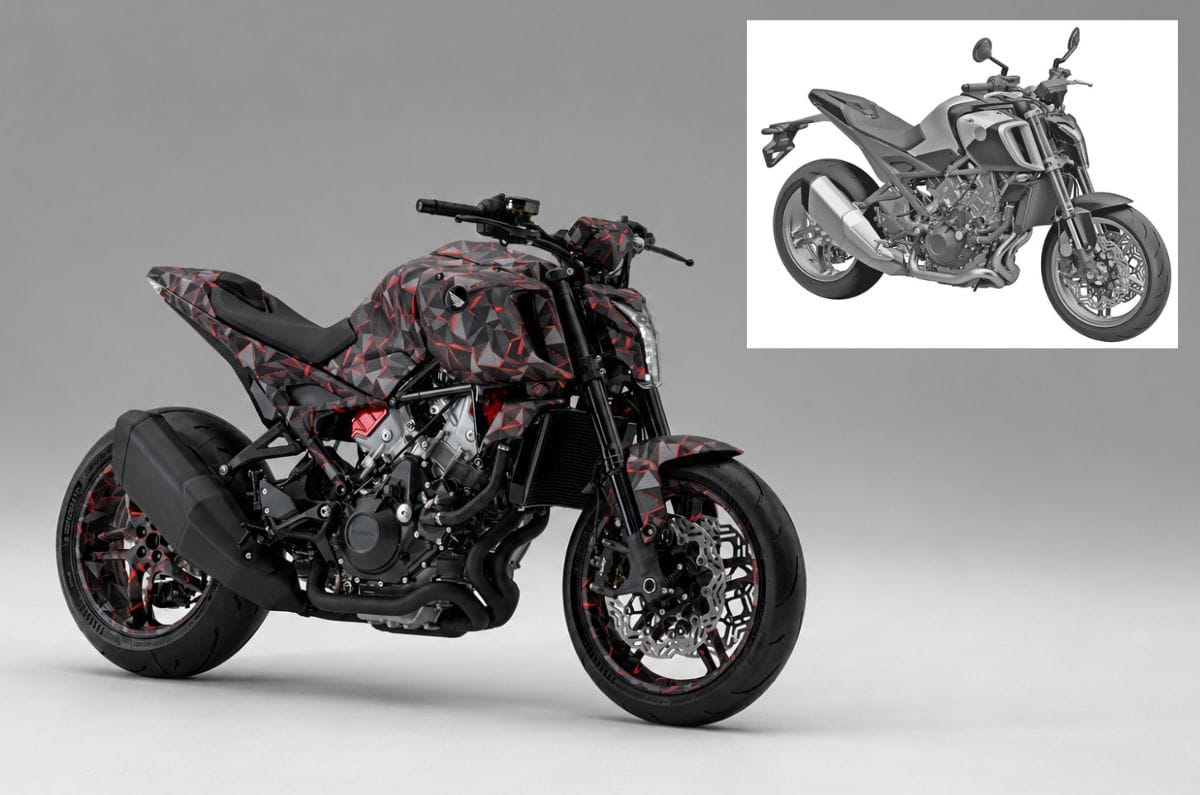
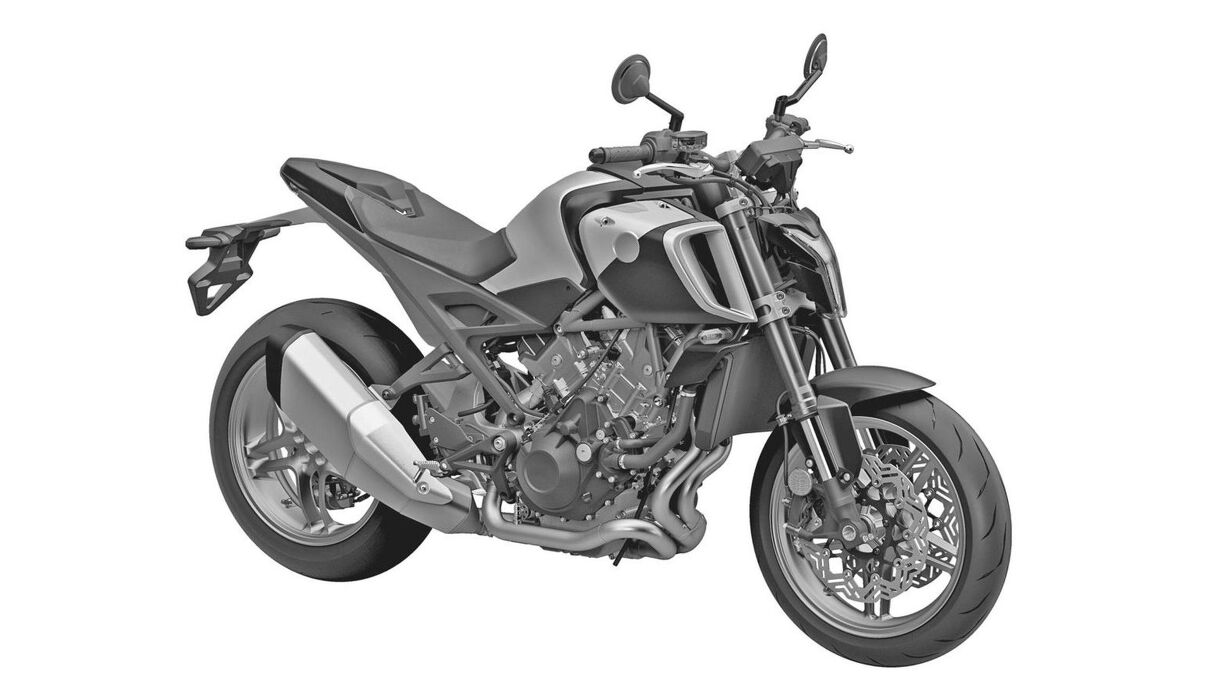
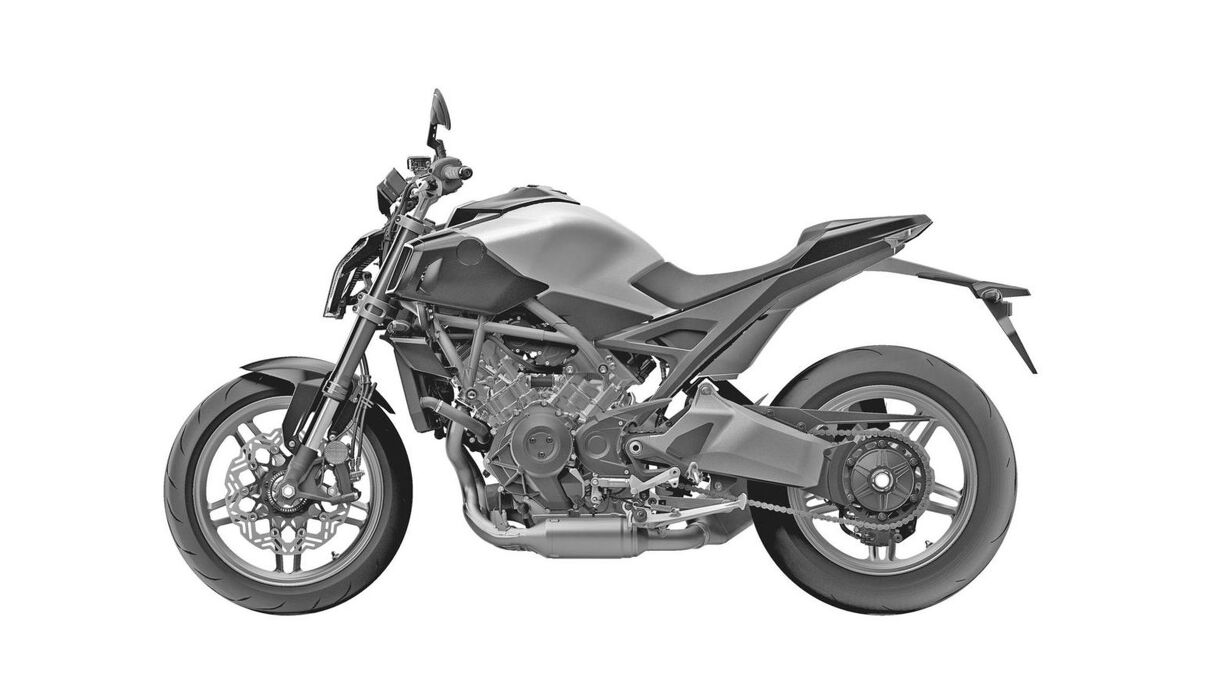
Honda‘s upcoming V3-powered naked motorcycle has taken another step towards production after design drawings filed with IP Australia were made public. The application, submitted on March 26, claims priority from an earlier Japanese design filing dated October 2, 2025, which has not yet been published. As a result, the Australian filing offers the first public look at what appears to be the production-spec version of Honda’s V3R prototype.
Australian design filing reveals production-ready styling
Powered by a 900cc V3 engine with an electrically driven compressor
Recent patents hint at the technology being deployed across multiple motorcycle segments
Honda V3R design patented: What to expect?
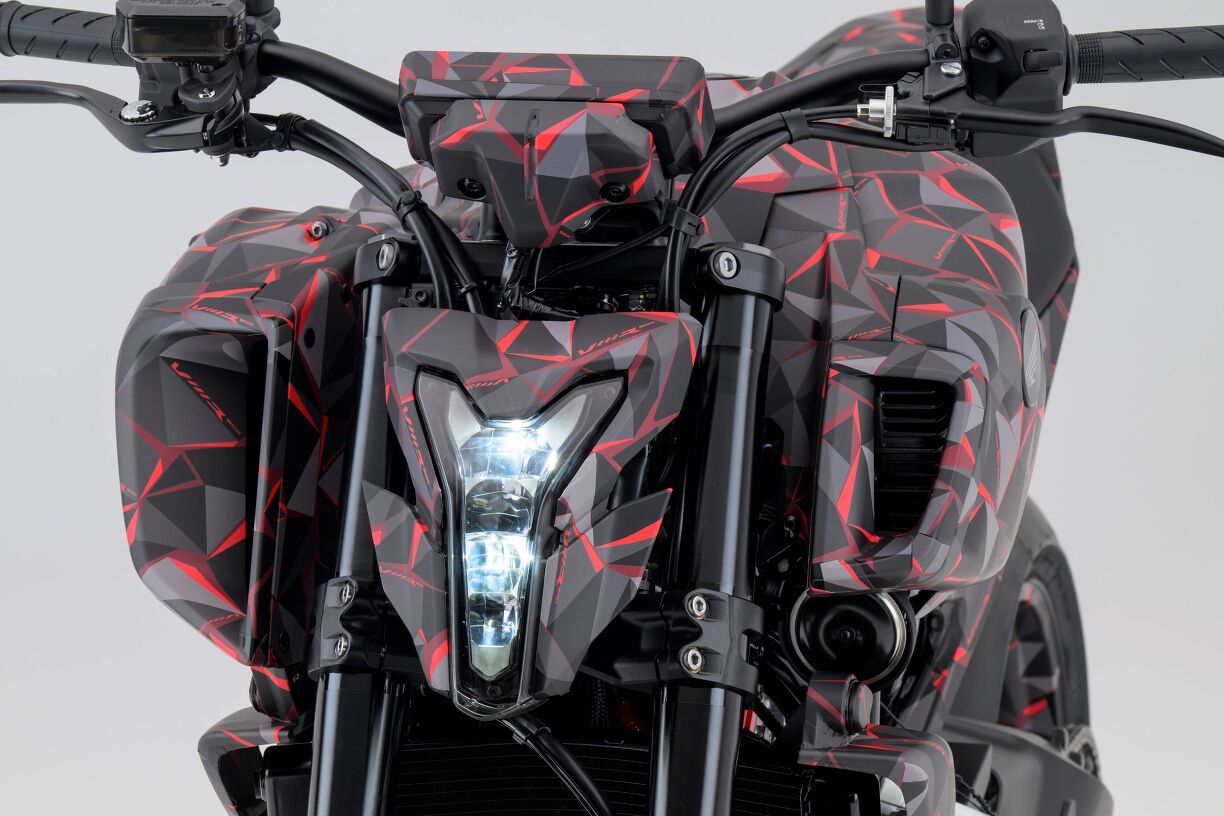
The design closely mirrors the V3R prototype unveiled at EICMA 2025, retaining its muscular streetfighter proportions, sharp bodywork, compact tail section, single-sided swingarm and prominent radiator shrouds. Unlike many concept motorcycles that undergo significant visual changes before reaching production, the registered design suggests Honda intends to carry over much of the prototype’s styling to the final production model.
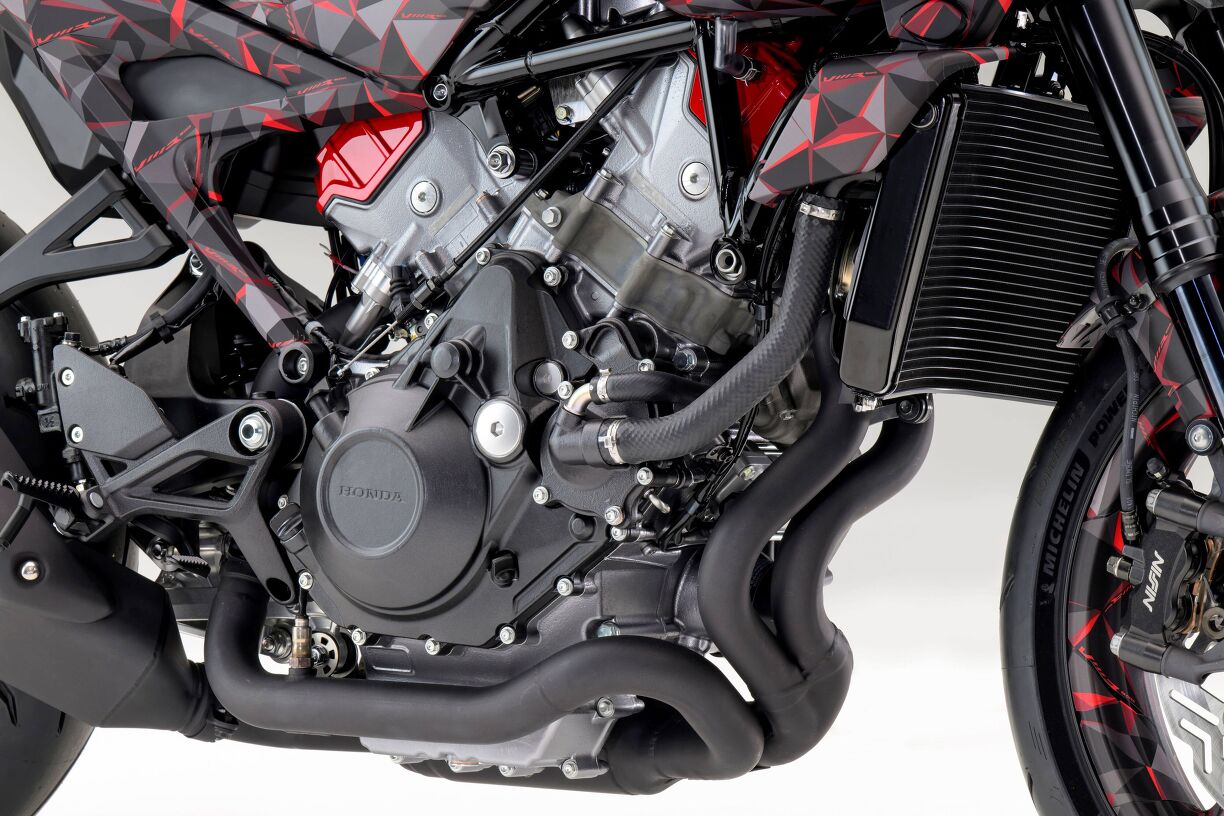
At the heart of the motorcycle is Honda’s new 900cc, 75-degree V3 engine paired with what the company says is the world’s first electrically driven compressor for a motorcycle. Unlike a conventional mechanically driven supercharger, the electric compressor operates independently of engine speed, enabling boost to be delivered across the rev range without relying on crankshaft drive or exhaust gases. Honda says the system delivers the performance of a larger-capacity naturally aspirated engine while retaining the compact dimensions and efficiency of a middleweight powertrain.
The latest design filing also follows a series of recent patent applications that indicate Honda’s ambitions extend beyond a single V3-powered naked bike. The patents depict the electrically driven compressor being evaluated across multiple engine configurations and motorcycle platforms, including touring, naked and supersport models. While patent filings do not necessarily translate into production models, they suggest Honda is developing the e-compressor as a modular technology that could eventually be deployed across a wider range of motorcycles. If that proves to be the case, the V3R could serve as the launch model for an entirely new family of Honda motorcycles built around the company’s latest powertrain technology.
The V3R will also mark Honda’s return to forced induction for the first time in more than four decades. The company last offered forced-induction motorcycles in the form of the CX500 Turbo and CX650 Turbo in the early 1980s, both of which used exhaust-driven turbochargers. Honda’s new approach replaces the turbocharger with an electrically driven compressor, allowing boost to be controlled independently of engine speed while improving packaging and reducing lag.
Honda has yet to announce a production timeline or reveal full technical specifications beyond those showcased with the prototype. However, the publication of production-style design drawings, combined with the growing body of patent activity surrounding the V3 platform, suggests the company is steadily progressing towards production. If launched, the V3R is likely to become the first model in what could eventually evolve into a broader family of Honda motorcycles powered by its new electrically assisted forced-induction technology.
Viral Video: मध्य प्रदेश से एक हैरान करने वाला मामला सामने आया है। मध्य प्रदेश के सतना जिले से जुड़ा एक वीडियो इन दिनों सोशल मीडिया पर तेजी से वायरल हो रहा है। इस वीडियो में बताया जा रहा कि सतना में एक परिवार ने अपने 14 बेटों की शादी एक ही मंडप में करावा दी। वीडियो में 14 नवविवाहित जोड़े शादी के पारंपरिक कपड़ों में सजे हुए ट्रैक्टर-ट्रॉली में सफर करते नजर आ रहे हैं। बताया जा रहा कि इसमें 14 दूल्हे और 14 दुल्हनें शामिल हैं। इस अनोखे अंदाज को देखकर सोशल मीडिया पर लोग परिवार की सादगी और अलग तरीके से मनाए गए शादी समारोह की जमकर सराहना कर रहे हैं।
सोशल मीडिया पर वायरल हो रहा वीडियो
सोशल मीडिया पर वायरल हो रहे वीडियो के साथ दावा किया गया कि एक किसान ने शादी में होने वाले भारी खर्च से बचने के लिए अपने 14 बेटों का विवाह एक ही मंडप में एक साथ कराया। इस समारोह के दौरान पूरे परंपराओं का पालन किया गया और एक ही जगह सभी रस्में भी निभाई गईं। पोस्ट में ये भी कहा गया कि होटल, महंगी गाड़ियों और दूसरे खर्चों से दूरी रखते हुए पूरी बारात केवल दो ट्रैक्टर-ट्रॉलियों से निकाली गई, ताकि शादी सादगी के साथ कम खर्च में संपन्न हो सके। वहीं इस वीडियो को लेकर अभी कोई जानकारी नहीं मिली है।
14 Grooms in One Tractor: A Look into Satna Mass Wedding
To beat wedding inflation a joint farmer family from Satna Madhya Pradesh organized a mass marriage for 14 sons and nephews under one mandap.
All grooms arrived in one tractor trolley and the brides returned in another.… pic.twitter.com/VtGsgp32as
सोशल मीडिया पर एक पोस्ट तेजी से वायरल हो रही है, जिसमें दावा किया गया कि मध्य प्रदेश के सतना में एक किसान परिवार ने बढ़ते शादी के खर्च से बचने के लिए अपने 14 बेटों और भतीजों का विवाह एक ही मंडप में कराया। पोस्ट में ये भी कहा गया कि सभी दूल्हे एक ही ट्रैक्टर-ट्रॉली में बारात लेकर पहुंचे और दुल्हनें दूसरी ट्रॉली से विदा हुईं। साथ ही इस शादी को बिना दिखावे और सादगी के साथ आयोजित होने का उदाहरण बताते हुए इसे नई सामाजिक परंपरा की शुरुआत बताया जा रहा है। सोशल मीडिया पर ये वीडियो तेजी से वायरल हो रहा है। वहीं लोग इस पर तरह-तरह के रिएक्शन दे रहे हैं।
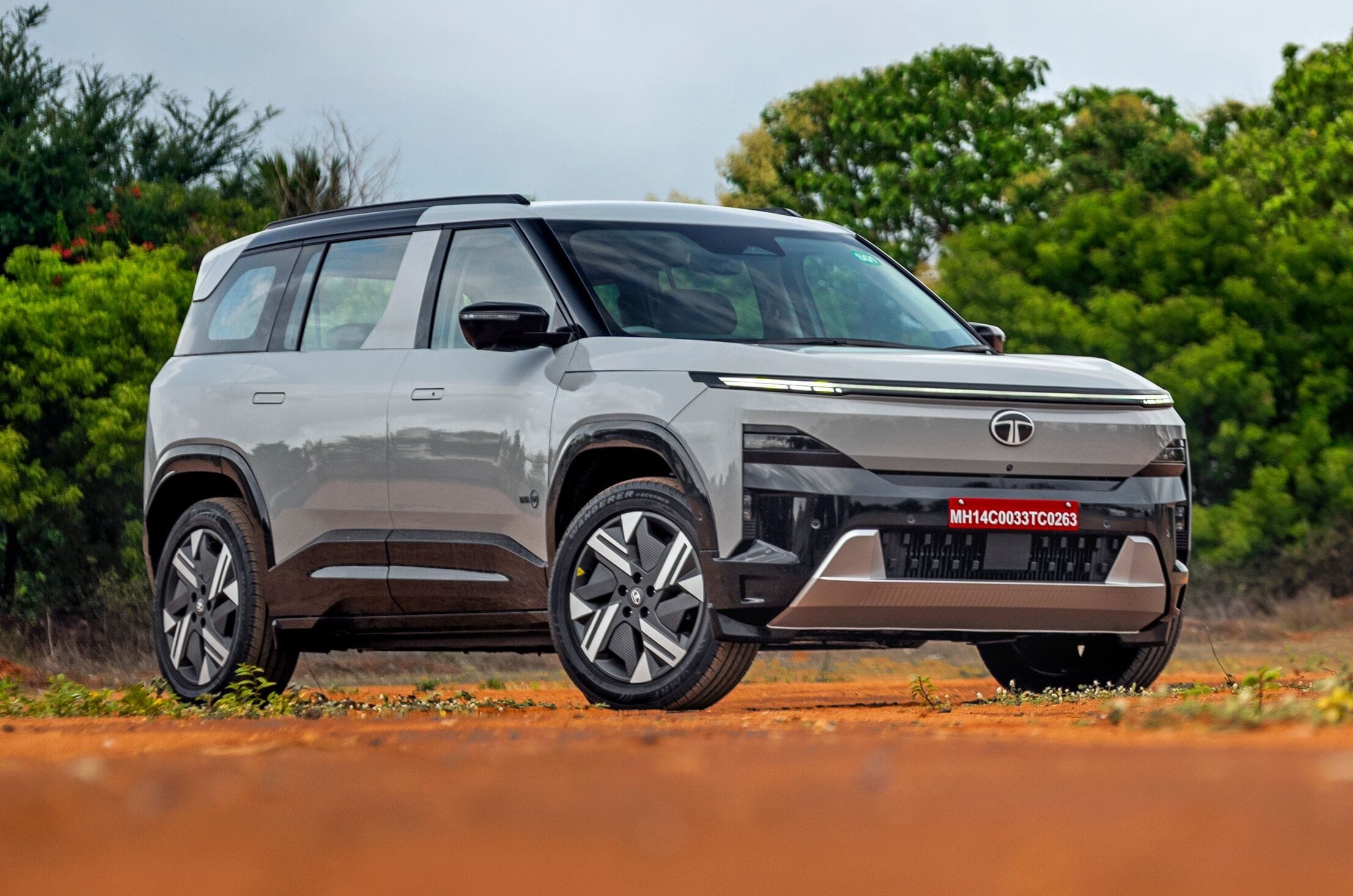
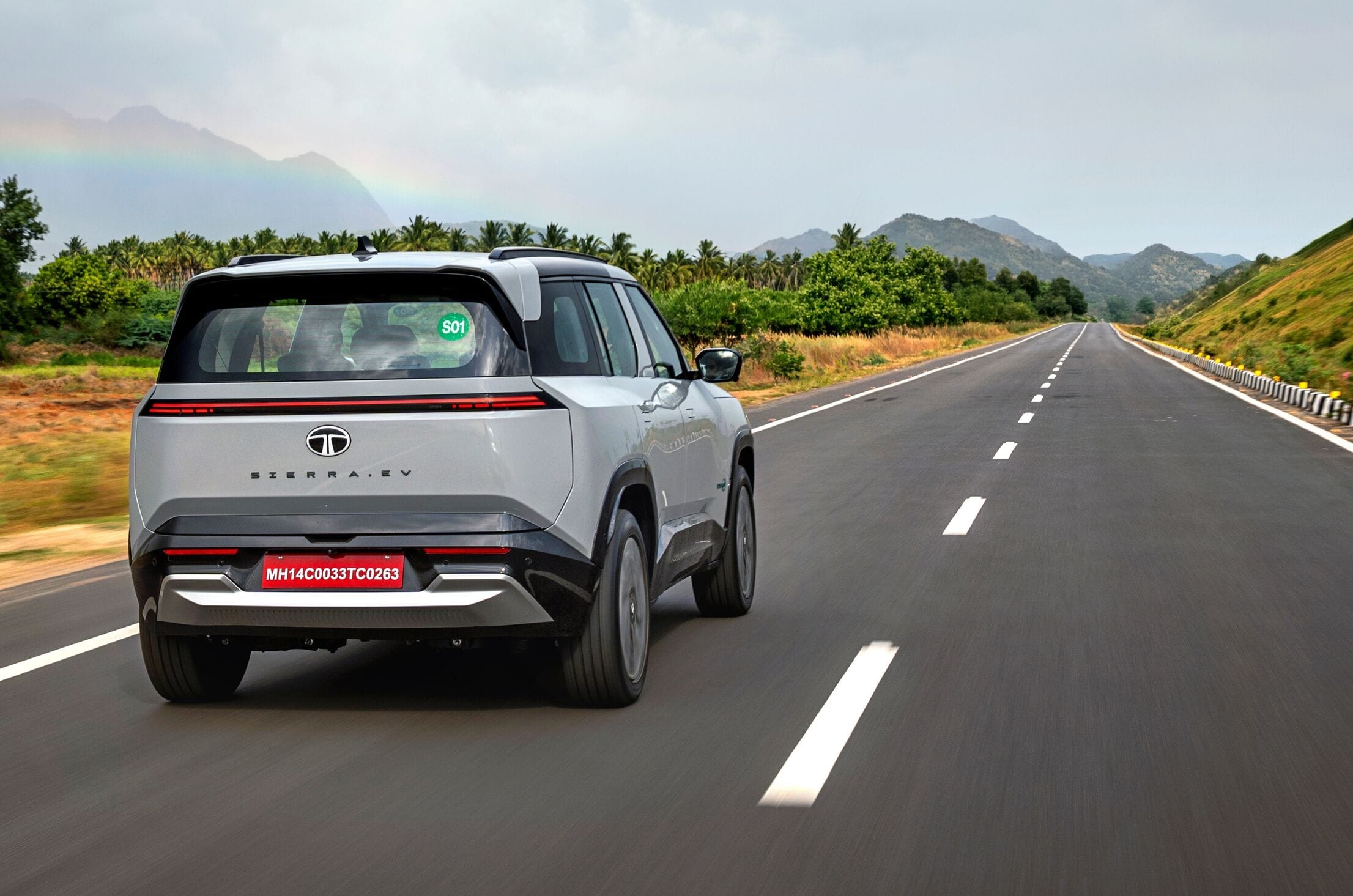
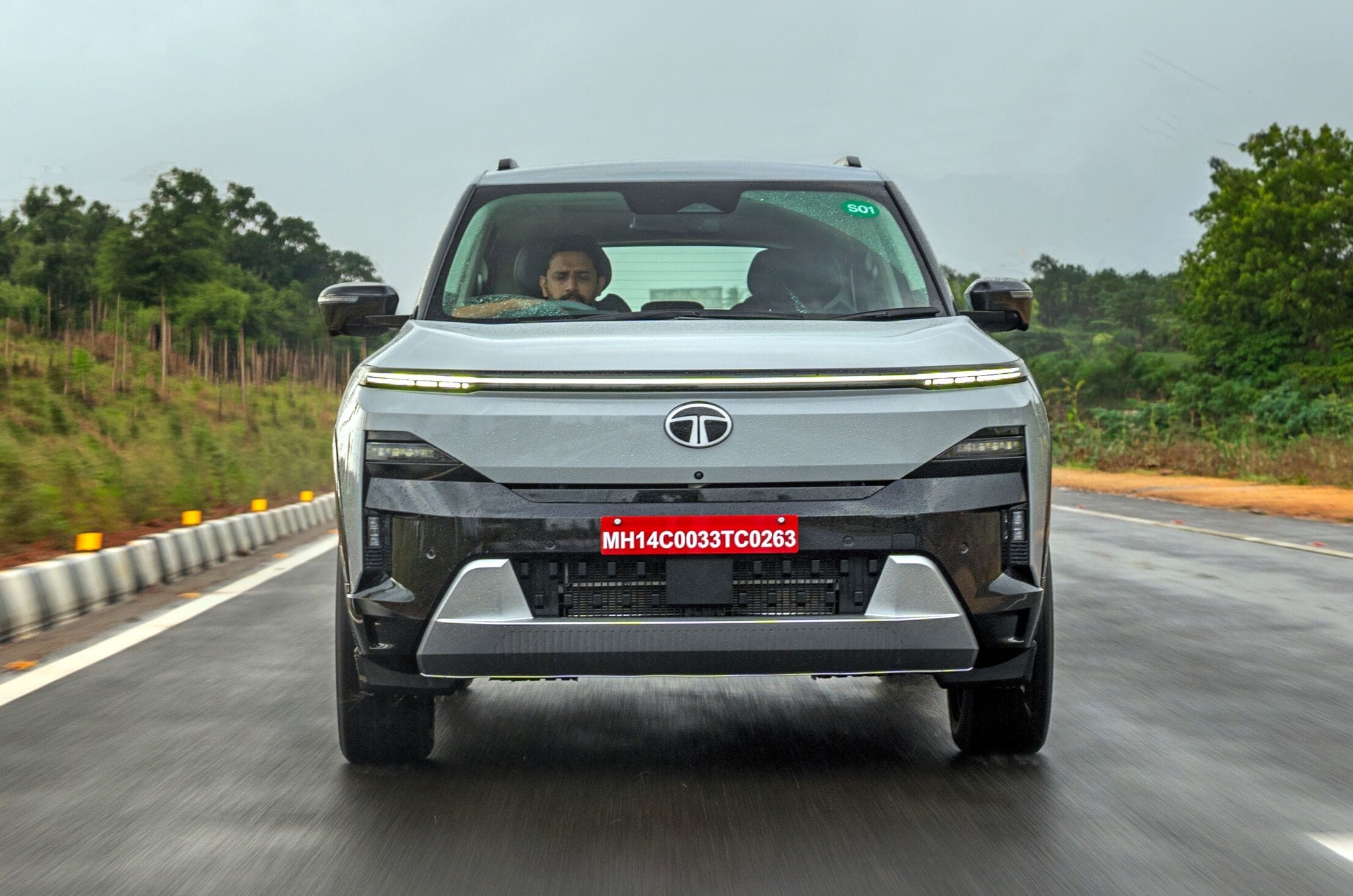
If you’re considering bringing home a Sierra EV, here are three reasons why you should go through with it, and two reasons why you may want to think twice before signing the dotted line.
Pros
Loaded with features
Gets some additional goodies over the ICE Sierra
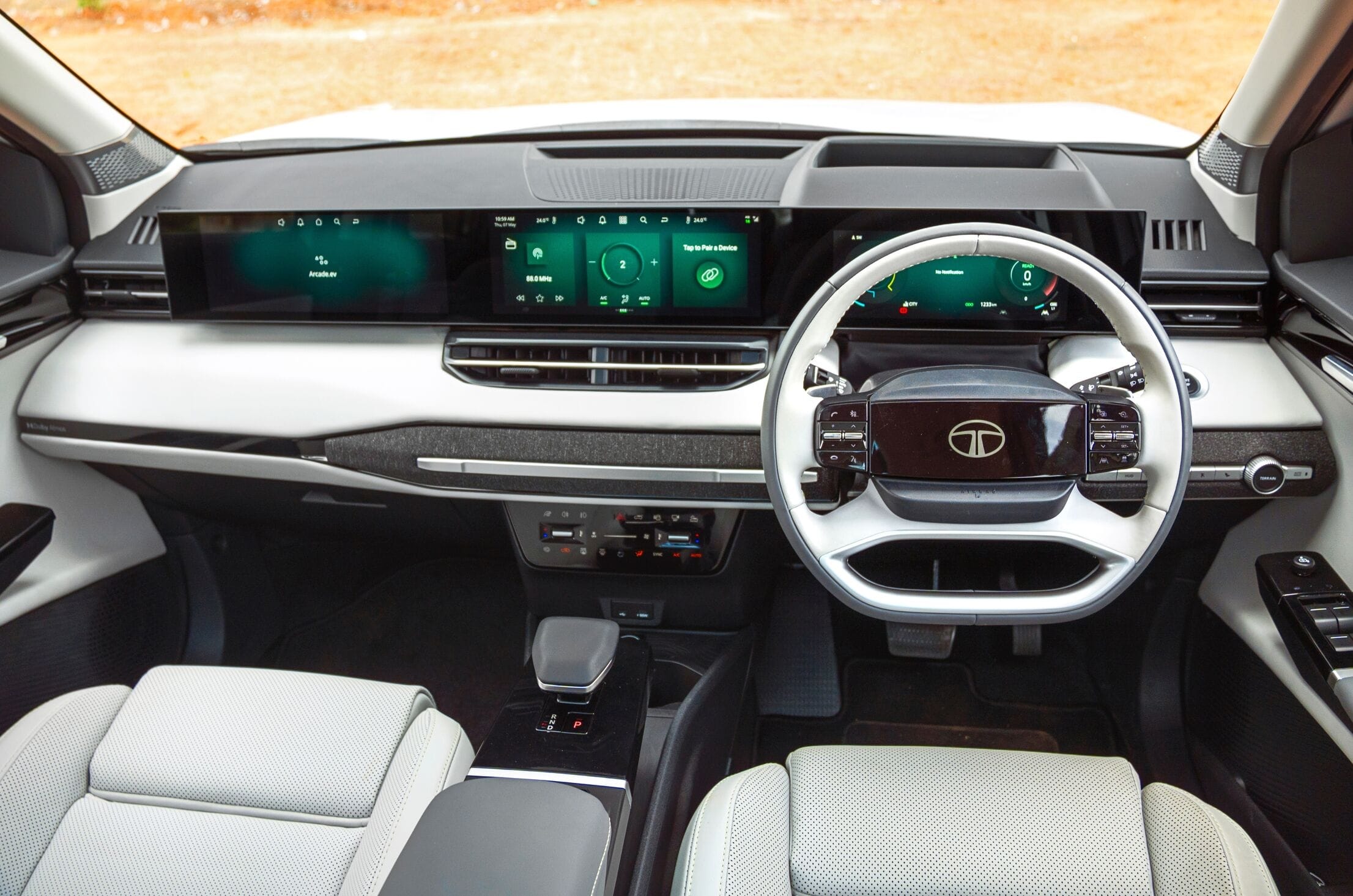
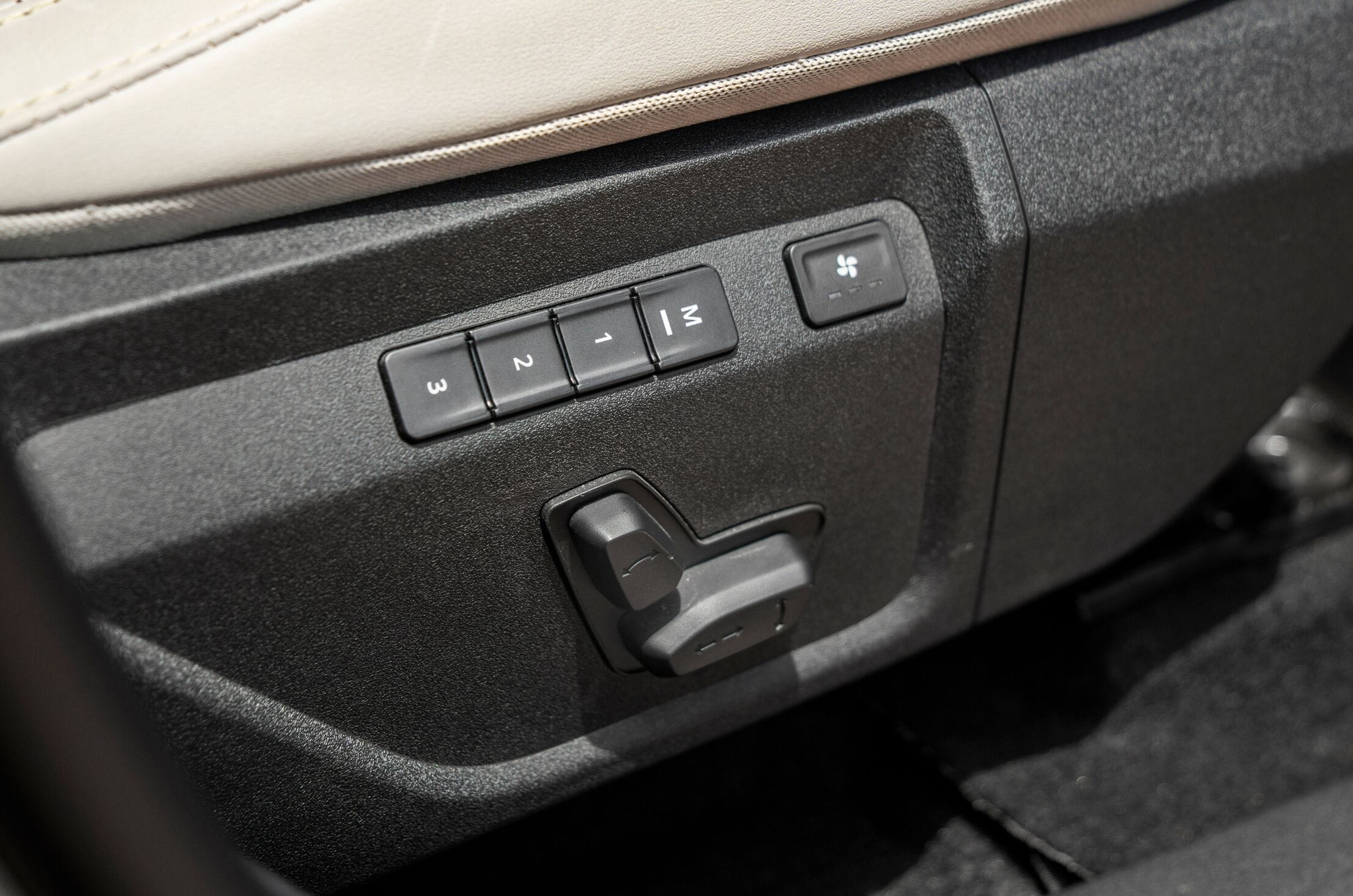
The Sierra EV retains the expansive equipment list of its ICE sibling, including a triple-screen layout (12.3-inch infotainment and passenger screens, 10.25-inch driver’s display), dual-zone climate control, a panoramic sunroof, Level 2 ADAS, a powered tailgate, a 360-degree camera, a wireless charging pad, a 12-speaker JBL Black sound system, ventilated front seats, a powered driver’s seat with memory and welcome functions, and more.
In typical Tata EV fashion, the Sierra EV even packs some bonus features over the ICE version, specifically a powered co-driver seat, an under-floor camera view, auto park assist, a summon mode, vehicle-to-load (V2L) and vehicle-to-vehicle (V2V) charging functions, and a heads-up display along with the triple-screen setup.
Excellent cabin space and practicality
Great for chauffeur-driven buyers
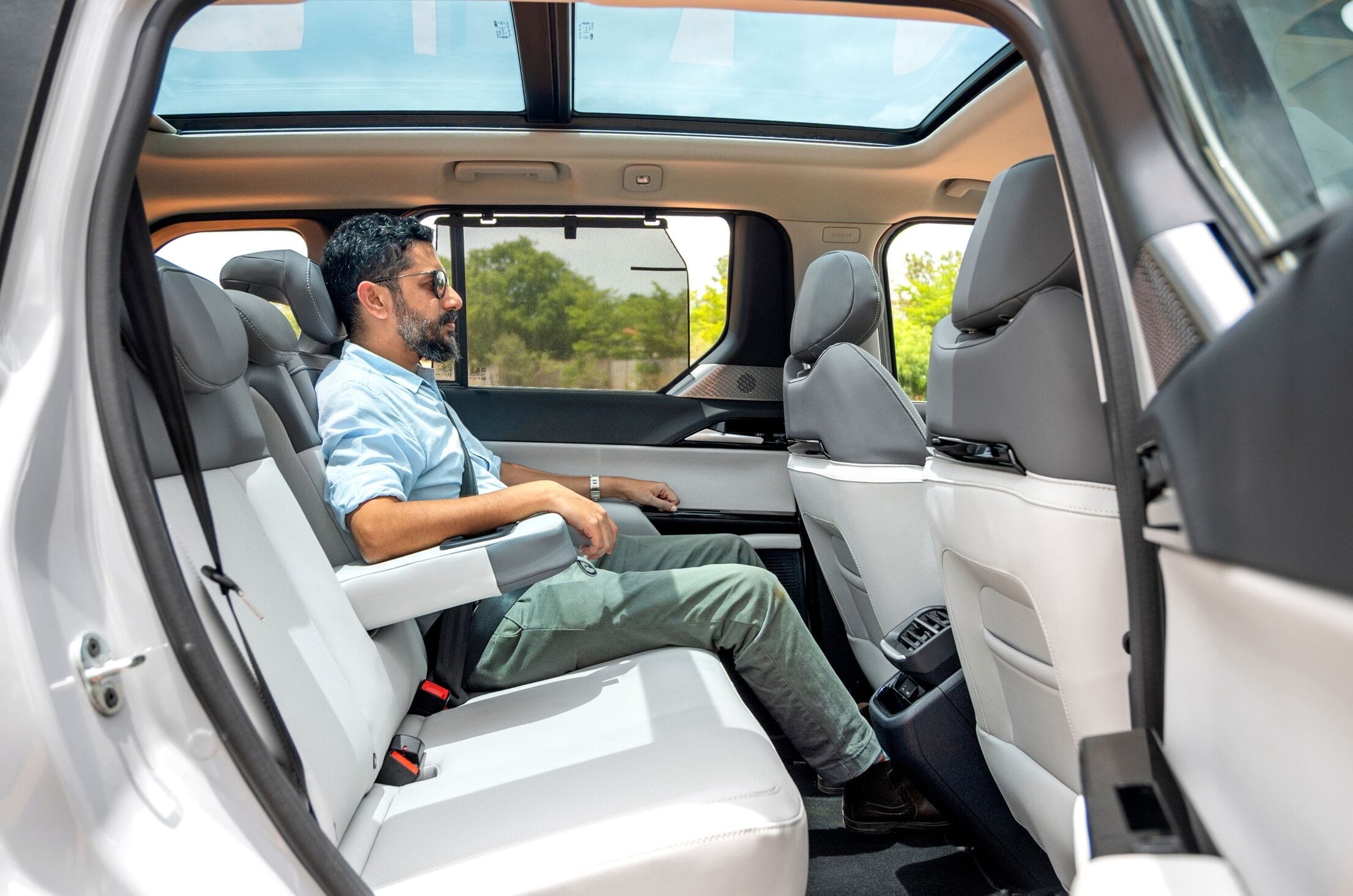
Dimensionally, the Sierra is very similar to its ICE counterpart, which means you get an incredibly roomy and lounge-like interior. Though the floor height has increased by less than an inch compared to that of the ICE Sierra, there’s nary a perceptible difference for occupants. The seats are very comfortable, there’s loads of rear legroom, and the bench even features a small amount of backrest recline.
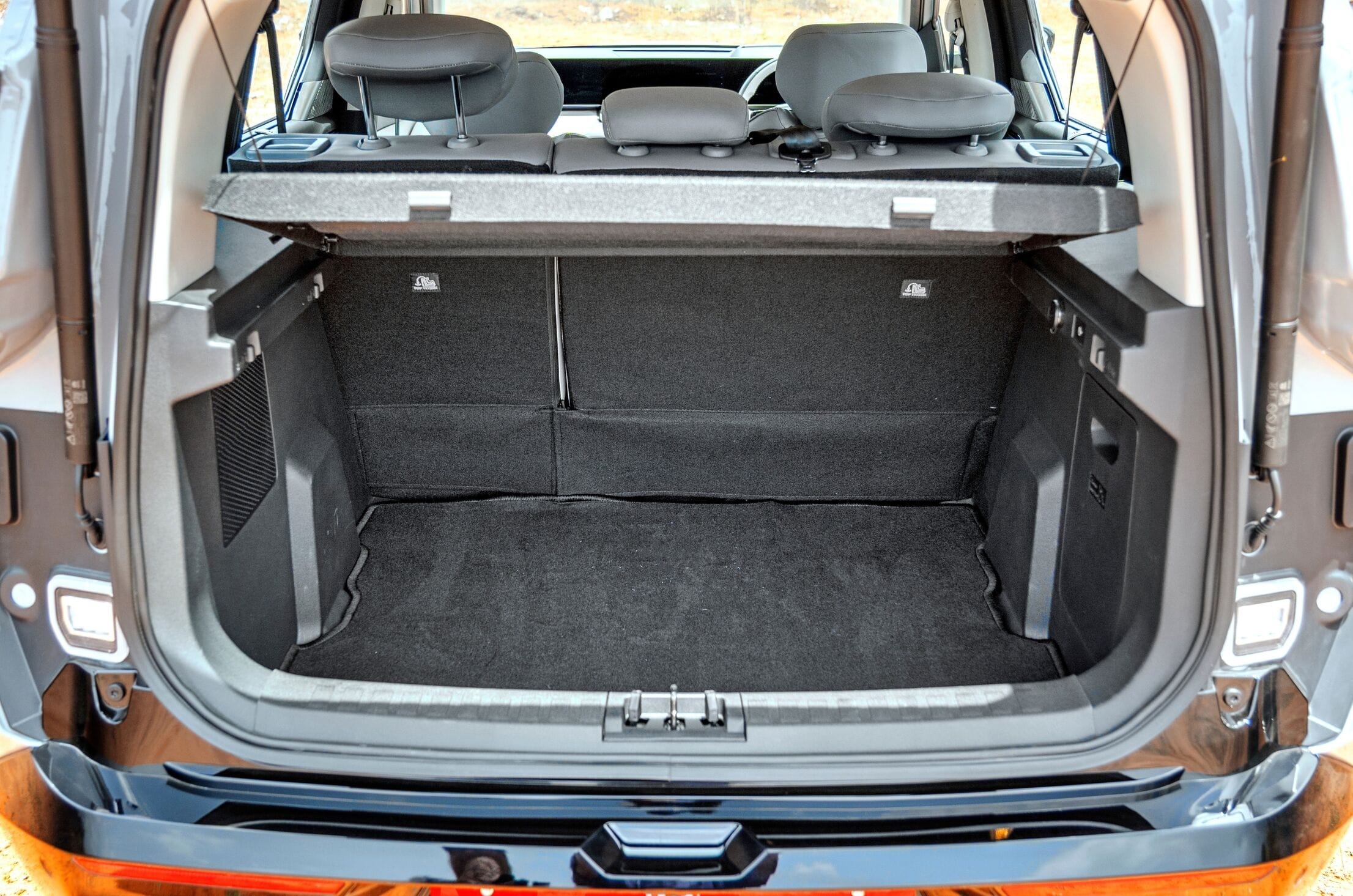
Despite the addition of a rear motor, the Sierra EV’s boot space matches the ICE version’s 622 litres. That’s measured up to the roof, though, and using the conventional method of measurement, which is up to the parcel tray, the Sierra EV should offer roughly 450 litres of boot space. You even get a frunk, which measures 55 litres in the RWD versions and 35 litres in the AWD variant.
Smooth and potent powertrains
Only one in its segment to offer AWD
The Sierra EV can be had with 63kWh and 75kWh battery options, both of which are powered by a 315Nm rear motor (RWD) as standard. In 63kWh RWD guise, the Sierra EV develops 238hp, while the 75kWh RWD versions make 209hp. The top-spec Sierra EV Empowered A 75kWh variant additionally packs a 140hp front motor to form an AWD layout, churning out a segment-best combined output of 306hp and 504Nm.
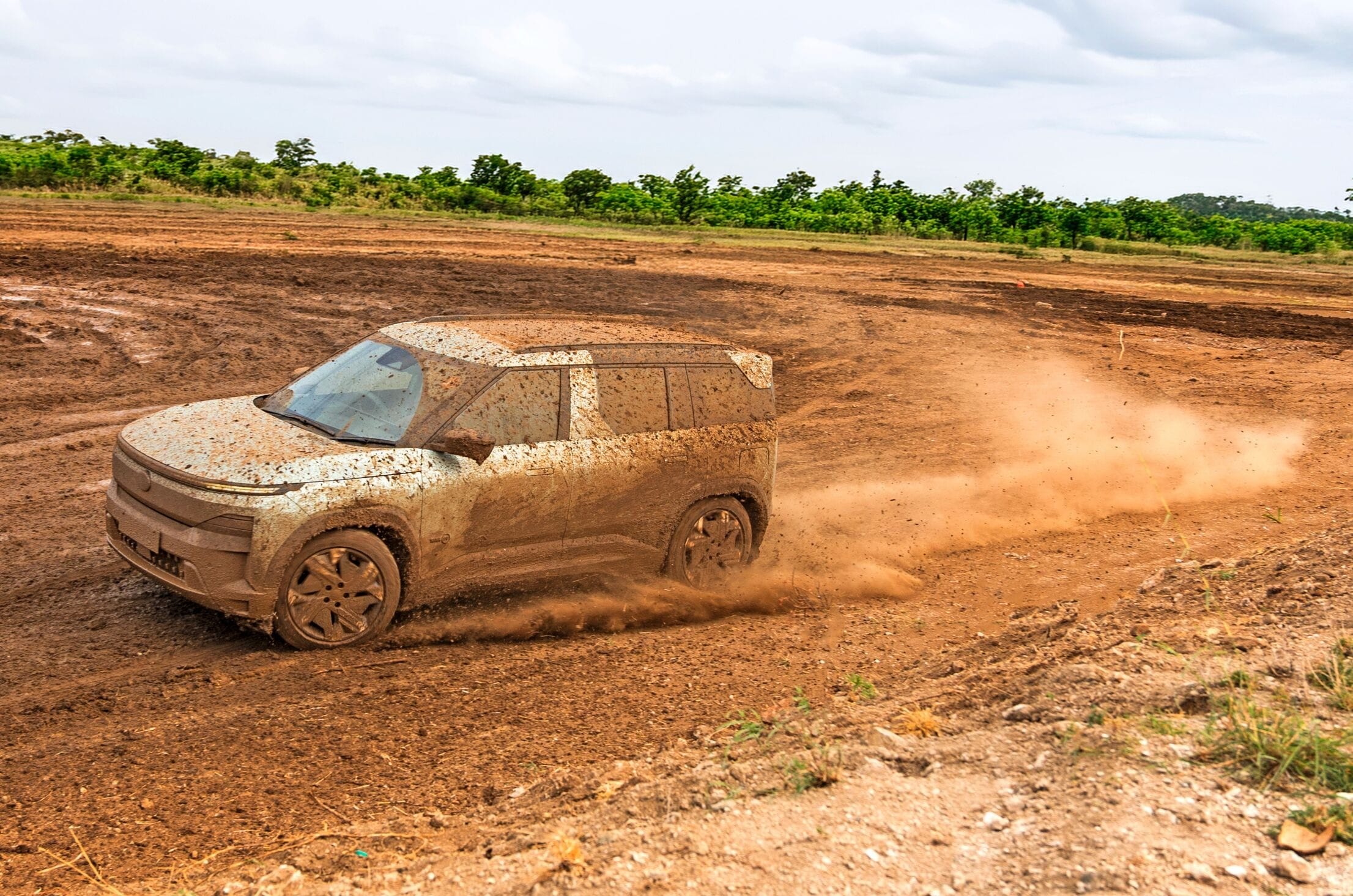
Performance is thereby a strong suit for the AWD Sierra EV, with a claimed 0-100kph time of 5.8 seconds. As we noted in our Sierra EV review, though, the SUV doesn’t feel neck-snappingly quick off the line. Power delivery is progressive and undramatic, which is fine considering the Sierra is, after all, a family SUV. On the curated off-road course we took the Sierra EV AWD on, it proved quite capable too.
As for range, the Sierra EV 75kWh RWD claims the highest ARAI figure of the range at 665km, followed by the 75kWh AWD version at 624km and then the 63kWh RWD version at 535km. These are quite competitive range figures when compared to the Sierra EV’s rivals.
Cons
Poor interior quality and ergonomics
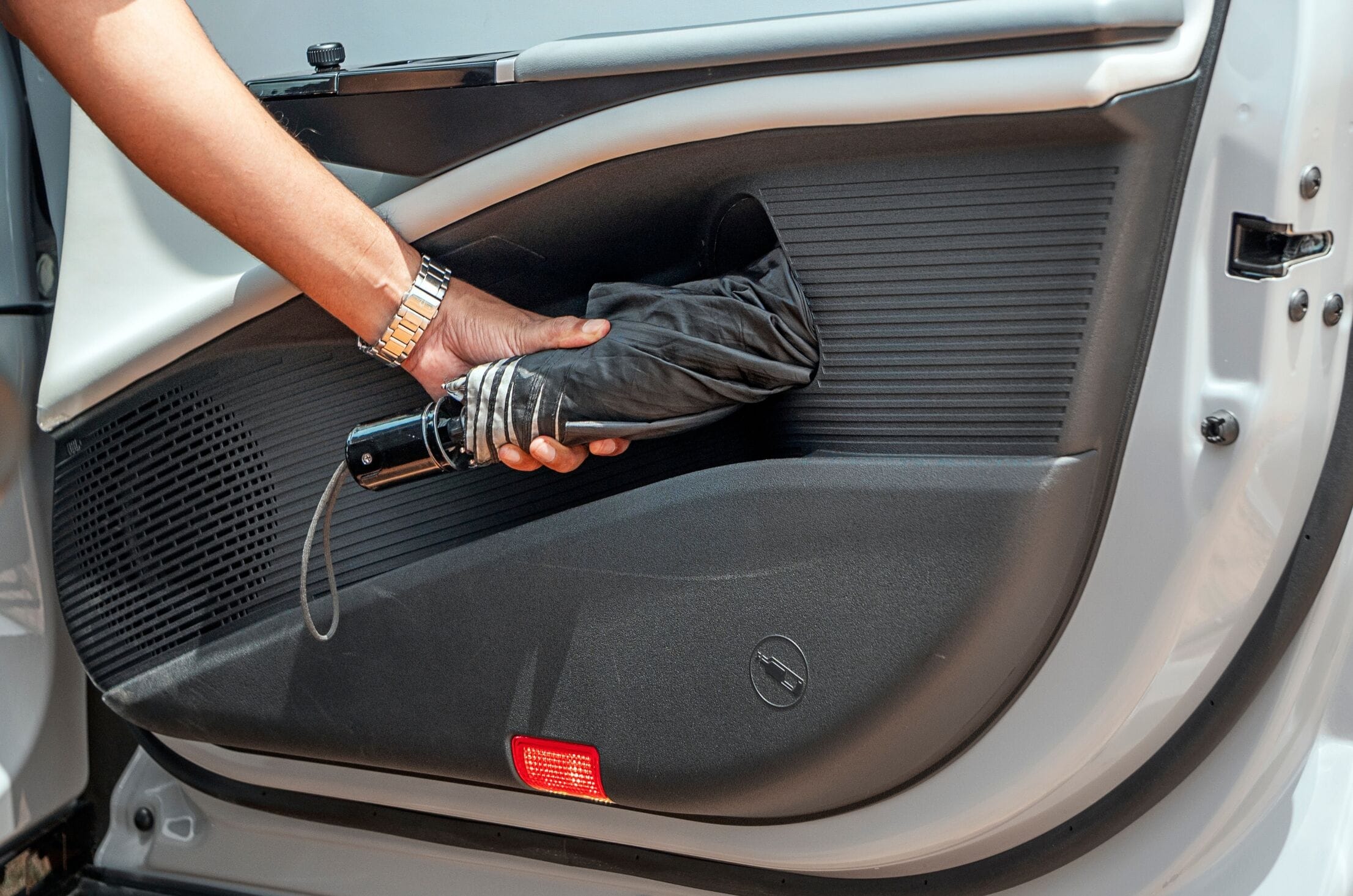
Umbrella holders provided, but with no drain plugs
While Tata has upped its game in terms of interior fit and finish, we could still spot hard plastics, rough edges, crooked stitching, and misaligned panels in the Sierra EV. There are some interior design oddities, too, like wasted space below the pedestal-mounted drive selector, narrow and tough-to-reach armrest storage, tiny cupholders placed at the base of the dashboard, no drain plugs for the umbrella holders in the door cards, and conspicuous gaps next to the rear window sunblinds due to the L-shaped B-pillars.
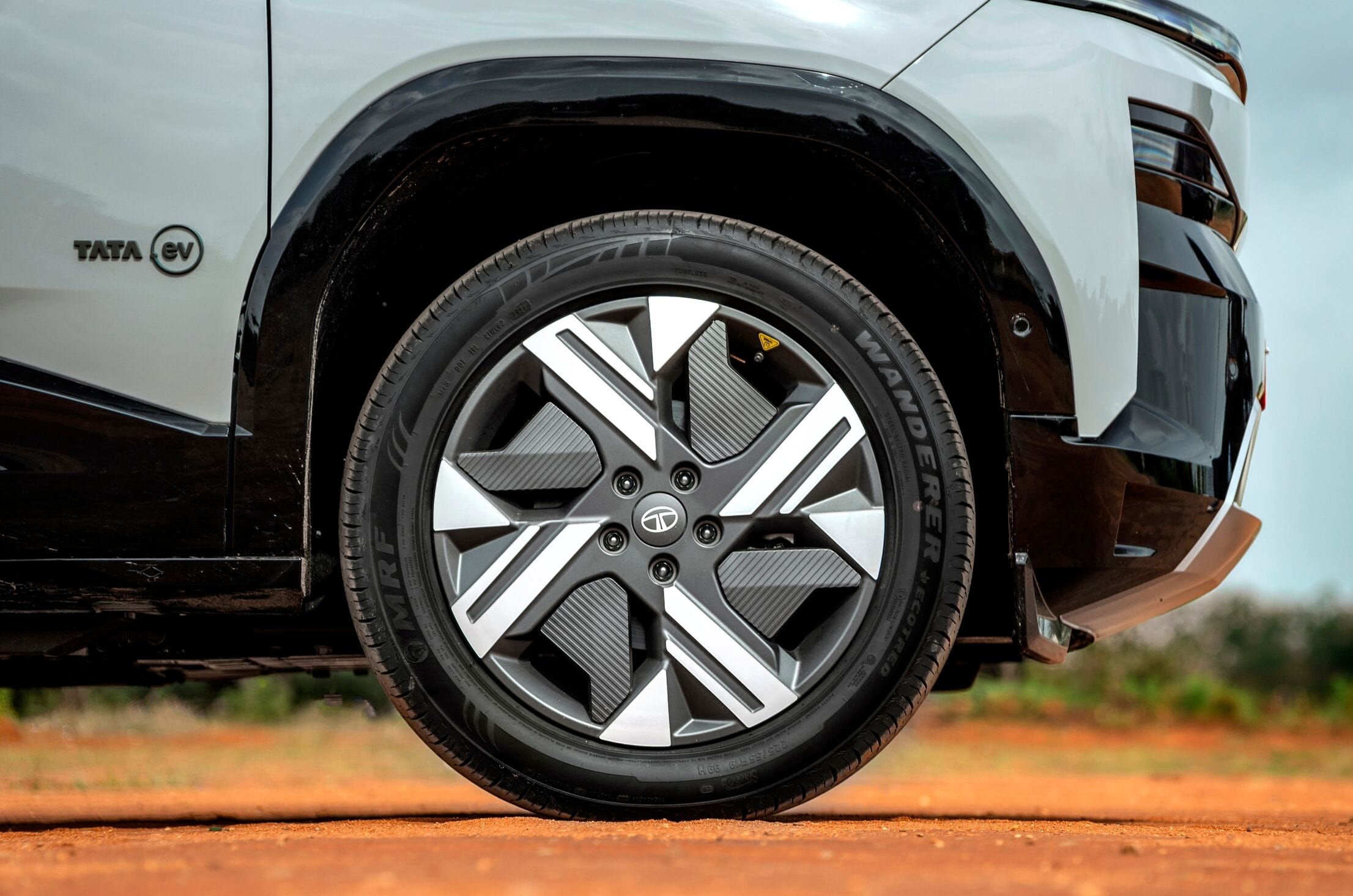
No spare tyre on offer
Removed to accommodate battery pack
In an effort to accommodate the large battery pack, the Sierra EV sacrifices the underbody-mounted spare tyre of its ICE counterpart, offering only a puncture repair kit instead.