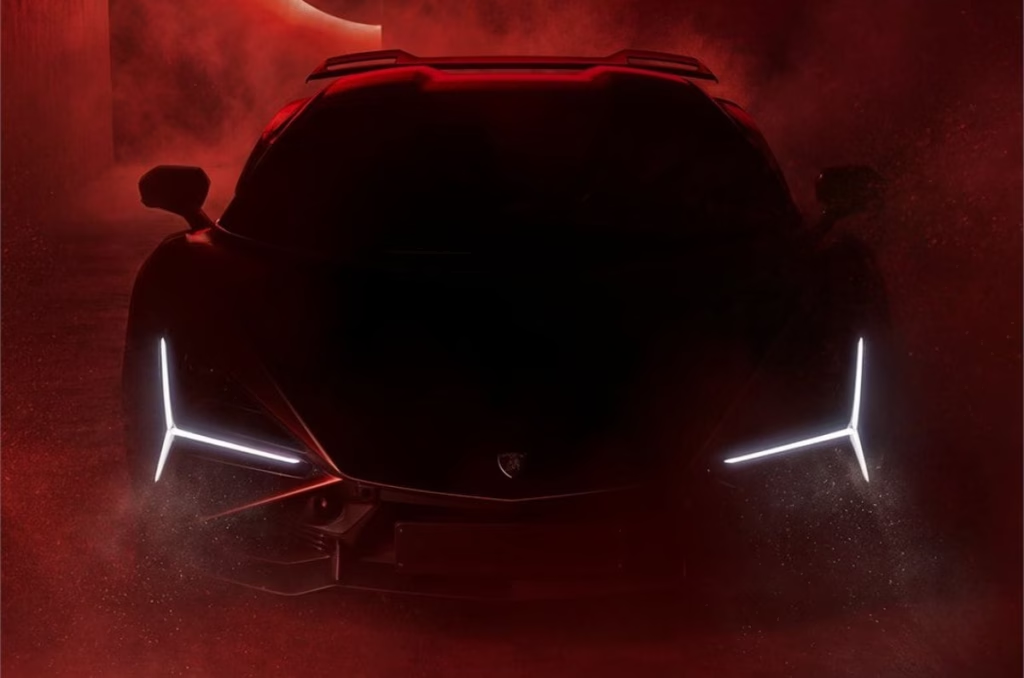
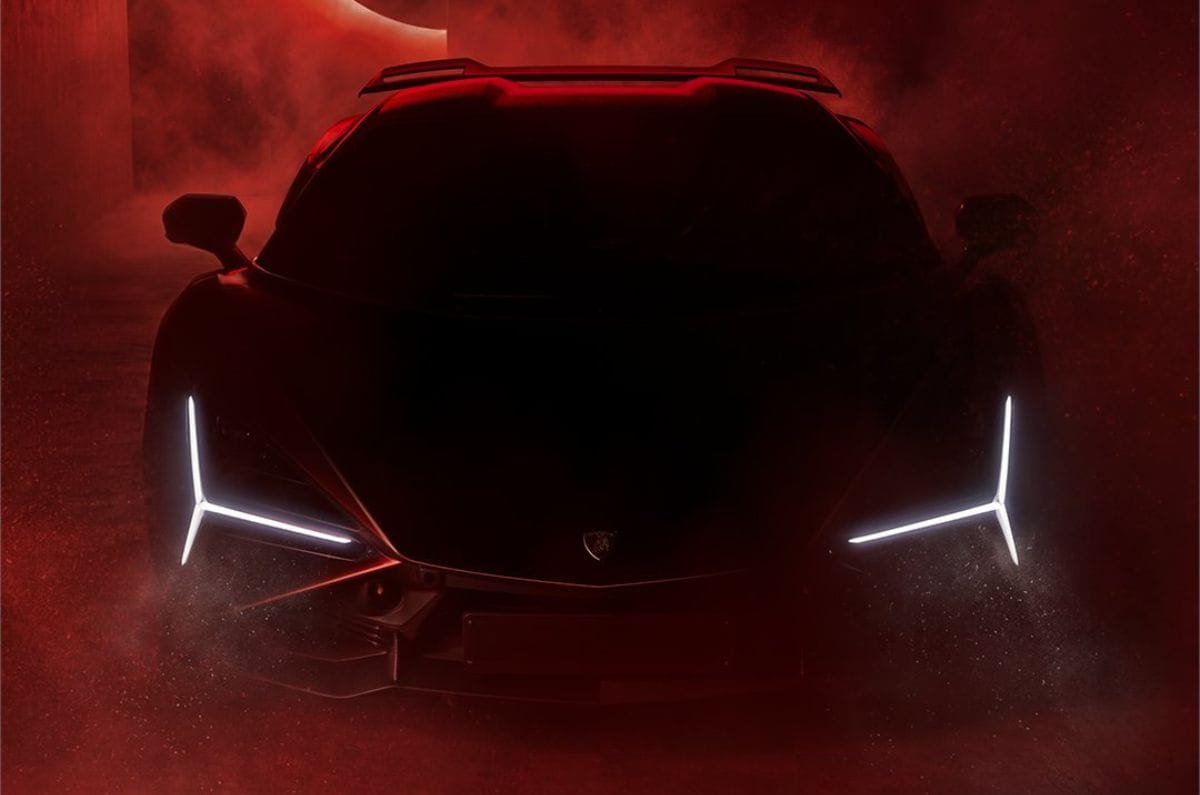
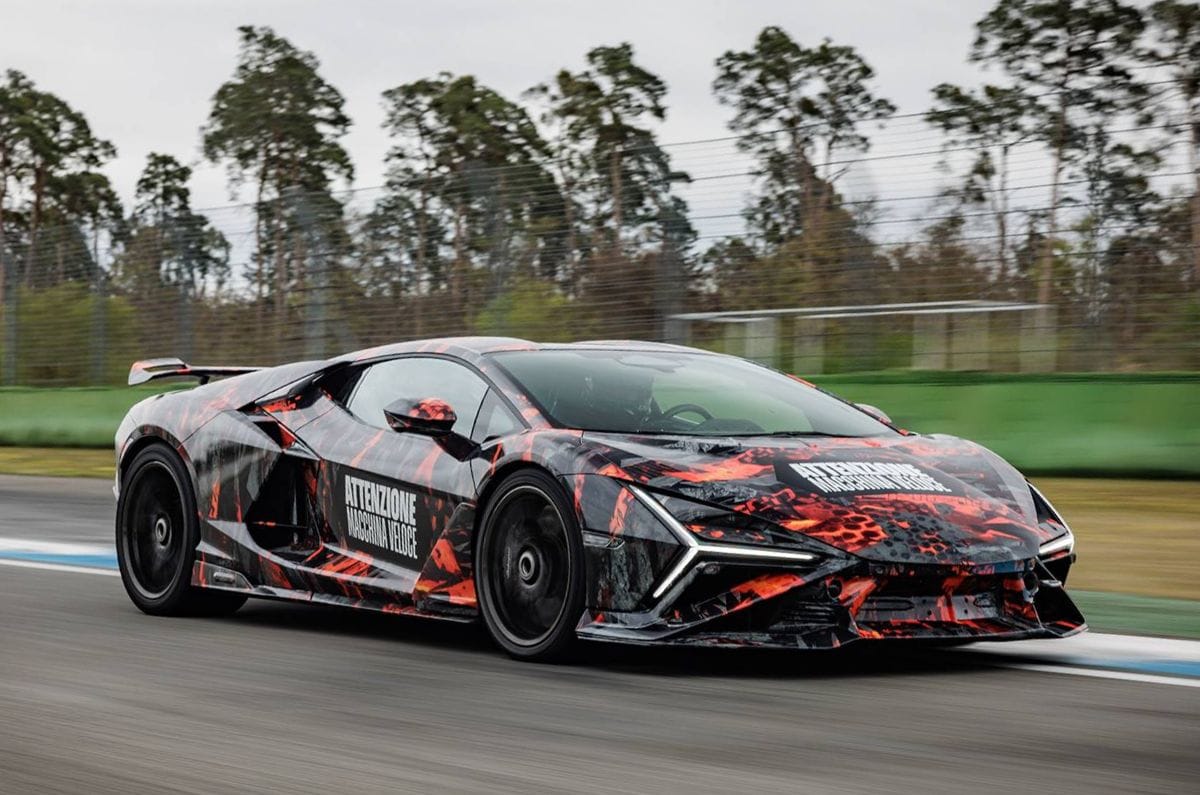
Lamborghini has teased the upcoming Revuelto SV, which is due for its global debut on August 14, 2026, at the Monterey Car Week. This comes just a week after the brand released images of a camouflaged test mule of its V12 supercar belting around Hockenheimring in Germany. Upon its arrival, the Revuelto SV will become the latest in the line of Lamborghini’s SV line-up that includes the erstwhile Aventador SV. The ‘SV’ stands for Super Veloce, which roughly translates to ‘Super Speed’.
Exterior features more aggressive intakes and specialised aero
Interior to come with version-specific detailing and trim
Hybrid powertrain to offer more power
Lamborghini Revuelto SV: What we know so far
Exterior
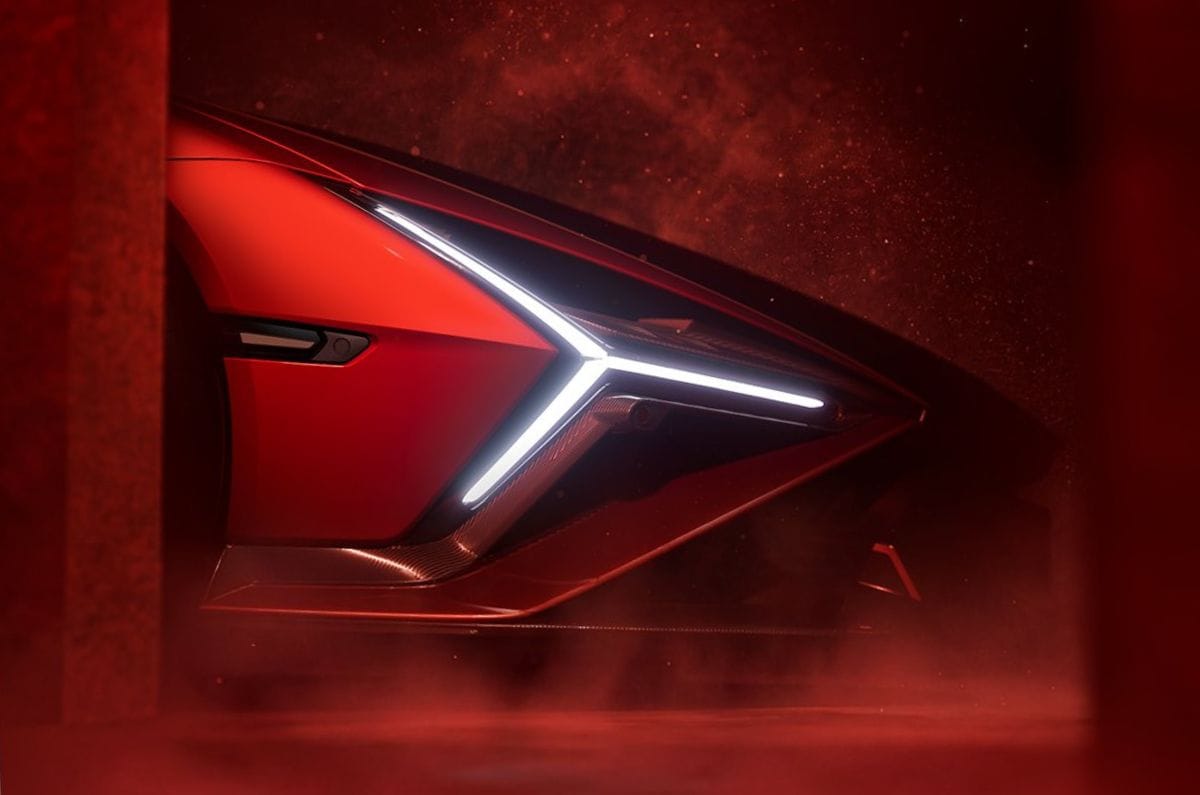
Lamborghini’s latest teaser shows the front bumper of the Revuelto SV in greater detail.
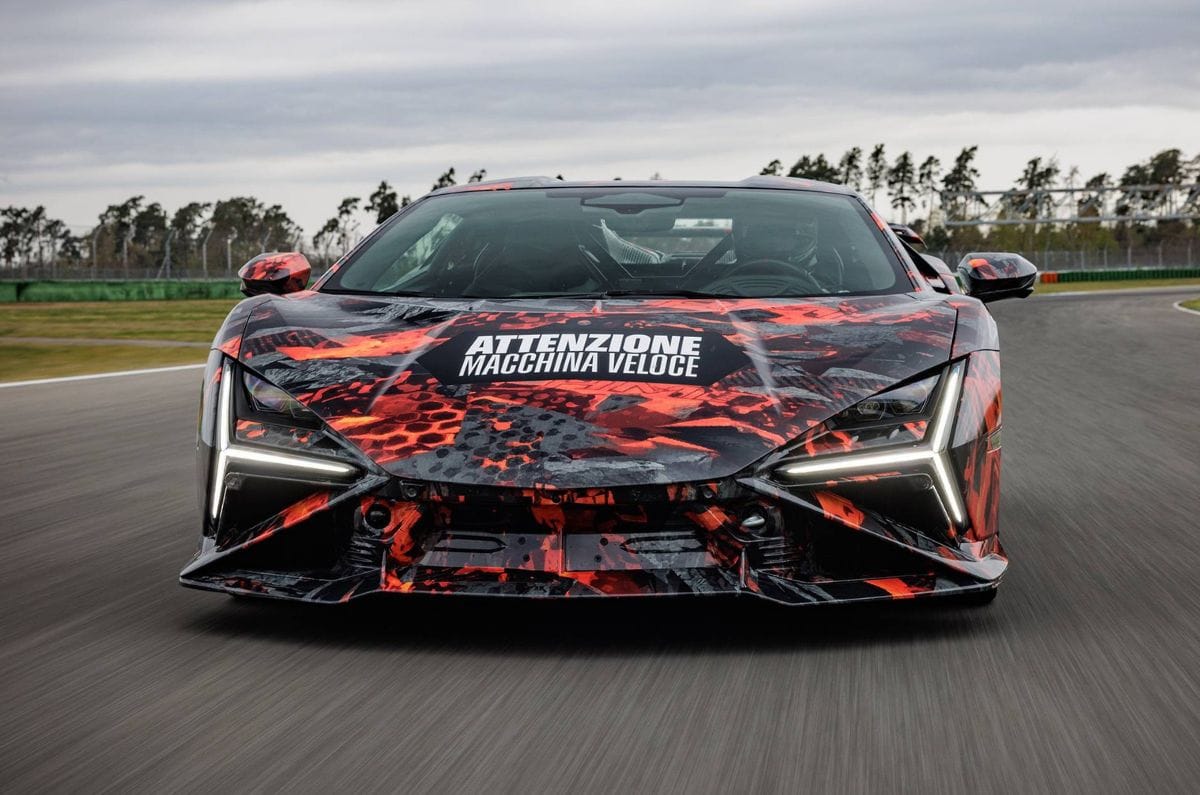
Much of the Revuelto SV’s performance enhancement measures on the outside over the standard model are quite discernible. The fascia looks even sportier as the heavily revised bumper features new carbon-fibre elements plus a larger and more aggressive front splitter and intakes.
Test mule of the Lamborghini Revuelto SV at Hockenheimring, Germany.
Lamborghini has also added a large fixed wing at the back, while a specially designed underbody and active flaps are also likely additions to enhance the Revuelto SV’s aerodynamic performance on the track. Similarly, lightweight carbon-fibre wheels and race-spec brakes are expected to be part of the package as well, along with unique paint options and exterior detailing exclusive to the SV.
Interior
Test mule of the Lamborghini Revuelto SV at Hockenheimring, Germany.
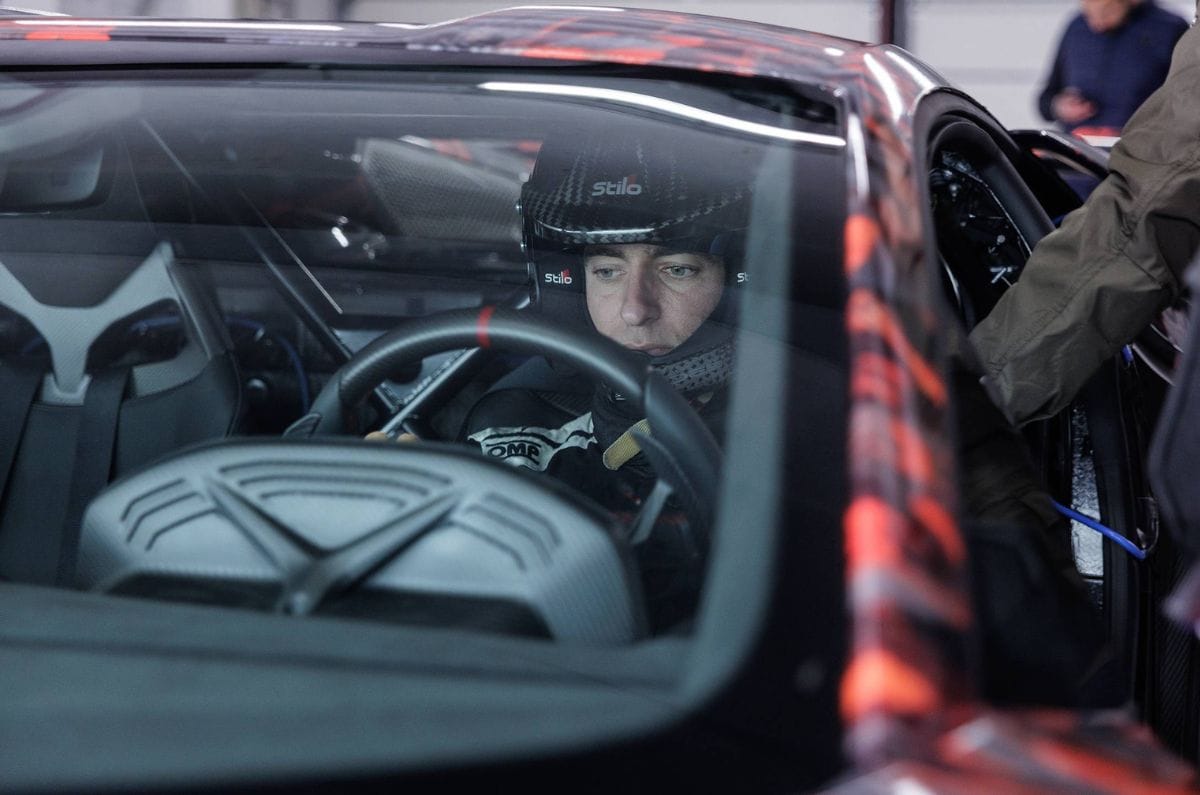
The first teaser campaign from the brand provides us a glimpse into the Lamborghini Revuelto SV’s interior. Noticeable in the interior image is a heavy-duty roll cage, exposed metal surfaces and a bare-bones rear-cabin section. Other details that are visible here include a leather & carbon fibre-trimmed steering wheel with a red centre marker and carbon-fibre shift paddles. The bucket seats are also likely to be carbon-fibre units, whilst the shrouding for the digital driver’s display uses the same weight-saving material. The Revuelto SV’s interior could feature plenty of Alcantara/suede, depending on how a customer specs it. One can also expect to see ‘SV’ branding and other edition-specific detailing on this interior.
Powertrain and performance
Powering the Lamborghini Revuelto SV will be the familiar 6.5-litre naturally aspirated V12, along with three electric motors and a compact lithium-ion battery pack. Lamborghini is likely to have reworked the 8-speed dual-clutch transmission for quicker shifts, and the combined output from the hybrid powertrain is expected to go up as well.
Test mule of the Lamborghini Revuelto SV at Hockenheimring, Germany.
Lamborghini recently set a lap record of 1:41.6 at the Hockenheimring track, with the brand claiming this to be the fastest lap ever recorded at this facility by a production car. The standard Revuelto offers 1,015hp and 725Nm of torque, allowing it to hit a top speed of over 350kph and accelerate from 0-100kph in a claimed 2.5 seconds. The SV is likely to be even faster, with retuned suspension and sharper steering also expected for improved handling on the track.
भारतीय रेलवे ने स्वास्थ्य सेवा और मानव जीवन को बचाने के क्षेत्र में एक नया कीर्तिमान बना दिया है। भारत में पहली बार ट्रेन के जरिए एक लाइव डोनर हार्ट एक शहर से दूसरे शहर पहुंचाया गया है। इस लाइफसेविंग मिशन को मुंबई सेंट्रल-गांधीनगर कैपिटल वंदे भारत एक्सप्रेस के जरिए अंजाम दिया गया। दिल को सूरत से अहमदाबाद लाया गया। यूएन मेहता इंस्टीट्यूट ऑफ कार्डियोलॉजी एंड रिसर्च सेंटर अहमदाबाद में ट्रांप्लांट के लिए इसके सफलतापूर्वक डिलिवर किया गया है।
A heartbeat of hope, delivered on time!
For the first time, a ‘live human heart’ was transported by Vande Bharat Express from Surat to Ahmedabad for a life-saving transplant.
A remarkable example of seamless coordination between Indian Railways, RPF and State Administration-… pic.twitter.com/SkiLIXwDZP
— Ministry of Railways (@RailMinIndia) July 31, 2026
तालमेल और ग्रीन कॉरिडोर से पूरा हुआ ये मिशन
आपको बता दें कि ऑर्गन ट्रांसप्लांट एक टाइम बाउंड वाली सेंसटिव प्रक्रिया है। इसमें एक-एक मिनट की कीमत होती है। इस ऑपरेशन के लिए भारतीय रेलवे, रेलवे सुरक्षा बल (RPF), गुजरात राज्य पुलिस और चिकित्सा टीमों के बीच सटीक योजना और बिना किसी ब्रेक के कोऑर्डिनेशन की जरूरत थी। ट्रांसप्लांट प्रक्रिया बिना किसी देरी के शुरू हो सके, इसके लिए रेलवे सुरक्षा बल और गुजरात पुलिस द्वारा अहमदाबाद रेलवे स्टेशन के प्लेटफॉर्म नंबर 1 से यूएन मेहता अस्पताल तक एक ग्रीन कॉरिडोर बनाया गया।
इस ऐतिहासिक उपलब्धि पर अहमदाबाद के मंडल रेल प्रबंधक (DRM) वेद प्रकाश ने कहा कि यह भारतीय रेलवे के लिए बेहद गर्व और संतोष का क्षण है। वंदे भारत एक्सप्रेस के माध्यम से सूरत से अहमदाबाद तक लाइव डोनर हार्ट का सफल परिवहन पारंपरिक यात्री और माल ढुलाई से आगे बढ़कर समाज की सेवा करने की हमारी प्रतिबद्धता को दर्शाता है।
उन्होंने आगे कहा कि ऐसे जीवनरक्षक मिशनों में हर मिनट बेहद महत्वपूर्ण होता है। भारतीय रेलवे, आरपीएफ, गुजरात राज्य पुलिस और मेडिकल टीमों के बीच उत्कृष्ट समन्वय ने इस मिशन की सफलता सुनिश्चित की। मानव जीवन को बचाने में योगदान देना न सिर्फ हमारी जिम्मेदारी है बल्कि सेवा और मानवता के प्रति हमारा सर्वोच्च कर्तव्य भी है।
इस सफलता ने वंदे भारत एक्सप्रेस की गति, समय की पाबंदी और विश्वसनीयता को एक बार फिर साबित कर दिया है। यह मिशन दिखाता है कि कैसे देश का आधुनिक रेलवे इंफ्रास्ट्रक्चर भारत के आपातकालीन स्वास्थ्य पारिस्थितिकी तंत्र को मजबूत करने में महत्वपूर्ण भूमिका निभा सकता है। भारतीय रेलवे ने इस चुनौतीपूर्ण मिशन को सफल बनाने के लिए रेलवे सुरक्षा बल, गुजरात पुलिस, डॉक्टरों, अंग प्रत्यारोपण समन्वयकों और रेलवे अधिकारियों सभी के प्रयासों की तारीफ की है।
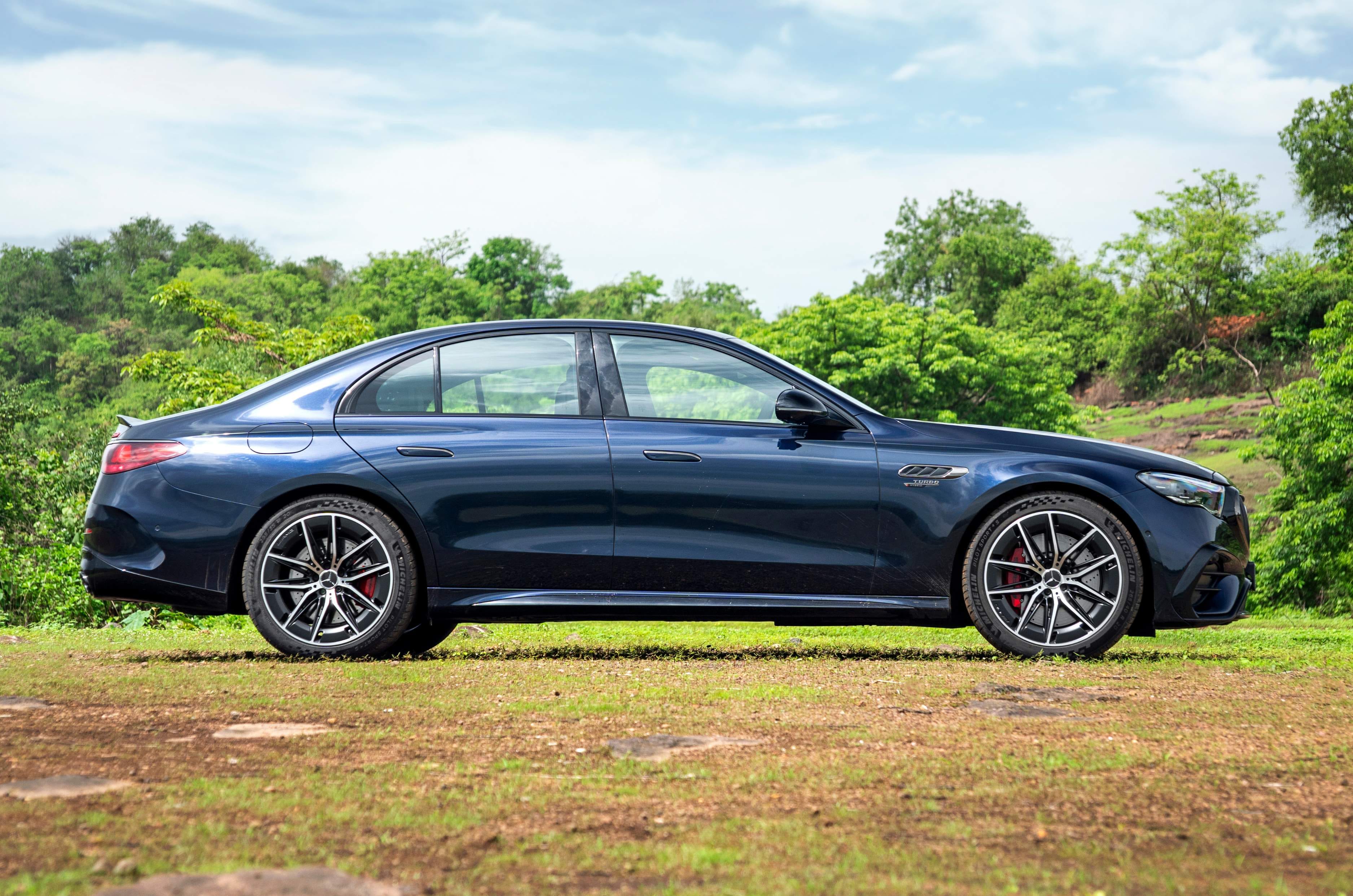
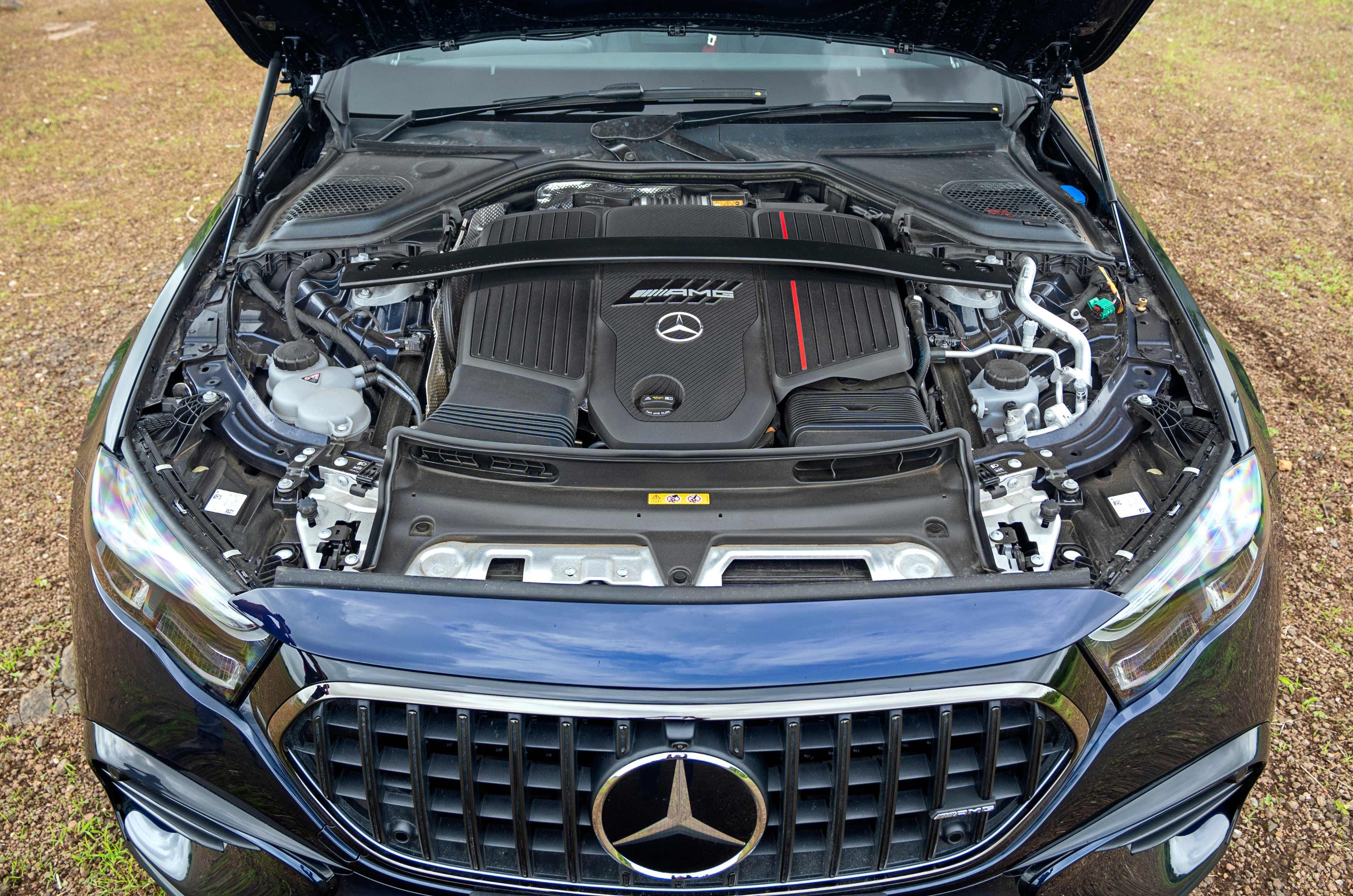
The Mercedes-AMG E53 Hybrid 4MATIC+ arrives at a time when performance cars are being asked to do more than simply go fast. It has to deliver the pace and character expected of an AMG while embracing electrification to meet increasingly stringent emissions norms and changing buyer expectations. The result is a plug-in hybrid performance sedan that combines a 3.0-litre turbo-petrol inline-six engine with an electric motor for a formidable system output of 585hp, while also offering enough electric-only range for mundane daily drives.
But this isn’t just an E-Class with a bigger battery and more power. The E53 gets AMG-specific chassis hardware, all-wheel drive, rear-wheel steering and a suite of performance-focused electronics designed to counter the added weight. Can this electrified AMG still deliver the thrills enthusiasts expect while remaining a genuinely usable luxury sedan every day?
Mercedes-AMG E53 Exterior Design and Engineering
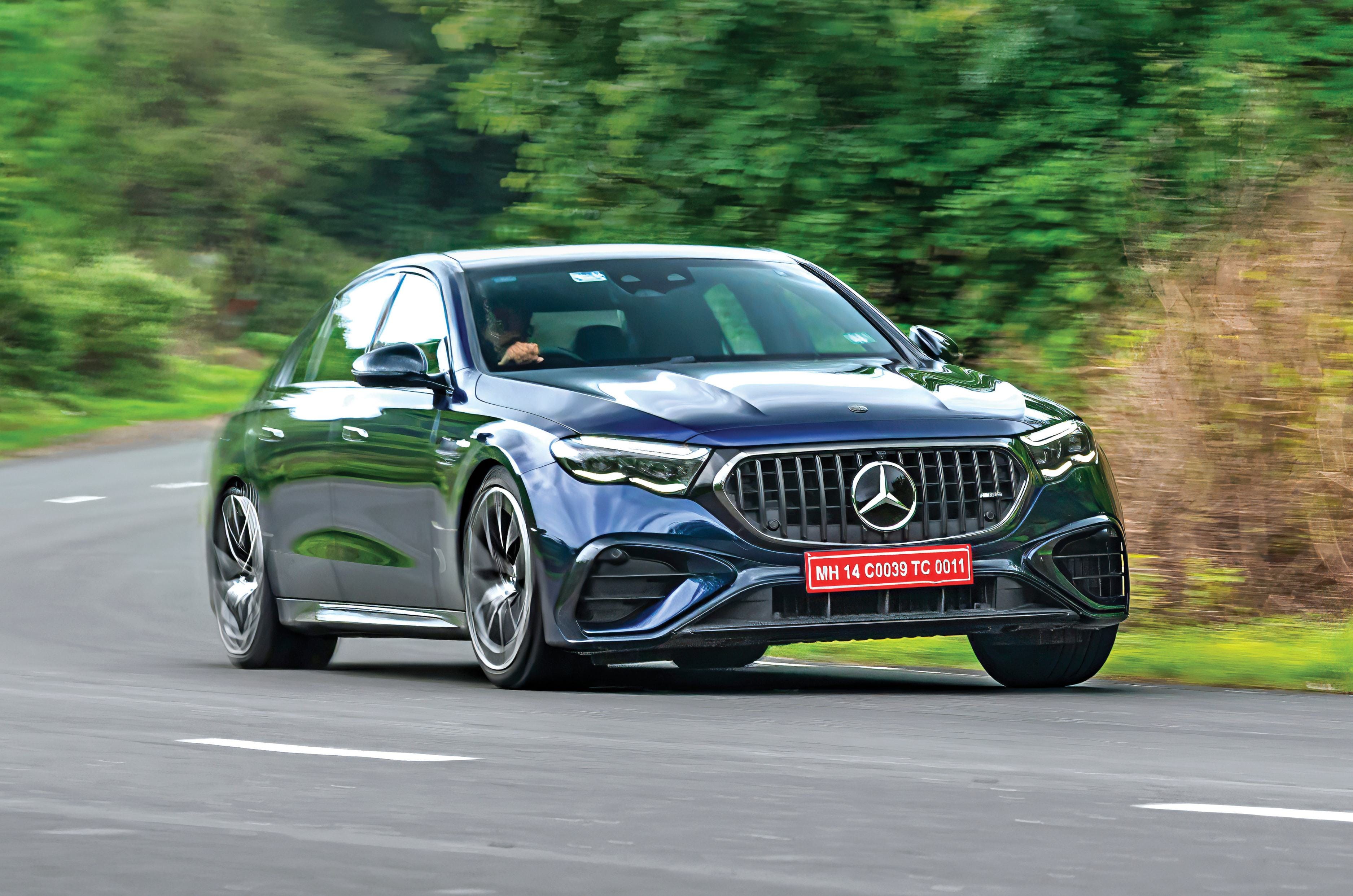
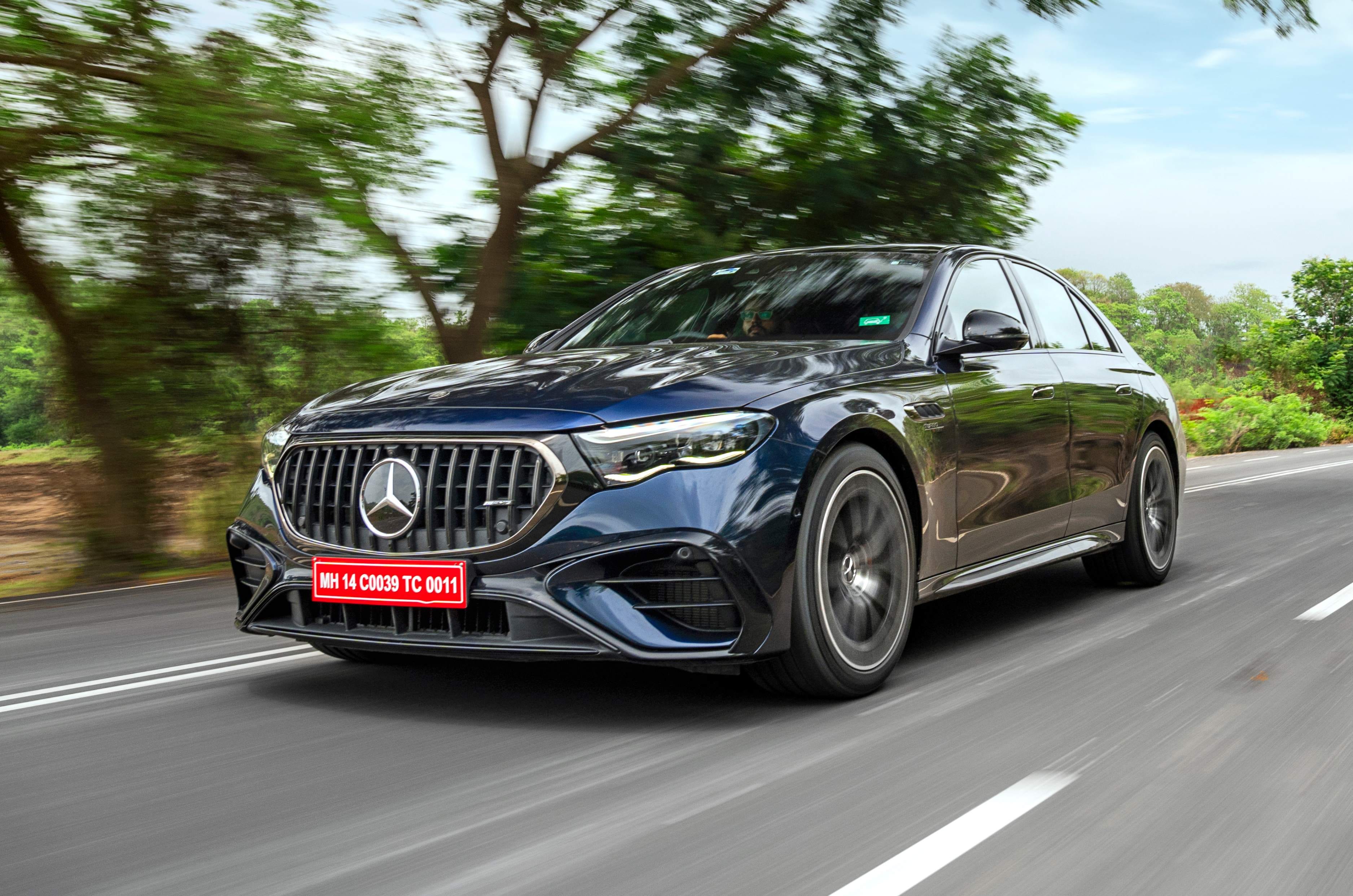
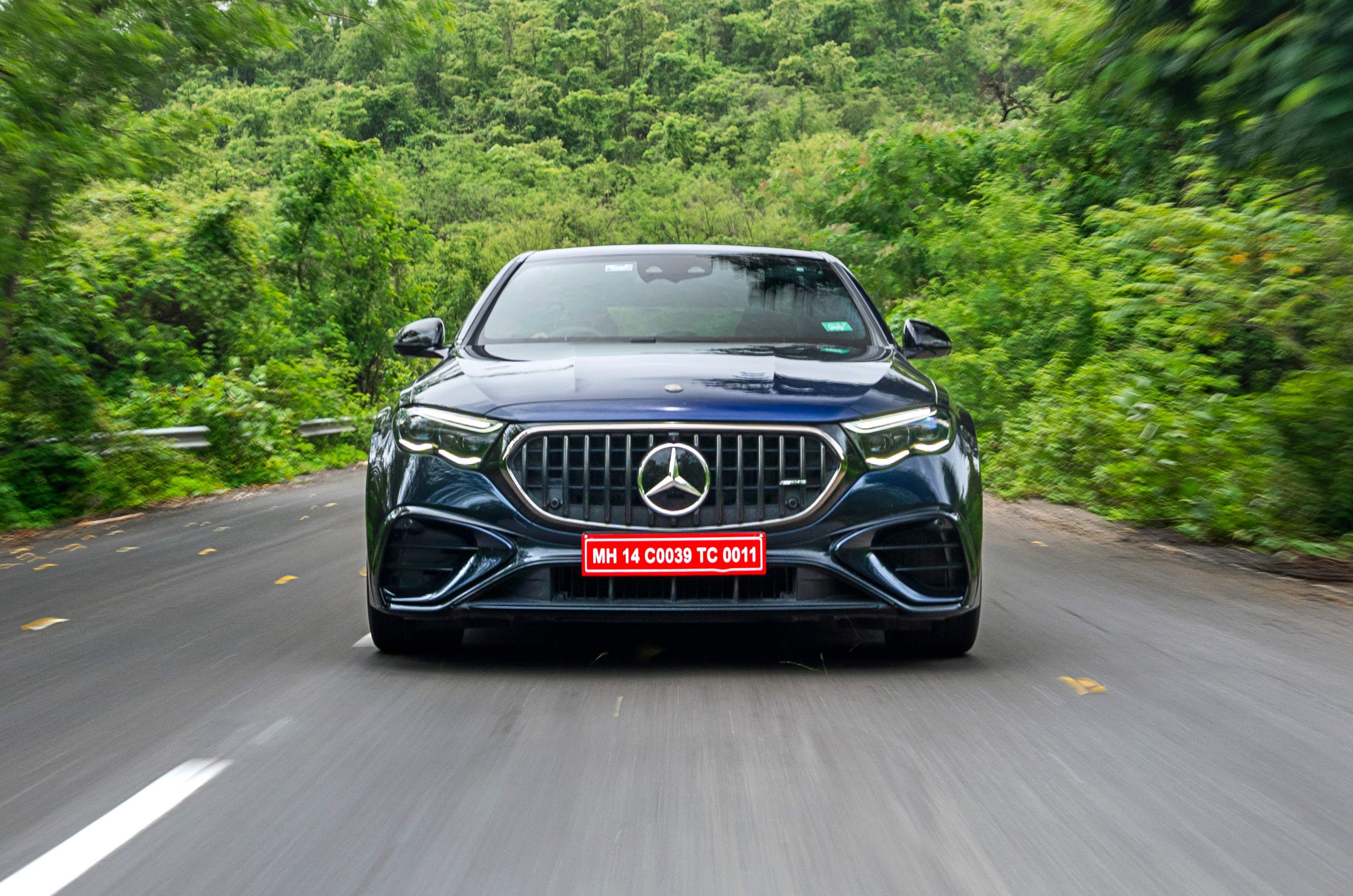
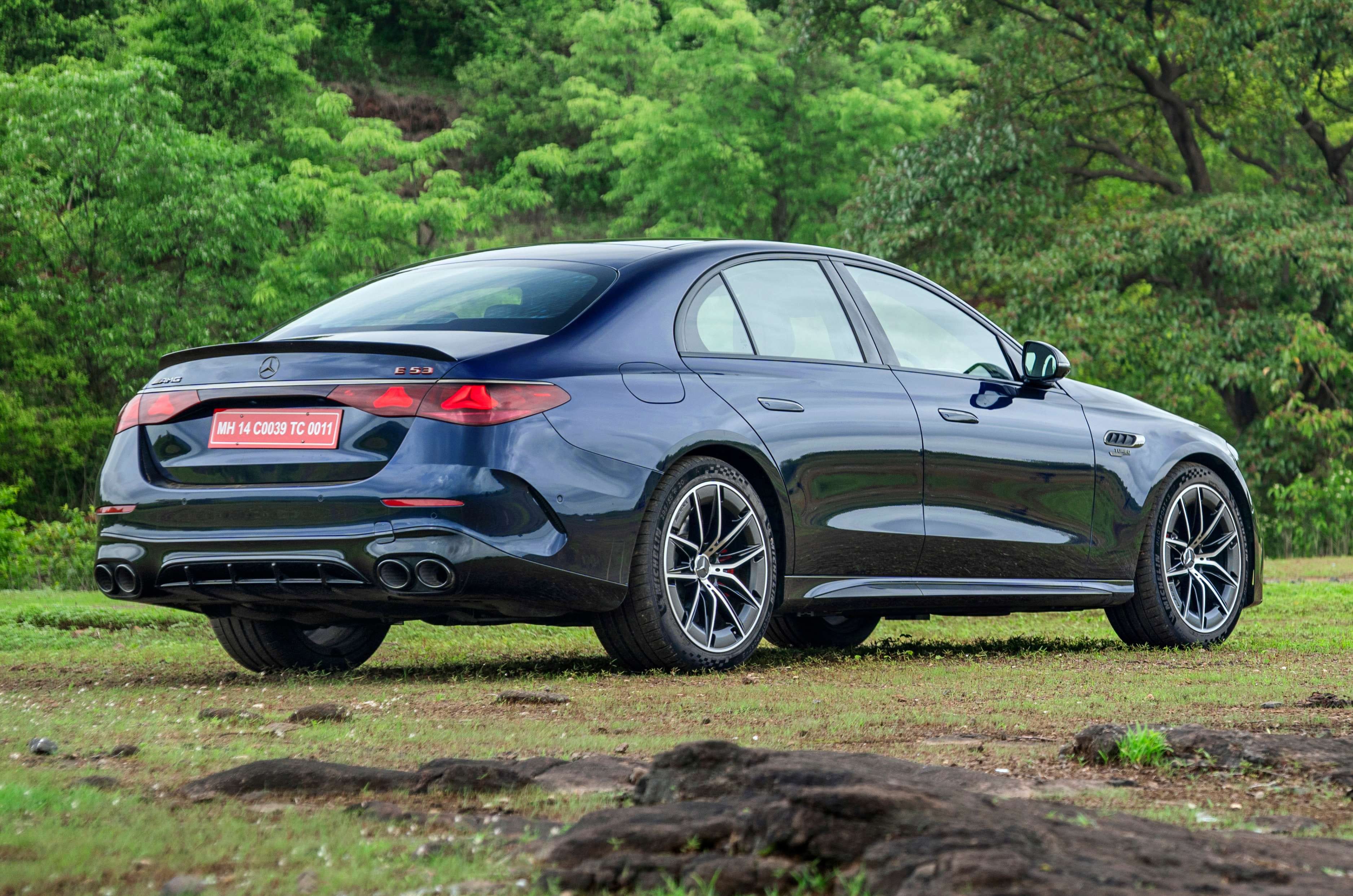
Expectedly, the E 53 has put on quite a bit of muscle. The front bumper is sportier, with large air dams. The Panamericana grille gets illuminated surrounds and is wide enough to gulp massive amounts of air to cool the engine, while the power lines on the bonnet add more intent to its character.
The E53 has good amount of muscle with aggressive bumpers, big grille and power lines
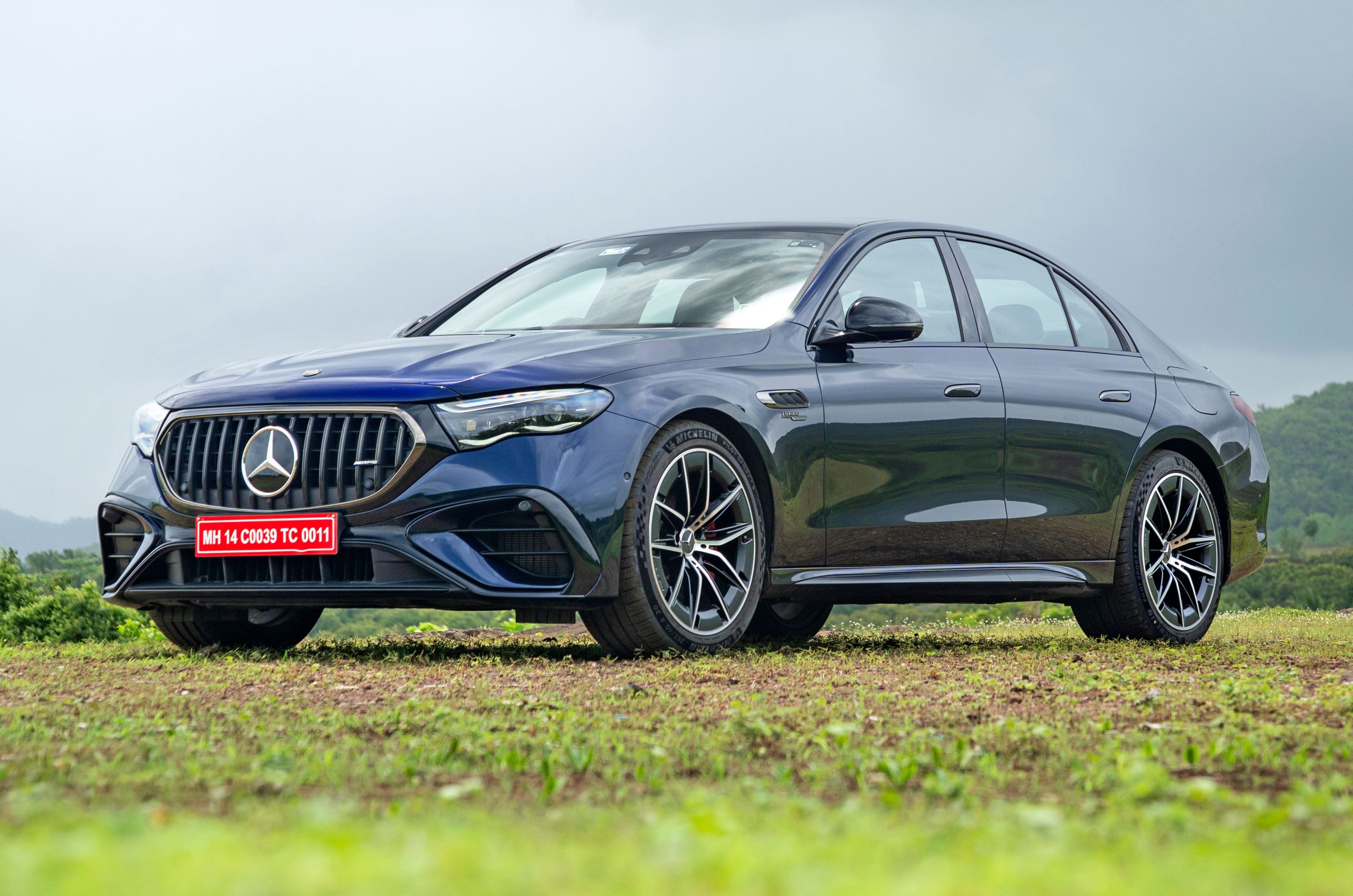
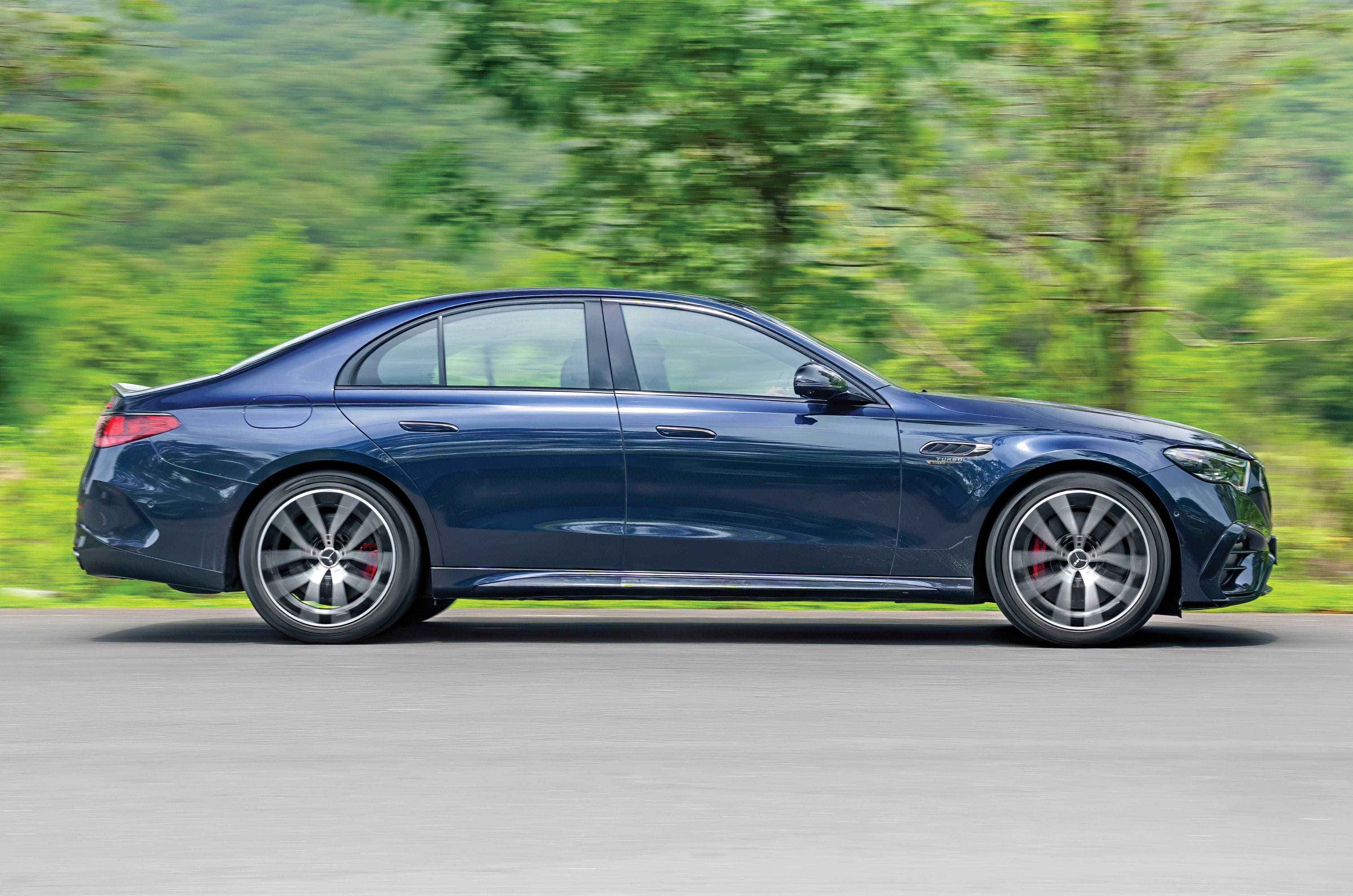
The profile flaunts flared wheel arches, larger 20-inch wheels (the last-gen E 53 featured 19-inchers) and, like before, a standard wheelbase, giving it sportier proportions than the long-wheelbase E-Class.
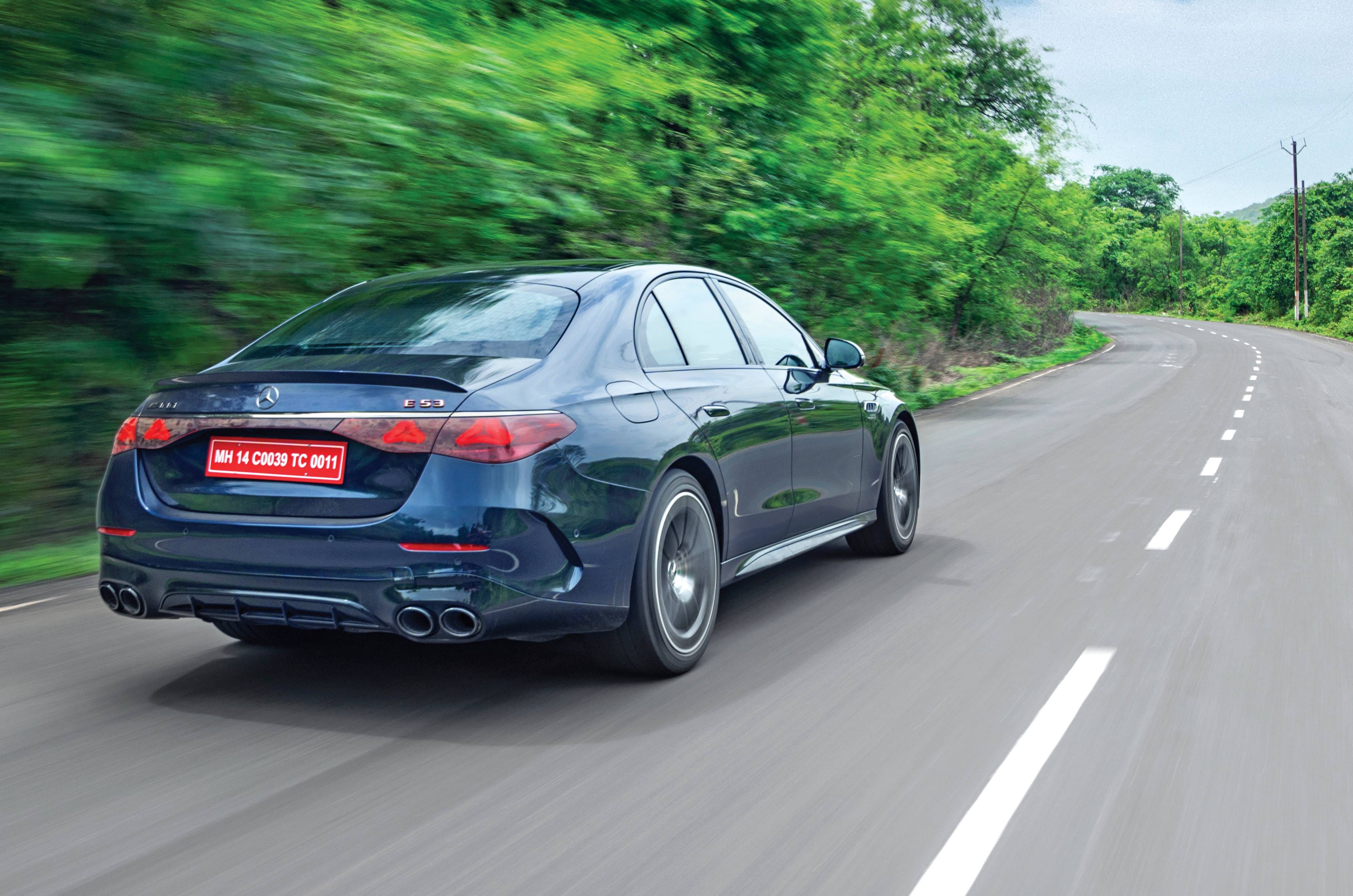
At the rear, there’s an E 53 badge with red highlights, a quad-exhaust setup that isn’t actually connected to the exhaust pipes, a diffuser and a ducktail spoiler that’s large enough to be noticed but won’t do much for downforce.
Not being a long wheelbase gives it perfect proportions
Overall, it’s a handsome-looking car with just the right amount of restraint. However, if you’re looking for a bit more visual drama, you’ll have to pay extra for the MANUFAKTUR paint finishes, as the standard colour palette is more E-Class than AMG.
Mercedes-AMG E53 Interior Space and Comfort
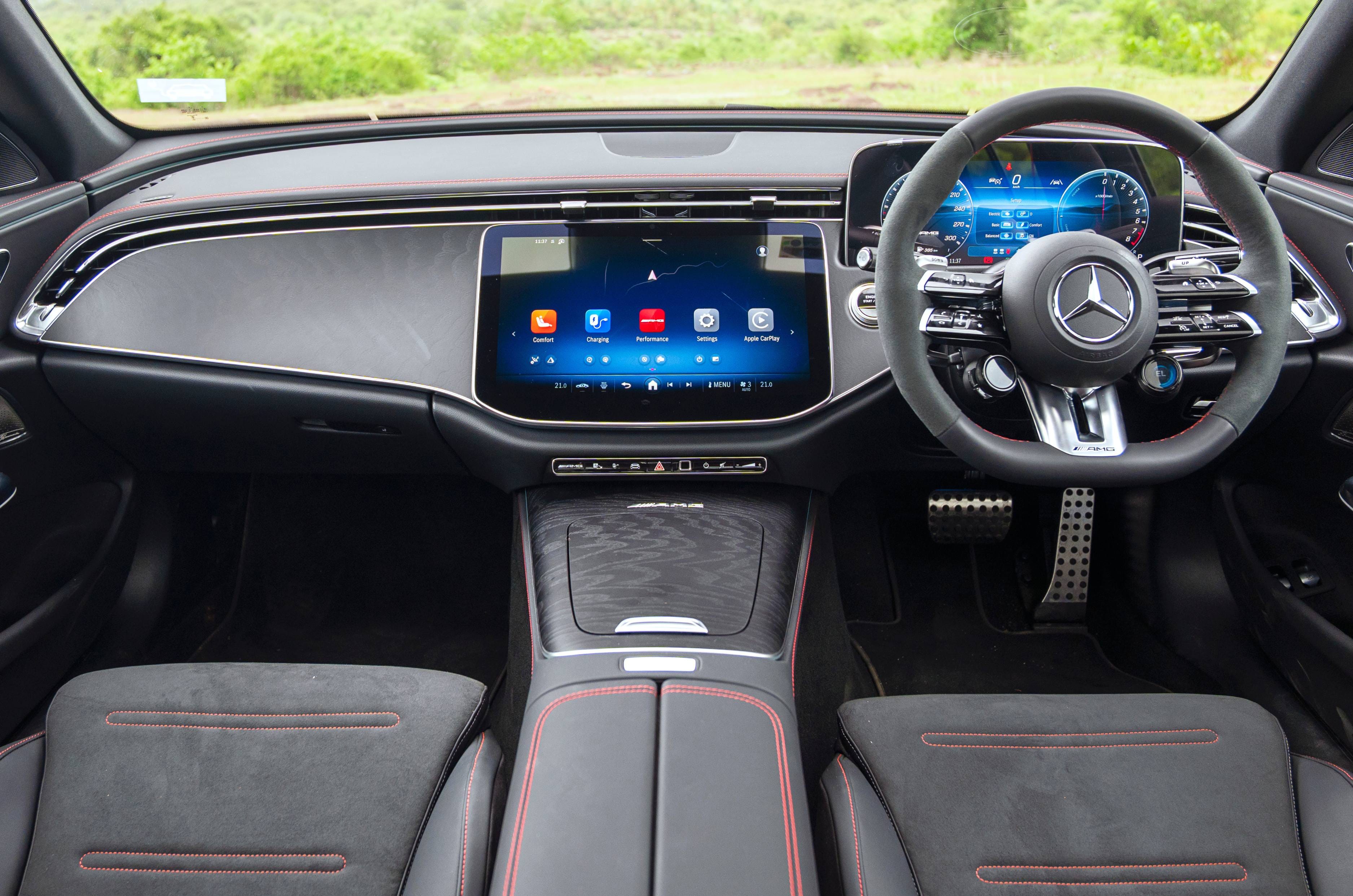
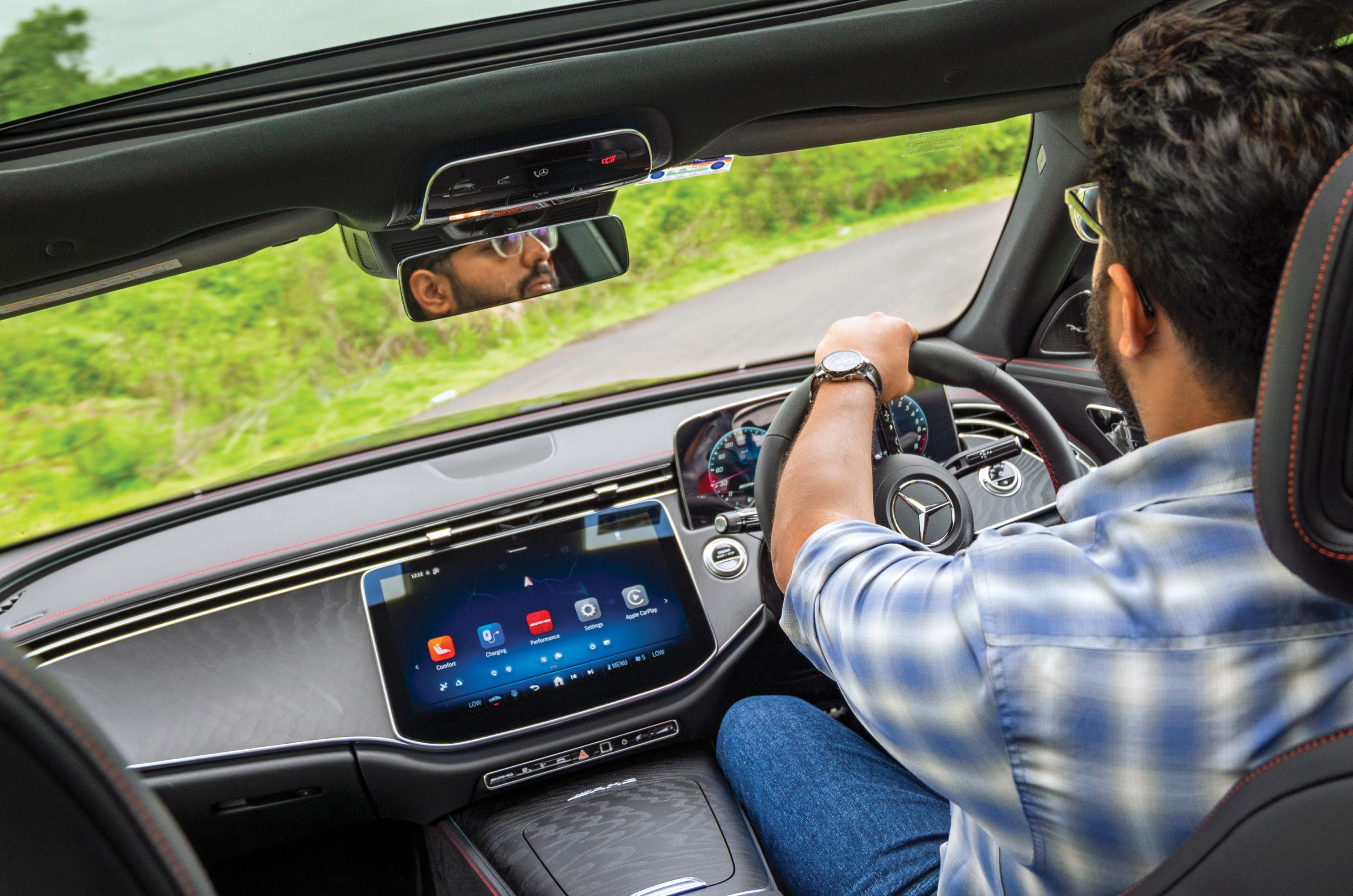
Inside, the E 53 strikes an appealing balance between luxury and sportiness. Instead of carbon-fibre or piano-black trim, Mercedes has used open-pore wood that feels rich and tactile. A large central MBUX touchscreen dominates the dashboard, while the passenger display found on the standard E is absent – not particularly bothersome given how good the main screen is.
Red and black upholstery looks racy while open pore wood adds luxe factor
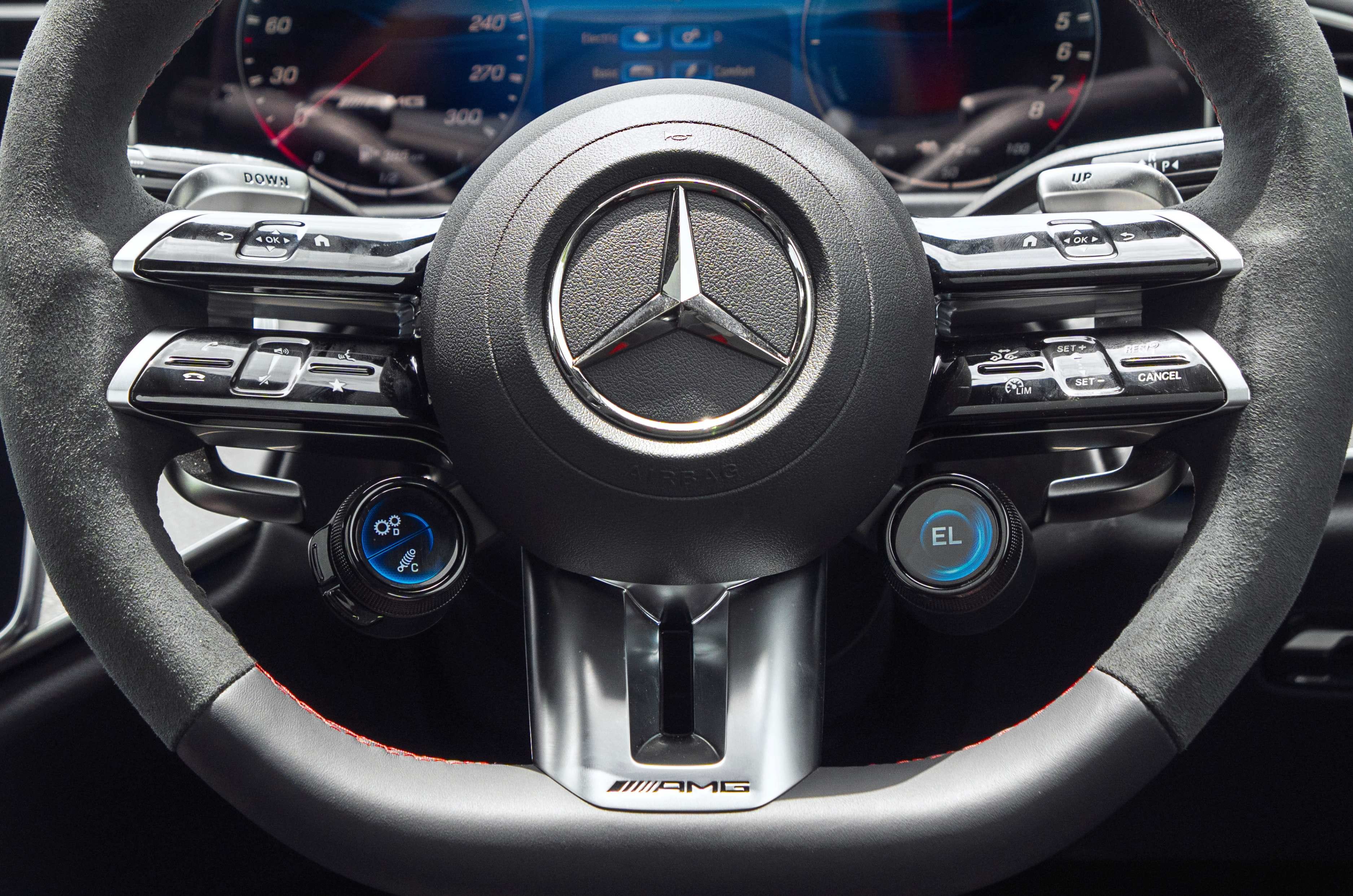
The AMG sports seats offer plenty of support and adjustment, although ventilated and massage functions are missing. Likewise, the chunky AMG steering wheel feels superb in hand but is cluttered with touch-sensitive controls that remain frustrating to use.
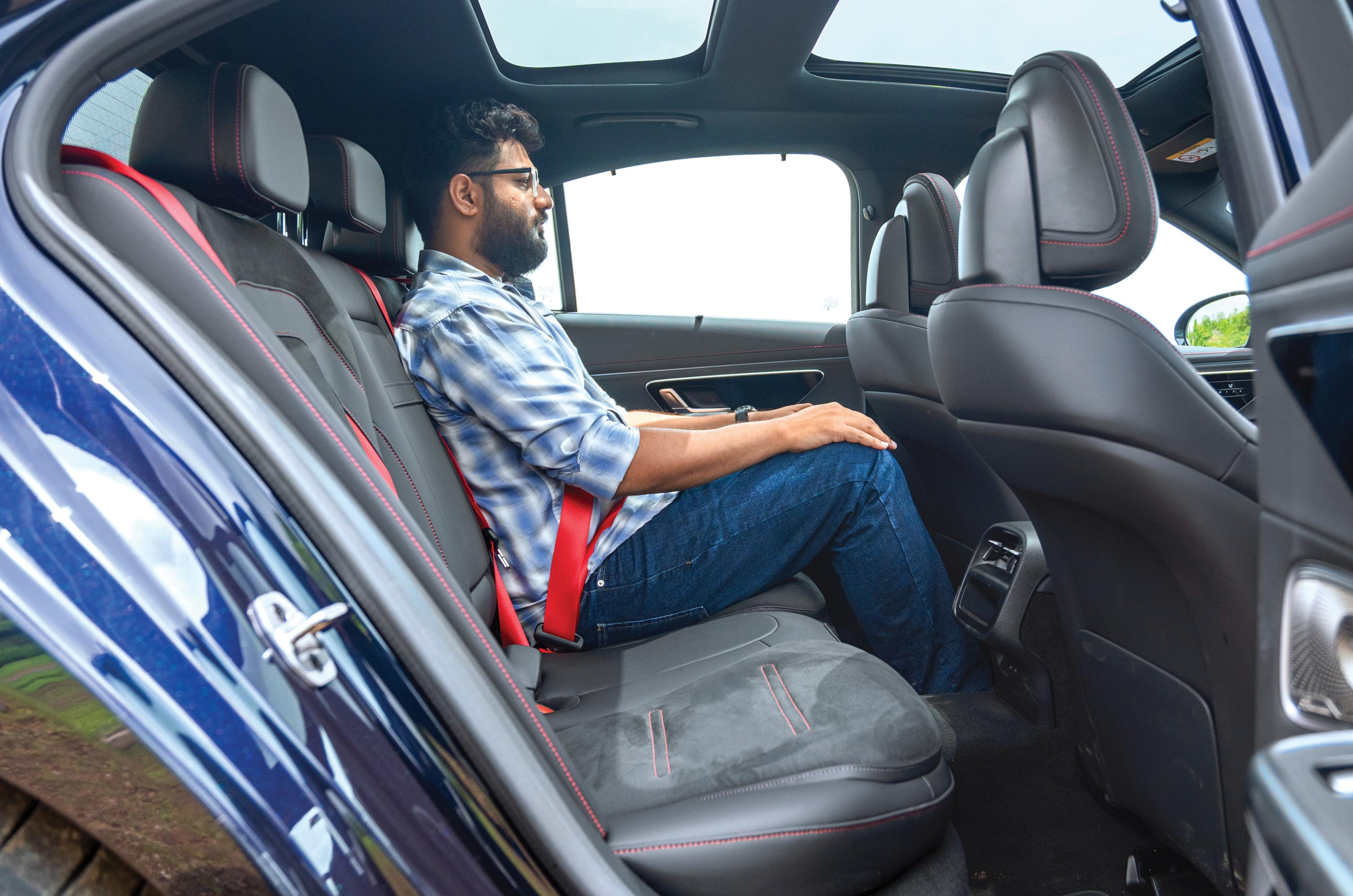
Rear-seat space is naturally tighter than the long-wheelbase E-Class, but there’s still enough room for two adults to travel comfortably. Manual sunblinds and a panoramic sunroof add to the ambience, although the large transmission tunnel makes this a strict four-seater.
There’s good space in the rear despite this not being a long wheelbase
The boot, however, sees the biggest compromise. At 370 litres, it’s 170 litres smaller than the standard E-Class because the battery sits beneath the floor. There’s no spare wheel either, with its space instead occupied by the charging cable and puncture repair kit.
Mercedes-AMG E53 Features and Safety
The E 53 is a well-equipped sedan despite missing features such as ventilated seats. The centre screen is the brains of the operation and, unfortunately, many of the controls are routed through it, making them difficult to operate on the move.
We’ve praised the MBUX infotainment system for its clear interface and high-resolution display, but usability isn’t its strongest suit. The large screen makes it difficult to accurately select the desired function while driving.
Too many controls on the steering is distracting
The E 53 gets a comprehensive suite of driver assistance systems, including Lane Keep Assist, Automatic Emergency Braking, Rear Cross Traffic Alert and Blind Spot Monitoring. Thankfully, these systems can also be switched off manually if required.
The 360-degree camera is crisp and high-resolution, while the 17-speaker Burmester 4D audio system delivers an exceptional listening experience. As impressive as the sound system is, however, it ultimately plays second fiddle to the performance on offer.
Mercedes-AMG E53 Performance and Refinement
Like before, the new E 53 is powered by a 3.0-litre turbo-petrol straight-six engine. This time, however, it gets support from a 28.6kWh battery pack and an electric motor, taking the combined output to 585hp and 750Nm.
585hp six-cylinder engine makes 150hp more than before
Unlike the bigger PHEV AMGs, the E 53 isn’t an ‘E PERFORMANCE’ model, which means the electric motor is mounted within the gearbox housing rather than integrated into the rear axle. Power is sent to all four wheels via the familiar 9-speed automatic transmission, and the E 53 gets a host of drive modes that are noticeably different from one another.
‘Individual’ lets you tailor the engine, gearbox and suspension to your liking. ‘Battery Hold’ prevents the car from using the battery charge, saving it for when you truly need it. ‘EL’ is the full-electric mode, provided there’s sufficient charge in the battery. ‘Comfort’ offers a more relaxed setup, ‘Sport’ sharpens the responses, and ‘Sport+’ is the most aggressive setting.
Naturally, Sport+ is the mode you’ll spend most of your time in if you want the E 53 to feel like a proper AMG. The exhaust note, the urgency of the power delivery and the firmer suspension all come together beautifully. With the engine and electric motor working at full tilt, straight-line performance is genuinely rapid. Acceleration is smooth yet thrilling, as the engine piles on speed rapidly without the neck-snapping brutality of a powerful EV. Power delivery is strong and linear across the rev range, and the gearbox complements the aggressive character of Sport+ perfectly. 0-100kph takes just 4 secs with the ‘Race Start’ which is essentially launch control included in the AMG Dynamic Plus package as power jumps up to 612hp.
For greater driver involvement, you can also engage ‘M’ mode, which gives you full manual control of the gearbox. It will happily bounce off the limiter without automatically upshifting until you pull a paddle.
The exhaust note is a bit of a mixed bag. It’s genuine, but it’s also channelled into the cabin through the speakers and a subwoofer in the boot. It’s not the ideal solution because, outside the car, the engine and exhaust produce a genuinely enjoyable snarl. Still, in an era of synthesised, computer-generated soundtracks, a real exhaust note—even if it’s amplified through the speakers—is worth appreciation.
Switch to Comfort mode and the E 53 adopts an entirely different character. It’s calm, refined and smooth, with gentler power delivery that’s well suited to long-distance cruising.
Where the powertrain disappoints is in city traffic and slow stop-start driving. The gearbox is simply too eager and, even in Comfort mode, it feels a bit like walking an overexcited Rottweiler. It’s constantly trying to surge forward and grab the next gear before you’ve asked it to. The constant shuffling through the lower gears results in unnecessary jerks that spoil the experience.
The solution is to engage EL mode. It’s almost as if it was designed specifically for this scenario. In EL, the E 53 feels smooth and effortless. There’s very little noise apart from the drone generated by the Michelin Pilot Sport 4S tyres, which can be quite rumbly, especially on concrete surfaces.
Braking is less convincing, however. Despite massive 390mm front discs and regenerative braking, the pedal never delivers a natural or consistent feel. Stopping power is strong, but the spongy, inconsistent pedal detracts from an otherwise polished driving experience.
Mercedes-AMG E53 Mileage and Efficiency
One of the biggest talking points of the new E 53 isn’t its staggering performance, but the fact that it can deliver it without constantly visiting a fuel station. This plug-in hybrid marks a significant shift in AMG’s philosophy, combining electrification with a silky-smooth six-cylinder engine to create a performance sedan that’s as comfortable commuting as it is attacking a mountain road.
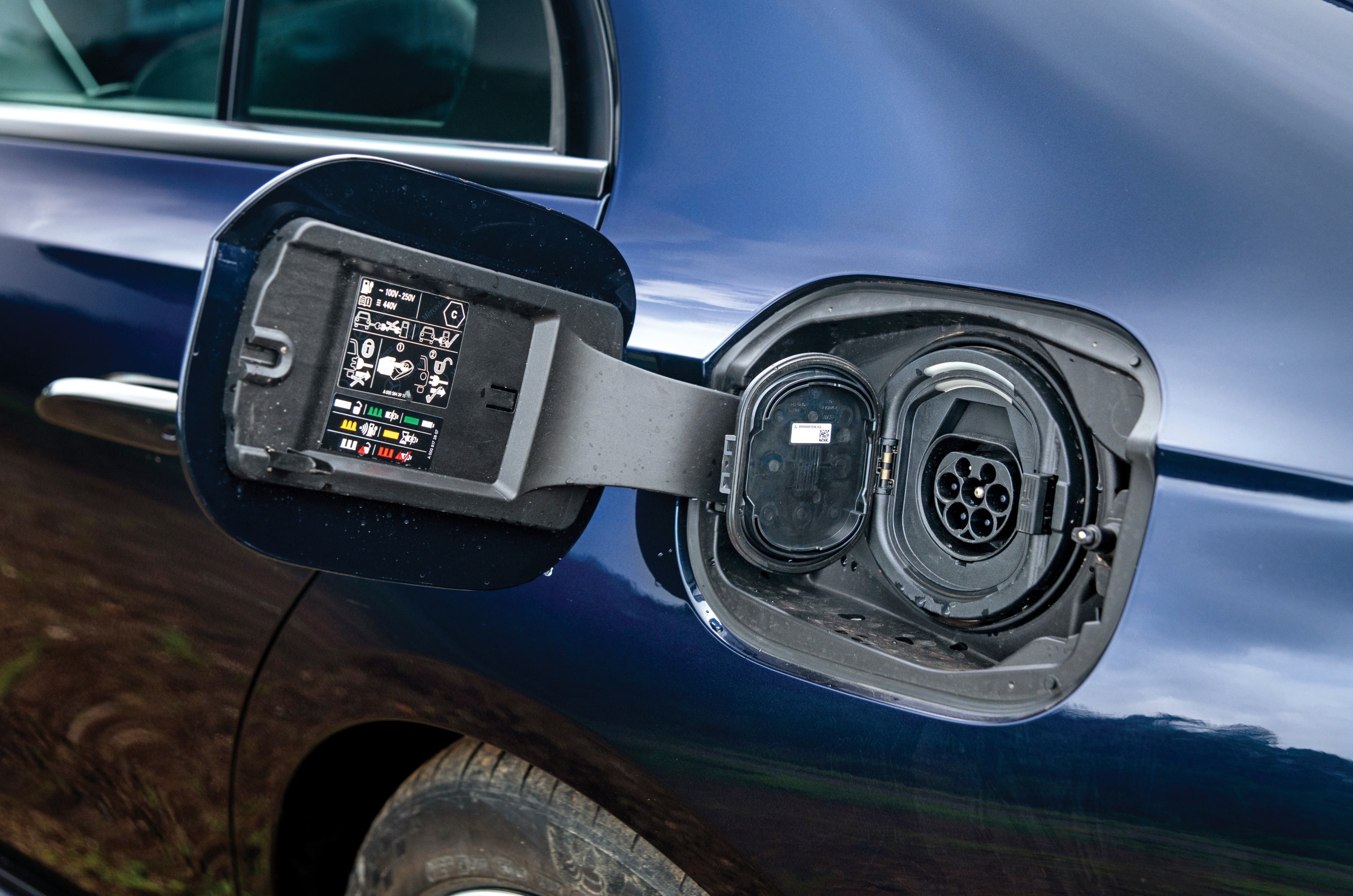
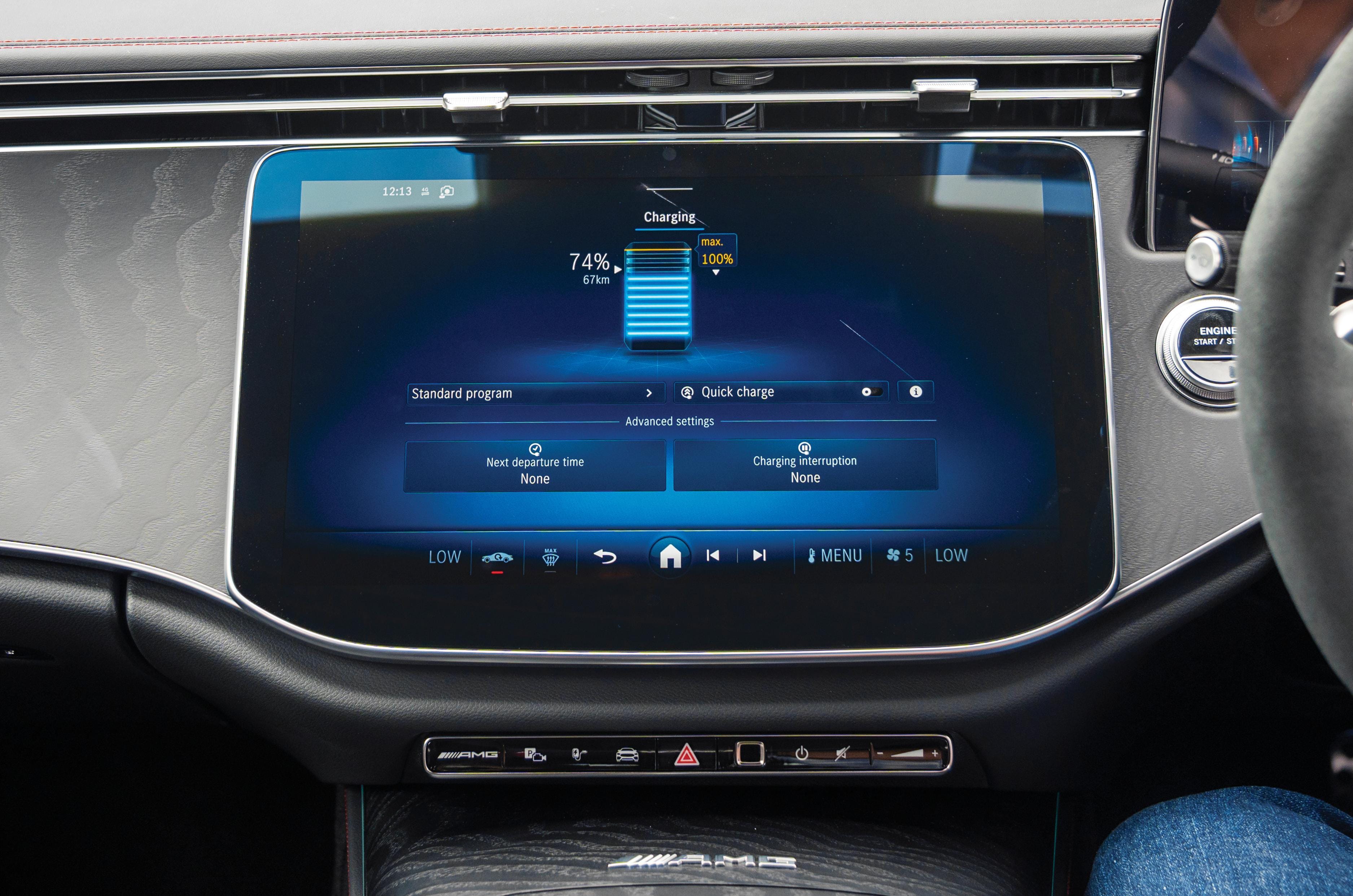
Charging via an 11kW AC charger will replenish the battery in 2.25 hrs; No DC charging option
The headline figure is a claimed electric-only range of up to 100km, courtesy a 28.6kWh battery pack. You can expect 75-90km on electric power alone making it entirely possible to complete daily urban commutes without firing up the engine.
Once the battery begins to deplete, the turbocharged 3.0-litre inline-six takes centre stage. Even then, the hybrid system continues to contribute through regenerative braking and electric assistance, ensuring the E 53 feels responsive while reducing fuel consumption compared to a conventional performance sedan. Mercedes has also equipped the car with four regenerative braking modes, allowing drivers to maximise energy recovery or opt for a more natural driving experience. For owners with access to home or workplace charging, fuel stops could become surprisingly infrequent. Charging is equally convenient, with the 11kW AC onboard charger replenishing the battery in around three hours.
28.6kWh battery allows for an electric-only range of 100km
Mercedes-AMG E53 Ride Comfort and Handling
For those who enjoy being behind the wheel, the E 53 delivers in abundance. Despite carrying the additional weight of a sizable battery pack, it feels remarkably composed. In Sport and Sport+, the car tightens up noticeably. Body roll is kept firmly in check, the dampers become more alert, and the steering gains welcome heft. What impresses most is how well the chassis disguises its mass. The battery may add considerable weight, but it’s mounted low in the car, lowering the centre of gravity and lending the E 53 impressive stability through fast corners.
The rear-biased 4MATIC+ all-wheel-drive system plays a major role here. The rear wheels can turn up to 2.5 degrees, which isn’t a huge amount, as you’ll still find yourself making the occasional three-point turn. Above 60kph, however, they turn in the same direction as the front wheels, adding another layer of stability through corners.
It is over 400kg heavier than the last-gen model but you just can’t feel it from behind the wheel
The Michelin Pilot Sport 4S tyres aren’t the quietest, but they allow the driver to deploy the combined output with confidence, even when exiting slower bends. Turn-in is crisp, and while the steering isn’t overflowing with feedback, it’s accurate enough to place the car confidently on a winding road.
At low speeds, the adaptive AMG Ride Control suspension does an admirable job of filtering out broken tarmac, expansion joints and sharp-edged potholes. It isn’t perfect, though. Compared with the last-generation E 53, which rode on smaller 19-inch wheels with taller-profile tyres, the new car’s 20-inch wheels have sacrificed a degree of ride compliance. As a result, the low-profile tyres transmit the occasional thud over particularly nasty potholes.
The adaptive dampers mated with the active engine mounts offer terrific stability
Ultimately, the Mercedes-AMG E 53 Hybrid 4MATIC+ isn’t as razor-sharp as a dedicated sports sedan, nor is it as pillowy as the standard E-Class. Instead, it strikes an impressive middle ground, blending everyday comfort with genuine driver engagement. It’s a car that feels just as at home soaking up kilometres on the expressway as it does carving through a series of fast, flowing corners.
Mercedes-AMG E53 Value for Money
Prices start at Rs 1.45 crore for the Performance Edition and Rs 1.48 crore for the Racing Edition. In this price range, there isn’t a direct rival to the E 53. The BMW M5 is both more powerful and considerably more expensive, while the BMW M4 is effectively rivalled by the Mercedes-AMG CLE 53 as a two-door coupe. The Audi RS5, meanwhile, hasn’t been launched in India yet.
The E 53 succeeds because it doesn’t try to be everything at once. It delivers the pace, handling and character expected of an AMG while introducing meaningful electric-only capability that genuinely enhances everyday usability. The brakes may lack the natural feel you’d expect from a performance sedan, and the gearbox can feel over-eager in slow-moving traffic, but these shortcomings do little to overshadow what is otherwise a remarkably accomplished package.
Fast, engaging and surprisingly efficient, the new E53 Hybrid is one of the most complete performance sedans on sale today. More importantly, it proves that electrification doesn’t have to dilute the AMG experience—it can make it even more usable.
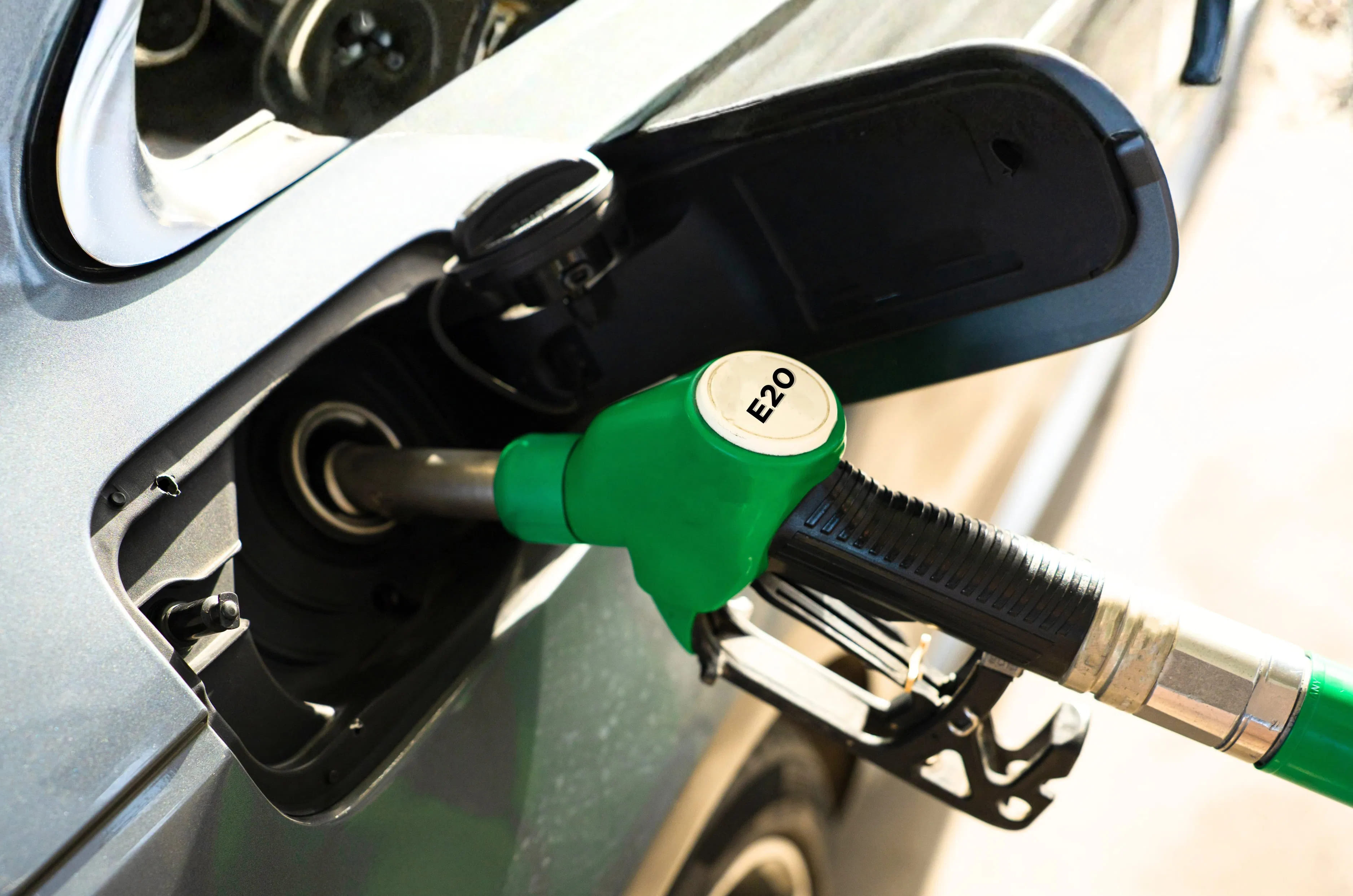
India completed the nationwide rollout of E20 petrol in April last year, making it the standard grade of petrol sold at fuel stations across the country. E20 contains 20 percent ethanol and 80 percent petrol, replacing the lower ethanol blends that were sold previously.
The transition has raised several questions among vehicle owners about compatibility, fuel efficiency, maintenance, warranties and long-term reliability. We separate the facts from the misconceptions and answer the key questions around E20.
1. What is E20 petrol and why has India switched to it?
E20 is fuel blended with 20 percent ethanol and 80 percent petrol. Ethanol is a biofuel produced from agricultural feedstocks such as sugarcane, maize and surplus food grains. India introduced the Ethanol Blended Petrol (EBP) Programme in 2003 with E5 petrol, and while the blended percentage kept varying for a while, it was eventually increased to E10 before completing the nationwide rollout of E20 in 2025, five years ahead of the planned implementation. According to the government, the programme aims to reduce dependence on imported crude oil, improve energy security, lower emissions and create an additional market for agricultural produce.
2. Can I use E20 fuel in my car or bike?
New petrol cars and two-wheelers sold in India today are compatible with E20 petrol. Under the government’s roadmap, vehicle manufacturers were required to make new petrol models manufactured from April 2023 compatible with E20.
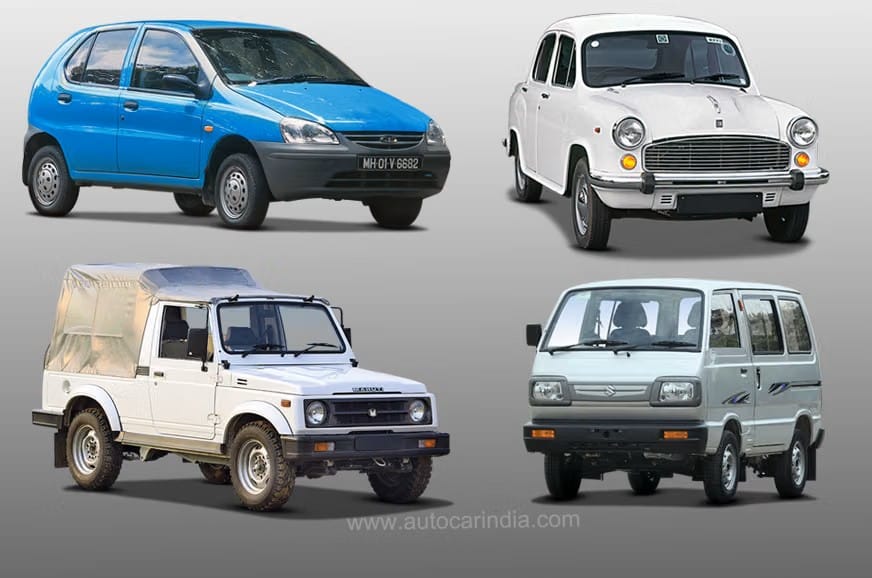
Vehicles manufactured before April 2023 were designed for lower ethanol blends, so compatibility may vary depending on the model and year of manufacturing. However, some brands state that they had E20 material compliance before 2023, for a list click here.
3. How do I know if my car is E20 compatible?
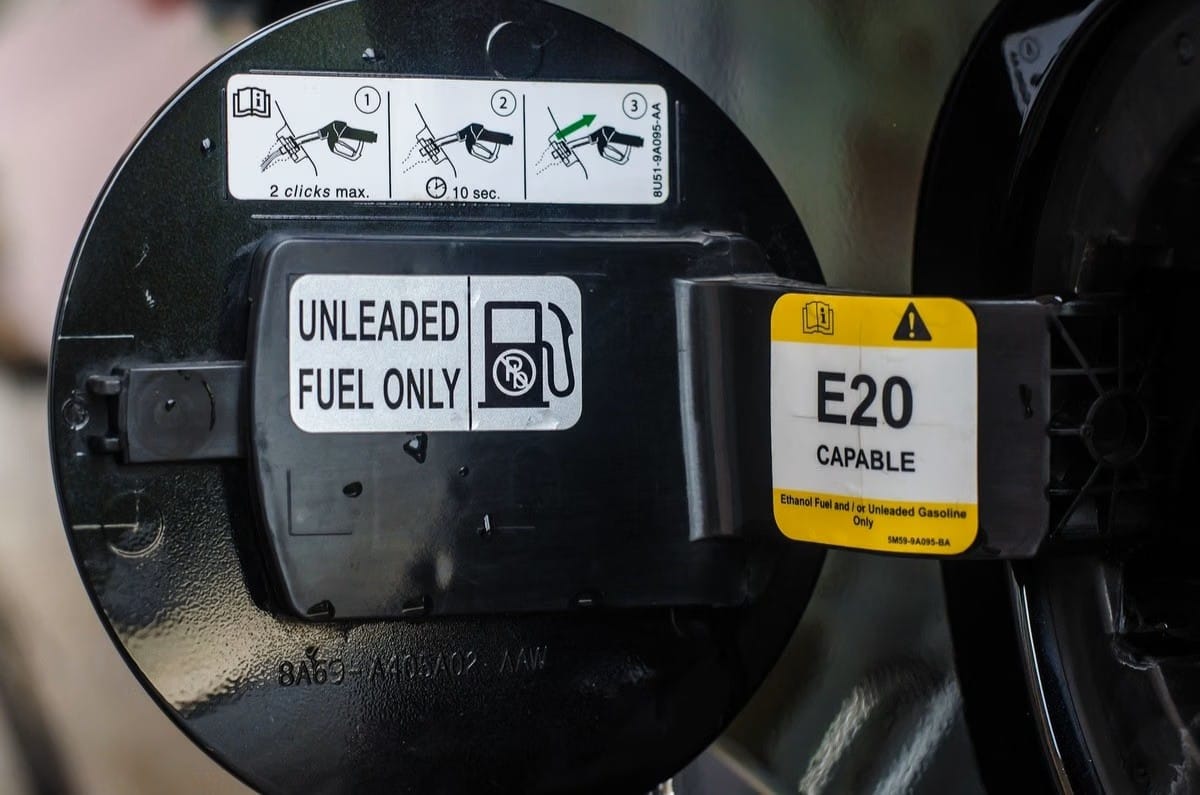
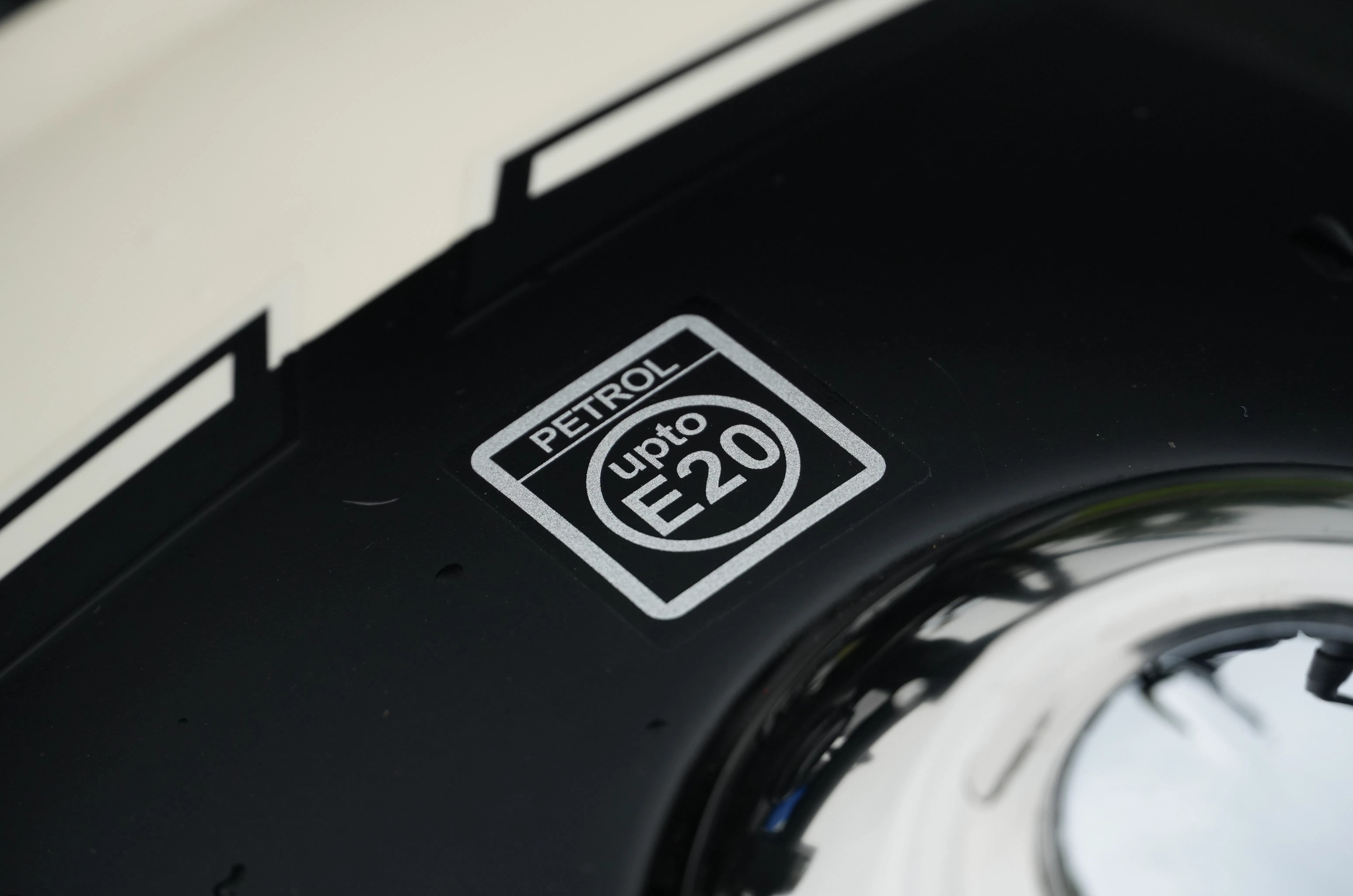
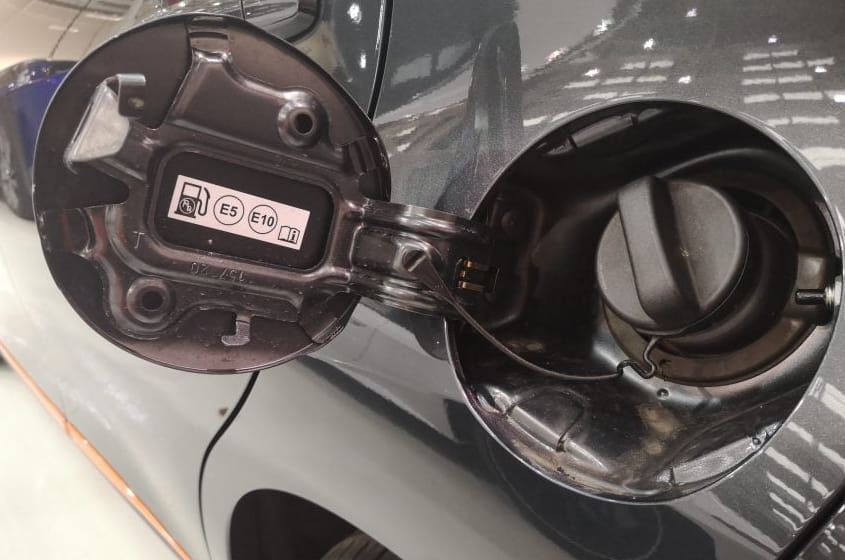
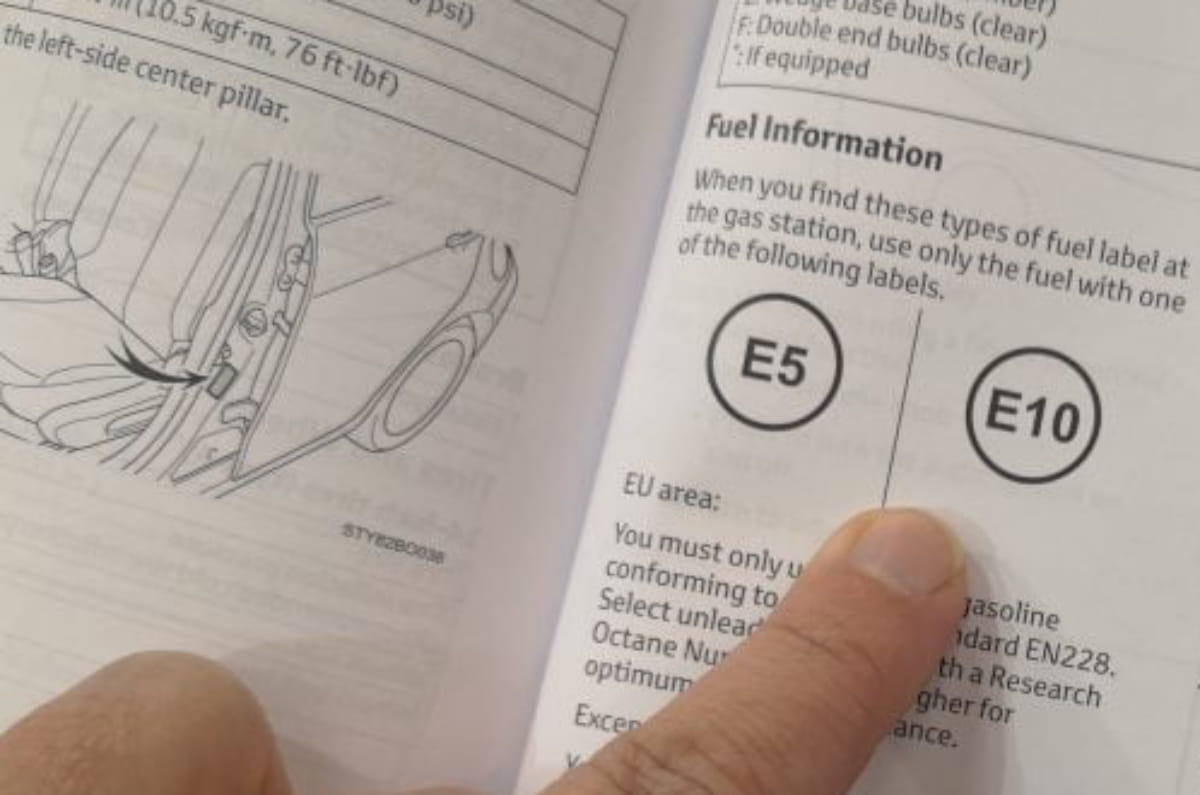
The easiest way is to check your vehicle’s fuel flap or the owner’s manual or contact the manufacturer’s authorised dealership. As part of the government’s E20 roadmap, manufacturers progressively introduced E20-compatible petrol vehicles from 2023 onwards. However, compatibility can vary depending on the model and year of manufacture, so owners should not assume that every petrol vehicle is fully E20-compatible.
4. Can E20 damage older engines or fuel-system components?
Concerns about E20 mainly relate to older vehicles that were not originally designed for higher ethanol blends. While ethanol has not been found to significantly directly affect metal fuel-system components, prolonged exposure to E20 can accelerate wear in some older rubber and plastic parts such as fuel hoses, seals, O-rings, gaskets and certain fuel pipes if they are made from materials that are not ethanol compatible.
Before approving E20, ARAI tested metals, elastomers and plastics commonly used in fuel systems. The study found no significant corrosion of metal components, but certain rubber compounds and plastics used in older vehicles showed greater deterioration than with E10 fuel. These findings prompted manufacturers to use ethanol-compatible materials in newer vehicles. Thus, owners of older vehicles should keep up with regular servicing and follow the manufacturer’s recommended maintenance schedule, increasing the inspection frequency if damage is suspected.
5. Does E20 reduce fuel efficiency?
Yes. E20 fuel generally returns lower fuel efficiency than petrol with a lower ethanol content because ethanol contains less energy than petrol. The exact reduction varies depending on the vehicle, engine and calibration.
E20 vs E10 mileage test results
Creta N Line
Dzire (BS 6)
Polo GT TSI
Dzire (BS 4)
Registration year
2024
2024
2017
2016
Average speed
17.8kph
20.25kph
18.0
19.3
Kpl on E20
10.59
14.24
9.13
9.8
Kpl on E10
12.12
14.81
9.63
11.19
Kpl variance
1.53
0.57
0.50
1.39
% variance
-12.62
-3.84
-5.19
-12.42
ARAI estimates a fuel efficiency drop of 1-6 percent with E20, while some manufacturers put it closer to 7-8 percent. In Autocar India’s real-world testing, both newer E20-compatible cars and older pre-E20 vehicles recorded a measurable drop in mileage when compared with an equivalent E10 blend. Among the newer cars, the Maruti Suzuki Dzire recorded a 3.8 percent drop, while the Hyundai Creta N Line saw a 12.6 percent decline.
Among older BS4-era cars, the Volkswagen Polo GT TSI posted a 5.2 percent drop, while the older Maruti Suzuki Dzire recorded a mileage drop of 12.4 percent.
The results also showed that there is no single figure applicable to every vehicle. Factors such as engine calibration and compression ratio all influence fuel efficiency, meaning some vehicles adapt better to E20 than others.
6. Does E20 improve performance or reduce emissions?
Octane rating test results
Fuel type
RON result
Regular E20 petrol
98.2 RON
XP95
98.8 RON
Yes, but not in a way that most motorists are likely to notice. E20 has a higher-octane rating than regular petrol, which improves resistance to engine knocking and can benefit engines designed to take advantage of higher-octane fuel.
The government says E20 aims to lower emissions by replacing a portion of petrol with domestically produced ethanol which is a renewable fuel. For most motorists, however, the most noticeable effect of switching to E20 is likely to be a small drop in mileage rather than a change in vehicle performance.
7. Is E20’s water contamination issue a real problem?
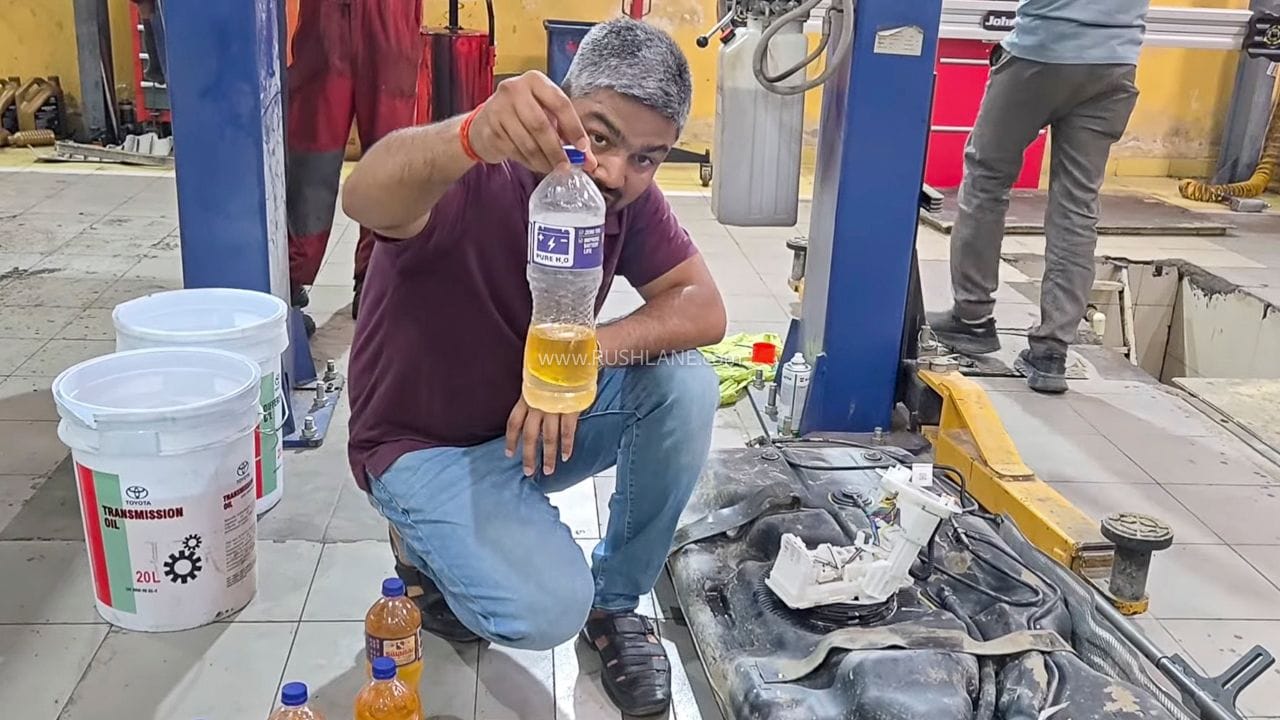
Image credit – Rushlane
Ethanol is hygroscopic, meaning it has the capability to absorb moisture. As a result, E20 is more susceptible to water contamination if excess moisture enters the fuel during storage or handling. In severe cases, this can lead to phase separation, where the ethanol and water separate from the petrol, affecting fuel quality.
Some petrol pump operators have raised concerns that existing underground storage tanks, particularly during the monsoon or in coastal areas, could be more prone to moisture ingress, increasing the risk of phase separation. However, the government and the Federation of Automobile Dealers Associations (FADA) says that there is no evidence linking E20 itself to widespread fuel contamination or vehicle failures.
8. Will using E20 affect my vehicle’s warranty?
For most owners, no. Vehicle manufacturers have said that using E20 petrol will not affect the warranty of their vehicles, and valid warranties will continue to be honoured. The government, SIAM and several manufacturers have stated that vehicles continue to be covered under their standard warranty terms when fuelled with E20, for a full list click here. SIAM has also said that OEMs will honour the warranty committed to customers for E20 usage, and that insurance claims will remain unaffected.
9. Why isn’t E20 petrol cheaper than regular petrol?
Although E20 contains 20 percent ethanol, it is not cheaper than regular petrol because ethanol currently costs more to procure and blend than petrol under prevailing market conditions. The cost of ethanol procurement, tax, transportation, blending and distribution offsets any potential saving from replacing a portion of petrol with domestically produced ethanol.
Any savings from lower crude oil imports are realised at the national level rather than by consumers through lower pump prices.
10. Why can’t I still buy E10 or pure petrol?
Because by policy E20 is now India’s standard petrol. Following the nationwide rollout of the Ethanol Blending Programme, oil companies have standardised regular petrol and premium 95-octane petrol to an E20 blend. Maintaining parallel supplies of E10 and E20 would require separate storage, transportation and dispensing infrastructure, making nationwide distribution significantly more complex.
As a result, motorists can no longer choose between E10 and E20 at regular fuel stations. The only exception is 100-octane petrol, such as IndianOil XP100 and HP Power100, which remains effectively ethanol-free because it is a niche fuel sold in limited volumes. For most vehicle owners, however, E20 is now the only petrol available.
11. Is the government planning to increase ethanol blending beyond E20?
Not yet, but the groundwork has begun. While the government has said no decision has been taken to mandate petrol with more than 20 percent ethanol, it has begun preparing the regulatory framework for higher blends.
In May 2026, the Bureau of Indian Standards (BIS) notified fuel quality standards for E22, E25, E27 and E30 petrol, indicating that the government is laying the groundwork for future adoption. It has also proposed recognising E85 and E100 fuels under the Central Motor Vehicles Rules.
Separately, the government has tasked the Automotive Research Association of India (ARAI) with studying the impact of E25 petrol on existing E10- and E20-compatible vehicles, including its effect on fuel efficiency, durability, emissions and engine performance under long-term use.
However, any move beyond E20 will require extensive testing and consultation with vehicle manufacturers, fuel companies and research agencies to assess engine durability, emissions and fuel-system compatibility before it is introduced.
12. What should owners of older cars do now?
If your vehicle is not certified as E20-compatible, it does not necessarily mean it will experience immediate problems. However, owners should follow the manufacturer’s guidance, keep up with regular servicing and replace worn fuel-system components as required. It would also be prudent to increase the frequency of inspection of your vehicles fuel system to ensure there is no corrosive damage and catch it before it gets acute.
If you own a classic car, an older imported vehicle or a high-performance model designed for lower ethanol blends, using ethanol-free 100-octane petrol may be worth considering.
13. Can I convert my vehicle to run on E20 fuel?
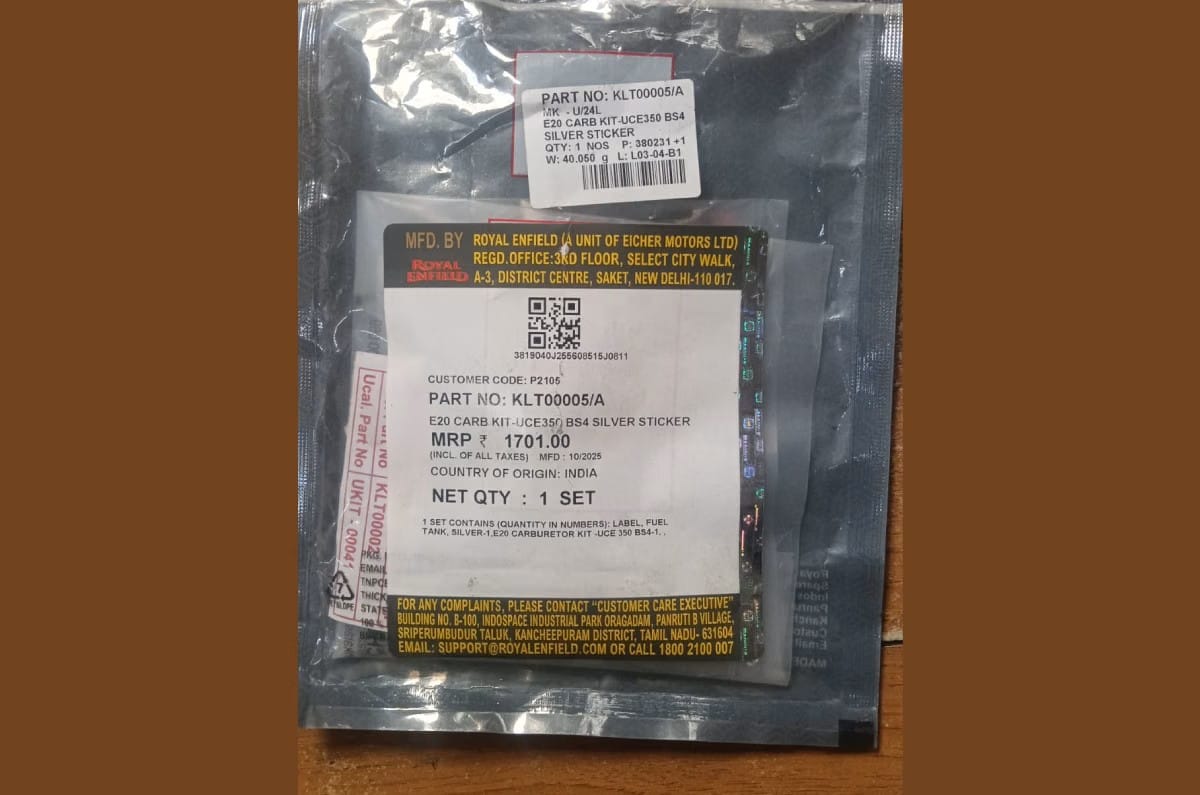
Yes, but official upgrade programmes are currently limited and while a few manufacturers, like Royal Enfield and Maruti Suzuki, had mentioned a plan for these earlier, they don’t have much to say for now. In a recent government press conference that aimed to quell the E20 backlash, Maruti stated that the kits are for R&D purpose only.
Theoretically, it’s possible to replace critical components susceptible to E20 damage with those designed to handle the fuel – especially if your vehicle is still in production – and if you feel the need to, you can go ahead and have parts like fuel lines, fuel pump and gaskets replaced but by your authorised workshops only.
So, should you be worried about E20 petrol?
Not worried, but alert. Modern petrol cars and bikes designed or updated for E20 are engineered to run on the fuel without major issues, and extensive testing by the government, research agencies and manufacturers found no evidence of widespread reliability concerns.That said, E20 is not without trade-offs. Most motorists should expect a small reduction in fuel efficiency.
For owners of older vehicles, it would be wise to pay closer attention to fuel-system maintenance.
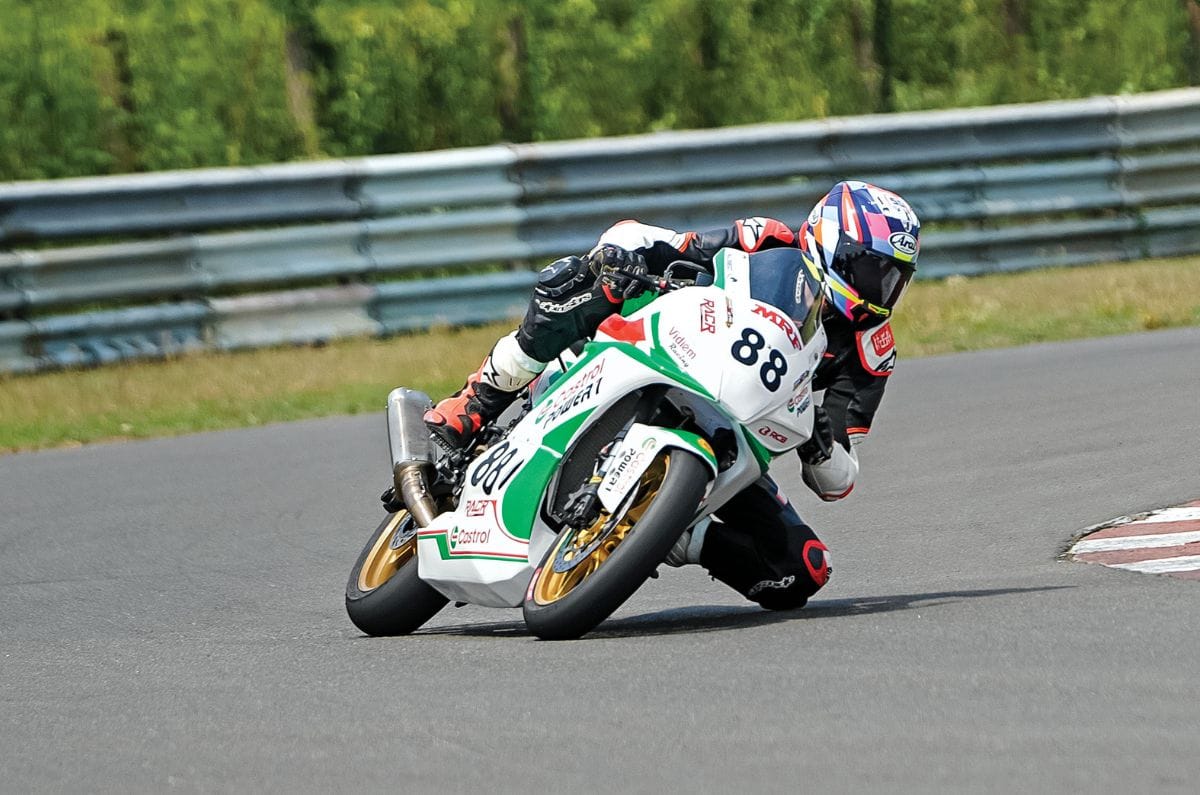
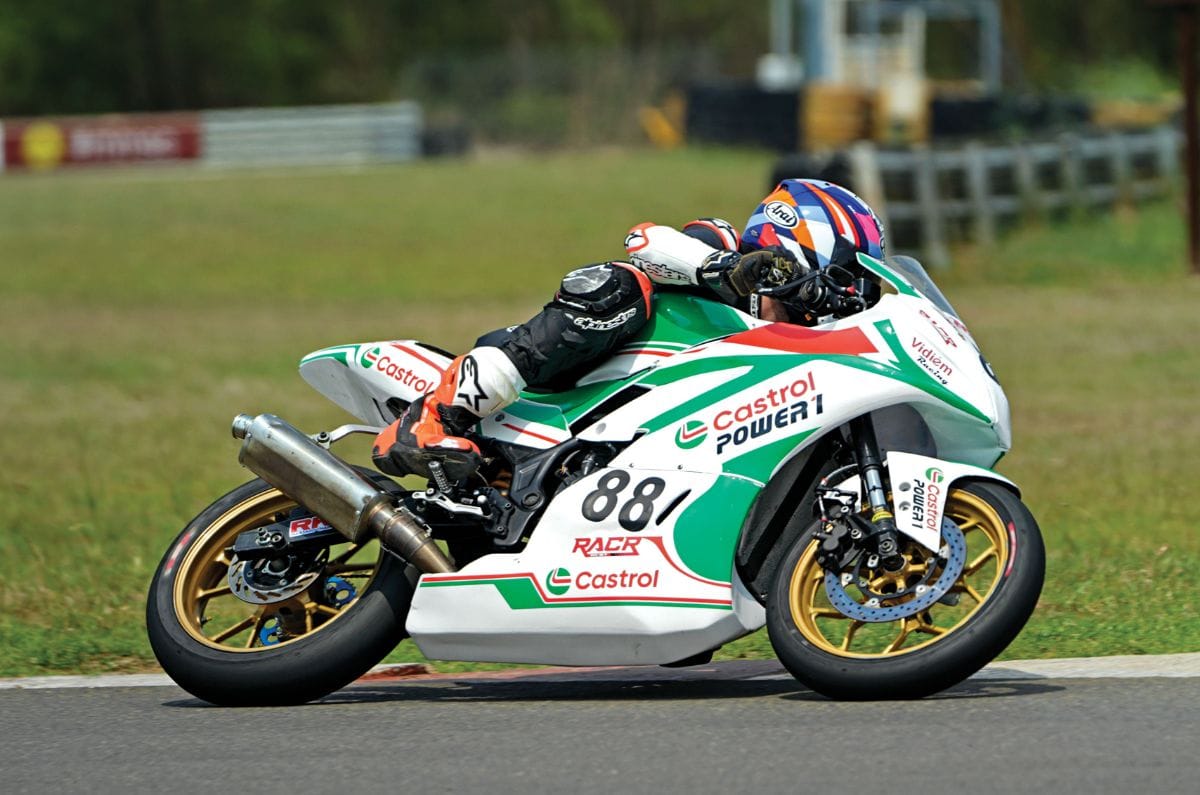
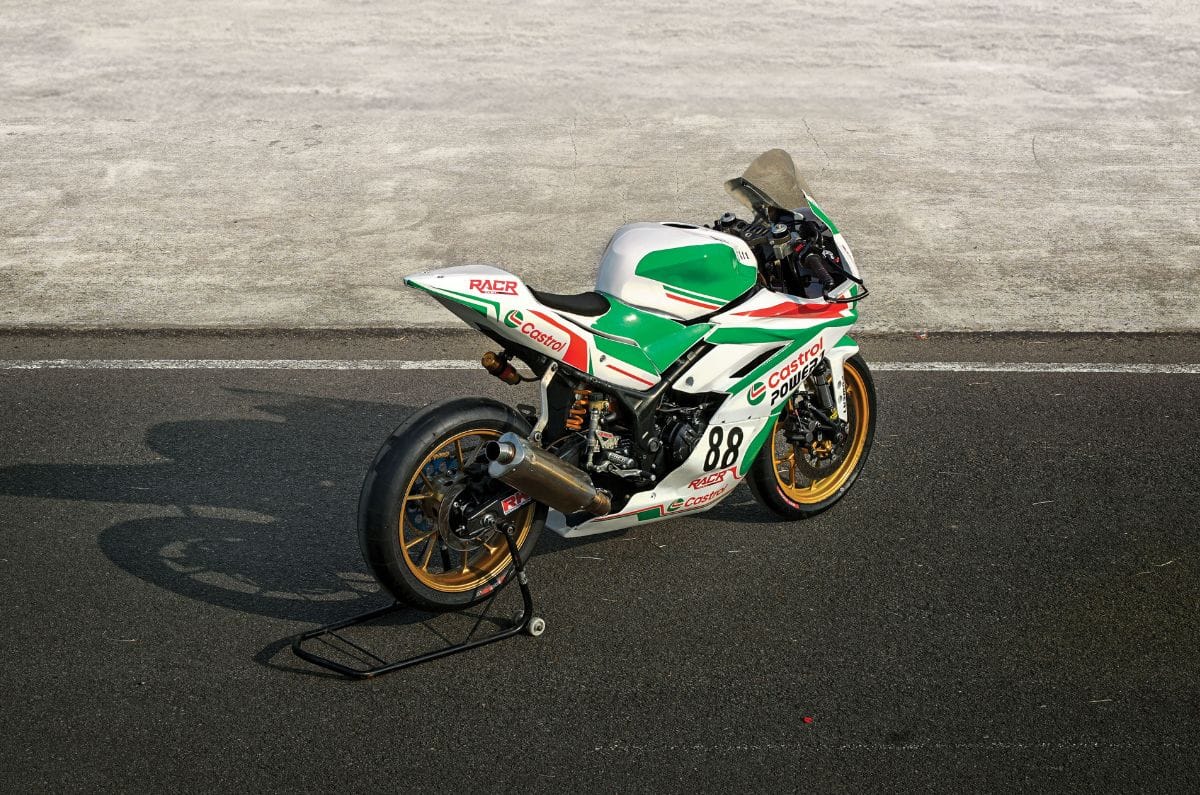
1:47.392. That’s the new lap record set last year by Team RACR’s Rahil Pillarisetty on this very bike. If you know your lap times around the Madras International Circuit, you’ll realise just how devastatingly fast that is. For some frame of reference, the fastest stock bike we ever ran at the Autocar Track Day (back when it used to be held at the MIC) was a 2019 DucatiPanigale V4 S, ridden by 11-time national champion Rajini Krishnan, which set a 1:49.001. Yes, Rajini also would have surely improved the timing if he had more time to work on the bike setup, and yes, the latest Panigale will be quicker. However, it still bends the mind when you realise that this race bike you see here is based on a humble Yamaha R3.
Recipe for speed
As you can imagine, a lot has changed on the donor bike, but there’s still a fair amount of the stock motorcycle’s soul preserved underneath. That’s because this bike comes under the Pro Stock 300-400cc category, which allows a lot of modifications, but also places quite a few restrictions.
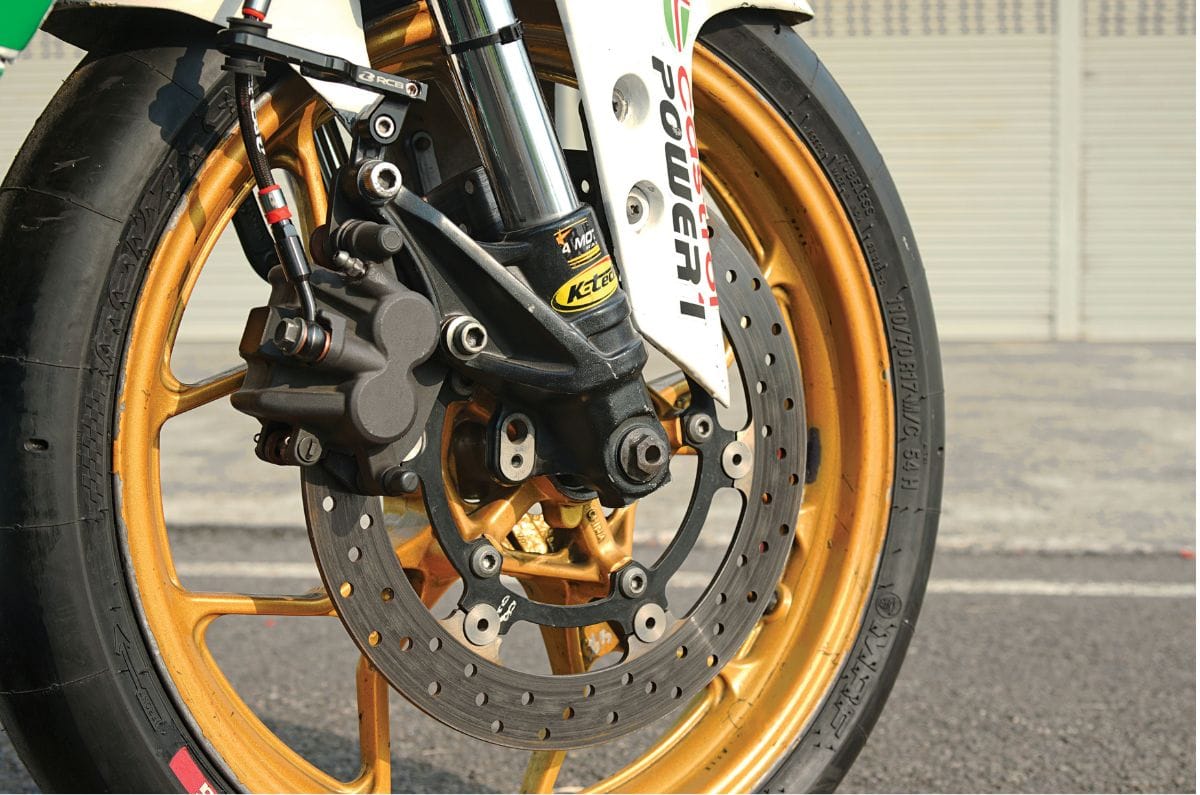
It would be easier to start with the significant things that aren’t allowed. The brake components have to be from any FMSCI homologated vehicle, and aftermarket brakes aren’t allowed. Forged metal or carbon-fibre wheels are not allowed either, although replacement wheels from any Indian-made FMSCI homologated vehicle are permitted. Fancy weight saving materials like carbon fibre, titanium and magnesium are also on the no-no list, and the main chassis has to be absolutely stock.
The engine capacity cannot be changed, but major modifications are allowed. This bike uses racing camshafts, larger throttle bodies, a ported head and bigger valves (by 1mm). Engine management is handled by an ARacer ECU, which also brings in a quickshifter, and the engine breathes through large trumpets. Cooling is vital, and the 321cc parallel-twin engine runs a massive racing radiator, which fills up much of the frontal area.
Deceptive power
The result of all these changes is a 55hp power output measured at the rear wheel, which is a big jump over the 36hp dyno figure recorded by the stock motorcycle. The engine redline is set at 14,000rpm, and the peak power sweet spot is between 12,000 and 13,000rpm. That power, combined with a super-light racing chassis, explains how speeds as high as 190kph were recorded during the races at the MIC circuit.
Very short action quick throttle, but it’s quite heavy.
Having ridden plenty of big bikes over the years, I wasn’t initially overwhelmed by the performance. But witnessing how effortlessly it would fly past stock RC 390s and R3s on the straights quickly made it evident that this is a seriously quick bike. In fact, the RACR R3 was never dropped dramatically even by more powerful bikes between the corners.
Because the rules don’t allow gearbox modifications, the engine doesn’t scream through the gears with the short-geared ferocity I’d anticipated. Instead, it spends time revving through each gear, and you have to be careful not to go much higher than that 12-13,000rpm sweet spot. An extremely short throttle action (all of it in about a quarter turn of the accelerator) meant that it’s easy to call for all fifty five horses. However, that quick-turn throttle was also quite heavy, and I found this to be one of the more fatiguing aspects of riding this bike. After all, this was the only ‘heavy’ element to this motorcycle.
Featherweight fun
Things like an aluminium fuel tank and subframe, as well as fibreglass bodywork and a complete strip-down of every non-essential element, help cut the weight down to just 132kg – with its 8-litre fuel tank full! That lack of weight, along with the high-performance K-Tech/Öhlins front/rear suspension combo, is what really made this bike magic to ride.
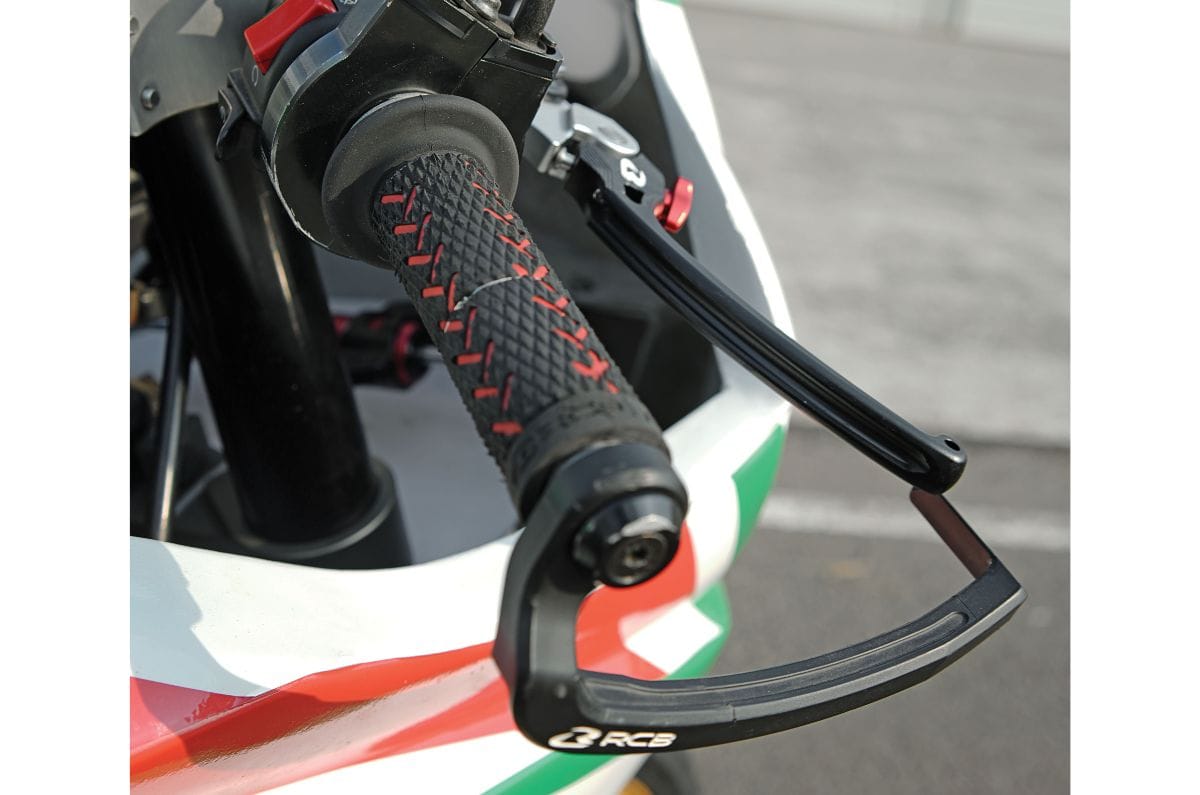
Regulations don’t allow for aftermarket brakes.
The corner speeds that it is capable of nearly fried my brain, and this is entirely where the bike makes that incredible lap time. No matter how much I tried, I simply couldn’t get myself to fling the bike into corners with the sort of speed that it is built for. Despite this, I had a blast riding the bike through the day, and that was largely because it was rather friendly and encouraging. The suspension was set to perfectly handle MIC’s bumpy layout, and I only truly realised how well it was doing this when I hopped onto the Ducati Panigale V2 the next day (page 122), and was startled by how much it was being affected by the bumps.
Of course, the bike is quite tiny, but I did manage to fit on it okay after the RACR crew kindly set the adjustable RCB footpegs to their lowest position. We left the suspension settings in Rahil’s setup, and that seemed to work well for me. He is a good ten-fifteen kilos lighter than me, but his immense skill and speed also make the suspension work much harder than I could, so it evened out in the end.
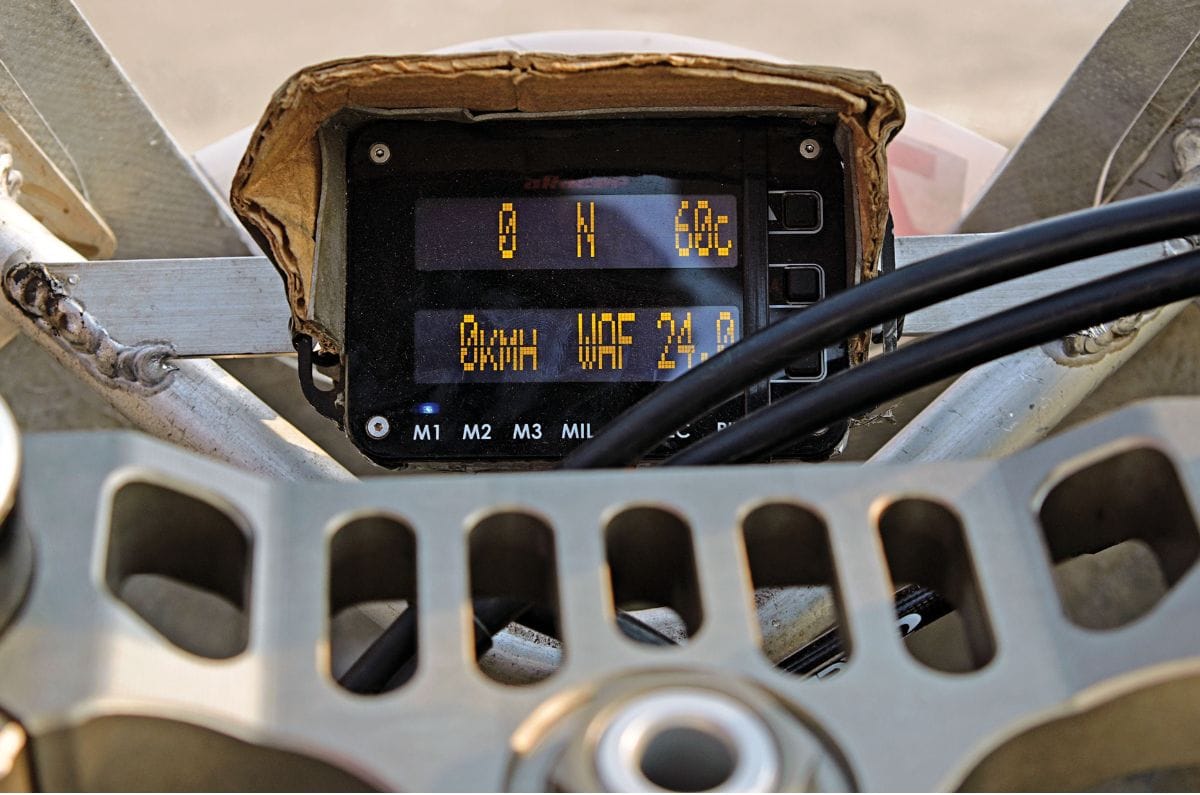
This bike is purely built to function, evident in the ‘jugaad’ sun visor for the tiny racing display!
As you’d expect from something that carries such little mass, the R3’s steering is light and incredibly quick, but it also has a reassuring sense of composure. This faith in the chassis quickly allowed me to stop being intimidated by the bike and simply enjoy riding it. All things considered, the bike’s deliciously light and poised handling is why I truly fell in love with it.
Even the stock brakes worked perfectly well, partly because of the lack of weight, and also because MIC doesn’t have many particularly heavy braking zones. Of course, at pure race pace, I imagine it could be quite a different animal, and that’s where the steering damper would earn its place, but for my pace, it was a complete joy.
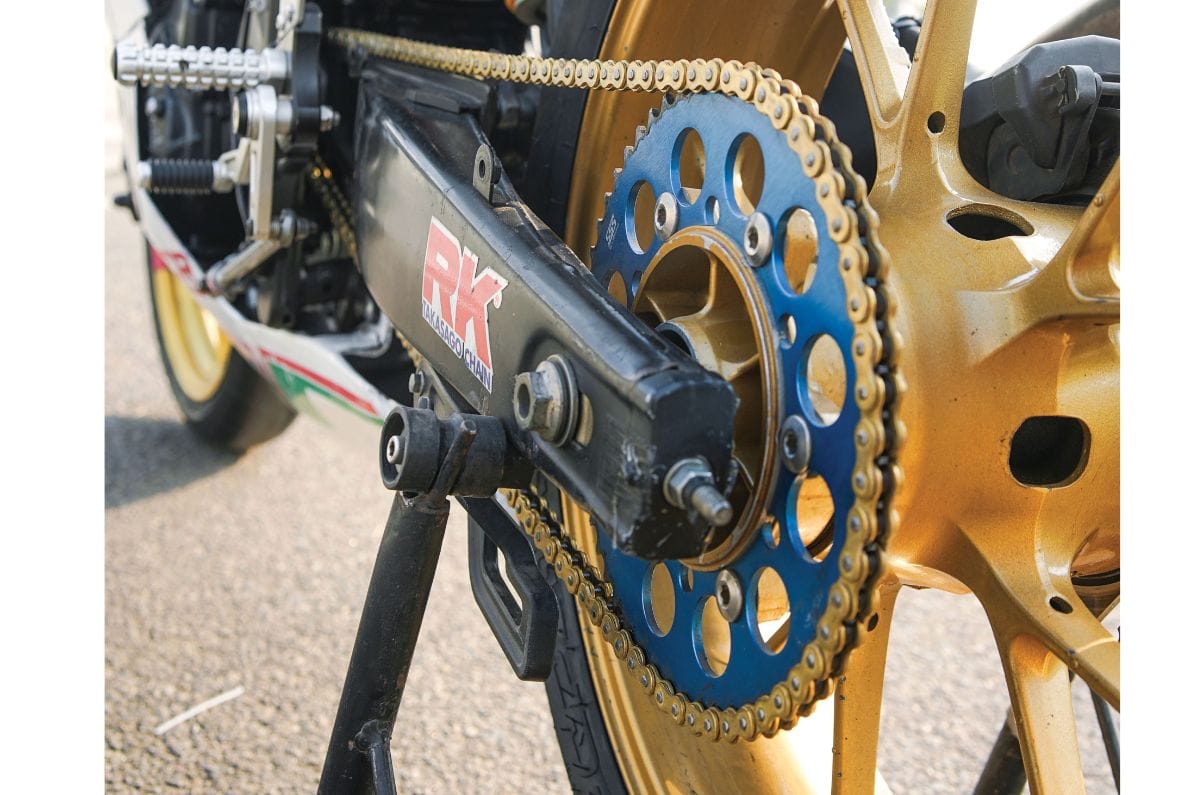
Like many internal engine components, this skinny, lightweight racing chain has a very short life and needs replacing every race weekend.
Racing 101
As you might expect, there are zero electronic rider assists, but I never felt like it needed any. The bike runs on MRF racing slick tyres, which offered very good grip, but not a lot of feedback, and I wasn’t getting much feel for where the limit lay. Team RACR made sure I had the full racing experience, with tyre warmers being slapped on between every session and a giant cooling fan being pointed at the radiator when the bike was parked in the pits.
In fact, a bike like this would make for a superb track toy, and it will teach you the art of carrying higher corner speeds instead of more lazily using the power of a bigger bike on corner exits. However, such major engine modifications are best avoided. Because this is such a highly stressed engine, it needs part changes every race weekend and a full rebuild every two race weekends. The latter includes changing core components like the camshafts, pistons, and even the crankshaft!
In fact, Rajini let me know that running just one of these bikes for an entire season costs about Rs 25 lakh when you factor in routine part-change costs and crash damage. Team RACR ran three of them last year, with Rajini himself piloting one – and they even had an additional bike as a spare!
Racing is undoubtedly an expensive business, and Team RACR does this with no support from Yamaha India, something that will hopefully change soon. What really earns my respect, though, is that this is a relatively small operation that has fully developed this bike in-house in Chennai. Despite this, they managed to beat a factory race team last year, and Rahil won the overall championship on this very bike.
Chhattisgarh Lakhpati Didi Dilmati Success Story: पारंपरिक खेती से जैसे-तैसे गुजारा करने से लेकर आज सालाना ₹8 लाख तक की कमाई करने तक, छत्तीसगढ़ के बलरामपुर जिले की दिलमति की कहानी देश के ग्रामीण इलाकों में आ रहे बड़े बदलाव की मिसाल है। दिलमति ने एक सफल सुअर पालन व्यवसाय खड़ा करके न केवल अपने परिवार को आर्थिक तंगी से बाहर निकाला, बल्कि वे छत्तीसगढ़ की ‘लखपति दीदी’ बनकर उभरी हैं।
उनकी इस सफलता ने उनके गांव के कई अन्य परिवारों को भी इस बिजनेस से जुड़ने के लिए प्रेरित किया है। आइए जानते हैं दिलमति के संघर्ष और उनकी कामयाबी की पूरी कहानी।
कौन हैं लखपति दीदी दिलमति?
दिलमति छत्तीसगढ़ के आदिवासी बहुल बलरामपुर जिले के लादुवा गांव की रहने वाली हैं। वे स्थानीय ‘मां दुर्गा महिला स्वयं सहायता समूह’ (SHG) की एक सक्रिय सदस्य हैं। कुछ साल पहले तक दिलमति का परिवार पूरी तरह से पारंपरिक खेती पर निर्भर था। सीमित आय के कारण उन्हें घर चलाने में काफी मुश्किलों का सामना करना पड़ता था।दिलमति की जिंदगी में यू-टर्न तब आया जब वे स्वयं सहायता समूह से जुड़ीं। यहां उन्हें सरकार द्वारा समर्थित आजीविका के अवसरों और योजनाओं के बारे में जानकारी मिली।
₹1 लाख के लोन से ऐसे खड़ा किया साम्राज्य
समूह के अधिकारियों और जानकारों से प्रोत्साहन मिलने के बाद दिलमति ने एक साहसिक कदम उठाया। दिलमति ने स्वयं सहायता समूह (SHG) के जरिए ₹1 लाख का लोन लिया। इस रकम से उन्होंने सुअर पालन का काम शुरू करने के लिए पड़ोसी राज्य झारखंड से 10 सुअर खरीदे।
धीरे-धीरे उनका यह बिजनेस मुनाफे में बदल गया। उनके फार्म में प्रत्येक मादा सुअर 9 से 10 बच्चों (पिगलेट्स) को जन्म देती है, और एक-एक बच्चा बाजार में करीब ₹5,000 में बिकता है। आज के समय में दिलमति के पास 9 मादा सुअर हैं, जिससे उनकी सालाना आमदनी ₹7 लाख से ₹8 लाख के बीच हो जाती है।
#WATCH | Balrampur, Chhattisgarh: On earning a livelihood through pig farming and agriculture, Lakhpati Didi, Dilmati, says, “Before joining the group, my situation was very bad. But once I joined and started saving, attending meetings, a few of us women would get together and… pic.twitter.com/60A51F87Hz
दिलमति केवल सुअर पालन तक ही सीमित नहीं रहीं, बल्कि उन्होंने इस बिजनेस से होने वाली कमाई को समझदारी से दूसरी जगहों पर री-इन्वेस्ट किया:
उन्होंने सुअरों के रहने के लिए एक पक्का और आधुनिक शेड बनवाया है।
खेती को आसान बनाने के लिए धान और मक्का की थ्रेशिंग (मिसाई) मशीनें खरीदीं।
अपनी खेती में ड्रिप इरिगेशन तकनीक को अपनाया और बड़े पैमाने पर जैविक सब्जियों की खेती शुरू की।
इन सब अलग-अलग जरियों से अब उनके परिवार के पास कमाई के कई माध्यम तैयार हो चुके हैं।
गांव की महिलाओं के लिए बनीं रोल मॉडल, प्रशासन भी करेगा मदद
दिलमति की इस बड़ी सफलता ने लादुवा गांव की तस्वीर बदल दी है। दिलमति की कामयाबी को देखकर गांव के करीब 10 से 15 अन्य परिवारों ने भी सुअर पालन को अपनी आजीविका के रूप में अपना लिया है। दिलमति खुद अब दूसरी महिलाओं को नियमित बचत करने, समूहों से जुड़ने और लोन लेकर अपना खुद का बिजनेस शुरू करने के लिए प्रेरित करती हैं।
#WATCH | Balrampur, Chhattisgarh: On earning a livelihood through pig farming and agriculture, Lakhpati Didi, Dilmati, says, “Before joining the group, my situation was very bad. But once I joined and started saving, attending meetings, a few of us women would get together and… pic.twitter.com/Dv9ML6wRw2
दिलमति की इस उपलब्धि को देखते हुए बलरामपुर जिला प्रशासन अब इस तरह की आजीविका पहलों को बड़े पैमाने पर विस्तार देने की योजना बना रहा है। बलरामपुर के कलेक्टर चंदन संजय त्रिपाठी के मुताबिक, प्रशासन अब एक ‘गोट क्लस्टर प्रोजेक्ट’ तैयार कर रहा है। इसके तहत और भी अधिक महिलाओं को ‘लखपति दीदी’ बनाने और ग्रामीण महिलाओं की आय बढ़ाने के लिए उन्नत नस्ल की बकरियां उपलब्ध कराई जाएंगी।
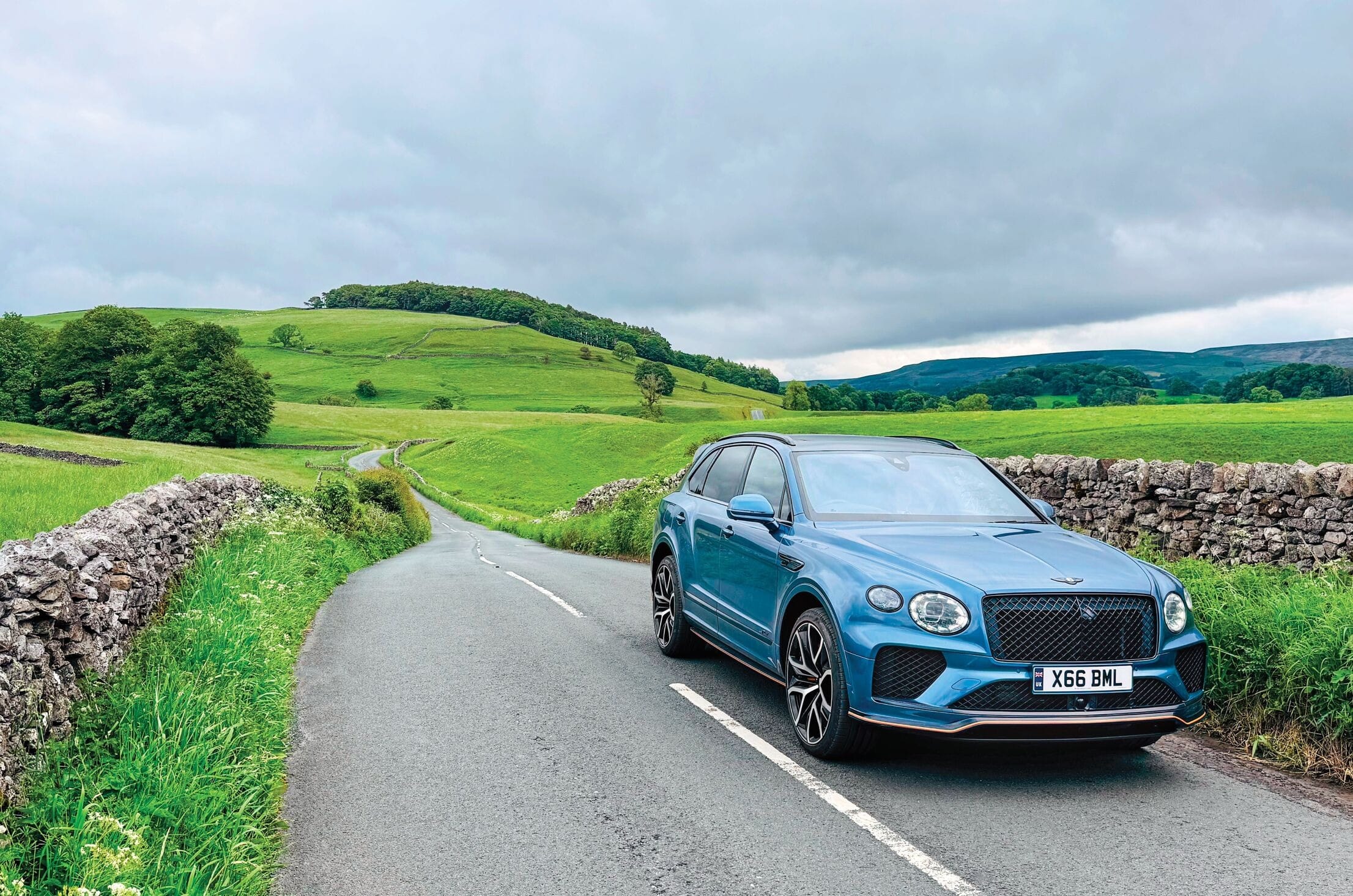
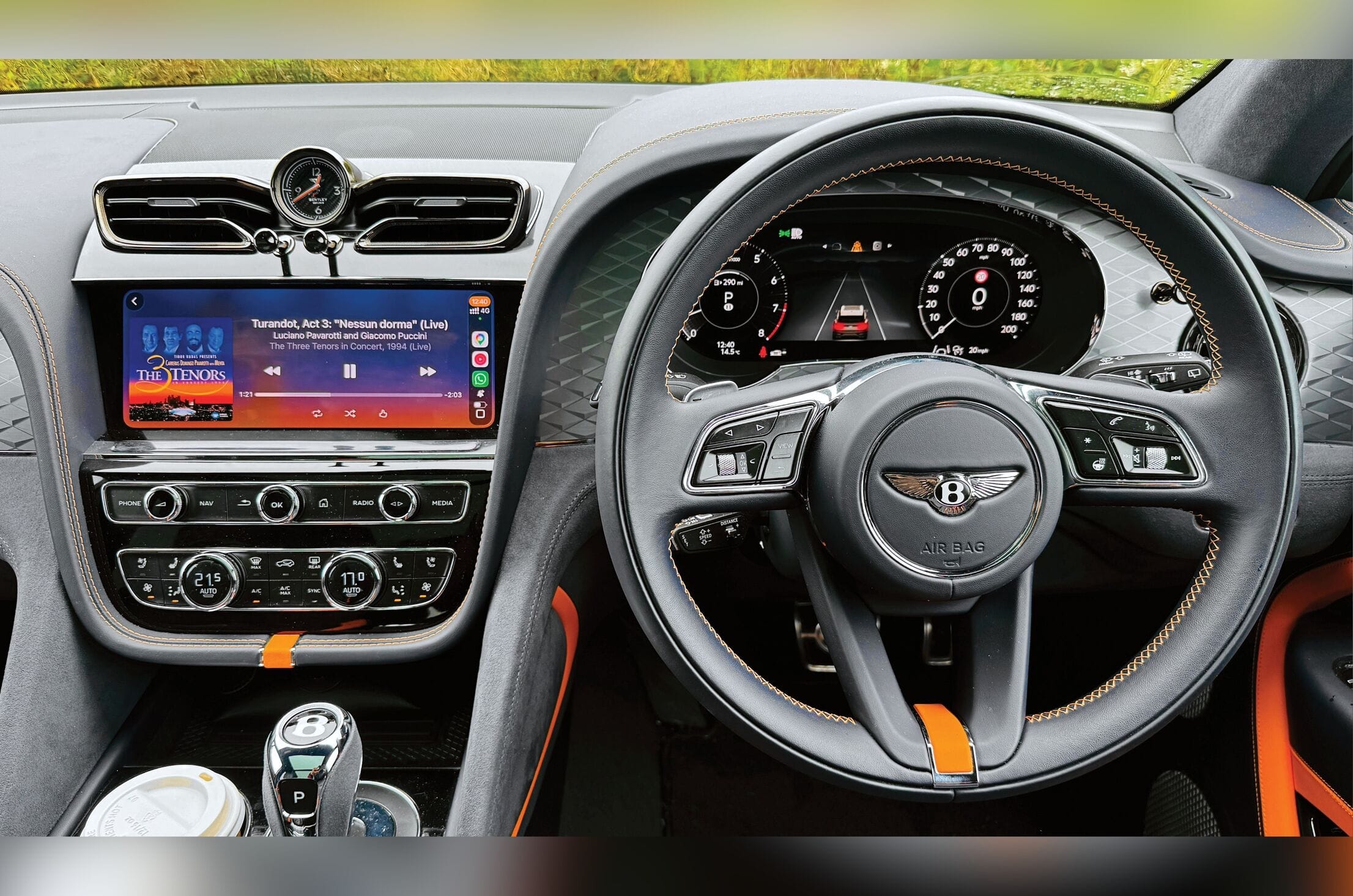
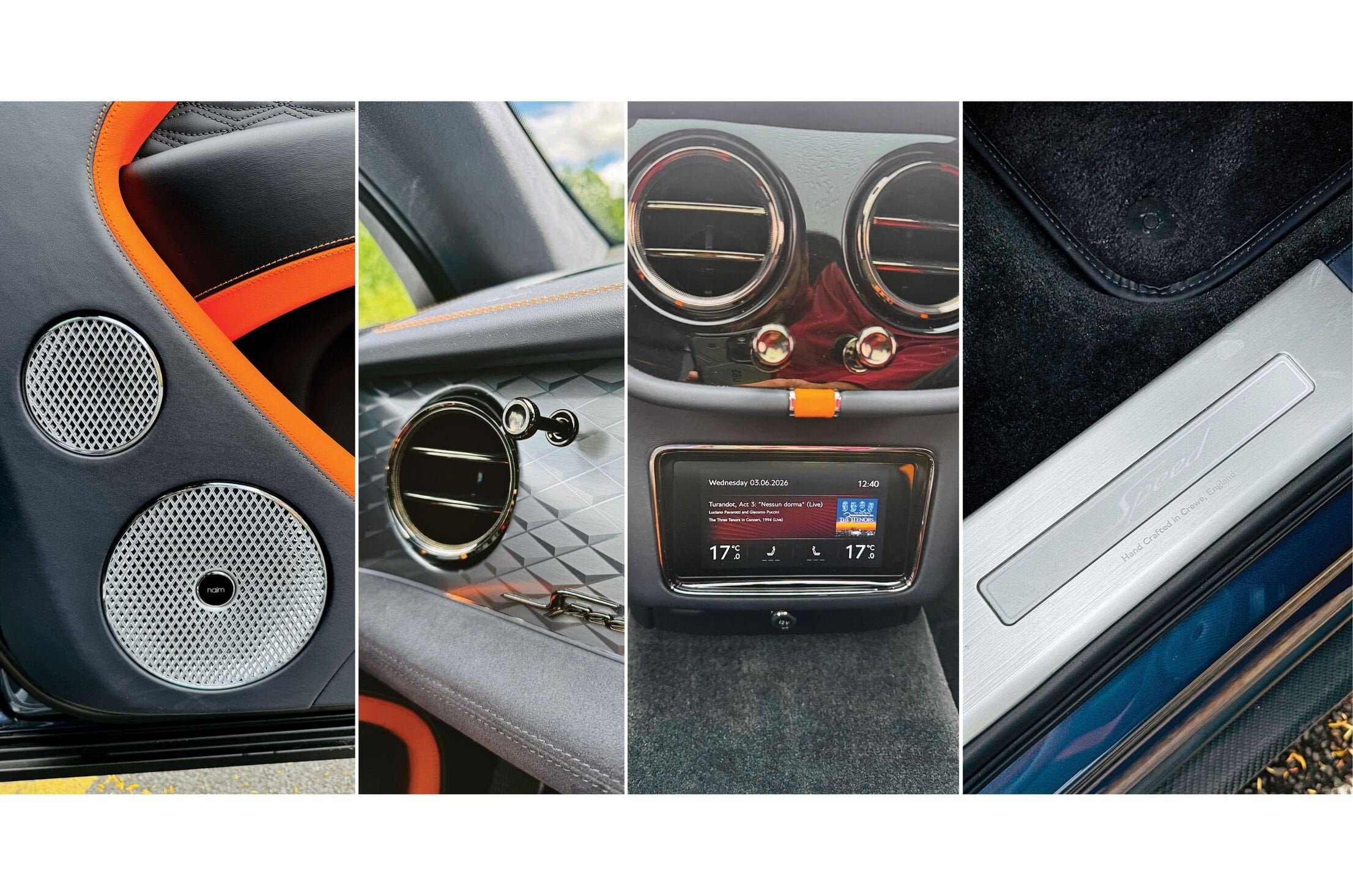
We left London at quarter past two on a Monday afternoon, and for the next four hours, the Bentley Bentayga did what most cars can only pretend to do on the M40 and M6. It made the motorway disappear. Settle into the driver’s seat of this Speed variant, and the first thing you notice is how little there is to notice – and yet how much there is to appreciate. The cabin is hushed to the point of unease, wind and road noise simply refusing to show up, leaving you enveloped in a space that celebrates analogue tactile pleasure in an increasingly digital world. Front and centre on the dashboard sits a Breitling analogue clock, anchoring the cabin with old-world authority. Below it, the knurled metal organ stop levers for the air vents operate with a satisfying mechanical resistance that no touchscreen has ever replicated.
A cabin that celebrates tactile touch in an age that has forgotten it. Leather-stitched with the patience of people who still care.
The audio system is by Naim – the Wiltshire-based hi-fi company whose amplifiers have been a byword for sonic purity since 1973 – and with Pavarotti filling the cabin at modest volume somewhere past Birmingham, it was immediately clear this was not a system installed merely to tick a specification box. Rear seat passengers, meanwhile, had their own touchscreen for climate and media control – ours showing Pavarotti mid-aria, which felt, in a Bentley, entirely correct. Neither the Bentayga nor Lancashire feel the need to tom-tom their virtues. Both simply get on with it, and trust that the right people will notice. I have driven this route north before in lesser company, and it has never once felt this short.
Every detail in the Bentayga Speed — the Naim audio system, the organ-stop vents, the diamond-quilted dash, the rear-passenger screen, the sill that quietly announces it was hand-crafted in Crewe — speaks of a car assembled by people who considered indulgence a serious responsibility.
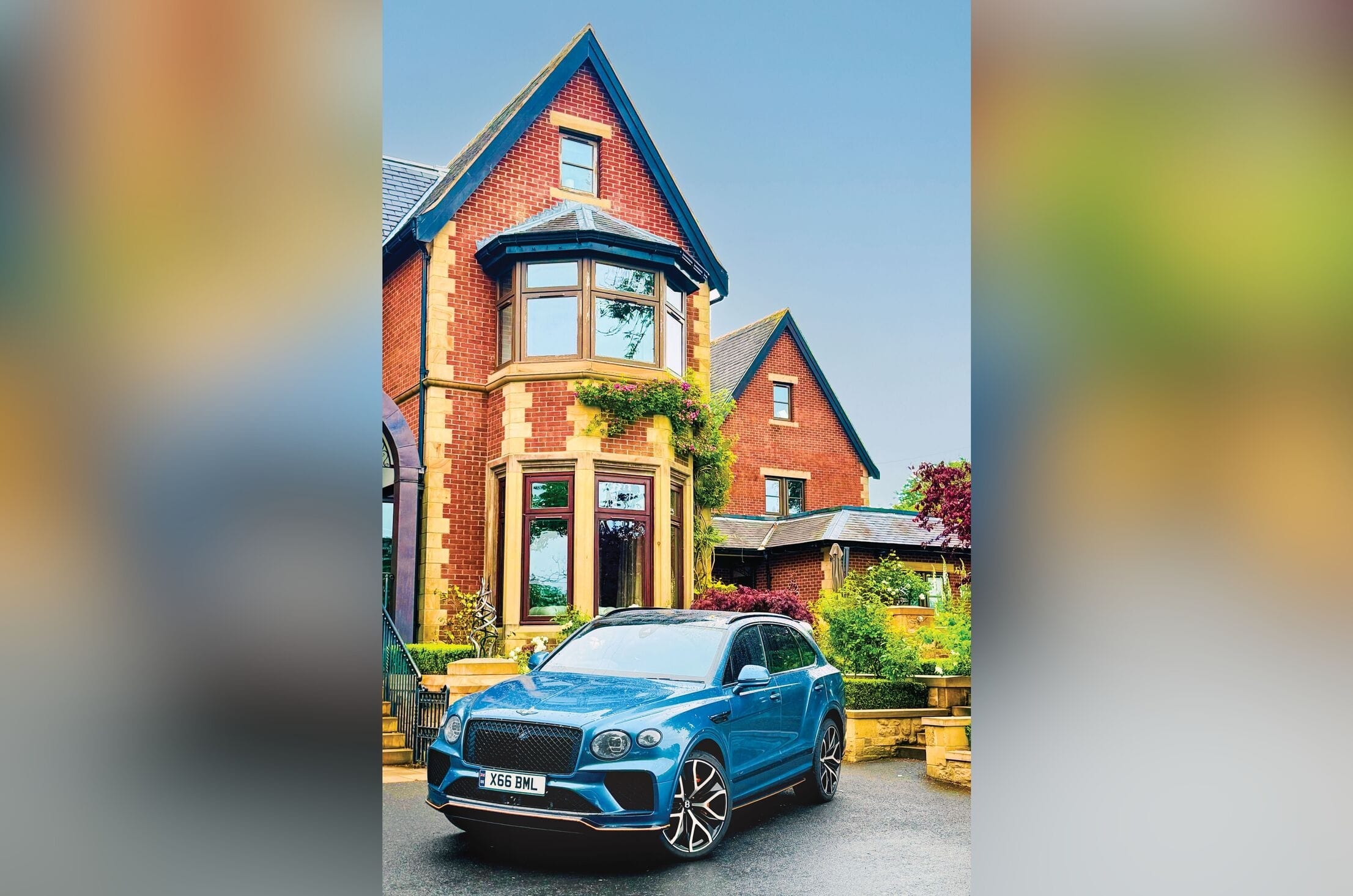
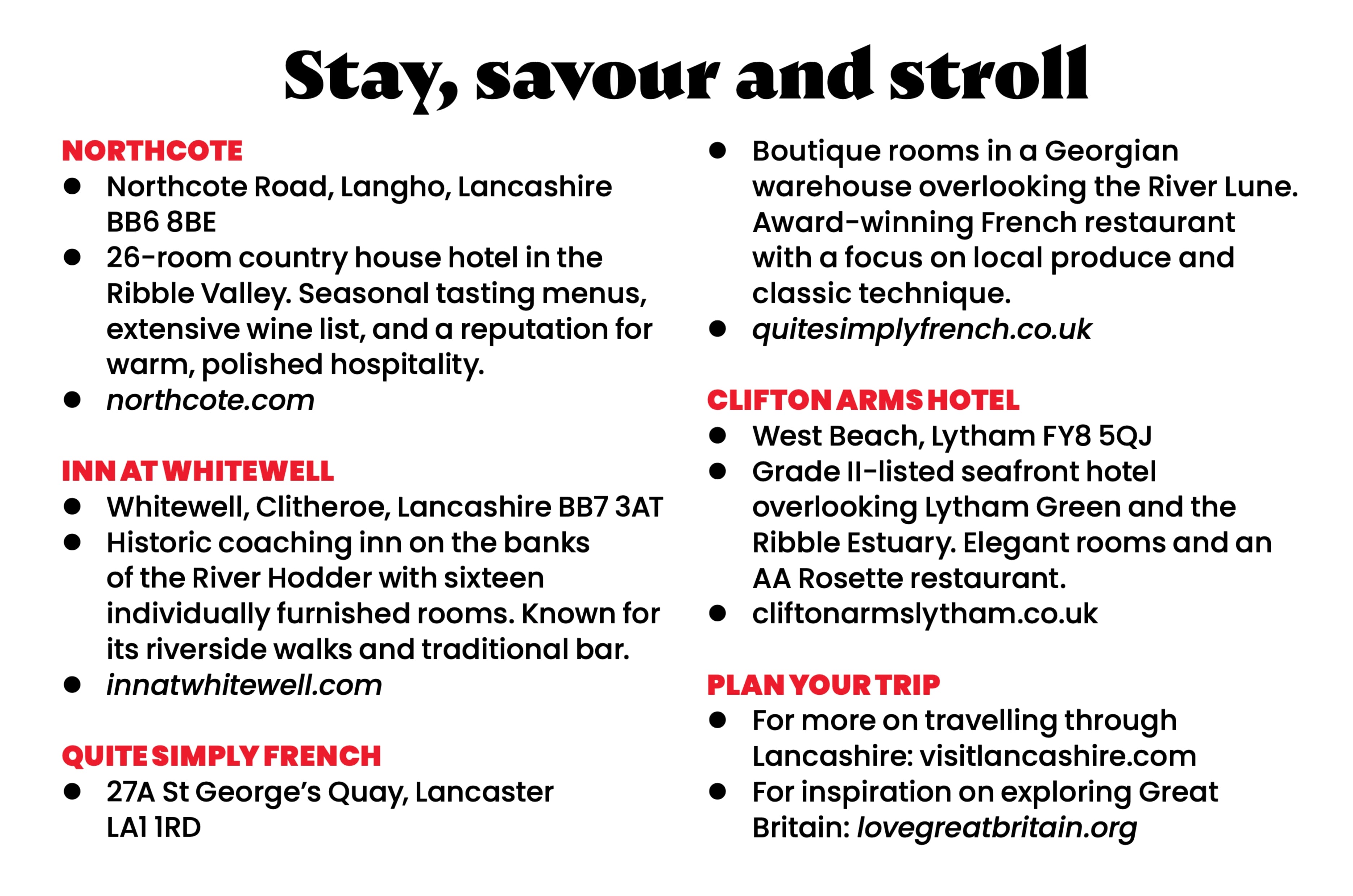
We continued north, crossing into Lancashire before finally turning off the motorway. Our destination was Northcote, nestled in the Ribble Valley near the village of Langho. As we made our approach, England changed its mind about what kind of country it wanted to be. The road narrowed and hedges closed in from both sides, threatening the Bentley’s two-metre width. The light was dropping into that long northern evening glow, and at the end of a gravel drive, Northcote appeared looking exactly like the opening shot of a film about an English country weekend. The Bentayga rolled up the approach, announcing its arrival with the polite crunch of low-profile Pirelli tyres on small stones – a suitably understated entrance for a 19th-century manor house that has seen a thing or two pull up outside.
We were here for dinner, bed and breakfast, and Northcote does none lightly. Chef Patron Lisa Goodwin-Allen has been translating this landscape into food since 1996 – three decades of a Michelin star, unbroken, which in the restaurant business is closer to a geological era than a career. Five courses arrived in unhurried succession, featuring asparagus, scallop, sole, local Lake District lamb, and a rich Valrhona chocolate to close – each dish a study in contrast and harmony, every course making the next feel inevitable. After dinner, we retired to one of the garden lodge deluxe suites: a fireplace casting a warm glow across the room, a private terrace looking out toward the dark valley, a deep tub in a bathroom that invited lingering. I went to bed deeply content, waking to a golden Ribble Valley morning that invited long, lazy walks. But the ribbon of tarmac through the Forest of Bowland was waiting, and the Bentayga was beckoning from the car park.
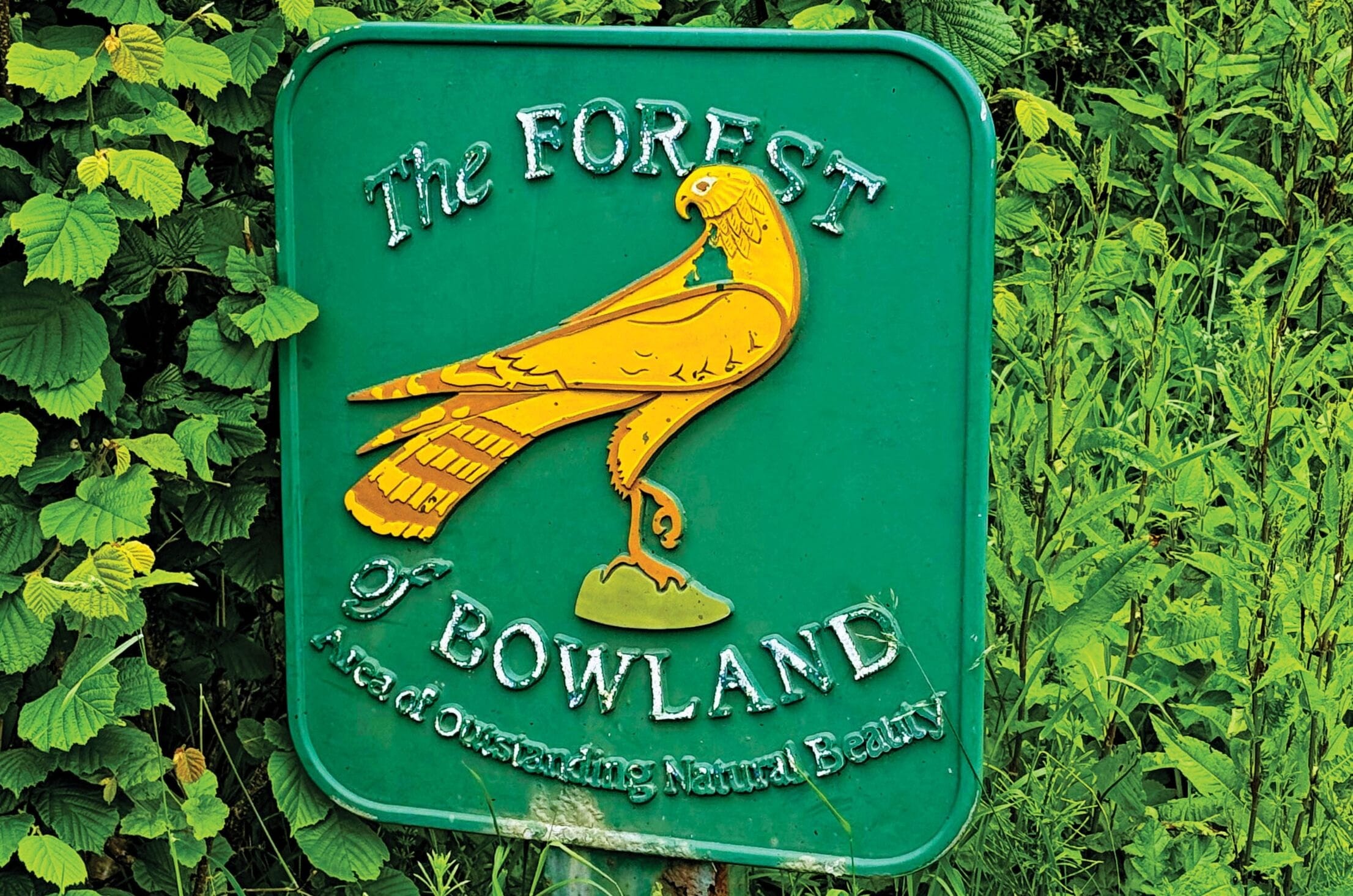
One of England’s best-kept secrets, this area of outstanding beauty is a delight for walkers and driving enthusiasts.
The road out runs through Clitheroe, where a Norman keep sits on a limestone mound with views stretching all the way to Pendle Hill, then climbs into the Forest of Bowland proper – 312 square miles of open moorland, fell, and river valley, largely left alone by the twenty-first century. I flicked the rotary drive selector into Sport early, curious to see what a two-and-a-half tonne SUV would make of roads that seemed written for something small and nimble. The transformation was immediate and theatrical – the car drew a long breath, settled onto its haunches, and changed its personality entirely. The steering weighted up with quiet authority, the throttle sharpened to a hair-trigger, and the Bentley Dynamic Ride system – it uses a 48-volt electrical architecture to split the anti-roll bars and sandwich an electric motor and planetary gear set between the halves, applying up to 1,300Nm of torque to each bar and reacting in as little as 0.06 seconds – kept the big SUV as flat through corners as a saloon car, entirely unbothered by its own considerable mass. The Bentayga had stopped being a grand tourer and become, without any fuss whatsoever, a driver’s car.
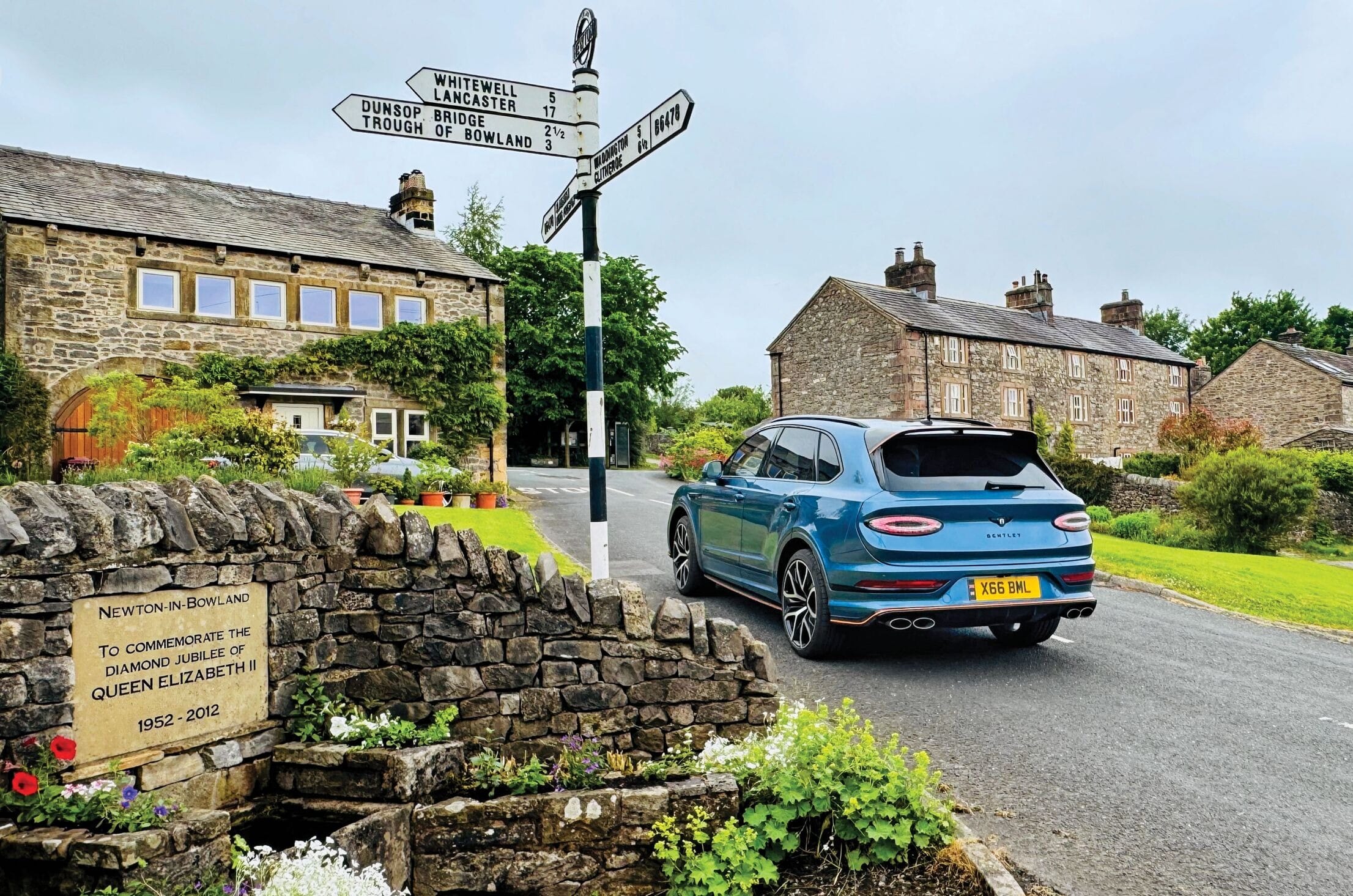
The signpost at Newton-in-Bowland offers four directions. For the traveller with time, there is no wrong turn here.
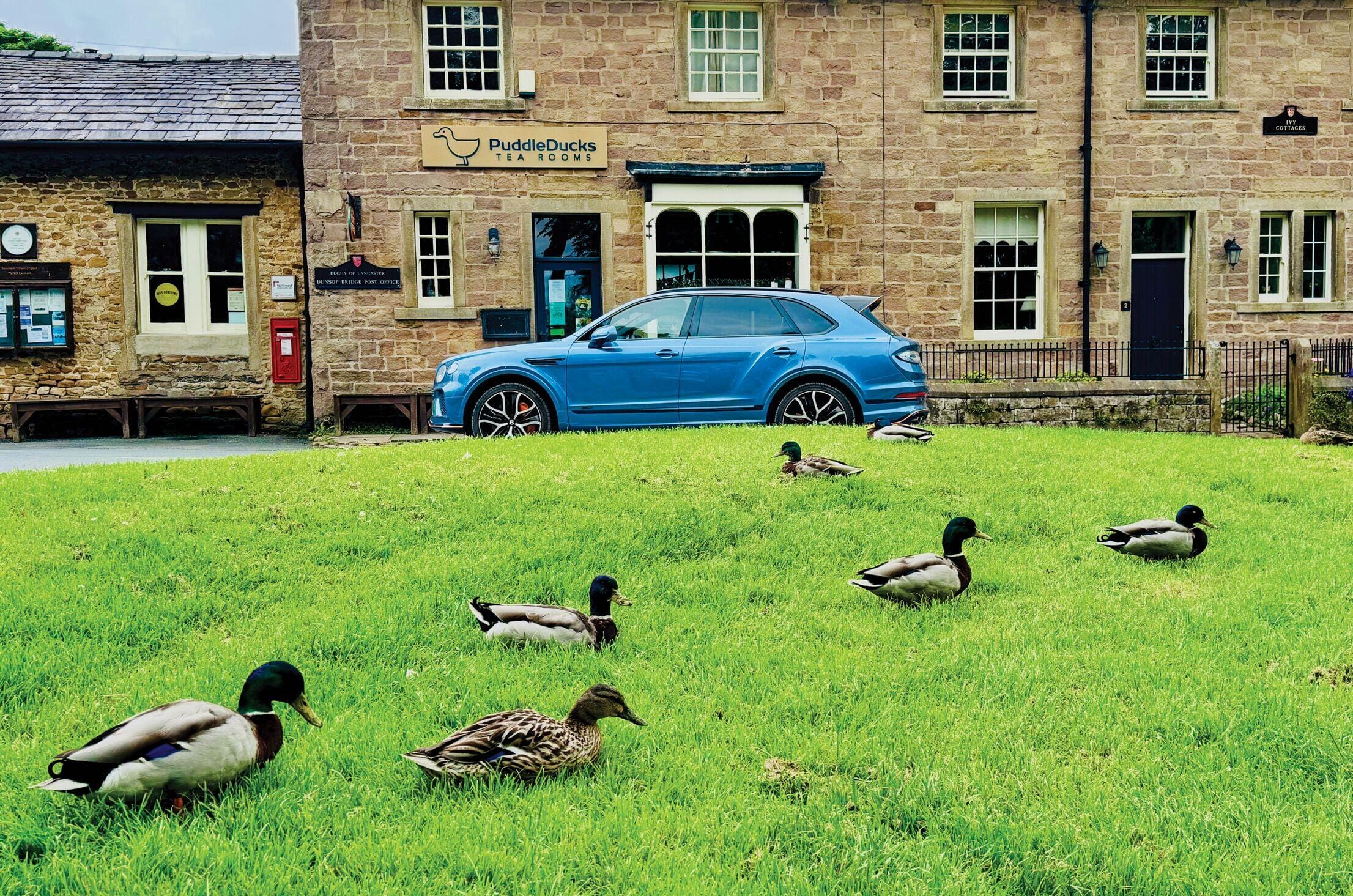
Dunsop Bridge slid past in a matter of seconds – a handful of stone houses, a red telephone box marking the geographic centre of Great Britain, and directly opposite, the Puddleducks Tearooms, where actual ducks were crossing the asphalt in front of us with the unhurried confidence of creatures who know they own the place.
And then came the Inn at Whitewell. It sits on a bend of the River Hodder, a low stone building with the fells rising behind it and the river running just below the terrace, dating to the 14th century when it housed the keeper of the King’s Forest. The manager told me that King Charles III had stayed the night here once, arriving by train to Lancaster and driving up through the valley. We parked the Bentayga in the gravel yard among vintage Land Rovers in active use by local farmers – the Bentley not looking remotely out of place, which says everything about both the car and the inn.
The ducks at Dunsop Bridge crossed the road with unhurried nonchalance. The Bentayga waited indulgently.
We had lunch at the exact spot where Steve Coogan and Rob Brydon filmed the opening episode of The Trip. Head chef Jamie Cadman has been running this kitchen for 29 years, and the scallops, the ribeye cooked medium-rare, and a crème brûlée of memorable creaminess proved that his tenure was very well spent. Afterwards we walked – an hour and a half across stepping stones and up into the moors, dappled afternoon light, the swish of boots in wet grass, sheep in fields arranged for maximum Englishness. We came back with deep-cleaned lungs, finding the Bentayga still flanked by a mud-caked Land Rover and a tractor. Even if it had feelings about its utilitarian neighbours, it kept them, with characteristic British restraint, entirely to itself.
Then came the Trough of Bowland – and the Bentayga’s finest hour. On these sweeping corners and squiggly bends that open into long glorious straights, the V8 deepened into a proper barrel-chested growl, the eight-speed ZF gearbox snapping through ratios with surgical precision. Burying my right foot out of a long right-hander, the 4.0-litre twin-turbo unleashed 850Nm of torque across a broad plateau between 2,250 and 4,500rpm – not a single violent hit but a sustained, relentless wave that simply didn’t stop. 2,440 kilograms of hand-built British engineering launched forward, brutally and joyfully hard, dispatching 0-100kph in 3.6 seconds. Yet at no point did it feel like it was getting away from me. The permanent all-wheel-drive system shuffles power between axles with imperceptible speed, while the all-wheel steering tightens the car into corners at low speed and plants it with absolute authority on high-speed straights. The confidence arrives quickly and stays.
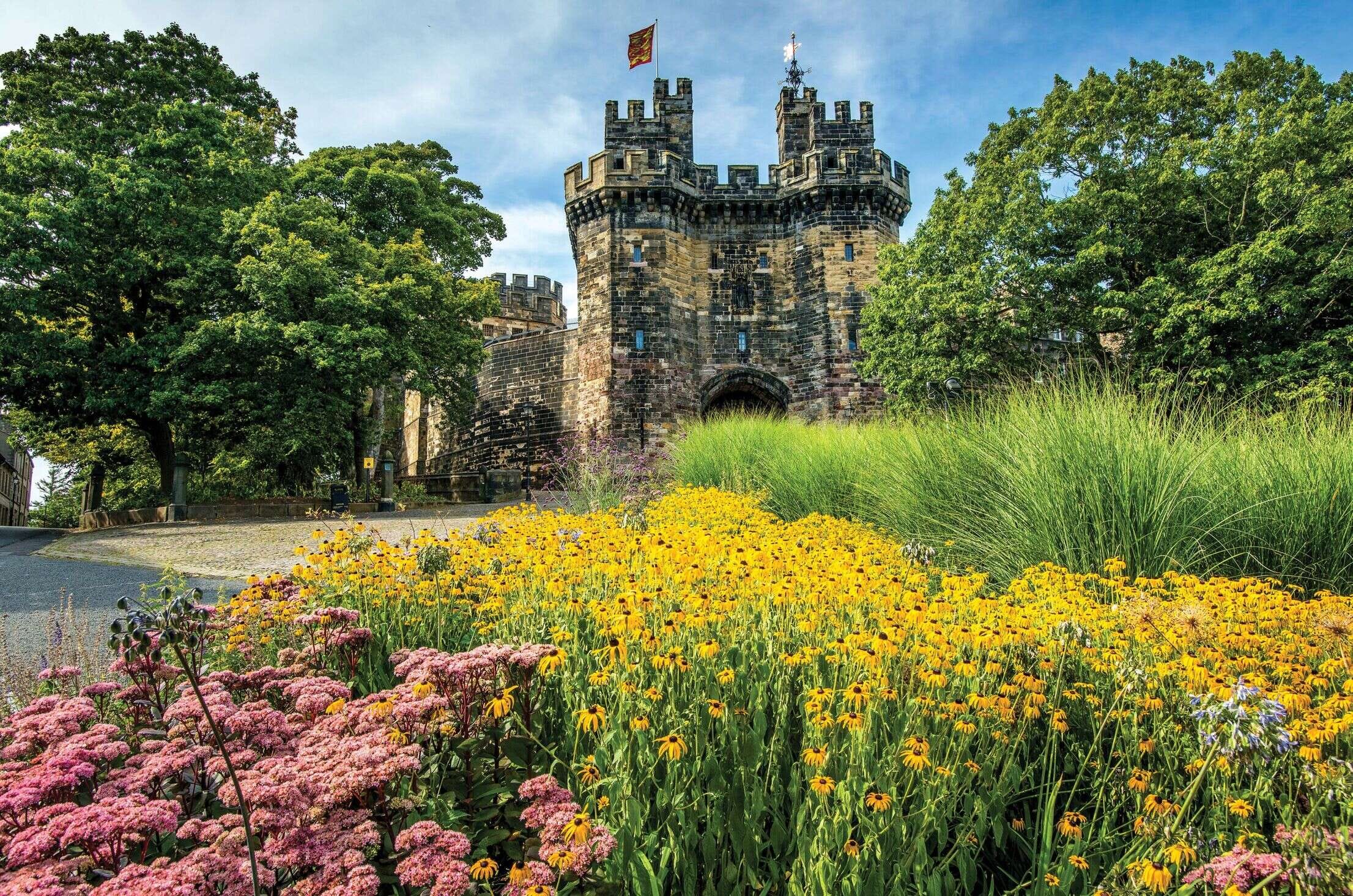
Lancaster revealed itself in the late afternoon, featuring cobbled streets, a castle that hosted the Pendle Witch Trials of 1612, and a quayside built on 18th-century trading wealth. Our base was Quite Simply French on St George’s Quay, four boutique rooms in a 1750 warehouse with bare stone walls, timber beams, and the River Lune drifting past the windows. The 360-degree camera system made light work of threading the Bentley down the narrow quayside street. Dinner was a proper French feast including lobster, escargots, and a wine list worth lingering over.
Crème brûlée and ribeye at Whitewell, scallops at Northcote, scrambled eggs at Quite Simply French – Lancashire is a foodie’s delight.
Breakfast the next morning was the quiet revelation of the trip: scrambled eggs of extraordinary creaminess, sourdough toast, hand-churned butter, sea salt, genuinely good coffee – a little slice of France transplanted into the heart of Lancashire, courtesy of head chef Luke Johnson, fifteen years in this kitchen and showing no signs of slowing down.
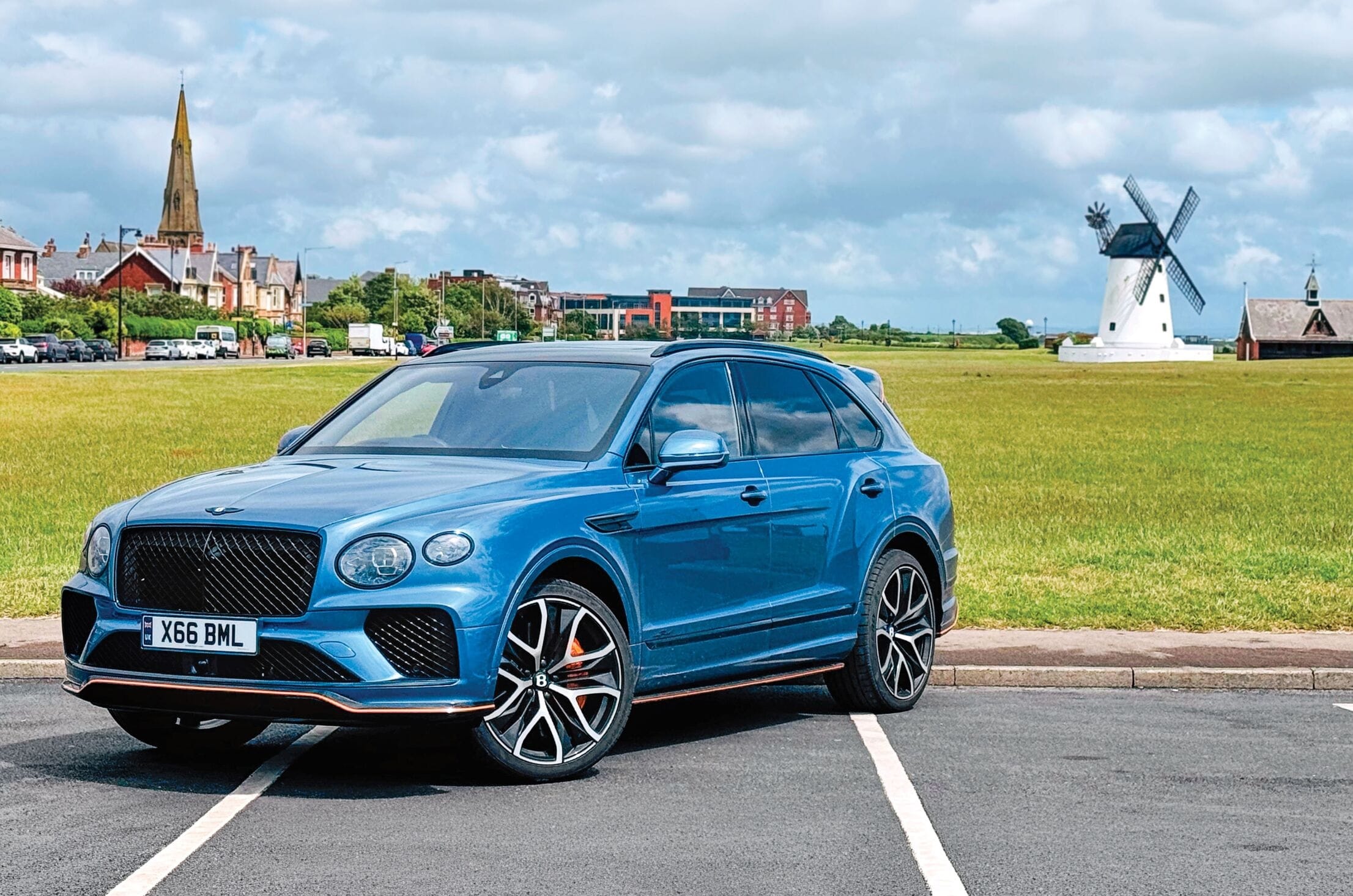
From Lancaster, we pointed toward the coast. Lytham is a handsome Edwardian seaside town of independent shops, a sprawling seafront green, and the wide Ribble Estuary beyond. At its centre stands a solid white 19th-century windmill, which we explored as the weather turned grey and blustery in the way English coastal mornings sometimes insist upon. We spent the night at the Clifton Arms on the seafront – Grade II-listed, dating to 1839, cast-iron balconies and classical columns looking out over the Green. The next morning’s photograph said everything: the Bentayga framed against the stark white of the windmill, hand-assembled British engineering against handmade British stone, both entirely unhurried and at home.
The Bentayga on Lytham seafront, with the town’s 19th-century windmill for company.
The drive back down the M6 was every bit as uneventful as the journey up. This is perhaps the highest compliment a grand tourer of this calibre can be paid. Over three days, the Bentayga had done everything asked of it by devouring a motorway slog in near-total silence, charging through the Trough of Bowland with a soundtrack fit for a film score, threading a medieval quayside without breaking a sweat, and reshaping its chassis, drivetrain, and suspension to whatever the road demanded, all while making every mile feel like it was exactly where it was meant to be.
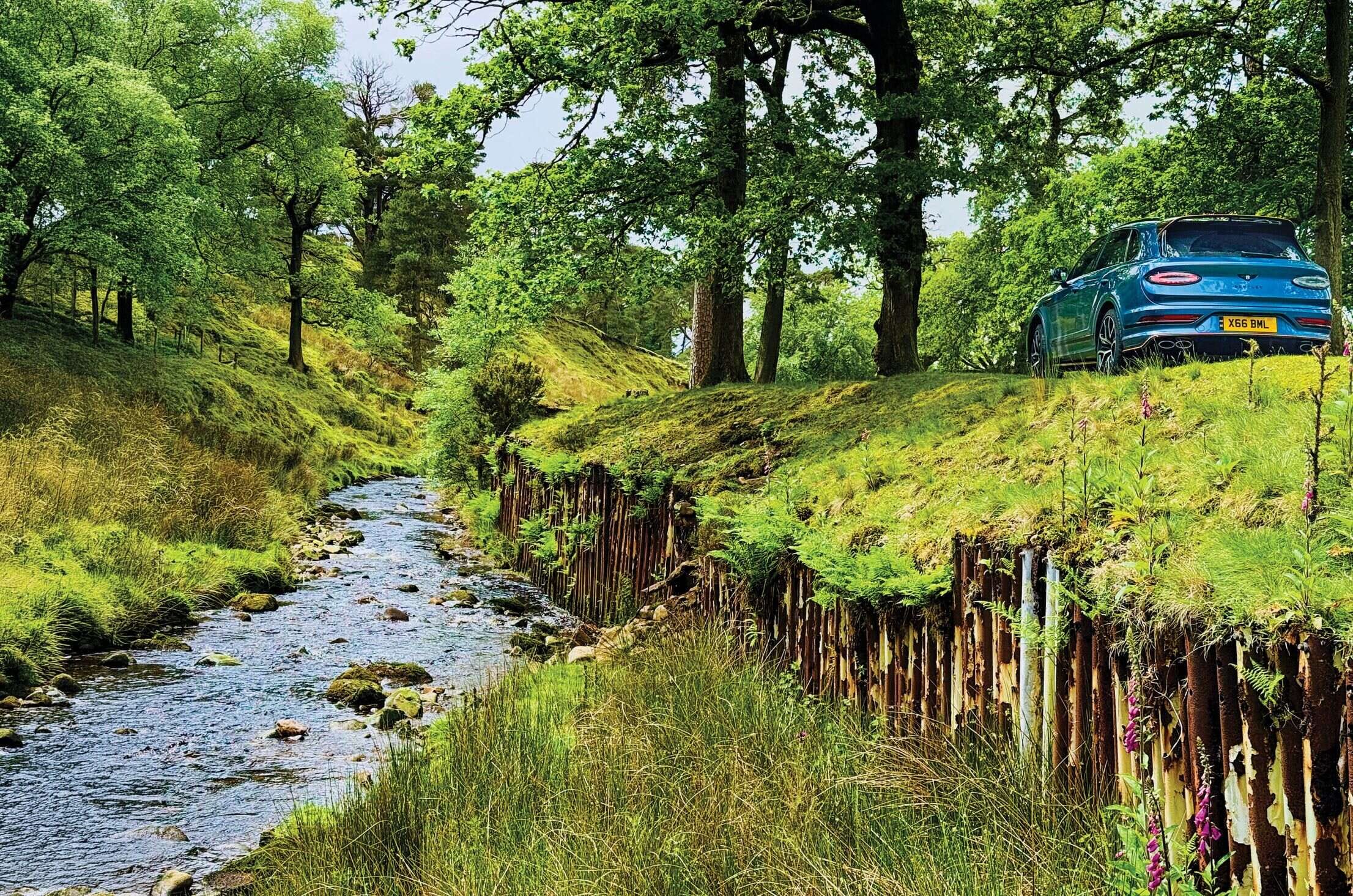
A burbling brook, a solid oak, and a hand-crafted car from Crewe — together in the Forest of Bowland. This picture quietly states “England”.
Lancashire is a county most tourists simply ignore, and that is precisely its saving grace. A few slow days spent looping through its corners delivered everything the quintessential English road trip ought to be – cosy country inns with roaring fires, smashing food that makes a detour entirely mandatory, and layers of medieval history etched into stone castles. There were long walks across the wet moors that left my boots soaked and my head clear, and scenic roads that begged to be driven. This is the good old English countryside exactly as it should be. It is a landscape that deserves to be savoured in a leisurely manner and preferably from the cockpit of something exactly this magnificent.
भारत में बचत करना सिर्फ एक अच्छी आदत नहीं, बल्कि जिंदगी का अहम हिस्सा माना जाता है। ज्यादातर परिवार बचपन से ही बच्चों को पैसे संभालकर खर्च करने और भविष्य के लिए बचत करने की सीख देते हैं। नौकरी लगने के बाद भी लोगों की पहली प्राथमिकता अक्सर सेविंग्स बढ़ाना और आने वाले समय के लिए आर्थिक सुरक्षा तैयार करना होती है। वहीं, यूरोप के कई देशों में रहने वाले लोगों की जीवनशैली इससे काफी अलग नजर आती है। वहां लोग भविष्य की चिंता के बजाय वर्तमान में खुलकर खर्च करते हुए दिखाई देते हैं।
आखिर दोनों जगहों की सोच में इतना बड़ा अंतर क्यों है? क्या इसकी वजह सिर्फ लोगों की मानसिकता है या इसके पीछे कोई और कारण भी छिपा है? इसी सवाल का जवाब यूरोप में लंबे समय से रह रहे एक भारतीय कंटेंट क्रिएटर ने अपने अनुभव के आधार पर दिया है, जिसने सोशल मीडिया पर नई चर्चा छेड़ दी है।
इलाज का खर्च सबसे बड़ी चिंता
मुकुल के मुताबिक, यूरोप में लोग टैक्स और सोशल सिक्योरिटी के जरिए हेल्थकेयर का लाभ लेते हैं। किसी बड़ी मेडिकल इमरजेंसी में उन्हें इलाज के खर्च की ज्यादा चिंता नहीं करनी पड़ती।
वहीं भारत में कई परिवारों को अस्पताल का खर्च खुद उठाना पड़ता है। यही वजह है कि लोग मेडिकल इमरजेंसी के लिए पहले से पैसे बचाकर रखते हैं।
बच्चों की पढ़ाई पर होता है भारी खर्च
उन्होंने बताया कि यूरोप के कई देशों में सरकारी स्कूलों में अच्छी और मुफ्त या बेहद कम खर्च वाली शिक्षा मिल जाती है। जहां भारत में बड़ी संख्या में माता-पिता अपने बच्चों को प्राइवेट स्कूलों में पढ़ाना चाहते हैं, जहां फीस और दूसरे खर्च काफी ज्यादा होते हैं। इसलिए बच्चों की पढ़ाई के लिए पहले से बचत करना जरूरी माना जाता है।
रिटायरमेंट के लिए खुद बनाना पड़ता है सहारा
मुकुल का कहना है कि यूरोप में सोशल सिक्योरिटी और पेंशन जैसी सुविधाएं लोगों को भविष्य को लेकर कुछ राहत देती हैं।
जबकि भारत में अधिकतर लोग अपनी रिटायरमेंट के लिए खुद ही पैसा जोड़ते हैं। नौकरी के दौरान लगातार बचत करने की यही एक बड़ी वजह है।
शादियों पर होता है लाखों का खर्च
उन्होंने ये भी कहा कि भारत में शादी सिर्फ एक समारोह नहीं, बल्कि बड़ा पारिवारिक आयोजन होती है। कई परिवार शादी पर अपनी सालों की बचत खर्च कर देते हैं।
यूरोप में आमतौर पर शादियां काफी सादगी से होती हैं, इसलिए वहां लोगों पर ऐसा आर्थिक दबाव कम होता है।
वीडियो सोशल मीडिया पर तेजी से वायरल हुआ और इस पर लोगों ने अलग-अलग राय दी।
एक यूजर ने लिखा, “आपकी बातें हमेशा जानकारी बढ़ाने वाली होती हैं।”
दूसरे यूजर ने कहा, “भारत में सिर्फ अपने लिए नहीं, बल्कि माता-पिता और पूरे परिवार की जिम्मेदारी भी निभानी पड़ती है। खासकर 90 के दशक की पीढ़ी पर ये दबाव ज्यादा है।”
एक अन्य व्यक्ति ने लिखा, “आपके सभी पॉइंट सही हैं।”
वहीं एक यूजर का कहना था कि भारत की बड़ी आबादी भी इसकी एक अहम वजह है, क्योंकि इतनी बड़ी जनसंख्या को सभी तरह की सरकारी सुविधाएं देना आसान नहीं है।
बचत की आदत के पीछे सिर्फ सोच नहीं, व्यवस्था भी
मुकुल आनंद का मानना है कि भारत और यूरोप के लोगों की बचत की आदत में सबसे बड़ा फर्क उनके देश की व्यवस्था से आता है। जहां यूरोप में कई जरूरी खर्चों का बोझ सरकार और सोशल सिक्योरिटी सिस्टम संभाल लेते हैं, वहीं भारत में लोगों को अपने भविष्य की सुरक्षा के लिए खुद पहले से आर्थिक तैयारी करनी पड़ती है।