Tata has introduced a Legend Series trim line for the Sierra, with prices starting from Rs 11.99 lakh. The Legend Series adds a total of 18 variants to the Sierra range, spread across five trim levels: Smart+ L, Pure L, Pure L(O), Pure+ L and Adventure+ L. These are largely based on existing lower- and mid-spec Sierra trims and are denoted by an ‘L’ suffix in the name.
Tata Sierra Legend Series prices
The Sierra’s Legend Series trims command a premium of Rs 50,000-70,000 over the trims they are based on. Here’s the full price list for the Sierra Legend Series:
Petrol MT
Petrol DCT
Diesel MT
Diesel AT
Turbo-petrol AT
Smart+ L
11.99
–
13.49
–
–
Pure L
13.79
14.99
15.24
–
–
Pure L(O)
14.29
15.59
15.74
16.99
–
Pure+ L
14.99
16.29
16.44
17.74
–
Adventure+ L
16.99
18.29
18.19
19.49
18.99
Tata Sierra Legend Series trims explained
Tata Sierra Pure+ L
The Legend Series essentially democratises many feel-good features previously exclusive to higher-spec Sierra trims, affording a more premium experience to buyers on tighter budgets. For instance, the Sierra Pure+ L gets ventilated front seats and a 6-way powered driver’s seat, both of which were available only in the SUV’s one-below-top Accomplished trim. It also comes with dual-zone climate control, a manual Boss mode, a thigh support extender and a full leatherette finish for the interior.
Tata Sierra Pure+ L interior
In the base Smart+ L trim, you get leatherette seats and interior trim, wheel covers, auto-folding outside rearview mirrors (ORVMs), steering-mounted controls and roof rails over the standard Sierra Smart+. Move up to the Pure L, and the equipment list adds a 10.25-inch infotainment touchscreen, wireless Apple CarPlay and Android Auto, a rear camera, an 8-speaker sound system, cruise control, a tyre-pressure monitoring system, a rear wiper/washer, 17-inch alloy wheels and more.
Tata Sierra Pure L(O) interior
There’s a new Pure L(O) version on offer too, serving as the mid-spec Legend Series trim. It adds a panoramic sunroof, automatic headlamps and rain-sensing wipers over the Pure L. Finally, the top-spec Legend Series trim is the Adventure+ L, which packs a 360-degree camera, frequency-dependent dampers, terrain modes, dual 12.3-inch screens, front parking sensors, a reclining rear seat, ambient lighting, a cooled glove box and a wireless charging pad.
Tata Sierra Legend Series powertrains
Compared to the trims they are based on, powertrain options are mostly unchanged in the Legend Series. The only outliers are the Pure+ L, which additionally gets the 160hp 1.5-litre direct-injection turbo-petrol AT powertrain, and the Adventure+ L, which offers the 106hp 1.5-litre petrol DCT option. Notably, the Pure+ L is now the entry point to the Sierra’s turbo-petrol engine option.
Aside from the Legend Series, the standard Sierra Adventure+ trim can now be had with the 1.5-litre petrol DCT powertrain as well.
The Maruti Suzuki Baleno and Tata Altroz offer a wide range of features in their respective top variants. The Baleno Alpha(O) is available with both a 1.2-litre three-cylinder petrol engine with a 5-speed manual or 5-speed AMT, while the Altroz Accomplished+S is offered only with the 1.2-litre turbo-petrol engine paired with a 6-speed DCA automatic. Here, we compare the two top-spec variants on features and equipment.
Maruti Baleno vs Tata Altroz: Exterior features
Both get LED lighting and 16-inch alloy wheels
Exterior features
Maruti Baleno Alpha(O)
Tata Altroz Accomplished+S
Headlamps
LED projectors
LED projectors
LED DRLs
Yes
Yes
LED fog lamps
Yes
Yes
LED tail-lamps
Yes
Yes
Alloy wheels
16-inch
16-inch
ORVMs
Electrically adjustable and folding
Electrically adjustable and folding
Door handles
Pull-type
Flush-fitting
Rear wiper and washer
Yes
Yes
Shark-fin antenna
Yes
Yes
Dual-tone roof
No
Yes
Both hatchbacks get LED lighting, 16-inch alloy wheels, folding ORVMs and rear wipers, so the basic exterior equipment is broadly similar. The Altroz gets flush-fitting door handles and a dual-tone roof, while the Baleno gets UV-cut glass and pull-type door handles with chrome garnish. The differences here are largely limited to styling and exterior detailing rather than major differences in functionality.
Maruti Baleno vs Tata Altroz: Interior features
Altroz gets larger screens; Baleno has ventilated seats and a head-up display
Interior features
Maruti Baleno Alpha(O)
Tata Altroz Accomplished+S
Infotainment screen
9-inch
10.25-inch
Instrument cluster
Analogue dials with TFT MID
10.25-inch digital
Head-up display
Yes
No
Front ventilated seats
Yes
No
Sunroof
No
Yes
Wireless Android Auto/Apple CarPlay
Yes
Yes
Wireless charger
With active cooling
Yes
Automatic climate control
Yes
Yes
Rear AC vents
Yes
Yes
Audio system
Clarion, 4 speakers + 2 tweeters
4 speakers + 4 tweeters
Cooled glovebox
No
Yes
Rear armrest
No
Yes
Upholstery
Leatherette
Fabric + Leatherette
Cooled glovebox
No
Yes
The Altroz has the larger 10.25-inch infotainment screen and a 10.25-inch digital instrument cluster, giving it more screen area than the Baleno’s 9-inch touchscreen and analogue dials with a TFT MID. The Baleno instead offers features such as ventilated front seats and a head-up display, which are not available on the Altroz. The Altroz gets a sunroof, rear armrest and cooled glovebox, which the Baleno misses.
Both cars have wireless Android Auto and Apple CarPlay, automatic climate control, rear AC vents and wireless charging. The Baleno adds active cooling for the wireless charger and leatherette upholstery, while the Altroz has two additional tweeters, with both cars using four speakers.
Maruti Baleno vs Tata Altroz: Technology and convenience
Baleno gets adaptive cruise control; Altroz adds more cabin technology
Technology and convenience
Maruti Baleno Alpha(O)
Tata Altroz Accomplished+S
Adaptive cruise control
Yes
No
Air purifier
No
Yes
Blind-spot monitor
No
Yes
360-degree camera
Yes
Yes
Auto-dimming IRVM
Yes
No
Rain-sensing wipers
No
Yes
Voice assistant
Yes
Yes
Remote vehicle functions
Suzuki Connect
iRA
SOS calling
No
Yes
The Baleno’s adaptive cruise control works as part of its Level 2 ADAS package, while the Altroz gets features such as a blind-spot monitor, rain-sensing wipers, air purifier and SOS calling. The Baleno also gets an auto-dimming inside rear-view mirror, which is not offered on the Altroz.
Both cars have a 360-degree camera and voice assistant. Their connected-car systems also allow remote vehicle functions, with Suzuki Connect on the Baleno and iRA on the Altroz.
Maruti Baleno vs Tata Altroz: Safety features
Baleno gets Level 2 ADAS; both get six airbags
Safety features
Maruti Baleno Alpha(O)
Tata Altroz Accomplished+S
Level 2 ADAS
Yes
No
Airbags
6
6
TPMS
Yes
Yes
Electronic stability control
Yes
Yes
Hill-hold assist
Yes
Yes
ABS with EBD
Yes
Yes
ISOFIX mounts
Yes
Yes
Both cars get six airbags, TPMS, electronic stability control, hill-hold assist, ABS with EBD and ISOFIX mounts. The key difference is ADAS: the Baleno gets Level 2 ADAS with Lane Keep Assist, Lane Departure Warning, Advanced Emergency Braking, Forward Collision Warning and High Beam Assist, while the Altroz does not offer Level 2 ADAS.
Maruti Baleno vs Tata Altroz: Price and verdict
Maruti Baleno Alpha(O)
Tata Altroz Accomplished+S
Price (Rs, lakhs)
9.50 – 9.99
10.75
At Rs 9.50 lakh-Rs 9.99 lakh, the Baleno is Rs 1.25 lakh to Rs 76,000 cheaper than the Altroz. The Altroz, meanwhile, has its own advantages, including a larger 10.25-inch touchscreen and digital instrument cluster, along with features such as a sunroof and cooled glovebox.
Between the two, we would recommend the Baleno. Along with the lower price, it offers segment only features, such as ventilated front seats, a head-up display and Level 2 ADAS. The combination of these features, its two gearbox options and lower top-spec pricing gives the Baleno a broader equipment package for the money.
IMD Rain Alert: भारत मौसम विज्ञान विभाग (IMD) ने देश भर के मौसम को लेकर लेटेस्ट वेदर बुलेटिन जारी किया है। मौसम विभाग के मुताबिक, दक्षिण-पश्चिम राजस्थान के कुछ हिस्सों से 19 सितंबर के आसपास दक्षिण-पश्चिम मानसून की वापसी के लिए परिस्थितियां अनुकूल होती जा रही हैं। मानसून की वापसी की आहट के बीच देश के कई राज्यों में तेज बारिश, आंधी-तूफान और आकाशीय बिजली चमकने की चेतावनी जारी की गई है।
दक्षिण-पश्चिम राजस्थान, उससे सटे कच्छ क्षेत्र और दक्षिण-पूर्व पाकिस्तान के ऊपर बने कम दबाव के क्षेत्र के असर से 15 सितंबर को सौराष्ट्र और कच्छ के अलग-अलग इलाकों में बेहद भारी बारिश होने की आशंका जताई गई है।
जानिए देशभर में पिछले 24 घंटों का मौसम
मौसम विभाग के मुताबिक बीते 24 घंटों के दौरान पश्चिम मध्य प्रदेश, गुजरात राज्य और तमिलनाडु में बहुत भारी बारिश (12-20 सेमी) दर्ज की गई है। पश्चिम उत्तर प्रदेश, पूर्वी राजस्थान, तटीय आंध्र प्रदेश, तेलंगाना और दक्षिण आंतरिक कर्नाटक में भी भारी बारिश (7-11 सेमी) रिकॉर्ड की गई है।
गुजरात, सौराष्ट्र और कच्छ में भारी बारिश का अलर्ट
मौसम विभाग ने बताया है कि पश्चिमी भारत में 15 सितंबर को बारिश का सबसे ज्यादा असर देखने को मिल सकता है। IMD ने सौराष्ट्र एवं कच्छ में 15 सितंबर को अलग-अलग स्थानों पर अत्यंत भारी बारिश का अलर्ट जारी किया है। 15 सितंबर को गुजरात रीजन और सौराष्ट्र व कच्छ में व्यापक बारिश के साथ गरज-चमक और बिजली गिरने की संभावना जताई गई है। कोंकण और गोवा में 15-16 सितंबर तथा 19-21 सितंबर के दौरान भारी बारिश का पूर्वानुमान है।
दिल्ली-NCR, पंजाब, हरियाणा और उत्तर-पश्चिम भारत का हाल
उत्तर-पश्चिम भारत के राज्यों में पश्चिमी विक्षोभ और मानसूनी हवाओं के असर से बारिश की गतिविधियां बढ़ेंगी। हरियाणा, चंडीगढ़, दिल्ली और पंजाब में 16 और 17 सितंबर को अधिकांश जगहों पर गरज-चमक और बिजली कड़कने के साथ बारिश होगी। 15 से 17 सितंबर के दौरान हरियाणा, दिल्ली-एनसीआर और पंजाब के अलग-अलग इलाकों में भारी बारिश का अलर्ट जारी किया गया है।
जम्मू-कश्मीर, लद्दाख में 17 सितंबर को व्यापक बारिश होने का अनुमान है जबकि उत्तर-पश्चिम भारत के बाकी हिस्सों में छिटपुट बारिश दर्ज की जा सकती है।
बिहार में गंभीर बिजली कड़कने की चेतावनी, बंगाल और ओडिशा का मौसम
पूर्वी भारत में 15 सितंबर को बिहार में मध्यम से तेज आकाशीय बिजली गिरने की विशेष चेतावनी दी गई है। बिहार में 17 सितंबर को भारी बारिश हो सकती है। उप-हिमालयी पश्चिम बंगाल और सिक्किम में 15 से 20 सितंबर तक तथा गांगेय पश्चिम बंगाल में 16 से 20 सितंबर तक व्यापक बारिश होगी। अंडमान और निकोबार द्वीप समूह में 15 से 21 सितंबर तक बारिश का दौर जारी रहेगा, जहां 18 सितंबर को बहुत भारी बारिश की संभावना है। ओडिशा में 15 सितंबर और 18 से 21 सितंबर तक भारी वर्षा दर्ज की जा सकती है।
मध्य और पूर्वोत्तर भारत में कैसा रहेगा मौसम
मध्य भारत में पूर्वी मध्य प्रदेश में 15 से 17 सितंबर और पश्चिम मध्य प्रदेश में 17 से 19 सितंबर के दौरान व्यापक बारिश और गरज-चमक के आसार हैं। छत्तीसगढ़ में 19 से 21 सितंबर के बीच भारी बारिश होने की संभावना जताई गई है। विदर्भ में 20 और 21 सितंबर को बारिश का दायरा बढ़ेगा।
पूर्वोत्तर भारत में अरुणाचल प्रदेश तथा असम व मेघालय में 15 से 17 सितंबर के दौरान भारी बारिश और गरज-चमक का अलर्ट जारी किया गया है। नागालैंड, मणिपुर, मिजोरम और त्रिपुरा में 15 सितंबर को भारी बारिश हो सकती है।
दक्षिण भारत: तमिलनाडु, केरल और तेलंगाना में तेज हवाओं का अलर्ट
दक्षिण प्रायद्वीपीय भारत में केरल व माहे और लक्षद्वीप में 15 से 21 सितंबर तक व्यापक बारिश जारी रहेगी। तेलंगाना में 17 से 21 सितंबर के दौरान बारिश की गतिविधियों में तेजी आएगी। तमिलनाडु, पुडुचेरी व कराईकल में 15 से 21 सितंबर तक, केरल व माहे में 15-16 और 19-21 सितंबर को तथा तेलंगाना में 19 से 21 सितंबर के दौरान भारी बारिश होने की संभावना है।
इसके अलावा, तमिलनाडु, पुडुचेरी, कराईकल, तटीय आंध्र प्रदेश, रायलसीमा, कर्नाटक और तेलंगाना के कुछ हिस्सों में 30 से 50 किमी प्रति घंटे की रफ्तार से झोंकेदार हवाएं और सतही हवाएं चलने की चेतावनी दी गई है।
समंदर में तूफानी स्थिति: मछुआरों के लिए चेतावनी जारी
तटीय और समुद्री इलाकों में प्रतिकूल मौसम को देखते हुए मौसम विभाग ने मछुआरों को सतर्क किया है। गुजरात तटों से सटे उत्तर-पूर्वी अरब सागर में 15 और 16 सितंबर को समुद्र में न जाने की हिदायत दी गई है। सोमालिया तट और उससे सटे दक्षिण-पश्चिम व पश्चिम-मध्य अरब सागर में 19 सितंबर तक तूफानी हवाएं जारी रहेंगी। दक्षिण-पूर्व और दक्षिण-पश्चिम बंगाल की खाड़ी में 18 से 20 सितंबर तक तथा अंडमान सागर में 16 से 20 सितंबर के बीच खराब मौसम और चक्रवाती हवाओं के कारण मछुआरों को गहरे समुद्र में न उतरने की सलाह दी गई है।
IMD Rain Forecast: भारत मौसम विज्ञान विभाग (IMD) ने 14 सितंबर के लिए मौसम का विस्तृत पूर्वानुमान और बुलेटिन जारी कर दिया है। मौसम विभाग की चेतावनी के मुताबिक पश्चिमी भारत के गुजरात में मूसलाधार बारिश का तांडव देखने को मिल सकता है। वहीं उत्तर भारत के दिल्ली-एनसीआर, पंजाब, हरियाणा, राजस्थान और दक्षिण भारत के तेलंगाना व केरल समेत देश के कई राज्यों में झमाझम बारिश और आंधी-तूफान की आशंका जताई गई है।
मौसम विभाग ने कई राज्यों में गरज-चमक के साथ 40 से 50 किलोमीटर प्रति घंटे की रफ्तार से तेज हवाएं चलने और तटीय इलाकों में तूफानी स्थिति बने रहने की चेतावनी जारी की है।
गुजरात में बहुत भारी बारिश की चेतावनी
14 सितंबर को गुजरात राज्य में बारिश का सबसे अधिक जोर रहेगा। मौसम विभाग ने जारी बुलेटिन में स्पष्ट किया है कि गुजरात के अलग-अलग स्थानों पर भारी से बहुत भारी बारिश दर्ज की जा सकती है। इसके साथ ही राज्य के कई हिस्सों में बादल गरजने और आकाशीय बिजली चमकने की प्रबल संभावना है।
दिल्ली, पंजाब, तेलंगाना और MP समेत 12 राज्यों में भारी बारिश का अलर्ट
मौसम विभाग के मुताबिक देश के 12 राज्यों और केंद्र शासित प्रदेशों में अलग-अलग जगहों पर भारी बारिश होने का अनुमान है। हरियाणा, चंडीगढ़ व दिल्ली, पंजाब, पूर्वी राजस्थान और पश्चिम मध्य प्रदेश के अलग-अलग इलाकों में भारी बारिश हो सकती है।
मध्य महाराष्ट्र और ओडिशा में मूसलाधार बारिश का दौर देखने को मिल सकता है। तेलंगाना, तमिलनाडु, पुडुचेरी व कराइकल और केरल व माहे के विभिन्न हिस्सों में भारी जलभराव और वर्षा के आसार हैं। इसके अलावा अरुणाचल प्रदेश और असम व मेघालय में भी अलग-अलग स्थानों पर भारी पानी बरसने की संभावना है।
आंध्र प्रदेश, राजस्थान और दक्षिण भारत में 40-50 किमी/घंटे की रफ्तार से चलेंगी हवाएं
मौसम विभाग ने कई राज्यों में तेज तूफानी हवाओं का पूर्वानुमान जताया है। आंध्र प्रदेश, दक्षिण आंतरिक कर्नाटक, तमिलनाडु, पुडुचेरी व कराइकल और पश्चिमी राजस्थान में अलग-अलग स्थानों पर गरज-चमक और आकाशीय बिजली चमकने के साथ 40 से 50 किलोमीटर प्रति घंटे की रफ्तार से झोंकेदार हवाएं चल सकती हैं। आंध्र प्रदेश में अलग-अलग स्थानों पर तेज सतही हवाएं भी चलेंगी।
दिल्ली-NCR, बिहार, बंगाल और ओडिशा में बिजली कड़कने और आंधी का अनुमान
देश के विस्तृत हिस्सों में थंडरस्टॉर्म और 30 से 40 किलोमीटर प्रति घंटे की गति वाली हवाओं का असर रहेगा। अंडमान और निकोबार द्वीप समूह, बिहार, पूर्वी राजस्थान, हरियाणा, चंडीगढ़ व दिल्ली, झारखंड, केरल व माहे, ओडिशा, पंजाब, तेलंगाना तथा पश्चिम बंगाल व सिक्किम में 30 से 40 किमी/घंटे की रफ्तार से हवाएं चलने और गरज-चमक की संभावना है। इसके अलावा अरुणाचल प्रदेश, असम व मेघालय, छत्तीसगढ़, गुजरात राज्य और उत्तराखंड में अलग-अलग स्थानों पर बिजली चमकने का अलर्ट जारी किया गया है।
समुद्र में तूफानी हवाएं: गुजरात और महाराष्ट्र तटों के लिए मौसम विभाग की हिदायत
तटीय इलाकों और समुद्री क्षेत्रों में चक्रवाती हवाओं के प्रभाव से स्थितियां प्रतिकूल बनी रहेंगी। उत्तर-पूर्वी अरब सागर से सटे गुजरात तट और पूर्व-मध्य अरब सागर से लगे उत्तरी महाराष्ट्र तट पर 40 से 50 किलोमीटर प्रति घंटे की रफ्तार से तूफानी मौसम बना रहेगा, जहां हवा की गति 60 किलोमीटर प्रति घंटे तक पहुंच सकती है।
सोमालिया तट के साथ और उससे सटे दक्षिण-पश्चिम अरब सागर के कुछ हिस्सों में 45 से 55 किलोमीटर प्रति घंटे की गति से तूफानी हवाएं चलेंगी, जो बढ़कर 65 किलोमीटर प्रति घंटे की रफ्तार छू सकती हैं। मौसम विभाग ने खराब समुद्री स्थिति को देखते हुए मछुआरों को तटीय क्षेत्रों और समंदर में जाने के दौरान विशेष सावधानी बरतने की सलाह दी है।
IMD Heavy Rain Forecast: देश के कई हिस्सों में मानसूनी गतिविधियां एक बार फिर से बेहद तेज हो गई हैं। भारत मौसम विज्ञान विभाग (IMD) ने दक्षिण-पश्चिम मध्य प्रदेश और उससे सटे उत्तरी विदर्भ के ऊपर बने कम दबाव के क्षेत्र को लेकर बड़ा अलर्ट जारी किया है। मौसम विभाग के मुताबिक यह मौसमी सिस्टम अगले 24 घंटों के दौरान पश्चिम-उत्तर-पश्चिम दिशा में आगे बढ़ते हुए दक्षिण-पूर्व राजस्थान और उससे सटे उत्तरी गुजरात के इलाकों की तरफ खिसकेगा। इसके असर से अगले 24 से 48 घंटों में गुजरात, महाराष्ट्र, राजस्थान और कोंकण-गोवा सहित देश के कई राज्यों में अत्यंत भारी से मूसलाधार बारिश होने की आशंका जताई गई है।
मानसून ट्रफ इस समय अपनी सामान्य स्थिति से दक्षिण की ओर सक्रिय बनी हुई है। इसके साथ ही अरब सागर और मध्य प्रदेश से लेकर मन्नार की खाड़ी तक फैली ऊपरी हवाओं के चक्रवाती परिसंचरण और पश्चिमी विक्षोभ के असर से पूरे मध्य, पश्चिम और उत्तर-पश्चिम भारत में तेज हवाओं और बिजली चमकने के साथ झमाझम बारिश का दौर जारी रहने का अनुमान है।
गुजरात और उत्तर मध्य महाराष्ट्र में अत्यंत भारी बारिश का संकट
मौसम विभाग के बुलेटिन के मुताबिक गुजरात क्षेत्र और उत्तर मध्य महाराष्ट्र में कुदरत का सबसे ज्यादा कहर देखने को मिल सकता है। 13 सितंबर को गुजरात रीजन और उत्तर मध्य महाराष्ट्र के अलग-अलग इलाकों में अत्यंत भारी बारिश होने की चेतावनी जारी की गई है। पिछले 24 घंटों के दौरान भी गुजरात में 30 सेंटीमीटर से अधिक बारिश रिकॉर्ड की जा चुकी है।
इसके अलावा 14 सितंबर को गुजरात रीजन में और 13 से 14 सितंबर के दौरान सौराष्ट्र व कच्छ के इलाकों में भारी से बहुत भारी बारिश का सिलसिला बना रहेगा। कोंकण और गोवा के साथ मध्य महाराष्ट्र के इलाकों में भी 13 सितंबर को भारी से बहुत भारी बारिश की संभावना है। सौराष्ट्र व कच्छ में 15 सितंबर को भी भारी बारिश की आशंका जताई गई है।
उत्तर-पश्चिम भारत और राजस्थान में कैसा रहेगा मौसम
कम दबाव के क्षेत्र का रुख दक्षिण-पूर्व राजस्थान और उत्तर गुजरात की तरफ होने की वजह से पूर्वी राजस्थान में 13 और 14 सितंबर को भारी बारिश दर्ज की जा सकती है। इसके अलावा एक पश्चिमी विक्षोभ मध्य क्षोभमंडल में 73 डिग्री पूर्व देशांतर और 30 डिग्री उत्तर अक्षांश के उत्तर में ट्रफ के रूप में सक्रिय है। इसके असर से पंजाब, हरियाणा, चंडीगढ़ और दिल्ली में 13 से 17 सितंबर तक छिटपुट से लेकर भारी बारिश का दौर जारी रहेगा।
हालांकि, इन मैदानी इलाकों में 16 और 17 सितंबर को व्यापक रूप से तेज बारिश और गरज-चमक की गतिविधियां बढ़ेंगी। पहाड़ी राज्यों की बात करें तो उत्तराखंड और हिमाचल प्रदेश में 13 सितंबर को भारी बारिश का अलर्ट है जबकि जम्मू-कश्मीर, लद्दाख में 15 से 17 सितंबर के दौरान व्यापक बारिश और बिजली गिरने की संभावना जताई गई है।
मध्य भारत और विदर्भ में बारिश का जोर
मध्य प्रदेश, विदर्भ और छत्तीसगढ़ में मानसूनी सिस्टम पूरी तरह मेहरबान है। पश्चिम मध्य प्रदेश में 13 और 14 सितंबर को मध्यम से भारी बारिश हो सकती है, जबकि 15 से 19 सितंबर के बीच हल्की से मध्यम वर्षा जारी रहेगी। पूर्वी मध्य प्रदेश में 13 सितंबर को तेज बारिश के आसार हैं।
विदर्भ में 13 से 15 सितंबर और छत्तीसगढ़ में 13 से 16 सितंबर तक अधिकांश स्थानों पर गरज-चमक के साथ बारिश का अनुमान है। विदर्भ के अलग-अलग हिस्सों में 13 सितंबर को भारी बारिश दर्ज की जा सकती है, जिसके बाद 16 से 19 सितंबर के दौरान बारिश की तीव्रता में धीरे-धीरे कमी आएगी।
पूर्वी और पूर्वोत्तर भारत में भी बरसेंगे बादल
पूर्वी भारत में उप-हिमालयी पश्चिम बंगाल और सिक्किम में 13 से 19 सितंबर तक लगातार व्यापक बारिश का दौर जारी रहेगा। बिहार में 15 से 17 सितंबर के बीच और ओडिशा में 14 से 17 सितंबर के दौरान भारी बारिश होने का पूर्वानुमान है। अंडमान और निकोबार द्वीप समूह में 16 से 19 सितंबर तक मूसलाधार बारिश देखने को मिल सकती है।
पूर्वोत्तर भारत की बात करें तो असम में बने ऊपरी हवा के चक्रवाती तंत्र के कारण अरुणाचल प्रदेश, असम, मेघालय, नागालैंड, मणिपुर, मिजोरम और त्रिपुरा में 13 से 17 सितंबर तक अधिकांश जगहों पर गरज-चमक के साथ बारिश होगी। अरुणाचल प्रदेश में 13 से 17 सितंबर और असम व मेघालय में 13 से 16 सितंबर तक भारी बारिश की चेतावनी जारी की गई है।
दक्षिण भारत में तेज हवाओं का अलर्ट, केरल में उमस भरा मौसम
दक्षिण प्रायद्वीपीय भारत में आंध्र प्रदेश के तटीय इलाकों, यानम और तेलंगाना में 13 सितंबर को व्यापक वर्षा और भारी बारिश होने के आसार हैं। केरल और माहे में 14 और 15 सितंबर को बारिश का दायरा बढ़ेगा, जबकि तमिलनाडु, पुडुचेरी और कराईकल में 13 से 16 सितंबर के दौरान भारी बारिश हो सकती है।
मौसम विभाग ने तटीय आंध्र प्रदेश, रायलसीमा, तमिलनाडु और तेलंगाना में 13 से 17 सितंबर के बीच 30 से 50 किमी प्रति घंटे की रफ्तार से तेज हवाएं चलने और बिजली चमकने का अलर्ट दिया है। वहीं केरल और माहे में 13 सितंबर को गर्म और बेहद उमस भरा मौसम रहने की संभावना जताई गई है।
मछुआरों के लिए समंदर में जाने पर चेतावनी
समुद्र में उठती ऊंची लहरों और तूफानी हवाओं को देखते हुए मौसम विभाग ने मछुआरों के लिए विशेष चेतावनी जारी की है। उत्तर महाराष्ट्र तट से सटे अरब सागर में 13 सितंबर को और उत्तर-पूर्वी अरब सागर से सटे गुजरात तटों पर 16 सितंबर तक मछुआरों को समुद्र में न जाने की सलाह दी गई है।
इसके अलावा सोमालिया तट और दक्षिण-पश्चिम व पश्चिम-मध्य अरब सागर के इलाकों में 18 सितंबर तक स्थिति खतरनाक रह सकती है। बंगाल की खाड़ी के दक्षिणी हिस्सों, अंडमान सागर और उससे सटे इलाकों में भी 15 से 18 सितंबर के दौरान मछुआरों को सतर्क रहने और गहरे समुद्र में जाने से बचने का निर्देश दिया गया है।
Real estate project in UP: उत्तर प्रदेश में रियल एस्टेट सेक्टर को बढ़ावा देने के लिए यूपी रियल एस्टेट रेगुलेटरी अथॉरिटी (UP RERA) ने 13 नई रेजिडेंशियल और कमर्शियल प्रोजेक्ट को मंजूरी दी है। इन परियोजनाओं में कुल अनुमानित ₹2,380.04 करोड़ का निवेश होगा। जबकि करीब 4,724 रेजिडेंशियल एवं कमर्शियल यूनिट्स विकसित की जाएंगी। UP RERA की यह मंजूरी उत्तर प्रदेश के रियल एस्टेट सेक्टर के लिए बड़ा कदम है। खास तौर पर बाराबंकी में निवेश और लखनऊ में नई यूनिट्स का आंकड़ा सबसे बड़ा है। जबकि गाजियाबाद और नोएडा क्षेत्र में करीब ₹472 करोड़ के प्रोजेक्ट्स को मंजूरी मिली है।
किन जिलों में बनेंगे प्रोजेक्ट?
‘टाइम्स ऑफ इंडिया (TOI)’ की एक रिपोर्ट के मुताबिक, UP RERA की मंजूरी पाने वाली ये 13 परियोजनाएं बाराबंकी, लखनऊ, वाराणसी, गाजियाबाद, गौतम बुद्ध नगर और आगरा में विकसित होंगी। रियल एस्टेट रेगुलेटरी अथॉरिटी के मुताबिक, इससे आवासीय और व्यावसायिक सुविधाओं का विस्तार होगा। साथ ही इससे निर्माण गतिविधियों को गति मिलेगी।
बाराबंकी में सबसे बड़ा निवेश
न्यूज एजेंसी पीटीआई के मुताबिक, छोटे शहरों में निवेश के लिहाज से यूपी का बाराबंकी सबसे आगे रहा। यहां दो रेजिडेंशियल प्रोजेक्ट्स को मंजूरी मिली है। इनमें कुल ₹751.42 करोड़ का निवेश प्रस्तावित है। इन दोनों प्रोजेक्ट्स के तहत 591 आवासीय यूनिट्स यानी फ्लैट बनाई जाएंगी।
लखनऊ में सबसे ज्यादा यूनिट्स
यूनिट्स की संख्या के मामले में लखनऊ सबसे आगे है। यहां एक रेजिडेंशियल प्रोजेक्ट के लिए ₹385.76 करोड़ के निवेश को मंजूरी दी गई है। इस प्रोजेक्ट में 1,392 यूनिट्स विकसित की जाएंगी।
वाराणसी में ₹750 करोड़ से ज्यादा का निवेश
वाराणसी में तीन रेजिडेंशियल प्रोजेक्ट्स को मंजूरी मिली है। इनकी अनुमानित लागत ₹750.24 करोड़ है। इनसे 1,189 यूनिट्स विकसित होंगी। निवेश के मामले में वाराणसी दूसरे सबसे बड़े जिलों में शामिल है।
गाजियाबाद में 864 यूनिट्स
दिल्ली से सटे गाजियाबाद में तीन परियोजनाओं को मंजूरी दी गई है। इनमें दो कमर्शियल और एक रेजिडेंशियल प्रोजेक्ट शामिल है। इन पर करीब ₹286.27 करोड़ का निवेश होगा। इससे कुल 864 यूनिट्स विकसित की जाएंगी।
नोएडा क्षेत्र में करीब ₹186 करोड़ के प्रोजेक्ट
गौतमबुद्ध नगर यानी नोएडा में एक रेजिडेंशियल और एक कमर्शियल प्रोजेक्ट को मंजूरी मिली है। इन दोनों परियोजनाओं में करीब ₹186 करोड़ का निवेश प्रस्तावित है। यहां कुल 564 यूनिट्स विकसित की जाएंगी। गाजियाबाद और गौतम बुद्ध नगर को मिलाकर निवेश करीब ₹472 करोड़ बैठता है, जिसे कुछ रिपोर्टों में राउंड ऑफ करके करीब ₹500 करोड़ बताया गया है।
आगरा में भी दो प्रोजेक्ट मंजूर
आगरा में दो रेजिडेंशियल प्रोजेक्ट्स को मंजूरी दी गई है। इनमें करीब ₹20.35 करोड़ का निवेश होगा। इस दौरान 124 यूनिट्स फ्लैट तैयार किए जाएंगे।
212वीं और 213वीं बैठक में मिली मंजूरी
इन सभी परियोजनाओं को UP RERA की 212वीं और 213वीं बैठकों में मंजूरी दी गई। इन बैठकों की अध्यक्षता UP RERA के चेयरमैन संजय भूसरेड्डी ने की। अथॉरिटी ने कहा कि रजिस्टर्ड प्रोजेक्ट का विकास तय नियमों और डेडलाइन के भीतर पारदर्शी तरीके से कराना उसकी प्राथमिकता है।
रियल एस्टेट के साथ रोजगार को भी मिलेगा बढ़ावा
UP RERA के मुताबिक, ₹2,380 करोड़ से ज्यादा के इस निवेश से राज्य में निर्माण गतिविधियों को बढ़ावा मिलेगा। इसका असर केवल रियल एस्टेट तक सीमित नहीं रहेगा। बल्कि निर्माण सामग्री, परिवहन, इंजीनियरिंग और अन्य संबंधित क्षेत्रों में भी मांग बढ़ने की उम्मीद है। प्राधिकरण का कहना है कि इन परियोजनाओं से प्रत्यक्ष और अप्रत्यक्ष रोजगार के अवसर पैदा होंगे। साथ ही स्थानीय स्तर पर आर्थिक गतिविधियों को गति मिलेगी।
When the first Bajaj Pulsar 150 broke onto the scene in 2001, it shattered the mould of what was expected of an accessible yet sporty commuter motorcycle. This recipe saw such widespread success that nothing Bajaj brought out since has been able to replace it. Therefore, the company went back to the drawing board and has now brought out a new generation of Classic Pulsars, spearheaded by the 125 and 150. In this review, we’ll share what the larger one was like to ride.
Bajaj Pulsar 150: What’s changed compared to before?
From the mechanicals to the tech, it is all-new
To start with, gone are the double-cradle frame and twin shock absorbers, replaced by a lighter and stiffer diamond frame and monoshock, respectively. Complementing the new chassis is a brand new motor. This engine started life as an engine from a similar displacement N model, but Bajaj has made certain changes to suit this application. The state of tune, various internals and the exhaust system are all different over here.
The Pulsar 150, understandably, has the sprightlier performance of the two.
Unlike before, the motor is now used as a stressed member of the chassis, and Bajaj has also peppered in the learnings it has made from the N range. For starters, the gearbox now has shorter, more tractable ratios, and there’s also a low rpm assist function, which raises engine rpm slightly to reduce stalling when you’re crawling at a higher gear at low speeds. Furthermore, higher variants of the 150 also come equipped with an Integrated Starter Generator (ISG), which brings in silent start and a reasonably quick start/stop system.
Pulsar 150 design and quality – 8/10
Looks uncannily similar to the older bike; feels very similar to sit on, too
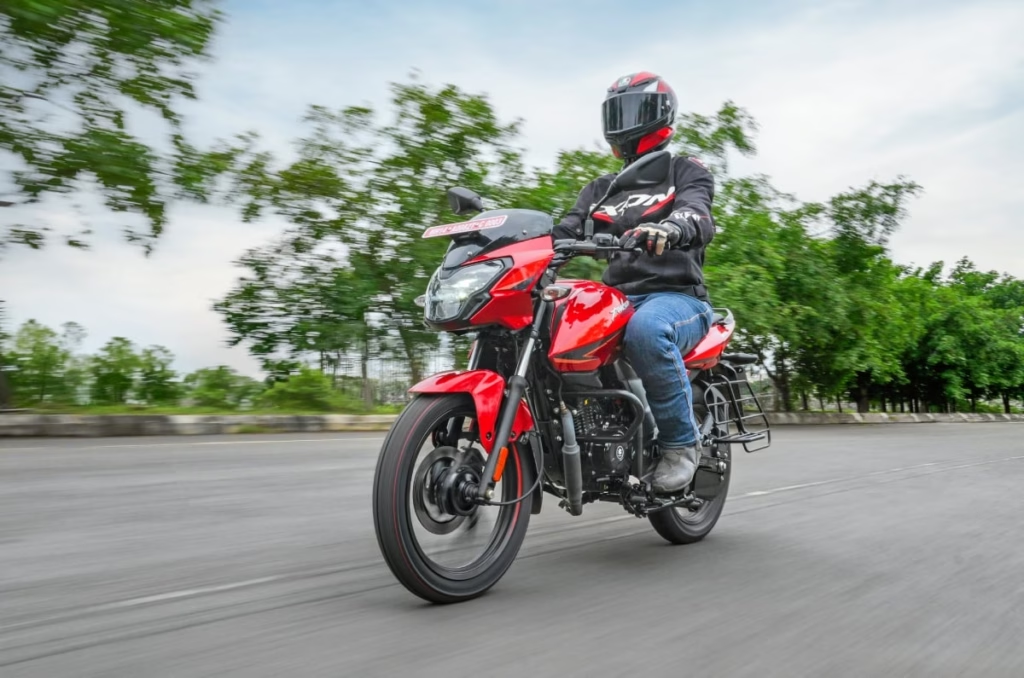
Considering how much has changed underneath, it’s especially commendable that the Pulsar 150 looks this similar to before. Bajaj’s design team has deliberately gone to great lengths to package everything neatly and retain the bike’s instantly recognisable silhouette. Pulsar hallmarks that people appreciate, like a ‘wolf eye’ headlight, a chunky tank, sharp tank extensions and a pointy tail, all continue, and you won’t be mistaking it for anything other than a classic Pulsar. There are no complaints when it comes to quality, and it’s as well-finished as you’d expect from a commuter bike today.
Top variants come with a split seat.
Just like the near-unchanged design, the Pulsar 150’s ergonomics are almost the same as before – but that’s a good thing. You’re sat very neutrally, and the riding position is that of a textbook commuter with only slightly rearward pegs for the sporty touch that a Pulsar is known for. With a perch that’s just 795mm off the ground, the 150 strikes a nice chord by being friendly and approachable for both shorter folks and 6’1 Rishaad. To cater to the wants of different riders, Bajaj will sell you a Pulsar equipped with either a single piece seat or split seats. Both options are spacious – the single piece seat understandably more so – and decently padded, capable of accommodating two full-size people without them getting acquainted with each other too intimately.
Pulsar 150 performance – 8/10
Has enough pep for city and highway duties, engine stalls a little too easily, though
City traffic is where most Pulsar riders spend most of their time, so we did the same and found that the bike behaves exactly as you’d expect from a commuter. The motor has good low- and mid-range torque, and paired with the super light clutch, wading through the drudgery of traffic doesn’t feel too taxing.
The new engine is also super smooth, and should you choose to venture out onto the highway, the Pulsar can do that as well. The upper limit of the 150’s comfortable cruising speed is 90-95kph in its top 5th gear, which is par for the course in this class.
Engine
149.5cc, single-cylinder, air-oil cooled
Power
14hp at 8,000rpm
Torque
14.1Nm at 6,500rpm
Gearbox
5-speed
However, for all its strengths, the engine in the Pulsar 150 unit we were allotted displayed a tendency to stall a little too easily, and this happened on multiple occasions to both myself and Rishaad, who rode the bike.
Pulsar 150 ride and handling – 8/10
Behaves predictably and handles all situations well
While the chassis is largely the same between the 125 and 150, one noteworthy difference is that the bigger one uses a fatter 33mm fork, compared to the 31mm unit on the smaller bike. Also, unlike the 125, the Pulsar 150 comes with the government-mandated safety net of single-channel ABS. All variants come with a 260mm disc brake at the front, paired with either a 230mm drum brake on the lowest variant or a 230mm disc on the higher two variants.
Pulsar 150 behaves neutrally and predictably when subjected to a variety of riding conditions.
The best way to describe the new Pulsar 150’s handling is neutral and predictable. Neither does it feel as vague as the previous-gen model, nor does it feel as responsive as the N / NS models. The Classic Pulsar 150 retains its surefootedness in a straight line while introducing a newfound taut feeling when taking a corner. Its demeanour is predictable at all times, which is sure to inspire confidence in the varied sort of riders it will cater to. The brakes work well and bring the Pulsar to a stop in a quick fashion without much drama, although overenthusiastic usage will result in the rear locking up.
Fuel tank
14 litres
Seat height
785mm
Ground clearance
165mm
Kerb weight
141kg
Wheelbase
1,320mm
However, for all its strengths, the Pulsar 150 is not perfect, and there are some areas of improvement. The rear suspension feels slightly underdamped and springy, throwing you off the seat over larger road imperfections. The gearshifts, too, felt a little rubbery and vague, lacking a snick feel.
Pulsar 150 features and safety – 8/10
Comes with a lot of tech-y features on the top two variants
Following today’s market trends, even a humble commuter like this one now packs a dollop of tech. This includes a USB-C charging port, 4 riding modes (Sport, Tour, Road and Rain), Bluetooth connectivity for the dash via Bajaj’s app, which brings in a host of functions, and you can even cast your phone’s screen onto the TFT display, although some of these functions are still not available yet and will be rolled out at a later date.
Top variants also come with a colour TFT display and riding modes
To control the TFT display’s functions and switch between the riding modes on the top variants, you also have more comprehensive switchgear whereas the colour LCD dash on the lower variants is paired with a simpler switch cluster. Both displays are informative and well laid-out and bring an air of premiumness from the rider’s POV. Admittedly, most of these features aren’t going to add much value for most everyday riders but for the few that want their motorcycle to double up as a gadget, they’re there.
Pulsar 150 price and verdict – 8/10
It suits its intended purpose quite well
Aside from a few small misses, the new Pulsar 150 is a lovely commuter, which comes in at a price point that is more or less in line with the competition today. Prices start at Rs 1.15 lakh and go up to Rs 1.23 lakh (ex-showroom, Delhi). Compared to the last-gen 150, this latest-gen Pulsar’s prices have gone up by Rs 4,000-Rs 6,000, which is a digestible amount considering the sheer scale of new components in use here.
Given the huge demand for a bike that looks like a Classic Pulsar and the fact that this new-gen model is such a quantum leap ahead compared to the old ones while costing just a few thousand rupees more, Bajaj seems to have a winner on its hands.
The classic Pulsar 125 has always been the most affordable way into Bajaj Pulsar ownership and while the 2026 model might look largely the same as before, underneath, it is actually all new.
Bajaj Pulsar 125 what’s changed under the skin?
Everything from stem to stern is all-new
To start with, gone are the double-cradle frame and twin shock absorbers, replaced by a lighter and stiffer diamond frame and monoshock, respectively. Complementing the new chassis is a brand-new motor. This engine started life as an engine from an N model of a similar displacement, but Bajaj has made certain changes to suit this application. For instance, the new 124.58cc engine on the smaller Pulsar has the lightest crank inertia among its peers– claims Bajaj– and the company has saved 1.2kg here alone, compared to before. Speaking of weight, the 125 weighs 131kg with its 11 litre fuel tank brimmed.
Despite all under-the-skin changes, the Pulsars retain their traditional styling to cater to market demand.
The new engine is also used as a stressed member of the chassis, and Bajaj has also peppered in the learnings it has made from the N range over here. For starters, the gearbox now has shorter, more tractable ratios and there’s also a low-rpm assist function, which raises engine rpm slightly to reduce stalling when you’re crawling at a higher gear at low speeds. Furthermore, the Pulsar 125’s higher variants also come equipped with an Integrated Starter Generator (ISG) which brings in silent start and a reasonably quick start/stop system.
Bajaj Pulsar 125 Design and seating comfort – 8/10
Looks uncannily similar to the older bike; feels very similar to sit on too
Considering how much has changed underneath, it’s especially commendable that the Pulsars look so similar to before. Bajaj’s design team has deliberately gone to great lengths to package everything neatly and retain the bikes’ instantly recognizable silhouette.
Pulsar hallmarks like a ‘wolf eye’ headlight, chunky tank, sharp tank extensions and a pointy tail, all continue and you won’t be mistaking them for anything other than a classic Pulsar. Overall quality is quite nice for the price that the Pulsar 125 commands.
Lower variants come with a single-piece seat.
The seating position also echoes the near-unchanged design and you’re sat very neutrally with the riding position best described as that of a textbook commuter.The only difference is that the pegs are set slightly rearward for the sporty touch that Pulsars are known for. With a perch that’s just 795mm off the ground, the Pulsar 125 feels friendly and approachable for shorter folks as well as 5’11 me.
Engine
124.6cc, single-cylinder, air-cooled
Power
12.1hp at 8,500rpm
Torque
11.4Nm at 6,500rpm
Gearbox
5-speed
To cater to the needs of different riders, Bajaj will sell you a bike equipped with either a single-piece seat or split seats, depending on the variant you buy. Both options are spacious and decently padded, capable of accommodating two full-size people without them getting acquainted with each other too intimately.
Bajaj Pulsar 125 Performance – 8/10
Engine is smooth and responsive; gearshifts can feel a little vague though
City traffic is where a majority of Pulsar riders spend their time, so we did the same and found that the bike behaves exactly as you’d expect from a commuter. The new engine is smooth with good low- and mid-range torque and paired with the super-light clutch, wading through the drudgery of traffic demands very little effort from the rider.
The Pulsar 125 behaves neutrally and predictably when subjected to a variety of riding conditions.
Even at highway speeds, the engine retains its smooth characteristics, and should you choose to venture out onto the highway, the Pulsar 125 is up for it. The upper limit of the 125’s comfortable cruising speed is 80-85kph in its top 5th gear, which is quite respectable considering the displacement.
The monoshock feels a little springy and underdamped; it can kick you off the seat over sharper and larger bumps.
Bajaj Pulsar 125 ride and handling – 8/10
Feels trustworthy and neutral
Coming to how the Pulsar behaves on the side of the tyre, the best way to describe it is neutral and predictable. Neither does it feel as flaccid as the previous-gen model, nor does it feel as agile as the N / NS models. The bike has a good sense of surefootedness, both around a corner as well as in a straight line, which is sure to inspire confidence in the varied sort of riders it will cater to.
Two full-size adults will fit comfortably.
The lowest variant of the 125 comes with a 130mm drum front brake whereas higher variants come with a 260mm disc brake, although there’s no ABS on offer here. All variants of the 125 come with a 130mm rear drum brake. The braking power is more than sufficient for the power on tap and the drum brake also works predictably.
Tyres (F/R)
80/100-17 / 100/90-17
Brakes (F/R)
260mm disc / 130mm drum
Suspension (F/R)
Telescopic fork / monoshock
However, for all its strengths, the Pulsar 125 is not perfect and there are some areas of improvement. The rear suspension feels slightly underdamped and springy, throwing you off the seat over larger road imperfections, and the gearshifts, too, felt a little rubbery and vague, lacking a snick feel.
With this generation change, the Pulsar 125 is now a substantial 15 kilos lighter than before.
Bajaj Pulsar 125 Features – 8/10
Higher variants have a lot of tech
Following today’s market trends, humble commuters like these now also pack a dollop of tech. This includes a USB-C charging port, 4 riding modes (Sport, Tour, Road and Rain), Bluetooth connectivity for the dash via Bajaj’s app, which brings in a host of functions, and you can even cast your phone’s screen onto the TFT display, although some of these functions are still not available yet, and will be rolled out at a later date.
Lower variants feature a negative colour LCD display.
To control the TFT display on the top variants, you also have more comprehensive switchgear, whereas the colour LCD dash on the lower variants is paired to a simpler switch cluster. Both displays are informative and well-laid-out and bring an air of premiumness to the rider’s POV. Admittedly, most of these features aren’t going to add much value for most everyday riders, but for the few that want their motorcycle to double up as a gadget, they’re there.
Bajaj Pulsar 125 Price and verdict – 8/10
It’s an accomplished commuter with very few misses
Aside from a few foibles, the new Pulsar 125 is a good commuter which comes in at a price point that is more or less in line with the competition today. Prices start at Rs 92,990 and top out at Rs 1.04 lakh (ex-showroom, Delhi). Compared to the bargain basement Pulsar 125 Neon, the 2026 bike’s price has risen quite significantly, but if you were to compare the actual Pulsar 125 base model, the increment is much smaller.
Given the huge demand for a bike that looks like a Classic Pulsar, and the fact that this new-gen model is such a quantum leap ahead compared to the old ones while costing just a few thousand rupees more, Bajaj seems to have a winner on its hands.
IMD Heavy Rain Alert: उत्तर-पश्चिम और उससे सटे मध्य-पश्चिम बंगाल की खाड़ी और दक्षिण ओडिशा व उत्तरी आंध्र प्रदेश के तटों पर बना कम दबाव का क्षेत्र अब और सक्रिय हो गया है। मौसम विज्ञान विभाग (IMD) ने 11 सितंबर को ताजा अलर्ट जारी करते हुए देश के कई राज्यों में अगले कुछ दिनों तक भारी से बहुत भारी बारिश, तेज आंधी और बिजली गिरने की गंभीर चेतावनी दी है। यह मानसूनी प्रणाली अगले 24 घंटों के दौरान अधिक प्रभावी होकर पश्चिम-उत्तर-पश्चिम दिशा में उत्तर तटीय आंध्र प्रदेश और दक्षिण ओडिशा की ओर बढ़ेगी। इससे मध्य, पश्चिमी और पूर्वी भारत के विस्तृत हिस्सों में मानसूनी गतिविधियां तेज होंगी।
बदले हुए मौसमी तंत्र का असर देश के मैदानी और तटीय इलाकों पर साफ देखने को मिलेगा, जहां हवा की गति 60 से 70 किलोमीटर प्रति घंटे तक पहुंच सकती है।
पिछले 24 घंटों का हाल जानिए
मौसम विभाग के आंकड़ों के मुताबिक बीते 24 घंटों में पूर्वी मध्य प्रदेश, ओडिशा, बिहार और छत्तीसगढ़ के अलग-अलग हिस्सों में अत्यंत भारी बारिश (12 से 20 सेमी) दर्ज की गई है। इसके अलावा उत्तर प्रदेश, पश्चिम मध्य प्रदेश, पश्चिम बंगाल, सिक्किम और अंडमान व निकोबार द्वीप समूह में भी 7 से 11 सेमी तक भारी बारिश हुई है।
वर्तमान में मानसून ट्रफ का पश्चिमी सिरा अपनी सामान्य स्थिति से उत्तर में और पूर्वी सिरा दक्षिण में स्थित है। इसके साथ ही उत्तर राजस्थान से लेकर बंगाल की खाड़ी के कम दबाव के क्षेत्र तक एक ट्रफ रेखा फैली हुई है। मध्य उत्तर-पूर्वी अरब सागर से लेकर दक्षिण कोंकण तट तक और उत्तर पंजाब के ऊपर चक्रवाती हवाओं का क्षेत्र बना हुआ है, जिससे कई राज्यों में एक साथ बारिश के अनुकूल माहौल तैयार हुआ है।
मध्य भारत: छत्तीसगढ़ और मध्य प्रदेश में बहुत भारी बारिश की चेतावनी
मध्य प्रदेश, विदर्भ और छत्तीसगढ़ में 11 से 15 सितंबर के बीच मूसलाधार बारिश का दौर देखने को मिलेगा। 11 सितंबर को छत्तीसगढ़ में अति भारी बारिश का अनुमान है जबकि 12 सितंबर को भी यहां भारी बारिश जारी रहेगी। पश्चिम मध्य प्रदेश में 13 और 14 सितंबर को अत्यधिक भारी बारिश का अलर्ट जारी किया गया है। पूर्वी मध्य प्रदेश और विदर्भ में 11 से 12 सितंबर के दौरान मध्यम से भारी बारिश होगी। इसके साथ ही 11 और 12 सितंबर को विदर्भ में 40 से 60 किमी प्रति घंटे की रफ्तार से तेज तूफानी हवाएं चलने की संभावना है।
पश्चिमी भारत: गुजरात और मध्य महाराष्ट्र में 13-14 सितंबर को बड़ा अलर्ट
पश्चिम भारत के राज्यों में 12 सितंबर से बारिश का जोर बढ़ेगा। कोंकण और गोवा में 11 से 17 सितंबर तक लगातार व्यापक बारिश होगी। मध्य महाराष्ट्र में 13 सितंबर को, गुजरात क्षेत्र में 13 व 14 सितंबर को, सौराष्ट्र और कच्छ में 14 सितंबर को अलग-अलग स्थानों पर मूसलाधार से अति भारी बारिश की चेतावनी दी गई है। मराठवाड़ा में 12 और 13 सितंबर को भारी बारिश के साथ 60 किमी प्रति घंटे तक की गति से हवाएं चल सकती हैं।
उत्तर-पश्चिम भारत: उत्तराखंड और पंजाब समेत मैदानी इलाकों में बारिश का पूर्वानुमान
उत्तराखंड में 11 से 14 सितंबर तक और जम्मू-कश्मीर, हिमाचल प्रदेश में 15 से 17 सितंबर के दौरान व्यापक स्तर पर बारिश होने की संभावना है। उत्तराखंड में 11 से 13 सितंबर के बीच भारी बारिश होगी। पंजाब में 13 से 15 सितंबर तक और हरियाणा, चंडीगढ़, दिल्ली और पूर्वी राजस्थान में 13 और 14 सितंबर को भारी बारिश दर्ज की जा सकती है। उत्तर प्रदेश के पूर्वी और पश्चिमी हिस्सों में 11 सितंबर को गरज-चमक और आकाशीय बिजली गिरने के साथ बारिश का अलर्ट जारी किया गया है।
पूर्वी और पूर्वोत्तर भारत: ओडिशा और असम-मेघालय में मौसम रहेगा सख्त
पूर्वी भारत में ओडिशा के लिए 11 सितंबर को बहुत भारी बारिश का अलर्ट जारी किया गया है जिसके साथ ही 60 किमी प्रति घंटे की रफ्तार से तूफानी हवाएं चलेंगी। गंगीय पश्चिम बंगाल, बिहार और झारखंड में 11 सितंबर को भारी बारिश की संभावना है। सब-हिमालयी पश्चिम बंगाल और सिक्किम में 11 से 13 सितंबर तथा 16-17 सितंबर को मूसलाधार बारिश हो सकती है। पूर्वोत्तर के राज्यों में असम और मेघालय में 11 सितंबर को बहुत भारी बारिश होने के आसार हैं। इसके अलावा अरुणाचल प्रदेश, नागालैंड, मणिपुर, मिजोरम और त्रिपुरा में 11 से 14 सितंबर के बीच गरज-चमक के साथ मूसलाधार पानी बरस सकता है।
दक्षिण प्रायद्वीपीय भारत: आंध्र प्रदेश में थंडरस्क्वाल और आंधी का खतरा
दक्षिण भारत में तटीय आंध्र प्रदेश और यनम में 11 और 12 सितंबर को थंडरस्क्वाल का खतरा है। हवा की स्पीड 50 से 60 किमी प्रति घंटे से बढ़कर 70 किमी प्रति घंटे की झोंकेदार रफ्तार छू सकती है। तेलंगाना और तटीय आंध्र प्रदेश में 11 और 12 सितंबर को भारी वर्षा का अनुमान है। तमिलनाडु, पुडुचेरी, कराइकल और रायलसीमा में भी 11 से 13 सितंबर के दौरान तेज हवाओं और बिजली चमकने के साथ हल्की से मध्यम बारिश होगी। केरल, माहे और दक्षिण तटीय आंध्र प्रदेश में 11 से 13 सितंबर तक गर्म और आर्द्र मौसम बना रहने की संभावना है।
समुद्र में स्थिति चिंताजनक: मछुआरों के लिए रेड चेतावनी
समुद्र में उठती ऊंची लहरों और तूफानी हवाओं के कारण मौसम विभाग ने मछुआरों के लिए विशेष अलर्ट जारी किया है। अरब सागर में सोमालिया तट, दक्षिण-पश्चिम अरब सागर और गुजरात तट से सटे उत्तर-पूर्वी अरब सागर में 13 से 16 सितंबर तक मछुआरों को समुद्र में न जाने की सलाह दी गई है।
बंगाल की खाड़ी में पश्चिम बंगाल, बांग्लादेश, ओडिशा और उत्तर आंध्र प्रदेश के तटीय इलाकों में 11 और 12 सितंबर को समुद्र की स्थिति बेहद खराब रहेगी। मछुआरों को तटीय और गहरे समुद्री इलाकों में जाने से पूरी तरह से मना किया गया है।
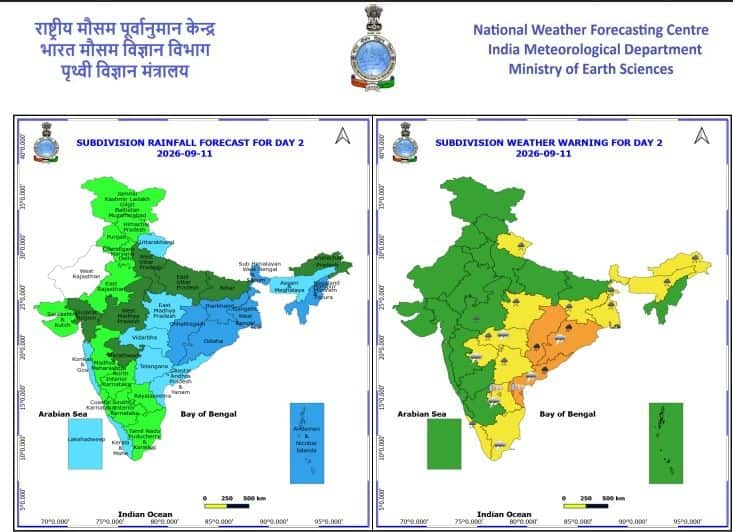
IMD rain alert for September 11: देशभर में अलग अलग मानसूनी प्रणालियों के असर से मौसम का मिजाज बदला हुआ है। इस बीच भारत मौसम विज्ञान विभाग (IMD) ने 11 सितंबर के लिए मौसम की विस्तृत रिपोर्ट जारी करते हुए देश के तीन प्रमुख राज्यों में भारी से बहुत भारी बारिश होने की गंभीर चेतावनी जारी की है। इसके साथ ही उत्तर प्रदेश, बिहार, झारखंड और पश्चिम बंगाल समेत कई राज्यों में आंधी-तूफान, गरज-चमक और झोंकेदार हवाओं के असर की आशंका भी जताई गई है।
ओडिशा, छत्तीसगढ़ और तटीय आंध्र प्रदेश में बहुत भारी बारिश का अलर्ट
मौसम विभाग के ताजा बुलेटिन के मुताबिक 11 सितंबर को छत्तीसगढ़, ओडिशा और तटीय आंध्र प्रदेश के अलग-अलग हिस्सों में मुसलाधार से लेकर बहुत भारी बारिश होने की प्रबल संभावना है। बंगाल की खाड़ी से आ रही नम हवाओं और मौसमी दबाव की वजह से इन तीनों राज्यों के कई क्षेत्रों में भारी जलभराव, नदियों का जलस्तर बढ़ने का खतरा बना हुआ है।
यूपी, बिहार, मध्य प्रदेश और उत्तराखंड समेत कई राज्यों में तेज बारिश
बहुत भारी बारिश वाले इन 3 प्रमुख राज्यों के अलावा देश के एक बड़े हिस्से में झमाझम बारिश की स्थिति बनी रहेगी। IMD ने उत्तराखंड, मध्य प्रदेश, विदर्भ, झारखंड, पश्चिम बंगाल और सिक्किम में भारी बारिश का अनुमान जताया है। इसके अलावा दक्षिण और पूर्वोत्तर भारत के राज्यों केरल (माहे सहित), तेलंगाना, अरुणाचल प्रदेश औरर असम और मेघालय में भी अलग-अलग जगहों पर तेज बारिश का दौर देखने को मिलेगा।
तटीय आंध्र प्रदेश में थंडरस्क्वाल, 60 किमी प्रति घंटे की रफ्तार से चलेंगी हवाएं
11 सितंबर को कई राज्यों में बारिश के साथ-साथ तूफानी हवाओं का भयंकर तांडव देखने को मिल सकता है। तटीय आंध्र प्रदेश में मौसम विभाग ने थंडरस्क्वाल की चेतावनी जारी की है। यहां 50 से 60 किलोमीटर प्रति घंटे की रफ्तार से तेज हवाएं चलने और धूलभरी आंधी आने की आशंका है। इसके अलावा पूरे आंध्र प्रदेश के मैदानी इलाकों में दिन के समय तेज सतही हवाएं चलेंगी। इसी तरह विदर्भ, मराठवाड़ा, ओडिशा, रायलसीमा और तमिलनाडु (पुडुचेरी और कराईकल सहित) में गरज-चमक और बिजली कड़कने के साथ 40 से 50 किलोमीटर प्रति घंटे की गति से हवाएं चल सकती हैं।
यूपी, बिहार, झारखंड और बंगाल में बिजली गिरने और आंधी की आशंका
उत्तर और पूर्वी भारत के मैदानी इलाकों में भी 11 सितंबर को मौसम गड़बड़ हो सकता है। बिहार, झारखंड, पश्चिम बंगाल, सिक्किम, पूर्वी राजस्थान, तेलंगाना और अंडमान व निकोबार द्वीप समूह में 30 से 40 किलोमीटर प्रति घंटे की रफ्तार से झोंकेदार हवाएं चलने, बिजली चमकने की संभावना जताई गई है।
उत्तर प्रदेश, उत्तराखंड, मध्य प्रदेश, छत्तीसगढ़, अरुणाचल प्रदेश, असम, मेघालय, नागालैंड, मणिपुर, मिजोरम और त्रिपुरा में भी गरज-चमक के साथ आकाशीय बिजली गिरने का अलर्ट जारी किया गया है। मौसम विभाग ने इन क्षेत्रों के लोगों को बिजली चमकने के दौरान खुले खेतों, पेड़ों या बिजली के खंभों के पास न रुकने की सलाह दी है।
बंगाल की खाड़ी और अरब सागर में स्थिति खराब, मछुआरों को चेतावनी
समुद्री क्षेत्रों में चक्रवाती और मानसूनी हवाओं की तीव्रता काफी अधिक रहने वाली है। उत्तर-पश्चिम और मध्य बंगाल की खाड़ी के साथ-साथ पश्चिम बंगाल, बांग्लादेश, ओडिशा और उत्तरी आंध्र प्रदेश के तटों पर 40 से 50 किलोमीटर प्रति घंटे की रफ्तार से हवाएं चलेंगी जो बढ़कर 60 किलोमीटर प्रति घंटे तक पहुंच सकती हैं।
उधर अरब सागर में सोमालिया तट और उससे सटे दक्षिण-पश्चिम अरब सागर के इलाकों में 45 से 55 किलोमीटर प्रति घंटे की रफ्तार से हवाएं चलने का अनुमान है. इसकी स्पीड 65 किलोमीटर प्रति घंटे के स्तर को छू सकती हैं। समुद्र में उठने वाली ऊंची लहरों और खराब स्थिति को देखते हुए मछुआरों को इन तटीय इलाकों और गहरे समुद्र में न जाने की सख्त हिदायत दी गई है।