Petrol Diesel Price Today: आज सस्ता हुआ या महंगा? जानें पेट्रोल-डीजल का ताजा रेट

Petrol Diesel Price Today: हर दिन की शुरुआत सिर्फ सूरज की किरणों से नहीं होती, बल्कि पेट्रोल और डीजल की नई कीमतों से भी होती है, जो आम आदमी की जेब पर सीधा असर डालती हैं। सुबह 6 बजे देश की तेल विपणन कंपनियां (OMCs) ताजा दरें जारी करती हैं, जो अंतरराष्ट्रीय बाजार में कच्चे तेल की कीमतों और डॉलर-रुपए की विनिमय दर में आए बदलावों पर आधारित होती हैं। ये बदलाव रोजमर्रा की जिंदगी को प्रभावित करते हैं, चाहे वो ऑफिस जाने वाला व्यक्ति हो या फल-सब्जी बेचने वाला व्यापारी।

ऐसे में हर दिन की कीमतों की जानकारी रखना सिर्फ जरूरी ही नहीं, बल्कि समझदारी भी है। सरकार की यह प्रणाली पारदर्शिता सुनिश्चित करती है ताकि उपभोक्ताओं को किसी तरह की भ्रमित जानकारी न मिले।

आपके शहर में आज का पेट्रोल-डीजल का भाव

ये रहे 29 आगस्त 2026 के प्रमुख शहरों के पेट्रोल-डीजल के ताजा रेट

नई दिल्ली: पेट्रोल ₹102.12 प्रति लीटर और डीजल ₹95.20 प्रति लीटर।

मुंबई: पेट्रोल ₹111.18 और डीजल ₹97.83 प्रति लीटर।

कोलकाता: पेट्रोल ₹113.47 जबकि डीजल ₹99.82 प्रति लीटर।

चेन्नई: पेट्रोल ₹107.77 और डीजल ₹99.55 प्रति लीटर।

गुरुग्राम: पेट्रोल ₹102.77 तथा डीजल ₹95.44 प्रति लीटर।

नोएडा: पेट्रोल ₹102.12 और डीजल ₹95.56 प्रति लीटर।

बेंगलुरु: पेट्रोल ₹110.93 जबकि डीजल ₹98.80 प्रति लीटर।

भुवनेश्वर: पेट्रोल ₹109.92 और डीजल ₹100.92 प्रति लीटर।

चंडीगढ़: पेट्रोल ₹98.10 तथा डीजल ₹86.09 प्रति लीटर।

हैदराबाद: पेट्रोल ₹115.69 और डीजल ₹103.82 प्रति लीटर।

जयपुर: पेट्रोल ₹112.66 जबकि डीजल ₹97.78 प्रति लीटर।

लखनऊ: पेट्रोल ₹102.05 और डीजल ₹95.55 प्रति लीटर।

पटना: पेट्रोल ₹113.35 तथा डीजल ₹99.36 प्रति लीटर।

तिरुवनंतपुरम: पेट्रोल ₹115.49 और डीजल ₹104.40 प्रति लीटर।

पिछले दो साल से स्थिर क्यों हैं कीमतें?

मई 2022 के बाद से केंद्र और कई राज्यों द्वारा टैक्स में कटौती की गई, जिसके बाद पेट्रोल-डीजल की कीमतों में स्थिरता देखी जा रही है। हालांकि अंतरराष्ट्रीय बाजार में उतार-चढ़ाव होता रहता है, फिर भी भारतीय उपभोक्ताओं के लिए कीमतें तुलनात्मक रूप से स्थिर बनी हुई हैं।

किन कारणों से तय होती हैं ईंधन की कीमतें?

  1. कच्चे तेल की कीमतें:

पेट्रोल और डीजल का उत्पादन मुख्य रूप से कच्चे तेल से होता है। जब अंतरराष्ट्रीय स्तर पर कच्चे तेल की कीमतें बढ़ती हैं, तो इसका असर सीधे भारतीय बाजार पर पड़ता है।

  1. डॉलर के मुकाबले रुपया:

भारत अधिकतर कच्चा तेल आयात करता है, और यह डॉलर में खरीदा जाता है। यदि रुपया कमजोर होता है, तो ईंधन महंगा हो जाता है।

  1. सरकारी टैक्स और शुल्क:

केंद्र और राज्य सरकारें पेट्रोल-डीजल पर भारी टैक्स लगाती हैं, जो खुदरा मूल्य का बड़ा हिस्सा होते हैं। यही कारण है कि राज्यों में कीमतों में अंतर होता है।

  1. रिफाइनिंग की लागत:

कच्चे तेल को इस्तेमाल लायक बनाने की प्रक्रिया (रिफाइनिंग) में भी खर्च होता है। ये लागत कच्चे तेल की गुणवत्ता और रिफाइनरी की क्षमता पर निर्भर करती है।

  1. मांग और आपूर्ति का संतुलन:

बाजार में ईंधन की मांग अगर बढ़ जाती है, तो कीमतें भी ऊपर जाने लगती हैं। खासकर त्योहारों, गर्मी या सर्दी के मौसम में ईंधन की खपत ज्यादा होती है।

कैसे करें अपने शहर की कीमतें SMS से चेक?

अगर आप मोबाइल से ईंधन की कीमत जानना चाहते हैं, तो ये प्रक्रिया आसान है:

Indian Oil ग्राहक: अपने शहर का कोड टाइप करें और उसे “RSP” के साथ 9224992249 पर भेजें।

BPCL ग्राहक: “RSP” लिखकर 9223112222 पर भेजें।

HPCL ग्राहक: “HP Price” लिखकर 9222201122 पर भेजें।

LPG Price Today August 25: गैस सिलेंडर के दाम में फिर आया बड़ा ट्विस्ट!दिल्ली से मुंबई तक जानिए 14.2 KG और कमर्शियल LPG के नए रेट

All you need to know about the MG Hector Tomahawk EV and PHEV

All you need to know about the MG Hector Tomahawk EV and PHEV

MG launched the Hector Tomahawk in India in both all-electric (EV) and plug-in hybrid (PHEV) versions, with prices starting from Rs 19.50 lakh and Rs 25.70 lakh, respectively. Both models are offered with a lot of new-age technology and have piqued the interest of enthusiasts. Here’s everything you need to know about the MG Hector Tomahawk EV and Hector Tomahawk PHEV. 

1. What are the exterior differences between the EV and PHEV?

Both versions get different grilles, front bumpers, and alloy wheels

EV
PHEV
 

Both the Hector Tomahawk’s EV and PHEV versions have some design differences. While the EV gets a blanked-off gloss-black grille, the PHEV gets a functional grille with chrome inserts and black trims underneath the headlights. The front bumper design is also different, with the PHEV getting a silver bullbar-like element in the centre that the EV misses. The headlights and illuminated MG logo are, however, shared. 

Not much is different in the side profile, except for the 18-inch alloy designs and red callipers on the top-spec Hector Tomahawk PHEV. If you opt for a dual-tone shade, the EV will have a black roof, while the PHEV will have a white roof. The rear design, however, is identical for both versions of the SUV.

2. What are the interior differences between the EV and PHEV?

Save for a luggage cover and different cabin themes, everything else is the same

MG Hector Tomahawk EV gets a beige and black cabin theme.

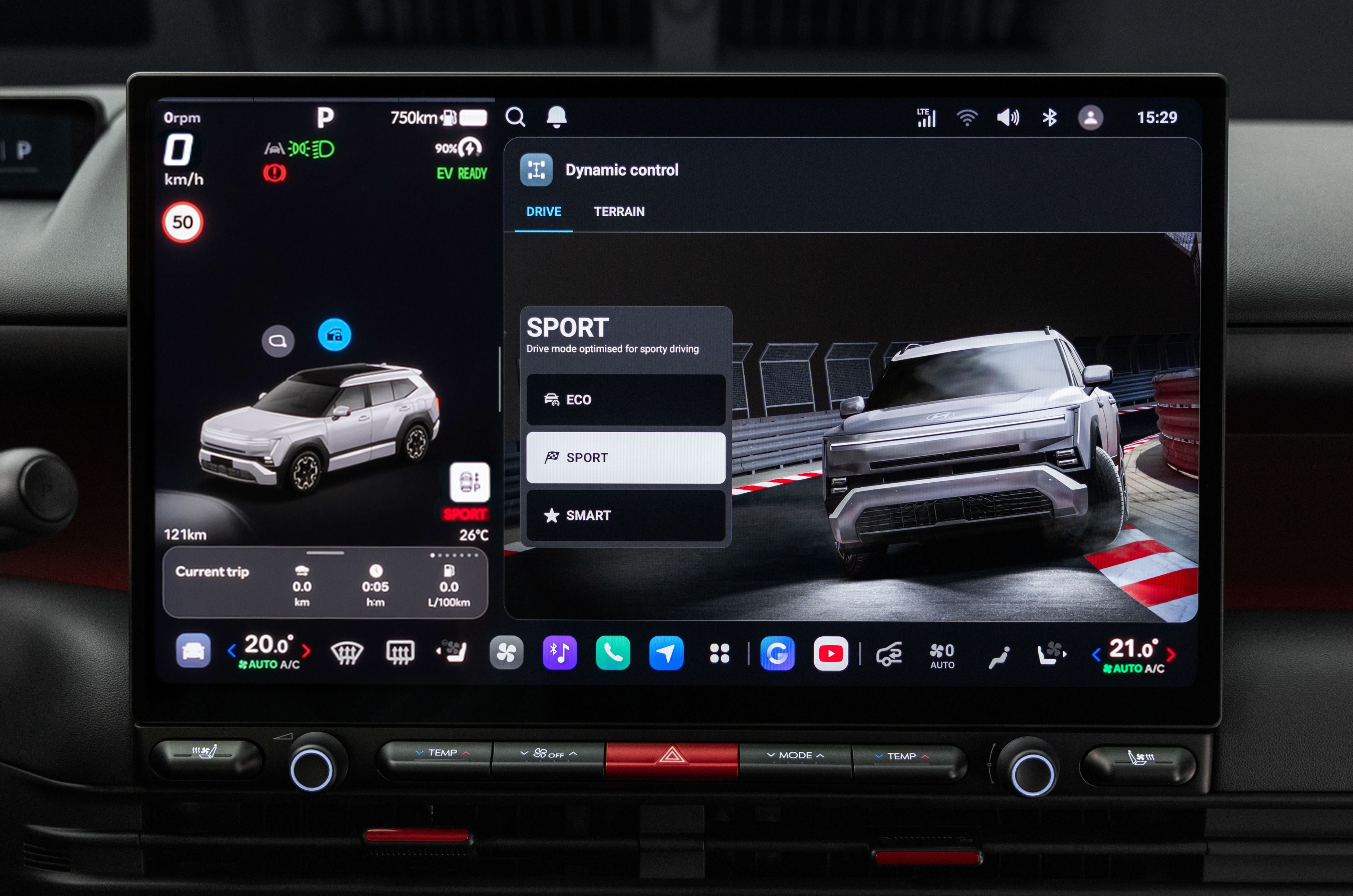
Save for a rolling luggage shade on the 5-seater variants of the EV, and a different cabin theme – brown and black on the EV and a darker brown and black on the PHEV – there is no visible difference. Everything else is the same, including the feature suite: a 15.6-inch touchscreen infotainment system, an 8.8-inch digital driver’s display, a 10-speaker Infinity sound system, a panoramic sunroof, powered and ventilated front seats with memory function for the driver’s seat, and a 50W fast wireless charger. 
MG Hector Tomahawk PHEV gets a brown and black cabin theme.

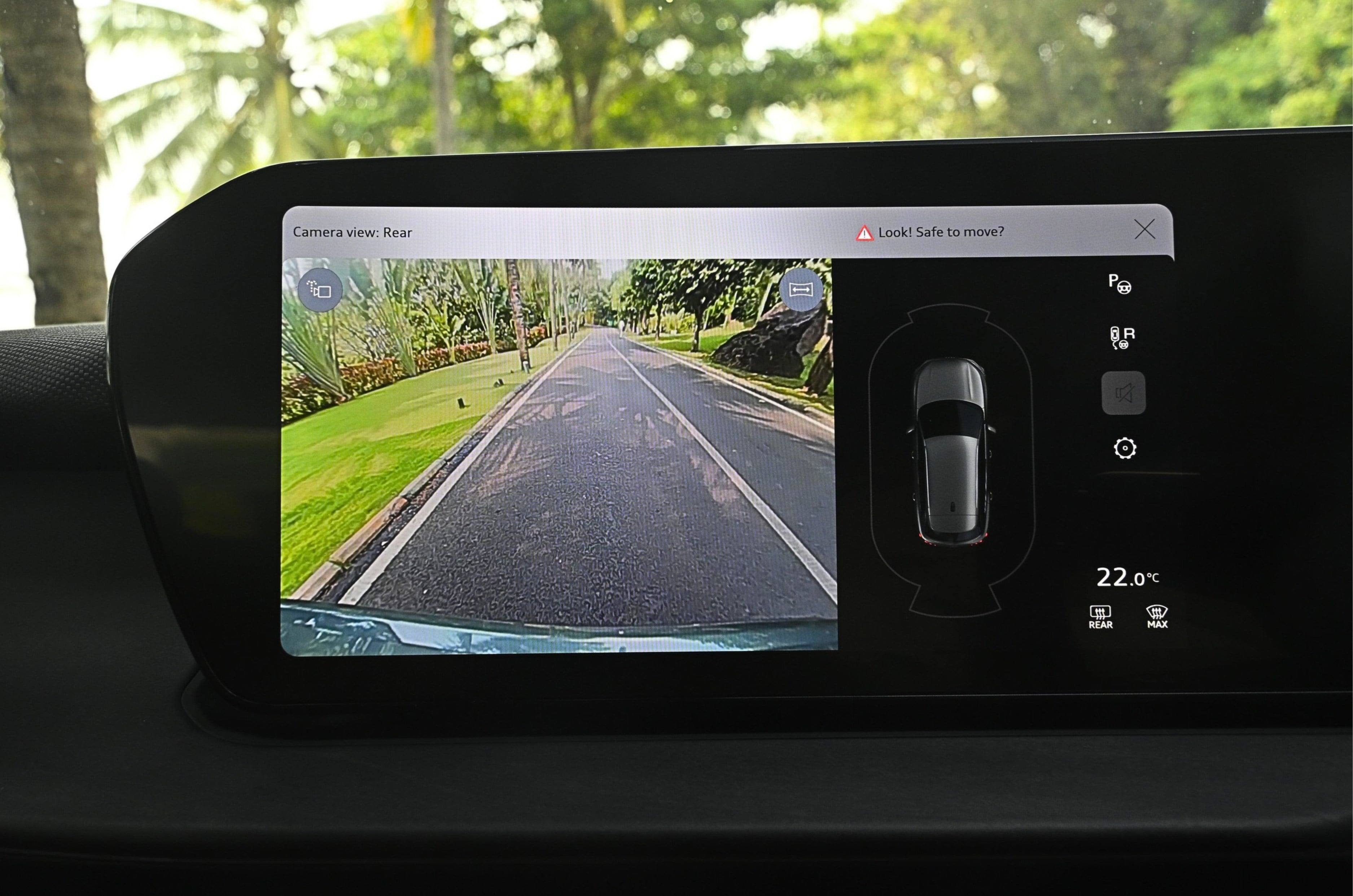
The safety suite is also identical in both Hector Tomahawk versions, which includes 6 airbags, a 360-degree camera with an under-bonnet view, Level 2 advanced driver assistance systems (ADAS) and a tyre pressure monitoring system (TPMS). 

3. What is the boot space on the MG Hector Tomahawk EV and PHEV?

EV and PHEV versions offer up to 610 litres and 192 litres of boot space, respectively

5-seater MG Hector Tomahawk EV’s boot space. 

The MG Hector Tomahawk EV is offered in either a 5-seater or a 7-seater version. The 5-seater offers 610-litre boot space, with all rows up, which can be expanded to 1,053 litres by folding down the rear row. The 7-seater version offers a 192-litre boot space with all rows up,  and 528 litres when the third row is folded. 

The PHEV, offered only as a 7-seater, offers 192-litre boot space like the EV’s 7-seater version, expandable to 528 litres by folding the third row. Neither the EV nor the PHEV version of the Hector Tomahawk are offered with a frunk (storage space under the bonnet). 

4. What are the powertrain specifications of the MG Hector Tomahawk PHEV and EV?

PHEV gets a 1.5L engine and 20.5kWh battery; EV offers a 69.2kWh battery pack

The MG Hector Tomahawk PHEV gets a 1.5-litre naturally aspirated petrol engine and a 20.5kWh battery pack, offering a combined output of 198hp and 230Nm. The front-wheel-drive (FWD) SUV has an all-electric range of around 115km and a total range including the petrol engine of around 1,100km. 

The MG Hector Tomahawk EV, on the other hand, gets a 69.2kWh battery pack, mated to a front-axle-mounted electric motor producing 204hp and 310Nm. It has a claimed range of 517km.  

5. Can the Hector Tomahawk PHEV be charged at a public EV charging station?

It supports 25kW DC fast charging

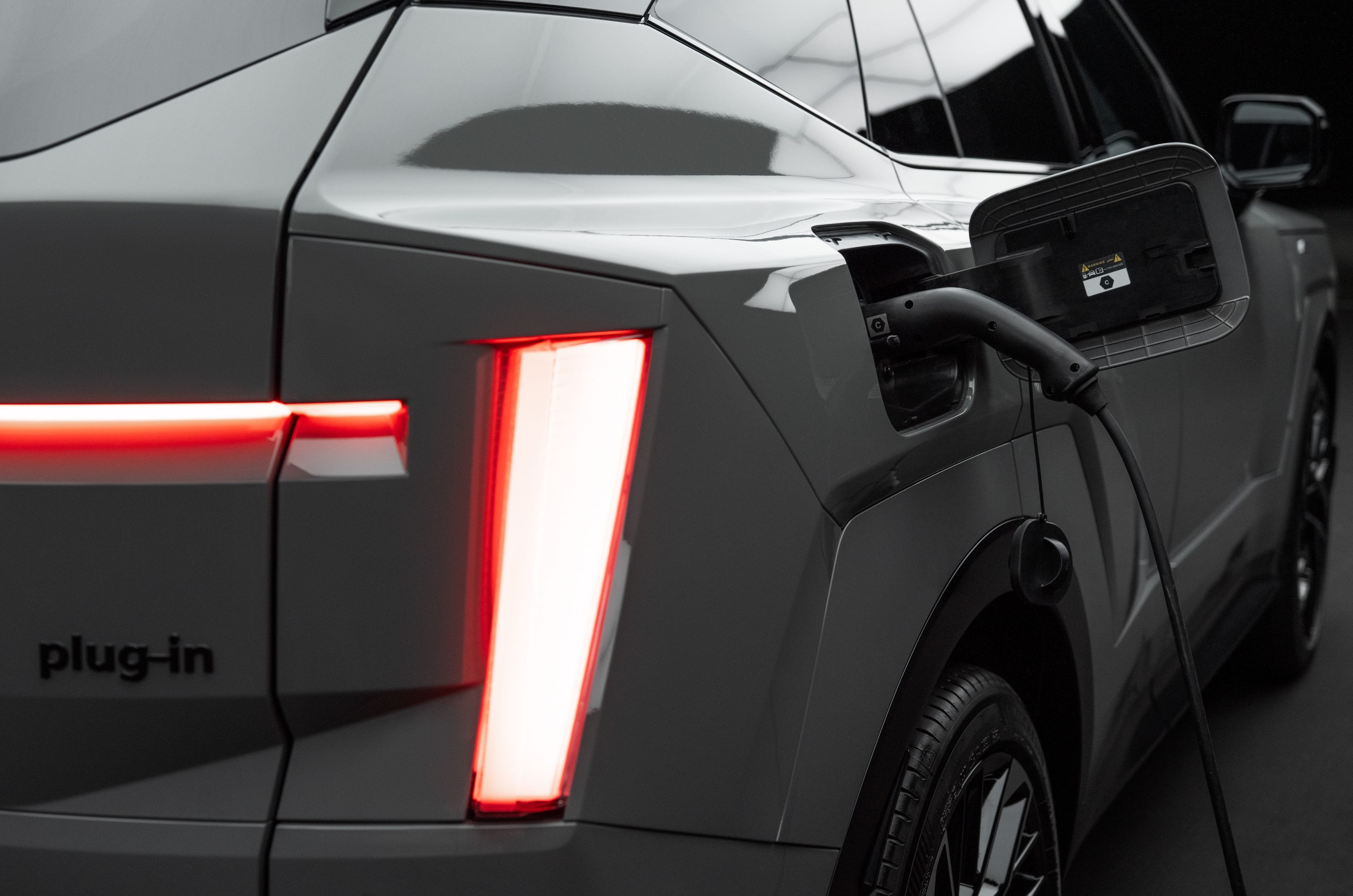
Yes, being a plug-in hybrid (PHEV), the MG Hector Tomahawk PHEV supports 25kW DC fast charging. This can replenish the battery from 30 to 80 percent in 35 minutes, like a typical EV. MG is also offering it with a 3.3kW home charger, which can recharge the battery pack from 10 to 100 percent in 7.5 hours.

6. Are the MG Tomahawk EV and PHEV more affordable with BaaS?

BaaS reduces the EV’s and PHEV’s initial prices by up to Rs 6.01 lakh and 3.91 lakh, respectively 

MG Hector Tomahawk EV, PHEV BaaS vs non-BaaS prices (in Rs, lakh)


Without BaaS

With BaaS

Initial cost difference

EV

19.50 to 23.50

13.99 to 17.49*

Up to 6.01

PHEV

25.70 to 27.80

21.79 to 23.89^

3.91

*Battery subscription fee is Rs 4.9 per km per month

^Asks for a battery subscription fee of Rs 3.2 per km per month

The BaaS (Battery-as-a-Service) option reduces the upfront price of the MG Hector Tomahawk EV by Rs 6.01 lakh and the PHEV by Rs 3.91 lakh. However, you then pay a battery rental fee for every kilometre you drive: Rs 4.90 per km for the EV and Rs 3.20 per km for the PHEV. At these rates, the upfront savings from BaaS are effectively used up after around 1.22 lakh km. The break-even point is 1,22,653 km for the EV and 1,22,187 km for the PHEV.

In simple terms, if you expect to drive less than 1.22 lakh km over the entire ownership period, BaaS could be the more affordable option because of its lower initial cost. However, if you plan to drive more than 1.22 lakh km, buying the Hector Tomahawk with the battery included is likely to save you more money in the long run.

There is also another factor to consider. Under the BaaS plan, you do not own the battery, so your long-term costs depend on the rental agreement. If MG increases the per-kilometre fee or changes the contract in the future, your running costs could also increase. So, while BaaS would be more affordable for most buyers, purchasing the vehicle with the battery included may offer greater certainty in running cost calculations.
Prices are ex-showroom, India.

Renault Kwid facelift revealed for Brazil

Renault Kwid facelift revealed for Brazil

Renault has revealed the Kwid facelift for the Brazilian market, featuring subtle exterior design revisions and a completely revamped interior. The updated hatchback is available in three trims – Evolution, Techno, and Outsider.

  1. Gets a new 7-inch digital driver’s display and a 10.1-inch infotainment system
  2. Has a cleaner-looking but hard plastic-only dashboard without the ‘Kwid’ inscription
  3. Features a Kiger-like grille, 14-inch alloy wheels and redesigned taillight elements

Notably, the India-spec Kwid was also updated earlier this year, receiving new 3D badges, fresh wheel covers, and a Kiger-inspired steering wheel. However, compared to the India-spec model, the Brazil-spec Kwid gets more extensive updates as part of its facelift.

Brazil-spec Renault Kwid facelift: What are the changes?

Gets a revamped dashboard with two screens

The biggest update on the Brazil-spec Kwid is inside the cabin, which now features a cleaner-looking dashboard with two displays: a 7-inch digital driver’s display and a free-standing 10.1-inch touchscreen infotainment system. While the dashboard continues to use hard plastic, the overall design looks more premium than the India-spec Kwid, which gets a semi-digital driver’s display and a smaller 8-inch infotainment screen.

Other features include manual air conditioning, two Type-C USB charging ports, power-operated front windows, and electrically adjustable outside rearview mirrors. Safety equipment includes four airbags as standard, along with hill-start assist, a reverse parking camera with sensors, and a tyre pressure monitoring system. Most of these features are also available on the India-spec Kwid, although the top-spec Climber variant gets six airbags.

Gets a new grille, alloy wheels and LED taillight elements

At the front, the Brazil-spec Renault Kwid gets a new grille with vertical slats, similar to the Renault Kiger, along with a new 3D Renault logo. It also features LED DRL bars and halogen headlamps, similar to the India-spec model. The front bumper design is also more aggressive and features a lot of blackened elements.

In profile, the Brazil-spec Kwid gets 14-inch dual-tone alloy wheels, giving it a more upmarket appearance than the Indian model, which comes with 14-inch steel wheels with plastic covers. At the rear, the facelifted Kwid gets revised LED taillight elements, while the tailgate and bumper designs remain unchanged.

The Brazil-spec Kwid has the same 2,423mm wheelbase as the India-spec model, but offers a larger 290-litre boot, which is 11 litres more than the Indian version. Ground clearance stands at 185mm, identical to the India-spec Kwid.

Gets the same engine as the India-spec model, but only with MT

The Brazil-spec Renault Kwid is powered by a 1.0-litre 3-cylinder naturally aspirated petrol engine that produces 71hp and 98Nm with ethanol, and 68hp and 92Nm with petrol. This is the same engine as the one offered in the Indian model. However, the Brazil-spec Kwid gets a 5-speed manual transmission, while the Indian model also offers a 5-speed AMT option.

The Brazil-spec Renault Kwid facelift is unlikely to make its way to India, especially since the India-spec hatchback was updated just last month. Declining hatchback sales in the country are another factor that could discourage Renault from making a fresh investment to bring the Brazil-spec model here. The India-spec Renault Kwid is currently offered in two trims: Evolution and Climber, with prices ranging from Rs 4.53 lakh to Rs 5.61 lakh (ex-showroom).

MG Hector Tomahawk PHEV vs Toyota Innova Hycross Hybrid specs, features compared

MG Hector Tomahawk PHEV vs Toyota Innova Hycross Hybrid specs, features compared
MG Hector Tomahawk PHEV vs Toyota Innova Hycross Hybrid

While both models here are hybrids and have 7 seats across three rows, they offer different hybrid technologies. With the ADAPT platform-based JSW MG Hector Tomahawk PHEV, India has its first-ever mass-market plug-in hybrid vehicle making its entry in the hugely popular SUV segment. On the other hand, the TNGA-C platform-based Toyota Innova Hycross is an MPV and offers a strong-hybrid powertrain. Here’s how they stack up in their fully loaded trims.

Explore full specs, features and a price breakdown in our Hector Tomahawk PHEV and Innova Hycross Hybrid comparison.

MG Hector Tomahawk PHEV Essence vs Toyota Innova Hycross Hybrid ZX (O): Dimensions

The Innova Hycross is larger and offers a slightly bigger boot with all seats in place

MG Hector Tomahawk PHEV Essence vs Toyota Innova Hycross Hybrid ZX (O) dimensions


MG Hector Tomahawk PHEV

Toyota Innova Hycross Hybrid

Length (mm)

4,745

4,755

Width (mm)

1,850

1,850

Height (mm)

1,770

1,790

Wheelbase (mm)

2,810

2,850

Boot space (litres)

192

239

Wheel size (inches)

18

18

The Innova Hycross Hybrid is 10mm longer and 20mm taller than the Hector Tomahawk PHEV. The Toyota MPV also has a wheelbase that’s longer by 40mm, while both cars have identical width figures and sport 18-inch alloy wheels in their top-spec trims. The Innova Hycross Hybrid’s luggage capacity with the third row in place is greater by 47 litres. One of the factors limiting the outright cargo volume of the Hector Tomahawk PHEV is its more space-consuming plug-in hybrid tech.

MG Hector Tomahawk PHEV Essence vs Toyota Innova Hycross Hybrid ZX (O): Powertrain

The plug-in hybrid powertrain of the MG SUV is more fuel-efficient and offers more power 

MG Hector Tomahawk PHEV Essence vs Toyota Innova Hycross Hybrid ZX (O) powertrain options


MG Hector Tomahawk PHEV

Toyota Innova Hycross Hybrid

Engine

1.5-litre naturally aspirated petrol

2.0-litre naturally aspirated petrol

Battery size

20.5kWh

1.6kWh

Electric motor type

Permanent magnet synchronous motor

Permanent magnet synchronous motor

Drive configuration

FWD

FWD

Total system output

198hp, 230Nm

184hp, 188Nm

Transmission

DHT

eCVT

0-100kph

9.0 seconds

10.69 seconds*

Claimed mileage

50kpl

22.16kpl

Fuel tank

52 litres

52 litres

AC charging

7.5 hrs at 3.3kW (10-100%)

DC fast charging

35 mins at 25kW (30-80%)

*Autocar India-tested 0-100kph time.

The strong hybrid powertrain of the Toyota Innova Hycross offers a couple of drive modes – including pure-electric and engine + electric. However, its compact nickel metal hydride (NiMH) battery means that the EV mode of the Innova Hycross Hybrid is understandably more limited than the MG Hector Tomahawk PHEV’s, requiring the 2.0-litre petrol engine to step in more often.

The claimed mileage figure of the Innova Hycross Hybrid is 27.84kpl worse than the MG plug-in hybrid SUV, and despite the same fuel tank size, the former’s combined range tops out at around 800km, as per our real-world test of the Toyota MPV. Meanwhile, the plug-in hybrid system of the MG Hector Tomahawk PHEV offers more flexibility and comes with four main drive modes. The larger 20.5kWh battery pack and 1.5-litre engine allow for a combined claimed range of over 1,100km.

The Hector Tomahawk PHEV not only offers a claimed pure-electric range of over 115km, but it can also have the engine charging the battery pack while the electric motor drives the front wheels. This is a drive mode that isn’t offered with the Toyota Innova Hycross Hybrid. To extract the highest possible efficiency from its hybrid system, the Hector Tomahawk PHEV needs to be plugged in to an AC or a DC charger in order to fully top up its battery pack.

Depending on the battery’s SoC, both cars can rely entirely on their petrol engine to drive the wheels. Compared to the Innova Hycross Hybrid’s e-CVT (electronically controlled continuously variable transmission), the Hector Tomahawk PHEV gets a DHT (Dedicated Hybrid Transmission) with an e-clutch. The combined output of the MG Hector Tomahawk PHEV is 14hp and 42Nm more than what the Toyota Innova Hycross Hybrid offers. 

MG Hector Tomahawk PHEV Essence vs Toyota Innova Hycross Hybrid ZX (O): Exterior features

Different body styles aside, both cars are similarly equipped on the outside

MG Hector Tomahawk PHEV Essence vs Toyota Innova Hycross Hybrid ZX (O) exterior features


MG Hector Tomahawk PHEV

Toyota Innova Hycross Hybrid

Auto LED headlamps

Yes

Yes

LED DRLs

Yes

Yes

Backlit logo

Yes

No

Sequential turn signals

Yes

Yes

Front fog lamps

No

Yes (LED)

Rear fog lamps

Yes (LED)

No

Welcome lights

No

Yes

Powered ORVMs

Yes (with auto-fold function)

Yes (with auto-fold function)

Body cladding

Yes

No

Roof rails

Yes

No

Rear spoiler

Yes

Yes

Powered tailgate

Yes

Yes

Radio antenna

Windscreen-integrated

Sharkfin

Colours

Mono-tone and dual-tone

Mono-tone

The MG Hector Tomahawk PHEV is offered in two dual-tone colour options and six mono-tone shades, including a couple of bolder choices. The Toyota Innova Hycross Hybrid is restricted to six simpler-looking colours. The  SUV body style aside, the Hector Tomahawk PHEV also sports a backlit ‘MG’ logo up front plus prominent roof rails and body cladding.

Where the Innova Hycross Hybrid gets the traditional sharkfin radio antenna, the Hector Tomahawk PHEV has its antenna embedded in the windscreen. The Toyota Innova Hycross Hybrid gets front LED fog lamps, whilst the MG Hector Tomahawk PHEV features rear LED fog lamps. While the top-spec trims of both cars get automatic LED headlamps and sequential turn indicators, it’s only the Toyota that offers ‘welcome’ lights.

MG Hector Tomahawk PHEV Essence vs Toyota Innova Hycross Hybrid ZX (O): Interior features

The Hector Tomahawk PHEV offers even more modern on-board tech than the Hycross

MG Hector Tomahawk PHEV Essence vs Toyota Innova Hycross Hybrid ZX (O) interior features


MG Hector Tomahawk PHEV

Toyota Innova Hycross Hybrid

Infotainment screen

15.6-inch (with swipe gestures)

10.1-inch

Digital driver’s display

8.8-inch

7.0-inch MID

Panoramic sunroof

Yes (dual-pane)

Yes (dual-pane)

Steering adjustment

Tilt & telescopic

Tilt & telescopic

Driver’s seat adjustment

6-way powered

8-way powered

Memory poweredYes (with ‘retreat’ function)Yes

Co-driver’s seat adjustment

4-way powered

4-way manual

Sliding & reclining second row

Yes

Yes (powered ottoman seats)

Split rear seats

Yes (second & third rows)

Yes (second & third rows)

Ventilated front seats

Yes

Yes

Leatherette upholstery

Yes

Yes

Rear sunblinds

Yes

Yes

Rear armrest

Yes (with cupholders)

Yes (individual armrests)

Wireless charger

Yes (50W)

No

Automatic climate control

Yes (dual-zone)

Yes (single-zone)

Ambient lighting

Yes (256 colours)

Yes (single-colour)

Audio system

10-speaker Infinity

9-speaker JBL

Wireless Apple CarPlay & Android Auto

Yes

Yes (CarPlay only)

USB ports

Yes (5 ports)

Yes (4 ports)

Connected car tech

Yes

Yes

Voice assistant

Yes (AI-powered & multilingual)

Yes

OTA updates

Yes

No

Multi-app support

Yes

No

The infotainment features of the top-spec MG Hector Tomahawk PHEV are more comprehensive. It comes with a larger touchscreen that supports swipe-gesture functionalities, along with an AI-powered voice assistant with six languages supported. MG’s tie-up with Jio means that there are plenty of apps offered – including gaming, streaming and more. The Hector Tomahawk PHEV also offers OTA software updates, wireless connectivity for both Apple CarPlay and Android Auto and a built-in 50-watt wireless charger.

The MG SUV’s convenience features further include a more comprehensive 256-colour ambient lighting system, a fully digital instrument panel, dual-zone AC, a powered front passenger seat, a ‘retreat’ function for the driver’s seat when the door is opened, armrest-integrated cupholders for the second row, and an additional USB port over the top-spec Toyota Innova Hycross Hybrid.

However, the latter offers individual & powered captain chairs for the second row with a fold-away ottoman function. The 7-seat capability of the Innova Hycross comes by way of a three-seat third bench. The minimalist interior of the Hector Tomahawk PHEV looks modern but the increased reliance on the touchscreen can come in the way of everyday usability, especially while on the move. The Innova Hycross Hybrid’s interior, meanwhile, offers plenty of physical switchgear that are much easier to use.

MG Hector Tomahawk PHEV Essence vs Toyota Innova Hycross Hybrid ZX (O): Safety features

Both cars are relatively well-equipped on the safety front

MG Hector Tomahawk PHEV Essence vs Toyota Innova Hycross Hybrid ZX (O) safety features


MG Hector Tomahawk PHEV

Toyota Innova Hycross Hybrid

Airbags

6

6

ABS with EBD

Yes

Yes

Electronic stability program

Yes

Yes

Traction control system

Yes

No

Hill-hold assist

Yes

Yes

TPMS

Yes

Yes

Parking sensors

Yes (front & rear)

Yes (front & rear)

360-degree camera

Yes

Yes

Electronic parking brake

Yes (with auto-hold function)

Yes (with auto-hold function)

Auto-dimming IRVM

Yes

Yes

Rain-sensing wipers

Yes

No

ISOFIX

Yes

Yes

Rear wiper and defogger

Yes

Yes

All-wheel disc brakes

Yes

Yes

ADAS

Yes

Yes

The fully loaded trims of both these cars offer all the basic passive and active safety aids that buyers at this price bracket expect. While both come with ADAS (Advanced Driver Assistance Systems), it’s the MG Hector Tomahawk PHEV that packs in more features within its ADAS suite. Its adaptive cruise control aid integrates Bend Cruise Assistance (BCA), which slows down the vehicle when approaching corners. There’s also Traffic Jam Assist, which works alongside other active lane-keeping measures.

MG Hector Tomahawk PHEV Essence vs Toyota Innova Hycross Hybrid ZX (O): Other features

The MG SUV adds a few nice-to-have features over the equivalent Innova Hycross

MG Hector Tomahawk PHEV Essence vs Toyota Innova Hycross Hybrid ZX (O) other features


MG Hector Tomahawk PHEV

Toyota Innova Hycross Hybrid

Drive modes

Yes (4)

Yes (3)

Paddle shifters

No

Yes

V2V and V2L

Yes

No

The MG Hector Tomahawk PHEV offers Eco, Normal, Sports and Custom drive modes, whereas the Toyota Innova Hycross Hybrid gets Eco, Normal and Power – one less than the MG. The latter also lacks Vehicle to Vehicle (V2V) and Vehicle to Load (V2L) functionalities that are available with the Hector Tomahawk PHEV.

Conclusion

MG Hector Tomahawk PHEV Essence vs Toyota Innova Hycross Hybrid ZX (O) prices


MG Hector Tomahawk PHEV

Toyota Innova Hycross Hybrid

Prices (In Rs, lakh)

27.79

31.84

While the prices of the MG Hector Tomahawk PHEV are currently introductory, the delta between the two cars here is steep. The top-spec Toyota Innova Hycross Hybrid ZX (O) is priced Rs 4.05 lakh more than fully loaded Essence trim of the MG plug-in hybrid SUV. Its affordability factor notwithstanding, the Hector Tomahawk PHEV Essence trim gets a more comprehensive & punchier hybrid powertrain that offers better mileage, along with a better-finished and more premium-looking interior. Moreover, if you prefer an SUV body style, the MG Hector Tomahawk PHEV would be worth a serious look.

Also read

MG Hector Tomahawk EV vs PHEV: Differences explained

Maruti Brezza ZXi+ vs Tata Nexon Fearless+ PS: Which should you buy?

Toyota Innova Hycross facelift rendered based on design patent

Toyota Innova Hycross facelift rendered based on design patent
Toyota files patent for Innova Hycross facelift’s front bumper

The Toyota Innova Hycross, launched in 2022, is set to receive a facelift in India. We have now come across a Toyota design patent for a new front bumper that looks similar to the one seen on test mules of the facelifted MPV. This suggests that the patented bumper could be used on the production model, giving us an idea of what the Innova Hycross’s front-end design could look like.

Toyota Innova Hycross facelift: What to expect?

Patented design reveals a Hilux-like grille with diamond-shaped air inlets

The design patent reveals that the Innova Hycross facelift will have a more aggressive fascia than the current model. It will get a squarer Hilux-like grille with diamond-shaped air inlets and two black diamond-shaped elements on either side of the bumper, possibly with fog lamps, similar to the current Innova Hycross. Spied mules have revealed slimmer headlights with projector lamps, which could also make it to the production-spec facelift model.

The spied mules also gave a glimpse of new LED elements in the tail-lights, while the rear bumper and side profile are likely to be similar to the current model’s. Toyota could offer it with new alloy wheels.

The interior design of the facelifted Innova Hycross is yet to be seen

A free-standing touchscreen infotainment system and a driver’s display, also part of the current Innova Hycross, were spotted on the facelifted model’s test mules. While a clearer glimpse is still awaited, Toyota could keep the overall design similar to the current model while offering new trims, upholstery and features to make it feel more upmarket.

Powertrain options are expected to be unchanged

Image source: Rushlane

Toyota is expected to continue offering the Innova Hycross facelift with the current model’s powertrains: a 173hp 2.0-litre petrol engine mated to a CVT and a 184hp 2.0-litre petrol-hybrid setup paired with an e-CVT.

The Toyota Innova Hycross is expected to have a slight premium over the current model, which is priced from Rs 18.90 lakh to Rs 31.84 lakh (ex-showroom).

Govt cracks down on E20 contamination: Petrol sales stopped at 2,573 pumps

Govt cracks down on E20 contamination: Petrol sales stopped at 2,573 pumps
E20 contamination crack down

The Ministry of Petroleum and Natural Gas has launched a massive quality-control campaign across India’s retail fuel network and, as of August 25, 2026, stopped petrol sales at 2,573 non-compliant outlets, according to highly placed ministry sources. Indian Oil Corporation (IOCL) leads with 1,257 halted pumps, followed by Hindustan Petroleum (HPCL) at 915 and Bharat Petroleum (BPCL) at 401.

The trigger was a letter from the Society of Indian Automobile Manufacturers (SIAM) to the ministry on July 28, leaked soon after, flagging alarmingly high levels of chloride contamination in E20 fuel samples tested across the country. SIAM withdrew the letter within days, saying the figures “needed further verification”, but the damage was done. A subsequent Reuters investigation into carmakers’ internal testing data kept the contamination question firmly in the public eye and has forced the government to react.

To restore consumer confidence and tackle contaminants and water in the supply chain, the government has mandated water-ingress testing of underground tanks 8 to 12 times a day, a rigorous regime already underway at 88,995 dealerships. A sweeping audit prioritising older retail outlets has covered 84,687 fuel stations; field teams are checking tank integrity during rainfall, and automation systems with monitoring probes are active at 85,649 outlets, with malfunctioning units being repaired on priority.

Oil-marketing companies (OMCs) have conducted 7,296 sulphur tests and 1,079 chloride tests on ethanol-carrying tankers, along with 151 chloride tests on their own storage tanks. 

The intensity of the crackdown reflects a government under pressure to protect the integrity of its green-energy transition. The rollout of E20 (petrol blended with 20 percent ethanol) was accelerated ahead of its original schedule. Since April 1, E20 has been the only petrol available at Indian pumps, leaving motorists with no option of buying the earlier E10 blend.

Automakers’ extensive fuel-testing drive

The move to ensure that the prescribed standards are met at the forecourts is a direct response to growing opposition from motorists and anxiety among the country’s leading vehicle manufacturers.

For motorists, the transition to E20 has brought tangible financial losses arising from lower fuel efficiency and potential mechanical risks. In a widely publicised dispute, a consumer court in Raipur recently directed Maruti Suzuki to replace a Grand Vitara over an E20-related engine complaint, underlining the legal and warranty vulnerabilities facing carmakers. Concerns over mileage loss, accelerated component wear and the compatibility of pre-2023 vehicles have simmered for months.

Behind closed doors, the anxiety ran deeper. While brands like Toyota, Maruti Suzuki and Hero MotoCorp publicly backed the government’s green mandate, a Reuters review of leaked internal communications revealed that Maruti Suzuki, Tata Motors and Mahindra & Mahindra had privately flagged severe contamination in E20 petrol. Over the course of a year, the three carmakers quietly conducted the most extensive fuel-testing drive since the national rollout, collecting and analysing over 250 samples from petrol pumps across 21 states and Union territories.

Leaked report rings alarm bells 

The industry findings, compiled by SIAM and reviewed by Reuters, painted a starkly different picture from official compliance narratives. Against the government’s permissible chloride limit of 3 parts per million (ppm) or 3mg/kg, automaker testing found alarming levels across 18 states: Rajasthan recorded 6 to 570ppm — 190 times the limit; Delhi-NCR ranged from 1.4 to 420ppm and Madhya Pradesh from 4.1 to 550ppm. Karnataka and Kerala, by contrast, stayed well within the safe zone at 1 to 2.2ppm.

Water content spiked to 13,000ppm in Andhra Pradesh and 12,500ppm in Uttar Pradesh, which is more than four times the official permissible limit of 3,000ppm.

In modern engines, these deviations can be damaging. Organic chloride is highly corrosive, and modern precision fuel injectors are engineered to tolerate just 1-3ppm to align with international standards. In a leaked July email, a senior Mahindra executive warned that organic chloride was the root cause of rapid vehicle failures, capable of destroying fuel systems and engines in as little as 200km. Mahindra has since described interpretations drawn from the email as baseless, calling the industry data limited and preliminary. 

Skoda Auto India brand director Ashish Gupta, in a recent interaction with Autocar Professional, acknowledged a genuine issue with EPC (Electronic Power Control) and fuel pump failures in certain parts of the country, particularly in Punjab. He added that while fuel-sample testing has not shown a definitive chemical difference, engineers suspect high chloride or high sulphur levels, which can clog the fuel-pump filters.

The regulatory gap

To be fair, BIS standards currently lack a formally mandated statutory threshold for inorganic chlorides in finished ethanol-blended petrol (like E20). However, the petroleum ministry and OMCs enforce internal procurement guidelines, capping the limit at 3ppm for ethanol manufacturers. Setting BIS standards that make chloride limits mandatory is urgently needed, as the main culprit for vehicle damage is not E20 petrol but the chloride levels in it.

With inputs from Shahkar Abidi 

JSW MG bets on PHEVs to challenge diesel models in executive SUV market

JSW MG bets on PHEVs to challenge diesel models in executive SUV market
Hector Tomahawk PHEV

JSW MG Motor is betting on plug-in hybrid technology to attract buyers of executive diesel SUVs, with the Hector Tomahawk PHEV forming the centrepiece of its strategy. The company believes the powertrain can offer the lower running costs of electric driving without the range concerns associated with a pure EV. The seven-seat Tomahawk PHEV offers more than 115km of electric-only driving and a combined range of over 1,100km.

  1. MG claims Rs 3,000-4,000 running cost per 1,000km, versus Rs 10,000-12,000 for diesel
  2. JSW MG targets the executive SUV market that sells 50,000 units a month
  3. Company aims for 5,000-6,000 Tomahawk sales per month

JSW MG eyes executive diesel SUV market

JSW MG says that the executive SUV market in India accounts for around 50,000 units a month, with diesel SUVs contributing about 40,000 units and EVs around 10,000. The diesel segment includes models such as the Mahindra XUV 7XO, Tata Safari and Tata Harrier, while the EV segment includes the Mahindra XEV 9S, Tata Harrier EV and Kia Carens Clavis EV.

“If you look at the diesel C-sized market, that is about 40,000 units. The C-sized EV market is about 10,000. So, the total potential is 50,000,” says Anurag Mehrotra, Managing Director, JSW MG Motor India.

The Hector Tomahawk PHEV is priced Rs 1.5 lakh-2 lakh higher than the top diesel automatic variants of the Mahindra XUV 7XO, Tata Safari and Tata Harrier. JSW MG expects to justify this premium through lower operating costs and the overall product package.

The Tomahawk PHEV has no direct mass-market PHEV rival in India and will instead target diesel SUV buyers. According to surveys cited by Mehrotra, owners in this segment typically cover 18,000-20,000km a year, with many combining daily commutes with regular outstation travel.

“They want the fuel efficiency of a diesel because they are travelling longer distances,” says Mehrotra. “For them, there has not been a new-energy choice. The plug-in hybrid takes away the range issue completely, but still gives you the unit economics of an EV.”

Vinay Raina, Chief Commercial Officer, JSW MG Motor India, says many of these customers choose diesel because it suits their usage rather than because of a fixed preference for the fuel. “The Indian consumer is willing to experiment,” he says.

MG Hector Tomahawk PHEV running costs

JSW MG estimates that covering 1,000km in the PHEV could cost Rs 3,000-4,000, compared with Rs 10,000-12,000 in a diesel SUV. This calculation assumes regular charging and substantial use of the electric mode. “The plug-in hybrid will be close to a third of the cost of running a diesel,” Mehrotra says.

The company says the PHEV can return around 22kpl when used mainly as a hybrid, while its claimed 30-50kpl figure assumes regular charging and that most daily travel is completed using electric power. These figures include kilometres covered on electricity and therefore cannot be directly compared with the fuel economy of a diesel SUV. Charging costs also need to be included when calculating the overall running cost.

This also means the claimed savings will depend on how the vehicle is used. Owners who regularly charge at home and complete much of their daily driving on battery power should use less petrol, while those who rarely charge will rely more on the engine and lose much on the projected savings.

JSW MG targets 5,000-6,000 Tomahawks a month

JSW MG is targeting monthly sales of 5,000-6,000 units for the Tomahawk range, which includes the EV and PHEV. The company has not specified how that volume will be split between the two powertrains. At the targeted volume, JSW MG estimates the range would account for around 10-12 percent of the 50,000-unit monthly executive SUV opportunity it has identified. 

The Tomahawk EV and PHEV are based on the company’s ADAPT architecture, which is designed to support multiple powertrain types. JSW MG currently has achieved around 45 percent localization in the Tomahawk and plans to increase this to approximately 70 percent by next year, with the investment already approved by its board.

Hyundai confirms next-gen Creta and i10 for India

Hyundai confirms next-gen Creta and i10 for India

At its 2026 CEO Investor Day, Hyundai formally announced that it will bring next-gen versions of the Creta midsize SUV and i10 hatchback to India before 2030. We’ve known for quite some time that a new-gen Creta is in the works – test mules have been spied in India too – and we even reported on the next-gen i10’s launch timeline back in 2024.

Next-gen Hyundai Creta

The new Creta is likely to ride on the same K3 platform that underpins the second-gen Kia Seltos. Test mules of the next-gen Creta indicate that the SUV will grow in size and sport boxier proportions, while the interior is expected to get a fresh design, Hyundai’s new Pleos Connect infotainment interface, and an enhanced feature set.

Under the bonnet, the new Creta is anticipated to carry over the existing model’s 115hp 1.5-litre naturally aspirated petrol, 160hp 1.5-litre direct-injection turbo-petrol, and 116hp 1.5-litre diesel engines, along with their respective gearbox options. In addition to those, Hyundai is likely to introduce a strong-hybrid powertrain for the next-gen Creta, which could be based on the 1.5-litre naturally aspirated petrol engine.

Third-gen Hyundai Creta test mule. Image credit: Raspberry via Autospy.net

We expect the third-gen Creta to launch sometime in 2027, possibly in the second half of the year. The current-gen Creta was first launched in 2020 and received a major facelift in 2024. However, with the recent barrage of all-new midsize SUV rivals like the Tata Sierra, Renault Duster, Nissan Tekton, and the aforementioned second-gen Seltos, the Creta is due a generational update.

Next-gen Hyundai i10

Details are scarce about the next-gen i10, but hatchback could make the switch to a new platform. Thorough redesigns for the exterior and interior, along with a bolstered list of features, are expected. As for engine options, the new i10 is expected to use the current model’s 1.2-litre naturally aspirated engine, which is available in 83hp petrol and 69hp CNG guises. Manual and AMT gearbox options are also anticipated to be retained.

Current Hyundai Grand i10 Nios. Image used for representation only.

According to our prior report, the next-gen i10 is likely to launch in India by late 2027, which would mark a gap of around eight years following the arrival of the current Grand i10 Nios in 2019. More significantly, the next-gen i10 will reinforce Hyundai’s presence in the small-car segment, which has seen renewed interest following the 2025 GST cuts.

LPG Price 26 August 2026: दिल्ली से बिहार तक 14.2 किलो LPG कितने रुपये की? बुकिंग से पहले यहां चेक करें रेट

LPG Price 26 August 2026: 27 अगस्त 2026, गुरूवार को घरेलू LPG सिलेंडर की कीमतों में कोई बदलाव नहीं किया गया। Indian Oil, Bharat Petroleum और Hindustan Petroleum ने घरेलू गैस के नए रेट जारी कर दिए हैं। 14.2 किलो वाले सिलेंडर की कीमतें पहले जैसी ही हैं। यानी घरेलू LPG सस्ती होने का इंतजार कर रहे लोगों को इस बार भी राहत नहीं मिली। शहर के हिसाब से LPG सिलेंडर की कीमत अलग-अलग है। स्थानीय टैक्स, ढुलाई और दूसरे खर्चों की वजह से अलग-अलग जगहों पर गैस के दाम में अंतर रहता है।

दिल्ली में LPG सिलेंडर ₹942

जून में घरेलू LPG सिलेंडर की कीमत में ₹29 की बढ़ोतरी की गई थी। इसके बाद दिल्ली में 14.2 किलो वाले सिलेंडर की कीमत ₹942 है। मुंबई में ₹941.50, कोलकाता में ₹968 और चेन्नई में ₹957.50 का रेट है।

प्रमुख शहरों में घरेलू LPG के दाम

शहरघरेलू LPG (14.2 किलो)कमर्शियल LPG (19 किलो)
कोलकाता₹968.00₹2,872.50
मुंबई₹941.50₹2,691.50
चेन्नई₹957.50₹2,906.00
गुड़गांव₹950.50₹2,755.00
नोएडा₹939.50₹2,738.00
बैंगलोर₹944.50₹2,821.00
भुवनेश्वर₹968.00₹2,908.00
चंडीगढ़₹951.50₹2,760.00
हैदराबाद₹994.00₹2,985.00
जयपुर₹945.50₹2,765.50
लखनऊ₹979.50₹2,860.50
पटना₹1,031.50₹3,018.00
तिरुवनंतपुरम₹951.00

कमर्शियल LPG सिलेंडर हुआ सस्ता

घरेलू LPG की कीमत में लोगों को राहत नहीं मिली, लेकिन 19 किलो वाले कमर्शियल सिलेंडर के दाम में इस महीने की शुरुआत में बड़ी कटौती हुई थी। अलग-अलग शहरों में इसकी कीमत करीब ₹194 से ₹200 तक कम हुई। इससे होटल, रेस्टोरेंट और अन्य कारोबारियों को फायदा हुआ।

अमेरिका से बढ़ रहा LPG आयात

भारत अब LPG के लिए अमेरिका से ज्यादा गैस खरीद रहा है। खाड़ी क्षेत्र में तनाव और होर्मुज जलडमरूमध्य से जुड़े जोखिमों के कारण LPG सप्लाई के स्रोत में बदलाव देखने को मिल रहा है। Kpler के आंकड़ों के मुताबिक, जुलाई में भारत ने अमेरिका से करीब 0.89 मिलियन टन LPG आयात की। अगस्त में अब तक करीब 0.62 मिलियन टन LPG अमेरिका से आई है। अगस्त के कुल LPG आयात में अमेरिकी गैस की हिस्सेदारी करीब 73% बताई गई है।

वहीं, UAE और कतर से LPG की सप्लाई कम हुई है। अगस्त में UAE से करीब 1.40 लाख टन और कतर से करीब 60 हजार टन LPG आई। जुलाई और अगस्त दोनों महीनों में सऊदी अरब से LPG आयात नहीं हुआ।

घर बैठे ऐसे चेक करें LPG का रेट

अगर आप Indane Gas इस्तेमाल करते हैं, तो Indian Oil की आधिकारिक वेबसाइट पर जाकर अपने राज्य और जिले के अनुसार LPG की कीमत देख सकते हैं। Bharat Gas ग्राहक ebharatgas.com के ‘Quick Book & Pay’ विकल्प से रेट चेक कर सकते हैं। HP Gas ग्राहक HP Pay ऐप पर कीमत देख सकते हैं। इसके अलावा UMANG ऐप से भी LPG की कीमत और रिफिल की जानकारी मिल सकती है।

Petrol Diesel Price Today: देशभर में पेट्रोल-डीजल के ताजा भाव जारी, जानें आपके शहर में कितना है दाम

Maruti Brezza ZXi+ vs Tata Nexon Fearless+ PS: Which should you buy?

Maruti Brezza ZXi+ vs Tata Nexon Fearless+ PS: Which should you buy?
Maruti Brezza vs Tata Nexon

The Maruti Brezza and Tata Nexon are among the bestselling compact SUVs in the Indian market. While the former received a comprehensive update that introduced cosmetic changes, more features and a powerful new turbo-petrol engine, the latter continues to attract consumers with a wide choice of powertrains. If you are looking to buy a compact SUV, we compare the Brezza’s top-spec ZXi+ trim and the Nexon Fearless+ PS to find out which offers better value for money.

Explore full specs, features and a price breakdown in our Brezza vs Nexon comparison.

Maruti Brezza vs Tata Nexon: Dimensions

Brezza is taller, while Nexon has a bigger boot

Maruti Brezza vs Tata Nexon: Dimensions


Maruti Brezza

Tata Nexon

Difference

Length (mm)

3,995

3,995

Width (mm)

1,790

1,804

-14

Height (mm)

1,685

1,620

+65

Wheelbase (mm)

2,500

2,498

+2

Ground clearance (mm)

198

208

-10

Boot space (litres)

328

382

-54

Only the length of both models is identical. Beyond that, the Brezza is taller and has a slightly longer wheelbase than the Nexon. On the other hand, the Nexon is wider, rides higher off the ground and has a larger boot.

Maruti Brezza vs Tata Nexon: Powertrain options

Brezza ZXi+ offers limited powertrain options

Maruti Brezza vs Tata Nexon: Powertrain options


Maruti Brezza

Tata Nexon

Powertrain

Naturally aspirated petrol | Turbo-petrol

Turbo-petrol | CNG | Turbo-diesel 

Engine configuration

1.5-litre, 4-cyl | 1.0-litre, 3-cyl

1.2-litre, 3-cyl | 1.2-litre, 3-cyl | 1.5-litre, 4-cyl 

Power (hp)

103 | 110 

120 | 100 |115

Torque (Nm)

139 | 170

170 | 170 | 260

Transmission

6MT | 6AT

6MT / 7DCT | 6MT / 6AMT | 6MT 

The Brezza ZXi+ is available only with the naturally aspirated petrol automatic and turbo-petrol manual powertrains. On the other hand, the Nexon Fearless+ PS offers a wide range of options: a turbo-petrol manual and automatic, a diesel manual and automatic, and a CNG manual. As for their turbo-petrol engines, the torque is identical, but the Nexon’s larger mill delivers more power.

Maruti Brezza vs Tata Nexon: Exterior features 

Nexon offers some feel-good features like welcome/goodbye animations

Maruti Brezza vs Tata Nexon: Exterior features 


Maruti Brezza

Tata Nexon

Headlights 

LED projector

LED projector

Tail-lights

LED

Connected LED

Welcome/goodbye animations

No

Yes

Sequential turn indicators

No

Yes

Daytime running lamps (DRLs)

Yes

Yes

Fog lamps

LED

LED

Wheels

16-inch

16-inch

Outside rearview mirrors (ORVMs)

Electrically adjustable, auto-folding

Electrically adjustable, auto-folding

Roof rails

Yes

Yes

Rear wiper, washer

Yes

Yes

Colour options

Monotone and dual-tone

Dual-tone

Both the Brezza and Nexon are similarly equipped on the exterior, with LED light setups, DRLs, fog lamps, electrically adjustable and auto-folding ORVMs and 16-inch alloy wheels. However, the Nexon gets some fancier features such as welcome/goodbye animations for the light setups, along with sequential turn indicators. As for colour options, the Nexon is limited to dual-tone schemes, whereas the Brezza offers monotone options as well.

Maruti Brezza vs Tata Nexon: Interior features 

Brezza not as well equipped as Nexon

Maruti Brezza vs Tata Nexon: Interior features


Maruti Brezza

Tata Nexon

Instrument cluster

Analogue dials with MID

10.25-inch display

Infotainment screen

10.1-inch

10.25-inch

Head-up display

Yes

No

Android Auto, Apple CarPlay

Wireless

Wireless

Sunroof

Single-pane

Panoramic

Audio system

6-speaker Arkamys Surround Sense

9-speaker JBL

Climate control

Automatic

Automatic

Rear AC vents

Yes

Yes

Driver seat adjustment

Manual

Manual

Front seat ventilation

Yes

Yes

Seat upholstery

Leatherette

Leatherette

Wireless phone charger

Yes

Yes

Air purifier

Yes

Yes

Connected car tech

Yes

Yes

Rear centre armrest

Yes

Yes

Rear sunshade

No

Yes

Ambient lighting

64-colour

No

60:40 split folding seat

Yes

Yes

Apart from multi-colour ambient lighting and a head-up display, the Brezza’s overall interior equipment falls short of the Nexon’s. The latter comes packed with features such as a digital driver’s display as opposed to analogue dials on the former, a panoramic sunroof, a slightly larger infotainment screen, more speakers and rear window sunshades.  

Maruti Brezza vs Tata Nexon: Driving tech

Brezza misses out on drive modes

Maruti Brezza vs Tata Nexon: Driving tech


Maruti Brezza

Tata Nexon

Drive modes

No

Eco, City and Sport

Paddleshifters

Yes

Yes

Cruise control

Yes

Yes

While paddleshifters and cruise control are available on both models, drive modes are offered only with the Nexon.

Maruti Brezza vs Tata Nexon: Safety features

Brezza comes equipped with more advanced safety tech 

Maruti Brezza vs Tata Nexon: Safety features


Maruti Brezza

Tata Nexon

BNCAP rating 

5 stars

5 stars

Blind-spot warning

Yes

No

Safe-exit warning

Yes

No

Rear cross-traffic alert

Yes

No

Airbags

6

6

Camera setup

360-degree

360-degree

Parking sensors

Front and rear

Front and rear

Disc brakes

Front only

Front only

Tyre-pressure monitoring system

Yes

Yes

Interior rearview mirror (IRVM)

Auto-dimming 

Auto-dimming

Hill-hold assist

Yes

Yes

ESC

Yes

Yes

Both the Brezza and Nexon have achieved a 5-star BNCAP crash-safety rating and are equally matched in terms of offering a basic safety kit, along with features such as a 360-degree camera and front parking sensor. But only the former comes with advanced safety systems such as rear cross-traffic alert and blind-spot and safe-exit warnings.

Maruti Brezza vs Tata Nexon: Price and verdict

Brezza’s more affordable, but Nexon’s powertrain range is hard to ignore

Maruti Brezza vs Tata Nexon: Prices


Maruti Brezza

Tata Nexon

NA petrol AT

13.54

Turbo petrol MT

11.16

12.34

Turbo petrol AT

12.55

Turbo diesel MT

13.45

Turbo diesel AMT

14.10

CNG MT

13.30

Comparing only the turbo-petrol manual powertrain, which is common to both, the Brezza is Rs 1.18 lakh more affordable than the Nexon. Notably, the Brezza ZXi+ NA petrol automatic costs almost a lakh rupees more than the Nexon Fearless+ PS turbo-petrol automatic. This is due to the higher tax on the 1.5-litre unit powering the Brezza. Moreover, the Nexon has a Fearless+ A PS trim that sits above the Fearless+ PS trim and brings Level 2 ADAS, but it is limited to the turbo-petrol automatic.

When it comes to choosing between the two, we’d recommend the Tata Nexon. Though the Brezza’s ZXi+ trim starts at a more affordable price point and is backed by Maruti’s widespread and hassle-free service experience, the Nexon’s multiple powertrain options are simply hard to ignore. Additionally, the Tata comes with more bells and whistles than the Maruti, and that’s why it’s our pick.

All prices are ex-showroom, India.