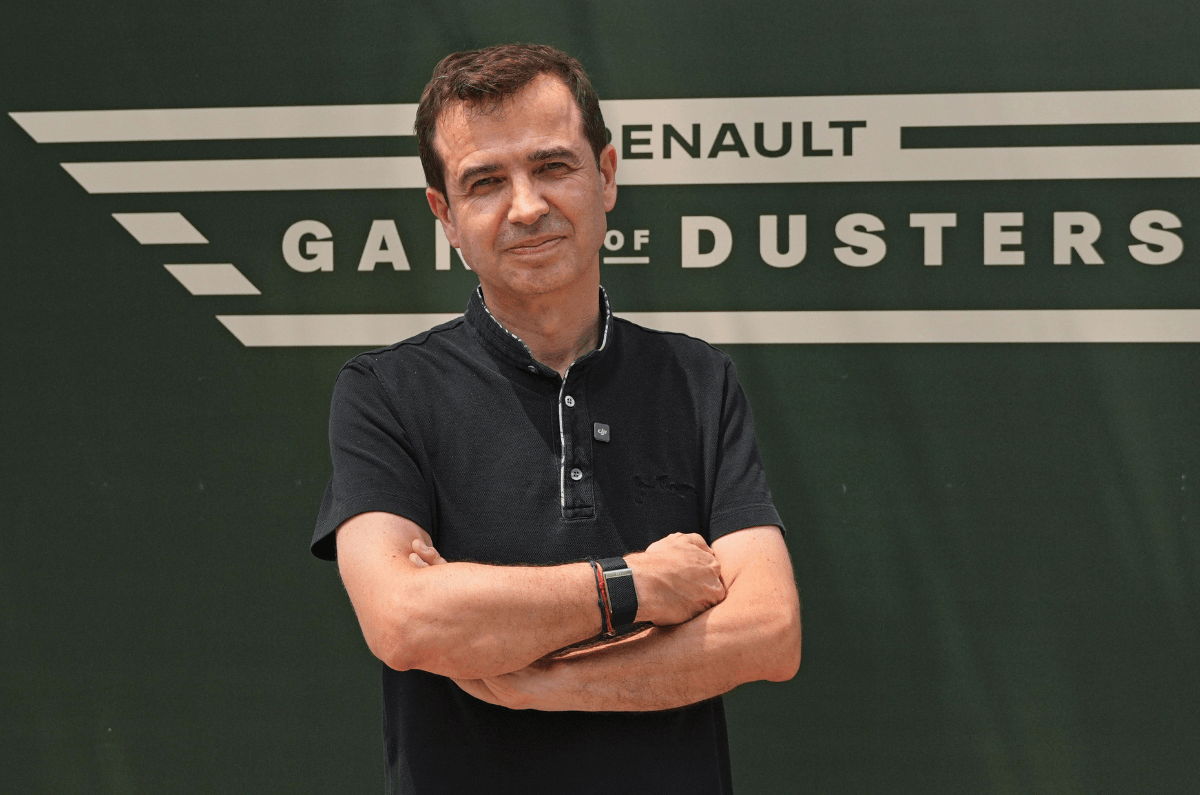
Renault Group India CEO Stephane Deblaise took charge of the company in September last year, and since then, the carmaker has been busy expanding and refreshing its India line-up. In this interview, Deblaise talks about the response to the new Renault Duster and the possibility of a more affordable automatic variant, the company’s upcoming product plans, progress on the Bridger compact SUV concept, and how Renault plans to strengthen its position in the Indian market.
On the response to the 1.0-litre Duster
It’s still early, so we don’t know the exact response, but it’s a key part of our phased strategy, which was to first focus on the 160hp DCT that is the high-end version in the ICE car. And then we want to introduce the 100hp, the more ‘regular’ car, which is less expensive. That Rs 10.5 lakh price is very, very good for people who want to enter the B+ SUV segment, and it has very good fuel efficiency. Moreover, the Duster is a very good car, and people are loyal to good cars, so we are expecting the Duster to do well on the whole.
On the slow rate of Duster bookings and deliveries
So, at Renault, we don’t overstate or overpromise. We won’t say we have 60,000 people waiting and, after that, you would discover that we did not do 60,000 deliveries. Some people do that; we don’t. We are very serious and would prefer to focus on one (variant), and then another, and a third, so in this way people keep speaking about it. For the hybrid, we were not ready; that’s why it is coming later, but with the 160hp and 100hp Duster, we wanted to focus first on the high-end and then the lower version. You know, we were in a little bit of a hibernation, and you can’t go from that to summer in one day. I think it’s good to build up step by step.
On the possibility of a 1.0-litre automatic
I am not saying what gearbox or even the engine, but what I can say is that very soon we will introduce a new, less expensive version with an automatic. It was not planned at the beginning, but since we launched the new Duster, we have been having a lot of queries about this from customers. Plus, if you look at the pricing of all the models and variants we currently have, there is a gap between the manual variants and the first automatic version.
On the rest of the Renault portfolio
I arrived in India on the 1st of September, and on the 16th of October I went to Paris to validate our India plan, and all the programmes that we decided to pursue were validated. Then, as you know, we communicated this in April this year. The programmes are completely running as per our expectations and on time. On the Renault Group Entry Platform (RGEP), we have made many modifications and carried out re-engineering to bring in new engines, new equipment and other things that you have requested. They are now finally coming. Next year will be a blowout of new products.
On the brand’s new design centre in India
The India R&D centre is playing a very big role in our local as well as global plans. When I arrived, I was requested to bring together the three entities we had, which were all separate: one dedicated to sales, one to engineering, and one dedicated to manufacturing, which was along with Nissan. Now we have all three together under one leadership – mine – and this helps a lot because communication is easier and quicker, and this is improving our agility and our ability to see and respond to the market much better. This is why we will now deliver exactly what the market needs and is asking for.
On the development of the Bridger concept
This is a very important topic. It’s my project, and I am working very hard on this with our whole team. We have three meetings per week about the project, and in the coming weeks, there is a very important milestone. But I am happy to say that everything is going nicely and is on track, so I am satisfied with our progress.
July 2026 was a strong month for India’s passenger vehicle industry, with most carmakers reporting healthy month-on-month gains. Maruti Suzuki strengthened its lead at the top, with domestic passenger vehicle sales approaching the 2 lakh-unit mark, while Tata Motors retained second place, narrowly ahead of Mahindra. Hyundai rebounded strongly from a fire disruption at a supplier that affected June production to remain fourth, with Toyota rounding out the top five in the monthly sales.
July 2026 carmaker-wise sales in India
Carmaker
July 2026 sales
June 2026 sales
MoM change (%)
July 2025 sales
YoY change (%)
Maruti Suzuki
1,96,203
1,47,187
33.30
1,37,776
42.41
Tata
62,611
62,076
0.86
39,521
58.42
Mahindra
60,048
60,393
-0.57
49,871
20.41
Hyundai
54,210
39,635
36.77
43,966
23.30
Toyota
30,516
28,441
7.30
29,159
4.65
Kia
28,200
24,552
14.86
22,135
27.40
MG
8,158
7,568
7.80
6,687
22
Nissan
4,518
3,006
50.30
1,421
218
Maruti Suzuki July 2026 sales
Sales: 196,203 units, Change: 42.4 percent YoY
Maruti Suzuki retained its position as India’s largest carmaker in July, with domestic passenger vehicle sales rising to 196,203 units from 147,187 units in June. Utility vehicles, including the Brezza, Ertiga, e Vitara, Fronx, Grand Vitara, Invicto, Jimny, Victoris and XL6, contributed 78,851 units, while the compact and mid-size segment, led by the Baleno, Swift, Dzire and WagonR, remained the company’s largest volume driver with 90,822 units. Mini cars, comprising the Alto and S-Presso, added another 12,634 units.
Tata Motors July 2026 sales
Sales: 62,611 units, Change: 58 percent YoY
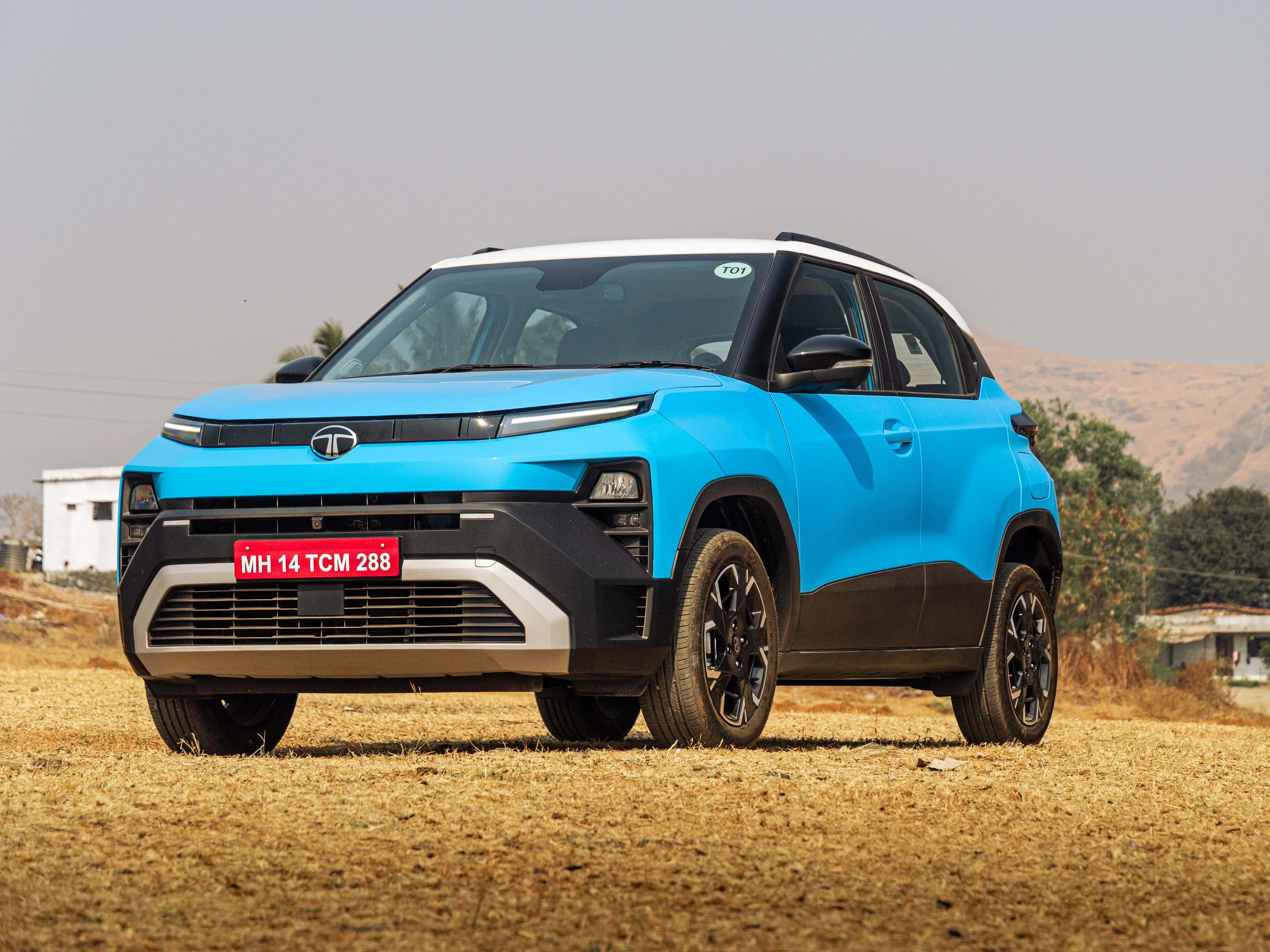
Tata Motors sold 62,611 passenger vehicles in the domestic market in July, marginally higher than the 62,076 units recorded in June, despite temporary production disruptions at its Sanand plant due to heavy rainfall and flooding. The Punch recorded its highest-ever monthly sales, reinforcing its position as one of the company’s best-selling SUVs, while Tata’s EV portfolio crossed 15,000 monthly wholesales for the first time.
Mahindra July 2026 sales
Sales: 60,048 units, Change: 20 percent YoY
Mahindra sold 60,048 SUVs in the domestic market in July, almost unchanged from the 60,393 units it sold in June. The expected launch of the updated Scorpio N in August could help boost sales and provide fresh momentum as the company heads into the festive season.
Hyundai July 2026 sales
Sales: 54,210 units, Change: 23.3 percent YoY
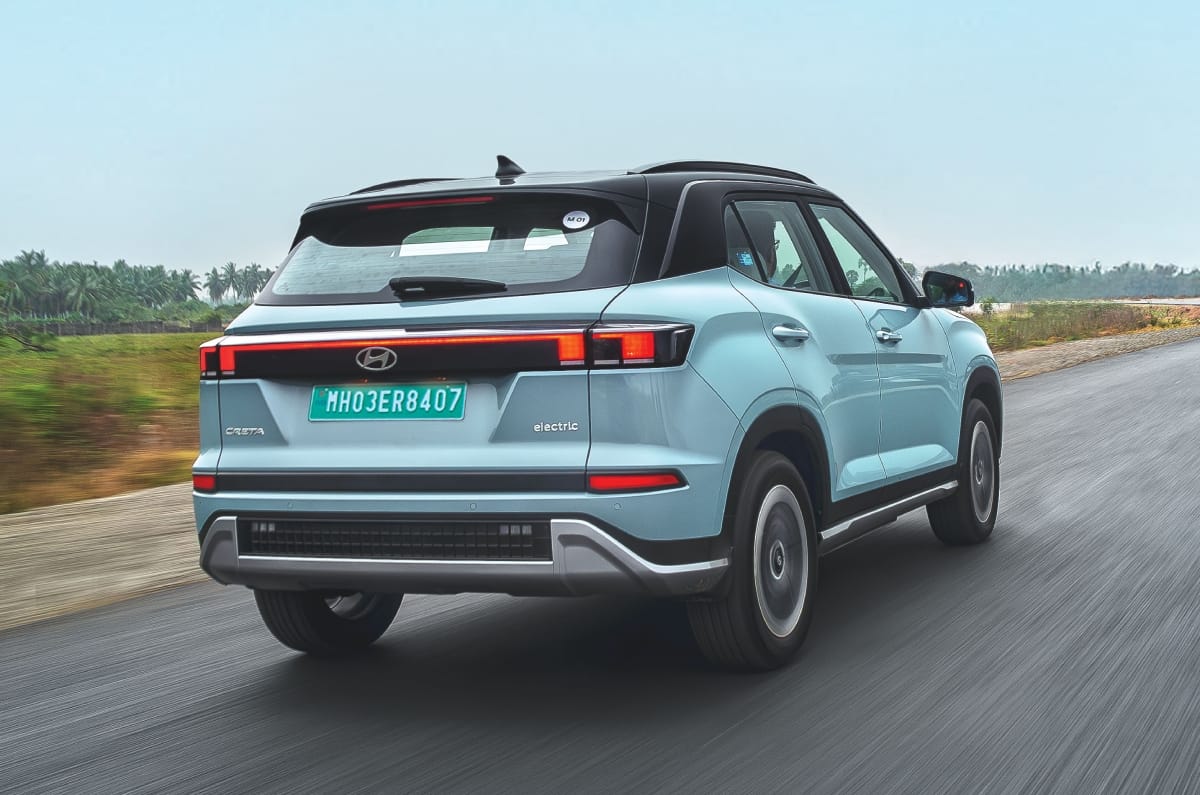
Hyundai recorded its highest-ever domestic sales for the month of July, selling 54,210 units, a sharp recovery from 39,635 units in June after a fire at a supplier’s facility disrupted production. The Creta led the growth with 18,088 units, its best monthly performance in CY26, while the i20 also posted its highest monthly sales in CY26 at 6,738 units, highlighting renewed momentum across both Hyundai’s SUV and hatchback portfolios.
Toyota July 2026 sales
Sales: 30,516 units, Change: 5 percent YoY
Toyota Kirloskar Motor reported domestic sales of 30,516 units in July, up from 28,441 units in June, with the Innova Hycross, Urban Cruiser Hyryder and Glanza continuing to drive volumes. Cumulative domestic dispatches for the January-July period rose 13 percent year-on-year to 233,854 units, while sales during the first four months of FY2027 (April-July) increased 8 percent to 128,746 units.
Kia July 2026 sales
Sales: 28,200 units, Change: 27.4 percent YoY
Kia recorded its highest-ever July wholesale volume, dispatching 28,200 units, up from 24,552 units in June. The Seltos remained Kia’s best-selling model, averaging more than 10,000 units a month since the start of the year, while the recently launched Syros EV has also garnered strong initial bookings.
MG July 2026 sales
Sales: 8,158 units, Change: 22 percent YoY
JSW MG Motor India recorded its highest-ever monthly wholesales for the second consecutive month in July, dispatching 8,158 units, up from 7,568 units in June. Electric vehicles accounted for more than 80 percent of total volumes, marking their strongest monthly performance yet.
Nissan July 2026 sales
Sales: 4,518 units, Change: 218 percent YoY
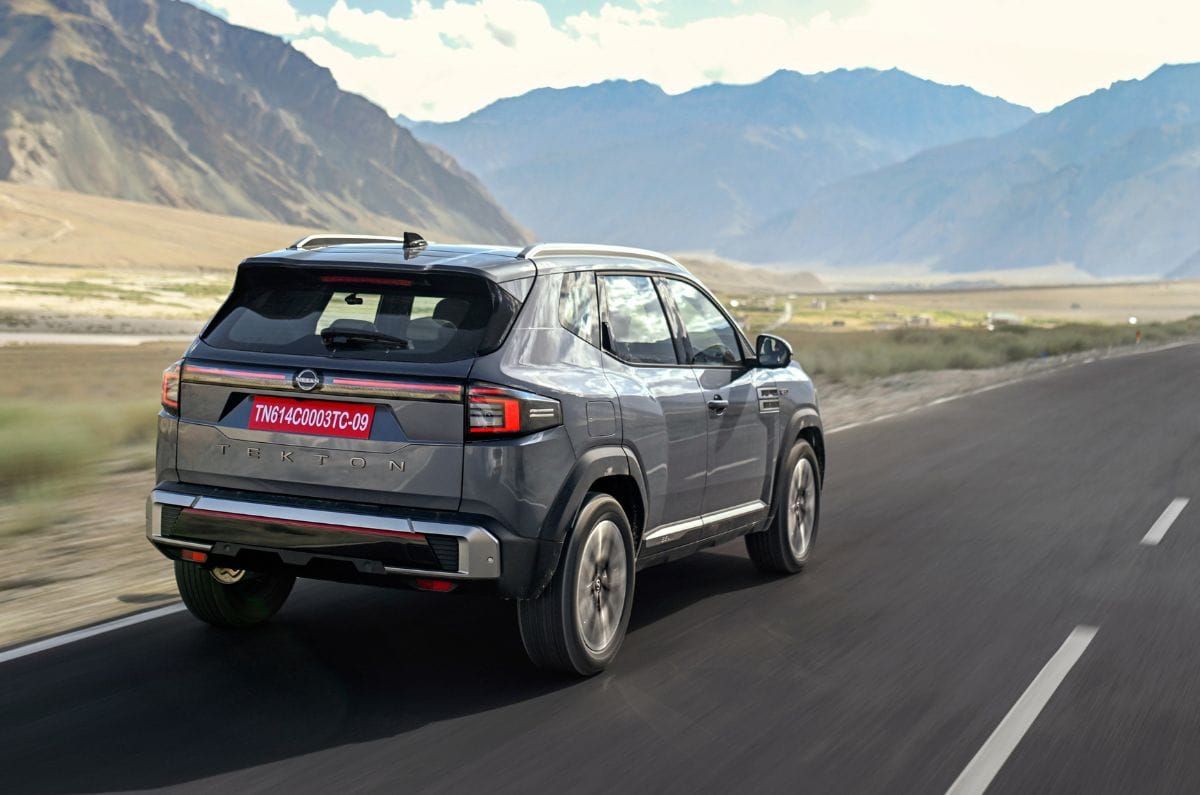
Nissan continued its growth momentum in July, with domestic wholesales rising 50 percent month-on-month to 4,518 units from 3,006 units in June. The increase was supported by the start of customer deliveries of the all-new Tekton, which commenced on July 20 after its debut on July 9, expanding Nissan’s India portfolio to three models alongside the Magnite and Gravite.
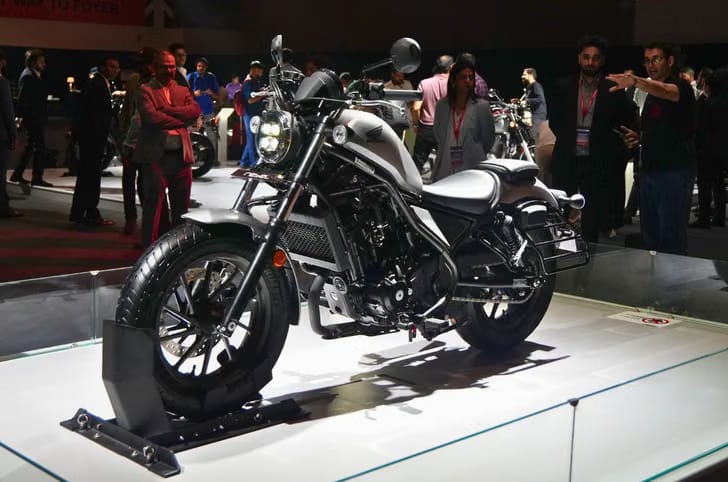
Honda unveiled the Rebel 300 and Rebel 500 earlier this month, and we now have a clearer idea of their expected pricing and launch timelines.
Rebel 300 launch likely in November 2026
Rebel 500 launch targeted for January-February 2027
Honda Rebel 300, Rebel 500 price details
The E-Clutch variants could command a significant premium over the standard motorcycles
The Rebel 300 and Rebel 500 are fairly familiar names for Indian enthusiasts. Honda has been hinting at the arrival of both for years now, and the latter was also briefly available in our market, where it was last priced at around Rs 5.12 lakh (ex-showroom, Delhi) after the GST rate hike. However, the bikes are now set to be made in India with a high level of localization, so we can expect more competitive pricing.
The Rebel 300 is powered by a 286cc single-cylinder, liquid-cooled engine producing around 30hp and 27.5Nm, while the Rebel 500 uses a 471cc parallel-twin producing 46hp and 43.3Nm.
Our understanding is that the smaller Rebel 300 will feature a higher level of localization and is expected to be priced at around Rs 2.1 to 2.2 lakh for the standard bike while the E-Clutch variant will be much more expensive. It’s still uncertain how much more expensive this could be, but the difference is likely to be in the tens of thousands..
Between the E-Clutch and the base model, the aggressive pricing would put it on par with rivals such as the Royal Enfield Goan Classic 350 (Rs 2.35 lakh), and the Jawa 42 Bobber (Rs 2.10 lakh-Rs 2.32 lakh). The Rebel 300 is expected to go on sale in November this year.
The Rebel 500, meanwhile, will initially see about 50 percent localization, with core components like the engine still not being manufactured here. However, Honda is working on localizing that as well, which could lead to lower prices in the future. For now, the Rebel 500 is expected to be priced at around Rs 4.7 lakh although it is unclear whether this will be for the standard or E-Clutch variant. Its launch is targeted for January-February 2027.
While this represents a reduction over the Rebel 500’s previous asking price, the 40 percent GST now applicable to motorcycles above 350cc limits the price benefits that localisation could have delivered. Even so, both bikes are popular globally, and Honda’s decision to localise them should make them much stronger value propositions in our market.
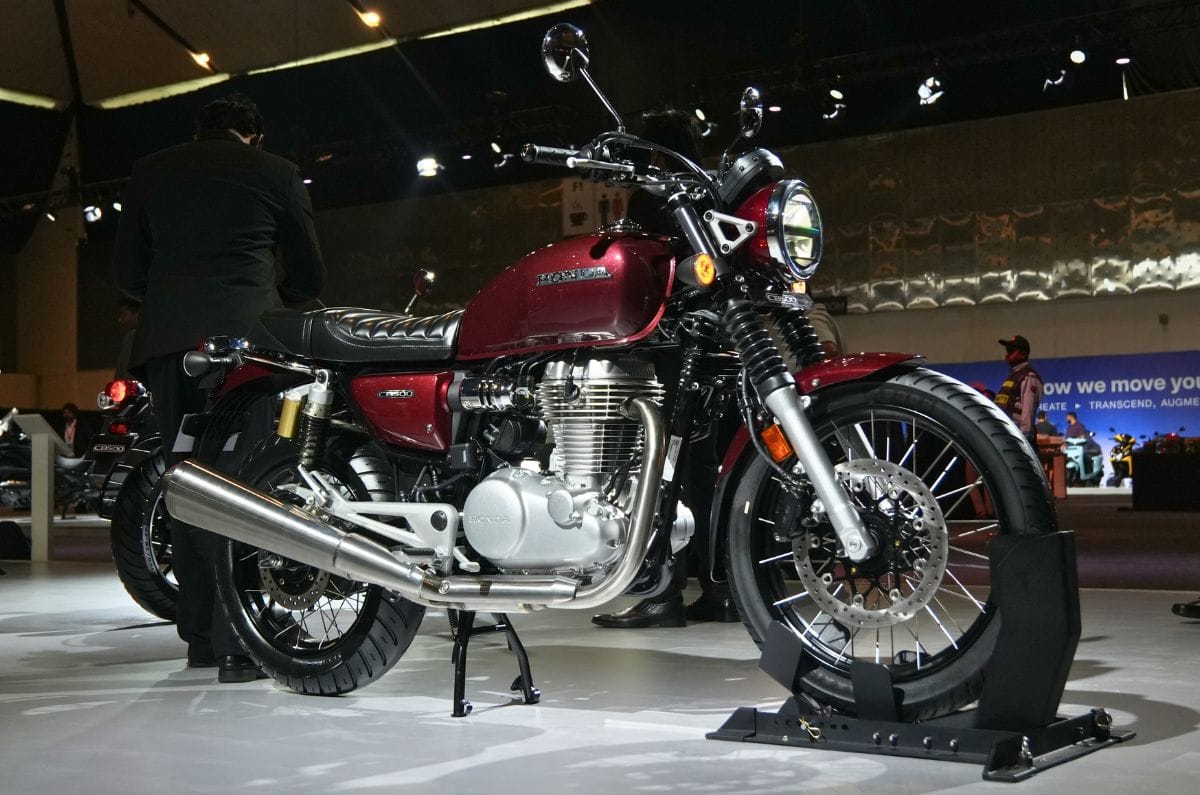
The CB500 was one of the hot-ticket reveals from Honda Motorcycle and Scooter India (HMSI) recently and it enters a segment of the market where it will sit virtually in a class of its own. The CB500 is based on the same platform as the CB350 line of bikes but with nuanced differences.
Powered by a 501cc, long-stroke thumper
Launch likely to happen around October-November
Likely to slot in between Harley-Davidson X440 and RE Interceptor 650
Powered by a 501cc, air/oil-cooled, single-cylinder engine making 28hp and 43.3Nm of torque, the CB500 sits virtually in a league of its own, occupying the space vacated by the erstwhile Royal Enfield 500cc models. While the CB350 models have competitive pricing, sitting around the Rs 2 lakh ballpark (ex-showroom, Delhi), the CB500 will be considerably more expensive.
This is partly due to the larger engine and additional features but a large contributing factor is the higher GST rate. The new regime taxes two-wheelers above 350cc at 40 percent, which is more than double the 18 percent tax levied on machines below that mark.
As a result, it is likely that the CB500 will slot into the market between Rs 2.80 lakh – Rs 3.00 lakh (ex-showroom) upon its launch, which is likely to take place in October-November 2026. While this is sure to relegate it to a niche audience, the CB500 – on paper, at least – promises a unique riding experience in today’s marketplace.
Upon launch, there will be three variants on offer. The base CB500 will come with simple colours and alloy wheels, the mid-spec variant will have metallic finish solid paint and cross-spoke rims permitting tubeless tyres and the top model will have exclusive colours and graphics as well as those aforementioned laced rims.
The nearest challengers to the CB500 are the Hero-built Harley-DavidsonX440 models (Rs 2.35 lakh – Rs 2.85 lakh), although the X440s use a smaller engine with lesser torque. At its price point, the CB500 will slot in below the Royal Enfield 650s, which start at Rs 3.39 lakh (ex-showroom, Chennai) with the Interceptor 650.
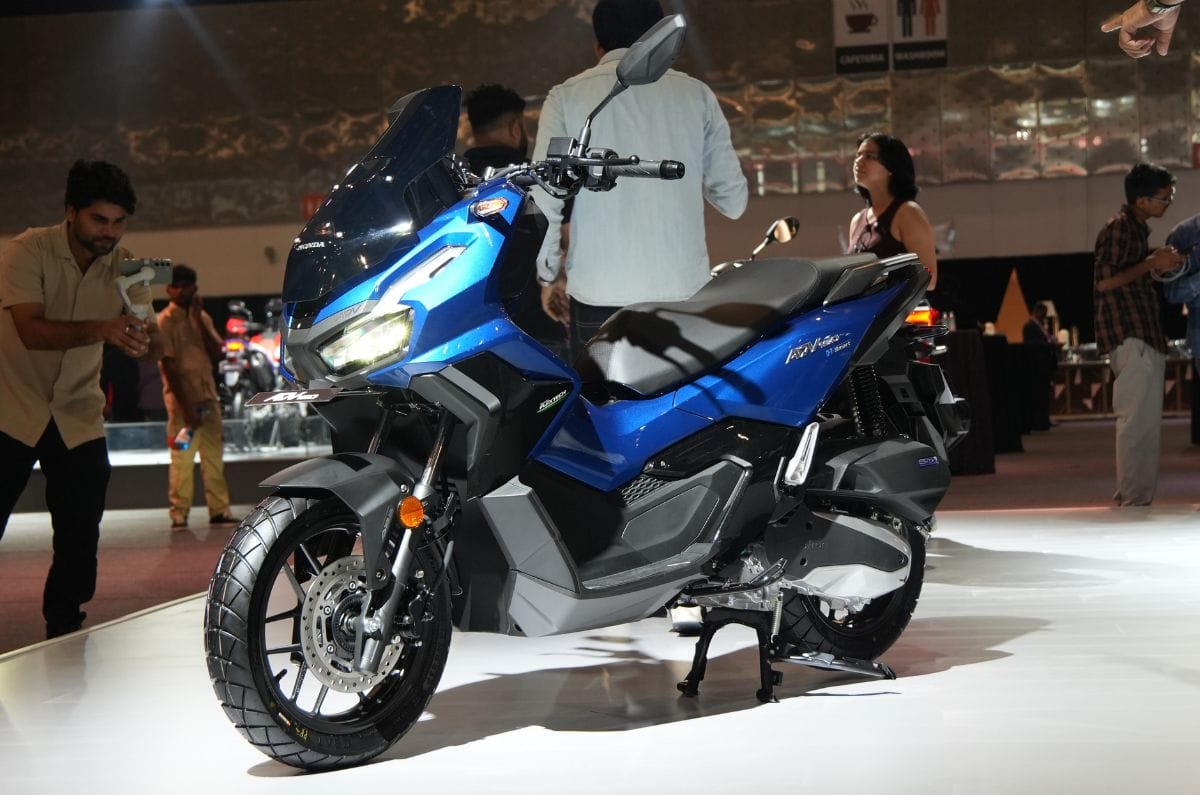
Honda pulled a bunch of surprises at its recent event with a 10-model onslaught comprising both updated and all-new models. While the motorcycles and scooters were only unveiled at the event, we now have clear information on when the brand intends to launch its debutant maxi-scooter in India and at what price.
ADV160 to go on sale in the third quarter of 2026
Expected price around Rs 1.70 lakh-Rs 1.80 lakh
E85-compliant maxi-scooter to rival the upcoming Yamaha NMAX 155
ADV160 launch timeline: What to expect?
E85 compliance adds about 5 to 6 percent to the production cost of the ADV160
The ADV160 is slated to go on sale in the Indian market in the third quarter of this year, between September and October 2026. It is expected to be priced between Rs 1.70 lakh and Rs 1.80 lakh. This makes it considerably more expensive than similarly sized maxi-scooters such as the HeroXoom 160 (Rs 1.43 lakh ex-showroom), Yamaha Aerox 155 (Rs 1.45 lakh to Rs 1.48 lakh ex-showroom) and the soon-to-be-launched YamahaNMAX 155.
However, it’s worth bearing in mind that while the others are E20-compliant, Honda’s ADV160 is a flex-fuel maxi-scooter capable of running on ethanol blends ranging from E0 to E85. This, in itself, adds about 5-6 percent to the production cost compared to similar E20-compliant models. The ADV160 will be manufactured in India and exported to other markets.
The ADV160 is also more generously equipped, featuring a TFT display and a more powerful 157cc, liquid-cooled engine that produces 16.3hp and 14.9Nm of torque. The scooter rides on a telescopic fork and twin rear shock absorbers, with a 14-inch front and 13-inch rear wheel setup. It weighs 133kg, has a seat height of 780mm, ground clearance of 165mm, and an 8.1-litre fuel tank.
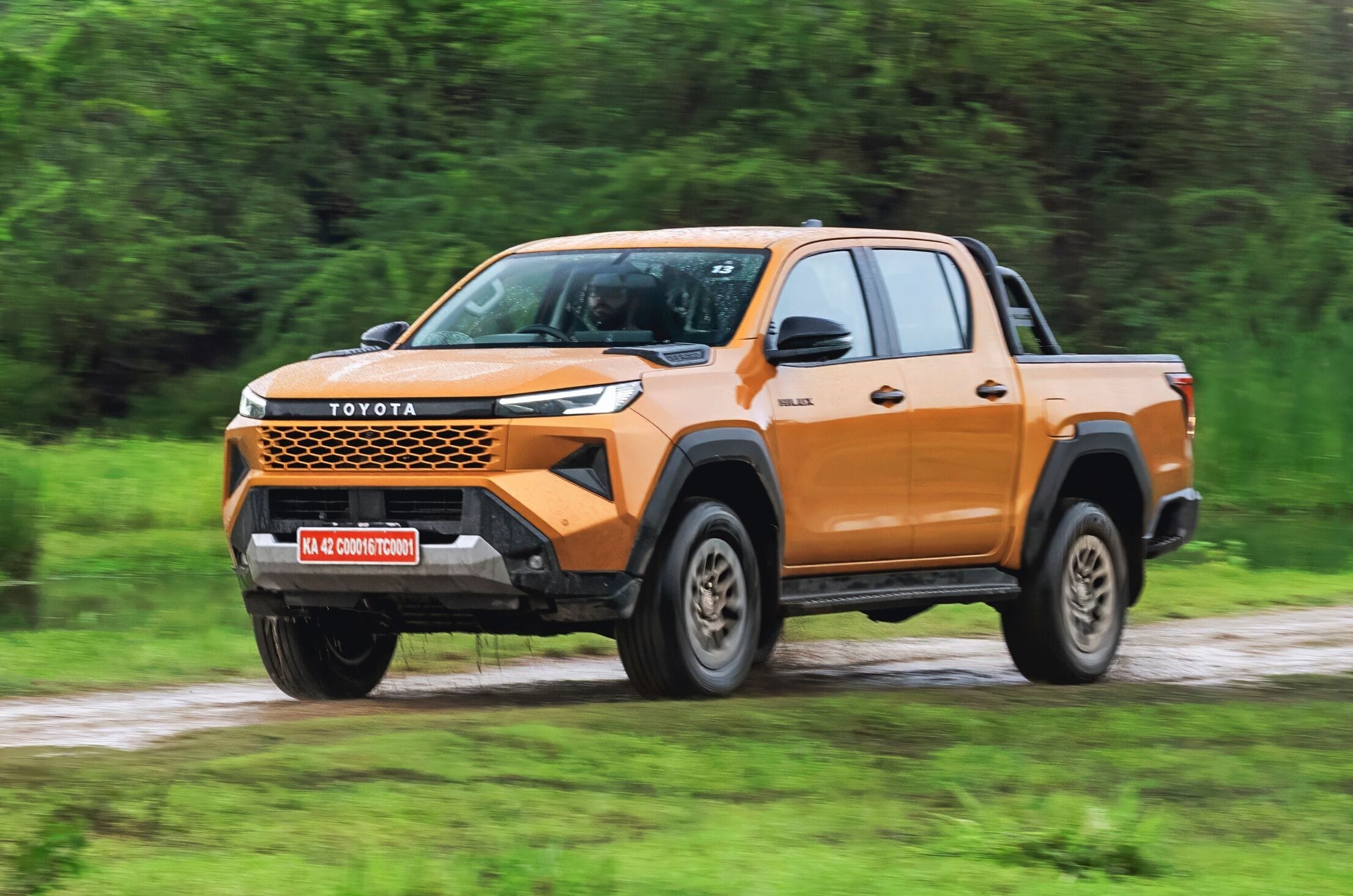
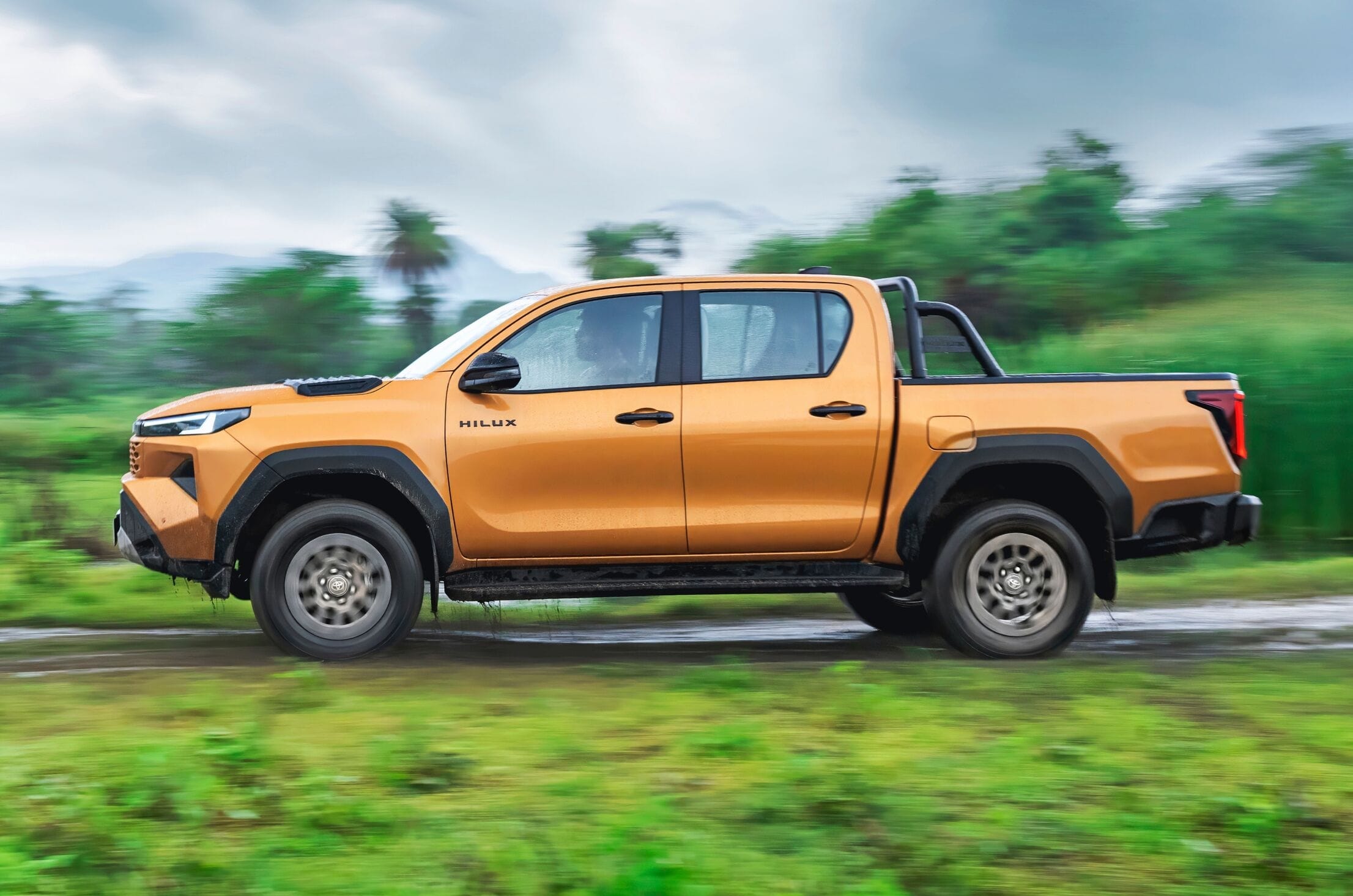
Back in 2004, Toyota debuted its ‘Innovative International Multi-purpose Vehicle’ platform (or IMV for short), which spawned the 7th generation Hilux and the 1st generation of the Fortuner and Innova. As for the Hilux, it moved on to the 8th generation in 2015 and we now have this, the new 9th generation model, still underpinned by the IMV platform, albeit with major modifications and updates.
2026 Toyota Hilux Exterior Design and Engineering – 7/10
IMV platform sees massive update; front styling goes all angular
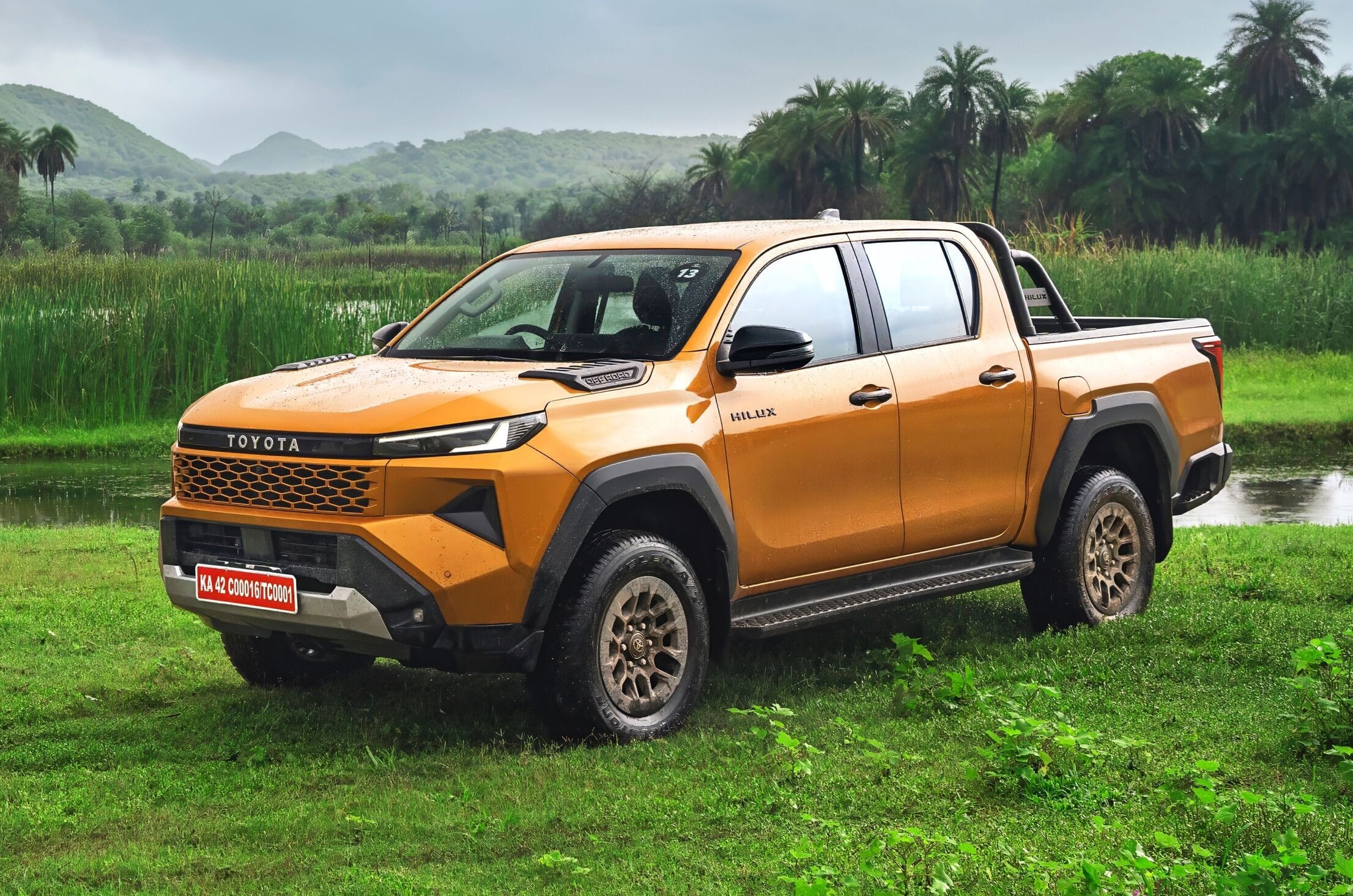
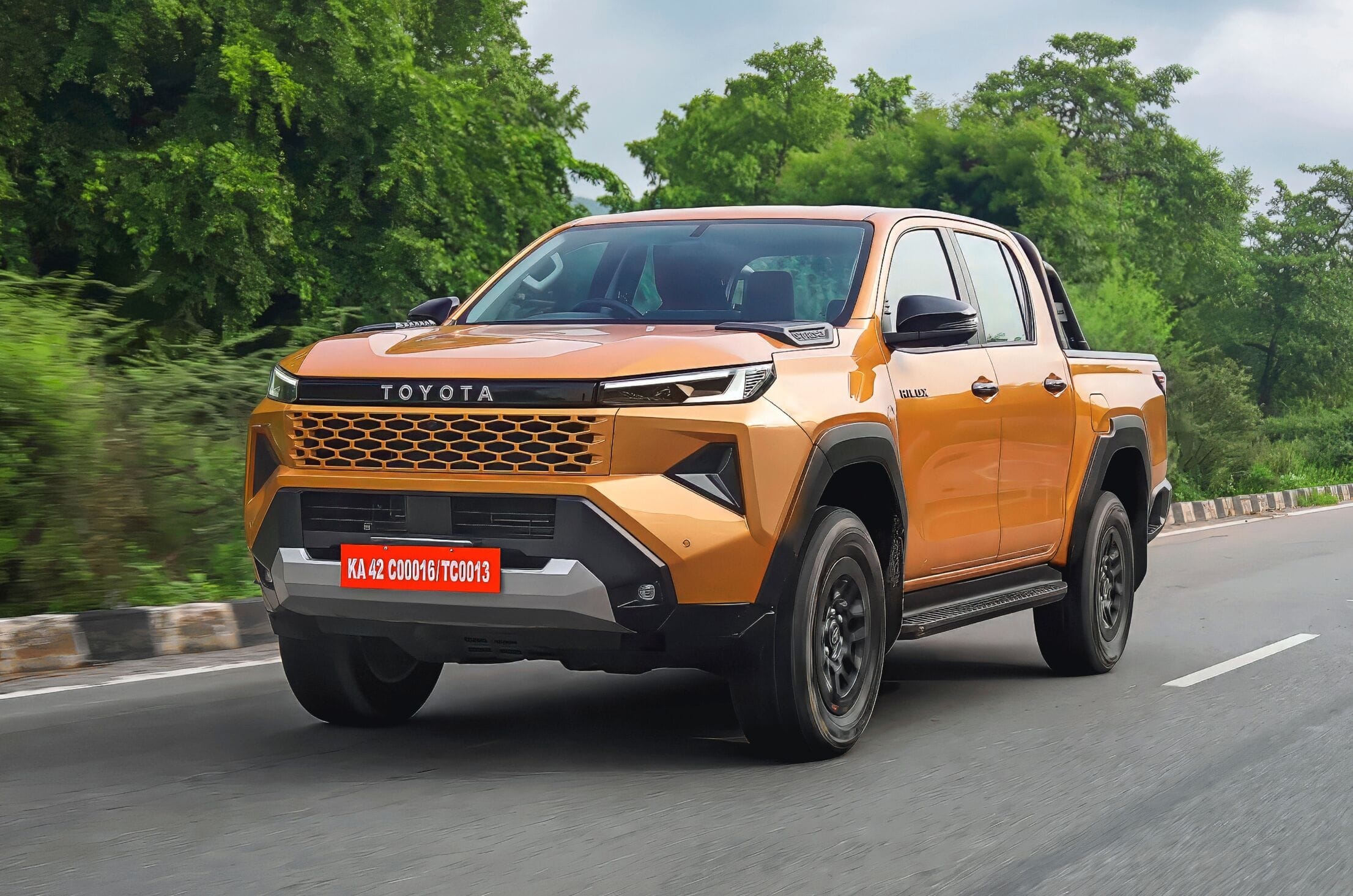
The front end is now all very edgy and sharp. Cyber-Sumo is how Toyota describes the styling.
As with its predecessors the ladder-frame construction remains, but plate thickness in the frame side rails has been increased to enhance rigidity and better resist torsional forces. The body too has seen an increase in rigidity with the floor featuring an additional 36 spot welds, this also helps decrease vibrations.
Interestingly, the platform is now fully electrified. Impressive given that installing a battery pack with a ladder frame is tricky given the narrower – than the body – width and the presence of cross members too. It shows, the all-electric Hilux features a rather modest 59.2kWh battery pack, it’s unlikely to make its way here though.
17-inch rims provide for taller sidewalls, handy off-road.
Other changes to the platform include a switch from hydraulic to an all-electric power steering system and spring and damper tweaks to improve ride comfort. As with the previous two generations, wheelbase remains the same at 3,085mm and the length is identical to its predecessor at just over 5.3 meters.
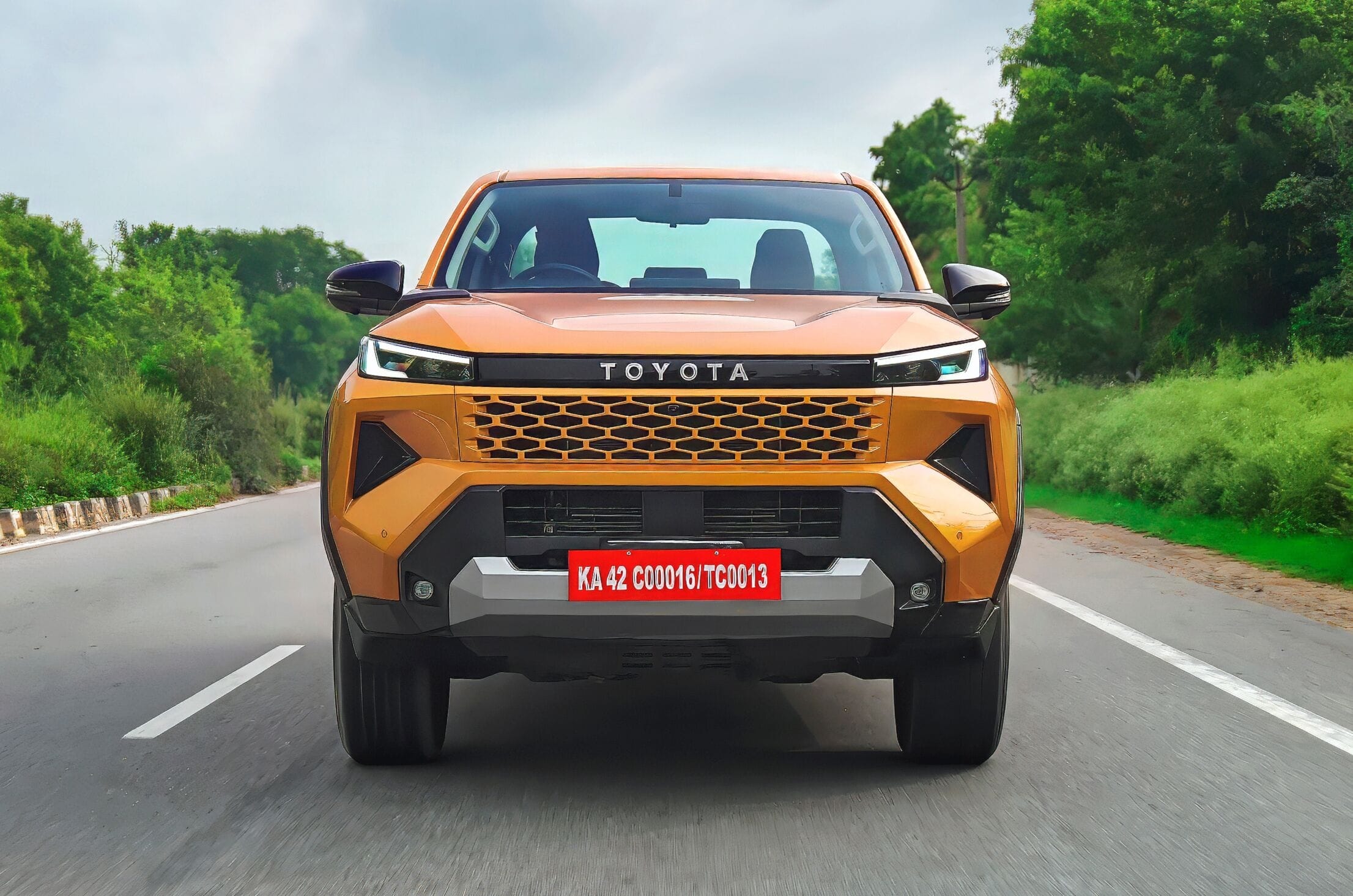
Front styling sees the biggest difference from the earlier car, its now all very edgy and sharp. Cyber-Sumo is how Toyota describes it, a cyborg Sumo wrestler if you will. The headlights feature sharp DRLs, are much slimmer and flow into a black panel emblazoned with the Toyota lettering. Below is a honeycomb grille flanked by triangular stylistic insets and the lower end of the bumper carries on with the angular treatment with sharp cuts to define its shape.
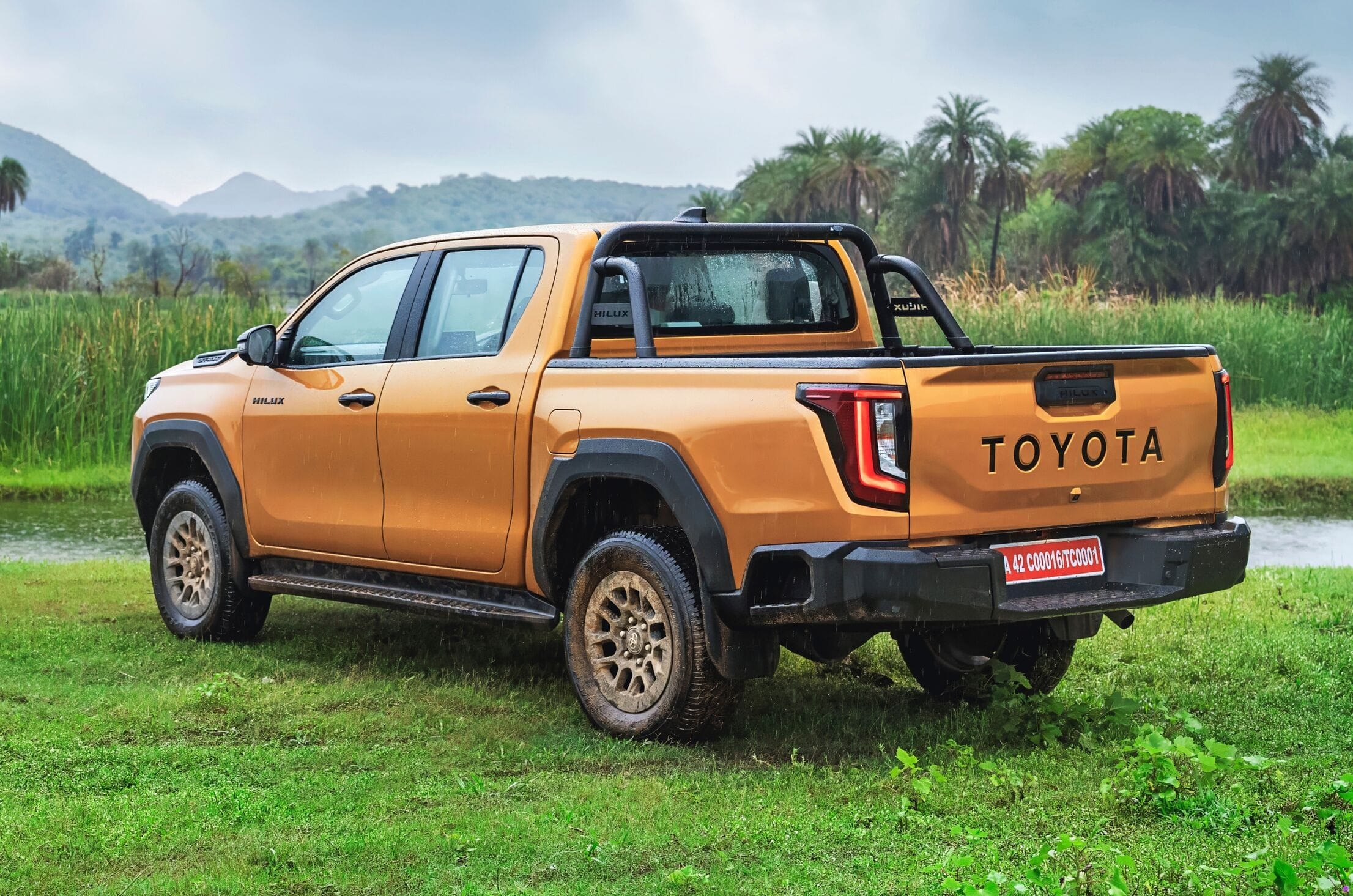
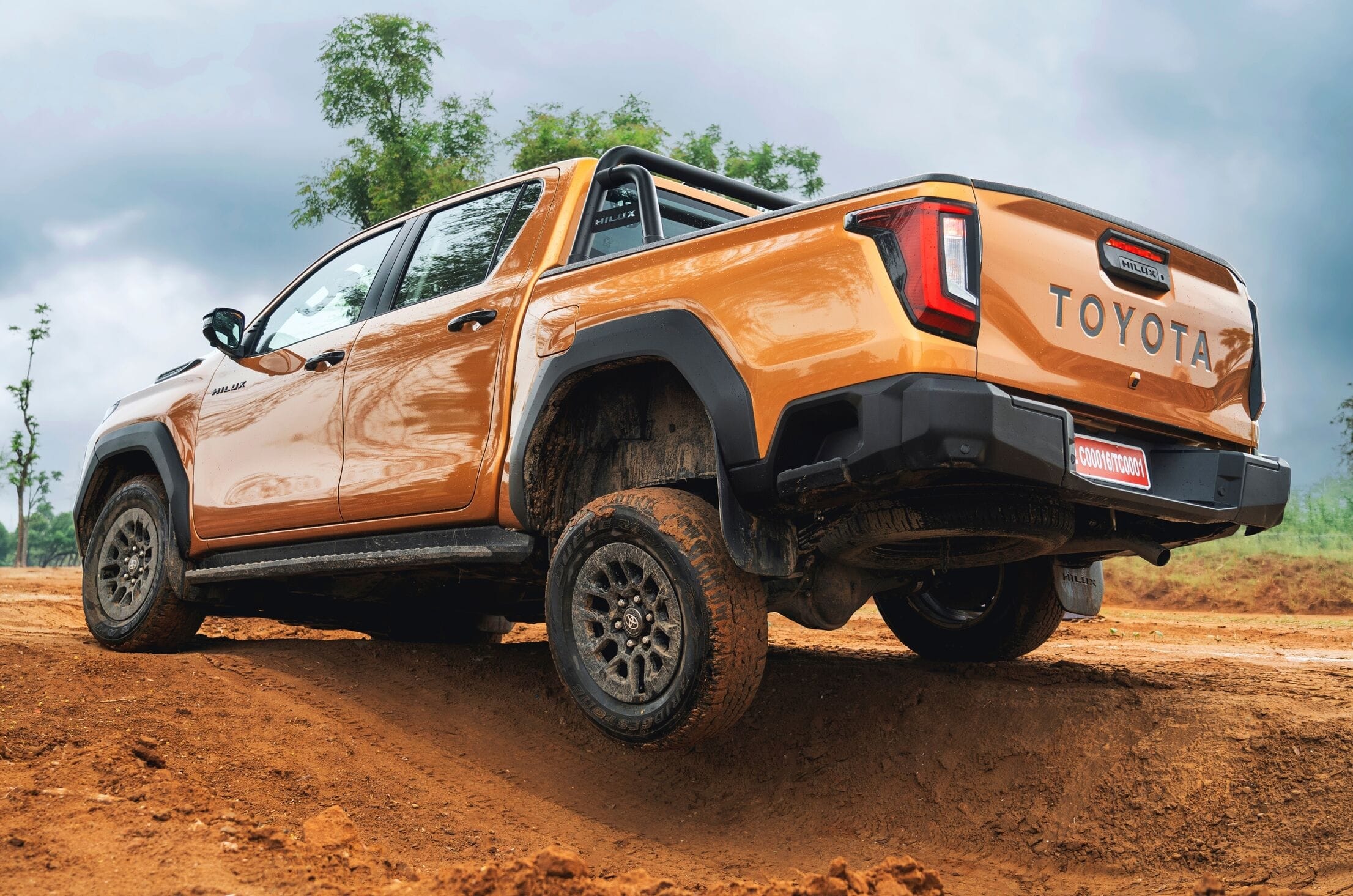
Taillights now more angular; bumper features integrated footsteps on the rear as well as on the sides.
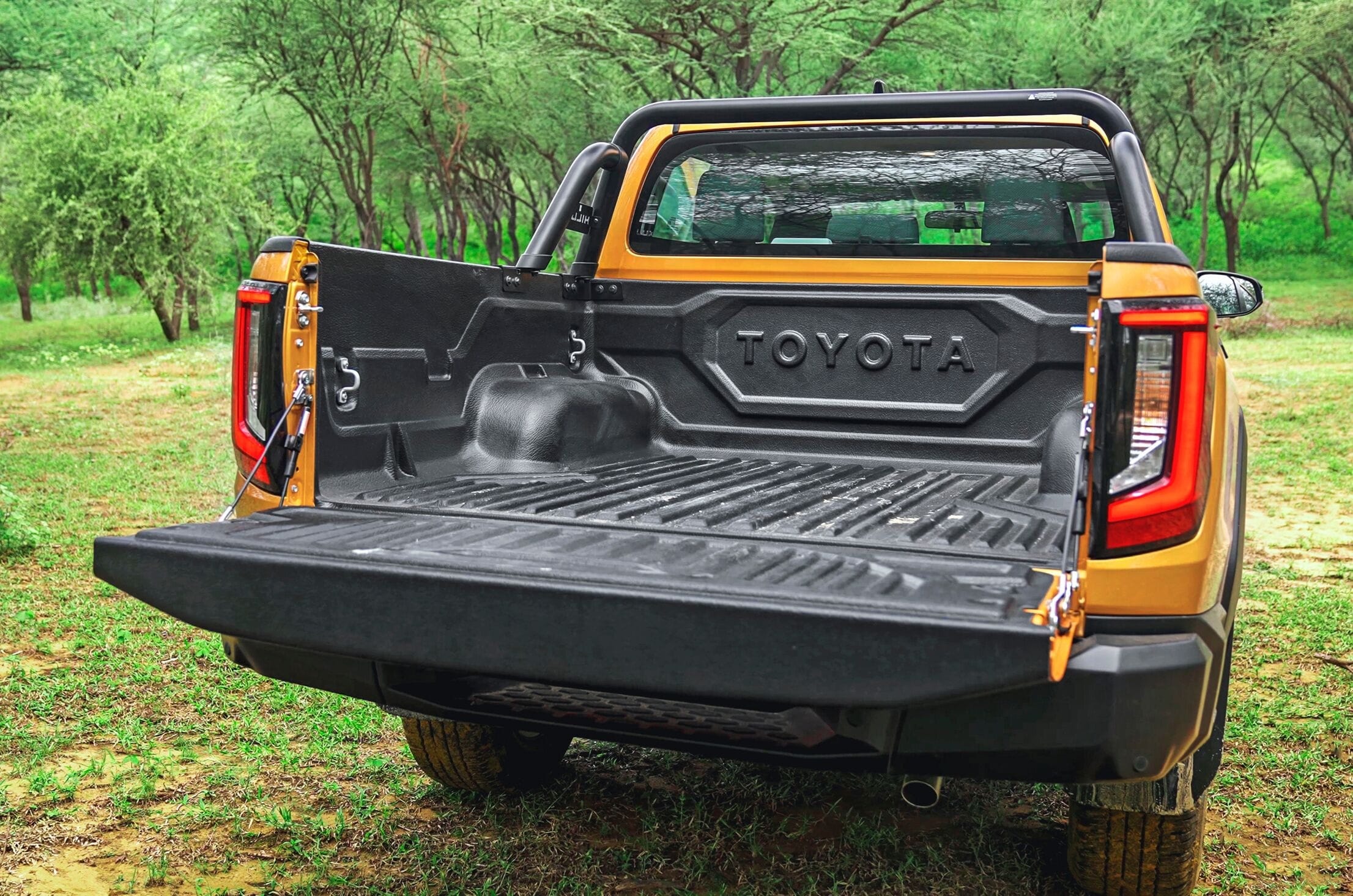
The side however is more curved with the doors gently profiled and resembling the previous car, the cladding however is a bit angular and runs the length of the car. At the rear end there is now a side step to make loading and unloading cargo easier. Rear taillights are sharply outlined and flow more into the side profile and of course, the rear sees the now iconic large Toyota lettering across the tailgate, which has a damped release.
2026 Toyota Hilux Interior Space and Comfort – 7/10
Adequate cabin space, but not what you might expect given the overall size.
Dashboard get a retro-modern style, very similar to the Land Cruiser Prado.
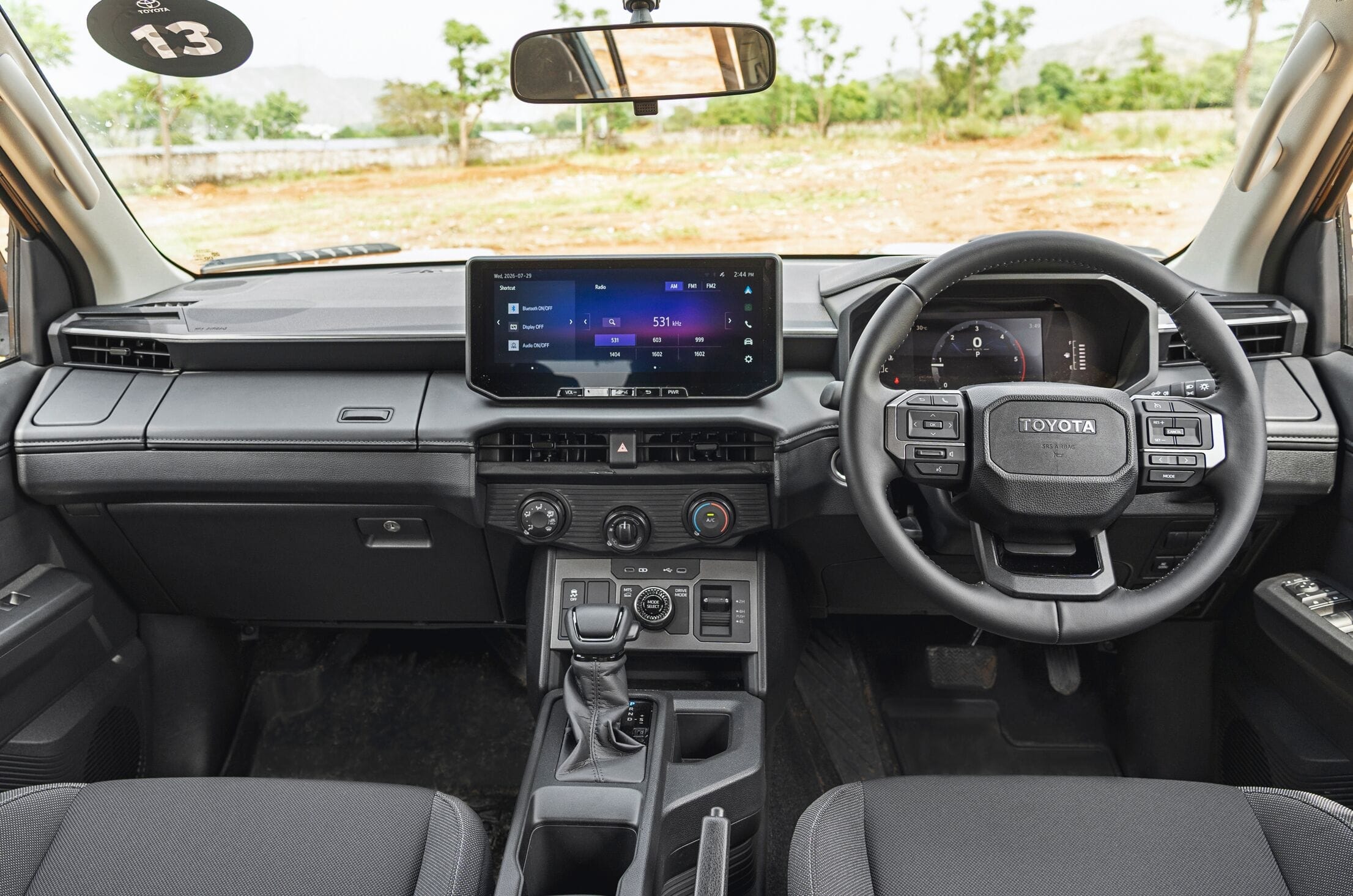
Like the front-end styling, the new dashboard sees a big departure is styling too, very retro-modern with straight lines and chunky elements, similar to the Land Cruiser Prado. It houses rectangular AC vents and a pop-up center touchscreen with chamfered lower edges. The steering wheel looks like a straight lift from the Prado with the same three spoke design, rectangular center boss and chunky rectangular buttons.
Cabin dimensions remain the same, but reprofiled seat gives the backrest a tad bit more recline.
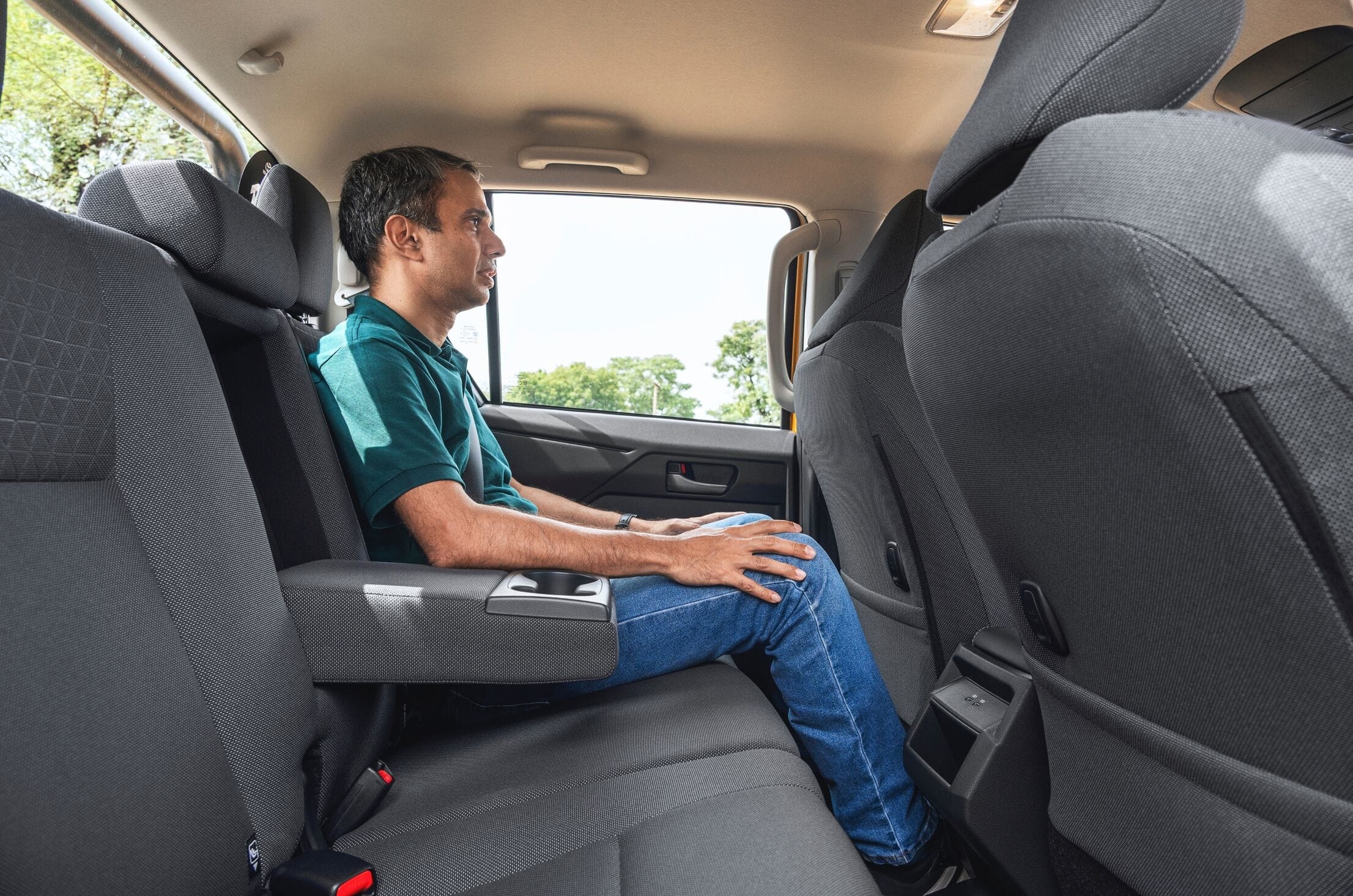
The 8th gen Hilux received a larger interior cabin volume and this cabin carries over to the new 9th gen car, space inside is thus decent but going by the large vehicle footprint you’d be forgiven if you expected more. At the rear, legroom is adequate even with a taller adult seated front, the seat backrest is still upright when seen against regular SUV but the seats themselves have been reprofiled and that makes it feel just a bit more reclined than before. Headroom is good and seating three adults at the rear is possible but will feel sung. At the front, the seats feel nice and supportive and are well profiled with prominent side bolstering that should suit a wide body frame well. They are also upholstered in a fabric that feels nice to the touch.
Tailgate features damped release; payload is around 500kgs.
The load bed is large enough for stuff like camping gear but it’s quite high off the ground so you’ll have to haul stuff in and out. The bumper has an integrated step at the rear and on either side as well, to make this easier. Toyota has not yet disclosed payload capacity but expect it to remain the same as before at 470kgs.
2026 Toyota Hilux Features and Safety – 7/10
High on safety kit, but many comfort and convenience features missing
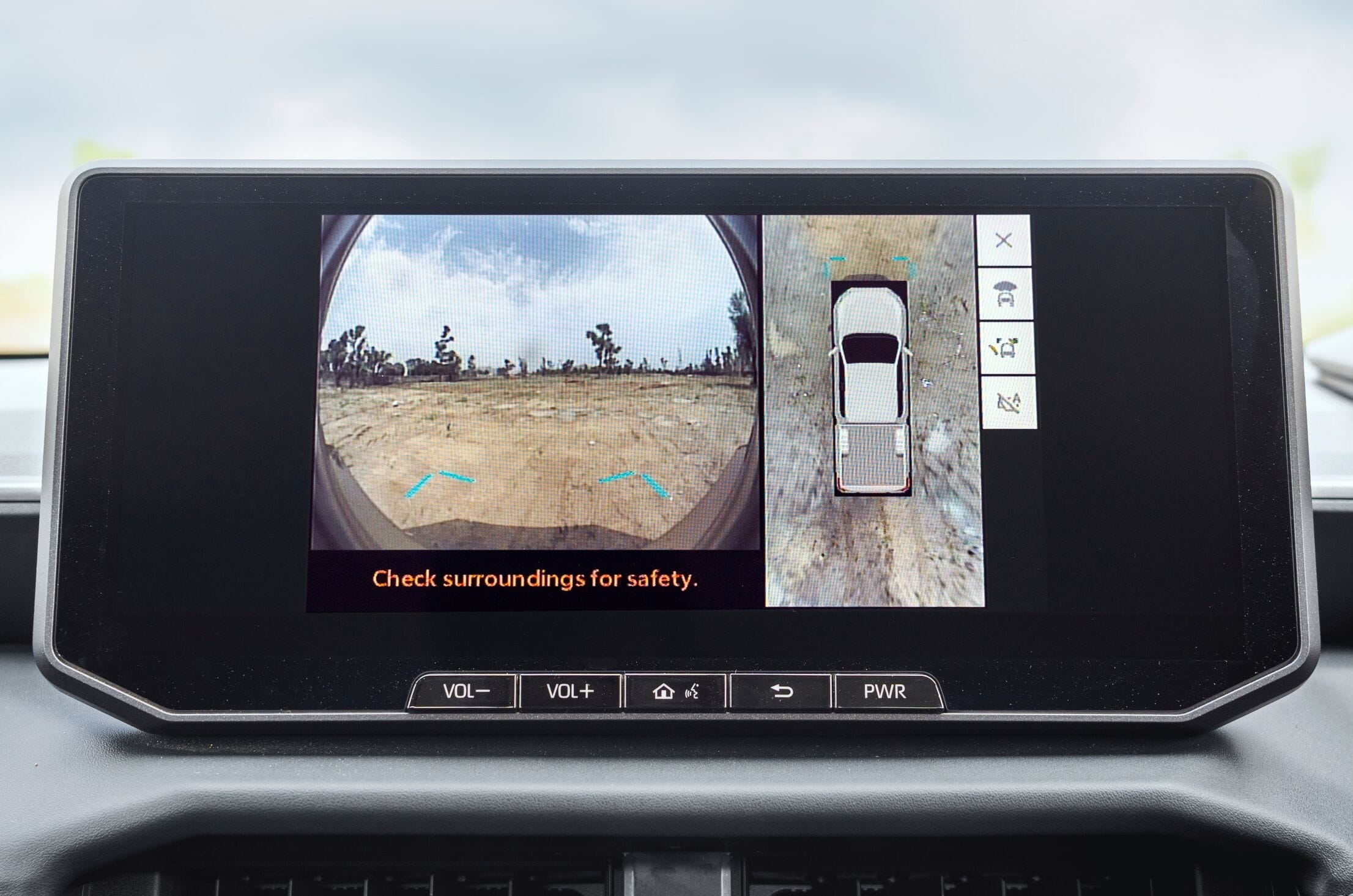
360-degree camera handy, but of poor resolution.
The new Hilux comes in three grades with the top spec car featuring kit like a 360-degree camera view – though resolution is poor – an 8-inch digital instrument panel and a 12.3-inch central touchscreen with wireless phone connectivity. The native OS styling appears quite outdated but the screen resolution is good. There’s a wireless phone charging slot but quite deep and retrieving you phone needs slim hands.
Besides these and basic bits like power windows and ORVMs, there’s not much else on the new Hilux. Features like auto HVAC, powered or ventilated seats, rear defogger are all missing even at the top spec car.
Misses key equipment like automatic climate control; has drive as well as terrain modes.
Safety kit is good, with 7 airbags standard on all variants as is also ESP, a tyre pressure monitoring system however is only present on the top variant. As for a crash rating the new Hilux does not come with a Bharat or Global NCAP rating but the Australia spec scores 5-stars under the ANCAP protocol.
2026 Toyota Hilux Performance and Refinement – 9/10
Good pulling power with a very refined engine and a vibe free interior
The new Hilux carries on with the same 2.8 liter 4-cylinder diesel. It makes an identical 204 hp and 500Nm of torque. A 6-speed torque convertor automatic is now the only gearbox option and for the first time Toyota India is offering the Hilux with a 4X2 drivetrain too.
2.8 litre diesel engine has new mounts and is extremely refined, with low noise and vibration levels.
There are three drive modes – Eco, Normal and Sport, all feel quite useable. Performance is strong and even when pushed hard it never feels like its out of breath. There’s a good amount of power to be had low down in the rev range and through a forest trail with stones and muck it was easy modulating power to keep momentum.
Shifts are expectedly smooth from the 6-speed autobox and in Sport mode the downshifts are quick enough both when left to its own system or via inputs from the gear lever.
Performance is quite potent and it never feels out of breath.
At high revs the engine does get vocal, but for what is a workhorse its quite acceptable. In fact, at every day motoring speeds sound levels are low and refinement is excellent, with minimal to no vibrations around the cabin. Toyota says they have worked on improving this aspect with both hydraulic and shear type engine mounts, a stiffened body frame and better cabin insulation.
2026 Toyota Hilux Mileage and Efficiency – 8/10
With a kerb weight of over two tonnes, expect single digit real world efficiency figures
Toyota have yet to disclose ARAI rated fuel efficiency figures but given the carry over powertrain expect a similar figure of around 12kpl on the standard test cycle. In real world usage figures will hover in the single digit zone and only relaxed highway cruising would see you get double digits.
2026 Toyota Hilux Ride Comfort and Handling – 7/10
Comfy and unfazed over the big stuff but skittish and firm on smaller ruts and bumps
Off road is where the Hilux excels, 4X4 model has low ratio as well as rear locking differential.
Suspension architecture carries over with an independent double wishbone coil spring setup at the front and a rigid axle with leaf springs at the rear. Toyota says they have reworked it to bring in a bit more comfort, it’s hard to say in isolation and perhaps a back-to-back drive would indicate this. On its own, it can soak up the tough bits like large rocks and deep potholes, sharp edges too are well smoothened. Through a forest trail strewn with loose rocks it felt confident and sure footed. Much of the trail was manageable in 4X2 mode, but some bits required 4X4 which was all too easy for the Hilux. There’s also a 4-Low ratio as well as terrain modes that help traction over loose surfaces.
Ride is jittery at speed and with rear cargo bed unloaded.
Where is gets unsettled is over the smaller ruts and bumps that really shake up the cabin. The main reason here is the rigid rear-axle which with the load bed empty simply skips over these imperfections resulting in a skittish and bouncy ride. Rear passengers in particular will feel this more. A weighed down rear will improve things but will not bring this to passenger SUV comfort levels.
As for handling, high-speed stability is good but you know it’s a heavy car and you can feel its weight through corners. The switch to electric power steering hasn’t changed effort which remains heavy at low speeds, and with the cars massive length it feels quite ponderous.
2026 Toyota Hilux Value for Money – 7/10
4X2 makes it affordable than before, but there’s lots of features missing
Toyota has launched the new Hilux with the top variant priced the same as before; Rs 36.69 lakh ex-showroom India while the entry 4X2 variant starts lower than any previous variant coming in at Rs 31.99 lakh ex-showroom. But in doing so there’s a lot of features missing even going by its predecessors list. Its appeal then depends on which aspect of its ‘lifestyle pickup’ description you value more.
It’s sharp styling and sheer size give it that lifestyle vehicle presence, however inside it feels utilitarian, the cabin isn’t premium with regards to materials and its very under equipped. The heavy steering and bouncy ride also mean a workhorse like experience rather than luxury SUV.
But that workhorse bit is exactly where the Toyota Hilux excels. The load bed is handy and can haul odd bits of gear, the engine it torquey and powerful and what’s nice is that its refined too. The 4X4 system is very capable and it’s got tough bones that will outlast pretty much anything you can throw at it. If a luxury SUV is what you’re after, you’ll be better off elsewhere, but if you’re looking for a rough and tough, go anywhere, do anything, outdoors kind of vehicle that looks the part and plays it too, then in all probability your search will end right here.
जुडोका अस्मिता डे कॉमनवेल्थ गेम्स में गोल्ड मेडल जीतने की खबर सबसे पहले उसी इंसान को बताना चाहती थीं, जिसे वे अब कभी नहीं बता सकती थीं। उनके पिता, जो साइकिल ठीक करके महीने में मुश्किल से 300 रुपये कमाते थे और त्रिपुरा के एक छोटे से गाँव में मिट्टी के घर में परिवार का गुजारा करते थे, सात महीने पहले ब्रेन स्ट्रोक से गुजर गए थे।
शुक्रवार को, जब 23 साल की अस्मिता महिलाओं के 48kg कैटेगरी में कॉमनवेल्थ गेम्स का गोल्ड मेडल जीतने वाली पहली भारतीय जुडोका बनीं, तो उन्हें लगा कि यह मेडल जितना उनका है, उतना ही उनके पिता का भी है। अपनी ऐतिहासिक जीत के बाद आंसू रोकते हुए अस्मिता ने कहा, “जब मेरे पिता गुजर गए, तो मुझे लगा कि सब कुछ खत्म हो गया है क्योंकि वही मेरा साथ देते थे।”
कुछ पल के लिए, जश्न के बीच उन पिता की यादें ताजा हो गईं जिन्होंने उनके सपने को तब से संजोया था जब वह भारत का सपना भी नहीं बना था। उन्होंने कहा, “मैं त्रिपुरा के एक बहुत छोटे से गांव से हूं। वहां लोग इतने बड़े सपने नहीं देखते। लेकिन पापा ने हमेशा मेरा साथ दिया।”
पैसे की हमेशा तंगी रहती थी। उनके पिता गुजारे के लिए साइकिल ठीक करते थे और दिन में लगभग 300 रुपये कमाते थे, जिससे बस घर का खर्च चल पाता था। परिवार एक साधारण से मिट्टी के घर में रहता था, लेकिन उन्होंने कभी भी आर्थिक तंगी को अपनी बेटी के पसंदीदा खेल में रुकावट नहीं बनने दिया।
जब घुटने की चोट से उनका करियर खतरे में पड़ गया, तो पिता उन्हें इलाज के लिए दिल्ली ले गए, दवाइयां खरीदीं और अपनी क्षमता के अनुसार हर संभव कोशिश की ताकि वे दोबारा मैट पर लौट सकें। उन्होंने याद करते हुए कहा- वह मुझे इलाज के लिए दिल्ली लाए और दवाइयां खरीदीं।
पिछले साल दिसंबर में उनकी अचानक मौत से अस्मिता बुरी तरह टूट गई थीं। जो इंसान उनका सबसे बड़ा सपोर्टर और हमेशा हिम्मत बंधाने वाला था, वह अब नहीं रहा था और उन्हें लगा कि उनके साथ ही सबसे बड़े मंच पर मुकाबला करने का उनका सपना भी खत्म हो गया।
VIDEO | Glasgow: The first person judoka Asmita Dey wanted to tell about her Commonwealth Games gold was the one person she no longer could do it. Her father, a cycle mechanic who earned barely Rs 300 a day and raised his family in a mud house in a small village in Tripura, died… pic.twitter.com/9dT56LxX4L
लेकिन जब अस्मिता इस दुख से उबरने की कोशिश कर रही थीं, तब उनकी मां ने चुपचाप अपने पति की जगह ले ली। अंतिम संस्कार के सिर्फ 10 दिन बाद ही उन्होंने अपनी बेटी से ट्रेनिंग पर लौटने के लिए कहा। उन्होंने अस्मिता से कहा, “अगर मैं तुम्हें आज रोकती हूं, तो तुम्हारे पिता को लगेगा कि मैं तुम्हारे सपने तोड़ रही हूं।”
अस्मिता ने अपना सामान बांधा और भोपाल में स्पोर्ट्स अथॉरिटी ऑफ इंडिया सेंटर लौट गईं। कॉमनवेल्थ गेम्स से पहले वह बहुत घबराई हुई थीं और कई रातें सो नहीं पाई थीं। उन्होंने बताया कि मैंने इसके लिए बहुत मेहनत की है। इस मेडल से पहले, मैं भारत में सो नहीं पाती थी। मैं मुकाबलों के बारे में सोचकर जागती रहती थी। भले ही मेरा शरीर थका होता था, फिर भी मुझे नींद नहीं आती थी। मैं बेचैन महसूस करती थी और फिर सुबह 5:30 बजे ट्रेनिंग के लिए उठ जाती थी।” ग्लासगो पहुंचने के बाद भी घबराहट बनी रही।
“जब मैं यहां पहुंची, तो मुझे बहुत घबराहट हो रही थी कि क्या होगा। मैं बस यही सोचती रहती थी कि मुझे सबको हराना है और जीतना है।” यह पक्का इरादा ट्रेनिंग हॉल से आगे भी बना रहा। छोटी-छोटी खुशियां भी उस लक्ष्य की याद दिलाती थीं जिसे वह हासिल करना चाहती थीं।
उनके भाई की लाई हुई उनकी पसंदीदा मिठाई, ‘लौंग लत्ता’, घर पर फ्रिज में वैसी ही रखी रही। उन्होंने मुस्कुराते हुए कहा, “मैं उसे फ्रिज में देखती थी और कई बार तो उसे खाने ही वाली थी, लेकिन फिर खुद को रोक लेती थी।” शुक्रवार को, हर त्याग का फल मिल गया। गोल्ड मेडल ने भारतीय जूडो के रिकॉर्ड बुक में नया इतिहास रच दिया।
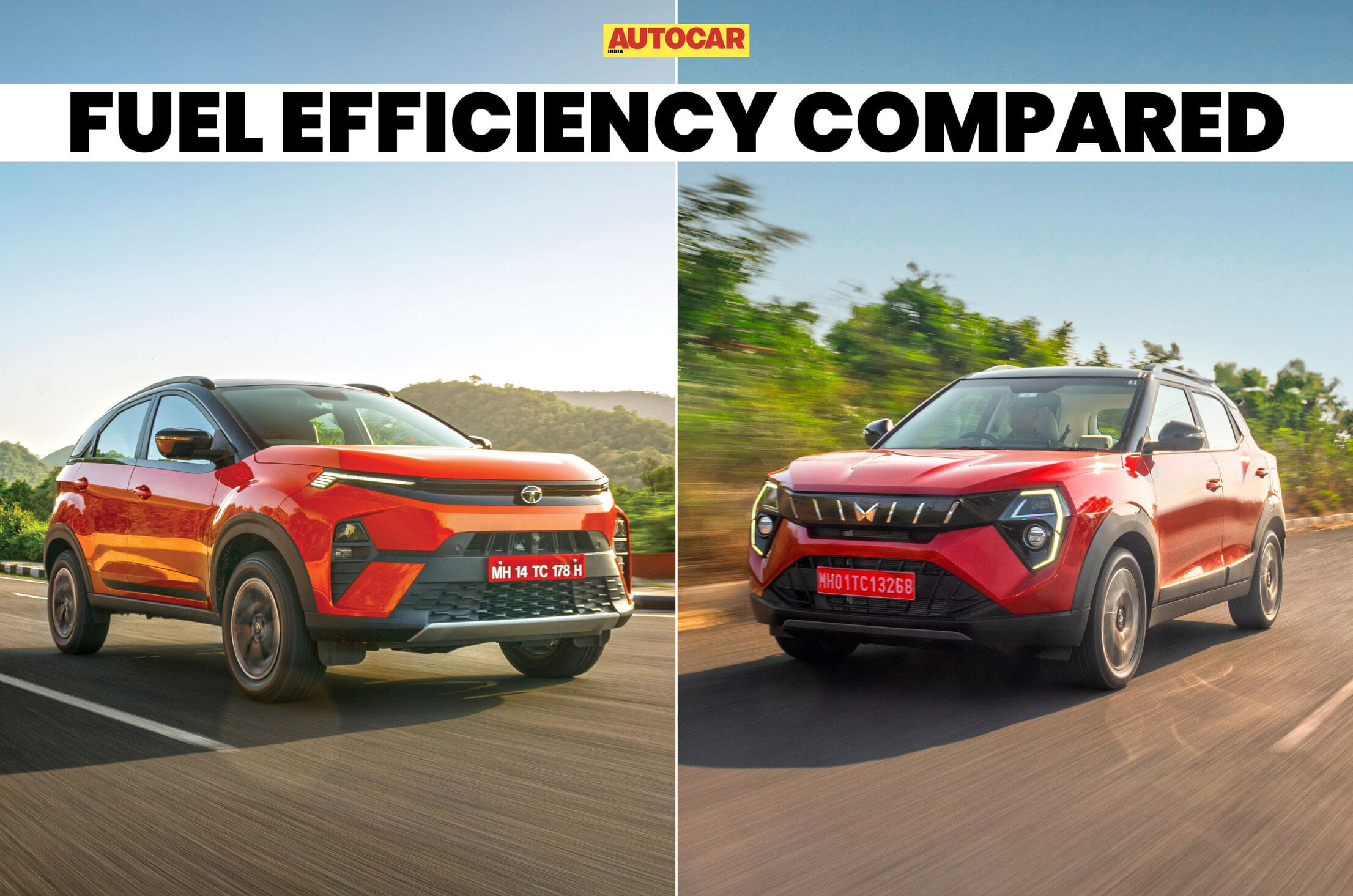
The Tata Nexon and Mahindra XUV 3XO offer buyers two types of turbo-petrol engines. All turbo-petrol versions of the Nexon use multi-point fuel injection (MPFI), with lower trims being mated to an AMT (automated manual transmission) gearbox, while higher trims use a dual-clutch automatic (DCT) gearbox. Meanwhile, all turbo-petrol versions of the XUV 3XO feature a 6-speed torque converter automatic transmission (AT), with gasoline direct injection (GDI) only reserved for the top-spec version. So, if you want the convenience of a proper automatic gearbox plus the performance associated with a turbo-petrol engine without sacrificing fuel economy, which of these two cars should you consider?
Explore full specs, features and a price breakdown in our Nexon vs XUV 3XO comparison.
Tata Nexon vs Mahindra XUV 3XO turbo-petrol automatic: Specifications
While torque spread is comparable in both, the XUV 3XO has a distinct power advantage
Tata Nexon vs Mahindra XUV 3XO automatic: Specifications
Tata Nexon
Mahindra XUV 3XO
Engine
3 cyl, petrol
3 cyl, petrol
Displacement (cc)
1199
1197
Power (hp)
120 (5,500rpm)
131 (5,000rpm)
Torque (Nm)
170 (1,750-4,000rpm)
230 (1,500-3750rpm)
Gearbox
7-speed DCT
6-speed AT
Fuel tank (litres)
44
42
At first glance, the turbo-petrol engines powering the Nexon and XUV 3XO look identical, as both are three-cylinder units with a displacement of 1.2 litres. Since the GDI system typically allows a more complete combustion of fuel, it benefits include more power and better fuel economy over a similar-sized MPFI system.
The XUV 3XO’s direct injection turbo-petrol setup offers 11hp and 60Nm more than its equivalent Nexon version. However, peak torque of these engines is spread out over an identical range of 2,250rpm. The Tata SUV features a 7-speed dual-clutch automatic transmission (DCT), while the top-spec XUV 3XO petrol comes mated to a 6-speed torque converter automatic transmission (AT). Also, the fuel tank of the Tata SUV has a slightly higher capacity, by two litres.
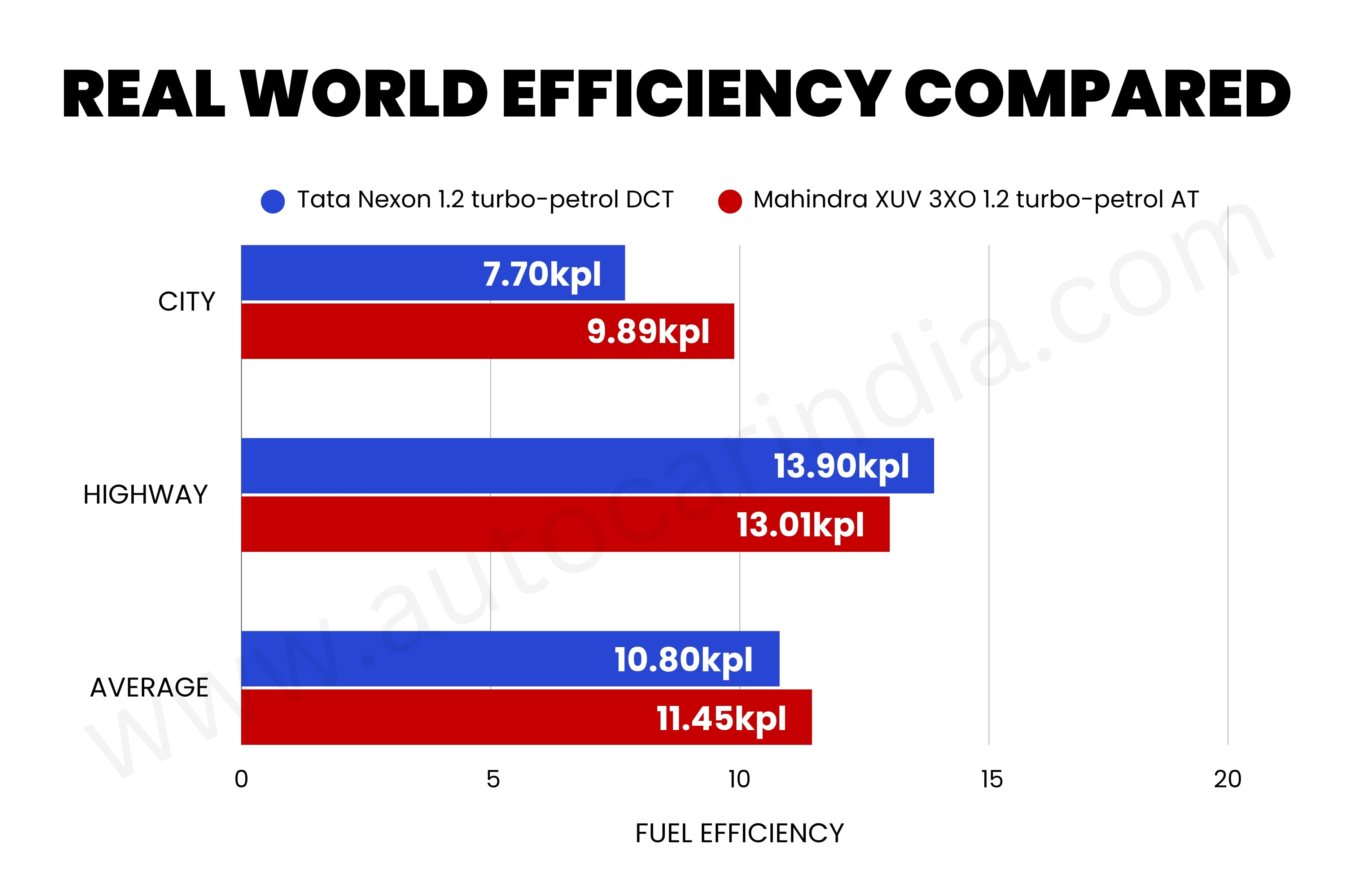
Despite having the punchier engine, the XUV 3XO’s fuel economy is better than the Nexon
Tata Nexon vs Mahindra XUV 3XO automatic: Real-world mileage
Tata Nexon
Mahindra XUV 3XO
Tested city mileage (kpl)
7.70
9.89
Tested highway mileage (kpl)
13.90
13.01
Tested average mileage (kpl)
10.80
11.45
The Tata Nexon returned an average that was 0.65kpl poorer than the Mahindra XUV 3XO. Its low mileage of 7.70kpl in city conditions meant that, even with a higher fuel economy of 13.90kpl on the highway, the Nexon’s overall efficiency still lagged behind the XUV 3XO. The efficiency gains of the Nexon on the highway was helped by the extra ratio in its DCT. Compared to the XUV 3XO’s torque convert AT with six ratios, the Nexon’s 7-speed gearbox allows its engine to spin at a more leisurely speed as you pick up pace.
In the city, the XUV 3XO had a clear lead over the Nexon, achieving a real-world fuel economy that was higher by 2.19kpl. The Mahindra XUV 3XO’s direct fuel-injection technology allows petrol to be introduced into the engine in a highly measured and precise manner. This reduces fuel consumption and improves combustion when compared to a similarly sized but MPFI-equipped turbo-petrol engine, like in the Nexon.
Tata Nexon vs Mahindra XUV 3XO turbo-petrol automatic: Prices
Tata Nexon vs Mahindra XUV 3XO turbo-petrol automatic prices
Tata Nexon
Mahindra XUV 3XO
Price range (in Rs, lakh)
11.35-13.70
13.28-15.04
The turbo-petrol-automatic variants of both the Tata Nexon and Mahindra XUV 3XO are available in three trim levels. For cost-conscious buyers, the most affordable Nexon with this powertrain setup comes in Rs 1.93 lakh cheaper than a comparable XUV 3XO. This price delta continues to the mid-spec trim as well, where the Mahindra is pricier by Rs 79,000. At the top-end, the XUV 3XO’s turbo-petrol automatic variant costs Rs 1.34 lakh more than the equivalent Nexon. One of the reasons for the XUV 3XO’s higher price is is its direct-injection fuel system, which costs more than a comparable MPFI unit.
Autocar India’s fuel efficiency testing
Before our real-world fuel efficiency tests, we fill our test cars’ tanks to the brim and maintain tyre pressures based on the manufacturer’s recommendations. These cars are driven in fixed city and highway loops in and around Navi Mumbai, and we maintain certain average speeds. Throughout the tests, there is only one person in each car, running the air conditioner and other electricals, such as the audio system, indicators and wipers, when required, just like a regular user would. Periodic driver swaps further neutralise variations in driver patterns. At the end of each cycle, we calculate efficiency by filling the tanks to full again.
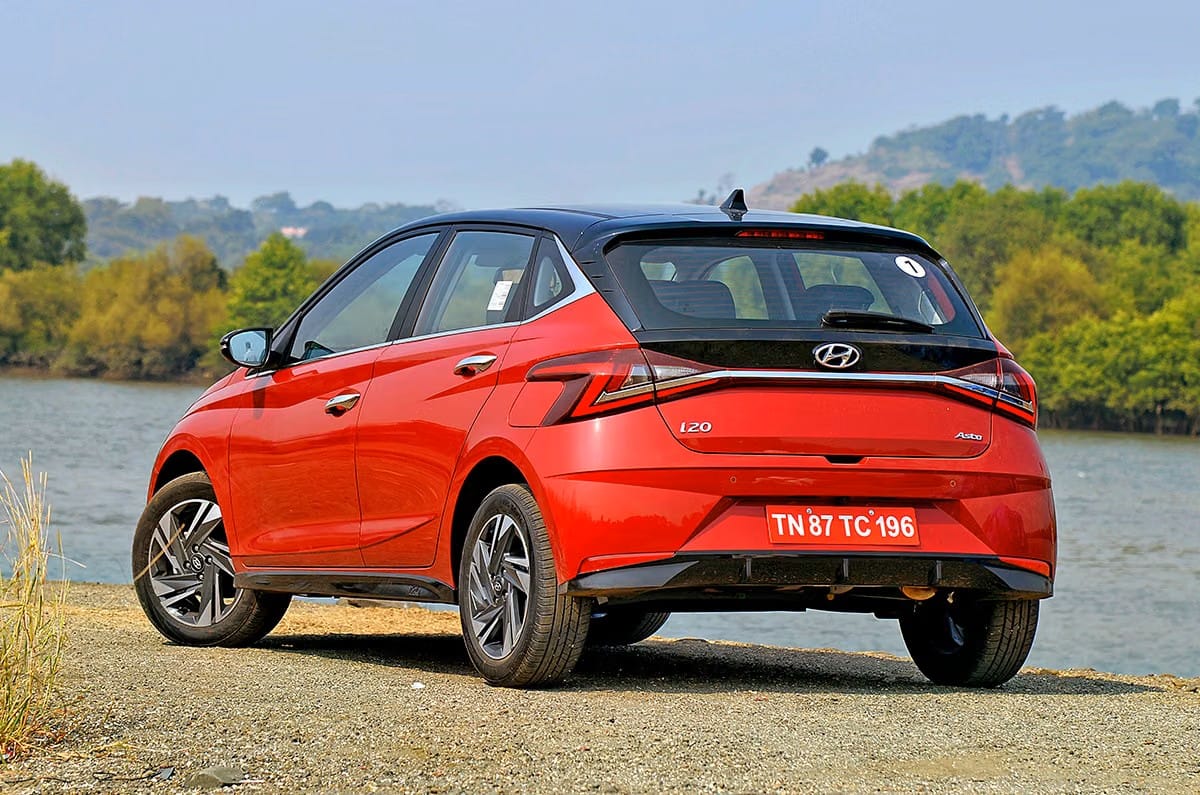
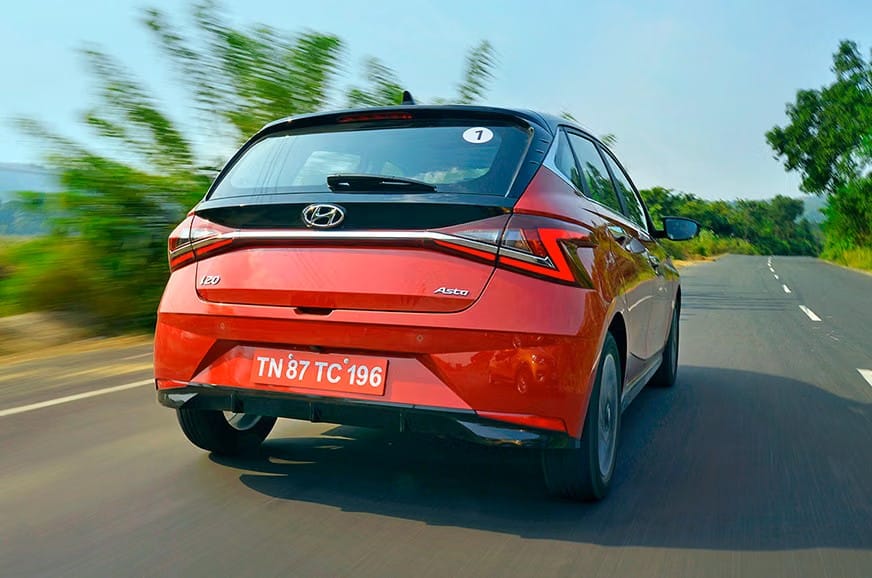
The Hyundai i20 has long been one of the benchmarks in the premium hatchback segment. Along with a spacious cabin, comfortable ride and a feature-rich interior, it offers buyers a choice of manual and automatic transmissions, while those seeking more performance can opt for the sportier i20 N Line. However, its premium pricing (Rs 6 lakh to Rs 11.59 lakh) means it faces stiff competition from both premium hatchbacks and similarly priced compact SUVs. Here’s a look at the Hyundai i20’s biggest strengths and weaknesses.
Pros
1. Spacious and comfortable cabin
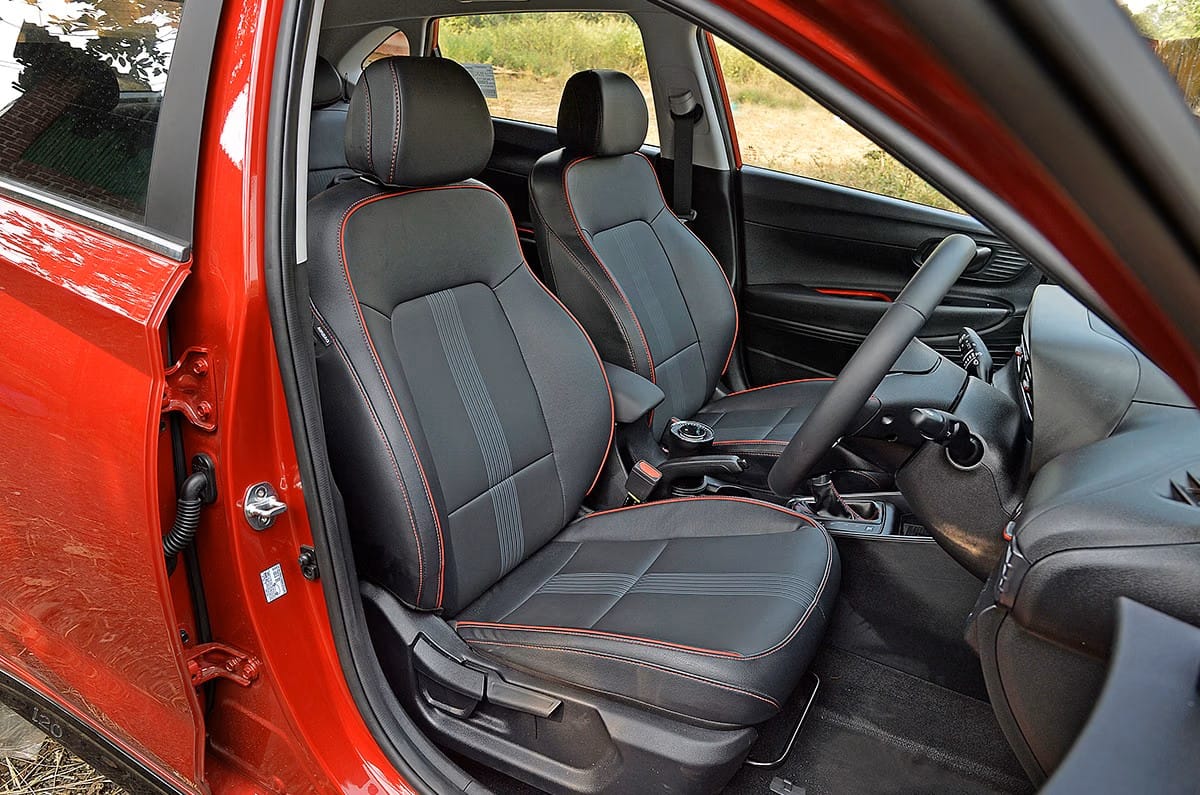
One of the i20’s biggest strengths is its cabin. It offers generous rear-seat space for a premium hatchback, with enough legroom and headroom to comfortably accommodate taller passengers. The front seats are supportive, the dashboard layout is intuitive, and the cabin feels airy thanks to its low-set dashboard. Practicality is another strong point, with a 311-litre boot that’s well suited to everyday use and weekend trips.
2. Well-equipped across the range
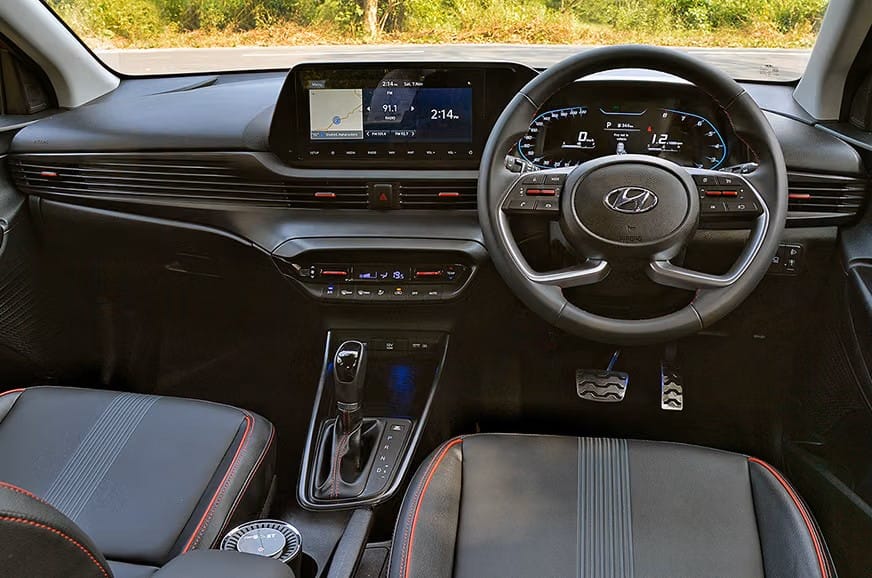
The i20 continues to offer one of the strongest feature lists in its class. Higher variants come with a 10.25-inch touchscreen infotainment system, a digital instrument cluster, connected car technology, a Bose sound system, wireless phone charging, automatic climate control, a sunroof and ambient lighting. Safety equipment is equally comprehensive, with six airbags, electronic stability control (ESC), a tyre-pressure monitoring system (TPMS) and Isofix child-seat mounts available on higher trims.
3. Comfortable ride and refined road manners
The i20 is tuned with comfort in mind. Its suspension absorbs broken roads well without feeling unsettled, while the light steering makes it easy to manoeuvre in the city. On the highway, the hatchback feels stable and composed, giving it a more mature driving experience than many of its rivals. Overall, it strikes a good balance between everyday comfort and confident handling.
Cons
1. Expensive for its segment
The i20 is among the most expensive premium hatchbacks on sale. While its cabin quality, comfort and equipment help justify the asking price, buyers shopping in this price bracket also have the option of several compact SUVs, which offer greater ground clearance and a stronger road presence for similar money.
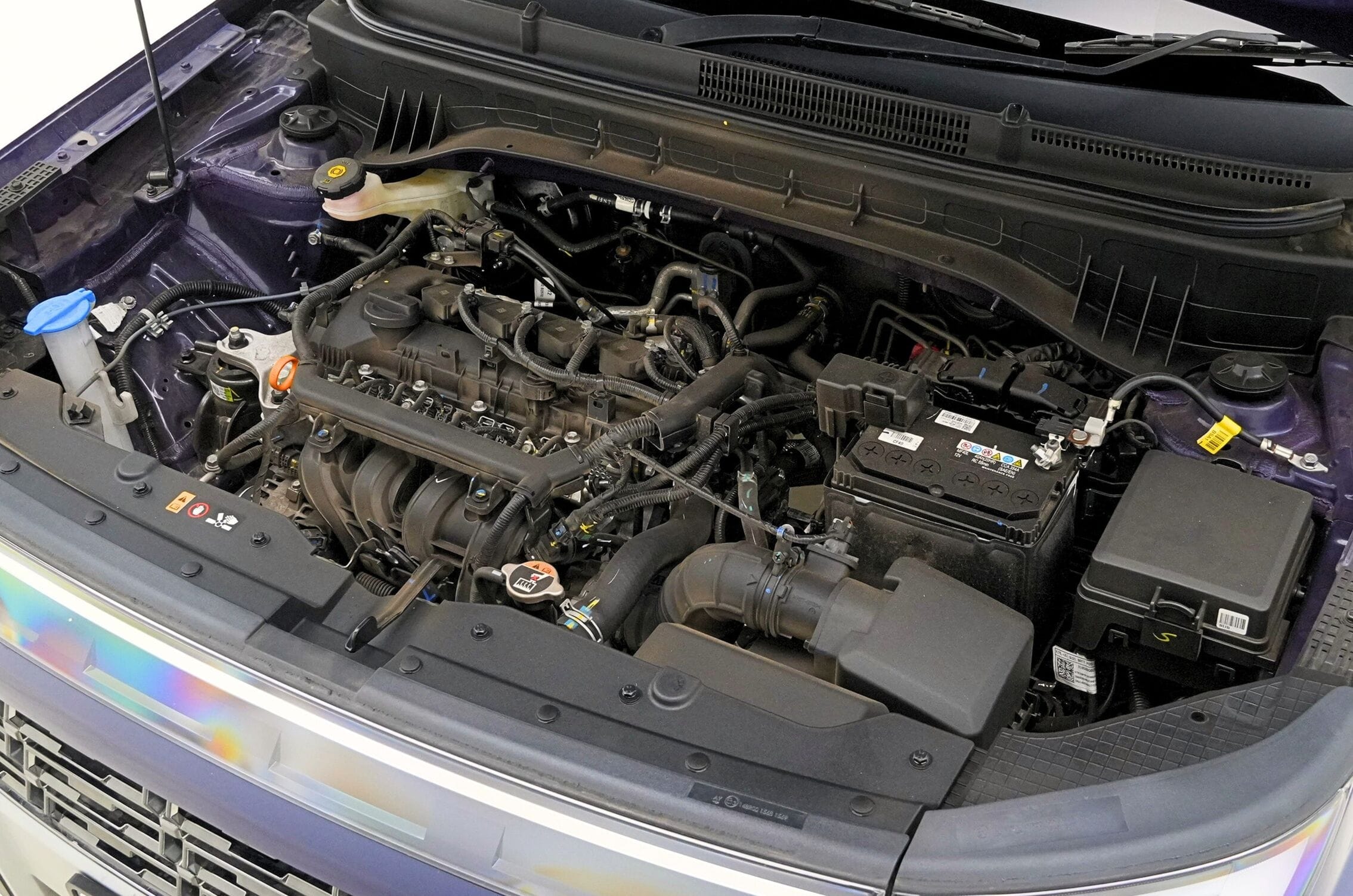
2. The 1.2-litre petrol engine isn’t particularly peppy
Hyundai 1.2 Kappa engine.
The naturally aspirated 1.2-litre petrol engine is smooth and refined, but it isn’t particularly strong at lower engine speeds. It often requires downshifts to gather pace in stop-start traffic or during overtaking manoeuvres, making it feel less effortless than some turbo-petrol rivals. Buyers looking for stronger performance may find the standard i20’s engine lacking. The i20 does come with a punchier 1.0-litre turbo-petrol engine on the N Line variants but for a much higher asking price.
अक्सर वर्क कल्चर में देर रात तक काम करना और छुट्टियों या ऑफिस आवर्स के बाद भी मैसेज का जवाब देना, एक्टिव रहना मेहनत का प्रतीक माना जाता है। लेकिन यूरोपीय देशों खासकर ब्रिटेन (UK) में वर्क लाइफ बैलेंस का अलग ही नजरिया देखने को मिला है। सोशल मीडिया प्लेटफॉर्म X पर एक भारतीय सॉफ्टवेयर इंजीनियर ने अपना ऐसा अनुभव शेयर किया है जो चर्चा का विषय बन गया है। ब्रिटेन के एक सीनियर डेवलपर के साथ काम कर रहे इस भारतीय टेकी को देर रात काम करने पर अपने बॉस से तारीफ मिलने के बजाय ऐसी चेतावनी मिली कि उसे अपना वर्क स्टाइल बदलने पर मजबूर होना पड़ा।
क्या है पूरा मामला और क्यों मिली चेतावनी?
ओम नाम के एक भारतीय सॉफ्टवेयर इंजीनियर ने सोशल मीडिया पर खुलासा किया कि वह इंग्लैंड स्थित एक सीनियर सॉफ्टवेयर डेवलपर के साथ मिलकर काम करता है। भारत और ब्रिटेन के समय में अंतर होने के कारण जब भी यूके का सीनियर डेवलपर उसके कोड का रिव्यू करता था और उस पर कमेंट छोड़ता था तो ओम तुरंत उसका जवाब दे देता था। भारत में उस समय रात के 9 या 10 बज रहे होते थे। ओम ने बताया कि एक दिन मेरे सीनियर ने इस बात पर ध्यान दिया और मुझसे पूछा कि क्या मैं काम के घंटों के अलावा भी काम कर रहा हूं। जब मैंने हां कहा तो बॉस ने मुझे चेताया।
I work with a senior developer from England.
Because of the time difference, whenever he reviewed my PR and left comments, I’d reply immediately.
Even if it was 9 or 10 PM in India.
One day he noticed and asked me, ..”Wait.. are you working beyond your work hours?”
‘7 बजे के बाद रिप्लाई किया तो एक हफ्ते नहीं करूंगा PR रिव्यू’
बार-बार चेतावनी मिलने के बावजूद जब भारतीय टेकी ने ऑफिस आवर्स के बाद कमेंट्स का जवाब देना जारी रखा तो यूके के सीनियर डेवलपर ने सख्त रुख अपनाया। ओम ने पोस्ट में लिखा कि एक दिन उन्होंने कहा कि अगर तुमने भारतीय समयानुसार शाम 7 बजे के बाद मेरे कमेंट्स का दोबारा जवाब दिया तो मैं पूरे एक हफ्ते तक तुम्हारे पीआर (Pull Request) का रिव्यू नहीं करूंगा।’
बॉस की इस अनोखी और सख्त हिदायत का असर हुआ। ओम ने बताया कि ‘अब मैं जानबूझकर जवाब देने के लिए अगले दिन का इंतजार करता हूं। हालांकि मैं कभी-कभी अभी भी काम कर लेता हूं, लेकिन इस घटना ने मुझे अहसास कराया कि वे काम से इतर अपनी पर्सनल लाइफ को कितनी प्राथमिकता देते हैं। सच कहूं तो, उन्हें मुझसे ज्यादा मेरे वर्क-लाइफ बैलेंस की परवाह थी, जो बहुत अच्छा था।’
इंटरनेट पर छिड़ी बहस, यूजर्स ने शेयर किए अपने अनुभव
यह पोस्ट सोशल मीडिया पर तेजी से वायरल हो गई और अन्य भारतीय यूजर्स ने भी विदेशी बॉस और यूरोपीय वर्क कल्चर के साथ अपने ऐसे ही अनुभव साझा किए। एक यूजर ने लिखा कि शुक्रवार को जब मैंने एक पीआर रेज किया तो मेरे रोमानियाई सहकर्मी ने मुझसे लैपटॉप बंद करने को कहा। उस दिन मैंने सीखा कि कभी किसी भारतीय कंपनी या मैनेजर के लिए काम मत करो। एक दूसरे यूजर ने लिखा कि’ मेरी शिफ्ट दोपहर 2:30 से रात 11:30 बजे तक है। मैंने चर्चा के लिए एक अमेरिकी सीनियर आर्किटेक्ट को कॉल किया और कहा कि मैं ज्यादा समय नहीं लूंगा। उन्होंने जवाब दिया कि हां, तुम्हें ज्यादा समय लेना भी नहीं चाहिए!’ मैं शर्मिंदा हो गया फिर उन्होंने आगे कहा कि तुम्हारे काम के घंटे खत्म हो चुके हैं, तुम्हें काम नहीं करना चाहिए।’