Renault Group India CEO Stephane Deblaise on response to Duster and future plans

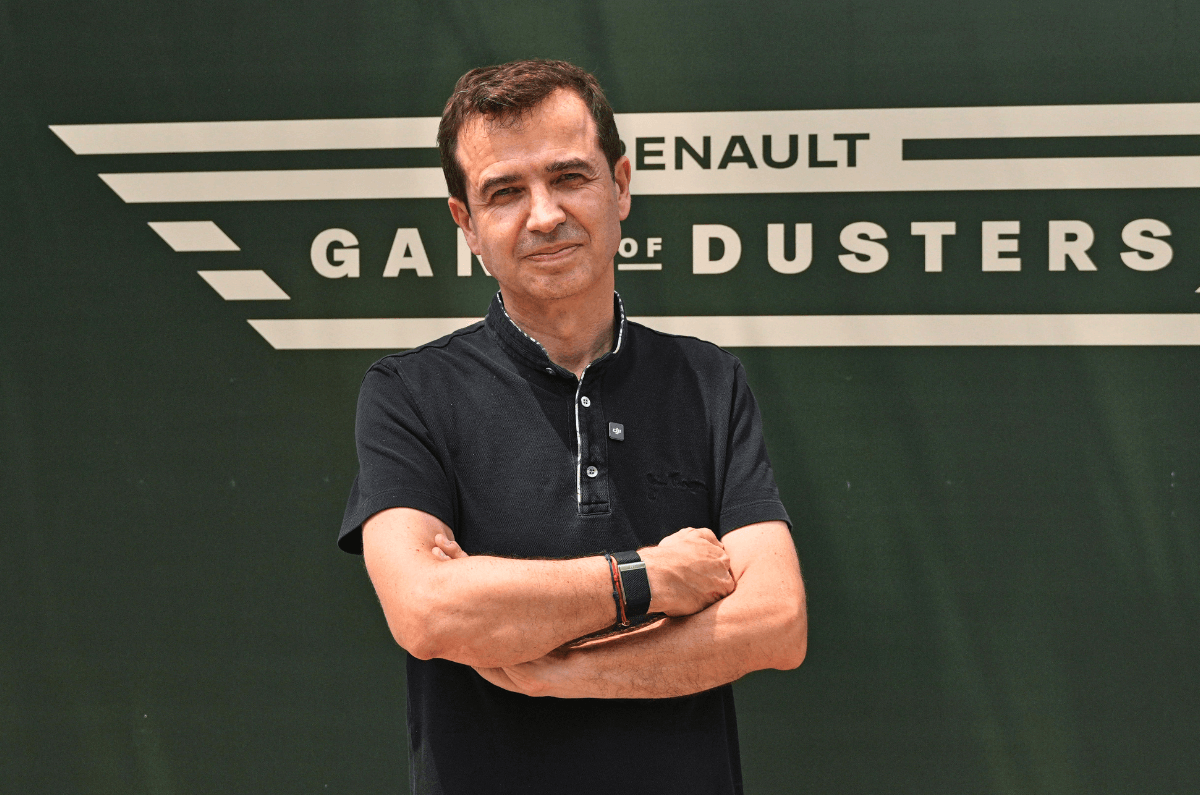
Renault Group India CEO Stephane Deblaise

Renault Group India CEO Stephane Deblaise took charge of the company in September last year, and since then, the carmaker has been busy expanding and refreshing its India line-up. In this interview, Deblaise talks about the response to the new Renault Duster and the possibility of a more affordable automatic variant, the company’s upcoming product plans, progress on the Bridger compact SUV concept, and how Renault plans to strengthen its position in the Indian market.

On the response to the 1.0-litre Duster

It’s still early, so we don’t know the exact response, but it’s a key part of our phased strategy, which was to first focus on the 160hp DCT that is the high-end version in the ICE car. And then we want to introduce the 100hp, the more ‘regular’ car, which is less expensive. That Rs 10.5 lakh price is very, very good for people who want to enter the B+ SUV segment, and it has very good fuel efficiency. Moreover, the Duster is a very good car, and people are loyal to good cars, so we are expecting the Duster to do well on the whole.

On the slow rate of Duster bookings and deliveries

So, at Renault, we don’t overstate or overpromise. We won’t say we have 60,000 people waiting and, after that, you would discover that we did not do 60,000 deliveries. Some people do that; we don’t. We are very serious and would prefer to focus on one (variant), and then another, and a third, so in this way people keep speaking about it. For the hybrid, we were not ready; that’s why it is coming later, but with the 160hp and 100hp Duster, we wanted to focus first on the high-end and then the lower version. You know, we were in a little bit of a hibernation, and you can’t go from that to summer in one day. I think it’s good to build up step by step. 

On the possibility of a 1.0-litre automatic

I am not saying what gearbox or even the engine, but what I can say is that very soon we will introduce a new, less expensive version with an automatic. It was not planned at the beginning, but since we launched the new Duster, we have been having a lot of queries about this from customers. Plus, if you look at the pricing of all the models and variants we currently have, there is a gap between the manual variants and the first automatic version. 

On the rest of the Renault portfolio

I arrived in India on the 1st of September, and on the 16th of October I went to Paris to validate our India plan, and all the programmes that we decided to pursue were validated. Then, as you know, we communicated this in April this year. The programmes are completely running as per our expectations and on time. On the Renault Group Entry Platform (RGEP), we have made many modifications and carried out re-engineering to bring in new engines, new equipment and other things that you have requested. They are now finally coming. Next year will be a blowout of new products. 

On the brand’s new design centre in India

The India R&D centre is playing a very big role in our local as well as global plans. When I arrived, I was requested to bring together the three entities we had, which were all separate: one dedicated to sales, one to engineering, and one dedicated to manufacturing, which was along with Nissan. Now we have all three together under one leadership – mine – and this helps a lot because communication is easier and quicker, and this is improving our agility and our ability to see and respond to the market much better. This is why we will now deliver exactly what the market needs and is asking for.

On the development of the Bridger concept

This is a very important topic. It’s my project, and I am working very hard on this with our whole team. We have three meetings per week about the project, and in the coming weeks, there is a very important milestone. But I am happy to say that everything is going nicely and is on track, so I am satisfied with our progress.  

One-off Bentley Continental GTC S image gallery

One-off Bentley Continental GTC S

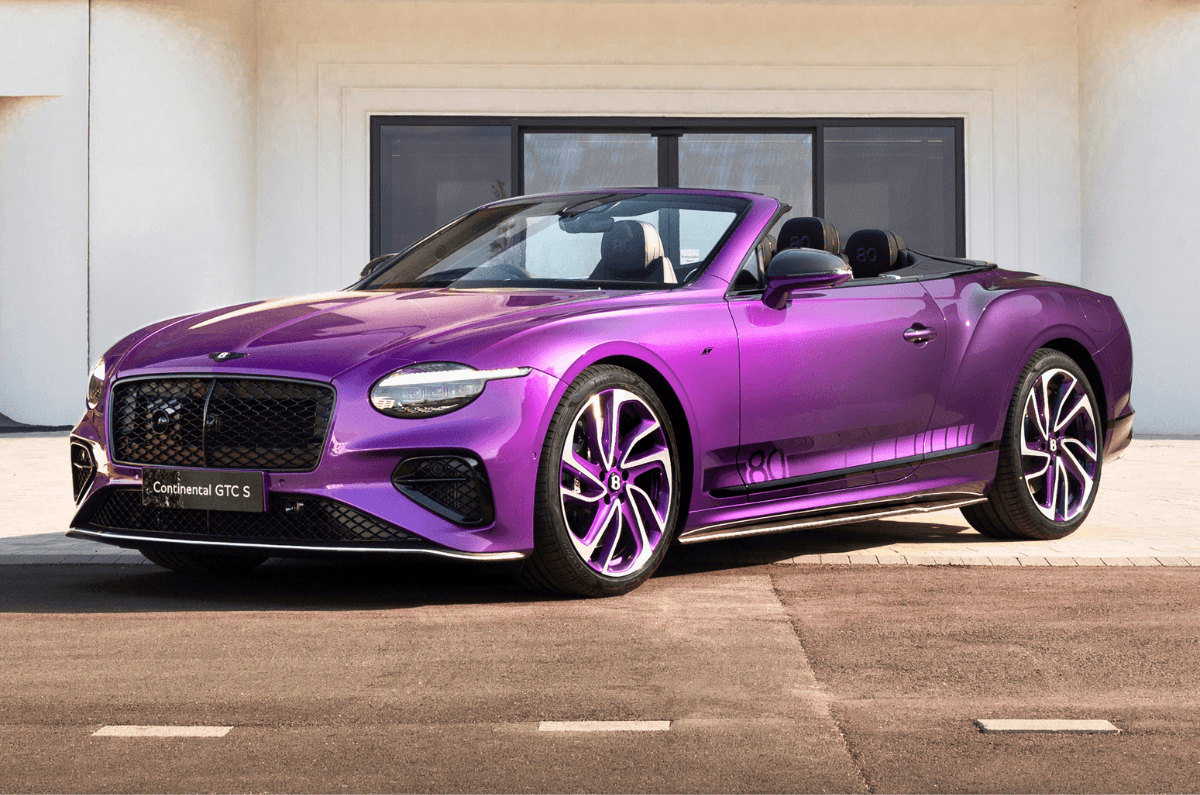
Bentley has created a one-off Continental GTC S to celebrate 80 years of craftsmanship at its Crewe headquarters. Built by Mulliner, the marque’s personal commissioning division, the car gets an exclusive Supernova Purple Ombre paint finish, along with a bespoke ’80’ side graphic. Inside, it features embroidered ’80’ logos on the headrests and a unique dashboard graphic inspired by Bentley’s Design Studio. The special Continental GTC S showcases the craftsmanship, innovation and attention to detail that have defined Bentley’s Crewe factory for the past eight decades.

एक साल में 1.14 रुपये करोड़ इनकम टैक्स जमा किया, फिर शख्स ने ऐसा क्यों कहा कि कमाई अपनी नहीं लगती

एक शख्स की सोशल मीडिया पोस्ट ने देश में टैक्स व्यवस्था और टैक्सपेयर्स की उम्मीदों को लेकर नई बहस शुरू कर दी है। दावा किया गया कि उसने इस साल 1.14 करोड़ रुपये इनकम टैक्स जमा किया, जिसके बाद उसने अपनी भावनाएं साझा करते हुए कहा कि कई बार ईमानदार टैक्स देने वालों को अपनी कमाई का बड़ा हिस्सा सिस्टम में जाता हुआ महसूस होता है। उसकी पोस्ट वायरल होने के बाद लोगों ने टैक्स भुगतान, सरकारी सुविधाओं और जवाबदेही जैसे मुद्दों पर अपनी राय रखी।

कई यूजर्स का कहना है कि टैक्स देश के विकास के लिए जरूरी है, लेकिन बदले में बेहतर सेवाएं और पारदर्शिता भी मिलनी चाहिए। वहीं कुछ लोगों ने सुझाव दिया कि बड़े योगदान देने वाले ईमानदार टैक्सपेयर्स के लिए अलग सुविधाओं या प्रोत्साहन पर भी विचार किया जा सकता है।

टैक्स समरी शेयर कर बताई अपनी परेशानी

X पर वायरल हुई पोस्ट में शख्स ने अपनी टैक्स समरी का स्क्रीनशॉट साझा किया, जिसमें भारी टैक्स भुगतान का दावा किया गया है। उसने कहा कि ईमानदारी से टैक्स देने वाले लोगों की परेशानियों और उनकी अपेक्षाओं पर अक्सर कम चर्चा होती है, जबकि वे देश की अर्थव्यवस्था में बड़ा योगदान देते हैं।

विदेश से ऑफर मिले, फिर भी भारत में रहने का फैसला

शख्स ने बताया कि उसे अमेरिका से नौकरी के ऑफर भी मिले थे, लेकिन उसने अपने बुजुर्ग माता-पिता की वजह से भारत में रहने का फैसला किया। हालांकि, उसका कहना है कि ज्यादा टैक्स देने वाले कई लोग यह महसूस करते हैं कि उनकी आवाज उतनी प्रभावी तरीके से नहीं सुनी जाती।

टैक्स और सुविधाओं को लेकर छिड़ी बहस

उसकी पोस्ट के बाद सोशल मीडिया पर टैक्स व्यवस्था, सरकारी सुविधाओं और टैक्सपेयर्स को मिलने वाली सेवाओं को लेकर चर्चा शुरू हो गई। कई यूजर्स ने सवाल उठाया कि ज्यादा योगदान देने वाले लोगों को बेहतर सुविधाएं और अधिक जवाबदेही क्यों नहीं मिलनी चाहिए।

यूजर्स बोले- टैक्स जरूरी है, लेकिन जवाबदेही भी होनी चाहिए

एक यूजर ने लिखा कि टैक्स देश के विकास के लिए जरूरी हैं, लेकिन टैक्स देने वालों को बदले में बेहतर सेवाएं, पारदर्शिता और जवाबदेही भी मिलनी चाहिए। वहीं कुछ लोगों ने कहा कि ईमानदार टैक्सपेयर्स के लिए कुछ विशेष सुविधाओं या रियायतों पर विचार किया जाना चाहिए।

ईमानदार टैक्सपेयर्स बनाम सिस्टम पर बहस

कुछ यूजर्स ने अपनी निजी परेशानियां भी साझा कीं। एक यूजर ने कहा कि नौकरीपेशा लोग अपनी आय और खर्चों पर लगातार टैक्स देते हैं, जबकि कुछ व्यवसायी अपनी वास्तविक आय के हिसाब से उतना टैक्स नहीं देते। इस पोस्ट ने एक बार फिर टैक्स व्यवस्था में समानता और जिम्मेदारी को लेकर बहस तेज कर दी है।

पहली डेट पर लड़की ने मंगाया इतना सब कि 20,500 रुपये का बिल आया, फिर जो हुआ उसने युवक का दिल तोड़ दिया

Kia Syros EV vs Vinfast VF6: Whose top trim offers more value?

Kia Syros EV vs Vinfast VF6

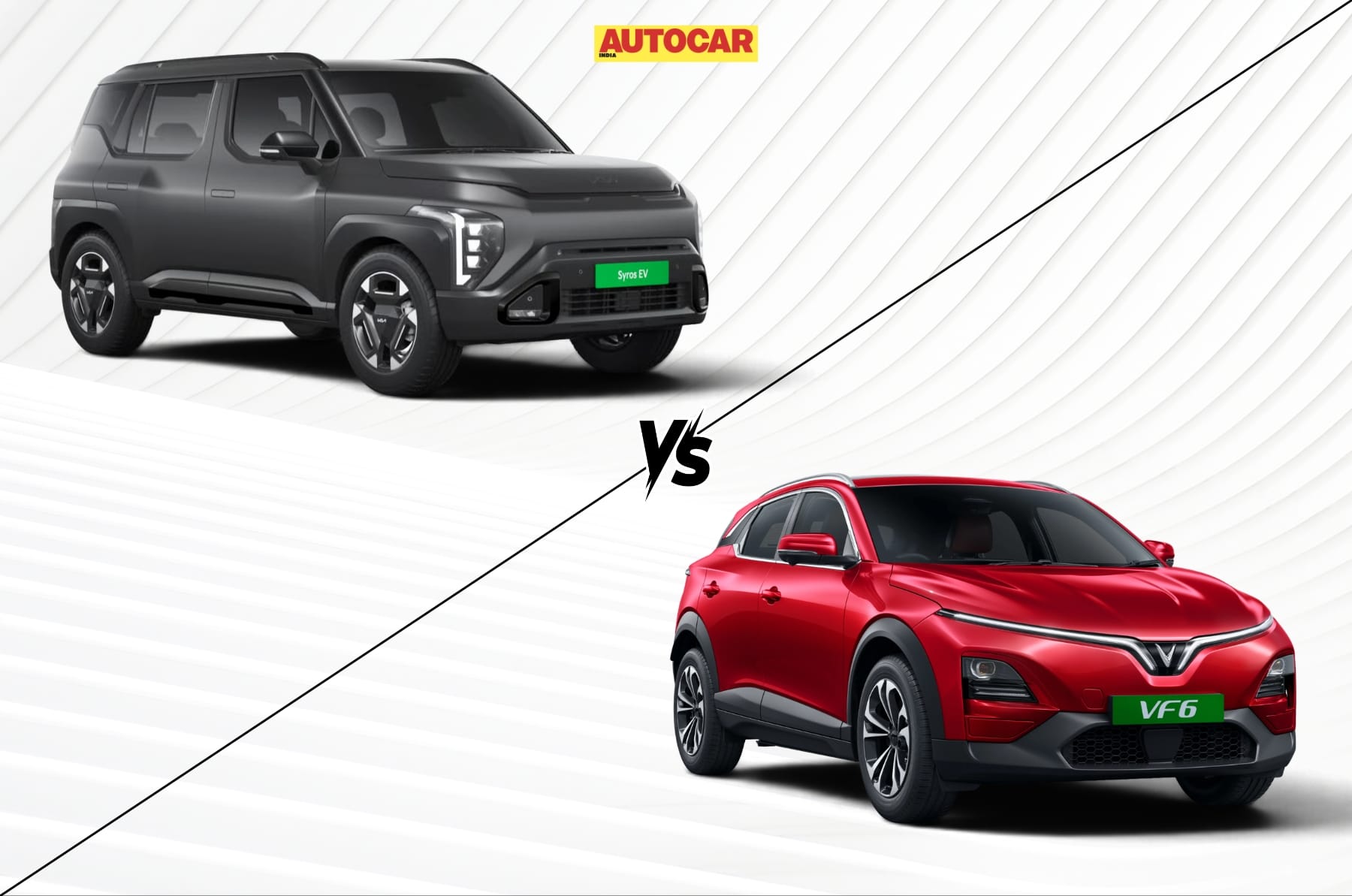
The Kia Syros EV and Vinfast VF6 are the most affordable electric vehicles from their respective brands. The premium Kia offering is sold in the compact SUV space, one below the VF6’s midsize SUV segment. So, can it match or even outdo the larger VF6 when it comes to specifications and features? We compare the Kia Syros EV X-Line ER and Vinfast VF6 Wind Infinity top-spec variants to find out.

Kia Syros EV X-Line ER vs Vinfast VF6 Wind Infinity: Dimensions


Syros EV

VF6

Length (mm)

3,995

4,241

Width (mm)

1,805

1,834

Height (mm)

1,670

1,615

Wheelbase (mm)

2,550

2,730

Ground clearance (mm)

197

190

Frunk (L)

16

No

Boot space (L)

390-465

423

Wheel size (in)

17

18

Clearly, the Vinfast VF6 is the larger SUV between the two. It is 246mm longer, 29mm wider and has a 180mm longer wheelbase than the Kia Syros EV. However, the Syros is 55mm taller and offers a 7mm higher ground clearance. It also gets a 16-litre frunk, a feature missing on the VF6. In terms of luggage space, the VF6 offers 423 litres of boot space, but the Syros EV can hold up to 465 litres when its sliding rear seats are pushed forward, although capacity drops to 390 litres with the seats in their rearmost position. The VF6 also rides on larger 18-inch alloy wheels, compared to the 17-inch units on the Syros EV.

Kia Syros EV X-Line ER vs Vinfast VF6 Wind Infinity: Powertrains


Syros EV

VF6

Battery size (kWh)

51.4

59.6

Electric motor setup

Single motor

Single motor

Drive layout

FWD

FWD

Power (hp)

171

204

Torque (Nm)

255

310

Claimed 0-100kph time (s)

8.1

8.9

ARAI range (km)

526

463

The two SUVs use a single-motor, front-wheel-drive setup, but the VF6 has the bigger 59.6kWh battery pack, compared to the Syros EV’s 51.4kWh unit. It also produces 33hp more power and 55Nm more torque. Despite this, the Syros EV is quicker, with a claimed 0-100kph time of 8.1 seconds, compared to the VF6’s 8.9 seconds. It also has a clear advantage in terms of claimed driving range, offering 526km on a single charge, which is 63km more than the VF6’s 463km, despite having a smaller battery pack.

Kia Syros EV X-Line ER vs Vinfast VF6 Wind Infinity: Charging speeds


Syros EV

VF6

AC charging (10-100 percent)

4.5 hrs (11kW unit)

Time not specified (7.2kW unit) 

DC fast charging (10-70 percent)

25 mins (100kW unit)

DC fast charging (10-80 percent)

39 mins (100kW unit)

Both the Syros EV and VF6 support 100kW DC fast charging. However, Kia claims a 39-minute charging time for a 10-80 percent top-up, while Vinfast’s claimed 25-minute figure is for the slightly lower 10-70 percent charging window. On the AC charging front, the Syros EV supports charging speeds of up to 11kW, taking 4.5 hours to charge from 10 to 100 percent. The VF6, meanwhile, supports up to a 7.2kW AC charger, although Vinfast has not yet revealed its charging time.

Kia Syros EV X-Line ER vs Vinfast VF6 Wind Infinity: Exterior features


Syros EV

VF6

Headlamps

LED

LED projector

Front fog lamps

LED

No

LED tail-lamps

Yes

Yes

Powered ORVMs

Yes

Yes

Alloy wheels

Yes

Yes

Flush door handles

Yes

No

Body cladding

Yes

Yes

Rear spoiler

Yes

Yes

Not a lot separates them when it comes to exterior features, with both offering LED tail-lamps, powered ORVMs, alloy wheels, body cladding and a rear spoiler. However, the VF6 comes with LED projector headlamps, while the Syros EV gets LEDs with reflectors. Another differentiation is that the Syros EV gets flush-fitting door handles, whereas the VF6 is equipped with conventional pull-type door handles.

Kia Syros EV X-Line ER vs Vinfast VF6 Wind Infinity: Interior features


Syros EV

VF6

Infotainment screen (in)

12.3

12.9

Digital driver’s display (in)

12.3

No

Climate control display (in)

5

No

Sunroof

Panoramic, openable

Panoramic, fixed

Wireless charger

Yes

Yes

Driver’s seat powered adjustment

4-way

8-way

Ventilated front seats

Yes

Yes

USB ports

2 Type C (f/r), including 1 100W (f)

2 Type A (f/r), 1 90W Type C (r)

Rear AC vents

Yes

Yes

Rear seat base ventilation

Yes

No

Climate control

Single zone

Dual zone

All window one touch up/down

Yes

Yes

Ambient lighting

Yes

Footwell only

Sound system

8-speaker Harmon Kardon

8 speakers

Apple CarPlay and Android Auto

Wireless

Wireless

Connected car tech

Yes

Yes

Rear sunshades

Yes

No

Rear centre armrest

Yes

Yes

Sliding, reclining rear seats

Yes

No

Speaking of interior features, both are well equipped and offer a wireless phone charger, ventilated front seats, connected car technology, one-touch up/down function for all windows, wireless Apple CarPlay and Android Auto and an 8-speaker sound system. The VF6 gets a slightly larger 12.9-inch infotainment screen, an 8-way power-adjustable driver’s seat and dual-zone climate control.

The Syros EV, meanwhile, stands out with a 12.3-inch digital driver’s display, a 5-inch climate control display, an openable panoramic sunroof, rear sunshades, rear seat base ventilation, and sliding and reclining rear seats. It also gets USB Type-C ports throughout the cabin, while the VF6 has Type-A ports at the front and rear, and only a single 90W Type-C port for rear passengers. Additionally, the Syros EV features a premium Harman Kardon sound system and more comprehensive ambient lighting (dashboard, doors and footwell area), whereas the VF6 offers just footwell lighting.

Kia Syros EV X-Line ER vs Vinfast VF6 Wind Infinity: Driving features


Syros EV

VF6

Drive modes

Eco, Normal, Sport

Eco, Normal, Sport

Household-style interior 3-pin socket

Yes

No

Regen braking

Yes

Yes

Paddleshifters for regen

Yes

No

Adaptive cruise control

Yes

Yes

Differences here are less, save for the Syros EV’s household-style 3-pin power socket to power certain electrical devices, along with steering-mounted paddle shifters to adjust the level of regenerative braking. Regen levels can be adjusted via the touchscreen on the VF6, but an internal V2L charging socket is absent here. Drive modes and adaptive cruise control are offered by both models.

Kia Syros EV X-Line ER vs Vinfast VF6 Wind Infinity: Safety features


Syros EV

VF6

Bharat NCAP rating

Yet to be tested

5 stars

Airbags

6

7

ABS with EBD

Yes

Yes

Electronic stability program

Yes

Yes

Hill-start assist

Yes

Yes

Tyre pressure monitoring system

Yes

Yes

360-degree camera

Yes

Yes

Front parking sensors

Yes

Yes

Electronic parking brake

Yes

Yes

Rain-sensing wipers

No

Yes

Auto-dimming IRVM

Yes

Yes

Isofix child seat anchors

Yes

Yes

Rear wiper, defogger

Yes

Yes

Disc brakes

Front, rear

Front, rear

Level 2 ADAS

Yes

Yes

Again, not much separates the them when it comes to safety kit. Both offer ABS with EBD, electronic stability control, hill-start assist, TPMS, a 360-degree camera, front parking sensors, an electronic parking brake, an auto-dimming IRVM, ISOFIX child seat anchors, front and rear disc brakes, and Level 2 ADAS. 

The VF6, however, gets seven airbags, one more than the Syros EV’s six, along with rain-sensing wipers. It has also secured a full 5-star Bharat NCAP safety rating. The Syros EV’s Bharat NCAP crash test rating, meanwhile, is yet to be revealed at the time of writing, but it is likely to score a 5-star rating like its ICE counterpart.

Kia Syros EV X-Line ER vs Vinfast VF6 Wind Infinity: Prices and verdict


Syros EV

VF6

Price (in Rs lakh)

20

19.99

There’s no doubt that both the Kia Syros EV and Vinfast VF6 are feature-rich electric SUVs. However, despite being positioned a segment below the VF6, the Syros EV makes a strong case for itself with its overall package. It offers several features aimed at pampering the rear seat passengers, including sliding and reclining seats with ventilation (seat base only), sunshades and an openable panoramic sunroof. While it has a smaller footprint than the VF6, we found in our review that the Syros EV still offers a spacious cabin, helped by its boxy design and good interior packaging.

The Syros EV also has an advantage when it comes to claimed driving range. Despite using a smaller battery pack, it offers a higher single charge range, an important factor for most EV buyers. While both SUVs are priced very close to each other at the top-end, the Syros EV is clearly on the expensive side for its segment. However, the overall package goes a long way towards justifying its price. Buyers can also reduce the upfront cost by quite a lot by opting for the battery as a service (BaaS) scheme with the electric Syros, though this option is not available with the VF6.

Another advantage for the Syros EV is Kia’s wider sales and service network across the country, along with its stronger brand recognition among buyers. Vinfast, on the other hand, is still new to the market, with a relatively limited sales and service network. This could also play an important role in the overall ownership experience.

5 things to know before buying the Avore EX1

5 things to know before buying the Avore EX1

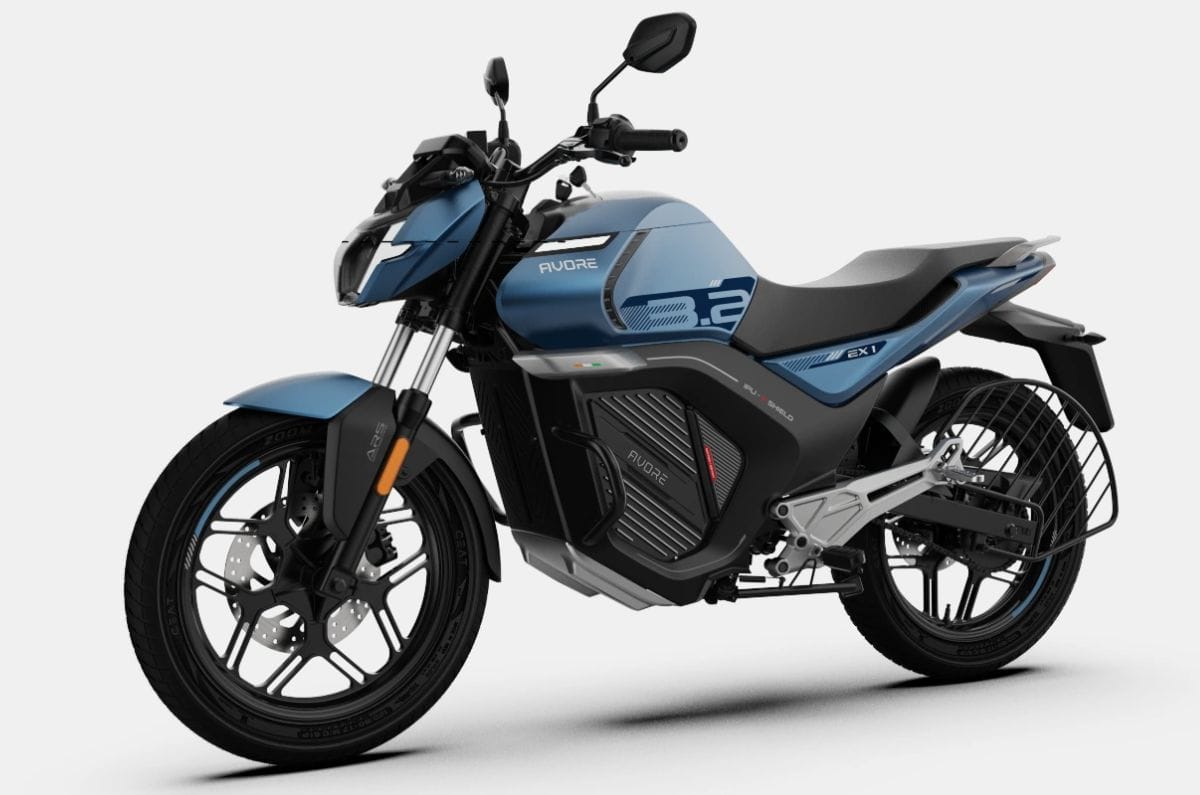
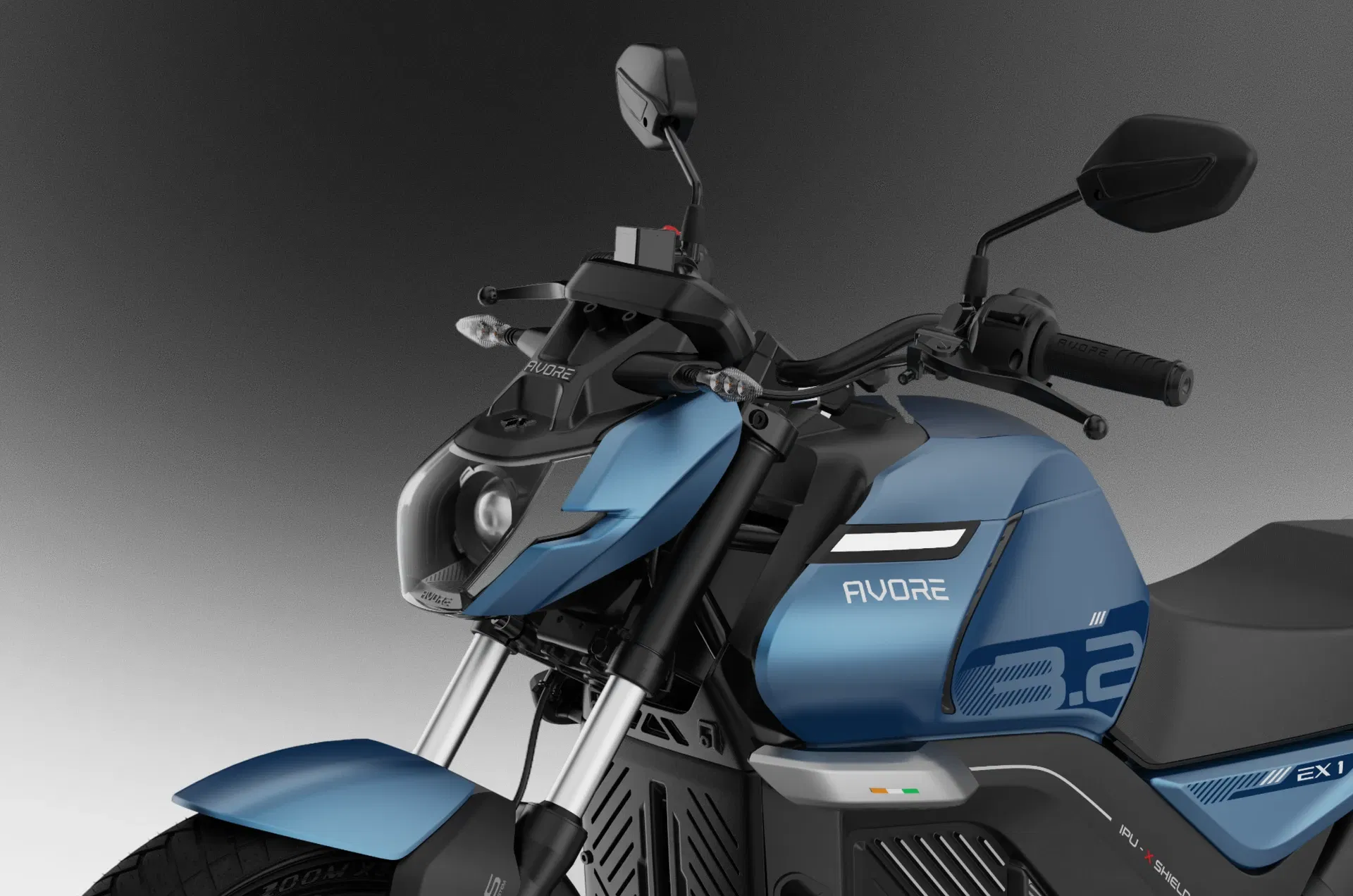
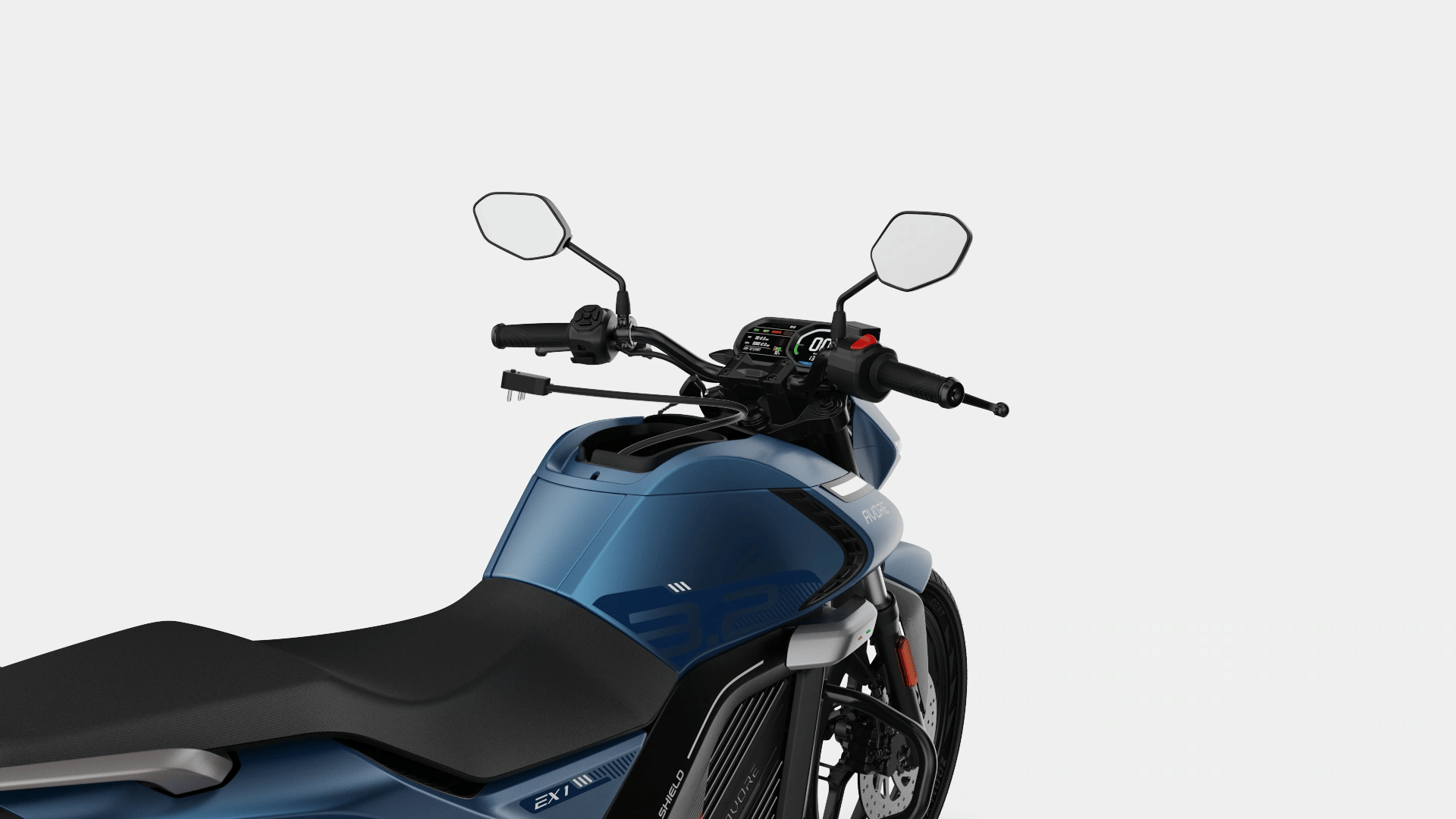
Ahmedabad-based EV startup Avore Electric has entered the Indian electric motorcycle space with its EX range, comprising three variants – EX1, EX2 and EX2S. Of these, the EX1 serves as the entry point to the lineup and is also the most affordable of the three. Here are five things you should know about the Avore EX1 before buying one.

1. How much does the Avore EX1 cost?

The Avore EX1 is priced at Rs 1.25 lakh (Introductory), making it the most affordable model in the three-variant EX lineup. Pre-bookings for the electric motorcycle are currently open for Rs 799, with deliveries slated to begin in the coming months.

2. What is the Avore EX1 battery capacity and range?

The EX1 uses a 3.24kWh battery pack, which is the smallest offered across the EX range. Avore claims an IDC range of 160km on a full charge. It comes with a 750W charger, with a claimed 20-80 percent charging time of around three hours.

3. What is the peak out of the Avore EX1?

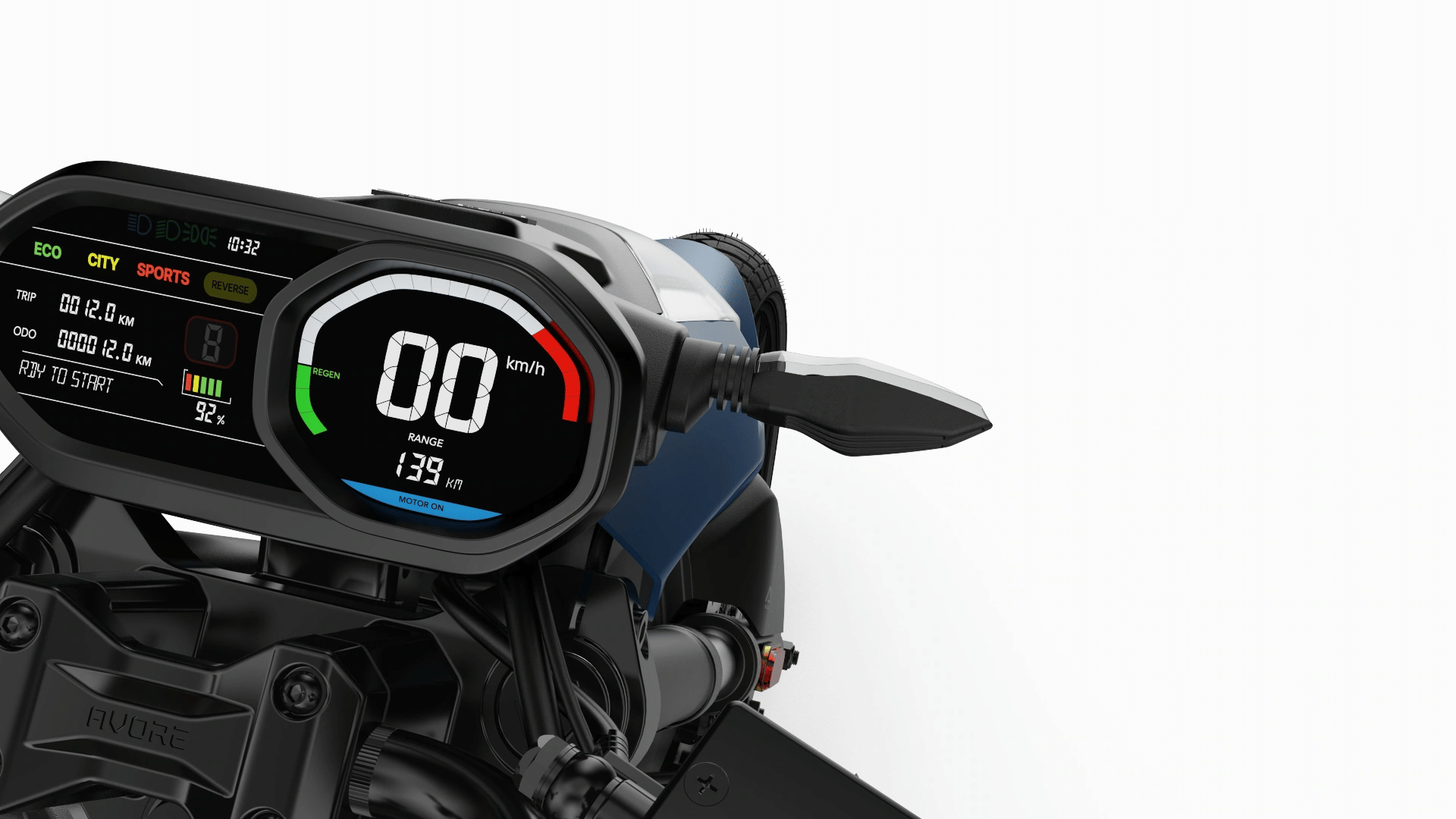
The Avore EX1 uses an electric motor with a peak output of 7.5kW, with power sent to the rear wheel via a chain final drive. It has a claimed top speed of 100kph and can accelerate from 0-40kph in a claimed 3.2 seconds. The EX1 also gets three riding modes – Eco, City and Sport – along with a reverse mode.

4. What features does the Avore EX1 get?

The EX1 gets a 7-inch segmented LCD display along with smartphone connectivity. Its connected features include geofencing, crash alerts and predictive health tracking. Other features include hill-hold assist, cruise control and regenerative braking.

5. What colours is the Avore EX1 available in?

The Avore EX1 is available in three single-tone colours – Starlit Blue, Meteor Red and Stellar Black. Avore also offers a five-year/60,000km warranty with the electric motorcycle.

Tata Harrier EV vs Vinfast VF7: Performance, Regen and Range Compared

Tata Harrier EV vs Vinfast VF7:


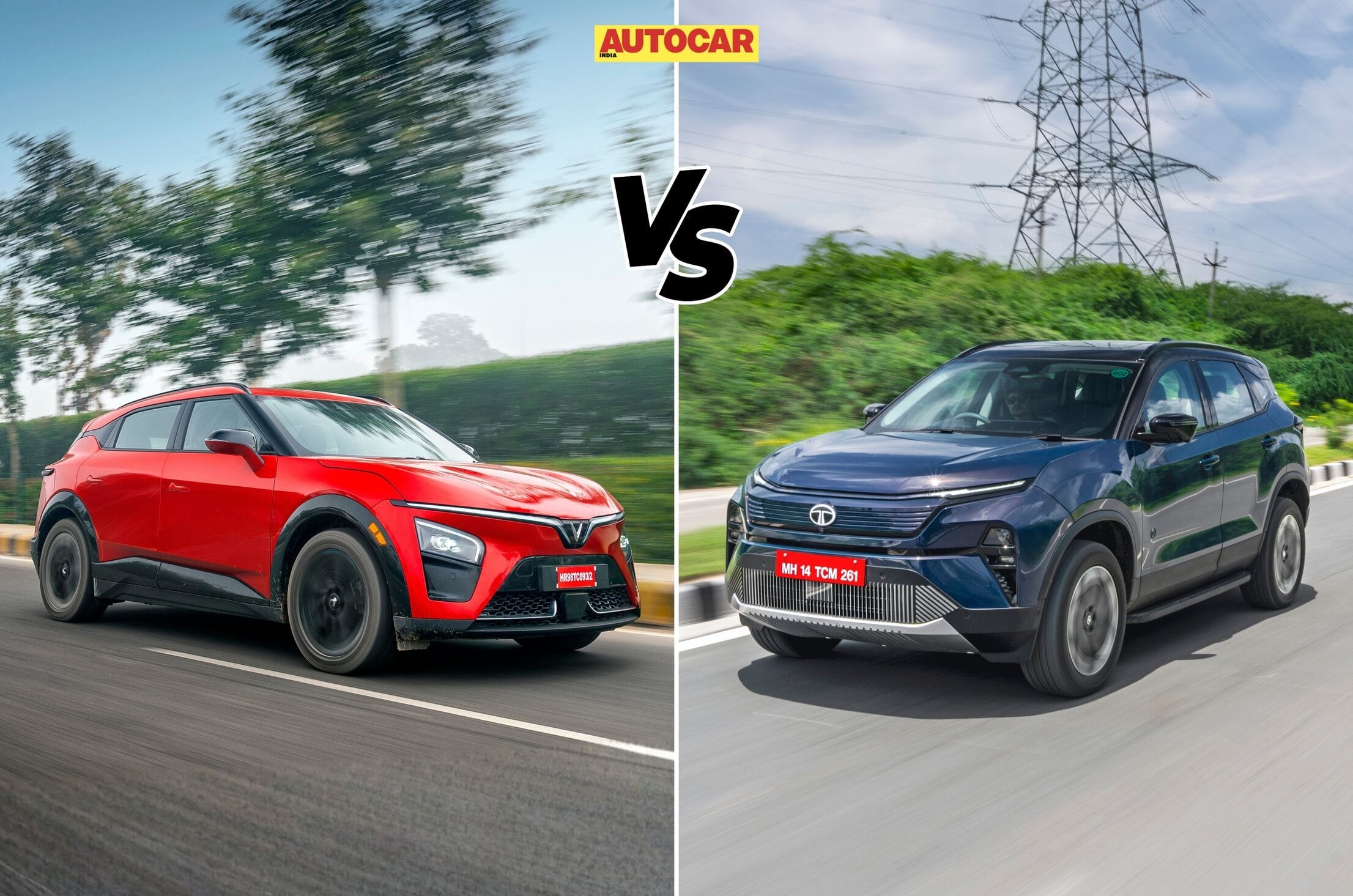
The Tata Harrier EV and the Vinfast VF7 both premium electric SUVs roughly priced in the range of Rs 20-30 lakh (ex-showroom). The Harrier EV looks bold and more SUV-ish, whereas the VF7 is sleeker and lower slung. That said, both cars are loaded with features and offer potent powertrain options. Here in this article, we compare the top-spec variants of both cars to find which EV offers the best performance, regen and range.

Vinfast VF7 vs Tata Harrier EV: Specifications, price

Harrier EV offers a bigger battery, better range but the VF7 is more powerful and costs less.

 Harrier EV Empowered 75 QWDVF7 Sky Infinity 70 AWD
Battery Size (kWh)7570
Power (hp)313353
Torque (Nm)504500
Claimed Range (km)622510
Kerb weight (kg)23352218
Power-to-weight*134.05159.1
Torque-to-weight^215.85225.43
Price (in Rs lakh)Rs 29.19Rs 28.09

*Power-to-weight is hp per tonne

^Torque-to-weight is Nm per tonne

We tested both vehicles in their top-spec AWD version, with a 75kWh battery on the Harrier EV and slightly smaller 70.8kWh battery on the VF7. While both cars make about the same torque, the VF7 makes 40hp more than the Tata. In this AWD avatar, both cars use a dual motor setup, whereas lower variants are available with a single motor setup in both models. Also, the Harrier EV offers a higher claimed range, despite being the heavier car here (by about 117kg) 

Before Vinfast hiked prices early this year, the VF7 undercut the Harrier EV by a couple of lakhs and was the value pick. Today, the price difference between the two has come down and is about Rs. 1.1 lakh between these top-spec variants.

Vinfast VF7 vs Tata Harrier EV: Performance tests

More power, weighs less – VF7 definitely is the better performer

 Harrier EV Empowered 75 QWDVF7 Sky Infinity 70 AWDWinner
0-100kph (sec) 6.746.03VF7
20-80kph (sec) 3.893.16VF7
40-100kph (sec) 4.323.95VF7
Quarter mile (sec) 15.0914.48VF7

The Vinfast is faster in all of these tests, thanks to its lower kerb weight and more powerful motors. In the sprint to 100kph, it is 0.71s quicker than the Harrier EV. 20-80kph and 40-100kph runs are 0.73s and 0.37s faster in the VF7, respectively.

During our time testing these EVs, we experienced some tyre spin in the VF7 when launching it hard. On the other hand, because the traction control system in the Harrier EV AWD cannot be turned off at all, it got off the line each time without any drama.

Vinfast VF7 vs Tata Harrier EV: Regen and Range

Stronger regen modes make the Harrier EV more efficient in the city.

Regen modeHarrier EV Empowered 75 QWDVF7 Sky Infinity 70 AWDWinner
One-pedalNANA 
High130.64m/8.89s161.48m/11.73sHarrier EV
Medium161.42m/10.4s308.11m/22.24sHarrier EV
Low293.26m/20.78s636.14m/46.46sHarrier EV

The Harrier EV showed much stronger battery regeneration in all three regen modes. While the regenerative braking of these cars are close in the highest regen mode, the VF7 offers very less regenerative braking in the medium and low setting, and takes twice as long to slow down from 80-20kph when compared to the Harrier EV. 

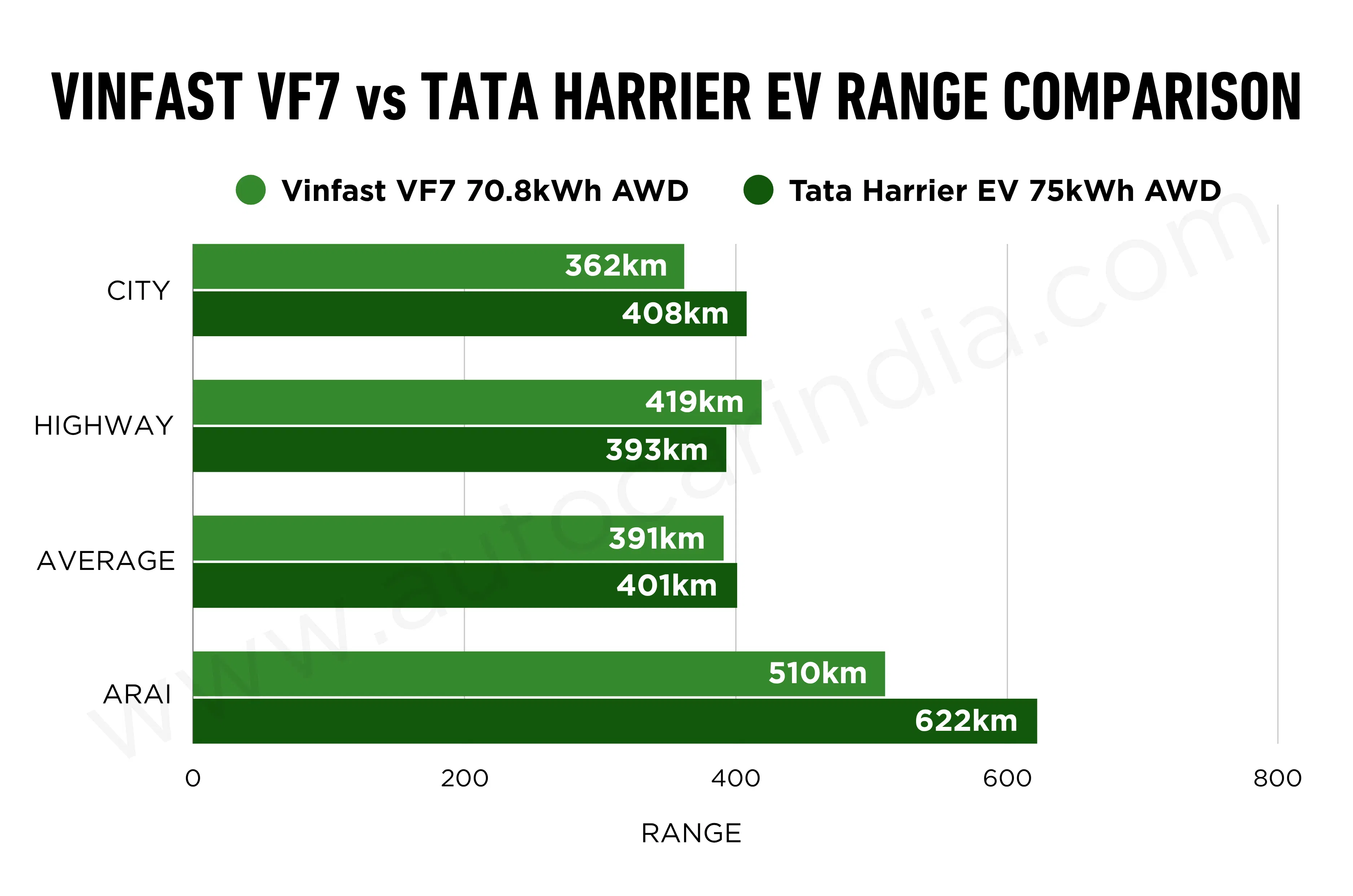
The stronger regen modes in the Harrier EV helps it deliver better efficiency of 5.45km/kWh in the city versus 5.1km/kWh for the VF7. This translates to a real-world range of 409km for the Harrier EV in the city and 361km for the VF7, and emphasises the importance of regen modes in making the car more city efficient.

On the highway, the Vinfast delivered a higher efficiency of 5.92km/kWh versus 5.24km/kWh for the Harrier EV. So in the real world, you can expect a range of 393km with the Harrier EV, whereas the VF7 will go 27km further.

Vinfast VF7 vs Tata Harrier EV: conclusion 

The Harrier EV is the more accessible option here, priced from Rs. 21.7 lakh to Rs. 29.2 lakh, while the VF7 ranges between Rs. 23 lakh and Rs. 28.1 lakh. For most urban buyers, the Harrier EV makes a stronger case with its effective regen modes and better real-world efficiency. However, if outright performance is a priority, the VF7 stands out as the more engaging option.

Brand trust is another key factor to consider. Tata’s established presence in India gives the Harrier EV an advantage, whereas Vinfast is still a relatively new entrant. That said, VinFast counters this with a 10-year/2 lakh km warranty on both the vehicle and battery pack. In comparison, the Harrier EV offers a lifetime battery warranty for the first owner, along with a standard 3-year/1.25 lakh km vehicle warranty.

बारिश में समोसे खाने की हुई इच्छा, Swiggy से ऑर्डर किया तो 104 रुपये का बिल देख रह गई हैरान, वायरल पोस्ट पर लोगों ने दिए मजेदार रिएक्शन

बारिश के मौसम में समोसे खाने की छोटी सी ख्वाहिश सोशल मीडिया पर बड़ी चर्चा का कारण बन गई। X पर एक यूजर ने Swiggy से किए गए अपने ऑर्डर का अनुभव साझा किया, जिसमें कम कीमत ने सभी का ध्यान खींच लिया। पोस्ट में किए गए मजाकिया कमेंट के बाद यूजर्स ने फूड डिलीवरी प्लेटफॉर्म्स के डिस्काउंट, रेस्टोरेंट ऑफर्स और ऑनलाइन ऑर्डर की असली कीमत को लेकर बहस शुरू कर दी।

कुछ लोगों ने इसे शानदार डील बताया, तो कुछ ने कंपनियों के बिजनेस मॉडल और ग्राहकों की जेब पर पड़ने वाले असर पर सवाल उठाए। देखते ही देखते यह पोस्ट सोशल मीडिया पर वायरल हो गई और लोगों ने अपने-अपने अनुभव साझा करने शुरू कर दिए।

₹104 का बिल देख यूजर रह गई हैरान

X यूजर नलिनी उनागर ने बताया कि बारिश के दौरान उन्होंने Swiggy से 8 बड़े समोसे ऑर्डर किए। पूरे ऑर्डर का बिल सिर्फ ₹104 आया, जिसे देखकर वह खुद भी हैरान रह गईं। उन्होंने मजाकिया अंदाज में लिखा कि अगर Swiggy ऐसे ही भारी छूट देता रहा तो एक दिन दिवालिया हो जाएगा।

पोस्ट के साथ शेयर किया बिल

पोस्ट के साथ उन्होंने समोसों की तस्वीर और ऑर्डर का स्क्रीनशॉट भी शेयर किया। बिल में बारिश के कारण ₹5 रेन फीस, GST और अन्य शुल्क भी शामिल थे। इसके बावजूद कुल कीमत कई लोगों को काफी कम लगी।

यूजर्स बोले- ‘डिस्काउंट Swiggy नहीं, रेस्टोरेंट देता है’

पोस्ट वायरल होते ही कमेंट्स की बाढ़ आ गई। कई यूजर्स ने कहा कि यह छूट Swiggy नहीं बल्कि रेस्टोरेंट की ओर से दी जाती है, जबकि प्लेटफॉर्म अपना कमीशन अलग से लेता है। कुछ लोगों ने मजाक में कहा कि अगर कंपनी की इतनी चिंता है तो डिस्काउंट वापस कर देना चाहिए।

किसी ने तारीफ की, किसी ने उठाए सवाल

कुछ यूजर्स ने दावा किया कि कम कीमत की वजह पुराना स्टॉक हो सकता है, हालांकि पोस्ट करने वाली यूजर ने जवाब दिया कि समोसे बिल्कुल गर्म और ताजा थे। वहीं कुछ लोगों ने Swiggy की सर्विस पर सवाल उठाए, जबकि अन्य ने कंपनी की मजबूत वित्तीय स्थिति का हवाला देते हुए दिवालिया होने वाली बात को महज मजाक बताया।

बहस पहुंची सेहत और जेब तक

चर्चा सिर्फ डिस्काउंट तक सीमित नहीं रही। कुछ लोगों ने रात में समोसे खाने को सेहत के लिए ठीक नहीं बताया, जबकि कई यूजर्स का कहना था कि अगर यही समोसे सीधे दुकान से खरीदे जाते तो कीमत आधी से भी कम होती। इस तरह एक साधारण फूड ऑर्डर ने इंटरनेट पर कीमत, डिस्काउंट और ग्राहक अनुभव को लेकर दिलचस्प बहस छेड़ दी।

बिना चेतावनी एक ईमेल में गई नौकरी! वायरल पोस्ट ने छेड़ी जॉब सिक्योरिटी पर बहस

3 reasons to buy the new Toyota Hilux, 2 reasons not to

Toyota Hilux 2026

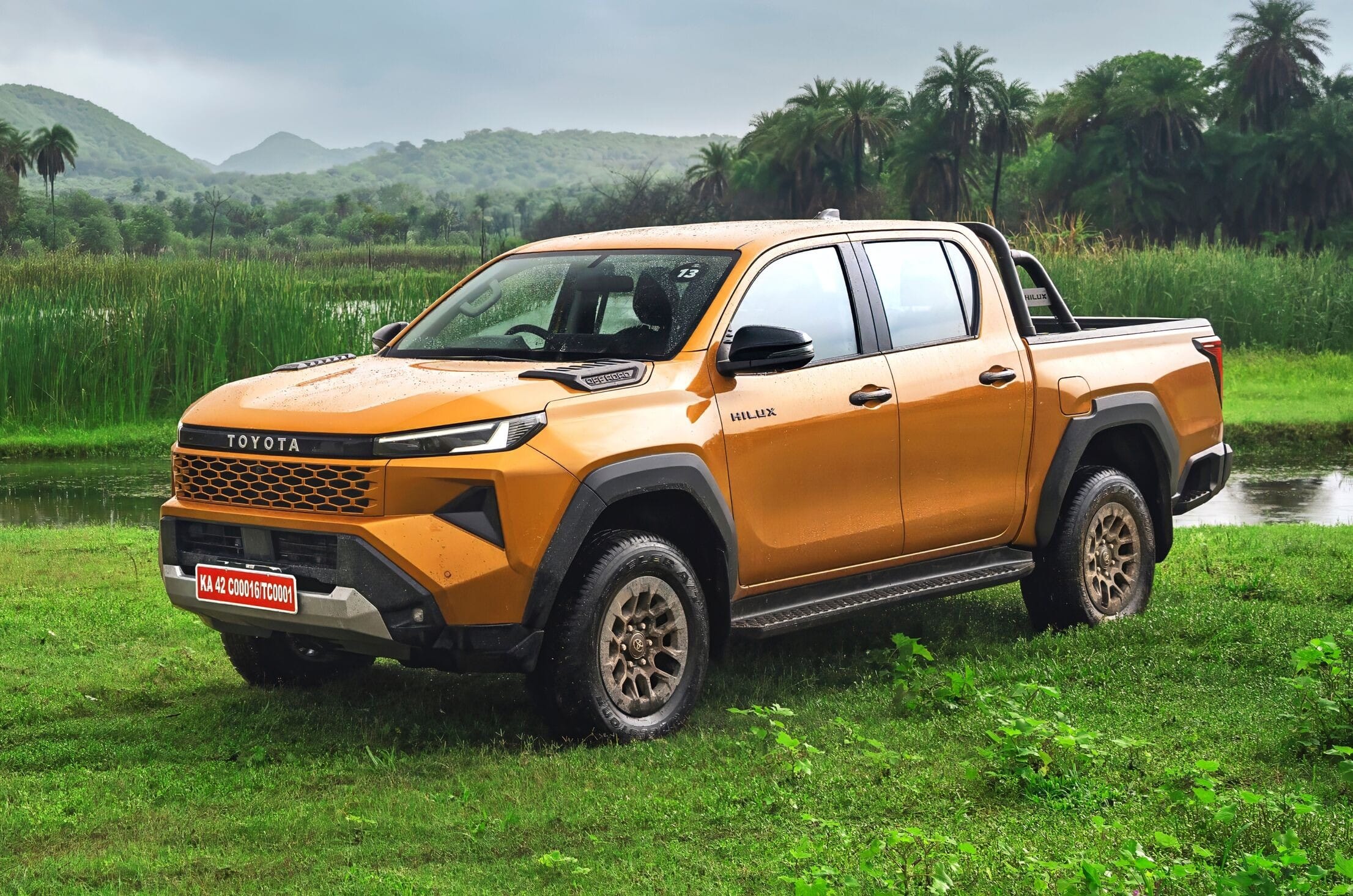
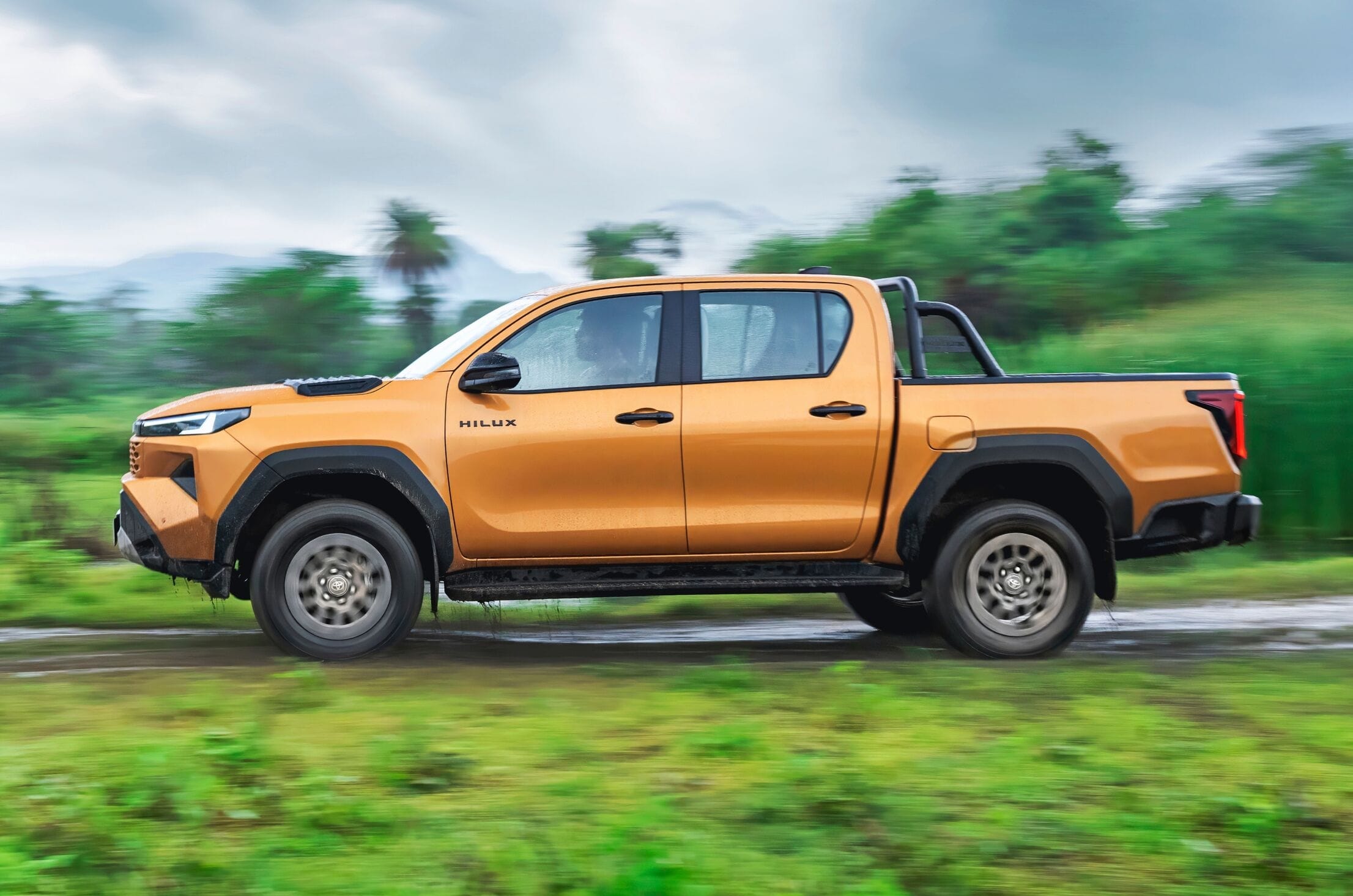
The ninth-gen Toyota Hilux has gone on sale in India at a starting price of Rs 31.99 lakh (ex-showroom). It uses the same body-on-frame IMV platform as its predecessor, but features major styling revisions inside and out. Now that we’ve reviewed the new Hilux, here are three reasons why you should bring one home, and two reasons why you may want to think twice.

Pros

Punchy engine

Retains prior Hilux’s 204hp 2.8-litre diesel mill

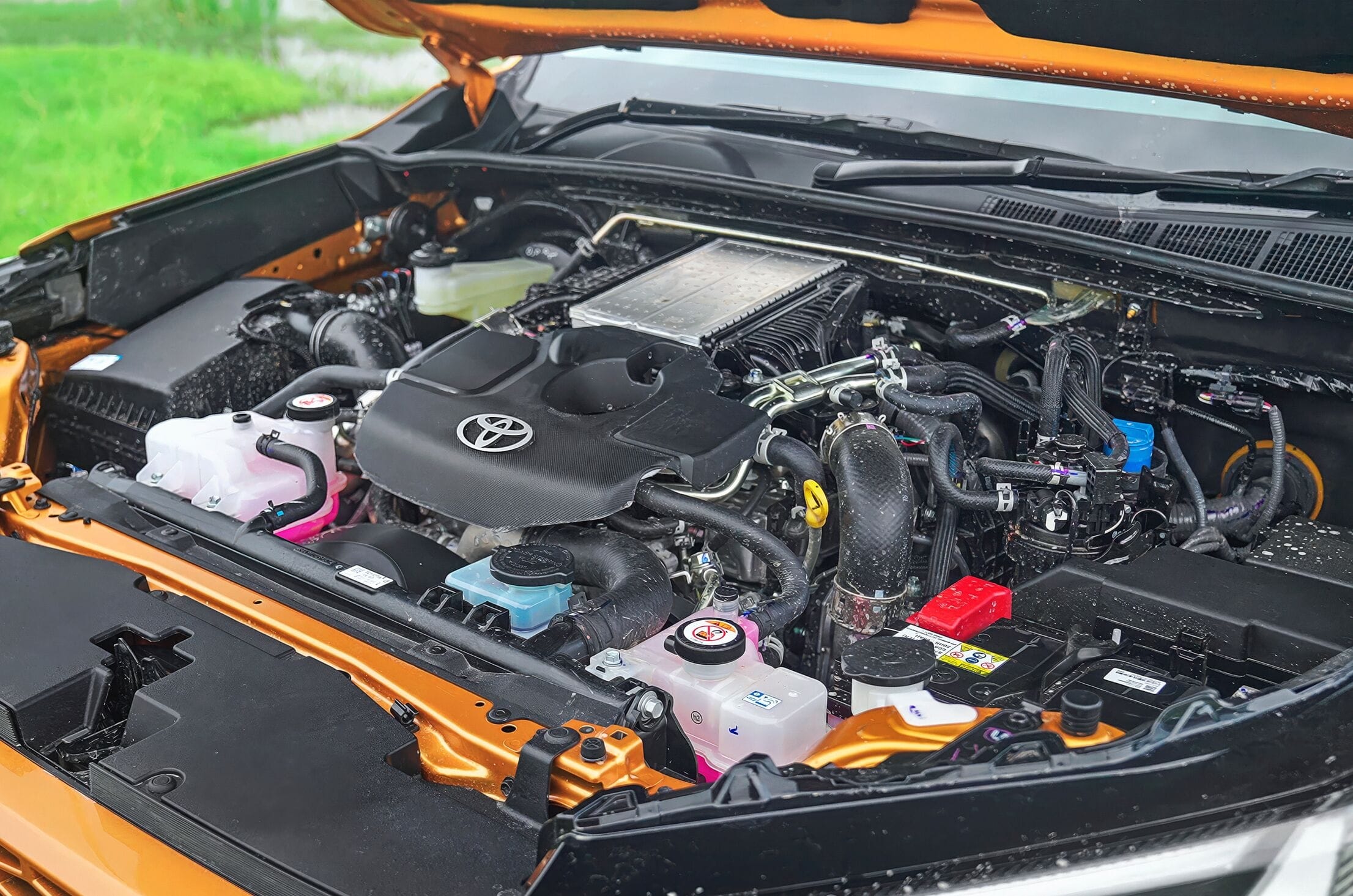
Under the bonnet, the ninth-gen Hilux carries forward its predecessor’s 2.8-litre 4-cylinder diesel engine, outputting an identical 204hp and 500Nm. This engine is mated solely to a 6-speed torque converter automatic transmission, and we found this combination to work very well in the new Hilux.

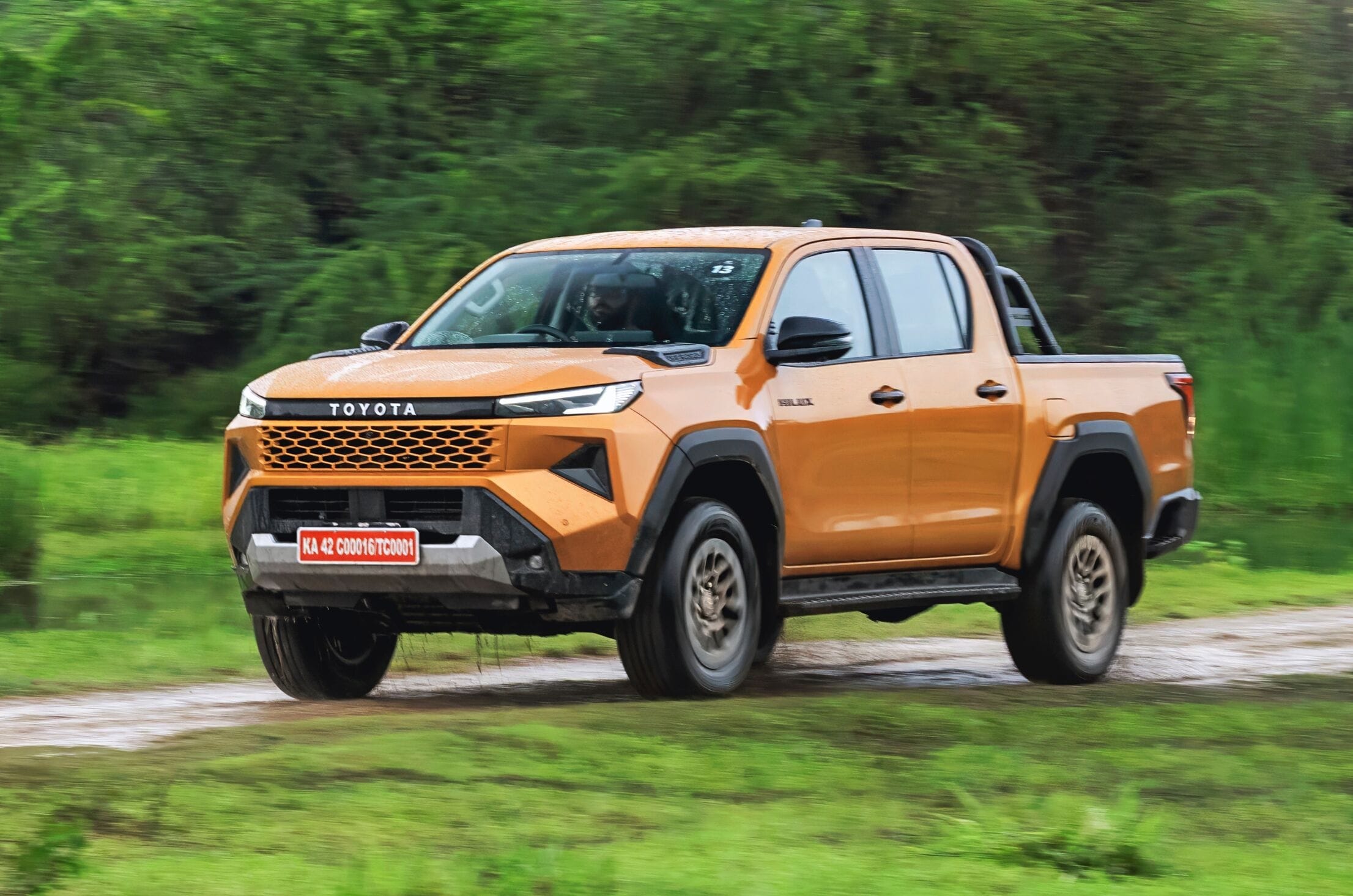
Performance feels strong, especially in the lower bounds of the rev range, and it’s easy to keep momentum, even when driving off-road. The gearbox shifts smoothly and quickly, regardless of whether you leave it to its own devices or feed inputs via the gear lever.

Thanks to the stiffened chassis and improved insulation, refinement is excellent at normal driving speeds, with little to no vibrations felt in the cabin. However, the engine tends to get vocal at higher revs.

Excellent off-road capability

Can take any off-road trail you point it towards

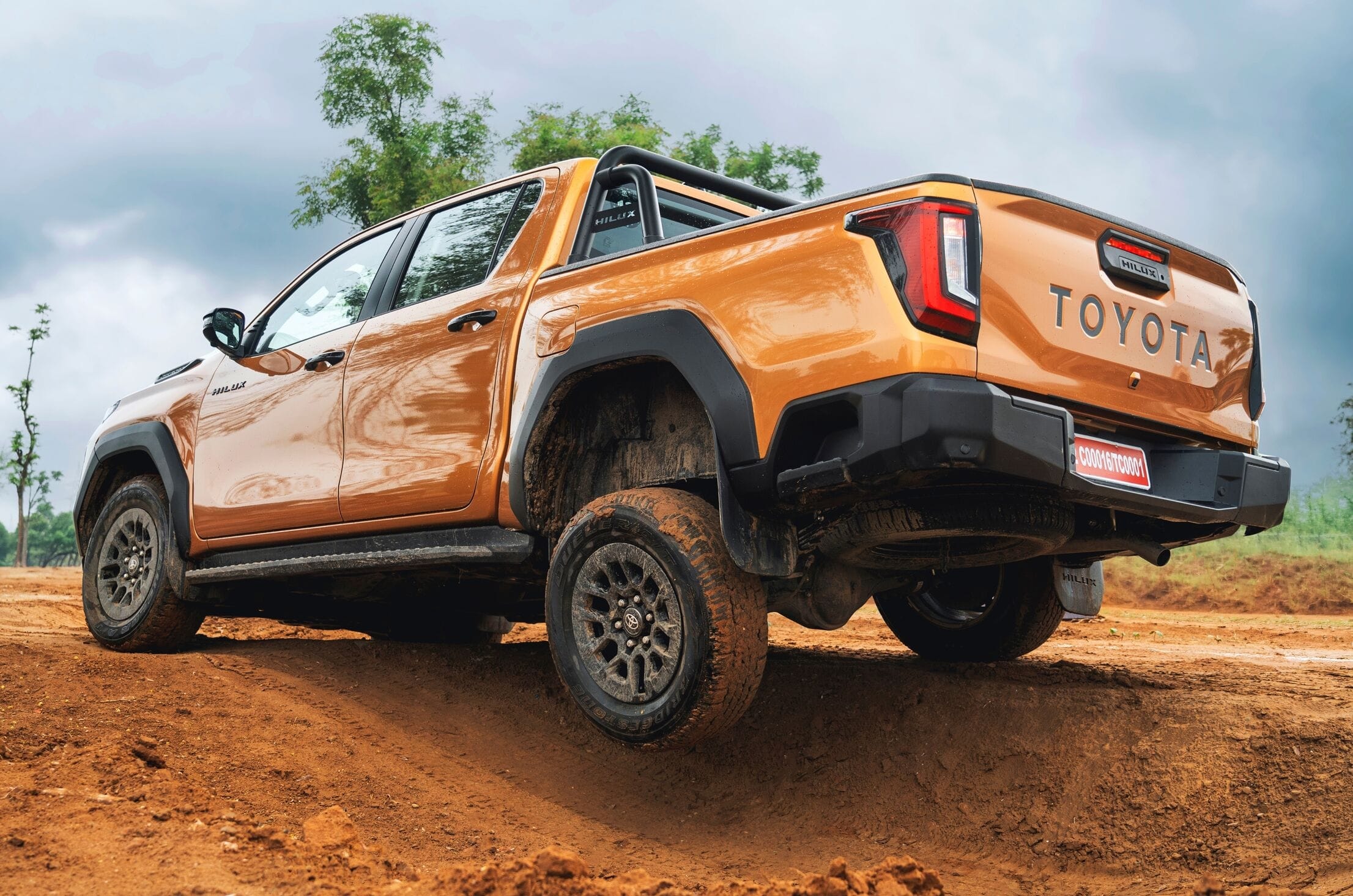
Off-road prowess is a core tenet of the Hilux, and the ninth-gen model does not disappoint on this front. The suspension setup comprises independent double wishbones and coil springs up front, and a rigid axle with leaf springs at the rear. 4×2 is offered in the base variant only, with all other Hilux variants packing 4×4.

Large rocks, deep potholes, and sharp-edged sections are gobbled up by the Hilux, and it felt confident and sure-footed through a forest trail littered with loose rocks. The Hilux handled most of the trail we drove on in 4×2 mode, and the more extreme bits that required 4×4 were also a cakewalk for the pickup truck.

Lots of cargo space

Estimated payload capacity of 470kg

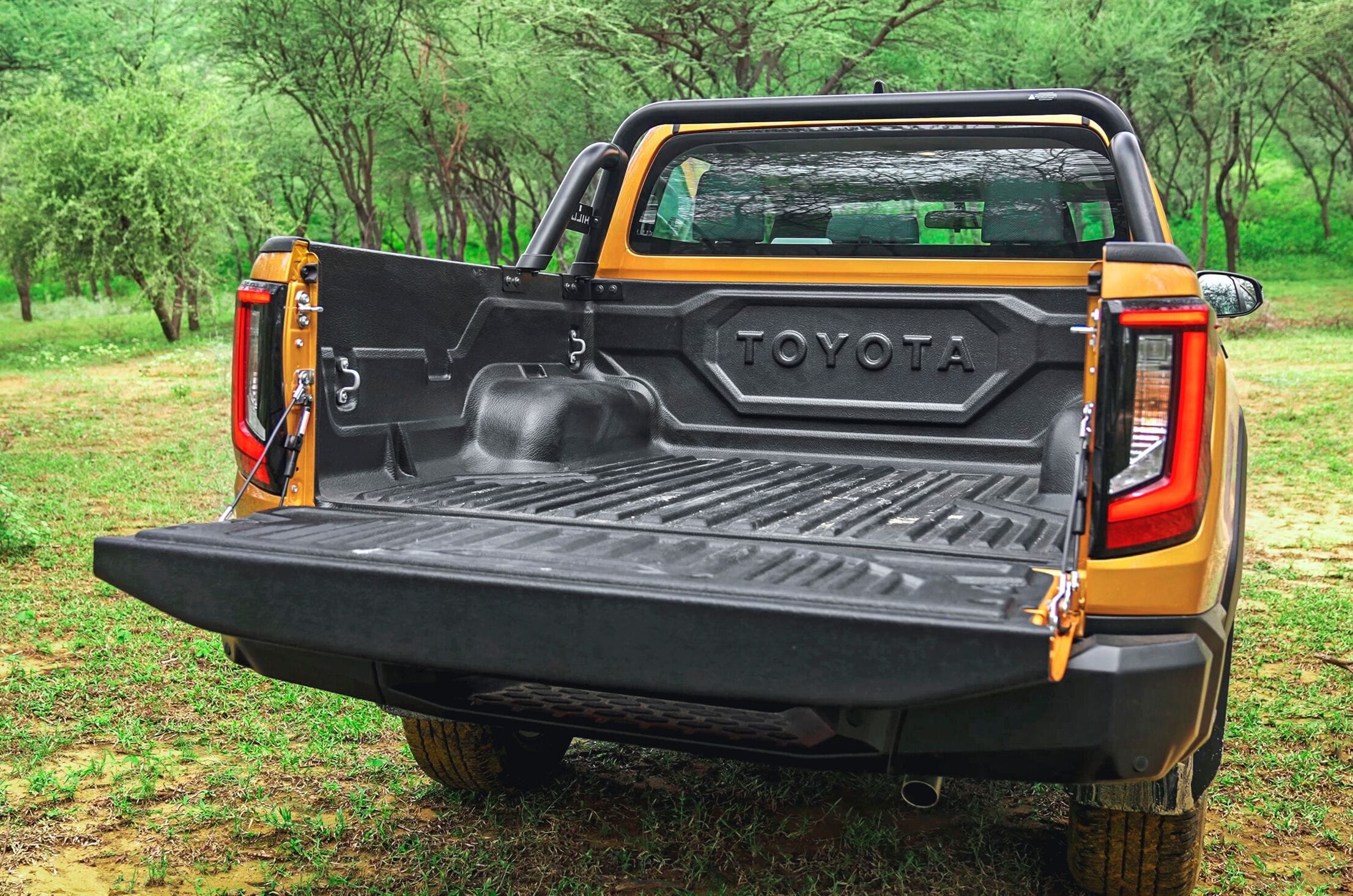
Being a pickup truck, the Hilux obviously has a large open bed behind the passenger compartment. Though Toyota has yet to disclose the bed’s payload capacity, we expect it to match the prior Hilux’s 470kg figure. The bed is big enough to stow camping gear and a decent amount of luggage. Integrated steps on the sides and rear make loading and unloading easier too.

Cons

Misses out on numerous features

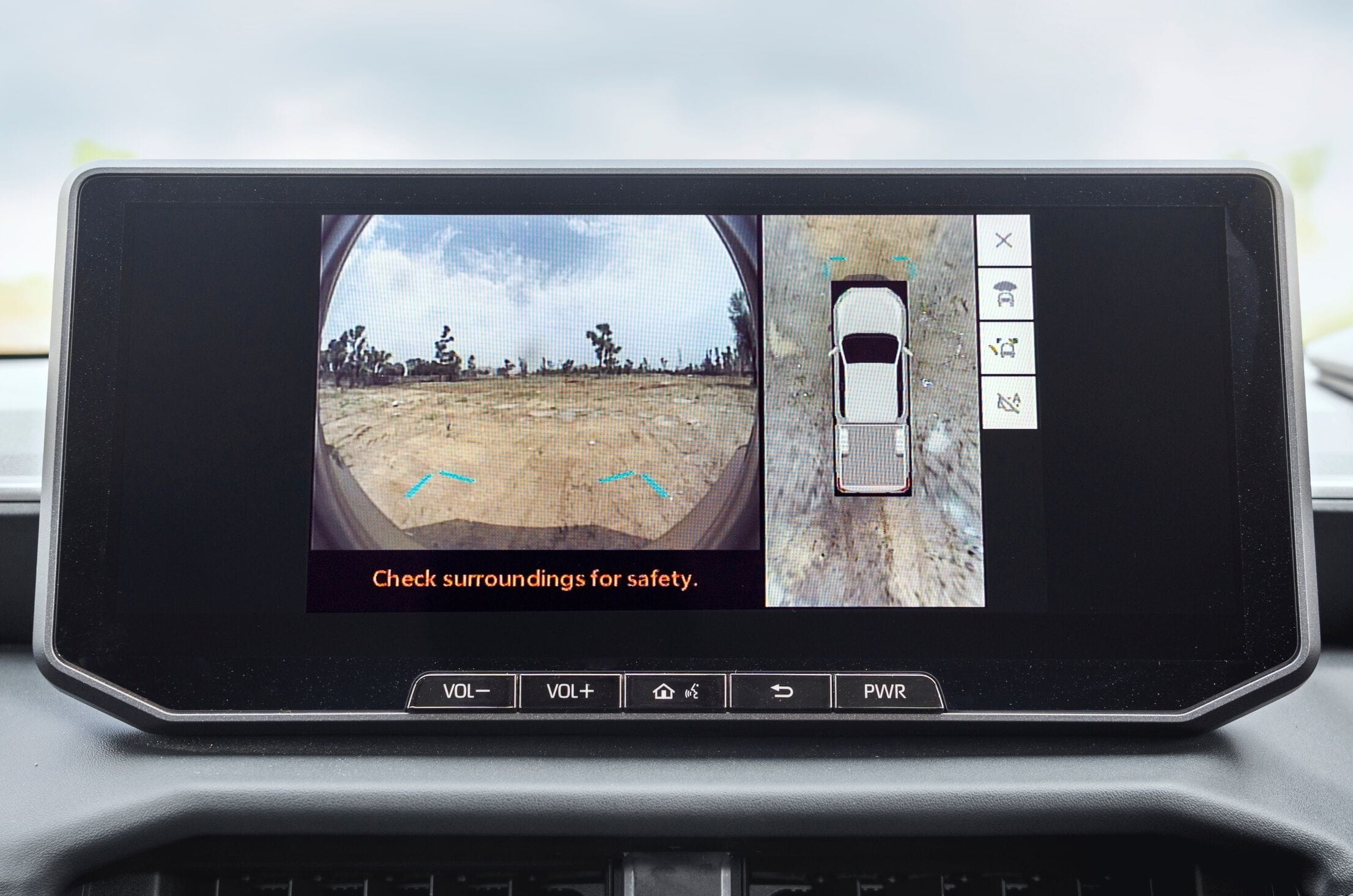
360-degree camera’s image quality is also poor

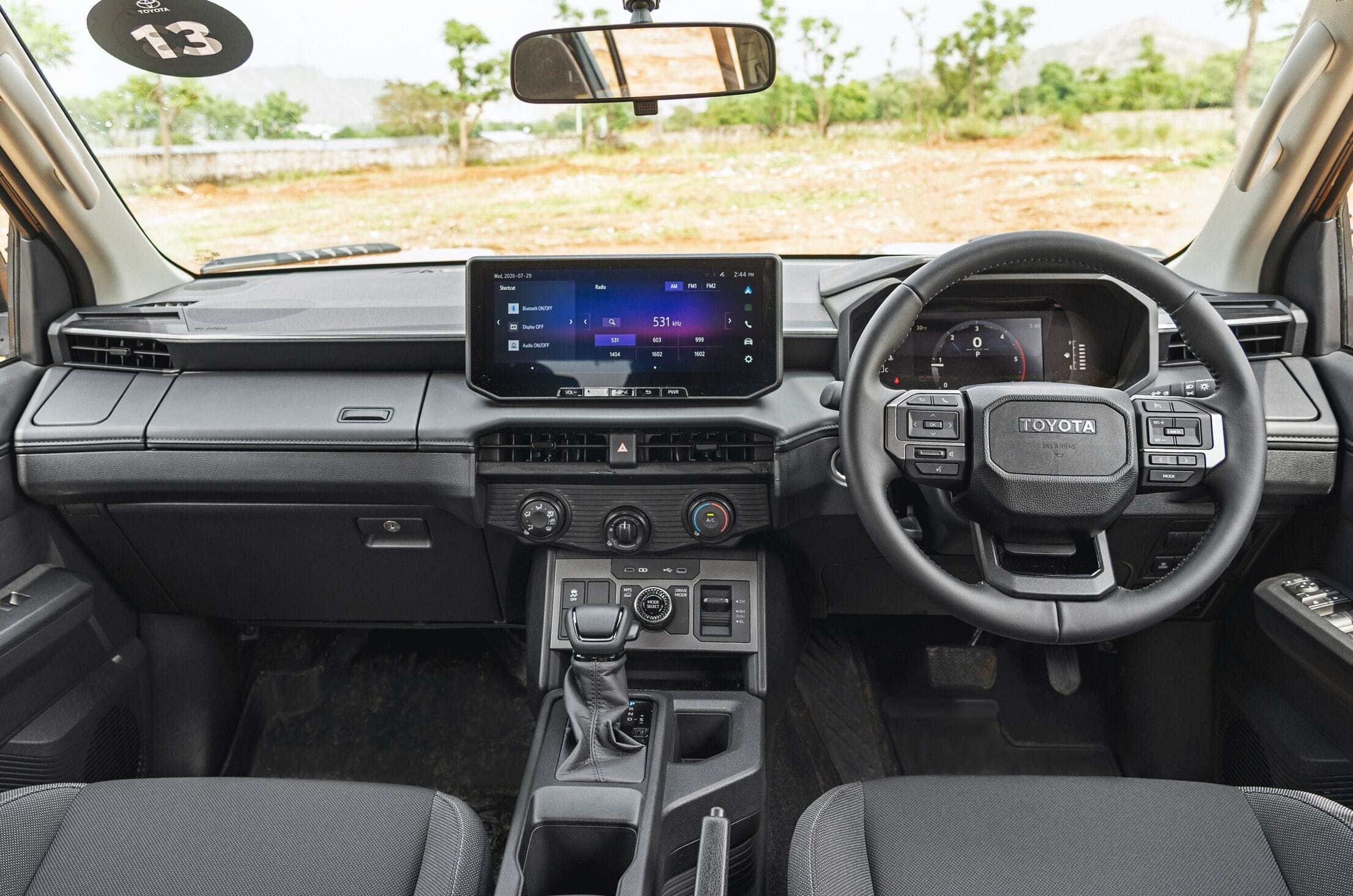
The India-spec ninth-gen Hilux is not very well-specced. Even in the top-spec Hilux VX 4×4 AT variant, which costs Rs 36.69 lakh (ex-showroom), comfort and convenience features like automatic climate control, powered and ventilated front seats, a rear defogger, ADAS, leatherette upholstery, and the like are missing.

While you do get feature upgrades like a 12.3-inch infotainment touchscreen and a 360-degree camera in the new Hilux, the former’s software interface looks quite dated and the latter’s resolution is poor.

Bouncy low-speed ride

Tends to skip over road imperfections when bed is empty

Though the Hilux rides deftly on broken roads, off-road trails, and at high speeds, it feels unsettled and skittish over smaller ruts and bumps. This is a consequence of the rigid rear axle, which tends to skip over surface undulations, especially when the bed is empty. Adding weight to the bed will improve the Hilux’s low-speed ride to an extent, but not enough to be comparable to an equivalent SUV. It also doesn’t help that the electric power steering is hefty at low speeds, and the Hilux’s 5.3-metre length makes low-speed manoeuvres feel daunting.

Lamborghini Huracan Sterrato driven at Nanoli Speedway before the tarmac arrives

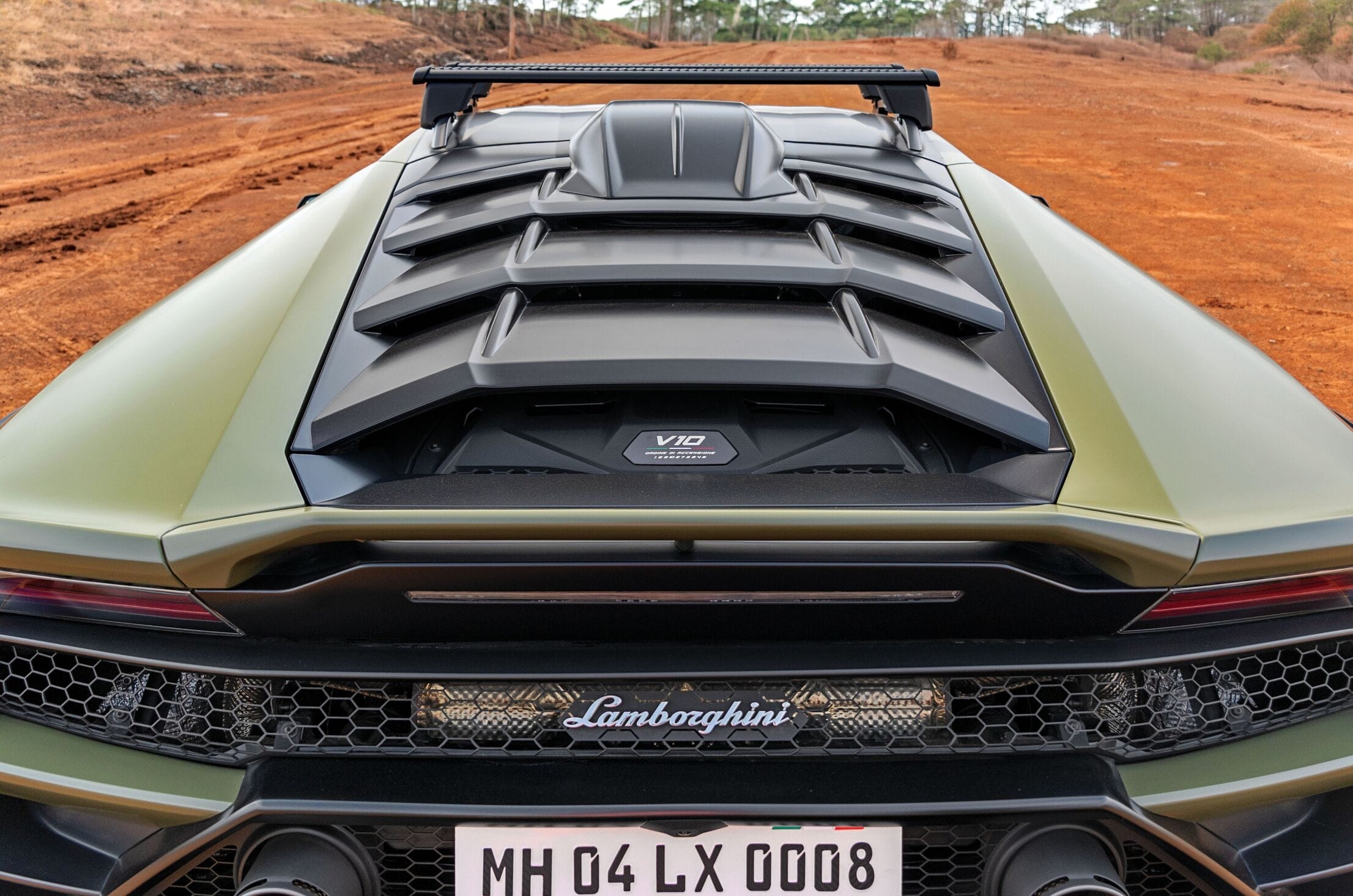
Lamborghini Huracan Sterrato rear quarter tracking

Somewhere in the folds of the Western Ghats, where the Mumbai-Pune Expressway peels off from Lonavala into quieter country, a piece of land is being reshaped into what will, by this time next year, become Maharashtra’s first race track. Except to call it just a race track undersells the ambition entirely. What is rising here, on the grounds of the Nanoli Stud Farm, is a race resort, where cars are not just driven or raced, but lived with.

The Dhunjibhoy family has owned this land for decades, ever since the Nanoli Stud and Agricultural Farm was set up in the early 1990s. Khushroo Dhunjibhoy has spent a lifetime around shipping and thoroughbreds, and it is that same instinct for breeding something exceptional that he and his son, Zahir, have turned toward motorsport.

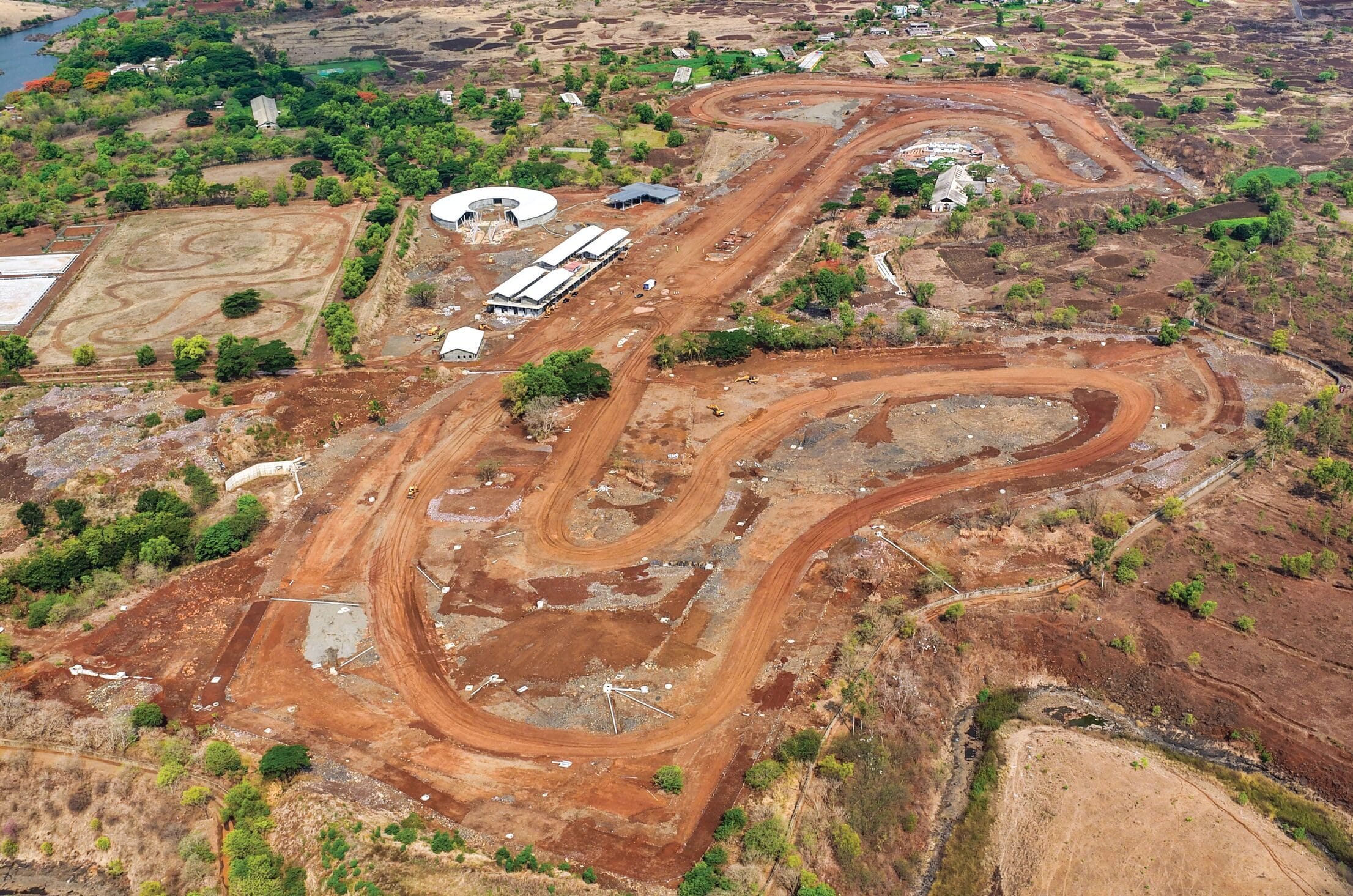
Aerial view of Nanoli before the tarmac is laid. This 3km circuit will be Maharashtra’s first and a haven for enthusiasts in western India.

Their plan is not a bare circuit with a pit lane bolted on. It is villas, high-end rooms and a clubhouse built into the same grounds as the horses. There will also be a 100-car garage with humidity control to protect exotic machinery from the heat, sun, dust and monsoons. The paddock and pit buildings will be state-of-the-art, with a hospitality deck that gives you a bird’s-eye view of nearly half the circuit. The circuit itself, designed to FIA Grade 3 specs by Driven International out of the UK, will eventually stretch close to three kilometres, with the option to split into shorter east and west configurations, depending on what the day calls for.

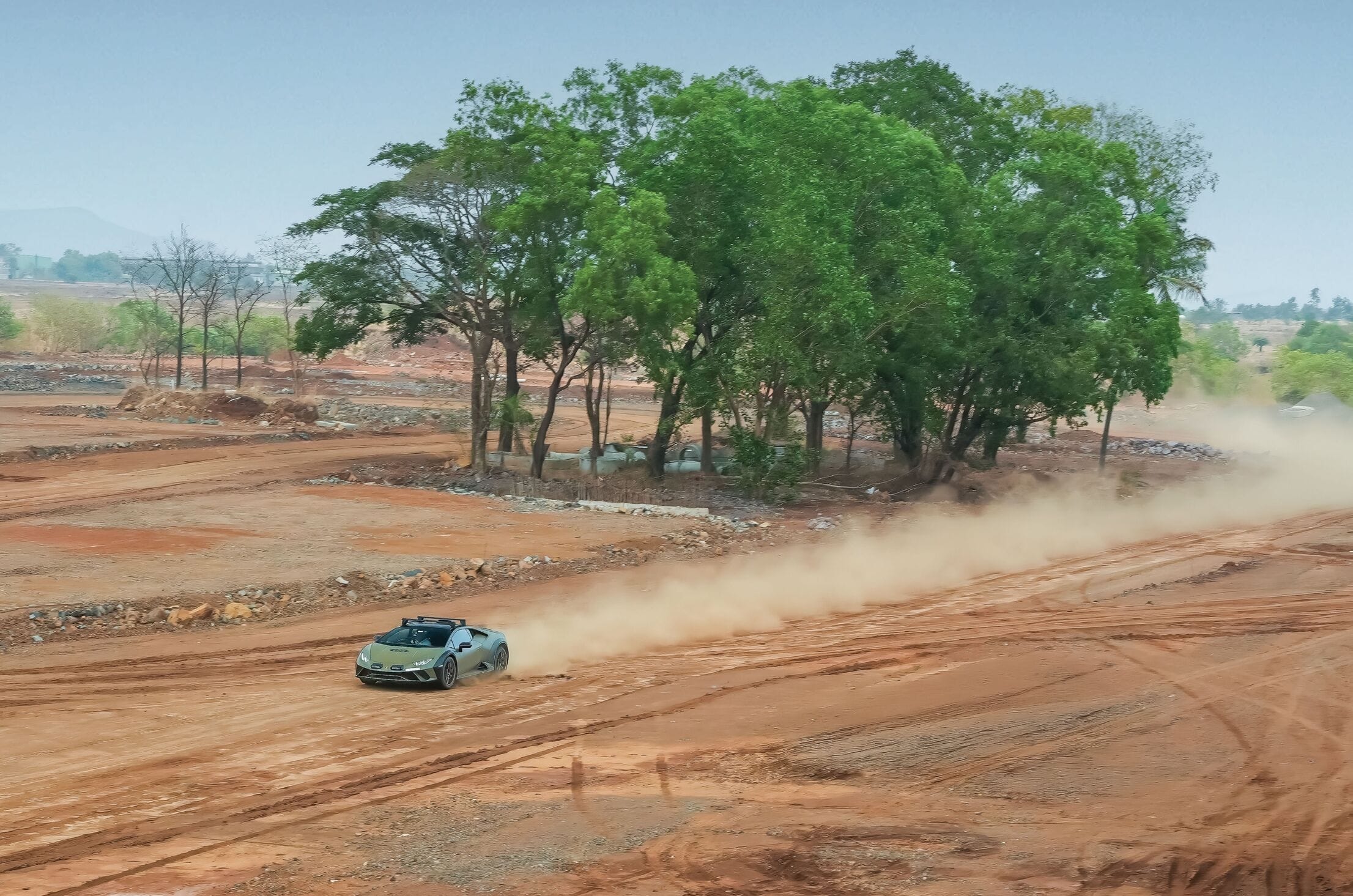
None of that exists yet in finished form. What does exist, right now, is the base layer. The dirt has been laid and compacted to a finish so smooth, it could pass for a rally special stage, which is roughly how we decided to treat it.

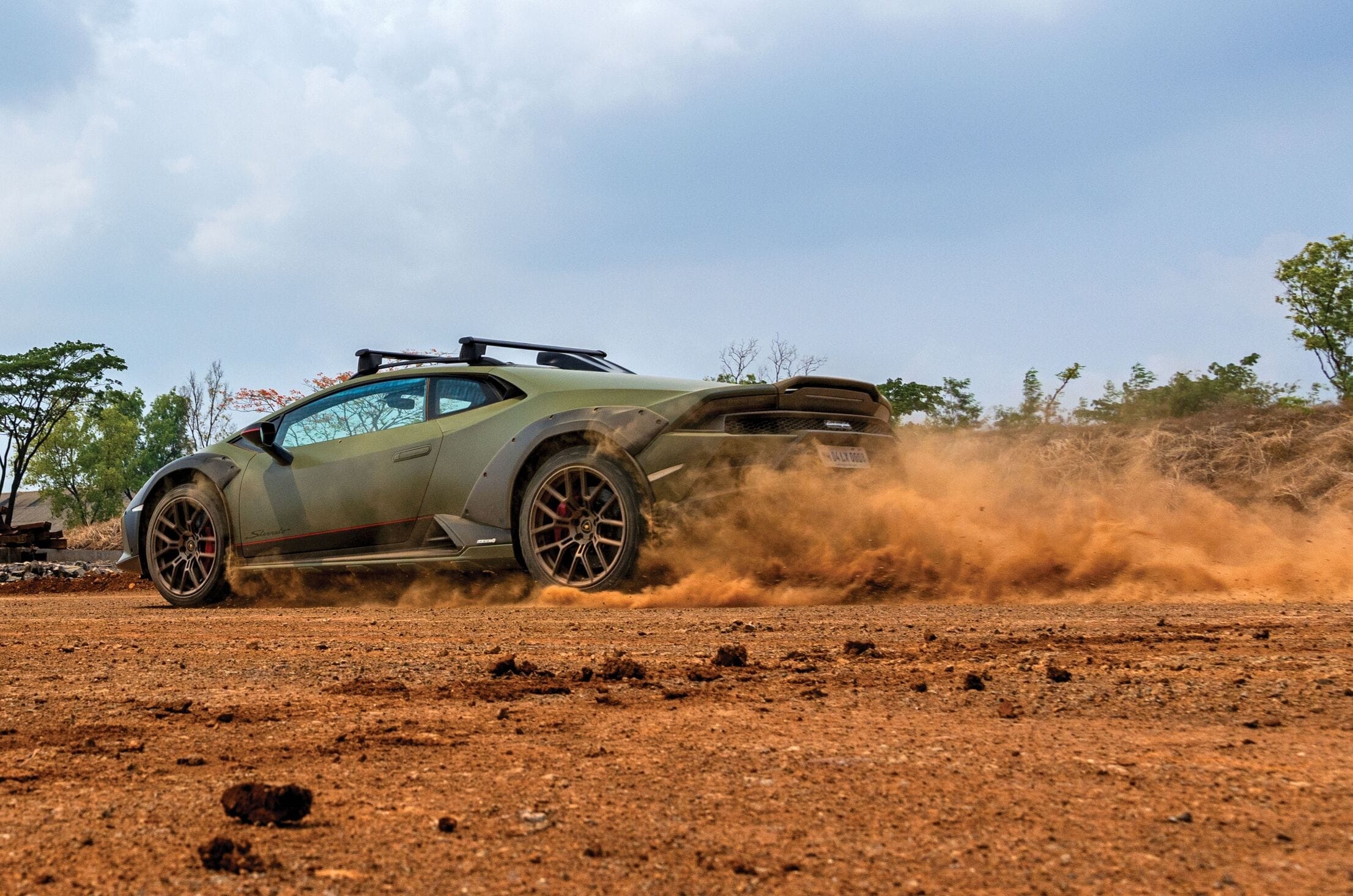
The obvious car for an afternoon like this would have been something with four-wheel drive and a reassuring amount of ground clearance. Something like an Urus or an RS Q8 – the kind of SUV that turns loose surfaces into a non-event. But ‘obvious’ has never made for a good story. So instead, we brought a Lamborghini Sterrato, which is, in essence, a Huracán that someone at Sant’Agata decided should grow up into a WRC car.

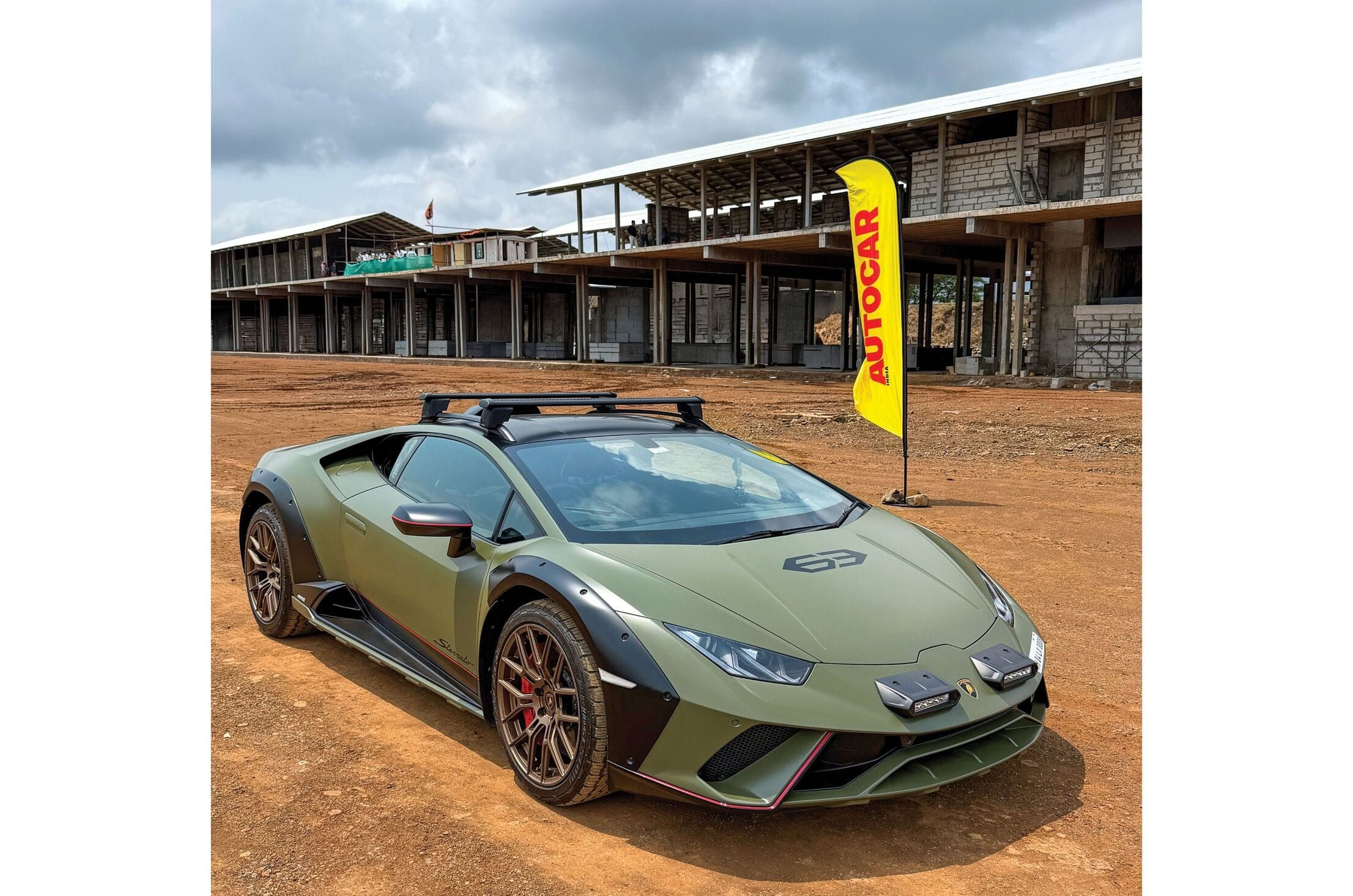
Before the tarmac arrives, the Sterrato enjoys Nanoli in its rawest form, with the future pit and hospitality complex taking shape behind it.

The Sterrato is not a styling exercise with some plastic cladding glued on. Lamborghini jacked the ride height by 44mm, fitted bespoke Bridgestone all-terrain rubber wrapped around 19-inch wheels, widened the front and rear tracks, and reworked the all-wheel-drive system and suspension geometry so the car can absorb a rutted surface without snapping its splitter off in the first hundred metres. Underneath sits the same naturally aspirated 5.2-litre V10 found in the rest of the Huracán range, here tuned to 610hp, still screaming to over 8,000rpm with no turbos to soften the theatre. Only 1,499 Sterratos were built before Lamborghini closed the production run, and of those, 15 made their way to India.

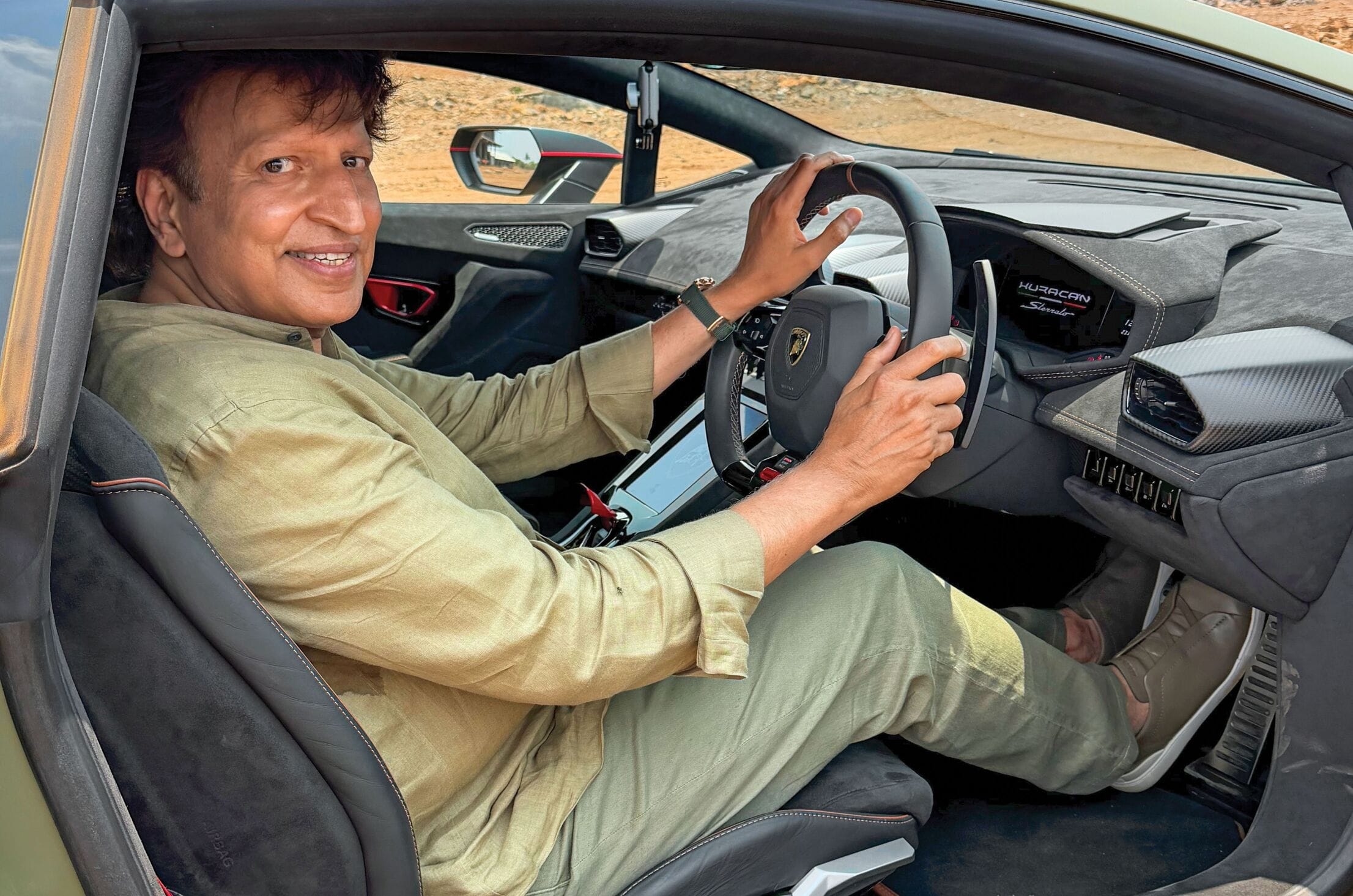
The example driven here belongs to Dinesh Thakkar, who was not only generous enough to hand over the key for a day, but also had the distinction of setting what can be considered the first recorded lap at Nanoli Speedway. 

His time of 2m34.80sec won’t be the quickest, but it’s a significant milestone for a circuit that is yet to officially open.

Mechanically, the Sterrato retains the naturally aspirated 5.2-litre V10, producing 610hp and driving all four wheels through a dual-clutch transmission. On paper, it remains very much a Huracán. In practice, the changes in character are immediately evident.

On the compacted dirt, the first impression is one of adaptability. Turn-in is not as immediate as it would be on tarmac, but the front axle bites with a reassuring consistency. The real shift comes under power. Where a standard Huracán demands restraint, the Sterrato encourages exploration.

The recalibrated driving modes, particularly Rally mode, allow for controlled slip. The rear steps out progressively, and crucially, predictably. There is a fluidity to the way the car moves, a willingness to rotate that transforms the experience. It is less about outright speed and more about managing balance.

5.2-litre V10 a nod to the best of internal combustion.

The additional suspension travel plays a defining role. Over the subtle undulations of the track, the car remains composed, absorbing variations in the surface without unsettling the chassis. It allows you to commit earlier, carry speed through sections that would otherwise require caution, and rely on the car to work with the terrain rather than against it.

The V10 is natural aspiration at its best. It sounds absolutely brilliant; the sharp throttle response allows you to precisely meter every one of those 610 horses, and every tap of the throttle feels utterly engaging. Under the sonorous wail of the V10 is the muted rattle of gravel ricocheting off the underbody, giving the full effect of a WRC car.

For Thakkar, setting that first lap was less about outright pace and more about being part of something that will only happen once. Once the tarmac goes down, no one will ever again get to slide a supercar through Nanoli’s corners on loose dirt. That window closes the day the asphalt trucks arrive, which made every lap feel like it mattered a little more than it should have for what was, on paper, just a test session on an unfinished track.

Sterrato owner Dinesh Thakkar is all smiles after a memorable day.

What Nanoli represents, once finished, goes well beyond a fun afternoon for a few car nuts and a Lamborghini. Mumbai’s supercar owners have long had money and machinery with nowhere proper to use either. The city’s roads are hostile to anything with a low chin, and Pune offers little better. A circuit within striking distance of both cities, built to international standards and backed by a family that clearly does not believe in doing things by half measures, could genuinely change how western India’s car culture behaves. This is not simply about building a track. It is about creating an ecosystem. The members-only model ensures exclusivity, but also fosters a focused community. For enthusiasts in Mumbai and Pune, long constrained by infrastructure, this represents a fundamental shift. It’s a controlled environment where cars can be driven to the max without fear of speed cameras or speed breakers.

The tarmac will come soon enough, and Nanoli will become a proper circuit with lap times and lap records and all the polish that comes with a finished facility. But for one afternoon, before any of that, it was just a dirt track, a Sterrato V10, and the kind of first lap that only ever happens once.

Toyota Hilux vs Isuzu D-Max V-Cross: Specifications, features and price compared

Toyota Hilux vs Isuzu D-Max V-Cross

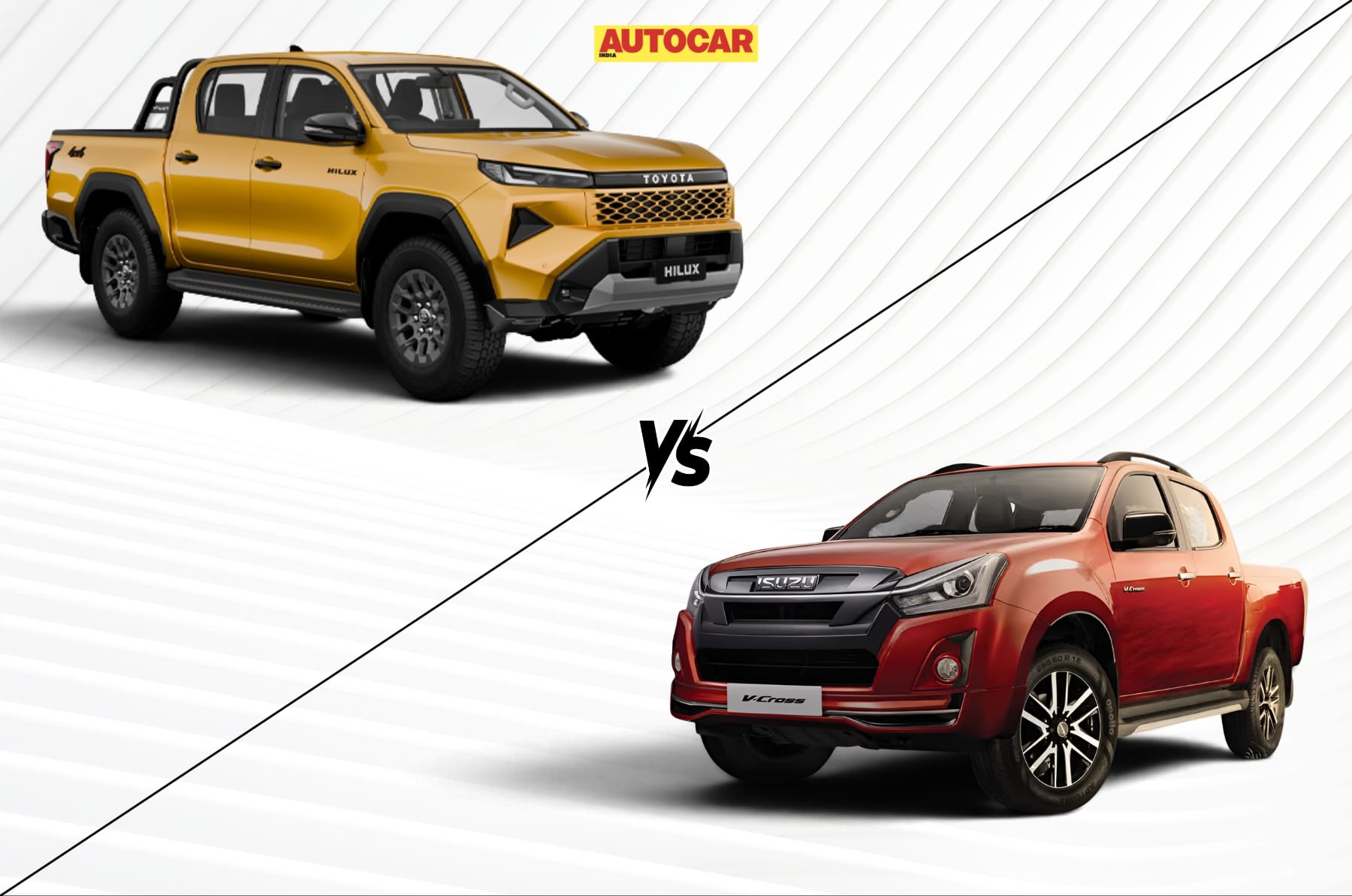
Toyota has introduced the ninth-generation Hilux with a revamped exterior and interior, along with revisions to its powertrain offering and features. In February 2026, its only other competitor, the Isuzu V-Cross, also debuted with a comprehensive update of its own. Being the only two lifestyle pickup trucks on the market, how do these fare when we compare their on-paper specifications side to side? For this comparison, we’ve chosen the Hilux’s VX 4X4 and the V-Cross’ 4WD Prestige Premium variant.

Explore full specs, features, and a price breakdown in our Hilux vs V-Cross comparison. 

Toyota Hilux vs Isuzu D-Max V-Cross: Dimensions

Hilux is longer, but the V-Cross is wider and taller 

Toyota Hilux vs Isuzu D-Max V-Cross: Dimensions


Toyota Hilux

Isuzu D-Max V-Cross

Difference

Length (mm)

5,320

5,295

+25

Width (mm)

1,855

1,860

-5

Height (mm)

1,815

1,855

-35

Wheelbase

3,085

3,095

-10

Wheel size (inch)

17

18


It’s only in length where the Hilux pips the V-Cross by 25mm. But the latter is 5mm wider, 35mm taller, and has a 10mm longer wheelbase. Dimensionwise, it’s the V-Cross that takes the lead overall.

Toyota Hilux vs Isuzu D-Max V-Cross: Specifications 

Hilux’s larger engine develops much more power 

Toyota Hilux vs Isuzu D-Max V-Cross: Specifications 


Toyota Hilux

Isuzu D-Max V-Cross

Engine 

Turbo-diesel

Turbo-diesel

Displacement (cc)

2,755

1,898

No of cylinders 

4

4

Power (hp)

204

163

Torque (Nm)

500

360

Gearbox

6AT

6AT

Drive layout 

4WD

4WD

Fuel tank (litres)

80 

55

Suspension setup

Front: Double Wishbone 

Rear: Leaf Spring

Front: Double Wishbone 

Rear: Leaf Spring 

Both the Hilux and V-Cross come powered solely by a turbo-diesel engine. While the former gets a large 2.8-litre unit, the latter comes with a 1.9-litre diesel engine. As far as outputs are concerned, the Hilux churns out 41hp and 140Nm more power and torque, respectively. Additionally, the Hilux gets a 25-litre larger fuel tank as well. What’s common on both pickups is a 6-speed automatic transmission, AWD layout and similar suspension setups.

Toyota Hilux vs Isuzu D-Max V-Cross: Driving tech 

Drive and terrain modes found only on the Hilux 

Toyota Hilux vs Isuzu D-Max V-Cross: Driving features


Toyota Hilux 

Isuzu D-Max V-Cross

4WD with low range  

Yes

Yes

Differential lock 

Electronic

Electronic

Terrain modes

Yes

No

Drive modes 

Eco, Normal, Sport

No

Cruise control

Manual

Manual

With 4WD on board, both the Hilux and V-Cross come with a low range transfer case and an electronic differential lock. However, it’s the Hilux that comes with the ability to fine-tune your drive experience further with drive and terrain modes.

Toyota Hilux vs Isuzu D-Max V-Cross: Exterior Features 

While the Hilux gets all-LED lighting, V-Cross gets roof rails

Toyota Hilux vs Isuzu D-Max V-Cross: Exterior Features 


Toyota Hilux

Isuzu D-Max V-Cross

Headlights

Auto LED

Auto projector LED

Front fog lamps

LED

Halogen

Tail-lights

LED

Halogen

DRLs

Yes

Yes

Rear fog lamp

LED

No

Door handles

Gloss black 

Chrome 

Powered and foldable ORVMs

Yes

Yes

Roof rails

No

Yes

Side steps

Yes

Yes

Step for load bed access

Yes

No 

Gas strut for tailgate 

Yes

No

Colour

Monotone 

Monotone

With the updated exterior, the Hilux gains all-LED light setups. But the V-Cross, on the other hand, sports projector-LED headlamps, halogen fog lamps and tail-lamps, and misses out on a rear fog lamp. Moreover, the Hilux is the only one here with a dedicated step to access the trunk and gas struts for the tailgate. However, the V-Cross comes with roof rails and wheels a size larger than the Hilux.

Toyota Hilux vs Isuzu D-Max V-Cross: Interior Features 

Hilux loaded with more tech, but V-Cross gets more convenience features

Toyota Hilux vs Isuzu D-Max V-Cross: Interior Features 


Toyota Hilux

Isuzu D-Max V-Cross

Infotainment display

12.3-inch

10.3-inch

Driver’s display

7-inch

Analogue dials with MID

Android Auto, Apple CarPlay

Wireless

Wireless

Speakers

8 speakers

8 speakers

Climate control

Manual

Automatic

Seat upholstery

Fabric 

Leatherette

Wireless phone charger

Yes

No

Driver’s seat adjust

6-way manual 

6-way powered

Rear seat folding

60:40 split

60:40 split

Front centre armrest

Yes

Yes

Rear centre armrest

Yes

Yes

Push-button start/stop

Yes

Yes

USB ports

Type-C

Type-A and Type-C

Connected car tech

Yes

No

On the equipment front, the Hilux brings a larger infotainment screen, digital driver’s display, a wireless phone charger and connected-car tech over the V-Cross. But it misses out on convenience features like automatic climate control and a powered driver seat that’s found on the latter. 

Toyota Hilux vs Isuzu D-Max V-Cross: Safety features

Hilux offers an additional airbag and front parking sensors 

Toyota Hilux vs Isuzu D-Max V-Cross: Safety features


Toyota Hilux

Isuzu D-Max V-Cross

Airbags

7

6

Camera setup

360-degree

360-degree

Parking sensors

Front and rear 

Rear only

ISOFIX anchorages

Yes

Yes

Disc brakes

Front only

Front only

TPMS

Yes

Yes

IRVM

Day/Night

Day/Night

Hill start assist

Yes

Yes

Hill descent control

Yes

Yes

ESC

Yes

Yes

Safety-feature-wise, the Hilux and V-Cross come well-equipped with a 360-degree camera, front disc brakes, ISOFIX mounts, day/night IRVM, hill start assist, hill descent control, and ESC. But the Hilux nudges ahead with an additional airbag and front parking sensors.

Toyota Hilux vs Isuzu D-Max V-Cross: Price and verdict 

Hilux top-end pricier by Rs 6.41 lakh 

Toyota Hilux vs Isuzu D-Max V-Cross: Price


Toyota Hilux

Isuzu D-Max V-Cross

Price (Rs Lakh)

36.69

30.28

Taking top-of-the-line variants into consideration, the Hilux is dearer than the V-Cross by over 6 lakh. For most buyers, that difference is hard to ignore, which is why the D-Max V-Cross comes across as the better value pick. Overall, the V-Cross is a substantial package with a sufficiently powerful diesel engine, 4WD, and a decent feature list. But if you want more power, driving features, safety, a much larger fuel tank, and better screens, then the Hilux is the one to go for. Additionally, Toyota’s bulletproof reliability and widespread service reach are major draws in favour of the Hilux. 

All prices are ex-showroom, India