कांग्रेस सांसद प्रियंका गांधी वाड्रा (Priyanka Gandhi) की IIT मद्रास के निदेशक प्रोफेसर वी. कामकोटि को लेकर की गई कथित ‘गौमूत्र एक्सपर्ट’ टिप्पणी पर 200 से अधिक शिक्षाविदों ने कड़ी आपत्ति जताई है। 214 शिक्षाविदों के हस्ताक्षर वाले एक खुले पत्र में प्रियंका गांधी की टिप्पणी की आलोचना करते हुए इसे एक प्रतिष्ठित वैज्ञानिक और शिक्षाविद के प्रति अनुचित बताया गया है।
यह विवाद उस समय सामने आया जब वायनाड से कांग्रेस सांसद प्रियंका गांधी ने प्रधानमंत्री नरेंद्र मोदी की ओर से परीक्षा सुधारों के लिए गठित टास्क फोर्स में IIT मद्रास के निदेशक वी. कामकोटि को शामिल किए जाने पर सवाल उठाए थे।
परीक्षा सुधारों के लिए गठित टास्क फोर्स में शामिल हैं वी. कामकोटि
परीक्षा व्यवस्था में सुधार के लिए गठित टास्क फोर्स की अध्यक्षता Infosys के सह-संस्थापक नंदन नीलेकणि कर रहे हैं। इसमें पूर्व ISRO चेयरमैन एस. सोमनाथ, पूर्व IB निदेशक तपन डेका, IIT मद्रास के निदेशक वी. कामकोटि, पूर्व शिक्षा सचिव अनिता करवाल और लॉजिस्टिक्स विशेषज्ञ अमृत लाल मीणा शामिल हैं। यह टास्क फोर्स NEET-UG पेपर लीक और अन्य परीक्षा अनियमितताओं को लेकर हुए विरोध-प्रदर्शनों के बाद सरकार की ओर से घोषित कई उपायों में से एक है। इन घटनाक्रमों के बीच धर्मेंद्र प्रधान ने शिक्षा मंत्री के पद से इस्तीफा दिया था।
214 शिक्षाविदों ने खुले पत्र में क्या कहा?
214 शिक्षाविदों द्वारा हस्ताक्षरित खुले पत्र में प्रियंका गांधी की टिप्पणी पर निराशा जताई गई है। पत्र में कहा गया है कि IIT मद्रास के निदेशक प्रोफेसर वी. कामकोटि को ‘गौमूत्र एक्सपर्ट’ बताना, चाहे व्यंग्य के तौर पर कहा गया हो या राजनीतिक बयानबाजी के रूप में, गंभीर सवाल खड़े करता है।
पत्र पर हस्ताक्षर करने वाले शिक्षाविदों ने प्रोफेसर कामकोटि को देश के प्रमुख तकनीकी विशेषज्ञों में से एक बताया है। पत्र में कहा गया कि इतिहास बताता है कि कई ऐसे विचार जिन्हें कभी असंभव माना गया था, बाद में वैज्ञानिक रूप से सही साबित हुए, जबकि कई व्यापक रूप से स्वीकार की गई धारणाओं को बाद में खारिज कर दिया गया।
खुले पत्र पर हस्ताक्षर करने वालों में National Informatics Centre (NIC) के पूर्व महानिदेशक डॉ. सीएसआर प्रभु, हैदराबाद विश्वविद्यालय के पूर्व कुलपति डॉ. अप्पा राव पोडिले, जवाहरलाल नेहरू विश्वविद्यालय की कुलपति डॉ. शांतिश्री धुलिपुड़ी पंडित, मुंबई विश्वविद्यालय के कुलपति डॉ. आरडी कुलकर्णी और IIT धारवाड़ के निदेशक डॉ. वीआर देसाई समेत कई शिक्षाविद शामिल हैं।
लोकसभा में प्रियंका गांधी ने क्या कहा था?
लोकसभा में एंटी-पेपर लीक बिल पर चर्चा के दौरान प्रियंका गांधी ने परीक्षा सुधार टास्क फोर्स में प्रोफेसर वी. कामकोटि की भूमिका पर सवाल उठाया था। उन्होंने सदन में टास्क फोर्स के सदस्यों का उल्लेख करते हुए कहा था कि इसमें एक पूर्व IB प्रमुख, एक IT कंपनी के मालिक और एक ‘गौमूत्र एक्सपर्ट’ हैं।
उनकी इस टिप्पणी के बाद भारतीय जनता पार्टी की ओर से तीखी प्रतिक्रिया सामने आई। बीजेपी नेता अनुराग ठाकुर ने प्रियंका गांधी की टिप्पणी पर दुख जताते हुए कहा कि उन्होंने देश के प्रमुख वैज्ञानिकों और प्रोफेसरों में से एक को निशाना बनाया है। ठाकुर ने प्रियंका गांधी की सदन में बोलने की शैली पर भी सवाल उठाए और आरोप लगाया कि वह गंभीर मुद्दों पर बात करते समय मुस्कुराकर और मासूम चेहरा बनाकर लोगों को गुमराह करने की कोशिश करती हैं।
प्रियंका गांधी की टिप्पणी के बाद अब 214 शिक्षाविदों के खुले पत्र ने इस मुद्दे को नया मोड़ दे दिया है। शिक्षाविदों ने प्रोफेसर कामकोटि के वैज्ञानिक और तकनीकी योगदान का उल्लेख करते हुए सार्वजनिक बहस में व्यक्तियों के प्रति सम्मानजनक भाषा के इस्तेमाल की आवश्यकता पर जोर दिया है। वहीं, इस मुद्दे को लेकर कांग्रेस और बीजेपी के बीच राजनीतिक बयानबाजी भी तेज हो गई है। परीक्षा सुधारों और NEET-UG से जुड़े विवाद के बीच टास्क फोर्स में शामिल विशेषज्ञों को लेकर राजनीतिक बहस आगे भी जारी रहने की संभावना है।
इंग्लैंड के लिए रनों का अंबार लगाने वाले जो रूट टेस्ट टीम के कप्तान चुने गए हैं। वह 4 साल बाद इंग्लैंड की कप्तानी करेंगे। टेस्ट रनों के मामले में जो रूट सिर्फ सचिन तेंदुलकर से पीछे हैं और उन्होंने इस प्रारुप में 41 शतक लगाए हैं जो सिर्फ जैक कैलिस और सचिन तेंदुलकर से पीछे है।
इससे पहले द एथलेटिक ने पिछले शुक्रवार को यह रिपोर्ट किया था कि रूट को 2027 के एशेज तक के लिए टेस्ट कप्तान बनाया जा सकता है। ECB का कहना था कि इस संबंध में अभी कोई फ़ैसला नहीं लिया गया है लेकिन इस समय वह पाकिस्तान के ख़िलाफ़ पहले टेस्ट में टीम की अगुवाई करने की दौड़ में सबसे आगे हैं।
Joe Root says it's a “great honour” to be named England's Test captain again, following his first spell between 2017 and 2022, where he lead the team to a record 27 Test wins in 65 matches. pic.twitter.com/kiFw6gYknr
35 वर्षीय रूट 2017 से 2022 तक इंग्लैंड के पूर्णकालिक टेस्ट कप्तान थे। उन्होंने 65 टेस्ट में इंग्लैंड की अगुवाई की है और उनकी कप्तानी में इंग्लैंड ने 27 मैच जीते जबकि 27 में उन्हें हार मिली। लेकिन पिछले 18 टेस्ट मैचों में कप्तानी करते हुए रूट को एक ही जीत हासिल हुई है। बेन स्टोक्स की अनुपस्थिति में पिछले महीने द ओवल में उन्होंने कप्तानी की और इंग्लैंड की 253 रनों से हार के बावजूद उन्होंने कहा कि कप्तान के रूप में वापस आते हुए उन्होंने इस भूमिका का काफ़ी लुत्फ़ उठाया।
हैरी ब्रूक को तीनों प्रारूप में एशेज तक के लिए कप्तान बनाए जाने की योजना पर पूर्णविराम लगा दिया गया है। ECB यह भी विचार कर रहा था कि ब्रूक को टेस्ट कप्तान बनाते हुए किसी अन्य खिलाड़ी को सफ़ेद गेंद के किसी एक या दोनों प्रारूप में कप्तानी दी जाए। जेकब बेथेल (जो कि अभी चोटिल हैं) जैसे किसी कम अनुभव वाले खिलाड़ी को टेस्ट कप्तान बनाते हुए दांव अमूमन इंग्लैंड क्रिकेट जैसा बोर्ड नहीं खेलता। ब्रूक सफ़ेद गेंद के दोनों प्रारूप में कप्तान हैं। ब्रूक की अगुवाई में ही हाल ही में इंग्लैंड ने घर पर भारत को टी 20 में 4-0 और वनडे सीरीज़ में 2-1 से मात दी थी।
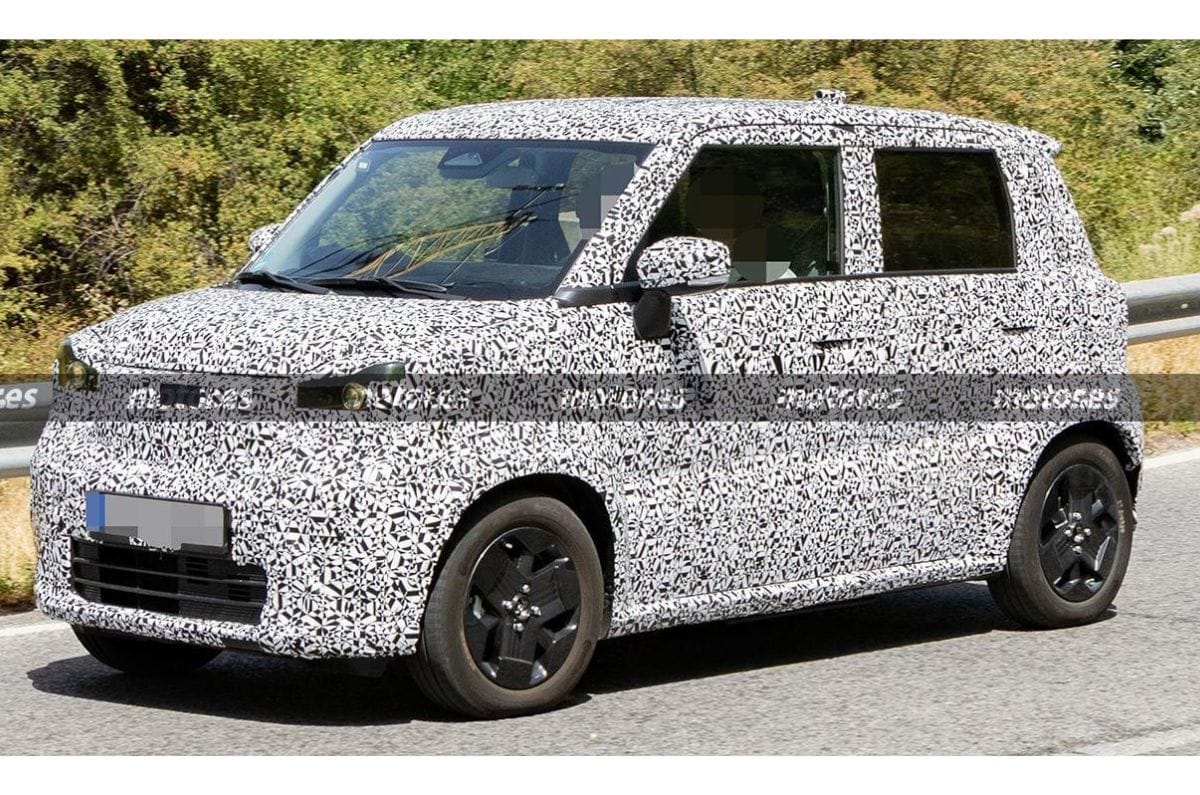
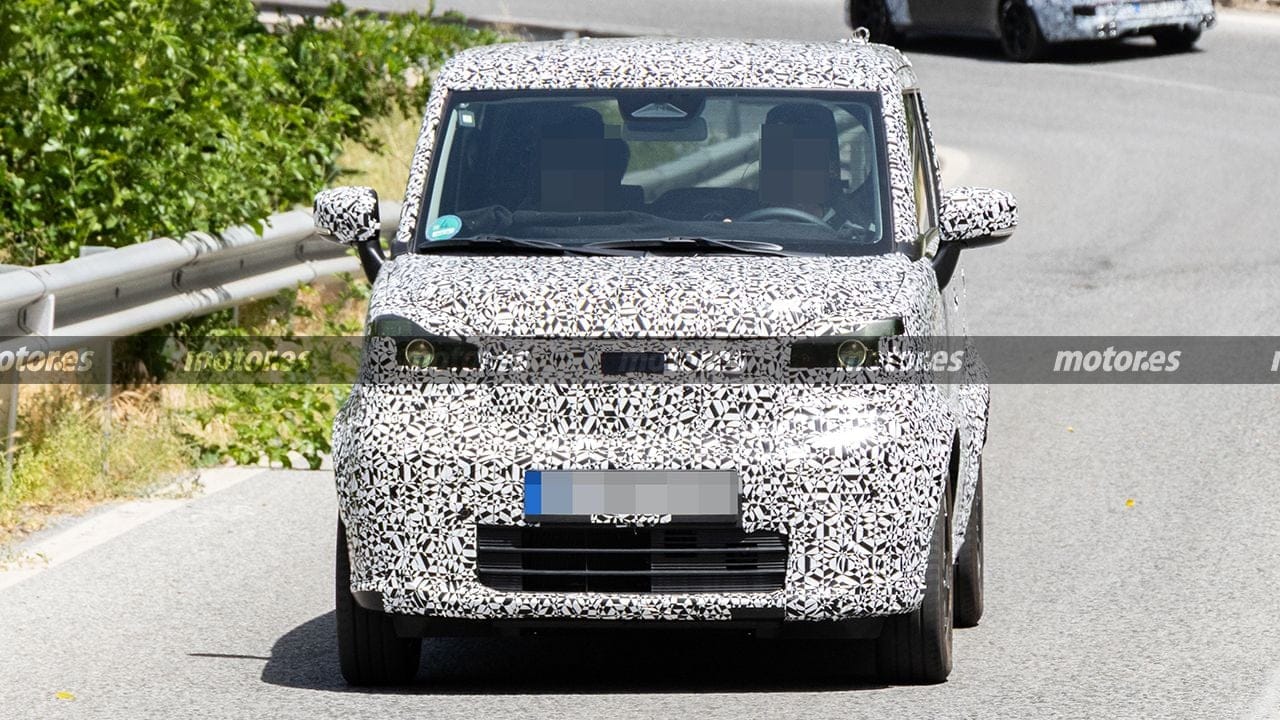
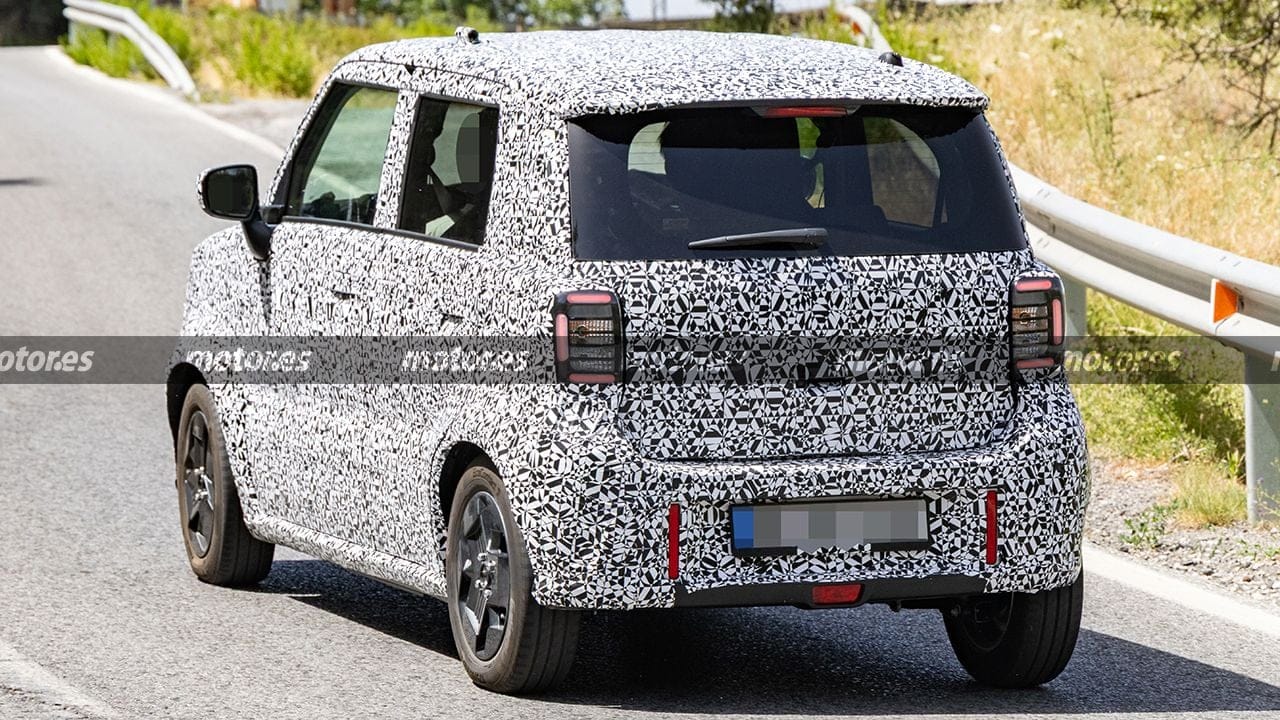
A camouflaged prototype of the Suzuki Vision E-Sky was recently spied testing in Europe, giving as a hint for the first time at what the production model could look like. The Suzuki Vision E-Sky concept was previewed at the Japan Mobility Show last year as the brand’s urban-centric, entry-level born EV. It’s expected to go on sale abroad next year.
Vision e-Sky concept was previewed with over 270km claimed range
It measures under 3.4 meters in length, meaning it’s smaller than a S-Presso
Production-spec model is expected to go on sale globally next year
Suzuki Vision e-sky prototype spied testing in Europe
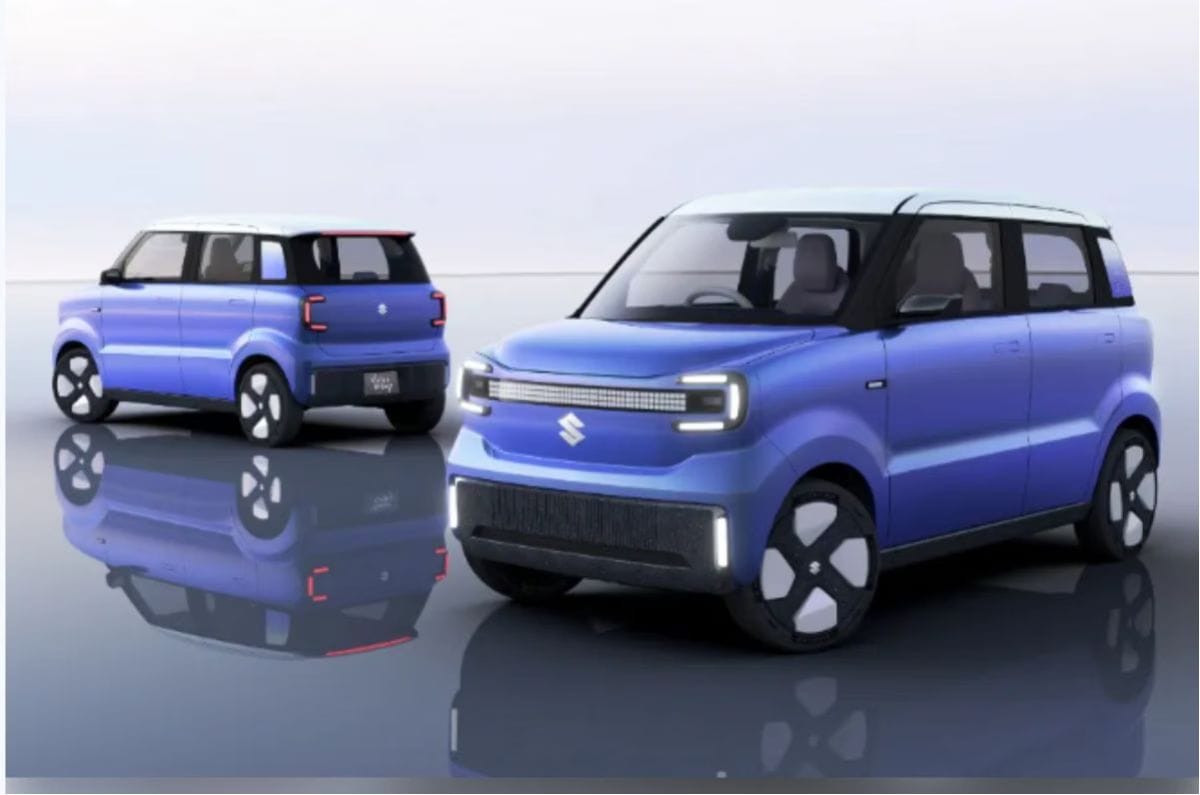
The heavily camouflaged vehicle seems to be an early-stage prototype, which is why it was seen wearing temporary headlamps, whereas the original concept featured LED headlamps with a connecting LED band. What stands out most are its proportions – its tall and upright, but the narrow track width gives it a very compact footprint. For reference, the concept measured 3,395mm in length, 1,475mm in width, and 1,625mm in height; this makes it taller than the Maruti Suzuki S-Presso but its length and width figures fall short of the latter.
Other highlights that can be spotted include traditional pull-type door handles, door-mounted wing mirrors (these were pillar mounted on the concept), aero-optimised alloy wheels and also a large cooling inlet on the bumper. At the back, the test mule featured vertically stacked tail lamps and reflectors on the bumper. Overall, the design seems clean and fuss-free, staying true to the original concept.
Although these spy shots do not give us a glimpse at the interior, the Vision E-sky concept came with a floating dashboard design with large, dual digital screens and a squircle steering wheel. Given its compact dimensions, however, it is likely that this vehicle will be best suited only for four adults.
Suzuki Vision e-sky specifications
Suzuki didn’t disclose any specifications during the concept’s debut at the Japan Mobility Show last year, but only hinted that it will offer more than 270km of range. Given its dimension, it can be expected to be powered by a battery ranging between 30-35kWh.
Suzuki Vision E-Sky concept
The production version of the Suzuki Vision E-Sky is expected to go on sale globally in 2027. Notably, Maruti Suzuki does have an entry-level, low-cost EV on cards for India. It’s internally codenamed the Y2V and is expected to arrive in the Indian market by 2028 to specifically cater to the entry-level EV segment, and the production version of the Vision E-Sky could very well fit the bill. The Y2V hatchback is part of Maruti Suzuki’s plan to launch six EVs by FY2031, covering different segments from hatchbacks to SUVs. In India, the Y2V could squarely be positioned against the MG Comet EV.
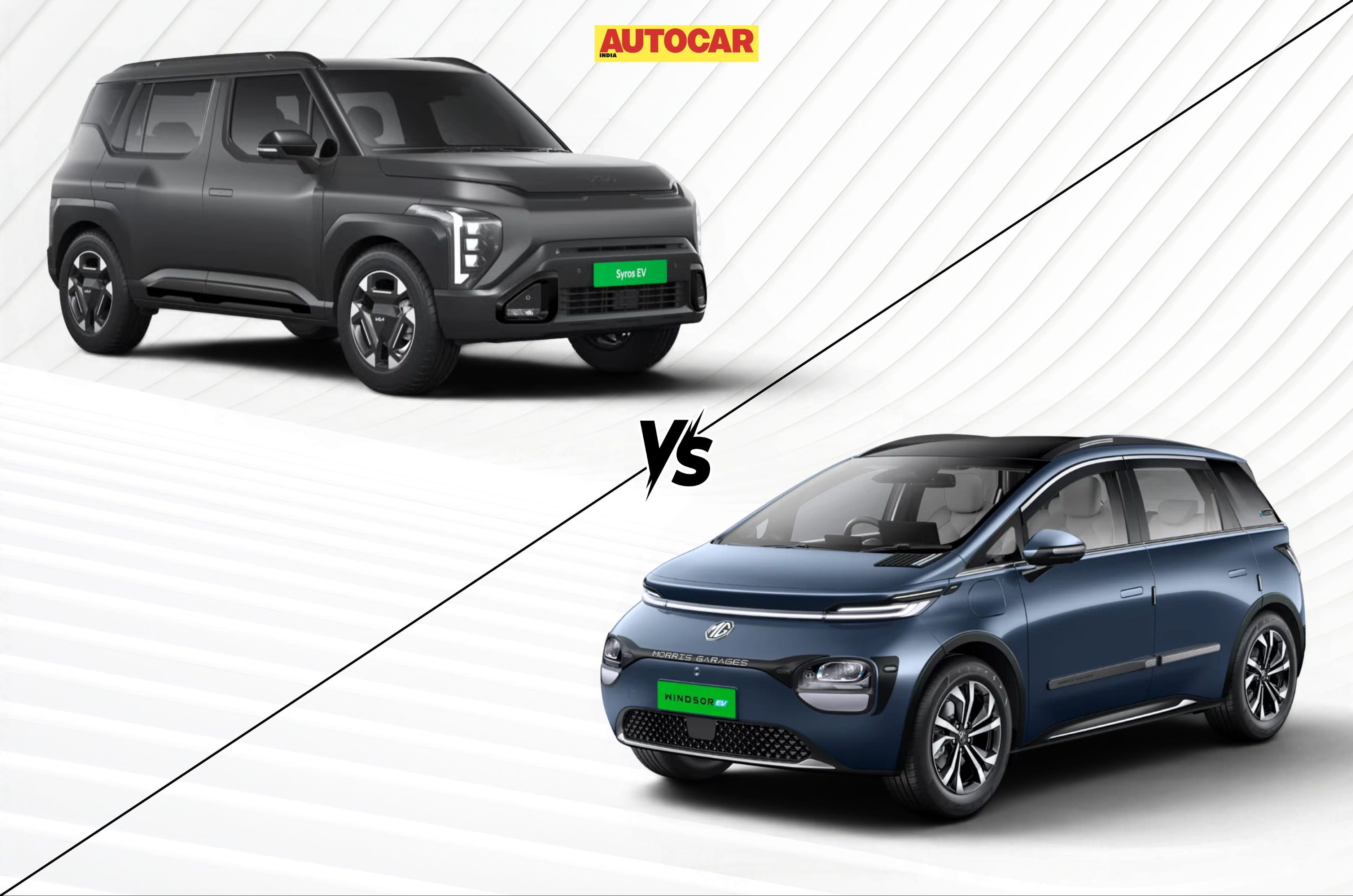
Basically a badge-engineered version of the Chinese Wuling Cloud EV, the MG Windsor is a midsize EV that sits between the brand’s Comet and ZS EV models. On the other hand, the Kia Syros EV is the Korean automaker’s most affordable electric car in India and is based on the Hyundai Motor Group’s K1 platform. Compared to the Windsor, the Syros EV is a compact (sub-4-metre) model. However, not only are the top-spec variants of these cars priced really close to each other, their battery sizes are quite comparable too.
Explore full specs, features and a price breakdown in our Syros EV and Windsor EV comparison.
Kia Syros EV X-Line ER vs MG Windsor EV Essence Pro: Dimensions
The Windsor EV undeniably has the size advantage over the smaller Syros EV
Kia Syros EV X-Line ER vs MG Windsor EV Essence Pro dimensions
Kia Syros EV
MG Windsor EV
Length (mm)
3,995
4,295
Width (mm)
1,805
1,850
Height (mm)
1,670
1,677
Wheelbase (mm)
2,550
2,700
Boot space (litres)
390
579
Frunk (litres)
16
–
Wheel size (inches)
17
18
The Windsor EV is 300mm longer and 45mm wider than the Syros EV – the MG offers 150mm more wheelbase than the Kia, too. While there isn’t much between them in terms of height, the Windsor EV’s boot is 189 litres larger than that of the Syros EV. The latter’s wheels are also an inch smaller. Interestingly though, the Kia EV offers a 16-litre frunk (front trunk) – the MG has no frunk at all.
Kia Syros EV X-Line ER vs MG Windsor EV Essence Pro: Powertrain
The top-spec Syros EV offers more range and a punchier electric motor setup
Kia Syros EV X-Line ER vs MG Windsor EV Essence Pro powertrain options
Kia Syros EV
MG Windsor EV
Battery size (kWh)
51.4
52.9
Electric motor setup
Single, front (FWD)
Single, front (FWD)
Power (hp)
171
136
Torque (Nm)
255
200
Claimed 0-100kph
8.1 seconds
–
Claimed range (km)
526
449
AC charging
7.25 hrs at 7.4kW (10-100%)
9.5 hrs at 7.4kW (10-100%)
DC fast charging
39 mins at 100kW (10-80%)
50 mins at 60kW (20-80%)
The X-Line ER (Extended Range) variant of the Kia Syros EV gets a 51.4kWh lithium-ion battery pack, which is just 1.5kWh smaller than the unit powering the top-spec MG Windsor. Despite this capacity disadvantage, the Syros EV’s claimed range is actually higher, by 77km higher.
Compared to the top-spec MG Windsor’s 60kW DC fast-charging capability, the Syros EV’s DC fast-charging limit is 40kW higher. Unlike MG, Kia’s claimed DC fast-charging time accounts for a SoC (state of charge) of 10-80 percent and not 20-80 percent. Taking all this into account, the Syros EV can be unplugged from a DC fast charger 11 minutes sooner, which would benefit regular long-distance users.
While neither automaker has listed the kerb weight of their cars, the smaller Syros EV is likely to be lighter than the Windsor EV. The former’s front-mounted electric motor also offers 35hp and 55Nm more. These two factors combine to give the Syros EV a claimed naught to 100kph sprint time of 8.1 seconds.
Kia Syros EV X-Line ER vs MG Windsor EV Essence Pro: Exterior features
The Windsor gets a couple more useful features here; the Syros has some ‘feel-good’ ones
Kia Syros EV X-Line ER vs MG Windsor EV Essence Pro exterior features
Kia Syros EV
MG Windsor EV
LED headlamps
Yes (auto)
Yes (auto projectors)
Connected light bar
No
Yes
Front fog lamps
Yes
No
Rear fog lamps
No
Yes
Cornering lights
No
Yes
Welcome lights
Yes
No
Puddle lamps
Yes
No
Powered ORVMs
Yes (with auto-fold function)
Yes (with auto-fold function)
Flush door handles
Yes
Yes
Body cladding
Yes
No
Roof rails
Yes
Yes
Rear spoiler
Yes
Yes
Powered tailgate
No
Yes
Colours
Mono-tone
Mono-tone
Both these cars are reasonably well-equipped in their respective top-spec variants. However, there are some distinct differences between the features that are offered in each. The Syros EV comes with front fog lamps plus fancier ‘welcome’ lighting functions as well as puddle lamps that project the ‘Kia’ logo – these make for a more premium experience when approaching the car. The Syros EV also goes for a rugged look, featuring black plastic cladding on the wheel arches and bumpers.
Compared to the Syros EV’s stylish multi-reflector LED headlamps, the Windsor EV uses projector LED units. While it doesn’t get front fog lamps, the MG features cornering lamps that can prove useful when driving in the dark. At the back, the top-spec Windsor EV gains a powered tailgate – another handy feature especially when your hands are occupied.
Kia Syros EV X-Line ER vs MG Windsor EV Essence Pro: Interior features
If you like a minimalistic interior that’s also feature-packed, the MG Windsor won’t disappoint
Kia Syros EV X-Line ER vs MG Windsor EV Essence Pro interior features
Kia Syros EV
MG Windsor EV
Infotainment screen
12.3-inch
15.6-inch
Digital driver’s display
12.3-inch
8.8-inch
HVAC screen
5.0-inch
No
Panoramic sunroof
Yes
Yes (fixed)
Wireless charger
Yes
Yes
Driver’s seat adjustment
4-way powered
6-way powered
Co-driver’s seat adjustment
4-way manual
4-way manual
Ventilated seats
Yes (front & rear)
Yes (front only)
Leatherette upholstery
Yes
Yes
Split rear seats
Yes
Yes
Automatic climate control
Yes (single-zone)
Yes (single-zone)
Ambient lighting
Yes (64 colours)
Yes (256 colours)
Audio system
8-speaker Harman Kardon
9-speaker Infinity
Apple CarPlay & Android Auto
Yes (wireless)
Yes (wireless)
USB Type-C ports
Yes (5 ports)
Yes (5 ports)
Connected car tech
Yes
Yes
Voice assistant
Yes
Yes
OTA updates
Yes
Yes
Gaming
No
Yes
Rear sunblinds
Yes
No
Rear armrest
Yes (with cupholders)
Yes (with cupholders)
Both cars come with wireless charging, leatherette seats, connected-car tech, and multiple USB ports for added convenience. However, in its top-spec X-Line ER avatar, the Kia Syros EV offers a third screen specifically to control the HVAC (heating, ventilation and air-conditioning) system. That said, there are physical buttons to operate this system, too. The Kia EV also gets a larger driver’s display, a panoramic sunroof that opens, ventilation function for the front & rear seats, plus rear sunblinds. Furthermore, the Syros EV’s interior design, quality and layout of its switchgear, plus the overall usability remain easily sufficient.
As for the fully loaded Essence Pro variant of the MG Windsor EV, its pièce de résistance is the massive 15.6-inch infotainment screen. Given its minimalistic interior layout, almost every control or feature is integrated into this main display. While this screen can be distracting, it comes with multiple customisation options and integrates various games and streaming services. Compared to the Syros EV’s 64-colour ambient lighting system, the Windsor’s supports 256 colours. Its driver’s seat also gets 6-way power adjustment, while the Inifinity premium audio rig features 9 speakers instead of the Kia’s 8-speaker setup.
Kia Syros EV X-Line ER vs MG Windsor EV Essence Pro: Safety features
Neither car is missing out on much when it comes to their respective safety tech
Kia Syros EV X-Line ER vs MG Windsor EV Essence Pro safety features
Kia Syros EV
MG Windsor EV
Airbags
6
6
ABS with EBD
Yes
Yes
Electronic stability program
Yes
Yes
Hill-hold assist
Yes
Yes
Hill-descent control
No
Yes
TPMS
Yes
Yes
Parking sensors
Yes (front & rear)
Yes (front & rear)
360-degree camera
Yes
Yes
Dashcam
Yes
No
Electronic parking brake
Yes (with auto-hold function)
Yes (with auto-hold function)
Auto-dimming IRVM
Yes
Yes
Rain-sensing wipers
Yes
Yes
ISOFIX
Yes
Yes
Rear wiper and defogger
Yes
Yes (defogger only)
All-wheel disc brakes
Yes
Yes
Level 2 ADAS
Yes
Yes
Only the top-spec variants of these EVs get Level 2 ADAS (Advanced Driver Assistance Systems). Some of the ADAS features shared between the two include adaptive cruise control, forward collision warning, lane-departure alert with lane-keeping assistance, and automatic emergency braking. Where the Windsor EV gets hill-descent control, the Syros EV comes with a dashcam and a rear wiper.
Kia Syros EV X-Line ER vs MG Windsor EV Essence Pro: Other features
Neither car is missing out on much when it comes to their respective safety tech
Kia Syros EV X-Line ER vs MG Windsor EV Essence Pro other features
Kia Syros EV
MG Windsor EV
Drive modes
Yes (3)
Yes (4)
Terrain modes
No
No
Single-pedal driving
Yes
No
V2V and V2L
Yes
Yes
AVAS
Yes
No
The Windsor EV comes with Eco+, Eco, Normal and Sport drive modes, while the Syros EV only gets Eco, Normal and Sport. Neither car features variable terrain modes, but both support vehicle-to-load (V2L) and vehicle-to-vehicle (V2V) functions for better practicality during regular family outings, such as picnics and long-distance trips. The Syros EV also comes with a dedicated Virtual Engine Sound System (VESS) to caution other motorists and pedestrians of the vehicle’s presence.
Conclusion
Kia Syros EV X-Line ER vs MG Windsor EV Essence Pro prices
Kia Syros EV
MG Windsor EV
Prices (In Rs, lakh)
20.00
19.00
Apart from being less expensive, the Windsor EV is a larger car with plenty of room on the inside and in the boot, compared to the compact Syros EV. However, the Kia makes a solid case for itself by offering good interior space and build quality, better overall performance, plenty of features, plus a good blend of digital real-estate and intuitive physical controls. If you need the added perks that a bigger car offers without having to spend the ‘big car’ money, the MG Windsor EV will suit your needs just fine. Picking the top-spec Kia Syros EV won’t be a disappointment either as long as you can justify its bloated price tag.
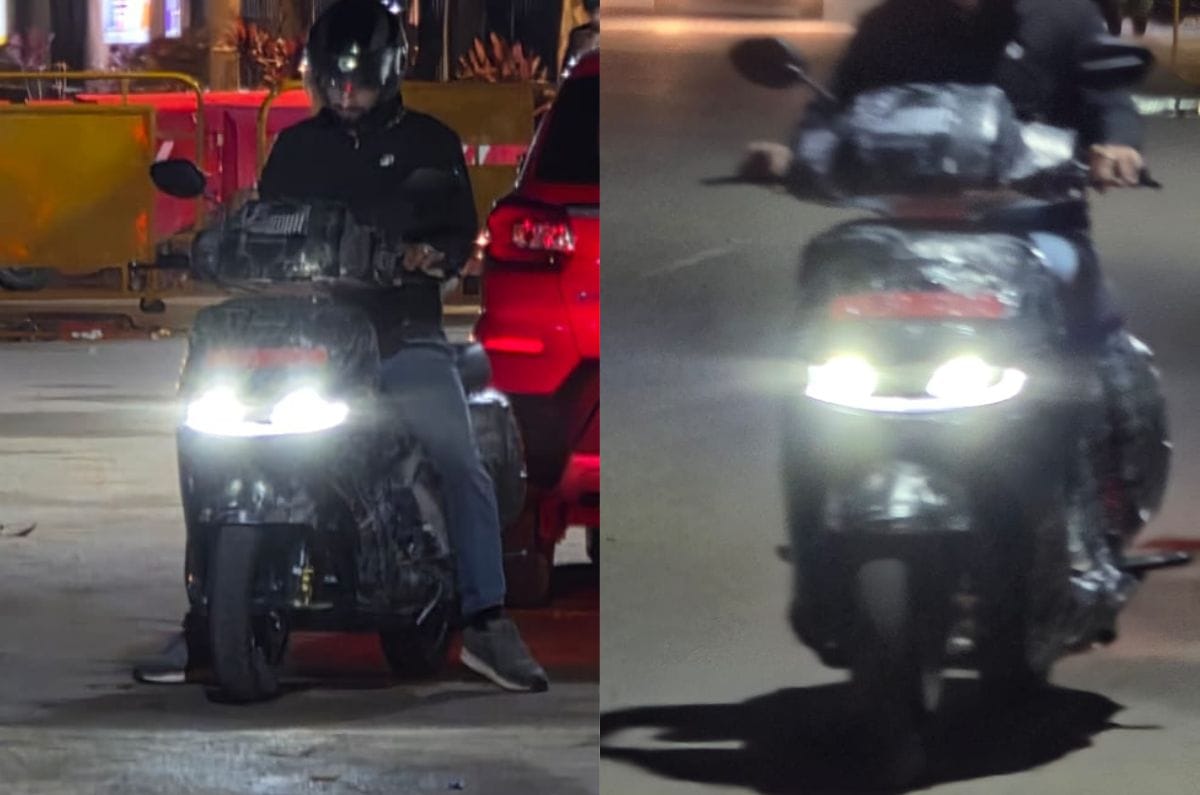
Simple has released fresh images of its upcoming family electric scooter – Arrive – ahead of its September 2 debut. Shot in low-light conditions with the scooter still wearing camouflage, the images reveal only a handful of design details while continuing to keep much of the bodywork hidden. The new model will mark Simple’s entry into the growing family electric scooter segment.
Fresh official images released ahead of September 2 launch
LED lighting signature and hardware partially revealed
Family-focused electric scooter will expand Simple’s portfolio
Simple family-scooter: What to expect?
The dusk-shot images don’t reveal much beyond the scooter’s front-end lighting setup. A full-width LED daytime running light spans the front, with the main headlamp units positioned lower down on the apron. The images also confirm telescopic front forks and a front disc brake, while the upright handlebar points to a relaxed riding position.
Most of the side bodywork and the rear section remain concealed beneath camouflage, suggesting Simple is reserving the full design reveal for the scooter’s official debut.
A practical addition to Simple’s lineup
Unlike the performance-oriented Simple One range, the upcoming scooter is expected to cater to buyers looking for a practical everyday commuter. Its upright proportions and conventional layout suggest a greater focus on comfort and usability than outright performance.
Likely to be called the Arrive, the scooter will rival family-oriented electric scooters such as the TVS Orbiter, Ather Rizta and Bajaj Chetak. It will also take on Ather’s upcoming EL platform-based family electric scooter, which is set to make its debut at Community Day on August 29, just a few days before the Simple’s unveiling.
Launch on September 2
Simple has confirmed that its new family electric scooter will make its debut on September 2. However, details regarding its battery, motor, claimed range, feature list and pricing remain under wraps.
All of these details are expected to be announced when the scooter is officially unveiled.
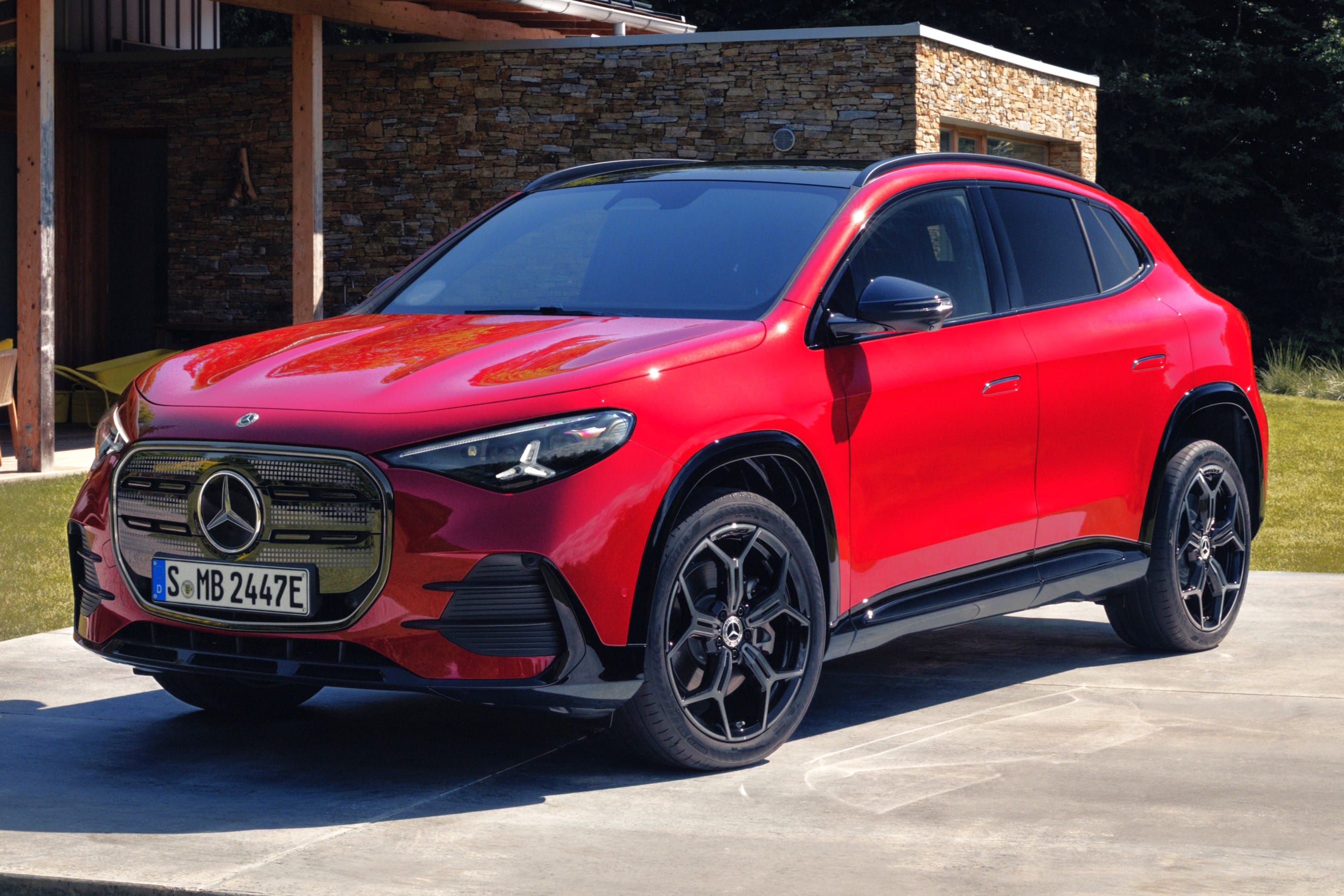
Mercedes-Benz has pulled the wraps off the third-generation GLA, the carmaker’s smallest SUV. The new GLA measures 4,565mm in length, 1,873mm in width, 1,604mm in height, and has a wheelbase of 2,790, making it larger than the prior model in almost every dimension. Since the third-gen GLA is based on Mercedes’ MMA platform, it will be the SUV’s first generation to get an all-electric derivative. The GLA EV will be offered with 58kWh LFP and 85kWh NMC battery options, with RWD and AWD layouts. An ICE version of the third-gen GLA will arrive in 2027 and offer a 1.5-litre turbo-petrol engine mated to a 48V mild hybrid system and an electrified 8-speed DCT.
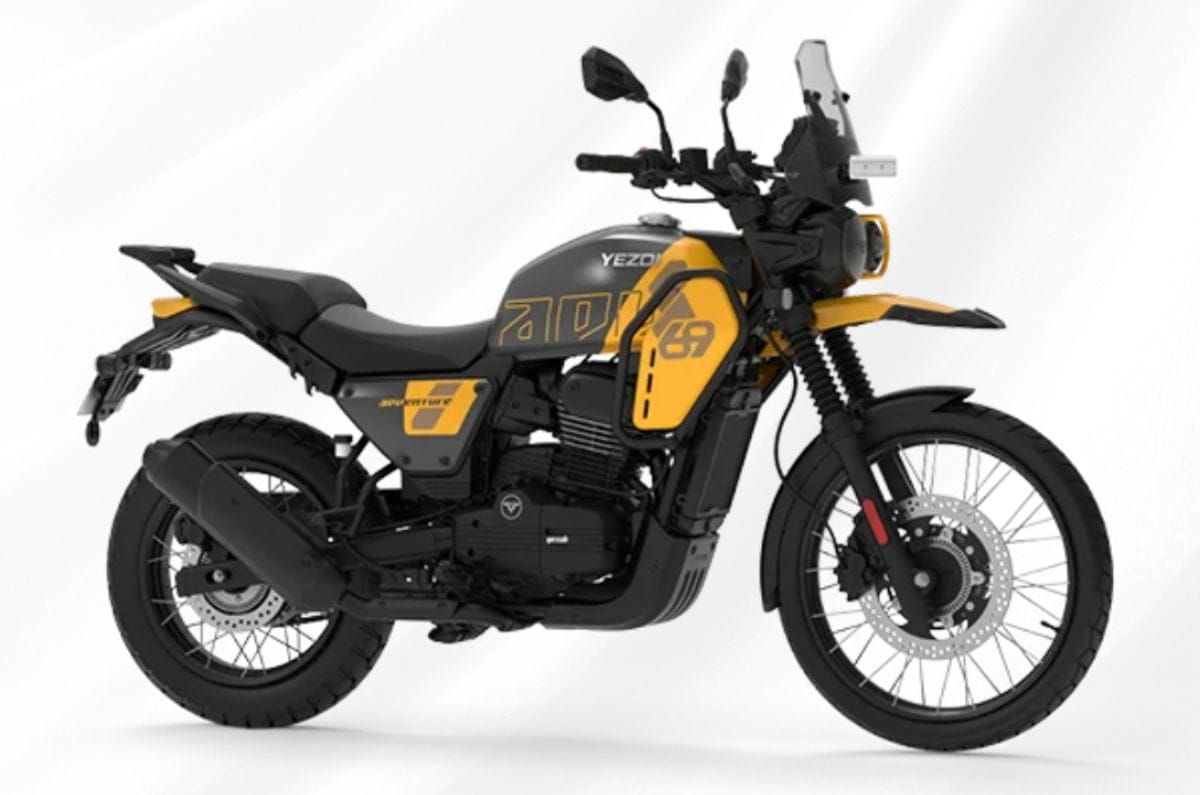
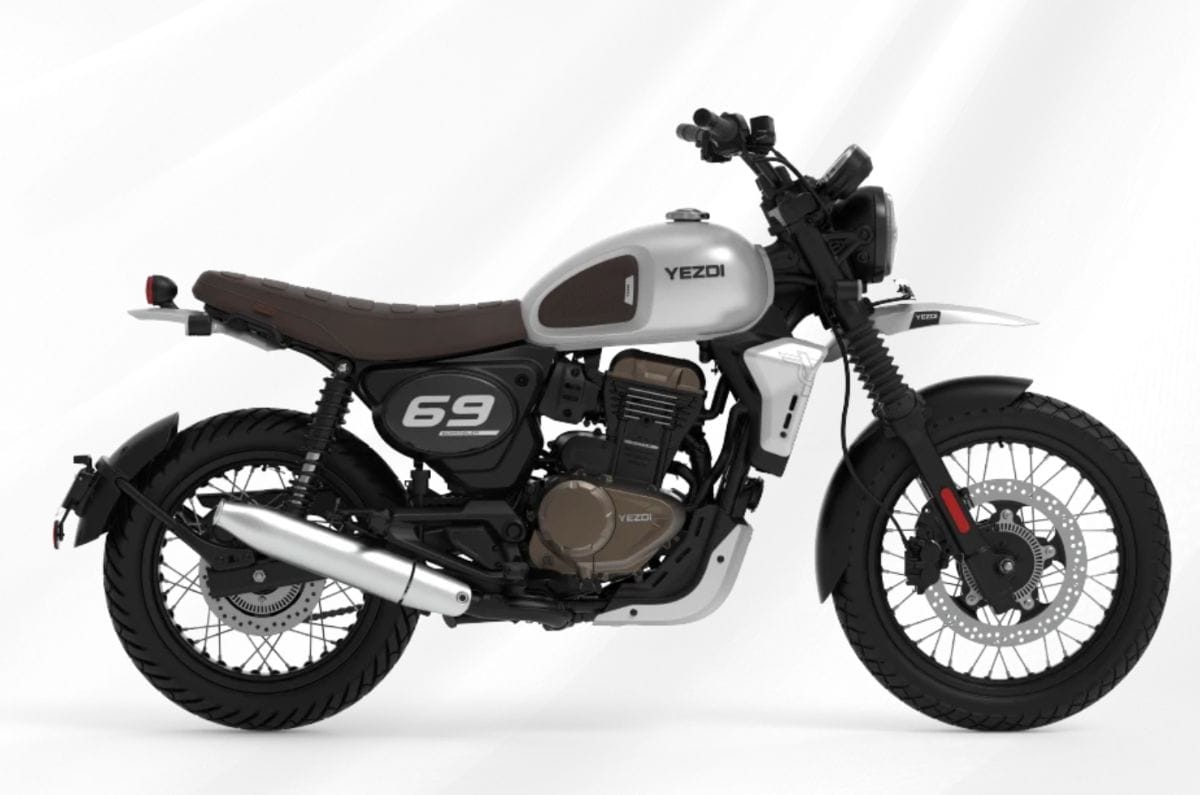
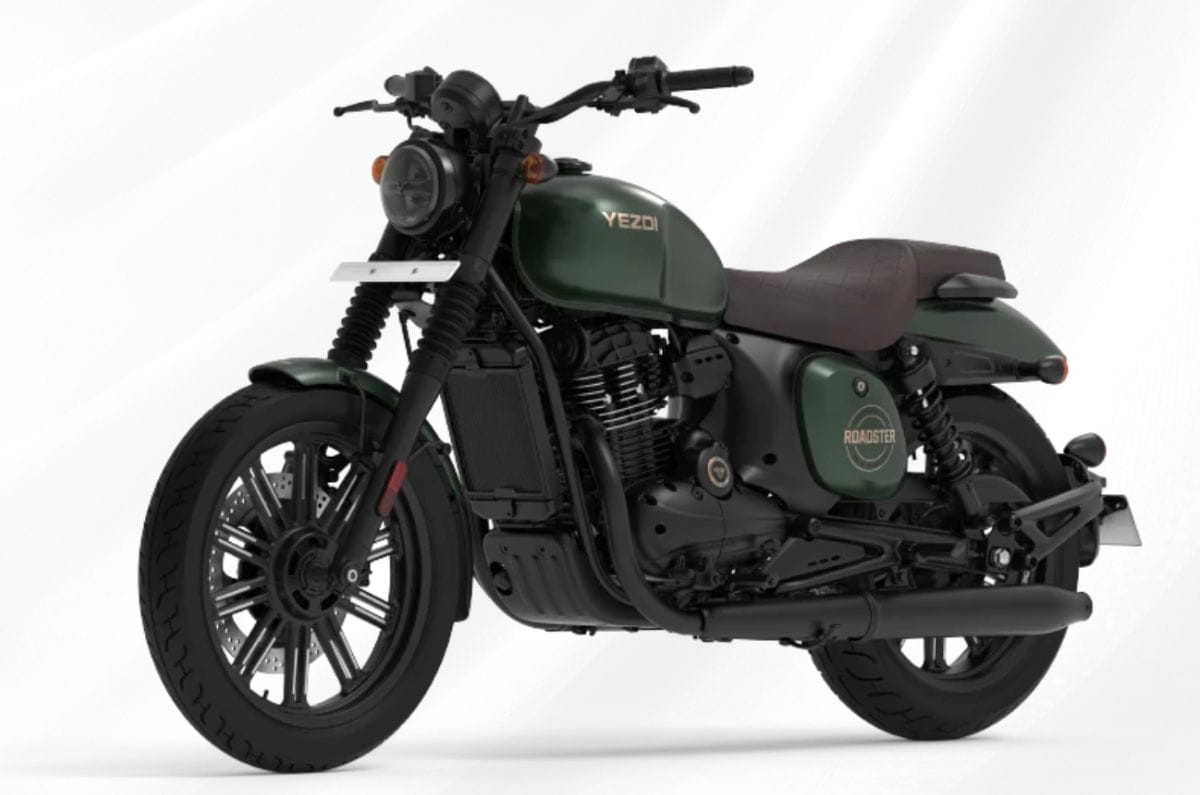
Yezdi has updated its Adventure, Roadster and Scrambler motorcycles with new colour options, while also introducing tubeless spoke wheels on the Adventure for the first time, for a premium of Rs 20,000 over the standard model. The new wheel setup is available on a new Yellow Falcon variant, while the Roadster and Scrambler gain fresh paint schemes.
Yezdi Adventure now offered with factory-fitted tubeless spoke wheels
Roadster gets a new Green Mamba metallic colour option
Scrambler receives a new Grey Panther matte paint scheme
Yezdi Adventure now gets tubeless spoke wheels
The biggest update is reserved for the Adventure, which is now available with factory-fitted tubeless spoke wheels for the first time. Offered on a new Yellow Falcon variant, the setup retains the durability of spoke wheels while allowing punctures to be repaired without removing the tyre. The Adventure also gets the new dual-tone Yellow Falcon paint scheme, which joins the existing Nebula Blue White, Glacier White and Tornado Black colour options.
The standard Yellow Falcon variant is priced at Rs 2.13 lakh, while the tubeless spoke wheel-equipped version costs Rs 2.33 lakh (both ex-showroom, Delhi), commanding a Rs 20,000 premium over the standard model. The rest of the Adventure range continues unchanged.
Roadster gets Green Mamba paint option
The Roadster’s update is limited to the addition of a new metallic Green Mamba paint finish. It joins the existing Smoke Grey, Shark Skin Blue, Red Wolf and Shadow Black colours. There are no mechanical or feature changes, with the motorcycle continuing unchanged underneath the new paint option.
The Scrambler has also received a new matte Grey Panther colour scheme featuring a brown ribbed seat and matching brown accents. The new finish expands the colour palette introduced earlier this year when the motorcycle was updated with Yezdi’s Alpha2 (Katar) engine. Apart from the addition of the new paint option, the Scrambler remains mechanically unchanged.
MG is gearing up to launch its upcoming ‘new-energy vehicle’ based on the Wuling Starlight 560 in August 2026, and it has been spied testing in an EV avatar. Expected to be called the MG Hector Hawk, the SUV will be launched in both PHEV and EV versions, rivalling the Mahindra XUV 7XO, Tata Safari and Mahindra XEV 9S. It will be built on the new ADAPT platform, which was revealed earlier this month.
Spy shots show rectangular LED headlights, wraparound taillights
It could get a minimalist dual-tone dashboard with two screens
EV version is expected to have a 69.2kWh battery and 530km range
PHEV can get a 1.5L petrol with 20.5kWh battery and 127km all-electric range
MG Hector Hawk spied: What was spotted?
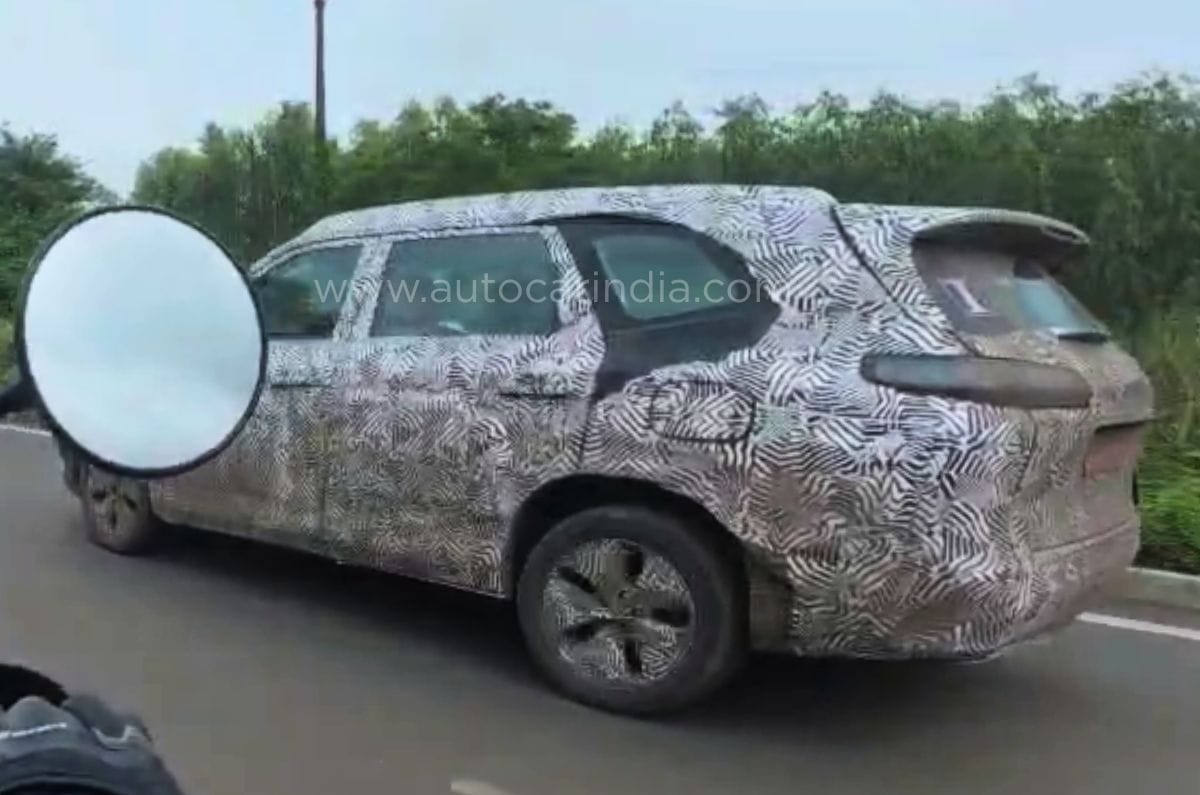
A blanked-off grille suggests that the spotted test mule was of the EV version
The spied MG Hector Hawk is camouflaged like the previous test mules, but a few exterior design details are still visible. These include rectangular-shaped LED headlights with LED DRLs on top and bottom. The grille appears to be blanked off, hinting that the spied mule was that of the EV version.
Its clean side profile, with a charging slot on the left-rear fender and a simple alloy wheel design, could also be seen. At the rear, wraparound LED tail-lights, a rear windscreen wiper and a roof-mounted spoiler were spotted.
MG Hector Hawk eSUV: Other details
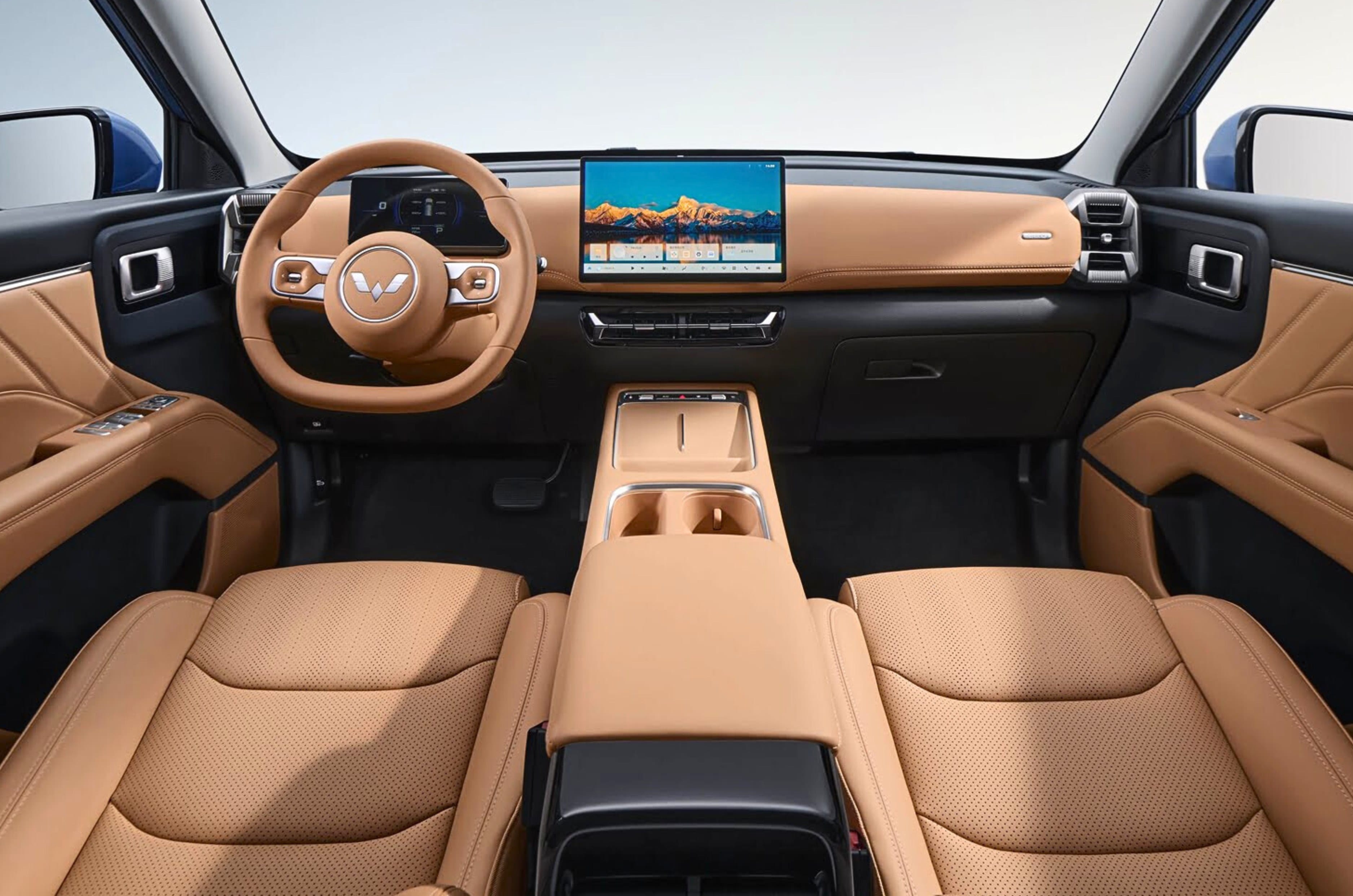
Expected to have a minimalist dashboard with two free-standing screens
Wuling Starlight 560’s dashboard shown for representative purposes only.
The interior design of the upcoming MG Hector Hawk is yet to be revealed, but is expected to be similar to the international-spec model. It could, hence, sport a minimalist dashboard with two free-standing screens, including an 8.8-inch digital driver’s display and a 12.8-inch touchscreen infotainment system. It could be offered with 7 seats with leatherette upholstery.
Other features are also expected to be similar, including a panoramic sunroof, powered and ventilated first-row seats, a 50W wireless phone charger, a 6-speaker sound system and an automatic climate control with rear vents. Its safety suite could have 6 airbags as standard, a tyre-pressure monitoring system (TPMS), hill-hold assist, an electronic parking brake, a rear parking camera with sensors and advanced driver assistance systems (ADAS).
Expected to get the same powertrains as the international-spec model
The MG Hector Hawk will be offered with PHEV and EV versions in India, both of which are expected to be the same as the internationally available model. The Hector Hawk PHEV could hence come with a 1.5-litre petrol engine and a 20.5kWh battery pack, offering a total output of 195hp and 230Nm and an all-electric range of 125km.
The Hector Hawk EV version could get a 69.2kWh battery pack, powering a 201hp front-axle-mounted (FWD) electric motor, offering a CLTC-claimed range of 530km.
Like other MG models, the Hector Hawk is expected to be offered at a competitive price. In MG’s lineup, the PHEV version will be positioned above the Hector, while the EV will sit on top of the ZS EV.
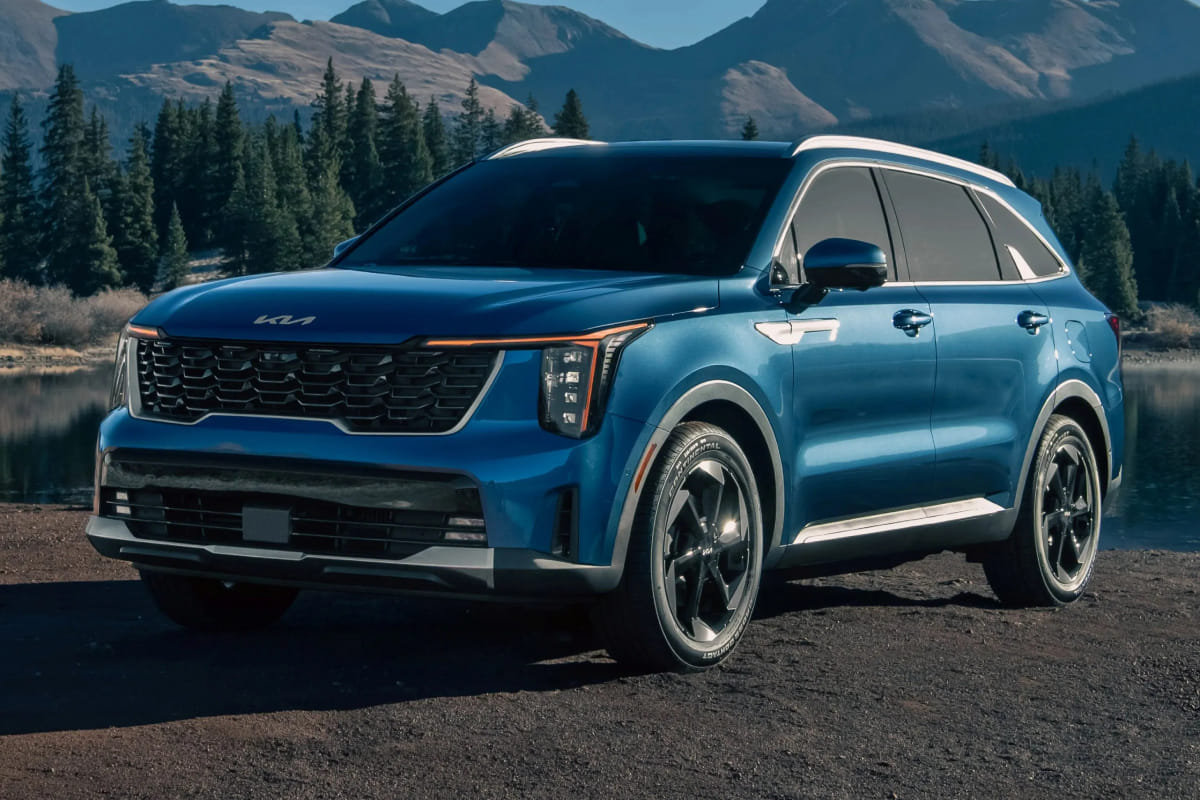
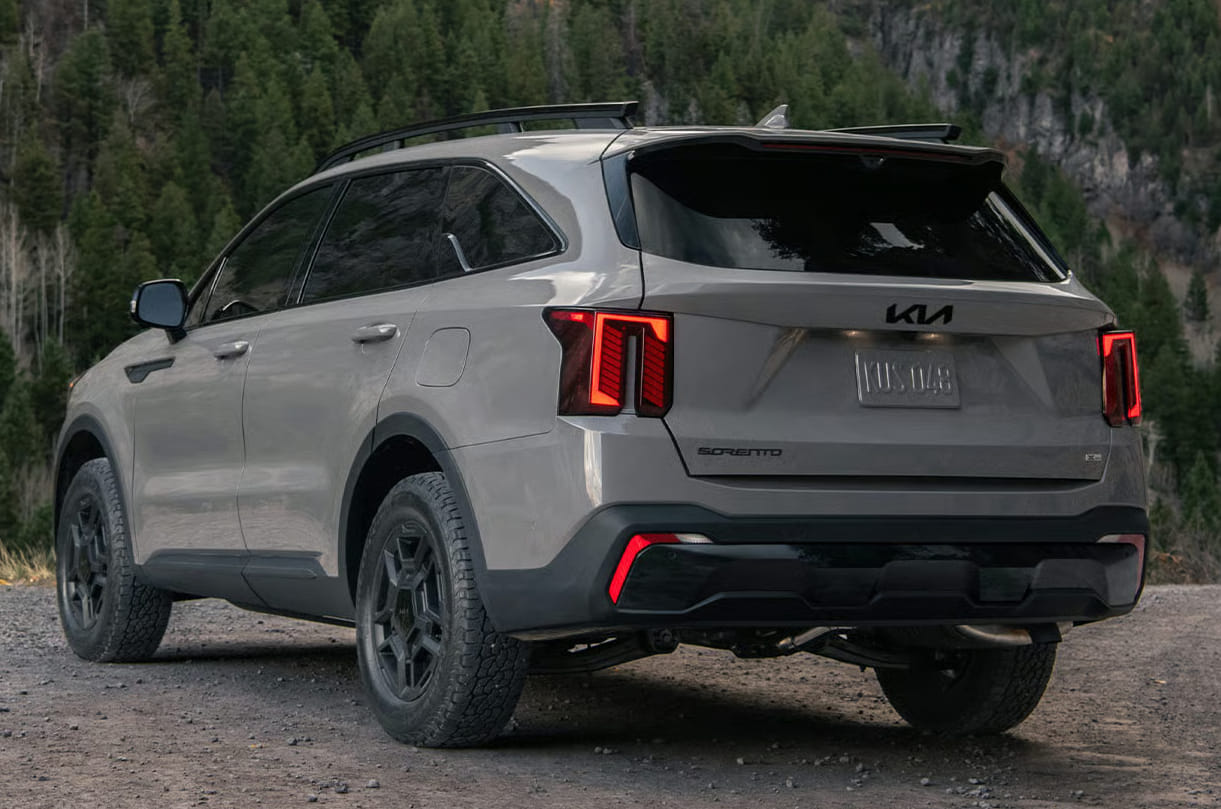
Kia has officially confirmed that the Sorento will be coming to India, following our earlier report that the SUV had unofficially opened for bookings. Expected to be locally assembled, the Sorento will sit above the Seltos as Kia India’s flagship ICE SUV and is also set to become the brand’s first hybrid model for the Indian market. While official specifications are yet to be revealed, spy shots, dealer inputs and details of the global-spec model provide a good idea of what to expect. Here’s everything we know so far.
1. When will the Kia Sorento launch in India
Expected to debut later this year, with launch likely in October
Kia has unofficially begun accepting pre-bookings for the Sorento through select dealerships for a token amount of Rs 25,000. According to dealer sources, the SUV is expected to launch by October 2026, although Kia is yet to officially confirm the timeline.
2. What will the Kia Sorento look like?
Upright SUV styling with Kia’s familiar design elements
Global-spec Sorento used for representation.
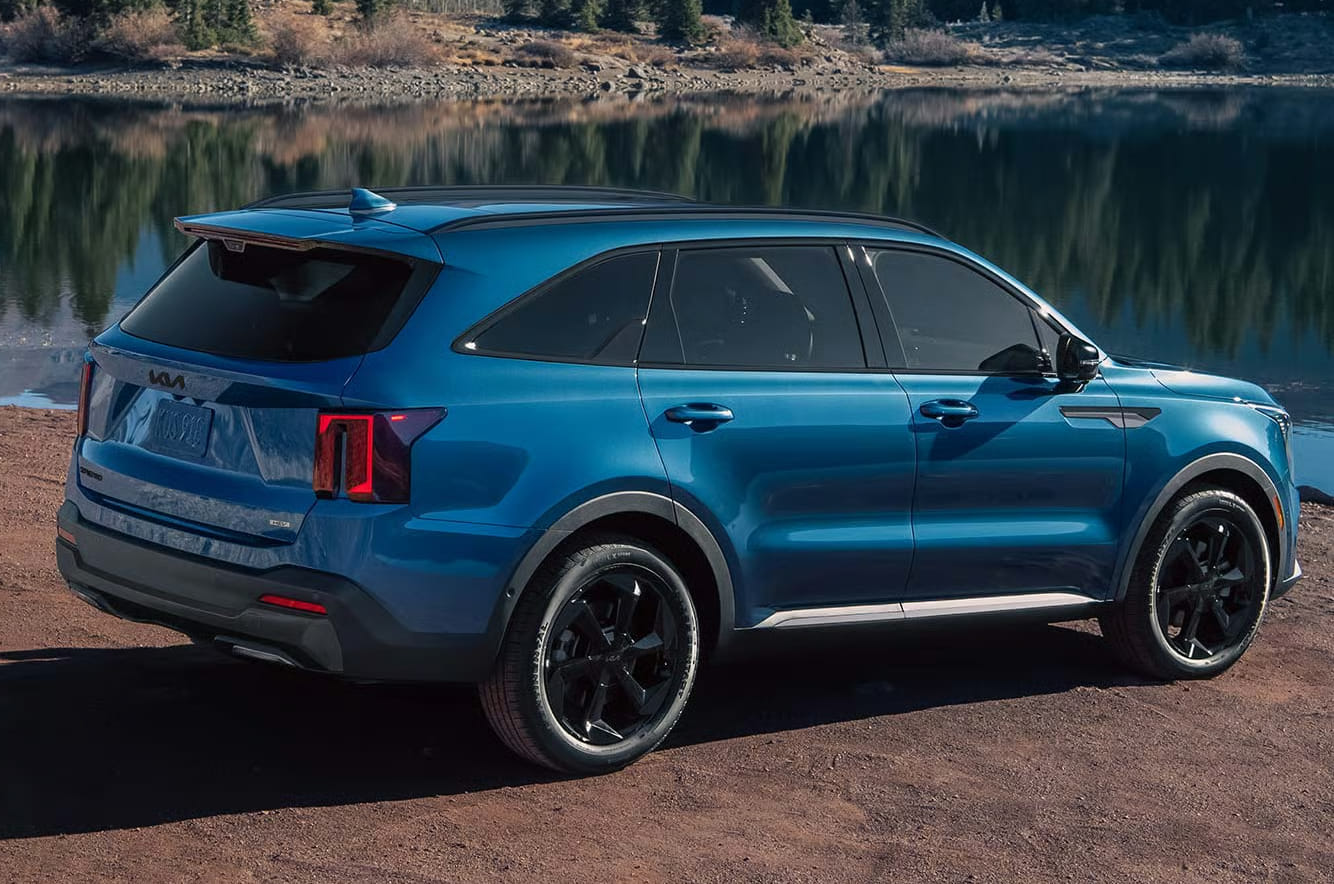
The Sorento features a more upright design than the Seltos, with vertically stacked LED headlamps, slim daytime running lamps, a wide grille and a sculpted bumper. Test mules spotted in India have also revealed chrome window surrounds, black roof rails and dual-tone alloy wheels. At the rear, the SUV gets vertically oriented LED tail-lamps integrated into a clean tailgate design and a roof spoiler.
3. How big is the Kia Sorento?
Larger footprint than the Seltos
The global-spec Kia Sorento measures 4,815mm in length, 1,900mm in width and 1,700mm in height, while its wheelbase measures 2,815mm. This makes it 54mm longer than the Skoda Kodiaq and 23mm longer than the Volkswagen Tayron, while its wheelbase is 26mm longer than both SUVs.
4. What will the Kia Sorento’s interior and features be like?
Premium cabin with three seating layouts expected
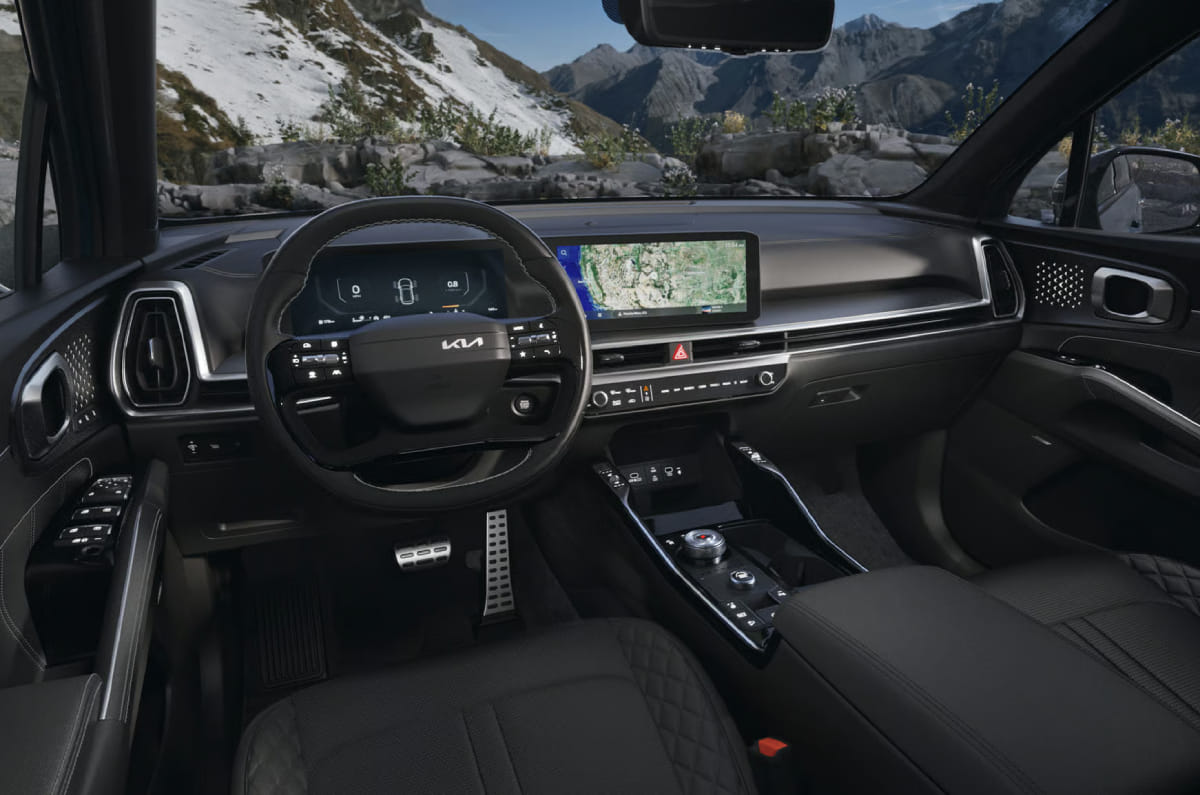
Global-spec Sorento interior used for representation.
Globally, the Kia Sorento is available in 5-, 6- and 7-seat configurations. However, the India-spec model is expected to feature a three-row layout, likely with 6- and 7-seat options, which would make it the only model in its segment with three seating options if introduced in India.
Based on the global model and Indian test mules, expected features include dual 12.3-inch displays for the infotainment system and instrument cluster, a panoramic sunroof, ventilated front seats, a powered driver’s seat, a 360-degree camera, head-up display and Level 2 ADAS. Spy shots have also revealed a rotary gear selector and electronic parking brake on the centre console.
5. Which engine will power the Kia Sorento?
Hybrid powertrain expected for India
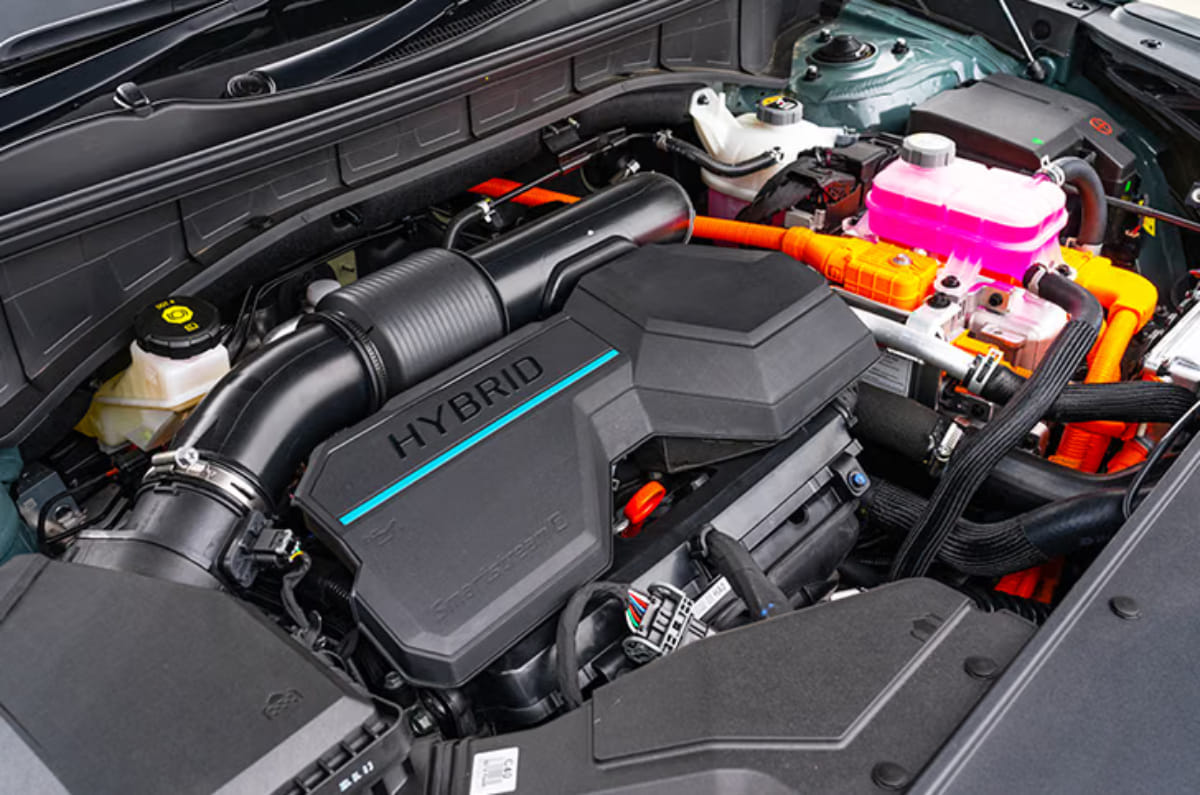
Euro-spec Kia Sorento hybrid shown for representation.
internationally the Sorento gets petrol, diesel and also hybrid engine options, but the India-spec model is expected to get a strong-hybrid powertrain. Dealer sources suggest it could use a 1.6-litre direct injection turbo-petrol hybrid engine, although final specifications have not been confirmed.
The UK-spec Sorento uses a 1.6-litre turbo-petrol strong-hybrid producing 238hp and 380Nm, paired with a 6-speed torque converter automatic transmission. Depending on the market, the Sorento is offered in FWD or AWD configurations globally.
6. How much will the Kia Sorento cost in India
Expected price: around Rs 40 lakh (ex-showroom)
The Kia Sorento is expected to be locally assembled in India and is likely to be priced around Rs 40 lakh (ex-showroom).
7. Which SUVs will rival the Kia Sorento?
The Kia Sorento is expected to rival premium three-row SUVs such as the Skoda Kodiaq and Volkswagen Tayron.
PM Modi post row: दिग्गज अमेरिकी सोशल मीडिया कंपनी मेटा ने भारत सरकार को एक पत्र लिखकर प्रधानमंत्री नरेंद्र मोदी और अन्य प्रमुख हस्तियों द्वारा पोस्ट किए गए कंटेंट के लिए लागू किए गए कड़े और एडवांस्ड सुरक्षा प्रोटोकॉल के बारे में जानकारी दी है। प्रधानमंत्री मोदी की फेसबुक पोस्ट कुछ समय के लिए हटाए जाने के विवाद के बाद Meta ने प्रमुख VIP अकाउंट्स की सुरक्षा के लिए नए प्रोटोकॉल लागू किए हैं। इलेक्ट्रॉनिक्स एवं सूचना प्रौद्योगिकी मंत्रालय (MeitY) के सचिव एस. कृष्णन ने गुरुवार (30 जुलाई) को पत्रकारों से बातचीत में बताया कि कंपनी ने सरकार को इस बारे में जानकारी दी है।
उन्होंने बताया कि अगले 7 से 10 दिनों के भीतर इस मुद्दे पर एक विस्तृत बैठक भी होगी। पत्रकारों से बातचीत में एस. कृष्णन ने कहा कि Meta ने सरकार को बताया है कि 28 जुलाई की घटना के बाद नए सुरक्षा उपाय लागू किए गए हैं। इसी दिन प्रधानमंत्री नरेंद्र मोदी का एक वीडियो फेसबुक से कुछ समय के लिए हट गया था, जिसे बाद में बहाल कर दिया गया था। बता दें कि मेटा, फेसबुक, व्हाट्सएप और इंस्टाग्राम जैसे सोशल मीडिया प्लेटफॉर्म चलाती है।
मेटा ने लेटर में क्या कहा?
सूत्रों ने बताया कि मेटा ने सूचना प्रौद्योगिकी (IT) मंत्रालय को सूचित किया है कि प्रधानमंत्री और अन्य प्रमुख हस्तियों द्वारा पोस्ट किए गए कंटेंट की अतिरिक्त निगरानी की जाएगी। साथ ही कंपनी के वरिष्ठ अधिकारियों द्वारा कई स्तरों पर इसकी समीक्षा की जाएगी। सूत्रों ने पीटीआई को बताया कि मेटा की टीम इस सप्ताह के अंत में या अगले सप्ताह की शुरुआत में सरकारी अधिकारियों से उस घटना के संबंध में मिल सकती है, जिसमें प्रधानमंत्री नरेंद्र मोदी की एक फेसबुक पोस्ट को कुछ समय के लिए हटा दिया गया था।
सरकार ने प्रधानमंत्री मोदी की एक फेसबुक पोस्ट को कुछ समय के लिए हटाए जाने के मुद्दे पर मंगलवार को मेटा के ग्लोबल हेड ऑफ पब्लिक पॉलिसी को तलब किया था। 23 जुलाई की पोस्ट में प्रधानमंत्री ने युवाओं को संबोधित किया था। उन्हें पेपर लीक के खिलाफ सख्त कार्रवाई का भरोसा दिलाया था। अमेरिका स्थित सोशल मीडिया कंपनी ने इस घटना के लिए तकनीकी खराबी को जिम्मेदार ठहराते हुए माफी मांगी थी। हालांकि, IT मंत्रालय ने इस स्पष्टीकरण को अपर्याप्त माना था।
प्रधानमंत्री मोदी का वीडियो संदेश शुरू में 23 जुलाई को इंस्टाग्राम पर साझा किया गया था। बाद में फेसबुक पर पोस्ट किया गया था। लेकिन मेटा ने इसे अस्थायी रूप से ब्लॉक कर दिया था। सूत्रों के अनुसार, मेटा ने इस स्थिति के लिए अपने ऑटोमेटेड AI कंटेंट फिल्टर में तकनीकी खराबी को जिम्मेदार ठहराया। कंपनी ने कहा कि जो कंटेंट गलती से हटा दिया गया था, उसे बाद में बहाल कर दिया गया।
मेटा के अधिकारियों से इन पहलुओं पर होगी चर्चा
MeitY सचिव ने बताया कि प्रस्तावित बैठक में इस पूरे मामले के नीतिगत (Policy) और तकनीकी (Technical) दोनों पहलुओं पर विस्तार से चर्चा की जाएगी। साथ ही यह भी समीक्षा की जाएगी कि Meta ने सरकार की चिंताओं के समाधान के लिए क्या कदम उठाए हैं। उन्होंने कहा कि Meta ने सरकार को एक लेटर लिखकर इस घटना पर खेद (Regret) भी जताया है। साथ ही यह बताया है कि किन कारणों से पोस्ट हटाई गई थी।
Meta के जवाब की जांच जारी
एस. कृष्णन ने कहा कि केंद्र सरकार अभी Meta द्वारा दिए गए स्पष्टीकरण का अध्ययन कर रही है। इसके अलावा, यूजरनेम से जुड़े मुद्दे पर विभिन्न मैसेजिंग प्लेटफॉर्म्स द्वारा दिए गए सुझावों और प्रस्तुतियों की भी जांच की जा रही है। यह घटनाक्रम ऐसे समय सामने आया है जब इलेक्ट्रॉनिक्स एवं सूचना प्रौद्योगिकी मंत्रालय (MeitY) ने प्रधानमंत्री की फेसबुक पोस्ट हटाए जाने के मामले में Meta के वरिष्ठ वैश्विक अधिकारियों को तलब किया था।
सरकारी सूत्रों के अनुसार, केंद्र सरकार Meta के इस स्पष्टीकरण से पूरी तरह संतुष्ट नहीं है कि पोस्ट ऑटोमेटेड सिस्टम की तकनीकी गलती (Automated Error) के कारण हटाई गई थी। सरकार और Meta के बीच इस मुद्दे पर बातचीत आगे भी जारी रहेगी।