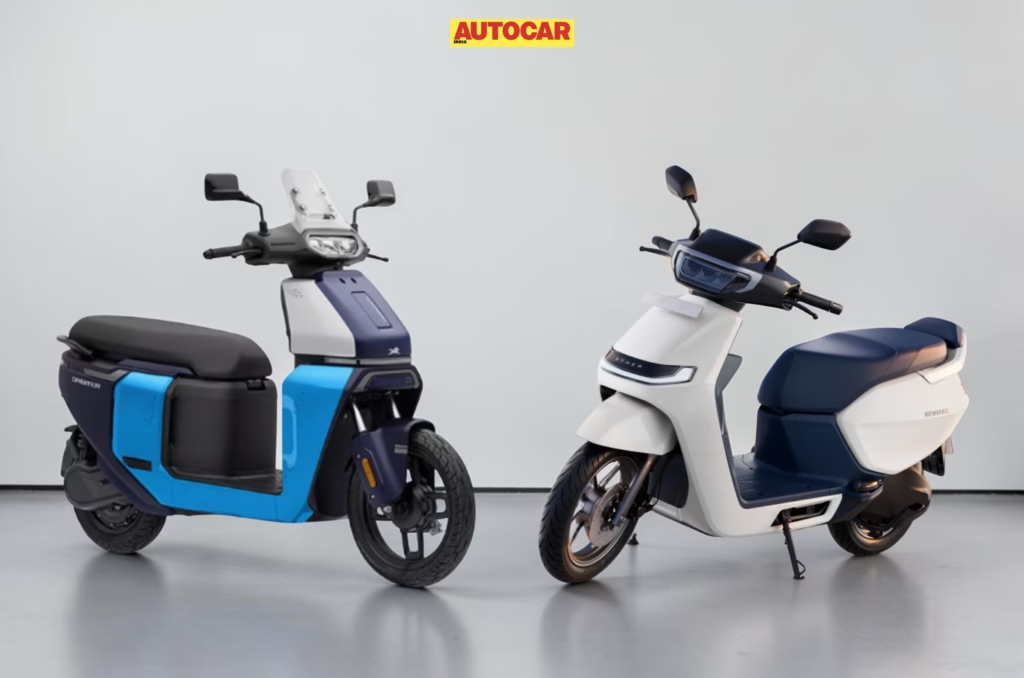
Yamaha EC-06 Performance Tested and Explained

Yamaha EC-06 being ridden through South Bombay

The Yamaha EC-06 electric scooter gets a 4kWh battery pack, a claimed IDC range of 169km, and a top speed of 79kph. 

Yamaha EC-06: Acceleration

During our test, the conditions were dry.

Acceleration

Time

0-40kph

3.46 seconds

0-60kph

6.82 seconds

0-80kph

15.50 seconds

The EC-06 gets three riding modes including Eco, Standard, and Power. We conducted this acceleration test in Power mode with the battery state of charge above 97 percent. In this riding mode, acceleration is fairly quick and the scooter managed to get from 0 to 80kph in 15.50 seconds. 

Yamaha EC-06: Roll-On Acceleration

The scooter delivers 6.7kW (8.9hp) of peak power.

Roll-On Acceleration

Time

20-50kph

3.31 seconds

30-70kph

7.34 seconds

50-80kph

10.96 seconds

In our roll-on acceleration tests, the scooter took 3.31 seconds to get from 20-50kph, 7.34 seconds from 30-70kph, and 10.96 seconds from 50-80kph. In the city, making quick overtakes is fairly easy while riding in Standard or Power mode. Eco mode can get to 50kph, but is a usable mode in the city and while climbing flyovers as well. 

Yamaha EC-06: Braking

Decent braking performance with good regenerative braking as well.

Braking

Distance

60-0kph

22.87 metres

The EC-06 gets disc brakes at both ends and features a combined braking system. The regenerative braking is also strong and at slow speeds, allows a rider to smoothly filter through stop-go traffic without having to constantly apply the brakes.

Yamaha EC-06: Specifications and price

Yamaha has co-developed the EC-06 with Bengaluru-based startup River. 

Peak Power

6.7kW

Max Torque

26Nm

Battery Capacity

4kWh

Kerb Weight

132kg

Brakes (F/R)

Disc / Disc

Tyres (F/R)

110/80-14  / 120/70-14 

Price (ex-showroom)

Rs 1.72 lakh (ex-showroom, Delhi)

Priced at Rs 1.72 lakh (ex-showroom, Delhi), this is one of the more expensive electric scooters on sale in India.

Hero Motocorp slated to invest additional Rs 1,000 crore in Ather Energy

Hero Motocorp slated to invest additional Rs 1,000 crore in Ather Energy

Hero MotoCorp has approved an additional investment of up to Rs 1,000 crore in Ather Energy, further strengthening its backing of the Bengaluru-based electric scooter maker ahead of a crucial product offensive. 

  1. Hero approves additional investment of up to Rs 1,000 crore in Ather
  2. Hero remains Ather’s largest shareholder with a 29.48 percent stake
  3. Investment comes ahead of Ather’s next phase of product expansion

Hero’s additional investment in Ather: What to expect?

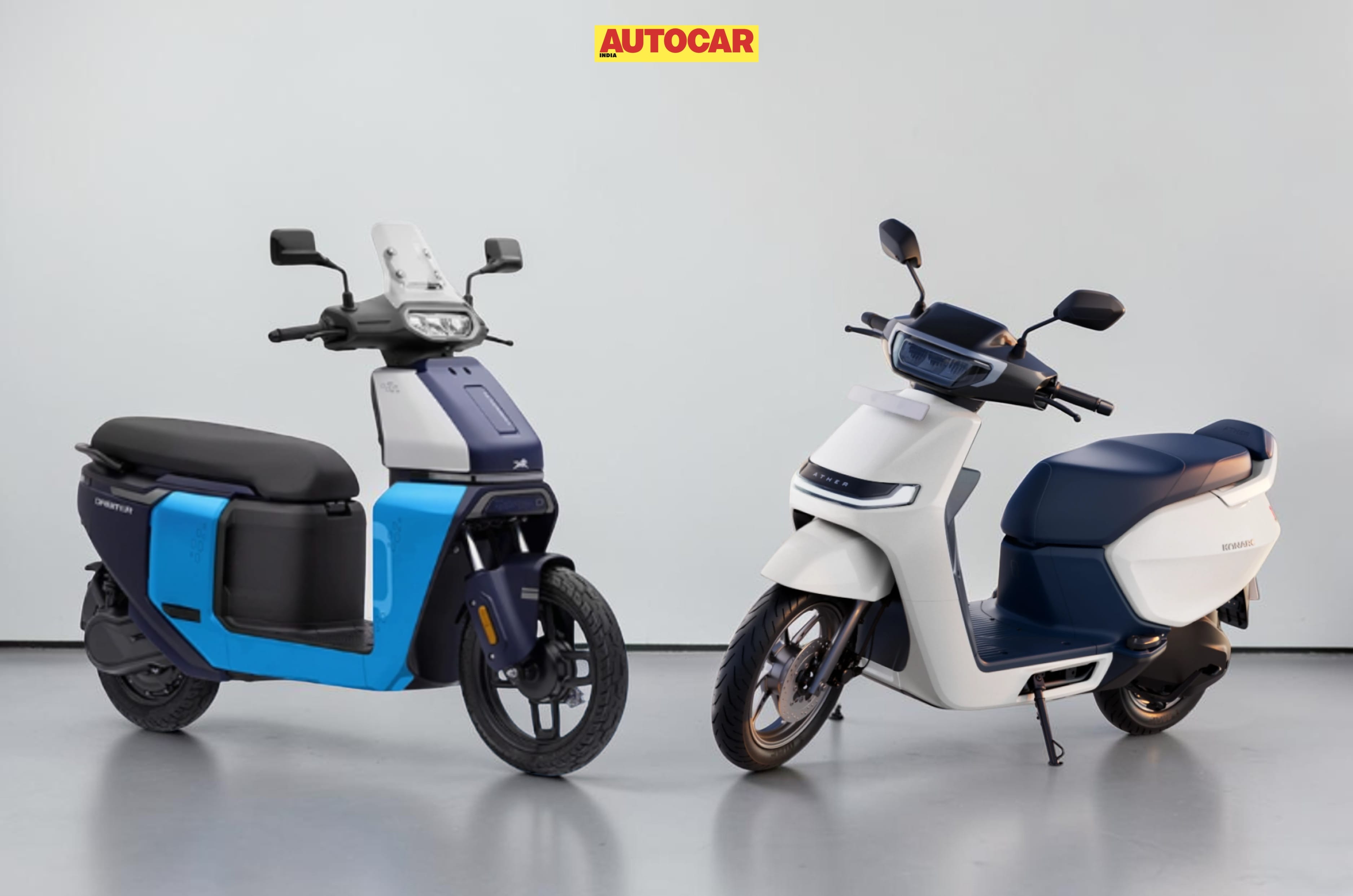
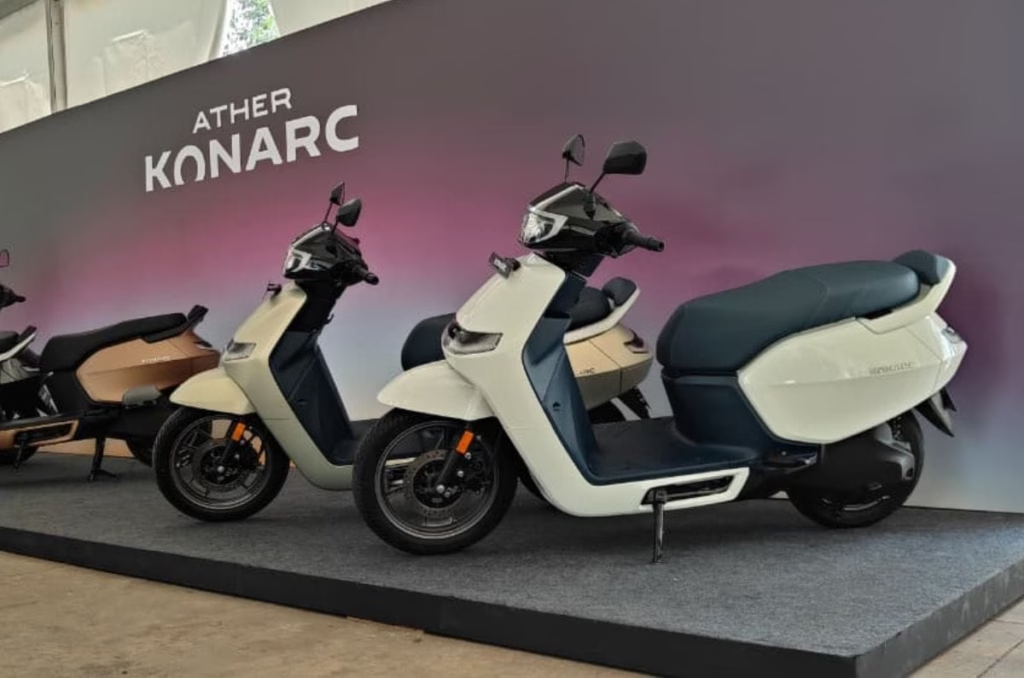
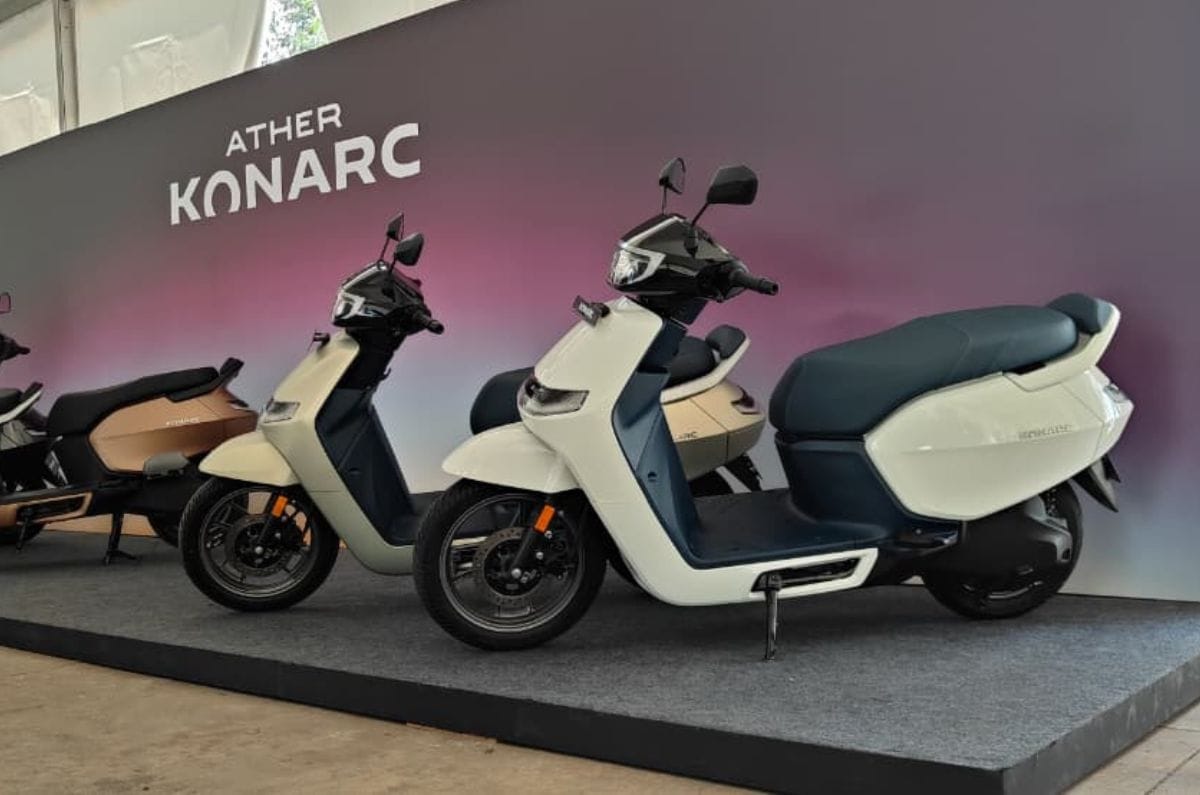
The investment comes at a significant time for Ather, which recently confirmed that it will unveil the mass-market EL platform scooter

The investment will be made through a preferential allotment of equity shares or equity-linked convertible securities, subject to regulatory and shareholder approvals.

Hero has been an investor in Ather since 2016 and currently holds a 29.48 percent stake in the company on a fully diluted basis, making it Ather’s largest shareholder. The latest capital infusion is expected to be completed within 15 days of receiving the required regulatory and corporate approvals.

The investment comes at a significant time for Ather, which recently confirmed that it will unveil its first mass-market EL platform scooter at Community Day on August 29. Expected to be priced in the Rs 1 lakh-1.25 lakh range, the new scooter will be Ather’s first all-new platform since the 450 and is aimed at significantly expanding the company’s addressable market.  

The additional funding also follows Ather’s recent partnership with LICO Materials to establish a collection and recycling ecosystem for end-of-life lithium-ion batteries. Under the partnership, batteries from Ather’s EV fleet will be processed at LICO’s recycling facility in Karnataka, where they will either be repurposed for second-life applications or recycled to recover critical materials that can be fed back into the battery supply chain. The initiative supports compliance with India’s Battery Waste Management Rules while helping reduce dependence on imported battery materials. 

River Indie posts best-ever monthly sales in June 2026

Rider on a River Indie

The River Indie has registered its highest-ever monthly retail sales of 4,436 units in June 2026, surpassing its previous best of 4,273 units recorded in March 2026. Cumulative sales since the scooter’s launch in October 2023 now stand at 43,805 units as of the end of June. The strong performance has also pushed the Bengaluru-based startup to seventh place in the monthly electric two-wheeler OEM rankings, up from eighth earlier this year.

  1. River Indie posts best-ever monthly sales of 4,436 units
  2. Cumulative sales since October 2023 cross 43,000 units

River Indie sales details

CY2026 sales already account for 54 percent of all-time cumulative sales

The Indie’s sales trajectory tells a clear story of accelerating growth. After relatively modest volumes in its first two years, River Mobility delivered 17,020 Indies in 2025, enough to rank ninth among electric two-wheeler manufacturers for the year. The momentum has continued into 2026, with 9,607 units delivered in Q1 (January-March), 62 percent higher than Q4 2025. Q2 (April-June) added a further 11,776 units.

The 23,722 units delivered in the first six months of 2026 already account for 54 percent of the Indie’s cumulative sales since launch. At its current pace, River Mobility appears on course to cross 50,000 annual sales for the first time this year.

The Indie is priced at Rs 1.55 lakh (ex-showroom, Bengaluru), putting it on par with higher-capacity variants of popular electric scooters such as the TVS iQube, Bajaj Chetak and Ather Rizta. It’s a large, comfortable and practical scooter focused on everyday utility rather than outright features, with a generous 43 litres of underseat storage the largest offered on any electric scooter currently on sale in India.

River Mobility manufactures both the Indie and the Yamaha EC-06 at its plant in Hoskote, Karnataka, which has an annual production capacity of 1,20,000 units. The company is also understood to be evaluating a second manufacturing facility ahead of the planned rollout of two new models in the first quarter of 2027.

Ather’s EL platform scooter to debut on August 29

Ather’s EL platform scooter to debut on August 29

Ather Energy has announced that it will host the fourth edition of its annual Community Day event on August 29, 2026, in Bengaluru. Headlined as “A New Dawn of Magic”, this year’s event will see the debut of the company’s first production electric scooter based on its all-new EL platform.

  1. Ather Community Day 2026 to be held on August 29 in Bengaluru
  2. First production scooter based on the new EL platform to debut
  3. New technology, charging and ecosystem updates also planned

Ather EL platform scooter: What to expect?

The EL platform is Ather’s first all-new vehicle architecture since the launch of the 450 series 

The upcoming scooter, which was recently spotted testing on public roads, is expected to stay largely faithful to the EL01 concept first showcased at Community Day 2025, even the design patent filed earlier this year support this claim. Spy images revealed a handlebar-mounted headlight, a wide LED DRL integrated into the front apron and styling that closely resembles the design patent filed by the company earlier.

The EL platform is Ather’s first all-new vehicle architecture since the launch of the 450 series and has been developed with greater scalability, manufacturing efficiency and versatility in mind. It will underpin the company’s future electric scooter range, with the first model expected to target the Rs 1 lakh-1.25 lakh price bracket, allowing Ather to compete in the high-volume mass-market segment.

Alongside the new scooter, Ather has confirmed it will unveil a range of innovations across charging, software and the wider ownership ecosystem, with more details to be announced at the event.

Community Day has become Ather’s flagship annual event, where it showcases its future product and technology roadmap. Last year’s edition saw the unveiling of the EL platform, the Redux concept, next-generation fast-charging technology and AtherStack 7.0, with this year’s event expected to focus on bringing that new platform into production.

IIT की डिग्री और हाई पैकेज के बाद भी क्यों छोड़ी नौकरी? पत्नी संग पहाड़ों में रहने लगा शख्स

कभी बड़े शहरों की भागदौड़ और कॉर्पोरेट करियर का हिस्सा रहे IIT कानपुर के पूर्व छात्र अर्जव मोदी ने अपनी जिंदगी को एक नए नजरिए से देखना शुरू किया। अच्छी नौकरी, बेहतर कमाई और शहर की सुविधाओं के बीच भी उन्हें एक अलग तरह के संतुलन की तलाश थी। इसी तलाश ने उन्हें हिमाचल प्रदेश के छोटे से पहाड़ी कस्बे बीर तक पहुंचाया, जहां उन्होंने अपनी पत्नी सिमरन चौधरी के साथ एक अलग जीवनशैली अपनाई।

यहां की शांत वादियां, धीमी रफ्तार और प्रकृति के करीब रहने का अनुभव उनके लिए किसी बदलाव से कम नहीं रहा। अर्जव और सिमरन की यह कहानी अब सोशल मीडिया पर चर्चा का विषय बनी हुई है, जहां लोग करियर, खुशी और जिंदगी की प्राथमिकताओं को लेकर नए सिरे से सोच रहे हैं।

कम कमाई लेकिन ज्यादा खुशी का एहसास

शहरों में अच्छी कमाई और सुविधाओं के बावजूद अर्जव को महसूस हुआ कि जीवन में संतुष्टि की कमी है। अब वह फ्रीलांस राइटिंग और कंटेंट का काम करते हैं, जबकि उनकी पत्नी रिमोट जॉब जारी रखे हुए हैं। दोनों की संयुक्त आय पहले से आधी से भी कम हो गई है, लेकिन उनका कहना है कि वे अब ज्यादा खुश और संतुष्ट हैं।

95 किलो से 72 किलो तक, बदली सिर्फ जिंदगी नहीं सोच भी

अर्जव ने लिंक्डइन पर अपने सफर को साझा करते हुए बताया कि 2021 में IIT से निकलने के बाद वह बेंगलुरु में तेज-तर्रार कॉर्पोरेट लाइफ जी रहे थे। उस समय उनका वजन 95 किलो था। 2026 में वह पहाड़ों में सादा जीवन जी रहे हैं, वजन करीब 72 किलो है और कम कमाई के बावजूद खुद को ज्यादा बेहतर महसूस करते हैं।

पहाड़ों ने सिखाया ‘घर’ का असली मतलब

सिमरन ने बताया कि बीर में रहने के बाद उनकी जीवनशैली पूरी तरह बदल गई है। वे ज्यादातर खाना घर पर बनाते हैं, कचरे को अलग-अलग श्रेणियों में बांटते हैं और प्लास्टिक की बोतलों का इस्तेमाल लगभग छोड़ चुके हैं। उनके अनुसार, पहाड़ों ने सिखाया कि घर सिर्फ खूबसूरत जगह या महंगे सामान से नहीं बनता, बल्कि उस जगह से जुड़ने और उसमें योगदान देने से बनता है।

शहर की दौड़ बनाम पहाड़ों की शांति

अर्जव ने अपनी पोस्ट में दो तरह की जिंदगी की तुलना की। एक तरफ महानगर में रहने वाला युवा प्रोफेशनल है, जिसकी कमाई ज्यादा है, लेकिन लगातार दूसरों से तुलना, करियर का दबाव और अकेलेपन का सामना करना पड़ता है।

दूसरी तरफ पहाड़ी इलाके में रहने वाला व्यक्ति है, जिसकी आय कम हो सकती है, लेकिन वह प्रकृति, रिश्तों और रोजमर्रा के छोटे-छोटे पलों का आनंद लेता है।

पहाड़ों में चले जाओ’ नहीं, सोच बदलने की बात

अर्जव ने साफ किया कि उनका मकसद सभी को शहर छोड़कर पहाड़ों में बसने की सलाह देना नहीं है। उनका संदेश सिर्फ इतना है कि जिंदगी की खुशी केवल ज्यादा कमाई या दूसरों से आगे निकलने में नहीं, बल्कि अपनी प्राथमिकताओं को समझने और संतुलन बनाने में भी है।

हर ऑटो ड्राइवर एक जैसा नहीं! बेंगलुरु के इस शख्स का अंदाज देख मुस्कुरा उठेंगे आप

Ather Announces Partnership for End-of-Life EV Battery Recycling

Ather Announces Partnership for End-of-Life EV Battery Recycling

Ather Energy has entered into a partnership with a Bengaluru based firm called LICO Materials to develop a system for the collection, recycling and recovery of materials from end-of-life lithium-ion EV batteries. Under this partnership arrangement, batteries from Ather’s fleet will be processed at LICO Materials’ recycling facility in Karnataka. These packs will either be repurposed for a second-life application, or the materials from within them will be recovered and reintroduced into the battery supply chain for use by cell manufacturers and automotive OEMs. 

  1. Recovered materials will re-enter the domestic battery supply market 
  2. LICO will procure end-of-life batteries from Ather 

The partnership covers Ather batteries from both privately owned, and Ather’s own fleet vehicles, provided that Ather routes them to LICO for recycling. Gaurav Dolwani, CEO, LICO Materials explains that Ather customers do not sell their vehicles to LICO. Instead, once Ather determines that a battery has reached the end of its life, it will be made available for recycling through its service center network. “LICO will collect these batteries from Ather service centers through its reverse logistics network. LICO’s in-built digital application enables end-to-end tracking and traceability of batteries, from collection and transportation to their receipt at the recycling facility.” 

Once the batteries are received from Ather, LICO will conduct a detailed technical assessment to determine their residual life and the appropriate processing pathway. The batteries are evaluated across multiple parameters, including State of Health (SoH), State of Charge (SoC), and internal resistance. Based on this, the company will determine whether a battery should be sent for recycling, or repurposed for a second-life application. LICO confirms that there is no single fixed percentage of remaining battery capacity that determines end of service life. The decision is based on a combination of battery health, performance and electrical parameters. 

The partnership is also aligned with the Battery Waste Management Rules, 2022, which mandate extended producer responsibility across the battery value chain. The companies cited industry projections indicating that battery recycling could meet more than 40 percent of India’s lithium, nickel and cobalt requirements by 2050, while supporting job creation and reducing carbon emissions. LICO claims that its facility is capable of recovery rates of up to 95 percent .
 

Pune-based PBG Racing joins Indian Supercross Racing League

PBG Racing ISRL

Season 3. Pune-based Punit Balan Group, which fields teams in a number of sports leagues ranging from cricket to tennis to even chess, will make its motorsport debut with PBG Racing. 

This year’s ISRL will kick off in October 2026, with three rounds planned.

  1. ISRL adds seventh team to its roster
  2. Honda, Yamaha, KTM and Kawasaki fielding bikes 

Punit Balan Group joins ISRL

ISRL races are usually held on indoor dirt tracks, featuring steep jumps and obstacles. The league runs three categories – 450cc and 250cc for international riders, plus a dedicated 250cc category for Indian and Asian riders. The last category gives emerging Indian talent the chance to go wheel-to-wheel with and learn from some of the best supercross talent across the world. 

Each team has to field two riders per category, while the bikes are provided by Honda, Yamaha, KTM and Kawasaki. Last year’s grid featured six city-based teams, including two new entrants – Indewheelers Motorsports and Tricolor KTM. Another new team joins the league this year in the form of PBG Racing.

“Sport has always been a powerful platform for inspiring young talent and building strong communities, and that philosophy has guided every sporting investment we have made over the years. The Indian Supercross Racing League represents an exciting new chapter for racing in India. Maharashtra, and especially Pune, has steadily emerged as one of the country’s most vibrant motorsport hubs backed by passionate fans and a growing culture around racing,” said Punit Balan, Chairman and Managing Director of Punit Balan Group.

“We are delighted to join ISRL for Season 3 and look forward to building a franchise that reflects passion, performance, and the spirit of Indian racing while also supporting the long- growth of motorsport in the country.”

ISRL Season 3 details    

Indian Supercross Racing League

Indian rally star CS Santosh’s BigRock Motorsports team clinched its second ISRL title in 2025 and will be chasing a hat-trick. The auction process will open soon, giving teams the chance to build new rider combinations. Big names like 2014 MX2 World Champion Jordie Tixier and French Supercross sensation Anthony Bourdon have signed on as part of the rider pool.

The 2026 season will run from October to December 2026. While the exact venues haven’t been confirmed yet, ISRL has shortlisted Delhi, Hyderabad, Bengaluru, Kochi and Mumbai.
Watch this space for all the latest updates.
 

Vida VX2 4.4kWh vs rivals: Price and specification comparison

Vida VX2 4.4kWh vs rivals: Price and specification comparison

The VX2 is Vida’s – Hero’s electric arm – affordable and latest offering in the electric scooter market. It was earlier available with just a 2.2kWh and 3.4kWh battery pack options but now the brand has launched a larger 4.4kWh option. Here we see how it compares with its competitors, on paper, in terms of range, charging time, and features.

Vida VX2 4.4kWh vs rivals: electric motor, battery and charging 


Vida VX2 4.4kWh

TVS iQube S 4.7kWh

Ather Rizta Z 3.7kWh 

Bajaj Chetak C3501

River Indie 

Peak motor output 

6kW

4.4kW

4.3kW

4.8kW

6.7kW

Rated torque 

NA

33Nm

22Nm

20Nm

26Nm

Claimed top speed

90kph

82kph

80kph

80kph

90kph

Battery capacity

4.4kWh

4.7kWh

3.7kWh

3.5kWh

4kWh

Claimed fast charging time (0-80 percent)

3 hrs, 17 mins

4hrs

4hr 30min

3hr 

750W – 5hrs


IDC range

187km

175km

159km

153km

160km

The VX2 is the only one to come with removable battery packs

The Vida VX2 has the highest claimed IDC range here and is also among the quickest scooters in the comparison, with a claimed top speed of 90kph that it shares with the River Indie. The River, meanwhile, produces the highest peak motor output, while the TVS iQube S leads on battery capacity with a 4.7kWh battery pack and also claims the highest rated torque at 33Nm.
The Vida stands out as the only scooter in this comparison to feature twin removable battery packs, whereas all its rivals use fixed batteries. In terms of charging, the Bajaj Chetak C3501 has the shortest claimed 0-80 percent charging time at 3 hours, narrowly ahead of the Vida’s claimed 3 hours and 17 minutes, while the Ather Rizta and River Indie take longer at 4.5 hours and 5 hours, respectively.

Vida VX2 4.4kWh vs rivals: dimensions and underpinnings


Vida VX2 4.4kWh

TVS iQube S 4.7kWh


Ather Rizta Z 3.7kWh

Bajaj Chetak C3501

River Indie 

Wheelbase

NA

1301mm

NA

1355mm

1365mm

Seat height

777mm

770mm

777mm

775mm

787mm

Ground clearance

155mm

157mm

180mm

NA

177mm 

Kerb weight

120kg

129kg

130.7kg

125kg 

135kg 

The TVS iQube has the most accessible seat height

The River Indie has the longest wheelbase in this comparison, which lends it greater straight-line stability. It also has the tallest seat height, while the iQube has the most accessible seat height. In terms of ground clearance, the Rizta leads the pack, followed closely by the River Indie.

The VX2 and iQube S offer comparatively lower ground clearance figures. The VX2 is also the lightest scooter here, followed by the Bajaj Chetak C3501 that gets a full-metal body, while the River Indie is the heaviest despite shedding weight over its ‘Gen-2’ model.

Vida VX2 4.4kWh vs rivals: Suspension, brakes and tyres


Vida VX2 4.4kWh

TVS iQube S 4.7kWh


Ather Rizta Z 3.7kWh

Bajaj Chetak C3501

River Indie

Suspension (F/R)

Telescopic fork / monoshock

telescopic fork / twin-shock absorbers

Telescopic fork / monoshock 

Leading link / monoshock

telescopic fork / twin-shock absorbers

Brakes (F/R)

Disc/drum 

220mm / drum

Disc / Drum

Disc / drum

Disc / disc 

Tyres (F/R)

NA / NA  

90/90-12 / 90/90-12

90/90-12 / 100/80-12

NA / NA

110/70 R14 / 120/70 R14 

The River Indie is the only one to run on 14-inch wheels

In terms of hardware, the VX2 and Rizta use a telescopic fork and monoshock setup, while the iQube S and Indie pair a telescopic fork with twin rear shock absorbers. The C3501 is the only scooter here to feature a leading-link front suspension. Braking duties are handled by a front disc and rear drum setup on all scooters except the River Indie, which stands out with disc brakes at both ends but continues with a combined braking system much like all the others here. The River also distinguishes itself by running on larger 14-inch wheels that lend it greater stability and a more imposing stance, while the remaining scooters use 12-inch wheels with tubeless tyres.

Vida VX2 4.4kWh vs rivals: Features

The River Indie is the only one here to get an LCD dash.

The five scooters differ considerably in terms of features and charging hardware. Both the Bajaj Chetak 3501 and River Indie feature on-board chargers, allowing them to be plugged directly into a standard wall socket without the need for a separate charging unit. The TVS iQube S and Ather Rizta use off-board chargers, while the Hero Vida VX2’s removable battery packs can be charged either on or off the scooter, making it the most versatile here. Beyond this, the scooters differ in terms of display type, smartphone connectivity, navigation, keyless functionality, reverse mode and other convenience features. The River Indie stands out with the largest underseat storage of 43-litres. 

Vida VX2 4.4kWh vs rivals: Price


Vida VX2 4.4kWh

TVS iQube S 4.7kWh


Ather Rizta Z 3.7kWh

Bajaj Chetak C3501

River Indie

Price (ex-showroom, Bengaluru)

Rs 1.44 lakh 

Rs 1.18 lakh 


Rs 1.37 lakh

Rs 1.43 lakh

Rs 1.55 lakh

The Indie is the most expensive of the lot

While all the scooters mentioned here, barring the Indie, are available in variants with smaller battery packs, lower claimed ranges and lower price points, we have only considered prices of the variants compared here. The iQube S is the most affordable of the lot, followed by the Rizta. The Ather also comes with the smallest battery pack in this comparison, although it is the largest battery pack available in the Rizta range. The Chetak and VX2 are separated by just Rs 1,000, with the former being slightly more affordable. The River Indie is the most expensive scooter here, but it is worth noting that it is also the most substantial-looking scooter in this comparison and offers the largest boot space of any electric scooter currently on sale.
 

Yamaha EC-06 real world range tested and explained

Yamaha EC-06 front right side image in front of shutter

Yamaha recently entered the electric scooter market with its EC-06, which is a redesigned River Indie but retains all the core mechanicals. At Rs 1.71 lakh (ex-showroom, Bengaluru), the EC-06 is also one of the more expensive options in the electric scooter market. We were able to subject the EC-06 to our real-world range tests and this is how Yamaha’s debut EV performed.

  1. In ‘Normal’ mode, it covered 114km
  2. It has an efficiency of 28.5km/kWh
  3. Small 450W charger takes 10hr to top up a flat battery to full

Yamaha EC-06 real world range

When subjecting the EC-06 to our range tests, we used the middle ‘Standard’ riding mode, where the range indicator on the display showed us 93km with a fully charged battery. Its 4kWh battery sends power to a mid-mounted motor capable of 6.7kW peak output – same as the River Indie it is based on. In its Standard riding mode, you can achieve the 79kph top speed but power delivery is gentler than on the top ‘Power’ mode and the regenerative braking too is in its middle setting.

At 132kg, the EC-06 is one of the heaviest electric scooters in India and is just 3 kilos lighter than the Indie it is based on. It also uses larger 14-inch wheels shod with chunky tyres and both this as well as its weight do play a role in the range it can travel on a single charge.

In city traffic conditions, at lower speeds and with regenerative braking kicking in more often, the EC-06’s range was dropping at a slower rate than when we were at faster speeds on open roads – this will be the case for all EVs and isn’t a trait exclusive to it. For every 10 percent SOC drop, the EC-06 covered an average of 11.4km and at the end of the test, the scooter covered 114km.

This was actually much higher than what the range indicator on the display showed (93km) and ultimately the range you get will vary on a multitude of factors like your riding style, tyre pressures, prevailing traffic and weather conditions among others.

Its performance remained consistently reliable and even below 20 percent SOC, it was able to comfortably climb flyovers and pass moving traffic effortlessly. Under 10 percent SOC was the first time we experienced a noticeable performance drop and even then, the scooter could reach a speedo-indicated 50-55kph and acceleration too was not impacted severely.

Once the battery fell below 5 percent SOC, the scooter defaulted to ‘Eco’ mode and both acceleration and top speed were quite mellow but even so, it wasn’t painfully slow and we saw 40-45kph on the display. At 0 percent SOC, when the scooter finally ran out of juice, it stopped moving despite twisting the accelerator but the display and all the other functions of the vehicle like the seat and charger release flaps were functional.

With this range number we received, the EC-06’s efficiency works out to 28.5km/kWh. While the EC-06’s range is undoubtedly quite impressive, one point to bear in mind is that you need to plan your charging cycle properly because the Yamaha only comes with a 450W charger, which takes a glacial 10 hours (claimed) to top up a flat battery to full.

Autocar India’s range testing

Before our real-world range test, the battery of our two-wheeler on test is fully charged, and we maintain tyre pressures as recommended by the manufacturer. The two-wheeler is then driven in a fixed loop in the city and highway (for electric bikes that are capable of doing so), and we maintain certain average speeds while following the speed limit. While doing so, we also ensure periodic rider swaps to ensure consistency and subject the vehicle to varying riding styles. The vehicle is run until its battery is completely drained and it shuts down or does not go ahead even if the screen is on. 

Suzuki e-Access real world range tested and explained

Suzuki e-Access front right side static image in front of shutter

Suzuki entered the electric scooter market earlier this year with its self-developed e-Access, which at Rs 1.92 lakh (ex-showroom, Bengaluru), is one of the most expensive electric scooters from a mainstream manufacturer right now. We were recently able to subject the e-Access to our real-world range tests and here’s how Suzuki’s maiden two-wheeler EV performed.

  1. In Ride A mode, it covered 88.4km
  2. It has an efficiency of 28.78km/kWh
  3. 600W charger can top up a flat battery to full in 6 hours

Suzuki e-Access real world range

The e-Access has a 3kWh battery which uses LFP (Lithium Ferrous Phosphate) chemistry unlike most other well-known EVs which use NCM (Nickel Cobalt Manganese) battery packs. The advantages of LFP chemistry over NCM are relatively longer battery life and better thermal stability but the tradeoff is lower energy density, and ergo, lower range. Suzuki claims a 95km IDC range on a full charge.

The e-Access has 3 riding modes – Ride A, Ride B and Eco. On the move, you can only toggle between one of the Ride modes and Eco. To switch between the two Ride modes you need to be at a complete stop.

In both Ride modes, throttle response and peak power is identical but what changes is the level of regenerative braking. Ride B has gentler intervention than Ride A so we elected to conduct our test in Ride A in a bid to extract more range.

With 12-inch wheels shod with standard-issue scooter sized tyres and a fairly light 122kg kerb weight (in the EV space), the e-Access sits more or less on par with the bestsellers in this class in these parameters.

In city traffic conditions, at lower speeds and with regenerative braking kicking in more often, the e-Access’s range was dropping at a slower rate than when we were at faster speeds on open roads – this will be the case for all EVs and isn’t a trait exclusive to it.

At the end of the run, when the range indicator and battery SOC meter on the display both ran out to zero, the scooter kept running with progressively lower performance for another 2.2km. Eventually, it was restricted to just 10kph, which is when we decided to park it and at that point we had covered 88.4km.

When the battery was at 100 percent SOC at the start of the test the display told us that the estimated range was 93km. The figure we ultimately got was slightly lower than that, but the range indicator gave us trustworthy readouts as the battery capacity dropped and it never caught us by surprise at the end. Ultimately the range you get will vary on a multitude of factors like your riding style, tyre pressures, prevailing traffic and weather conditions among others.

Even so, the e-Access delivered a commendable range number when you consider that its LFP battery isn’t as energy dense as the competition and it is a scooter that comes closest to achieving the claimed IDC number in the real world in our tests. This was in the more powerful Ride A mode and were one to use the more efficient Eco mode, the e-Access will return more range on a single charge.

Almost throughout the run, the e-Access delivered consistent performance until its SOC dropped down to 18 percent, which is when it automatically defaulted to Eco mode. Performance in Ride A is quite brisk and more than sufficient to keep up with and overtake big city traffic while simultaneously not overwhelming someone who’s transitioning over from an ICE vehicle. Even in Eco mode, you can comfortably keep pace with traffic and reach a speedo-indicated 55kph, which ensures you don’t get caught out if you are on a faster stretch of road.

With these numbers, Suzuki’s electric scooter returned an efficiency of 28.78km/kWh. The e-Access ships with a portable 600W charger which is capable of topping up a flat battery to full in 6hr20min. We verified the actual charging time to be 6 hours flat when the e-Access was plugged into a 12A 3-pin socket at our office.

Autocar India’s range testing

Before our real-world range test, the battery of our two-wheeler on test is fully charged, and we maintain tyre pressures as recommended by the manufacturer. The two-wheeler is then driven in a fixed loop in the city and highway (for electric bikes that are capable of doing so), and we maintain certain average speeds while following the speed limit. While doing so, we also ensure periodic rider swaps to ensure consistency and subject the vehicle to varying riding styles. The vehicle is run until its battery is completely drained and it shuts down or does not go ahead even if the screen is on.