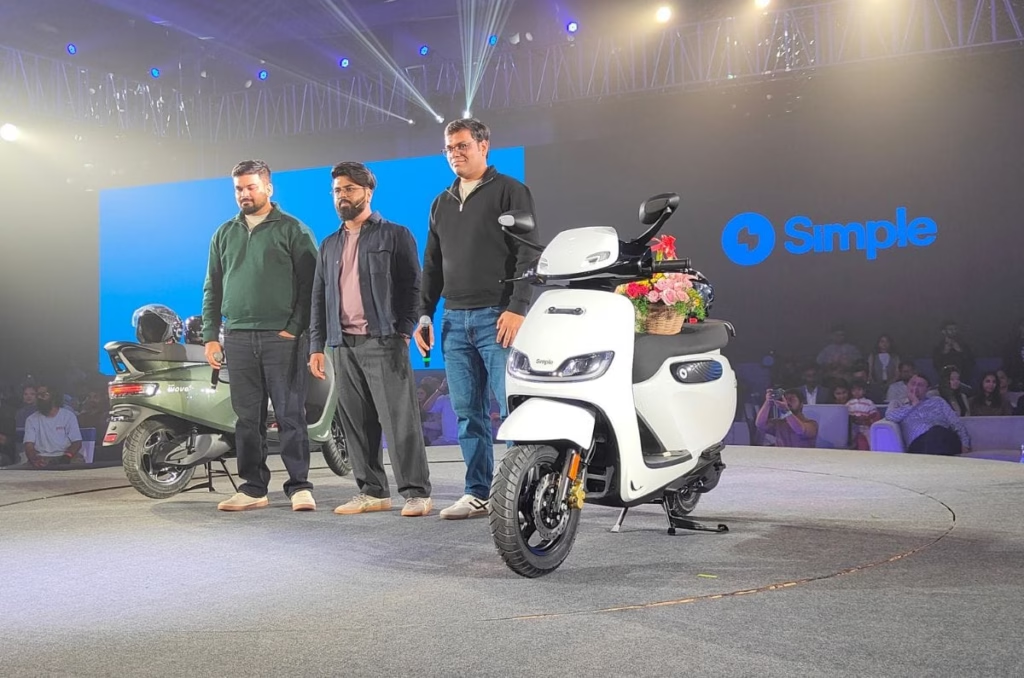
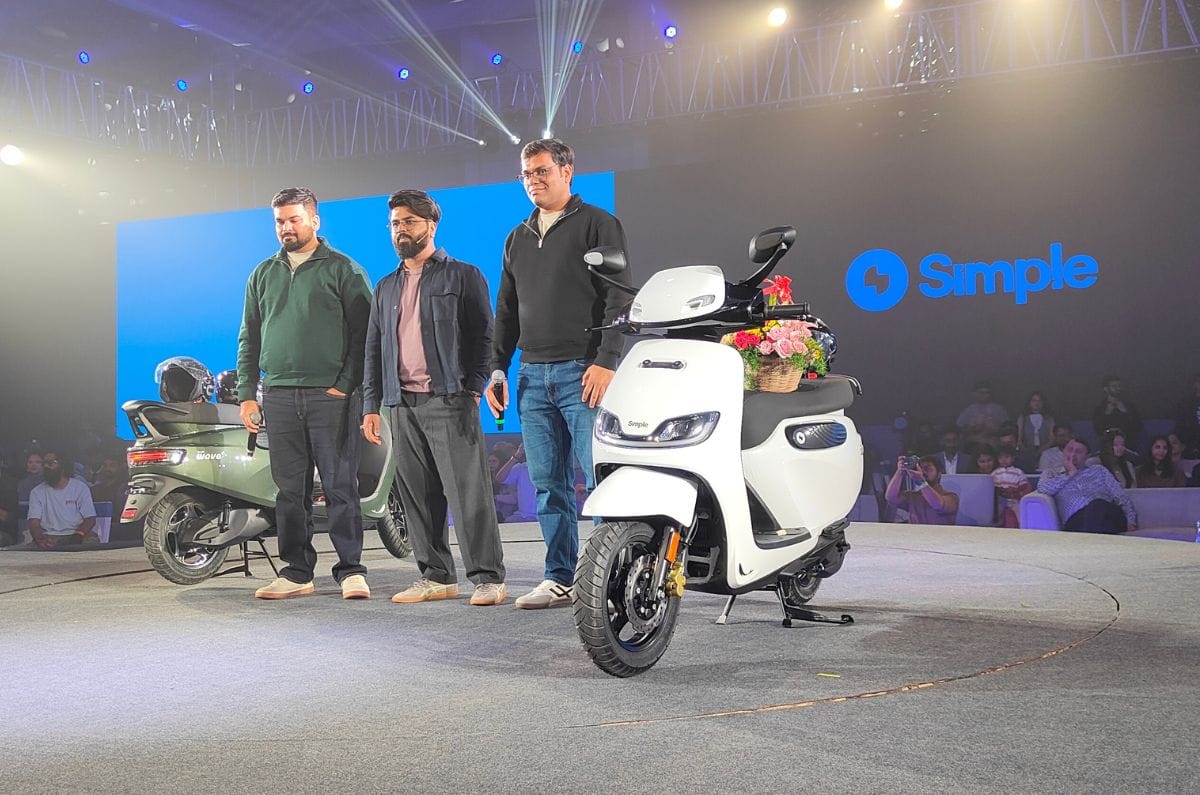
Simple Energy, which has been a regular in the monthly top 10 electric 2W OEM listing since February 2026 with its Simple One performance EV scooter, has clocked cumulative sales of over 10,000 units in the first eight months of this year. As per Vahan, between January and August 2026, the Bengaluru-based EV startup registered deliveries of 10,429 units, which is 203 percent more compared to last year’s 3,436 units for the same period. This momentum comes just as Simple launched its most affordable scooter yet, Wave, priced at Rs 1.10 lakh (ex-showroom, Bengaluru) and its entry into the family scooter segment.
Wave makes the brand more accessible with a lower Rs 1.10 lakh ex-showroom price
Brand has consistently averaged as the top nine EV seller in India since February 2026
Wave is expected to be the sales topper for Simple
The family EV scooter is based on One, but more practical
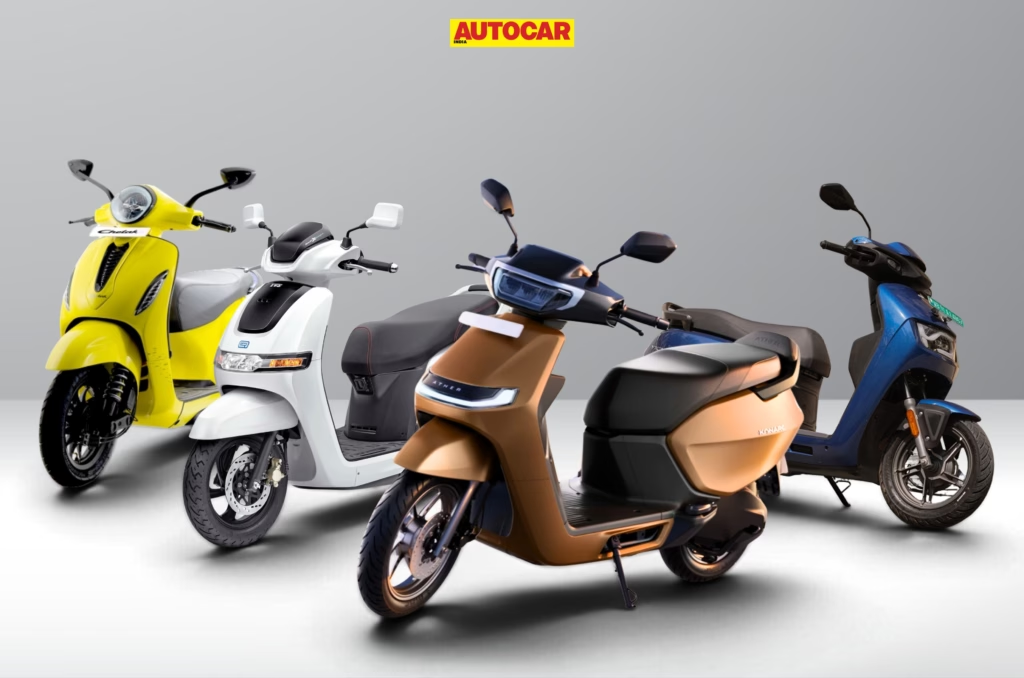
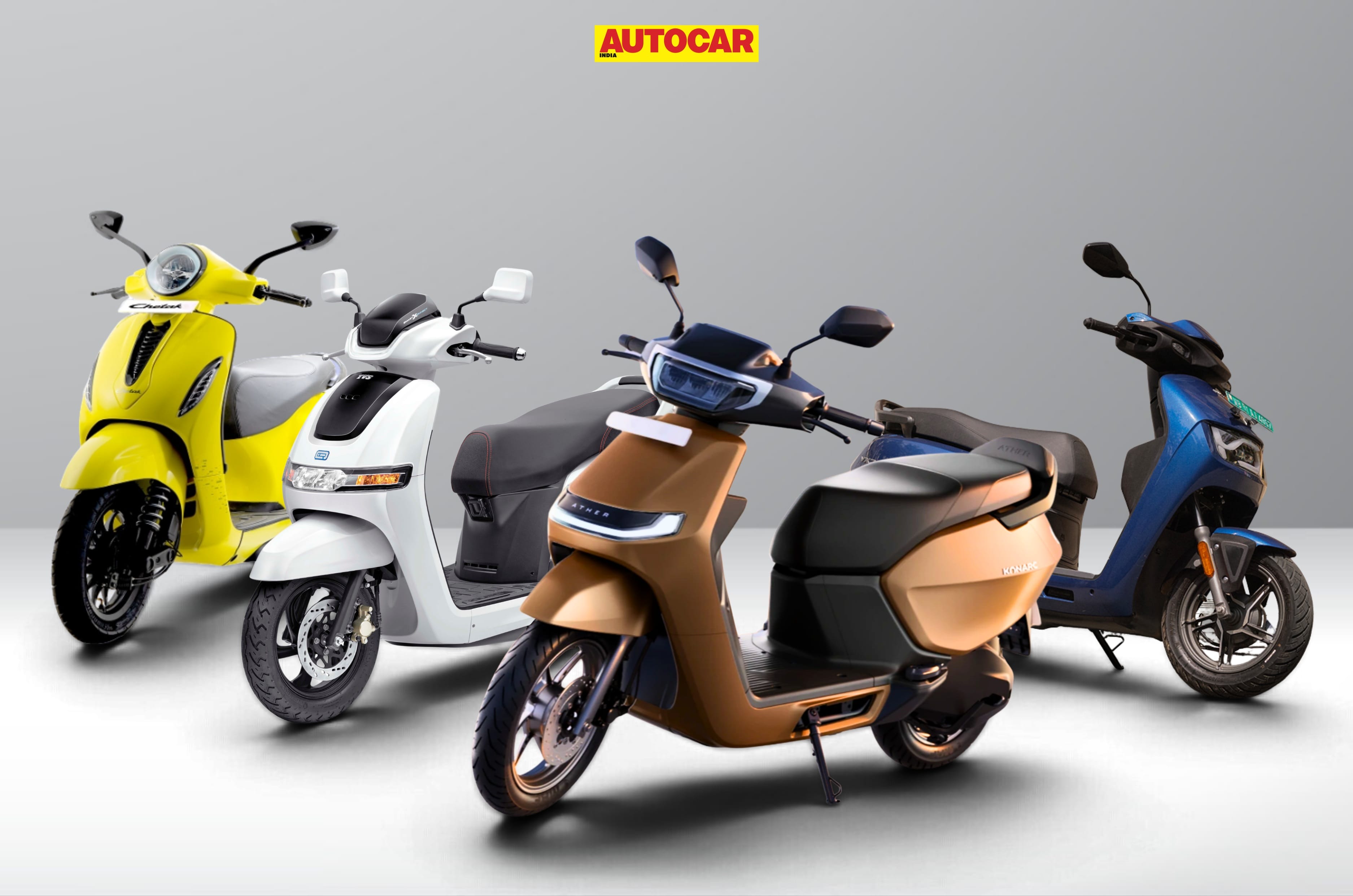
With the Wave, Simple Energy is hoping to make, well, waves in the family e-scooter segment, which has been dominated by the TVS iQube, Bajaj Chetak and Hero Vida for the past couple of years. Add Ather Rizta with its steadily growing sales, and the new Konarc to that list of rivals as well. Compared to the more performance-based One, Wave targets a much wider customer with its base S 2.2 variant pricing (Rs 1.10 lakh, ex-showroom) as also the focus around everyday practicality, ride comfort, and usability across different rider demographics.
The scooter has four variants as per the battery capacity. The base Wave S is offered in two battery capacities: 2.2kWh (110km IDC range) and 2.7kWh (132Km IDC range). While the middle variant, Wave, has a 3.7kWh battery and 171km of IDC range, and the top Wave + variant has a 5kWh battery and has a 243km IDC range, the highest in its segment. Simple has announced that deliveries will commence on September 25.
Production capacity and showrooms are being increased
The increased presence is expected to improve the brand’s sales
In tandem with the Wave’s launch and expected market demand, the company states that it is scaling its manufacturing and retail footprint. The company currently has a production capacity of 3,000 units per month, and has over 75 outlets across 63 cities in India including Bengaluru, Delhi, Patna, Nagpur, Bhopal, Agra, Goa, Vijayawada, Hyderabad, Kochi, and Chennai.
Simple Energy Sales
Year
Units
YoY percentage change
CY2023
66
CY2024
1,433
CY2025
6,628
362
CY2026
10,429
203
Cumulative total
18,556
As per Vahan’s data, From January 1 till August 31, 2026
For Simple, whose highest monthly retails were in March 2026 (1,780 units), the new Wave gives it an opportunity to target the highest-selling sub-category in e-2Ws: the family scooter. Simple ranked 13 in CY2025 sales and entered the top 10 for the first time in February 2026 and has consistently averaged ninth position since. The brand has cumulatively sold 18,556 units since sales began in 2023. It remains to be seen if the Wave turns out to be the much needed boost for the brand to climb up higher on that list.
The Simple Wave is an interesting proposition in the increasingly crowded electric scooter space. Its rounded, smooth looks certainly grab attention and, as we found out, it is comfortable, spacious and offers brisk performance. There’s plenty to like here, so let’s dive right in.
Simple Wave Design and quality – 8/10
Looks unique and features many chassis changes over the One
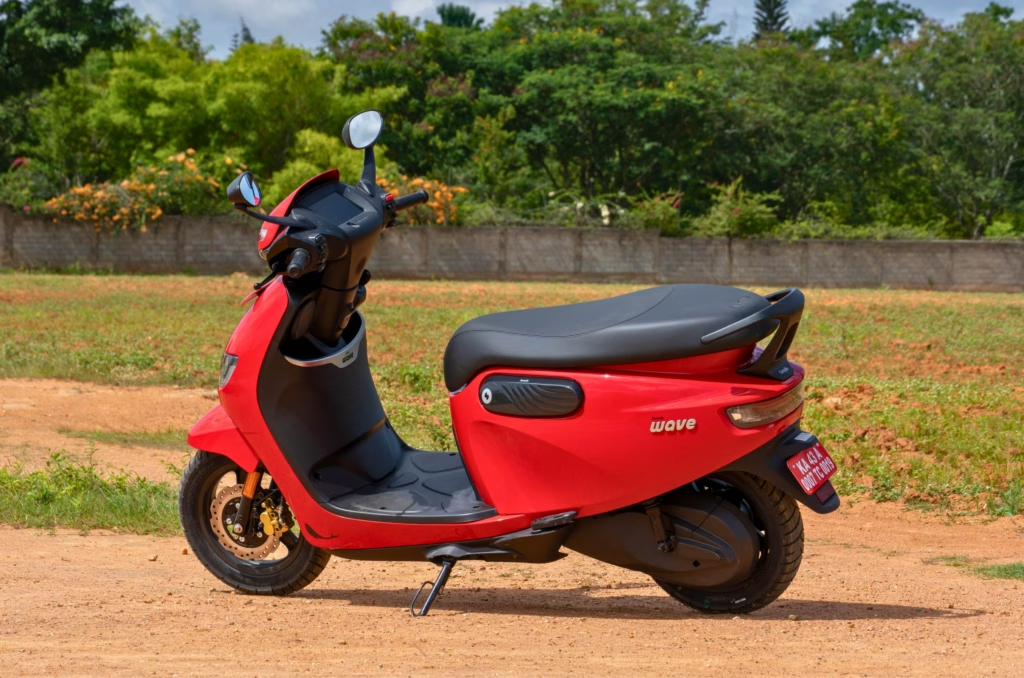
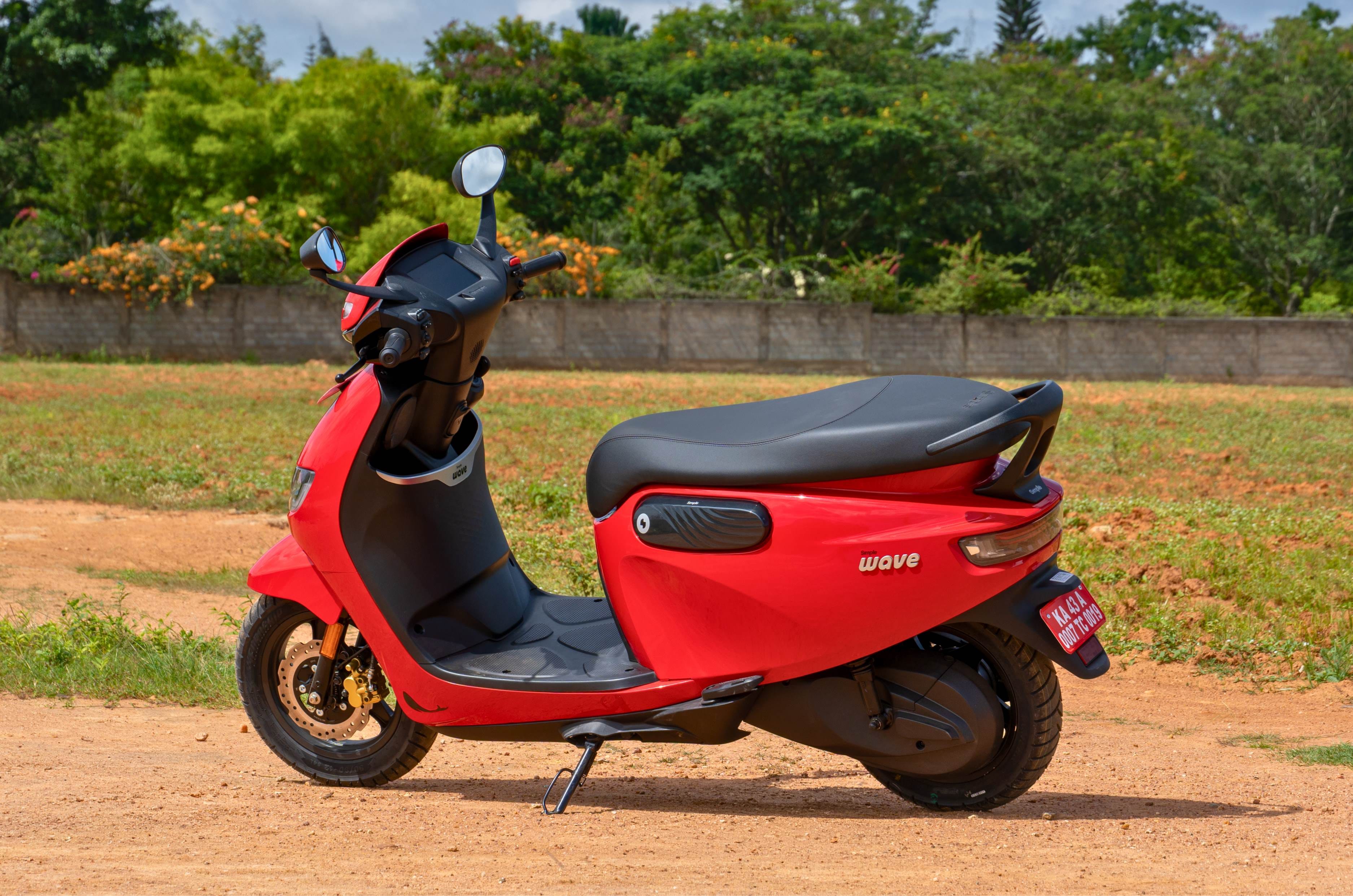
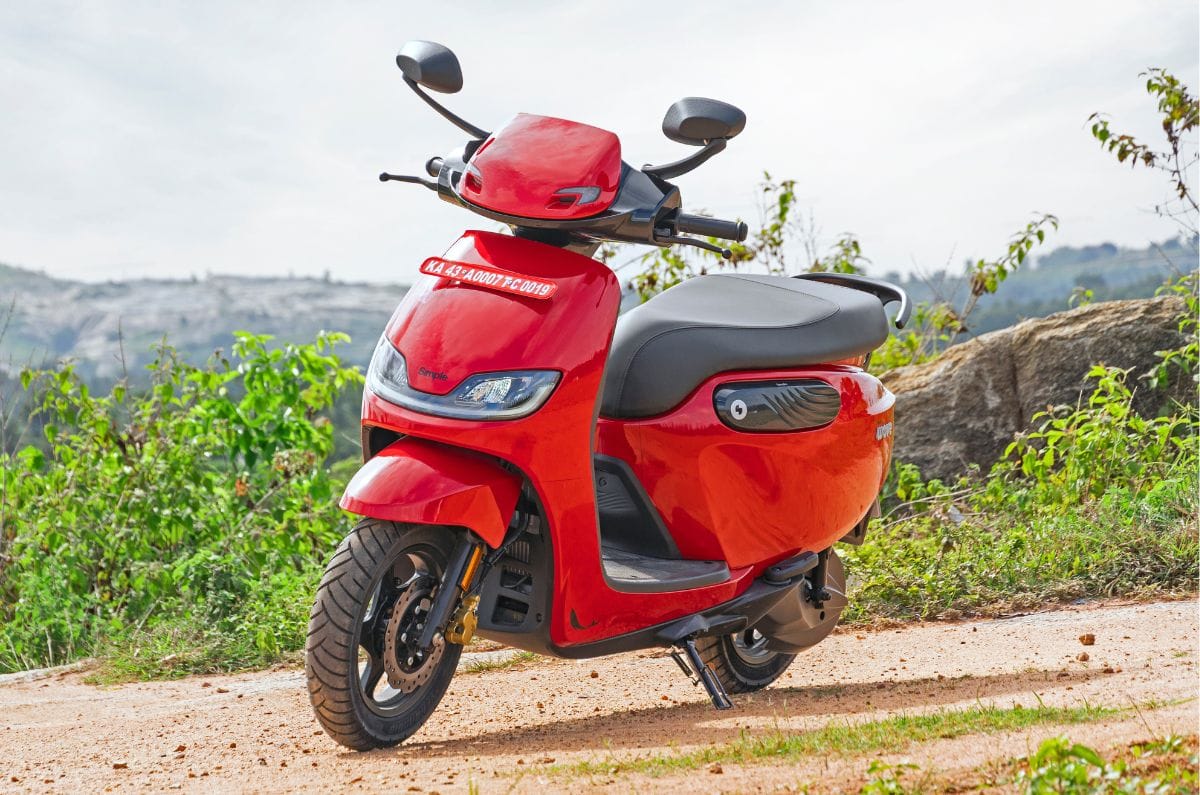
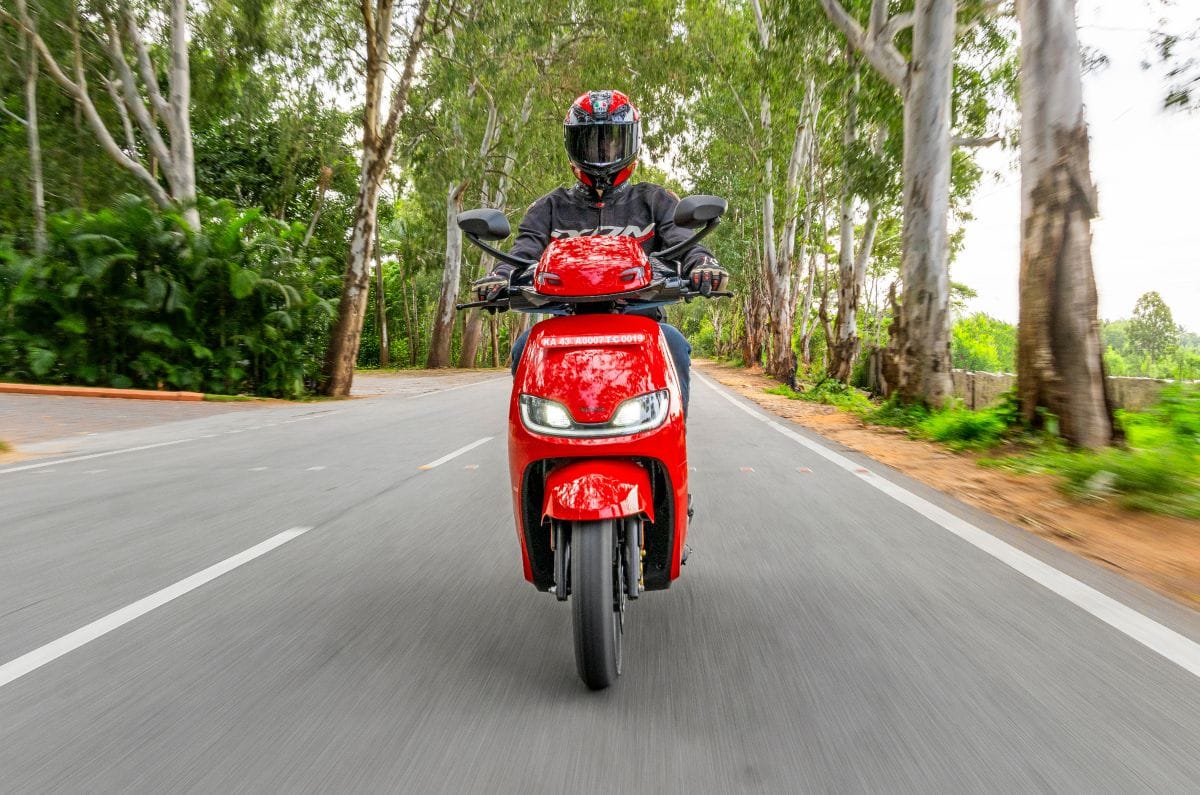
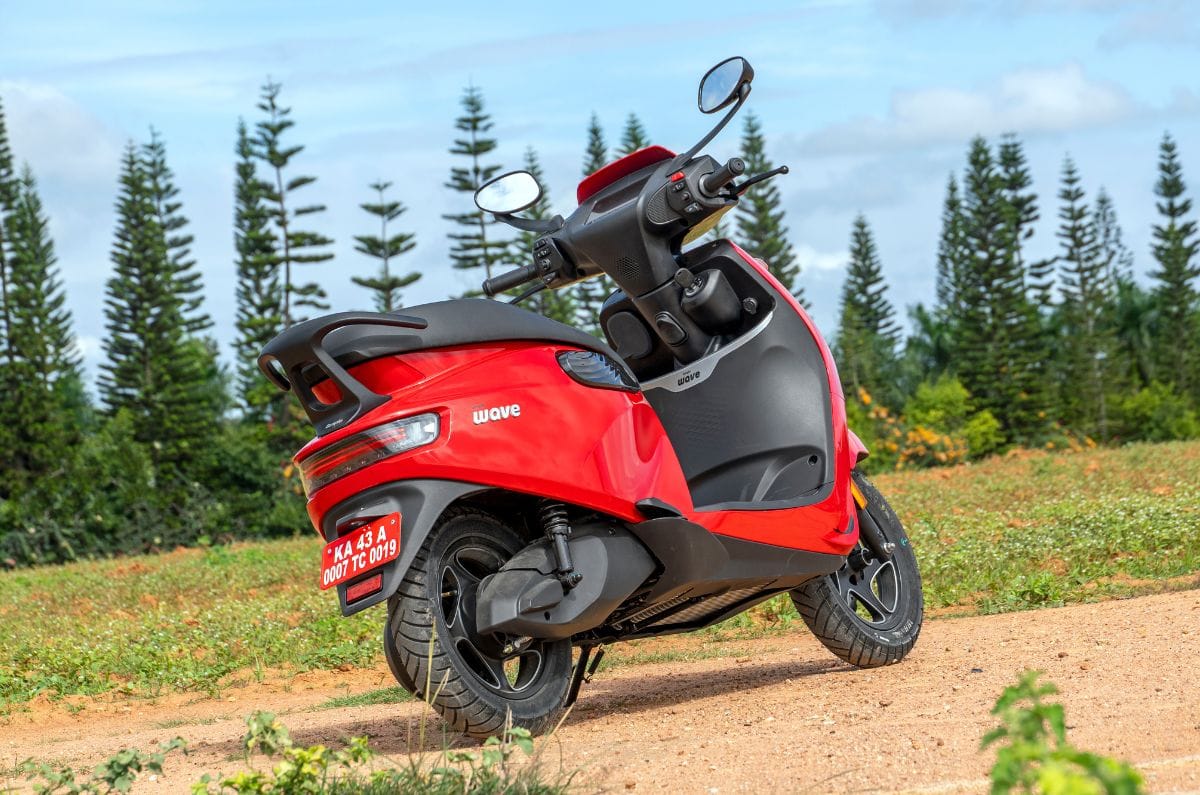
Design is subjective, of course, but the Wave looks good to my eyes with its smooth, rounded edges and distinctive silhouette. It’s got a good level of finish too, and the brighter colour options – red and blue – help it stand out. Simple has designed the Wave as a more accessible, family-oriented scooter, without making it look or feel built down to a cost.
It has a quirky design and surely stands out, especially in the brighter colour options.
Compared to the sporty Simple One, the Wave’s chassis is quite different. The rear subframe has been reworked to accommodate the bigger boot and twin shocks (which replace the One’s monoshock). The Wave also uses a simpler, more cost-effective tubular swingarm instead of the cast unit on the One.
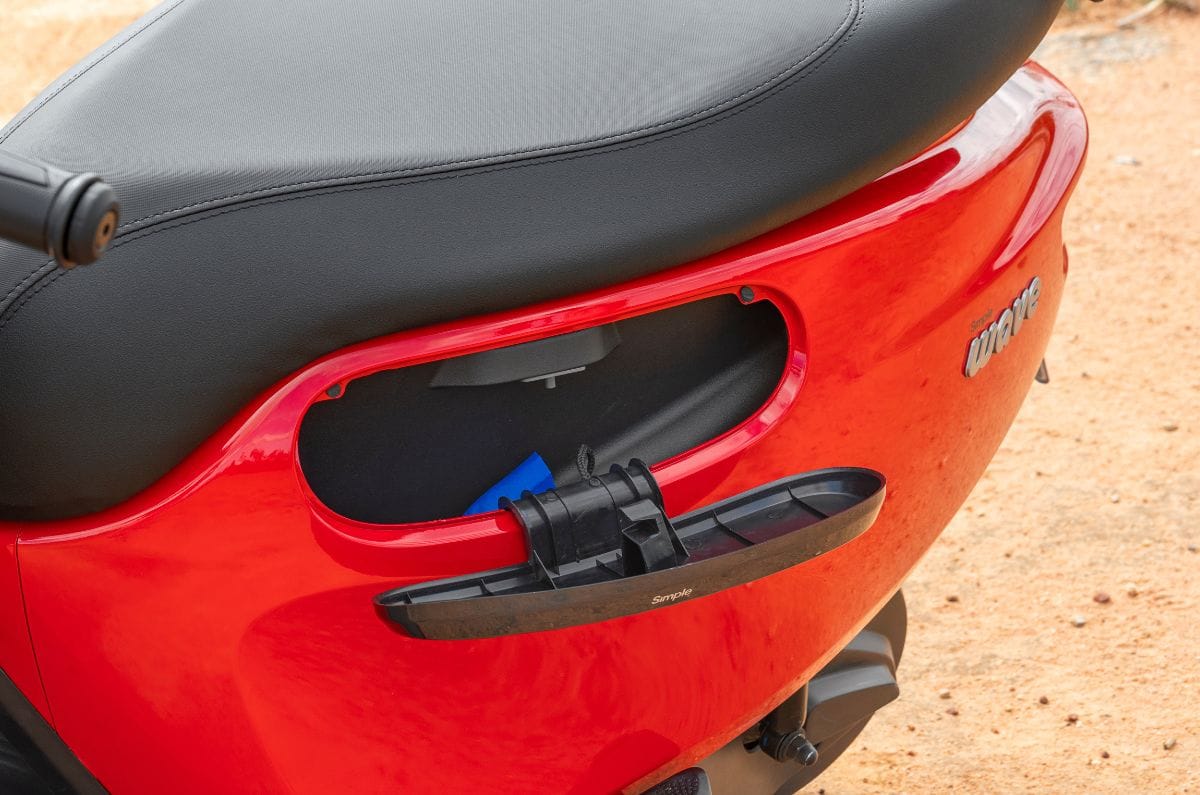
Lockable and weatherproof 4L“Pill” storage cubbies are a thoughtful touch, RH cubby is an accessory.
Simple Wave Ergonomics and comfort – 9/10
Offers a supple ride and ample space for two people
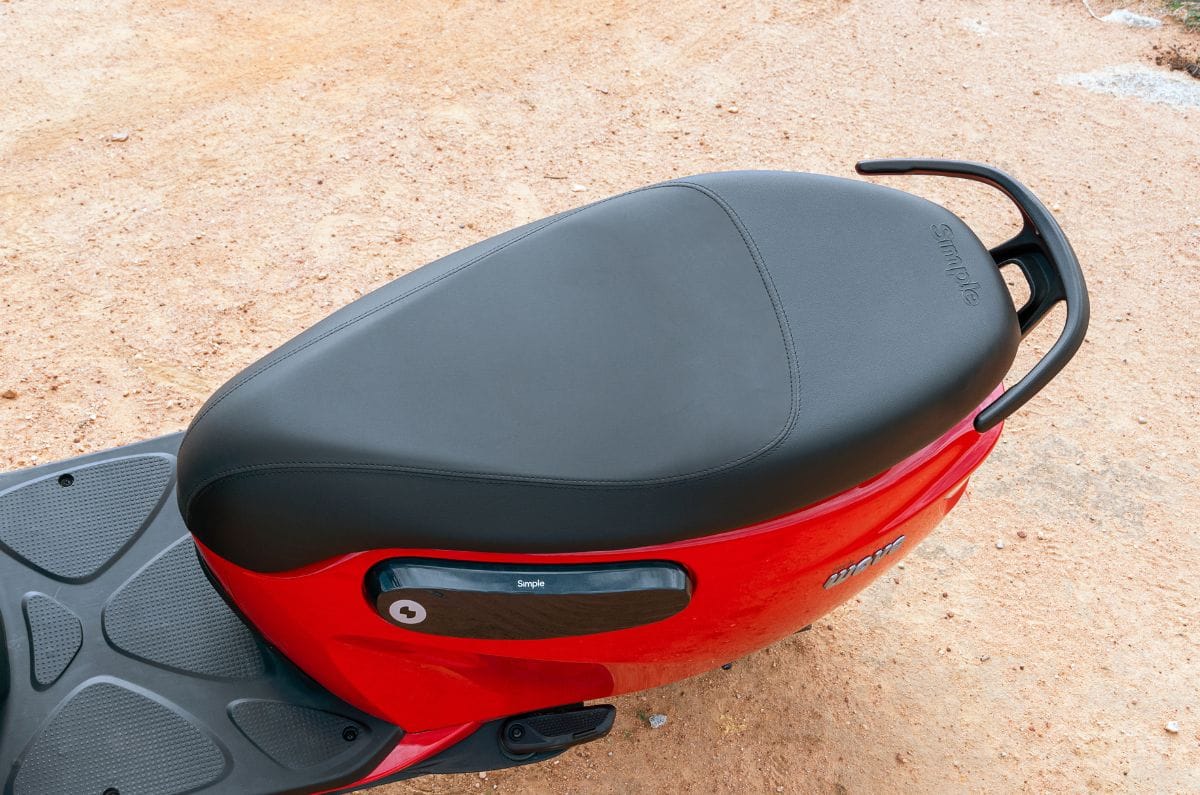
The differences only get more pronounced once you sit on the Wave. Its seat is long, wide and will easily accommodate two full-size adults, while its relatively low 775mm seat height makes it friendly for shorter riders.
That low seat height is no accident either; Simple took feedback from customers who had the One and incorporated it into the Wave. This is why the Wave also has a lower handlebar to make it more approachable for shorter and female riders. This has a trade-off, however. Taller riders will find the handlebar fouls their knees during tight, lock-to-lock U-turns.
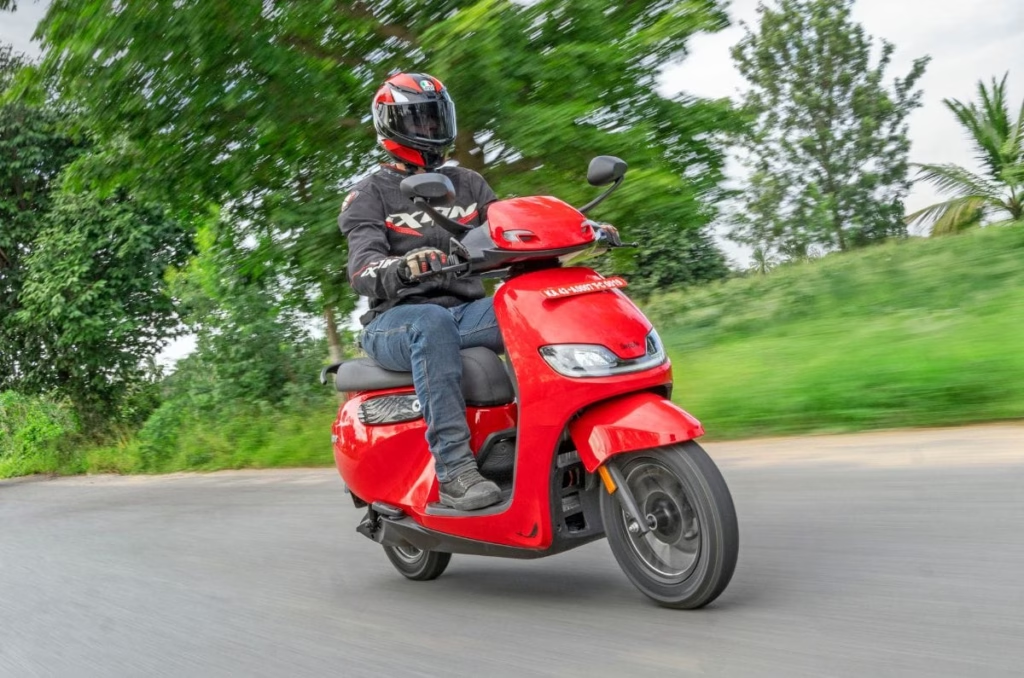
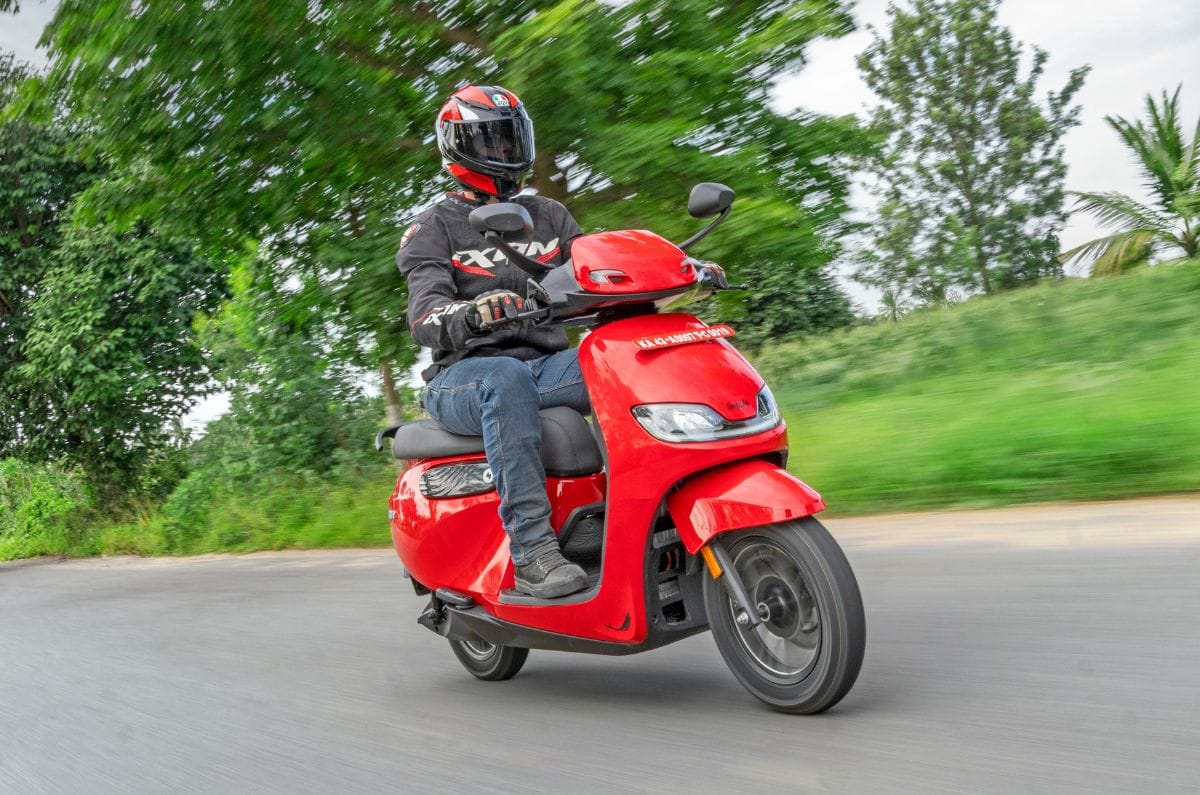
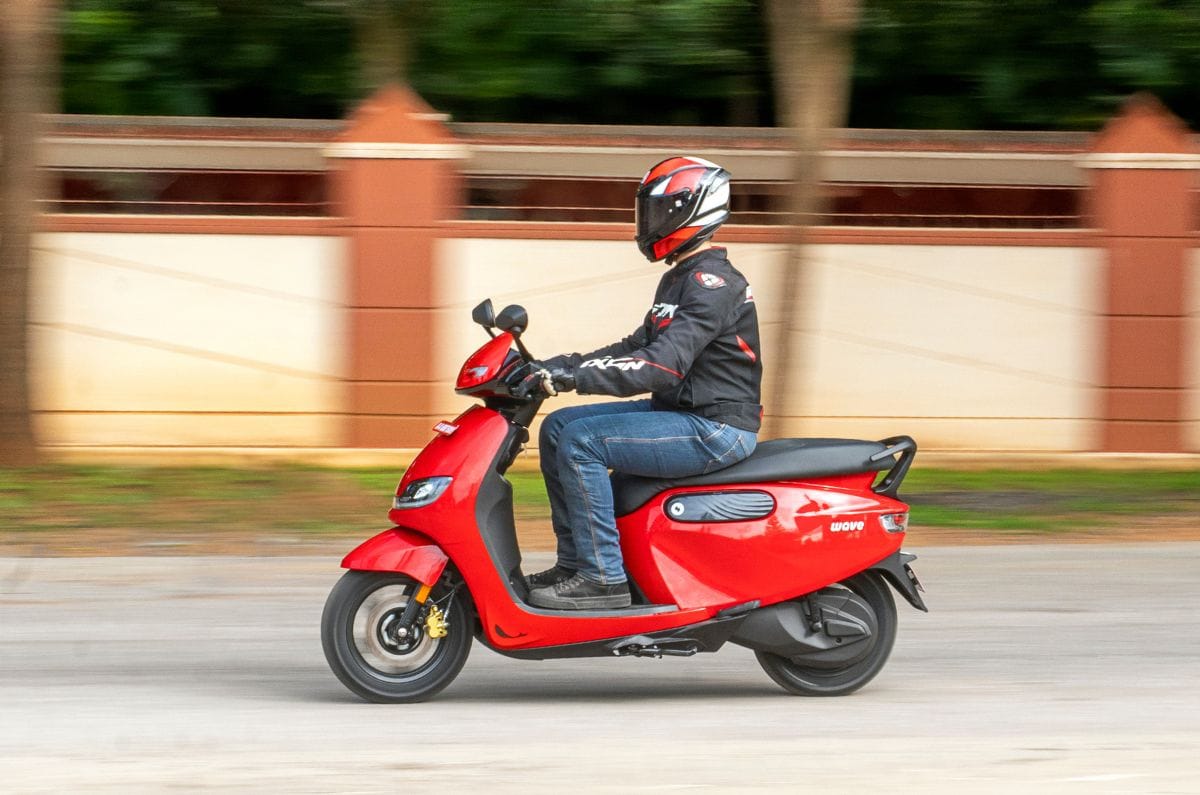
Riding position is spot-on and ride comfort too is excellent.
Other than that, the Wave is rather sorted ergonomically. Ride comfort is excellent for a scooter, and that isn’t a surprise given that the Simple One itself was quite comfortable. The Wave builds on that with a composed and plush ride that suits its intended role.
Depending on the variant, the Wave weighs between 121-128kg with the 3.7kWh TFT variant provided to us sitting roughly in the middle of that range (124.5kg). We found the Wave handled predictably, without any unwelcome surprises, feeling stable and sure-footed without compromising agility expected of a scooter.
Spacious, well-paded seat can comfortably seat 2 full-size adults.
Simple Wave Performance and range – 9/10
Performance is more than sufficient, Eco mode truly usable
Like the One, the Wave offers really brisk performance, but still feels approachable enough for everyday use. The 3.7 version gets three riding modes – Eco, Ride and Sport – and both Ride and Sport offer more than enough performance for everyday use, which isn’t really a surprise. In Ride the top speed is 75kph, whereas Sport takes it up to 90kph (speedo-indicated, not actual).
The real surprise, however, is Eco mode. Yes, it feels duller than the other two modes, but it isn’t crippled in the way Eco modes on other EVs. The Wave can still get up to around 50-55kph quite respectably and overtake traffic, making Eco genuinely usable even on faster roads or in a big city.
It handles predictably and surefootedly in all scenarios.
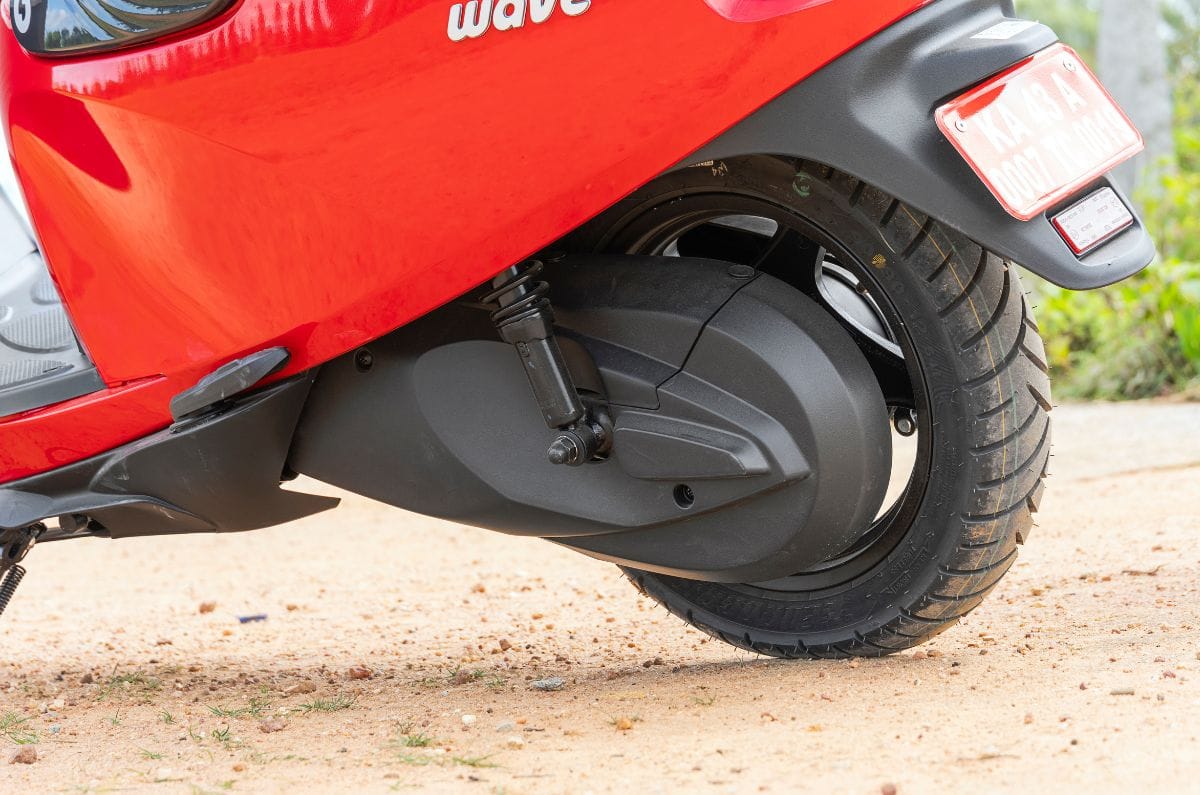
Given that the Wave uses the same motor as the OneS making 6.4kW and 52Nm, this performance is no surprise. However, on the Wave, the motor drives the rear wheel via a chain drive, not a belt as seen on the One models.. While a chain will be more maintenance-intensive than a belt, replacing it should be more affordable. Simple has worked to reduce powertrain noise with measures such as a rubber-damped sprocket, but there is still some motor noise. However, it’s much quieter than an Ather Rizta or 450, although far from dead silent like an Ather Konarc or TVS iQube.
Another welcome change to the One is the throttle response. Unlike the older One models we tested, where the scooter could continue accelerating briefly after the throttle was closed, the Wave’s accelerator behaves much more intuitively. It also gets traction control, although the throttle calibration is so smooth, you’re unlikely to need it in dry conditions but it will be a useful safety net in the wet.
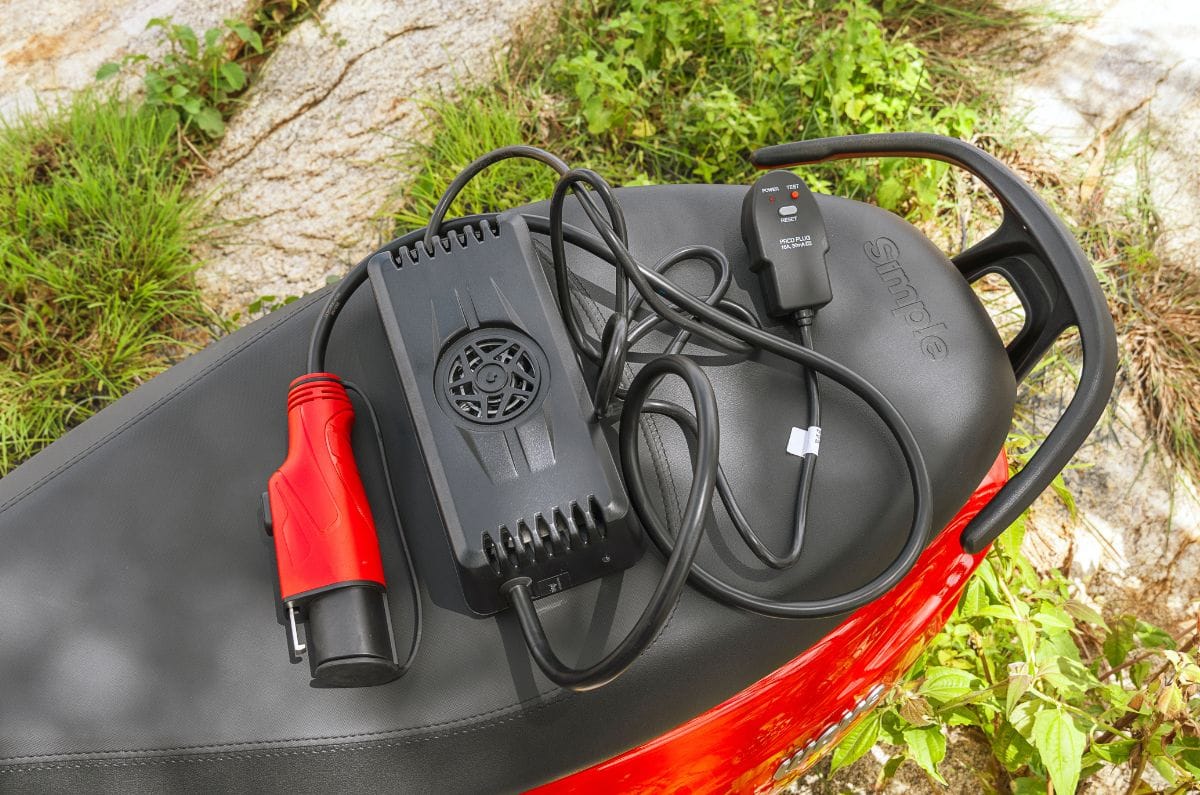
Fast 750W charger is standard on all variants.
Powering the Wave are four battery packs, depending on the variant you choose: 2.2kWh, 2.7kWh, 3.7kWh and 5kWh. The IDC ranges Simple claims are 110km, 132km, 171km and 243km, respectively. The first two use LFP (Lithium Ferrous Phosphate) chemistry, while the larger batteries use NCA (Nickel Cobalt Aluminium) cells.
The range indicator also appears to be quite trustworthy although we’ll reserve final judgement on real-world range until we can conduct a full test back in Mumbai. What is also nice is that all variants of the Wave come with a fast 750W charger which enables a pretty quick 0-80 percent claimed charging time of 3hr30min on the 3.7kWh version we were riding.
The standard warranty on the Wave is three years/30,000km, with five years/50,000km and 15 years/2 lakh km extended options also available. The price of these optional longer warranties has not been shared with us.
The Wave’s motor feeds power to the rear wheel via a chain, not a belt like on the One.
Simple Wave Features – 9/10
Massive 63L boot and Pill storage cubbies are very useful
While range without sacrificing usable performance is surely valuable on an EV, practicality is an important consideration as well. Storage is one of the Wave’s big strengths. There’s a useful front cubby, while the two “Pill” storage boxes on either side of the body panels are particularly nifty allowing you quick access to essentials you may need to reach for without having to get off the scooter. Each offers 4 litres of lockable weatherproof storage; the left one is standard, while the right is an accessory.
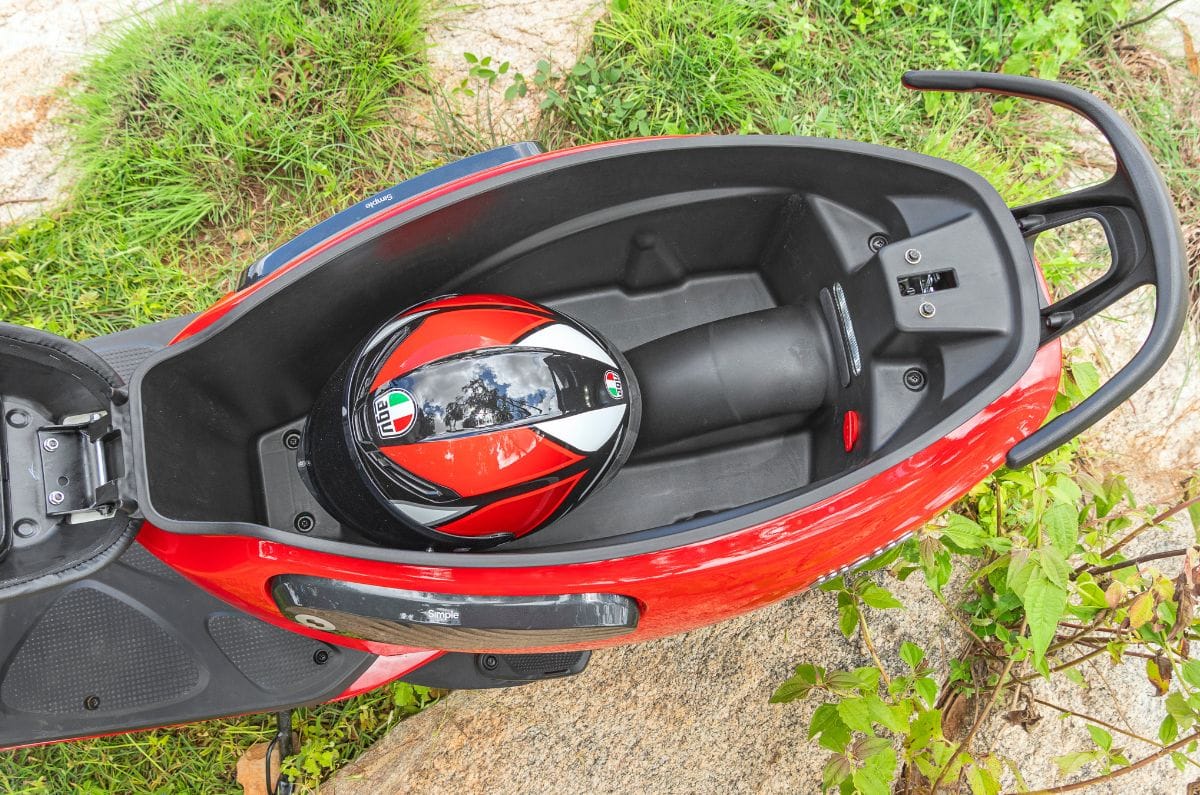
An undoubtedly big USP on the Wave is its cavernous 63L boot, the largest on any Indian scooter to date.
What is also an undoubtedly big USP on the Wave is its cavernous 63 litre boot, which is the largest on any Indian scooter to date. This should prove to be more than enough for everyone in the family! That being said, 63 litres is an enormous number and while this boot is undoubtedly big, I’m do find myself struggling to comprehend how it is nearly 50 percent bigger than the already cavernous 43 litre boot in the River Indie.
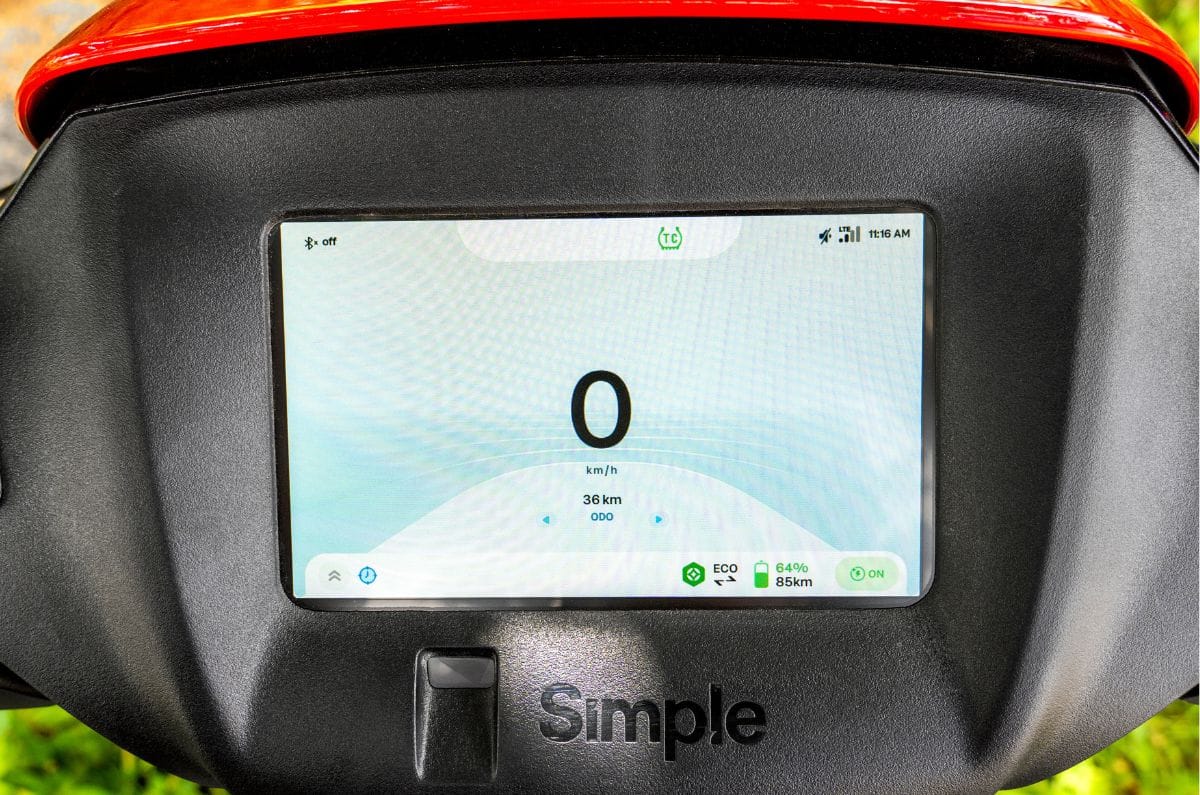
There’s plenty of technology too, including hill hold, drop-safe functionality, theft alerts and Bluetooth connectivity to your phone via the app. The TFT-equipped versions bring even more tech, while the brake-lock clasp is a small but useful touch.
TFT display is well laid-out and has a lot of tech but misses touch functionality.
Simple Wave Price and verdict – 8/10
Scooter has a lot of strengths but is pricey; company yet to prove itself
There isn’t a lot to dislike about the Wave as a scooter. It’s comfortable, spacious, well finished and quick enough to serve its intended purpose very well. However, for all its accomplishments, the Wave doesn’t come cheap. Sure, the Rs 1.10 lakh starting price is tempting, but as you climb the variants ladder, the Wave gets seriously expensive, topping out at Rs 1.90 lakh (ex-showroom, Bengaluru). That said, Simple is one of the few brands offering the option of a 5kWh battery in the family e-scooter space, which is commendable.
However, more than pricing, the bigger issue is that the company is yet to properly scale up its dealer network and establish an aftersales network that delivers the premium experience a buyer will expect after shelling out the money Simple is asking for. The Wave is a good product, but customers paying a premium for an electric scooter will expect not just a solid product but also dependable after-sales support.
The Wave has a lot of strengths but Simple is yet to prove itself in the market.
Ultimately, the Wave’s biggest challenge is that it comes from a start-up that has made plenty of big promises and statements over the past five years but still has a lot to prove. Its dealer network remains minuscule compared with the big players, and long-term reliability still remains unknown.
There’s a lot for Simple to do, but the good news is that the Wave is a genuinely likeable product. If the company can iron out the business side of things, the Wave has the potential to catapult Simple from just another niche start up to a much bigger player. Of course, doing so is a huge challenge and not an overnight process. Simple has a long road ahead of it, but the good news is that it finally has a convincing product to aid in that journey.
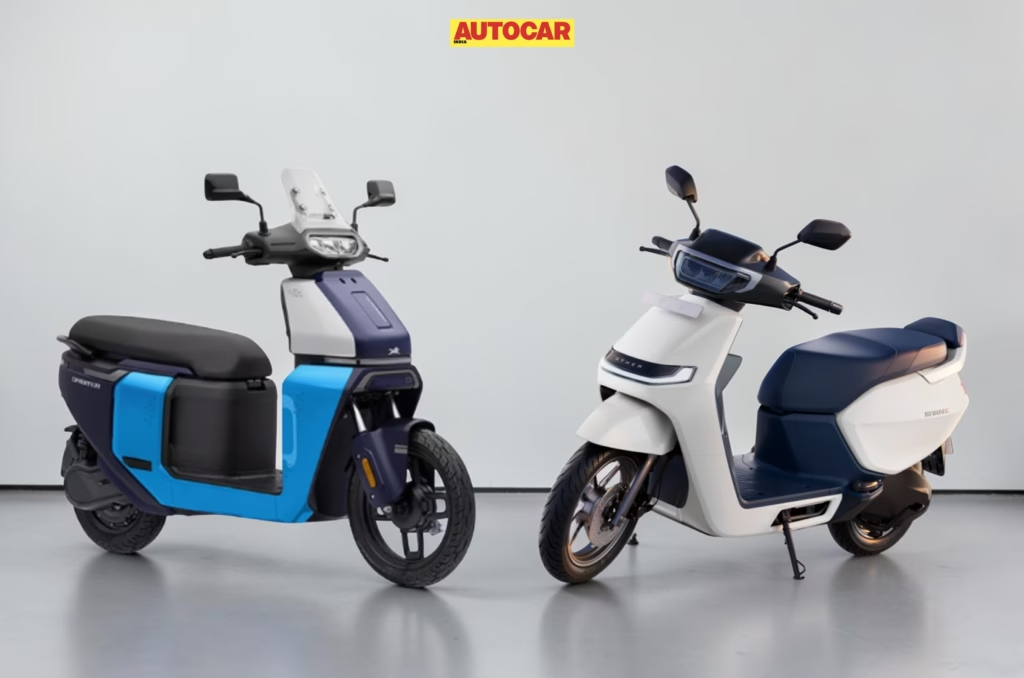
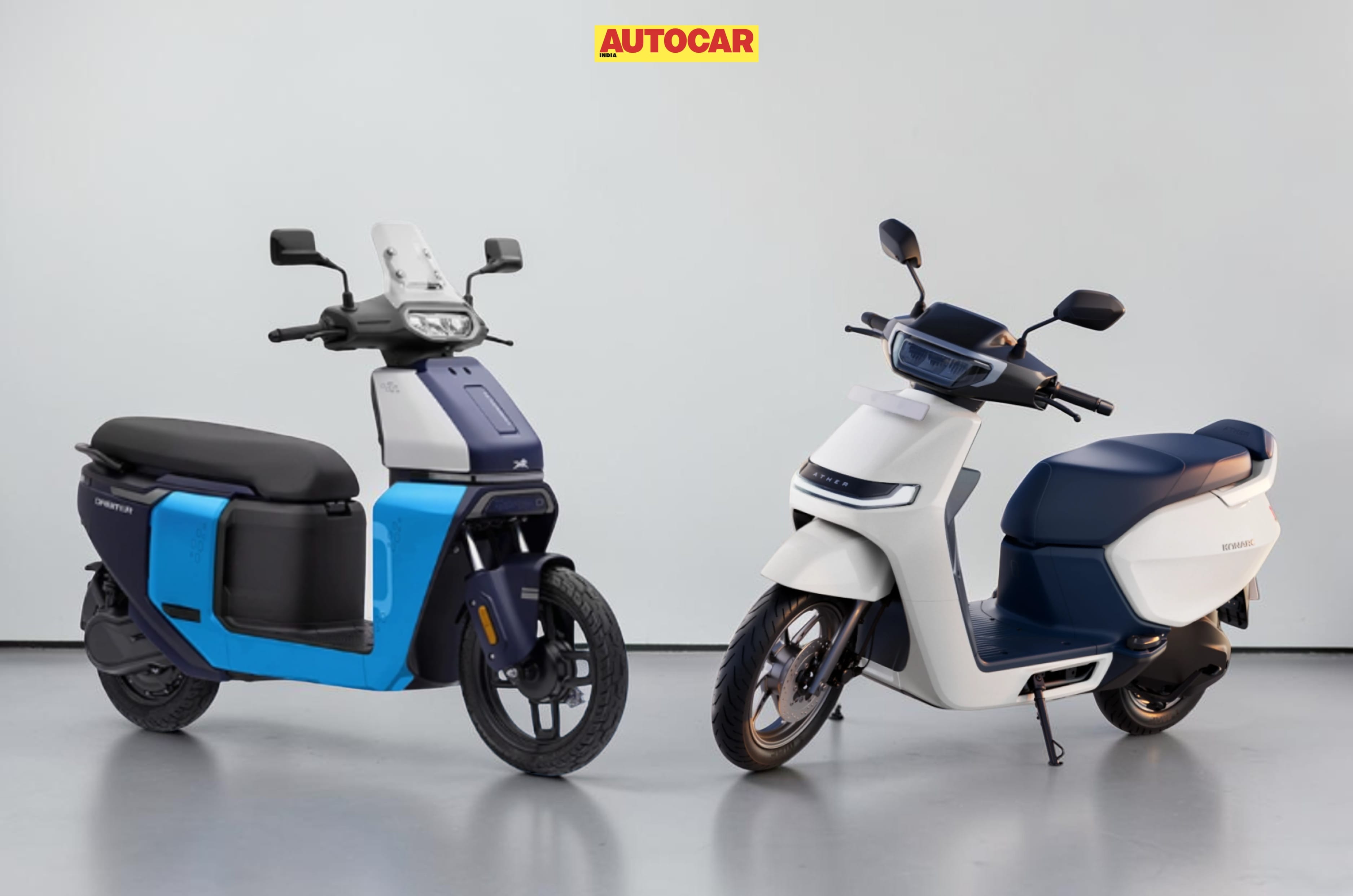
Ather has launched the Konarc with a brand-new EL platform at prices starting as low as Rs 99,999. This makes the scooter an obvious rival to the TVS Orbiter, which was revealed last year to target the urban scooter market. Since the Ather Konarc’s entry-level variant isn’t due for release until late next year, let’s see how the Konarc S 125, available later this month, compares to the TVS Orbiter V2.
Ather Konarc S 125 vs TVS Orbiter V2: Motor, battery and charging
Orbiter has more battery capacity and range
Ather Konarc S 125
TVS Orbiter V2
Peak motor power
4kW
2.9kW
Rated torque
16Nm
NA
Claimed top speed
70kph
69kph
Battery capacity
2.7kWh
3.1kWh
Claimed charge time (0-80 percent)
4h30m
4h10m
IDC range
125km
158km
Starting with the motor, the TVS Orbiter falls short of the Ather in terms of peak power. TVS has not mentioned a peak torque output for the Orbiter. However, the Orbiter bounces back with a higher battery capacity and range, as well as a quicker 0-80 charge time with a faster 650W bundled charger.
That said, both scooters offer optional hardware to speed up charging times. The Ather Konarc comes with a built-in 450W charger as standard, and it can be bundled with an external 450W charger for a faster 900W total charging speed, cutting the time down to 2 hours and 25 minutes. The Orbiter also offers a faster 950W charger as an add-on accessory, but it takes a longer 2 hours and 38 minutes to get to 80 percent from nil.
Ather Konarc S 125 vs TVS Orbiter V2: Dimensions and underpinnings
Orbiter is more accessible
Ather Konarc S 125
TVS Orbiter V2
Wheelbase
1,352mm
NA
Seat height
770mm
760mm
Ground clearance
NA
165mm
Kerb weight
126.5kg
112kg
The Orbiter starts strong with an advantage in two important areas for a practical scooter: seat height and ground clearance. The Konarc is also the heavier scooter, with a 14.5kg higher kerb weight than the Orbiter. TVS hasn’t shared the wheelbase figure for the Orbiter.
Ather Konarc S 125 vs TVS Orbiter V2: Brakes, tyres and suspension
Konarc has the better ride package
Ather Konarc S 125
TVS Orbiter V2
Brakes (F, R)
220mm disc, 130mm drum
Drum, drum
Tyres (F, R)
90/90-14, 100/90-12
90/80-14, 90/90-12
Suspension (F, R)
Telescopic, monoshock
Telescopic, twin shock
The hardware package is where the Konarc gains significant ground. It gets a front disc brake compared to the Orbiter’s drum brake, along with wider front and rear tyres. Suspension setups are more evenly matched between the two, although the real-world experience could tip the scales towards one.
Ather Konarc S 125 vs TVS Orbiter V2: Features
TVS remains in (surprising) lockstep
Ather has reserved most of the headlining new features, such as the TFT instrument cluster, auto (boot) pop, smart key, and so on, for the Z line. The Konarc S gets a DeepView LCD instrument cluster and comes with AirWalk, which takes the motor’s assistance to make manually moving the scooter easier. Considering Ather’s tech-savviness, this is unsurprising. Some other tech-powered features include turn-by-turn navigation, AutoHold (hill hold), Vehicle FallSafe, TrueRange, and Find my Scooter, among others. The catch, however, is that all of them require you to pay for Ather StackPro, a one-time Rs 16,000 add-on to the Konarc S 125’s ex-showroom price.
The Orbiter, on the other hand, has a much smaller LCD cluster but matches almost all of Konarc’s features, such as turn-by-turn navigation, hill-hold, smartphone connectivity, theft and tow alerts, crash and fall alerts and motor cut-off on fall. TVS also offers cruise control, which is currently only on the Ather 450 series of scooters. Right now, you get access to all the features mentioned above at no extra cost on the Orbiter, but it remains to be seen if that will change, as the TVS iQube charges an annual subscription of Rs 999 for some advanced features.
Ather Konarc S 125 vs TVS Orbiter V2: Price
Konarc starts higher, and it only gets more expensive
Ather Konarc S 125
TVS Orbiter V2
Price (ex-showroom, Bengaluru)
Rs 1.23 lakh
Rs 1.15 lakh
The two variants in comparison here make the Ather about Rs 8,000 more expensive than the Orbiter. If you prefer access to all the smart features offered by Ather StackPro, that will increase the gap even further. Even though the two e-scooters are aimed at bringing in more mainstream users to the brands, both have been designed with different demographics in mind. If you happen to be in the common demographic, though, you should definitely take a test ride before picking one over the other because the on-paper specs don’t tell the whole story.
Simple, the Bengaluru based EV startup, has finally launched their family scooter Wave today. The scooter was first spotted testing back in March this year and was earlier referred to as Arrive during development. Simple is looking to position this as a mass market scooter compared to their sharp, performance focussed One and One S.
Simple Wave has four variants; six, if you count instrument cluster options
Lowest variant has a 2.2kWh battery, top variant has a 5kWh battery
Delivery starts from 25 September 2026
Simple Wave: What you should know
New and improved motor, battery, and design
The Wave is based on an updated platform of the brand’s One scooter range. The first update is to the suspension, with the Wave using a twin shock rear suspension (compared to the One’s monoshock) and a much longer seat. Speaking of which, the Wave has a whopping 920mm long seat, claimed to be the longest scooter seat in the country. The other headline is the 70L storage in the Wave. Of which, 63 litres come from the under seat compartment, three litres on the front apron cubby, and four litres from a quick access pocket on the left side of the rider’s seat (called Pill Storage). An identical pocket for the right side is offered as an accessory.
The Wave has four variants by battery capacity. The base WaveS is offered in two battery capacities, 2.2kWh and 2.7kWh with 110km and 132km of IDC range, respectively. The middle variant, Wave, has a 3.7kWh battery and 171km of IDC range, and the top Wave+ variant has a 5kWh battery and 243km of IDC range. Wave+ currently has the highest range in its segment. Compared to the One range, the powertrain has seen updates all over. The 6.4kW motor has been updated to third generation and so has the Battery Management System, with the overall size of the motor reduced by 15 percent.
For context, the One uses a 5kWh battery and an 8.8kW motor; the One S has a 3.7kWh battery and a 6.4kW motor. They offer up to 265km and 190km of claimed range, respectively. Do note that there’s also a One Ultra with a 6.5kWh battery and a motor with 8.8kW of power with a claimed 400km range, but the delivery dates for that have not been announced so far. The One Ultra is currently the most expensive scooter from Simple, priced at Rs 2.35 lakh (ex-showroom, Bengaluru).
The scooter’s design has also shifted to a sleeker silhouette, letting go of the One’s sharp and aggressive lines. Simple claims it’s inspired by water, as opposed to air for the One range. However, the Wave retains the 7-inch TFT instrument cluster. The Wave+ gets it as standard, whereas the lower variants offer an option between the TFT or an InfinityBlack LCD cluster. The WaveS variants get three ride modes (EcoX, Eco, and Ride) with a claimed top speed of 75kph. Wave and Wave+ variants add an additional Sports mode and increases the top speed to 90kph. The 2.2kWh variant is available in two colours, 2.7kWh variants in four, and the 3.7kWh and 5kWh variants in six colours.
First spotted on the test mule, the Wave swaps the rear disc from the One range for a more cost-effective rear drum brake but retains the Combined Braking System (CBS) across all four variants. However, the One scooters offer traction control as standard rider aid, with the Wave limiting it to — called GripSense now — on the higher variants. Dimensions-wise, compared to the One range, seat height has been lowered by 5mm to 775mm and ground clearance has been increased by 3mm to 175mm.
The Simple Wave has been priced starting at Rs 1.10 lakh (ex-showroom, Bengaluru). Simple has announced that deliveries commence from September 25. Prices for the higher variants hasn’t been revealed, and Simple hasn’t clarified if the delivery date applies to all the variants. With its pricing, the Simple Wave directly rivals other EV scooters like the new Ather Konarc, Bajaj Chetak, Hero Vida, and TVS iQube, with range as its biggest trump card over all of them.
Ather recently launched its first scooter on the completely new EL platform. Called the Konarc, it is currently available in six variants, starting at Rs 99,999 and going up to Rs 1.45 lakh at the moment. However, it appears that Ather is looking to make sure that there’s a Konarc at every price range. The most affordable Konarc S with 100km range isn’t going to be available until early next year, which makes the Konarc S 125km range variant the entry-level Konarc. So, how does it compare to the offerings from legacy manufacturers? Let’s find out.
Ather Konarc S 125 vs rivals: Motor, battery and charging
Chetak offers the most range
Ather Konarc S 125
TVS iQube 3.1 kWh
Chetak C3001
Vida VX2 Go 3.1
Peak motor power
4kW
4.4kW
3.1kW
6kW
Rated torque
16Nm
33Nm
20Nm
25Nm
Claimed top speed
70kph
82kph
80kph
70kph
Battery capacity
2.7kWh
3.1kWh
3kWh
3.1kWh
Claimed charge time (0-80 percent)
4h30m
4h03m
2h55m
4h45m
IDC range
125km
123km
131km
127km
These scooters rarely compare 1:1 in specifications, but if we take range as the most important factor, these are Ather Konarc’s closest rivals. As such, the Vida VX2 Go is the most powerful here, while the iQube develops the most torque. However, the Chetak quotes the highest range of the lot, and it sweetens the deal further by offering the fastest bundled charger (750W) and the shortest 0-80 charging time.
Ather Konarc S 125 vs rivals: Dimensions and underpinnings
iQube is the lightest and has the lowest seat height
Ather Konarc S 125
TVS iQube 3.1kWh
Chetak C3001
Vida VX2 Go 3.1
Wheelbase
1,352mm
1,301mm
1,355mm
1,301mm
Seat height
770mm
770mm
775mm
777mm
Ground clearance
NA
157mm
NA
155mm
Kerb weight
126.5kg
116.8kg
125kg
118kg
The C3001 and the Konarc have the longest and second-longest wheelbase, respectively, and they’re on the heavier side as well; the latter is explained by their metal body panels. Seat height is more or less on par, but if you care about the minutest of numbers, the Vida VX2’s is the tallest of the bunch. However, we wouldn’t expect that to deter buyers from choosing the Vida.
Ather Konarc S 125 vs rivals: Brakes, tyres and suspension
Konarc is the only one with a 14” wheel
Ather Konarc S 125
TVS iQube 3.1kWh
Chetak C3001
Vida VX2 Go 3.1
Brakes (F,R)
220mm disc, 130mm drum
220mm disc, 130mm drum
130mm drum, 130mm drum
190mm disc, 130mm drum
Tyres (F,R)
90/90-14, 100/90-12
90/90-12, 90/90-12
NA
90/90-12, 100/80-12
Suspension (F,R)
Telescopic, monoshock
Telescopic, twin shock
Leading-link, monoshock
Telescopic, monoshock
Ather’s biggest advantage over the others is its 14-inch front wheel, something none of the other scooters has. It also has the widest rear tyre, even though they all use 12-inch wheels. As for brakes, Chetak is the only one here without a disc brake. It is also the only one to feature a leading-link front suspension, paying homage to the design used on the original petrol-powered Chetak of yesteryear, whereas the others get a more modern telescopic fork.
Ather Konarc S 125 vs rivals: Features
Basics sorted, with more features requiring subscriptions
Ather has reserved the top-shelf feature set for the Konarc Z line, which is slated to release late next year. As standard, the Konarc gets the largest-in-size 7-inch LCD cluster. It also has AirWalk, a feature that will make manually moving the scooter easier. No other scooter in this comparison can match that. The iQube gets a 5-inch TFT instrument cluster, the C3001 gets a monochrome LCD cluster, and the VX2 Go 3.1 gets a 4.2-inch LCD. They all also offer ride modes and basic smartphone connectivity as standard.
However, most of Ather’s tech features require Ather StackPro, which costs Rs 16,000 for the Konarc S 125km variant. This is a big add-on to the overall price of the scooter, but it is a one-time purchase. If you spring for it, you do get a lot of features such as TrueRange, AutoHold and Vehicle FallSafe. Ather also promises yearly software upgrades and new features, a claim no other manufacturer on this list can meet or beat.
The other scooters also require a paid subscription to access the full feature suite. However, Ather’s is the most expensive and has the highest number of features. Chetak offers a lifetime subscription to its TecPac for Rs 3,000. Vida and TVS charge Rs 999 and Rs 900 per year, respectively, for theirs.
Ather Konarc S 125 vs rivals: Price
TVS is the most expensive, while Vida is the most affordable
Ather Konarc S 125
TVS iQube 3.1kWh
Chetak C3001
Vida VX2 Go 3.1
Price
Rs 1.22 lakh
Rs 1.29 lakh
Rs 1.14 lakh
Rs 1.12 lakh
Of this lot, the Konarc S is the second most expensive scooter to buy, behind only the TVS iQube. If you prefer to keep things simpler, both price-wise and features-wise, the Chetak and the Vida offer that: a lean feature set with promising range for the price. However, remember that real-world experience, such as comfort, can change this equation, and we can only comment on that after riding them.
Ather Energy New Launch: दिग्गज दोपहिया इलेक्ट्रिक कंपनी एथर एनर्जी ने आज 29 अगस्त को अपना नया इलेक्ट्रिक स्कूटर कोणार्क (Konark) लॉन्च किया है। इसकी शुरुआती कीमत कंपनी ने ₹99,99 रखी है। इसके जरिए कंपनी ने मास-मार्केट सेगमेंट में एंट्री की है। इससे पहले एथर की पहचान मुख्य रूप से प्रीमियम/स्पोर्टी इलेक्ट्रिक स्कूटर्स से थी लेकिन अब कोणार्क के साथ इसने पहली बार बड़े मास-मार्केट सेगमेंट में गंभीरता से प्रवेश किया है। कंपनी ने इसे अपने सालाना कम्युनिटी डे प्रोग्राम में लॉन्च किया है।
Ather Energy के Konark की खास बातें
एथर एनर्जी ने कोणार्क की शुरुआती कीमत ₹99,999 रखी है।
यह स्कूटर कई अलग-अलग रेंज कॉन्फिगरेशन में उपलब्ध होगा। इस लाइनअप में 100 किलोमीटर रेंज वाला वेरिएंट ₹99,999 और 125 किलोमीटर रेंज वाला वेरिएंट ₹1,21,999 है। दोनों की बिक्री सितंबर 2026 में शुरू होने वाली है।
161 किमी रेंज वाला एक और वैरिएंट आने वाला है जिसकी कीमत ₹1,44,999 रखी गई है तो 200 किमी रेंज वाले कोणार्क को भी Q3 2027 में लाने की योजना है। एथर के प्रोडक्ट रोडमैप में कोणार्क जेड भी है, जिसके 125 किमी और 161 किमी रेंज वाला वेरिएंट Q2 2027 में आ सकता है।
यह एथर के न्यू-जेनेरेशन ईएल प्लेटफॉर्म पर बनाया जाने वाला पहला प्रोडक्शन स्कूटर है।
कोणार्क के साथ एथर अपने पोर्टफोलियो को 450 और रिट्जा की रेंज से आगे बढ़ाया है।
कोणार्क के दाम एथर की ही रिट्जा से कम रखे गए हैं और मार्केट में इसकी सीधे टीवीएस और बजाज से भिड़ंत होगी। ₹99,999 की कीमत पर इसका एंट्री-लेवल वेरिएंट टीवीएस आईक्यूब (TVS iQube) और बजाज चेतक सी2501 (Bajaj Chetak C2501) की कीमत के लगभग बराबर है। वहीं ₹1,21,999 वाला 125 किलोमीटर रेंज का कोणार्क की भिड़ंत एथर के ही एंट्री-लेवल रिट्जा एस (Rizta S) के मुकाबले में आ जाता है, जिसकी शुरुआती कीमत ₹1,21,499 है।
कीमत के मुकाबले रेंज की बात करें तो कोणार्क का 100 किलोमीटर वाला वेरिएंट चेतक सी2501 की 113 किलोमीटर और एंट्री-लेवल आईक्यूब की 114 किलोमीटर रेंज के मुकाबले अधिक स्पष्ट फायदा नहीं देता है। हालांकि 144 किलोमीटर वाला वेरिएंट अधिक क्षमता वाले iQube और Chetak वेरिएंट के करीब पहुंचता है, तो यह एथर की अधिक प्रीमियम 450 रेंज से नीचे रहता है।
इलेक्ट्रिक टू-व्हीलर बनाने वाली कंपनी एथर एनर्जी ने भारतीय बाजार में अपने पहले मास-मार्केट इलेक्ट्रिक स्कूटर एथर कोनार्क लॉन्च कर दिया है. कंपनी ने 29 अगस्त को आयोजित अपने सालाना एथर कम्युनिटी डे के मौके पर इस नए स्कूटर के लॉन्चिंग का ऐलान किया है. एथर कोनार्क की शुरुआती कीमत ₹99999 तय की गई है. इसके जरिए कंपनी की नजर अब प्रीमियम सेगमेंट से आगे बढ़कर भारत के विशाल आम उपभोक्ता वर्ग को साधने पर है. 1 लाख रुपये से लेकर 1.44 लाख रुपये तक के बजट सेगमेंट में उतारे गए इस स्कूटर को एथर की मौजूदा 450 सीरीज की तुलना में अधिक पारिवारिक और व्यावहारिक लुक में डिजाइन किया गया है.
100 किमी से लेकर 200 किमी तक की रेंज, जानिए सभी वेरिएंट्स की कीमतें
एथर ने कोनार्क इलेक्ट्रिक स्कूटर को ग्राहकों की जरूरत और बजट के अनुसार कई रेंज विकल्पों और वेरिएंट्स के साथ पेश किया है. 100 किमी रेंज वेरिएंट की शुरुआती कीमत ₹99999 रखी गई है.125 किमी रेंज वेरिएंट की कीमत ₹121999 रखी गई है. ये दोनों शुरुआती वेरिएंट्स सितंबर से बिक्री के लिए उपलब्ध होंगे. इसके अलावा कंपनी भविष्य के लिए भी अपना मजबूत रोडमैप लेकर आई है.
कंपनी ₹144999 की कीमत पर अधिक रेंज देने वाले 161 किमी रेंज वेरिएंट को उतारने की योजना बना रही है. लंबी दूरी तय करने वाले लोगों के लिए 200 किमी की रेंज वाला कोनार्क वेरिएंट 2027 की तीसरी तिमाही में लॉन्च किया जाएगा. कंपनी अपने रोडमैप के तहत 125 किमी और 161 किमी रेंज विकल्पों के साथ कोनार्क Z को 2027 की दूसरी तिमाही में पेश करेगी.
नए EL प्लेटफॉर्म पर आधारित पहला इलेक्ट्रिक स्कूटर
एथर कोनार्क कंपनी के नए-जनरेशन EL प्लेटफॉर्म पर आधारित पहला प्रॉडक्शन स्कूटर है. इस प्लेटफॉर्म को एथर ने विशेष रूप से वर्सेटिलिटी, स्केलेबिलिटी और मैन्युफैक्चरिंग क्षमता में सुधार के लिए तैयार किया है. एथर की 450 सीरीज वाले प्लेटफॉर्म के बाद यह कंपनी का पहला पूरी तरह से नया व्हीकल आर्किटेक्चर है. ईएल प्लेटफॉर्म को सबसे पहले एथर कम्युनिटी डे 2025 के दौरान पेश किया गया था, जहां कंपनी ने रिड्यूक्स (Redux) कॉन्सेप्ट व्हीकल, नेक्स्ट-जनरेशन फास्ट चार्जिंग टेक्नोलॉजी और AtherStack 7.0 को शोकेस किया था.
एथर को उम्मीद है कि यह नया प्लेटफॉर्म उसके कंज्यूमर सपोर्ट का दायरा बढ़ाएगा और मास-मार्केट सेगमेंट में कंपनी की ग्रोथ को नई रफ्तार देगा. भविष्य में कंपनी के कई अन्य प्रोडक्ट्स भी इसी ईएल प्लेटफॉर्म पर आधारित होंगे.
बाजार में किससे होगी सीधी टक्कर?
एथर कोनार्क बाजार में उतरते ही टीवीएस और बजाज के स्थापित फैमिली स्कूटर्स को सीधी चुनौती देता है. ₹99999 की शुरुआती कीमत पर कोनार्क का एंट्री-लेवल वेरिएंट सीधे TVS iQube और Bajaj Chetak C2501 के समान प्राइस ब्रैकेट में आता है.
हालांकि, चेतक C2501 (113 किमी) और एंट्री iQube (114 किमी) की तुलना में कोनार्क के 100 किमी वाले बेस वेरिएंट में रेंज का कोई बड़ा फर्क नहीं है, लेकिन इसका 161 किमी वाला वेरिएंट चेतक व आईक्यूब के टॉप-एंड वेरिएंट्स को कड़ी टक्कर देता है.
₹121999 की कीमत वाला 125 किमी रेंज का कोनार्क, एथर के ही अपने मौजूदा रिज्टा एस के करीब है, जिसकी शुरुआती कीमत ₹121499 है.
मास-मार्केट की जरूरतों को पूरा करने का सही समय: तरुण मेहता
लॉन्च के मौके पर एथर के सीईओ और को फाउंडर तरुण मेहता ने कहा कि भारतीय इलेक्ट्रिक टू-व्हीलर मार्केट अब शुरुआती खरीदारों से आगे बढ़कर मेनस्ट्रीम कस्टमर्स की ओर बढ़ रहा है.
उन्होंने सोशल मीडिया प्लेटफॉर्म एक्स पर लिखा कि हम वर्षों से एक अच्छे स्कूटर को बनाने के लिए जरूरी आर्किटेक्चर और तकनीकों में निवेश कर रहे हैं. उन्होंने आगे लिखा कि अब ईवी को एक कस्टमर के लिए रीसेल वैल्यू, सर्विसिंग में लगने वाला समय, खराब सड़कों पर राइडिंग कंफर्ट से लेकर आसान और सुपर-फास्ट चार्जिंग जैसी सारी जरूरतों को पूरा करना है.
तरुण मेहता ने आगे कहा कि आज के समय में बेहतर विजिबल सेफ्टी, आसान चार्जिंग सुविधाएं और सॉफ्टवेयर-लेड सेफ्टी कस्टमर्स के ओनरशिप एक्सपीरियंस का सबसे अहम हिस्सा बन चुके हैं.
अपने पोर्टफोलियो को 450 सीरीज और रिज्टा से आगे बढ़ाते हुए, एथर कोनार्क के जरिए आम उपभोक्ताओं की हर जरूरत को पूरा करने का दावा कर रहा है.
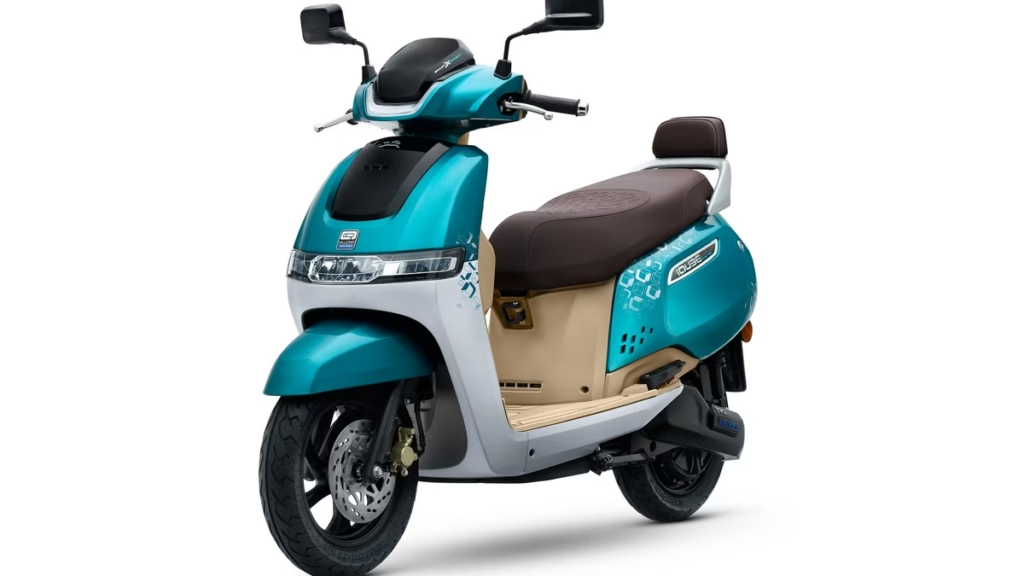
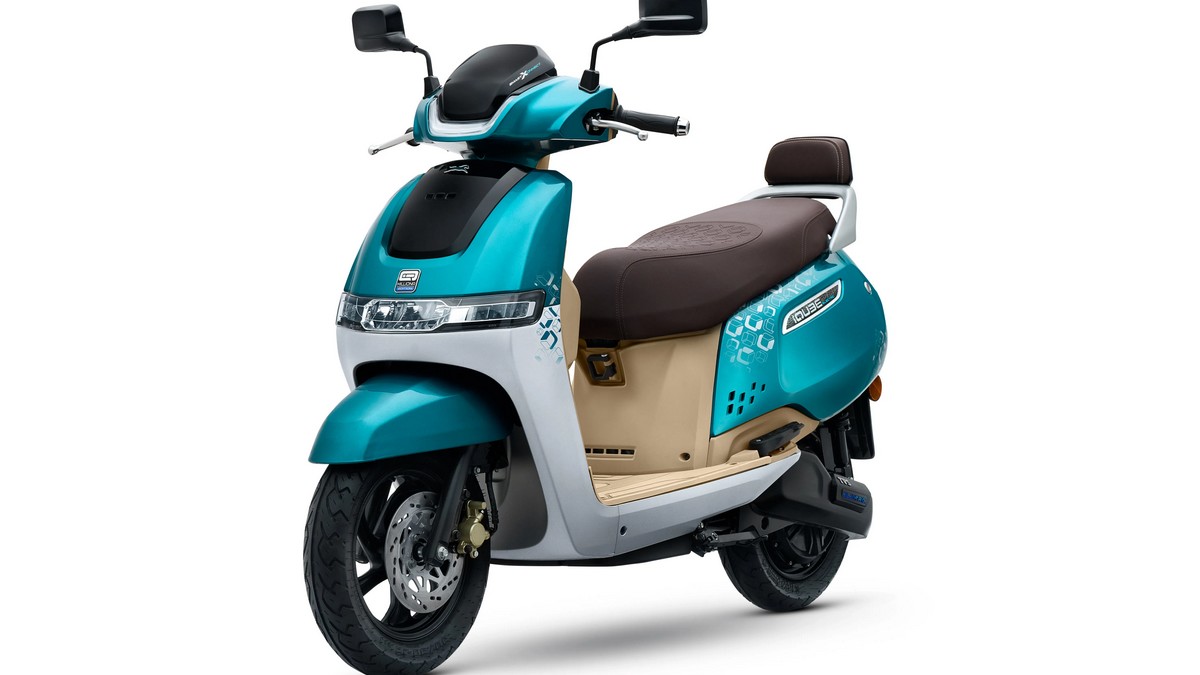
TVS Motor Company ने अपने इलेक्ट्रिक स्कूटर पोर्टफोलियो का विस्तार करते हुए TVS iQube MillionR Edition लॉन्च किया है। यह खास एडिशन iQube के 10 लाख यूनिट प्रोडक्शन का आंकड़ा पार करने की उपलब्धि के मौके पर पेश किया गया है। इस स्पेशल एडिशन की प्रभावी एक्स-शोरूम कीमत कर्नाटक में ₹1,40,138 बताई गई है। हालांकि, अलग-अलग राज्यों में सब्सिडी, टैक्स और अन्य शुल्क के कारण कीमत में बदलाव हो सकता है।
TVS iQube MillionR Edition मौजूदा 3.5 kWh iQube वेरिएंट पर आधारित है। इसका मतलब है कि इसके मैकेनिकल सेटअप और परफॉर्मेंस में कोई बड़ा बदलाव नहीं किया गया है। कंपनी ने इसमें मुख्य रूप से नया डिजाइन, अतिरिक्त स्टोरेज और कुछ उपयोगी फीचर्स जोड़े हैं। इस इलेक्ट्रिक स्कूटर में 3.5 kWh बैटरी दी गई है, जो 145 किमी IDC रेंज देने का दावा करती है। इसकी टॉप स्पीड 82 किमी/घंटा है।
Aurora Green कलर में आया स्पेशल एडिशन
MillionR Edition को खास Aurora Green Dual-Tone कलर में पेश किया गया है। इसमें स्पेशल ग्राफिक्स और MillionR ब्रांडिंग दी गई है, जिससे इसे रेगुलर iQube से अलग पहचान मिलती है। इसके अलावा सीट अपहोल्स्ट्री को भी ज्यादा प्रीमियम लुक दिया गया है।
बढ़ा स्टोरेज, मिला Type-C चार्जिंग पोर्ट
TVS ने इस स्पेशल एडिशन में रोजमर्रा के इस्तेमाल को ध्यान में रखते हुए कई उपयोगी बदलाव किए हैं। इसमें नया फ्रंट यूटिलिटी कंपार्टमेंट दिया गया है। साथ ही स्मार्टफोन और दूसरे डिवाइस चार्ज करने के लिए USB Type-C चार्जिंग पोर्ट भी मिलता है।
इन बदलावों के बाद स्कूटर का कुल स्टोरेज 32 लीटर से बढ़कर 35.5 लीटर हो गया है।
TVS iQube MillionR Edition के प्रमुख स्पेसिफिकेशन
फीचरTVS iQube MillionR Edition
बैटरी क्षमता3.5 kWh
IDC रेंज145 किमी
टॉप स्पीड82 किमी/घंटा
डिस्प्ले12.7 सेमी TFT
0-80% चार्जिंगकरीब 4.5 घंटे
कुल स्टोरेज35.5 लीटर
कलरAurora Green Dual Tone
कंपनी के अनुसार, iQube MillionR Edition में 12.7 सेमी TFT इंस्ट्रूमेंट डिस्प्ले दिया गया है। इसकी 145 किमी IDC रेंज और 82 किमी/घंटा की टॉप स्पीड रेगुलर 3.5 kWh iQube के समान है। यानी यह मॉडल परफॉर्मेंस अपग्रेड के बजाय डिजाइन और सुविधा से जुड़े बदलावों पर ज्यादा केंद्रित है।
118 से ज्यादा कनेक्टेड फीचर्स
3.5 kWh iQube प्लेटफॉर्म में 118 से ज्यादा कनेक्टेड फीचर्स मिलते हैं। इनमें टर्न-बाय-टर्न नेविगेशन, Distance-to-Empty जानकारी और रिमोट चार्ज स्टेटस मॉनिटरिंग जैसे फीचर्स शामिल हैं। इसके अलावा Q-Park Assist भी मिलता है, जो कम स्पीड पर स्कूटर को पार्क करने या रिवर्स करने में मदद करता है।
TVS iQube ने हासिल किया 10 लाख यूनिट का आंकड़ा
MillionR Edition TVS की इलेक्ट्रिक मोबिलिटी यात्रा में एक महत्वपूर्ण उपलब्धि के मौके पर लॉन्च किया गया है। 25 जून 2026 को TVS Motor ने घोषणा की थी कि कंपनी के होसुर प्लांट से 10 लाखवां iQube रोलआउट हुआ। यह उपलब्धि भारत में इलेक्ट्रिक स्कूटरों की बढ़ती लोकप्रियता और TVS के इलेक्ट्रिक टू-व्हीलर कारोबार के विस्तार को दर्शाती है।
जुलाई में iQube की बिक्री में 158% की बढ़ोतरी
TVS iQube की बिक्री में भी हाल के महीनों में जोरदार बढ़ोतरी देखने को मिली है। जुलाई 2026 में iQube की 59,386 यूनिट्स बिकीं, जबकि जुलाई 2025 में यह आंकड़ा 23,029 यूनिट था। इस तरह सालाना आधार पर बिक्री में करीब 158 फीसदी की वृद्धि हुई। जून 2026 में iQube की 47,331 यूनिट्स बिकी थीं। ऐसे में जुलाई की बिक्री में महीने-दर-महीने भी अच्छी बढ़ोतरी दर्ज की गई।
कई बैटरी विकल्पों में उपलब्ध है iQube
TVS अब iQube को अलग-अलग बैटरी क्षमता और रेंज के साथ पेश कर रही है। पोर्टफोलियो में एंट्री-लेवल 2.3 kWh iQube शामिल है, जिसकी IDC रेंज 114 किमी तक है। वहीं, बड़े 5.3 kWh iQube ST की IDC रेंज 212 किमी तक बताई गई है। इन दोनों के बीच 3.5 kWh iQube MillionR Edition आता है, जो 145 किमी की दावा की गई रेंज और 82 किमी/घंटा की टॉप स्पीड के साथ पेश किया गया है।
अगर आप रोजाना यूज के लिए स्कूटर खरीदने की प्लानिंग कर रहे हैं, तो यह खबर आपको जरूर पढ़नी चाहिए। दरअसल, TVS ने iQube MillionR स्पेशल एडिशन को ₹1.40 लाख (एक्स-शोरूम) की कीमत पर लॉन्च कर दिया है। यह स्टैंडर्ड 3.5kWh वेरिएंट से सिर्फ 3,551 रुपये महंगा है। इसके बदले इसमें 3.5 लीटर ज्यादा स्टोरेज और USB Type-C पोर्ट मिलता है। यानी जो ग्राहक ज्यादा सुविधा चाहते हैं, उनके लिए यह एक छोटा सा अतिरिक्त खर्च है।
यह स्पेशल एडिशन iQube के 10 लाख ग्राहक पूरे होने के मौके पर लॉन्च किया गया है। TVS ने इस उपलब्धि को उसी तरह सेलिब्रेट किया है, जैसे उसने 2016 में Jupiter के 10 लाख ग्राहक पूरे होने पर MillionR बैज दिया था।
दिल्ली में सब्सिडी से पहले iQube MillionR की एक्स-शोरूम कीमत GST और चार्जर समेत करीब 1.48 लाख रुपये बैठती है। इसके अलावा बैटरी, मोटर और परफॉर्मेंस के आंकड़े स्टैंडर्ड मॉडल जैसे ही हैं। उनमें कोई बदलाव नहीं किया गया है।
क्या नया है: स्टोरेज, कलर और Type-C पोर्ट
iQube MillionR एडिशन मौजूदा iQube 3.5kWh वेरिएंट पर आधारित है। इसे खास दिखाने के लिए इसमें Aurora Green डुअल-टोन पेंट स्कीम, नए ग्राफिक्स, प्रीमियम सीट अपहोल्स्ट्री और MillionR की बैजिंग दी गई है। एक ज्यादा काम का बदलाव है नया फ्रंट यूटिलिटी कम्पार्टमेंट, जिससे कुल स्टोरेज 32 लीटर से बढ़कर 35.5 लीटर हो गया है। यह उन लोगों के लिए बहुत काम का है जिन्हें स्टैंडर्ड iQube की सीट के नीचे बैग या एक्स्ट्रा हेलमेट रखने में दिक्कत होती थी।
इसमें एक USB Type-C चार्जिंग पोर्ट भी जोड़ा गया है, जिससे राइडर्स चलते-फिरते अपना फोन चार्ज कर सकते हैं। हालांकि, यह सुविधा बेस वेरिएंट में नहीं मिलती है।
बैटरी, रेंज और परफॉर्मेंस में कोई बदलाव नहीं
TVS ने स्कूटर के मैकेनिकल हिस्से में कोई बदलाव नहीं किया है। MillionR में रेगुलर 3.5kWh iQube वाला ही 3.5kWh बैटरी पैक लगा है, जिसकी IDC-सर्टिफाइड रेंज 145 km और टॉप स्पीड 82 km/h है। स्टैंडर्ड चार्जर से 0 से 80% चार्ज होने में कुल 4 घंटे 30 मिनट लगते हैं।
गाड़ी की जानकारी और कनेक्टेड फीचर्स के लिए 5-इंच का TFT डिस्प्ले दिया गया है। TVS का दावा है कि iQube रेंज में ऐसे 118 से ज्यादा फीचर्स उपलब्ध हैं। जो खरीदार इस एडिशन से ज्यादा रेंज या तेजी से चार्जिंग की उम्मीद कर रहे हैं, उन्हें यह यहां नहीं मिलेगा। इसमें किए गए बदलाव पूरी तरह से कॉस्मेटिक और स्टोरेज से जुड़े हैं।
TVS ने इसे लॉन्च करने के लिए यही समय क्यों चुना?
इस स्पेशल एडिशन की लॉन्चिंग का समय TVS के लिए काफी अहम है, क्योंकि हाल के महीनों में iQube की बिक्री काफी मजबूत रही है। जुलाई 2026 में TVS ने iQube की 59,386 यूनिट्स बेचीं, जो अब तक की सबसे ज्यादा मासिक बिक्री है। जून के मुकाबले बिक्री में 25.47% की बढ़ोतरी हुई, जबकि पिछले साल की तुलना में यह आंकड़ा 157% से ज्यादा बढ़ा है।
बिक्री के मामले में iQube जुलाई में भारत का सबसे ज्यादा बिकने वाला इलेक्ट्रिक स्कूटर रहा।
खरीदारों के लिए देखें तो MillionR Edition में मौजूदा 3.5kWh वेरिएंट के साथ नया लुक और ज्यादा उपयोगी स्टोरेज दिया गया है। इसकी कीमत में भी ज्यादा अंतर नहीं है। ऐसे में डीलरशिप पर स्टॉक आसानी से उपलब्ध होने के बाद इसके स्टैंडर्ड वेरिएंट से ज्यादा बिकने की संभावना है।