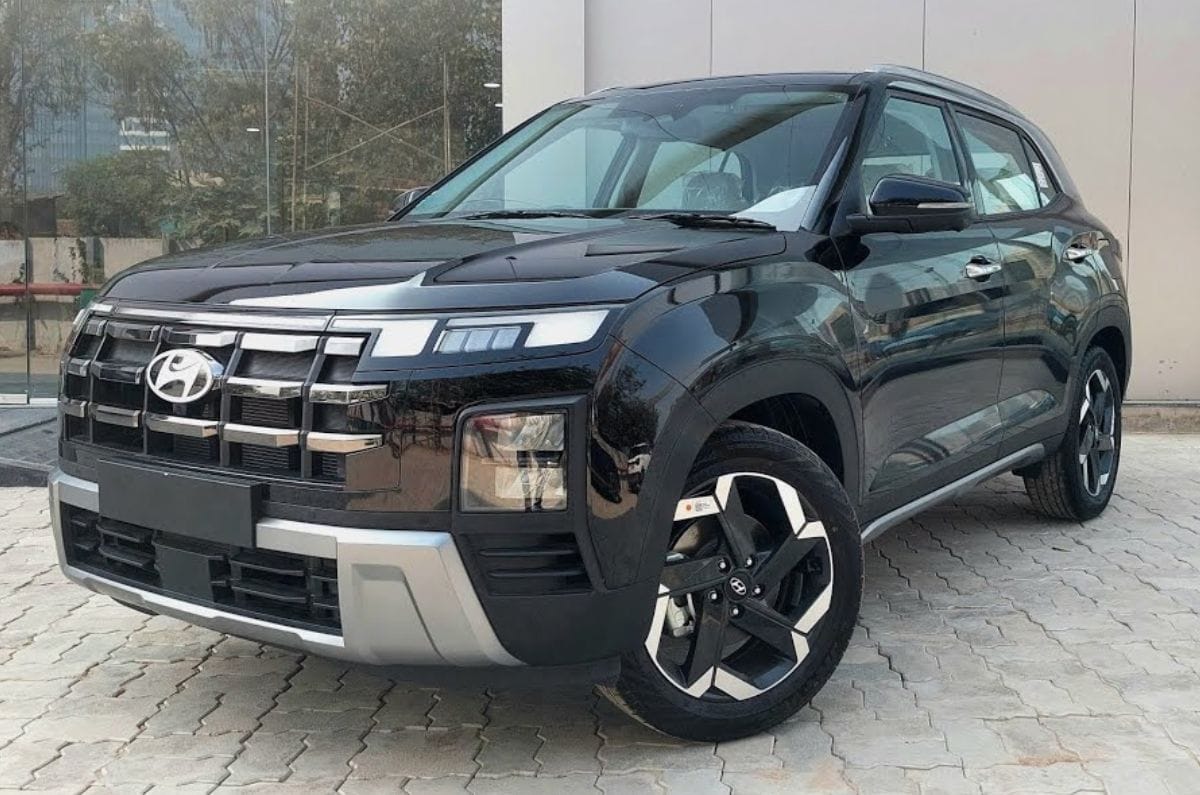
Hyundai Creta gets benefits of up to Rs 1 lakh in September 2026

Hyundai Creta gets benefits of up to Rs 1 lakh in September 2026
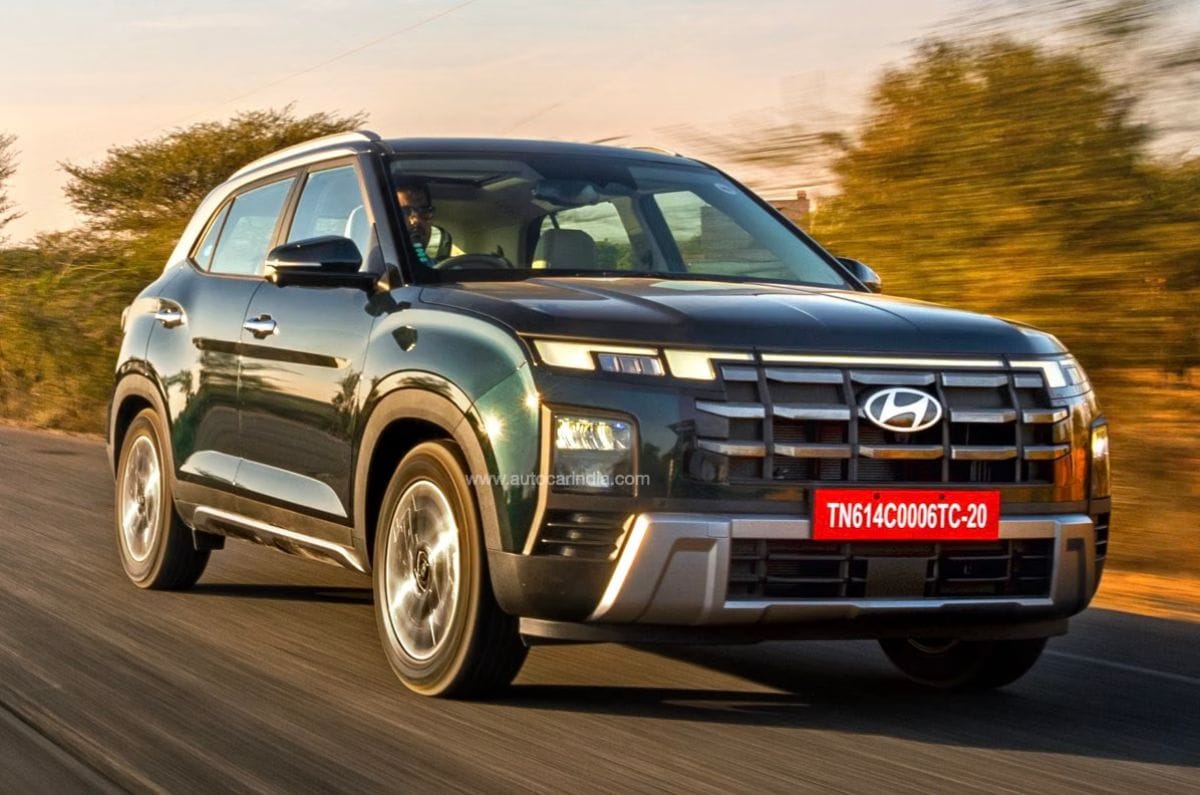
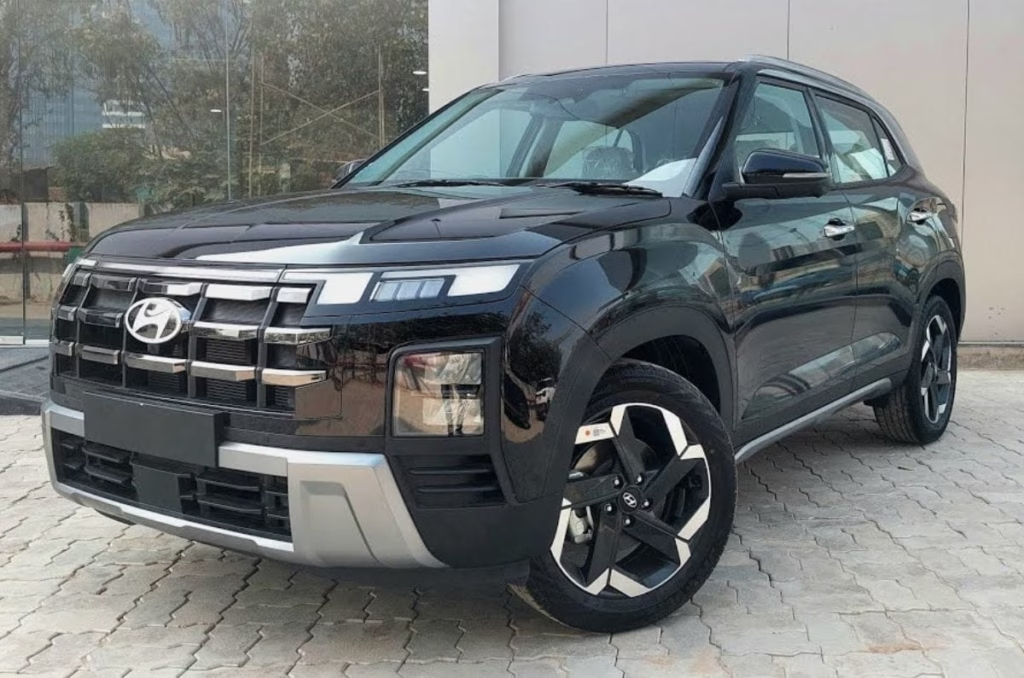
Hyundai Creta front quarter static

Hyundai India is offering an attractive range of benefits on select models in its portfolio. Depending on the model chosen, customers can avail up to Rs 1 lakh in benefits, valid until September 30, 2026.

Disclaimer: Offers/benefits may vary by city and are subject to stock availability. Buyers are advised to check with their local dealer for exact figures.

Hyundai Creta offers in September 2026

Benefits of up to Rs 1 lakh

The Creta mid-size SUV is available with benefits of up to Rs 1 lakh. The Korean carmaker’s best-selling model in India is offered with a trio of 1.5-litre engines, namely, a naturally aspirated petrol, a turbo-petrol, and a diesel engine. All engines are offered with manual and automatic gearboxes. Prices range between Rs 10.90 lakh and Rs 19.91 lakh, with the Creta taking on rivals like the Tata Sierra, Kia Seltos, Renault Duster, Skoda Kushaq, and Maruti Victoris.

Hyundai Grand i10 Nios offers in September 2026 

Benefits of up to Rs 70,000
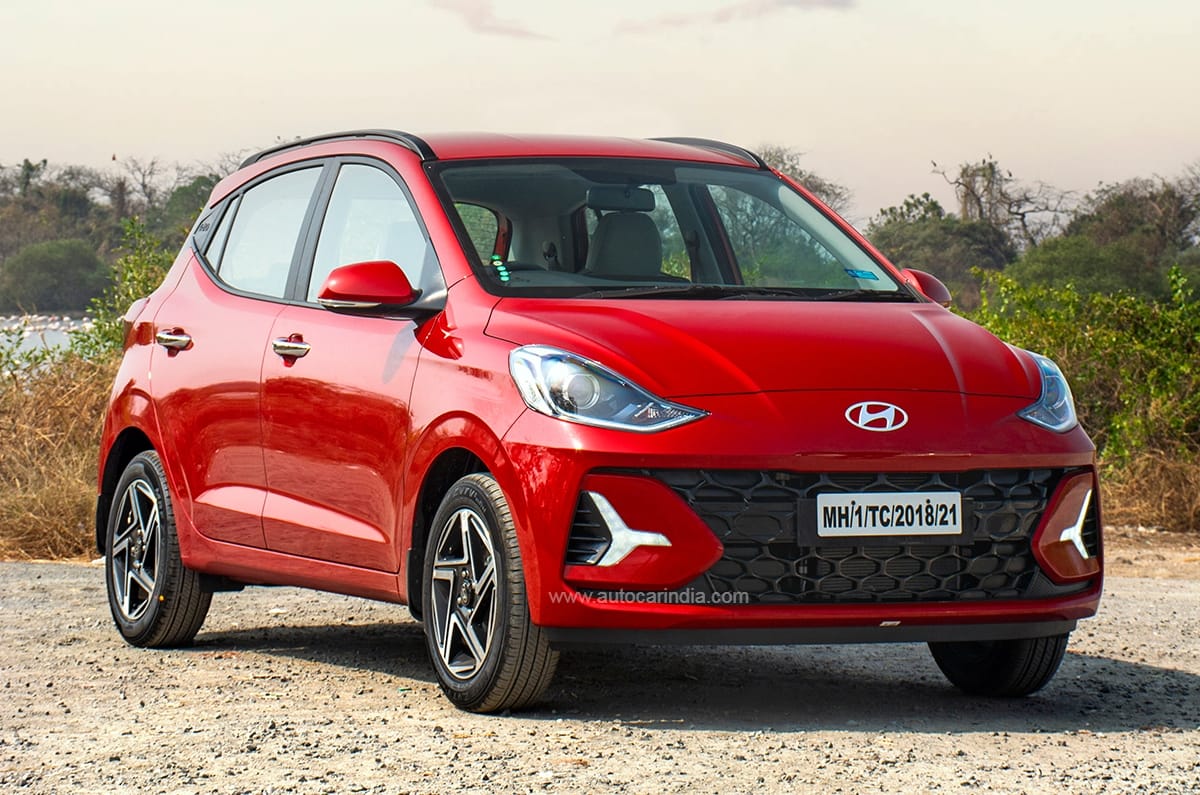
Hyundai’s Grand i10 Nios is being offered with up to Rs 70,000 in benefits. Its most affordable model in India is offered solely with a 1.2-litre petrol engine paired to either a manual or AMT gearbox. A factory-fit dual-cylinder CNG kit can be fitted to this engine and is paired exclusively with a manual gearbox. The Grand i10 is priced between Rs 5.59 lakh to Rs 8.04 lakh and is Hyundai’s answer to the Maruti Swift and the Tata Tiago.

Hyundai i20 offers in September 2026 

Benefits of up to Rs 60,000

The Grand i10’s elder sibling, the i20, is being offered with benefits of up to Rs 60,000. Standard versions of the i20 come powered by a 1.2-litre petrol engine mated with either a manual or CVT automatic gearbox. The i20 is priced from Rs 5.99 lakh to Rs 11.59 lakh, and it competes with the Maruti Baleno, Tata Altroz, and the Toyota Glanza.

Hyundai Exter offers in September 2026

Benefits of up to Rs 50,000
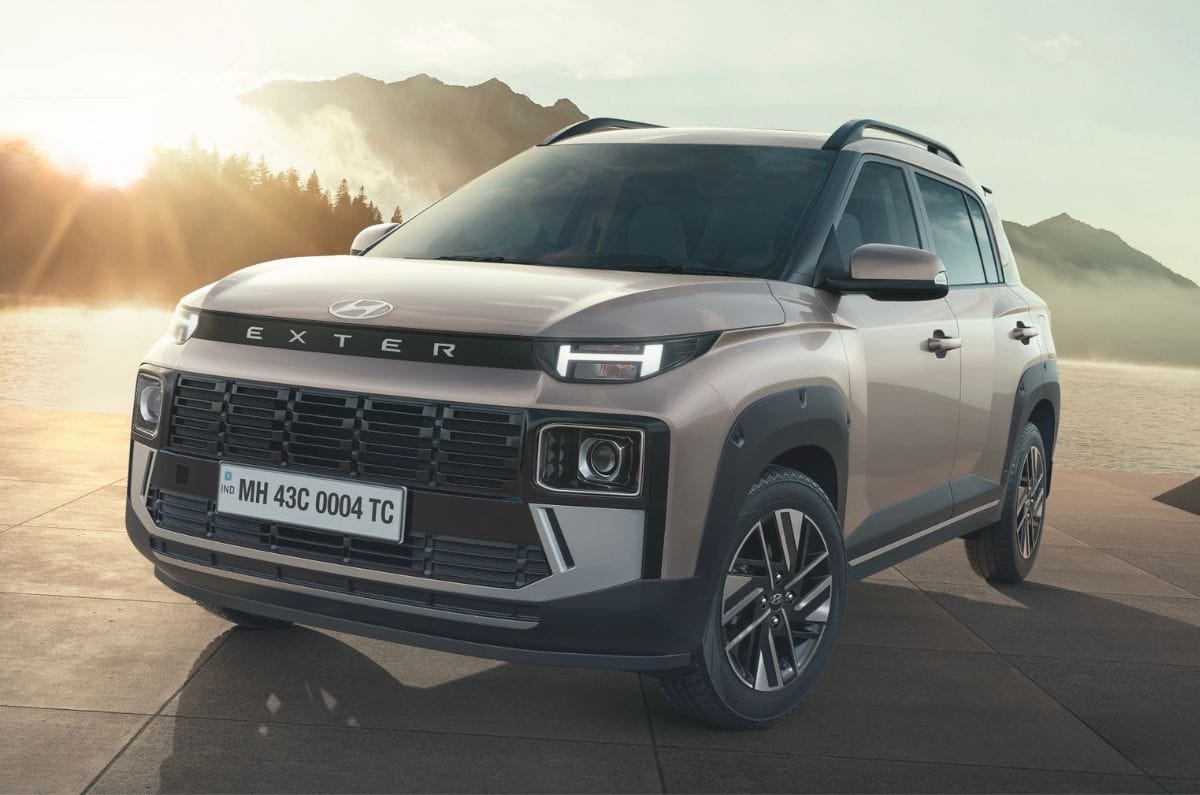
Hyundai is offering benefits of up to Rs 50,000 on the Exter. The subcompact SUV was updated earlier this year with refreshed looks and feature additions. It is powered by a 1.2-litre petrol engine and is mated with either a manual or AMT gearbox. Like the Grand i10, it also gets a CNG kit fitted to this engine. The Exter’s price begins at Rs 5.8 lakh and goes all the way up to Rs 9.46 lakh. It takes on the likes of the Tata Punch.

Hyundai Aura offers in September 2026 

Benefits of up to Rs 30,000

The Aura compact sedan is available with benefits of up to Rs 30,000. The Aura shares the same petrol engine as the Grand i10 Nios and the Exter, along with a CNG version on offer. It is priced between Rs 5.99 lakh and Rs 8.59 lakh and competes with the Tata Tigor, Maruti Dzire, and the Honda Amaze.
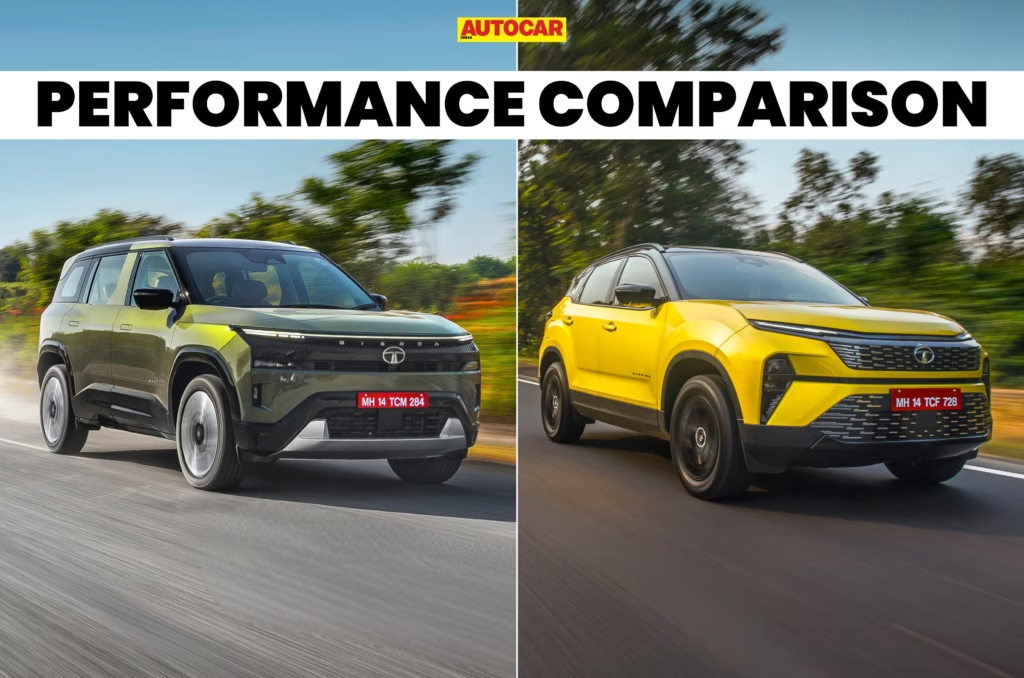
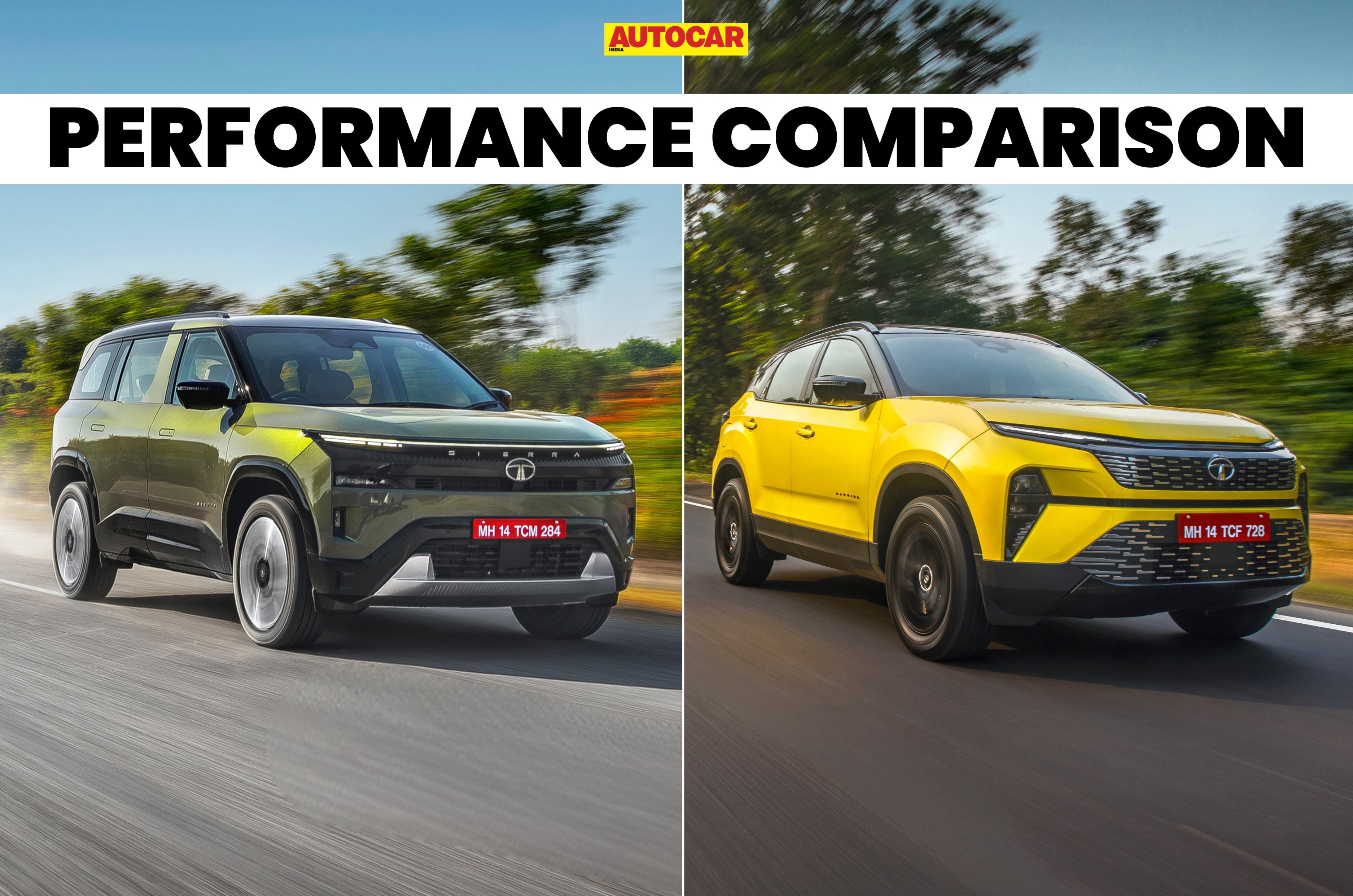
Tata Sierra vs Harrier: Diesel AT performance compared

Tata Sierra vs Harrier: Diesel AT performance compared

The Tata Sierra is one of the newer midsize SUVs to offer a diesel engine, a powertrain that is becoming increasingly rare in the segment. Positioned below the Harrier in Tata’s SUV lineup, the Sierra gets a 1.5-litre diesel engine, while a 2.0-litre diesel powers the larger Harrier. Both SUVs are available with a 6-speed automatic gearbox, but with different engines under the hood, how do they compare in terms of performance? Let’s find out.

Tata Sierra vs Harrier diesel AT: Specifications and price

The Sierra’s smaller engine offers less performance, but it is also more affordable

Tata Sierra vs Harrier diesel AT: Specifications and price


Tata Sierra 1.5D AT

Tata Harrier 2.0D AT

Engine

4-cyl, turbo-diesel

4-cyl, turbo-diesel

Displacement (cc)

1,497

1,956

Power (hp)

118

170

Torque (Nm)

280

350

Kerb weight (kg)

NA

1,823

Power-to-weight (hp per tonne)

93.25

Torque-to-weight (Nm per tonne)

191.99

Price range (Rs, lakh)

15.99-21.29

18.85-25.40  

The Tata Harrier gets a larger 2.0-litre diesel engine, making 52hp and 70Nm more than the Sierra’s 1.5-litre diesel. Tata is yet to reveal the Sierra diesel’s kerb weight, but it will be lower than the Harrier diesel’s weight because of its smaller size. For reference, the Sierra’s turbo-petrol AT weighs 1,552kg.
The Sierra diesel also has a clear price advantage. Its starting price is Rs 2.86 lakh lower than the Harrier’s, while the top-spec Sierra diesel undercuts the Harrier by a substantial Rs 4.11 lakh.
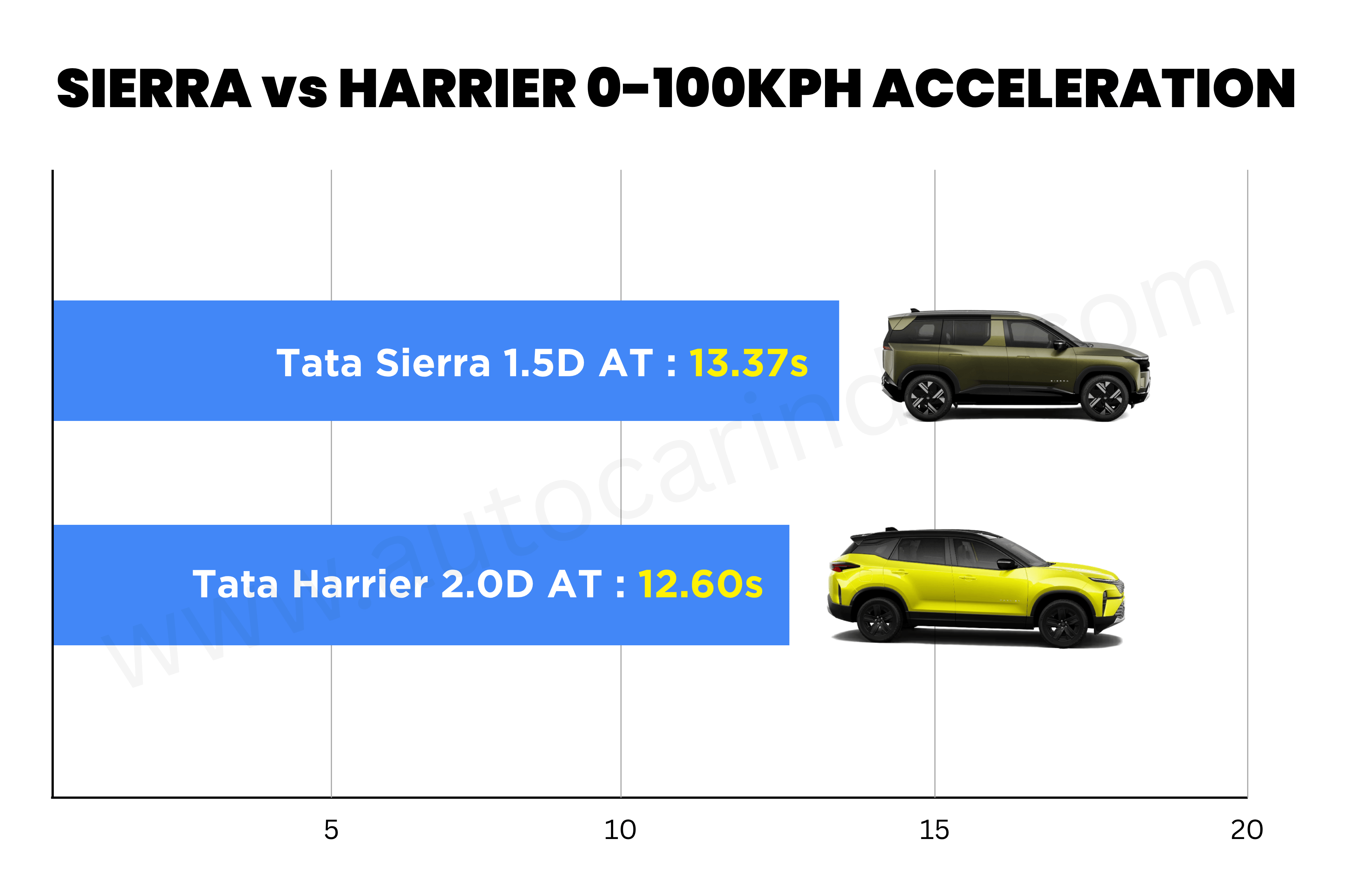
Tata Sierra vs Harrier diesel AT: 0-100kph acceleration test

The Harrier is 0.77s faster than the Sierra to reach 100kph from a standstill

Tata Sierra vs Harrier diesel AT: Acceleration from rest (in seconds)


Tata Sierra 1.5D AT

Tata Harrier 2.0D AT

20kph

1.44

1.33

40kph

3.53

2.94

60kph

5.93

5.16

80kph

9.31

8.30

100kph

13.37

12.60

The Harrier diesel-AT gets off the line 0.11 seconds quicker than the Sierra diesel-AT and continues to pull ahead as speeds rise. By 60kph, the Harrier’s lead grows to 0.77 seconds, a gap it maintains through to 100kph.

Tata Sierra vs Harrier diesel AT: Rolling acceleration tests

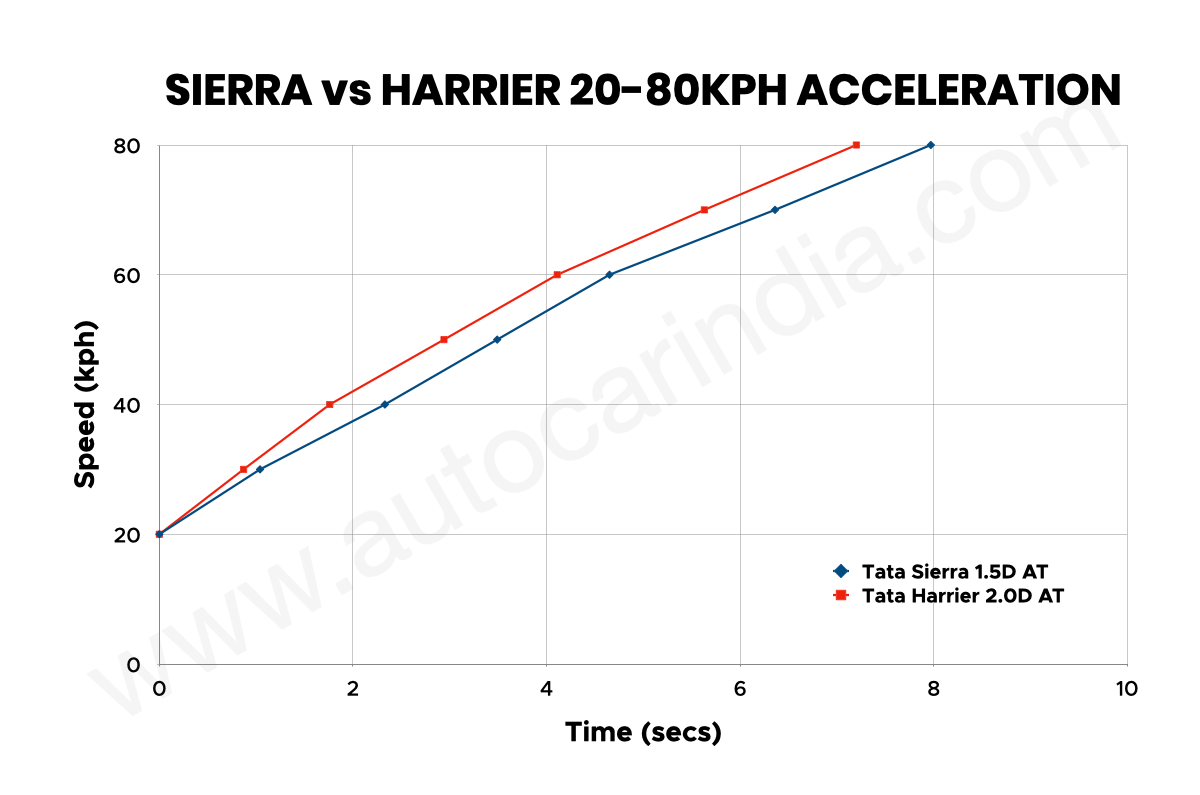
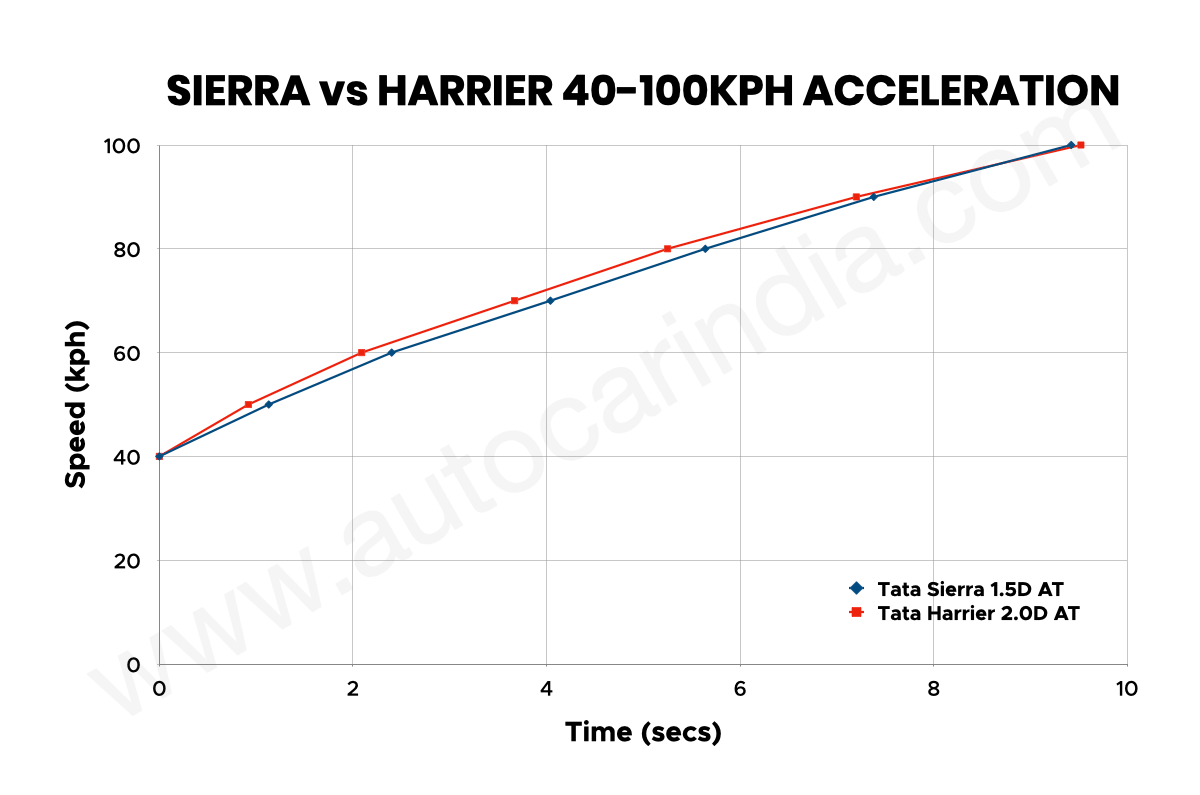
While the Harrier clocks a faster 20-80kph run, the Sierra is quicker to do 40-100kph

Tata Sierra vs Harrier diesel AT: Rolling acceleration (in seconds)


Tata Sierra 1.5D AT

Tata Harrier 2.0D AT

20-80kph

7.97

7.20

40-100kph

9.42

9.52

In the rolling acceleration tests, the Harrier diesel-AT is again quicker in the 20-80kph test, taking 0.77 seconds less than the Sierra diesel-AT.

However, the Sierra clocks a 0.10-second quicker 40-100kph time. In the real world, we noticed that the Sierra’s 1.5-litre engine builds power linearly and lacks the midrange punch associated with diesel engines. On the other hand, the Harrier offers a punchy mid-range and the powertrain feels more responsive to throttle inputs. 

Autocar India’s testing standards

Before we conduct our performance tests, we check and maintain tyre pressures based on the manufacturer’s recommendation and ensure the car has a full tank of fuel. The car is then tested in a controlled environment with two people on board, and the data is collected via highly accurate GPS-based timing equipment.

Hyundai confirms next-gen Creta and i10 for India

Hyundai confirms next-gen Creta and i10 for India

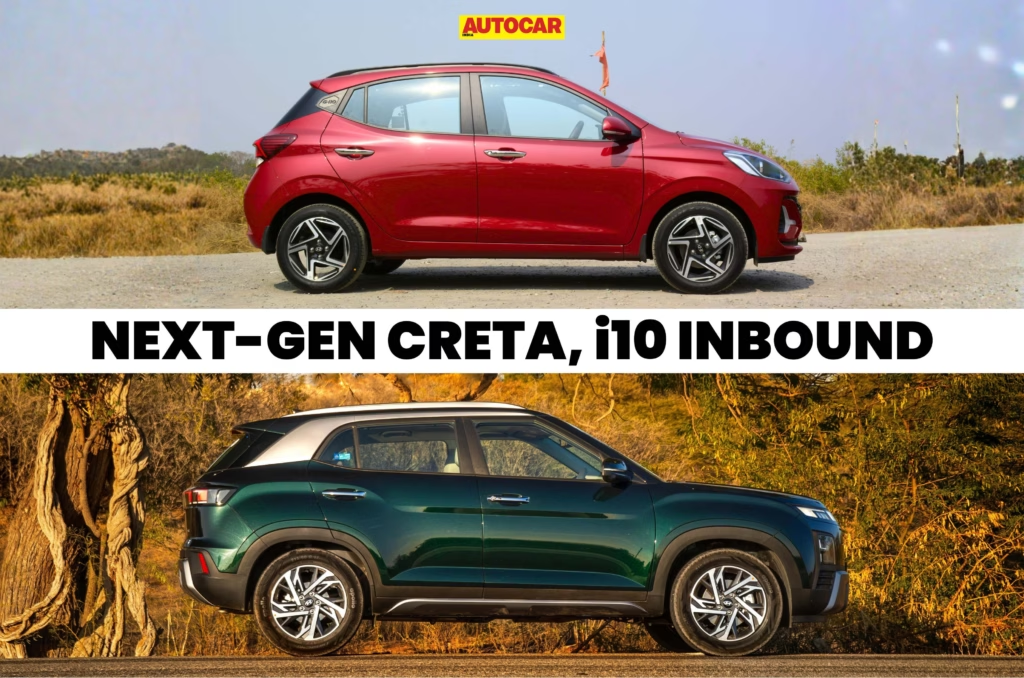
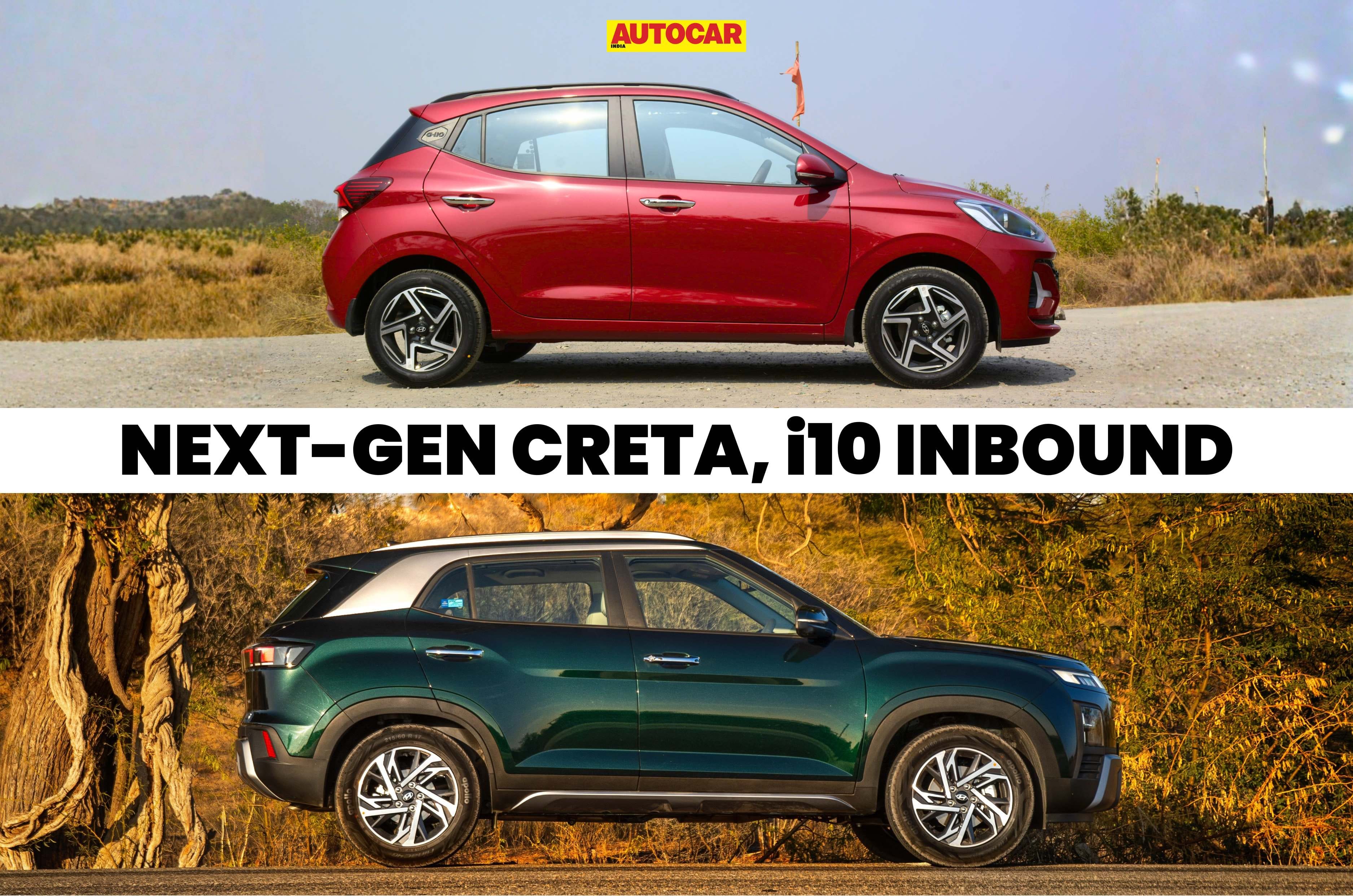
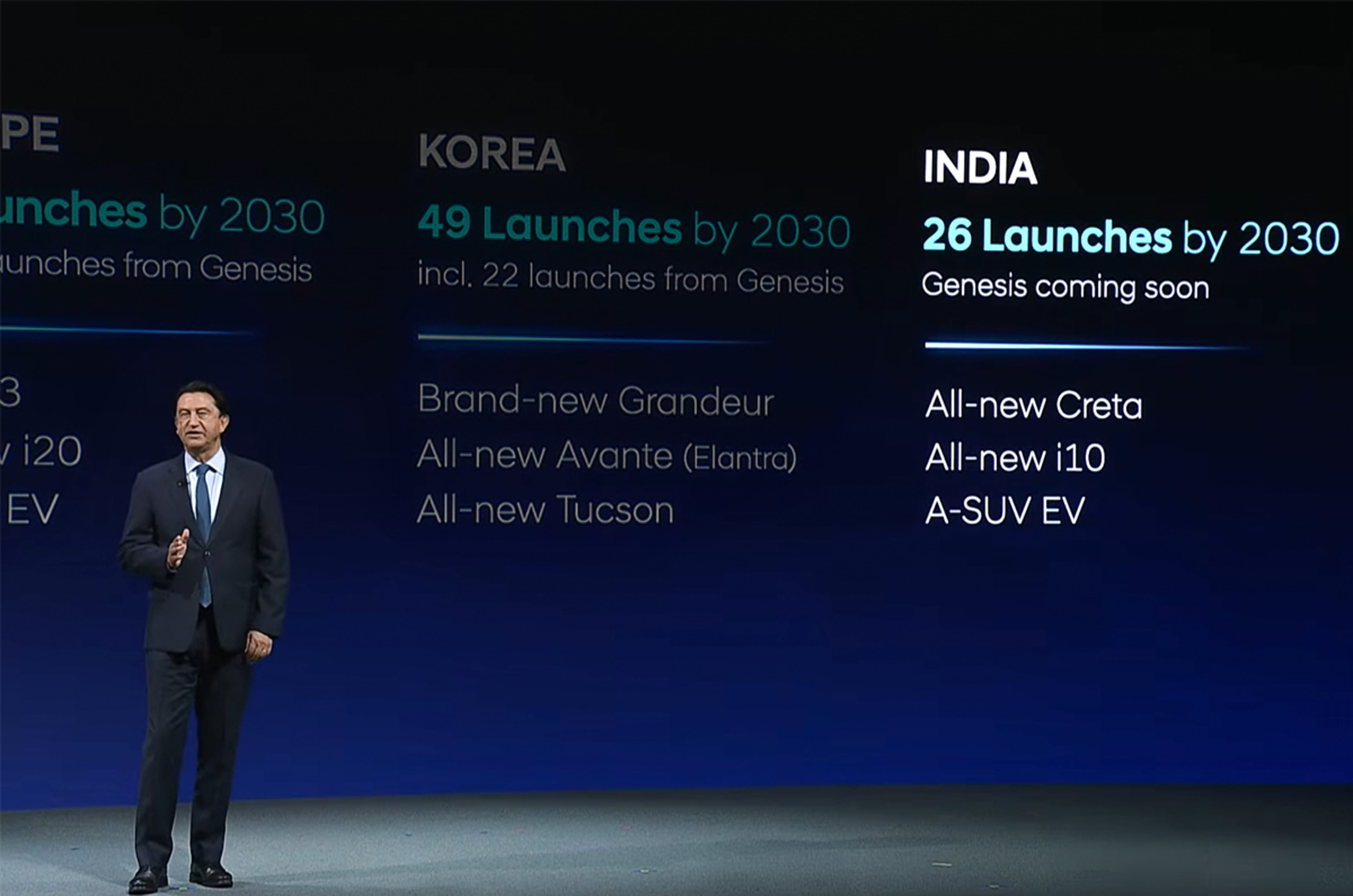
At its 2026 CEO Investor Day, Hyundai formally announced that it will bring next-gen versions of the Creta midsize SUV and i10 hatchback to India before 2030. We’ve known for quite some time that a new-gen Creta is in the works – test mules have been spied in India too – and we even reported on the next-gen i10’s launch timeline back in 2024.

Next-gen Hyundai Creta

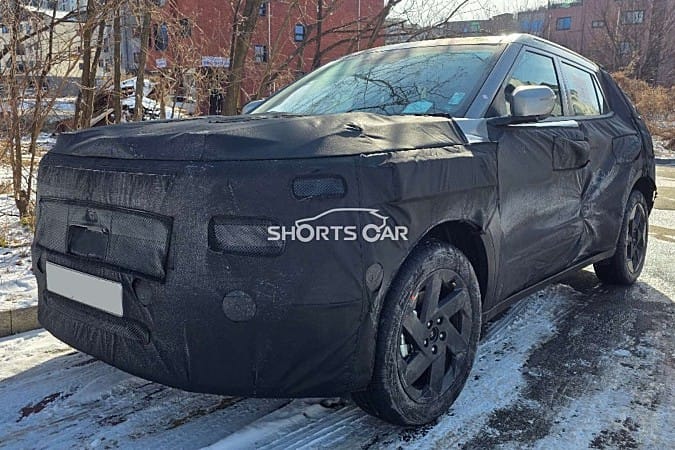
The new Creta is likely to ride on the same K3 platform that underpins the second-gen Kia Seltos. Test mules of the next-gen Creta indicate that the SUV will grow in size and sport boxier proportions, while the interior is expected to get a fresh design, Hyundai’s new Pleos Connect infotainment interface, and an enhanced feature set.

Under the bonnet, the new Creta is anticipated to carry over the existing model’s 115hp 1.5-litre naturally aspirated petrol, 160hp 1.5-litre direct-injection turbo-petrol, and 116hp 1.5-litre diesel engines, along with their respective gearbox options. In addition to those, Hyundai is likely to introduce a strong-hybrid powertrain for the next-gen Creta, which could be based on the 1.5-litre naturally aspirated petrol engine.

Third-gen Hyundai Creta test mule. Image credit: Raspberry via Autospy.net

We expect the third-gen Creta to launch sometime in 2027, possibly in the second half of the year. The current-gen Creta was first launched in 2020 and received a major facelift in 2024. However, with the recent barrage of all-new midsize SUV rivals like the Tata Sierra, Renault Duster, Nissan Tekton, and the aforementioned second-gen Seltos, the Creta is due a generational update.

Next-gen Hyundai i10

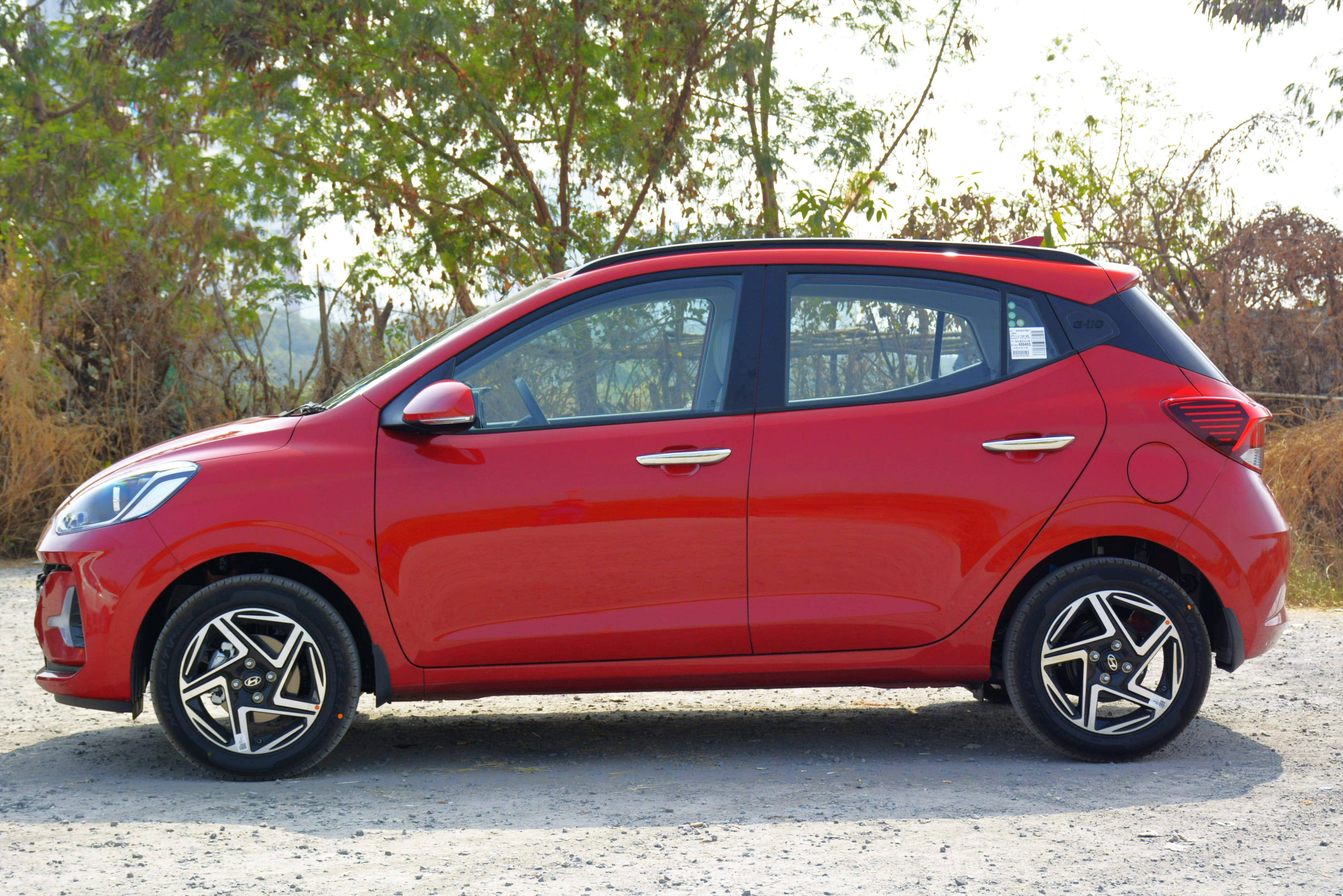
Details are scarce about the next-gen i10, but hatchback could make the switch to a new platform. Thorough redesigns for the exterior and interior, along with a bolstered list of features, are expected. As for engine options, the new i10 is expected to use the current model’s 1.2-litre naturally aspirated engine, which is available in 83hp petrol and 69hp CNG guises. Manual and AMT gearbox options are also anticipated to be retained.

Current Hyundai Grand i10 Nios. Image used for representation only.

According to our prior report, the next-gen i10 is likely to launch in India by late 2027, which would mark a gap of around eight years following the arrival of the current Grand i10 Nios in 2019. More significantly, the next-gen i10 will reinforce Hyundai’s presence in the small-car segment, which has seen renewed interest following the 2025 GST cuts.

6 updates Mahindra BE 6 Sporteq gets over its predecessor

6 updates Mahindra BE 6 Sporteq gets over its predecessor
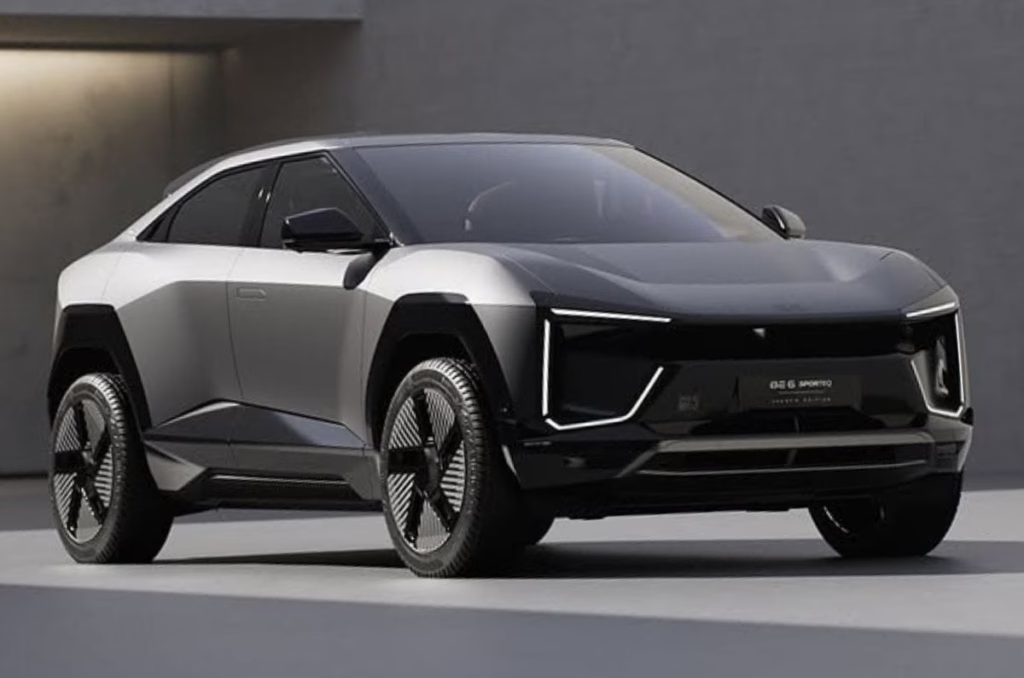
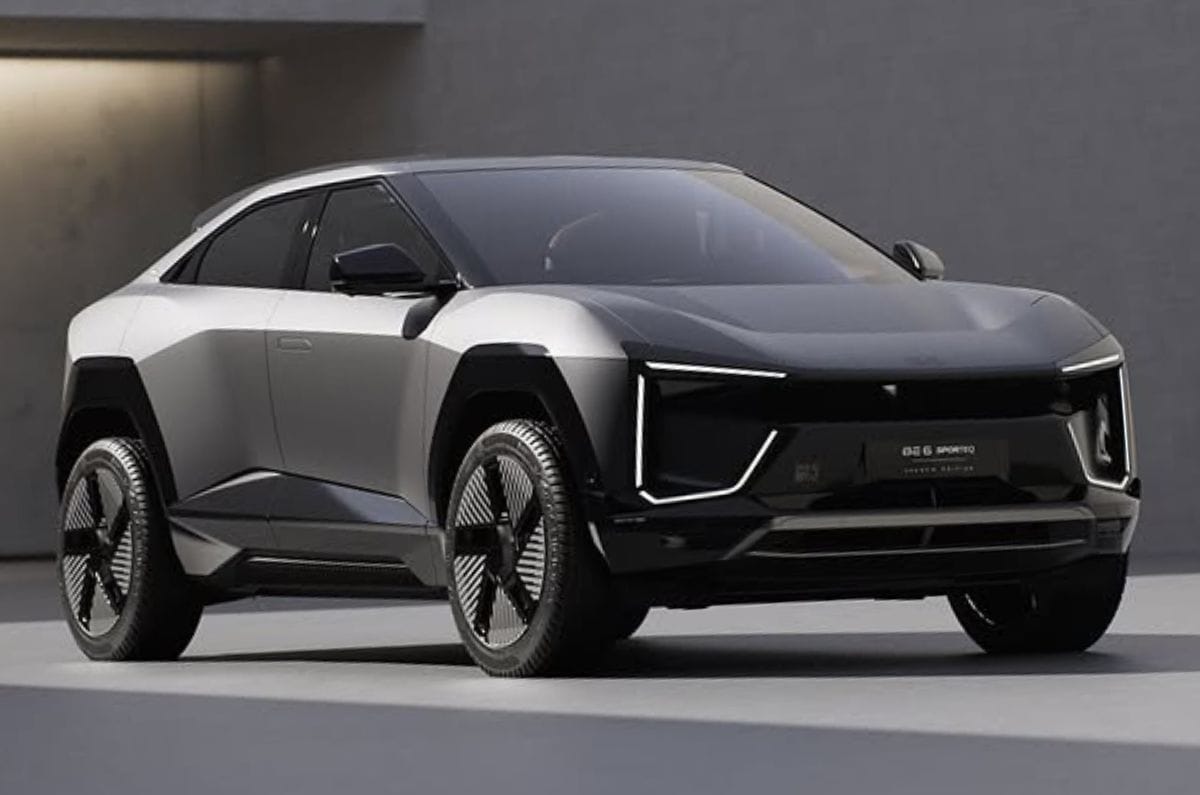
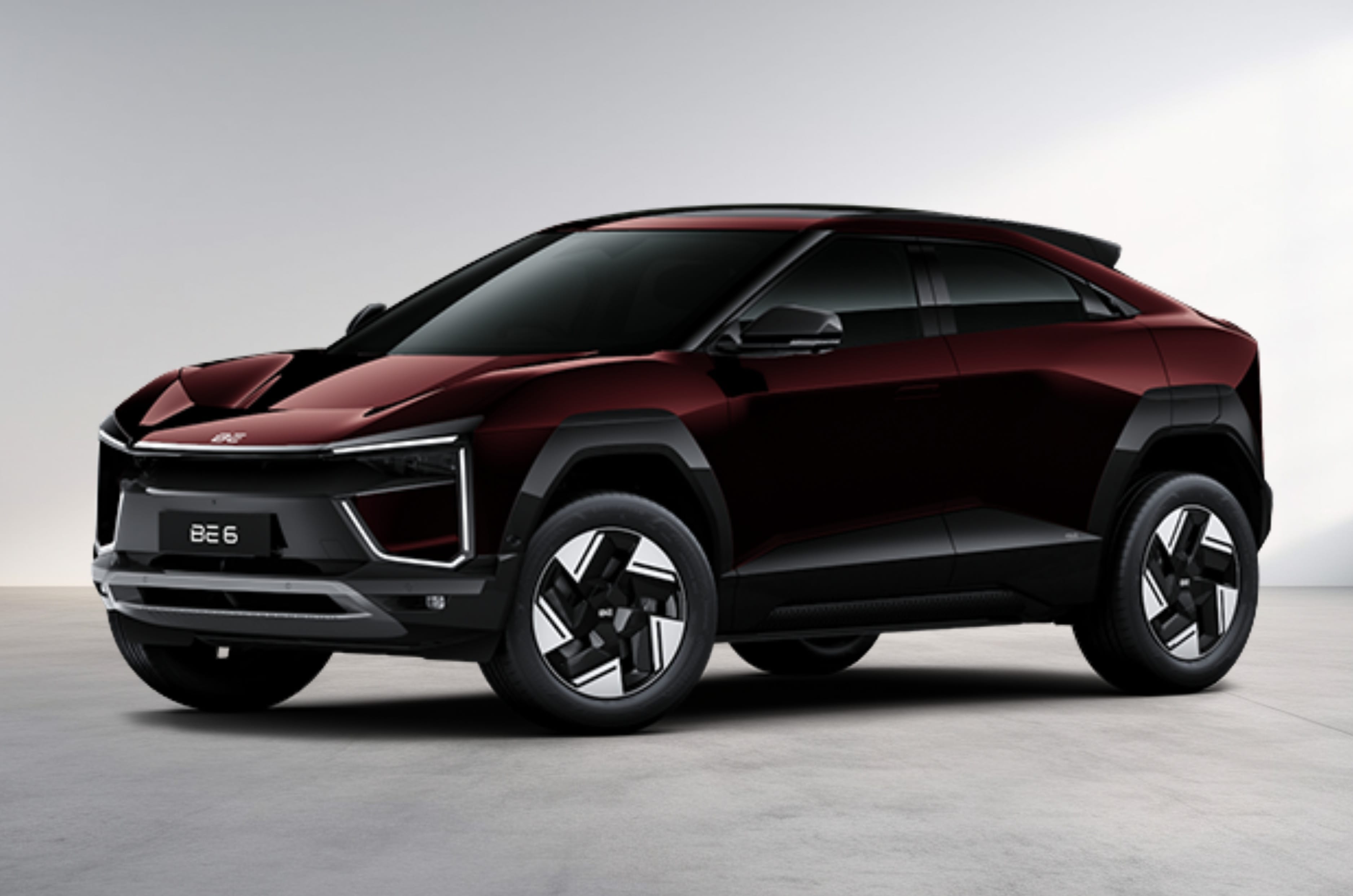
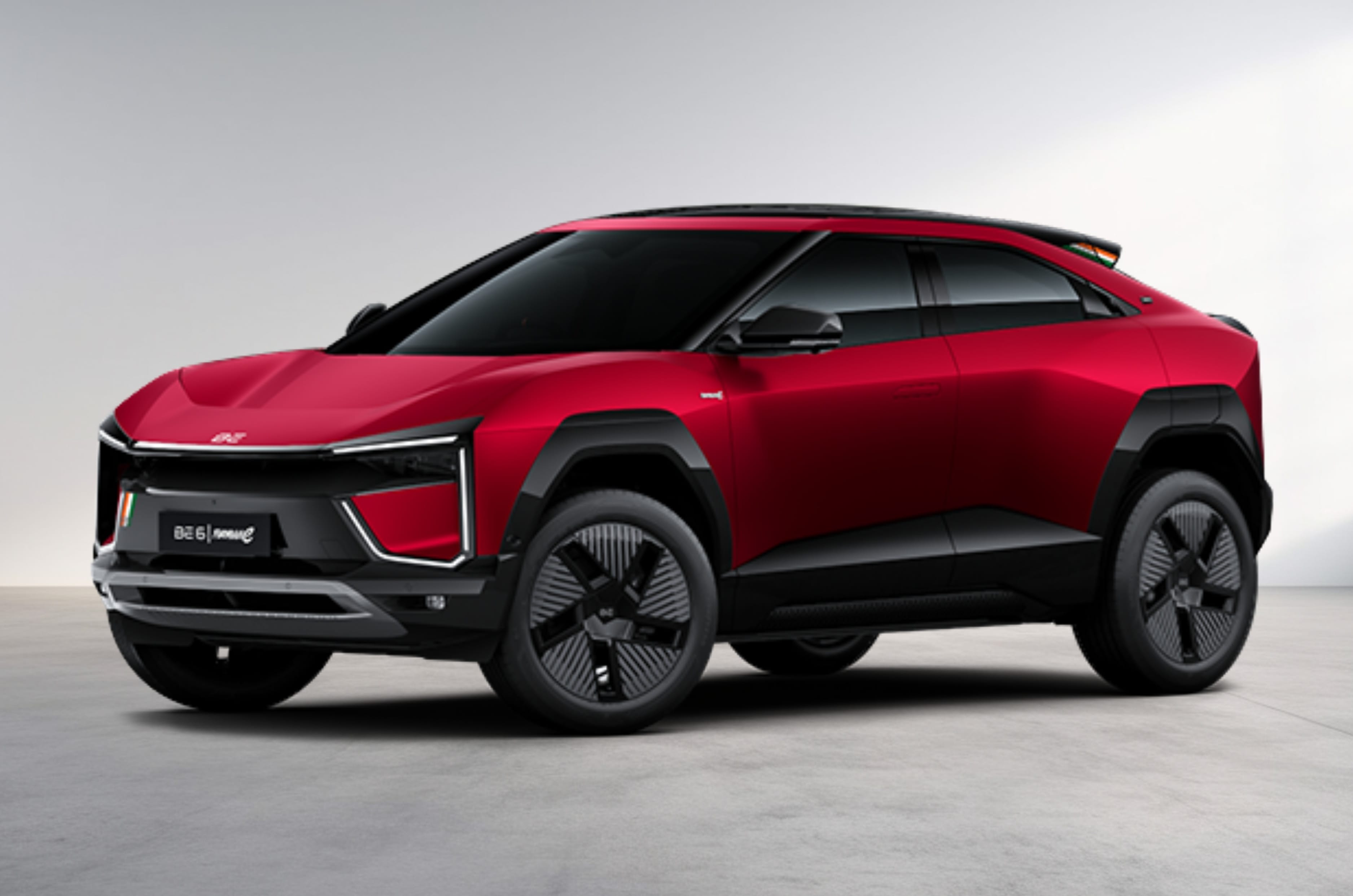
2026 Mahindra BE 6 Sporteq front quarter static

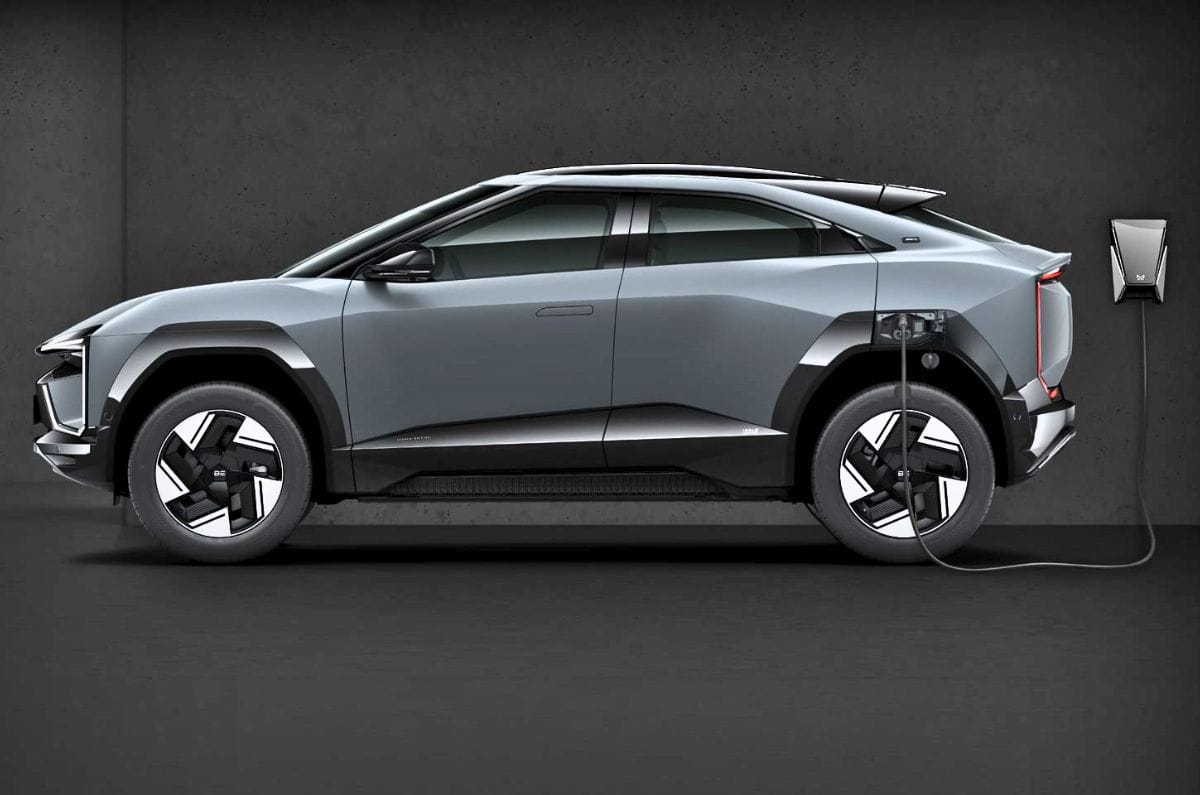
Mahindra launched the 2026 BE 6 recently, adding the ‘Sporteq’ moniker and pricing it from Rs 19.45 lakh to Rs 26.95 lakh (ex-showroom). Along with a new name, Mahindra has also introduced some updates to the midsize electric SUV to keep it modern in the segment. Here’s a detailed list of these updates:

New 70kWh battery pack

New battery pack offers 651km range and is mated to a 241hp rear motor

The 2026 Mahindra BE 6 Sporteq gets a new 70kWh battery pack in addition to the previously available 59kWh and 79kWh batteries. This new 70kWh battery offers an ARAI-claimed range of 651km and a rear-axle-mounted (RWD) electric motor that produces 241hp and 360Nm. It supports a 7.2kW AC, a 11.2kW AC and a 160kW DC charger. The DC fast charger recharges the battery pack from 20-80 percent in a claimed 20 minutes.

Mahindra is offering the 70kWh battery with the Three and Three+ trims, priced at Rs 22.95 lakh and Rs 23.95 lakh, respectively (ex-showroom). 

Battery-as-a-Service (BaaS) scheme

Battery rental scheme makes the 59kWh battery variants Rs 8 lakh more affordable

Along with a new battery, Mahindra is also offering the BE 6 with a battery-as-a-service (BaaS) scheme, which is also a first for the brand. However, the BaaS scheme is offered only with the 59kWh battery pack available in the One and Two trims. The battery rental scheme essentially lowers the BE 6’s initial price by Rs 8 lakh, but requires a monthly subscription fee for the battery. Here are the details:

Mahindra BE 6 battery-as-a-service (BaaS) price vs standard price


Standard price

BaaS price*

Difference^

One

Rs 19.45 lakh

Rs 11.45 lakh + Rs 3.75/km

– Rs 8 lakh

Two

Rs 20.95 lakh

Rs 12.95 lakh + Rs 3.75/km

– Rs 8 lakh

Notes: BaaS scheme requires a minimum monthly payment of Rs 6,750, calculated assuming usage of 60km per day and an 8-year battery loan, as per Mahindra’s terms and conditions. The price difference calculated above is on the initial price and does not include the BaaS scheme’s battery subscription charges.

Triple-screen setup on dashboard

Offers an additional third screen for the front passenger now

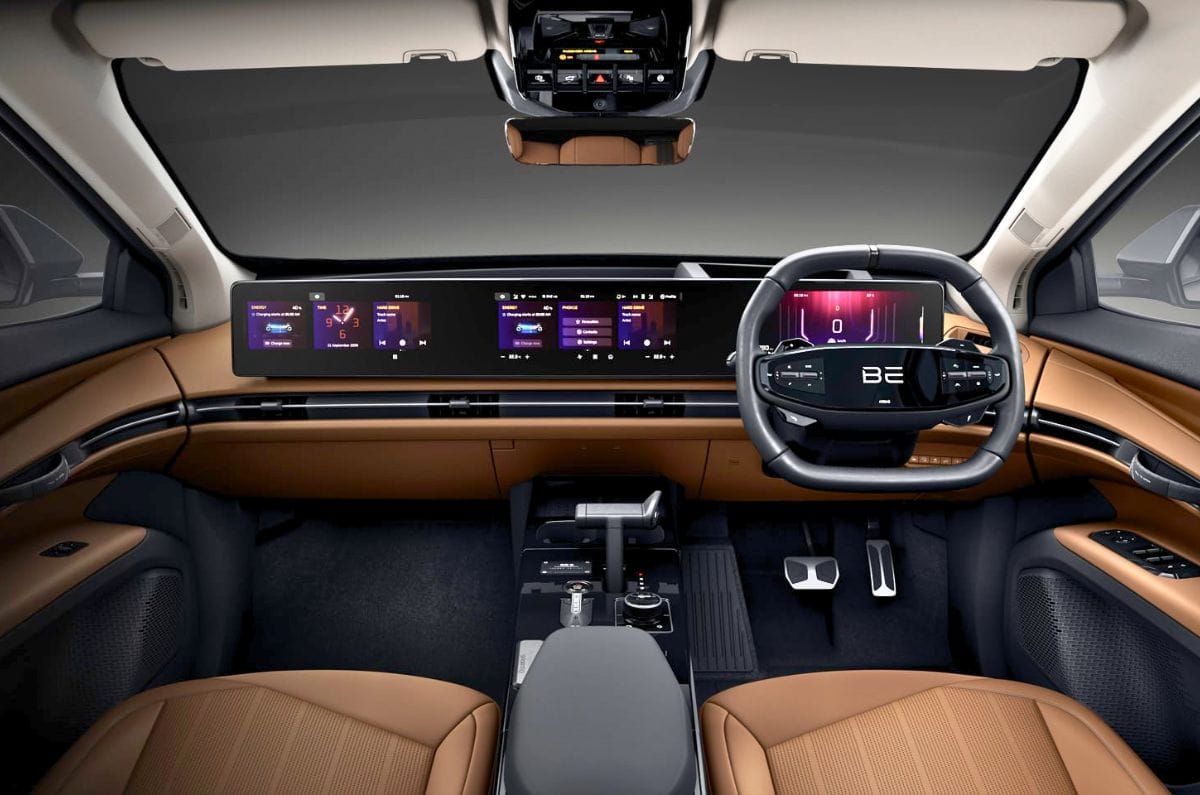
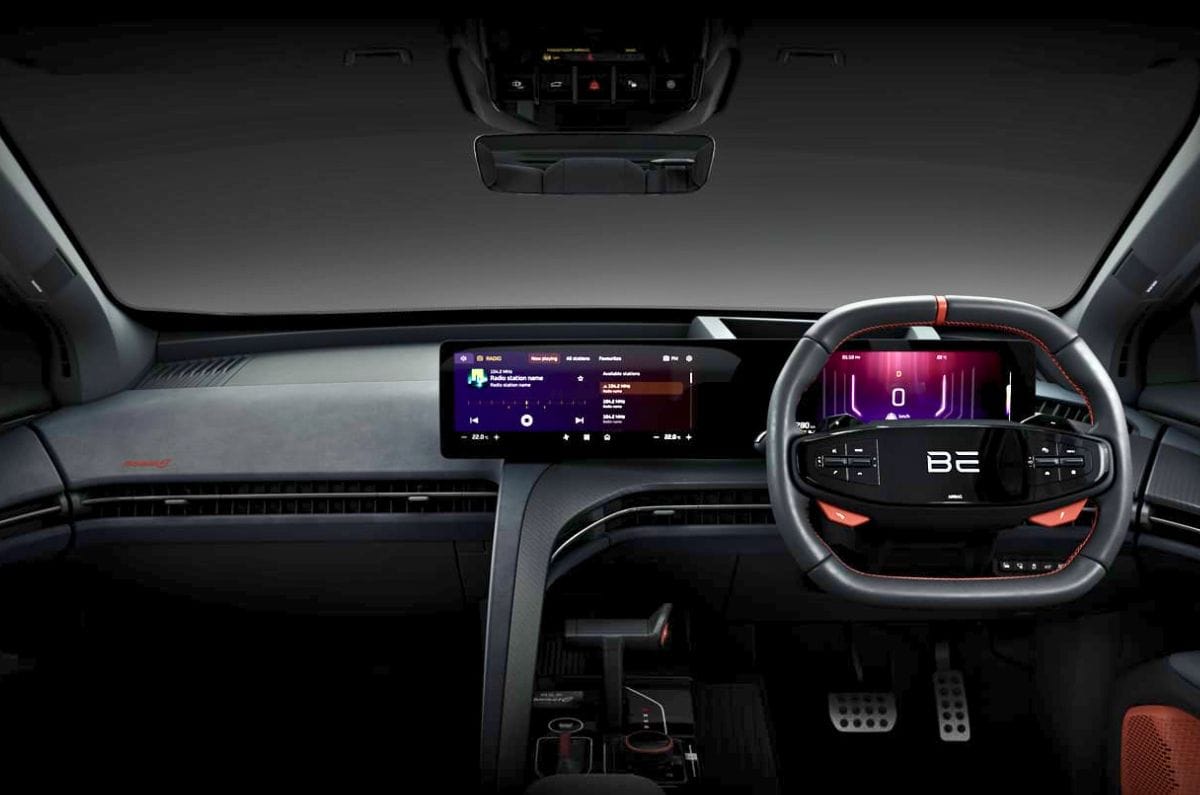
The 2026 update also brought a major redesign to the BE 6’s dashboard, now offered with an additional 12.30-inch screen for the front passenger, in addition to the similarly sized digital driver’s display and touchscreen infotainment system. The new front passenger display also removed the halo-like design element connecting the dashboard to the centre console, allowing the addition of two cupholders on the centre console, something that was sorely missing on the older model.

Mahindra is offering a triple-screen setup on all trims of the BE 6 Sporteq except the base-spec One and the sportier Formula E editions. 

Redesigned Formula E edition

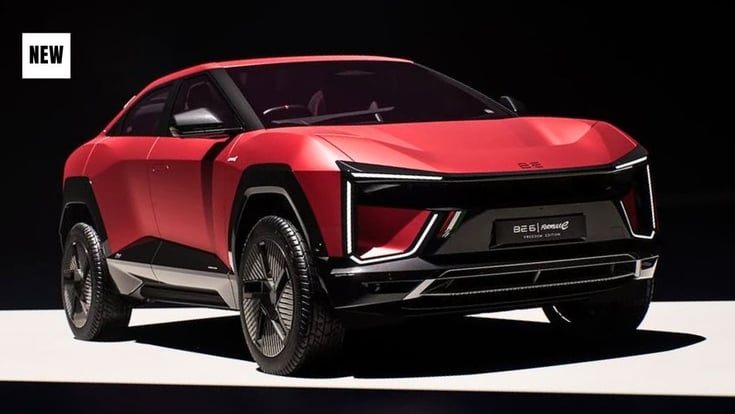
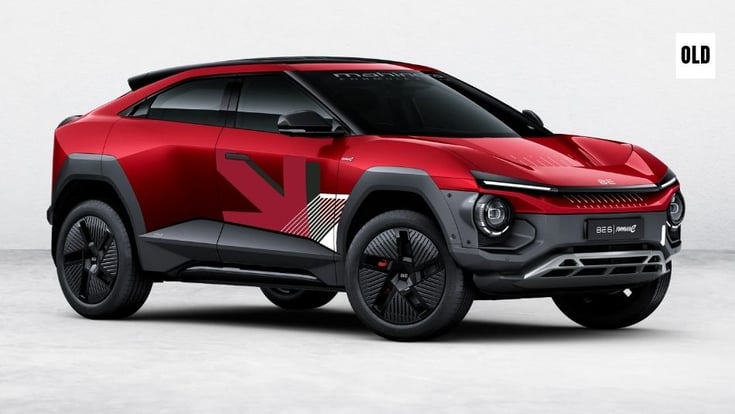
The 2026 Formula E Freedom looks nothing like the older Formula E edition

2026 Mahindra BE 6 Formula E Freedom Edition
2026 Mahindra BE 6 Formula E Edition
 

With the 2026 update, Mahindra has also rejigged the exterior design of the Formula E edition. Unlike the previous model, which had a different fascia from the standard model with circular-shaped LED headlights and a revised bumper, the 2026 Formula E Freedom edition gets the same design as the standard BE 6 Sporteq, with some Formula E badges and FIA decals. Moreover, the Formula E edition is only offered with the older model’s dual-screen dashboard and a halo design element for a sporty appeal.

Mahindra is offering the 2026 Formula E edition at the Three and Four trim levels, priced at Rs 24.45 lakh and Rs 26.95 lakh, respectively (ex-showroom).

Fresh exterior and interior colours

Both the BE 6 Sporteq and Formula E edition get new colour themes

Mahindra BE 6 Sporteq Ruby Velvet exterior colour.

The 2026 Mahindra BE 6 Sporteq is being offered with fresh exterior and interior colour options. It is available in a new ‘Ruby Red’ exterior theme and new Racing Tan and Black interior hues for the Two, Three, Three+ and Four trims. The base-spec One is offered with the same Sage Green and Grey theme as before. A Sporteq Launch Edition, based on the fully loaded Four trim, is also available, which offers a new Graphite Storm exterior paint and Racing Tan interior theme. 

Mahindra BE 6 Formula E Freedom edition Rosso Impulso exterior colour.

While the 2026 BE 6 Formula E edition is offered with a new Rosso Impulso exterior hue, the all-black interior with orange elements for contrast is the same as the outgoing model.

New ‘TEQ’ suite

The suite enables Gemini-based interactions, unlocks additional drive modes and Revive functionalities

Another addition to the BE 6 Sporteq is the new ‘TEQ’ suite, which Mahindra says is designed to make the vehicle more intuitive, engaging, secure and responsive to individual customer needs. At its core is a Gemini-based AI conversation assistant that allows natural voice interactions for functions such as vehicle controls, navigation and music. The suite also introduces a Karaoke mode, along with support for Dolby Vision and Dolby Audio.

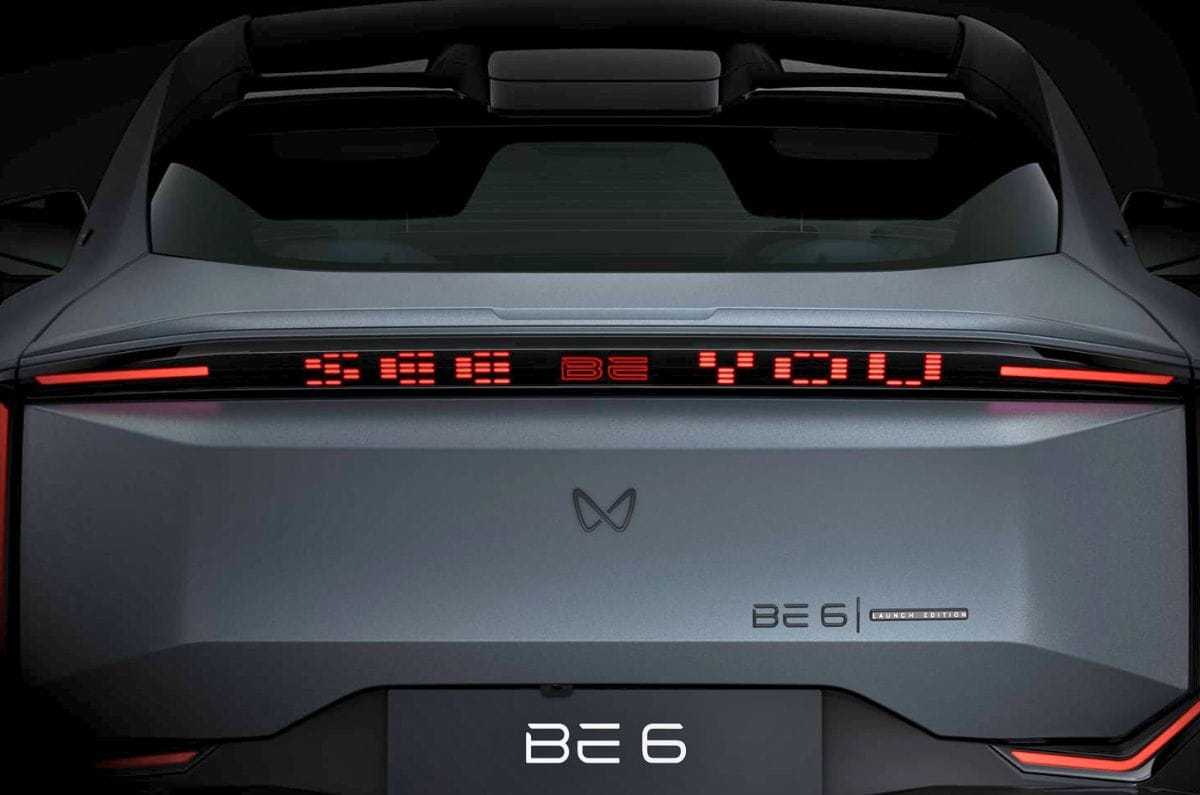
The TEQ suite also adds several performance and convenience features, including Custom Drive Mode, Drift Mode and an acceleration boost mode for the Formula E Freedom Edition, which enables a claimed 0-100 kph time of 6.44 seconds. It also includes Revive and Revive SOS, which can provide additional range even after the battery has run out. Another new feature is ‘TEQ_xting’, which lets owners display personalised messages on the vehicle’s tailgate.

The Mahindra BE 6 Sporteq is priced from Rs 19.45 lakh to Rs 26.95 lakh (ex-showroom), and it rivals the Hyundai Creta Electric, Tata Sierra EV, Tata Curvv EV, MG ZS EV, Maruti Suzuki e Vitara and Toyota Ebella.

Prices are ex-showroom, India, and do not include a wall charger or its installation cost.

Mahindra BE 6 Sporteq interior leaked

Mahindra BE 6 Sporteq interior leaked
Mahindra BE 6 Sporteq

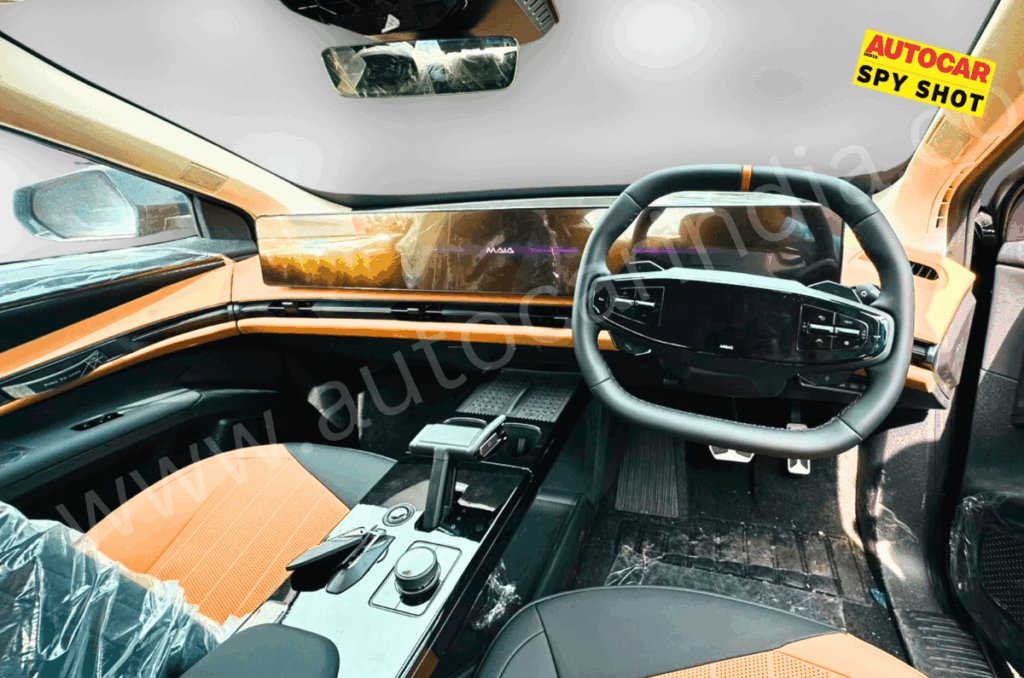
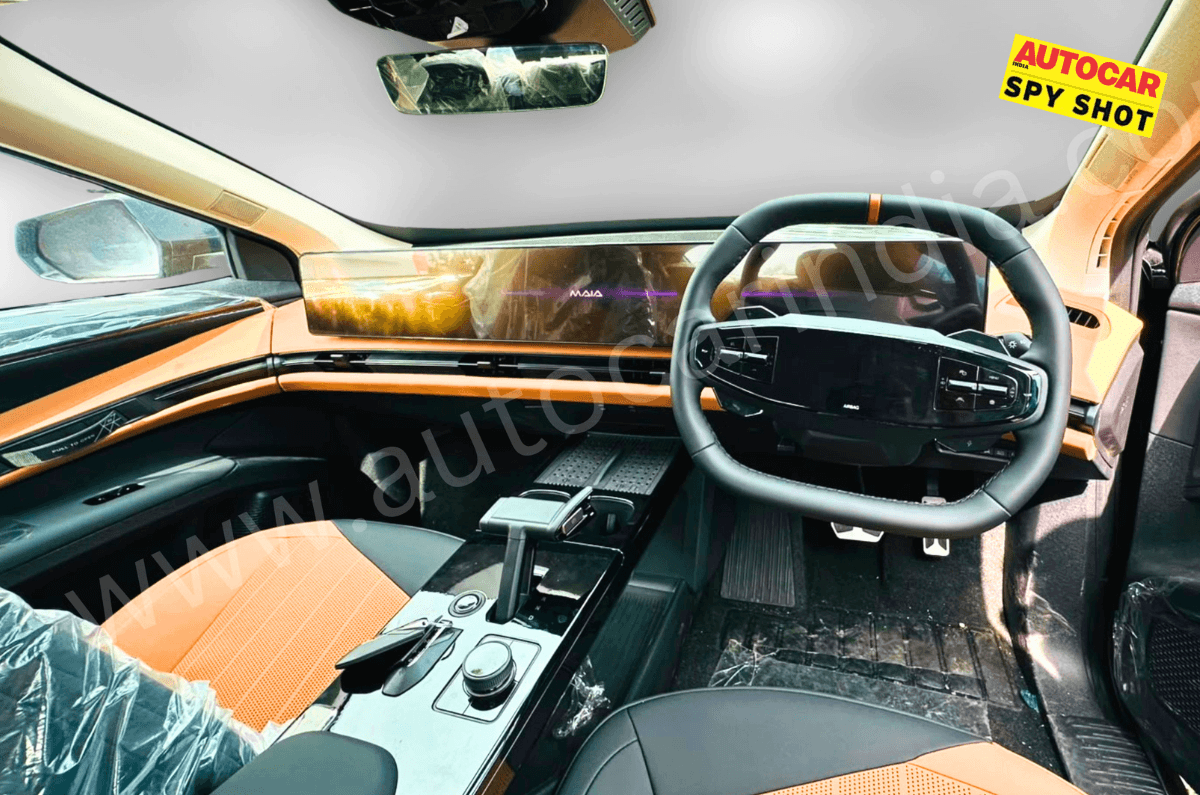
The Mahindra BE 6 Sporteq has been exclusively spied by us ahead of its full reveal on August 15, giving us an early look at what the new trim will offer on the inside. Mahindra had teased the Sporteq earlier this week, but revealed only a few details.

Mahindra BE 6 Sporteq spy shot details

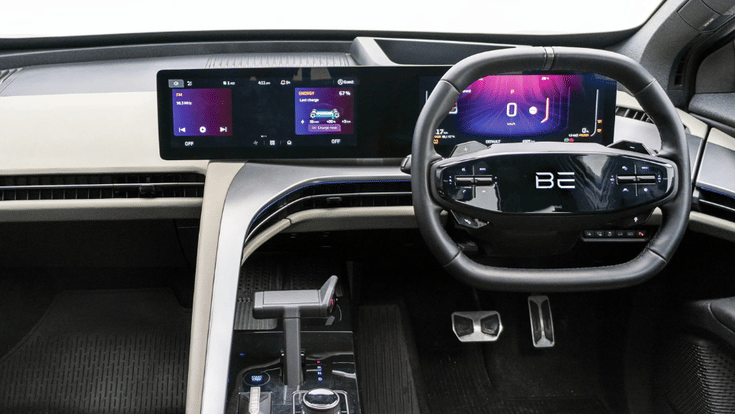
As reported earlier, the Sporteq version will get a passenger display, completing its three-screen setup; a similar arrangement is already seen in the Mahindra XEV 9e and XEV 9S. The BE 6 currently gets a dual-screen setup as standard, which will continue on the lower trims. The triple-screen setup is likely to be exclusive to the Sporteq.

Mahindra BE 6 Sporteq interior
Mahindra BE 6 interior

Mahindra BE 6 Sporteq dashboard (left), current BE 6 dashboard (right).

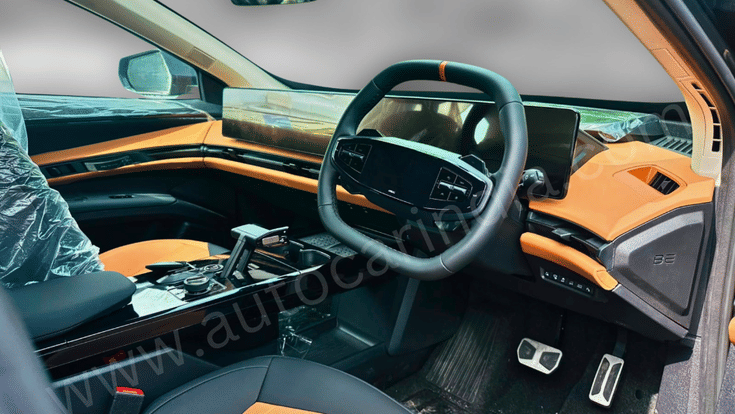
The teaser from before also showed a new  black-and-tan colour scheme for the seats and dashboard, although these areas were mostly hidden. The fresh spy shots give a clearer look, and the colour scheme is applied not only on the dashboard and seats, but even on the door cards.

Mahindra BE 6 Sporteq interior
Mahindra BE 6 interior
 

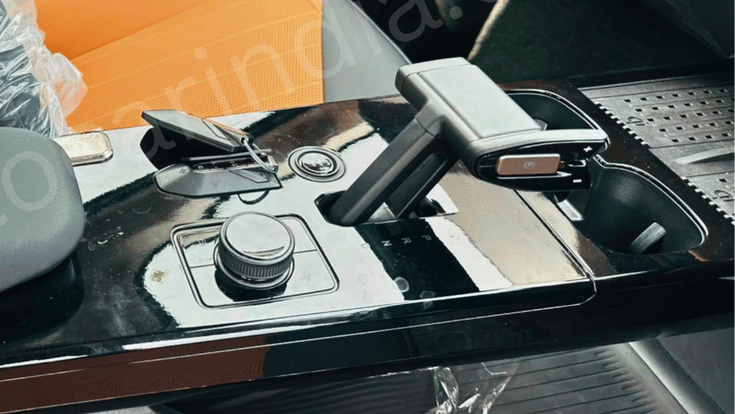
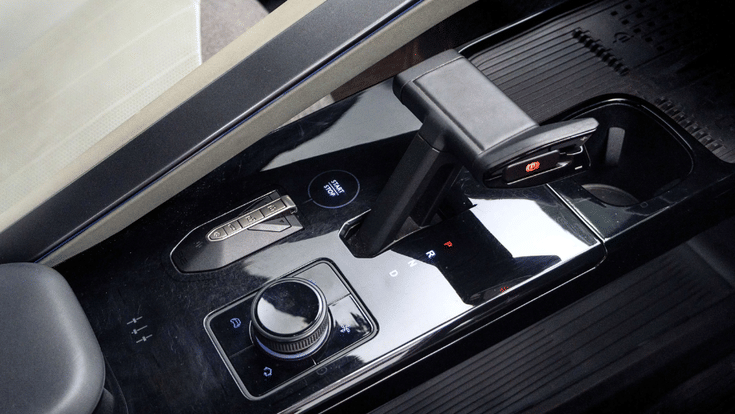
Mahindra Sporteq centre console (left), current BE 6 centre console (right).

Another major change is the redesigned dashboard, which drops the halo-like loop around the driver. The current design has an ergonomic drawback, as it leaves little room for a second cup holder. The spy shots, however, show that another cup holder has now been added. The halo loop also made the wireless charger and USB Type-C ports difficult to reach from the passenger side, an issue we noted in our BE 6 review. These changes are likely to address that as well.

Mahindra BE 6 Sporteq battery pack and range expectations

The BE 6 Sporteq is expected to remain largely unchanged from the regular model. It remains to be seen whether it will be available with both the 59kWh and 79kWh battery packs or, as a top-spec trim, only with the larger battery. Both versions use a rear electric motor producing up to 286hp and 380Nm, while the larger battery is said to offer a range of up to 682km on a single charge.

The BE 6 already has a long list of features, and these updates could further strengthen its appeal against midsize SUV rivals such as the Tata Sierra EV and Hyundai Creta Electric. The Mahindra BE 6 is currently priced between Rs 18.90 lakh and Rs 26.90 lakh, and a small price increase is likely with these updates. For reference, the Sierra EV is priced from Rs 18.79 lakh to Rs 25.99 lakh, while the Creta Electric costs between Rs 18.03 lakh and Rs 23.67 lakh.

Top Five diesel-automatic midsize SUVs under Rs 25 lakh ranked

Top Five diesel-automatic midsize SUVs under Rs 25 lakh ranked
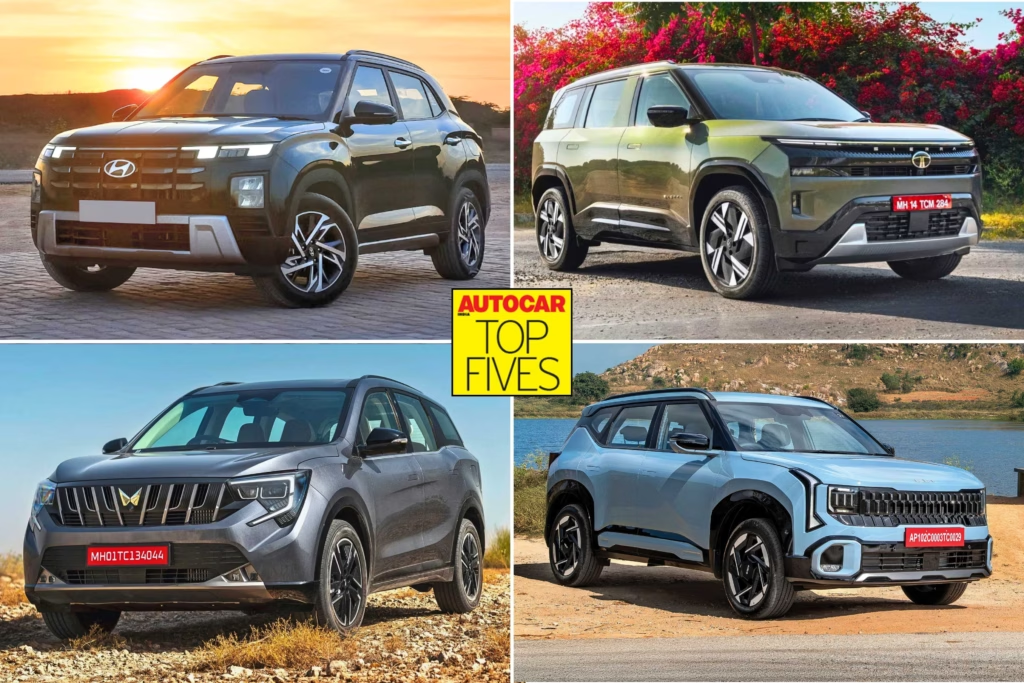
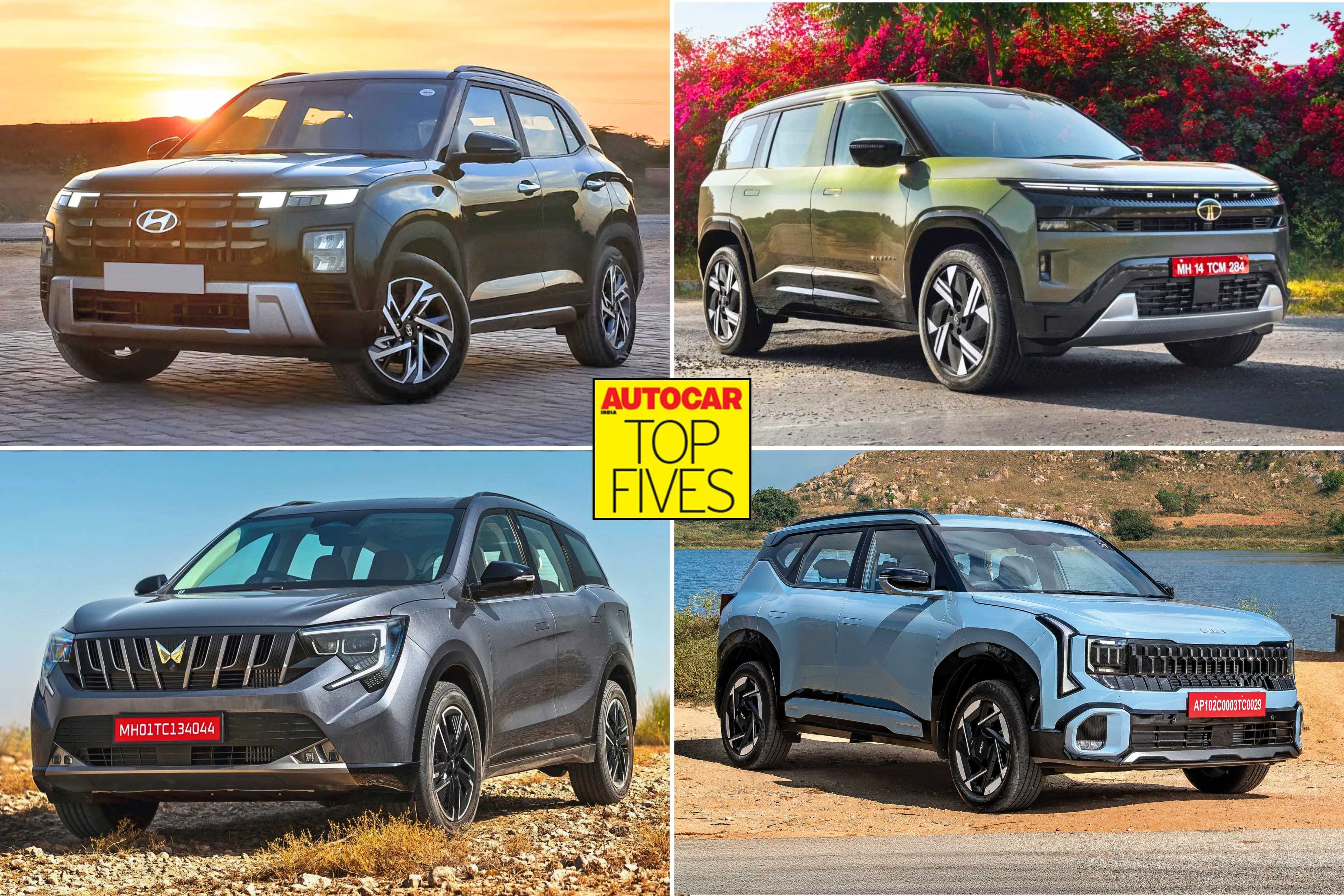
Best diesel automatic SUVs under Rs 25 lakh

SUVs are best had with diesel engines, but given our policies and the disapprobation surrounding this fuel, most carmakers have entirely withdrawn themselves from offering diesel engines. What’s interesting is that where diesel is still on offer, it continues to make up a sizeable portion of that segment, meaning that demand is still healthy but customers only have a handful of options to choose from. So, if you are in the market looking for a diesel-automatic SUV, here we have compiled a list of the five best diesel-AT midsize SUVs available within a budget of Rs 25 lakh. 

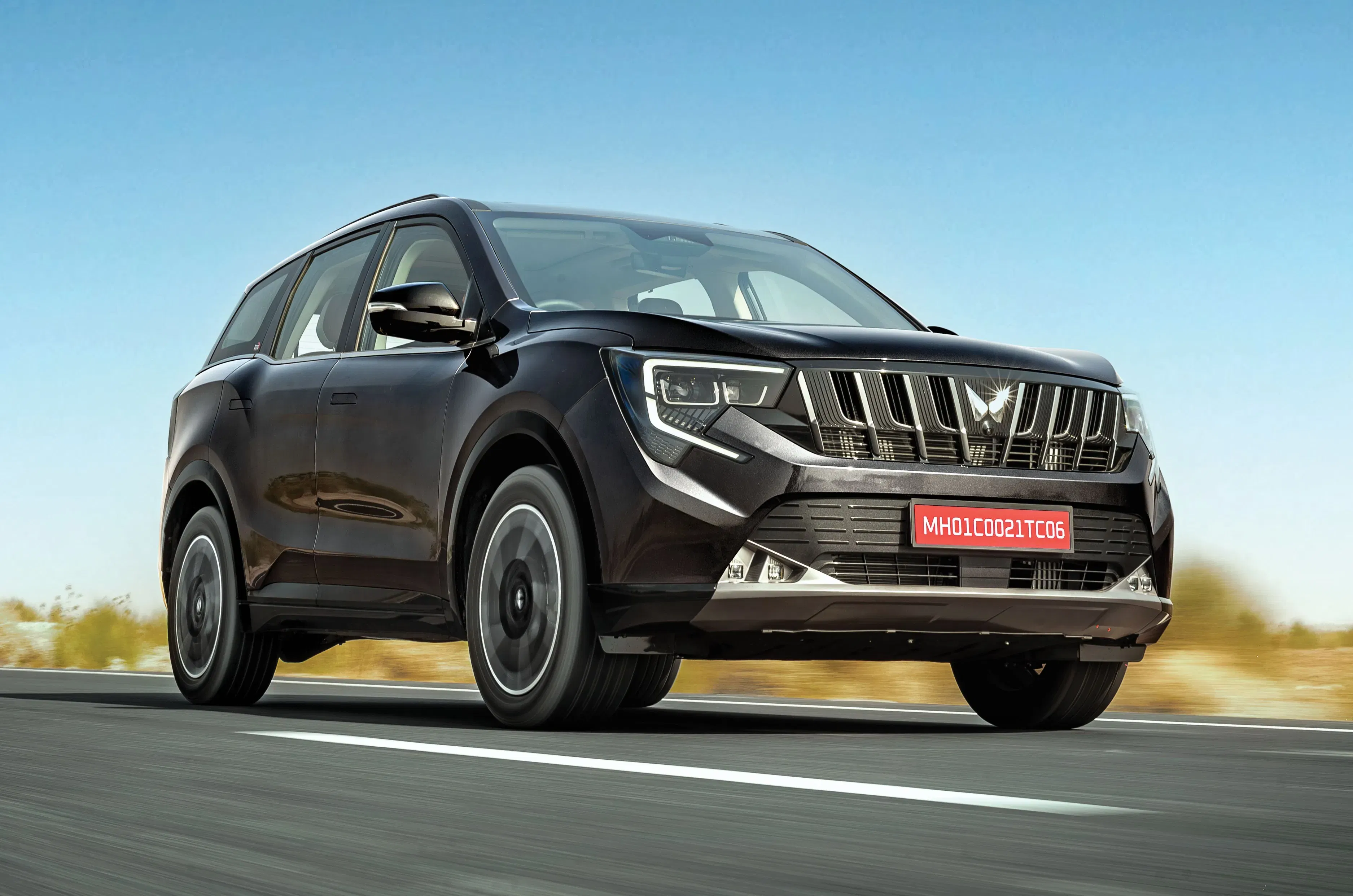
Mahindra XUV 7XO 

Price: Rs 15.29 lakh – Rs 25.79 lakh 

Mahindra is almost synonymous with large diesel SUVs and the XUV 7X0’s 185hp, 2.2-litre diesel is a benchmark for refinement and performance. It’s the most powerful SUV here, and the 6-speed torque converter automatic gearbox that’s offered with this engine is smooth, too. A premium and spacious interior with generous levels of equipment and a sorted ride and handling balance are some of XUV 7XO’s other strengths. The third-row isn’t particularly spacious, but it at least offers the flexibility of one.  

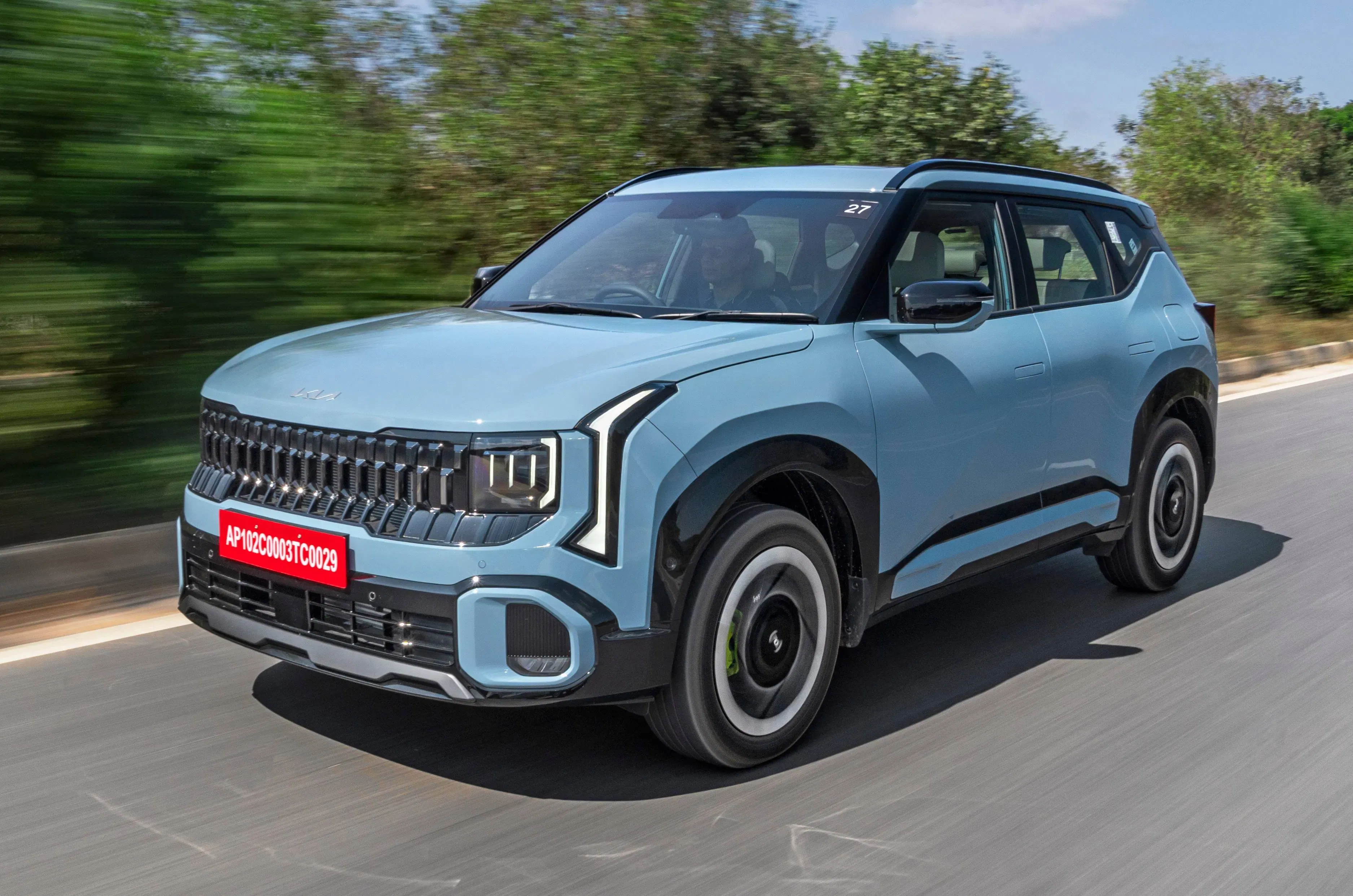
Kia Seltos 

Price: Rs 15.32 lakh – Rs 21.82 lakh 

Although much lesser in capacity and power output than the XUV 7X0, the Seltos’s 116hp, 1.5-litre diesel also stands out for smoothness and refinement. With linear power delivery and max torque coming in at just 1500rpm, it makes for a comfortable cruiser. However, it lacks that outright diesel punch and urgency, even in Sport mode. The gearbox, while smooth, is also a slow shifter, even via the paddles. The Seltos, too, is a very spacious and premium on the inside, and arguably has the best UI/UX for the infotainment system. 

Hyundai Creta 

Price: Rs 16.08 lakh – Rs 20.11 lakh 

The Creta uses the same 116hp, 1.5-litre diesel engine as the Seltos, so the smooth and refined character of the engine applies here as well. However, being an older generation model and slightly smaller than the new Seltos, it doesn’t feel lack lustre in terms of performance. It’s also quite efficient, making the diesel-auto one of the best powertrain choices on the Creta. Otherwise, too, the Creta remains one of the most competent offerings in the segment faring well on space, features and premium-ness despite its relative age compared to its rivals. 

Tata Sierra 

Price: Rs 15.99 lakh – Rs 21.29 lakh 

The Sierra uses the same 1.5-litre diesel engine that’s offered on the Curvv and the Nexon, but it has been up-tuned to produce 118hp and 280Nm. This 1.5 unit doesn’t have the midrange punch associated with diesels; instead, it builds power linearly. It also isn’t particularly refined as you can feel vibrations at all times, which makes it known to you that you are, in fact, driving a diesel. The torque-converter auto, however, is a smooth unit that keeps the engine in the meat of the powerband. Elsewhere, the Sierra impresses with its space, features and well-judged ride and handling balance. 

Mahindra Scorpio N 

Price: Rs 14.19 lakh – Rs 25.49 lakh


The Scorpio N uses the same 2.2-litre diesel engine as the XUV 7XO, but in a slightly different state of tune, producing 175hp and 370Nm (400Nm in 4×4 guise) here. Given the Scorpio N’s hardy underpinnings and rugged nature, the diesel engine makes for a great fit on this SUV, thanks to its strong reserves of torque. The 6-speed AT gearbox isn’t particularly quick shifting or sporty, but it is smooth. The Scorpio N is also the only SUV on this list to come with an optional 4×4 system, and you’d be surprised by how capable it is off the tarmac. It also has a premium interior and is well-specced with features, but third-row is quite limited on space. 

3 reasons to buy the Honda Amaze and 3 reasons to avoid it

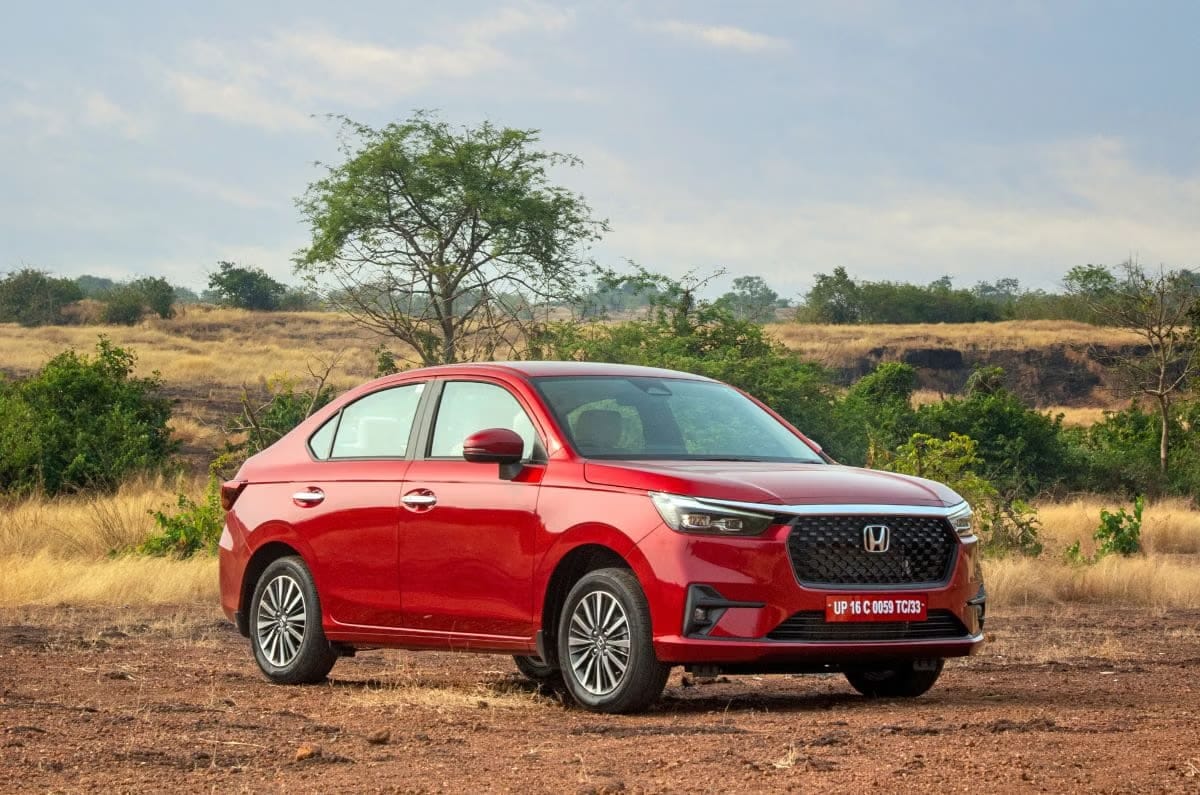
Honda Amaze front three quarter static

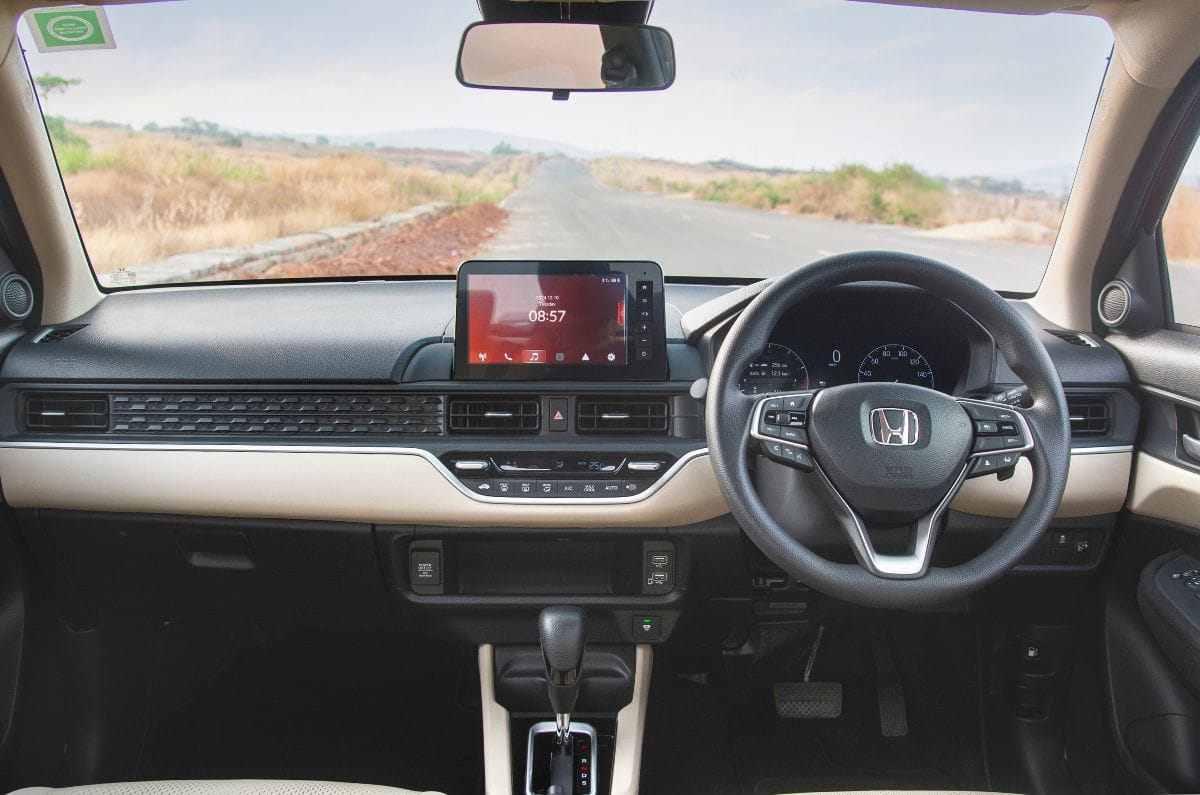
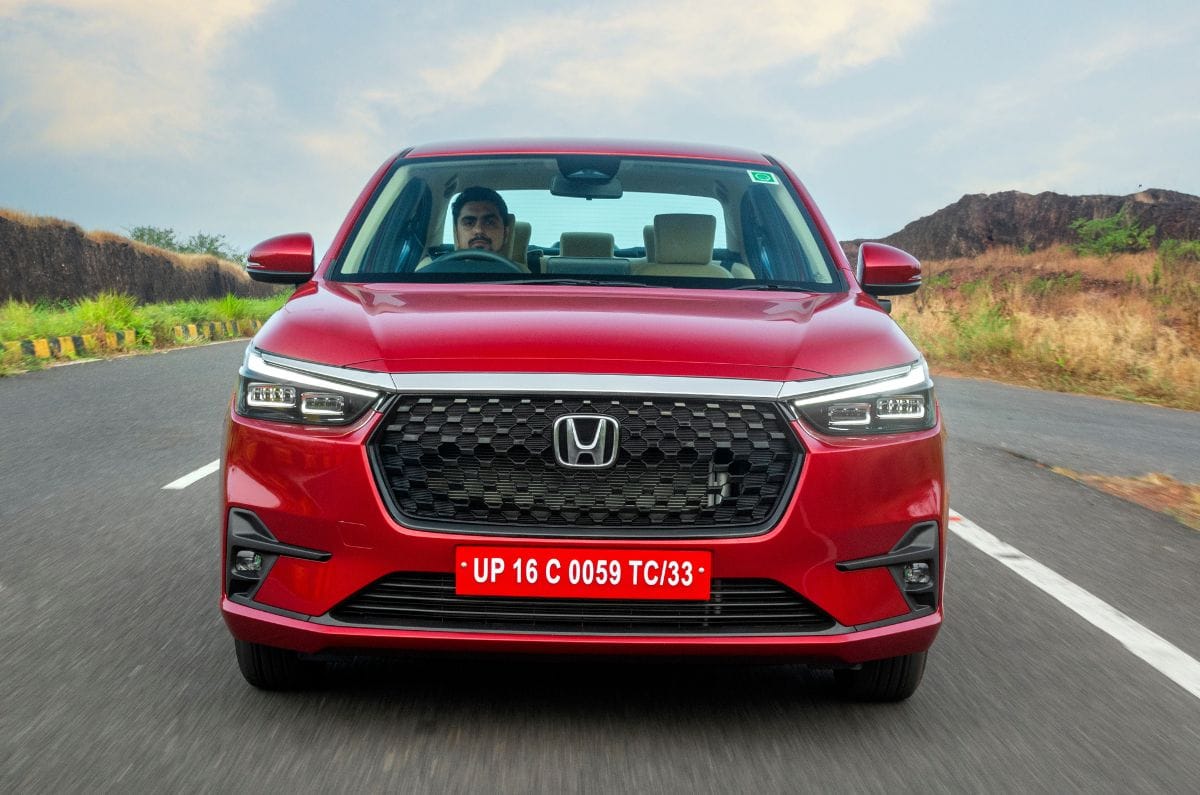
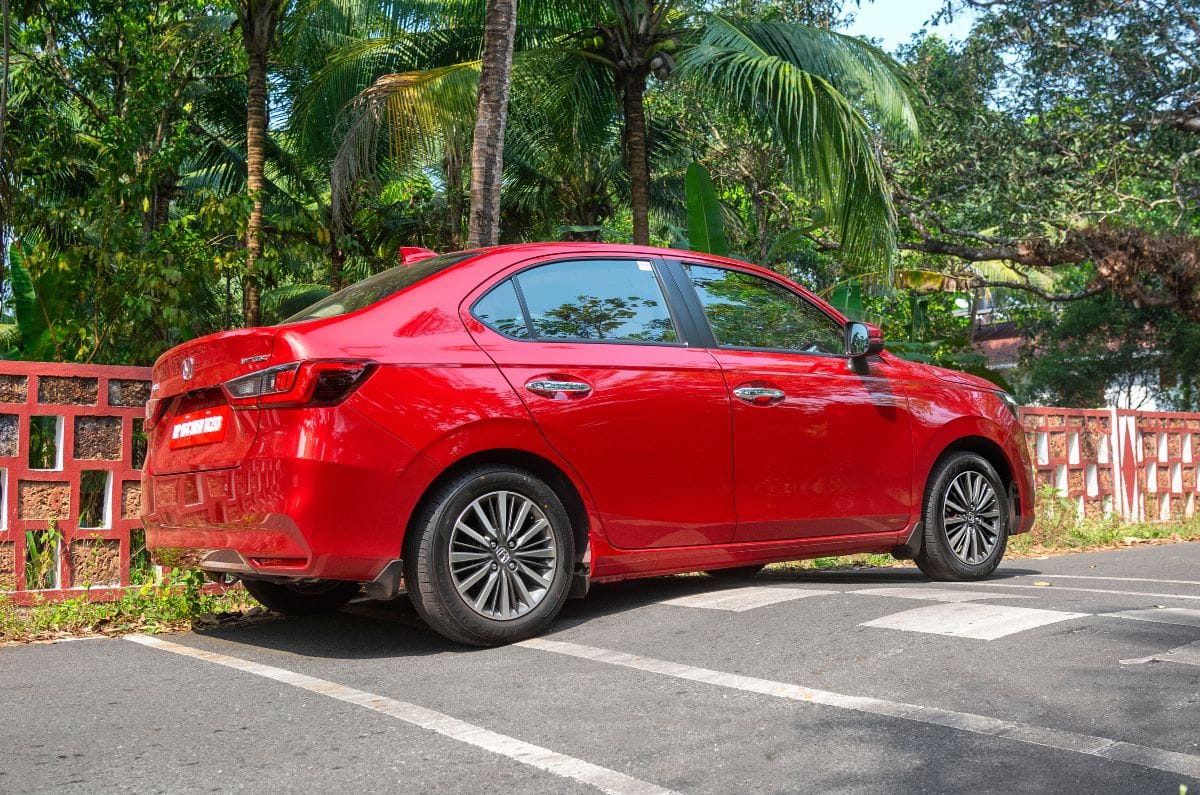
Honda sells both the second-gen and third-gen iterations of the Amaze in India. However, our focus here would be solely on the latter as it’s the latest and thus the best-equipped to tussle with other sub-4-metre sedans. As the Japanese brand’s most affordable offering, the Amaze carries a price tag of between Rs 7.65 lakh and 10.00 lakh (ex-showroom). Considering the brand’s badge appeal and some segment-first features, should you buy the Honda Amaze? Let’s find out.

Reasons to buy the Honda Amaze

Rear-seat comfort and a spacious boot

Usable interior space and a large boot add practicality to the Amaze

Honda Amaze rear seats

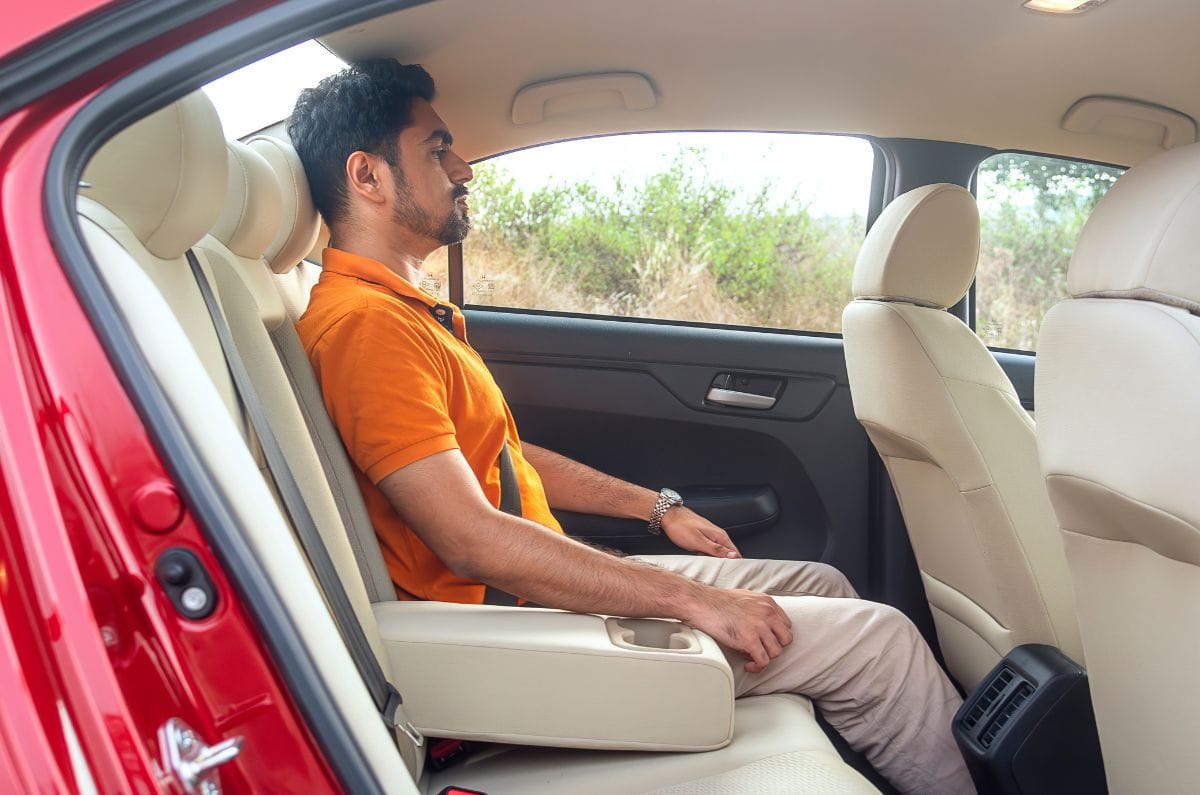
The rear seats of the Amaze are especially more comfortable than the front ones. Not only do the outer seats provide ample support, but their backrest angle is good too. Making these back seats more comfortable is the usable amount of kneeroom and legroom on offer, partly helped by the scooped-out portion of the front seatbacks. Further aiding comfort here are the dedicated AC vents, a centre armrest with cupholders, and headrests for all three passengers.

Honda Amaze boot space

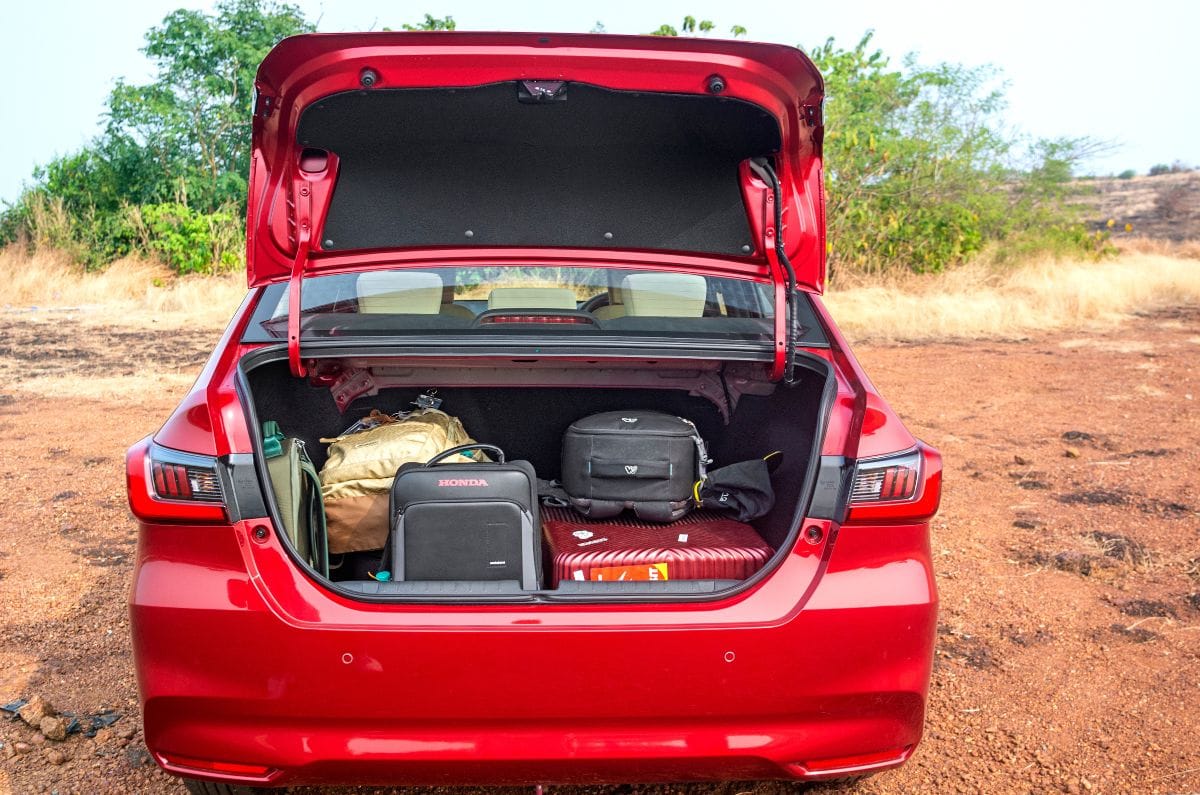
As for the Amaze’s luggage-carrying capacity, its 416-litre boot is one of the most spacious in the segment, easily trumping the Maruti Dzire and Hyundai Aura. While the loading lip is high, The Amaze’s boot offers plenty of width and depth to accommodate your luggage.

Easy to live with

The Amaze gets several user-friendly details right while also feeling more premium

The Amaze’s beige-black interior theme, an expansive glass area and a low-set dashboard make its cabin feel light and airy. This two-tone colour scheme, along with the high perceived quality and overall levels of fit & finish, make the Honda Amaze’s interior feel more premium over its rivals.

Honda Amaze interior

The light steering and clutch, a tight turning radius plus an easy-to-use manual gearbox mixed with good all-round visibility, make pottering around town easy. If you go for the CVT (continuously variable transmission) option, driving the Honda Amaze becomes a hassle-free affair. It comes with paddle shifters that react promptly and also come in handy when there’s a need for engine braking. Meanwhile, the physical controls for the HVAC system allow users to adjust the temperature or the fan speed without getting too distracted.

ADAS is available

This is the only car in its class to feature advanced driver-assistance systems

Honda Amaze front tracking

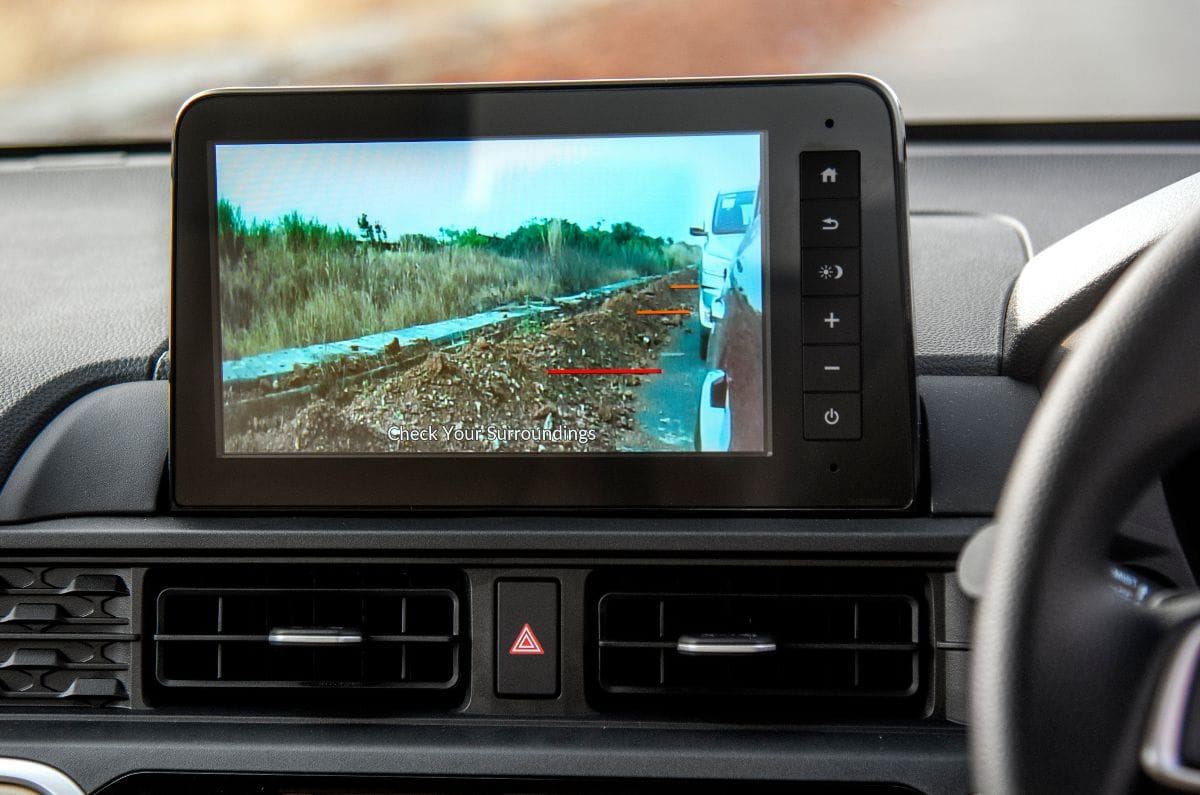
The Amaze is offered with the camera-based Honda Sensing ADAS (advanced driver-assistance systems) suite on the top-spec ZX trim. For those who want that extra layer of active safety nannies, features such as adaptive cruise control with autonomous emergency braking, lane-keeping assist and automatic high-beam will be useful add-ons. The Amaze can also be had with the brand’s LaneWatch Camera system, which displays the camera feed on the infotainment screen, aiding situational awareness.

Reasons to avoid the Honda Amaze

Poor cabin insulation

The Amaze’s cabin is quite an audible one

One of the aspects of driving the Honda Amaze is its lack of proper cabin insulation. Apart from engine and road noises, even ambient sounds from the outside world make it into this cabin with relative ease. This means that the Amaze’s cabin never really feels as relaxing as it could have been.

Underwhelming performance

This Honda sedan lacks engine punch to keep up with some rivals

The 1.2-litre four-cylinder petrol engine of the Honda Amaze is happy to rev to its redline without complaint, but it isn’t a punchy unit. While there’s enough grunt once you get past the 4500rpm mark, this engine feels weak below 2,000rpm. Honda has tried to counter this by providing shorter ratios for the first and second gears.

Honda Amaze soft suspension

However, this leads to one having to downshift constantly when driving in bumper-to-bumper traffic or even when trying to drive away from speed-breakers. Even though the CVT masks this engine’s weak low-end and mid-range performance, pushing it results in the type’s characteristic rubber-band effect becoming apparent. The soft suspension means that the Amaze sags under load, raising the risk of scraping the belly on large speed-breakers. It also causes the Amaze to roll noticeably in the corners.

Pricier than rivals

The Amaze remains the most expensive offering in its segment

Honda Amaze LaneWatch camera

Unlike the top-spec Maruti Dzire, which is Rs 64,000 cheaper the fully loaded Honda Amaze, it still gets a powered sunroof and a 360-degree camera setup. The Amaze also lacks Type-C USB ports, offering just Type-A and 12-volt outlets. While the higher price tag of the top-spec trim can be explained away due to the inclusion of ADAS, buyers would still want the aforementioned missing features at this price bracket.

Also read

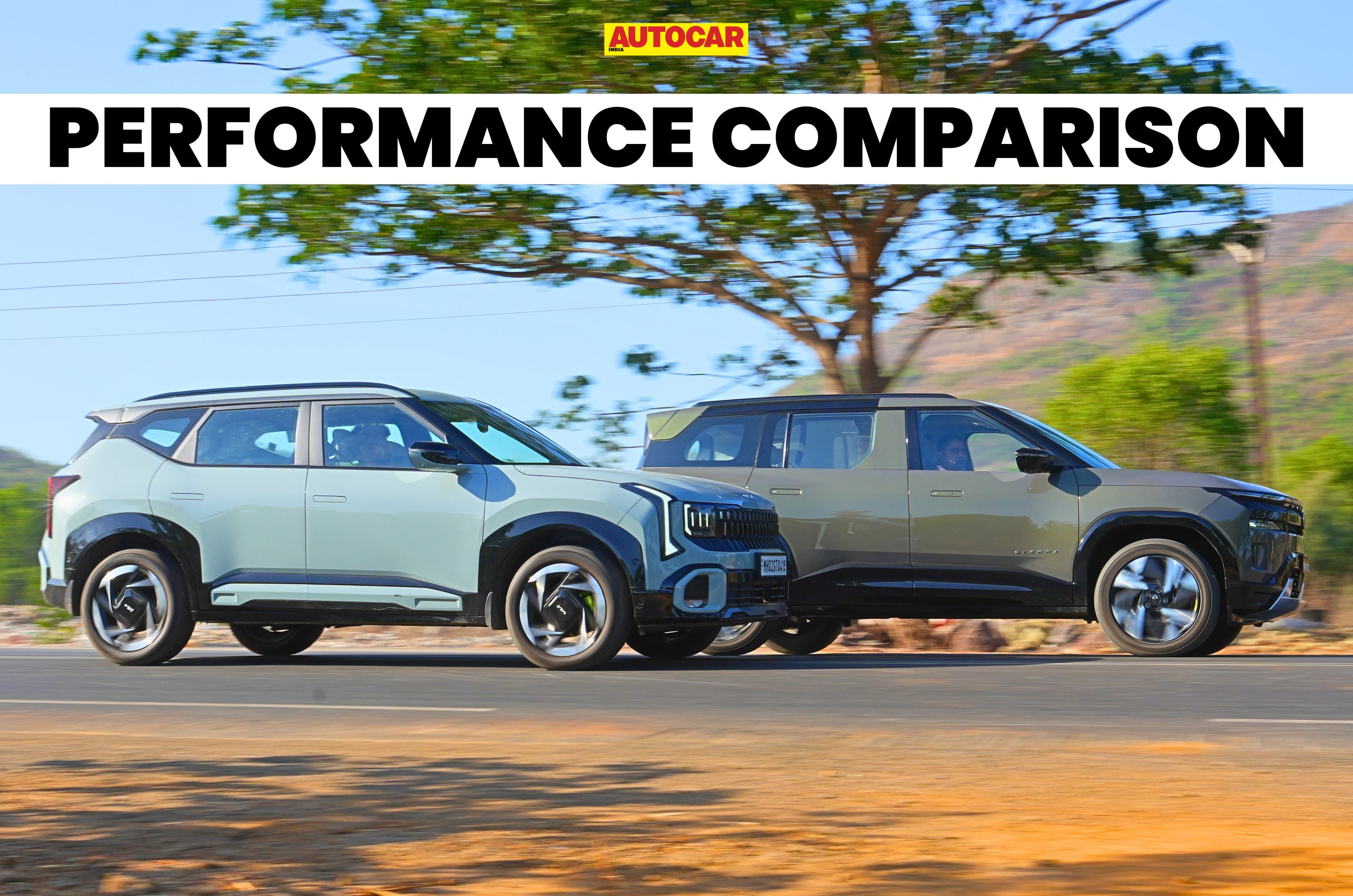
Tata Sierra vs Kia Seltos diesel AT performance comparison

Kia Seltos vs Tata Sierra diesel automatic: Real world mileage compared

Tata Sierra vs Kia Seltos diesel AT performance comparison

Tata Sierra vs Kia Seltos diesel AT performance comparison

The Tata Sierra and Kia Seltos are among the few mid-size SUVs available with a diesel engine option. We have already compared their fuel efficiency figures, but this time we are looking at how the two perform in terms of acceleration. It should be noted that the Seltos diesel AT was tested in slightly wet conditions at a temperature of 27deg C. Here is how the two SUVs compare.

Tata Sierra vs Kia Seltos diesel AT: Specifications

SUVSierraSeltos
Cylinder count44
Displacement1497cc1493cc
Power118hp at 4000rpm 116hp at 4000rpm
Torque280Nm at 1500-2750rpm250Nm at 1500-2750rpm
Automatic transmission6-speed torque converter6-speed torque converter
Tyre size19 inch18 inch

The Tata Sierra and Kia Seltos use four-cylinder diesel engines with nearly the same displacement, at 1,497cc and 1,493cc, respectively. The Sierra makes 118hp, which is 2hp more than the Seltos’ 116hp. Its bigger advantage is torque, with 280Nm compared with 250Nm for the Seltos. Notably, the Sierra AT diesel makes 20Nm more torque than the manual version.

Both SUVs get a six-speed torque-converter automatic gearbox and are also equipped with a variable-geometry turbocharger, which helps improve power delivery and reduce turbo lag. In terms of wheel size, the Sierra gets 19-inch tyres, while the Seltos is equipped with 18-inch units.

Tata Sierra vs Kia Seltos diesel AT: 0-100kph sprint

SUVSierraSeltos
20kph (s)1.441.36
40kph (s)3.533.11
60kph (s)5.935.81
80kph (s)9.319
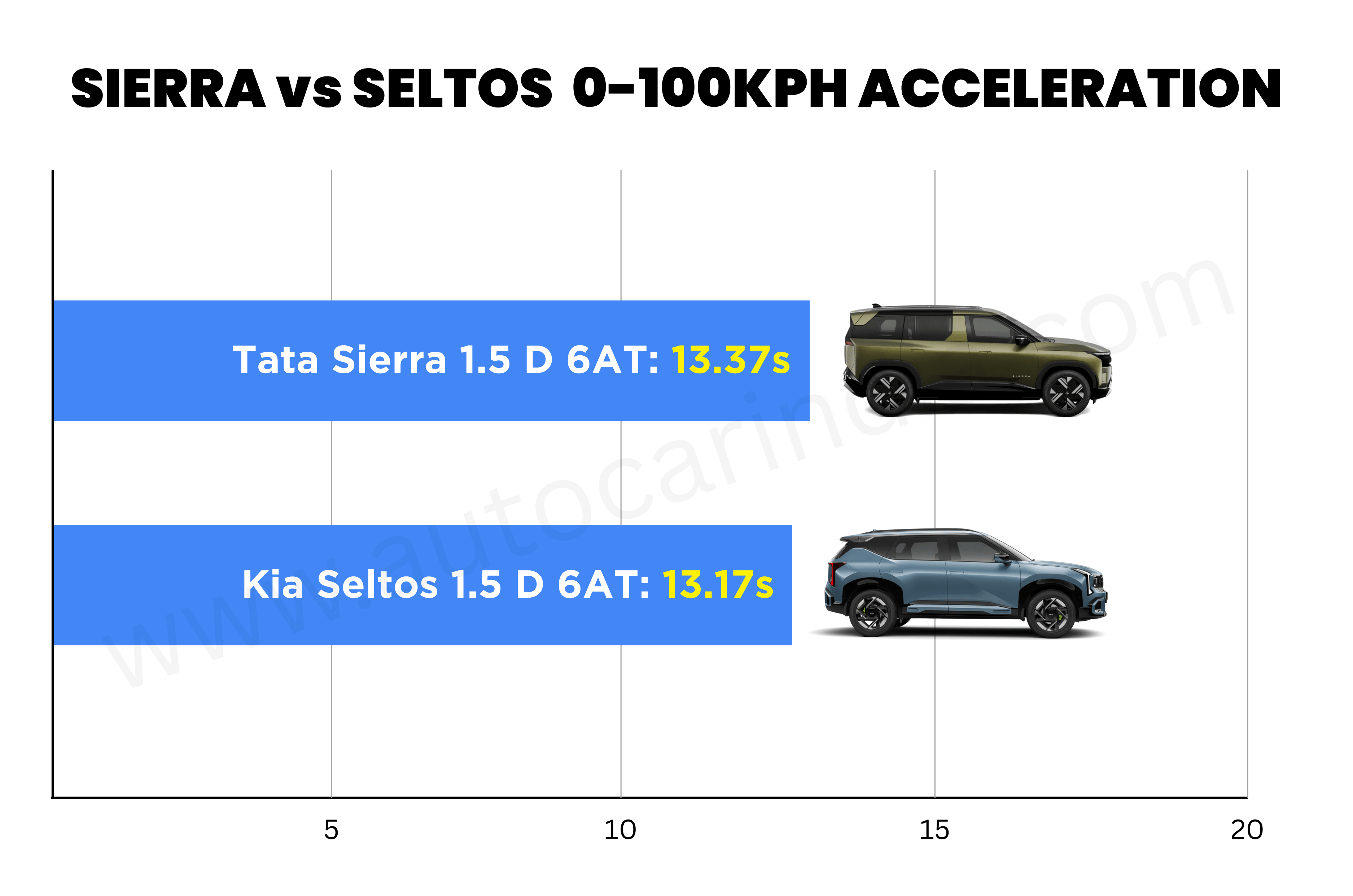
100kph (s)13.3713.17

In our tests, the Kia Seltos is quicker than the Tata Sierra in accelerating from a standstill to the 100kph mark. From 0-20kph, the Seltos takes 1.36 seconds, 0.08 seconds quicker than the Sierra’s 1.44 seconds figure. The gap increases to 0.42 seconds at 40kph, with the Seltos taking 3.11 seconds versus 3.53 seconds for the Sierra.

Tata Sierra vs Kia Seltos diesel AT 0-100kph sprint

At 60kph, the Seltos takes 5.81 seconds, just 0.12 seconds quicker than the Sierra’s 5.93 seconds. The difference is even smaller at 80kph, where the Seltos takes 9 seconds compared with 9.31 seconds for the Tata SUV. At 100kph, the Kia SUV completes the run in 13.17 seconds, while the Sierra takes 13.37 seconds, making it 0.20 seconds quicker.

Tata Sierra vs Kia Seltos diesel AT: Rolling acceleration

In the 20-80kph run, with the cars in third gear and using kickdown, the Seltos is quicker than the Sierra. It takes 7.72 seconds to complete the run, compared with 7.97 seconds for the Sierra, giving it a 0.25 second advantage.

The result reverses in the 40-100kph fourth-gear kickdown test. Here, the Sierra takes 9.42 seconds, making it 0.62 seconds quicker than the Seltos, which completes the run in 10.04 seconds.

Tata Sierra vs Kia Seltos diesel AT: Prices

SUVSierraSeltos
Price range (Rs lakh)15.99-21.2915.32-21.82

The Kia Seltos has a lower starting price at Rs 15.32 lakh, compared with Rs 15.99 lakh for the Tata Sierra, making it Rs 67,000 cheaper at the base end. However, the Sierra has a lower top-spec price of Rs 21.29 lakh, while the Seltos goes up to Rs 21.82 lakh, making the Sierra Rs 53,000 cheaper at the top end.

Autocar India’s performance testing standards

Before we conduct our performance tests, we check and maintain tyre pressures based on the manufacturer’s recommendations and ensure the car has a full tank of fuel. The car is then tested in a controlled environment with two people on board, and the data is collected via highly accurate GPS-based timing equipment.

Ex-showroom prices are as of August 11, 2026.

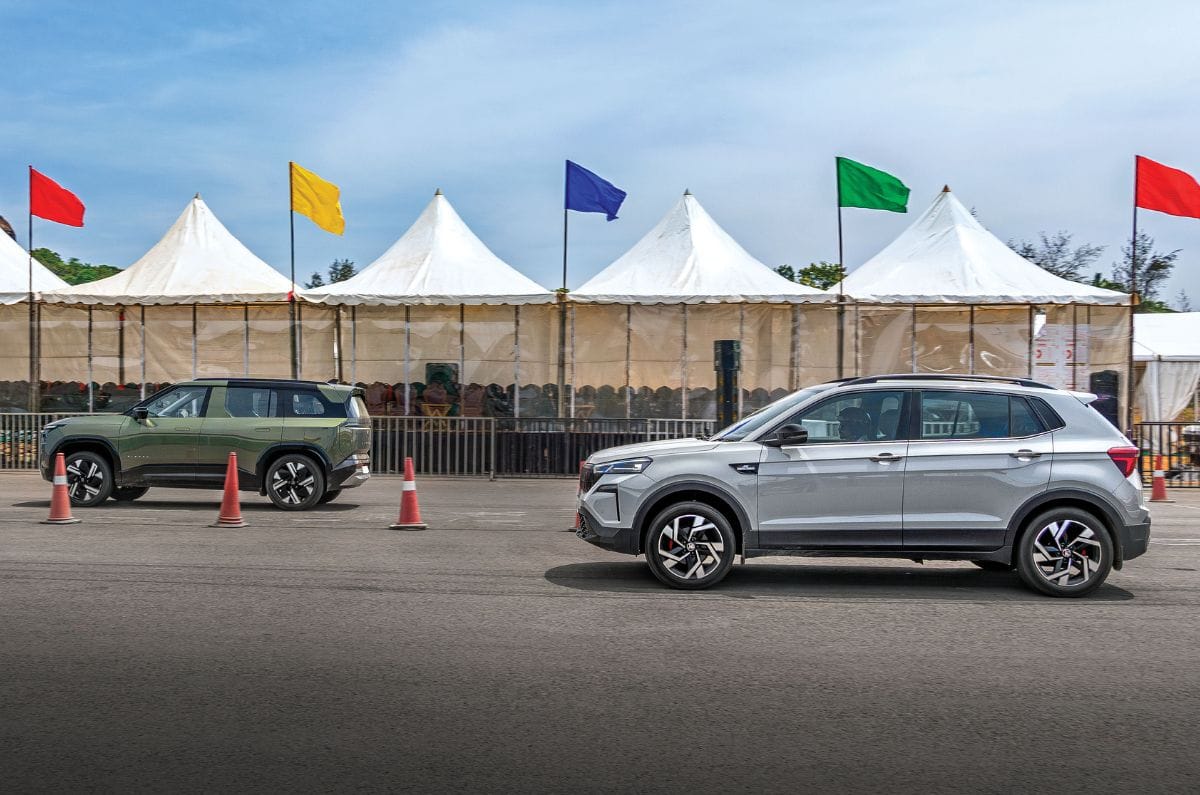
Sierra vs Seltos vs Duster vs Kushaq: quarter mile drag race

Kushaq vs Sierra drag race

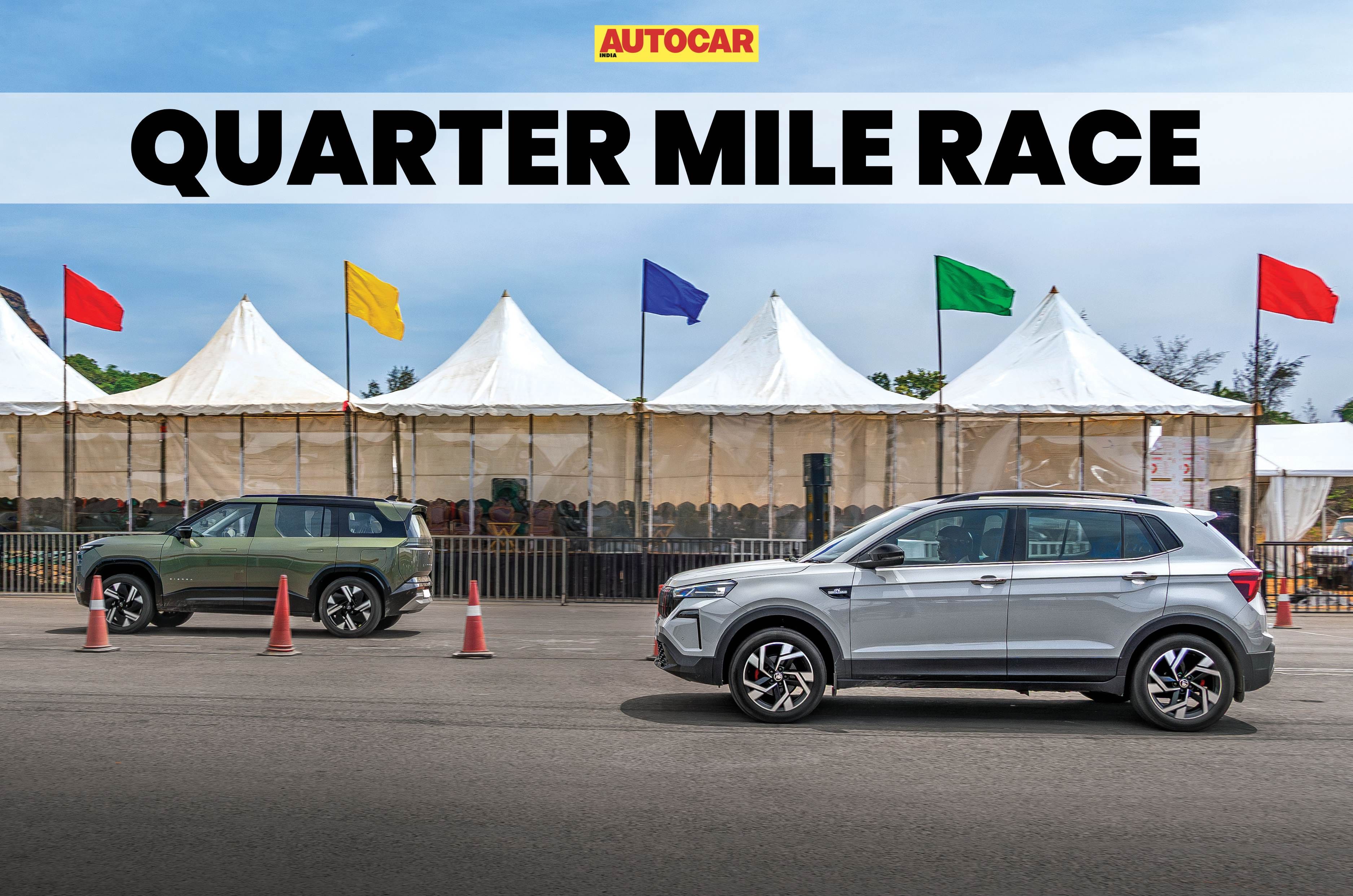
There’s no simpler way to compare one car’s performance to another than with a head-to-head quarter-mile race. In this edition of Autocar India’s quarter-mile racing series, we’ve brought together some of the newest midsize SUVs in the market, including the Tata Sierra, Kia Seltos and the Renault Duster. Let’s find out which of this new crop of midsize SUVs is the quickest down the drag strip. 

Race 1: Tata Sierra vs Kia Seltos 

SUVSeltosSierra
Engine1482cc, 4-cylinder 1498cc, 4-cylinder 
Power160hp at 5500rpm160hp at 5000rpm
Torque253Nm at 1500-3500rpm255Nm at 1750-4000rpm
Transmission7-speed dual-clutch6-speed torque converter
Kerb weight 1467kg1552kg

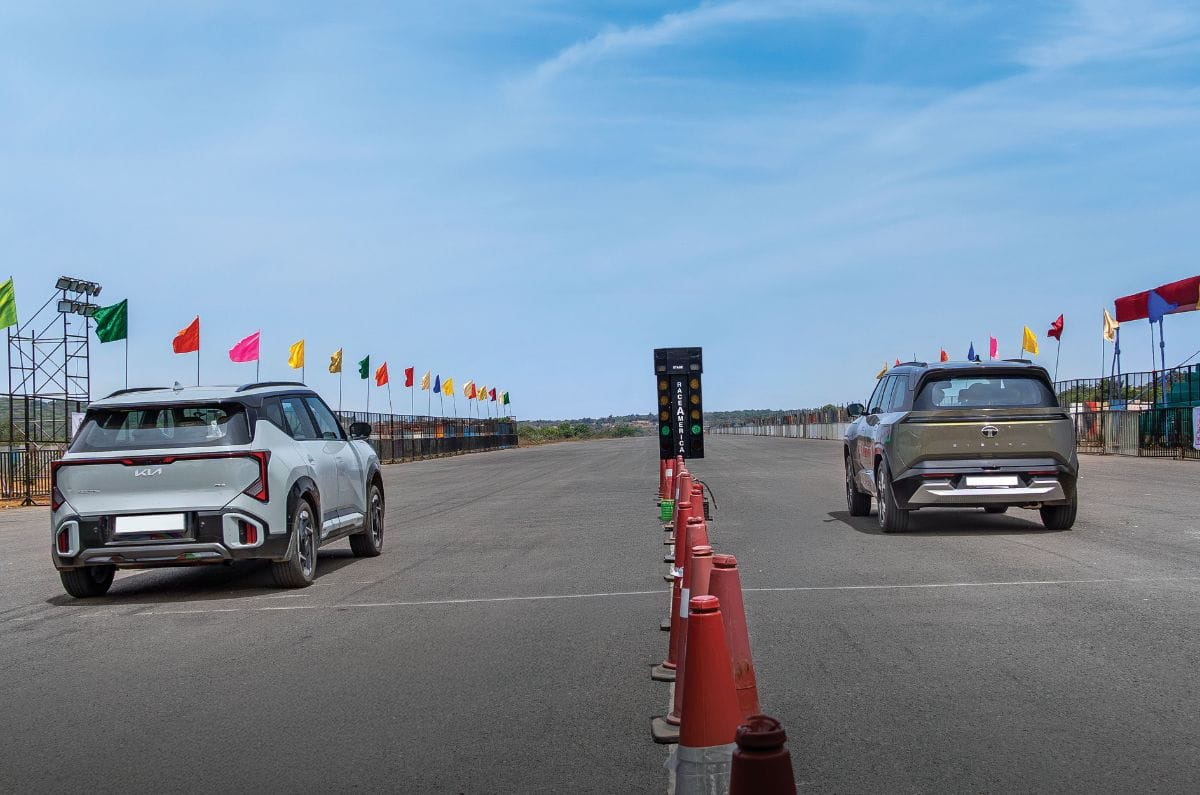
Our first pairing is between the Tata Sierra and the Kia Seltos, both of which are powered by 1.5-litre turbo-petrol engines, but with different gearboxes. 

These two new midsize SUVs are neck-and-neck on paper, with both featuring 160hp turbo-petrol engines, similar torque outputs and similar weight. However, the torque-converter-equipped Sierra launches much stronger than the Seltos, whose dual-clutch automatic is conservative off the line. The Kia Seltos does begin to claw back lost ground, but a little too late. The Sierra manages to win by a slender margin of about two tenths of a second. Race 2 is even closer, with a gap of just over a tenth, but the result stays the same.  

Sierra vs Seltos drag race times 
 Sierra Seltos
Race 116.92 sec17.11 sec
Race 2 17.07 sec17.19 sec 

Race 2: Skoda Kushaq vs Renault Duster 

SUVKushaq Duster 
Engine1498cc, 4-cylinder 1333cc, 4-cylinder 
Power150hp at 5000-6000rpm163hp at 5,250rpm
Torque250Nm at 1600-3500rpm280Nm at 2,000-3,500rpm
Transmission7-speed dual-clutch6-speed dual-clutch
Kerb weight 1322kg 1363kg

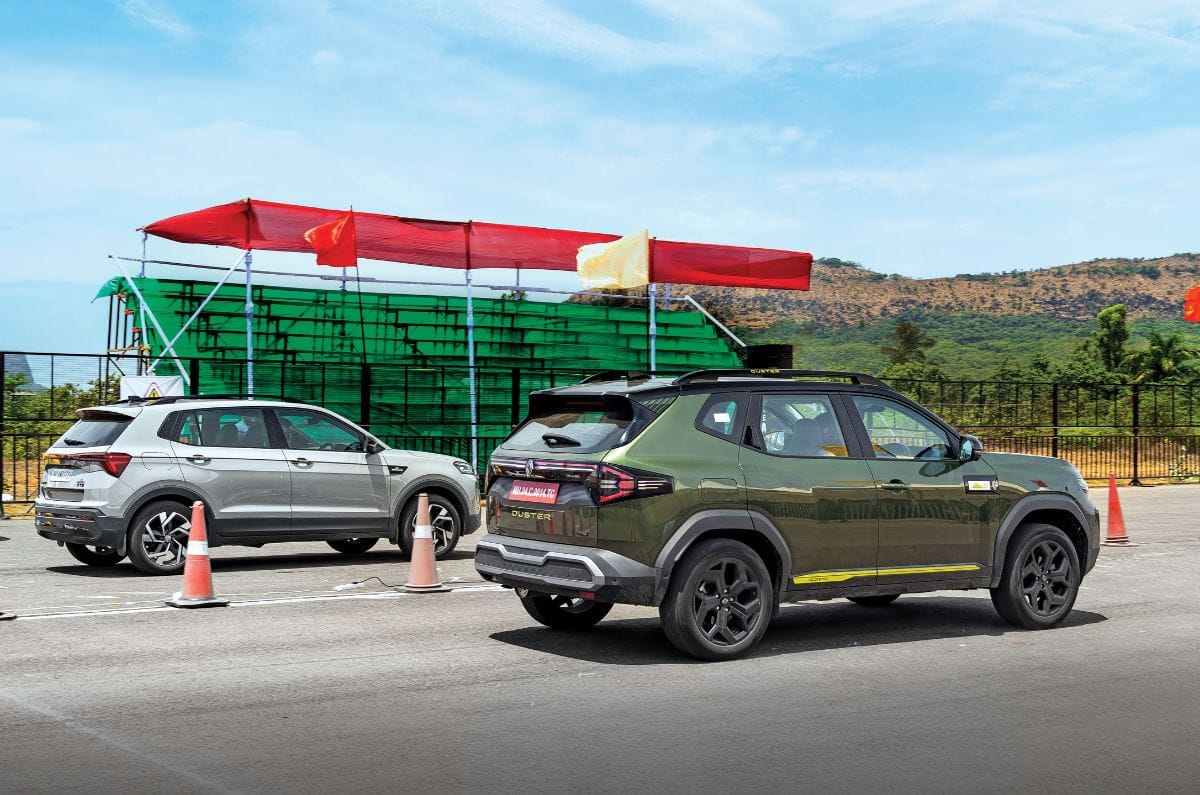
Our next pairing is between the Skoda Kushaq and the Renault Duster. The Kushaq uses a 1.5-litre turbo-petrol engine, while the Duster uses a smaller but more powerful 1.3-litre unit. Both engines come mated to a DCT gearbox. 

The Duster has the advantage on paper with more power, and it backs it up by winning Race 1 by two tenths. The Renault’s wet-clutch DCT allows a better launch than the Skoda’s dry-clutch unit, but the Skoda’s snappier shifts and stronger top end mean it is catching up. Race 2 starts off with the Skoda getting a better launch, and as such, it goes on to beat the Renault by nearly four tenths. Race 3 is closer than Race 2, but the result stays the same, with the Kushaq coming out on top yet again. 

Kushaq vs Duster drag race times 
 Kushaq  Duster
Race 117.77 sec17.65 sec
Race 2 17.05 sec17.69 sec
Race 317.28 sec17.67 sec

Race 3: Tata Sierra vs Skoda Kushaq 

SUVSierraKushaq 
Engine1498cc, 4-cylinder 1498cc, 4-cylinder 
Power160hp at 5000rpm150hp at 5000-6000rpm
Torque255Nm at 1750-4000rpm250Nm at 1600-3500rpm
Transmission6-speed torque converter7-speed dual-clutch
Kerb weight 1552kg1322kg

Finally, we bring together the winners from the first two rounds to determine the fastest midsize SUV you can buy today.

The Sierra has the numbers on its side, but the Kushaq does tend to punch above its weight. As was the case in the earlier races, the Skoda proves tricky to launch off the line, while the Tata Sierra jumps ahead. From there on, the Kushaq does start to reel in the Sierra, but it’s just not enough. The Tata Sierra wins Race 1 by just about a tenth. Race 2 is equally close, with the gap being a minuscule 0.2 seconds, and the Sierra manages to win again. 

Sierra vs Seltos drag race times 
 Sierra Kushaq
Race 117.18 sec 17.28 sec
Race 2 17.02 sec17.21 sec 

Autocar India’s testing standards

Before we conduct our performance tests, we check and maintain tyre pressures based on the manufacturer’s recommendation and ensure the car has a full tank of fuel. The car is then tested in a controlled environment, and the data is collected via highly accurate GPS-based timing equipment.

Kia Seltos vs Tata Sierra diesel automatic: Real world mileage compared

Kia Seltos vs Tata Sierra diesel automatic real world mileage comparison

Alongside the Hyundai Creta, the only SUVs in this segment offering a diesel engine mated to a torque-converter automatic transmission (AT) are the Kia Seltos and the Tata Sierra. Where the all-new Sierra was introduced in November 2025, the second-gen Seltos entered the fray in January 2026. The Sierra diesel-AT version is limited to five trim options, but its Seltos counterpart is available in eleven. So, which one of these 5-seater midsize SUVs offers higher fuel economy?

Explore full specs, features and a price breakdown in our Seltos vs Sierra comparison.

Kia Seltos vs Tata Sierra diesel automatic: Specifications

The Sierra offers more power, but it is also heavier than the Seltos

Kia Seltos vs Tata Sierra diesel automatic: Specifications


Kia Seltos

Tata Sierra

Engine

4 cyl, diesel

4 cyl, diesel

Displacement (cc)

1493

1497

Power (hp)

116 (4,000rpm)

118 (4,000rpm)

Torque (Nm)

250 (1,500-2,750rpm)

280 (1,500-2,750rpm)

Gearbox

6-speed AT

6-speed AT

Fuel tank (litres)

47

50

Even though their turbocharged engines are of similar sizes, it’s the Tata Sierra’s unit that produces 2hp and 30Nm more. Moreover, the power and torque figures of these cars are achieved over the same engine RPM range. Compared to the Seltos, the Sierra diesel comes with a slightly larger fuel tank (by 3 litres), whilst the gearboxes on both are 6-speed torque-converter automatic units. Both cars are equipped with a variable-geometry turbocharger, thus improving power delivery and reducing turbo lag.

Kia Seltos vs Tata Sierra diesel automatic: Real-world fuel efficiency

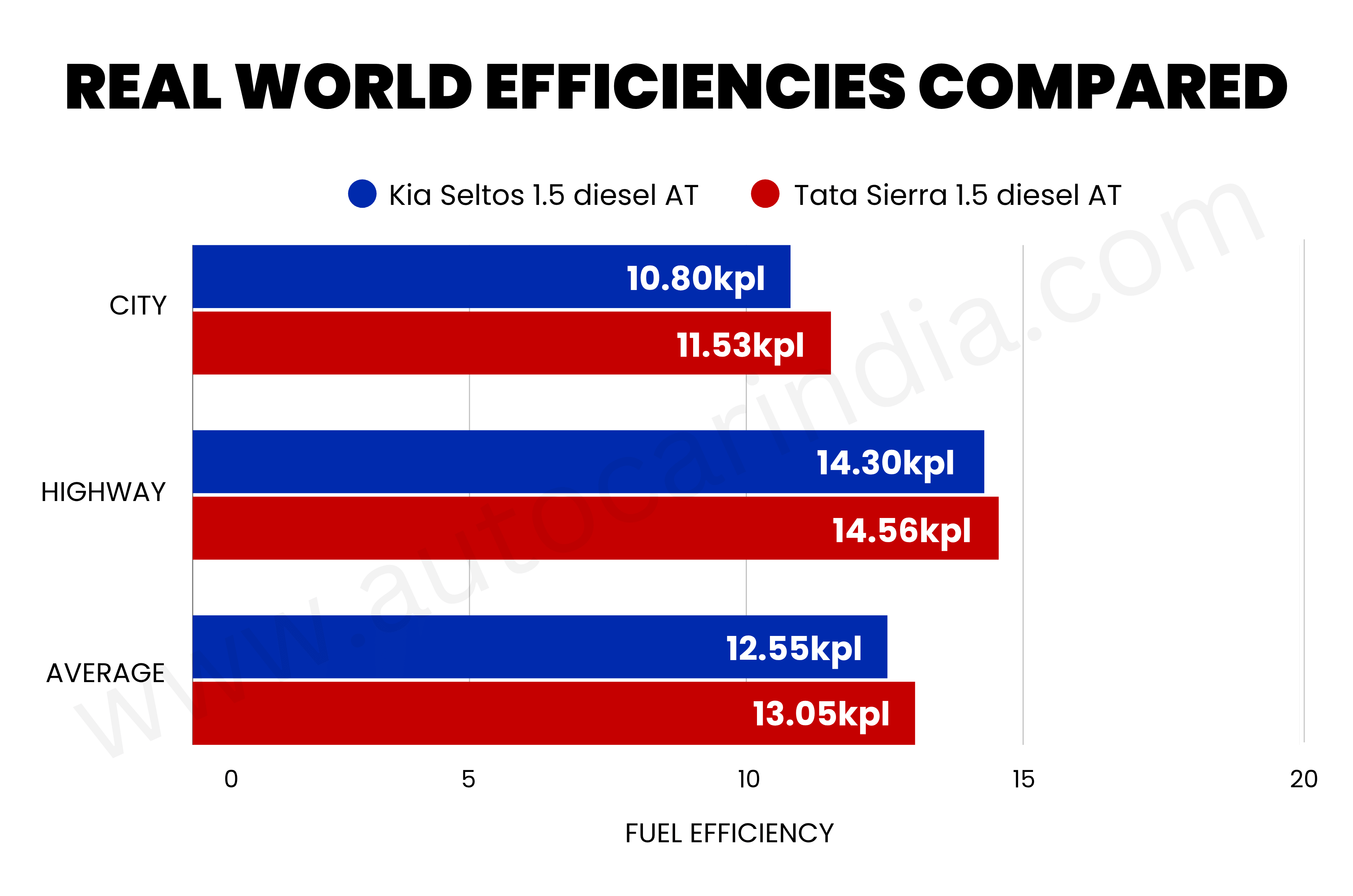
Despite featuring an ‘Eco’ mode and weighing less, the Seltos fared slightly worse than the Sierra

Kia Seltos vs Tata Sierra diesel automatic real world mileage comparison chart

During our real-world fuel economy test, the Seltos diesel managed an average that was 0.5kpl worse than the Sierra. It was also 0.73kpl thirstier in the city, whilst consuming 0.26kpl more fuel than its Tata rival out on the highway. Despite being heavier than a comparable diesel-automatic trim of the Seltos, the relatively lower engine RPM of the Sierra when cruising at 100kph helps its efficiency. For reference, the Seltos’ diesel engine was spinning much faster at 100kph, at 2,100 RPM. Neither SUV gets an automatic engine stop-start system to reduce fuel burn further, but the Seltos does come with an Eco drive mode.

Kia Seltos vs Tata Sierra diesel automatic: Prices

Kia Seltos vs Tata Sierra diesel automatic prices


Kia Seltos

Tata Sierra

Price range (in Rs, lakh)

15.32-21.82

15.99-21.29

The most affordable trim of the Kia Seltos diesel with the torque-converter automatic gearbox costs Rs 67,000 less than its equivalent Tata Sierra. At the top-end of the spectrum, the latter has a price advantage of Rs 53,000.

Autocar India’s fuel efficiency testing

Before our real-world fuel efficiency tests, we fill our test cars’ tanks to the brim and maintain tyre pressures based on the manufacturer’s recommendations. These cars are driven in fixed city and highway loops in and around Navi Mumbai, and we maintain certain average speeds. Throughout the tests, there is only one person in each car, running the air conditioner and other electricals, such as the audio system, indicators and wipers, when required, just like a regular user would. Periodic driver swaps further neutralise variations in driver patterns. At the end of each cycle, we calculate efficiency by filling the tanks to full again.

Prices are ex-showroom, India.

Also read

Nissan Gravite CNG real world fuel economy tested, explained

Maruti Brezza vs Tata Nexon real world CNG mileage comparison