Cyient Stock Outlook: तुरंत कर लें एग्जिट, 12% तक टूट सकता है भाव; मोतीलाल ओसवाल ने दी ‘सेल’ रेटिंग

IT कंपनी साइएंट लिमिटेड के शेयरों में आगे 12 प्रतिशत तक की गिरावट देखने को मिल सकती है। ब्रोकरेज फर्म मोतीलाल ओसवाल इस शेयर पर बेयरिश है। स्टॉक के लिए ‘सेल’ रेटिंग दी है। टारगेट प्राइस 740 रुपये प्रति शेयर रखा है। यह BSE पर शेयर के मौजूदा भाव 840 रुपये से करीब 12 प्रतिशत कम है। कंपनी के तिमाही नतीजे जारी होने के बाद ब्रोकरेज का रुख सामने आया है। साइएंट का अप्रैल-जून 2026 तिमाही में शुद्ध कंसोलिडेटेड मुनाफा 104.1 करोड़ रुपये रहा। यह एक साल पहले से 32 प्रतिशत कम है।

कुल इनकम सालाना आधार पर करीब 17 प्रतिशत की बढ़ोतरी के साथ 2082.6 करोड़ रुपये हो गई। खर्च 1910.3 करोड़ रुपये के रहे, जो जून 2025 तिमाही में 1565.4 करोड़ रुपये के थे। साइएंट का शेयर BSE 500 इंडेक्स का हिस्सा है।

Cyient पर ब्रोकरेज के तर्क

ब्रोकरेज ने अपने रिसर्च नोट में कहा कि Cyient के DET (डिजिटल, इंजीनियरिंग एंड टेक्नोलॉजी) बिजनेस ने जून 2026 तिमाही में 16.3 करोड़ डॉलर का रेवेन्यू दर्ज किया। यह कॉन्स्टेंट करेंसी टर्म में तिमाही-दर-तिमाही आधार पर 0.5 प्रतिशत कम है। हालांकि यह ब्रोकरेज के अनुमान से बेहतर रहा। ट्रांसपोर्टेशन और मोबिलिटी में तिमाही दर तिमाही कॉन्स्टेंट करेंसी बेसिस पर 3 प्रतिशत की बढ़ोतरी हुई। नेटवर्क और इंफ्रास्ट्रक्चर में कोई बदलाव नहीं हुआ और स्ट्रैटेजिक यूनिट्स में 8.2 प्रतिशत की गिरावट आई। DET बिजनेस का एडजस्टेड EBIT मार्जिन 13.2 प्रतिशत रहा, जो 12.5 प्रतिशत ​​के अनुमान से ज्यादा है।

DET का एडजस्टेड शुद्ध मुनाफा तिमाही-दर-तिमाही 2.1 प्रतिशत बढ़ा, लेकिन सालाना आधार पर 13.4 प्रतिशत घटा। आंकड़ा 141.2 करोड़ रुपये रहा, जबकि अनुमान 149.8 करोड़ रुपये का था। मोतीलाल ओसवाल को उम्मीद है कि साल-दर-साल DET बिजनेस का रेवेन्यू 6.4 प्रतिशत, EBIT 12.9 प्रतिशत और /एडजस्टेड शुद्ध मुनाफा 10.8 प्रतिशत बढ़ेगा।

Dividend Stock: बुलेट बाइक वाली कंपनी देगी ₹82 का डिविडेंड, 31 जुलाई से पहले बन जाएं शेयरहोल्डर

Disclaimer: मनीकंट्रोल.कॉम पर दिए गए सलाह या विचार एक्सपर्ट/ब्रोकरेज फर्म के अपने निजी विचार होते हैं। वेबसाइट या मैनेजमेंट इसके लिए उत्तरदायी नहीं है। यूजर्स को मनीकंट्रोल की सलाह है कि कोई भी निवेश निर्णय लेने से पहले हमेशा सर्टिफाइड एक्सपर्ट की सलाह लें।

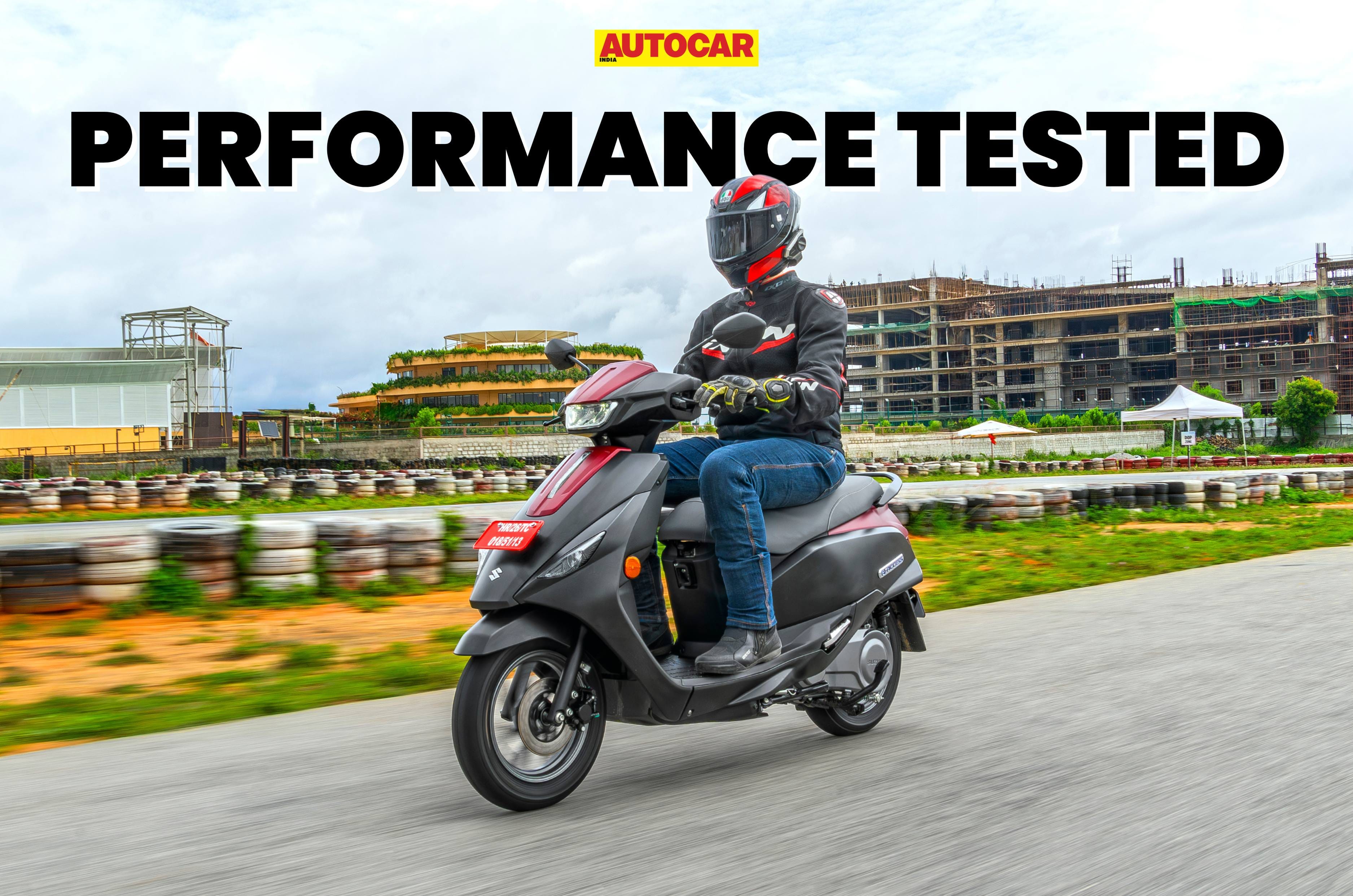
Suzuki E-Access Performance Tested and Explained

Suzuki E-Access Tracking Shot Performance Story Lead Image

The Suzuki e-Access is the first electric two-wheeler from Suzuki Motorcycle India. It is powered by a hub-mounted permanent magnet synchronous motor producing 4.1kW of peak power and 15Nm of torque. The battery is a 3kWh LFP (Lithium Ferrous Phosphate) pack and Suzuki claims an IDC range of 95km on a full charge.

Suzuki e-Access: Acceleration

During our test, the conditions were dry.

Acceleration

Time

0-20kph

2.05 seconds

0-40kph

4.94 seconds

0-60kph

11.93 seconds

The e-Access gets three riding modes including Ride A, Ride B, and Eco. Ride A and Ride B modes offer similar performance with the only difference being level of regenerative braking. We conducted this acceleration test in Ride A with the battery state of charge above 97 percent. In this riding mode, acceleration to 20kph and 40kph took 2.05 seconds and 4.94 seconds respectively and acceleration becomes more gradual towards 60kph. Overall, the scooter offers decent performance for commuting in the city.

Suzuki e-Access: Roll-On Acceleration

The scooter delivers 6kW (8.04hp) of peak power.

Roll-On Acceleration

Time

20-50kph

5.46 seconds

30-70kph

17.01 seconds

In our roll-on acceleration tests, the scooter took 5.46 seconds to get from 20-50kph and 17.01 seconds from 30-70kph. In the city, it is able to make overtakes while riding in Ride A or Ride B mode. Eco mode is usable for the most part, but not the most potent for when you want to commute quickly.

Suzuki e-Access: Braking

Decent braking performance with good regenerative braking as well.

Braking

Distance

60-0kph

24.64 metres

The e-Access gets a disc brake at the front and a drum brake at the rear. The regenerative braking is also strong and at slow speeds, allows a rider to smoothly filter through stop-go traffic without having to constantly apply the brakes. From higher speeds, grabbing the rear brake lever too hard will cause the rear to lock up and slide.

Suzuki e-Access: Specifications and price

The Suzuki e-Access is built on an entirely new platform developed in-house rather than shared with the petrol Access 125.  

Peak Power

4.1kW

Max Torque

15Nm

Battery Capacity

3kWh

Kerb Weight

122kg

Brakes (F/R)

Disc / Drum

Tyres (F/R)

90/90-12  / 100/80-12 

Price (ex-showroom)

Rs 1.88 lakh (ex-showroom, Delhi)

The Suzuki e-Access is available in a single variant priced at Rs 1.88 lakh (ex-showroom, Delhi). 

Dharmendra Pradhan Resigns: धर्मेंद्र प्रधान के इस्तीफे पर रणवीर शौरी ने उठाए सवाल, बोले- सपोटर्स की न सुनके सड़क पर मौजूद कॉकरोच…

Dharmendra Pradhan Resigns: NEET पेपर लीक विवाद को लेकर हफ़्तों तक चले छात्रों के विरोध-प्रदर्शन के बाद, जहाँ बॉलीवुड के ज़्यादातर लोगों ने केंद्रीय शिक्षा मंत्री धर्मेंद्र प्रधान के इस्तीफे का स्वागत किया, वहीं अभिनेता रणवीर शौरी की राय कुछ अलग थी। जब सरकार ने प्रदर्शनकारियों की मुख्य मांगें मान लीं और दिल्ली के जंतर-मंतर पर जश्न मनाया जाने लगा, तो शौरी ने इस फ़ैसले के समय पर सवाल उठाए और इसे ‘जनता के दबाव में कामकाज’ बताते हुए इसकी आलोचना की।

अभिजीत दिपके और सौरव दास की अगुवाई वाली ‘कॉकरोच जनता पार्टी’ (CJP) के नेतृत्व में 36 दिनों तक चले आंदोलन के बाद प्रधान ने 25 जुलाई को इस्तीफ़ा दे दिया। इस आंदोलन में छात्र परीक्षा में कथित गड़बड़ियों के लिए जवाबदेही की मांग कर रहे थे। CJP नेताओं के साथ बातचीत के बाद, केंद्र सरकार शांतिपूर्ण प्रदर्शनकारियों के ख़िलाफ़ दर्ज FIR वापस लेने और NEET विवाद से जुड़े मामलों में आत्महत्या करने वाले छात्रों के परिवारों को मुआवज़ा देने पर भी सहमत हो गई। मांगें माने जाने के बाद प्रदर्शनकारियों ने जंतर-मंतर पर चल रहा धरना-प्रदर्शन ख़त्म कर दिया।

प्रधान के इस्तीफ़े की ख़बर सामने आते ही, रणवीर शौरी ने X (पहले ट्विटर) पर हैरानी ज़ाहिर करते हुए एक GIF के ज़रिए अपनी प्रतिक्रिया दी। उन्होंने लिखा, “और एक ही झटके में मोदी सरकार अपने किसी भी दुश्मन को तो नहीं जीत पाई, लेकिन अपने कई समर्थकों को जरूर नाराज कर दिया। #masterstroke,” और साथ में ताली बजाने वाले इमोजी भी लगाए।

जब एक सोशल मीडिया यूज़र ने पूछा कि क्या उन्हें लगता है कि प्रधान को NEET पेपर लीक विवाद पर इस्तीफ़ा नहीं देना चाहिए था, तो शोरी ने अपनी बात विस्तार से बताई। उन्होंने लिखा, “हां, लेकिन उन्हें यह तब करना चाहिए था जब सड़कों पर हालात इतने खराब नहीं हुए थे। अब ऐसा लगता है कि समर्थकों की बात नहीं सुनी जाएगी, बल्कि सड़कों पर मौजूद ‘कॉकरोच’ की बात सुनी जाएगी!”

हाल के हफ़्तों में कई एक्टर्स और म्यूज़िशियन्स ने ऑनलाइन और प्रदर्शनों में शामिल होकर स्टूडेंट मूवमेंट का खुलकर समर्थन किया है। प्रकाश राज, शबाना आज़मी और रैपर हनुमankind ने दिल्ली के जंतर-मंतर पर हुए विरोध प्रदर्शनों में हिस्सा लिया। सोनाक्षी सिन्हा और विजय वर्मा ने सोशल मीडिया पर अपना समर्थन जताया, जबकि गुरफतेह पीरजादा, प्रतिभा रांटा, शालिनी पांडे और कई अन्य लोगों ने मुंबई में हुए प्रदर्शनों में भाग लिया।

फाउंडर अभिजीत दिपके की अगुवाई वाली ‘कॉकरोच जनता पार्टी’ के नेतृत्व में शुरू हुए ये विरोध प्रदर्शन NEET पेपर लीक को लेकर शुरू हुए थे, लेकिन जल्द ही ये शिक्षा व्यवस्था में जवाबदेही और सुधार की मांग करने वाले एक बड़े युवा आंदोलन में बदल गए। सोनम वांगचुक ने भी इस आंदोलन का समर्थन किया और भूख हड़ताल की थी, जिसे उन्होंने केंद्र सरकार के साथ बातचीत के अंतिम दौर से पहले खत्म कर दिया।

प्रधान के इस्तीफ़े के बाद जंतर-मंतर पर जश्न मनाया गया। छात्रों ने नारे लगाए और इस घटनाक्रम को आंदोलन की जीत बताया। CJP ने इस्तीफ़े को एक अहम पड़ाव बताया, लेकिन साथ ही यह भी कहा कि बड़े सुधारों के लिए उनका अभियान मंत्री के हटने के बाद भी जारी रहेगा।

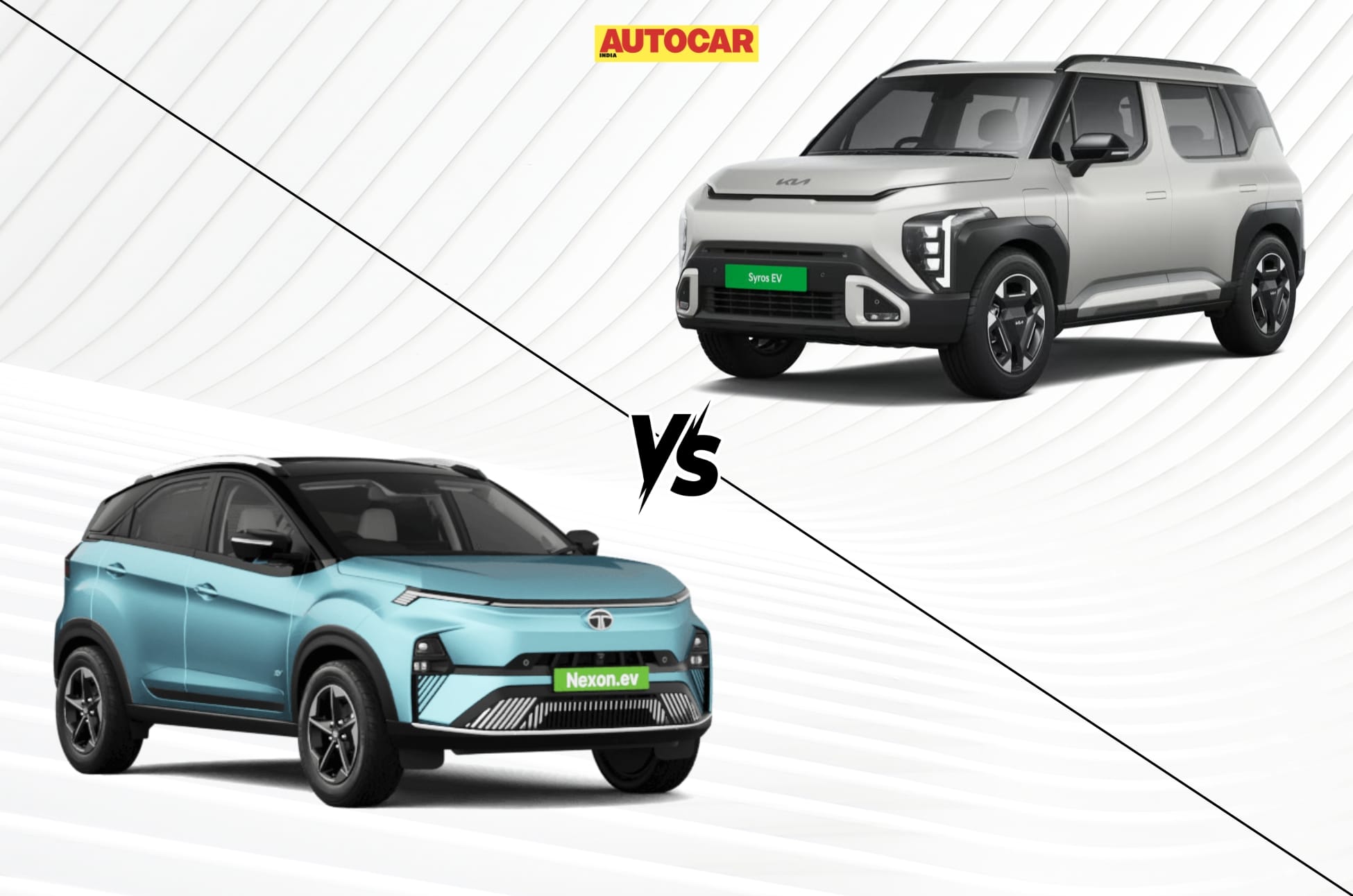
Kia Syros EV vs Tata Nexon EV: Whose top spec trim offers better value?

Kia Syros EV vs Tata Nexon EV

Kia has taken its first aim to crack the compact electric SUV space with the Syros EV. On the other hand, Tata has been dominating this very segment with the Nexon EV that’s been on the market for quite some time. But how do both SUVs fare when comparing specifications and features of their respective top-spec versions? For this comparison, we’ve chosen the Kia Syros EV’s X-Line variant and the Nexon EV’s Empowered+ A 45 variant.

Explore full specs, features, and a price breakdown in our Syros EV vs Nexon EV comparison.

Kia Syros EV vs Tata Nexon EV: Dimensions

Syros EV is comparatively the larger vehicle here

Kia Syros EV vs Tata Nexon EV: Dimensions


Kia Syros EV

Tata Nexon EV

Length (mm)

3,995

3,995

Width (mm)

1,805

1,802

Height (mm)

1,670

1,625

Wheelbase (mm)

2,550

2,498

Frunk (litres)

16

11.6

Boot space (litres)

390

350

Wheel size (inches)

17

16

While both SUVs have identical length, the Syros EV is 3mm wider, 45mm taller, and gets a 52mm longer wheelbase than the Nexon. Additionally, the former gets a 40-litre larger boot, a 4.4-litre larger frunk, and rides on wheels an inch bigger than the Nexon EV.

Kia Syros EV vs Tata Nexon EV: Powertrains 

Syros EV gets the larger battery pack, more powerful motor, and higher claimed range figure

Kia Syros EV vs Tata Nexon EV top-spec: Powertrains 


Kia Syros EV

Tata Nexon EV

Battery size (kWh)

51.4

45

Electric motor setup

Single motor

Single motor

Drive layout

FWD

FWD

Power (hp)

171

144

Torque (Nm)

255

215

Claimed 0-100kph time (seconds)

8.1

8.9

ARAI range (km)

526

489

The Syros EV features the largest battery pack in its segment with a 51.4kWh battery pack. Not only is its battery pack larger than the Nexon’s, but it also has a more powerful motor, leading to a quicker claimed 0-100kph time and a segment-best ARAI range that’s 37km higher than the Nexon’s.

Kia Syros EV vs Tata Nexon EV top-spec: Charging speeds and times 

Syros EV supports faster charging speeds

Kia Syros EV vs Tata Nexon EV top-spec: Charging speeds and times 


Kia Syros EV

Tata Nexon EV

Battery size (kWh)

51.4

45

7.2kW AC charging (10-100 percent)

6 hours 36 minutes

11kW AC charging (10-100 percent)

8.9 hrs


DC fast charging (10-80 percent)

39 minutes at 100kW

40 minutes at 60kW

The Syros EV supports higher charging output than the Nexon EV, be it at AC or DC speeds. But despite this, the Nexon EV’s smaller battery helps it juice up quicker at AC speeds, while DC fast charging times are almost similar to the Syros EV’s. 

Kia Syros EV vs Tata Nexon EV: Exterior features

Syros EV top-spec limited to one colour 

Kia Syros EV vs Tata Nexon EV top-spec: Exterior features


Kia Syros EV

Tata Nexon EV

LED headlamps

Automatic

Automatic

LED tail-lamps

Yes

Connected

DRLs

Yes

Connected

Front fog lamps

LED

LED

Puddle lamps w/ logo projection

Yes

No

Powered and foldable ORVMS

Yes

Yes

Flush door handles

Yes

No

Rear spoiler

Yes

Yes

Colour options

2, monotone and matte

5, dual tone 

On the outside, the Syros EV gets goodies such as flush door handles with motorised opening for the front handles, and puddle lamps with logo projection, which the Nexon EV skips. But with the Syros EV in top-spec guise, you’re limited to only black exterior paint in either matte or gloss finish. On the other hand, the Nexon offers five dual tone paint choices with a black roof as standard at the top-end.

Kia Syros EV vs Tata Nexon EV: Interior features 

Sliding and reclining rear seats with seat base ventilation found only on the Syros EV

Kia Syros EV vs Tata Nexon EV: Interior features 


Kia Syros EV

Tata Nexon EV

Infotainment screen

12.3-inch

12.3-inch

Digital driver’s display

12.3-inch

10.25-inch

HVAC display

5-inch

No

Apple CarPlay & Android Auto

Wireless

Wireless

Connected car tech

Yes

Yes

Sunroof

Panoramic

Panoramic

Sound system

8-speaker Harmon Kardon

9-speaker JBL

Automatic climate control

Yes

Yes

Wireless charger

Yes

Yes

Driver’s seat adjustment

4-way powered

No

Ventilated front seats

Yes

Yes

Rear seat base ventilation

Yes

No

Rear sunshades

Yes

Yes

Rear centre armrest

Yes

Yes

Sliding, reclining rear seats

Yes

No

OTA updates

Yes

Yes

Ambient lighting 

Yes

Yes

Air purifier

No

Yes

Rear AC vents

Yes

Yes

While Kia and Tata have packed a lot of features for their respective models, the former has the edge here. The Syros EV gets a larger digital driver’s display, powered driver seat, rear seat base ventilation, and sliding and reclining rear seats. But it misses out on an additional speaker and an air purifier, which the Nexon EV gets.

Kia Syros EV vs Tata Nexon EV: Driving features

Both models are on par with driving features

Kia Syros EV vs Tata Nexon EV: Driving features


Kia Syros EV

Tata Nexon EV

Drive modes

Eco, Normal, Sport

Eco, City, Sport

V2L function

Yes

Yes

Multi-level regen braking

Yes

Yes

Paddleshifters for regen

Yes

Yes

Cruise control

Adaptive

Adaptive

In the driving features department, the Syros EV and Nexon EV are equally equipped with drive modes, regen paddle shifters, adaptive cruise control, and V2L functionality.

Kia Syros EV vs Tata Nexon EV: Safety features

Syros EV yet to achieve BNCAP certification

Kia Syros EV vs Tata Nexon EV: Safety features


Kia Syros EV

Tata Nexon EV

Bharat NCAP rating

Yet to be tested

5 stars

Airbags

6

ABS with EBD

Yes

Yes

Electronic stability program

Yes

Yes

Follow-me-home headlamps

Yes

No

Hill hold control

Yes

Yes

Hill descent control

No

Yes

TPMS

Yes

Yes

360-degree camera

Yes

Yes

Parking sensors

Front, rear, side

Front and rear 

Electronic parking brake

Yes (w/ auto-hold)

Yes (w/ auto-hold)

Rain-sensing wipers

No

Yes

Auto-dimming IRVM

Yes

Yes

ISOFIX child seat anchors

Yes

Yes

Rear wiper, defogger

Yes

Yes

Disc brakes

All wheel

All wheel

Level 2 ADAS

Yes

Yes

While the Tata Nexon EV has already scored a 5-star rating in BNCAP tests, the Syros EV is yet to be tested. But for the latter, a similar rating can be expected considering its ICE version has already attained a 5-star rating. 

Both the Syros EV and Nexon EV come well equipped with basic and advanced safety features, including a Level 2 ADAS suite and a 360-degree camera. Here, the Kia gets follow-me-home headlamps and additional parking sensors on the side over the Tata. However, hill descent control and rain-sensing wipers are found only on the latter.

Kia Syros EV vs Tata Nexon EV: Prices and Verdict 

Syros EV X-Line pricier by Rs 3.5 lakh

Kia Syros EV vs Tata Nexon EV: Price 


Kia Syros EV

Tata Nexon EV

Price (Rs lakh)

20.00

17.49

In top-specification guise, the Syros EV is Rs 3.5 lakh pricier than the Nexon EV. Between the two, it’s the Nexon EV we find as the better value proposition. While the Syros EV is the larger vehicle dimensionally, has the larger battery pack, more powerful motor, and the higher claimed range, it doesn’t justify the extra premium that it commands over the Nexon EV. The Nexon EV may not have as much claimed range or features as the Syros EV, but it isn’t bad by segment standards. 

All prices are ex-showroom, India. 

Opinion: Why product planning may become auto industry’s most coveted function

Opinion: Why product planning may become auto industry's most coveted function

Here’s a prediction – Product Planning will be the most coveted function in the Indian automobile industry, to navigate it towards true sustainable and accessible mobility over the next decade. Given the regulatory pressures, changing consumer behaviour and ever-fluid geopolitics, the year 2026 will be a crucial one.

Tightening CAFE norms, new safety mandates, end-of-life rules, powertrain fragmentation with varying levels of incentives, platform strategies, ROI anxieties and shareholder pressures are the various balls a product planner has to juggle on an everyday basis.

The complexities are enormous. The pressures are immense, right from supplier ecosystem stress and tech-stack capabilities to localisation targets, increasing price sensitivity and network anxieties. 

Now add the layer of multiple consumer generations coe₹xisting in the form of millennials, gen Z, gen α and gen β with opposing views on personal mobility, and you are in a function that very few will want. This is almost like being the editor of a Truffaut film – you need to edit, but are grappling with what to leave out. 

The product planner has been behind the backdrop for all these years. While marketers, designers, engineers and salespersons have been valorised, the product planners have preferred walking in the shadows. The media, barring a rare few, have overlooked them. This is possibly because the function is not too glamorous. For them, there are no launch events, no design conclaves, no sales conferences and no engineering hackathons. This tribe basically leads a typically ‘boring’ life in the marketplaces and on the shopfloors, studying multiple tracks, balancing various power centres and taking crucial decisions that affect the lives of the more glamorous and valorised. 

They operate in the classic chaos theory ecosystem, trying to create deterministic laws through interdisciplinary teamwork from the myriad dynamic stimuli arising out of culture codes and geopolitics. If the culture codes are evolutionary in nature and the geopolitics rest on collaborative trade and peace, life is easy for them. But not right now. The generational culture codes are in conflict. Geopolitics are in a state of flux. Stability and order are definitely not to be seen today and even in the next four to five years. The political actions of today will have far-reaching ripple effects. And the product planner is expected to provide working solutions and sustainable success. 

Will the SUV-isation trend remain? Will rising costs make entry-level vehicles out of reach? Will gen β want to buy a personal vehicle at all?    

Highly complex questions that many CEOs would stay away from answering. Yet, it is the product planner who will stick his/her neck out and not just hazard an answer but also provide a solution. Time to recognise this unsung hero as the pivot of the automobile industry.
All we know about the Honda XR300L and XR300 Rally

All we know about the Honda XR300L and XR300 Rally

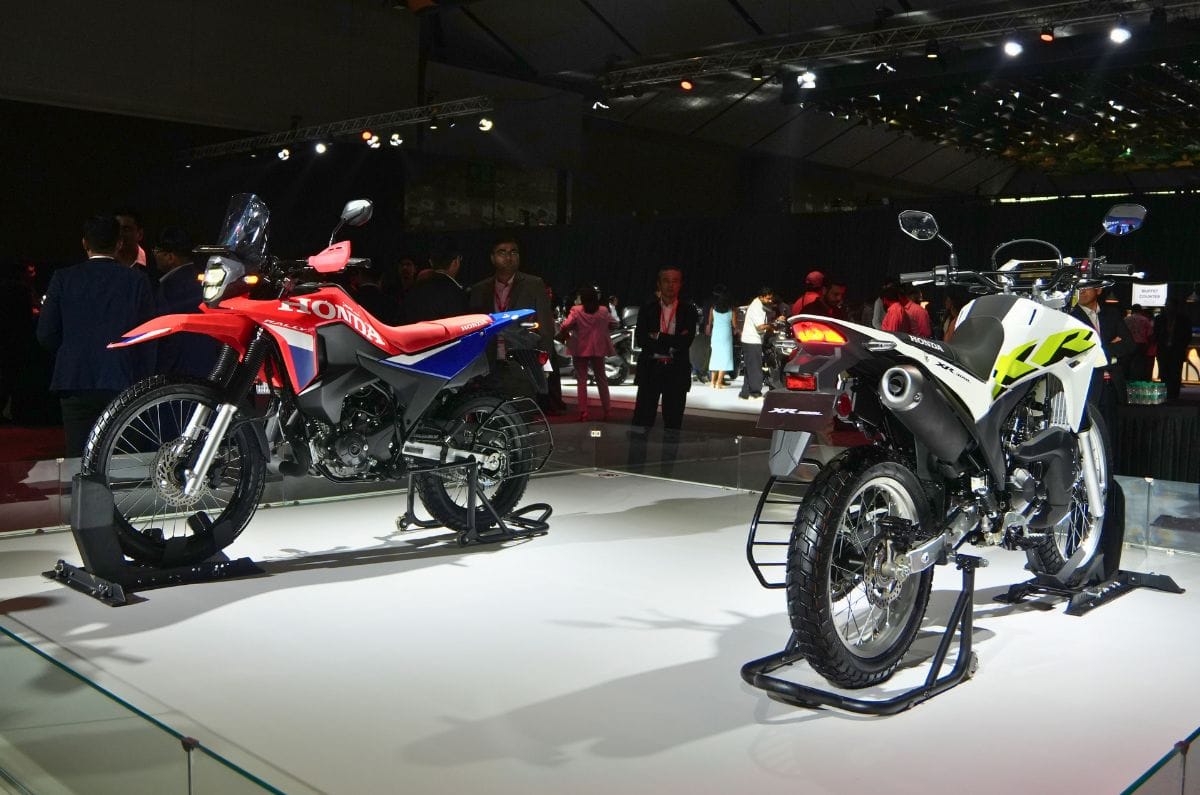
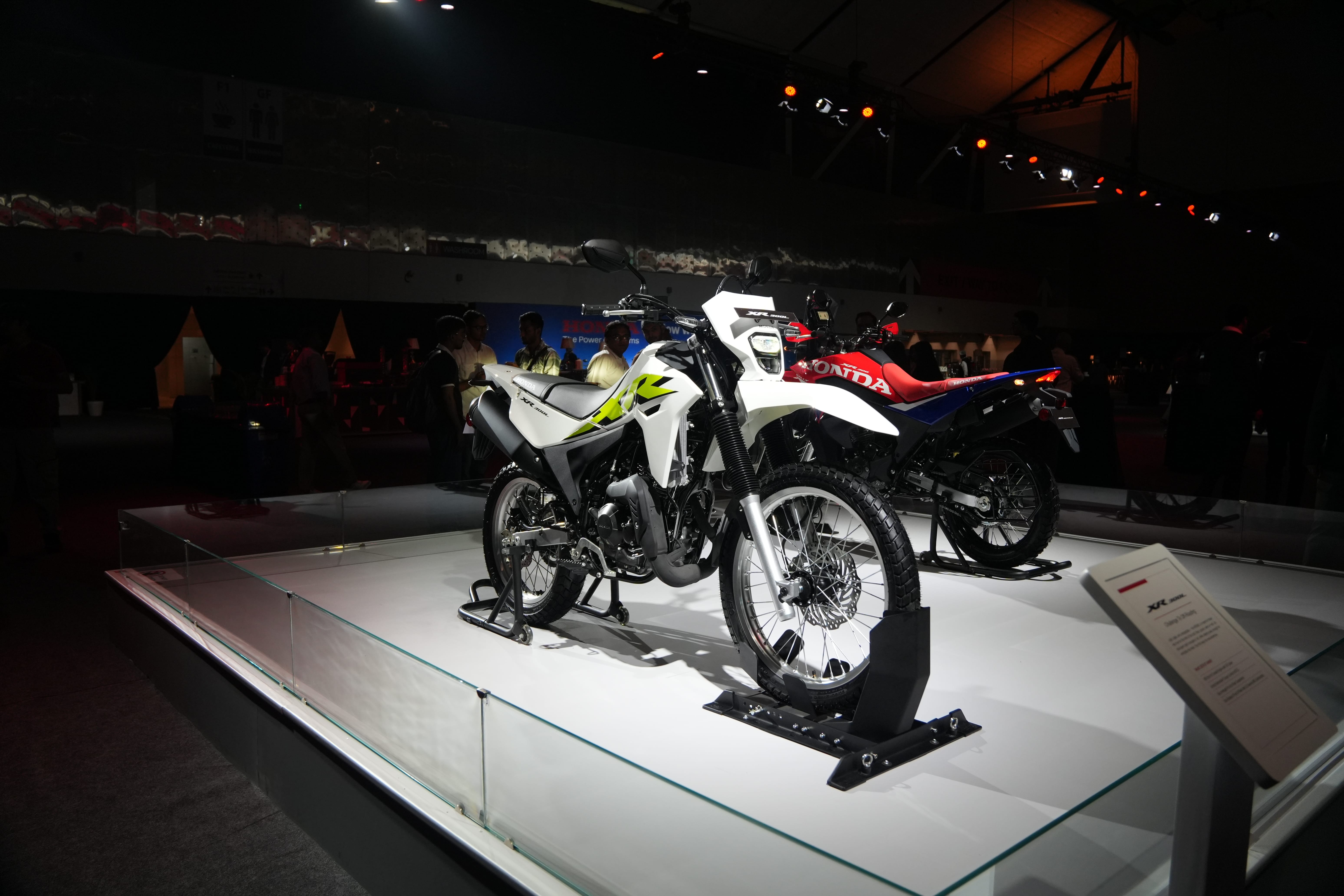
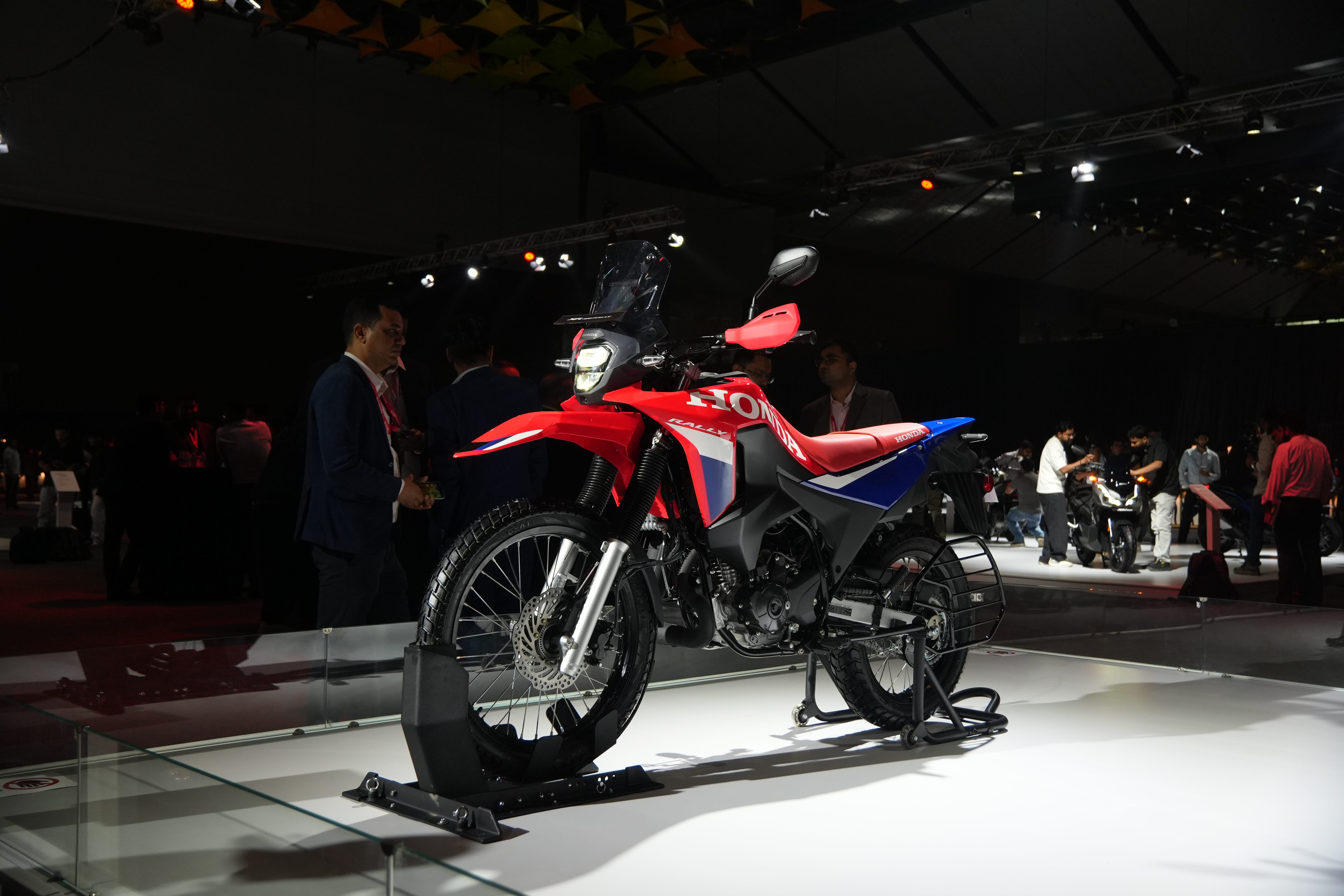
The small-capacity adventure motorcycle segment in India has never been more competitive, and understandably so, given how well these bikes suit our riding conditions. While Honda has long had capable dual-sport motorcycles in its global portfolio, it never offered one in our market. That has now changed with the announcement of the XR300L and XR300 Rally. The brand is yet to reveal full specifications, but a combination of what is visible on the bikes and Honda’s existing global lineup gives us a good idea of what to expect. Here’s everything we know so far.

Honda XR300L

Engine is likely related to the CB300F, and Honda already sells an XR300L in South America

Visually, the engine on the India-spec XR300L appears closely related to the 293cc unit found in the CB300F. Additionally, Honda already sells an XR300L in South American markets such as Brazil and Colombia, and that motorcycle also uses a 293cc engine. If the India-spec bike uses the same motor, it is likely to produce around 24.3hp at 7,500rpm and 26.5Nm at 5,750rpm.

Interestingly, the Brazilian-spec XR300L is Flex Fuel-compatible, allowing it to run on either petrol or ethanol. While Honda has not confirmed whether the India-spec motorcycle will feature the same capability, it would make sense given the increasing focus on ethanol-blended fuels in India.

The South American XR300L is certified only to Euro 3 emissions standards, which could explain why the India-spec bike features noticeably different exhaust routing. The stricter emissions regulations here are likely to require revised exhaust architecture and engine tuning, even if the underlying engine remains the same. The bodywork also differs slightly from the South American model.

The bike sold in Brazil and Colombia uses a telescopic fork with 221mm of wheel travel and a rear monoshock with 227mm of travel. While Honda has not confirmed the India-spec motorcycle’s suspension figures, we could expect to see similarly impressive figures. The bike also rides on a 21-inch front and 18-inch rear wheel combo – a setup also seen on the India-spec bike.

Honda XR300 Rally

Gets a larger fuel tank, taller windscreen and TFT display over the XR300L

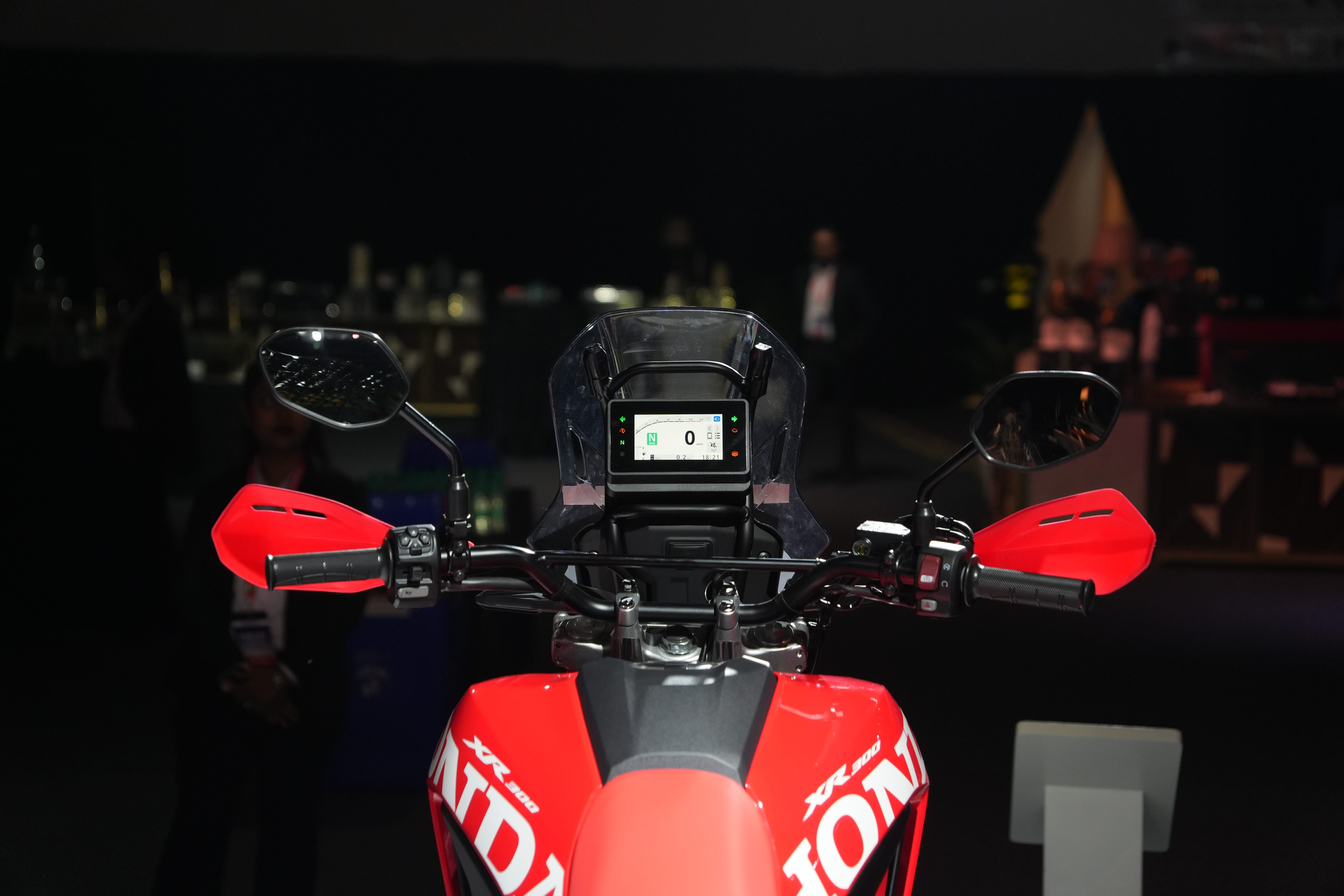
The XR300 Rally is expected to share its engine and core mechanical package with the XR300L, while adding equipment better suited to long-distance touring. Confirmed additions include a larger fuel tank (capacity yet to be revealed), a 5-inch TFT display that we’ve already seen on several Honda motorcycles in India, and more comprehensive switchgear to access its additional functions. A taller windscreen, knuckle guards and unique bodywork are also part of the package. The Rally also appears to use a different tyre tread pattern, although wheel and tyre sizes are expected to remain unchanged.

If the relationship between the global CRF300L and CRF300 Rally is anything to go by, the XR300 Rally is also likely to feature a slightly taller seat height, a marginal reduction in ground clearance and a small increase in kerb weight owing to its larger fuel tank.

For now, that’s all we know. Honda is yet to announce pricing or full specifications for either motorcycle, but with both bikes now officially unveiled, a launch over the coming months is imminent. Local manufacturing should also allow Honda to price them competitively. For reference, the arch rivals to these bikes, the Kawasaki KLX230 and Hero Xpulse 210 cost Rs 2.19 lakh and Rs 1.67-1.76 lakh, respectively.

H1B Visa Fee: अमेरिका जाने वाले भारतीयों को बड़ी राहत! H-1B वीजा पर ट्रंप के ₹95 लाख की फीस पर कोर्ट ने दिया बड़ा झटका

US Court Blocks Trump H-1B Visa Fee: अमेरिका में रहने के लिए जारी होने वाले H-1B वीजा पर एक बड़ी राहत वाली खबर आई है। एक संघीय अपील अदालत ने राष्ट्रपति डोनाल्ड ट्रंप के प्रशासन को बड़ा कानूनी झटका दिया है। अदालत ने नए H-1B वीजा पर करीब 95 लाख रुपये की भारी-भरकम फीस लगाने वाले आदेश पर रोक हटाने से साफ इनकार कर दिया है।

बोस्टन स्थित ‘फर्स्ट सर्किट कोर्ट ऑफ अपील्स’ की तीन जजों की पीठ ने निचली अदालत के उस फैसले को बरकरार रखा है, जिसमें इस फीस को गैर-कानूनी करार दिया गया था। अदालत के इस फैसले से अमेरिका में काम करने की इच्छा रखने वाले भारतीय आईटी पेशेवरों और अमेरिकी टेक कंपनियों को बड़ी राहत मिली है।

अदालत ने क्यों लगाई $100,000 की वीजा फीस पर रोक?

यूएस डिस्ट्रिक्ट जज लियो टी. सोरोकिन ने 8 जून 2026 के अपने आदेश में कहा था कि ट्रंप प्रशासन द्वारा इतनी बड़ी फीस वसूलना एक तरह का ‘अवैध टैक्स’ है, क्योंकि अमेरिकी कांग्रेस ने राष्ट्रपति या कार्यपालिका को ऐसा करने का कोई अधिकार नहीं दिया है।

20 डेमोक्रेटिक शासित राज्यों के अटॉर्नी जनरल द्वारा दायर इस याचिका में तर्क दिया गया कि राष्ट्रपति ने संसद से कानून पास कराने के बजाय सिर्फ एक राष्ट्रपति घोषणापत्र के जरिए इस फीस को लागू कर अपने अधिकारों का अतिक्रमण किया है।

अपील अदालत ने 1989 के अमेरिकी सुप्रीम कोर्ट के एक फैसले का हवाला देते हुए कहा कि अगर सरकार नागरिकों या कंपनियों पर कोई बड़ा वित्तीय बोझ (टैक्स या फीस) डालती है, तो उसके लिए संसद की स्पष्ट मंजूरी अनिवार्य है। ट्रंप प्रशासन यह साबित करने में विफल रहा कि उनके पास इसकी कानूनी मंजूरी थी।

क्या था ट्रंप प्रशासन का तर्क और फैसला?

राष्ट्रपति डोनाल्ड ट्रंप ने सितंबर 2025 में एक प्रेसिडेंशियल प्रोक्लेमेशन के जरिए $100,000 की H-1B वीजा फीस लगाने का ऐलान किया था। प्रशासन का कहना था कि अमेरिकी कंपनियां कम वेतन पर विदेशी कर्मचारियों को लाने के लिए H-1B वीजा कार्यक्रम का गलत इस्तेमाल करती हैं, जिससे अमेरिकी नागरिकों की नौकरियां छिन जाती हैं। सरकार के मुताबिक, इस भारी फीस का मकसद कंपनियों को विदेशी कर्मचारियों को स्पॉन्सर करने से हतोत्साहित करना था।

भारतीय IT प्रोफेशनल्स और टेक कंपनियों के लिए राहत क्यों?

H-1B वीजा अमेरिकी कंपनियों को आईटी, इंजीनियरिंग और विज्ञान जैसे विशेष क्षेत्रों में विदेशी कुशल पेशेवरों को नियुक्त करने की अनुमति देता है। अमेरिका हर साल कुल 85,000 H-1B वीजा करीब 65,000 रेगुलर कोटा और 20,000 अमेरिका से मास्टर डिग्री हासिल करने वालों के लिए जारी करता है। इस कोटे का बड़ा हिस्सा भारत और चीन के पेशेवरों को मिलता है।

इस नए नियम से पहले, अमेरिकी कंपनियों को एक H-1B कर्मचारी को स्पॉन्सर करने के लिए औसतन $2,000 से $5,000 (लगभग 1.6 लाख से 4.1 लाख रुपये) ही देने पड़ते थे। $100,000 की फीस लागू होने से कंपनियों के लिए विदेशी प्रतिभाओं को बुलाना बेहद खर्चीला हो जाता।

आगे क्या होगा?

अपील अदालत का यह स्टे खारिज होने का मतलब है कि जब तक इस पूरे मामले की अंतिम सुनवाई पूरी नहीं हो जाती, तब तक ट्रंप प्रशासन $100,000 की इस बढ़ी हुई फीस को लागू नहीं कर सकता है। यानी फिलहाल पुरानी फीस प्रक्रिया के तहत ही H-1B वीजा आवेदन स्वीकार किए जाएंगे।

Maruti Brezza new vs old: Differences and similarities explained

Maruti Brezza new vs old models compared

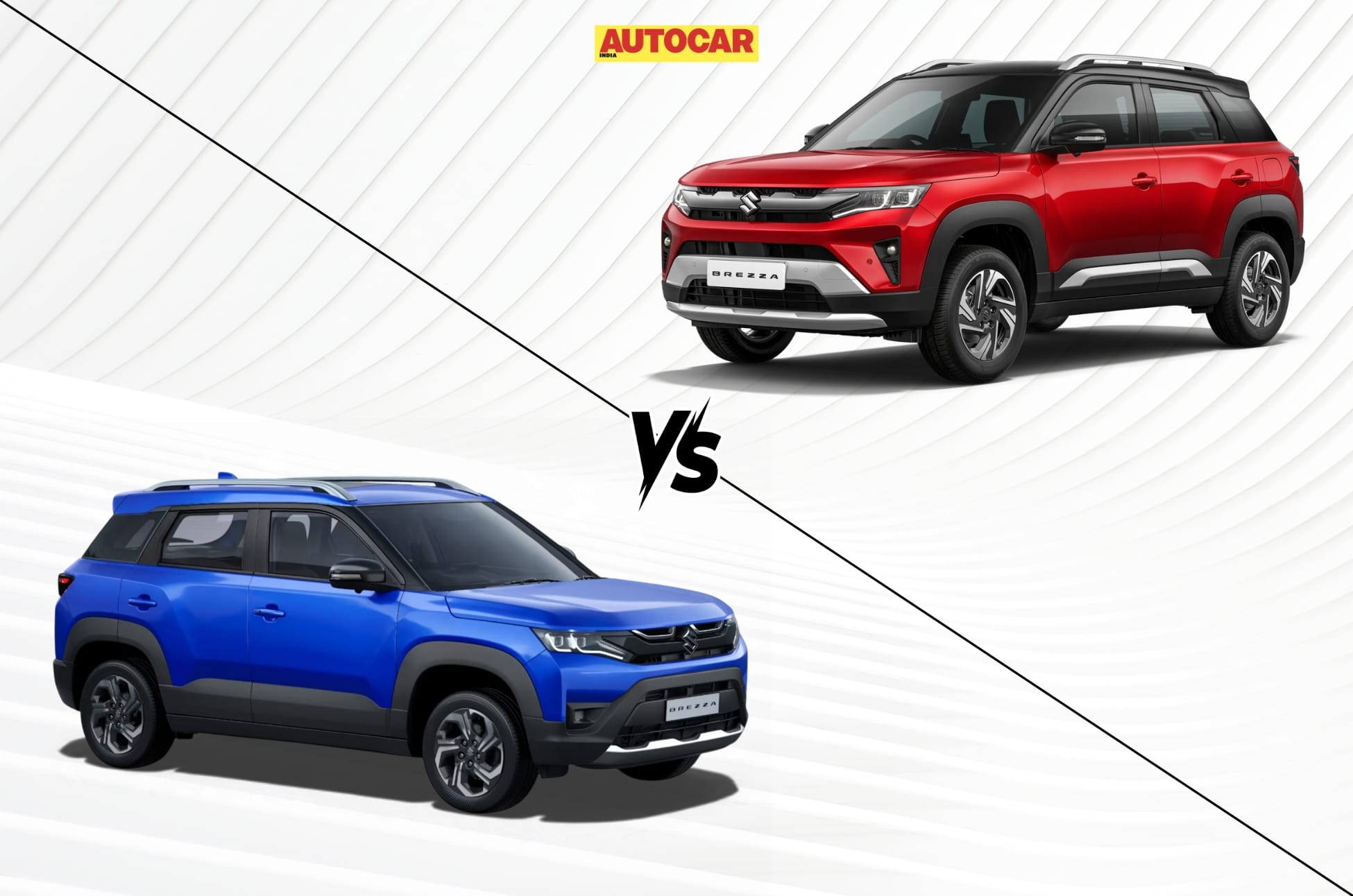
Four years after replacing the Vitara Brezza, the ‘Brezza’ nameplate has received its first lifecycle update. With this, the 2026 Maruti Brezza offers buyers a multitude of new features and styling tweaks that the brand hopes will keep its compact SUV competitive among segment rivals that include the Hyundai Venue, Kia Sonet, Skoda Kylaq and Tata Nexon. Having said that, let’s find out the main differences between the new Maruti Suzuki Brezza and its predecessor.

Maruti Brezza new vs old: Exterior design

Changes on the outside are mostly limited to the soft parts

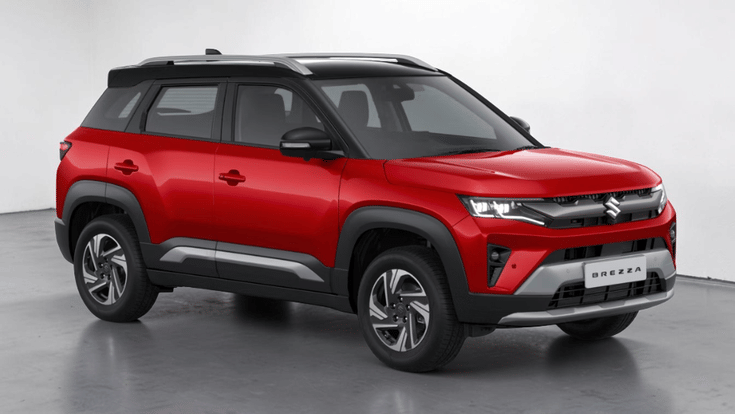
New Maruti Brezza front
Old Maruti Brezza front
 

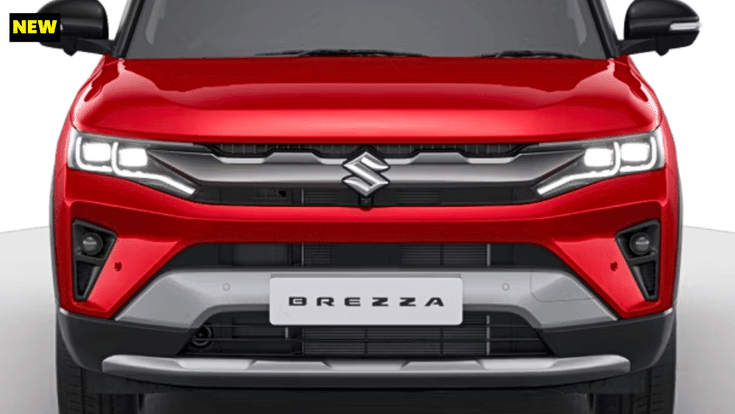
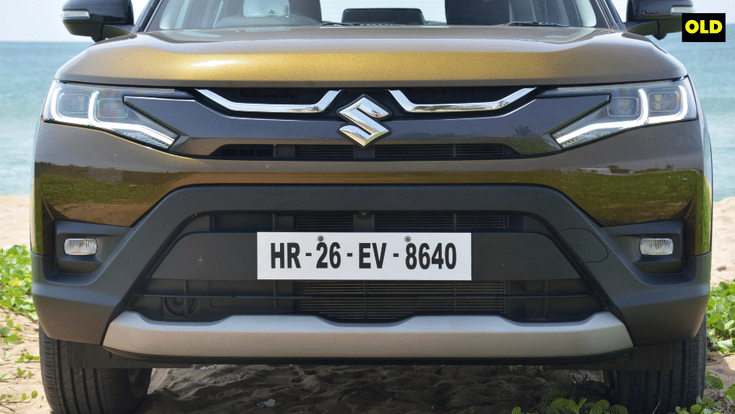
To help differentiate the 2026 Brezza from the old model, Maruti Suzuki has given it a few noticeable styling tweaks. For starters, there’s a new grille at the front and it’s finished in dark chrome. The front bumper has been redesigned as well, and it comes with an additional silver plastic garnish. Maruti has also re-done the front fog-lamp design. The LED units now sit inside a cone-shaped housing and have been moved further up the bumper compared to the old Brezza.

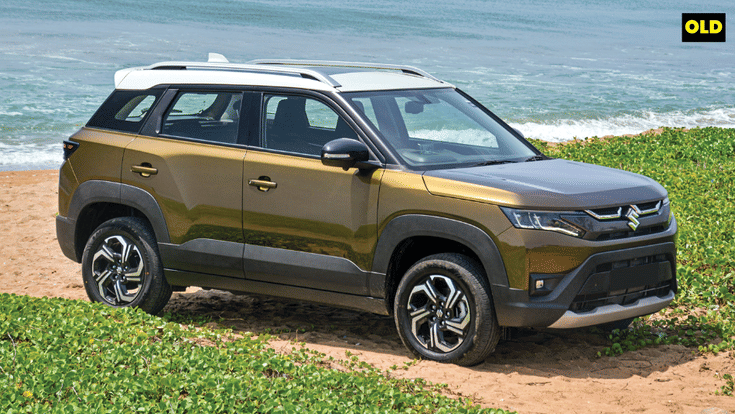
New Maruti Brezza rear quarter
Old Maruti Brezza rear quarter
 

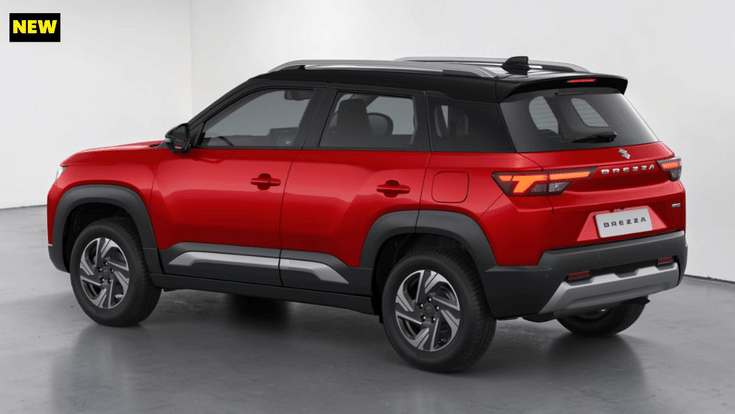
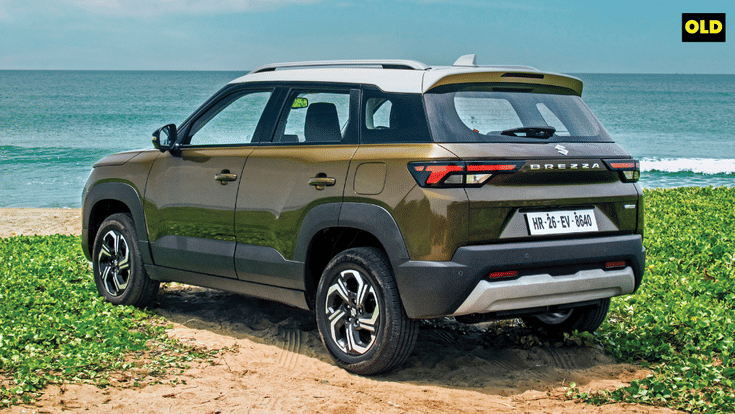
Along the sides, the 2026 Brezza features new 16-inch alloy wheels with a two-tone finish and dual-tone body cladding. The rest of the styling details remain identical to the old model. Maruti has done away with the Brave Khakhi and Exuberant Blue mono-tone colours, replacing them with Vivacious Orange and Lustrous Beige tones. The Sizzling Red with Bluish Black Roof dual-tone colour remains, but the other two options are now Lustrous Beige and Pearl Arctic White with the same ‘Blueish Black’ roof. The rear of the 2026 Brezza looks largely similar to the old model. Finally, the new Brezza Turbo gets red accents all around and different door cladding, along with ‘Turbo Boosterjet’ branding.

Maruti Brezza new vs old: Interior design and features

Few styling tweaks and new features add to this interior’s overall appeal

New Maruti Brezza interior design
Old Maruti Brezza interior design
 

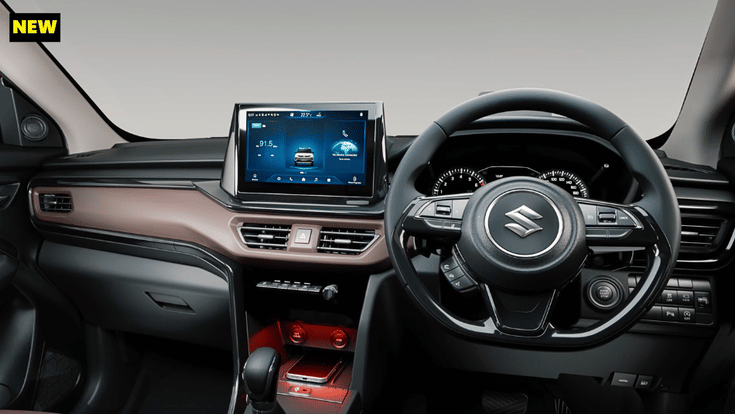
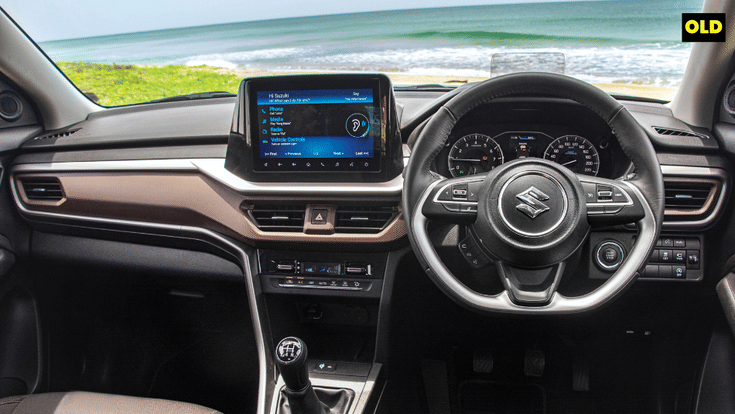
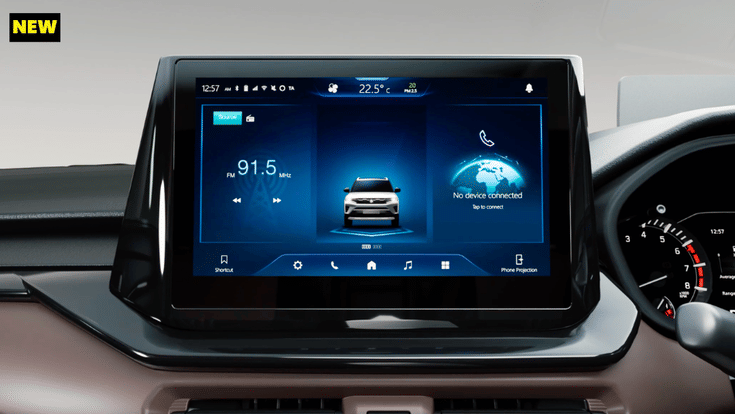
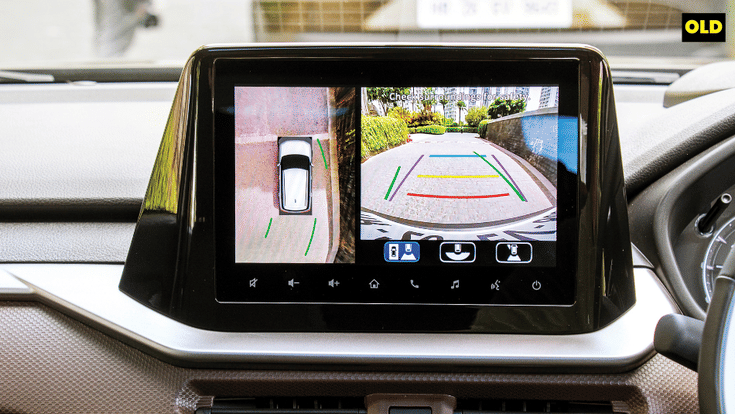
The overall design and layout of the Maruti Brezza’s interior hasn’t changed with the 2026 facelift. However, some of the tweaks that the brand has made are quite easy to spot. The first amongst these is the new 10.1-inch touchscreen head unit, which features the Suzuki SmartPlay Pro X infotainment system. For reference, the previous mode’s SmartPlay Pro+ system came with a 9-inch touchscreen. The silver-coloured plastic trim on the dashboard and doors in the old Brezza have given way to gloss-black trim in the 2026 model. These look nice and premium but are a magnet for fingerprints and scratches.

New Maruti Brezza touchscreen
Old Maruti Brezza touchscreen
 

Further down the centre stack, the Brezza facelift gets a new HVAC panel with physical, piano-style keys and a single rotary dial – this has been borrowed from the Victoris. Although stylish to look at, it no longer has a dedicated display to show the temperature and blower speed – these have been moved to the infotainment screen. The climate control does get a PM2.5 filter with an AQI display now, though.

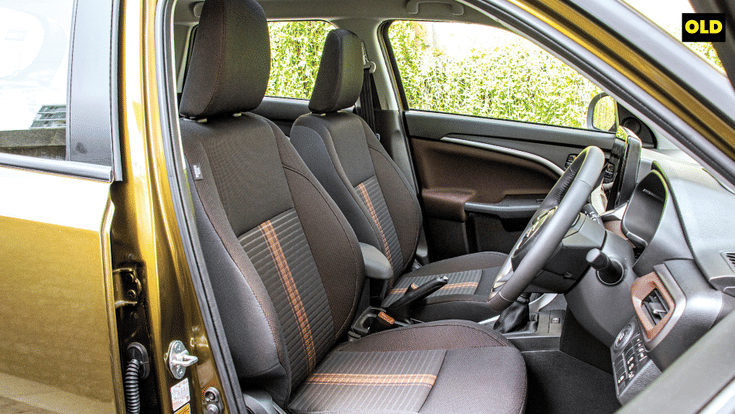
New Maruti Brezza front seats
Old Maruti Brezza front seats
 

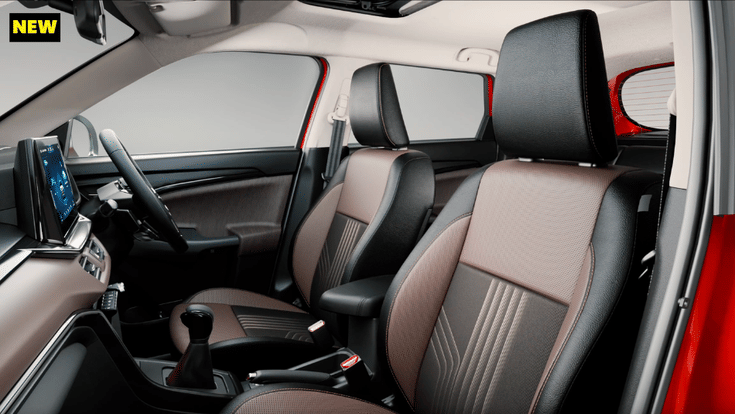
While the design of the steering wheel and instrument cluster remain unchanged, the Brezza now gets suction-type front-seat ventilation, 64-colour ambient lighting, dual-tone part-leatherette seats, Suzuki Navigation built-in, and new driver-assistance features like safe-exit warning, blind-spot warning, lane-departure alert and rear cross-traffic alert.

Maruti Brezza new vs old: Engine and gearbox

Differences between the old and new Brezza are more than skin-deep

Maruti has carried over the K15C four-cylinder petrol engine with the automatic engine stop-start system from the pre-facelift Brezza. In the 2026 Brezza, this 1.5-litre mill continues to produce 103hp and 139Nm. In its CNG avatar as well, the Brezza facelift’s engine output of 88hp and 122Nm remains the same as the old model. However, the difference with the new model is that it gets underbody CNG tanks, which don’t eat up boot space.

New Maruti Brezza front quarter
Old Maruti Brezza front quarter
 

The other difference between the 2026 Maruti Brezza and its predecessor is the inclusion of a 1.0-litre turbo-petrol engine with direct injection. Also used in the Fronx, this ‘Boosterjet’ powerplant has been retuned for the Brezza, so it now makes 110hp and 170Nm. The Turbo and CNG versions are only offered with the new 6-speed manual gearbox, which replaces the old 5-speed unit. Meanwhile, the naturally aspirated engine can be paired with the 6-speed torque converter automatic transmission, which was available with the pre-facelift model as well.

The step up from a 5-speed manual gearbox to a 6-speed unit also means that the 2026 Brezza offers better fuel economy. The pre-facelift Brezza with the naturally aspirated engine and manual gearbox had a claimed mileage of up to 17.80kpl, while its 2026 equivalent claims a figure of up to 21.09kpl. The 2026 Brezza CNG also has a higher claimed fuel economy of 26.90km/kg, where the old model’s was 25.51km/kg. Maruti claims that the new Turbo variants of the Brezza have a fuel economy of up to 20.47kpl.

Maruti Brezza new vs old: Prices

Despite the various updates and additions that the 2026 Maruti Brezza gets over its predecessor, its new Turbo version starts at an introductory price of Rs 7.40 lakh. This is lower than the base price of the pre-facelift model, which started at Rs 8.26 lakh. The 1.0-litre engine of the new Turbo variants make them eligible for higher tax breaks – the old Brezza’s 1.5-litre engine didn’t allow for this. That said, Maruti Suzuki is yet to disclose the prices of the rest of the variants of the 2026 Brezza.

Prices are ex-showroom, Delhi

Also read

2026 Maruti Brezza: All that’s new over its predecessor

3 reasons to buy the Honda ZR-V, and 3 reasons not to

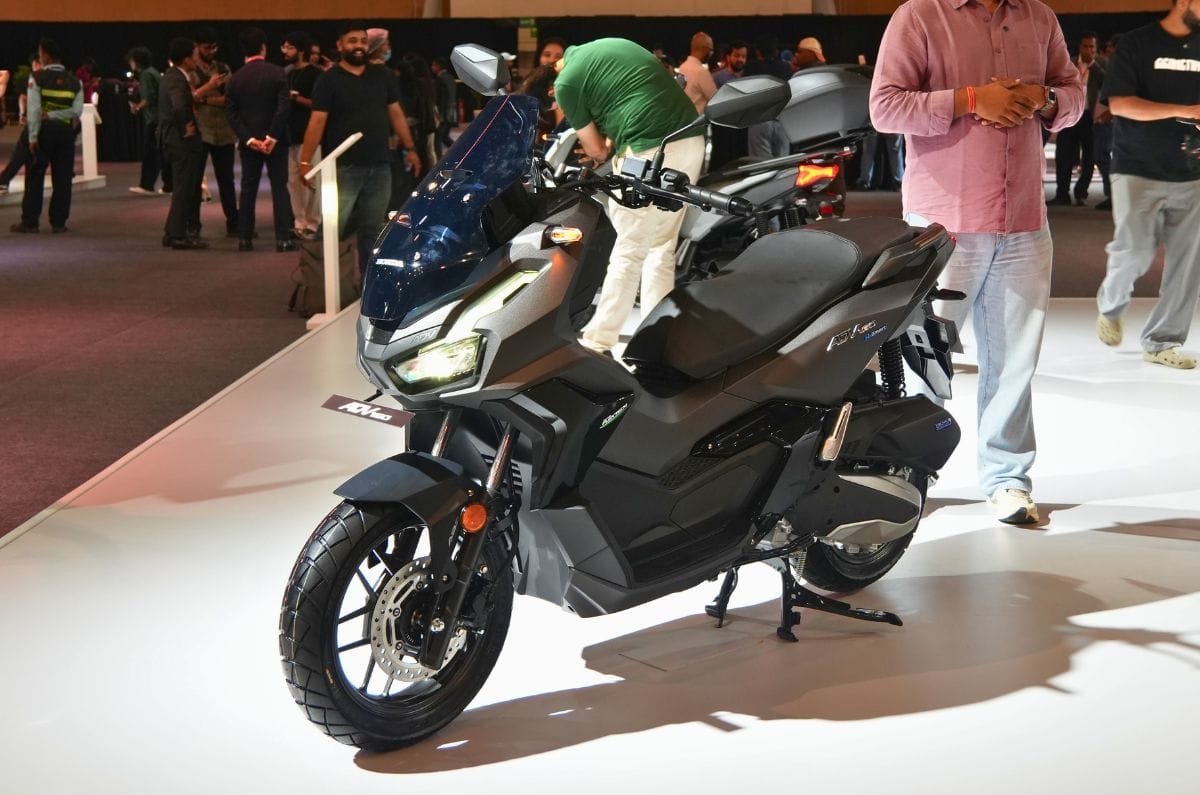
Honda ADV160 maxi-scooter image gallery

Honda ADV160 front three quarter

Honda has unveiled the ADV160 for the Indian market, signalling its intent to compete in the growing premium maxi-scooter segment. It features sharp, angular bodywork, a tall adjustable windscreen, a stepped seat, generous body cladding and dual-purpose styling cues that set it apart from conventional maxi-scooters. Powering the adventure styled maxi-scooter is a 157cc, liquid-cooled, single-cylinder engine producing 16.3hp and 14.9Nm, paired with a CVT transmission. Interestingly, these output figures are marginally higher than those of the ADV160 sold in several overseas markets. The India-bound model also surprised with an E85-compatible flex-fuel engine, making it the first flex-fuel scooter to be showcased in India. Other highlights include a 5-inch TFT display, traction control, keyless ignition, an adjustable windscreen, USB Type-C charging and 27 litres of underseat storage. Honda is yet to announce the ADV160’s launch timeline and pricing.

Skoda India Brand director Ashish Gupta on growth, EVs and the brand’s future

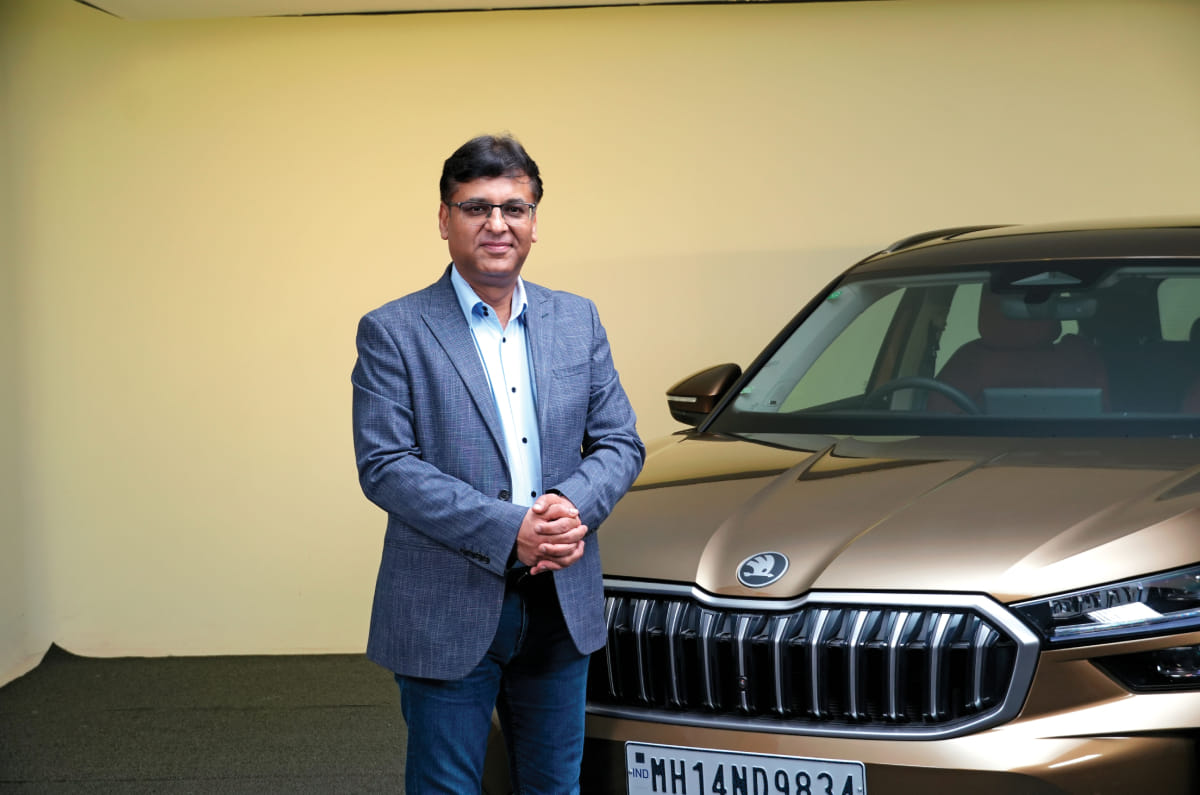
Skoda India Brand director Ashish Gupta

Skoda Auto India has had a busy year, with the launch of the Kylaq, the return of the Kodiaq, an expanding dealer network and plans to strengthen its presence across multiple segments. The company is also preparing for an electric future while continuing to invest in its petrol-powered portfolio. In this interview, Brand Director Ashish Gupta talks about Skoda’s sales growth, the launch of the Kodiaq RS, upcoming model updates, EV strategy and the steps being taken to improve the ownership experience in India.

On his first year at the helm of Skoda India.

Coming from Volkswagen, I’ve basically switched to the other side of the office, but I’d say it’s been challenging but exhilarating. I’m more than satisfied with the year, from the brand side, sales and also setting the foundation for the future. All our KPIs – brand image, awareness, consideration, network coverage, dealer profitability, customer satisfaction, market coverage, etc. – have improved, and we have done really well. In sales, we went from number eleven to seven, and we also became number four in the global sales ranking for Skoda, just slightly behind the UK. 

On the launch of the Kodiaq RS. 

The Kodiaq is our flagship. It came here in 2017, and we have it on sale again. At the same time, this year marks 125 years for Skoda in motorsport, and it’s also about 50 years since the RS badge was first born, so we thought it would be great to bring in the Kodiaq RS as the pinnacle of our engineering and motorsport heritage. It’s coming in as a fully built unit, and we have only 50 units; allocation is a challenge when it’s a bestseller abroad, but we have the option of another batch later on.  

On the Kylaq driving Skoda’s sales growth.

Yes, a large portion of our sales came from the Kylaq, but that was also because we were running out the Kushaq, which was due for an update and has now been launched. So, the demand for the Kushaq was always there. Also, it’s only been two months, so it’s too early to qualify, but we have seen an uptake of about 40% in sales, and the order book is solid.

On the Slavia and the upcoming update. 

The Slavia is a very special model for us. SUVs are the flavour of the season, but sedans are doing fine too, and we are among the few manufacturers in the world that still have a sedan portfolio, all of which are doing well. In India, the Slavia continues our sedan legacy of models like the Octavia, Superb and Rapid, and so, yes, it will see an update, but it’s early to specify details. 

On the company’s electric vehicle plans. 

If you want to be a relevant player in that space, you have to have a local play, so that’s what we are working on. EV penetration was 7% in May, up from 4.5% at the end of last year, so yes, this is a space where we will accelerate our plans, but you cannot do this suddenly, as there are factors like the supply chain to consider. But there’s an international portfolio too that we can look at.

On the possibility of the Peaq making it to India.

Bringing in a global model is very difficult as far as pricing goes, and the EU-FTA, as you know, does not give benefits to EVs for now. So, for now, we have to look at what makes sense, and yes, a larger EV is easier to manage pricing with. And yes, the Peaq is certainly on my radar. We will look at the specifications and see how we can best manage that with pricing, as you cannot have a high-priced CBU but be low on equipment. So, we are working on this. My ambition is to get the global portfolio to India.

On a petrol-only portfolio and flex-fuel cars.

If you see, year to date, the petrol market is about 46%, which used to be above 50% last year, so there is a shift, but the market is also growing by 20%. So even if the share of other fuels is rising, the absolute volume of petrol is increasing, so I’m not worried about our current portfolio. As for flex fuel, yes, ethanol is a longer-term strategy that the government wants, so we have to look at it, and we are, but there is work to manage this, as we have to look at the engine portfolio and manage our strict emission norms too.

On addressing Skoda’s dealer experience.

If you look at our customer experience scores, they have been improving. Sales have grown by almost 12 percent over the last year, and customer experience for service has improved by 18 to 20 percent. So, are we perfect? No, but the trend has improved and is only rising. Also, we are now present at about 335 touchpoints in 183 cities and are just inaugurating our 200th workshop in India, so we are getting closer to our customers. We have competitive service packs and excellent parts availability. Today, we have a parts service rate of more than 96 percent at our warehouses and dealerships, which is among the best in the industry.