Manish Brahmbhatt: कॉकरोच जनता पार्टी में बगावत! जानिए कौन हैं मनीष ब्रह्मभट्ट, अभिजीत दिपके से अलग होकर बनाई CJP-लोकतांत्रिक

Who is Manish Brahmbhatt: सामाजिक कार्यकर्ता मनीष ब्रह्मभट्ट ने गुरुवार (3 सितंबर) को नई राजनीतिक पार्टी ‘कॉकरोच जनता पार्टी-लोकतांत्रिक (CJP-D)’ के गठन की घोषणा की। उन्होंने इसे कॉकरोच जनता पार्टी (CJP) के विकल्प के रूप में पेश किया। ब्रह्मभट्ट ने CJP के मुखिया अभिजीत दीपके के नेतृत्व वाले पार्टी पर उस छात्र आंदोलन से दूर जाने का आरोप लगाया, जिससे यह संगठन उभरा था। ब्रह्मभट्ट ने पहले CJP की राष्ट्रीय कार्यसमिति के गठन का विरोध किया था। उन्होंने आरोप लगाया कि संगठन अब आम आदमी पार्टी (AAP) के संयोजक अरविंद केजरीवाल के करीबी लोगों की मनमाने ढंग से चुनी गई टीम बन गया है। उन्होंने कहा कि आंदोलन में शामिल रहे स्वयंसेवकों तथा प्रदर्शनकारियों का पर्याप्त प्रतिनिधित्व नहीं कर रहा है।

पीटीआई के मुताबिक ब्रह्मभट्ट ने कहा, “आज हम कॉकरोच जनता पार्टी-लोकतांत्रिक की शुरुआत कर रहे हैं।” उन्होंने कहा कि नया मंच आंदोलन में शामिल रहे लोगों की सामूहिक ताकत को एकजुट करने का प्रयास करेगा। CJP की शुरुआत पहले एक ऑनलाइन व्यंग्य मंच के रूप में हुई थी। बाद में इसने पेपर लीक और एजुकेशन से जुड़े अन्य मुद्दों को लेकर दिल्ली में छात्रों के नेतृत्व में आंदोलन किया। इसके बाद संगठन ने देशभर में अपनी गतिविधियों का विस्तार करने की योजना की घोषणा की।

दीपके पर AAP से जुड़े होने का आरोप!

ब्रह्मभट्ट ने आरोप लगाया कि CJP के नए नेतृत्व में आंदोलनकारियों का पर्याप्त प्रतिनिधित्व नहीं है। उन्होंने कहा कि आम आदमी पार्टी से जुड़े कई लोगों को इसमें शामिल किया गया। जबकि अन्य राजनीतिक दलों से जुड़े स्वयंसेवकों और प्रदर्शनों में हिस्सा लेने वाले लोगों को बाहर रखा गया। ब्रह्मभट्ट ने सवाल किया, “आम आदमी पार्टी से जुड़े आठ लोगों को ही क्यों शामिल किया गया है?”

उन्होंने कहा कि शिवसेना, समाजवादी पार्टी, राष्ट्रीय जनता दल (RJD), भारतीय जनता पार्टी (BJP) और कांग्रेस समेत विभिन्न दलों से जुड़े लोगों ने आंदोलन में हिस्सा लिया था। लेकिन नए संगठनात्मक ढांचे में उन्हें प्रतिनिधित्व नहीं दिया गया। ब्रह्मभट्ट ने कहा कि उनके नेतृत्व वाला संगठन लोकतांत्रिक प्रक्रिया के जरिए एक राष्ट्रीय टीम बनाने और फैसले लेने की प्रक्रिया में स्वयंसेवकों और प्रदर्शनकारियों को शामिल करने की कोशिश करेगा।

कौन हैं मनीष ब्रह्मभट्ट?

सामाजिक कार्यकर्ता मनीष ब्रह्मभट्ट CJP आंदोलन से जुड़े प्रमुख वालंटियर और कोऑर्डिनेटर रहे हैं। चुनावी राजनीति में भी वे कोई नया चेहरा नहीं हैं। ‘कॉकरोच जनता पार्टी (CJP) में बगावत’ करने वाले नेता के तौर पर उभरने से पहले ब्रह्मभट्ट ने 2022 का गुजरात विधानसभा चुनाव पालनपुर से निर्दलीय उम्मीदवार के तौर पर लड़ा था। इस चुनाव में उन्हें 964 वोट (0.53%) मिले थे। वे पांचवें स्थान पर रहे थे। इस सीट से राज्य में सत्ताधारी BJP के अनिकेत गिरीशभाई ठाकर ने 95,588 वोट पाकर जीत दर्ज की थी।

पेशेवर और शैक्षणिक पृष्ठभूमि

‘एसोसिएशन फॉर डेमोक्रेटिक रिफॉर्म्स’ के ‘MyNeta’ प्लेटफॉर्म पर मौजूद ब्रह्मभट्ट के चुनावी हलफनामे के अनुसार, चुनाव के समय वे 37 साल के मैनेजमेंट कंसल्टेंट थे। उन्होंने हेमचंद्राचार्य नॉर्थ गुजरात यूनिवर्सिटी से B.Com और F.Y. LLB की पढ़ाई की है।

संपत्ति और विवाद से जुड़े मामले

चुनावी हलफनामे में उनकी घोषित संपत्ति लगभग 44.42 लाख रुपये थी। उन्होंने कोई देनदारी (कर्ज) नहीं बताई थी। उनके चुनावी हलफनामे में चार लंबित आपराधिक मामलों का भी जिक्र है। इनमें IPC की धारा 325 (जानबूझकर गंभीर चोट पहुंचाना), 505(2) (समूहों के बीच दुश्मनी या नफरत फैलाने वाले बयान), 114 (अपराध के समय मौजूद रहकर उकसाना), 323 (जानबूझकर चोट पहुंचाना), 153 (दंगा भड़काने के इरादे से उकसाना), 501 (मानहानि करने वाली सामग्री छापना) और 502 के तहत आरोप शामिल हैं। हालांकि, ये मामले लंबित हैं। इनमें उन्हें दोषी नहीं ठहराया गया है।

CJP में विवाद और भूख हड़ताल की वजह!

बताया जा रहा है कि ब्रह्मभट्ट का हालिया राजनीतिक उभार जंतर-मंतर पर CJP के नेतृत्व में हुए छात्र-युवा आंदोलन से हुआ। विवाद तब शुरू हुआ जब अगस्त में CJP ने अपनी राष्ट्रीय कार्यकारिणी और शीर्ष नेतृत्व का ऐलान किया। इसमें अभिजीत दीपके को राष्ट्रीय संयोजक, जबकि सौरव दास और आशुतोष रांका को सह-संयोजक बनाया गया। ब्रह्मभट्ट का दावा है कि इस आंदोलन से करीब 450 कोऑर्डिनेटर जुड़े थे। लेकिन 12 सदस्यीय कोर टीम बनाते समय जमीनी कार्यकर्ताओं को पूरी तरह नजरअंदाज कर दिया गया।

अगस्त में जब दीपके ने अपने आवास पर कोर टीम की बैठक बुलाई, तो ब्रह्मभट्ट अपने साथी राहुल पांड्या के साथ विरोध दर्ज कराने पहुंचे थे। इस फैसले में प्रतिनिधित्व न मिलने पर कार्यकर्ताओं ने अनिश्चितकालीन भूख हड़ताल शुरू कर दी। हेल्थ बिगड़ने पर ब्रह्मभट्ट और पांड्या को अस्पताल में भर्ती कराना पड़ा था। उन्होंने कहा कि मूल आंदोलन देश का था। यह इसलिए सफल हुआ क्योंकि लोगों ने इसमें अपना खून-पसीना लगाया था। उन्होंने आरोप लगाया कि आंदोलन की सफलता के बाद इसे बेच दिया गया।
ये भी पढ़ें- Yasin Malik wife: ‘8 साल से आवाज नहीं सुनी…’; तिहाड़ जेल में बंद यासीन मलिक अपनी पाकिस्तानी पत्नी को देगा तलाक, खुद के लिए की फांसी की मांग

Ather aims for a larger market presence with the Konarc

Ather aims for a larger market presence with the Konarc
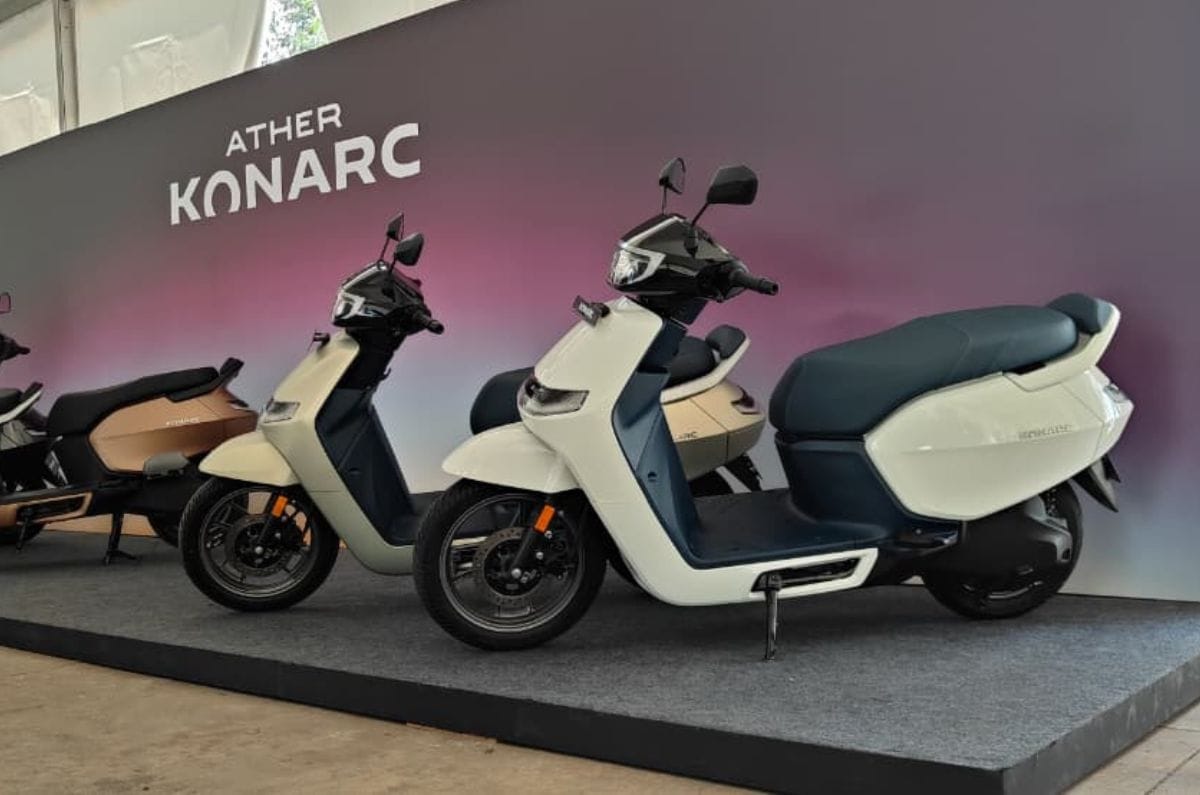
An outside image showing the Ather Konarc after the launch

Ather‘s new scooter Konarc is a broader bet for the electric two-wheeler maker to move beyond the relatively narrow customer base it has built around its technology-led products and compete for a larger share of India’s mainstream electric scooter market. Konarc is the first product on Ather’s new EL platform, which the company says was developed with safety, serviceability and scale in mind.

  1. Six different Konarcs with two available starting September
  2. Konarc doubles the service interval compared to a typical scooter
  3. AtherNode and True Health to help with charging and resale, respectively

Konarc is built to be serviced faster and less frequent

Ather says EV priorities have changed with times

The Konarc will be offered across S and Z lines. The 100km Konarc S is priced at Rs 99,999, while the 125km and 161km versions cost Rs 1.22 lakh and Rs 1.45 lakh respectively. Prices for the 200km S and the two Z variants have not been announced. The rollout will start with the S 125 and S 161 variants from September 21, followed by the 100km version in the first quarter of 2027. The Z line is scheduled for the second quarter of 2027, and the 200km S will follow in the third quarter. Once all Konarc variants are rolled out over the next year, Ather expects to have an option for 80-90 percent of the scooter market.

Ather’s own assessment is that the questions surrounding EVs have changed. Ather co-founder and CEO Tarun Mehta said that when the company started, customers asked whether an electric scooter was powerful enough, reliable enough, or even practical. As adoption has grown, the questions have become more conventional: where to charge, how safe is the battery, how long it will last, how the vehicle will be serviced and what happens when it has to be eventually sold. The company wants to solve for the three main concerns: service, charging, and resale value for its EV scooters.

Serviceability is one of the areas where Ather says the EL platform is intended to deliver an advantage. The Konarc’s service interval is 10,000 km (vs 5,000 km for most other scooters), while the number of service checkpoints has also been reduced. In a demonstration during the launch, the motor and transmission assembly was removed in 38 seconds and put back in 1 minute 33 seconds. Mehta acknowledged that service centres would not necessarily replicate these times, but said the architecture was designed to make servicing simpler.

Charging network has also been improved

Ather is solving for public and residential charging

Konarc owners will of course have access to Ather’s existing network of about 6,000 public fast chargers known as Ather Grid. The company, however, sees apartment complexes as the next charging bottleneck. To solve that, it has built AtherNode, a new residential charging system, which uses a building’s common electricity supply to serve individual parking spaces. It manages the available load, queues vehicles, and generates separate bills for residents. This could allow housing societies to add more charging points without immediately upgrading their transformers. Ather plans to introduce the system in six cities from December, beginning with Bengaluru. The Konarc itself gets a 450W onboard charger and supports combined charging; which means that it can be paired with an external 450W charger to refill the battery at 900W.

Ather True Health to help with resale value

The company remains committed to its software first approach

With the Konarc, Ather has attempted to put more conventional attributes of a mass-market scooter alongside the technology it has developed over several years. The company is wanting to solve not only the product problem, but also some of the ownership concerns that could prevent customers from switching from petrol scooters. As the third prong on that front, Ather has introduced True Health on its app, a digital report covering the battery, motor, charger, dashboard, service history and wear components for eligible scooters more than three years old. Owners can view the condition of major components, the battery’s state of health and an estimated resale value. Such a company-verified report could give buyers and sellers a better basis for arriving at a price.

Finally, the company expects software adoption to remain strong even as it moves into a more mainstream segment. For example, in Madhya Pradesh, the adoption rate for AtherStack Pro initially stood at about 40 percent, but eventually crossed 88 percent with the number of stores increasing. The Konarc is Ather’s aim at a much broader part of the market, but that means competing not only with other electric scooter makers, but also with established petrol scooter brands. It remains to be seen whether the company’s push to improve serviceability, charging, and resale value will ease that challenge.

With inputs from Nayan Jain and Stephen Raj Antony.
 

Parth Jindal appointed JSW MG Motor India chairman

Parth Jindal appointed JSW MG Motor India chairman
Parth Jindal

JSW MG Motor India has appointed Parth Jindal as chairman with immediate effect. Jindal has been a board member of the company – a joint venture between JSW Group and SAIC Motor – since its formation and has been involved in its product strategy, manufacturing expansion and localisation programme.

Parth Jindal’s role at JSW

Jindal holds several senior positions across the JSW Group. He is managing director of JSW Cement and JSW Paints, chairman of JSW Dulux and a director on the board of JSW Energy. He is also the founder of JSW Sports and chairman and co-owner of the Indian Premier League team Delhi Capitals.

JSW MG Motor India is a joint venture between JSW Group and SAIC Motor. The company says it has sold more than 1.5 lakh electric vehicles since its first EV launch, with the MG Windsor being its bestselling EV in India.

The appointment comes as JSW MG expands its electric vehicle portfolio and manufacturing operations in India.

Spyker returns with 800hp C8 Preliator XXV Coupe

Spyker returns with 800hp C8 Preliator XXV Coupe
spyker c8 preliator xxv

Dutch carmaker Spyker has resurfaced with the C8 Preliator XXV Coupe, a limited-run mid-engined supercar that marks the start of a new chapter for the troubled brand. Unveiled at The Quail during Monterey Car Week, the XXV is based on the C8 Preliator that debuted in 2016 and will be limited to just 25 examples. Pricing has not been disclosed for the C8 Preliator XXV.

Spyker’s return follows its 2021 bankruptcy and a subsequent years-long legal dispute over the brand. In October 2025, co-founder Victor Muller finally reacquired the rights to the Spyker name, and Ukrainian-born cryptocurrency entrepreneur Volodymyr Nosov acquired a significant stake in the company in June 2026 to facilitate its return.

Spyker C8 Preliator XXV powertrain and performance

Built on an aluminium space frame chassis with hand-formed exterior panels, the C8 Preliator XXV is powered by an Audi-sourced 4.0-litre twin-turbo petrol V8 that belts out 800hp and 1,000Nm of torque, and revs to 8,000rpm. Power is sent to the rear wheels via a 6-speed manual gearbox, 0-100kph comes up in a claimed 2.7 seconds, and the top speed is rated in excess of 349kph.

Spyker C8 Preliator XXV exterior design

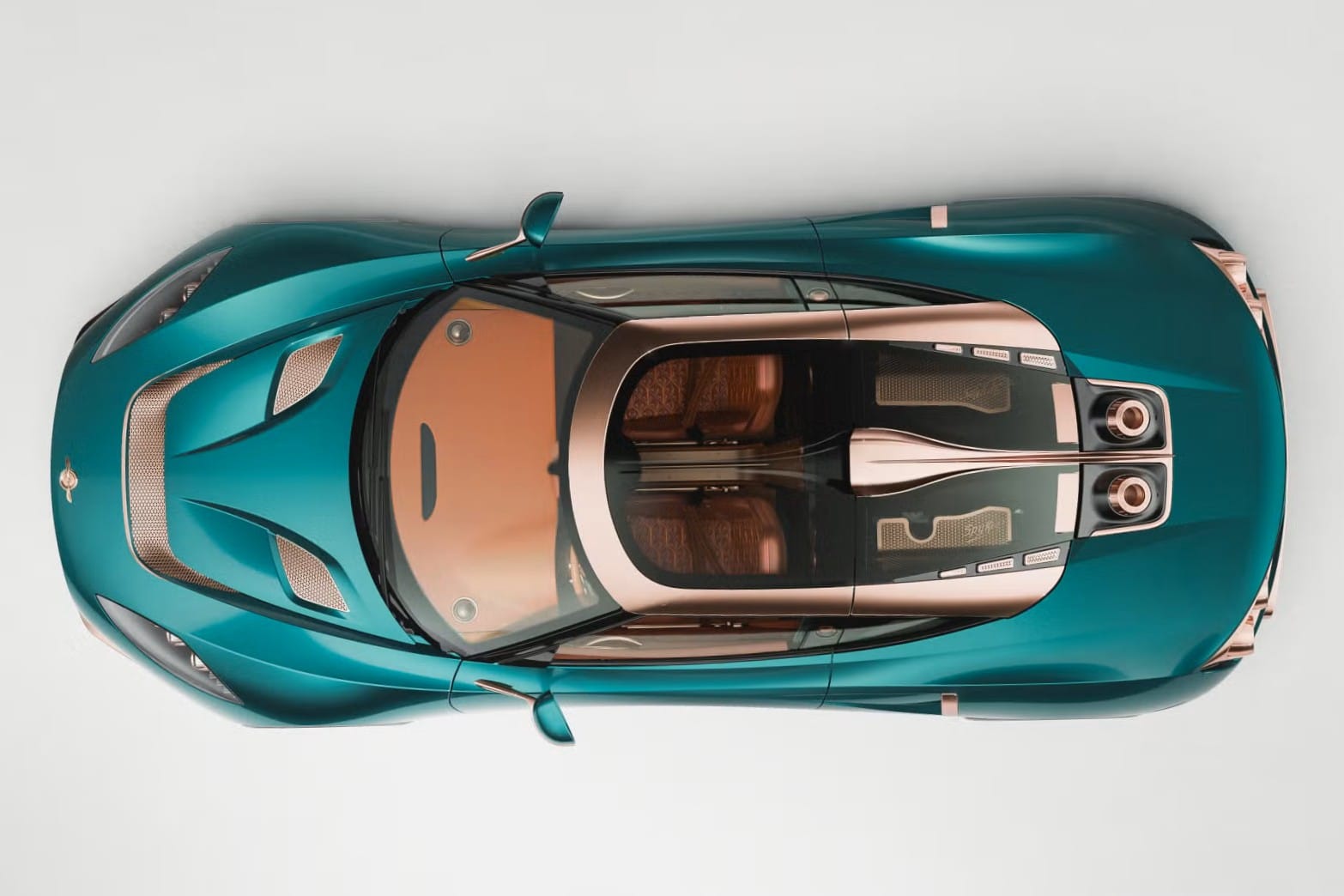
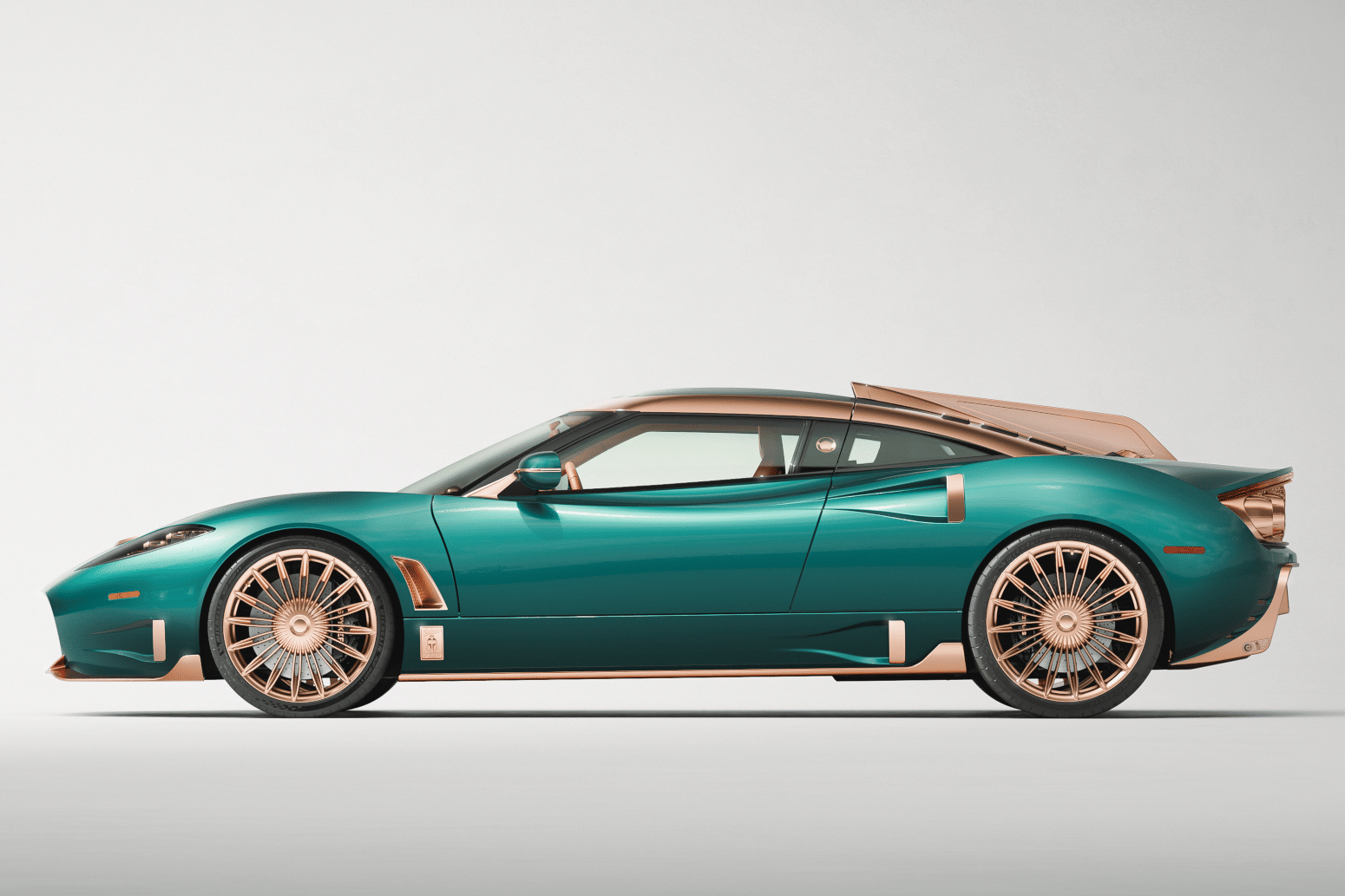
The C8 Preliator XXV’s design continues Spyker’s long-running aviation aesthetic, with propeller-inspired alloy wheels, air ducts, flowing lines, fighter-jet-esque afterburner tail-lamps, and a central roof intake. Other notable styling cues include sleek headlamps with ‘XXV’ DRL signatures, a split grille, a sizable front splitter, a panoramic glass roof, and badging behind the front wheel arches that displays the production number.

The example displayed at The Quail was finished in Quail Green with rose gold accenting on the grille, front splitter, ORVM stalks, air intakes, wheels, rear diffuser, roof, and more.

Spyker C8 Preliator XXV interior

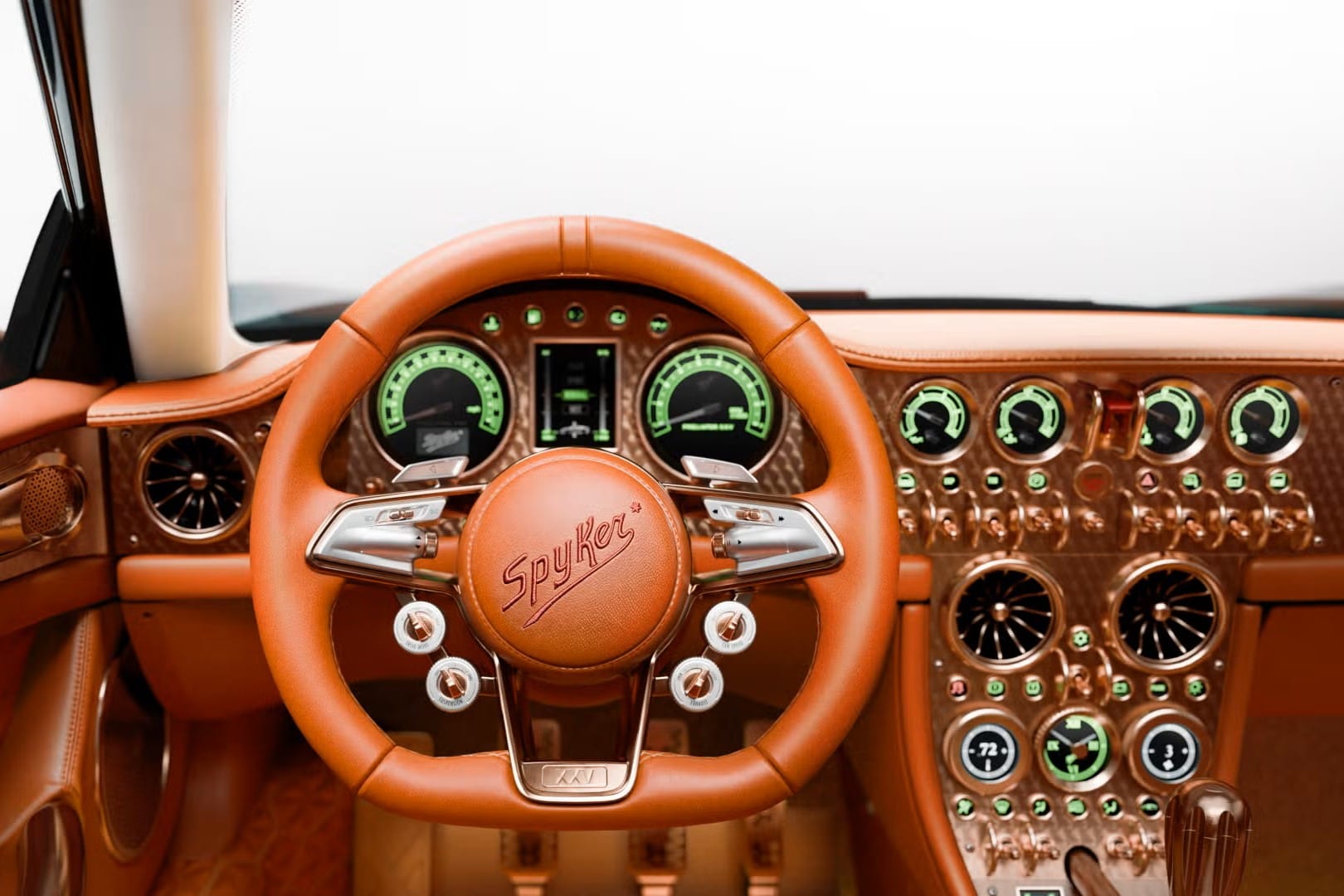
Inside, the C8 Preliator XXV features a refreshingly analogue milled dashboard beset with gauges and physical controls, instead of a barrage of screens. The turbine-like AC vents further the aviation inspiration, and the entire interior is trimmed in an orange-brown leather Spyker calls Tuscan Saddle. In fact, such is the attention to detail in the C8 Preliator XXV, that all the screw heads in the cabin are aligned by hand to face the same direction, and the chassis number is stamped into the space frame.

Ahead of the driver sits a three-spoke flat-bottomed steering wheel, which houses lots of dials, rocker switches, and buttons, along with individual stalks for the left and right indicators. The green-accented instrument cluster is very traditional in look too, though it’s worth noting that Spyker has included a heads-up display as the only digital interface in the C8 Preliator XXV. At the bottom of the dashboard lies a gear lever with an exposed shift linkage, which looks very cool.

What’s next for Spyker?

The revived Spyker says the C8 Preliator XXV is the first step in a larger comeback for the carmaker. Spyker is currently mulling a return to motorsport, specifically GT3-level endurance racing, and is also expected to resume the long-delayed development (owing to financial hardships) of the D8 Peking-to-Paris, a super SUV first previewed at the 2006 Geneva Motor Show.

Gen Z की अनोखी नौकरी वाली मांग ने छेड़ी बहस, IITian फाउंडर ने बताया क्यों कैंडिडेट को किया सिलेक्ट

नौकरी के इंटरव्यू में कैंडिडेट आमतौर पर सैलरी, छुट्टियों, वर्क फ्रॉम होम और जॉब रोल से जुड़ी बातें पूछते हैं। लेकिन नोएडा के एक फाउंडर के सामने एक उम्मीदवार ने ऐसी मांग रख दी, जिसने इंटरव्यू का माहौल ही बदल दिया। कैंडिडेट ने बेहद आत्मविश्वास के साथ कहा कि उसे हर दोपहर 30 मिनट की नींद लेने की जरूरत होगी, क्योंकि इससे उसकी productivity बेहतर होती है। हैरानी की बात यह थी कि उसने यह बात न तो मजाक में कही और न ही किसी झिझक के साथ।

फाउंडर नितिन वर्मा के मुताबिक, उम्मीदवार ने अपनी इस जरूरत को ऐसे रखा जैसे वह सैलरी पर बातचीत कर रहा हो। पहली प्रतिक्रिया में उन्हें इंटरव्यू खत्म करने का ख्याल आया, लेकिन बाद में उन्होंने इस मांग को एक अलग नजरिए से देखने का फैसला किया। सवाल यह था कि क्या कर्मचारी के काम के नतीजे अच्छे हों तो 30 मिनट की nap वास्तव में बड़ी समस्या है?

 ‘हर दोपहर मुझे Nap चाहिए’

IIT-backed कंपनी के फाउंडर और CEO नितिन वर्मा ने LinkedIn पर इस इंटरव्यू का अनुभव शेयर किया। उनके मुताबिक, उम्मीदवार ने पूरी गंभीरता और आत्मविश्वास के साथ कहा कि दोपहर की 30 मिनट की झपकी उसके काम को बेहतर बनाती है। वर्मा ने बताया कि उम्मीदवार ने यह बात ऐसे रखी, जैसे वह सैलरी पर बातचीत कर रहा हो। उनका पहला विचार इंटरव्यू खत्म करने का था, लेकिन फिर उन्होंने सोचा कि क्या यह मांग वाकई इतनी गलत है।

फाउंडर को पसंद आई कैंडिडेट की बेबाकी

नितिन वर्मा ने माना कि छोटी दोपहर की नींद से फोकस, एनर्जी और याददाश्त बेहतर हो सकती है। उन्होंने मजाक में कहा कि कॉरपोरेट ऑफिस में दोपहर की मीटिंग्स के दौरान कई लोग वैसे भी ऊंघते नजर आते हैं, फर्क सिर्फ इतना है कि यह उम्मीदवार अपनी जरूरत खुलकर बता रहा था। फाउंडर के मुताबिक, ज्यादातर लोग इंटरव्यू में खुद को कंपनी की पसंद के हिसाब से पेश करते हैं, जबकि इस कैंडिडेट ने साफ बताया कि वह किस तरह काम करने पर सबसे ज्यादा productive रहता है।

‘मुझे फर्क नहीं पड़ता तुम कब सोते हो’

वर्मा ने कैंडिडेट को फिक्स 30 मिनट की Nap Break देने के बजाय साफ कहा कि उन्हें इस बात से फर्क नहीं पड़ता कि कर्मचारी कब आराम करता है। उनके लिए जरूरी यह है कि सौंपा गया काम समय पर पूरा हो। यानी शर्त सीधी थी, काम पूरा करो, तो घंटे गिनने की जरूरत नहीं; काम नहीं हुआ तो कोई Nap मदद नहीं करेगी।

आखिरकार मिल गई नौकरी

सबसे दिलचस्प बात यह रही कि कैंडिडेट को नौकरी मिल गई। फाउंडर ने कहा कि उसकी Nap की मांग असली मुद्दा नहीं थी। उन्हें उसकी ईमानदारी और आत्मविश्वास ने प्रभावित किया। इस घटना ने उन्हें यह सोचने पर भी मजबूर किया कि क्या आधुनिक वर्कप्लेस में कर्मचारियों की productivity को ऑफिस में बिताए घंटों से मापा जाना चाहिए या उनके actual results से।

LinkedIn पर लोगों ने क्या कहा?

पोस्ट वायरल होने के बाद कई यूजर्स ने इसे बदलते workplace culture का संकेत बताया। कुछ ने कहा कि अगर कर्मचारी अपना काम पूरा कर रहा है तो उसे अपनी working style में थोड़ी आजादी मिलनी चाहिए। वहीं, कुछ यूजर्स ने Gen Z के इस अंदाज पर मजाक भी किया। एक यूजर ने कहा कि Gen Z को पता है कि जरूरी benefits के लिए negotiation कैसे करनी है।

Raksha Bandhan Mehndi Designs: रक्षाबंधन पर हाथों की खूबसूरती में लगाएं चार चांद, ट्राई करें ये लेटेस्ट और आसान मेहंदी डिजाइन

खुश नहीं हैं तो ऑफिस मत आइए! ये कंपनी देती है 10 दिन की Unhappy Leave, हर्ष गोयनका ने छेड़ी नई बहस

RPG एंटरप्राइजेज के चेयरमैन ने चीनी रिटेल चेन ‘पैंग डोंग लाई’ के फाउंडर और रिटेल टाइकून ‘यू डोंग लाई’ द्वारा शुरू की गई एक अनोखी पॉलिसी का जिक्र किया। यह पॉलिसी एक आसान सिद्धांत पर काम करती है- “अगर आप खुश नहीं हैं, तो काम पर न आएं।” इस सिस्टम के तहत, मैनेजमेंट छुट्टी देने से मना नहीं कर सकता, क्योंकि इसका मकसद कर्मचारियों को आराम का समय खुद तय करने की आजादी देना है।

हर्ष गोयनका ने एक्स पर पोस्ट शेयर किया है। उन्होंने लिखा- चीन की रिटेल कंपनी ‘पैंग डोंग लाई’ अपने कर्मचारियों को 10 दिन की पेड “अनहैपी लीव” देती है। कंपनी के फाउंडर यू डोंगलाई की सोच साफ है- “अगर आप खुश नहीं हैं, तो काम पर न आएं।” कहा जाता है कि मैनेजर इस तरह की छुट्टी की रिक्वेस्ट को मना नहीं कर सकते।

उन्होंने आगे लिखा-क्या यह कुछ ज़्यादा ही है? शायद। हमें इस बात पर और गहराई से सोचने की ज़रूरत है कि क्या भारतीय माहौल में ‘अनहैपी लीव’ की जरूरत है या फिर क्या बर्नआउट (काम के तनाव से होने वाली थकान) को रोकने और ऐसा वर्कप्लेस बनाने का कोई बेहतर तरीका हो सकता है, जहां लोग सच में काम पर आना चाहें।

गोयनका ने बदलते ग्लोबल वर्क कल्चर को देखते हुए यह पोस्ट शेयर किया है। लेकिन उनके प्रोफेशनल नेटवर्क में इसे लेकर बहुत अलग-अलग तरह की प्रतिक्रियाएं देखने को मिलीं। कमेंट बॉक्स में लोग-लोग अपने विचार शेयर कर रहे हैं।

कुछ लोगों को उनका ये सजेशन पसंद नहीं आया। लोगों का कहना है कि अगर पूरी टीमें परफॉर्मेंस टारगेट पूरे न होने के बाद महीने के आखिरी दिनों जैसी अहम तारीखों पर “अनहैप्पी लीव” (unhappy leave) के लिए अप्लाई करती हैं, तो यह खतरनाक हो सकता है। कंपनी पर गहरा असर पड़ेगा।

वहीं कई प्रोफेशनल्स का तर्क है कि छुट्टी देने से सिस्टम की कई समस्याओं को ठीक नहीं किया जा सकता है। वहीं कुछ ने कहा कि लीडर्स को अटेंडेंस मैनेज करने के बजाय “उत्साह बढ़ाने” पर ध्यान देना चाहिए, जिससे मेंटल हेल्थ की वजह से छुट्टी लेने की जरूरत अपने आप कम हो जाएगी।

Flying Car: उत्तराखंड के इस व्यक्ति ने खुदकी बनाई फ्लाइंग कार की ली टेस्ट-ड्राइव, इंटरनेट ने’देसी जुगाड़’ की खूब हो रही तारीफ

Flying Car: उत्तराखंड के पहाड़ी इलाके के एक व्यक्ति ने उस चीज को असलियत में बदल दिया है, जिसे ज़्यादातर लोग सिर्फ़ साइंस-फ़िक्शन (काल्पनिक विज्ञान) समझते थे। अल्मोड़ा के काफ़लीखान गांव के रहने वाले इनोवेटर रवि टम्टा ने ‘HAPIDA SKYNeX’ का सफल टेस्ट-फ़्लाइट किया है। यह एक-सीट वाला इलेक्ट्रिक फ़्लाइंग व्हीकल प्रोटोटाइप है, और उन्हें उम्मीद है कि एक दिन यह भारत में पर्सनल ट्रांसपोर्टेशन (निजी परिवहन) को पूरी तरह बदल देगा।

अल्मोड़ा में एक खुले मैदान में की गई इस टेस्ट-फ़्लाइट के वीडियो अब सोशल मीडिया पर वायरल हो रहे हैं। टम्टा के स्टार्टअप ‘Hapida Sky Private Limited’ के तहत बना यह एयरक्राफ़्ट, ड्रोन टेक्नोलॉजी का ही एक मॉडिफ़ाइड और अपग्रेडेड वर्शन है, जिसे किसी व्यक्ति को हवा में सुरक्षित रूप से ले जाने के लिए डिज़ाइन किया गया है।

तमटा का कहना है कि यह आइडिया एक आम समस्या से आया। उनके गांव से घर तक का 40 किलोमीटर का सफ़र, जिसमें सड़क मार्ग से आमतौर पर लगभग 90 मिनट लगते हैं, हवाई मार्ग से सिर्फ़ 10 मिनट में पूरा किया जा सकता है। उनका लंबे समय का विज़न एक सुरक्षित, इलेक्ट्रिक पर्सनल फ्लाइंग व्हीकल बनाना है, जिससे हवाई सफ़र आसान और व्यावहारिक हो सके, खासकर पहाड़ी इलाकों में।

इसे अपने करियर का सबसे बड़ा मील का पत्थर बताते हुए, टम्टा ने कहा कि सफल लिफ्ट-ऑफ कई सालों की रिसर्च, संघर्ष, प्रयोगों और लगातार कोशिशों का नतीजा था। टेस्ट के बाद उन्होंने कहा, “आज मेरी ज़िंदगी का बहुत बड़ा दिन है। मुझे यह बताते हुए बहुत खुशी और गर्व हो रहा है कि HAPIDA SKYNeX की पहली सफल उड़ान कई सालों की रिसर्च, संघर्ष, प्रयोगों और लगातार कोशिशों का नतीजा है।”

इस कामयाबी ने ऑनलाइन लोगों का दिल जीत लिया है। एक यूज़र ने लिखा, “अद्भुत! यह पहाड़ी इलाकों में ट्रांसपोर्टेशन के लिए गेम-चेंजर साबित हो सकता है।” एक और यूज़र ने कमेंट किया, “हमें सिर्फ़ डिग्री-होल्डर्स की नहीं, बल्कि ऐसे इनोवेटर्स की ज़रूरत है।” कुछ लोगों ने इसे “उत्तराखंड का पहला बड़ा इनोवेशन” बताया और अधिकारियों से टम्टा के काम को मान्यता देने और उसे सपोर्ट करने की अपील की। ​​एक और यूज़र ने कहा, “हमारे पहाड़ी इलाकों से बहुत अच्छी खबर है।”

हालांकि HAPIDA SKYNeX अभी सिर्फ़ एक प्रोटोटाइप है और कमर्शियल इस्तेमाल के लिए तैयार होने में अभी काफी समय है, लेकिन इसकी सफल टेस्ट फ़्लाइट एक अहम शुरुआती कदम है। रवि टम्टा के लिए, यह सिर्फ़ एक उड़ने वाली मशीन बनाने की बात नहीं है—यह साबित करने की बात है कि भारत के छोटे कस्बों और गांवों से भी वर्ल्ड-क्लास इनोवेशन निकल सकते हैं।

Ather’s Phase 2 expansion could happen sooner if EV demand persists: Tarun Mehta

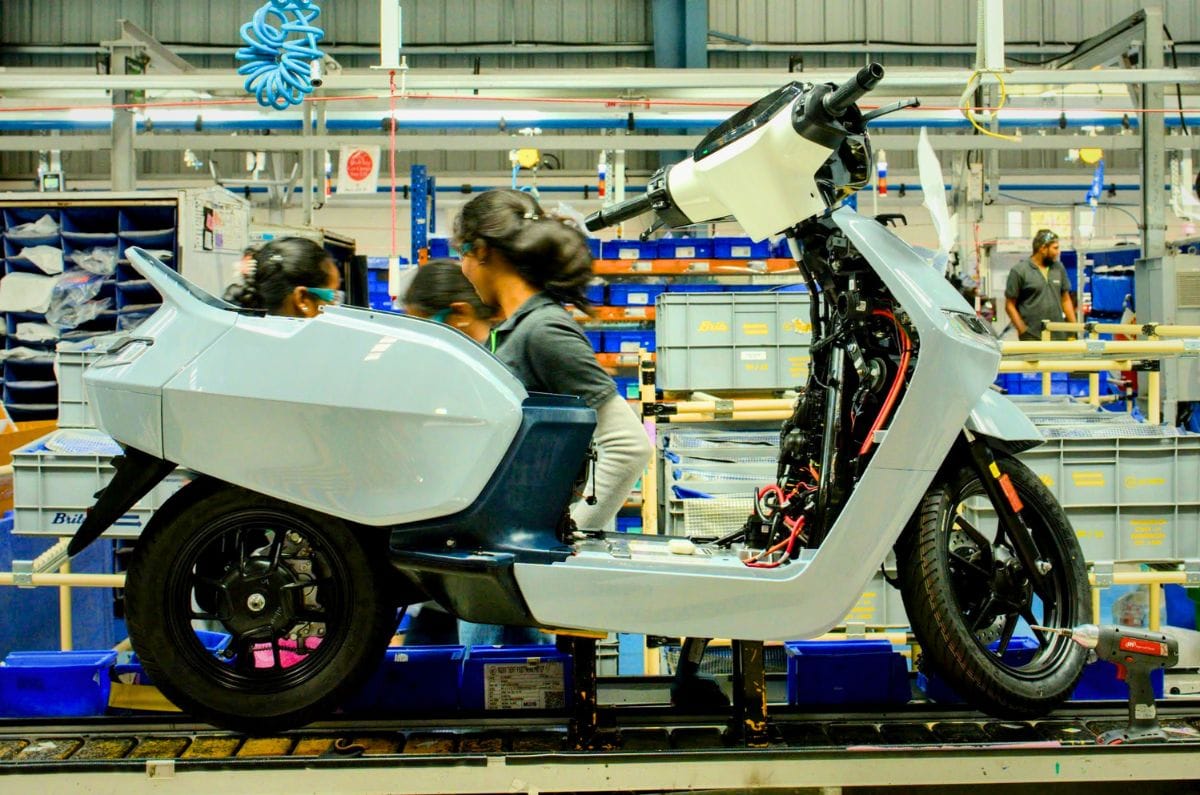
Ather EL scooter being assembled on production line in factory

Ather Energy is exploring whether to accelerate the second phase of its upcoming Aurangabad manufacturing facility as demand for electric scooters continues to outpace expectations, with the company saying its planned capacity could come under pressure if current growth trends persist.

The company’s co-founder and CEO, Tarun Mehta, said the company has begun considering an earlier rollout of Phase 2 after a sharp rise in demand in recent months. He added that the recently completed Rs 2,500-crore fund raise gives the company the flexibility to move ahead with the expansion without waiting for Phase 1 to mature.

  1. EL platform based family scooter to launch on August 29
  2. EL production to initially begin from Hosur, before shifting to Aurangabad
  3. Ather’s electric bike still quite a ways away

Aurangabad Plant to Add 5 Lakh Units Annual Capacity

The comments come as Ather prepares to commission the first phase of its Aurangabad, or AURIC, manufacturing facility in a couple of months.  The company currently manufactures electric scooters from its Hosur plant, which has an annual production capacity of 4.2 lakh units. Mehta said the facility is now operating at almost full utilisation following steady production ramp-up during the first quarter.

Once the Aurangabad plant comes live, it will add another 5 lakh units of annual capacity, taking Ather’s total manufacturing capacity to 9.2 lakh units a year. He added that the Aurangabad facility is progressing as planned, with the assembly line already installed, the paint shop under trial and warehouse and utility work nearing completion ahead of commercial operations later this year. However, Mehta said even that may prove insufficient if the current pace of demand continues.

“GoLive of Auric will take our total capacity up from 4.2 lakh units to 9.2 lakh units later this calendar year. But we believe demand is ramping up very fast. 9.2 lakh units per annum is only 77,000 units a month. We believe on current demand trajectories, even this may be tight in the coming quarters. Which is why I think we were lucky here when we took Aurangabad land. We took a larger land capacity and we had always planned for Auric phase two,” he said.

EV Demand Outpaces Supply

Demand has risen sharply over the past few months, according to the company, resulting in supply constraints across several markets. Mehta said dealer inventories have fallen from 14 days to just three days, while some dealerships have temporarily stopped accepting fresh pre-orders because waiting periods have stretched to around two months or more. The company estimates it could have retailed another 13,000 to 15,000 scooters every month if sufficient production capacity had been available.

“There are 50,000 pre-orders, despite the fact that in many states now, our dealers are no longer even accepting new pre-orders, because the waiting times are now hitting two months or even higher. The underlying demand we strongly believe is very, very high,” Mehta said. “We believe today that of the 30,000 units that we retail average in Q1, we could have probably sold an incremental 13,000 to 15,000 units extra every month.”

New EL Scooter Platform Set to Launch on August 29

Ather expects demand to receive another boost with the launch of its first new scooter based on its brand-new EL platform on August 29. Production of the vehicle has already begun at the Hosur plant, homologation has been completed and high-volume trials are underway.

Initially, production will continue from Hosur before gradually shifting to Aurangabad as the new facility ramps up. The company plans to scale manufacturing capacity for the EL platform to about 60,000 units a month across the two plants. The EL platform will underpin multiple future scooter models and forms part of Ather’s strategy to expand production and meet rising demand for electric scooters.

Ather electric bike still at least 2 years away

Even as it prepares to debut a fresh onslaught of new products based on its EL platform, Ather Energy has no plans to enter the electric motorcycle segment in the near term. According to Ather Energy co-founder and Chief Executive Officer Tarun Mehta, the company’s strategy is to first concentrate on rolling out products based on its new EL platform before entering the electric motorcycle space.

“At this point, we are focused on the EL platform and getting at least the first, maybe two products, maybe another product out on it in the next year,” Mehta said to investors. Ather had earlier said it is developing a dedicated motorcycle platform, codenamed Zenith, alongside its EL scooter architecture. The comments indicate that Ather is now taking a measured approach towards a segment that is still at an early stage of adoption.

“Motorcycles are starting to look interesting. But Ather may not be the pioneer this time. We may watch the market. We want to see how consumers respond, which segments show a willingness and an interest towards the segment before we make our maiden launch here,” Mehta said.

He added that an electric motorcycle from Ather is not expected anytime soon. “So this, I would say, more than a year away, for sure. Probably two years plus.” he said. The company’s strategy comes at a time when India’s electric two-wheeler market continues to be led by scooters, while electric motorcycles account for only a miniscule share of overall EV sales.

Royal Enfield has begun sales of its Flying Flea C6 electric motorcycle on a small scale, while startups including Ultraviolette, Revolt and Oben are expanding their presence. Other legacy players like Bajaj Auto and Hero MotoCorp are also developing their own electric motorcycle platforms, although a debut from either brand is still some time away. Ather, however, plans to observe how the market evolves before committing resources to the category.

40 लाख के कर्ज ने छुड़वाई B.Tech की पढ़ाई, आज 80 लाख सालाना कमा रहे हैं अविनाश…ऐसे किया कमाल

आंध्र प्रदेश के रहने वाले अविनाश माडा की कहानी इन दिनों सोशल मीडिया पर खूब वायरल हो रही है। परिवार पर करीब 40 लाख रुपये का कर्ज होने की वजह से उन्हें बीटेक की पढ़ाई बीच में ही छोड़नी पड़ी। इसके बाद उन्होंने घर की जिम्मेदारी संभालने के लिए अपना काम शुरू किया। मुश्किल हालात का सामना करते हुए उन्होंने अपना कारोबार शुरू किया और आज वह एंटरप्रेन्योरशिप के रूप में हर साल 80 लाख रुपये से अधिक की कमाई कर रहे हैं। उनकी मेहनत और संघर्ष की यह कहानी लोगों को काफी प्रेरित कर रही है।

40 लाख का हो गया था कर्ज

अविनाश माडा ने सोशल मीडिया एक्स पर पोस्ट कर बताया कि, जब वह 18 साल के थे, तभी उनके परिवार पर बड़ा संकट आ गया। उनके पिता, जो किसान हैं, उन्हें अपने कारोबार में भारी नुकसान हुआ और परिवार पर करीब 40 लाख रुपये का कर्ज हो गया। इस कठिन समय में उनकी मां ने पूरे परिवार का हौसला बनाए रखा और सभी ने मिलकर मुश्किल हालात का सामना किया। बीटेक की पढ़ाई के पहले साल के दौरान ही अविनाश ने अपने भविष्य को लेकर गंभीरता से सोचना शुरू कर दिया।

नौकरी से नहीं होगा सुधार

माडा ने कहा, केवल डिग्री पूरी करके नॉर्मल नौकरी करने से परिवार की आर्थिक परेशानियां जल्दी खत्म नहीं होंगी। इसी सोच ने उन्हें कुछ अलग करने और नया रास्ता चुनने के लिए प्रेरित किया। उन्होंने उस समय को याद करते हुए कहा, “मुझे लगा कि अगर मैं बी.टेक पूरा करके 30 से 40 हजार रुपये महीने की नौकरी भी कर लूं, तब भी परिवार का कर्ज चुकाने में कई साल लग जाएंगे।” माडा ने बताया कि उन्हें जल्द ही समझ आ गया था कि सिर्फ पढ़ाई पूरी करके नौकरी करने से परिवार की आर्थिक स्थिति में जल्दी सुधार नहीं आएगा। इसी वजह से उन्होंने अलग रास्ता अपनाने का फैसला किया।


शुरू किया नया बिजनेस

परिवार की आर्थिक स्थिति को देखते हुए अविनाश ने पारंपरिक रास्ते की बजाय नया ऑप्शन चुना। उन्होंने कॉलेज छोड़कर डिजिटल मार्केटिंग और सर्च इंजन ऑप्टिमाइजेशन (SEO) सीखना शुरू किया। कारोबार का पहले कोई अनुभव नहीं होने के बावजूद उन्होंने अपनी खुद की डिजिटल मार्केटिंग एजेंसी शुरू की। शुरुआत में उन्होंने अपनी स्किल्स को मजबूत करने और नए क्लाइंट्स जोड़ने पर मेहनत की। उनका यह फैसला चुनौतीपूर्ण जरूर था, लेकिन कुछ ही समय में उन्हें इसका अच्छा परिणाम मिलने लगा।

मां ने बढ़ाया हौसला

अविनाश माडा का दावा किया कि, 19 साल की उम्र तक उन्होंने अमेरिका और ब्रिटेन के कई क्लाइंट्स के साथ काम करना शुरू कर दिया था। उनकी डिजिटल मार्केटिंग एजेंसी को विदेशों से लगातार प्रोजेक्ट मिलने लगे। अविनाश के अनुसार, एजेंसी शुरू करने के पहले ही साल में उन्होंने करीब 30 लाख रुपये की कमाई की। अविनाश ने बताया कि, जब उन्होंने कॉलेज छोड़कर अपना रास्ता चुनने का फैसला किया, तब उन्हें भविष्य को लेकर काफी असमंजस था। वहीं इस मुश्किल समय में उनकी मां ने उनका पूरा साथ दिया।

अविनाश माडा के अनुसार, उनकी मां ने उन्हें कहा था कि पहले कारोबार में अपनी किस्मत आजमाओ। अगर इसमें सफलता नहीं मिली, तो पढ़ाई दोबारा शुरू करने का मौका हमेशा रहेगा। अविनाश ने बताया कि, उनकी मां की यही बात उनके लिए सबसे बड़ी प्रेरणा बनी।

अविनाश ने की इतने की कमाई

आज अविनाश माडा IG Accelerators और Freedom with AI के संस्थापक हैं। उनके मुताबिक, उनके दोनों कारोबार बिना किसी बड़े शुरुआती निवेश के हर साल 80 लाख रुपये से अधिक की कमाई कर रहे हैं। अविनाश के मुताबिक, नई और व्यावहारिक स्किल्स सीखने के साथ सही समय पर सोच-समझकर जोखिम उठाने के फैसले ने उनकी जिंदगी पूरी तरह बदल दी और उन्हें सफलता की नई ऊंचाइयों तक पहुंचाया। उन्होंने कहा, “कई बार जिदगी के सबसे बड़े मौके तब मिलते हैं, जब आप तयशुदा रास्ते से हटकर कुछ नया करने का साहस दिखाते हैं।”

यूजर ने किया कमेंट

उनकी कहानी सोशल मीडिया पर तेजी से वायरल हो रही है। कई लोगों ने उनके साहस, मेहनत और परिवार की मदद के लिए बड़ा जोखिम उठाने के फैसले की सराहना की है। एक यूजर ने लिखा, “यह बेहद प्रेरणादायक सफर है। जोखिम लेना जरूरी है, लेकिन उससे भी ज्यादा अहम लगातार नई और उपयोगी स्किल्स सीखते रहना है।” एक अन्य यूजर ने टिप्पणी की, “सम्मान। उन्होंने सिर्फ कॉलेज नहीं छोड़ा, बल्कि एक वास्तविक समस्या का समाधान खोजने का संकल्प लिया।” वहीं तीसरे यूजर ने लिखा, “एक दिन ऐसा भी आएगा, जब आप मेरी कहानी भी इसी तरह लोगों को बताएंगे।”

5 AM क्लब Vs Night Owl: IITian फाउंडर इशान 11:30 पर जगते हैं और रात 9 के बाद चलता है असल दिमाग! ये है क्रिएटिविटी का सीक्रेट

हालांकि कई स्टार्टअप फाउंडर सुबह 5 बजे अलार्म लगाने और सुबह के बिज़ी रूटीन को बहुत ज़रूरी मानते हैं, लेकिन IIT दिल्ली के पूर्व छात्र ईशान जिंदल को ऐसा शेड्यूल पसंद है जो देर से शुरू होता है और देर रात तक चलता है। 30 साल के इस एंटरप्रेन्योर का कहना है कि उनके काम के सबसे प्रोडक्टिव घंटे रात 9 बजे के बाद शुरू होते हैं, जब ज़्यादातर कर्मचारी जा चुके होते हैं और ऑफिस में काफी शांति हो जाती है।

जिंदल ने मनीकंट्रोल को बताया, “तभी मैं सबसे ज़्यादा क्रिएटिव होता हूँ।” उन्होंने बताया कि उन्हें सुबह जल्दी उठने के बजाय देर तक काम करना क्यों पसंद है। इस साल की शुरुआत में ‘शार्क टैंक इंडिया’ में आने और Shaadi.com के फाउंडर अनुपम मित्तल से 50 लाख रुपये की डील हासिल करने के बाद चर्चा में आए इस फाउंडर ने बताया कि वे आम तौर पर सुबह 11:30 बजे के आसपास उठते हैं। कई फाउंडर जो सूरज उगने के साथ अपना दिन शुरू करते हैं, उनसे अलग जिंदल ने कहा कि उनका ऑफिस रूटीन आम तौर पर दोपहर 12:30 या 1 बजे के आसपास शुरू होता है। फिर भी, ऑफिस पहुंचने से पहले ही कॉल और दूसरे कामों के ज़रिए काम अक्सर शुरू हो जाता है।

उन्होंने कहा, “मेरा शेड्यूल थोड़ा अलग है। मैं असल में अपना काम दोपहर 12:30 या 1 बजे के आसपास शुरू करता हूं।”IIT दिल्ली के ग्रेजुएट ने कहा कि उनके ऑफिस का समय आम तौर पर रात 9 बजे, 10 बजे या 10:30 बजे तक चलता है, जो काम के बोझ पर निर्भर करता है। लेकिन काम का दिन शायद ही कभी वहीं खत्म होता है।

IIT दिल्ली में बनी आदत

जिंदल अपनी देर रात तक जागने की आदत को IIT दिल्ली में अपने स्टूडेंट दिनों से जोड़कर देखते हैं। उन्होंने मनीकंट्रोल को बताया, “मेरे पहले साल में, इंटरनेट रात 1 बजे बंद हो जाता था।” तब भी, इंटरनेट बंद होने से पहले छात्र अक्सर देर रात तक काम करते थे।

जब बाद में ये पाबंदियां हटा दी गईं, तो देर रात तक काम करने का समय और बढ़ गया। समय के साथ, जिंदल ने पाया कि आधी रात के बाद के शांत समय में कुछ ऐसा मिलता था जो दिन के समय नहीं मिल पाता था: बिना किसी रुकावट के पूरा ध्यान लगाकर काम करना।

उन्होंने कहा, “अगर हमें रात में दो-तीन घंटे का वह शानदार समय मिल जाए, तो हम बहुत सारे दूसरे काम भी कर सकते हैं जिन पर हम काम कर रहे हैं।” जिंदल के लिए, सबसे बड़ा फ़ायदा यह है कि ध्यान भटकाने वाली चीज़ें नहीं होतीं।

उन्होंने कहा, “यह एक ऐसा समय है जब आप बस अपने काम पर ध्यान दे सकते हैं क्योंकि आस-पास कम लोग होते हैं।” “इसका मतलब है कि यह पूरी तरह से आपका अपना समय होता है और आप जिस चीज़ पर चाहें, उस पर ध्यान केंद्रित कर सकते हैं।”

नींद सबसे ज़रूरी है

अक्सर देर रात तक काम करने के बावजूद, जिंदल का कहना है कि वे नींद से समझौता करने में यकीन नहीं रखते। उन्होंने कहा, “मैं अपनी नींद से कोई समझौता नहीं करता।” हर दिन एक तय समय पर जागने के लिए खुद पर ज़बरदस्ती करने के बजाय, वे अपनी सुबह की शुरुआत इस आधार पर करते हैं कि वे पिछली रात कितने बजे सोए थे। ज़्यादातर रातें वे सुबह 2 बजे से 4 बजे के बीच सोते हैं, हालांकि कभी-कभी काम की वजह से उन्हें और भी देर हो जाती है।

घड़ी देखने के बजाय परफॉर्मेंस पर ध्यान

कंपनी के फाउंडर अपनी कंपनी में भी यही सोच अपनाते हैं। कर्मचारियों के आने या जाने के समय से उन्हें आंकने के बजाय, जिंदल नतीजों पर ध्यान देना पसंद करते हैं। उन्होंने कहा, “हमारी कंपनी में हर टीम मेंबर के साथ, हम यह कोशिश करते हैं कि काम किसी खास व्यक्ति की मौजूदगी पर निर्भर न हो।” उन्होंने आगे कहा कि उनका मकसद ऐसे सिस्टम बनाना है जहाँ लोगों का मूल्यांकन उनके काम के नतीजों और लक्ष्यों के आधार पर हो, न कि इस आधार पर कि वे डेस्क पर कितने घंटे बिताते हैं।