Mercedes-Benz CTO Jörg Burzer on India R&D and future product development

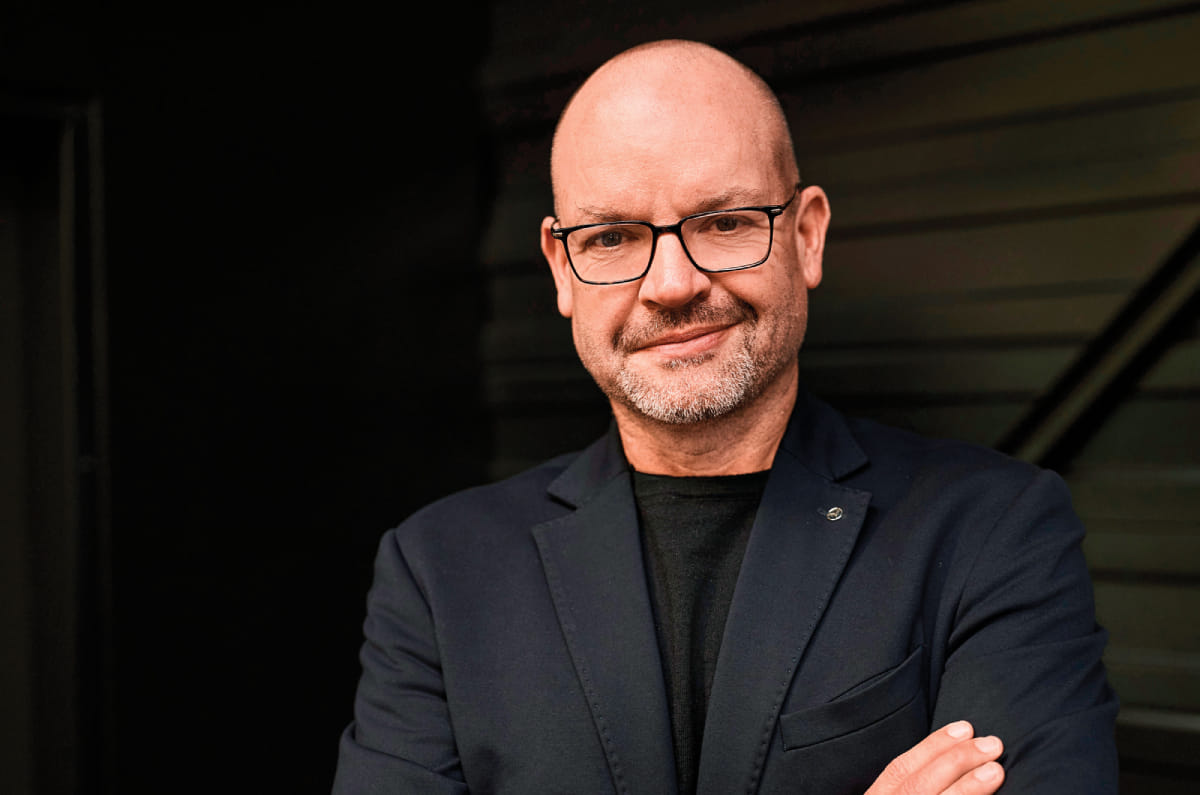
Mercedes-Benz CTO Jorg Burzer

Mercedes-Benz’s Research and Development centre in Bengaluru has evolved from a hardware-focused engineering hub into one of the company’s key global R&D centres, with teams working across software, ADAS, electric powertrains and physical vehicle development. In this interview, Jörg Burzer, Member of the Board and Chief Technology Officer, Development & Procurement at Mercedes-Benz Group AG, discusses the centre’s expanding capabilities, the role of AI in vehicle development, the future of autonomous driving, and why he believes every Mercedes-Benz has “a bit of India” in it.

A lot of global auto OEMs have large R&D centres in India. Beyond cost, what are the benefits of having such large setups in India

Yes, it’s not only cost; you see, the competence level is so high. If you look at our centre, we will be celebrating its 30th anniversary here in India, and over these years, it has only grown in size and capability. We started with hardware, but now it’s massively into software, infotainment and autonomous driving. The team in India is contributing heavily on ADAS, for instance, and we are working on Level 3 and Level 4 with the team in India. So, all in all, I would say it’s competence, speed and agility that are good here. 

Is the Mercedes development centre mainly a digital unit, or is physical development also being undertaken here?

Oh certainly, we have lots of hardware development. There are many test benches, and you’ll see lots of physical testing and development taking place here. Even beyond powertrain, there’s a lot of physical development taking place along with our vendors here too. And then, on electric vehicles, we’re working on the powertrains and batteries too. And yes, on the digital side, there’s lots of AI work, not just on the product, but also on process development. So yes, the centre is a full-scope R&D centre, a blend of the digital and physical. For example, we do a lot of work on the simulation of sheet metal forming and welding here. 

Besides engineering, does the India centre also do design and styling work for your products?

On the design side, at Mercedes, we have this philosophy that we are creating a global product, and so we have a global design. This might change a little bit – obviously, we are adapting our design, which might be enriched by certain market trends – but for us, it’s very important that it is a global design, so we have one design hat. So, our styling team is based in Germany, where we have our design centre, and that’s important for us to maintain the global approach. 

Software is today a leveller, even phone manufacturers can make a car today. Do you view this as a threat? 

I see this as an opportunity because, for instance, you can develop a software stack for ADAS, but at the end you have to apply it to hardware. One interesting bit, to my knowledge, is that we are the only OEM doing a Level 2++ ADAS with a combustion engine, otherwise you only see this on EVs. To do this in a combustion engine environment, you know, with things like a transmission, it’s more complicated, so that’s where our expertise in traditional technologies, along with our developments in software, has an advantage. And of course, we have tremendous respect for our competitors and we are seeing what they are doing, but for me, I think if you do this mix right, you will be at the forefront of development.

Past Mercedes cars stood for robust engineering. What do you think a Mercedes 10 years from now would be all about? 

Obviously there will be tech, but there will be more. I can give you a good example, one of the most important characteristics and values of a Mercedes-Benz is safety. We do plenty of crash tests every year for our cars that we launch, plus there’s a lot that we are doing with autonomous driving too, for instance, what we are doing with Nvidia. And here we have a lot of redundancy. We have a traditional software stack with massive amounts of info like what is a stop sign in every different market, for example. But there’s an end-to-end stack where the software is trained by the behaviour of the driver in traffic, but what we are doing is we have both stacks, so if the end-to-end system does not know what to do, then it can fall back to the classic system. So, we create a safety environment, where we know there is always a solution. 

On redundancy, what is your view of a wide sensor stack like radars, lidars and cameras, or is AI with cameras only fine? 

We are using AI, yes, but we have radars too. We have to use AI to create efficiency in the simulation and training, but you have to also think about the sensor set, and for me, I am convinced you have to have a multiple sensor set, not just one type. So, like on the S Class, we have multiple cameras, radars and ultrasonic sensors too. 

Does the India R&D centre develop products or platforms independently of headquarters, or is it more synergetic?  

For us, it’s very important that we do everything as a team. So, for me personally, it’s very important to have a global perspective in R&D because the innovations and technology solutions are so complex that you can only master them as a team. There are a lot of competencies, but there is not one single team in the world that can say, ‘I am the one that can create a platform.’ It’s always teamwork, and if you look at all industries, automotive engineering is the ultimate for teamwork. So for us, R&D is one big team. And with regards to the India centre, I love to say that in each and every Mercedes, there is a bit of India in it.
 

All accessories that can void your car warranty

All accessories that can void your car warranty

Personalising your car with aftermarket accessories is one of the first things many owners do after taking delivery, but not every accessory out there is safe from warranty denial. While there are plenty of ways to accessorise your car without voiding the warranty, some go a step further and void your car insurance as well. So before going ‘Pimp My Ride’ over your car, here’s a list of accessories that void your car warranty.

Note: An aftermarket accessory does not void the car’s entire warranty. If a component is affected by a modification, a manufacturer can only deny warranty claims for that component, meaning that the coverage for unrelated parts of the vehicle remains intact. 

Mechanical upgrades

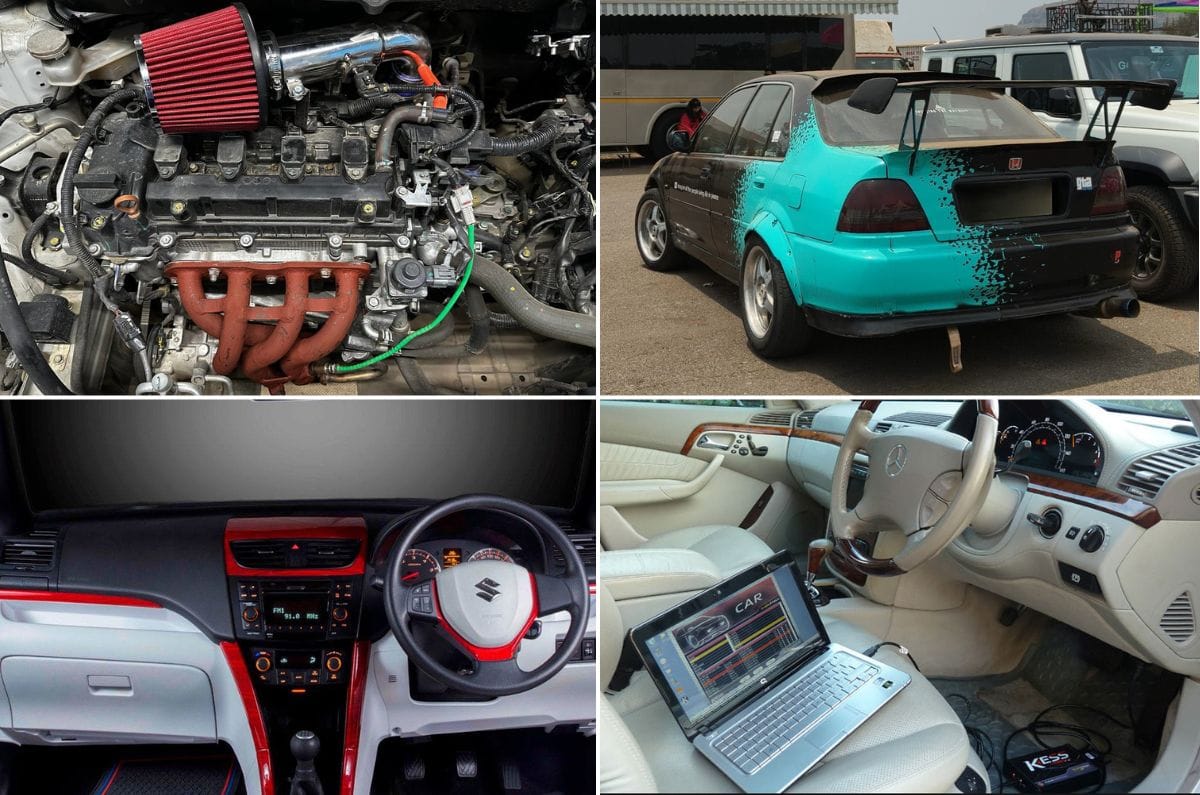
While performance upgrades to increase your car’s power output seem like fun and games at first sight, it’s a huge red flag to car manufacturers. Surely such upgrades bring a thrill when behind the wheel, but performance enhancements to your car aren’t recommended by the majority of car manufacturers as they void the warranty. These include upgrades under the bonnet to increase power output, including a turbocharger, supercharger, air intakes, exhaust system adjustments, other internal engine parts or even adding a CNG kit. Additionally, raising or lowering your car’s ride height and suspension tweaks will void your warranty.

Exterior cosmetic modifications

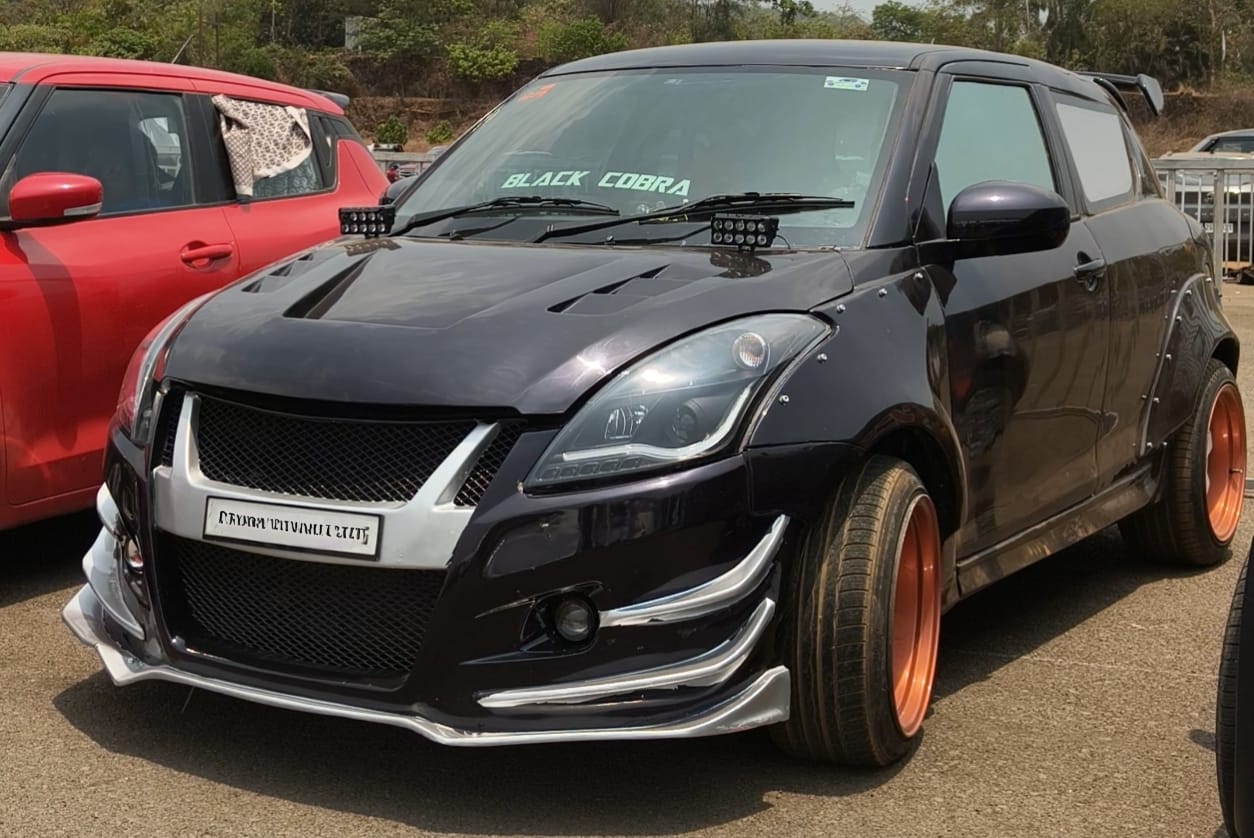
Car manufacturers can deny warranty if you install parts that are welded/drilled to your car’s exterior. Parts such as bodykits, spoilers, bumpers, flared wheel arches, sunroof, window tints, etc. come under this category. Even changing your car’s exterior colour or adding functional accessories like roof racks isn’t spared from warranty cancellations. But if you’re looking for exterior car accessories, most car manufacturers provide a long list of OEM modifications. These not only ensure that you make your car look cosmetically better, but also avoid warranty cancellations.

Interior accessories

Credit: Pegasis Premium

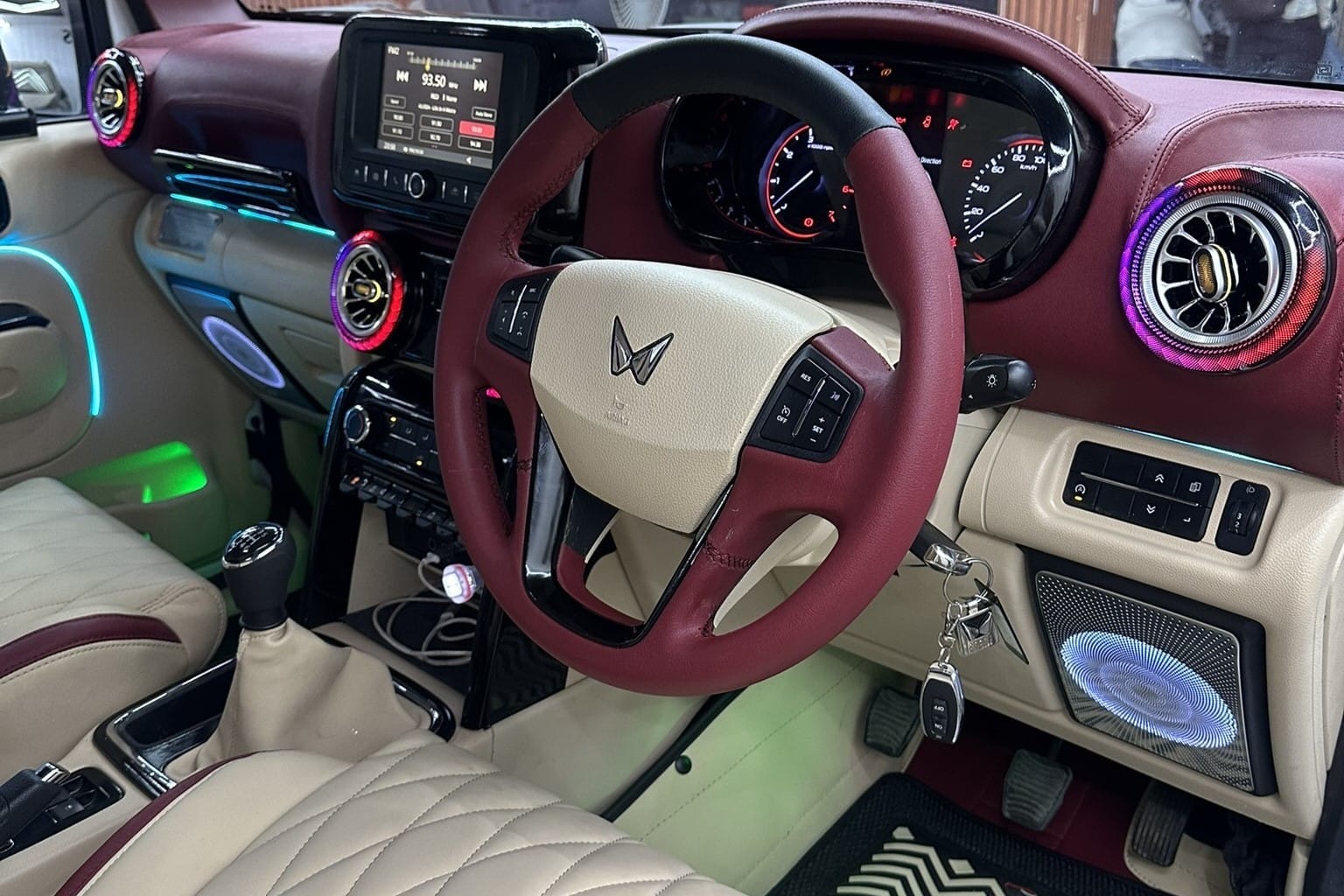
Manufacturers are just as strict about what happens inside the cabin. Seat covers that need stitching, drilling or cutting into the factory upholstery and custom seat upholstery jobs can all be flagged during a warranty inspection. Swapping out the steering wheel, gear knob or pedals for aftermarket units, especially ones that involve rewiring for airbag or infotainment functions, is another common red flag. Aftermarket touchscreen head units and ambient lighting kits that require cutting into the dashboard or splicing into the car’s wiring loom fall in the same bracket. As with exterior styling, most manufacturers offer a range of OEM interior accessories, such as seat covers and floor mats designed to fit without any cutting or drilling, that let you personalise the cabin without risking your warranty.

Electrical tampering

Image credit: Motoring Masters via YouTube

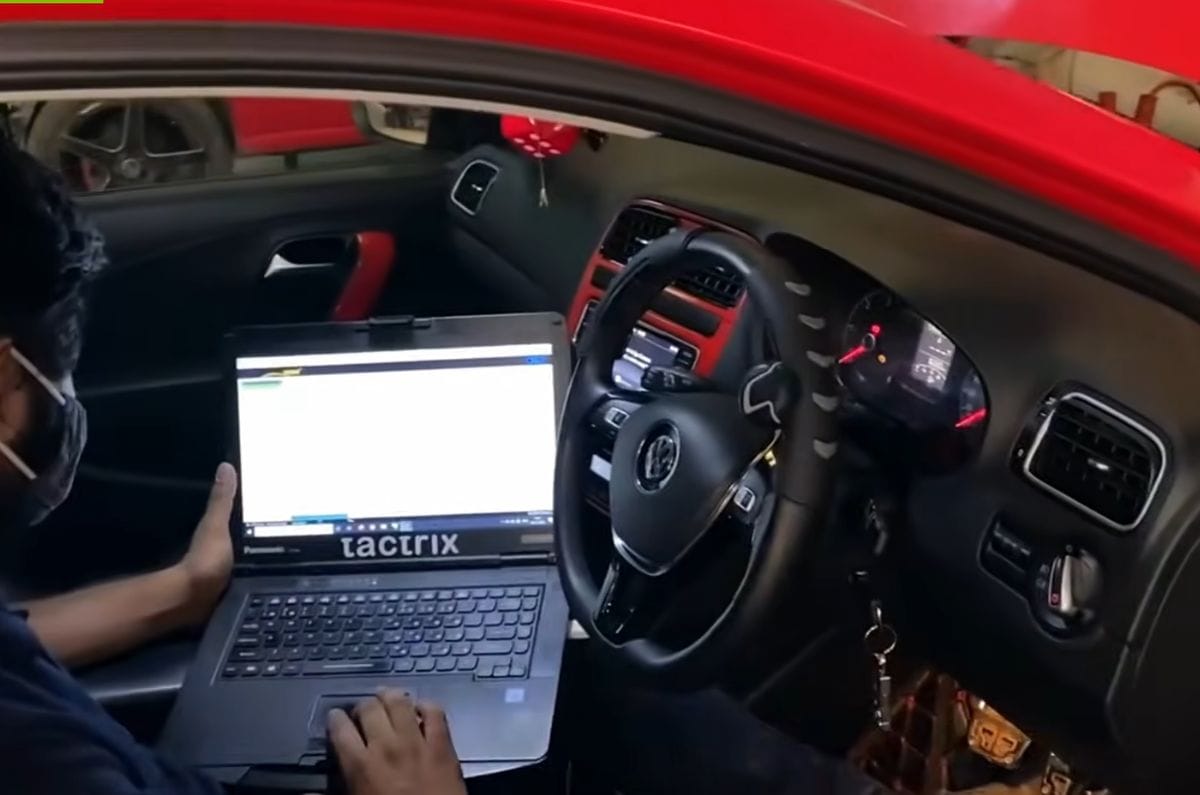
Altering your car’s electrical and wiring systems is also a reason why car manufacturers tend to void warranties. Remapping your car’s ECU, changing/cutting default vehicle wiring for accessories like headlamps, tail-lamps, cameras (dash cam/parking cam), aftermarket, and sound systems that draw power directly from the fuse box also fall under this category. Any accessory that needs a wire cut or rerouted, rather than simply plugged in, is best cleared with your manufacturer or an authorised dealer before installation.

Buyer Beware

Most warranty disputes in India come down to how an accessory was fitted, not just what was fitted. A plug-and-play, non-invasive accessory sourced from an authorised dealer is usually safe; anything that involves cutting, drilling, welding or splicing into the car’s original systems is a risk. When in doubt, it’s always worth checking with your manufacturer or authorised service centre before you accessorise.

2026 F1: Norris wins Hungarian GP

Norris F1 Hungarian GP

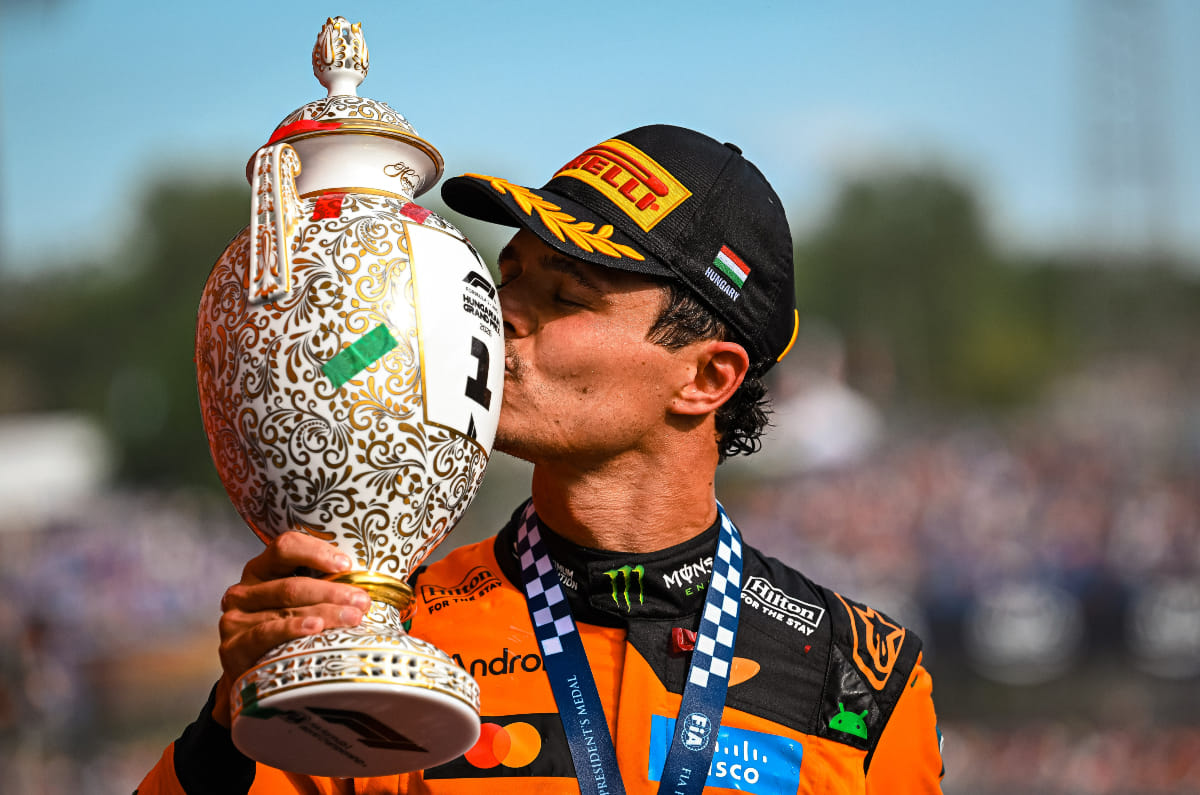
Lando Norris converted pole position into victory at the Hungarian GP, securing his and McLaren’s first win of the 2026 season. He finished over 15 seconds clear of Max Verstappen, while Kimi Antonelli completed the podium to further extend his championship lead.

  1. Norris wins, 15.080 sec from Verstappen
  2. Hamilton moves up to second overall in drivers’ championship

Norris scores first win of F1 2026

Piastri retires with gearbox issue

F1 Hungarian GP McLaren

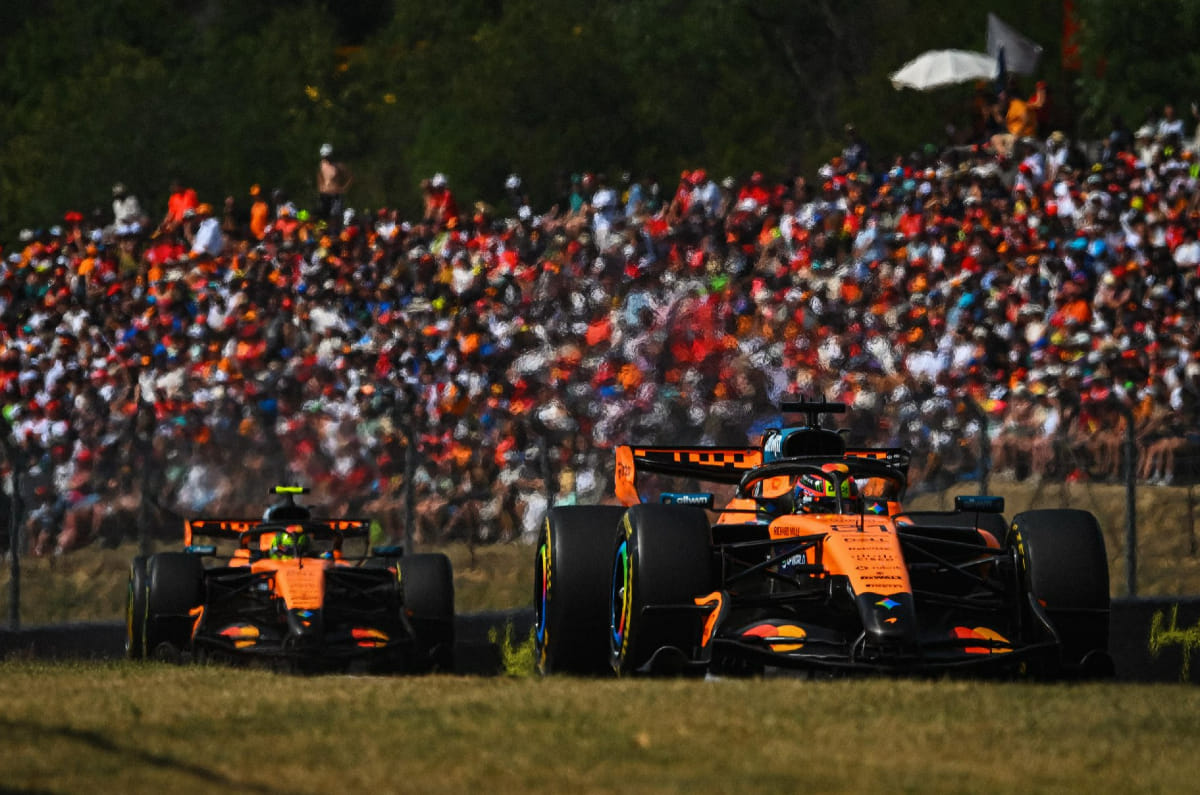
Oscar Piastri grabbed the lead from his McLaren teammate at Turn 2 on the opening lap. The duo held position for the first half of the race, but Piastri found himself released in traffic after his second pit stop, caught up in the battle between Carlos Sainz and Fernando Alonso. The McLaren driver ended up making contact with Sainz, with the latter being handed a five-second penalty for ignoring blue flags.

Out at front Norris was lapping significantly faster, and gained enough time to pit and re-join the track in the lead. Things went from bad to worse for Piastri as he stopped on lap 56 with an apparent gearbox failure. 

A controlled drive thereafter handed Norris his first win of the 2026 F1 season. “My pace today was probably some of the best pace I’ve ever had. The car was beautiful to drive and I felt very confident, so a great race. To get it back in terms of going long, which is certainly not what I was expecting, but the pace was so good I could always extend the stints, and fresh tyres then always won me the race. I’m just happy to be back and see the number one again,” the reigning world champion said.

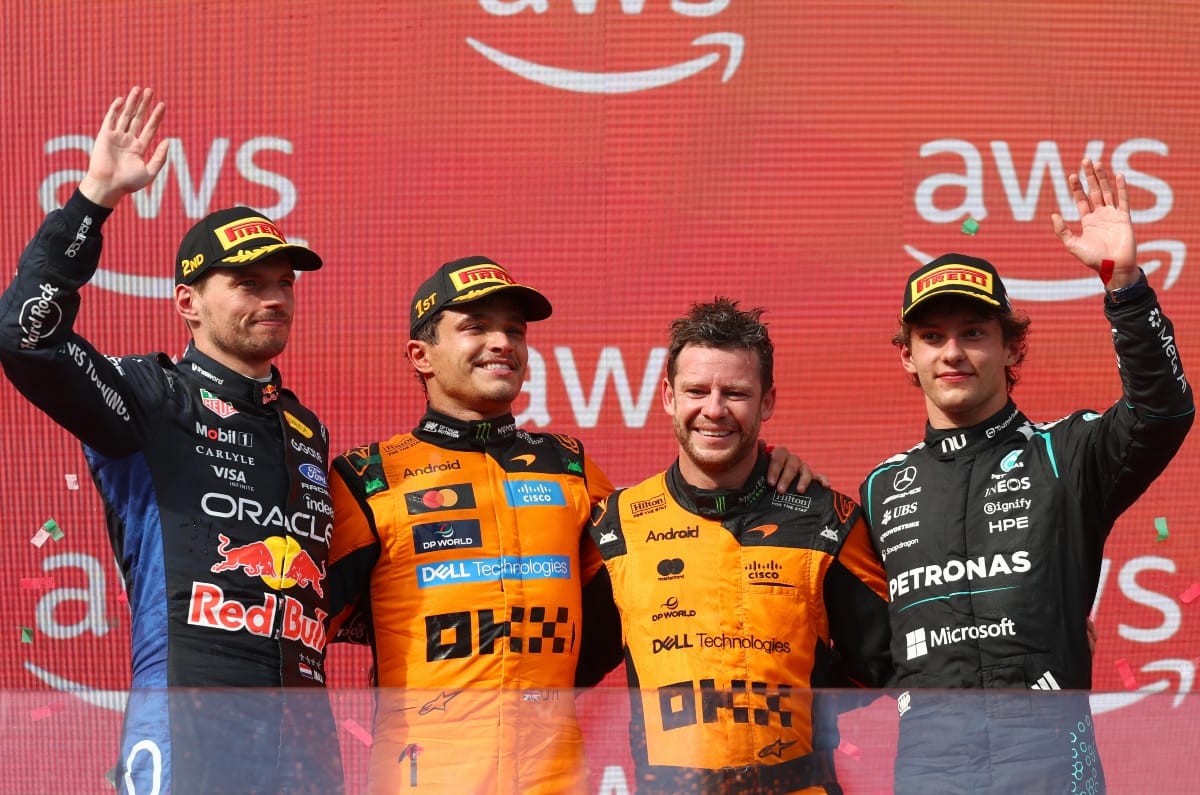
Verstappen, Antonelli complete podium

F1 Hungarian GP podium

Piastri’s retirement triggered the Virtual Safety Car that shuffled the order. Verstappen and Antonelli, who had just pitted for fresh tyres, stayed out and inherited P2 and P3 ahead of the Ferrari duo of Lewis Hamilton and Charles Leclerc.

Hamilton’s hopes of finishing on the podium were dashed when he was handed a five-second penalty for speeding in the pitlane. He dropped to fifth place in the final classifications after the penalty was applied, behind his teammate Leclerc.

Isack Hadjar crossed the finish line in sixth place. George Russell recovered to P7 after a disastrous start that saw him drop as low as P19 after his anti-stall kicked in. Both Racing Bull drivers scored points, with Liam Lawson P8 and Arvid Lindblad P10. Audi’s Nico Hulkenberg separated the two in ninth place.

2026 F1 championship standings

Antonelli heads into the summer break with a 50-point lead at the top of the standings. Russell’s recent misfortune, meanwhile, has dropped him to third in the championship, while Hamilton moves up to second place overall with nine points separating the two.

The 2026 F1 season will resume with the Dutch GP at Zandvoort on August 21-23.

2026 F1 Hungarian GP results

Pos

Driver

Team

1

Lando Norris

McLaren

2

Max Verstappen

Red Bull Racing

3

Kimi Antonelli

Mercedes

4

Charles Leclerc

Ferrari

5

Lewis Hamilton

Ferrari

6

Isack Hadjar

Red Bull Racing

7

George Russell

Mercedes

8

Liam Lawson

Racing Bulls

9

Nico Hulkenberg

Audi

10

Arvid Lindblad

Racing Bulls

11

Gabriel Bortoleto

Audi

12

Pierre Gasly

Alpine

13

Lance Stroll

Aston Martin

14

Fernando Alonso

Aston Martin

15

Franco Colapinto

Alpine

16

Esteban Ocon

Haas

17

Alex Albon

Williams

18

Carlos Sainz

Williams

19

Oliver Bearman

Haas

NC

Oscar Piastri

McLaren

NC

Sergio Perez

Cadillac

NC

Valtteri Bottas

Cadillac

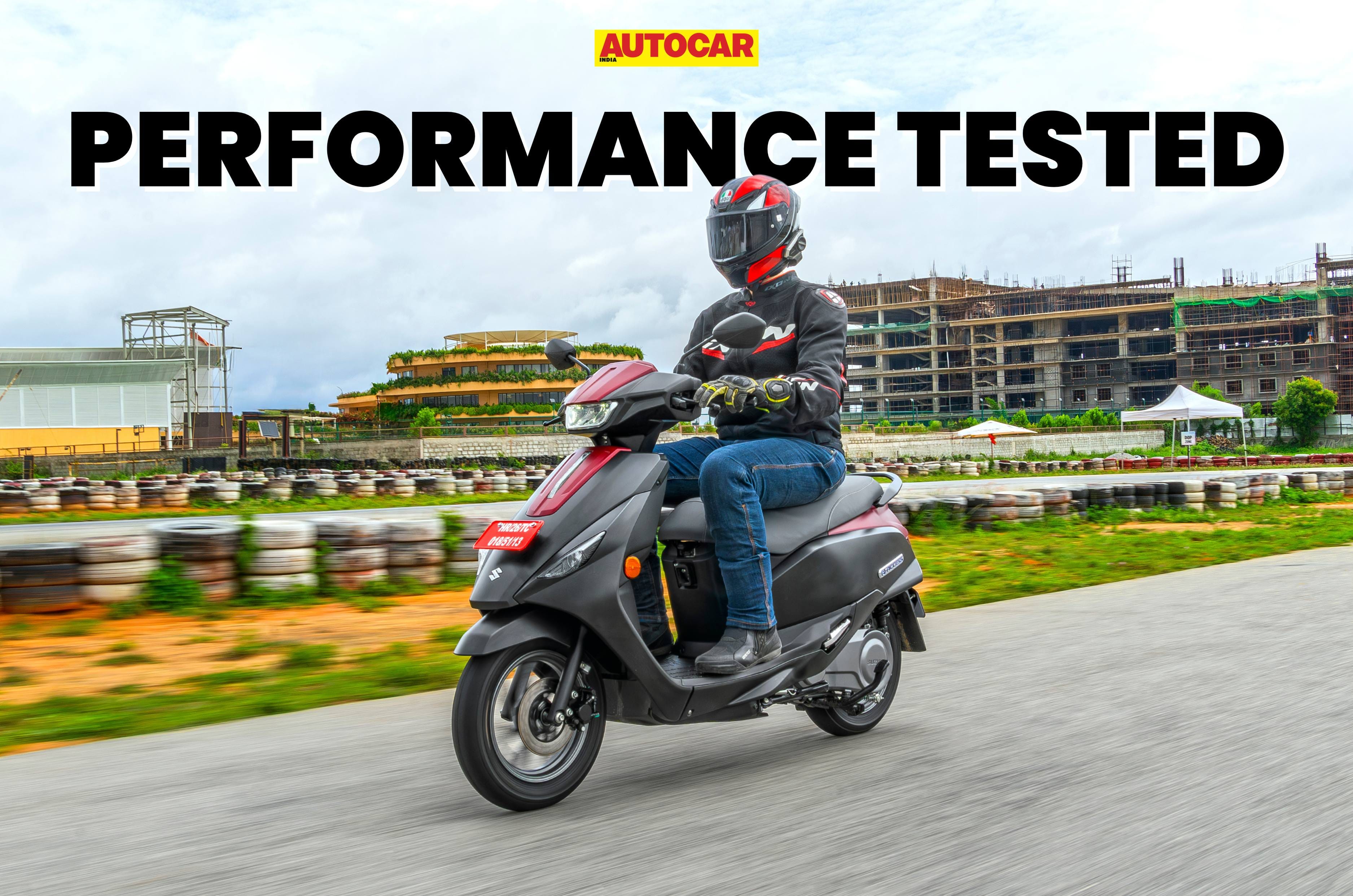
Suzuki E-Access Performance Tested and Explained

Suzuki E-Access Tracking Shot Performance Story Lead Image

The Suzuki e-Access is the first electric two-wheeler from Suzuki Motorcycle India. It is powered by a hub-mounted permanent magnet synchronous motor producing 4.1kW of peak power and 15Nm of torque. The battery is a 3kWh LFP (Lithium Ferrous Phosphate) pack and Suzuki claims an IDC range of 95km on a full charge.

Suzuki e-Access: Acceleration

During our test, the conditions were dry.

Acceleration

Time

0-20kph

2.05 seconds

0-40kph

4.94 seconds

0-60kph

11.93 seconds

The e-Access gets three riding modes including Ride A, Ride B, and Eco. Ride A and Ride B modes offer similar performance with the only difference being level of regenerative braking. We conducted this acceleration test in Ride A with the battery state of charge above 97 percent. In this riding mode, acceleration to 20kph and 40kph took 2.05 seconds and 4.94 seconds respectively and acceleration becomes more gradual towards 60kph. Overall, the scooter offers decent performance for commuting in the city.

Suzuki e-Access: Roll-On Acceleration

The scooter delivers 6kW (8.04hp) of peak power.

Roll-On Acceleration

Time

20-50kph

5.46 seconds

30-70kph

17.01 seconds

In our roll-on acceleration tests, the scooter took 5.46 seconds to get from 20-50kph and 17.01 seconds from 30-70kph. In the city, it is able to make overtakes while riding in Ride A or Ride B mode. Eco mode is usable for the most part, but not the most potent for when you want to commute quickly.

Suzuki e-Access: Braking

Decent braking performance with good regenerative braking as well.

Braking

Distance

60-0kph

24.64 metres

The e-Access gets a disc brake at the front and a drum brake at the rear. The regenerative braking is also strong and at slow speeds, allows a rider to smoothly filter through stop-go traffic without having to constantly apply the brakes. From higher speeds, grabbing the rear brake lever too hard will cause the rear to lock up and slide.

Suzuki e-Access: Specifications and price

The Suzuki e-Access is built on an entirely new platform developed in-house rather than shared with the petrol Access 125.  

Peak Power

4.1kW

Max Torque

15Nm

Battery Capacity

3kWh

Kerb Weight

122kg

Brakes (F/R)

Disc / Drum

Tyres (F/R)

90/90-12  / 100/80-12 

Price (ex-showroom)

Rs 1.88 lakh (ex-showroom, Delhi)

The Suzuki e-Access is available in a single variant priced at Rs 1.88 lakh (ex-showroom, Delhi). 

Dharmendra Pradhan Resigns: धर्मेंद्र प्रधान के इस्तीफे पर रणवीर शौरी ने उठाए सवाल, बोले- सपोटर्स की न सुनके सड़क पर मौजूद कॉकरोच…

Dharmendra Pradhan Resigns: NEET पेपर लीक विवाद को लेकर हफ़्तों तक चले छात्रों के विरोध-प्रदर्शन के बाद, जहाँ बॉलीवुड के ज़्यादातर लोगों ने केंद्रीय शिक्षा मंत्री धर्मेंद्र प्रधान के इस्तीफे का स्वागत किया, वहीं अभिनेता रणवीर शौरी की राय कुछ अलग थी। जब सरकार ने प्रदर्शनकारियों की मुख्य मांगें मान लीं और दिल्ली के जंतर-मंतर पर जश्न मनाया जाने लगा, तो शौरी ने इस फ़ैसले के समय पर सवाल उठाए और इसे ‘जनता के दबाव में कामकाज’ बताते हुए इसकी आलोचना की।

अभिजीत दिपके और सौरव दास की अगुवाई वाली ‘कॉकरोच जनता पार्टी’ (CJP) के नेतृत्व में 36 दिनों तक चले आंदोलन के बाद प्रधान ने 25 जुलाई को इस्तीफ़ा दे दिया। इस आंदोलन में छात्र परीक्षा में कथित गड़बड़ियों के लिए जवाबदेही की मांग कर रहे थे। CJP नेताओं के साथ बातचीत के बाद, केंद्र सरकार शांतिपूर्ण प्रदर्शनकारियों के ख़िलाफ़ दर्ज FIR वापस लेने और NEET विवाद से जुड़े मामलों में आत्महत्या करने वाले छात्रों के परिवारों को मुआवज़ा देने पर भी सहमत हो गई। मांगें माने जाने के बाद प्रदर्शनकारियों ने जंतर-मंतर पर चल रहा धरना-प्रदर्शन ख़त्म कर दिया।

प्रधान के इस्तीफ़े की ख़बर सामने आते ही, रणवीर शौरी ने X (पहले ट्विटर) पर हैरानी ज़ाहिर करते हुए एक GIF के ज़रिए अपनी प्रतिक्रिया दी। उन्होंने लिखा, “और एक ही झटके में मोदी सरकार अपने किसी भी दुश्मन को तो नहीं जीत पाई, लेकिन अपने कई समर्थकों को जरूर नाराज कर दिया। #masterstroke,” और साथ में ताली बजाने वाले इमोजी भी लगाए।

जब एक सोशल मीडिया यूज़र ने पूछा कि क्या उन्हें लगता है कि प्रधान को NEET पेपर लीक विवाद पर इस्तीफ़ा नहीं देना चाहिए था, तो शोरी ने अपनी बात विस्तार से बताई। उन्होंने लिखा, “हां, लेकिन उन्हें यह तब करना चाहिए था जब सड़कों पर हालात इतने खराब नहीं हुए थे। अब ऐसा लगता है कि समर्थकों की बात नहीं सुनी जाएगी, बल्कि सड़कों पर मौजूद ‘कॉकरोच’ की बात सुनी जाएगी!”

हाल के हफ़्तों में कई एक्टर्स और म्यूज़िशियन्स ने ऑनलाइन और प्रदर्शनों में शामिल होकर स्टूडेंट मूवमेंट का खुलकर समर्थन किया है। प्रकाश राज, शबाना आज़मी और रैपर हनुमankind ने दिल्ली के जंतर-मंतर पर हुए विरोध प्रदर्शनों में हिस्सा लिया। सोनाक्षी सिन्हा और विजय वर्मा ने सोशल मीडिया पर अपना समर्थन जताया, जबकि गुरफतेह पीरजादा, प्रतिभा रांटा, शालिनी पांडे और कई अन्य लोगों ने मुंबई में हुए प्रदर्शनों में भाग लिया।

फाउंडर अभिजीत दिपके की अगुवाई वाली ‘कॉकरोच जनता पार्टी’ के नेतृत्व में शुरू हुए ये विरोध प्रदर्शन NEET पेपर लीक को लेकर शुरू हुए थे, लेकिन जल्द ही ये शिक्षा व्यवस्था में जवाबदेही और सुधार की मांग करने वाले एक बड़े युवा आंदोलन में बदल गए। सोनम वांगचुक ने भी इस आंदोलन का समर्थन किया और भूख हड़ताल की थी, जिसे उन्होंने केंद्र सरकार के साथ बातचीत के अंतिम दौर से पहले खत्म कर दिया।

प्रधान के इस्तीफ़े के बाद जंतर-मंतर पर जश्न मनाया गया। छात्रों ने नारे लगाए और इस घटनाक्रम को आंदोलन की जीत बताया। CJP ने इस्तीफ़े को एक अहम पड़ाव बताया, लेकिन साथ ही यह भी कहा कि बड़े सुधारों के लिए उनका अभियान मंत्री के हटने के बाद भी जारी रहेगा।

Opinion: Why product planning may become auto industry’s most coveted function

Opinion: Why product planning may become auto industry's most coveted function

Here’s a prediction – Product Planning will be the most coveted function in the Indian automobile industry, to navigate it towards true sustainable and accessible mobility over the next decade. Given the regulatory pressures, changing consumer behaviour and ever-fluid geopolitics, the year 2026 will be a crucial one.

Tightening CAFE norms, new safety mandates, end-of-life rules, powertrain fragmentation with varying levels of incentives, platform strategies, ROI anxieties and shareholder pressures are the various balls a product planner has to juggle on an everyday basis.

The complexities are enormous. The pressures are immense, right from supplier ecosystem stress and tech-stack capabilities to localisation targets, increasing price sensitivity and network anxieties. 

Now add the layer of multiple consumer generations coe₹xisting in the form of millennials, gen Z, gen α and gen β with opposing views on personal mobility, and you are in a function that very few will want. This is almost like being the editor of a Truffaut film – you need to edit, but are grappling with what to leave out. 

The product planner has been behind the backdrop for all these years. While marketers, designers, engineers and salespersons have been valorised, the product planners have preferred walking in the shadows. The media, barring a rare few, have overlooked them. This is possibly because the function is not too glamorous. For them, there are no launch events, no design conclaves, no sales conferences and no engineering hackathons. This tribe basically leads a typically ‘boring’ life in the marketplaces and on the shopfloors, studying multiple tracks, balancing various power centres and taking crucial decisions that affect the lives of the more glamorous and valorised. 

They operate in the classic chaos theory ecosystem, trying to create deterministic laws through interdisciplinary teamwork from the myriad dynamic stimuli arising out of culture codes and geopolitics. If the culture codes are evolutionary in nature and the geopolitics rest on collaborative trade and peace, life is easy for them. But not right now. The generational culture codes are in conflict. Geopolitics are in a state of flux. Stability and order are definitely not to be seen today and even in the next four to five years. The political actions of today will have far-reaching ripple effects. And the product planner is expected to provide working solutions and sustainable success. 

Will the SUV-isation trend remain? Will rising costs make entry-level vehicles out of reach? Will gen β want to buy a personal vehicle at all?    

Highly complex questions that many CEOs would stay away from answering. Yet, it is the product planner who will stick his/her neck out and not just hazard an answer but also provide a solution. Time to recognise this unsung hero as the pivot of the automobile industry.

All we know about the Honda XR300L and XR300 Rally

All we know about the Honda XR300L and XR300 Rally

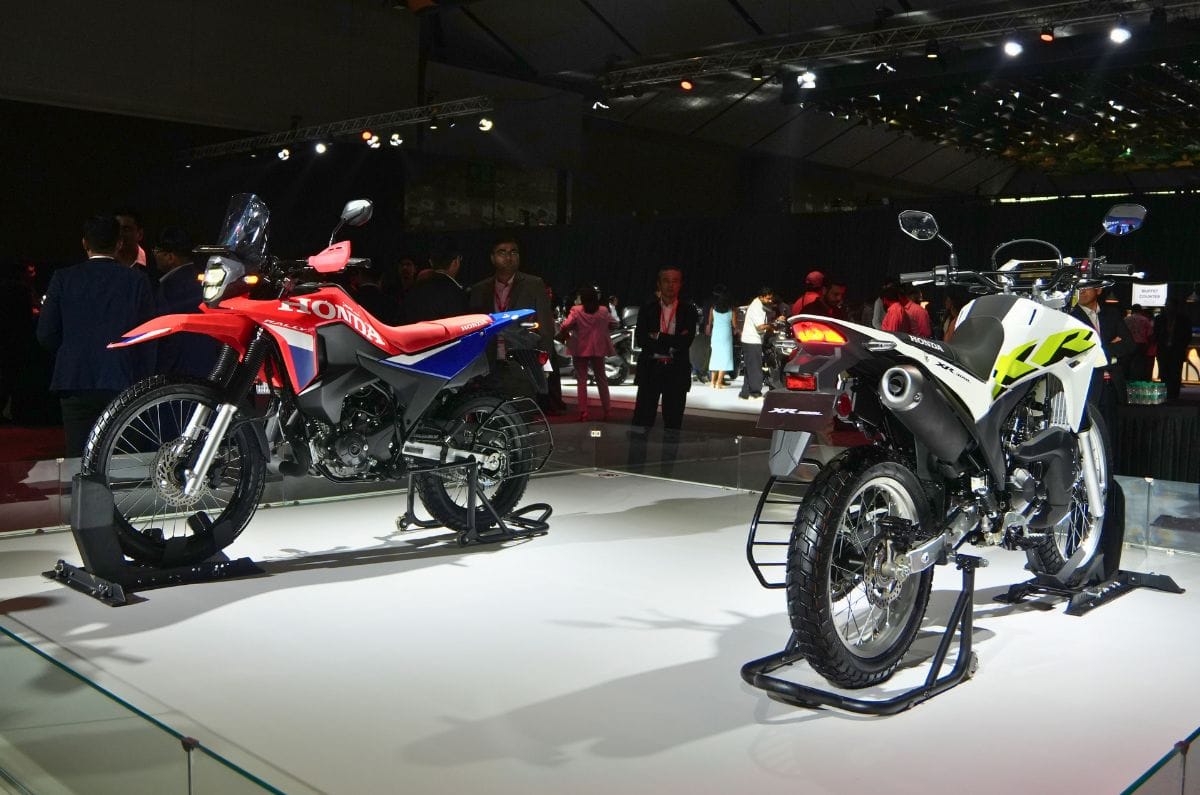
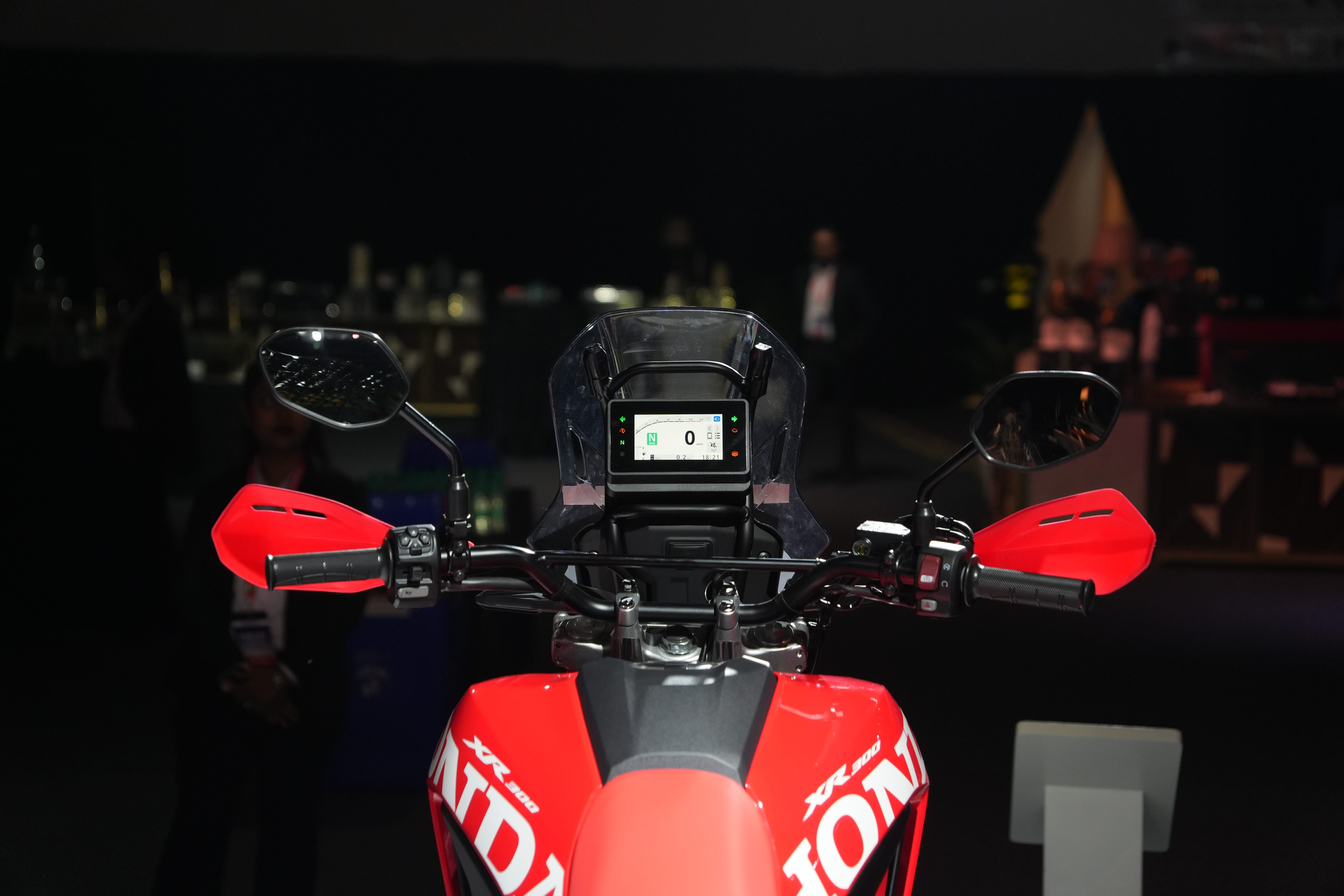
The small-capacity adventure motorcycle segment in India has never been more competitive, and understandably so, given how well these bikes suit our riding conditions. While Honda has long had capable dual-sport motorcycles in its global portfolio, it never offered one in our market. That has now changed with the announcement of the XR300L and XR300 Rally. The brand is yet to reveal full specifications, but a combination of what is visible on the bikes and Honda’s existing global lineup gives us a good idea of what to expect. Here’s everything we know so far.

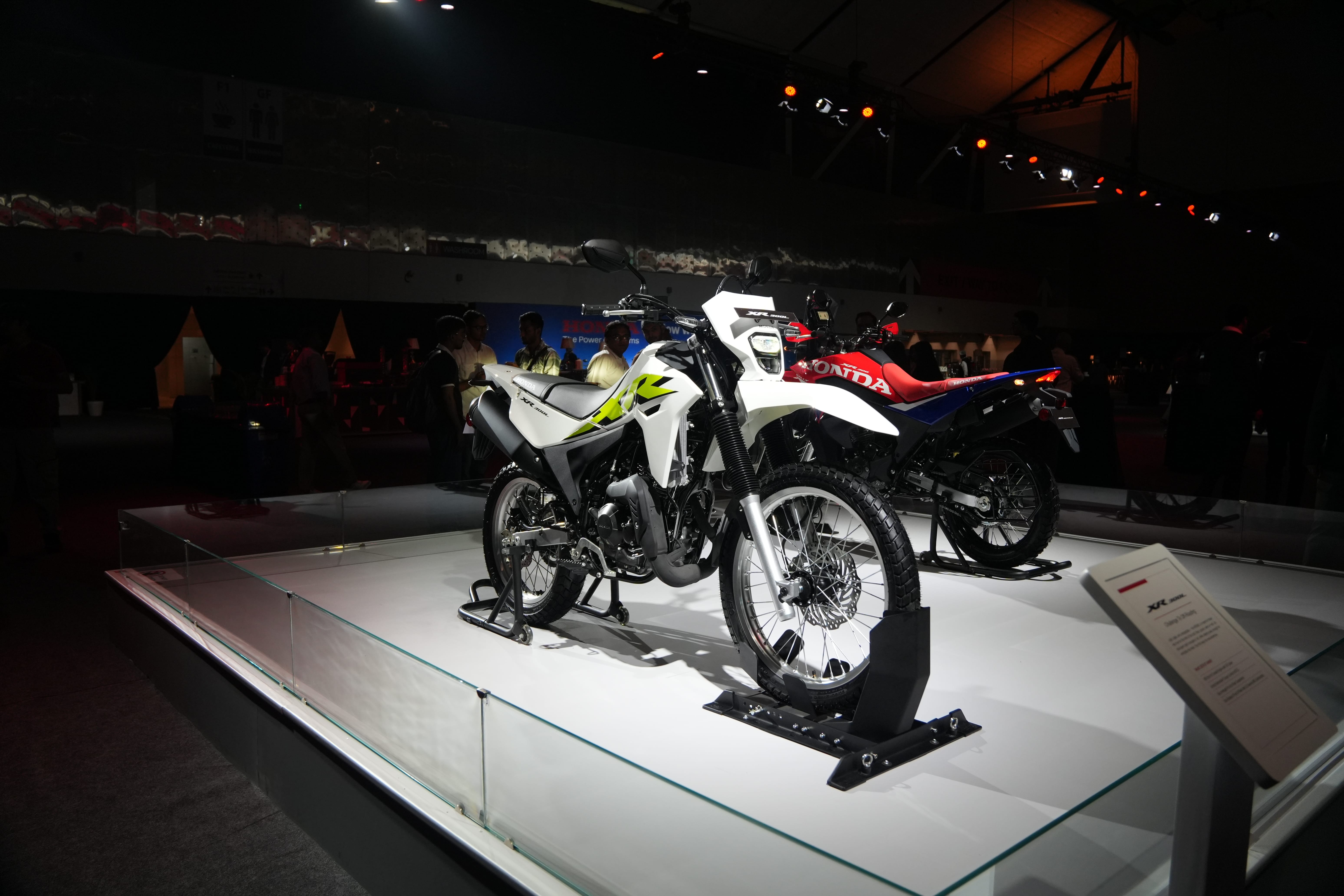
Honda XR300L

Engine is likely related to the CB300F, and Honda already sells an XR300L in South America

Visually, the engine on the India-spec XR300L appears closely related to the 293cc unit found in the CB300F. Additionally, Honda already sells an XR300L in South American markets such as Brazil and Colombia, and that motorcycle also uses a 293cc engine. If the India-spec bike uses the same motor, it is likely to produce around 24.3hp at 7,500rpm and 26.5Nm at 5,750rpm.

Interestingly, the Brazilian-spec XR300L is Flex Fuel-compatible, allowing it to run on either petrol or ethanol. While Honda has not confirmed whether the India-spec motorcycle will feature the same capability, it would make sense given the increasing focus on ethanol-blended fuels in India.

The South American XR300L is certified only to Euro 3 emissions standards, which could explain why the India-spec bike features noticeably different exhaust routing. The stricter emissions regulations here are likely to require revised exhaust architecture and engine tuning, even if the underlying engine remains the same. The bodywork also differs slightly from the South American model.

The bike sold in Brazil and Colombia uses a telescopic fork with 221mm of wheel travel and a rear monoshock with 227mm of travel. While Honda has not confirmed the India-spec motorcycle’s suspension figures, we could expect to see similarly impressive figures. The bike also rides on a 21-inch front and 18-inch rear wheel combo – a setup also seen on the India-spec bike.

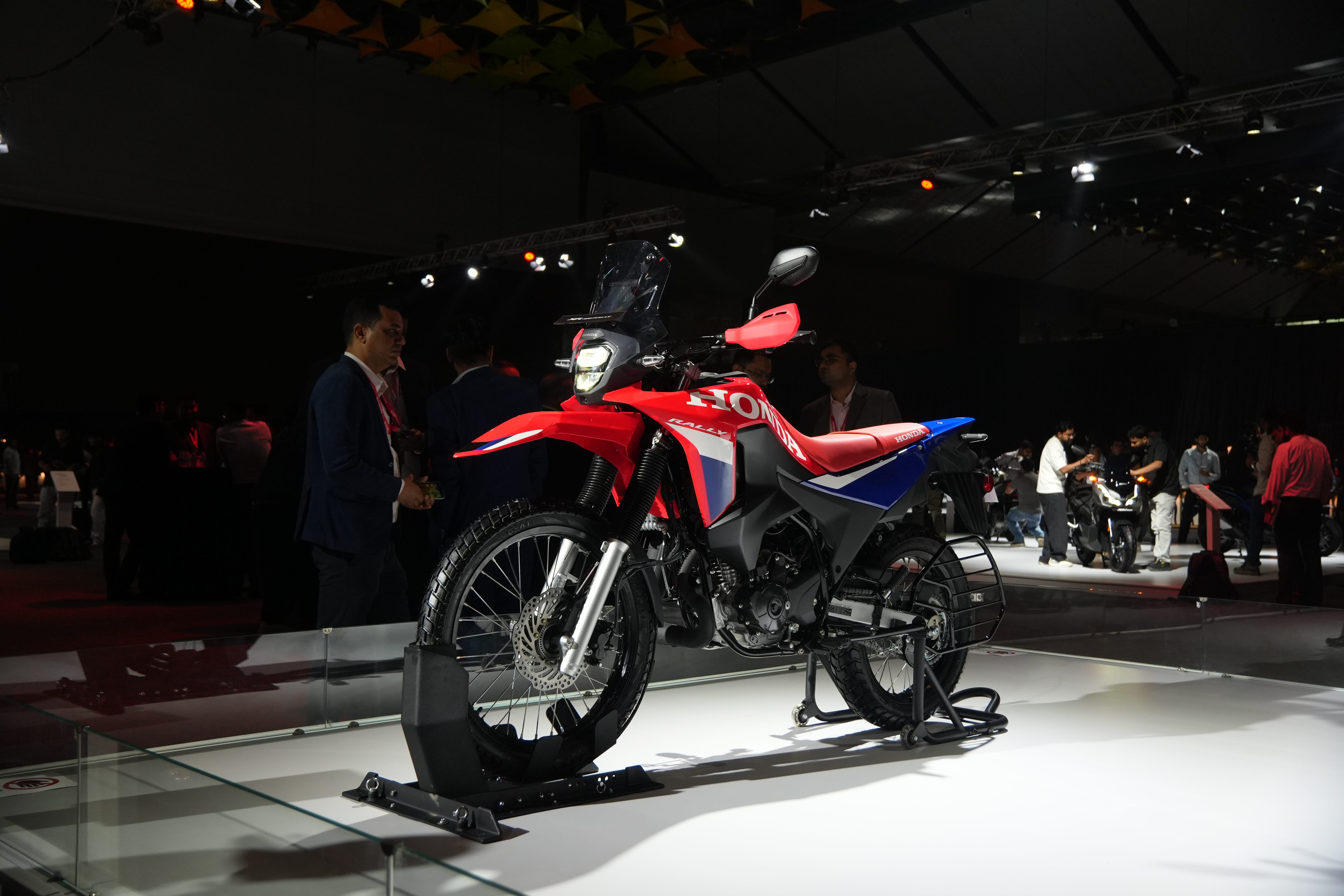
Honda XR300 Rally

Gets a larger fuel tank, taller windscreen and TFT display over the XR300L

The XR300 Rally is expected to share its engine and core mechanical package with the XR300L, while adding equipment better suited to long-distance touring. Confirmed additions include a larger fuel tank (capacity yet to be revealed), a 5-inch TFT display that we’ve already seen on several Honda motorcycles in India, and more comprehensive switchgear to access its additional functions. A taller windscreen, knuckle guards and unique bodywork are also part of the package. The Rally also appears to use a different tyre tread pattern, although wheel and tyre sizes are expected to remain unchanged.

If the relationship between the global CRF300L and CRF300 Rally is anything to go by, the XR300 Rally is also likely to feature a slightly taller seat height, a marginal reduction in ground clearance and a small increase in kerb weight owing to its larger fuel tank.

For now, that’s all we know. Honda is yet to announce pricing or full specifications for either motorcycle, but with both bikes now officially unveiled, a launch over the coming months is imminent. Local manufacturing should also allow Honda to price them competitively. For reference, the arch rivals to these bikes, the Kawasaki KLX230 and Hero Xpulse 210 cost Rs 2.19 lakh and Rs 1.67-1.76 lakh, respectively.

Maruti Brezza new vs old: Differences and similarities explained

Maruti Brezza new vs old models compared

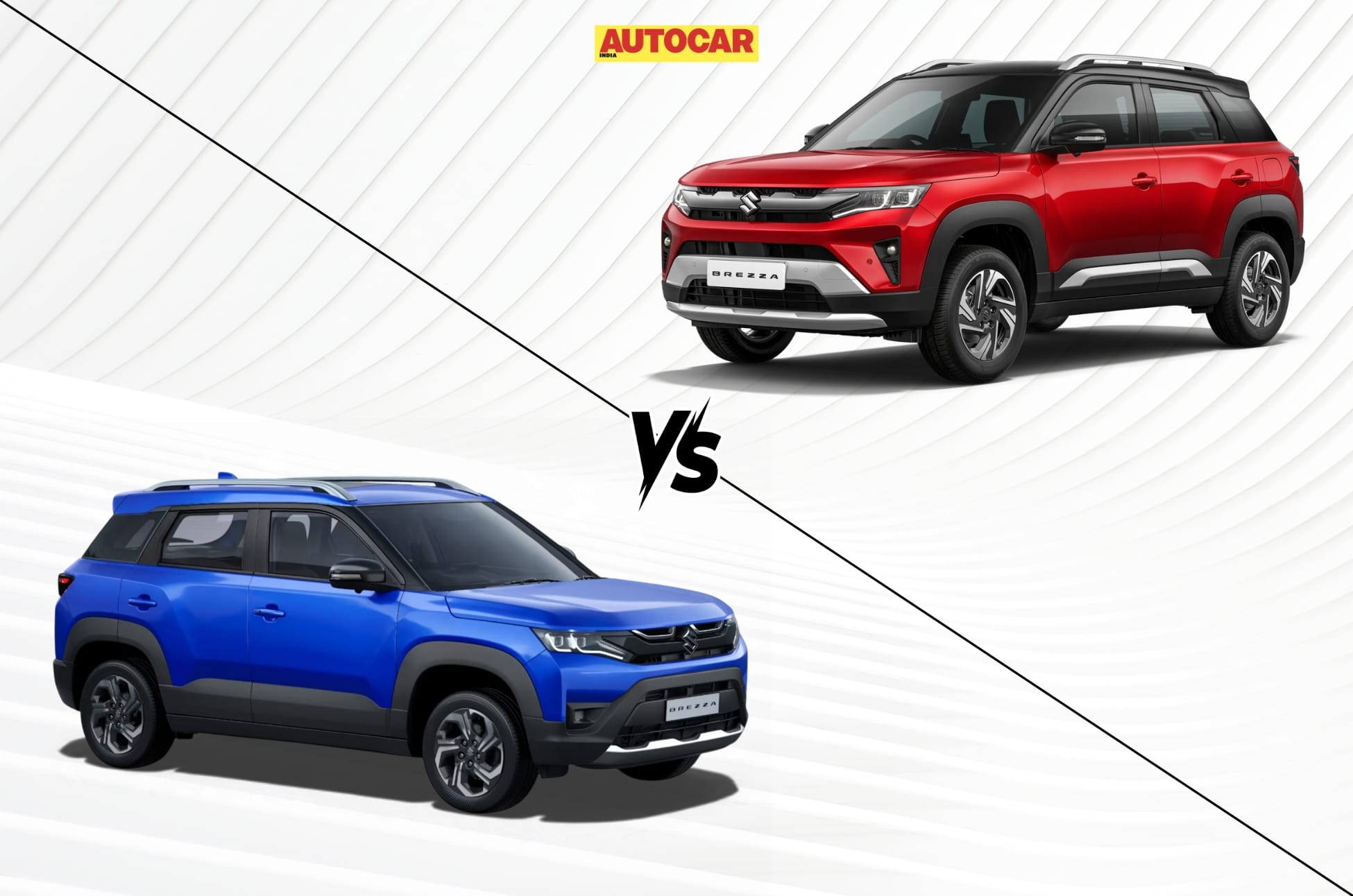
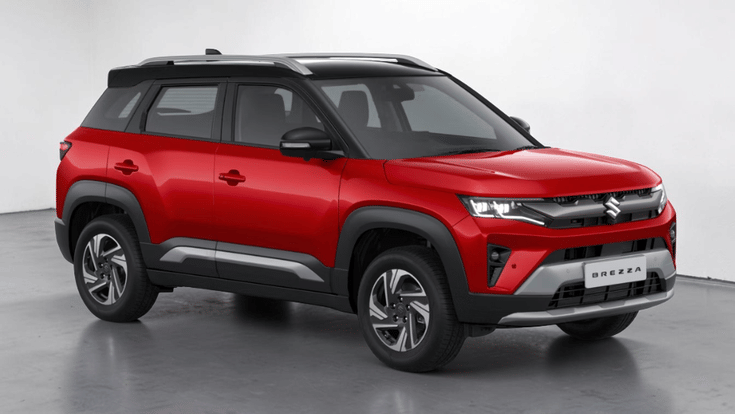
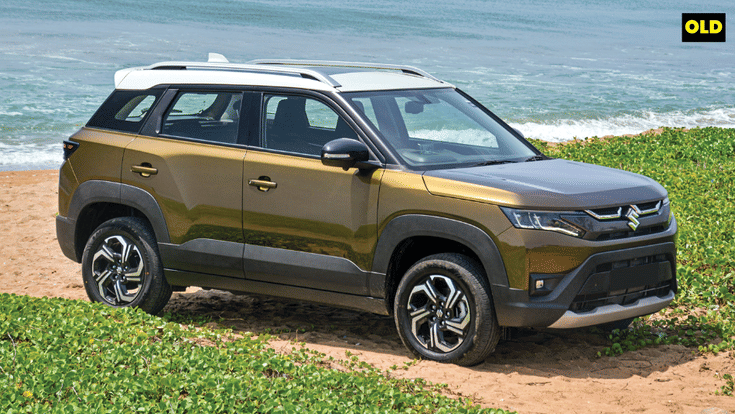
Four years after replacing the Vitara Brezza, the ‘Brezza’ nameplate has received its first lifecycle update. With this, the 2026 Maruti Brezza offers buyers a multitude of new features and styling tweaks that the brand hopes will keep its compact SUV competitive among segment rivals that include the Hyundai Venue, Kia Sonet, Skoda Kylaq and Tata Nexon. Having said that, let’s find out the main differences between the new Maruti Suzuki Brezza and its predecessor.

Maruti Brezza new vs old: Exterior design

Changes on the outside are mostly limited to the soft parts

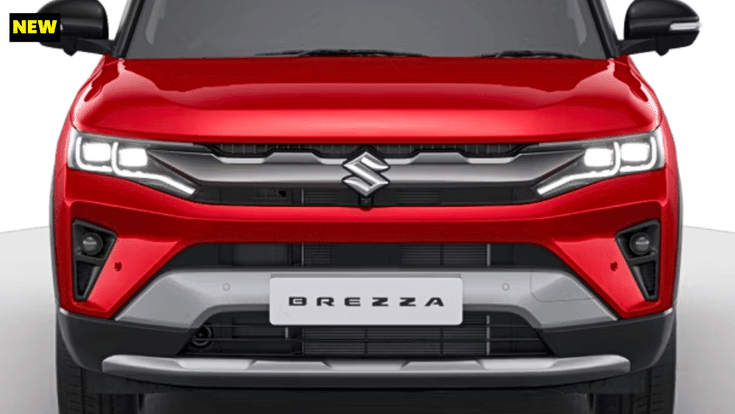
New Maruti Brezza front
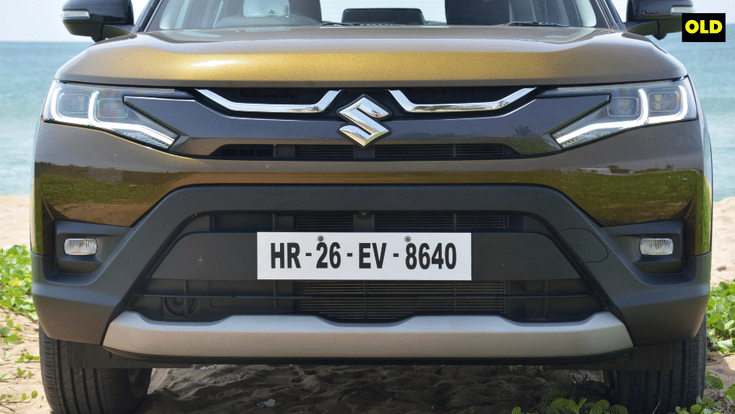
Old Maruti Brezza front
 

To help differentiate the 2026 Brezza from the old model, Maruti Suzuki has given it a few noticeable styling tweaks. For starters, there’s a new grille at the front and it’s finished in dark chrome. The front bumper has been redesigned as well, and it comes with an additional silver plastic garnish. Maruti has also re-done the front fog-lamp design. The LED units now sit inside a cone-shaped housing and have been moved further up the bumper compared to the old Brezza.

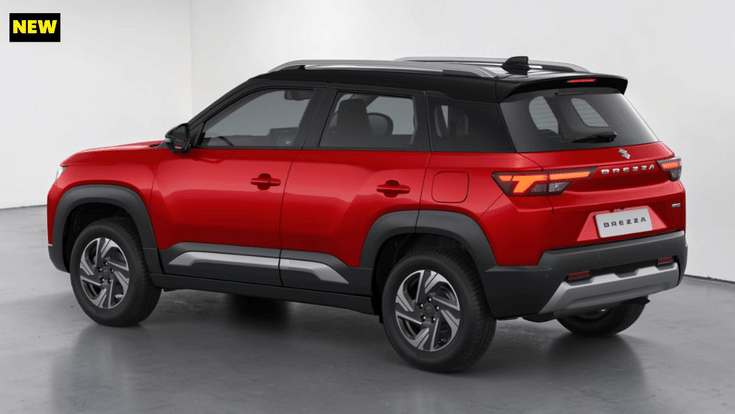
New Maruti Brezza rear quarter
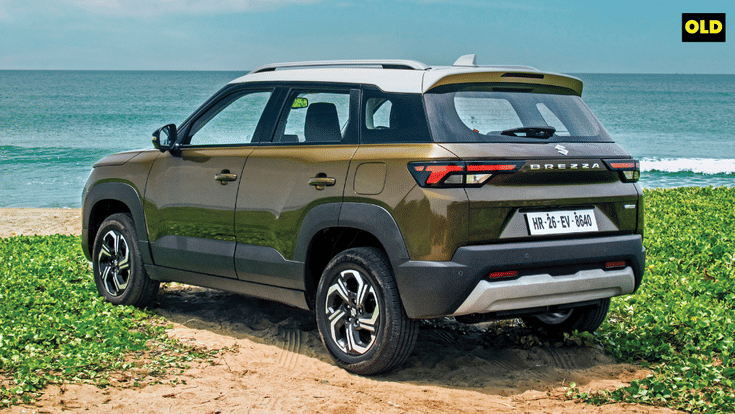
Old Maruti Brezza rear quarter
 

Along the sides, the 2026 Brezza features new 16-inch alloy wheels with a two-tone finish and dual-tone body cladding. The rest of the styling details remain identical to the old model. Maruti has done away with the Brave Khakhi and Exuberant Blue mono-tone colours, replacing them with Vivacious Orange and Lustrous Beige tones. The Sizzling Red with Bluish Black Roof dual-tone colour remains, but the other two options are now Lustrous Beige and Pearl Arctic White with the same ‘Blueish Black’ roof. The rear of the 2026 Brezza looks largely similar to the old model. Finally, the new Brezza Turbo gets red accents all around and different door cladding, along with ‘Turbo Boosterjet’ branding.

Maruti Brezza new vs old: Interior design and features

Few styling tweaks and new features add to this interior’s overall appeal

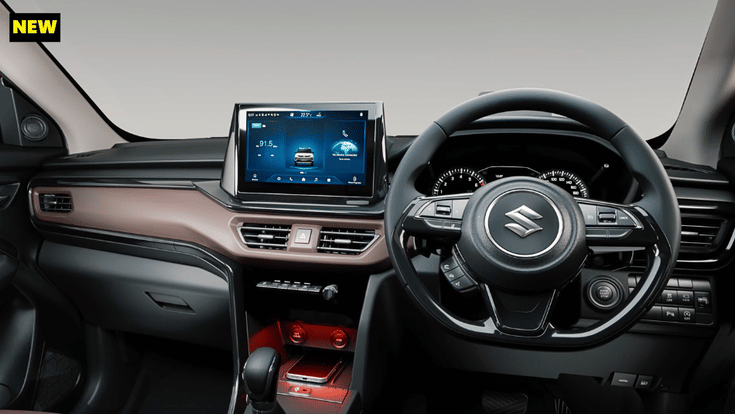
New Maruti Brezza interior design
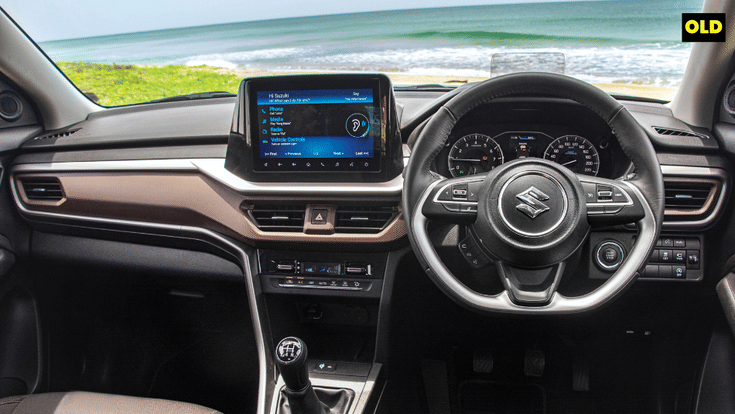
Old Maruti Brezza interior design
 

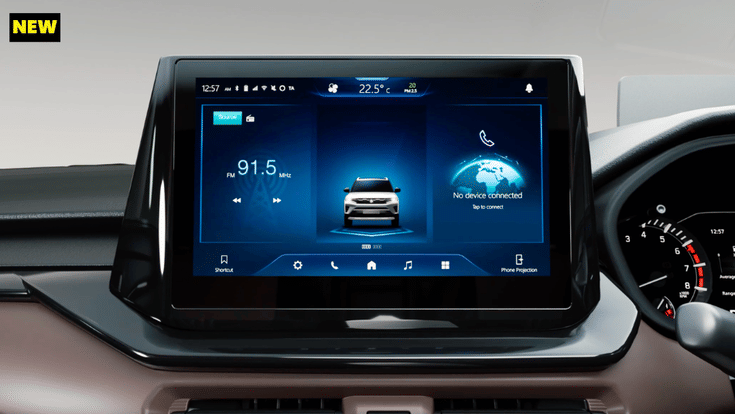
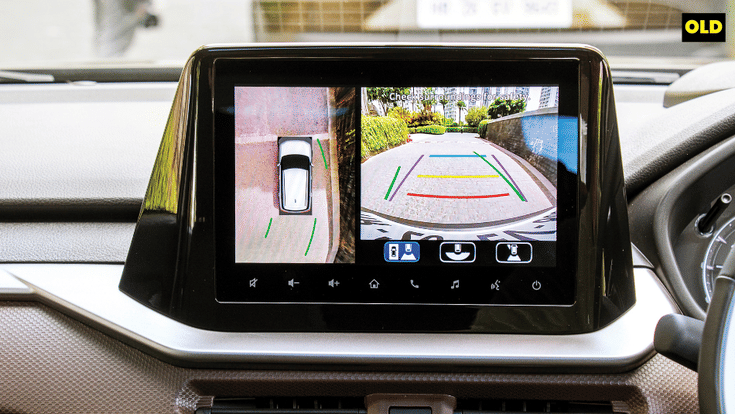
The overall design and layout of the Maruti Brezza’s interior hasn’t changed with the 2026 facelift. However, some of the tweaks that the brand has made are quite easy to spot. The first amongst these is the new 10.1-inch touchscreen head unit, which features the Suzuki SmartPlay Pro X infotainment system. For reference, the previous mode’s SmartPlay Pro+ system came with a 9-inch touchscreen. The silver-coloured plastic trim on the dashboard and doors in the old Brezza have given way to gloss-black trim in the 2026 model. These look nice and premium but are a magnet for fingerprints and scratches.

New Maruti Brezza touchscreen
Old Maruti Brezza touchscreen
 

Further down the centre stack, the Brezza facelift gets a new HVAC panel with physical, piano-style keys and a single rotary dial – this has been borrowed from the Victoris. Although stylish to look at, it no longer has a dedicated display to show the temperature and blower speed – these have been moved to the infotainment screen. The climate control does get a PM2.5 filter with an AQI display now, though.

New Maruti Brezza front seats
Old Maruti Brezza front seats
 

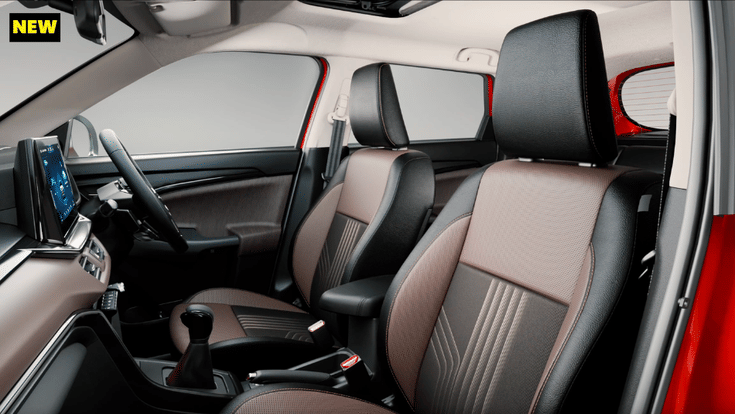
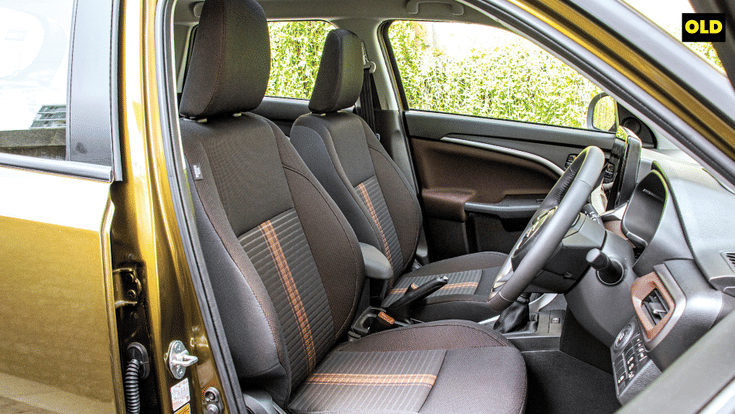
While the design of the steering wheel and instrument cluster remain unchanged, the Brezza now gets suction-type front-seat ventilation, 64-colour ambient lighting, dual-tone part-leatherette seats, Suzuki Navigation built-in, and new driver-assistance features like safe-exit warning, blind-spot warning, lane-departure alert and rear cross-traffic alert.

Maruti Brezza new vs old: Engine and gearbox

Differences between the old and new Brezza are more than skin-deep

Maruti has carried over the K15C four-cylinder petrol engine with the automatic engine stop-start system from the pre-facelift Brezza. In the 2026 Brezza, this 1.5-litre mill continues to produce 103hp and 139Nm. In its CNG avatar as well, the Brezza facelift’s engine output of 88hp and 122Nm remains the same as the old model. However, the difference with the new model is that it gets underbody CNG tanks, which don’t eat up boot space.

New Maruti Brezza front quarter
Old Maruti Brezza front quarter
 

The other difference between the 2026 Maruti Brezza and its predecessor is the inclusion of a 1.0-litre turbo-petrol engine with direct injection. Also used in the Fronx, this ‘Boosterjet’ powerplant has been retuned for the Brezza, so it now makes 110hp and 170Nm. The Turbo and CNG versions are only offered with the new 6-speed manual gearbox, which replaces the old 5-speed unit. Meanwhile, the naturally aspirated engine can be paired with the 6-speed torque converter automatic transmission, which was available with the pre-facelift model as well.

The step up from a 5-speed manual gearbox to a 6-speed unit also means that the 2026 Brezza offers better fuel economy. The pre-facelift Brezza with the naturally aspirated engine and manual gearbox had a claimed mileage of up to 17.80kpl, while its 2026 equivalent claims a figure of up to 21.09kpl. The 2026 Brezza CNG also has a higher claimed fuel economy of 26.90km/kg, where the old model’s was 25.51km/kg. Maruti claims that the new Turbo variants of the Brezza have a fuel economy of up to 20.47kpl.

Maruti Brezza new vs old: Prices

Despite the various updates and additions that the 2026 Maruti Brezza gets over its predecessor, its new Turbo version starts at an introductory price of Rs 7.40 lakh. This is lower than the base price of the pre-facelift model, which started at Rs 8.26 lakh. The 1.0-litre engine of the new Turbo variants make them eligible for higher tax breaks – the old Brezza’s 1.5-litre engine didn’t allow for this. That said, Maruti Suzuki is yet to disclose the prices of the rest of the variants of the 2026 Brezza.

Prices are ex-showroom, Delhi

Also read

2026 Maruti Brezza: All that’s new over its predecessor

3 reasons to buy the Honda ZR-V, and 3 reasons not to

Skoda India Brand director Ashish Gupta on growth, EVs and the brand’s future

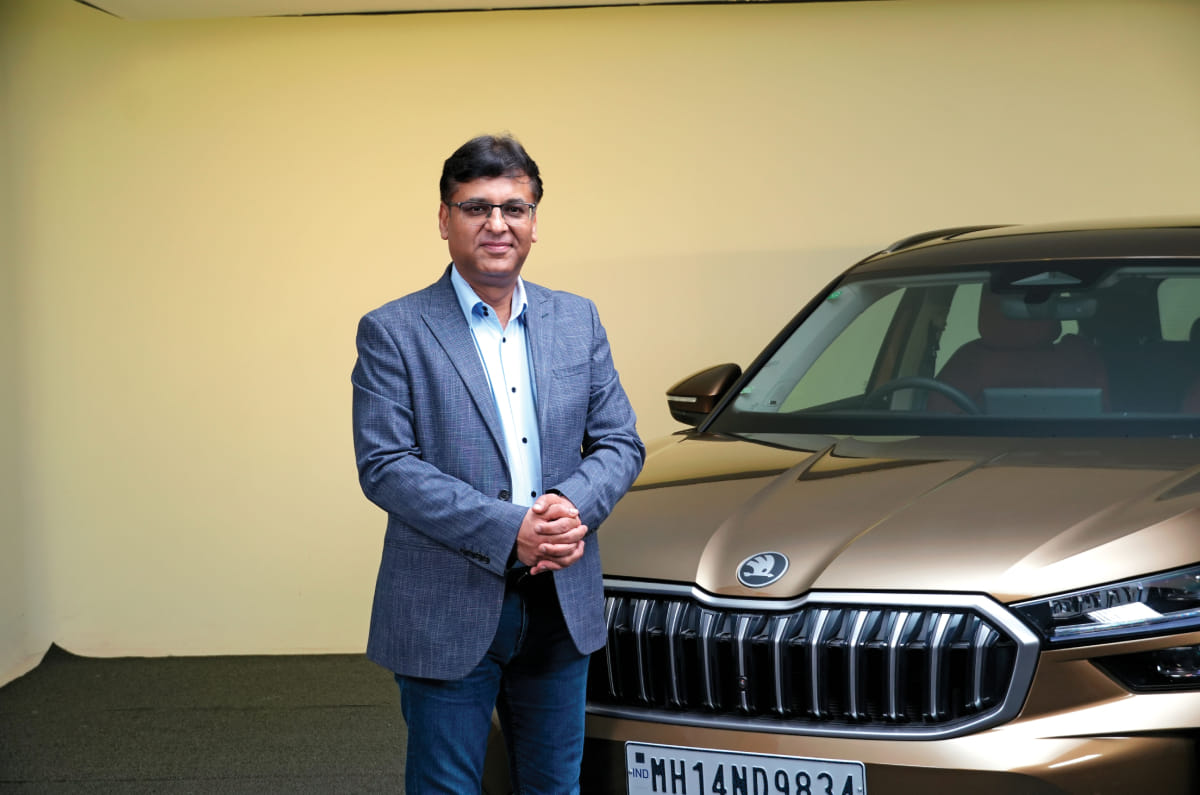
Skoda India Brand director Ashish Gupta

Skoda Auto India has had a busy year, with the launch of the Kylaq, the return of the Kodiaq, an expanding dealer network and plans to strengthen its presence across multiple segments. The company is also preparing for an electric future while continuing to invest in its petrol-powered portfolio. In this interview, Brand Director Ashish Gupta talks about Skoda’s sales growth, the launch of the Kodiaq RS, upcoming model updates, EV strategy and the steps being taken to improve the ownership experience in India.

On his first year at the helm of Skoda India.

Coming from Volkswagen, I’ve basically switched to the other side of the office, but I’d say it’s been challenging but exhilarating. I’m more than satisfied with the year, from the brand side, sales and also setting the foundation for the future. All our KPIs – brand image, awareness, consideration, network coverage, dealer profitability, customer satisfaction, market coverage, etc. – have improved, and we have done really well. In sales, we went from number eleven to seven, and we also became number four in the global sales ranking for Skoda, just slightly behind the UK. 

On the launch of the Kodiaq RS. 

The Kodiaq is our flagship. It came here in 2017, and we have it on sale again. At the same time, this year marks 125 years for Skoda in motorsport, and it’s also about 50 years since the RS badge was first born, so we thought it would be great to bring in the Kodiaq RS as the pinnacle of our engineering and motorsport heritage. It’s coming in as a fully built unit, and we have only 50 units; allocation is a challenge when it’s a bestseller abroad, but we have the option of another batch later on.  

On the Kylaq driving Skoda’s sales growth.

Yes, a large portion of our sales came from the Kylaq, but that was also because we were running out the Kushaq, which was due for an update and has now been launched. So, the demand for the Kushaq was always there. Also, it’s only been two months, so it’s too early to qualify, but we have seen an uptake of about 40% in sales, and the order book is solid.

On the Slavia and the upcoming update. 

The Slavia is a very special model for us. SUVs are the flavour of the season, but sedans are doing fine too, and we are among the few manufacturers in the world that still have a sedan portfolio, all of which are doing well. In India, the Slavia continues our sedan legacy of models like the Octavia, Superb and Rapid, and so, yes, it will see an update, but it’s early to specify details. 

On the company’s electric vehicle plans. 

If you want to be a relevant player in that space, you have to have a local play, so that’s what we are working on. EV penetration was 7% in May, up from 4.5% at the end of last year, so yes, this is a space where we will accelerate our plans, but you cannot do this suddenly, as there are factors like the supply chain to consider. But there’s an international portfolio too that we can look at.

On the possibility of the Peaq making it to India.

Bringing in a global model is very difficult as far as pricing goes, and the EU-FTA, as you know, does not give benefits to EVs for now. So, for now, we have to look at what makes sense, and yes, a larger EV is easier to manage pricing with. And yes, the Peaq is certainly on my radar. We will look at the specifications and see how we can best manage that with pricing, as you cannot have a high-priced CBU but be low on equipment. So, we are working on this. My ambition is to get the global portfolio to India.

On a petrol-only portfolio and flex-fuel cars.

If you see, year to date, the petrol market is about 46%, which used to be above 50% last year, so there is a shift, but the market is also growing by 20%. So even if the share of other fuels is rising, the absolute volume of petrol is increasing, so I’m not worried about our current portfolio. As for flex fuel, yes, ethanol is a longer-term strategy that the government wants, so we have to look at it, and we are, but there is work to manage this, as we have to look at the engine portfolio and manage our strict emission norms too.

On addressing Skoda’s dealer experience.

If you look at our customer experience scores, they have been improving. Sales have grown by almost 12 percent over the last year, and customer experience for service has improved by 18 to 20 percent. So, are we perfect? No, but the trend has improved and is only rising. Also, we are now present at about 335 touchpoints in 183 cities and are just inaugurating our 200th workshop in India, so we are getting closer to our customers. We have competitive service packs and excellent parts availability. Today, we have a parts service rate of more than 96 percent at our warehouses and dealerships, which is among the best in the industry.  

Asian Games में कब टकराएंगी भारत पाक की पुरुष महिला क्रिकेट टीमें?

मौजूदा चैंपियन भारत और पाकिस्तान की पुरुष और महिला क्रिकेट टीम को जापान में होने वाले एशियाई खेलों में सीधे क्वार्टर फाइनल में जगह दी गई है।भारतीय महिला टीम जापान के खिलाफ अपने अभियान की शुरुआत करेगी, जबकि पुरुष टीम का मुकाबला प्रारंभिक चरण के मैच के बाद तय होगा। सेमीफाइनल में भारतीय महिला टीम का सामना बांग्लादेश या चीन में से किसी एक टीम से होगा।

भारतीय पुरुष टीम सेमीफाइनल में पाकिस्तान का सामना कर सकती है। एशियाई खेलों में पुरुषों की क्रिकेट प्रतियोगिता 24 सितंबर को शुरू होगी और उसका फाइनल मैच एक अक्टूबर को खेला जाएगा।

महिलाओं की प्रतियोगिता 17 से 22 सितंबर तक होगी। भारतीय महिला टीम फाइनल में पाकिस्तान से भिड़ सकती है। पुरुषों की प्रतियोगिता में 10 टीमें भाग ले रही हैं। प्रारंभिक चरण में ग्रुप ए में अफगानिस्तान, जापान और नेपाल तथा ग्रुप बी में हांगकांग, चीन, मलेशिया और ओमान शामिल होंगे।

दोनों प्रतियोगिताएं आइची प्रांत के कोरोजी एथलेटिक पार्क में टी20 प्रारूप में खेली जाएंगी।श्रेयस अय्यर भारतीय पुरुष टीम की, जबकि हरमनप्रीत कौर भारतीय महिला टीम की कप्तानी करेंगी।क्रिकेट चौथी बार एशियाई खेलों के कार्यक्रम का हिस्सा है। इससे पहले यह 2010 में ग्वांगझू, 2014 में इंचियोन और 2023 में हांगझोऊ खेलों का हिस्सा था।