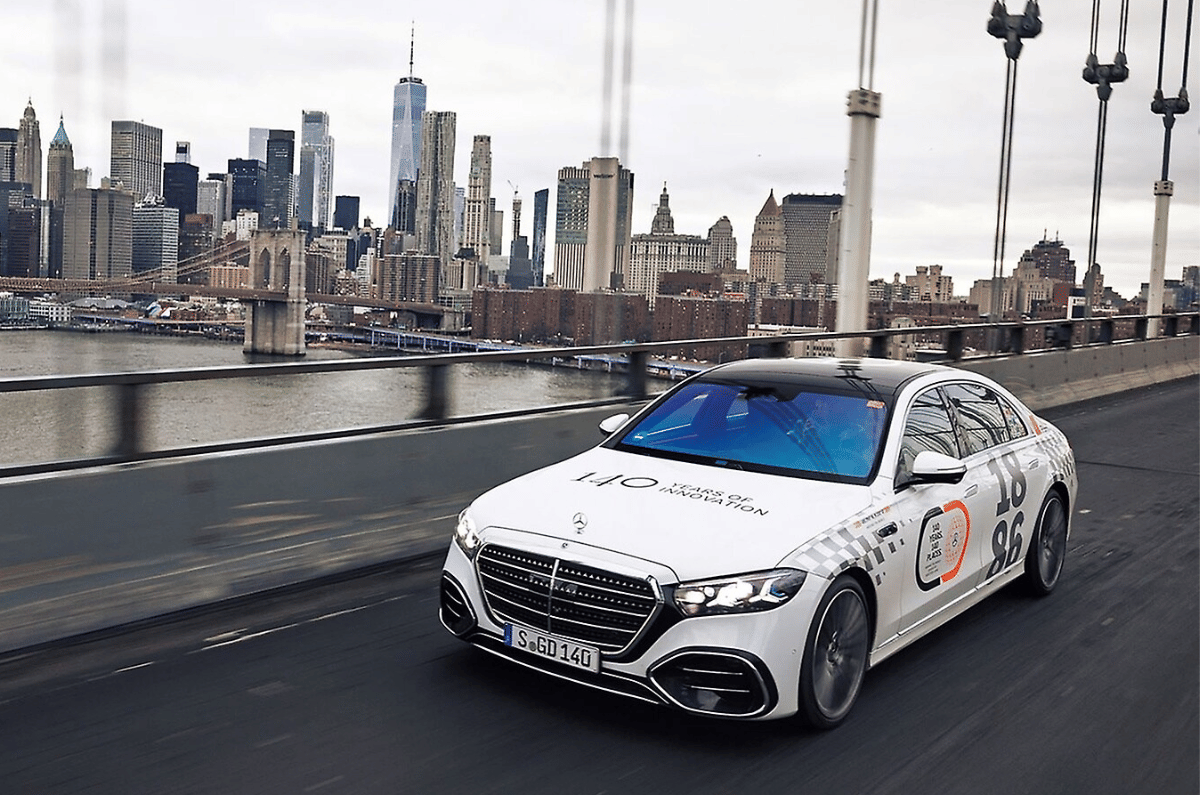
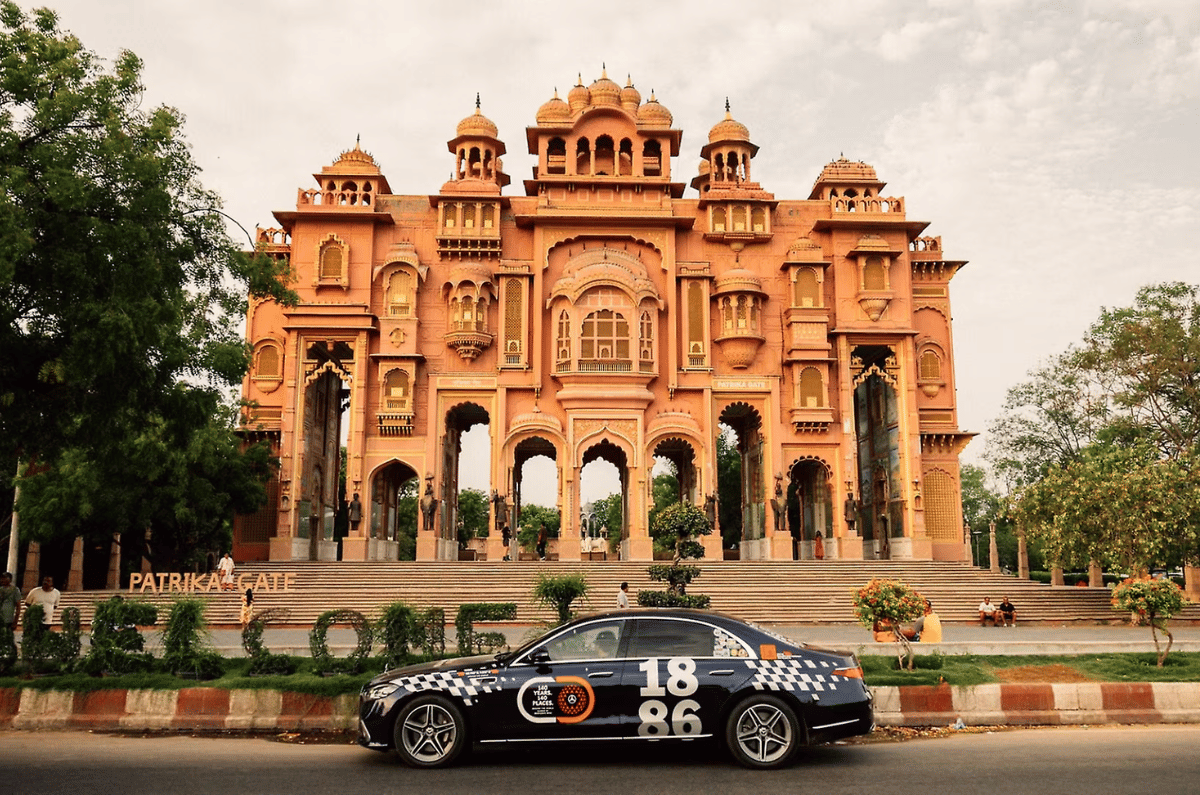
Mercedes-Benz has concluded its ‘140 Years. 140 Places.’ global tour, organised to commemorate 140 years since Carl Benz filed the patent for his Motorwagen in 1886. Three S-Class sedans returned to the Mercedes-Benz Museum in Stuttgart, Germany, on October 17, after covering more than 65,000km across 55 countries and six continents over nearly nine months. Approximately 20,000 guests attended the homecoming event, which also featured the global debut of the new Mercedes-AMG GT SUV.
Mercedes-Benz 140 Years, 140 Places: All you need to know
Tour marks 140 years since Carl Benz’s Patent-Motorwagen
The expedition began in Stuttgart on January 29, 2026, with three S-Class sedans named Bertha, Carl and Gottlieb. The tour visited more than 140 locations across six continents, crossing 67 national borders and 13 climate zones.
The route covered cities including New York, Tokyo, Mumbai, Nairobi and Sao Paulo. The cars returned to Stuttgart in a convoy of 140 historic and current vehicles, including a replica of the 1886 Benz Patent-Motorwagen, the Mercedes-Benz 300 SLR Uhlenhaut Coupé, a Ponton 220 S, the C 111 experimental vehicle, and the electric G-Class and C-Class.
Mercedes-Benz says tour tested S-Class under challenging conditions
Mercedes-Benz said the expedition provided insights into the S-Class under real-world conditions beyond those covered by its regular development testing in extreme temperatures and simulation chambers.
During the India leg, the cars travelled to Umling La, at approximately 5,800 metres above sea level, and encountered monsoon conditions and flooded roads. In Kenya, Tanzania and Zambia, the route included unpaved and uneven surfaces. Mercedes-Benz said the journey also exposed the cars to temperatures varying by more than 50deg C across desert and tropical climates.
Autocar India participated in the India Leg
We also participated in the India leg of the expedition, driving the pre-production S-Class sedans through Udaipur and Ahmedabad. The drive provided an opportunity to experience the updated luxury sedan’s performance, ride comfort and technology.
Anniversary activities continue through December
Mercedes-Benz will continue its ‘140 Years of Innovation’ anniversary programme through the end of 2026. Mercedes-Benz plans further studios in international cities following launches in Copenhagen, Los Angeles, Sydney and Delhi.
In December, the company will convert the approximately 145-metre-long glass facade of its dealership at Donnersbergerbrucke in Munich into an oversized Advent calendar. Mercedes-Benz is also planning a coffee-table book documenting the expedition, its stops, and its encounters along the route.
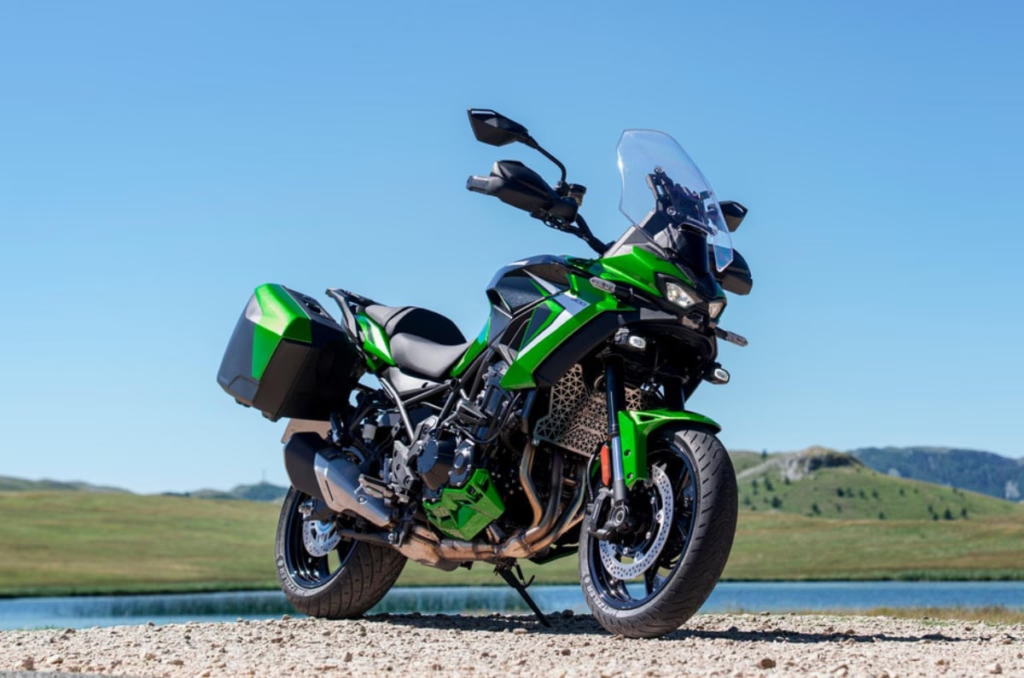
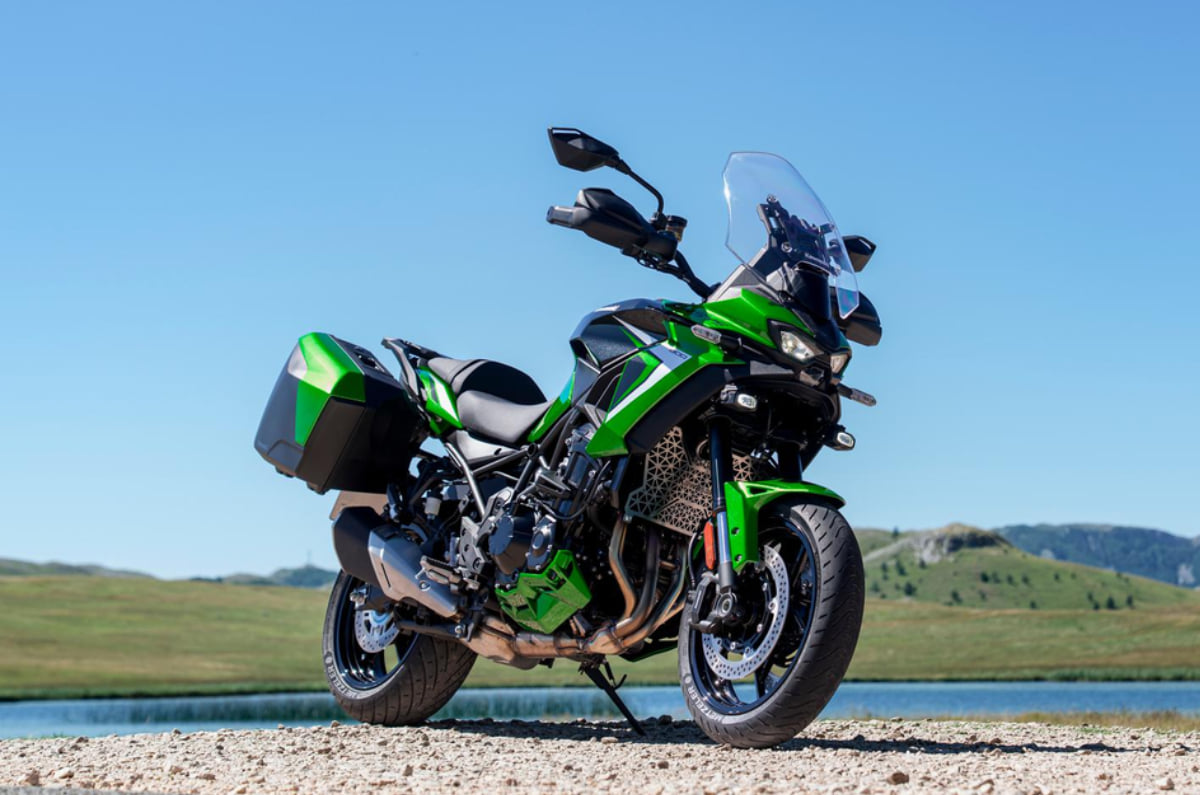
The 2027 Kawasaki Versys 900 is powered by the 948cc inline-four from the Z900, tuned to produce 122hp at 9,500rpm and 97.3Nm at 8,000rpm. The bike gets an all-new trellis frame with near 50:50 weight distribution, long-travel suspension and 17-inch wheels shod with Metzeler Roadtec 01 tyres. A seven-position adjustable windscreen and a height-adjustable seat, ranging from 825mm to 845mm, round out the ergonomic package.
On the technology front, the Versys 900 gets a 5-inch TFT display with turn-by-turn navigation and smartphone connectivity via the Rideology app. It also features Kawasaki’s KCMF cornering management system, along with traction control, cornering ABS and a quickshifter as standard. The SE variant adds Kawasaki’s ARAS suite, which includes adaptive cruise control, forward collision warning, blind-spot detection and emergency brake signalling.
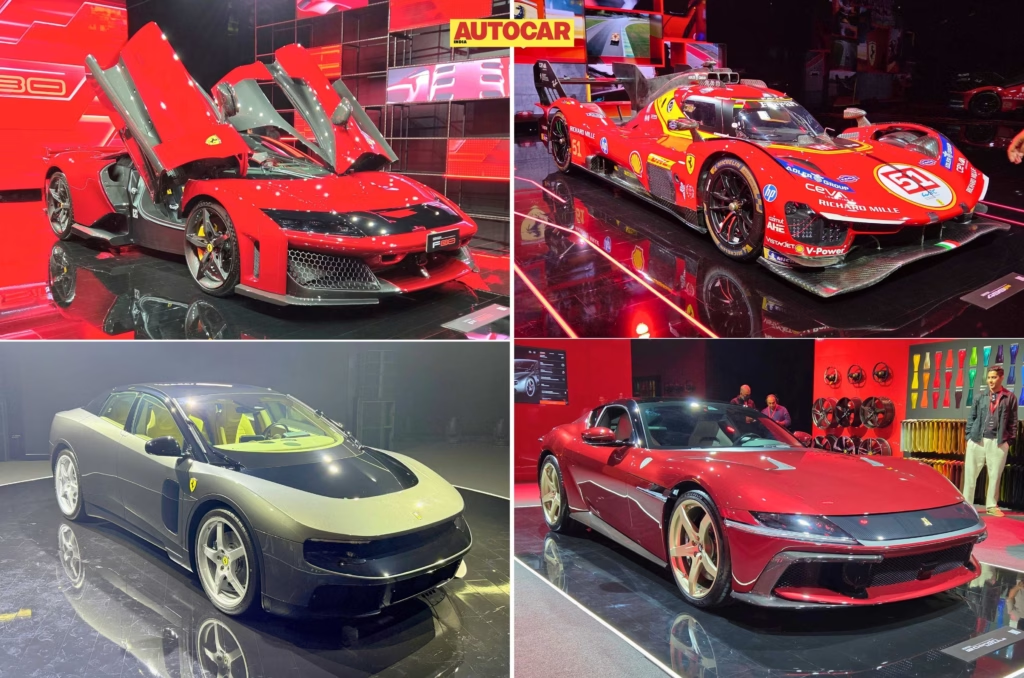
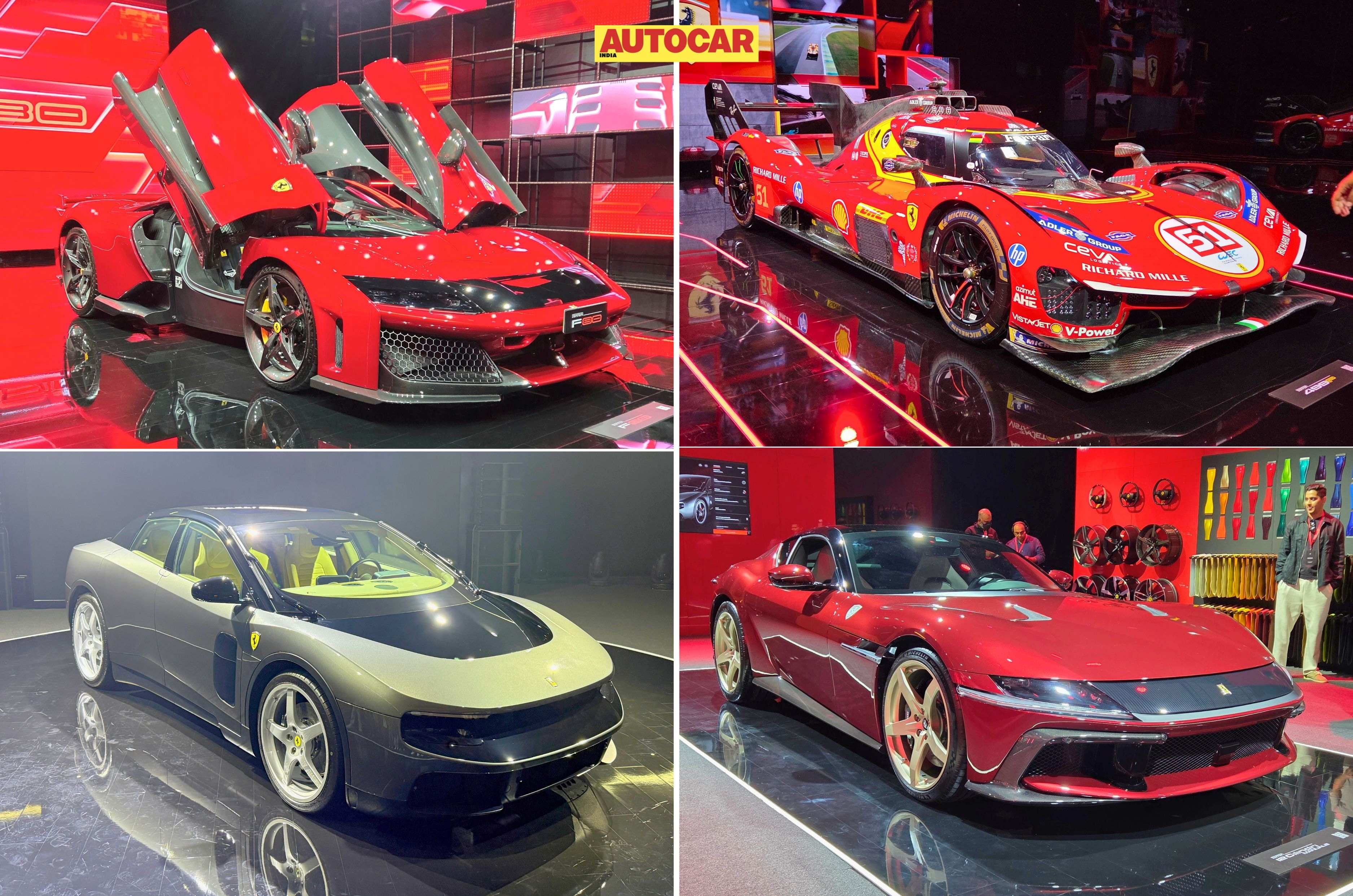
Ferrari has officially opened the doors to its first-ever Universo Ferrari exhibition in India. Held at Yashobhoomi, Dwarka in New Delhi from 17 October to 1 November, Universo Ferrari offers a comprehensive look at the Italian marque’s heritage, motorsport pedigree, technology, and craftsmanship. More pertinently, several exciting Ferraris are also on display at Universo Ferrari, some of them for the first time in India. Let’s have a look at the Ferrari cars that have debuted in India as part of Universo Ferrari.
Ferrari F80
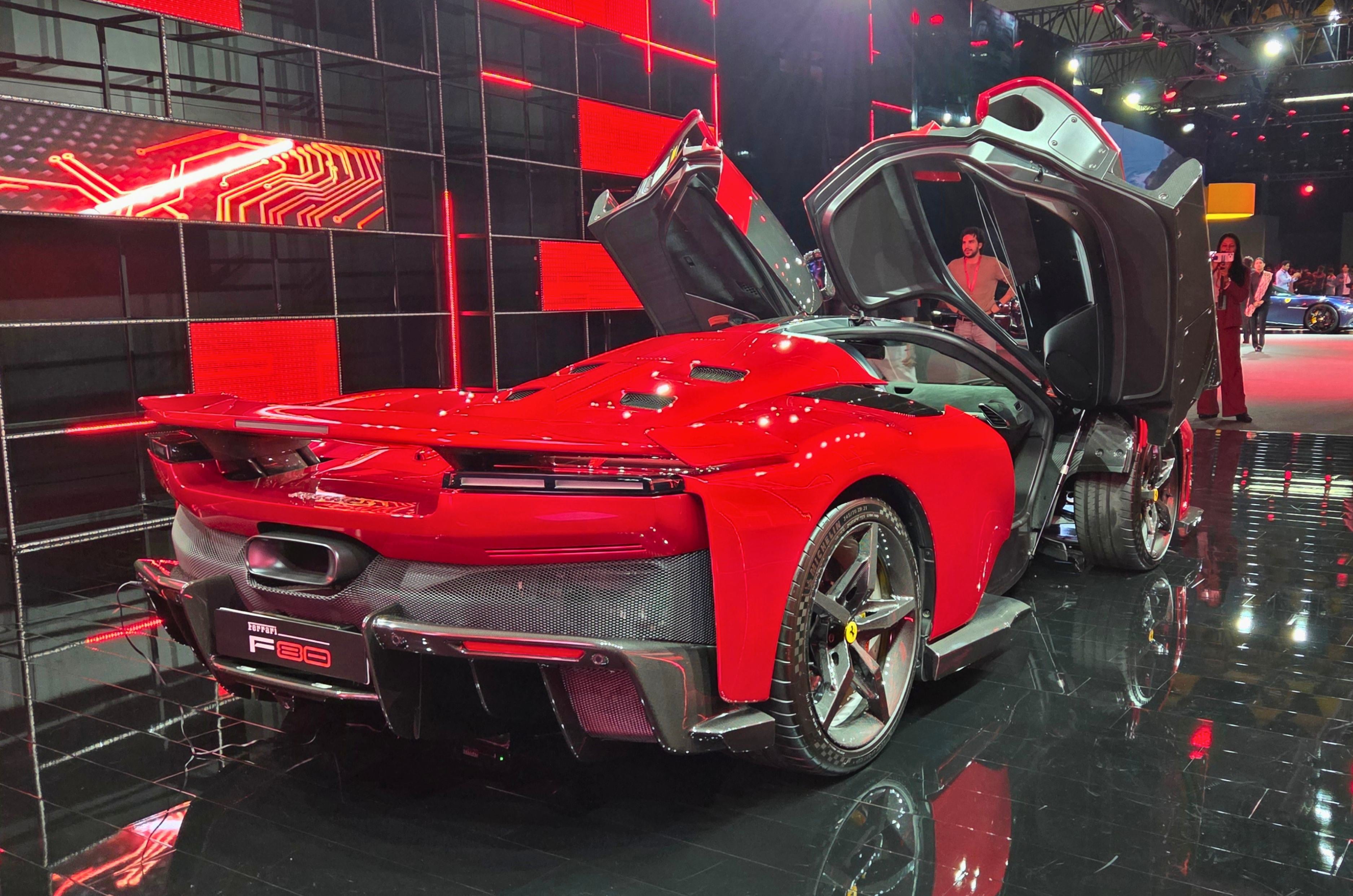
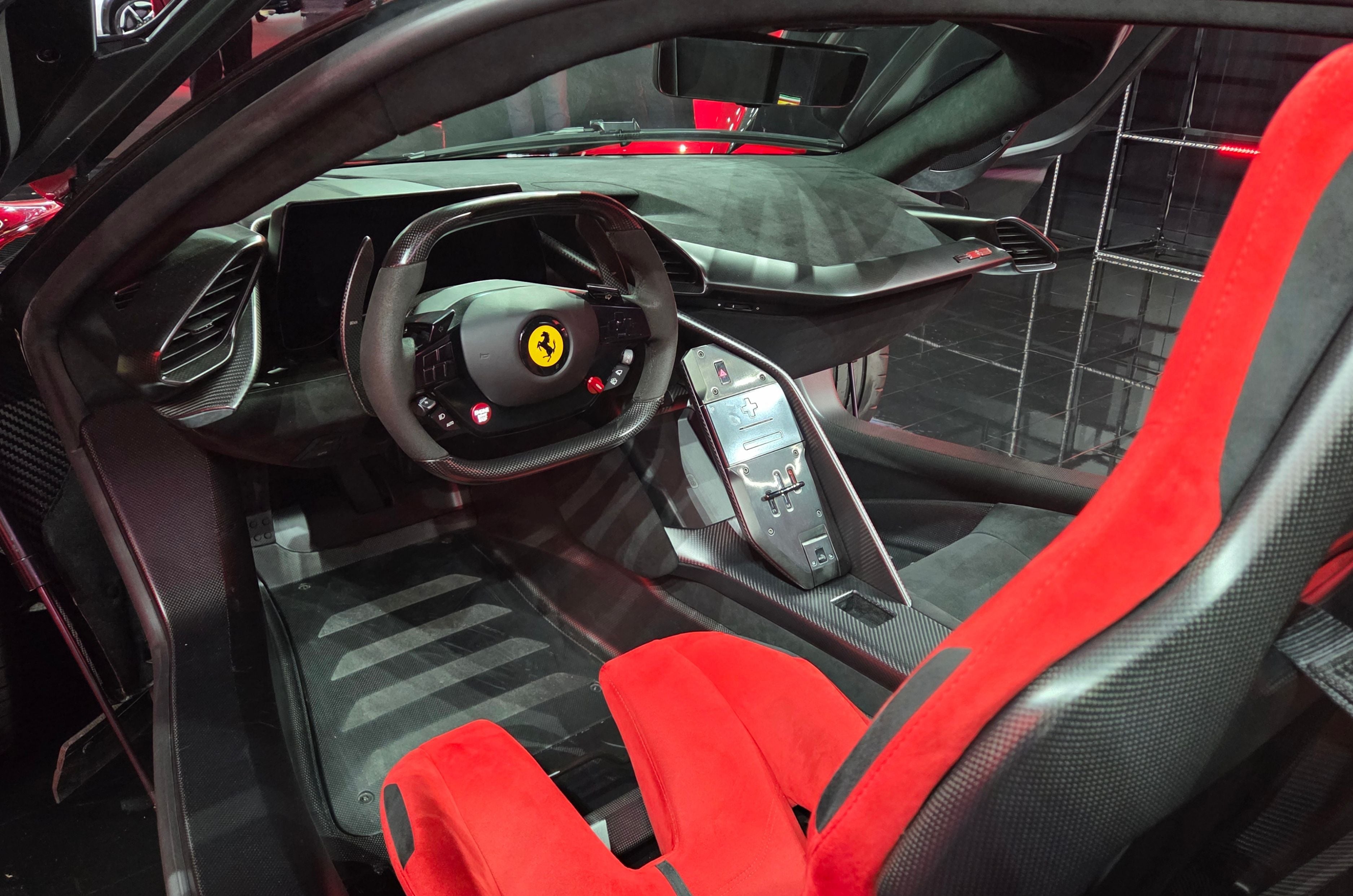
Revealed in 2024 as a successor to the LaFerrari, and to commemorate Ferrari’s 80th anniversary, the F80 is the brand’s most powerful road-going offering yet. Producing a combined 1,200hp from its 3.0-litre twin-turbo V6 hybrid powertrain, the F80 claims a ridiculous 0-100kph time of 2.15 seconds and a 0-200kph time of 5.75 seconds. All-wheel drive is fitted as standard, along with a slew of motorsport-derived tech like an MGU-K energy recovery system and electric turbos.
On the outside, the F80 matches the wildness of its powertrain with design elements like a slew of air ducts across the body, a black strip between the headlamps, an active rear wing, a central exhaust, and a massive rear diffuser. Inside, things are quite minimalistic and driver-focused – highlights include a motorsport-style ovoid steering wheel, a large digital driver’s display, an angled centre console, and bucket seats. Ferrari has sold through all 799 units of the F80, each retailing for €3 million (Rs 32 crore), before options.
Ferrari Luce
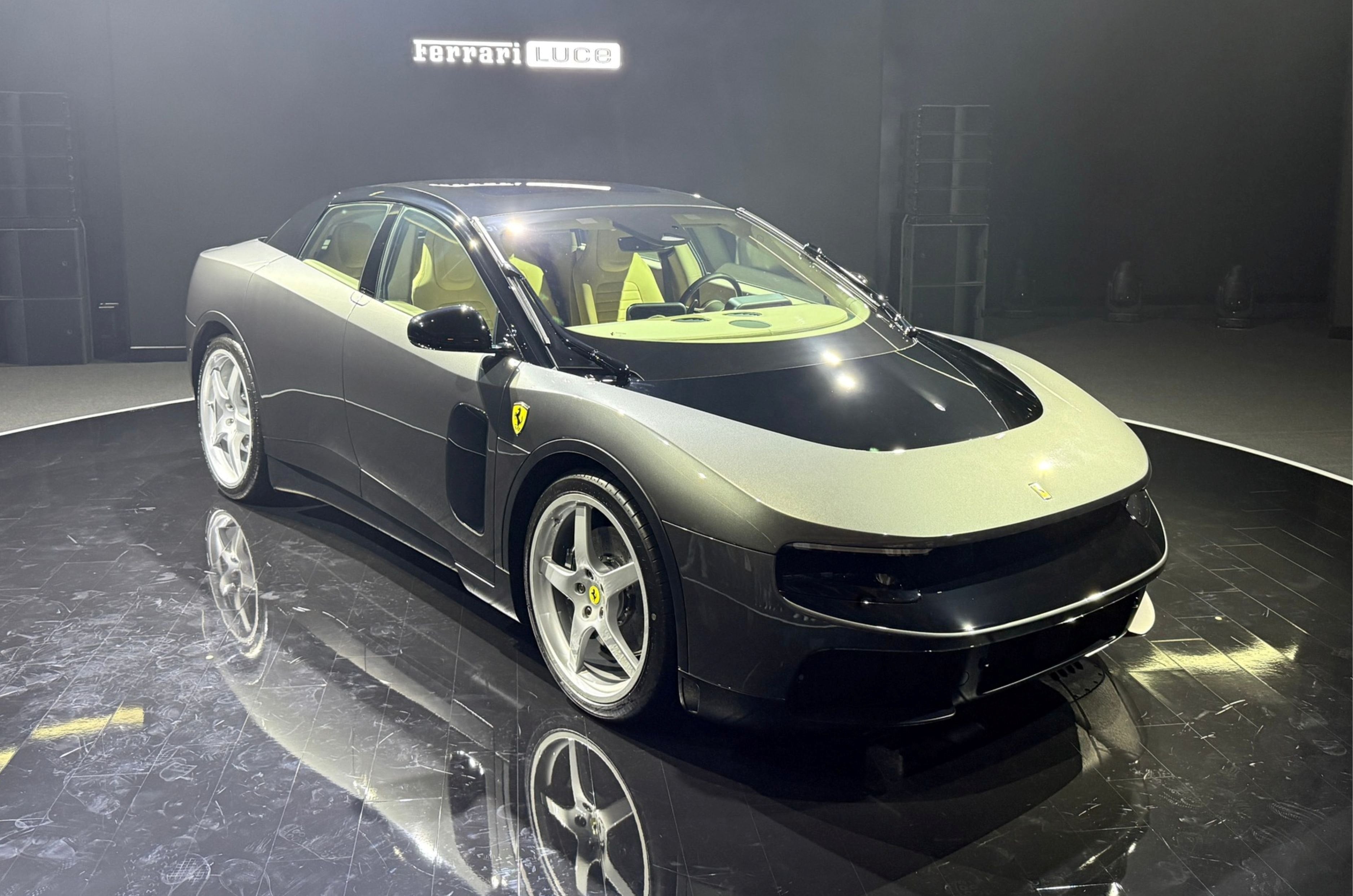
The Luce is Ferrari’s first EV, and perhaps its most controversial offering. Based on an all-new 800-volt architecture, the Luce features a 122kWh battery and four electric motors producing a combined 1,050hp and 990Nm. Ferrari claims a 0-100kph time of 2.5 seconds, a top speed of 310kph, and a range of up to 530km. Unlike other EVs, the Luce doesn’t pump artificial engine noises into the cabin via speakers – instead, the electric motors are tuned to emit a distinct, high-pitched sound.
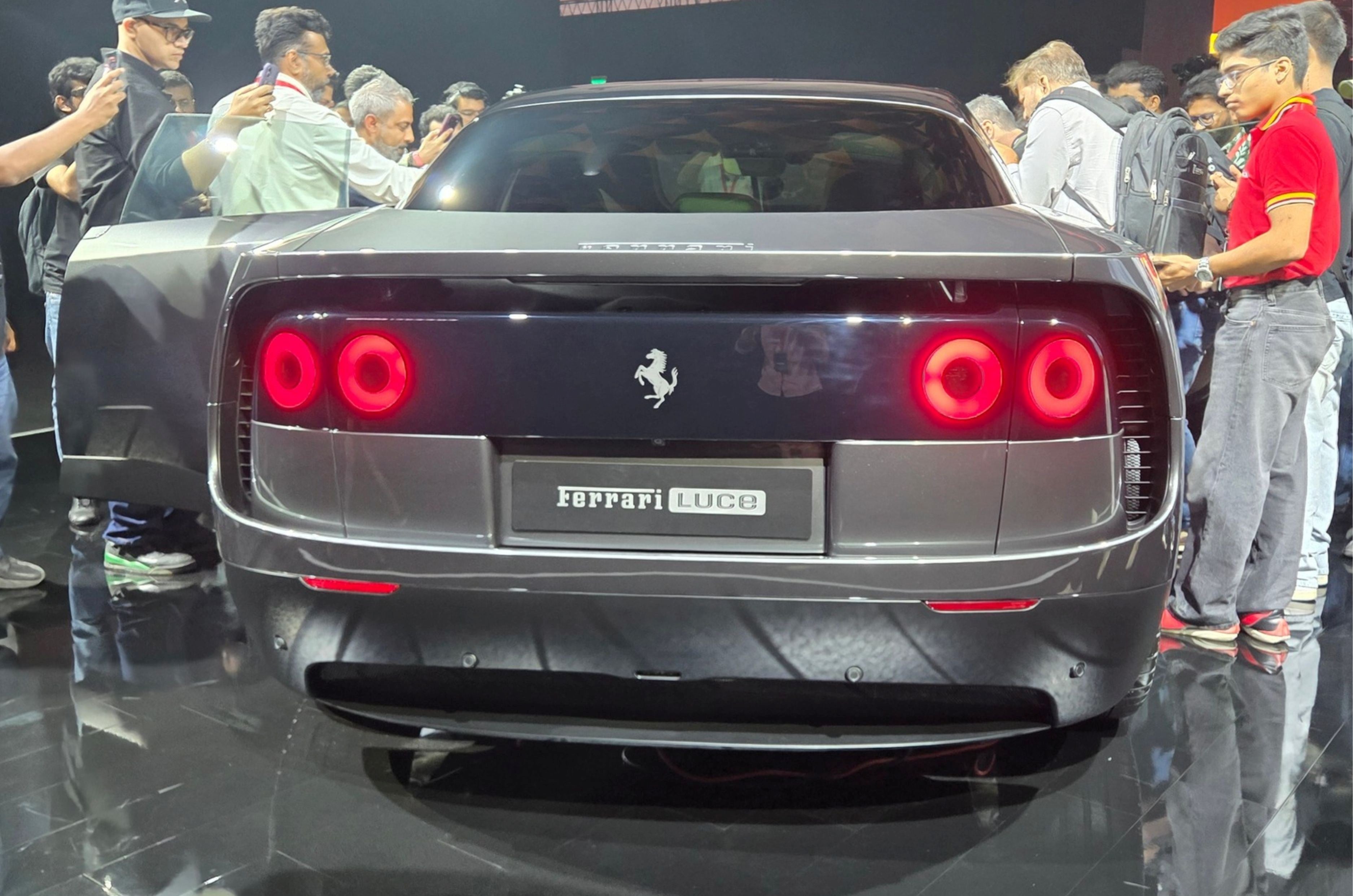
Styled by LoveFrom, a firm co-founded by former Apple designer Jony Ive, the Luce features a distinctive two-piece body structure, with a gloss-black passenger cell enclosed within a coloured aluminium shell. It gets recessed LED headlamps, quad LED tail-lamps, suicide doors, and staggered 23-inch front and 24-inch rear wheels. At 5,026mm long, the Luce is the largest Ferrari yet, and its 0.254 drag coefficient is the lowest among road-legal Ferraris. The interior sports a retro-inspired design, with a 10-inch touchscreen, a 12.5-inch OLED driver’s display, and seating for five – a first for a Ferrari. Order books are open for the Luce in overseas markets, with prices starting at 550,000 euros (approximately Rs 6.1 crore) before options.
Ferrari 12Cilindri Manuale
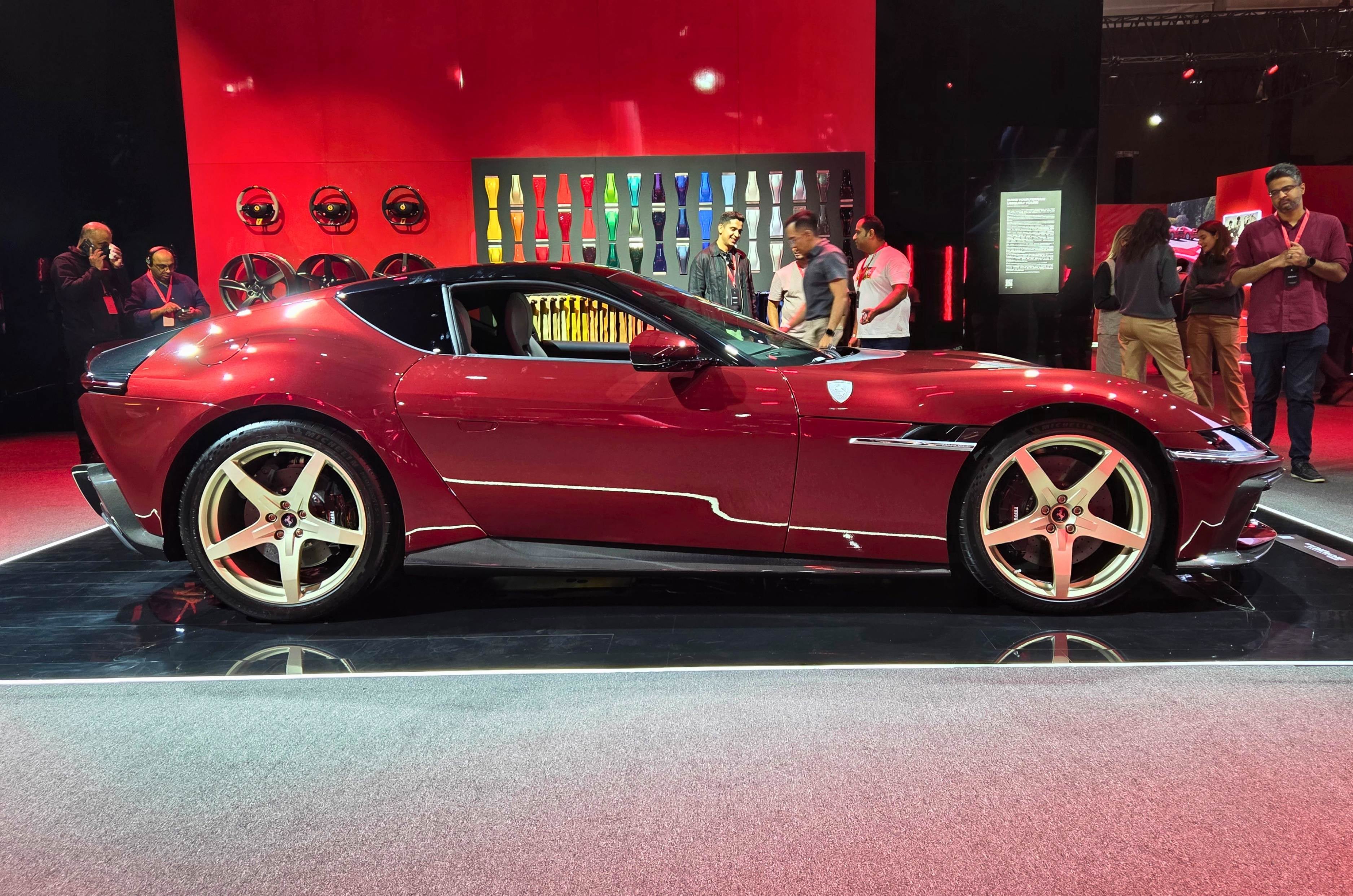
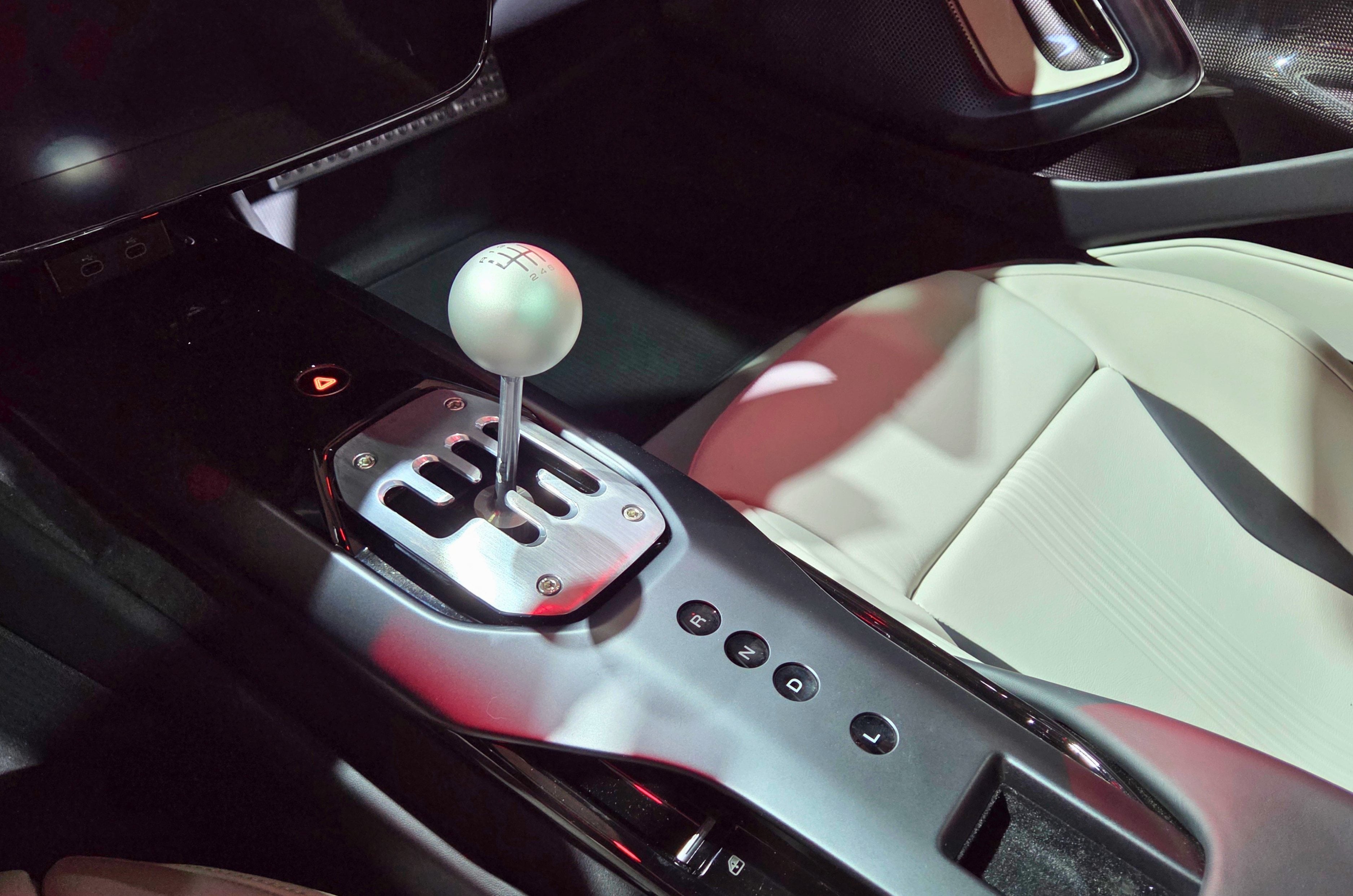
Unveiled a few months ago, the 12Cilindri Manuale is a limited-run special and the first Ferrari in 14 years to offer a manual gearbox. Only, this gearbox isn’t a true manual, but a simulated ‘Manuale By-Wire’ system based on the 12Cilindri’s 8-speed dual-clutch automatic. The experience is intact, however, with a clutch pedal, 6 speeds, a gated shifter, and the ability to stall and clutch-dump the car. If needed, you can even switch to automatic mode and let the DCT take over. Elsewhere, the Manuale retains the 12Cilindri’s 830hp 6.5-litre naturally aspirated V12, claiming a 0-100kph time of 2.9 seconds and a top speed of 340kph.
The exterior largely mirrors that of the standard 12Cilindri but gets exclusive Manuale badges, silver-finished Ferrari side logos, pinstripes on the front splitter and rear winglets, and bespoke five-spoke forged alloy wheels available in four finishes. Inside, the centre console has been redesigned to accommodate a rounded aluminium gear lever inspired by classic Ferrari gated shifters, available in silver or black. Buyers can also choose comfort or racing seats with six vertical grooves. Limited to 1,499 units, the 12Cilindri Manuale is priced from €590,000 (approximately Rs 6.42 crore), before options.
Ferrari 499P
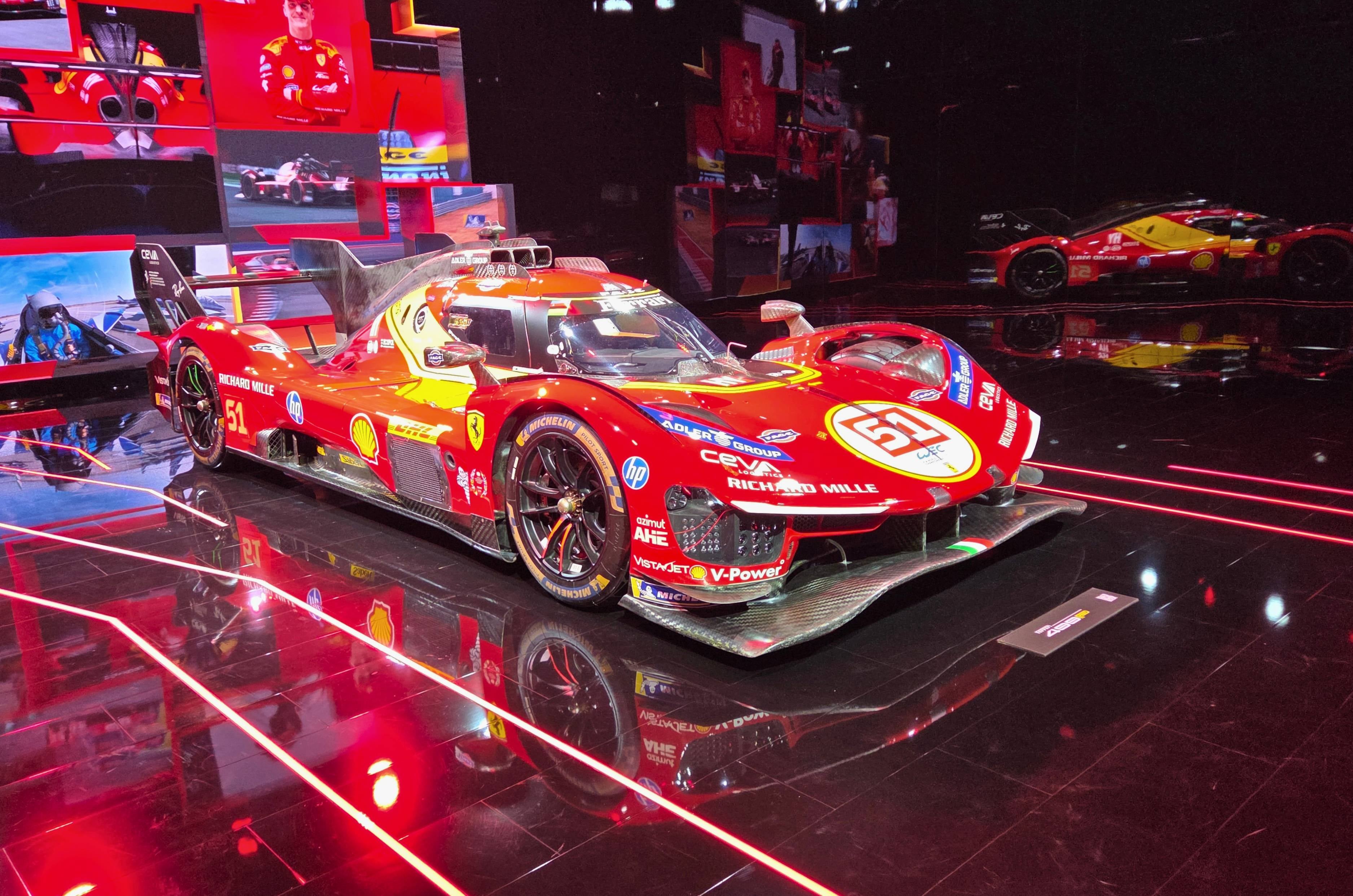
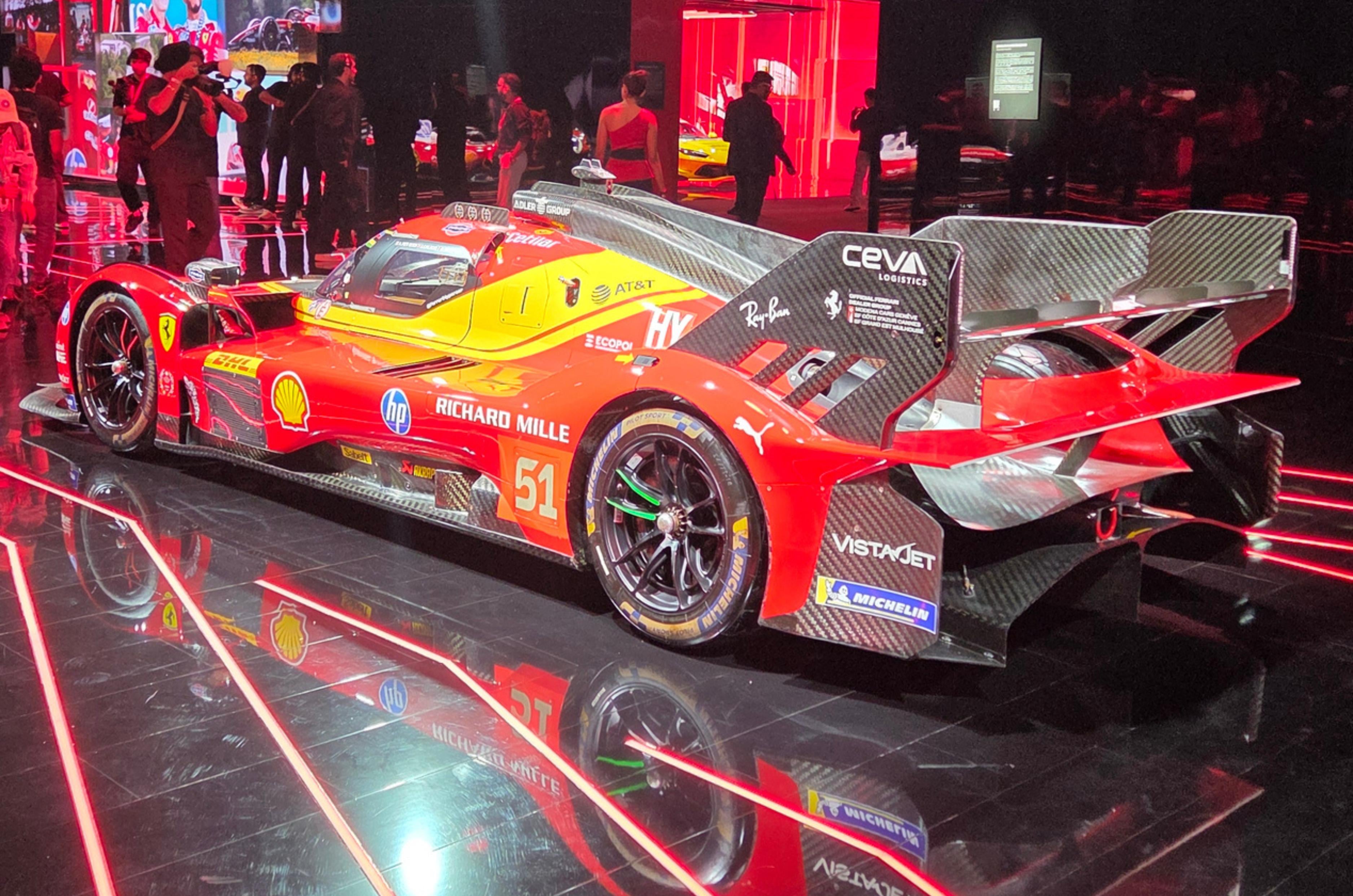
The 499P Le Mans Hypercar was revealed in 2022 as Ferrari’s return to the top class of endurance racing after 50 years. It’s powered by a twin-turbo V6 based on the architecture of the engine used in the 296 GT3, itself derived from the road-going 296 GTB. Developed specifically for racing, the 499P’s V6 works with a bespoke 900-volt, 200kW energy recovery system (ERS) connected to the front axle, forming a hybrid all-wheel drive layout. A brake-by-wire system recovers kinetic energy, while power is delivered through a 7-speed sequential gearbox. Balance of Performance regulations limit the 499P’s total output to 680hp.
The 499P’s design pays tribute to Ferrari’s endurance racing heritage, particularly the 312P prototype from 1973 – Ferrari’s last factory entry in the top class. Its name refers to the 499cc displacement of each cylinder, while ‘P’ stands for Prototype. A yellow stripe runs through the livery – another nod to the 312P – while carbonfibre construction allows for a 1,030kg baseline weight. The 499P brought home several accolades for Ferrari, such as three consecutive Le Mans victories (2023, 2024, and 2025), a complete sweep at the 2025 FIA World Endurance Championship, and more.
Ferrari SF-26
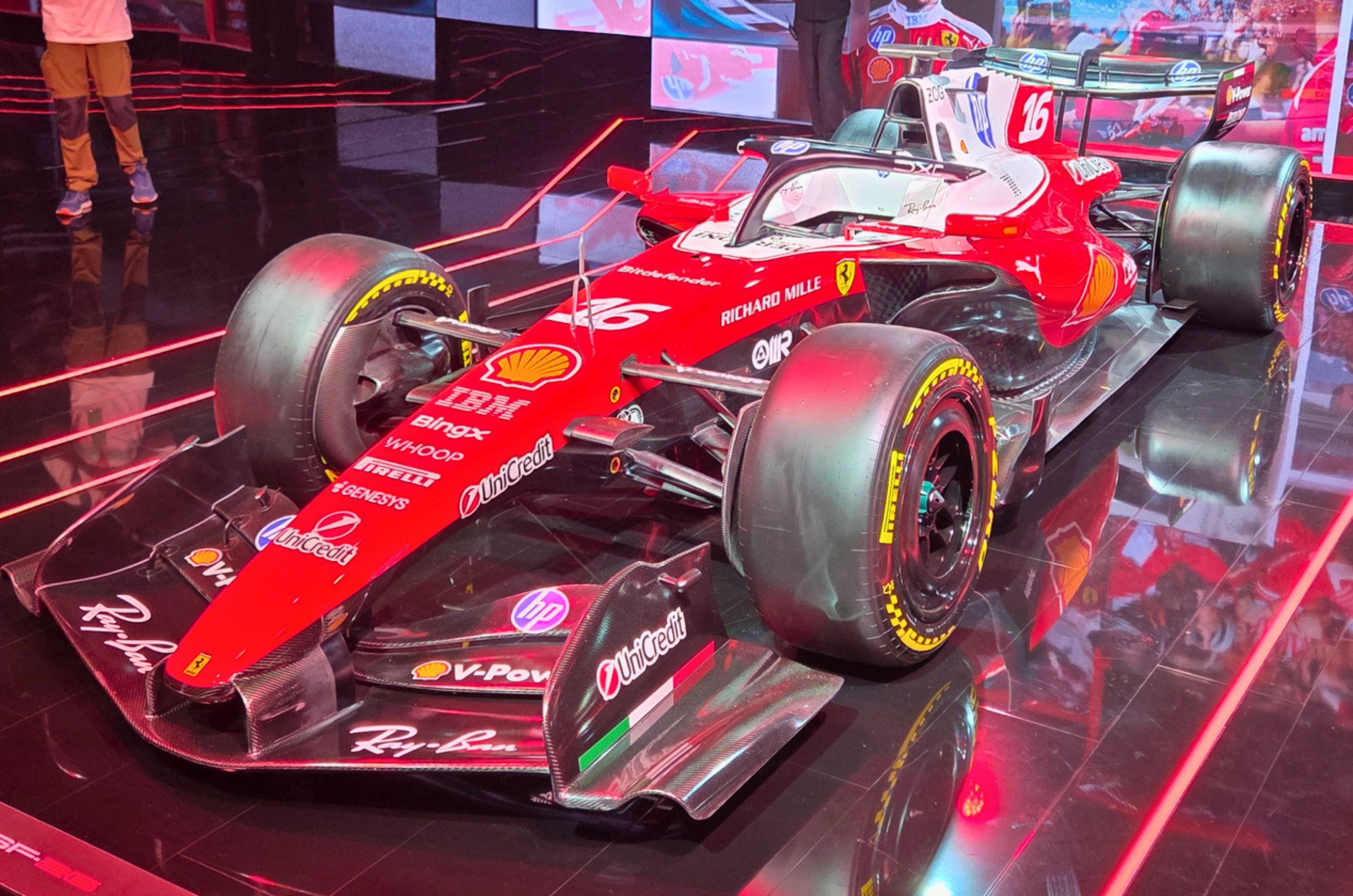
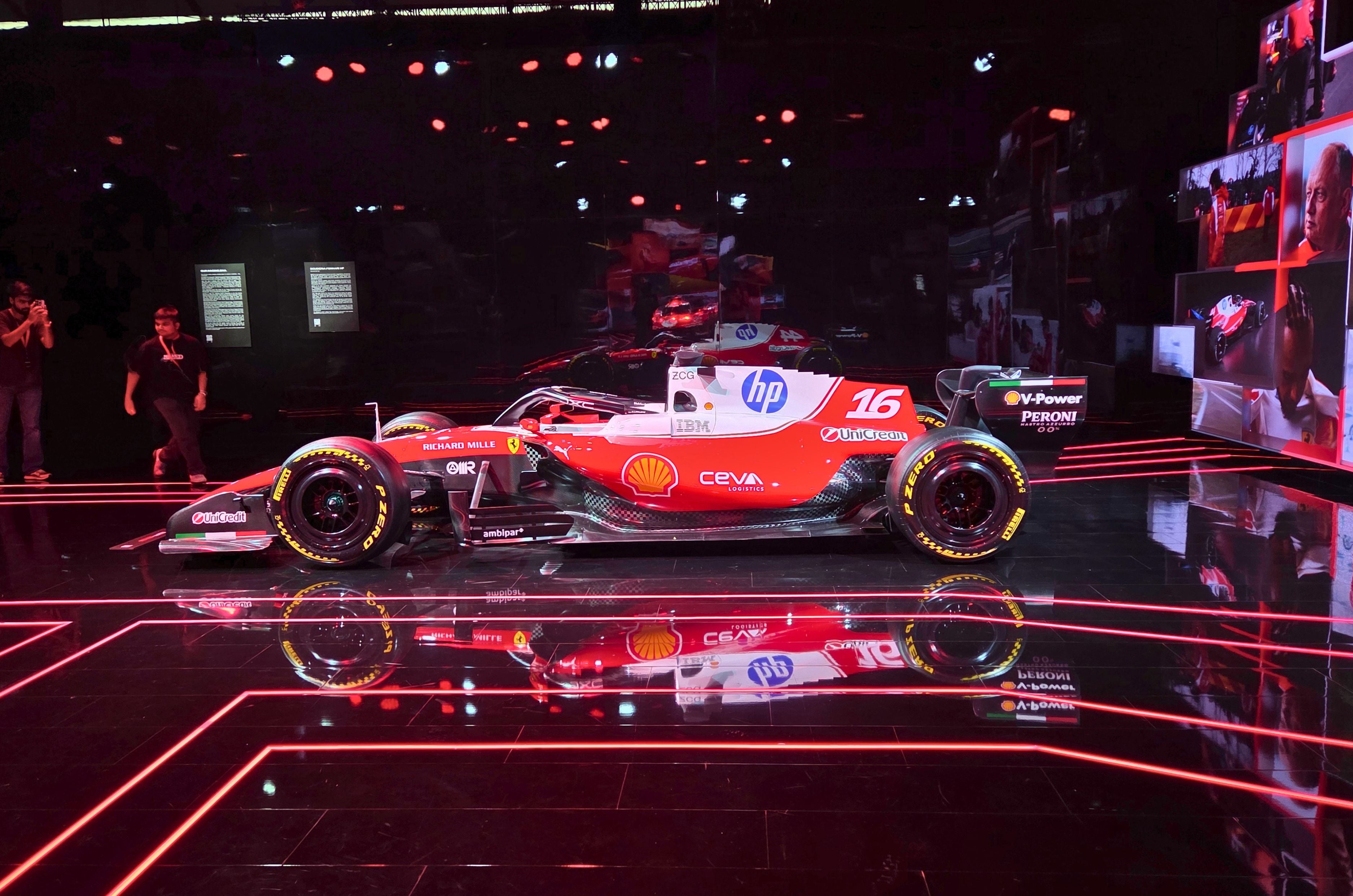
Ferrari pulled the wraps off the SF-26 racer back in January 2026. Built for F1’s 2026 technical regulations overhaul, the SF-26 is powering by Ferrari’s 067/6 power unit – a 1.6-litre turbocharged V6 that can run on sustainable fuel blends and is paired with a heavily bolstered 350kW MGU-K system, creating a near 50-50 performance split between combustion and electric power. Driven by Charles Leclerc and Lewis Hamilton, the SF-26 has compiled 11 Grand Prix podiums and 2 victories, with dramatic wins at the Spanish Grand Prix with Hamilton and the British Grand Prix with Leclerc.
The SF-26’s bodywork shifts away from the previous ground-effect era toward a lighter, more agile 770kg carbon-composite structure. It features advanced active aerodynamics with movable front and rear wings to minimise drag on straights while maximising cornering downforce. Visually, the SF-26 incorporates push-rod suspension on both axles and debuts a gloss Rosso Scuderia livery accented with white.
सितंबर में iPhone 18 Pro सीरीज और अपने पहले फोल्डेबल फोन iPhone Duo को लॉन्च करने के बाद Apple अब मार्च 2027 में स्टैंडर्ड iPhone 18 लॉन्च करने की तैयारी कर रही है। रिपोर्ट्स के मुताबिक, यह अब तक का सबसे महंगा स्टैंडर्ड iPhone हो सकता है। बता दें कि iPhone 17 को भारत में ₹79,900 की शुरुआती कीमत पर लॉन्च किया गया था। हालांकि, इसकी मौजूदा आधिकारिक कीमत बढ़कर ₹99,900 हो गई है।
लीक हुई जानकारी के अनुसार, iPhone 18 की कीमत भारत में 1 लाख रुपये से ज्यादा हो सकती है। इसकी कीमत ₹1,10,990 से ₹1,19,990 के बीच रहने का अनुमान है। रिपोर्ट्स के मुताबिक, Apple मार्च 2027 में स्टैंडर्ड iPhone 18 के साथ iPhone 18e और iPhone Air 2 भी लॉन्च कर सकती है। कहा जा रहा है कि iPhone 18 का प्रोडक्शन नवंबर 2026 के आखिर में शुरू हो सकता है।
हालांकि, Apple ने अभी तक फोन की लॉन्च डेट और कीमत को लेकर कोई आधिकारिक जानकारी नहीं दी है। ऐसे में इसकी सही कीमत, फीचर्स और लॉन्च डेट जानने के लिए कंपनी की आधिकारिक घोषणा का इंतजार करना बेहतर होगा।
Apple iPhone 18 के अनुमानित फीचर्स
लीक्स के मुताबिक, Apple iPhone 18 में 6.3 इंच की LTPO OLED डिस्प्ले मिल सकती है। इसका स्क्रीन साइज iPhone 17 के जैसा हो सकता है। फोन की स्क्रीन में 120Hz का रिफ्रेश रेट मिलने की उम्मीद है। इससे फोन पर स्क्रॉलिंग करने और स्क्रीन पर एनिमेशन देखने का अनुभव पहले से ज्यादा स्मूद हो सकता है।
इसके अलावा, iPhone 18 में Dynamic Island का साइज छोटा किए जाने की भी चर्चा है। हालांकि, अभी यह साफ नहीं है कि Apple यह बदलाव स्टैंडर्ड मॉडल में भी करेगी या नहीं।
परफॉर्मेंस की बात करें, तो iPhone 18 में कंपनी का नया A20 चिपसेट दिया जा सकता है। रिपोर्ट्स के मुताबिक, यह चिपसेट 2nm टेक्नोलॉजी पर तैयार किया जा सकता है। नया प्रोसेसर फोन की स्पीड और काम करने की क्षमता को बेहतर बनाने के साथ बैटरी की खपत कम करने में भी मदद कर सकता है। हालांकि, इन फीचर्स की अभी आधिकारिक पुष्टि नहीं हुई है।
iPhone बनाने वाली कंपनी इसकी मेमोरी को भी अपग्रेड कर सकती है। विश्लेषक मिंग-ची कुओ ने 9GB RAM का सुझाव दिया है, जबकि विश्लेषक जेफ पु का मानना है कि यह फोन 12GB RAM के साथ आ सकता है। वहीं, फाइनल कॉन्फिगरेशन अभी स्पष्ट नहीं है।
फोटोग्राफी के लिए, उम्मीद है कि iPhone 18 में डुअल रियर कैमरा सेटअप ही रहेगा। इसमें Apple का C2 मॉडेम भी हो सकता है, हालांकि कनेक्टिविटी में सुधार के बारे में अभी कोई पक्की जानकारी नहीं है। कुछ लीक से यह भी पता चलता है कि Apple, iPhone 18 को नए कलर और बेहतर बैटरी क्षमता के साथ पेश कर सकता है।
भारत में नवरात्रि 2026 के जश्न के बीच Google ने दिवाली से पहले ही अपनी सेल शुरू कर दी है। अगर आप Google के नए Pixel 11 स्मार्टफोन खरीदने की सोच रहे हैं, तो यह आपके लिए अच्छा मौका हो सकता है। Google Store पर यह सेल शुरू हो चुकी है और 8 नवंबर 2026 तक चलेगी। इस दौरान ग्राहकों को फोन की कीमत में छूट, बैंक से तुरंत कैशबैक, पुराने फोन को एक्सचेंज करने पर अतिरिक्त छूट और चुनिंदा खरीदारी पर बिना ब्याज वाली EMI जैसे फायदे मिल सकते हैं।
Google Store की जानकारी के मुताबिक, Pixel 11 के 512GB मॉडल पर कुल ₹26,000 तक के ऑफर मिल रहे हैं। इसके अलावा, Pixel 11 Pro, Pixel 11 Pro XL, Pixel 11 Pro Fold और पुराने Pixel स्मार्टफोन पर भी छूट दी जा रही है। Google की यह सेल ऐसे समय में आई है, जब भारत में Amazon और Flipkart की फेस्टिव सेल भी जारी है।
Google Pixel 11 दिवाली सेल: जानें ऑफर्स और डिस्काउंट
भारत में Google Pixel 11 की शुरुआती कीमत ₹89,999 है। दिवाली सेल के दौरान ग्राहक इसके 512GB वेरिएंट पर Google Store से ₹10,000 की छूट पा सकते हैं। इसके अलावा, चुनिंदा पुराने फोन एक्सचेंज करने पर ₹9,000 का अतिरिक्त बोनस भी मिल सकता है। Google Pixel 9 को एक्सचेंज करने पर ₹34,000 तक की कीमत मिल सकती है।
वहीं, HDFC Bank और ICICI Bank के क्रेडिट कार्ड से चुनिंदा EMI ट्रांजैक्शन करने पर ₹7,000 तक का इंस्टेंट कैशबैक मिल सकता है।
दिए गए ऑफर्स के मुताबिक, सभी लागू छूट और कैशबैक को मिलाकर Pixel 11 के 512GB वेरिएंट पर कुल ₹26,000 तक की बचत हो सकती है। इससे फोन की प्रभावी कीमत ₹70,000 से कम हो सकती है। हालांकि, इसका फायदा ग्राहकों की पात्रता और ऑफर की शर्तों पर निर्भर करेगा।
Google Pixel 11 Pro, Pixel 11 Pro XL और Pixel 11 Pro Fold पर ऑफर्स
Google की दिवाली सेल में कंपनी के प्रीमियम स्मार्टफोन पर भी छूट मिल रही है। ग्राहक चुनिंदा बैंक क्रेडिट कार्ड से भुगतान करने पर ₹10,000 तक का इंस्टेंट डिस्काउंट पा सकते हैं। इसके अलावा, चुनिंदा पुराने फोन एक्सचेंज करने पर ₹9,000 का अतिरिक्त बोनस भी मिल सकता है।
Google के मुताबिक, Pixel 9 को एक्सचेंज करने वाले ग्राहकों को अलग-अलग ऑफर्स मिलाकर कुल ₹46,000 तक की बचत हो सकती है। Google Store की वेबसाइट पर बिना ब्याज वाली EMI का विकल्प भी दिया जा रहा है। हालांकि, ये सभी फायदे ऑफर की शर्तों पर निर्भर करेंगे।
कीमत की बात करें तो Google Pixel 11 Pro की कीमत ₹1,19,999 और Pixel 11 Pro XL की कीमत ₹1,34,999 है। वहीं, Google Store India की वेबसाइट पर Pixel 11 Pro Fold को ₹1,86,999 में लिस्ट किया गया है।
ग्राहकों को फोन कितने में पड़ेगा, यह उनके चुने गए मॉडल, भुगतान के तरीके और पुराने फोन की एक्सचेंज वैल्यू पर निर्भर करेगा।
Google दिवाली सेल: Pixel 10 और Pixel 10a पर छूट
जो ग्राहक Google के पुराने स्मार्टफोन खरीदना चाहते हैं, उनके लिए भी दिवाली सेल में अच्छे ऑफर्स मिल रहे हैं। Google Pixel 10 को ₹64,000 से कम और Pixel 10a को ₹46,000 से कम कीमत में खरीदा जा सकता है। इन कीमतों का फायदा Google Store की छूट, बैंक से मिलने वाले इंस्टेंट कैशबैक और पुराने फोन को एक्सचेंज करने पर मिलने वाले बोनस के साथ मिल सकता है।
हालांकि, कितनी बचत होगी, यह फोन के मॉडल, उपलब्ध ऑफर्स और ग्राहक की पात्रता पर निर्भर करेगा। इसलिए ऑर्डर करने से पहले Google Store के चेकआउट पेज पर दिखाई देने वाली अंतिम कीमत जरूर देख लें।
Google की इस दिवाली सेल में Pixel स्मार्टवॉच पर भी छूट मिल रही है। ग्राहक Pixel Watch 5 पर ₹2,500 तक और Pixel Watch 4 पर ₹1,500 तक का बैंक डिस्काउंट पा सकते हैं। Google Store India की वेबसाइट पर Pixel Watch 5 की कीमत ₹42,900 और Pixel Watch 4 की कीमत ₹39,900 है।
अगर आप iPhone 17 Pro Max खरीदना चाहते हैं, लेकिन इसकी ज्यादा कीमत के कारण अब तक फैसला नहीं कर पाए हैं, तो आपके लिए एक खास ऑफर है। भारत में Apple के एक अधिकृत रिटेलर के यहां यह फोन डिस्काउंट, एक्सचेंज बोनस और कैशबैक के साथ मिल रहा है। ऑफर की शर्तें पूरी होने पर इसके 256GB वेरिएंट को ₹71,990 की प्रभावी कीमत पर खरीदा जा सकता है। इसकी लिस्टेड MRP ₹1,49,900 है।
इस डील में ग्राहकों को फोन की कीमत पर ₹9,910 का इन-स्टोर डिस्काउंट मिल रहा है। इसके अलावा, पुराना योग्य फोन एक्सचेंज करने पर उसकी कीमत ₹55,000 तक मिल सकती है। ग्राहकों को ₹10,000 का एक्सचेंज बोनस और ₹3,000 का कैशबैक भी दिया जा रहा है।
इन सभी फायदों को जोड़ने के बाद फोन की प्रभावी कीमत ₹71,990 हो जाती है। हालांकि, एक्सचेंज में मिलने वाली रकम पुराने फोन की स्थिति और मॉडल पर निर्भर करेगी। इसलिए खरीदारी से पहले रिटेलर से ऑफर की शर्तें जरूर जांच लें।
iPhone 17 Pro Max डील:कैसेमिलेगाडिस्काउंट?
iPhone 17 Pro Max के 256GB वेरिएंट की कीमत ₹1,49,900 है। इस पर ₹9,910 का इन-स्टोर डिस्काउंट मिल रहा है, जिसके बाद फोन की कीमत घटकर ₹1,39,990 रह जाती है।
इसके बाद ग्राहक अपना पुराना योग्य स्मार्टफोन एक्सचेंज कर सकते हैं। इसके बदले अधिकतम ₹55,000 तक की कीमत मिल सकती है। रिटेलर की ओर से ₹10,000 का अतिरिक्त एक्सचेंज बोनस और ₹3,000 का कैशबैक भी दिया जा रहा है। वहीं, इन सभी फायदों को मिलाने के बाद फोन की प्रभावी कीमत ₹71,990 हो जाती है।
ऑफर की जानकारी के मुताबिक, अधिकतम ₹55,000 का एक्सचेंज वैल्यू iPhone 15 Pro के बदले मिल सकता है। हालांकि, पुराने फोन का मॉडल, उसकी स्थिति और एक्सचेंज की पात्रता के आधार पर मिलने वाली रकम अलग-अलग हो सकती है। इसलिए फोन खरीदने से पहले रिटेलर से ऑफर की शर्तें जरूर जांच लें।
iPhone 17 Pro Max EMI ऑफर
जो ग्राहक किश्तों में भुगतान करना चाहते हैं, वे 12 महीने के ‘नो-कॉस्ट EMI’ प्लान का विकल्प चुन सकते हैं। ऑफर के अनुसार, इसमें मासिक भुगतान 6,249 रुपये से शुरू होता है।
यह डील स्टोर से खरीदारी करने पर उपलब्ध है। ग्राहक रिटेलर के ‘स्टोर लोकेटर’ का इस्तेमाल करके अपने आस-पास का आउटलेट ढूंढ सकते हैं और वहां iPhone 17 Pro Max की उपलब्धता की जांच कर सकते हैं।
iPhone 17 Pro Max डील: क्या आपको इसे खरीदना चाहिए?
यह ऑफर उन ग्राहकों के लिए फायदेमंद हो सकता है जो अपने पुराने iPhone को अपग्रेड करने की सोच रहे हैं, खासकर उनके लिए जिन्हें अधिकतम एक्सचेंज वैल्यू और अतिरिक्त लाभ मिल सकते हैं। हालांकि, 71,990 रुपये की प्रभावी कीमत (effective price) पाने के लिए आपको एक्सचेंज वैल्यू, एक्सचेंज बोनस और कैशबैक को एक साथ जोड़ना होगा। यानी यह स्मार्टफोन पर मिलने वाला कोई सीधा डिस्काउंट नहीं है।
खरीदने से पहले, ग्राहकों को रिटेलर से फाइनल एक्सचेंज वैल्यू, कैशबैक मिलने की पात्रता और EMI की शर्तों के बारे में अच्छी तरह पता कर लेना चाहिए।
Best Camera Smartphones Under ₹30,000: दुर्गा पूजा शुरू होते ही सड़कों पर रोशनी, जगमगाते दीये और लोगों की भीड़ देखने को मिलती है। ऐसे माहौल में अच्छी तस्वीरें खींचने के लिए एक बढ़िया कैमरा फोन होना जरूरी है। अगर आप ज्यादा पैसे खर्च किए बिना नया स्मार्टफोन खरीदना चाहते हैं, तो आपके लिए अच्छा मौका है। दरअसल, Amazon और Flipkart पर इन दिनों खास सेल चल रही है। इन सेल में ₹30,000 से कम कीमत वाले कई स्मार्टफोन पर छूट मिल रही है। इसके अलावा, ग्राहकों को बैंक ऑफर और पुराने फोन को एक्सचेंज करने पर अतिरिक्त छूट का फायदा भी मिल सकता है।
यहां कुछ ऐसे स्मार्टफोन दिए गए हैं जो खास तौर पर बेहतरीन कैमरा के लिए जाने जाते हैं। आप इस फेस्टिव सीजन में 30,000 रुपये से कम कीमत वाले इन स्मार्टफोन्स पर विचार कर सकते हैं।
Samsung Galaxy A56 5G
Samsung Galaxy A56 5G में तीन रियर कैमरे दिए गए हैं, जो अलग-अलग तरह की तस्वीरें खींचने में अच्छा प्रदर्शन करते हैं। यह फोन फ्रंट और रियर, दोनों कैमरों से 4K वीडियो रिकॉर्डिंग को सपोर्ट करता है। इसके 50MP के मेन कैमरे से साफ और शानदार रंगों वाली तस्वीरें मिलती हैं। साथ ही, यह कैमरा रोशनी और अंधेरे के बीच के अंतर को भी अच्छी तरह कैप्चर करता है।
फोन में 12MP का अल्ट्रावाइड कैमरा भी दिया गया है, जो मेन कैमरे जैसी ही अच्छी तस्वीरें खींचता है। वहीं, इसका 12MP का फ्रंट कैमरा सेल्फी में चेहरे को साफ दिखाता है और त्वचा के रंग को भी प्राकृतिक बनाए रखता है।
Vivo V60e 5G
Vivo V60e 5G भी ₹30,000 से कम कीमत में अच्छी फोटोग्राफी के लिए एक बढ़िया विकल्प है। इसकी सबसे बड़ी खासियत 200MP का प्राइमरी कैमरा है। इसमें OIS यानी ऑप्टिकल इमेज स्टेबिलाइजेशन का सपोर्ट भी मिलता है, जिससे रात में तस्वीरें खींचते और वीडियो रिकॉर्ड करते समय धुंधलापन कम होता है।
फोन में Vivo की खास रियर रिंग लाइट भी दी गई है, जो कम रोशनी में तस्वीरें खींचने और पोर्ट्रेट फोटो को बेहतर बनाने में मदद करती है। इसके अलावा, फोन में 50MP का सेल्फी कैमरा मिलता है। यह ग्रुप सेल्फी लेते समय भी लोगों के चेहरों पर फोकस बनाए रखने में मदद करता है।
Motorola Edge 70 Fusion
Motorola Edge 70 Fusion में एक संतुलित कैमरा सिस्टम दिया गया है, जिसमें मुख्य रूप से भरोसेमंद 50MP का सोनी LYTIA 710 प्राइमरी सेंसर लगा है। इस कीमत वाले अन्य स्मार्टफोन्स के मुकाबले, इसमें 13MP का हाई-रिजॉल्यूशन अल्ट्रावाइड सेंसर है, जो सामान्य 8MP अल्ट्रावाइड सेंसर की तुलना में कहीं अधिक स्पष्ट तस्वीरें देता है। हालांकि, इसमें कोई समर्पित टेलीफोटो सेंसर नहीं है, फिर भी इसके 2x जूम वाले शॉट्स जल्दी फोटो लेने के काम के लिए काफी अच्छे हैं। इसका 32MP का फ्रंट कैमरा तेज बैकग्राउंड कंट्रास्ट को भी आसानी से संभाल लेता है, जिससे तस्वीरें प्राकृतिक रंगों और एकसमान स्किन टोन के साथ आती हैं।
Vivo T5 Pro
हालांकि, Vivo T5 Pro अपनी बड़ी 9,020 mAh बैटरी के लिए सबसे ज्यादा जाना जाता है, लेकिन इसका कैमरा सिस्टम भी हर तरह की लाइटिंग में एक भरोसेमंद ‘पॉइंट-एंड-शूट’ सेटअप की तरह काम करता है। इस डिवाइस में 50MP का सोनी IMX882 प्राइमरी सेंसर है, जो बहुत ही शार्प और बेहतरीन तस्वीरें देता है। इसके अलावा, इसका 32MP का सेल्फी कैमरा बहुत ही शानदार क्लैरिटी देता है, जिसमें चेहरे की बारीक रेखाएं और बाल भी एकदम साफ दिखाई देते हैं। इन सभी खूबियों की वजह से, यह पूरे दिन फोटोग्राफी करने के लिए एक बेहतरीन फोन है—खासकर तब, जब इसकी मौजूदा कीमत 30,000 रुपये से भी कम है।
OnePlus Nord CE 6 Lite
OnePlus Nord CE 6 Lite, फोटोग्राफी के लिए 30,000 रुपये से कम कीमत में एक बेहतरीन विकल्प है। इसमें 50MP का प्राइमरी कैमरा और साथ ही 2MP का सेंसर दिया गया है। इसके अलावा, इस फोन में 32MP का फ्रंट कैमरा भी मौजूद है।
सीधी धूप में इस फोन से ली गई तस्वीरों में बारीक डिटेल्स साफ नजर आती हैं, साथ ही रंगों का सटीक रिप्रजेंटेशन और बेहतरीन सैचुरेशन देखने को मिलता है। पोर्ट्रेट मोड के लिए, 50MP का सेंसर और 2MP का डेप्थ सेंसर मिलकर काम करते हैं, जिससे एज डिटेक्शन (किनारों की पहचान) काफी सटीक रहती है। 8MP का फ्रंट कैमरा भी बेहतरीन सेल्फी अनुभव देता है, जिसमें रंगों का सटीक रिप्रजेंटेशन और शार्प फोकस मिलता है।
Samsung Galaxy S27 Ultra Leaks: अगर आप Samsung के प्रीमियम स्मार्टफोन का इंतजार कर रहे हैं, तो आने वाला Galaxy S27 Ultra आपके लिए खास हो सकता है। इस फोन को लेकर नई लीक सामने आई हैं, जिनमें कैमरा क्वालिटी से लेकर हार्डवेयर तक में बड़े बदलाव होने की उम्मीद जताई गई है। माना जा रहा है कि नया फोन मौजूदा Galaxy S26 Ultra से बेहतर हो सकता है। हालांकि, Samsung ने अभी तक इस स्मार्टफोन को लेकर कोई आधिकारिक जानकारी नहीं दी है। आइए जानते हैं कि Galaxy S27 Ultra को लेकर अब तक क्या-क्या सामने आया है।
Samsung Galaxy S27 Ultra लीक: क्या उम्मीद करें
एक जाने-माने टिपस्टर सॉयर गैलोक्स (@Sawyergalox) के अनुसार, Samsung अपनी ‘प्राइवेसी डिस्प्ले’ तकनीक की दूसरी पीढ़ी पर काम कर रहा है। इस अपडेटेड फीचर में स्क्रीन के कई पहलुओं में सुधार देखने को मिल सकता है।
माना जा रहा है कि Galaxy S27 Ultra में ‘Privacy Display’ इनेबल होने पर भी हाई रिजॉल्यूशन मिलेगा। उम्मीद है कि यह कोरियाई टेक कंपनी व्यूइंग एंगल, स्क्रीन रिजॉल्यूशन और ओवरऑल डिस्प्ले क्लैरिटी को बेहतर बनाने पर भी काम कर रही है। बता दैं कि Samsung Galaxy S27 Ultra के 2027 की शुरुआत में लॉन्च होने की उम्मीद है, हालांकि कंपनी ने अभी तक इसकी आधिकारिक लॉन्च टाइमलाइन का खुलासा नहीं किया है।
Samsung Galaxy S27 Ultra (अनुमानित कीमतें)
टिप्स्टर के मुताबिक, Galaxy S27 Ultra में बेहतर डिस्प्ले हार्डवेयर मिलने से इसकी कीमत बढ़ सकती है। लीक के अनुसार, इस प्रीमियम स्मार्टफोन की शुरुआती कीमत 1,400 डॉलर (करीब 1,33,000 रुपये) से 1,500 डॉलर (लगभग 1,43,000 रुपये) के बीच हो सकती है।
हालांकि, इससे पहले सामने आई लीक में फोन की कीमत को लेकर अलग-अलग दावे किए गए थे। पिछली रिपोर्ट के मुताबिक, अमेरिका में इसकी शुरुआती कीमत 1,399 डॉलर (करीब 1,35,000 रुपये) हो सकती है। वहीं, दक्षिण कोरिया में इसकी कीमत 1,499 डॉलर (लगभग 1,45,000 रुपये) होने की संभावना जताई गई थी।
ध्यान देने वाली बात यह है कि ये सभी कीमतें फिलहाल अनुमान पर आधारित हैं। Samsung ने Galaxy S27 Ultra की कीमत का आधिकारिक ऐलान नहीं किया है। अलग-अलग देशों में इसकी कीमत भी अलग हो सकती है।
कैमरे की बात करें तो Samsung Galaxy S27 Ultra में पीछे की तरफ चार कैमरे मिल सकते हैं। इसमें 200MP का मेन कैमरा, 50MP का टेलीफोटो कैमरा, 50MP का अल्ट्रावाइड कैमरा और 10MP का एक अन्य टेलीफोटो कैमरा शामिल हो सकता है। वहीं, सेल्फी और वीडियो कॉलिंग के लिए इसमें 12MP का फ्रंट कैमरा मिलने की उम्मीद है।
Samsung Galaxy S27 Ultra में 6.9 इंच की AMOLED 2X डिस्प्ले दी जा सकती है, जो 120Hz रिफ्रेश रेट को सपोर्ट करेगी। परफॉर्मेंस के लिए इसमें Qualcomm का अपकमिंग Snapdragon 8 Elite Gen 6 प्रोसेसर मिल सकता है। इसके साथ 12GB रैम और 256GB स्टोरेज दिए जाने की उम्मीद है।
चीन के मशहूर टिप्स्टर Digital Chat Station के मुताबिक, यह प्रोसेसर 2nm टेक्नोलॉजी पर तैयार किया जा सकता है। लीक में यह भी दावा किया गया है कि फोन की मोटाई 7.9mm हो सकती है और इसमें Galaxy S Pen का सपोर्ट मिलेगा।
बैटरी देखें तो Galaxy S27 Ultra में 7,000mAh की बैटरी दी जा सकती है, जो 65W फास्ट चार्जिंग को सपोर्ट कर सकती है। हालांकि, इन सभी फीचर्स की अभी आधिकारिक पुष्टि नहीं हुई है।
अगर आप लंबे समय से Apple का प्रीमियम iPhone खरीदने का प्लान बना रहे हैं, लेकिन इसकी कीमत देखकर रुक जा रहे हैं, तो आपके लिए अच्छी खबर है। नवरात्रि के मौके पर Croma अपने ग्राहकों को iPhone 17 Pro Max पर शानदार डिस्काउंट दे रहा है। इस ऑफर में फोन की कीमत पर सीधे छूट के साथ बैंक कार्ड का फायदा भी उठाया जा सकता है। दोनों ऑफर मिलाकर इस प्रीमियम iPhone पर ₹15,000 तक की बचत हो सकती है।
iPhone 17 Pro Max पर कैसे मिलेगा डिस्काउंट?
Apple iPhone 17 Pro Max (256GB) को भारत में ₹1,49,900 की शुरुआती कीमत पर लॉन्च किया गया था। हालांकि, Croma के फेस्टिव ऑफर में अब यह फोन कम कीमत पर मिल रहा है। कंपनी इस पर सीधे ₹10,910 की छूट दे रही है, जिसके बाद इसकी कीमत घटकर ₹1,38,990 रह जाती है।
इसके अलावा, ICICI Bank, HDFC Bank या IDFC Bank के क्रेडिट कार्ड से भुगतान करने पर ₹4,000 की अतिरिक्त छूट भी मिल सकती है। इस तरह दोनों ऑफर का फायदा उठाने पर iPhone 17 Pro Max की प्रभावी कीमत ₹1,34,990 हो जाती है। यानी ग्राहक फोन की शुरुआती कीमत के मुकाबले कुल ₹14,910 तक की बचत कर सकते हैं।
iPhone 17 Pro Max के स्पेसिफिकेशन्स
iPhone 17 Pro Max में 6.9 इंच की डिस्प्ले है, जो 120Hz रिफ्रेश रेट को सपोर्ट करती है। यह स्मार्टफोन A19 Pro प्रोसेसर पर चलता है। दावा किया गया है कि यह डिवाइस 39 घंटे तक का वीडियो प्लेबैक दे सकता है। फोटोग्राफी के लिए, इस फ्लैगशिप फोन में ट्रिपल फ्यूजन रियर कैमरा सिस्टम है, जिसमें 48MP का प्राइमरी सेंसर, 48MP का अल्ट्रावाइड शूटर और 4x ऑप्टिकल जूम वाला 48MP का टेलीफोटो सेंसर शामिल है। वहीं, सेल्फी के लिए इसमें 18MP का कैमरा दिया गया है। यह स्मार्टफोन वेपर चैंबर कूलिंग को भी सपोर्ट करता है और इसमें Ceramic Shield 2 की सुरक्षा दी गई है।
खास बात यह है कि जो लोग iPhone 17 Pro Max को कम कीमत पर खरीदना चाहते हैं, उनके लिए Croma का यह ऑफर एक अच्छा विकल्प हो सकता है। इसमें मिलने वाले डिस्काउंट और बैंक ऑफर्स को मिलाकर, कुल बचत 14,910 रुपये से भी ज्यादा हो सकती है। हालांकि, ऑर्डर देने से पहले यह जरूर चेक कर लें कि आप बैंक ऑफर के लिए योग्य हैं या नहीं और इसकी शर्तें क्या हैं। ताकि आप अतिरिक्त लाभ उठा सकें। Croma के अनुसार, यह ऑफर 31 अक्टूबर 2026 तक मान्य है।
iQOO Neo 12 इस महीने के आखिर में लॉन्च होने वाला है। इसके साथ कंपनी iQOO Pad Pro Mini टैबलेट भी पेश करेगी। लॉन्च से पहले कंपनी ने नए टीजर जारी किए हैं, जिनमें फोन का डिजाइन और डिस्प्ले से जुड़ी जानकारी सामने आई है। टीजर में iQOO Neo 12 को फ्लैट स्क्रीन और पतले बेजल्स के साथ दिखाया गया है। फोन में Visionox का बनाया हुआ डिस्प्ले पैनल मिलने की उम्मीद है, जिसमें pTSF लाइट-एमिटिंग टेक्नोलॉजी का इस्तेमाल किया गया है। उम्मीद है कि नया iQOO Neo 12 पिछले साल के मॉडल के मुकाबले कई अपग्रेड के साथ आएगा।
iQOO Neo 12 का डिजाइन और डिस्प्ले स्पेसिफिकेशन्स
iQOO की हालिया Weibo पोस्ट्स से iQOO Neo 12 के फ्रंट पैनल की पहली झलक मिलती है। इस स्मार्टफोन में पतले बेजेल्स वाला फ्लैट डिस्प्ले है। पैनल में फ्रंट-फेसिंग कैमरे के लिए बीच में होल-पंच कटआउट दिया गया है।
यह पहले ही कन्फर्म हो चुका है कि iQOO Neo 12 में 185Hz रिफ्रेश रेट वाला 2K-रिजॉल्यूशन डिस्प्ले होगा। iQOO ने कन्फर्म किया है कि नए हैंडसेट का डिस्प्ले चीनी कंपनी Visionox ने बनाया है। इसमें PTSF टेक्नोलॉजी और ल्यूमिनसेंट मटीरियल का इस्तेमाल किया गया है, और दावा किया जाता है कि इससे बिजली की खपत कम होती है और कलर रिप्रोडक्शन बेहतर होता है।
iQOO अपने नए स्मार्टफोन Neo 12 के बारे में और जानकारी 14 अक्टूबर को देने वाली है। कंपनी इस दिन Tsinghua University Display Technology Briefing का आयोजन करेगी। यह कार्यक्रम Tsinghua Science Park में होगा। उम्मीद है कि इसी दौरान फोन के कुछ और फीचर्स से पर्दा उठाया जाएगा। iQOO Neo 12 को इस महीने के आखिर में iQOO Pad Pro Mini टैबलेट के साथ लॉन्च किया जाएगा।
कंपनी पहले ही पुष्टि कर चुकी है कि iQOO Neo 12 में Snapdragon 8 Elite Gen 5 प्रोसेसर मिलेगा। इसके साथ कंपनी की Q3 गेमिंग चिप भी दी जाएगी। फोन में एक इनबिल्ट कूलिंग फैन मिलने की भी जानकारी सामने आई है, जो Ice Dome एक्टिव कूलिंग सिस्टम के साथ मिलकर काम करेगा। इससे गेमिंग के दौरान फोन को ठंडा रखने में मदद मिल सकती है।
लीक रिपोर्ट्स के मुताबिक, iQOO Neo 12 में 9,000mAh की बड़ी बैटरी दी जा सकती है, जो 100W वायर्ड फास्ट चार्जिंग को सपोर्ट करेगी। फोन में 16GB रैम और Android 17 मिलने की भी उम्मीद है। हालांकि, कंपनी ने अभी तक इसकी कीमत और लॉन्च की सटीक तारीख का खुलासा नहीं किया है।
बता दें कि नया iQOO Neo 12 पिछले साल अक्टूबर में लॉन्च हुए iQOO Neo 11 की जगह ले सकता है। iQOO Neo 11 में 6.82 इंच की 2K LTPO AMOLED स्क्रीन दी गई है, जिसका रिफ्रेश रेट 144Hz तक है।
यह स्मार्टफोन Snapdragon 8 Elite प्रोसेसर पर काम करता है। फोटोग्राफी के लिए इसमें 50MP का मेन कैमरा दिया गया है, जिसमें 1/1.56 इंच का सेंसर मिलता है। फोन में 7,500mAh की बैटरी है, जो 100W वायर्ड फास्ट चार्जिंग को सपोर्ट करती है।