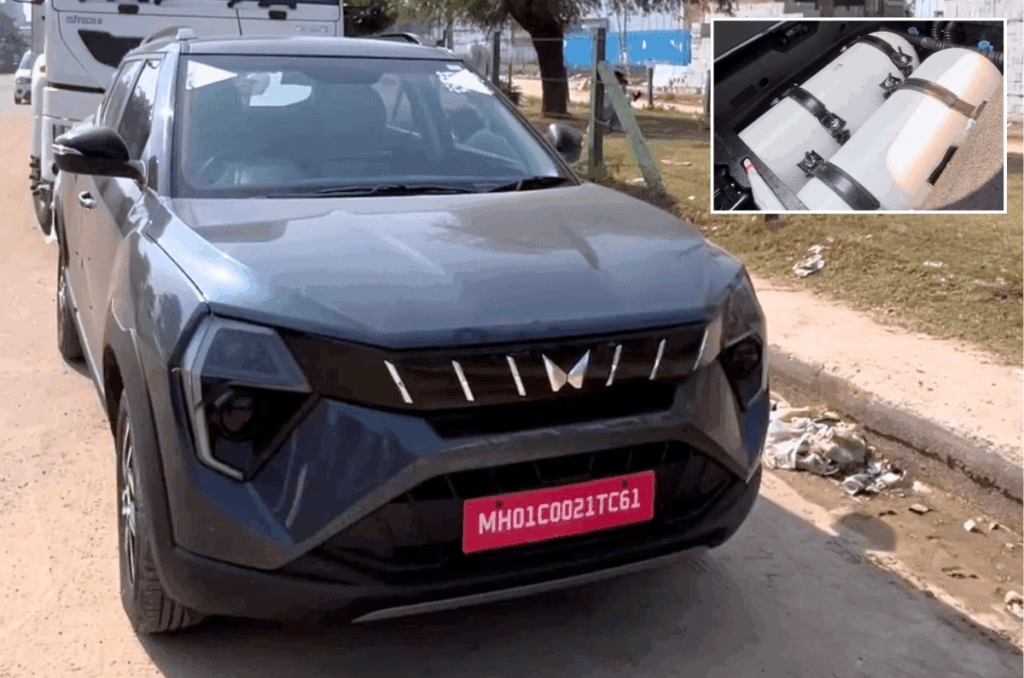
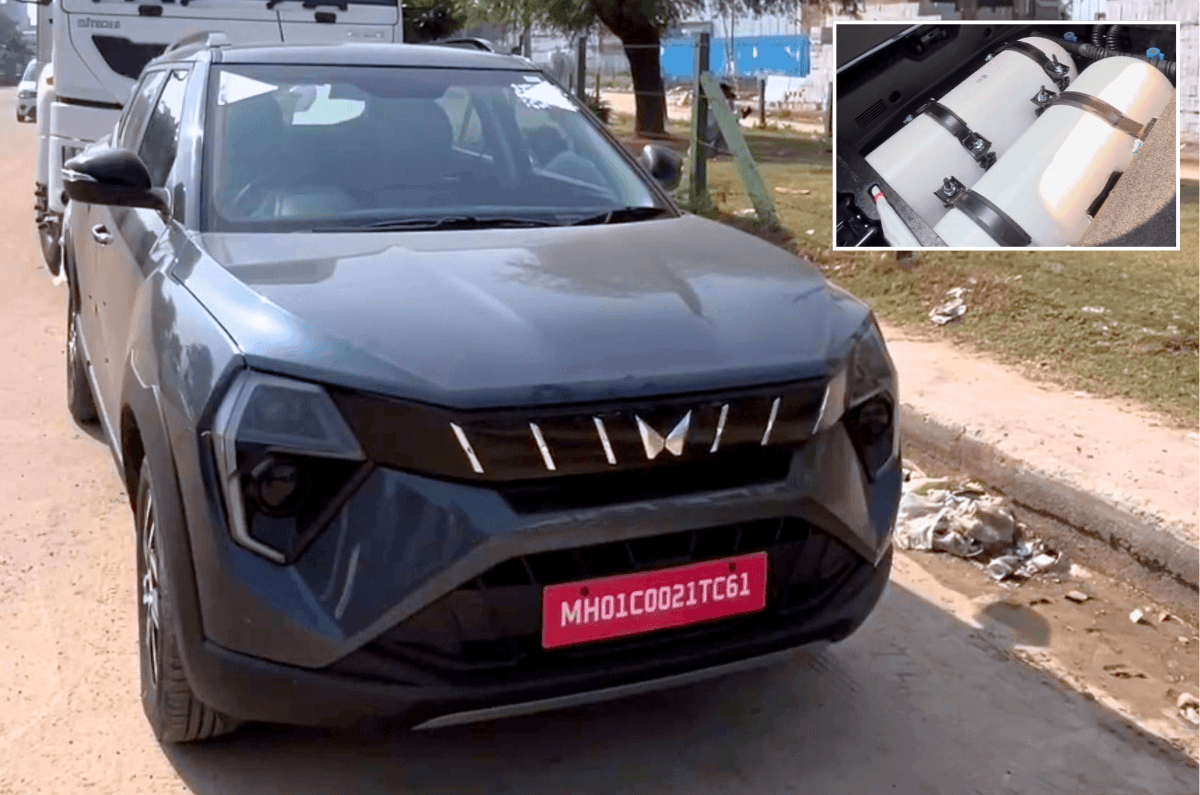
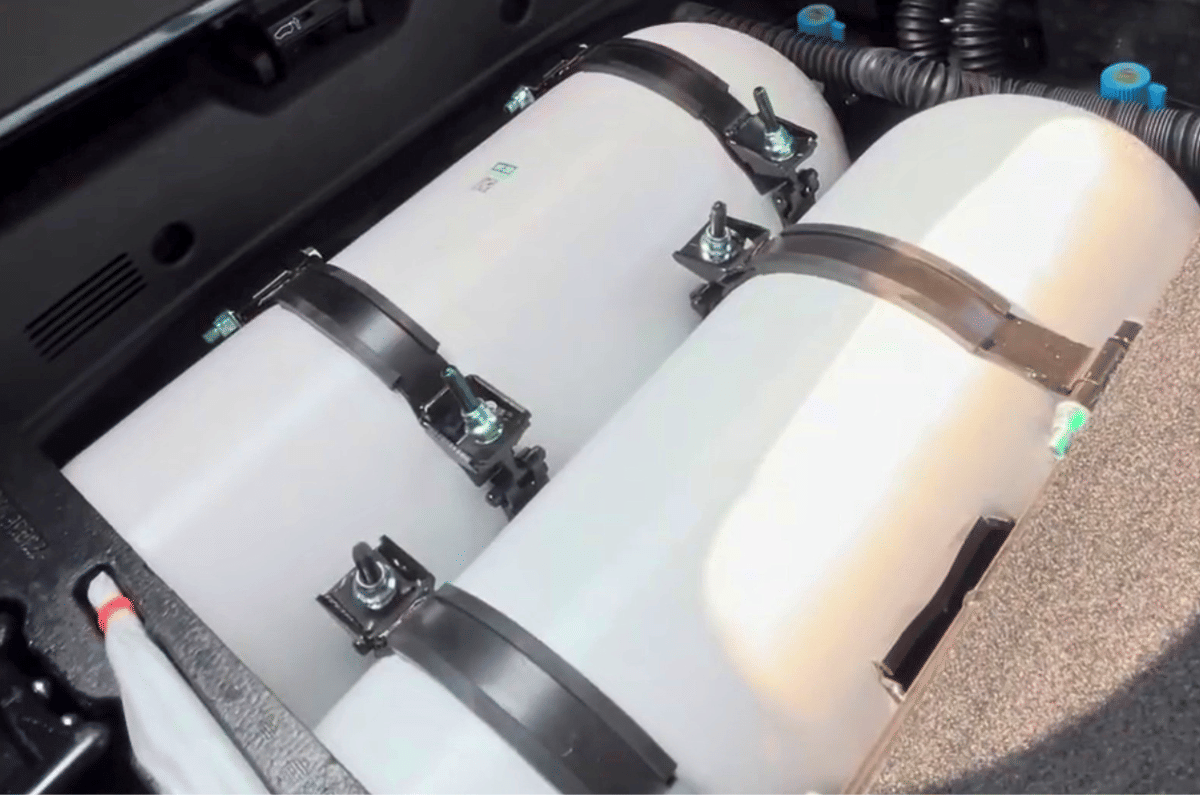
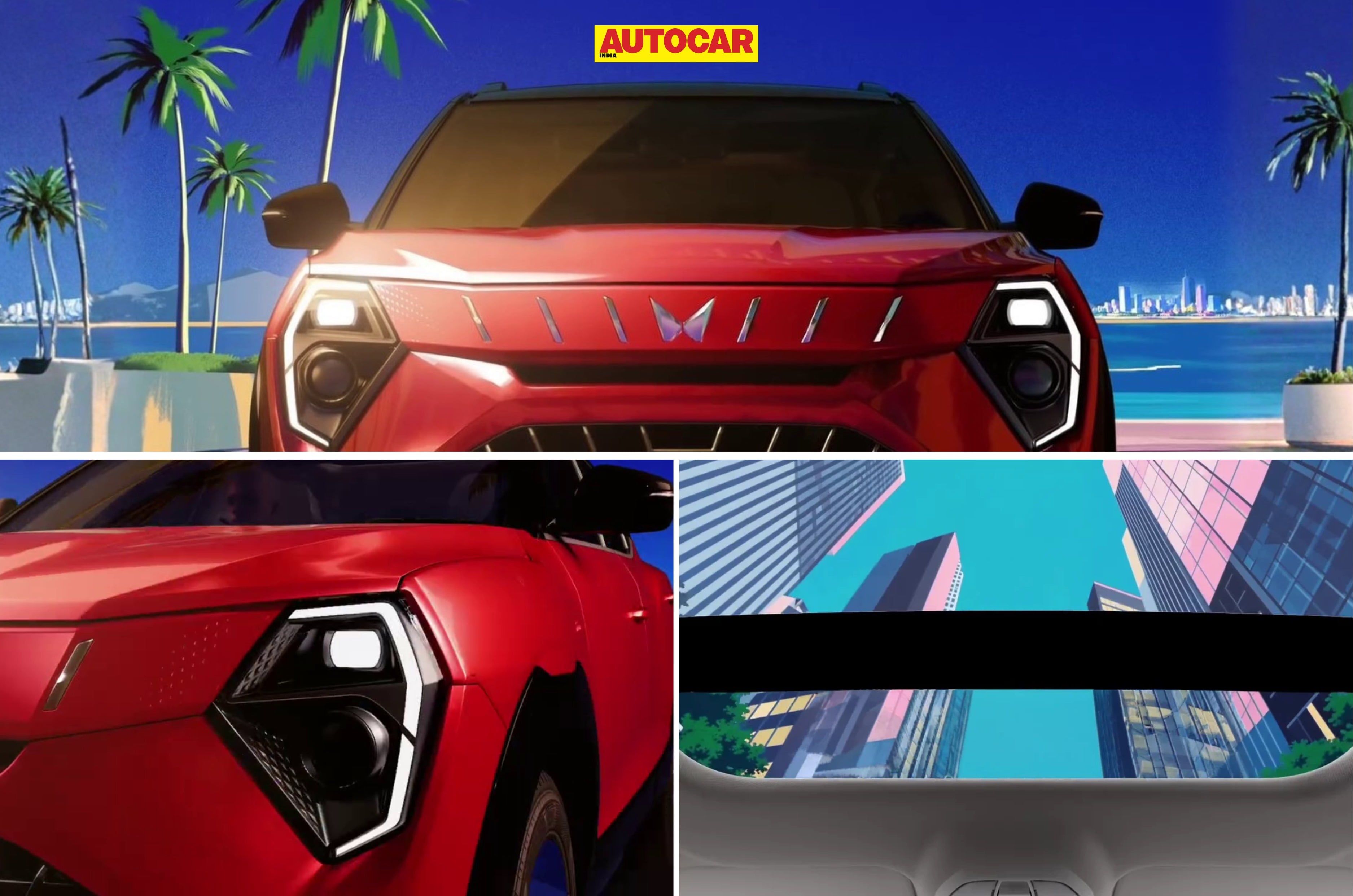
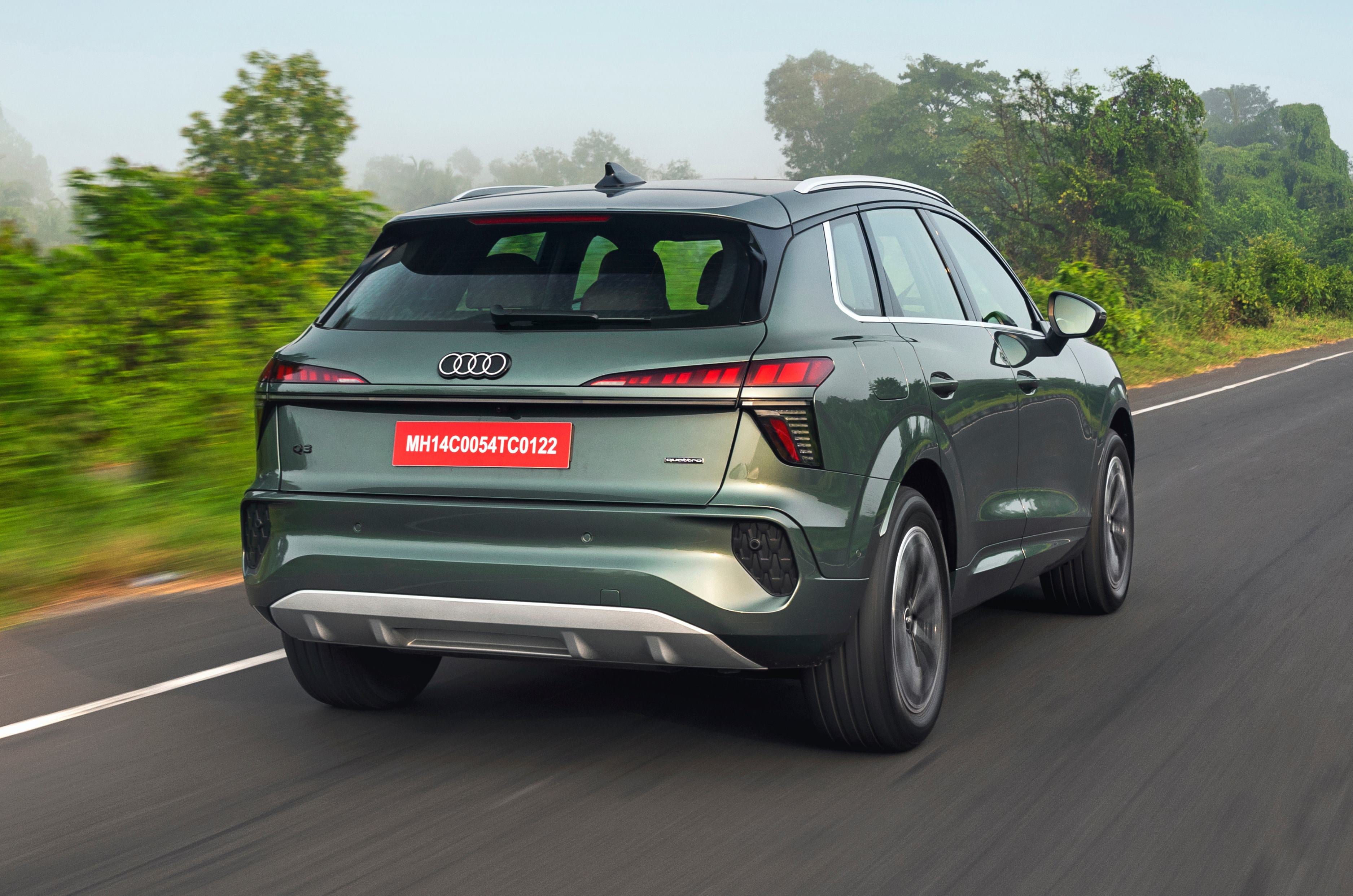
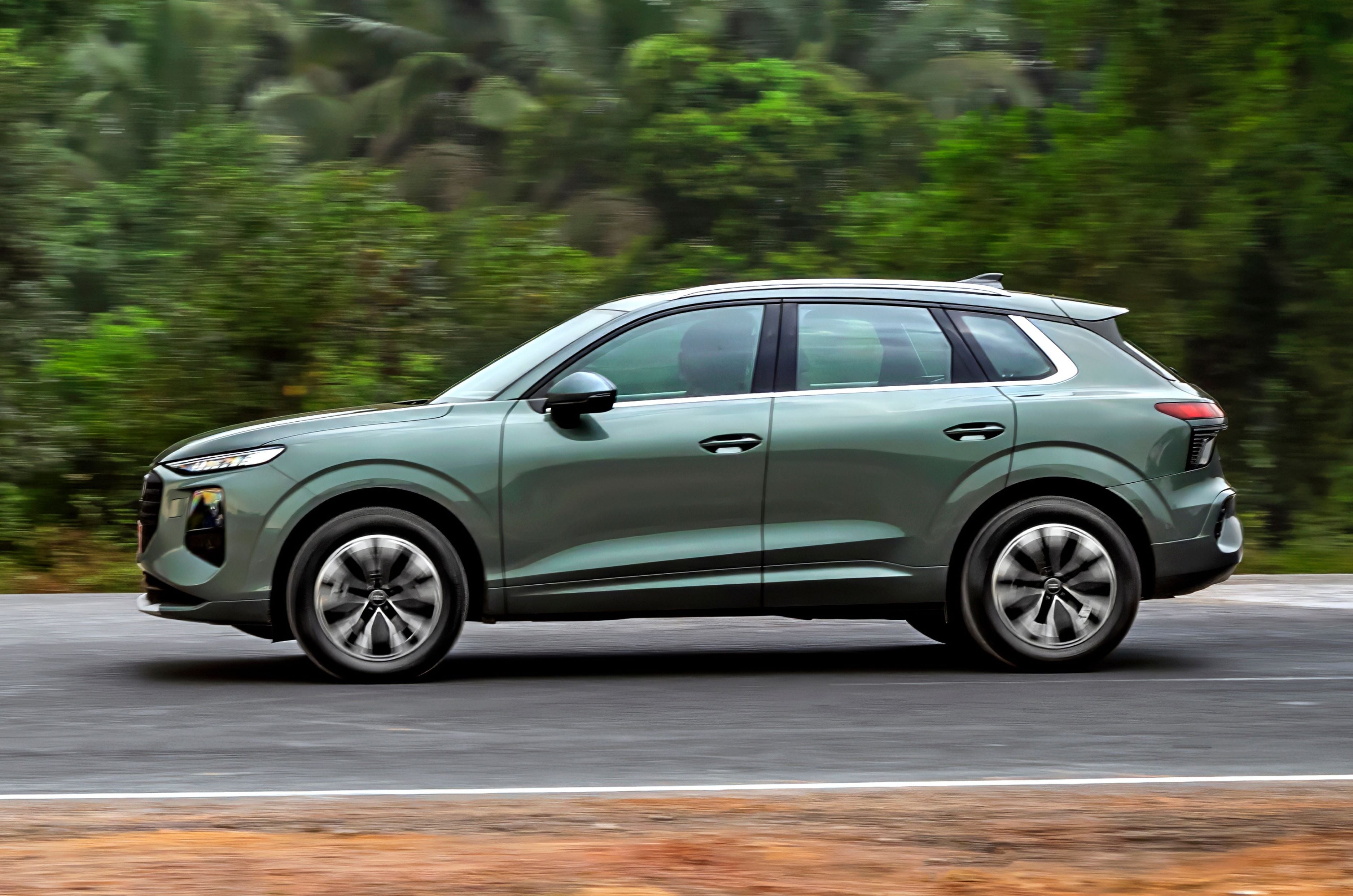
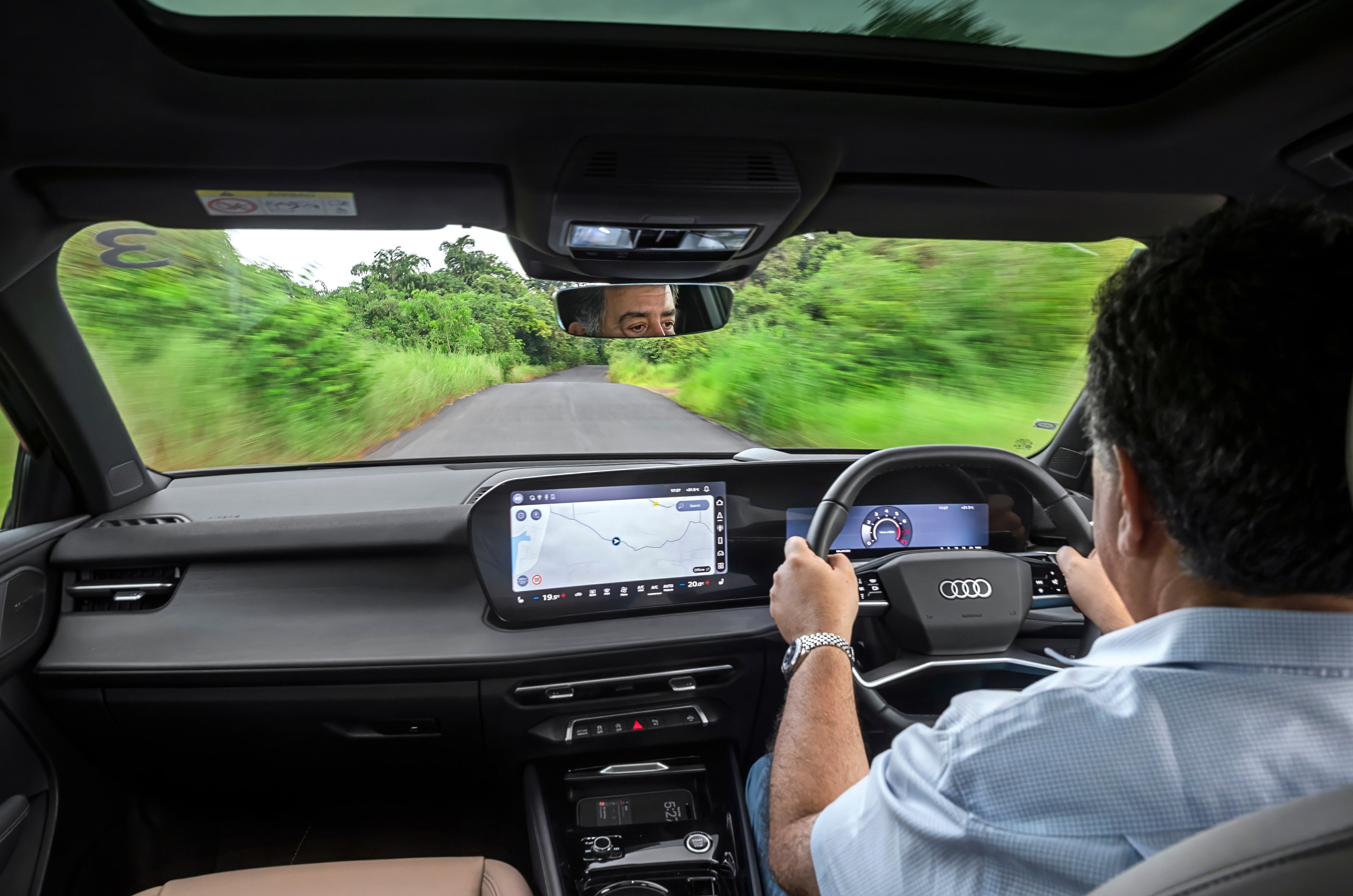
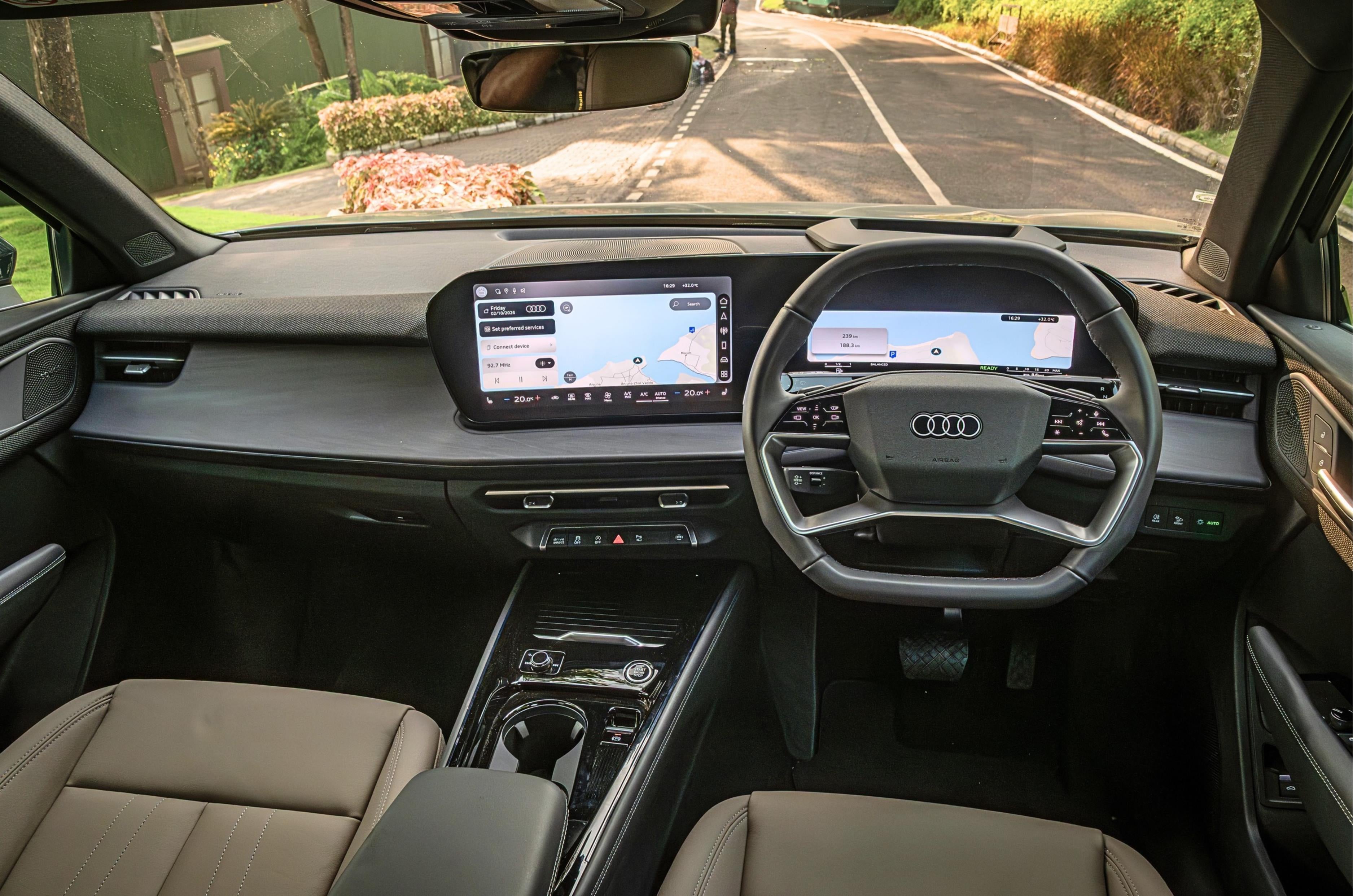
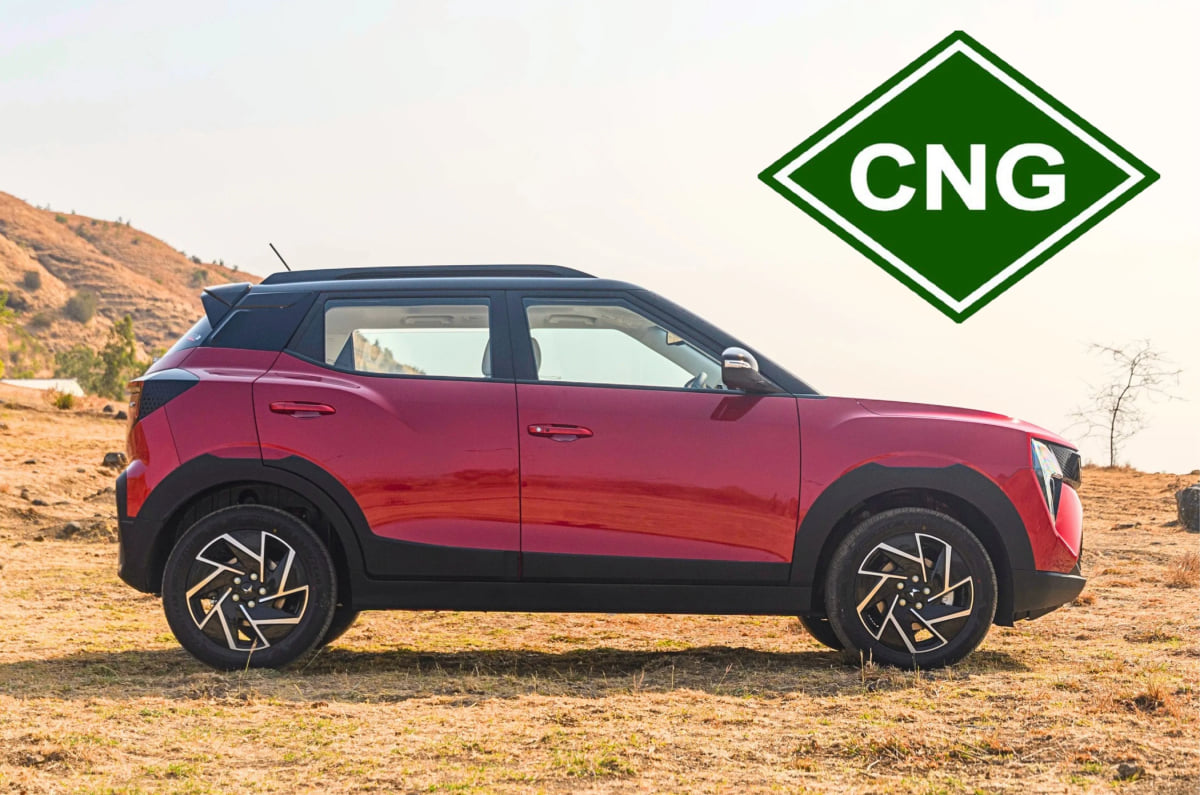
The Mahindra XUV 3XO has been spied with a dual-cylinder tank setup, an arrangement that is aimed to take up less boot space; 3XO has the smallest boot in the compact SUV segment. This sighting comes a day ahead of the SUV’s launch tomorrow. CNG will be the fourth powertrain option, alongside petrol, diesel and electric, giving Mahindra’s most affordable SUV one of the widest powertrain line-ups in the segment, along with the Tata Nexon.
Mahindra XUV 3XO CNG spy shot details
Between the 1.2-litre MPFI (multi-point fuel injection) turbo-petrol and 1.2-litre direct-injection (DI) turbo-petrol engine options of the 3XO, a CNG kit is likely to be offered with the former, and exact specifications are yet to be disclosed. MPFI engines are relatively cheaper to manufacture and simpler to adapt for CNG, since fuel is injected into the intake manifold. Doing the same with a DI engine is more complex and expensive.
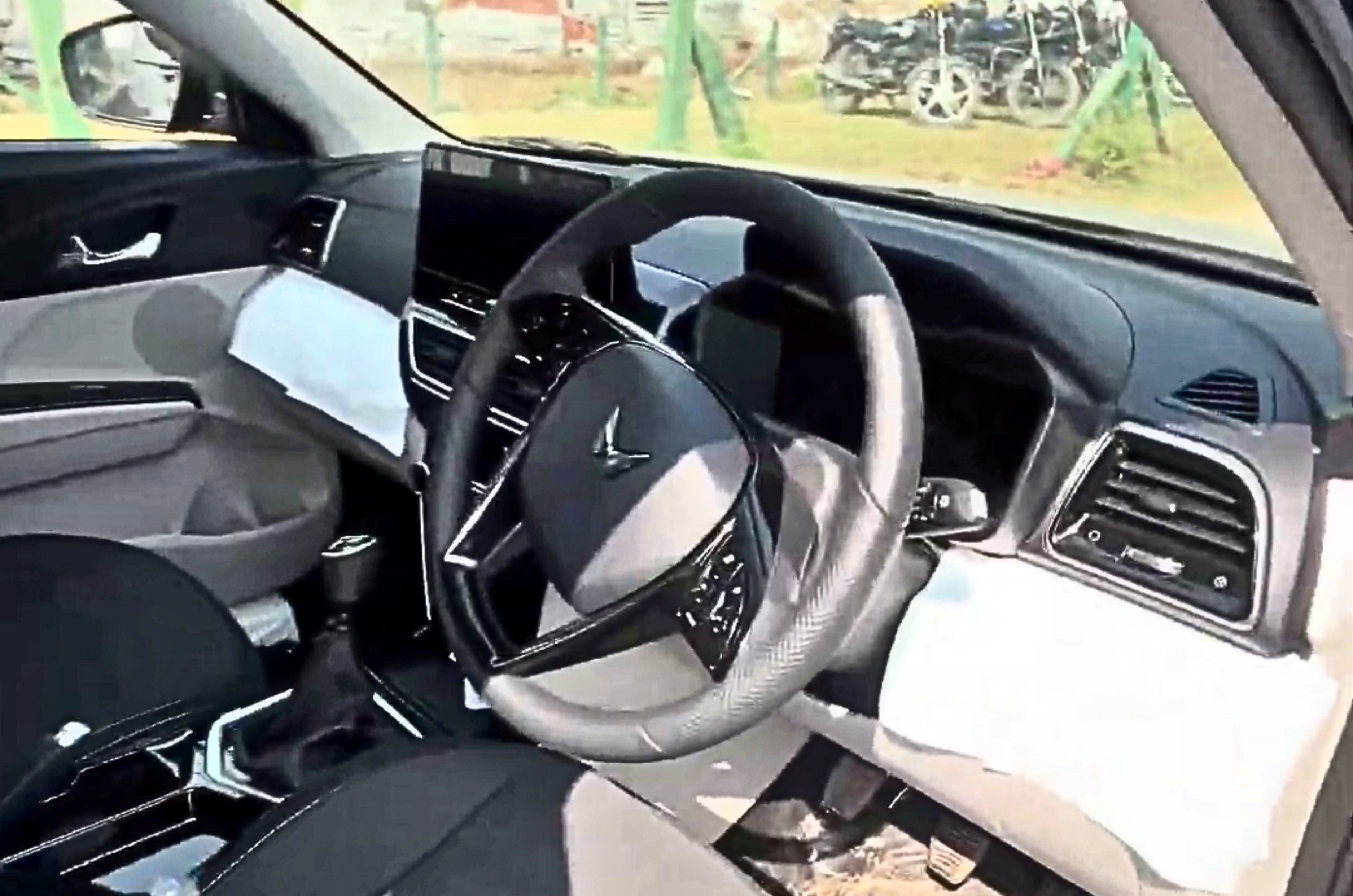
Interestingly, the spied vehicle had dual-tone alloy wheels, suggesting that Mahindra may offer the CNG option even in the higher trims. It’s interior is unlikely to receive any changes, and depending on the trim, features such as a 10.25-inch touchscreen, a 10.25 inch digital driver’s display, steering-mounted controls and more could be on offer.
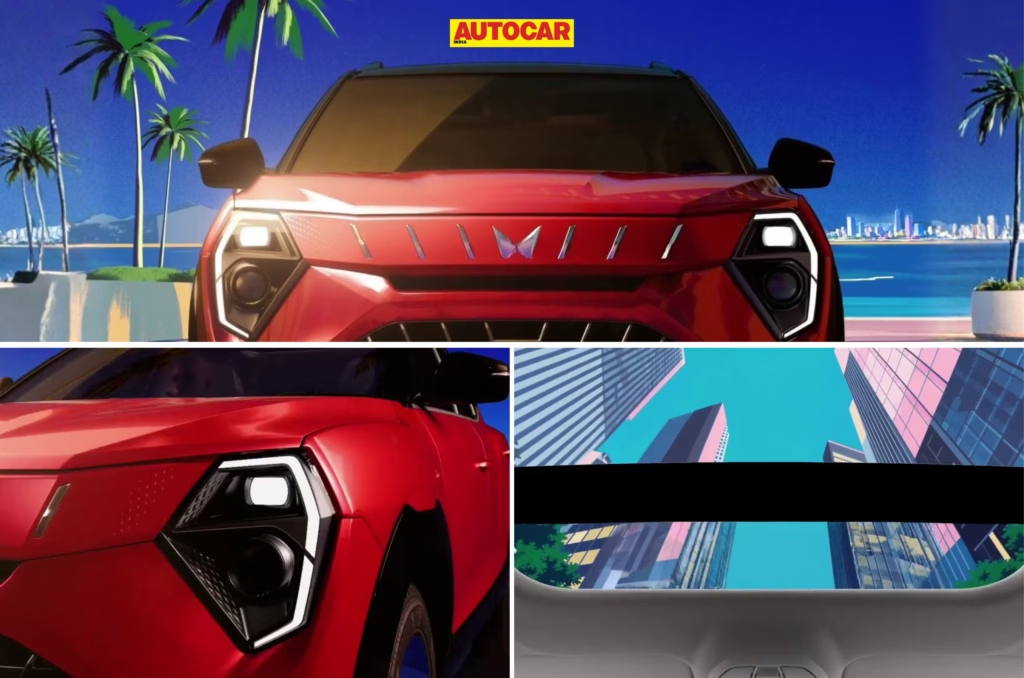
A recent teaser of the 3XO CNG featured a body coloured front grille, something that is offered in the RevX range, and LED DRLs, LED headlights and a panoramic sunroof.
Scope of CNG in compact SUV segment
CNG has become increasingly popular in India. A CNG option could help boost XUV 3XO sales, and also help the carmaker meet the stricter CAFE III norms that come into effect in April 2027. This is especially important because a large part of Mahindra’s sales comes from diesel models. Along with EVs, CNG models will be key to balancing the CO2 emissions from its diesel range. In the past, Mahindra has offered this fuel option on some of its commercial pickup range, as well as via conversion kits for the erstwhile Logan and Verito.
In addition to the Nexon, the XUV 3XO CNG will face competition from models like the Maruti Brezza and the Fronx. We expect the CNG version to command a premium of about Rs 1 lakh over the equivalent petrol trim.
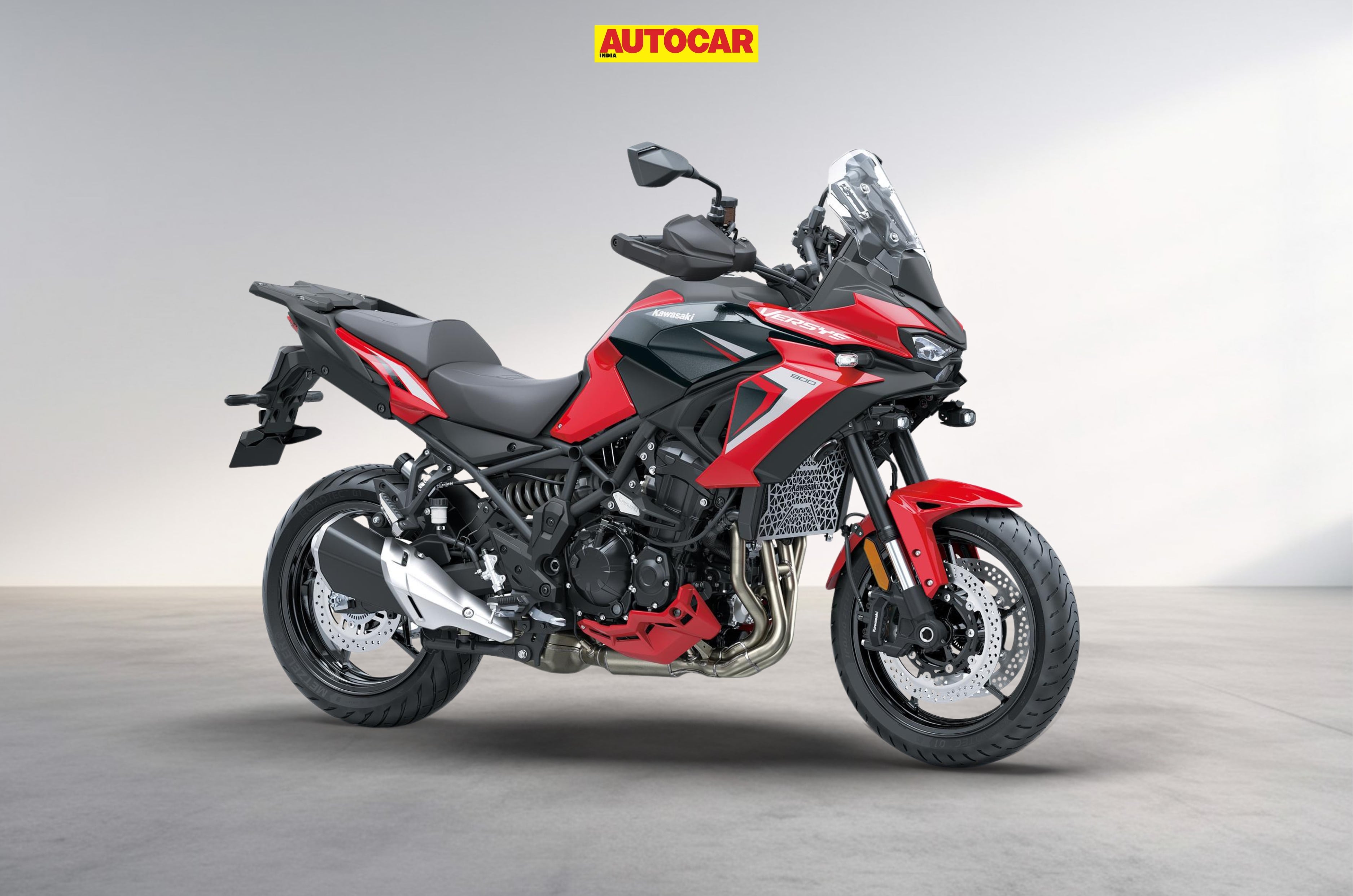
Last week, we reported that Kawasaki UK (and later USA) had teased the arrival of a new Versys, the brand’s adventure tourer series. We had also postulated that it’s likely to be based on the sport-naked, the Z900. Kawasaki has just revealed the Versys 900 and 900 SE and it is based on the Z900, with a few touring-centric additions.
Shares the Z900’s 948cc in-line four, but with slightly lower 123hp and 97.3Nm
Major distinguishing feature is the ADAS – termed ARAS – functionality
Versys 900 SE gets accessories like heated grips and radiator guard as standard
Kawasaki Versys 900: What you need to know
The most feature-loaded Versys yet
The Kawsaki Versys 900 currently has two variants in the UK, Standard and the SE. They share their 948cc, in-line four, liquid-cooled engine with the Z900, but with slightly lower output figures, 122hp and 97.3Nm compared to 124hp and 97.4Nm. The engine is housed within an all-new trellis frame which is said to enable a high-level of front end feel and achieve a near 50:50 weight distribution to the front and back. Suspension comprises a USD fork and a linkage monoshock, and standard seat height is 825mm, with the option to increase it to 845mm.
What sets the Versys 900 apart is the addition of Kawasaki’s Advanced Rider Assistance Systems (ARAS) – the front and rear radar system that enables adaptive cruise control, blind spot detection, forward collision warning, and emergency stop signal as standard. While Kawasaki hasn’t revealed full specifications, we do know the Versys 900 will run on 17-inch wheels at both ends, like the Z900. It also borrows the latter’s electronics suite with ride-by-wire, power modes, traction control, a slip-and-assist clutch, a bi-directional quickshifter. The 6-axis IMU and 5-inch TFT display with smartphone connectivity are also shared.
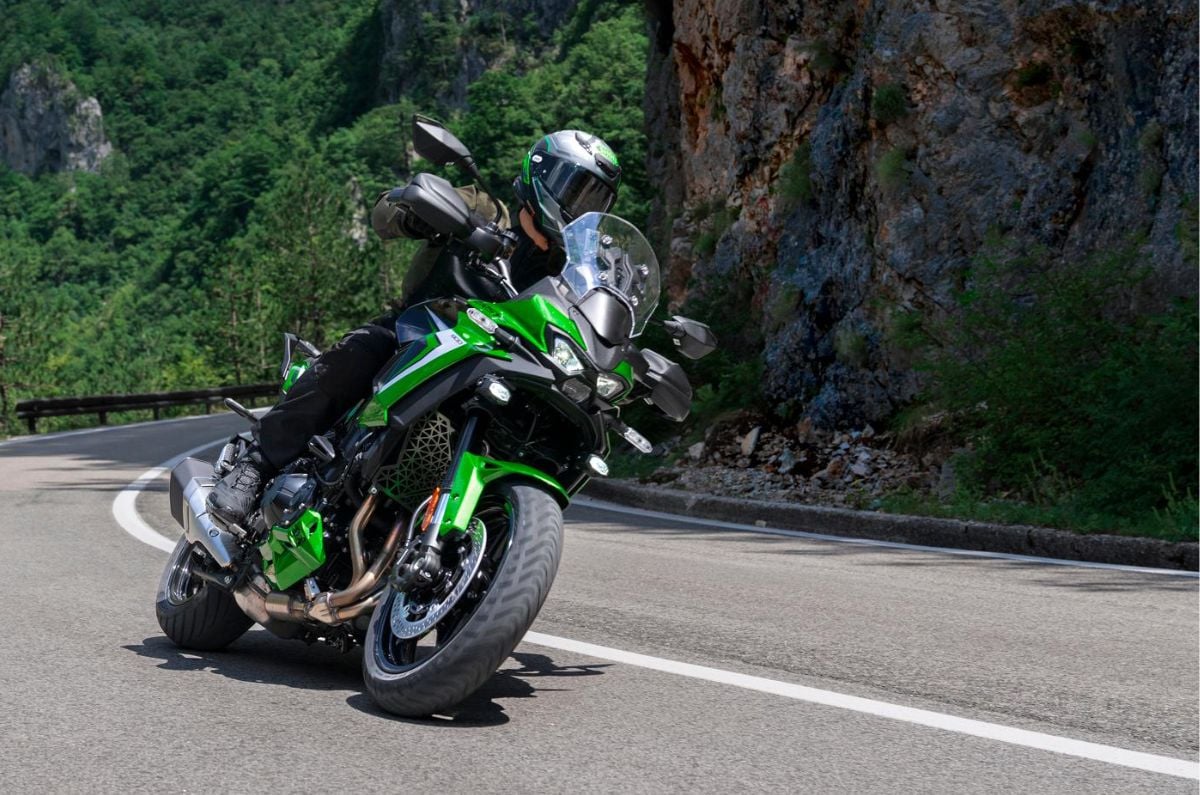
The Versys 900 SE variant adds LED fog lamps, hand guards, heated grips, a radiator guard, frame protection sliders, a lower cowl and centre stand as standard fitment. Kawasaki also teases edition models like Tourer and Grand Tourer in the future. The Standard Versys 900 gets two colours, Black and White for GBP 10,899 (Rs 13.74 lakh). The Versys 900 SE gets two entirely different colour options, Lime Green/Black – a Kawasaki special – and Red/Grey for GBP 11,799 (Rs 14.87 lakh). Both will be available from April 2027.
India currently gets the other three Versys motorcycles, X 300, 650, and the 1100 so it’s reasonable to expect the 900 to also get here, likely in the first half of 2027. For context, the Versys 650 costs Rs 8.63 lakh and the 1100 takes that up to Rs 13.89 lakh, so we’d expect the 900 to slot between the two; just like the other Kawasaki SE models, the Versys 900 SE will likely be skipped for India.
All prices mentioned are ex-showroom. GBP-to-INR conversions are based on exchange rates at the time of writing.
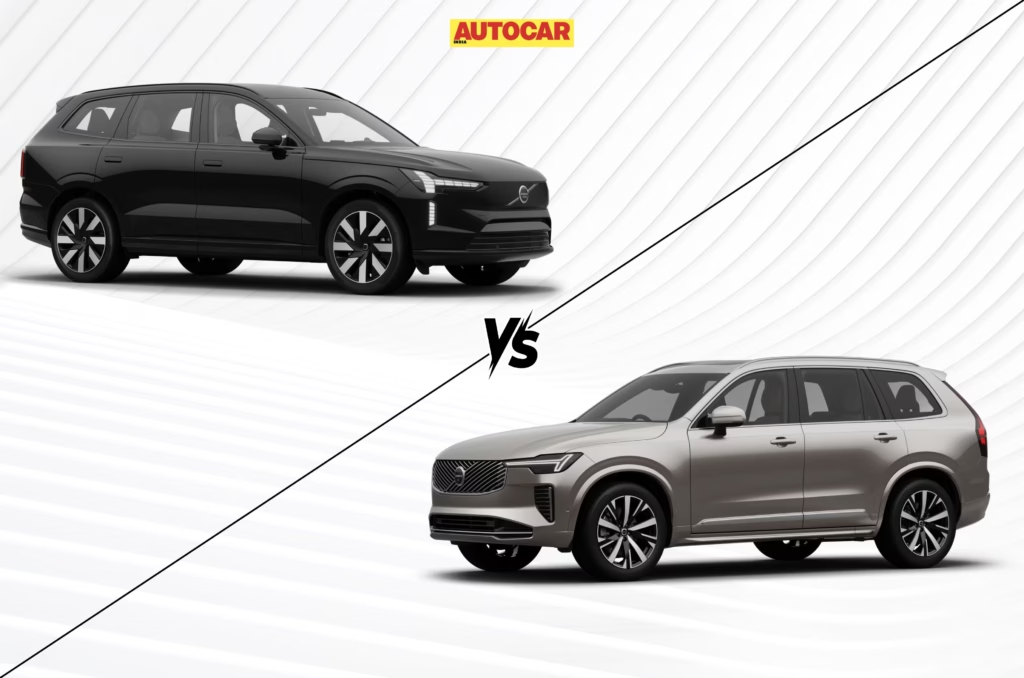
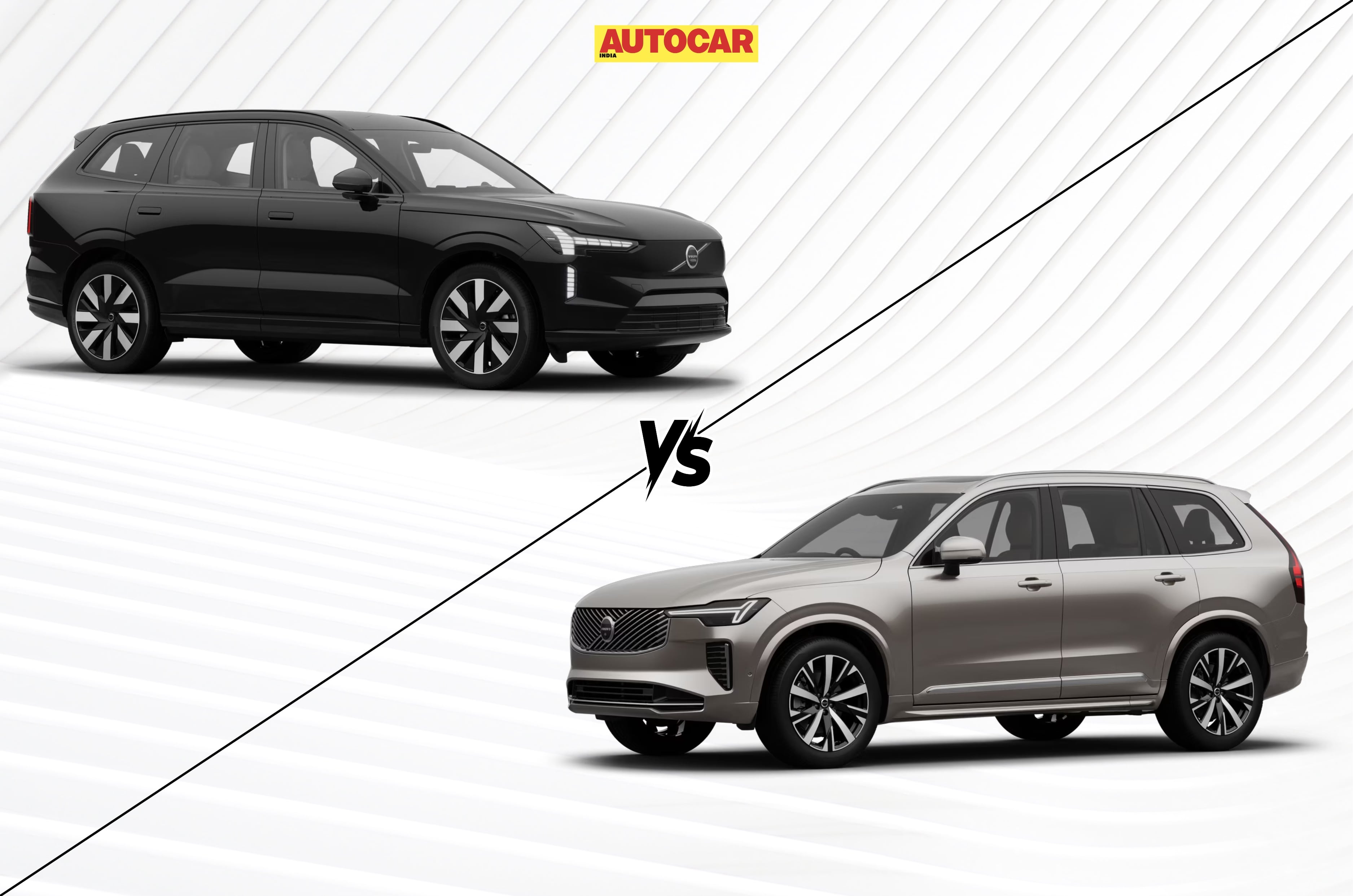
Volvo India launched the EX90, its flagship electric SUV, in October 2026. It serves as an electric alternative to the XC90, the carmaker’s flagship ICE SUV. While the two models differ in their powertrains, they also vary in pricing, exterior design, interior features and more. Here is how the two Volvo SUVs compare.
Volvo EX90 vs XC90: Exterior
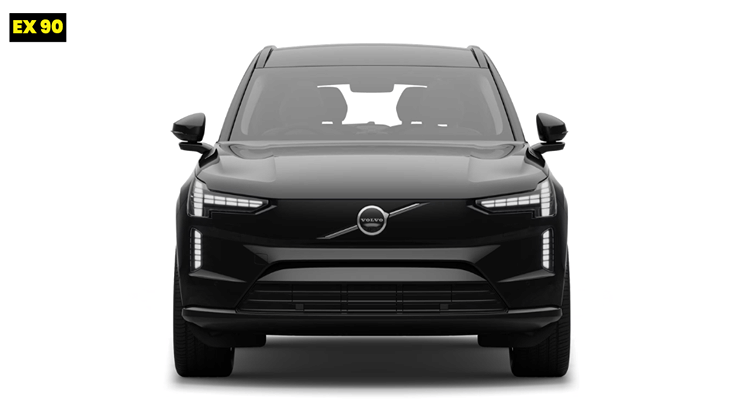
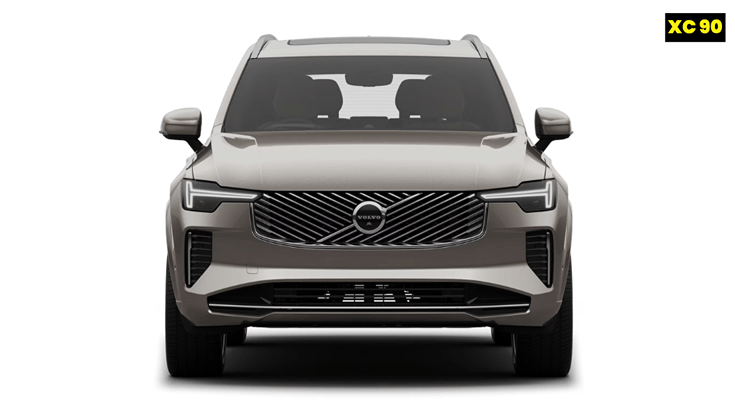
The EX90 has a simpler front design, with a closed-off grille, and vertical lighting elements on either side of the bumper. In comparison, the Volvo XC90 gets a more traditional front fascia with a prominent grille and a slightly different bumper. Both get hammer-shaped LED DRLs, though the ones on the EX90 have a pixel-like design. Also, main headlamps are hidden behind the DRLs on the EV.
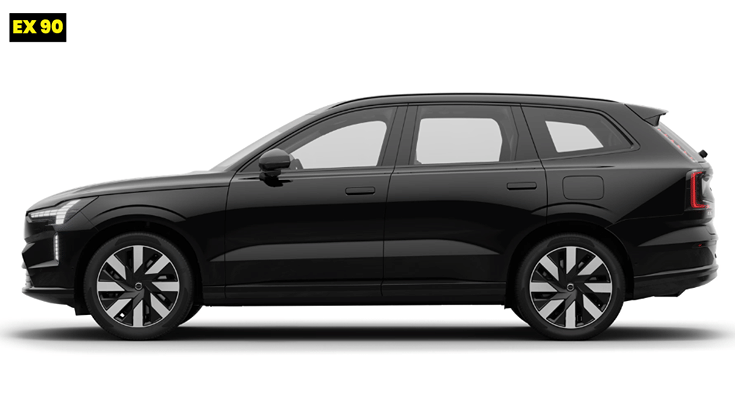
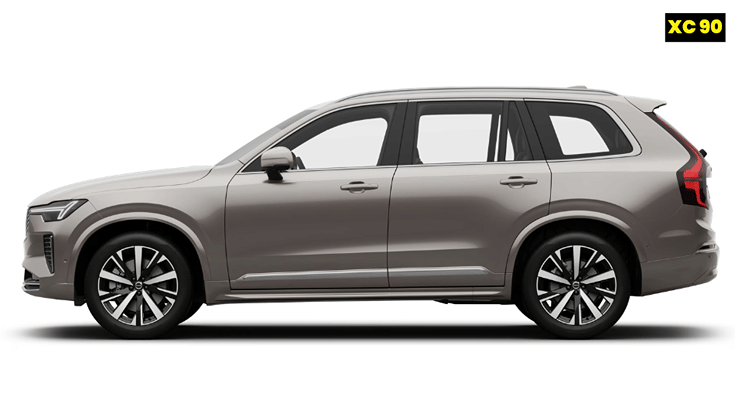
In profile, the EX90 features electrically operated flush-fitting door handles and a gently sloping rear roofline. In comparison, the Volvo XC90 opts for manual pull-type door handles and a slightly more upright stance. Both SUVs feature blacked-out B-pillars, sculpted wheel arches devoid of cladding and roof-mounted spoilers. While the XC90 has a chrome outline around the glass area, the EV skips it.
Speaking of dimensions, the Volvo EX90 is 5,037mm long, 1,964mm wide and 1,744mm tall. This makes the EV 84mm longer and 33mm wider, but 27mm lower than the XC90. Both SUVs have an almost identical wheelbase, with the EX90’s 2,985mm wheelbase being just 1mm longer. It also gets larger 21-inch wheels, compared to the XC90’s 20-inch wheels.
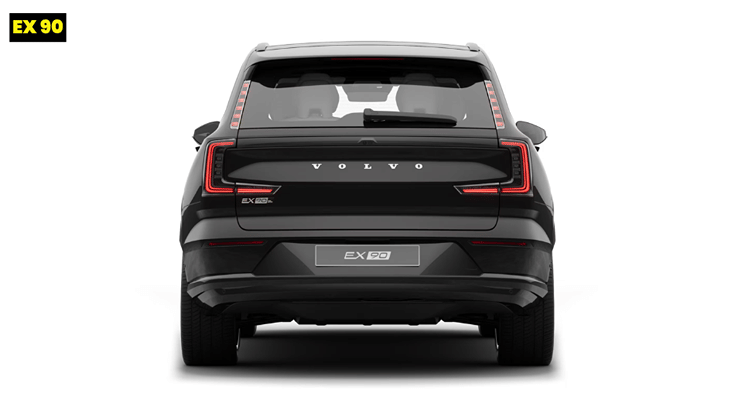
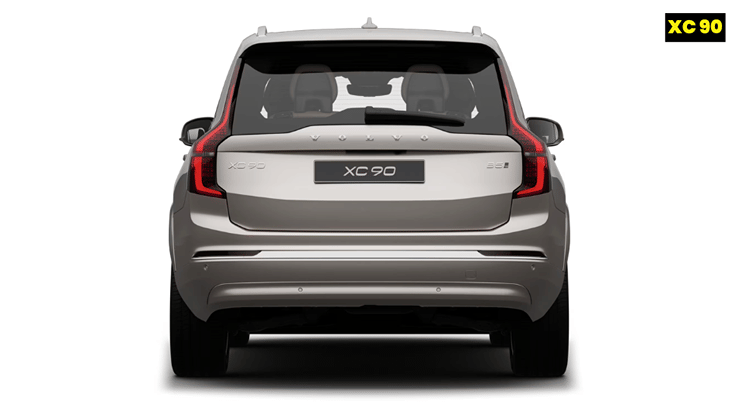
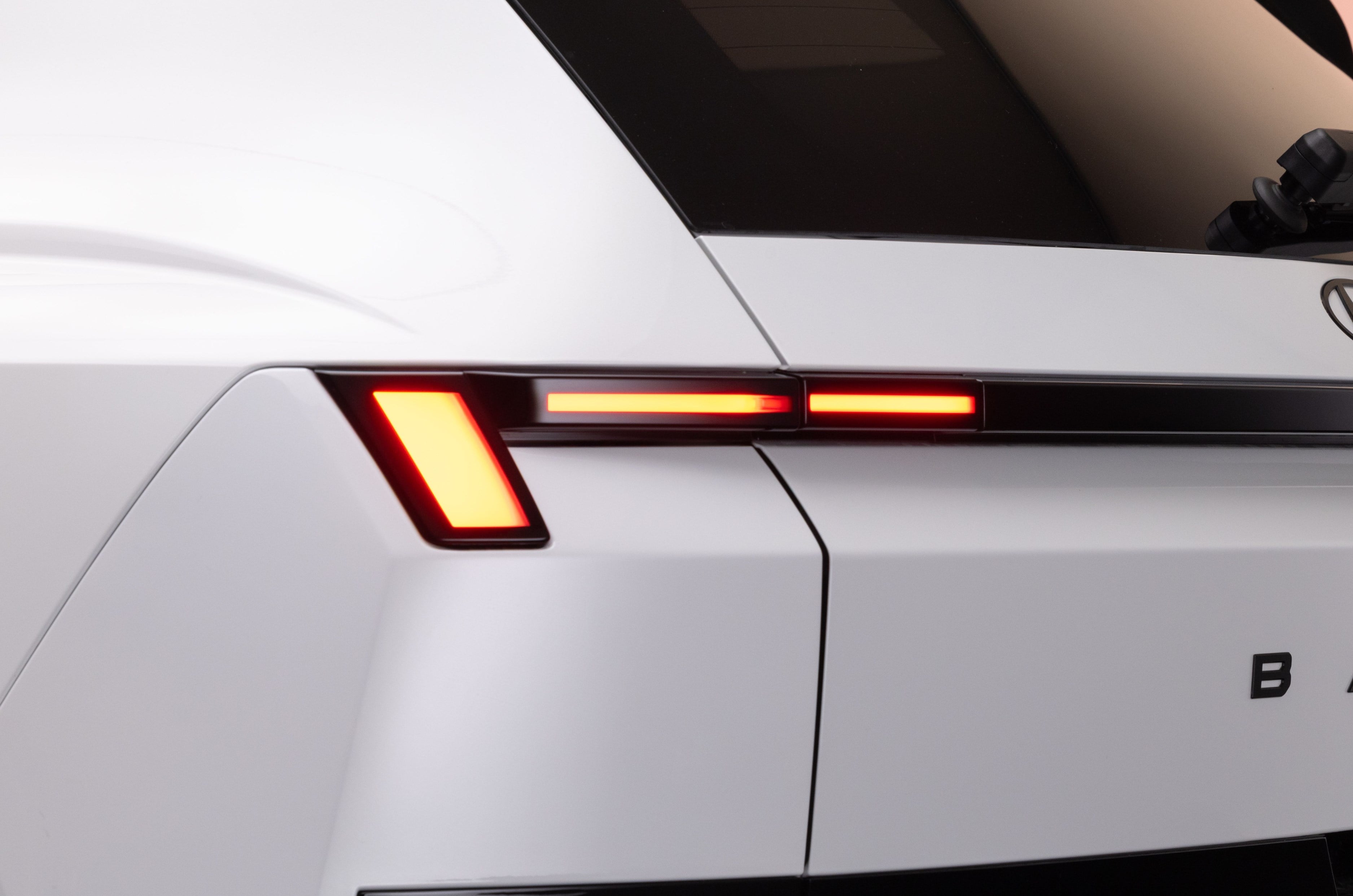
Both SUVs feature slim vertical LED lights along the sides of the rear windscreen, although their designs differ slightly. The tail-lamps also have different designs, while the ‘VOLVO’ lettering is positioned on different locations on the tailgate. The rear bumper designs vary as well.
Volvo EX90 vs XC90: Interior and features
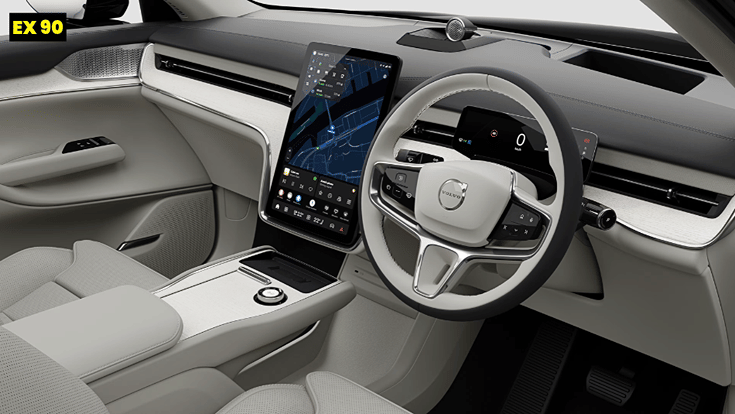
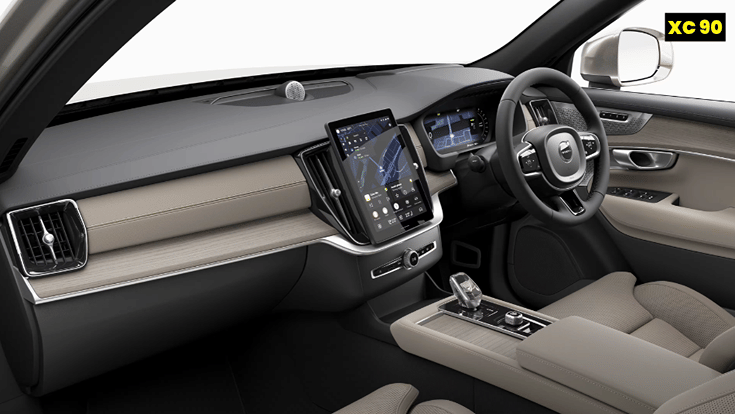
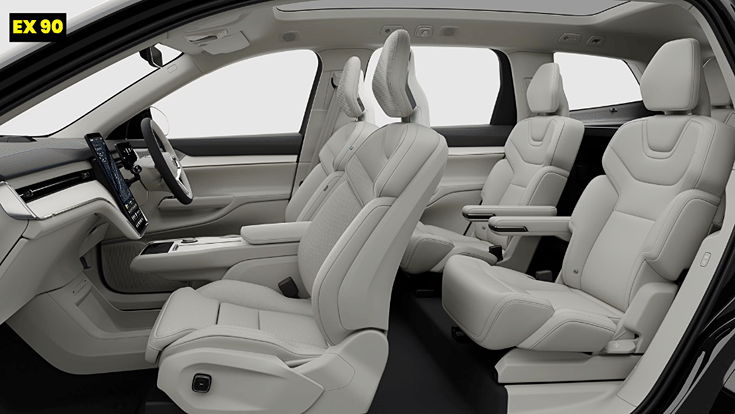
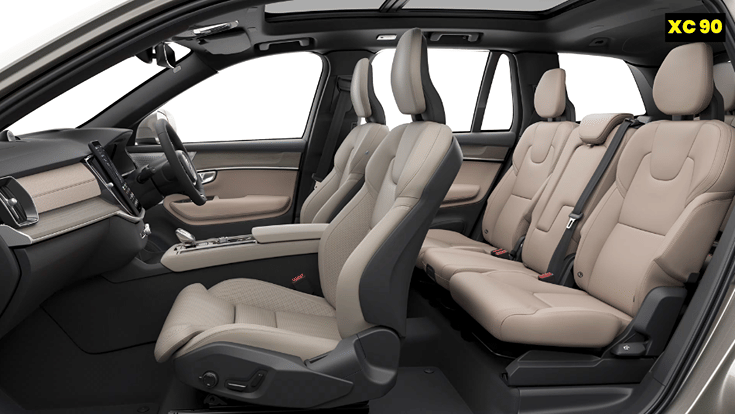
Both the Volvo XC90 and EX90 get air suspension, a 360-degree camera setup, an ADAS suite, four-zone climate control and an onboard air purifier. Both also feature front-seat heating, ventilation and massage functions, and a Bowers & Wilkins audio system. However, the XC90 has 19 speakers, while the EX90 gets 25 speaker units. Middle row seats don’t get heating, ventilation or massage functions on either SUV.
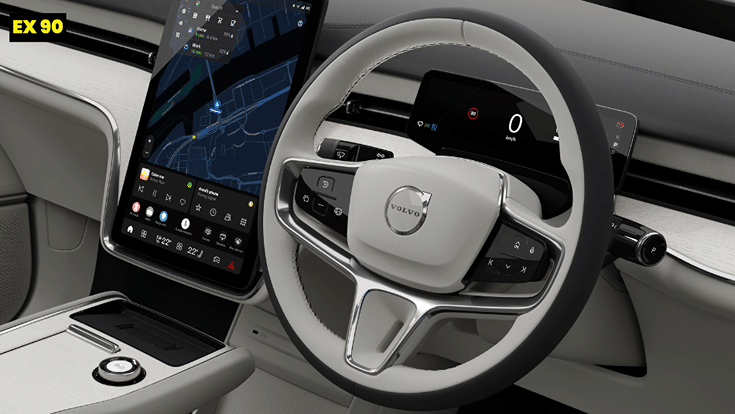
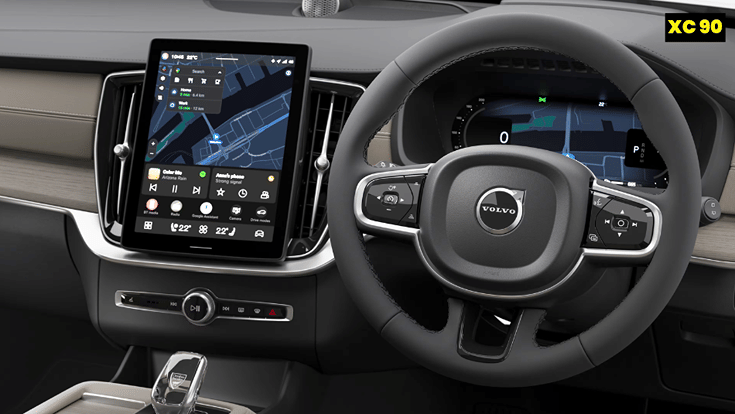
While both get vertically oriented touchscreens, they differ in sizes – 11.2 inches on the XC90 and 14..5 inches on the EX90. Some physical control have been provided on the XC90 under the touchscreen, while its electric counterpart does not feature them. The design for the steering wheel also differs in both cars. Also, the XC90 gets a panoramic sunroof, while the EX90 has an electrochromic glass roof, whose tint can be changed from the central touchscreen.
As for the seating capacity, the EX90 is on offer in a six seater configuration, featuring captain seats in the middle row. Meanwhile, the XC90 is a seven-seater SUV. Two interior colour options – Cardamom and Blond – are available with the XC90, while the EX90 is sold with one colour – Dawn. The XC90’s boot capacity with all seats up is 302 litres, while the EX90 claims 324 litres; the EV also gets a 46 litre frunk.
Volvo EX90 vs XC90: Powertrain
The India-spec EX90 comes with a 106kWh battery pack, which powers a dual electric motor setup. Combined output is 456hp and 670Nm, with a claimed 0-100kph sprint time of 5.5 seconds. Claimed range stands at 625km on the WLTP cycle.
On the other hand, the XC90 features a 2.0-litre, four-cylinder, turbocharged petrol engine with support from a 48V mild-hybrid system. Peak power is 250hp and max torque is 360Nm, which is 206hp and 310Nm less relatively. Its 0-100kph sprint time of 7.94 seconds is slower by 2.44 seconds.
Volvo EX90 vs XC90: Prices
EX90
XC90
Price difference
Price (Rs)
1.26 crore
98.80 lakh
27.20 lakh
At Rs 1.26 crore, the Volvo EX90 is the more expensive model in this comparison, costing Rs 27.20 lakh more. Beyond the price difference, the two models mainly differ in their powertrains and peak power outputs, while differences in their exterior and interior features are relatively less. The choice between them will depend on factors such as the buyer’s driving requirements, family size and performance.
Ex-showroom prices mentioned above are as on October 13, 2026.
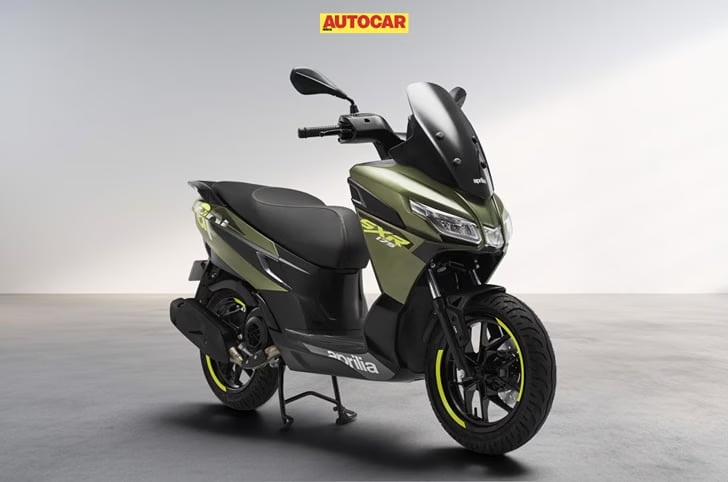
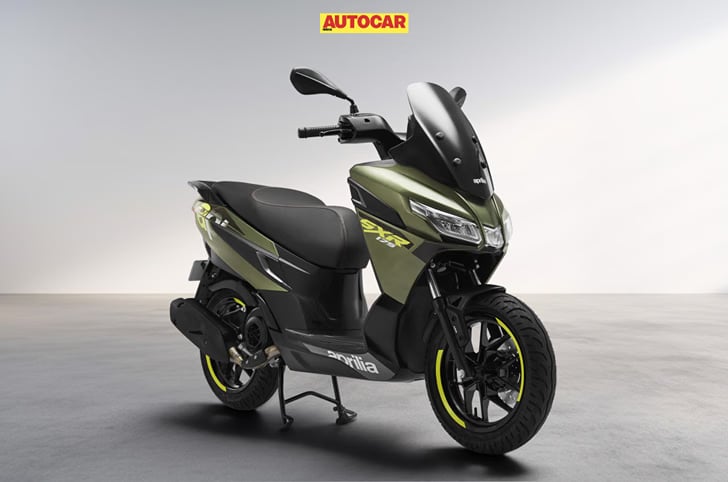
The Aprilia SXR GT 125 is the successor to the SXR 125, which was quietly discontinued in May this year. It shares its platform with the SR 125 hp-e and brings larger wheels and some additional features. Here are answers to some of the most commonly asked questions about it.
What is the difference between the SXR GT 125 and the SXR 125?
The SXR GT 125 replaces the now-discontinued SXR 125 as the brand’s entry-level maxi-scooter in our market. The most notable change is the move to 14-inch wheels, up from the 12-inch wheels on the older model. The SXR GT 125 also uses an updated 124.5cc engine and shares its platform with the current SR 125 hp-e.
What does the SXR GT 125 engine offer?
The SXR GT 125 is powered by a 124.5cc single-cylinder engine producing 10.6hp at 7,400rpm and 10.4Nm of torque at 6,200rpm. It meets BS6 OBD-II Stage B norms and is compatible with E20-blended fuel.
What features does the SXR GT 125 have?
The SXR GT 125 gets a 5-inch LCD instrument cluster and a combined braking system (CBS). In comparison, the SXR GT 175, which was launched alongside it, gets a TFT display with Bluetooth connectivity, turn-by-turn navigation and single-channel ABS.
What are the SXR GT 125 colour options?
The Aprilia SXR GT 125 is available in three colour options – Matte Black, Glossy Azzurro and Glossy White.
What is the SXR GT 125 price?
The Aprilia SXR GT 125 is priced at Rs 1.10 lakh and should be available at Aprilia dealerships nationwide. At this price point, the new SXR is about Rs 5,000 more expensive than the similarly styled Suzuki Burgman Street, which is priced at Rs 1.06 lakh.
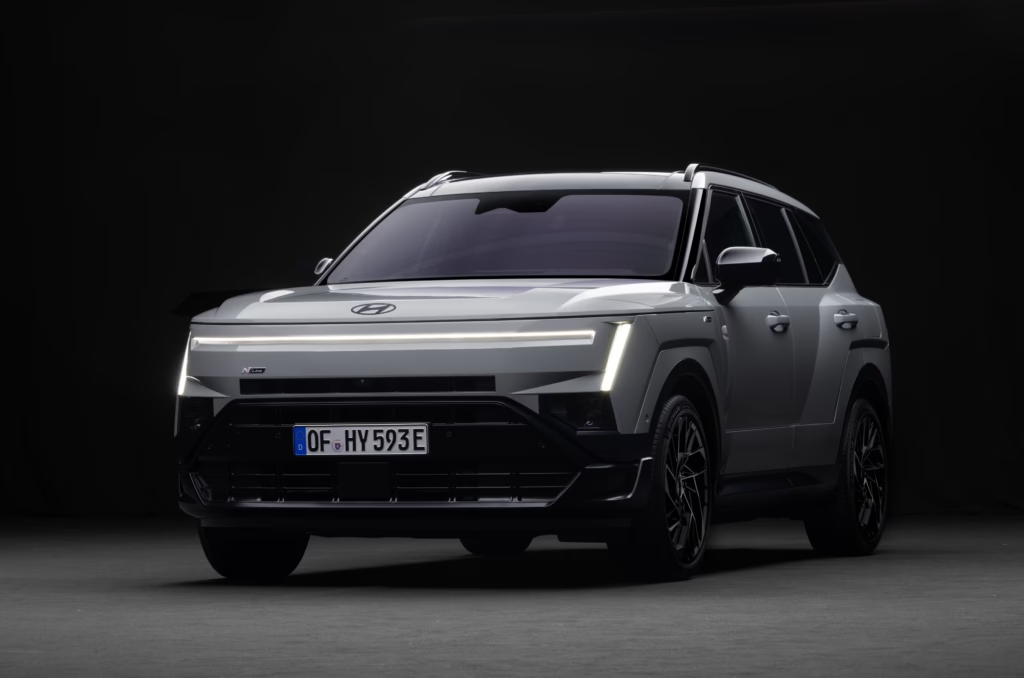
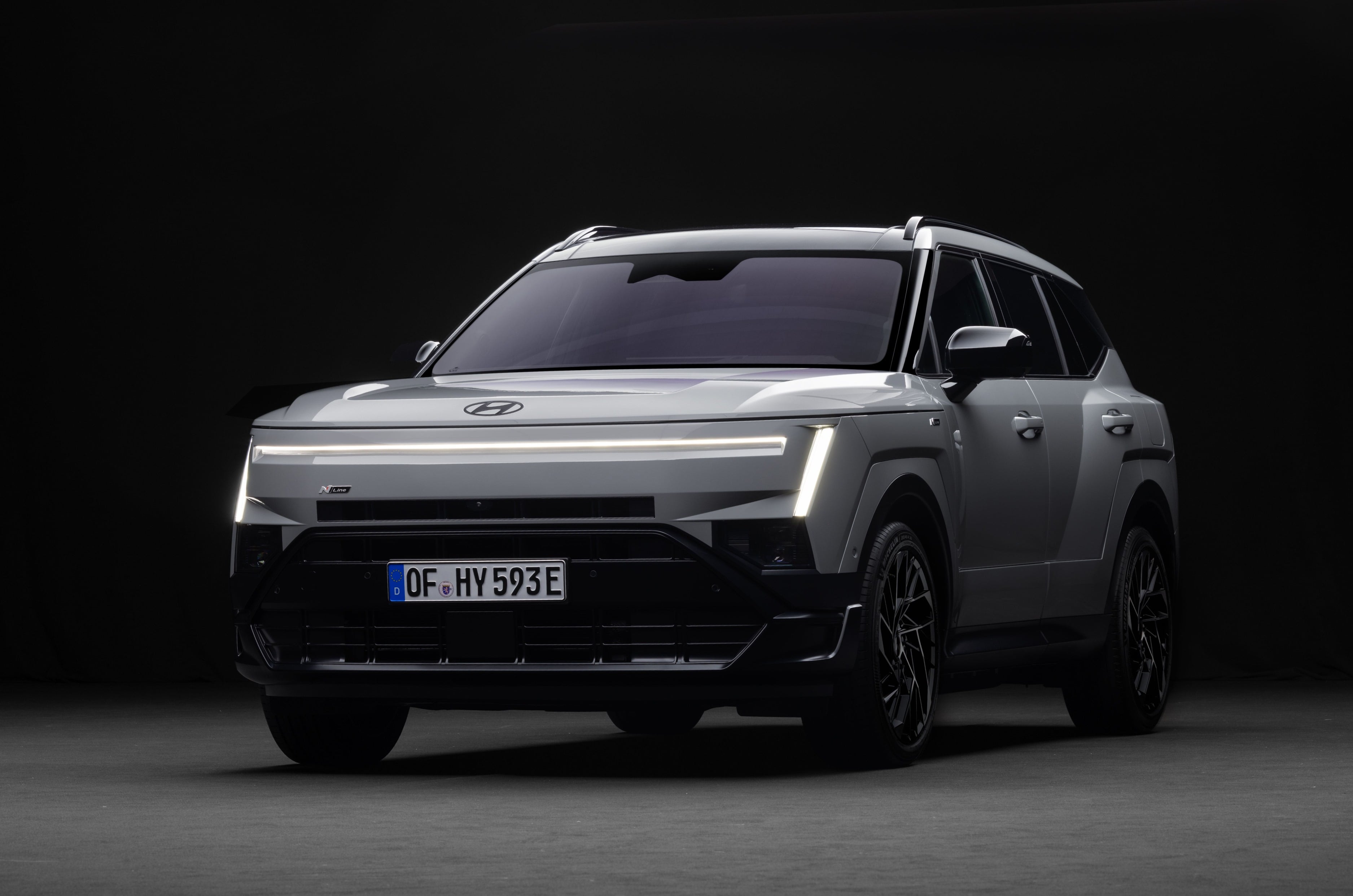
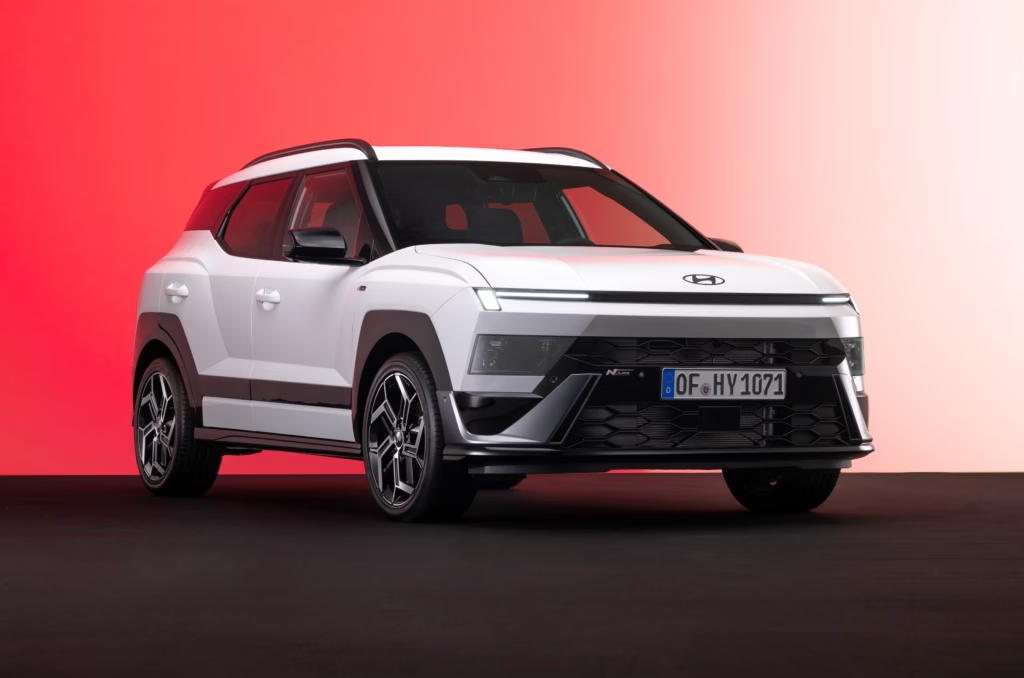
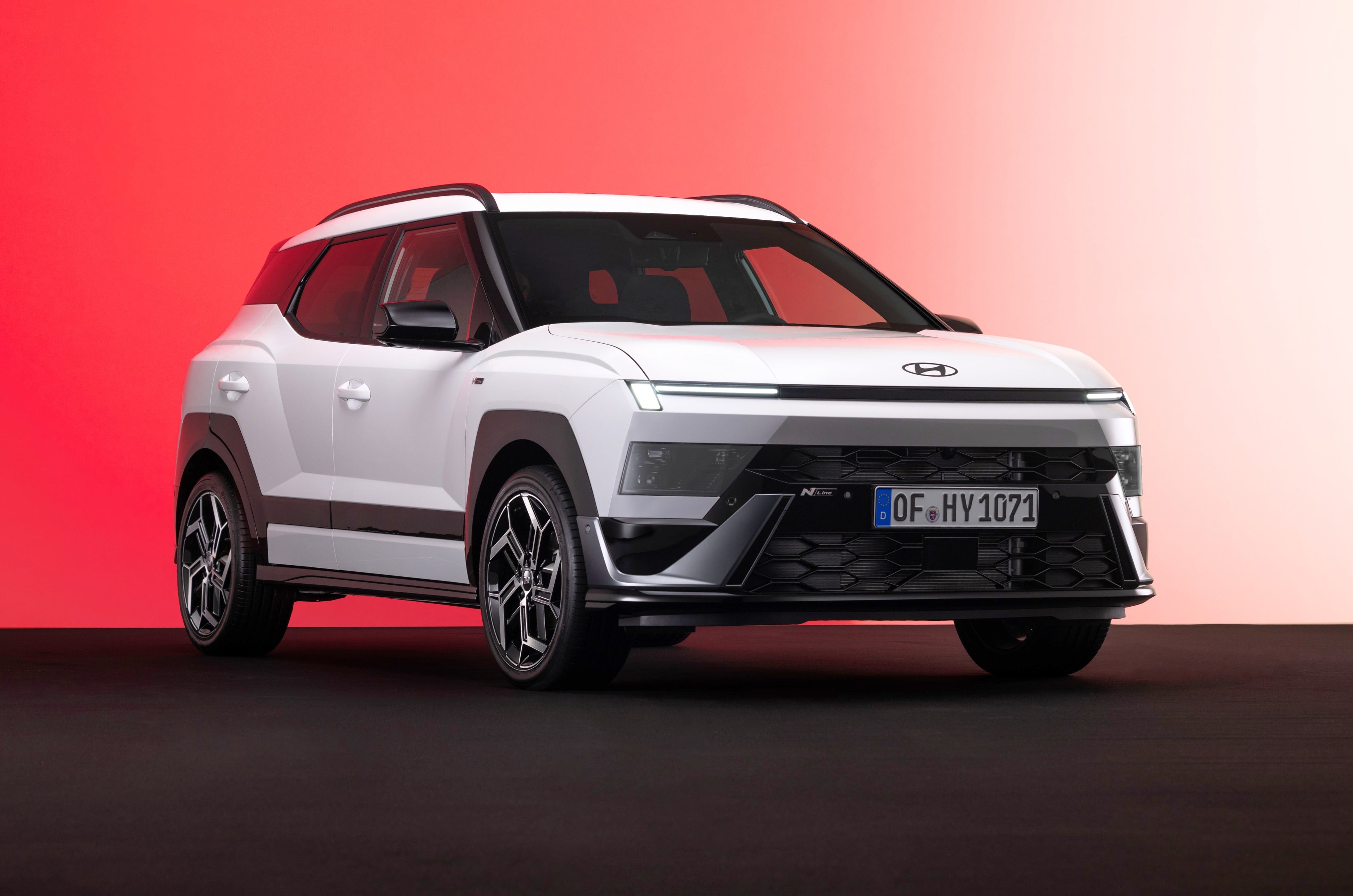
Hyundai has debuted the Tucson N Line at the 2026 Paris Motor Show. The introduction of the N Line version comes over a month after the new-gen Tucson was revealed. In typical N Line fashion, the Tucson N Line gets several cosmetic differences over the regular model, with emphasis on a sportier theme.
Exterior changes include restyled bumpers and slimmer cladding elements.
All-black interior with contrast red stitching across the dash, door pads, and seats.
Powered by the same turbo-petrol, strong-hybrid, and PHEV powertrains as standard model.
Hyundai Tucson N Line: What is it?
Hyundai says that the Tucson N Line is focused primarily on design rather than on creating a separate high-performance derivative. N Line versions get an exclusive exterior package, bringing a sportier look. The fascia features a revised bumper finished in black, along with a chin spoiler and aero ducts at the edges with a satin-black finish.
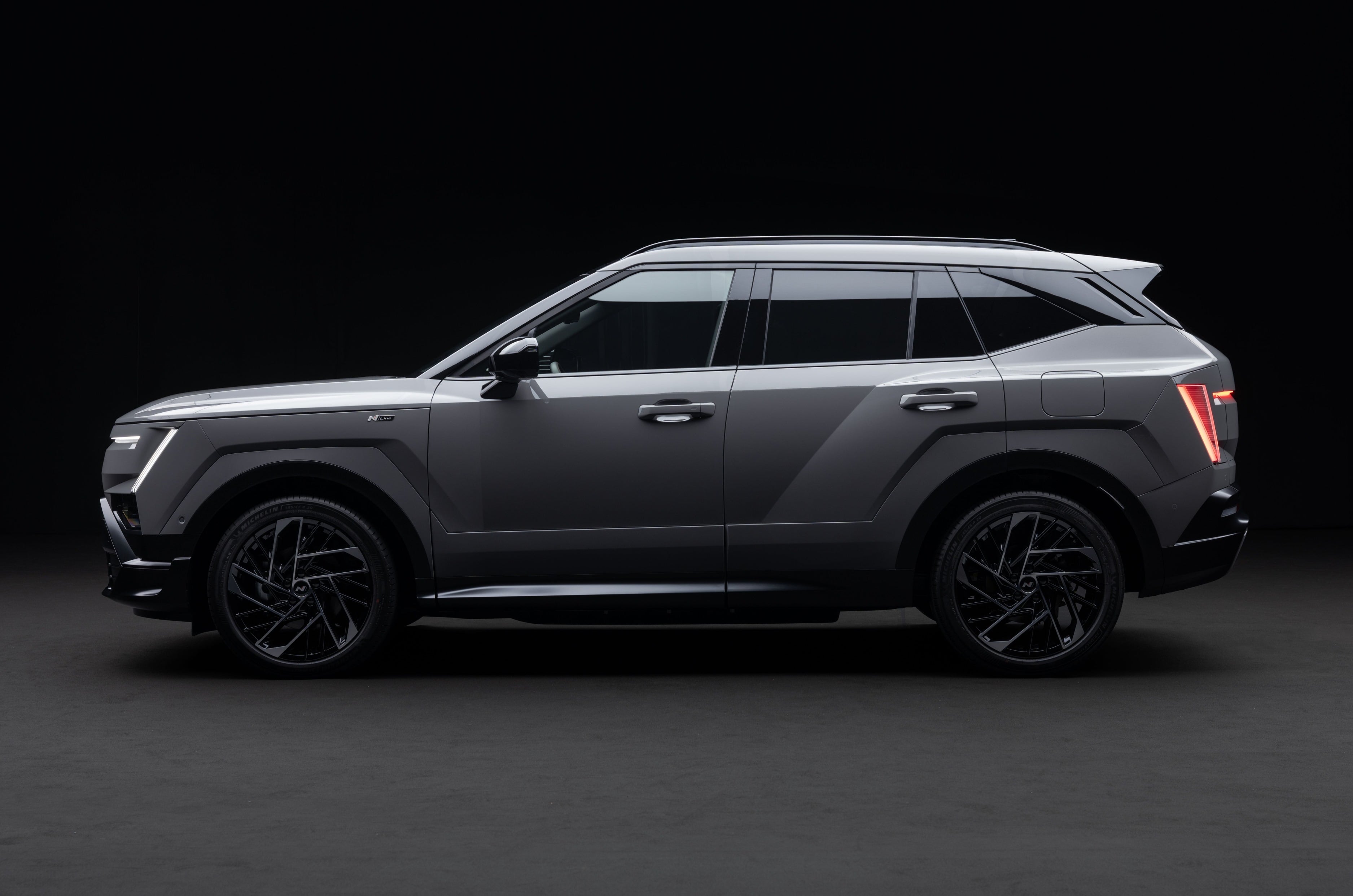
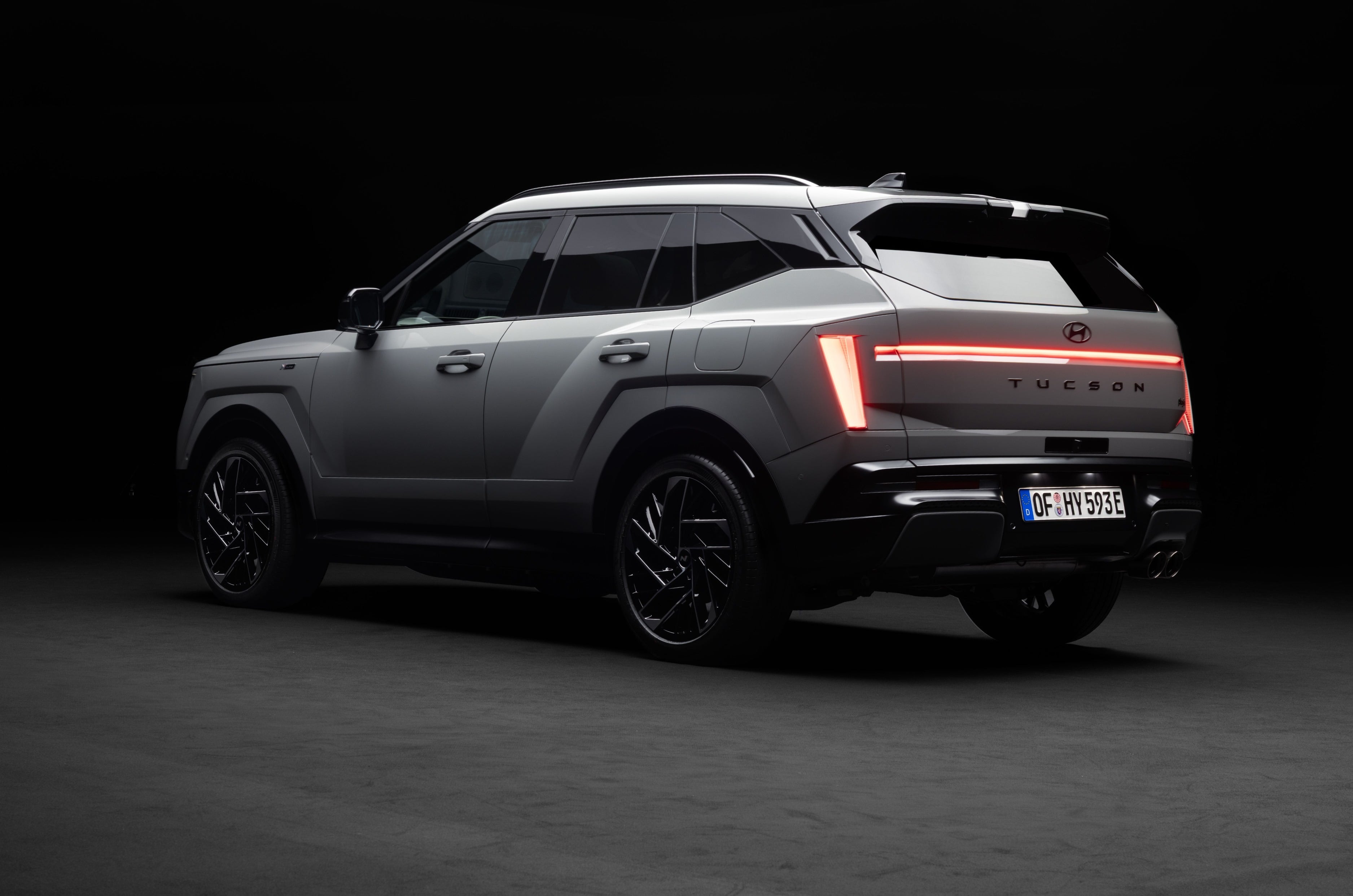
The most notable change in profile is the exclusive 20-inch alloy wheels, while there’s body-coloured cladding for the lower side of the doors. Compared to the standard Tucson, N Line versions get slimmer cladding all around. At the rear, the bumper is also redesigned with a black-and-grey finish, and there are chrome-tipped dual exhausts. Distinctive elements include a black finish for the branding and N Line badges sprinkled all over.
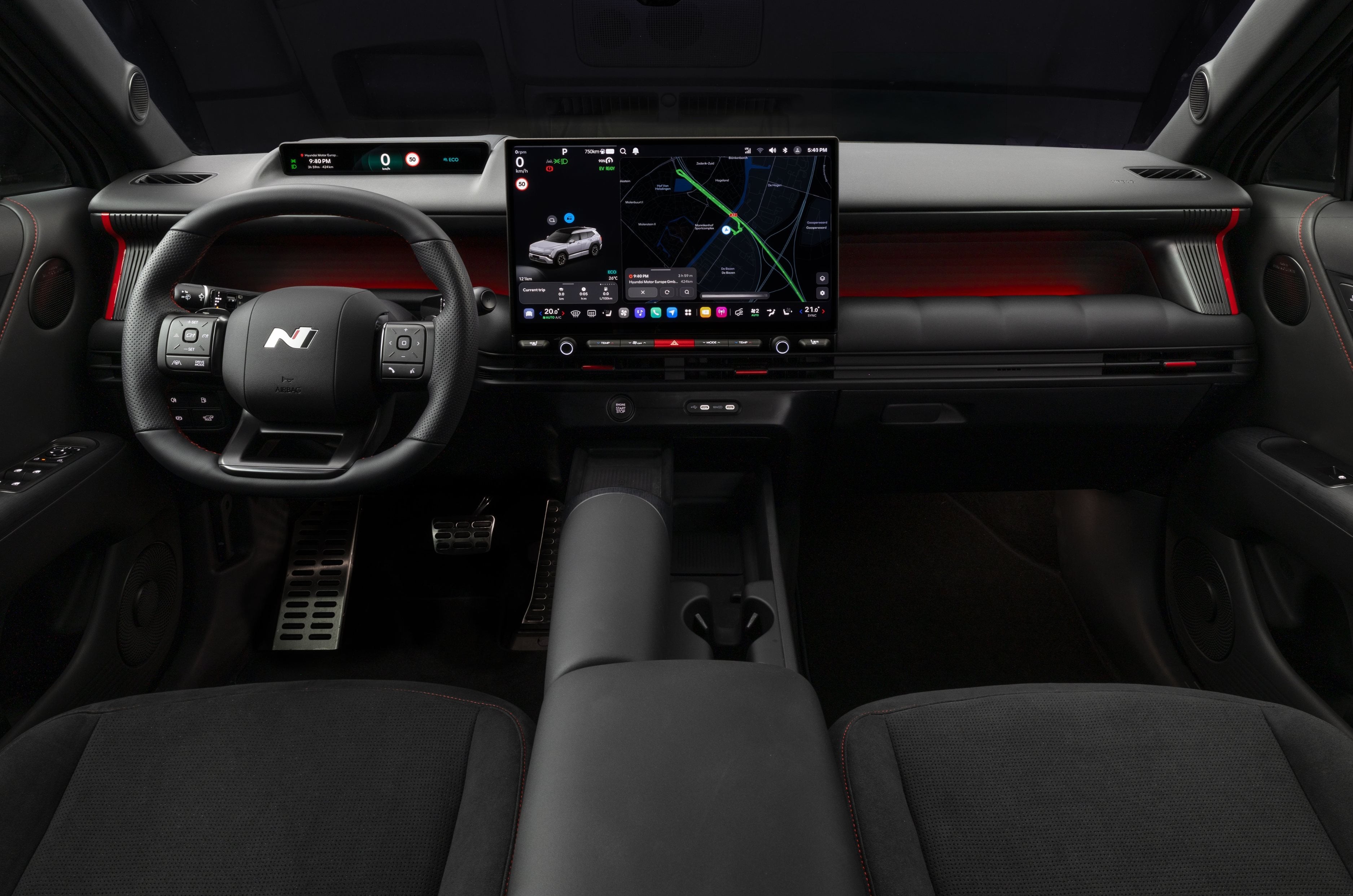
On the inside, there’s an all-black interior theme with red stitching on the dashboard, door pads, and seats, bringing contrast. There are also red accents on the AC vents, N Line-spec steering wheel, and seats with suede and leather upholstery with N badges. Additionally, there are metal pedals and N Line-branded scuff plates.
N Line versions continue with an identical equipment list as the regular Tucson. This includes the large 17-inch infotainment system, a digital driver’s display, powered and massaging front seats, digital IRVM, an ADAS suite, a 12-speaker Bang & Olufsen audio system, sliding and reclining rear seats, ambient lighting, OTA updates, AI assistant, dual 15W wireless chargers, and two 100W Type-C ports for second-row passengers
Things remain unchanged mechanically, as the N Line Tucson gets the same powertrain options as the regular model. There’s a 150hp, 1.6-litre turbo-petrol engine offered with either a 6-speed manual or a 7-speed DCT with 48V mild-hybrid assist. Strong-hybrid versions combine the 1.6-litre turbo-petrol mill with a 1.49 kWh battery to deliver 245hp and 380Nm. PHEV versions trade the 1.49kWh battery pack for a larger 17.1 kWh unit and an electric motor producing a combined power output of 292hp and 380Nm.
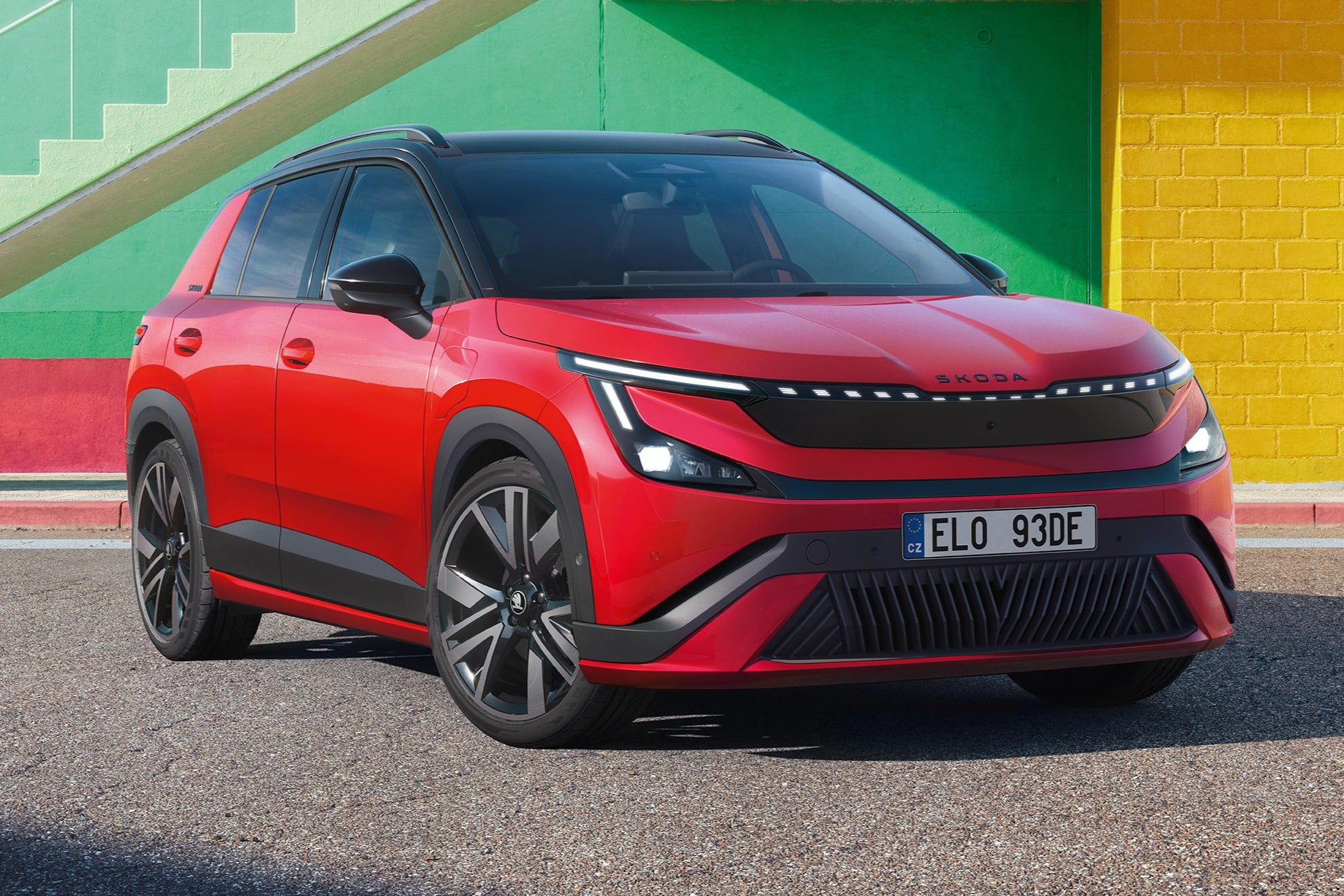
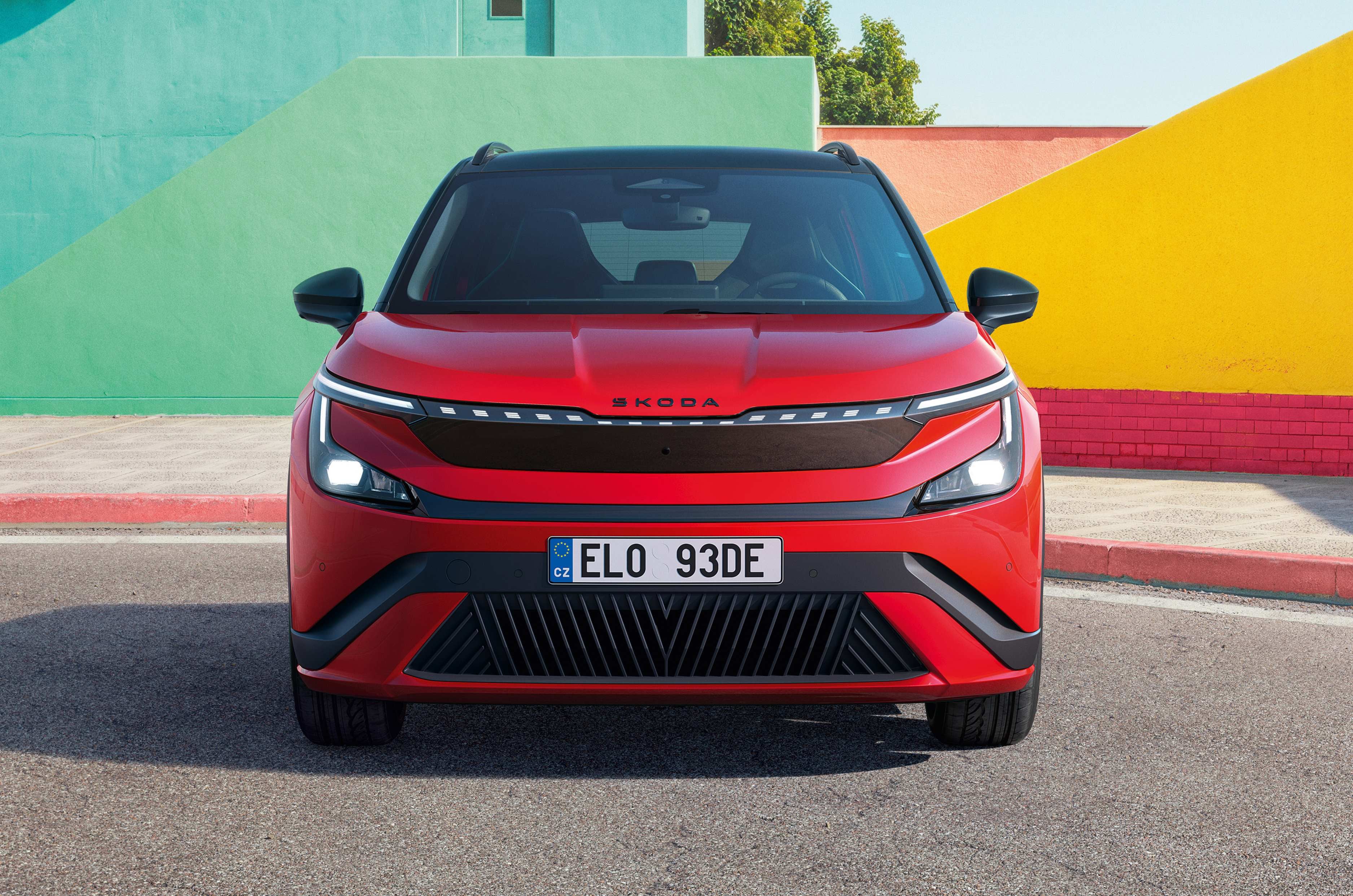
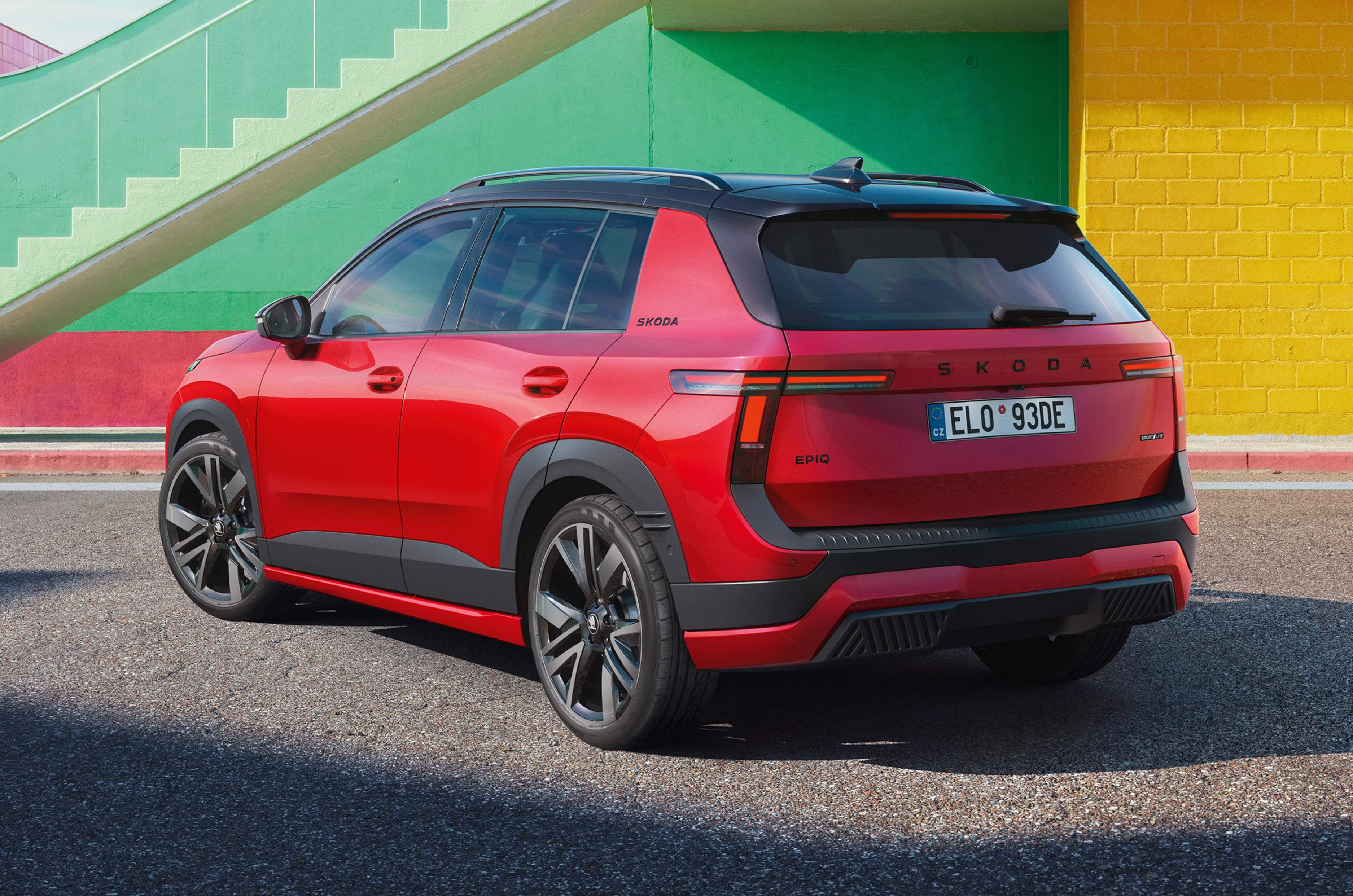
Skoda has extended the spicier ‘Sportline’ treatment to its entry-level EV, the Epiq. In Sportline guise, the Epiq features several cosmetic upgrades over the standard model while retaining its battery pack options, albeit in a higher state of tune.
Exterior gets body-coloured bumpers, a segmented LED strip, and blacked-out Skoda badges.
Optional 20-inch alloy wheels—the largest available on the Epiq, with an exclusive design.
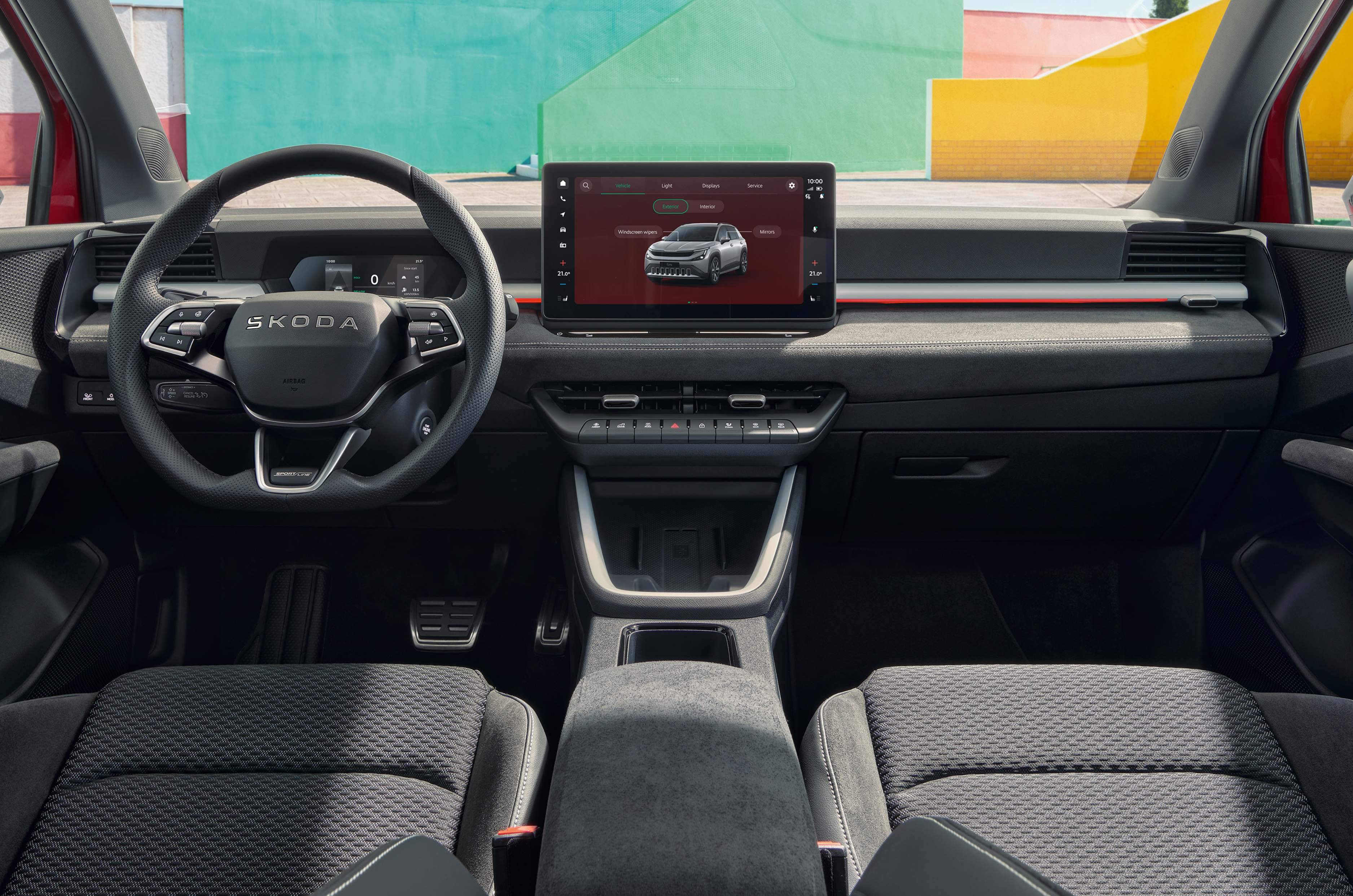
Black-theme cabin and suede for the dashboard, door pads, armrest and seat upholstery.
Offered in two variants: 40 (38.5kWh) and 55 (55 kWh); Claimed range of up to 440km.
Skoda Epiq Sportline: What’s new?
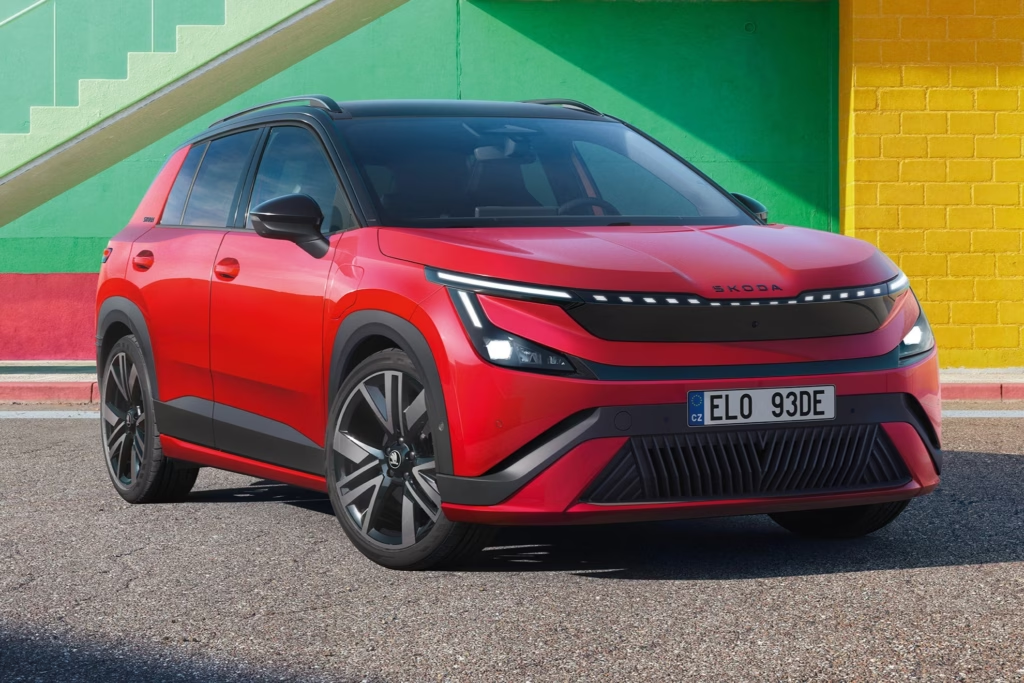
Changes to the front end of the Epiq include a segment LED strip across the grille, a body-coloured bumper, and a revised air intake grille. Updates to its profile include a gloss black finish for the outside rear-view mirrors (ORVMs) and exclusive designs for the 19-inch and optional 20-inch alloy wheels. The latter size is the largest available on the Epiq.
Additionally, there’s a black finish for the Skoda branding on the bonnet, C-pillar and tailgate, and also for the Epiq badge. A Sportline badge on the tailgate and a body-coloured rear bumper bring further distinction over the standard model. Optional equipment includes a panoramic sunroof, two-tone paint with a black roof, and a tow bar.
Like other Skoda Sportline models, the Eqiq Sportline also gets an all-black theme for its interior. The dashboard trim, door pads, armrest, and sport seats are wrapped in suede, while there’s a flat-bottomed three-spoke steering wheel with a Sportline badge and a stainless-steel finish for the pedals. The infotainment and digital driver’s display get red Sportline-themed graphics.
Standard kit includes keyless entry, electrically adjustable and heated front seats, a heated steering wheel, dual-zone climate control, digital key, wireless phone charging, rear-view camera and a dark tint for the rear-view mirrors. Optional features include an ADAS suite, on-board navigation, connected car tech, a 360-degree camera, a 10-speaker Canton sound system, frunk, and parking assist.
The Epiq Sportline is available only in the higher-end ‘40’ and ‘50’ variants, which are also available on the standard model. ‘40’ guise versions use a 38.5kWh battery pack with a front-mounted motor producing 135hp and 267Nm, while ‘55’ variants use a 55kWh battery pack with the motor delivering 211hp and 290Nm. Top speed for both versions is capped at 160kph, and claimed range figures for the 40 and 55 variants are 310km and 440km, respectively. Skoda says that both battery packs can do a 10-80 percent top-up within 24 minutes via DC fast charging.
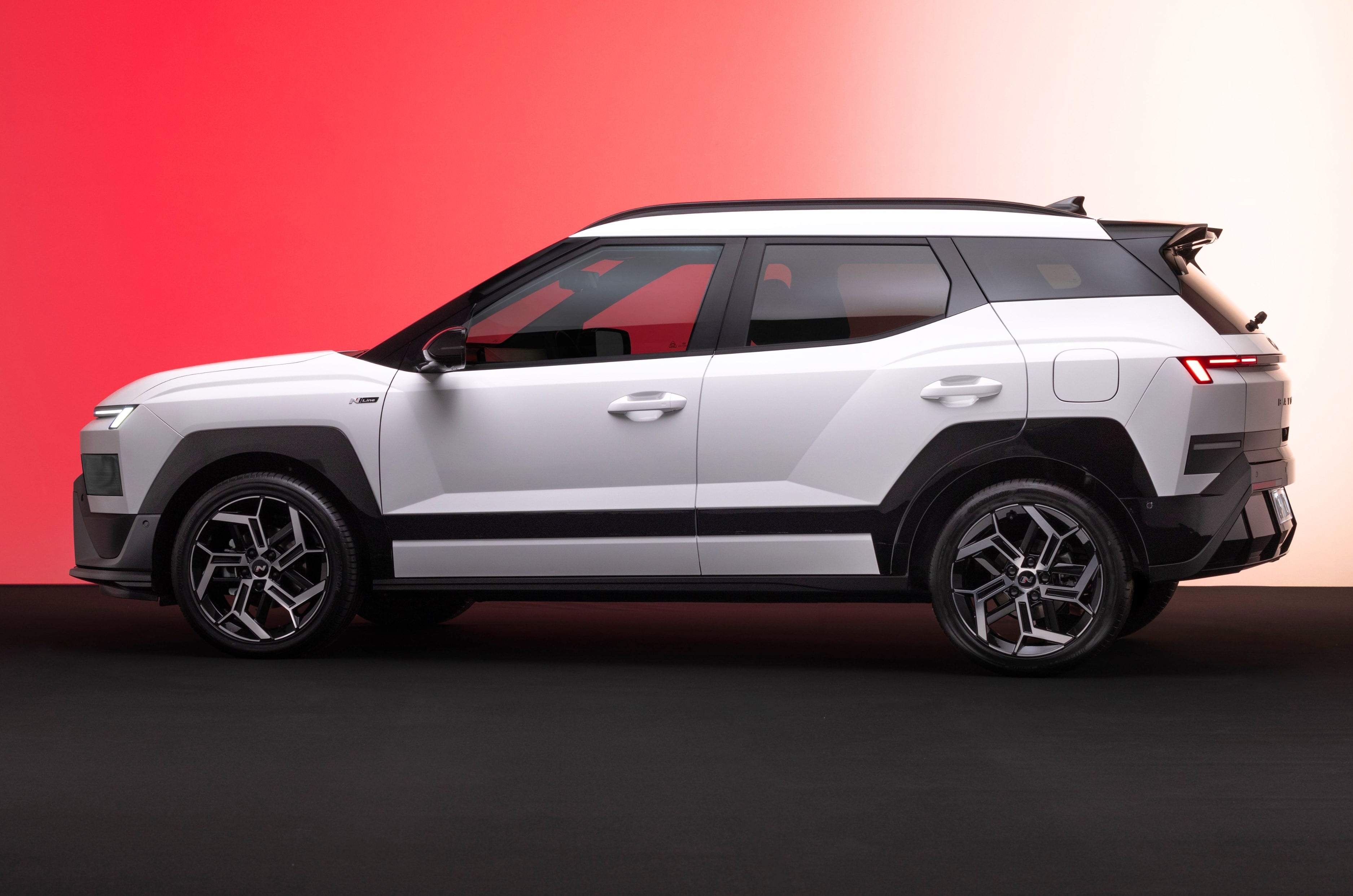
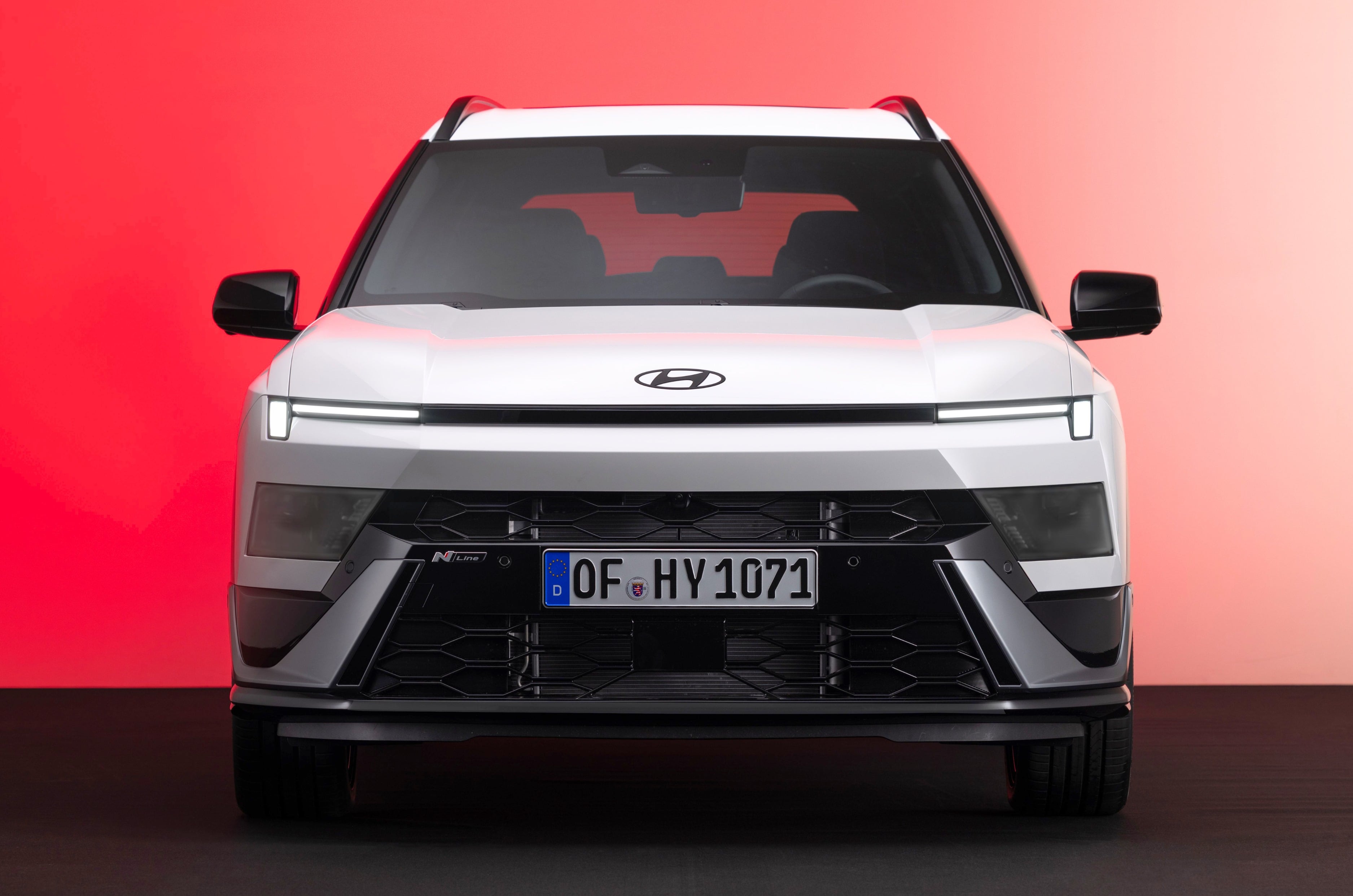
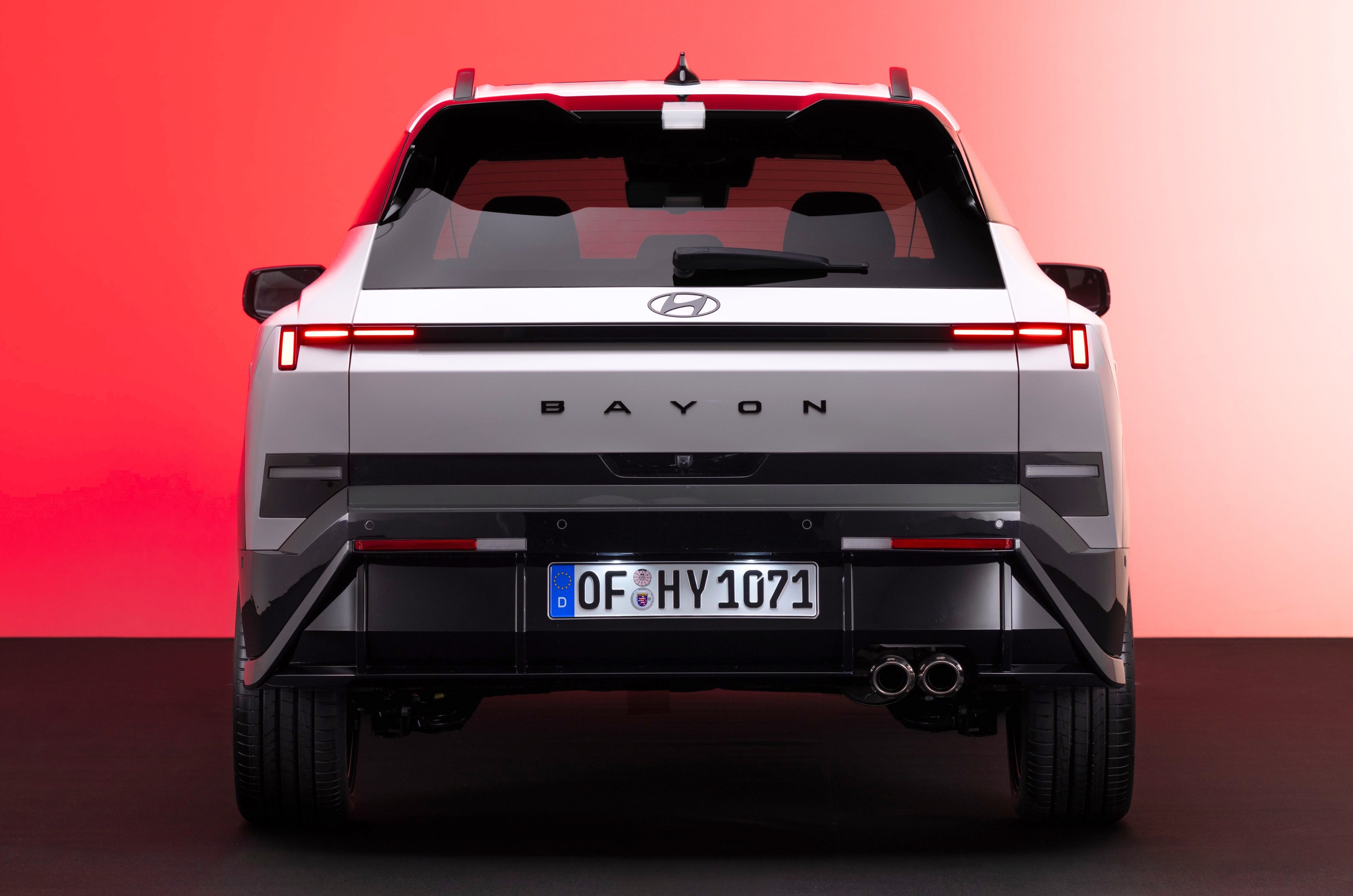
Alongside the recent reveal of the India-spec Bayon, Hyundai unveiled the SUV’s sporty N Line version at Paris Motor Show 2026. The Bayon N Line shares its top hat with the standard India-spec model, but has sportier touches all around and different engines.
2026 Hyundai Bayon N Line exterior design
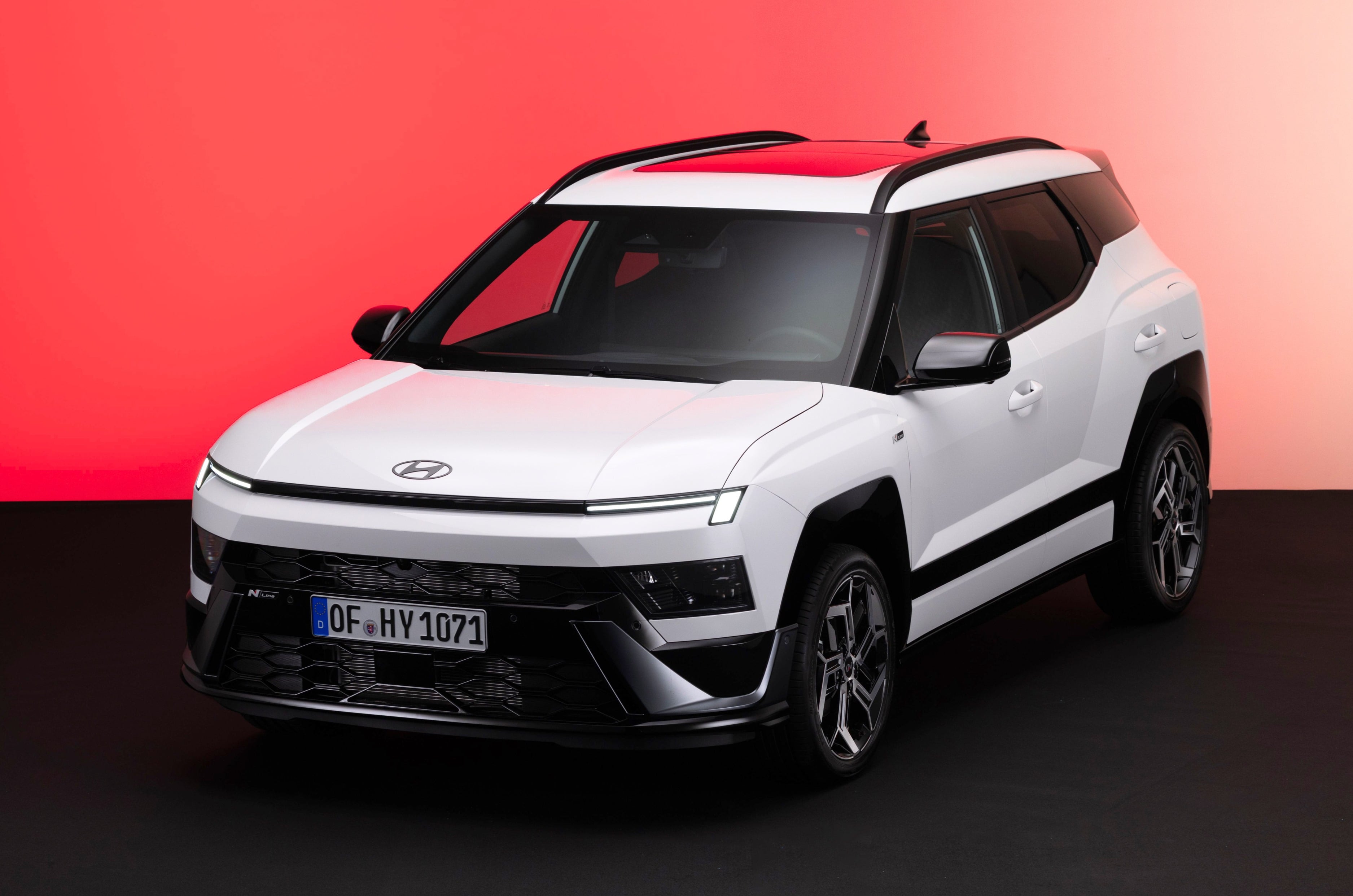
Much like the India-spec Bayon, the N Line features design cues like L-shaped front and rear lights, squared-off headlamp units, boxy wheel-arch cladding and flared fenders, a Bayon wordmark on the bootlid, and a heavily kinked windowline. However, the Bayon N Line differentiates itself with sportier styling elements.
Up front, the Bayon N Line has a different bumper with a more open design, blacked-out cladding, winglets, and a honeycomb pattern for the grille. An ‘N Line’ badge can also be seen on the left side of the bumper, and the headlamps look to have a smoked finish.
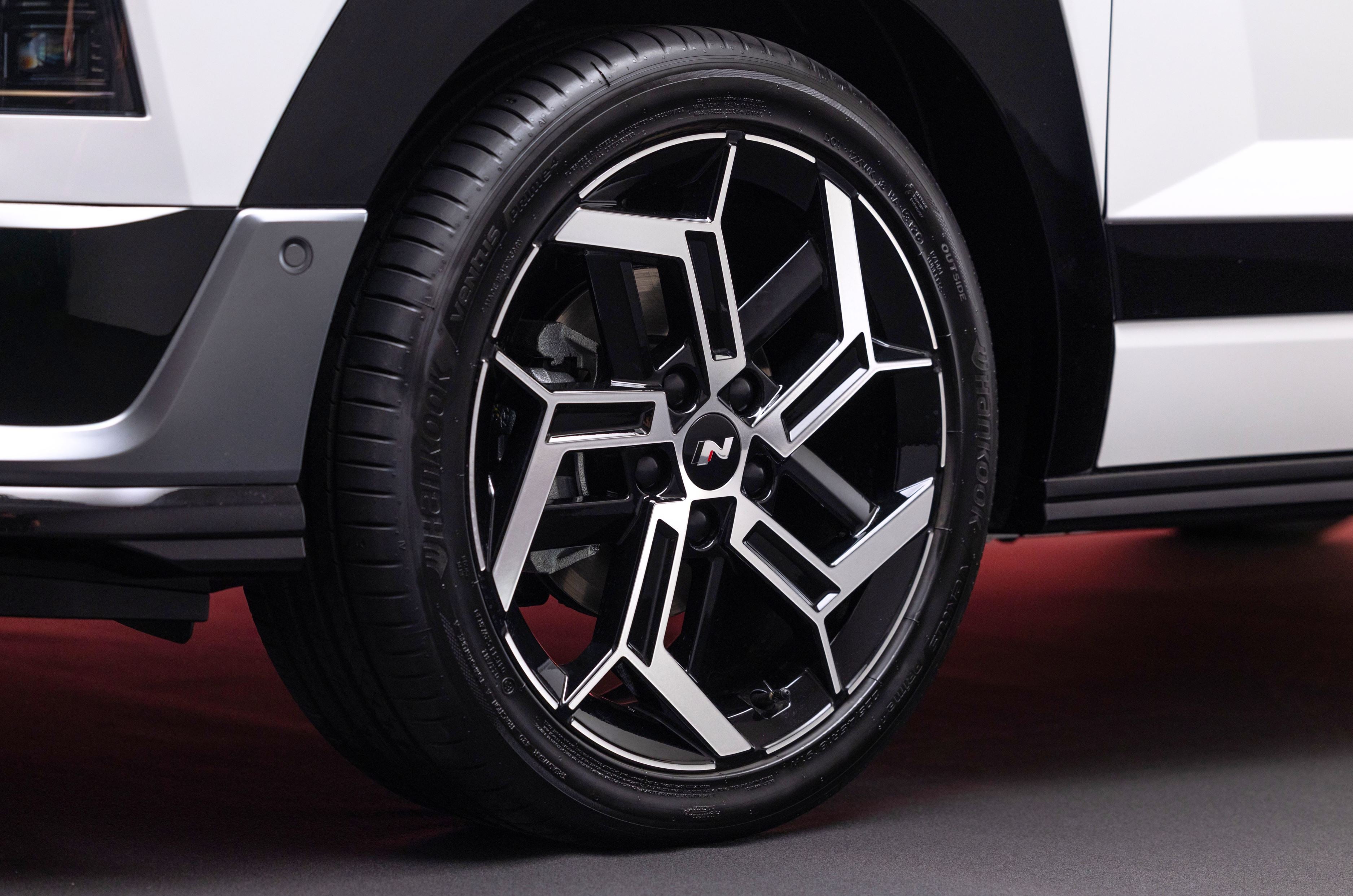
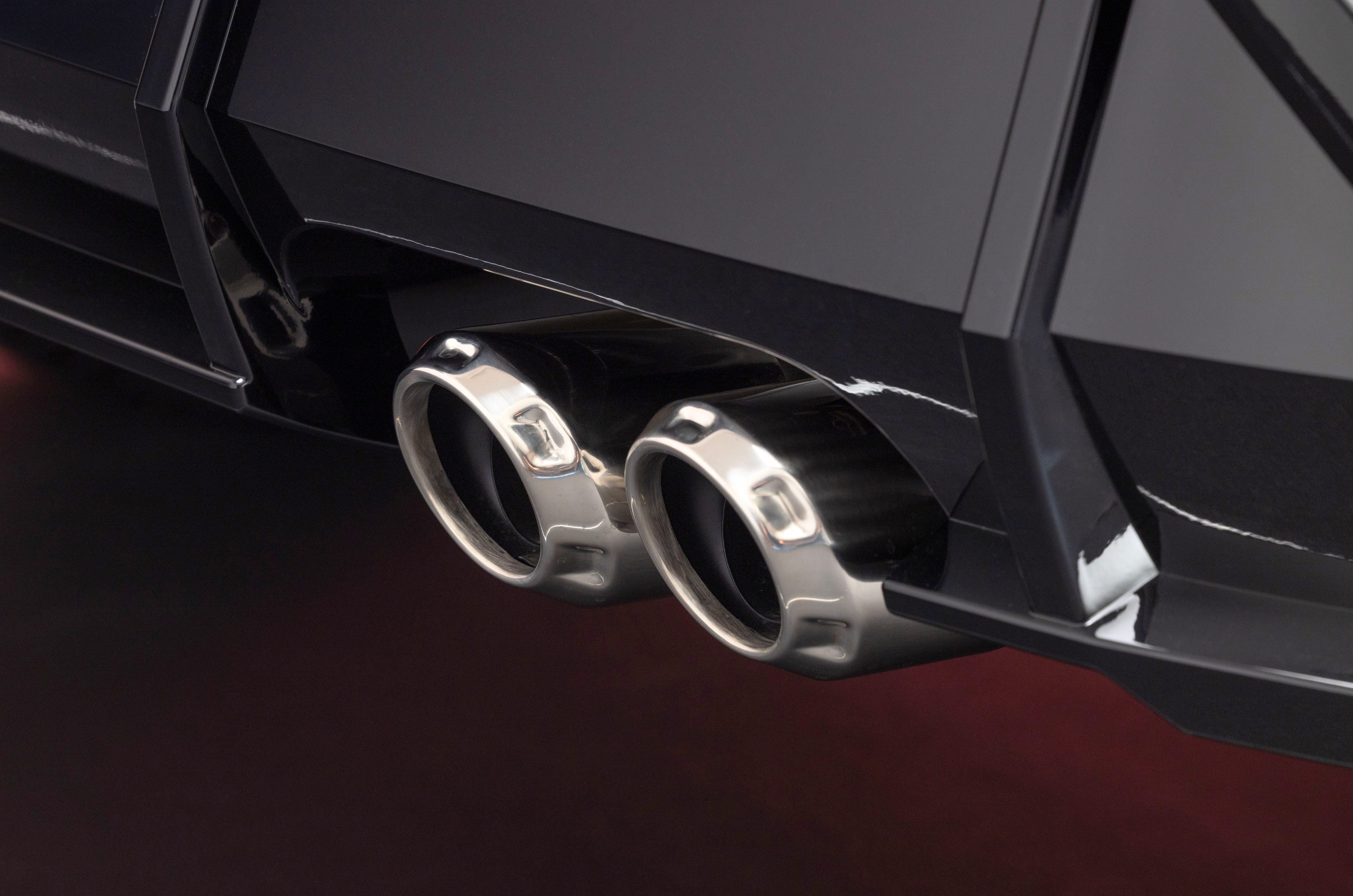
Over to the side, the N Line gets gloss-black finishes for the cladding and ORVMs, larger 18-inch alloy wheels, and N Line badging on the front fenders. The roof rails are also slimmer than the ones seen on the India-spec Bayon. At the back, the Bayon N Line sports a bigger twin-ridge roof spoiler, dual exhaust tips, a fully black bumper, and black finishes for the Hyundai emblem and Bayon wordmark on the bootlid.
The Europe-spec Bayon stretches the tape at 4,245mm long, 1,810mm wide, and 1,565mm tall, with a wheelbase of 2,600mm. These dimensions place it perfectly between the Venue and Creta in terms of size, and you can expect the India-spec Bayon to not stray that far off from them.
2026 Hyundai Bayon N Line interior and features
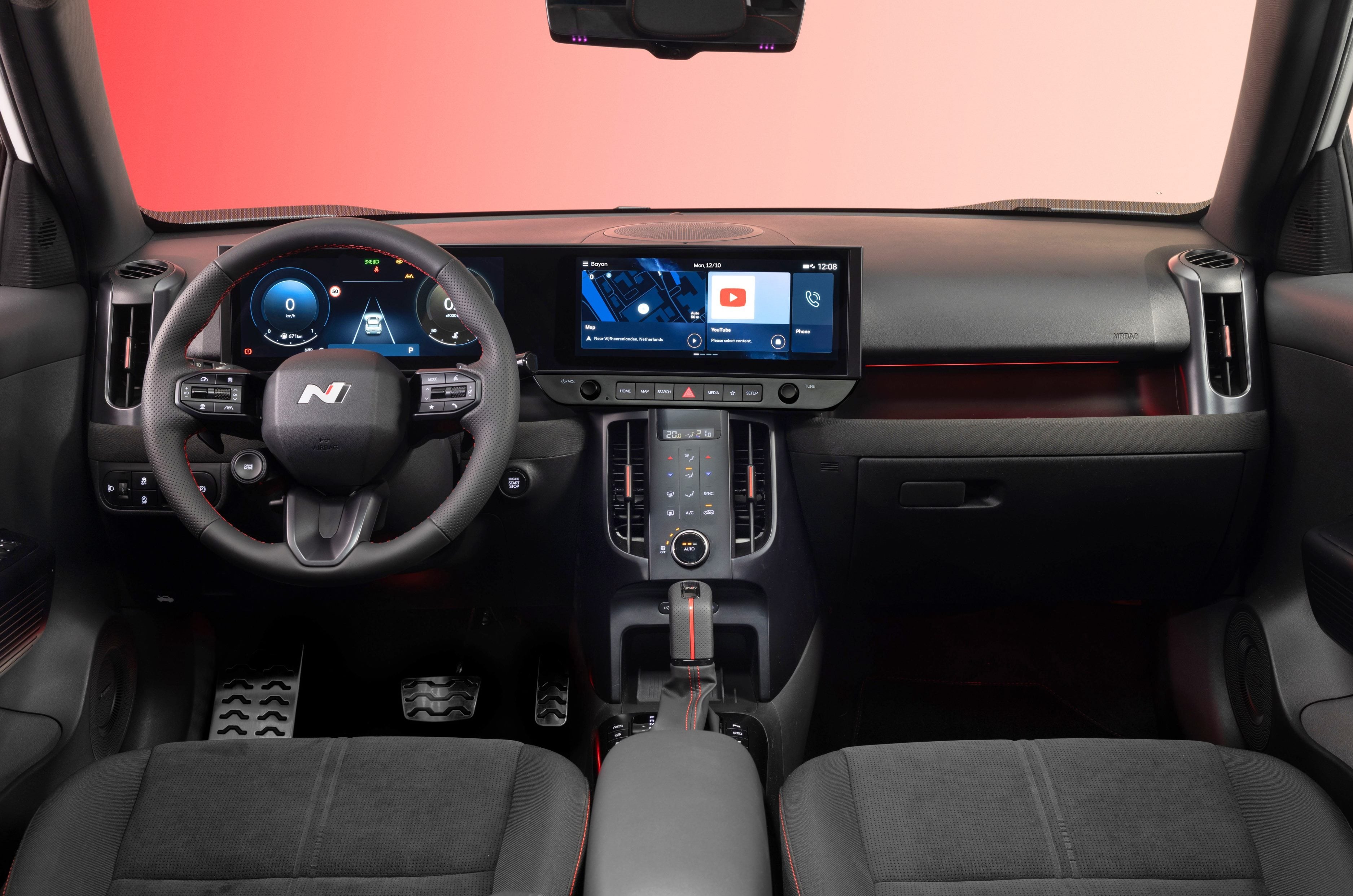
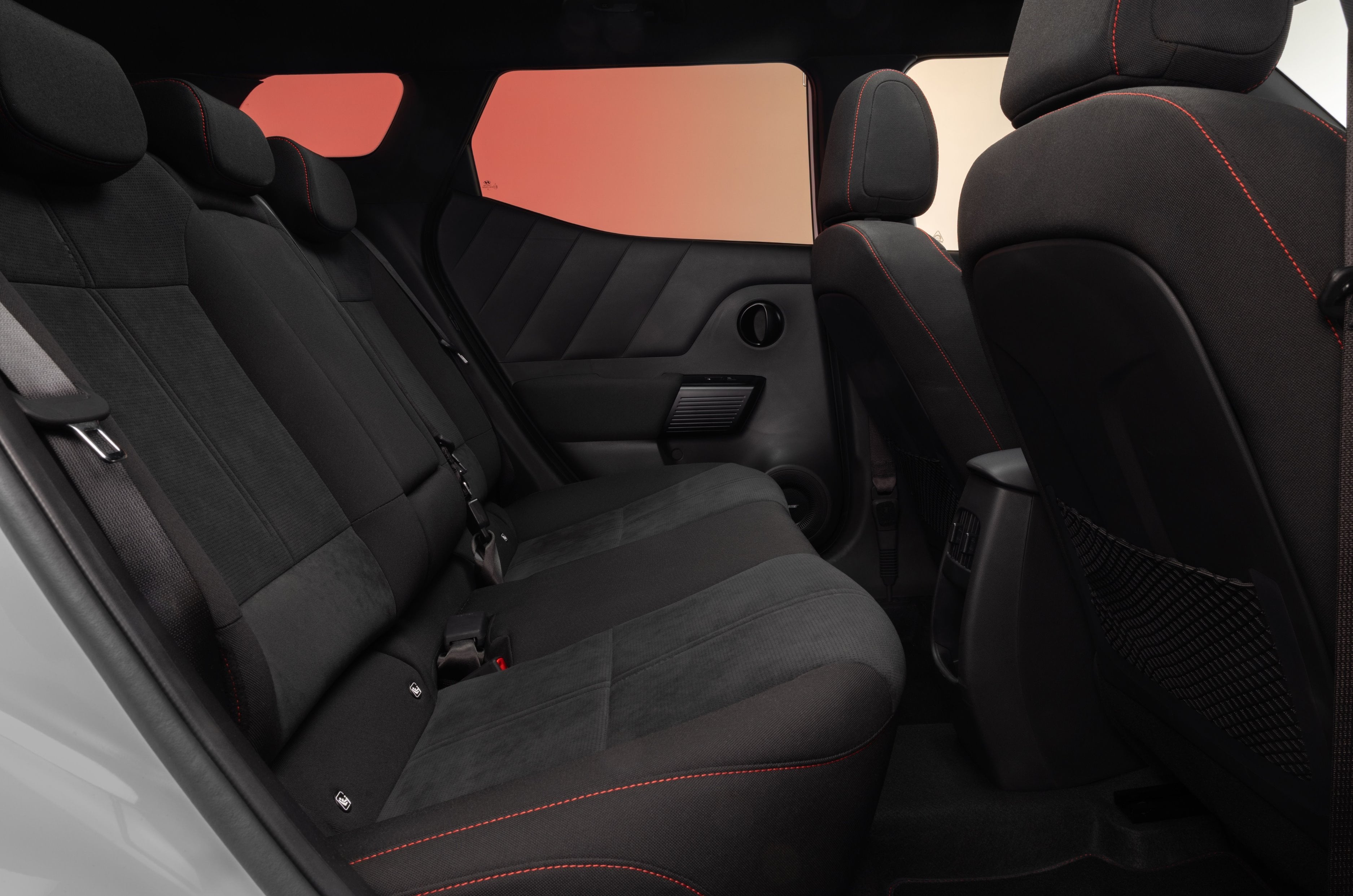
Similar to the outside, the core interior layouts of the India-spec Bayon and the N Line are identical, including a curved pair of 12.3-inch displays, a vertical design for the centre console (à la the fourth-gen i20), vertically oriented air vents, an open storage space on the co-driver side of the dashboard, among others. The Bayon N Line, however, brings in sportier touches like a black interior colour scheme with red accents and contrast stitching, Alcantara-esque seat upholstery, and an N-Line-specific steering wheel and gear lever.
As for features, the Bayon N Line offers wireless Apple CarPlay and Android Auto, ambient lighting, a panoramic sunroof, heated and ventilated front seats, reclining rear seats, a digital key, an 8-speaker Bose sound system, Level 2 ADAS, connected car tech, a wireless charging pad, dual-zone climate control, and more. Notably, Hyundai has not mentioned the inclusion of a generative AI voice assistant for the Bayon N Line, which the India-spec model will get. Coming to boot space, Hyundai claims 440 litres for non-hybrid versions of the Europe-spec Bayon.
2026 Hyundai Bayon N Line engine and gearbox
Where the India-spec Bayon will be powered solely by a 115hp 1.5-litre naturally aspirated four-cylinder petrol engine mated to either a 6-speed manual or CVT automatic, the N Line will be offered with Hyundai’s 1.0-litre three-pot direct-injection turbo-petrol motor in two states of tune – 90hp and 115hp – along with 6-speed manual and 7-speed dual-clutch automatic gearbox options.
Hyundai claims a 0-100kph time of as low as 10.8 seconds for the Bayon N Line – likely the 115hp DCT version – going up to 14.1 seconds for presumably the 90hp MT variant. Additionally, a strong-hybrid version will join the Europe-spec Bayon line-up at a later date, comprising a 1.6-litre direct-injection petrol engine, an electric motor, and a 6-speed DCT for a combined output of 138hp. It will also get adaptive regenerative braking that can be controlled by the steering-mounted paddle shifters.
Similarly, the India-spec Bayon is expected to receive a CNG version sometime after launch, which will strap an underbody tank to the SUV and allow it to directly rival the likes of the Maruti Suzuki Victoris, Maruti Suzuki Grand Vitara, and Toyota Hyryder.
Will the Hyundai Bayon N Line come to India
Hyundai is yet to confirm whether the Bayon N Line will be available in India, but given the positioning and target demographic of the model that will soon go on sale here, the prospect is unlikely (at least initially). The India-spec Bayon’s relatively sedate 1.5-litre engine, borrowed from the Creta, encourages smooth and relaxed driving over outright sportiness, and the incoming CNG version further reinforces the notion that this model will serve as Hyundai’s answer to the Victoris – a practical, no-nonsense midsize SUV that’s high on feel-good factor and low on running costs.
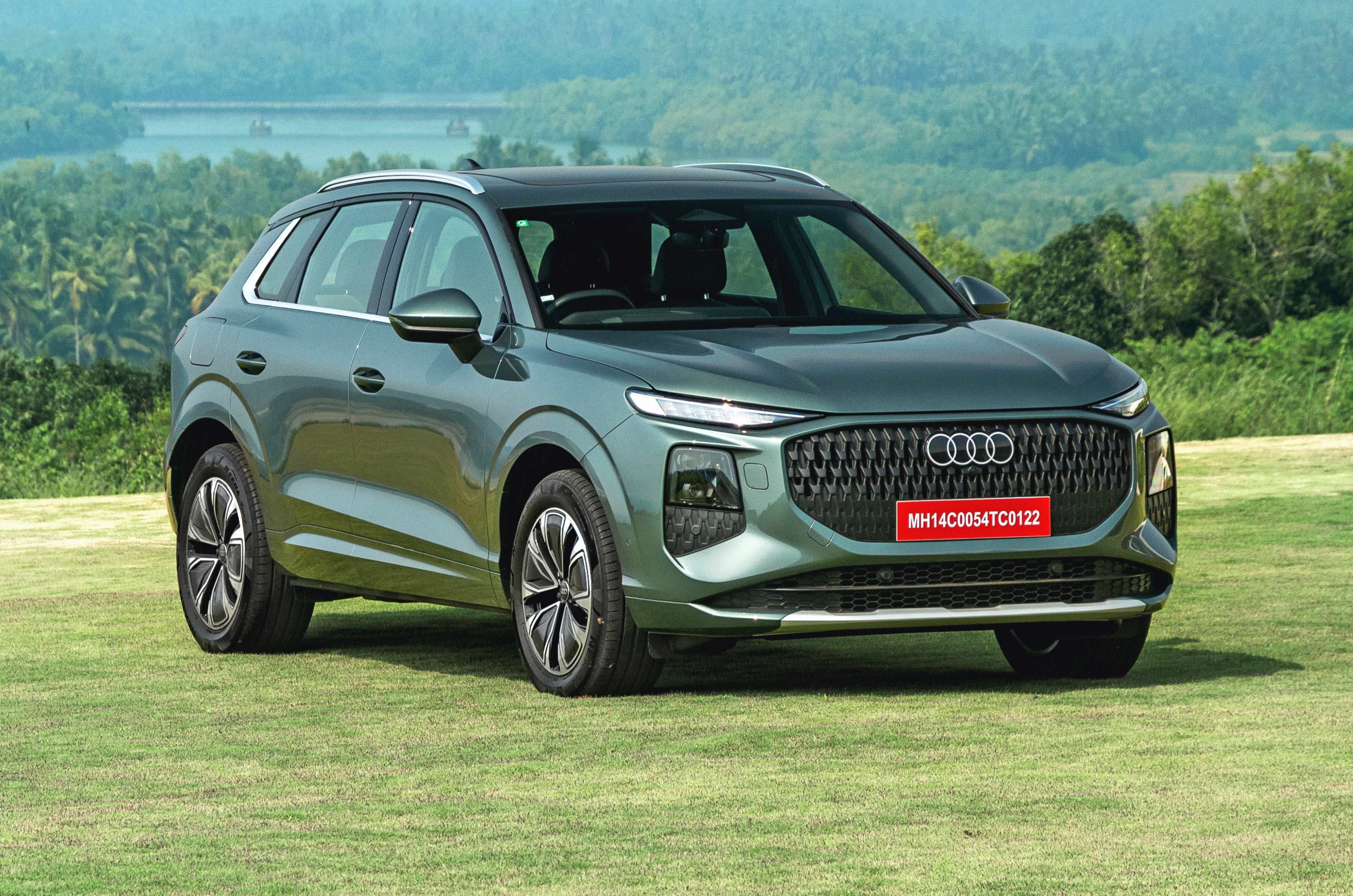
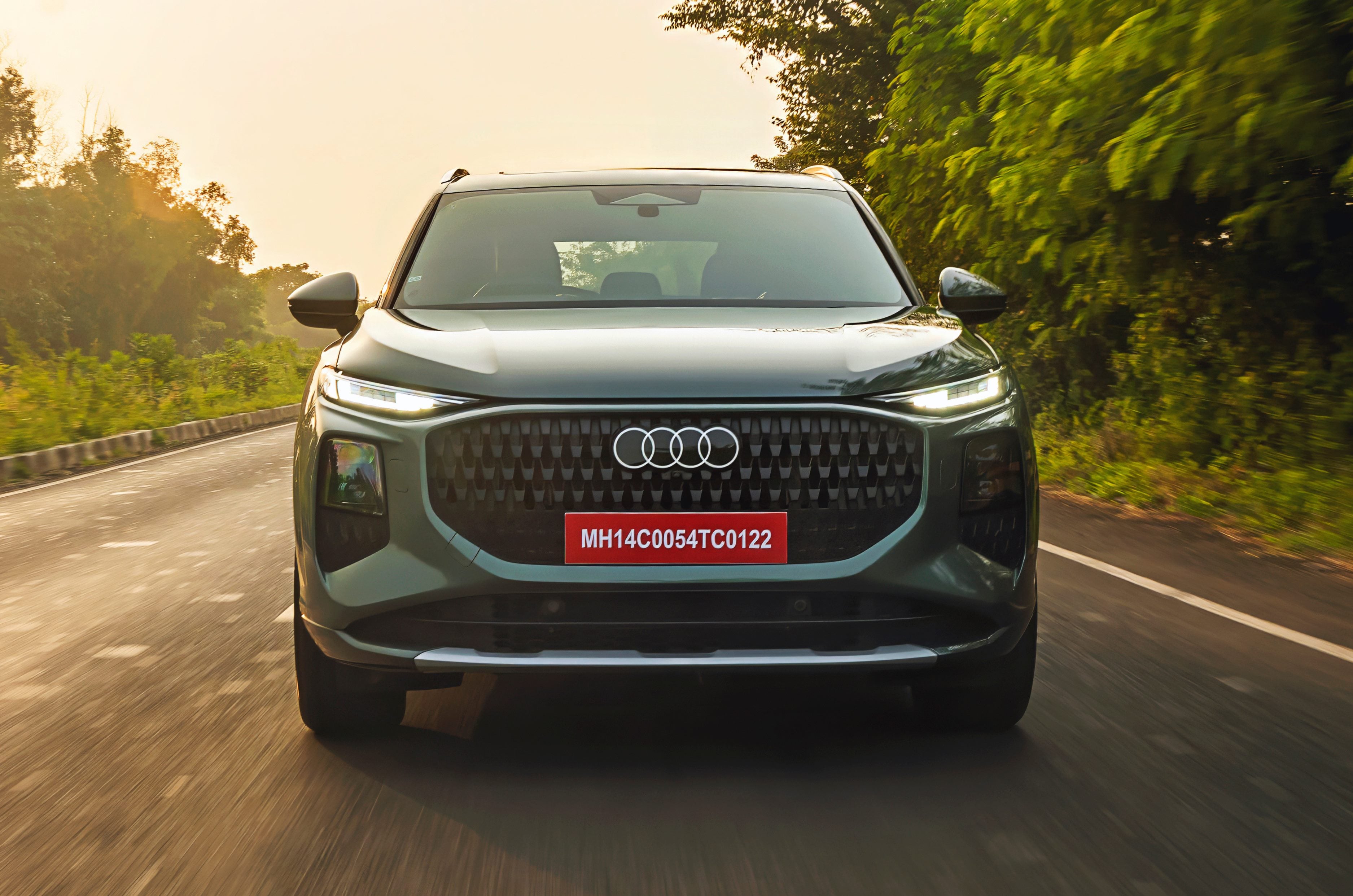
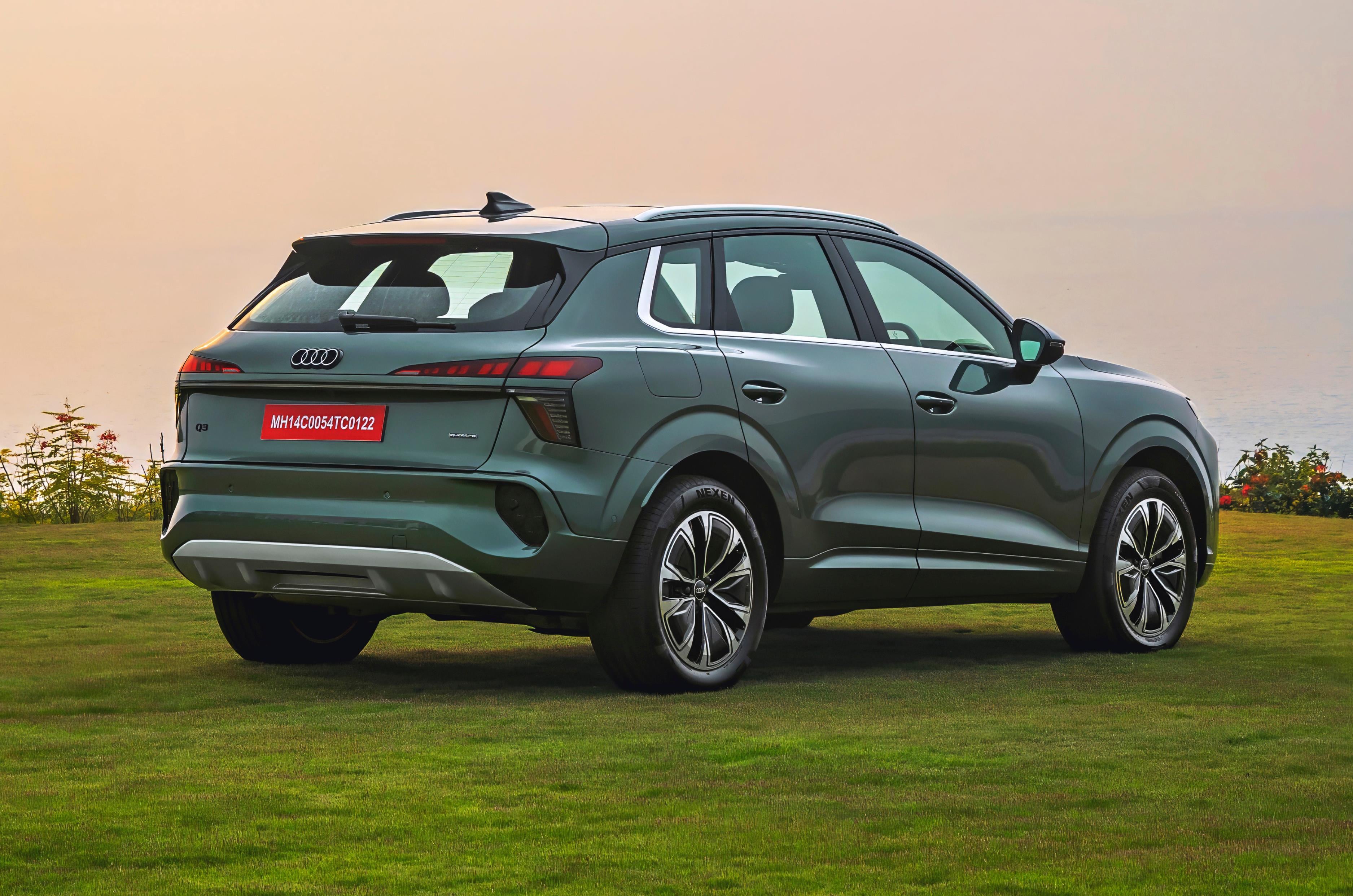
Audi India is set to launch the third-gen Q3 on Friday, 16 October. It will replace the current Q3, which has been around for quite a while, as Audi India’s entry-level SUV. More importantly, the third-gen Q3 will usher in some of the latest tech that Audi offers, which should make the SUV much more competitive against rivals like the Mercedes-Benz GLA and BMW X1. But will it? Now that we’ve reviewed the new Q3, here are three reasons why you should consider it over rivals, and two reasons why you may want to think twice about buying one.
Pros
Punchy turbo-petrol engine
Like its predecessor, the third-gen Q3 is powered by a 2.0-litre four-cylinder direct-injection turbo-petrol engine developing 204hp and 320Nm. It’s the biggest and strongest engine in its segment, and save for some brief hesitation at low revs, remains a gem. As soon as the turbo is on song, this engine is eager and free-revving, responding promptly in the city and building speed easily on the highway. Audi claims a 0-100kph time of 7.1 seconds for the new Q3 – a segment-best figure.
The Q3’s engine continues to be paired with a 7-speed dual-clutch automatic, which is a great companion. Downshifts are quick and easy, and engaging Sport mode or flicking the paddle shifters will give you full control. Audi’s Quattro all-wheel drive system is standard fit for the Q3 as well, giving you more confidence when driving on slippery surfaces.
Excellent ride and handling balance
Audi has tuned the new Q3’s suspension very well. The setup has the typical firmness you expect from a European car, but it’s never uncomfortable and absorbs potholes and broken roads with great composure. Part of the credit goes to the 55-profile tyres too, as their thick sidewalls soak up much of the shock before it reaches the suspension.
The handling of the new Q3 is surprisingly good too, with the variable-ratio steering effectively loosening at low speeds and weighing up as you increase the pace. There’s a slight amount of slack around the straight-ahead position, but the steering remains very accurate and direct regardless. Despite its quick steering, the Q3 also remains stable at highway speeds and changes lanes with ease and agility.
Well-built interior
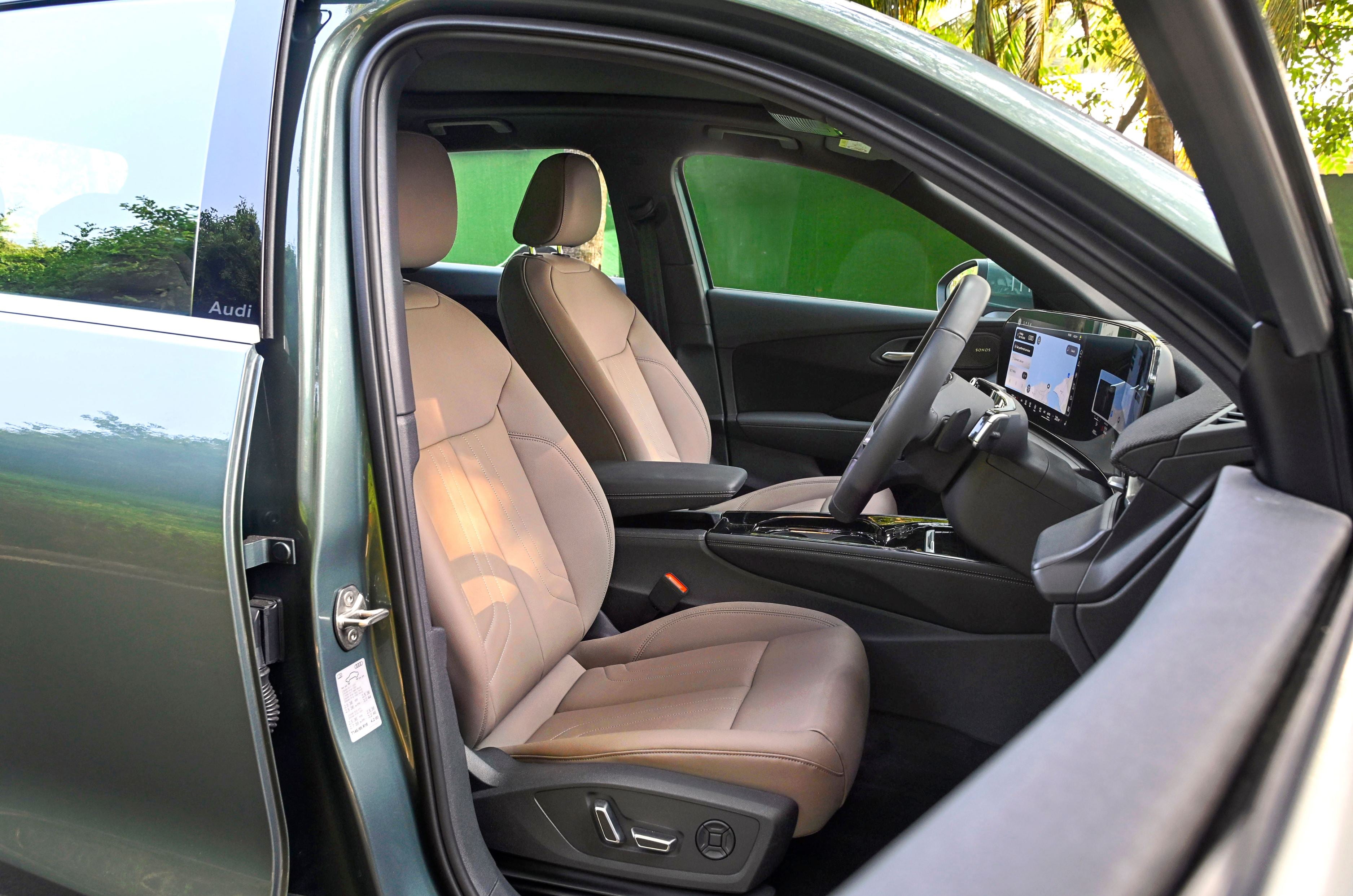
Among the most noticeable leaps of the new Q3 over the outgoing model is on the inside. The dashboard sports a cleaner and more modern layout, housing an 12.8-inch infotainment touchscreen and 11.9-inch digital driver’s display. Much of the leather in the cabin has been ditched in favour of fabric, and plastic quality isn’t that great in the lower regions, but even so, the Q3’s interior feels well put-together and more robust than those of its rivals.
Cons
Lack of powertrain options
The Q3’s turbo-petrol engine is undoubtedly lovely, but that’s about it as far as powertrain options go. There will be no diesel, hybrid, or electric versions of the India-spec Q3, at least at launch. This puts the Audi SUV at a disadvantage, since the GLA and X1 can be had with diesel engines – the BMW is available as a long-wheelbase EV too (iX1 LWB). Offering Quattro as standard may also drive up the price of the new Q3, which could dissuade buyers who prefer a lower price tag over all-wheel drive.
Some features still missing
While the Q3 has a decent list of equipment, including a 12-speaker Sonos sound system, a panoramic sunroof, powered and heated front seats, dual-zone climate control, adaptive cruise control, auto-park assist, and more, there are still some features that Audi missed out on.
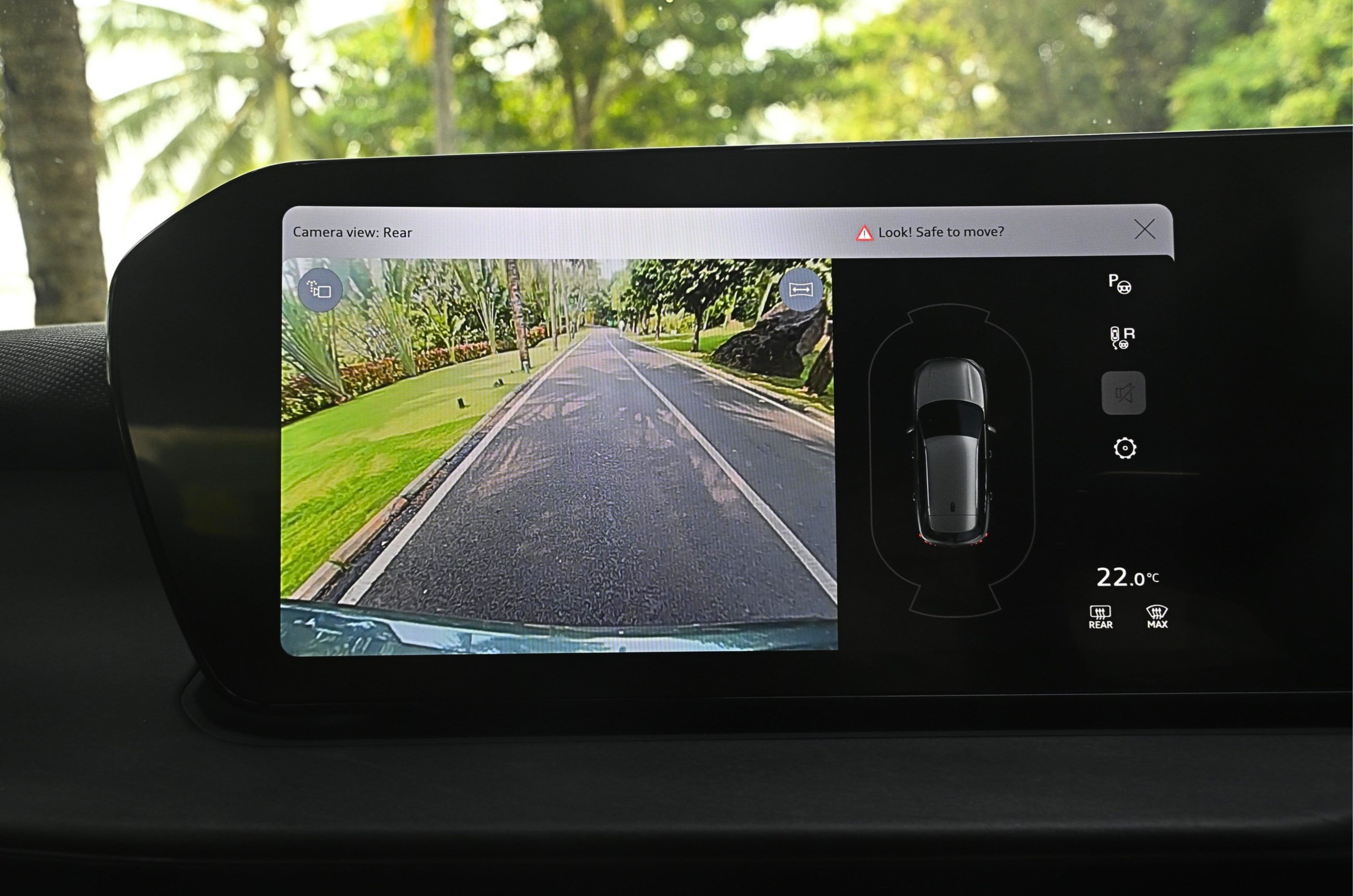
Chief among them is seat ventilation, which makes much more sense than heated seats in our climate conditions. Another big miss is a 360-degree camera, as it greatly helps with maneuovring and parking in tight spaces. The included rear camera’s resolution (pictured above) is disappointing too. Lastly, there are no ADAS features aside from adaptive cruise control – lane-keep assist and blind-spot monitoring would’ve come in handy.
Hyundai has fully revealed the new Bayon midsize SUV ahead of its price announcement on October 26. The Bayon will be positioned between the Venue and Creta in Hyundai’s SUV lineup and is squarely meant to take on the Maruti Victoris. It gets Hyundai’s latest ‘Art of Steel’ design language, a new interior shared with the Brazil-spec i20 and will come powered by a 1.5-litre petrol engine at launch. Bookings for the new Hyundai Bayon have commenced today.
First Hyundai in India to get Generative AI voice assistance
Interior gets dual 12.3-inch displays for instrumentation and infotainment
1.5-litre petrol engine gets 6-speed MT and CVT gearbox options
Hyundai Bayon exterior design
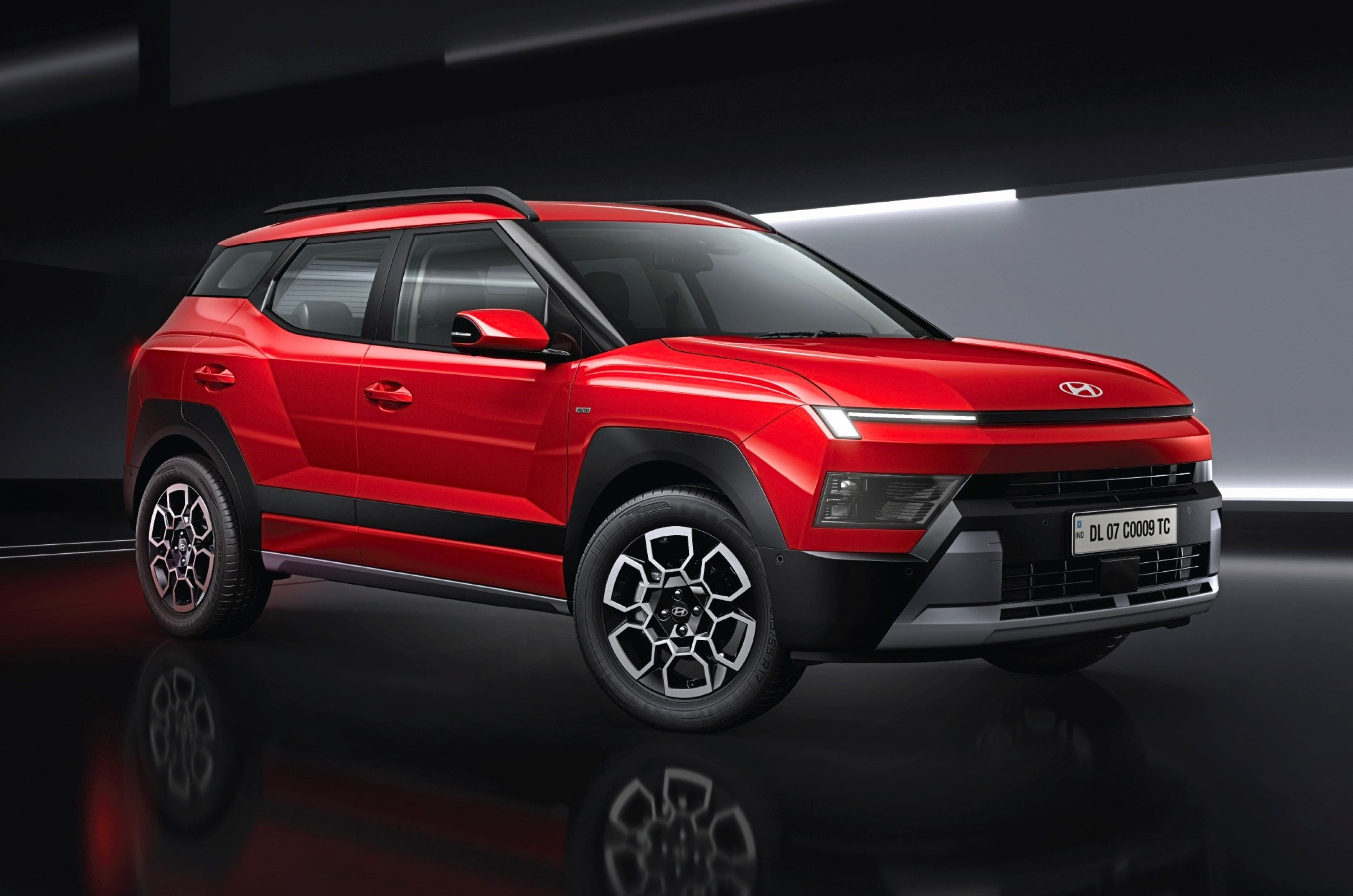
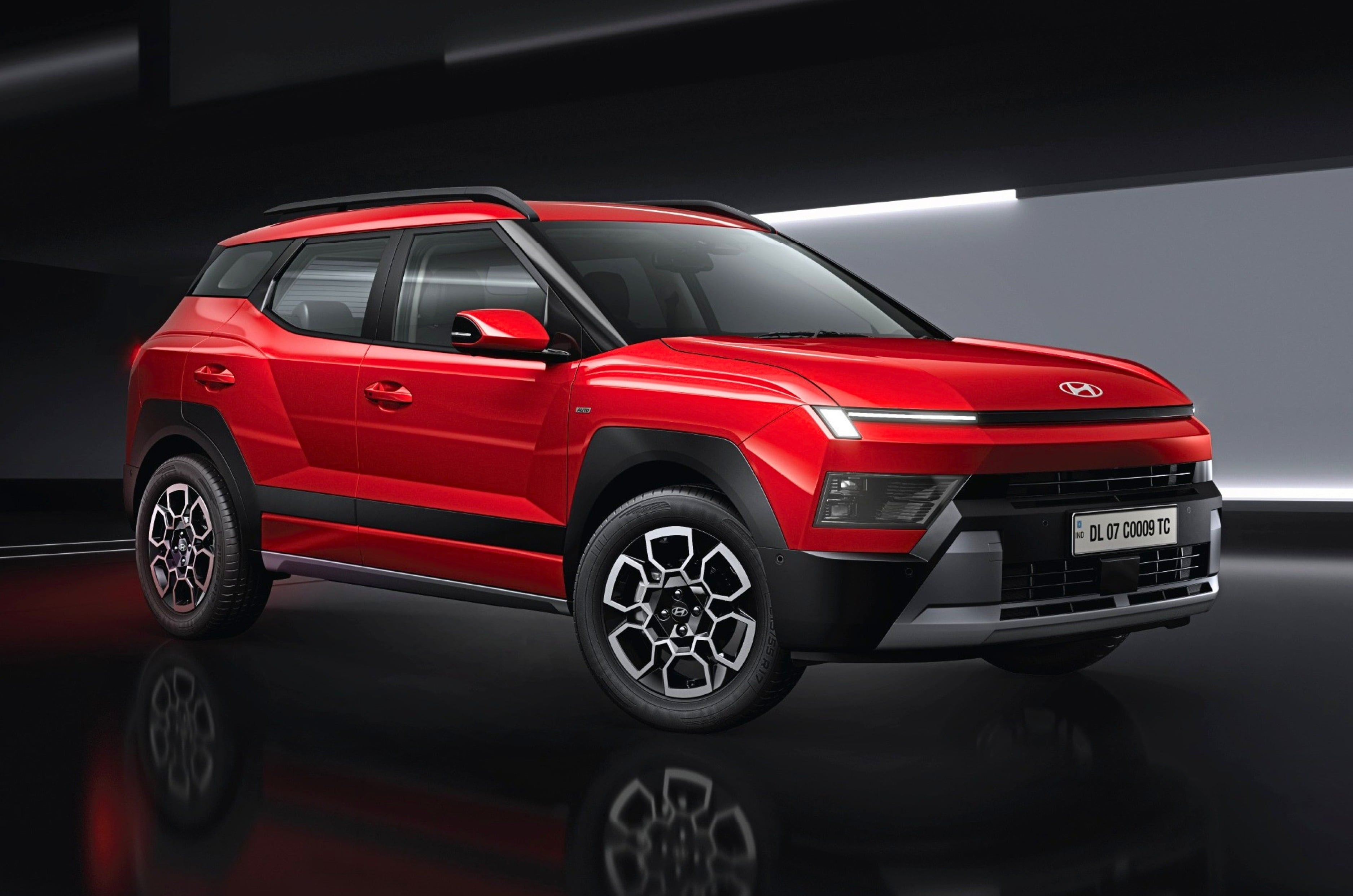
The Bayon gets Hyundai’s latest ‘Art of Steel’ design language, and from certain angles, looks very much like a scaled-down Tucson that was recently revealed for the North American market. Although Hyundai hasn’t revealed the exact dimensions yet, it’s expected to measure just a tad more than 4 meters, thereby slotting below the 4.3-meter Creta.
Up front, the layered fascia sports a split headlamp setup, with the LED DRLs positioned in a slim black trim on the leading edge of the bonnet. The DRLs also resemble Hyundai’s ‘H’ motif split in half – this one doesn’t get a full-width LED light band, as is very much the trend these days. Meanwhile, the bumper houses the main headlamp unit and chunky cladding finished in black and silver.
The Bayon perhaps looks the most distinctive in profile, with its flared wheel arches and sharp character lines adding quite a lot of visual muscle. There’s generous use of cladding over the wheel arches and the petal-style alloy wheels also look quite stylish. Hyundai has also opted for traditional pull-type door handles instead of flush-fitting units and the gloss-black treatment for the pillars creates a nice floating effect for the roof.
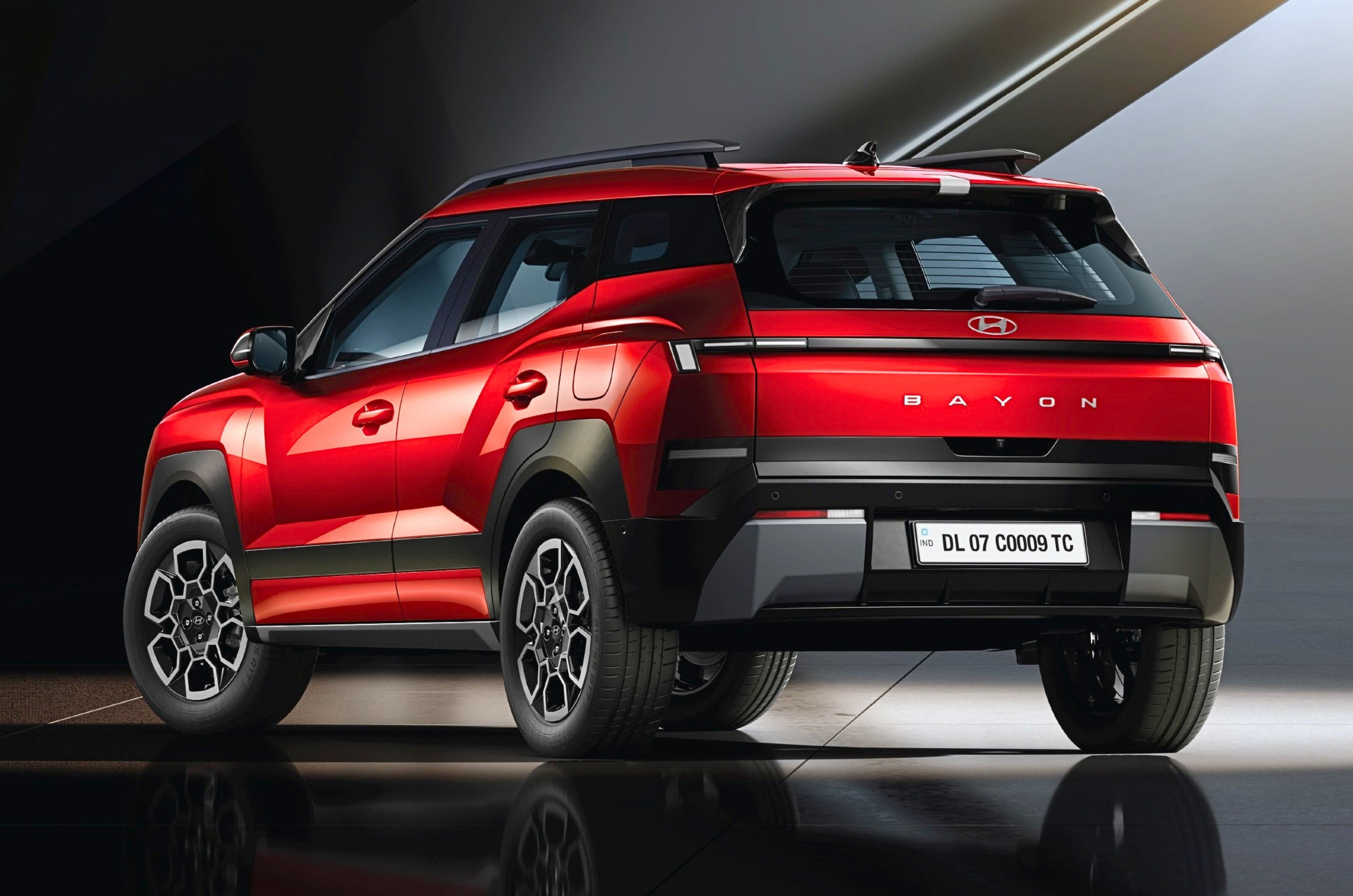
At the rear, the Bayon gets a slim black band housing very sleek tail lamps and there’s ‘Bayon’ spelt bold and centre on the tail gate. There’s also a pronounced roof spoiler, while the bumper gets a dual-tone black and silver treatment housing some more lighting elements. Overall, the Bayon has a crossover-ish look rather a boxy, upright SUV.
Hyundai Bayon interior and features
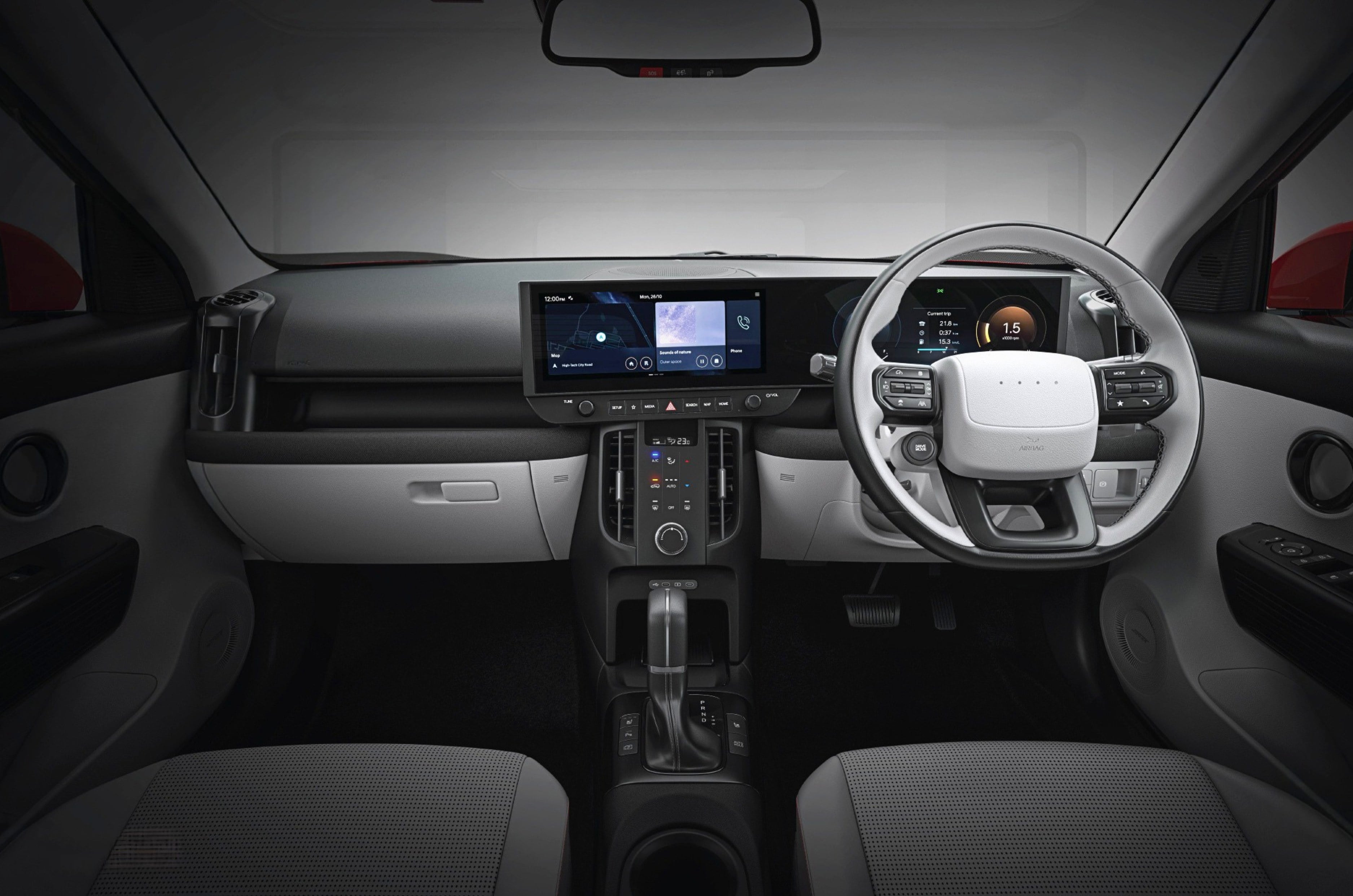
The layered dashboard sports a twin 12.3-inch connected screen setup and a central dropdown panel housing the HVAC controls – it also seems to have physical dials and knobs, which is always a welcome sight. We can also spot a wireless charging pad at the base of the vertically oriented centre console.
The steering wheel with Hyundai’s four-dot motif, the vertical AC vents flanking the centre panel and even the door pads look very similar to those on the new i20. It also gets steering-mounted paddle shifters, and like all Hyundais, expect it to be properly kitted out with convenience and safety features.
Hyundai Bayon expected powertrain options
At launch, Hyundai is offering the Bayon with the tried and tested 115hp/144Nm 1.5-litre, four-cylinder naturally aspirated petrol engine that powers the Creta. It will come with manual and CVT gearbox options. And while Hyundai hasn’t confirmed it yet, a CNG version is also expected to be added to the lineup at a later stage, likely with an underbody tank, making the Bayon the first Hyundai model over four metres long to be powered by CNG.
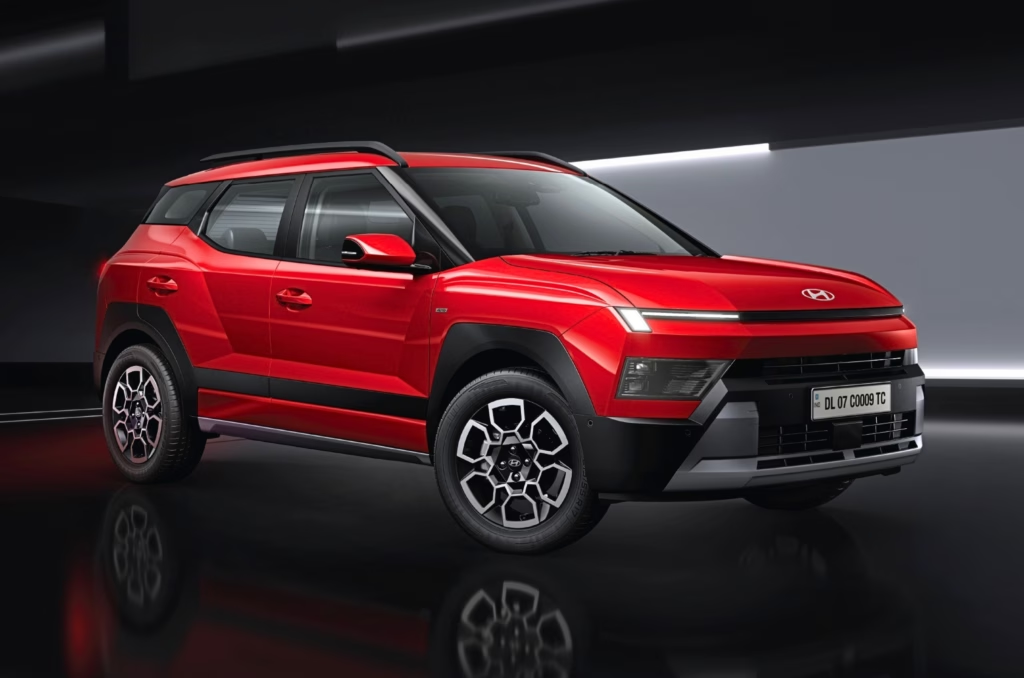
Mahindra will debut a CNG the variant of the XUV 3XO on October 15, expanding its compact SUV’s powertrain line-up to four options. The CNG version will join the existing petrol, diesel and electric variants, making it the third compact SUV in India to offer a CNG option, alongside the Maruti Suzuki Brezza and Tata Nexon. The teaser offers a first look at the XUV 3XO CNG’s exterior and interior.
Mahindra XUV 3XO CNG: Expected powertrain
The XUV 3XO CNG is expected to use the 1.2-litre turbo-petrol engine with multi-point fuel injection (MPFI), which produces 111hp and 200Nm in the petrol version. The petrol-powered XUV 3XO is available with six-speed manual and automatic gearboxes. Transmission options for the CNG version, along with details of the CNG tank and its placement, are likely to be revealed closer to launch.
Mahindra XUV 3XO CNG: exterior and interior
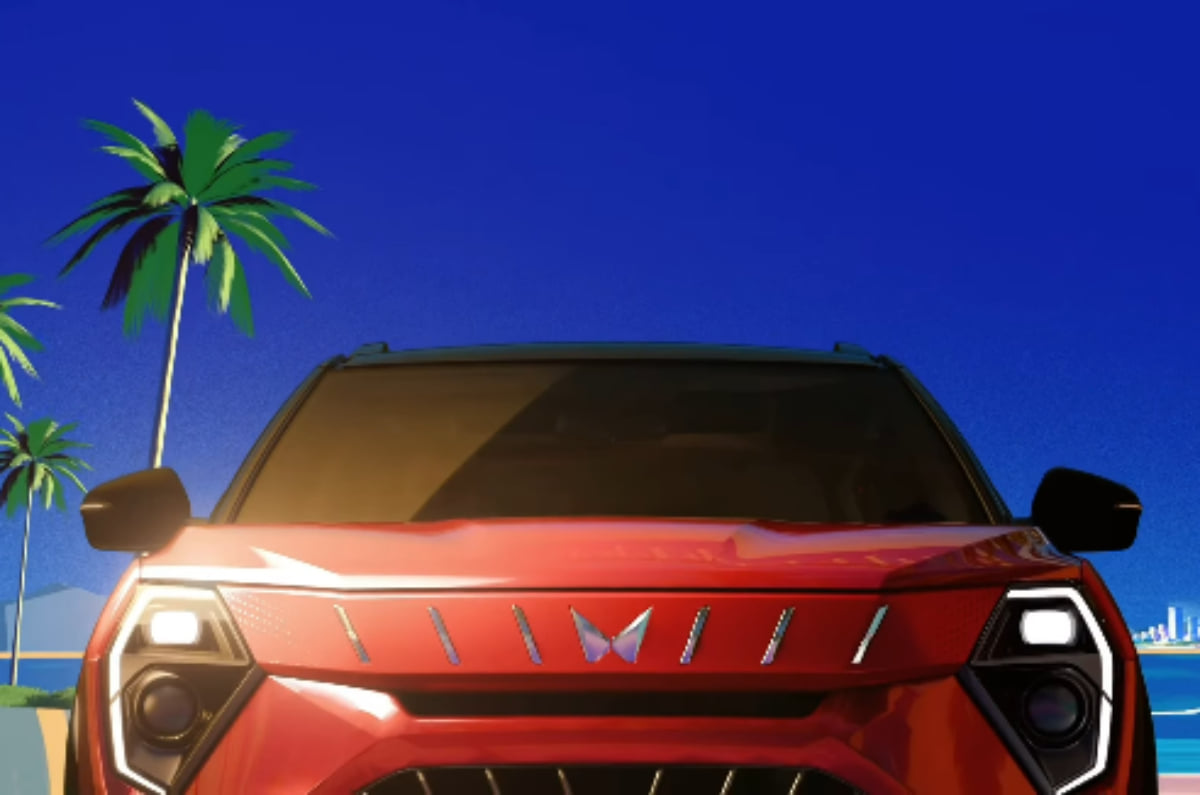
The teaser shows a body-coloured panel between the headlamps, with slim metallic inserts flanking the Mahindra Twin Peaks logo. The closed-off grille design resembles the RevX range, which suggests Mahindra could be offering the CNG powertrain with the RevX range. The teaser also confirms a panoramic sunroof.
Other exterior details are expected to remain largely unchanged from the standard XUV 3XO.