3 reasons to buy the Maruti Celerio and 3 reasons to avoid it

3 reasons to buy the Maruti Celerio and 3 reasons to avoid it
Maruti Celerio side static

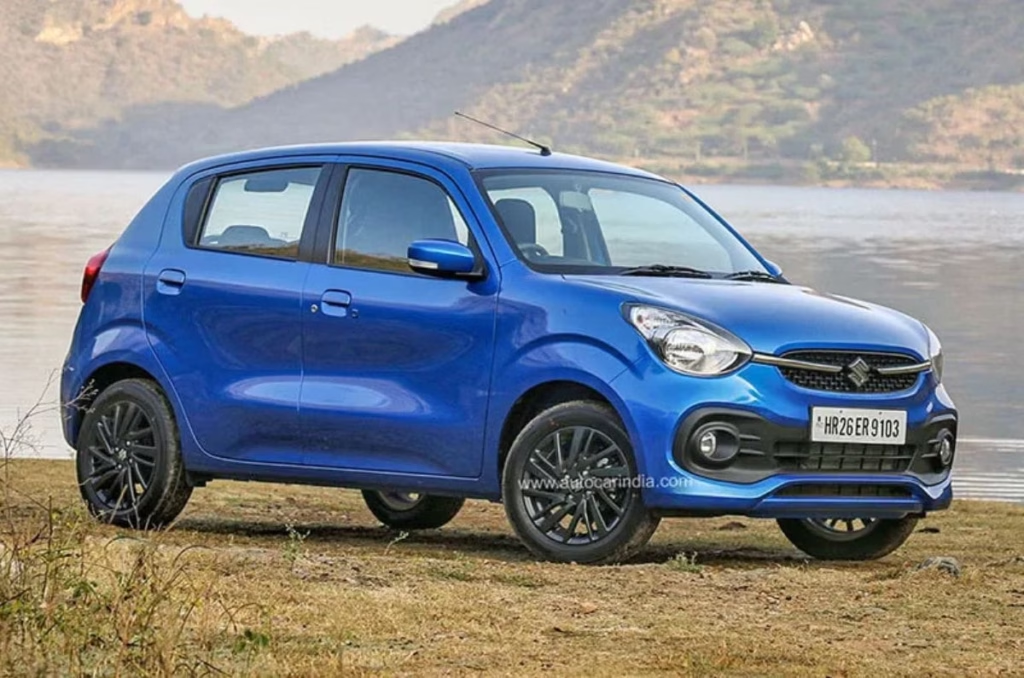
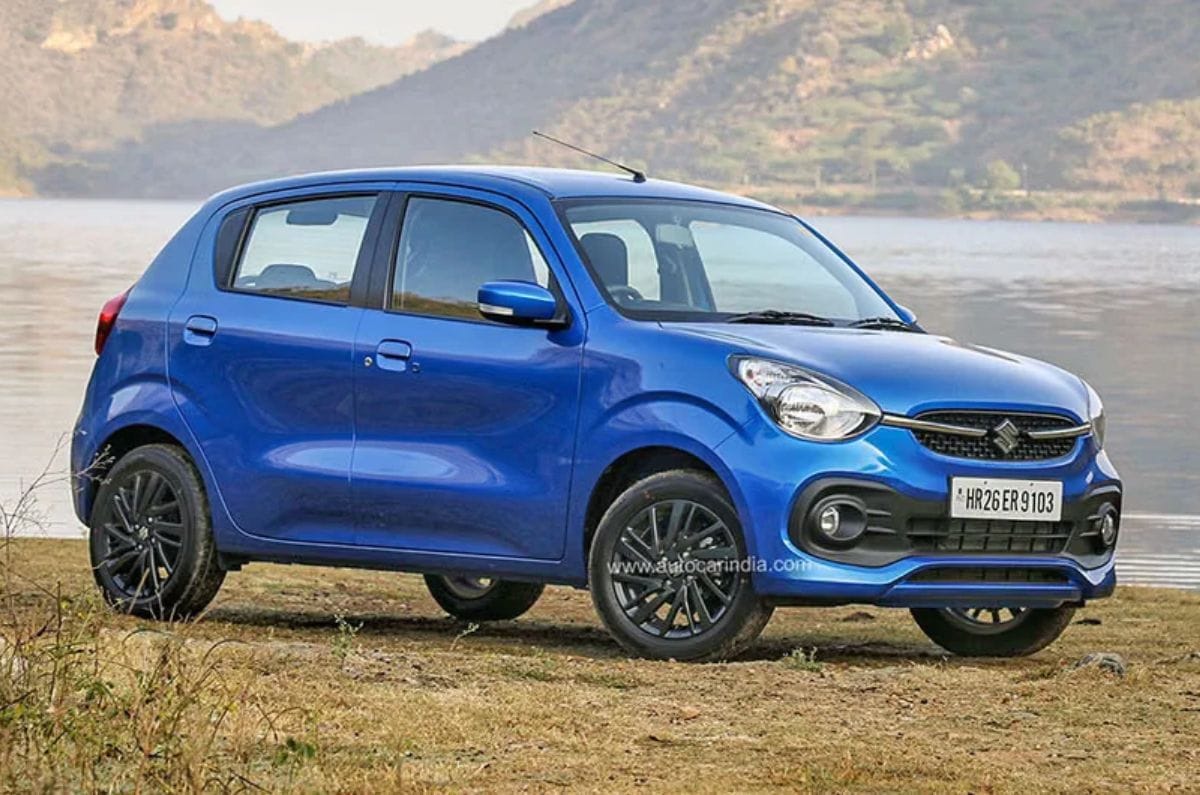
The Celerio is positioned between the cheaper Alto K10 and the even more popular Wagon R in Maruti Suzuki’s line-up. Priced between Rs 4.70 lakh and Rs 6.75 lakh (ex-showroom), the Celerio is available in petrol and CNG versions with manual and AMT gearbox options, just like its rivals. While the second-gen model arrived on the entry-level hatchback scene in 2021, it hasn’t received a single facelift in the following five years, placing it at a disadvantage over some of its competitors. This Heartect platform-based hatchback goes up against the likes of the new-gen Tata Tiago and its own stablemate, the Wagon R.

Reasons to buy the Maruti Celerio

City slicker

The Celerio’s urban-friendly demeanour is great for regular commutes
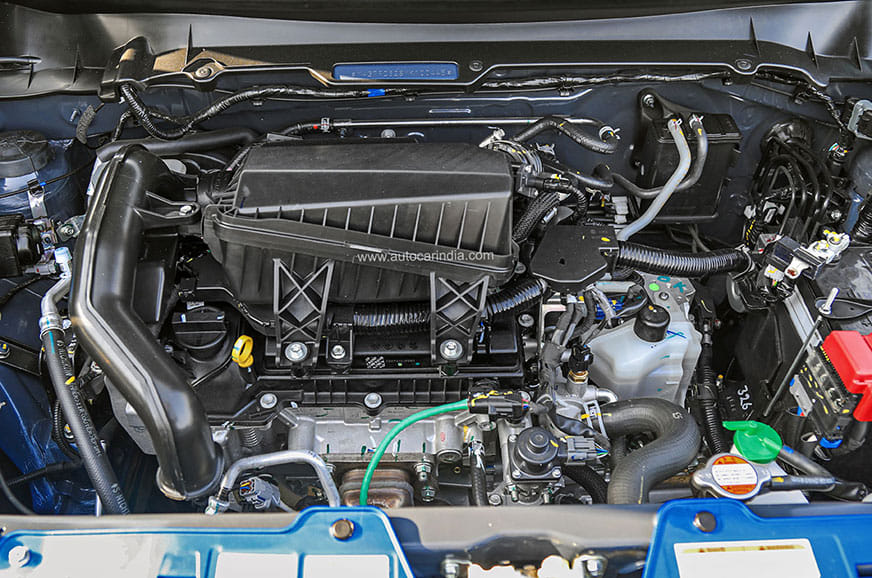
Maruti Celerio engine

One of the factors making the Maruti Celerio a great urban runabout is its 1.0-litre three-cylinder engine. It builds power smoothly right from lower RPMs which, along with a slick 5-speed manual gearbox and a light clutch, make pottering around town an easy affair. Those seeking an even easier time commuting can pick the AMT (automated manual transmission), whose shifts are relatively smooth as far as AMTs go.
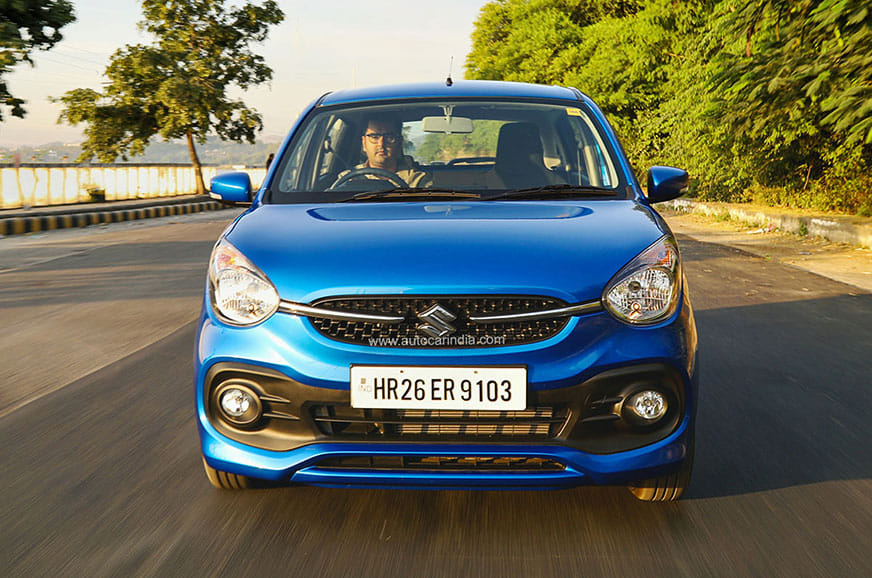
Maruti Celerio front tracking

Helping matters further in the city is the plaint suspension, which soaks up bumps at lower speeds without much fuss. The light steering, tight turning radius and good front visibility also go a long way in helping you navigate compact parking spots and bustling city traffic. And despite its cost-friendly design, the height-adjustment feature for the driver’s seat means finding a suitable position isn’t too much of an issue.

Efficiency champ

This is Maruti Suzuki’s most frugal offering in the country
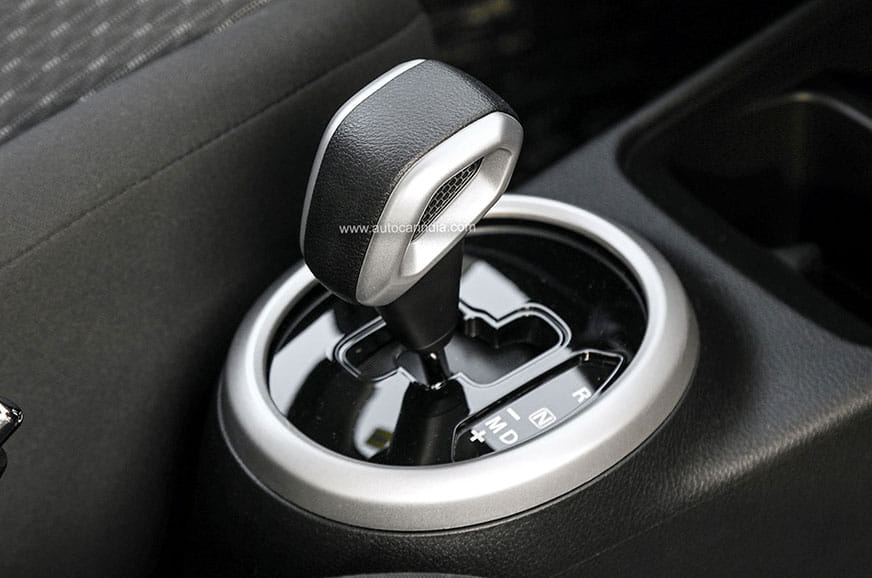
Maruti Celerio AMT gearbox

Not only is it easy to drive, but the Maruti Celerio will not have you complaining about fuel economy either. The petrol version with the 5-speed manual transmission has a claimed mileage of up to 25.24kpl, while the AMT option is rated at 26kpl – making the Celerio AMT the most fuel-efficient petrol car in the market. All variants of the Celerio come with an automatic engine stop-start function, further reducing fuel consumption. While this feature isn’t enabled when running on CNG (in VXi MT only), the claimed mileage of 34.43km/kg is better than that of the Maruti Wagon R CNG and the Renault Kwid CNG.

Roomy boot

The Celerio’s boot affords more space than some rivals
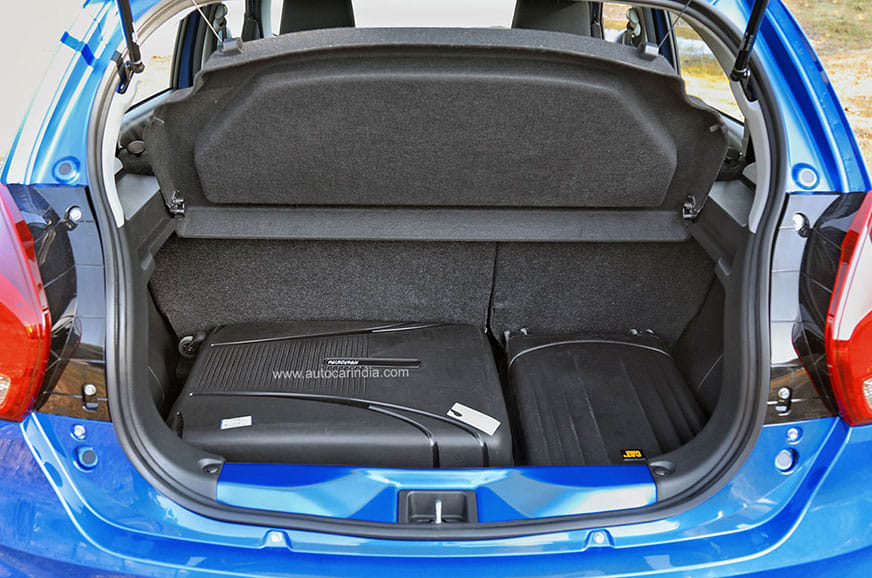
Maruti Celerio boot space

At 292 litres, the boot of the Maruti Celerio is bigger than those rivals such as the Tata Tiago and Renault Kwid. This is enough to accommodate two large suitcases and a couple of carry-on-sized bags, with still some room to spare. If you need even more space, the 60:40 split-folding rear seats will come in handy. On the other hand, the loading lip is high and relatively narrow, making loading or unloading heavier items cumbersome.

Reasons to avoid the Maruti Celerio

Ergonomic niggles

This interior has a few sore points that’ll take getting used to
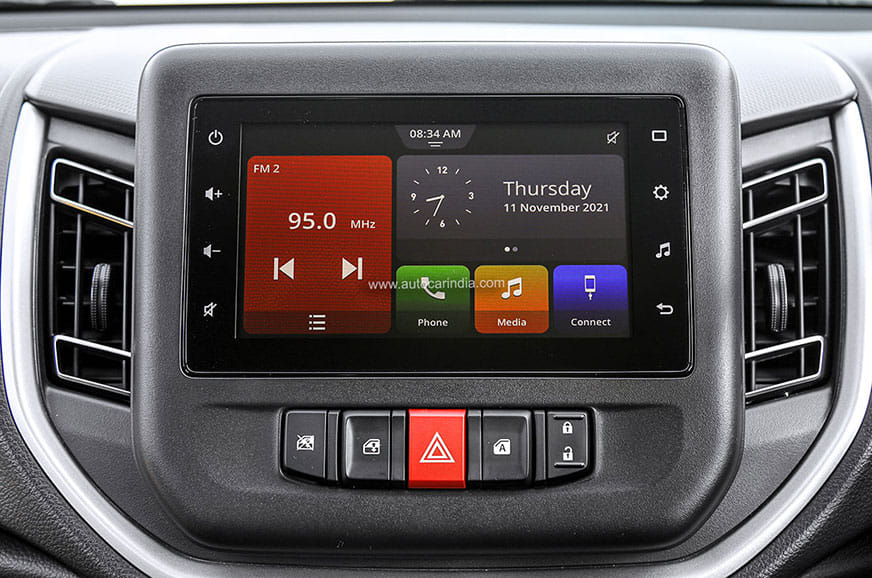
Maruti Celerio infotainment

Compared to most of its adversaries, the power window switches of the Maruti Celerio aren’t placed on the doors. The front ones are positioned on the dashboard, whilst the rear switches are found on the rear centre pedestal between the front seats. Buttons to operate the door and power-window locks are also on the dashboard. Then there are the thick A-pillars, which can obstruct your view at junctions and roundabouts.
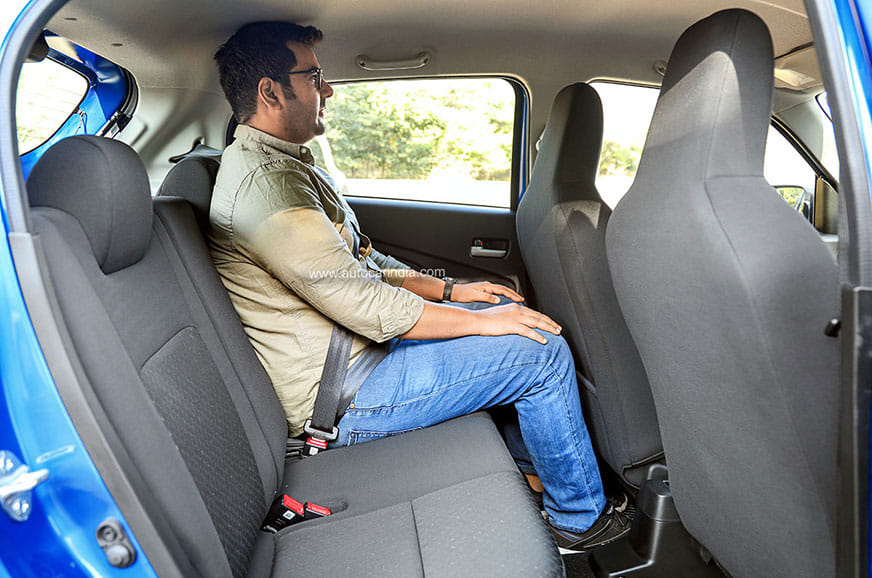
Maruti Celerio rear seats

The well-cushioned rear seats of the Celerio offer plenty of kneeroom for even taller occupants. However, headroom isn’t all that good, and the fixed headrests are positioned way too low to be effective. The angled design of these headrests also means that they poke into your back, which can be uncomfortable.

Unimpressive material quality and feature set

The Celerio’s cabin isn’t the most up-to-date in this segment

When compared to the new-gen Tata Tiago, the interior of the Maruti Celerio looks and feels a touch dated. There’s plenty of hard plastics which, even though are accompanied by shiny trim and a sculpted dashboard, feel pretty basic. The relatively simple design is backed by an equipment list that isn’t particularly competitive either.
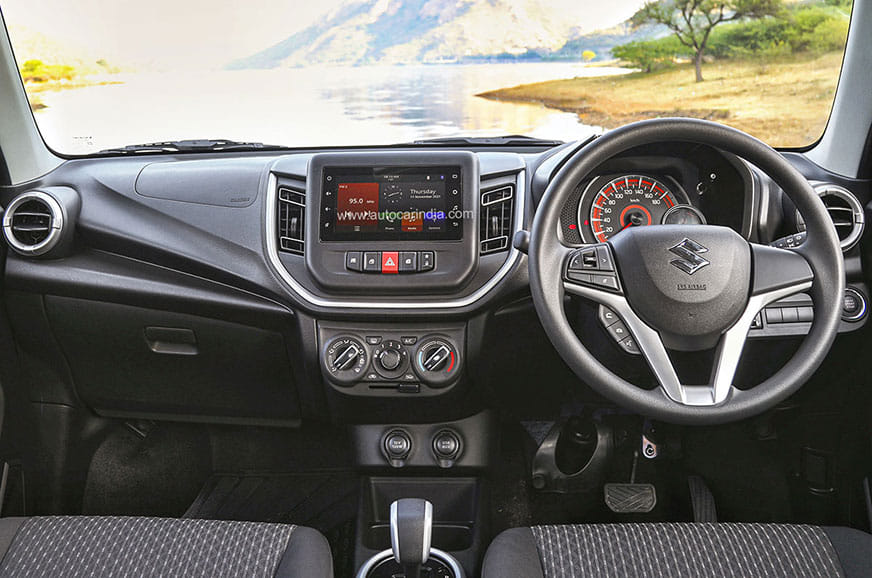
Maruti Celerio interior

For instance, even the top trim level of the Celerio doesn’t come with a rearview camera. There’s also no automatic climate control system, while Apple CarPlay and Android Auto both require a wired connection. The touch-infotainment screen is a 7-inch unit, whereas a similarly priced Tata Tiago offers an 8-inch setup. On the outside, the Maruti Celerio gets the old-school ‘flip-up’ door handles.

Imperfect on a highway

This hatchback isn’t particularly meant to be driven hard or fast
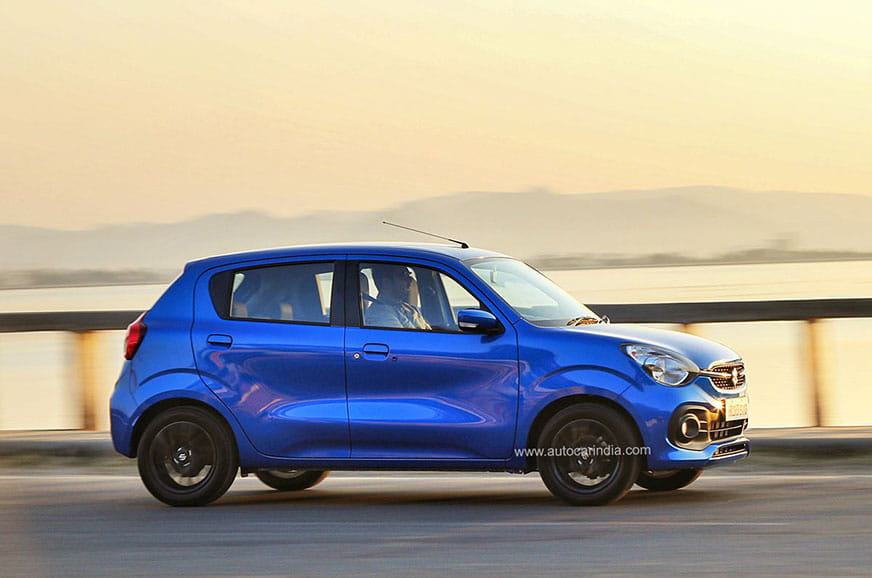
Maruti Celerio side tracking

While it’s perfectly at home in the city, the Maruti Suzuki Celerio isn’t as good out on the open road. The lifeless steering aside, the body moves around enough – both of which robs you of confidence required to push the car any harder.

Also read

3 reasons to buy the Toyota Hyryder and 2 reasons not to

Mitsubishi Pajero: What’s changed from fourth to fifth-generation model
Hyundai Creta gets benefits of up to Rs 1 lakh in September 2026

Hyundai Creta gets benefits of up to Rs 1 lakh in September 2026
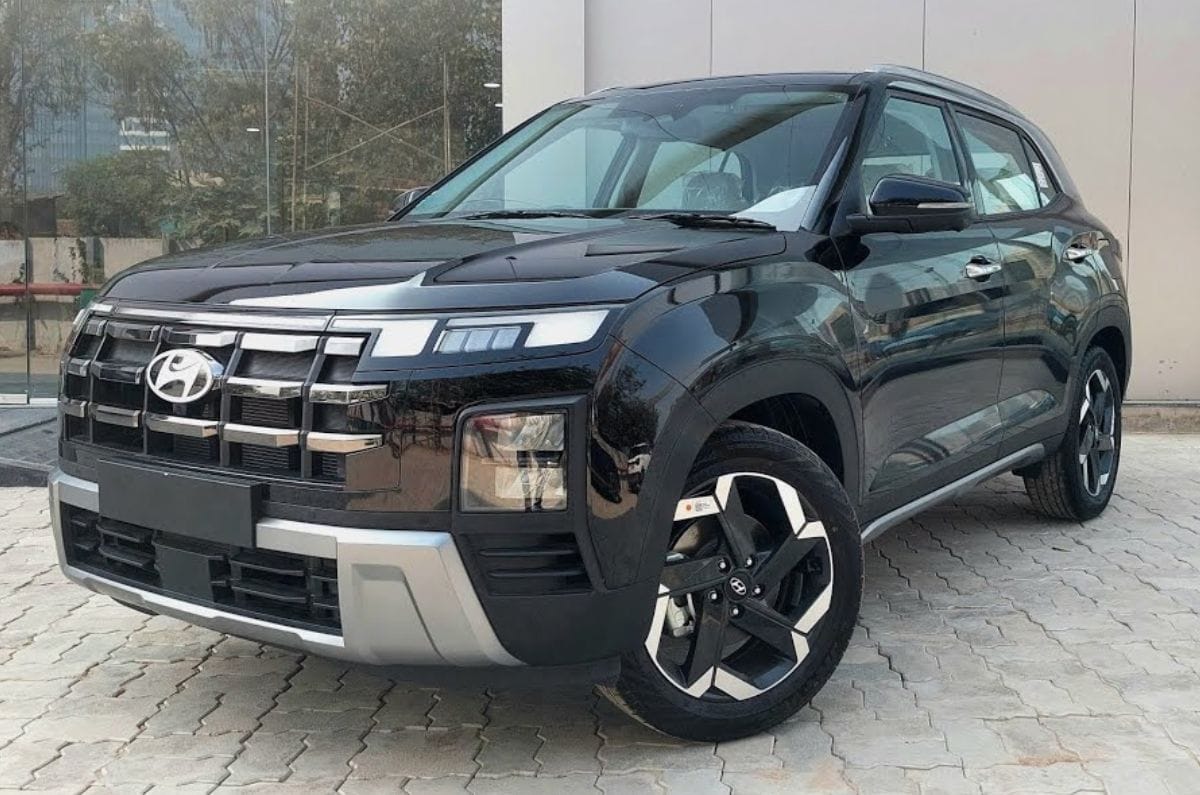
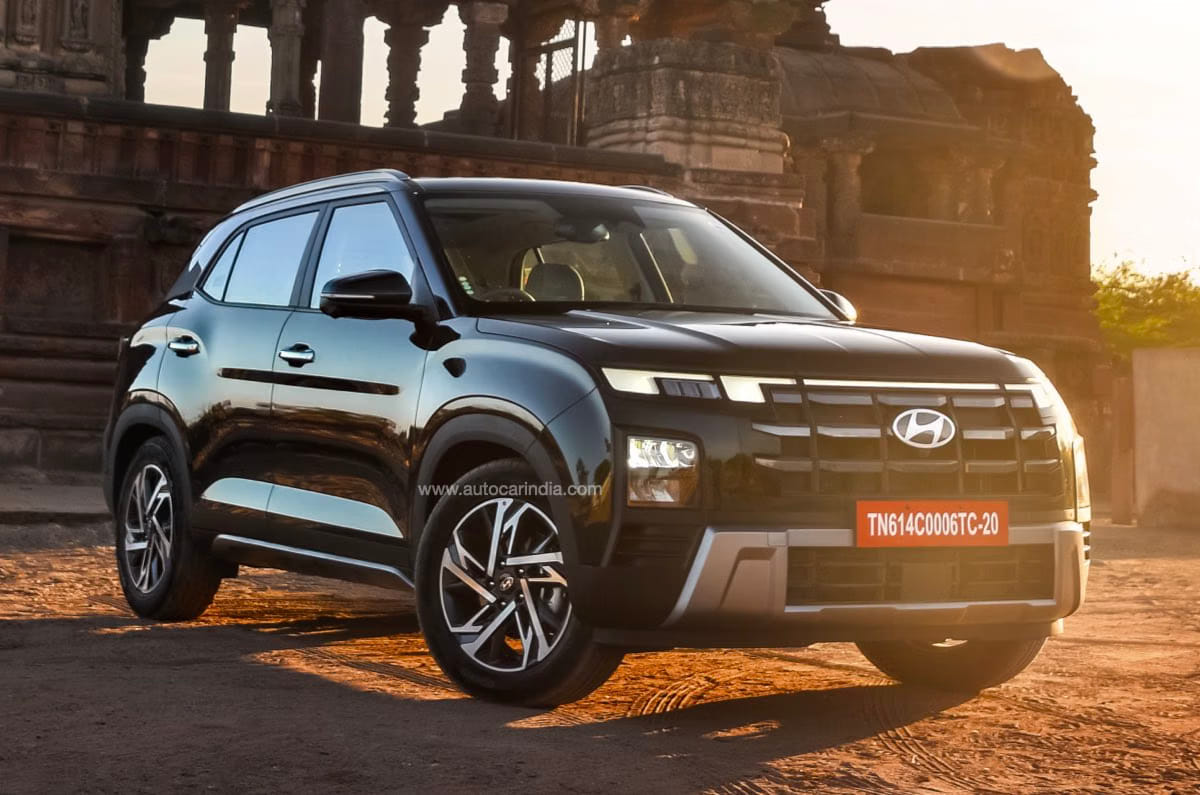
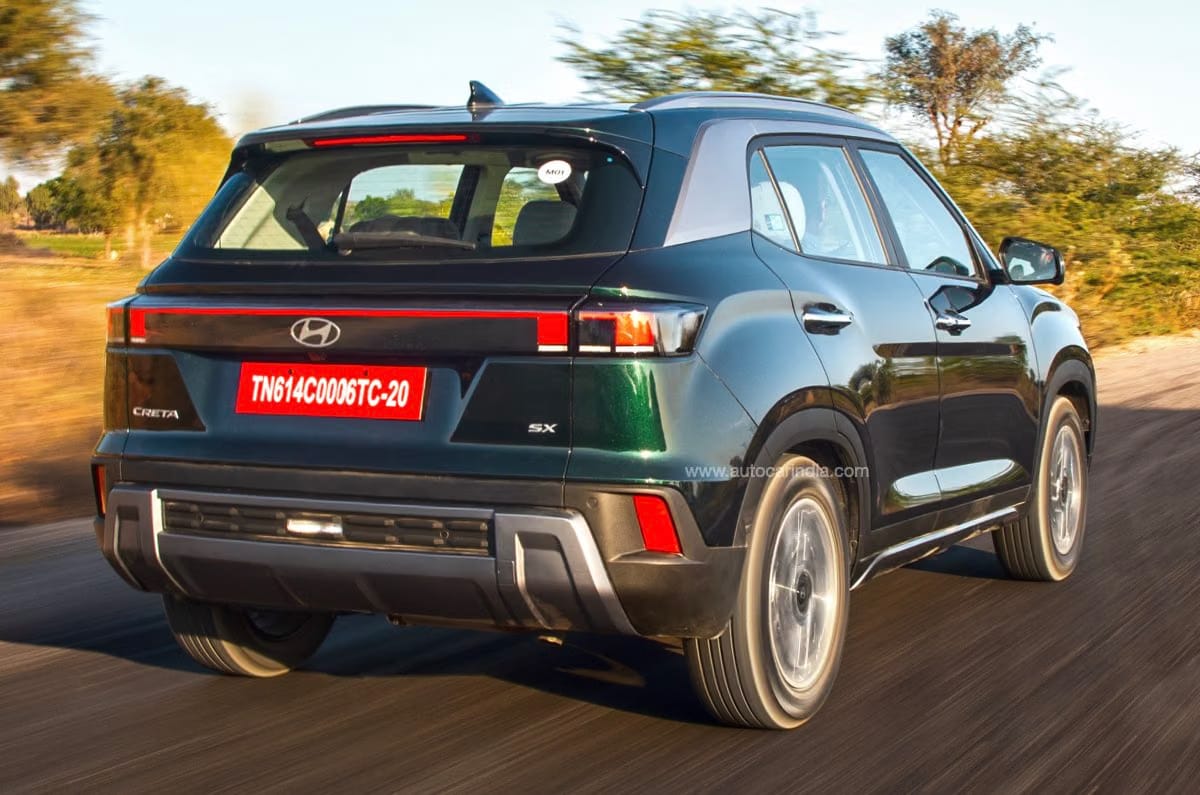
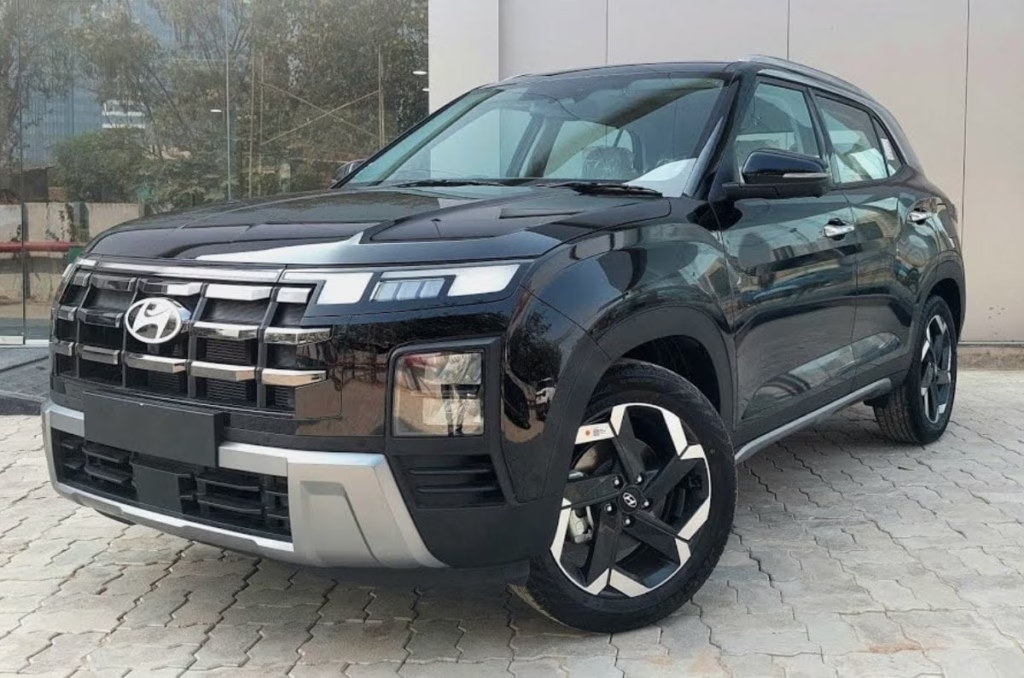
Hyundai Creta front quarter static

Hyundai India is offering an attractive range of benefits on select models in its portfolio. Depending on the model chosen, customers can avail up to Rs 1 lakh in benefits, valid until September 30, 2026.

Disclaimer: Offers/benefits may vary by city and are subject to stock availability. Buyers are advised to check with their local dealer for exact figures.

Hyundai Creta offers in September 2026

Benefits of up to Rs 1 lakh

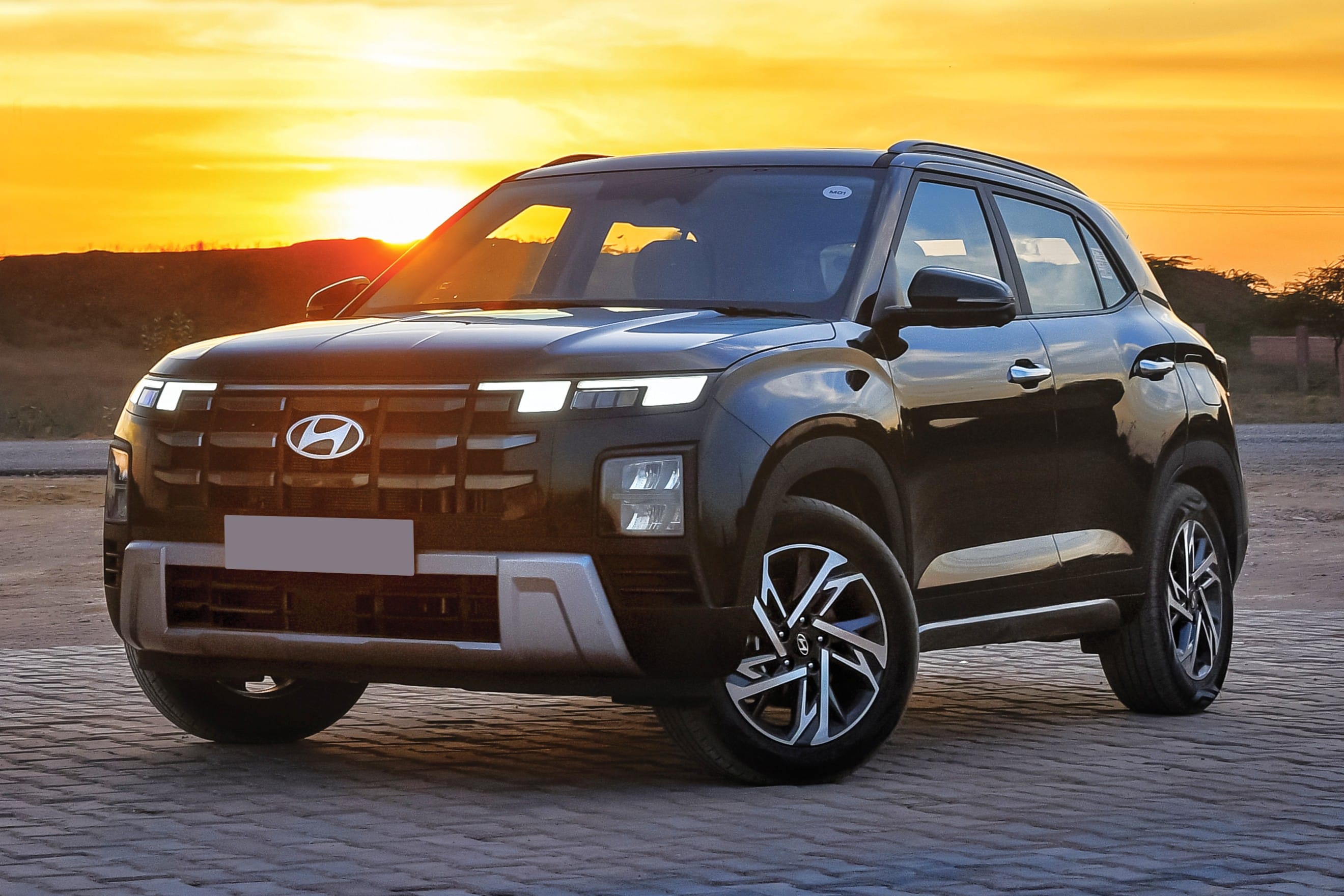
The Creta mid-size SUV is available with benefits of up to Rs 1 lakh. The Korean carmaker’s best-selling model in India is offered with a trio of 1.5-litre engines, namely, a naturally aspirated petrol, a turbo-petrol, and a diesel engine. All engines are offered with manual and automatic gearboxes. Prices range between Rs 10.90 lakh and Rs 19.91 lakh, with the Creta taking on rivals like the Tata Sierra, Kia Seltos, Renault Duster, Skoda Kushaq, and Maruti Victoris.

Hyundai Grand i10 Nios offers in September 2026 

Benefits of up to Rs 70,000

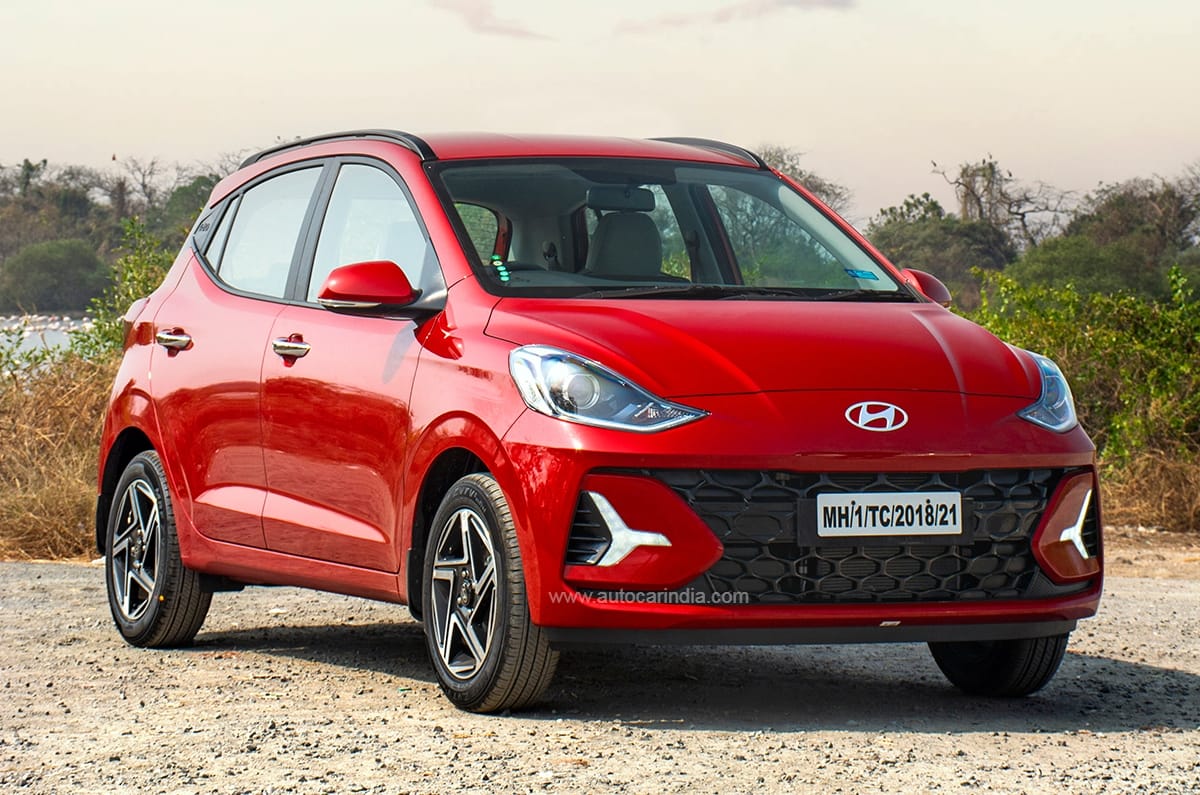
Hyundai’s Grand i10 Nios is being offered with up to Rs 70,000 in benefits. Its most affordable model in India is offered solely with a 1.2-litre petrol engine paired to either a manual or AMT gearbox. A factory-fit dual-cylinder CNG kit can be fitted to this engine and is paired exclusively with a manual gearbox. The Grand i10 is priced between Rs 5.59 lakh to Rs 8.04 lakh and is Hyundai’s answer to the Maruti Swift and the Tata Tiago.

Hyundai i20 offers in September 2026 

Benefits of up to Rs 60,000

The Grand i10’s elder sibling, the i20, is being offered with benefits of up to Rs 60,000. Standard versions of the i20 come powered by a 1.2-litre petrol engine mated with either a manual or CVT automatic gearbox. The i20 is priced from Rs 5.99 lakh to Rs 11.59 lakh, and it competes with the Maruti Baleno, Tata Altroz, and the Toyota Glanza.

Hyundai Exter offers in September 2026

Benefits of up to Rs 50,000

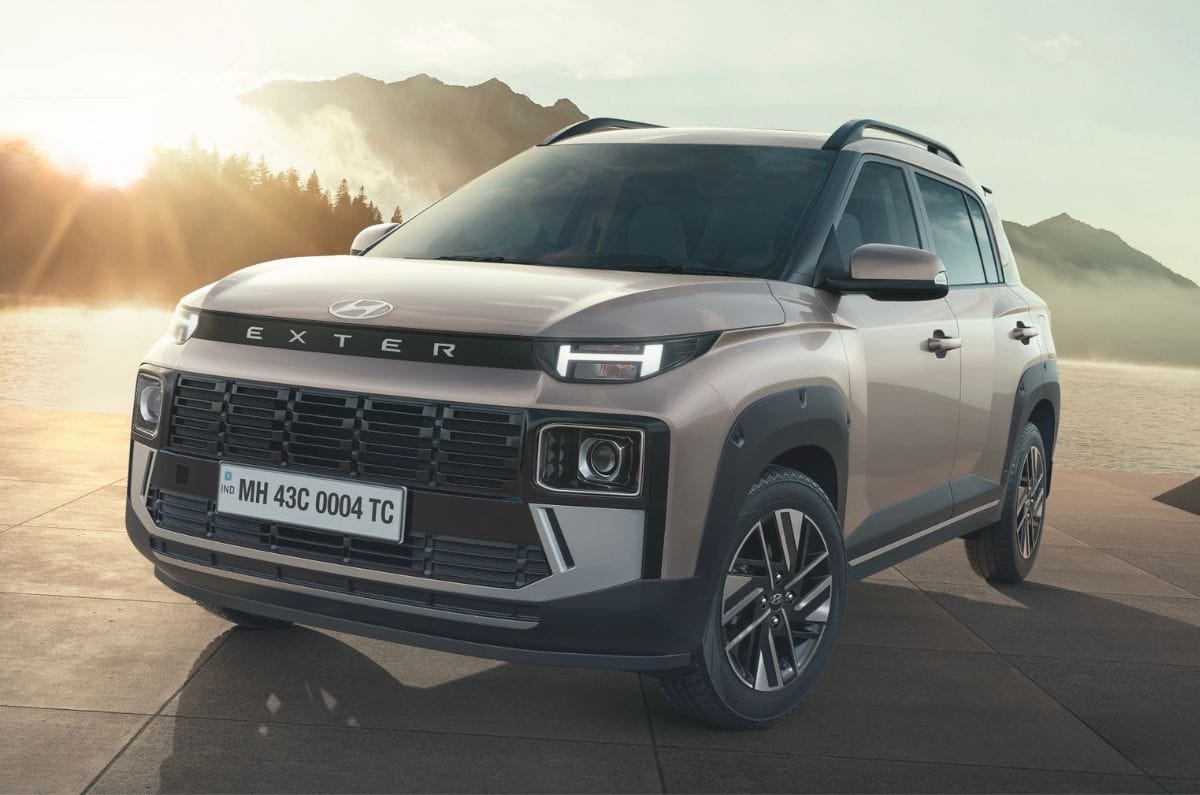
Hyundai is offering benefits of up to Rs 50,000 on the Exter. The subcompact SUV was updated earlier this year with refreshed looks and feature additions. It is powered by a 1.2-litre petrol engine and is mated with either a manual or AMT gearbox. Like the Grand i10, it also gets a CNG kit fitted to this engine. The Exter’s price begins at Rs 5.8 lakh and goes all the way up to Rs 9.46 lakh. It takes on the likes of the Tata Punch.

Hyundai Aura offers in September 2026 

Benefits of up to Rs 30,000

The Aura compact sedan is available with benefits of up to Rs 30,000. The Aura shares the same petrol engine as the Grand i10 Nios and the Exter, along with a CNG version on offer. It is priced between Rs 5.99 lakh and Rs 8.59 lakh and competes with the Tata Tigor, Maruti Dzire, and the Honda Amaze.

Renault Triber turbo to launch by September end

Renault Triber turbo to launch by September end
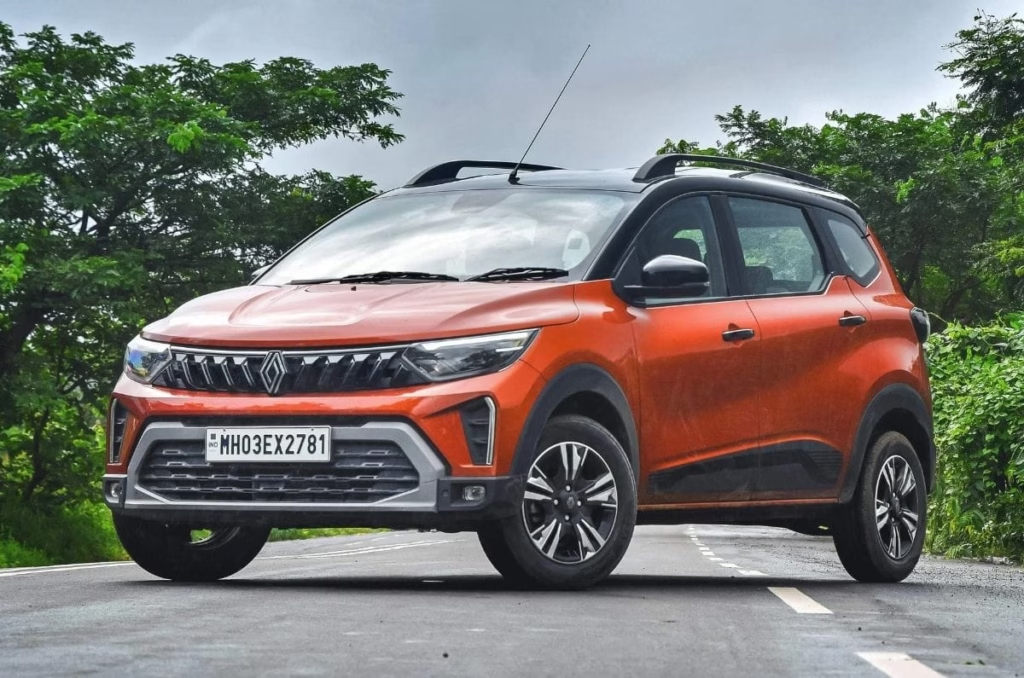
Renault Triber front quarter static

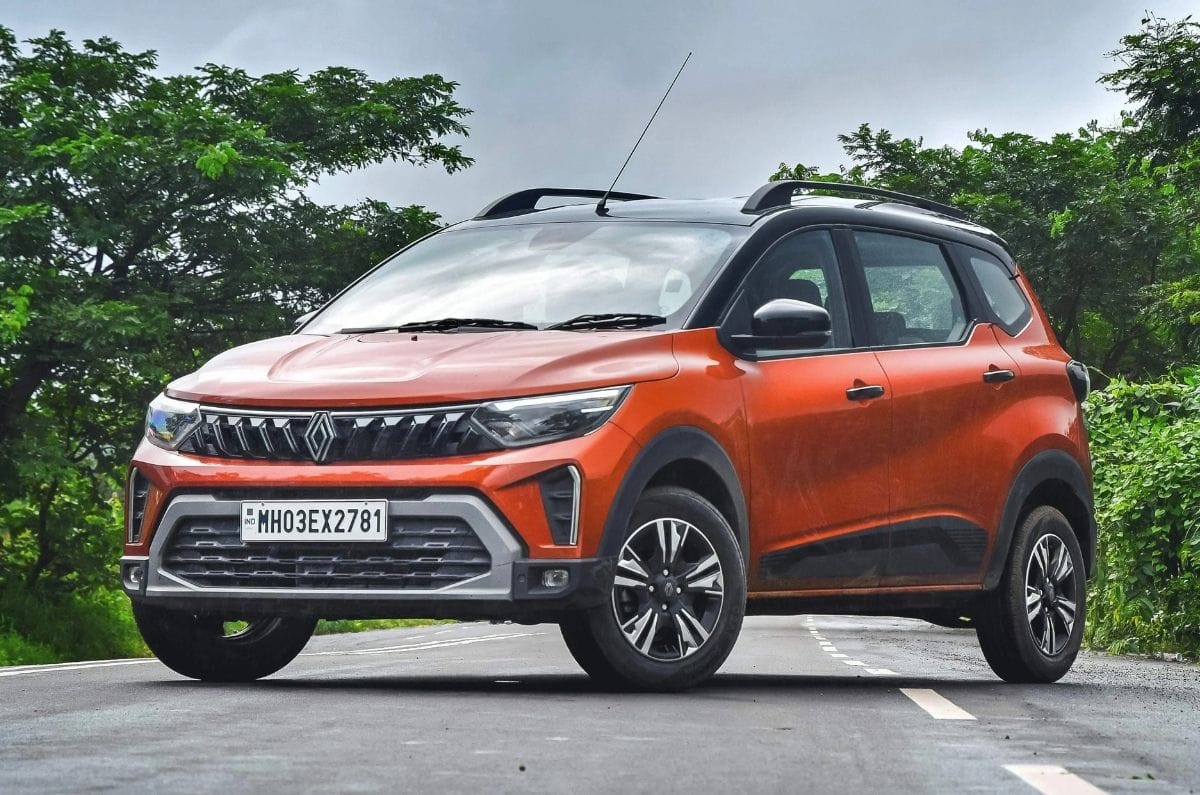
Renault is set to introduce a turbo-petrol powertrain option for the Triber MPV by the end of September. With this engine borrowed from the Kiger, Renault would try to address one of the Triber’s major criticisms – its underpowered naturally aspirated powertrain. A factory-fitted CNG option will also be offered with this turbo-petrol engine. 

  1. 1.0-litre turbo-petrol engine expected to produce around 100hp
  2. Factory-fitted CNG option will utilise dual-cylinder technology

Renault Triber turbo-petrol engine specifications

Three-cylinder turbo-petrol unit will be the same as the one in Kiger

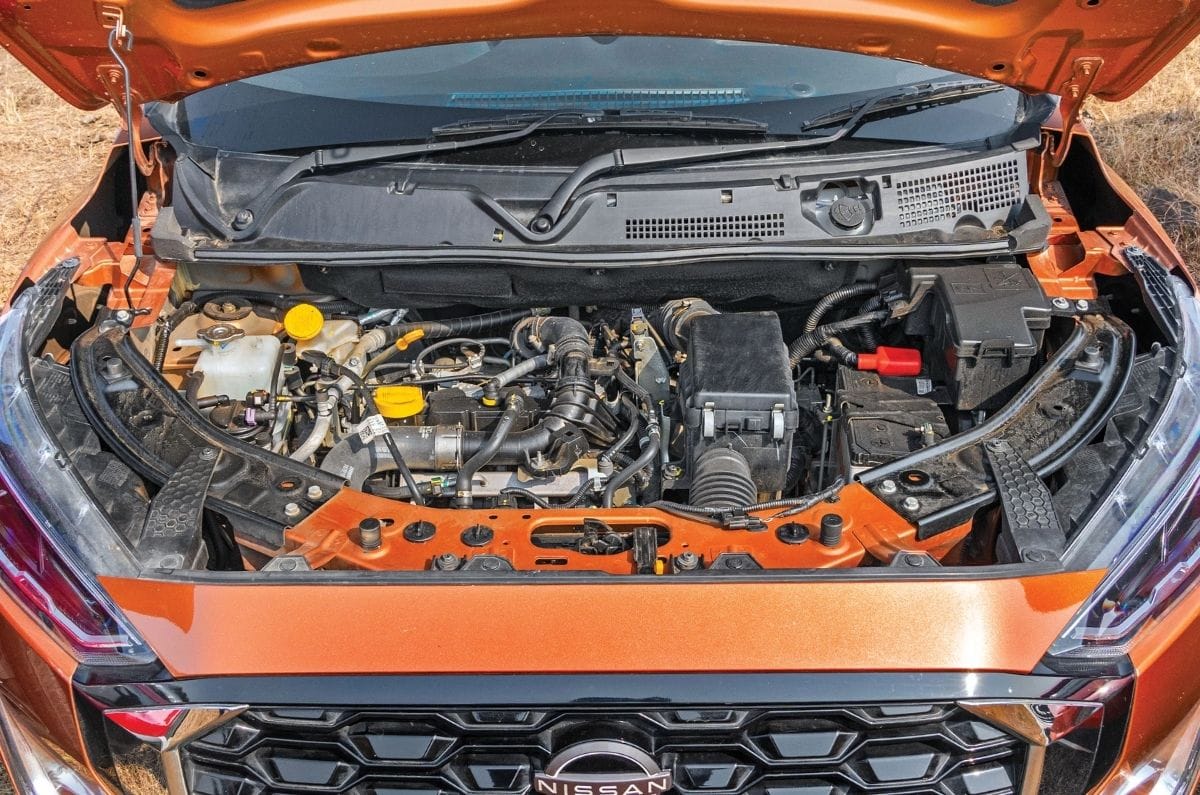
Nissan Magnite’s engine bay shown for representative purposes only. 

The upcoming three-cylinder turbo-petrol engine on the Triber, codenamed HR10, is derived from the Renault Duster’s ‘HR13’ 1.3-litre four-cylinder engine, albeit with one less cylinder. This engine is offered in the Renault Kiger and Nissan Magnite, with the option of a 5-speed manual or a CVT, and produces 100hp and up to 160Nm. This is 28hp and 62Nm more than the Triber’s naturally aspirated petrol engine and is expected to address the Triber’s criticism of being an underpowered MPV. However, it will be interesting to see whether the Triber turbo comes in the same state of tune and is offered with a CVT.  

A factory-fitted dual-cylinder CNG option will be offered with the same engine

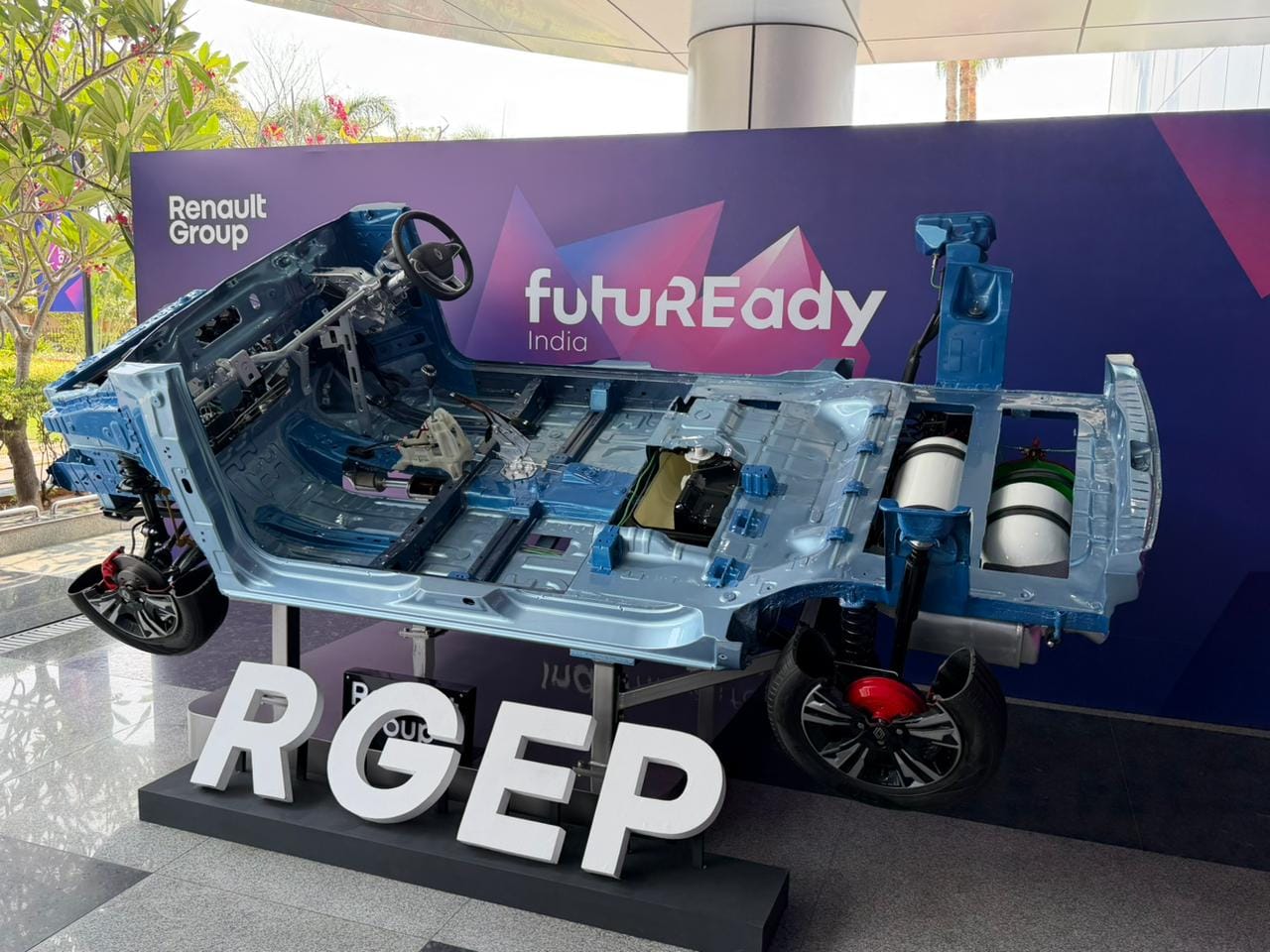
Renault will also offer the Triber with a factory-fitted CNG option, which will utilise dual cylinders placed under the boot floor for space utilisation. It is expected to be offered only with a manual transmission. This dual-cylinder CNG option will also be employed in the Kiger at a later date.

The Triber’s CMF-A platform, now called RGEP, has been modified to accommodate the new powertrains. 

Currently, the Renault Triber is offered with an aftermarket CNG kit that can be retrofitted to the MPV’s manual variants. It comes with a standard 3-year/1 lakh km warranty (whichever is first). 

With the under-the-hood changes, the turbo-petrol-powered Renault Triber is expected to offer everything the naturally aspirated petrol version offers. The prices, however, are expected to rise from the current model’s Rs 5.81 lakh to Rs 8.53 lakh range (ex-showroom). 

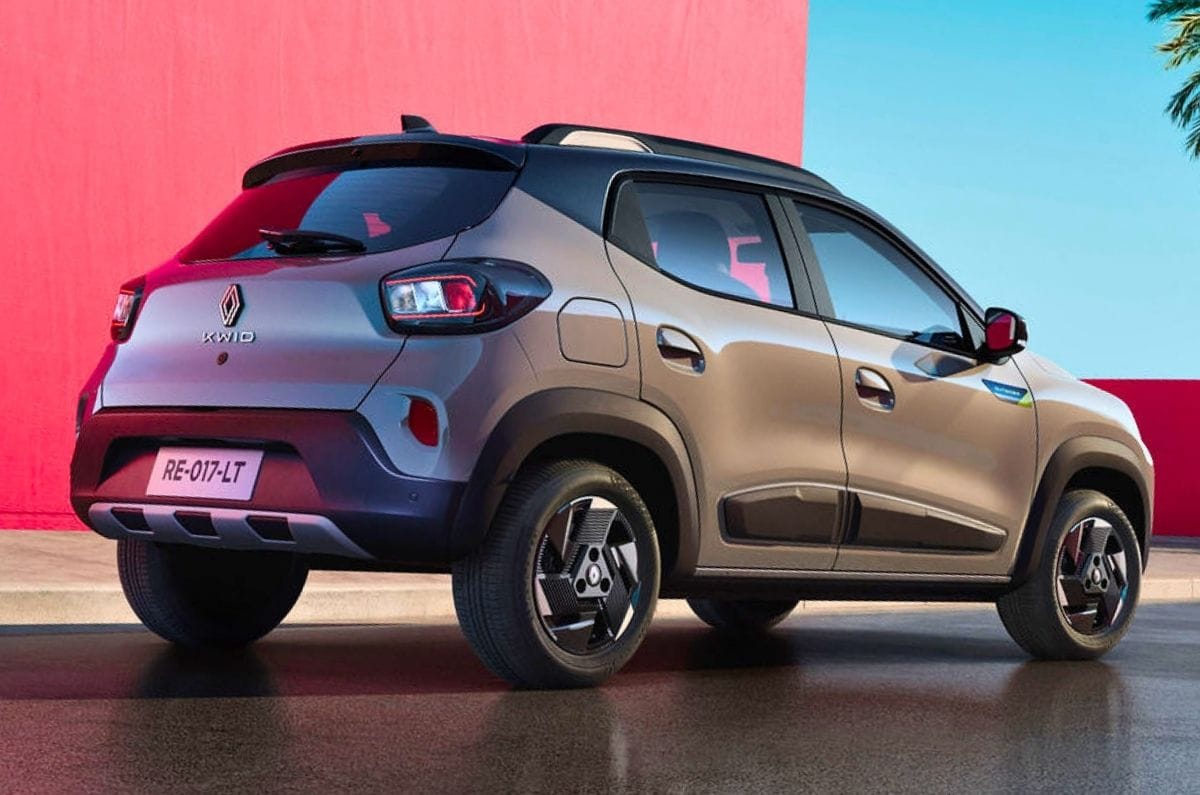
Renault Kwid facelift revealed for Brazil

Renault Kwid facelift revealed for Brazil

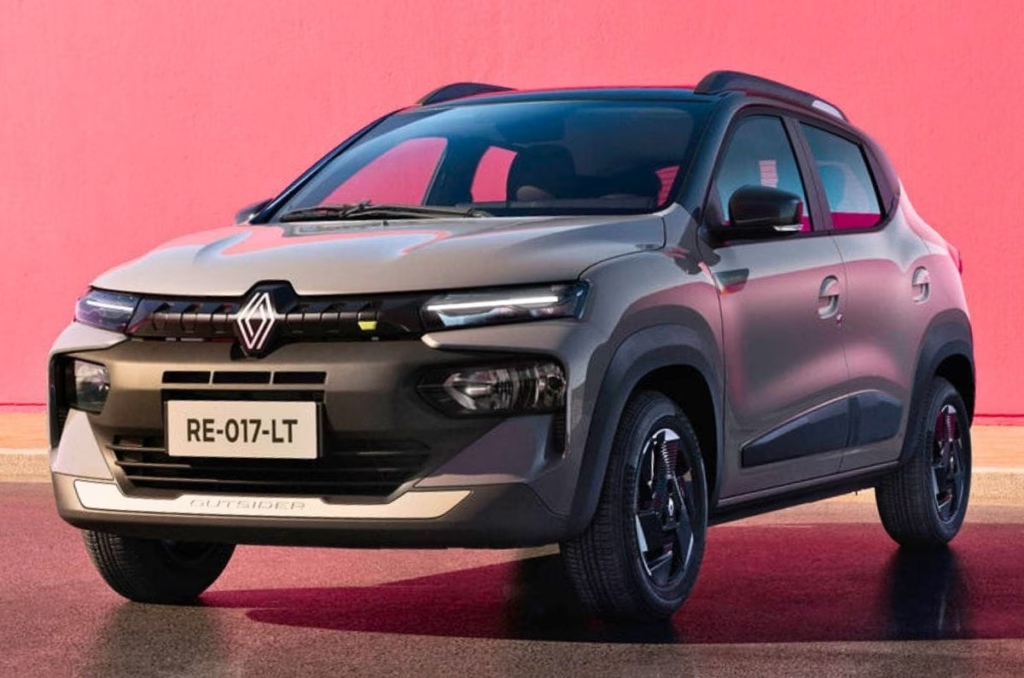
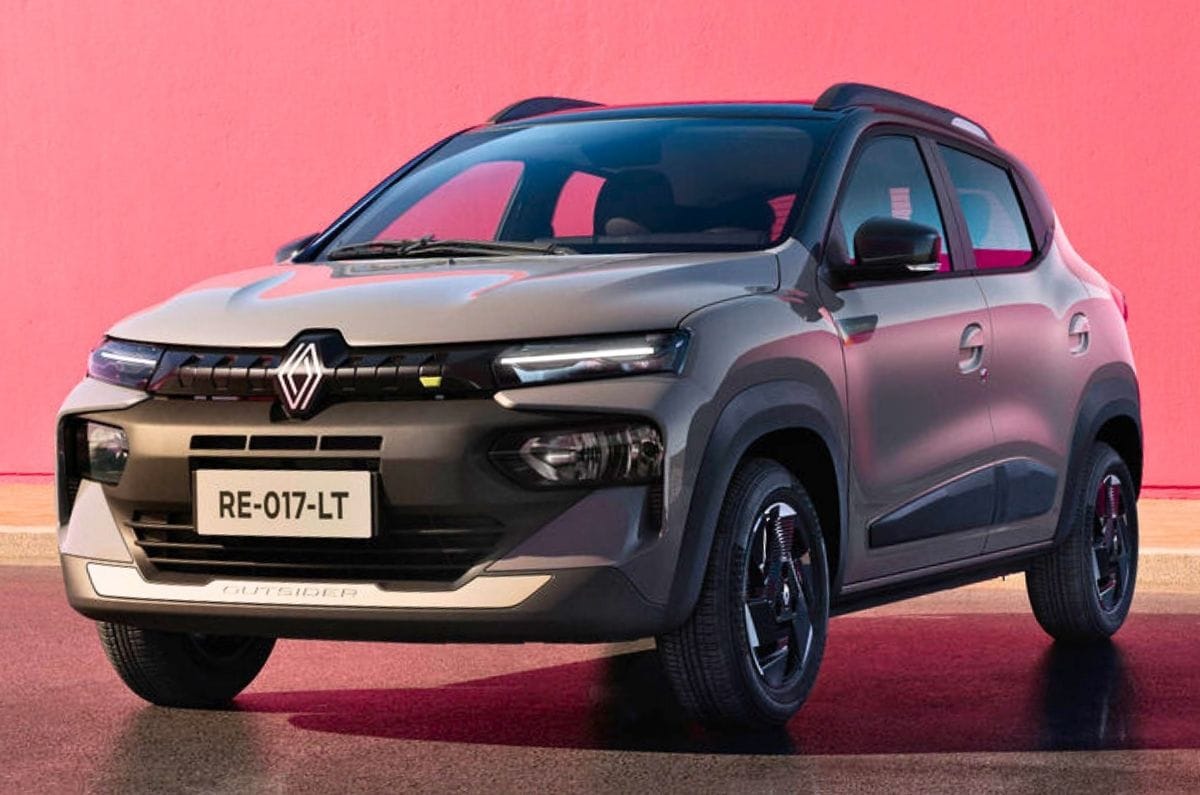
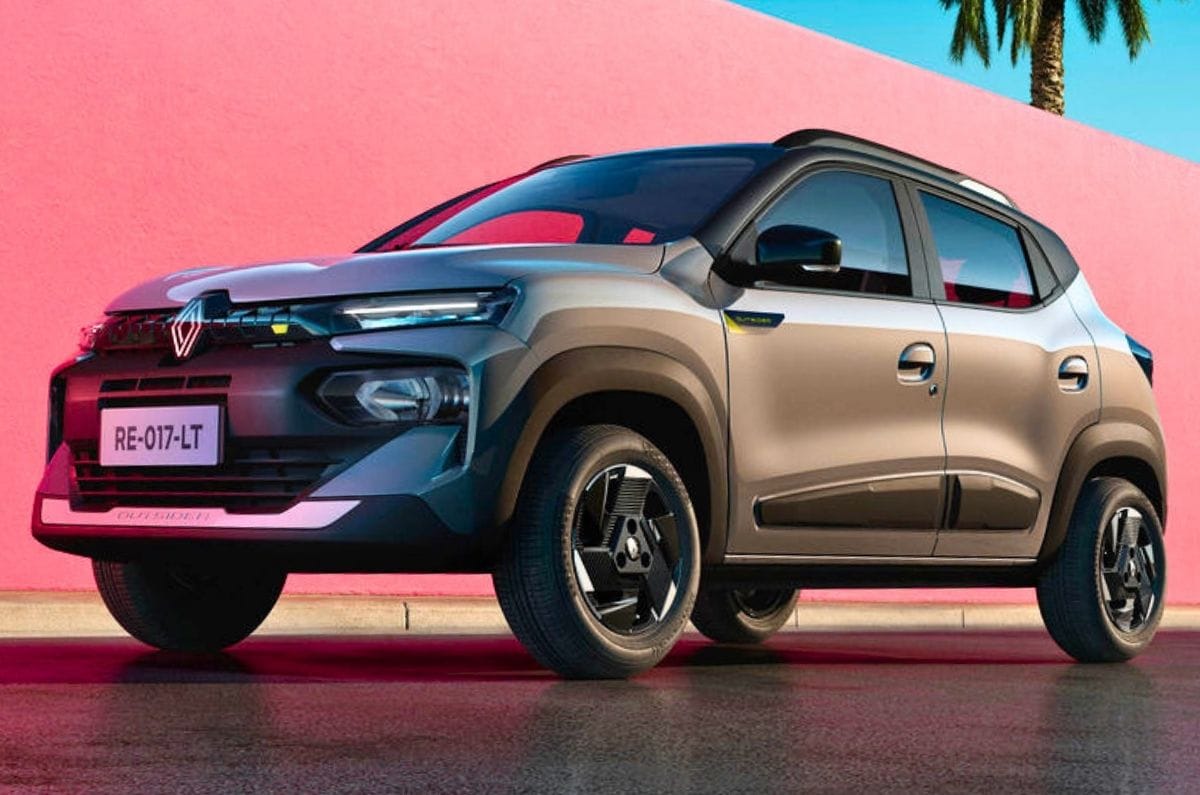
Renault has revealed the Kwid facelift for the Brazilian market, featuring subtle exterior design revisions and a completely revamped interior. The updated hatchback is available in three trims – Evolution, Techno, and Outsider.

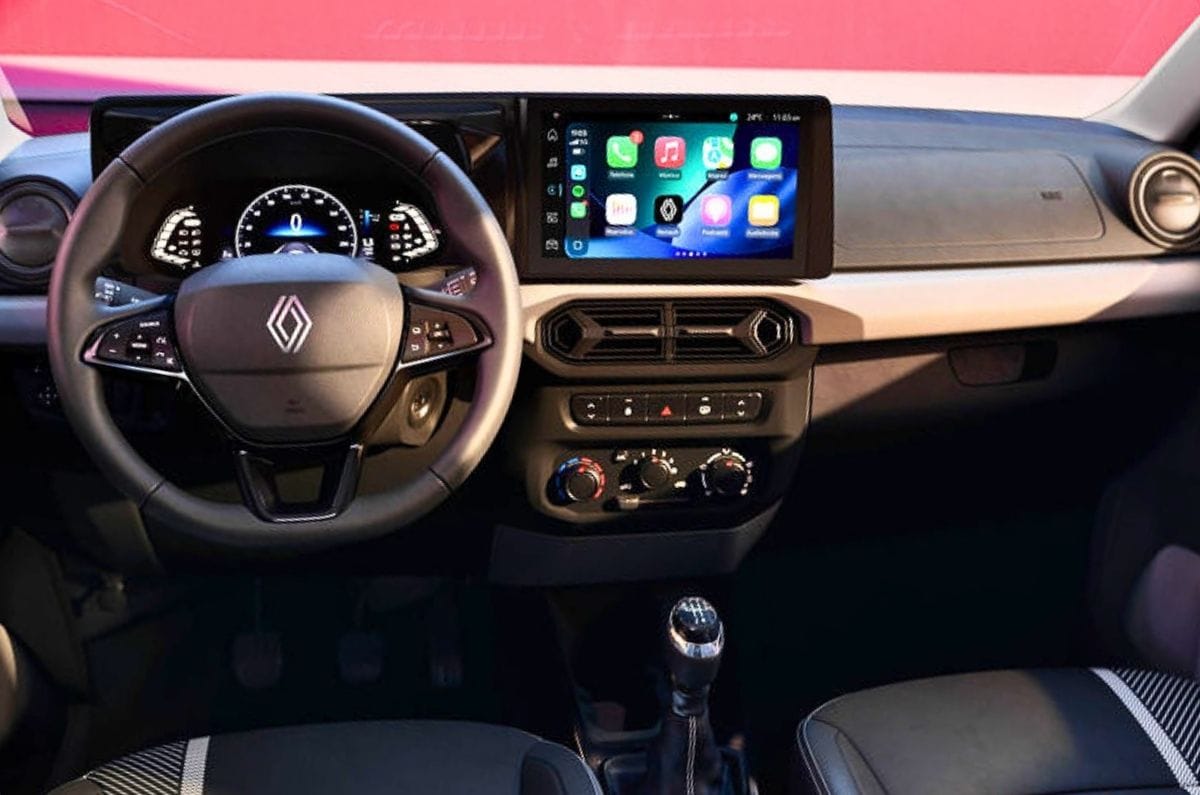
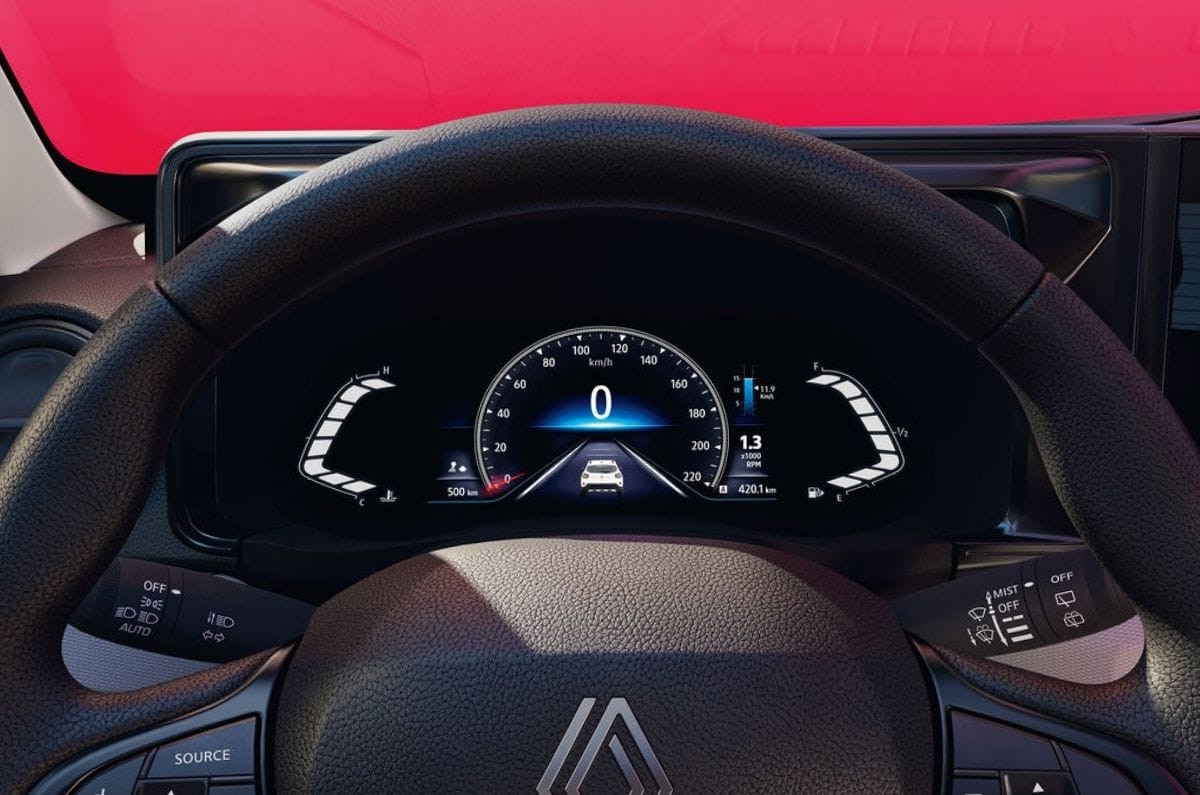
  1. Gets a new 7-inch digital driver’s display and a 10.1-inch infotainment system
  2. Has a cleaner-looking but hard plastic-only dashboard without the ‘Kwid’ inscription
  3. Features a Kiger-like grille, 14-inch alloy wheels and redesigned taillight elements

Notably, the India-spec Kwid was also updated earlier this year, receiving new 3D badges, fresh wheel covers, and a Kiger-inspired steering wheel. However, compared to the India-spec model, the Brazil-spec Kwid gets more extensive updates as part of its facelift.

Brazil-spec Renault Kwid facelift: What are the changes?

Gets a revamped dashboard with two screens

The biggest update on the Brazil-spec Kwid is inside the cabin, which now features a cleaner-looking dashboard with two displays: a 7-inch digital driver’s display and a free-standing 10.1-inch touchscreen infotainment system. While the dashboard continues to use hard plastic, the overall design looks more premium than the India-spec Kwid, which gets a semi-digital driver’s display and a smaller 8-inch infotainment screen.

Other features include manual air conditioning, two Type-C USB charging ports, power-operated front windows, and electrically adjustable outside rearview mirrors. Safety equipment includes four airbags as standard, along with hill-start assist, a reverse parking camera with sensors, and a tyre pressure monitoring system. Most of these features are also available on the India-spec Kwid, although the top-spec Climber variant gets six airbags.

Gets a new grille, alloy wheels and LED taillight elements

At the front, the Brazil-spec Renault Kwid gets a new grille with vertical slats, similar to the Renault Kiger, along with a new 3D Renault logo. It also features LED DRL bars and halogen headlamps, similar to the India-spec model. The front bumper design is also more aggressive and features a lot of blackened elements.

In profile, the Brazil-spec Kwid gets 14-inch dual-tone alloy wheels, giving it a more upmarket appearance than the Indian model, which comes with 14-inch steel wheels with plastic covers. At the rear, the facelifted Kwid gets revised LED taillight elements, while the tailgate and bumper designs remain unchanged.

The Brazil-spec Kwid has the same 2,423mm wheelbase as the India-spec model, but offers a larger 290-litre boot, which is 11 litres more than the Indian version. Ground clearance stands at 185mm, identical to the India-spec Kwid.

Gets the same engine as the India-spec model, but only with MT

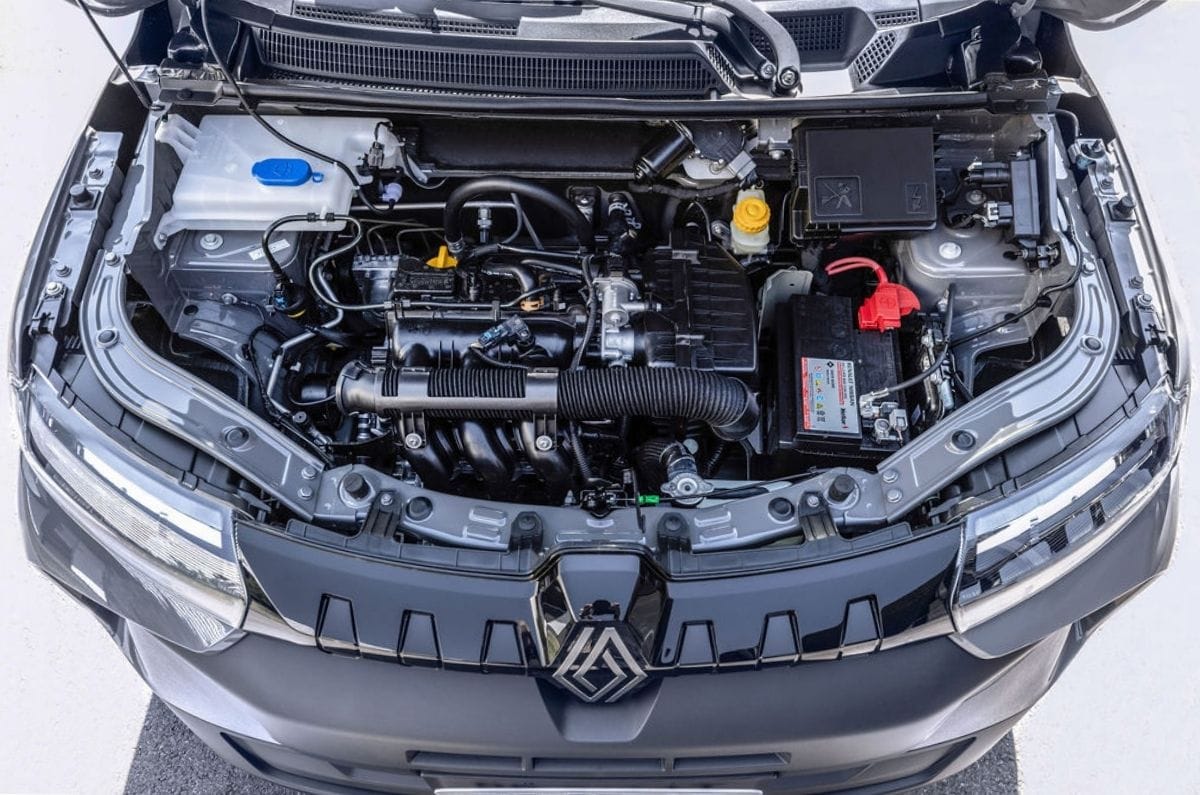
The Brazil-spec Renault Kwid is powered by a 1.0-litre 3-cylinder naturally aspirated petrol engine that produces 71hp and 98Nm with ethanol, and 68hp and 92Nm with petrol. This is the same engine as the one offered in the Indian model. However, the Brazil-spec Kwid gets a 5-speed manual transmission, while the Indian model also offers a 5-speed AMT option.
The Brazil-spec Renault Kwid facelift is unlikely to make its way to India, especially since the India-spec hatchback was updated just last month. Declining hatchback sales in the country are another factor that could discourage Renault from making a fresh investment to bring the Brazil-spec model here. The India-spec Renault Kwid is currently offered in two trims: Evolution and Climber, with prices ranging from Rs 4.53 lakh to Rs 5.61 lakh (ex-showroom).
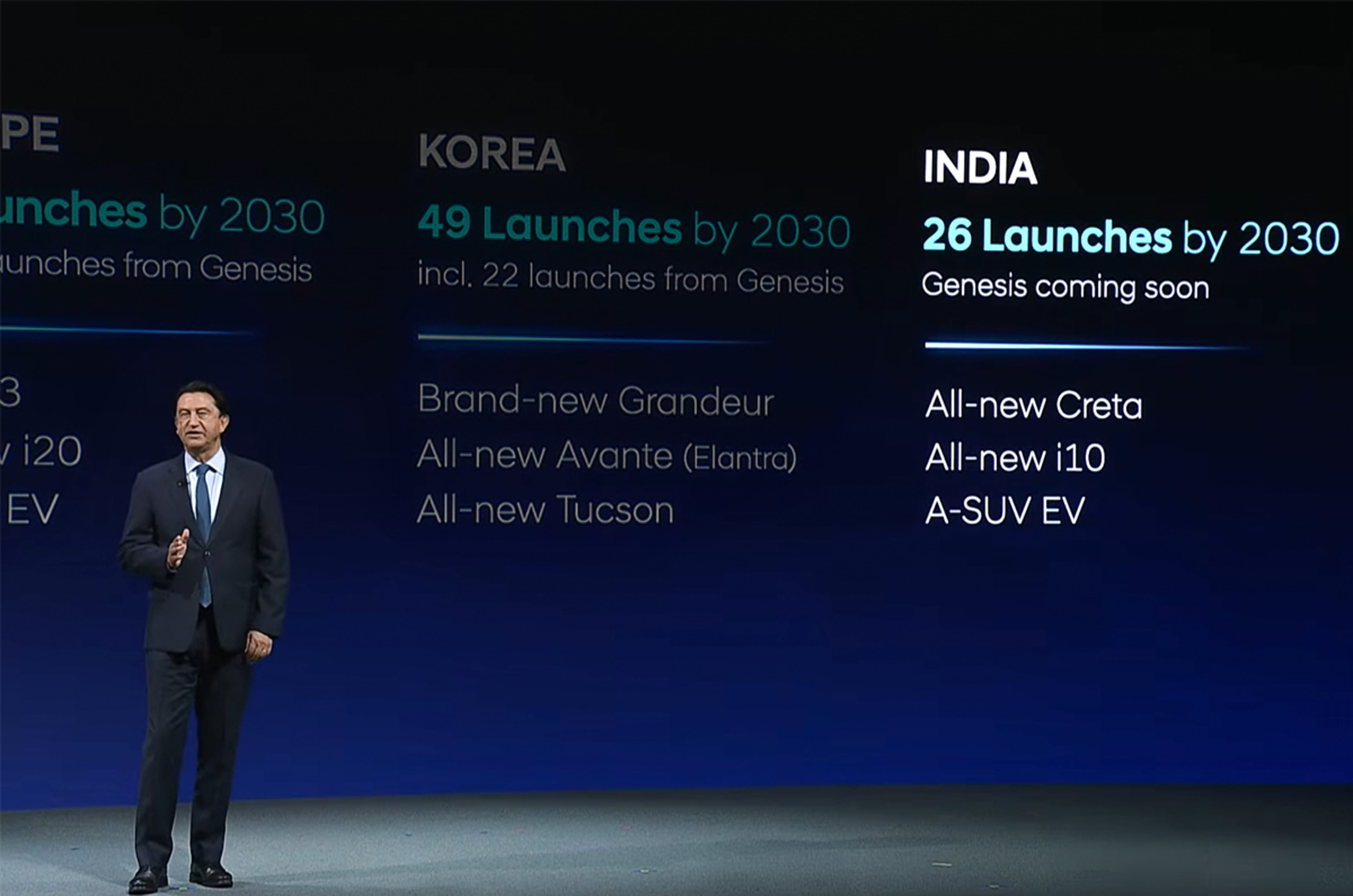
Hyundai confirms next-gen Creta and i10 for India

Hyundai confirms next-gen Creta and i10 for India

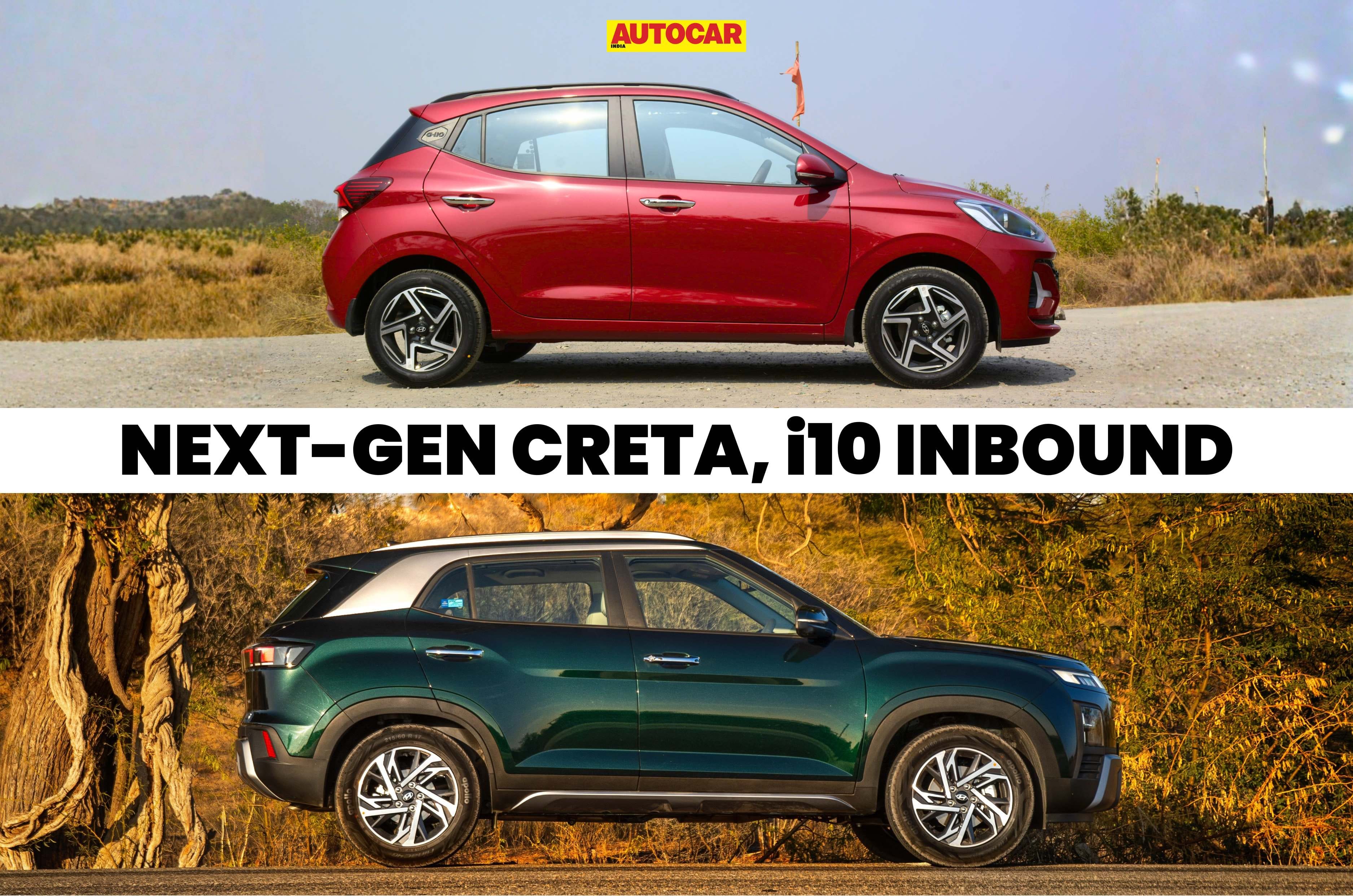
At its 2026 CEO Investor Day, Hyundai formally announced that it will bring next-gen versions of the Creta midsize SUV and i10 hatchback to India before 2030. We’ve known for quite some time that a new-gen Creta is in the works – test mules have been spied in India too – and we even reported on the next-gen i10’s launch timeline back in 2024.

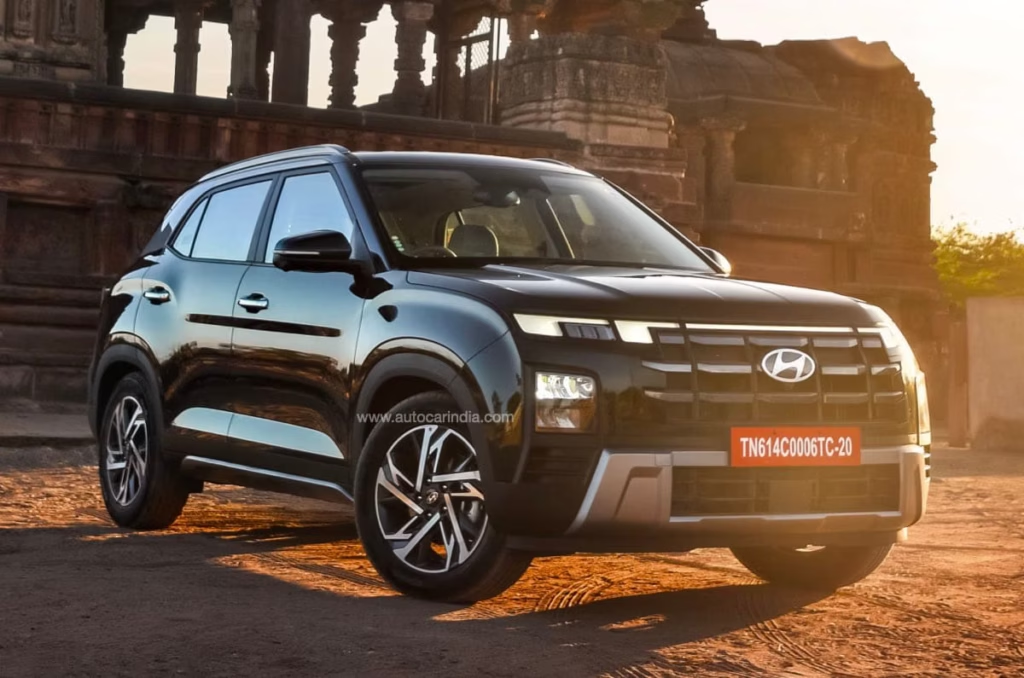
Next-gen Hyundai Creta

The new Creta is likely to ride on the same K3 platform that underpins the second-gen Kia Seltos. Test mules of the next-gen Creta indicate that the SUV will grow in size and sport boxier proportions, while the interior is expected to get a fresh design, Hyundai’s new Pleos Connect infotainment interface, and an enhanced feature set.

Under the bonnet, the new Creta is anticipated to carry over the existing model’s 115hp 1.5-litre naturally aspirated petrol, 160hp 1.5-litre direct-injection turbo-petrol, and 116hp 1.5-litre diesel engines, along with their respective gearbox options. In addition to those, Hyundai is likely to introduce a strong-hybrid powertrain for the next-gen Creta, which could be based on the 1.5-litre naturally aspirated petrol engine.

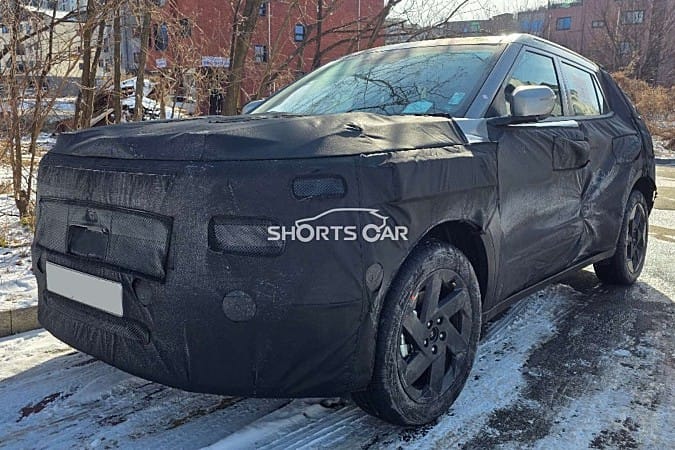
Third-gen Hyundai Creta test mule. Image credit: Raspberry via Autospy.net

We expect the third-gen Creta to launch sometime in 2027, possibly in the second half of the year. The current-gen Creta was first launched in 2020 and received a major facelift in 2024. However, with the recent barrage of all-new midsize SUV rivals like the Tata Sierra, Renault Duster, Nissan Tekton, and the aforementioned second-gen Seltos, the Creta is due a generational update.

Next-gen Hyundai i10

Details are scarce about the next-gen i10, but hatchback could make the switch to a new platform. Thorough redesigns for the exterior and interior, along with a bolstered list of features, are expected. As for engine options, the new i10 is expected to use the current model’s 1.2-litre naturally aspirated engine, which is available in 83hp petrol and 69hp CNG guises. Manual and AMT gearbox options are also anticipated to be retained.

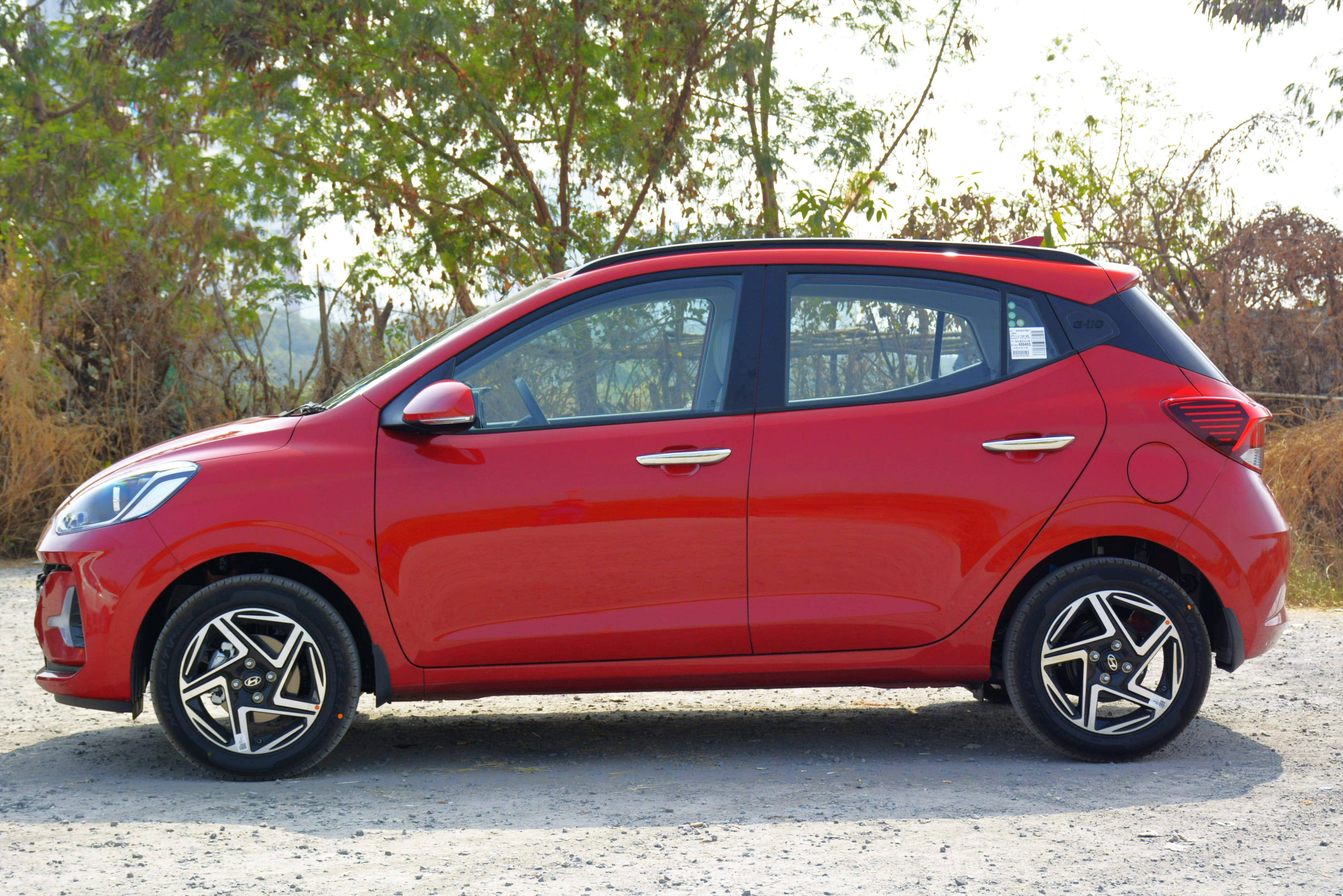
Current Hyundai Grand i10 Nios. Image used for representation only.

According to our prior report, the next-gen i10 is likely to launch in India by late 2027, which would mark a gap of around eight years following the arrival of the current Grand i10 Nios in 2019. More significantly, the next-gen i10 will reinforce Hyundai’s presence in the small-car segment, which has seen renewed interest following the 2025 GST cuts.

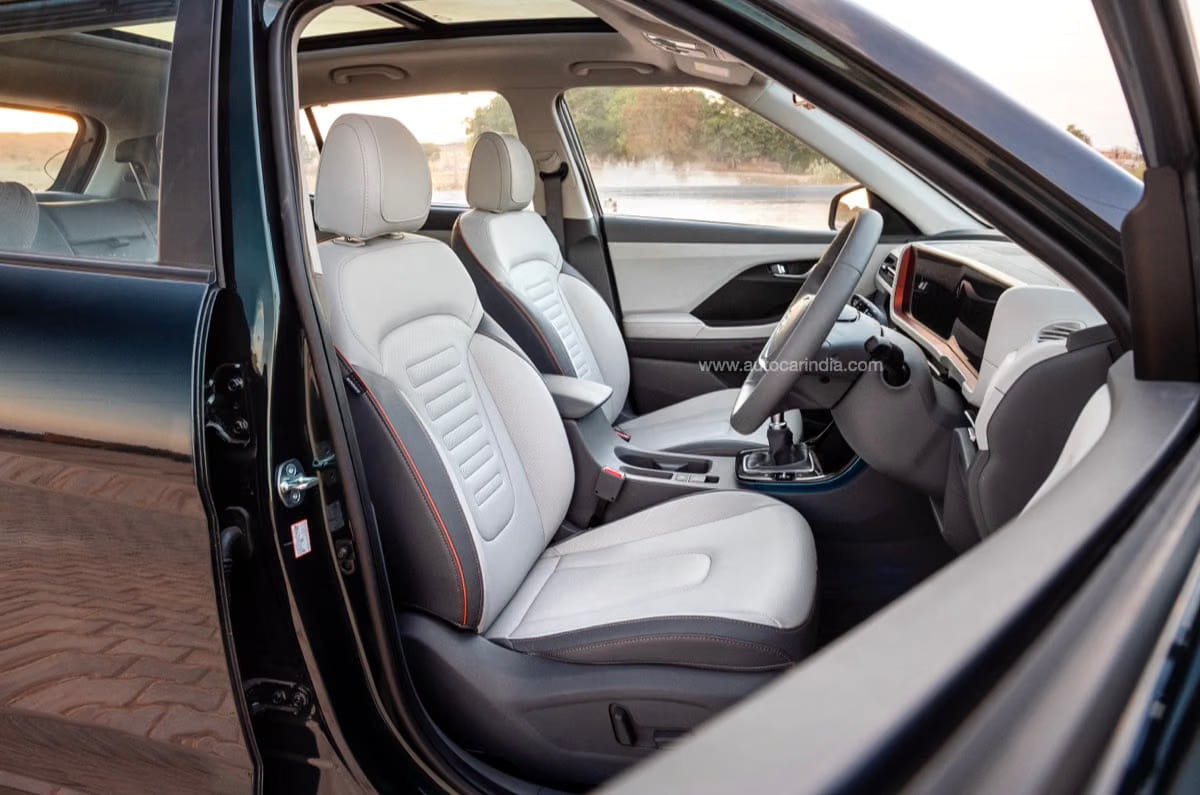
3 reasons to buy the Hyundai Creta and 2 to skip it

3 reasons to buy the Hyundai Creta and 2 to skip it
Creta

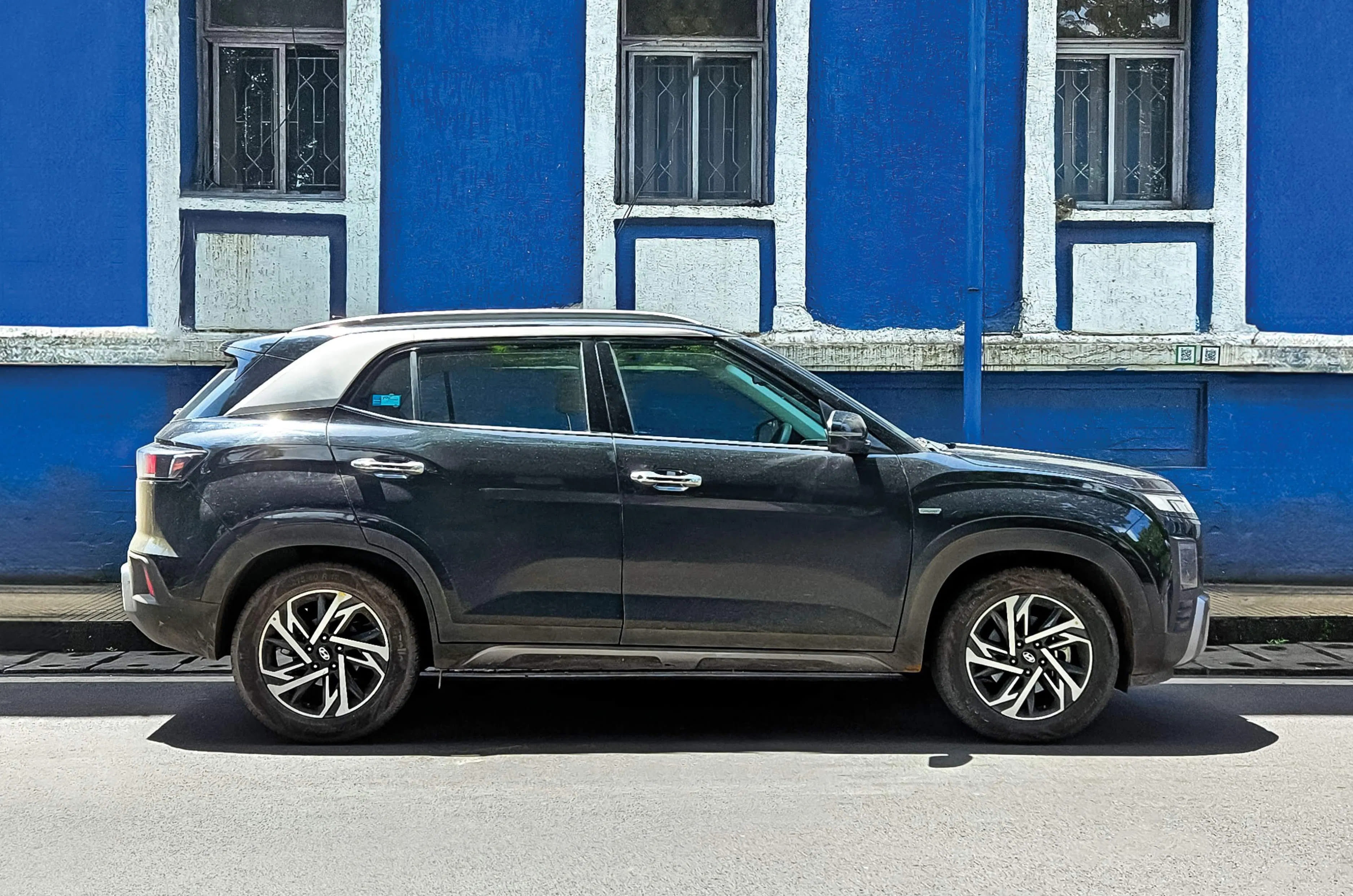
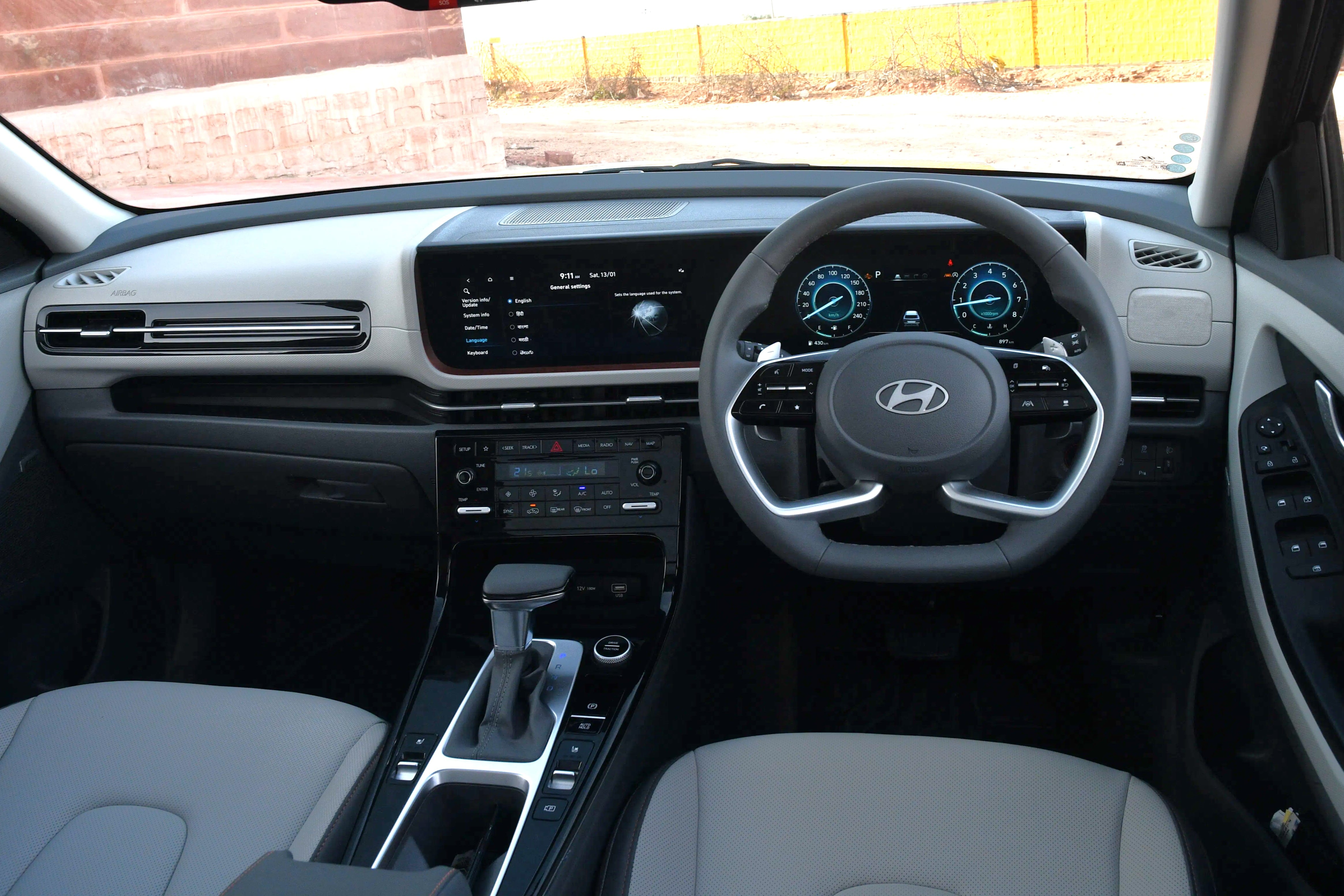
The Hyundai Creta has built its reputation on a spacious cabin, a long list of features and a wide choice of powertrains. The current model is offered with a 1.5-litre naturally aspirated petrol, 1.5-litre diesel and 1.5-litre turbo-petrol engine, with multiple gearbox options across the range. However, it isn’t without its shortcomings. Here are three reasons to consider the Creta and two reasons why you may want to look elsewhere.
Pros

1. Spacious and comfortable interior

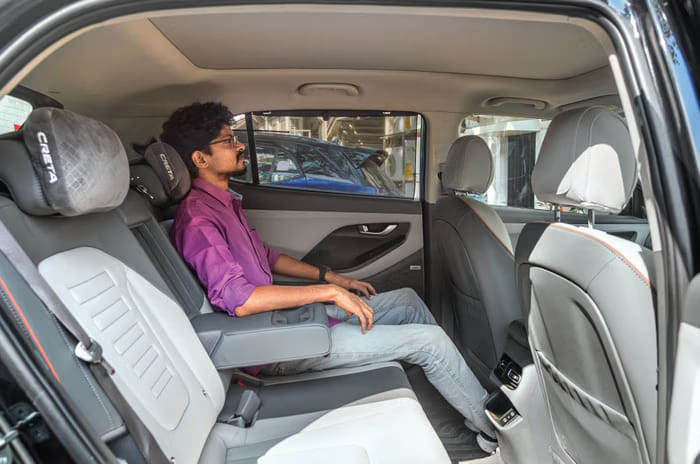
The Creta’s cabin is one of its strongest points, particularly for buyers who regularly carry passengers. There is good legroom in the rear and enough width for three adults to sit across the bench. The rear seat also gets a reclining backrest, an armrest, sunshades and neck pillows, while two USB Type-C ports are available for charging.

The front seats are comfortable and the large glasshouse provides good all-round visibility. With a manageable 4.3m length and light steering, the Creta is also easy to use in the city.

2. Feature-packed

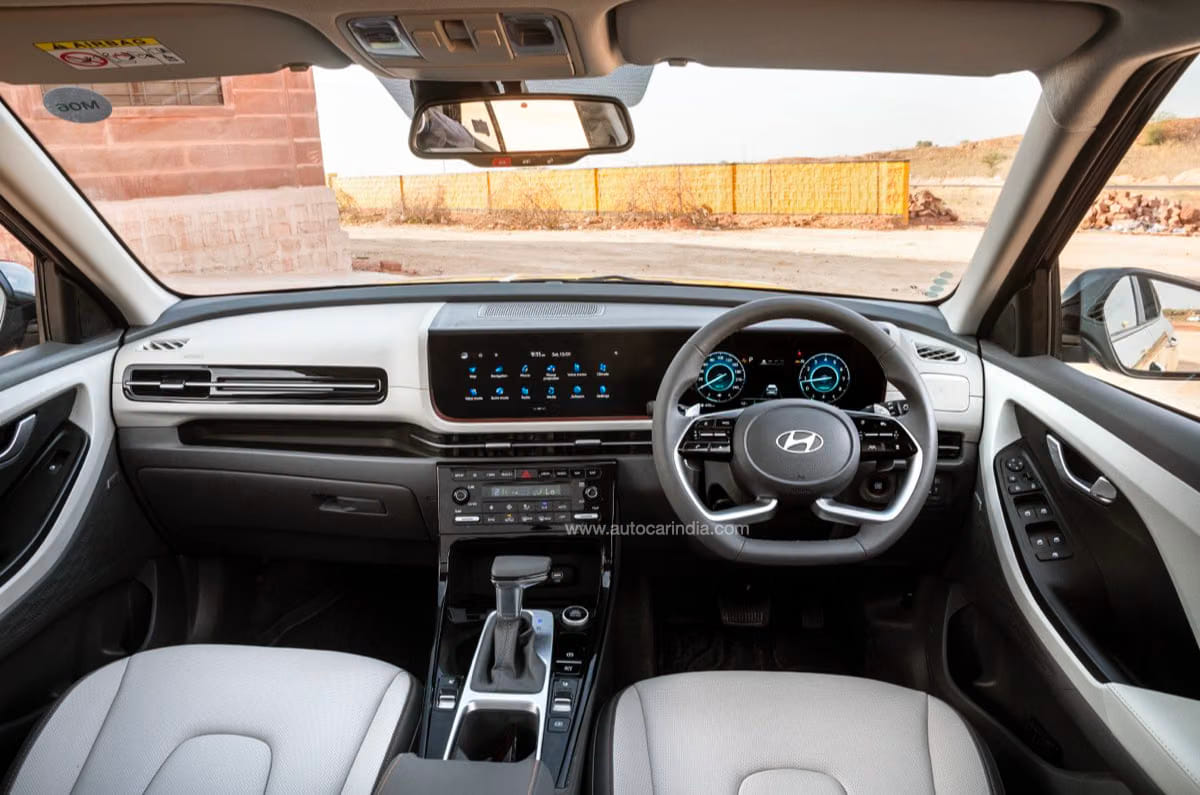
The Creta is among the better-equipped SUVs in its class. Depending on the variant, equipment includes a 10.25-inch touchscreen, 10.25-inch digital driver’s display, panoramic sunroof, ventilated front seats, powered driver’s seat, dual-zone climate control, an air purifier, 360-degree camera and Bose audio system. Higher variants also get Level 2 ADAS, including features such as adaptive cruise control, lane keep assist and autonomous emergency braking. The Creta also offers connected-car features and retains physical controls for the air-conditioning, making frequently used functions easy to operate without relying entirely on the touchscreen.

3. Wide powertrain lineup

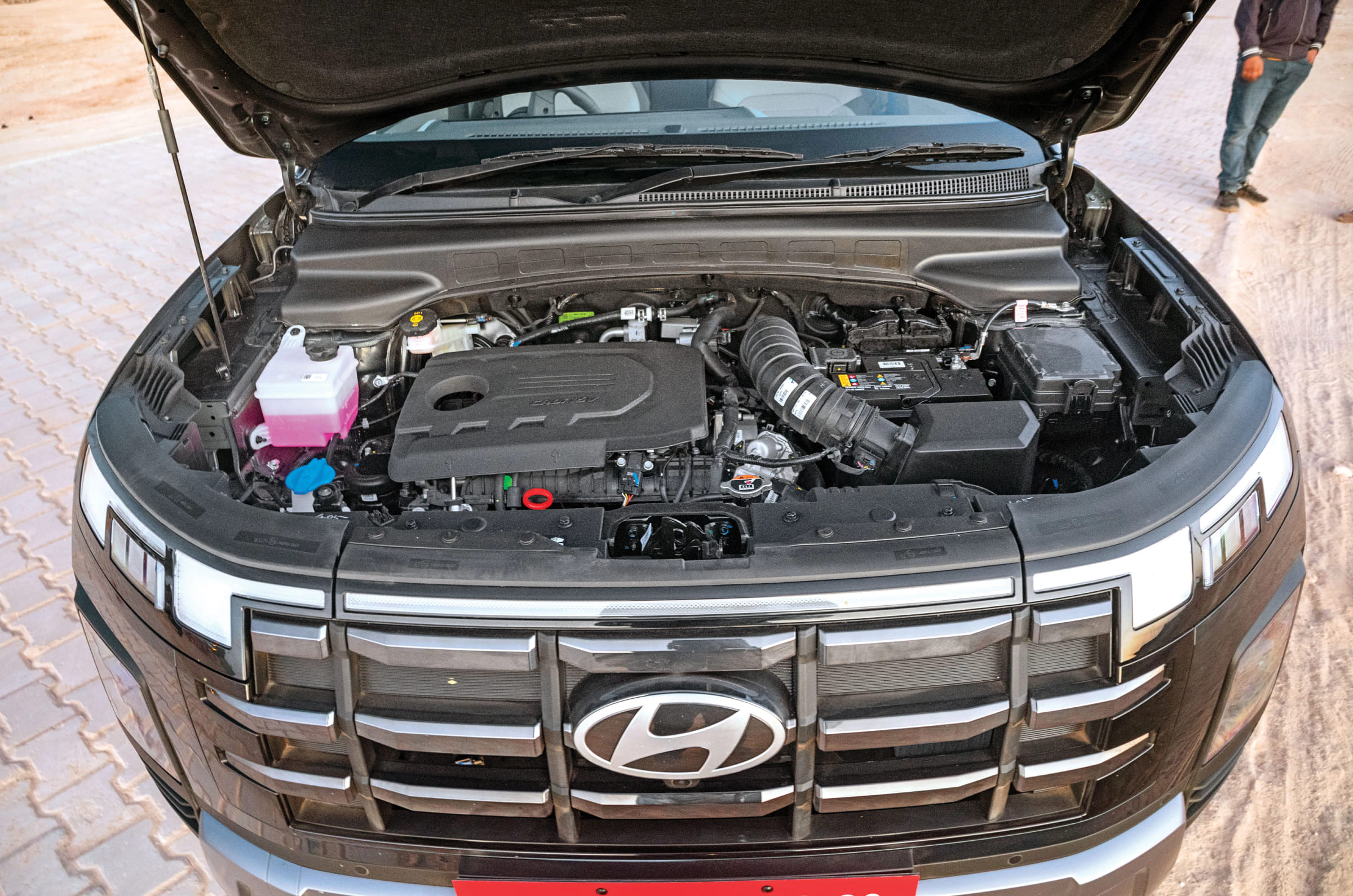
The Creta offers one of the widest powertrain choices in the midsize SUV segment. It is available in 27 variants, with three engines to choose from: a 115hp 1.5-litre petrol, a 160hp 1.5-litre turbo-petrol and a 116hp 1.5-litre diesel. Depending on the engine, buyers can choose from a six-speed manual, CVT, six-speed torque convertor automatic or seven-speed dual-clutch automatic.

There is also the sportier N Line for buyers looking for a more performance-focused Creta. Combined with the choice of engines, gearboxes and trims, the range caters to a broad mix of requirements.

Cons

1. Some cabin plastics could be better

While the Creta’s cabin looks modern and its materials have generally pleasing textures, the quality of some of the plastics falls short of the best in the segment. There are no soft-touch materials on the dashboard and the fit and finish isn’t Hyundai’s best, with the gloss finish on the centre console also appearing uneven in places.

There are a few other minor shortcomings too. The rear centre passenger does not get a headrest, while the front armrest is not adjustable for length.

2. Top versions are pricey

The Hyundai Creta’s top-spec versions are priced up to Rs 20.11 lakh (ex-showroom). For comparison, the Renault Duster tops out at Rs 18.49 lakh, while the Skoda Kushaq goes up to Rs 18.99 lakh. That puts it Rs 1.62 lakh above the Duster and Rs 1.12 lakh above the Kushaq, making the top-spec Creta a relatively expensive proposition compared with some of its similarly sized alternatives.

Opinion: Why India needs a small car assault

Opinion: Why India needs a small car assault
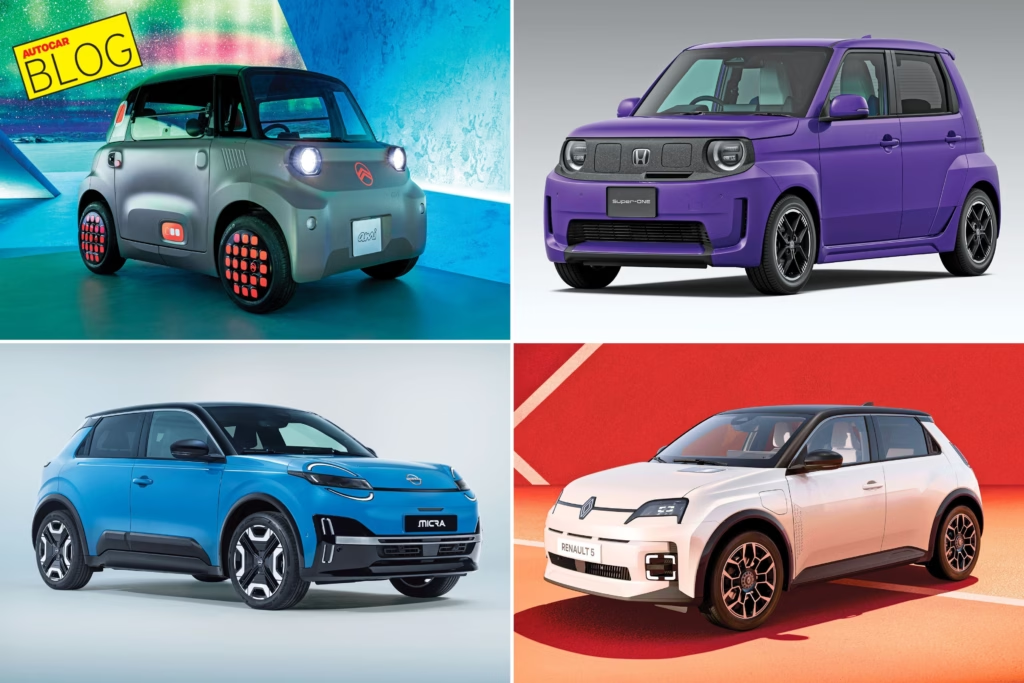
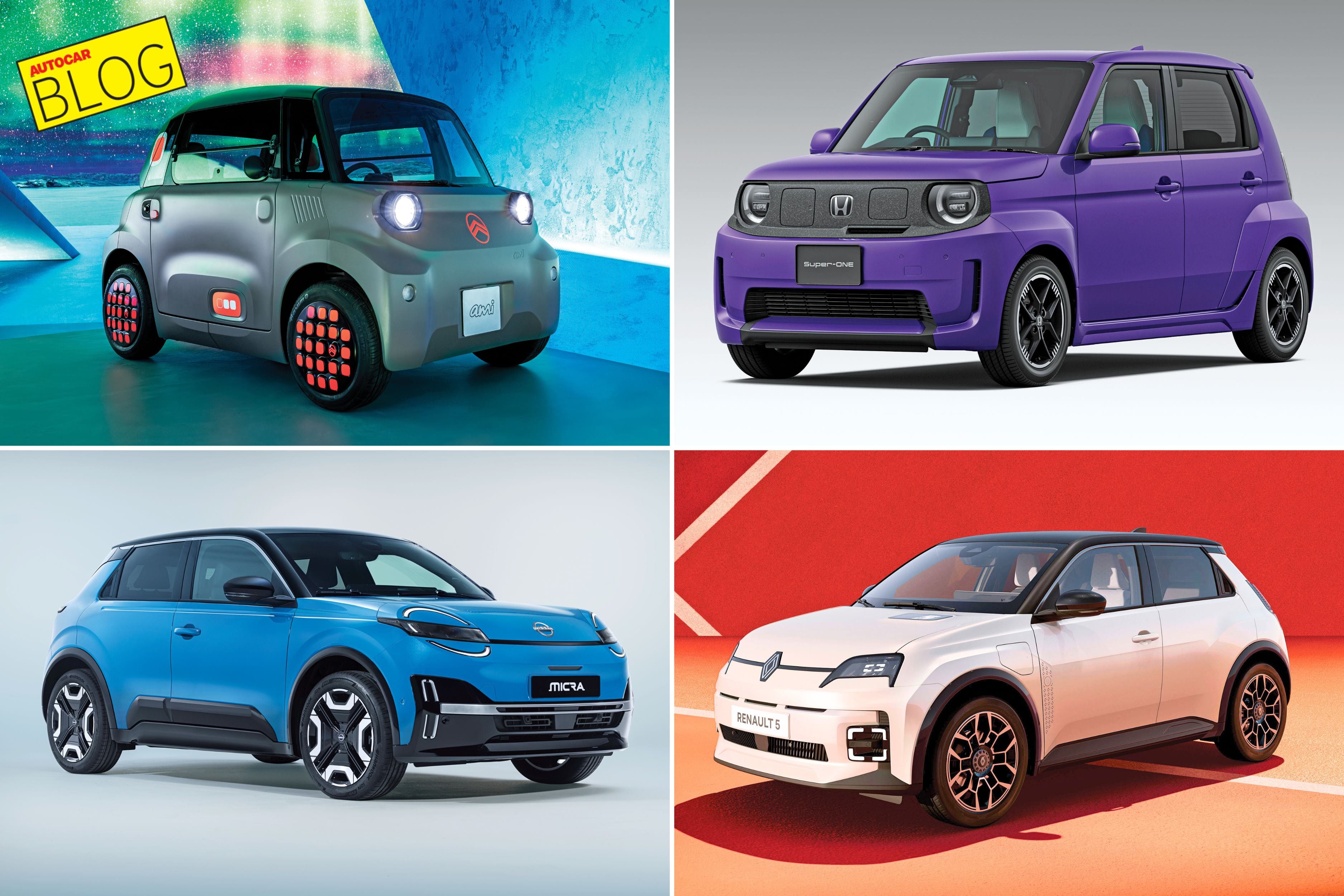
Citroen AMI, Honda Super N, Renault 5, Nissan Micra.

The CAFE 3 norms are just eight months away. Things will certainly get tighter and tougher for automakers, in terms of upping the number of clean power options as well as light-weighting their current brawn-ish SUVs. If one has to bring a 30 percent reduction in fleet-average performance and move from MIDC to WLTP test results, an automaker has very little leeway in terms of just about making it. 

As a product planner, I would seriously take this as an opportunity to bring the focus back onto the entry-level small car. In fact, all product planners should be doing the same, irrespective of what your current portfolio is. The policymakers are sending out a clear message to the Indian automobile industry – relook and revive the small car, for you have neglected it for quite some time now!

And why not? It’s not just for developing markets; look at the developed world too. The otherwise ostentatious European is seriously evaluating the small car once again. Even the more aware and conscious American is. Japan has always been a ready reference for all. Tomorrow’s car buyer is going frugal and smart once again. Going back to the basics. Without compromising on comfort and features. And the automakers have prepared themselves for such times. Some started almost a decade ago, with varying outcomes, but the efforts have been commendable and great teachers on how to approach the future. 

The Citroën Ami. The Fiat Topolino and Multiplina. The Renault 5 and its hot hatchback cousin, the Alpine A290. The Nissan Micra. The Smart For2. The Honda Super N. The Microlino and Microletta. And I have not even gone into what the Chinese have launched over the last 12 months. 

This is the attack of the “minors”. Electric. Power-packed. Feature-rich. Head-turning looks. Both microcars as well as conventional entry-level little runabouts. They are not cheap-looking, frugally engineered, cost-compromised, low-on-status offers that one never wants. They are clean, conscious and very cool. They cater to the sceptical youth and the wizened elder alike.

For years, Japan and Europe have been the homes of such cars. It is time India takes over that role. And it makes perfect business sense too. If we are to increase car penetration and grow the market to a size even half of that of China, given our consumption power, there is no other way but to make the entry-level car the hero of the script. Whether electric, CNG or hybrid. It is the responsibility of brands like Maruti Suzuki, Hyundai, Toyota, Tata and Honda to make this happen. Only then will we create a mature and sustainable market with a rich and robust pipeline of two-wheeler owners who will want to look up!

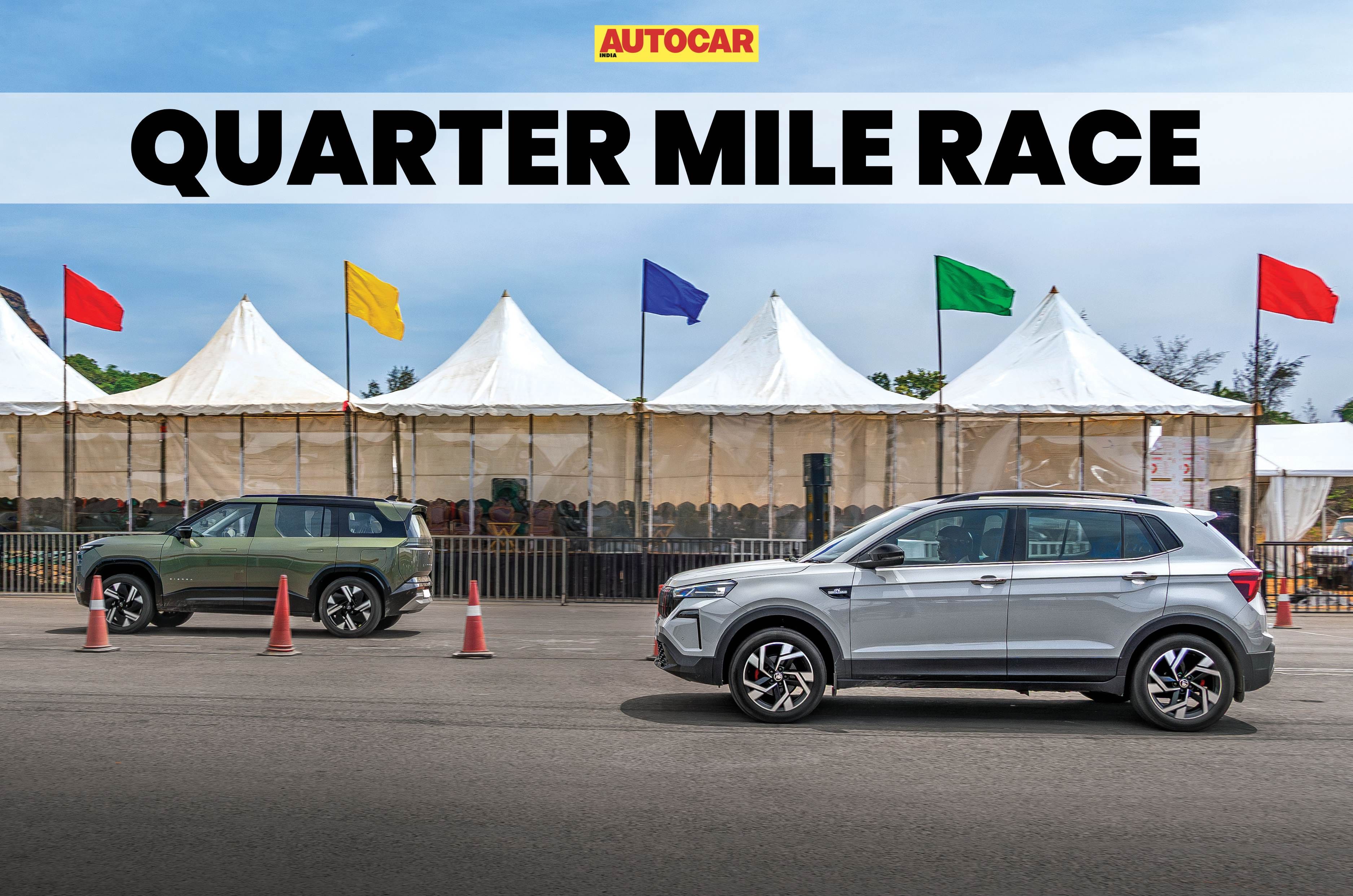
Sierra vs Seltos vs Duster vs Kushaq: quarter mile drag race

Kushaq vs Sierra drag race

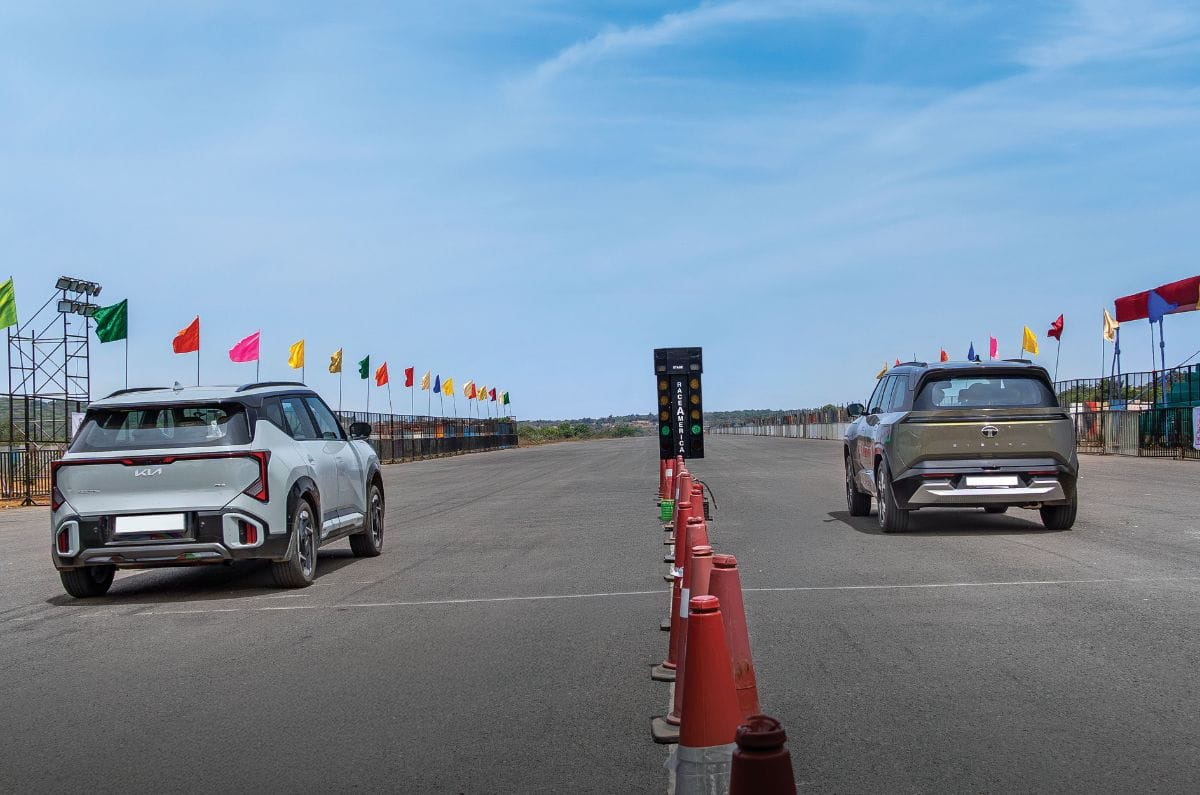
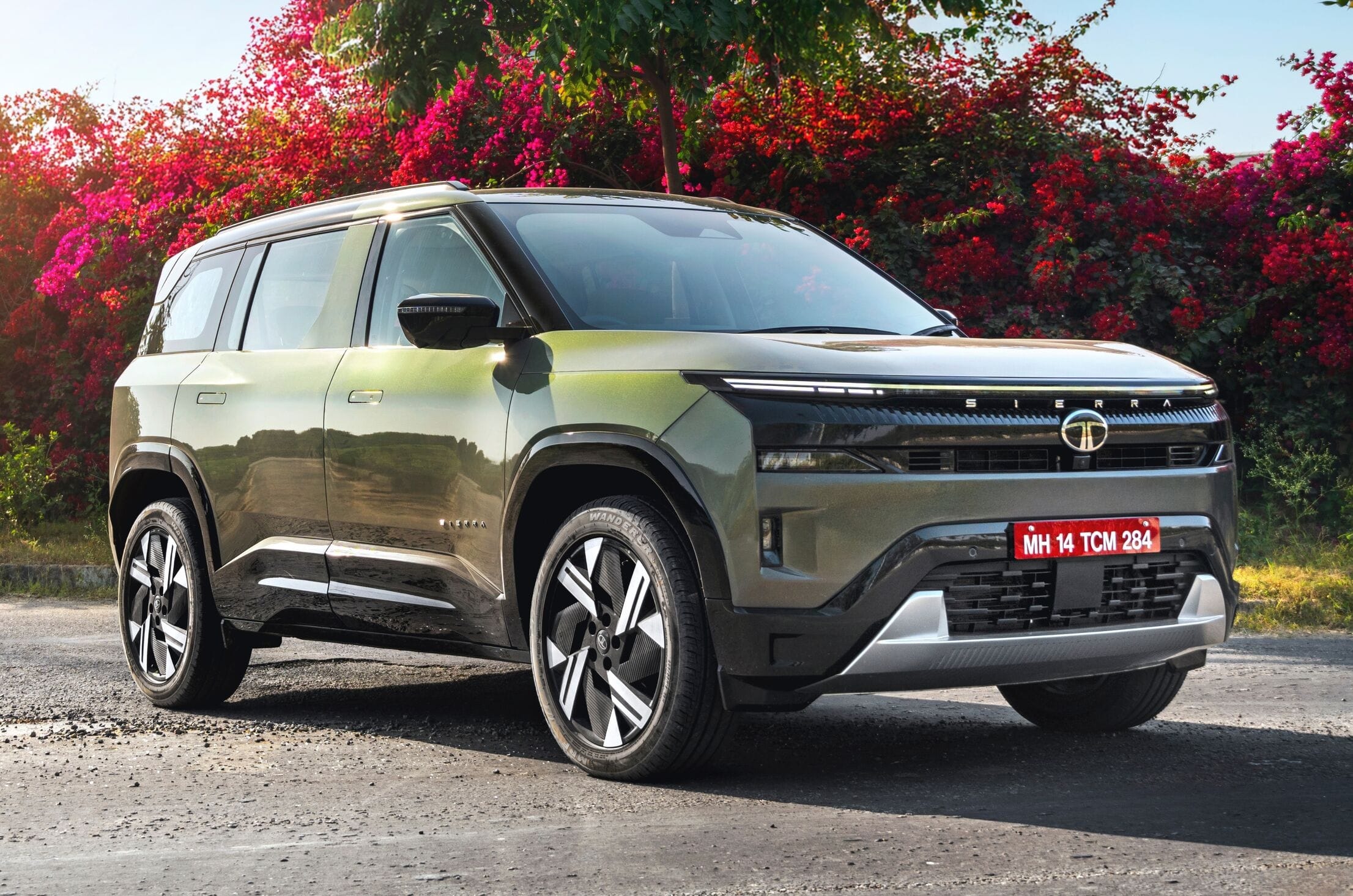
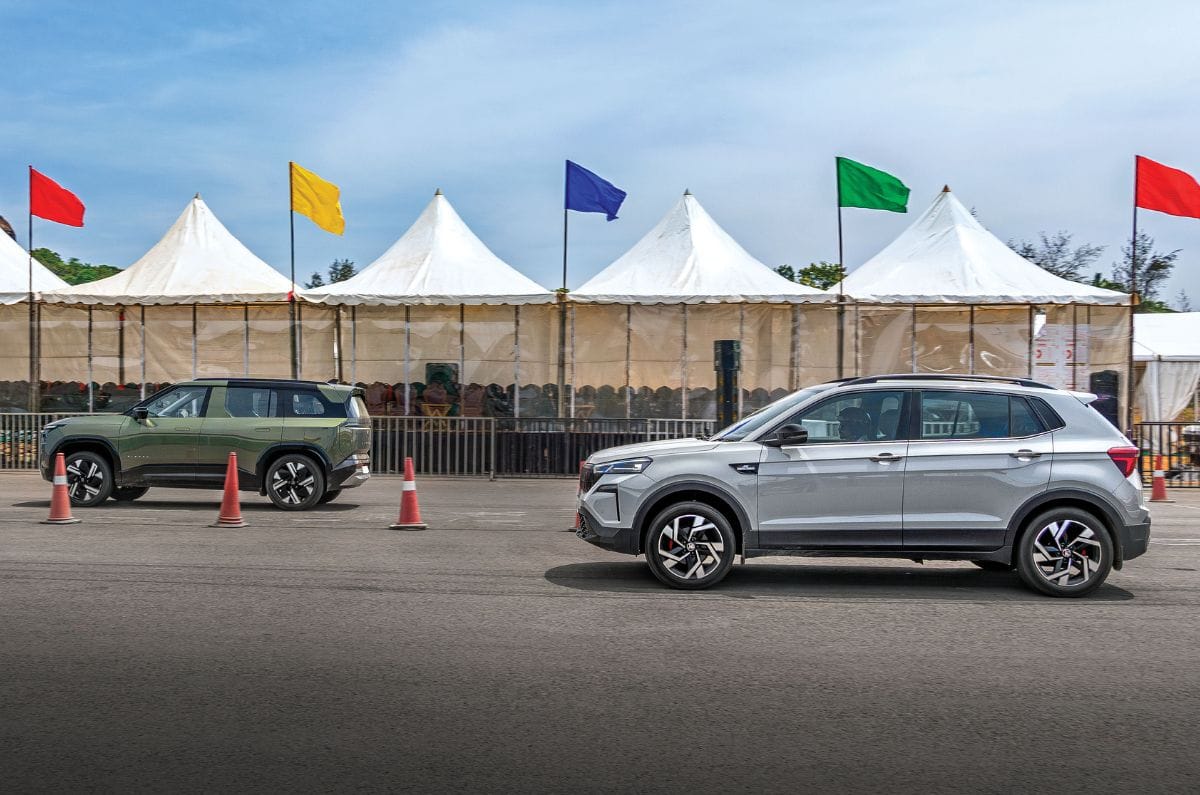
There’s no simpler way to compare one car’s performance to another than with a head-to-head quarter-mile race. In this edition of Autocar India’s quarter-mile racing series, we’ve brought together some of the newest midsize SUVs in the market, including the Tata Sierra, Kia Seltos and the Renault Duster. Let’s find out which of this new crop of midsize SUVs is the quickest down the drag strip. 

Race 1: Tata Sierra vs Kia Seltos 

SUVSeltosSierra
Engine1482cc, 4-cylinder 1498cc, 4-cylinder 
Power160hp at 5500rpm160hp at 5000rpm
Torque253Nm at 1500-3500rpm255Nm at 1750-4000rpm
Transmission7-speed dual-clutch6-speed torque converter
Kerb weight 1467kg1552kg

Our first pairing is between the Tata Sierra and the Kia Seltos, both of which are powered by 1.5-litre turbo-petrol engines, but with different gearboxes. 

These two new midsize SUVs are neck-and-neck on paper, with both featuring 160hp turbo-petrol engines, similar torque outputs and similar weight. However, the torque-converter-equipped Sierra launches much stronger than the Seltos, whose dual-clutch automatic is conservative off the line. The Kia Seltos does begin to claw back lost ground, but a little too late. The Sierra manages to win by a slender margin of about two tenths of a second. Race 2 is even closer, with a gap of just over a tenth, but the result stays the same.  

Sierra vs Seltos drag race times 
 Sierra Seltos
Race 116.92 sec17.11 sec
Race 2 17.07 sec17.19 sec 

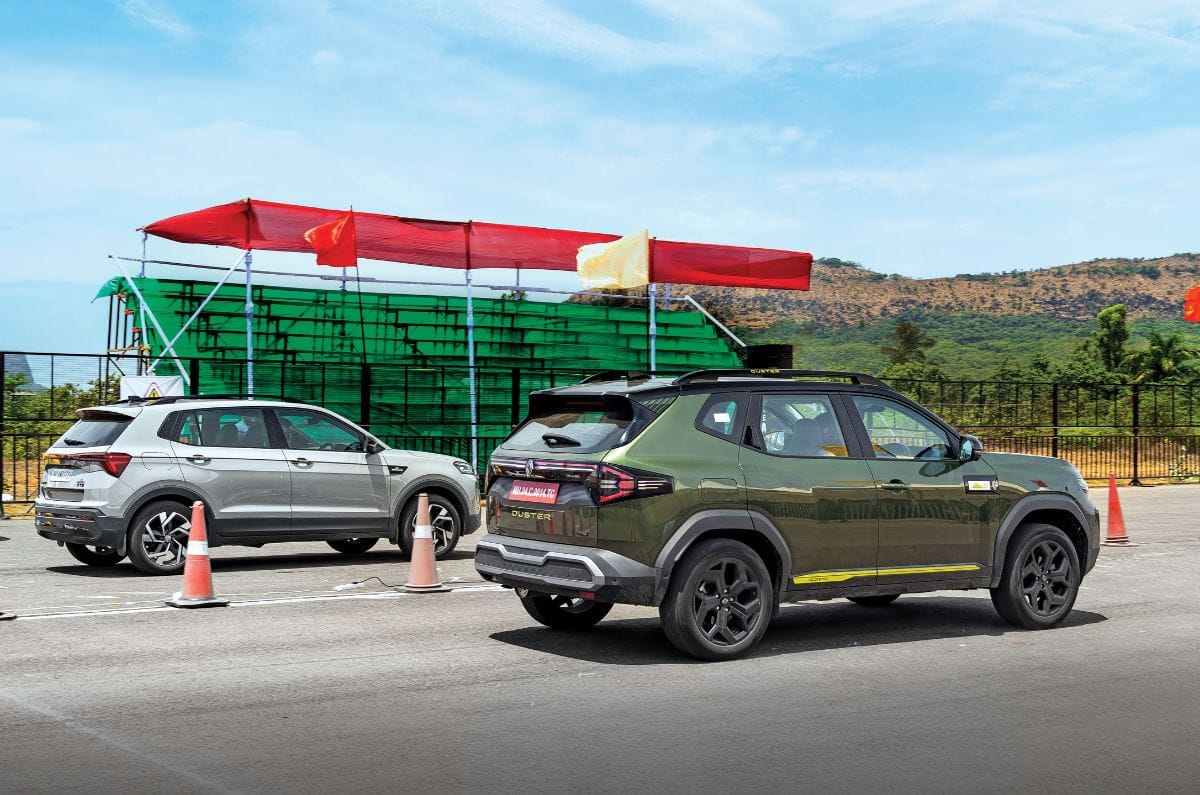
Race 2: Skoda Kushaq vs Renault Duster 

SUVKushaq Duster 
Engine1498cc, 4-cylinder 1333cc, 4-cylinder 
Power150hp at 5000-6000rpm163hp at 5,250rpm
Torque250Nm at 1600-3500rpm280Nm at 2,000-3,500rpm
Transmission7-speed dual-clutch6-speed dual-clutch
Kerb weight 1322kg 1363kg

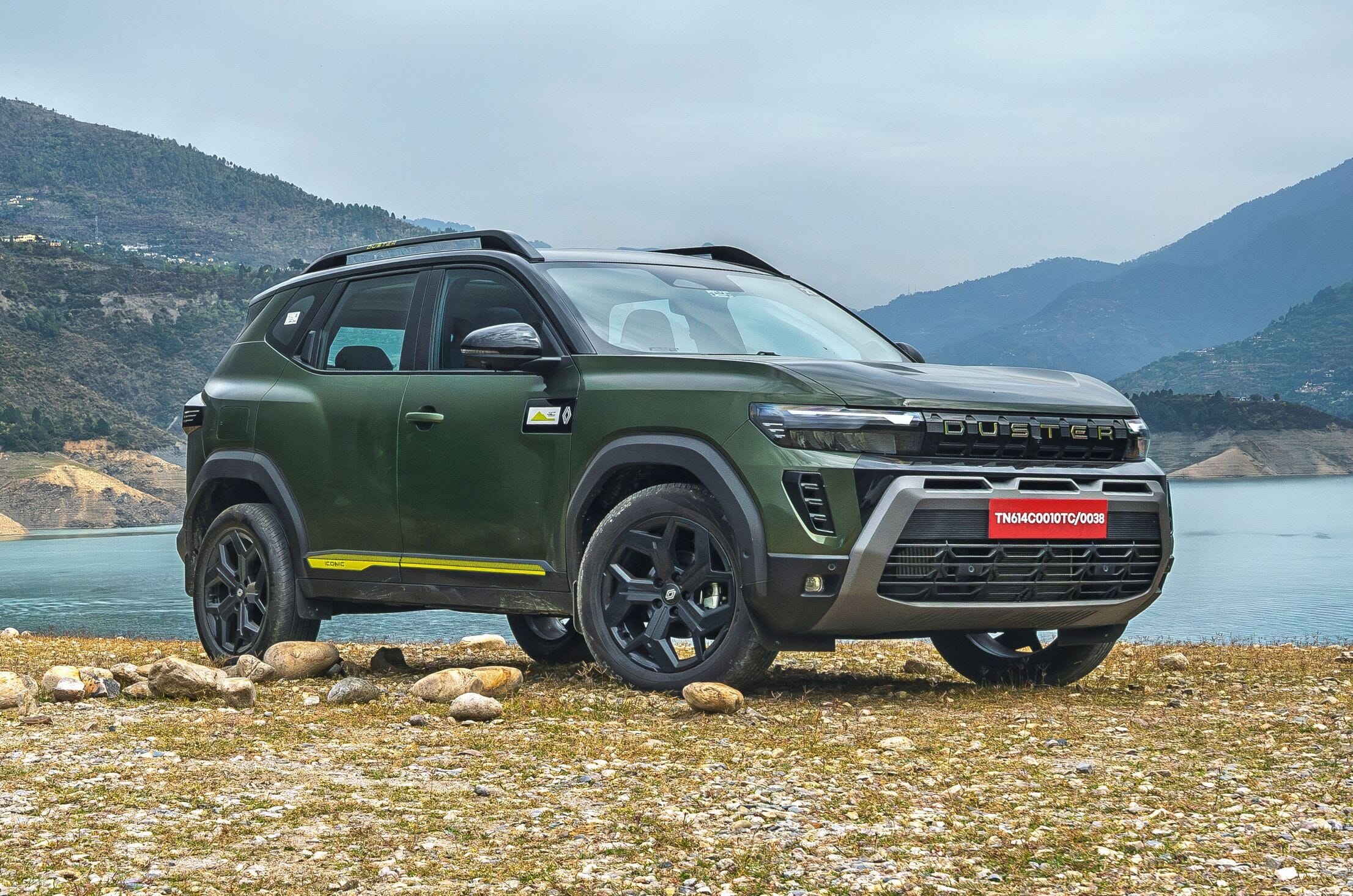
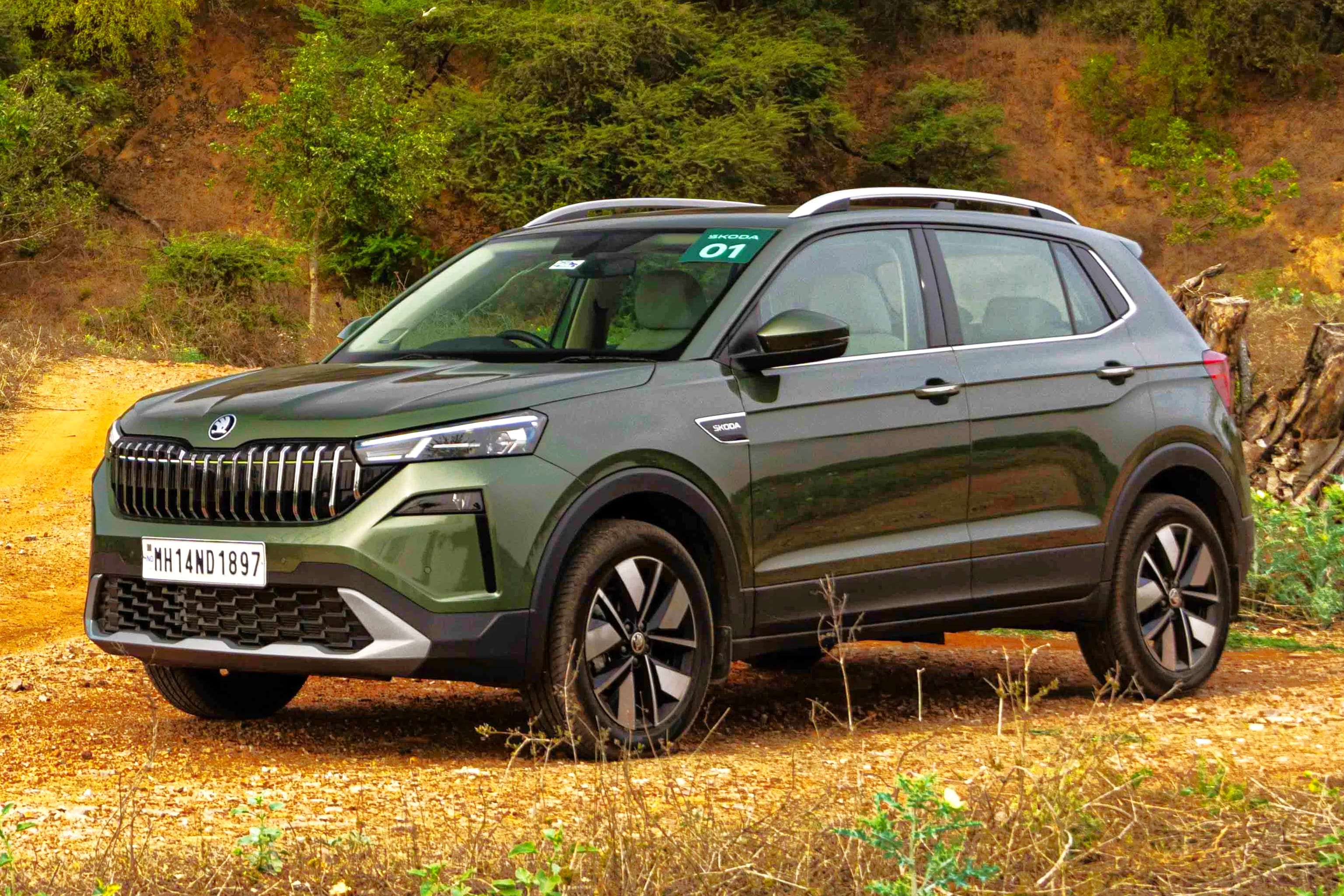
Our next pairing is between the Skoda Kushaq and the Renault Duster. The Kushaq uses a 1.5-litre turbo-petrol engine, while the Duster uses a smaller but more powerful 1.3-litre unit. Both engines come mated to a DCT gearbox. 

The Duster has the advantage on paper with more power, and it backs it up by winning Race 1 by two tenths. The Renault’s wet-clutch DCT allows a better launch than the Skoda’s dry-clutch unit, but the Skoda’s snappier shifts and stronger top end mean it is catching up. Race 2 starts off with the Skoda getting a better launch, and as such, it goes on to beat the Renault by nearly four tenths. Race 3 is closer than Race 2, but the result stays the same, with the Kushaq coming out on top yet again. 

Kushaq vs Duster drag race times 
 Kushaq  Duster
Race 117.77 sec17.65 sec
Race 2 17.05 sec17.69 sec
Race 317.28 sec17.67 sec

Race 3: Tata Sierra vs Skoda Kushaq 

SUVSierraKushaq 
Engine1498cc, 4-cylinder 1498cc, 4-cylinder 
Power160hp at 5000rpm150hp at 5000-6000rpm
Torque255Nm at 1750-4000rpm250Nm at 1600-3500rpm
Transmission6-speed torque converter7-speed dual-clutch
Kerb weight 1552kg1322kg

Finally, we bring together the winners from the first two rounds to determine the fastest midsize SUV you can buy today.

The Sierra has the numbers on its side, but the Kushaq does tend to punch above its weight. As was the case in the earlier races, the Skoda proves tricky to launch off the line, while the Tata Sierra jumps ahead. From there on, the Kushaq does start to reel in the Sierra, but it’s just not enough. The Tata Sierra wins Race 1 by just about a tenth. Race 2 is equally close, with the gap being a minuscule 0.2 seconds, and the Sierra manages to win again. 

Sierra vs Seltos drag race times 
 Sierra Kushaq
Race 117.18 sec 17.28 sec
Race 2 17.02 sec17.21 sec 

Autocar India’s testing standards

Before we conduct our performance tests, we check and maintain tyre pressures based on the manufacturer’s recommendation and ensure the car has a full tank of fuel. The car is then tested in a controlled environment, and the data is collected via highly accurate GPS-based timing equipment.

Nissan Gravite CNG real world fuel economy tested, explained

Nissan Gravite CNG

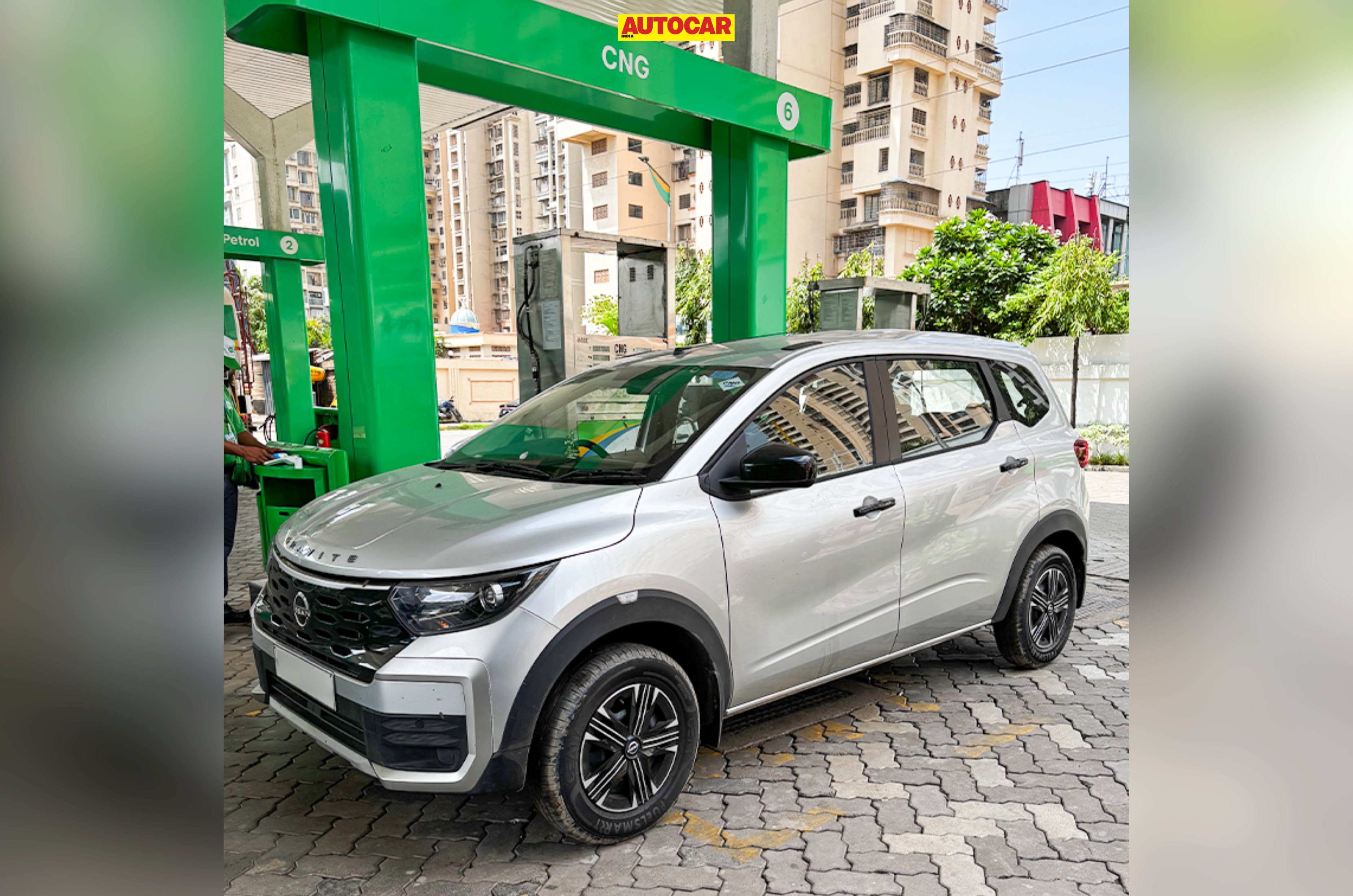
The Nissan Gravite, launched in February, 2026, is among the most affordable three-row MPVs sold in the country. In May, Nissan started offering the Gravite with a dealer-level CNG kit. Manufactured by Motozen, the kit is government and ICAT approved, and is available at an additional cost of Rs. 83,000. 

We’ve now put the Gravite CNG through our real-world fuel-efficiency tests to see how it performs.

  1. CNG kit available at an introductory price of Rs. 83,000.
  2. Spare wheel is mounted underneath the boot floor.
  3. 3-year/1,00,000km third-party warranty offered on CNG components.

It is powered by the same 1.0-litre, three-cylinder petrol engine (BR10) as seen in the Renault Triber, paired to a 5-speed gearbox. It produces 72hp and 96Nm of torque in petrol mode, however, Nissan is yet to reveal the claimed efficiency and the engine’s output when run on CNG. The twin CNG tanks are stacked vertically in the boot one above the other, each with a 25-litre capacity.

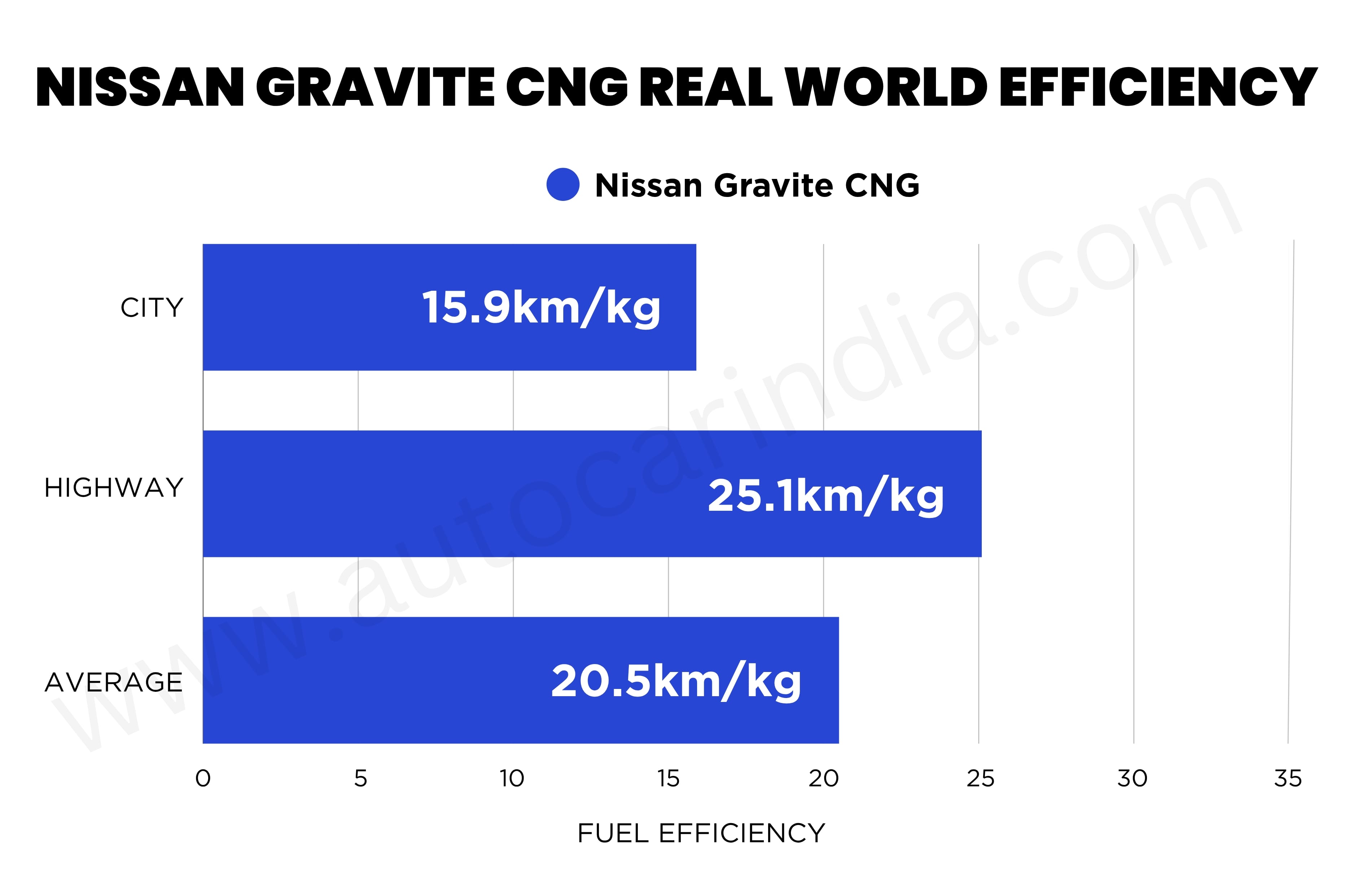
In our tests, the Gravite CNG delivered 15.9km/kg in the city and 25.1km/kg on the highway, for an overall average efficiency of 20.5km/kg.

When refilled from empty, we managed to fill  7.7kg of CNG, although this can vary depending on the pump pressure and ambient temperature. Based on our average overall efficiency of 20.5km/kg, one can expect a real-world range of 150-160km on a full tank of CNG.

Autocar India’s fuel-efficiency testing

Since CNG tanks are more difficult to fill consistently due to variables such as ambient temperature and pump pressure, we did not use our standard tankful-to-tankful methodology. Instead, for our real-world tests, we emptied the CNG tank and refilled it with 2kg of CNG. We then drove the vehicle in city conditions until the gas was exhausted. The same process was repeated for the highway run. Throughout both tests, the Gravite was driven exclusively in CNG mode.

Before our real-world fuel efficiency tests, we maintain tyre pressures based on the manufacturer’s recommendations. These cars are driven in fixed city and highway loops in and around Navi Mumbai, and we maintain certain average speeds. Throughout the tests, there is only one person in each car, and the aircon is set to fan speed 2 with temperature dialed to the lowest position. We operate other electricals, such as the audio system, indicators and wipers, just like a regular user would. Periodic driver swaps further neutralise variations in driver patterns.

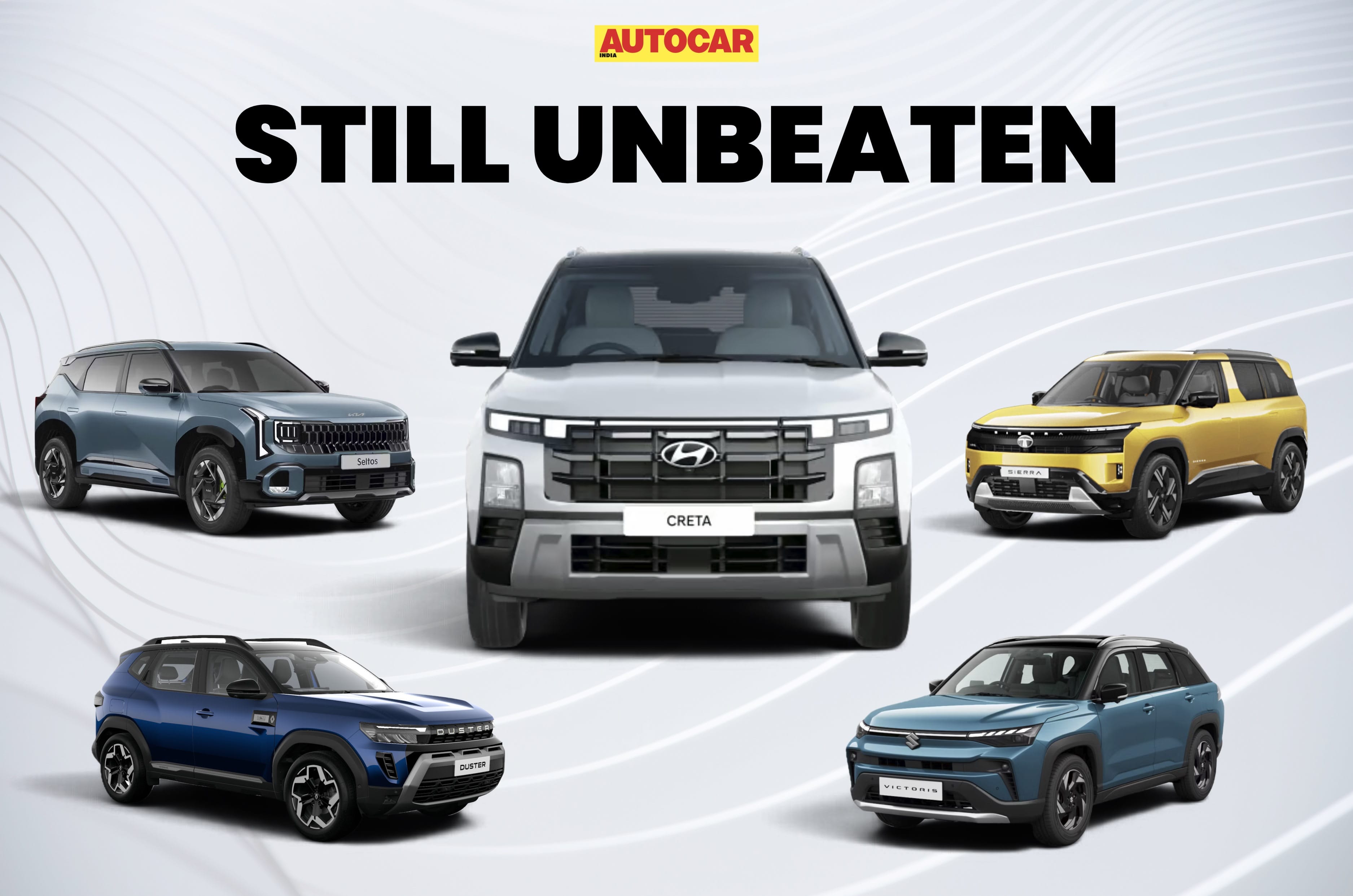
Has the latest crop of midsize SUVs dented the Hyundai Creta’s dominance?

hyundai creta h1 2026 sales compared to rivals

The Hyundai Creta wasn’t the first midsize SUV to hit the Indian market, but it sure is the most popular one of them all. At the start of 2026, however, many believed that the Creta’s dominance on the sales charts was in jeopardy on account of new and upcoming entrants in the midsize SUV space, like the Maruti Suzuki Victoris, Tata Sierra, Kia Seltos, and Renault Duster, as well as the facelifted Skoda Kushaq and Volkswagen Taigun.

If things were to pan out that way, it would be bad news for Hyundai, since the Creta is the Korean carmaker’s bread-and-butter in India. Now that we have sales data for the first half of calendar 2026, and production, deliveries have stabilized for this fresh barrage of midsize SUVs, let’s take a look if any model has eaten into the Creta’s market, or if the Hyundai SUV continues to rule its segment.

Hyundai Creta vs latest midsize SUV sales in H1 2026

ModelJanuaryFebruaryMarchAprilMayJuneTotal
Hyundai Creta^17,92117,93817,83815,29115,2357,16891,391
Maruti Victoris15,24013,02111,06213,70110,85310,03573,912
Kia Seltos*10,63910,30811,04110,56610,5979,65462,805
Tata Sierra7,0037,1009,0037,3166,6066,39243,420
Skoda Kushaq*^^2,3071,8511,3109926,460
Renault Duster1,4022,3591,2671,0116,039
Volkswagen Taigun*^^1,5431,2811,1824,006

^Includes Creta Electric sales

*May include carryover sales of outgoing models

^^Sales counted from the facelift’s month of launch

Six months into 2026, the Creta has managed to retain its moniker of midsize SUV sales champion, averaging over 15,000 sales a month. Compared to H1 2025 (1,00,560 units sold), the Creta’s sales are actually 9.12 percent down YoY, but the Hyundai SUV is still far ahead of its rivals on the chart. That said, though the newer midsize SUVs haven’t dethroned the Creta, they’ve done a lot to grow the segment.

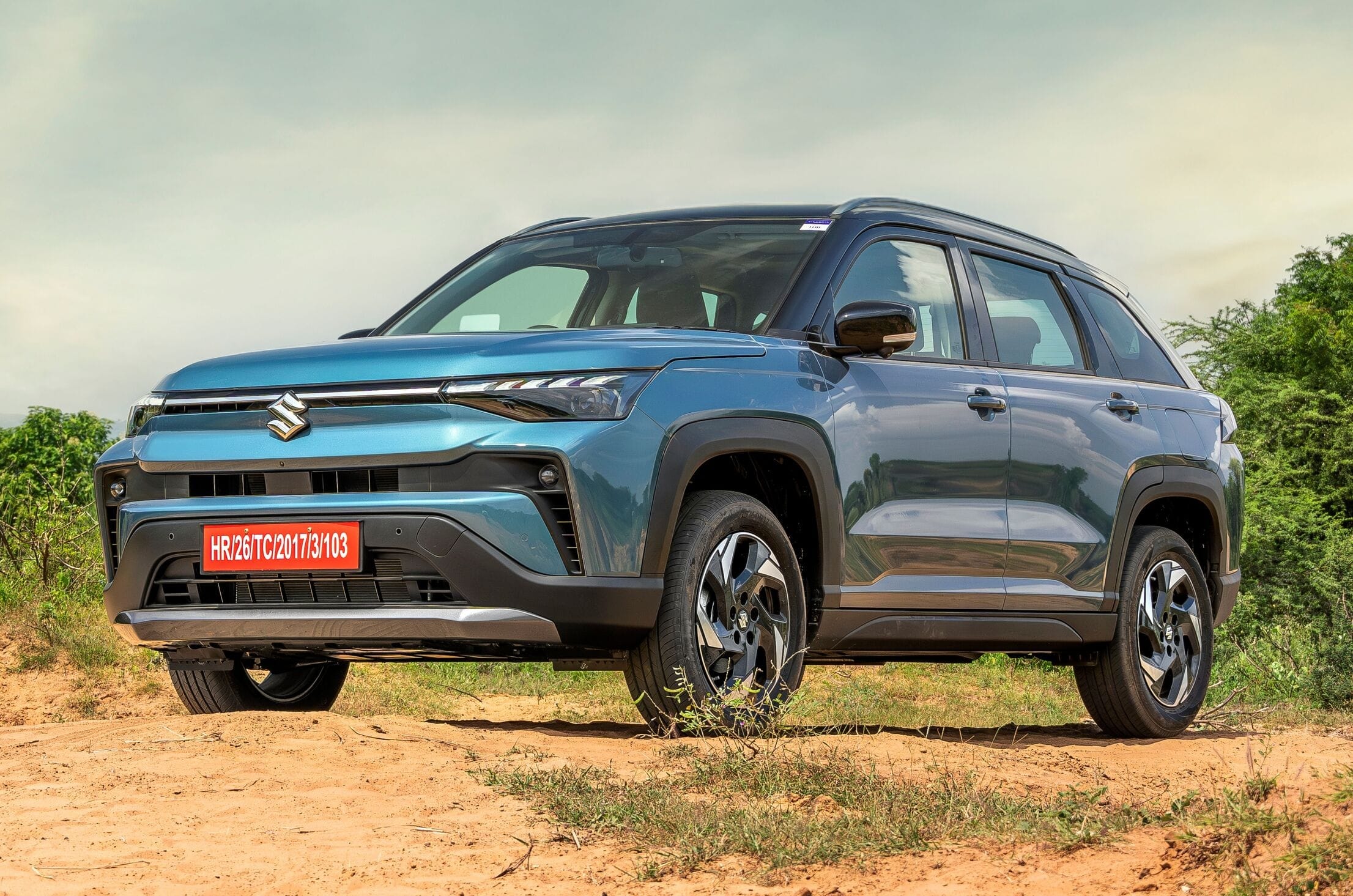
The next bestselling midsize SUV during H1 2026 was the Victoris, which fell 17,479 units behind the Creta. For perspective, you could fit the sales of the Duster, Kushaq, and Taigun within that gap and still come up around 1,000 units short. Launched in September 2025, the Victoris had a few months to establish itself in the market, and differentiates itself from the Creta by offering CNG and strong hybrid powertrains, which appeal to buyers seeking practicality and fuel efficiency, as well as Maruti’s famed peace of mind.
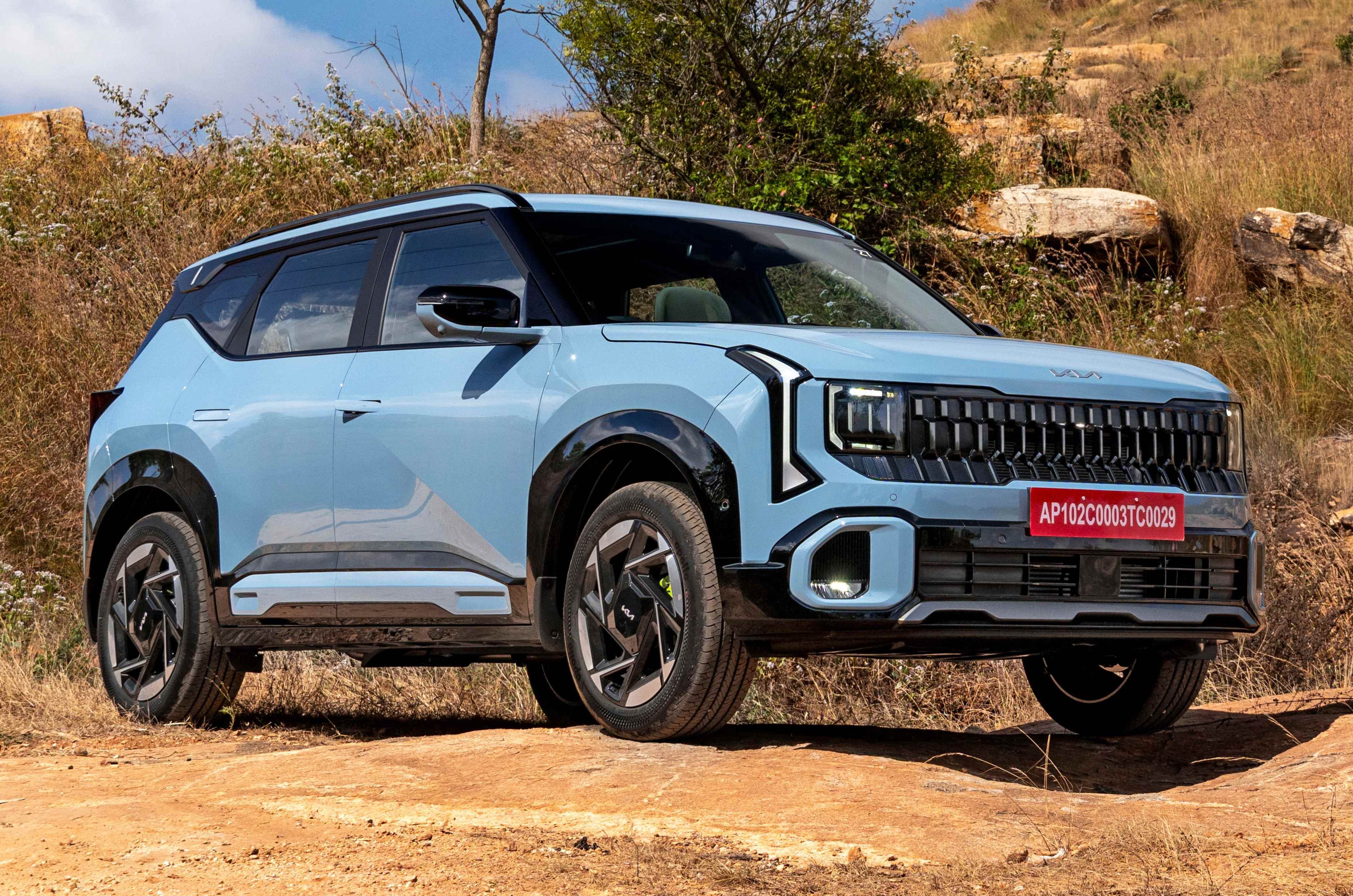
In third position comes the Seltos, which in theory should’ve been stiff competition for the Creta, with the Kia SUV offering a near-identical set of powertrains, a more modern platform (which will even underpin the next-gen Creta), similar pricing, and greater safety credentials by way of a 5-star Bharat NCAP rating. That said, the Seltos did record a whopping 70.28 percent YoY surge in sales, clearly reflecting the boosted popularity of the second-gen model.

The Sierra is Tata’s most formidable contender against the Creta to date, but sold less than half of what the Hyundai SUV did in H1 2026. It should be noted that the Sierra’s sales were initially production-constrained, with Tata steadily increasing manufacturing capacity every month to meet demand. The Sierra is undoubtedly a more feature-packed offering than the Creta, but also costs more. Concerns around fit-and-finish and Tata’s aftersales experience also play a role here.

Renault made its long-awaited return to the midsize SUV space with the new Duster in March, with deliveries commenced in April, but it hasn’t quite set the H1 sales chart alight. Like the Sierra, the Duster’s production is being increased in a phased manner, which could explain the relatively low sales numbers. The Duster has a lot going for it, like aggressive pricing, muscular looks, and a competitive feature set, but the SUV’s exclusively turbo-petrol powertrain line-up limits its appeal for many buyers. A strong hybrid powertrain is set to join the Duster line-up by Diwali 2026, and could pique buyer interest further.

Facelifts of the Kushaq and Taigun were launched in March and April, respectively – nearly five years since the midsize SUVs originally went on sale in India. Both packed some long-requested feature additions and changes, which led to demand spikes in subsequent months. Much like the Duster, though, the Kushaq and Taigun are available with turbo-petrol engines only, and are also on the dimensionally smaller side of the segment, which means they’re best-suited for enthusiast buyers.

Why does the Creta keep selling?

The biggest reason behind the Creta’s persistent reign on the midsize SUV sales charts is its deeply well-established brand name and perception. Many Indian car buyers are very conservative and safe in their purchasing decisions, and seeing a consistently high number of Cretas on the road every single day builds the image of it being the best option in the segment by virtue of sheer popularity. Not to mention, the more ubiquitous and established the car, the better its resale value, which is also very important to most Indian buyers.

Another key driver behind the Creta’s popularity is its proven reliability and no-nonsense ownership experience. Though many of the Creta’s rivals are just as, if not more durable, the Hyundai SUV’s reliability comes alongside a decently long list of features, a comfortable and well-built interior, great levels of refinement, a wide variety of powertrains, and an easy driving experience – making for an excellent overall package.

The Creta is even among the few in its segment to offer a diesel engine, which many midsize SUV buyers still prefer. For those who primarily commute in the city, there’s a smooth naturally aspirated petrol engine on offer, while enthusiast buyers can pick from the sporty Creta N Line range, which is powered by a direct-injection turbo-petrol motor. Basically, there’s something for everyone, and that’s exactly why the Creta is still unbeaten.