Renault Duster road test review

Renault Duster road test review

The Renault Duster impressed us at the first drive event with its muscular design, modern interior and ride and handling balance. We’ve now subjected all versions of the new Duster to our in-depth performance and efficiency testing to tell you how it stacks up against its established competition in the midsize SUV segment. 

Renault Duster Exterior Design and Engineering – 9/10

Butch, muscular SUV has good road presence; India model based on RGMP platform

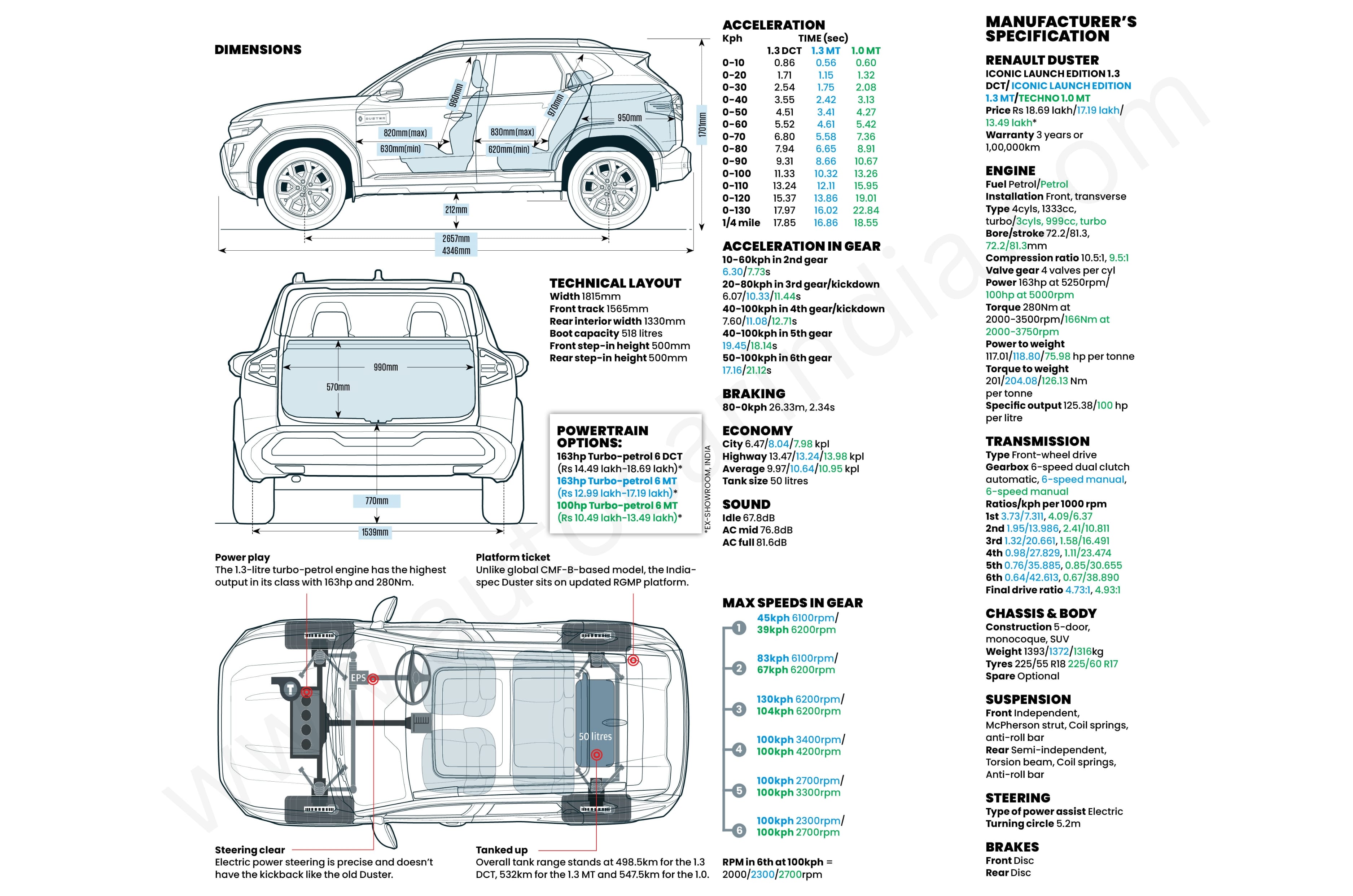
Renault Duster dimensions and specs

Length4,346mm
Width1,815mm
Height1,701mm (with roof rails)
Front track1,565mm
Rear track1,539mm
Ground clearance212mm
ConstructionMonocoque, five-door crossover
Weight1,316kg (1.0TP MT) / 1,372kg (1.3TP MT) / 1,393kg (1.3TP DCT)
Tyres225/60 R17 (1.0TP), 225/55 R18 (1.3TP)
Boot capacity (f/r)518 litres

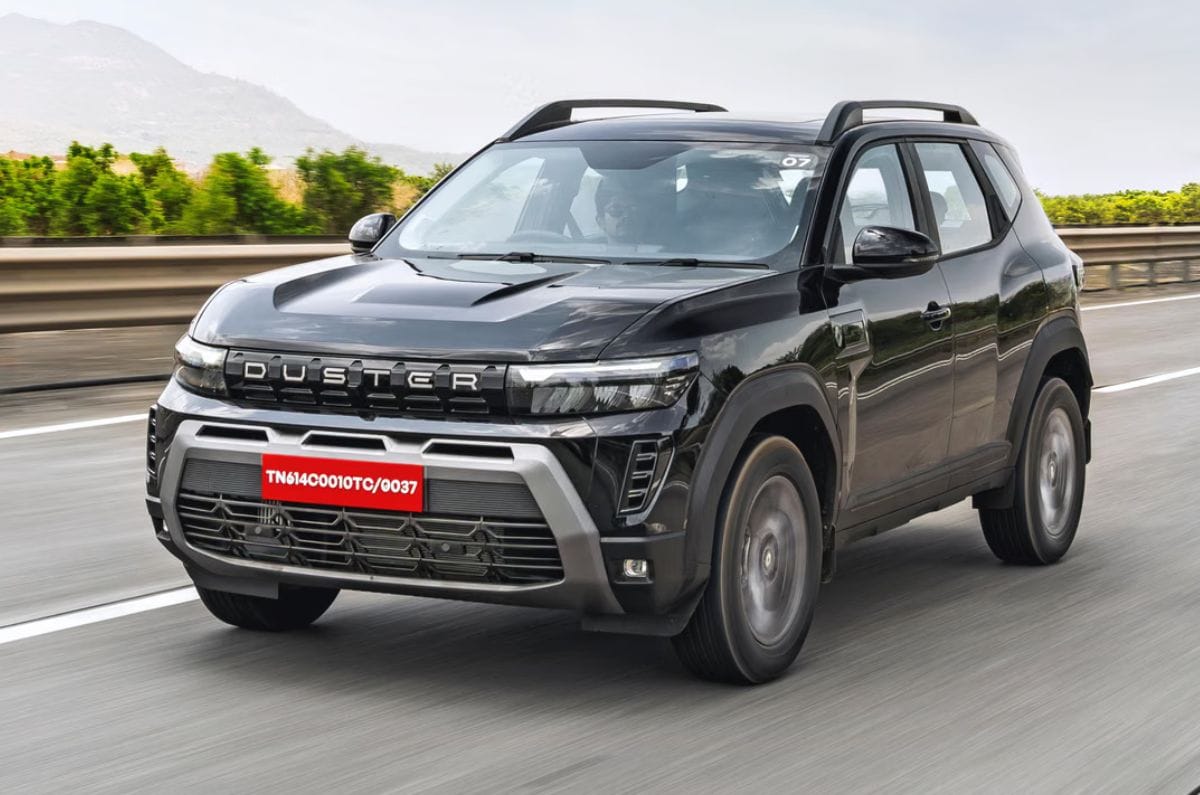
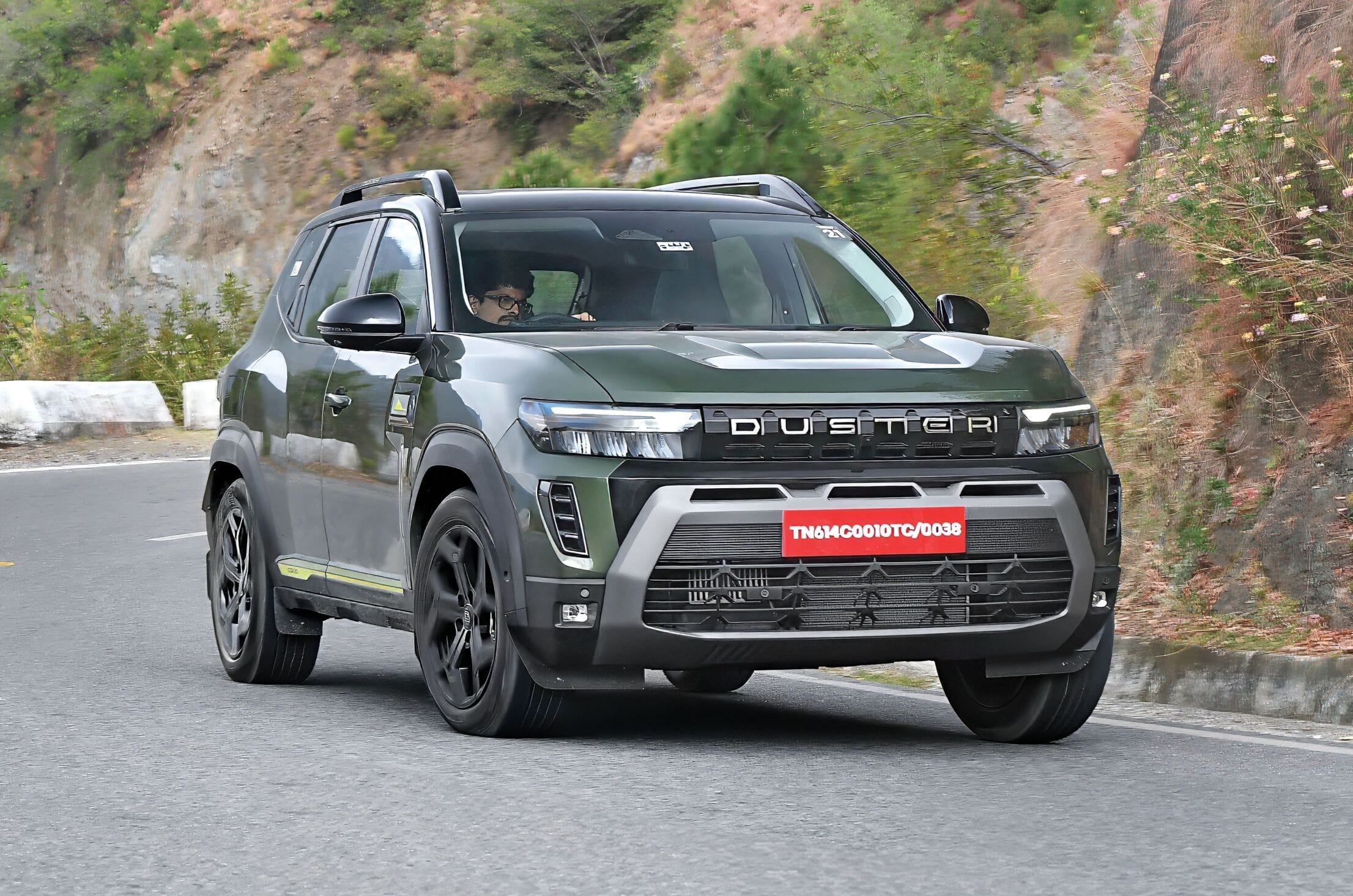
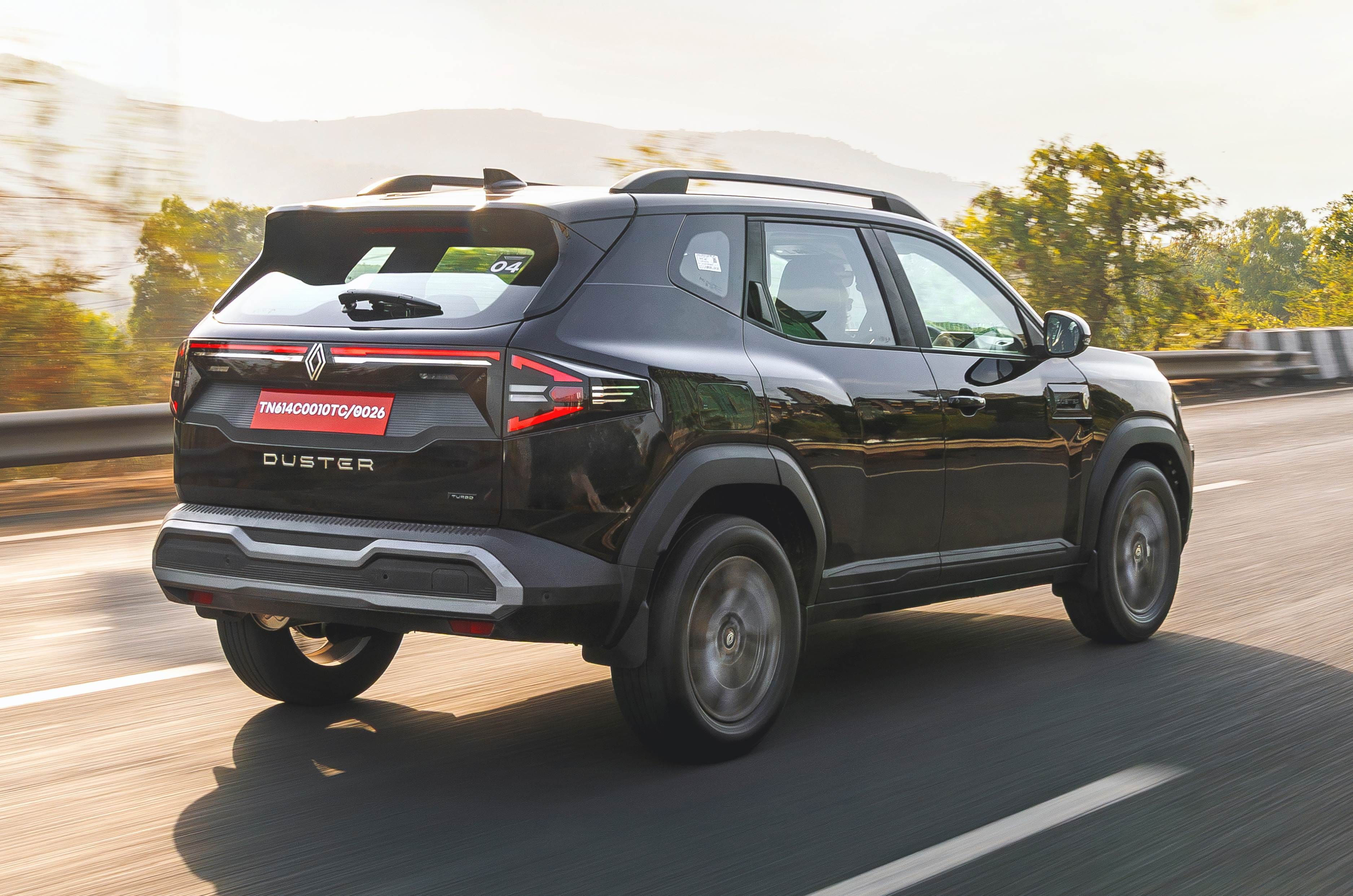
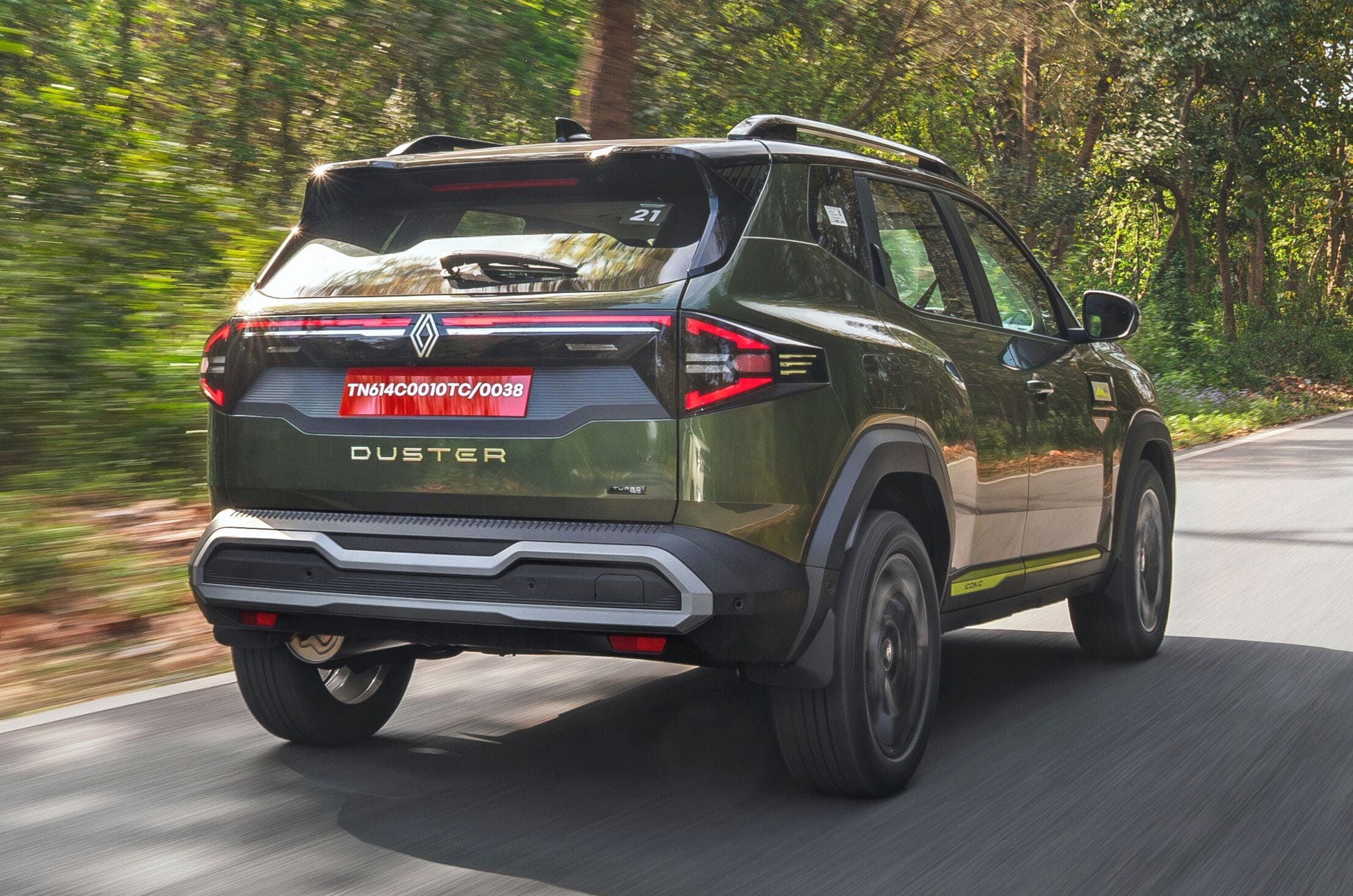
Renault has absolutely nailed the design of the new Duster. While it retains clear visual links to its predecessor, the styling feels thoroughly modern. Up front, large LED headlamps are paired with distinctive eyebrow-shaped DRLs that double as turn indicators, while the grille replaces the Renault logo with a prominent ‘Duster’ script, capitalising on the model’s strong brand recall. A protruding silver skid plate evokes memories of the original Duster, and pixel-style fog lamps, a sculpted bonnet and functional air curtains add further visual muscle.
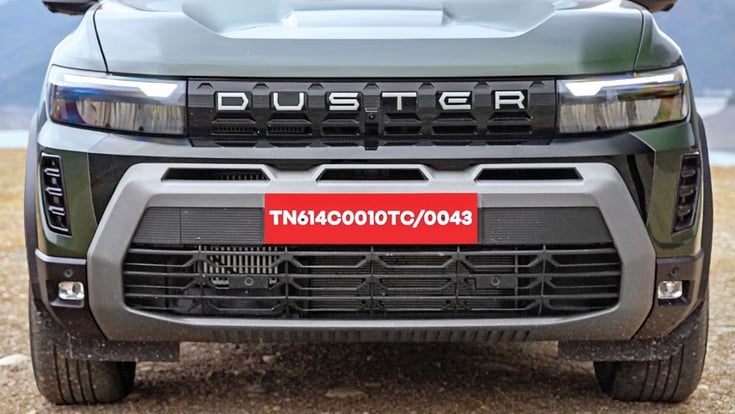
Renault Duster grille design
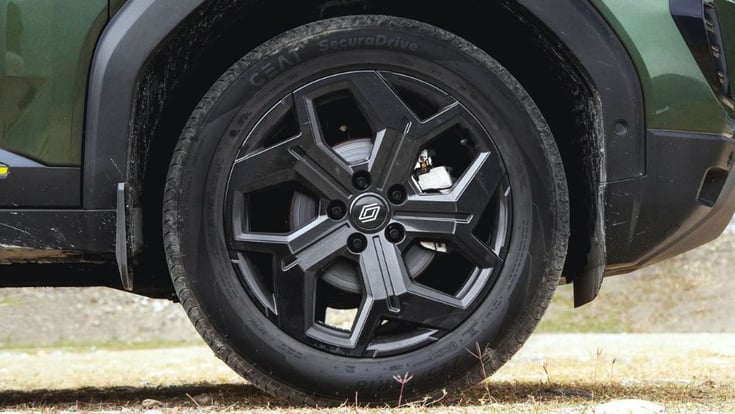
Renault Duster alloy wheels
 

Left to right: Proudly wears the Duster badging on the nose; 18-inch alloys look proportionate.

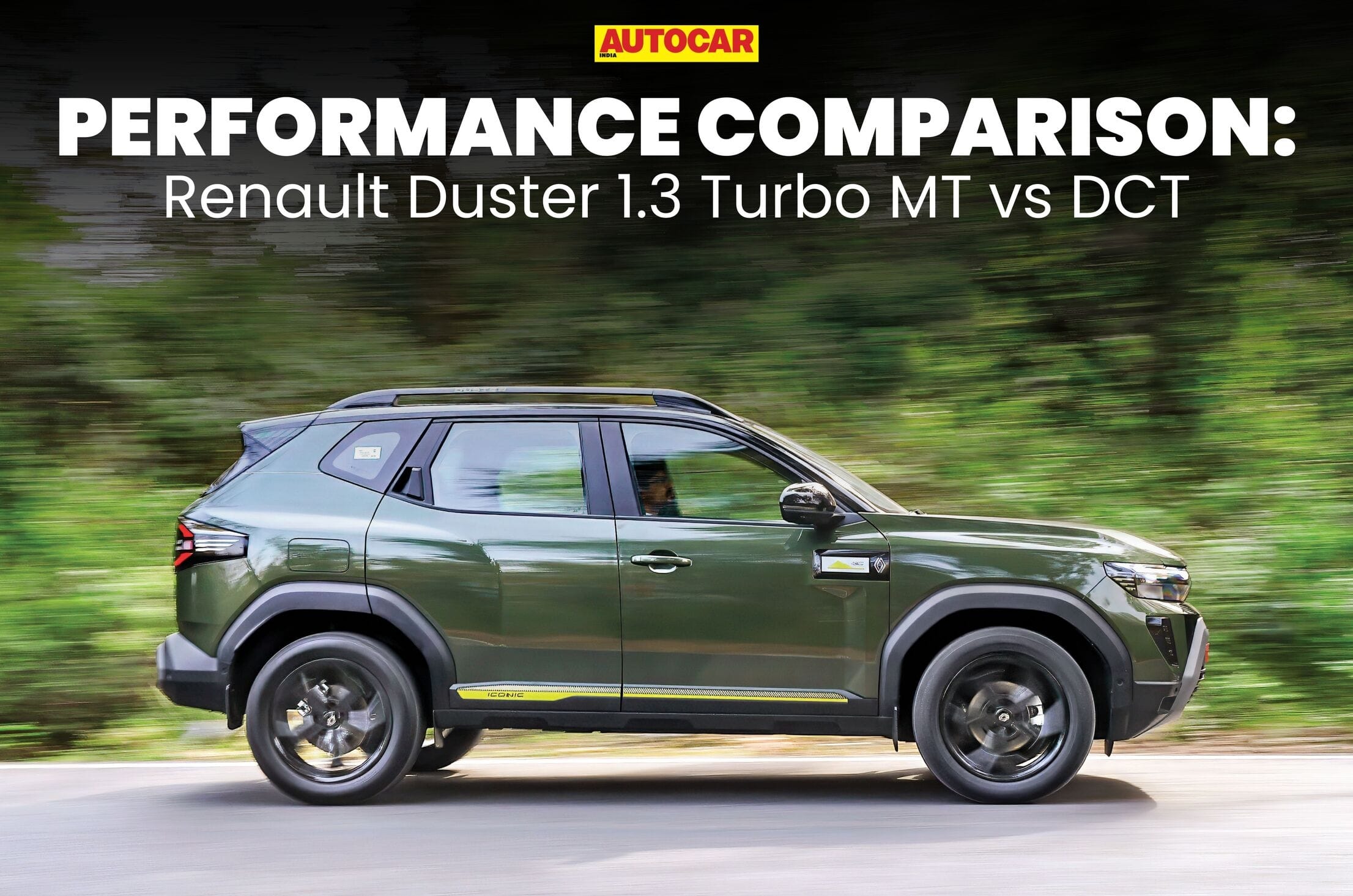
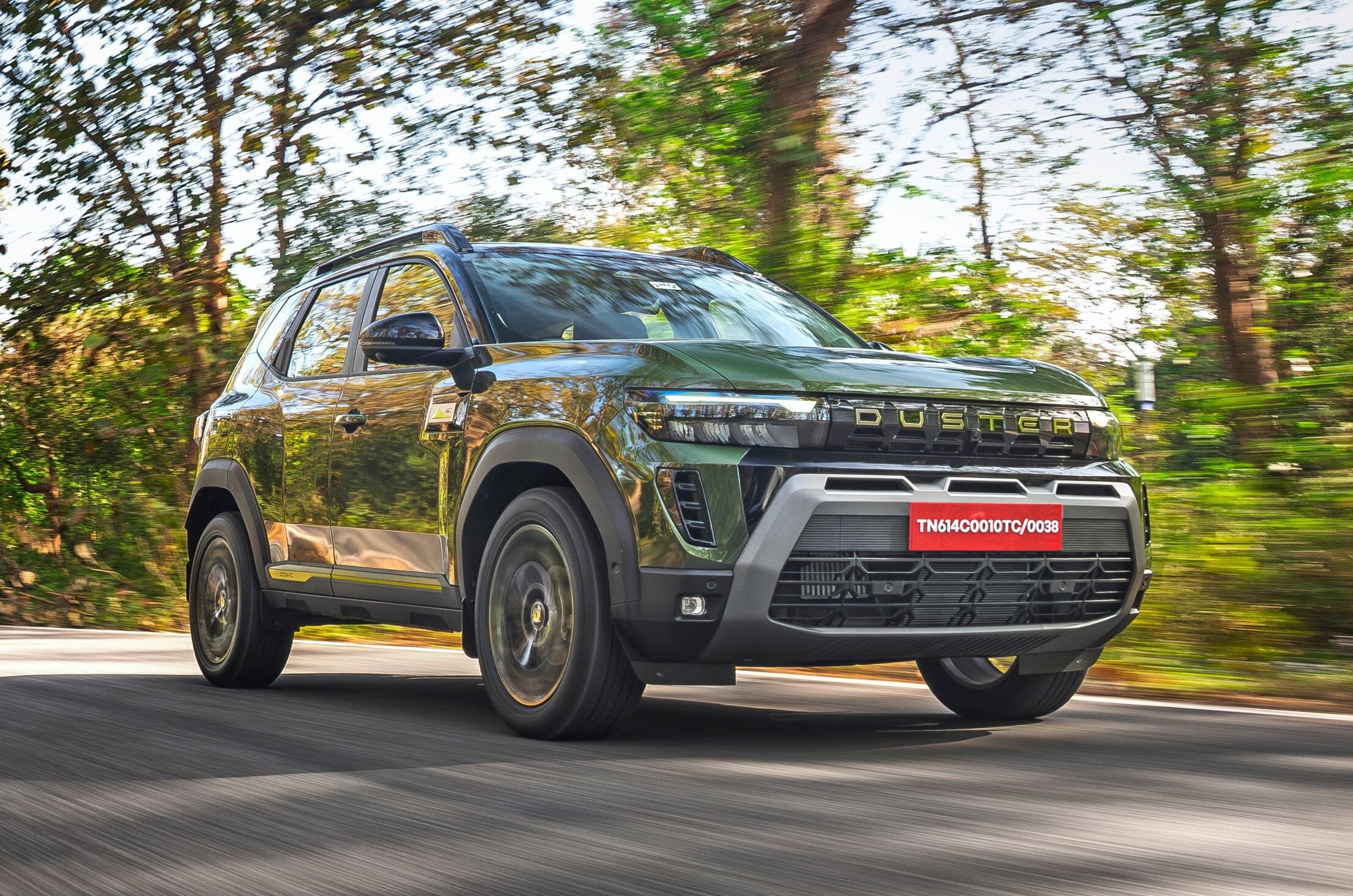
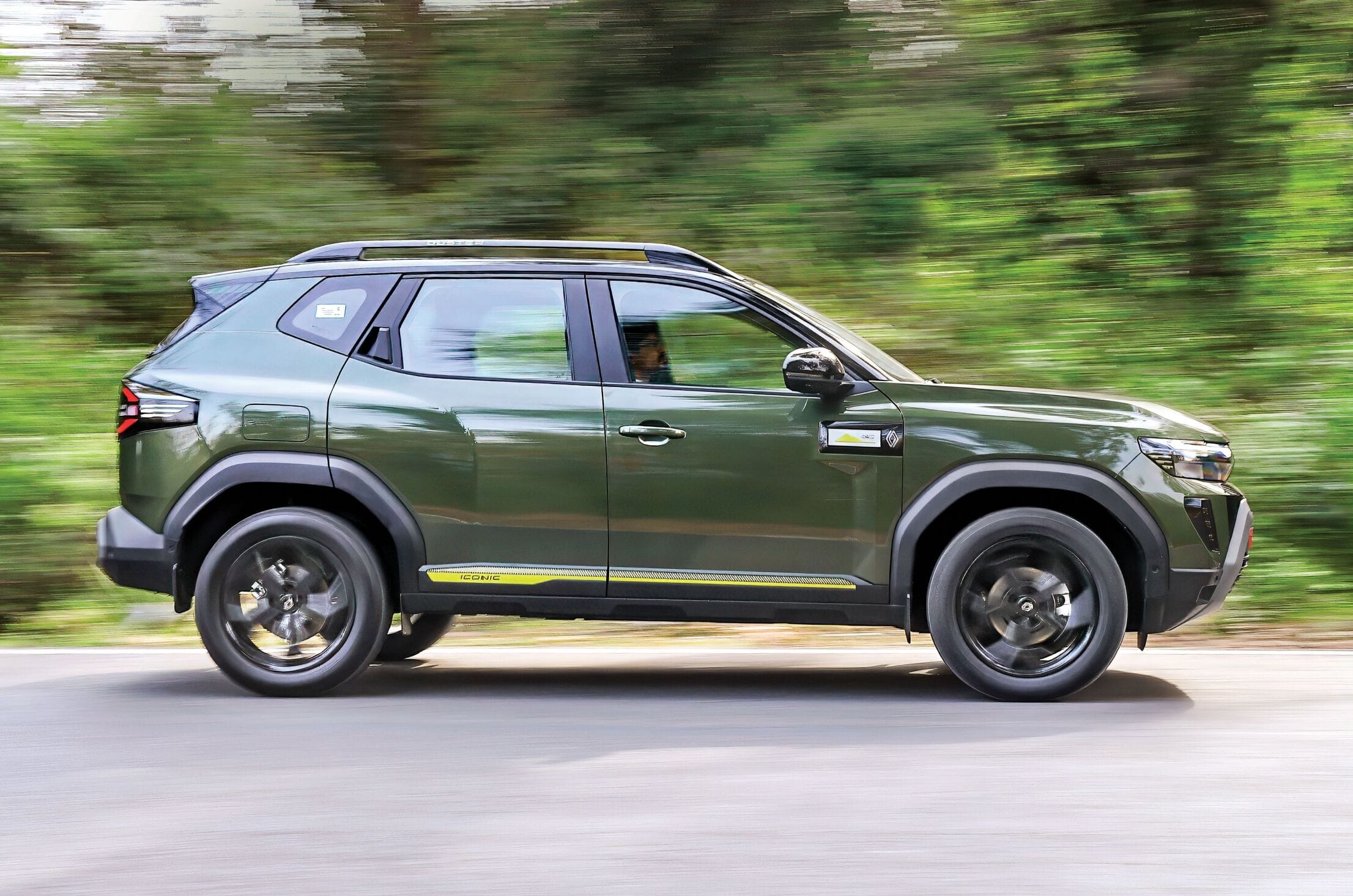
In profile, the Duster embraces a rugged SUV character with chunky black cladding, concealed rear door handles in the C-pillar and functional roof rails. It rides on striking 18-inch alloy wheels and offers 212mm of ground clearance. The rear design is relatively clean but features distinctive triangular tail-lamps connected by an LED light bar. A roof spoiler and contrasting silver insert in the bumper help enhance its stance. Overall, the Duster has considerable road presence. Colour options include Sunset Red, Pearl White, River Blue, Moonlight Silver, Stealth Black and Jade Mountain Green, while the Launch Edition adds neon-green accents and blacked-out alloys (pictured here).
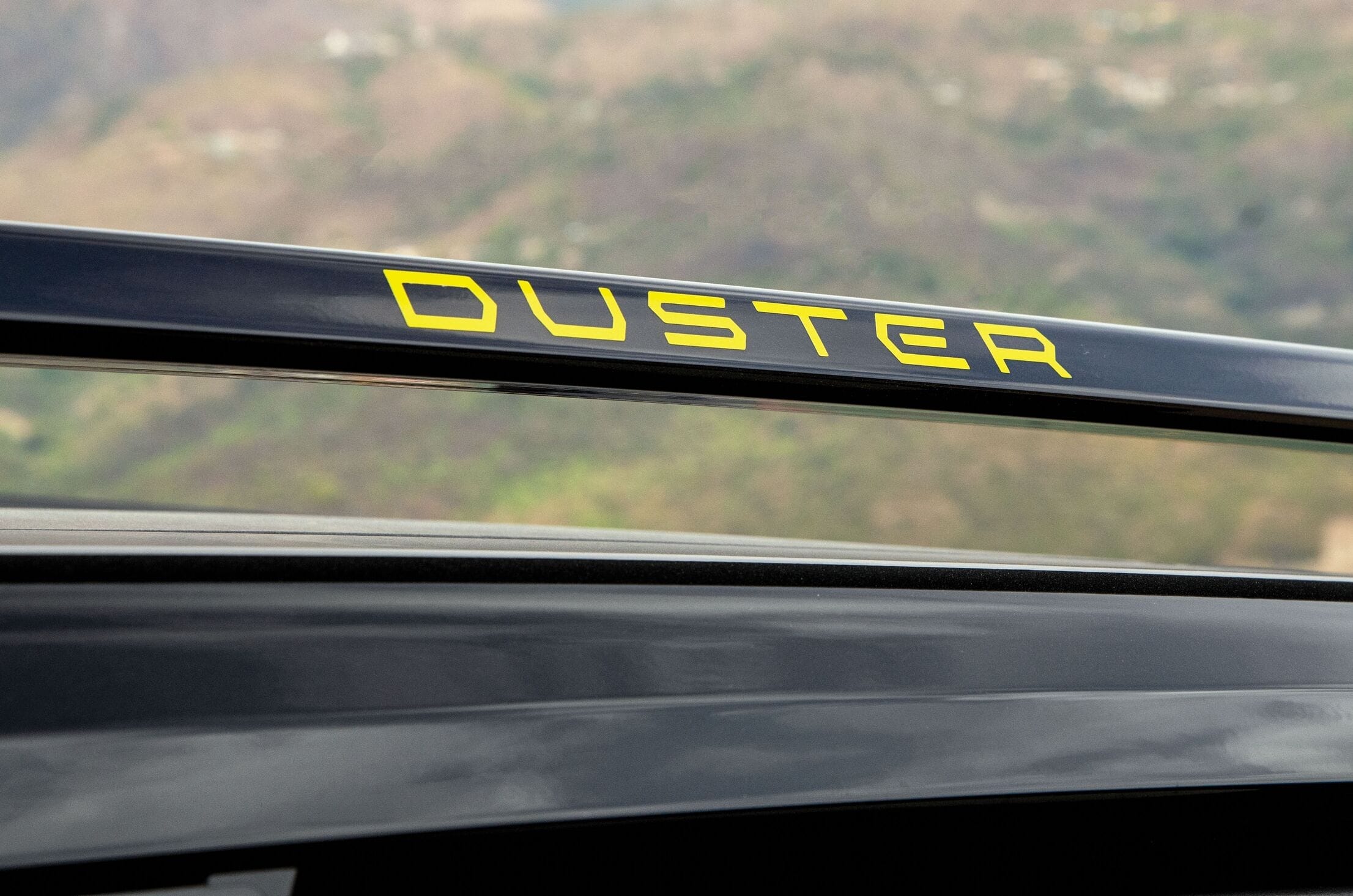
 The roof rails are functional and have a rated 50 kg load-carrying capacity.

Meanwhile, the 1.0 range tops out at the mid-spec Techno trim, but Renault has done a very good job of not making it look like so. You still get the same butch and muscular styling, LED lights, roof rails and body cladding. The only prominent difference from the top trims is the alloy wheels, which are a size smaller at 17 inches and feature a slightly different design.
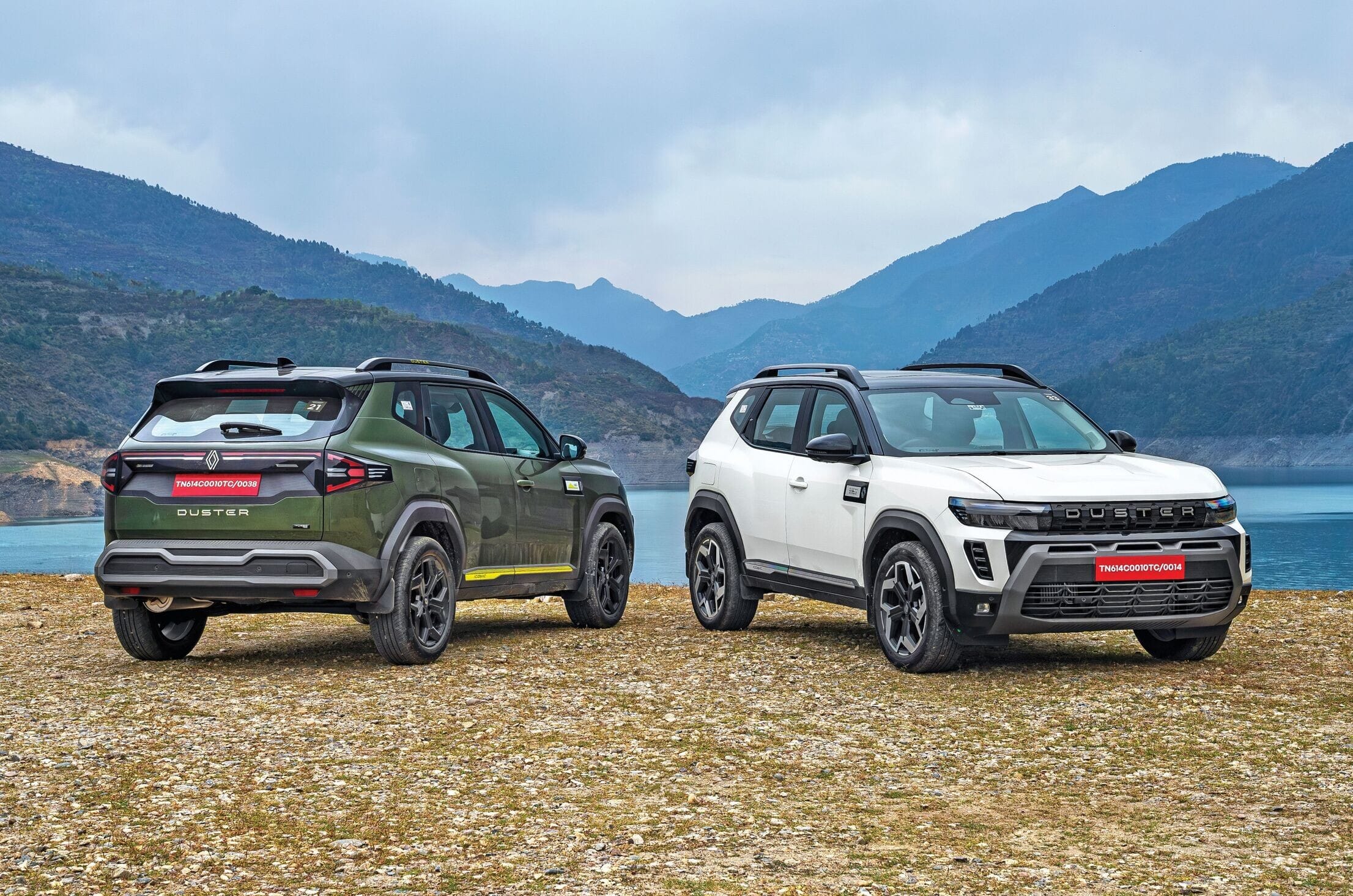
Unlike the global CMF-B-based model, the India-spec Duster sits on an updated RGMP platform.

Unlike the European-spec Duster, which uses the CMF-B platform, the India model sits on an updated version of it, which Renault calls the Global Modular Platform (RGMP). It features a Google co-developed electronic architecture, and the platform is designed to accommodate a wide range of body styles and powertrains, including hybrids, CNG and full-electric derivatives. Interestingly, the cabin is around 40mm taller due to the addition of a panoramic sunroof, which necessitated a higher roofline to preserve cabin headroom. Ground clearance is slightly higher too, making the India car 50mm taller overall than the international model. Measuring 4,343mm long, 1,813mm wide and 1,659mm tall, with a 2,657mm wheelbase, the Duster sits squarely in the midsize SUV segment. 
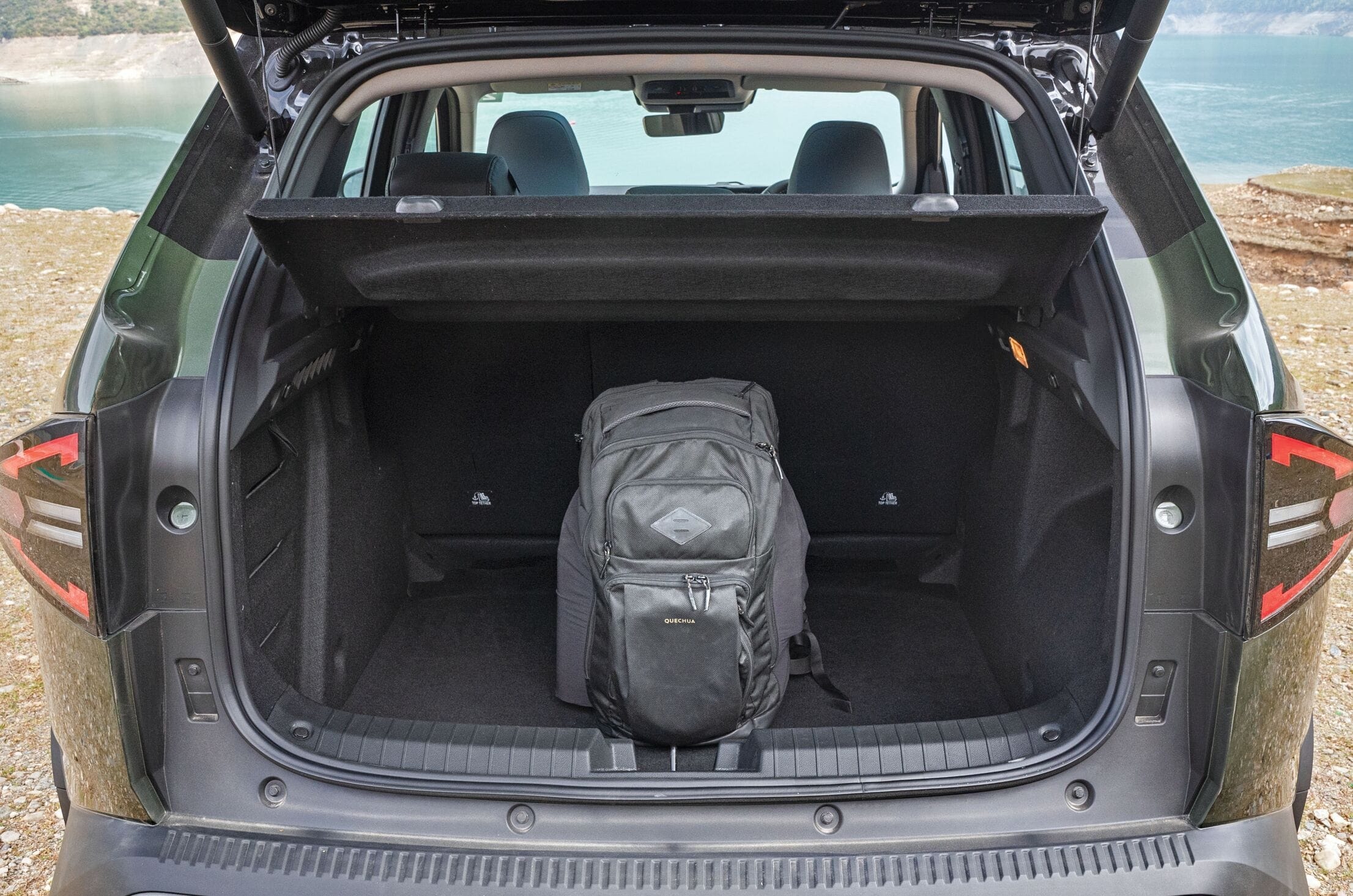
The Duster gets a segment-best 518-litre boot, though the loading lip is high.

The powered tailgate reveals a segment-leading 518-litre boot (700 litres up to the roof), although Renault only provides a puncture repair kit instead of a spare wheel as standard. Despite no AWD option, off-road credentials remain a key part of the Duster’s appeal, with 26.9-degree approach and 34.7-degree departure angles.

Renault Duster Interior Space, Comfort and Practicality – 8/10

Modern interior impresses with its design, but it isn’t as spacious as some rivals in the segment
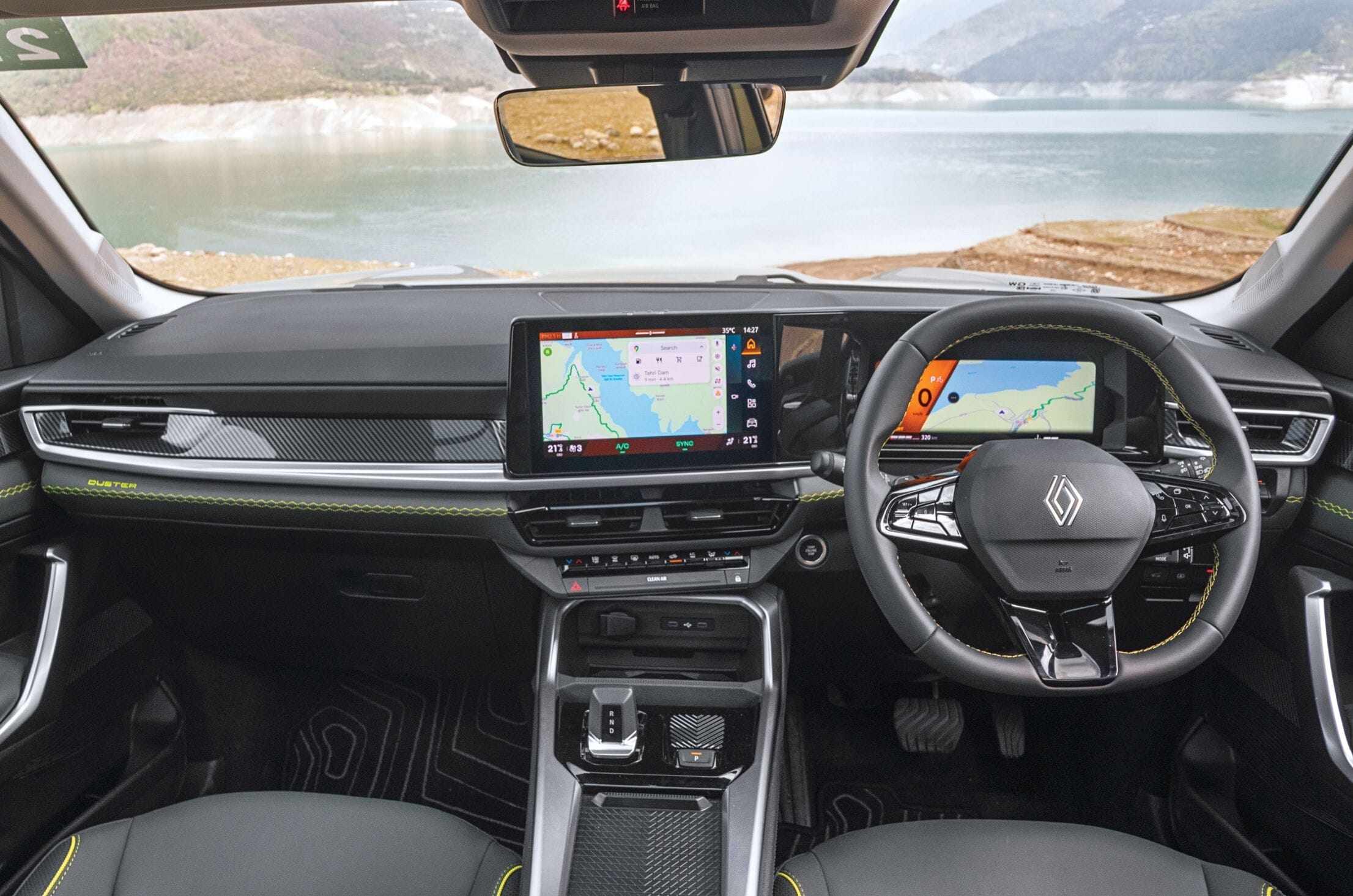
Fit and finish of materials inside the cabin are good.

Inside, the dashboard features a twin-screen layout, with a mix of textured and soft-touch materials that lend the interior a premium feel. Silver accents, faux carbon-fibre trim and contrast green stitching add visual drama without making the cabin feel overly busy.
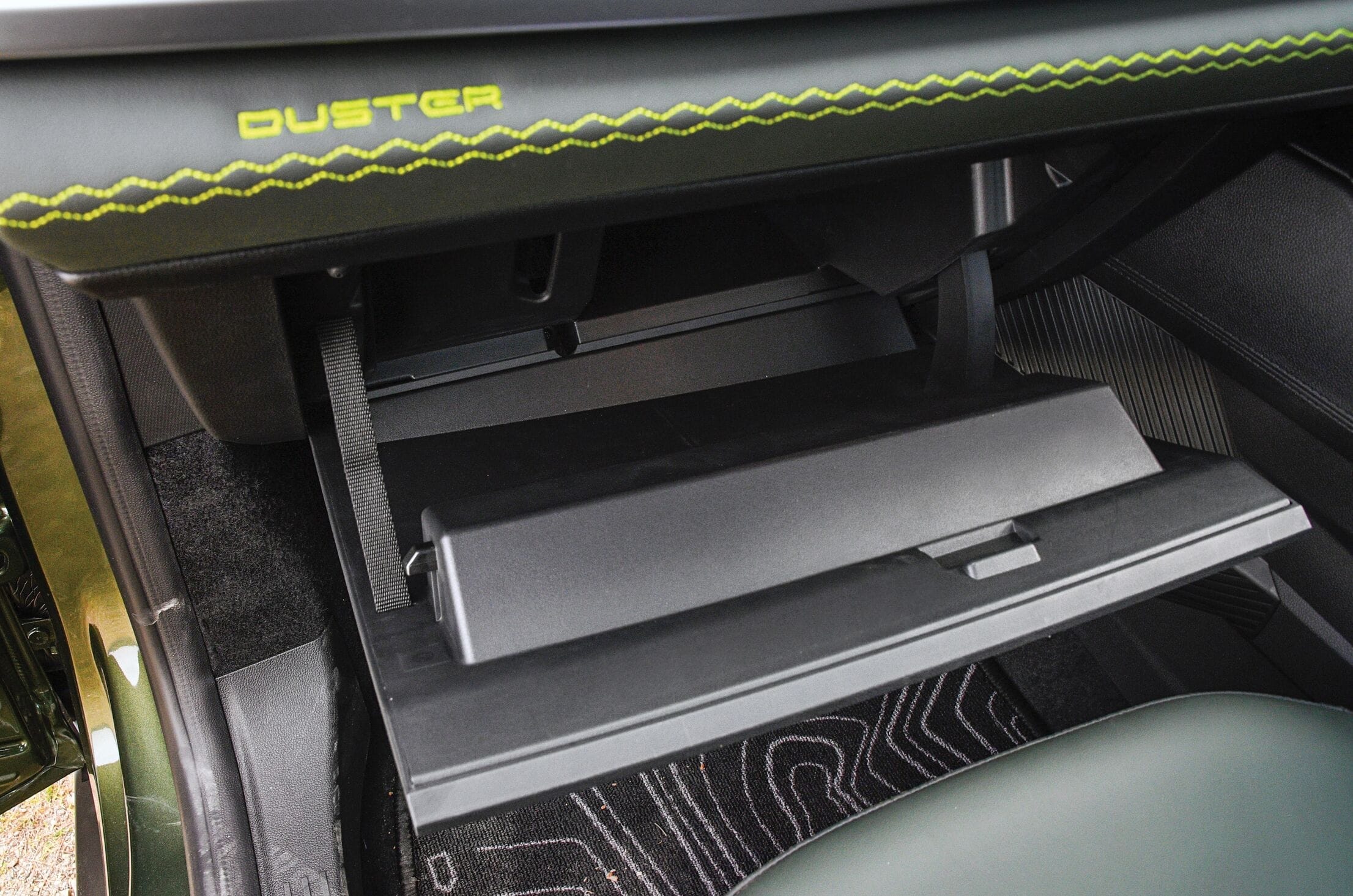
Glovebox is quite shallow and small on the whole.

Crucially, Renault has resisted the temptation to digitise everything. The Duster strikes a sensible balance between touchscreen functions and physical controls, with a row of buttons and knobs for key functions, including the climate control system. Interestingly, the manual and automatic versions feature different centre console layouts. The automatic gets a raised console with a deep, cooled storage compartment, cup holders, a wireless charger and a stubby gear selector, while the manual features a lower-set console with a conventional handbrake and an additional storage shelf beneath the dashboard controls. The manual gear lever feels pleasingly tactile and well-engineered.
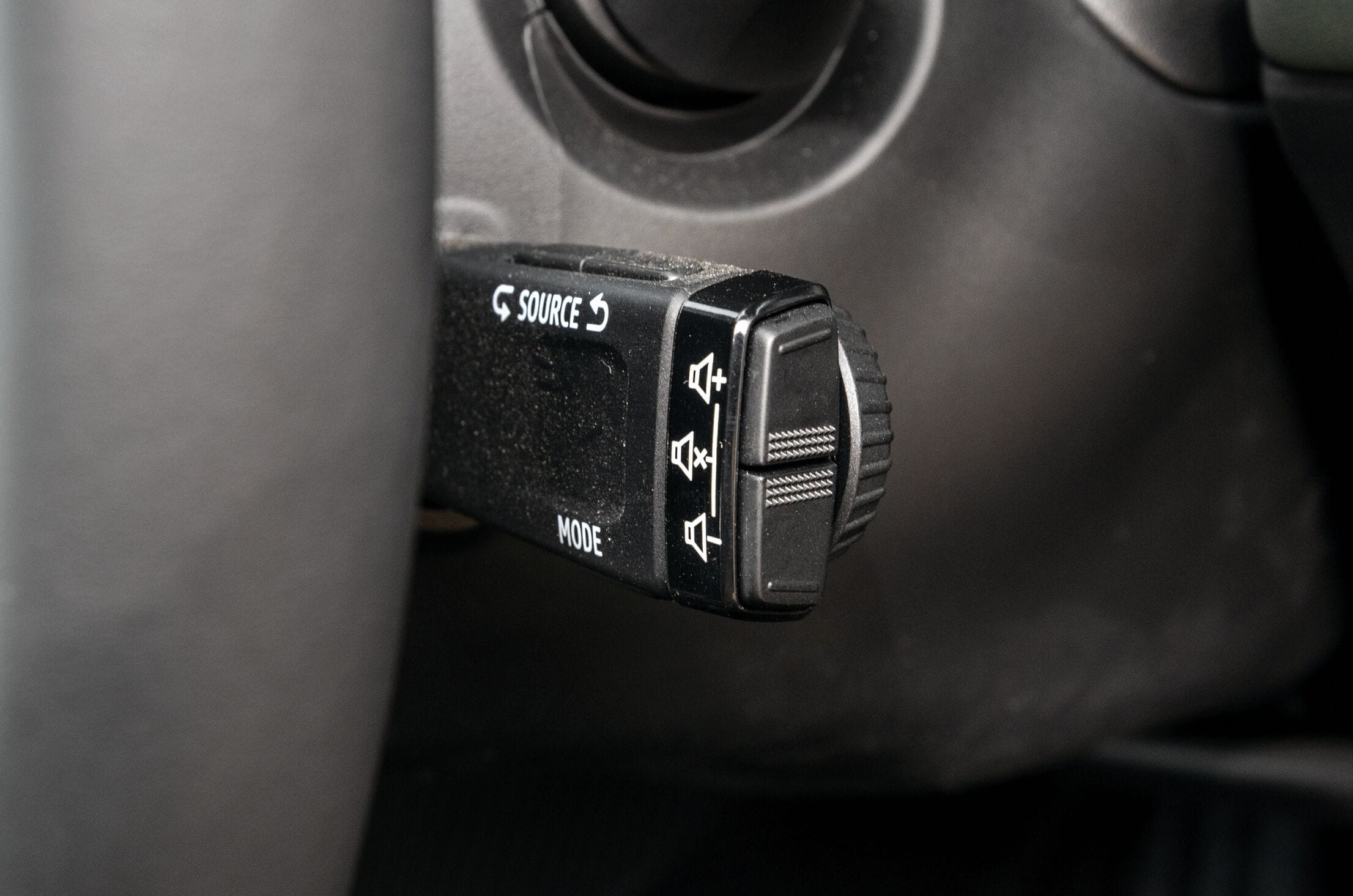
Audio controls are on a separate stalk behind the steering wheel; it takes some time getting used to.

Practicality is par for the course. The sliding front armrest incorporates a storage compartment, but the glovebox is on the smaller side, and the door pockets struggle to accommodate 1-litre bottles. The flat-bottom, flat-top steering wheel feels good to hold and houses controls for the instrument cluster and cruise control, while audio controls continue to sit on a separate stalk behind the wheel, a familiar Renault trait. What’s nice is that it features auto up/down for all windows from the base trim. 
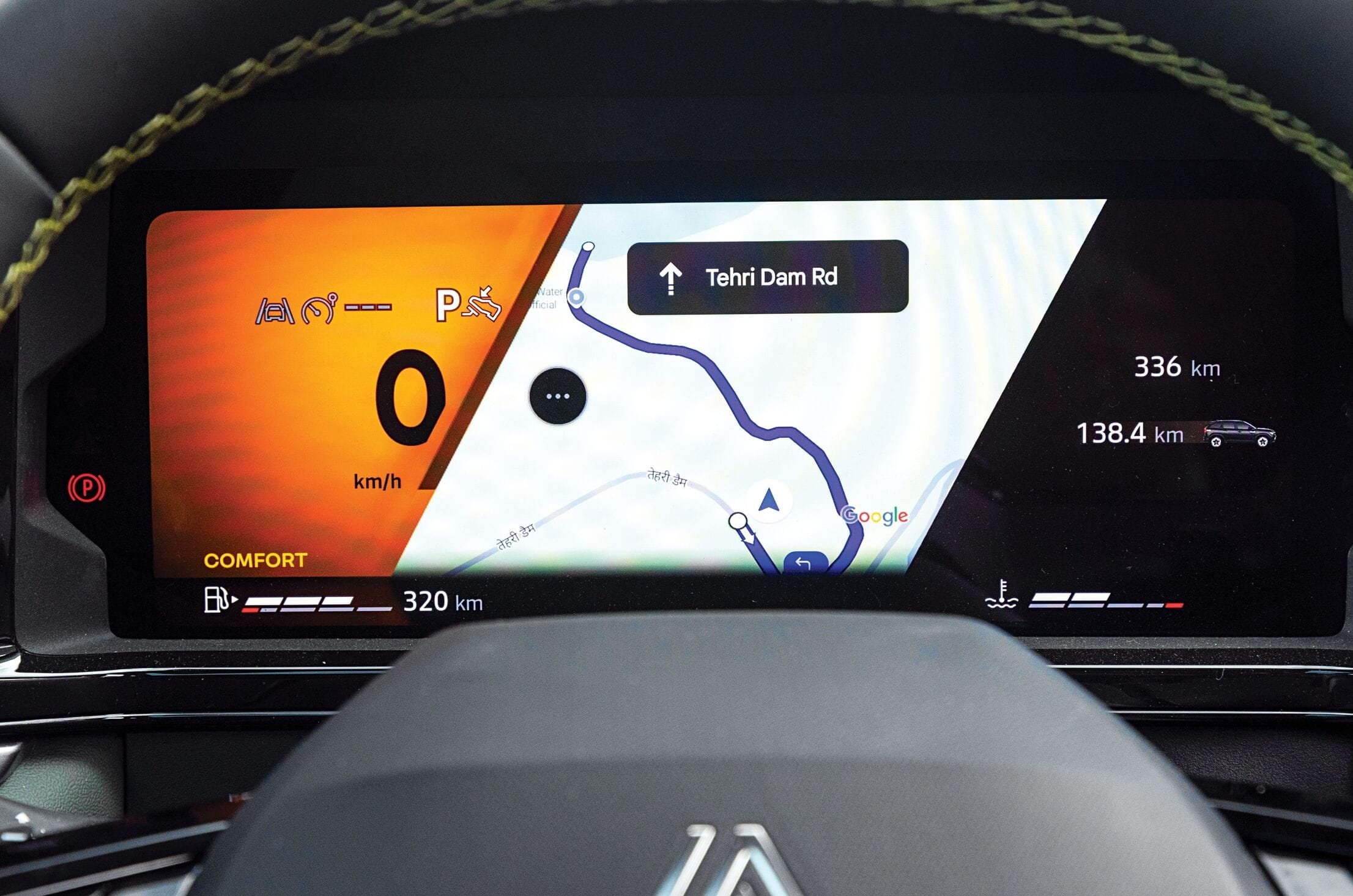
10.25-inch digital cluster has a split-screen function; some will miss classic round dials, though.

The digital instrument cluster is crisp, colourful and configurable, although some buyers will miss straightforward analogue dials. Less impressive is the key fob, shared with the Triber and Kiger, which feels very budget-oriented.
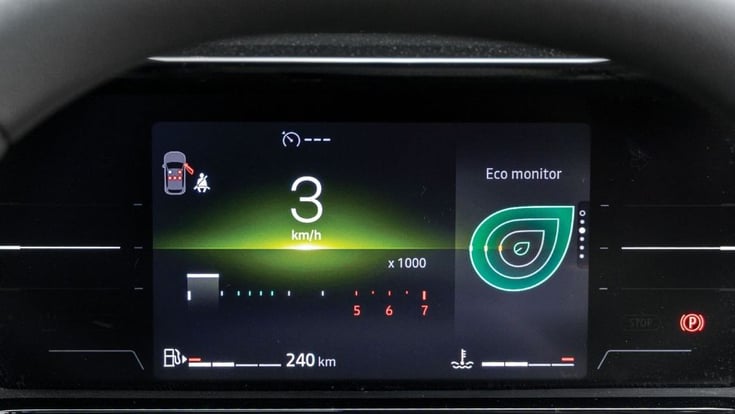
Renault Duster 1.0-litre turbo 7-inch driver's display
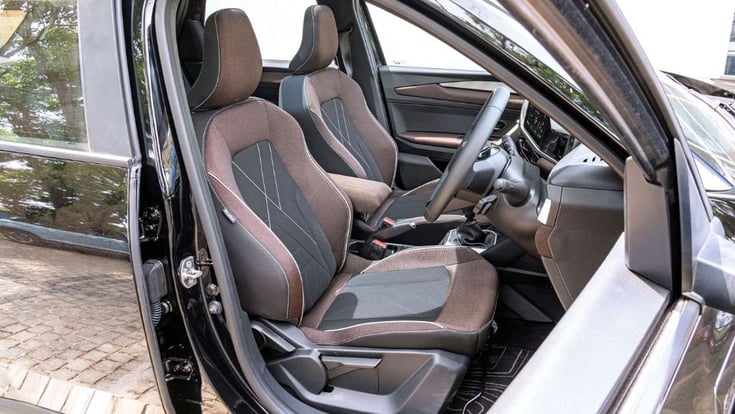
Renault Duster 1.0-litre turbo brown seat upholstery
 

1.0 range gets a smaller 7-inch driver’s display and brown- black fabric seat upholstery.

The dual-tone black-and-dark-green upholstery with neon-green stitching in the top-spec Iconic Launch Edition adds some character to the cabin. The Techno trim, meanwhile, which is where the 1.0 tops out, features brown-and-black seat upholstery with some different trim elements. 
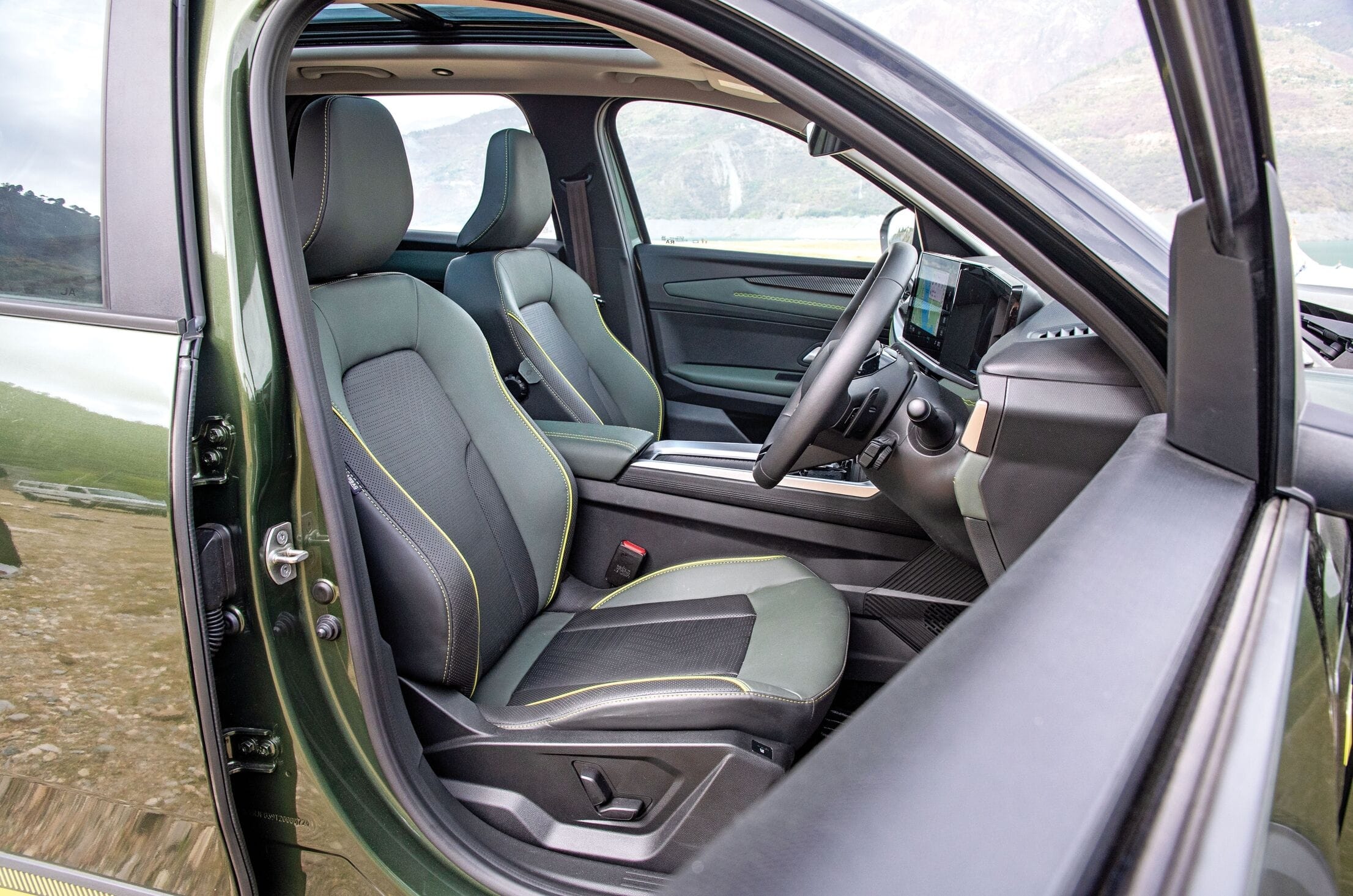
Front seats are well-padded, accommodating and ideal for long drives.

Up front, the seats are supportive and comfortable over long distances, and they feature electric adjustment and an effective ventilation function. Rear-seat comfort is good for two adults, with adequate knee room and good headroom. While a third passenger can be accommodated, limited shoulder room and the transmission tunnel make it a squeeze.
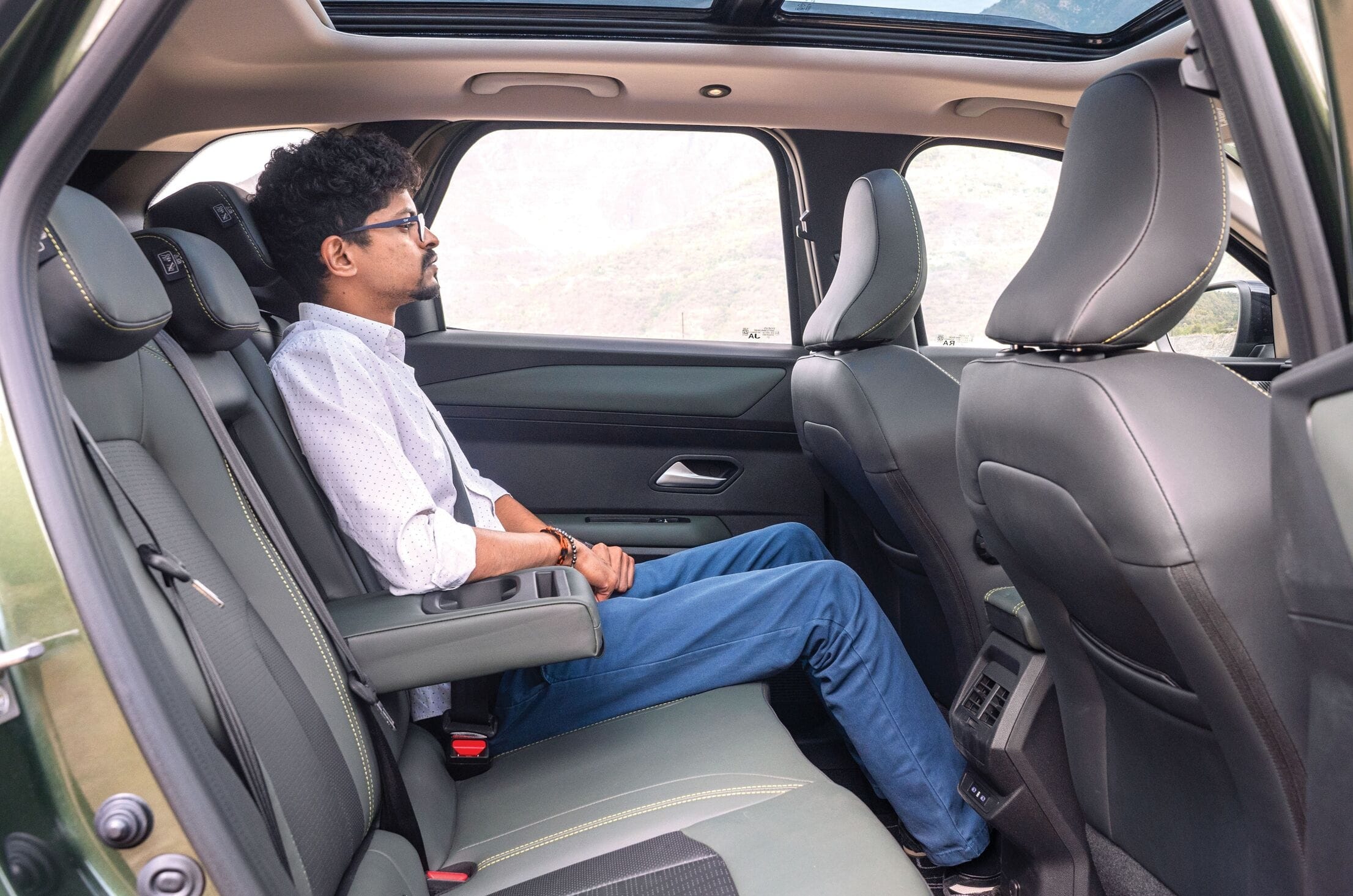
There’s good knee room and headroom on offer, but overall space is less than some rivals.

Rear occupants also get AC vents, charging ports and a centre armrest with cup holders. The large panoramic sunroof and expansive glass area help create an airy feel, although rear sun blinds are notably absent. One drawback is that the window line is considerably higher than before, meaning outward visibility isn’t quite as good as in the original Duster, which was renowned for its excellent all-round view out.

Renault Duster Features and Safety – 8/10

Top-spec comes very well-equipped, though features could’ve been better spread out
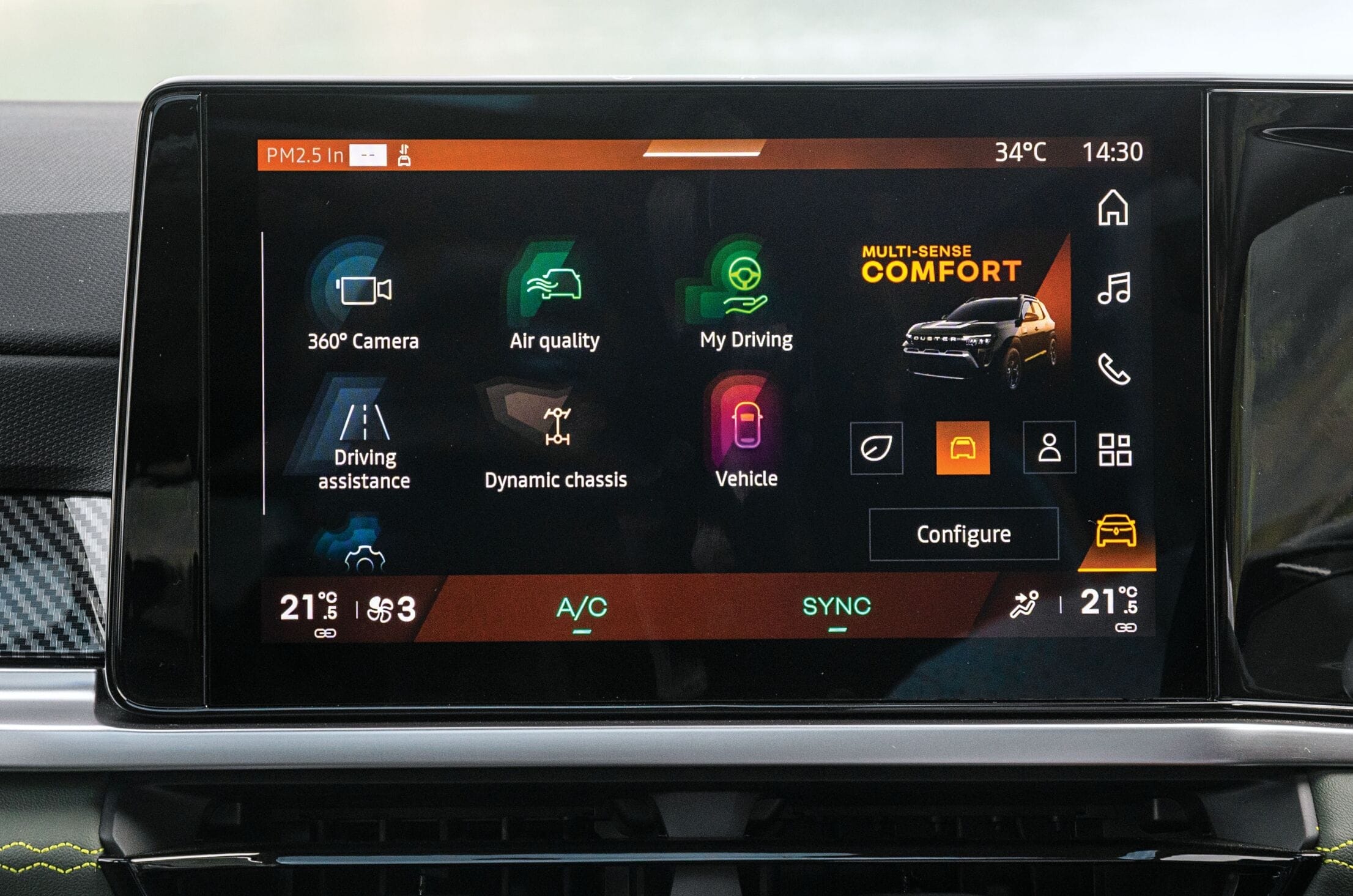
10.1-inch touchscreen is slick and high- resolution, but the UI isn’t as logical or straightforward as some rivals.

The Duster comes loaded with all the features expected of a midsize SUV. Its infotainment system supports wireless smartphone connectivity and impresses with crisp graphics and vibrant colours, matching the digital instrument cluster. However, the 10.1-inch touchscreen’s ratio makes it feel relatively slim. 

The standout feature is the integration of Google services – Google Maps, Google Assistant and the Google Play Store, which are built into the system, and work seamlessly. The interface is slick and responsive, though it isn’t very intuitive to use, lacking the straightforward layout and menu structure seen in some rivals.
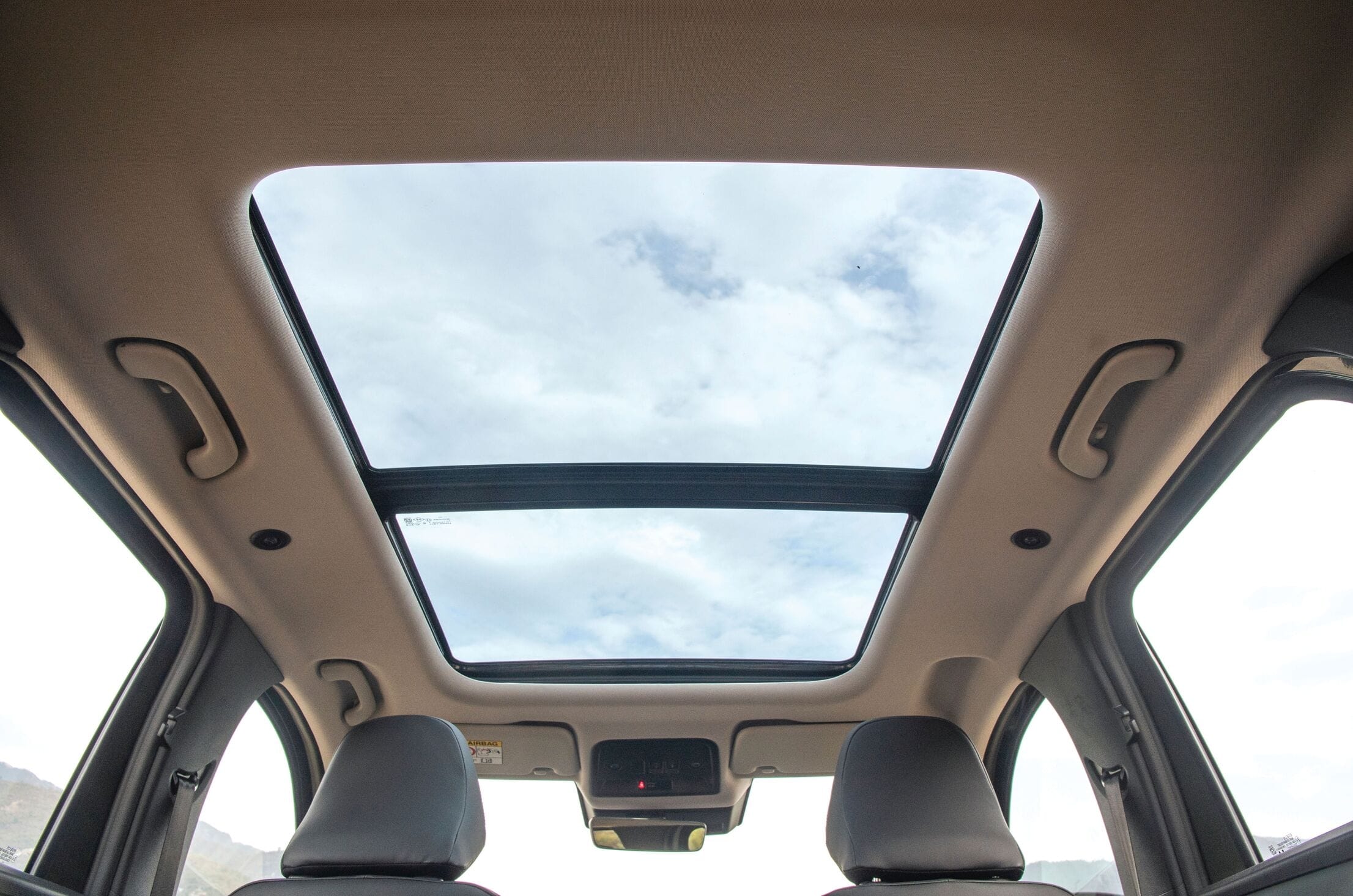
The large panoramic sunroof livens up the cabin without hampering headroom.

Equipment highlights include ventilated and powered front seats, a panoramic sunroof, wireless phone charging, a powered tailgate, dual-zone climate control, connected car technology, auto headlamps and wipers, and a 360-degree camera, although image quality could be sharper.

Safety equipment is comprehensive, with six airbags as standard, front and rear parking sensors, TPMS, an electronic parking brake on DCT variants, disc brakes all around, adjustable headrests and three-point seatbelts for all occupants. The Duster is also Renault India’s first model to feature Level 2 ADAS. During our drive, the system felt well calibrated and largely unobtrusive, though lane-keep assist was slightly overzealous. A dedicated button allows drivers to disable all ADAS functions without diving into touchscreen menus, which is a welcome touch. Commendably, Renault has also secured a full 5-star crash safety rating from Bharat NCAP for the SUV.
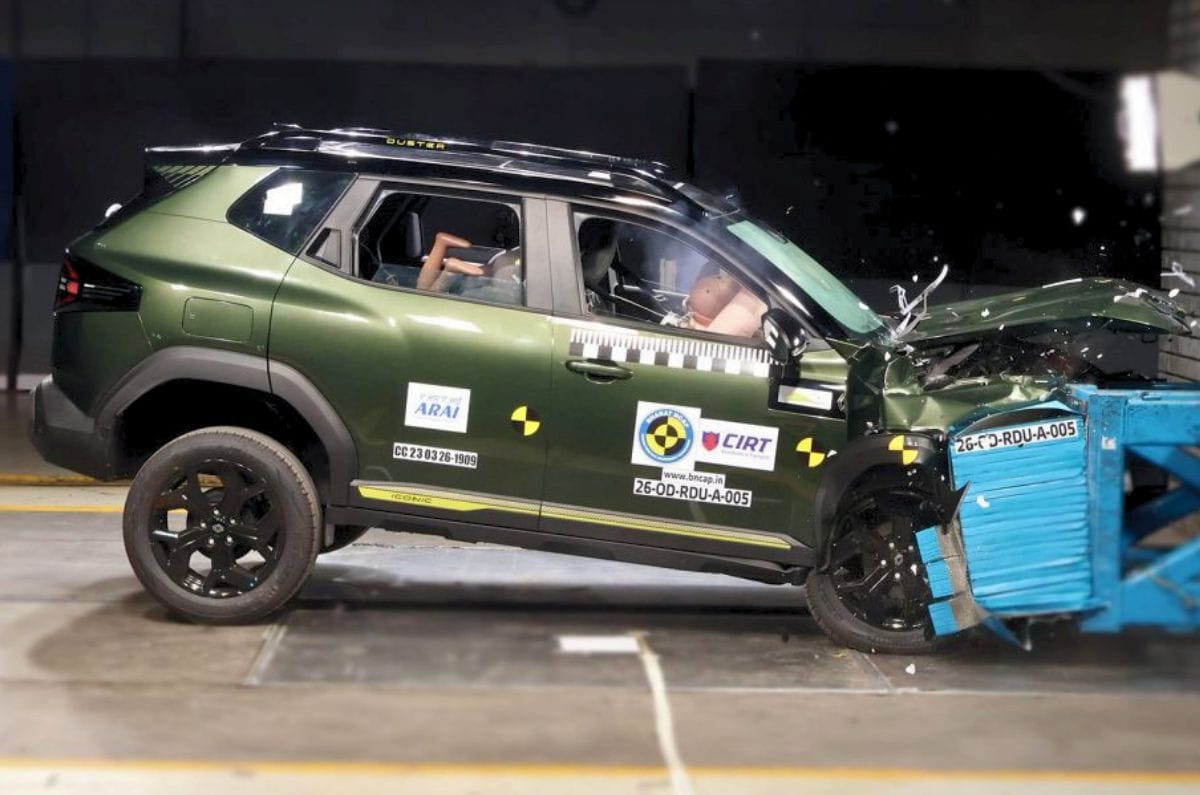
It scored 30.49/32 points for adult occupant protection and 45/49 points for child occupant protection.

Overall, the Duster is well equipped to compete with its rivals, though Renault could have distributed some premium features like ventilated seats more effectively across the range, particularly on mid-spec variants. As for the 1.0 range, the top-spec Techno is well specified with features like the same touchscreen, panoramic sunroof, powered tailgate and more.

Renault Duster equipment checklist

Auto LED headlampsYes
Alloy wheels18-inch
Powered front seatsYes
Ventilated seatsYes
Panoramic sunroofYes
Ambient lightingYes
Touchscreen10.1-inch
Android Auto/Apple CarPlayYes
Arkamys Kardon audioYes
ADASLevel 2

Renault Duster Engine Refinement and Performance – 8/10

Both turbo-petrols are refined and have a strong midrange punch; DCT is the pick of the lot

The Duster range starts with a 1.0-litre three-cylinder turbo-petrol producing 100hp and 166Nm, paired exclusively with a 6-speed manual gearbox. Then there’s a 1.3-litre four-cylinder turbo-petrol with a segment-leading 163hp and 280Nm, available with either a 6-speed manual or a 6-speed DCT automatic. We’ve tested all three versions of the Duster on sale currently.

Renault Duster powertrain specs

 1.0TP MT1.3 TP MT1.3TP DCT
InstallationFront, transverseFront, transverseFront, transverse
Type3 cyls, 999cc, turbo-petrol4 cyls, 1333cc, turbo-petrol4 cyls, 1333cc, turbo-petrol
Bore/ stroke (mm)72.2/81.372.2/81.372.2/81.3
Compression ratio9.5:110.5:110.5:1
Valve gear4 valves per cyl4 valves per cyl4 valves per cyl
Power (hp)100 at 5000rpm163 at 5250rpm163 at 5250rpm
Torque (Nm)166 at 2000-3750rpm280 at 2000-3500rpm280 at 2000-3500rpm
Power to weight (hp per tonne)75.98118.80117.01
Torque to weight (Nm per tonne)126.13244.17244.17
Specific output (hp per ltr)100125.38125.38
Drive layoutFront-wheel driveFront-wheel driveFront-wheel drive
Gearbox6-speed manual6-speed manual6-speed dual-clutch automatic

A strong-hybrid powertrain will join the line-up later this year. It combines a 109hp 1.8-litre petrol engine with a 49hp electric motor and a 20hp hybrid starter generator, drawing power from a 1.4kWh battery. Total system output stands at 160hp and 172Nm. Notably, unlike the original, the new Duster isn’t available with a diesel engine or an AWD option.
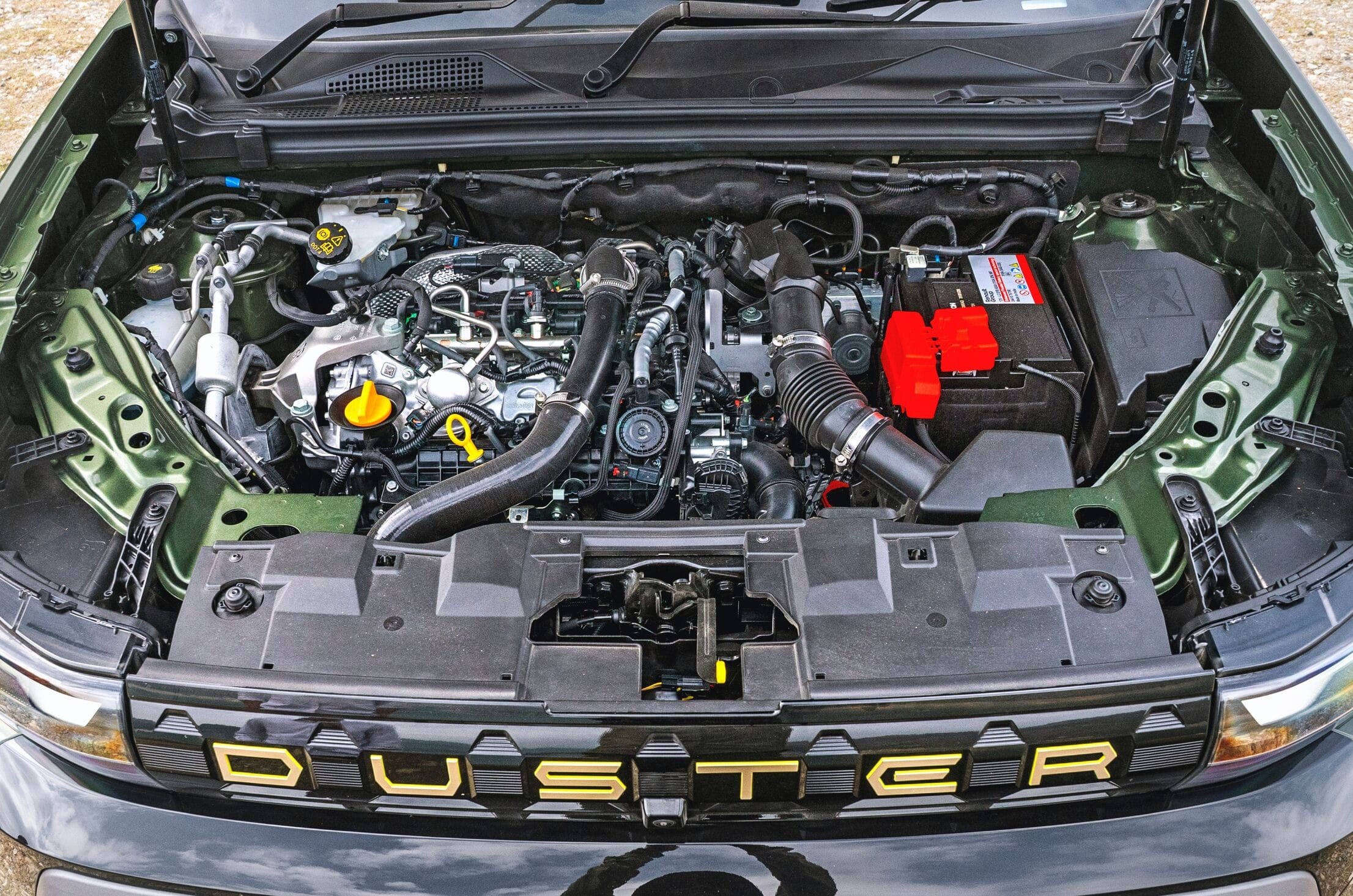
Both engines are refined and have a strong midrange, but aren’t very fuel-efficient.

The 1.3-litre engine is impressively refined, with virtually no vibrations at idle and excellent smoothness throughout the rev range. Cabin insulation is equally impressive, keeping engine noise largely out of the cabin unless you’re extending it towards the redline. You do hear quite a bit of the turbo’s blow-off sound though. There is some turbo lag, followed by a noticeable surge in performance at around 2,500rpm, after which the engine delivers a strong and eager mid range.
The 1.3-litre turbo-petrol engine has the highest output in its class with 163hp and 280Nm.

Thanks to its wet clutch, the DCT allows for some slip, given that the lubrication manages wear as well as heat build-up. Thus, shifts prioritise smoothness over outright speed, feeling more like a conventional torque-converter automatic in city driving. This makes it exceptionally easy to live with in traffic, while responsive paddle shifters add an extra layer of engagement on a spirited drive. We recorded a 0-100kph time of 11.3 seconds, which is decent for the segment. However, the tall gearing does blunt low-speed responses somewhat.

Enthusiasts will naturally gravitate towards the manual. Driven on winding and open roads, it feels engaging and rewarding, with a light clutch and a precise shift action. However, turbo lag is more noticeable here than in the DCT, particularly when accelerating from slow speeds. This does make city drives somewhat cumbersome. Combined with the tall gearing, it often requires an extra downshift to keep the engine in its sweet spot.
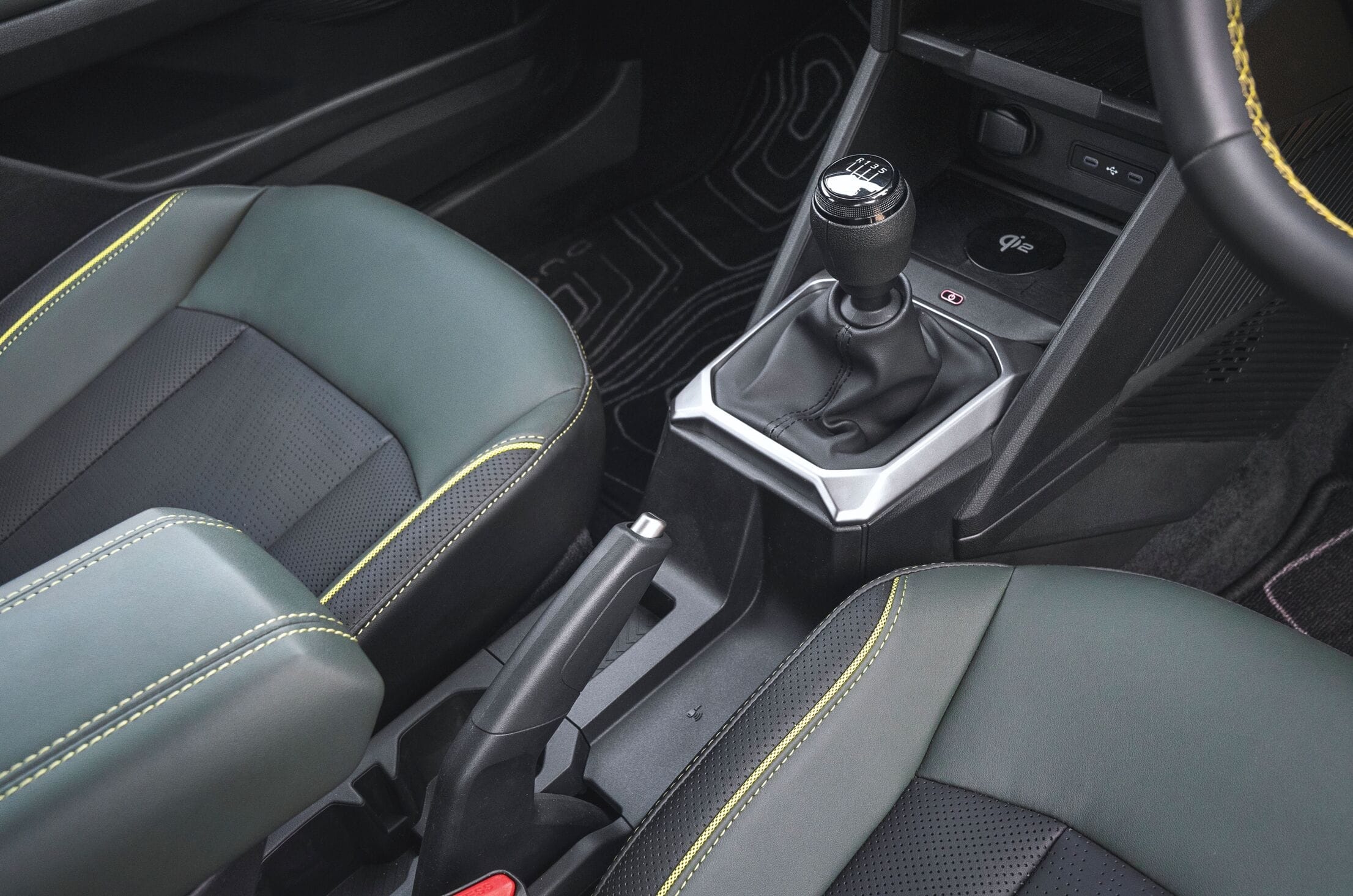
Manual versions get a lower-set centre console with a manual handbrake.

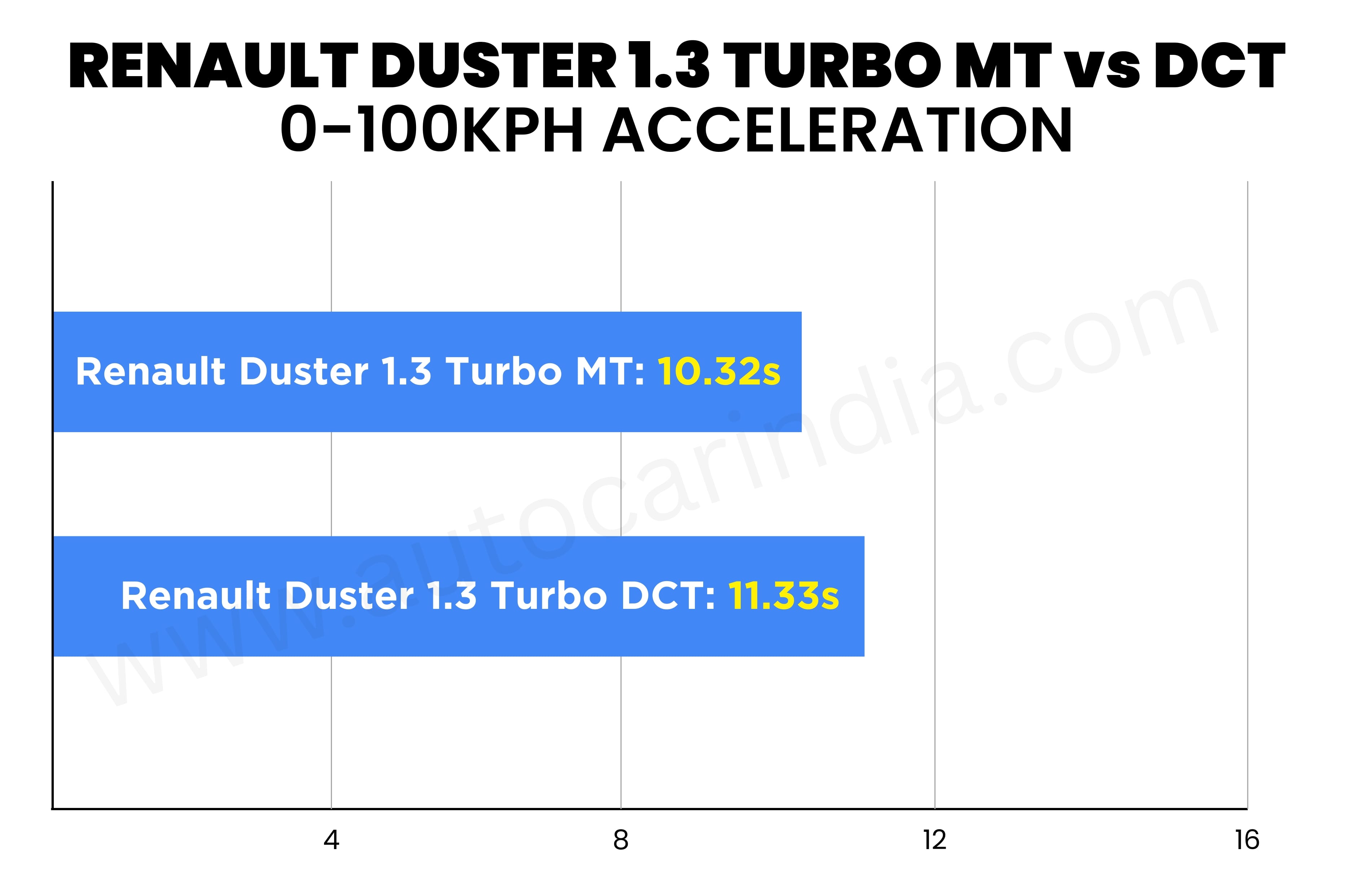
The manual posted a 0-100kph time of 10.3sec, making it a whole second quicker than the DCT. Both versions feature Comfort and Eco drive modes, although the addition of a Sport mode would have better suited the Duster’s otherwise enthusiastic character.

The 1.0 entry-level engine is a familiar unit that also powers the Kiger. However, Renault has made tweaks, with torque increasing to 166Nm, up by 6Nm over the Kiger, while a 6-speed manual gearbox replaces the compact SUV’s 5-speed unit. There’s no automatic option, though, which does limit its appeal.
The Duster shares its 1.0-litre engine with the smaller Kiger. 

Like most three-cylinder engines, there’s a noticeable thrum and some vibrations at idle, but things smoothen out considerably once on the move. Being a small-capacity turbocharged motor, there is some lag low down in the rev range. However, once past 2,000rpm – where peak torque arrives – the engine feels responsive and pulls cleanly towards the redline. Performance is more adequate than exciting. Around town, it keeps pace with traffic comfortably, and part-throttle responses are respectable. On highways and steep inclines, however, you’ll need to work the gearbox to extract the best from the engine, particularly when overtaking.

The clutch is light, making it easy to use in traffic, while the 6-speed gearbox offers a precise shift action. It isn’t the slickest unit around, though, and enthusiastic drivers will notice that shifts require a bit more effort than expected.

Renault Duster acceleration times

Speed (kph)1.0TP MT time (sec)1.3TP MT time (sec)1.3TP DCT time (sec
0-100.600.560.86
0-201.321.151.71
0-302.081.752.54
0-403.132.423.55
0-504.273.414.51
0-605.424.615.52
0-707.365.586.80
0-808.916.657.94
0-9010.678.669.31
0-10013.2610.3211.33
0-11015.9512.1113.24
0-12019.0113.8615.37
0-13022.8416.0217.97
1/4 mile18.5516.8617.85
20-80 (rolling)11.4410.336.07
40-100 (rolling)12.7111.087.60

Renault Duster Fuel Efficiency – 6/10

Small-capacity turbo engines mean efficiency isn’t great

Renault Duster tested fuel efficiency (kpl)

 1.0TP MT1.3TP MT1.3TP DCT
City7.988.046.47
Highway13.9813.2413.47
Average10.9510.649.97
Tank size (ltr)505050

The Duster 1.0 has a claimed ARAI fuel efficiency of 19.41kpl. In our real-world tests, it returned 7.92kpl in the city and 13.98kpl out on the highway, for an average of 10.95kpl. It packs in an Eco drive mode and auto start/stop tech, which help boost its efficiency. However, the ambient temperature during our test reached a soaring 40degC, which meant the AC was working hard to keep the cabin at our preset 22degC and the auto start/stop would only shut off the car for a brief time at traffic lights, which affected the efficiency. 
Overall tank range stands at 498.5km for the 1.3 DCT, 532km for the 1.3 MT and 547.5km for the 1.0.

The 1.3 MT is the second most fuel-efficient version from the Duster range, returning 8.04kpl in the city and 13.24kpl on the highway for an average of 10.64kpl. The 1.3 has better efficiency than the 1.0 in the city owing to its taller gearing, which requires less frequent shifts. Meanwhile, as you’d expect, it’s the 1.3 DCT that’s the least fuel-efficient. It managed 6.47kpl in the city and 13.47kpl on the highway, for an average of 9.97kpl. Like with the 1.0, high ambient temperatures played a role in affecting its efficiency as well. Still, compared to its rivals, the Duster’s real-world efficiency is on the lower side.

Renault Duster Ride Comfort and Handling – 9/10

Feels solid and composed over all surfaces and is engaging to drive

Renault Duster suspension, steering, and brakes

Front suspensionIndependent, McPherson strut, Coil springs, anti-roll bar
Rear suspensionSemi-independent, Torsion beam, Coil springs, Anti-roll bar
Steering typeRack and pinion
Type of power assistElectric
Turning circle5.2m
Front brakesDisc
Rear brakesDisc

Ride comfort was one of the original Duster’s defining strengths, and thankfully, that trait has carried over to the new model. There’s a distinctly European firmness to the suspension setup, particularly at lower speeds, but comfort isn’t compromised. The Duster absorbs rough patches, sharp edges and large potholes with impressive composure, preventing harsh impacts from filtering into the cabin. Unlike the older model, there’s also very little steering kickback over rough surfaces. 
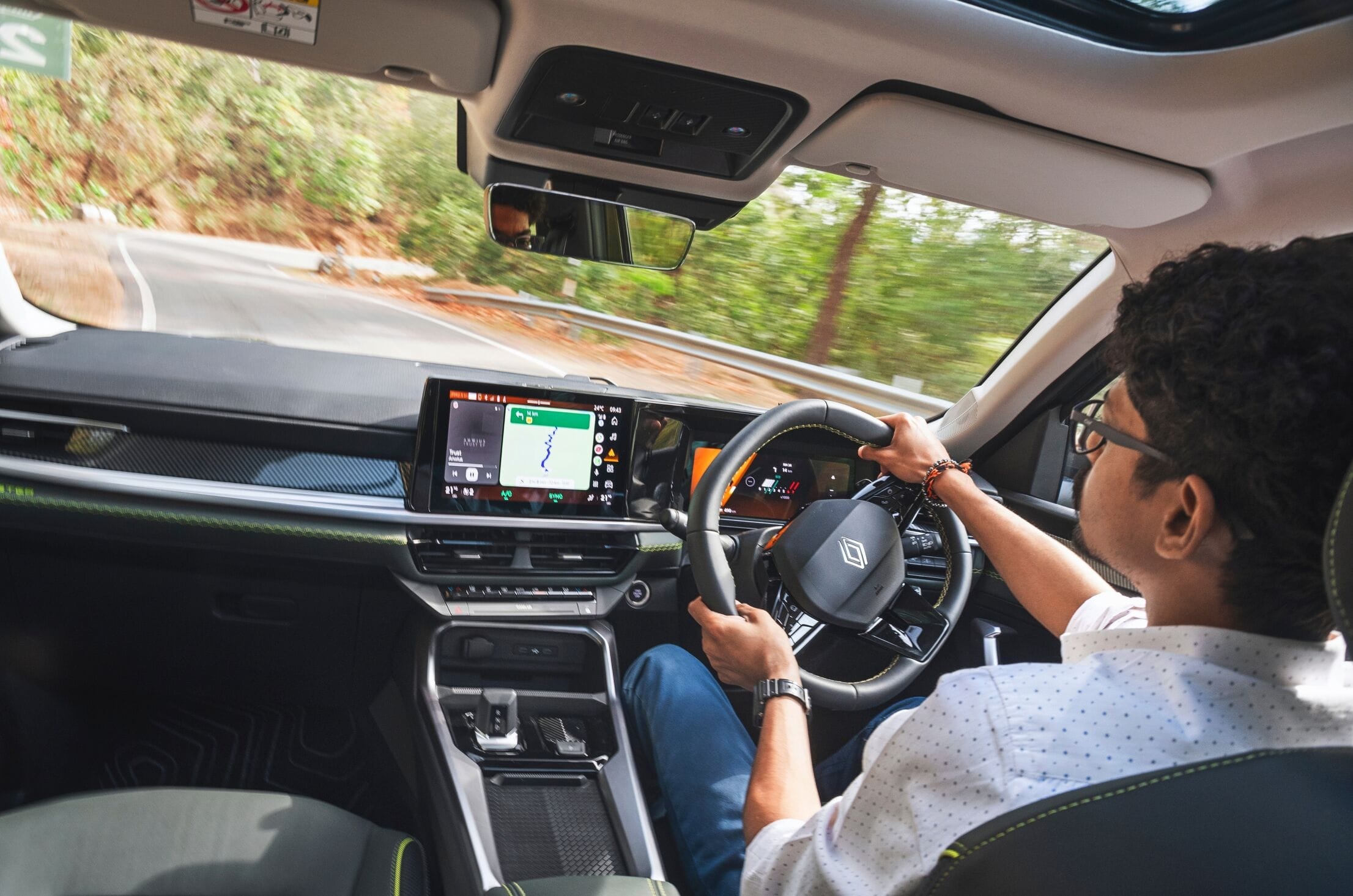
Electric power steering is precise and doesn’t have the kickback like the old Duster.

Contributing to this pliant ride are the relatively tall sidewalls of the 225/55 R18 tyres, which add an extra layer of cushioning. In fact, the 1.0 variants may even feel a touch plusher owing to their smaller 17-inch wheel size, though the difference is barely perceptible. At highway speeds, the Duster feels equally accomplished, remaining stable and reassuringly planted. 
If you stall the manual, it will automatically restart when you press the clutch pedal.

Anti-roll bars are present at the front, and uncharacteristically, Renault has utilised one at the rear too, integrating it within the twist-beam axle. Handling is enjoyable through corners, and body control is commendable. However, there is some roll when pushed hard, and it doesn’t feel quite as agile or as tightly tied down as some other European rivals. The steering is light but accurate, with enough feedback to inspire confidence on a twisty road. Steering modes are available on the 1.3 that add useful weight for more enthusiastic driving.

Renault Duster braking performance

80-0kph26.33mtr, 2.34s

Renault Duster Price and Verdict – 8/10

Builds on its legacy of rugged styling and engaging drive with a very modern and well-equipped cabin

Renault Duster price (Rs lakh)

Techno 1.0 MT13.49
 Iconic Launch Edition 1.3 MT AT17.19
Iconic Launch Edition 1.3DCT18.69

The new Renault Duster is a well-rounded package that is well equipped to take on the congested midsize SUV space. It’s not without its shortcomings, though, as it would have benefitted from a bit more rear-seat space, better real-world efficiency, and the option of a diesel would have widened its appeal. 
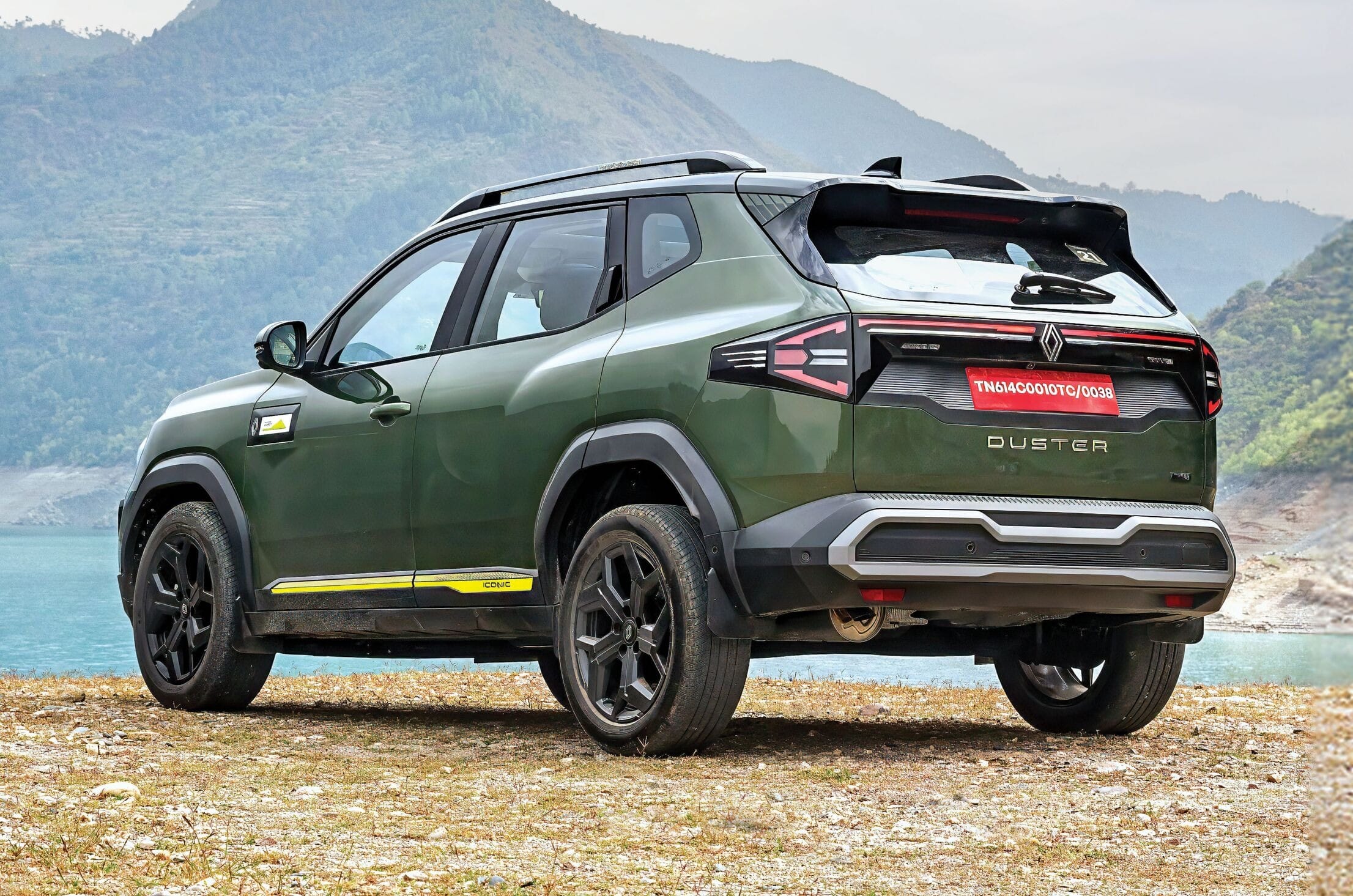
Offered in five trims: Authentic, Evolution, Techno, Techno+, and Iconic. 

That aside, it stays true to its predecessor by offering a tough and solid feel, outstanding ride comfort and an engaging drive experience, while moving the game forward. The cabin feels properly modern, with all the new-age features; it’s got punchy turbo-petrol engine options, and it’s got the rugged styling to match. There’s even a strong hybrid on the way. Bottom line is, the Duster feels fresh, desirable and a proper match for the heavy hitters in its segment.
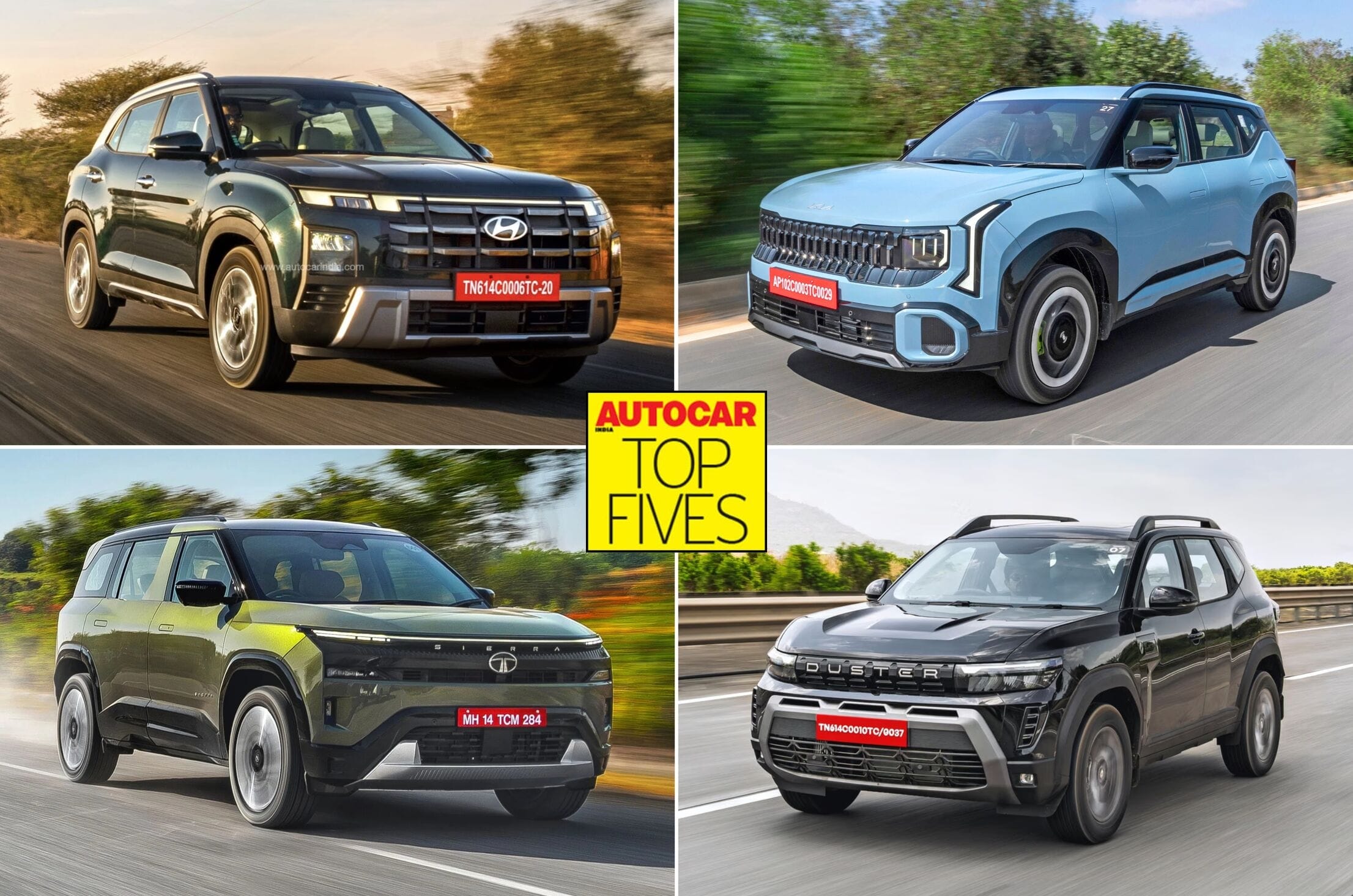
Top five midsize SUVs ranked

Best midsize SUVs

If you are in the market for a new midsize SUV, you are quite spoilt for choice. There are as many as 13 models to choose from, spanning every powertrain, including petrol, diesel, CNG, strong-hybrid and electric. With so many options, it may be quite daunting to choose the right model. To make it easier for you, we have compiled the five best midsize SUVs currently available in the market, focusing only on the ICE-powered models. 

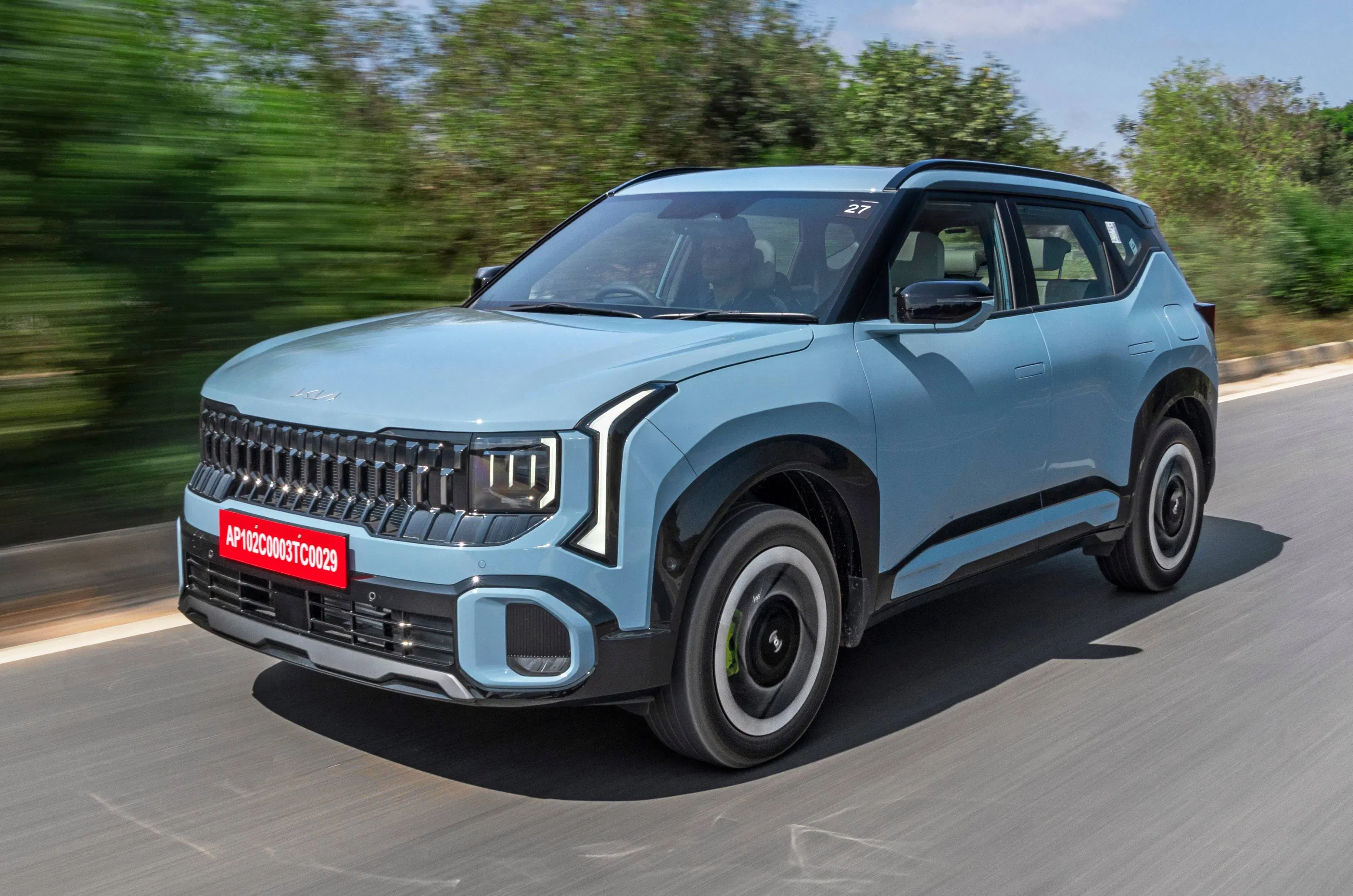
1. Kia Seltos 

Price: Rs 10.99 lakh-21.82 lakh

The midsize SUV segment has a new all-rounder in the Seltos. It’s got a wide range of engines, including a 115hp, 1.5-litre naturally aspirated petrol, a 160hp, 1.5-litre turbo-petrol and a 116hp, 1.5-litre diesel; gearbox options are just as diverse. The Seltos also has the most premium and inviting interior. Not only is it refined, efficient and spacious, but it also has class-leading tech and UI/UX. The only downside is that there’s a hint of firmness in the suspension setup, but it’s not a dealbreaker. It is, however, quite expensive at the top end. 

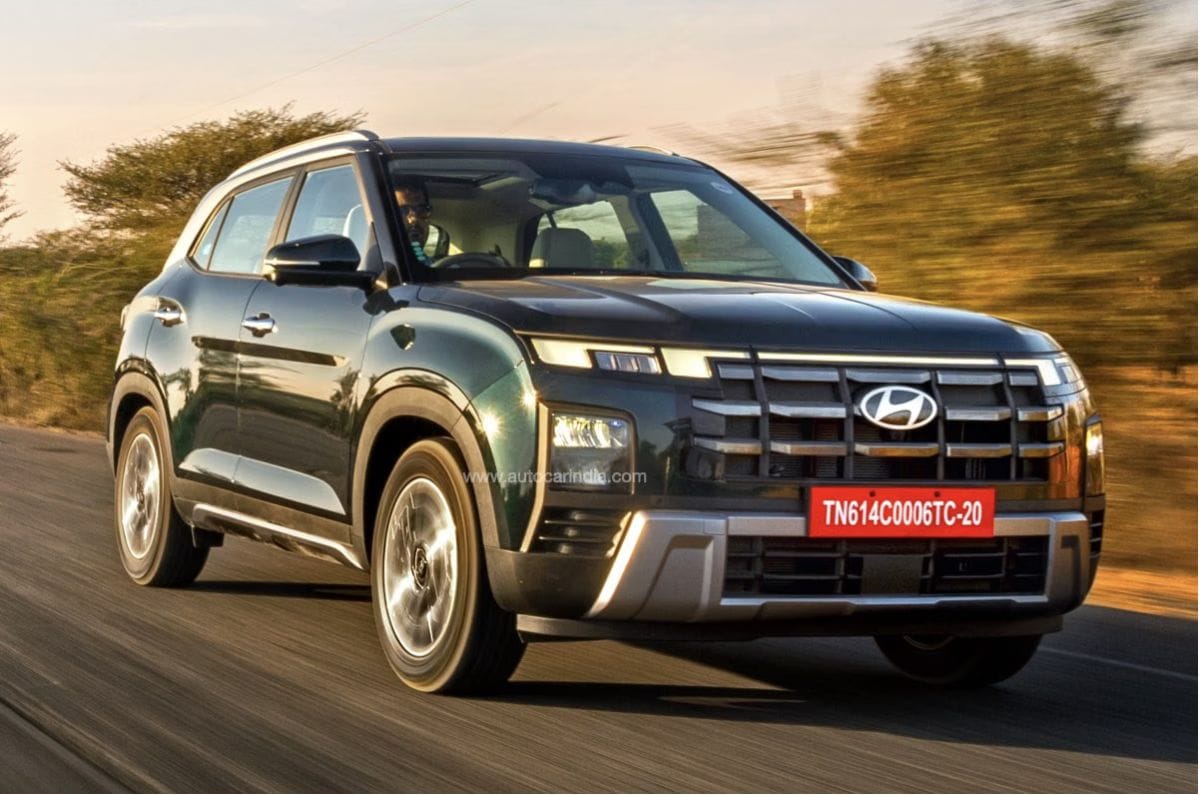
2. Hyundai Creta

Price: Rs 10.91 lakh-19.95 lakh  

Despite its age, the Creta remains a competitive offering in the company of its newer rivals. It’s slightly smaller and less spacious than the Seltos because the latter has moved on to a new-generation platform, but it offers the same mix of powertrain options, a comfortable driving and riding experience and a feature-loaded cabin. Hyundai’s after-sales service experience is quite satisfactory, and there’s also the N Line version with a slightly sportier setup for the more enthusiastic buyer. 

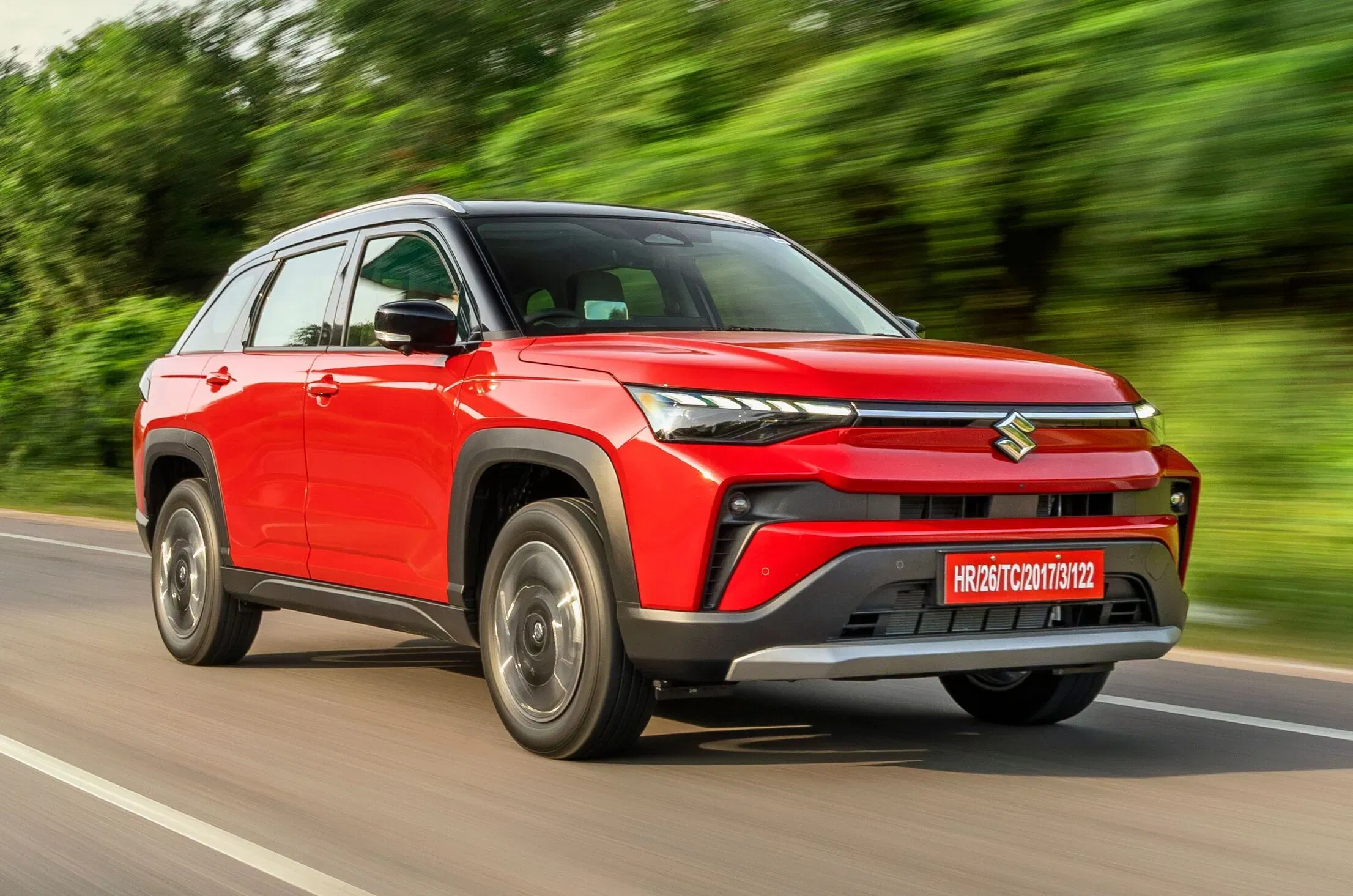
3. Maruti Victoris 

Price: Rs 10.49 lakh-19.99 lakh

If running costs, reliability and ease of ownership are priorities, the Victoris (or the Grand Vitara and Hyryder) remains unmatched. Between the three, the Victoris is the newest and also packs some additional features. The trio has the segment’s only strong-hybrid powertrain with the 116hp, 1.5-litre strong-hybrid unit and also the option of AWD with the 1.5-litre naturally aspirated petrol engine. The Victoris rides and handles well, too, although performance isn’t particularly exciting, and rear-seat space isn’t as good as that of its rivals. There’s also the option of CNG should you want affordable running costs. 

4. Tata Sierra

Price: Rs 11.49 lakh-21.29 lakh

The Sierra is the roomiest and most feature-loaded SUV in the midsize segment, uniquely even offering a third screen for the front passenger. Good ride and handling are also among its strengths. The 160hp, 1.5-litre turbo-petrol engine is the pick of the range, as the 118hp, 1.5-litre diesel and 106hp, 1.5-litre naturally aspirated petrol engines aren’t good on refinement and performance. It’s also on the more expensive side, and reliability and service experience are deterrents, too. 

5. Renault Duster 

Price: Rs 10.49 lakh-18.69 lakh

The Duster has a tough and rugged appeal, fantastic ride quality and a well-appointed interior. It offers good value for money, too, but is not as spacious as its rivals. Also, both its 100hp, 1.0-litre turbo-petrol and 163hp, 1.3-litre turbo-petrol engines suffer from turbo-lag, although performance is otherwise quite potent. A big miss is the option of an auto gearbox with the base petrol engine. Some may even miss a diesel engine and optional all-wheel-drive system offered with the original Duster. 

Renault Duster 1.3L turbo MT vs DCT: Performance compared

Renault Duster 1.3L turbo MT vs DCT: Real world performance comparison

The Renault Duster was one of the first midsize SUVs in India, which was relaunched in 2026 after being absent from the Indian automotive space since 2022. With the new-generation model, Renault has equipped the Duster with not only a fresh design and more modern-day amenities, but also two turbo-petrol engine options. Among these, the larger 1.3-litre turbo-petrol mill is offered with both manual and DCT choices. But which one offers better real-world performance? Let us find out.

Renault Duster 1.3L turbo MT vs DCT: Specifications and price

The MT’s lower weight helps it with higher power- and torque-to-weight ratios

Renault Duster 1.3L turbo-petrol MT vs DCT: Specifications and price


Duster 1.3TP MT

Duster 1.3TP DCT

Engine

4-cyl, turbo-petrol

4-cyl, turbo-petrol

Displacement (cc)

1333

1333

Power (hp)

163

163

Torque (Nm)

280

280

Gearbox

6-speed MT

6-speed DCT

Kerb weight

1372

1393

Power-to-weight*

118.80

117.01

Torque-to-weight^

204.08

201

Price range (Rs, lakh)

12.99-17.19

14.49-18.49

*Power-to-weight figures are hp per tonne

^Torque-to-weight figures are Nm per tonne

The Renault Duster’s 1.3-litre turbo-petrol engine offers the same output (163hp, 280Nm) with the 6-speed manual and the 6-speed dual-clutch transmission (DCT) options. However, as the manual version is 21kg lighter, it has slightly better power-to-weight and torque-to-weight ratios than the DCT version.

The manual transmission variants have lower price tags than the DCT variants. The Duster manual starts at Rs 12.99 lakh, which is Rs 1.5 lakh cheaper than the entry-spec DCT, and goes up to Rs 17.19 lakh, which is Rs 1.30 lakh less than the top-spec DCT.

Renault Duster 1.3L turbo MT vs DCT: 0-100kph acceleration test

The manual option offers quicker acceleration off the line compared to the DCT

Renault Duster 1.3L turbo-petrol MT vs DCT: Acceleration from rest (in seconds)


Duster 1.3TP MT

Duster 1.3TP DCT

20kph

1.15

1.71

40kph

2.42

3.55

60kph

4.61

5.52

80kph

6.65

7.94

100kph

10.32

11.33

120kph

13.86

15.37

In our 0-100kph tests, we found that the Duster’s turbo-petrol manual version was faster than the DCT at all speeds. The manual version starts strongly, clocking 20kph 0.56 seconds faster, taking the difference to over a second by the time it reaches 40kph. The DCT catches up slightly at 60kph, reducing the difference to 0.91 seconds. However, the MT starts pulling faster again, and by the time it reaches 100kph, it has a 1.01-second lead.

In our experience, the manual feels engaging and rewarding when the engine is in the rev band. The clutch is light, and the shift action is precise too, which increases the powertrain’s likeability among enthusiasts. However, at slow speeds, turbo lag is evident, which, coupled with the tall gearing ratios, leads to a cumbersome city driving experience. It requires an extra downshift for a smoother drive experience.

The DCT’s wet clutch makes it the better option for city driving, as it prioritises smoothness over outright acceleration, feeling similar to a torque converter gearbox. While tall gearing is an issue at low-speed driving here too, the paddle shifters add an extra layer of engagement. 

Renault Duster 1.3L turbo MT vs DCT: Rolling acceleration tests

The DCT version clocked considerably quicker in-gear acceleration times

Renault Duster 1.3L turbo-petrol MT vs DCT: Rolling acceleration (in seconds)


Duster 1.3TP MT

Duster 1.3TP DCT

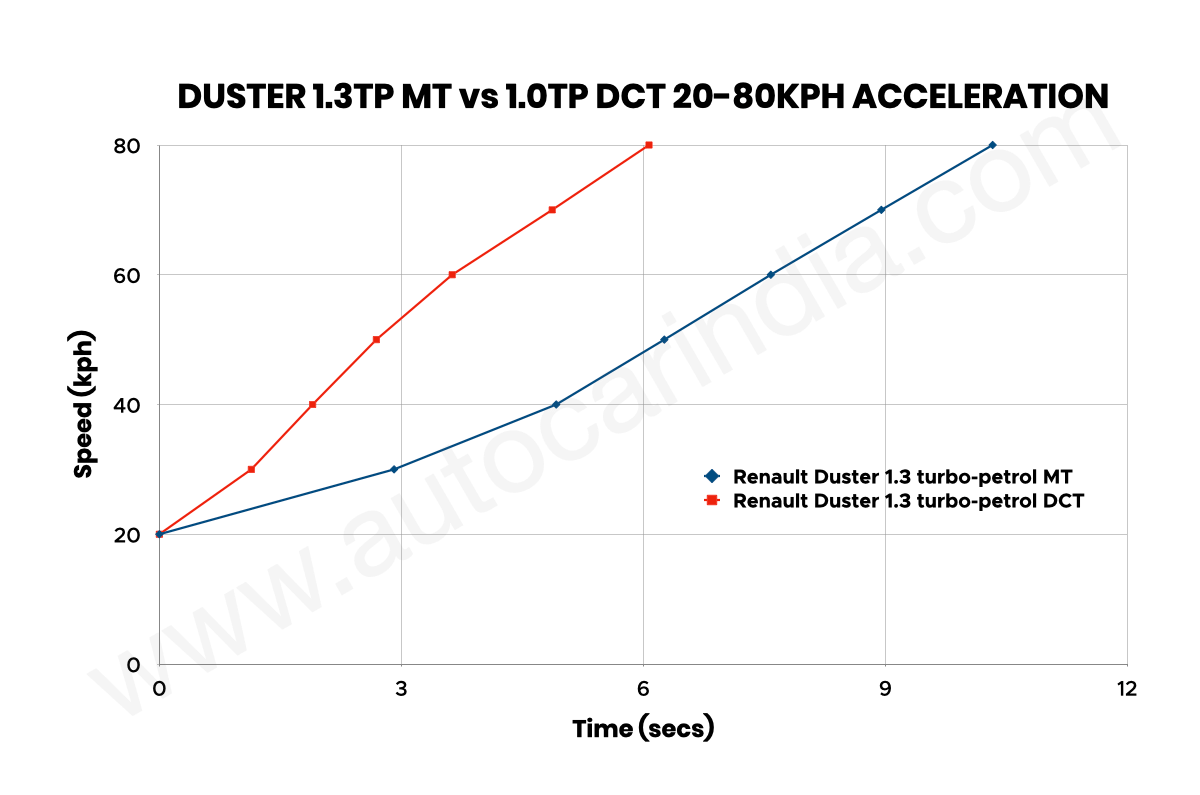
20-80kph (3rd gear)

10.33

6.07

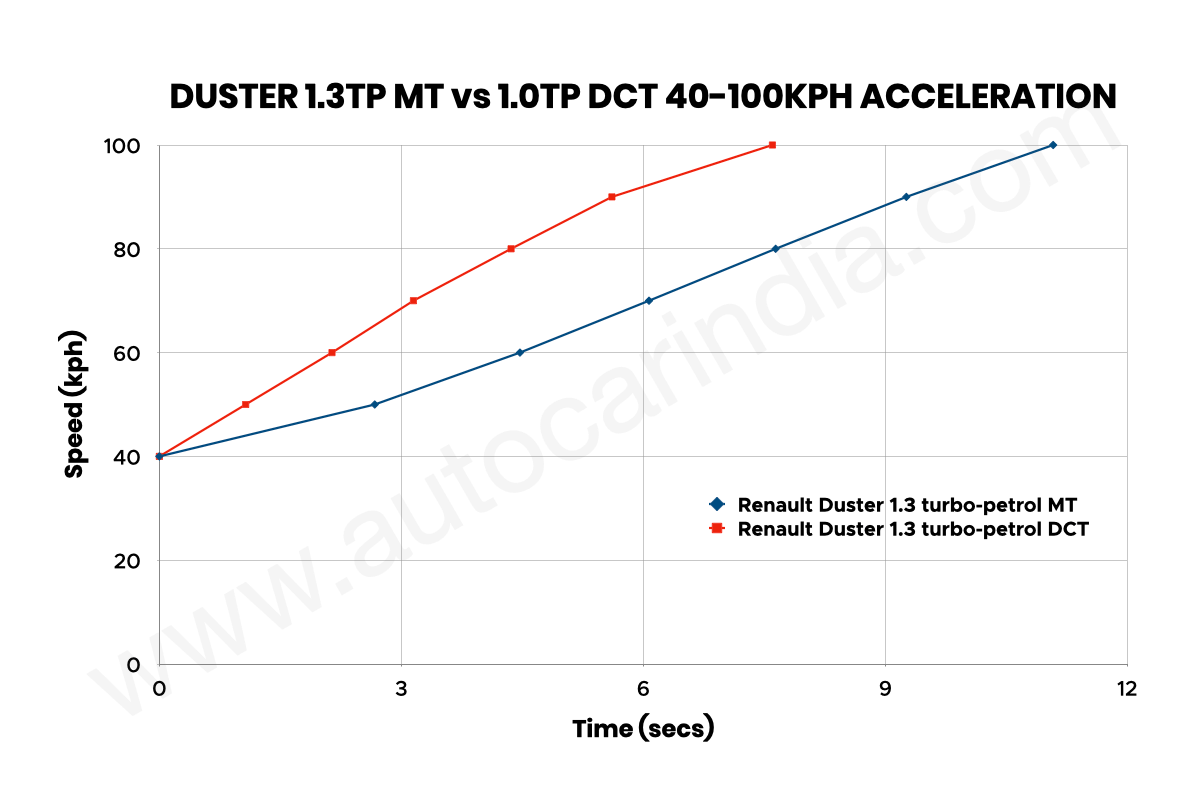
40-100kph (4th gear)

11.08

7.60

Unlike the outright 0-100kph acceleration times, the DCT version posted quicker in-gear acceleration times. In the third gear, it had a 4.26-second lead in the 20-80kph time, and in fourth gear, it was quicker by 3.48 seconds to record a 40-100kph run. 

Autocar India’s testing standards

Before we conduct our performance tests, we check and maintain tyre pressures based on the manufacturer’s recommendation and ensure the car has a full tank of fuel. The car is then tested in a controlled environment with two people on board, and the data is collected via highly accurate GPS-based timing equipment.

Prices are ex-showroom, India. 

Nissan Gravite petrol MT real world fuel economy tested, explained

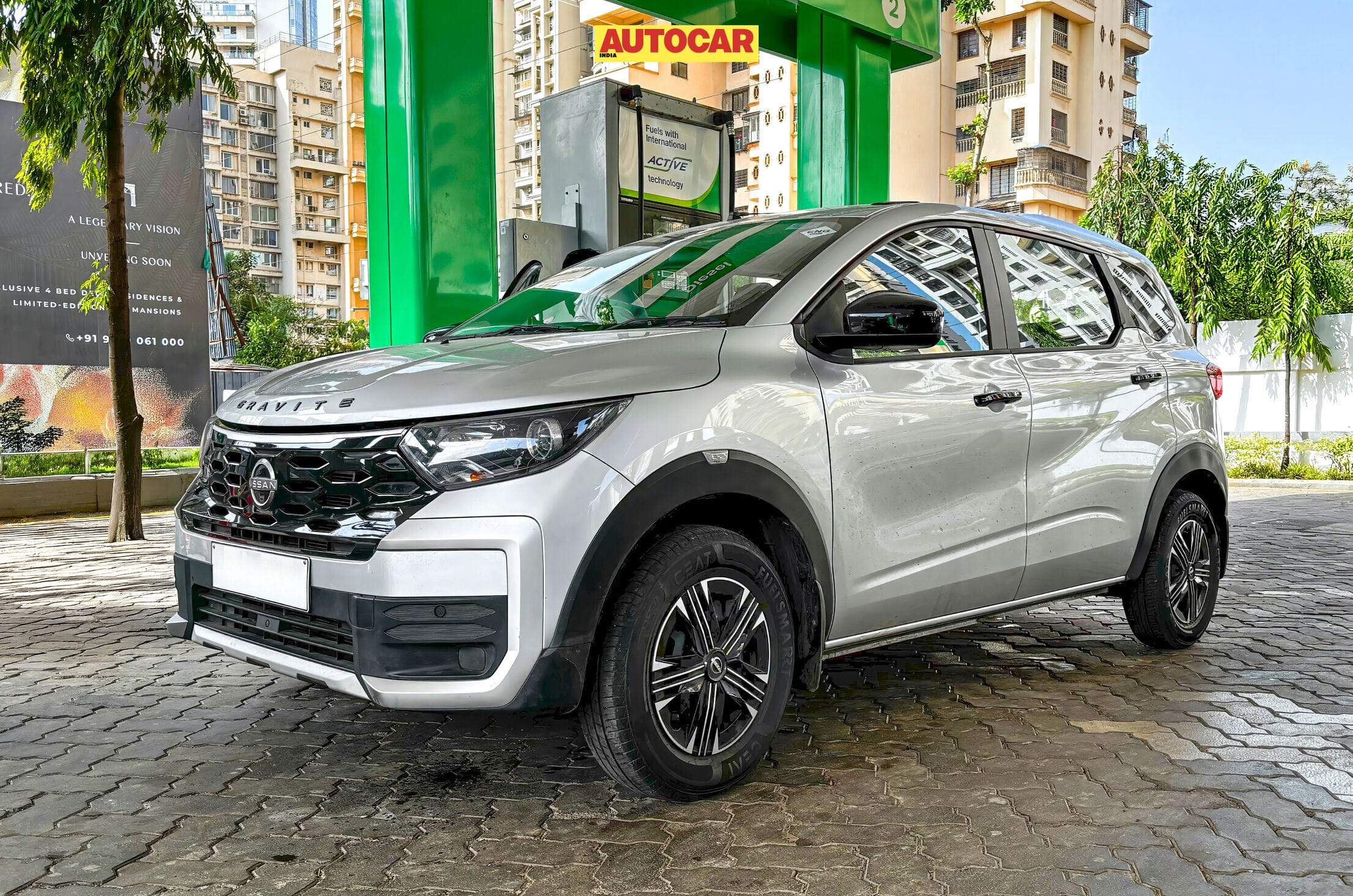
nissan gravite at fuel station

The Gravite is essentially Nissan’s version of the Renault Triber, with some minor cosmetic tweaks. Apart from the Renault Triber, it is the only three-row MPV under 4-meters and it’s priced from Rs. 5.73 lakh (ex-showroom). We’ve put the Nissan Gravite manual through our instrumented real-world tests to see how efficient it really is.

  1. Misses an auto engine start-stop feature
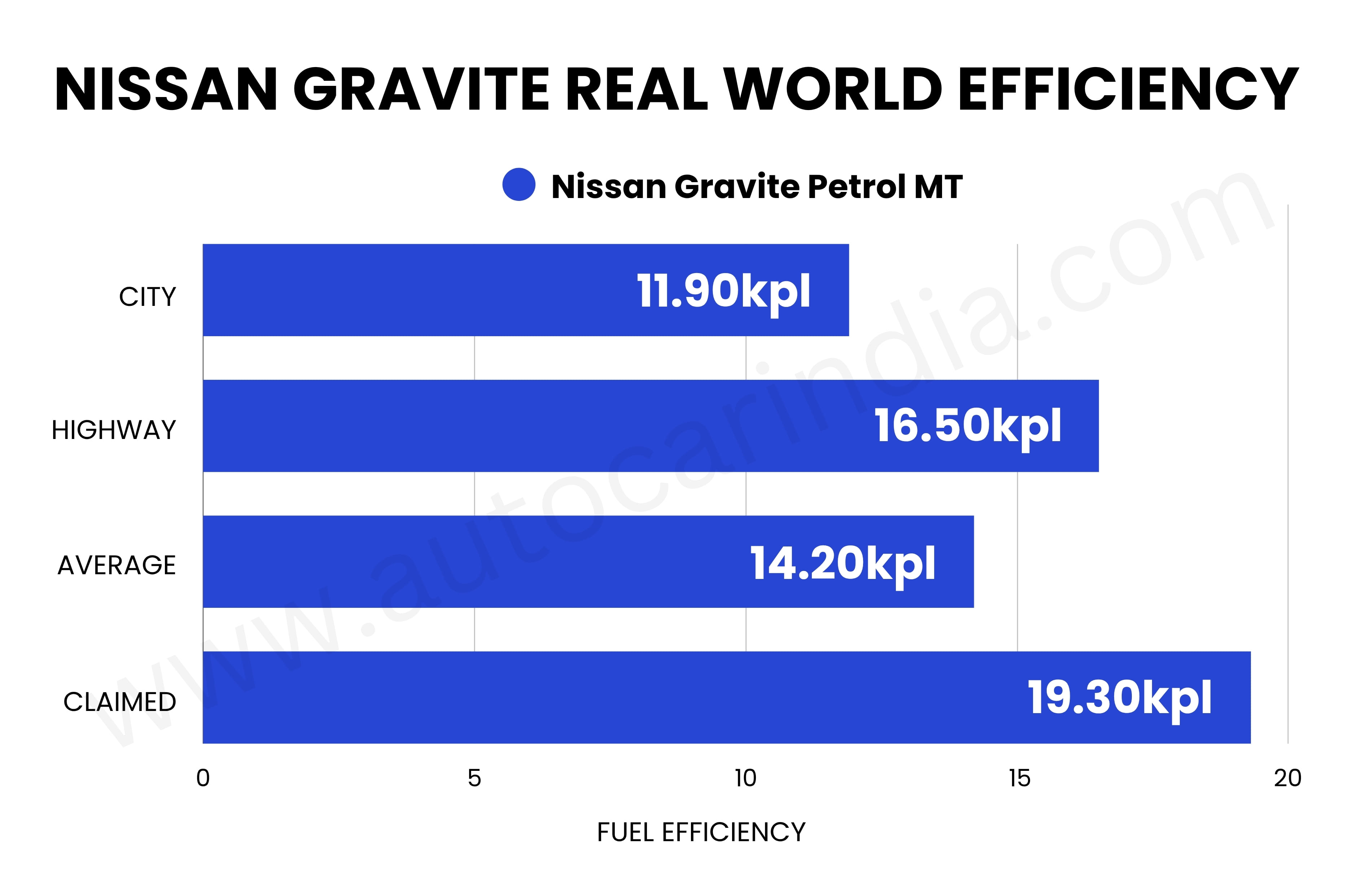
  2. Has a claimed fuel efficiency of 19.3kpl
  3. Kerb weight is a light 988kg

Nissan Gravite petrol MT real-world mileage

Gets a 72hp 1.0-litre 3-cyl NA engine

Powering the Gravite is 1.0-litre, three-cylinder, naturally-aspirated petrol engine (BR10), which is also offered with the Magnite, and it makes 72hp and 96Nm. It is offered with a 5-speed manual and a 5-speed AMT automatic, the former of which we’ve tested here.

In our real-world tests, the Nissan Gravite manual returned 11.9kpl in the city and 16.5kpl on the highway, for an overall average efficiency of about 14.2kpl. While the city efficiency is decent, an auto engine start-stop feature would have boosted it further. Thanks to the taller 4th and the 5th gears, the highway efficiency is quite impressive. Ambient temperatures were also above 30degC throughout our test which affected the efficiency.

With an overall average fuel efficiency of 14.2kpl and a 40-litre fuel tank in the Gravite, one can expect a real-world range of around 560km on a tankful of petrol.

Autocar India’s fuel-efficiency testing

Before conducting our real-world fuel-efficiency tests, we fill our test cars’ tanks to the brim and maintain tyre pressures based on the manufacturer’s recommendation. These cars are then driven on fixed city and highway loops in and around Navi Mumbai, and we maintain certain average speeds. Throughout the tests, the aircon is set to fan speed 2 with temperature dialed to the lowest position, and other electricals, such as the audio system, indicators and wipers, when required – just as a regular user would. Periodic driver swaps further neutralise variations in driver patterns. At the end of each cycle, we calculate efficiency by filling the tanks to full again.

Royal Enfield Shotgun 650 का लिमिटेड एडिशन लॉन्च, जानें कीमत और बुकिंग का तरीका

Royal Enfield ने कस्टम बाइक बनाने वाली कंपनी ‘रफ क्राफ्ट्स’ (Rough Crafts) के साथ मिलकर ‘शॉटगन 650’ का लिमिटेड-एडिशन लॉन्च किया है। इसकी कीमत 5.75 लाख रुपये (एक्स-शोरूम) रखी गई है। बता दें कि दुनिया भर में इसकी सिर्फ 100 यूनिट्स बनी हैं, जिनमें से भारत के लिए सिर्फ 25 यूनिट्स ही तय की गई हैं। वहीं, स्टैंडर्ड टॉप-स्पेक शॉटगन 650 की कीमत 4.16 लाख रुपये है, यानी इस लिमिटेड-एडिशन के लिए 1.59 लाख रुपये ज्यादा देने होंगे, जबकि अंदरूनी तौर पर (मैकेनिकल रूप से) यह बाइक वैसी ही है।

यह बात इसलिए भी अहम है क्योंकि रजिस्ट्रेशन तो अभी शुरू हो रहे हैं, लेकिन भारत में सिर्फ पहले 25 खरीदारों को ही यह बाइक मिल पाएगी। इसलिए इसमें दिलचस्पी रखने वालों के लिए बजट से ज्यादा सही समय पर बुकिंग करना जरूरी है। आइए जानते हैं कि यह एडिशन किस तरह अलग है और स्लॉट खत्म होने से पहले इसे कैसे बुक किया जा सकता है।

यह इसे अलग कैसे बनाता है?

यह बाइक सीधे ‘कैलिबर रॉयल’ से प्रेरित है, जो एक खास कस्टम बाइक है। इसे सबसे पहले Rough Crafts ने EICMA 2025 में दिखाया था और बाद में भारत में Motoverse 2025 में भी पेश किया गया था। इसमें ग्लॉस जेट ब्लैक और मैट स्टील्थ ब्लैक पेंट स्कीम है, जिस पर हाथ से लगाई गई गोल्ड लीफ डिटेलिंग और ग्रे एक्सेंट हैं। साथ ही, इसमें पार्टनरशिप को दिखाने वाला कास्ट ब्रास का बैज, अलग-अलग नंबर वाली टैंक प्लेट्स, ब्लैक बार-एंड मिरर्स, क्विल्टेड लेदर सीट, कॉन्ट्रास्ट-कट अलॉय व्हील्स और गोल्ड-फिनिश वाले फोर्क ट्यूब्स भी हैं।

इन सबके अलावा, हर खरीदार को ओरिजिनल कैलिबर रॉयल स्केच का एक नंबर वाला प्रिंट भी मिलता है, जिस पर Rough Crafts के फाउंडर विंस्टन येह के साइन होते हैं।

इसे कैसे खरीदें?

रॉयल एनफील्ड ऐप और वेबसाइट के जरिए दुनिया भर में रजिस्ट्रेशन शुरू हो चुके हैं, लेकिन भारत में असल बिक्री 30 जुलाई को शाम 7 बजे (IST) होगी। हालांकि, इसमें ‘पहले आओ-पहले पाओ’ का नियम लागू होगा। ध्यान दे कि भारत में रजिस्ट्रेशन पूरा करने वाले शुरुआती 25 ग्राहकों को ही यह यूनिट मिलेगी।

अगर कोई भी ग्राहक बिक्री शुरू होने के समय (ड्रॉप विंडो) तक इंतजार करता है, तो उसके हाथ से यह मौका निकल सकता है। क्योंकि रॉयल एनफील्ड के लिमिटेड कोलैबोरेशन की मांग हमेशा सप्लाई से ज्यादा रही है और पिछली बार भी ऐसे ड्रॉप्स के कुछ ही मिनटों में सारा स्टॉक बिक गया था।

क्या यह मैकेनिकल तौर पर अलग है?

नहीं। Royal Enfield Shotgun 650 x Rough Crafts Edition में स्टैंडर्ड Shotgun 650 वाला ही 648cc पैरेलल-ट्विन इंजन दिया गया है। इसमें परफॉर्मेंस, सस्पेंशन या ब्रेकिंग सिस्टम में कोई बदलाव नहीं किया गया है। इस बाइक की ज्यादा कीमत सिर्फ इसके खास डिजाइन, लिमिटेड एडिशन मॉडल होने और Rough Crafts के सिग्नेचर आर्टवर्क की वजह से है। इसमें कोई अतिरिक्त मैकेनिकल फीचर या ज्यादा पावर नहीं मिलती है।

इसलिए खरीदारों को यह सोचना होगा कि क्या ₹1.59 लाख ज्यादा खर्च करना सिर्फ एक्सक्लूसिव लुक और लिमिटेड एडिशन वैल्यू के लिए सही रहेगा या फिर स्टैंडर्ड Shotgun 650 उनके लिए बेहतर विकल्प होगी।

यह भी पढ़ें: Renault Triber पर मिल रहा ₹60,000 तक का डिस्काउंट, बस इसी महीने रहेगा यह धांसू ऑफर, जानें कीमत और फीचर्स

JSW Motors’ Jaecoo J5 SUV spied in ICE avatar for the first time

Jaecoo J5 SUV spied in ICE avatar for the first time in India

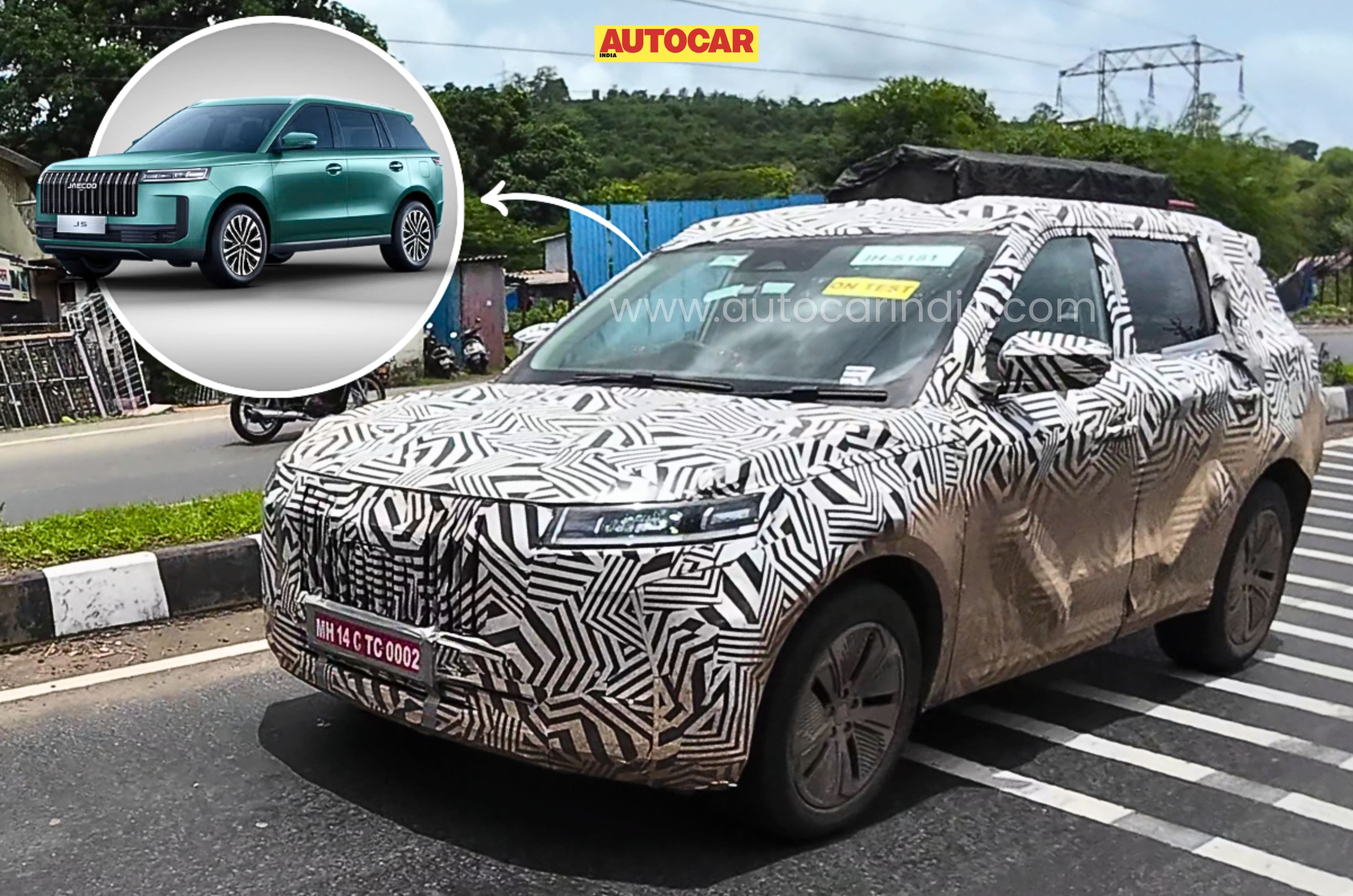
The Jaecoo J5 SUV has been spied testing in an ICE avatar for the first time in India. Interestingly, the latest spy shots suggest the Jaecoo J5 could launch in India with an ICE powertrain, whereas earlier sightings pointed to an all-electric (EV) version only. The new exterior and interior spy shots of the ICE-powered Jaecoo J5 reveal some visible differences from the EV version.

  1. A functional grille, all-LED lighting and 18-inch alloy wheels can be seen
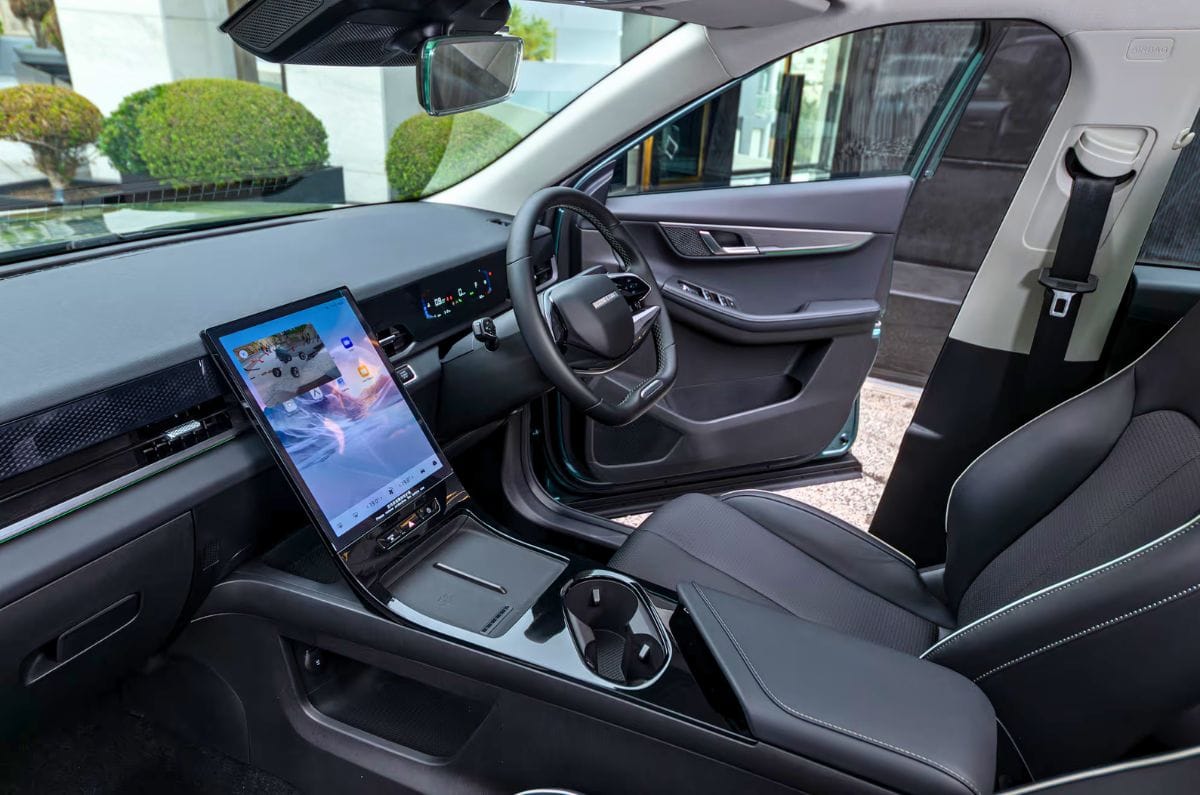
  2. An all-black cabin with a vertically mounted infotainment system was spotted
  3. Offered with a turbo-petrol and strong hybrid petrol internationally

In India, JSW Motors will launch its own standalone SUV based on the Jaecoo J5 under a technology and component licensing agreement with Chery, the Chinese automaker that owns the Jaecoo brand.

Jaecoo J5-based ICE SUV spied: What was spotted?

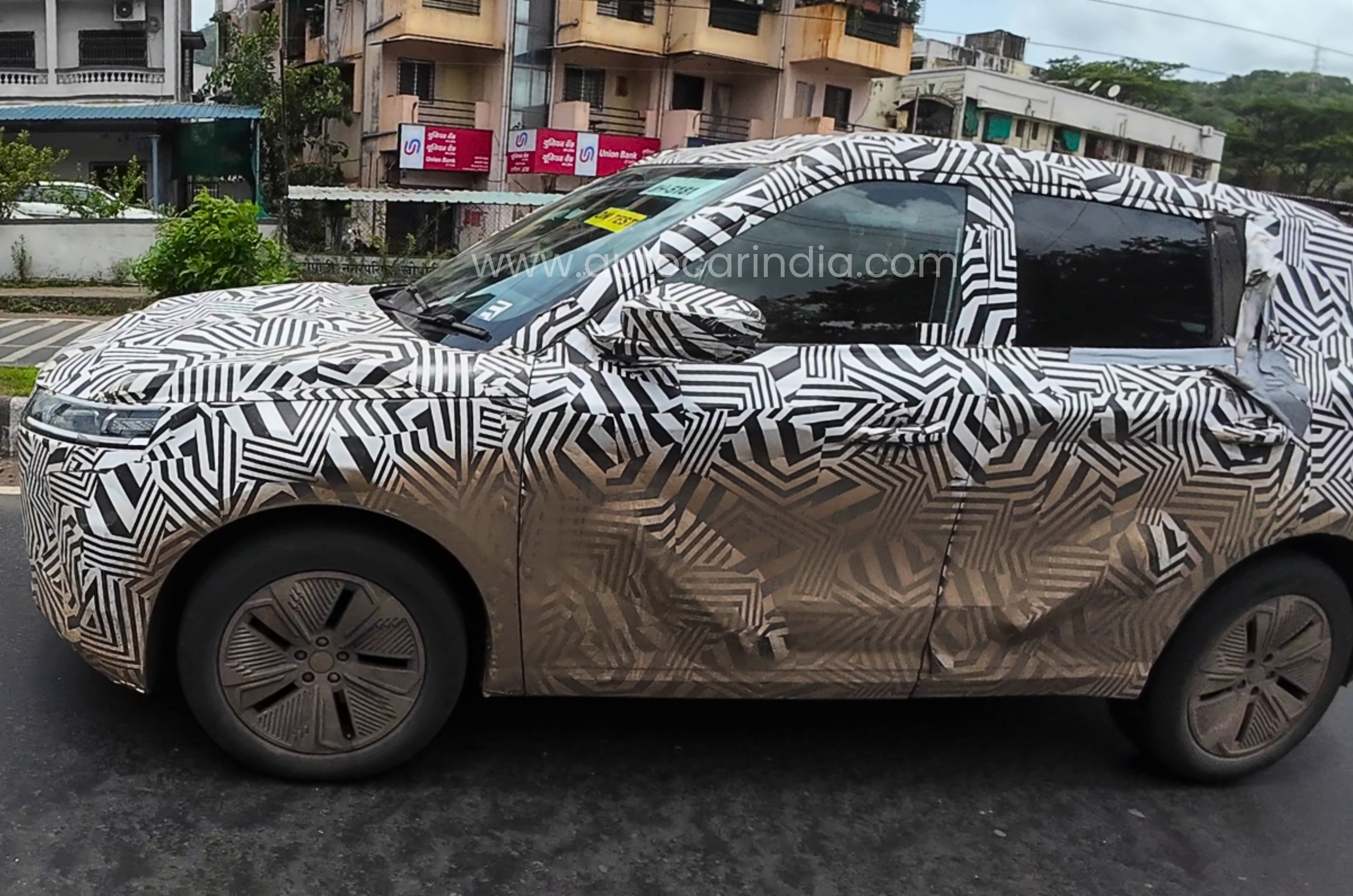
A functional grille with vertical slats confirms it is the ICE version of the Jaecoo J5

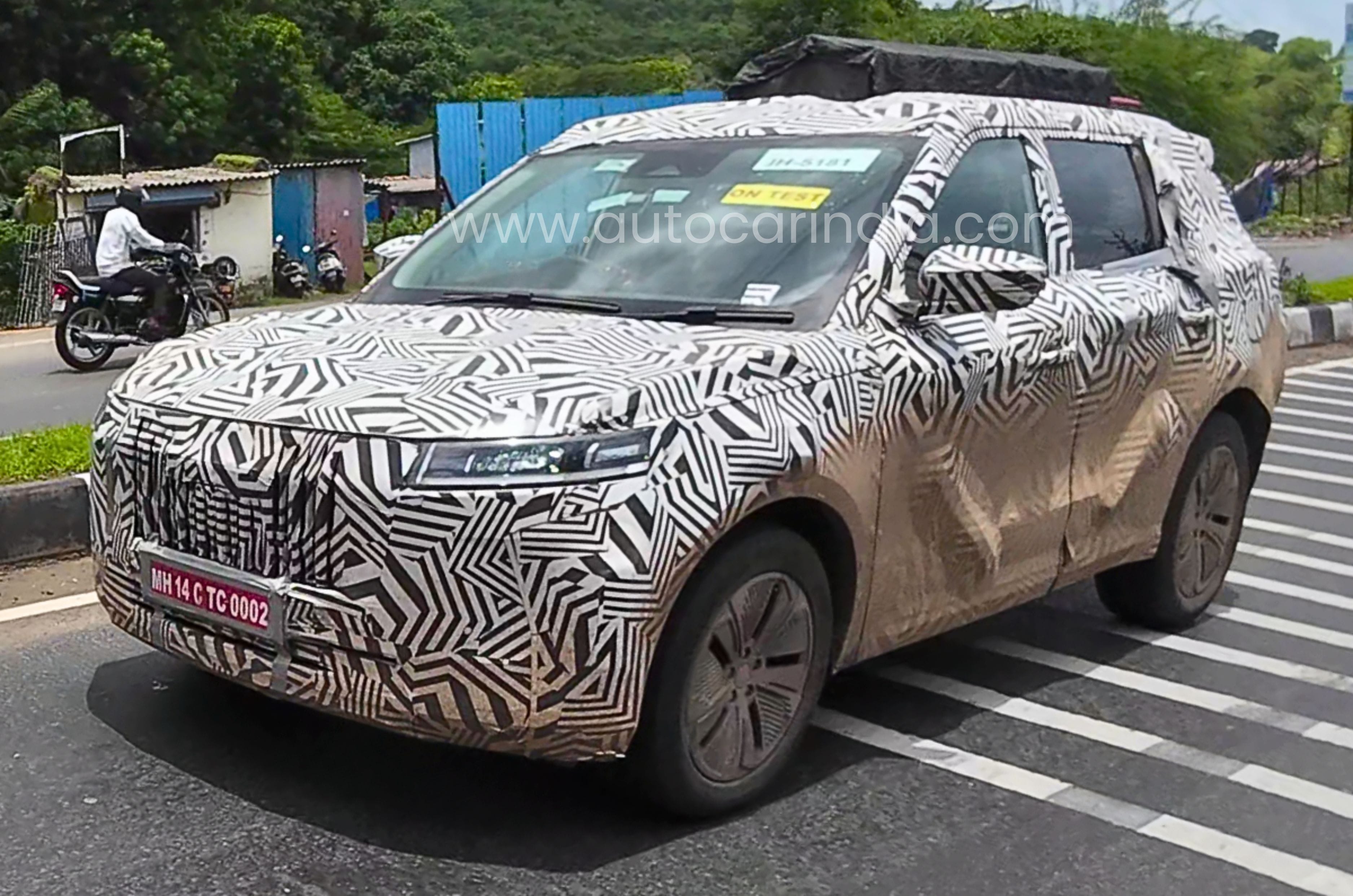
Although the Jaecoo J5-based SUV’s test mule is heavily camouflaged, a few design elements are visible. Among these is a functional grille with vertical slats, confirming it is the ICE version, as the EV features a blanked-off grille. The sleek LED headlights with LED DRL surrounds, however, are the same as those on the EV version. The bumper has a clean design, but it seems to miss out on the fog lamps offered with the international model.

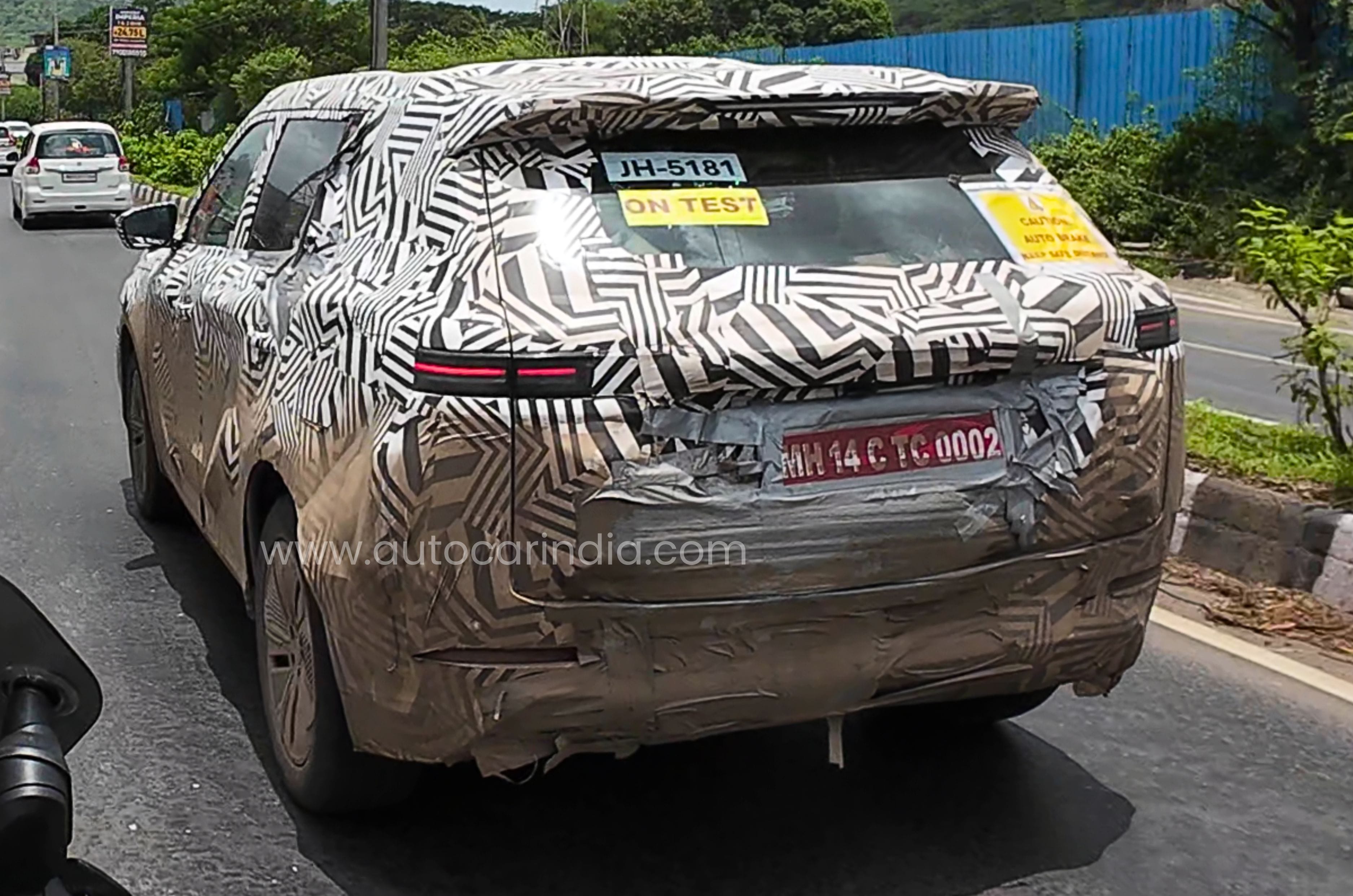
In profile, the international-spec model gets 18-inch wheels. At the rear, slim wraparound LED taillights can be spotted. On the international model, these taillights are joined by a black trim with ‘Jaecoo’ badging in the centre.

The interior design mimics that of the all-electric model

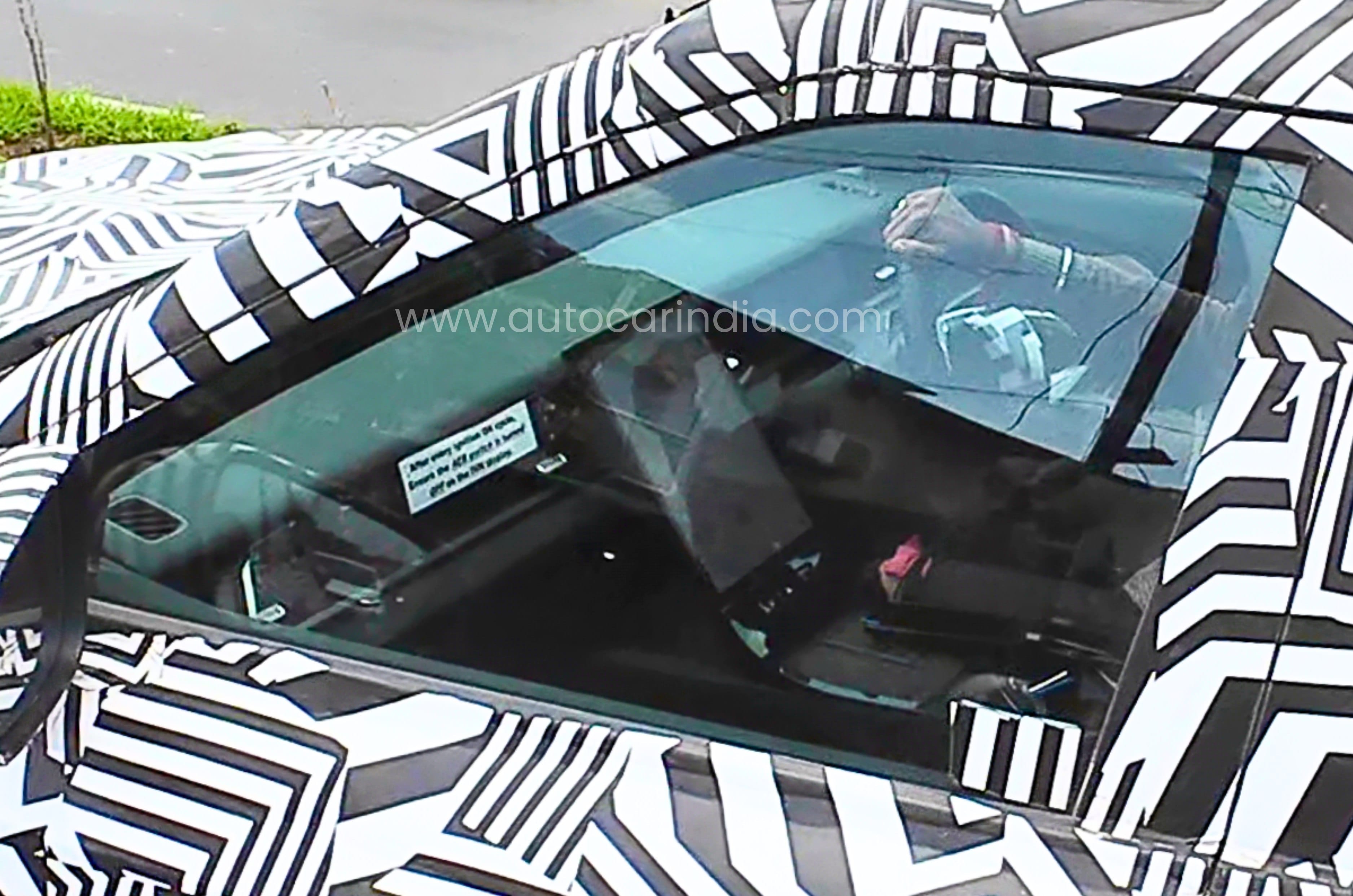
The spy shots also reveal a large vertically oriented infotainment system on the dashboard, likely the same as the international model’s 13.2-inch unit. The international model also gets an 8.8-inch driver’s display, a panoramic sunroof, an 8-speaker Sony sound system, dual-zone climate control, a powered tailgate and a wireless phone charger. It will be interesting to see what features are offered with the India-spec model sold by JSW Motors.

South Africa-spec Jaecoo J5 dashboard shown for representational purposes only.

In terms of safety, the international model gets 7 airbags, a 540-degree camera (surround-view camera with an under-bonnet view function), a tyre pressure monitoring system (TPMS) and an advanced driver assistance system (ADAS) suite. 

Jaecoo J5-based ICE SUV: Expected powertrain

Offered with a turbo-petrol and a strong hybrid petrol engine internationally

Depending on the market, the ICE-powered Jaecoo J5 gets either a turbo-petrol or a strong-hybrid engine option. The 1.5-litre turbo-petrol produces up to 156hp and 275Nm, and is mated to either a 7-speed DCT or a CVT, depending on the market. It allows for a 0-100kph sprint time of 10.2 seconds 

A strong-hybrid version has a 1.5-litre 4-cylinder turbo-petrol engine and an electric motor powered by a 1.83 kWh lithium-ion battery. Combined, this setup produces 224hp and 295Nm. It does a 0-100kph sprint in 7.9 seconds. Jaecoo claims a fuel efficiency of 18.9kpl, allowing a total range of around 1,000km. It will be interesting to see which powertrain option is offered with the India-spec model.

India launch timeline is yet to be revealed

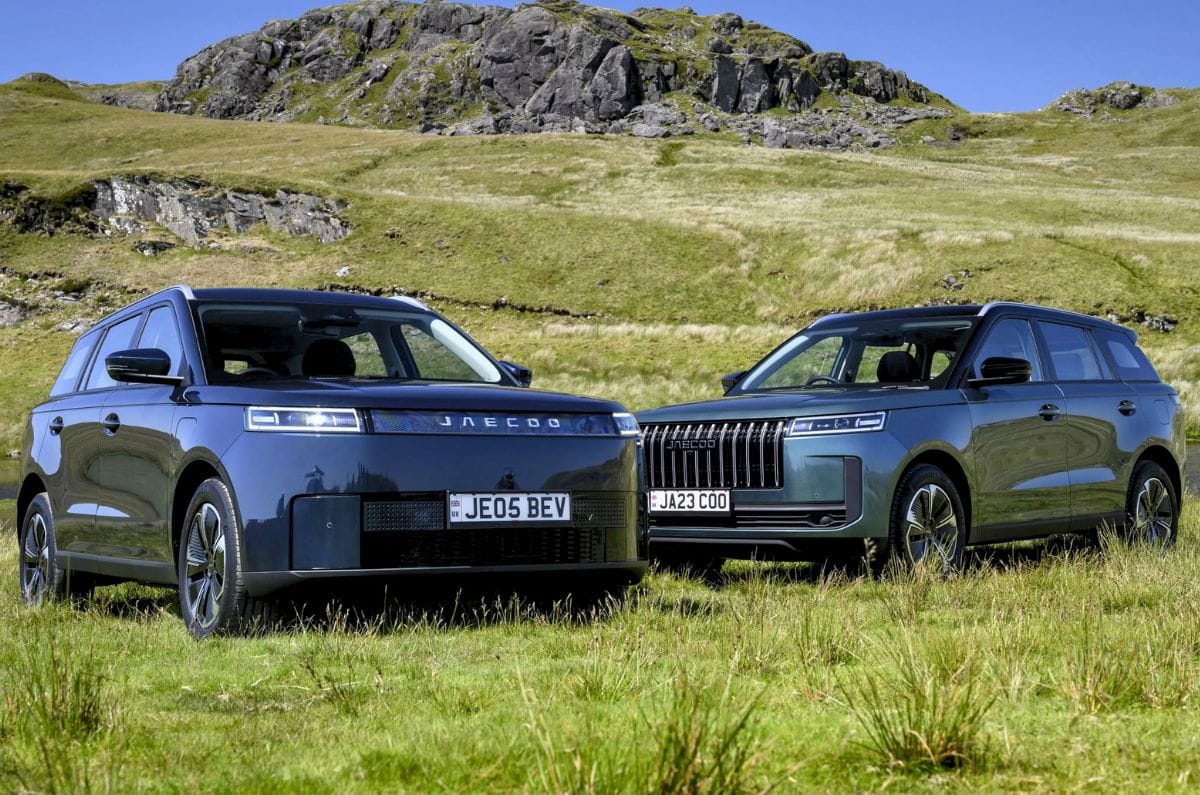
UK-spec Jaecoo J5’s EV (left) and ICE (right) versions shown for representational purposes only.

JSW Motors is expected to start its India operations with the Diwali launch of the Jetour T2-derived hybrid SUV, followed by launches of the SUVs derived from the Jaecoo J5 and iCaur V23. Upon launch, JSW Motors’ Jaecoo J5-based ICE SUV will lock horns with midsize SUVs such as the Hyundai Creta, Tata Sierra, Maruti Suzuki Victoris, Renault Duster and Nissan Tekton. The EV version will rival the Hyundai Creta Electric, Mahindra BE 6, Tata Sierra EV, Vinfast VF6 and Maruti Suzuki eVitara. 

Renault Triber पर मिल रहा ₹60,000 तक का डिस्काउंट, बस इसी महीने रहेगा यह धांसू ऑफर, जानें कीमत और फीचर्स

Renault Triber: अगर आप नई कार खरीदने की सोच रहे हैं, तो यह खबर आपके लिए फायदेमंद साबित हो सकती है। दरअसल, Renault India अपने Triber MPV पर 60,000 रुपये तक की छूट दे रहा है। जो कि केवल इसी महीने तक लागू है। ये ऑफर राज्य, मॉडल ईयर, वेरिएंट और कस्टमर की पात्रता के आधार पर अलग-अलग हो सकते हैं। रेनॉ इंडिया की ऑफिशियल ऑफर लिस्ट के अनुसार, केरल में कस्टमर Triber पर कुल 60,000 रुपये तक का डिस्काउंट मिल सकता है, जबकि गुजरात में खरीदार 45,000 रुपये तक का लाभ उठा सकते हैं। ज्यादातर दूसरे राज्यों में, MY2026 मॉडल पर ज्यादा से ज्यादा फायदे 30,000 रुपये तक हैं।

इन ऑफर्स में 30,000 रुपये तक का कैश डिस्काउंट शामिल हो सकता है। इसके अलावा, ग्राहक को एक्सचेंज बोनस, स्क्रैपेज बोनस, लॉयल्टी बोनस, रेफरल और कॉरपोरेट बेनिफिट्स जैसे फायदे भी मिल सकते हैं। हालांकि, ये लाभ ग्राहक की पात्रता और लागू स्कीम पर निर्भर करेंगे।

रेनॉ ने ग्राहकों को सलाह दी है कि वे अपने शहर में लागू सही ऑफर के बारे में जानने के लिए अपने नजदीकी ऑथराइज्ड डीलर से संपर्क करें, क्योंकि ऑफर के फायदे अलग-अलग जगहों पर अलग-अलग हो सकते हैं और ये डीलर की भागीदारी और स्टॉक की उपलब्धता पर निर्भर करते हैं।

रेनॉ ट्राइबर की कीमत अभी 5.81 लाख रुपये से 8.48 लाख रुपये (एक्स-शोरूम) के बीच है। यह भारतीय बाजार में सबसे सस्ती थ्री-रो वाली MPV में से एक बनी हुई है, जिसमें सात लोगों के बैठने की सुविधा मिलती है।

पावरट्रेन और इंजन

इंजन की बात करें तो, Renault Triber में 1.0 लीटर का नैचुरली एस्पिरेटेड 3-सिलेंडर पेट्रोल इंजन दिया गया है। यह इंजन 72 bhp की पावर और 96 Nm का पीक टॉर्क जनरेट करता है। इस इंजन के साथ ग्राहकों को 5-स्पीड मैनुअल गियरबॉक्स और 5-स्पीड ऑटोमेटेड मैनुअल ट्रांसमिशन (AMT) का विकल्प मिलता है।

ट्राइबर के मैनुअल वर्जन की ARAI-क्लेम्ड फ्यूल एफिशिएंसी 20.0 kmpl तक है, जबकि AMT वेरिएंट 17.0 kmpl तक का माइलेज देता है।

फीचर्स

वेरिएंट के आधार पर, ट्राइबर में कई फीचर्स देखने को मिलते हैं। इनमें 8 इंच का टचस्क्रीन इंफोटेनमेंट सिस्टम, वायरलेस Android Auto और Apple CarPlay, डिजिटल इंस्ट्रूमेंट क्लस्टर, स्टीयरिंग पर ऑडियो कंट्रोल, पीछे की सीटों के लिए AC वेंट्स, पुश-बटन स्टार्ट/स्टॉप, कीलेस एंट्री, इलेक्ट्रिकली एडजस्ट होने वाले ORVMs और कूल्ड सेंटर स्टोरेज कंपार्टमेंट शामिल हैं।

सेफ्टी फीचर्स की बात करें तो, वेरिएंट के आधार पर Triber में स्टैंडर्ड तौर पर छह एयरबैग, EBD के साथ ABS, इलेक्ट्रॉनिक स्टेबिलिटी प्रोग्राम (ESP), हिल स्टार्ट असिस्ट, टायर प्रेशर मॉनिटरिंग सिस्टम (TPMS), रियर पार्किंग सेंसर, रिवर्सिंग कैमरा और सीट बेल्ट रिमाइंडर दिए गए हैं।

बता दें कि Renault Triber उन खरीदारों की जरूरतों को पूरा करती है जो थ्री-रो सीटिंग वाली किफायती फैमिली गाड़ी की तलाश में हैं। जुलाई 2026 के ऑफर सीमित समय के लिए हैं और ये मैन्युफैक्चरर और भाग लेने वाली डीलरशिप द्वारा तय की गई शर्तों और नियमों के अधीन हैं।

यह भी पढ़ें: लेह से इंस्पायर्ड डिजाइन और पावरफुल इंजन… Renault ने लॉन्च की नई Duster Adventure Edition