Top 11 Adventure tourers between Rs 2-5 lakh

Top 11 Adventure tourers between Rs 2-5 lakh
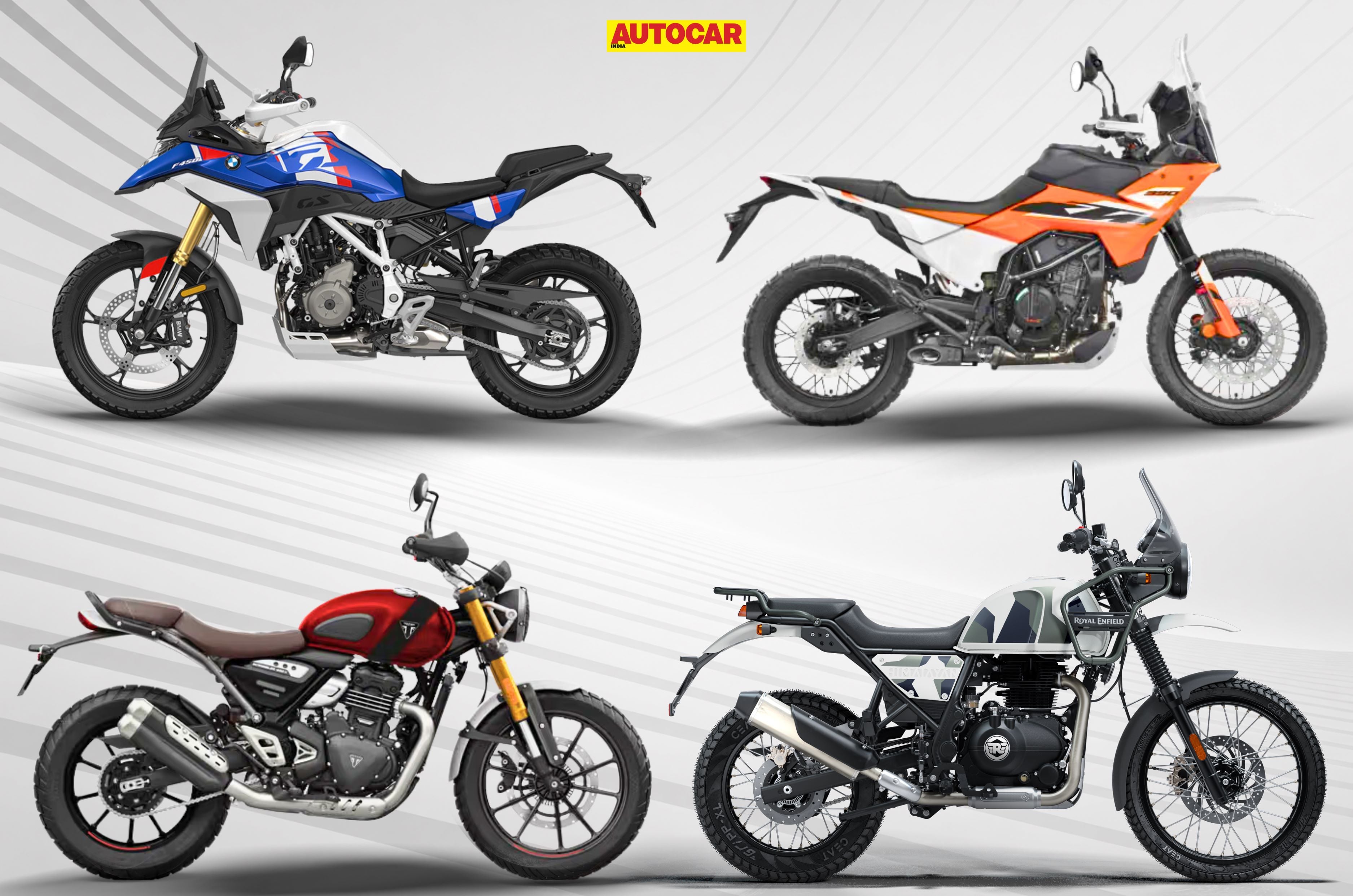
An edited lead image showing the BMW F 450 GS, KTM 390 Adventure S, Royal Enfield Himalayan 440, and Triumph Scrambler 400 X in clockwise direction.

Ten years ago, Royal Enfield made adventure tourers mainstream with the original Himalayan 411 and the segment has slowly, but surely grown since. As with any other thing that gains popularity, this segment also has gained different kinds of options. On the one hand, we have the V-Strom that’s effectively a Gixxer 250 on stilts, and on the other, we have the KTM 390 Adventure S that looks to strike a fine balance between both adventure and touring capabilities. Admittedly, this can get a bit overwhelming, so here are all the adventure touring motorcycles you can buy in India right now between Rs 2-5 lakh.

All prices mentioned are ex-showroom, Delhi.

11. TVS Apache RTX 300

Starts at Rs 1.99 lakh
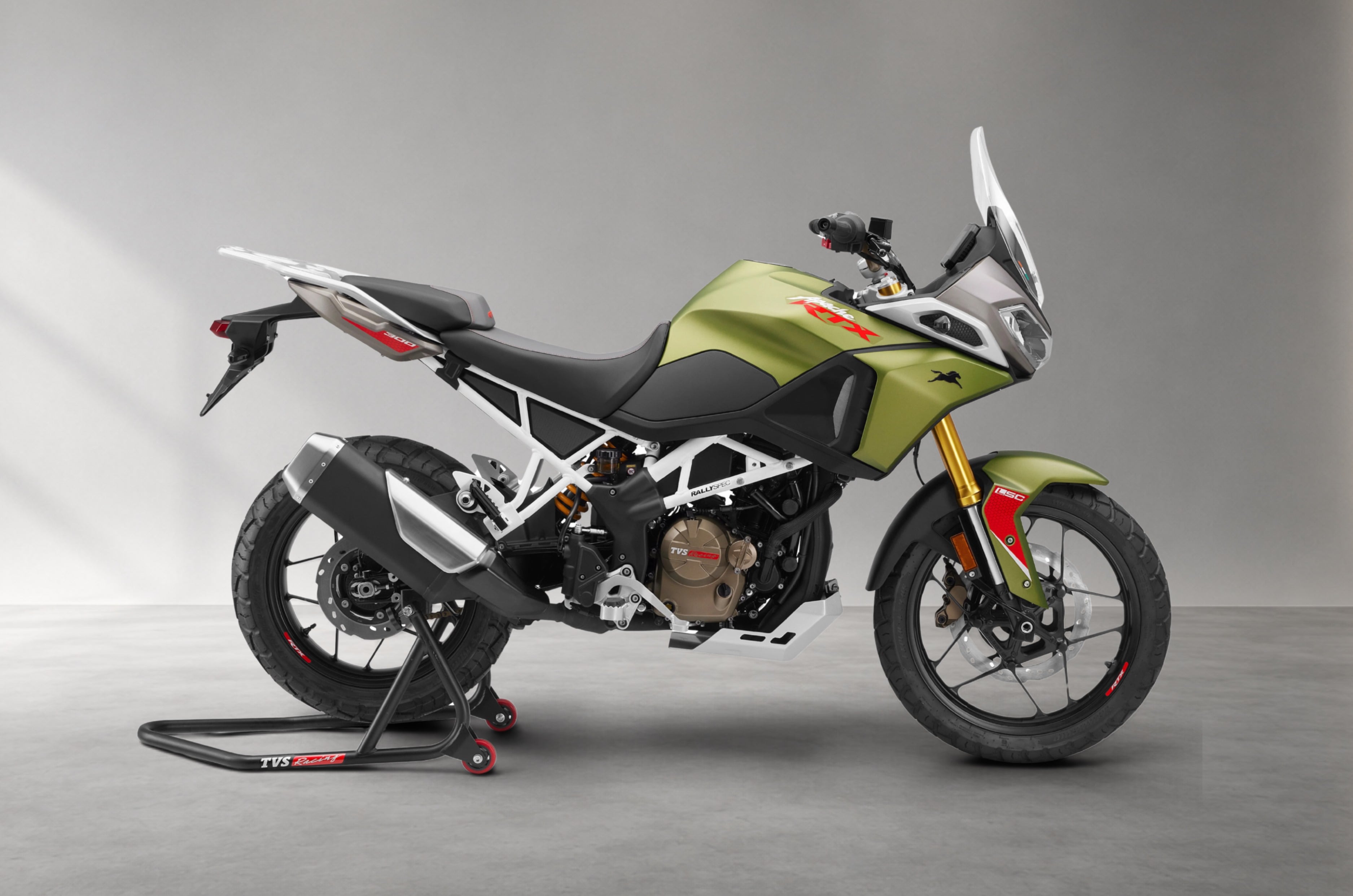
Inside render showing the TVS Apache RTX 300

TVS is the most recent (new) entrant into the segment, with the Apache RTX 300 redefining how many features you can pack into on a relatively affordable budget. The RTX’s 299.1cc single-cylinder, liquid-cooled engine with 36hp and 28.1Nm of torque isn’t the most exciting but has the ability to keep going as long as you’re willing to, except for the oddly small 12.5-litre fuel tank. The TVS sticks to a 19/17 front/rear wheel setup and only comes with alloy rims.

TVS offers four ride modes and cruise control as standard with the higher variants stepping that up to a bi-directional quickshifter, traction control, and Google Maps mirroring on the 5-inch TFT screen. It also has a very good headlight as standard, and the top BTO variant adds adjustable suspension too, both aimed at increasing the sense of safety and comfort. The 835mm seat height and 180kg kerb weight combo might look daunting on paper, but they aren’t a big hindrance in practice.

The TVS Apache RTX 300 spans Rs 1.99 lakh for the Base variant and Rs 2.39 lakh for the BTO variant.

10. Suzuki V-Strom SX

Rs 2.01 lakh
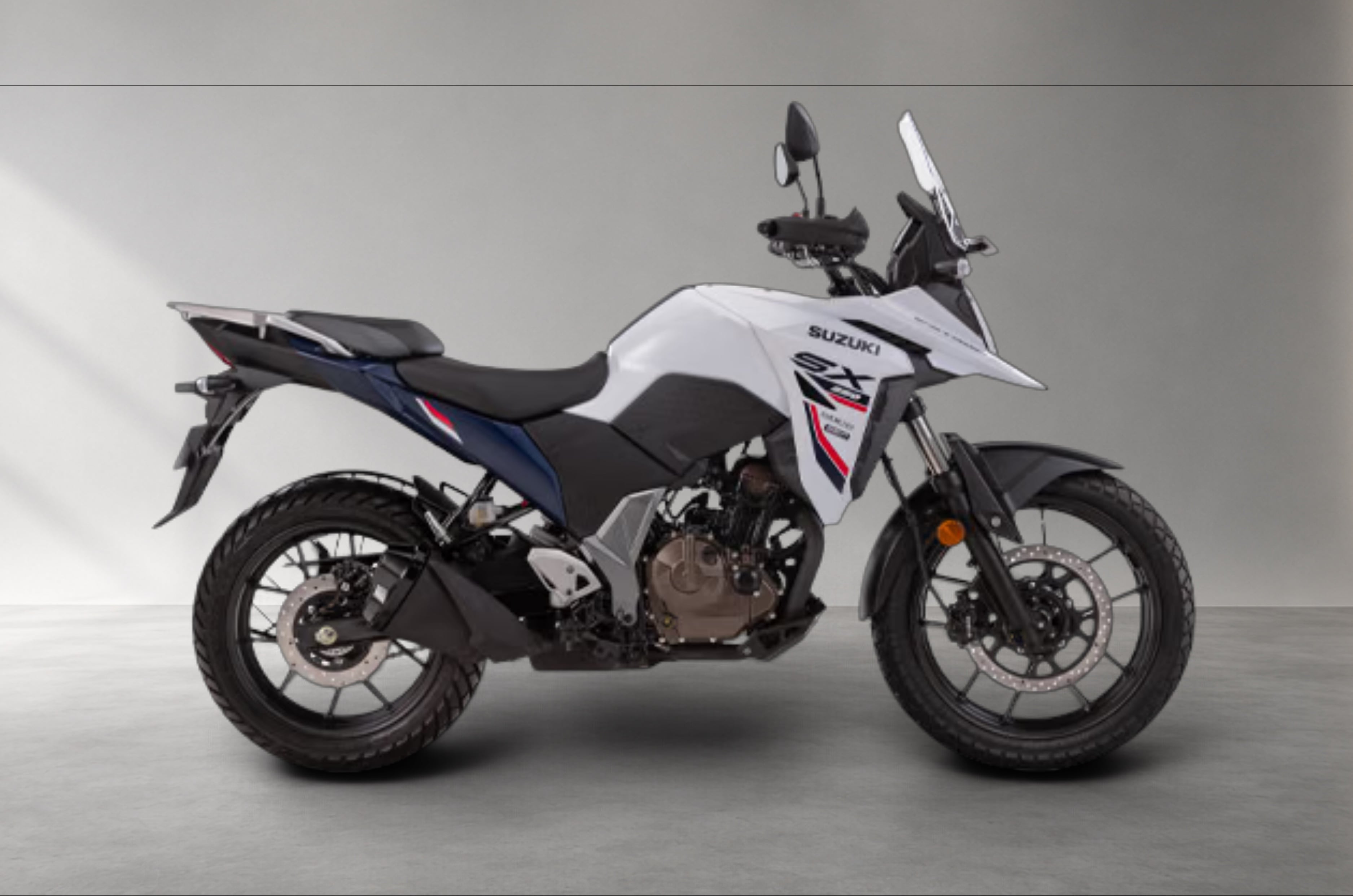
Inside render showing the Suzuki V-Strom SX 250

Suzuki’s adventure tourer is mostly a tourer because it is a re-engineered Gixxer 250 with a taller stance. But, don’t let that stop you from considering it seriously because its 249cc engine with 26.5hp and 22.2Nm of torque has more than enough to make long days seem effortless. The 12-litre fuel tank capacity seems small on paper, but it is possible to make the Suzuki quite efficient. It has a 835mm seat height, but the 167kg kerb weight softens that blow.

As is typical for Japanese products in this class, the V-Strom SX is light on features, with dual-channel ABS the only rider aid on offer. However, it also makes a great case for reliability, helped further by Suzuki’s brand cachet. The Suzuki runs on 19/17 front/rear wheels and only gets alloy rims.

The Suzuki V-Strom SX has a single variant and costs Rs 2.01 lakh.

9. Yezdi Adventure

Starts at Rs 2.06 lakh
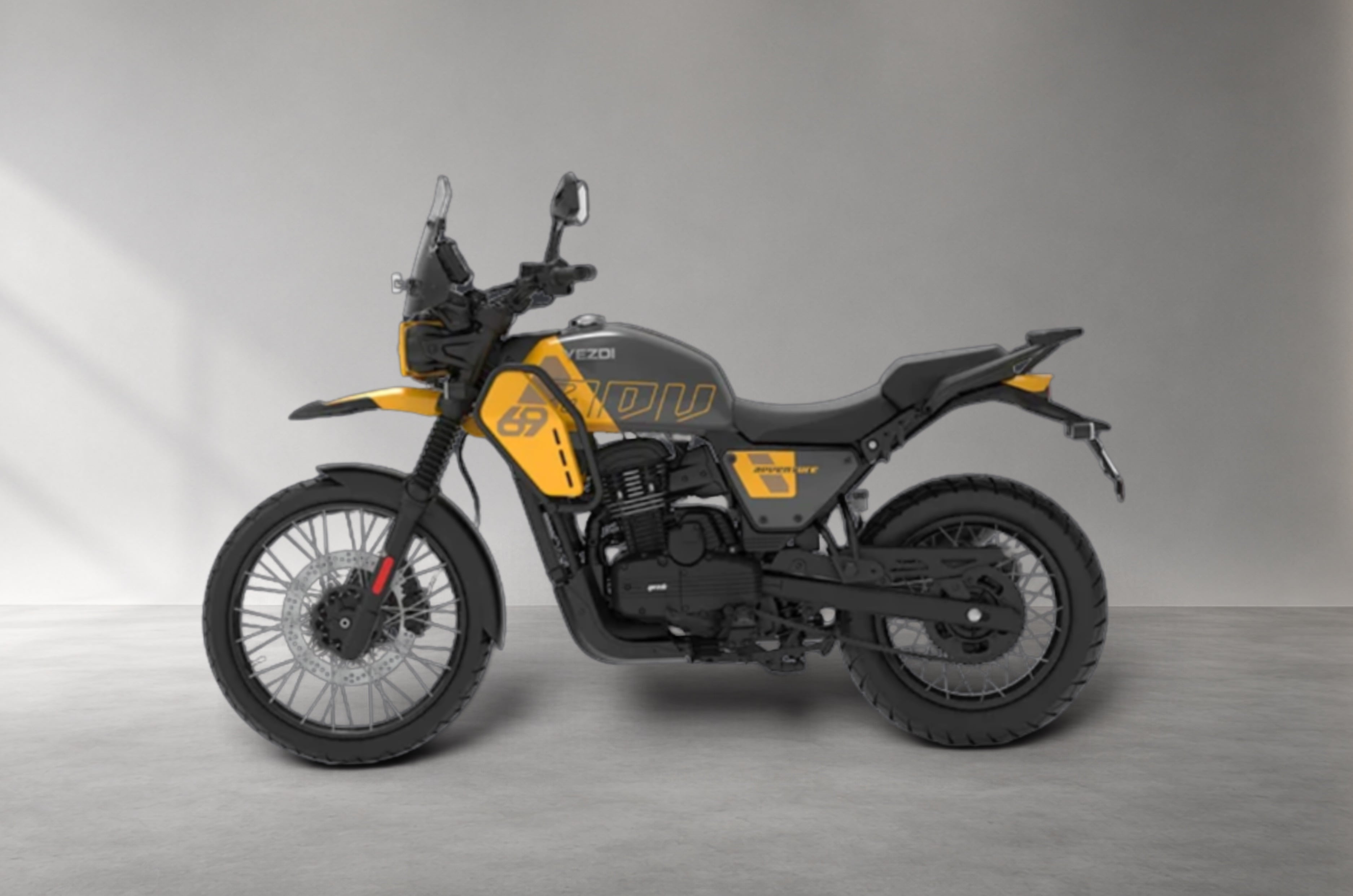
Inside render showing the Yezdi Adventure

Classic Legends’ Yezdi had comprehensively upgraded their adventure tourer earlier this year. The 334cc engine is now liquid-cooled and makes 29.6hp and 29.8Nm of torque. The fuel tank capacity is a healthy 15.5 litres and the Yezdi Adventure has a 815mm seat height and weighs about 198kg.

Along with an updated design, the Adventure gained features like an asymmetrical dual headlamp, all LED lighting, three ABS modes, traction control and a rerouted exhaust for better heat management. Yezdi also offers tubeless, cross spoke wheels as accessories for Rs 20,000 extra, if you’d like to embrace the adventure look with the convenience of tubeless tyres. Standard fitments are 21/17 front/rear tubed, wire-spoke wheels.

The Yezdi Adventure starts at Rs 2.06 lakh for the base Nebula Blue White colour and goes up to Rs 2.13 lakh for the top Yellow Falcon colour.

8. Royal Enfield Himalayan 440

Rs 2.29 lakh
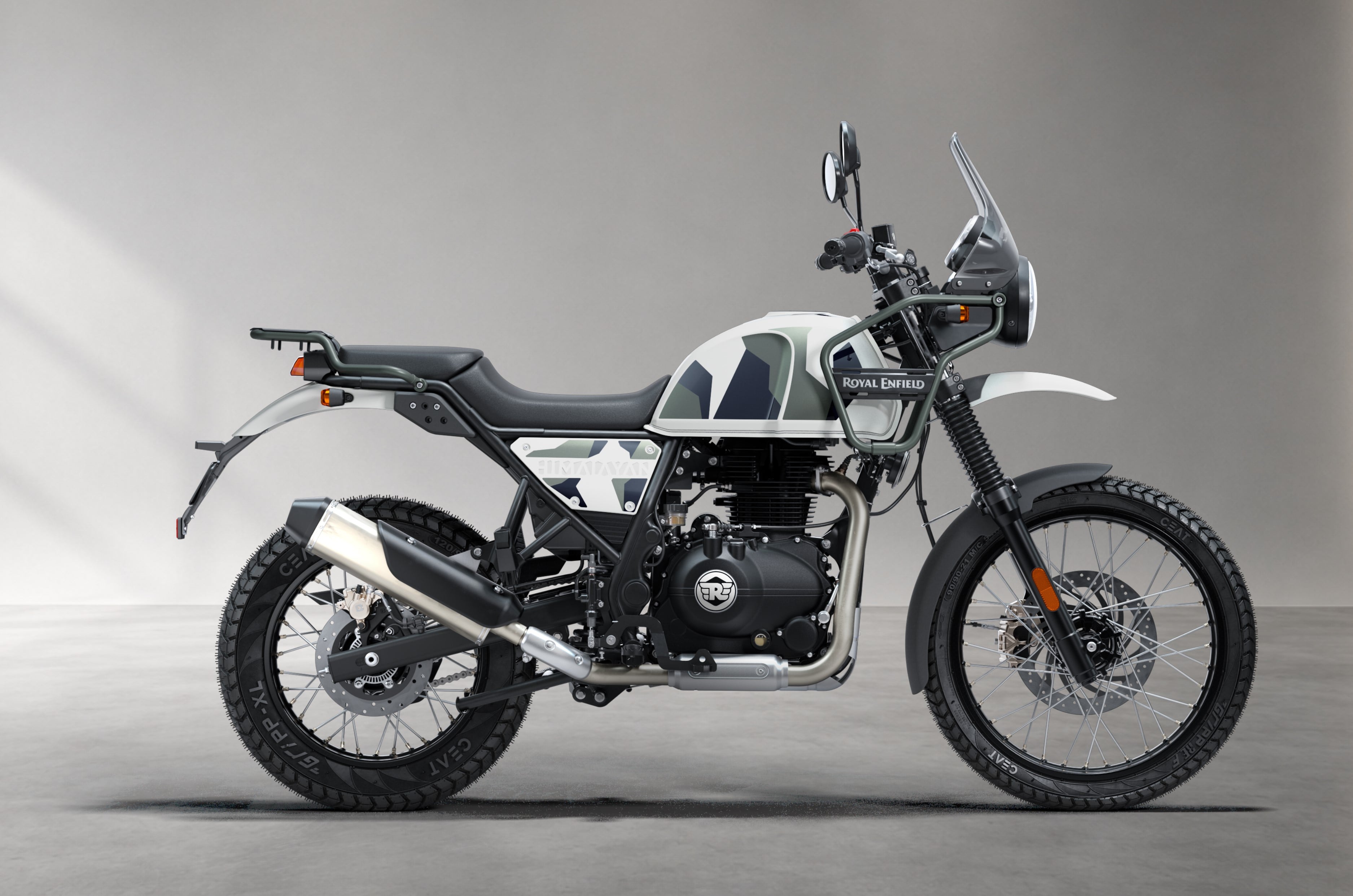
Insider render showing the Royal Enfield Himalayan 440

Royal Enfield has resurrected the air/oil-cooled Himalayan 440 for 2026. The 443cc engine (shared with the Scram 440) makes 25.4hp and 34Nm of torque and the Himalayan stays true to its roots by only offering switchable dual-channel ABS and the Tripper navigation pod as notable features. The seat height remains at 800mm, as does the fuel tank capacity at 15 litres; which also means the weight remains unchanged at 199kg as well. Royal Enfield has stuck to a tubed 21/17 wheel setup on the Himalayan 440.

Most of the mentioned specifications, are common to the Scram 440. Its base variant starts lower at Rs 2.25 lakh for wire spoke rims, and the higher variant offers alloy rims at Rs 2.32 lakh.

Uncharacteristic for Royal Enfield, all three colours of the Himalayan 440 cost the same Rs 2.29 lakh.

7. KTM 250 Adventure

Rs 2.53 lakh
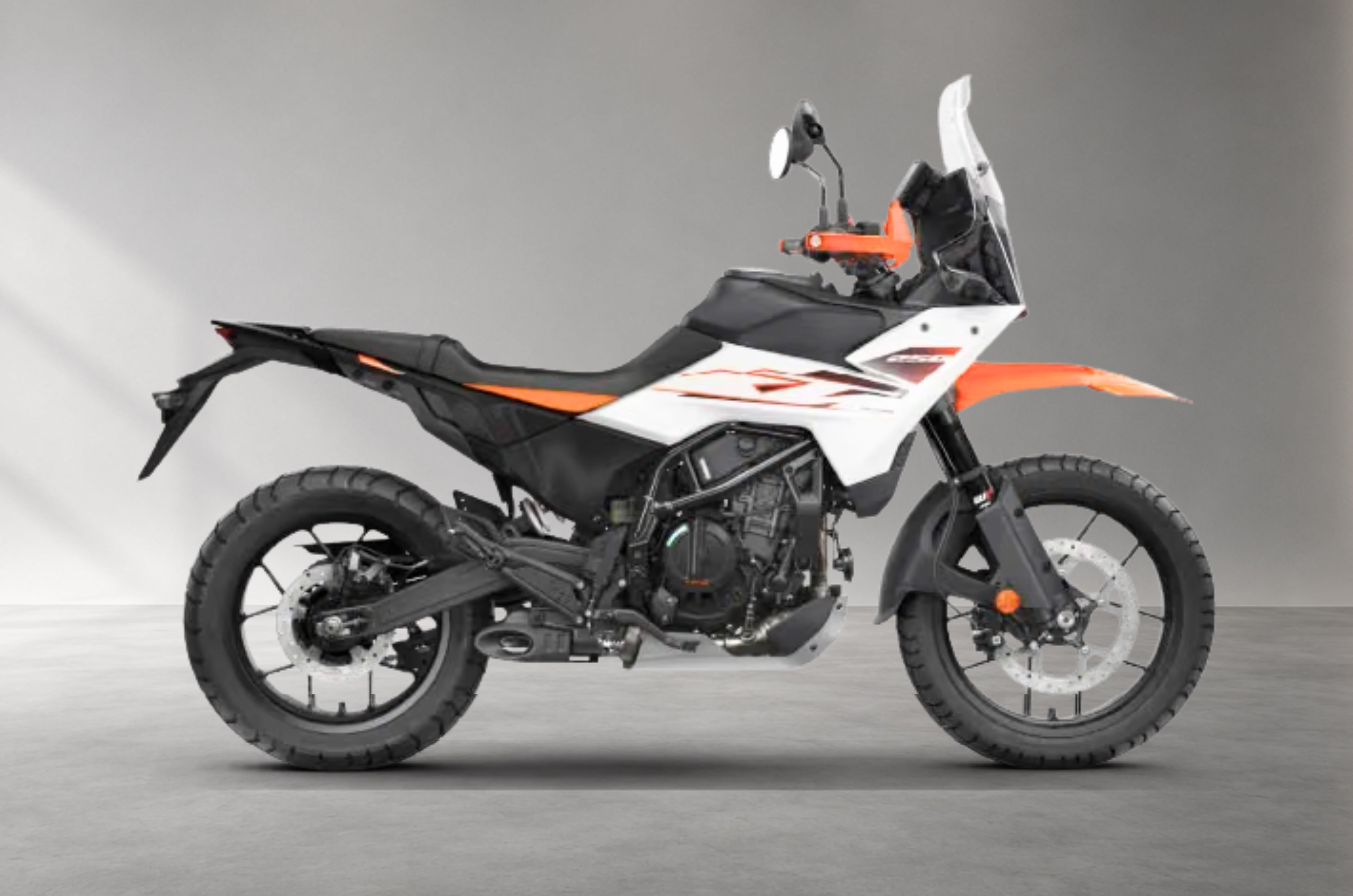
Inside render showing the KTM 250 Adventure

KTM’s entry-level adventure tourer is the 250 Adventure, which shares its engine with the 250 Duke and its platform with the bigger brothers. Its 249.07cc engine makes 31hp and 25Nm of torque. The fuel tank capacity is 14.5 litres, seat height is at 825mm, and kerb weight is 176kg.

Being the entry-level opinion, KTM has kept things simple in terms of features. It gets a bi-directional quickshift, a slip-and-assist clutch, and two ABS modes. For fancy features like ride modes, cruise control etc., you’ll have to step up the 390 Adventure with the 350cc engine (also on this list). The 250 Adventure runs on 19/17 front and rear wheels with alloy rims.

KTM offers a single variant for the 250 Adventure and has priced it at Rs 2.53 lakh.

6. Triumph Scrambler 400 X

Rs 2.65 lakh
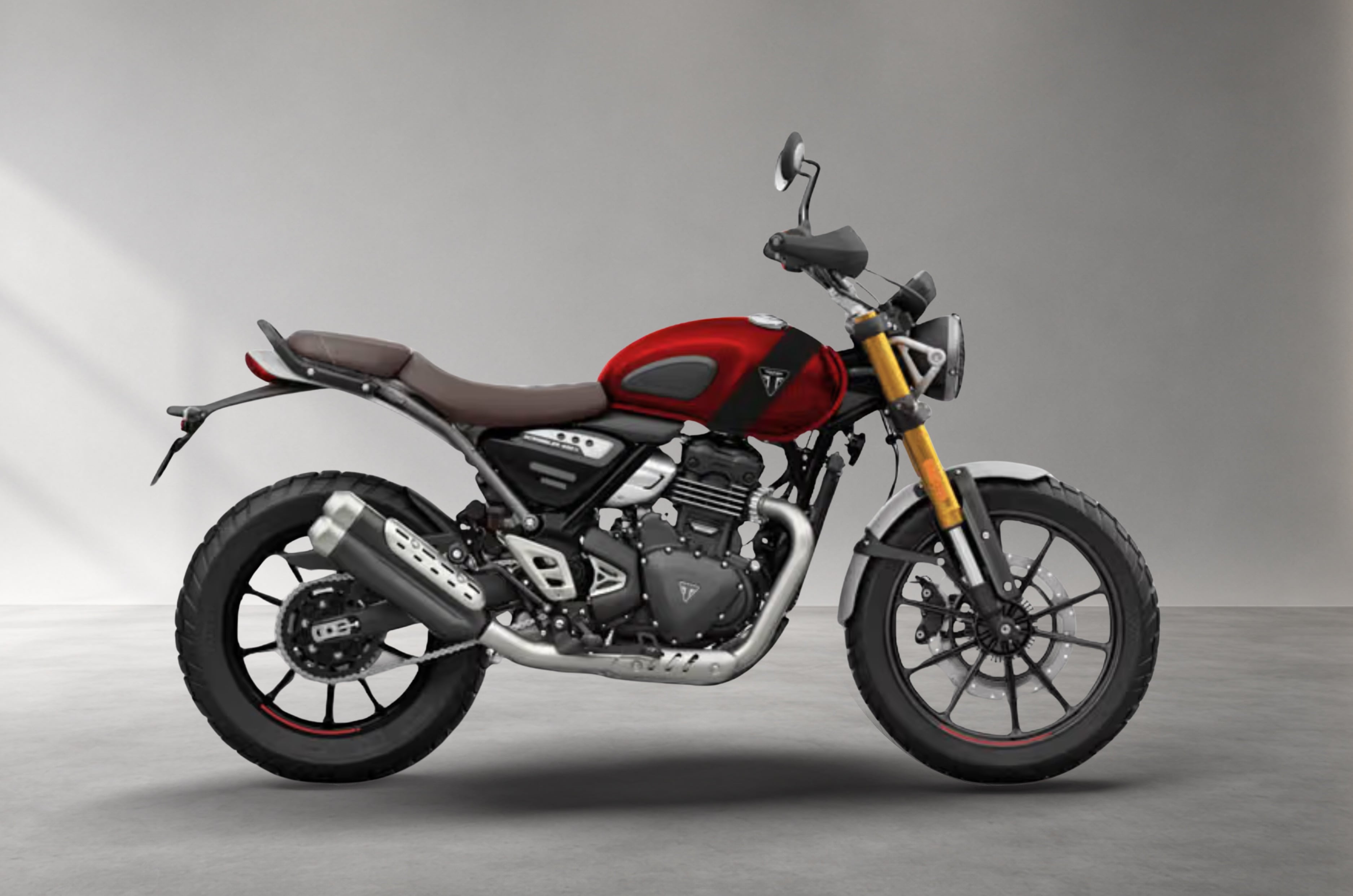
Inside render showing the Triumph Scrambler 400 X

Technically, the Scrambler 400 X isn’t an adventure tourer, but in the absence of a Tiger 400 (so far), it is the closest Triumph (and Bajaj) offers to one in India. With the downsizing, the Scrambler’s 349cc liquid-cooled engine makes 37hp and 32Nm of torque. The Scrambler 400 X has a 13-litre fuel tank, seat height is at 835mm and kerb weight is 185kg.

The Scrambler offers switchable dual-channel ABS, a slip-and-assist clutch, and traction control as standard rider aids. It comes with 19/17 front/rear wheels and only offers alloy rims in the X guise.

Triumph Scrambler 400 X is priced at Rs 2.65 lakh, but if you want to turn up the ADV look, there’s also a Scrambler 400 XC with tubeless cross spoke wheels and more accessories as standard for Rs 2.99 lakh. However, for all intents and purposes, the X and XC are near-identical.

5. KTM 390 Adventure (350cc)

Rs 2.87 lakh
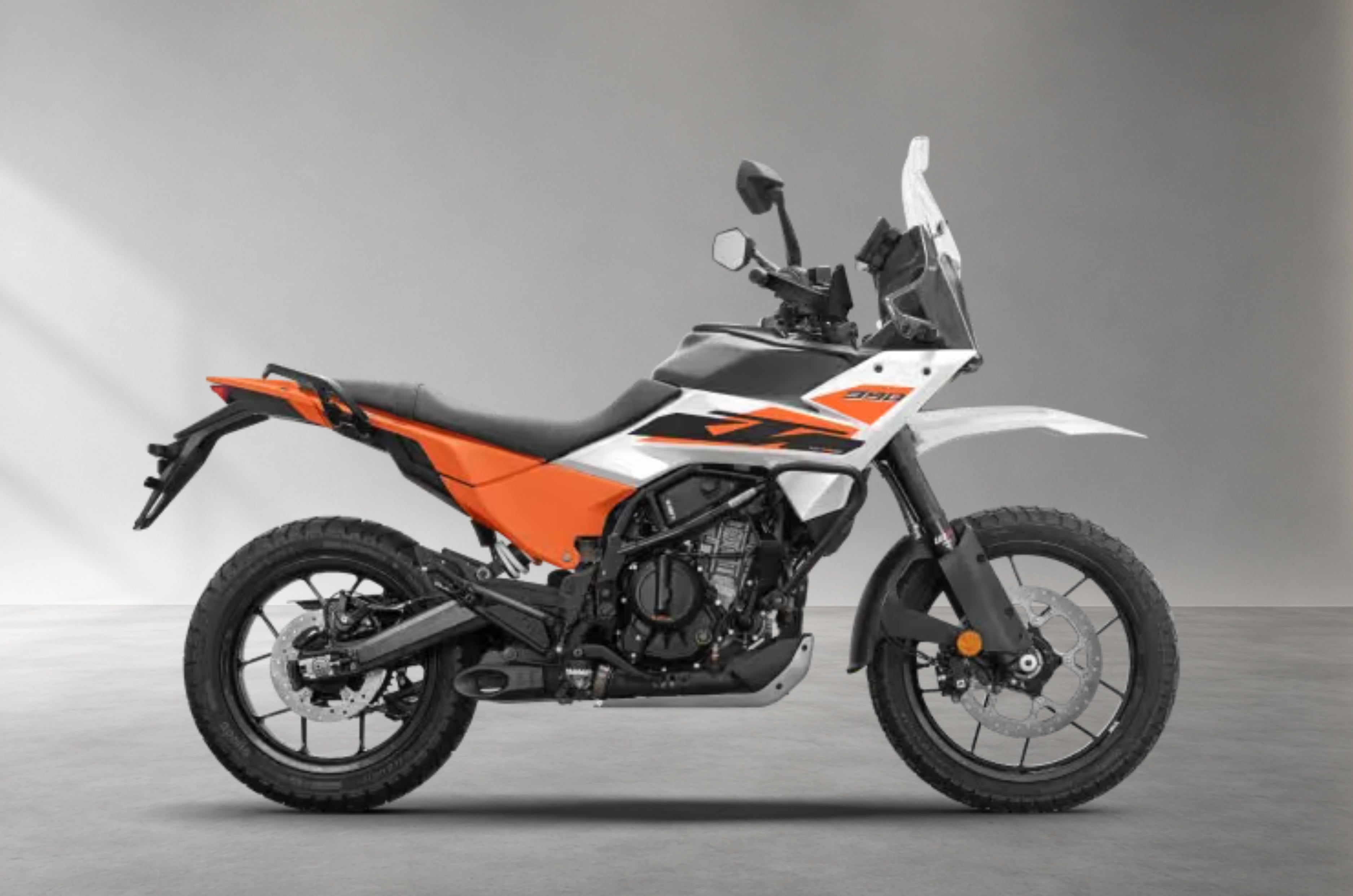
Inside render showing the KTM 390 Adventure with 350cc engine

KTM’s downsizing brought down the 399cc Adventures into 349.32cc, with the smaller engine making 41.5hp and 33.5Nm of torque. In terms of specification, the 350cc Adventure is pretty middle ground with a 14.5-litre fuel tank, 181kg kerb weight and 825mm seat height.

Besides the RTX 300, this is the only other motorcycle on this list under 3 lakh to offer cruise control as standard. It gets three ride modes, a bi-directional quickshifter, traction control, a 5-inch TFT screen, among other things. This version of the Adventure comes exclusively with 19/17 front/rear wheels and alloy rims.

The KTM 390 Adventure has a single variant with two colours and is priced at Rs 2.87 lakh.

4. Royal Enfield Himalayan (450)

Starts at Rs 3.08 lakh
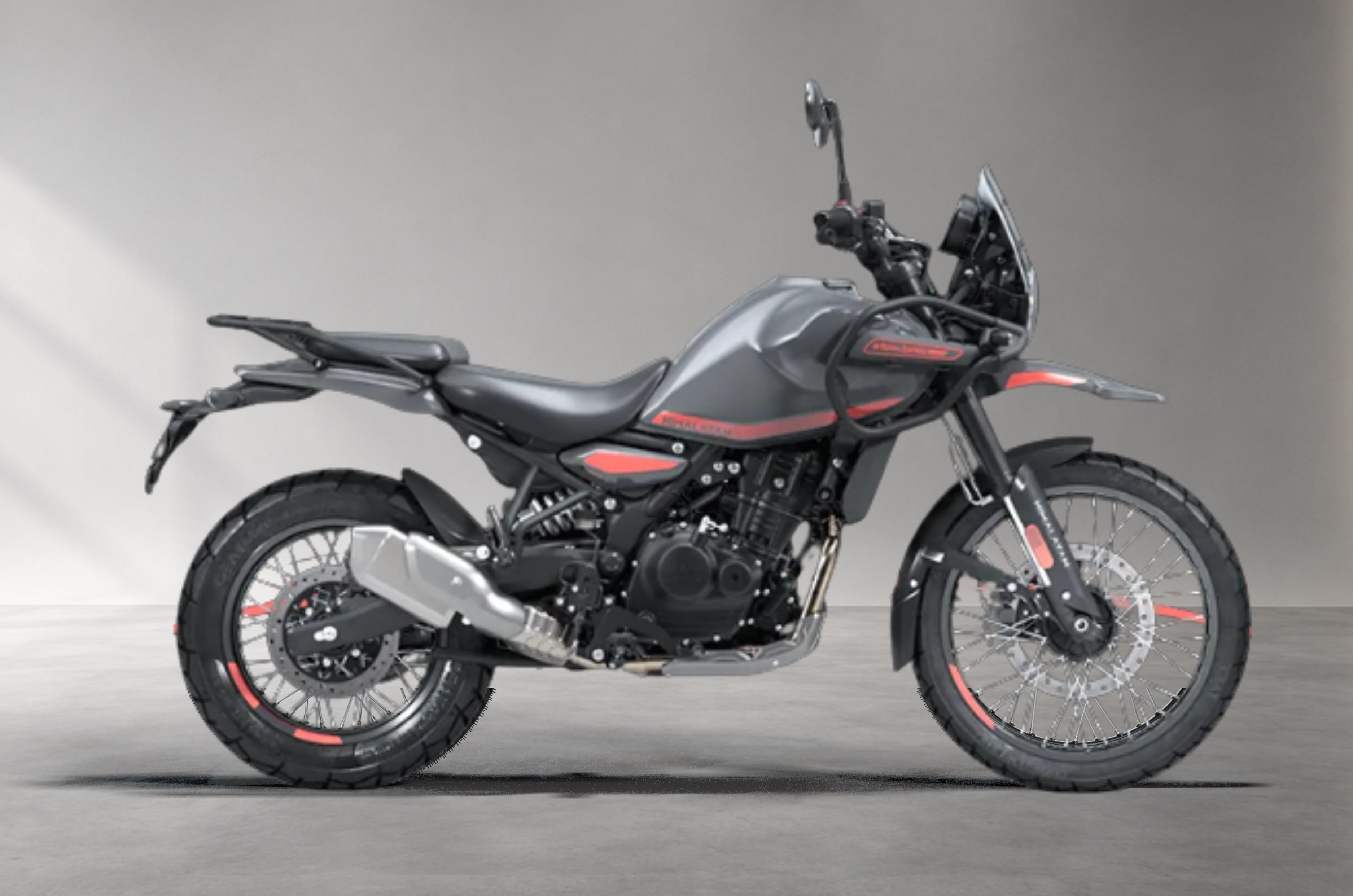
Inside render showing the Royal Enfield Himalayan 450

Royal Enfield’s Himalayan (450) gets quite a bit over its older/younger brother. Its engine is liquid-cooled (vs air-cooled on the 440) with 40.02hp and 40Nm of torque. Built on a completely new platform, the Himalayan 450 is three kilos lighter than the 440 at 196kg, and gets a markedly larger 17-litre fuel tank. The standard seat height ranges between 825-845mm, but it’s possible to drop that to 805mm with an accessory low seat.

On the features side too it offers a lot more than the 440, with a 4-inch TFT display with Google Maps powered navigation, two ride modes, and a slip-and-assist clutch. The Himalayan 450 comes with 21/17 front/rear wheels with tubed, wire-spoke rims as standard on the lower variants. However, on the top Mana Black variant Royal Enfield bundles tubeless, cross spoke rims as standard.

The Royal Enfield Himalayan starts at Rs 3.08 lakh for the base Kaza Brown colour and goes up to Rs 3.39 lakh for the Mana Black colour.

3. Kawasaki Versys-X 300

Rs 3.49 lakh
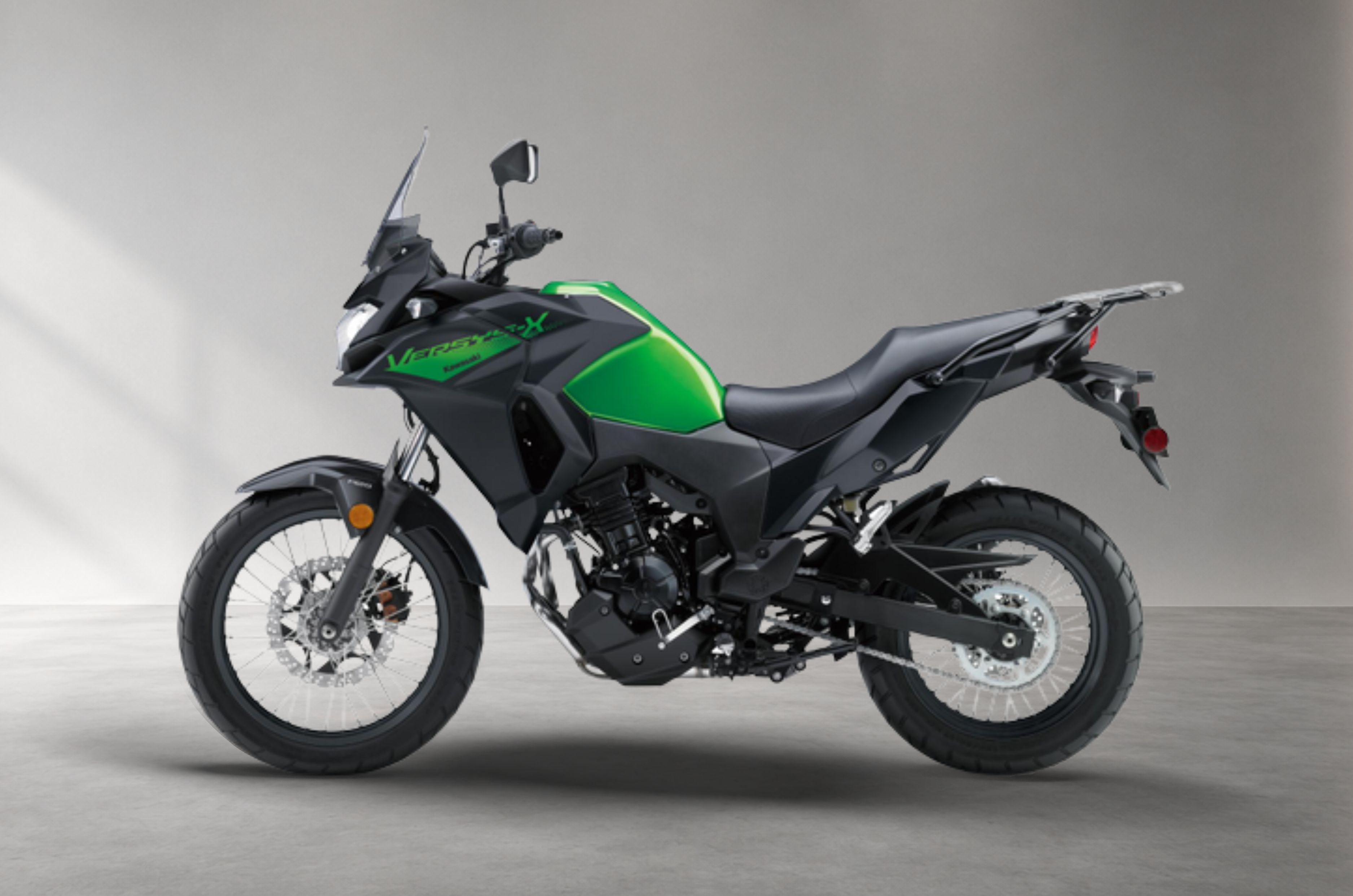
Inside render showing the Kawasaki Versys-X 300

The Kawasaki Versys-X 300 is one of two twin-cylinder options in this list. Its 296cc parallel-twin makes 39hp and 26Nm of torque and it’s liquid-cooled as well. It might just be the most accessible motorcycle on this list with a 175kg kerb weight, and an 815mm seat height.

Similar to the V-Strom 250 SX, the Versys-X 300 also maintains a slim list of features, dual-channel ABS and a slip-and-assist clutch. It has a 17-litre fuel tank (only one here to match the Himalayan 450), and Kawasaki only offers it with 19/17 front/rear wheels with wire-spoke rims running tubed tyres.

The Kawasaki Versys-X 300 is offered in one variant in a single Green/Black colour at Rs 3.49 lakh.

2. KTM 390 Adventure (S, X, R)

Starts at 3.50 lakh
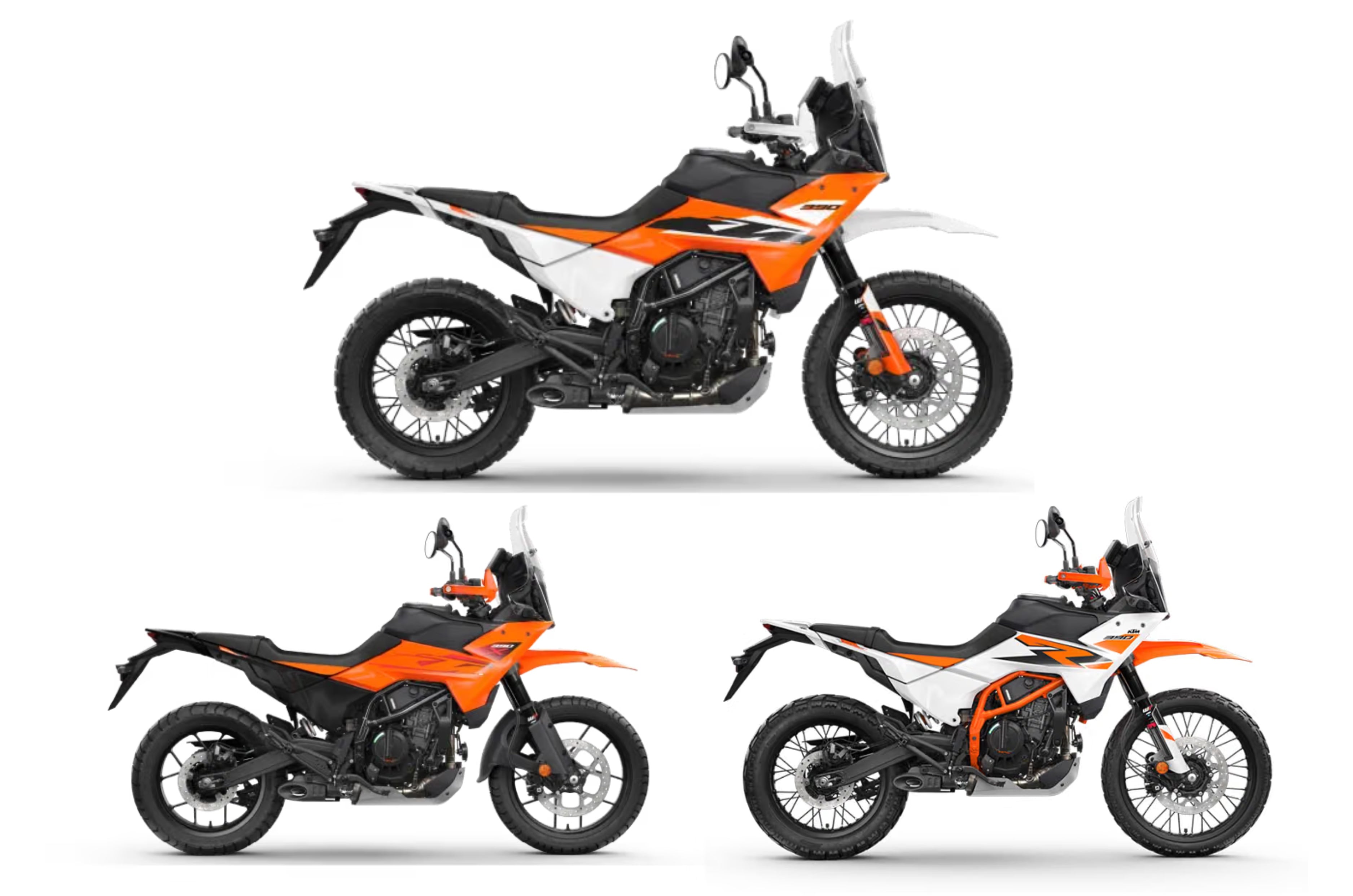
Inside render showing the KTM 390 Adventure S, R, and X in clockwise direction

These are the full scale 399cc engine versions of the KTM Adventure. They all make 46hp power and 39Nm of torque (4.5hp and 5.5Nm more than the 350cc engine). Fuel tank capacity is identical to the 350cc Adventure at 14.5 litres, as is the seat height at 825mm. However, the kerb weight varies across variants; the X weighs 181kg, S 182kg, and the R is the heaviest at 183kg.

The X gets an identical feature set as the 350cc Adventure, with the S stepping that up to adjustable front and rear suspension along with 21/17 front/rear wheels with tubeless spoke rims. The more off-road focussed R does not get the tubeless spoke rims, swaps the rear 17-inch wheel for an 18-inch one and runs on Mitas Enduro front and rear tyres.

The KTM 390 Adventure X is the most affordable of these three at Rs 3.45 lakh, with R taking a big step to Rs 3.86 lakh. The S is the most expensive of the bunch at Rs 4.04 lakh.

1. BMW F 450 GS

Starts at Rs 4.95 lakh
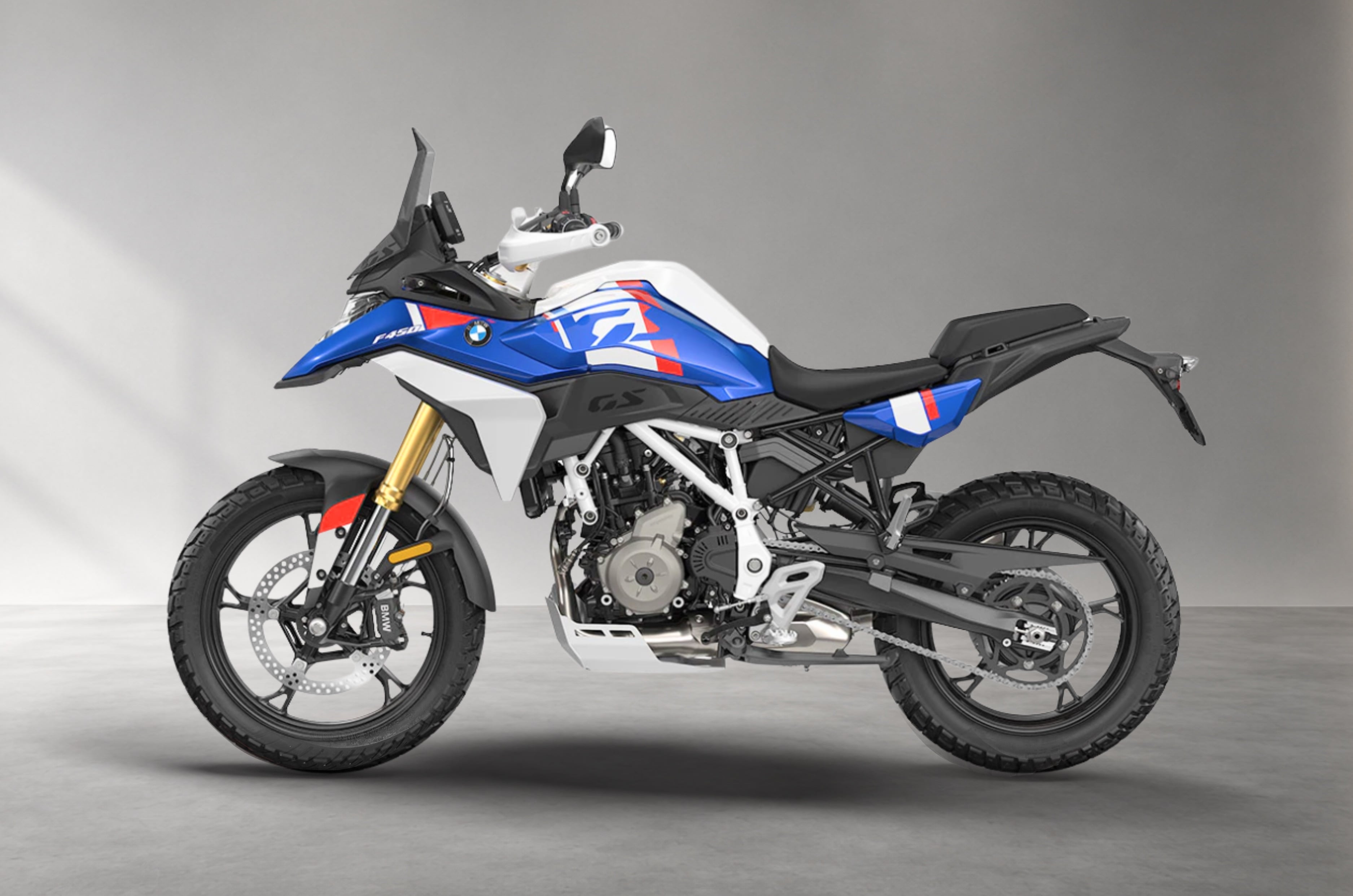
Inside render showing the BMW F 450 GS's top GS Trophy variant

BMW launched the F 450 GS in April this year at Rs 4.70 lakh and increased the prices for the model recently. The motorcycle gets a 420cc parallel-twin engine with 48hp of power and 43Nm of torque. The fuel tank capacity is 14 litres and the kerb weight is second lightest at 178kg, but the standard seat height is 845mm (the tallest in this list!).

Standard features are an 6.5-inch TFT display, three ride modes, slip-and-assist clutch, traction control, ride modes, and heated grips. On the higher variants, BMW offers a bi-directional quickshifter, an integrated windshield, ERC (Easy Ride Clutch), and adjustable suspension.

The BMW F 450 GS starts at Rs 4.95 lakh for the Base variant, Rs 5.15 lakh for the Exclusive variant, and Rs 5.60 lakh for the top GS Trophy variant.

The real Lawrence of Arabia’s last ride retraced in a Mini Countryman JCW

The real Lawrence of Arabia's last ride retraced in a Mini Countryman JCW
Mini Countryman JCW travelogue in Dorset

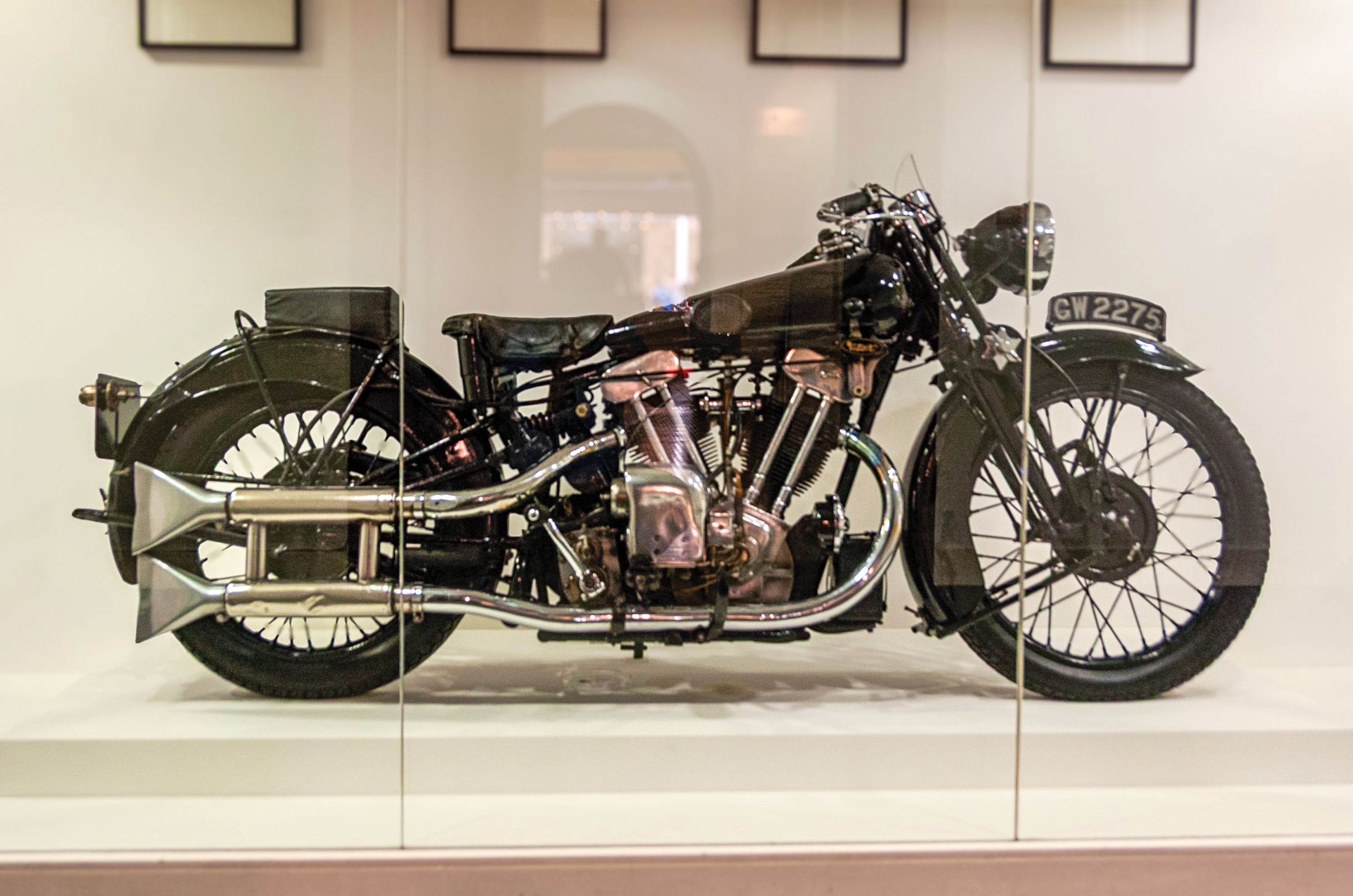
Seventeen years ago, in the Imperial War Museum on Lambeth Road in London, I stood mesmerised in front of a motorcycle with the number plate GW 2275, enclosed in a glass case. It was a beautiful, brooding machine, low and long, finished in deep black with just enough nickel and chrome to catch the museum lights: twin fishtail exhausts sweeping back in a graceful curve, the big JAP V-twin sitting exposed and unapologetic between the frame rails, cylinders splayed wide, cooling fins stacked like the pages of a book. Thin copper oil lines ran externally along the frame, feeding the total-loss lubrication system of the era, a solution that looked almost primitive next to a modern engine yet was efficient enough to survive being wrung out past 100mph on 1930s public roads.

A flamboyant form, every component left exposed, hinting at George Brough’s intention to let you see exactly what you were paying for. This was, in its day, the pinnacle of what was once the finest motorcycle industry in the world, the British motorcycle industry. Standing there, it was easy to understand why a certain kind of Englishman, restless, brilliant, and a little broken, would have fallen entirely in love with a machine like this.

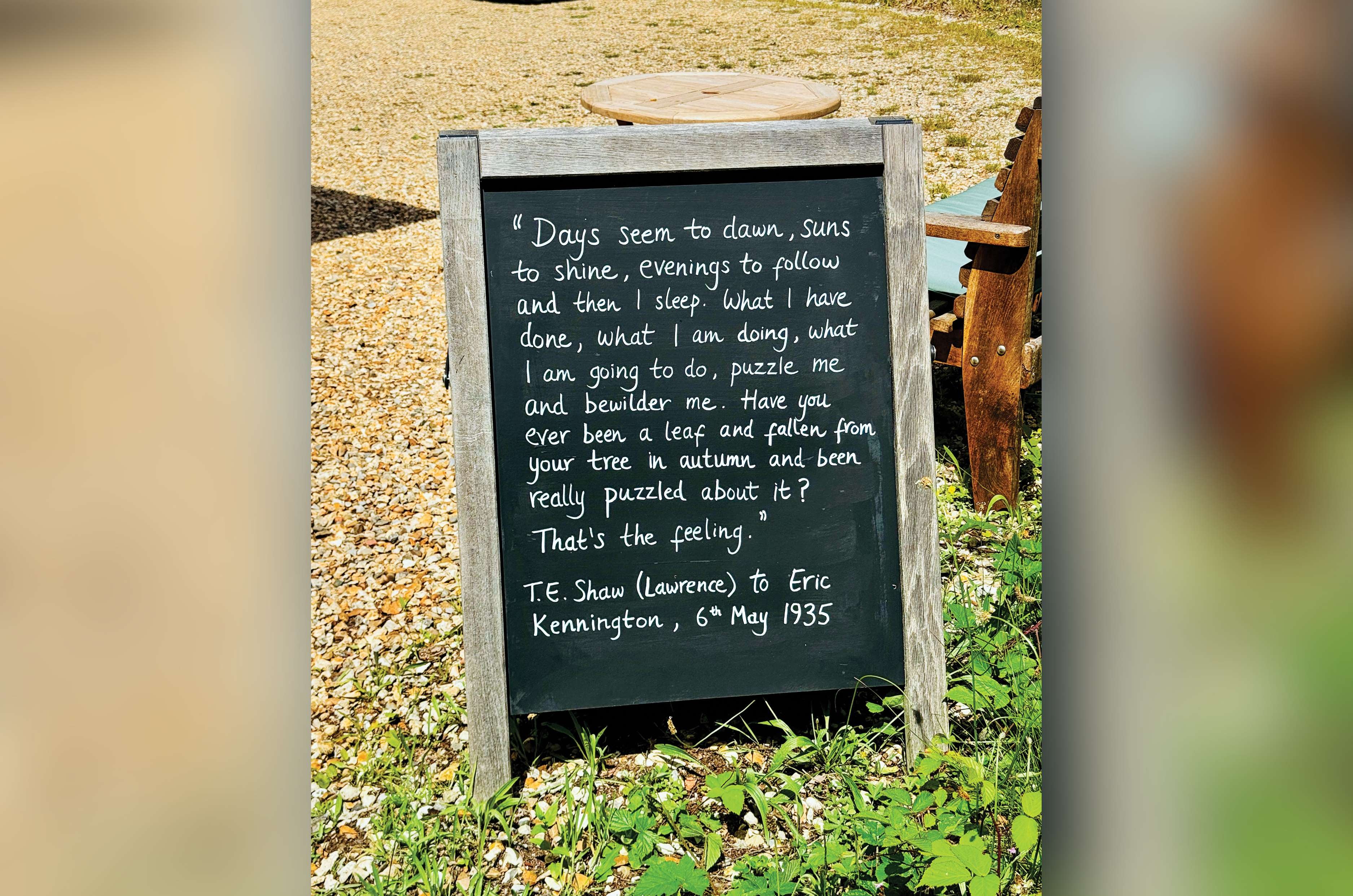
T.E. Lawrence's Brough Superior SS100
The very Brough Superior SS100 Lawrence died on, photographed at the Imperial War Museum in 2008. Its last known owner, reclusive collector John Weekly, kept it in his lounge for over 45 years before his death in 2024. After which the Brough’s whereabouts are unknown.

It took me straight back to being a teenager watching Lawrence of Arabia for the first time. The film famously opens with this motorcycle: the frantic braking, the fatal swerve to avoid two boys on bicycles, before flashing back to how a restless desk officer became a legendary guerrilla leader in the Arab Revolt, and how that legend curdled into cynicism once Britain betrayed the cause he’d fought for. This was the actual Brough Superior SS100 that TE Lawrence was ripping home on from Bovington on May 13, 1935, when he went over the handlebars, struck his head, and died six days later without regaining consciousness.

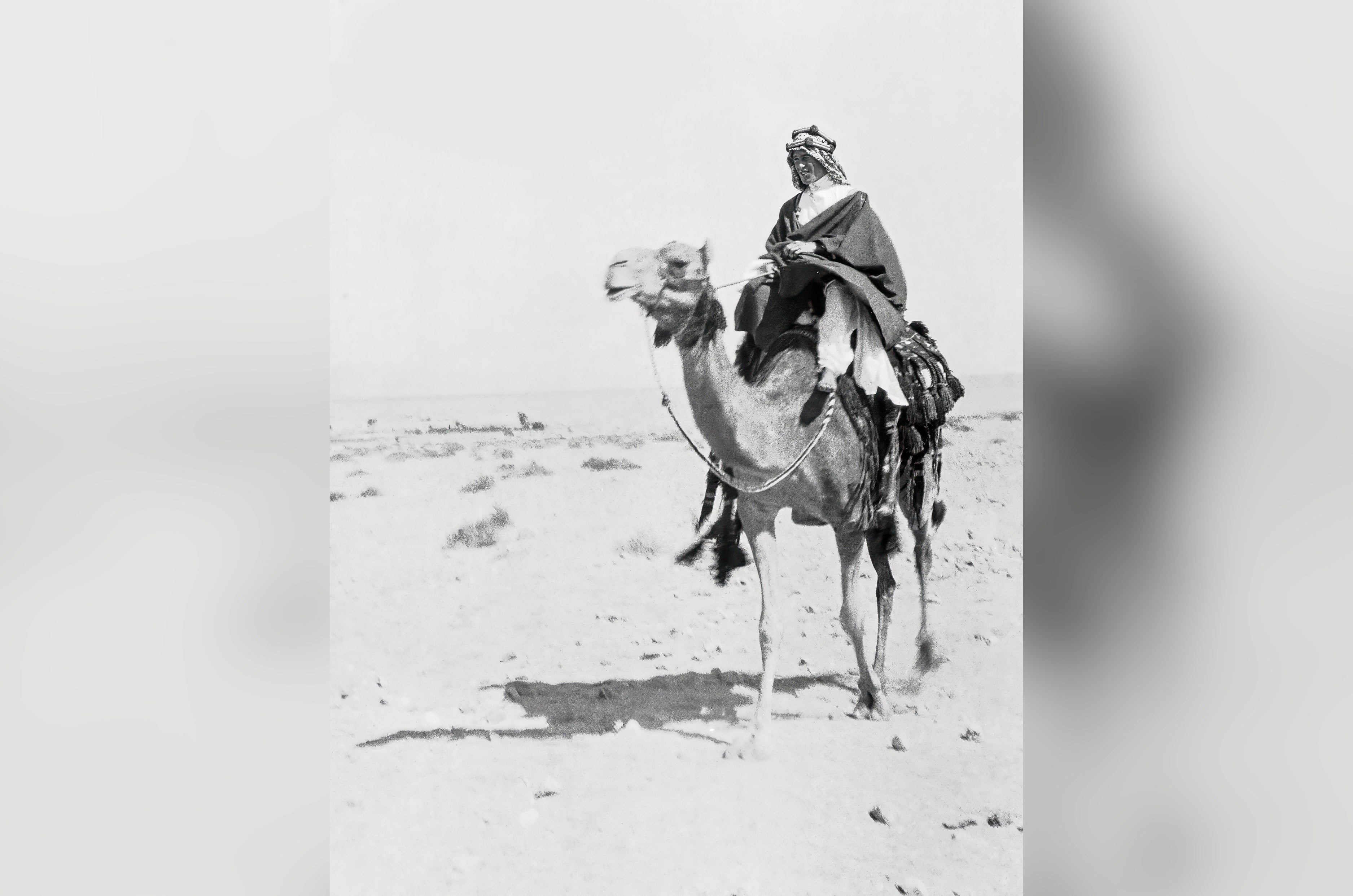
T.E. Lawrence on a camel
Motorcycle or camel, Lawrence rode with consummate ease.

I have always felt a pull towards places where history happened, where the past has left something tangible behind, and this anniversary issue gave me the excuse I needed to follow Lawrence’s last ride. For this quest, I got behind the wheel of the new Mini Countryman John Cooper Works. A slightly contradictory choice of car for a story about a restless man who spent his last years trying to shrink his own reputation by changing his name twice to get away from the legend he’d unwillingly become. Because the new Countryman is going through much the same thing but in reverse.

By the very virtue of its name, the Mini has a reputation of being a compact and cheeky car that seems to occupy hardly any road at all, but this Mini is large and an SUV, accentuated by beefy curves with all-wheel drive as standard and sporty vivid red disc calipers. Under the bonnet sits a potent 2.0-litre turbo four-cylinder engine with 300 horsepower of shove and 400Nm of tug.

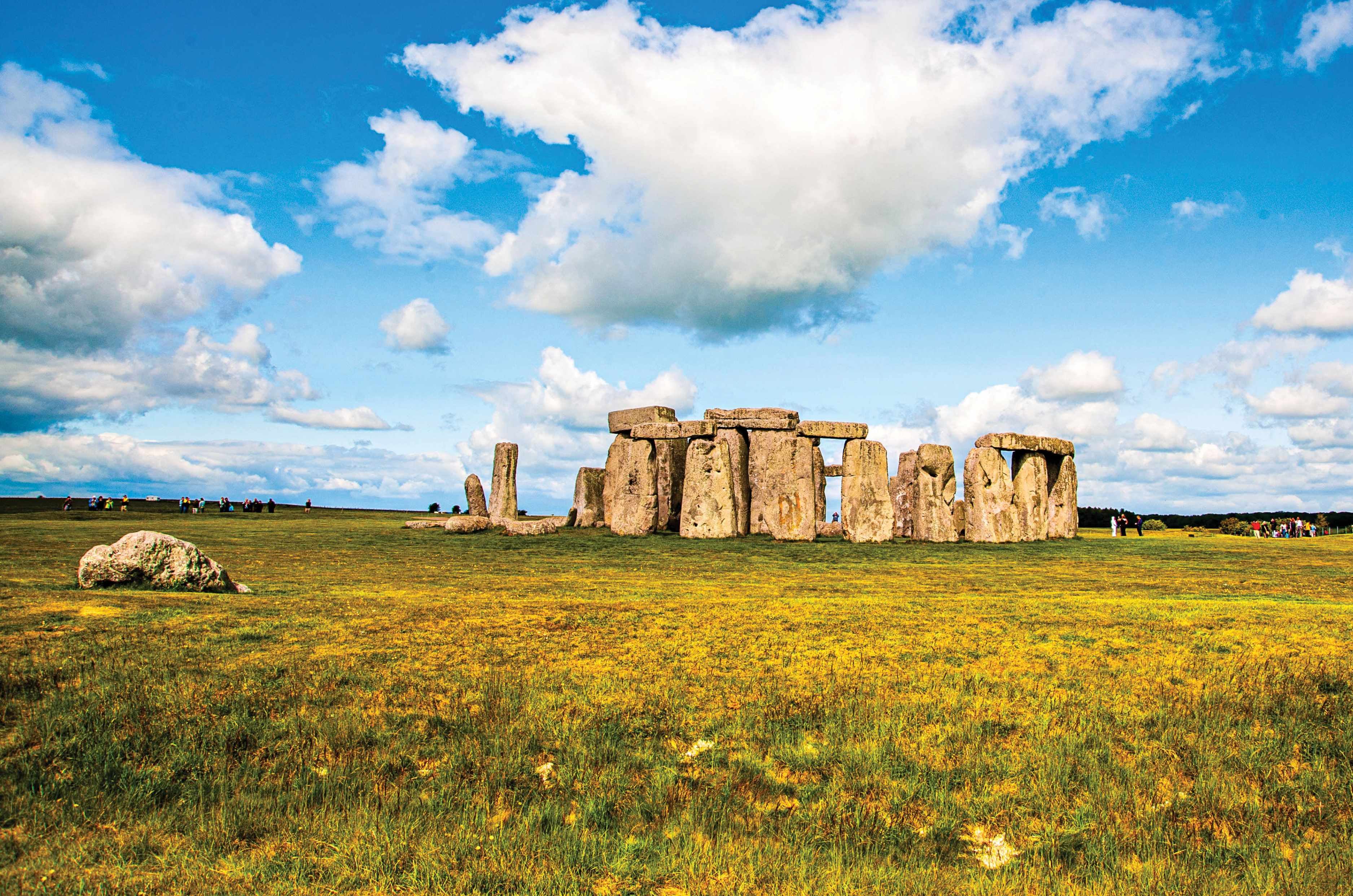
The irony was not lost on me: I was driving a car that had outgrown its own name, setting off to chase a man who’d spent his final years trying to shrink his. I pointed the car west out of London on the M3, then the A303, pulling over near Stonehenge for a quick photograph before pressing on toward another English icon further down the road.

The road to Clouds Hill

Stonehenge
Stonehenge bursts into view without warning as the A303 tops a crest, the ancient stones suddenly filling the windscreen against the Salisbury Plain.

Beyond Stonehenge, the Countryman ate the tarmac in complete comfort, cabin hushed, adaptive cruise doing most of the thinking. The road eventually dropped south onto narrower country lanes for the final approach into Dorset, and it was here, as the hedgerows closed in, that the JCW visibly changed character. All-wheel drive dug in through the bends, the exhaust note sharpened, and for a few minutes on the approach to Clouds Hill, this bulked-up, grown-up Mini showed me that the nimbleness of its ancestors still lived somewhere in its genes.

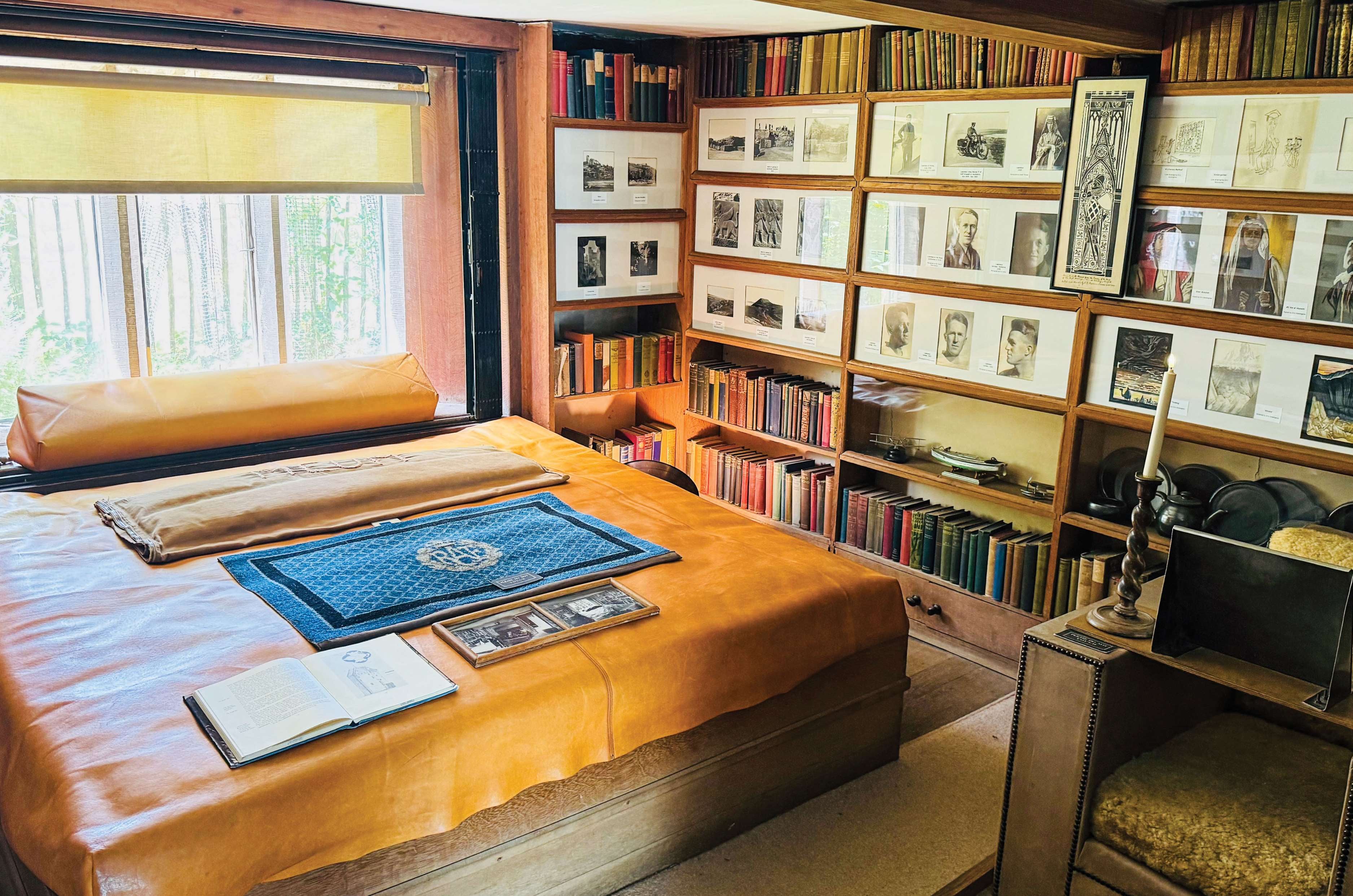
Lawrence's Daybed and Bookshelves
Inside Clouds Hill: Lawrence’s daybed and bookshelves, preserved almost as he left them.

Clouds Hill itself is almost comically modest for a man who became one of the most famous people in England. It’s a four-room labourer’s cottage with no electricity, which Lawrence first rented in 1923 while stationed at nearby Bovington, then painstakingly rebuilt with his own hands before buying it outright in 1929. Inside, the leather-topped daybed, bookshelves crammed with correspondence and photographs, and framed portraits of Bedouin faces and RAF colleagues remain much as he left them, preserved by the National Trust.

What hints at the pull of Lawrence’s personality is who came all the way here to visit him. George Bernard Shaw, EM Forster, Thomas Hardy and Robert Graves all found their way to this tiny, electricity-less retreat, which was slightly ironic, because Lawrence was doing his best to disappear. The world knew him as Lawrence of Arabia, the flamboyant soldier in Arab robes who’d become one of the most recognisable figures of the First World War, and he wanted none of the celebrity that came with it.

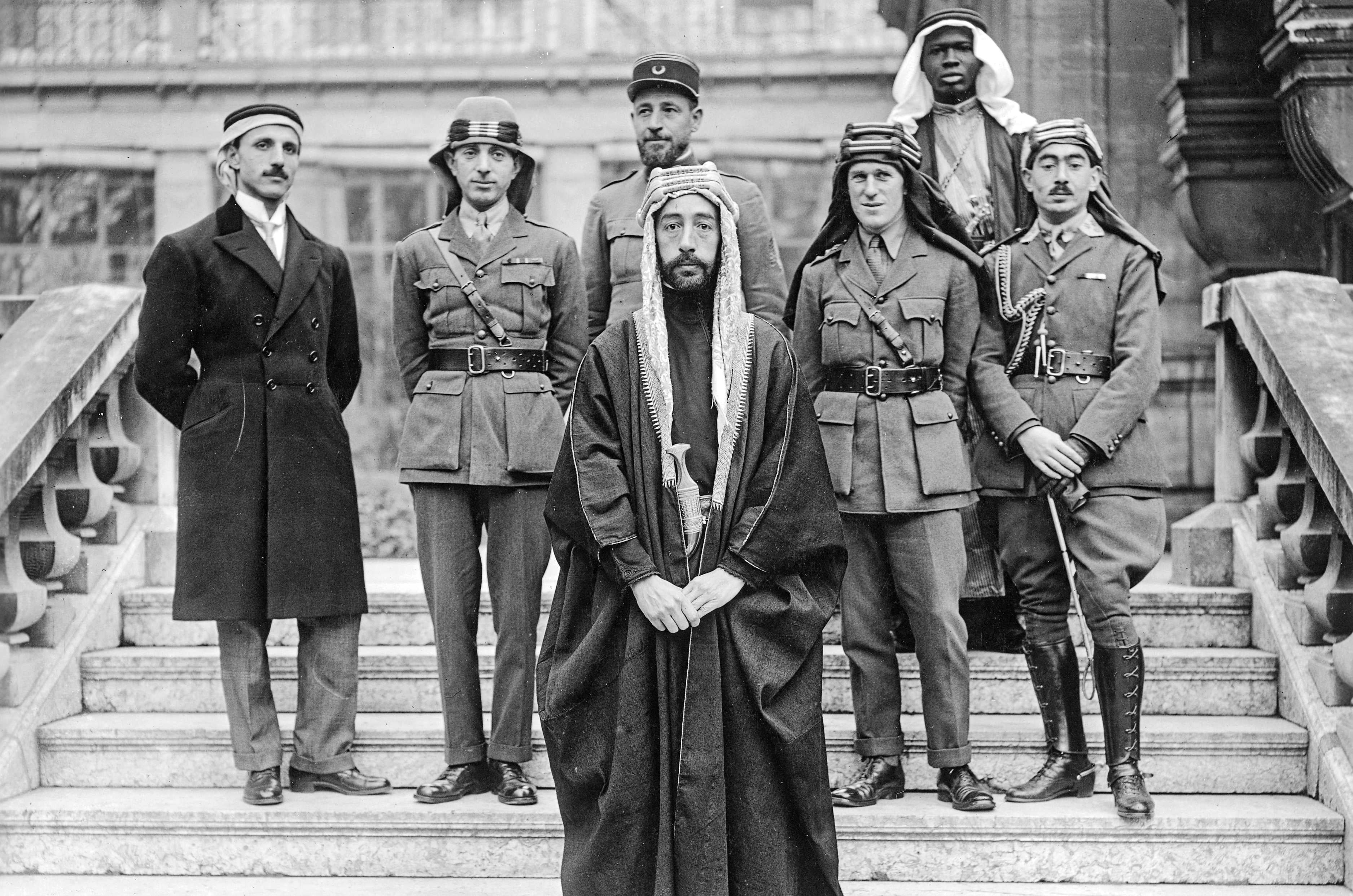
Prince Faisal's Delegation
Prince Faisal’s delegation at the 1919 Paris Peace Conference. Lawrence (third from left) stood among men Britain would soon betray.

He’d already tried once: in 1922, he joined the RAF under the name John Hume Ross, but the press uncovered him within months. The following year, he joined the Tank Corps as TE Shaw, a name he kept for the rest of his life. Clouds Hill became his refuge, a place to read, write, listen to music, work on his boats and motorcycles, and retreat from a world determined to keep finding him.

He did make forays out. Winston Churchill was a genuine friend, and Lawrence would occasionally turn up unannounced at Chartwell, Churchill’s home about 130 miles away. He liked to boast that his long-distance visits to friends like Churchill and Lady Astor were made in “record time” thanks to the Brough’s speed, calling the machine “the silkiest thing I have ever ridden.”

Churchill’s daughter Mary remembered him arriving as “a short, nondescript, sandy-haired airman riding a motorcycle,” only to reappear at dinner transformed, “presenting himself in the flowing robes of a Prince of Arabia.” She also recalled the “pin-drop silence” that fell over the room whenever Lawrence spoke, a silence that apparently included her father, who himself considered Seven Pillars of Wisdom “unsurpassable” as a war narrative. It was an odd, quietly moving thing to stand in a room with no electricity and realise the man who once sat there could hold some of the loudest reputations in England spellbound.

The road that killed him

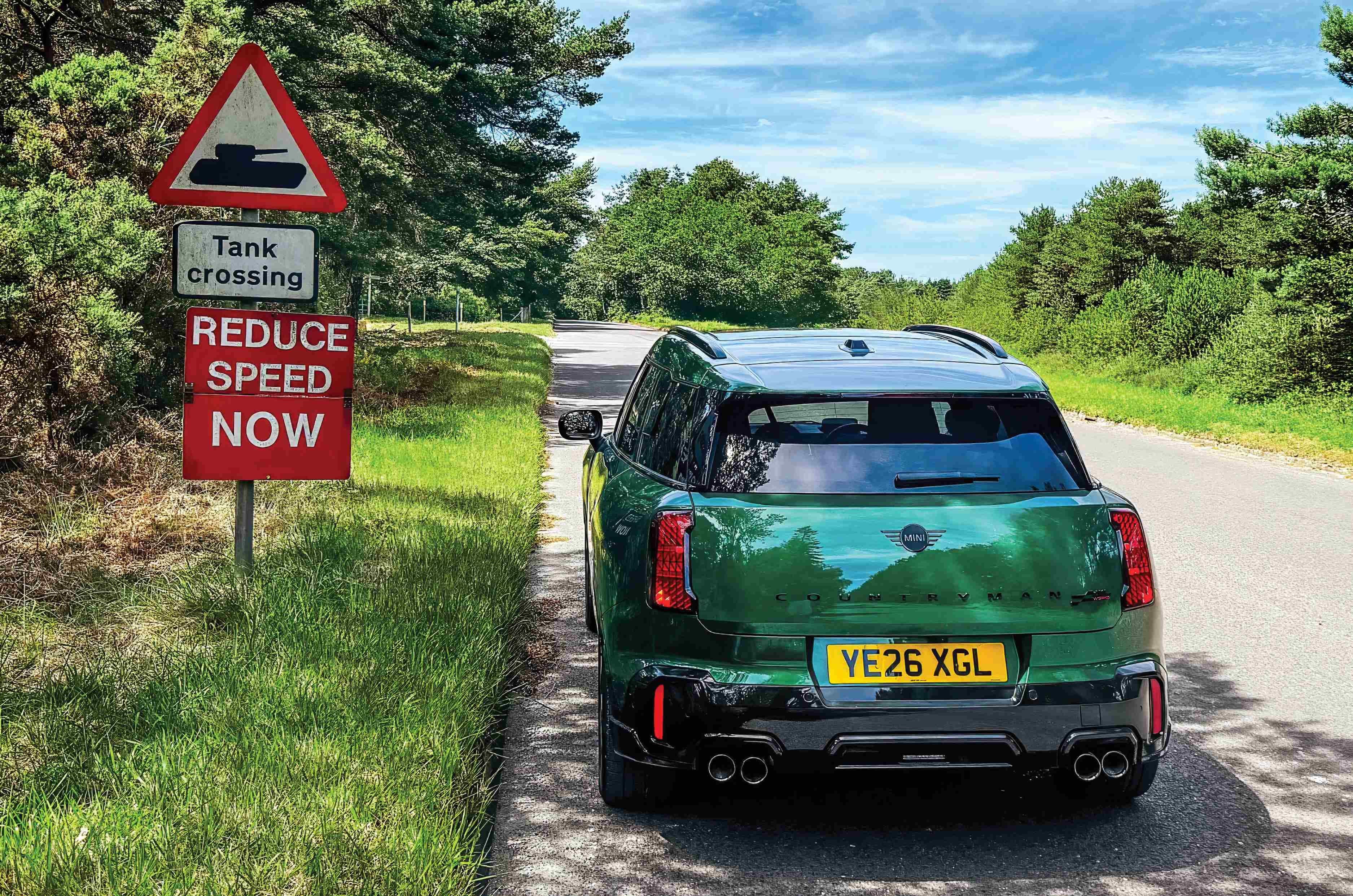
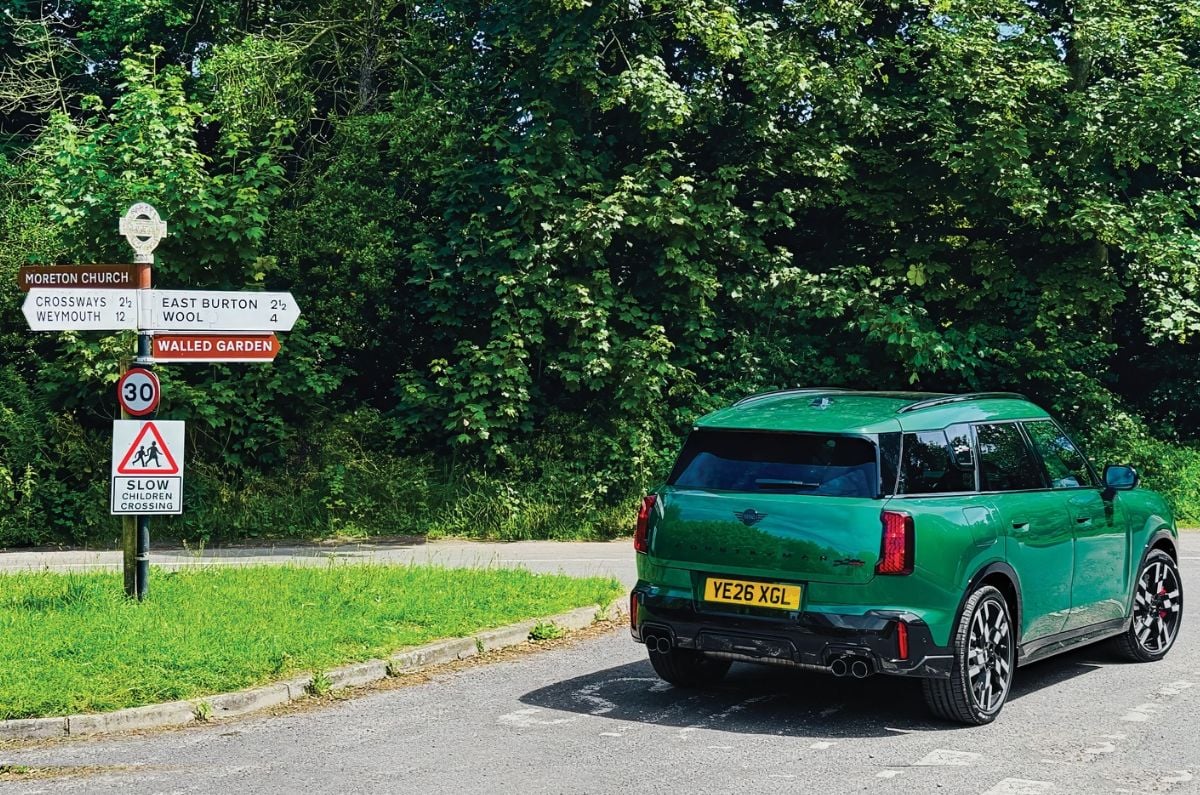
Mini Countryman JCW Rear Static
This road has widened over the decades, much like the Mini brand, which now includes an SUV.

From Clouds Hill, the road towards Bovington Camp is the one Lawrence rode almost daily, and it’s easy to see why he loved it: well cambered, with quick, confident curves that seem made for two wheels rather than four. The road has changed considerably since 1935, widened, realigned and smoothed out, the dips Lawrence knew long gone, but the bends remain, and the JCW flowed through them on silky modern tarmac with barely a shudder.

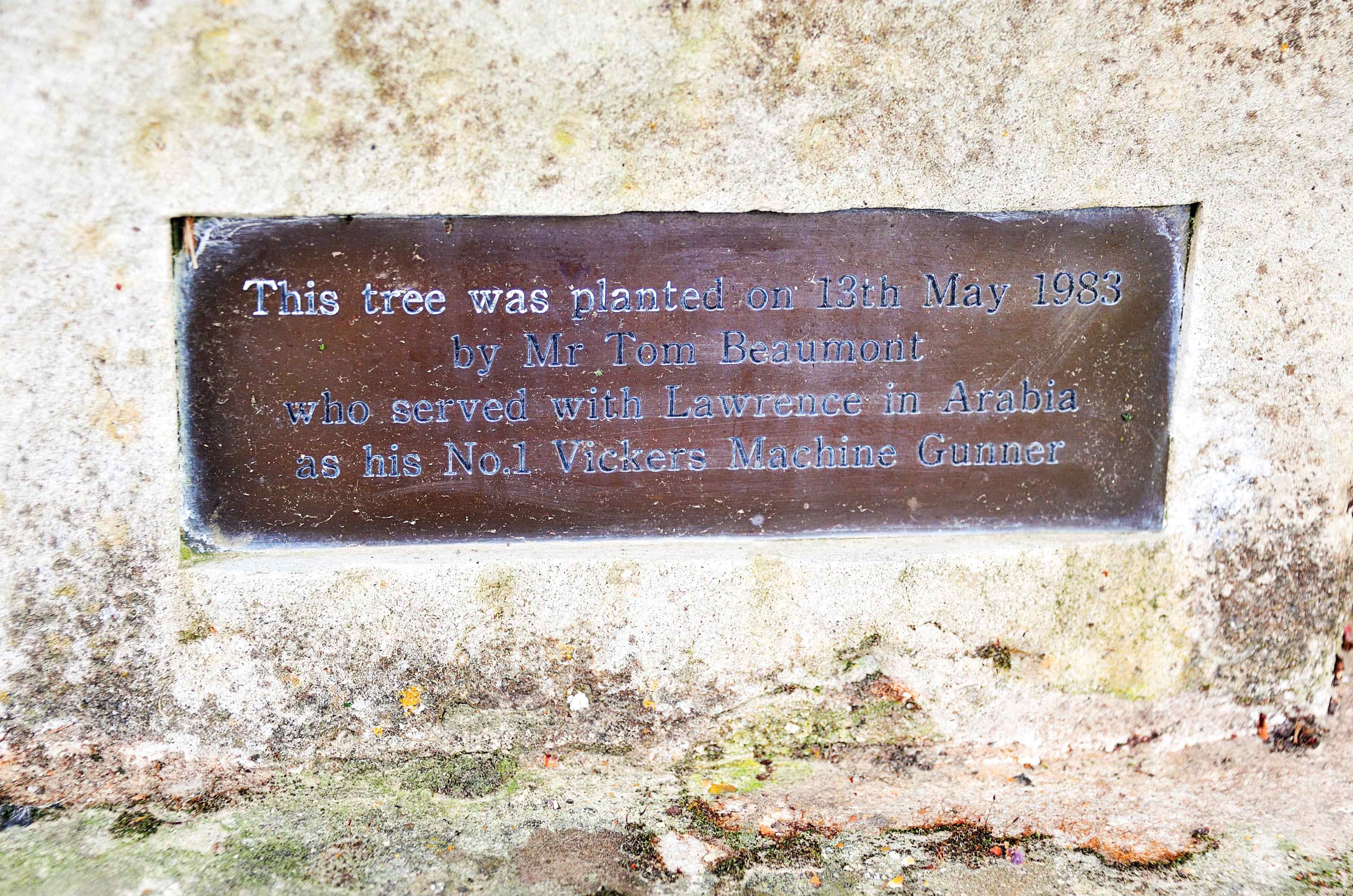
T.E. Lawrence's grave marking
The plaque marking the tree planted by T.E. Lawrence’s former Vickers gunner, Tom Beaumont, in 1983.

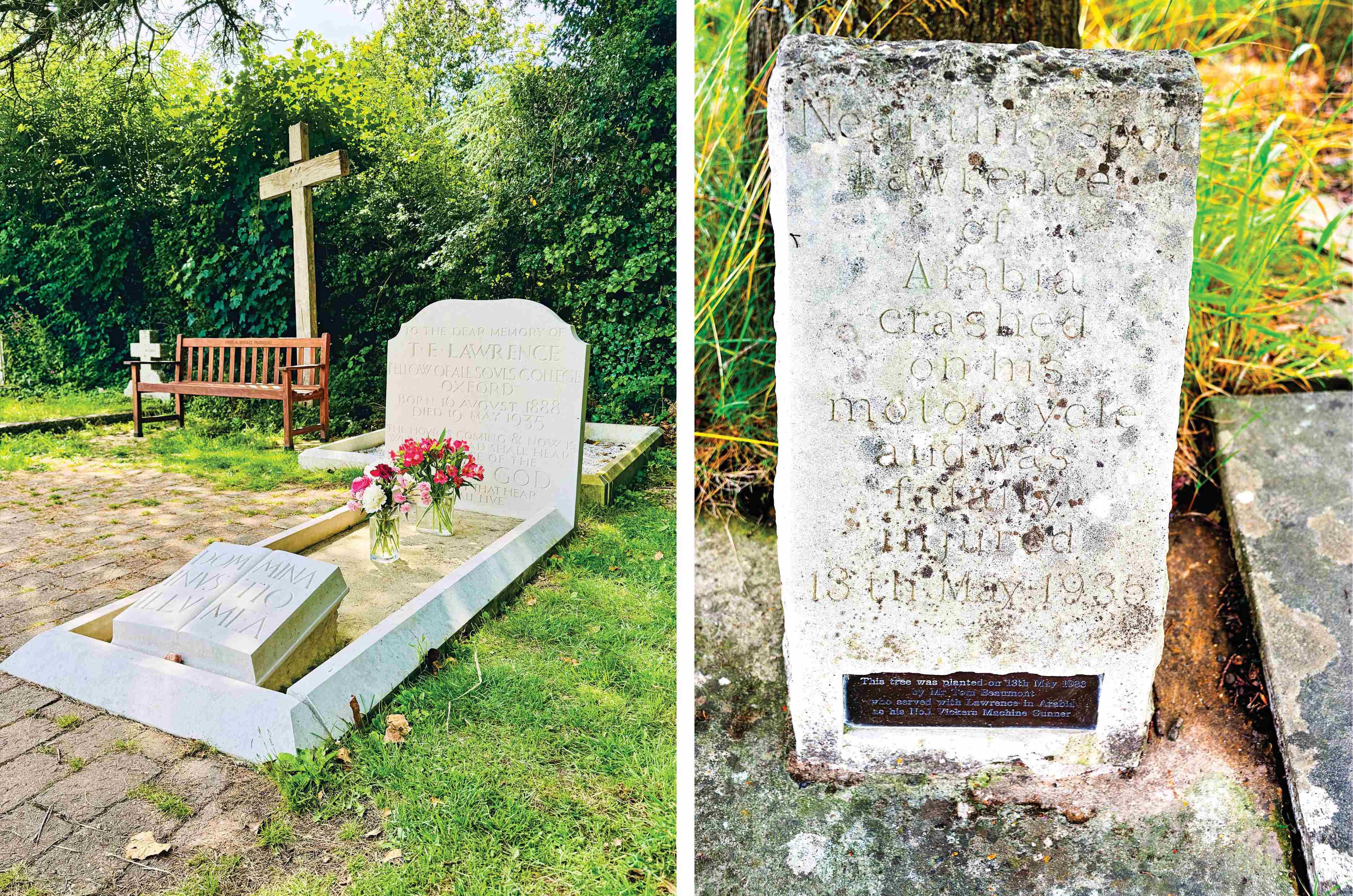
Lawrence was known to push his Brough to 100mph on roads like this despite the rougher surfaces and primitive brakes of the time. It takes a particular sort of nerve to do that. Sadly, this is also the road on which he died. A small, weathered stone marker stands by the roadside near the crash site, its inscription barely legible: Near this spot Lawrence of Arabia crashed on his motorcycle and was fatally injured, 13th May 1935.

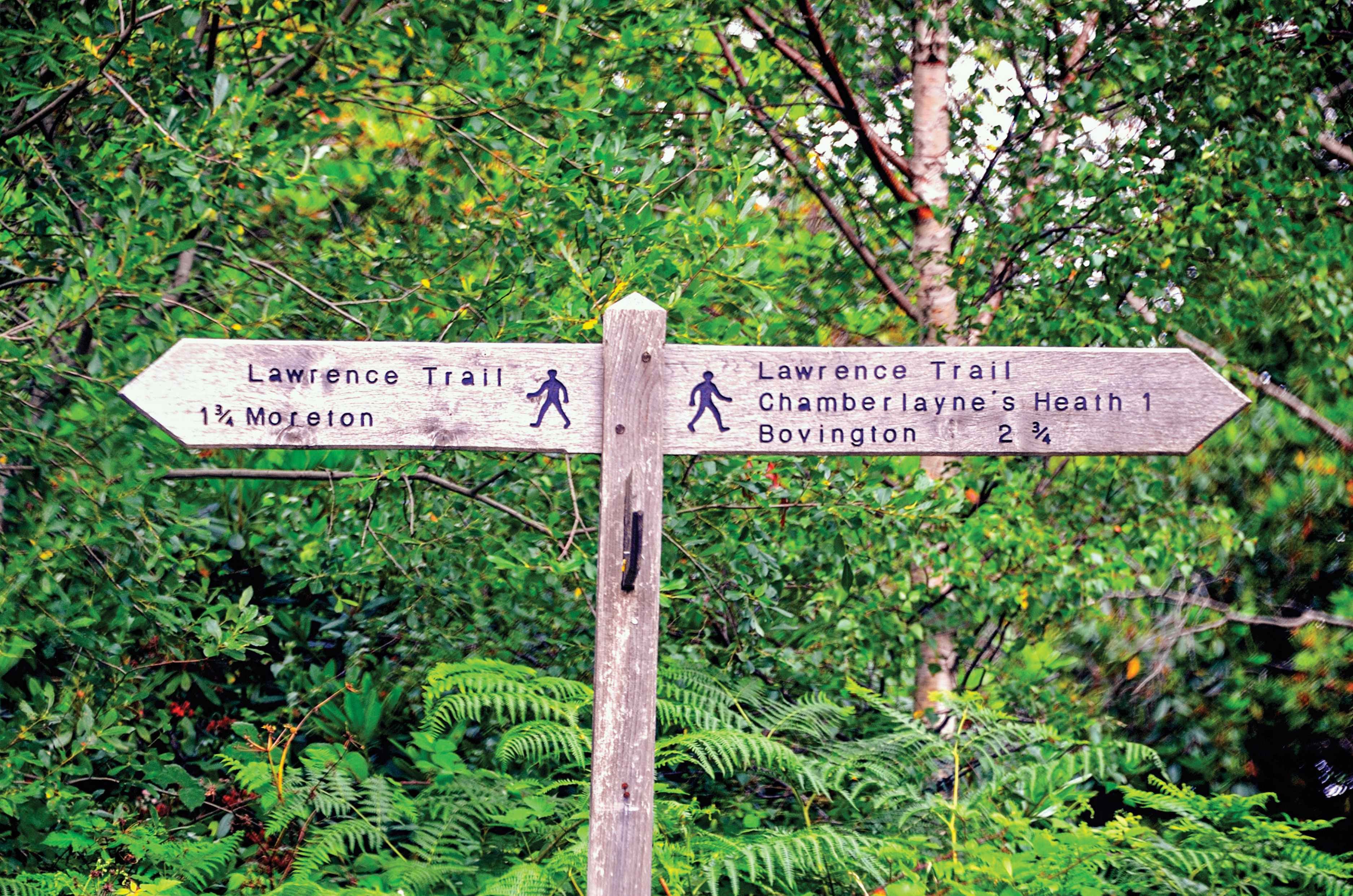
Signpost for the Lawrence of Arabia Trail
A signpost for the Lawrence of Arabia Trail.

Below it, a plaque records that the tree beside the marker was planted in 1983 by Tom Beaumont, who had served as Lawrence’s Vickers machine gunner in Arabia, one old comrade returning nearly half a century later to mark where another had died. It’s a small, unshowy memorial for a man who became the subject of an Oscar-winning film. Bovington Camp is also the start and finish point of the circular 10.8km Lawrence of Arabia Trail, which strings together the cottage, the crash site, and the church at Moreton in one walkable loop.

T.E. Lawrence's effigy at St.Martin Church
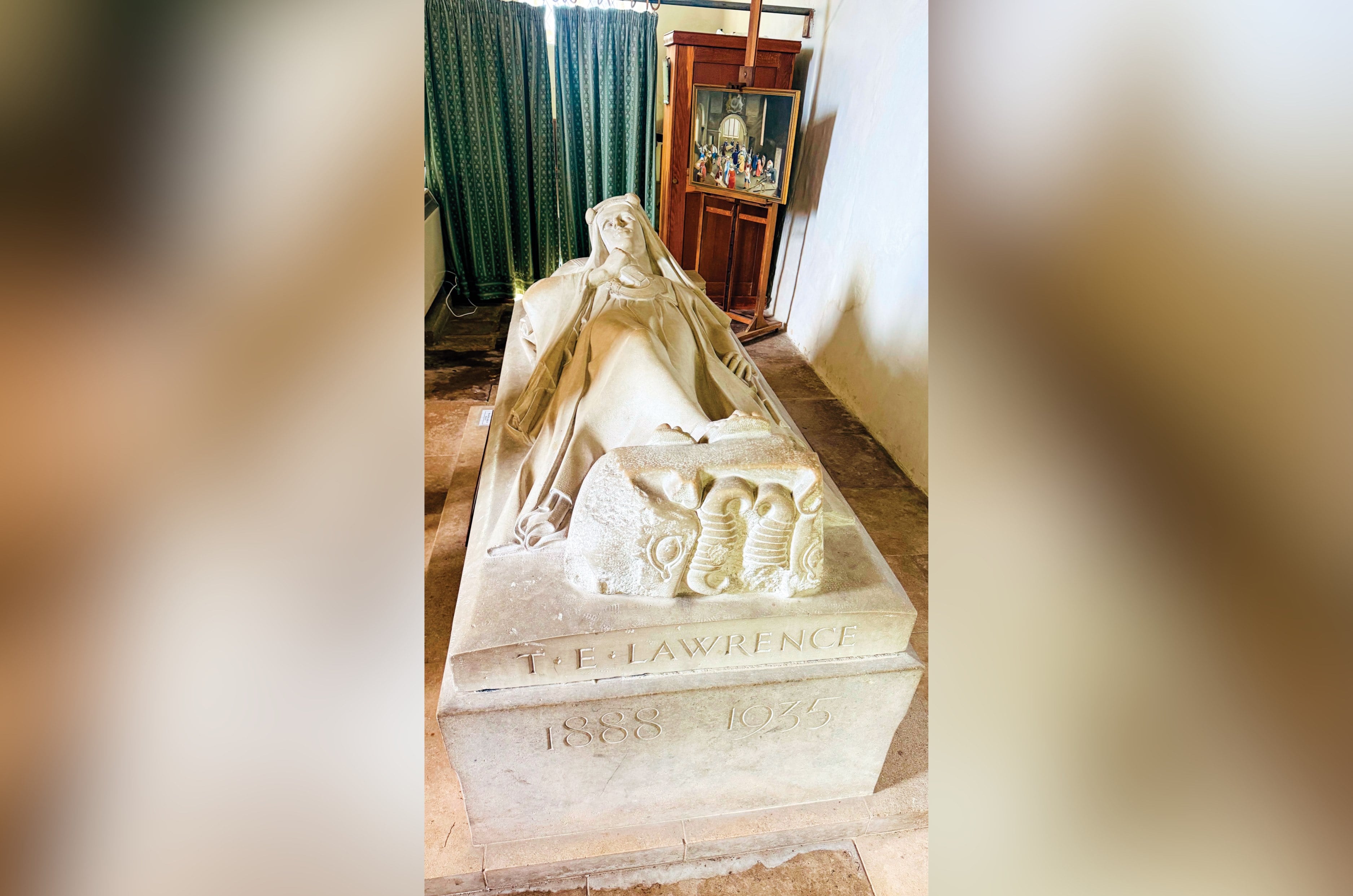
Lawrence’s effigy at St Martin’s Church, Wareham, carved by his friend Eric Kennington.

A short drive away in Wareham is one more stop worth making: the Saxon church of St Martin’s, home to a life-size effigy of Lawrence carved by his friend Eric Kennington, originally intended for St Paul’s Cathedral before being rejected there and finding its way to this small parish church instead.

Moreton and the memory of him

Moreton itself is a proper Dorset postcard, a signpost outside St Nicholas’ Church pointing the way to “Walled Garden” beside directions to Wool and Weymouth, as if history and horticulture share equal billing. Lawrence’s small and very private funeral and burial were held here on May 21, 1935, and the mourners included Churchill, Lady Astor, General Wavell (who flew in by autogiro), and author Henry Williamson.

T.E. Lawrence's grave
Left: T.E. Lawrence’s grave at St Nicholas’ Church, Moreton. Simple white stone, flowers left fresh by visitors. Right: The weathered marker near Bovington, barely legible, recording the spot of Lawrence’s crash.

His grave sits a short walk from the church, simple white stone, flowers laid fresh by visitors, the inscription noting he was a Fellow of All Souls College, Oxford, and making no mention at all of Arabia.

The coast, and letting the car breathe

Durdle Door
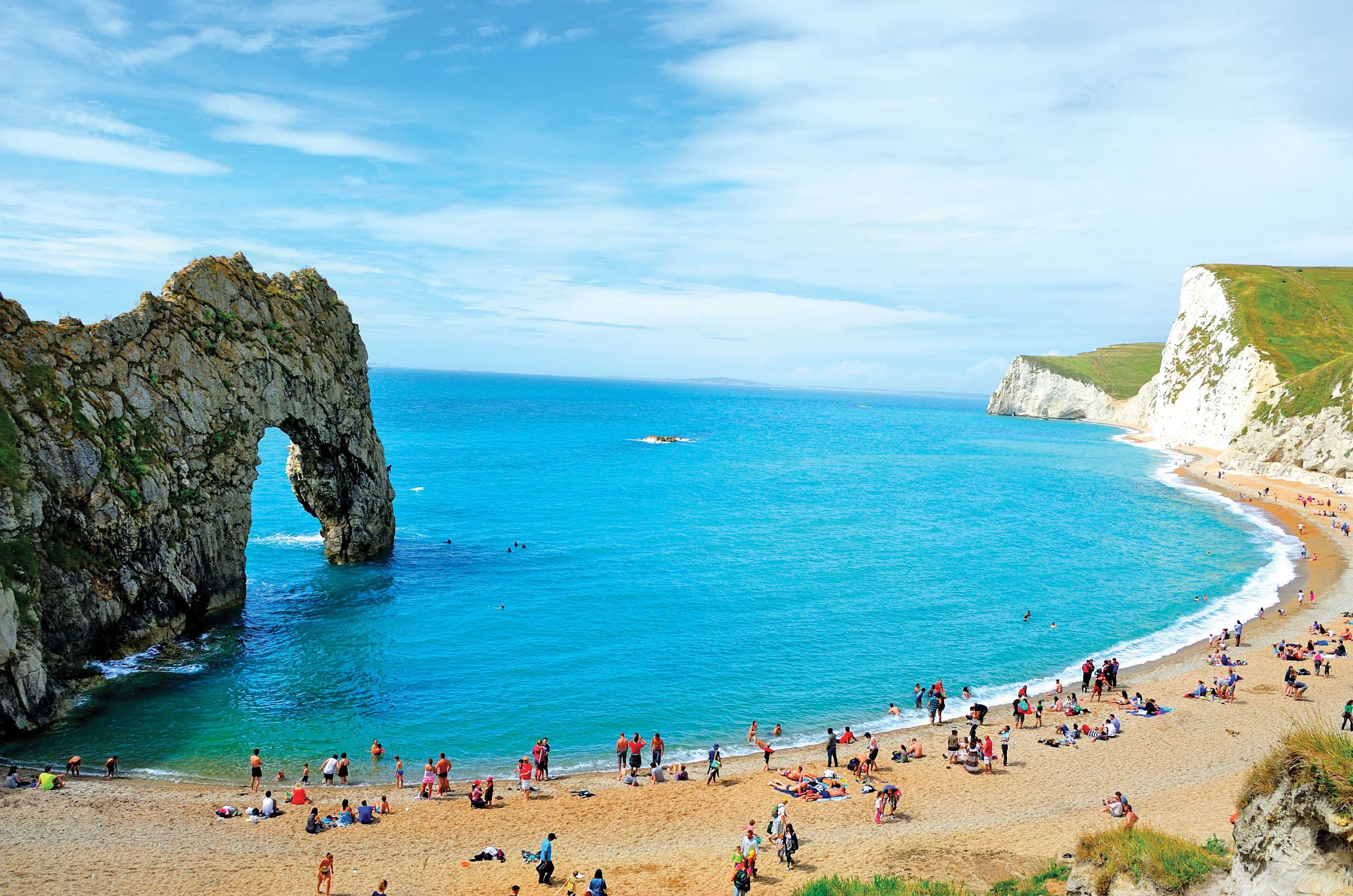
Durdle Door, the natural limestone arch that draws crowds to this stretch of coastline.

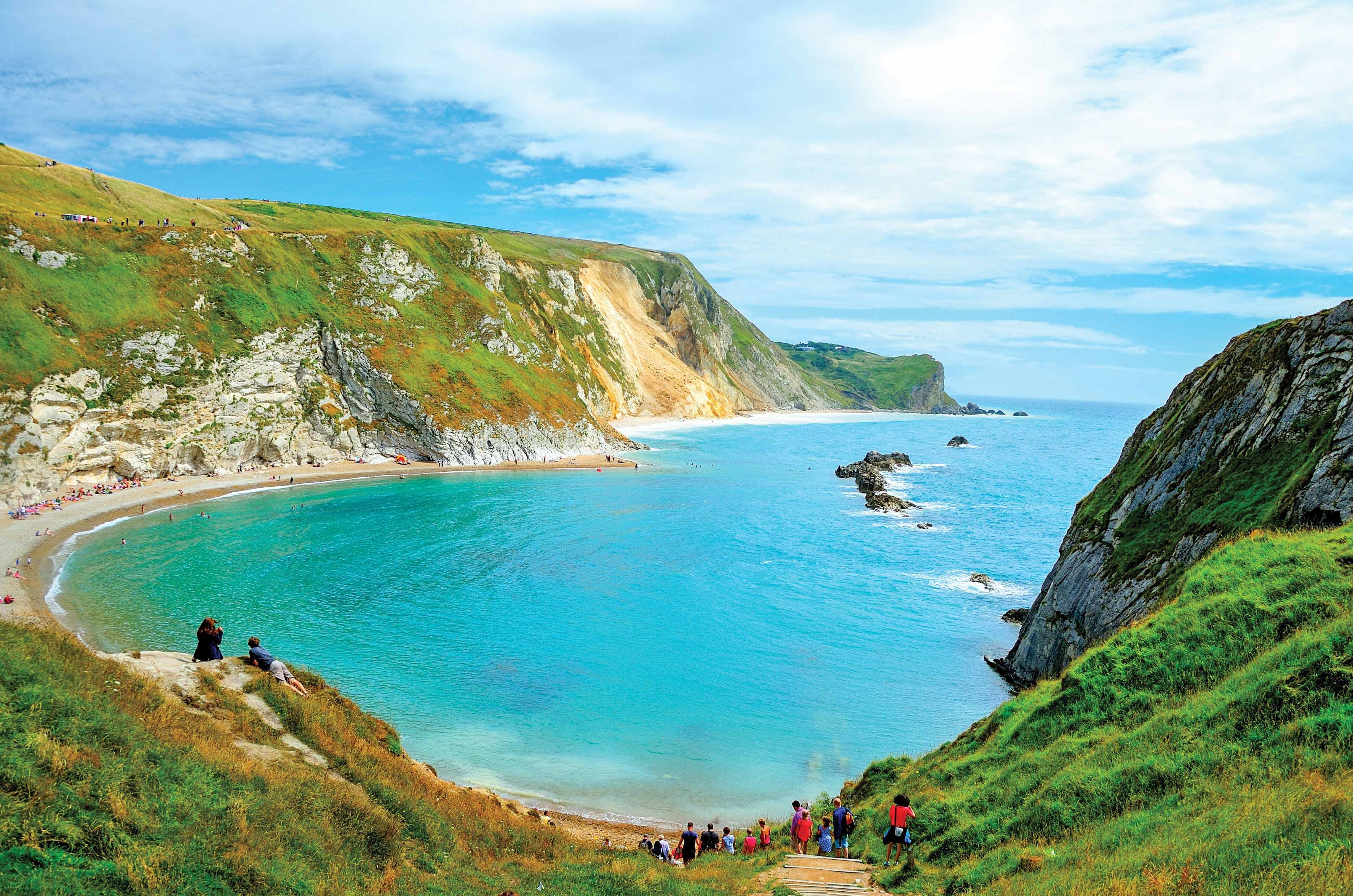
I couldn’t leave Dorset without giving the JCW a proper stretch, so I pushed south to the Jurassic Coast, Durdle Door and Lulworth Cove, a slight detour from Lawrence’s own story, but too good to leave out of a day like this. Every mile of the drive validated it being classed as an SUV. The properly deep boot held picnic mats, beach gear, including chairs and an umbrella, without the need of the rear seats being dropped.

Lulworth Cove
Lulworth Cove’s chalk cliffs and turquoise water, a world away from Lawrence’s Dorset lanes.

The cabin felt roomy, and the ride height shrugged off potholed coastal car parks without a second thought. There’s real engine grunt for those urgent overtakes on narrow country lanes when stuck behind agonizingly slow motorhomes that make you feel like tearing your hair out.

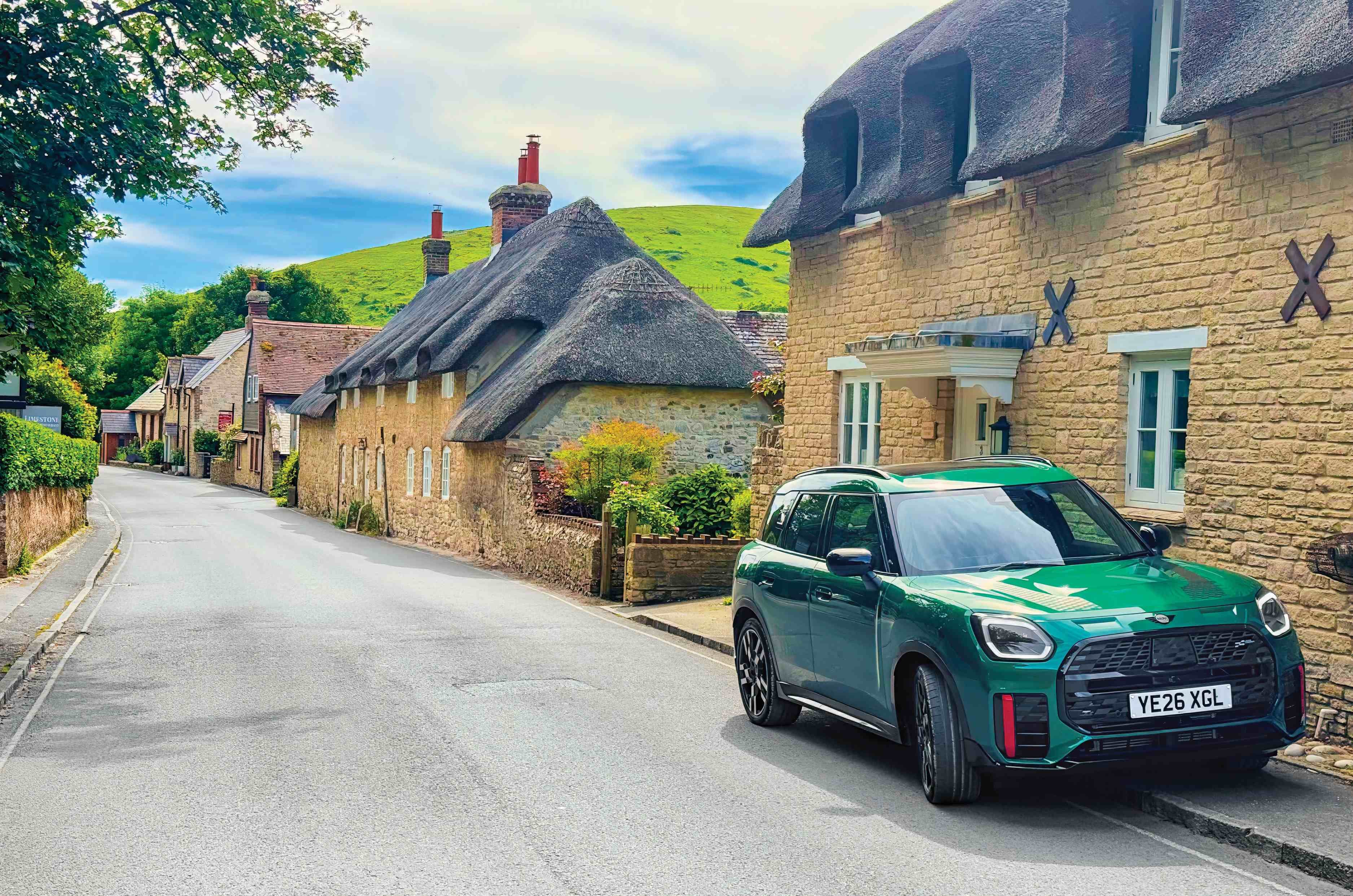
Mini Countryman JCW in West Lulworth
West Lulworth, all thatched roofs and honey-coloured stone, is about as quintessentially Dorset as a village gets.

The all-wheel-drive system quietly sorts out grip on the tighter, greasier lanes, especially with the left wheels on a shoulder slick with wet grass. Flick it into its sportiest mode, and the exhaust note gets a synthesised boost through the speakers. It may be all theatre, but it certainly made me grin, and that’s a win because sound plays such a large part in defining how a car makes me feel.

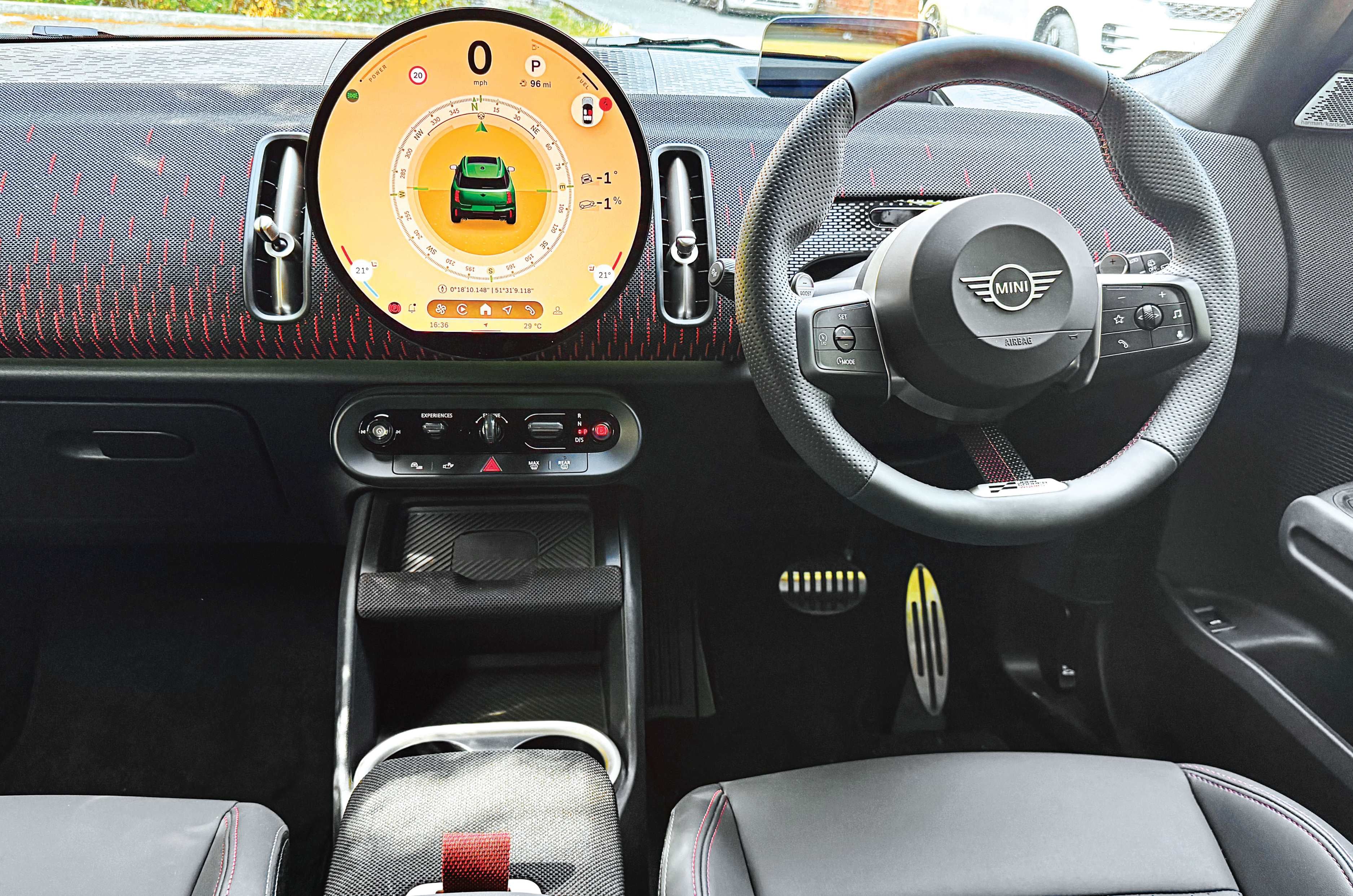
Mini Countryman JCW interior
A compass and live pitch-and-roll readout flaunts SUV identity; instrumentation no traditional Mini has ever needed.

By the time I rolled back into London, it was quite clear to me that at the wheel of a Mini Countryman, what you get is a car that is actually larger and roomier than the Jeep Compass. It has the space, the grunt and the ground clearance, and from the smooth roads of Dorset to the Jeep-only trails of Zanskar, this Mini is genuinely man enough for whatever the country throws at it.

The Helmet He Never Wore

Lawrence’s fatal crash had one consequence far beyond Dorset. Among the doctors treating him at Bovington Camp Military Hospital was a young Australian neurosurgeon named Hugh Cairns, who had himself served in the Middle East during the First World War. Watching Lawrence die of head injuries that a helmet might have prevented left a deep impression on him, and he began studying motorcycle head trauma as a direct consequence.

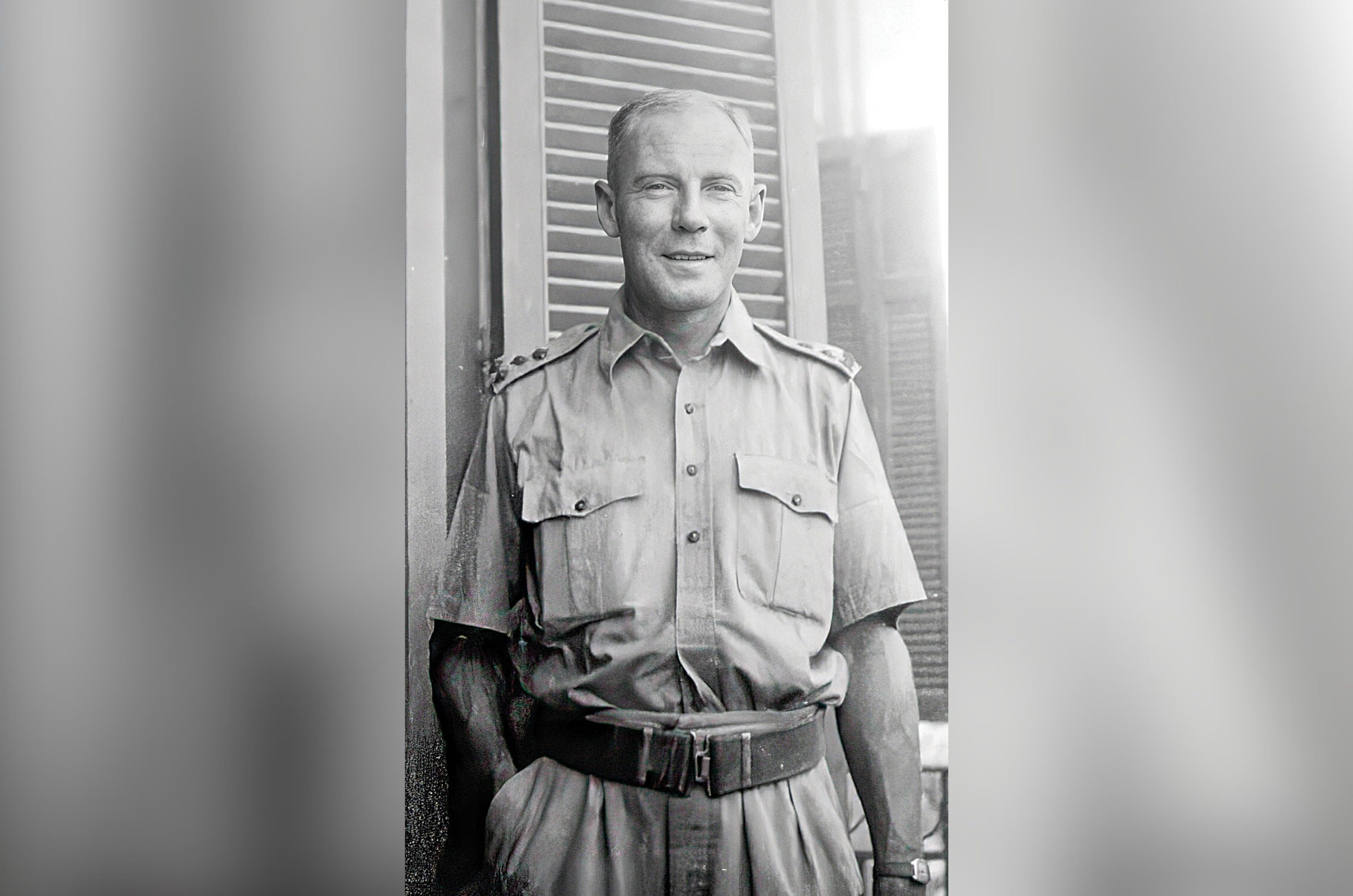
Sir Hugh Cairns
Sir Hugh Cairns

Crash helmets already existed, invented back in 1914 for racing at Brooklands, but nobody wore them on the road. It took the Second World War, and Cairns’s appointment as a head injuries adviser to the Ministry of Health, for that to change. Researching fatalities among military despatch riders, he found that head injuries were the single biggest killer among motorcyclists and that, of the few riders wearing helmets when they crashed, not one had died.

His 1941 paper was damning enough that helmets became compulsory for all military motorcyclists within a month, and a 1946 follow-up showed the death rate had fallen sharply as a result. Cairns argued the same logic should extend to every civilian rider. It took another 27 years, and Cairns didn’t live to see it, for that to become UK law in 1973. But the chain runs in a straight, almost eerie line from one Dorset lane to millions of ordinary commutes: the man who died avoiding two boys on bicycles ended up, through the doctor who treated him, saving countless lives on two wheels after his own.

“The Rolls-Royce of Motorcycles”

Every Brough Superior was hand-built at George Brough’s works on Haydn Road, Nottingham, and Brough himself was as singular as his machines. Rarely seen without his trademark tailored flat cap, he carried himself more like landed gentry than a factory owner, and his standards bordered on obsessive. Born to motorcycle pioneer William Edward Brough, George forged his own path in 1919 after a rift with his father over how grand and expensive motorcycles ought to be.

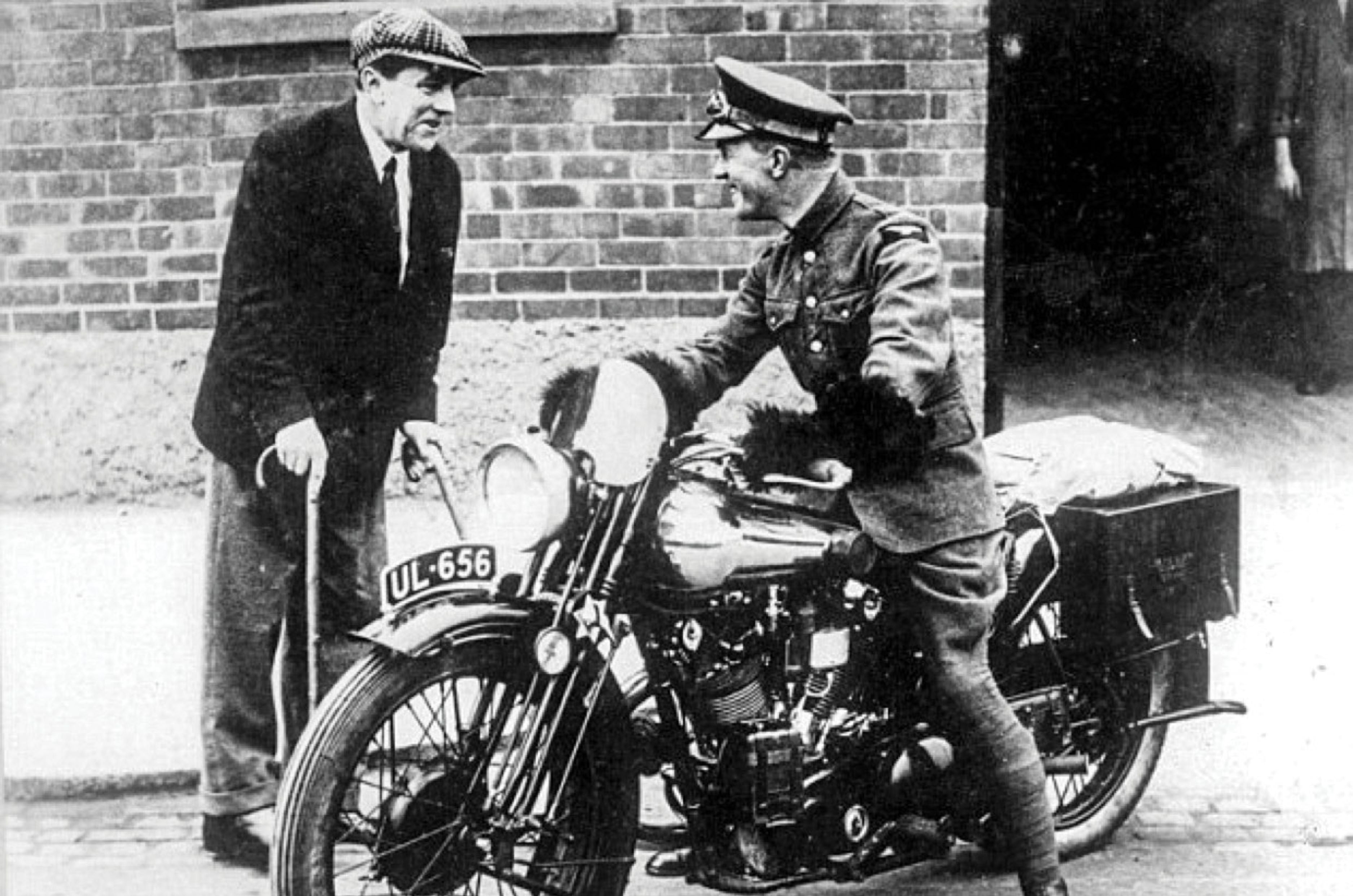
T.E. Lawrence on his Brough Superior
Left: George Brough, Right: T.E. Lawrence

A friend suggested adding “Superior” to the name, which Brough senior took as a personal insult. That pursuit of excellence defined the marque: each machine was assembled once to fit every component together, then stripped down for painting and plating, then reassembled for delivery. Brough tested every SS100 himself on public roads past 100mph, and each one left the factory with George Brough’s personal approval and a written certificate guaranteeing it had been timed at the ton over a flying quarter mile.

‘SS’ stood for Super Sports, ‘100’ for that guaranteed top speed of a 100mph, and Brough pushed the idea further still in 1928, setting a 130.6mph record at Arpajon in France. The “Rolls-Royce of Motorcycles” nickname was coined by journalist HD Teague of The Motor Cycle, and Brough liked it enough to use it in his own advertising, reportedly with the real Rolls-Royce’s blessing.

War ended civilian production in 1940, when the factory turned to munitions and aircraft parts, and the specialised J.A. Prestwich (JAP) 998cc, air-cooled, 50-degree OHV V-twin engines Brough relied on were never commercially viable again. Around 3,100 machines were made across 19 models in the marque’s 21-year run, and roughly a third survive today, making every survivor a priceless piece of automotive art.

Lawrence’s relationship with the marque ran deeper than most customers’. Writing to Brough in 1926, he said he’d ridden five Broughs and covered 1,00,000 miles in four years, calling them the greatest delight of his life, two of them possessing “a speed and reliability that reminded me of an express train.” Between 1922 and 1935, he owned eight. The first, bought in 1922, was nicknamed “Boa,” short for Boanerges, meaning “son of thunder.”

The seven that followed were named George I through George VII, with a ninth, George VIII, still being built when he died. At around £200 apiece, enough to buy a modest cottage, this was extraordinary indulgence for a man on an RAF aircraftman’s pay, though royalties from Seven Pillars of Wisdom helped fund it. The Brough he crashed on May 13, 1935, registration GW 2275, was George VII, his last completed machine.

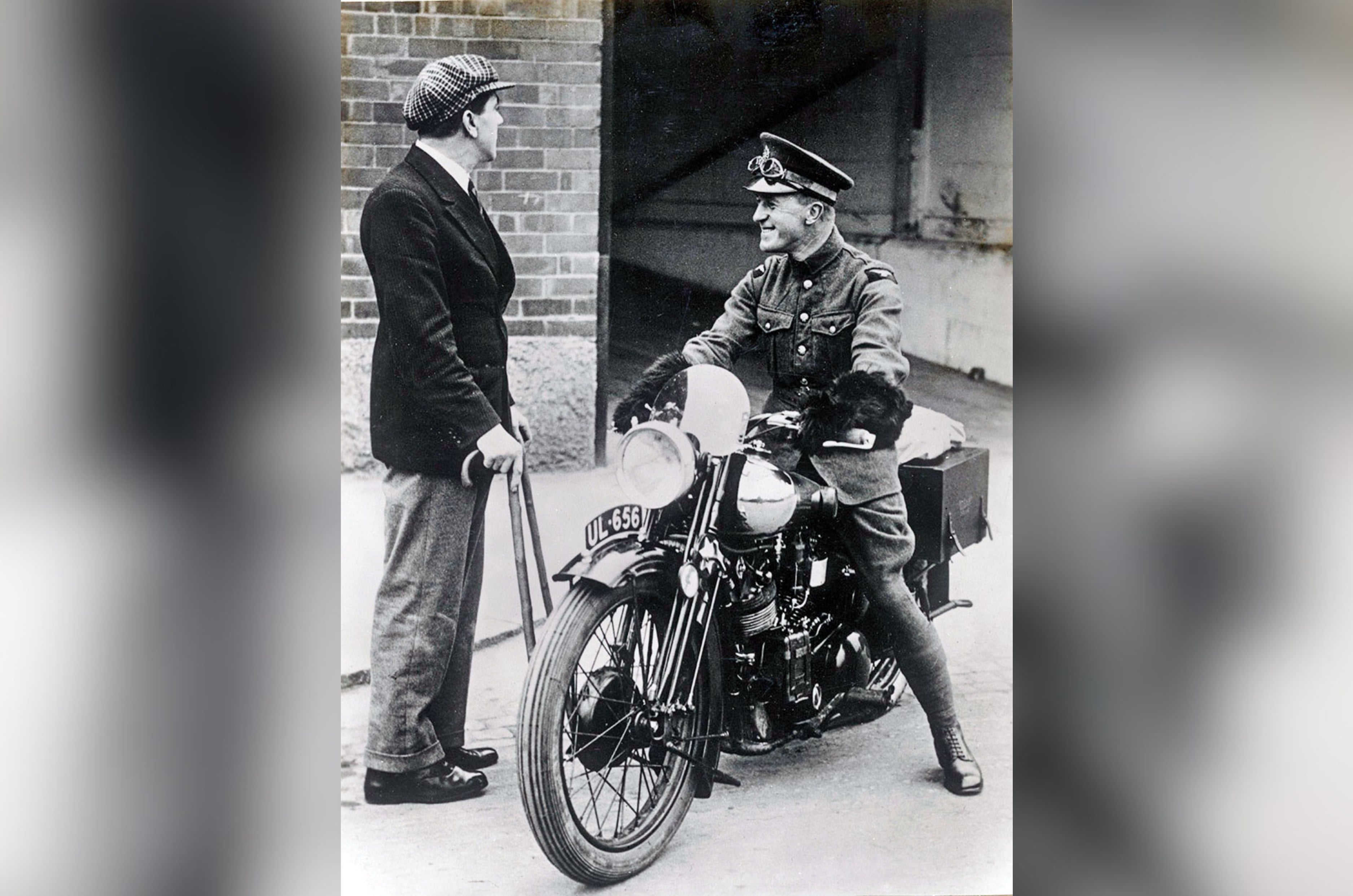
George Brough and T.E. Lawrence

The photographs here are of George Brough and Lawrence on the Brough nicknamed George VI. They were taken during one of Lawrence’s frequent, unassuming visits to the Haydn Road factory by Jack Hallsworth, a Nottingham Journal photographer who knew George Brough and had been tipped off to bring his camera one afternoon.

It’s a rare glimpse of a man famously camera-shy and almost never photographed candidly, hinting at the genuine warmth behind the machines: two very different Englishmen, one a self-effacing war hero trying to vanish into rural obscurity, the other a flamboyant engineer-showman happy to let Rolls-Royce’s name do some of his advertising for him, bound by a friendship that outlasted their differences.


9 things to know before buying Royal Enfield Himalayan 440

9 things to know before buying Royal Enfield Himalayan 440
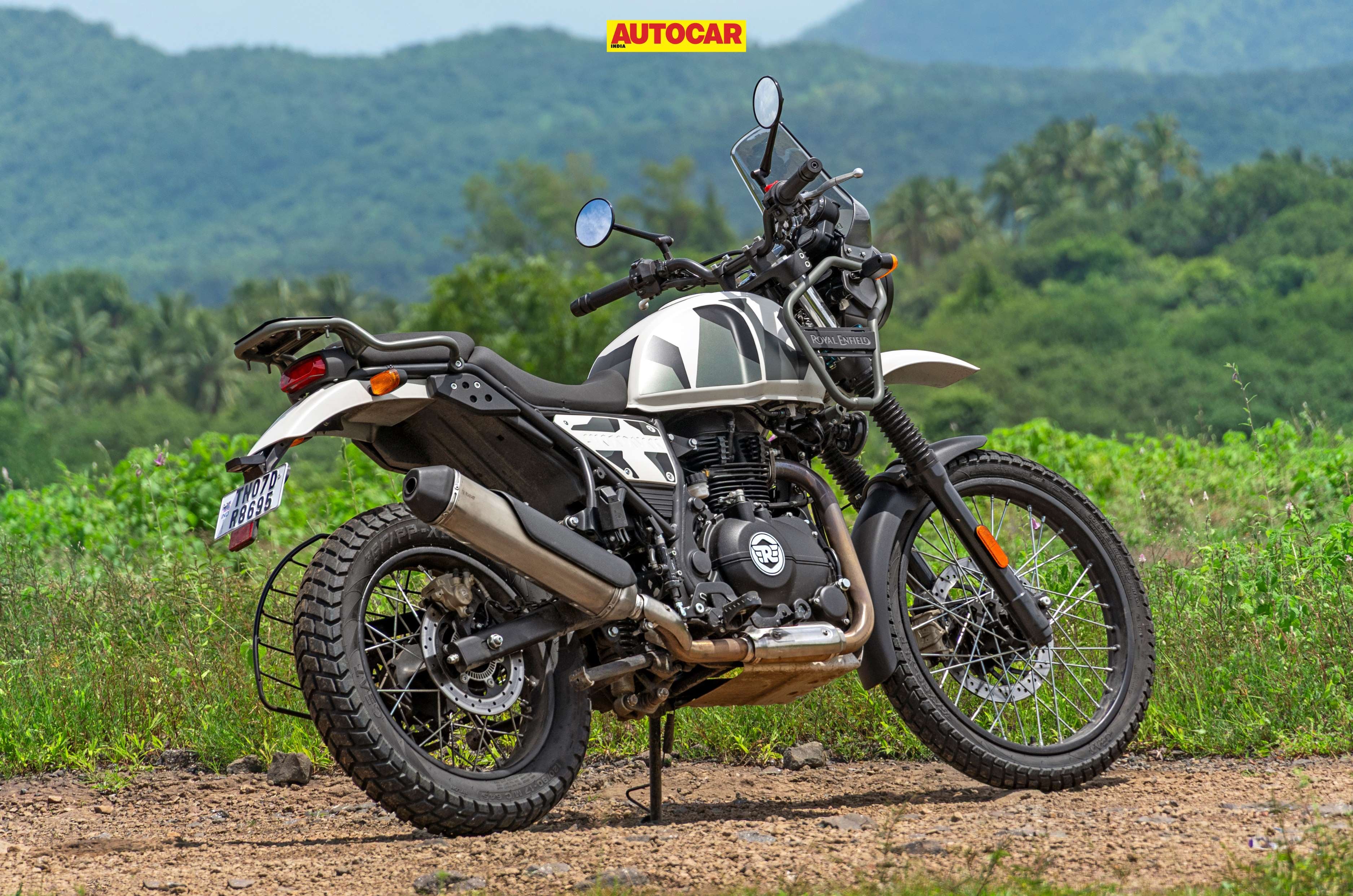
An outside shot showing the Royal Enfield Himalayan 440's rear right quarter.

The OG Royal Enfield Himalayan is back, sort of, with the Himalayan 440. Reincarnated with (almost) the same design and underpinnings as before, the 440 is looking to also fix the shortcomings of its predecessor with a more powerful engine and an additional gear for better highway duties. If you’re confused about buying one, or which Himalayan is right for you, let us help. 

1. How is the Himalayan 440 different from the Scram 440?

The differences mainly come down to the tyres and suspension. The Scram 440, being a road-oriented motorcycle, has alloy wheels in its top variant and a 19-inch front wheel. The Himalayan, being an off-roader ADV, sticks to wire-spoked wheels for the added robustness during off-roading and has a 21-inch front wheel. The front suspension on the Scram 440 has a 190mm travel, whereas the Himalayan has an additional 10mm travel. Both motorcycles stick to 180mm travel on the rear wheel. 

The other differences are mainly in the colours and the lack of a windscreen on the Scram 440. It also gets a slightly different instrument cluster and does not get the tripper navigation pod as standard, like the Himalayan does. Do note that the Scram 440’s base variant – Trail – also sticks to wire-spoked wheels, just like the Himalayan. 

2. Does the Himalayan 440 get a slipper clutch?

No, it does not. Royal Enfield has given it to most of the 350s, both the 450s, and all the 650s as standard. This leaves out the Bullet 350, Himalayan 440 and Scram 440 as the Royal Enfields without a slipper clutch. 

3. What features does the Himalayan 440 get?

Dual-channel ABS with the ability to turn off the rear ABS is the only rider aid on offer. The Himalayan 440 also gets the tripper navigation pod as standard.

4. Does the Himalayan 440 get tubeless wheels?

No, it does not. Wire-spoked wheels with tube tyres are the only option, and at the moment, Royal Enfield does not offer tubeless-spoked wheels or alloys, even as accessories. It also hasn’t confirmed if the Himalayan 450’s tubeless-spoked wheels could be retrofitted to the Himalayan 440. 

5. How’s the LED headlight? Any better than the Himalayan 450?

No, it is the exact same unit. If anything, it is a downgrade compared to the halogen headlight that was available on the Himalayan 411. So if you’re planning a lot of night rides, budget for aux lights. 

6. Why are the Himalayan 440 and 450 priced so far apart?

Because they’re completely different motorcycles, despite what the name might suggest. The engine, frame and suspension setups are all completely different between them. The Himalayan 440 is RE’s affordable ADV, with a Rs 2.29 lakh price (ex-showroom, Chennai). It’s lean on the feature set and sticks to a platform that’s effectively ten years old now. But, again, it’s not the feature list the OG Himalayan was known for, and it’s certainly not the reason why it’s been rejuvenated. 

The Himalayan 450, on the other hand, is a lot more modern and powerful. It is physically larger but lighter, and almost a lakh more expensive than the 440, with a starting price of Rs 3.08 lakh (ex-showroom, Chennai).

7. Is the suspension adjustable on the Himalayan 440?

No, it’s not, and the answer is common to both Himalayans. Both get adjustable preload for the rear linkage monoshock (completely different units, mind you), but that’s about it. The front suspension isn’t adjustable in any way on either motorcycle.

8. I am planning to tour on my motorcycle. Which Himalayan should I get?

Either one should be great. The 450 is a lot more expensive, but it offers a much more modern package, more power and torque, and is markedly more comfy and spacious. If you get one of the top variants, you also get tubeless rims as standard, with the other variants offering them as an optional upgrade. So, the Himalayan 450 lets you have the convenience of tubeless tyres without compromising on the retro looks.

However, if you prefer to spend the price difference between the two motorcycles on fuel to ride more (Rs 79,000 can buy a lot of petrol!), the 440 should handle touring very well too, especially with the new sixth gear. Just remember to stay on top of your tyre health (because of the tube tyres) and expect to stop for fuel more often because of the smaller 15-litre tank.

9. Will the Himalayan 440 be hassle-free to own?

Reliability concerns with the Himalayan were legitimate when the motorcycle first launched in 2016. However, Royal Enfield has come a long way since then, so we do not expect the Himalayan 440 to be unreliable; especially since the Scram 440 has stayed trouble-free after an engine-related recall in the initial delays. So, assuming you stay on top of your maintenance, you have no reason to expect any trouble from the motorcycle. 

5 things to know before buying the Kawasaki Vulcan S

5 things to know before buying the Kawasaki Vulcan S
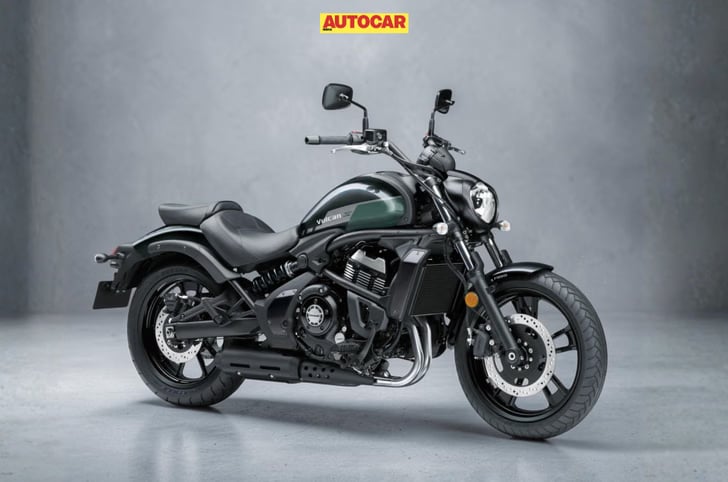
Kawasaki Vulcan S

The Kawasaki Vulcan S is a distinctive proposition in our cruiser market, combining a typically American long-and-low stance with Japanese reliability. For 2027, it carries over most of the mechanical package from last year, but with slightly more torque and some other minor revisions. Here are answers to some of the most commonly asked questions about it.

What is the price of the Kawasaki Vulcan S?

The 2027 Kawasaki Vulcan S is priced at Rs 8.23 lakh (ex-showroom, India), marking a Rs 10,000 increase over the MY26 model. It is available in a single Metallic Carbon Gray colour with bluish-green highlights, and deliveries are set to commence from mid-September 2026.

What engine does the Kawasaki Vulcan S use?

The Vulcan S is powered by a 649cc, liquid-cooled, parallel-twin engine producing 61hp at 7,500rpm and 62.4Nm at 6,600rpm, paired with a 6-speed gearbox. This is the same engine that powers the Kawasaki Versys 650 and Ninja 650, but tuned differently for the Vulcan’s cruiser character. The MY27 bike also restores the 1.4Nm of torque that was inadvertently lost on the MY26 version, bringing it back in line with earlier models.

What is the seat height and weight of the Kawasaki Vulcan S?

The Kawasaki Vulcan S has a seat height of 705mm, which is among the lowest on any motorcycle in this segment, making it genuinely easy to get both feet flat on the ground at a standstill. The under-engine muffler contributes to a low centre of gravity, further aiding confidence at low speeds. Kerb weight is 235kg.

What features does the Kawasaki Vulcan S have?

The Vulcan S keeps its feature set relatively straightforward. It gets an analogue-digital instrument cluster with a gear position indicator, dual-channel ABS, adjustable clutch and brake levers, and a 7-position preload-adjustable rear shock. There are no riding modes, traction control or a TFT display.

What is the Ergo-Fit system on the Kawasaki Vulcan S?

Ergo-Fit is Kawasaki’s proprietary adjustability system that allows the Vulcan S to be configured to suit riders of different heights and builds. It offers 18 possible configurations across three reach settings, achieved through adjustments to the seat, handlebar position and footpeg placement.

Suzuki e-Access: 2 reasons to buy and 2 reasons to skip it

Suzuki e-Access: 2 reasons to buy and 2 reasons to skip it
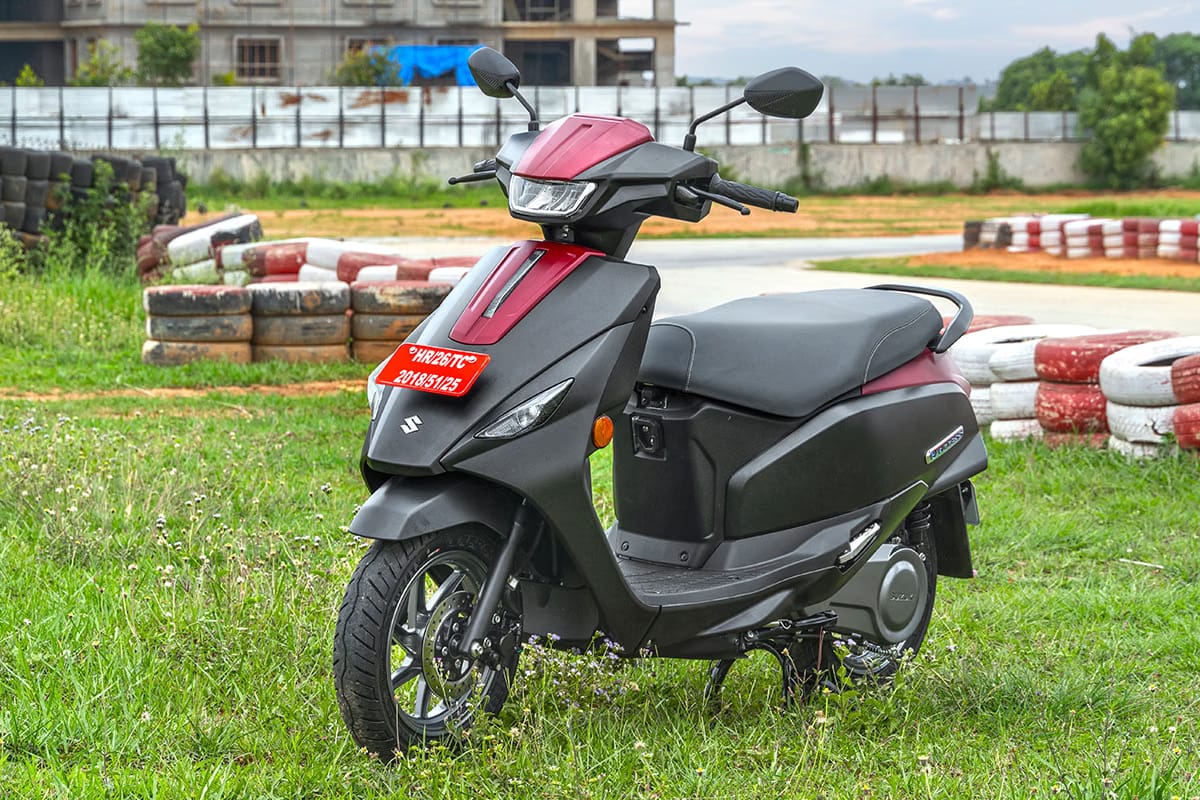
Suzuki e-Access

The Suzuki e-Access is the brand’s first electric scooter for India and a ground-up new product, sharing little with the petrol Access beyond its name. Built on an entirely new platform, it makes a case for itself through longevity and reliability rather than outright performance or features. Here’s what works in its favour and a couple of reasons it might not be for everyone.

Reasons to buy the Suzuki e-Access

Comfortable to ride and the reliability promise is real

The e-Access is a pleasant machine to spend time on. The ergonomics are neutral, the seat is flat and spacious, and the suspension is well-tuned – firm enough to feel taut without being harsh. Next, in terms of build quality, it is solidly put together with the kind of tactile feel that Suzuki two-wheelers are known for. The LFP battery chemistry offers a longer service life and lower thermal runaway risk than the NMC packs used by most rivals, which should translate to long-term ownership confidence. 

Trustworthy range indicator

One area where the e-Access stands out is the accuracy of its range prediction. Once the system calibrates to your riding style, the distance-to-empty figure shown on the display is reliable. This is not something that can be taken for granted across the electric scooter segment, where optimistic range indicators that drop sharply under any real-world load are a common frustration. In our tests with Ride A mode, we covered just over 88km on a single charge – slightly below the 95km claimed IDC range, but within a reasonable margin.

Reasons to skip the Suzuki e-Access

Performance and range fall short for the price

The e-Access is slow by the standards of the electric scooter segment. In our tests, it took nearly 12 seconds to complete the 0-60kph sprint, which is not only slower than similarly priced rivals but also significantly slower than the petrol Access 125. The 88km real-world range is a reasonable figure in isolation, but rivals with similarly-sized batteries routinely return over 100km. The powertrain is also noticeably noisier than most other reputed electric scooters on sale today. 

Boot space is woefully inadequate

The 17-litre underseat boot is the e-Access’s most immediately frustrating shortcoming. At a time when most mainstream electric scooters offer 30-35 litres of storage – and some, like the Simple Wave offering nearly 70 litres – the e-Access’s boot feels genuinely inadequate for daily use. The supplied charger barely fits inside once the cables are folded correctly, leaving almost no usable free space. This is a consequence of Suzuki positioning the battery pack vertically under the seat, and it is compounded by the fact that even the latest petrol Access 125 offers more boot space than the electric version.

With input from Dinshaw Magol

3 reasons to buy the Innova Crysta and 2 to skip it

3 reasons to buy the Innova Crysta and 2 to skip it
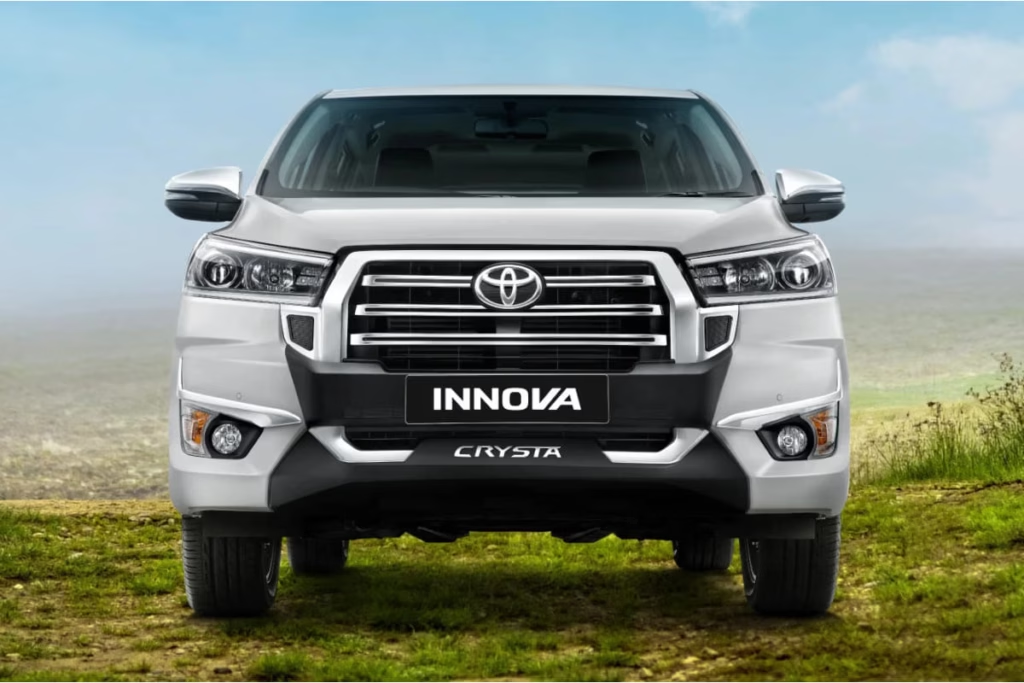
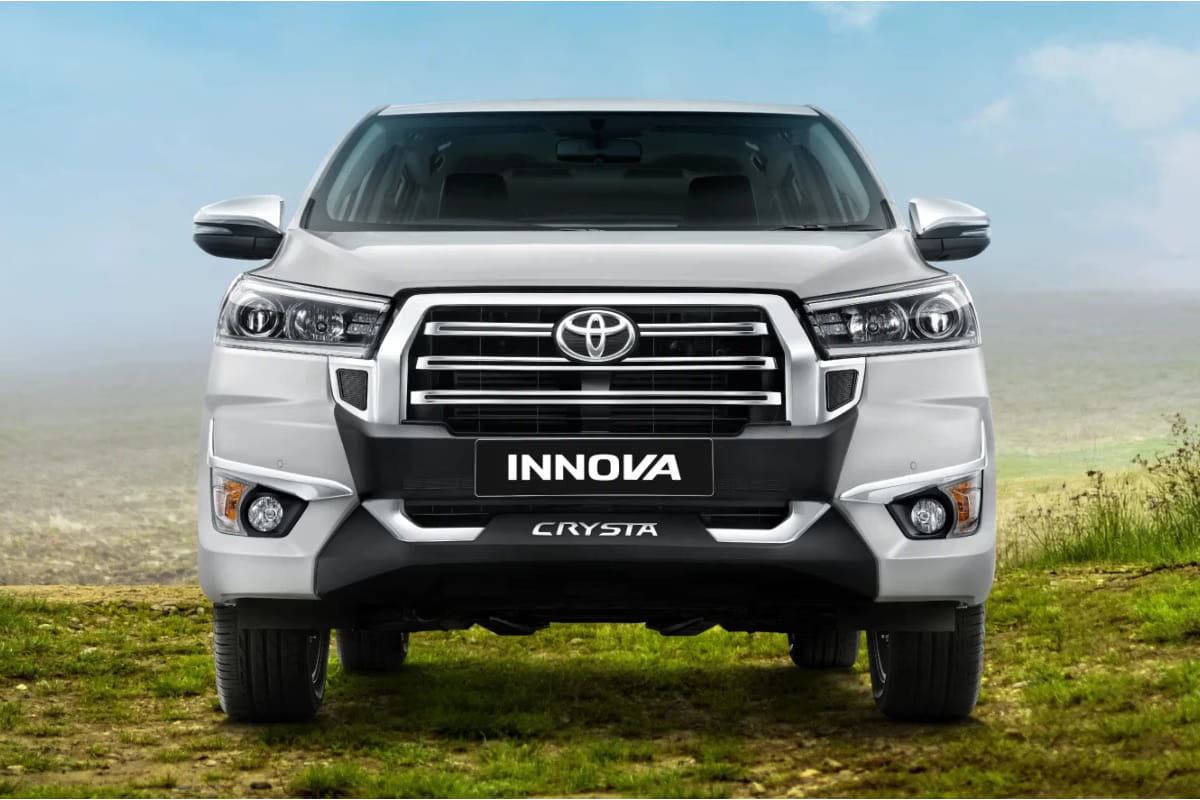
Innova Crysta

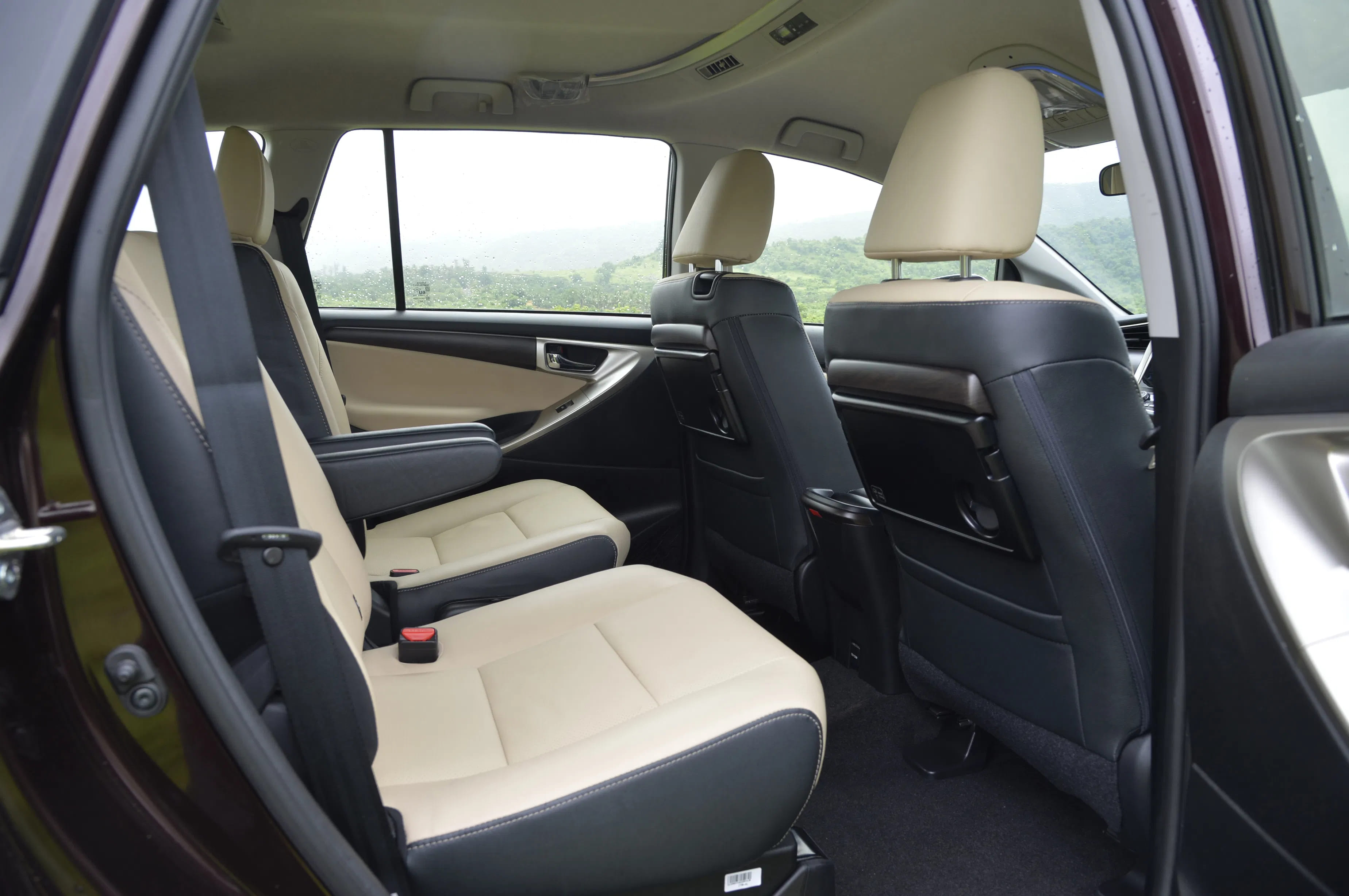
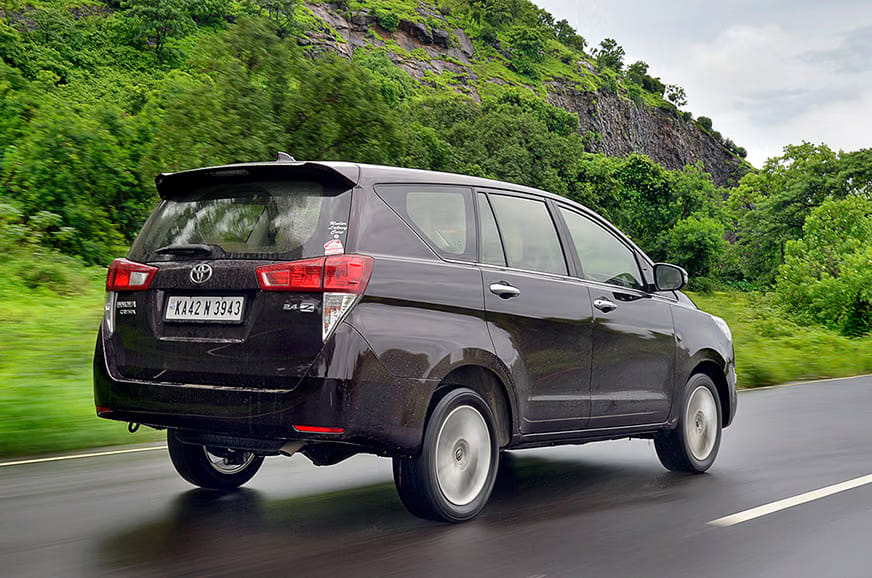
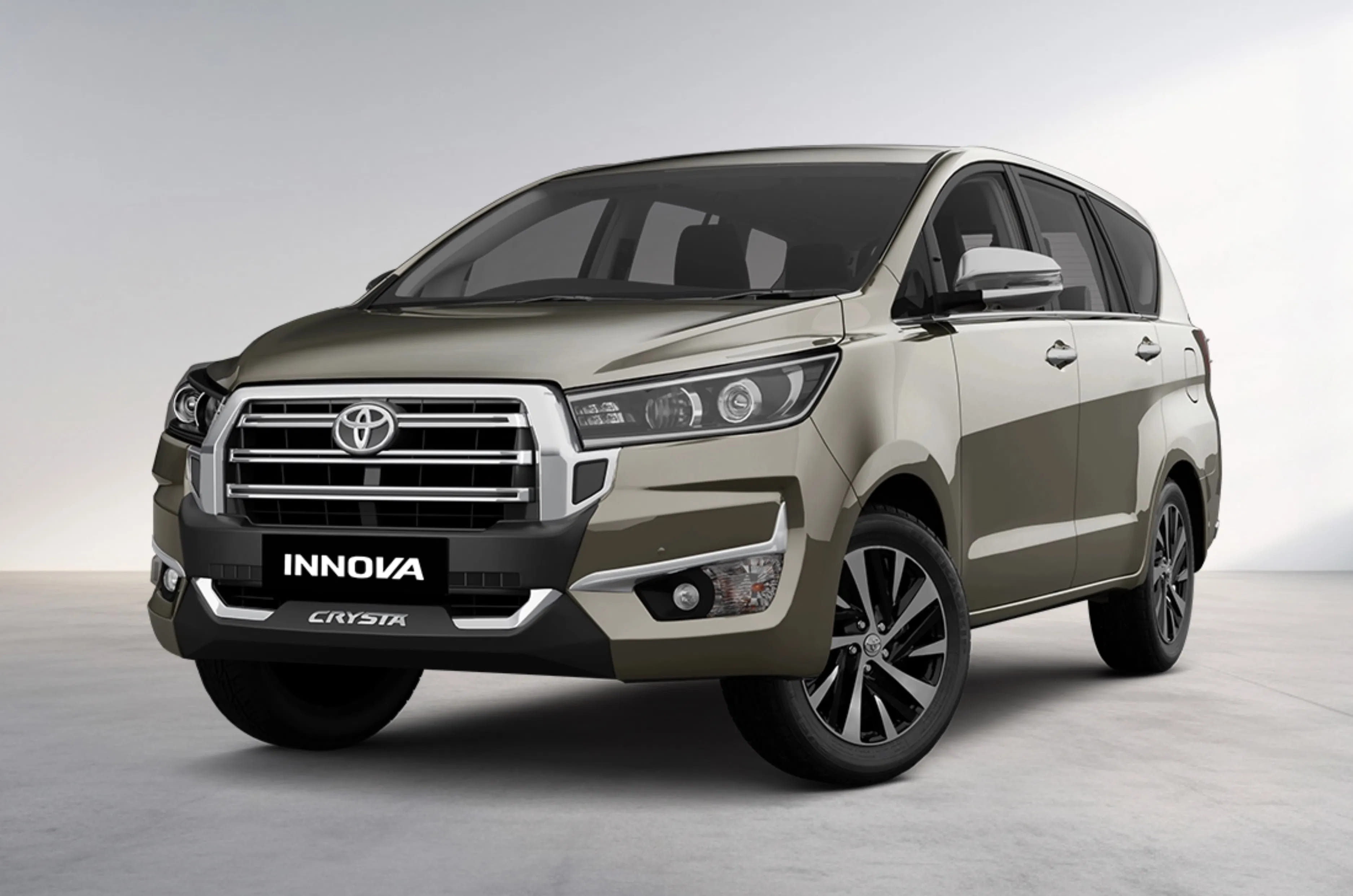
The Toyota Innova Crysta has been a mainstay in the Indian MPV market for years, building a reputation for longevity, reliability and practicality. It is powered by a 2.4-litre diesel engine paired with a 5-speed manual gearbox and is available in seven- and eight-seat configurations. Here are three reasons to consider the Innova Crysta and two reasons why it may not be for you.

Pros

Peace of mind ownership

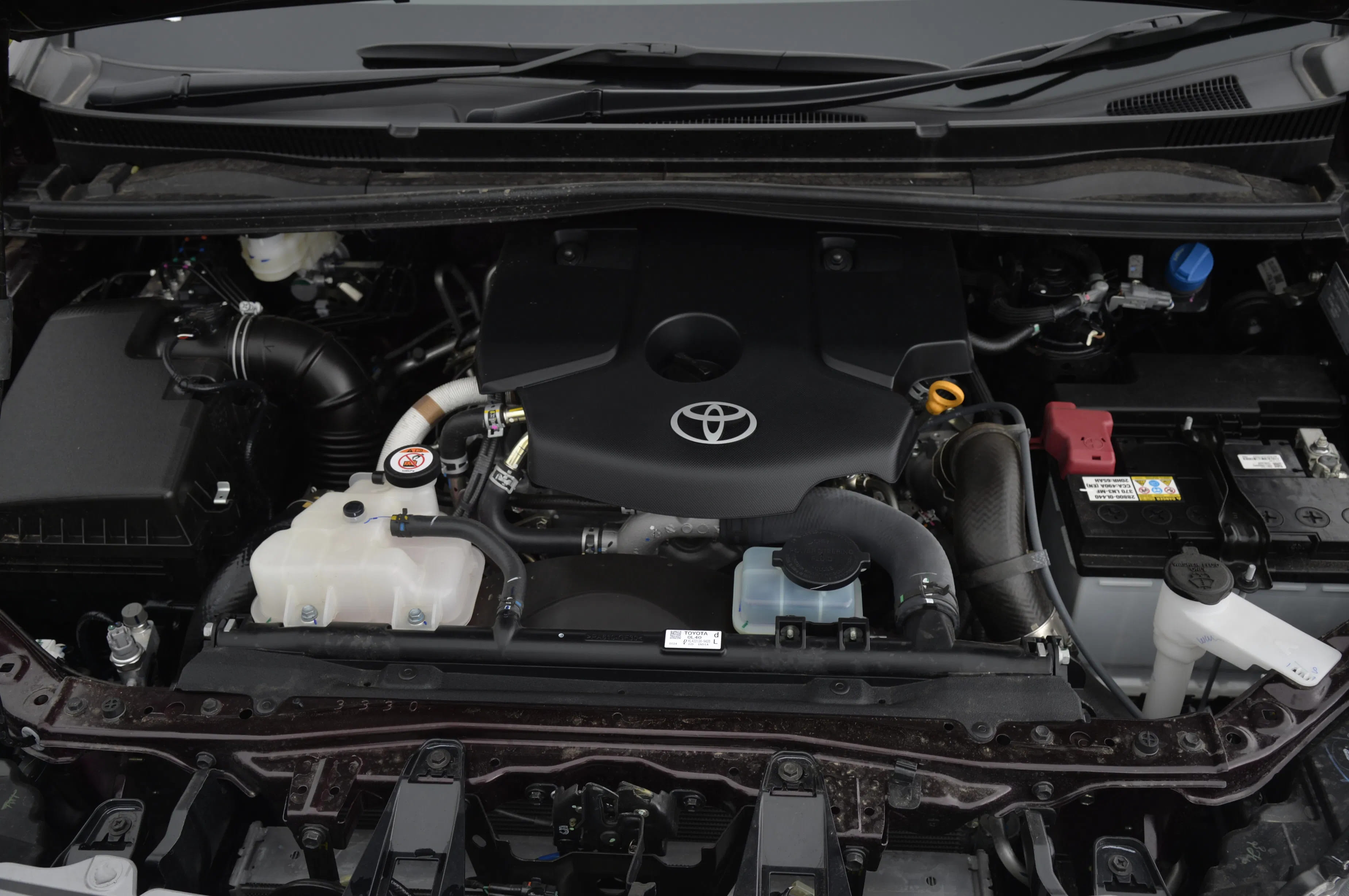
The Innova has a long-standing reputation for mechanical robustness and reliability, which remains a major reason for its appeal. The 2.4-litre diesel makes 150hp and 343Nm, and is known for its refined and dependable nature. Toyota also offers warranty coverage of up to three years or 1,00,000km, with an extended warranty available up to five years or 2,20,000km.

Space and practicality

The Innova is available in seven- and eight-seat configurations, with the former getting captain’s chairs in the second row and the latter a bench seat. The seven-seat layout offers a more comfortable second row, while the eight-seat version prioritises seating capacity and practicality.

The third row is reasonably spacious for average-sized adults, while all three rows get AC vents and the second row gets separate blower controls. Fold-out tray tables also add to the practicality for passengers on longer journeys. The Innova also benefits from Toyota’s established service and after-sales network.

Good highway manners

The 2.4-litre diesel has enough performance for highway driving, with a good reserve of power for overtaking at higher speeds. It remains comfortable while cruising and doesn’t feel out of breath on faster expressways. The ride is generally comfortable, but the Innova can feel unsettled over sharp-edged and rutted surfaces, while its body-on-frame construction also results in some lumpiness at low speeds.

Cons

Heavy steering

The Crysta uses hydraulic power steering, which makes the steering feel heavy, particularly at low speeds. It can also give some kickback through the wheel when driving over potholes, which is more noticeable on broken roads. This makes manoeuvring the large MPV in tight spaces more cumbersome than it could be.

Priced on the expensive side

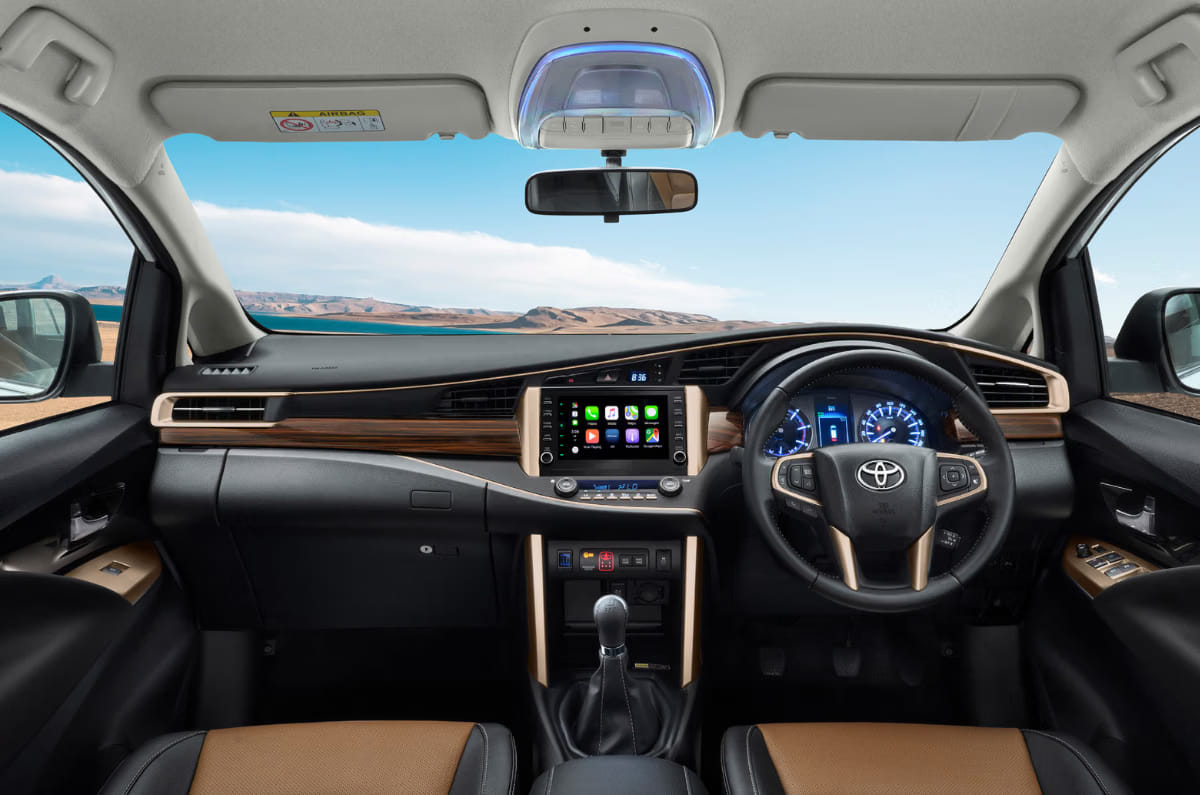
The Innova Crysta was launched in 2016, and its age is now evident in the cabin. It remains spacious and comfortable, but the interior has plenty of hard plastics and the infotainment system feels dated compared with newer MPVs. The Kia Carens Clavis, for instance, offers a similarly practical three-row layout with a more modern and premium cabin. At Rs 19.72 lakh to Rs 26.77 lakh (ex-showroom), the Crysta’s pricing makes its ageing interior harder to overlook.

ऑफिस में 12 घंटे काम करने के बाद भी नहीं मिलेगी तरक्की? एक्सपर्ट ने बताया प्रमोशन का असली फॉर्मूला

ऑफिस में देर तक बैठना और लगातार व्यस्त नजर आना अक्सर मेहनती कर्मचारी की पहचान माना जाता है। लेकिन क्या रोजाना ज्यादा घंटे काम करने से ही करियर में तरक्की मिलती है? फ्रेयाज श्रॉफ ने सोशल मीडिया पर शेयर किए एक वीडियो में इस सोच पर सवाल उठाया है। उनका कहना है कि ऑफिस में सिर्फ मेहनत करते दिखना काफी नहीं है, बल्कि यह मायने रखता है कि आपके काम से कितना फायदा हो रहा है और लोग आप पर कितना भरोसा करते हैं। उनके मुताबिक, कोई कर्मचारी 10-12 घंटे काम करने के बावजूद अगर समय पर सही नतीजा नहीं दे पाता, तो उसकी मेहनत ज्यादा मायने नहीं रखती।

इसके उलट, जो व्यक्ति तय समय पर काम पूरा करता है, बदलाव की स्थिति में साफ तरीके से बात करता है और बिना हर कदम पर मदद मांगे समस्याओं का हल निकालता है, उसे ज्यादा जिम्मेदारी मिलने की संभावना रहती है। यही भरोसा धीरे-धीरे करियर की ग्रोथ का रास्ता खोलता है।

12 घंटे काम के बाद भी क्यों नहीं मिलती पहचान?

इंस्टाग्राम पर साझा किए गए एक वीडियो में श्रॉफ ने कहा कि ऑफिस में मेहनत और काम की असली वैल्यू हमेशा एक जैसी नहीं होती। कोई कर्मचारी किसी काम में 12 घंटे लगा सकता है, लेकिन अगर नतीजा सही नहीं आया तो सिर्फ ज्यादा समय देने का कोई फायदा नहीं। उनके मुताबिक, कर्मचारी कितना थका हुआ है, इससे ज्यादा मायने यह रखता है कि वह काम को सही तरीके से पूरा कर पा रहा है या नहीं।

बॉस को चाहिए ऐसा कर्मचारी जिस पर कर सकें भरोसा

श्रॉफ के मुताबिक, करियर में आगे बढ़ने के लिए सबसे जरूरी चीजों में से एक है विश्वसनीय होना। मैनेजर ऐसे लोगों को ज्यादा जिम्मेदारी देना पसंद करते हैं, जिनके बारे में उन्हें भरोसा हो कि वे मुश्किल स्थिति में भी काम संभाल सकते हैं। समय पर काम पूरा करना, बदलाव होने पर साफ तरीके से बात करना और बिना हर कदम पर किसी की मदद लिए समस्या का समाधान निकालना किसी कर्मचारी की असली ताकत बन सकता है।

सिर्फ व्यस्त नहीं, काम के लिए जरूरी बनिए

कई बार कर्मचारी यह दिखाने की कोशिश करते हैं कि वे पूरे दिन बेहद व्यस्त हैं। लेकिन श्रॉफ का कहना है कि व्यस्त नजर आना और कंपनी के लिए वैल्यू पैदा करना दो अलग चीजें हैं। अगर कोई कर्मचारी लगातार सही फैसले लेता है, समस्याओं को समझकर उनका हल निकालता है और फीडबैक को खुले मन से स्वीकार करता है, तो उसकी पहचान सिर्फ ‘मेहनती कर्मचारी’ तक सीमित नहीं रहती।

प्रमोशन थकान देखकर नहीं, भरोसे से मिलता है

वीडियो में श्रॉफ ने करियर के शुरुआती दौर में एक मुश्किल लेकिन जरूरी सबक बताया। उनके अनुसार, कर्मचारी को हर वक्त यह साबित करने की कोशिश नहीं करनी चाहिए कि वह कितनी मेहनत कर रहा है। इसके बजाय उसे ऐसा व्यक्ति बनने पर ध्यान देना चाहिए, जिसे बड़ी जिम्मेदारी सौंपी जा सके। यानी प्रमोशन इस वजह से नहीं मिलता कि आप काम करते-करते थक गए हैं। असली सवाल यह है कि क्या आपका बॉस आपको किसी बड़े काम की जिम्मेदारी देने के लिए तैयार है?

Instagram पर यह पोस्ट देखें

सोशल मीडिया पर लोगों ने भी रखी अपनी बात

श्रॉफ की बात पर सोशल मीडिया यूजर्स की मिली-जुली प्रतिक्रियाएं देखने को मिलीं। कई लोगों ने माना कि ऑफिस में नतीजे और भरोसा मेहनत के घंटों से ज्यादा मायने रखते हैं। हालांकि, कुछ यूजर्स ने एक अलग समस्या भी बताई। एक व्यक्ति ने कहा कि अगर मैनेजर किसी कर्मचारी को खुद फैसले लेने या काम करने की आजादी ही न दे, तो उससे भरोसेमंद बनने की उम्मीद कैसे की जा सकती है। एक अन्य यूजर ने चिंता जताई कि भरोसा बढ़ने के साथ कर्मचारियों पर जरूरत से ज्यादा काम भी डाला जा सकता है।

Video नई BMW खरीदना पड़ा भारी! ट्रांसजेंडर समूह ने कार को चारों तरफ से घेरा, 2 लाख रुपये मांगने का दावा वायरल