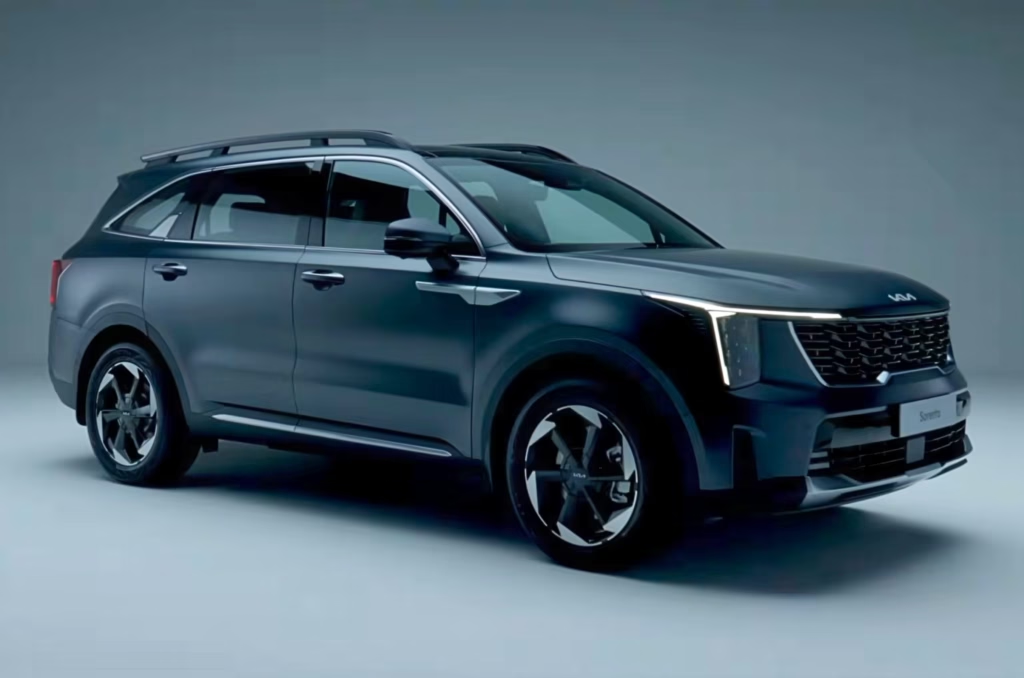
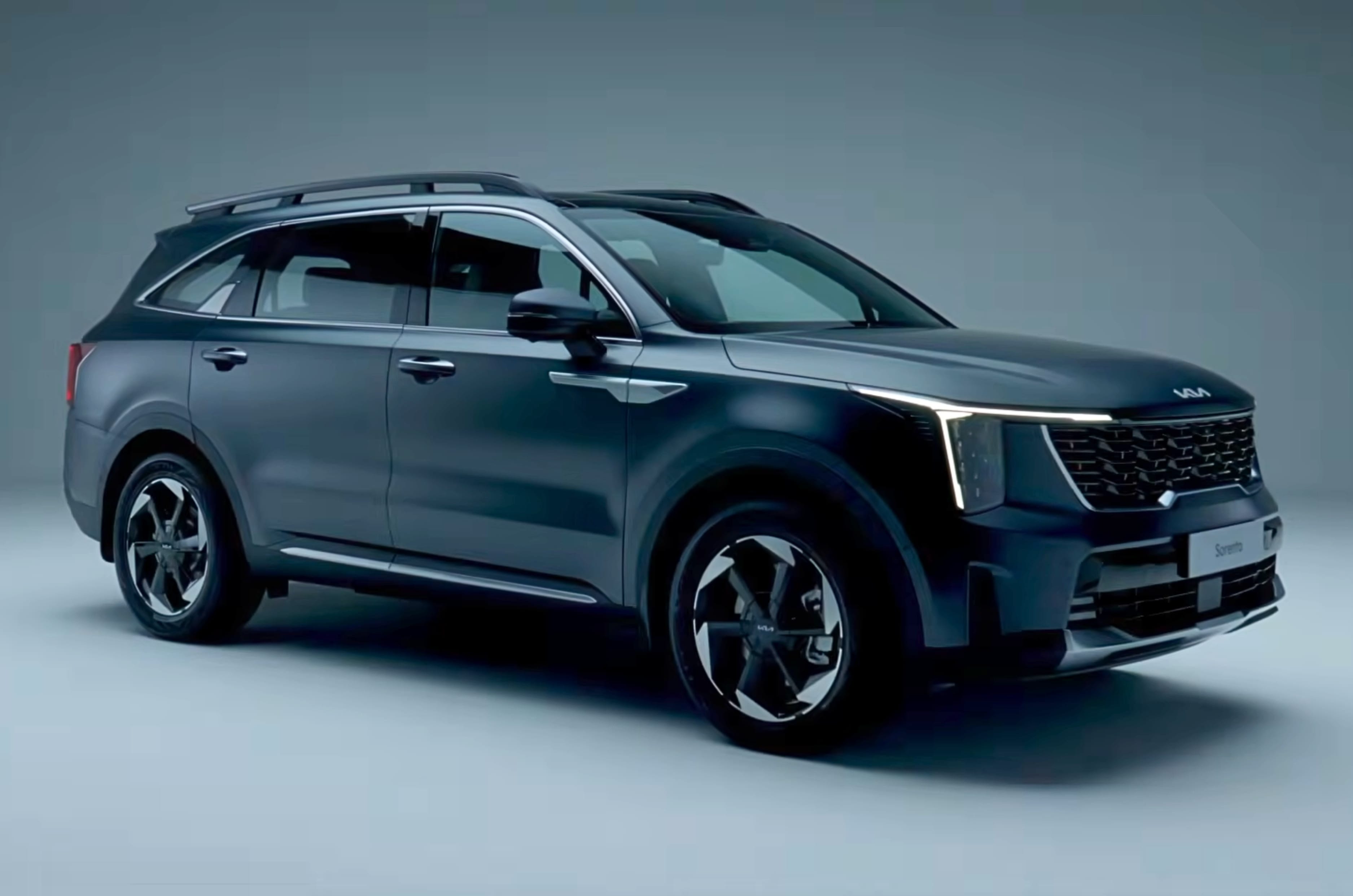
Ahead of its launch on September 4, Kia has officially revealed the India-spec Sorento. It will be Kia’s new flagship ICE-powered model with three rows of seating and will be offered with strong-hybrid and diesel powertrains. The brand has also confirmed that the hybrid variant will be offered with all-wheel drive (AWD), which will make it unique in its segment. It will also be offered with Kia AI assistant – a first for the Sorento globally, debuting with the India-spec model.
Kia has commenced production of the Sorento at its Anantapur facility today. With high levels of localisation, we expect very competitive pricing, likely around the Rs 30-35 lakh mark (Ex-showroom).
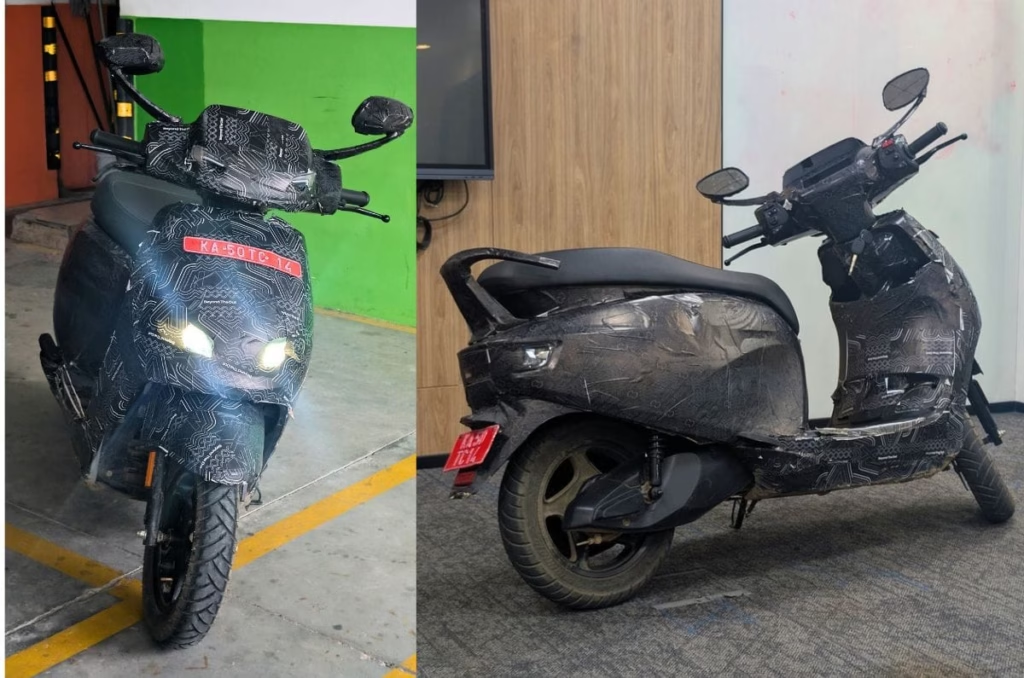
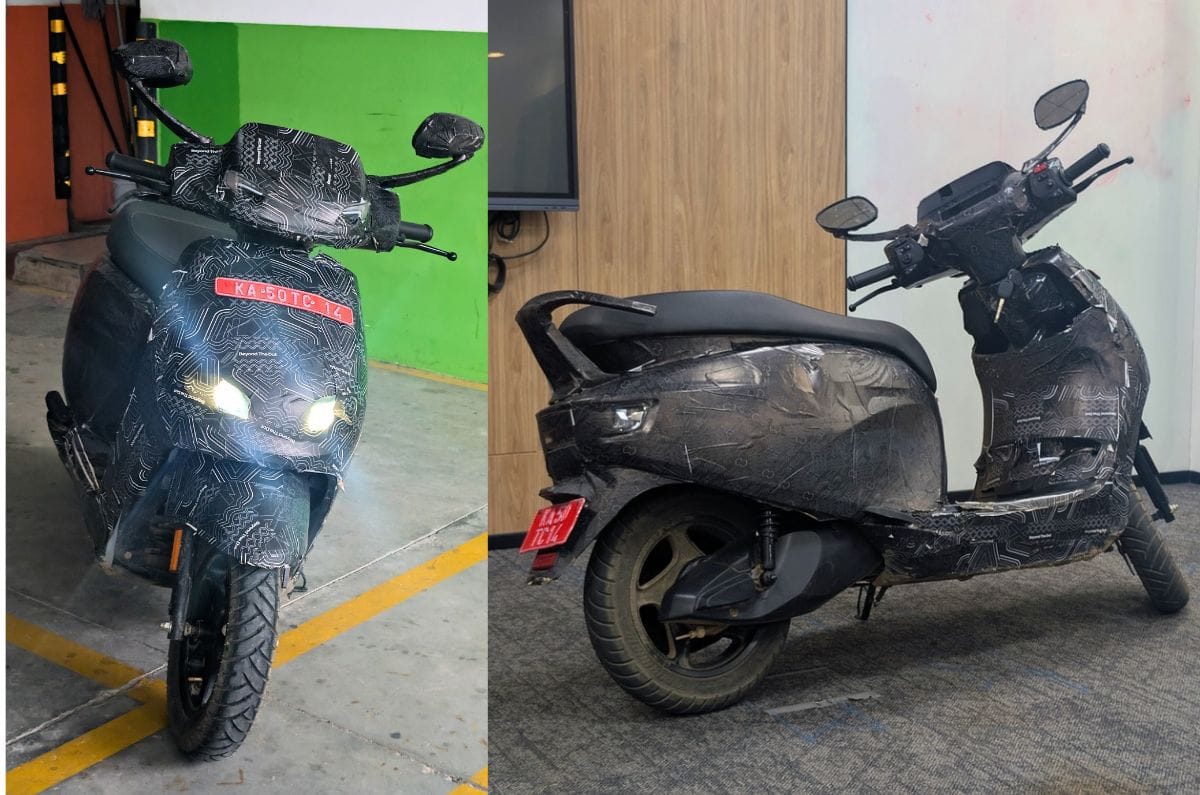
Simple Energy has named its upcoming family electric scooter Simple Wave, which will be unveiled on September 2, 2026. The scooter marks the company’s entry into the mainstream family scooter segment, expanding its portfolio beyond the performance-oriented One range. The model was previously referred to as Arrive during its development and testing, with Simple Energy now confirming Wave as its production name.
Simple Wave to launch on September 2
Scooter was previously referred to as Arrive
New model will target family buyers
Simple Wave to expand the brand’s portfolio
The brand current has the One range on sale.
The Wave has been developed for everyday mobility, with Simple Energy highlighting comfort, practicality and shared journeys. It will take on family-oriented electric scooters such as the Ather Rizta, TVS iQube and Bajaj Chetak.
The scooter has been spotted testing in India on several occasions. Earlier test mules featured a large single-piece seat, a spacious-looking floorboard, telescopic front suspension and twin rear shock absorbers. Braking hardware included a front disc and rear drum, while a TFT instrument display was also seen on test vehicles. Simple Energy has not yet confirmed the final production specification.
The Wave represents a move into a broader part of the electric scooter market for Simple Energy, whose existing products have focused on performance and technology. The company says its new scooter has been developed through its in-house R&D and engineering capabilities, including proprietary software and vehicle technologies.
Simple Energy also says it is the first Indian OEM to commercially manufacture heavy rare earth-free electric motors, highlighting its focus on developing key technologies in-house.
Technical details of the Wave have not yet been revealed. Battery capacity, motor output, claimed range, charging specifications, variants and pricing are expected to be announced at the September 2 launch.
With the Wave, Simple Energy will enter the family scooter market with a product aimed at everyday users, broadening its reach beyond its existing performance-oriented electric scooters.
BMW India is set to expand its entry-level SUV range with the X1 Long Wheelbase (LWB) on Friday, August 21. As the name suggests, the X1 LWB is an elongated version of the X1 and the ICE-powered equivalent to the iX1 LWB, which has been a hot seller for BMW here. Ahead of the X1 LWB’s India launch, here’s all you can expect from the stretched SUV.
What is the estimated price of the BMW X1 LWB?
The X1 LWB is anticipated to command a slight premium over the vanilla X1, which is priced in the Rs 50.9 lakh-52.9 lakh range. We expect pricing for the X1 LWB to land under Rs 55 lakh, which would represent good value considering the SUV has no direct rivals in the Indian market at the moment.
How much longer is the BMW X1 LWB over the standard X1?
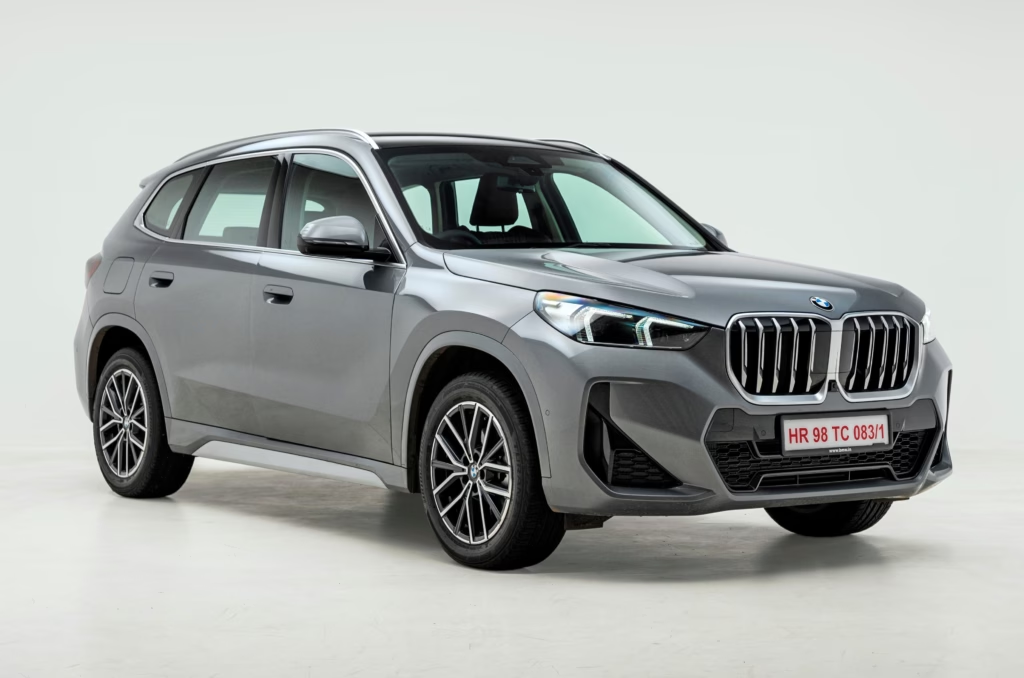
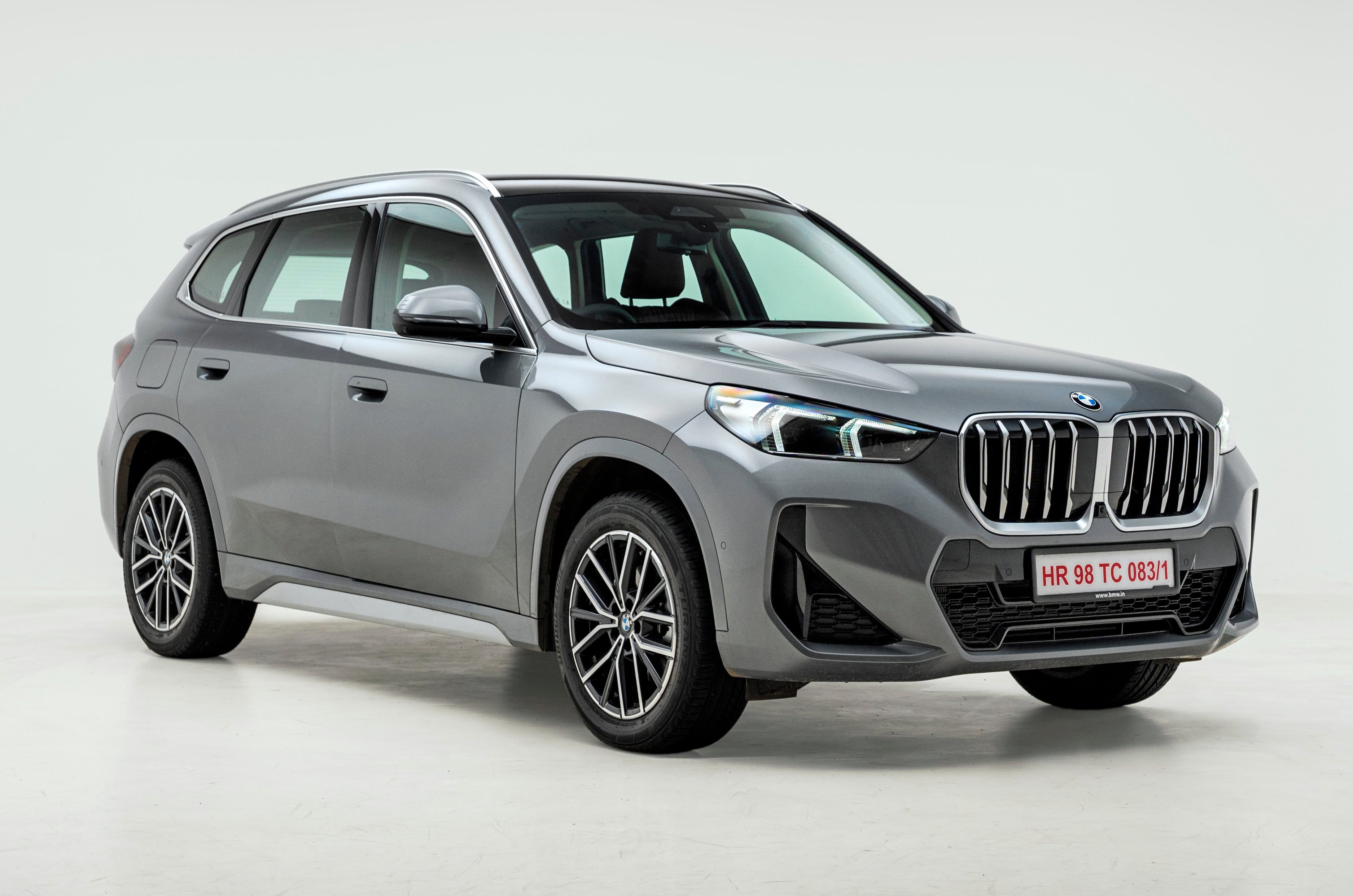
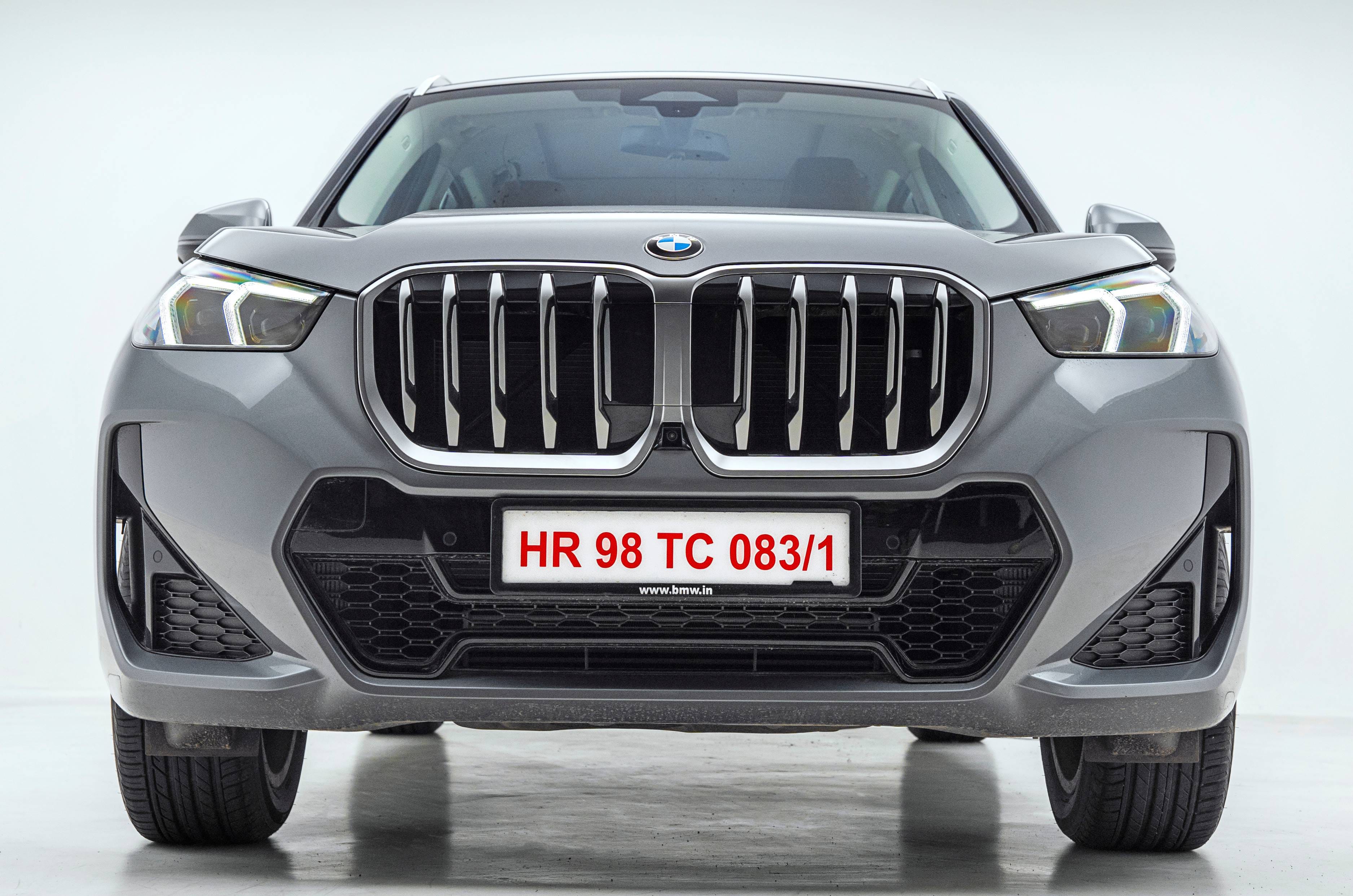
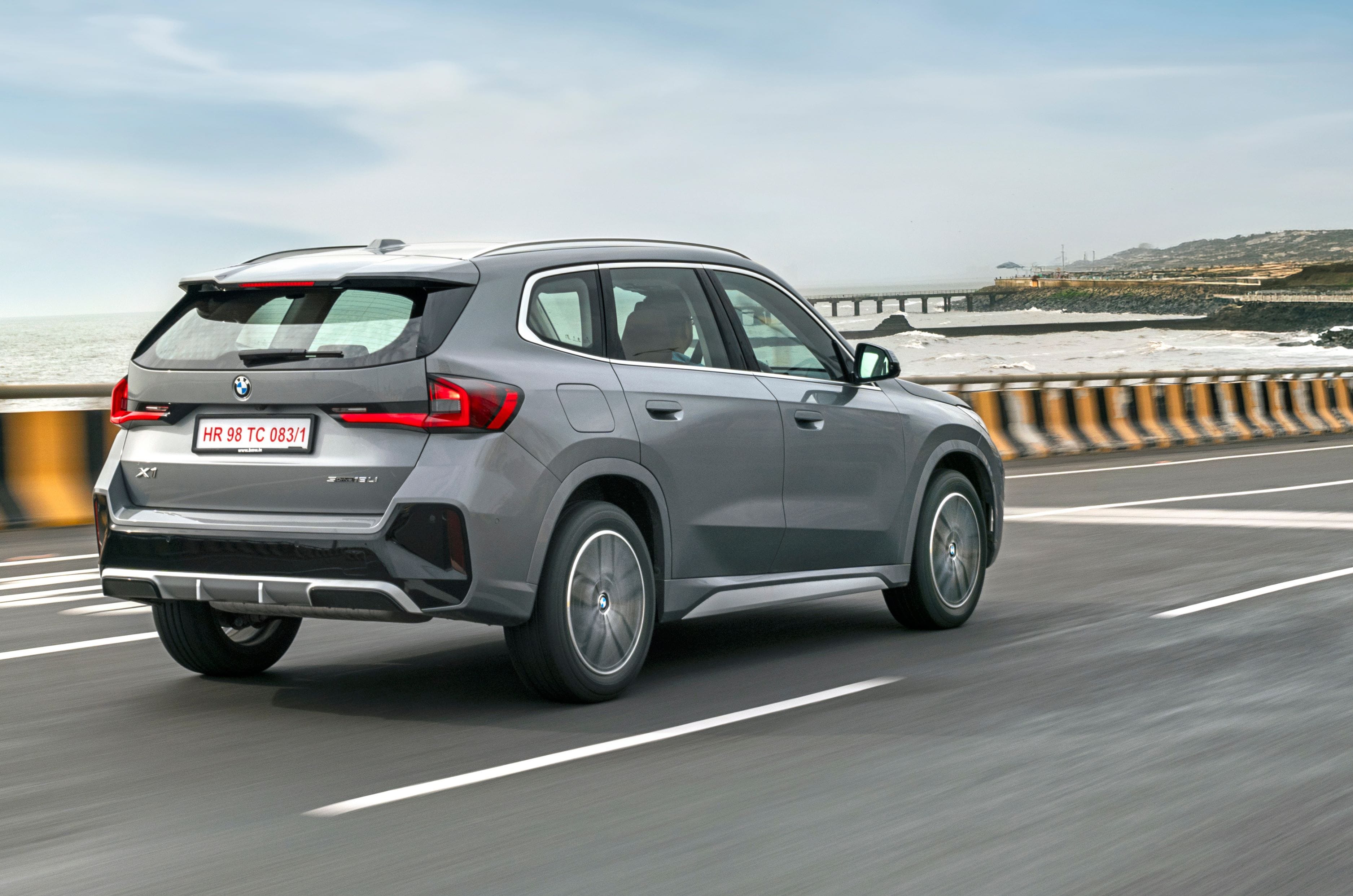
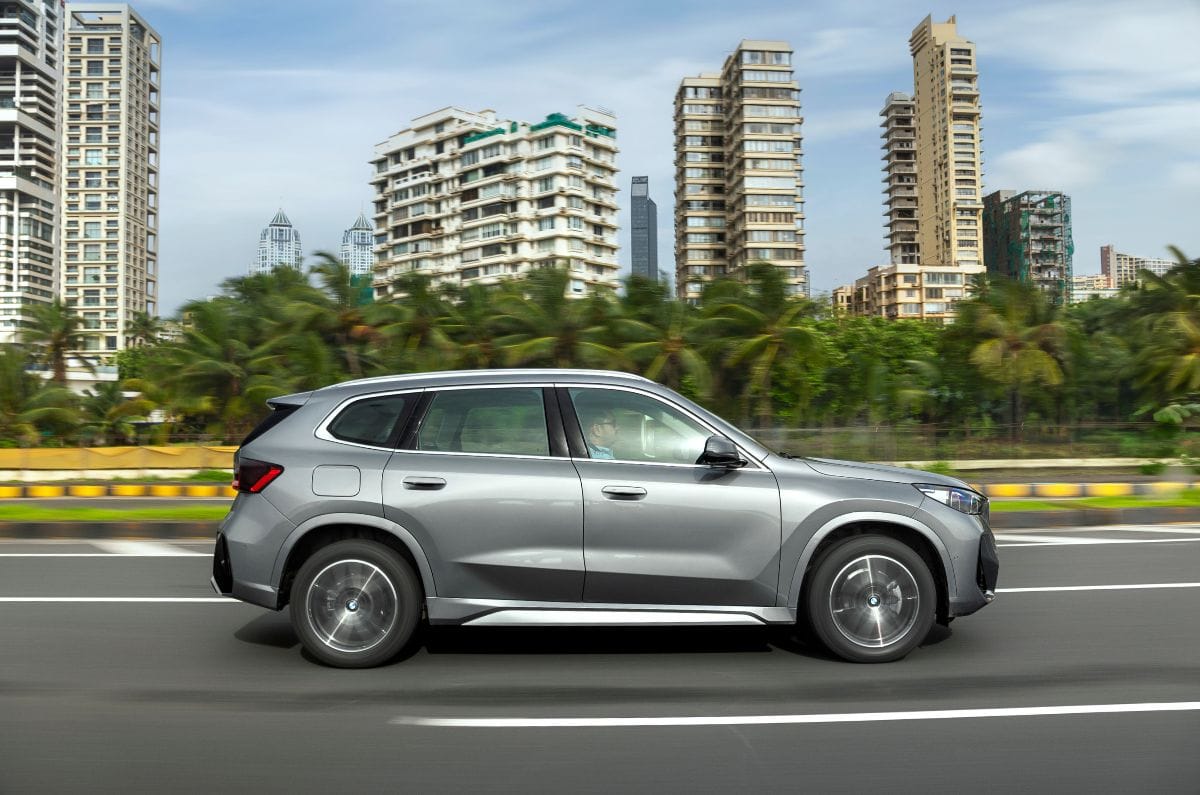
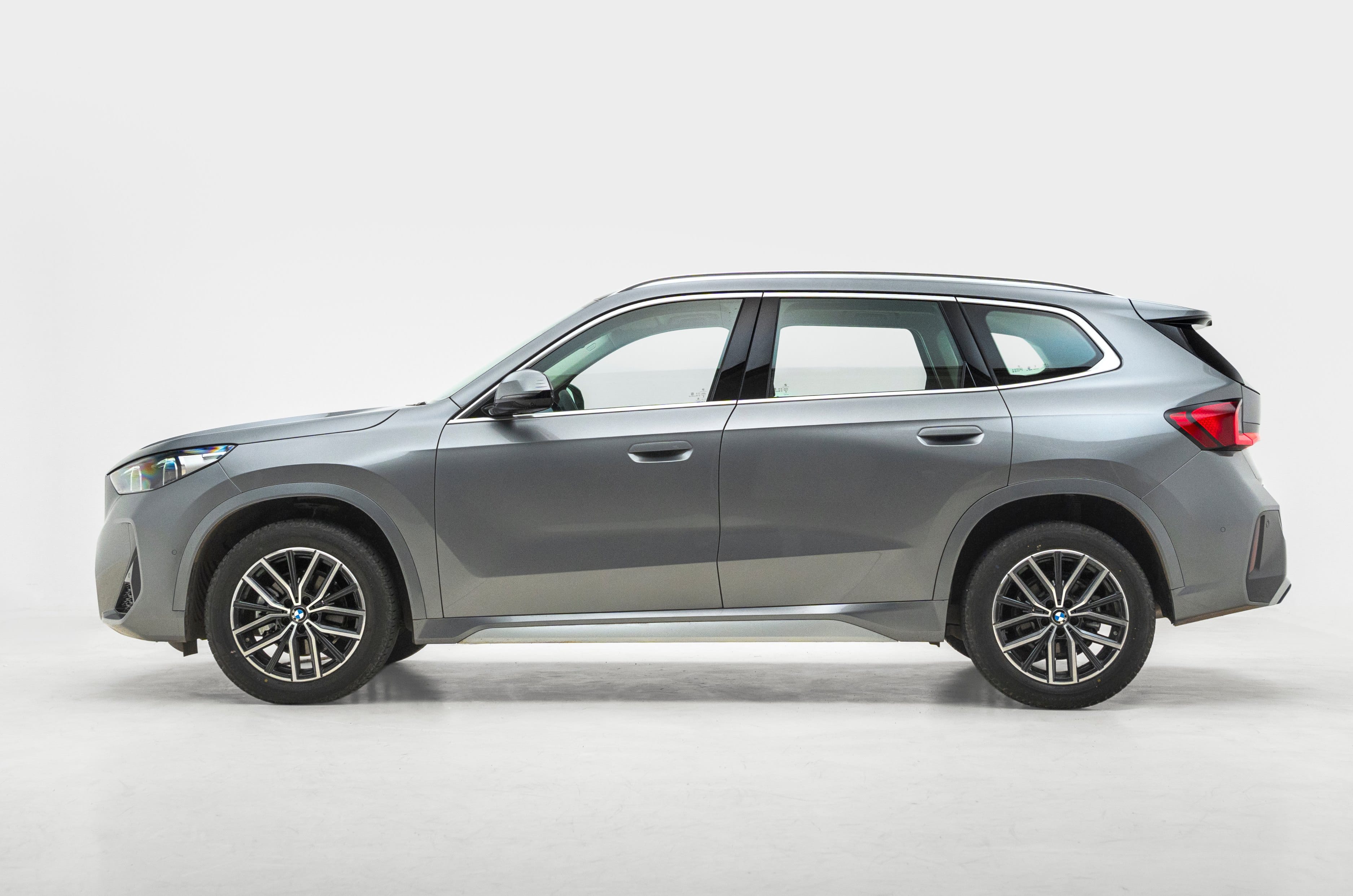
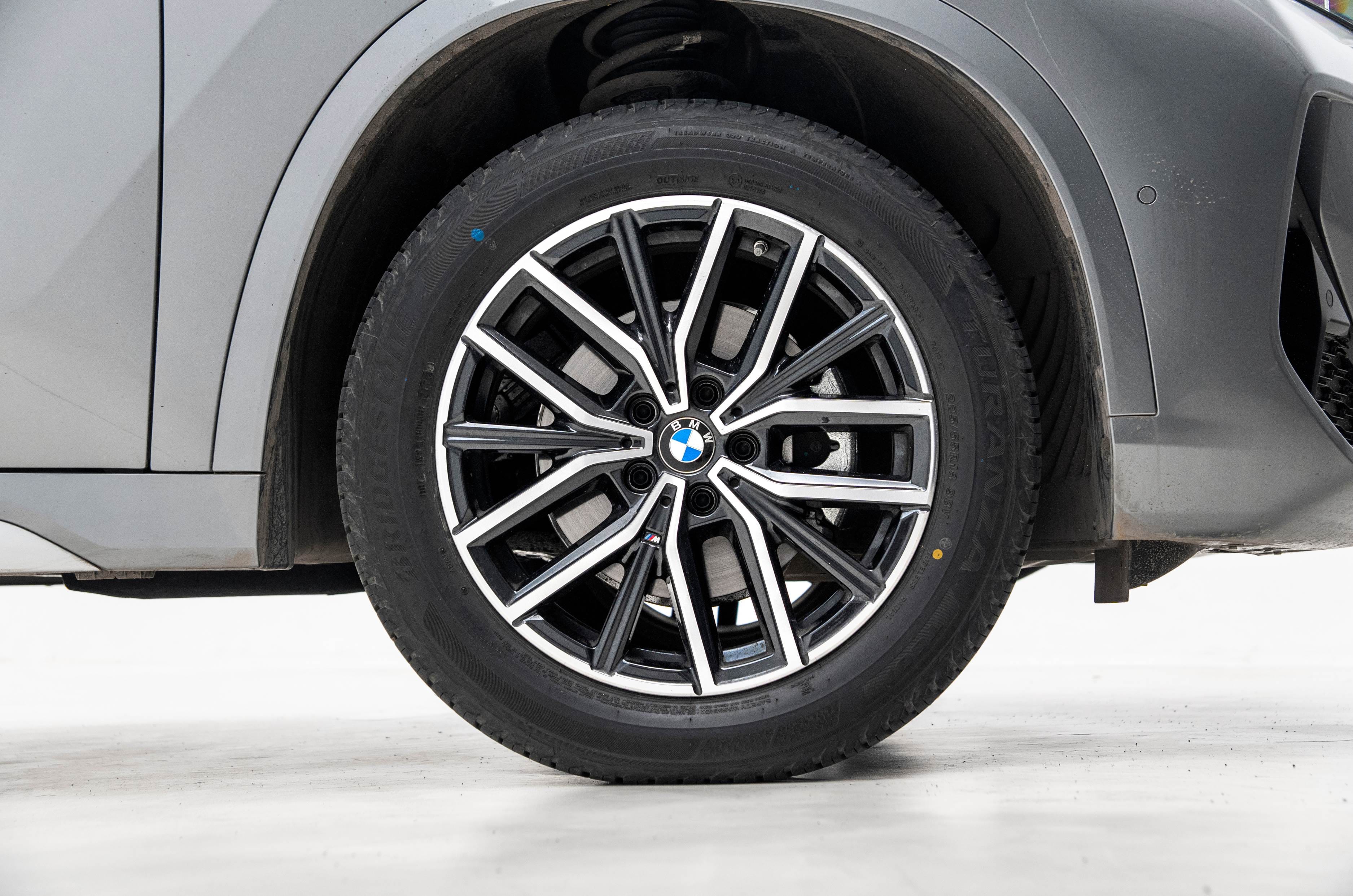
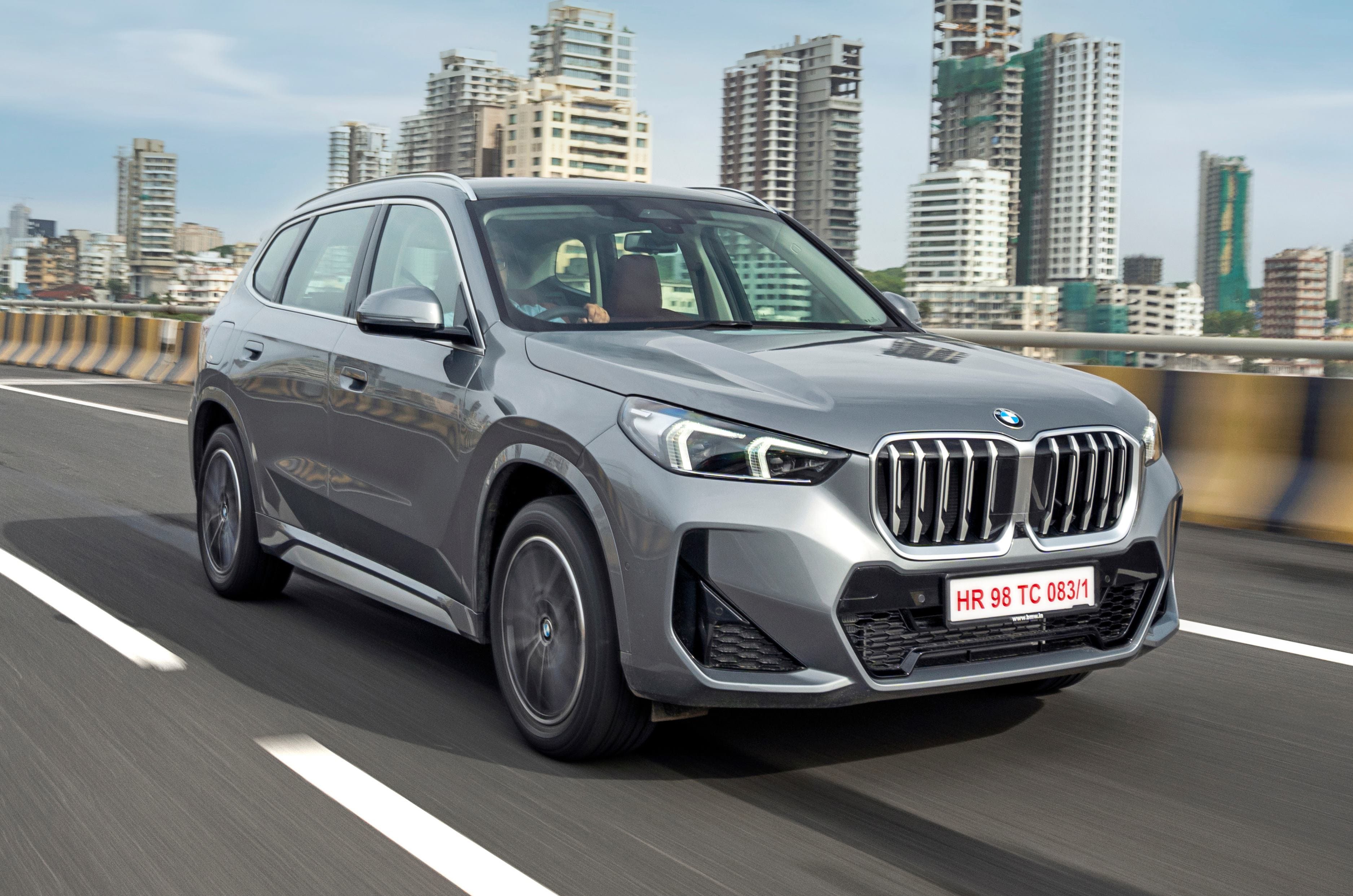
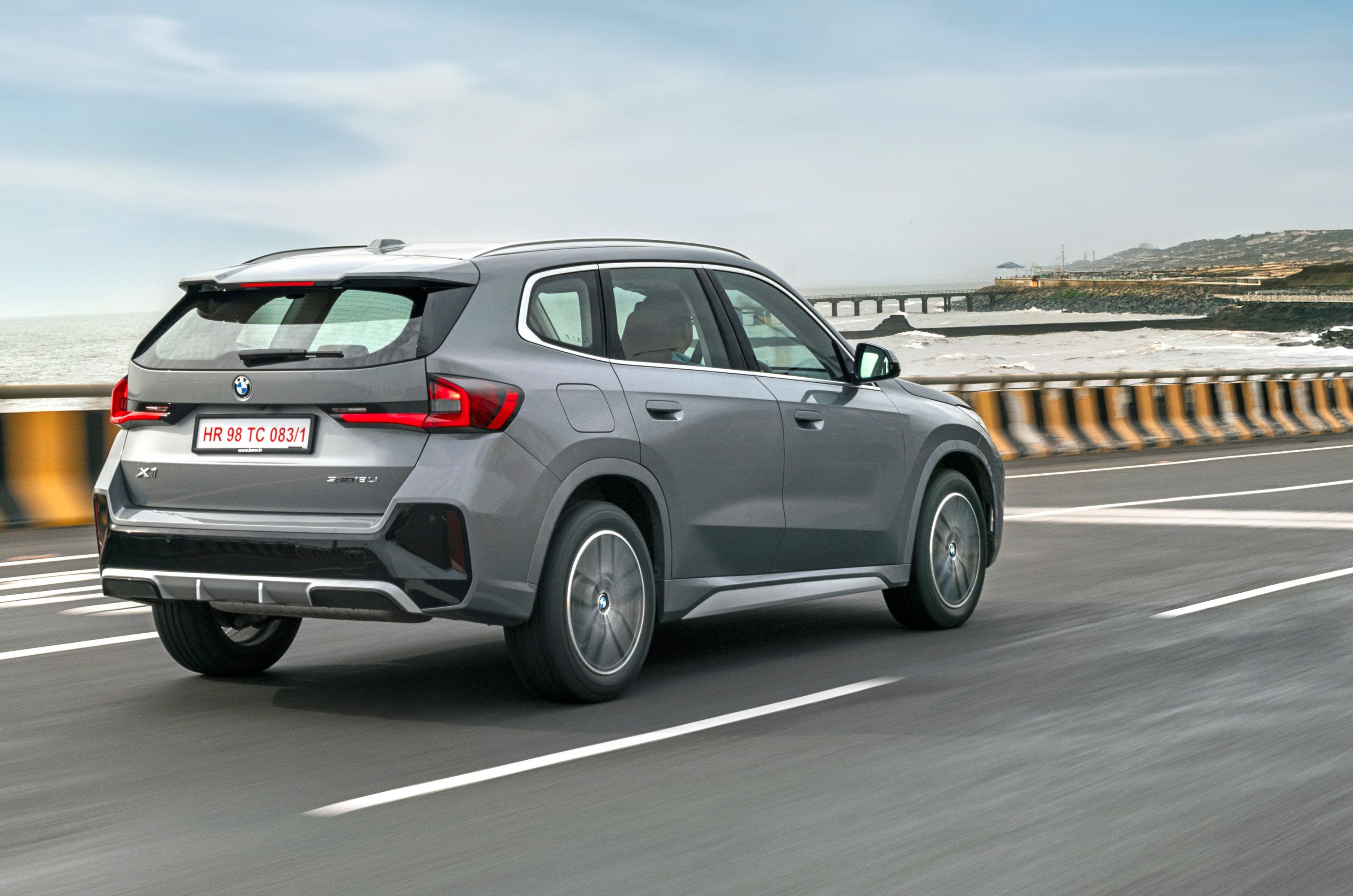
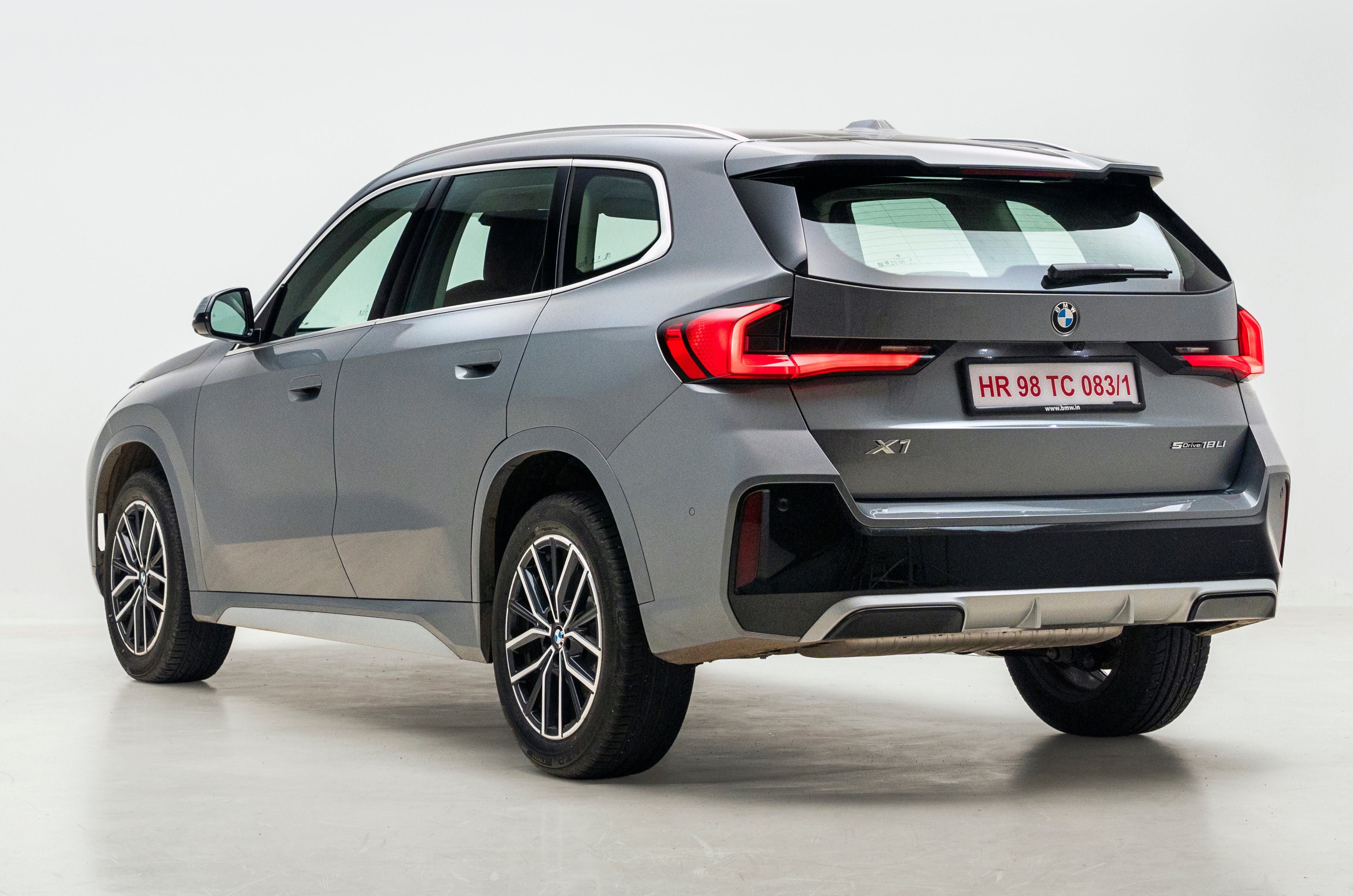
Measuring 4,616mm long, the X1 LWB sees a 116mm bump in overall length compared to the regular X1 – 108mm of that added length has gone into the wheelbase. The X1 LWB is also 11mm taller at 1,641mm, while width remains identical to the X1. Elsewhere, the X1 LWB looks exactly the same as its shorter counterpart, with swept-back LED headlamps, large kidney grilles, 18-inch alloy wheels, a dual-ridge roof spoiler, sharp-looking LED tail-lamps, and an M Sport cosmetic package fitted as standard.
How is the rear seat comfort of the BMW X1 LWB?
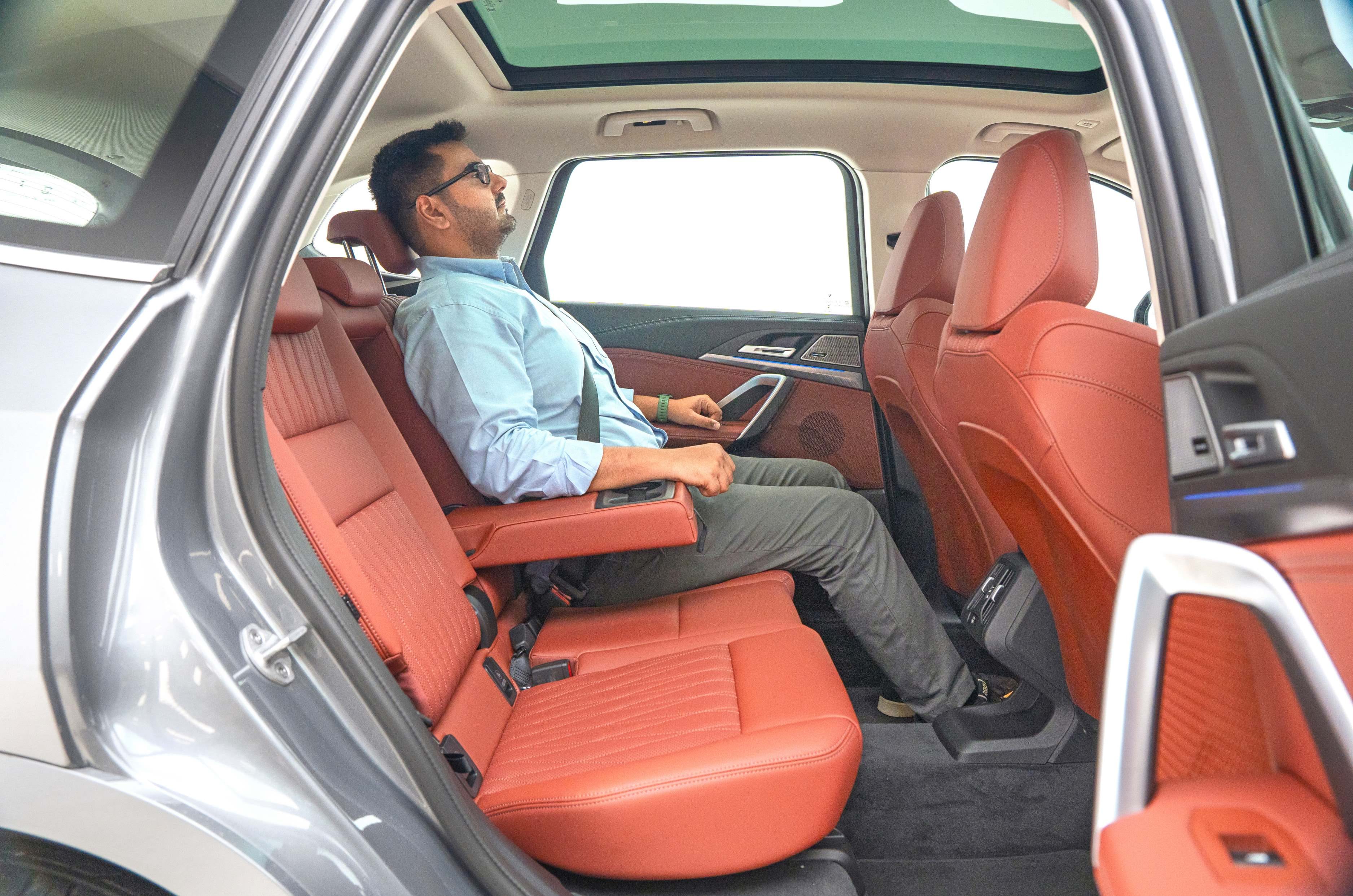
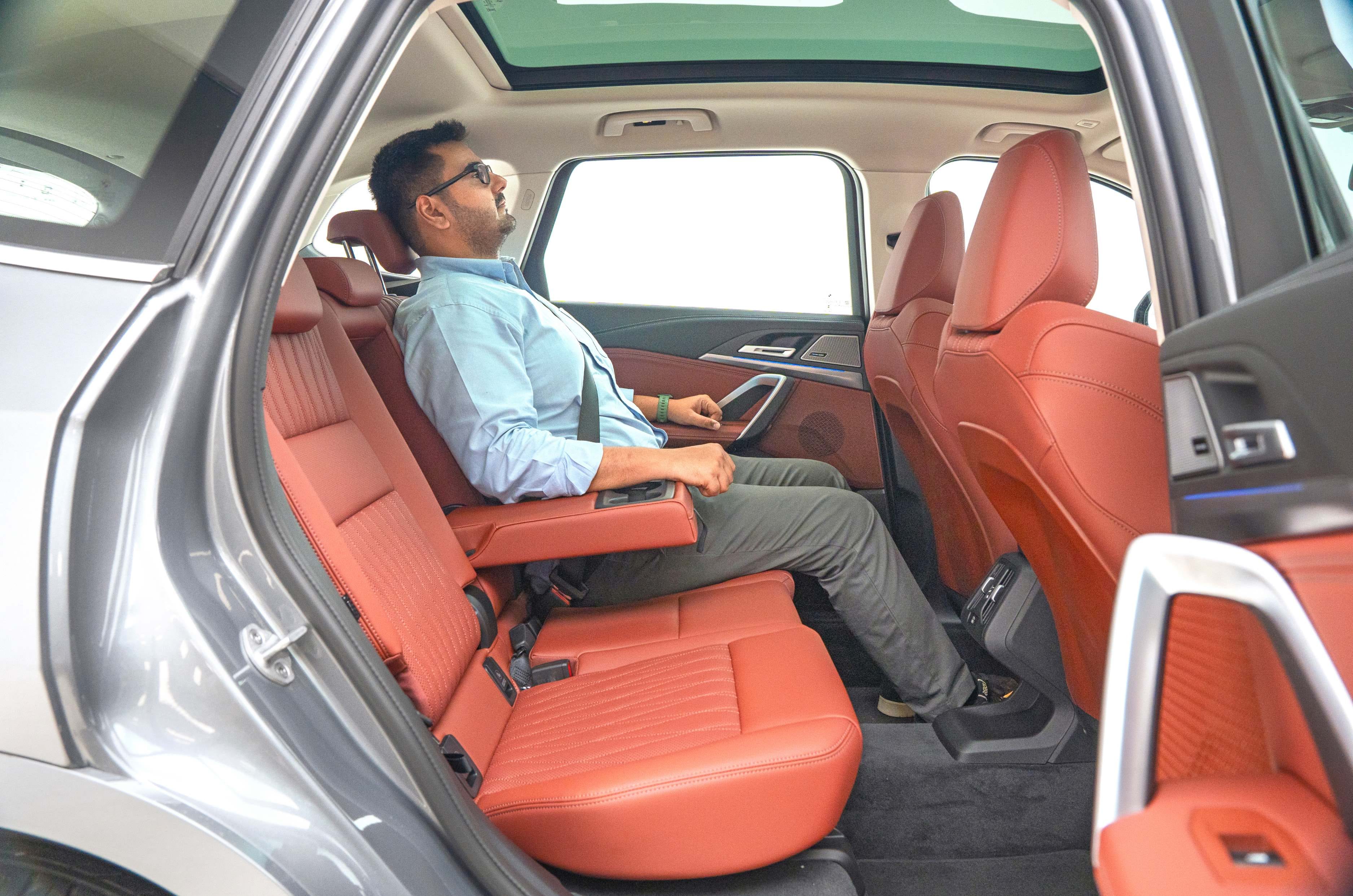
Expectedly, the increased wheelbase of the X1 LWB yields significantly more horizontal space for rear-seat occupants – BMW claims 109mm of extra knee room. The rear seat base has also been extended by 15mm, and cushioning has been enhanced too. In our X1 LWB review, we noted that the lengthened seat base improves thigh support, and the seating position is very good as well.
You can recline the backrest by a couple of degrees for an even more relaxed angle. However, while the added legroom frees up a bit more space for the middle passenger, the high centre tunnel makes the X1 LWB’s rear bench best suited for two occupants only. Boot space is rated at 540 litres, which is larger than X1’s 476-litre bay.
Which features does the BMW X1 LWB get?
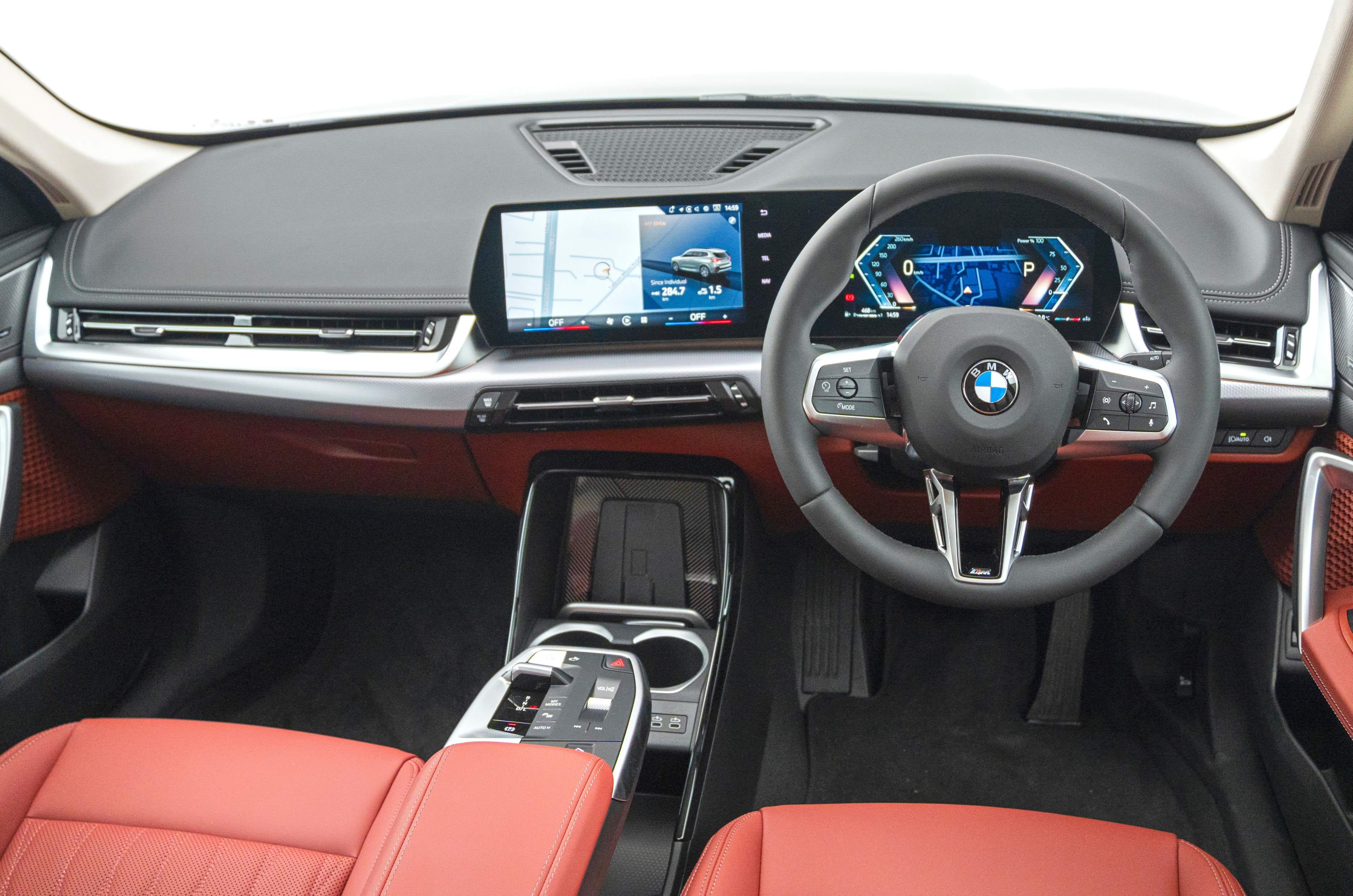
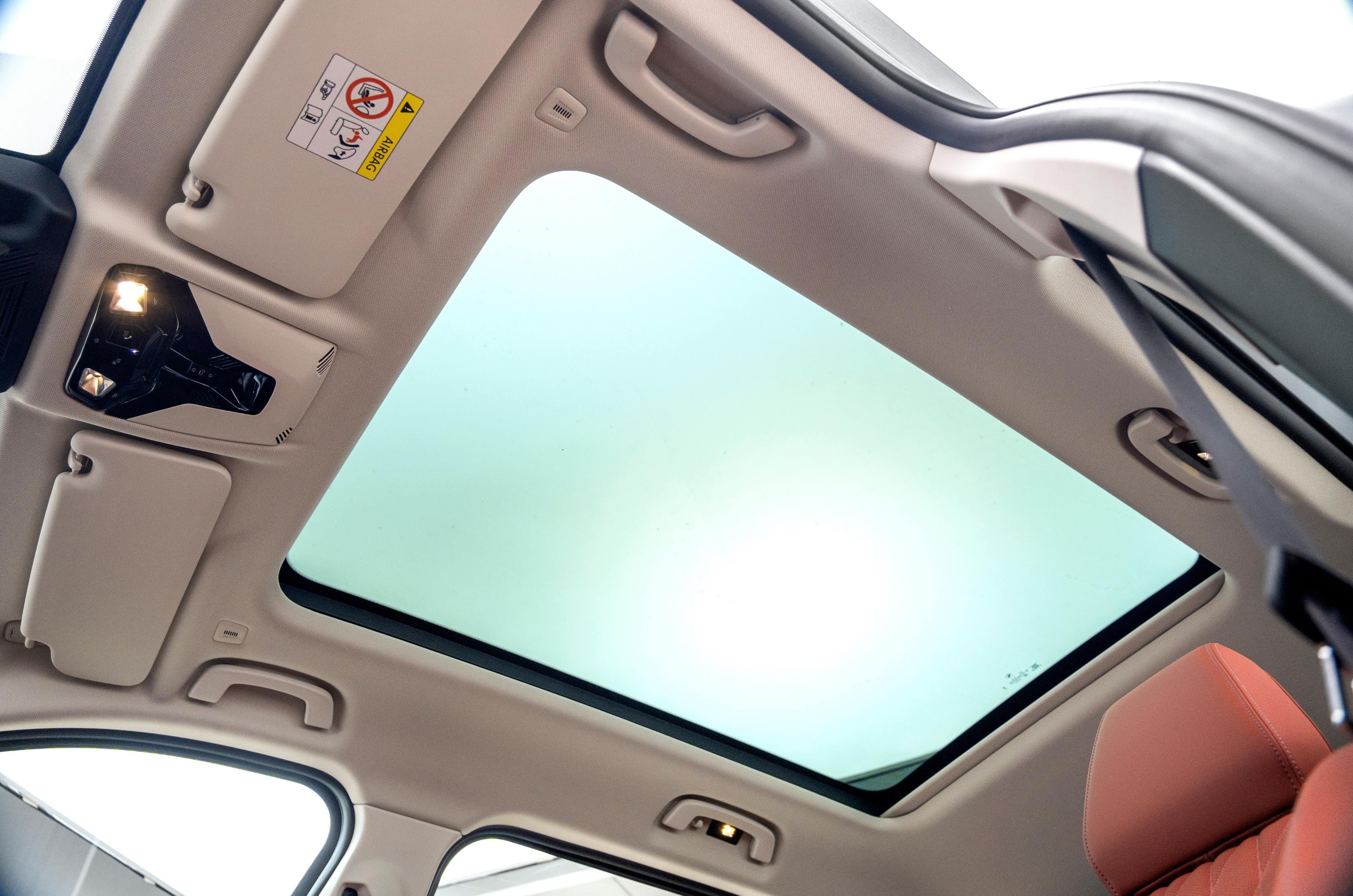
Aside from the bump in rear space, the X1 LWB’s interior is no different to that of the standard X1. This means you get features like a 10.7-inch infotainment touchscreen, a 10.25-inch digital driver’s display, a 12-speaker Harman Kardon sound system, wireless Apple CarPlay and Android Auto, powered front seats, a fixed panoramic glass roof, ambient lighting, a 360-degree camera, auto park assist, connected car tech, a digital key, ADAS, a wireless charging pad, and more.
Which engine options does the BMW X1 LWB offer?
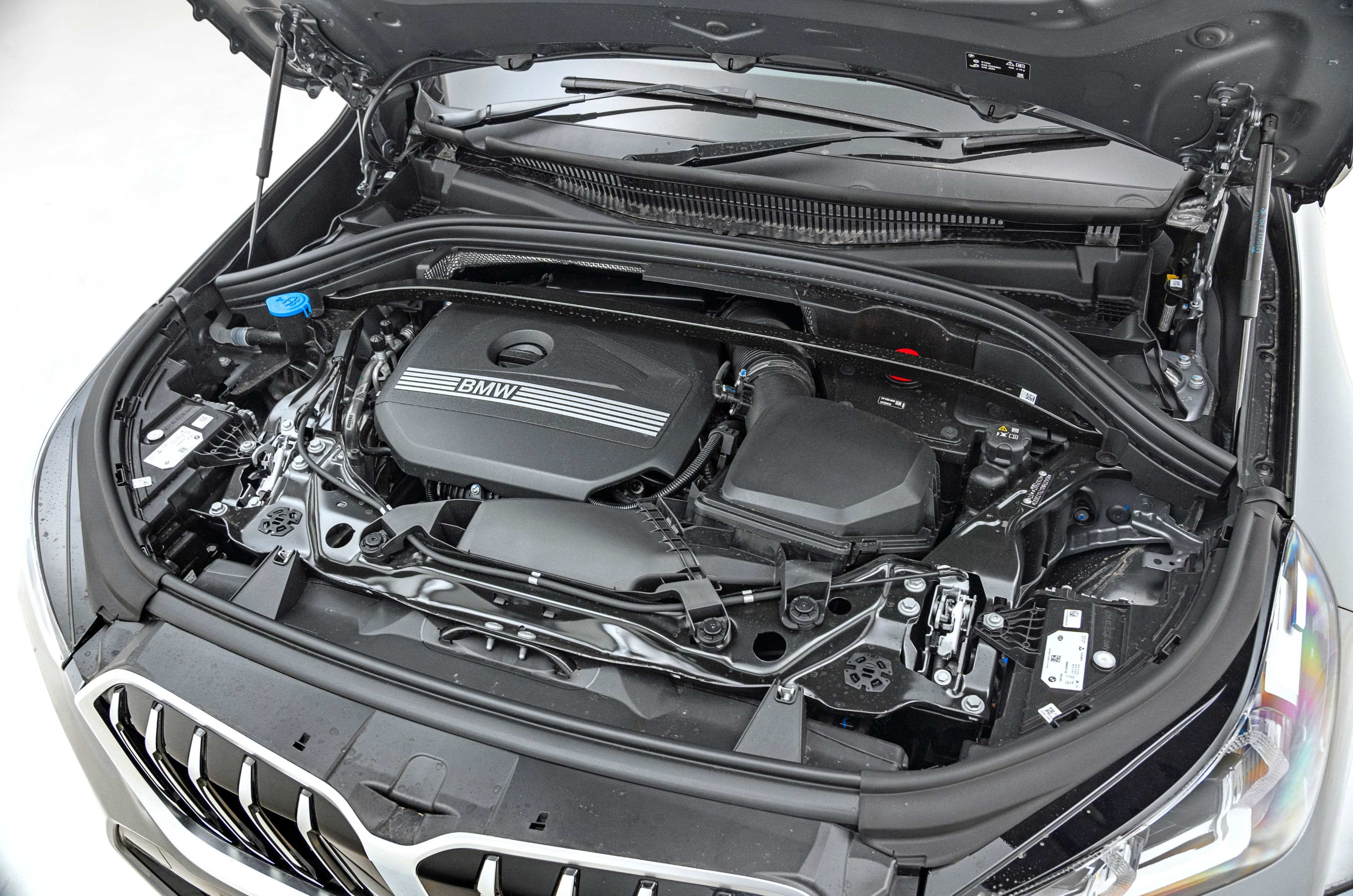
The X1 LWB will launch solely in sDrive18Li guise, which refers to a 1.5-litre 3-cylinder direct-injection turbo-petrol engine developing 156hp (up 20hp over the X1) and 230Nm. This is routed to the front wheels via a 7-speed dual-clutch automatic, and in our testing, the X1 LWB achieved a 0-100kph time of 9.58 seconds. Unlike the standard X1, the LWB will not be offered with a diesel engine.
BMW has also tweaked the X1 LWB’s suspension to deliver better ride comfort. The setup is quiet in operation and feels absorbent, with a hint of firmness coming through only when you’re keenly paying attention.
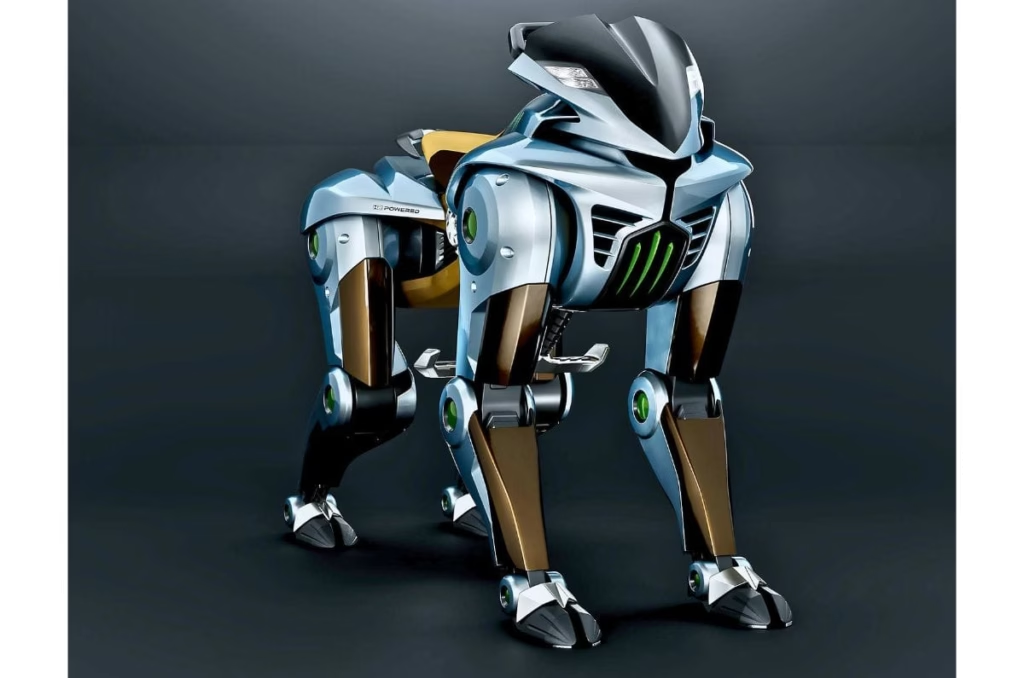
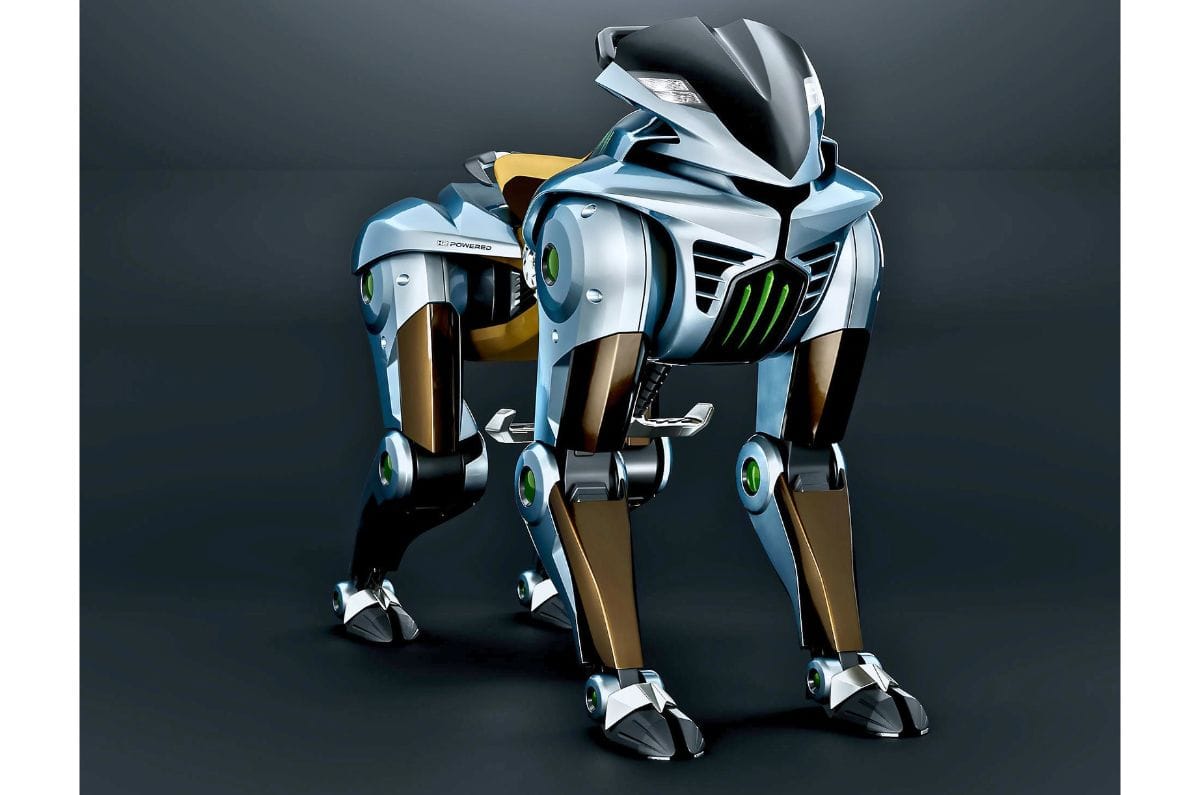
Kawasaki has begun development of the Corleo, a four-legged off-road mobility vehicle powered by hydrogen. While the Corleo isn’t a two-wheeler, it comes from one of the world’s biggest motorcycle manufacturers, a company that has never shied away from unconventional ideas. Kawasaki is targeting its use as an on-site mobility vm ehicle at Expo 2030 Riyadh in Saudi Arabia and is working towards commercialisation around 2035.
Four-legged off-road mobility vehicle
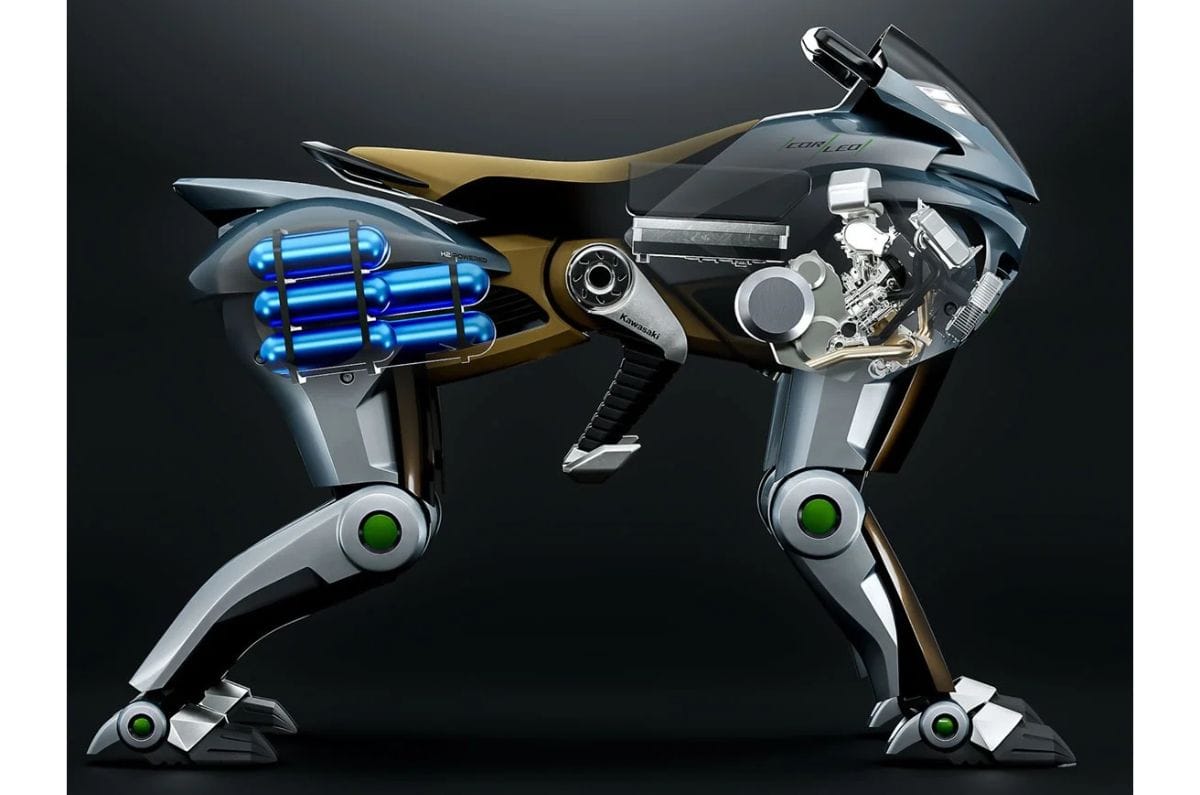
Uses a 150cc hydrogen engine to generate electricity
Commercialization targeted around 2035
Kawasaki Corleo combines motorcycle and robotics technology
The Corleo was first unveiled as a concept at Expo 2025 Osaka. Kawasaki has since established a dedicated SAFE ADVENTURE Business Development Team to develop the vehicle towards commercialisation, with potential use at Expo 2030 Riyadh forming part of its plans.
The Corleo uses four independently controlled legs instead of conventional wheels. Its rear legs feature a swingarm mechanism derived from motorcycle technology, allowing them to move independently and absorb shocks while helping maintain the rider’s posture.
The vehicle is operated through the rider’s weight shifts, much like riding a horse. Stirrups and handholds detect these movements and feed the rider’s inputs into the vehicle’s control system. Kawasaki says the system is designed to help the Corleo negotiate difficult terrain, including mountainous areas and water crossings.
Corleo uses a 150cc hydrogen engine
Hydrogen is stored in canisters at the rear of the vehicle. A 150cc hydrogen engine generates electricity to power actuators in the four legs and the vehicle body. Kawasaki says the hydrogen storage canisters are designed to be swappable, allowing them to be replaced away from conventional refuelling infrastructure.
The Corleo’s control system also monitors the vehicle’s posture and movement, helping it respond to the terrain beneath its four legs. Kawasaki is developing the machine for use in environments where conventional wheeled mobility could be difficult.
Kawasaki plans Corleo riding simulator
Kawasaki is also developing a riding simulator for the Corleo, with completion targeted for 2027. The simulator will be used to evaluate the vehicle’s riding characteristics and operation, while Kawasaki is also exploring potential applications in gaming and esports.
Kawasaki is targeting commercialisation of the Corleo around 2035, although production specifications and pricing have not yet been announced. The company is continuing development as part of its SAFE ADVENTURE initiative, which also includes technology designed to assess factors such as weather, road-surface conditions and wildlife when determining safer routes.
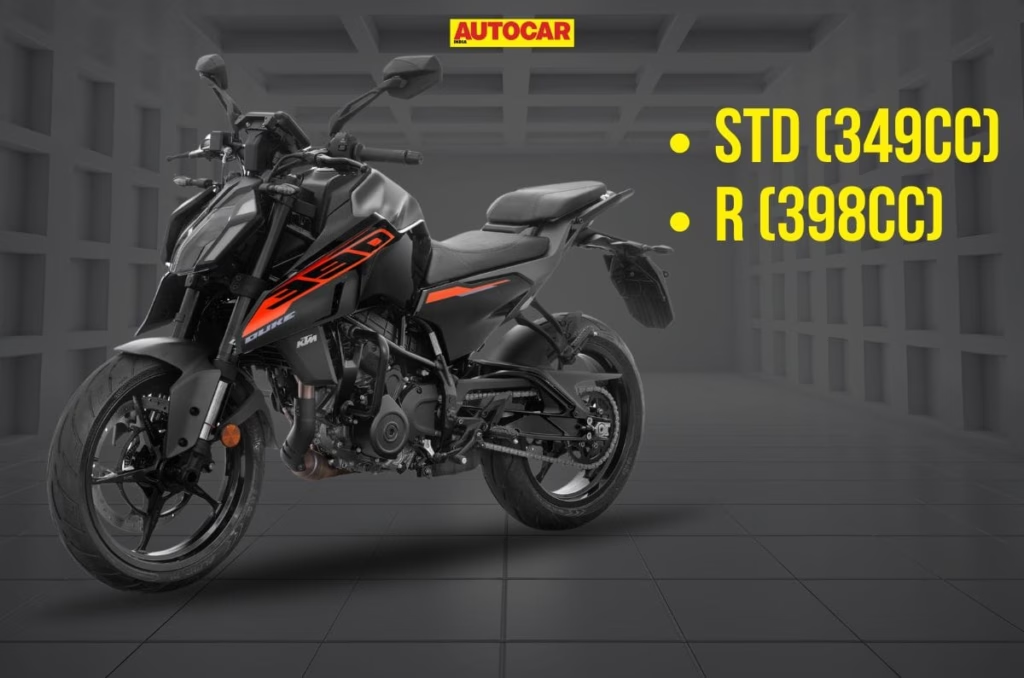
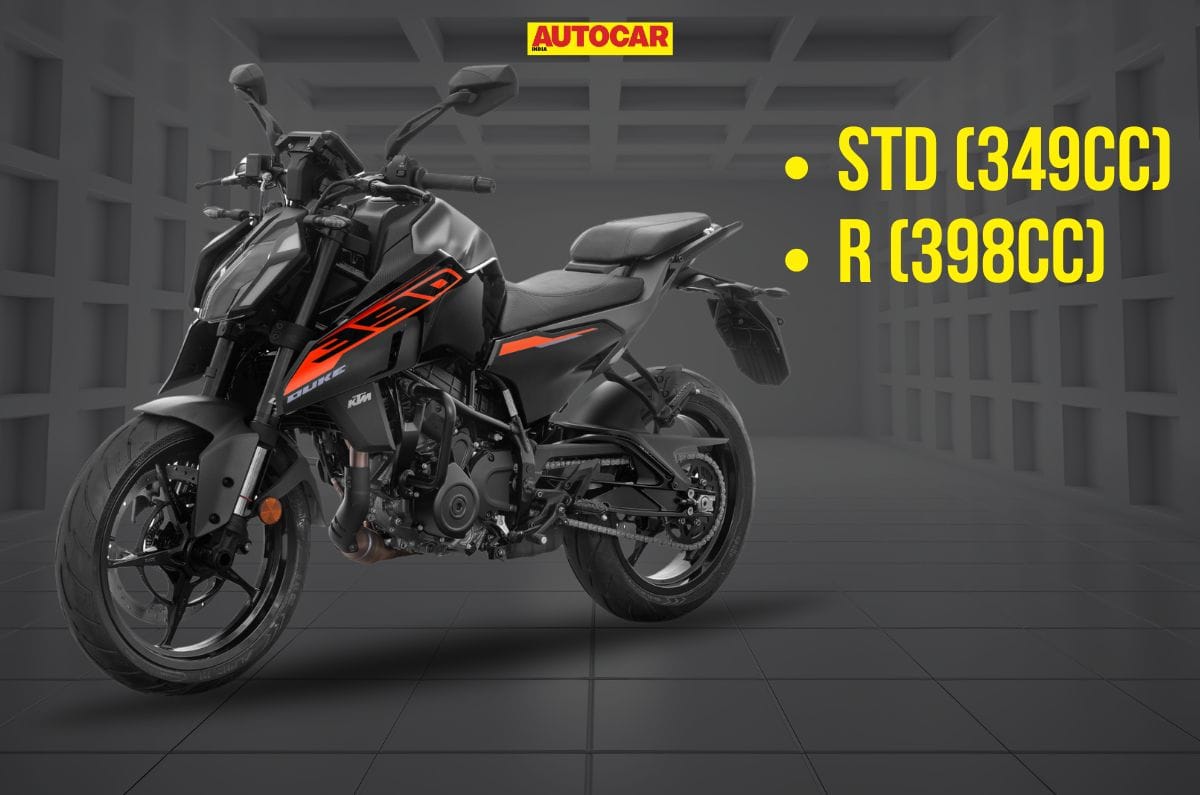
Ever since it burst onto the scene in 2013, the KTM 390 Duke has been synonymous with thrilling performance without breaking the bank. However, today the story has changed and KTM India now offers you two variants of the 390 Duke to choose from – both of which look very similar but have different engines and pricing. Here, we’ll break down what each variant offers and how much it costs.
All prices ex-showroom, Delhi
KTM 390 Duke variant breakdown
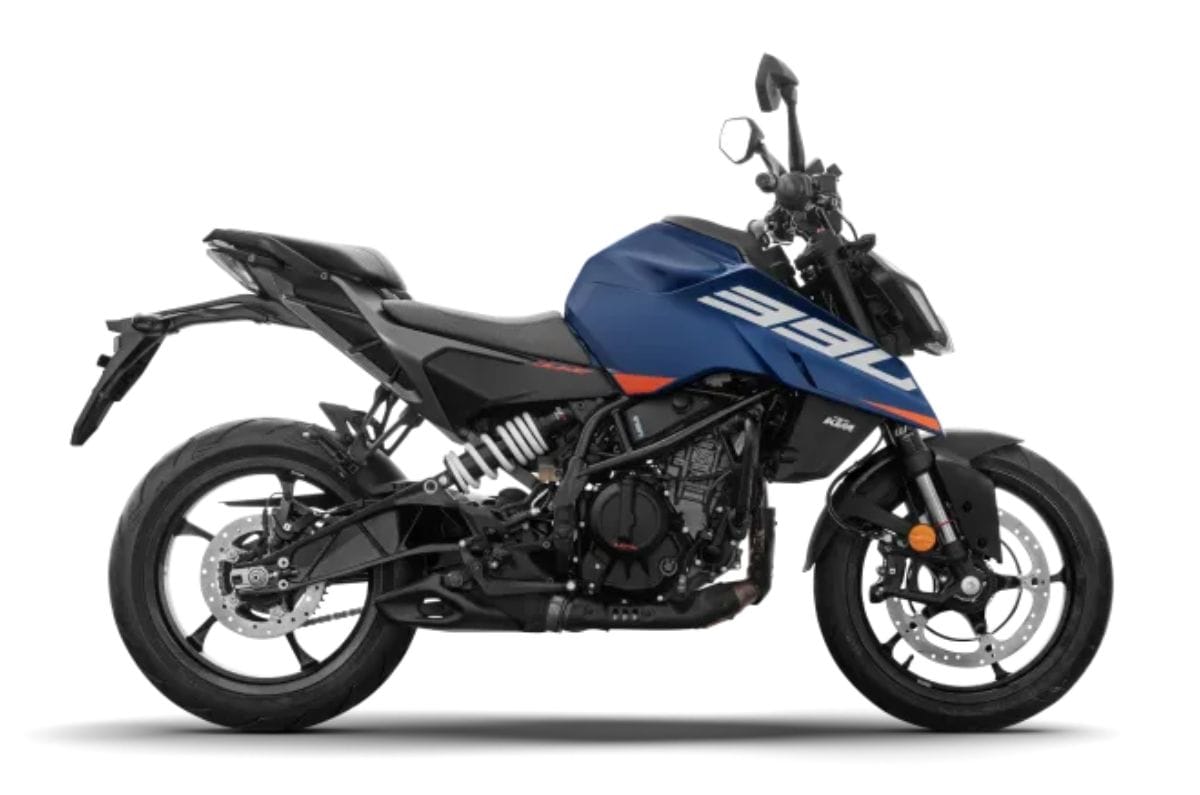
Standard
Before we elaborate on the differences between the two variants, let’s first recap what’s unchanged. The body panels, styling, chassis and feature-set are shared across both variants. Where the difference lies is primarily in the engine and the different pricing owing to the varying GST rates levied upon the motorcycles.
To benefit from the lower 18 percent GST, Bajaj has downsized the 398cc engine to 349cc via a shorter stroke while keeping the bore intact. The result is that peak output on the standard 390 Duke stands at 41.5hp and 33.5Nm of torque. As a consequence of the lower taxation, the 390 Duke’s price is Rs 2.84 lakh
Another differentiating factor is the different colours and graphics used on the 390 Duke to differentiate it from the higher R variant. You have a choice of three colours – orange, black and blue – which is applicable to the tank and body panels while the frame and wheels are both finished in black.
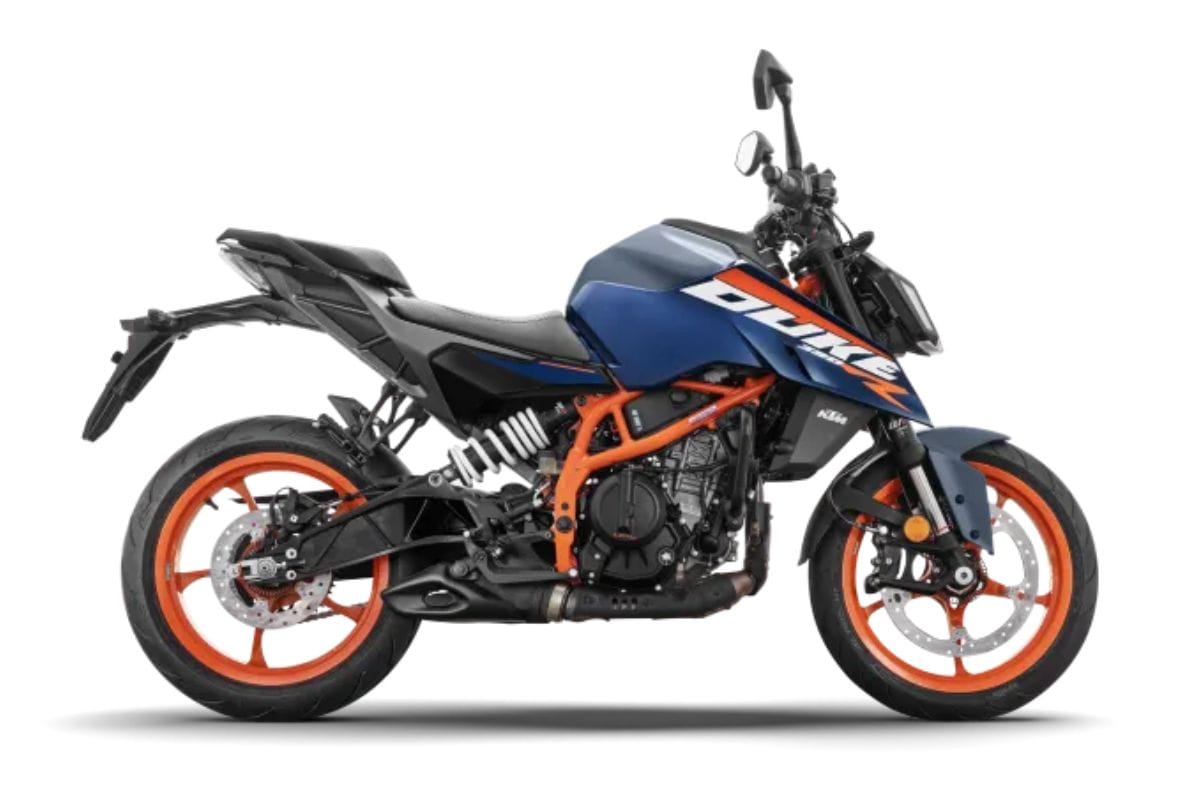
R
The R variant is the 398cc 390 Duke that came out in 2023 unchanged from before. To recap, the engine is rated for 46hp/39Nm of torque and as a consequence of the 40 percent GST levied here, its price is substantially more, at Rs 3.45 lakh. The most obvious difference between the base model and the 390 Duke R is that the latter comes with an orange frame and wheels as well as a prominent ‘R’ sticker on its side panels.
A long-wheelbase BMW X1 isn’t a new idea. China has had an extended-length X1 for years, and we got it in India last year in the form of the all-electric iX1 LWB. The X1 LWB brings the formula to the ICE X1 range. BMW says the standard-wheelbase X1 will continue to sell, though we assume the LWB will be the only X1 down the road.
BMW X1 LWB Exterior Design and Engineering – 7/10
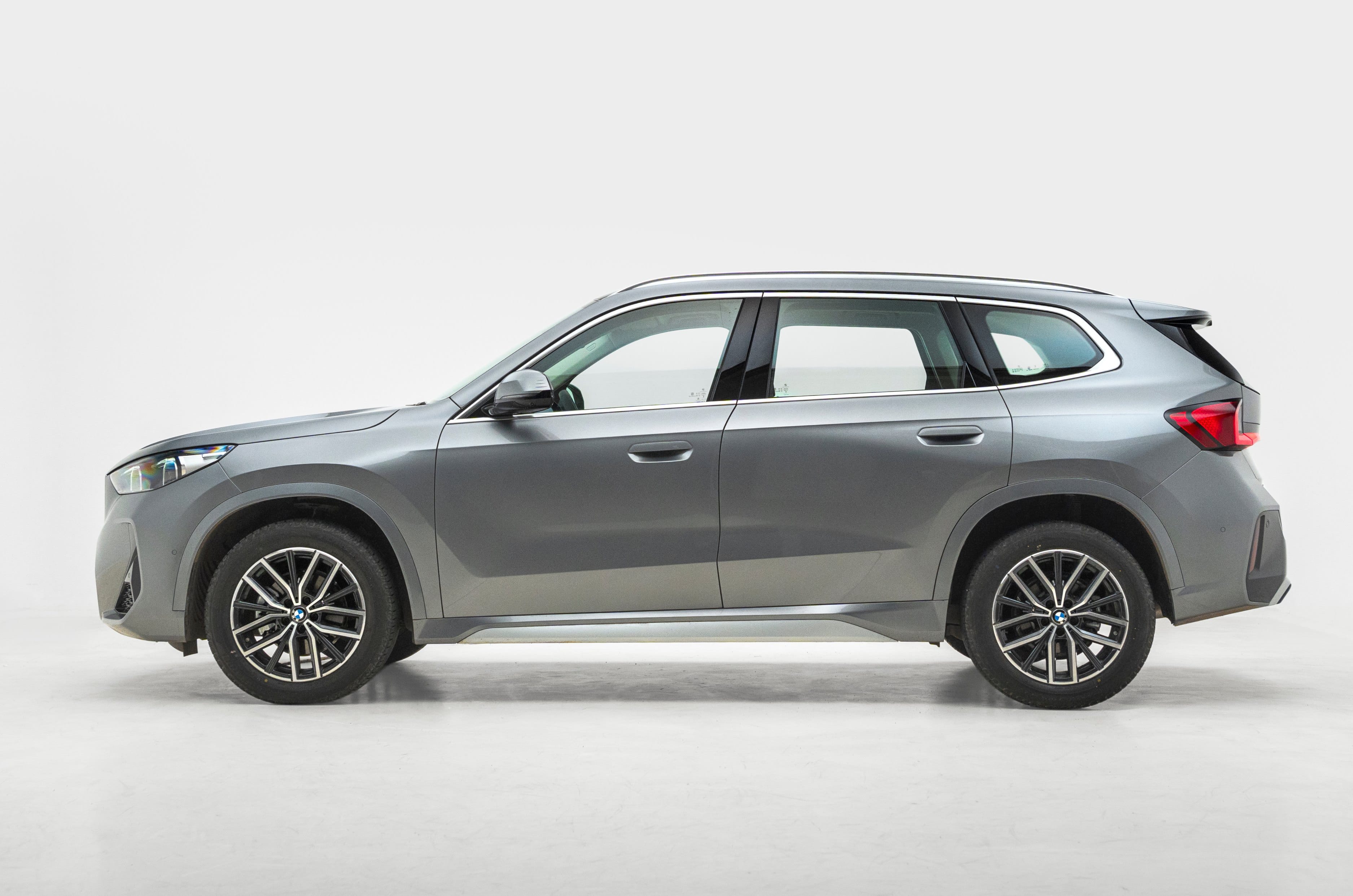
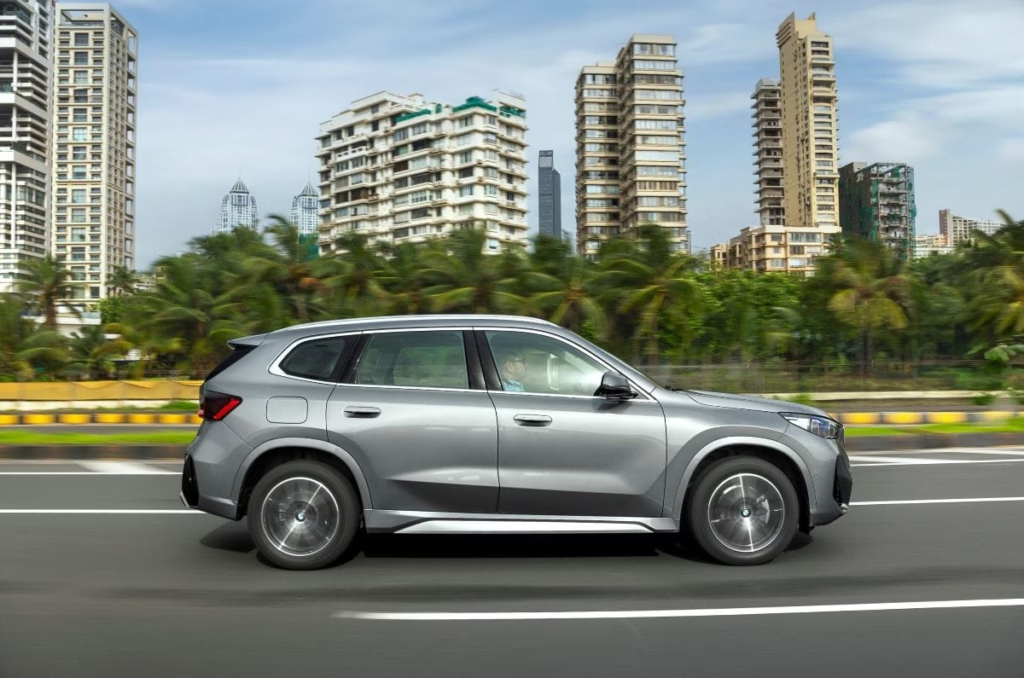
The X1 might be BMW’s smallest SUV, but it’s not particularly small anymore. It’s 116mm longer overall with 108mm of that added length at the wheelbase alone. Importantly, the longer wheelbase doesn’t look unusually long, and so the proportions work.
Lengthened body but well-proportioned design
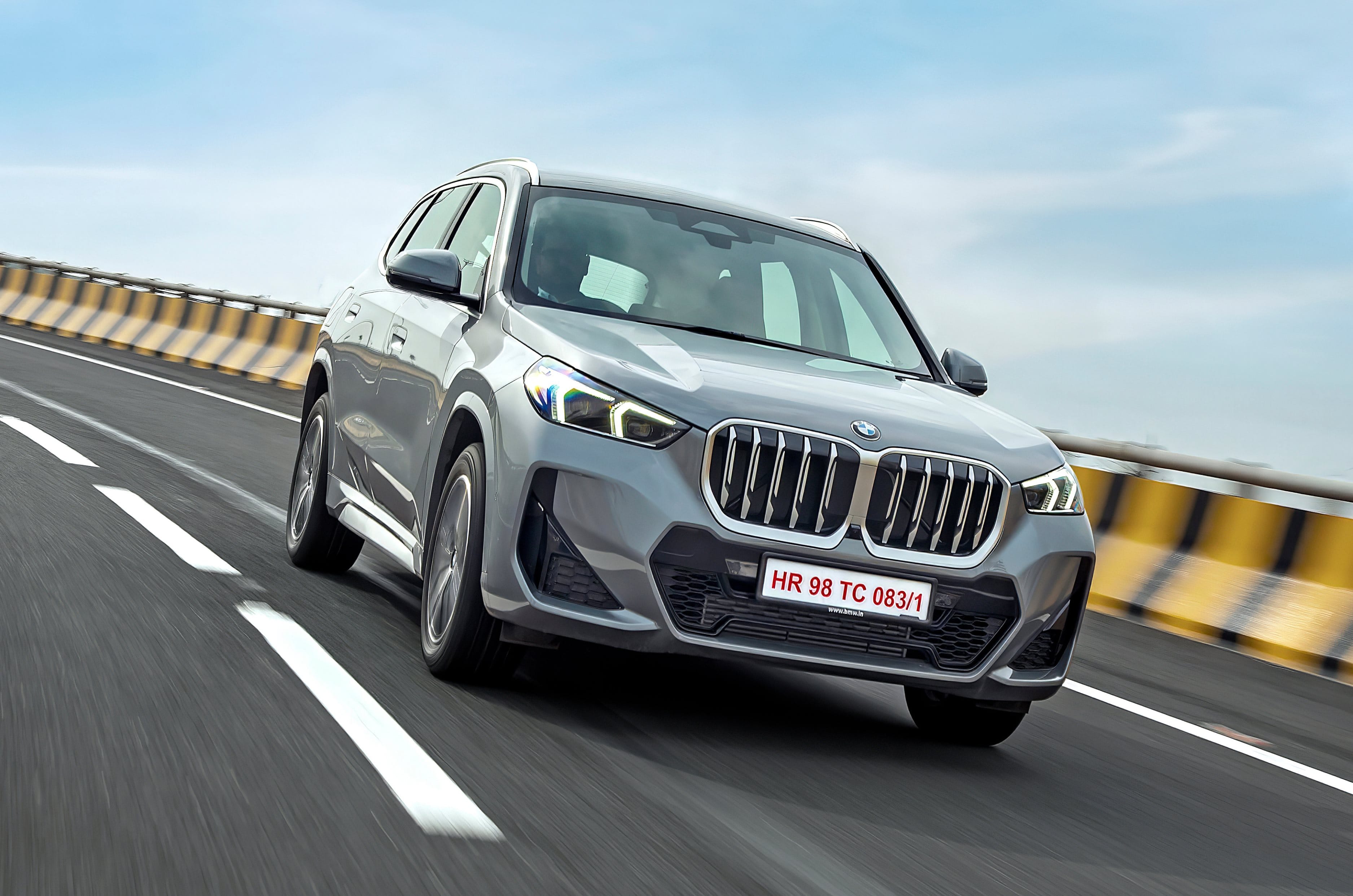
In person, the X1 LWB doesn’t look vastly different to the standard wheelbase model. It’s got the same peeled back headlamps, same M Sport styling pack and same edgy tail lights. The 18-inch rims are shared with the other X1s, but a more exciting design and or a larger size would have done much for the look. A chrome surround for the large windows is a small detail distinction to the standard X1 that uses a black effect, while the conventional grille here serves as a distinguishing element to the iX1 that sports a closed-off grille.
18-inch wheels shared with regular X1; larger wheels would have done much for the look.
BMW X1 LWB Interior Space and Comfort – 8/10
Long wheelbase opens up huge space at the back
Thanks to wide opening rear doors and a large door aperture, getting into the back of the X1 LWB is very convenient. And once you’re inside, you’ll be amazed by the sense of space that you get there.
Even six footers will find legroom generous and helping the feeling of space is the large glasshouse. The panoramic glass roof (it doesn’t open) lets in lots of light and the rear windows are also large. Pity, they don’t get adjustable sunshades.
Rear seat gets a longer base and enhanced cushioning for better comfort.
Like the iX1 LWB, the X1 LWB also benefits from a redone rear seat. There’s enhanced cushioning while a 15mm longer seat base adds a bit more by way of thigh support. The seating position itself is very good, and if you want a more relaxed setting, you also have the option to recline the backrest by a couple of degrees. The extra leg room also makes the X1 LWB that little bit comfier for a middle passenger who will have more space to keep his or her feet on either side of the high centre tunnel. Still, the rear seat is best for two.
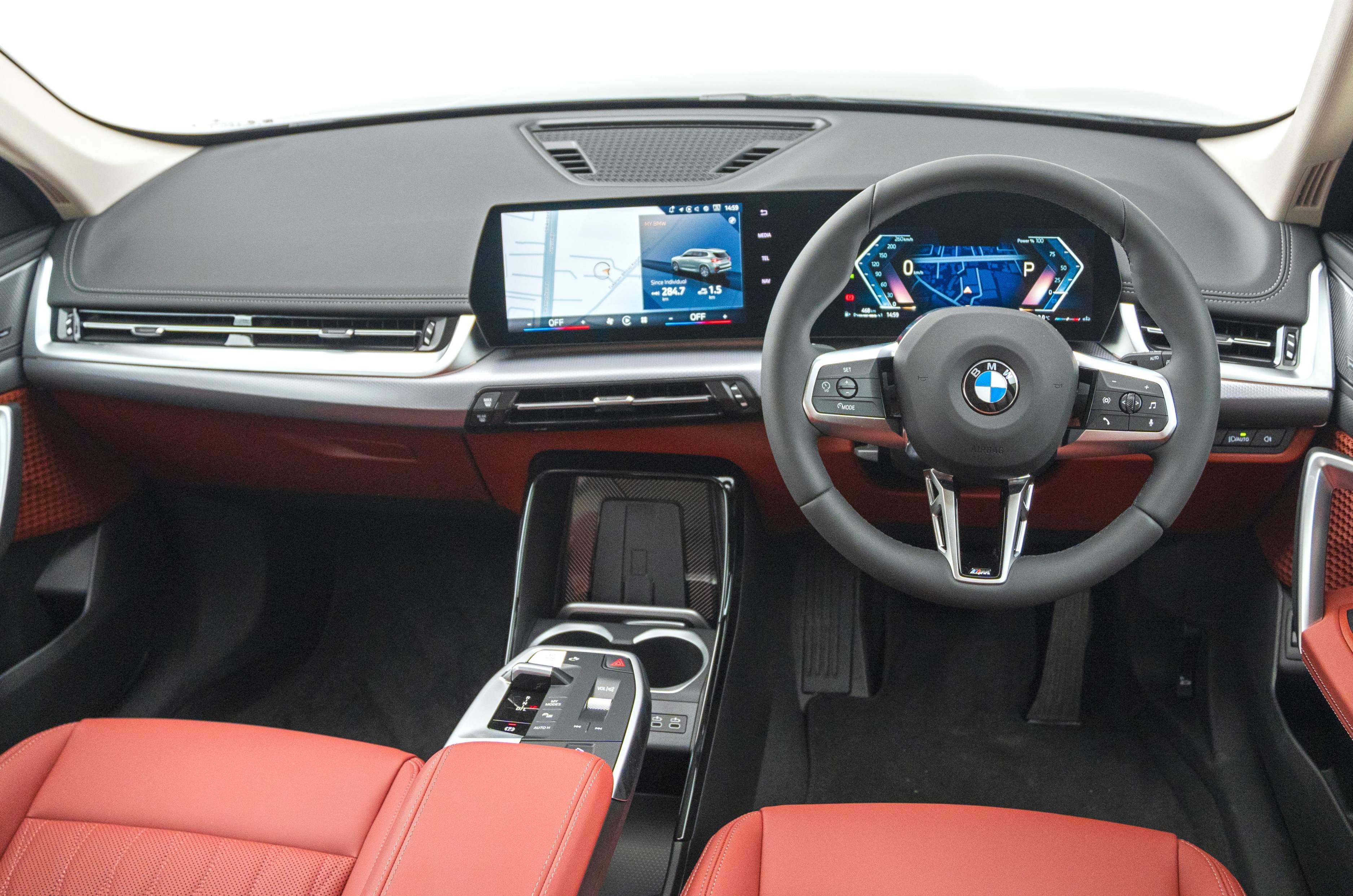
Dashboard is identical to the standard wheelbase X1.
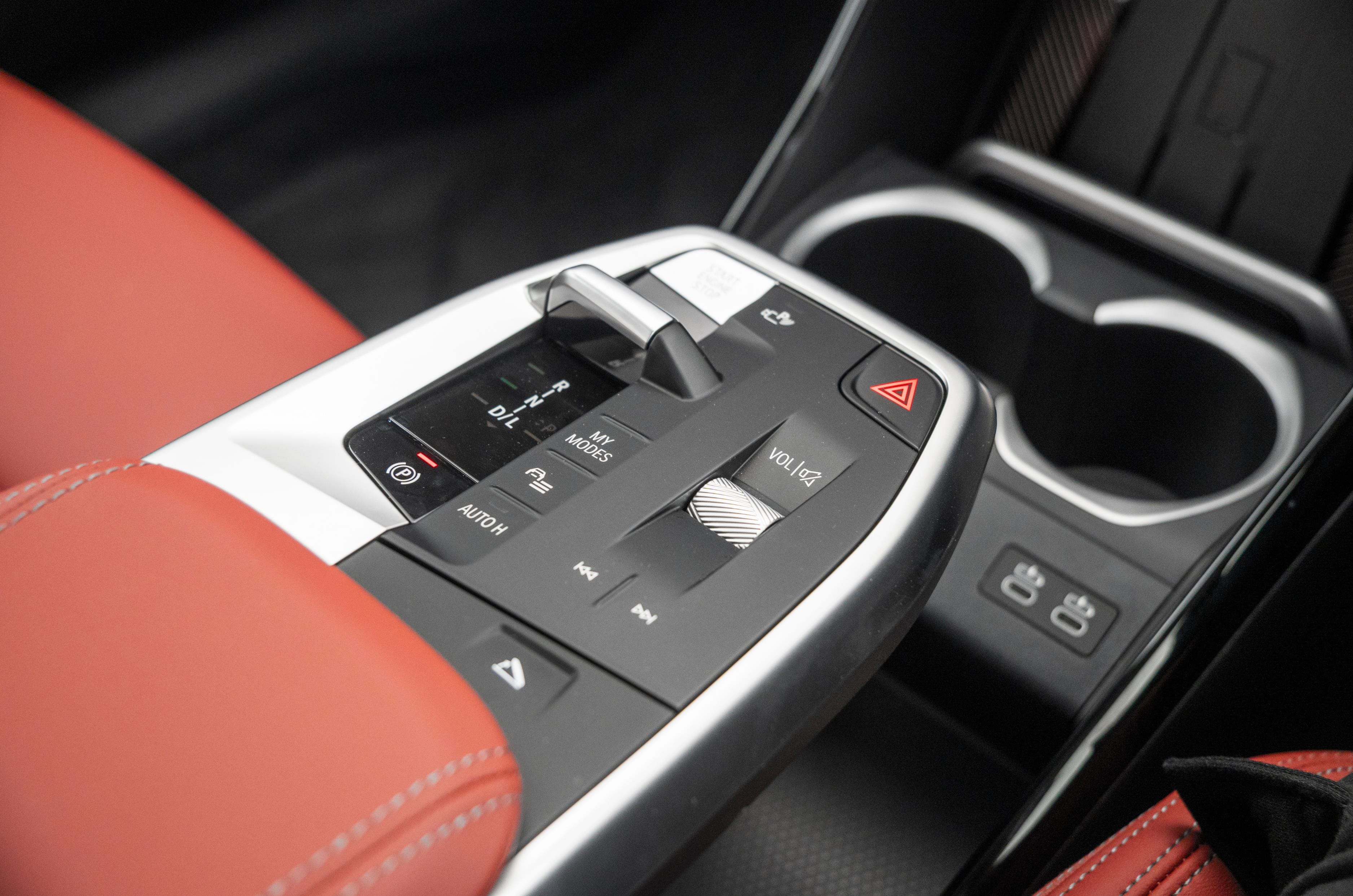
Up front, the X1 LWB is no different to the standard wheelbase X1. The dash with its asymmetric AC vents looks youthful and what also adds some flavour to the X1’s cabin is the upright wireless phone charging pad at the base of the dash. There’s also a floating centre console, which houses a few key buttons, such as for the gear selector, volume control and driving modes. There’s some storage under the front centre armrest but oddly, the lid opens towards the passenger side.
Floating centre console gets a few physical controls and some storage underneath.
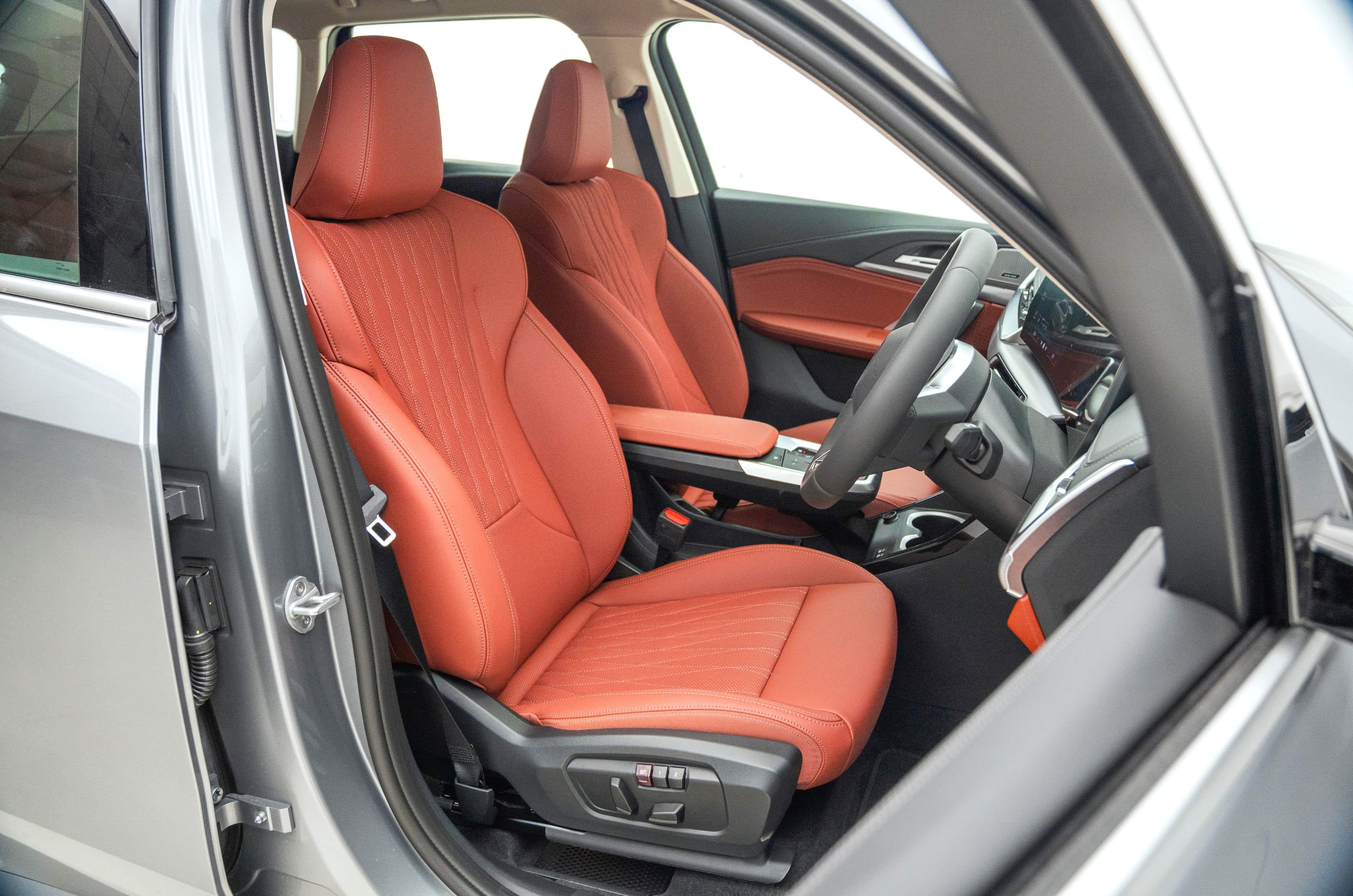
Upholstery choices include the brown you see here as well as a white on black theme which we suspect would be a pain to keep clean. The front seats themselves look sporty and also hold you really well, but unfortunately, the X1’s seat massage function has been dropped on the long wheelbase model. There’s also no seat ventilation function. An M Sport steering is standard but feels a bit too chunky in most hands, and also misses on paddleshifters.
Front seats are sporty, but they miss out on ventilation and massage functions.
In terms of quality, key touch points look and feel good. There are padded materials on the dash and the textured metal-like effect is nicely done. However, it’s not quite got the same attention to detail as pricier BMWs. The USB slots on the dash, for one, aren’t backlit, so you’ll fumble with wires in the dark. The ambient lighting, too, isn’t as vibrant as, say, in a Mercedes GLA. BMW says boot capacity stands at 540 litres and there is plenty of space for large bags. Packaged under the boot floor is a space-saver spare tyre.
BMW X1 LWB Features and Safety – 7/10
X1 LWB is available in a single M Sport trim
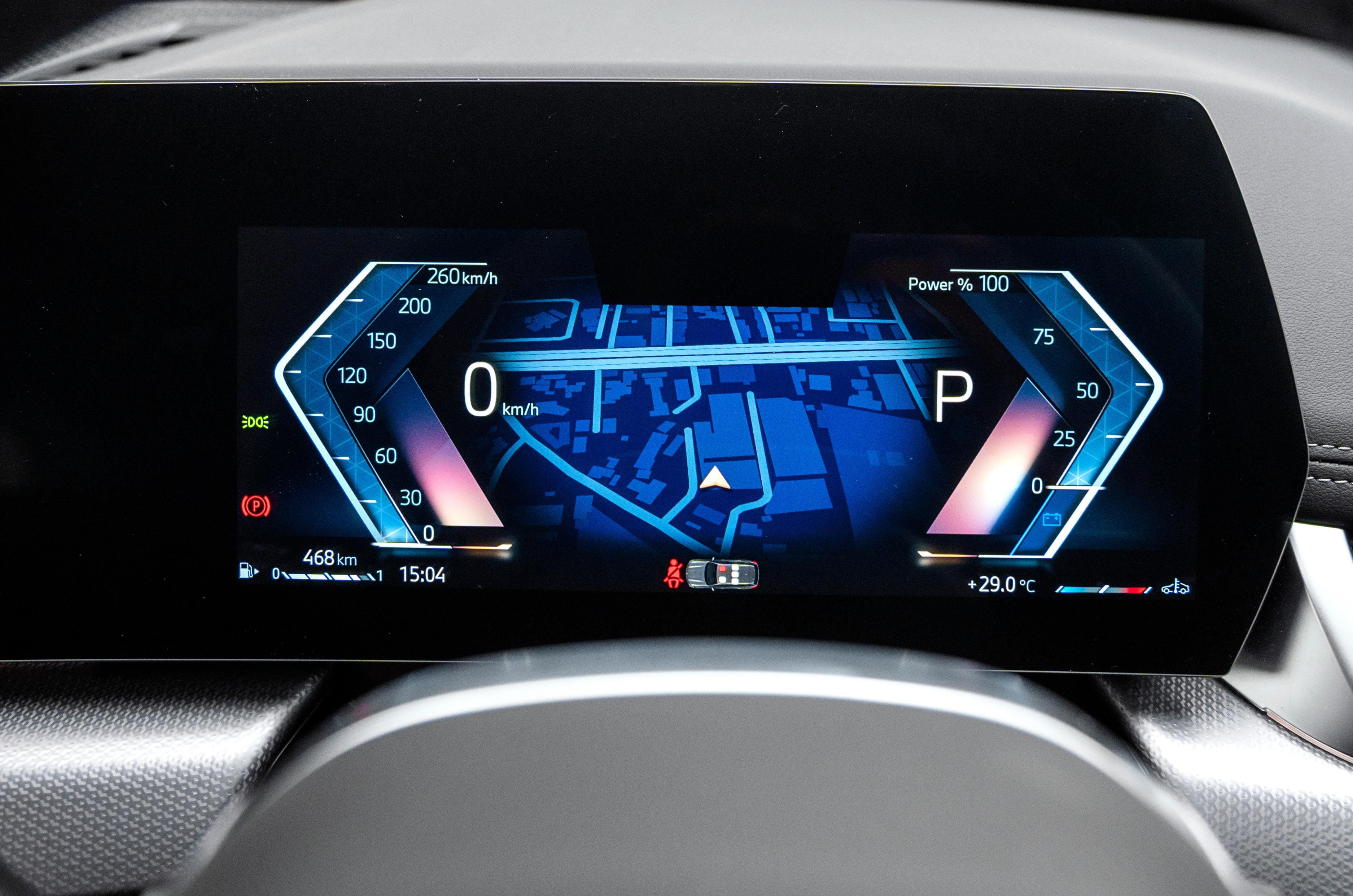
The X1 LWB sports BMW’s twin screen Curved Display. The 10.25-inch digital instrument cluster does give all the info you need, but the presentation with hexagonal themes isn’t appealing even after all these years. The 10.7-inch touchscreen has its highs and lows, too. It’s crisp and responsive, but packs in way too much, including the climate control settings. The menus, frankly, can feel overwhelming on the go. The crisp 360-degree camera does get our vote. A Reversing Assistant that retraces the path in and automatically backs out (up to 50m) is a handy function to get you out of tricky situations.
Instrument cluster offers lots of information, but the presentation with hexagonal themes isn’t appealing.
Interestingly, BMW offers a subscription service to unlock more advanced maps, customizable icons, and more screen themes and modes. Other features include a digital key, allowing you to share access with up to 18 friends and family members, while the 12-speaker Harman Kardon sound system is rather nice, too.
Headlining the list of comfort features is the panoramic glass roof, and there’s power adjust for both front seats. Rear seat passengers get dedicated rear AC vents but there’s no dedicated zone for the rear section of the cabin. A fold-down armrest and USB type C charging port are other functions at the back.
Panoramic glass roof lets in lots of light, but isn’t openable.
Safety kit includes 8 airbags, ABS, ESC and Isofix child seat mounts among other features. The X1 LWB also packs in a few ADAS functions such as auto emergency braking and lane departure warning and assist. Adaptive cruise control, however, is missed.
BMW X1 LWB Performance and Refinement – 7/10
1.5-litre, three-cylinder turbo-petrol is only engine on X1 LWB
BMW is launching the X1 LWB in S-Drive 18 Li form, which is a complicated way of saying that it’s powered by a 1.5-litre three-cylinder turbo petrol engine. Yes, you read that right. The engine is E25 compliant, but there’s no diesel option for the moment, and buzz is there won’t be one in the future either.
Performance is adequate but unexciting
The X1 LWB’s petrol engine makes 156hp and 230Nm and all the power goes to the front wheels only, via a seven-speed dual-clutch transmission. A fact to note, 156hp is the upgraded power figure. On the standard wheelbase X1, the engine makes 136 horsepower.
Unfortunately, the power bump doesn’t magically transform the X1 LWB into something sporty. In ordinary city driving, you really won’t have a problem with the performance on hand. There’s enough power for the urban grind. It’s just that when you pick up the pace, you’ll miss that reserve of power that you just expect in a luxury car.
Refinement is good but the engine thrums when extended
Sport mode does make the engine feel a bit more urgent, but it’s also in Sport mode that the engine can’t hide its three-cylinder-ness. When it’s time to overtake, for instance, and you press down on the accelerator pedal, there is a bit of a delay, then you hear the engine thrum, and that’s not a very BMW sound. Performance is also not very BMW. We managed a 0-100 kph time of 9.58 seconds.
Then again, the X1 LWB’s USP is the rear seat, and there will be buyers who rarely, if ever, take the wheel. If you’ve instructed your chauffeur to drive in an easygoing manner, you will note that engine noise is actually pretty well-contained.
BMW X1 LWB Mileage and Efficiency – 8/10
While we haven’t put the X1 LWB to the full test it should prove to be more efficient than rivals’ four-cylinder turbo-petrol units. Of course, it won’t be outright frugal because the X1 LWB is a substantial vehicle. We expect real-world fuel economy in the 7-10kpl band with the figure rising to 9-12kpl over highway drives.
BMW X1 LWB Ride Comfort and Handling – 8/10
Suspension has been tweaked for better comfort on the X1 LWB
The X1 LWB might be front-wheel drive only but there is a crispness to the way it changes direction. You will like the feel at the steering wheel and you get a good sense of connect too. Unfortunately, the handling isn’t supported by the engine. Long story short, this is not the BMW for keen drivers.
As for ride comfort, BMW has tweaked the suspension for the X1 LWB, and they’ve done a pretty good job of things. The suspension works quiet, it feels absorbent, and it’s only when you’re really paying attention that you’ll notice a distant firmness to the setup.
BMW X1 LWB price and verdict – 8/10
X1 LWB makes for a great backseat SUV
Prices for the X1 LWB will be announced on August 21. We expect BMW to keep pricing within the Rs 50-55 lakh (estimated, ex-showroom) band, which would make the X1 LWB a very enticing proposition.
Rear seat space is the highlight and immediately gives the BMW bragging rights over the Mercedes GLA and Audi Q3. Thing is, the X1 LWB’s appeal is almost too tied to the rear seat experience. The drive experience is just so-so. Performance is fine for the daily grind but the three cylinder unit does little to excite. If that’s not a deal breaker for you, the BMW X1 LWB is sure worth a long, hard look.
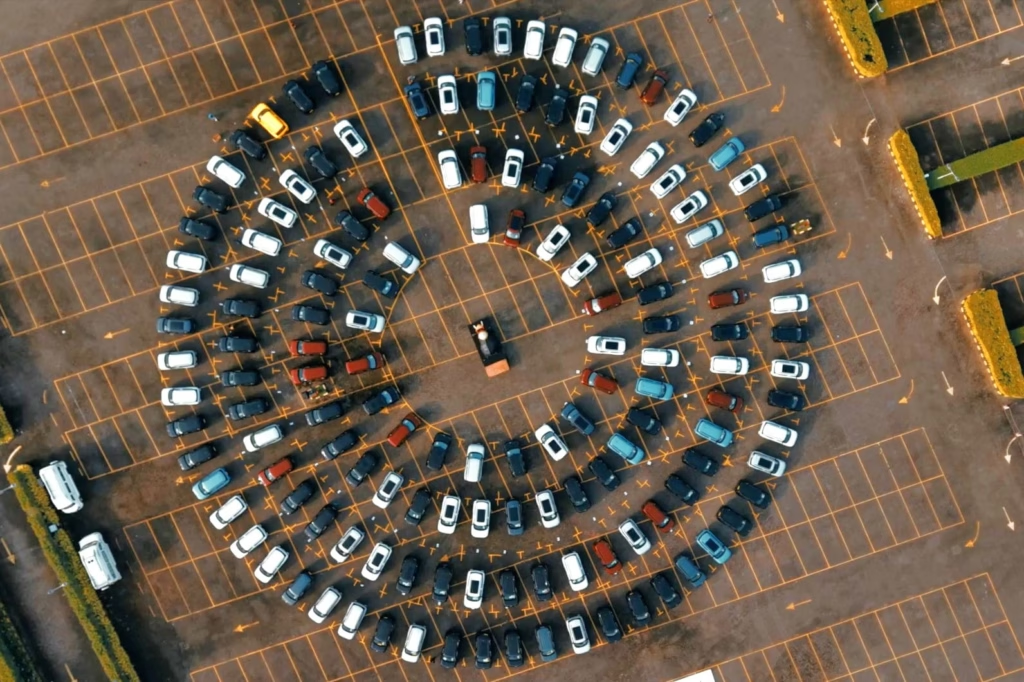
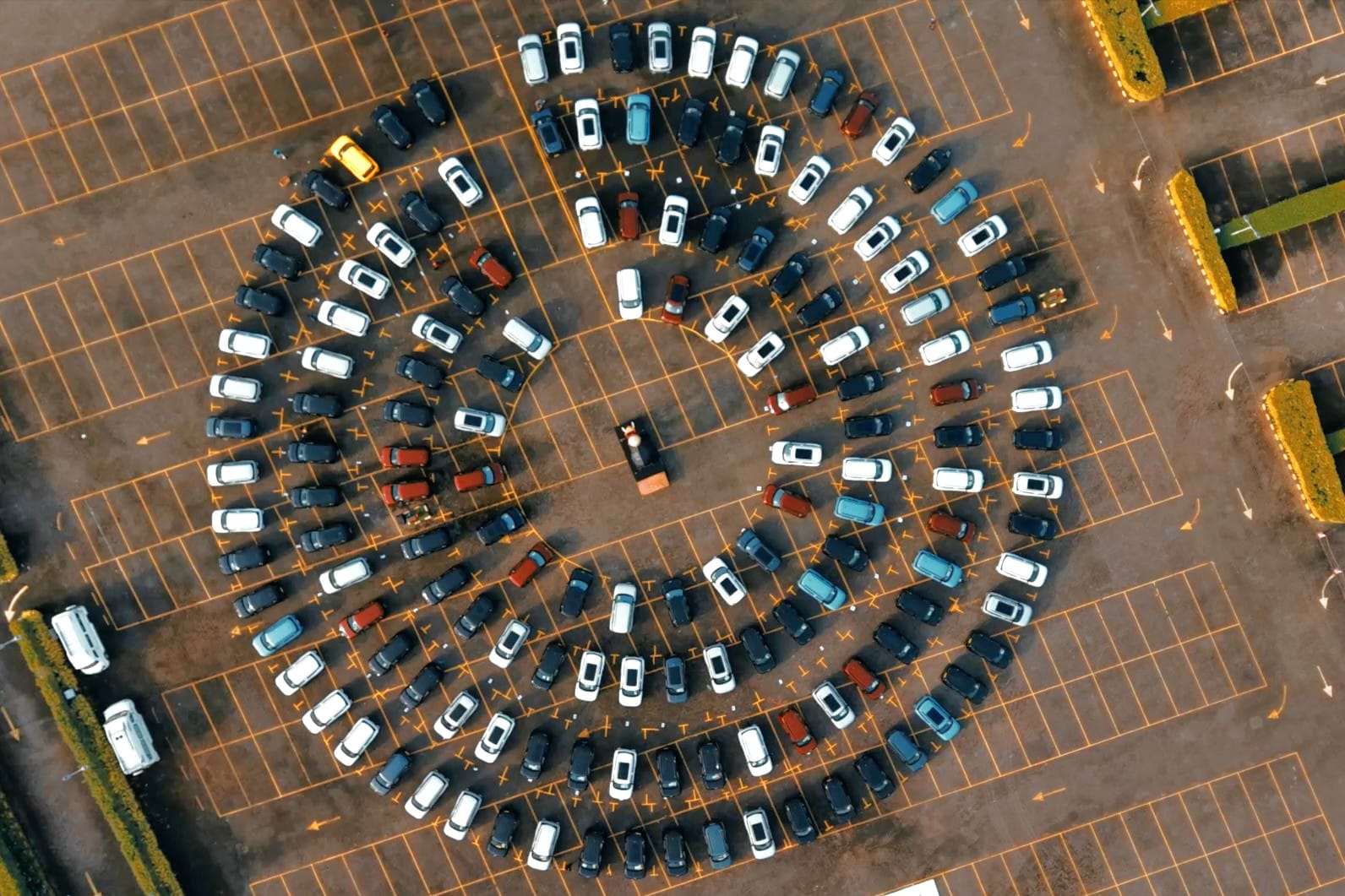
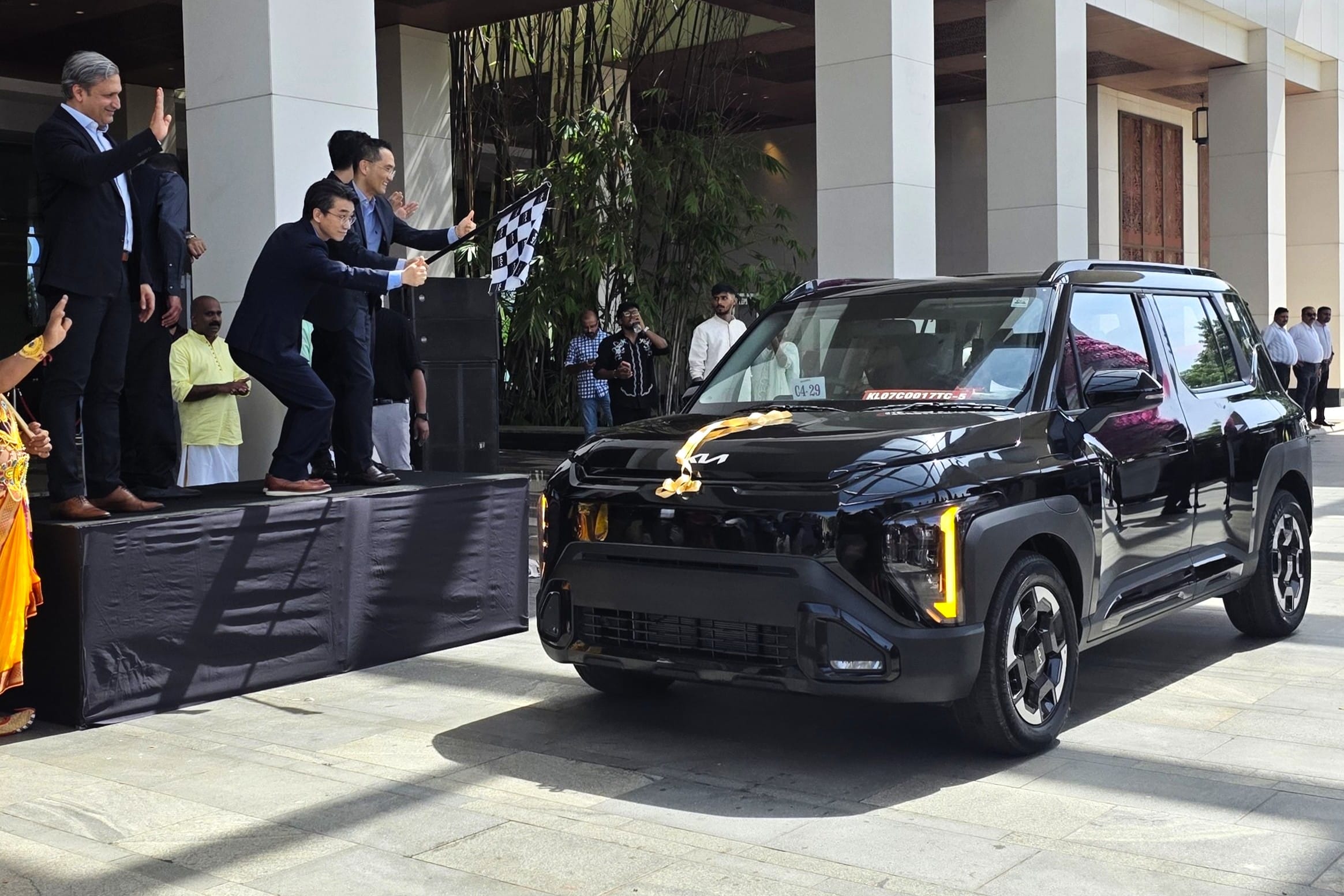
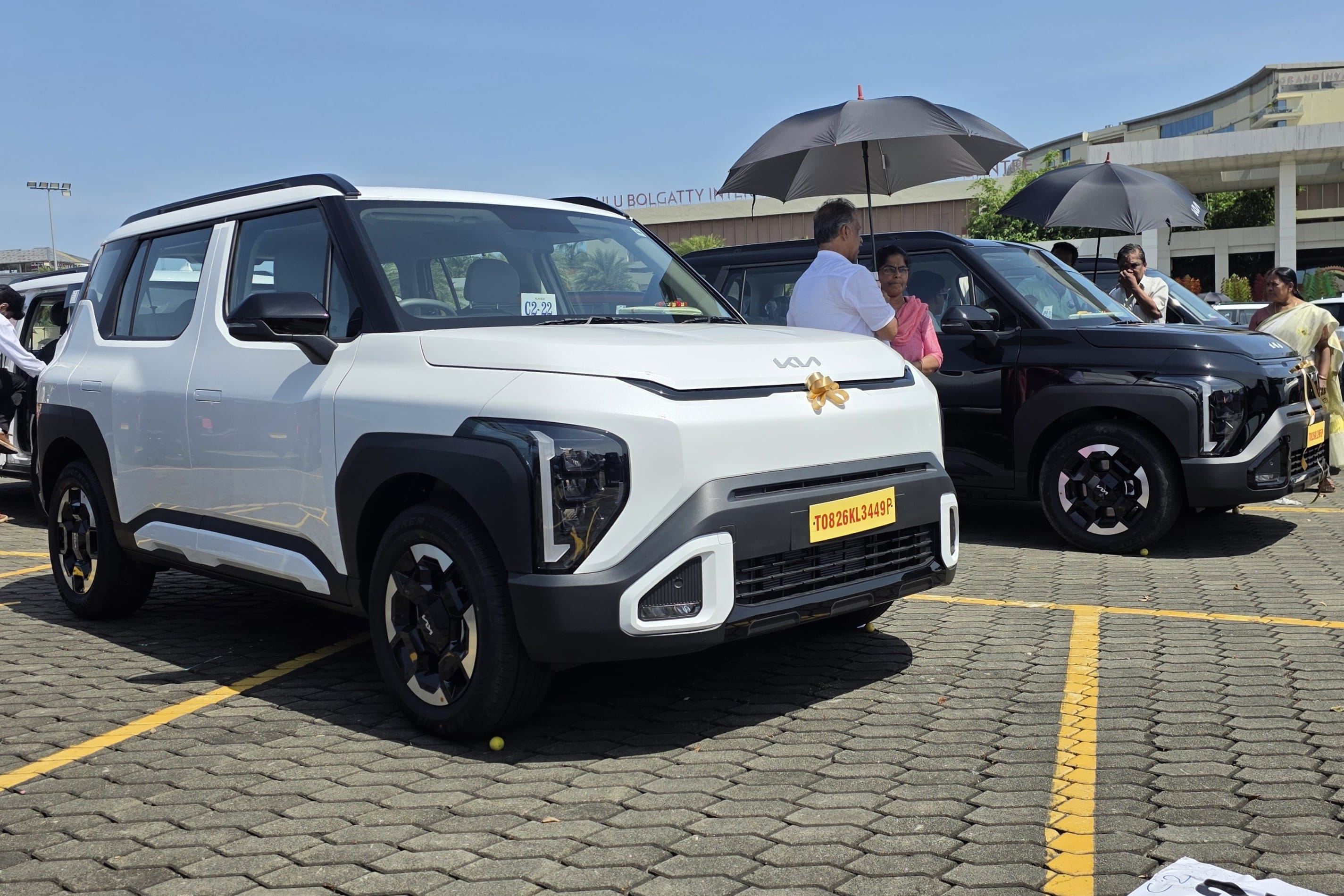
Kia India dealer partner Incheon Kia has set a new national record for the most electric cars of a single model delivered in a single day. 150 units of the recently launched Syros EV were handed over to customers by Incheon Kia in Kochi on August 17.
Incheon Kia sets a completely fresh record with the Syros EV
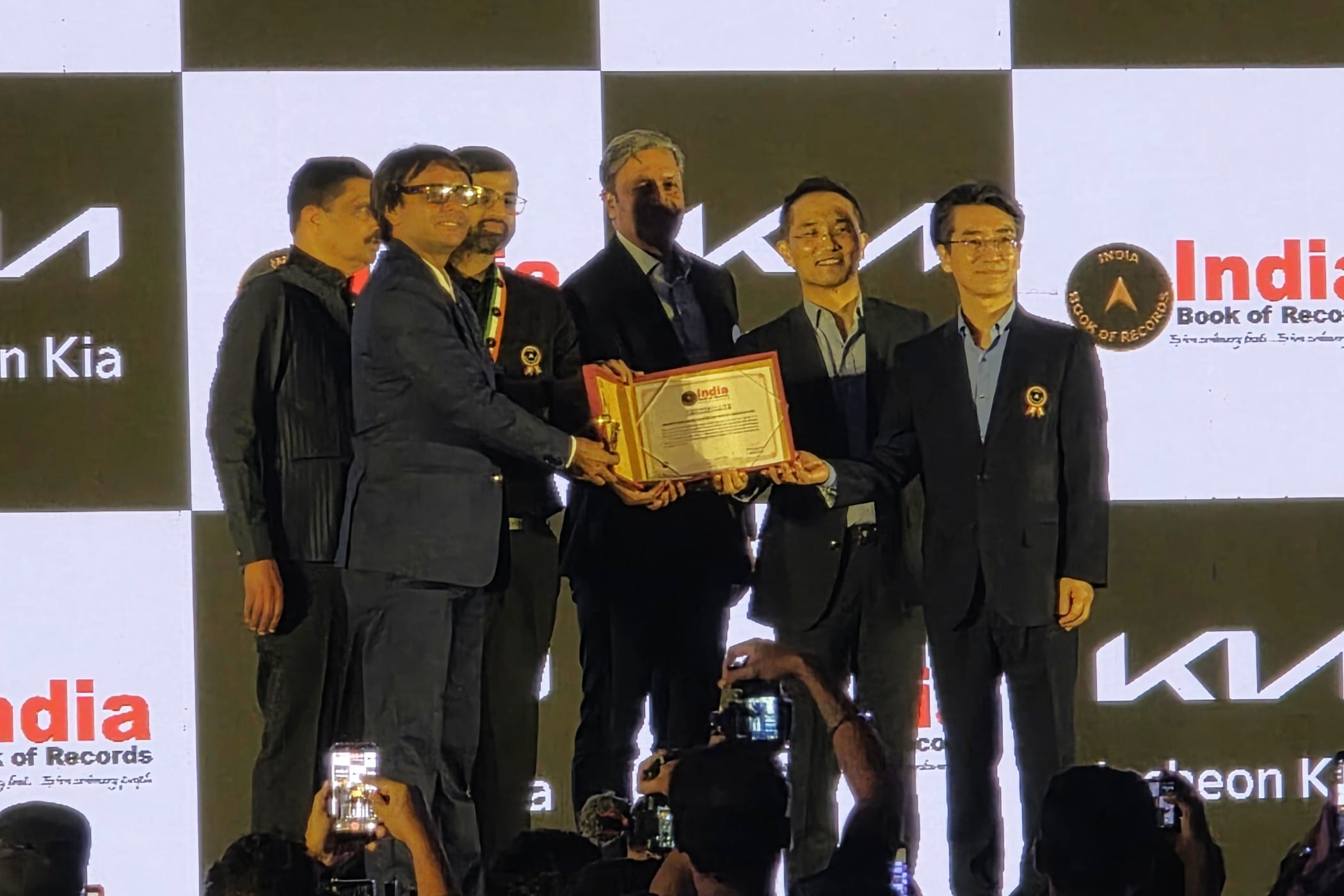
Coinciding with Malayalam New Year, Incheon Kia’s mega-delivery feat was certified by the India Book of Records. This is an entirely new record, as India Book of Records does not have any prior records for maximum single-model EVs delivered in a single day. The 150 cars formed the first batch of Kia Syros EVs delivered to customers in Kochi.
Following the deliveries, the Syros EVs were flagged off individually by senior Kia India executives, including MD and CEO Gwanggu Lee (pictured). Incheon Kia said it has received more than 650 bookings for the Syros EV, with 150 of those cars now delivered. The dealer is also closing on 50,000 sales since its inception seven years ago, with 10,000 sales projected for this year alone.
Kia Syros EV details
Launched on July 23, the Syros EV is Kia’s second mass-market electric model for the Indian market. The compact SUV is offered with 42kWh and 51.4kWh battery options, both of which are wired up to a 255Nm front-mounted motor producing 135hp and 171hp, respectively. In terms of MIDC-claimed range, the 42kWh battery manages 443km, while the 51.4kWh pack is rated at 526km. Pricing for the Syros EV starts at Rs 13.5 lakh and top off at Rs 30 lakh (ex-showroom), and it rivals the Tata Nexon EV and Mahindra XUV 3XO.
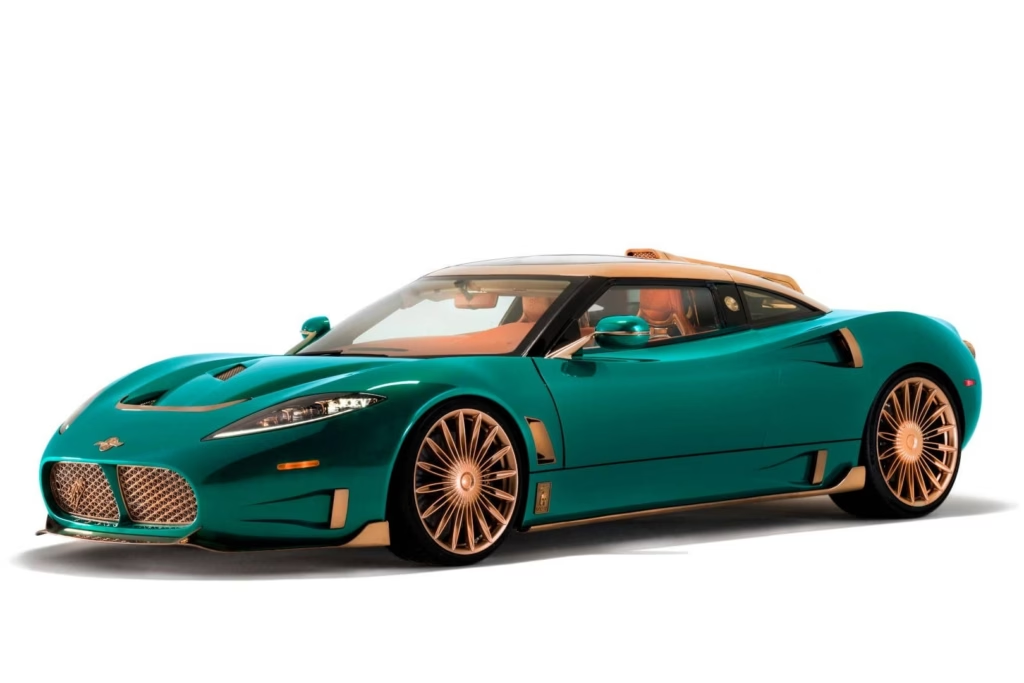
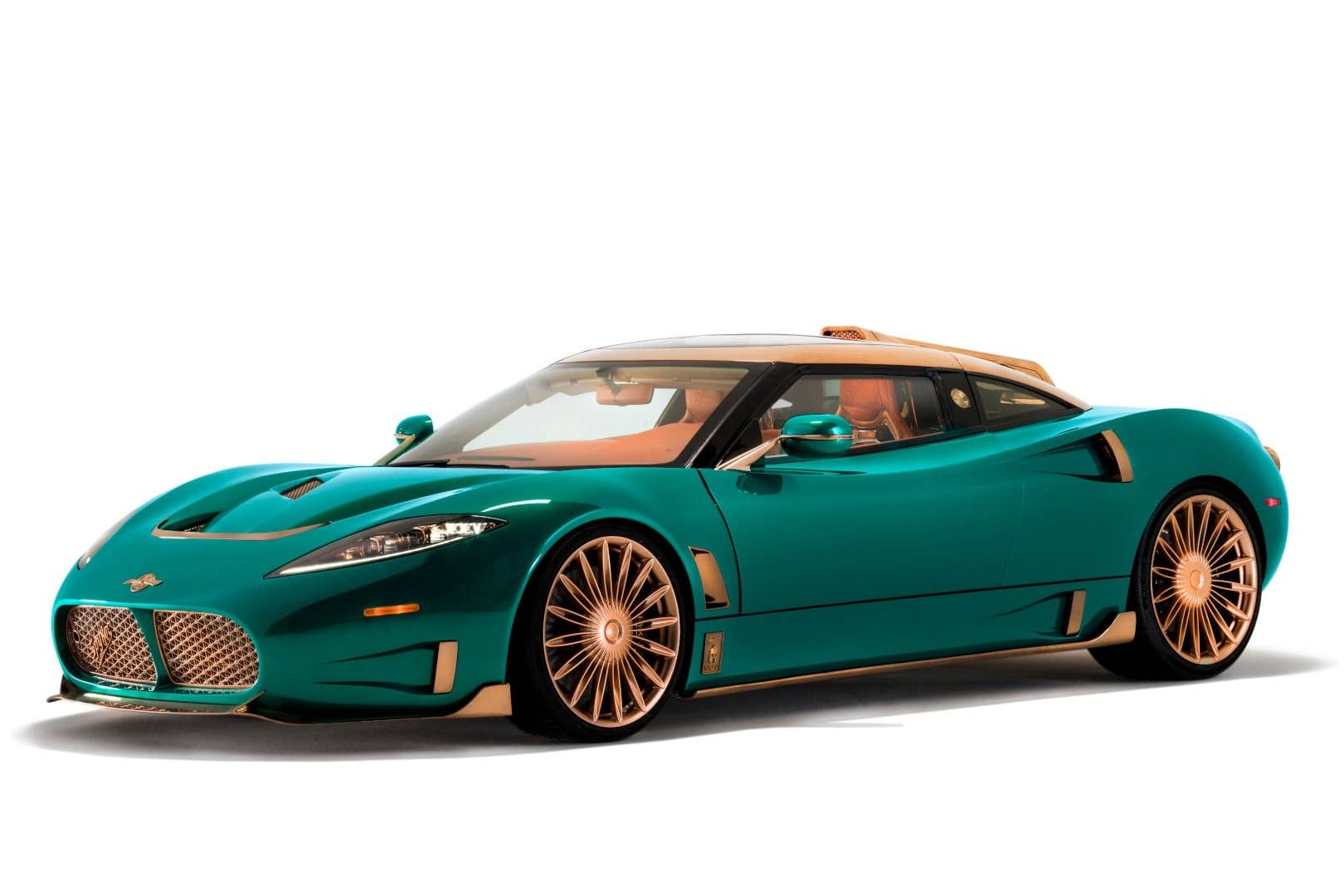
Dutch carmaker Spyker has resurfaced with the C8 Preliator XXV Coupe, a limited-run mid-engined supercar that marks the start of a new chapter for the troubled brand. Unveiled at The Quail during Monterey Car Week, the XXV is based on the C8 Preliator that debuted in 2016 and will be limited to just 25 examples. Pricing has not been disclosed for the C8 Preliator XXV.
Spyker’s return follows its 2021 bankruptcy and a subsequent years-long legal dispute over the brand. In October 2025, co-founder Victor Muller finally reacquired the rights to the Spyker name, and Ukrainian-born cryptocurrency entrepreneur Volodymyr Nosov acquired a significant stake in the company in June 2026 to facilitate its return.
Spyker C8 Preliator XXV powertrain and performance
Built on an aluminium space frame chassis with hand-formed exterior panels, the C8 Preliator XXV is powered by an Audi-sourced 4.0-litre twin-turbo petrol V8 that belts out 800hp and 1,000Nm of torque, and revs to 8,000rpm. Power is sent to the rear wheels via a 6-speed manual gearbox, 0-100kph comes up in a claimed 2.7 seconds, and the top speed is rated in excess of 349kph.
Spyker C8 Preliator XXV exterior design
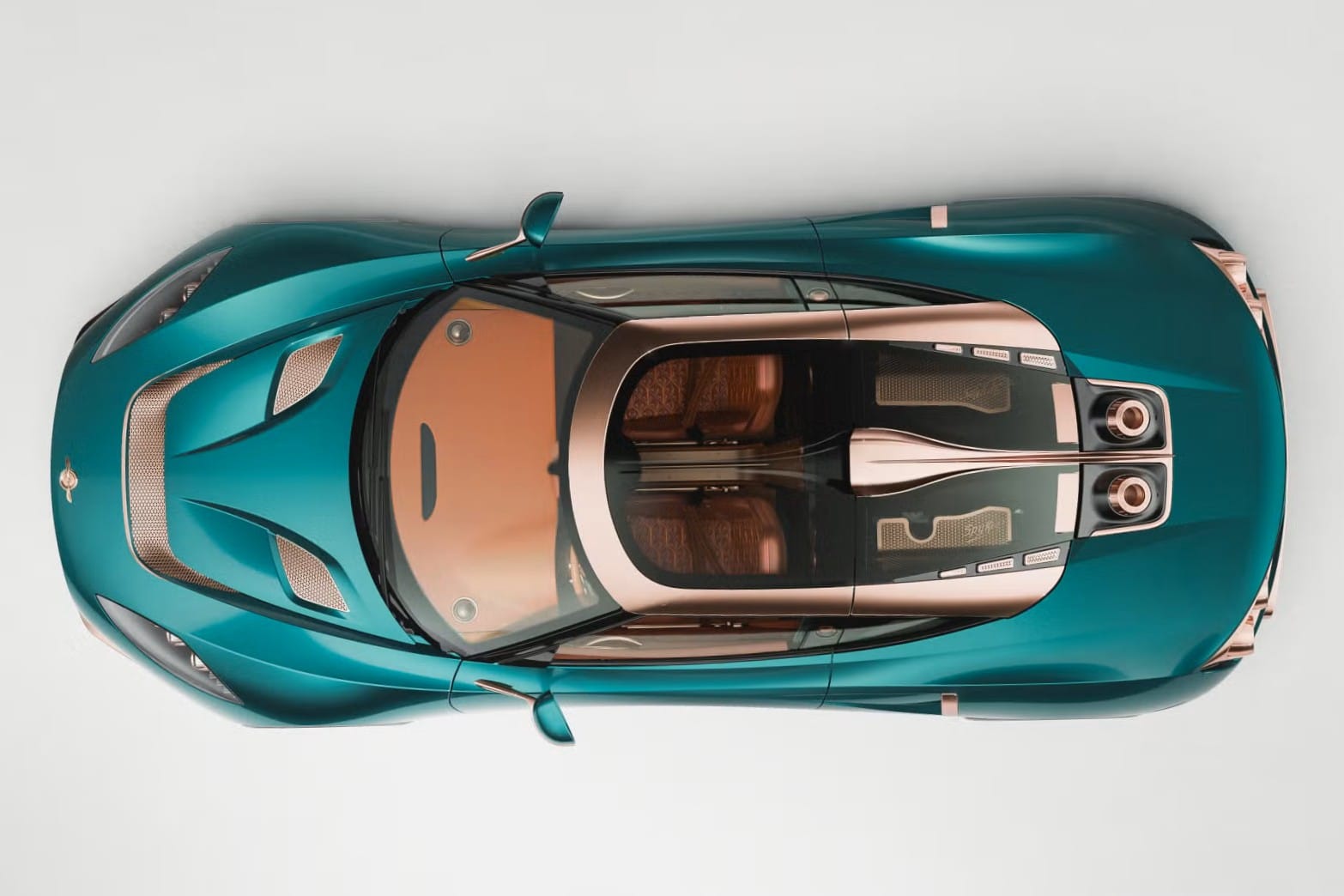
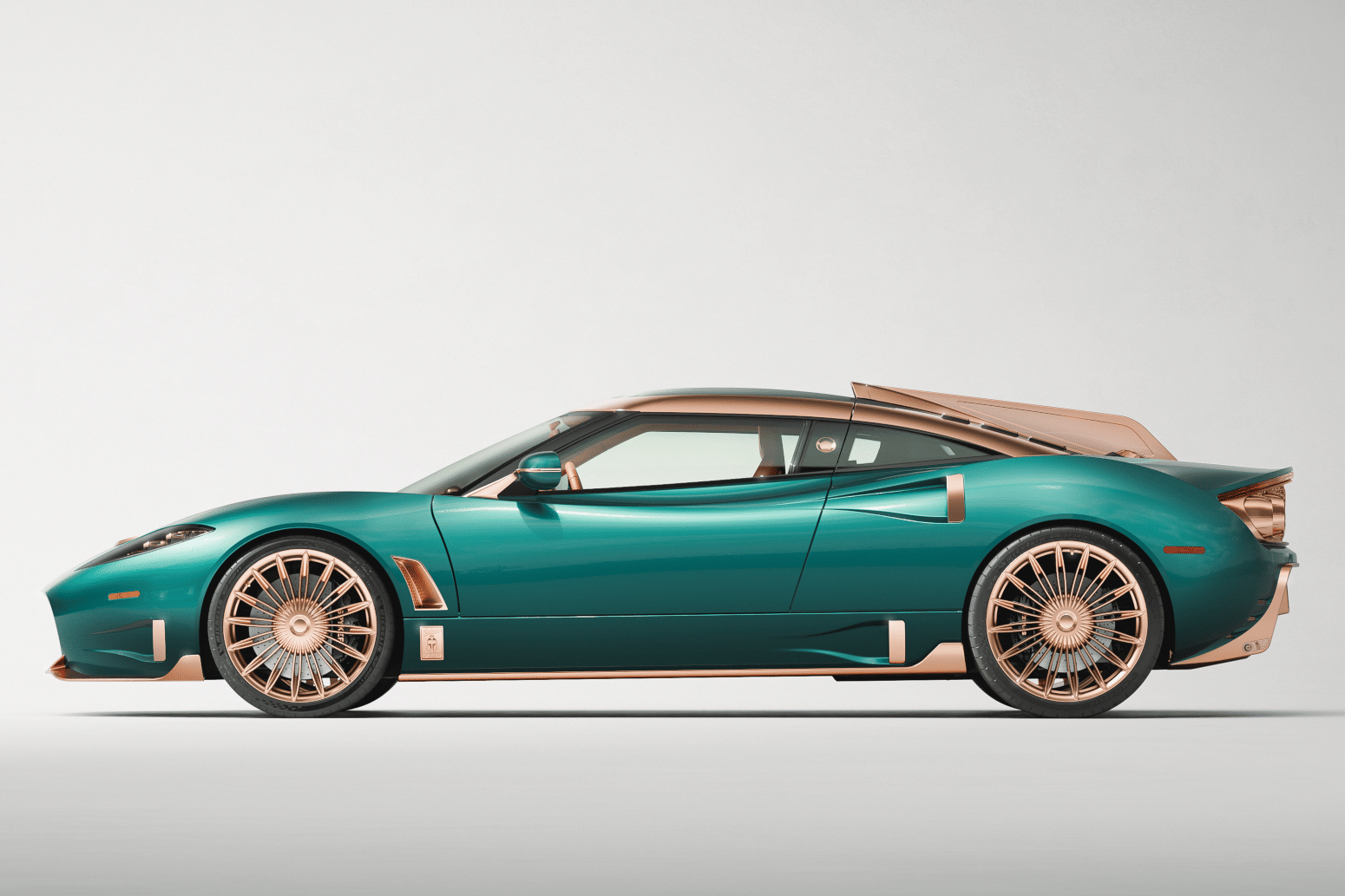
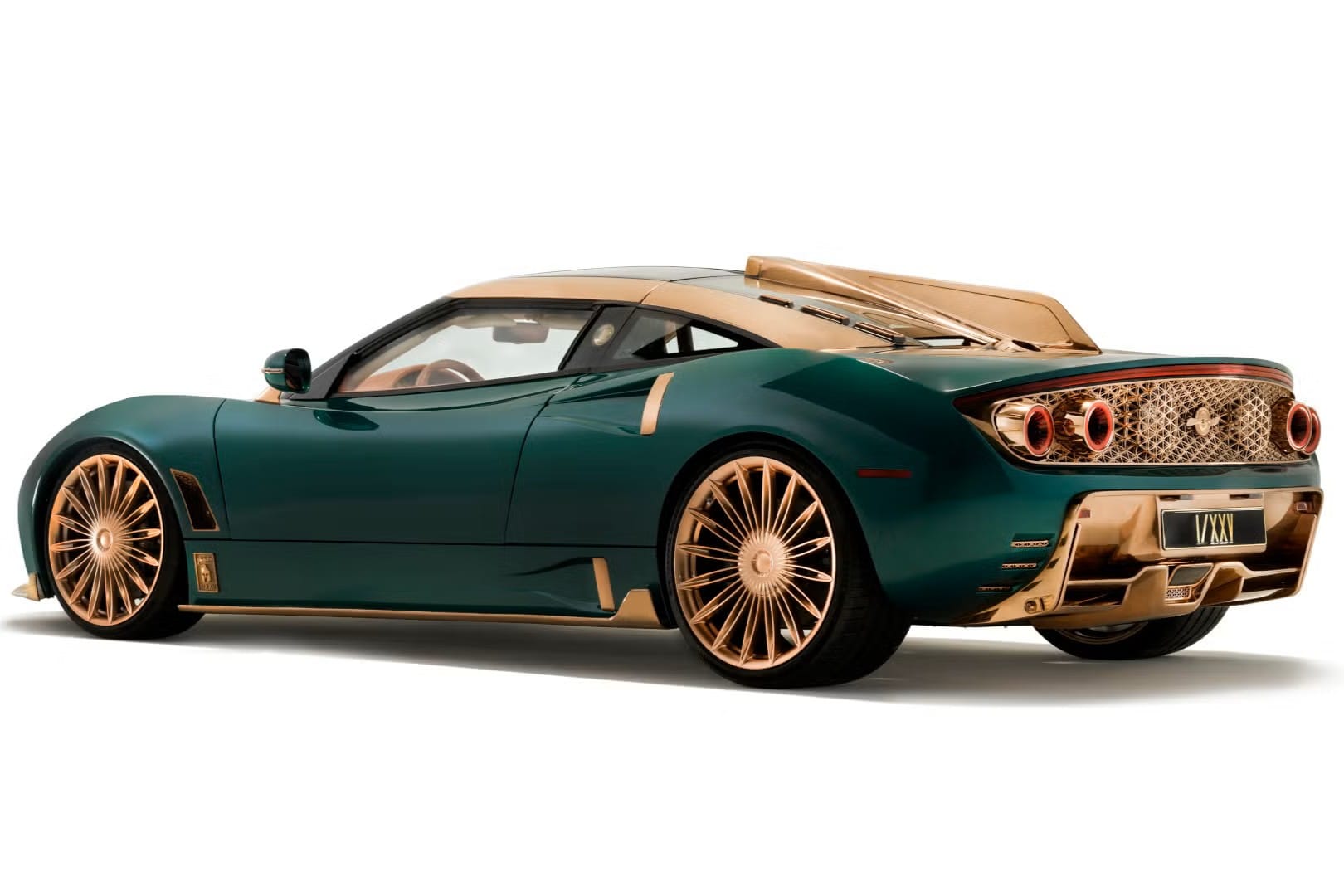
The C8 Preliator XXV’s design continues Spyker’s long-running aviation aesthetic, with propeller-inspired alloy wheels, air ducts, flowing lines, fighter-jet-esque afterburner tail-lamps, and a central roof intake. Other notable styling cues include sleek headlamps with ‘XXV’ DRL signatures, a split grille, a sizable front splitter, a panoramic glass roof, and badging behind the front wheel arches that displays the production number.
The example displayed at The Quail was finished in Quail Green with rose gold accenting on the grille, front splitter, ORVM stalks, air intakes, wheels, rear diffuser, roof, and more.
Spyker C8 Preliator XXV interior
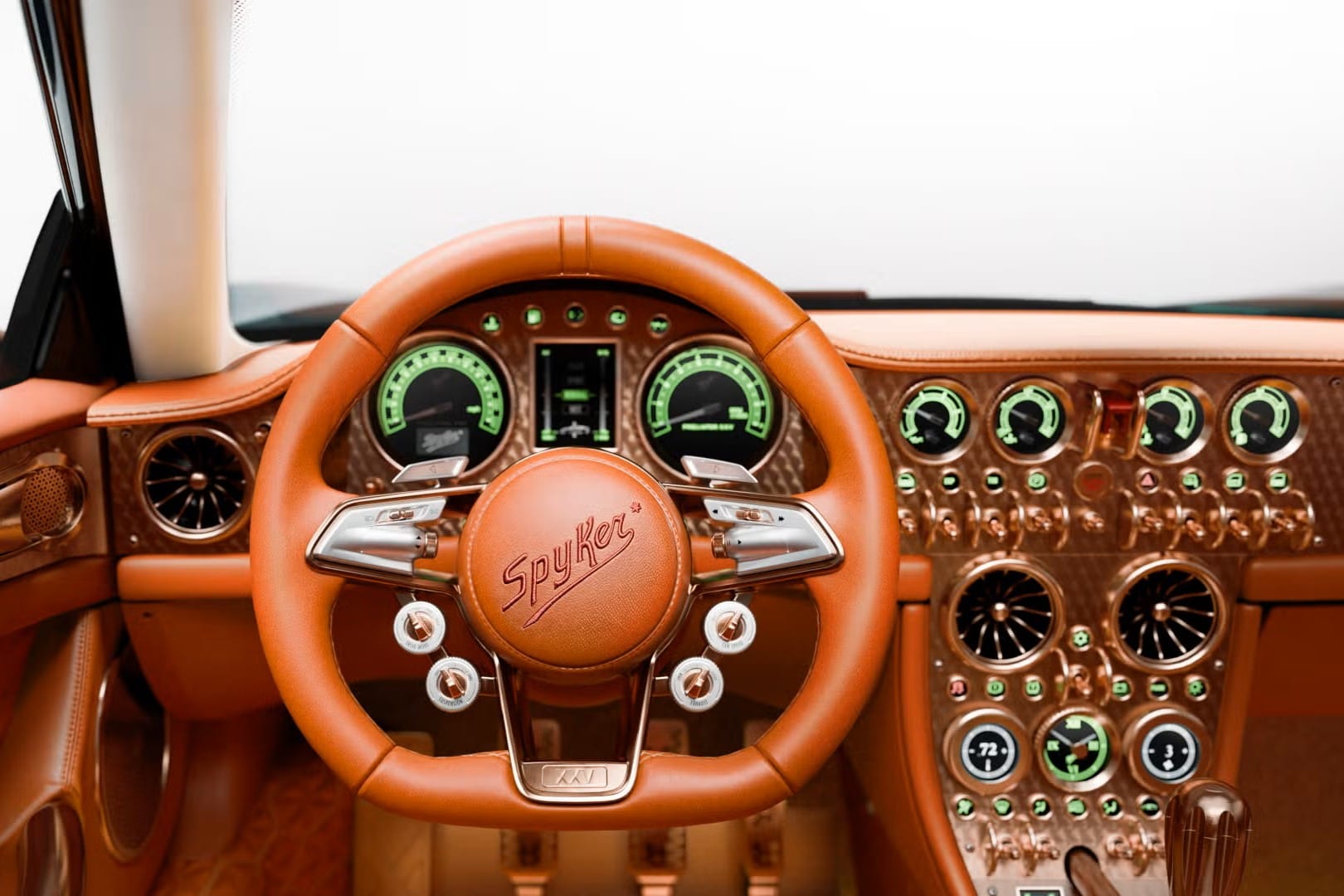
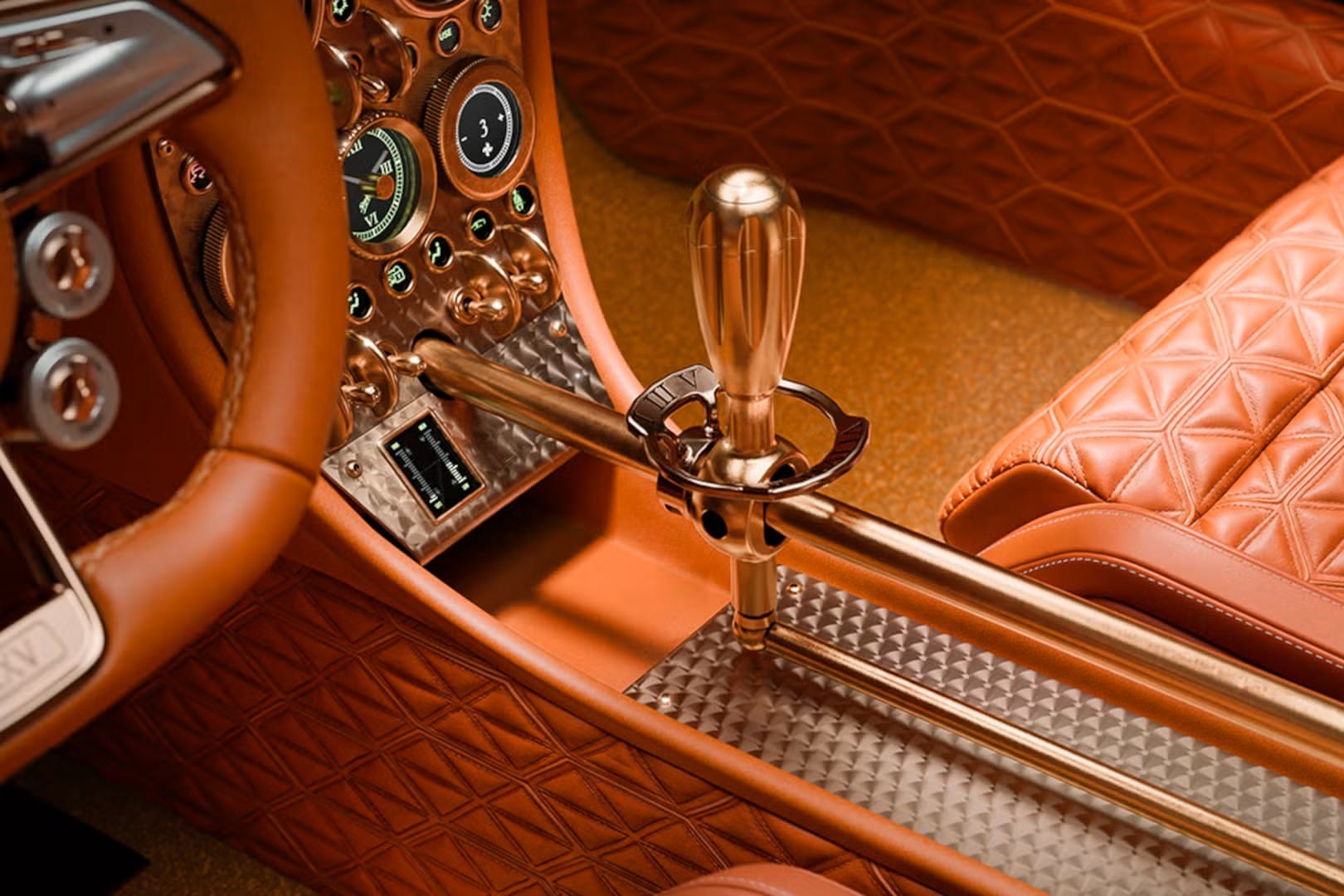
Inside, the C8 Preliator XXV features a refreshingly analogue milled dashboard beset with gauges and physical controls, instead of a barrage of screens. The turbine-like AC vents further the aviation inspiration, and the entire interior is trimmed in an orange-brown leather Spyker calls Tuscan Saddle. In fact, such is the attention to detail in the C8 Preliator XXV, that all the screw heads in the cabin are aligned by hand to face the same direction, and the chassis number is stamped into the space frame.
Ahead of the driver sits a three-spoke flat-bottomed steering wheel, which houses lots of dials, rocker switches, and buttons, along with individual stalks for the left and right indicators. The green-accented instrument cluster is very traditional in look too, though it’s worth noting that Spyker has included a heads-up display as the only digital interface in the C8 Preliator XXV. At the bottom of the dashboard lies a gear lever with an exposed shift linkage, which looks very cool.
What’s next for Spyker?
The revived Spyker says the C8 Preliator XXV is the first step in a larger comeback for the carmaker. Spyker is currently mulling a return to motorsport, specifically GT3-level endurance racing, and is also expected to resume the long-delayed development (owing to financial hardships) of the D8 Peking-to-Paris, a super SUV first previewed at the 2006 Geneva Motor Show.
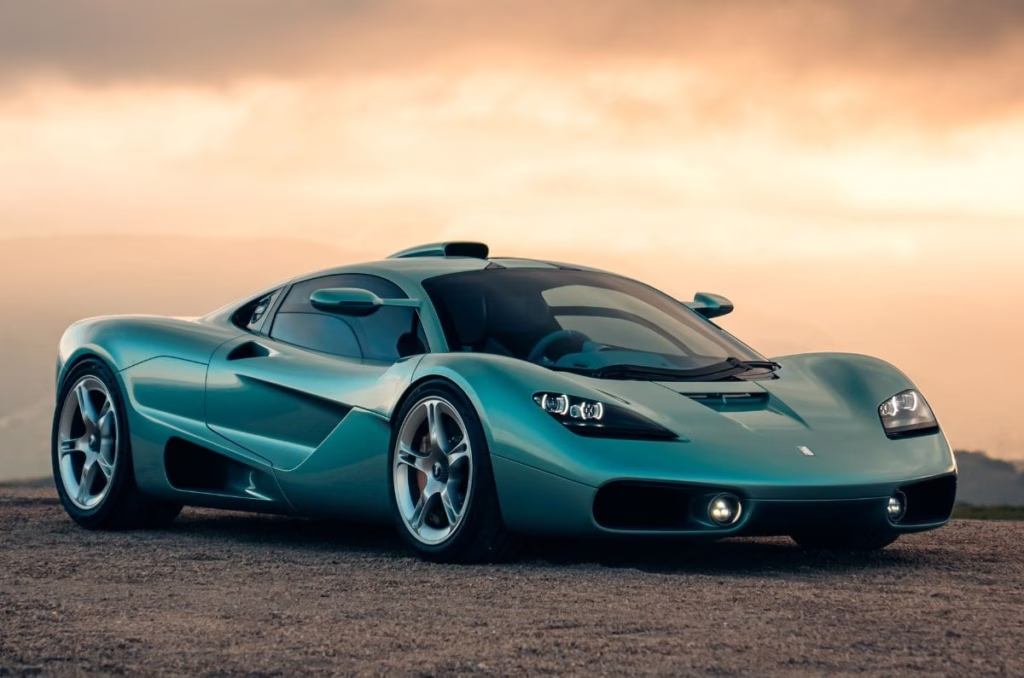
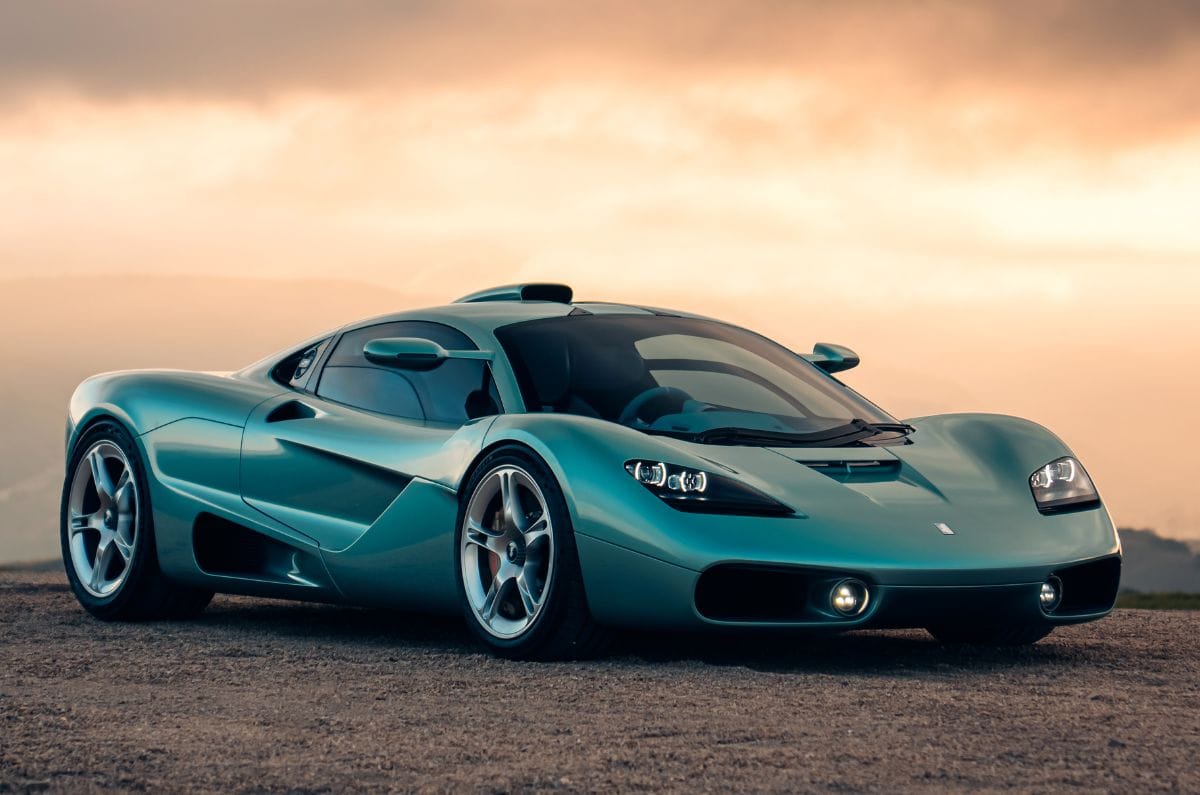
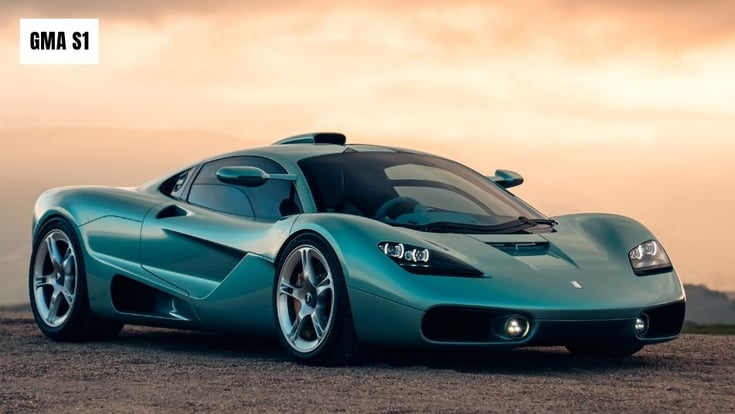
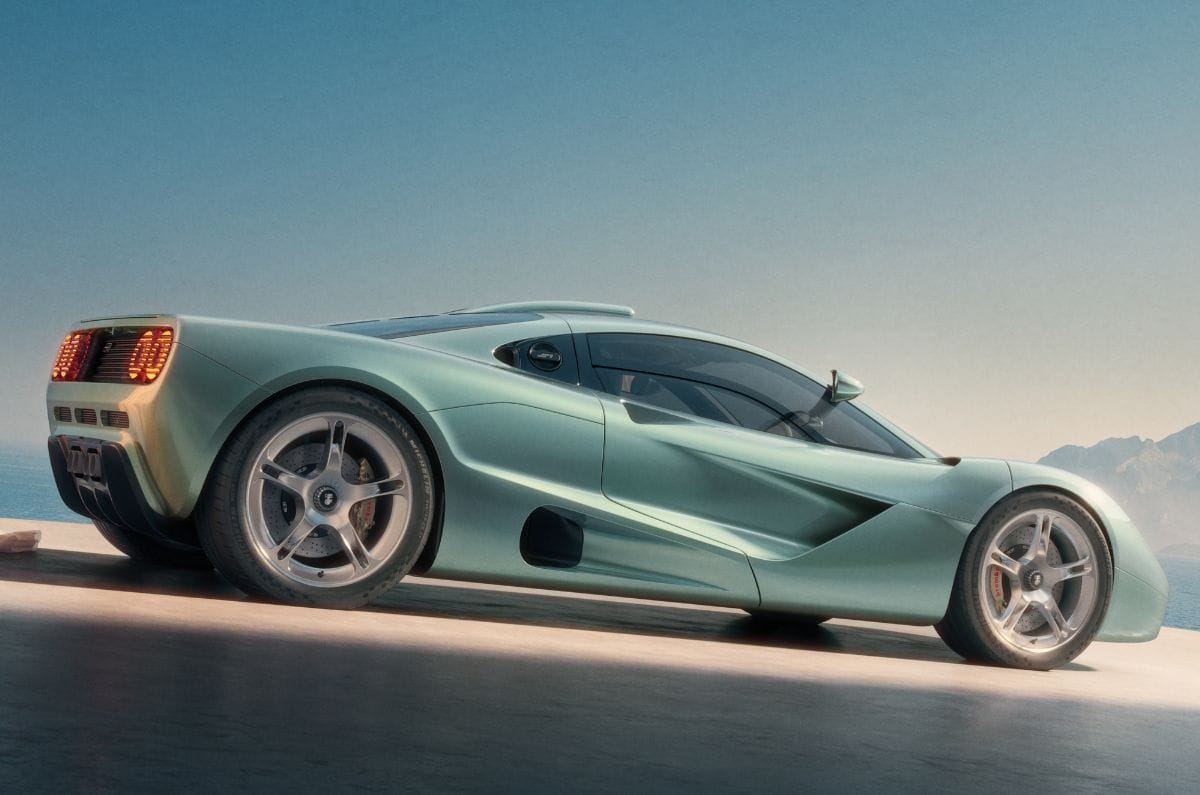
After debuting the track-focused S1 LM exactly a year ago, Gordon Murray Automotive (GMA) showcased the road-biased S1 at this year’s Monterey Car Week. While the S1 LM paid tribute to Gordon Murray’s Le Mans-winning F1 GTR, the S1 in similar vein is pitched as a modern-day interpretation of the road-going McLaren F1. Built by GMA’s Special Vehicles division, the SM will be less exclusive than the five-off S1 LM, with 64 units planned for production.
S1 is fundamentally based on GMA T50
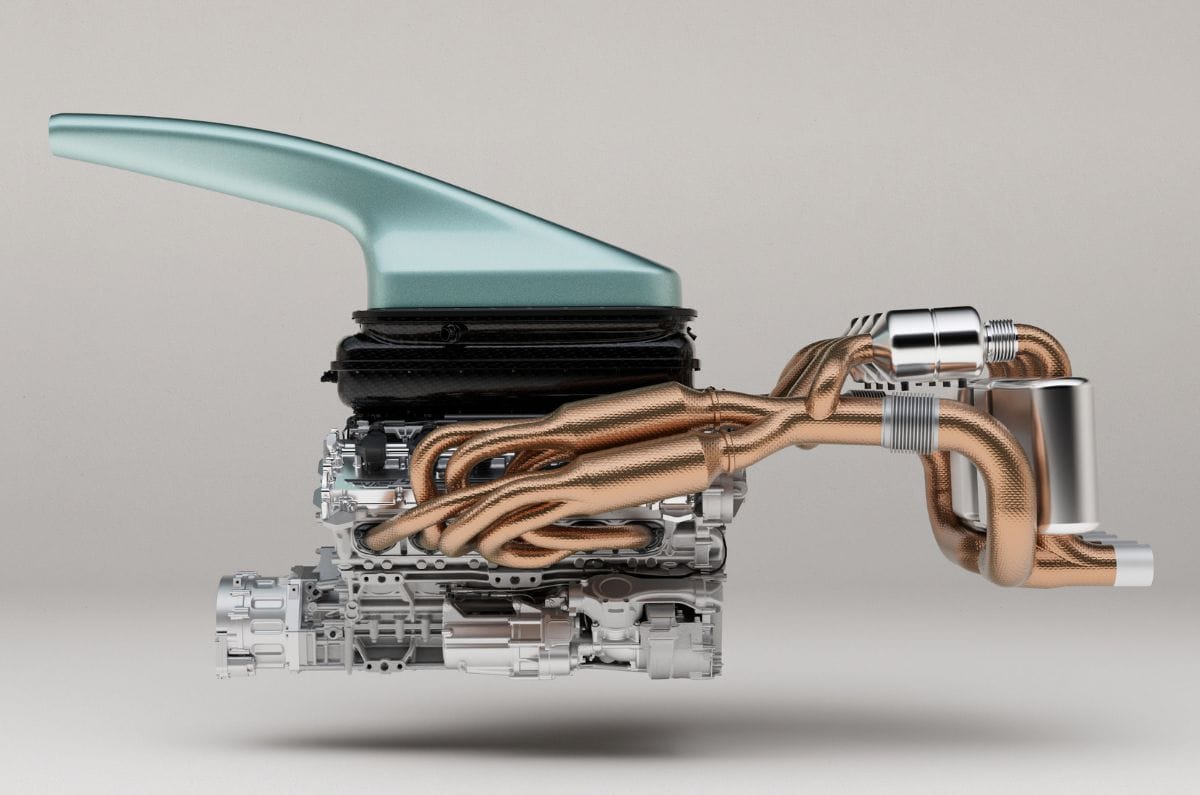
It’s powered by a 4.2-litre Cosworth V12 with a manual gearbox
More road-biased, touring-focused version of the S1 LM
Speaking about the S1, Gordon Murray, Group Executive Chairman, says, “It is exclusive, analogue and deeply driver focused, while also being more elegant, refined and usable over distance.”
GMA S1 exterior design
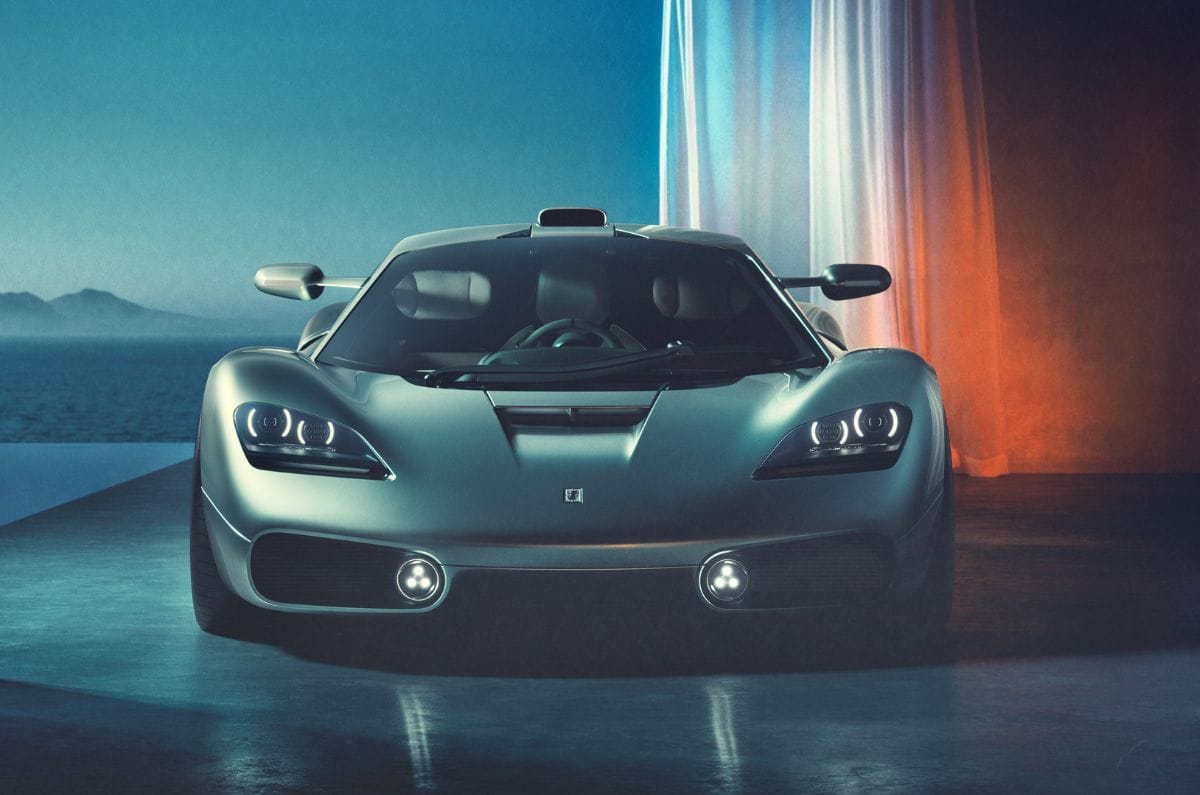
Just a glance at the SM is enough to trace its roots back to the original F1. It does away with many of the aggressive aero elements seen on the S1 LM, such as the massive rear wing, the race-style front splitter and also the deep side skirts. What’s left behind is a shape that’s quintessentially a sportscar in its purest form. Murray says every single panel on the S1 is unique to this vehicle.
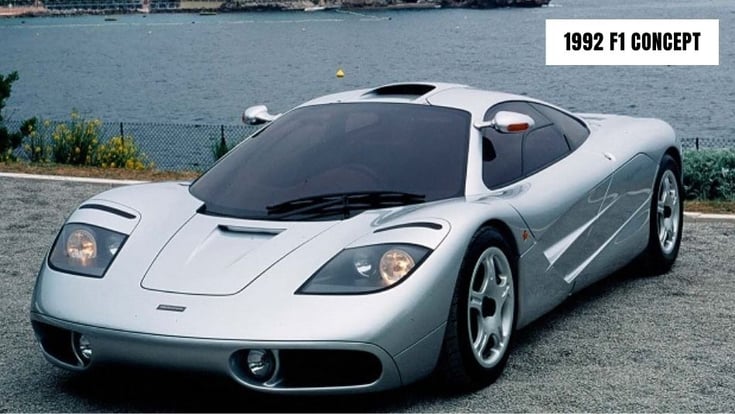
GMA S1 vs 1992 McLaren F1 Concept (Image Credit: Collector Studio)
Details such as the dual-pod headlamps, the bonnet scoop and the quad tail lamps at the rear immediately connect it to the F1, all while appearing properly contemporary. The circular lights positioned at the leading edges of the front air intakes and the five-spoke alloy wheels are a direct nod to the 1992 McLaren F1 concept car, as are the A-pillar-mounted wing mirrors – these elements did not make it to production on the original F1.
The side profile is characterised by pronounced wheel arches and a rising beltline, while the scoops on the doors and sills are a lot more pronounced here. At the rear is a classic quad exhaust setup and a diffuser that features an active aero system. GMA says the S1 has been “optimised for mechanical grip, rather than high downforce”.
GMA S1 interior
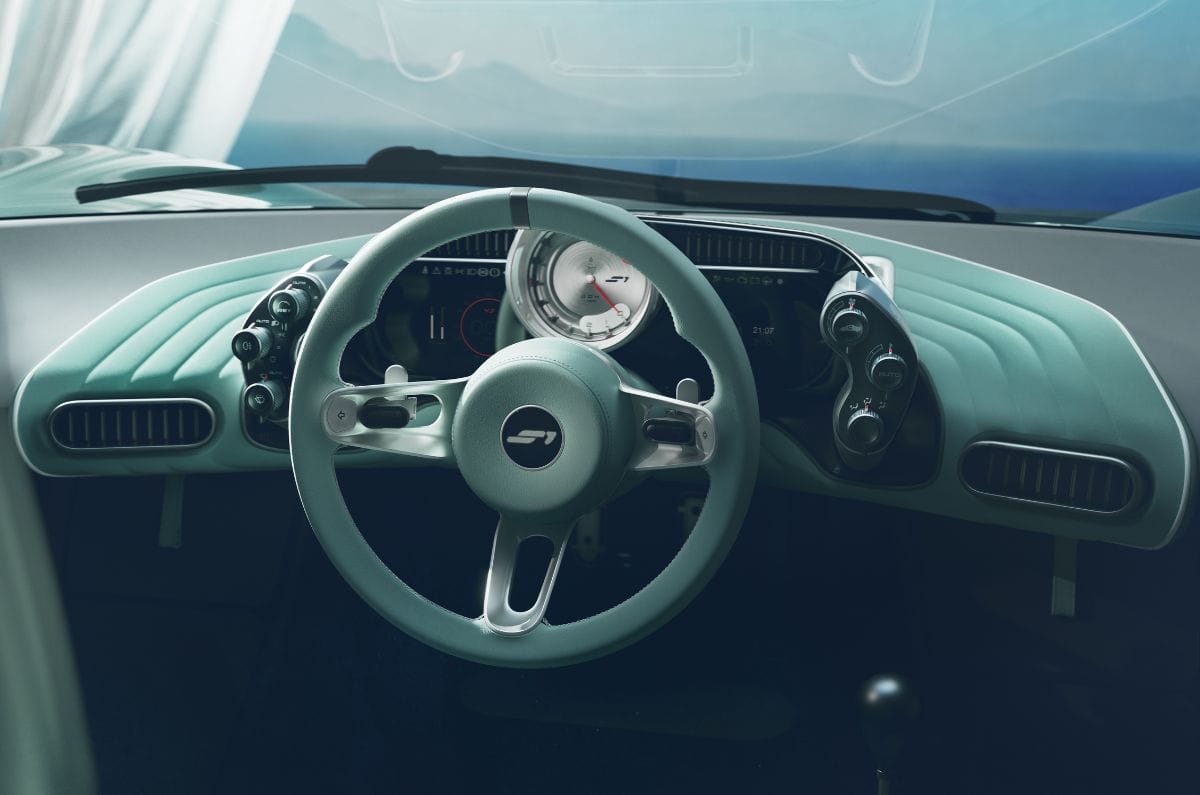
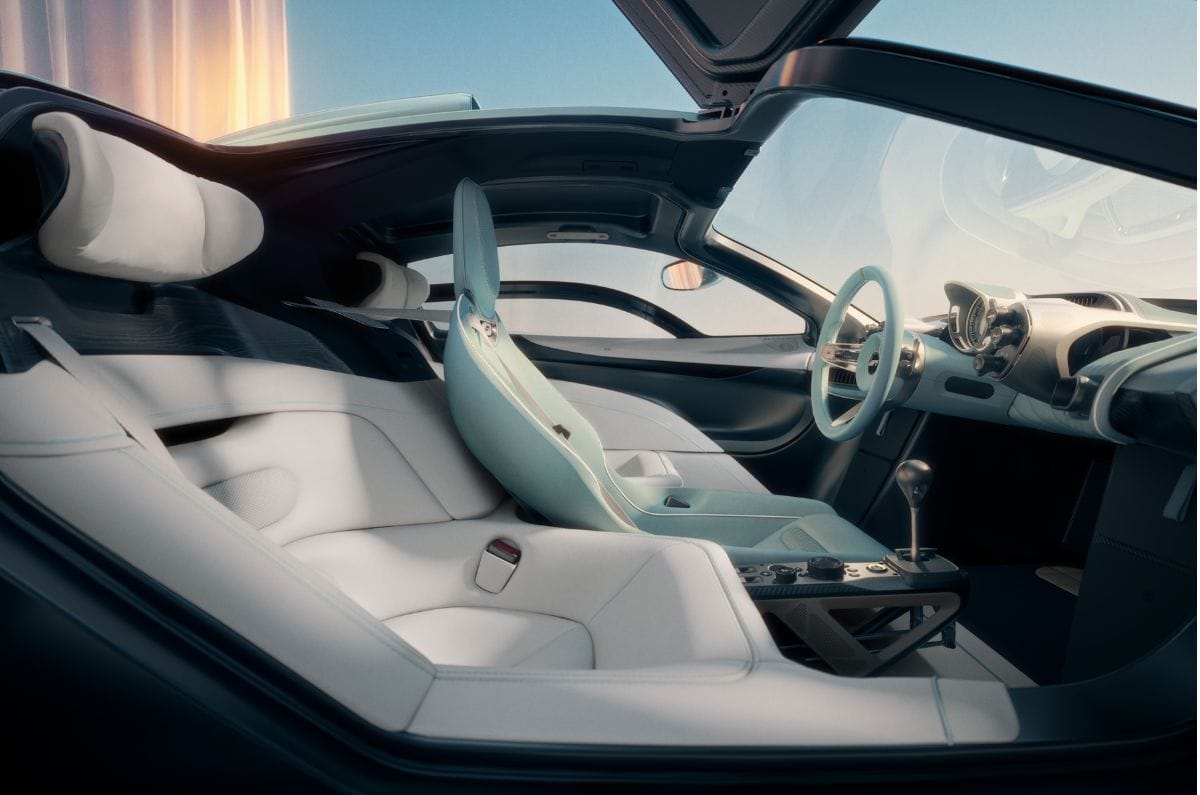
Characteristic of most GMA models, just as the original F1, the interior features a 3-seat layout with a central driving position and a low scuttle height. It’s, however, more luxuriously trimmed in leather and bespoke fabrics, and also features more sound deadening in keeping with its road-biased positioning. The dashboard panel housing the instruments and all the controls also appear more richly intricate. It also features a bespoke lightweight audio system and a touring-focused seat to make it better suited for long distance use.
The real talking point is that there are no touchscreens – all interior controls are completely analogue. There are, however, two displays flanking the gorgeous analogue tachometer – the left screen is for infotainment and phone-related functions, while the right screen is for all vehicle related function. Murray says “Everything here is analogue and rotary. I don’t see that’s something we’ll ever move away from.”
GMA S1 engine and specifications
Powering the S1 is a 4.2-litre, naturally aspirated Cosworth V12 engine that revs to a manic 12,100rpm. This is slightly larger than the 4.0-litre V12 used in the T50 (the car it is based on), but smaller than the 4.3-litre unit seen on the S1 LM. And just like in the original F1, this one too gets a 24-carat gold-plated heat shielding. There’s also an air intake on the roof that feeds air directly into the engine.
The engine produces 690hp and 500Nm of torque – quite modest figures for current times – with 80 percent of peak torque being available from as low as 2500rpm. For perspective, the McLaren F1 from three decades ago produced 627hp and 650Nm of torque from a 6.1-litre, naturally aspirated V12.
The gearbox is a 6-speed manual unit with a longer sixth ratio for touring, sending drive to the rear wheels. GMA says it is targeting a weight of less than 997kg (lesser than even the T50) with extensive use of carbon fibre body panels, a carbon fibre monocoque and also carbon fibre suspension components. The S1 has the same suspension geometry and track width as the S1 LM, but it rides 10mm higher than the track-focused S1 LM and also gets more compliant dampers. It also gets a switchable power steering that lets one alter the steering feel depending on the use case.
Production of the S1 will be limited to 64 units worldwide. Each car will be individually commissioned and specified by its owner, although pricing remains undisclosed.
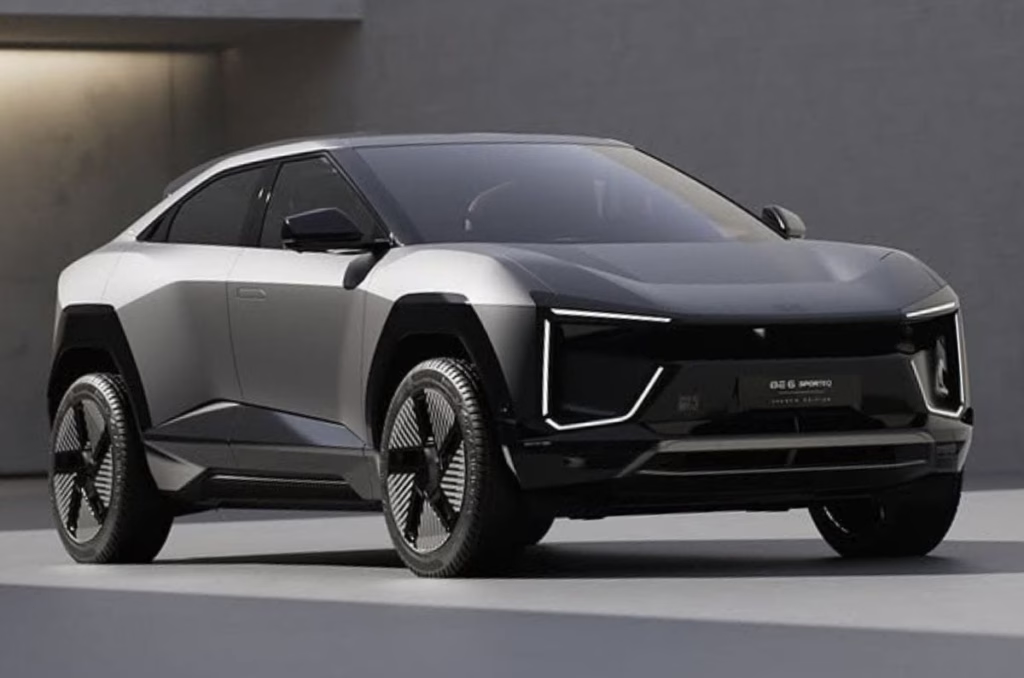
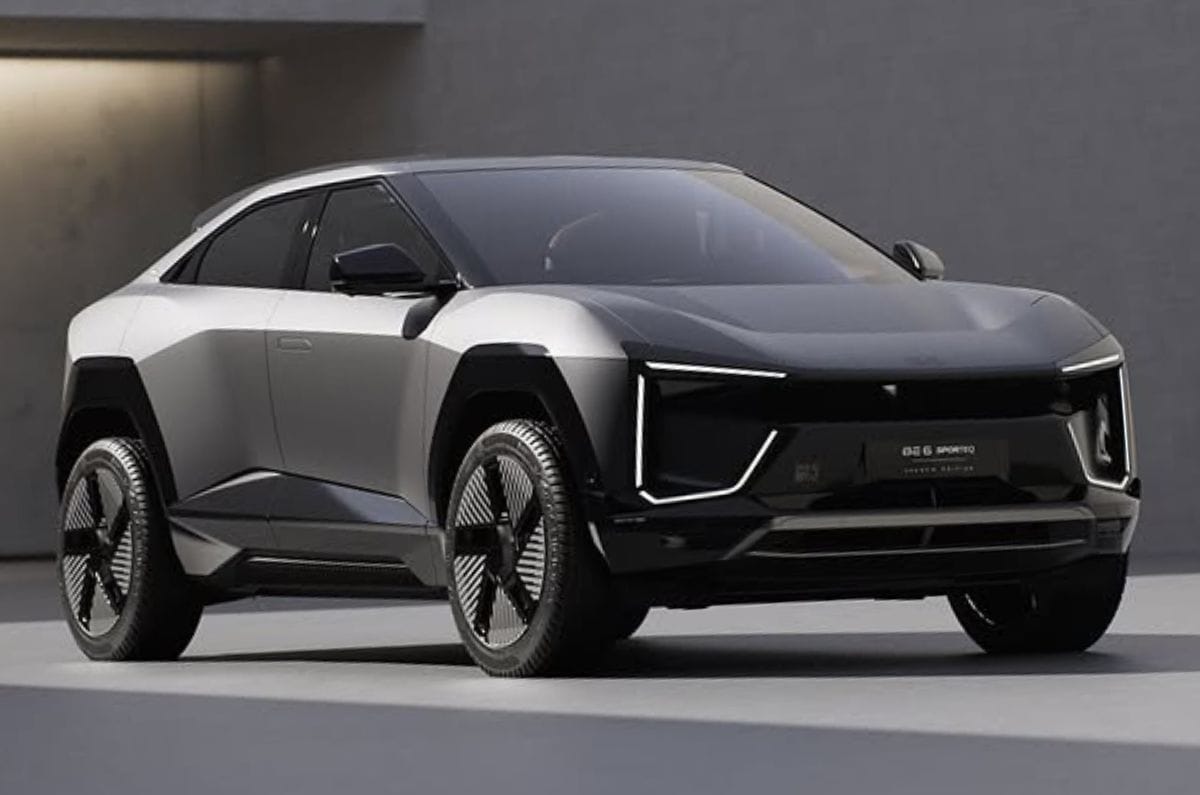
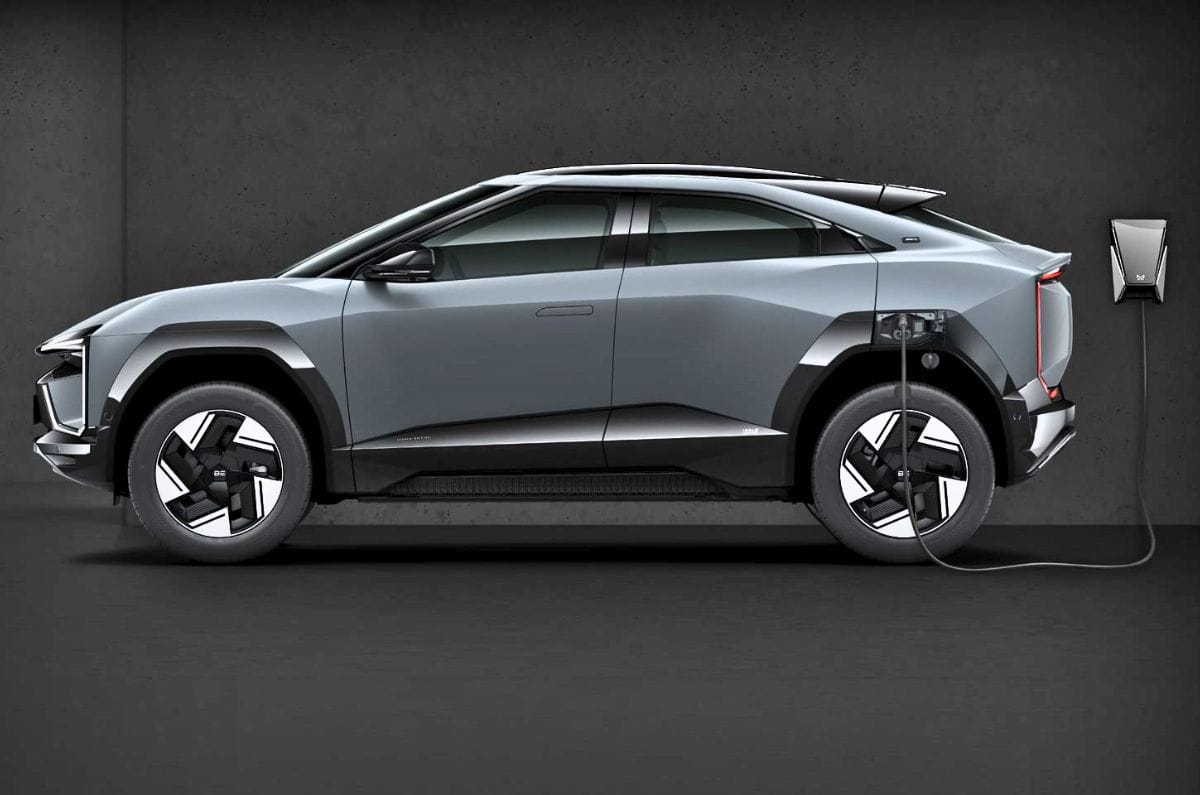
Mahindra launched the 2026 BE 6 recently, adding the ‘Sporteq’ moniker and pricing it from Rs 19.45 lakh to Rs 26.95 lakh (ex-showroom). Along with a new name, Mahindra has also introduced some updates to the midsize electric SUV to keep it modern in the segment. Here’s a detailed list of these updates:
New 70kWh battery pack
New battery pack offers 651km range and is mated to a 241hp rear motor
The 2026 Mahindra BE 6 Sporteq gets a new 70kWh battery pack in addition to the previously available 59kWh and 79kWh batteries. This new 70kWh battery offers an ARAI-claimed range of 651km and a rear-axle-mounted (RWD) electric motor that produces 241hp and 360Nm. It supports a 7.2kW AC, a 11.2kW AC and a 160kW DC charger. The DC fast charger recharges the battery pack from 20-80 percent in a claimed 20 minutes.
Mahindra is offering the 70kWh battery with the Three and Three+ trims, priced at Rs 22.95 lakh and Rs 23.95 lakh, respectively (ex-showroom).
Battery-as-a-Service (BaaS) scheme
Battery rental scheme makes the 59kWh battery variants Rs 8 lakh more affordable
Along with a new battery, Mahindra is also offering the BE 6 with a battery-as-a-service (BaaS) scheme, which is also a first for the brand. However, the BaaS scheme is offered only with the 59kWh battery pack available in the One and Two trims. The battery rental scheme essentially lowers the BE 6’s initial price by Rs 8 lakh, but requires a monthly subscription fee for the battery. Here are the details:
Mahindra BE 6 battery-as-a-service (BaaS) price vs standard price
Standard price
BaaS price*
Difference^
One
Rs 19.45 lakh
Rs 11.45 lakh + Rs 3.75/km
– Rs 8 lakh
Two
Rs 20.95 lakh
Rs 12.95 lakh + Rs 3.75/km
– Rs 8 lakh
Notes: BaaS scheme requires a minimum monthly payment of Rs 6,750, calculated assuming usage of 60km per day and an 8-year battery loan, as per Mahindra’s terms and conditions. The price difference calculated above is on the initial price and does not include the BaaS scheme’s battery subscription charges.
Triple-screen setup on dashboard
Offers an additional third screen for the front passenger now
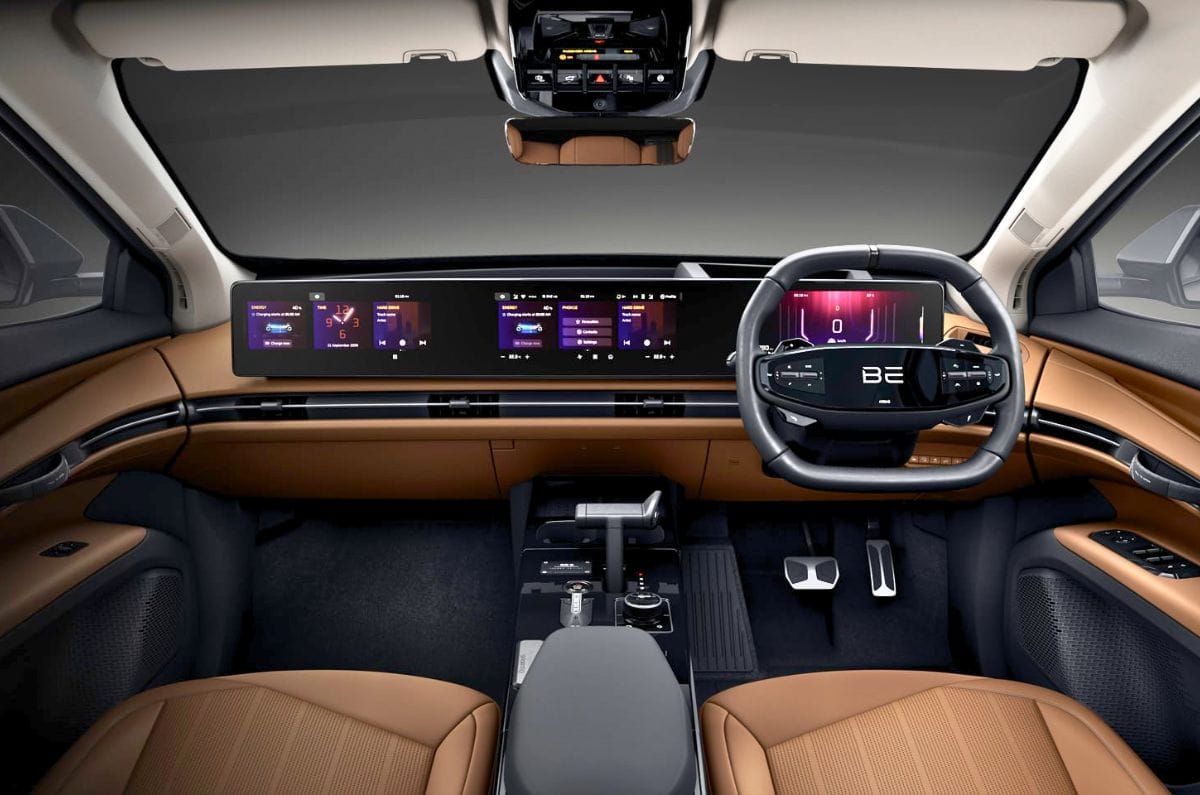
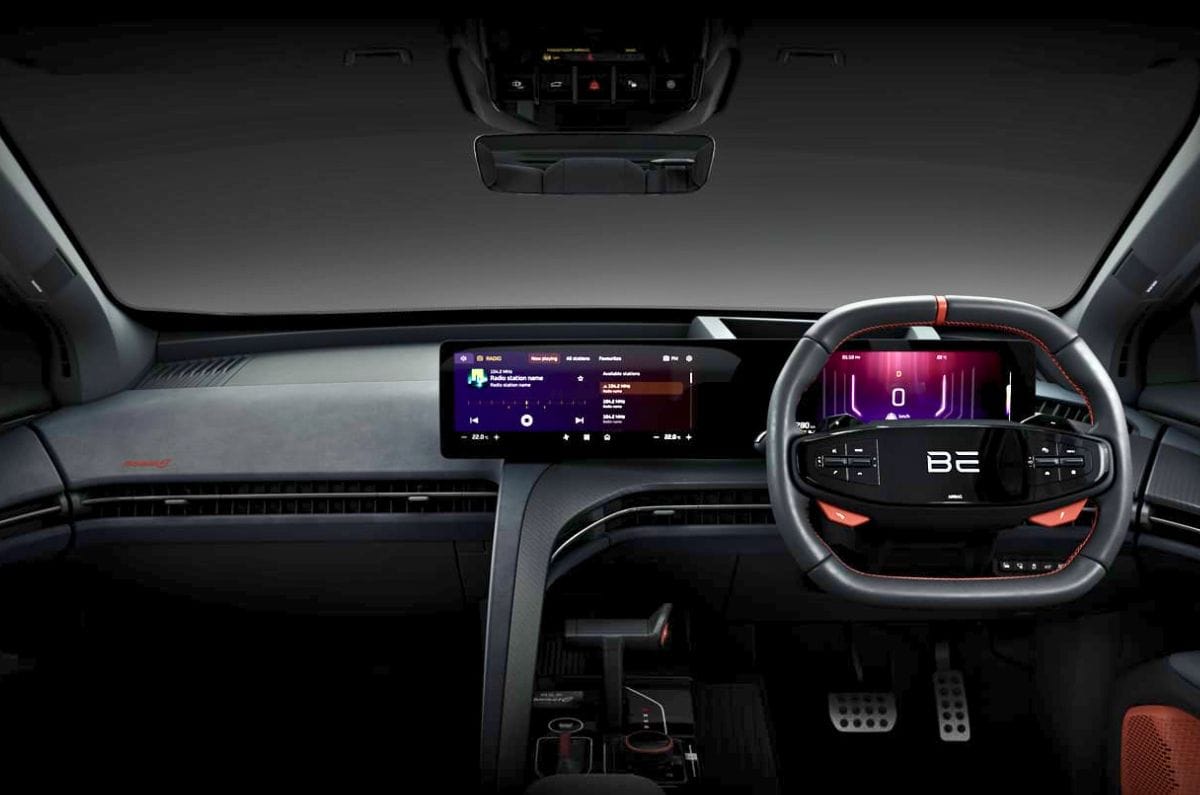
The 2026 update also brought a major redesign to the BE 6’s dashboard, now offered with an additional 12.30-inch screen for the front passenger, in addition to the similarly sized digital driver’s display and touchscreen infotainment system. The new front passenger display also removed the halo-like design element connecting the dashboard to the centre console, allowing the addition of two cupholders on the centre console, something that was sorely missing on the older model.
Mahindra is offering a triple-screen setup on all trims of the BE 6 Sporteq except the base-spec One and the sportier Formula E editions.
Redesigned Formula E edition
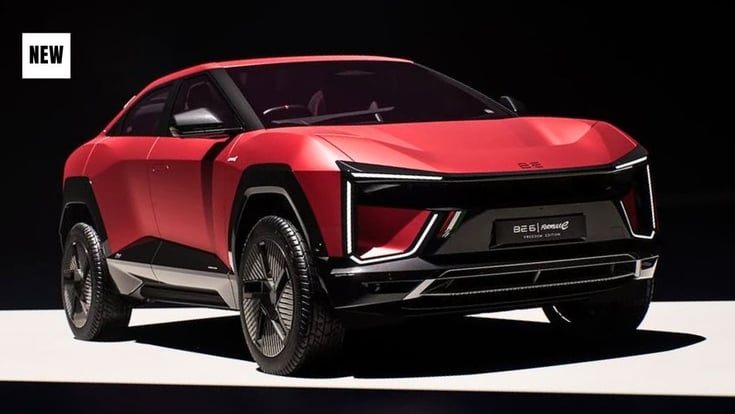
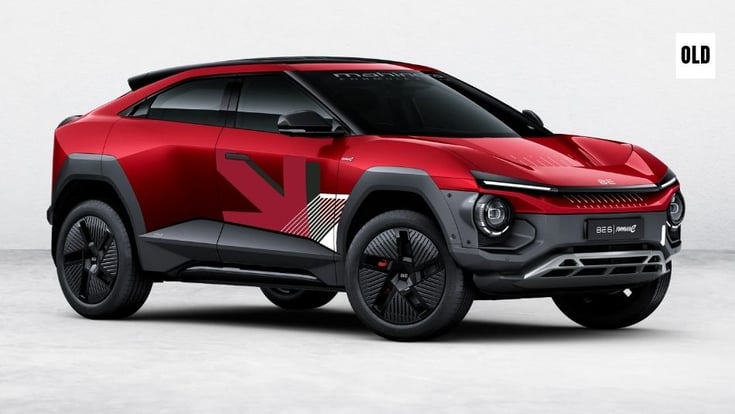
The 2026 Formula E Freedom looks nothing like the older Formula E edition
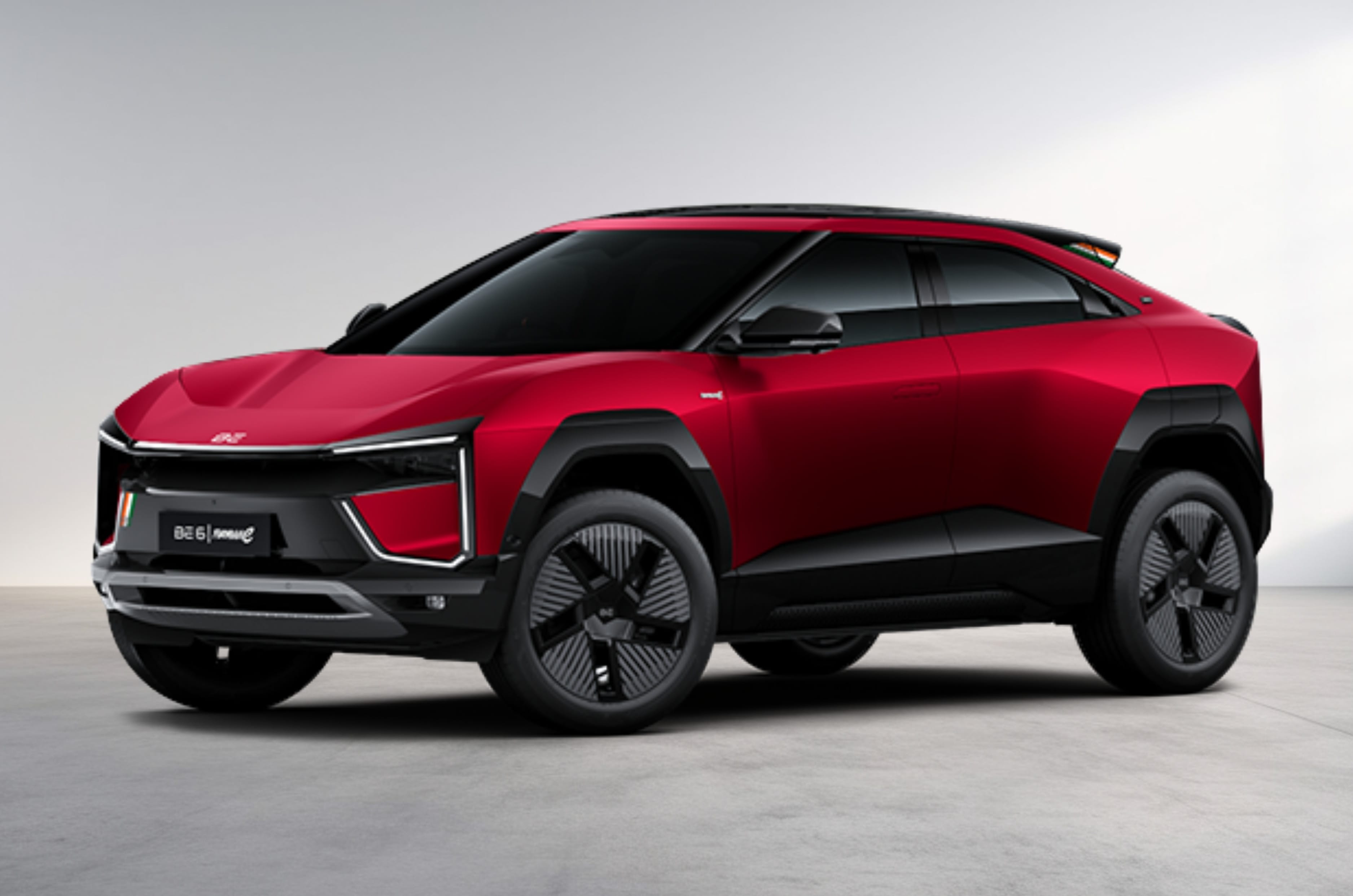
With the 2026 update, Mahindra has also rejigged the exterior design of the Formula E edition. Unlike the previous model, which had a different fascia from the standard model with circular-shaped LED headlights and a revised bumper, the 2026 Formula E Freedom edition gets the same design as the standard BE 6 Sporteq, with some Formula E badges and FIA decals. Moreover, the Formula E edition is only offered with the older model’s dual-screen dashboard and a halo design element for a sporty appeal.
Mahindra is offering the 2026 Formula E edition at the Three and Four trim levels, priced at Rs 24.45 lakh and Rs 26.95 lakh, respectively (ex-showroom).
Fresh exterior and interior colours
Both the BE 6 Sporteq and Formula E edition get new colour themes
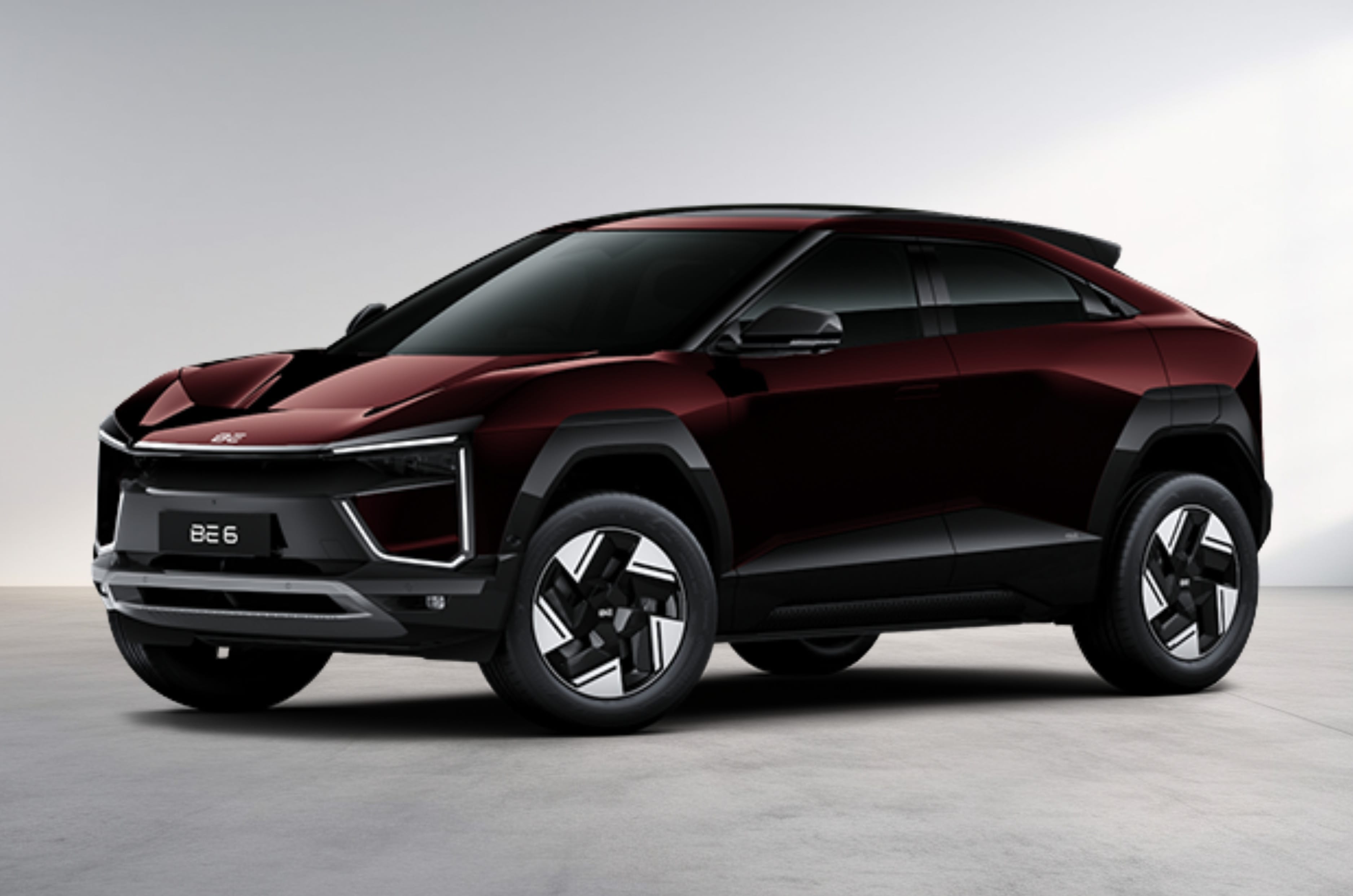
Mahindra BE 6 Sporteq Ruby Velvet exterior colour.
The 2026 Mahindra BE 6 Sporteq is being offered with fresh exterior and interior colour options. It is available in a new ‘Ruby Red’ exterior theme and new Racing Tan and Black interior hues for the Two, Three, Three+ and Four trims. The base-spec One is offered with the same Sage Green and Grey theme as before. A Sporteq Launch Edition, based on the fully loaded Four trim, is also available, which offers a new Graphite Storm exterior paint and Racing Tan interior theme.
Mahindra BE 6 Formula E Freedom edition Rosso Impulso exterior colour.
While the 2026 BE 6 Formula E edition is offered with a new Rosso Impulso exterior hue, the all-black interior with orange elements for contrast is the same as the outgoing model.
New ‘TEQ’ suite
The suite enables Gemini-based interactions, unlocks additional drive modes and Revive functionalities
Another addition to the BE 6 Sporteq is the new ‘TEQ’ suite, which Mahindra says is designed to make the vehicle more intuitive, engaging, secure and responsive to individual customer needs. At its core is a Gemini-based AI conversation assistant that allows natural voice interactions for functions such as vehicle controls, navigation and music. The suite also introduces a Karaoke mode, along with support for Dolby Vision and Dolby Audio.
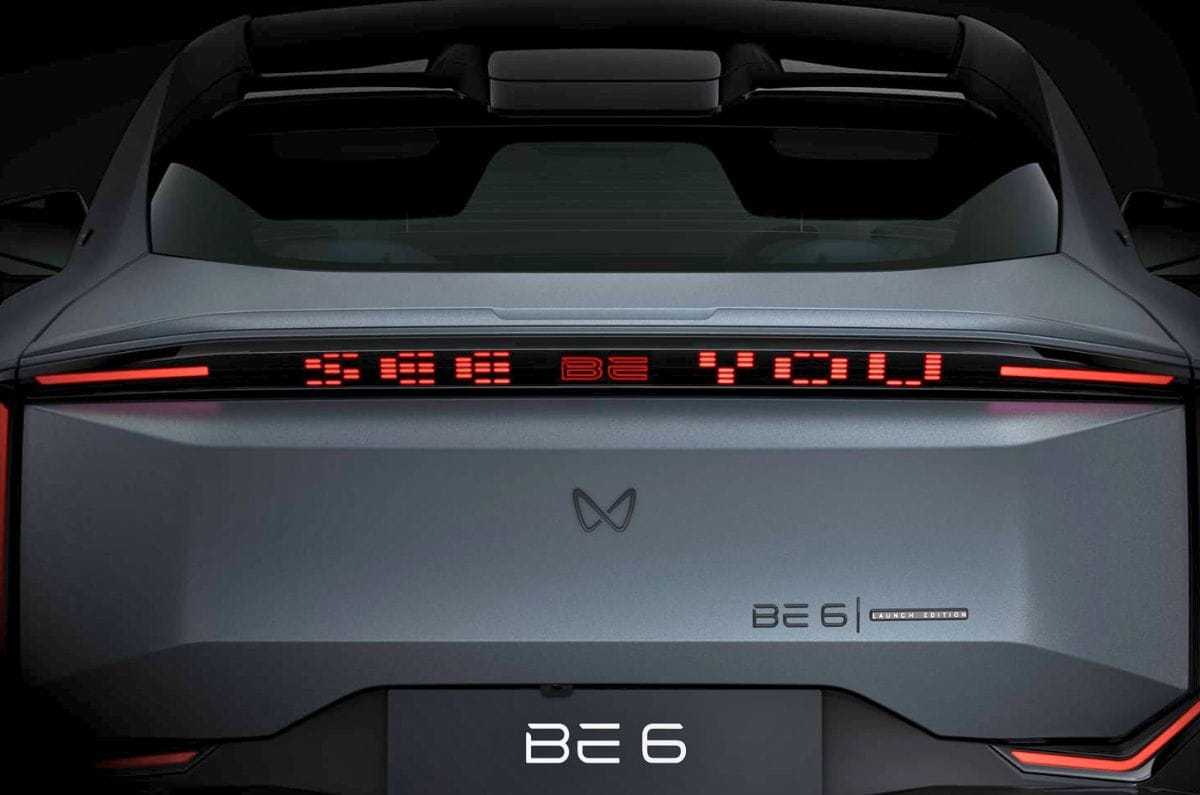
The TEQ suite also adds several performance and convenience features, including Custom Drive Mode, Drift Mode and an acceleration boost mode for the Formula E Freedom Edition, which enables a claimed 0-100 kph time of 6.44 seconds. It also includes Revive and Revive SOS, which can provide additional range even after the battery has run out. Another new feature is ‘TEQ_xting’, which lets owners display personalised messages on the vehicle’s tailgate.
The Mahindra BE 6 Sporteq is priced from Rs 19.45 lakh to Rs 26.95 lakh (ex-showroom), and it rivals the Hyundai Creta Electric, Tata Sierra EV, Tata Curvv EV, MG ZS EV, Maruti Suzuki e Vitara and Toyota Ebella.
Prices are ex-showroom, India, and do not include a wall charger or its installation cost.