Varanasi Airport Firing: उत्तर प्रदेश के वाराणसी स्थित लाल बहादुर शास्त्री इंटरनेशनल एयरपोर्ट के टर्मिनल भवन में रविवार (16 अगस्त) सुबह जांच के दौरान एक यात्री के लाइसेंसी पिस्तौल से अचानक गोली चल जाने से हड़कंप मच गया। गोली की चपेट में आने से एयरपोर्ट पर तैनात एक महिला कर्मचारी और एक अन्य व्यक्ति घायल हो गए। पुलिस ने बताया कि मुंबई जाने वाली एयर इंडिया एक्सप्रेस से यात्रा करने के लिए आजमगढ़ निवासी कमलेश राय पत्नी के साथ एयरपोर्ट पहुंचे थे। उनके पास लाइसेंसी पिस्तौल थी।
उन्होने बताया कि जांच के दौरान पिस्टल की जांच और उसमें मौजूद गोलियों की गिनती की जा रही थी, तभी अचानक फायरिंग हो गई। उन्होंने बताया कि इस घटना में जांच कर रही महिला कर्मचारी के पैर में और पास खड़े एक अन्य व्यक्ति घायल हो गए। दोनों घायलों को तुरंत अस्पताल में भर्ती कराया गया है। घटना की सूचना पर वरिष्ठ पुलिस अधिकारी मौके पर पहुंचे और घटनास्थल का निरीक्षण किया। पुलिस ने बताया कि मामले में आवश्यक कानूनी कार्रवाई की जा रही है।
पत्नी के साथ जा रहा था मुंबई
‘इंडिया टुडे’ की रिपोर्ट के मुताबिक, यात्री अपनी पत्नी के साथ एयर इंडिया एक्सप्रेस की फ्लाइट नंबर IX-1810 से मुंबई जा रहा था। उसके पास एक पिस्तौल और मैगजीन थी। उसने फ्लाइट में चढ़ने से पहले अधिकारियों को हथियारों की जानकारी दी। वाराणसी एयरपोर्ट के डायरेक्टर पुनीत गुप्ता के मुताबिक, जब हथियार और उसके कागजात की जांच हो रही थी, तभी बंदूक अचानक से चल गई। उन्होंने बताया कि हथियार और उसके कागजात की जांच के समय हथियार का मालिक और एयरपोर्ट का स्टाफ दोनों मौजूद थे।
फायरिंग में दो कर्मचारी घायल
गोली पहले जमीन पर लगी और फिर पास खड़े दो स्टाफ सदस्यों को जा लगी। एक महिला स्टाफ सदस्य की जांघ में गोली लगी। जबकि एक पुरुष स्टाफ सदस्य के हाथ में चोट आई। वाराणसी एयरपोर्ट के डायरेक्टर के मुताबिक, यह घटना 16 अगस्त, 2026 को सुबह करीब 9:30 बजे हुई। गुप्ता ने बताया कि घायल दोनों स्टाफ सदस्यों की हालत स्थिर है। फिलहाल, उनका इलाज चल रहा है। ANI के मुताबिक, एयरपोर्ट डायरेक्टर ने कहा कि स्थानीय पुलिस को सूचित कर दिया गया है। जांच चल रही है।
वाराणसी एयरपोर्ट के डायरेक्टर ने न्यूज एजेंसी ANI से कहा, “आज सुबह करीब 9:30 बजे, मुंबई जाने वाली फ्लाइट IX-1810 में अपनी पत्नी के साथ यात्रा कर रहे एक यात्री ने फ्लाइट में हथियार ले जाने की जानकारी दी। हथियारों की जांच के दौरान यात्री ने एक राउंड गोली चलाई, जिससे दो AAICLAS स्क्रीनर घायल हो गए। दोनों को इलाज के लिए न्यू लक्ष्मी ट्रॉमा सेंटर ले जाया गया है। स्थानीय पुलिस को सूचित कर दिया गया है। जांच चल रही है।” पुलिस और एयरपोर्ट अधिकारी अब इस घटना की विस्तार से जांच कर रहे हैं।
Today, 16.08.2026, at about 0930 hrs, a passenger travelling with his wife on flight IX-1810 to Mumbai declared weapons on board the flight. During the weapons check, the passenger fired a round, injuring two AAICLAS screeners. Both were taken to New Laxmi Trauma Centre for…
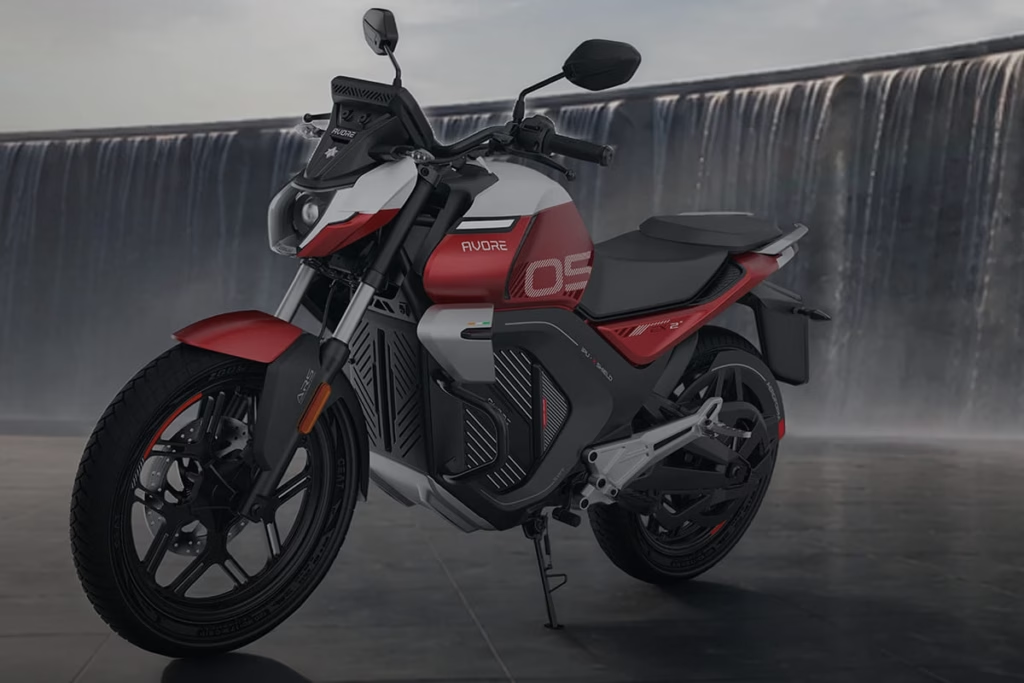
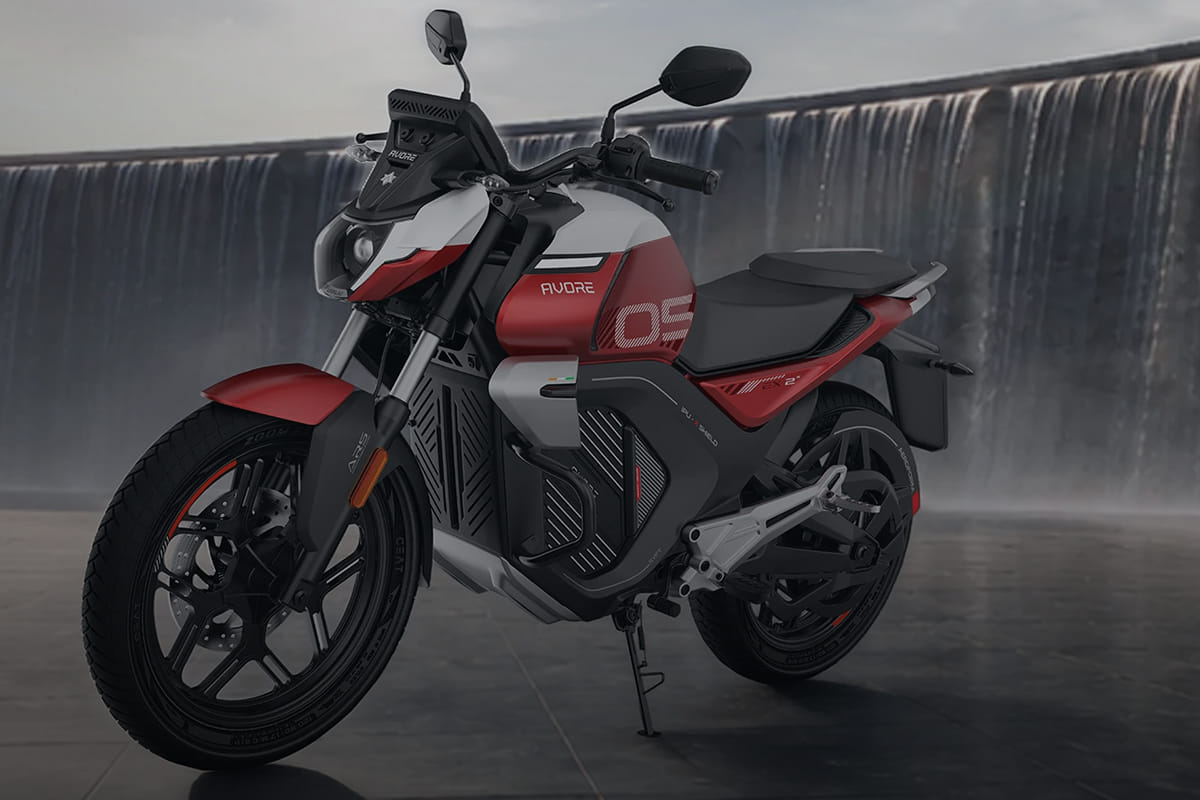
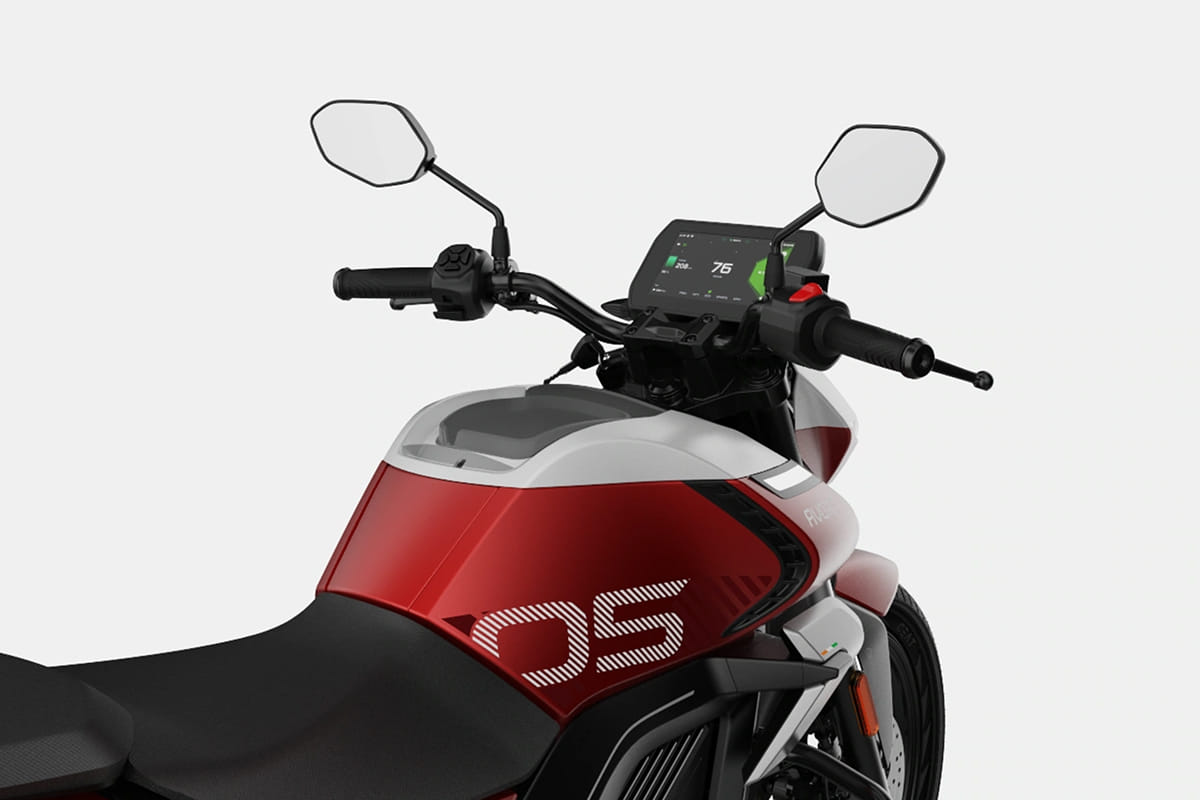
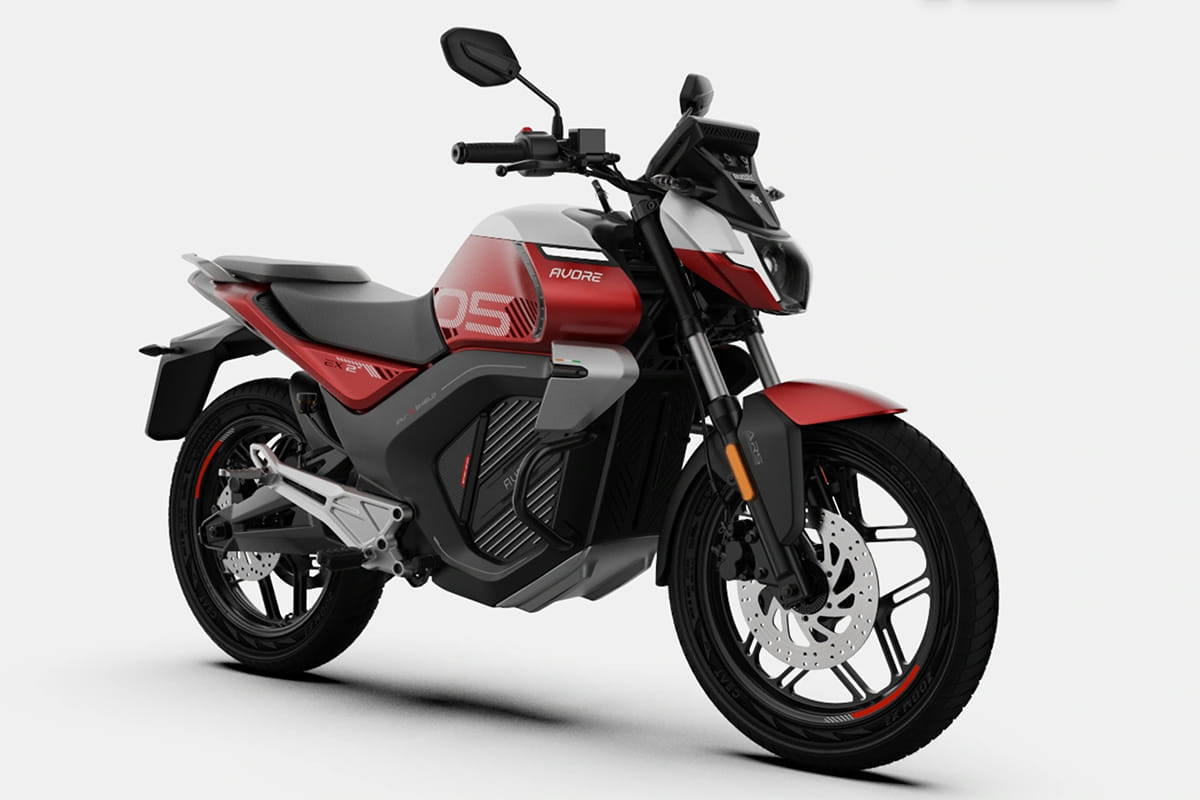
The Avore EX2S is the range-topping model in the brand’s electric motorcycle lineup. It gets a 5kWh battery, a 10.5kW motor and a claimed 260km IDC range.
1. What is the Avore EX2S price?
The Avore EX2S is the flagship model that is priced at Rs 1.70 lakh (ex-showroom, India). Pre-bookings are open for Rs 799.
2. What battery and motor does it get?
The EX2S uses a 5kWh battery paired with a 10.5kW motor. It has a claimed 260km IDC range and a 114kph top speed. It can accelerate from 0-40kph in a claimed 2.8 seconds.
3. What features does the EX2S get?
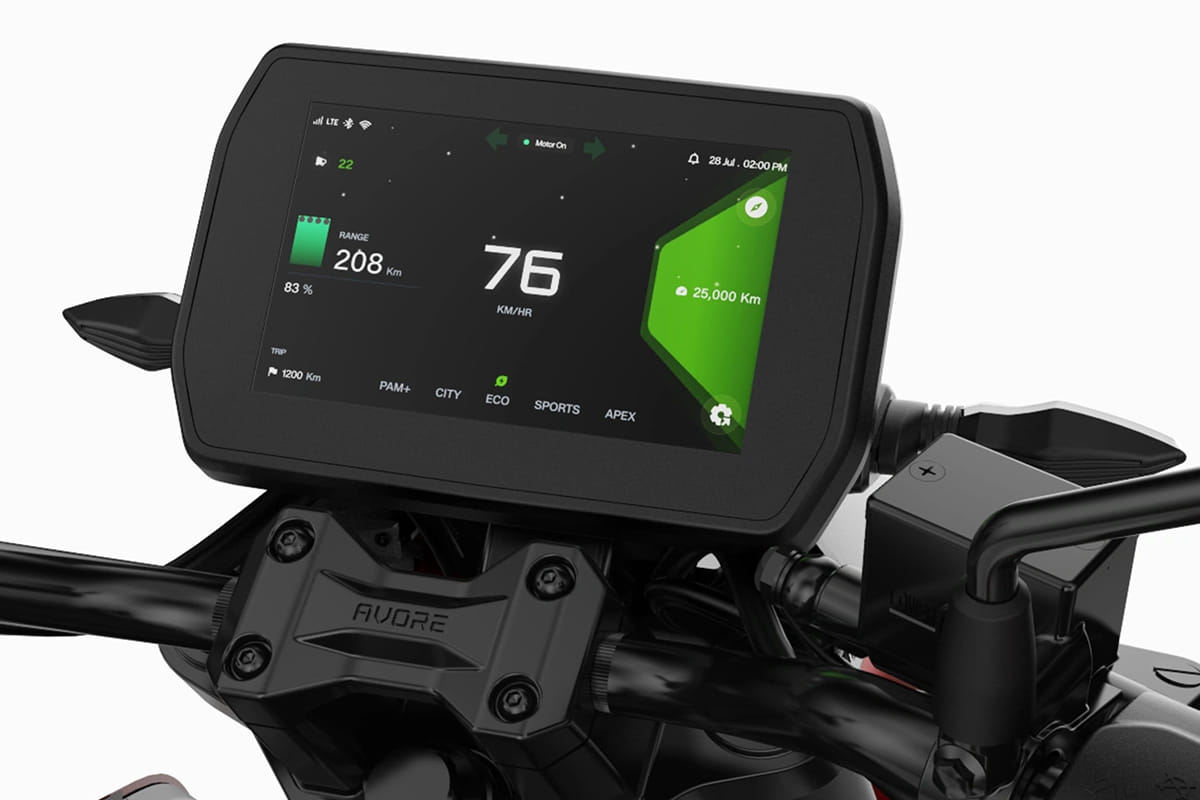
The EX2S gets a 7-inch touchscreen display with full map navigation. It also gets smartphone connectivity, cruise control, hill-hold assist, regenerative braking, geofencing and crash alerts. It gets five riding modes and a simulated four-speed manual gearbox.
4. What charging system does it use?
The EX2S gets a 1,500W onboard charger. Avore claims it can charge the battery from 20 to 80 percent in around two hours using a standard socket.
5. What colours is the EX2S available in?
The EX2S is available in Starlit Blue DT, Meteor Red DT, Stellar Black DT and Onyx Black DT.
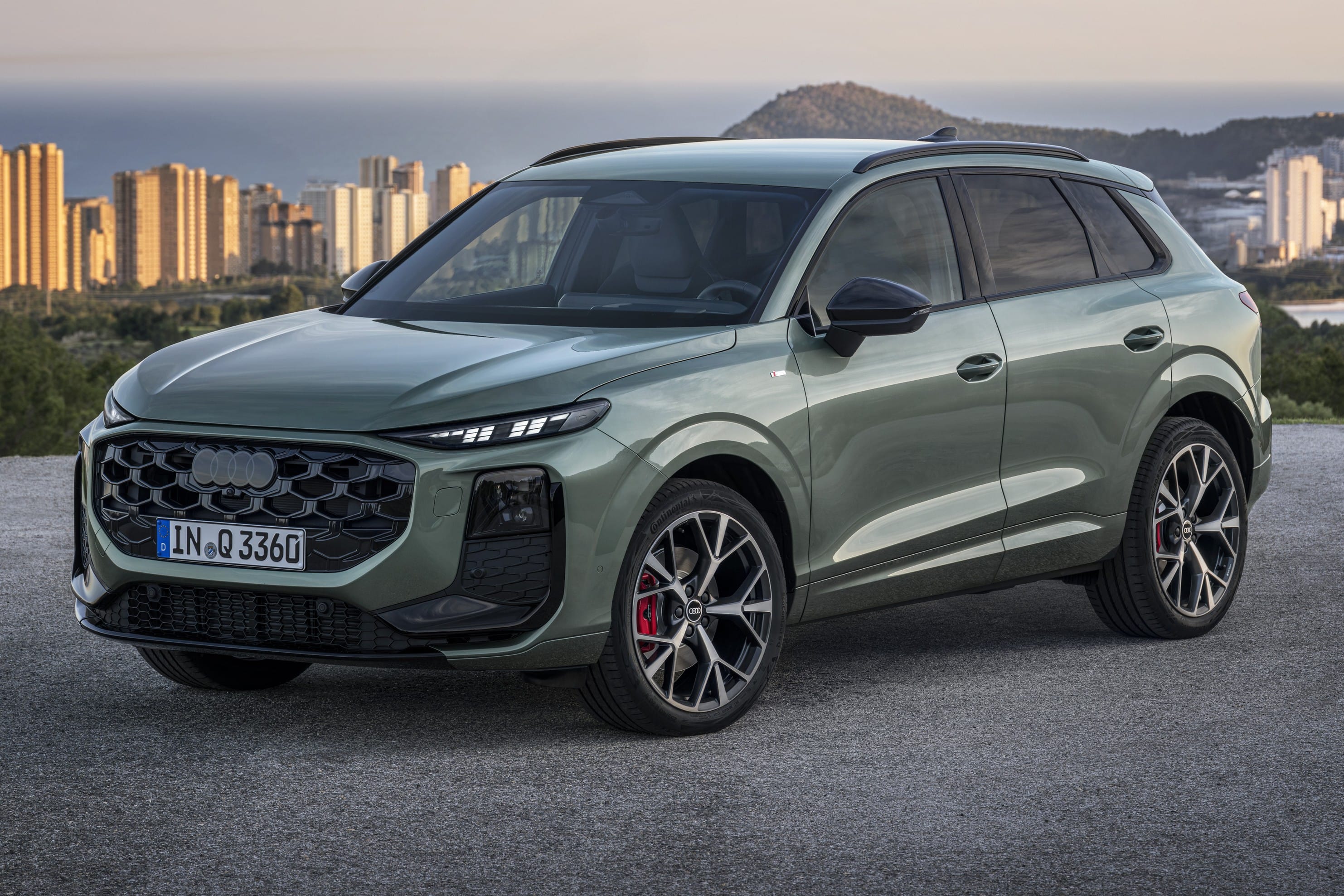
Next-gen Q3 will have an all-new aggressive exterior design.
Likely to continue with the previous-gen’s 2.0-litre turbo-petrol engine with AWD.
Expected to be priced at Rs 60 lakh ex-showroom.
Next-generation Audi Q3: What to expect?
Global-spec Q3 used for reference.
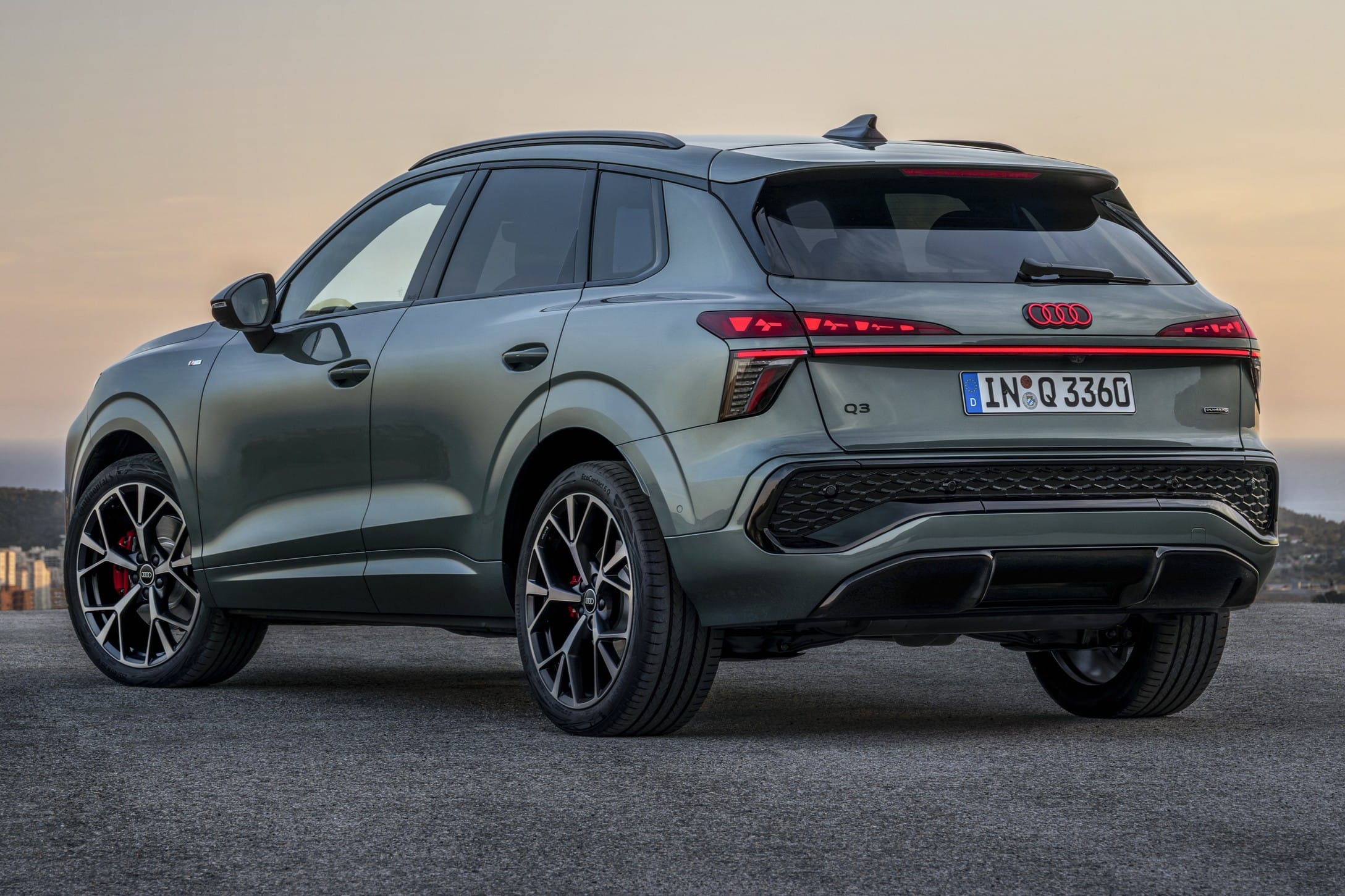
The next-gen Q3 will have an all-new exterior design that’s more aggressive than its predecessor. For reference, the global-spec version’s front end ditches the traditional headlamp design for a split setup. At the same time, the grille is larger and sports a hexagonal pattern with the 2D Audi badge. The sides are replete with moulding for the wheel arches and lower sides of the doors, and a subtle character line on the rear fender. While the global-spec version has wheel sizes ranging from 17 to 20 inches, the India-spec model is expected to have 18-inch ones. Like the front, the rear features a split-lamp design, comprising a connected LED strip and the main units above it, with an illuminated Audi badge.
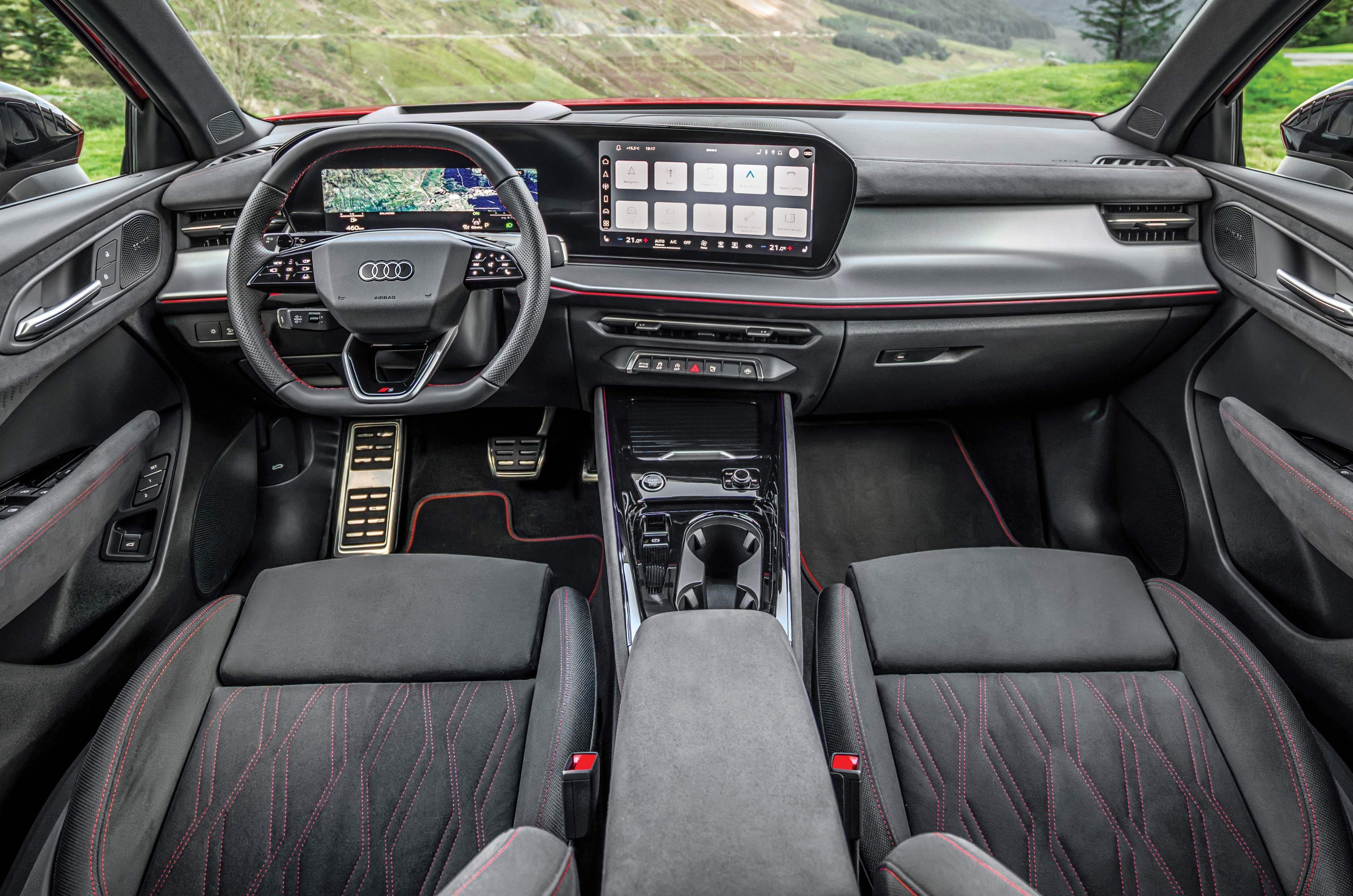
On the inside, the next-gen Q3 will have a revamped look with a tech-laden cabin. Dominating the dashboard is an 11.9-inch digital driver’s display and a 12.8-inch infotainment screen. You get a new three-spoke steering wheel, which sports a unique column-mounted stalk setup for light and wiper controls, while the layered dashboard is angled slightly toward the driver. Expect features like wireless Apple CarPlay and Android Auto, a panoramic sunroof, powered and ventilated front seats, a 360-degree camera and level 2 ADAS to be onboard.
As far as powertrains are concerned, the India-spec Audi Q3 is expected to continue with the predecessor’s 2.0-litre direct-injection turbo-petrol engine, which produces 204hp and 320Nm of torque. It is mated to a 7-speed DCT gearbox, sending power to all wheels with Audi’s Quattro AWD system.
With the generational update, Audi is likely to price the new Q3 from Rs 60 lakh. It will continue to take on the likes of rivals such as the Mercedes-Benz GLA and the BMW X1.
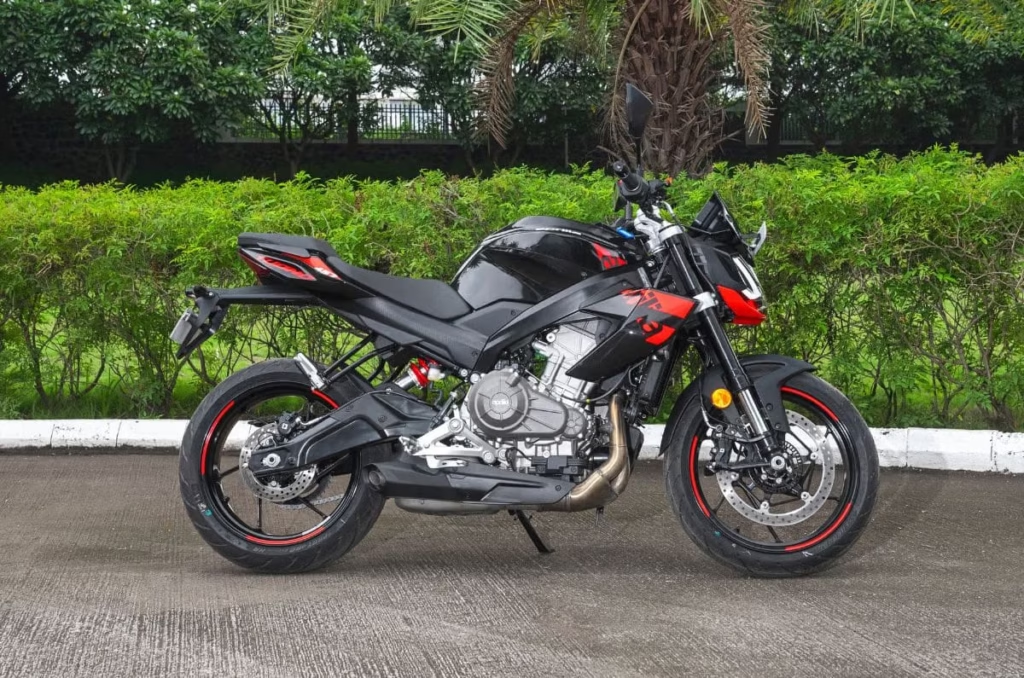
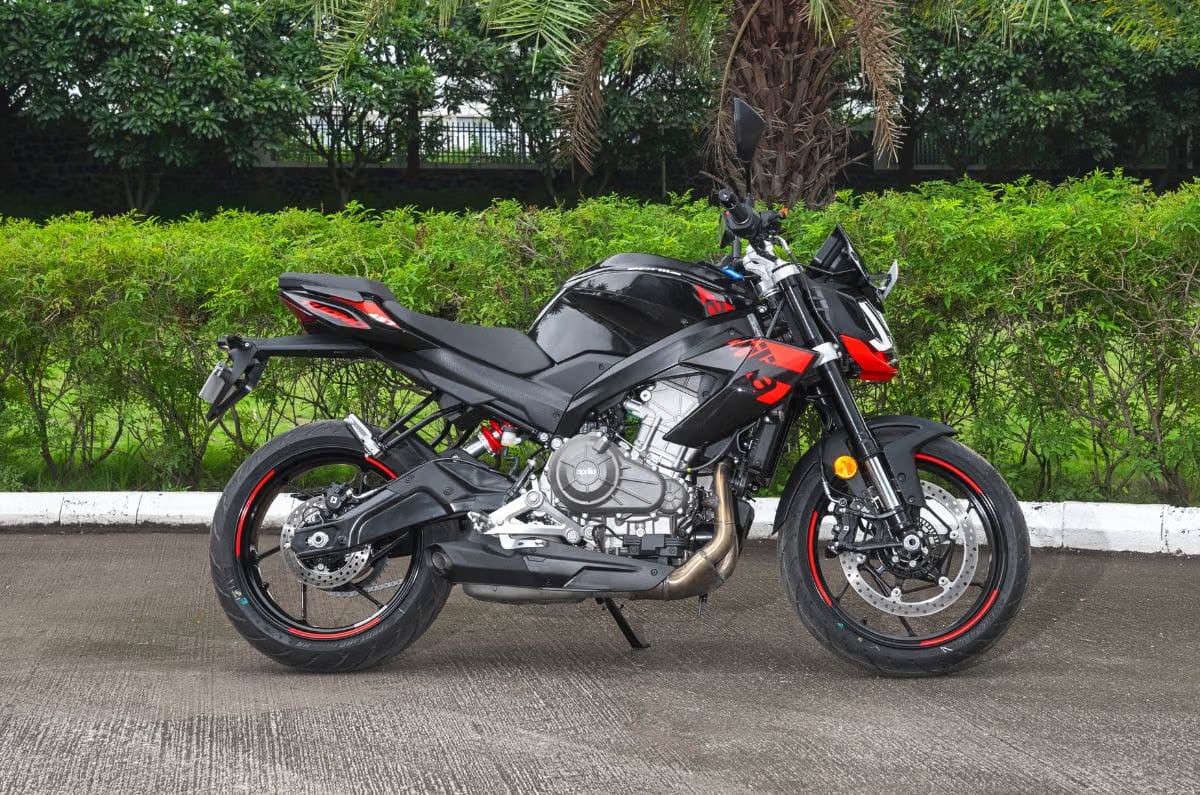
The Aprilia Tuono 457 Special Edition is now the only version of the Tuono 457 available in India. Despite the name, this is not a limited run on top of the standard bike, but the replacement for it. It arrives with a revised riding position, retuned suspension and a standard-fit flyscreen, all aimed at making the Tuono a more liveable everyday machine without compromising its core character. Here’s what works in its favour and a couple of reasons it might not be for you.
Reasons to buy the Aprilia Tuono 457 Special Edition
Noticeably better ergonomics and comfort
The original Tuono 457 was essentially a naked RS 457 with the same seat, same riding position, and just with a flat handlebar instead of clip-ons. For taller riders in particular, it felt uncomfortably cramped. The Special Edition addresses this with taller handlebar risers and additional seat padding (both around 10mm each) which sound modest on paper but make a meaningful difference in practice. During our time with the bike, Rishaad, who stands 6’1″ found that the new ergonomics offered a substantial improvement over the older bike, especially after a long ride. The retuned suspension, with a softer initial stroke front and rear, also makes the bike less abrasive over imperfect roads without blunting its handling.
An engine and chassis that no locally manufactured rival can match
The 457cc parallel-twin remains the highlight of the package. It produces 47.6hp and 43.5Nm, makes a genuinely excellent sound, and has a strong enough mid-range to pull clutch-up wheelies in second gear – something no other locally manufactured motorcycle at this price can do. The chassis is equally impressive, with a taut, reactive feel that gives it what the reviewer describes as a scaled-down big bike character. Highway speeds are effortless, and the bike cruises comfortably at 130kph and above.
Better relative value than before
The Tuono 457 Special Edition is priced at Rs 3.99 lakh – unchanged from when the standard Tuono launched. Meanwhile, its closest rival, the KTM 390 Duke, has seen its price rise due to the GST rate hike applicable to motorcycles above 350cc. What was previously a Rs 1 lakh gap has now narrowed to around Rs 50,000. That shift in relative positioning makes the Tuono a more compelling consideration than it was even a few months ago.
Reasons to skip the Aprilia Tuono 457 Special Edition
It’s still a compact motorcycle
The ergonomic improvements are real, but the Tuono 457 remains a small, compact motorcycle. The footpegs are still high-set, position is still sporty, and taller riders will still find it more constricted than, say, a KTM 390 Duke or a Triumph Speed 400. The changes make it more manageable, not roomy. If everyday comfort over long distances is your priority, this is not the bike for you.
Aprilia’s dealer network remains limited
Aprilia’s sales and service network in India is significantly more restricted than rivals like KTM, Triumph and Royal Enfield. For riders outside major metropolitan areas, finding an Aprilia dealership for routine servicing or warranty work can be a real inconvenience and it’s a concern that hasn’t been addressed alongside the motorcycle’s improvements. It also tends to be a more expensive bike to run, both in terms of service costs and spare parts.
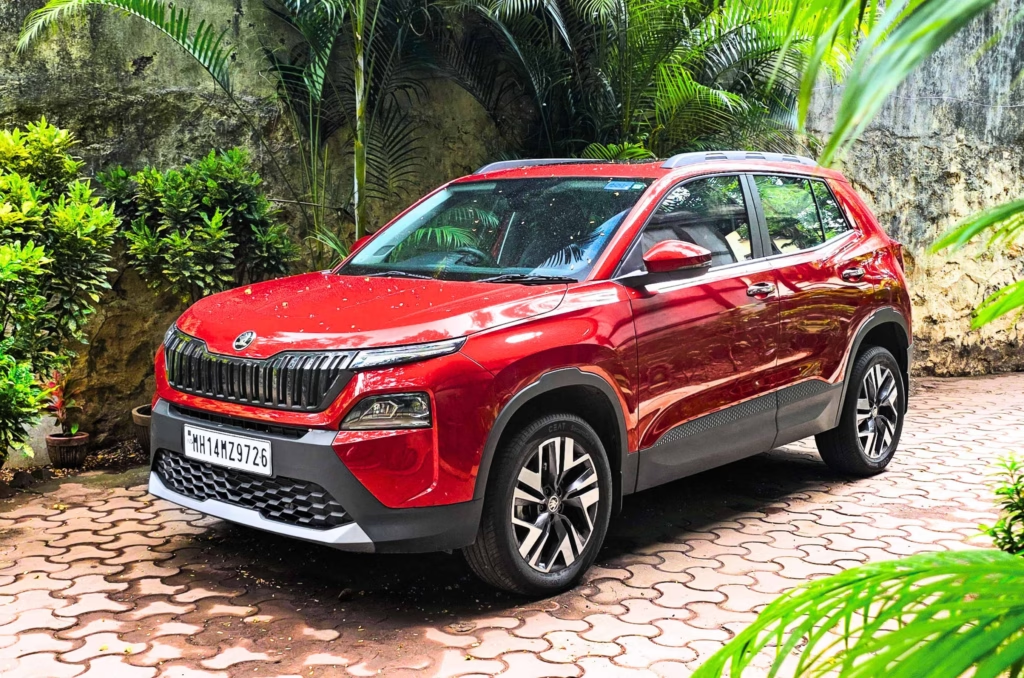
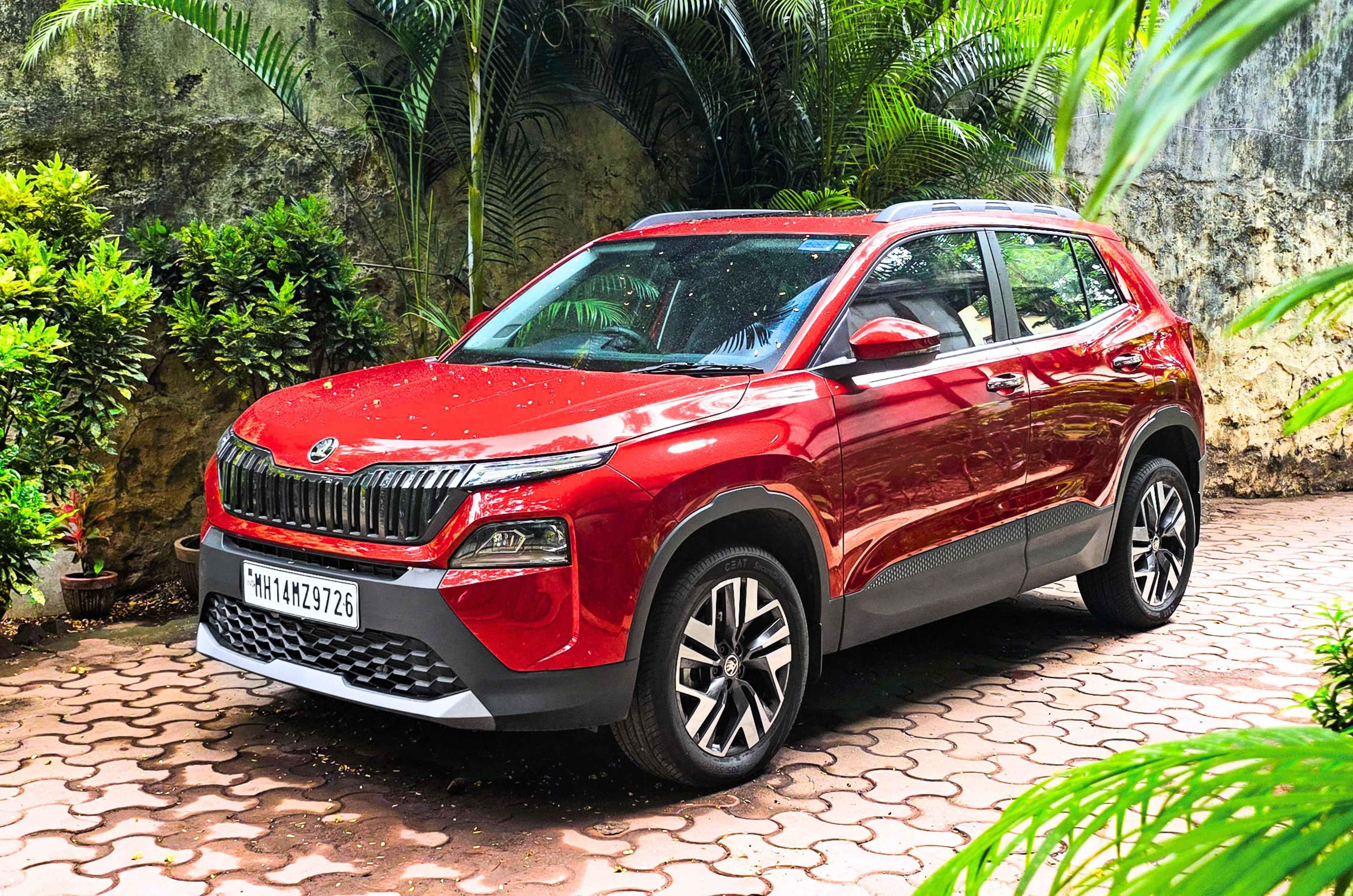
You could argue there was no better long-term test for the Skoda Kylaq than being driven 19,351 kilometres from India to Czechia. However, for those of us who can’t go on a two-month-long adventure full of culture, cuisine and continent-crossing, here’s what it’s been like trudging through Mumbai traffic for the last few weeks.
I’ve been fascinated by the Kylaq since its launch in early 2025, and apart from a few quick peeks at it when it came in for other shoots, I had never really driven one before this. So, now that it’s finally joined the Autocar India fleet, I’ve been more than happy to take it on for its first couple of weeks. And just as a proposition alone, I’m amazed that Group partner Volkswagen didn’t immediately jump on this idea and do a compact SUV in parallel. Guess we’ll just have to wait until 2027.
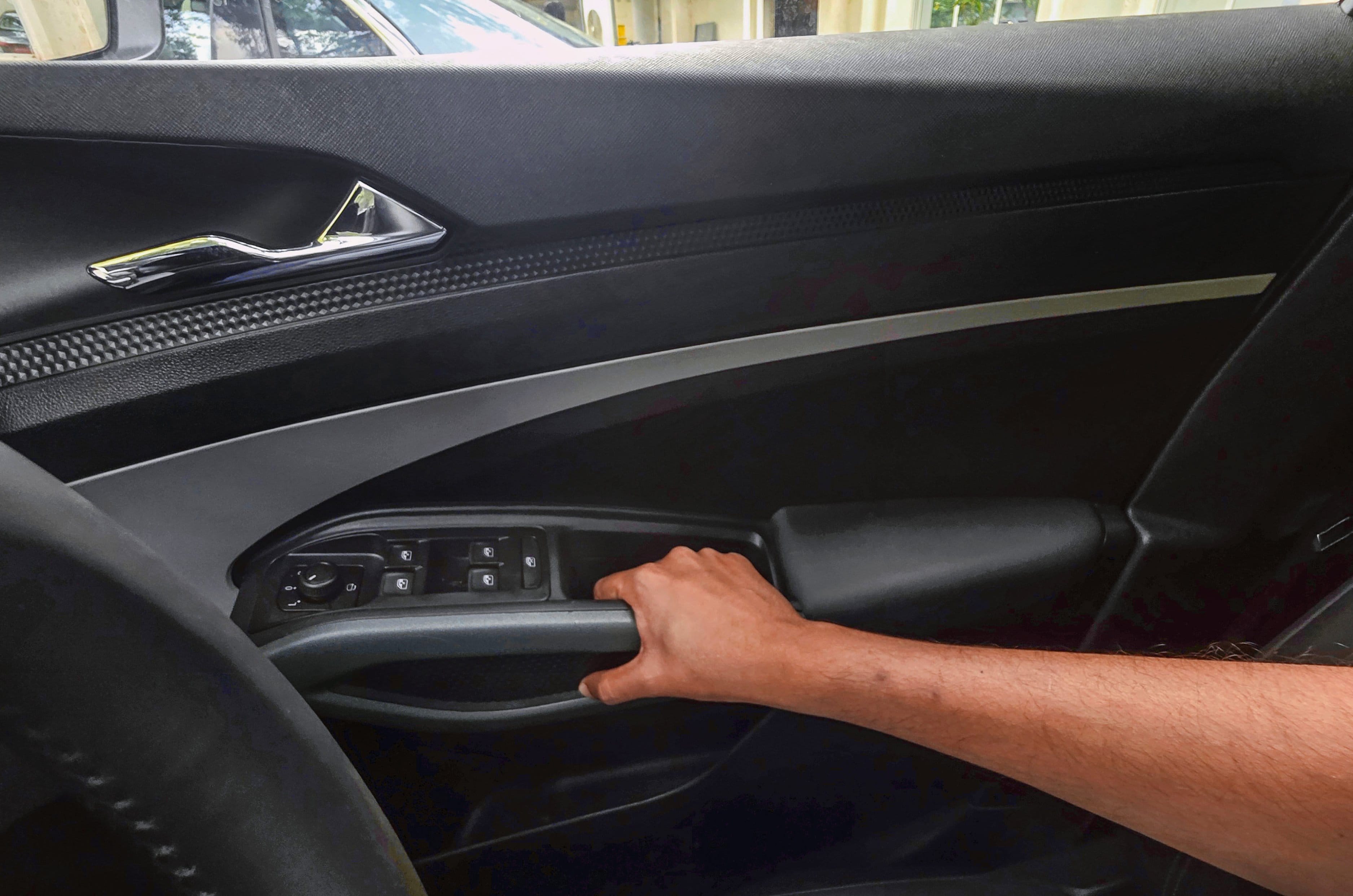
Feels reassuringly solid, from the door shut to the driving dynamics.
The formula is simple enough – a Kushaq, but slightly smaller and using only the lesser 1.0-litre engine. But the more time I spend in here, the more I wonder if there’s any need for a Kushaq 1.0 TSI at all – this thing offers pretty much everything it does. At no moment does it feel lesser in any way – same step up into the cabin, same solid slam on door shut, same high-set driving position. And features? Apart from the Kushaq’s newly added panoramic sunroof, bigger driver’s display and rear massaging seats, it has everything else!
Severe turbo lag followed by sudden burst of power frustrating in stop-go traffic.
There are two mechanical changes that I hope make their way to the Kylaq soon, though. The first is the 8-speed gearbox, which should help mask one of this car’s shortcomings – turbo lag. The older 6-speed AT in our Kylaq may be smooth while you’re on the move, but at crawling speeds, where I spend most of my time, it can never figure out if it needs to be in first or second, and sometimes changes its mind at the worst possible moment. If it chooses first, it will lurch you forward aggressively, but if it chooses second, it traps you in the dreaded lag zone. Off boost, this 999cc engine feels overwhelmed by the Kylaq’s 1,255kg.
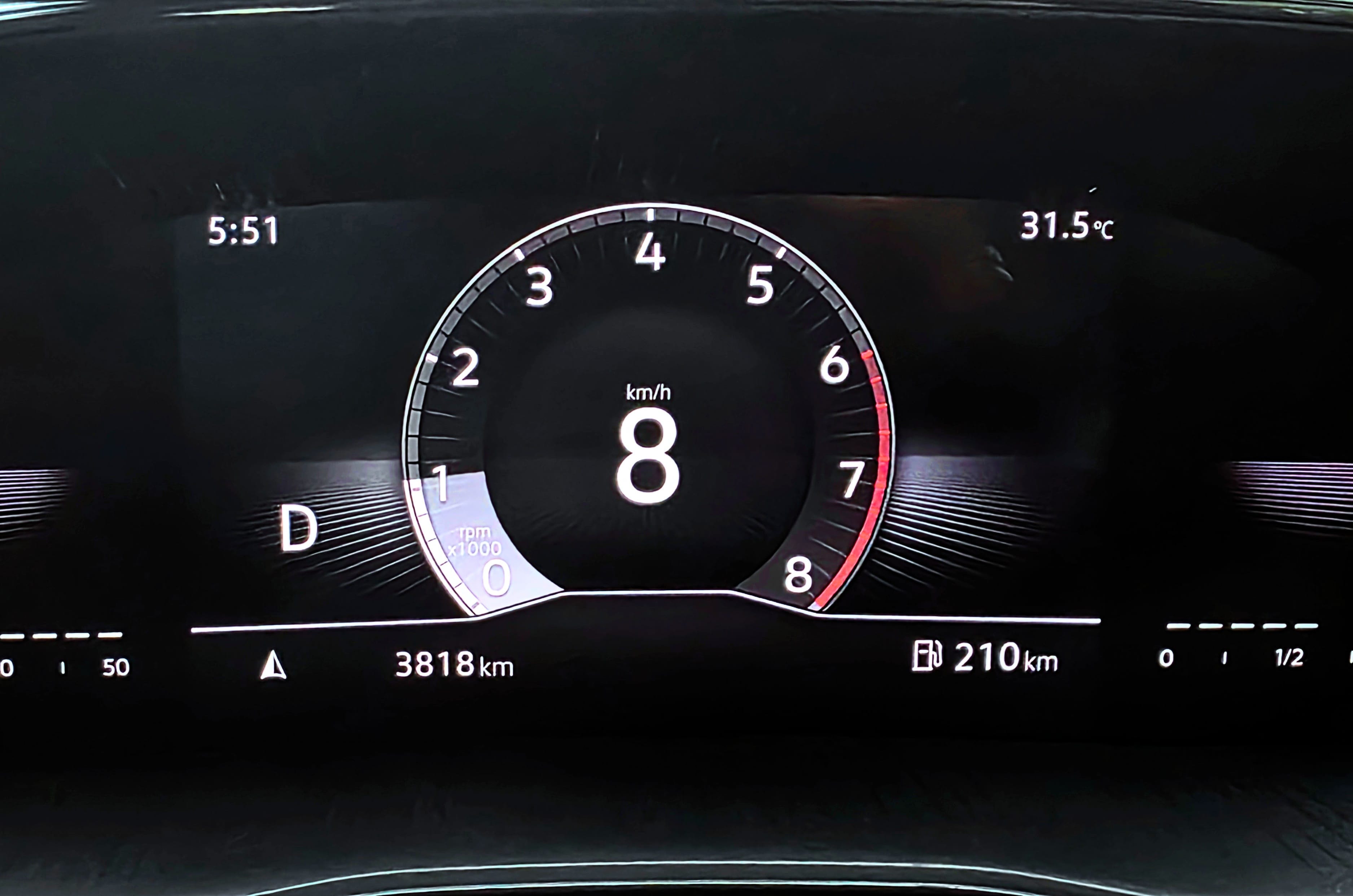
Single-digit fuel economy unexpected, unacceptable in a compact car.
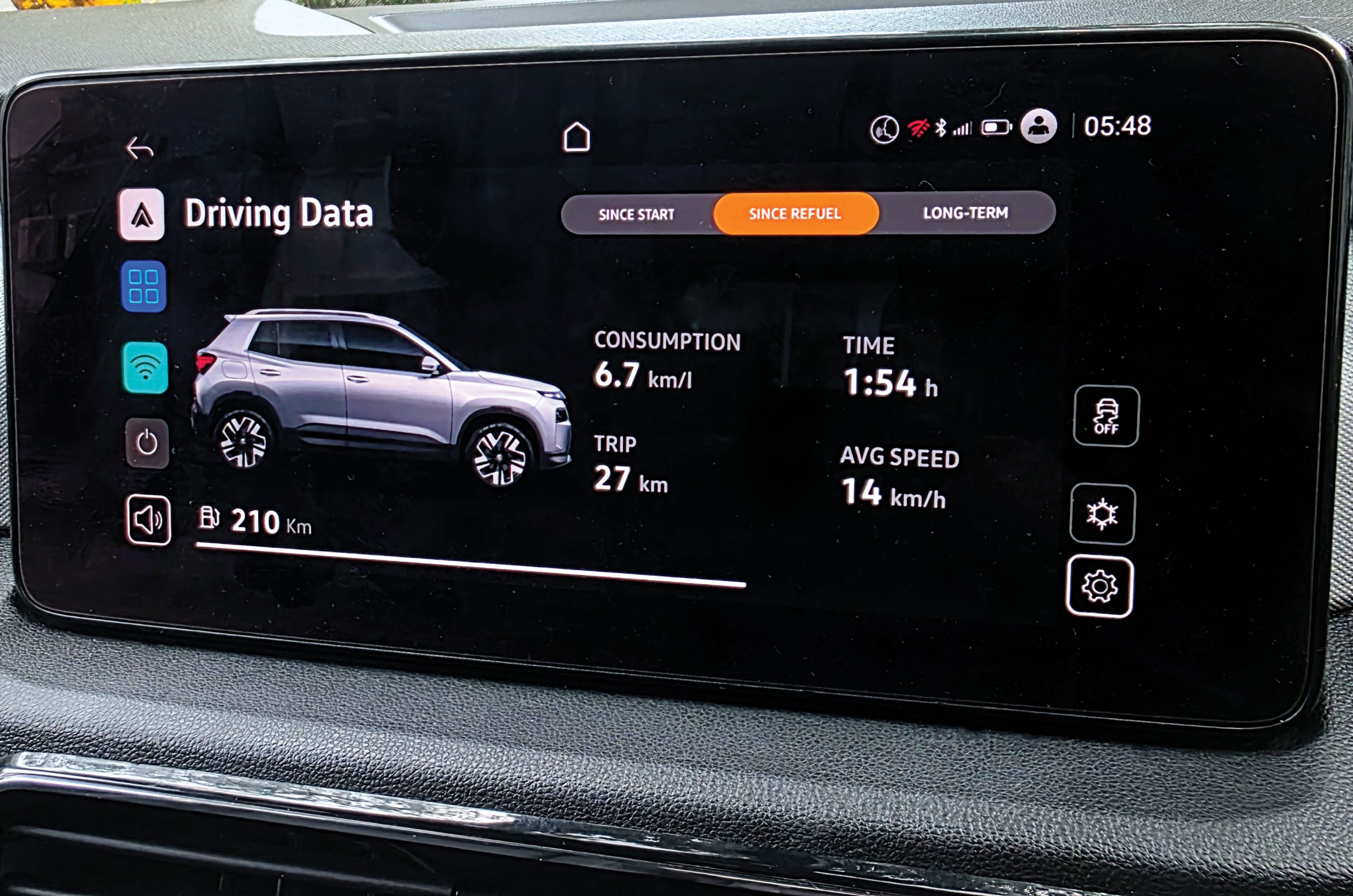
Frustratingly jerky movement aside, where this indecisiveness has really hurt more is my wallet. The constant shifting, switching on and off boost and general inconsistent progress have hit the fuel economy very hard, and I struggle to get past 8kpl on my admittedly slow daily commute. Some of it might be down to the sudden advent of E20 fuel, but eight kilometres per litre in a compact car is criminal. I used to average 10kpl in our 1.5-litre TSI DSG Slavia a few years ago, and the team has been getting more out of our 2.0-litre TSI VW Tayron. So, it’s really down to an overstressed engine and a clumsy gearbox.
The other mechanical change is far less of a problem, and that’s the AC. While this still uses the fixed-geometry compressor from the original Kushaq, it’s a smaller car, so cooling the cabin is rarely an issue, and I drove it through at least one week of our awful heat wave. The thing is, you can feel it’s working overtime to keep the cabin cool, and when set to auto mode, the fan stays on full blast for most of my journey. I often find myself turning it down to have a conversation or enjoy my music.
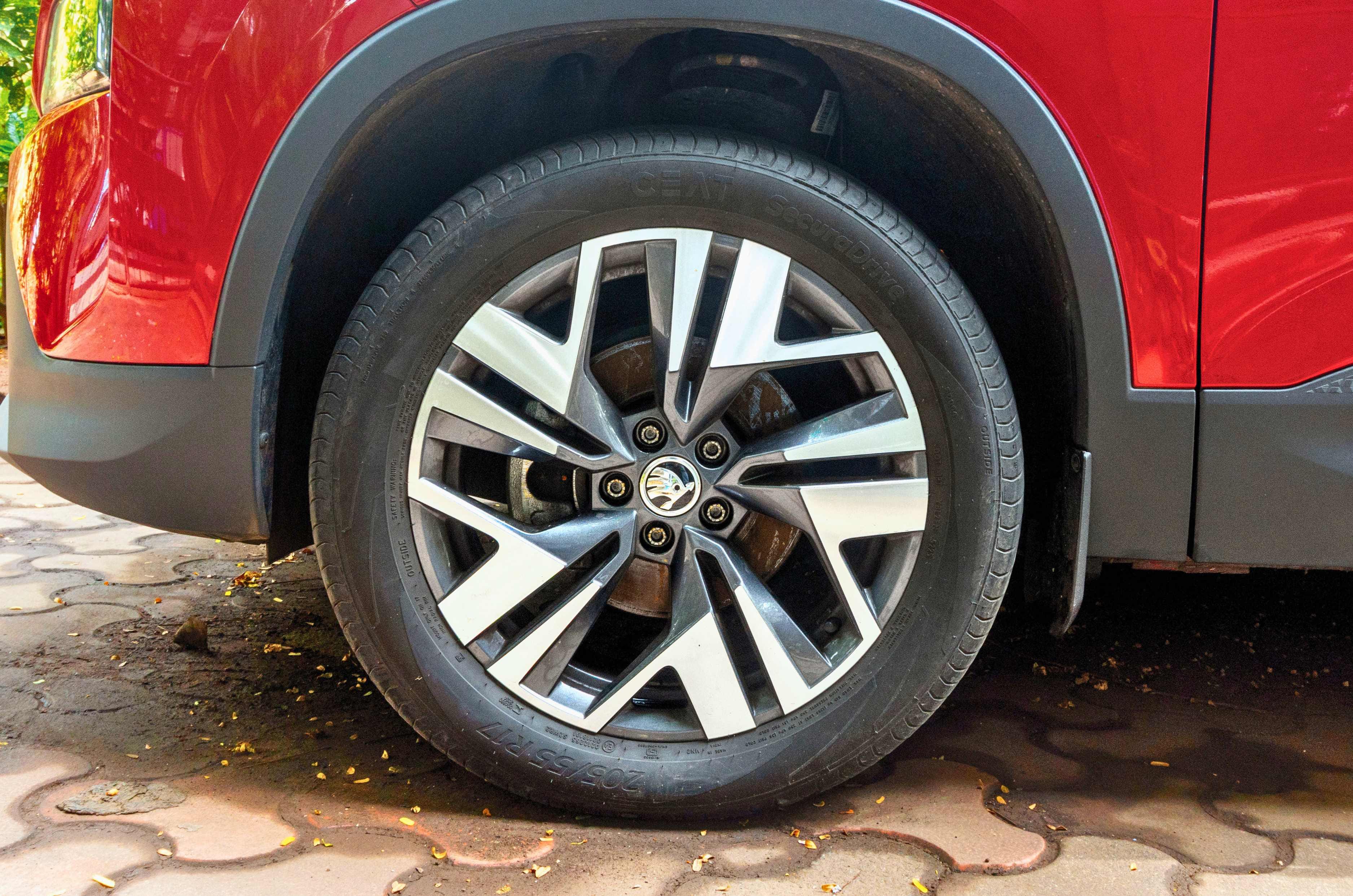
Large, shiny 17-inch alloy wheels do well to enhance Kylaq’s road presence.
These two niggles aside, it’s a very pleasing experience, as you might expect from a slightly smaller Kushaq. There’s a certain toughness to it you don’t find in cars from this segment that almost encourages you to seek out potholes and slam through them. There’s a similar firmness to the ride, but I actually like that; it suits my driving style better than something overly soft and rolly. And I’m also willing to forgive a lot for how good those 17-inch wheels look; a bold choice when most of the segment is still running 16s.
I’ll delve more into the interior, tech and other things in a future update, but in this short first experience, I can see how the Kylaq made it to Prague so comfortably and without incident. It’s compact only in size and is a uniquely European addition to the compact SUV segment.
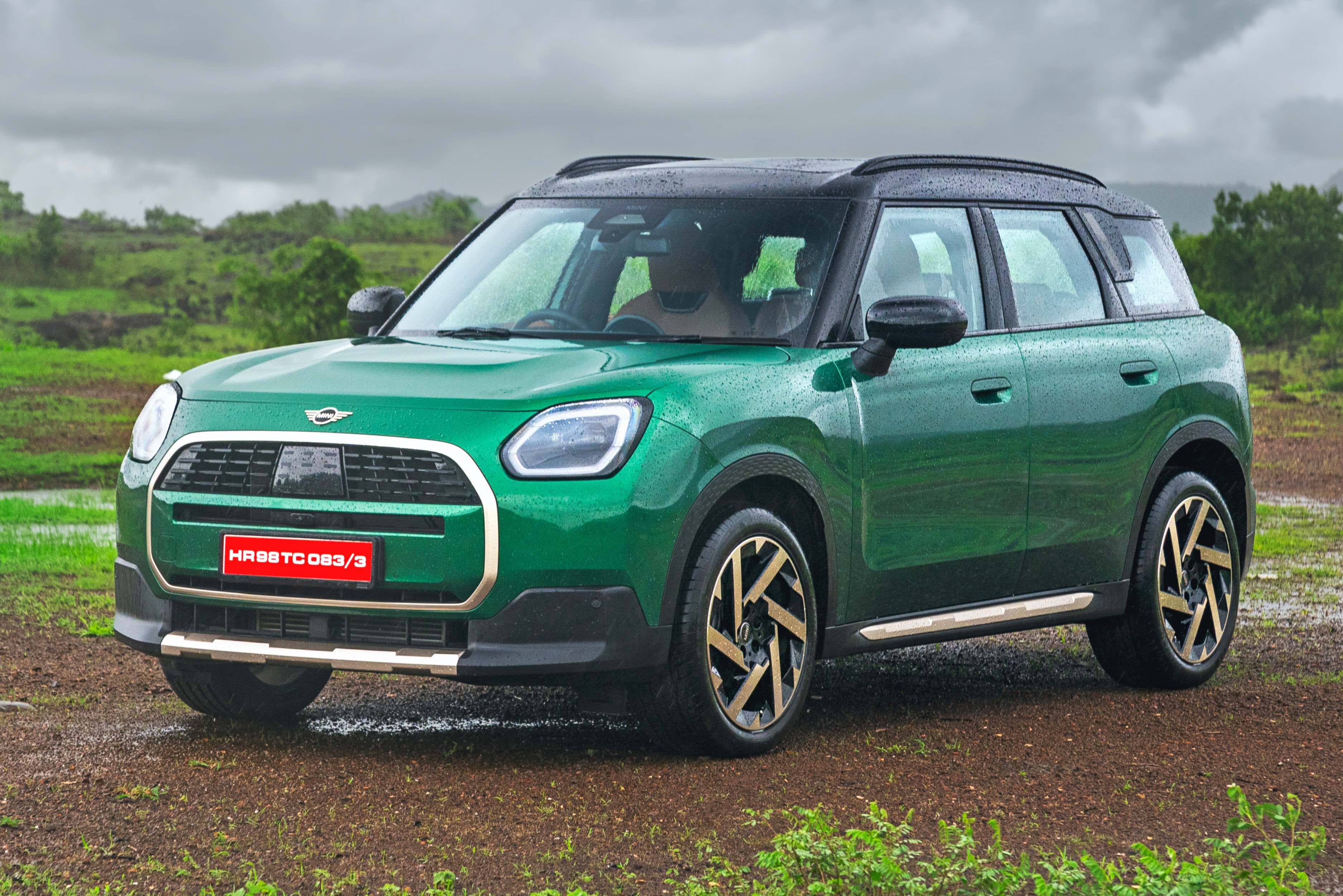
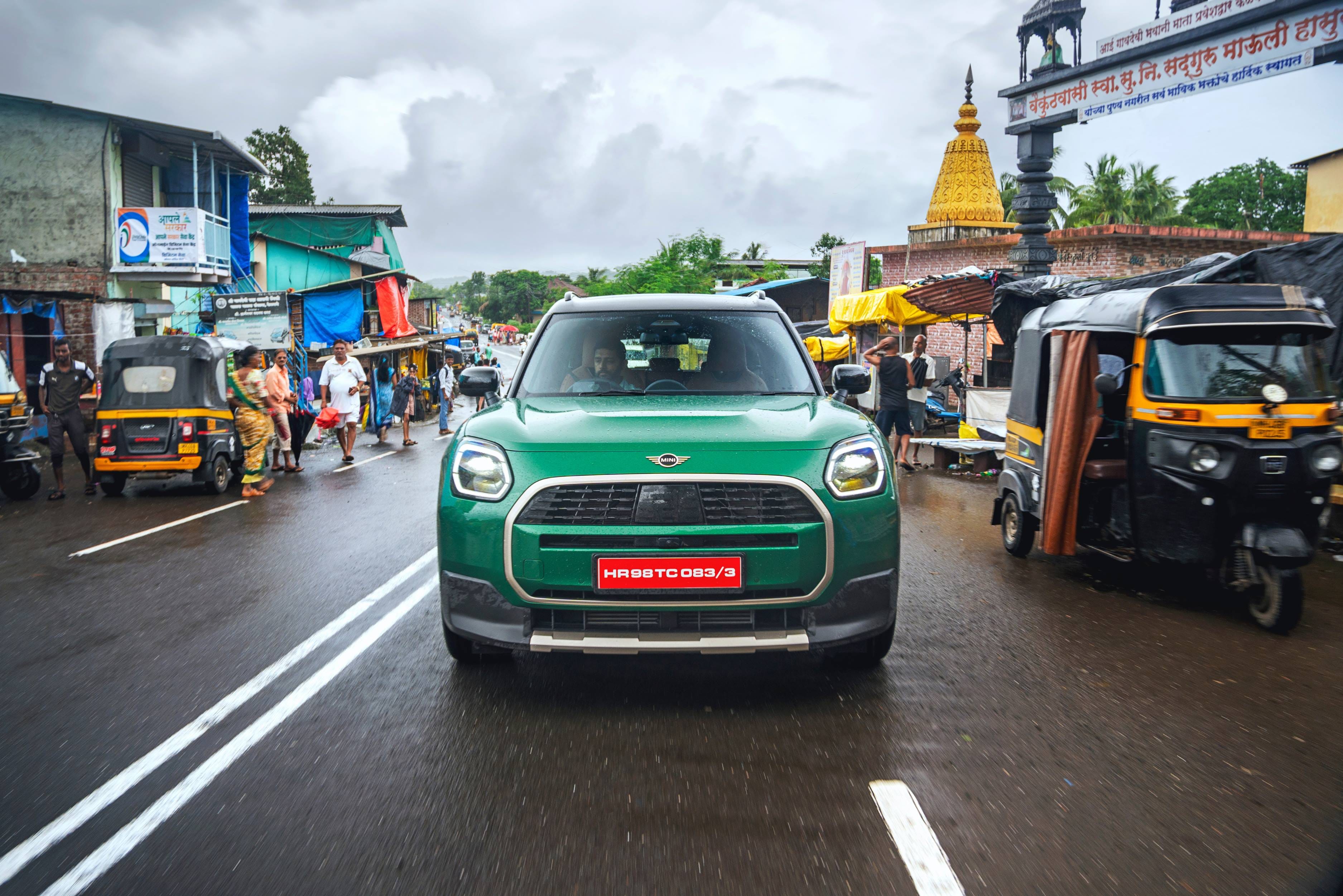
It’s all too easy to start every review of the Mini Countryman with some variation of the phrase ‘the Mini that’s not so mini’, because that’s always been true. The SUV of the Mini range, by definition, is always going to fit that description; the difference this time is that Mini itself is onboard with the idea. Where previously it was always marketed as a Mini first and an SUV second, this time the script has been flipped. No longer content with being a niche offering for the fashion forward, they want this to be your family car, or more specifically your first luxury SUV. You’ll see how the vehicle attempts to achieve that in the paragraphs ahead, but the intent is clear with the price of this locally assembled third-generation ‘U25’ Countryman C, which at Rs 47 lakh (ex-showroom), is bang on par with ‘conventional’ entry luxury SUVs, like the Mercedes-Benz GLA, Audi Q3 and even its own cousin, the BMW X1.
2026 Mini Countryman C Exterior Design and Engineering – 9/10
Clearly prioritises practicality more this time, but retains that Mini charm.
Looks sharper, boxier and visibly larger than before.
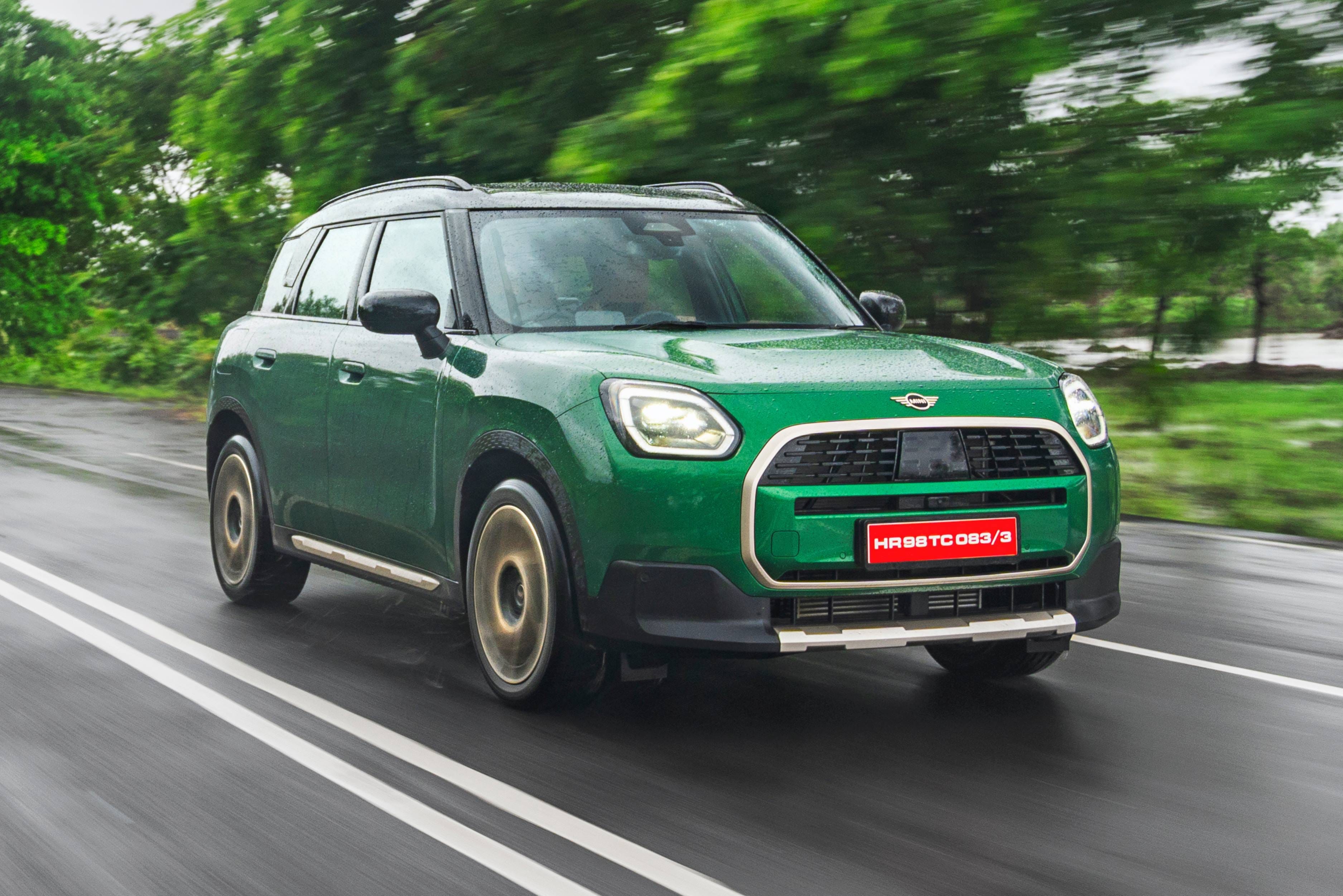
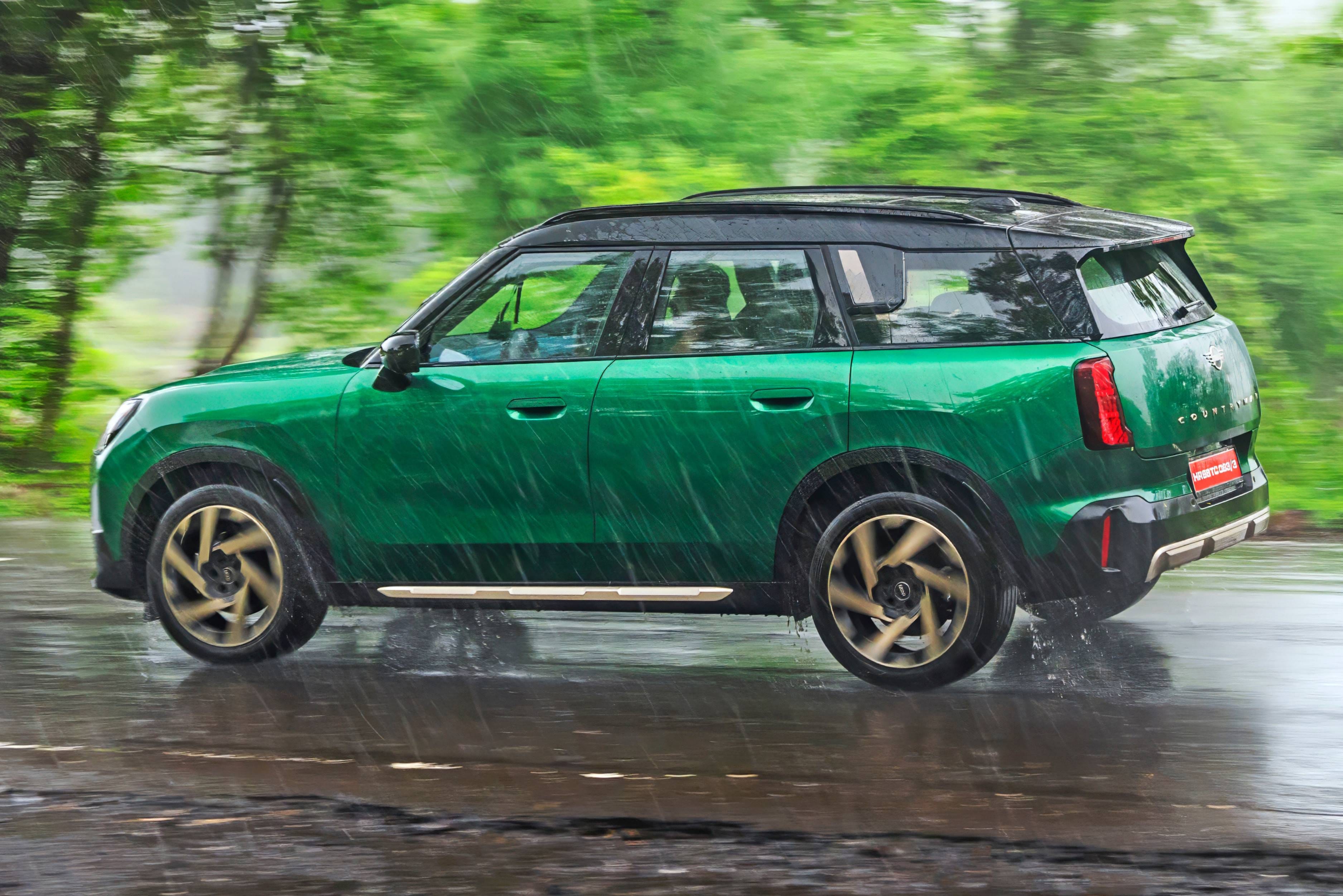
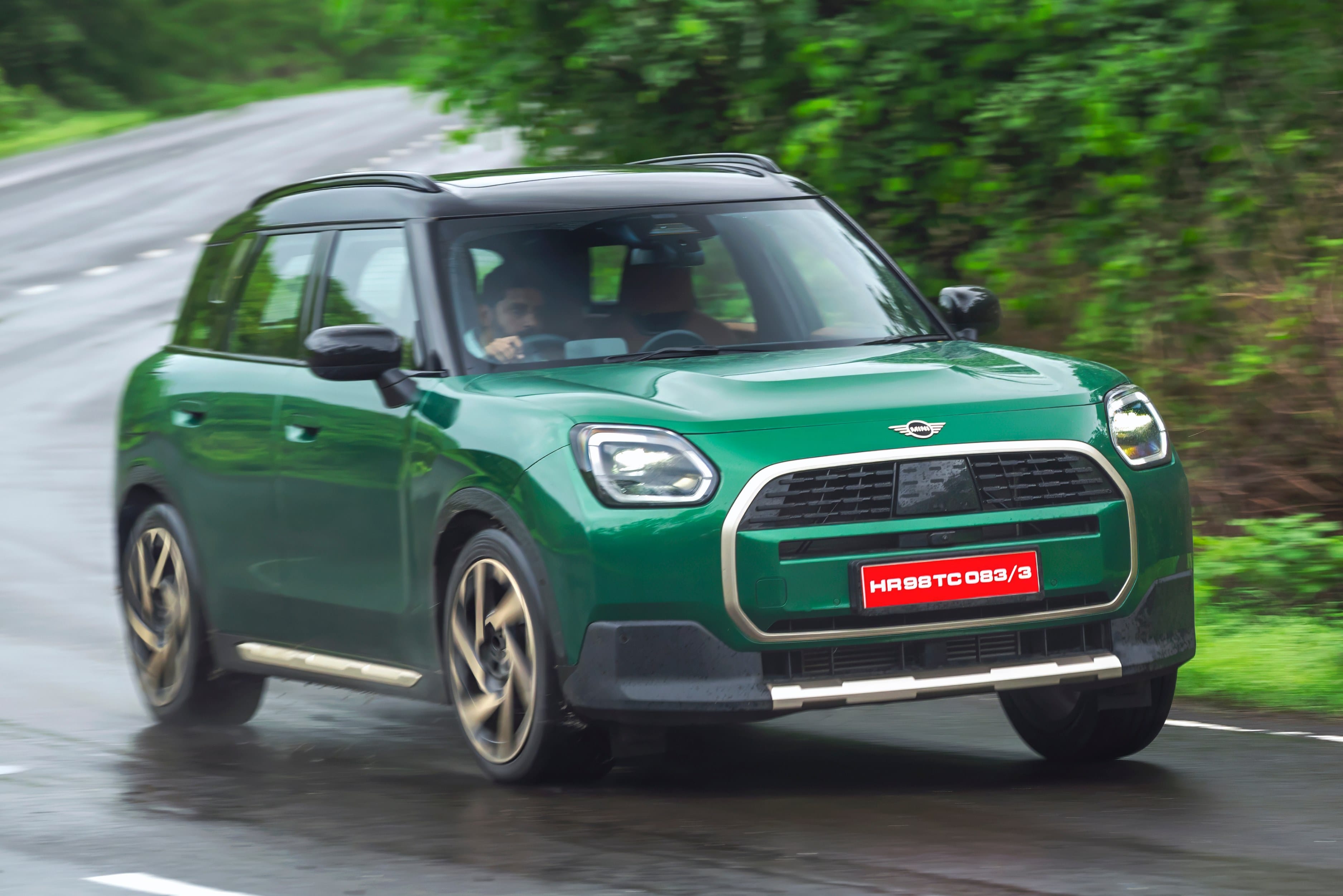
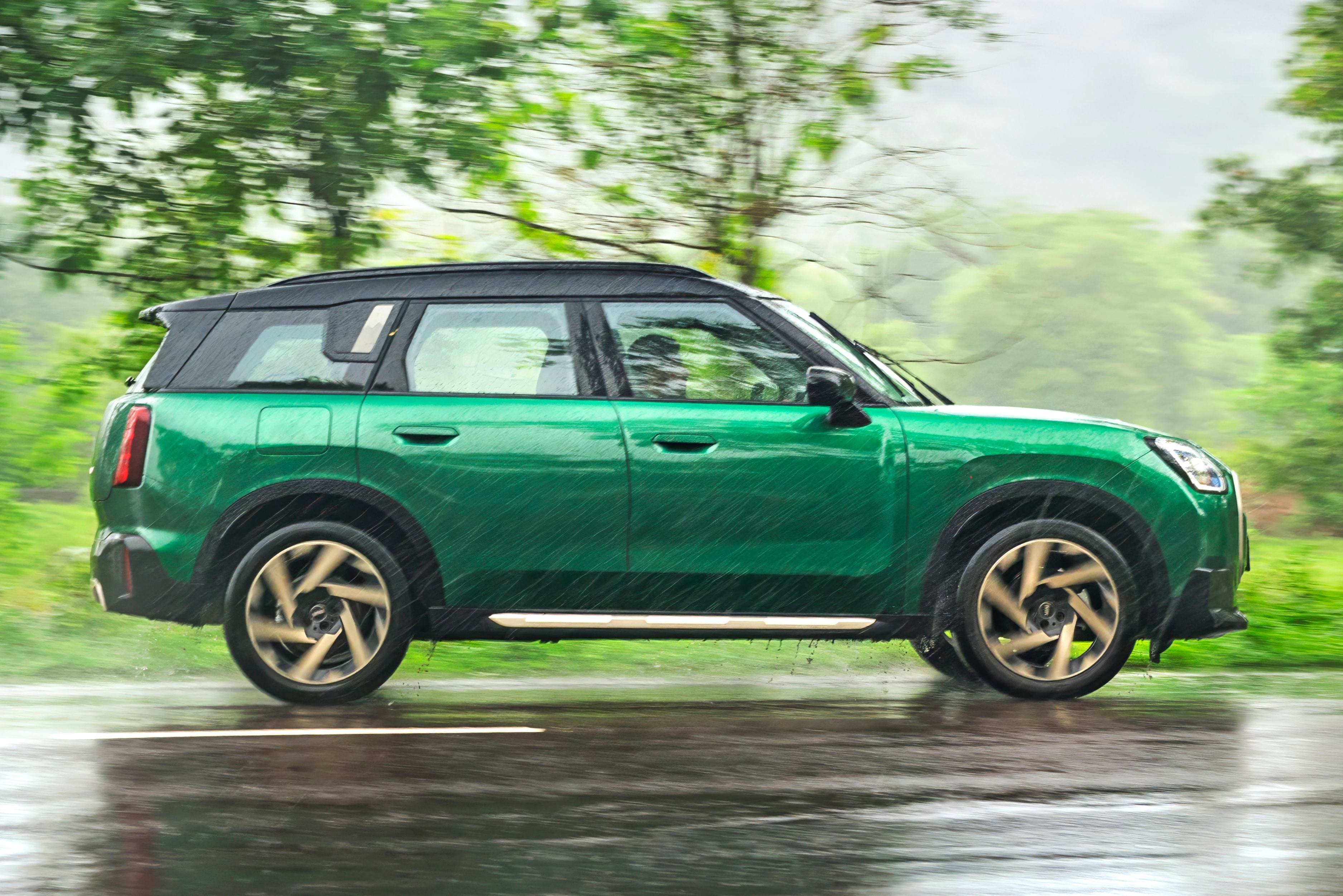
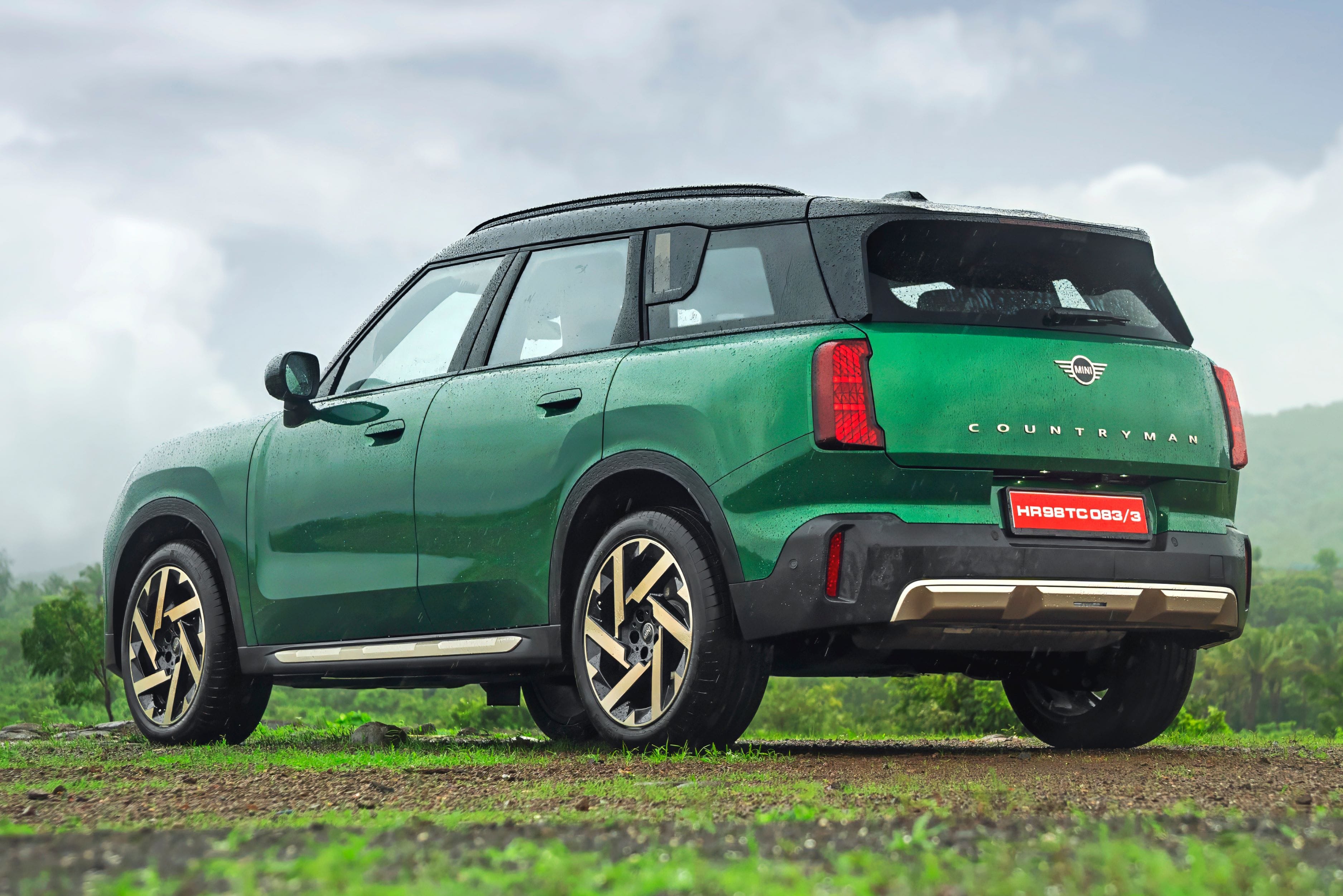
As with every successive generation, the new Countryman has grown (it’s now the tallest SUV in the class, with the highest ground clearance), but this time it has deliberately been made to ‘look’ large as well. Gone are the cartoonish and bulbous features of previous models, and in their place are smaller, sharper, more angular elements. The headlamps, grille and even the roofline have a boxier look, and this points to the greater space inside. It’s more recognisable as a Mini from the rear, where the familiar cues of a contrast roof, ‘Countryman’ lettering on the tailgate and Union Jack tail-lamps are easy to spot.
We’ve seen this look already in the Countryman Electric, and all that’s changed here is the grille that isn’t closed off. We’ve also already seen it on the CBU-imported Countryman JCW All4, which, apart from its more powerful engine and AWD, gets a sportier body kit.
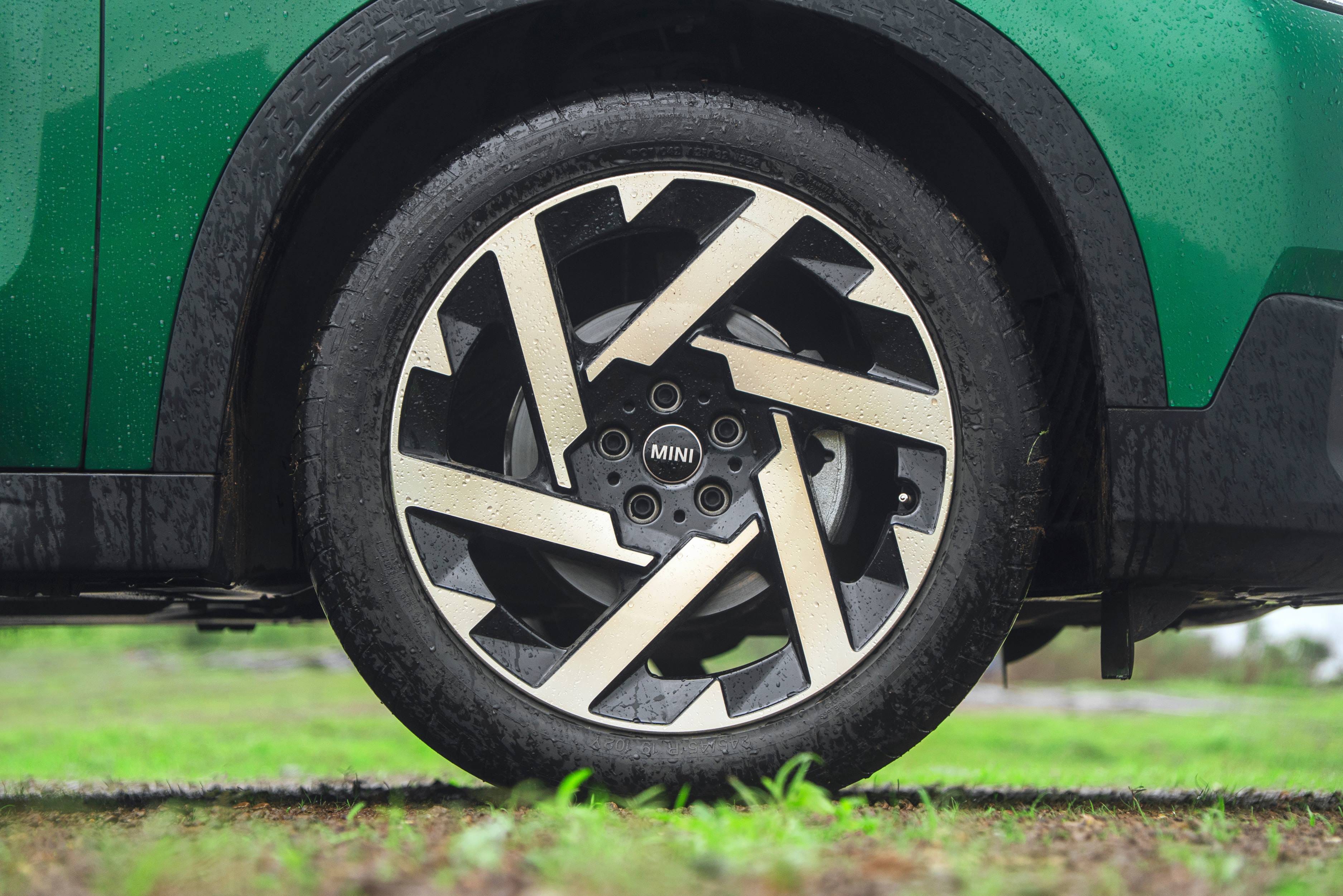
19-inch alloys look great, but they hurt ride quality.
This one being a locally assembled model, however, it’s available in a single, fully loaded ‘Favoured’ spec with no optional extras, save for some accessories. It looks the business, however, with champagne-coloured accents all around, the contrast roof as well as huge 19-inch dual-tone alloy wheels. You get a choice of five colours, but Mini has been sure to pick more extroverted options than conventional luxury SUVs – British Racing Green is still the most popular Mini colour bought in India.
2026 Mini Countryman C Interior Space and Comfort – 8/10
Genuinely usable space and practicality make it feasible as a luxury SUV.
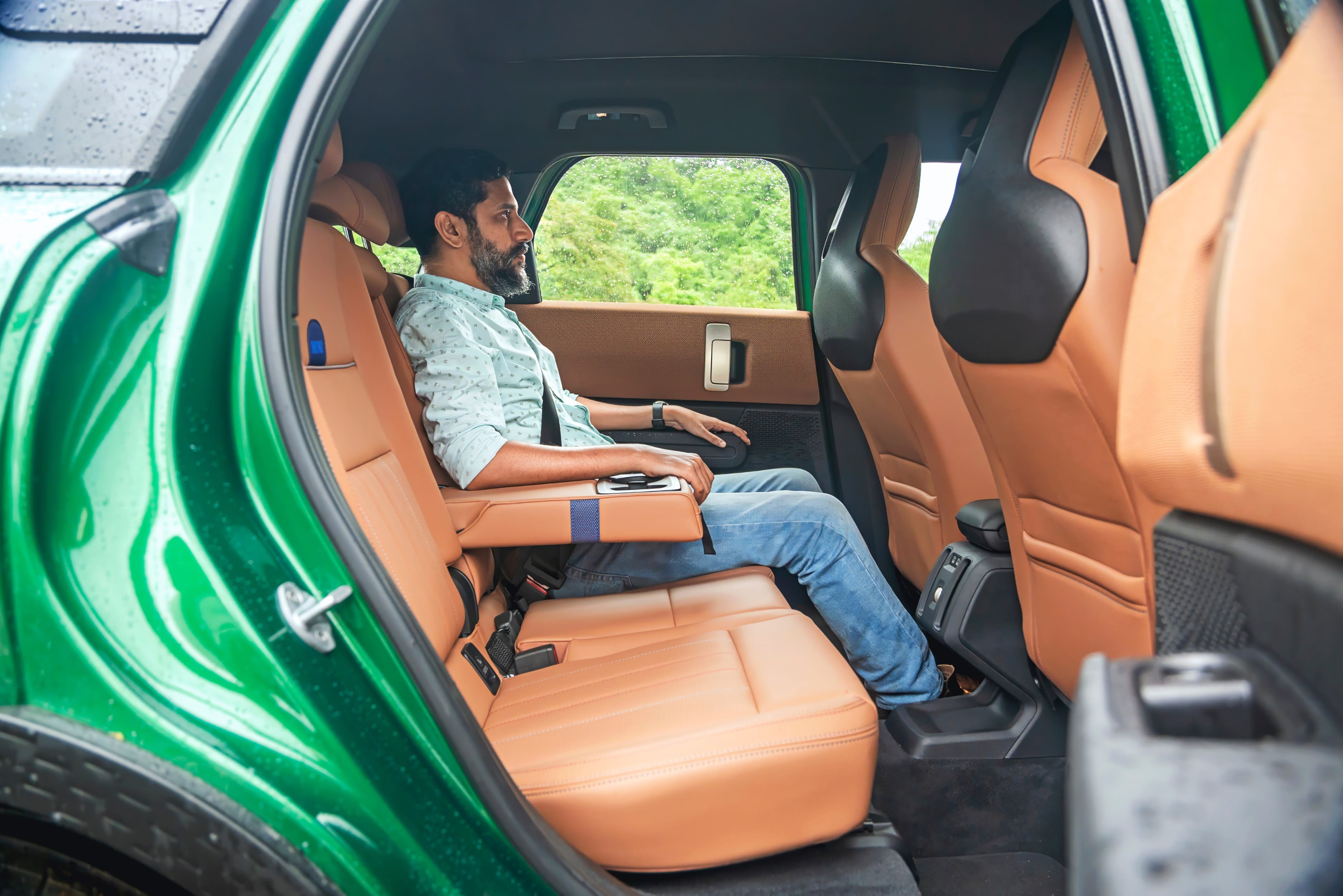
Generous headroom and legroom at the rear, though thigh support is not the best.
The results of the grown dimensions are immediately obvious in the greater interior space. It feels larger and airier than any Countryman before it, and betters some rivals in this regard. Without the battery of the EV, the floor is lower, giving a comfier seating position, though rear-seat thigh support is still not the best. And though the huge panoramic sunroof lets some light in, we wish the windows were a touch larger. Still, this can realistically be used as a chauffeur-driven car now.
The other area where it delivers more than the EV is the boot, whose volume has gone up by 50 litres to 505 litres. You can free up some more by sliding the rear seat forward on rails, and what’s more, they’ve even included a space-saver spare tyre, which you don’t get in the EV.
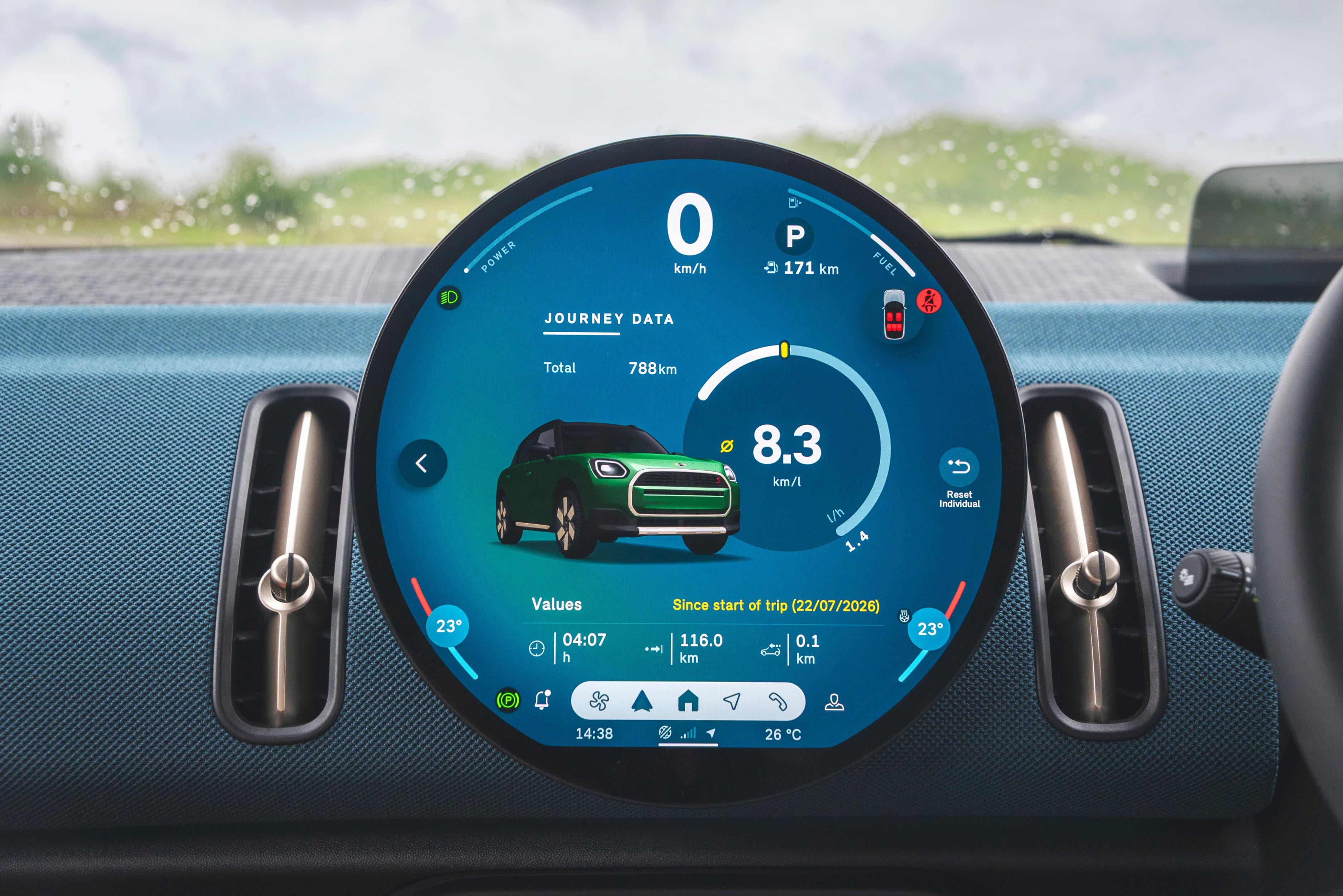
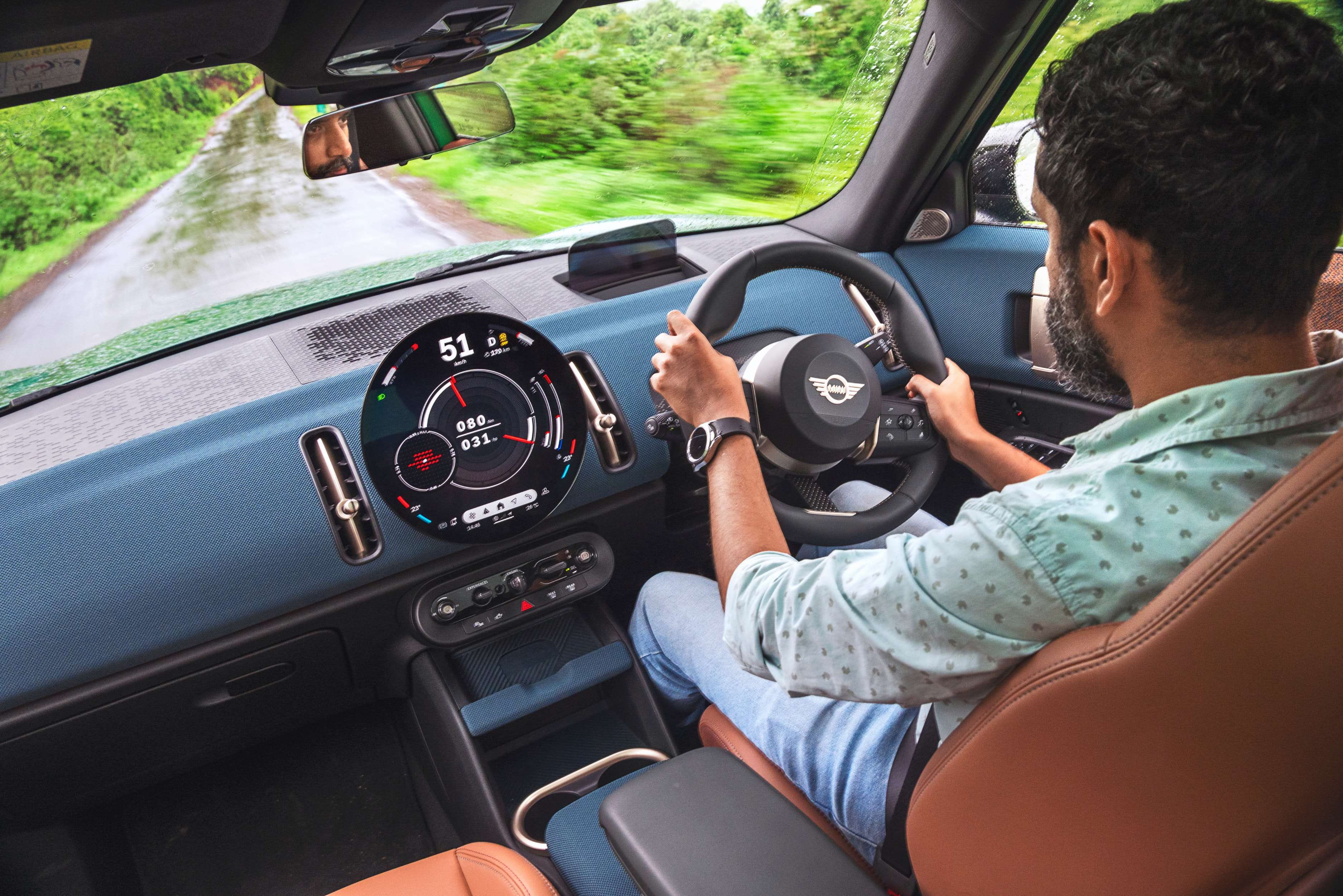
In the front seat, there’s no mistaking this for anything but a Mini, thanks to the clean dashboard with a big circular touchscreen at the centre. While this does function as the speedometer, a nod to the original Mini, there is also a flip-up HUD, which presents the info in your line of sight.
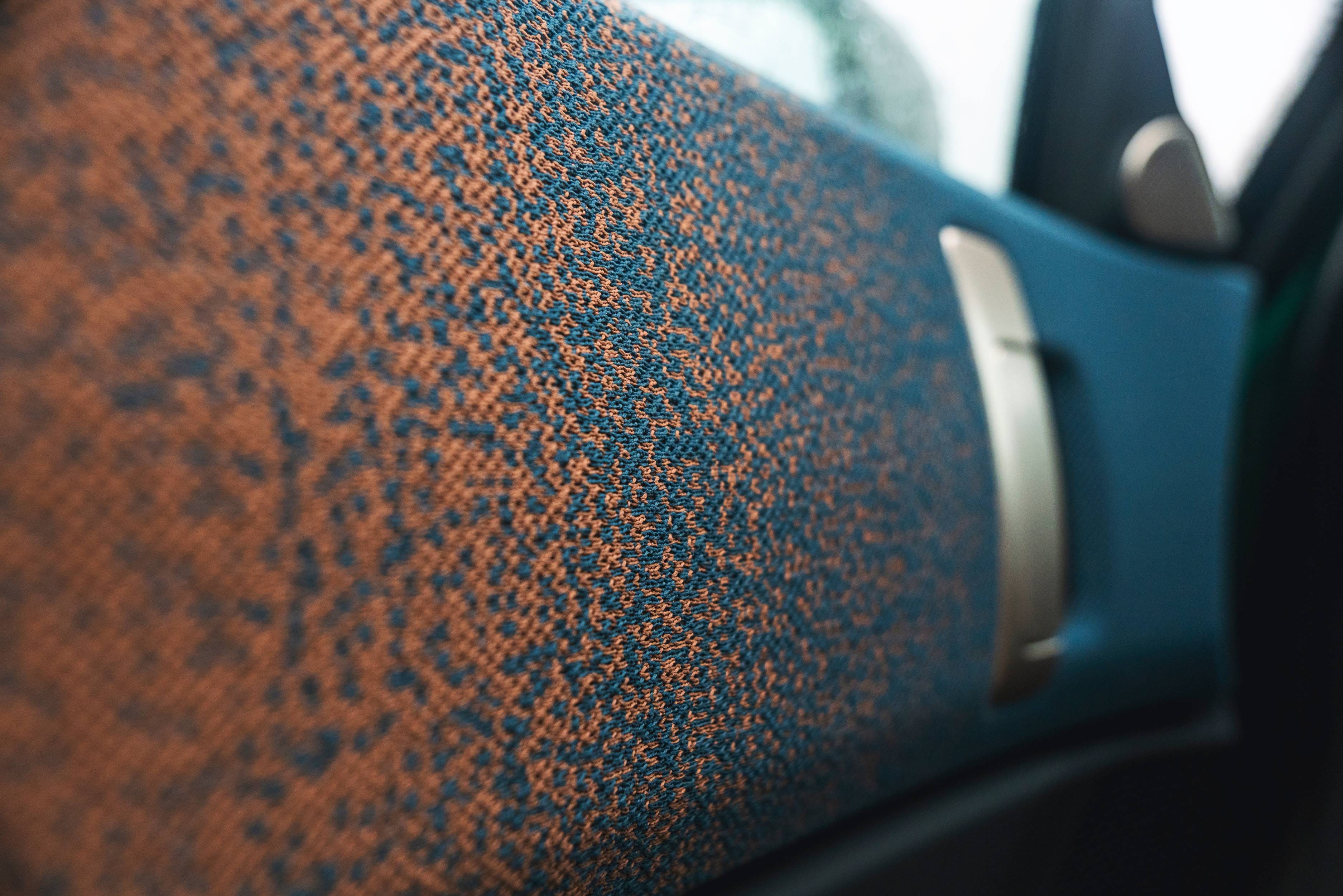
Knitted fabric on the door cards and dashboard lends the cabin an upmarket feel.
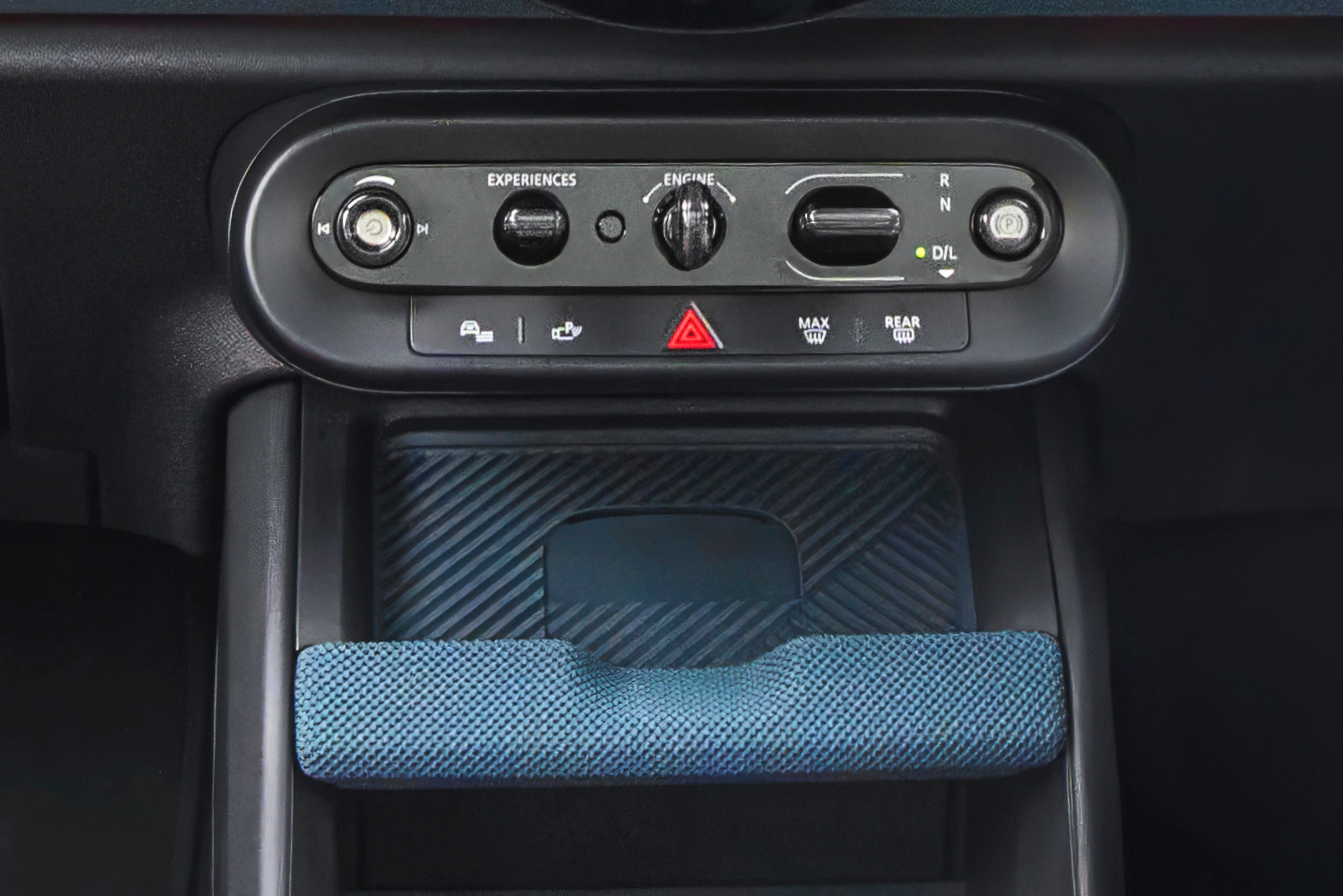
The dash is trimmed in an upmarket-feeling knitted fabric, which then extends onto the door cards, where it blends from blue to brown in colour. There are plenty of uniquely Mini touches, like slim, vertical AC vents, a row of toggle switches to start the car and change modes, more champagne gold trim and vertical inside door handles. But there is also more BMW switchgear than ever before, which, though high quality, looks a bit ordinary.
Storage space and ergonomics are well thought out, with an open centre console, a neat covered storage box and a sliding armrest. The front seats, meanwhile, are large and accommodating and give a commanding view outward.
2026 Mini Countryman C Features and Safety – 8/10
Generously kitted out with lots of standard equipment, on par with rivals.
Edge-to-edge circular screen is responsive, high-res and full of cutesy graphics.
As mentioned before, there is only one variant of the Countryman C, with a fixed features list and no optional add-ons. It’s a generous spec that features more than what some rivals offer, including wireless Apple CarPlay and Android Auto, powered front seats with memory and massage function for the driver, surround camera with auto park function, a Harman/Kardon audio system, heated steering wheel, panoramic sunroof, 13.7-inch diameter OLED touchscreen, heads-up display, voice assistant, wireless phone charging and a digital key system, to name a few.
As seen on all current-generation Minis, the dish-like circular touchscreen is a work of art. Where the previous generation housed a rectangular touchscreen within the circle, the new one is an edge-to-edge circular screen. It’s responsive, bright, high of resolution and full of Mini-typical cutesy graphics. Even the audio cues aren’t like normal cars, with cute ethereal chimes replacing boring warning beeps. There aren’t drive modes but Experience Modes (more on these later), which not only change the colour of the ambient lighting, but the screen display and can even activate certain features, like the seat massage.
Hard buttons only for few functions such as media controls and Experience Modes
However, once the novelty fades, you start to realise this circular design isn’t great ergonomically. While there, thankfully, are hard buttons for music volume and track control, as well as dri- sorry, Experience Modes, AC controls and all other functions are on the screen. With no bezel or edge to rest your hand on, and small, rounded graphics to tap, it is quite tricky to perform basic functions on the move. And as it’s based on BMW’s current i-Drive system, there are far too many sub-menus to go through.
2026 Mini Countryman C Performance and Refinement – 7/10
Downsized turbo-petrol engine lacks the zest associated with a Mini.
Performance feels merely adequate from the 156hp, 1.5-litre turbo-petrol engine.
This car shares its UKL1 architecture with the BMW X1, as well as its 1.5-litre three-cylinder direct-injection turbo-petrol engine. As in the BMW, it produces 156hp and 240Nm, sent to the front wheels via a 7-speed dual-clutch automatic gearbox, and as in the BMW, it feels merely adequate. While easier to digest in the X1, which has long since transitioned from ‘Ultimate Driving Machine’ to comfy family cruiser, the Mini’s go-kart intentions are still on display, and the expectation for more performance is higher.
Like in modern BMWs, the Experience Modes are mostly cosmetic, with only Green (Eco) and Go Kart (Sport) altering drive performance. Expectedly, the former dulls things down, while the latter primes the engine and gearbox to be more reactive, and they work as expected. There is, however, no scope to set individual parameters in any mode; for instance, ESC is off by default in Go Kart mode and you can’t turn it back on.
Gearbox is intuitive and quick, but there’s no manual control whatsover.
Also missed are paddle shifters, or in fact any means of shifting manually, though the gearbox is quite intuitive and quick to shift for the most part. It’s only at crawling speeds where this powertrain falls into the triple-whammy trap of turbo lag, gearbox hesitation and no off-boost power that’s typical of downsized engines. Things improve drastically in the mid-range, where the Countryman C feels most comfortable.
The engine also remains pretty refined for the most part, and it’s only if you absolutely stretch it out that you’re made aware it’s a three-cylinder unit.
2026 Mini Countryman C Mileage and Range – 8/10
Decent for a reasonably large turbocharged petrol luxury SUV.
Fuel economy is officially rated at 15.92kpl.
The advantage of the sizing-down is, of course, fuel economy, which will no doubt be better than with a larger 2.0-litre engine. It’s officially rated at 15.92kpl, which is not bad for a turbo petrol luxury SUV, and you realise that it’s because it’s not too heavy – clocking in at around 1,700kg. Other factors helping this include a quick-acting engine stop/start system and a good drag coefficient of just 0.26. Expect a real-world average comfortably in the two digits. And like all new BMW cars, this one is E25 compliant.
2026 Mini Countryman C Ride Comfort and Handling – 7/10
Still fun, but drives like a big car now; large wheels hurt ride quality.
Handling is a noticeable departure from the Go Kart feel that’s typified all modern Minis.
More so even than the powertrain, the Go Kart feel that’s typified all modern Minis comes from the chassis setup and handling, and this new Countryman represents the first noticeable departure. But that’s not necessarily a bad thing, and is in keeping with its new, more grown-up luxury-SUV persona.
The steering is much lighter and not as tightly wound as before, for a start, and that means despite the increased size, the Countryman is even easier to manoeuvre. What you lose in the process is some urgency in direction changes and some agility, but you don’t mind that thanks to the aforementioned benefits.
It feels reassuring and has great road-holding at highway speeds,
The good news is the suspension setup still allows it to handle corners tidily and with not too much body roll. And this despite being slackened off quite a bit to be noticeably comfier and more compliant than the previous Countryman. It also has great road-holding at high speeds and feels far more reassuring at highway speeds, and the overall sensation is that you’re commandeering a proper SUV rather than a high-riding hatchback. The only spoilsport here are the 19-inch wheels; while they look great, they crash hard through potholes and even over some steeper speed breakers.
2026 Mini Countryman C Price and Verdict – 8/10
Competitive pricing and big space make it a credible rival to other entry luxury SUVs.
The Mini Countryman C is priced at Rs 47.5 lakh (ex-showroom, India) which is incredibly competitive. It ducks under both, the Mercedes GLA and BMW X1, with only the entry-level version of the Audi Q3 being slightly cheaper. The best part is that, where previous locally assembled Countrymans (Countrymen?) felt stripped down compared to their CBU counterparts, here you get a well turned out and generously equipped luxury SUV that doesn’t leave you wanting.
It’s clear that Mini is on a war footing to break into the mainstream, and that’s something it certainly can’t do with its hatchbacks, which remain fun to drive and upmarket, but ultimately niche fashion statements. The Countryman C delivers on space, features, luxury and comfort that’s more than a match for others in the segment, and despite a slightly underwhelming engine, adds some much-needed pizzazz to the ranks of entry level luxury SUVs.
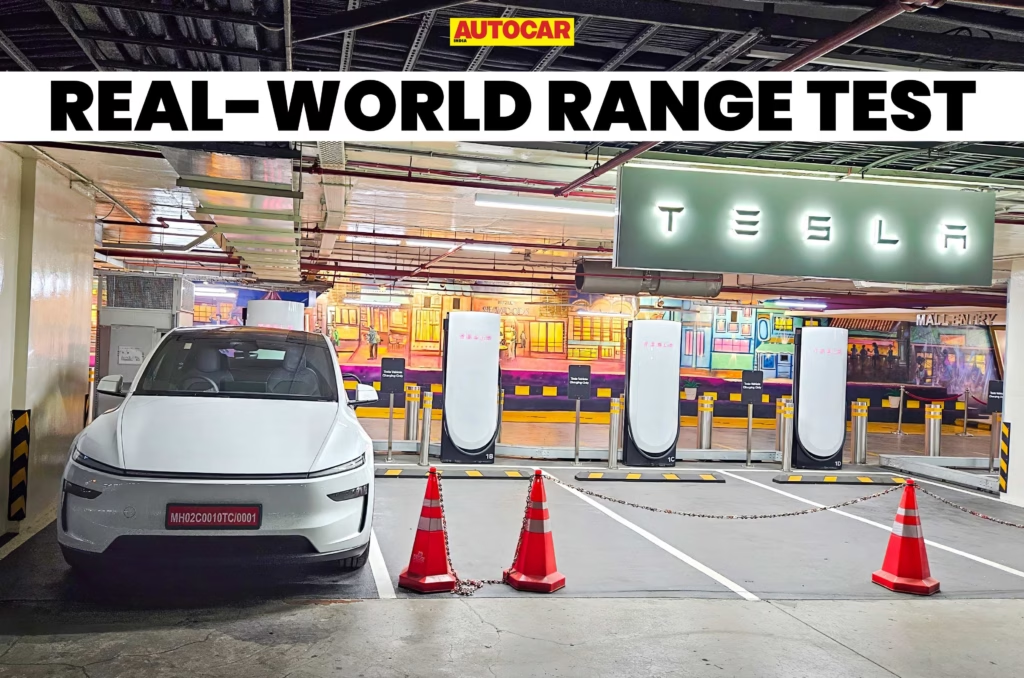
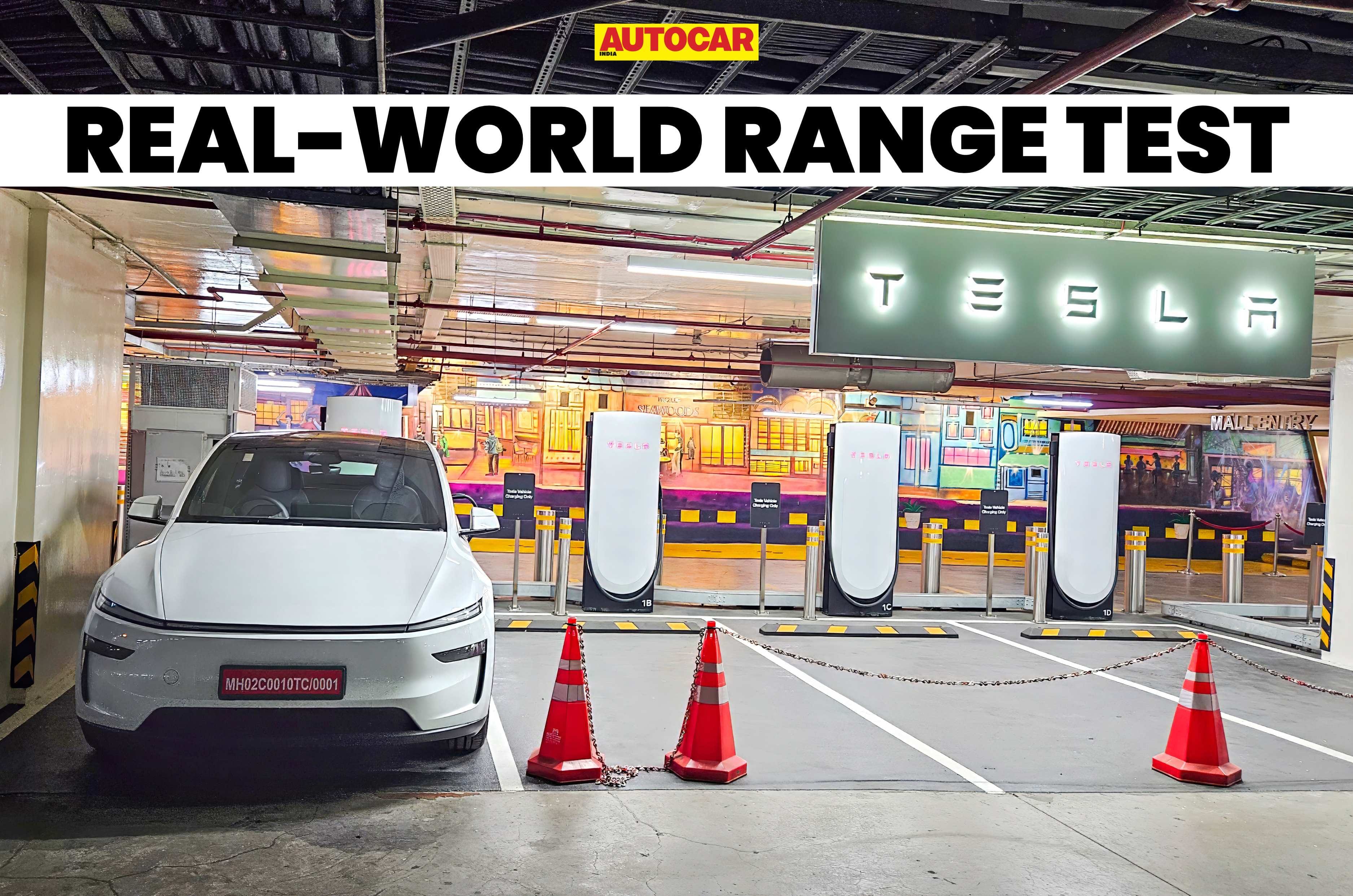
Tesla is offering the 2026 Model Y in two variants: Premium RWD and L Premium AWD, both with 60kWh. Priced at Rs 50.89 lakh (ex-showroom), the lower-spec Premium RWD comes with a rear-axle-mounted electric motor and a 60kWh LFP battery (64kWh gross) with a WLTP-claimed range of 500km. We put this 2026 Tesla Model Y RWD Premium variant to the test to calculate its real-world efficiency.
We used ‘Chill’ driving mode for our tests
20-80 percent recharge takes 23 minutes on a 250kW Tesla Supercharger
Has a kerb weight of 1,928 kg
Tesla Model Y Premium RWD: Range, Efficiency tested
The Model Y is powered by a rear-mounted electric motor which produces 299hp and 420Nm of torque. It is equipped with two drive modes– Standard and Chill, the latter being an Economy setting, which we used for our tests. It also gets two levels of regenerative braking– Standard and Reduced. For our runs, we used ‘Standard’ (most aggressive) in the city and ‘Reduced’ on the highway.
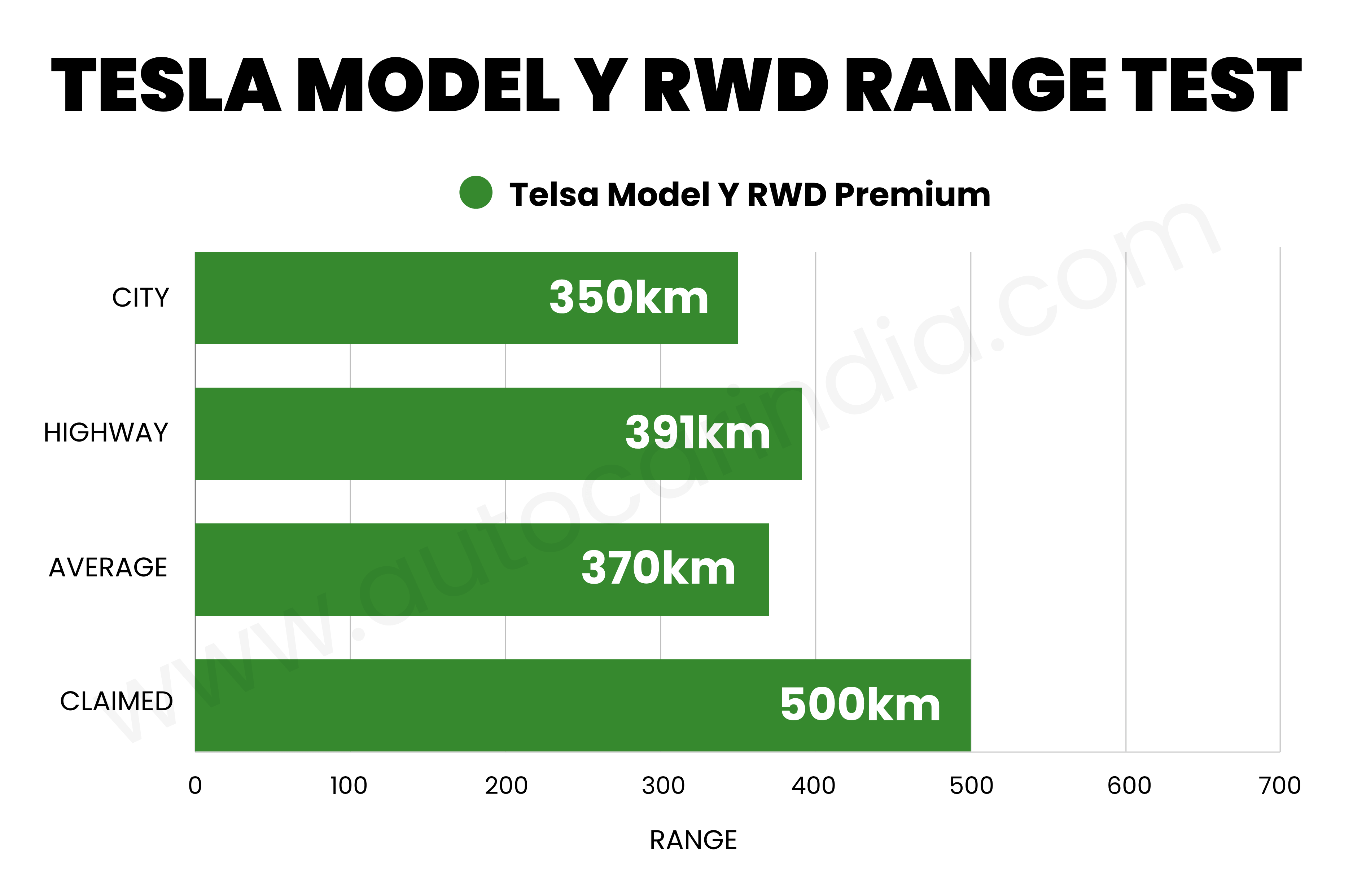
In the city, it delivered an efficiency of 5.84km/kWh extrapolating to a range of about 350km. On the highway, it was much more efficient, delivering 6.52km/kWh, resulting in a range of about 391km. With the overall efficiency of 6.18km/kWh, you can expect a real-world range of about 370km, which is reasonable for this 1.9-tonne crossover.
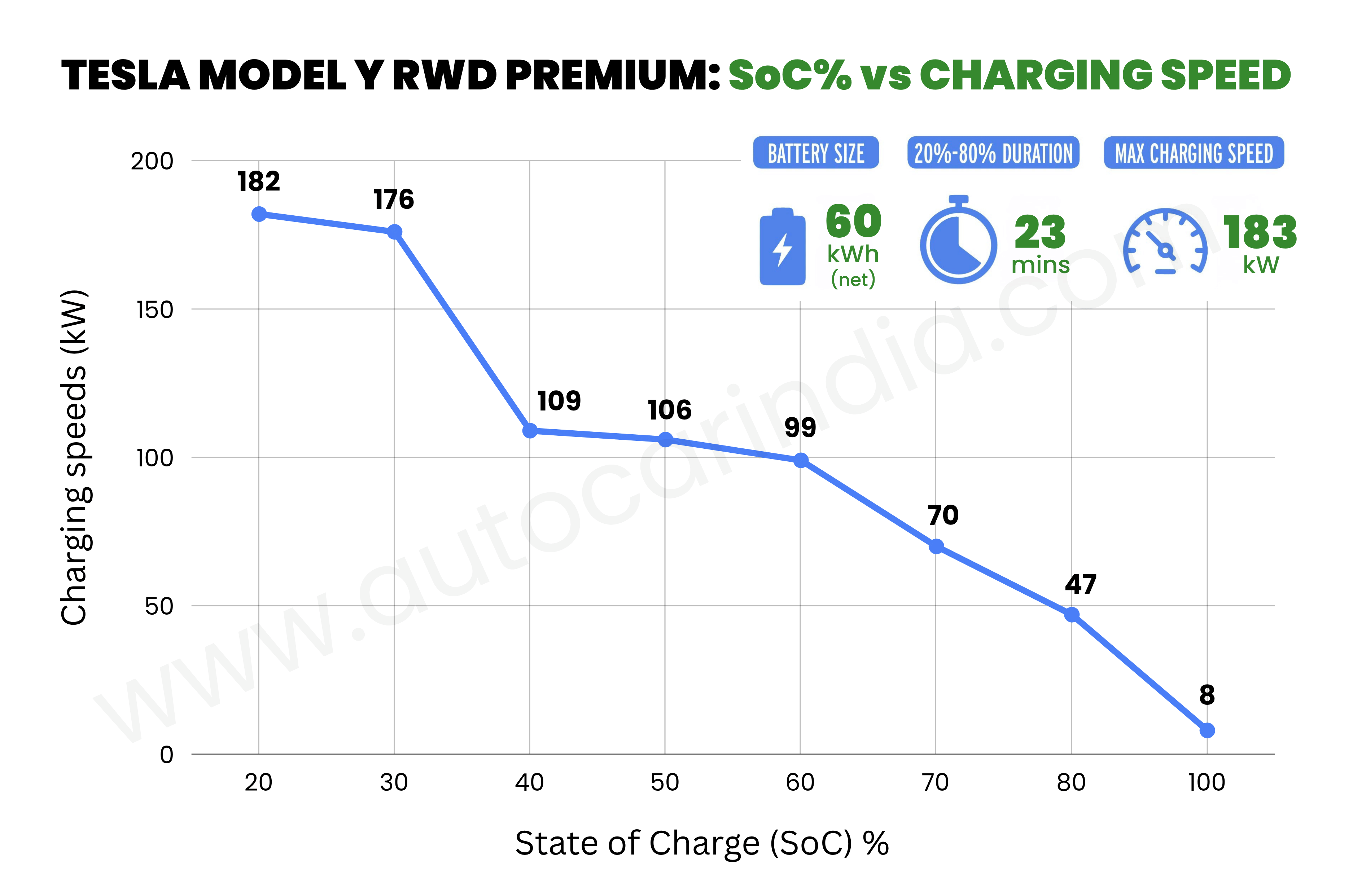
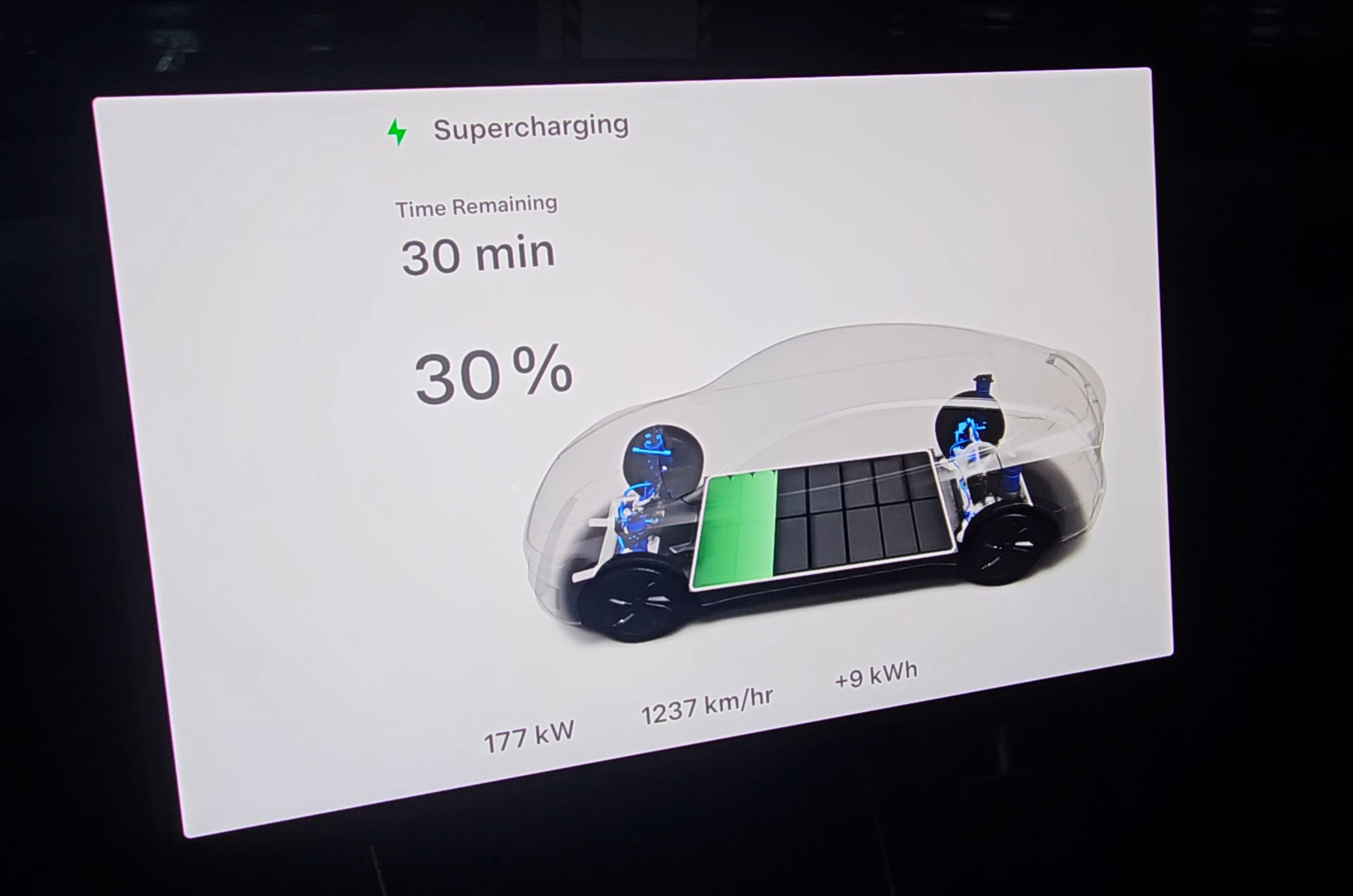
We also plugged the Model Y into a 250kW Tesla Supercharger. Notably, we noticed peak charging speeds (displayed) at 183kW. However, the charging speeds dropped rapidly from 176kW at 30 percent SOC to 109kW at 40 percent SOC, and thereafter the speeds kept dropping gradually throughout. As far as time goes, the Tesla Model Y’s battery charged from 20-80 percent SoC in 23 minutes, and it took another 30 minutes to charge from 80-100 percent.
Autocar India’s range testing
Before our real-world range tests, the battery of our test car was fully charged and we maintained tyre pressures in accordance with the manufacturer’s recommendations. The car was driven on a weekday in Mumbai city and on the adjoining state highway in a fixed loop, and we maintained the set average speeds. At the end of each cycle, we calculated the range based on the percentage charge consumed.
Throughout our tests, the climate control was set to 22deg C in a full-auto setting, and other electricals, such as the audio system, indicators and ventilated front seats, were used when required, just as a regular user would. We take pride in our testing data, which isn’t merely consistent but also gives users an accurate indication of what they can expect in the real world.
देशभक्ति सिर्फ तिरंगा लहराने या नारे लगाने तक सीमित नहीं है।
देश के लिए सही काम करना भी देशभक्ति है। जो सड़क पर कचरा नहीं फैलाता, जो पानी बचाता है, पेड़ लगाता है, जो Traffic Rules और Public Rules का पालन करता है—
वही है असली Civic Sense Hero!
इसी सोच को एक movement बनाने के लिए The Better India ला रहा है #CivicSenseHero Campaign, 15 अगस्त 2026 से 26 जनवरी 2027 तक।
अपने आसपास के उस Hero को पहचानिए, जो India को हर दिन थोड़ा और Better बना रहा है।
उसे Nominate कीजिए, उसकी कहानी दुनिया तक पहुँचाइए और Civic Sense को नया TREND बनाइए!
Nomination के लिए ये फॉर्म भरें- https://docs.google.com/forms/d/e/1FAIpQLScoBw41mDqbS63Bv7hr7XubQwdz6LA2fS0lcqffx3xqF5bXJQ/viewform
The CAFE 3 norms are just eight months away. Things will certainly get tighter and tougher for automakers, in terms of upping the number of clean power options as well as light-weighting their current brawn-ish SUVs. If one has to bring a 30 percent reduction in fleet-average performance and move from MIDC to WLTP test results, an automaker has very little leeway in terms of just about making it.
As a product planner, I would seriously take this as an opportunity to bring the focus back onto the entry-level small car. In fact, all product planners should be doing the same, irrespective of what your current portfolio is. The policymakers are sending out a clear message to the Indian automobile industry – relook and revive the small car, for you have neglected it for quite some time now!
And why not? It’s not just for developing markets; look at the developed world too. The otherwise ostentatious European is seriously evaluating the small car once again. Even the more aware and conscious American is. Japan has always been a ready reference for all. Tomorrow’s car buyer is going frugal and smart once again. Going back to the basics. Without compromising on comfort and features. And the automakers have prepared themselves for such times. Some started almost a decade ago, with varying outcomes, but the efforts have been commendable and great teachers on how to approach the future.
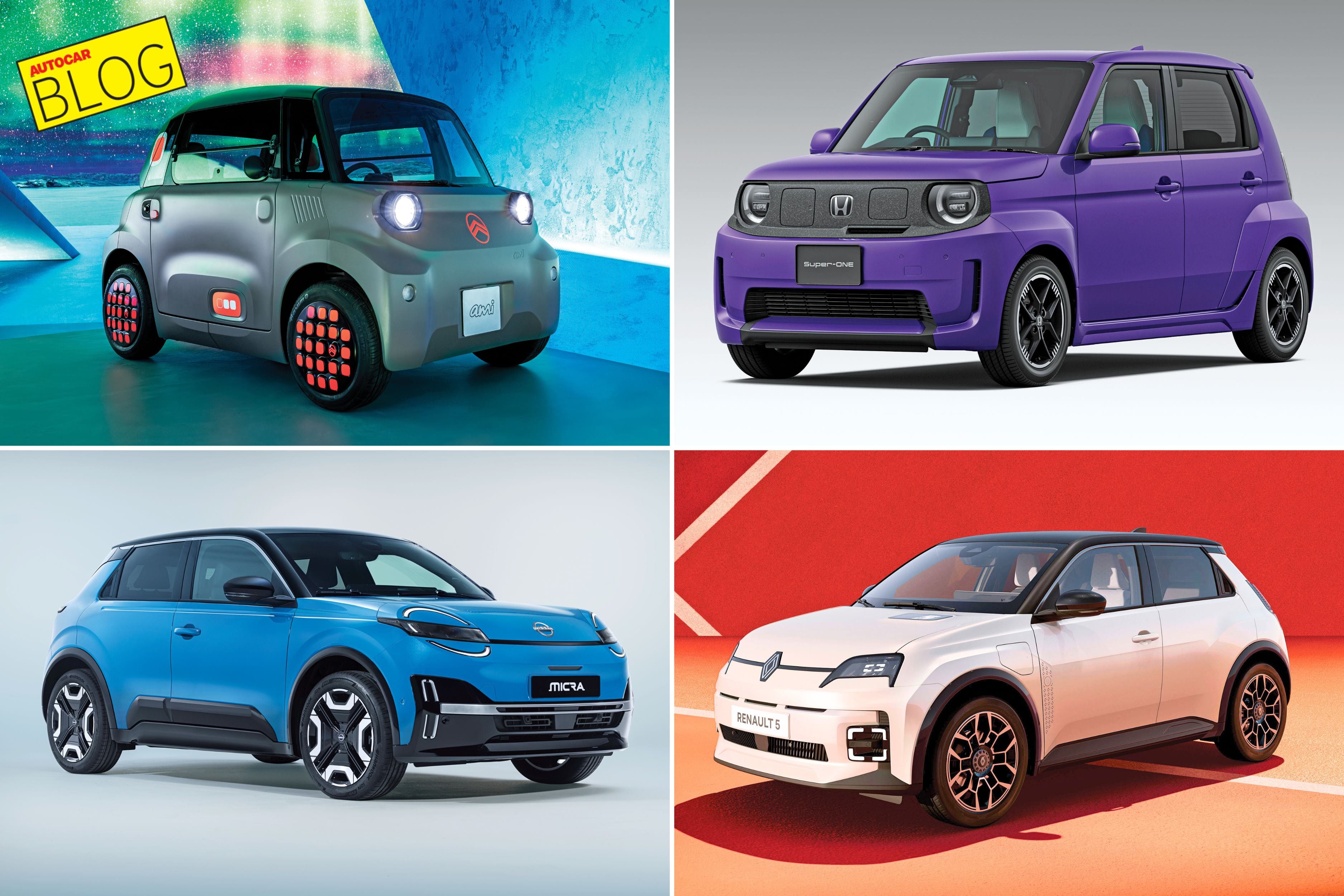
The Citroën Ami. The Fiat Topolino and Multiplina. The Renault 5 and its hot hatchback cousin, the Alpine A290. The Nissan Micra. The Smart For2. The Honda Super N. The Microlino and Microletta. And I have not even gone into what the Chinese have launched over the last 12 months.
This is the attack of the “minors”. Electric. Power-packed. Feature-rich. Head-turning looks. Both microcars as well as conventional entry-level little runabouts. They are not cheap-looking, frugally engineered, cost-compromised, low-on-status offers that one never wants. They are clean, conscious and very cool. They cater to the sceptical youth and the wizened elder alike.
For years, Japan and Europe have been the homes of such cars. It is time India takes over that role. And it makes perfect business sense too. If we are to increase car penetration and grow the market to a size even half of that of China, given our consumption power, there is no other way but to make the entry-level car the hero of the script. Whether electric, CNG or hybrid. It is the responsibility of brands like Maruti Suzuki, Hyundai, Toyota, Tata and Honda to make this happen. Only then will we create a mature and sustainable market with a rich and robust pipeline of two-wheeler owners who will want to look up!
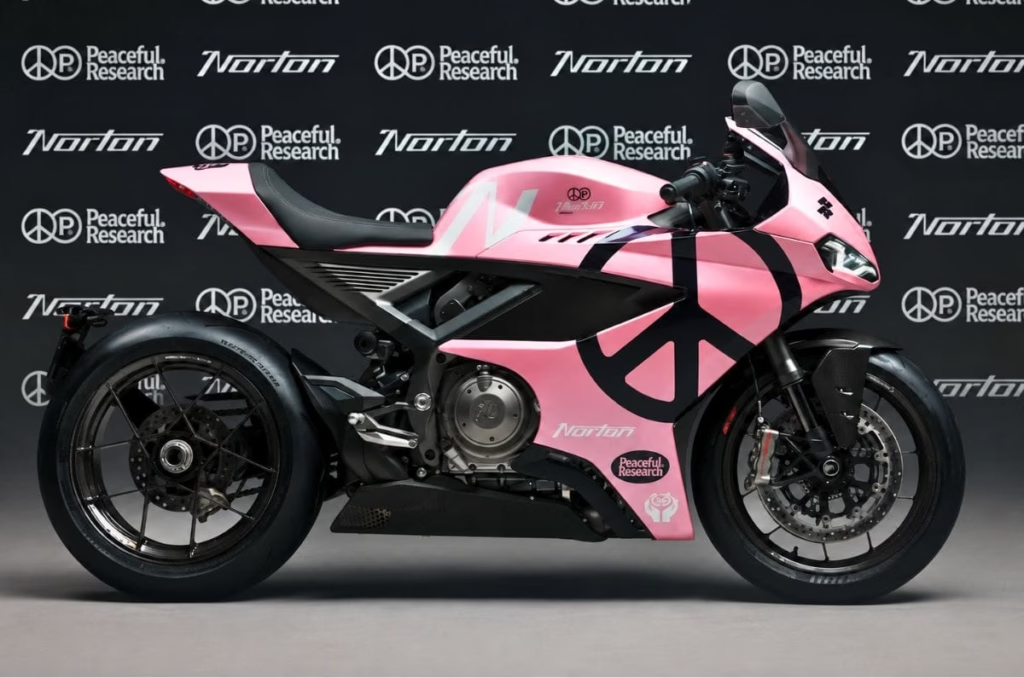
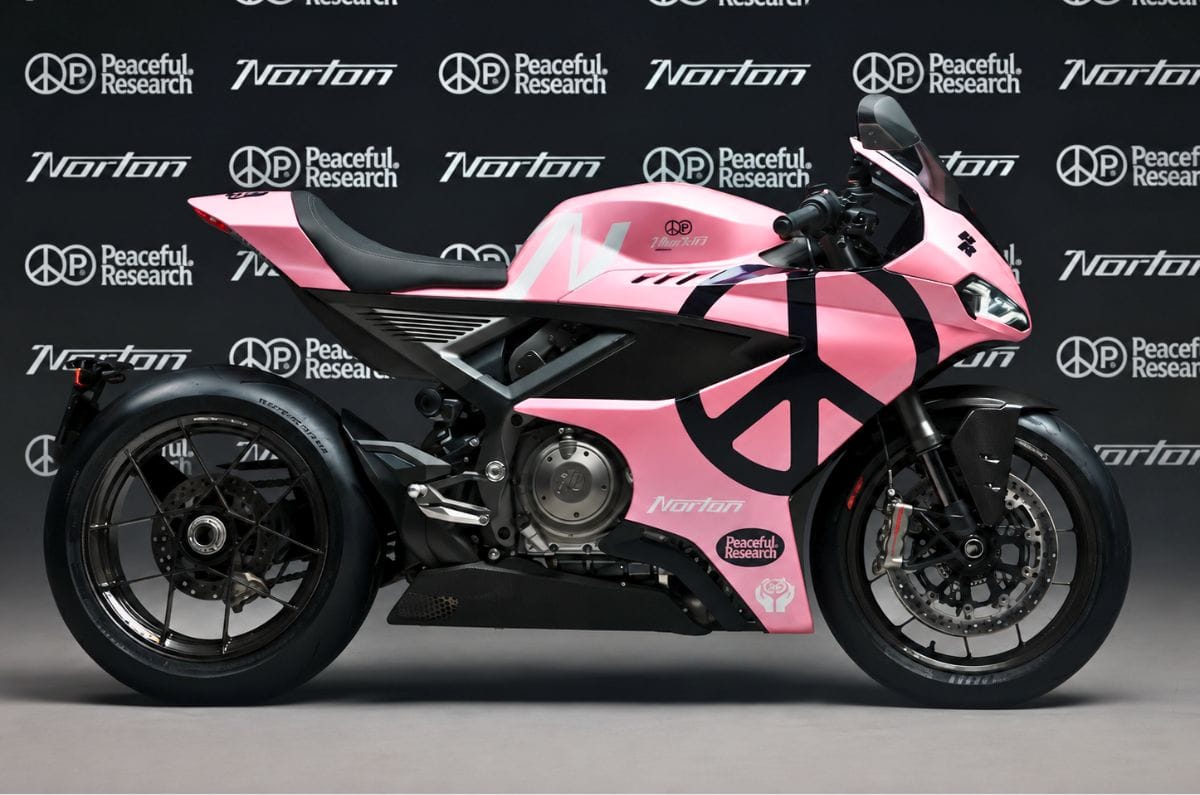
Norton has revealed a one-off version of its Manx R in collaboration with Peaceful Research, a British art and design practice known for its work around contemporary motorsport and automotive culture. The motorcycle, officially called the Manx [P]R, made its public debut at the British MotoGP weekend at Silverstone
One-off Manx R gets pink and purple finish
200cc V4 continues to make 206hp and 130Nm
Bike was revealed at the British MotoGP at Silverstone
Norton has revealed a one-off Manx R created in collaboration with Peaceful Research, a British design practice working across motorsport and contemporary culture. The motorcycle made its public debut at the 2026 British MotoGP at Silverstone.
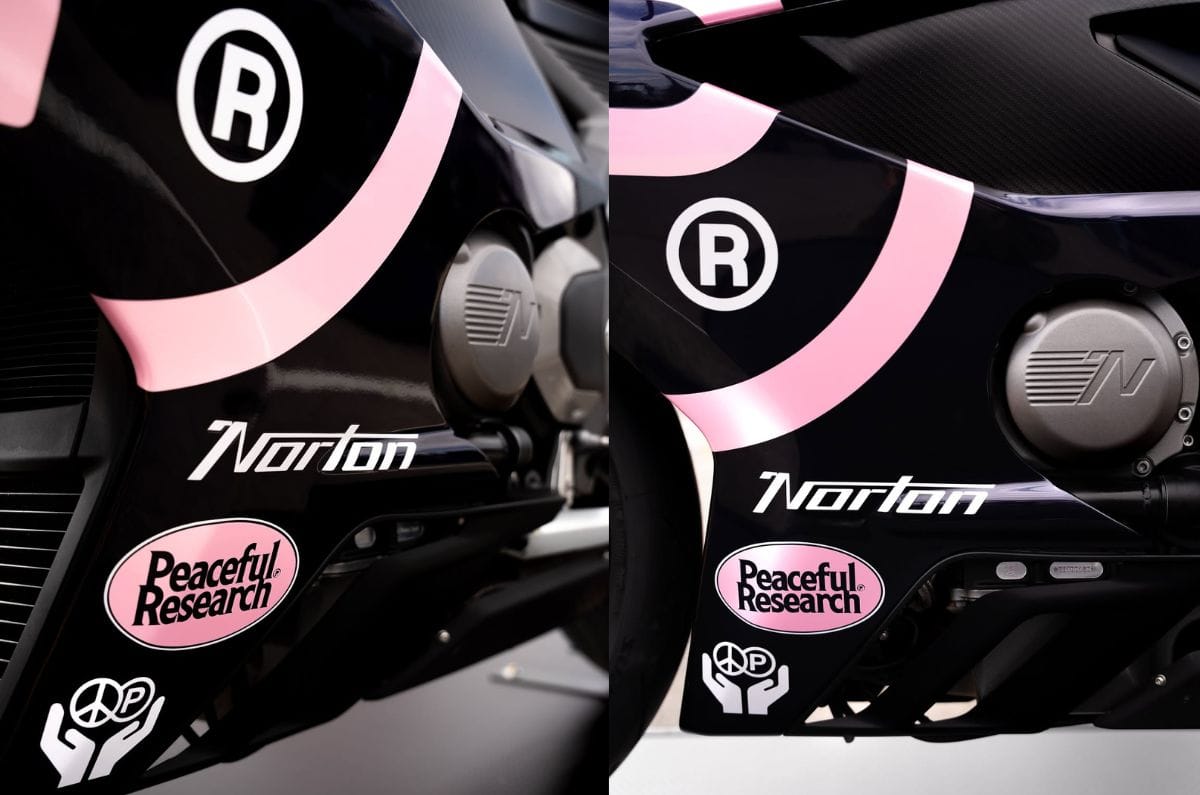
The one-off Manx R gets an asymmetrical finish combining metallic pink, deep purple and light grey. Peaceful Research’s graphics have been incorporated into the bodywork, while a ‘26’ graphic on the tail marks the year of the project.
The collaboration is limited to the design, with no changes made to the Manx R’s mechanical specification. Norton says the motorcycle took 10 days to strip, paint, wrap, lacquer and rebuild.
The Manx R uses a 1,200cc, 72-degree V4 engine producing 206hp at 11,500rpm and 130Nm at 9,000rpm. The engine is paired with a six-speed gearbox and a wet, multi-plate slipper clutch.
The Manx R has already been patented in India, and Norton is expected to launch the motorcycle here in India soon. The V4-powered Manx R and Manx will be assembled at Norton’s Solihull facility, with significant component supply from India.