What to expect from 2026 Toyota Hilux ahead of its debut tomorrow

2026 Toyota Hilux driving

Toyota will debut the new-generation 2026 Hilux in India tomorrow, July 28. The Hilux, currently in its eighth-generation avatar in the country, was launched in March 2022 and has been a relative success, especially against the likes of the Isuzu V-Cross pickup. With the new-generation model, teasers suggest that Toyota will give the Hilux a full design overhaul, making it look more modern and offering a handful of new features. Here’s everything you can expect from the 2026 Toyota Hilux in India:

1. What is the expected price of the 2026 Toyota Hilux in India

New-gen Hilux’s price could range between Rs 32 lakh and Rs 40 lakh (ex-showroom)

With the new-generation update, Toyota is expected to raise the Hilux’s prices by a considerable margin. For reference, the current model is priced from Rs 28.52 lakh to Rs 36 lakh (ex-showroom). So, the upcoming new-generation Hilux is likely to have a price tag of somewhere between Rs 32 lakh and Rs 40 lakh (ex-showroom).

2. What engine option will power the 2026 Toyota Hilux?

The Hilux’s 2.8-litre diesel engine could be offered with a 48V ‘neoDrive’ tech
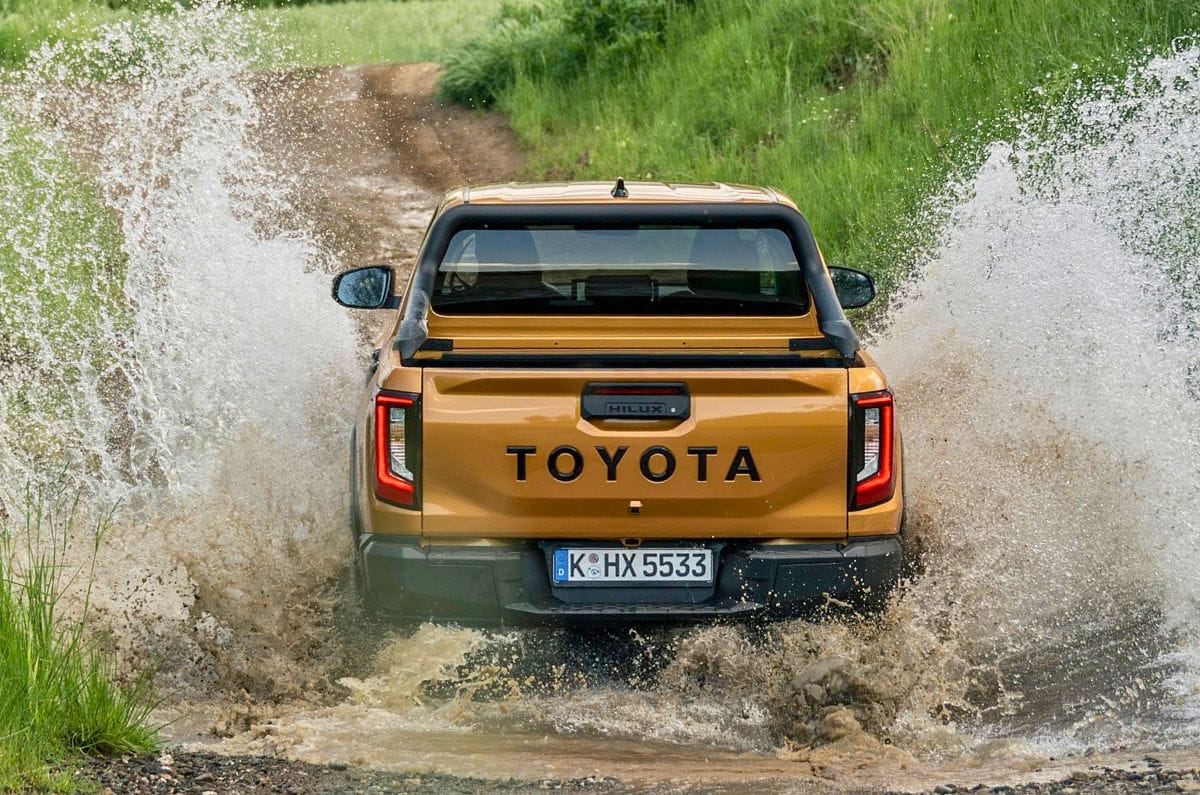
International-spec ninth-generation Toyota Hilux shown for representational purposes only. 

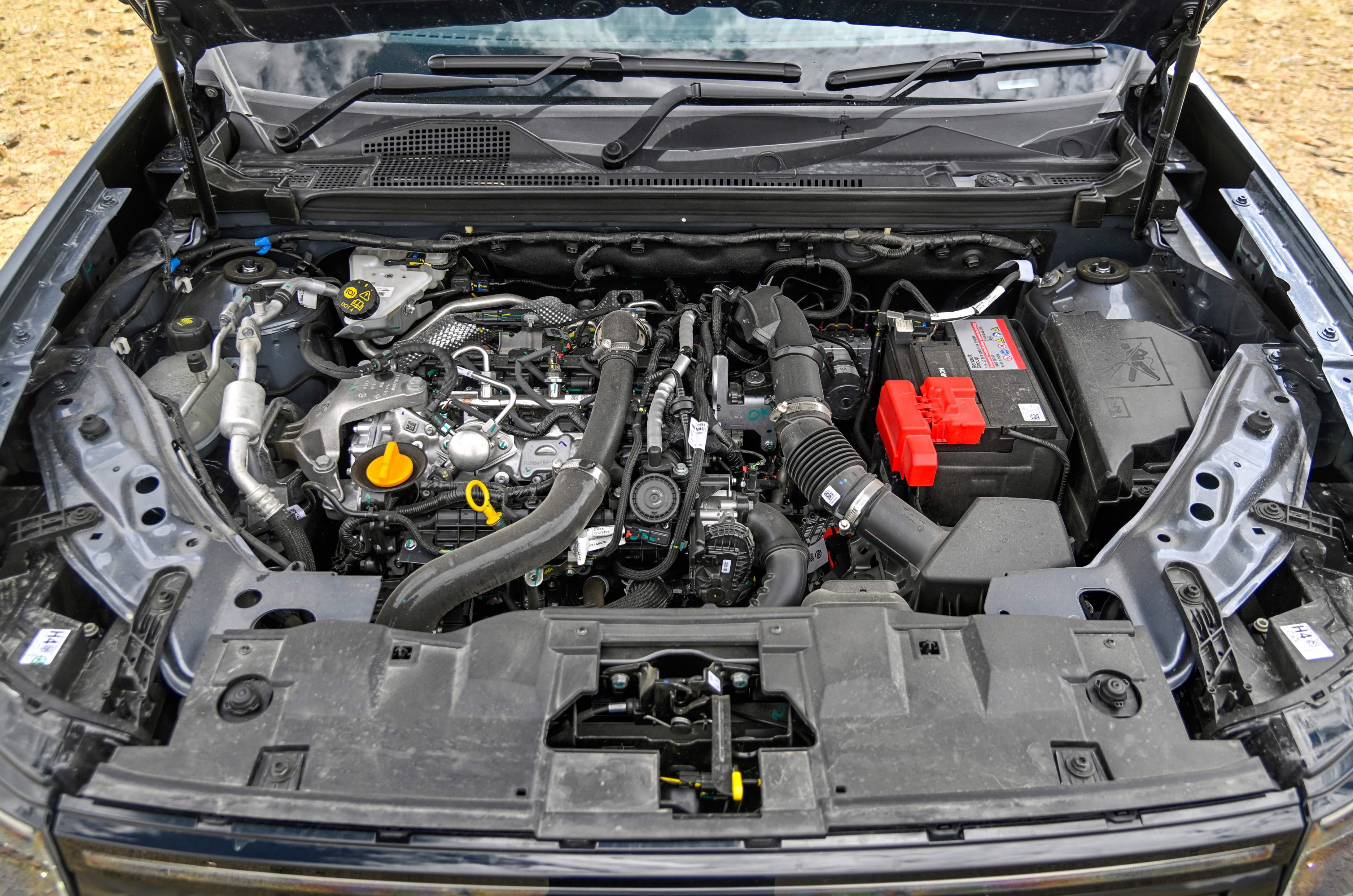
As the upcoming new-gen model is based on the same IMV platform as the current Hilux, Toyota is expected to offer it with the same 2.8-litre diesel engine that produces 204hp, 420Nm with a 6-speed manual transmission, and 240hp, 500Nm with a 6-speed torque converter automatic gearbox. A 4×4 AWD system is expected to be offered as standard with a low-range transfer case. A small improvement, however, could be a new 48V mild-hybrid system, called the ‘neoDrive’ on the Fortuner, which would slightly improve the fuel efficiency of the Toyota pickup. 

Notably, the international-spec ninth-generation Hilux is also offered as an all-electric vehicle with a 59.2kWh battery pack, delivering a WLTP-claimed range of 240km, and front- and rear-axle-mounted electric motors with a combined output of 196hp. However, the Hilux EV’s India launch is highely unlike in the country.

3. What are the exterior design changes on the 2026 Toyota Hilux?

Has slimmer headlights, a square grille and an aggressive-looking front bumper
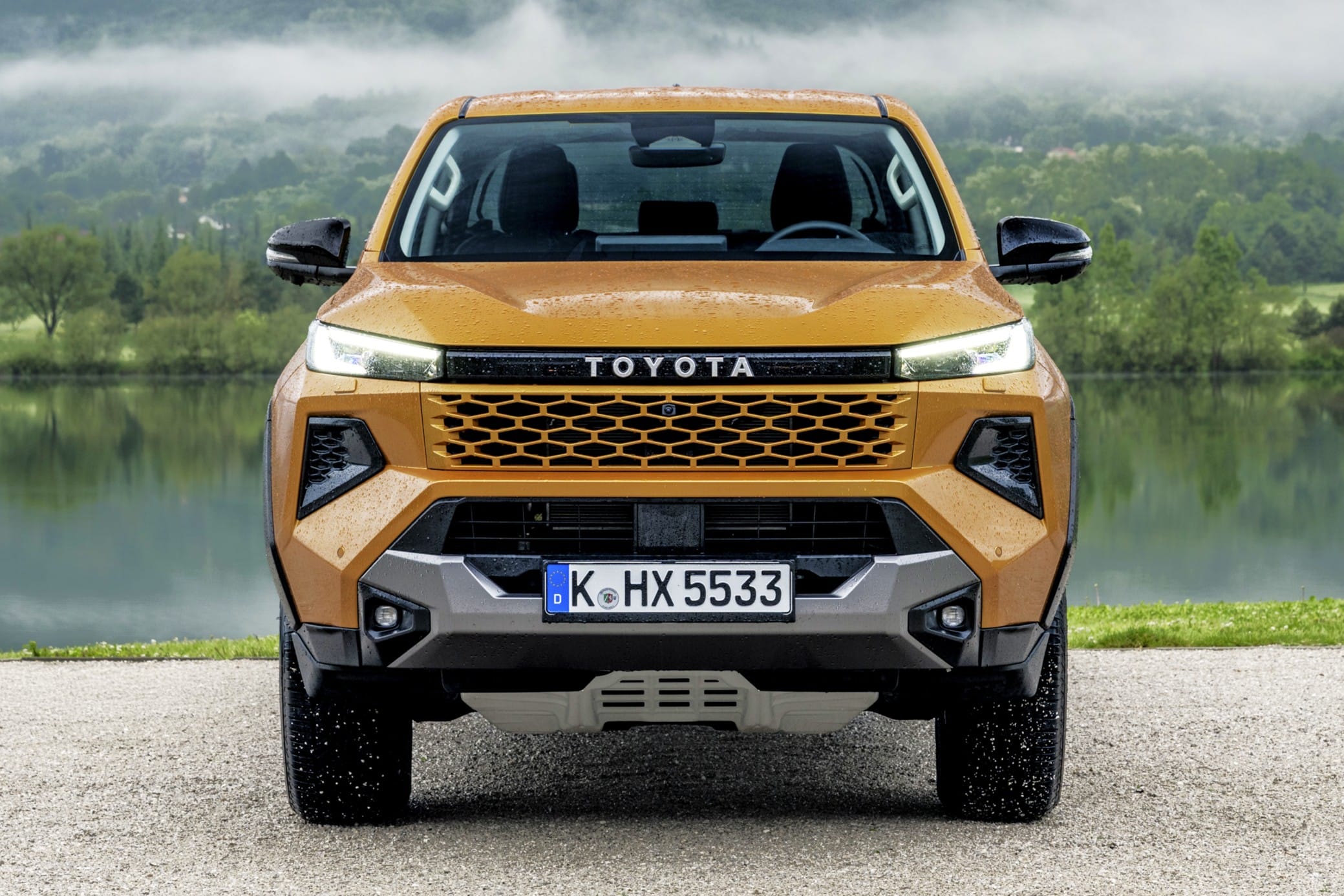
International-spec ninth-generation Toyota Hilux shown for representational purposes only. 

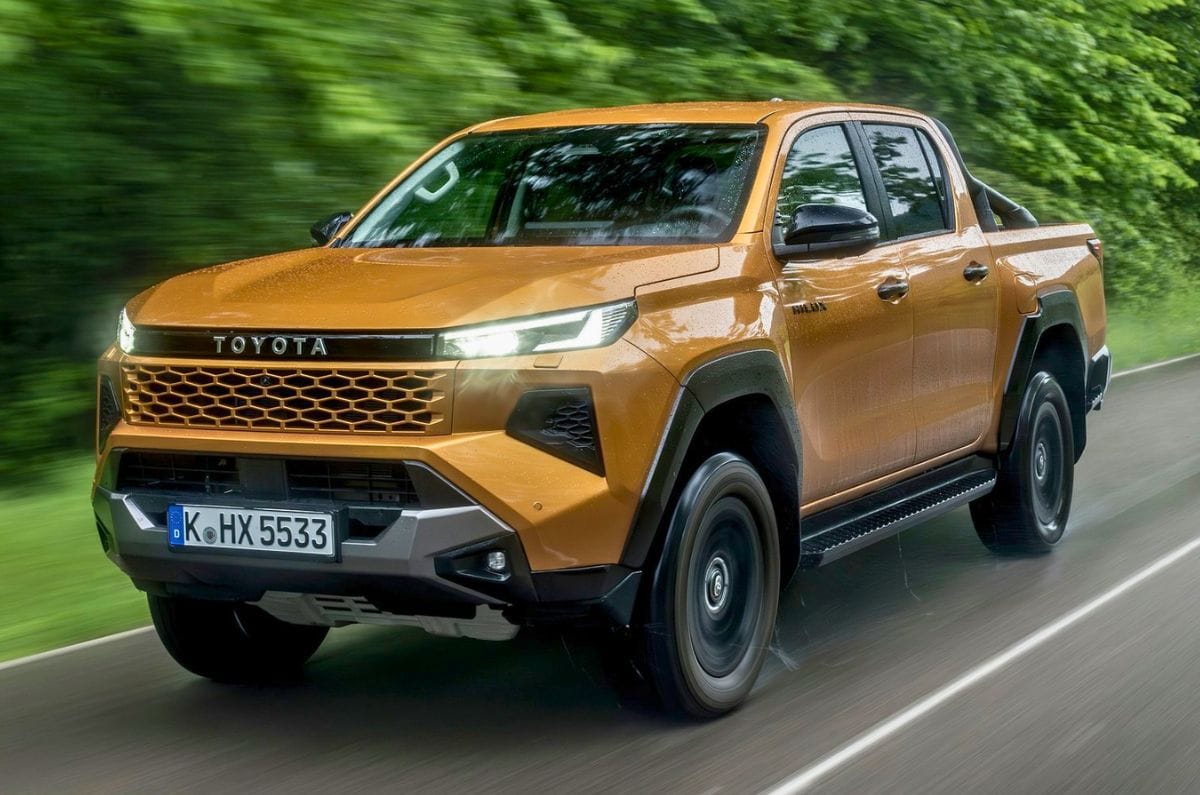
Compared to the current model, the international-spec ninth-generation Hilux has plenty of prominent creases and angles that make it look more aggressive. At the front, it gets slimmer LED headlights with LED DRLs, connected via a gloss black strip that features ‘Toyota lettering’. The grille is squarer than before and features prominent angular honeycomb-mesh design elements. 

On the bumper, there are two quadrangle-shaped black air intakes on either side of the grille. The lower section of the bumper looks very aggressive with strong creases, wide air intakes, a silver skid plate, and two LED fog lamps.

Gets a cleaner side profile, but the square wheel arches add to its character
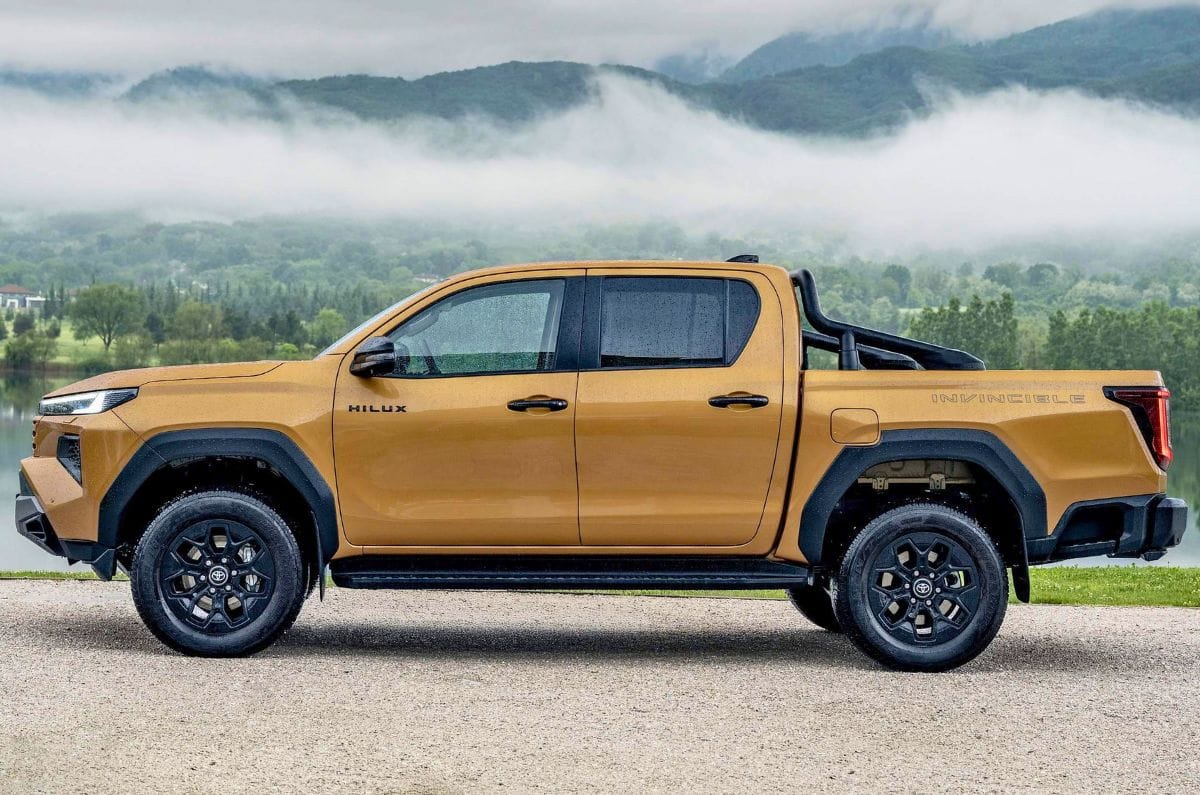
International-spec ninth-generation Toyota Hilux shown for representational purposes only. 

Compared to the front, the side profile design is cleaner. The international model gets 18-inch black alloy wheels, squared-off black cladding on wheel arches and a footboard for easier ingress and egress. The outside rearview mirrors (ORVMs) and door handles are black, and the truckbed features a roll cage finished in black for added contrast. 

Features new wraparound taillights but a similar Toyota badging on the tailgate
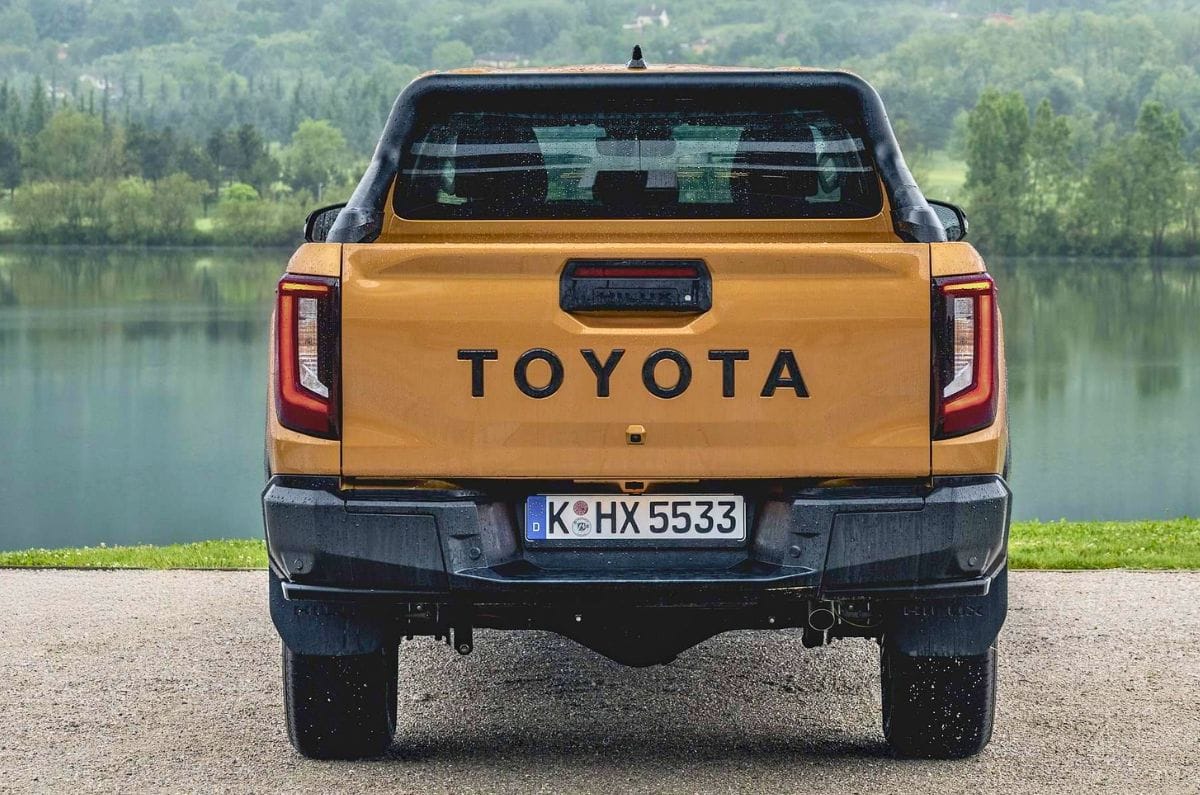
International-spec ninth-generation Toyota Hilux shown for representational purposes only. 

The 2026 Toyota Hilux’s rear features C-shaped wraparound LED taillights. The tailgate features massive ‘Toyota’ lettering in black, and the tailgate handle is also finished in black. The rear bumper is chunky and integrates a step to climb onto the truck bed.  

4. What are the interior design changes on the 2026 Toyota Hilux?

The international model gets a revamped all-black cabin with two screens
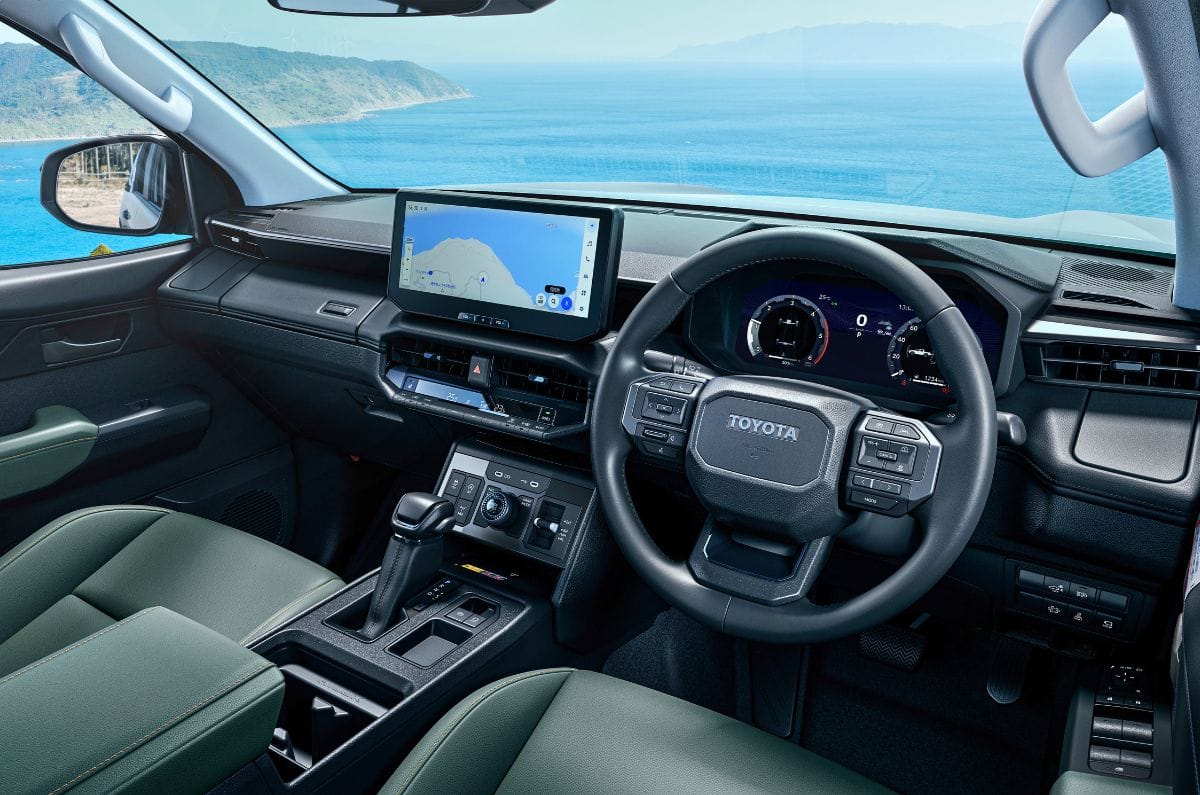
Japan-spec ninth-generation Toyota Hilux shown for representational purposes only. 

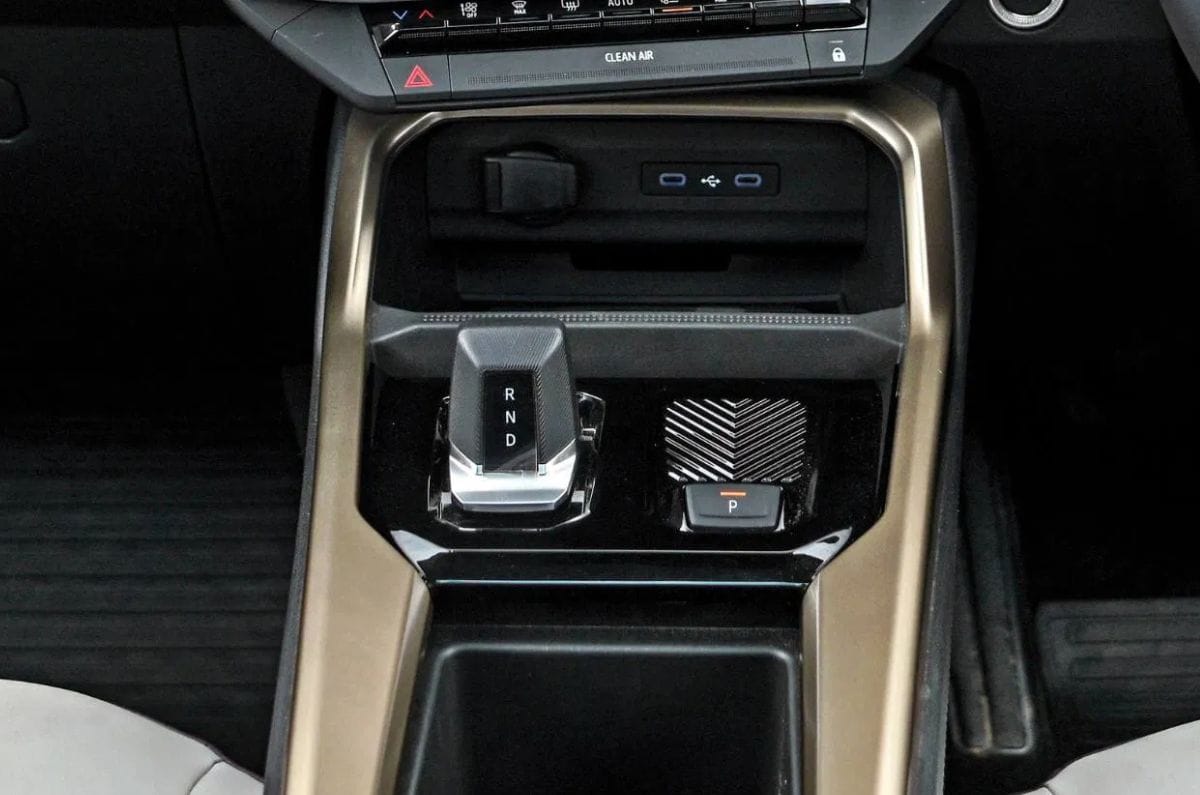
While the India-spec Hilux’s interior is yet to be teased, it is expected to be revamped entirely like the international model. With a chunky 3-spoke steering wheel with physical buttons, a 12.3-inch digital driver’s display and a same-sized touchscreen infotainment system, it looks more modern than the outgoing model. With a mix of soft-touch leatherette materials and hard plastics, it seems to be equal parts contemporary and rugged. Unlike modern-day cars, the new-gen Hilux offers a plethora of physical controls on the centre console and transmission tunnel. Like the current model, the international-spec ninth-gen Hilux features an all-black cabin.

5. What features does the 2026 Toyota Hilux have?

360-degree camera, dual-zone AC, and powered seats are expected to be offered
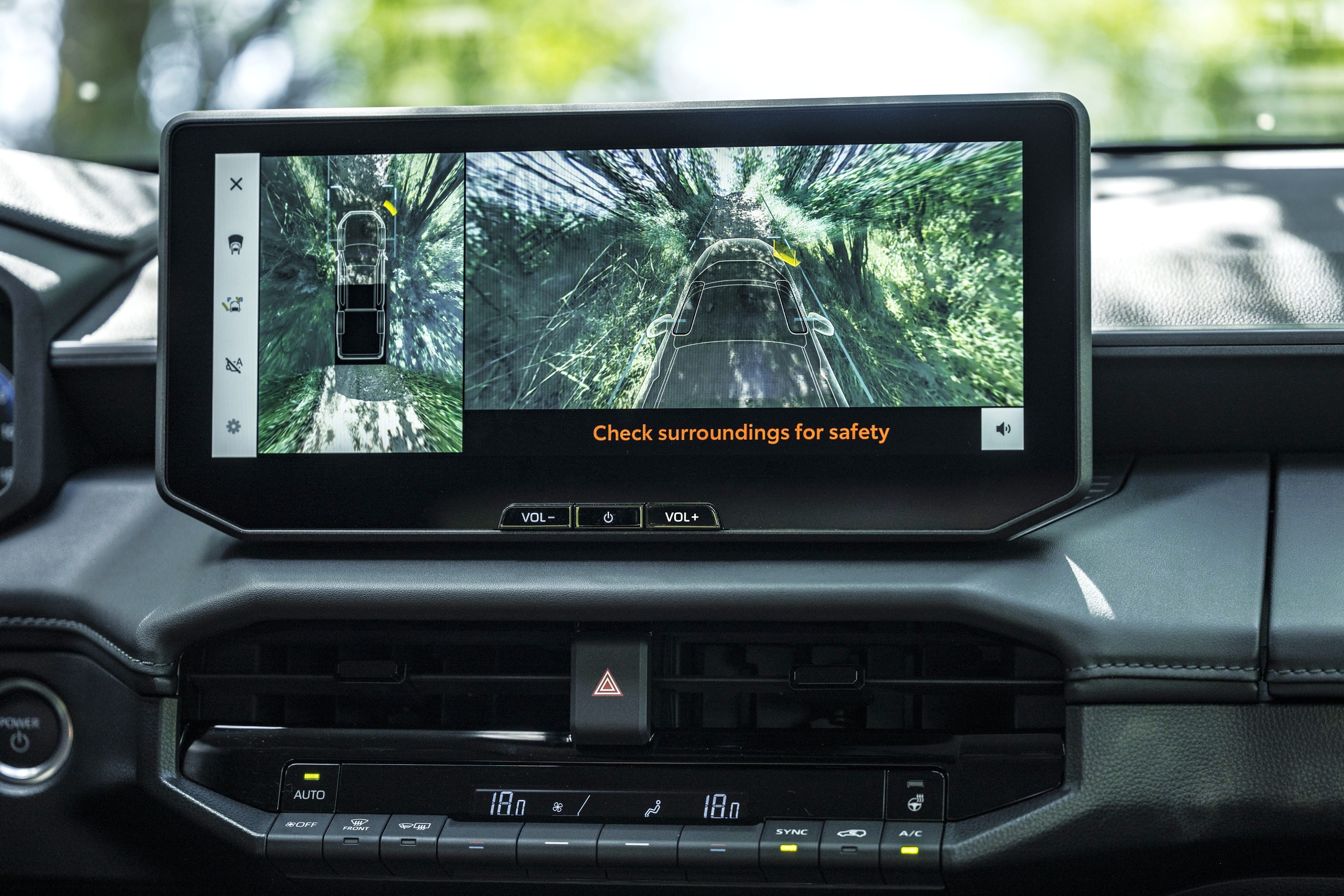
Ninth-gen Toyota Hilux India launch next month
International-spec ninth-generation Toyota Hilux shown for representational purposes only. 

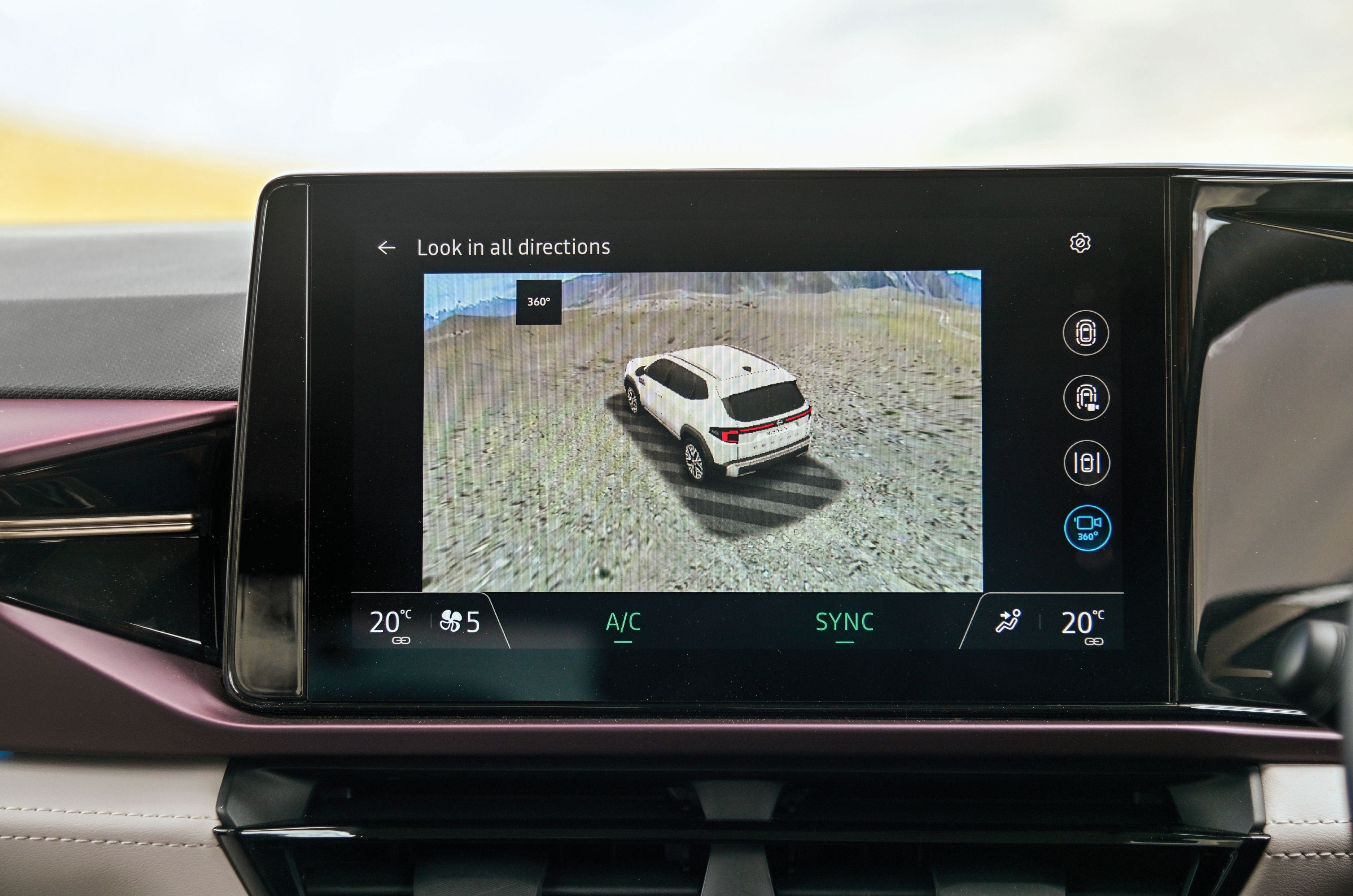
New features onboard the ninth-generation Toyota Hilux include a 360-degree camera system with a blind-spot monitor, dual-zone automatic climate control, powered and ventilated front seats, heated ORVMs and an advanced driver assistance system (ADAS) suite. Other features include the aforementioned 12.3-inch screens, a 9-speaker JBL audio system, a 220V power outlet for front passengers and front and rear parking sensors. The feature suite of the India-spec 2026 Hilux is expected to be similar to the international-spec model.

6. Which cars will the 2026 Toyota Hilux rival in India

The 2026 Hilux will continue its rivalry with only one car in India

The new-generation Toyota Hilux will continue to rival the Isuzu V-Cross in India, which received a minor update in February 2026. Notably, the V-Cross is priced from Rs 25.50 lakh to Rs 30.28 lakh (ex-showroom).

Prices are ex-showroom, India.

Top 5 MPVs under Rs 30 lakh ranked

Top Five MPVs in India

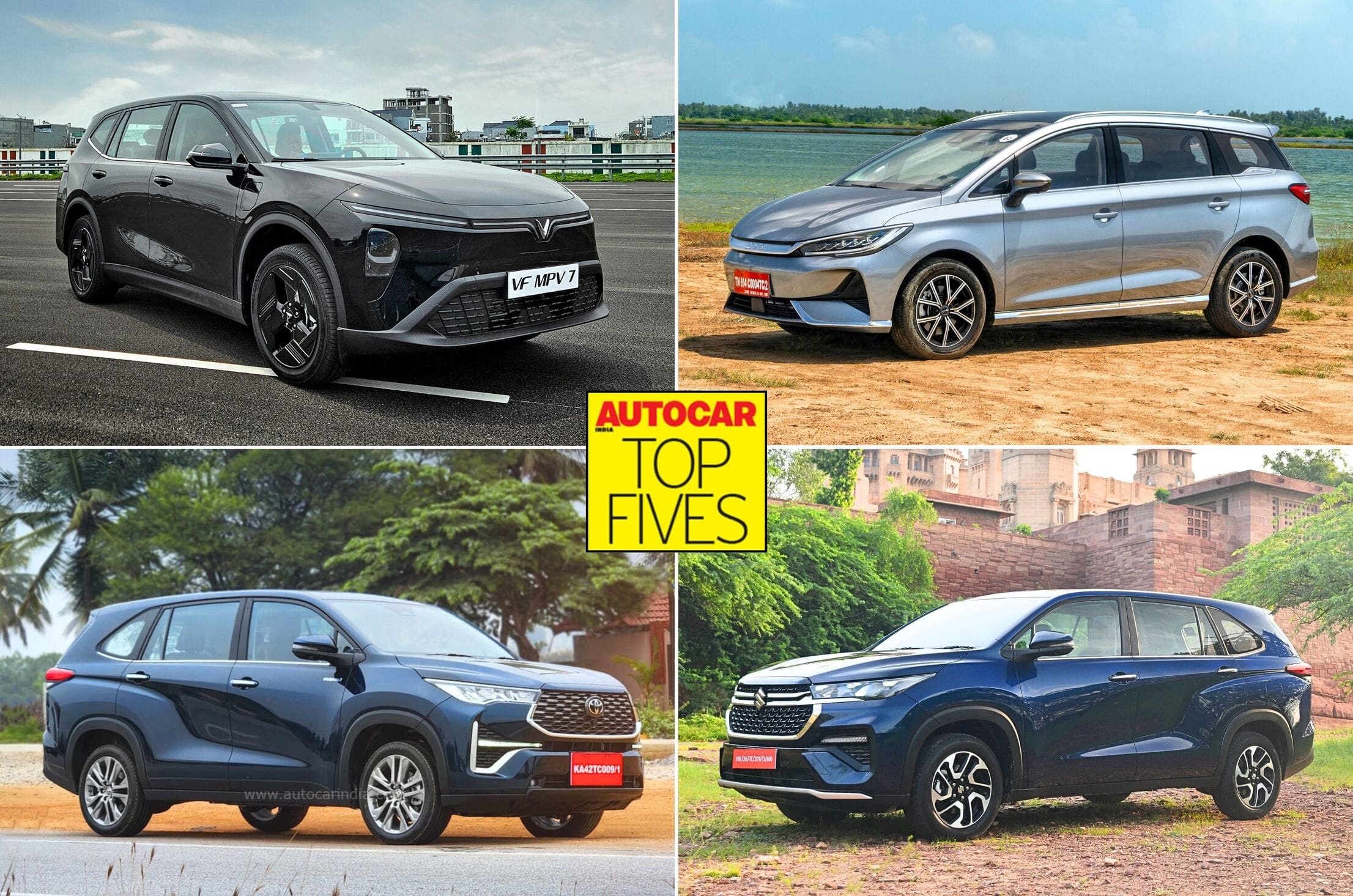
MPVs may not be the most glamorous of body styles, but they are arguably the most practical vehicles you can buy, especially if you have a large family to haul around. And if you are looking at the premium end of the market, you have a very diverse range of options to choose from, including petrol, diesel, electric and also hybrid MPVs. Here, we have ranked the five best MPVs you can currently buy if you have a budget of around Rs 30 lakh. 

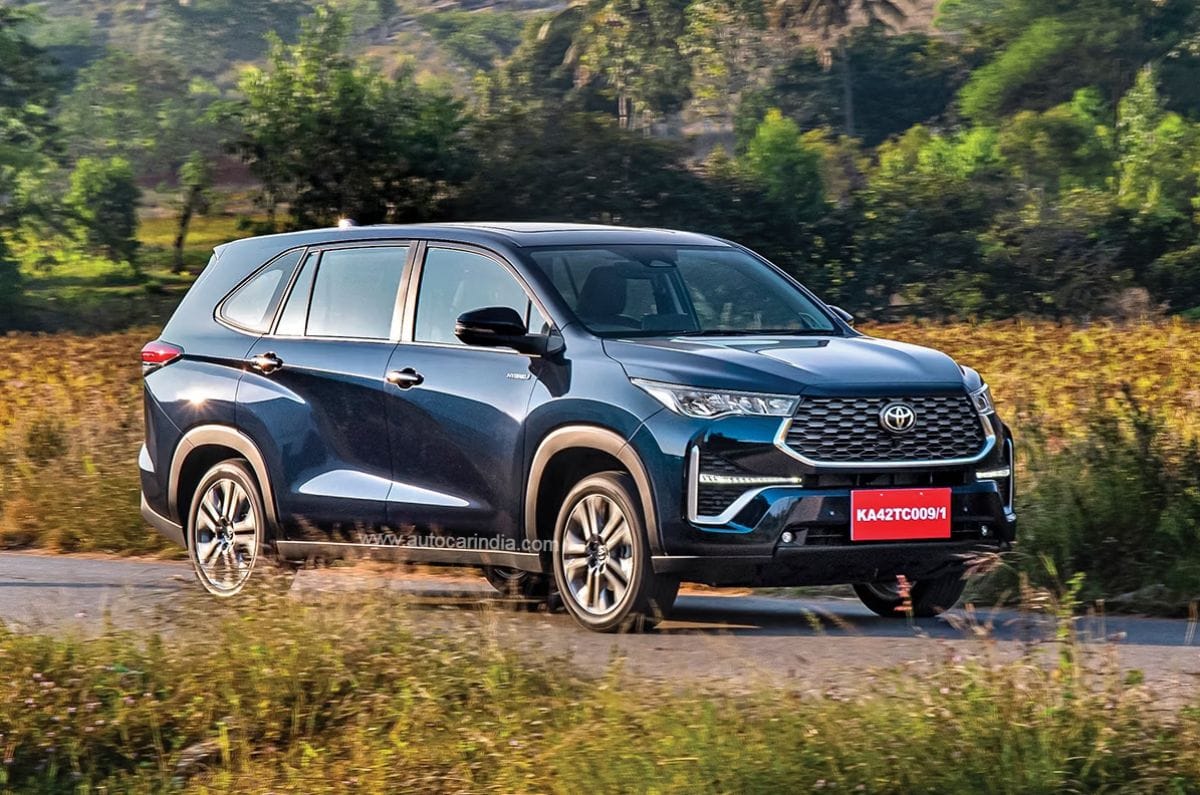
1. Toyota Innova Hycross 

Price: Rs 19.53 lakh-31.20 lakh

The Toyota Innova Hycross’s sleeve is its amazingly efficient and smooth 184hp 2.0-litre petrol-hybrid powertrain. It also has a premium-feeling and well-kitted-out interior with sufficient space even in the third row. The hybrid variants are steeply priced, but they are preferred over the more affordable 173hp 2.0-litre naturally aspirated petrol variants that aren’t efficient and miss out on several features. 

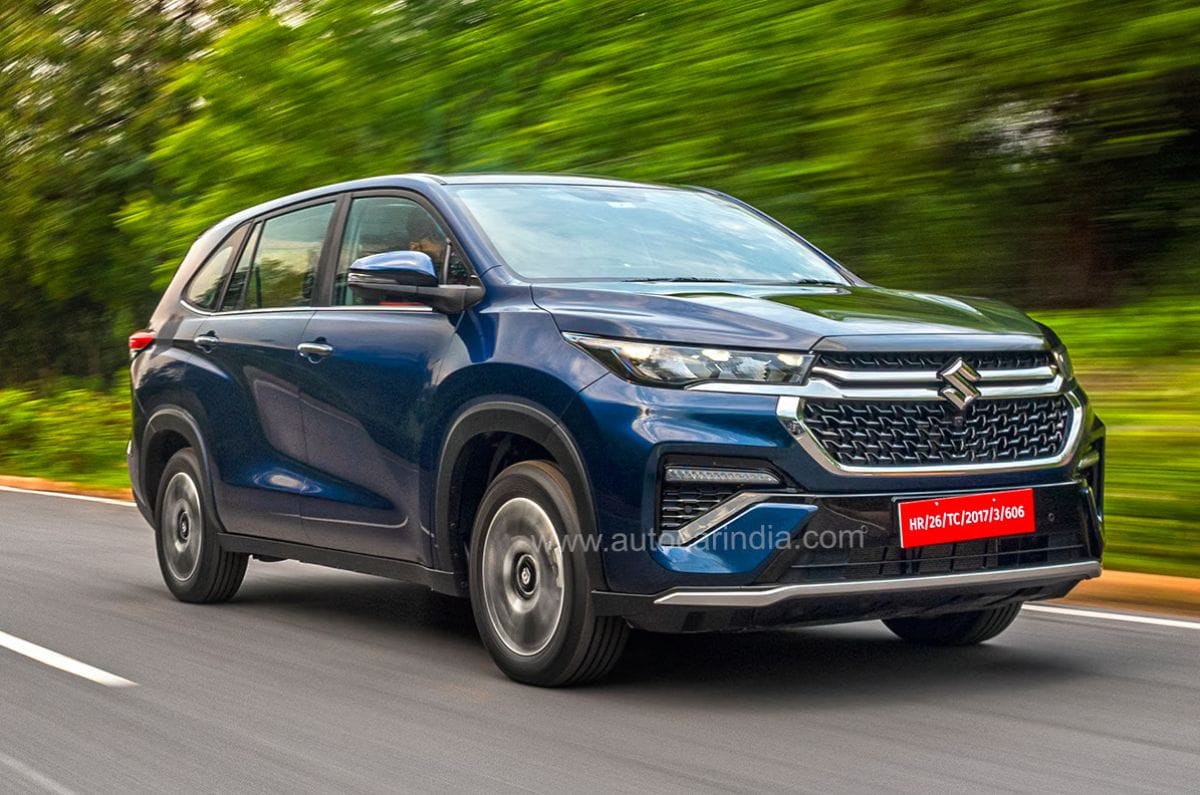
2. Maruti Suzuki Invicto

Price: Rs 24.97 lakh-Rs 28.60 lakh

The Maruti Invicto is a badge-engineered Innova Hycross that only gets the petrol-hybrid powertrain. It’s got the same spacious interior, comfortable ride quality and an impressive tested average fuel economy of up to 14.06kpl. However, not having the regular petrol engine explains the higher starting price. Top variants, though, are more affordable as they miss out on some features like the powered second-row ottoman seats and ADAS suite.

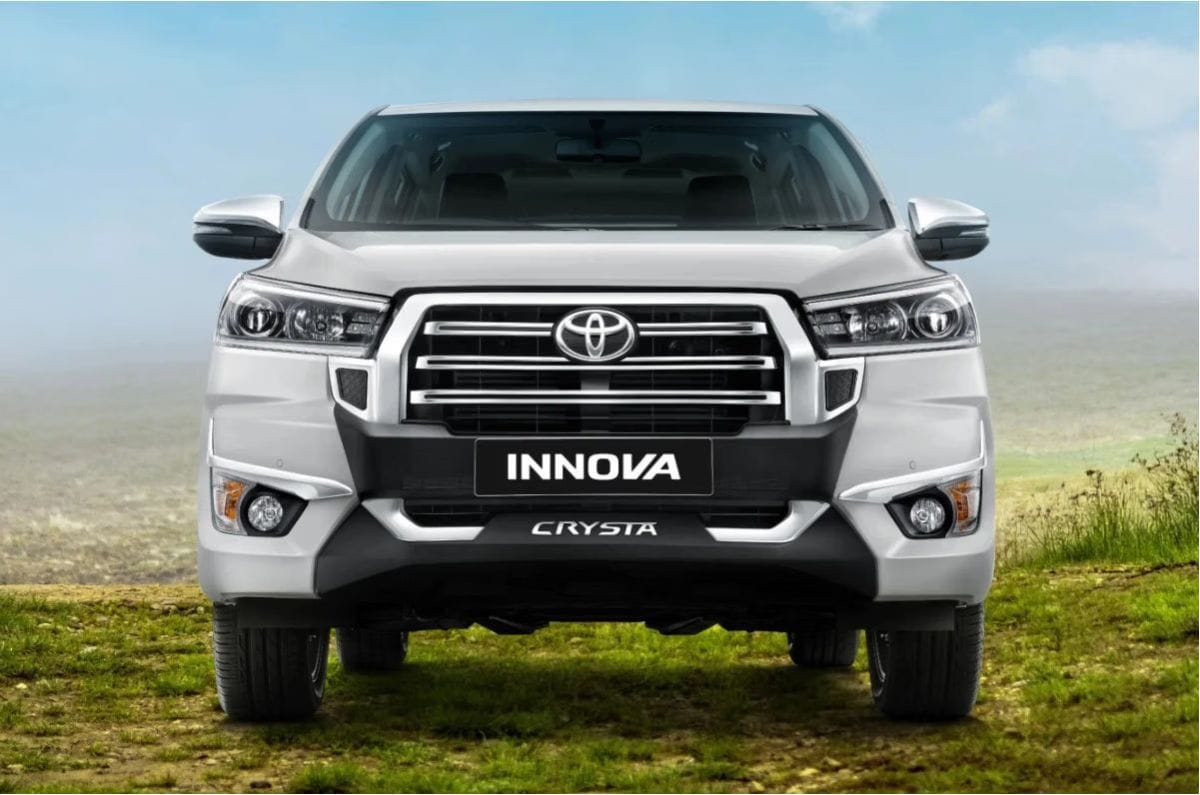
3. Toyota Innova Crysta

Price: Rs 19.18 lakh-25.98 lakh

The Innova Crysta is well past its prime, and that shows in its interior and equipment list. It’s also expensive, especially in the company of its much newer rivals. However, it is arguably the most dependable and reliable people mover that feels like it is built to last, has an efficient 150hp 2.4-litre diesel engine, and is practical and comfortable as well. This is also the only diesel MPV left in the mass market, making it ideal for people who travel long distances frequently.  

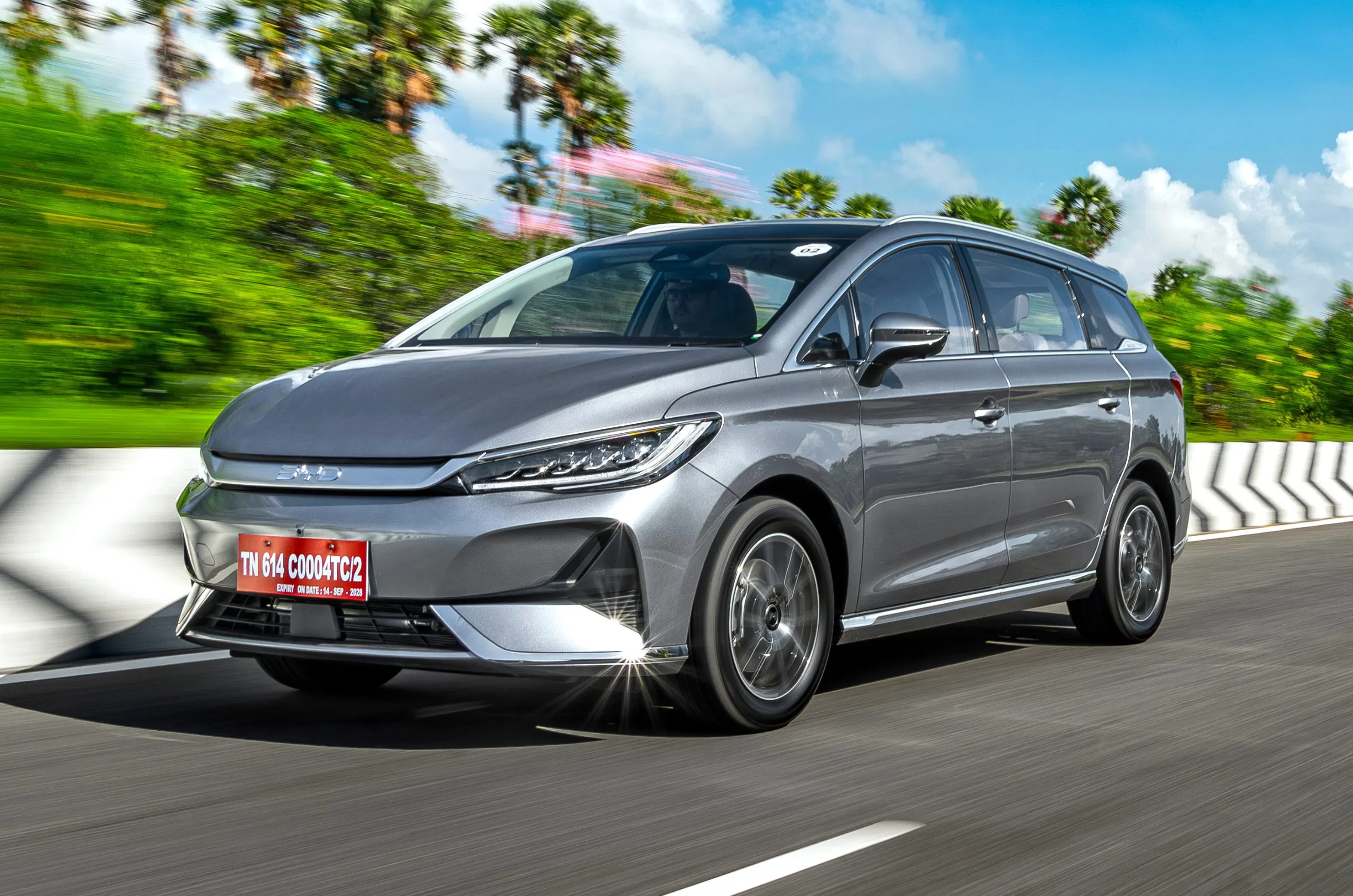
4. BYD eMax 7 

Price: Rs 26.90 lakh-29.90 lakh

The eMax 7 doesn’t have the flexibility of the petrol, hybrid or diesel MPVs. It is also the least spacious of all here, but it’s a well-equipped electric MPV that can ferry up to seven people in silence and comfort and has sufficient range for urban use. A sparse sales and service network, however, remains a limitation. If you are living in a tier-1 city, the eMax 7 makes for a cost-effective people mover, but outstation trips will require some planning.   

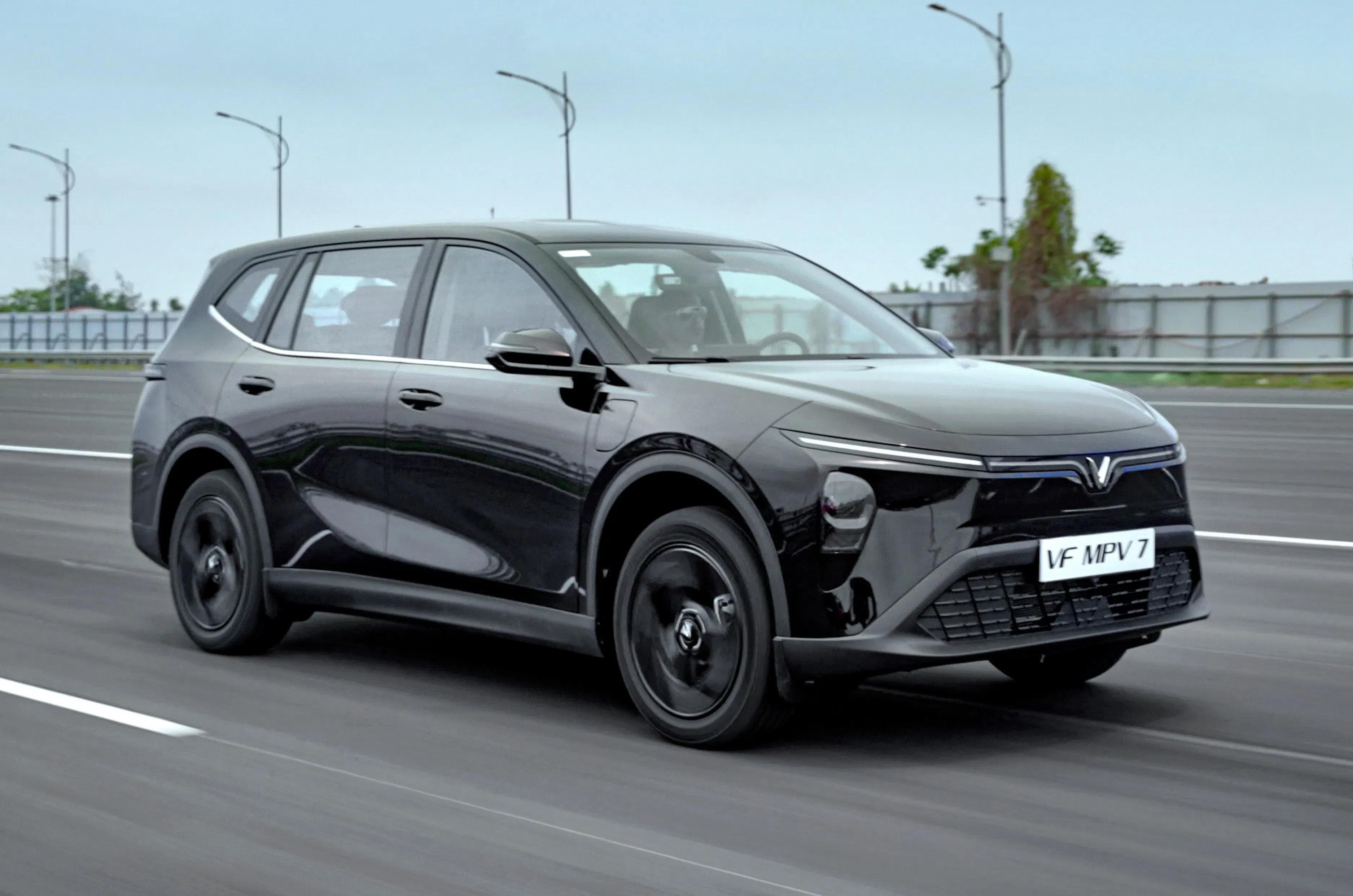
5. Vinfast VF MPV 7 

Price: Rs 24.49 lakh

The VF MPV 7 is the newest MPV here, and it gets the fundamentals right – space, practicality and a claimed 500km range. At 204hp, the VF7 along with the eMax 7 are two of the most powerful MPVs in this segment. However, it misses out on several features, which particularly sticks out at its price point, it’s ride and handling leaves a lot to be desired for, and you’ll also have to contend with Vinfast’s relatively sparse network currently. 

Mercedes-Benz CTO Jörg Burzer on India R&D and future product development

Mercedes-Benz CTO Jorg Burzer

Mercedes-Benz’s Research and Development centre in Bengaluru has evolved from a hardware-focused engineering hub into one of the company’s key global R&D centres, with teams working across software, ADAS, electric powertrains and physical vehicle development. In this interview, Jörg Burzer, Member of the Board and Chief Technology Officer, Development & Procurement at Mercedes-Benz Group AG, discusses the centre’s expanding capabilities, the role of AI in vehicle development, the future of autonomous driving, and why he believes every Mercedes-Benz has “a bit of India” in it.

A lot of global auto OEMs have large R&D centres in India. Beyond cost, what are the benefits of having such large setups in India

Yes, it’s not only cost; you see, the competence level is so high. If you look at our centre, we will be celebrating its 30th anniversary here in India, and over these years, it has only grown in size and capability. We started with hardware, but now it’s massively into software, infotainment and autonomous driving. The team in India is contributing heavily on ADAS, for instance, and we are working on Level 3 and Level 4 with the team in India. So, all in all, I would say it’s competence, speed and agility that are good here. 

Is the Mercedes development centre mainly a digital unit, or is physical development also being undertaken here?

Oh certainly, we have lots of hardware development. There are many test benches, and you’ll see lots of physical testing and development taking place here. Even beyond powertrain, there’s a lot of physical development taking place along with our vendors here too. And then, on electric vehicles, we’re working on the powertrains and batteries too. And yes, on the digital side, there’s lots of AI work, not just on the product, but also on process development. So yes, the centre is a full-scope R&D centre, a blend of the digital and physical. For example, we do a lot of work on the simulation of sheet metal forming and welding here. 

Besides engineering, does the India centre also do design and styling work for your products?

On the design side, at Mercedes, we have this philosophy that we are creating a global product, and so we have a global design. This might change a little bit – obviously, we are adapting our design, which might be enriched by certain market trends – but for us, it’s very important that it is a global design, so we have one design hat. So, our styling team is based in Germany, where we have our design centre, and that’s important for us to maintain the global approach. 

Software is today a leveller, even phone manufacturers can make a car today. Do you view this as a threat? 

I see this as an opportunity because, for instance, you can develop a software stack for ADAS, but at the end you have to apply it to hardware. One interesting bit, to my knowledge, is that we are the only OEM doing a Level 2++ ADAS with a combustion engine, otherwise you only see this on EVs. To do this in a combustion engine environment, you know, with things like a transmission, it’s more complicated, so that’s where our expertise in traditional technologies, along with our developments in software, has an advantage. And of course, we have tremendous respect for our competitors and we are seeing what they are doing, but for me, I think if you do this mix right, you will be at the forefront of development.

Past Mercedes cars stood for robust engineering. What do you think a Mercedes 10 years from now would be all about? 

Obviously there will be tech, but there will be more. I can give you a good example, one of the most important characteristics and values of a Mercedes-Benz is safety. We do plenty of crash tests every year for our cars that we launch, plus there’s a lot that we are doing with autonomous driving too, for instance, what we are doing with Nvidia. And here we have a lot of redundancy. We have a traditional software stack with massive amounts of info like what is a stop sign in every different market, for example. But there’s an end-to-end stack where the software is trained by the behaviour of the driver in traffic, but what we are doing is we have both stacks, so if the end-to-end system does not know what to do, then it can fall back to the classic system. So, we create a safety environment, where we know there is always a solution. 

On redundancy, what is your view of a wide sensor stack like radars, lidars and cameras, or is AI with cameras only fine? 

We are using AI, yes, but we have radars too. We have to use AI to create efficiency in the simulation and training, but you have to also think about the sensor set, and for me, I am convinced you have to have a multiple sensor set, not just one type. So, like on the S Class, we have multiple cameras, radars and ultrasonic sensors too. 

Does the India R&D centre develop products or platforms independently of headquarters, or is it more synergetic?  

For us, it’s very important that we do everything as a team. So, for me personally, it’s very important to have a global perspective in R&D because the innovations and technology solutions are so complex that you can only master them as a team. There are a lot of competencies, but there is not one single team in the world that can say, ‘I am the one that can create a platform.’ It’s always teamwork, and if you look at all industries, automotive engineering is the ultimate for teamwork. So for us, R&D is one big team. And with regards to the India centre, I love to say that in each and every Mercedes, there is a bit of India in it.
 

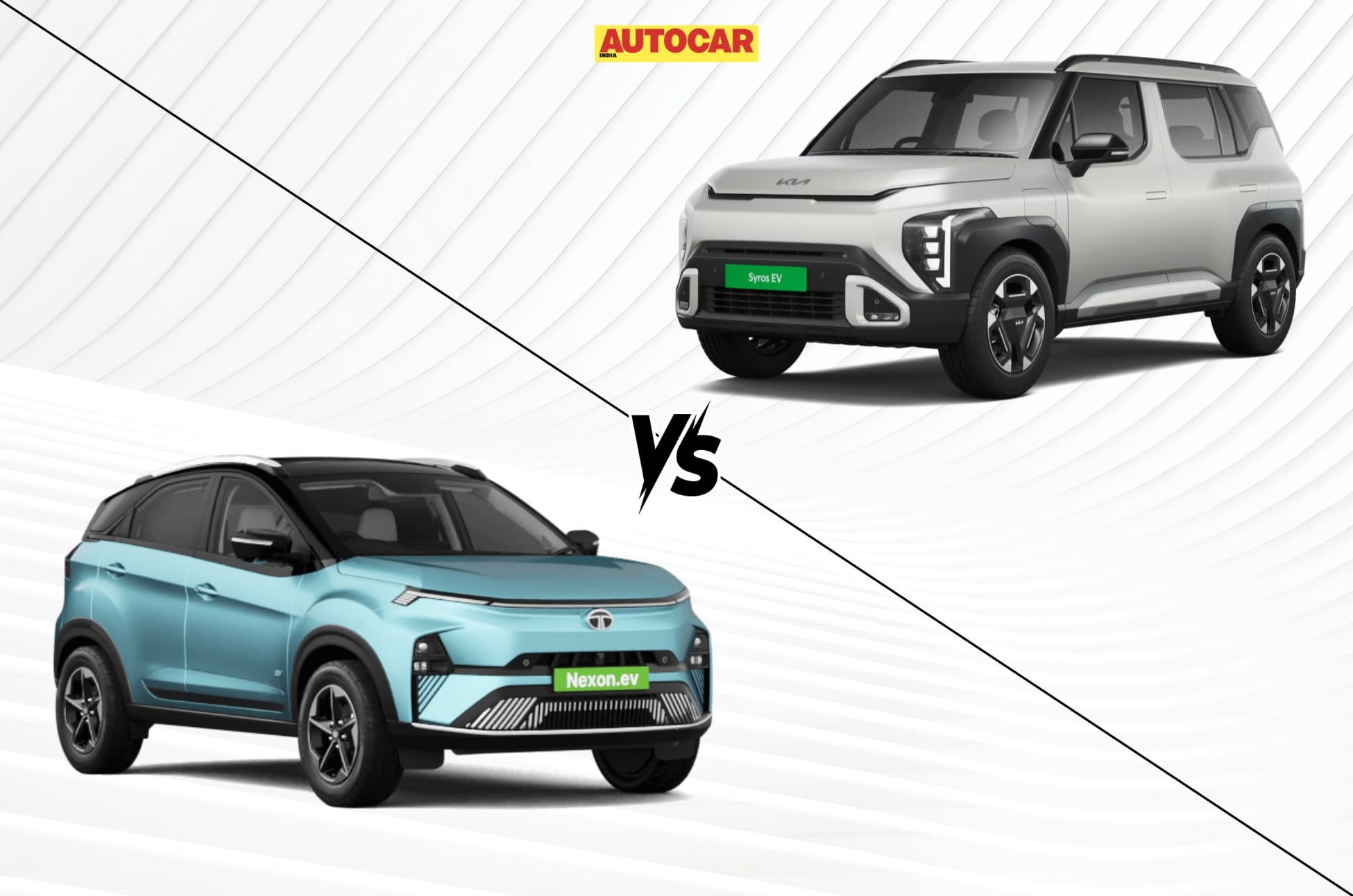
Kia Syros EV vs Tata Nexon EV: Whose top spec trim offers better value?

Kia Syros EV vs Tata Nexon EV

Kia has taken its first aim to crack the compact electric SUV space with the Syros EV. On the other hand, Tata has been dominating this very segment with the Nexon EV that’s been on the market for quite some time. But how do both SUVs fare when comparing specifications and features of their respective top-spec versions? For this comparison, we’ve chosen the Kia Syros EV’s X-Line variant and the Nexon EV’s Empowered+ A 45 variant.

Explore full specs, features, and a price breakdown in our Syros EV vs Nexon EV comparison.

Kia Syros EV vs Tata Nexon EV: Dimensions

Syros EV is comparatively the larger vehicle here

Kia Syros EV vs Tata Nexon EV: Dimensions


Kia Syros EV

Tata Nexon EV

Length (mm)

3,995

3,995

Width (mm)

1,805

1,802

Height (mm)

1,670

1,625

Wheelbase (mm)

2,550

2,498

Frunk (litres)

16

11.6

Boot space (litres)

390

350

Wheel size (inches)

17

16

While both SUVs have identical length, the Syros EV is 3mm wider, 45mm taller, and gets a 52mm longer wheelbase than the Nexon. Additionally, the former gets a 40-litre larger boot, a 4.4-litre larger frunk, and rides on wheels an inch bigger than the Nexon EV.

Kia Syros EV vs Tata Nexon EV: Powertrains 

Syros EV gets the larger battery pack, more powerful motor, and higher claimed range figure

Kia Syros EV vs Tata Nexon EV top-spec: Powertrains 


Kia Syros EV

Tata Nexon EV

Battery size (kWh)

51.4

45

Electric motor setup

Single motor

Single motor

Drive layout

FWD

FWD

Power (hp)

171

144

Torque (Nm)

255

215

Claimed 0-100kph time (seconds)

8.1

8.9

ARAI range (km)

526

489

The Syros EV features the largest battery pack in its segment with a 51.4kWh battery pack. Not only is its battery pack larger than the Nexon’s, but it also has a more powerful motor, leading to a quicker claimed 0-100kph time and a segment-best ARAI range that’s 37km higher than the Nexon’s.

Kia Syros EV vs Tata Nexon EV top-spec: Charging speeds and times 

Syros EV supports faster charging speeds

Kia Syros EV vs Tata Nexon EV top-spec: Charging speeds and times 


Kia Syros EV

Tata Nexon EV

Battery size (kWh)

51.4

45

7.2kW AC charging (10-100 percent)

–

6 hours 36 minutes

11kW AC charging (10-100 percent)

8.9 hrs


DC fast charging (10-80 percent)

39 minutes at 100kW

40 minutes at 60kW

The Syros EV supports higher charging output than the Nexon EV, be it at AC or DC speeds. But despite this, the Nexon EV’s smaller battery helps it juice up quicker at AC speeds, while DC fast charging times are almost similar to the Syros EV’s. 

Kia Syros EV vs Tata Nexon EV: Exterior features

Syros EV top-spec limited to one colour 

Kia Syros EV vs Tata Nexon EV top-spec: Exterior features


Kia Syros EV

Tata Nexon EV

LED headlamps

Automatic

Automatic

LED tail-lamps

Yes

Connected

DRLs

Yes

Connected

Front fog lamps

LED

LED

Puddle lamps w/ logo projection

Yes

No

Powered and foldable ORVMS

Yes

Yes

Flush door handles

Yes

No

Rear spoiler

Yes

Yes

Colour options

2, monotone and matte

5, dual tone 

On the outside, the Syros EV gets goodies such as flush door handles with motorised opening for the front handles, and puddle lamps with logo projection, which the Nexon EV skips. But with the Syros EV in top-spec guise, you’re limited to only black exterior paint in either matte or gloss finish. On the other hand, the Nexon offers five dual tone paint choices with a black roof as standard at the top-end.

Kia Syros EV vs Tata Nexon EV: Interior features 

Sliding and reclining rear seats with seat base ventilation found only on the Syros EV

Kia Syros EV vs Tata Nexon EV: Interior features 


Kia Syros EV

Tata Nexon EV

Infotainment screen

12.3-inch

12.3-inch

Digital driver’s display

12.3-inch

10.25-inch

HVAC display

5-inch

No

Apple CarPlay & Android Auto

Wireless

Wireless

Connected car tech

Yes

Yes

Sunroof

Panoramic

Panoramic

Sound system

8-speaker Harmon Kardon

9-speaker JBL

Automatic climate control

Yes

Yes

Wireless charger

Yes

Yes

Driver’s seat adjustment

4-way powered

No

Ventilated front seats

Yes

Yes

Rear seat base ventilation

Yes

No

Rear sunshades

Yes

Yes

Rear centre armrest

Yes

Yes

Sliding, reclining rear seats

Yes

No

OTA updates

Yes

Yes

Ambient lighting 

Yes

Yes

Air purifier

No

Yes

Rear AC vents

Yes

Yes

While Kia and Tata have packed a lot of features for their respective models, the former has the edge here. The Syros EV gets a larger digital driver’s display, powered driver seat, rear seat base ventilation, and sliding and reclining rear seats. But it misses out on an additional speaker and an air purifier, which the Nexon EV gets.

Kia Syros EV vs Tata Nexon EV: Driving features

Both models are on par with driving features

Kia Syros EV vs Tata Nexon EV: Driving features


Kia Syros EV

Tata Nexon EV

Drive modes

Eco, Normal, Sport

Eco, City, Sport

V2L function

Yes

Yes

Multi-level regen braking

Yes

Yes

Paddleshifters for regen

Yes

Yes

Cruise control

Adaptive

Adaptive

In the driving features department, the Syros EV and Nexon EV are equally equipped with drive modes, regen paddle shifters, adaptive cruise control, and V2L functionality.

Kia Syros EV vs Tata Nexon EV: Safety features

Syros EV yet to achieve BNCAP certification

Kia Syros EV vs Tata Nexon EV: Safety features


Kia Syros EV

Tata Nexon EV

Bharat NCAP rating

Yet to be tested

5 stars

Airbags

6

6 

ABS with EBD

Yes

Yes

Electronic stability program

Yes

Yes

Follow-me-home headlamps

Yes

No

Hill hold control

Yes

Yes

Hill descent control

No

Yes

TPMS

Yes

Yes

360-degree camera

Yes

Yes

Parking sensors

Front, rear, side

Front and rear 

Electronic parking brake

Yes (w/ auto-hold)

Yes (w/ auto-hold)

Rain-sensing wipers

No

Yes

Auto-dimming IRVM

Yes

Yes

ISOFIX child seat anchors

Yes

Yes

Rear wiper, defogger

Yes

Yes

Disc brakes

All wheel

All wheel

Level 2 ADAS

Yes

Yes

While the Tata Nexon EV has already scored a 5-star rating in BNCAP tests, the Syros EV is yet to be tested. But for the latter, a similar rating can be expected considering its ICE version has already attained a 5-star rating. 

Both the Syros EV and Nexon EV come well equipped with basic and advanced safety features, including a Level 2 ADAS suite and a 360-degree camera. Here, the Kia gets follow-me-home headlamps and additional parking sensors on the side over the Tata. However, hill descent control and rain-sensing wipers are found only on the latter.

Kia Syros EV vs Tata Nexon EV: Prices and Verdict 

Syros EV X-Line pricier by Rs 3.5 lakh

Kia Syros EV vs Tata Nexon EV: Price 


Kia Syros EV

Tata Nexon EV

Price (Rs lakh)

20.00

17.49

In top-specification guise, the Syros EV is Rs 3.5 lakh pricier than the Nexon EV. Between the two, it’s the Nexon EV we find as the better value proposition. While the Syros EV is the larger vehicle dimensionally, has the larger battery pack, more powerful motor, and the higher claimed range, it doesn’t justify the extra premium that it commands over the Nexon EV. The Nexon EV may not have as much claimed range or features as the Syros EV, but it isn’t bad by segment standards. 

All prices are ex-showroom, India. 

2026 Maruti Brezza: All that’s new over its predecessor

Maruti Brezza

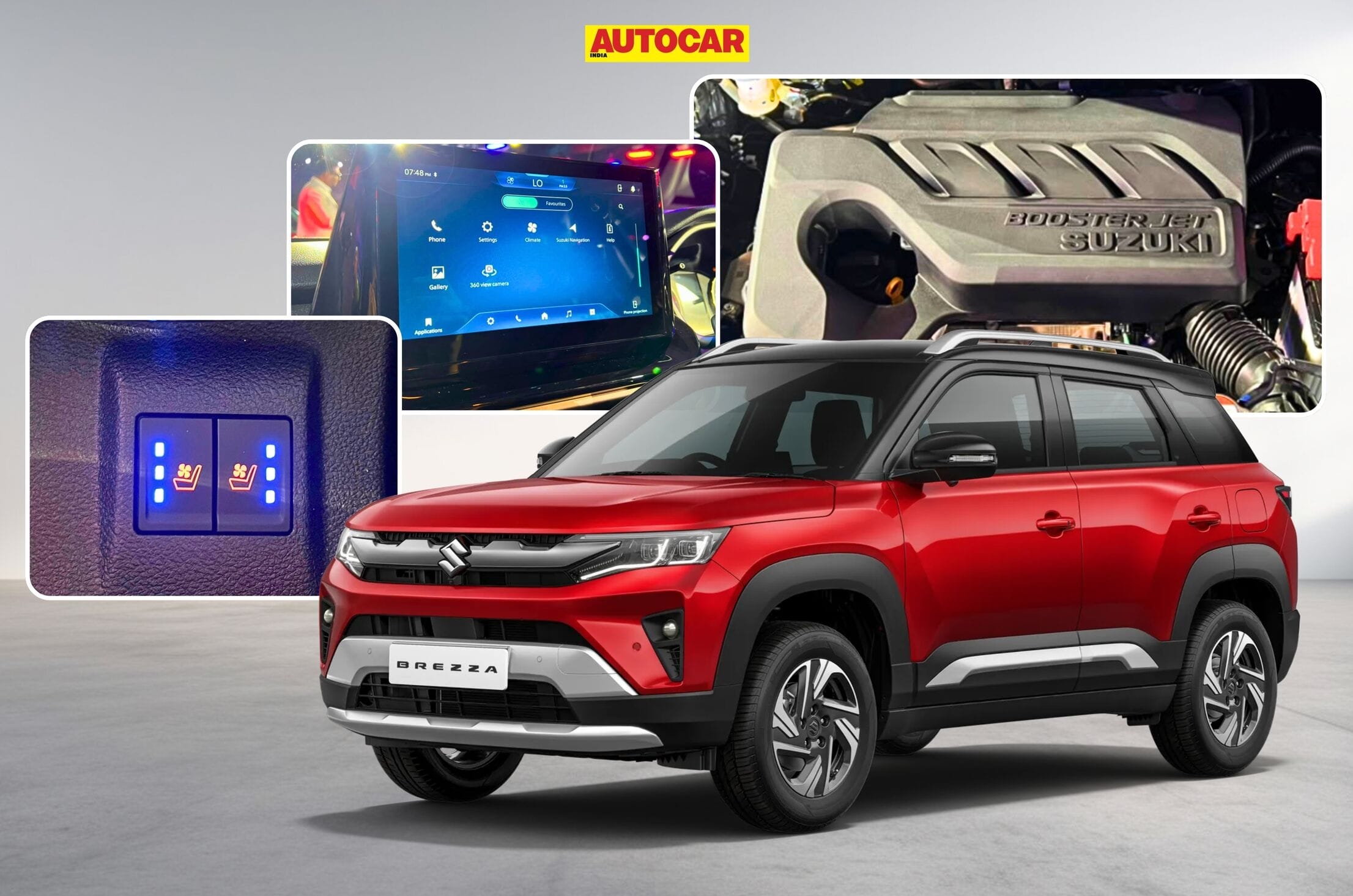
The 2026 Maruti Brezza facelift brings several updates over the outgoing model to strengthen its position in the highly competitive mid-size SUV segment. The refreshed SUV borrows a couple of features from the Victoris, Maruti’s flagship Arena SUV, and also gains an additional engine option from the Fronx. Here’s a look at everything that’s new on the updated Brezza.

1. Turbo-petrol engine

Turbo-petrol engine

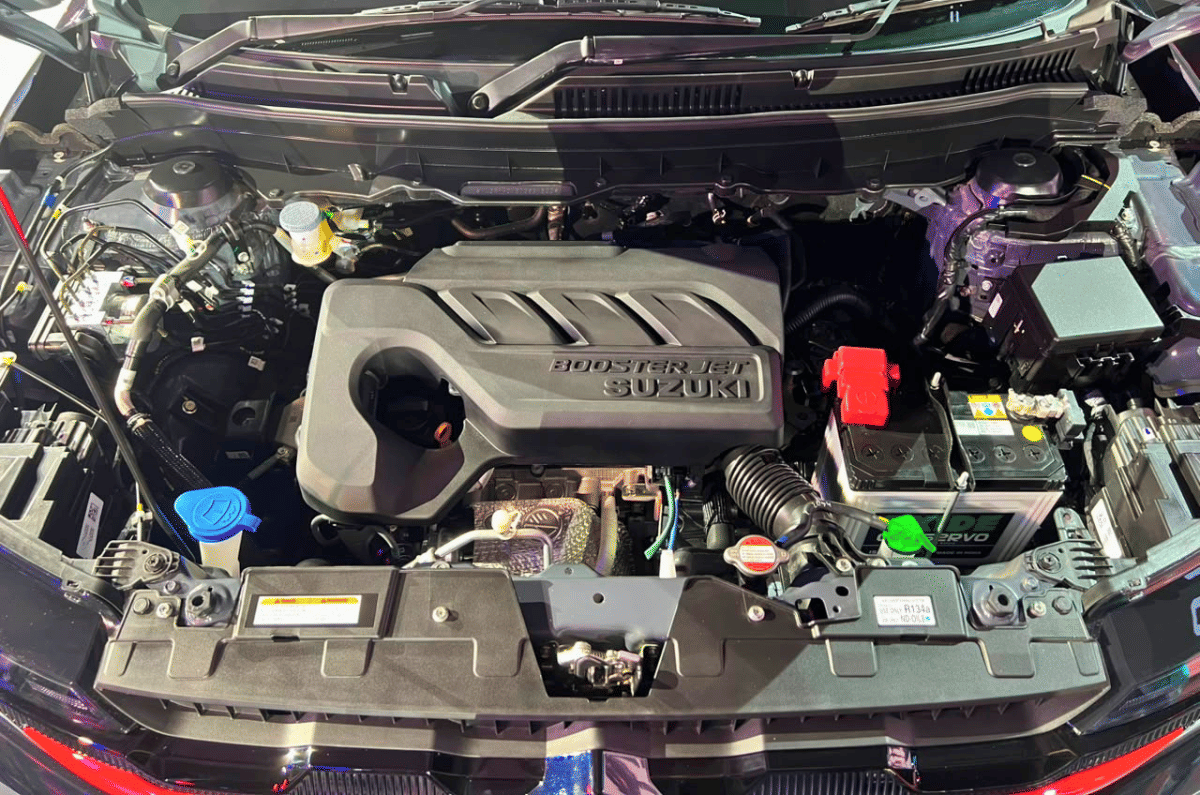
One of the highlights of the new Brezza is the addition of a turbo-petrol engine option. After the Fronx, the Brezza is the second SUV to get the brand’s 1-litre, 3-cylinder direct injection turbo-petrol motor, producing 110hp and 170Nm. The same unit, for reference, has been tuned to deliver outputs of 100hp and 147.6Nm in the Fronx.

2. 6-speed manual transmission

6-speed manual transmission

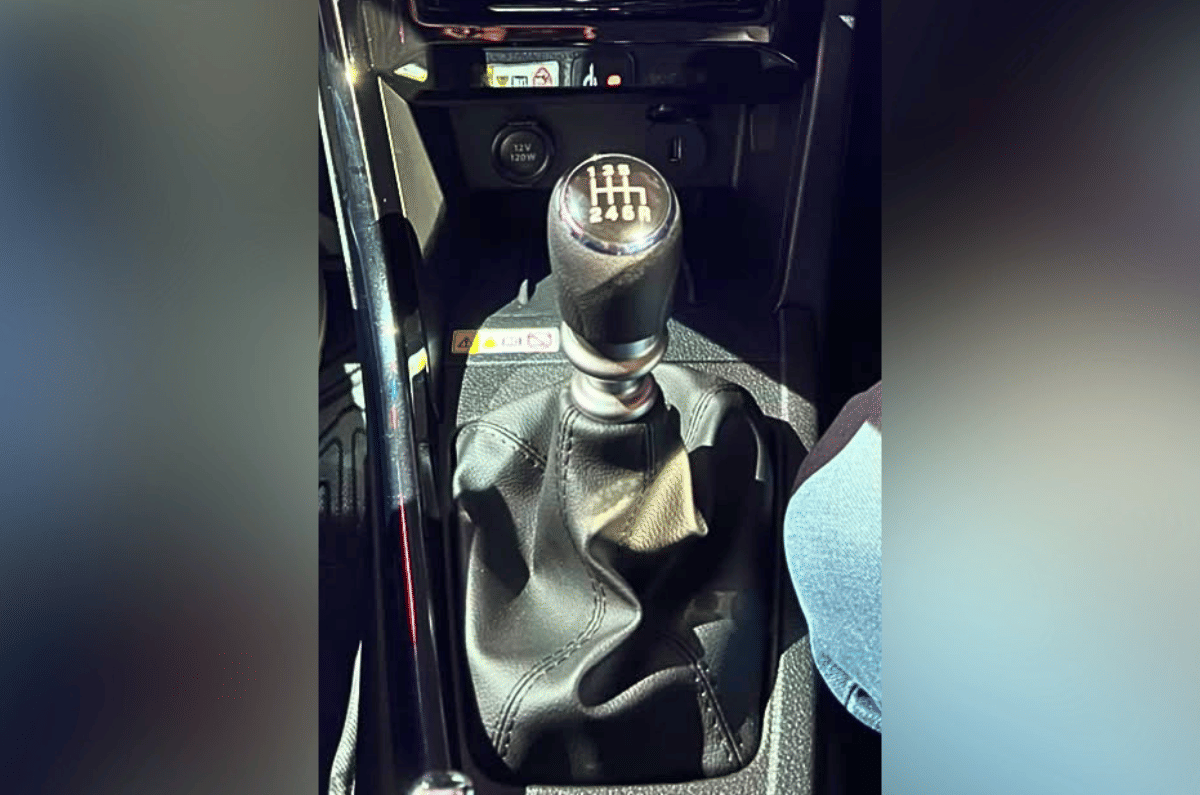
While the Fronx pairs a 5-speed manual transmission with its turbo-petrol engine, the Brezza opts for a 6-speed unit. Even, the 1.5-litre naturally aspirated petrol and CNG versions of the Arena SUV get a 6-speed manual transmission as standard, instead of the 5-speed unit on offer before.

3. Underbody CNG tank

Underbody CNG tank

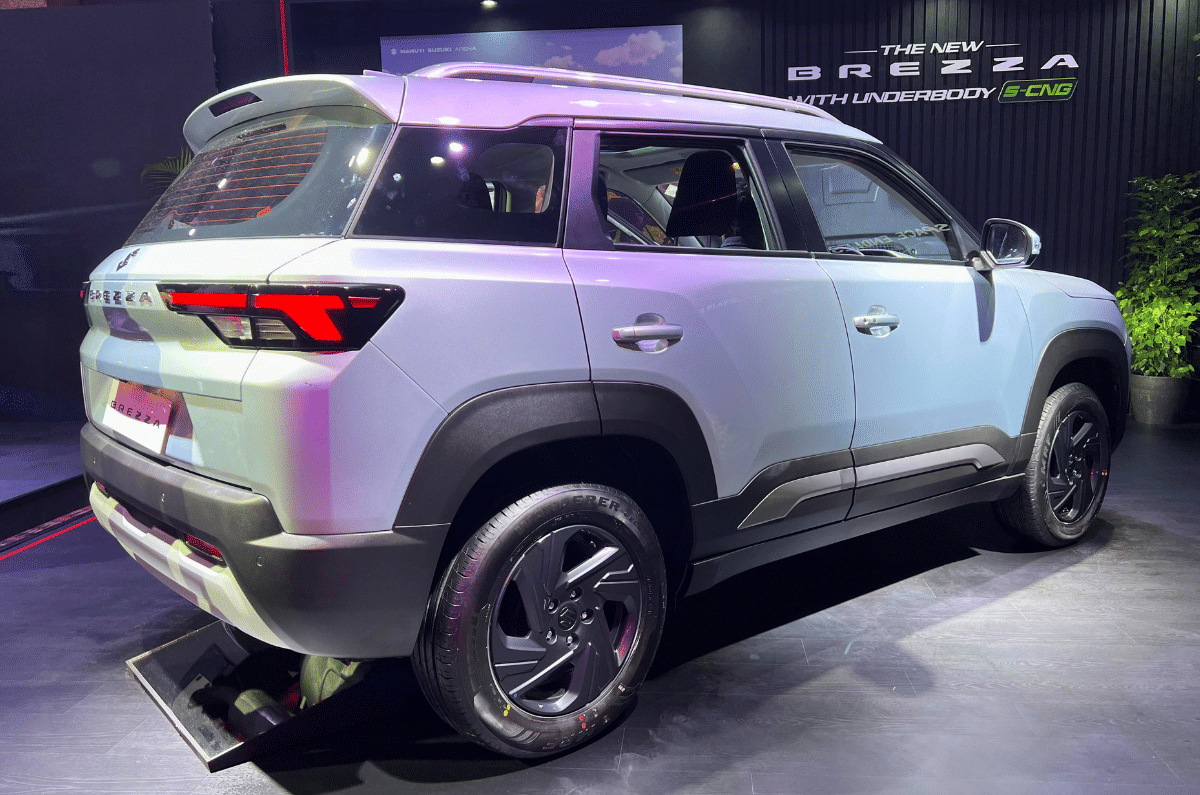
After offering an underbody-mounted CNG tank with the Victoris, the carmaker has added the same to the Brezza. Unlike a conventional CNG cylinder placed in the boot, this arrangement frees up luggage space. However, the updated Brezza no longer comes with a spare wheel, regardless of the powertrain. Instead, it gets a puncture repair kit.

4. Larger 10.1 inch touchscreen

Larger 10.1 inch touchscreen

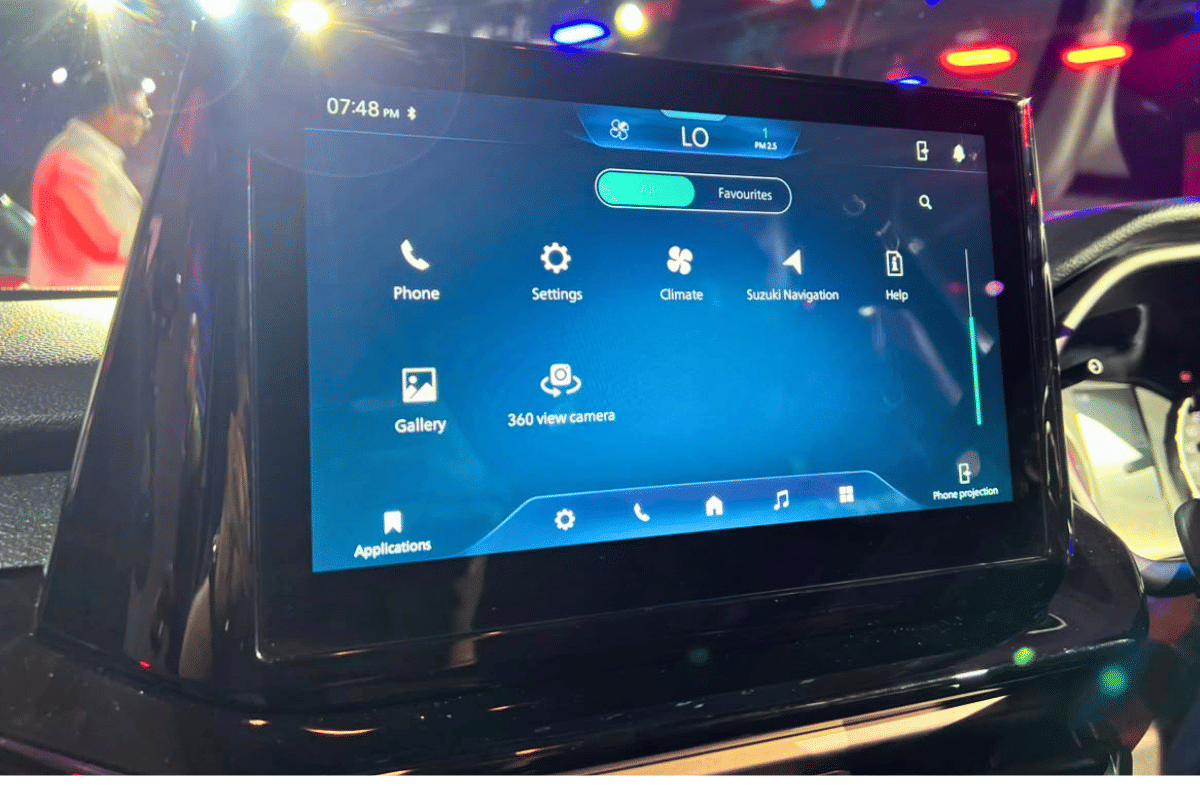
Another upgrade introduced with the Brezza facelift is a Victoris-like 10.1-inch touchscreen with a new UI/UX interface, replacing the previous 9-inch unit. However, the 4-speaker, 2-tweeter setup has been carried over in the updated SUV. 

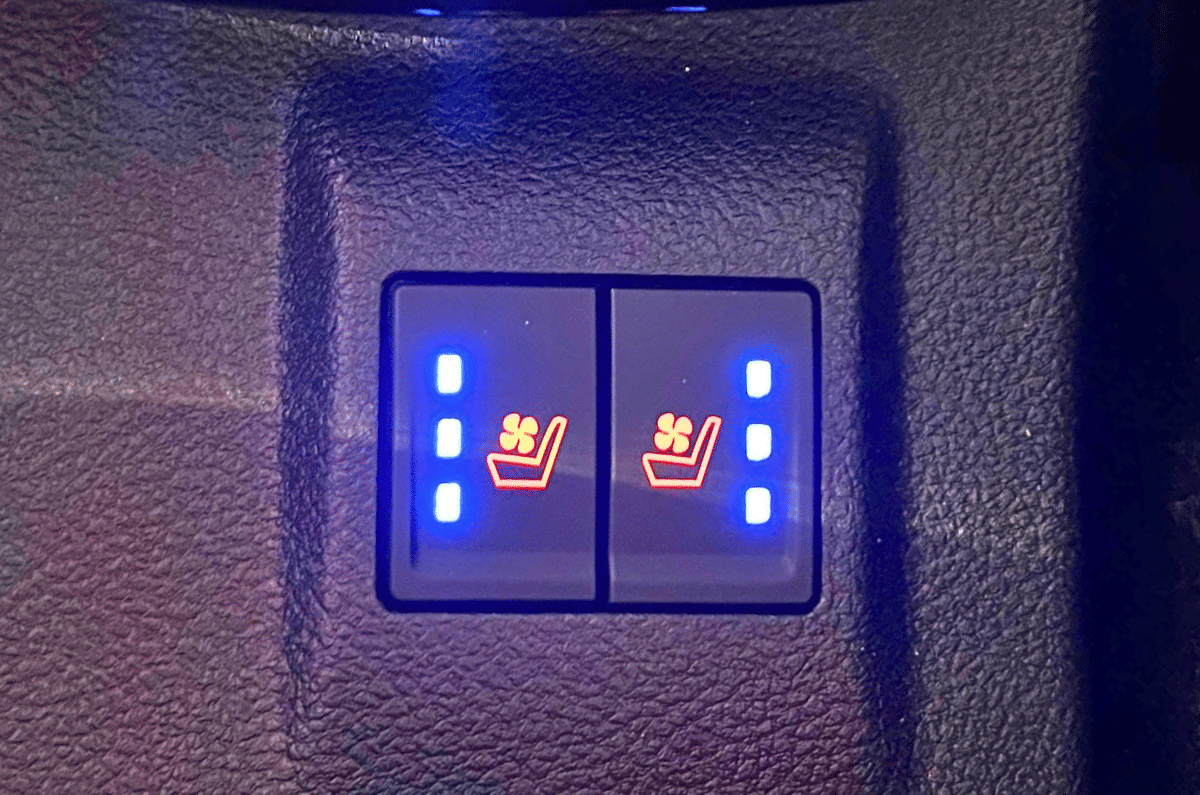
5. Front ventilated seats

Front ventilated seats

With the 2026 Brezza facelift, Maruti has finally added front ventilated seats, a feature that was missing from the SUV despite being offered by rivals such as the Hyundai Venue, Tata Nexon, Skoda Kylaq and Kia Syros. The addition improves comfort for both the driver and front passenger. New colours for the ambient lights and leatherette seats have also been added.

6. New safety features

The 2026 Brezza facelift now gets a blind spot warning system, which alerts the driver with a visual warning when another vehicle is travelling in the blind spot. In addition to the blind spot warning system, Maruti has equipped the Brezza with a tyre pressure monitoring system and front parking sensors. The SUV also gets a rear cross-traffic alert, improving safety while reversing out of parking spaces. However, the Brezza still does not get an ADAS suite.

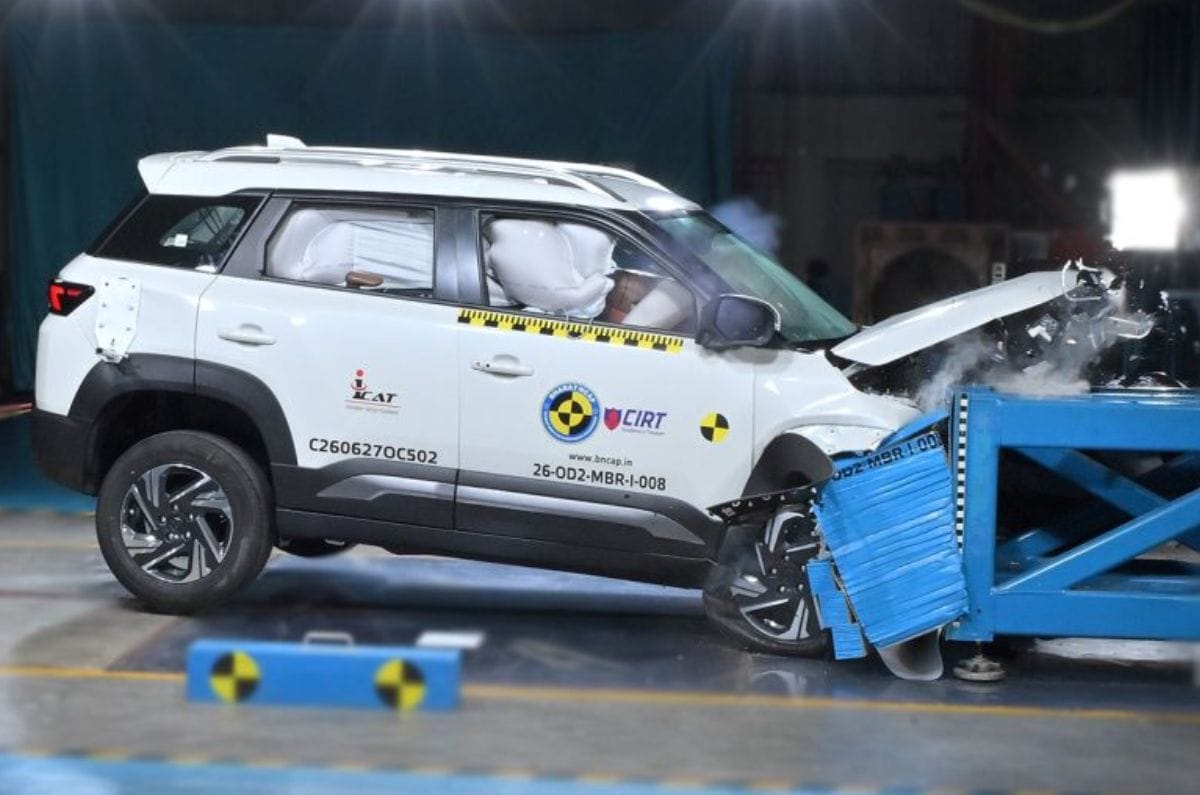
2026 Maruti Brezza scores 5-star Bharat NCAP rating

The 2026 Brezza facelift has undergone Bharat NCAP crash tests, where it secured a full 5-star safety rating. The pre-facelift version, however, was never tested by BNCAP. For those not in the know, the current-generation Brezza is based on the same Global-C platform as its predecessor, but Maruti now calls it the TECT platform. The previous-generation Brezza earned a 4-star Global NCAP crash safety rating.

2026 Maruti Suzuki Brezza interior images

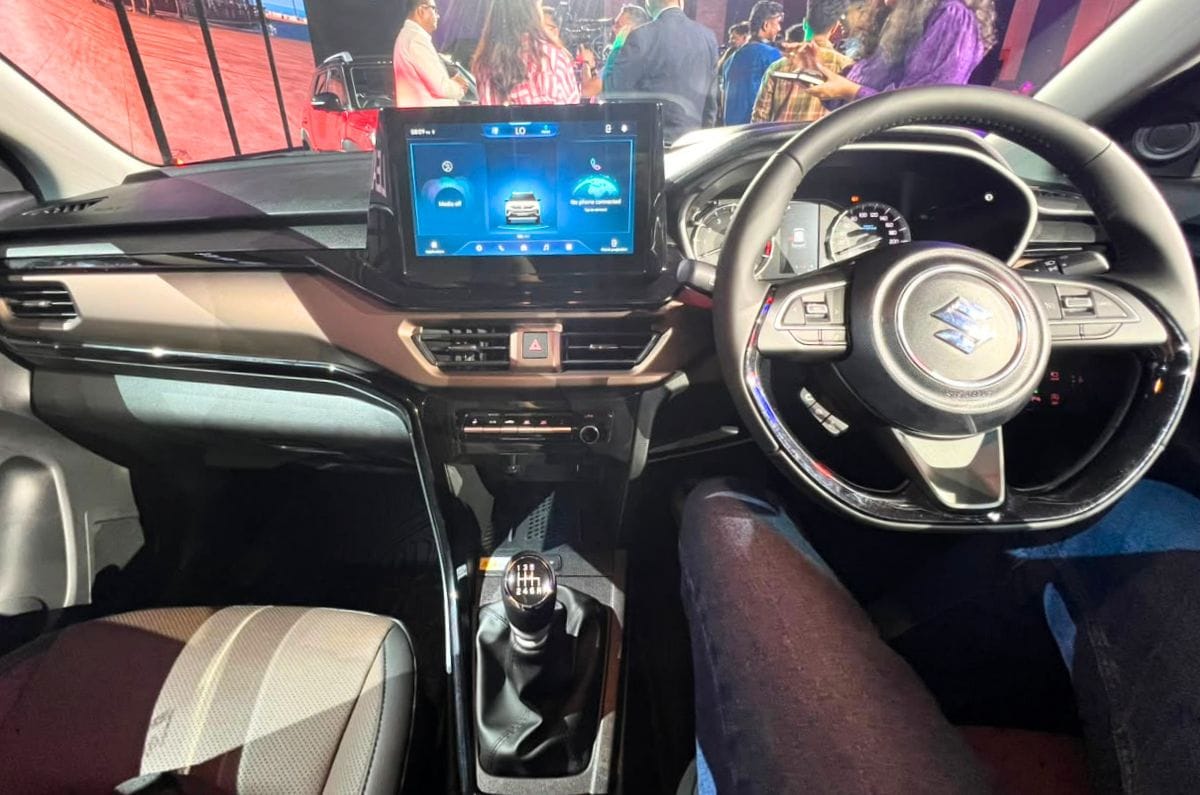
2026 Maruti Suzuki Brezza interior dashboard

The 2026 Maruti Brezza’s interior sees more meaningful updates than the exterior. The highlight is the 10.1-inch infotainment screen that’s also seen on the Victoris. It also adds ambient lighting, ventilated seats at the front and revised switchgear for the HVAC controls (also shared with the Victoris). There’s also use of new gloss-black trim materials on the dashboard and door pads, replacing the silver trim seen on the pre-facelift car. On the safety front, the Brezza now gets front parking sensors, and it is also expected to come with a Level 2 ADAS (advanced driver assistance systems) suite. The seats also get new leatherette upholstery, and as always, the Brezza remains generously spacious on the inside. 

Honda ZR-V track drive review: Best of both worlds?

Honda ZR-V review

The Honda ZR-V is the carmaker’s first hybrid SUV in India and its being brought here via the CBU route from Japan as a brand builder or a halo product. It’s also the first of a few global products being launched in India, so it gives us an idea of what we can expect from Honda in the coming years. Honda says the ZR-V is a “Sports Hybrid” meaning it prioritizes performance and fuel efficiency in equal parts, which is why the company gave us a chance to briefly experience it at the Buddh International Circuit. 

Honda ZR-V Exterior Design and Engineering – 8/10

Hybrid powertrain is smooth, seamless, zippy and promises to be efficient as well

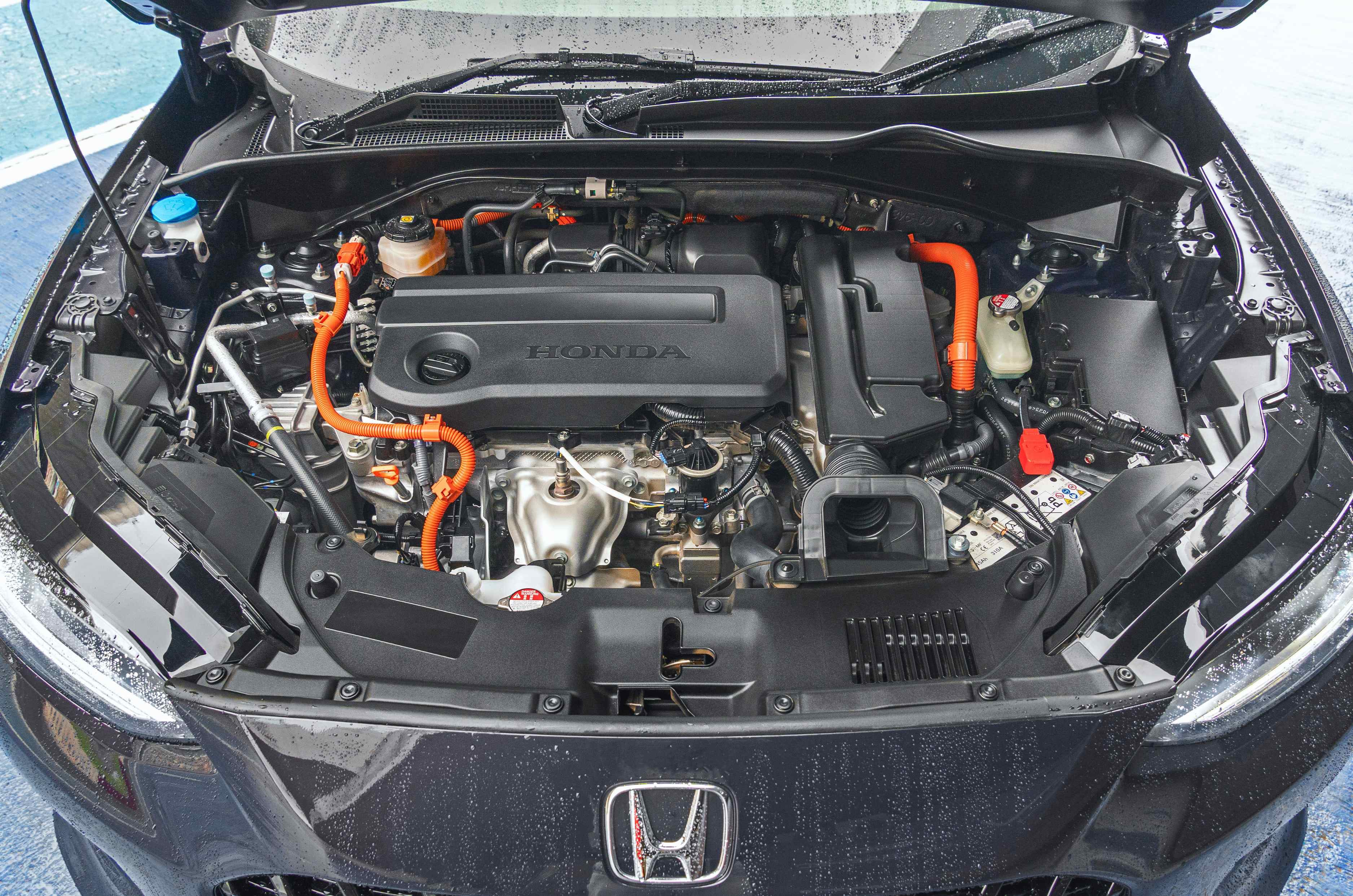
The Honda ZR-V is a strong hybrid SUV that features a 2.0-litre, four-cylinder, direct injection, petrol engine that runs on the more efficient Atkinson cycle and it works in tandem with two, permanent magnet synchronous electric motors. The powertrain produces a max combined output of 184hp and 315Nm which is channeled to the front wheels only via an eCVT transmission. The SUV has a claimed 0-100kph time of 7.9 seconds and an electronically limited top speed of 172kph. Internationally, the ZR-V is also offered with an all-wheel-drive (AWD) setup and a 1.5-litre turbo-petrol engine producing 180hp and 240Nm but that is currently not on the cards for India.

It’s responsive off the line and feels composed at high speeds

The strong hybrid powertrain feels smooth and zippy right from the get-go. What’s great is that it makes all the 315Nm of torque from standstill, so it feels quick right from launch and you’re never left wanting more. Power delivery is smooth and linear and it’s also keen to respond to part-throttle inputs. The powertrain is also very refined with barely any engine, road or tyre noise filtering through. 

At low speeds with light throttle inputs, the ZR-V will stay in pure EV mode as long as the battery has enough charge. Unlike some other strong hybrids however, you can’t manually choose EV mode. Push the accelerator harder and the engine will come on, with the SUV moving to the hybrid drive mode. In this mode, the electric motor is still powering the wheels with the engine acting as a generator to keep the battery topped up. Then there’s the engine drive mode, which is specifically used at high speeds. Here, it’s the engine powering the wheels with the electric motor assisting.

However, there are drive modes that you can change – Eco, Normal and Sport – and these don’t have an effect on the output or how the powertrain works but just the response. There’s paddleshifters too, for cycling between the regenerative braking modes and they do work effectively. As for the friction brakes, the ZR-V comes with discs all around and they felt predictable and confidence-inspiring out on track. 

Honda ZR-V Mileage and Efficiency – 8/10

Honda claims the ZR-V will do an impressive 22.80kpl. Considering it’s a hybrid, real-world efficiency should be close to the claimed but we’ll have to reserve judgement till we actually subject the SUV to our fuel efficiency tests. 

Honda ZR-V Ride Comfort and Handling – 7/10

Considering we drove it on BIC’s smooth tarmac surface and only for a few laps, giving a definitive verdict on its ride comfort is difficult. As for high speed composure, the SUV felt stable. 

In terms of handling, the ZR-V felt enjoyable to drive around the corners. Handling on the whole was stable and predictable, thanks to a well-weighted and precise steering. A slalom course also demonstrated its tidy body control and it felt eager to change directions.

Honda ZR-V Exterior Design and Engineering – 7/10

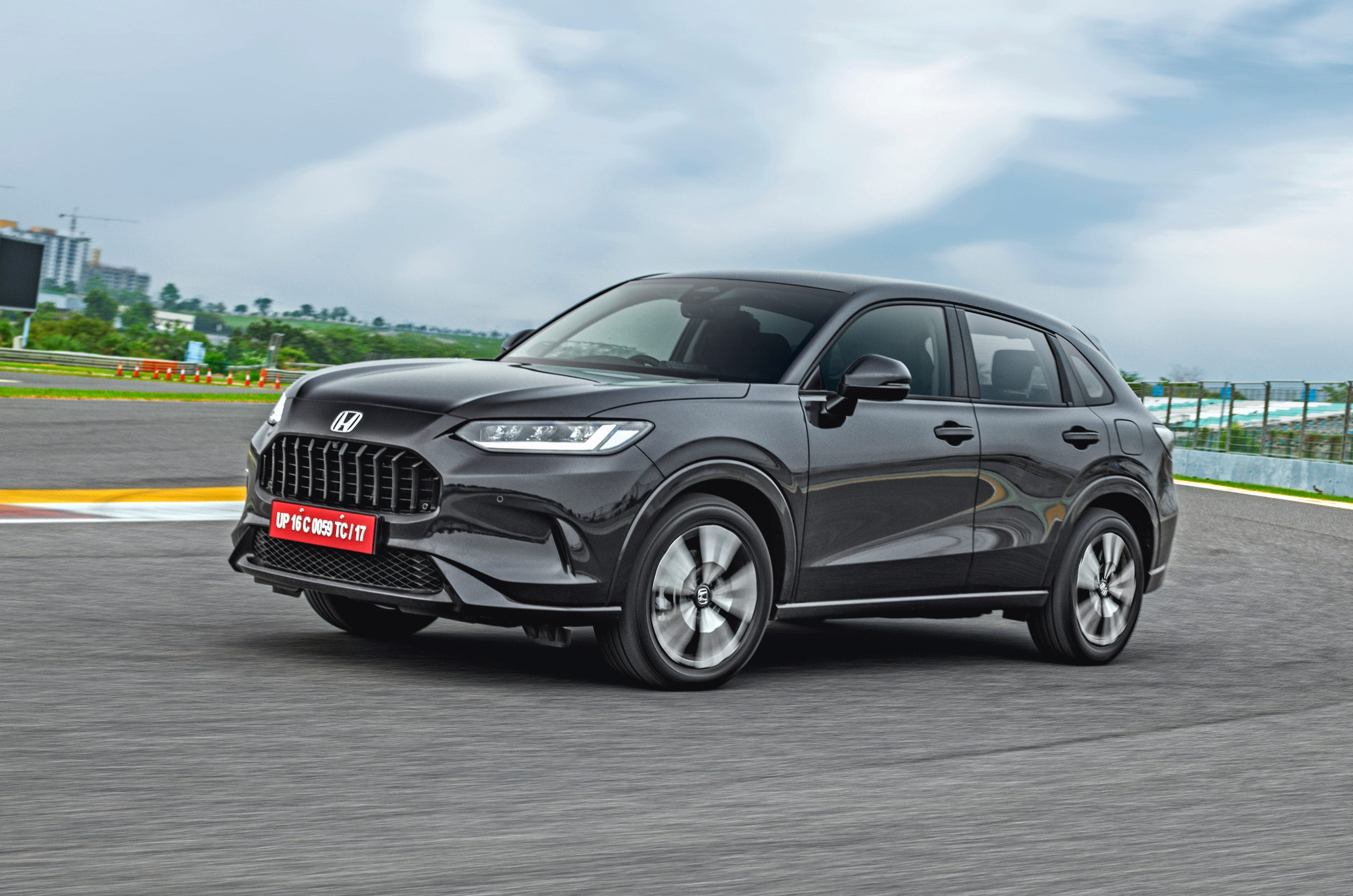
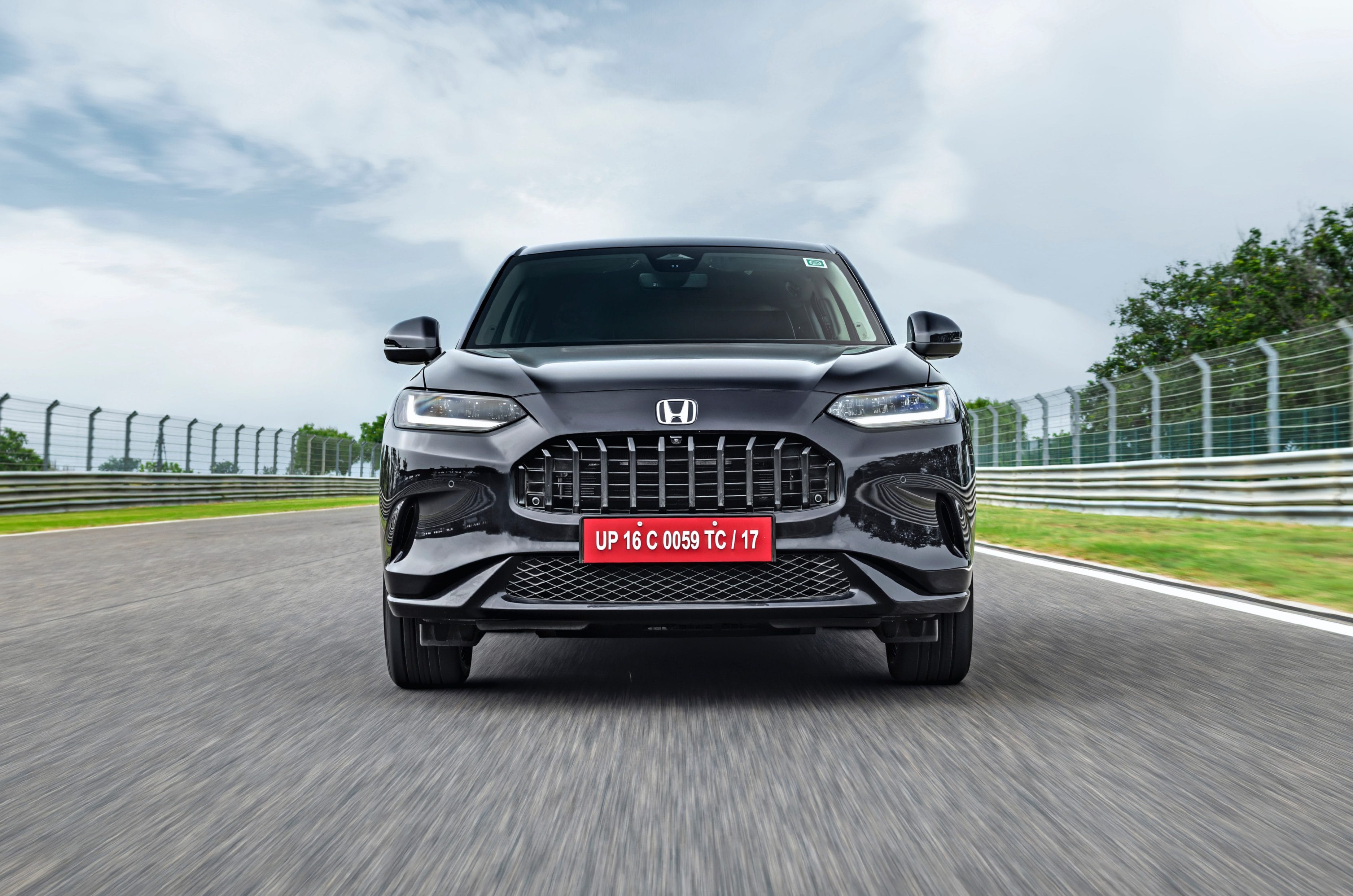
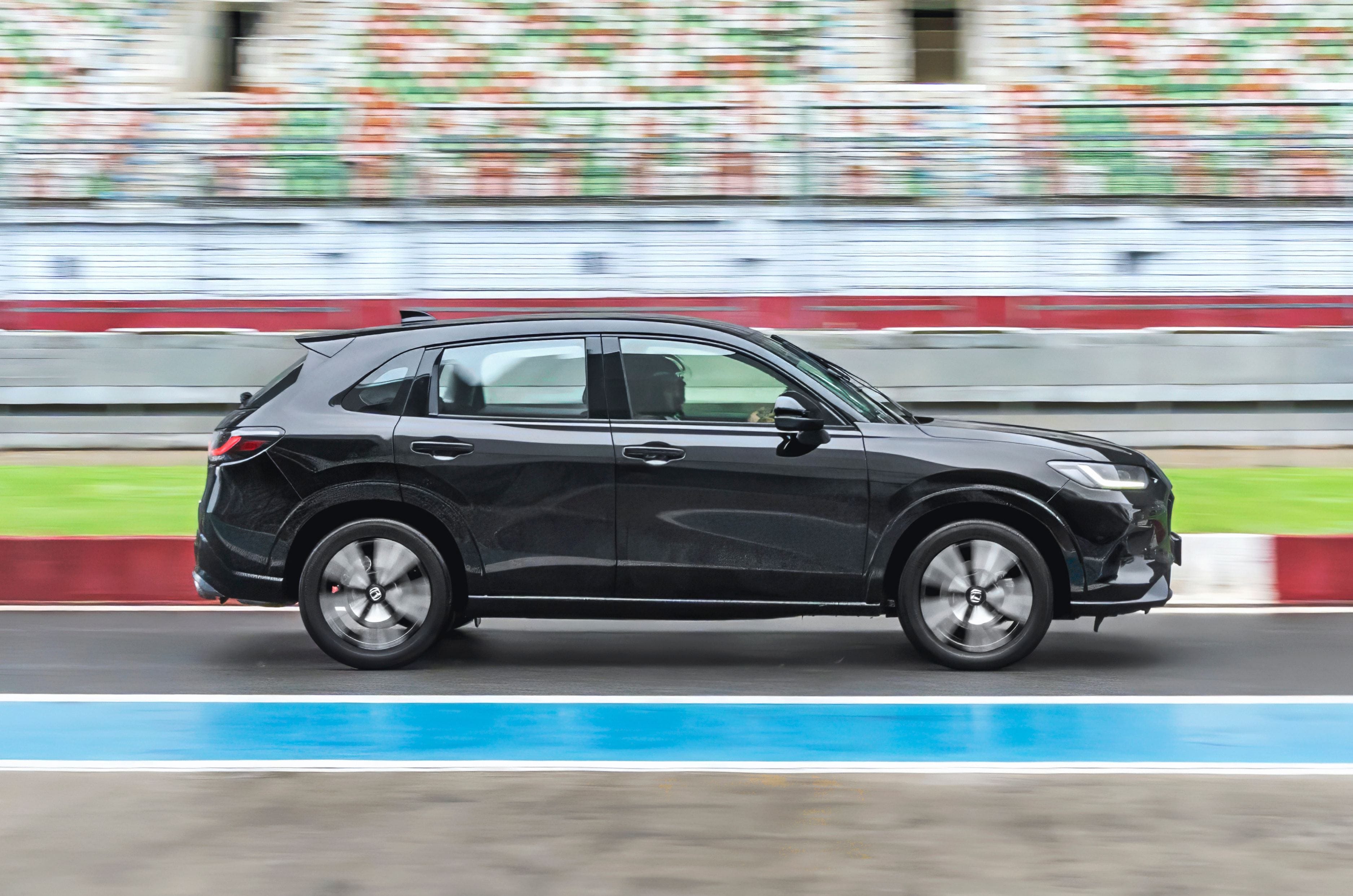
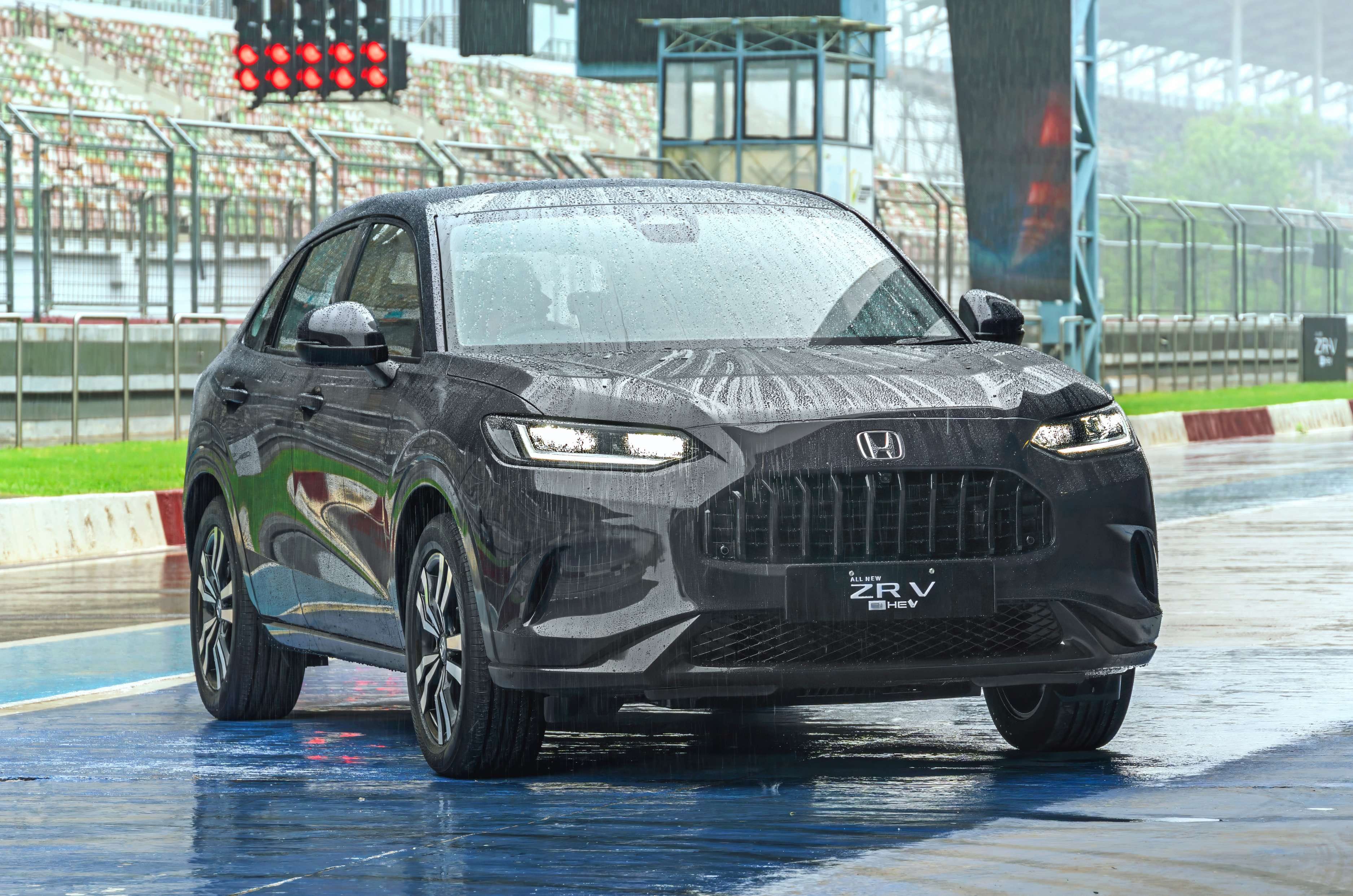
Unlike most SUVs which have a squared-off and upright stance, the Honda ZR-V has a sleek, crossover-like design, with rounded-off and clean surfaces. Up front, it gets slim LED headlights with L-shaped daytime running lamps (DRLs), a black grille with vertical slates and a bumper that houses functional air vents on either side. 

ZR-V’s styling is more like a crossover than an upright SUV.

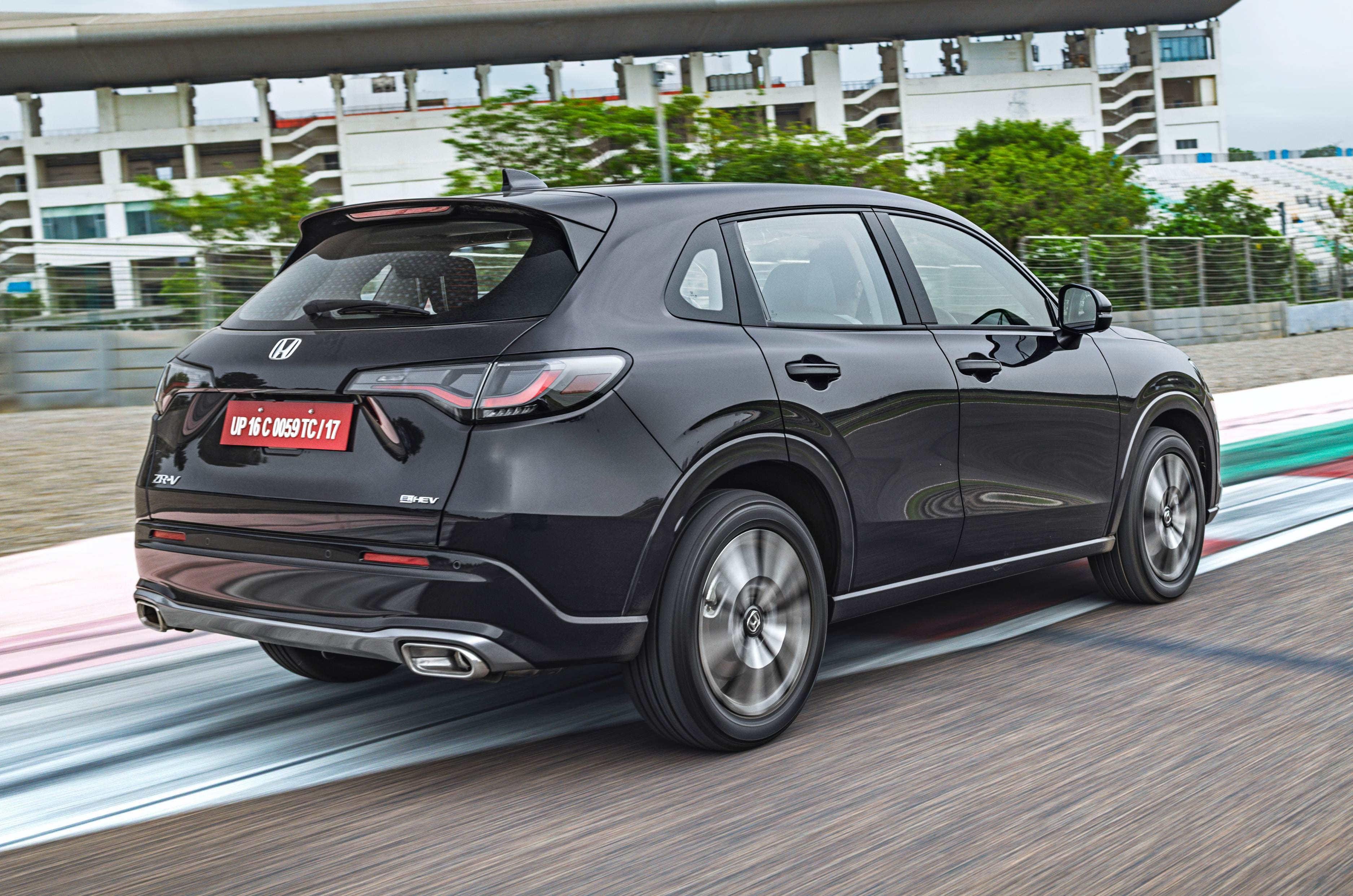
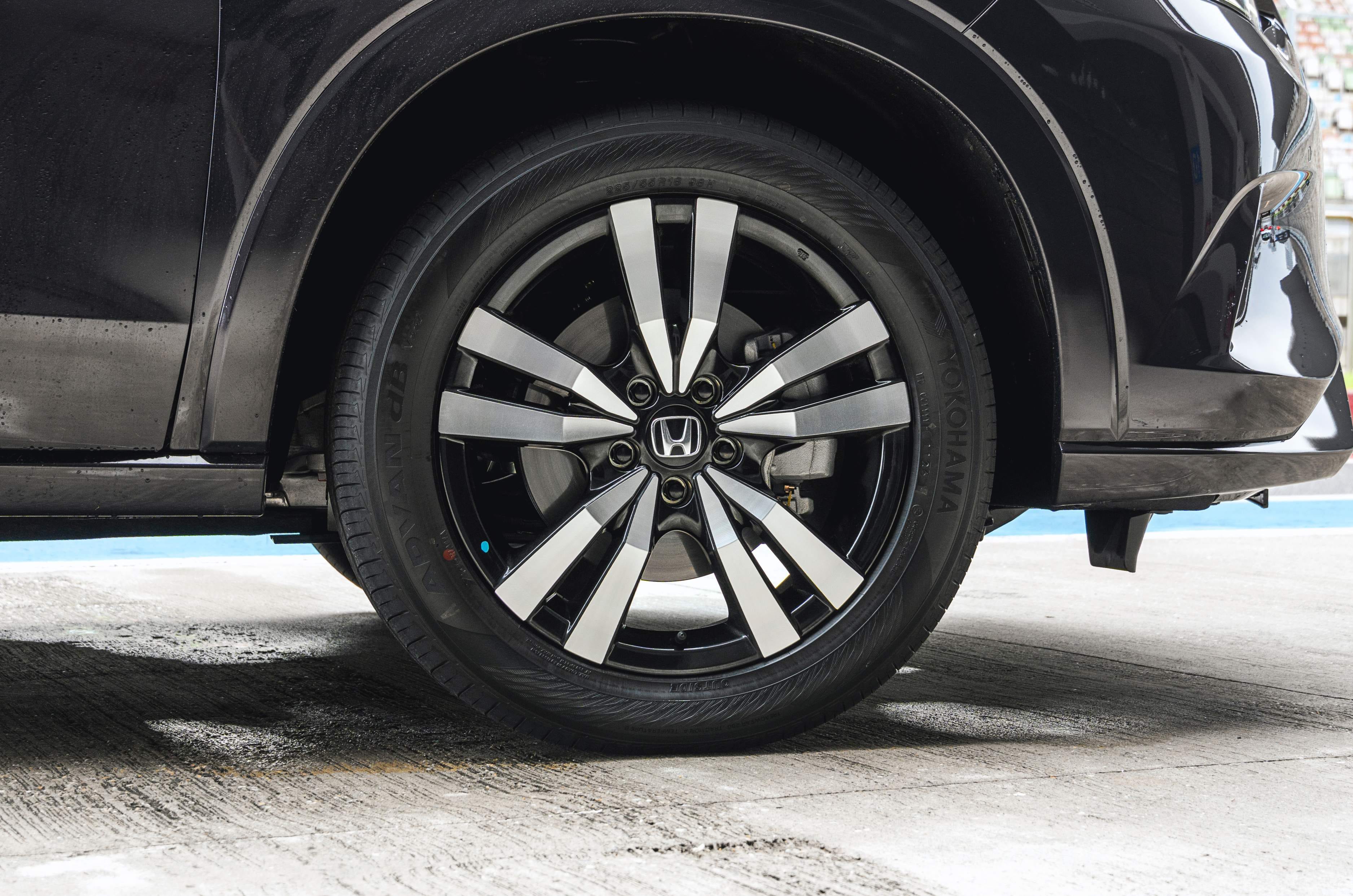
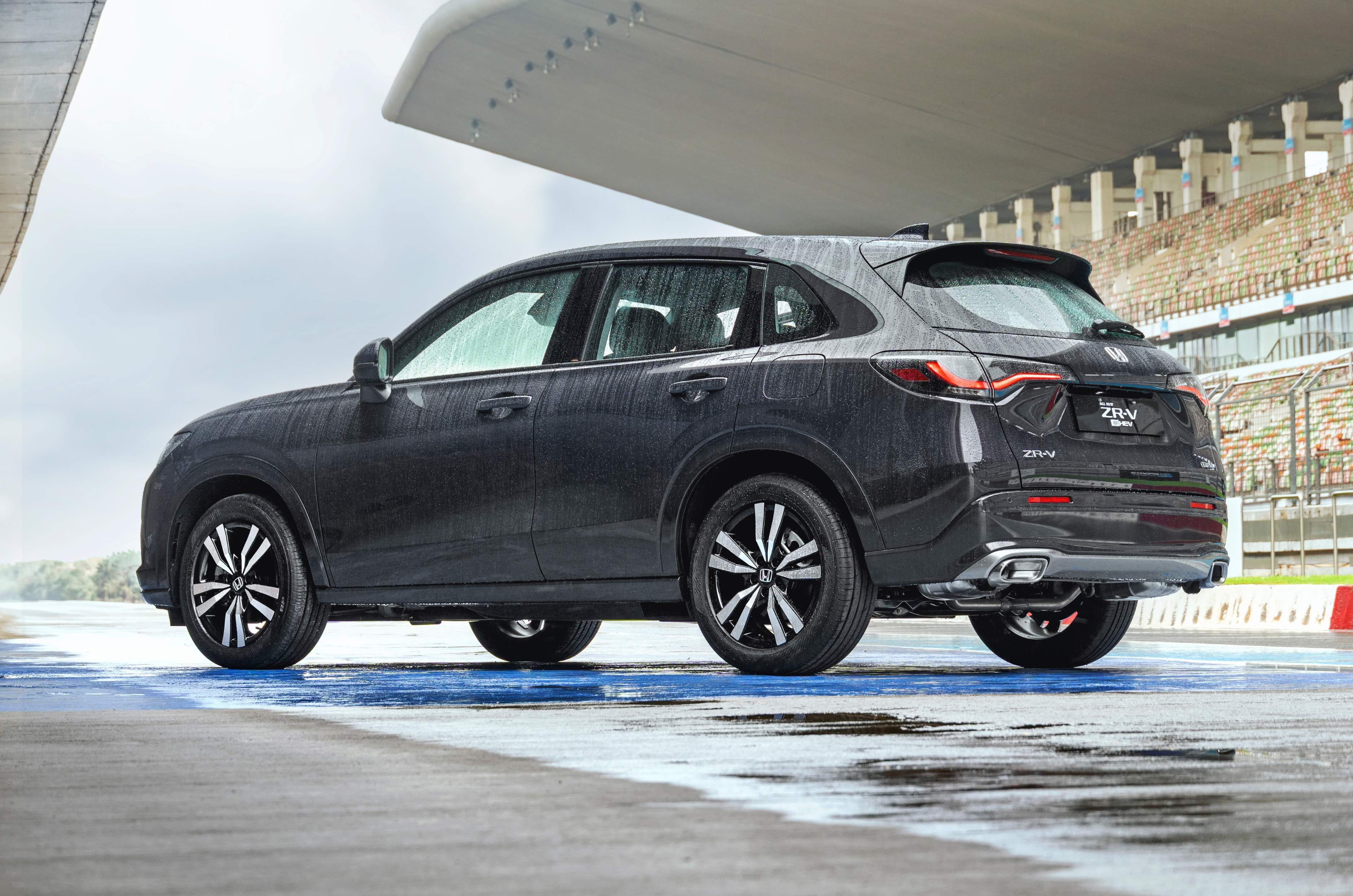
Along the sides, there’s stylish 18-inch alloy wheels with a dual-tone finish, body-coloured cladding around the wheel arches and a tapering roofline at the rear. Unlike most SUVs today, the ZR-V doesn’t get connected tail-lights, instead you get clear-lens taillamps with LED elements. Then there’s a roof-mounted spoiler element and lower down in the bumper, you get dual exhausts.

18-inch alloys get an attractive dual-tone finish.

On the whole, the ZR-V styling comes across as subtle and not striking. And given its dimensions of just over 4.5m in length and 1.8m in width, it doesn’t quite have the presence of its rivals. And it also doesn’t help that Honda is only offering four colours, all of which are subdued.

Honda ZR-V Interior Space and Comfort – 7/10

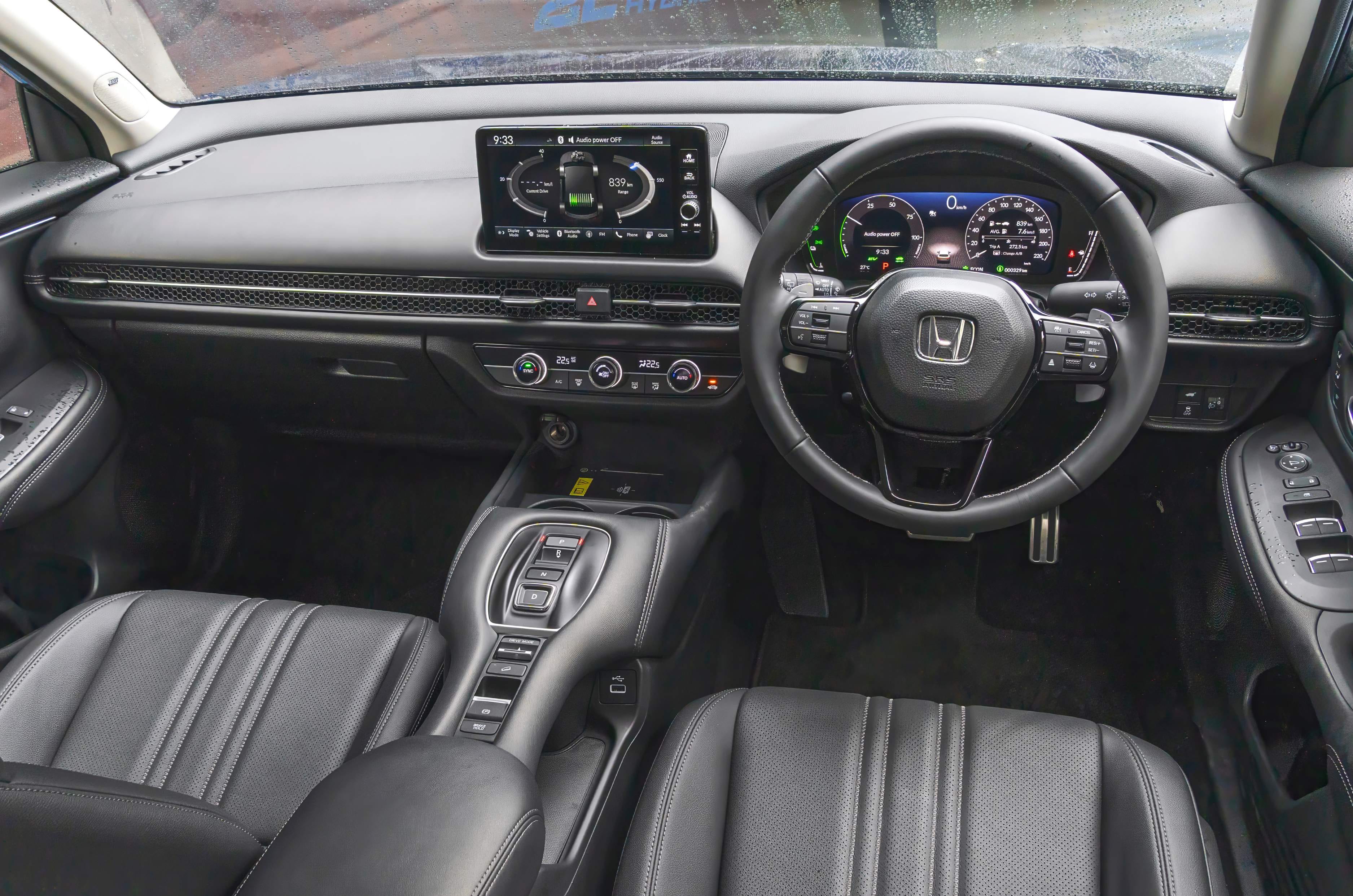
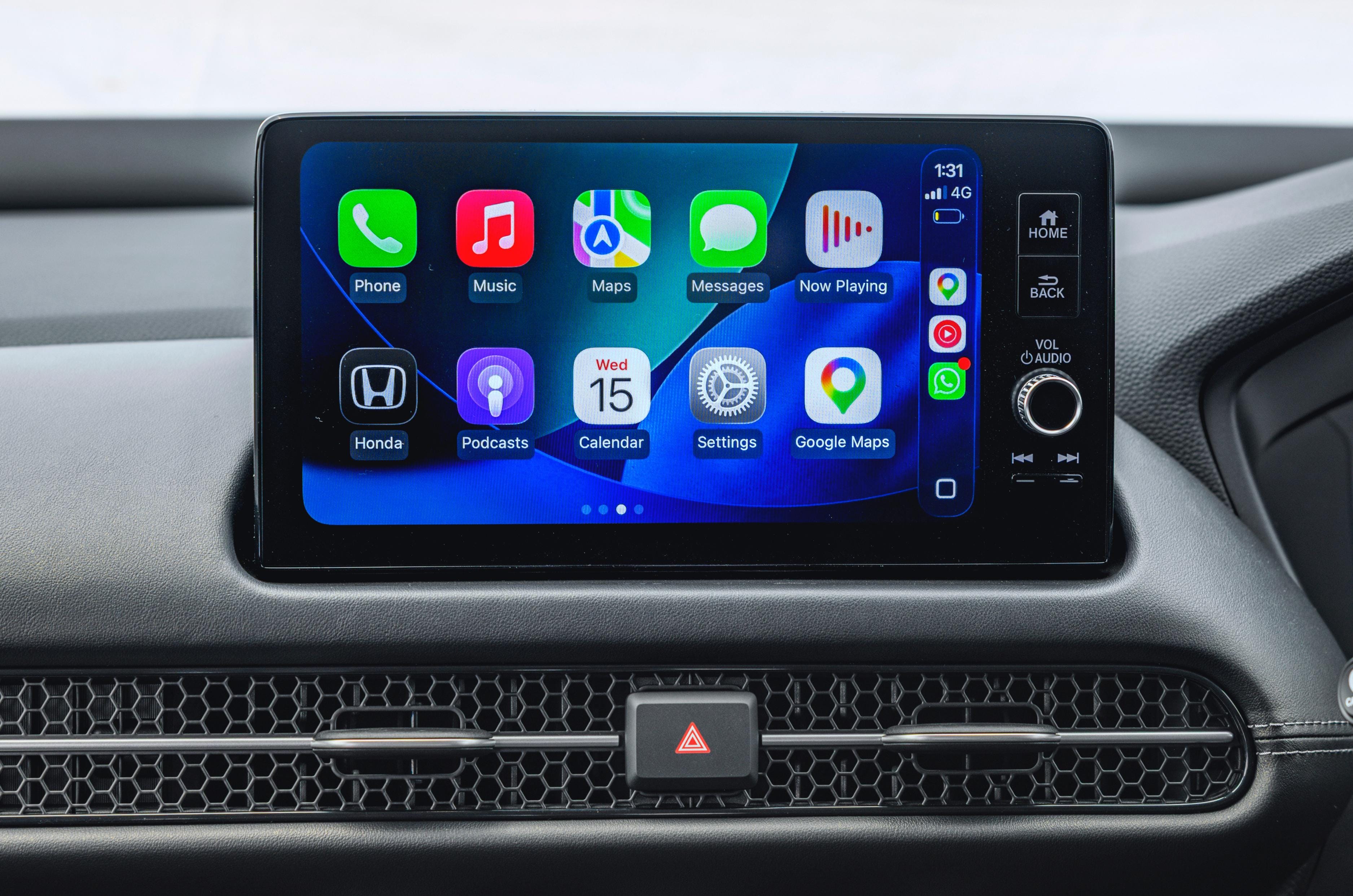
The interior of the ZR-V is typically Honda, which means its practical, comfy and well-finished. There’s plenty of soft touch materials around and I like that the dashboard is low-set which enables a great view out. A 9-inch touchscreen sits on top of the dash, and though it’s nice that it gets physical controls, the size and the UI leaves more to be desired by today’s standards. There’s a honeycomb grille that runs the width of the dash, separated by a silver trim piece which does look premium. Lower down you get similar physical AC controls like on the Honda City with rotary knobs that are satisfying to operate. There’s more buttons on the centre console too, for the drive modes, parking brake and in place of a traditional drive selector. 

Cabin is practical and well-finished with plenty of soft-touch materials around

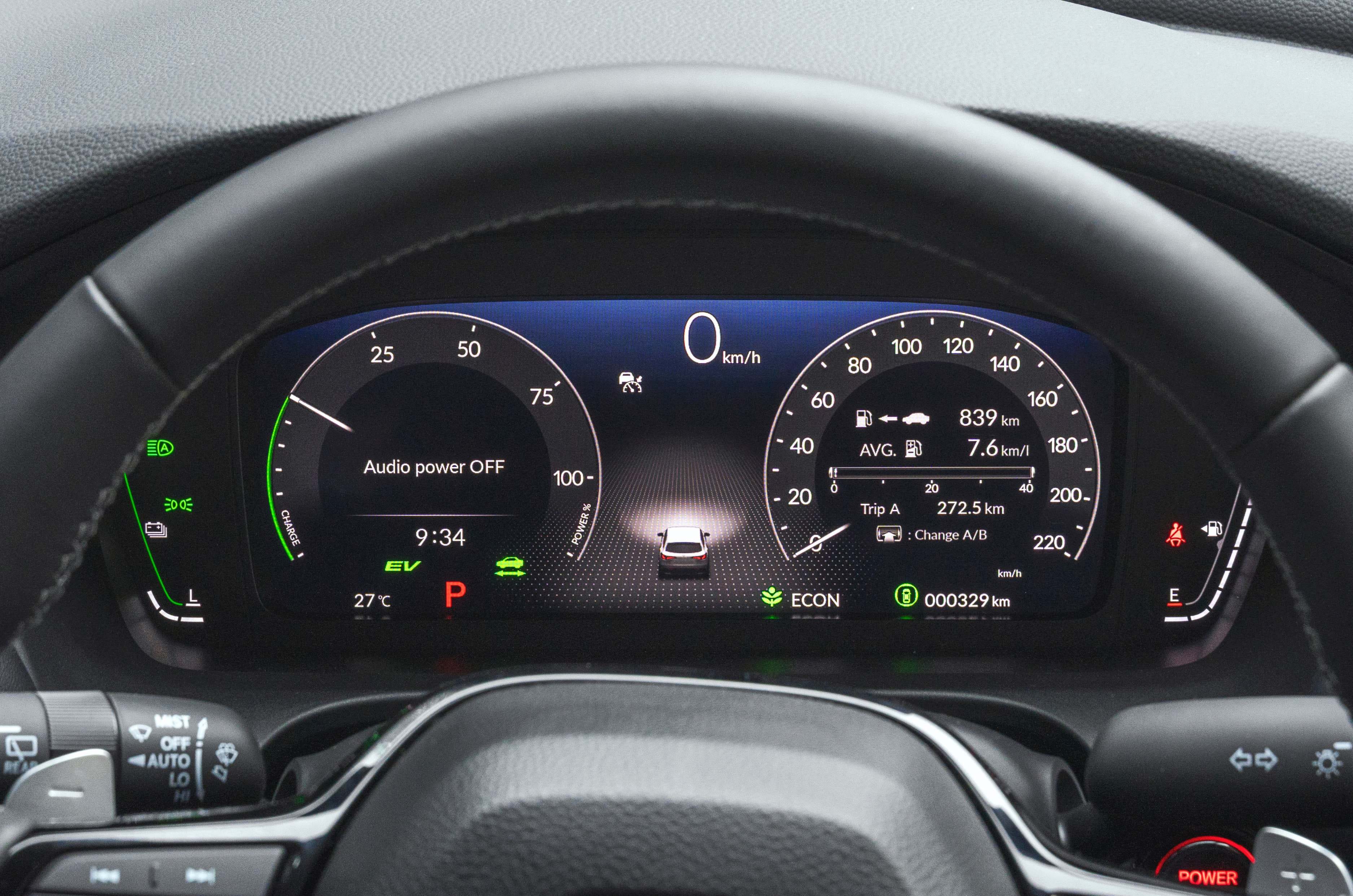
Then you get a well-executed, fully digital instrument cluster that’s customisable and shows you all sorts of driving data, the charge status and a flow chart of the powertrain. The front seats are well-padded, comfortable and feel premium too. Storage spaces are also well thought out, with a decent sized glove box and door bins, storage under the centre armrest and in the centre console. 

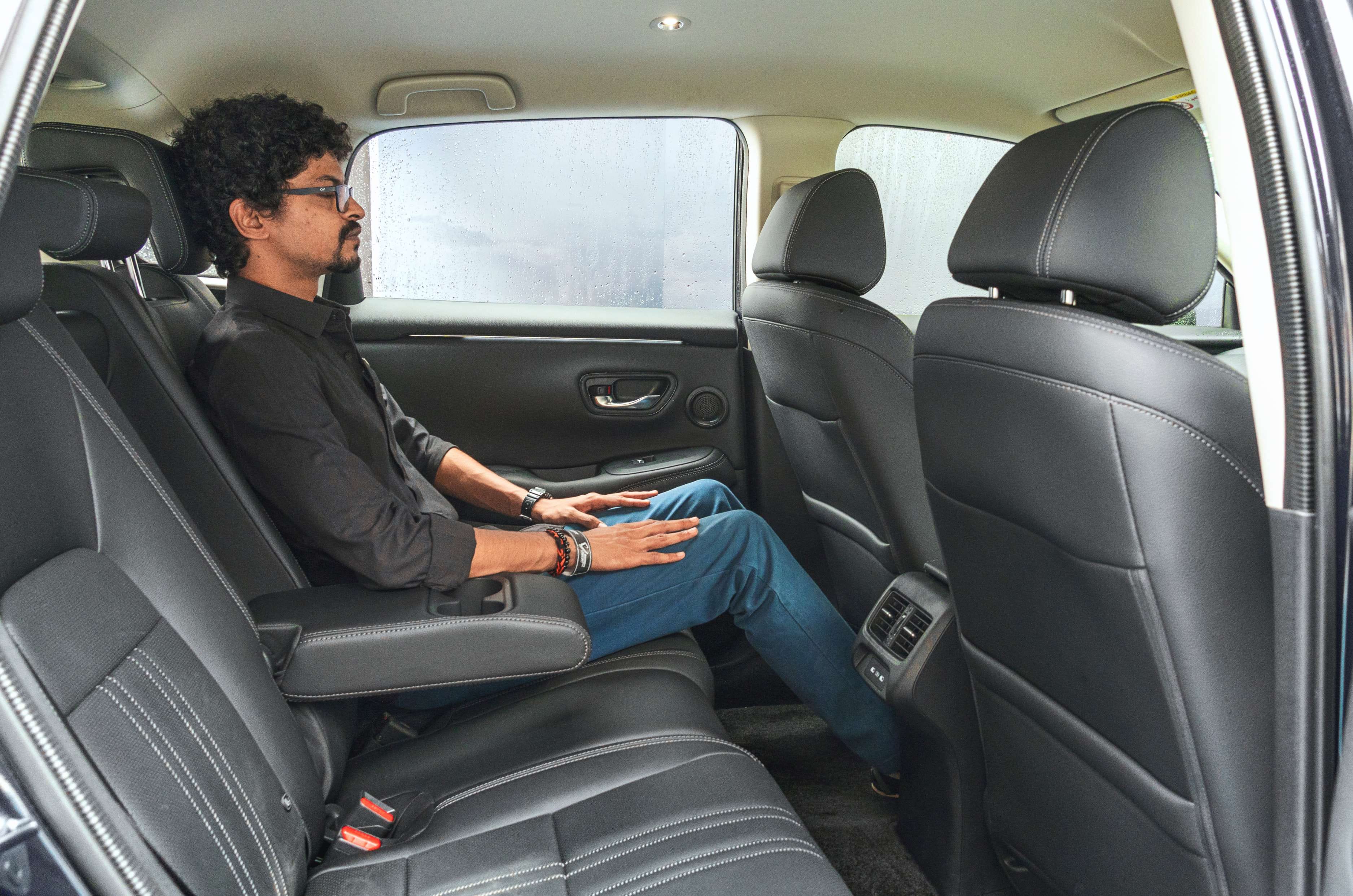
Rear is comfy and spacious enough but low seat results in a bit of a knees-up seating position; also misses sun blinds. 

Getting into the rear is quite easy thanks to the low set seat, even though the sill is on the higher side. Once in, you’ll find it a comfy place to be with enough space for three passengers and plenty of legroom. However, the low set seat results in a slightly knees-up seating position, there are no sunblinds and the tapering roofline means people over 6 feet will find the headroom to be tight. As for features here, there’s dedicated AC vents, type C charging ports, a fold-down armrest with cupholders and three-point seatbelts and adjustable headrests for all three passengers. 

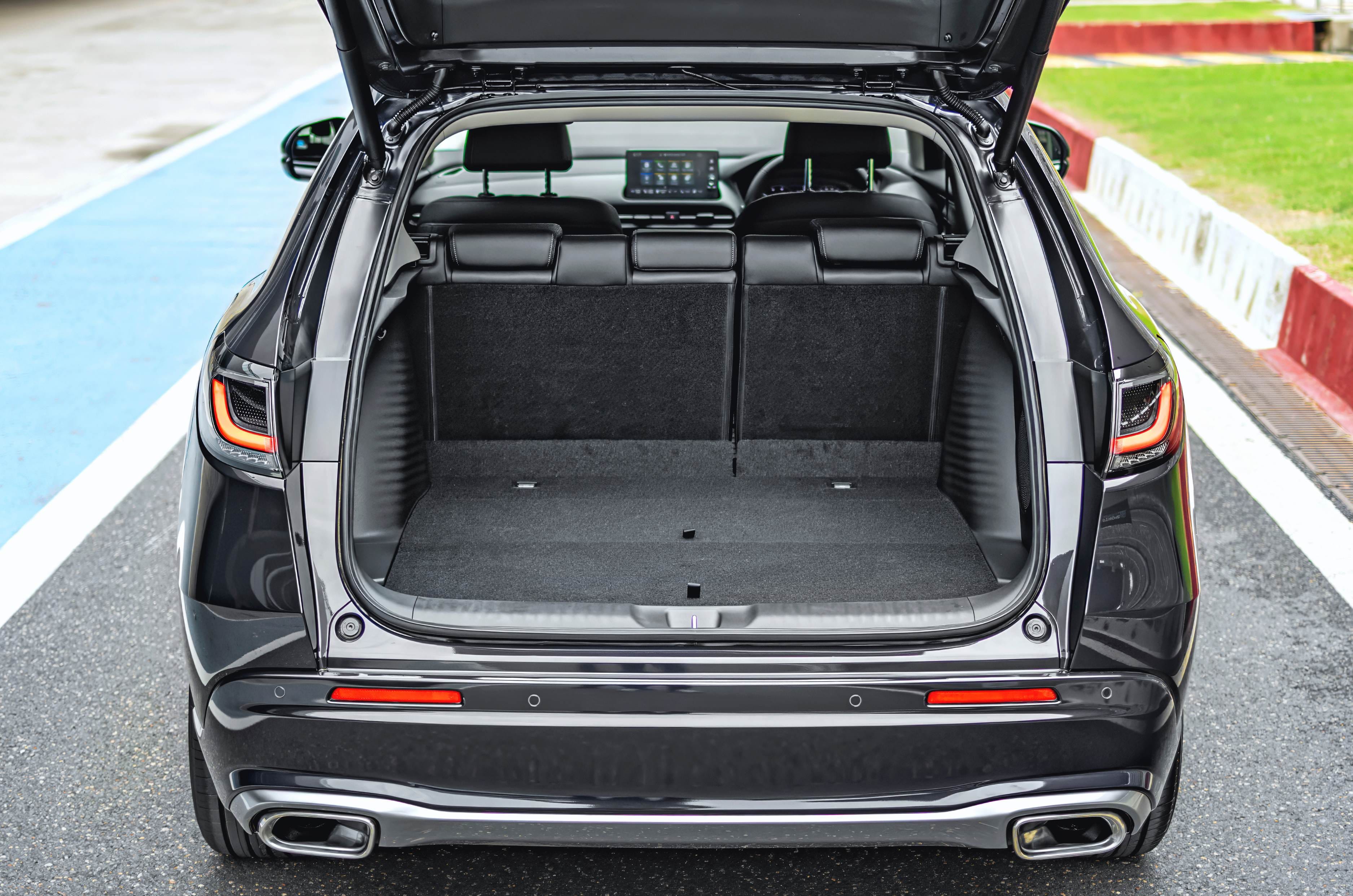
The boot is large too and the loading lip isn’t that high. With the rear seats folded down in a 60:40 split, you can fit in 1313 litres of cargo. There’s no underboot storage though as that’s taken up by the hybrid battery and there’s no spare tyre either. 

Honda ZR-V Features and Safety – 6/10

As for features, the ZR-V gets a 10.25-inch digital cluster, a 9-inch touchscreen with Android Auto and Apple CarPlay, a 12-speaker Bose audio system, dual-zone climate control, leatherette upholstery, 8-way powered driver’s seat with memory, 4-way powered front passenger seat, wireless charger, electric tailgate with gesture, electric parking brake and ambient lighting. However, some important features like a panoramic sunroof and heated, ventilated and massaging front seats are missing, all of which could have been offered at the expected price point. 

9-inch screen is small by today’s standards but its bright and features physical controls

As for the safety kit, you get a 360-degree parking camera (it is quite low res though), 8 airbags, tyre pressure monitor, hill-start and hill-descent assist, traction control and ISOFIX child seat mounts. It even packs in Level 2 ADAS tech which brings in autonomous emergency braking, lane keep assist, blind spot monitor, adaptive cruise control and more. On the whole though, the ZR-V is under equipped for its expected price. 

10.25-inch digital cluster is crisp and shows plenty of info.

Honda ZR-V Value for Money – 5/10

So that’s a brief drive impression of the Honda ZR-V for you. We’ll have to reserve our definitive verdict till we get to experience the SUV out in the real-world and subject it to our performance and fuel efficiency tests. 

The ZR-v is being brought as a CBU import from its home market in Japan

The Honda ZR-V has its downsides like the missing features, its relatively compact footprint and lack of road presence and being a full import it’s going to be expensive as well, around the Rs 45 lakh mark. But it has a practical, comfy and well-finished interior and comes with a smooth and seamless hybrid powertrain that is quick and promises to be efficient as well. As such, the Honda ZR-V is going to be a niche product, so it remains to be seen as to how many takers would it find in our market. 

2 reasons to buy the Toyota Fortuner, 2 reasons not to

2 reasons to buy the Toyota Fortuner, 2 reasons not to

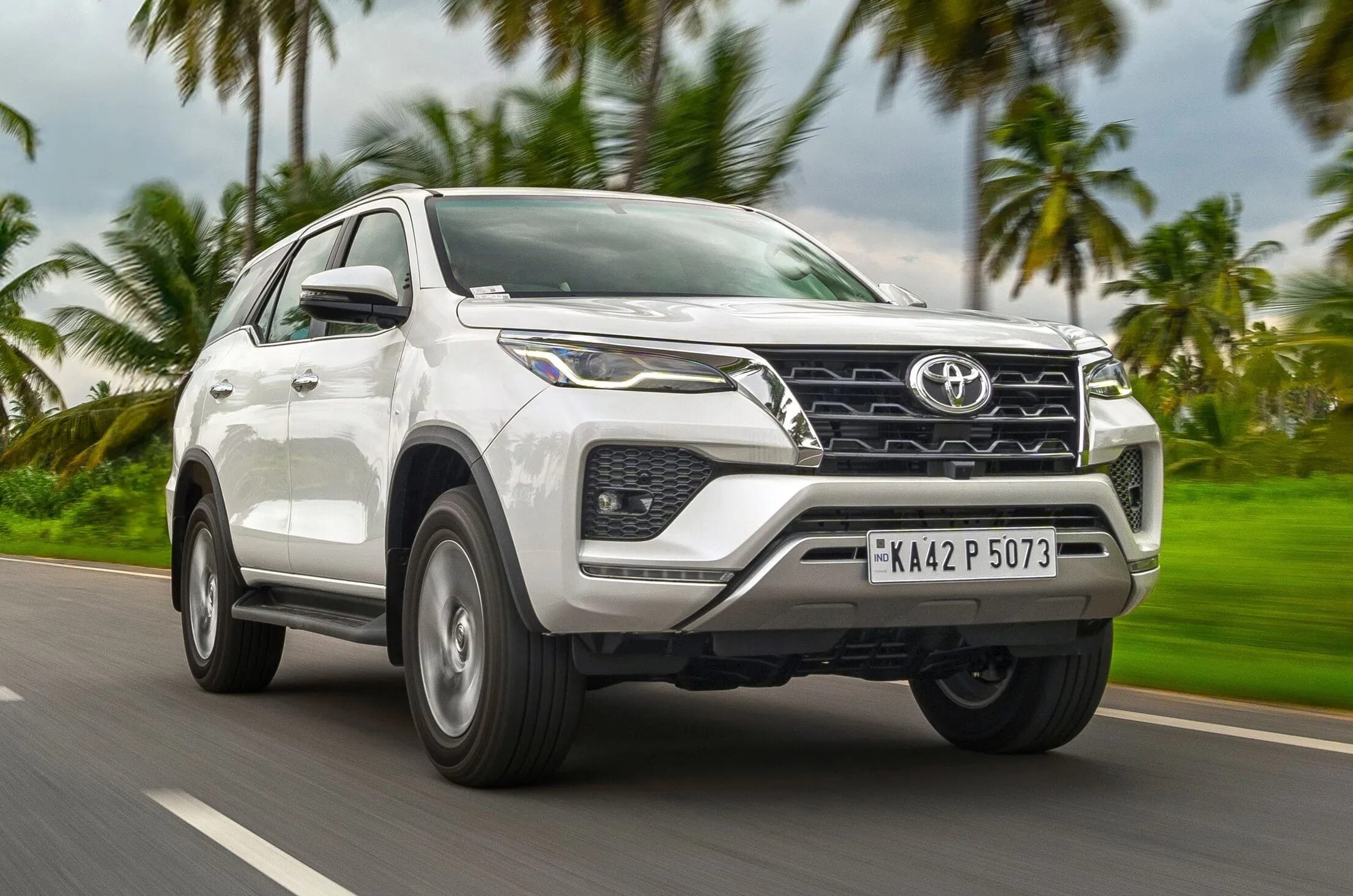
The Toyota Fortuner is one of the most popular SUVs in India and continues to be among Toyota’s bestselling models. It is known for its powerful engines, rugged construction, off-road ability, and Toyota’s reputation for reliability. The SUV is currently available in its second-generation facelift, which was launched in 2021. If you’re planning to buy one, here are two reasons to consider the Fortuner and two reasons why you may want to look at other options. Let’s start with the positives.

Reasons to buy the Toyota Fortuner:

Feels indestructible

Robust suspension and body-on-frame construction make it feel bulletproof

The Toyota Fortuner’s body-on-frame construction makes it feel solid and built to last. Its suspension is tough and is designed to handle rough roads with ease. While the ride feels firm at low speeds and small bumps can be felt inside the cabin, the suspension handles large potholes, broken roads, and unpaved tracks without much trouble.

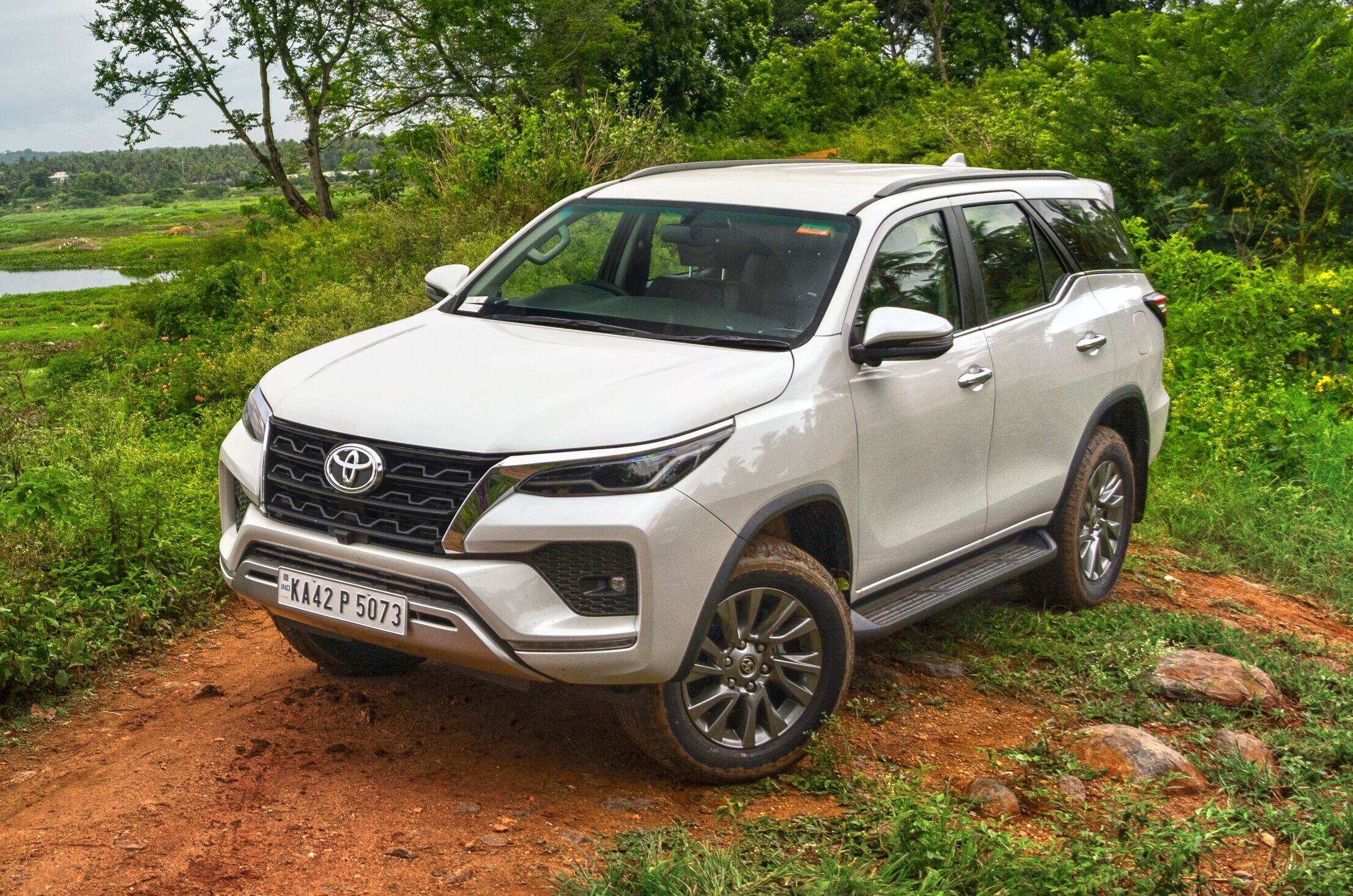
The Fortuner is also one of the most capable off-road SUVs in its segment. It comes with a low-range transfer case, Multi-Terrain Select (MTS) modes, an electronic differential lock, and a water wading capacity of 700 mm. These features make it easy to drive through muddy trails, rocky paths, steep inclines, and even waterlogged roads. Whether you’re heading to the mountains or exploring off the beaten path, the Fortuner has the hardware to handle it with confidence.

Offers a strong performance

The torquey diesel engine allows for a sub-10s 0-100kph real-world run time

One of the Fortuner’s biggest strengths is its engine options. It is offered with a 2.7-litre petrol engine that makes 166hp and 245Nm, and a 2.8-litre diesel engine that produces 204hp and up to 500Nm. The diesel engine is also available with a 48V mild-hybrid system.

We tested the diesel-automatic version, which sprinted from 0-100 kmph in 9.96 seconds. That’s impressive for an SUV of this size and weight. The diesel engine delivers its maximum torque from low revs, so the Fortuner feels effortless to drive in the city and while overtaking on highways. It doesn’t need to be revved hard, although performance starts to taper off at higher revs.

The six-speed automatic gearbox is tuned for smooth and reliable performance rather than quick gear changes. It works well for daily driving and long-distance cruising, but enthusiasts may find it less engaging than the faster-shifting automatic transmissions offered by some newer SUVs.

Reasons to not buy the Toyota Fortuner:

Interior does not feel premium

The cabin looks dated and misses out on a lot of feel-good features

The Toyota Fortuner’s interior is starting to feel dated compared to newer rivals. While the 2021 facelift brought some updates, the overall dashboard design and cabin layout have remained largely unchanged since the second-generation model arrived in India. Compared to SUVs like the MG Majestor, Skoda Kodiaq, Volkswagen Tayron, and Jeep Meridian, the Fortuner’s cabin does not feel as modern or premium. The use of hard plastics and average-quality switches also remind you that this is an older design. At a price point that goes close to Rs 50 lakh, the cabin feels like it could offer more in terms of quality and sophistication.

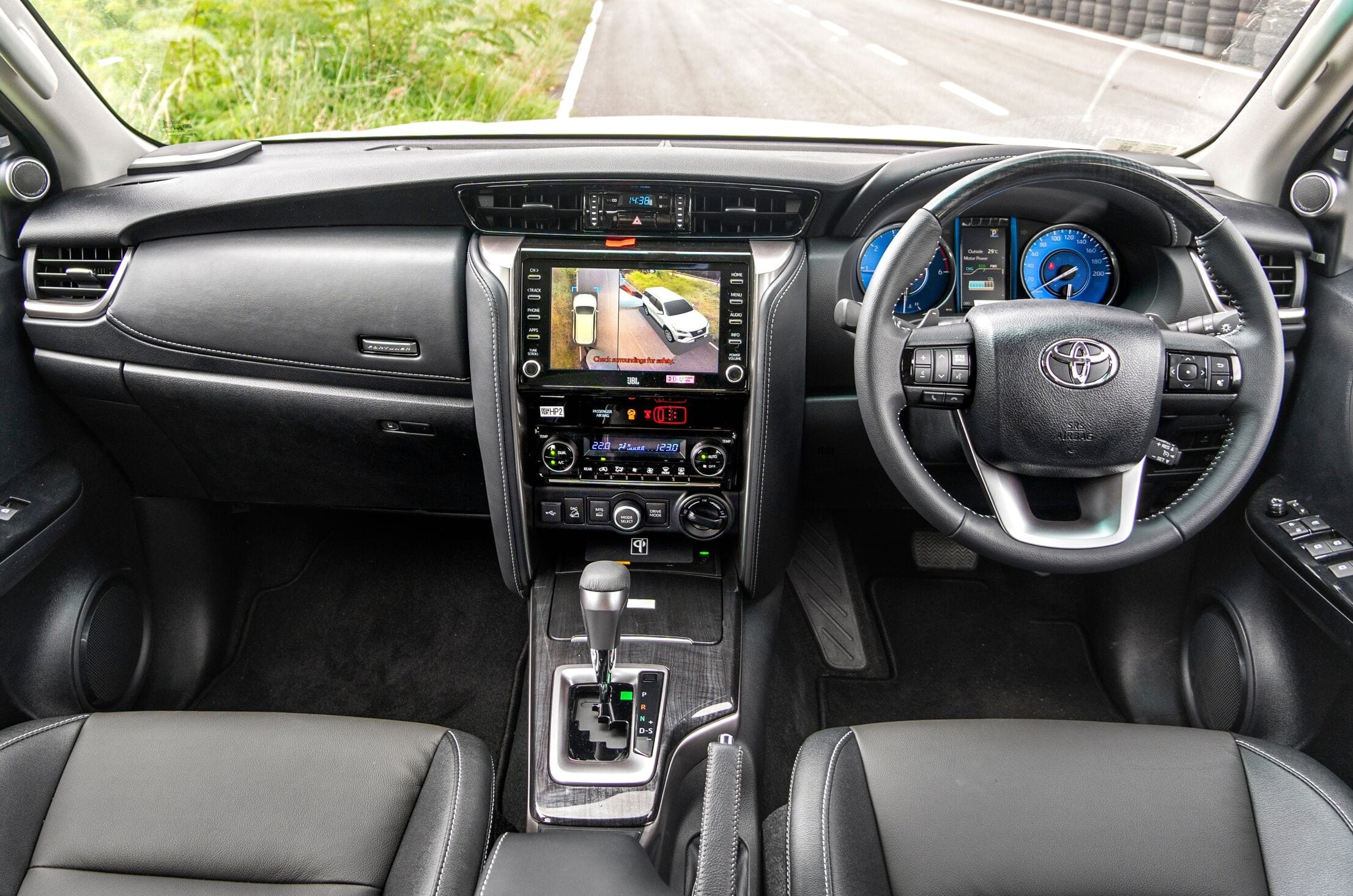
The Fortuner’s feature list is another area where it falls behind newer rivals. It gets useful features like ventilated front seats, an 8-inch touchscreen infotainment system, dual-zone climate control, an 11-speaker JBL audio system, a 360-degree camera, and a powered tailgate on select variants. However, it misses out on features like a sunroof, advanced driver assistance system (ADAS), powered front seats, and an electronic parking brake, which are now available in several more affordable SUVs. Even the 360-degree camera quality feels average compared to newer competitors, making the Fortuner feel less tech-focused than its rivals.

Prices are on the steeper end

The Fortuner is priced at a premium over its rivals

Toyota Fortuner ex-showroom prices vs rivals

Model

Price range

Toyota Fortuner

Rs 34.76 lakh to Rs 50.46 lakh

MG Majestor

Rs 40.99 lakh to Rs 44.99 lakh

Jeep Meridian

Rs 23.33 lakh to Rs 35.96 lakh

Skoda Kodiaq

Rs 36.99 lakh to Rs 46.99 lakh

Volkswagen Tayron

Rs 41.99 lakh to Rs 46.99 lakh

The Toyota Fortuner is priced from Rs 34.76 lakh to Rs 50.46 lakh (ex-showroom), making it one of the most expensive SUVs in its segment. At this price, it is expected to offer a more premium experience, but its dated cabin, average material quality, and missing modern features make it feel expensive compared to newer rivals.

However, the Fortuner’s appeal goes beyond features and cabin quality. Its rugged construction, off-road capability, proven reliability, strong resale value, and Toyota’s widespread service network continue to attract buyers. For many, the confidence of owning a durable and low-maintenance SUV outweighs the lack of premium features offered by newer rivals. These qualities have helped the Fortuner maintain a strong following in India, despite falling behind competitors in areas like interior quality and technology.

Prices are ex-showroom, India. 

3 reasons to buy the Nissan Tekton and 3 to avoid it

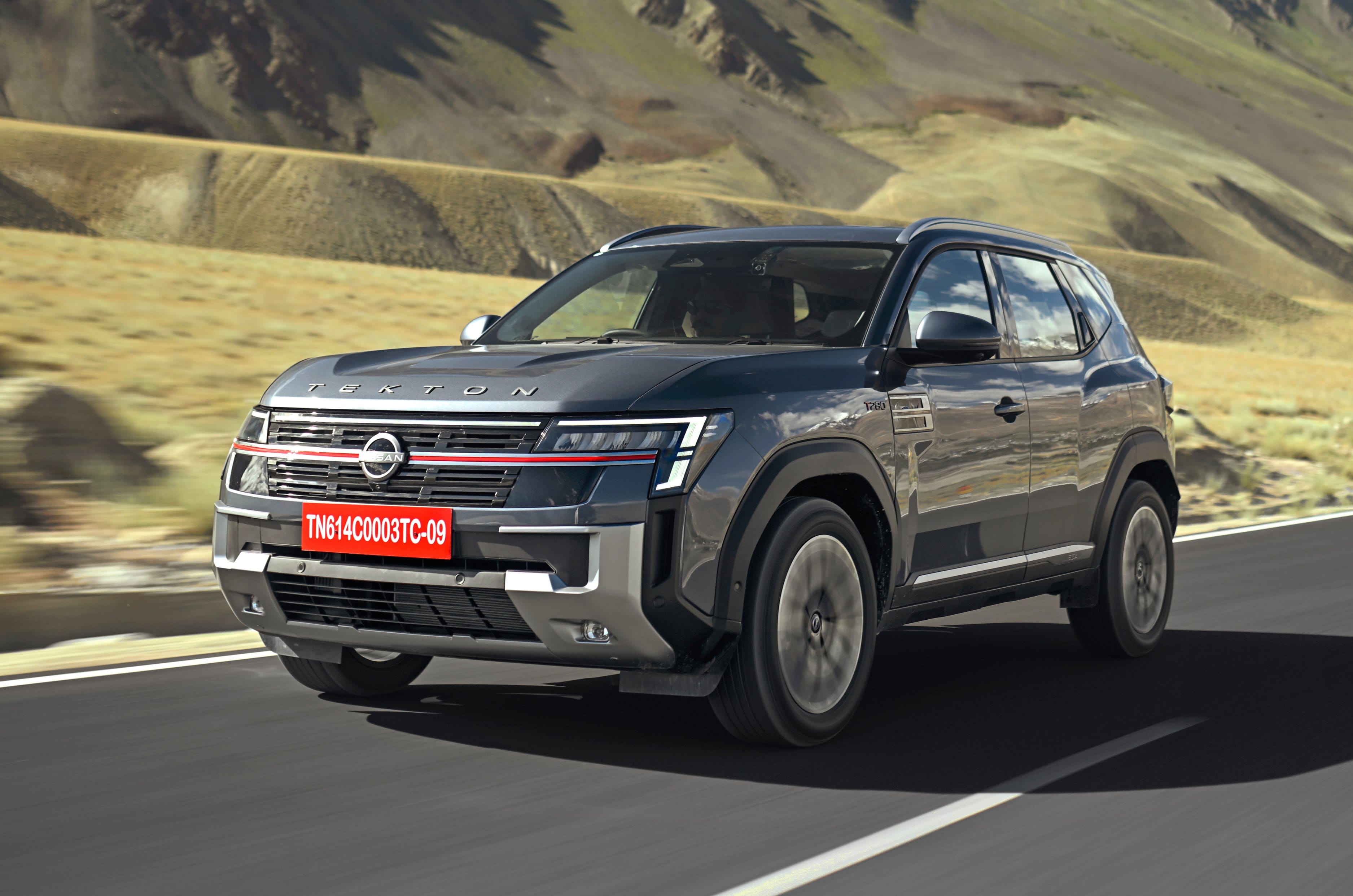
Nissan Tekton front three quarter

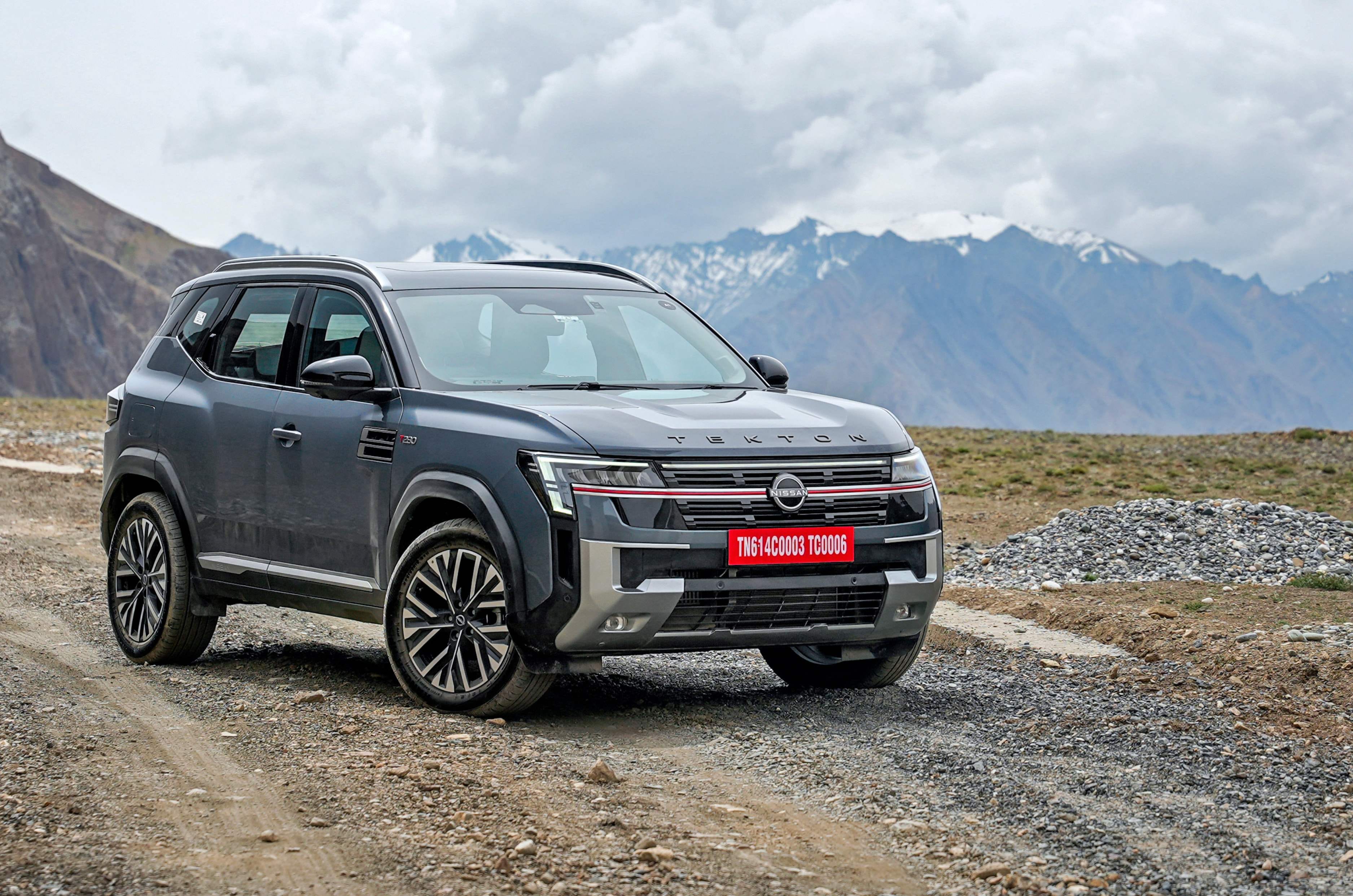
The Nissan Tekton joined the ever-ballooning midsize SUV segment in July 2026, becoming the third model in the Japanese brand’s India line-up. Priced between Rs 10.49 lakh and Rs 18.59 lakh (ex-showroom), the Tekton is Nissan’s flagship offering in the country. As a direct alternative to its platform sibling, the Renault Duster, does the Tekton offer compelling reasons for you to seriously consider it? Let’s find out.
Reasons to buy the Nissan Tekton

Polished dynamics

The Tekton strikes a great balance between ride and handling

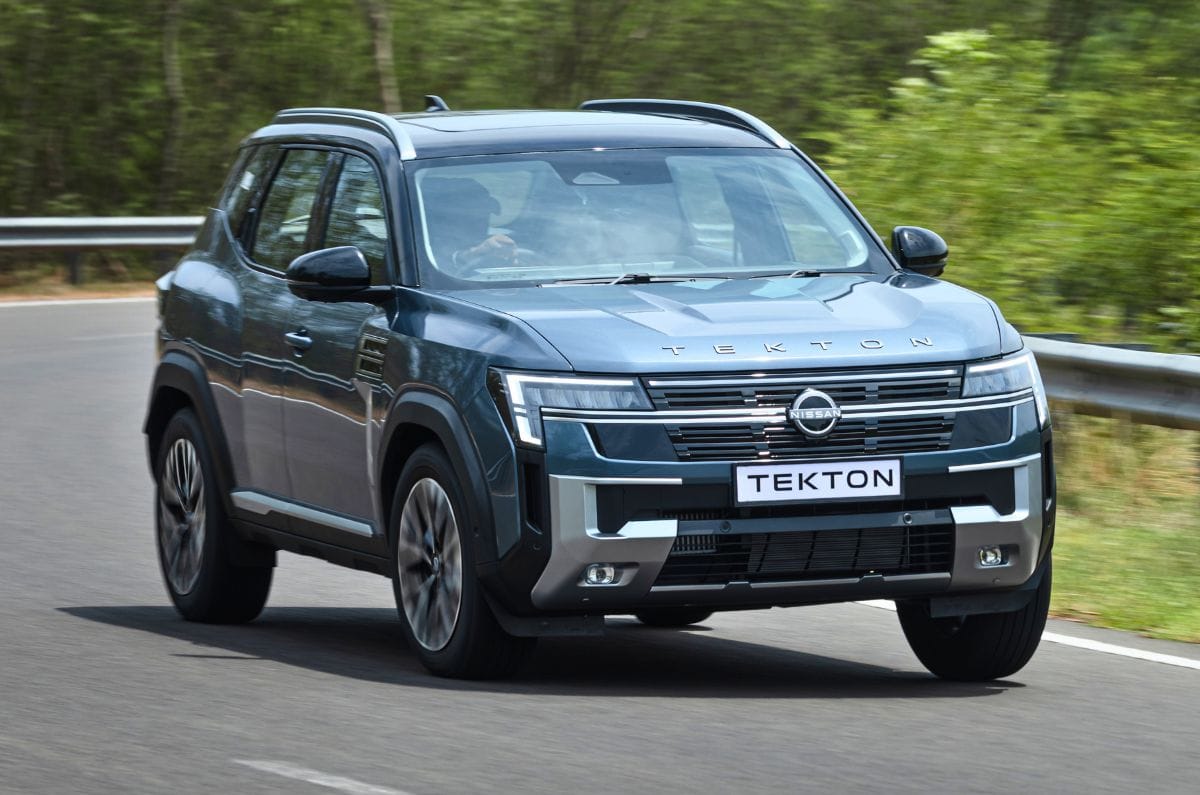
Nissan Tekton front three quarter tracking

If you are someone who loves getting behind the wheel of your midsize SUV but doesn’t want the ride quality to be compromised, the Nissan Tekton is a worthy candidate. Even hitting large potholes does not unsettle this SUV, merely registering in your ears. The ride remains supple and forgiving, absorbing road imperfections without complaints. There’s also no underlying, uncomfortable firmness to the Tekton’s ride at city speeds either.

Nissan Tekton cornering

Once you get going, you realise that the Tekton likes changing directions – its eagerness to turn does not come at the cost of uncontained body roll. The ‘Light’ and ‘Heavy’ steering modes work as intended, making the wheel feelsome and precise. Then there are the brakes, which offer plenty of stopping power, while the pedal itself feels natural too. All of these factors inspire confidence and let you push the Tekton a bit more. 

Well-designed and tech-rich cabin

Stepping inside the Tekton reveals a premium-looking and well-equipped space

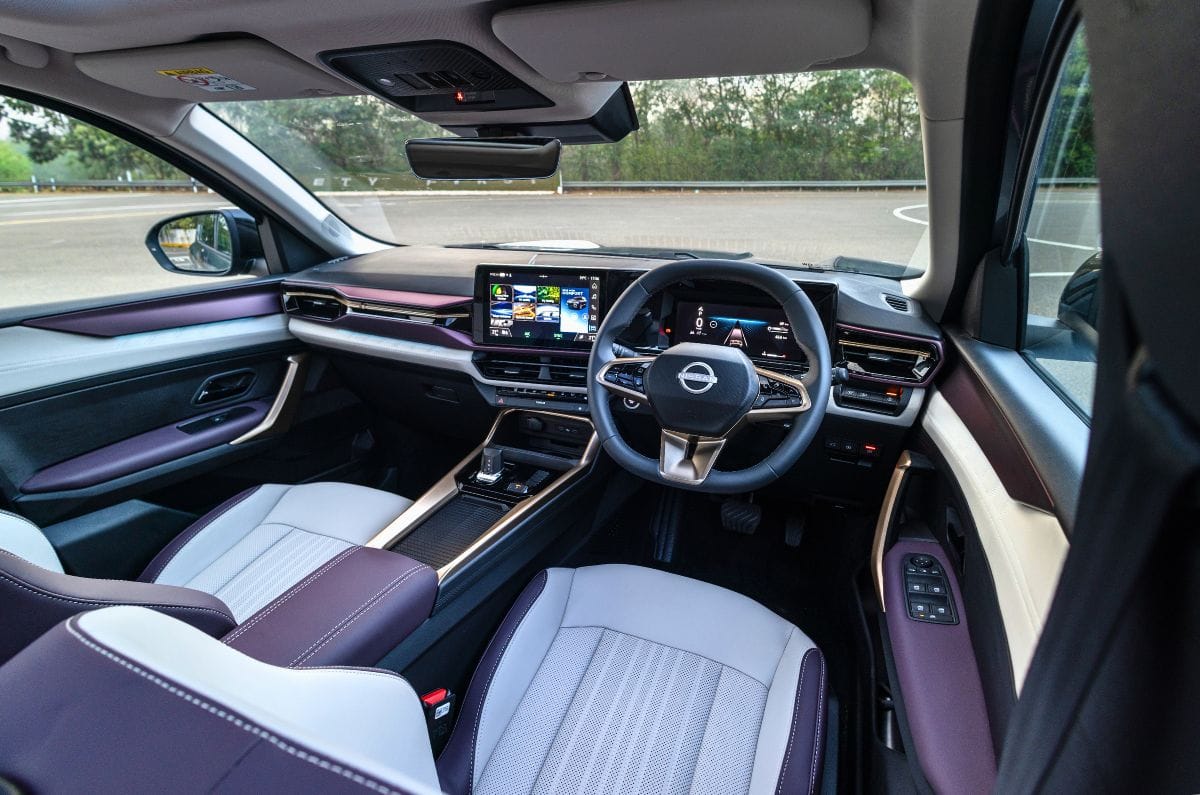
Nissan Tekton interiorCombined with the classy-looking leatherette padding on the dash and door pads, plus the burgundy, gold and light cream colour scheme, the interior of the top-spec Nissan Tekton looks upmarket. The driving position is great and provides excellent all-round visibility, while the seats themselves are comfy enough to be occupied even over long-distance drives.
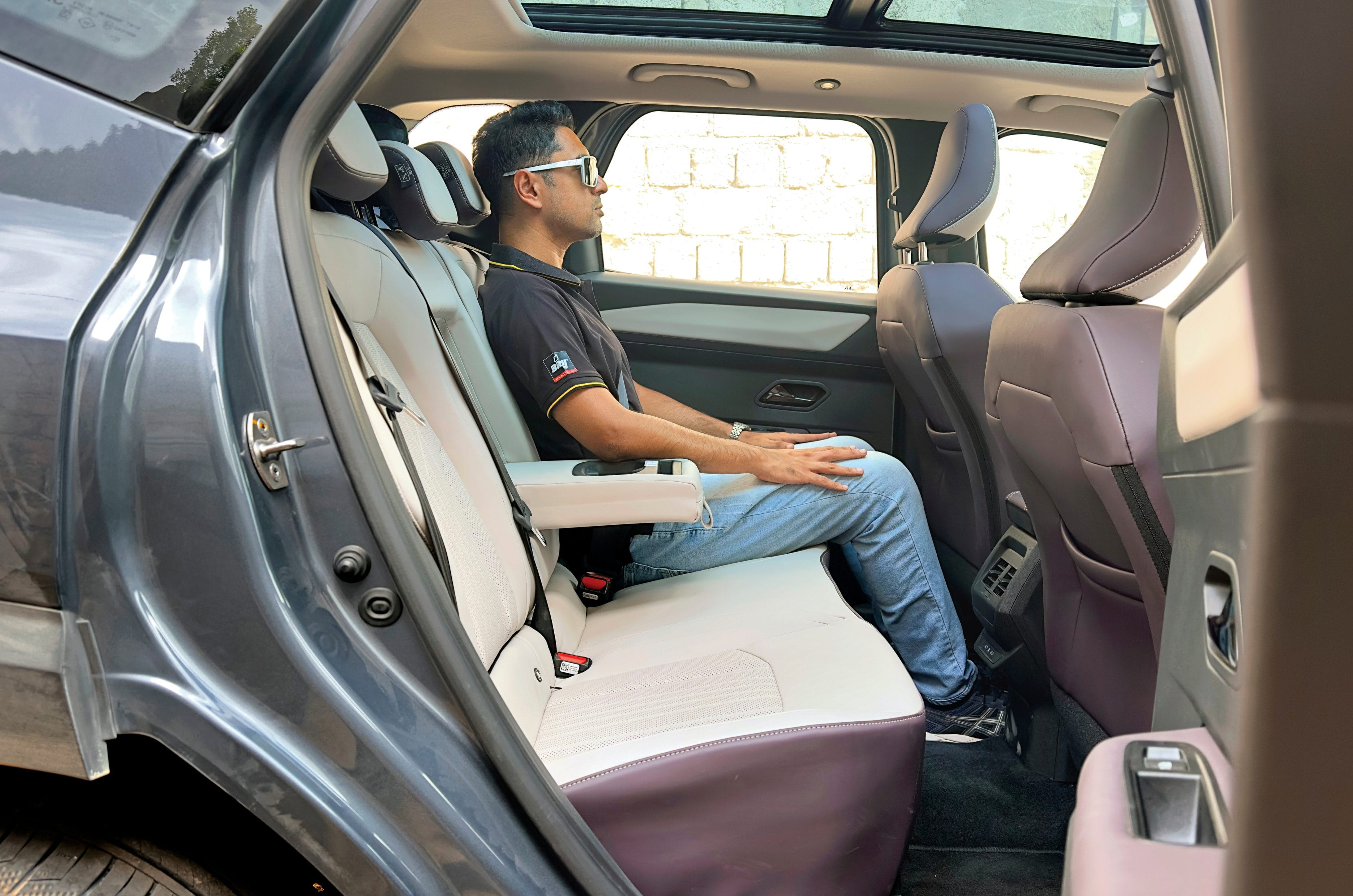
Nissan Tekton rear seats

Apart from good under-thigh support and backrest angle, the rear seats offer plenty of space under the front seats, allowing the outer two occupants to stretch out and get comfortable. Furthermore, those at the back have access to USB charging ports, a centre armrest with cup holders and AC vents, with higher variants also benefiting from a panoramic sunroof.

Nissan Tekton digital instrument cluster

The well-designed digital instrument cluster with its multiple display modes is easy to figure out and use on the move. Coming in handy is tech such as powered front seats with ventilation, wireless Apple CarPlay and Android Auto, built-in Google apps and voice assistance, dual-zone climate control and Level 2 ADAS. Sorted ergonomics make reaching various switchgear and controls an easy affair. There are enough storage cubbies on offer, too.

Spacious boot

The Tekton’s boot can handle family outings or airport pickups

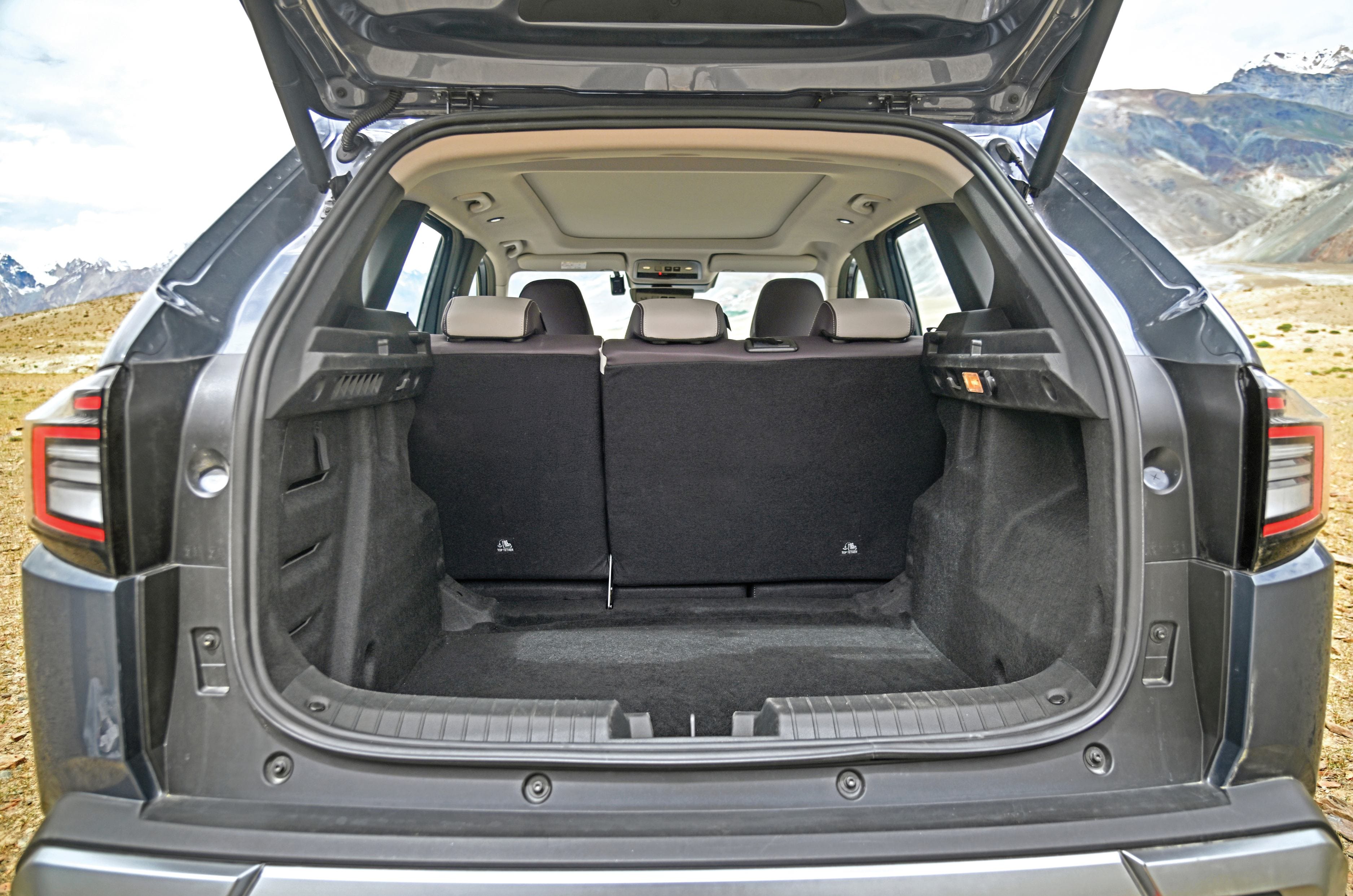
Nissan Tekton boot space

The square shape of the Nissan Tekton’s boot makes it easy to load cargo. Moreover, its 518-litre luggage capacity is the best in the segment – whether you are planning a long road trip or have to shuttle to and from the airport, space won’t be a constraining factor. What’s even more impressive here is that the Tekton’s boot also houses a full-size spare wheel. This alleviates concerns surrounding a flat tyre, should you encounter one.

Reasons not to buy the Nissan Tekton

Sub-par engine performance

Base engine isn’t apt enough, while the larger engine isn’t ideal either

The base 100hp 1.0-litre turbo-petrol engine featuring multi-point fuel injection lacks grunt and isn’t particularly refined, with usable power only good enough for city commutes. The turbo lag is evident till you go past 3,000rpm, requiring the driver to shift gears regularly to keep the engine on the boil. The 6-speed manual transmission (MT) on duty gets shorter gearing to help matters, but you’ll need to slip the clutch to tackle steep inclines, which will be an inconvenience. The gear shifts aren’t as slick as those of a comparable Hyundai Creta or a Kia Seltos.

Nissan Tekton 1.3 engine

Moving up to the larger, 163hp 1.3-litre turbo-petrol engine with direct injection doesn’t alleviate all of the issues either. Despite this engine’s higher output than the smaller mill, its weak bottom end can leave the Tekton struggling to get up and go on steep inclines, especially with the engine stop-start function enabled. While it offers more refinement and performance, there’s still noticeable turbo lag below 2,500rpm.

Nissan Tekton DCT gearbox

The 6-speed dual-clutch transmission (DCT) shifts between cogs smoothly, but its responses aren’t as quick as one might expect from the type. It upshifts early, perhaps in a bid to boost efficiency, but this makes it feel less responsive. This means you’ll have to take manual control by using the paddleshifters if you want to execute an overtake in a hurry. There’s also no Sport mode to quicken gear shifts – only Comfort and Eco modes are provided. While we are yet to put the Tekton through our rigorous performance tests, the performance on hand is unlikely to impress some buyers.

Lacklustre fuel economy

The Tekton will not be setting mileage benchmarks in the segment

Since the powertrain is mechanically identical to the Duster’s, the fuel economy of the Nissan Tekton in the real world is unlikely to impress. For reference, the Duster with the 1.0-litre engine and 6-speed MT returned 10.98kpl. Meanwhile, the 1.3-litre version recorded 10.47kpl and 10.64kpl with the DCT and MT gearboxes, respectively.

Some features lack execution

Nissan Tekton 360-degree camera

The Nissan Tekton has a few shortcomings when it comes to the quality of some of its features. The 360-degree camera system, for instance, is lacking in outright resolution, which hampers its usability under certain conditions. While the ADAS suite is comprehensive, the lane-keep assist isn’t good at keeping the SUV centred in a lane. Even the adaptive cruise control has its shortcomings – it doesn’t accelerate the Tekton back to its set speed once the traffic starts moving.

Also read

3 reasons to buy the Mahindra XUV 3XO and 2 to skip it

Tata Tiago vs Hyundai Grand i10 Nios performance compared

₹7.99 लाख की शुरुआती कीमत पर लॉन्च हुई Kia Syros EV, 526km रेंज और लग्जरी फीचर के साथ

Kia Syros EV Launch: अगर आप इलेक्ट्रिक कार खरीदने की सोच रहे हैं, तो Kia आपके लिए एक नया और किफायती विकल्प लेकर आया है। दरअसल, कंपनी ने अपनी नई Syros EV को भारत में लॉन्च कर दिया है, जो न सिर्फ Kia की सबसे सस्ती इलेक्ट्रिक कार है, बल्कि इसे Battery-as-a-Service (BaaS) मॉडल के साथ भी खरीदा जा सकता है। बता दें कि इस मॉडल की शुरुआती कीमत 7.99 लाख रुपये रखी गई है, जबकि बैटरी की कीमत अलग से फाइनेंस की जाएगी, जिसके लिए ग्राहकों को 3.3 रुपये प्रति किलोमीटर की EMI देनी होगी। इसके अलावा, इस इलेक्ट्रिक SUV की डिलीवरी 30 जुलाई से शुरू होगी।

Kia Syros EV कंपनी की अब तक की सबसे किफायती इलेक्ट्रिक कार है। यह Carens Clavis EV के बाद Kia का दूसरा मास-मार्केट इलेक्ट्रिक मॉडल है। इसकी शुरुआती कीमत 13.49 लाख रुपये (एक्स-शोरूम) है, जबकि टॉप-स्पेक X-Line ER वेरिएंट की कीमत 19.99 लाख रुपये (एक्स-शोरूम) तक जाती है।

कंपनी ने Syros EV को अपने मजबूत K1 प्लेटफॉर्म पर तैयार किया है। यह इलेक्ट्रिक SUV ग्राहकों को दो बैटरी पैक विकल्पों के साथ मिलेगी—42 kWh और 51.4 kWh। इन बैटरी ऑप्शन के साथ Kia का लक्ष्य ज्यादा से ज्यादा ग्राहकों को इलेक्ट्रिक मोबिलिटी की ओर आकर्षित करना है।

छोटे बैटरी पैक वाला वेरिएंट ARAI-सर्टिफाइड MIDC फुल-साइकिल रेंज में 443 किलोमीटर तक चल सकता है। वहीं, बड़े 51.4 kWh बैटरी पैक वाले मॉडल की रेंज 526 किलोमीटर तक बताई गई है। इसके साथ ही Kia Syros EV अपने सेगमेंट की पहली ऐसी इलेक्ट्रिक SUV बन गई है, जिसने 500 किलोमीटर से ज्यादा की प्रमाणित रेंज का आंकड़ा पार किया है।

इसकी बड़ी बैटरी एक इलेक्ट्रिक मोटर को पावर देती है, जो 171 PS (लगभग 169 bhp) की पावर जेनरेट करती है, जिससे यह SUV 0 से 100 km/h की रफ्तार 8.1 सेकंड में पकड़ लेती है।

Syros EV में 100 kW DC फास्ट चार्जिंग की भी सुविधा है, जिससे बैटरी 39 मिनट में 10% से 80% तक चार्ज हो सकती है। इसमें 10.8 kW का ऑनबोर्ड AC चार्जर भी मिलता है।

फीचर लिस्ट

Syros EV का डिजाइन ICE-पावर्ड Syros जैसा ही है, लेकिन इसमें कुछ खास EV स्टाइलिंग एलिमेंट्स दिए गए हैं। इसके अलावा, इनमें Kia की क्लोज्ड-ऑफ Digital Tiger Face ग्रिल, Ice Cube LED हेडलैंप, Star Map LED DRLs और टेल लैंप, फ्लश-फिटिंग डोर हैंडल्स और 17-इंच के डुअल-टोन एयरो अलॉय व्हील शामिल हैं।

इंटीरियर की बात करें तो, इसके अंदर 30-इंच का पैनोरमिक डिस्प्ले है, जिसमें 12.3-इंच का टचस्क्रीन इंफोटेनमेंट सिस्टम, 12.3-इंच का डिजिटल इंस्ट्रूमेंट क्लस्टर और 5-इंच का क्लाइमेट कंट्रोल इंटरफेस शामिल है।

Kia Syros EV के अन्य फीचर्स में डुअल-पेन पैनोरमिक सनरूफ, एम्बिएंट लाइटिंग, फोर-वे पावर ड्राइवर सीट, स्लाइडिंग और रिक्लाइनिंग रियर सीट, वेंटिलेटेड फ्रंट और रियर सीट, आठ-स्पीकर वाला Harman Kardon ऑडियो सिस्टम, वायरलेस Android Auto और Apple CarPlay, वायरलेस फोन चार्जर, 16-लीटर का फ्रंक (फ्रंट ट्रंक), स्मार्ट डैशकैम, 360-डिग्री कैमरा और 16 ऑटोनॉमस फंक्शन वाला लेवल 2 ADAS शामिल हैं।

सेफ्टी फीचर्स

Kia Syros EV में यात्रियों की सुरक्षा का भी खास ध्यान रखा गया है। इसमें 6 एयरबैग, इलेक्ट्रॉनिक स्टेबिलिटी कंट्रोल (ESC), हिल-स्टार्ट असिस्ट, ऑटो होल्ड के साथ इलेक्ट्रॉनिक पार्किंग ब्रेक, टायर प्रेशर मॉनिटरिंग सिस्टम (TPMS), ISOFIX चाइल्ड सीट एंकर जैसे सेफ्टी फीचर्स दिए गए हैं।

इसके अलावा, इसमें ब्लाइंड व्यू मॉनिटर और आगे, पीछे व साइड पार्किंग सेंसर भी मिलते हैं, जो ड्राइविंग के दौरान सुरक्षा और सुविधा को बेहतर बनाते हैं।

Syros EV की कीमतें (एक्स-शोरूम):

Battery PackVariant
Price

42 kWhHTK₹13.49 lakh
42 kWhHTK+₹14.99 lakh
42 kWhHTX₹15.99 lakh
51.4 kWh (Extended Range)HTK+ ER₹16.99 lakh
51.4 kWh (Extended Range)HTX ER₹17.99 lakh
51.4 kWh (Extended Range)HTX+ ER₹19.49 lakh
51.4 kWh (Extended Range)X-Line ER₹19.99 lakh

ओनरशिप के फायदे

Kia ने Syros EV के साथ ग्राहकों के लिए कई खास फायदे भी पेश किए हैं। कंपनी पहले मालिक को हाई-वोल्टेज बैटरी पर 15 साल की अनलिमिटेड किलोमीटर वारंटी दे रही है। इसके अलावा, कंपनी ने अश्योर्ड बायबैक प्रोग्राम भी शुरू किया है, जिसके तहत तीन साल बाद कार की रीसेल वैल्यू 80% तक मिल सकती है।

वहीं, ग्राहकों को बेहतर चार्जिंग सुविधा देने के लिए Kia के K-Charge नेटवर्क के जरिए 20,300 से ज्यादा चार्जिंग पॉइंट्स तक पहुंच मिलेगी।

यह भी पढ़ें: Maruti Suzuki Brezza Facelift कल होगी लॉन्च, नए डिजाइन, 360° कैमरा और 10.1-इंच टचस्क्रीन के साथ