
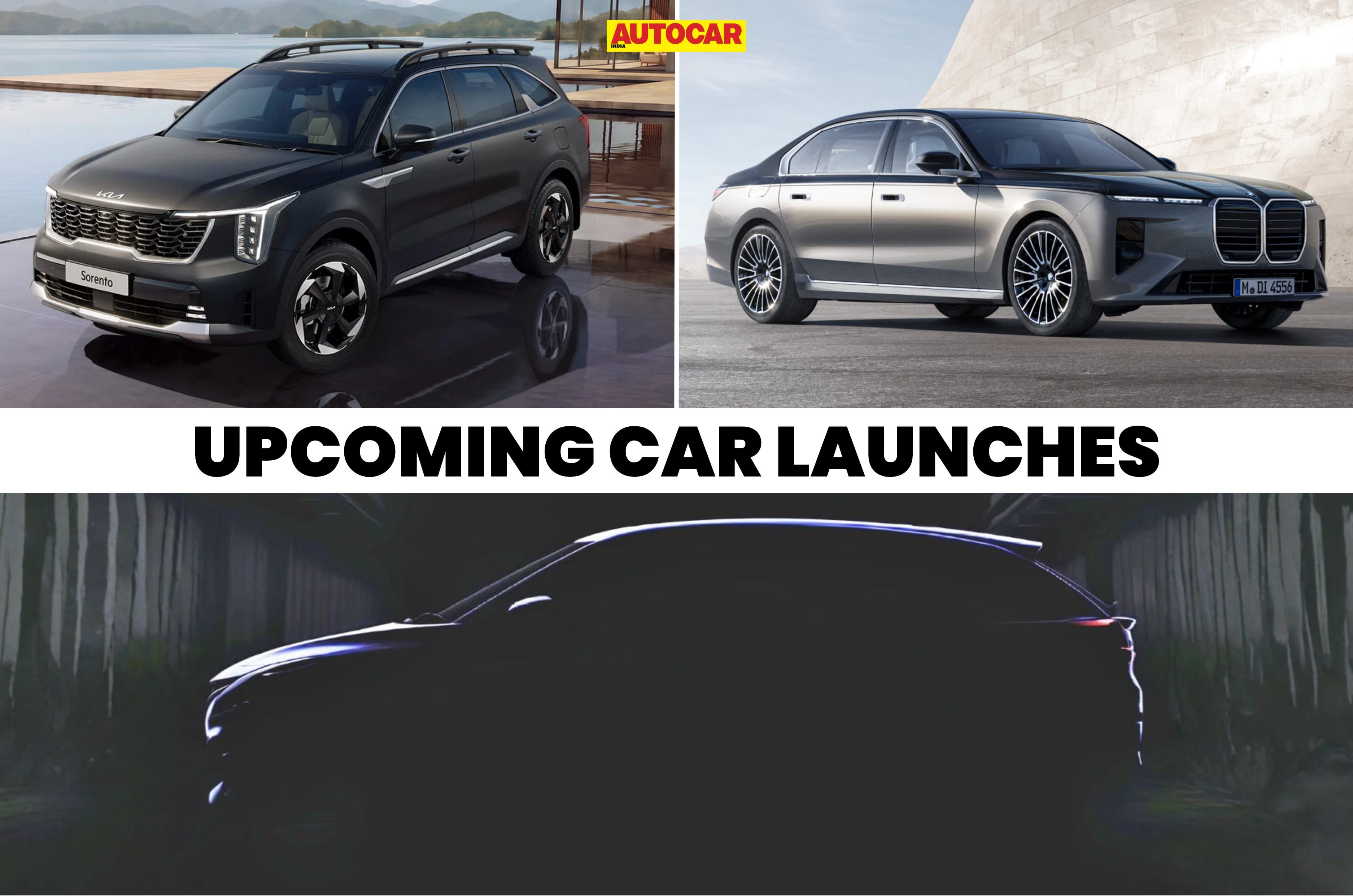
Upcoming car launches in September 2026

Upcoming car launches in September 2026

August was a busy month for the Indian car market, bringing several new models ajd variants, as well as updates. The BMW X1 LWB and MG Hector Tomahawk EV and PHEV were among the fresh launches, while the Mahindra Scorpio N received a mid-lifecycle update. The Mahindra BE 6 gained the ‘Sporteq’ suffix, while three existing models added new trims: the Range Rover SV Ultra, BYD Sealion 7 Dynamic and Skoda Kylaq Sportline. After such a packed August, September is also set to see more car launches.

Kia Sorento

Launch: September 4

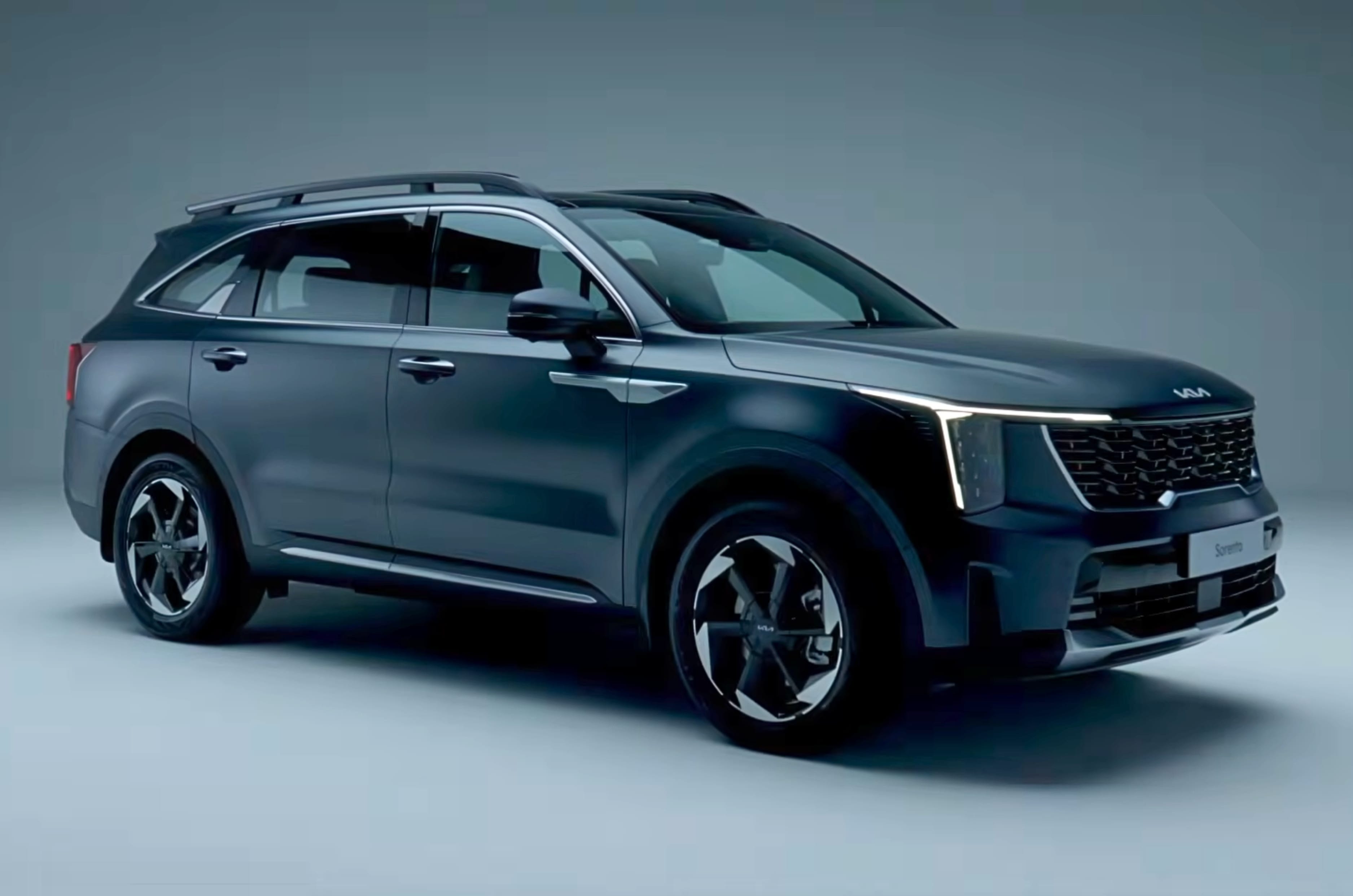
The Kia Sorento will be the brand’s new flagship ICE model in India, and it will be offered with both strong-hybrid and diesel powertrains. The 1.6-litre strong-hybrid version will produce 238hp and 380Nm, while the 2-litre diesel will make 202hp and 441Nm.
Kia Sorento

The Sorento gets Kia’s signature Tiger Nose grille, large vertical LED headlights with Y-shaped LED daytime running lamps (DRLs), LED fog lamps and vertical aero vents at the edges. Kia has not revealed the alloy wheel size yet, but they are likely to be 19-inch units. At the rear, the Sorento gets squarish tail-lamps with an inverted L-shaped LED signature, a large roof spoiler and a two-tone bumper.
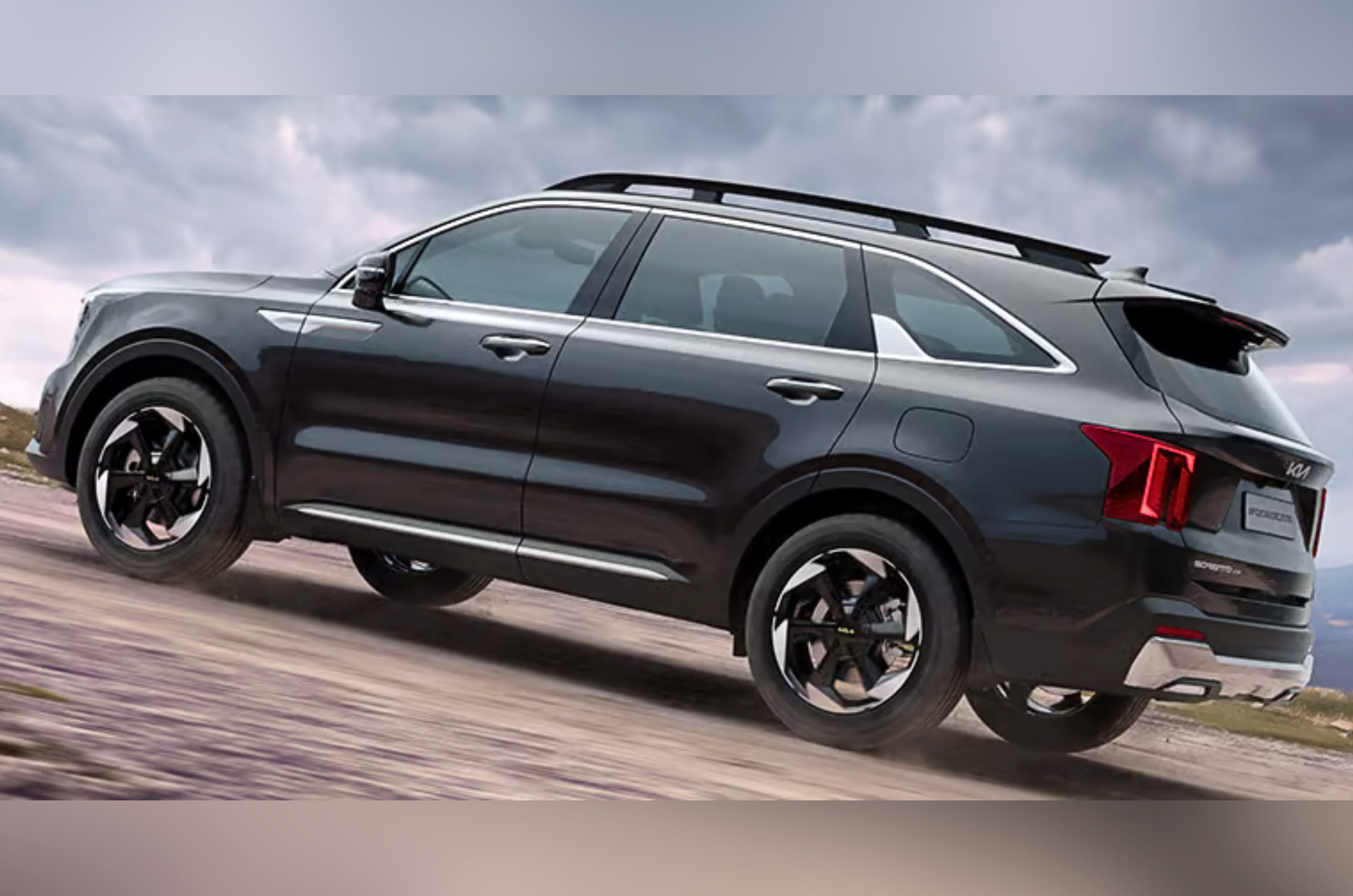
India-spec Kia Sorento revealed ahead of September 4 launch

Inside, there is a connected panel housing the infotainment and instrument cluster screens. Kia has not revealed their sizes, but both are likely to be 12.3-inch units. Other features seen in the official images include ADAS, ventilated front seats, a digital interior rearview mirror (IRVM), an electrically operated tailgate, dual-zone climate control, ambient lighting and a panoramic sunroof.
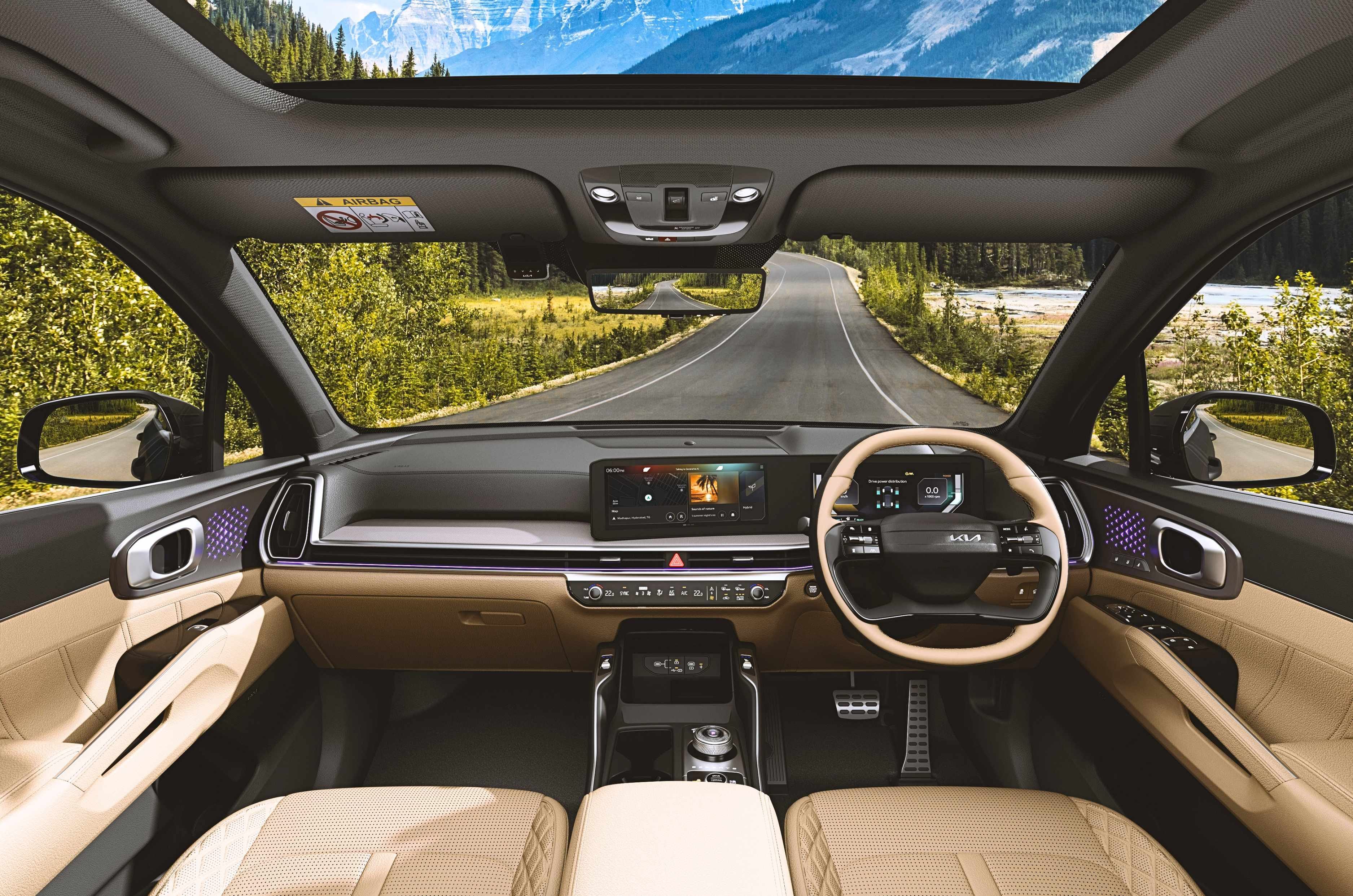
India-spec Kia Sorento revealed ahead of September 4 launch

The Sorento is expected to be available in both 6- and 7-seat layouts. Kia has already started accepting bookings for the Sorento and upon launch, it will compete with the Skoda Kodiaq, Volkswagen Tayron and Jeep Meridian.

Maruti Baleno facelift

Launch: September 5

The Maruti Baleno is currently in its second generation, which was launched in 2022, and is due for an update. Previous spy shots of the Baleno facelift have suggested a redesigned front end with a new grille featuring a horizontal bar in the centre connecting the headlights. Test mules have also shown a new bumper without the front fog lamps seen on the current model.

Maruti Baleno facelift to launch on September 5
Image credit: Harsh Vlogs via YouTube.

From the side, the only expected change is a new alloy wheel design. At the rear, the facelift could get a redesigned bumper, while the tail-lights are likely to remain unchanged. Inside, the Baleno could retain the current 9-inch touchscreen; however, update the upholstery and add new features.
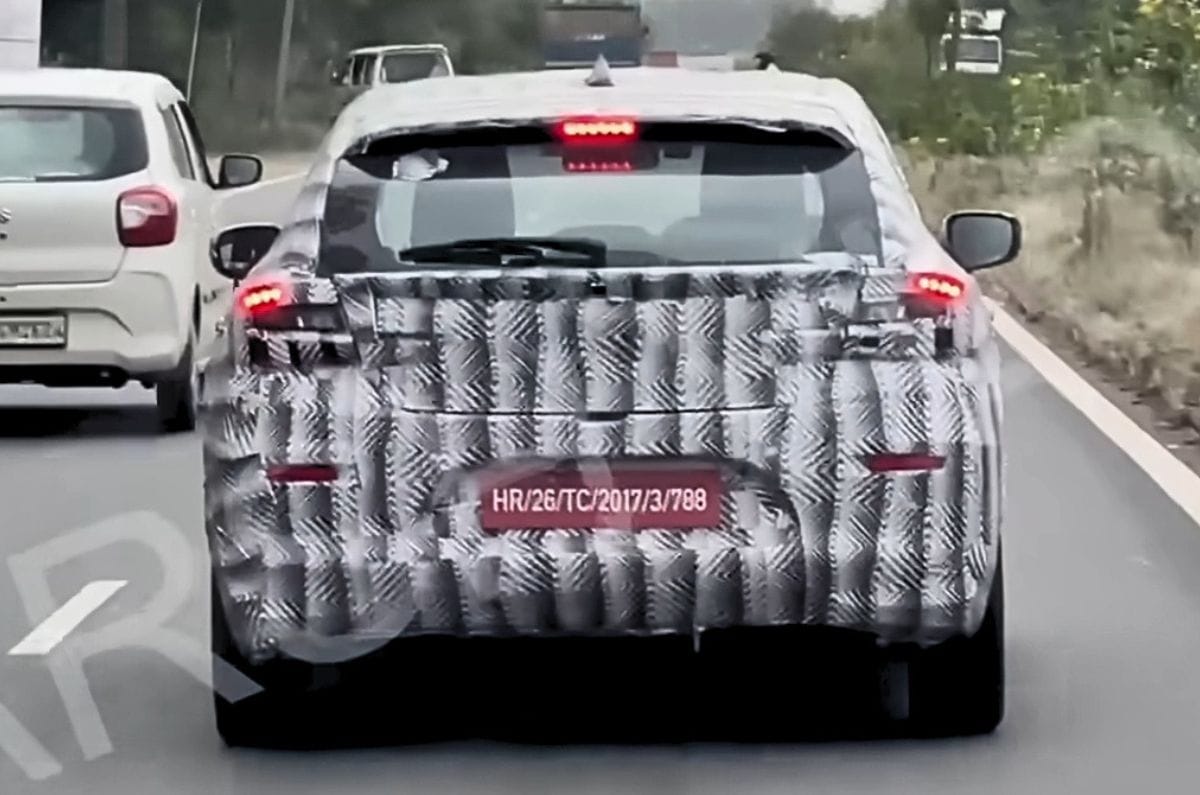
Maruti Baleno facelift to launch on September 5
Image credit: Harsh Vlogs via YouTube.

Under the hood, the facelifted Baleno is expected to continue with the existing powertrain options. These include a 90hp 1.2-litre naturally aspirated petrol engine with 5-speed manual and 5-speed AMT choices, along with a 77.5hp CNG version available only with the manual gearbox. It will continue to rival the Tata Altroz, Hyundai i20 and Toyota Glanza.

BMW 7 Series, i7 facelifts

Launch: September 11

BMW opened bookings for the facelifted 7 Series and i7 flagship sedans on August 1, soon after their global debut earlier this year. In India, the company currently sells the 740i petrol and 740d diesel versions of the 7 Series, along with the eDrive 50 and M70 xDrive variants of the all-electric i7. These versions get several updates with the facelift, although BMW is yet to confirm which variants will be introduced in here.
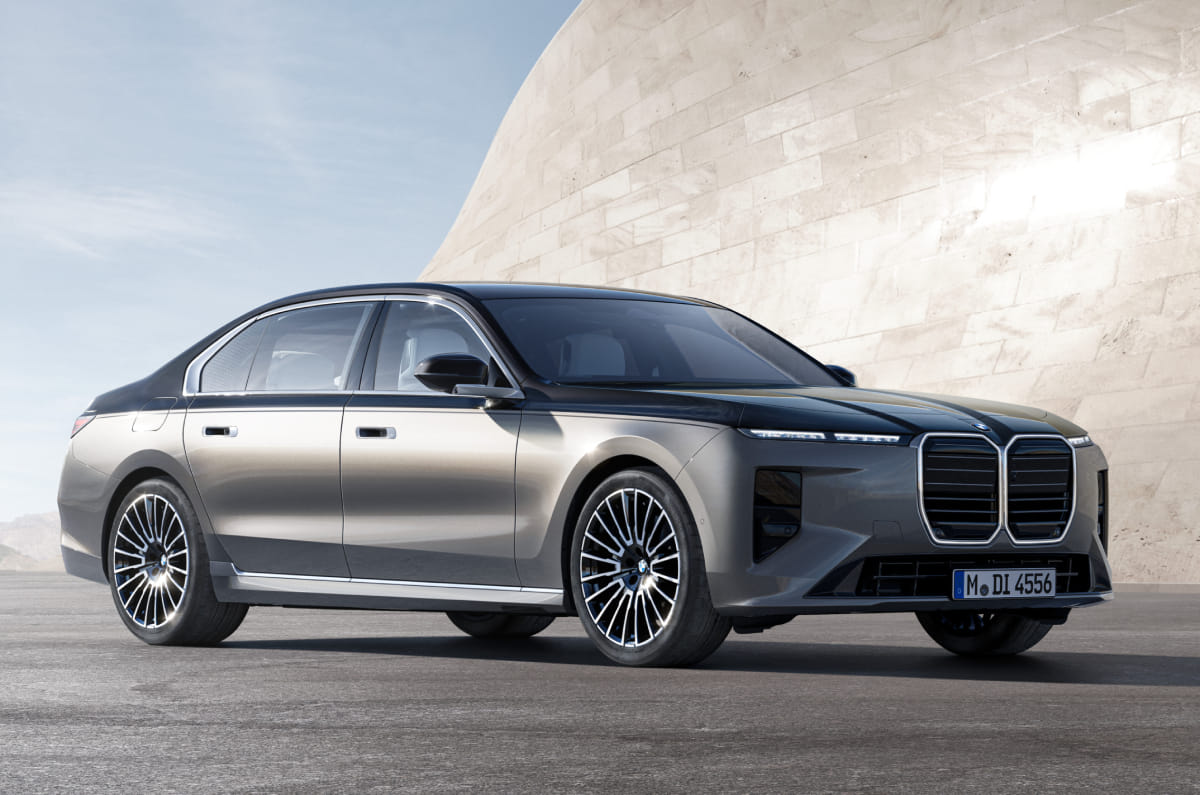
BMW 7 Series facelift

In international markets, the facelifted 740i and 740d continue with their 3.0-litre straight-six engines, but with uprated outputs. The 740i makes 400hp and 580Nm, up by 19hp and 60Nm, while the 740d develops 313hp and 670Nm, an increase of 27hp and 20Nm. Both continue to use 48V mild-hybrid systems, 8-speed automatic gearboxes and BMW’s xDrive all-wheel-drive system. The i7 also gets a larger 112.4kWh battery in both variants, up from 101.7kWh. The lower 50 trim now comes only with xDrive all-wheel drive instead of rear-wheel drive and produces 455hp and 660Nm, up by 6hp and 10Nm. The M70 xDrive now makes 680hp and 1,100Nm, gaining 30hp and 85Nm. Charging speeds have also improved. 
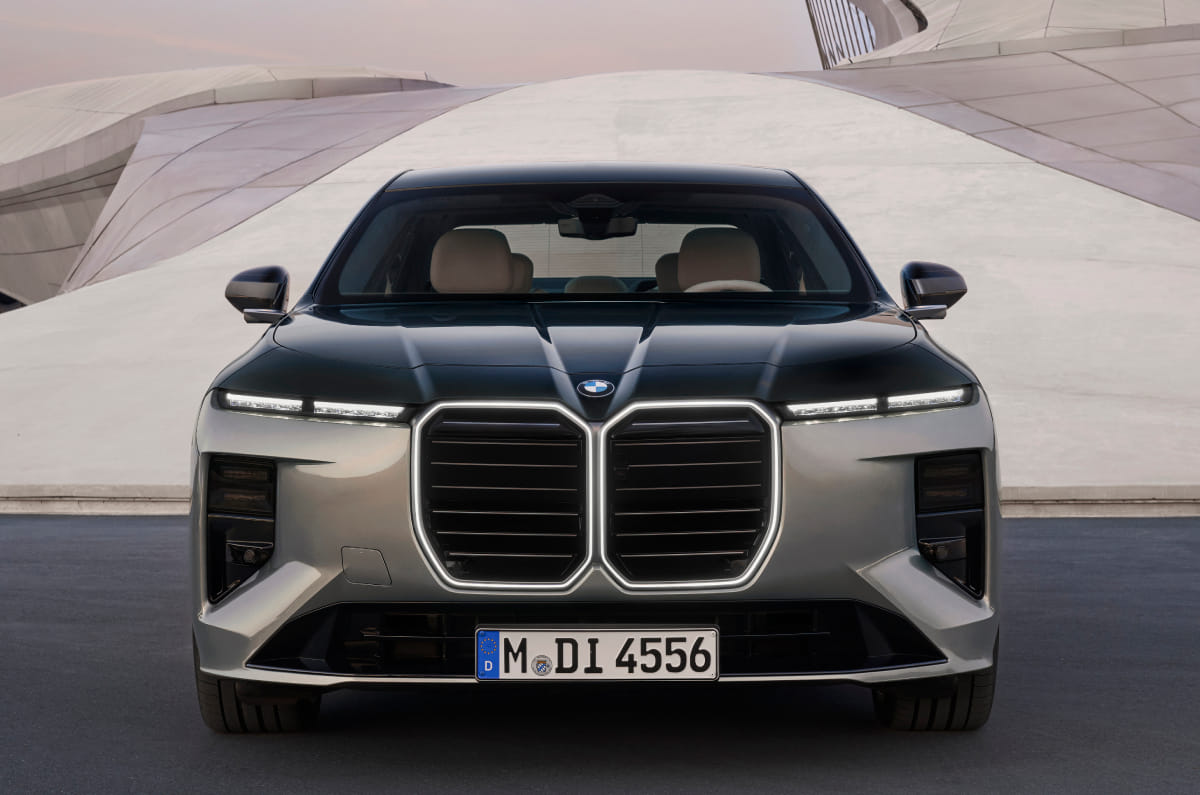
Visually, the updated 7 Series and i7 have a more monolithic look. They get new split LED headlights, slimmer and more upright kidney grilles with an illuminated surround, and larger bumper air intakes. The side profile remains largely unchanged apart from the side skirts and alloy wheels, while the rear gets new wraparound LED tail-lamps, a redesigned tailgate and a revised bumper.
BMW 7 Series, i7 facelifts to launch on September 11

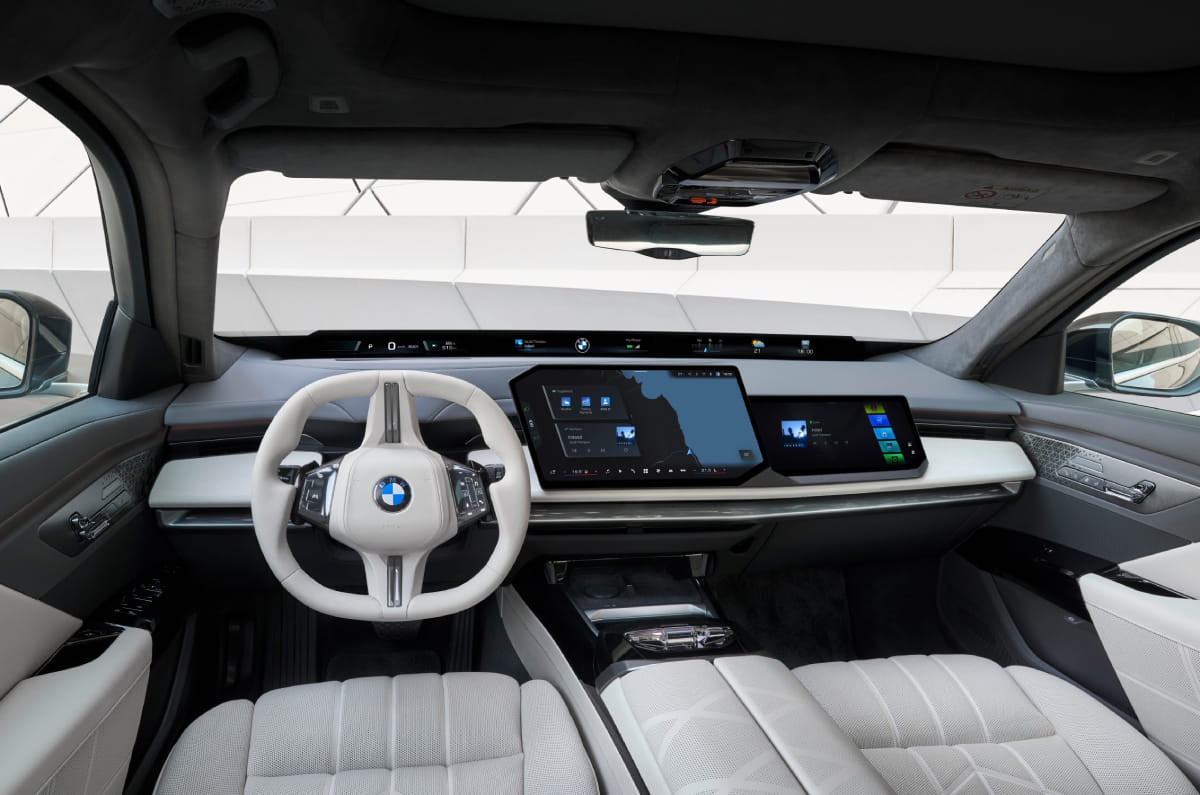
Inside, BMW has redesigned the dashboard around a 17.9-inch infotainment touchscreen, a 14.6-inch passenger display and a pillar-to-pillar Panoramic Vision display at the base of the windscreen. The steering wheel is now a four-spoke unit, similar to those used in BMW’s Neue Klasse models, while the centre console and transmission tunnel have also been updated.
BMW 7 Series, i7 facelifts to launch on September 11

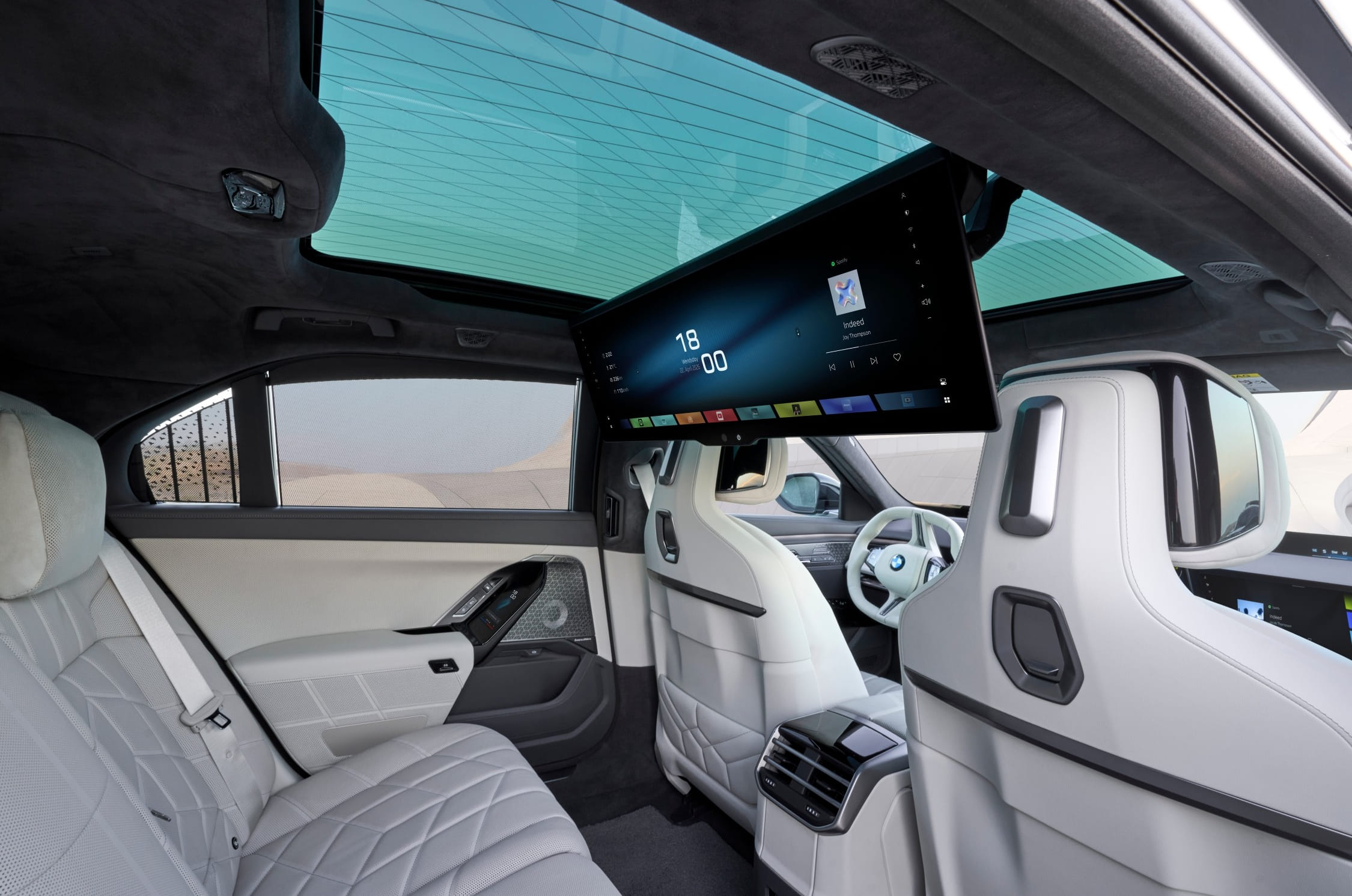
Rear passengers get powered seats with heating, ventilation, massage and lumbar support. The 31.3-inch 8K Theatre Screen can now be operated by touch, while the rear-door displays have also been updated to control the rear-seat experience. Other key features include ambient lighting, a Bowers & Wilkins surround sound system and 4-zone climate control. The BMW luxury sedan competes directly with the Mercedes-Benz S-Class, which also received a facelift this year.

Porsche Cayenne Electric

Debut: September 30

Porsche announced prices for the Cayenne Electric in November last year, and the SUV is now set for its physical showcase. The standard Cayenne Electric is priced at Rs 1.77 crore, while the range-topping Turbo Electric costs Rs 2.27 crore (both ex-showroom).

Porsche Cayenne Electric

Both trims of the Porsche Cayenne Electric get a 113kWh battery and a dual-motor all-wheel-drive setup as standard. The more powerful Turbo Electric produces 1,156hp and 1,500Nm with Launch Control, allowing it to sprint from 0-100kph in 2.5 seconds before reaching an electronically limited top speed of 260kph. It has a claimed WLTP range of 537km. Whereas, the standard Cayenne Electric makes 442hp and 835Nm with Launch Control, does 0-100kph in 4.8 seconds and has an electronically limited top speed of 230kph. Its claimed WLTP range stands at 542km.
Porsche Cayenne Electric launched at Rs 1.76 crore

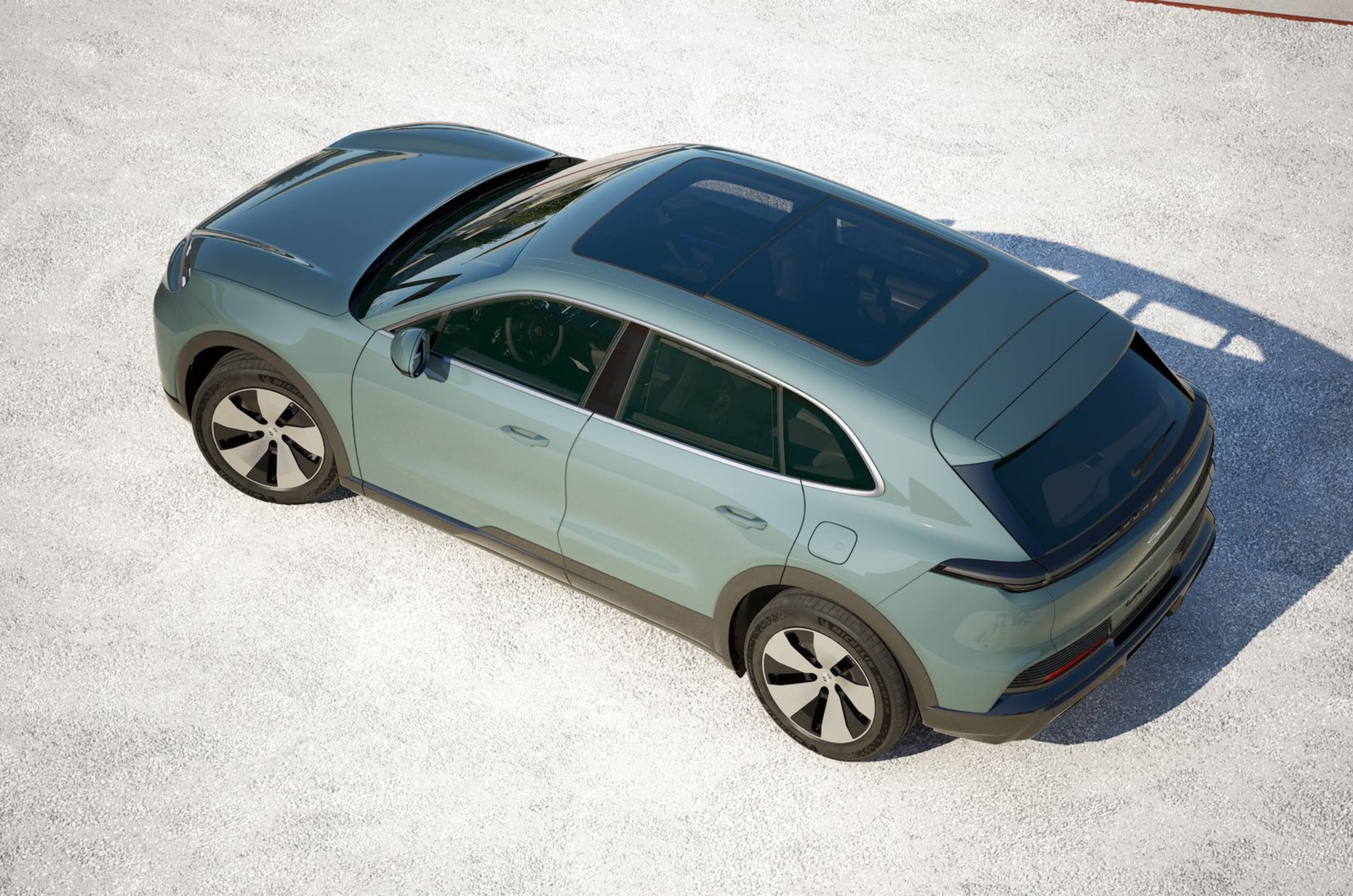
The Cayenne Electric keeps a similar overall shape to the ICE-powered Cayenne. However, the EV gets a closed-off grille, with two air vents on either side of the bumper to cool the battery and electrical components. These vents are larger on the Turbo trim. At the rear, there is a full-width LED light bar with illuminated Porsche lettering. The bumper has also been redesigned with horizontal black elements.
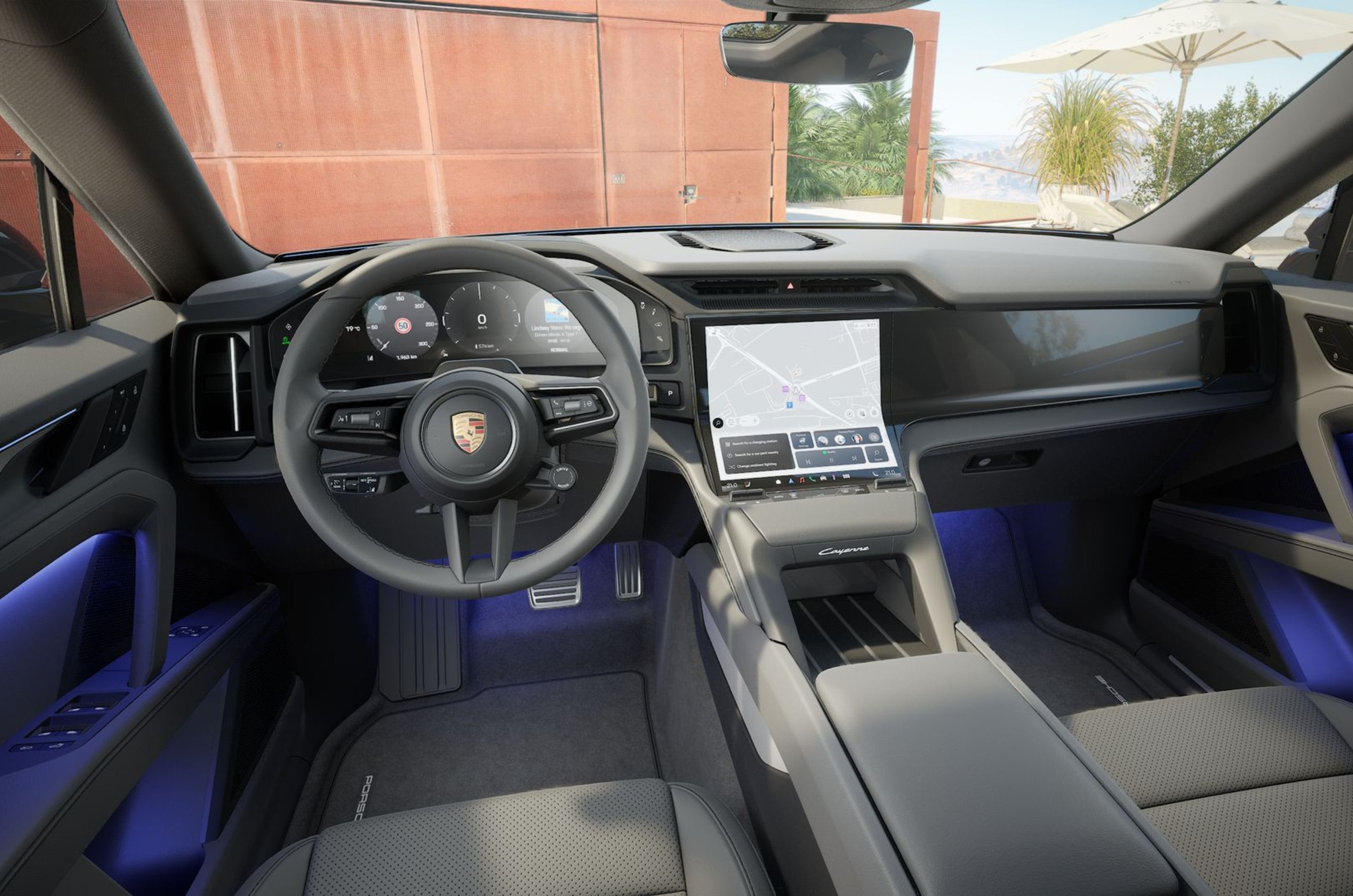
Porsche Cayenne Electric launched at Rs 1.76 crore Inside, the Cayenne Electric gets a three-spoke steering wheel and digital driver’s display, similar to the ICE model. Porsche has also added a new 14.5-inch curved touchscreen infotainment system that flows into the centre console. An optional 14.9-inch passenger display is also available at an additional cost. Other features include 8-way electrically adjustable front seats, four-zone automatic climate control, ventilated front seats, a panoramic sunroof and wireless phone charging.


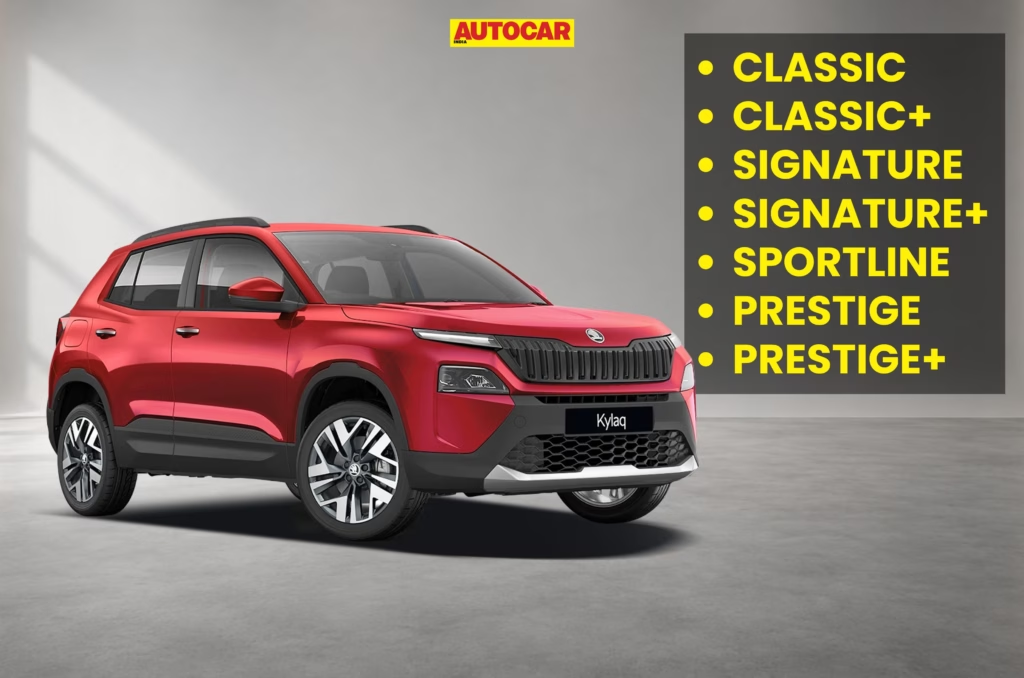
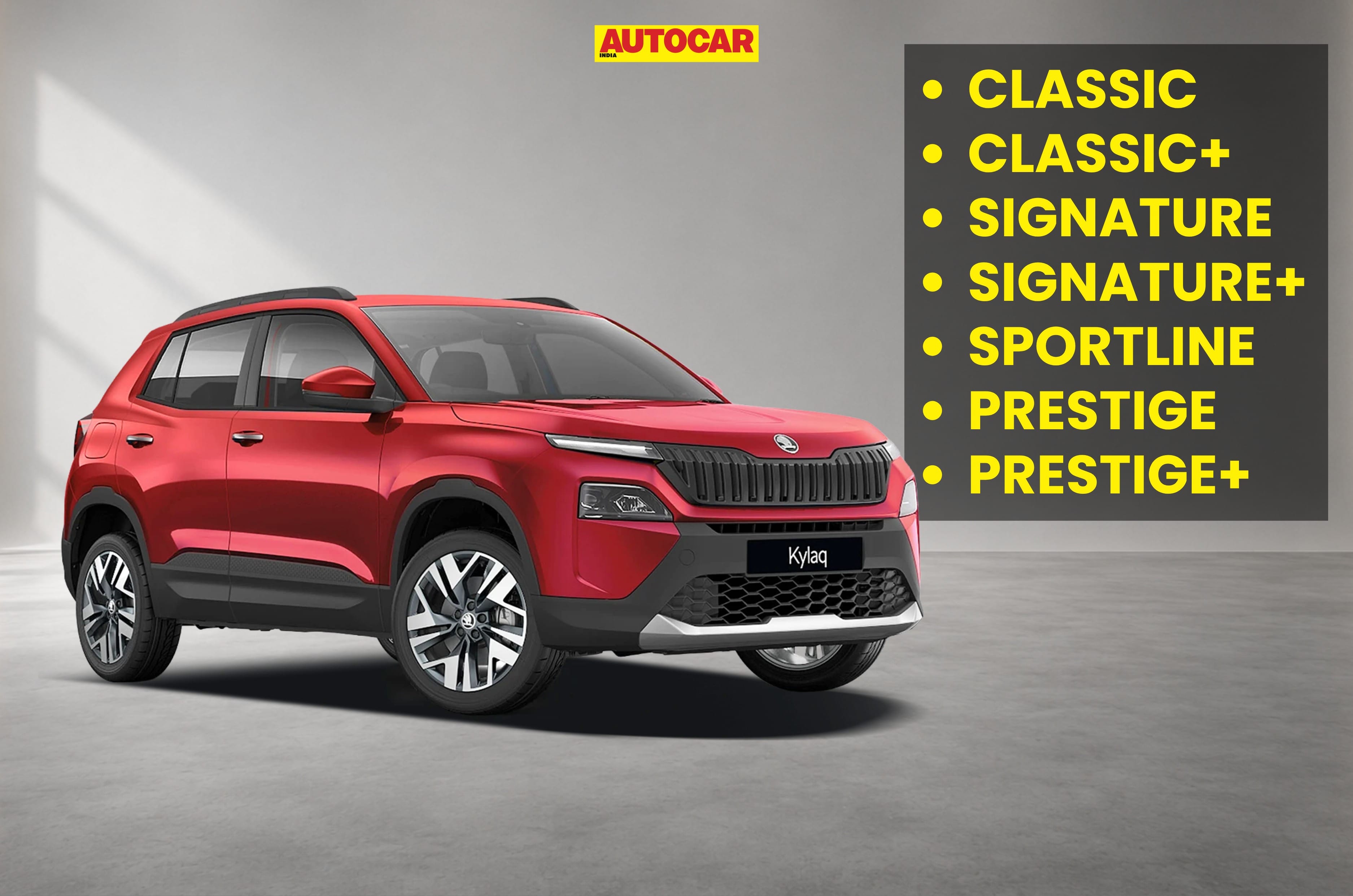
Which variant of the Skoda Kylaq should you buy?

Which variant of the Skoda Kylaq should you buy?
Skoda Kylaq variants and features explained

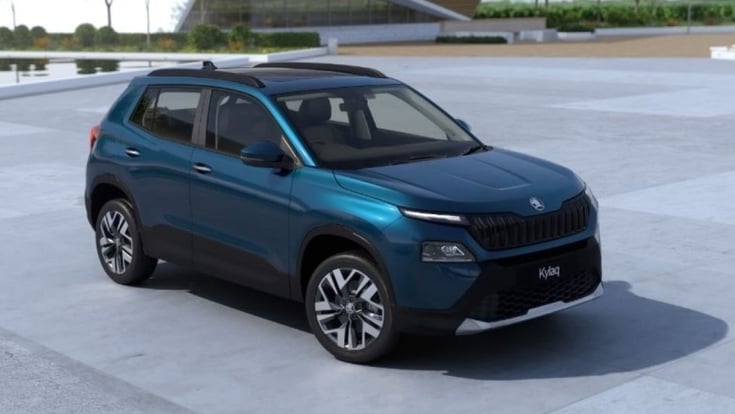
The Kylaq, Skoda’s most affordable offering in India, was introduced in 2024 and marked the brand’s return to the sub-4m space after years. Currently, the Kylaq is Skoda’s best-selling model in our market and has sold over 50,000 units since its launch as of February 2026. Here’s a breakdown of the powertrain options, comfort and convenience features, safety kit and exterior colours available on each trim of the Skoda SUV.

Skoda Kylaq variant-wise price and powertrain options

The base Classic trim misses out on an automatic transmission option

Skoda Kylaq ex-showroom price as of August 21, 2026 (Rs lakh)

Trim

MT

AT

Classic

7.59

Classic+

8.25

9.25

Signature

9.43

10.43

Signature+

10.77

11.77

Sportline

11.32

12.32

Prestige

11.75

12.75

Prestige+

11.99

12.99

The Skoda Kylaq has an ex-showroom price ranging from Rs 7.59 lakh to Rs 12.99 lakh. Except for the base Classic trim, the remaining trim levels offer both manual and automatic gearboxes. Powering the Kylaq is a 115hp, 178Nm, 1.0-litre direct-injection turbo-petrol engine that also does duty in the Kushaq and the Slavia. Transmission duties are handled by either a -speed manual or a 6-speed automatic gearbox. Notably, in Classic+ guise, the Kylaq is the most accessible car with a torque converter gearbox. 

Skoda claims a top speed of 188kph and that the manual version is capable of a 0-100kph sprint in 10.5 seconds. In our Kylaq real-world performance tests, the automatic version achieved a 0-100kph time of 11.69 seconds. Skoda also claims an ARAI-rated fuel economy of 19.68kpl for the manual and 19.05kpl for the automatic; our Kylaq real-world mileage tests saw the manual average 12.86kpl, while the automatic went 11.03km on a litre of petrol.

Skoda Kylaq variant-wise colour options

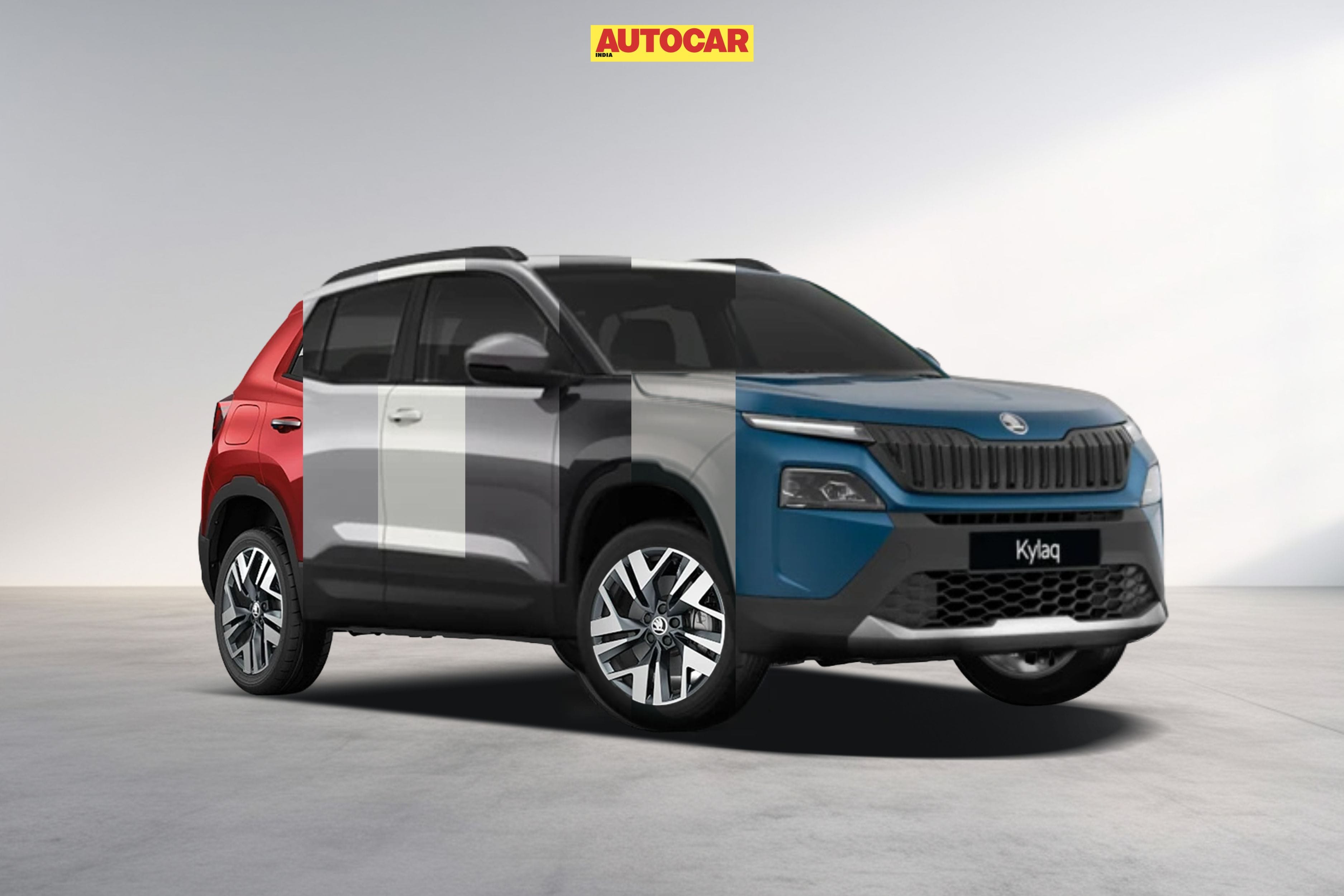
Offered in seven colours on the outside, two on the inside 

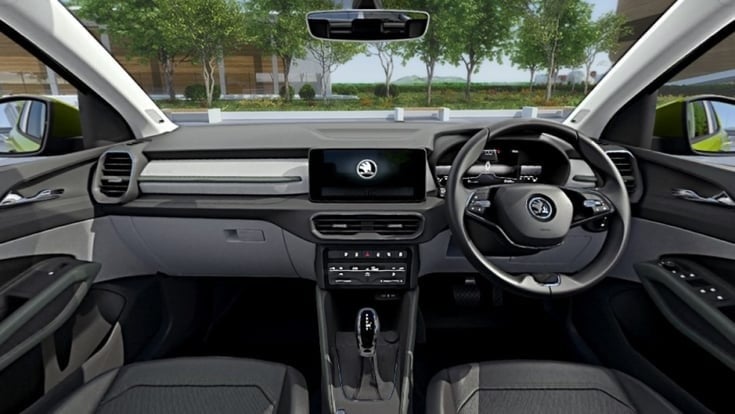
The compact SUV is offered in seven colours, namely, Candy White, Brilliant Silver, Cherry Red, Carbon Steel, Deep Black, Lava Blue, and Steel Grey. While all trims come in a monotone finish, select paint jobs on the Sportline come with a black roof. Additionally, the Sportline trim exclusively gets the Steel Grey colour option. The interior of the Skoda Kylaq gets a black and grey colour scheme as standard, but the Sportline has an all-black theme. Here’s a table comprising the available exterior colours on the Skoda Kylaq depending on the trim level chosen:

Colour 

Classic

Classic+

Signature

Signature+

Sportline 

Prestige

Prestige+ 

Candy White

Yes

Yes

Yes

Yes

Dual-tone

Yes

Yes

Brilliant Silver

Yes

Yes

Yes

Yes

Dual-tone

Yes

Yes

Cherry Red

Yes

Yes

Yes

Yes

Dual-tone

Yes

Yes

Carbon Steel

Yes

Yes

Yes

Yes

Yes

Yes

Deep Black

Yes

Yes

Yes

Yes

Yes

Yes

Lava Blue

Yes

Yes

Yes

Yes

Yes

Yes

Steel Grey

Dual-tone

Skoda Kylaq standard safety kit 

Gets six airbags, ABS, EBD, traction control and more.

As standard, the Skoda Kylaq comes equipped with six airbags, ABS, EBD, ESC, traction control, brake disc wiping, roll-over protection, central locking, rear parking sensor, and ISOFIX mounts. 

Skoda Kylaq variant-wise features

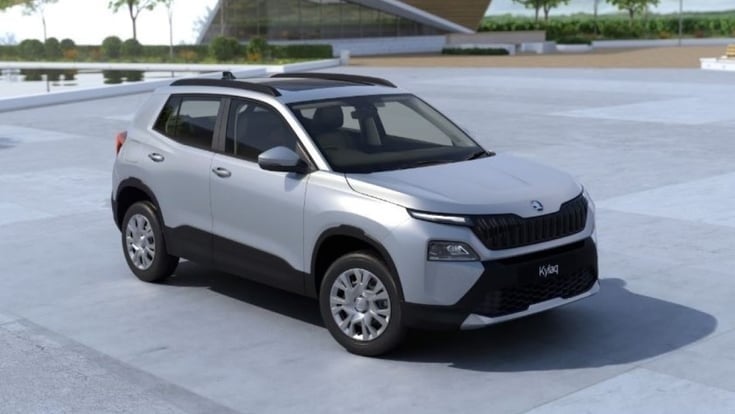
Skoda Kylaq Classic: Rs 7.59 lakh

Gearbox option – 6MT

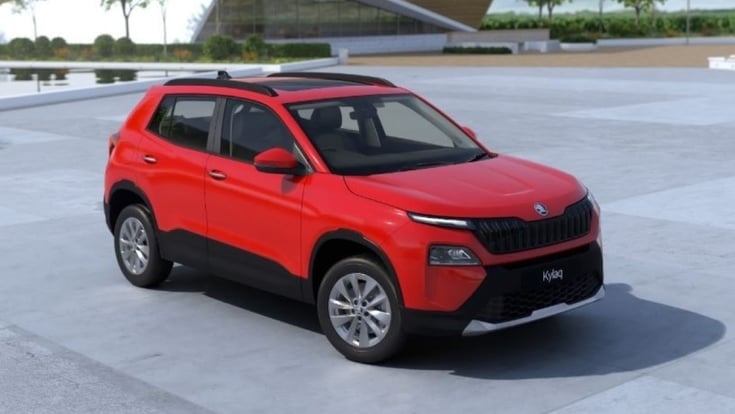
Skoda Kylaq Classic trim exterior
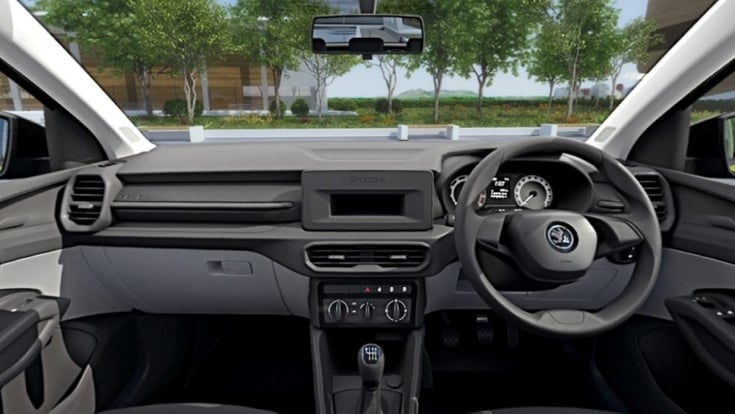
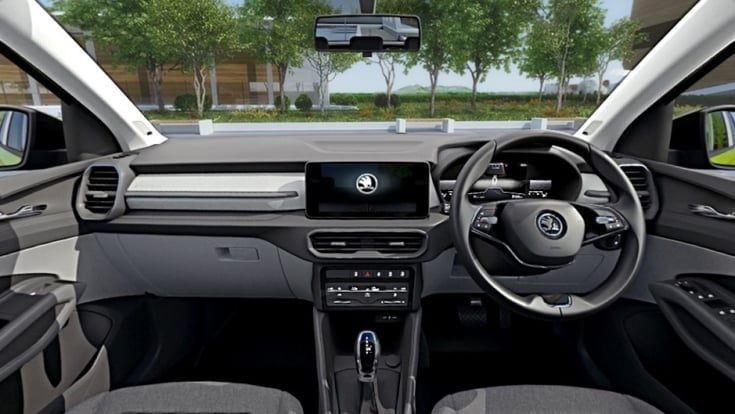
Skoda Kylaq Classic trim interior
 

Skoda Kylaq Classic trim

  • LED headlights with LED daytime running lamps (DRLs)
  • LED tail-lights
  • 16-inch steel wheels with covers
  • 15-inch spare wheel
  • Roof rails
  • Roof-mounted spoiler
  • Dual-tone dashboard
  • Manual day/night interior rearview mirror (IRVM)
  • Driver seat height adjust
  • Adjustable headrests for all passengers
  • Auto engine start-stop
  • Tilt and telescopic steering adjust
  • Powered wing mirrors
  • All power windows
  • Auto AC
  • Rear defogger
  • Analogue dials with a digital MID
  • Front centre armrest
  • 12V charging socket (front)
  • Fabric seats
  • Analogue dials with 3.5-inch MID
  • 2 tweeters
  • Front LED cabin lamps

Skoda Kylaq Classic+ – Rs 8.25 lakh-9.25 lakh

Gearbox options – 6MT, 6AT

Features over Classic

  • Single-pane sunroof
  • Cruise control
  • 4 speakers
  • Auto-dimming IRVM
  • Front and rear LED cabin lamps
  • Steering-mounted controls
  • Leatherette-wrapped gear lever (AT only)
  • Rear LED cabin lamps
  • One-touch up/down for driver-side window 

Skoda Kylaq Signature – Rs 9.43 lakh-10.43 lakh

Gearbox options – 6MT, 6AT

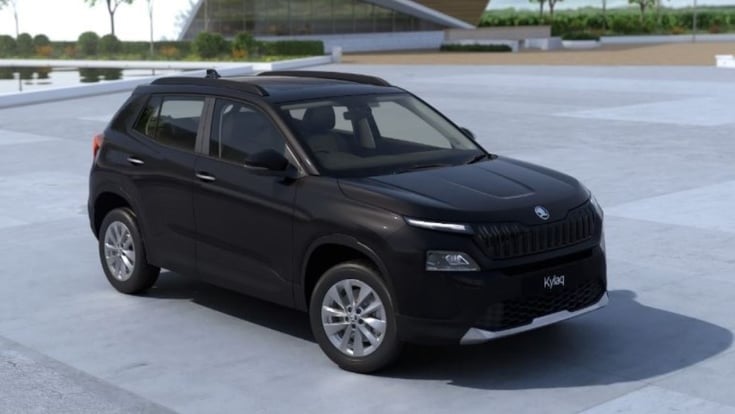
Skoda Kylaq Signature trim exterior
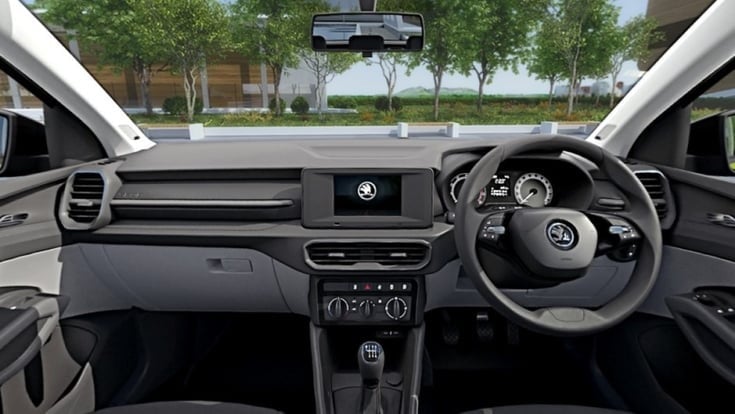
Skoda Kylaq Signature trim interior
 

Skoda Kylaq Signature trim

Features over Classic+
  • 16-inch silver alloy wheels
  • Black tailgate strip between the tail-lights
  • Tyre-pressure monitoring system (TPMS)
  • Paddle shifters (AT only)
  • 7-inch touchscreen infotainment system
  • Wired Android Auto and Apple CarPlay 
  • 2x USB Type-C ports (rear)
  • Auto-folding outside rearview mirrors (ORVMs)
  • Rear wiper and washer
  • Chrome garnish on AC vents and door handles
  • Rear AC vents
  • Sliding front centre armrest with storage space
  • Cooled glove box
  • Driver-side window one-touch up/down
  • Rain-sensing wipers (front)

Skoda Kylaq Signature+ – Rs 10.77 lakh-11.77 lakh

Gearbox options – 6MT, 6AT

Skoda Kylaq Signature+ trim exterior
Skoda Kylaq Signature+ trim interior
 

Skoda Kylaq Signature+ trim

Features over Signature
  • Shark-fin antenna
  • Chrome strip on outside door handles
  • Auto-folding ORVMs
  • Hill-hold assist
  • Rear parking camera with static guidelines
  • Auto headlights with follow-me-home function
  • Keyless entry and go
  • 10-inch touchscreen infotainment system
  • Wireless Android Auto and Apple CarPlay
  • 8-inch digital instrument cluster
  • Dash inserts
  • Leather-wrapped steering wheel
  • USB Type-C ports (front) 
  • 60:40 split-folding rear seats
  • Rear centre armrest with cup holders
  • Rear parcel tray
  • In-car connectivity suite

Skoda Kylaq Sportline – Rs 11.32 lakh to Rs 12.32 lakh

Gearbox options – 6MT, 6AT

Features over Signature+

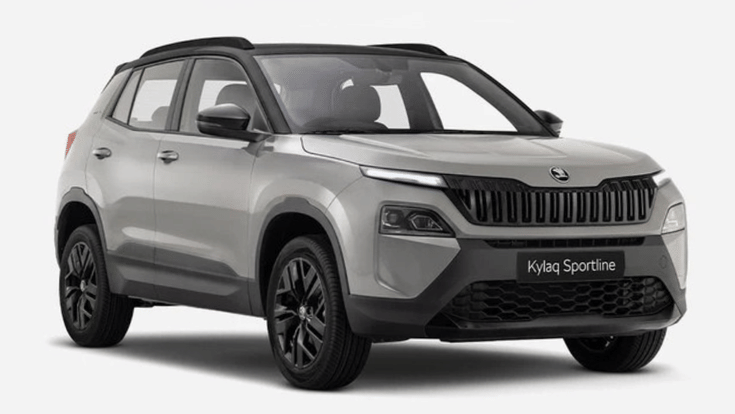
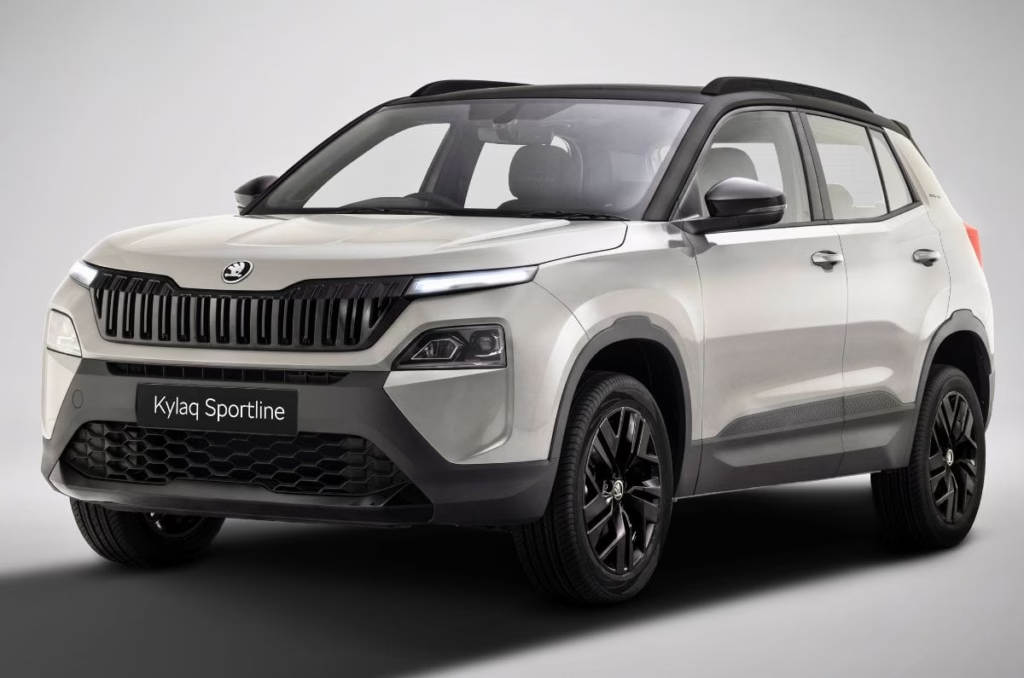
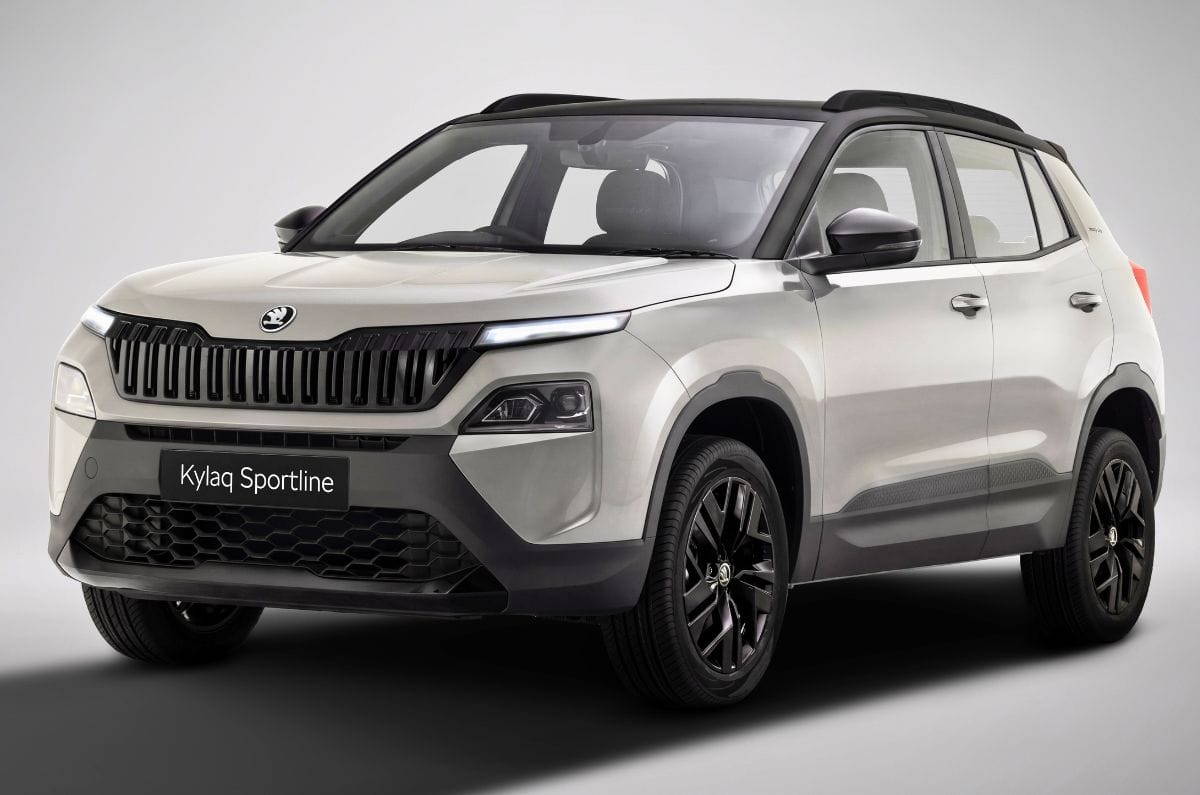
Skoda Kylaq Sportline
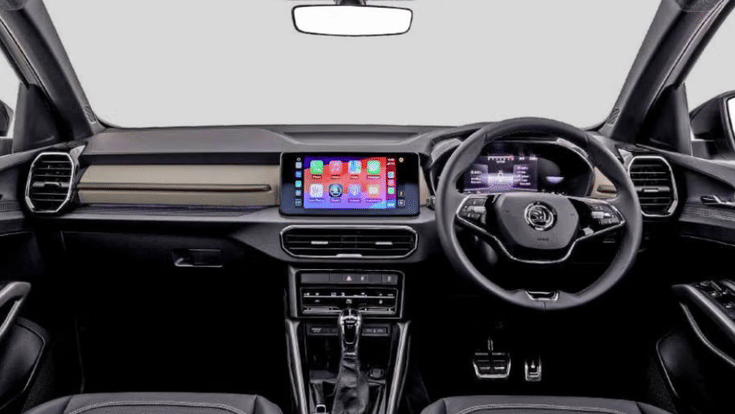
Skoda Kylaq Sportline interior
 

Skoda Kylaq Sportline trim


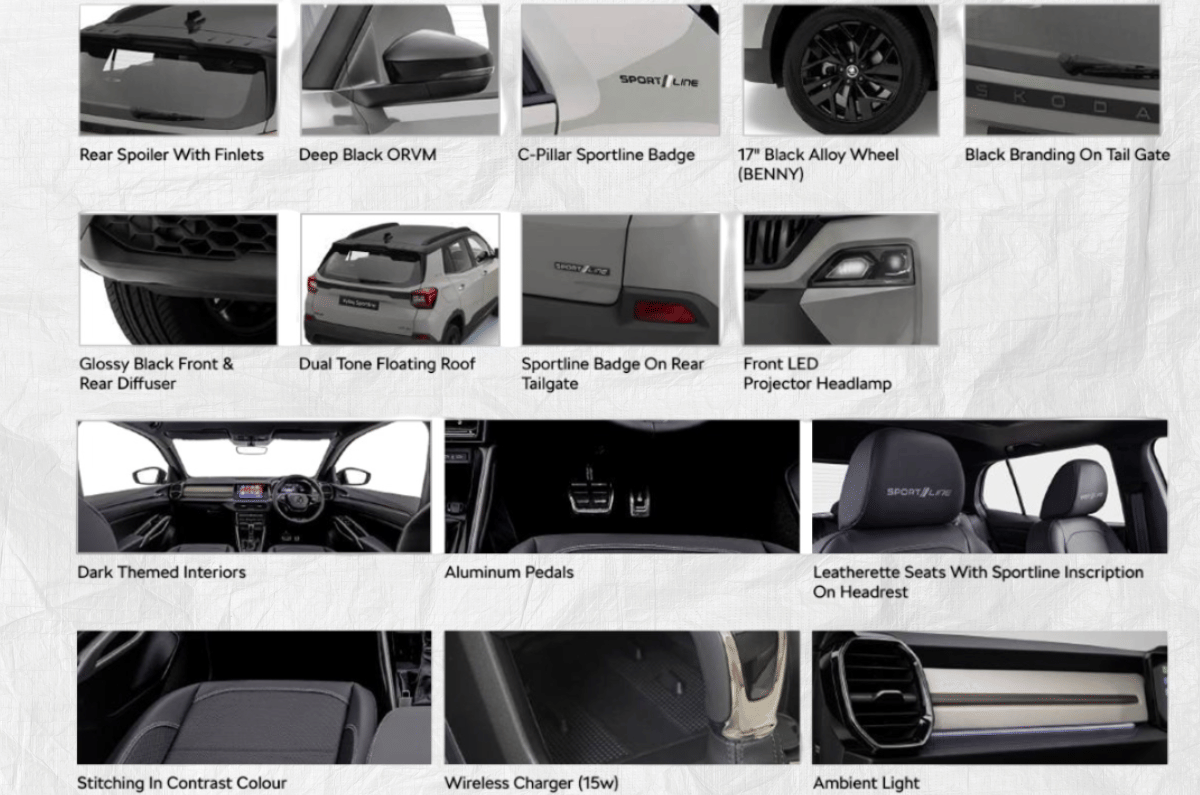
  • Black 17-inch alloy wheels
  • Rear spoiler with finlets 
  • Black ORVMs and branding 
  • Sportline badge on tailgate
  • Leatherette front armrest and door pads
  • White ambient lighting
  • Aluminium pedals 
  • Leatherette seat upholstery with Sportline inscription
  • LED projector headlamps 
  • LED fog lamps with cornering function
  • Wireless phone charger

Skoda Kylaq Prestige – Rs 11.75 lakh-12.75 lakh

Gearbox options – 6MT, 6AT

Skoda Kylaq Prestige trim exterior
Skoda Kylaq Prestige trim interior
 

Skoda Kylaq Prestige trim

Features over Signature+
  • Dual-tone 17-inch alloys
  • LED projector headlights
  • LED rear turn indicator and reverse lamp
  • Front LED fog lamps with static bending function
  • White ambient lighting
  • Leatherette upholstery on seats, front armrest and doors
  • Chrome parking brake tip
  • Ventilated front seats
  • Wireless phone charger
  • Anti-theft alarm

Skoda Kylaq Prestige+ – Rs 11.99 lakh-12.99 lakh

Gearbox options – 6MT, 6AT

Feature over Prestige

  • 6-way powered front seats

Which Skoda Kylaq variant should you consider?

The mid-spec Signature+ trim offers good value for money

Starting at Rs 10.77 lakh, the mid-spec Signature+ trim offers dual digital screens, a single-pane sunroof, a rear parking camera with sensors, auto AC with rear vents, all-LED lighting and 16-inch silver alloy wheels, making it a value-for-money offering. While you do miss out on features such as a wireless phone charger and powered and ventilated front seats, the premium you have to pay for these is not justifiable. Moreover, this trim is available with both manual and automatic gearbox options.

However, if you are on a budget, you can consider the lower Signature trim, which offers a smaller touchscreen with wired Android Auto and Apple CarPlay, rear wiper and washer, rear AC vents and a sunroof. This trim also comes in both manual and automatic variants, and priced at Rs 9.43 lakh and Rs 10.43 lakh, respectively, they still offer a lot of value.

Although the Classic+ trim is also well-equipped for its price, the lack of an infotainment system makes recommending it a bit more challenging. However, the 7-inch OEM infotainment system with wired smartphone connectivity, offered with the higher Signature trim, is available in the online classifieds marketplace under Rs 10,000. If you are open to retrofitting it at your authorised dealership, the Classic+ trim becomes the most value-for-money option on a strict budget. 
Prices are ex-showroom, India.

Skoda Kylaq Sportline launched at Rs 11.32 lakh

Skoda Kylaq Sportline launched at Rs 11.32 lakh

Skoda has launched the Kylaq Sportline in India with prices ranging from Rs 11.32 lakh to Rs 12.32 lakh (ex-showroom). The launch follows our June 2026 report about a sportier-looking Sportline variant joining the Kylaq range. The Kylaq Sportline is positioned between the mid-spec Signature+ trim and the higher-spec Prestige trim, and is offered with a few blacked-out exterior and interior elements for a sportier look.

Skoda Kylaq Sportline: What’s new?

Gets blacked-out elements outside, ‘Sportline’ badges and a new spoiler

Like the Sportline variants of the Kushaq and Slavia facelift, the Kylaq Sportline gets several blacked-out elements that give it a sportier appearance. These include the 17-inch alloy wheels, ORVMs, faux skid plates on both bumpers, and the roof. It also features a roof-mounted spoiler with vertical strips. The C-pillar and tailgate carry new ‘Sportline’ badges, while the Skoda wordmark between the taillights is finished in black for a more distinctive look.

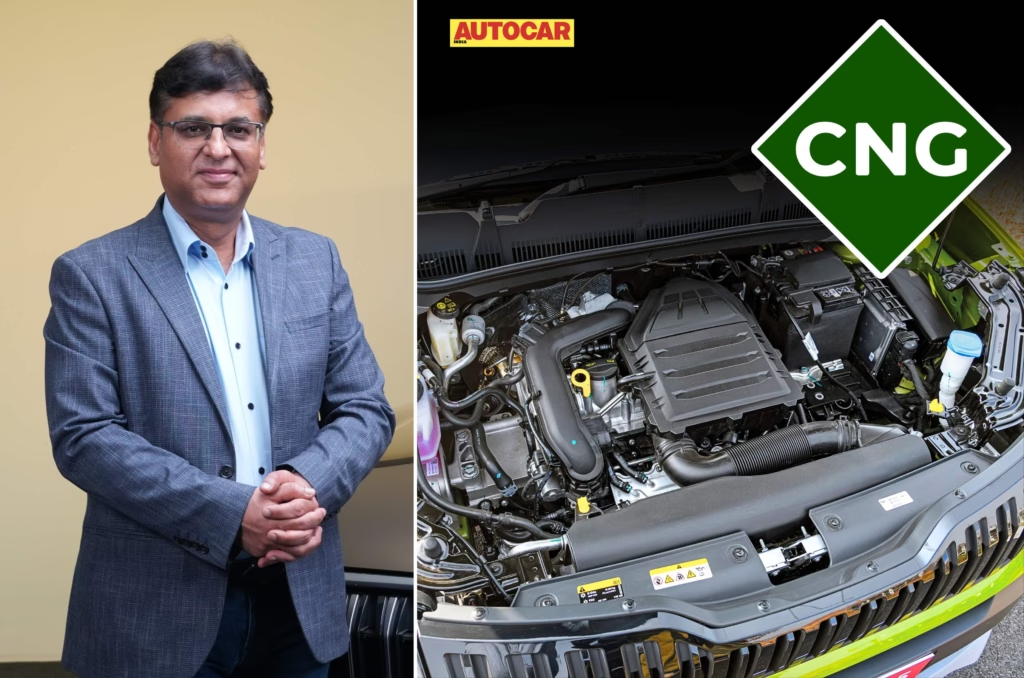
Skoda evaluating CNG with 1.0 TSI-powered Slavia, Kushaq, Kylaq

Skoda evaluating CNG with 1.0 TSI-powered Slavia, Kushaq, Kylaq

Skoda is planning to expand its product portfolio in India, including the possible introduction of a CNG powertrain with the 1.0-litre turbo-petrol engine powering the Kylaq, Slavia and Kushaq. Speaking about the plans, Skoda India brand director Ashish Gupta told our sister publication Autocar Professional, “The 1.0-litre engine and the MQB A0-IN platform are common across the Kylaq, Kushaq and Slavia. So, all three products are open.”

Skoda’s CNG plans in India

Skoda’s powertrain diversification plan is an attempt to stay relevant in India

Talking about the CNG plans, Gupta further said, “The Middle East crisis and policy noise on ethanol blending have affected consumer sentiment on petrol, resulting in a drop in market share. To stay relevant, we have to diversify.” “The Kylaq segment is the priority where we are trying to tackle CNG,” he added.

The Skoda Kylaq is powered by a 1.0-litre, three-cylinder, direct-injection turbo-petrol engine, which it shares with the larger Slavia and Kushaq. The engine produces 115hp and 172Nm and is available with both manual and automatic transmission options.

For the potential CNG version, Skoda is evaluating how to balance fuel efficiency with the performance expected from its models. Gupta said, “Compared to petrol, a 10-15 percent drop in performance with CNG is acceptable to customers. So I have to make sure that I get the right product, right solution, at the right value proposition, at the right time.”

Gupta also believes there is scope for CNG-powered cars at relatively higher price points, beyond the traditionally budget-focused segment. “There is a potential for the right car at the right price point. Even premium customers who are okay with buying a CNG car purely for the economic benefits they derive,” he said.

Skoda Kylaq long-term review, 3,800km report

Skoda Kylaq long-term review, 3,800km report
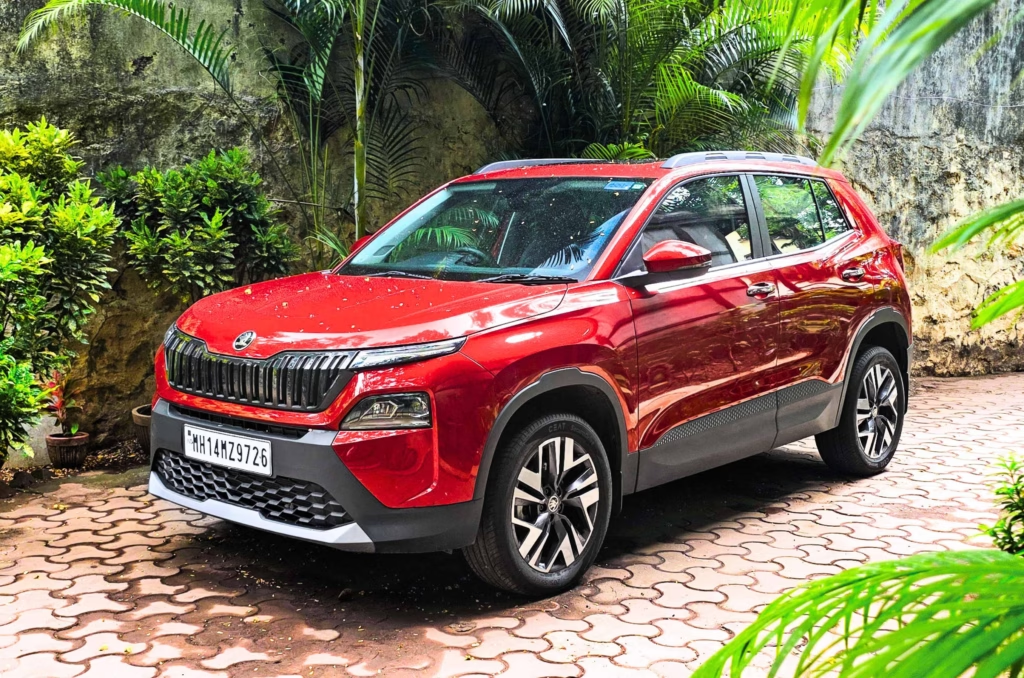
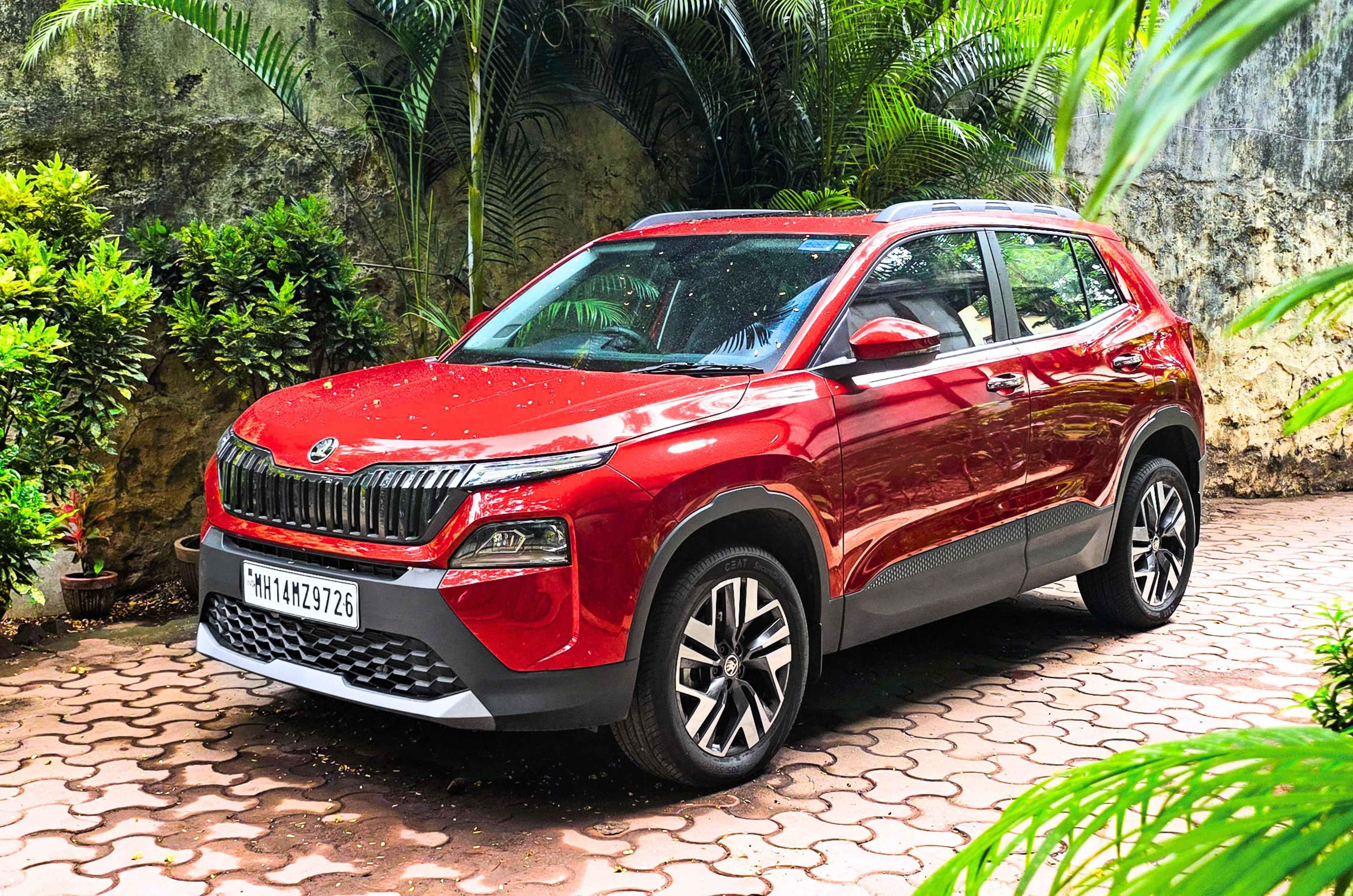
Skoda Kylaq in red colour

You could argue there was no better long-term test for the Skoda Kylaq than being driven 19,351 kilometres from India to Czechia. However, for those of us who can’t go on a two-month-long adventure full of culture, cuisine and continent-crossing, here’s what it’s been like trudging through Mumbai traffic for the last few weeks.

I’ve been fascinated by the Kylaq since its launch in early 2025, and apart from a few quick peeks at it when it came in for other shoots, I had never really driven one before this. So, now that it’s finally joined the Autocar India fleet, I’ve been more than happy to take it on for its first couple of weeks. And just as a proposition alone, I’m amazed that Group partner Volkswagen didn’t immediately jump on this idea and do a compact SUV in parallel. Guess we’ll just have to wait until 2027.

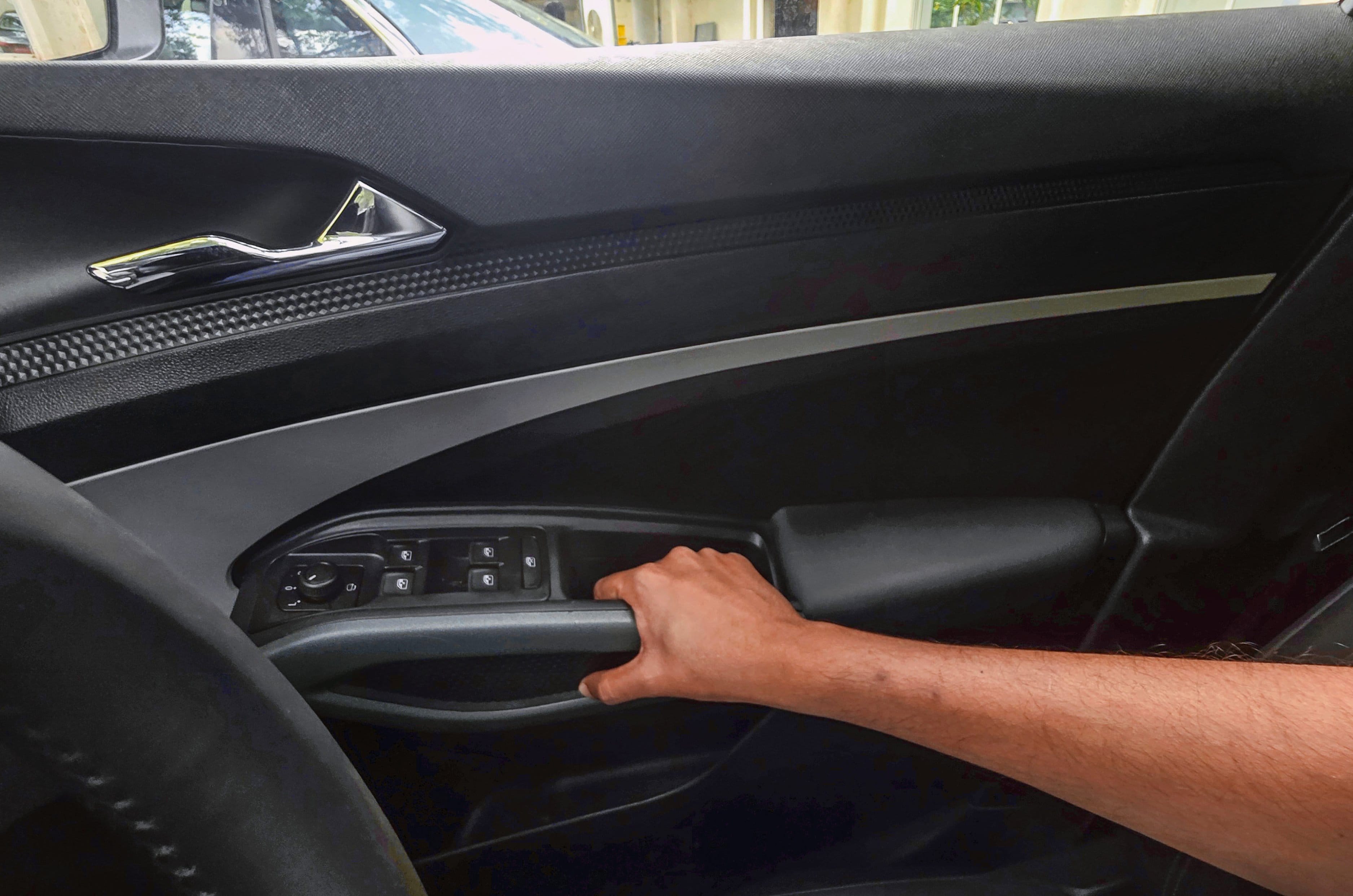
Skoda Kylaq interior door handle
Feels reassuringly solid, from the door shut to the driving dynamics.

The formula is simple enough – a Kushaq, but slightly smaller and using only the lesser 1.0-litre engine. But the more time I spend in here, the more I wonder if there’s any need for a Kushaq 1.0 TSI at all – this thing offers pretty much everything it does. At no moment does it feel lesser in any way – same step up into the cabin, same solid slam on door shut, same high-set driving position. And features? Apart from the Kushaq’s newly added panoramic sunroof, bigger driver’s display and rear massaging seats, it has everything else!

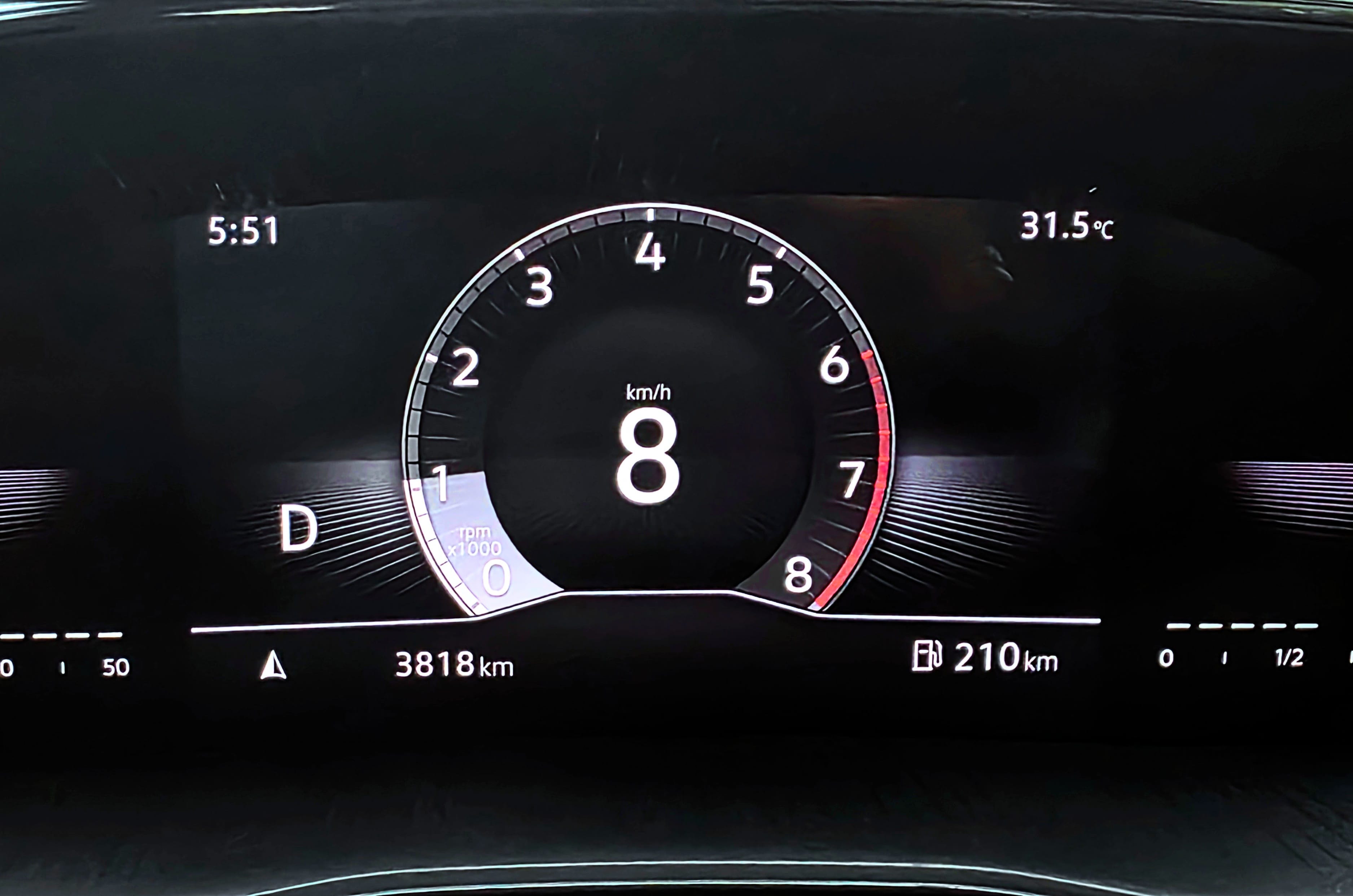
Skoda Kylaq driver's display
Severe turbo lag followed by sudden burst of power frustrating in stop-go traffic.

There are two mechanical changes that I hope make their way to the Kylaq soon, though. The first is the 8-speed gearbox, which should help mask one of this car’s shortcomings – turbo lag. The older 6-speed AT in our Kylaq may be smooth while you’re on the move, but at crawling speeds, where I spend most of my time, it can never figure out if it needs to be in first or second, and sometimes changes its mind at the worst possible moment. If it chooses first, it will lurch you forward aggressively, but if it chooses second, it traps you in the dreaded lag zone. Off boost, this 999cc engine feels overwhelmed by the Kylaq’s 1,255kg.

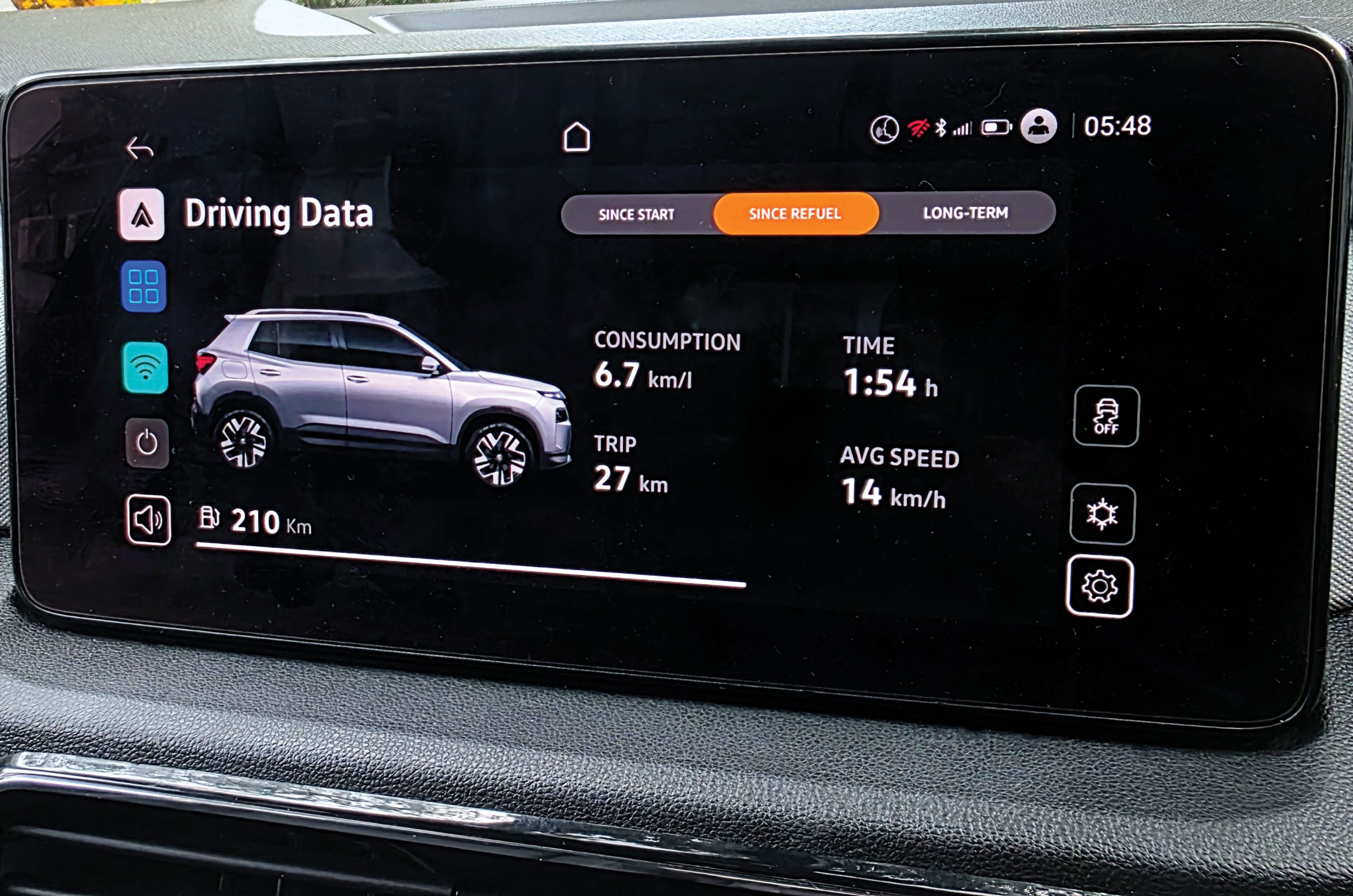
Skoda Kylaq touchscreen
Single-digit fuel economy unexpected, unacceptable in a compact car.

Frustratingly jerky movement aside, where this indecisiveness has really hurt more is my wallet. The constant shifting, switching on and off boost and general inconsistent progress have hit the fuel economy very hard, and I struggle to get past 8kpl on my admittedly slow daily commute. Some of it might be down to the sudden advent of E20 fuel, but eight kilometres per litre in a compact car is criminal. I used to average 10kpl in our 1.5-litre TSI DSG Slavia a few years ago, and the team has been getting more out of our 2.0-litre TSI VW Tayron. So, it’s really down to an overstressed engine and a clumsy gearbox.

The other mechanical change is far less of a problem, and that’s the AC. While this still uses the fixed-geometry compressor from the original Kushaq, it’s a smaller car, so cooling the cabin is rarely an issue, and I drove it through at least one week of our awful heat wave. The thing is, you can feel it’s working overtime to keep the cabin cool, and when set to auto mode, the fan stays on full blast for most of my journey. I often find myself turning it down to have a conversation or enjoy my music.

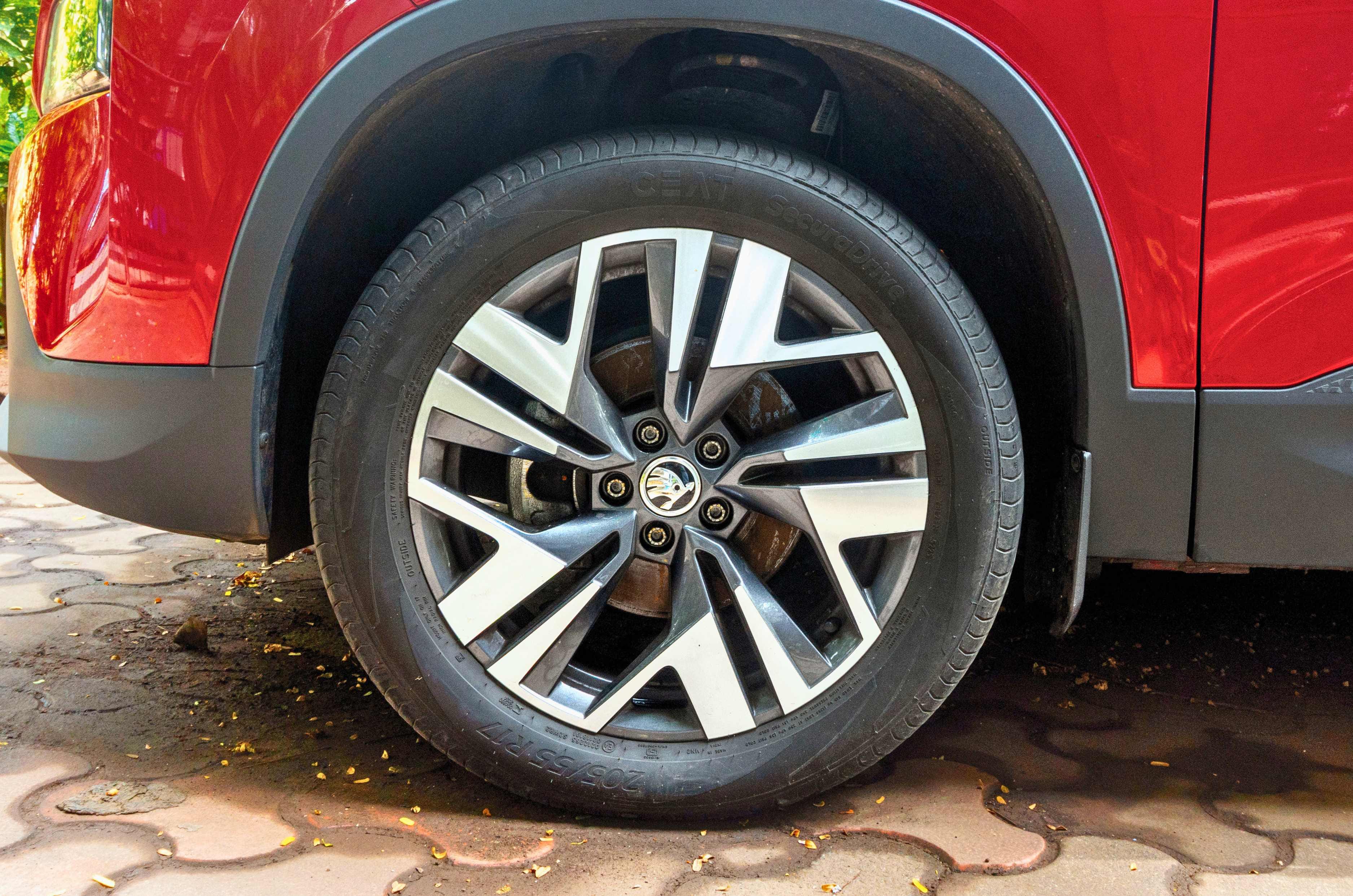
Skoda Kylaq alloy wheel
Large, shiny 17-inch alloy wheels do well to enhance Kylaq’s road presence.

These two niggles aside, it’s a very pleasing experience, as you might expect from a slightly smaller Kushaq. There’s a certain toughness to it you don’t find in cars from this segment that almost encourages you to seek out potholes and slam through them. There’s a similar firmness to the ride, but I actually like that; it suits my driving style better than something overly soft and rolly. And I’m also willing to forgive a lot for how good those 17-inch wheels look; a bold choice when most of the segment is still running 16s.

I’ll delve more into the interior, tech and other things in a future update, but in this short first experience, I can see how the Kylaq made it to Prague so comfortably and without incident. It’s compact only in size and is a uniquely European addition to the compact SUV segment.

What the Volkswagen Tera previews for new India-bound compact SUV

What the Volkswagen Tera previews for new India-bound compact SUV
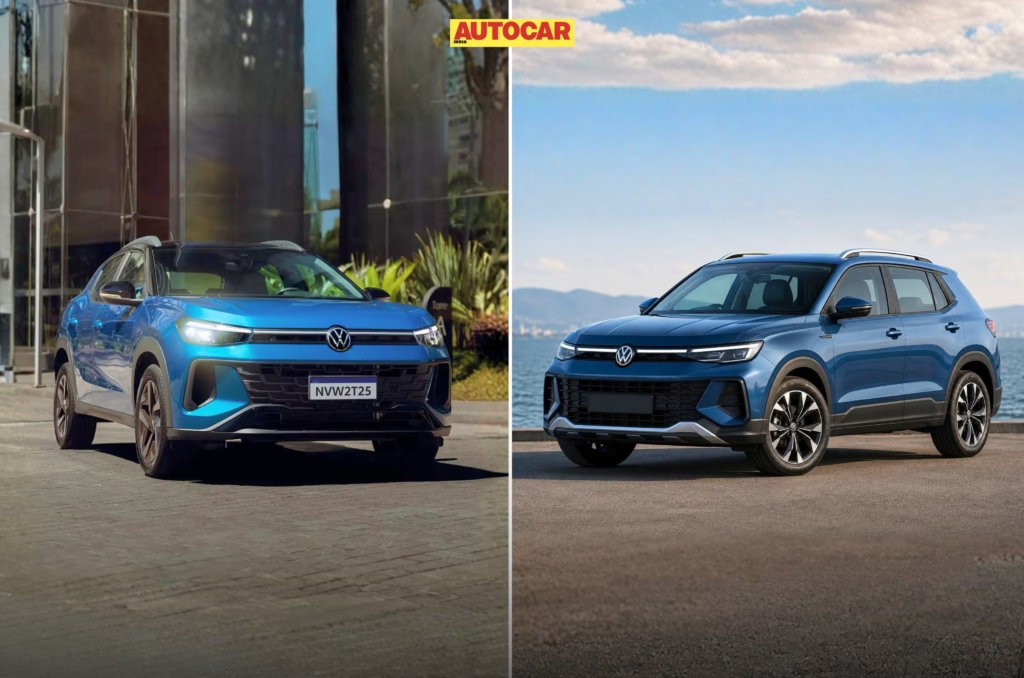
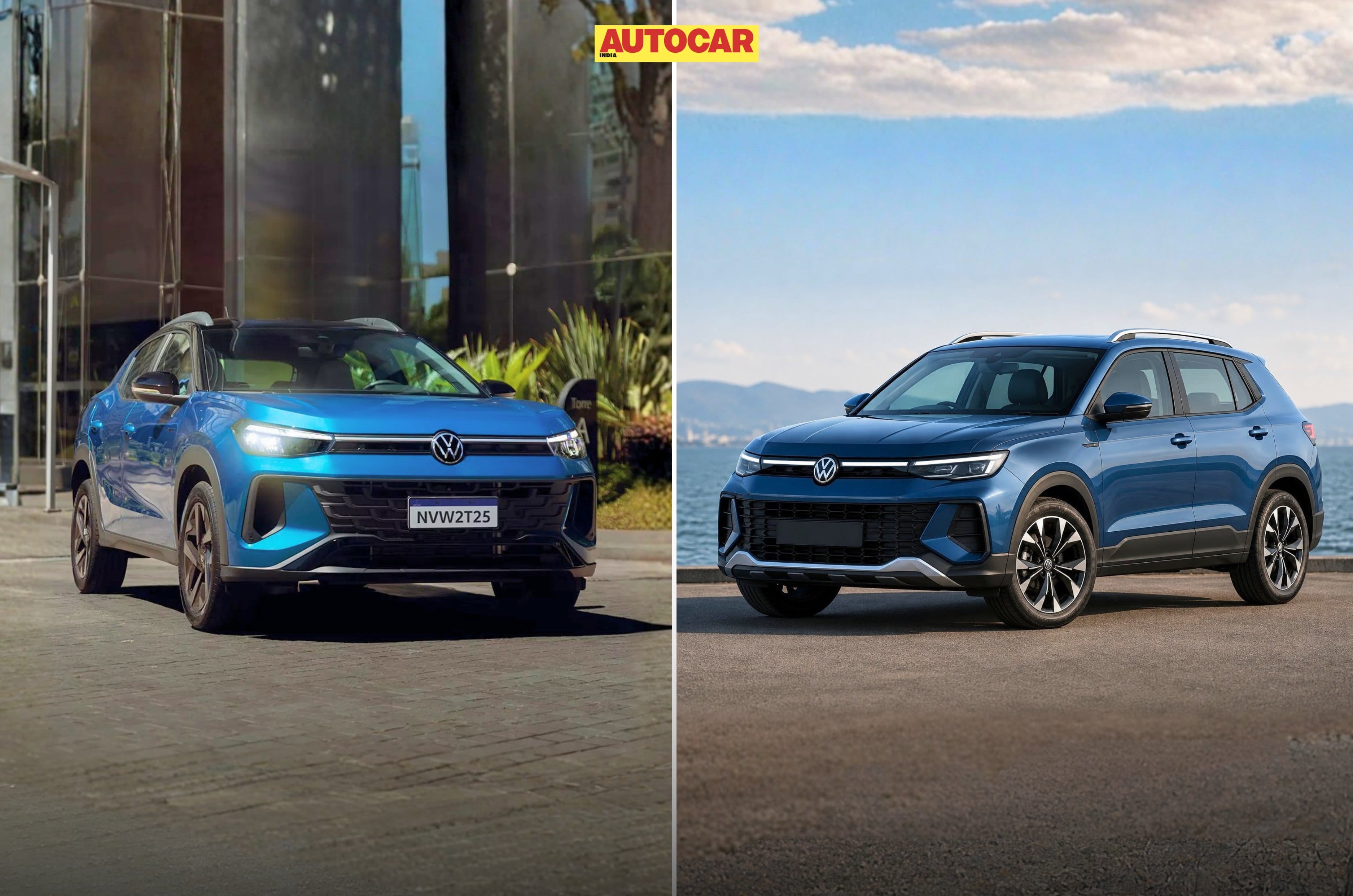
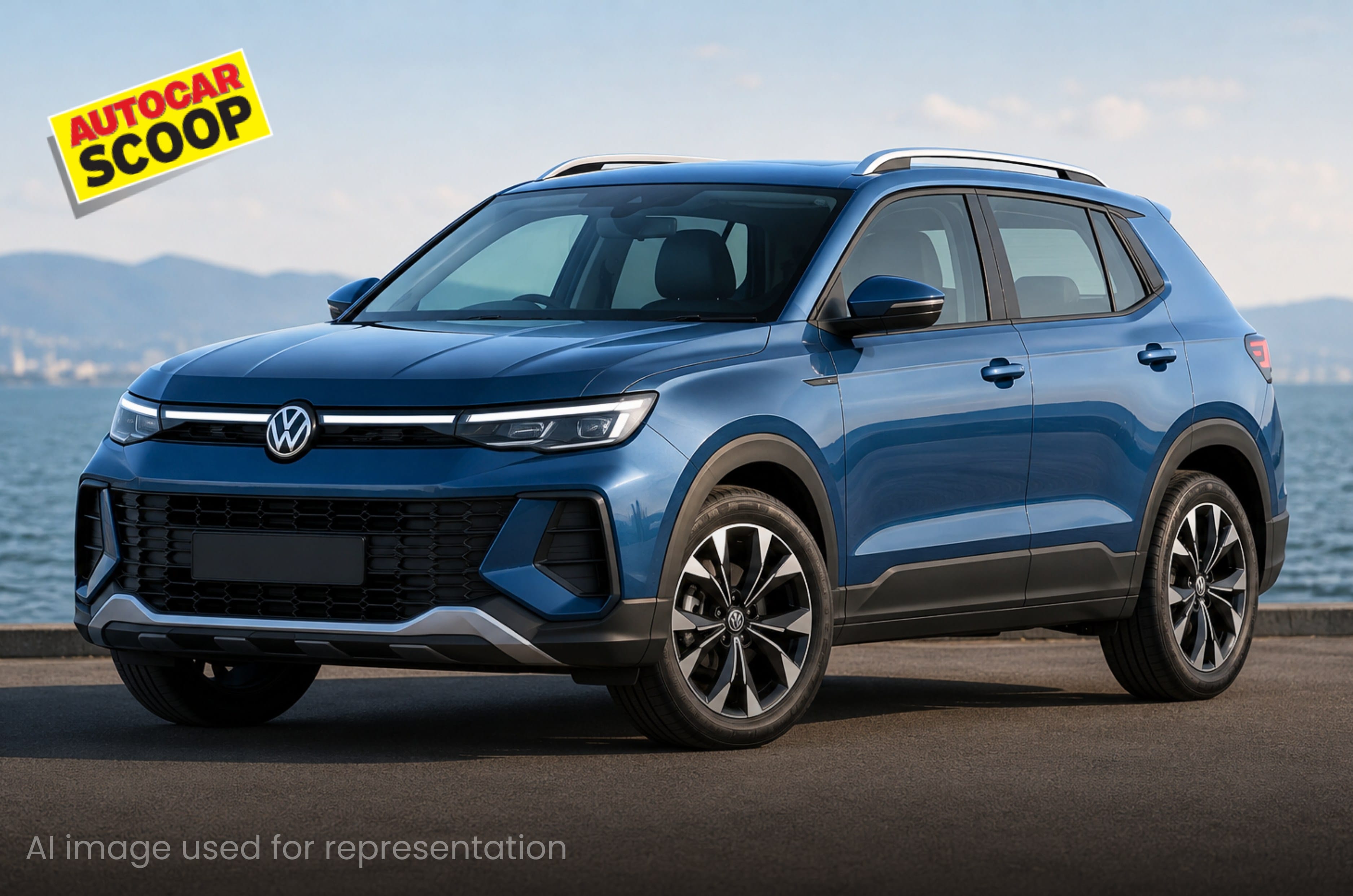
Volkswagen Tera and Volkswagen compact SUV

Volkswagen India has finally begun working on a new compact SUV, which will be a badge-engineered version of the Skoda Kylaq. This will mark its return to the sub-4m category four years after the Polo hatchback’s discontinuation in 2022. At the same time, the upcoming compact SUV is also expected to be the most affordable car in its portfolio in India when it arrives in 2027.

On the other hand, the carmaker already sells an entry-level SUV in the Brazilian market, called the Tera. It is closely related to the Skoda Kylaq and possibly hints at elements that are expected to arrive on VW’s upcoming compact SUV for India. 

Volkswagen compact SUV: Expected dimensions 

The Tera is 4,151mm long, 1,773mm wide, 1,504mm tall, and gets a 2,566mm long wheelbase. Interestingly, the Terra’s wheelbase is identical to that of the Skoda Kylaq. The India-bound VW compact SUV is expected to have the same wheelbase as the Kylaq, but compared to the Tera, it will be shorter in length to fit India’s sub-4m tax slab.

Volkswagen compact SUV: Expected platform and powertrain 

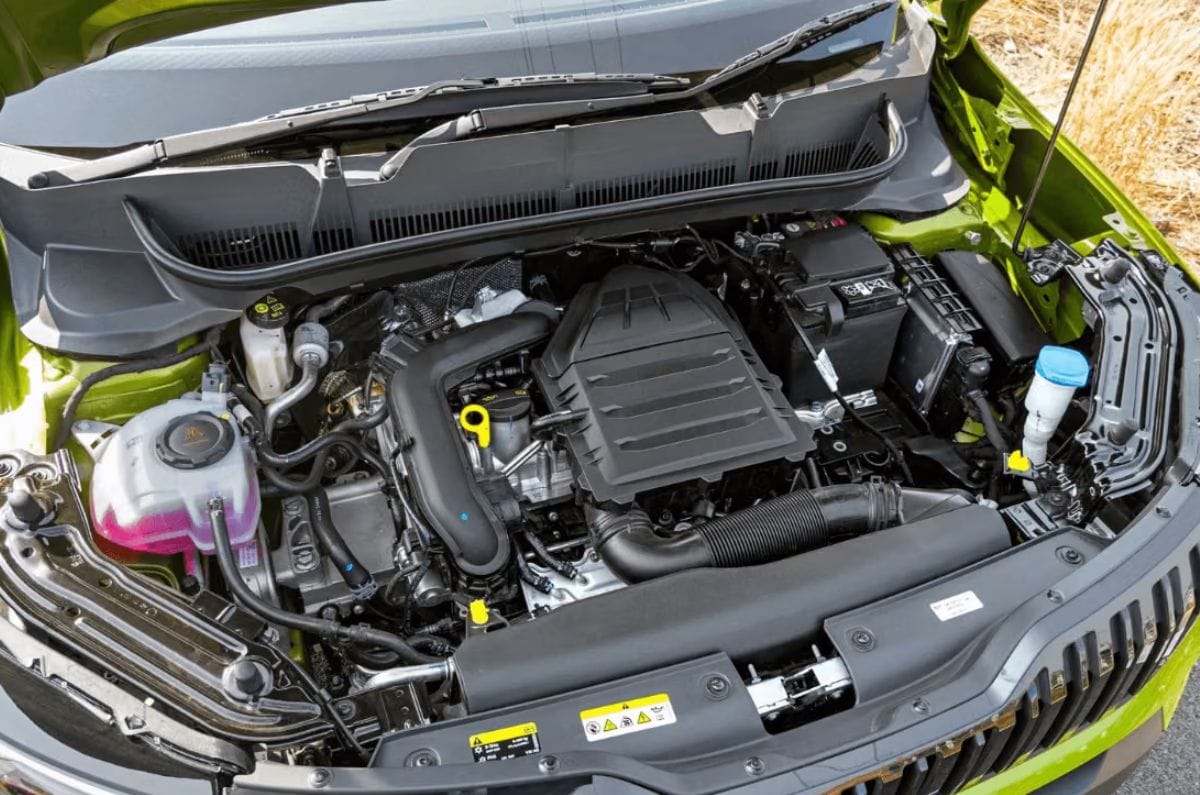
Skoda Kylaq 1.0-litre turbo-petrol engine used for representation.

The Volkswagen Tera sits on the brand’s MQB A0 architecture, while the VW Skoda 2.0 cars (Kushaq, Kylaq, Slavia, Virtus, Taigun) utilise the MQB A0 IN platform. The latter is a close variation of the former and will underpin VW’s upcoming compact SUV. 

On the powertrain front, the compact SUV will utilise the same 1.0-litre direct-injection turbo-petrol engine as the Tera, which develops 116hp and 165Nm of torque. But power figures are likely to be closer to the Kylaq’s 1.0-litre turbo-petrol, which produces 115hp and 178Nm of torque. In the case of the VW compact SUV, a manual gearbox would be offered as standard, but automatic versions would swap out the 6-speed AT for the new 8-speed that does duty in the Taigun.

Volkswagen compact SUV: Expected exterior design 

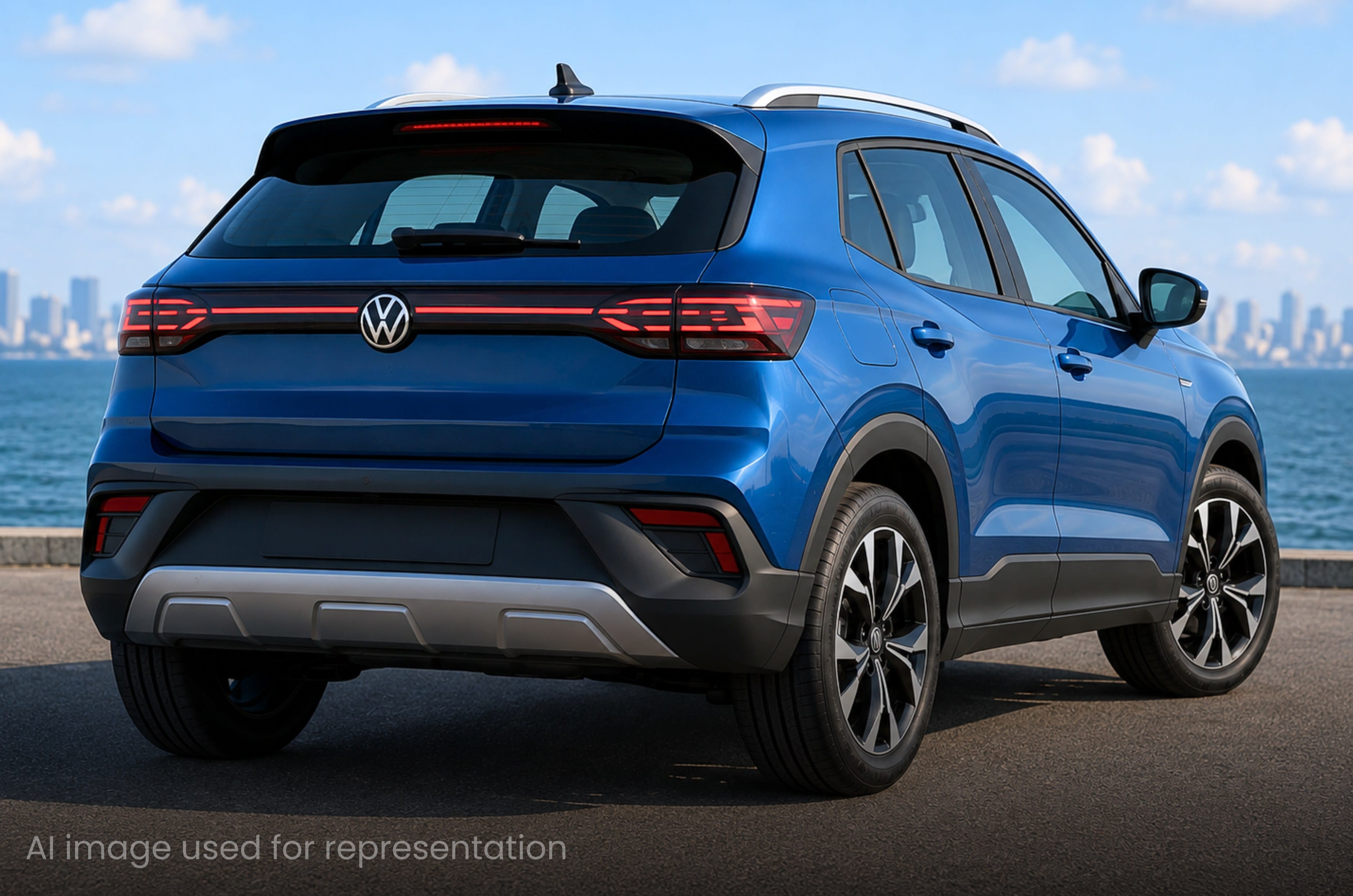
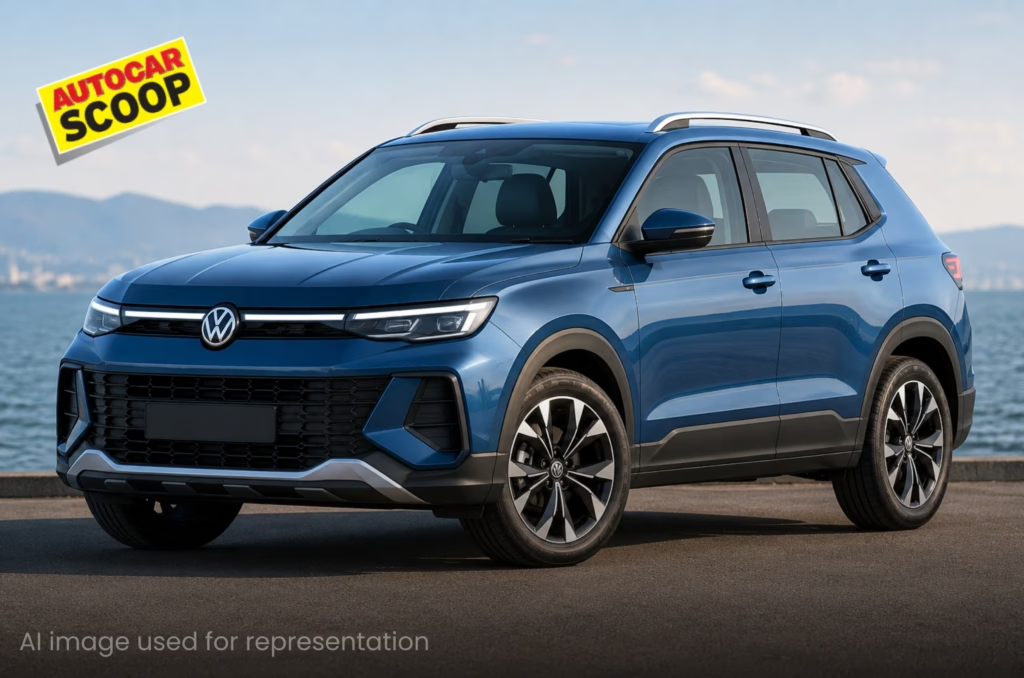
Styling-wise, the upcoming Volkswagen compact SUV is expected to adopt the Tera’s design but is likely to come with some India-specific changes. This could include slim LED headlamps connected by a thin DRL strip, a connected LED tail-lamp setup, cladding for the bumpers and door sills, and roof rails. Volkswagen could also bring illuminated logos, as seen on the Taigun and Tayron R Line. Alloy wheels are expected to have a dual-tone look. Potentially, the brand could spruce things up with GT versions with badges and cosmetic upgrades over standard versions. 

Volkswagen compact SUV: Expected interior design and features

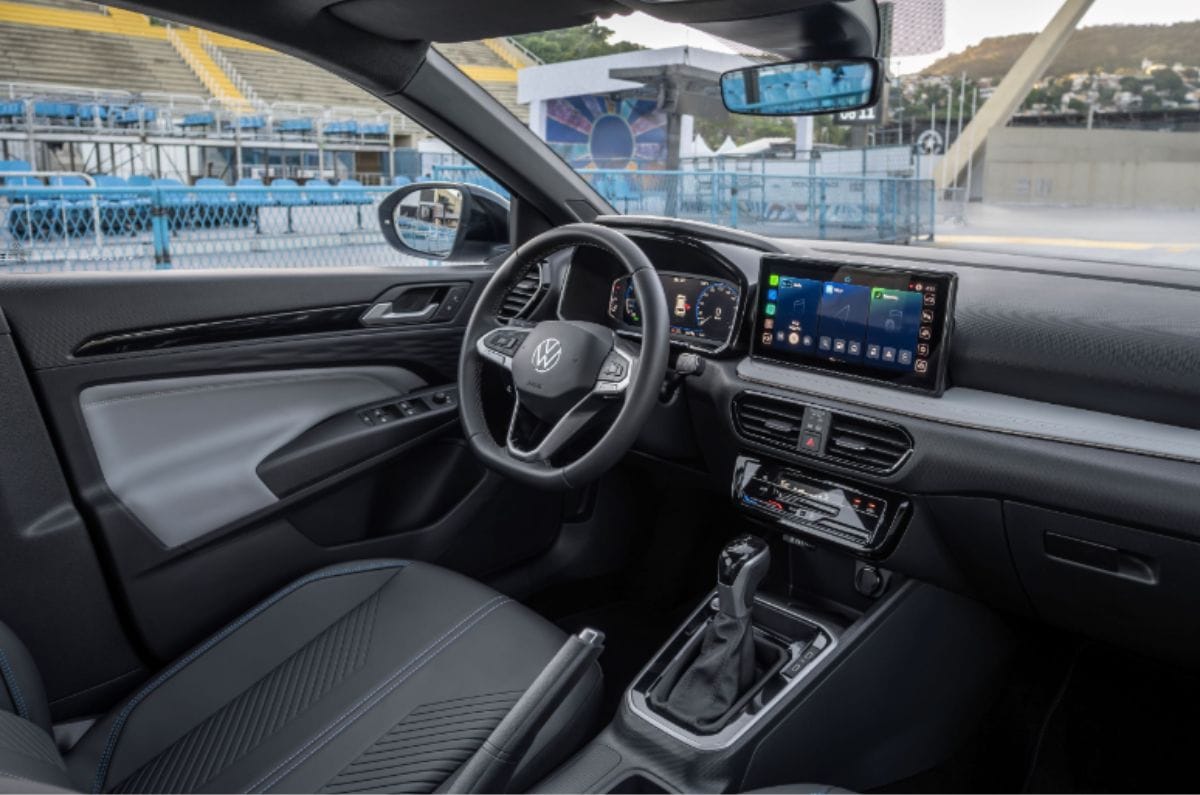
LHD VW Tera interior used for representation.

The Volkswagen Tera already has a lot of commonality with the India 2.0 cars, and some of these parts will likely be carried over to the upcoming compact SUV as well. This could include the flat-bottom three-spoke steering wheel, gear knob, centre console and HVAC control unit, the designs of which look similar to those on the Taigun. Additionally, it could also get a similar 10.25-inch digital driver’s display that’s seen on the Taigun. The Tera, however, is an LHD model, which will be reversed for the India-spec version. 

As for equipment, the Volkswagen compact SUV could likely mirror the Skoda Kylaq’s feature set. For reference, the latter gets a 10-inch infotainment system with wireless CarPlay and Android Auto, ambient lighting, a digital driver’s display, a single-pane sunroof, powered and ventilated front seats, automatic climate control and a wireless phone charger. 

Volkswagen Kylaq-based compact SUV confirmed for India

Volkswagen Kylaq-based compact SUV confirmed for India
Volkswagen compact SUV India launch details

Volkswagen has been working on its version of the Skoda Kylaq, which we first reported on six months ago. Volkswagen India has now secured global approval for the project, which is estimated to cost around 25 million euros (Rs 275 crore). The green light paves the way for Volkswagen’s re-entry into India’s high-volume sub-four-metre vehicle market, which the brand had exited following the discontinuation of the Ameo compact sedan and Polo hatchback.

  1. VW compact SUV to share powertrain options with Kylaq 
  2. Differentiation will come in the form of design, features and positioning 
  3. Will mark VW’s return to the sub-4m space since the discontinuation of Polo 

Volkswagen compact SUV: what to expect?

The programme will mark an important step in a broader expansion of Volkswagen’s India portfolio, allowing the brand to reach customers in segments below the Taigun and Virtus.

The new compact SUV will essentially be a badge-engineered version of the Kylaq, but will receive substantial design changes to give it a distinct Volkswagen identity. The differentiation is expected to extend to the exterior, interior, features and positioning.
The 1.0-litre TSI engine will be shared with the Kylaq

It will use the same 1.0-litre TSI petrol engine as the Kylaq, paired with manual and automatic gearbox options. At launch, the Volkswagen compact SUV will get an 8-speed automatic transmission rather than the 6-speed automatic currently offered on the Kylaq. The Kylaq, however, is also expected to receive the 8-speeder with its next update.

It’s unclear what the compact SUV will be named upon launch, but Volkswagen already sells the Tera in the Brazilian market that’s closely related to the Skoda Kylaq. It remains to be seen what it will be called here in India. Prices can be expected to range between Rs 8-13 lakh (ex-showroom). 

Scope of the compact SUV segment 

The model will give Volkswagen access to one of India’s largest vehicle categories. The broader sub-four-metre SUV market, comprising compact and micro-SUVs, currently generates monthly sales of around 1.1 lakh units. The category accounts for around 30 percent of India’s passenger vehicle sales and more than half of utility vehicle volumes. Its growth has been supported by hatchback buyers moving to SUVs, the drastic reduction of GST from 28 percent to 18 percent last year on cars meeting prescribed length and engine-capacity limits, and the availability of multiple powertrain options.

The market is led by Tata Motors with the Punch and Nexon, followed by Maruti Suzuki with the Fronx and Brezza. Sister brand Skoda too has grown significantly after the launch of the Kylaq last year, further underscoring the need for a compact SUV in VW’s portfolio. 

This will mark VW’s return to the compact SUV space since the Polo was discontinued in 2022. 

Volkswagen’s locally produced portfolio is currently limited to the Taigun and Virtus, both positioned above the compact vehicle market. The Kylaq-based SUV will lower the entry point to the Volkswagen brand and give it access to a substantially larger customer base.

Additional volumes from the compact SUV could also improve capacity utilisation at Skoda Auto Volkswagen India’s Chakan plant and deliver better economies of scale, helping lower costs for both Volkswagen and Skoda.