Petrol Diesel Price Today: हर दिन की शुरुआत सिर्फ सूरज की किरणों से नहीं होती, बल्कि पेट्रोल और डीजल की नई कीमतों से भी होती है, जो आम आदमी की जेब पर सीधा असर डालती हैं। सुबह 6 बजे देश की तेल विपणन कंपनियां (OMCs) ताजा दरें जारी करती हैं, जो अंतरराष्ट्रीय बाजार में कच्चे तेल की कीमतों और डॉलर-रुपए की विनिमय दर में आए बदलावों पर आधारित होती हैं। ये बदलाव रोजमर्रा की जिंदगी को प्रभावित करते हैं, चाहे वो ऑफिस जाने वाला व्यक्ति हो या फल-सब्जी बेचने वाला व्यापारी।
ऐसे में हर दिन की कीमतों की जानकारी रखना सिर्फ जरूरी ही नहीं, बल्कि समझदारी भी है। सरकार की यह प्रणाली पारदर्शिता सुनिश्चित करती है ताकि उपभोक्ताओं को किसी तरह की भ्रमित जानकारी न मिले।
आपके शहर में आज का पेट्रोल-डीजल का भाव
ये रहे 15 जुलाई 2026 के प्रमुख शहरों के पेट्रोल-डीजल के ताजा रेट —
नई दिल्ली: पेट्रोल 102.12 रुपये | डीजल 95.20 रुपये
मुंबई: पेट्रोल 111.18 रुपये | डीजल 97.83 रुपये
कोलकाता: पेट्रोल 113.47 रुपये | डीजल 99.82 रुपये
चेन्नई: पेट्रोल 107.77 रुपये | डीजल 99.55 रुपये
गुरुग्राम: पेट्रोल 102.77 रुपये | डीजल 95.44 रुपये
नोएडा: पेट्रोल 102.12 रुपये | डीजल 95.56 रुपये
बेंगलुरु: पेट्रोल 110.93 रुपये | डीजल 98.80 रुपये
भुवनेश्वर: पेट्रोल 109.92 रुपये | डीजल 100.92 रुपये
चंडीगढ़: पेट्रोल 98.10 रुपये | डीजल 86.09 रुपये
हैदराबाद: पेट्रोल 115.69 रुपये | डीजल 103.82 रुपये
जयपुर: पेट्रोल 112.66 रुपये | डीजल 97.78 रुपये
लखनऊ: पेट्रोल 102.05 रुपये | डीजल 95.55 रुपये
पटना: पेट्रोल 113.35 रुपये | डीजल 99.36 रुपये
तिरुवनंतपुरम: पेट्रोल 115.49 रुपये | डीजल 104.40 रुपये
पिछले दो साल से स्थिर क्यों हैं कीमतें?
मई 2022 के बाद से केंद्र और कई राज्यों द्वारा टैक्स में कटौती की गई, जिसके बाद पेट्रोल-डीजल की कीमतों में स्थिरता देखी जा रही है। हालांकि अंतरराष्ट्रीय बाजार में उतार-चढ़ाव होता रहता है, फिर भी भारतीय उपभोक्ताओं के लिए कीमतें तुलनात्मक रूप से स्थिर बनी हुई हैं।
किन कारणों से तय होती हैं ईंधन की कीमतें?
कच्चे तेल की कीमतें:
पेट्रोल और डीजल का उत्पादन मुख्य रूप से कच्चे तेल से होता है। जब अंतरराष्ट्रीय स्तर पर कच्चे तेल की कीमतें बढ़ती हैं, तो इसका असर सीधे भारतीय बाजार पर पड़ता है।
डॉलर के मुकाबले रुपया:
भारत अधिकतर कच्चा तेल आयात करता है, और यह डॉलर में खरीदा जाता है। यदि रुपया कमजोर होता है, तो ईंधन महंगा हो जाता है।
सरकारी टैक्स और शुल्क:
केंद्र और राज्य सरकारें पेट्रोल-डीजल पर भारी टैक्स लगाती हैं, जो खुदरा मूल्य का बड़ा हिस्सा होते हैं। यही कारण है कि राज्यों में कीमतों में अंतर होता है।
रिफाइनिंग की लागत:
कच्चे तेल को इस्तेमाल लायक बनाने की प्रक्रिया (रिफाइनिंग) में भी खर्च होता है। ये लागत कच्चे तेल की गुणवत्ता और रिफाइनरी की क्षमता पर निर्भर करती है।
मांग और आपूर्ति का संतुलन:
बाजार में ईंधन की मांग अगर बढ़ जाती है, तो कीमतें भी ऊपर जाने लगती हैं। खासकर त्योहारों, गर्मी या सर्दी के मौसम में ईंधन की खपत ज्यादा होती है।
कैसे करें अपने शहर की कीमतें SMS से चेक?
अगर आप मोबाइल से ईंधन की कीमत जानना चाहते हैं, तो ये प्रक्रिया आसान है:
Indian Oil ग्राहक: अपने शहर का कोड टाइप करें और उसे “RSP” के साथ 9224992249 पर भेजें।
BPCL ग्राहक: “RSP” लिखकर 9223112222 पर भेजें।
HPCL ग्राहक: “HP Price” लिखकर 9222201122 पर भेजें।
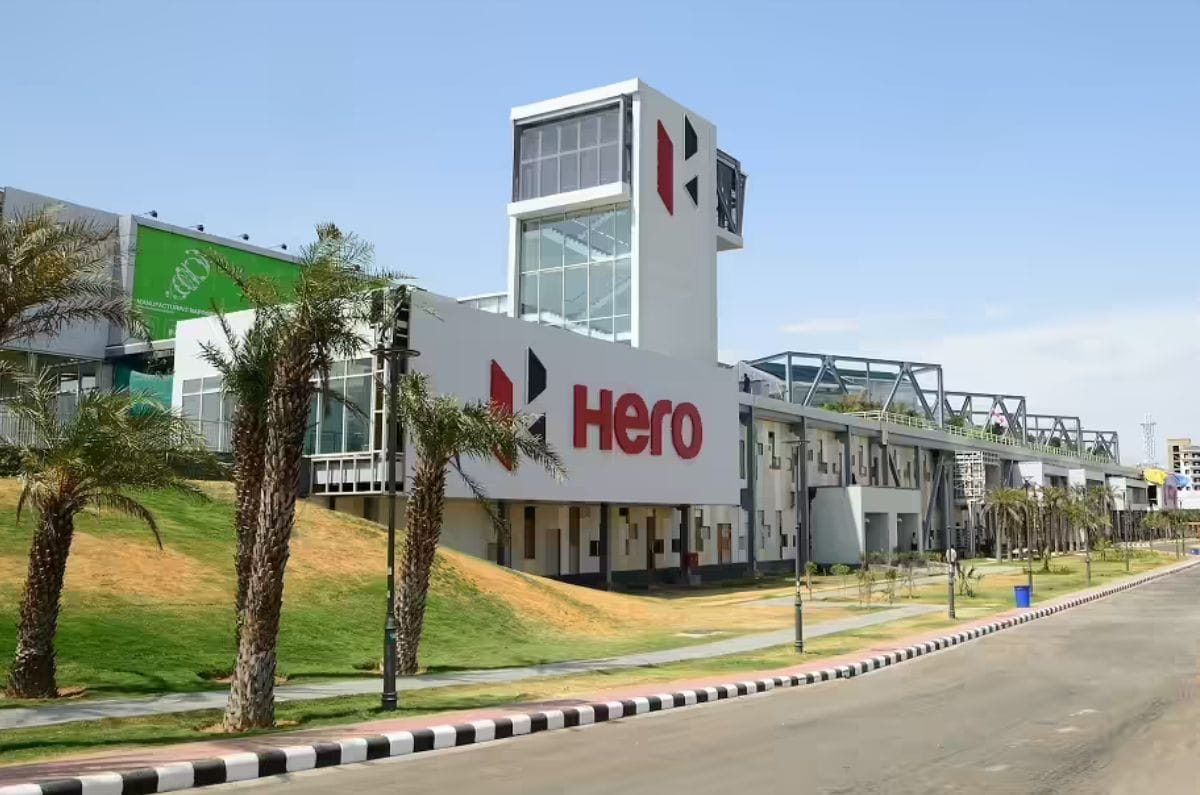
Hero MotoCorp has identified the proposed extension of Corporate Average Fuel Economy (CAFE) norms to two-wheelers as a potential business risk, stating that a sudden rollout could significantly increase development costs and impact profitability in India’s price-sensitive motorcycle market.
Hero says sudden implementation could increase compliance costs
Company is upgrading ICE engines and expanding EV portfolio
Bharat Stage 7 norms also listed among future regulatory priorities
Hero calls for realistic implementation of proposed CAFE norms
Hero MotoCorp has identified the proposed extension of Corporate Average Fuel Economy (CAFE) norms to two-wheelers as a potential business risk, stating that a sudden rollout could significantly increase development costs and impact profitability in India’s price-sensitive motorcycle market.
In its FY2025-26 annual report, Hero said CAFE regulations, which currently apply to passenger vehicles, are proposed to be extended to two-wheelers. Unlike emission norms that regulate tailpipe pollutants, CAFE standards require manufacturers to meet fleet-wide fuel efficiency targets across the vehicles they sell.
The company acknowledged that stricter fuel efficiency standards could help reduce fuel consumption, lower running costs for customers and reduce dependence on imported oil. However, it warned that a rapid implementation could leave manufacturers with limited time to redesign products, upgrade technologies and prepare their supplier base.
Hero added that passing higher compliance costs on to customers would be difficult in India’s highly price-sensitive two-wheeler market, putting additional pressure on profitability.
To prepare for future regulations, Hero said it is improving the efficiency of its internal combustion engines, increasing the use of lightweight materials and expanding its electric vehicle portfolio to help meet future fleet-wide fuel efficiency requirements.
The company also said it is investing in multiple low-emission technologies instead of relying solely on battery electric vehicles. Alongside EVs, Hero is developing motorcycles capable of running on higher ethanol blends, reflecting its view that multiple powertrain technologies will continue to play a role in India’s mobility transition.
Hero added that its R&D investments are increasingly focused on future regulatory requirements, including cleaner powertrains, connected vehicle technologies and digital capabilities.
BS7 norms also on Hero’s radar
The annual report also lists Bharat Stage 7 emission norms for two-wheelers among the policy issues on which Hero is engaging with the Society of Indian Automobile Manufacturers (SIAM). The company said it is advocating for implementation timelines and targets that are realistic and technically feasible for the industry, although it did not disclose when either the proposed CAFE norms or BS7 regulations could come into effect.
Asian Market Today: US-ईरान युद्ध के बीच तेल की बढ़ती कीमतों से सेंटिमेंट पर असर पड़ने से मंगलवार को एशियाई बाज़ारों में गिरावट के साथ कारोबार हुआ। नैस्डैक 1.5 फीसदी से ज्यादा फिसला, डाओ और S&P में भी दबाव दिखा। जापान का निक्केई 225 0.58% गिरा, जबकि टॉपिक्स 0.30% बढ़ा। दक्षिण कोरिया का कोस्पी 1.46% और हांगकांग के हैंग सेंग इंडेक्स 1.11 फीसदी की गिरावट के साथ ट्रेड करता नजर आया। ताइवान का बाजार 2.24 फीसदी गिरकर 44,338.19 के स्तर पर कारोबार कर रहा है। जबकि शंघाई कम्पोजिट 0.07 फीसदी की बढ़त के साथ फ्लैट कामकाज कर रहा है।
गिफ्ट निफ्टी 24,050 के लेवल के आसपास ट्रेड कर रहा था, जो निफ्टी फ्यूचर्स के पिछले क्लोज से लगभग 168 पॉइंट्स का डिस्काउंट था, जो भारतीय स्टॉक मार्केट इंडेक्स के लिए नेगेटिव शुरुआत का संकेत देता है।
वॉल स्ट्रीट
US स्टॉक मार्केट सोमवार को नीचे बंद हुआ क्योंकि मिडिल ईस्ट युद्ध के हालिया बढ़ने से तेल की कीमतें बढ़ गईं और रिस्क लेने की क्षमता कम हो गई।
डॉव जोन्स इंडस्ट्रियल एवरेज 138.31 पॉइंट्स या 0.26% गिरकर 52,498.70 पर आ गया, जबकि S&P 500 59.92 पॉइंट्स या 0.79% गिरकर 7,515.47 पर आ गया। नैस्डैक कंपोजिट 408.43 पॉइंट्स या 1.55% गिरकर 25,873.18 पर बंद हुआ।
एनवीडिया के शेयर की कीमत 3.52% गिरी, AMD के शेयर 4.21% गिरे, ब्रॉडकॉम के शेयर 3.98% गिरे, इंटेल के शेयर 6.12% फिसले, माइक्रोन टेक्नोलॉजी के शेयर 4.32% गिरे, माइक्रोसॉफ्ट के शेयर 1.53% बढ़े, मेटा के शेयर 1.86% गिरे, अल्फाबेट के शेयर 1.23% गिरे, टेस्ला के शेयर 3.19% टूटे, और स्पेसएक्स के शेयर 4.24% फिसले।
US-ईरान युद्ध
US प्रेसिडेंट डोनाल्ड ट्रंप ने ऑफिशियली सांसदों को बताया है कि देश एक बार फिर ईरान के साथ युद्ध में है, और अपने एडमिनिस्ट्रेशन को कांग्रेस की मंज़ूरी के बिना इस इलाके में मिलिट्री इस्तेमाल करने के लिए 60 दिन का समय दिया है। इस बीच, यमन में ईरान सपोर्टेड हूथियों ने कहा कि उन्होंने सऊदी अरब के आभा एयरपोर्ट को निशाना बनाकर मिसाइल और ड्रोन हमले किए।
बॉन्ड यील्ड
US ट्रेजरी यील्ड रातों-रात तेज़ी से बढ़ी क्योंकि तेल की बढ़ती कीमतों ने US-ईरान के बीच नए तनाव के बाद इन्फ्लेशन की आशंका बढ़ा दी। बेंचमार्क US 10-साल के ट्रेजरी नोट पर यील्ड 4.9 bps बढ़कर 4.618% हो गई, जबकि 30-साल के बॉन्ड पर यील्ड 3.3 bps बढ़कर 5.104% हो गई। दो-साल के US ट्रेजरी यील्ड 6.5 bps बढ़कर 4.273% हो गई।
बेंचमार्क जापानी सरकारी बॉन्ड (JGB) की यील्ड दूसरे दिन भी बढ़ी। 10-साल के JGB की यील्ड 1 bp बढ़कर 2.795% हो गई। दो-साल की यील्ड और पांच-साल की यील्ड दोनों स्थिर रहीं।
कच्चे तेल की कीमतें
US-ईरान युद्ध में नए सिरे से बढ़ोतरी के बाद होर्मुज स्ट्रेट से एनर्जी फ्लो को लेकर बढ़ती अनिश्चितता के बीच कच्चे तेल की कीमतें 2% बढ़कर चार हफ्तों में अपने सबसे ऊंचे स्तर पर पहुंच गईं। ब्रेंट क्रूड फ्यूचर्स 2% बढ़कर $84.98 प्रति बैरल हो गया, जबकि US वेस्ट टेक्सास इंटरमीडिएट क्रूड 2.1% बढ़कर $79.79 प्रति बैरल हो गया। पिछले सेशन में ब्रेंट क्रूड 9.6% बढ़ा, जो मई 2020 के बाद से इसकी सबसे बड़ी डेली बढ़त है।
आज सोने का रेट
महंगाई को कंट्रोल करने के लिए इंटरेस्ट रेट बढ़ने की बढ़ती संभावना के कारण सोने की कीमतों में गिरावट जारी रही। स्पॉट गोल्ड की कीमतें 0.1% गिरकर $3,996.63 प्रति औंस हो गईं, जबकि चांदी की कीमत 0.3% गिरकर $57.50 प्रति औंस हो गई।
डॉलर
US महंगाई के डेटा से पहले डॉलर स्थिर हुआ। डॉलर इंडेक्स, जो येन और यूरो सहित कई करेंसी के मुकाबले डॉलर को मापता है, 101.27 पर फ्लैट था। रॉयटर्स की रिपोर्ट के अनुसार, यूरो डॉलर के मुकाबले $1.1383 पर और स्टर्लिंग $1.3347 पर ट्रेड कर रहा था। जापानी येन डॉलर के मुकाबले लगभग फ्लैट 162.40 प्रति डॉलर पर था।
Petrol Diesel Price Today: हर दिन की शुरुआत सिर्फ सूरज की किरणों से नहीं होती, बल्कि पेट्रोल और डीजल की नई कीमतों से भी होती है, जो आम आदमी की जेब पर सीधा असर डालती हैं। सुबह 6 बजे देश की तेल विपणन कंपनियां (OMCs) ताजा दरें जारी करती हैं, जो अंतरराष्ट्रीय बाजार में कच्चे तेल की कीमतों और डॉलर-रुपए की विनिमय दर में आए बदलावों पर आधारित होती हैं। ये बदलाव रोजमर्रा की जिंदगी को प्रभावित करते हैं, चाहे वो ऑफिस जाने वाला व्यक्ति हो या फल-सब्जी बेचने वाला व्यापारी।
ऐसे में हर दिन की कीमतों की जानकारी रखना सिर्फ जरूरी ही नहीं, बल्कि समझदारी भी है। सरकार की यह प्रणाली पारदर्शिता सुनिश्चित करती है ताकि उपभोक्ताओं को किसी तरह की भ्रमित जानकारी न मिले।
आपके शहर में आज का पेट्रोल-डीजल का भाव
ये रहे 14 जुलाई 2026 के प्रमुख शहरों के पेट्रोल-डीजल के ताजा रेट —
नई दिल्ली: पेट्रोल 102.12 रुपये | डीजल 95.20 रुपये
मुंबई: पेट्रोल 111.18 रुपये | डीजल 97.83 रुपये
कोलकाता: पेट्रोल 113.47 रुपये | डीजल 99.82 रुपये
चेन्नई: पेट्रोल 107.77 रुपये | डीजल 99.55 रुपये
गुरुग्राम: पेट्रोल 102.77 रुपये | डीजल 95.44 रुपये
नोएडा: पेट्रोल 102.12 रुपये | डीजल 95.56 रुपये
बेंगलुरु: पेट्रोल 110.93 रुपये | डीजल 98.80 रुपये
भुवनेश्वर: पेट्रोल 109.92 रुपये | डीजल 100.92 रुपये
चंडीगढ़: पेट्रोल 98.10 रुपये | डीजल 86.09 रुपये
हैदराबाद: पेट्रोल 115.69 रुपये | डीजल 103.82 रुपये
जयपुर: पेट्रोल 112.66 रुपये | डीजल 97.78 रुपये
लखनऊ: पेट्रोल 102.05 रुपये | डीजल 95.55 रुपये
पटना: पेट्रोल 113.35 रुपये | डीजल 99.36 रुपये
तिरुवनंतपुरम: पेट्रोल 115.49 रुपये | डीजल 104.40 रुपये
पिछले दो साल से स्थिर क्यों हैं कीमतें?
मई 2022 के बाद से केंद्र और कई राज्यों द्वारा टैक्स में कटौती की गई, जिसके बाद पेट्रोल-डीजल की कीमतों में स्थिरता देखी जा रही है। हालांकि अंतरराष्ट्रीय बाजार में उतार-चढ़ाव होता रहता है, फिर भी भारतीय उपभोक्ताओं के लिए कीमतें तुलनात्मक रूप से स्थिर बनी हुई हैं।
किन कारणों से तय होती हैं ईंधन की कीमतें?
कच्चे तेल की कीमतें:
पेट्रोल और डीजल का उत्पादन मुख्य रूप से कच्चे तेल से होता है। जब अंतरराष्ट्रीय स्तर पर कच्चे तेल की कीमतें बढ़ती हैं, तो इसका असर सीधे भारतीय बाजार पर पड़ता है।
डॉलर के मुकाबले रुपया:
भारत अधिकतर कच्चा तेल आयात करता है, और यह डॉलर में खरीदा जाता है। यदि रुपया कमजोर होता है, तो ईंधन महंगा हो जाता है।
सरकारी टैक्स और शुल्क:
केंद्र और राज्य सरकारें पेट्रोल-डीजल पर भारी टैक्स लगाती हैं, जो खुदरा मूल्य का बड़ा हिस्सा होते हैं। यही कारण है कि राज्यों में कीमतों में अंतर होता है।
रिफाइनिंग की लागत:
कच्चे तेल को इस्तेमाल लायक बनाने की प्रक्रिया (रिफाइनिंग) में भी खर्च होता है। ये लागत कच्चे तेल की गुणवत्ता और रिफाइनरी की क्षमता पर निर्भर करती है।
मांग और आपूर्ति का संतुलन:
बाजार में ईंधन की मांग अगर बढ़ जाती है, तो कीमतें भी ऊपर जाने लगती हैं। खासकर त्योहारों, गर्मी या सर्दी के मौसम में ईंधन की खपत ज्यादा होती है।
कैसे करें अपने शहर की कीमतें SMS से चेक?
अगर आप मोबाइल से ईंधन की कीमत जानना चाहते हैं, तो ये प्रक्रिया आसान है:
Indian Oil ग्राहक: अपने शहर का कोड टाइप करें और उसे “RSP” के साथ 9224992249 पर भेजें।
BPCL ग्राहक: “RSP” लिखकर 9223112222 पर भेजें।
HPCL ग्राहक: “HP Price” लिखकर 9222201122 पर भेजें।
Stocks to Watch: मंगलवार, 14 जुलाई के कारोबार में कई बड़े शेयर फोकस में रहने वाले हैं। कुछ कंपनियों ने मजबूत तिमाही नतीजे जारी किए हैं, तो कुछ को बड़े ऑर्डर और अहम डील मिली हैं। वहीं, कई कंपनियों ने अधिग्रहण, साझेदारी और फंड जुटाने जैसे बड़े ऐलान किए हैं। ऐसे में इन 18 स्टॉक्स में दिनभर बड़ी हलचल देखने को मिल सकती है।
HCLTech
आईटी कंपनी HCLTech ने जून तिमाही में उम्मीद से बेहतर नतीजे दिए हैं। कंपनी का शुद्ध मुनाफा 20.3% बढ़कर ₹4,624 करोड़ पहुंच गया। रेवेन्यू भी 14% बढ़कर ₹34,579 करोड़ रहा। ये दोनों बाजार के अनुमान से ज्यादा रहे।
ONGC, Oil India, IOC, BPCL और HPCL
तेल और गैस सेक्टर की कंपनियों ONGC, Oil India, IOC, BPCL और HPCL के शेयरों पर भी मंगलवार को नजर रहेगी। इसकी वजह अमेरिका और ईरान के बीच बढ़ा तनाव और स्ट्रेट ऑफ होर्मुज़ को लेकर डोनाल्ड ट्रंप का बयान है। अगर इसका असर कच्चे तेल की कीमतों पर पड़ता है, तो इन कंपनियों के शेयरों में भी हलचल देखने को मिल सकती है।
Bharat Electronics (BEL)
सरकारी डिफेंस कंपनी BEL को ₹572 करोड़ के नए ऑर्डर मिले हैं। ये ऑर्डर 22 जून के बाद मिले हैं। कंपनी कम्युनिकेशन सिस्टम, एवियोनिक्स, EVM, टैंक सब-सिस्टम, बैटरियां, स्पेयर पार्ट्स और दूसरी रक्षा से जुड़ी चीजें सप्लाई करेगी।
Grasim Industries
आदित्य बिड़ला ग्रुप की कंपनी Grasim Industries बड़ा अधिग्रहण करने जा रही है। इसकी सब्सिडियरी Aditya Birla Renewables ने Shell से Sprng Energy खरीदने का समझौता किया है। इस डील की वैल्यू ₹17,200 करोड़ है।
Biocon
बायोटेक कंपनी Biocon में बड़ी ब्लॉक डील होने की तैयारी है। सूत्रों के मुताबिक, Mylan अपनी 5.64% हिस्सेदारी बेच सकती है। इस डील का फ्लोर प्राइस ₹378.50 प्रति शेयर रखा गया है, जो मौजूदा बाजार भाव से करीब 8% कम है।
Tata Capital
टाटा ग्रुप की Tata Capital ने केरल की Yogakshemam Loans में 88.6% हिस्सेदारी खरीदने का फैसला किया है। इससे कंपनी गोल्ड लोन कारोबार में बड़ी एंट्री करेगी। इस डील के जरिए Tata Capital को करीब ₹708 करोड़ का लोन बुक, 162 शाखाएं और 32,000 से ज्यादा ग्राहक मिल जाएंगे।
LTIMindtree
आईटी कंपनी LTIMindtree ने AI स्टार्टअप Anthropic के साथ साझेदारी की है। इस समझौते का मकसद क्लाउड अपनाने की रफ्तार बढ़ाना और एंटरप्राइज AI सेवाओं का विस्तार करना है।
Asian Paints
पेंट कंपनी Asian Paints ने कहा है कि पश्चिम एशिया में तनाव बढ़ने से कच्चे माल की लागत बढ़ी है। खासकर कच्चे तेल से जुड़े रॉ मैटेरियल महंगे हुए हैं। बढ़ती लागत की भरपाई के लिए कंपनी ने अपने उत्पादों की कीमतों में करीब 12% की बढ़ोतरी की है।
InterGlobe Aviation (IndiGo)
एयरलाइन कंपनी IndiGo ने ग्लोबल हॉस्पिटैलिटी ग्रुप Accor के साथ रणनीतिक साझेदारी की है। अब IndiGo BluChip और Accor के लॉयल्टी प्रोग्राम के सदस्य फ्लाइट और होटल बुकिंग पर रिवॉर्ड पॉइंट्स कमा और इस्तेमाल कर सकेंगे। कंपनियों का दावा है कि भारत में यह अपनी तरह की पहली एयरलाइन-होटल लॉयल्टी साझेदारी है।
Timken India
इंजीनियरिंग कंपनी Timken India को बेयरिंग कारोबार के लिए 4 BIS लाइसेंस मिले हैं। ये लाइसेंस भरूच और जमशेदपुर प्लांट के लिए दिए गए हैं। कंपनी का कहना है कि इससे OEM, इंफ्रास्ट्रक्चर और दूसरे रेगुलेटेड सेक्टरों को BIS प्रमाणित उत्पादों की सप्लाई और मजबूत होगी।
Jindal Steel
स्टील कंपनी Jindal Steel के CEO गौतम मल्होत्रा ने निजी कारणों से इस्तीफा दे दिया है। उनका इस्तीफा 15 जुलाई से प्रभावी होगा। कंपनी की 24 जुलाई को बोर्ड बैठक होनी है, जिसमें जून तिमाही के नतीजों को मंजूरी दी जाएगी। फिलहाल नए CEO के नाम का ऐलान नहीं किया गया है।
ICICI Prudential AMC
एसेट मैनेजमेंट कंपनी ICICI Prudential AMC का जून तिमाही में शुद्ध मुनाफा 23.1% बढ़ा है। कंपनी ने ₹965 करोड़ का प्रॉफिट दर्ज किया। बेहतर आय की वजह से मुनाफे में अच्छी बढ़ोतरी हुई।
State Bank of India (SBI)
देश के सबसे बड़े सरकारी बैंक SBI ने अपनी लंदन शाखा के जरिए 20 करोड़ डॉलर के बॉन्ड जारी किए हैं। इन बॉन्ड्स को GIFT City के India INX पर लिस्ट किया जाएगा।
Emcure Pharmaceuticals
फार्मा कंपनी Emcure Pharmaceuticals अपनी सब्सिडियरी Gennova Biopharmaceuticals की बची हुई 12.05% हिस्सेदारी खरीदेगी। इस डील पर ₹231.87 करोड़ खर्च होंगे। इसके बाद Gennova पूरी तरह Emcure की कंपनी बन जाएगी।
Container Corporation of India (CONCOR)
सरकारी लॉजिस्टिक्स कंपनी CONCOR का कारोबार बढ़ा है। जून तिमाही में कंपनी के कंटेनर वॉल्यूम में 8.89% की बढ़ोतरी हुई। एक्सपोर्ट-इंपोर्ट और घरेलू कार्गो, दोनों सेगमेंट ने इसमें योगदान दिया।
PDS Ltd
फैशन सोर्सिंग कंपनी PDS Ltd ने फ्रांस की एक बड़ी सुपरमार्केट चेन के साथ लंबी अवधि की डील की है। इस समझौते के तहत कंपनी 5 देशों में टेक्सटाइल सोर्सिंग का काम संभालेगी।
Poonawalla Fincorp
एनबीएफसी कंपनी Poonawalla Fincorp ने ₹500 करोड़ तक के NCD जारी करने को मंजूरी दी है। ये बॉन्ड प्राइवेट प्लेसमेंट के जरिए जारी किए जाएंगे। हर NCD की फेस वैल्यू ₹1 लाख होगी।
IFGL Refractories
रिफ्रैक्टरी प्रोडक्ट्स बनाने वाली कंपनी IFGL Refractories ने सऊदी अरब में नई सब्सिडियरी बनाई है। इसका नाम IFGL Monocon Saudi Company Limited है। कंपनी के मुताबिक, इसका रजिस्ट्रेशन 11 जुलाई 2026 को हुआ।
Disclaimer: यहां मुहैया जानकारी सिर्फ सूचना के लिए दी जा रही है। यहां बताना जरूरी है कि मार्केट में निवेश बाजार जोखिमों के अधीन है। निवेशक के तौर पर पैसा लगाने से पहले हमेशा एक्सपर्ट से सलाह लें। मनीकंट्रोल की तरफ से किसी को भी पैसा लगाने की यहां कभी भी सलाह नहीं दी जाती है।
Petrol Diesel Price Today: हर दिन की शुरुआत सिर्फ सूरज की किरणों से नहीं होती, बल्कि पेट्रोल और डीजल की नई कीमतों से भी होती है, जो आम आदमी की जेब पर सीधा असर डालती हैं। सुबह 6 बजे देश की तेल विपणन कंपनियां (OMCs) ताजा दरें जारी करती हैं, जो अंतरराष्ट्रीय बाजार में कच्चे तेल की कीमतों और डॉलर-रुपए की विनिमय दर में आए बदलावों पर आधारित होती हैं। ये बदलाव रोजमर्रा की जिंदगी को प्रभावित करते हैं, चाहे वो ऑफिस जाने वाला व्यक्ति हो या फल-सब्जी बेचने वाला व्यापारी।
ऐसे में हर दिन की कीमतों की जानकारी रखना सिर्फ जरूरी ही नहीं, बल्कि समझदारी भी है। सरकार की यह प्रणाली पारदर्शिता सुनिश्चित करती है ताकि उपभोक्ताओं को किसी तरह की भ्रमित जानकारी न मिले।
आपके शहर में आज का पेट्रोल-डीजल का भाव
ये रहे 12 जुलाई 2026 के प्रमुख शहरों के पेट्रोल-डीजल के ताजा रेट —
नई दिल्ली: पेट्रोल 102.12 रुपये | डीजल 95.20 रुपये
मुंबई: पेट्रोल 111.18 रुपये | डीजल 97.83 रुपये
कोलकाता: पेट्रोल 113.47 रुपये | डीजल 99.82 रुपये
चेन्नई: पेट्रोल 107.77 रुपये | डीजल 99.55 रुपये
गुरुग्राम: पेट्रोल 102.77 रुपये | डीजल 95.44 रुपये
नोएडा: पेट्रोल 102.12 रुपये | डीजल 95.56 रुपये
बेंगलुरु: पेट्रोल 110.93 रुपये | डीजल 98.80 रुपये
भुवनेश्वर: पेट्रोल 109.92 रुपये | डीजल 100.92 रुपये
चंडीगढ़: पेट्रोल 98.10 रुपये | डीजल 86.09 रुपये
हैदराबाद: पेट्रोल 115.69 रुपये | डीजल 103.82 रुपये
जयपुर: पेट्रोल 112.66 रुपये | डीजल 97.78 रुपये
लखनऊ: पेट्रोल 102.05 रुपये | डीजल 95.55 रुपये
पटना: पेट्रोल 113.35 रुपये | डीजल 99.36 रुपये
तिरुवनंतपुरम: पेट्रोल 115.49 रुपये | डीजल 104.40 रुपये
पिछले दो साल से स्थिर क्यों हैं कीमतें?
मई 2022 के बाद से केंद्र और कई राज्यों द्वारा टैक्स में कटौती की गई, जिसके बाद पेट्रोल-डीजल की कीमतों में स्थिरता देखी जा रही है। हालांकि अंतरराष्ट्रीय बाजार में उतार-चढ़ाव होता रहता है, फिर भी भारतीय उपभोक्ताओं के लिए कीमतें तुलनात्मक रूप से स्थिर बनी हुई हैं।
किन कारणों से तय होती हैं ईंधन की कीमतें?
कच्चे तेल की कीमतें:
पेट्रोल और डीजल का उत्पादन मुख्य रूप से कच्चे तेल से होता है। जब अंतरराष्ट्रीय स्तर पर कच्चे तेल की कीमतें बढ़ती हैं, तो इसका असर सीधे भारतीय बाजार पर पड़ता है।
डॉलर के मुकाबले रुपया:
भारत अधिकतर कच्चा तेल आयात करता है, और यह डॉलर में खरीदा जाता है। यदि रुपया कमजोर होता है, तो ईंधन महंगा हो जाता है।
सरकारी टैक्स और शुल्क:
केंद्र और राज्य सरकारें पेट्रोल-डीजल पर भारी टैक्स लगाती हैं, जो खुदरा मूल्य का बड़ा हिस्सा होते हैं। यही कारण है कि राज्यों में कीमतों में अंतर होता है।
रिफाइनिंग की लागत:
कच्चे तेल को इस्तेमाल लायक बनाने की प्रक्रिया (रिफाइनिंग) में भी खर्च होता है। ये लागत कच्चे तेल की गुणवत्ता और रिफाइनरी की क्षमता पर निर्भर करती है।
मांग और आपूर्ति का संतुलन:
बाजार में ईंधन की मांग अगर बढ़ जाती है, तो कीमतें भी ऊपर जाने लगती हैं। खासकर त्योहारों, गर्मी या सर्दी के मौसम में ईंधन की खपत ज्यादा होती है।
कैसे करें अपने शहर की कीमतें SMS से चेक?
अगर आप मोबाइल से ईंधन की कीमत जानना चाहते हैं, तो ये प्रक्रिया आसान है:
Indian Oil ग्राहक: अपने शहर का कोड टाइप करें और उसे “RSP” के साथ 9224992249 पर भेजें।
BPCL ग्राहक: “RSP” लिखकर 9223112222 पर भेजें।
HPCL ग्राहक: “HP Price” लिखकर 9222201122 पर भेजें।
Crude Oil Price: आज हफ्ते के पहले दिन सोमवार 13 जुलाई को कच्चे तेल की कीमतों में जोरदार उछाल देखने को मिला है। क्रूड की कीमतें 4% बढ़कर $79 प्रति बैरल के पार निकल गई है। क्रूड ऑयल में यह तेजी स्ट्रेट ऑफ हॉर्मुज पर कंट्रोल को लेकर पश्चिम एशिया में एक फिर तनाव बढ़ने के बाद देखने को मिली है।
बता दें कि साइप्रस के कमर्शियल जहाज पर हमले के बाद अमेरिका फिर भड़का। ईरान के करीब 140 ठिकानों पर अटैक किया। इधर ईरान ने भी खाड़ी देशों में अमेरिकी ठिकानों पर हमला किया है। ईरान ने हॉर्मुज को बंद करने का एलान किया। वहीं ट्रंप का दावा अभी भी स्ट्रेट ऑफ हॉर्मुज खुला है।
ब्रेंट क्रूड अब सितंबर में एक्सपायर होने वाले कॉन्ट्रैक्ट के लिए $79 प्रति बैरल के निशान से ऊपर ट्रेड कर रहा है। 4% से ज़्यादा की बढ़त तब हुई जब पिछले हफ्ते कॉन्ट्रैक्ट में 5.5% की बढ़त हुई थी, जबकि वेस्ट टेक्सास इंटरमीडिएट (WTI) या US क्रूड वेरिएंट भी $74 प्रति बैरल के निशान से ऊपर ट्रेड कर रहा था। वीकेंड ब्रेक के बाद यूरोपियन नेचुरल गैस फ्यूचर्स में भी 2.5% की बढ़त हुई।
होर्मुज स्ट्रेट खुला है या बंद?
हालांकि ईरान ने घोषणा की है कि स्ट्रेट, जो एक मुख्य जलमार्ग है, जो ग्लोबल एनर्जी सप्लाई का 20% कंट्रोल करता है, “अगली सूचना तक” बंद रहेगा, US सेंट्रल कमांड ने इस तरह के दावे से इनकार किया है, और कहा है कि सेना नेविगेशन की आज़ादी सुनिश्चित करने के लिए तैयार है।
सेंट्रल कमांड ने “X” पर लिखा, “होर्मुज स्ट्रेट उन सभी जहाजों के लिए खुला है जो कानूनी तौर पर इंटरनेशनल वॉटरवे से गुज़रना चाहते हैं।”
US सेंट्रल कमांड ने यह भी कहा कि उसने स्ट्रेट में कमर्शियल जहाजों पर हुए हमलों के लिए ईरान को ज़िम्मेदार ठहराने के लिए रविवार को शाम 5 PM ईस्टर्न टाइम पर हमलों का एक नया दौर शुरू किया है।
ईरान युद्ध के दौरान हुए सारे फ़ायदे गंवाने के बाद, कच्चे तेल की कीमतें फिर से बढ़ रही हैं। पिछले महीने फ्रांस में G7 समिट के दौरान US और ईरान दोनों ने एक MoU पर साइन किए थे। इसमें युद्ध खत्म करने और स्ट्रेट से कमर्शियल जहाजों का सुरक्षित रास्ता पक्का करने के पॉइंट शामिल थे।
हाल ही में हुए हमलों से पहले, शुक्रवार को इंटरनेशनल एनर्जी एजेंसी के बयान के मुताबिक, इस हालिया भड़कने से इस साल के आखिर में खत्म हुए तेल के भंडार को फिर से बनाने की कोशिशों पर असर पड़ने का खतरा है।
जॉइंट मैरीटाइम इन्फॉर्मेशन सेंटर के मुताबिक, रविवार को स्ट्रेट से लगभग कोई ट्रैफिक नहीं था, सिर्फ़ दो तेल प्रोडक्ट टैंकर चोकपॉइंट के पास आते देखे गए। हालांकि, JMIC ने आगे कहा कि ओमान द्वारा कोऑर्डिनेट किया गया दक्षिणी रूट अभी भी उपलब्ध है।
ईरान के पार्लियामेंट स्पीकर और टॉप नेगोशिएटर मोहम्मद बाघेर ग़ालिबफ़ ने ऐलान किया है कि “एकतरफ़ा डील” का ज़माना खत्म हो गया है, और ज़ोर देकर कहा है कि बातचीत फिर से शुरू होने से पहले वॉशिंगटन को होर्मुज़ ट्रांज़िट पर पहले किए गए कमिटमेंट को प्राथमिकता देनी चाहिए और ईरान से तेल एक्सपोर्ट को नॉर्मल करना चाहिए।
(डिस्क्लेमर: मनीकंट्रोल.कॉम पर दिए गए विचार एक्सपर्ट के अपने निजी विचार होते हैं। वेबसाइट या मैनेजमेंट इसके लिए उत्तरदाई नहीं है। यूजर्स को मनी कंट्रोल की सलाह है कि कोई भी निवेश निर्णय लेने से पहले सार्टिफाइड एक्सपर्ट की सलाह लें।
Conceived with no concessions to internal combustion propulsion, ‘born electrics’ were heralded as the future. Manufacturers poured millions into their development, and it is estimated that globally $1.2 trillion was committed to the entire EV ecosystem, $500 billion of which was from automakers.
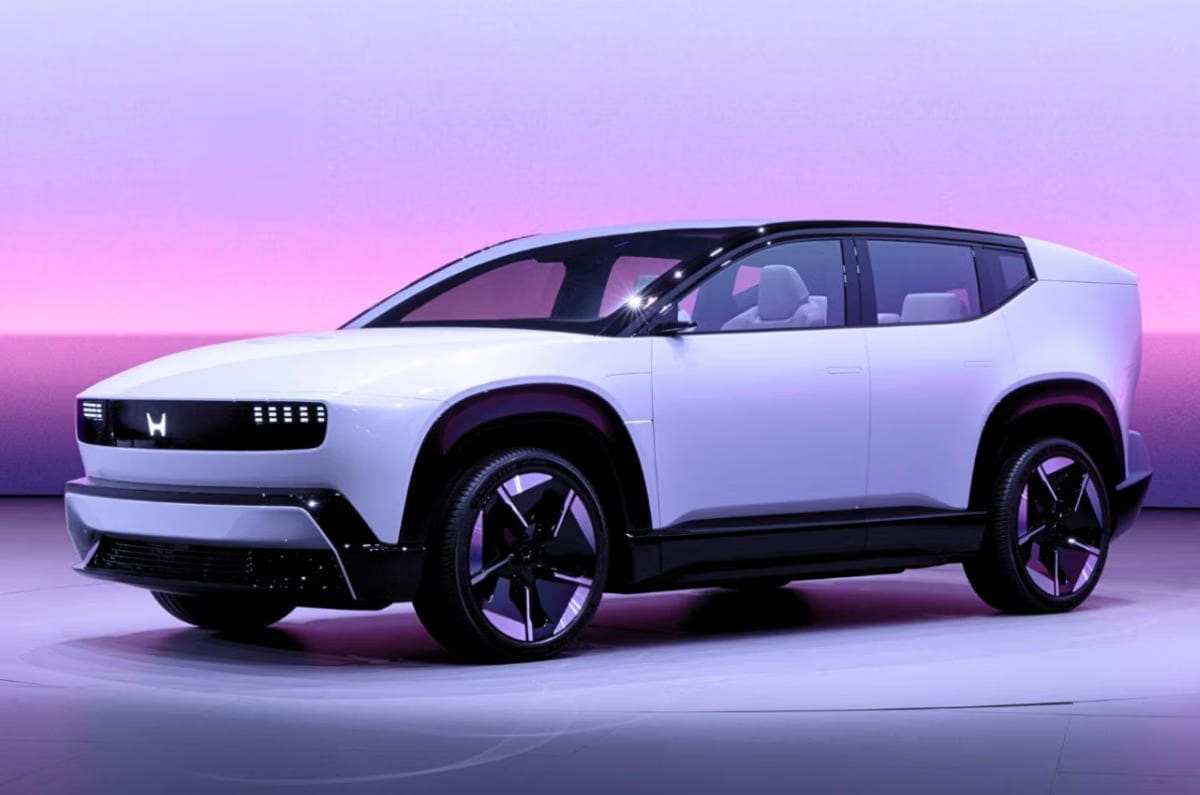
But with global EV sales well below projections, manufacturers are left with hard decisions. The Stellantis group, for instance, confirmed a $26 billion write-off over its EV projects, while Honda said its annual operating loss would be between 270-570 billion yen, due to losses associated with the reassessment of its electrification strategy. Earlier this year, the Japanese carmaker scrapped its much-hyped ‘0 Series’ EV project, though the made-in-India 0 Alpha SUV, which is said to use components from the Elevate, is still on track.
Honda has cancelled its 0 Series EV Project altogether
The write-offs and cancellations are understandable in the context of born-electrics, as while there have been many ICE-to-EV conversions, it’s a lot harder the other way around. Conceived with no engine and gearbox in mind, space to accommodate this bulky hardware is the first hurdle they need to clear. There’s also space needed for subsystems like driveshafts, fuel and exhaust systems which leads to the other complication of thermal management. Beyond the exhaust system, internal combustion engines have higher cooling requirements than EVs, and thus airflow management needs to be addressed.
Another challenge is crashworthiness. Again, having never had to hold an engine and gearbox, the crash structure of these cars was never designed with this massive mass in mind. These changes thus require time and expensive re-engineering.
However, tough as it is, some brands are looking at re-engineering born-EVs to use some form of internal combustion. The VW Group is one such example, as is homegrown automaker Mahindra. While it sold about 16,000 EVs in FY2026 – the bulk of them coming from its born-electric line-up – it needs higher volumes given the investments in their development. The Chinese, too, who were very quick with born-electrics, are looking at the ICE switch.
Ice Age 2.0
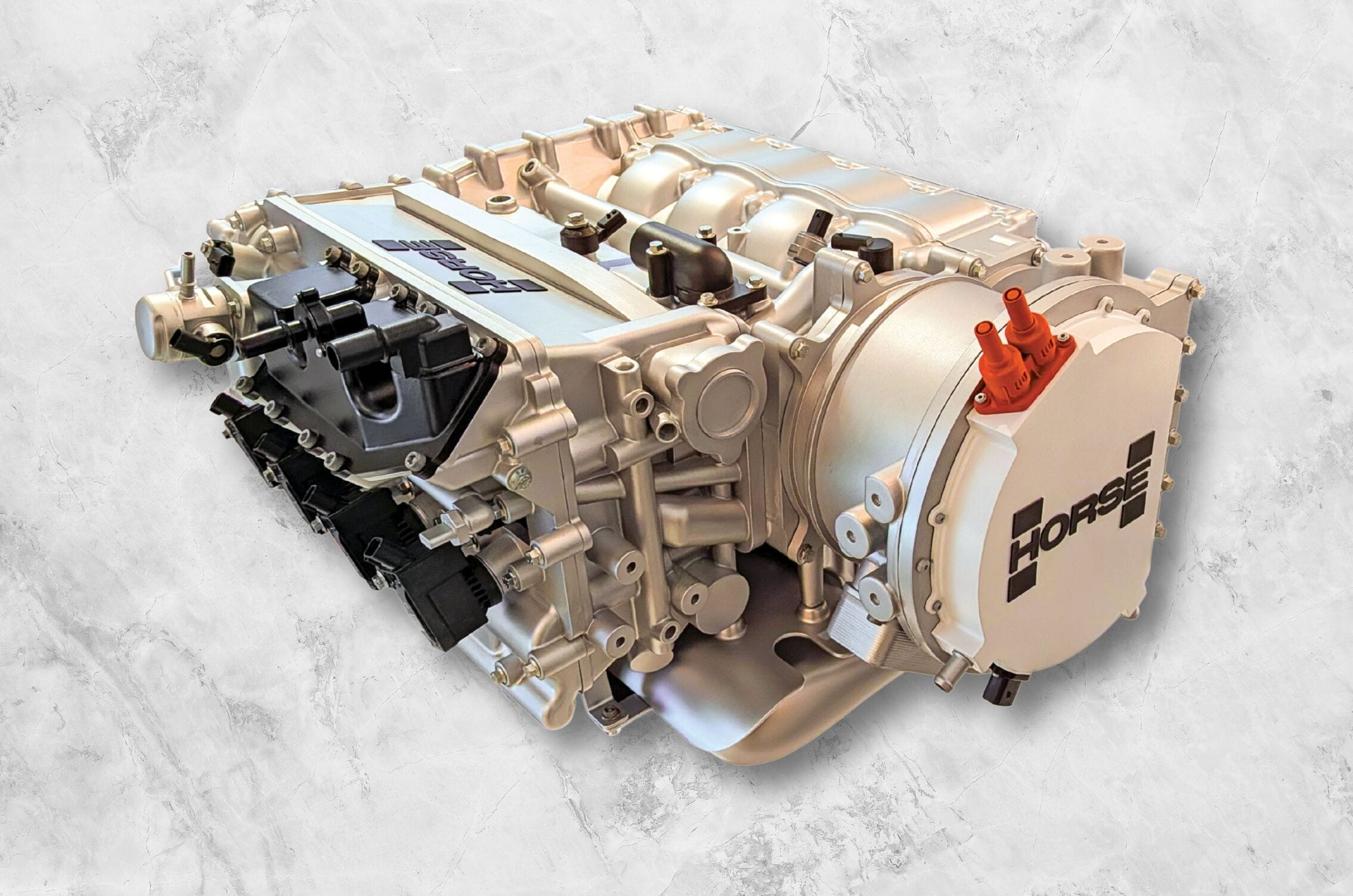
In this scenario, Horse Powertrain might hold the panacea – the C15 powertrain. Showcased at the Vienna Motor Symposium in April this year, the C15 unit is a compact, all-in-one powertrain designed to replace the electric drive unit of a born-electric and transform it into a range-extender hybrid. The integrated unit consists of a 1.5-litre, 4-cylinder engine, hybrid transmission, electric motor and the full suite of power electronics.
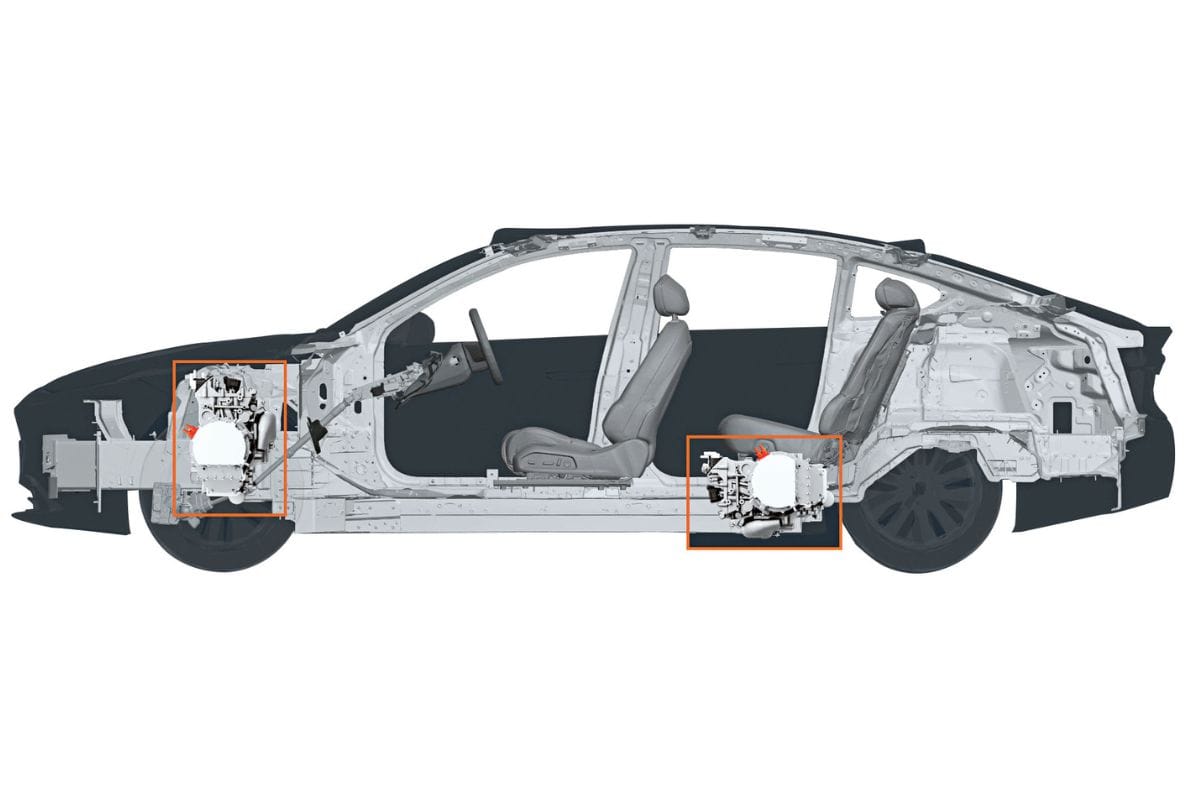
C15 powertrain can be installed at the front or rear and in either a vertical or horizontal orientation.
Furthermore, Horse says the unit is modular and can have further systems bolted on, depending on manufacturer requirements, like turbocharging or even a traditional gearbox, should direct-to-wheel drive be required. Adding to its flexibility, the engine can be packaged vertically or even horizontally, and the company says systems like lubrication are capable for either installation type. It can also be located at the front or rear of the vehicle, so as to warrant fewer modifications and re-engineering for a brand. 64 percent of its components are parts from existing powertrains, and this, Horse says, brings down the unit’s cost. So far, there’s no word on when it would come to market, but the brand says work is already underway, and the first model with the C15 unit should see the light of day by 2028.
On the face of it, converting a born-electric to ICE might seem like a retrograde step in the journey towards electrification. However, it’s clear this journey is far longer than previously thought, and a born-electric-to-ICE conversion will certainly help a manufacturer’s business viability in the immediate term. Furthermore, in this scenario of internal combustion living longer, hybridisation helps lowering fuel consumption and emissions. Thus, a retrograde step this might be, but one that can help build the future.
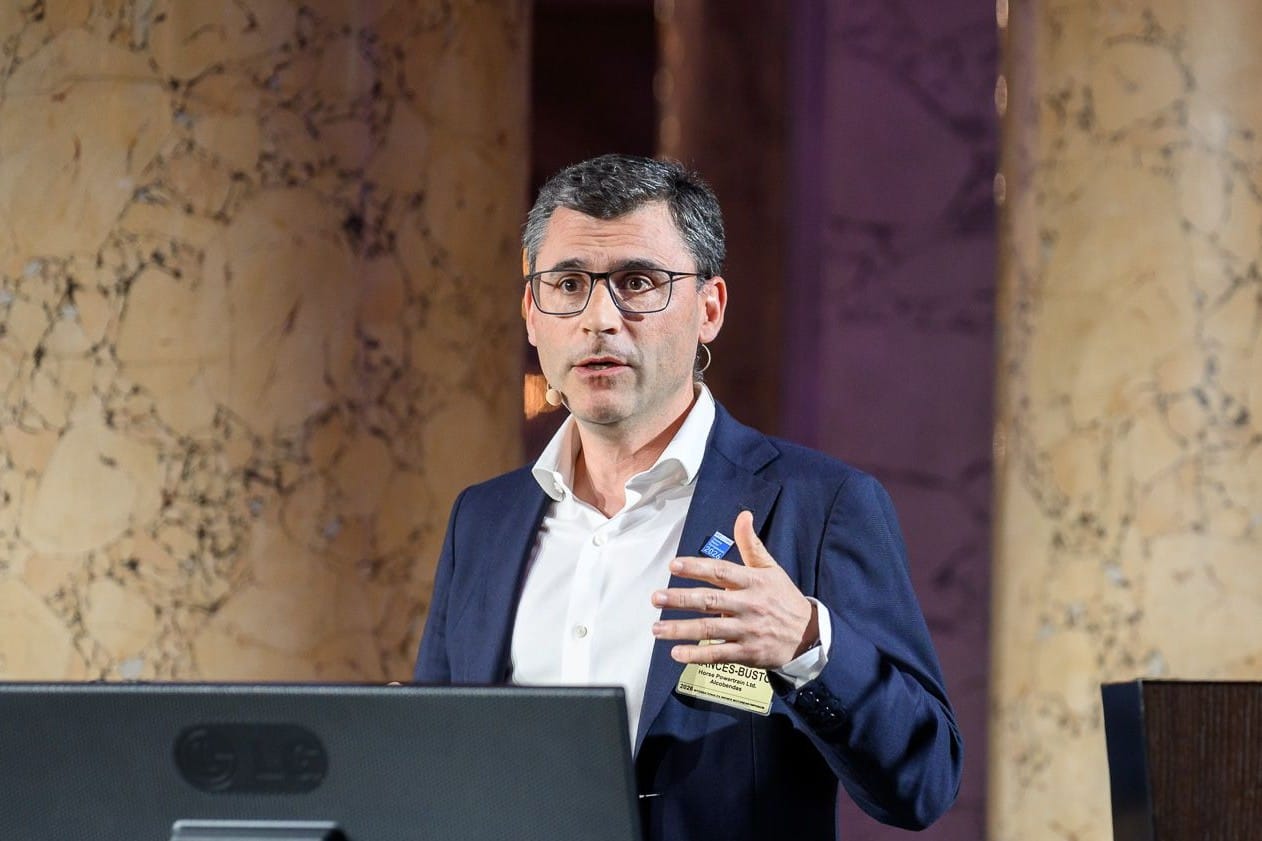
Q&A Jesus Frances Busto – Strategy & RAE Director, Horse Technologies
On the company structure
Horse Powertrain is a joint venture between Renault, Geely and Saudi Aramco, but we are an independent global powertrain supplier. So we can supply, work with, and integrate this (C15) with any manufacturer that is interested in it. It’s part of our new story at Horse Powertrain.
On the C15’s requirement
Brands have invested a lot into born-electric platforms, and many have even got the products ready and out into the market. But yes, they now would need to have an option to cope with this adoption towards EVs, and a hybrid with a range-extender setup is a good possibility for this.
On the C15’s specialities
The C15 solves the problem of space, and we have solved it not by miniaturisation, but with innovative redesign and repackaging. We can install this vertically or even horizontally, and when we do this, one of the points we have to solve is lubrication, so we have a scavenge function circulating oil through and through correctly.
On a market launch
As you would understand, we cannot disclose our clients at the moment or specific launch dates, but we are working with brands, and we should see this in the market by early 2028.
The origin of the species. The very beginnings of the automobile. Where it all started. How it all started. What form the earliest cars took. What if you could experience all of this in one place, at the same time? Say hello to UMS Technologies, India’s smallest carmaker. Nestled in the heart of the bustling city of Coimbatore, where the manufacturing of machines is almost a religion, UMS tech not only recreates the past, it does so with exacting precision and a level of dedication that borders on obsession.
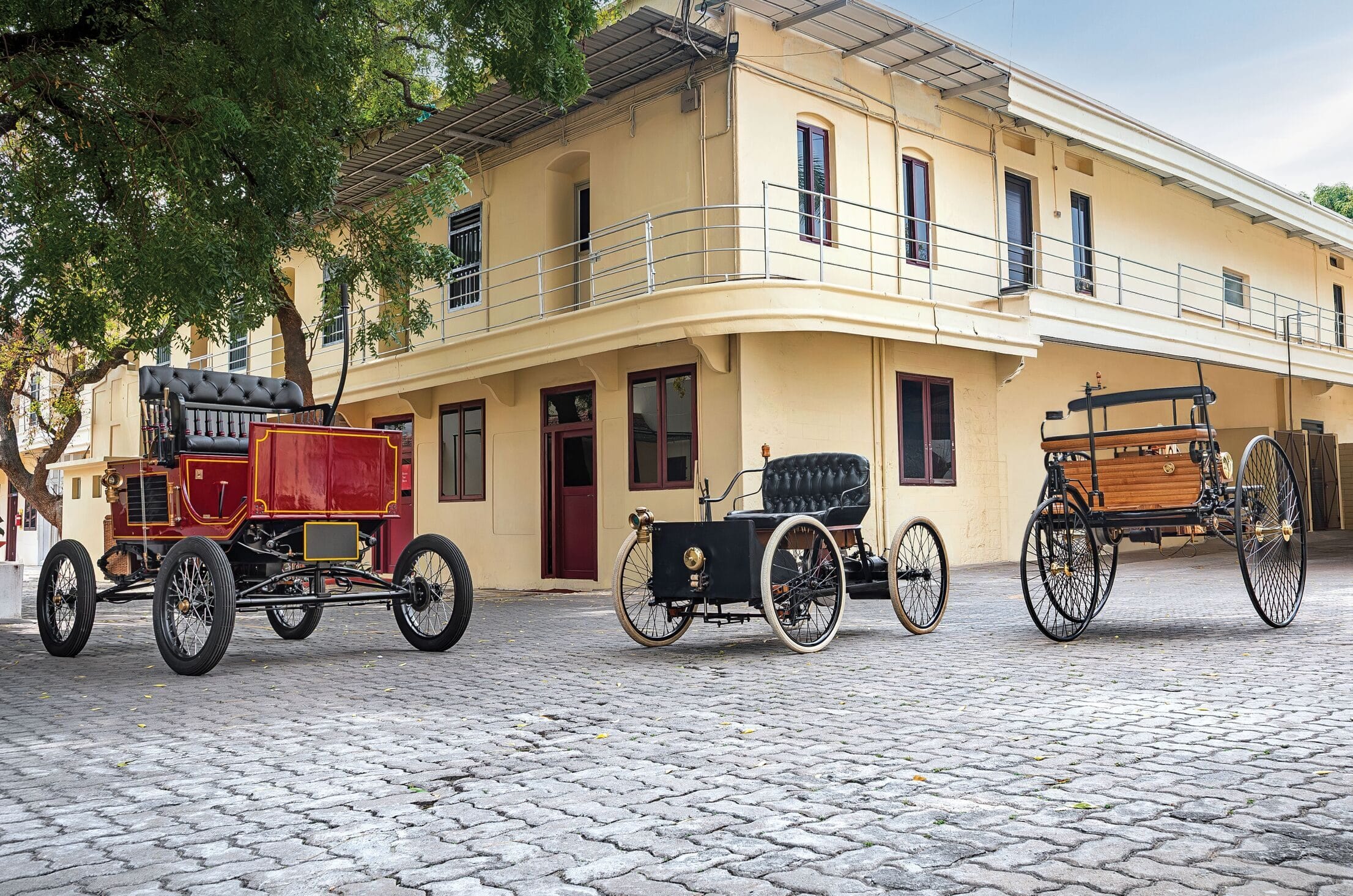
Walk onto the shop floor, just off main street Coimbatore, and you are greeted by finished versions of three icons – the 1899 Stanley Steamer, the 1896 Ford Quadricycle, and the 1886 Benz Patent-Motorwagen. Each is a faithful replica, crafted with painstaking detail, and together they tell the story of how the automobile was born. It feels like history is coming back to life.
Give me steam
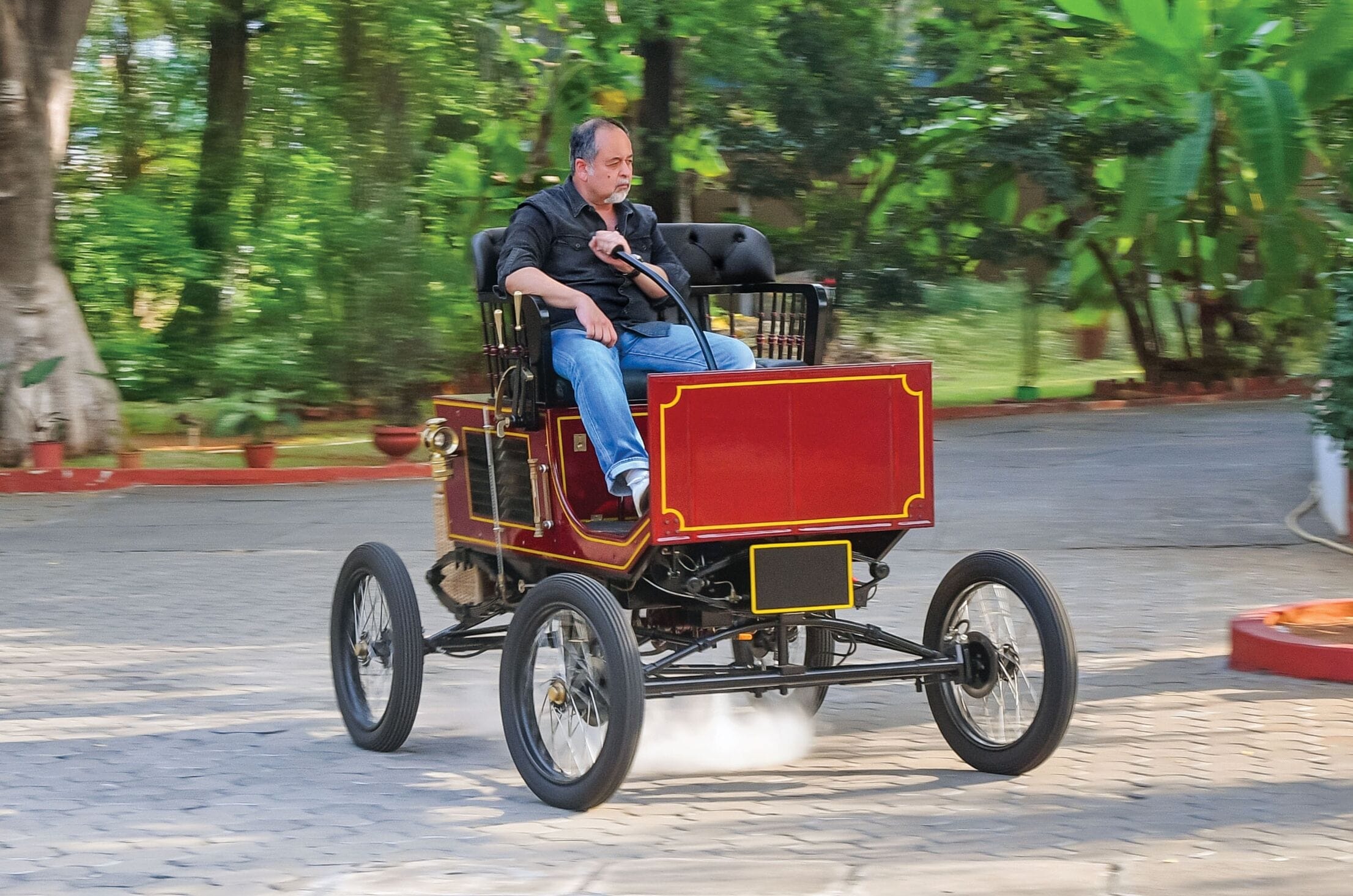
The steam car is the most difficult to steer and can accelerate quickly for a prehistoric car.
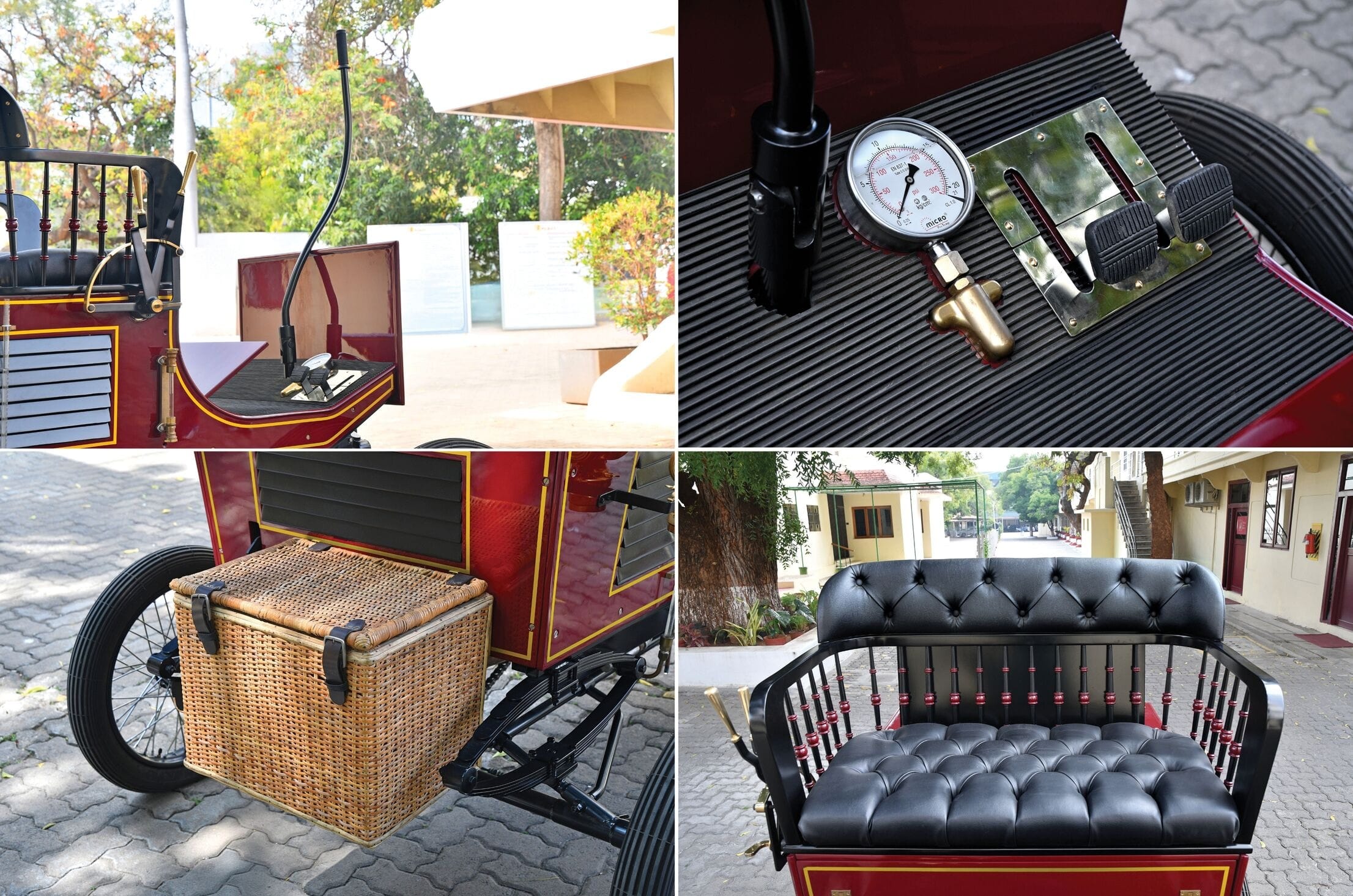
The Locomobile, or Stanley Steamer, is perhaps the most theatrical of the trio. Originally powered by naphtha and coal, it relied on steam pressure to drive its pistons. Did you know steam-powered cars predated petrol-powered cars by almost a century? The replica here, however, has been updated with a diesel burner. Pressure in the ‘boiler’ goes up to around 150-200 PSI, and a gauge on the dashboard (origin of the term) tells you when the car is ready to move. This takes a bit.
Clockwise from left: Levers select direction; Braking is via motorcycle discs; Seat feels like a comfy sofa; Diesel burner replaces coal.
Sidebar: steam-powered ships like aircraft carriers sometimes took 12-24 hours to build up a sufficient head of steam before they could start. In the car, once the needle climbs into range, a gentle push on the accelerator sends the vehicle chuffing forward with the rhythm of a steam train. The experience is surreal. Torque is abundant, acceleration is surprisingly brisk, and the soundtrack – a soft, mechanical chuffing – is delightfully addictive. Steering it, however, is a challenge. Without a wheel, only a rudimentary tiller guides the car, reminding me of why the steering rack was one of the most important innovations. Fun fact: none of the three cars here has a steering wheel. For safety, especially considering how quick it is when it builds up a head of steam, UMS Technologies has added motorcycle disc brakes.
Before the Model T
This was the car Henry Ford made before the Model T or even before the company’s formation in 1903.
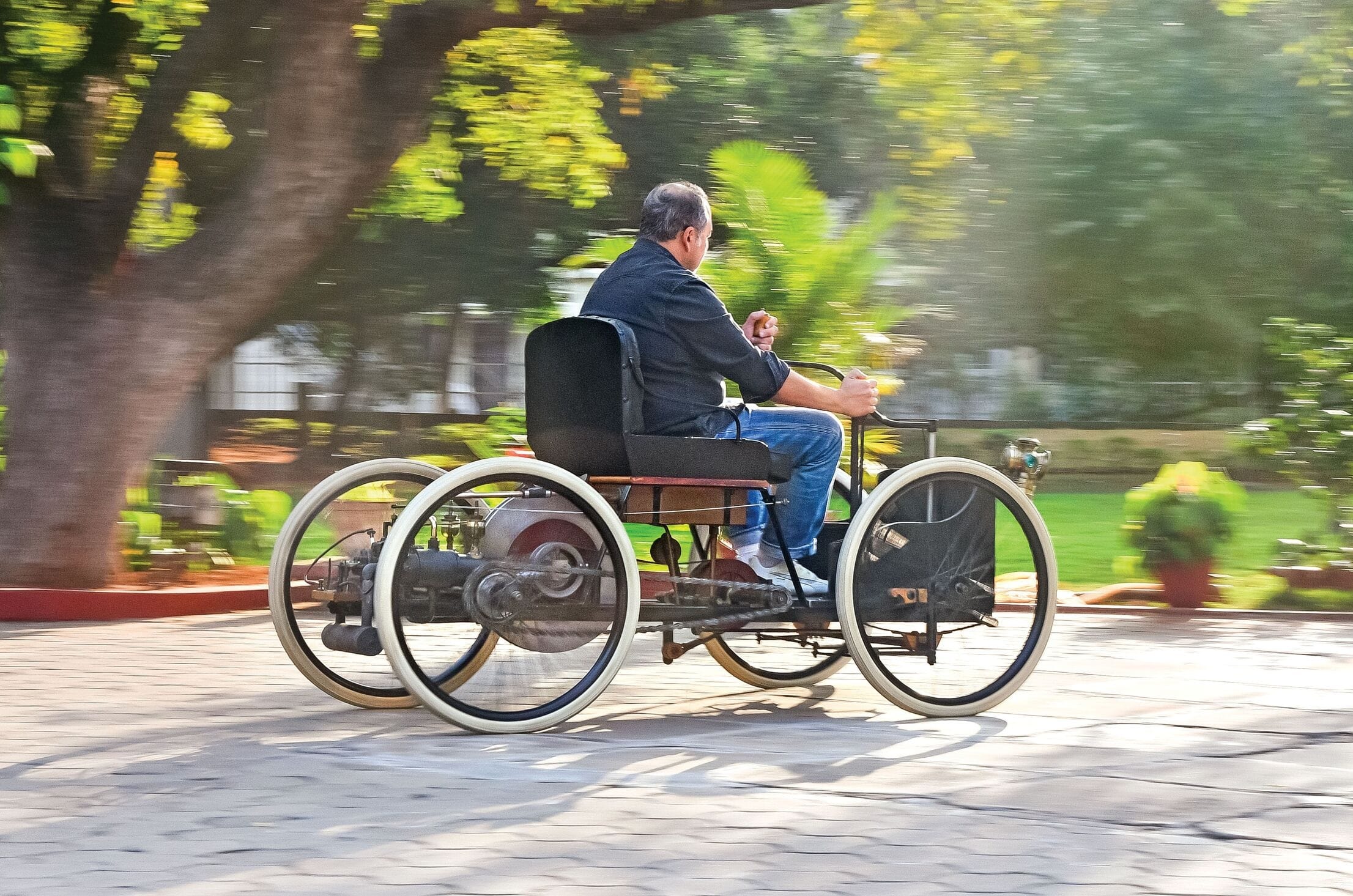
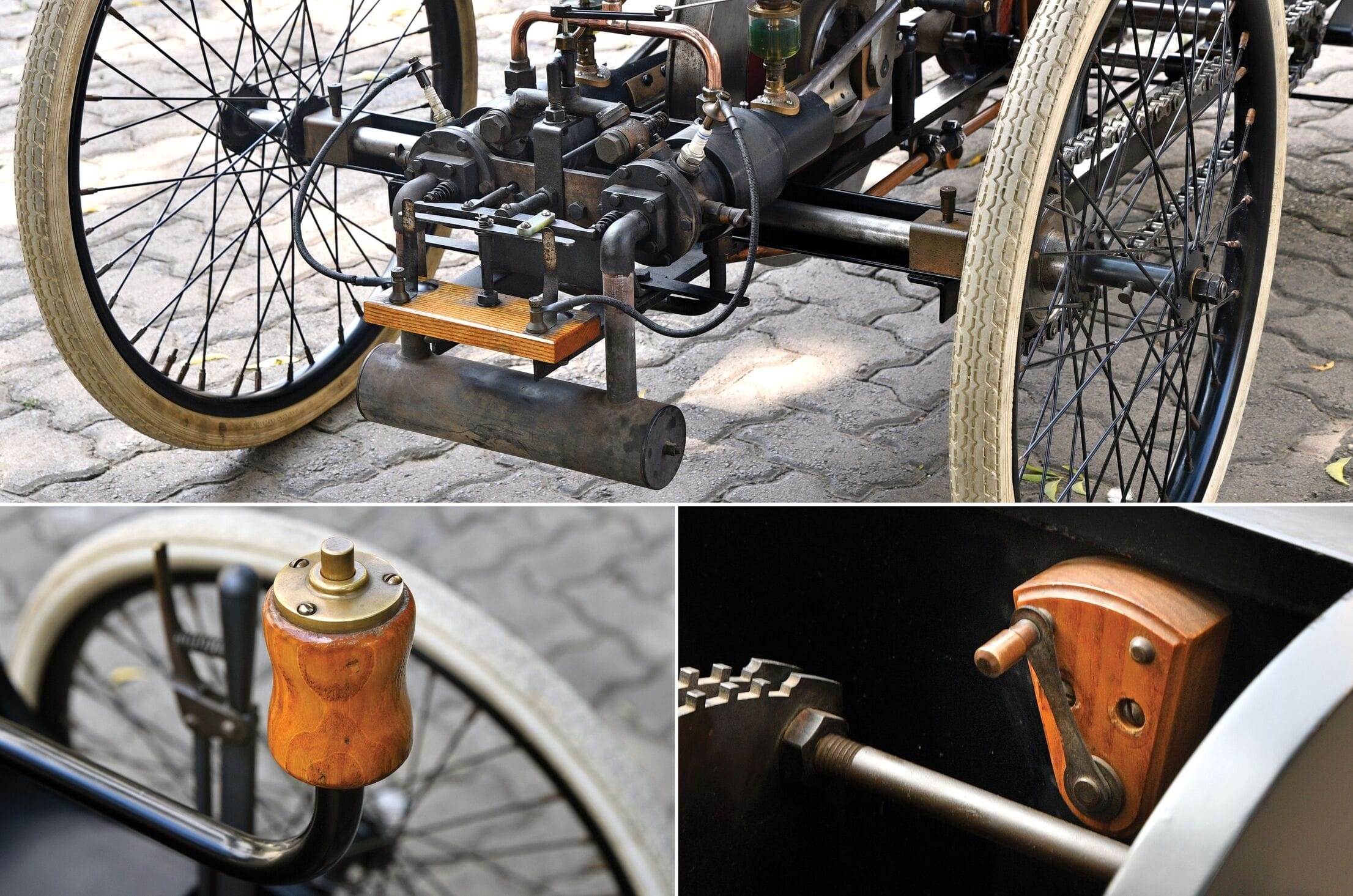
If the Stanley Steamer is theatrical, the Ford Quadricycle is a burst of youthful energy. Built in 1896, ten years after Karl Benz unveiled his Patent-Motorwagen, it was Henry Ford’s first car, created before he even founded the Ford Motor Company in 1903. The replica is faithful to the original, complete with its mid-mounted twin-cylinder engine and bulb-type rudimentary carburettors that mix the fuel and air. The pistons are exposed, with no sump for oil, so lubrication is handled by drip-feed systems. A brass tube connects the pistons to water tanks for cooling, while spark plugs, carburettor, tappets, and valves are all visible, making the engine look like a mechanical marvel, all the running bits visible and exposed.
Clockwise from top: Twin cylinders placed horizontally; Contact box switch to start the car; Steering knob has button for the bell.
Driving it is exhilarating. The twin cylinders give it a noticeable boost in speed. Steering is again by a tiller, while a lever operates the throttle, much like one on an aircraft; but in reverse. Pulling the lever back sends the car shooting forward, while pushing it forward slows it down! And yes, Ford even thought to add a horn, making this one of the first cars to have this safety feature. Something else that’s fascinating – this car runs on E100 or pure ethanol. However, there’s no blue roundel or Ford badge. This car came before the Ford Motor Company, remember.
Prime petroleum
It moves forward gingerly with a put-putting sound from the weak single-cylinder ‘engine’.
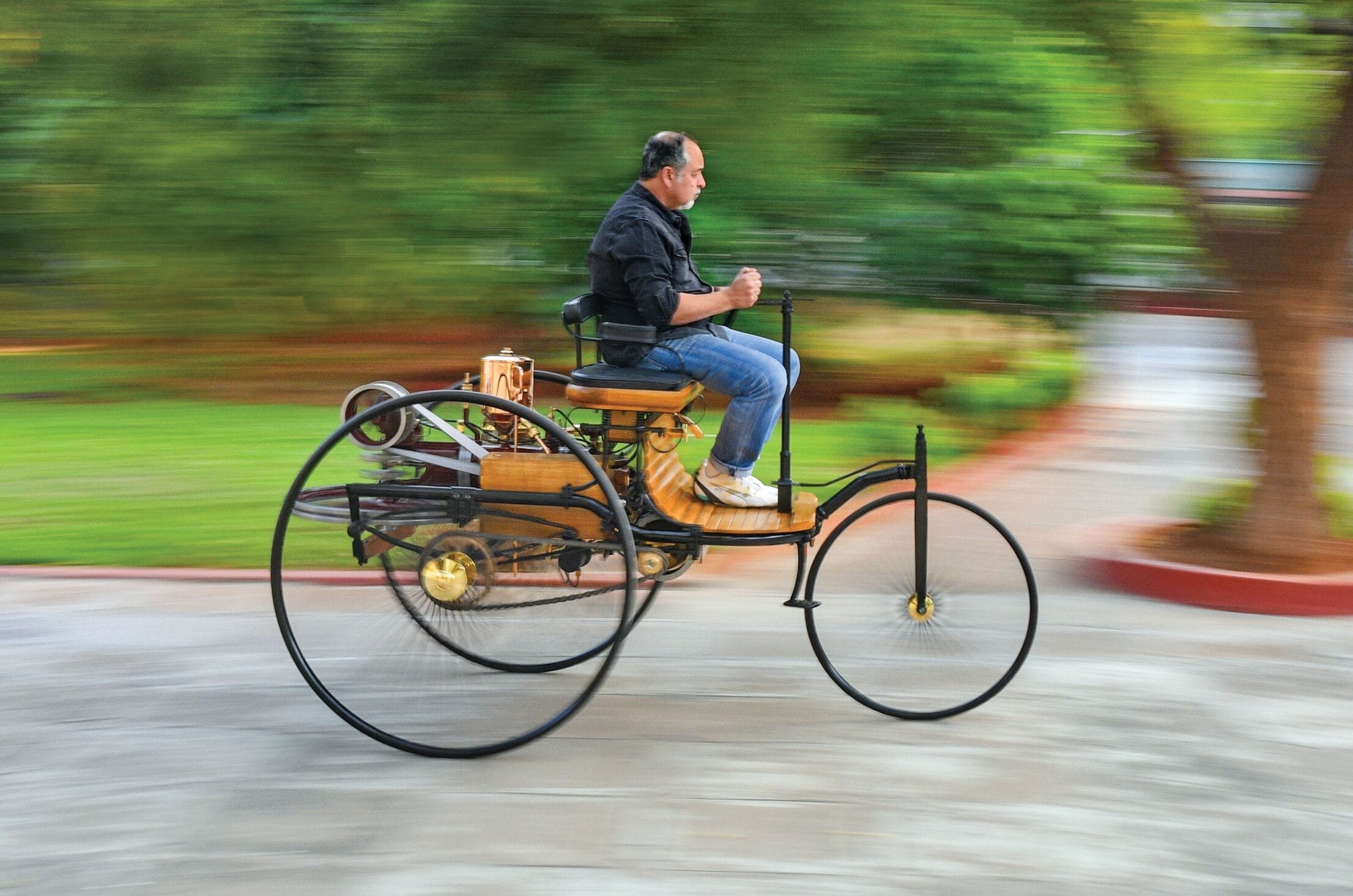
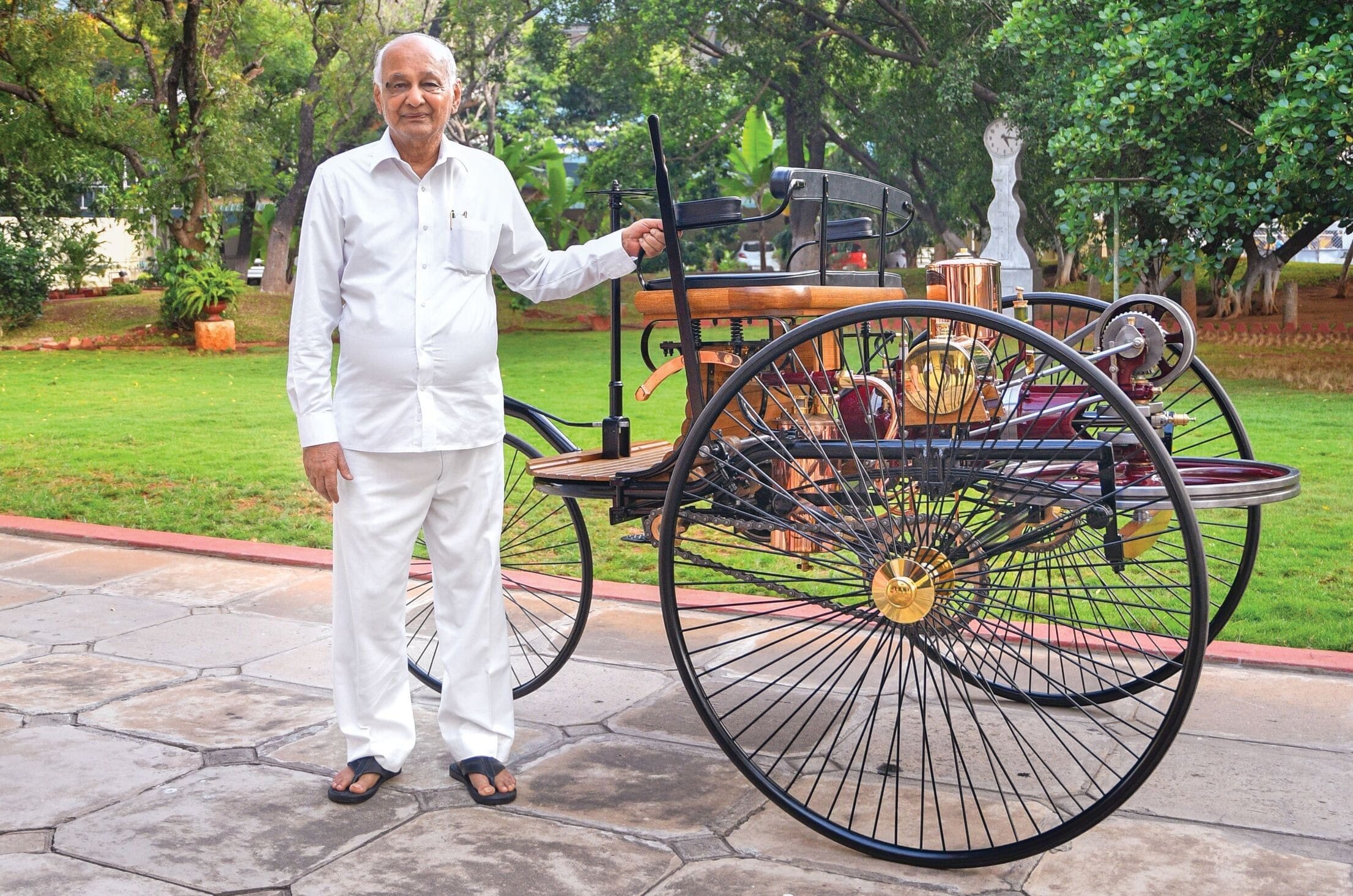
The Benz Patent-Motorwagen, however, is the granddaddy of them all. Widely regarded as the first petrol-powered car, it was unveiled in 1886 and changed the course of history. While steam vehicles had existed since the 1760s, Benz’s creation was revolutionary: a single-cylinder, horizontal piston engine mounted on a tricycle frame. The replica here is almost indistinguishable from the original. Austrian white ash has been imported for the woodwork, just as Benz used in Germany. Brass fittings, carburettors, pistons and connecting rods are all crafted in-house, from the same materials that were used on the original. Even the massive wheels with hard-rubber tyres are made at the factory in Coimbatore, cast and assembled with meticulous care, as we stand and watch.
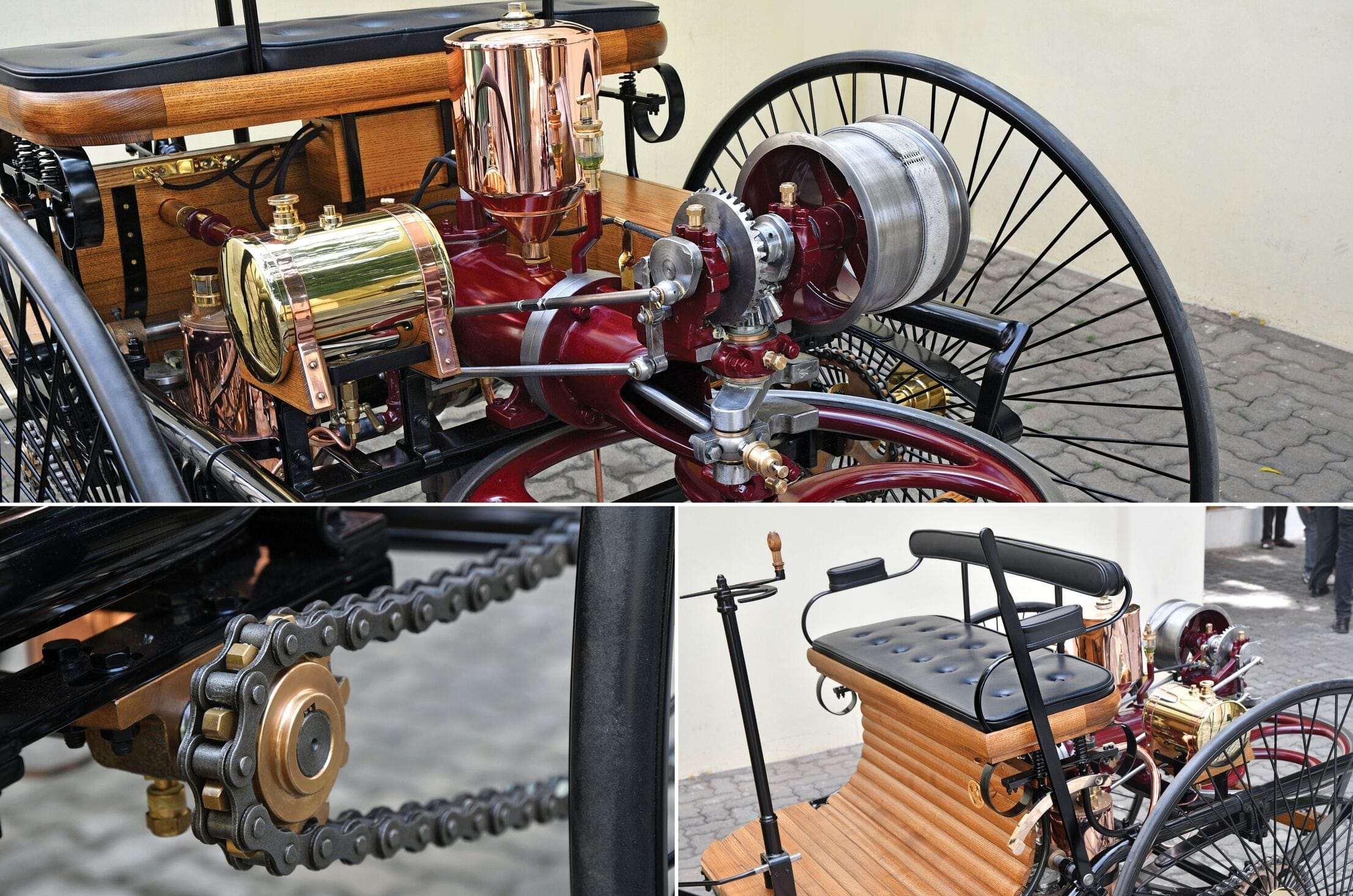
Operating the Motorwagen is an exercise in patience. The wooden box houses the battery and electrics, while the crankshaft and piston lie horizontally. A pulley system drives the camshaft, with pushrods for intake and exhaust valves. The engine is started by spinning the horizontally placed ‘fly wheel’, and the car starts with a soft and faint put-put-put, white smoke softly escaping from the rear.
Clockwise from top: Brass canisters hold water, fuel; You steer with a tiller and use a long lever to accelerate, brake; Drive is via bicycle chain.
Sat high up, you control acceleration and braking with a single lever; push forward to accelerate or pull back to brake. On the road, it feels fragile and threatens to tip over at times. Unless you push the throttle open, even gentle slopes are a challenge. And then there’s some overrun, so you often need to pump the lever to give it a burst of power. In addition, the ride is harsh, the suspension rocks you and larger bumps simply toss you and threaten to flip the tricycle. But every chug of the piston, every few metres you cover remind you that this is where petrol motoring began.
Recreating history
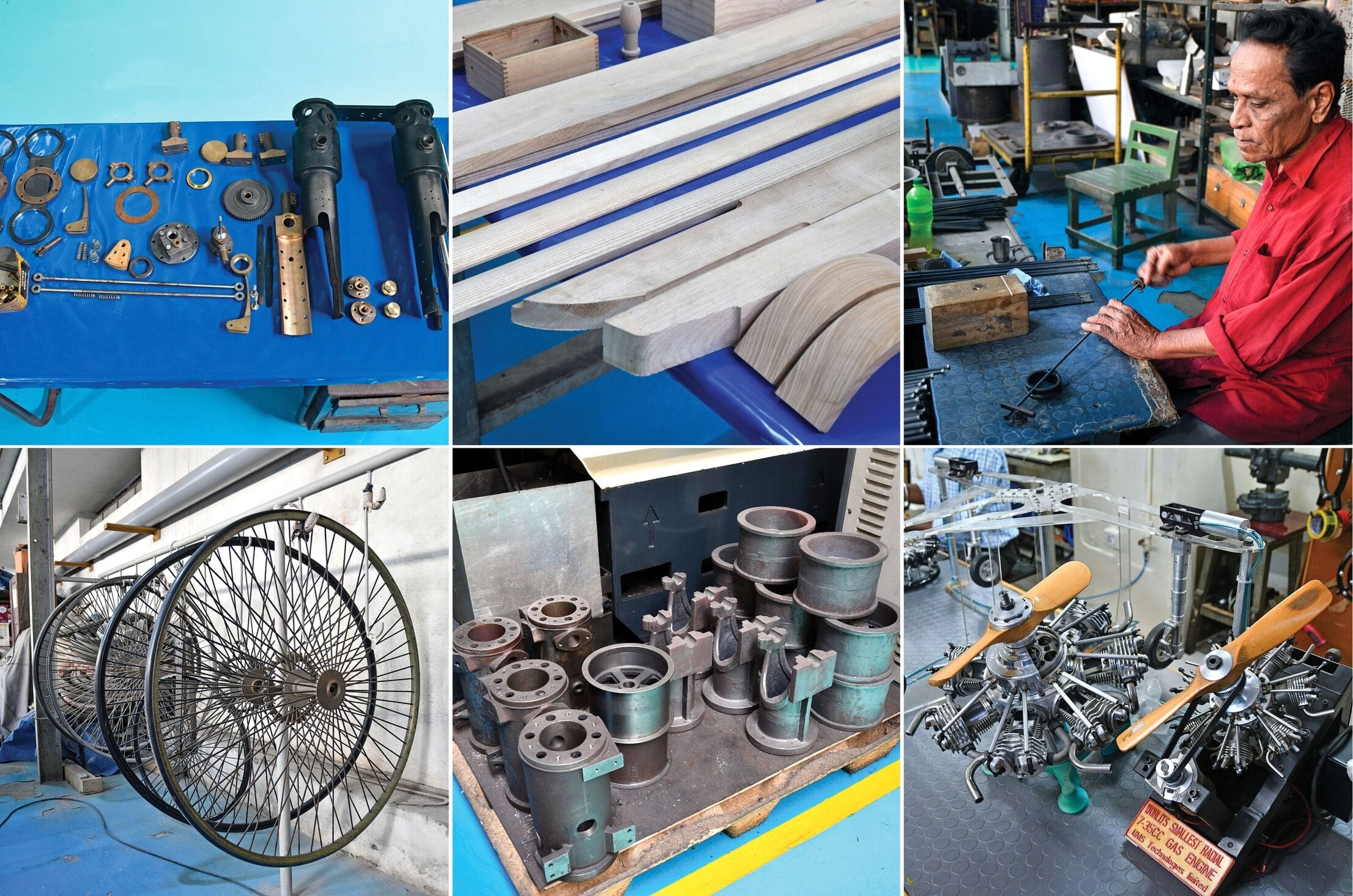
What makes these replicas remarkable is not just their historical accuracy, but the fact that they are built entirely in-house. UMS Technologies casts its own parts – cylinder heads, crankshafts, flywheels, carburettors – 20km away, then assembles them here. Brass, steel, gunmetal and Austrian ash are all shaped into components that mirror the originals. The workshop even uses a Carl Zeiss measuring machine to check tolerances on the Benz cylinder head – something Karl Benz himself could never have imagined in 1886. And the company doesn’t stop at cars. It also builds engines for drones and RC planes, ranging from single-cylinder 100cc units to seven-cylinder radial engines. Precision, craftsmanship and innovation coexist in this tiny factory, proving that scale is not a prerequisite for excellence. It even makes small turbine engines, complete with flames emitted from the rear and afterburners.
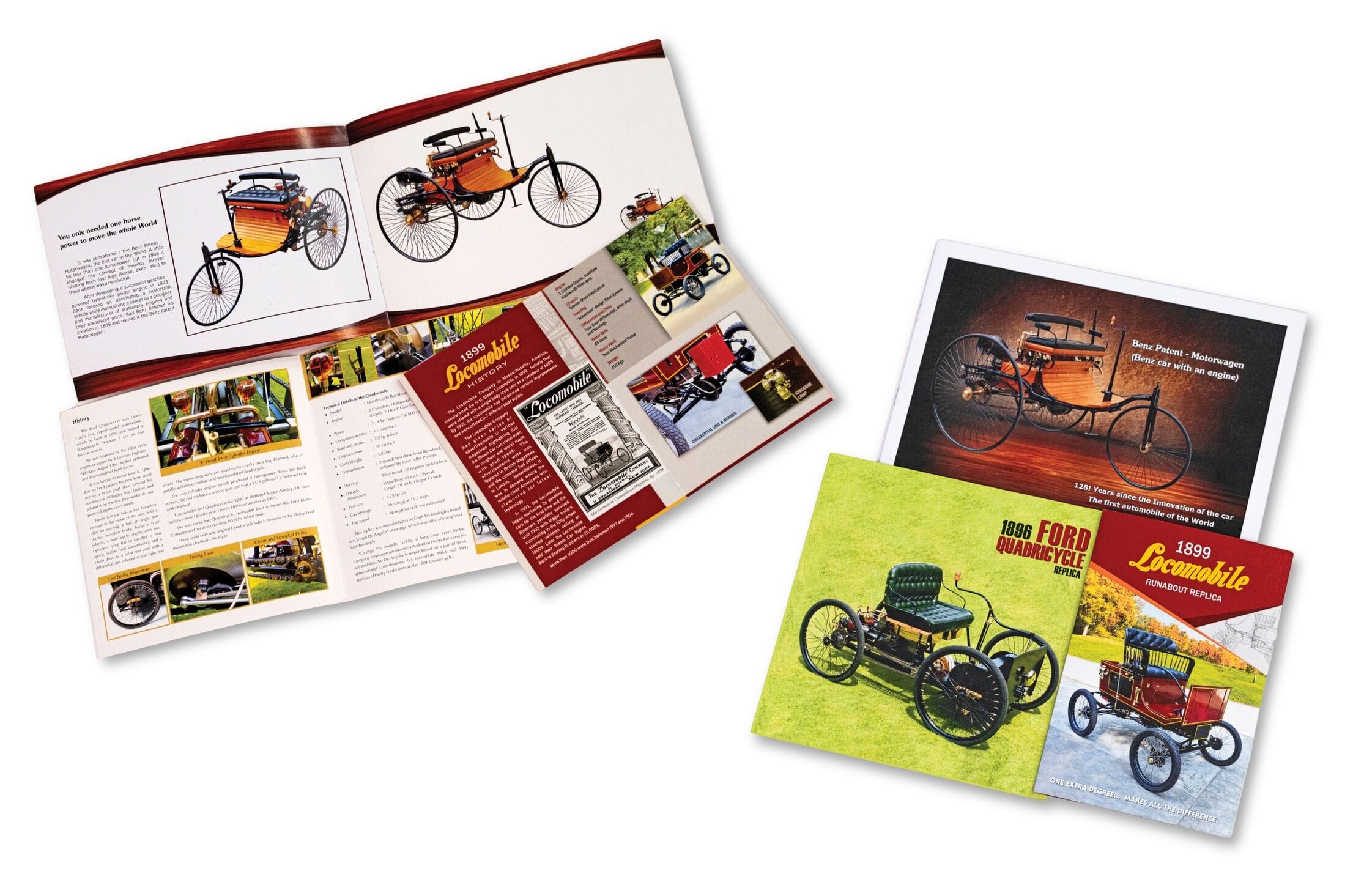
Each car gets its own brochure, as it should.
In an era dominated by SUVs, EVs and autonomous driving, why do these replicas matter? Because they remind us of where it all began. They show us the ingenuity of pioneers who built cars, they highlight the evolution of engineering, from steam to petrol, from tillers to steering wheels, from drip-feed lubrication to blade batteries.
India’s smallest carmaker has achieved something extraordinary. By recreating the Stanley Steamer, the Ford Quadricycle and the Benz Patent-Motorwagen, it has preserved the earliest DNA of the automobile and shown us what it must have been like to drive and be transported by these machines. Even better, if you want to own one of these, each of them is on sale.
Benz Motor Wagen
Stanley Steamer
Ford Quadricycle
Price*
Rs 22.10 lakh
Rs 19.50 lakh
Rs 15.60 lakh
Wheelbase
1,450mm
1,473mm
1,200mm
Power
0.68hp
3.5-5.5hp
3-4hp
Kerb weight
265kg
410kg
227kg
Top speed
16kph
40-48kph
28kph
*Domestic market discount 20-25 percent
No steering required
Driving these three, you get a sense of what the pioneering days of motoring must have been like. You sit exposed, as on a carriage, and looking at this set here, that’s what they really are – horseless carriages. In the Patent-Motorwagen, you pump the accelerator and brake repeatedly, coaxing the car up inclines and slowing it down with a wooden lever. It feels awkward at first, but soon you get the hang of it. The ride is rough, but the sense of history is overwhelming. In the Stanley Steamer, you wait five minutes for pressure to build, then glide forward with effortless torque. The chuffing soundtrack is addictive, and the acceleration surprisingly rapid. Steering with a tiller is tricky, but the experience is joyous. In the Ford Quadricycle, performance takes centre stage. The twin cylinders deliver speed, the ethanol tank nods to sustainability, and the bell-like horn adds a touch of practicality. It feels like the first step toward the modern automobile. Together, they offer a time jump into motoring’s infancy.
How these cars are made in India
All basic parts for the engines are cast or machined either in-house or by a local supplier; for the Benz, the same imported ash wood as the original is used; the spokes and big wheels are made by hand; cylinder and sleeve made to the same spec as the originals; UMS also makes cylinder radial engines for drones and model planes – a nine-cylinder radial and a turbine, among the many.
Interview with GD Gopal, UMS Technologies
Why build replicas of cars that are more than a century old?
Because they are the roots of motoring. Everyone knows the latest SUVs or EVs, but very few have seen where it all began. By recreating the Stanley Steamer, the Ford Quadricycle and the Benz Patent-Motorwagen, we’re preserving history in a way people can touch, feel and drive.
How difficult is it to manufacture these cars from scratch?
Extremely difficult. We cast our own cylinder heads, crankshafts and carburettors. Even the woodwork is done here using Austrian ash, just like the originals. Every part is measured, machined and finished by hand. It’s not about mass production; it’s about precision and authenticity.
What’s next?
We’ll keep building history. And maybe inspire the future too.
Petrol Diesel Price Today: हर दिन की शुरुआत सिर्फ सूरज की किरणों से नहीं होती, बल्कि पेट्रोल और डीजल की नई कीमतों से भी होती है, जो आम आदमी की जेब पर सीधा असर डालती हैं। सुबह 6 बजे देश की तेल विपणन कंपनियां (OMCs) ताजा दरें जारी करती हैं, जो अंतरराष्ट्रीय बाजार में कच्चे तेल की कीमतों और डॉलर-रुपए की विनिमय दर में आए बदलावों पर आधारित होती हैं। ये बदलाव रोजमर्रा की जिंदगी को प्रभावित करते हैं, चाहे वो ऑफिस जाने वाला व्यक्ति हो या फल-सब्जी बेचने वाला व्यापारी।
ऐसे में हर दिन की कीमतों की जानकारी रखना सिर्फ जरूरी ही नहीं, बल्कि समझदारी भी है। सरकार की यह प्रणाली पारदर्शिता सुनिश्चित करती है ताकि उपभोक्ताओं को किसी तरह की भ्रमित जानकारी न मिले।
आपके शहर में आज का पेट्रोल-डीजल का भाव
ये रहे 12 जुलाई 2026 के प्रमुख शहरों के पेट्रोल-डीजल के ताजा रेट —
नई दिल्ली: पेट्रोल 102.12 रुपये | डीजल 95.20 रुपये
मुंबई: पेट्रोल 111.18 रुपये | डीजल 97.83 रुपये
कोलकाता: पेट्रोल 113.47 रुपये | डीजल 99.82 रुपये
चेन्नई: पेट्रोल 107.77 रुपये | डीजल 99.55 रुपये
गुरुग्राम: पेट्रोल 102.77 रुपये | डीजल 95.44 रुपये
नोएडा: पेट्रोल 102.12 रुपये | डीजल 95.56 रुपये
बेंगलुरु: पेट्रोल 110.93 रुपये | डीजल 98.80 रुपये
भुवनेश्वर: पेट्रोल 109.92 रुपये | डीजल 100.92 रुपये
चंडीगढ़: पेट्रोल 98.10 रुपये | डीजल 86.09 रुपये
हैदराबाद: पेट्रोल 115.69 रुपये | डीजल 103.82 रुपये
जयपुर: पेट्रोल 112.66 रुपये | डीजल 97.78 रुपये
लखनऊ: पेट्रोल 102.05 रुपये | डीजल 95.55 रुपये
पटना: पेट्रोल 113.35 रुपये | डीजल 99.36 रुपये
तिरुवनंतपुरम: पेट्रोल 115.49 रुपये | डीजल 104.40 रुपये
पिछले दो साल से स्थिर क्यों हैं कीमतें?
मई 2022 के बाद से केंद्र और कई राज्यों द्वारा टैक्स में कटौती की गई, जिसके बाद पेट्रोल-डीजल की कीमतों में स्थिरता देखी जा रही है। हालांकि अंतरराष्ट्रीय बाजार में उतार-चढ़ाव होता रहता है, फिर भी भारतीय उपभोक्ताओं के लिए कीमतें तुलनात्मक रूप से स्थिर बनी हुई हैं।
किन कारणों से तय होती हैं ईंधन की कीमतें?
कच्चे तेल की कीमतें:
पेट्रोल और डीजल का उत्पादन मुख्य रूप से कच्चे तेल से होता है। जब अंतरराष्ट्रीय स्तर पर कच्चे तेल की कीमतें बढ़ती हैं, तो इसका असर सीधे भारतीय बाजार पर पड़ता है।
डॉलर के मुकाबले रुपया:
भारत अधिकतर कच्चा तेल आयात करता है, और यह डॉलर में खरीदा जाता है। यदि रुपया कमजोर होता है, तो ईंधन महंगा हो जाता है।
सरकारी टैक्स और शुल्क:
केंद्र और राज्य सरकारें पेट्रोल-डीजल पर भारी टैक्स लगाती हैं, जो खुदरा मूल्य का बड़ा हिस्सा होते हैं। यही कारण है कि राज्यों में कीमतों में अंतर होता है।
रिफाइनिंग की लागत:
कच्चे तेल को इस्तेमाल लायक बनाने की प्रक्रिया (रिफाइनिंग) में भी खर्च होता है। ये लागत कच्चे तेल की गुणवत्ता और रिफाइनरी की क्षमता पर निर्भर करती है।
मांग और आपूर्ति का संतुलन:
बाजार में ईंधन की मांग अगर बढ़ जाती है, तो कीमतें भी ऊपर जाने लगती हैं। खासकर त्योहारों, गर्मी या सर्दी के मौसम में ईंधन की खपत ज्यादा होती है।
कैसे करें अपने शहर की कीमतें SMS से चेक?
अगर आप मोबाइल से ईंधन की कीमत जानना चाहते हैं, तो ये प्रक्रिया आसान है:
Indian Oil ग्राहक: अपने शहर का कोड टाइप करें और उसे “RSP” के साथ 9224992249 पर भेजें।
BPCL ग्राहक: “RSP” लिखकर 9223112222 पर भेजें।
HPCL ग्राहक: “HP Price” लिखकर 9222201122 पर भेजें।