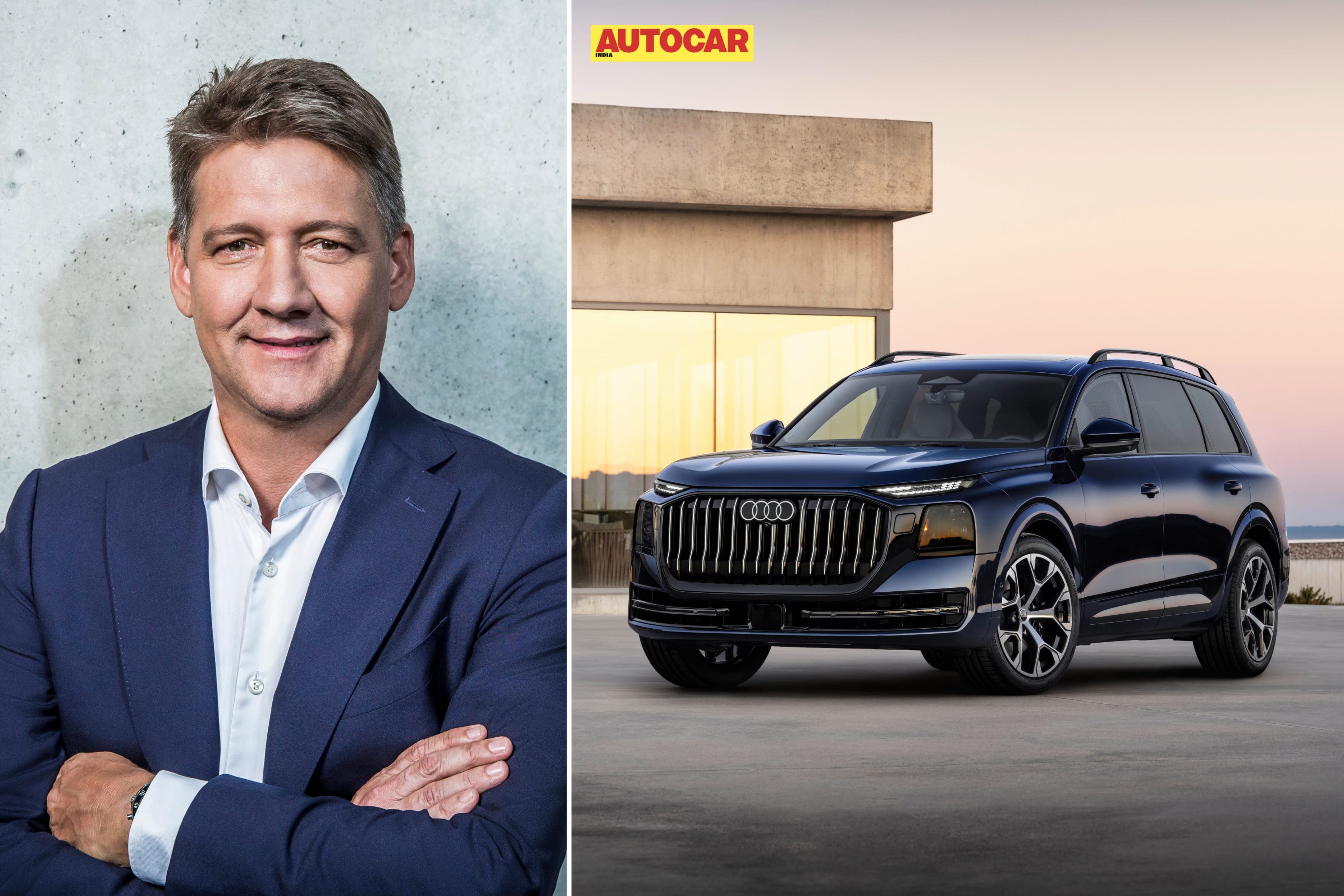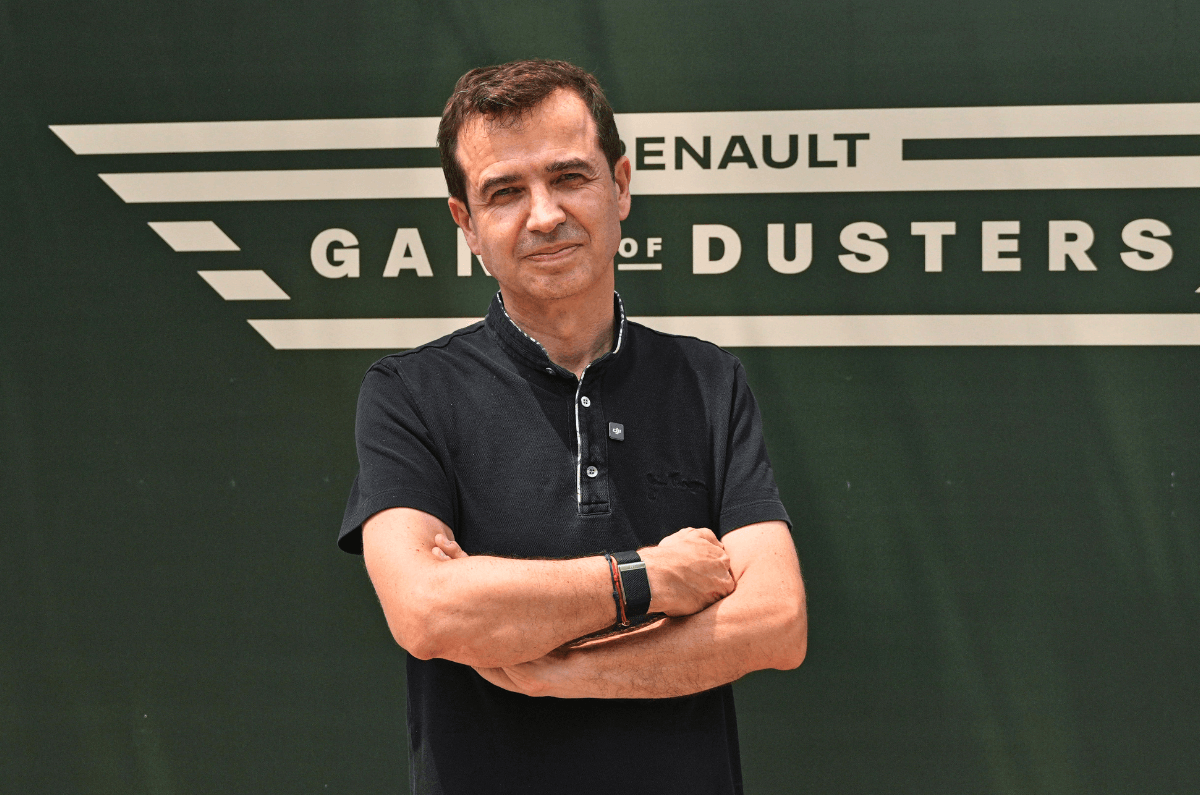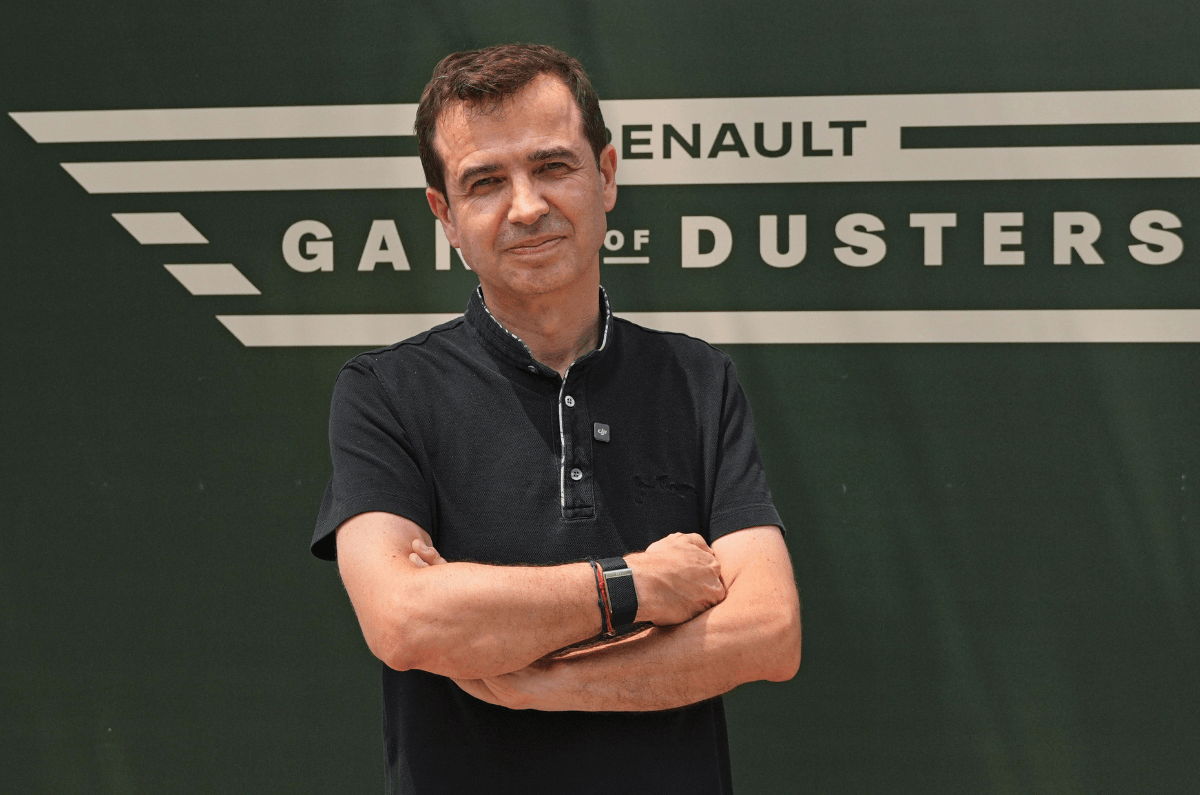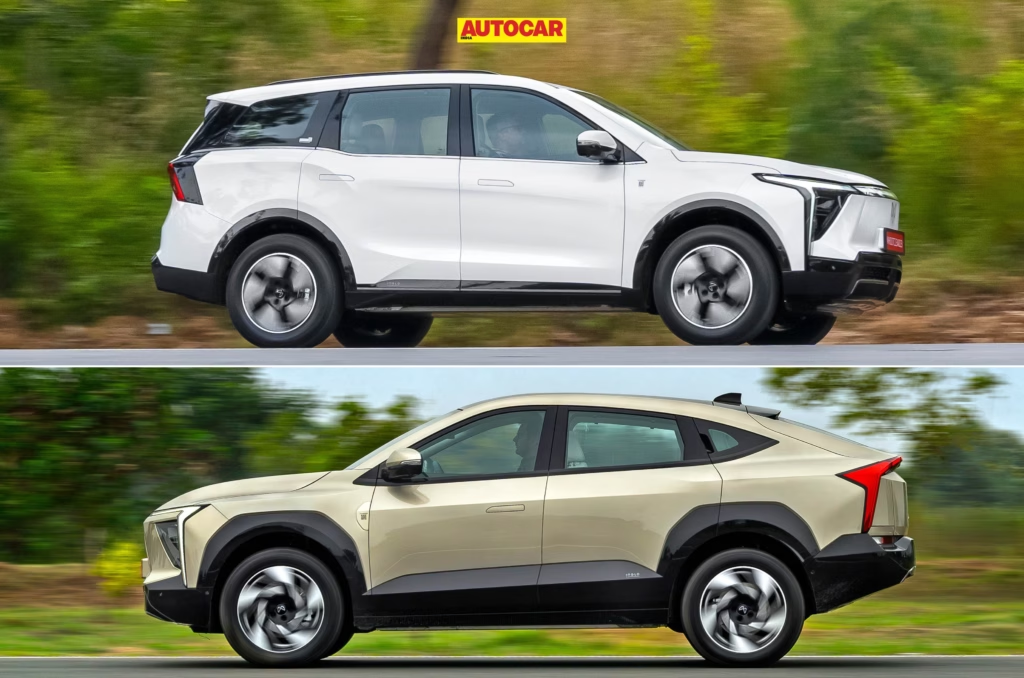
Renault Group India CEO Stephane Deblaise took charge of the company in September last year, and since then, the carmaker has been busy expanding and refreshing its India line-up. In this interview, Deblaise talks about the response to the new Renault Duster and the possibility of a more affordable automatic variant, the company’s upcoming product plans, progress on the Bridger compact SUV concept, and how Renault plans to strengthen its position in the Indian market.
On the response to the 1.0-litre Duster
It’s still early, so we don’t know the exact response, but it’s a key part of our phased strategy, which was to first focus on the 160hp DCT that is the high-end version in the ICE car. And then we want to introduce the 100hp, the more ‘regular’ car, which is less expensive. That Rs 10.5 lakh price is very, very good for people who want to enter the B+ SUV segment, and it has very good fuel efficiency. Moreover, the Duster is a very good car, and people are loyal to good cars, so we are expecting the Duster to do well on the whole.
On the slow rate of Duster bookings and deliveries
So, at Renault, we don’t overstate or overpromise. We won’t say we have 60,000 people waiting and, after that, you would discover that we did not do 60,000 deliveries. Some people do that; we don’t. We are very serious and would prefer to focus on one (variant), and then another, and a third, so in this way people keep speaking about it. For the hybrid, we were not ready; that’s why it is coming later, but with the 160hp and 100hp Duster, we wanted to focus first on the high-end and then the lower version. You know, we were in a little bit of a hibernation, and you can’t go from that to summer in one day. I think it’s good to build up step by step.
On the possibility of a 1.0-litre automatic
I am not saying what gearbox or even the engine, but what I can say is that very soon we will introduce a new, less expensive version with an automatic. It was not planned at the beginning, but since we launched the new Duster, we have been having a lot of queries about this from customers. Plus, if you look at the pricing of all the models and variants we currently have, there is a gap between the manual variants and the first automatic version.
On the rest of the Renault portfolio
I arrived in India on the 1st of September, and on the 16th of October I went to Paris to validate our India plan, and all the programmes that we decided to pursue were validated. Then, as you know, we communicated this in April this year. The programmes are completely running as per our expectations and on time. On the Renault Group Entry Platform (RGEP), we have made many modifications and carried out re-engineering to bring in new engines, new equipment and other things that you have requested. They are now finally coming. Next year will be a blowout of new products.
On the brand’s new design centre in India
The India R&D centre is playing a very big role in our local as well as global plans. When I arrived, I was requested to bring together the three entities we had, which were all separate: one dedicated to sales, one to engineering, and one dedicated to manufacturing, which was along with Nissan. Now we have all three together under one leadership – mine – and this helps a lot because communication is easier and quicker, and this is improving our agility and our ability to see and respond to the market much better. This is why we will now deliver exactly what the market needs and is asking for.
On the development of the Bridger concept
This is a very important topic. It’s my project, and I am working very hard on this with our whole team. We have three meetings per week about the project, and in the coming weeks, there is a very important milestone. But I am happy to say that everything is going nicely and is on track, so I am satisfied with our progress.
Renault Group India CEO Stephane Deblaise took charge of the company in September last year, and since then, the carmaker has been busy expanding and refreshing its India line-up. In this interview, Deblaise talks about the response to the new Renault Duster and the possibility of a more affordable automatic variant, the company’s upcoming product plans, progress on the Bridger compact SUV concept, and how Renault plans to strengthen its position in the Indian market.
On the response to the 1.0-litre Duster
It’s still early, so we don’t know the exact response, but it’s a key part of our phased strategy, which was to first focus on the 160hp DCT that is the high-end version in the ICE car. And then we want to introduce the 100hp, the more ‘regular’ car, which is less expensive. That Rs 10.5 lakh price is very, very good for people who want to enter the B+ SUV segment, and it has very good fuel efficiency. Moreover, the Duster is a very good car, and people are loyal to good cars, so we are expecting the Duster to do well on the whole.
On the slow rate of Duster bookings and deliveries
So, at Renault, we don’t overstate or overpromise. We won’t say we have 60,000 people waiting and, after that, you would discover that we did not do 60,000 deliveries. Some people do that; we don’t. We are very serious and would prefer to focus on one (variant), and then another, and a third, so in this way people keep speaking about it. For the hybrid, we were not ready; that’s why it is coming later, but with the 160hp and 100hp Duster, we wanted to focus first on the high-end and then the lower version. You know, we were in a little bit of a hibernation, and you can’t go from that to summer in one day. I think it’s good to build up step by step.
On the possibility of a 1.0-litre automatic
I am not saying what gearbox or even the engine, but what I can say is that very soon we will introduce a new, less expensive version with an automatic. It was not planned at the beginning, but since we launched the new Duster, we have been having a lot of queries about this from customers. Plus, if you look at the pricing of all the models and variants we currently have, there is a gap between the manual variants and the first automatic version.
On the rest of the Renault portfolio
I arrived in India on the 1st of September, and on the 16th of October I went to Paris to validate our India plan, and all the programmes that we decided to pursue were validated. Then, as you know, we communicated this in April this year. The programmes are completely running as per our expectations and on time. On the Renault Group Entry Platform (RGEP), we have made many modifications and carried out re-engineering to bring in new engines, new equipment and other things that you have requested. They are now finally coming. Next year will be a blowout of new products.
On the brand’s new design centre in India
The India R&D centre is playing a very big role in our local as well as global plans. When I arrived, I was requested to bring together the three entities we had, which were all separate: one dedicated to sales, one to engineering, and one dedicated to manufacturing, which was along with Nissan. Now we have all three together under one leadership – mine – and this helps a lot because communication is easier and quicker, and this is improving our agility and our ability to see and respond to the market much better. This is why we will now deliver exactly what the market needs and is asking for.
On the development of the Bridger concept
This is a very important topic. It’s my project, and I am working very hard on this with our whole team. We have three meetings per week about the project, and in the coming weeks, there is a very important milestone. But I am happy to say that everything is going nicely and is on track, so I am satisfied with our progress.
Gold Price Investment Strategy: वैश्विक ब्रोकरेज फर्म जेफरीज के ग्लोबल हेड ऑफ इक्विटी स्ट्रैटेजी क्रिस वुड ने सोने में निवेश को लेकर एक बड़ा और अहम सुझाव दिया है। मनीकंट्रोल को दिए एक खास इंटरव्यू में क्रिस वुड ने कहा कि हालिया गिरावट और एक सीमित दायरे में कारोबार करने के बाद अब सोने में फिर से खरीदारी शुरू करने का सही समय आ गया है।
क्यों आया सोने में गिरावट का दौर?
क्रिस वुड ने सोने की हालिया चाल का विश्लेषण करते हुए बताया कि जब हाल ही में ईरान संघर्ष की शुरुआत हुई थी, तब भी सोने ने अपना नया रिकॉर्ड हाई नहीं बनाया था।
ईरान युद्ध की खबर के बावजूद सोने का नया ऑल-टाइम हाई न बनाना इस बात का साफ इशारा था कि सोने का बाजार फिलहाल अपने शिखर पर पहुंच चुका है और इसके बाद एक ठहराव या कंसोलिडेशन फेज शुरू होना तय था।
अब सोना इस ट्रेडिंग रेंज के अपने सबसे निचले स्तर के करीब आ गया है, जिससे निवेशकों के लिए इसमें नए सिरे से एंट्री करने का बेहतरीन मौका बन रहा है।
लंबी अवधि में क्यों मजबूत है सोने का आउटलुक?
क्रिस वुड लंबी अवधि के लिए सोने को लेकर बेहद तेजी का रुख रखते हैं। उन्होंने इसके पीछे का मुख्य कारण अमेरिकी डॉलर के अवमूल्यन को बताया। वुड ने तर्क देते हुए कहा कि, ‘दीर्घकालिक नजरिए से मुझे सोना इसलिए पसंद है क्योंकि मैं अभी भी ‘डॉलर डिबेसमेंट ट्रेड’ यानी डॉलर के मूल्य में आने वाली संभावित गिरावट की थ्योरी में पूरा विश्वास रखता हूं।’
निवेशकों के लिए क्रिस वुड की सलाह
सोने में आई हालिया करेक्शन के बाद अब यह एक आकर्षक कंसोलिडेशन जोन में है। इसलिए निवेशकों को हर गिरावट पर इसे अपने पोर्टफोलियो में जोड़ने की रणनीति अपनानी चाहिए।
वैश्विक अनिश्चितताओं और अमेरिकी डॉलर के दीर्घकालिक दबाव को देखते हुए सोना पोर्टफोलियो को मजबूती और सुरक्षा प्रदान करने का सबसे असरदार माध्यम बना हुआ है।
#MCExclusive | Is it time to buy gold again? Christopher Wood thinks so.
“I think people should start looking to accumulate gold again now.”
Disclaimer: यहां मुहैया जानकारी सिर्फ सूचना के लिए दी जा रही है। यहां बताना जरूरी है कि मार्केट में निवेश बाजार जोखिमों के अधीन है। निवेशक के तौर पर पैसा लगाने से पहले हमेशा एक्सपर्ट से सलाह लें। मनीकंट्रोल की तरफ से किसी को भी पैसा लगाने की यहां कभी भी सलाह नहीं दी जाती है।
Mercedes-Benz’s Research and Development centre in Bengaluru has evolved from a hardware-focused engineering hub into one of the company’s key global R&D centres, with teams working across software, ADAS, electric powertrains and physical vehicle development. In this interview, Jörg Burzer, Member of the Board and Chief Technology Officer, Development & Procurement at Mercedes-Benz Group AG, discusses the centre’s expanding capabilities, the role of AI in vehicle development, the future of autonomous driving, and why he believes every Mercedes-Benz has “a bit of India” in it.
A lot of global auto OEMs have large R&D centres in India. Beyond cost, what are the benefits of having such large setups in India
Yes, it’s not only cost; you see, the competence level is so high. If you look at our centre, we will be celebrating its 30th anniversary here in India, and over these years, it has only grown in size and capability. We started with hardware, but now it’s massively into software, infotainment and autonomous driving. The team in India is contributing heavily on ADAS, for instance, and we are working on Level 3 and Level 4 with the team in India. So, all in all, I would say it’s competence, speed and agility that are good here.
Is the Mercedes development centre mainly a digital unit, or is physical development also being undertaken here?
Oh certainly, we have lots of hardware development. There are many test benches, and you’ll see lots of physical testing and development taking place here. Even beyond powertrain, there’s a lot of physical development taking place along with our vendors here too. And then, on electric vehicles, we’re working on the powertrains and batteries too. And yes, on the digital side, there’s lots of AI work, not just on the product, but also on process development. So yes, the centre is a full-scope R&D centre, a blend of the digital and physical. For example, we do a lot of work on the simulation of sheet metal forming and welding here.
Besides engineering, does the India centre also do design and styling work for your products?
On the design side, at Mercedes, we have this philosophy that we are creating a global product, and so we have a global design. This might change a little bit – obviously, we are adapting our design, which might be enriched by certain market trends – but for us, it’s very important that it is a global design, so we have one design hat. So, our styling team is based in Germany, where we have our design centre, and that’s important for us to maintain the global approach.
Software is today a leveller, even phone manufacturers can make a car today. Do you view this as a threat?
I see this as an opportunity because, for instance, you can develop a software stack for ADAS, but at the end you have to apply it to hardware. One interesting bit, to my knowledge, is that we are the only OEM doing a Level 2++ ADAS with a combustion engine, otherwise you only see this on EVs. To do this in a combustion engine environment, you know, with things like a transmission, it’s more complicated, so that’s where our expertise in traditional technologies, along with our developments in software, has an advantage. And of course, we have tremendous respect for our competitors and we are seeing what they are doing, but for me, I think if you do this mix right, you will be at the forefront of development.
Past Mercedes cars stood for robust engineering. What do you think a Mercedes 10 years from now would be all about?
Obviously there will be tech, but there will be more. I can give you a good example, one of the most important characteristics and values of a Mercedes-Benz is safety. We do plenty of crash tests every year for our cars that we launch, plus there’s a lot that we are doing with autonomous driving too, for instance, what we are doing with Nvidia. And here we have a lot of redundancy. We have a traditional software stack with massive amounts of info like what is a stop sign in every different market, for example. But there’s an end-to-end stack where the software is trained by the behaviour of the driver in traffic, but what we are doing is we have both stacks, so if the end-to-end system does not know what to do, then it can fall back to the classic system. So, we create a safety environment, where we know there is always a solution.
On redundancy, what is your view of a wide sensor stack like radars, lidars and cameras, or is AI with cameras only fine?
We are using AI, yes, but we have radars too. We have to use AI to create efficiency in the simulation and training, but you have to also think about the sensor set, and for me, I am convinced you have to have a multiple sensor set, not just one type. So, like on the S Class, we have multiple cameras, radars and ultrasonic sensors too.
Does the India R&D centre develop products or platforms independently of headquarters, or is it more synergetic?
For us, it’s very important that we do everything as a team. So, for me personally, it’s very important to have a global perspective in R&D because the innovations and technology solutions are so complex that you can only master them as a team. There are a lot of competencies, but there is not one single team in the world that can say, ‘I am the one that can create a platform.’ It’s always teamwork, and if you look at all industries, automotive engineering is the ultimate for teamwork. So for us, R&D is one big team. And with regards to the India centre, I love to say that in each and every Mercedes, there is a bit of India in it.
Skoda Auto India has had a busy year, with the launch of the Kylaq, the return of the Kodiaq, an expanding dealer network and plans to strengthen its presence across multiple segments. The company is also preparing for an electric future while continuing to invest in its petrol-powered portfolio. In this interview, Brand Director Ashish Gupta talks about Skoda’s sales growth, the launch of the Kodiaq RS, upcoming model updates, EV strategy and the steps being taken to improve the ownership experience in India.
On his first year at the helm of Skoda India.
Coming from Volkswagen, I’ve basically switched to the other side of the office, but I’d say it’s been challenging but exhilarating. I’m more than satisfied with the year, from the brand side, sales and also setting the foundation for the future. All our KPIs – brand image, awareness, consideration, network coverage, dealer profitability, customer satisfaction, market coverage, etc. – have improved, and we have done really well. In sales, we went from number eleven to seven, and we also became number four in the global sales ranking for Skoda, just slightly behind the UK.
On the launch of the Kodiaq RS.
The Kodiaq is our flagship. It came here in 2017, and we have it on sale again. At the same time, this year marks 125 years for Skoda in motorsport, and it’s also about 50 years since the RS badge was first born, so we thought it would be great to bring in the Kodiaq RS as the pinnacle of our engineering and motorsport heritage. It’s coming in as a fully built unit, and we have only 50 units; allocation is a challenge when it’s a bestseller abroad, but we have the option of another batch later on.
On the Kylaq driving Skoda’s sales growth.
Yes, a large portion of our sales came from the Kylaq, but that was also because we were running out the Kushaq, which was due for an update and has now been launched. So, the demand for the Kushaq was always there. Also, it’s only been two months, so it’s too early to qualify, but we have seen an uptake of about 40% in sales, and the order book is solid.
On the Slavia and the upcoming update.
The Slavia is a very special model for us. SUVs are the flavour of the season, but sedans are doing fine too, and we are among the few manufacturers in the world that still have a sedan portfolio, all of which are doing well. In India, the Slavia continues our sedan legacy of models like the Octavia, Superb and Rapid, and so, yes, it will see an update, but it’s early to specify details.
On the company’s electric vehicle plans.
If you want to be a relevant player in that space, you have to have a local play, so that’s what we are working on. EV penetration was 7% in May, up from 4.5% at the end of last year, so yes, this is a space where we will accelerate our plans, but you cannot do this suddenly, as there are factors like the supply chain to consider. But there’s an international portfolio too that we can look at.
On the possibility of the Peaq making it to India.
Bringing in a global model is very difficult as far as pricing goes, and the EU-FTA, as you know, does not give benefits to EVs for now. So, for now, we have to look at what makes sense, and yes, a larger EV is easier to manage pricing with. And yes, the Peaq is certainly on my radar. We will look at the specifications and see how we can best manage that with pricing, as you cannot have a high-priced CBU but be low on equipment. So, we are working on this. My ambition is to get the global portfolio to India.
On a petrol-only portfolio and flex-fuel cars.
If you see, year to date, the petrol market is about 46%, which used to be above 50% last year, so there is a shift, but the market is also growing by 20%. So even if the share of other fuels is rising, the absolute volume of petrol is increasing, so I’m not worried about our current portfolio. As for flex fuel, yes, ethanol is a longer-term strategy that the government wants, so we have to look at it, and we are, but there is work to manage this, as we have to look at the engine portfolio and manage our strict emission norms too.
On addressing Skoda’s dealer experience.
If you look at our customer experience scores, they have been improving. Sales have grown by almost 12 percent over the last year, and customer experience for service has improved by 18 to 20 percent. So, are we perfect? No, but the trend has improved and is only rising. Also, we are now present at about 335 touchpoints in 183 cities and are just inaugurating our 200th workshop in India, so we are getting closer to our customers. We have competitive service packs and excellent parts availability. Today, we have a parts service rate of more than 96 percent at our warehouses and dealerships, which is among the best in the industry.
In welcome news for enthusiasts, BMW has indicated that the next-gen ICE-powered M3 will continue to offer a manual gearbox. BMW M chief executive officer Frank van Meel stated in a recent interview that the performance division intends to keep the three-pedal option alive “as long as possible” despite tightening regulations and dwindling supplier support.
Manuals offer a way better mechanical connection, says BMW M boss
M2 manual sees particularly strong demand in the automatic-dominated US market
BMW M3 Handschalter manual gear lever. Image used for representative purposes only.
Speaking to Autocar UK, van Meel noted that manual transmissions remain an important part of BMW M’s identity because of the driver engagement they provide. “We want to have this mechanical connection, shifting by yourself. It’s an emotional thing; it’s not just an engineering thing, and it’s still there,” van Meel said.
He pointed to the BMW M2 as proof that demand for manual gearboxes remains strong. In the US – a market where automatic cars vastly outsell manual ones – M2 sales are split roughly 50:50 between the performance coupe’s 6-speed manual and the 8-speed automatic variants. In May 2026, BMW even introduced a limited-run M3 CS Handschalter edition with a 6-speed manual only for the US and Canada.
BMW M Concept Neue Klasse. Image used for representative purposes only.
However, van Meel acknowledged that offering manual gearboxes is becoming increasingly difficult. “The supplier base is getting smaller, and with all the driver-assist systems, it is getting more difficult to disconnect the drivetrain,” he said, before adding that BMW still intends “to keep the manual as long as possible”.
S58 turbo straight-six to live on in next-gen M3
No PHEV setup as BMW upgraded the S58 for Euro 7 compliance
Unlike the new Audi RS5, which uses a V6 plug-in hybrid powertrain in the interest of meeting emission norms, the next-gen ICE M3 will continue using its predecessor’s 3.0-litre ‘S58’ turbo-petrol inline-six engine with no major electric assistance.
Euro 7-compliant BMW S58 engine.
BMW recently upgraded the S58 engine to comply with upcoming Euro 7 emissions regulations, introducing pre-chamber combustion (wherein the air-fuel mixture is ignited right before it enters the cylinder) and new variable-geometry turbochargers. The changes are touted to improve combustion efficiency, reduce emissions and maintain performance without sacrificing the engine’s character.
Enhanced aural experience, but no difference in engine output
According to BMW, the Euro 7-compliant S58 even has throatier induction and exhaust sounds at high revs. However, engine output will remain unchanged from that of the current M3, which churns out 530hp and 650Nm. The BMW M boss added that the automaker is confident it can preserve the engine’s performance despite stricter emissions requirements, although cooling remains one of the biggest engineering challenges.
BMW M Concept Neue Klasse. Image used for representative purposes only.
“If you go on track, of course, temperature is an issue. We improved cooling to counteract; the challenge with the big engines and the big coolers is that they need to be even stronger,” van Meel remarked. Therefore, expect the front end of the new ICE-powered M3 to sport a large open grille with a big intercooler behind it.
ICE and electric M3s to co-exist in similar price ranges
BMW wants to offer buyers the choice between petrol and electric
BMW M Concept Neue Klasse. Image used for representative purposes only.
BMW will sell both ICE and EV versions of the next-generation M3 simultaneously. While the two models will share similar styling inspired by the Vision Neue Klasse M Concept, they will be underpinned by different platforms and use entirely different powertrains.
According to van Meel, BMW wants customers to decide whether they prefer petrol or electric performance rather than forcing either on them: “There might be customers who say ‘I want to have a combustion engine because I like the sound… or I cannot charge.’ That’s fully okay.”
BMW M Concept Neue Klasse. Image used for representative purposes only.
BMW M sales boss Sylvia Neubauer separately told Autocar UK that the ICE and electric M3 will be priced in the “same ballpark” and confirmed that the carmaker will continue offering combustion-powered M cars for enthusiasts who are not ready to switch to electric.
BMW M3 Touring estate to see another generation
Neubauer also confirmed that there will be a Touring estate version of the next-gen M3, as the current one is among BMW M’s strongest-performing models, especially in China. Expect the next-gen M3 Touring to have mechanicals similar to its sedan counterpart.
अंक शास्त्र में जन्म तारीख के आधार पर व्यक्ति के स्वभाव, व्यक्तित्व और जीवन से जुड़ी कई बातों का अनुमान लगाया जाता है। जन्म तारीख के अंकों को जोड़कर मूलांक निकाला जाता है, जो व्यक्ति के लिए खास महत्व रखता है। मान्यता है कि मूलांक के अनुसार कुछ रंग शुभ माने जाते हैं, जिन्हें पहनने से कॉन्फिडेंस और पॉजिटिव एनर्जी बढ़ती है। आइए जानते हैं इंटरव्यू(interview), मीटिंग(meeting) या खास मौकों पर किस मूलांक के लोगों के लिए कौन-से रंग शुभ माने जाते हैं:
मूलांक 1- सूर्य से जुड़ी ऊर्जा
जिन लोगों का जन्म किसी भी महीने की 1, 10, 19 या 28 तारीख को हुआ है, उनका मूलांक 1 होता है। अंक शास्त्र के अनुसार इस मूलांक के स्वामी ग्रह सूर्य माने जाते हैं। इनके लिए पीला( yellow), गोल्डन(golden) और नारंगी(orange) रंग शुभ माना जाता है। खास मौकों पर इन रंगों के कपड़े पहनना कॉन्फिडेंस बढ़ाने वाला माना जाता है।
मूलांक 2- चंद्रमा की शांति
जिन लोगों का जन्म 2, 11, 20 या 29 तारीख को हुआ है, उनका मूलांक 2 होता है। इस मूलांक के स्वामी ग्रह चंद्रमा माने जाते हैं। इनके लिए सफेद(white), क्रीम(cream) और हल्के नीले(light blue) रंग शुभ माने जाते हैं। ये रंग शांति, बैलेंस और पॉजिटिव सोच से जुड़े माने जाते हैं।
मूलांक 3- गुरु का प्रभाव
जिन लोगों का जन्म 3, 12, 21 या 30 तारीख को हुआ है, उनका मूलांक 3 होता है। इस मूलांक के स्वामी ग्रह गुरु (बृहस्पति) माने जाते हैं। इनके लिए पीला(yellow), हल्का नारंगी(light orange) और सुनहरा रंग(golden) शुभ माना जाता है। ये रंग नॉलेज, कॉन्फिडेंस और सक्सेस से जुड़े माने जाते हैं।
मूलांक 4- राहु का रहस्यमय प्रभाव
जिन लोगों का जन्म 4, 13, 22 या 31 तारीख को हुआ है, उनका मूलांक 4 होता है। इस मूलांक के स्वामी ग्रह राहु माने जाते हैं। इनके लिए नीला(blue), ग्रे(grey) और हल्के हरे(light green) रंग शुभ माने जाते हैं। इन रंगों को स्टेबिलिटी और पॉजिटिव चेंज से जोड़कर देखा जाता है।
मूलांक 5- बुध की रचनात्मकता
जिन लोगों का जन्म 5, 14 या 23 तारीख को हुआ है, उनका मूलांक 5 होता है। इस मूलांक के स्वामी ग्रह बुध माने जाते हैं। इनके लिए हरा(green), हल्का नीला(light blue) और सफेद(white) रंग शुभ माना जाता है। ये रंग इंटेलिजेंस, क्रिएटिविटी और कॉन्फिडेंस बढ़ाने वाले माने जाते हैं।
मूलांक 6- शुक्र की सुंदरता
जिन लोगों का जन्म 6, 15 या 24 तारीख को हुआ है, उनका मूलांक 6 होता है। इस मूलांक के स्वामी ग्रह शुक्र माने जाते हैं। इनके लिए सफेद(white), गुलाबी(pink) और पेस्टल(pastel) रंग शुभ माने जाते हैं। ये रंग चार्म, ब्यूटी और पॉजिटिव एनर्जी से जुड़े माने जाते हैं।
मूलांक 7- शांति और मेंटल बैलेंस
जिन लोगों का जन्म 7, 16 या 25 तारीख को हुआ है, उनका मूलांक 7 होता है। इस मूलांक के स्वामी ग्रह केतु माने जाते हैं। इनके लिए हल्का पीला(yellow), सफेद(white) और हरा(green) रंग शुभ माना जाता है। ये रंग शांति और मेंटल बैलेंस से जुड़े माने जाते हैं।
मूलांक 8- शनि की तरह डिसिप्लिन
जिन लोगों का जन्म 8, 17 या 26 तारीख को हुआ है, उनका मूलांक 8 होता है। इस मूलांक के स्वामी ग्रह शनि माने जाते हैं। इनके लिए नीला(blue), काला(black) और बैंगनी(purple) रंग शुभ माना जाता है। इन रंगों को डिसिप्लिन, पेसेंस और मजबूती से जोड़कर देखा जाता है।
मूलांक 9- एनर्जी और कॉन्फिडेंस का प्रतीक
जिन लोगों का जन्म 9, 18 या 27 तारीख को हुआ है, उनका मूलांक 9 होता है। इस मूलांक के स्वामी ग्रह मंगल माने जाते हैं। इनके लिए लाल(red), मैरून(maroon) और गुलाबी(pink) रंग शुभ माने जाते हैं। ये रंग एनर्जी और कॉन्फिडेंस का प्रतीक माने जाते हैं।
नोट: अंक शास्त्र मान्यताओं पर आधारित है, इसका कोई वैज्ञानिक प्रमाण नहीं है।
The origin of the species. The very beginnings of the automobile. Where it all started. How it all started. What form the earliest cars took. What if you could experience all of this in one place, at the same time? Say hello to UMS Technologies, India’s smallest carmaker. Nestled in the heart of the bustling city of Coimbatore, where the manufacturing of machines is almost a religion, UMS tech not only recreates the past, it does so with exacting precision and a level of dedication that borders on obsession.
Walk onto the shop floor, just off main street Coimbatore, and you are greeted by finished versions of three icons – the 1899 Stanley Steamer, the 1896 Ford Quadricycle, and the 1886 Benz Patent-Motorwagen. Each is a faithful replica, crafted with painstaking detail, and together they tell the story of how the automobile was born. It feels like history is coming back to life.
Give me steam
The steam car is the most difficult to steer and can accelerate quickly for a prehistoric car.
The Locomobile, or Stanley Steamer, is perhaps the most theatrical of the trio. Originally powered by naphtha and coal, it relied on steam pressure to drive its pistons. Did you know steam-powered cars predated petrol-powered cars by almost a century? The replica here, however, has been updated with a diesel burner. Pressure in the ‘boiler’ goes up to around 150-200 PSI, and a gauge on the dashboard (origin of the term) tells you when the car is ready to move. This takes a bit.
Clockwise from left: Levers select direction; Braking is via motorcycle discs; Seat feels like a comfy sofa; Diesel burner replaces coal.
Sidebar: steam-powered ships like aircraft carriers sometimes took 12-24 hours to build up a sufficient head of steam before they could start. In the car, once the needle climbs into range, a gentle push on the accelerator sends the vehicle chuffing forward with the rhythm of a steam train. The experience is surreal. Torque is abundant, acceleration is surprisingly brisk, and the soundtrack – a soft, mechanical chuffing – is delightfully addictive. Steering it, however, is a challenge. Without a wheel, only a rudimentary tiller guides the car, reminding me of why the steering rack was one of the most important innovations. Fun fact: none of the three cars here has a steering wheel. For safety, especially considering how quick it is when it builds up a head of steam, UMS Technologies has added motorcycle disc brakes.
Before the Model T
This was the car Henry Ford made before the Model T or even before the company’s formation in 1903.
If the Stanley Steamer is theatrical, the Ford Quadricycle is a burst of youthful energy. Built in 1896, ten years after Karl Benz unveiled his Patent-Motorwagen, it was Henry Ford’s first car, created before he even founded the Ford Motor Company in 1903. The replica is faithful to the original, complete with its mid-mounted twin-cylinder engine and bulb-type rudimentary carburettors that mix the fuel and air. The pistons are exposed, with no sump for oil, so lubrication is handled by drip-feed systems. A brass tube connects the pistons to water tanks for cooling, while spark plugs, carburettor, tappets, and valves are all visible, making the engine look like a mechanical marvel, all the running bits visible and exposed.
Clockwise from top: Twin cylinders placed horizontally; Contact box switch to start the car; Steering knob has button for the bell.
Driving it is exhilarating. The twin cylinders give it a noticeable boost in speed. Steering is again by a tiller, while a lever operates the throttle, much like one on an aircraft; but in reverse. Pulling the lever back sends the car shooting forward, while pushing it forward slows it down! And yes, Ford even thought to add a horn, making this one of the first cars to have this safety feature. Something else that’s fascinating – this car runs on E100 or pure ethanol. However, there’s no blue roundel or Ford badge. This car came before the Ford Motor Company, remember.
Prime petroleum
It moves forward gingerly with a put-putting sound from the weak single-cylinder ‘engine’.
The Benz Patent-Motorwagen, however, is the granddaddy of them all. Widely regarded as the first petrol-powered car, it was unveiled in 1886 and changed the course of history. While steam vehicles had existed since the 1760s, Benz’s creation was revolutionary: a single-cylinder, horizontal piston engine mounted on a tricycle frame. The replica here is almost indistinguishable from the original. Austrian white ash has been imported for the woodwork, just as Benz used in Germany. Brass fittings, carburettors, pistons and connecting rods are all crafted in-house, from the same materials that were used on the original. Even the massive wheels with hard-rubber tyres are made at the factory in Coimbatore, cast and assembled with meticulous care, as we stand and watch.
Operating the Motorwagen is an exercise in patience. The wooden box houses the battery and electrics, while the crankshaft and piston lie horizontally. A pulley system drives the camshaft, with pushrods for intake and exhaust valves. The engine is started by spinning the horizontally placed ‘fly wheel’, and the car starts with a soft and faint put-put-put, white smoke softly escaping from the rear.
Clockwise from top: Brass canisters hold water, fuel; You steer with a tiller and use a long lever to accelerate, brake; Drive is via bicycle chain.
Sat high up, you control acceleration and braking with a single lever; push forward to accelerate or pull back to brake. On the road, it feels fragile and threatens to tip over at times. Unless you push the throttle open, even gentle slopes are a challenge. And then there’s some overrun, so you often need to pump the lever to give it a burst of power. In addition, the ride is harsh, the suspension rocks you and larger bumps simply toss you and threaten to flip the tricycle. But every chug of the piston, every few metres you cover remind you that this is where petrol motoring began.
Recreating history
What makes these replicas remarkable is not just their historical accuracy, but the fact that they are built entirely in-house. UMS Technologies casts its own parts – cylinder heads, crankshafts, flywheels, carburettors – 20km away, then assembles them here. Brass, steel, gunmetal and Austrian ash are all shaped into components that mirror the originals. The workshop even uses a Carl Zeiss measuring machine to check tolerances on the Benz cylinder head – something Karl Benz himself could never have imagined in 1886. And the company doesn’t stop at cars. It also builds engines for drones and RC planes, ranging from single-cylinder 100cc units to seven-cylinder radial engines. Precision, craftsmanship and innovation coexist in this tiny factory, proving that scale is not a prerequisite for excellence. It even makes small turbine engines, complete with flames emitted from the rear and afterburners.
Each car gets its own brochure, as it should.
In an era dominated by SUVs, EVs and autonomous driving, why do these replicas matter? Because they remind us of where it all began. They show us the ingenuity of pioneers who built cars, they highlight the evolution of engineering, from steam to petrol, from tillers to steering wheels, from drip-feed lubrication to blade batteries.
India’s smallest carmaker has achieved something extraordinary. By recreating the Stanley Steamer, the Ford Quadricycle and the Benz Patent-Motorwagen, it has preserved the earliest DNA of the automobile and shown us what it must have been like to drive and be transported by these machines. Even better, if you want to own one of these, each of them is on sale.
Benz Motor Wagen
Stanley Steamer
Ford Quadricycle
Price*
Rs 22.10 lakh
Rs 19.50 lakh
Rs 15.60 lakh
Wheelbase
1,450mm
1,473mm
1,200mm
Power
0.68hp
3.5-5.5hp
3-4hp
Kerb weight
265kg
410kg
227kg
Top speed
16kph
40-48kph
28kph
*Domestic market discount 20-25 percent
No steering required
Driving these three, you get a sense of what the pioneering days of motoring must have been like. You sit exposed, as on a carriage, and looking at this set here, that’s what they really are – horseless carriages. In the Patent-Motorwagen, you pump the accelerator and brake repeatedly, coaxing the car up inclines and slowing it down with a wooden lever. It feels awkward at first, but soon you get the hang of it. The ride is rough, but the sense of history is overwhelming. In the Stanley Steamer, you wait five minutes for pressure to build, then glide forward with effortless torque. The chuffing soundtrack is addictive, and the acceleration surprisingly rapid. Steering with a tiller is tricky, but the experience is joyous. In the Ford Quadricycle, performance takes centre stage. The twin cylinders deliver speed, the ethanol tank nods to sustainability, and the bell-like horn adds a touch of practicality. It feels like the first step toward the modern automobile. Together, they offer a time jump into motoring’s infancy.
How these cars are made in India
All basic parts for the engines are cast or machined either in-house or by a local supplier; for the Benz, the same imported ash wood as the original is used; the spokes and big wheels are made by hand; cylinder and sleeve made to the same spec as the originals; UMS also makes cylinder radial engines for drones and model planes – a nine-cylinder radial and a turbine, among the many.
Interview with GD Gopal, UMS Technologies
Why build replicas of cars that are more than a century old?
Because they are the roots of motoring. Everyone knows the latest SUVs or EVs, but very few have seen where it all began. By recreating the Stanley Steamer, the Ford Quadricycle and the Benz Patent-Motorwagen, we’re preserving history in a way people can touch, feel and drive.
How difficult is it to manufacture these cars from scratch?
Extremely difficult. We cast our own cylinder heads, crankshafts and carburettors. Even the woodwork is done here using Austrian ash, just like the originals. Every part is measured, machined and finished by hand. It’s not about mass production; it’s about precision and authenticity.
What’s next?
We’ll keep building history. And maybe inspire the future too.
नई नौकरी की तलाश के दौरान उम्मीदवारों को कई तरह की चुनौतियों का सामना करना पड़ता है। हाल ही में नई नौकरी की तलाश कर रही एक उम्मीदवार ने इंटरव्यू से जुड़ा अपना अनुभव सोशल मीडिया पर शेयर किया। सोशल मीडिया पर ये पोस्ट तेजी से वायरल हो रहा है। उन्होंने बताया कि, इंटरव्यू के दौरान सब कुछ ठीक चल रहा था और उन्हें लगा कि जल्द ही नौकरी मिल जाएगी। लेकिन बाद में काफी इंतजार और कई बार संपर्क करने के बावजूद कंपनी की ओर से कोई जवाब नहीं आया। LinkedIn पर शेयर किया गया ये पोस्ट सोशल मीडिया पर तेजी से वायरल हो रहा है।
सोशल मीडिया पर ये एक्सपीरिएंश श्रुति राय ने LinkedIn पर शेयर किया, जहां उन्होंने इसे “अब तक का सबसे बुरा अनुभव” बताया।
सोशल मीडिया पर किया पोस्ट
श्रुति राय ने पोस्ट में कहा, “अब तक का सबसे बुरा अनुभव। मैंने हाल ही में एक एजेंसी में इंटरव्यू दिया, जहां मैं पहले काम कर चुकी थी। इंटरव्यू शुरू होने से पहले ही मैंने अपनी सैलरी की उम्मीदें साफ तौर पर बता दी थीं। मैंने उनसे ये भी कहा था कि अगर मेरी अपेक्षाएं उनके बजट में फिट नहीं बैठतीं, तो मैं किसी का समय बर्बाद नहीं करना चाहूँगी। इसके बावजूद उन्होंने इंटरव्यू की प्रक्रिया जारी रखने पर जोर दिया।”
क्या यहीं है हायरिंग का सही तरीका
उन्होंने कहा, “इंटरव्यू खुद अजीब लगा। मेरे अनुभव, मेरे काम या मेरे द्वारा लीड किए गए कैंपेन को समझने की कोशिश करने के बजाय, ऐसा लगा कि इंटरव्यू लेने वाला किसी सार्थक बातचीत के बजाय अपनी बात साबित करने में ज्यादा दिलचस्पी रखता था। मेरे हर जवाब पर एक नया सवाल खड़ा कर दिया जाता था, मानो उम्मीदवार को असहज करना ही मकसद हो। अगर यही हायरिंग का तरीका है, तो मुझे सच में लगता है कि ये अब पुराना हो चुका है। इंटरव्यू का उद्देश्य किसी की काबिलियत को परखना होना चाहिए, न कि बेवजह पावर डायनामिक बनाना।”
मुझे रिजेक्ट होने से कोई परेशानी नहीं
राय ने बताया कि उन्हें पूरा भरोसा था कि जल्द ही नौकरी का ऑफर मिल जाएगा। इसी वजह से उन्होंने एक दूसरे नौकरी के अवसर को फिलहाल आगे नहीं बढ़ाया। लेकिन जब उन्होंने तय समय के बाद कंपनी से संपर्क किया, तो उनकी ओर से कोई जवाब नहीं मिला। उन्होंने कहा, “मुझे रिजेक्ट होने से कोई परेशानी नहीं है, अगर फैसला यही है तो। कंपनियों को किसी दूसरे उम्मीदवार को चुनने का पूरा अधिकार है। लेकिन परेशानी इस बात से है कि उम्मीदवार से समय देने की उम्मीद की जाती है, जबकि उसके समय की कोई कद्र नहीं की जाती।
उन्होंने आगे लिखा, “अगर आप आगे नहीं बढ़ना चाहते, तो साफ बता दीजिए। अगर आपके प्लान बदल गए हैं, तो इसकी जानकारी दे दीजिए। उम्मीदवार भी इंसान होते हैं, कोई ऐसी जगह नहीं जहां आप बिना कुछ बताए चीजें लंबित छोड़ दें।”
उन्होंने आगे लिखा, “मुझे सच में उम्मीद है कि कंपनियां समझेंगी कि उनकी हायरिंग प्रक्रिया भी उनके कार्य संस्कृति को उतना ही दिखाती है, जितना किसी उम्मीदवार का इंटरव्यू उसकी काबिलियत को दिखाता है। P.S. इस वजह से मैंने एक और अच्छा मौका खो दिया, और यही बात मुझे सबसे ज्यादा परेशान करती है।”
यूजर्स ने किया कमेंट
एक यूजर ने लिखा, “मैं पूरी तरह सहमत हूं। यही सबसे ज्यादा परेशान करने वाली बात होती है। मुझे समझ नहीं आता कि इतने सारे उम्मीदवारों को जानबूझकर तनाव और बेचैनी में रखने के बाद लोग चैन से कैसे रह लेते हैं।” एक अन्य यूजर ने कमेंट किया, “आपने बिल्कुल सही कहा। मेरे साथ भी ऐसा ही हुआ है। उन लोगों ने मुझसे काफी बातचीत की, लेकिन आखिर में बिना किसी जवाब के गायब हो गए।” एक और यूजर ने कहा, “यह वाकई मुश्किल होता है। मेरे साथ भी ऐसा हो चुका है। एक बार तो मुझसे मेरी खुद की जॉब डिस्क्रिप्शन तक लिखवाई गई और उसके बाद मुझे कोई जवाब नहीं मिला। फिर भी आगे बढ़ना ही पड़ता है। आप यह कर सकते हैं।”