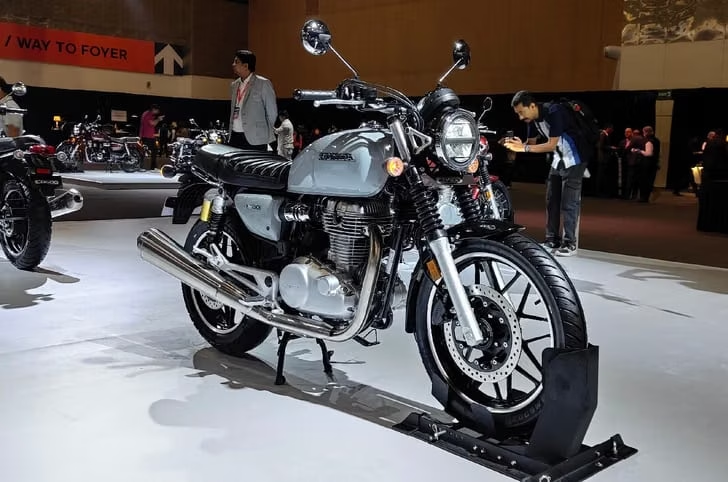
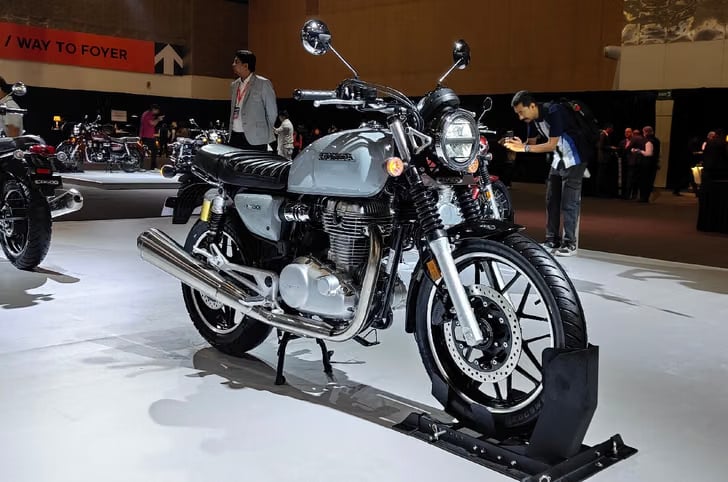
The Honda CB500 was one of multiple models that Honda showcased in July as part of its broader product plans for India, and arguably the one that many enthusiasts were most eagerly awaiting. The CB500 brings an engine configuration that has long been missing from our market – a big, air-cooled single – and is now on sale, with prices starting at Rs 2.75 lakh.
CB500 will be available in three variants
501cc air- and oil-cooled engine produces 28hp and 43.3Nm
Honda CB500 price and engine details
The CB500 fills a segment gap left by the discontinued Royal Enfield 500cc range
The CB500 is powered by an all-new 501cc, single-cylinder, air- and oil-cooled engine producing 28hp and 43.3Nm of torque, making it Honda’s largest air-cooled, single-cylinder motorcycle in our market.
The CB500 will be available in three variants. The base Alloy variant is priced at Rs 2.75 lakh. The mid-spec Spoke variant steps up to cross-spoke tubeless rims and is priced at Rs 3 lakh, while the range-topping variant adds exclusive colours and graphics options to the spoke-wheel setup and is priced at Rs 3.02 lakh. Features across all variants include Honda Selectable Torque Control (HSTC), a slipper clutch, an analogue-digital instrument console and Honda RoadSync connectivity.
The CB500 is manufactured in India, which has helped keep pricing competitive despite the 40 percent GST rate applicable to motorcycles above 350cc. It slots in below the Royal Enfield 650 twins, which start at Rs 3.39 lakh (ex-showroom, Chennai), and occupies a space that has been largely vacant since Royal Enfield discontinued its 500cc UCE models in 2020.
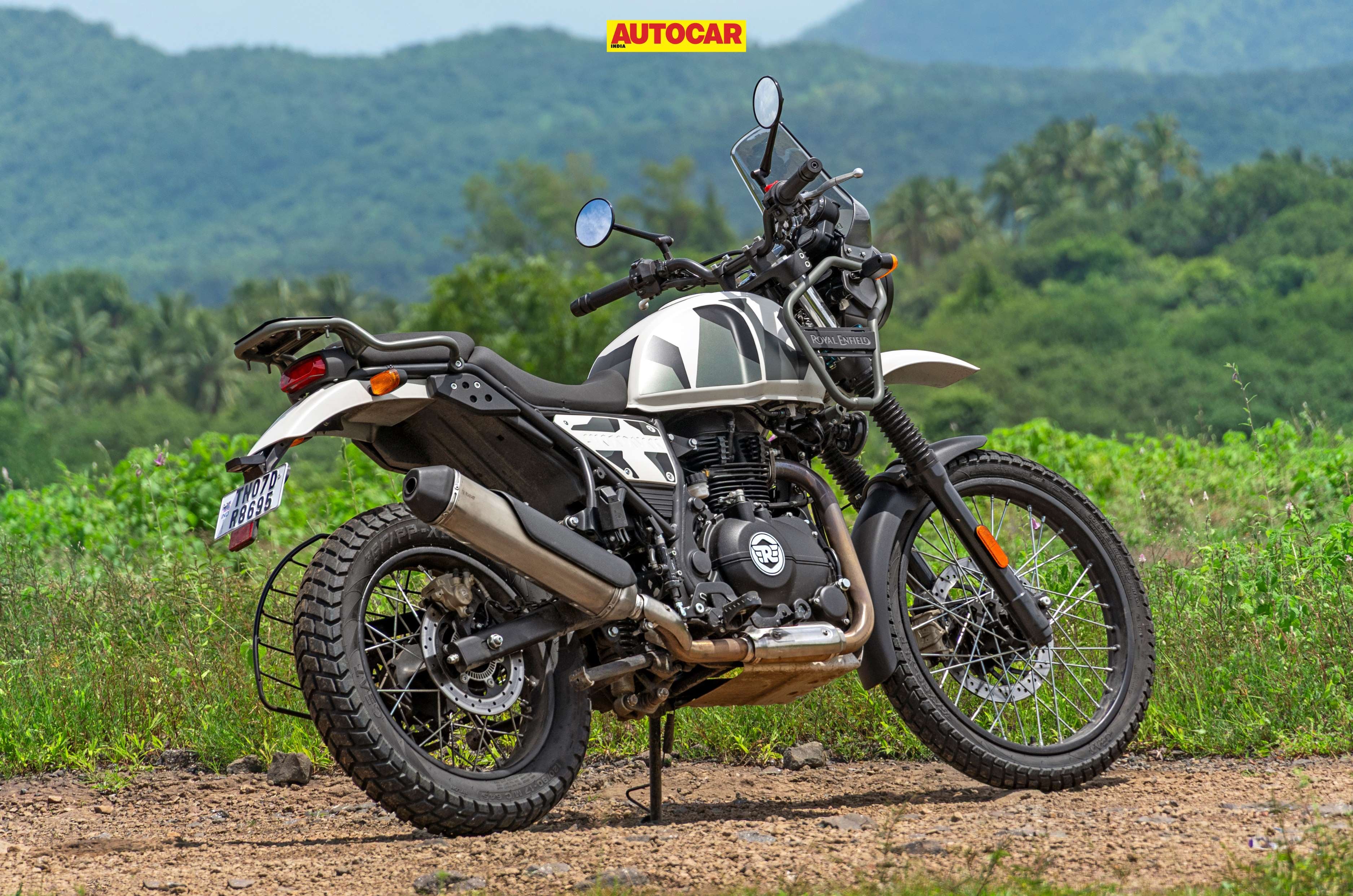
The OG Royal Enfield Himalayan is back, sort of, with the Himalayan 440. Reincarnated with (almost) the same design and underpinnings as before, the 440 is looking to also fix the shortcomings of its predecessor with a more powerful engine and an additional gear for better highway duties. If you’re confused about buying one, or which Himalayan is right for you, let us help.
1. How is the Himalayan 440 different from the Scram 440?
The differences mainly come down to the tyres and suspension. The Scram 440, being a road-oriented motorcycle, has alloy wheels in its top variant and a 19-inch front wheel. The Himalayan, being an off-roader ADV, sticks to wire-spoked wheels for the added robustness during off-roading and has a 21-inch front wheel. The front suspension on the Scram 440 has a 190mm travel, whereas the Himalayan has an additional 10mm travel. Both motorcycles stick to 180mm travel on the rear wheel.
The other differences are mainly in the colours and the lack of a windscreen on the Scram 440. It also gets a slightly different instrument cluster and does not get the tripper navigation pod as standard, like the Himalayan does. Do note that the Scram 440’s base variant – Trail – also sticks to wire-spoked wheels, just like the Himalayan.
2. Does the Himalayan 440 get a slipper clutch?
No, it does not. Royal Enfield has given it to most of the 350s, both the 450s, and all the 650s as standard. This leaves out the Bullet 350, Himalayan 440 and Scram 440 as the Royal Enfields without a slipper clutch.
3. What features does the Himalayan 440 get?
Dual-channel ABS with the ability to turn off the rear ABS is the only rider aid on offer. The Himalayan 440 also gets the tripper navigation pod as standard.
4. Does the Himalayan 440 get tubeless wheels?
No, it does not. Wire-spoked wheels with tube tyres are the only option, and at the moment, Royal Enfield does not offer tubeless-spoked wheels or alloys, even as accessories. It also hasn’t confirmed if the Himalayan 450’s tubeless-spoked wheels could be retrofitted to the Himalayan 440.
5. How’s the LED headlight? Any better than the Himalayan 450?
No, it is the exact same unit. If anything, it is a downgrade compared to the halogen headlight that was available on the Himalayan 411. So if you’re planning a lot of night rides, budget for aux lights.
6. Why are the Himalayan 440 and 450 priced so far apart?
Because they’re completely different motorcycles, despite what the name might suggest. The engine, frame and suspension setups are all completely different between them. The Himalayan 440 is RE’s affordable ADV, with a Rs 2.29 lakh price (ex-showroom, Chennai). It’s lean on the feature set and sticks to a platform that’s effectively ten years old now. But, again, it’s not the feature list the OG Himalayan was known for, and it’s certainly not the reason why it’s been rejuvenated.
The Himalayan 450, on the other hand, is a lot more modern and powerful. It is physically larger but lighter, and almost a lakh more expensive than the 440, with a starting price of Rs 3.08 lakh (ex-showroom, Chennai).
7. Is the suspension adjustable on the Himalayan 440?
No, it’s not, and the answer is common to both Himalayans. Both get adjustable preload for the rear linkage monoshock (completely different units, mind you), but that’s about it. The front suspension isn’t adjustable in any way on either motorcycle.
8. I am planning to tour on my motorcycle. Which Himalayan should I get?
Either one should be great. The 450 is a lot more expensive, but it offers a much more modern package, more power and torque, and is markedly more comfy and spacious. If you get one of the top variants, you also get tubeless rims as standard, with the other variants offering them as an optional upgrade. So, the Himalayan 450 lets you have the convenience of tubeless tyres without compromising on the retro looks.
However, if you prefer to spend the price difference between the two motorcycles on fuel to ride more (Rs 79,000 can buy a lot of petrol!), the 440 should handle touring very well too, especially with the new sixth gear. Just remember to stay on top of your tyre health (because of the tube tyres) and expect to stop for fuel more often because of the smaller 15-litre tank.
9. Will the Himalayan 440 be hassle-free to own?
Reliability concerns with the Himalayan were legitimate when the motorcycle first launched in 2016. However, Royal Enfield has come a long way since then, so we do not expect the Himalayan 440 to be unreliable; especially since the Scram 440 has stayed trouble-free after an engine-related recall in the initial delays. So, assuming you stay on top of your maintenance, you have no reason to expect any trouble from the motorcycle.
Starting at Rs 79.60 lakh, the i5 LWB eDrive 35L M Sport variant costs Rs 3 lakh more than its petrol-powered 530Li M Sport sibling. Within the BMW i5 line-up in India, the i5 LWB slots below the range-topping standard-wheelbase i5 M60 xDrive, which costs Rs 39.90 lakh more. Here are some of the main pros and cons of the BMW i5 LWB.
Reasons to buy the BMW i5 LWB
More wheelbase equals more interior space
Carrying four occupants in the i5 LWB will be a breeze
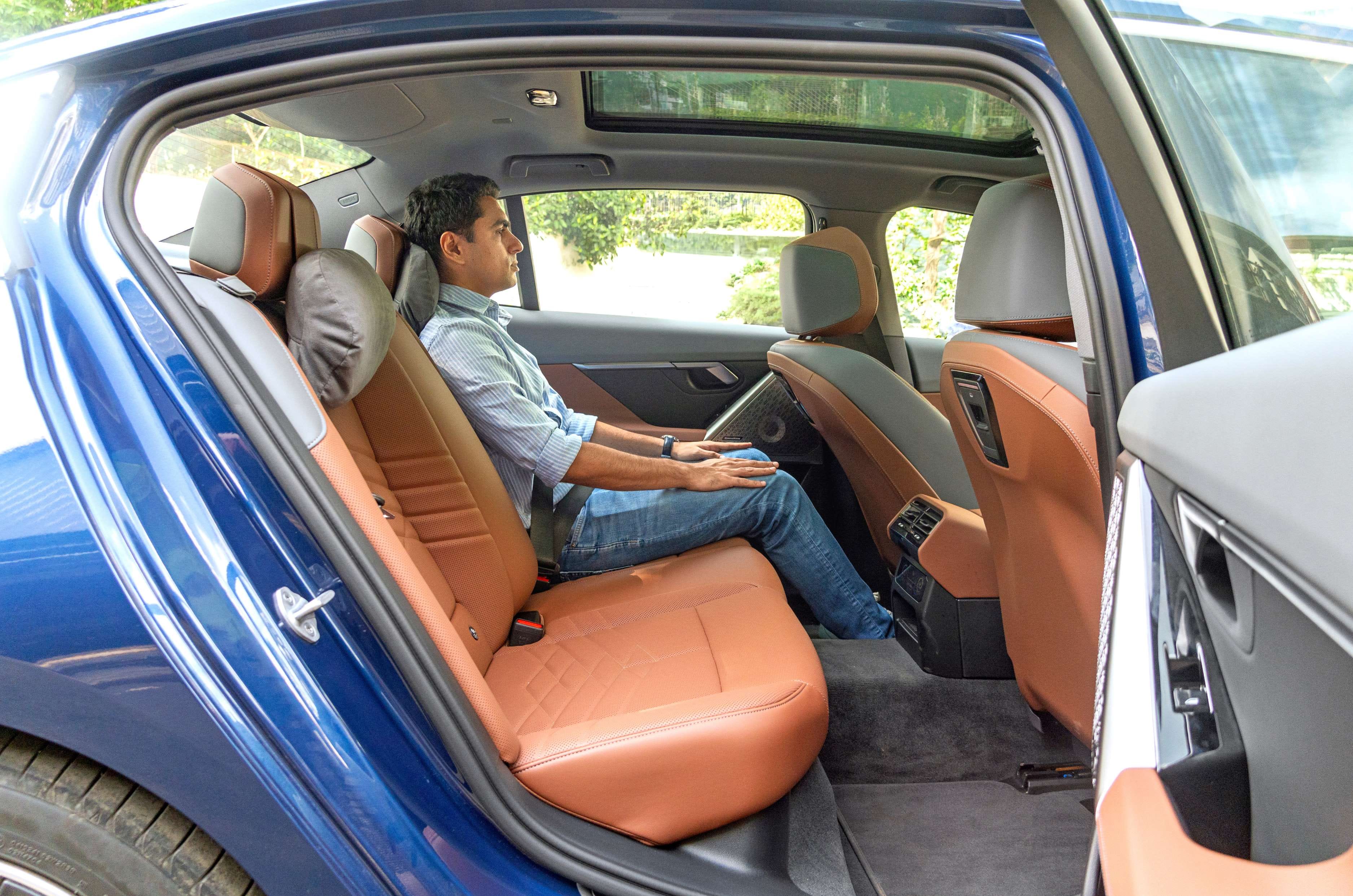
The additional 110mm gained between the front and rear wheels of the BMW i5 LWB over the standard-wheelbase i5 means that space on the inside isn’t on short supply. Despite lacking the manually adjustable thigh support feature found in earlier 5 Series models, the ventilated front seats of the i5 LWB feel really comfortable and supportive. There’s also plenty of legroom at the back, with the long wheelbase allowing occupants to stretch out and relax – perfect for the chauffeur-driven. Furthermore, the contouring of the rear bench provides the outer occupants with a true sense of luxury.
Plush ride
Bad roads will not pose a problem for the BMW i5 LWB
While the i5 LWB gets larger (20-inch) alloy wheels shod with lower-profile tyres when compared to the petrol-powered 5 Series LWB, it adds a rear air suspension system. This helps make the i5 LWB’s ride plush as it absorbs bad roads in its stride, ensuring occupants don’t get tossed around. The raised ground clearance (by 18mm) of the i5 LWB means that driving over poor surfaces and speed bumps even with four occupants onboard remains a relatively stress-free experience.
Brimming with tech
The long-wheelbase i5 offers plenty in the way of modern-day equipment
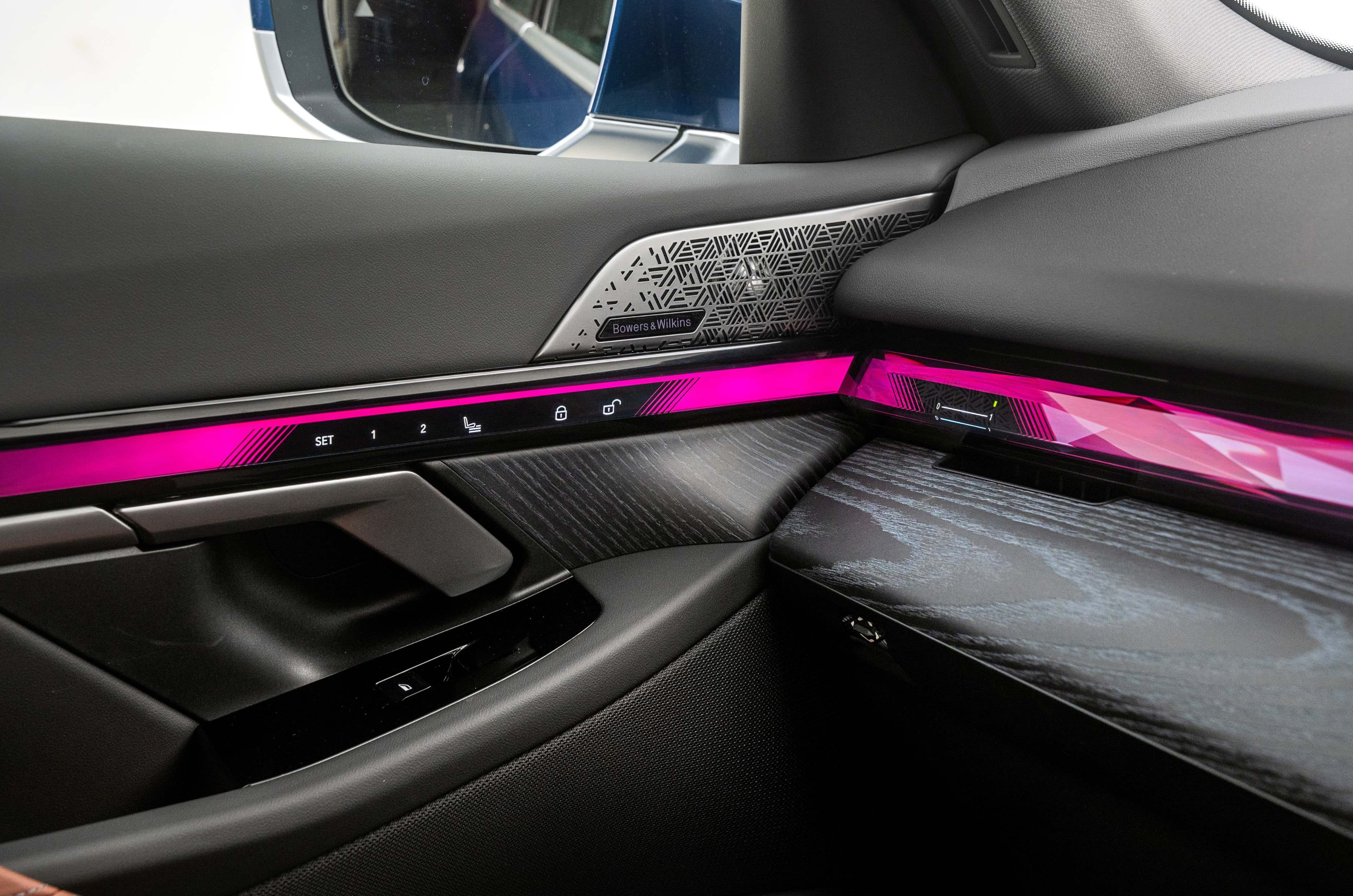
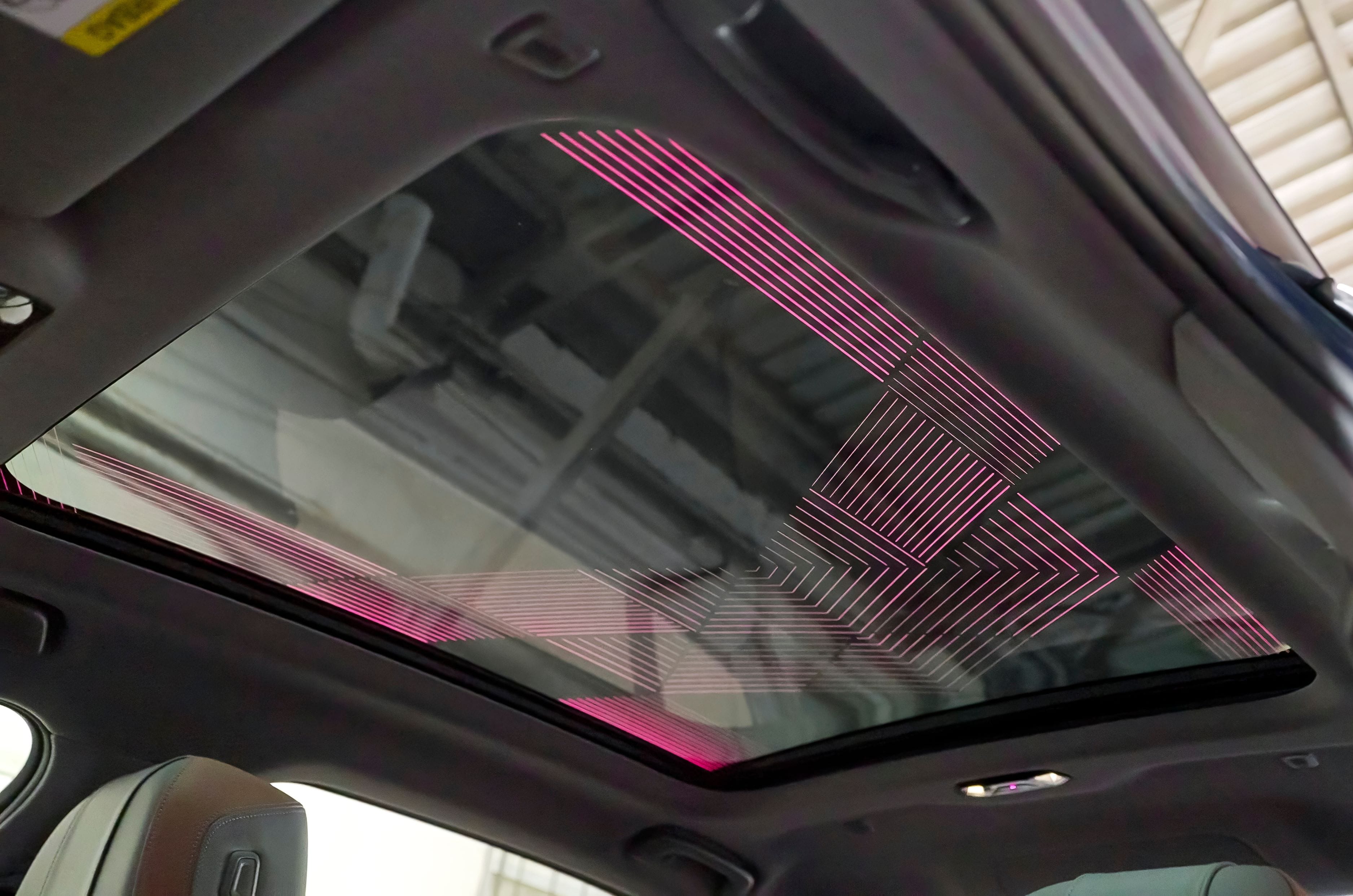
Adaptive LED headlamps and a powered boot aside, the BMW i5 LWB comes with a fixed panoramic glass roof with integrated LEDs, multi-colour ambient lighting, a four-zone climate control system, and dual curved displays powered by the BMW OS 8.5. There’s also the My BMW app, wireless Apple CarPlay & Android Auto, an immersive 17-speaker Bowers & Wilkins audio system, an onboard camera enabling selfies, and wireless charging pads for the front- & rear-seat occupants.
The catalogue of the long-wheelbase i5 also includes adaptive cruise control, auto-emergency braking, active steering assist, cross-traffic alert, automatic parking assistance, etc. The i5 LWB’s useful feature set adds multiple regenerative braking settings – there’s Adaptive, High, Mid and Low settings. Finally, the dedicated one-pedal ‘B’ mode allows the EV to be brought to a complete halt without touching the brake pedal.
Reasons to not buy the BMW i5 LWB
Missing rear-seat features
BMW could have offered more in the way of conveniences for rear-seat passengers
The outer rear seats of the BMW i5 LWB cannot be adjusted for recline, and the protruding head cushions aren’t as comfortable as those in a Mercedes-Benz E-Class. The battery pack, along with the tall central tunnel on the floor, results in a raised seating position, especially impacting headroom for the rear-centre passenger. While the i5 LWB misses out on a head-up display, it’ll be the lack of rear sunblinds, a ‘boss’ mode for the front-passenger seat, dedicated rear audio controls and soft-close doors that chauffeur-driven buyers will come to miss.
Compromised boot
The boot space of the i5 LWB isn’t as accommodaing as the combustion-powered 5 Series
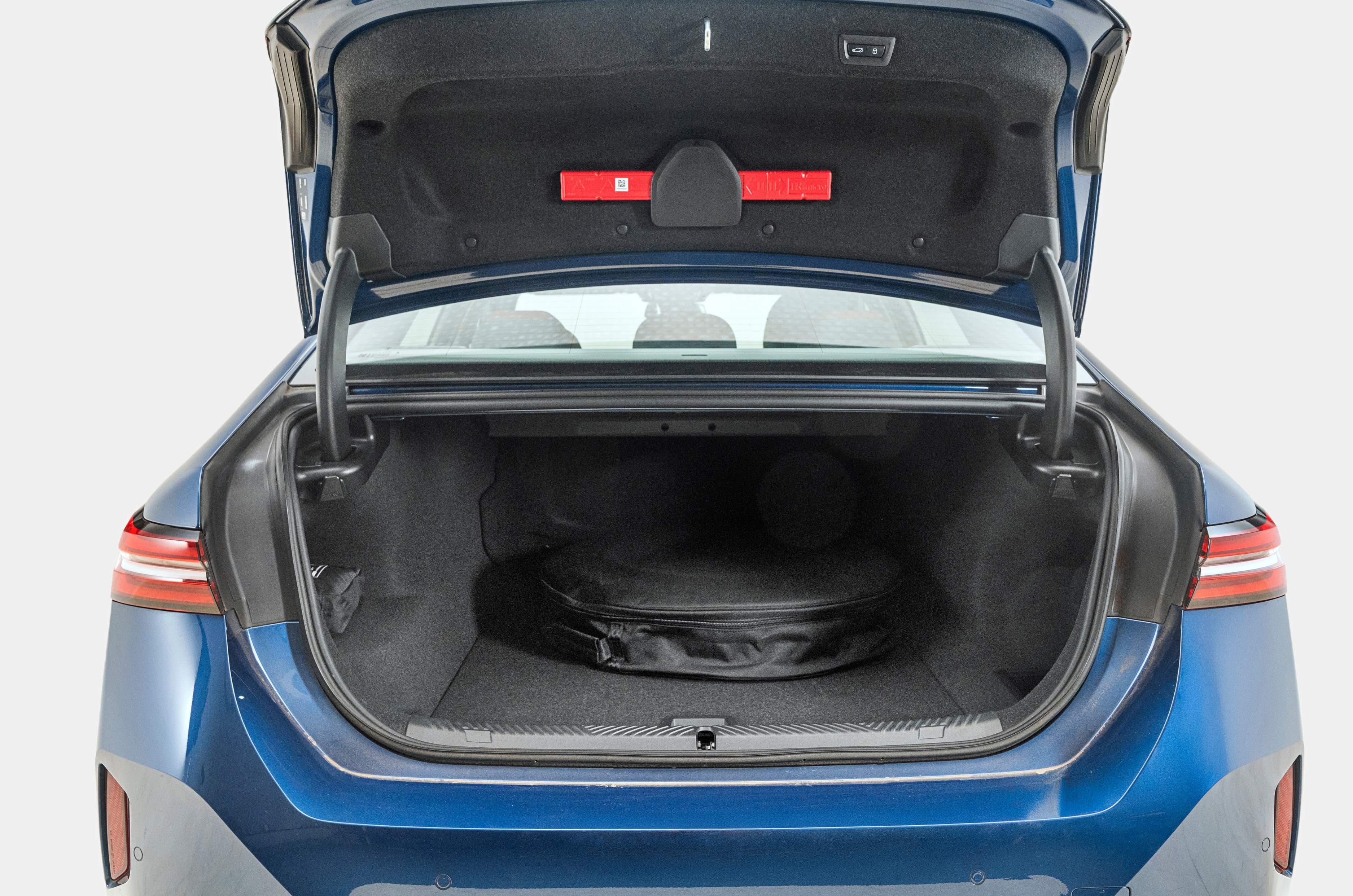
When it comes to carrying cargo, buyers of the BMW i5 LWB will be left a little disappointed. While the 500-litre capacity is comparable to that of the combustion-powered 5 Series LWB, the space-saver spare wheel is placed in the boot rather than tucked underneath it. This eats into valuable cargo room, which could otherwise have been used to accommodate more luggage.
Not BMW enough when behind the wheel
The electric 5 Series is not the most engaging 5 Series to drive
The electric powertrain of the i5 LWB offers enough poke up to 100kph, while feeling smooth and responsive to inputs. However, not only did we find the i5 LWB to be a touch slower from 0-100kph but also in our 20-80kph and 40-100kph acceleration tests than the 530Li. Then there’s the brake pedal, which lacks feel, while the transition from regenerative braking to mechanical braking also doesn’t feel natural.
BMW has managed to achieve a perfect 50:50 weight distribution with the i5 LWB, but the higher ground clearance and softer suspension setup has resulted in this fully electric 5 Series feeling less engaging to drive. Those with a verve for driving will notice the lack of precision and sharpness that’s usually associated with a 5 Series.
In the first half of 2026, BMW sold nearly 2,400 EVs in India, with the entry-level iX1 and flagship i7 accounting for the bulk of those volumes. Now, BMW has introduced an all-new electric long-wheelbase sedan to bridge the sizable gap between the two. Meet the BMW i5 eDrive35L, the electric counterpart to the 5 Series sedan.
The i5 nameplate isn’t new to India. BMW launched the imported, performance-focused i5 M60 here back in 2024. However, that was a niche offering. This new version is expected to appeal to a much wider audience. Being locally assembled, the i5 eDrive35L is priced at Rs 79.60 lakh, commanding a premium of Rs 3 lakh over its petrol-powered sibling. In this review, we find out what it’s like to live with.
BMW i5 LWB Exterior Design and Engineering – 8/10
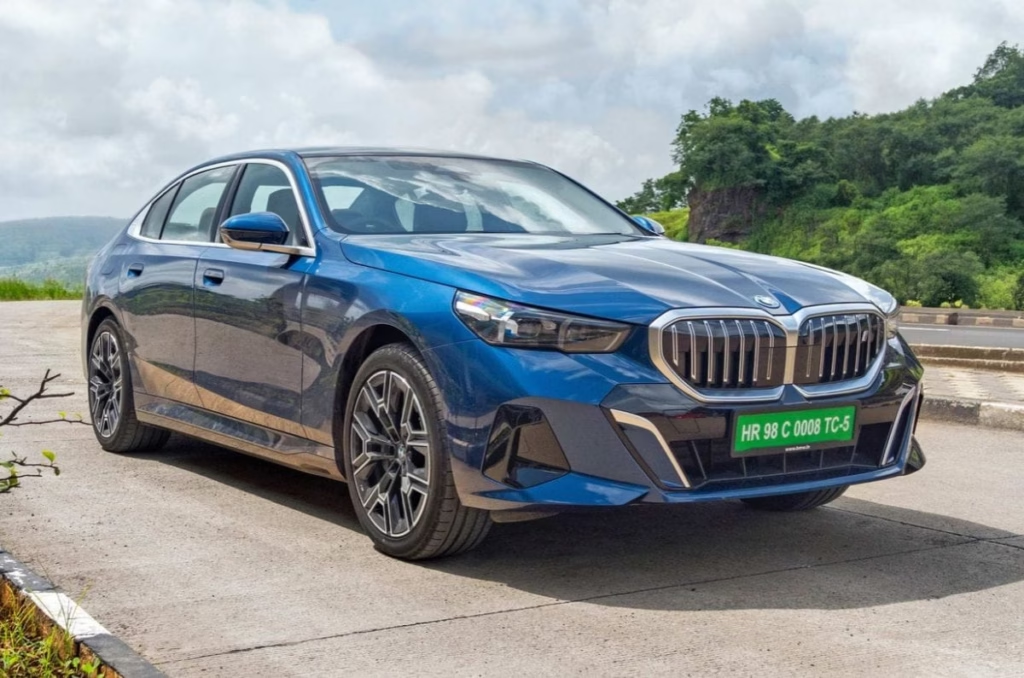
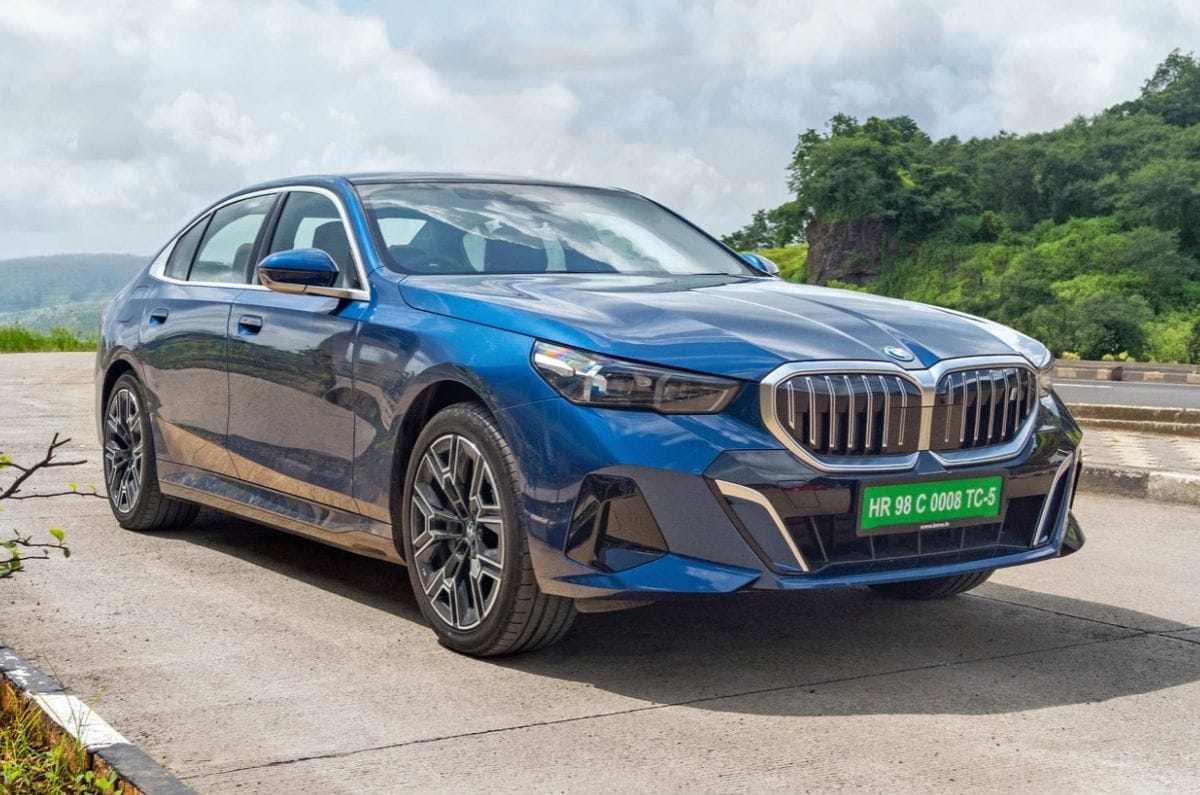
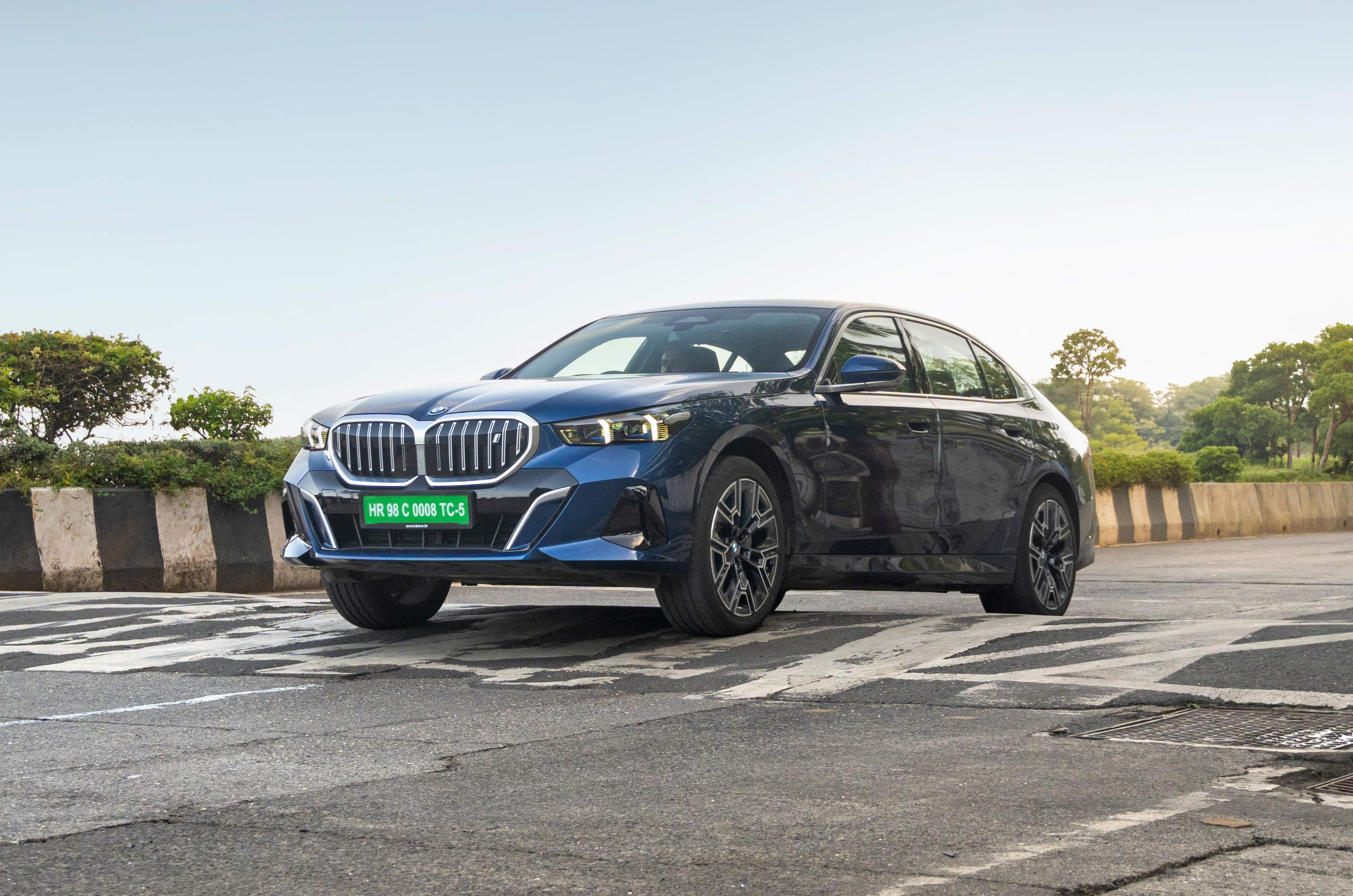
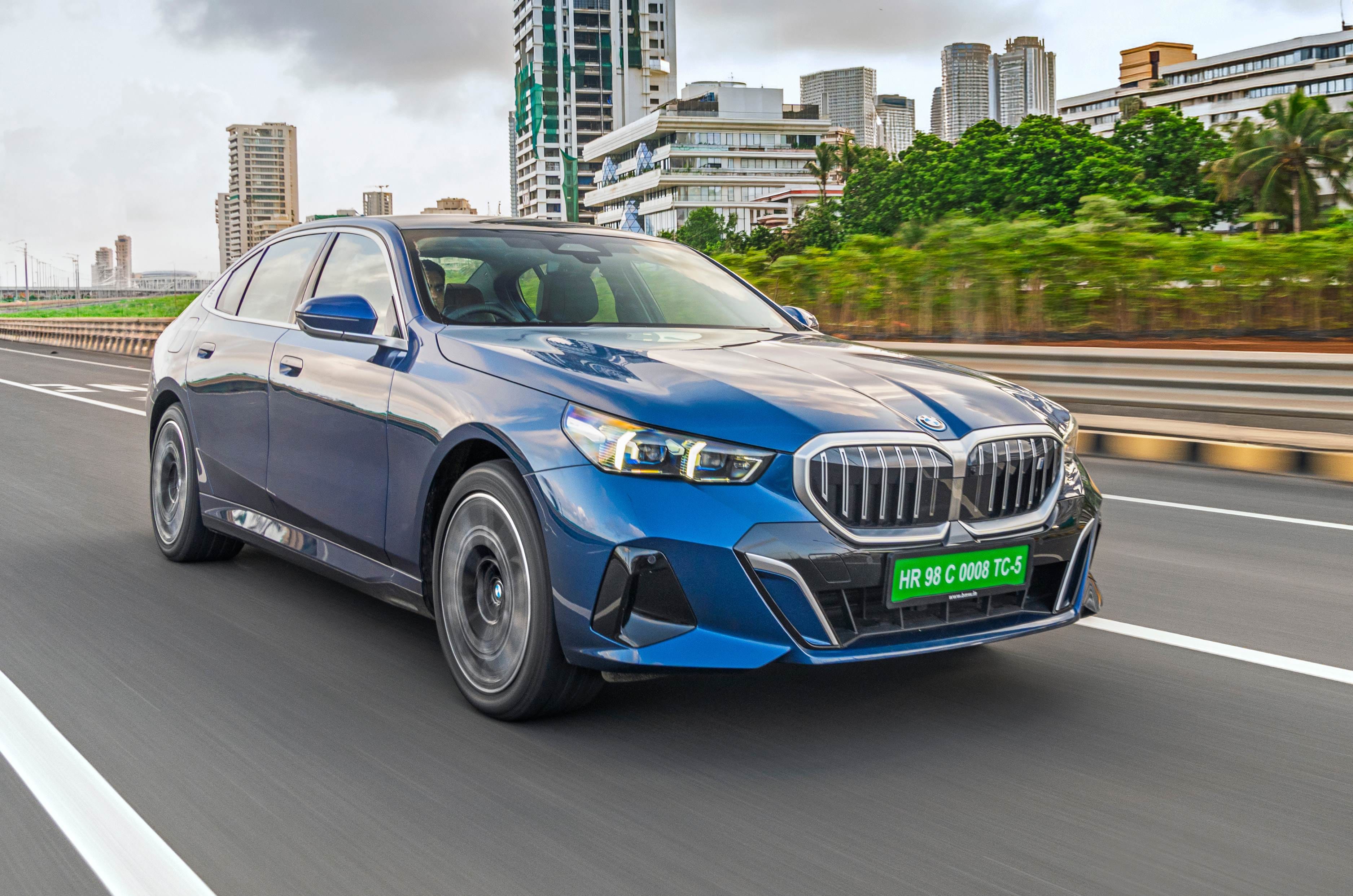
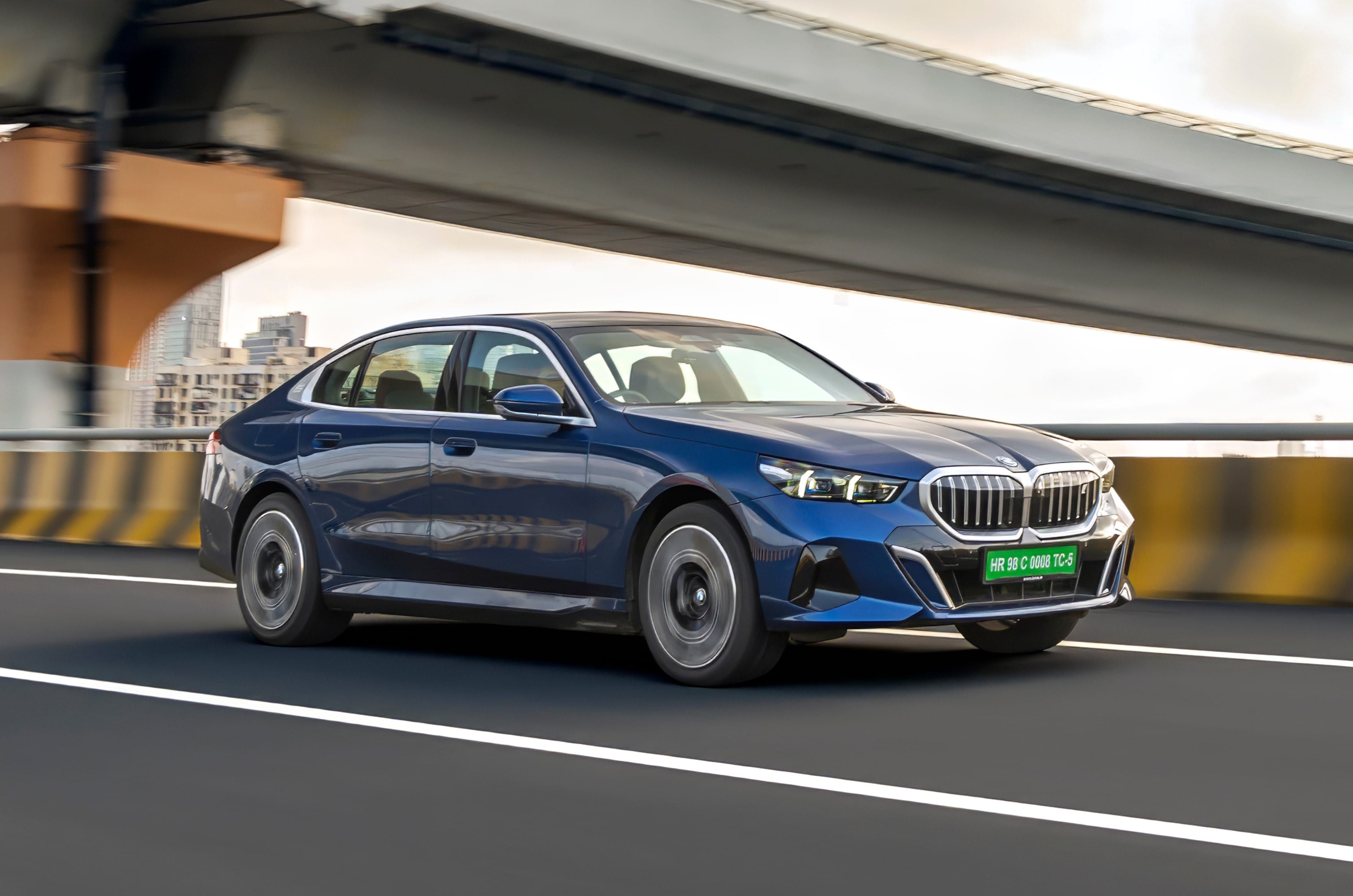
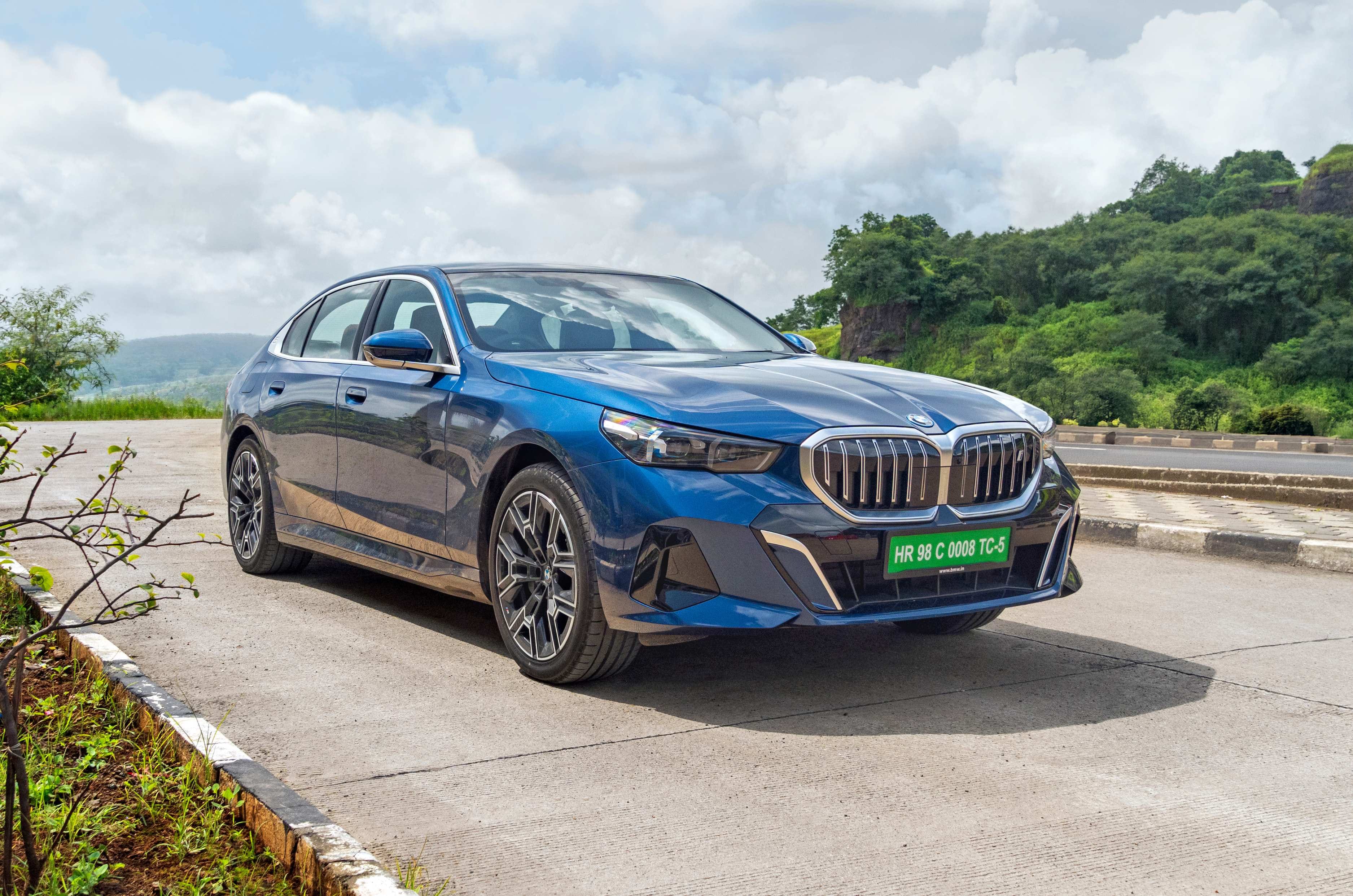
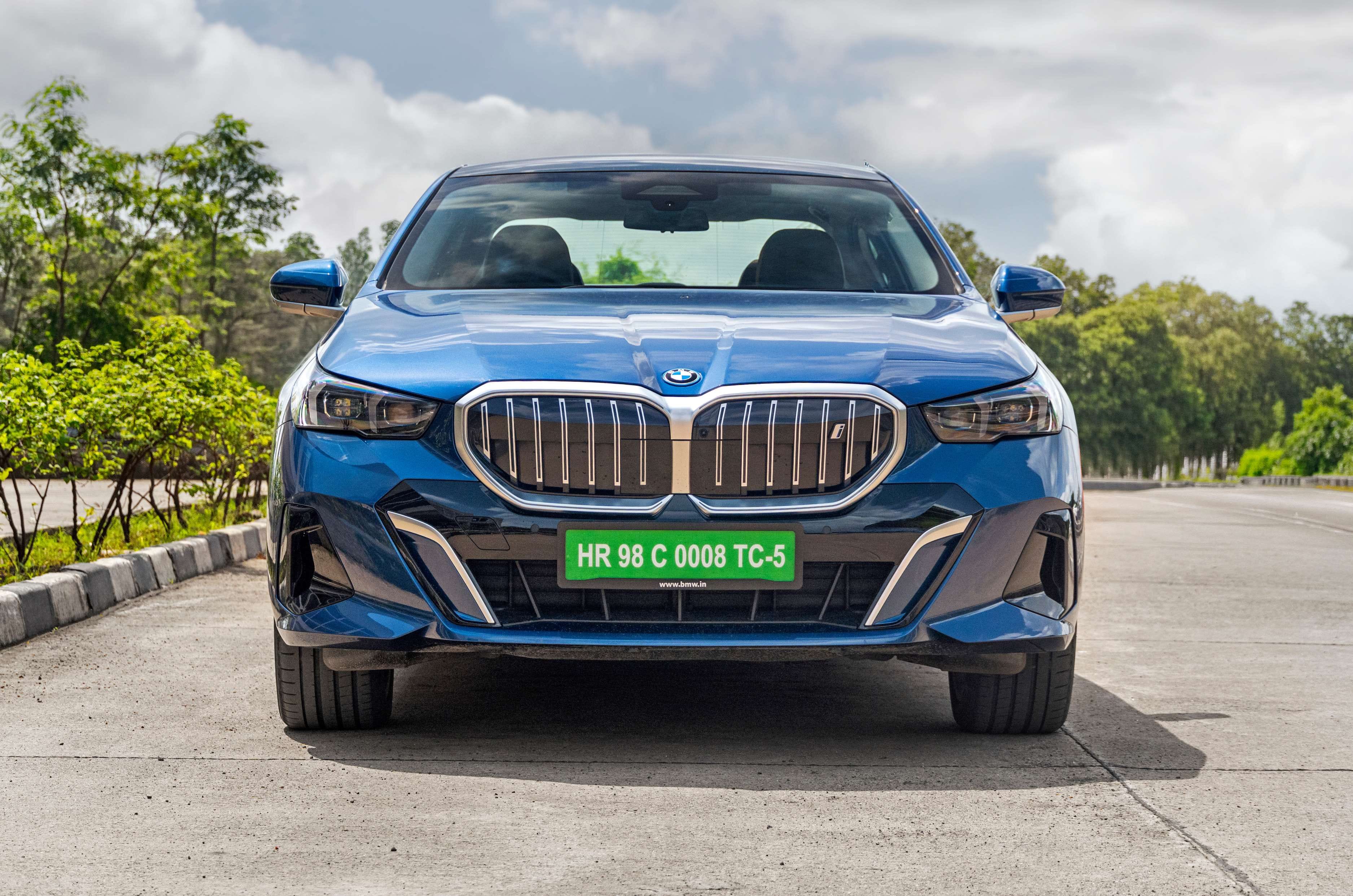
An ‘i’ badge on the grille along with its green number plate differentiate it from its petrol sibling
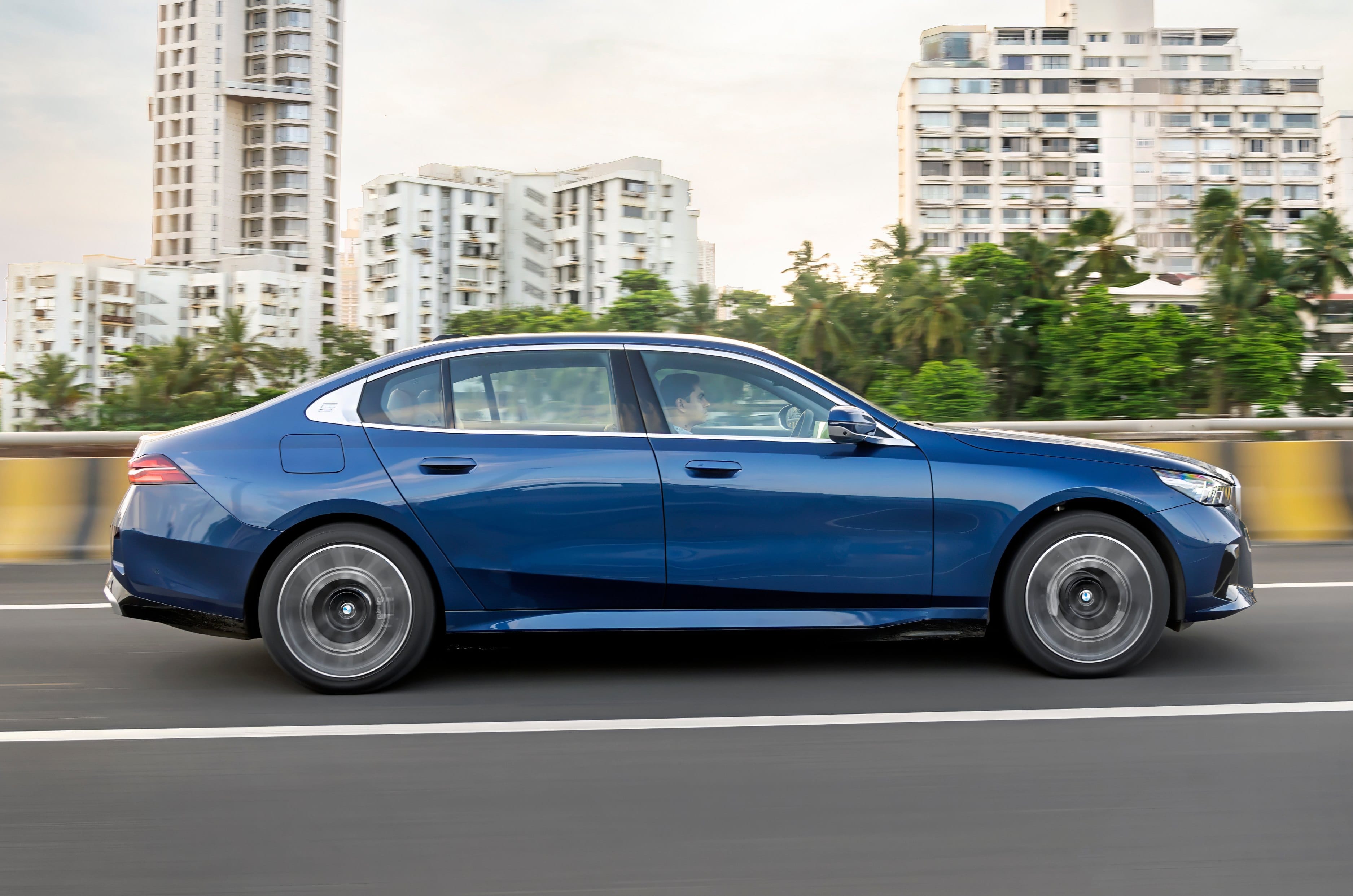
Compared to the international version, this i5’s wheelbase has been stretched by 110mm to 3,105mm, while overall length now stands at 5,175mm. Interestingly, the 5 Series is larger than its chief rival, the Mercedes-Benz E-Class, in every dimension.
As for styling, this generation of the 5 Series has been around since 2024 and much like most modern BMW designs, it’s something that grows on you with time. That said, there’s no denying that it’s a polarising design. The numerous cuts, heavy surfacing and intricate detailing make it look busy and excessive to some eyes.
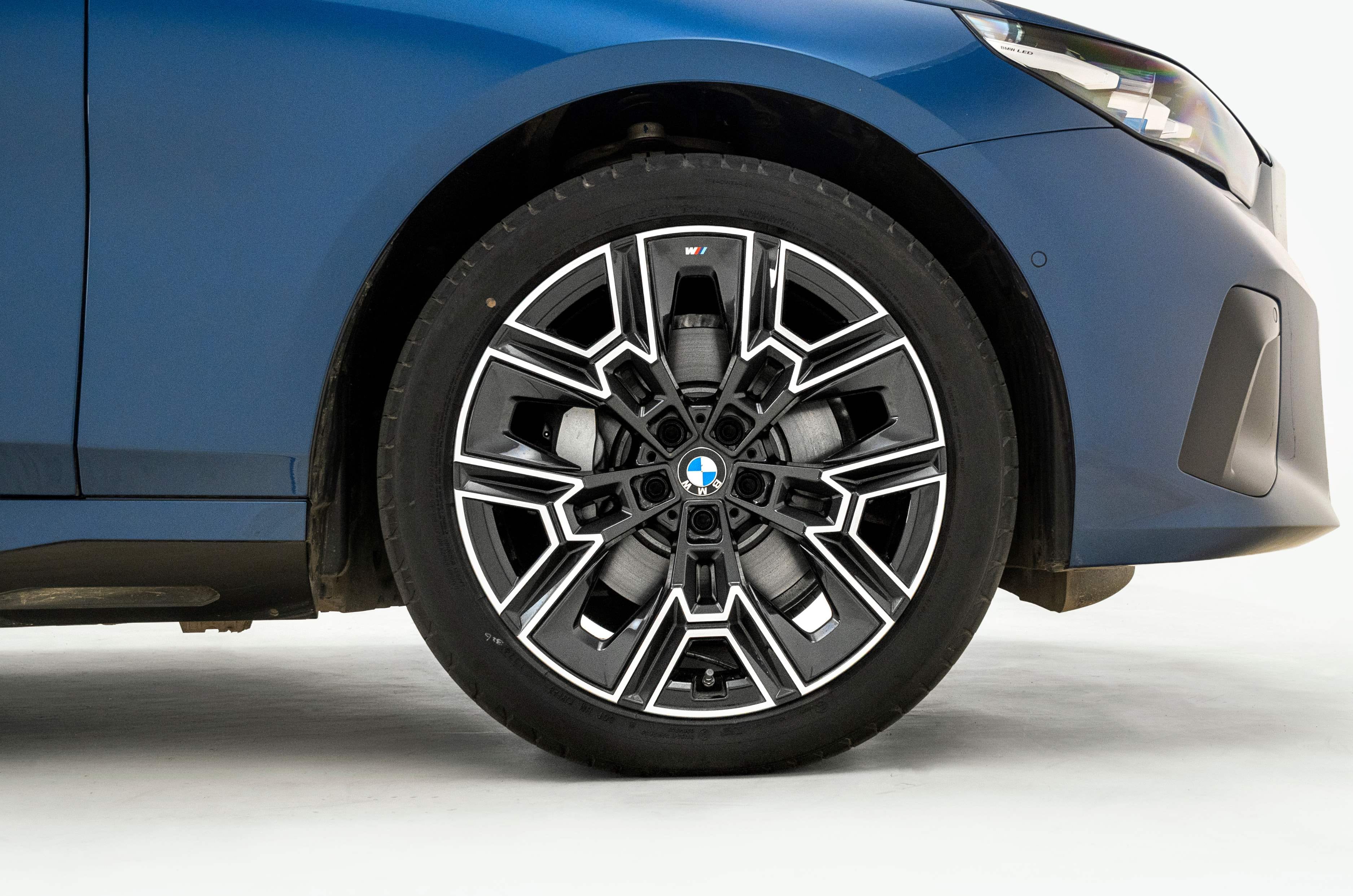
Gets large 20-inch alloys which look far more proportionate than the 18-inch wheels initially available with the 530Li.
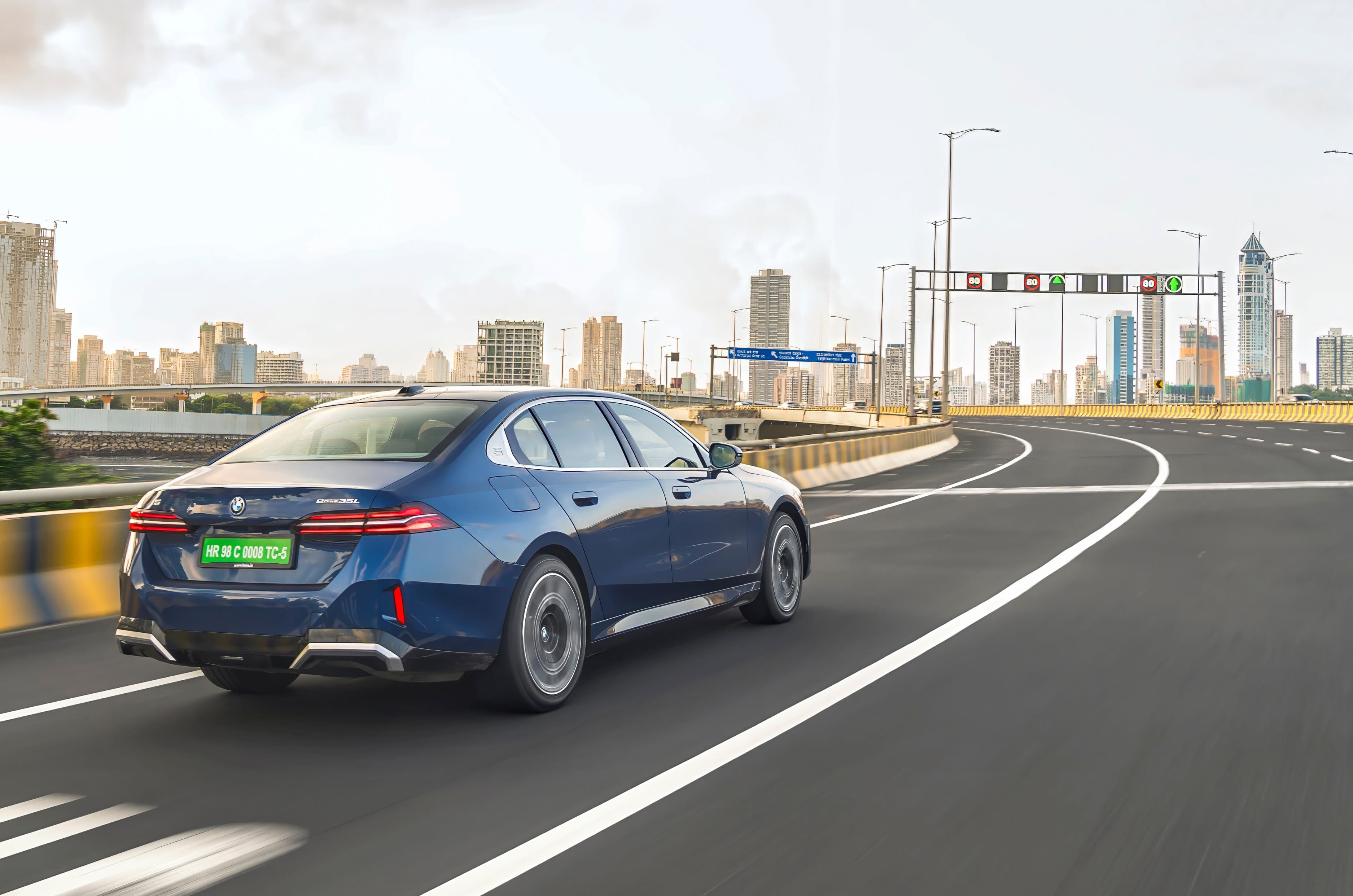
Differentiating the i5 from its petrol-powered counterpart are an ‘i’ logo on the grille and larger 20-inch alloy wheels. The latter look far more proportionate than the 18-inch wheels initially offered on the 530Li. At the rear, the only distinguishing elements are the i5 and eDrive35L badges, apart from the obvious giveaway – the green number plate.
BMW i5 LWB Interior Space and Comfort – 9/10
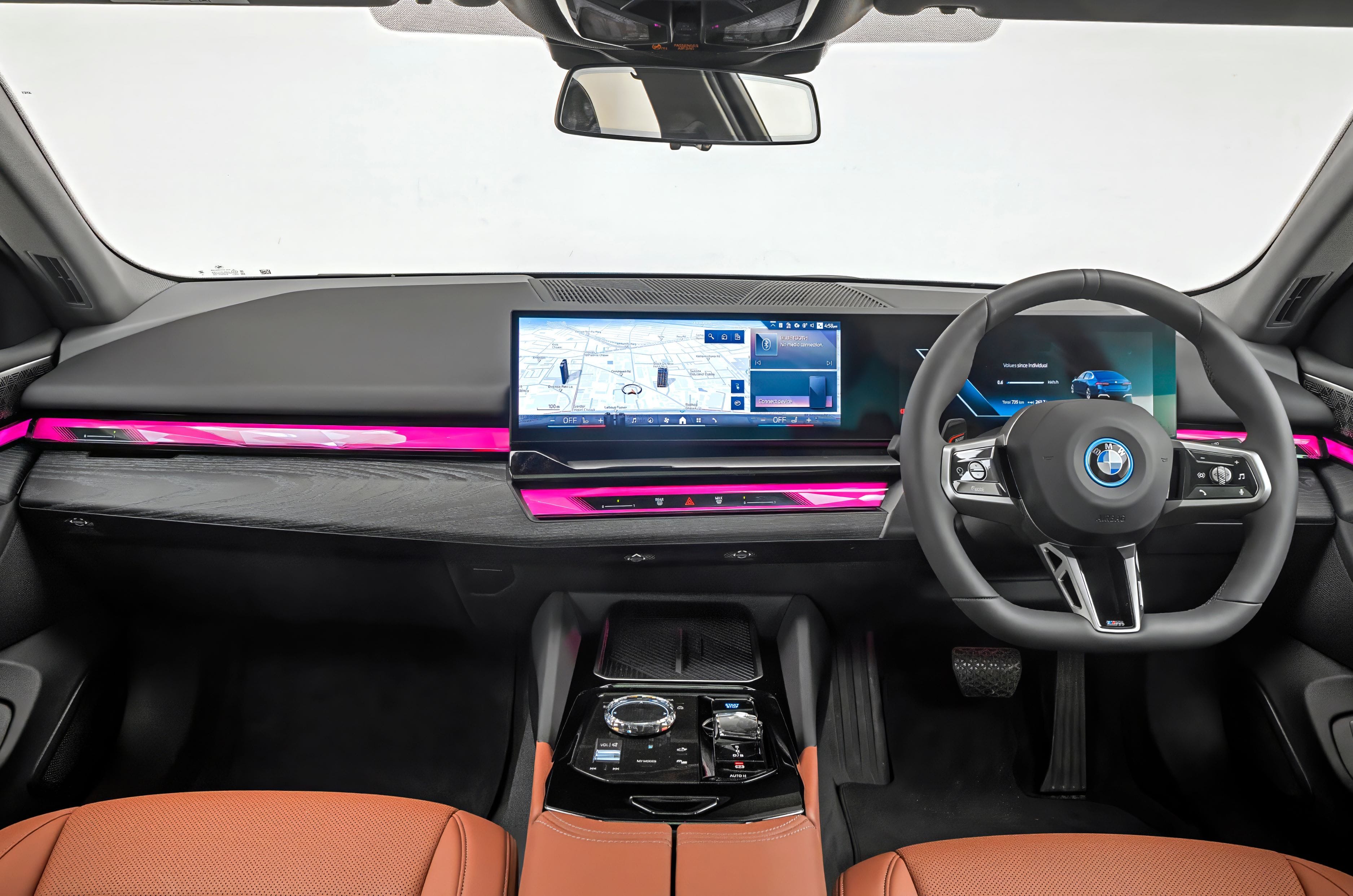
Dash is dominated by BMW’s twin curved screens, a flat-bottomed steering wheel and generous ambient lighting.
Step inside and the dashboard is dominated by BMW’s twin curved-screen setup, complemented by a flat-bottomed steering wheel, generous ambient lighting, and a tasteful mix of open-pore wood trim and silver inlays. The crystalline drive selector, rotary infotainment controller and volume roller on the centre console add a welcome sense of occasion.
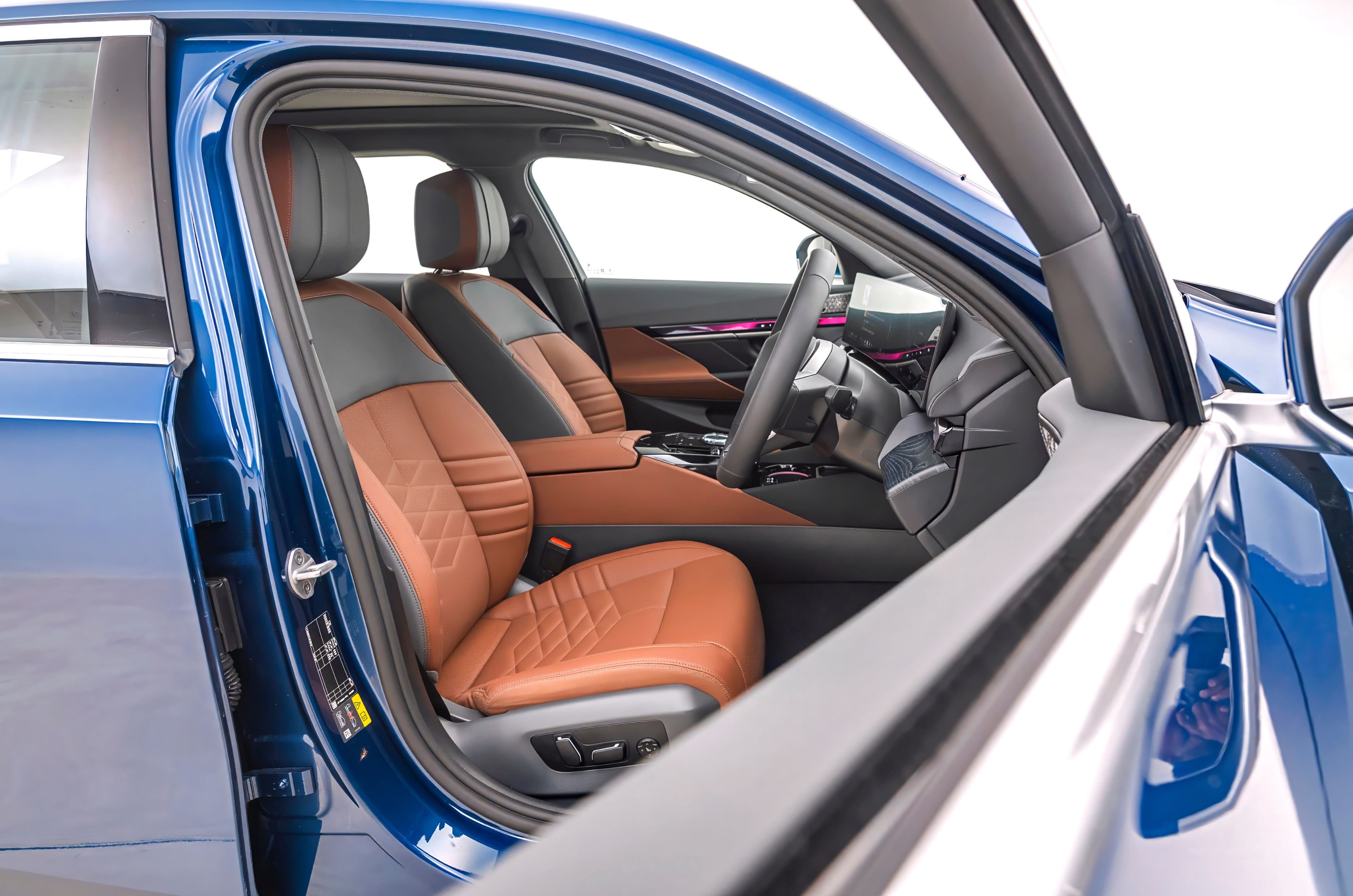
Those familiar with older 5 Series models will quickly notice the absence of the manually adjustable thigh support for the front seats. That aside, the seats themselves are exceptionally comfortable and supportive, and they also feature ventilation.
The seats are exceptionally comfortable and supportive, and they also feature ventilation.
Being the long-wheelbase version, the i5 benefits from an additional 4.3 inches of wheelbase compared to the international model, resulting in noticeably more rear legroom. Sure, the floor sits higher than in the ICE version, but this remains a very comfortable place to be for chauffeur-driven buyers. The rear bench is well contoured and, with just two occupants, delivers a genuinely luxurious experience. Some may find the pillows a little excessive, and they aren’t quite as comfortable as the integrated units in the E-Class. Speaking of which, unlike the Mercedes, the i5’s rear seat doesn’t recline, and there are arguably too few indulgent touches to truly cater to chauffeur-driven buyers.
A bit knees-up, but the rear seat feels luxurious; however, there are too few amenities for chauffeur-driven buyers.
The middle seat is considerably less accommodating. The raised seat base compromises headroom, the backrest is firm, and the tall central tunnel further detracts from comfort for a third passenger.
Boot space is rated at 500 litres, which is broadly similar to the ICE 5 Series. However, while the spare wheel is neatly tucked beneath the boot floor in the petrol version, it sits on the boot floor in the i5, significantly compromising usable luggage space.
The spare wheel sits on the boot floor, significantly compromising usable luggage space.
BMW i5 LWB Features and Safety – 8/10
The i5 eDrive35L comes generously equipped. Highlights include 20-inch alloy wheels, adaptive LED headlamps, powered and ventilated front seats, four-zone climate control, wireless charging pads for both front and rear occupants, a panoramic fixed glass roof, ambient lighting and a powered boot lid.
Audiophiles will particularly appreciate the superb 17-speaker, 655W Bowers & Wilkins audio system.
The curved touchscreen and digital instrument cluster look suitably futuristic, although the user experience isn’t the most intuitive due to the number of menus and sub-menus. On the plus side, the 360-degree camera offers excellent clarity. Audiophiles will particularly appreciate the superb 17-speaker, 655W Bowers & Wilkins audio system.
The i5 also gets a comprehensive suite of driver assistance features, including adaptive cruise control, lane-keeping assist and autonomous emergency braking.
Its fixed panoramic glass roof has unique embedded LED lighting.
However, there are a few omissions that chauffeur-driven buyers may find difficult to overlook. A head-up display is absent, while smaller but genuinely useful features such as rear window sunshades, reclining rear seats, soft-close doors, a boss mode for the front passenger seat and rear-seat audio controls are all missing.
BMW i5 LWB Performance and Refinement – 8/10
The rear-wheel-drive i5 eDrive35L uses a single electric motor producing 272hp and 410Nm, figures that are remarkably similar to the mild-hybrid 530Li. However, the way it delivers its performance is entirely different. With peak torque available instantly, responses are smooth, effortless and distinctly EV-like. There are multiple drive modes on offer, each altering throttle response. Sport sharpens reactions noticeably, while Efficient is the most relaxed and efficiency-focused setting.
Retains a 50:50 weight distribution and RWD layout, but it has lost the sharpness and precision of earlier generations of the 5 Series.
BMW claims a 0-100kph time of 6.7 seconds, although our best run yielded 6.99 seconds. Interestingly, the 530Li is marginally quicker, recording 6.45 seconds for the same sprint, and it is also slightly faster in our 20-80kph and 40-100kph acceleration tests.
The i5’s top speed is rated at 195kph, although acceleration begins to taper off noticeably beyond 100kph. In short, acceleration isn’t neck-snappingly quick, but there’s more than enough performance to keep things entertaining within legal limits.
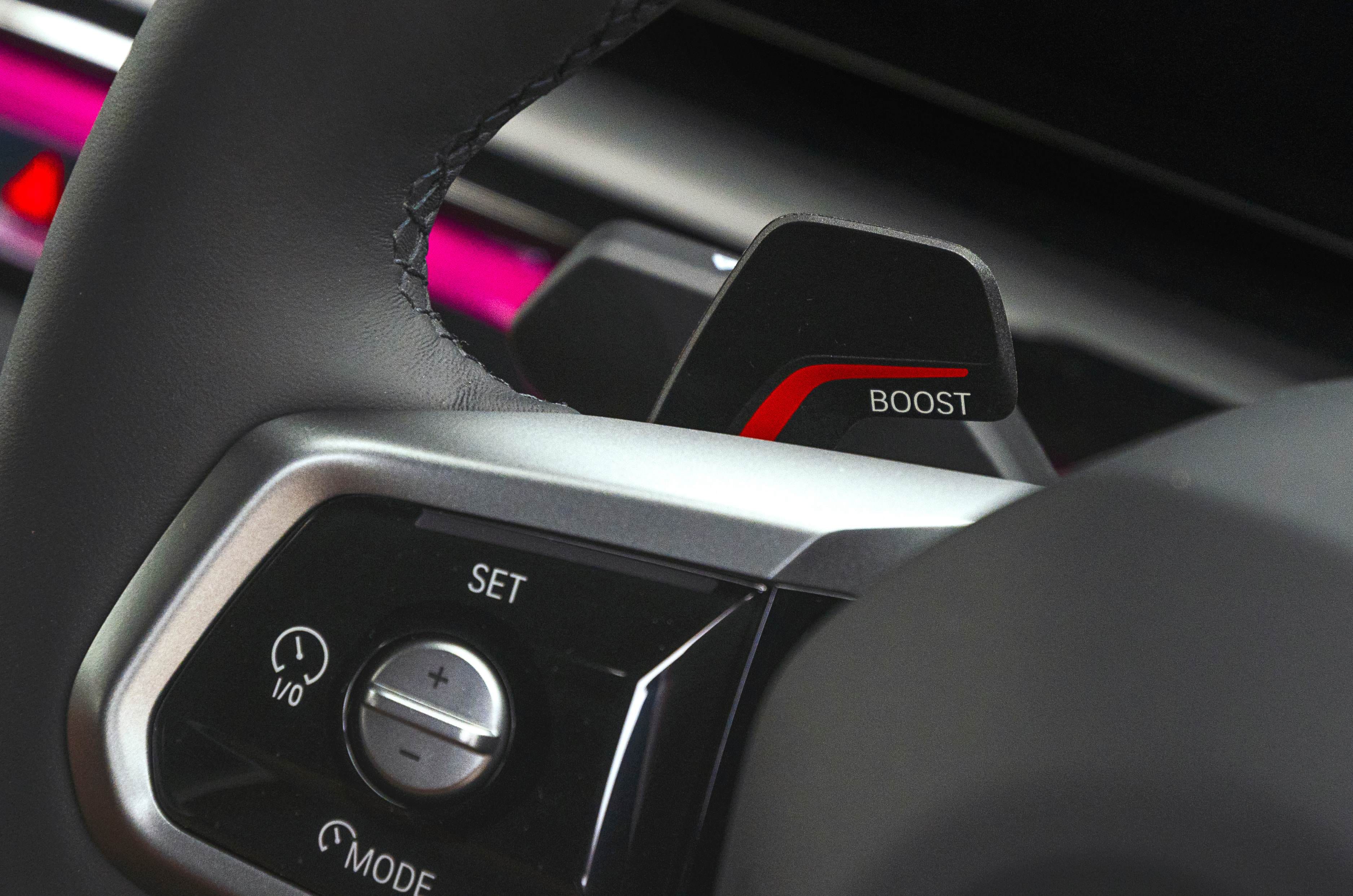
Boost function unlocks the motor’s full potential for 10 seconds. If your’re already in Sport mode, it barely makes any difference.
The i5 also offers multiple regenerative braking settings, including Adaptive, High, Mid and Low. Of these, Adaptive stands out for its excellent calibration, intelligently varying regeneration and coasting based on traffic and road conditions. There’s also a dedicated one-pedal ‘B’ mode, selectable via the drive selector. It delivers regeneration comparable to the High setting but, unlike it, can bring the car to a complete stop without requiring any brake pedal input.
Braking performance itself is strong, although keen drivers may wish for a little more feel from the pedal. The transition between regenerative and mechanical braking leaves it feeling somewhat numb.
BMW i5 LWB Range and Efficiency – 6/10
BMW claims the i5’s 81.6kWh battery (net capacity is 76.3kWh) can deliver a range of up to 669km, a figure that appears rather optimistic. In our real-world range tests, the i5 eDrive35L returned an average efficiency of 5.06km/kWh, translating to an estimated range of 386km. It’s worth noting that the car was driven in its most efficiency-focused ‘Efficient’ mode throughout the test, with regenerative braking set to Adaptive.
We also connected the battery to a 60kW DC fast charger, where it took 47 minutes to charge from 20-80 percent state of charge. BMW additionally supplies a complimentary AC wallbox charger along with installation.
BMW i5 LWB Ride Comfort and Handling – 8/10
Ground clearance has been increased by 18mm compared to the international version; hence, it clears most speedbreakers easily.
With every successive generation, the 5 Series has become softer and more comfort-focused, and the i5 is arguably the most luxurious iteration yet. Despite riding on larger 20-inch wheels with lower-profile tyres than the petrol-powered 530Li, ride quality is seriously impressive. The i5 feels plush and remarkably absorbent over typical urban roads. Notably, it also benefits from rear air suspension, a feature absent on the 530Li.
In addition to the extended wheelbase, BMW has increased ground clearance by 18mm compared to the global standard-wheelbase model. The result is a luxury sedan that’s far better suited to Indian conditions. Even with four occupants on board, the i5 clears most speed breakers without drama. As a luxury car, then, it unquestionably gets the fundamentals right.
With a plush ride and increased ground clearance, the i5 is far better suited to Indian conditions.
However, the softer suspension setup and increased ground clearance have diluted some of the driver-focused character that defined earlier generations of the 5 Series. While it retains a near-perfect 50:50 weight distribution and rear-wheel-drive layout, there’s no escaping the fact that, in prioritising comfort and practicality, BMW has sacrificed a measure of the sharpness and precision that once made the 5 Series a benchmark for driving enthusiasts.
BMW i5 LWB Price and Verdict – 8/10
At Rs 79.60 lakh, the locally assembled i5 LWB has all the ingredients to become BMW India’s next EV success story alongside the iX1. With the i5 eDrive35L, BMW continues its successful long-wheelbase formula, maximising cabin space while building upon the strengths of the petrol-powered 5 Series, with which it shares much of its cabin, equipment and overall character. Buyers can also opt for extended warranty and prepaid maintenance packages of up to 10 years, in addition to the standard eight-year battery warranty.
Generous cabin space, comfy seats, a plush ride, and effortless performance make the i5 eDrive35L a compelling electric luxury sedan
That said, much like its petrol-powered sibling, some of the traditional 5 Series driving feel has been diluted. It also misses a few feel-good features, particularly those aimed at rear-seat occupants. More importantly, the spare wheel’s placement on the boot floor significantly compromises luggage-carrying ability.
So, is it worth paying the Rs 3 lakh premium over the petrol-powered 5 Series? The answer largely depends on your usage. The i5 eDrive35L makes sense for buyers registering it under a company name, thanks to the higher depreciation benefits available for EVs. It also suits those who cover significant distances and can take advantage of lower running costs. Generous cabin space, comfortable seats, a plush ride, respectable range and effortless performance make the i5 eDrive35L a compelling electric luxury sedan for buyers shopping in this segment.
अगर आप कहीं पर घूमने का प्लान बना रहे हैं तो आपके लिए अच्छी खबर है। इंडिगो ने यात्रियों के लिए ‘ग्रेट कनेक्शन्स सेल’ ऑफर शुरू किया है। इस ऑफर के तहत लोगों को घरेलू (डोमेस्टिक) और अंतरराष्ट्रीय (इंटरनेशनल) रूट्स की कनेक्टिंग फ्लाइट्स की कीमत पर तगड़ा ऑफर मिलने वाला है। वहीं इंडिगो का ये ऑफर कम ही समय के लिए है। आप इस सेल का लाभ 17 सितंबर 2026 तक ही उठा सकते हैं। वहीं ऑफर के तहत 18 सितंबर 2026 से 31 मार्च 2027 तक की यात्रा के लिए टिकट बुक किए जा सकेंगे। आइए जानते हैं इसके बारे में सबकुछ
कितने किराए में होगा सफर
इंडिगो एयरलाइन का ये ऑफर केवल कनेक्टिंग फ्लाइट्स पर ही लागू होगा। इंडिगो की इस सेल में घरेलू कनेक्टिंग फ्लाइट का एक तरफ का किराया 3,999 रुपये और अंतरराष्ट्रीय कनेक्टिंग फ्लाइट का किराया 8,999 रुपये से शुरू होगा। इस ऑफर का फायदा उठाने के लिए यात्रियों को फ्लाइट रवाना होने से कम से कम तीन दिन पहले टिकट बुक करनी होगी। एयरलाइन के मुताबिक, इस सेल का उद्देश्य यात्रियों को कनेक्टिंग और एक से ज्यादा शहरों की यात्रा कम खर्च में करने का मौका देना है।
इन सेवाओं पर भी मिलेगी छुट
इंडिगो की सेल में यात्रियों को कुछ अतिरिक्त सेवाएं भी कम कीमत पर मिलेंगी। इंडिगो स्विच की कीमत 199 रुपये से शुरू होगी, जबकि सीधे इंडिगो से टिकट बुक करने पर 6ई फेयर होल्ड की सुविधा 49 रुपये से मिल सकेगी। वहीं, फास्ट फॉरवर्ड की सुविधा इंडिगो के ट्रैवल पार्टनर्स समेत सभी बुकिंग चैनल पर 299 रुपये से उपलब्ध होगी। कस्टमर टिकट और इन सेवाओं की बुकिंग इंडिगो की वेबसाइट, मोबाइल ऐप, 6ईस्काई, व्हाट्सऐप या चुने हुए ट्रैवल पार्टनर्स के जरिए कर सकते हैं।
इन बातों का रखें ध्यान
ये बात ध्यान देने वाली है कि 3,999 रुपये और 8,999 रुपये का शुरुआती किराया हर फ्लाइट में नहीं मिलेगा। कम किराए वाली सीटें सीमित हैं और टिकट की कीमत यात्रा के रूट, तारीख और सीटों की उपलब्धता के हिसाब से बदल सकती है। इसलिए कम कीमत में टिकट पाने के लिए जल्द बुकिंग करना बेहतर रहेगा। इंडिगो के मुताबिक, एयरलाइन के पास 430 से ज्यादा विमानों का बेड़ा है। कंपनी हर दिन करीब 2,200 उड़ानें संचालित करती है। इन फ्लाइट्स के जरिए देश के 95 से ज्यादा शहरों के साथ-साथ 40 अंतरराष्ट्रीय जगहों को भी जोड़ा जाता है।