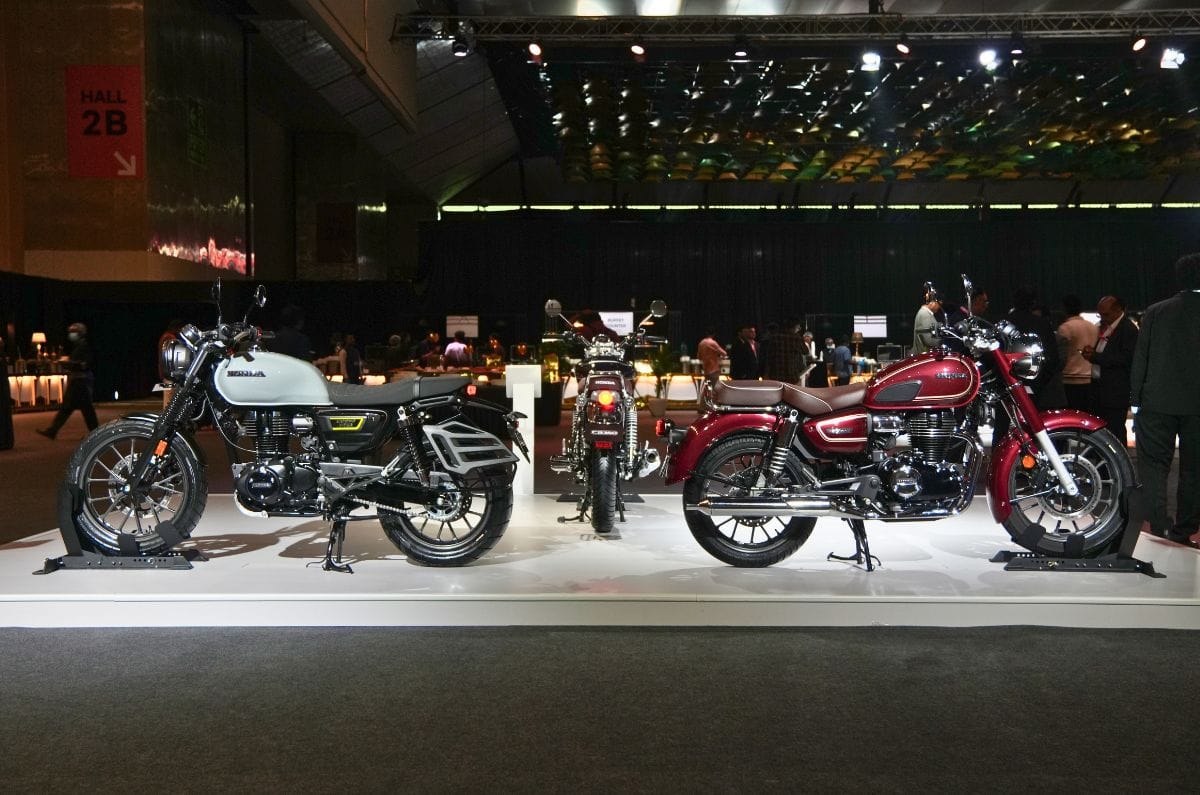
Alongside the launch of the all-new CB500, Honda has also refreshed its 350cc modern-classic range in India. The CB350 lineup has received new colour options across all three models, while the brand has also dropped the ‘H’ness’ suffix, with the motorcycle now simply called the CB350.
Honda CB350 lineup updated with new colours
H’ness suffix has been dropped
Lineup remains mechanically unchanged
Honda CB350 range updated
Honda’s 348.6cc, single-cylinder, air-cooled engine puts out 21hp and 29.5Nm
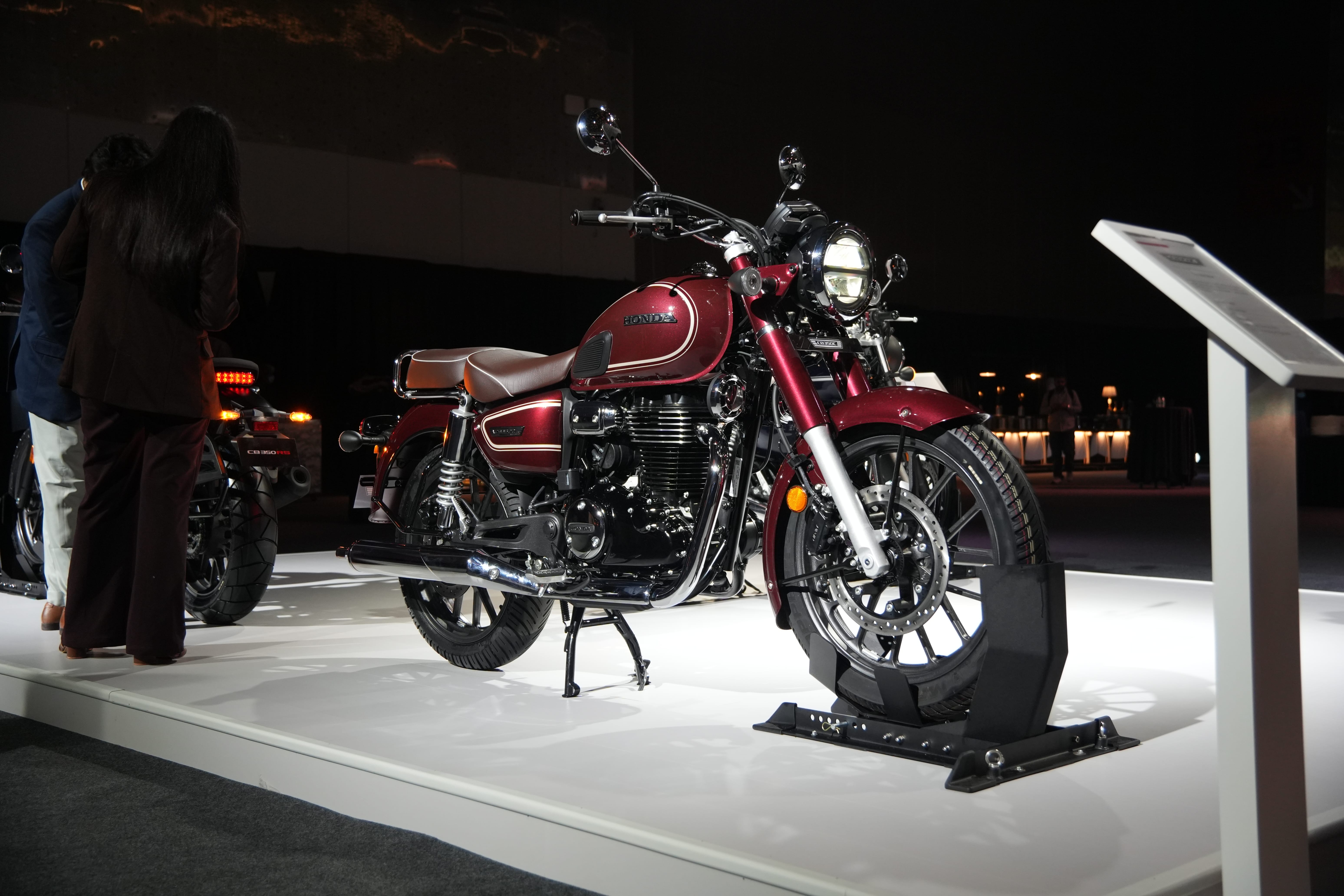
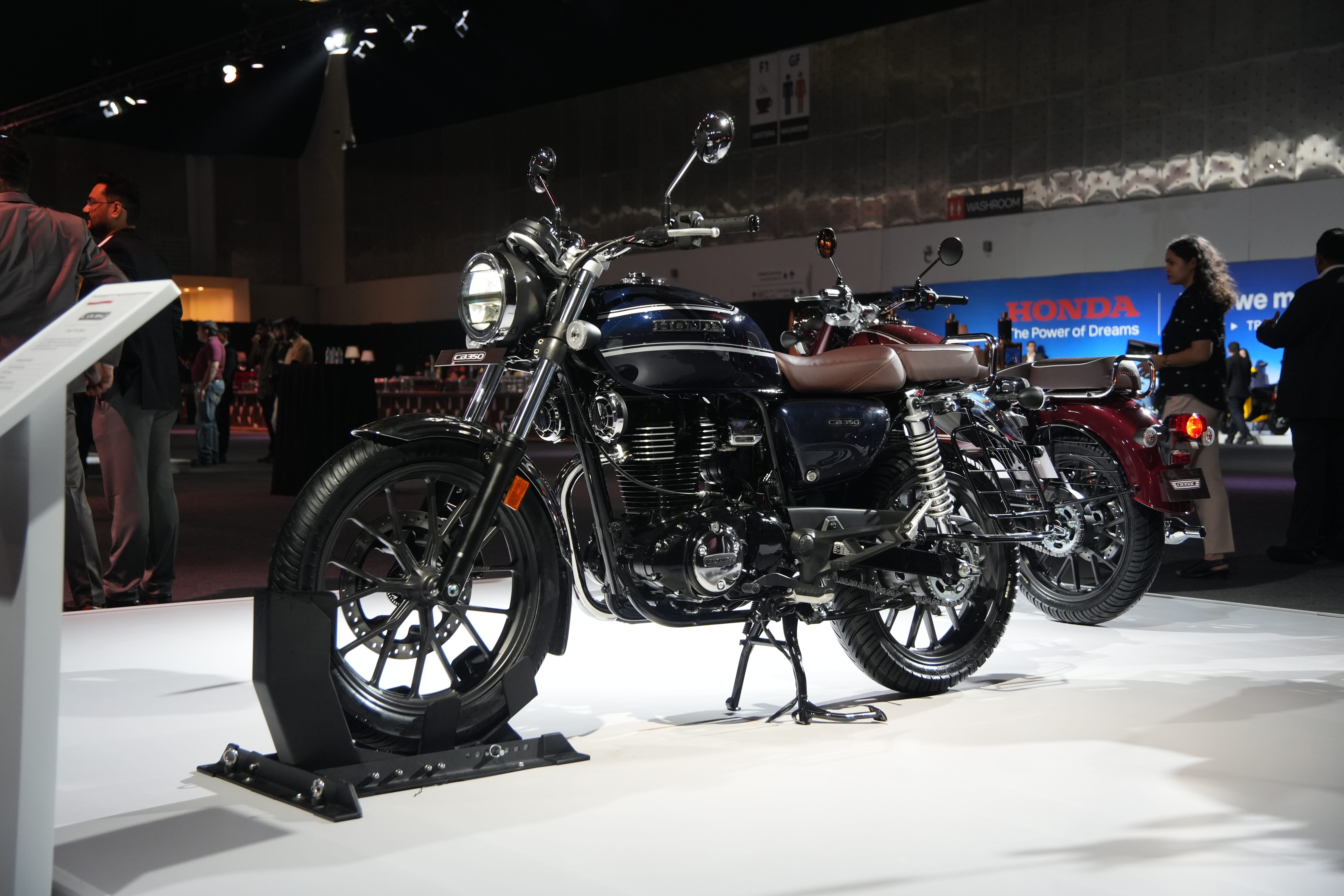
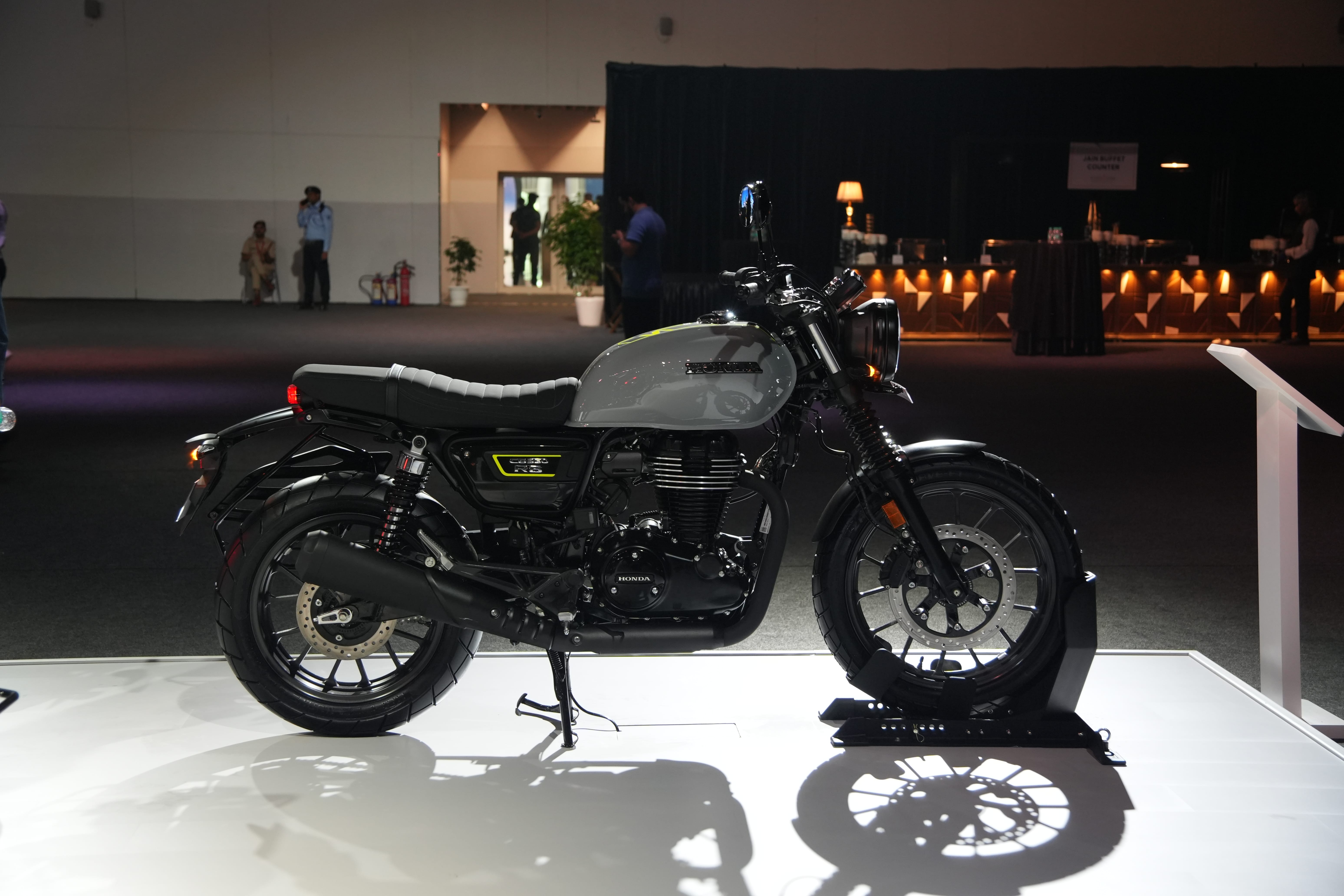
Honda has updated its neo-retro motorcycle portfolio with refreshed versions of the CB350, CB350C and CB350RS. The update is limited to new paint schemes across the range, while the motorcycles remain mechanically unchanged. Out of these three motorcycles, the CB350RS is aimed at a younger audience with its sportier graphics, wider rear tyre, flatter and slightly more forward-set handlebar. The CB350C gets retro styling with the colour palette reflecting the same, whereas the CB350 gets relatively contemporary styling and a clear-lens tail light.
Honda CB350C
The most notable change is the renaming of the CB350 H’ness. Honda has done away with the ‘H’ness’ suffix, with the motorcycle now being marketed simply as the CB350, bringing its naming in line with the rest of the lineup.
Honda CB350
All three motorcycles continue to be powered by the same 348.6cc, single-cylinder, air-cooled engine that puts out 21hp and 29.5Nm, mated to a 5-speed gearbox. They also retain their existing feature set, including all-LED lighting, smartphone connectivity, traction control, and dual-channel ABS with disc brakes at both ends.
Honda CB350RS
The refreshed colour palette is aimed at keeping Honda’s retro-styled lineup fresh. Pricing for the updated range is expected to be announced soon.
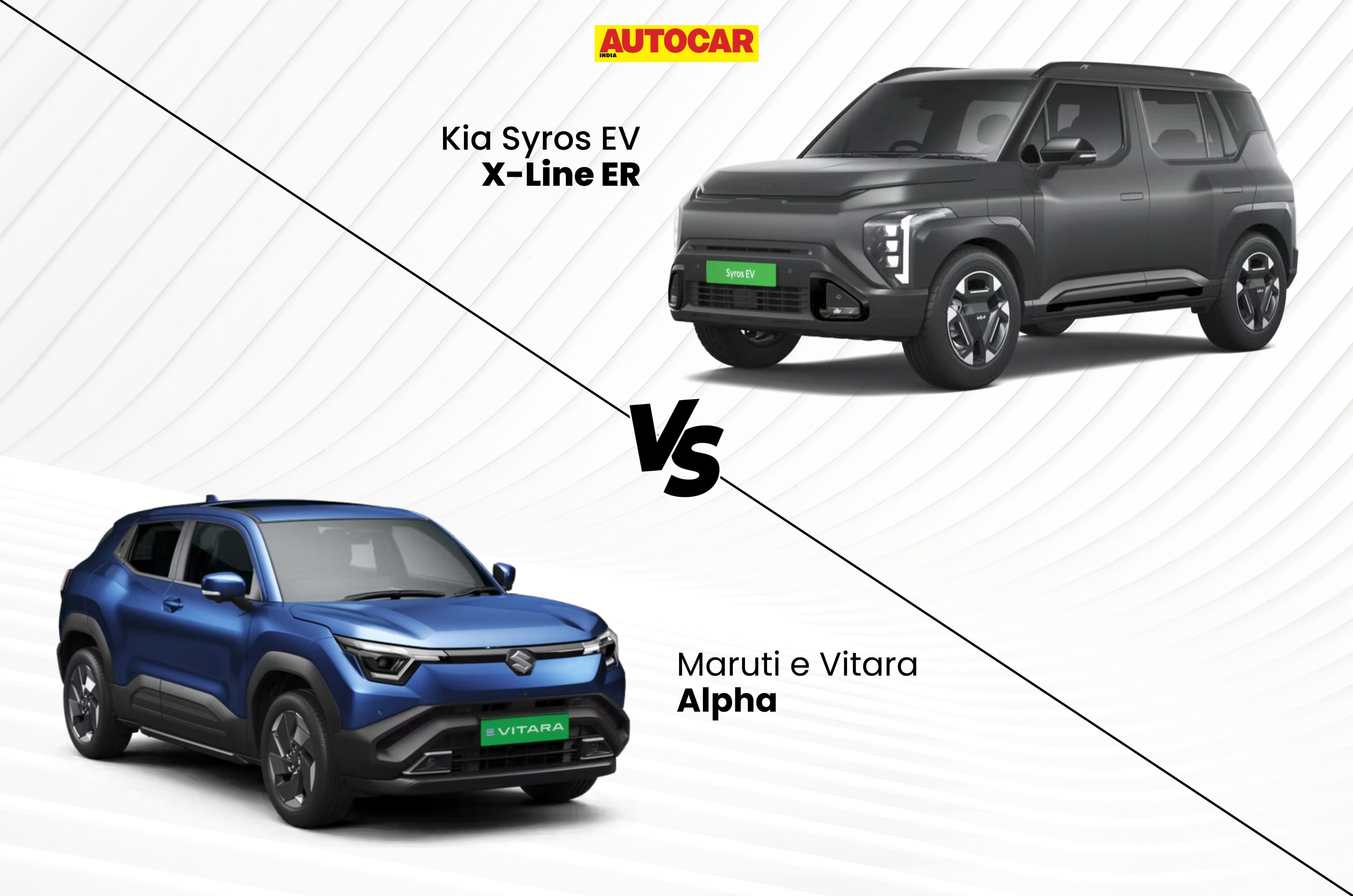
Kia India has officially launched its second mass-market electric car, the Syros EV. While the sub-4m Syros EV directly rivals the Tata Nexon EV and Mahindra XUV 3XO, the Kia’s pricing sees quite a bit of overlap with that of the Maruti Suzuki e Vitara, which is of a segment above. In fact, the top-spec trims of both electric SUVs are identically priced. Therefore, we compared the top-spec versions of the Syros EV and e Vitara on paper to determine which electric SUV offers more bang for your buck.
Kia Syros EV vs Maruti Suzuki e Vitara: Top trim dimensions
e Vitara is longer, but Syros EV is wider and taller
Kia Syros EV X-Line ER vs Maruti e Vitara Alpha dimensions
Syros EV
e Vitara
Length (mm)
3,995
4,275
Width (mm)
1,805
1,800
Height (mm)
1,670
1,640
Wheelbase (mm)
2,550
2,700
Frunk (litres)
16
–
Wheel size (inches)
17
18
Expectedly, the Syros EV is 280mm shorter overall (150mm shorter wheelbase) than the e Vitara, but interestingly, the Kia compact SUV is 5mm wider and 30mm taller. Neither Kia nor Maruti Suzuki quote precise boot space figures for their respective electric SUVs, but it’s worth noting that the Syros EV comes with a 16-litre frunk, while the e Vitara completely lacks storage space up front. However, the top-spec e Vitara does get larger alloy wheels than the equivalent Syros EV.
Kia Syros EV vs Maruti Suzuki e Vitara: Top trim powertrains
Syros EV is quicker, e Vitara claims higher range and has a bigger battery
Kia Syros EV X-Line ER vs Maruti e Vitara Alpha battery and range
Syros EV
e Vitara
Battery size (kWh)
51.4
61
Electric motor setup
Single motor, front
Single motor, front
Drive layout
FWD
FWD
Power (hp)
171
174
Torque (Nm)
255
193
Claimed 0-100kph time (seconds)
8.1
8.7
ARAI range (km)
526
543
The Syros EV’s battery pack is almost 10kWh smaller than that of the e Vitara, but the Kia is only 17km behind in terms of ARAI-claimed range. Both electric SUVs are front-wheel drive and make similar amounts of power, but the Syros EV edges ahead by a significant 62Nm in terms of torque output. This is partly why the Syros EV claims a 0.6sec quicker 0-100kph time than that of the e Vitara.
Kia Syros EV vs Maruti Suzuki e Vitara: Top trim charging speeds
Syros EV supports higher DC wattages
Kia Syros EV X-Line ER vs Maruti e Vitara Alpha charging times
Syros EV
e Vitara
Battery size (kWh)
51.4
61
7.4kW AC charging (10-100 percent)
–
9 hrs
11kW AC charging (10-100 percent)
8.9 hrs
–
DC fast charging (10-80 percent)
39 mins at 100kW
45 mins at 70kW
Kia and Maruti Suzuki quote AC charging speeds at different wattages, so the Syros EV and e Vitara can’t be directly compared on this front. However, it’s noteworthy that though the e Vitara has a larger battery than the Syros EV, the former takes roughly the same amount of time for a 10-100 percent charge at 7.4kW as the latter does at 11kW. Coming to DC charging, the Syros EV supports up to 100kW, while the e Vitara tops out at 70kW.
Kia Syros EV vs Maruti Suzuki e Vitara: Top trim exterior features
Syros EV gets puddle lamps, but e Vitara offers much greater choice in colours
Kia Syros EV X-Line ER vs Maruti e Vitara Alpha exterior features
Syros EV
e Vitara
LED projector headlamps
Yes (auto)
Yes (auto)
Front fog lamps
Yes
Yes
LED tail-lamps
Yes
Yes
Puddle lamps w/ logo projection
Yes
No
Roof rails
Yes
No
Powered ORVMs
Yes
Yes
Auto-folding ORVMs
Yes
Yes
Flush door handles
Yes
No
Body cladding
Yes
Yes
Rear spoiler
Yes
Yes
Colour options
2, monotone
10, monotone + dual-tone
Both electric SUVs are quite evenly matched in terms of exterior features, but the Syros EV takes the lead by way of roof rails and door-mounted puddle lamps that project the Kia logo. The Syros EV has flush door handles too, but some may appreciate the e Vitara’s conventional door handles more. Colours are a square win for the e Vitara, as it offers six monotone options and four dual-tone finishes. The Syros X-Line ER can be had in either Aurora Black Pearl or Matte Graphite, both of which are difficult to maintain. Buyers who want other colours have no option but to consider lower-spec Syros EV variants.
Kia Syros EV vs Maruti Suzuki e Vitara: Top trim interior features
Syros EV beats e Vitara with panoramic sunroof, cooled rear seat bases, and more
Kia Syros EV X-Line ER vs Maruti e Vitara Alpha interior features
Syros EV
e Vitara
Infotainment screen
12.3-inch
10.1-inch
Digital driver’s display
12.3-inch
10.25-inch
Climate control display
5-inch
–
Sunroof
Panoramic
Fixed single-pane
Wireless charger
Yes
Yes
Driver’s seat adjustment
4-way powered
10-way powered
Ventilated front seats
Yes
Yes
Rear seat base ventilation
Yes
No
Automatic climate control
Yes
Yes
Ambient lighting
Yes
Yes
Sound system
8-speaker Harmon Kardon
8-speaker Infinity
Apple CarPlay & Android Auto
Wireless
Wireless
Connected car tech
Yes
Yes
OTA updates
Yes
Yes
Rear sunshades
Yes
No
Rear centre armrest
Yes
Yes
Sliding, reclining rear seats
Yes
Yes
Even on the inside, the Syros EV’s feature set comes out on top. Over the e Vitara, the Syros EV packs larger infotainment and instrument displays, an additional screen for climate control settings, a panoramic sunroof, rear sunshades, and ventilation for the rear seat bases – this feature is not available even in electric SUVs a segment above the Syros EV. The e Vitara’s only advantage over the Syros EV is a greater gamut of electrical adjustment for the driver’s seat.
Kia Syros EV vs Maruti Suzuki e Vitara: Top trim driving features
Syros EV scores big on convenience by way of paddle shifters for regen modes
Kia Syros EV X-Line ER vs Maruti e Vitara Alpha driving features
Syros EV
e Vitara
Drive modes
Eco, Normal, Sport
Eco, Normal, Sport
Terrain modes
No
Snow
V2L function
Yes
No
Multi-level regen braking
Yes
Yes
Paddle shifters for regen
Yes
No
Cruise control
Adaptive
Adaptive
Both the Syros EV and e Vitara come with three drive modes and adaptive cruise control, but the Kia SUV inches forward thanks to vehicle-to-load (V2L) functionality, which lets you power external devices from the battery pack. The Syros EV also offers paddle shifters to cycle through the regenerative braking levels, while the e Vitara makes do with just a knob on the centre console. However, the e Vitara does offer a Snow terrain mode over the Syros EV.
Kia Syros EV vs Maruti Suzuki e Vitara: Top trim safety features
e Vitara wins thanks to an extra airbag, rain-sensing wipers, and 5-star BNCAP score
Kia Syros EV X-Line ER vs Maruti e Vitara Alpha safety features
Syros EV
e Vitara
Bharat NCAP rating
Yet to be tested
5 stars
Airbags
6
7
ABS with EBD
Yes
Yes
Electronic stability program
Yes
Yes
Follow-me-home headlamps
Yes
Yes
Hill hold control
Yes
Yes
TPMS
Yes
Yes
360-degree camera
Yes
Yes
Parking sensors
Front, rear, side
Front, rear
Electronic parking brake
Yes (w/ auto-hold)
Yes (w/ auto-hold)
Rain-sensing wipers
No
Yes
Auto-dimming IRVM
Yes
Yes
ISOFIX child seat anchors
Yes
Yes
Rear wiper, defogger
Yes
Yes
Disc brakes
Front, rear
Front, rear
Level 2 ADAS
Yes
Yes
Acoustic vehicle alert system
Yes
Yes
Coming to safety, the e Vitara finally scores a win. It’s the only one here to come with seven airbags and rain-sensing wipers, whereas the Syros EV sets itself apart with side parking sensors. The e Vitara also holds a 5-star crash safety rating from Bharat NCAP, while the Syros EV has not been tested yet. It’s worth noting, though, that the ICE-powered Syros was awarded 5 stars by Bharat NCAP, so a similar rating for the compact SUV’s electric derivative is very possible.
Kia Syros EV vs Maruti Suzuki e Vitara: Top trim prices
Syros EV for buyers seeking features, e Vitara for those who want a bigger car
Kia Syros EV X-Line ER vs Maruti e Vitara Alpha price comparison
Syros EV
e Vitara
Price (Rs, lakh)
20.00
19.99
As noted previously, there is next to no difference in the pricing of the Syros EV X-Line ER and e Vitara Alpha, which means the final decision comes down to your needs and preferences. If you want as many features as possible, are fine with a dark colour, and don’t mind smaller dimensions and funkier styling, the Syros EV X-Line ER is the one to go for. On the other hand, if you want the price you pay to be reflected in the size of the car, more choice in colours, more conventional looks, and are happy to forgo some features, you can consider the e Vitara.
It’s also worth noting that both the Syros EV and e Vitara can be purchased with battery-as-a-service (BaaS), which converts the cost of the battery into separate usage-based EMIs, thereby lowering the upfront cost. Kia has yet to reveal the BaaS price of the Syros EV X-Line ER, but the e Vitara Alpha costs Rs 14.49 lakh – Rs 5.5 lakh off the sticker price – with a Rs 4.39/km battery usage fee.
The FMSCI (Federation of Motor Sports Club of India) has been provisionally recognised as a National Sports Federation (NSF) by the Sports Ministry. This move strengthens the motorsport governing body’s standing in India, as the government pushes to grow the racing ecosystem and bring more international events like F1 back to the country.
FMSCI now eligible for financial grants
Dedicated task force set up to asses India’s motorsport ecosystem
What does NSF status mean for Indian motorsport?
Headed by Arindam Ghosh, the FMSCI had applied for NSF status on June 11, 2026. As per an order dated July 23, 2026, the Sports Ministry has approved this request provisionally after relaxing some norms regarding minimum affiliation required for state units. NSF status means that the FMSCI is now eligible for financial grants from the Sports Ministry. As part of the process, FMSCI has been directed to amend its constitution and Memorandum of Association to align with the provisions of the National Sports Governance Act, 2025. The Ministry has also reserved the right to revoke the recognition should the federation fail to comply with its guidelines.
Last month, Sports Minister Mansukh Mandaviya had announced plans to set up a dedicated task force to assess the motorsport ecosystem in India. “The Task Force will evaluate the international, economic, tourism, and investment benefits arising from hosting major motorsport events in India. It will also identify key priorities, infrastructure requirements, and operational needs necessary for the sustainable development of the sector and submit its recommendations to the Sports Ministry,” Mandaviya added.
The push to bring F1 back to India
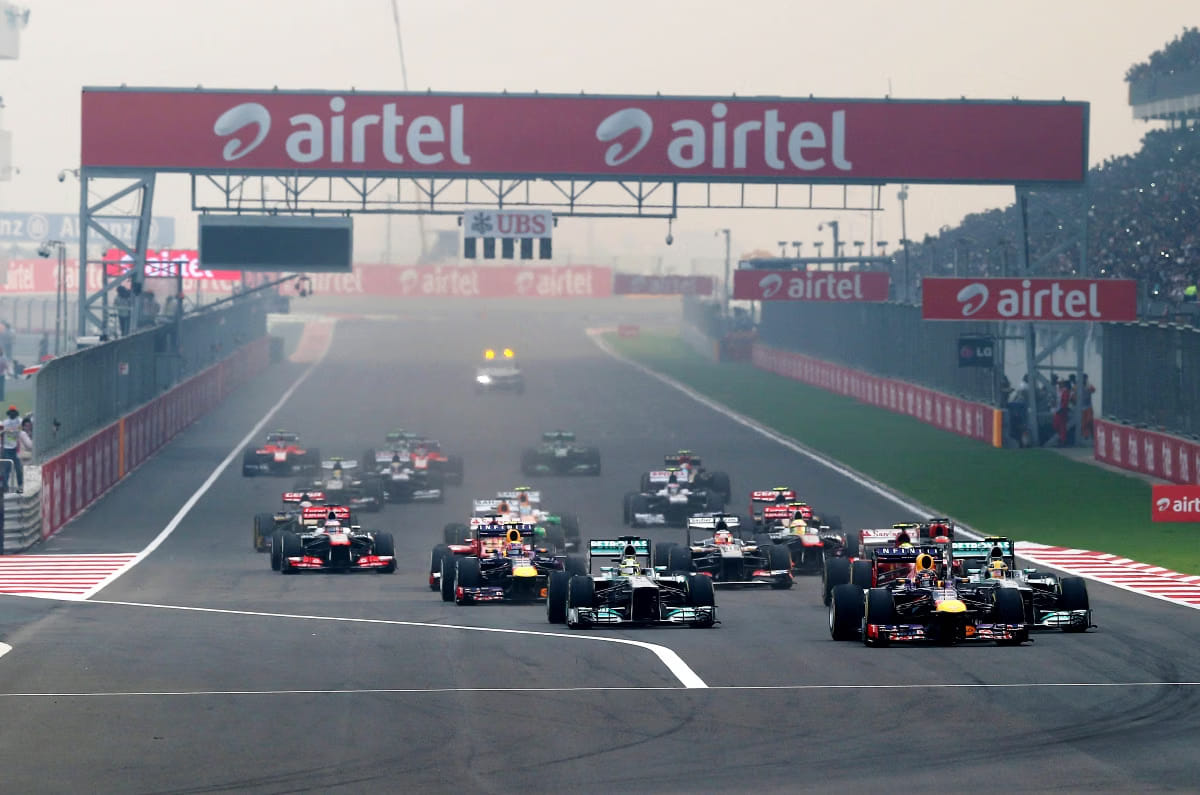
The FMSCI being granted NSF status comes amid renewed momentum around India’s motorsport ambitions, particularly the possible return of the F1 Indian GP. The Adani Group, currently in the running to acquire the Buddh International Circuit (BIC), has confirmed it is exploring plans to revive the race at the venue, which hosted the Indian GP from 2011 to 2013 before it was dropped from the calendar. That was largely due to the Uttar Pradesh government’s taxation policy at the time, which classified F1 as entertainment rather than sport.
While Mandaviya had earlier suggested the Indian GP could return as soon as 2027, F1 has maintained that this timeline isn’t realistic, noting that organising races is a complex, time-intensive process.
In a recent interaction with FanCode, Formula 1 CEO and president Stefano Domenicali confirmed that there is indeed “big interest” from the championship to return to India. But he also cautioned that a revival of the Indian GP is still several years away and will require several conditions to be met.
“It is very important to say that we need to feel the interest from all the stakeholders of India because this is a project that, when we reach back to your country, has to be big,” explained Domenicali. “It has to be the right one, with the right level of investment and the right level of people, because your market is just phenomenal. I just want to guarantee that we’re going to be there for sure one day and in the right condition.”
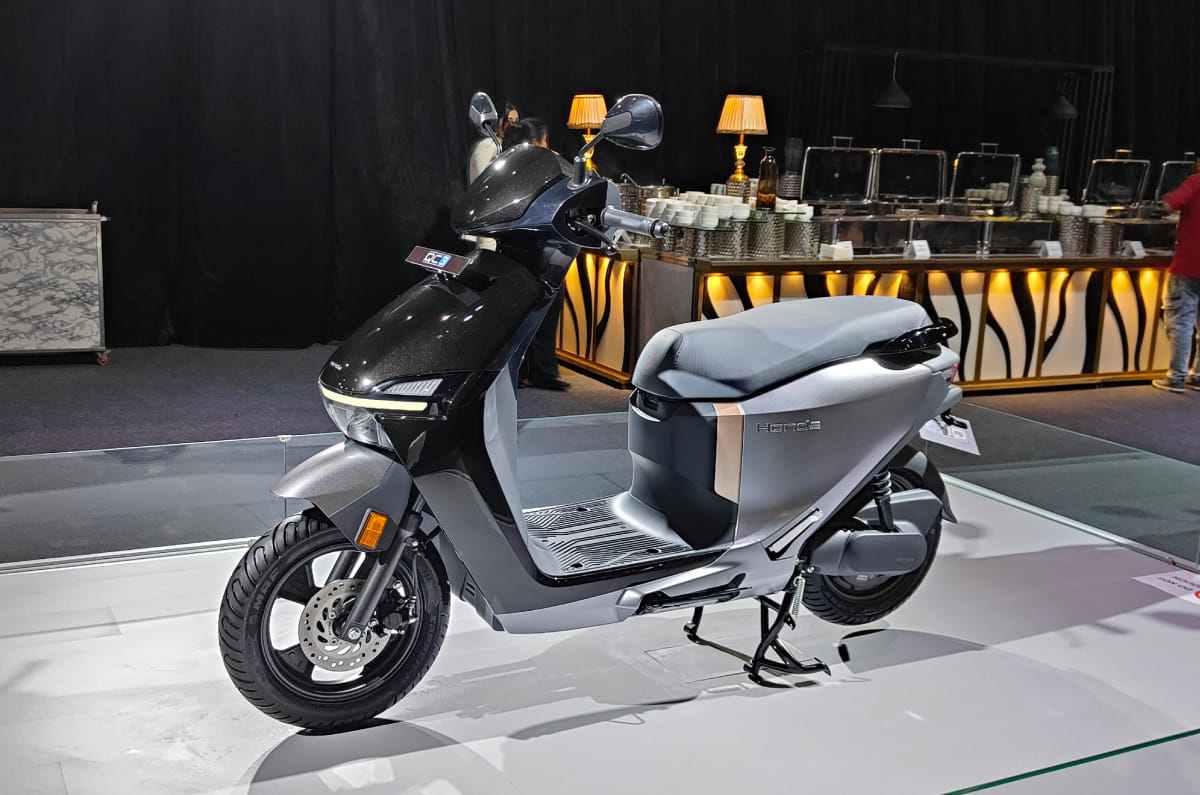
Honda has unveiled the new QC3 electric scooter, expanding its electric two-wheeler lineup to three models. The QC3 will sit above the QC1, offering a larger battery, more range and a higher level of equipment.
Uses a 3kWh battery with a claimed IDC range of 145km
Full charge takes 5 hours
Gets a TFT display with Honda RoadSync connectivity
Honda QC3 India details
The QC3 sits above the QC1 in terms of range and features
Honda currently sells two electric scooters in India – the QC1 and the Activa-e – both of which are currently available through select dealerships in limited cities, with a nationwide rollout underway. The QC1 is Honda’s most affordable EV, with prices starting at Rs 90,708. It uses a fixed 1.5kWh battery, offers a claimed IDC range of 80km and has a top speed of 50kph. The Activa-e, meanwhile, uses two removable 1.5kWh batteries for a combined capacity of 3kWh and a claimed IDC range of 102km, and is priced from Rs 1.20 lakh.
With its fixed 3kWh battery and claimed IDC range of 145km, the QC3 becomes Honda’s longest-range electric scooter in India, suggesting that it will also sit above the existing models in terms of pricing. While Honda is yet to reveal motor specifications, it has confirmed that the battery can be charged from 0-80 percent in 2 hours 40 minutes, with a full charge taking 4 hours. The scooter also gets a TFT display with Honda RoadSync connectivity and turn-by-turn navigation, setting it apart from the more basic instrument cluster on the QC1.
As with the QC1 and Activa-e, the QC3’s availability is likely to be phased. Honda is yet to announce pricing or a launch timeline for the new scooter, and we’ll update this story as more details are announced.
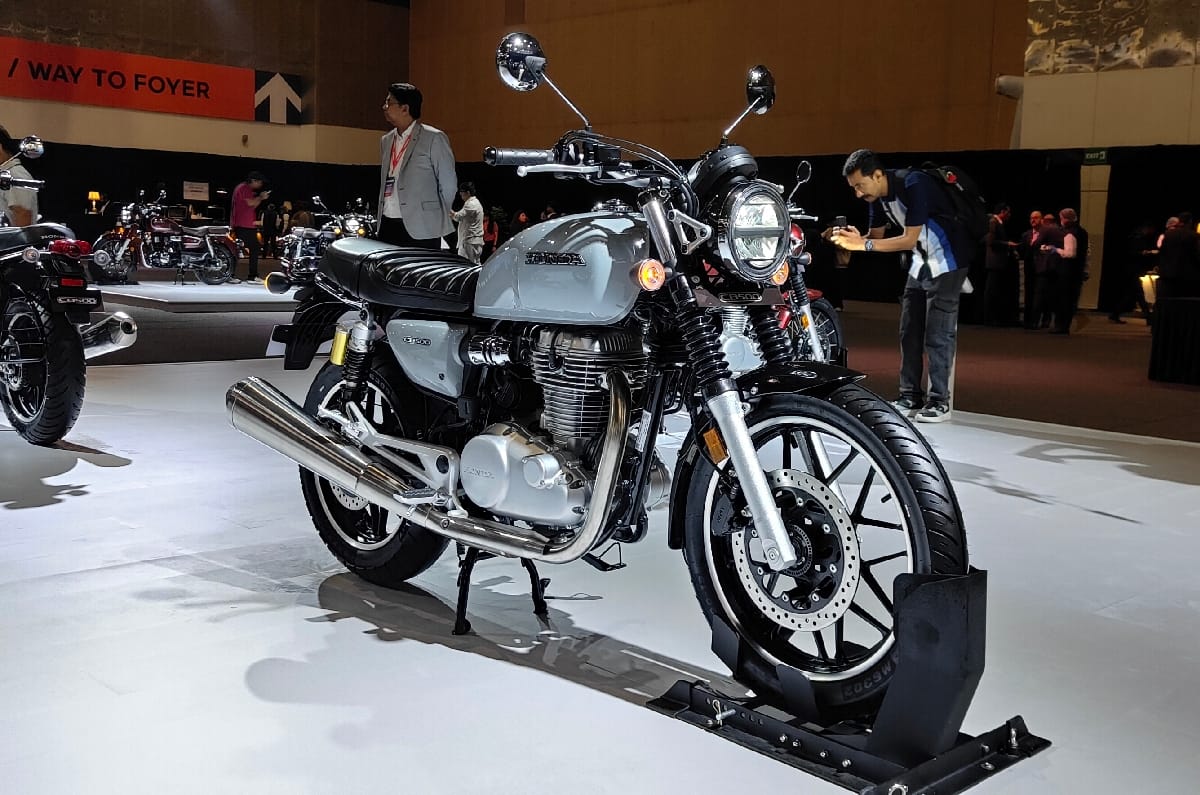
There was a time when large-displacement, air-cooled single-cylinder motorcycles were a meaningful part of India’s motorcycle landscape. Royal Enfield’s 500cc UCE engine powered several notable models, but after it was discontinued in 2020, nothing has quite filled that space. That is where the all-new Honda CB500 intends to slot in. Unveiled earlier today, the CB500 is a 501cc air/oil-cooled single-cylinder motorcycle inspired by the legendary CB750, and it will be manufactured in India.
New 501cc air/oil-cooled single-cylinder engine produces 27hp and 43.3Nm
Will be manufactured in India; pricing yet to be announced
CB500 will be available in three variants
Honda CB500 details
Torque output comes close to the Royal Enfield Interceptor 650
The CB500 is powered by an all-new 501cc air/oil-cooled single-cylinder engine producing 27hp and 43.3Nm. While the power output is modest, the torque figure is impressive, putting it remarkably close to the Royal Enfield Interceptor 650, which produces 47.4hp and 52.3Nm from its much larger 648cc parallel-twin engine. The CB500 uses a five-speed gearbox.
Honda is yet to reveal the motorcycle’s complete specifications, but we do know that the CB500 will feature a conventional telescopic fork, twin rear shock absorbers and disc brakes at both ends. The overall design draws inspiration from the familiar CB350, with classic styling cues including a round LED headlight, a ribbed single-piece seat and a large teardrop-shaped fuel tank. It is paired with modern features such as Honda Selectable Torque Control (HSTC), a slipper clutch, and an analogue-digital instrument console with Honda RoadSync connectivity.
Honda will offer the CB500 in three variants: a standard alloy-wheel version, a cross-spoke tubeless-wheel variant and a range-topping cross-spoke tubeless variant with exclusive graphics.
Pricing is yet to be announced, but with local manufacturing confirmed, Honda is expected to price the CB500 competitively in the midsize retro segment, where it will likely rival and possibly undercut the Royal Enfield Interceptor 650 and the BSA Gold Star 650.
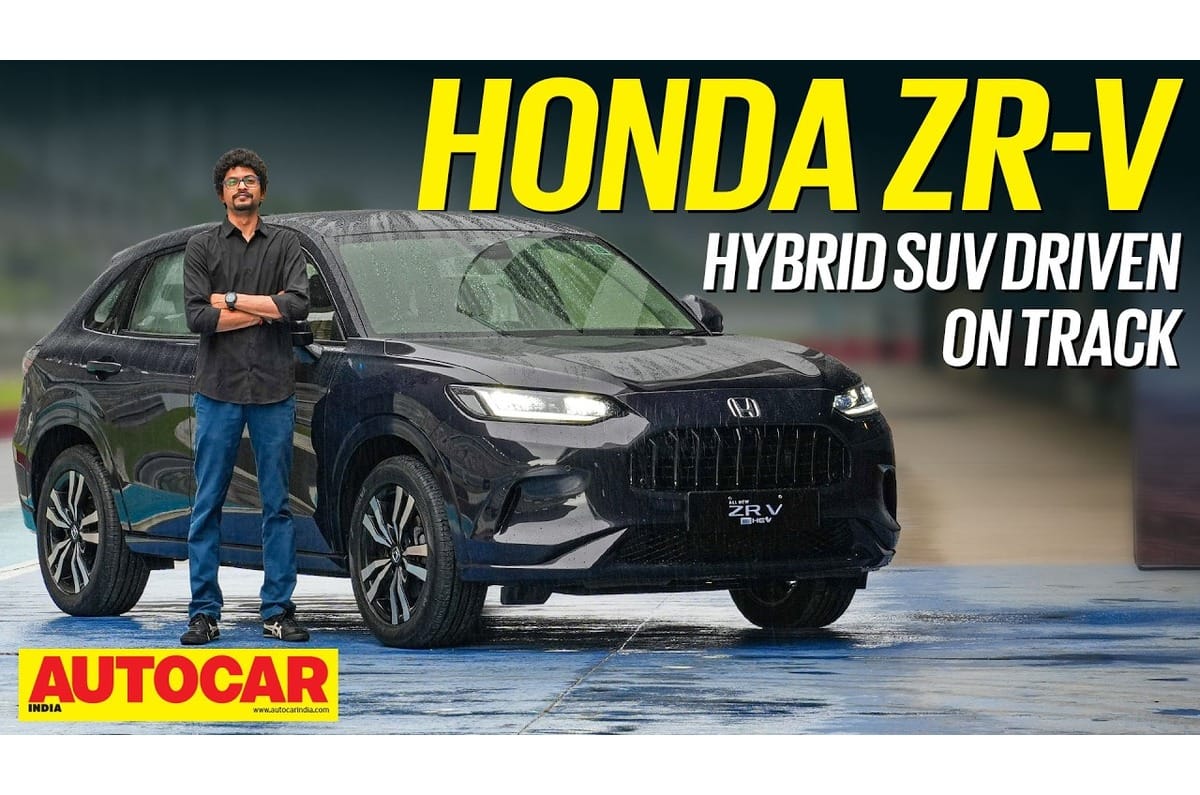
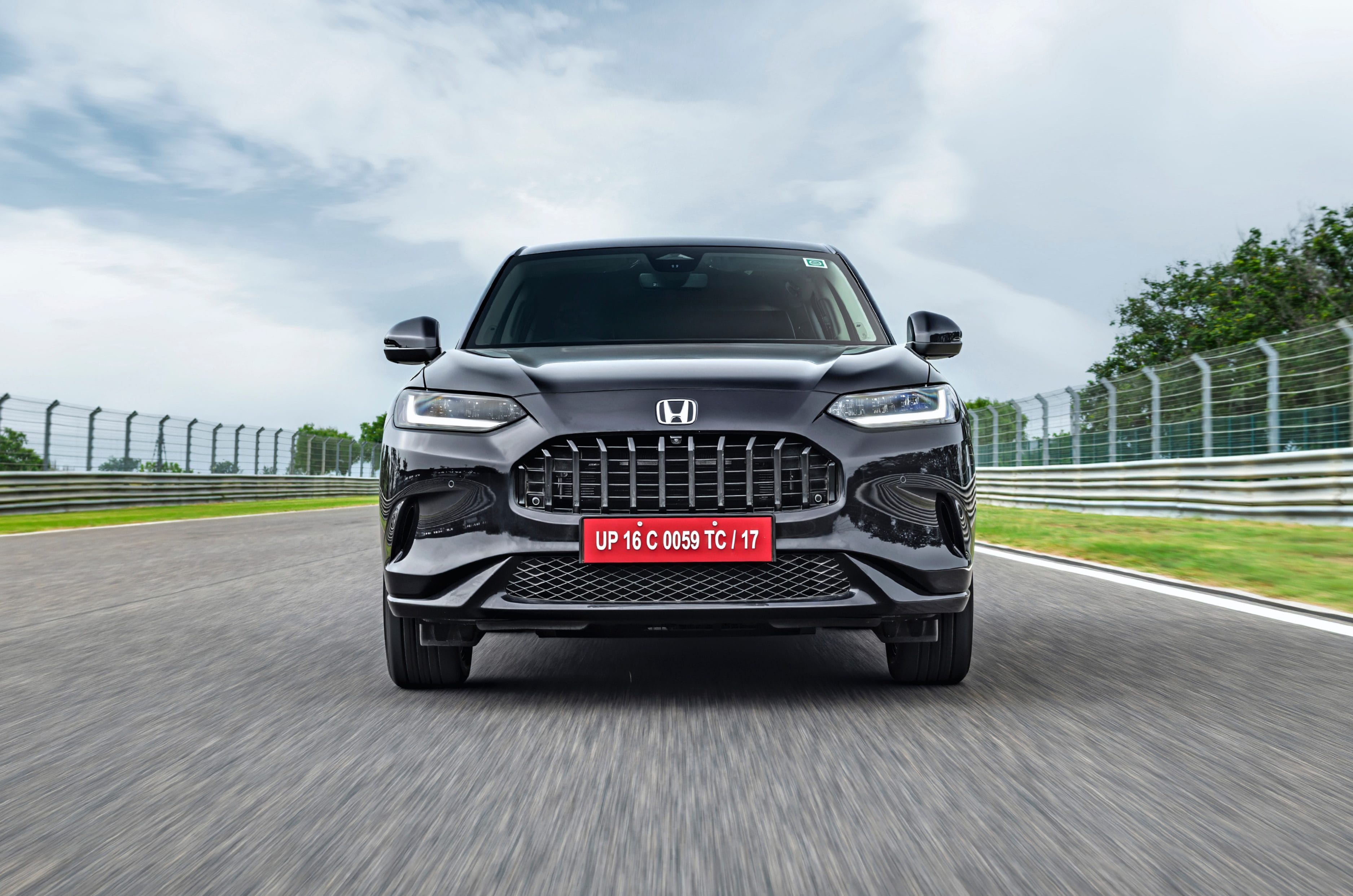
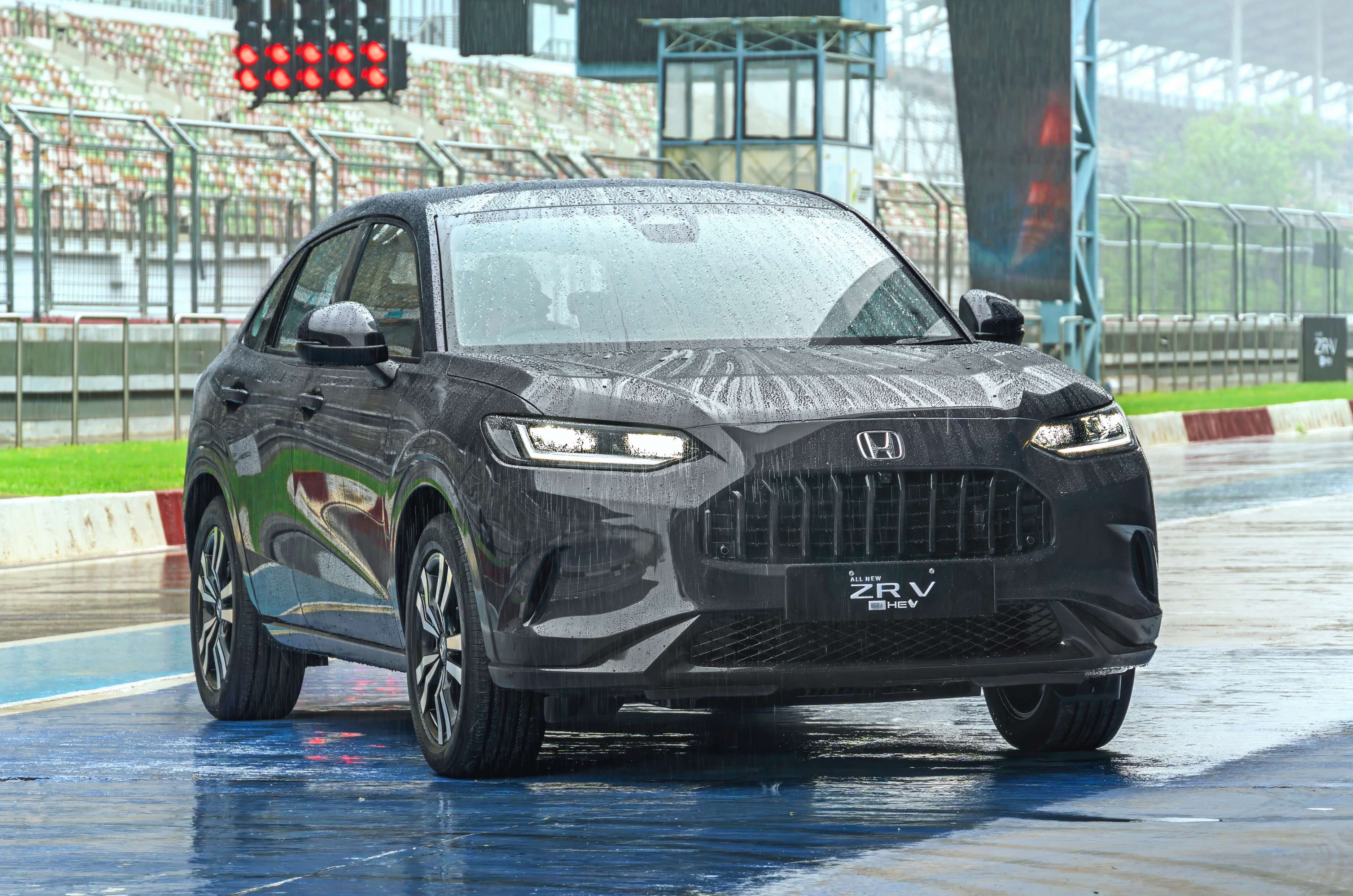
The Honda ZR-V is the carmaker’s first hybrid SUV in India and its being brought here via the CBU route from Japan as a brand builder or a halo product. It’s also the first of a few global products being launched in India, so it gives us an idea of what we can expect from Honda in the coming years. Honda says the ZR-V is a “Sports Hybrid” meaning it prioritizes performance and fuel efficiency in equal parts, which is why the company gave us a chance to briefly experience it at the Buddh International Circuit.
Honda ZR-V Exterior Design and Engineering – 8/10
Hybrid powertrain is smooth, seamless, zippy and promises to be efficient as well
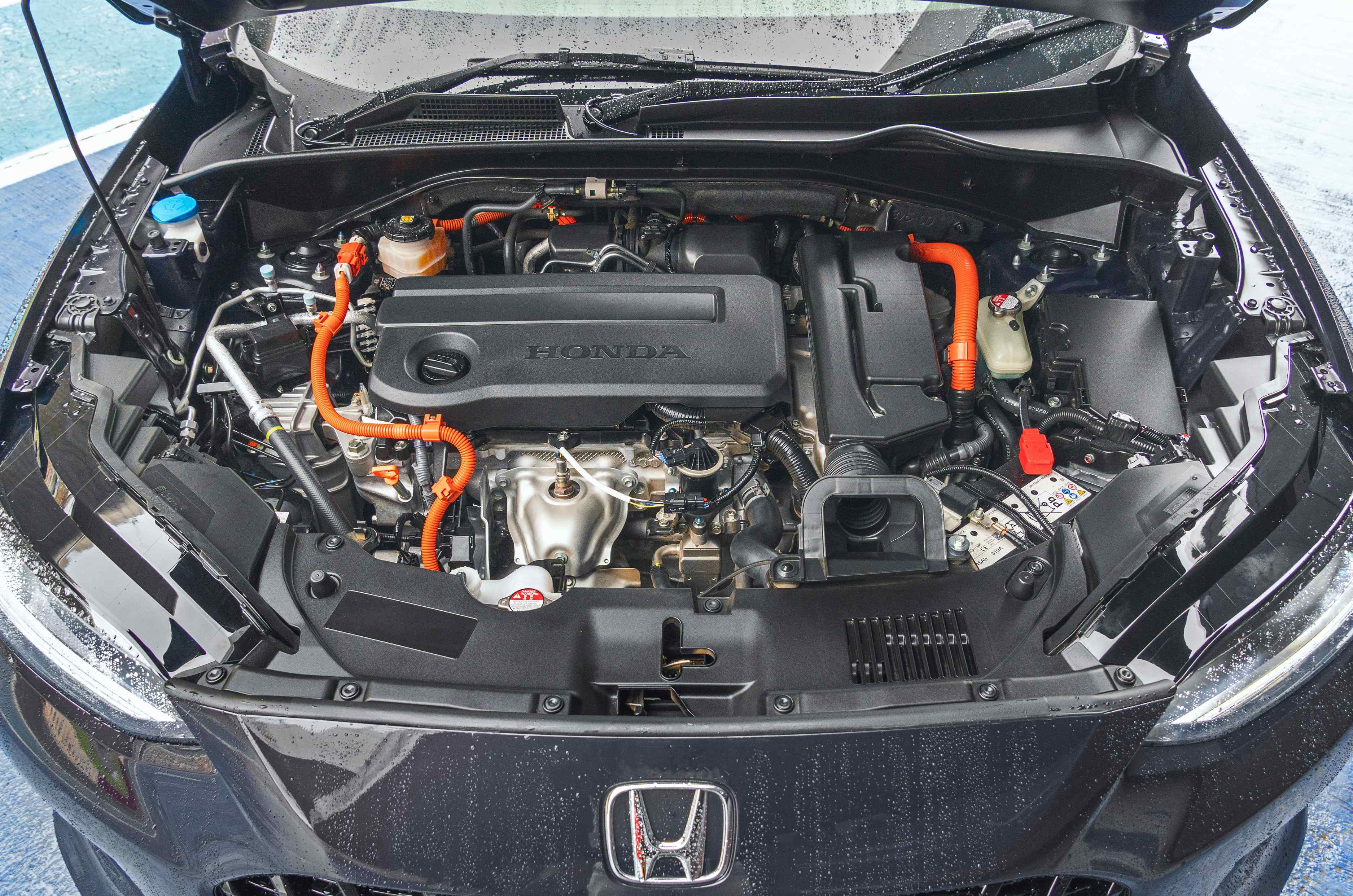
The Honda ZR-V is a strong hybrid SUV that features a 2.0-litre, four-cylinder, direct injection, petrol engine that runs on the more efficient Atkinson cycle and it works in tandem with two, permanent magnet synchronous electric motors. The powertrain produces a max combined output of 184hp and 315Nm which is channeled to the front wheels only via an eCVT transmission. The SUV has a claimed 0-100kph time of 7.9 seconds and an electronically limited top speed of 172kph. Internationally, the ZR-V is also offered with an all-wheel-drive (AWD) setup and a 1.5-litre turbo-petrol engine producing 180hp and 240Nm but that is currently not on the cards for India.
It’s responsive off the line and feels composed at high speeds
The strong hybrid powertrain feels smooth and zippy right from the get-go. What’s great is that it makes all the 315Nm of torque from standstill, so it feels quick right from launch and you’re never left wanting more. Power delivery is smooth and linear and it’s also keen to respond to part-throttle inputs. The powertrain is also very refined with barely any engine, road or tyre noise filtering through.
At low speeds with light throttle inputs, the ZR-V will stay in pure EV mode as long as the battery has enough charge. Unlike some other strong hybrids however, you can’t manually choose EV mode. Push the accelerator harder and the engine will come on, with the SUV moving to the hybrid drive mode. In this mode, the electric motor is still powering the wheels with the engine acting as a generator to keep the battery topped up. Then there’s the engine drive mode, which is specifically used at high speeds. Here, it’s the engine powering the wheels with the electric motor assisting.
However, there are drive modes that you can change – Eco, Normal and Sport – and these don’t have an effect on the output or how the powertrain works but just the response. There’s paddleshifters too, for cycling between the regenerative braking modes and they do work effectively. As for the friction brakes, the ZR-V comes with discs all around and they felt predictable and confidence-inspiring out on track.
Honda ZR-V Mileage and Efficiency – 8/10
Honda claims the ZR-V will do an impressive 22.80kpl. Considering it’s a hybrid, real-world efficiency should be close to the claimed but we’ll have to reserve judgement till we actually subject the SUV to our fuel efficiency tests.
Honda ZR-V Ride Comfort and Handling – 7/10
Considering we drove it on BIC’s smooth tarmac surface and only for a few laps, giving a definitive verdict on its ride comfort is difficult. As for high speed composure, the SUV felt stable.
In terms of handling, the ZR-V felt enjoyable to drive around the corners. Handling on the whole was stable and predictable, thanks to a well-weighted and precise steering. A slalom course also demonstrated its tidy body control and it felt eager to change directions.
Honda ZR-V Exterior Design and Engineering – 7/10
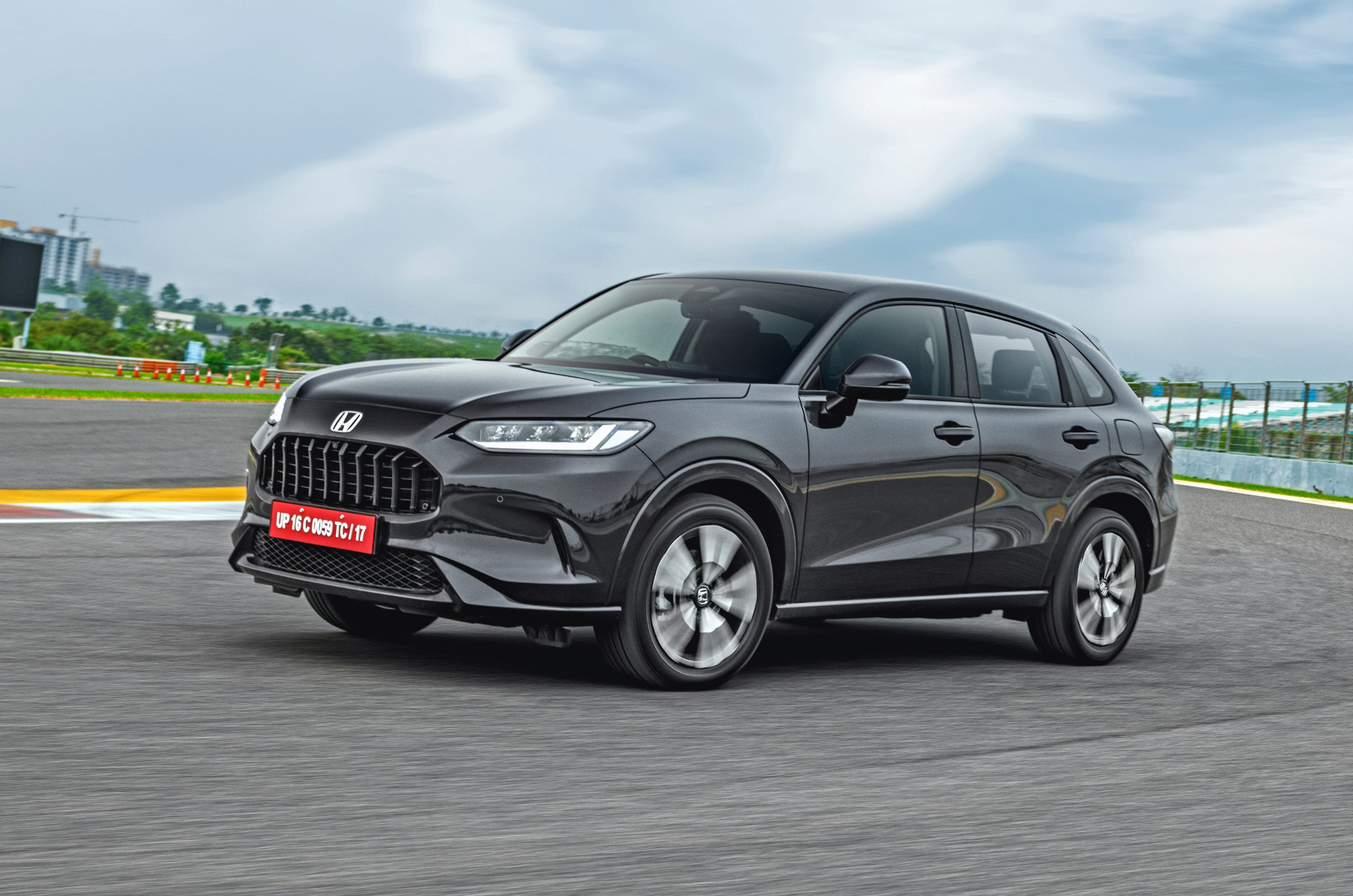
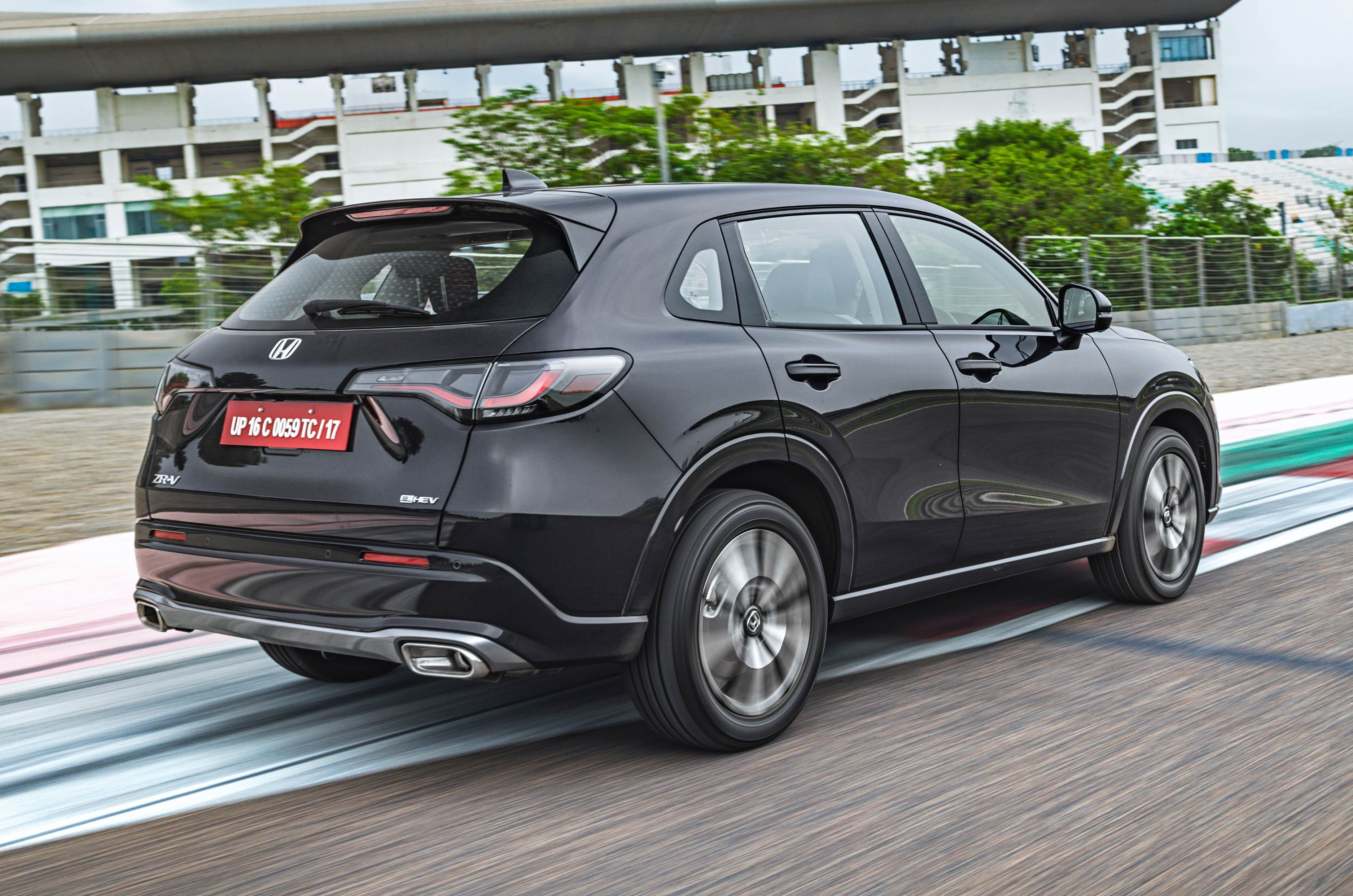
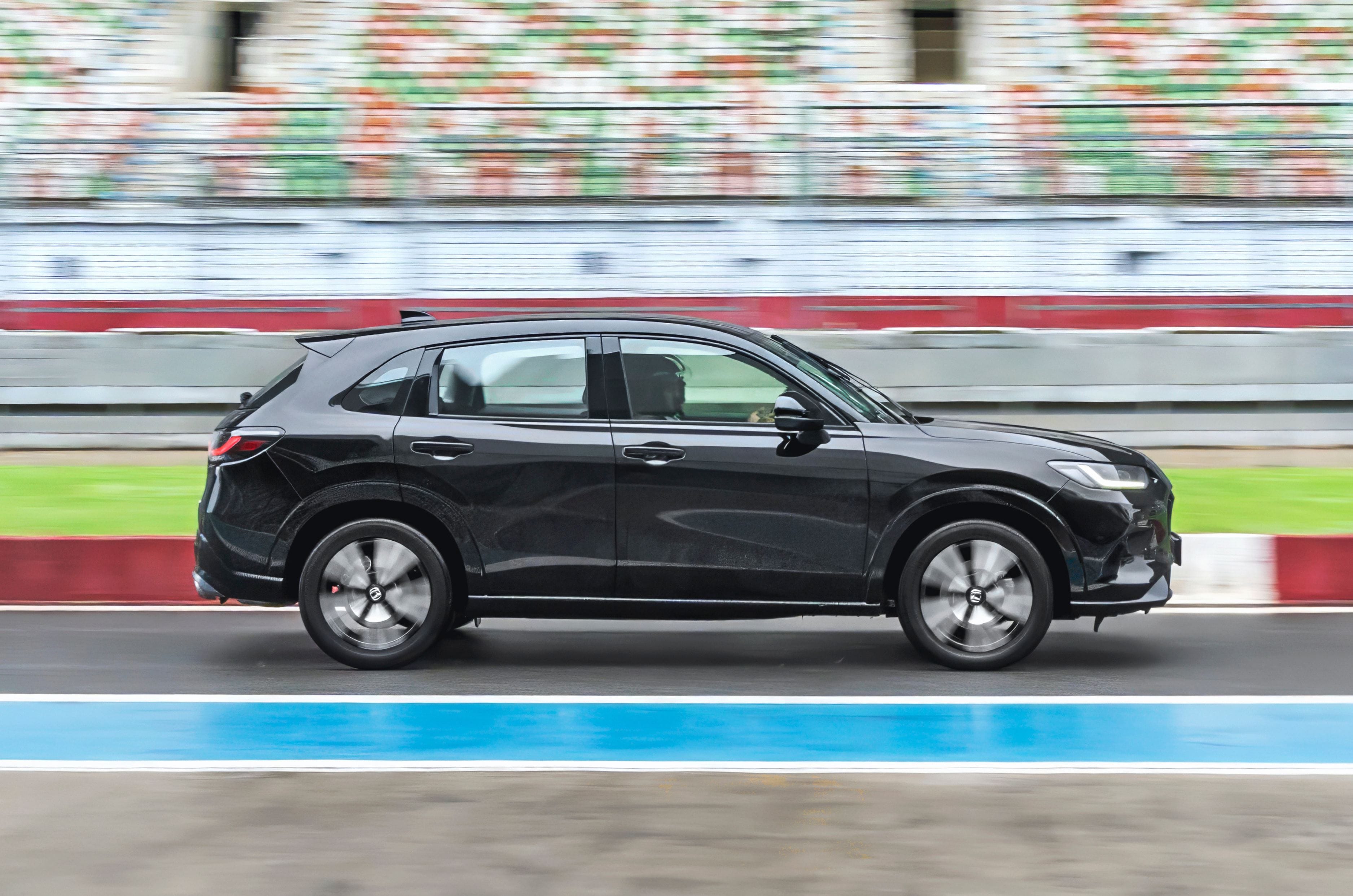
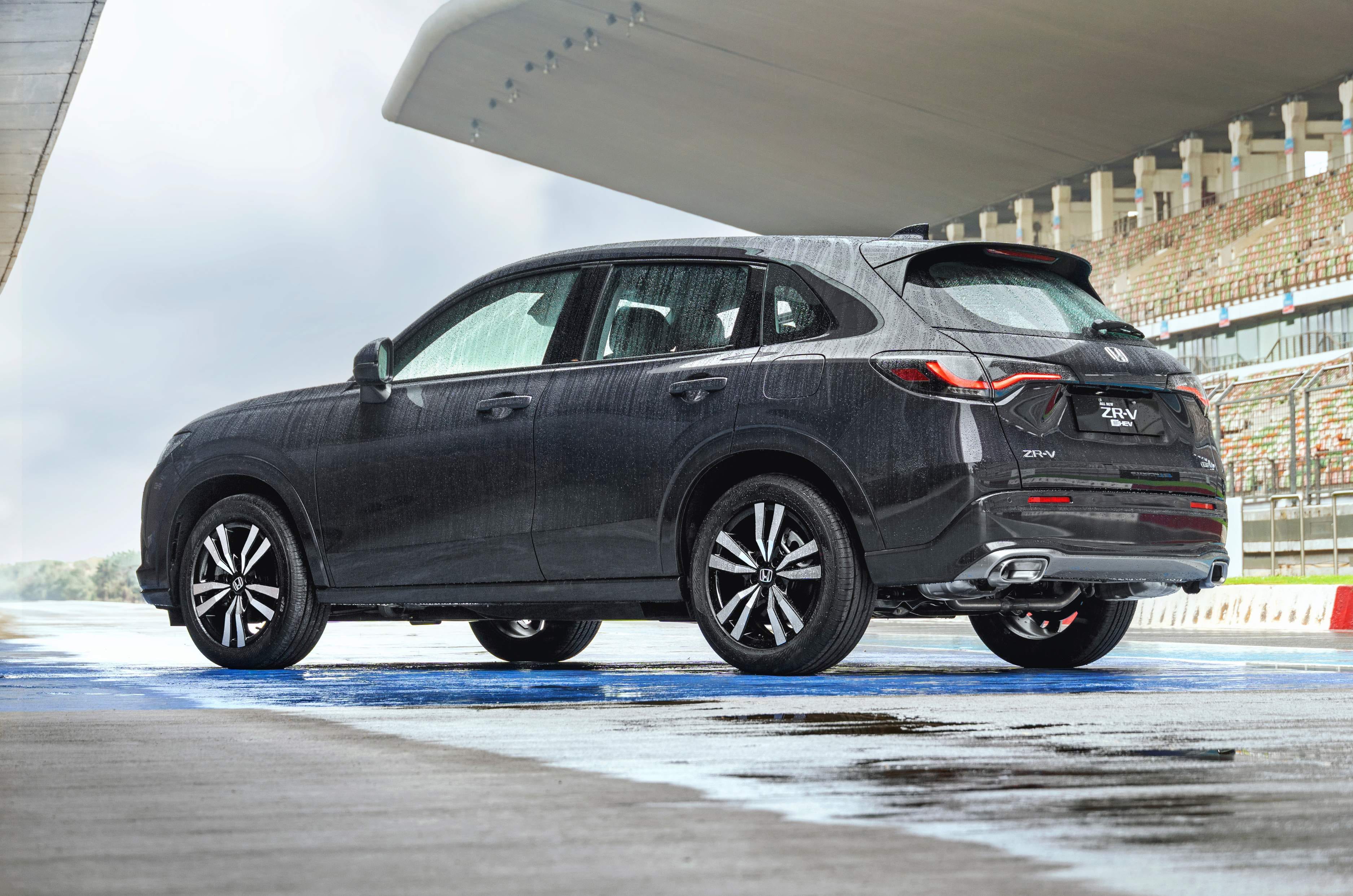
Unlike most SUVs which have a squared-off and upright stance, the Honda ZR-V has a sleek, crossover-like design, with rounded-off and clean surfaces. Up front, it gets slim LED headlights with L-shaped daytime running lamps (DRLs), a black grille with vertical slates and a bumper that houses functional air vents on either side.
ZR-V’s styling is more like a crossover than an upright SUV.
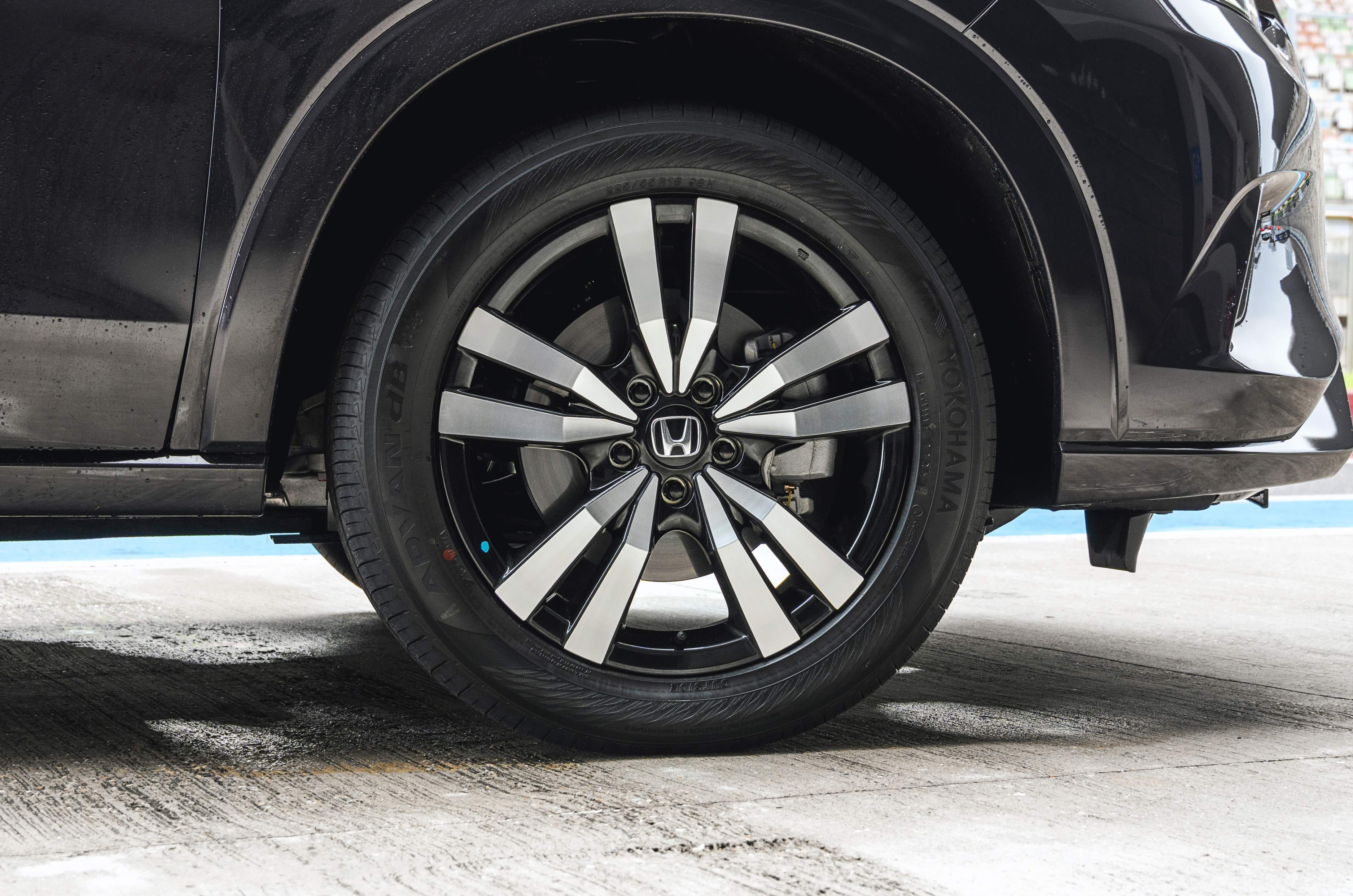
Along the sides, there’s stylish 18-inch alloy wheels with a dual-tone finish, body-coloured cladding around the wheel arches and a tapering roofline at the rear. Unlike most SUVs today, the ZR-V doesn’t get connected tail-lights, instead you get clear-lens taillamps with LED elements. Then there’s a roof-mounted spoiler element and lower down in the bumper, you get dual exhausts.
18-inch alloys get an attractive dual-tone finish.
On the whole, the ZR-V styling comes across as subtle and not striking. And given its dimensions of just over 4.5m in length and 1.8m in width, it doesn’t quite have the presence of its rivals. And it also doesn’t help that Honda is only offering four colours, all of which are subdued.
Honda ZR-V Interior Space and Comfort – 7/10
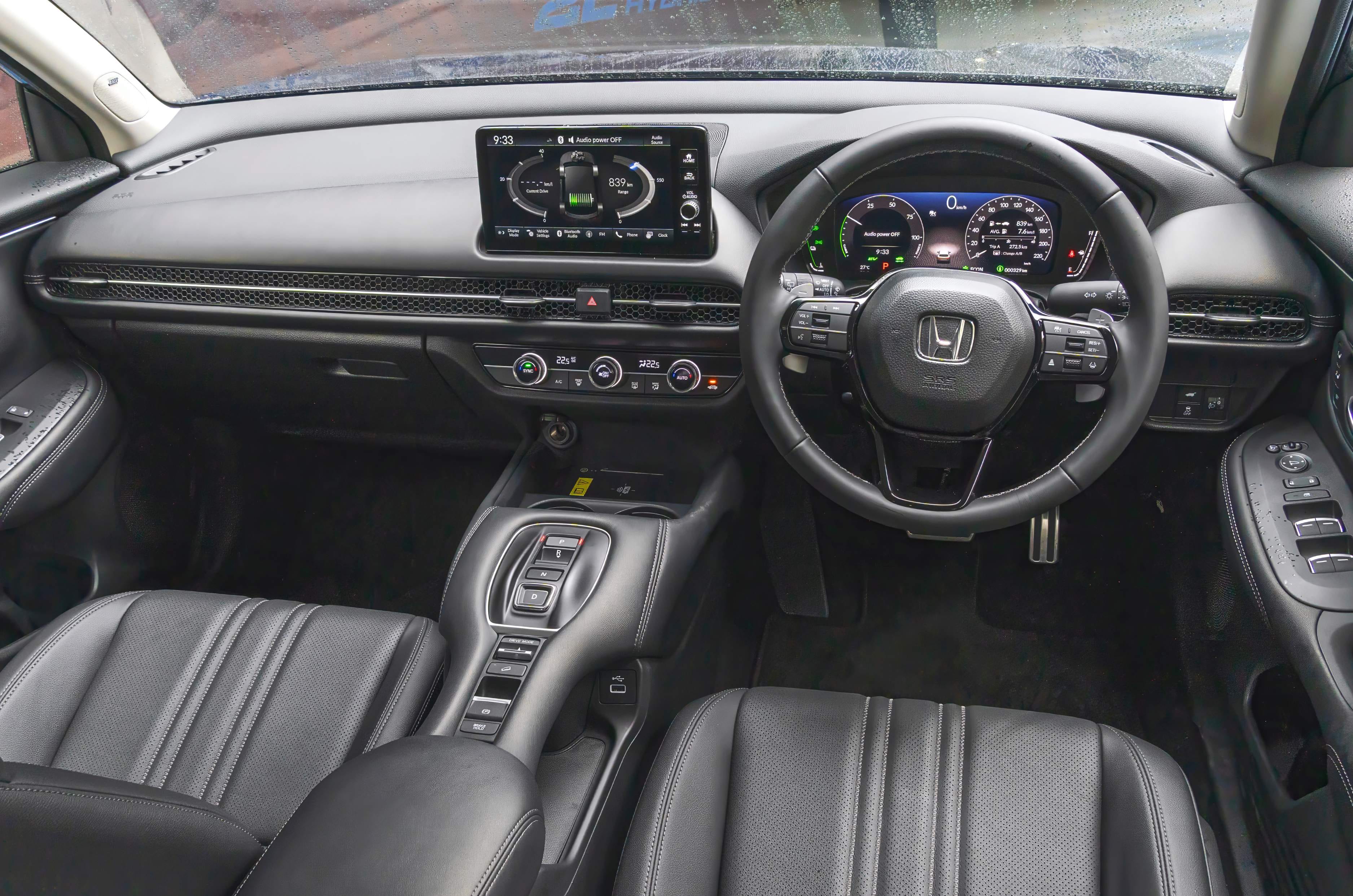
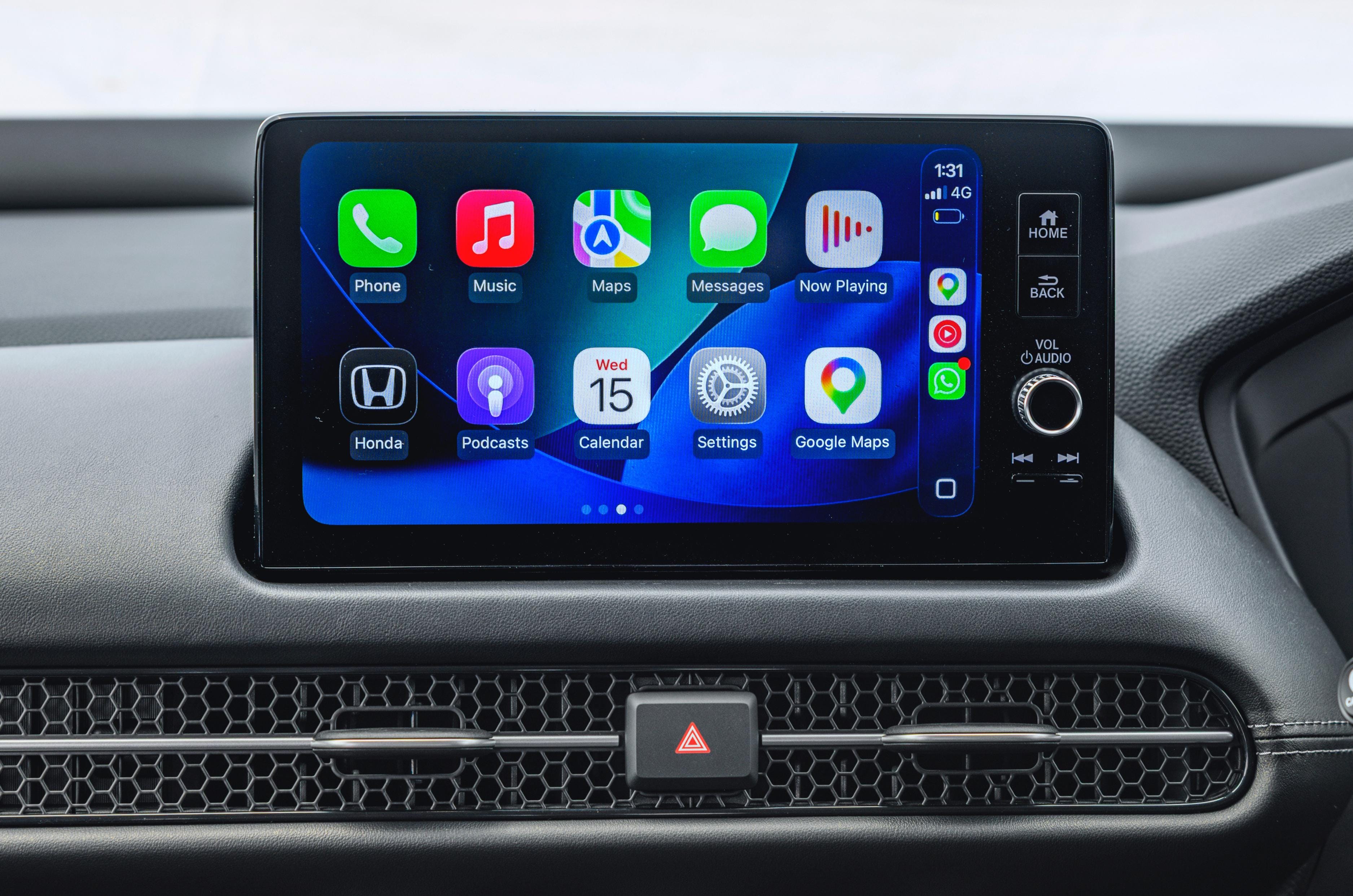
The interior of the ZR-V is typically Honda, which means its practical, comfy and well-finished. There’s plenty of soft touch materials around and I like that the dashboard is low-set which enables a great view out. A 9-inch touchscreen sits on top of the dash, and though it’s nice that it gets physical controls, the size and the UI leaves more to be desired by today’s standards. There’s a honeycomb grille that runs the width of the dash, separated by a silver trim piece which does look premium. Lower down you get similar physical AC controls like on the Honda City with rotary knobs that are satisfying to operate. There’s more buttons on the centre console too, for the drive modes, parking brake and in place of a traditional drive selector.
Cabin is practical and well-finished with plenty of soft-touch materials around
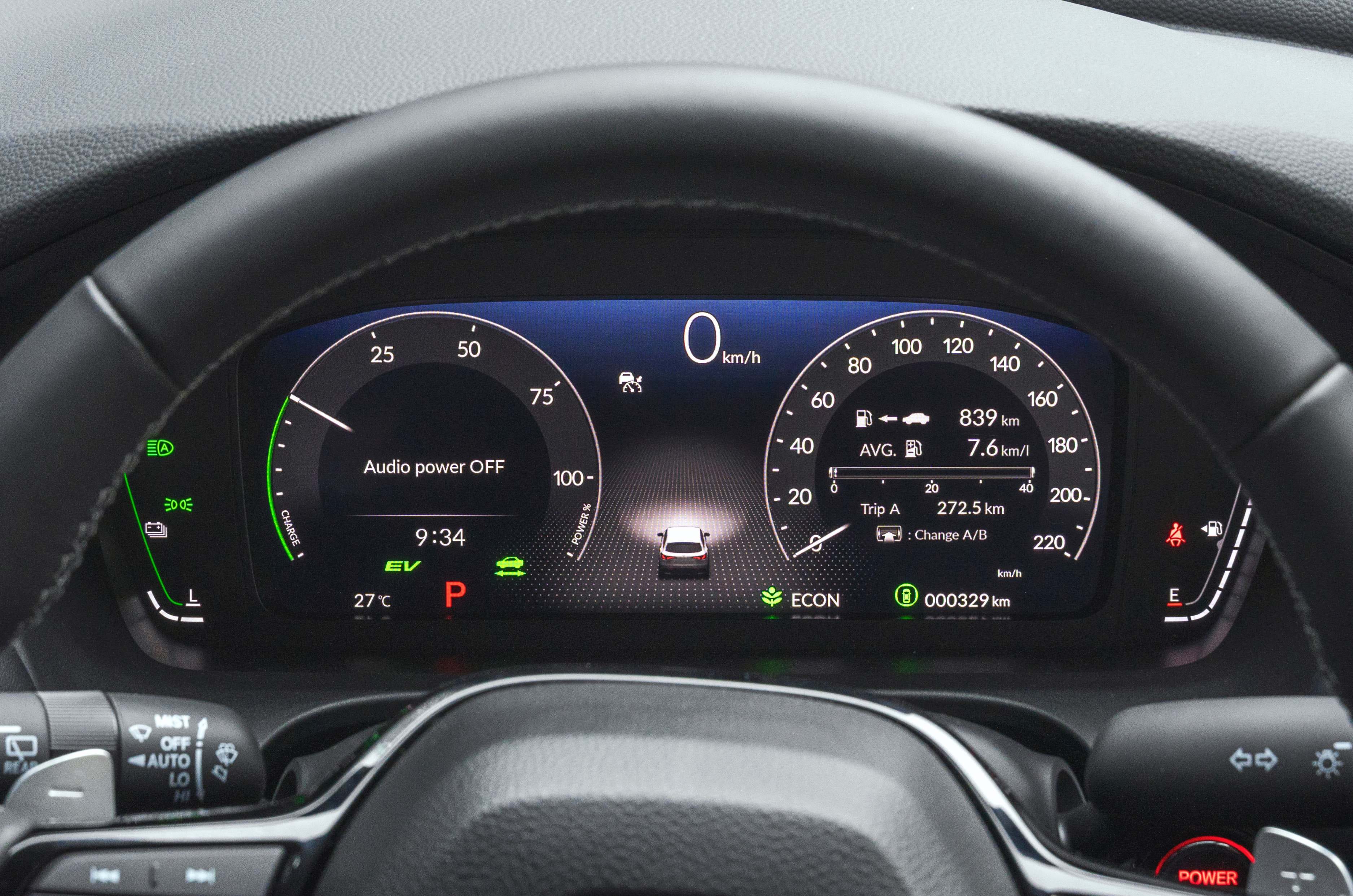
Then you get a well-executed, fully digital instrument cluster that’s customisable and shows you all sorts of driving data, the charge status and a flow chart of the powertrain. The front seats are well-padded, comfortable and feel premium too. Storage spaces are also well thought out, with a decent sized glove box and door bins, storage under the centre armrest and in the centre console.
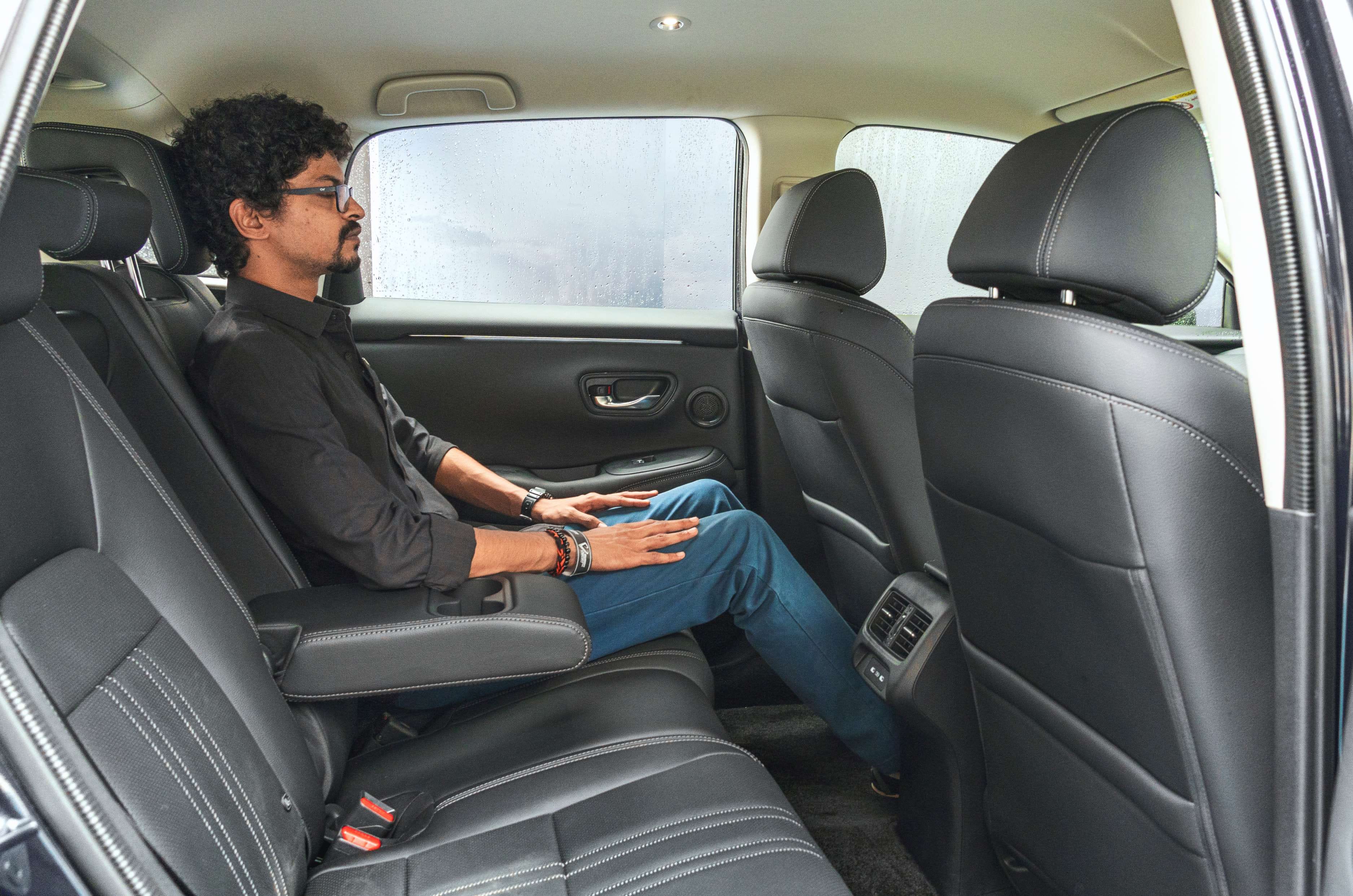
Rear is comfy and spacious enough but low seat results in a bit of a knees-up seating position; also misses sun blinds.
Getting into the rear is quite easy thanks to the low set seat, even though the sill is on the higher side. Once in, you’ll find it a comfy place to be with enough space for three passengers and plenty of legroom. However, the low set seat results in a slightly knees-up seating position, there are no sunblinds and the tapering roofline means people over 6 feet will find the headroom to be tight. As for features here, there’s dedicated AC vents, type C charging ports, a fold-down armrest with cupholders and three-point seatbelts and adjustable headrests for all three passengers.
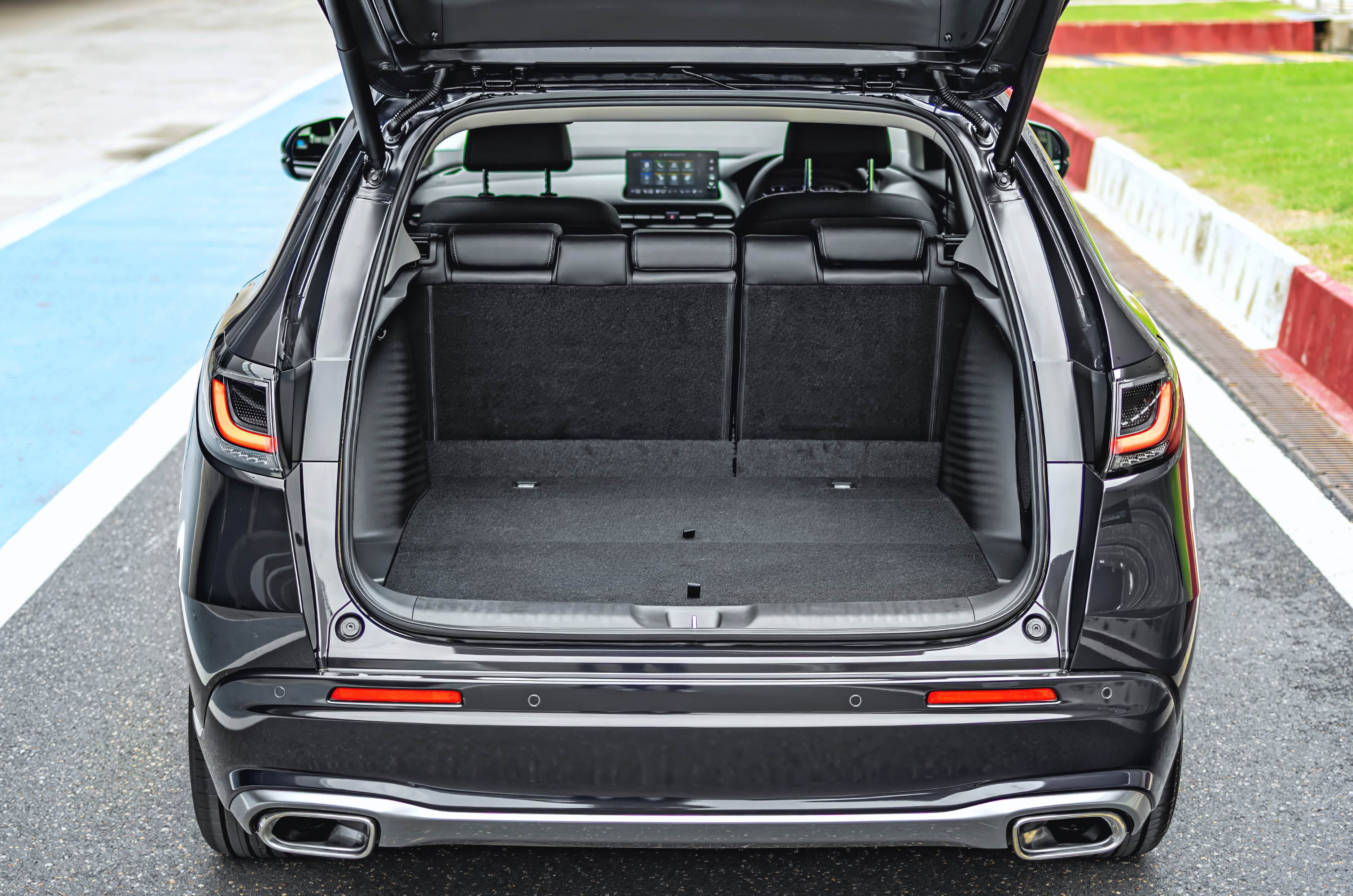
The boot is large too and the loading lip isn’t that high. With the rear seats folded down in a 60:40 split, you can fit in 1313 litres of cargo. There’s no underboot storage though as that’s taken up by the hybrid battery and there’s no spare tyre either.
Honda ZR-V Features and Safety – 6/10
As for features, the ZR-V gets a 10.25-inch digital cluster, a 9-inch touchscreen with Android Auto and Apple CarPlay, a 12-speaker Bose audio system, dual-zone climate control, leatherette upholstery, 8-way powered driver’s seat with memory, 4-way powered front passenger seat, wireless charger, electric tailgate with gesture, electric parking brake and ambient lighting. However, some important features like a panoramic sunroof and heated, ventilated and massaging front seats are missing, all of which could have been offered at the expected price point.
9-inch screen is small by today’s standards but its bright and features physical controls
As for the safety kit, you get a 360-degree parking camera (it is quite low res though), 8 airbags, tyre pressure monitor, hill-start and hill-descent assist, traction control and ISOFIX child seat mounts. It even packs in Level 2 ADAS tech which brings in autonomous emergency braking, lane keep assist, blind spot monitor, adaptive cruise control and more. On the whole though, the ZR-V is under equipped for its expected price.
10.25-inch digital cluster is crisp and shows plenty of info.
Honda ZR-V Value for Money – 5/10
So that’s a brief drive impression of the Honda ZR-V for you. We’ll have to reserve our definitive verdict till we get to experience the SUV out in the real-world and subject it to our performance and fuel efficiency tests.
The ZR-v is being brought as a CBU import from its home market in Japan
The Honda ZR-V has its downsides like the missing features, its relatively compact footprint and lack of road presence and being a full import it’s going to be expensive as well, around the Rs 45 lakh mark. But it has a practical, comfy and well-finished interior and comes with a smooth and seamless hybrid powertrain that is quick and promises to be efficient as well. As such, the Honda ZR-V is going to be a niche product, so it remains to be seen as to how many takers would it find in our market.
ई-कॉमर्स प्लेटफॉर्म Flipkart और उसपर मौजूद सेलर से जुड़े एक केस में उपभोक्ता अदालत ने सख्त रुख अपनाया है। आईफोन का ऑर्डर देने वाले एक ग्राहक को फोन की जगह बियर्ड ग्रोथ ऑयल डिलिवर करने के मामले में अदालत ने ई-कॉमर्स प्लेटफॉर्म और सेलर को ग्राहक को 1.11 लाख रुपये से अधिक की रकम लौटाने के साथ-साथ 70000 हजार रुपये का मुआवजा और मुकदमे का खर्च देने का आदेश दिया है। पीटीआई की रिपोर्ट के मुताबिक जिला उपभोक्ता विवाद निवारण आयोग, अतिरिक्त डीसीएफ, मुंबई ने इस महीने की शुरुआत में दिए अपने आदेश में स्पष्ट कहा कि बिना किसी प्रभावी राहत के ग्राहक की शिकायतों को बार-बार बंद करना अनुचित व्यापार व्यवहार है।
क्या है पूरा मामला?
मुंबई के पवई इलाके के रहने वाले शिकायतकर्ता ने 22 अप्रैल 2023 को फ्लिपकार्ट के जरिए नो-कॉस्ट ईएमआई स्कीम पर 111793 रुपये में Apple iPhone 14 Pro (128 GB) खरीदा था। अलग से ऑर्डर किया गया चार्जर और कवर तो बायर को डिलीवर हो गया लेकिन अगले दिन डिलीवर हुए मुख्य पैकेज में महंगे स्मार्टफोन की जगह बियर्ड ग्रोथ ऑयल (दाढ़ी बढ़ाने वाला तेल) और पैकिंग सामग्री निकली। शिकायतकर्ता ने अप्रैल से मई 2023 के बीच फ्लिपकार्ट के कस्टमर सपोर्ट से बार-बार संपर्क किया और सभी जरूरी दस्तावेज जमा किए लेकिन कंपनी इस मुद्दे को सुलझाने में नाकाम रही। इसके बजाय कोई रिफंड या रिप्लेसमेंट दिए बिना शिकायत को बार-बार रिजॉल्व्ड मार्क करके बंद कर दिया गया।
उपभोक्ता आयोग ने क्या सुनाया फैसला?
उपभोक्ता आयोग ने कहा कि ऑनलाइन प्लेटफॉर्म के जरिए आवश्यक भुगतान करके ऑर्डर दिया गया था। इसलिए फ्लिपकार्ट की यह जिम्मेदारी थी कि वह यह सुनिश्चित करे कि उपभोक्ता को वही उत्पाद मिले जो उसने ऑर्डर किया है और उपभोक्ता की शिकायतों के निवारण के लिए एक प्रभावी तंत्र प्रदान करे। फोरम ने कहा कि एक ई-कॉमर्स संस्था बिक्री को सुगम बनाने के बाद खुद को सौदे से अलग नहीं कर सकती, विशेष रूप से तब जब उपभोक्ता तुरंत रिपोर्ट करता है कि पूरी तरह से अलग उत्पाद डिलीवर किया गया है।
शिकायत की जांच करने, गलत तरीके से डिलीवर किए गए पार्सल को वापस लेने, रिप्लेसमेंट या रिफंड देने में विफलता और राहत दिए बिना शिकायत को बार-बार बंद करना स्पष्ट रूप से सेवा में कमी और अनुचित व्यापार व्यवहार है। कोर्ट ने पाया कि सेलर इंटरनेशनल वैल्यू रिटेल प्राइवेट लिमिटेड भी बार-बार अनुरोध के बावजूद उत्पाद डिलीवर करने और शिकायत को ठीक करने में विफल रहा। इसलिए प्लेटफॉर्म और सेलर दोनों संयुक्त और अलग-अलग रूप से ग्राहक को हुए नुकसान और असुविधा के लिए जिम्मेदार हैं।
कितना देना होगा मुआवजा?
उपभोक्ता फोरम ने फ्लिपकार्ट और सेलर को 45 दिनों के भीतर भुगतान करने का निर्देश दिया है। मूल राशि 111793 रुपये का रिफंड जिस पर 22 अप्रैल 2023 से वास्तविक भुगतान तक 9 प्रतिशत प्रति वर्ष की दर से ब्याज देना होगा। मानसिक पीड़ा और उत्पीड़न के मुआवजे के रूप में ₹50000, अदालती कार्यवाही के खर्च के रूप में ₹20,000 शिकायतकर्ता को रिफंड करने पड़ेंगे।
Apple India को मिली राहत
मामले में एक पक्ष ऐपल इंडिया ने भी लिखित बयान दाखिल कर तर्क दिया था कि शिकायत कानून या तथ्यों के आधार पर पोषणीय नहीं है और इसे खारिज किया जाना चाहिए। ऐपल इंडिया ने कहा कि वह स्वतंत्र डीलरों और रीसेलर्स के माध्यम से ऐपल ब्रांडेड उत्पादों को बेचने के व्यवसाय में लगी हुई है और ग्राहकों के प्रति ऐसे स्वतंत्र विक्रेताओं के दायित्वों पर उसका कोई नियंत्रण नहीं है। आयोग ने उनके तर्क को स्वीकार करते हुए ऐपल इंडिया के खिलाफ शिकायत को खारिज कर दिया। आयोग ने नोट किया कि विवाद केवल एक गलत उत्पाद की डिलीवरी से संबंधित था और निर्माता को पैकेजिंग, डिस्पैच या सेवा में कथित कमी से जोड़ने वाला कोई सबूत नहीं था।
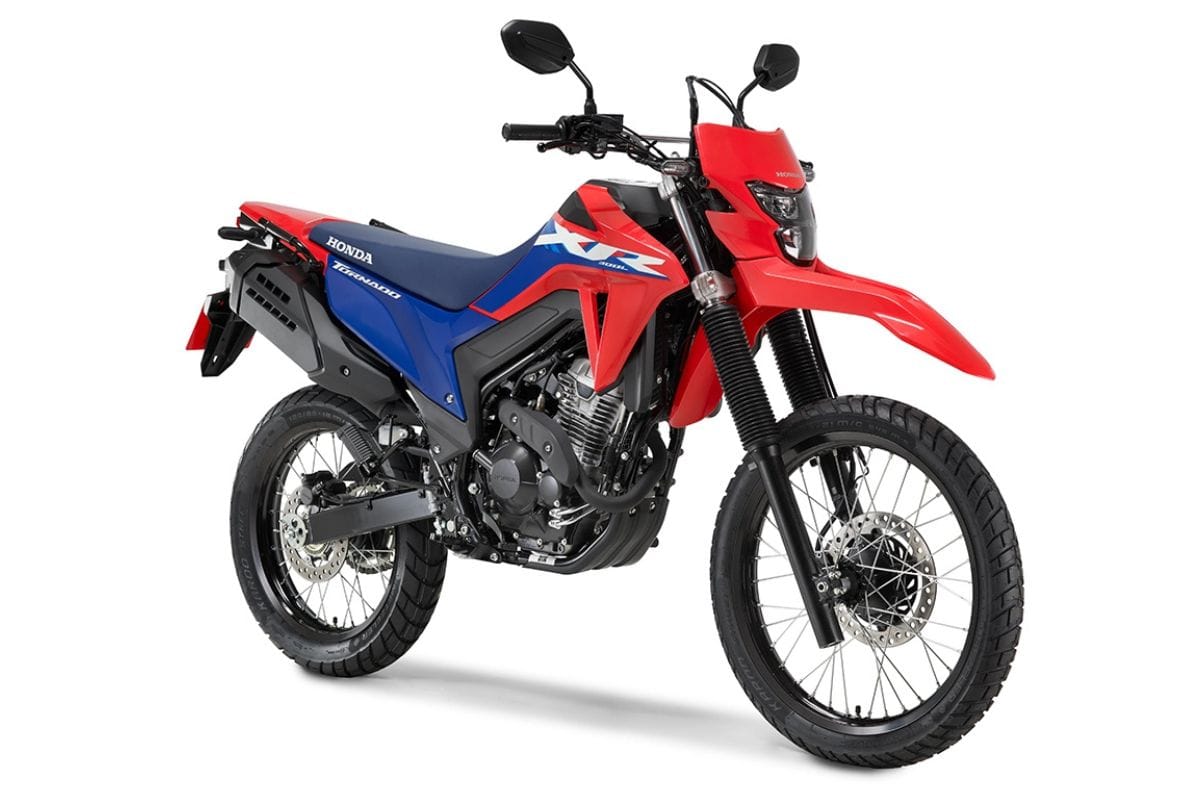
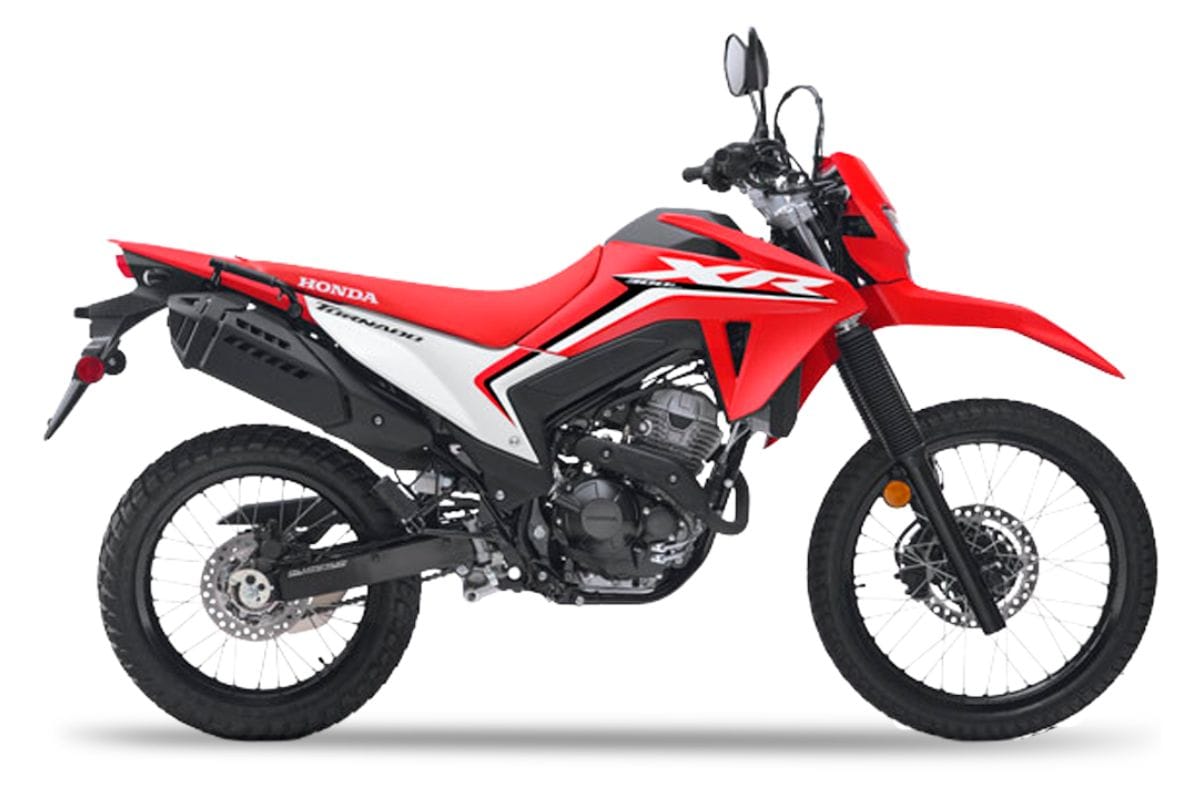
Honda has showcased two new small-capacity dual-sport motorcycles – the XR300L and XR300 Rally – that will be manufactured here in India. Interestingly, both motorcycles are powered by the same 293.5cc air/oil cooled single-cylinder engine that currently does duty in the CB300F.
XR300L targets dual-sport and trail riding
XR300 Rally adds touring-focused equipment and Honda RoadSync
Both appear to share the CB300F’s 293.5cc engine
Honda XR300L unveiled:
Honda says the XR300L has been developed as a lightweight dual-sport motorcycle intended to balance off-road capability with everyday usability. It is aimed at riders looking to tackle trails, gravel roads and other off-road terrain while remaining practical enough for daily commuting. Long-travel suspension, a gas-charged Pro-Link rear monoshock, switchable dual-channel ABS and Honda Selectable Torque Control (HSTC) are among its headline features. Honda says the XR300L is for the new riders that are looking to or have just started venturing into off-road riding.
XR300 Rally unveiled:
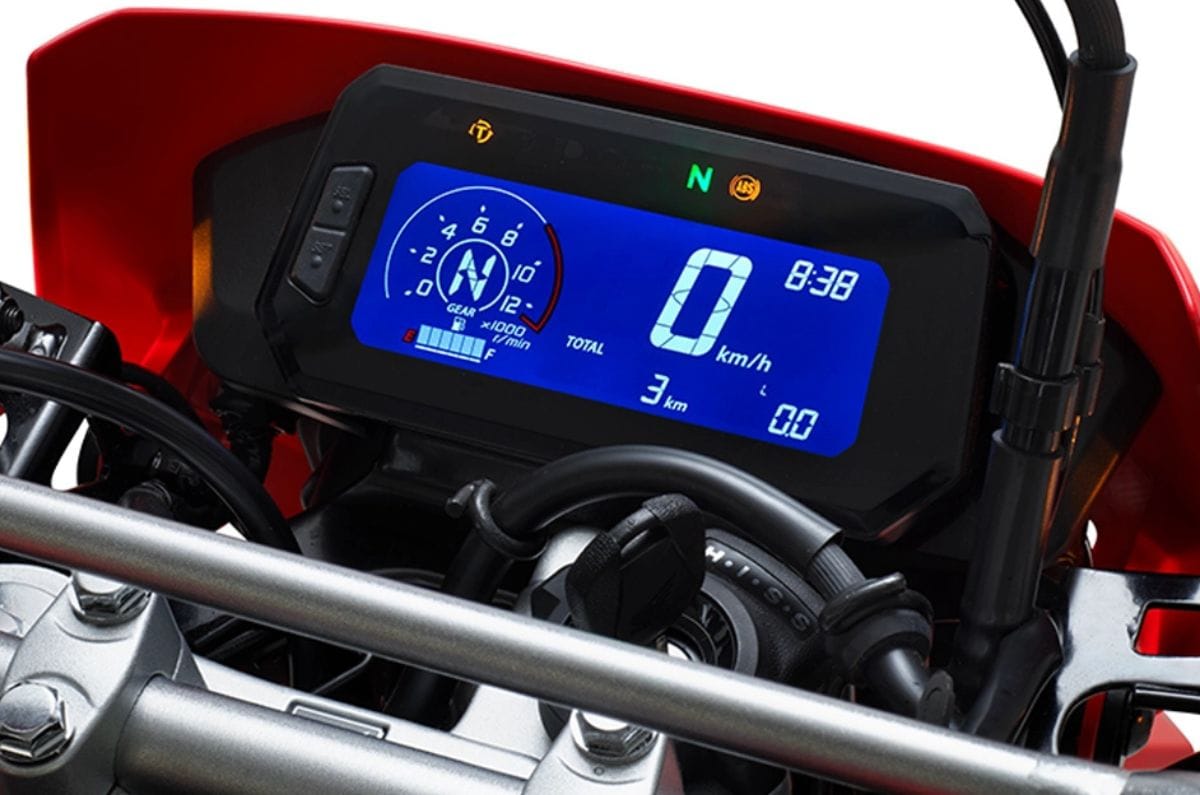
The more touring-oriented XR300 Rally builds on the same platform but adds equipment aimed at longer-distance mixed-terrain riding. Honda describes it as a motorcycle inspired by its Dakar-winning rally machines, with greater wind protection, touring comfort and rally-inspired styling. The Rally also gets Honda RoadSync smartphone connectivity.
Both motorcycles feature front and rear disc brakes with switchable dual-channel ABS, while the shared 293.5cc engine strongly suggests they are based on the CB300F platform. Honda has not disclosed output figures, but if the engine largely remains unchanged, it is likely to produce figures similar to the CB300F’s 24.5hp and 25.9Nm.
The arrival of these motorcycles would give Honda a proper entry into the growing lightweight adventure and dual-sport segment in India that has gained momentum in recent years. The XR300L would rival trail-focused offerings, while the XR300 Rally would cater to riders seeking an affordable adventure tourer with greater long-distance capability.
Honda XR300 duo launch details:
Honda has yet to announce launch timelines or market availability for either motorcycle and are expected to do so, later in the day. We will update this story when we have further details.
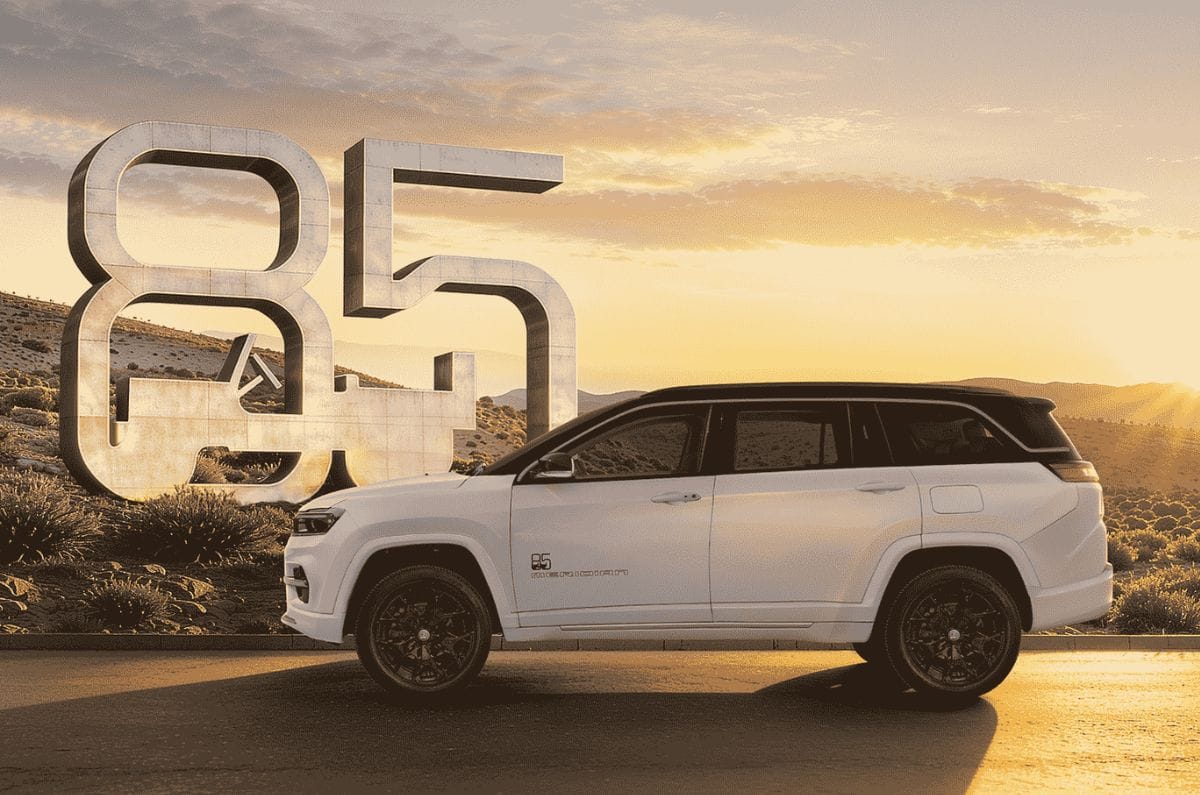
Jeep India has launched an 85th Anniversary Edition of the Meridian SUV to commemorate 85 years of the Jeep brand. Priced at Rs 36.05 lakh (ex-showroom), only 85 units of this special edition model will be built, and it brings some exclusive detailing on the outside and some feature enhancements on the inside. Bookings are already underway at Jeep dealerships and on the Jeep India website.
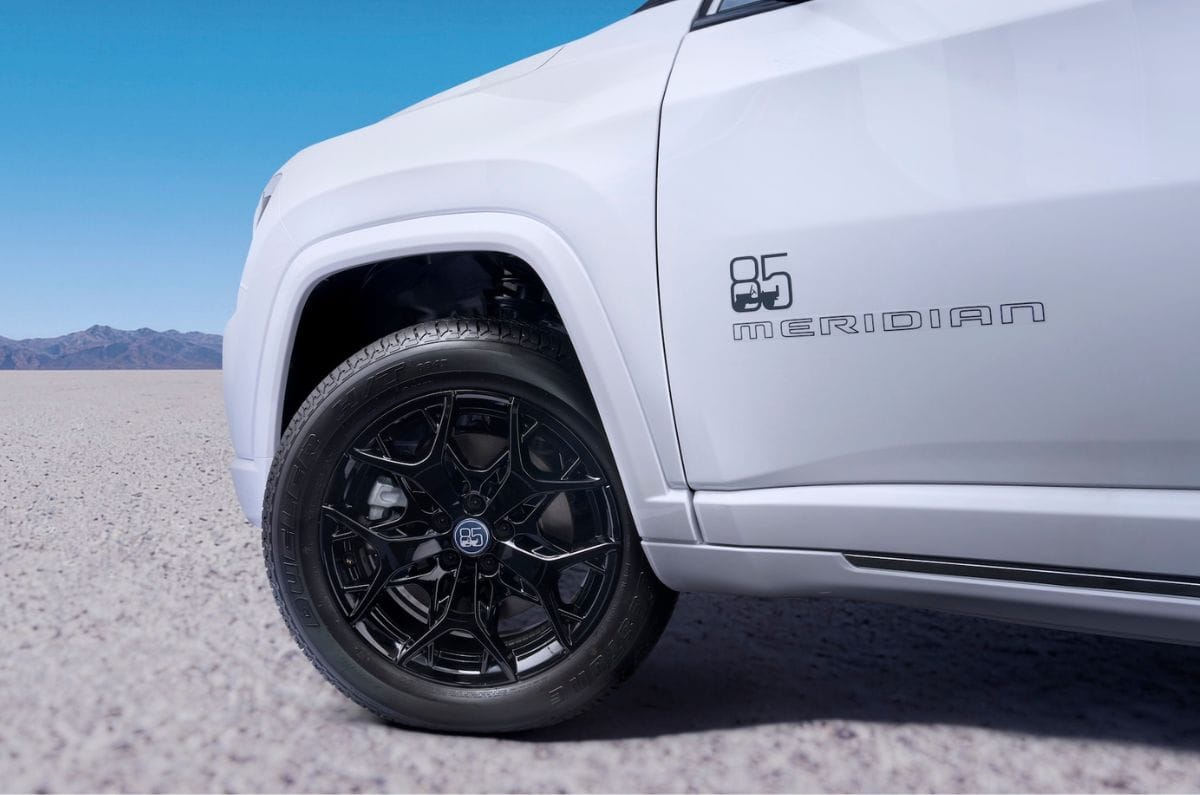
Special Edition SUV gets 85th Anniversary Edition decals on the outside
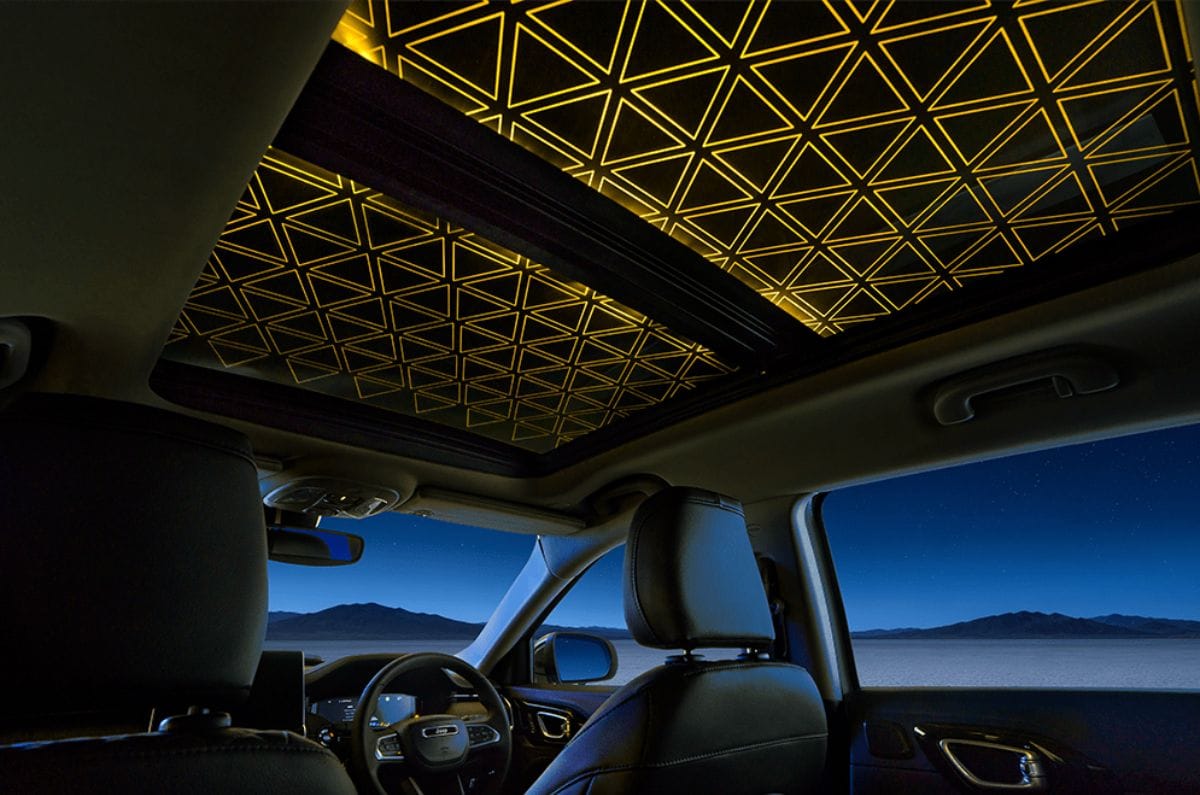
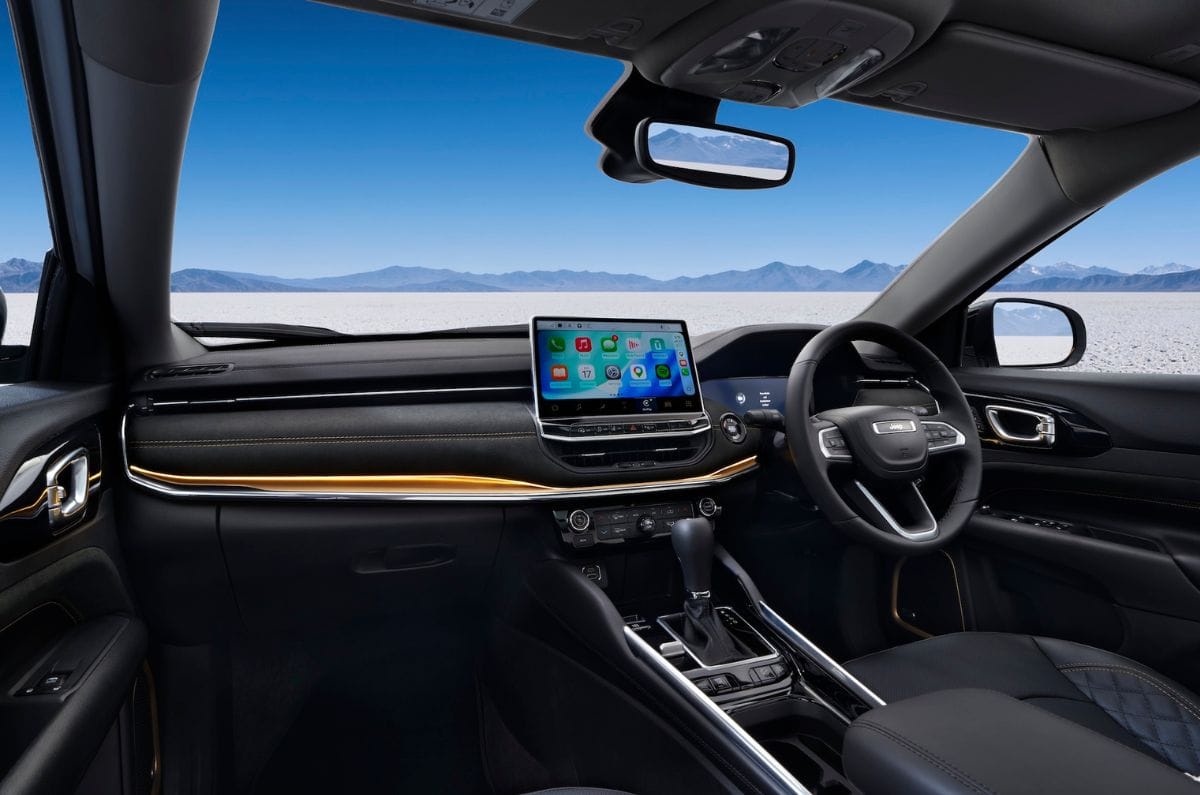
Interior gets new golden accents and ambient lighting package
Based on top-spec Overland trim
Jeep Meridian 85th Anniversary Edition: what’s new?
This limited-run Meridian is marked out by 85th Anniversary Edition decals on the front doors and tail gate, and it also gets a unique logo for the wheel center caps. It can be had in a choice of five exterior paint shades, namely Pearl White, Techno Metallic Green, Velvet Red, Grigio Magnesio and Brilliant Black. Additionally, the wheels also get a gloss black finish.
On the inside, there’s a new gold accent on the dashboard as well as an ambient lighting package. Customers can further personalize their vehicles through specially curated 85th Anniversary AXS Packages, offering accessories such as carpet floor mats, anniversary decal kits, ambient lighting and an illumination package for the panoramic sunroof.
Jeep has also introduced the CARA AI assistant on the Meridian with this limited-run model. CARA is Stellantis’ voice assistant, first introduced with the Citroen Basalt in India. It can be used for navigation, weather information, calls, music and selected vehicle-related functions through voice commands in 52 languages, including major Indian languages. CARA has also been made available on the regular Limited (O) trim of the Meridian, which is now priced at Rs 30.45 lakh – up by Rs 45,000 from before.
Jeep Meridian 85th Anniversary Edition:powertrain and specs
The Meridian 85th Anniversary Edition is based on the top Overland trim of the SUV. It remains mechanically unchanged, which means under the hood is a 170hp/350Nm 2.0-litre diesel engine mated to a 9-speed automatic gearbox. It can also be specced with an optional 4×4 system.
Compared to the regular Overland trim, the Meridian 85th Anniversary Edition commands a premium of Rs 44,000. Given the very limited production run, prospective buyers may want to hurry.