LEAP India IPO Details: वैश्विक निवेश फर्म केकेआर के स्वामित्व वाली लॉजिस्टिक्स और सप्लाई चैन कंपनी लीप इंडिया का ₹2,480 करोड़ का आईपीओ कल यानी 7 अगस्त 2026 से आम निवेशकों के सबस्क्रिप्शन के लिए खुलने जा रहा है।
इश्यू खुलने से ठीक पहले अनलिस्टेड मार्केट में कंपनी के शेयर प्रीमियम पर ट्रेड कर रहे है। अगर आप भी इस आईपीओ में पैसा लगाने की सोच रहे हैं, तो दांव लगाने से पहले प्राइस बैंड, जीएमपी और इश्यू से जुड़ी सभी महत्वपूर्ण डिटेल्स जान लें।
LEAP India IPO की प्रमुख डिटेल्स
प्राइस बैंड: ₹151 से ₹159 प्रति शेयर
फ्रेश इश्यू : ₹480 करोड़ मूल्य के 3.02 करोड़ नए शेयर जारी किए जाएंगे।
इस इश्यू का बुक-रनिंग लीड मैनेजर जेएम फाइनेंशियल लिमिटेड है, जबकि एमयूएफजी इनटाइम इंडिया प्राइवेट लिमिटेड को इसका रजिस्ट्रार नियुक्त किया गया है।
क्या काम करती है LEAP India
2013 में स्थापित लीप इंडिया एंटरप्राइजेज को एसेट-पूलिंग और सप्लाई चैन सॉल्यूशन मुहैया कराती है। कंपनी ई-कॉमर्स, एफएमसीजी, ऑटोमोटिव और कंज्यूमर ड्यूरेबल्स सेक्टर की कंपनियों को इक्विपमेंट पूलिंग, रिटर्नेबल पैकेजिंग, इन्वेंट्री मैनेजमेंट, ट्रांसपोर्टेशन और रिपेयर एंड मेंटेनेंस जैसी सेवाएं देती है। साल 2023 में वैश्विक निवेश फर्म KKR ने अपनी एशिया इंफ्रास्ट्रक्चर रणनीति के तहत कंपनी में बहुमत हिस्सेदारी हासिल की थी।
ग्रे मार्केट में कैसा है माहौल?
इश्यू खुलने से पहले अनलिस्टेड मार्केट ट्रैकर्स Investorgain और IPO Watch के मुताबिक, 6 अगस्त की सुबह लीप इंडिया का शेयर अपने अपर प्राइस बैंड से लगभग 3.5% के ग्रे मार्केट प्रीमियम (GMP) पर ट्रेड कर रहा था। हालांकि जीएमपी अनऑफिशियल मार्केट का सेंटिमेंट दिखाता है और लिस्टिंग गेन की कोई गारंटी नहीं देता है।
Disclaimer: यहां मुहैया जानकारी सिर्फ सूचना के लिए दी जा रही है। यहां बताना जरूरी है कि मार्केट में निवेश बाजार जोखिमों के अधीन है। निवेशक के तौर पर पैसा लगाने से पहले हमेशा एक्सपर्ट से सलाह लें। मनीकंट्रोल की तरफ से किसी को भी पैसा लगाने की यहां कभी भी सलाह नहीं दी जाती है।
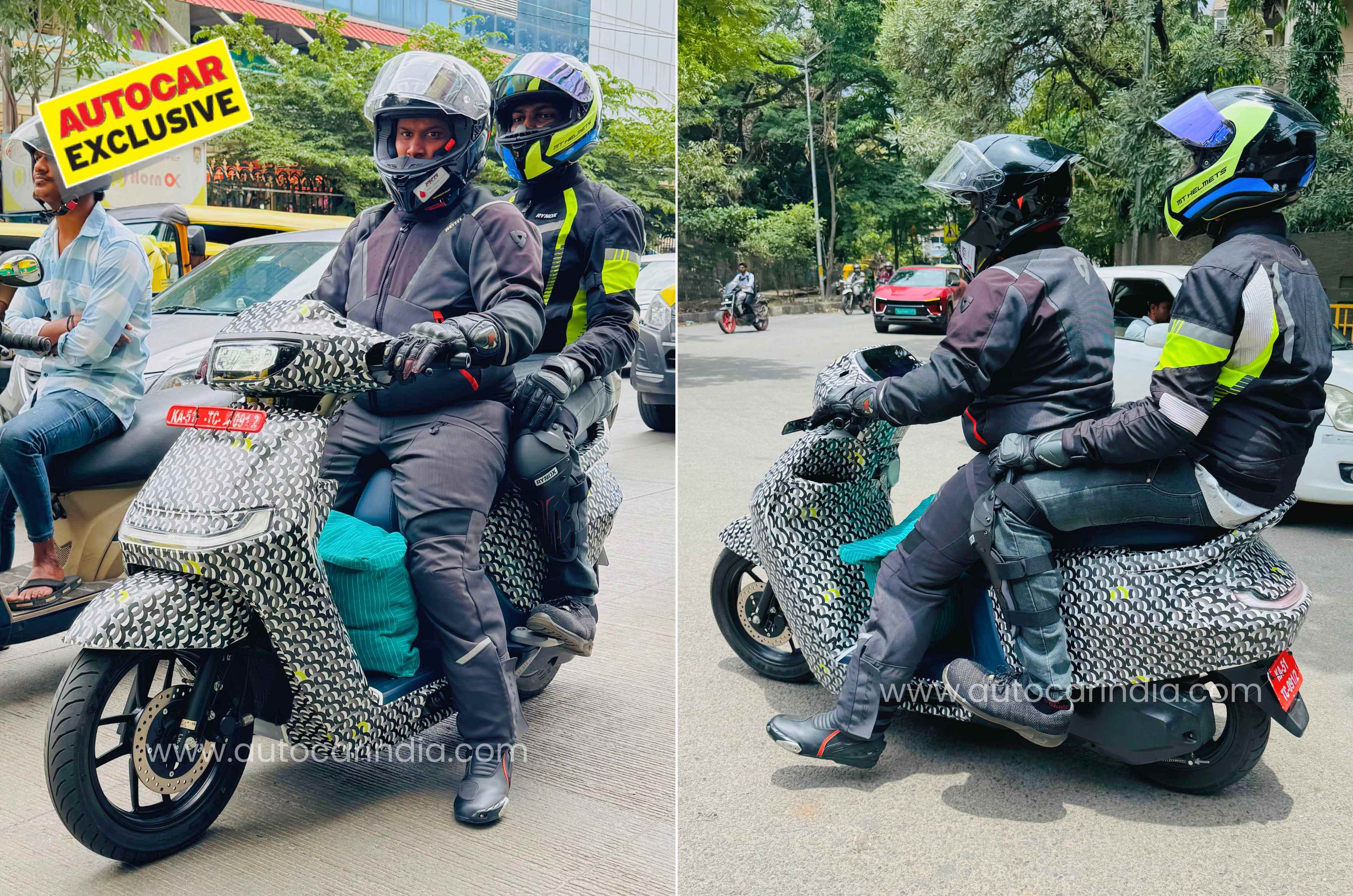
Just yesterday, we learnt that Ather’s upcoming electric scooter will be called the Konarc. Now, the scooter has been spotted testing in Bengaluru ahead of its official launch on August 29.
Ather Konarc launch on August 29
Scooter to feature a swingarm-mounted motor
Will rival TVS iQube and Bajaj Chetak
Ather Konarc: What we can expect
New platform promises easier servicing and longer service intervals
As we’ve learnt from previous sightings of the upcoming scooter, including the assembly line image shared by CEO Tarun Mehta, the latest spy shots once again confirm that the Konarc’s design closely follows the EL01 concept that Ather showcased at Community Day 2025.
The scooter features a handlebar-mounted headlight and a wide LED daytime running light (DRL) on the front apron, giving it a more conventional scooter look compared to the sharper, more angular 450 range. The images also confirm that the Konarc gets an all-new fully digital instrument cluster, but we’ll have to wait until the end of the month to see what features it will offer. That said, Ather has built a reputation for impressive tech, so we’d expect the Konarc to continue that trend.
We also know that the scooter will feature a 14-inch front wheel and a 12-inch rear wheel, with a front disc brake and rear drum brake. The test mule further confirms the use of a swingarm-mounted motor, although its specifications are yet to be revealed. Lastly, the images show that the scooter could comfortably accommodate two adults and features a spacious floorboard.
Expected to be priced in the range of Rs 1 lakh to Rs 1.25 lakh, the Konarc will slot below the Rizta as Ather’s most affordable scooter. At that price point, it will take on the entry-level variants of the TVS iQube and Bajaj Chetak, which currently lead the electric scooter sales charts in India.
GOBARdhan Scheme Explained: प्रधानमंत्री नरेंद्र मोदी की अध्यक्षता में केंद्रीय मंत्रिमंडल ने कंप्रेस्ड बायोगैस (CBG) के लिए भारत की नेशनल यूनिफाइड स्कीम गोबरधन (GOBARdhan – National Circular Bioenergy Scheme) को हरी झंडी दे दी है। सरकार ने इस ऐतिहासिक राष्ट्रीय योजना के लिए 23731 करोड़ रुपये का बजट मंजूर किया है। इसका मुख्य उद्देश्य देश में जैविक संसाधनों यानी पराली, गोबर और दूसरे कचरे को साफ-सुथरी ऊर्जा, ग्रामीण समृद्धि और आर्थिक विकास में बदलना है। इस योजना को वित्त वर्ष 2026-27 से वित्त वर्ष 2035-36 तक लागू किया जाएगा। योजनी के माध्यम से ग्रामीण इलाके के कचरे को ही भारत की तरक्की का ईंधन बनाने की तैयार है। सरकार की कोशिश रहेगी कि इस स्कीम से गांव क्लीन एनर्जी प्रोडकेशन के केंद्र बनेंगे और देश की ऊर्जा सुरक्षा में सीधे भागीदार बनेंगे।
Union Cabinet has approved #GOBARdhan, the National Circular Bioenergy Scheme, with a total outlay of Rs.23,731 crore
The scheme has six pillars: Assured offtake, price stability, capex support, pipeline infra development, credit guarantee, and challenge fund for… pic.twitter.com/8QUTVqW3Py
गोवर्धन योजना देश के किसानों और ग्रामीण अर्थव्यवस्था के लिए कमाई के नए मौके लेकर आएगी। अक्सर किसानों के लिए सिरदर्द बनने वाली पराली (फसल अवशेष) और मवेशियों का गोबर अब उनकी अतिरिक्त कमाई का जरिया बनेंगे। इस योजना के माध्यम से किसान, ग्रामीण उद्यमी और सहकारी समितियां (कोऑपरेटिव्स) कचरा और बायोमास जुटाने का काम करके अच्छी इनकम कर सकेंगे। इसके अलावा सीबीजी प्लांट में गैस बनने के बाद निकलने वाली जैविक खाद के उत्पादन और बिक्री से भी किसानों को बड़ा फायदा होगा। इससे न सिर्फ केमिकल फर्टिलाइजर्स पर उनकी निर्भरता और खेती की लागत घटेगी बल्कि जैविक खाद बेचकर कमाई का एक नया रास्ता भी खुलेगा।
GOBARdhan: India’s National Unified Scheme for Compressed Biogas
#Cabinet approves GOBARdhan, the National Circular Bioenergy Scheme
Total Financial outlay: ₹ 23,731 crore
The Scheme will be implemented from FY 2026-27 to FY 2035-36 and will establish Compressed… pic.twitter.com/tKiKKxsFRc
सरकार की इस पहल का लक्ष्य देश में घरेलू स्तर पर CBG के उत्पादन को करीब 10 गुना तक बढ़ाना है। इससे भारत की आयातित फॉसिल फ्यूल (पेट्रोल-डीजल और गैस) पर निर्भरता कम होगी और ऊर्जा सुरक्षा बेहद मजबूत होगी। केमिकली सीबीजी पूरी तरह से प्राकृतिक गैस जैसी होती है और इसे मौजूदा गैस पाइपलाइन नेटवर्क में आसानी से मिलाया जा सकता है। यह योजना पूरे सीबीजी सेक्टर को एक राष्ट्रीय स्तर पर ले जाने के लिए तैयार की गई है।
गोवर्धन योजना के 6 मेन ग्रोथ इंजन क्या हैं?
योजना को सुचारू और सफल बनाने के लिए सरकार ने छह मेन ग्रोथ इंजन निर्धारित किए हैं-
1 – निश्चित सीबीजी खरीद की गारंटी: उत्पादकों को अपनी तैयार गैस बेचने में कोई दिक्कत न आए इसके लिए सिटी गैस डिस्ट्रीब्यूशन (CGD) कंपनियों के माध्यम से खरीद तय की गई है। सीएनजी और पीएनजी में सीबीजी मिलावट का लक्ष्य 2026-27 में 3 प्रतिशत, 2027-28 में 4 प्रतिशत और 2028-29 से 5 प्रतिशत रखा गया है।
2 – स्टेबल प्राइसिंग प्रेमवर्क: सीबीजी उत्पादकों को आर्थिक स्थिरता देने के लिए 2110 रुपये प्रति MMBTU की दर से एक स्थिर मूल्य तय किया गया है। यह कम से कम 10 साल के लिए फिक्स रहेगा। इससे उत्पादकों को लंबे समय तक बेहतर कमाई की गारंटी मिलेगी।
3 – कैपिटल असिस्टेंस: नए सीबीजी प्रोजेक्ट्स को हर दिन 1 टन क्षमता (1 TPD) पर 2 करोड़ रुपये तक की सरकारी मदद दी जाएगी। यह मदद प्लांट की मशीनों के अलावा बायोमास इकट्ठा करने और जैविक खाद बनाने से जुड़े उपकरणों के लिए भी मिलेगी।
4 – पाइपलाइन इंफ्रास्ट्रक्चर का विकास: सीबीजी प्लांटों को मुख्य गैस पाइपलाइनों और सिटी गैस नेटवर्क से जोड़ने के लिए इंफ्रास्ट्रक्चर तैयार किया जाएगा। इससे ट्रांसपोर्टेशन का खर्च घटेगा और बिक्री आसान होगी।
5 – क्रेडिट गारंटी सपोर्ट: एमएसएमई, महिला उद्यमियों और नए डेवलपर्स को बैंकों से आसानी से सस्ता लोन दिलाने के लिए एक विशेष क्रेडिट गारंटी मैकेनिज्म बनाया गया है।
6- इकोसिस्टम चैलेंज फंड: जिला स्तर पर योजना को बेहतर ढंग से लागू करने, कचरा इकट्ठा करने के इंफ्रास्ट्रक्चर को मजबूत करने और नई तकनीक को अपनाने के लिए यह फंड बनाया गया है।
पर्यावरण संरक्षण और आत्मनिर्भर भारत की ओर कदम
पिछले कुछ सालों में सतत (SATAT) पहल और दूसरी योजनाओं के तहत देश में 200 से अधिक सीबीजी प्लांट स्थापित किए जा चुके हैं। अब नई यूनिफाइड ‘गोवर्धन’ योजना पेट्रोलियम और प्राकृतिक गैस मंत्रालय द्वारा संचालित की जाएगी। इससे फैसले जल्दी होंगे और निवेशकों का भरोसा बढ़ेगा। यह योजना वैज्ञानिक तरीके से कचरा प्रबंधन करके ग्रीनहाउस गैसों के उत्सर्जन को कम करेगी। सरकार का दावा है कि कृषि अवशेषों, गोबर और नगरपालिका के जैविक कचरे का सही इस्तेमाल करके यह योजना वेस्ट-टू-वेल्थ और आत्मनिर्भर भारत के सपने को साकार करने में अहम भूमिका निभाएगी
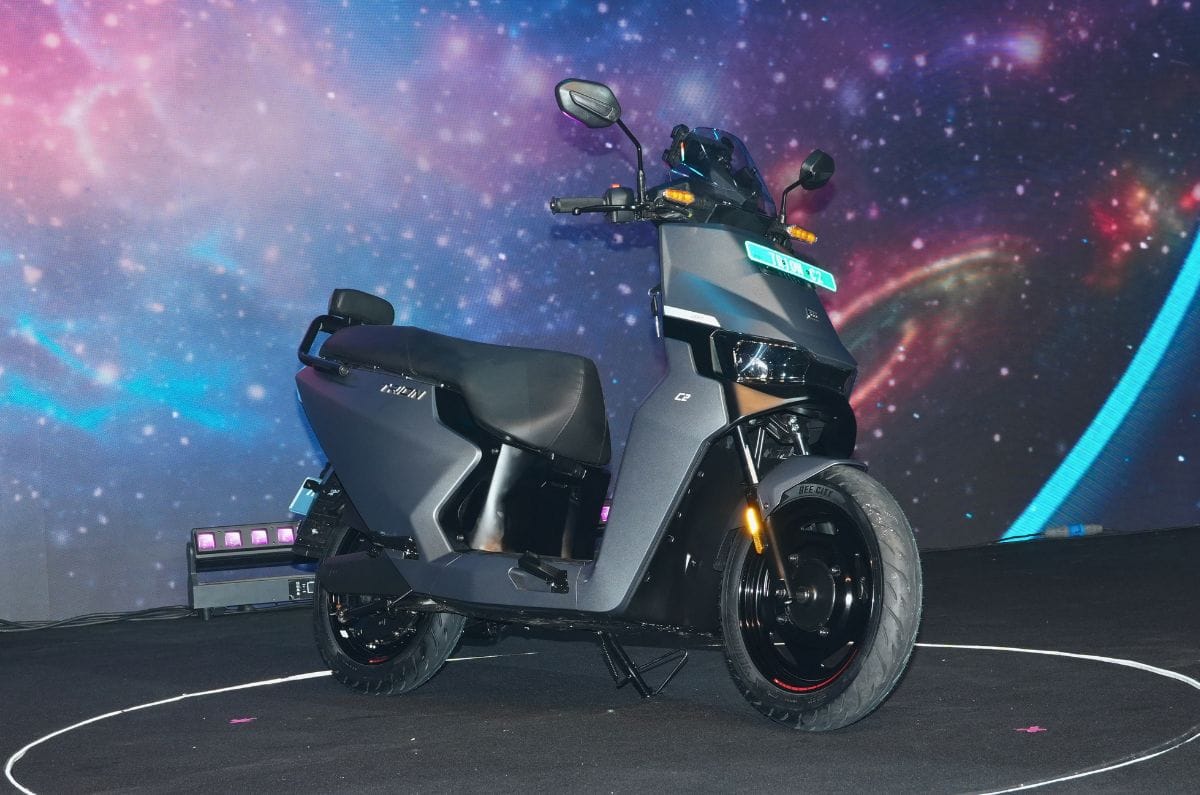
Bengaluru-based electric mobility startup E3 Electric.AI has launched its first electric scooter, the Trion, at an introductory price of Rs 1 lakh (ex-showroom, Bengaluru). The new electric scooter is available in three variants – C1, C1x and C2 – and the company is positioning AI-based predictive features and a modular platform as its key differentiators.
Trion range starts at Rs 1 lakh
Available with 2.3kWh and 3kWh LFP batteries
Top-spec C2 has an 82kph claimed top speed
E3 Trion battery, range and performance
The C1x has a claimed IDC range of 165km
The entry-level Trion C1 uses a removable 2.3kWh LFP battery, while the C1x and C2 get larger, fixed 3kWh LFP units. All three variants use a PMSM hub motor, although E3 has yet to disclose detailed motor output figures.
E3 claims an IDC range of 165km for the C1x. The range figure for the C1 hasn’t been revealed yet. Meanwhile, the range-topping C2 has a claimed top speed of 82kph and can accelerate from 0-40kph in 6 seconds. The C1 and C1x have Eco and Power riding modes, while the C2 adds a Sport mode.
The Trion rides on 14-inch wheels, which are larger than those on most electric scooters currently on sale in India. E3 also says the scooter offers up to 52 litres of combined storage across its underseat compartment, floorboard and glovebox. However, just the underseat storage hasn’t been disclosed.
E3 Trion features
Its connected suite includes predictive diagnostics, navigation and remote vehicle functions
E3 describes the Trion as India’s first AI-powered intelligent electric scooter. Central to this is what the company calls the E3 CommandCenter, which uses vehicle and cloud data to monitor the scooter and provide predictive diagnostics and service alerts.
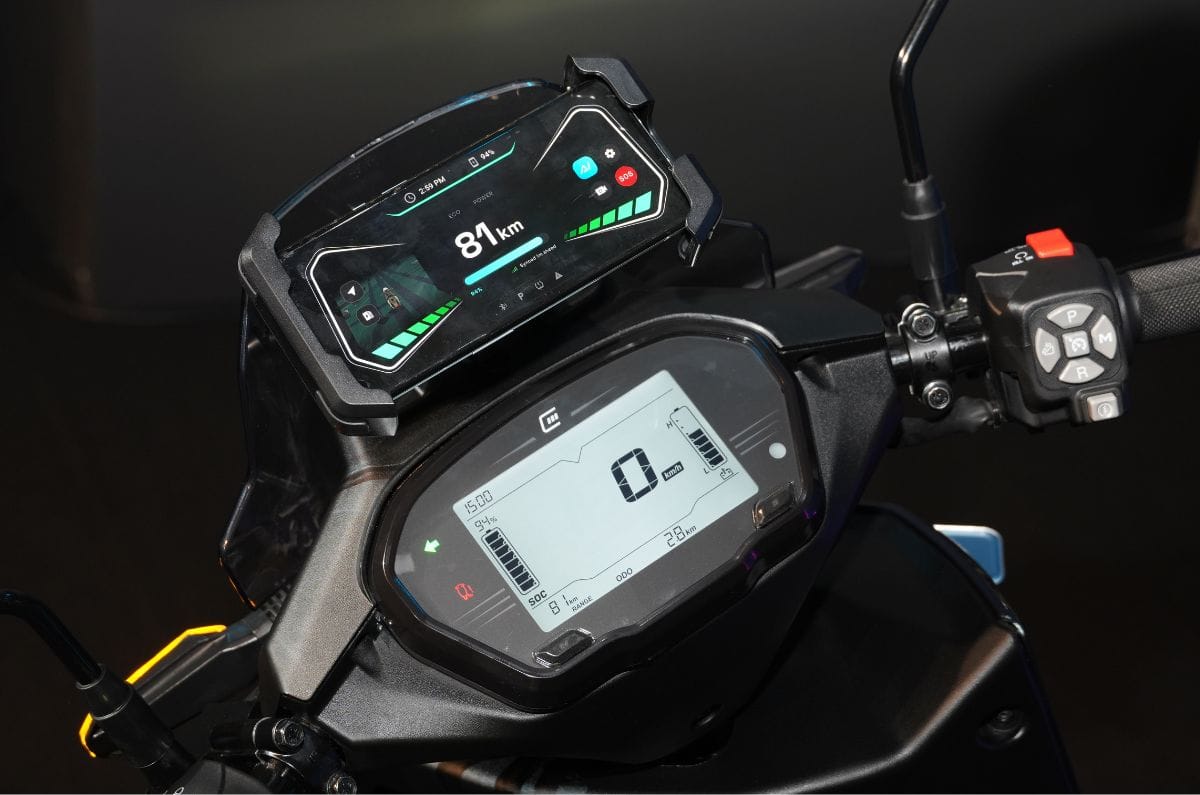
The scooter gets a 5-inch LCD display and connected functionality through the company’s TripSense system, which essentially uses the Rider’s smartphone as a secondary display to provide additional information. Features include navigation, a trip planner with charger locations, remote battery monitoring, vehicle controls, geofencing, SOS assistance and a dashcam. E3 also claims that its AI HealthScan feature can perform vehicle diagnostics in 10 seconds.
The battery system incorporates what E3 calls an AI Digital Twin, which is claimed to provide real-time diagnostics and predictive information about the battery. Both battery options use LFP chemistry.
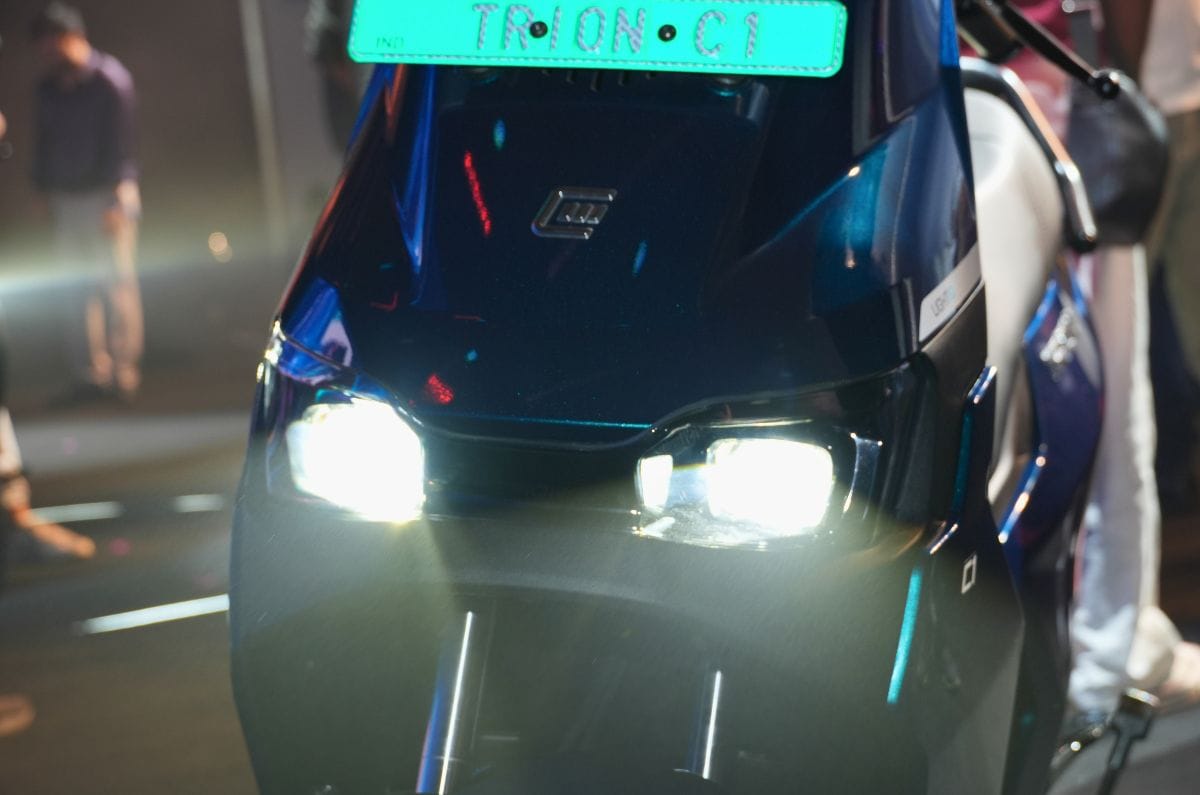
Other equipment includes dual-projector LED headlights, LED tail-lights and IP67-rated weather protection. The Trion is based on E3’s Triaxisframe modular architecture, which has been designed to accommodate different battery configurations and future derivatives.
E3 Trion price, variants and availability
Pre-bookings have opened in Bengaluru, with more markets to follow
The Trion is available in six colours: Solar Red, Misty Green, Graphite Grey, Nova Blue, Teal Blue and Luna White. Accessories include a backrest, helmet, phone holder and pillion footrest.
The E3 Trion C1 has been introduced at Rs 99,999, while the C1x costs Rs 1.10 lakh and the range-topping C2 is priced at Rs 1.20 lakh. All prices are introductory and ex-showroom, Bengaluru.
Pre-bookings have opened in Bengaluru, and E3 says other markets will follow. The company is also offering an extended warranty of up to eight years or 1 lakh kilometres.
Maruti Suzuki is offering discounts across much of its Arena line-up, including the Victoris, Swift, Wagon R, Alto K10, Celerio, S-Presso and Eeco, in August 2026. The highest benefits are available on the Victoris, with savings of up to Rs 1.35 lakh. These offers comprise cash discounts, exchange or scrappage bonuses, loyalty benefits and institutional discounts, depending on the variant.
Disclaimer: Offers may vary by city and are subject to stock availability. Check with your nearest dealer for exact details.
Maruti Victoris discounts in August 2026
Up to Rs 1.35 lakh off
The Victoris strong hybrid attracts the highest benefits this month, with total discounts of up to Rs 1.35 lakh. These include a Rs 20,000 cash discount, an exchange bonus of up to Rs 75,000 or a Rs 45,000 scrappage bonus, a Rs 30,000 loyalty upgrade bonus and a Rs 10,000 institutional discount.
Petrol and CNG variants, meanwhile, are available with benefits of up to Rs 85,000. Both are eligible for an exchange bonus of up to Rs 55,000, while customers opting for the scrappage scheme can avail of benefits of up to Rs 25,000 on petrol variants and Rs 20,000 on CNG variants. These variants also receive a Rs 20,000 loyalty upgrade bonus and a Rs 10,000 institutional discount.
Priced between Rs 10.50 lakh and Rs 19.99 lakh, the Victoris rivals the Hyundai Creta, Kia Seltos, Tata Sierra and Honda Elevate.
Maruti Wagon R discounts in August 2026
Up to Rs 52,500 off
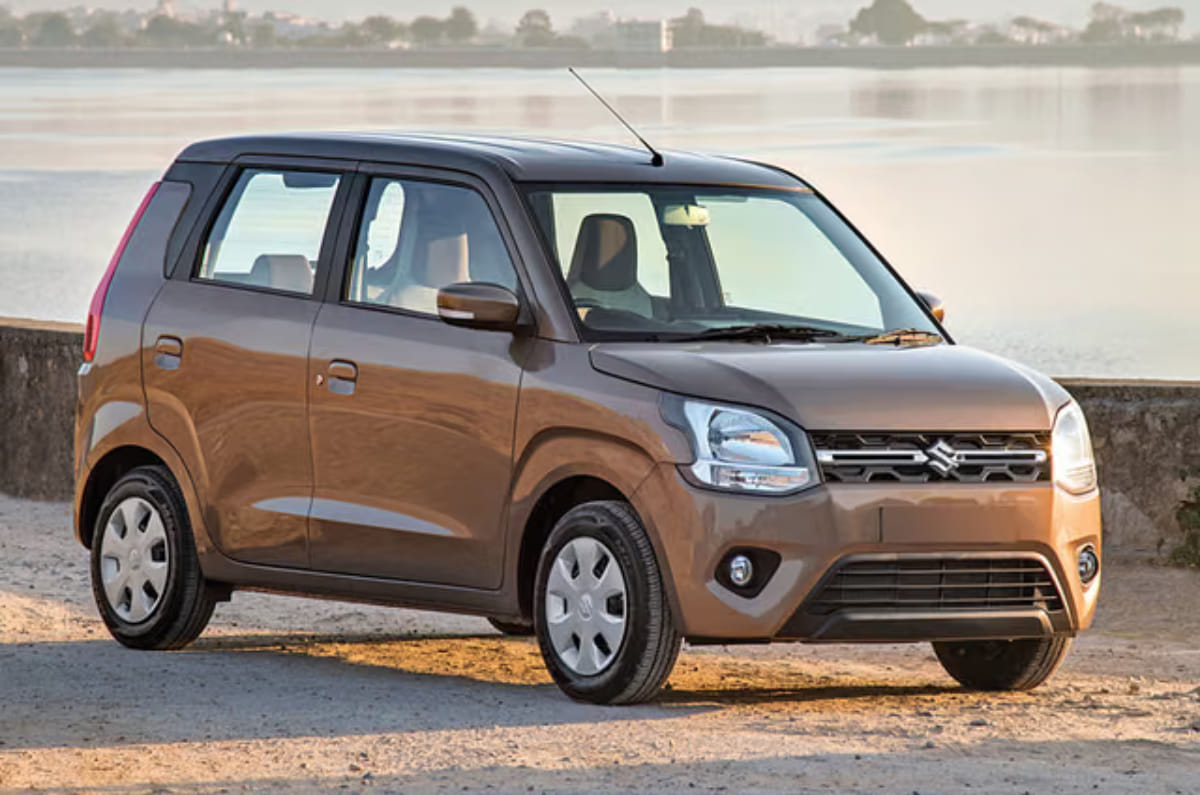
The Wagon R is available with benefits of up to Rs 52,500 across its petrol and CNG range. Buyers can avail of a Rs 25,000 cash discount, an exchange bonus of up to Rs 25,000 or a Rs 10,000 scrappage bonus, along with a Rs 2,500 institutional discount.
Priced between Rs 4.99 lakh and Rs 7.24 lakh, the Wagon R rivals the Tata Tiago and Citroen C3.
Maruti Alto K10 discounts in August 2026
Up to Rs 52,500 off
In the Alto K10 line-up, the LXi petrol variant gets the highest benefits of Rs 52,500, while other petrol variants are available with discounts of up to Rs 42,500. Benefits on CNG variants are capped at Rs 37,500.
Depending on the variant, buyers can avail of a cash discount of up to Rs 25,000, an exchange bonus of up to Rs 25,000 or a Rs 10,000 scrappage bonus, and a Rs 2,500 institutional discount. This rival to the Renault Kwid is priced between Rs 3.70 lakh and Rs 5.45 lakh.
Maruti Celerio discounts in August 2026
Up to Rs 42,500 off
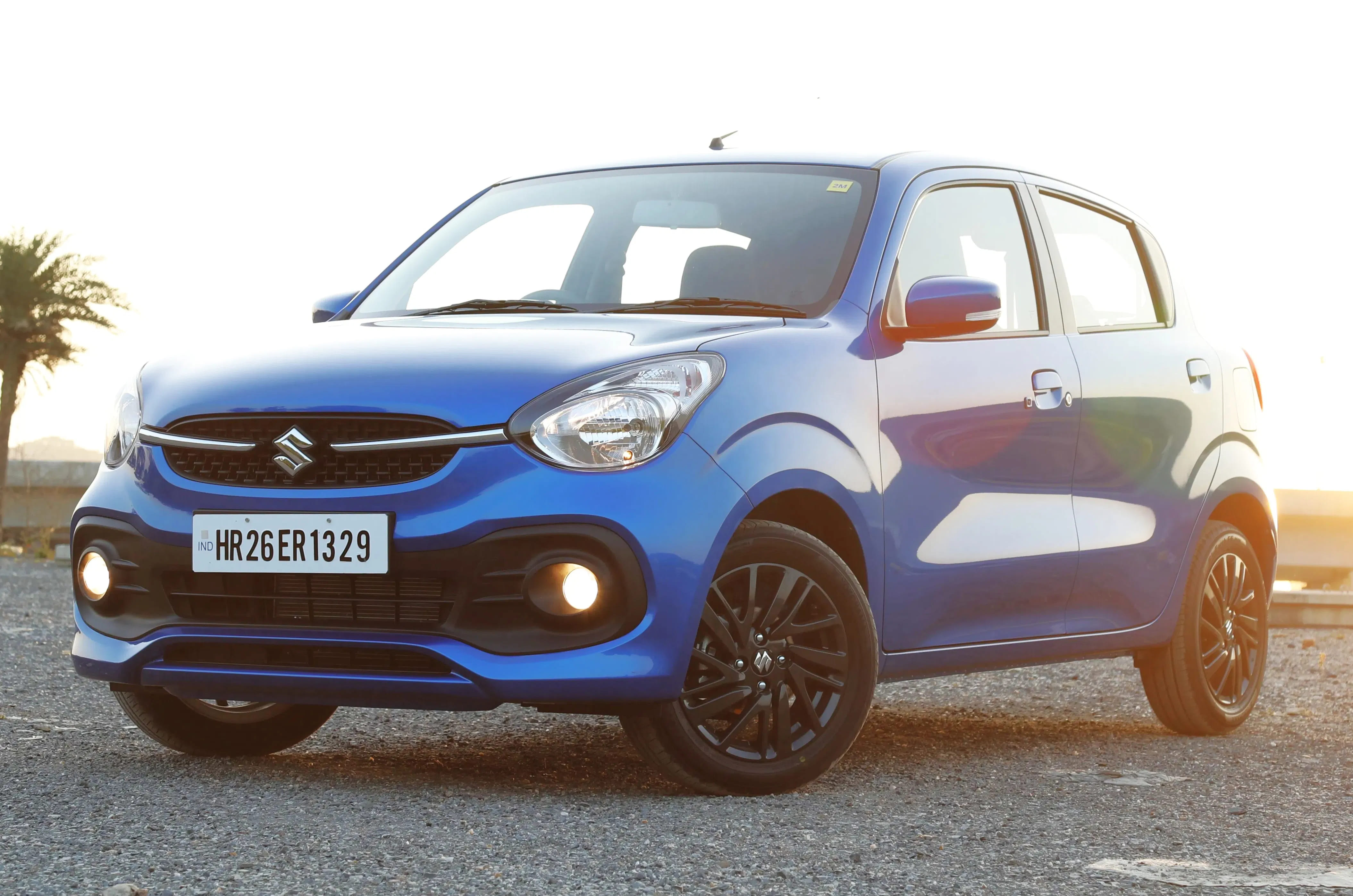
Benefits of up to Rs 42,500 are available across the Celerio range this month. The offer includes a Rs 15,000 cash discount, an exchange bonus of up to Rs 25,000 or a Rs 10,000 scrappage bonus, along with a Rs 2,500 institutional discount. A rival to the Tata Tiago and Renault Kwid, the Celerio has a starting price of Rs 4.70 lakh and costs Rs 6.73 lakh for the top-spec variant.
Maruti Eeco discounts in August 2026
Up to Rs 42,500 off
Petrol variants of the Eeco receive benefits of up to Rs 42,500, while CNG versions are eligible for discounts of up to Rs 32,500. Petrol models get a Rs 15,000 cash discount, whereas CNG variants receive Rs 5,000. Both are offered with an exchange bonus of up to Rs 25,000, along with a Rs 2,500 institutional discount. The Eeco is priced between Rs 5.23 lakh and Rs 6.41 lakh.
Maruti Swift discounts in August 2026
Up to Rs 40,000 off
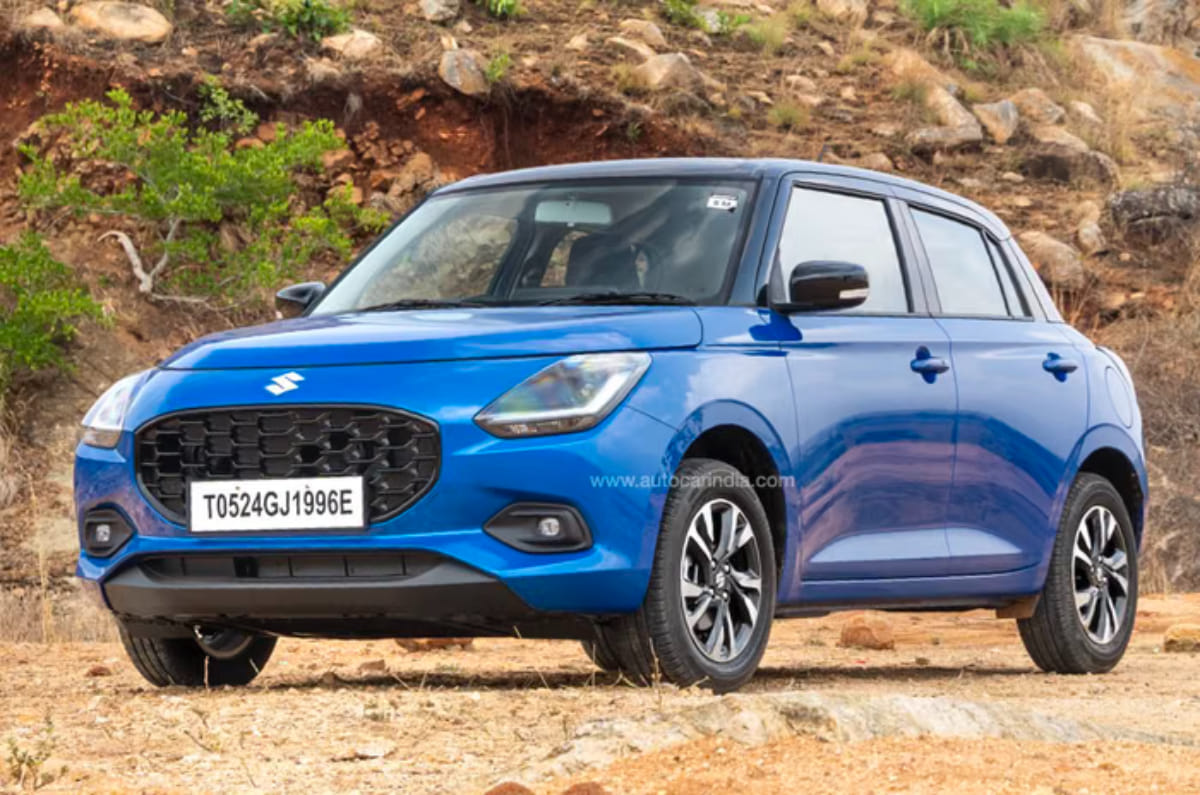
Petrol variants of the Swift are available with benefits of up to Rs 40,000, including a Rs 10,000 cash discount, an exchange bonus of up to Rs 25,000 or a Rs 10,000 scrappage bonus, and a Rs 5,000 institutional discount. CNG variants receive lower benefits of up to Rs 30,000, as they are not eligible for a cash discount this month.
The Swift is priced between Rs 5.79 lakh and Rs 8.69 lakh and rivals the Hyundai Grand i10 Nios and Tata Tiago.
Maruti S-Presso discounts in August 2026
Up to Rs 37,500 off
All variants of the S-Presso are being offered with benefits of up to Rs 37,500. Buyers can avail of a Rs 10,000 cash discount, an exchange bonus of up to Rs 25,000 or a Rs 10,000 scrappage bonus, and a Rs 2,500 institutional discount. Maruti’s most affordable offering currently, the S-Presso is priced from Rs 3.50 lakh to Rs 5.25 lakh and rivals the Renault Kwid and its stablemate Alto K10.
India Weather Weekly Update: देशभर में मानसूनी हवाओं और कई मजबूत वायुमंडलीय प्रणालियों के एक्टिव होने की वजह से कई इलाकों में धुंआधार बारिश हो रही है। इस बीच भारत मौसम विज्ञान विभाग (IMD) ने केरल, तटीय कर्नाटक और दक्षिण आंतरिक कर्नाटक में अगले 2 से 3 दिनों तक भारी से बहुत भारी बारिश होने का पू्र्वानुमान दिया है। मौसम विभाग ने केरल में 6 अगस्त को एक्सट्रीमली हैवी भारी बारिश को लेकर खास चेतावनी जारी की है। इसके अलावा उत्तर-पश्चिम भारत, मध्य भारत, पूर्वी भारत और पूर्वोत्तर राज्यों में पूरे सप्ताह भारी बारिश का सिलसिला जारी रहने का अनुमान है।
बीते 24 घंटों के दौरान देश के कई राज्यों में भीषण बारिश दर्ज की गई है। इस दौरान पूर्वी राजस्थान, बिहार, पश्चिमी उत्तर प्रदेश, मध्य महाराष्ट्र, दक्षिण आंतरिक कर्नाटक, लक्षद्वीप और मिजोरम के अलग-अलग हिस्सों में 12 से 20 सेमी तक बारिश हुई है। गंगातटीय पश्चिम बंगाल, छत्तीसगढ़, झारखंड, ओडिशा, हिमाचल प्रदेश, उत्तराखंड, पूर्वी उत्तर प्रदेश, तटीय कर्नाटक, असम और दिल्ली में 7 से 11 सेमी तक बारिश दर्ज की गई।
देश में सक्रिय मौसम प्रणालियां
मौसम विभाग के मुताबिक अभी में कई मौसमी प्रणालियां एक साथ सक्रिय हैं, जिससे बारिश की गतिविधियों में तेजी आई है। इस समय मानसून ट्रफ रेखा का पश्चिमी सिरा अपनी सामान्य स्थिति से उत्तर की ओर है, जबकि पूर्वी सिरा मध्य समुद्र तल पर अपनी सामान्य स्थिति के पास बना हुआ है। मध्य और ऊपरी क्षोभमंडलीय पछुआ हवाओं के रूप में एक पश्चिमी विक्षोभ ट्रफ रेखा के रूप में करीब 73° पूर्व देशांतर और 29° उत्तर अक्षांश के उत्तर में सक्रिय है।
निचले क्षोभमंडलीय स्तर पर एक ऊपरी हवा का चक्रवातीय परिसंचरण दक्षिण-पश्चिम उत्तर प्रदेश पर बना हुआ है जबकि दूसरा निचले व मध्य क्षोभमंडलीय स्तर पर दक्षिण-पूर्व उत्तर प्रदेश के ऊपर मौजूद है। इसके साथ ही उत्तर-पश्चिम बंगाल की खाड़ी और उससे सटे उत्तरी ओडिशा व गंगातटीय पश्चिम बंगाल के तटों के पास निचले क्षोभमंडल में एक अन्य चक्रवातीय परिसंचरण सक्रिय है। वहीं दक्षिण गंगातटीय पश्चिम बंगाल और बांग्लादेश के ऊपर भी एक चक्रवातीय परिसंचरण बना हुआ है।
उत्तर-पश्चिम भारत: दिल्ली, यूपी, राजस्थान और पहाड़ों का हाल
उत्तर-पश्चिम भारत के राज्यों में मानसूनी बादल जमकर बरस रहे हैं। हिमाचल प्रदेश और उत्तराखंड में 6 से 12 अगस्त के दौरान कई जगहों पर भारी बारिश का अनुमान है। उत्तराखंड, पश्चिमी उत्तर प्रदेश और पूर्वी उत्तर प्रदेश में 6 अगस्त को कुछ स्थानों पर भारी से बहुत भारी बारिश होने की संभावना है। दिल्ली-एनसीआर, हरियाणा, चंडीगढ़ और पंजाब में 6 और 7 अगस्त को कई जगहों पर भारी बारिश का अलर्ट है। उत्तर प्रदेश की बात करें तो पश्चिमी उत्तर प्रदेश में 9 और 10 अगस्त को तथा पूर्वी उत्तर प्रदेश में 7 से 9 अगस्त तक भारी बारिश की संभावना है।
पहाड़ी क्षेत्रों में जम्मू-कश्मीर, लद्दाख में 6 अगस्त और 9 से 12 अगस्त के दौरान व्यापक बारिश और 9 से 12 अगस्त के बीच भारी बारिश दर्ज की जा सकती है। पूर्वी राजस्थान में 6 से 9 अगस्त के दौरान बहुत भारी बारिश की संभावना जताई गई है जबकि 10 और 11 अगस्त को भारी बारिश हो सकती है। वहीं पश्चिमी राजस्थान में 8 से 10 अगस्त के दौरान भारी बारिश होने का अनुमान है। उत्तराखंड में 6 से 12 अगस्त तक गरज-चमक और बिजली गिरने का अलर्ट भी जारी किया गया है।
मध्य भारत: मध्य प्रदेश, छत्तीसगढ़ और विदर्भ में बारिश का अलर्ट
मध्य भारत के राज्यों में मानसूनी गति में तेजी देखी जा रही है। मध्य प्रदेश में भारी से बहुत भारी बारिश का अनुमान जताया गया है। पश्चिमी मध्य प्रदेश में 6 अगस्त को बहुत भारी बारिश हो सकती है जबकि 7 से 11 अगस्त तक भारी बारिश जारी रहने की संभावना है। पूर्वी मध्य प्रदेश में 6 अगस्त और 8 से 10 अगस्त तक भारी बारिश होगी जबकि 7 अगस्त को बहुत भारी बारिश का अलर्ट दिया गया है।
छत्तीसगढ़ में 6 और 7 अगस्त और 11 और 12 अगस्त को व्यापक बारिश और 6-7 अगस्त को भारी बारिश होने का अनुमान है। विदर्भ में 6 से 10 अगस्त तक बारिश होगी। मौसम विभाग ने विदर्भ में 6 अगस्त को तथा छत्तीसगढ़ में 6 से 10 अगस्त के बीच गरज-चमक के साथ बिजली गिरने की चेतावनी दी है।
पूर्वी भारत: बिहार, झारखंड, ओडिशा और बंगाल में बिजली गिरने का खतरा
पूर्वी भारत में साइक्लोनिक एक्टिविटी के असर से बारिश का जोर रहेगा। बिहार में 6 से 9 अगस्त के दौरान कई जगहों पर भारी बारिश हो सकती है। झारखंड में 6 से 8 अगस्त और 10 से 12 अगस्त के दौरान व्यापक बारिश के साथ 6 से 8 अगस्त तक भारी बारिश की आशंका है। गंगातटीय पश्चिम बंगाल में 6 अगस्त को बहुत भारी बारिश होने की संभावना है जबकि 7 और 9 अगस्त को भारी बारिश दर्ज की जा सकती है।
ओडिशा में 6 और 7 अगस्त को बहुत भारी बारिश का अलर्ट है जिसके बाद 8 से 12 अगस्त तक भारी बारिश जारी रहेगी। उप-हिमालयी पश्चिम बंगाल और सिक्किम में 8 तथा 9 अगस्त को भारी बारिश हो सकती है। इसके अलावा अंडमान और निकोबार द्वीप समूह में 6 से 8 अगस्त के दौरान भारी बारिश का अनुमान है। मौसम विभाग ने 6 अगस्त को झारखंड, गंगातटीय पश्चिम बंगाल और ओडिशा में मध्यम से तीव्र आकाशीय बिजली गिरने की चेतावनी जारी की है।
पूर्वोत्तर भारत: असम, मेघालय और नागालैंड में भारी से बहुत भारी बारिश
पूर्वोत्तर राज्यों में मानसूनी गतिविधियां काफी मजबूत बनी हुई हैं। नागालैंड, मणिपुर, मिजोरम और त्रिपुरा में 6 अगस्त को अलग-अलग स्थानों पर बहुत भारी बारिश होने की संभावना है जबकि 7 से 12 अगस्त के दौरान भारी बारिश जारी रहेगी। असम और मेघालय में 6 से 12 अगस्त तक भारी बारिश का दौर जारी रहेगा, जिसमें 6-7 अगस्त और 12 अगस्त को व्यापक वर्षा का अनुमान है।
अरुणाचल प्रदेश में 7-8 अगस्त और 11-12 अगस्त को भारी बारिश होने की संभावना है। इसके साथ ही असम, मेघालय, अरुणाचल प्रदेश और नागालैंड, मणिपुर, मिजोरम व त्रिपुरा के इलाकों में 6 से 10 अगस्त के दौरान आंधी-तूफान के साथ आकाशीय बिजली गिरने का अलर्ट दिया गया है।
पश्चिम भारत: कोंकण-गोवा और मध्य महाराष्ट्र में झमाझम बरसेंगे बादल
पश्चिम भारत के तटीय और मैदानी इलाकों में मानसूनी असर दिख रहा है। कोंकण और गोवा में 6 से 12 अगस्त के दौरान व्यापक वर्षा के साथ 6 अगस्त को भारी बारिश का अनुमान है। मध्य महाराष्ट्र में 6 अगस्त को बहुत भारी बारिश की संभावना है जबकि 7 अगस्त को भारी बारिश दर्ज की जा सकती है।
गुजरात क्षेत्र में 9 और 10 अगस्त को तथा सौराष्ट्र व कच्छ में 9 अगस्त को भारी बारिश होने का अनुमान है। मध्य महाराष्ट्र में 6 से 8 अगस्त के दौरान 40 से 50 किमी/घंटे की रफ्तार से तेज हवाएं (60 किमी/घंटे तक की झोंके) चलने और बिजली चमकने की चेतावनी दी गई है। वहीं मराठवाड़ा में 6, 8 और 9 अगस्त को 30 से 40 किमी/घंटे की रफ्तार से तूफानी हवाएं चल सकती हैं।
दक्षिण प्रायद्वीपीय भारत: केरल में अत्यधिक भारी बारिश और तेज हवाओं की चेतावनी
दक्षिण भारत में मानसून अत्यधिक आक्रामक रूप दिखा रहा है। केरल और माहे में 6 अगस्त को कुछ स्थानों पर अत्यधिक भारी बारिश होने का रेड/ऑरेंज अलर्ट जारी किया गया है। इसके अलावा केरल, तटीय कर्नाटक और दक्षिण आंतरिक कर्नाटक में 6 और 7 अगस्त को बहुत भारी बारिश होने की संभावना है।
तटीय कर्नाटक में 6 से 12 अगस्त तक व्यापक वर्षा होगी और 8-9 अगस्त को भारी बारिश हो सकती है। उत्तर आंतरिक कर्नाटक, तमिलनाडु, पुडुचेरी व कराइकल और लक्षद्वीप में 6 और 7 अगस्त को भारी बारिश की संभावना है। दक्षिण भारत के तटीय क्षेत्रों में हवा की गति भी तेज रहेगी। तटीय कर्नाटक, केरल, लक्षद्वीप, रायलसीमा और तेलंगाना में 6 से 8 अगस्त के दौरान तथा उत्तर व दक्षिण आंतरिक कर्नाटक में 6 से 9 अगस्त के दौरान तेज सतह हवाएं चलने और 40 से 50 किमी/घंटे की रफ्तार से तूफानी हवाएं चलने का अलर्ट जारी किया गया है।
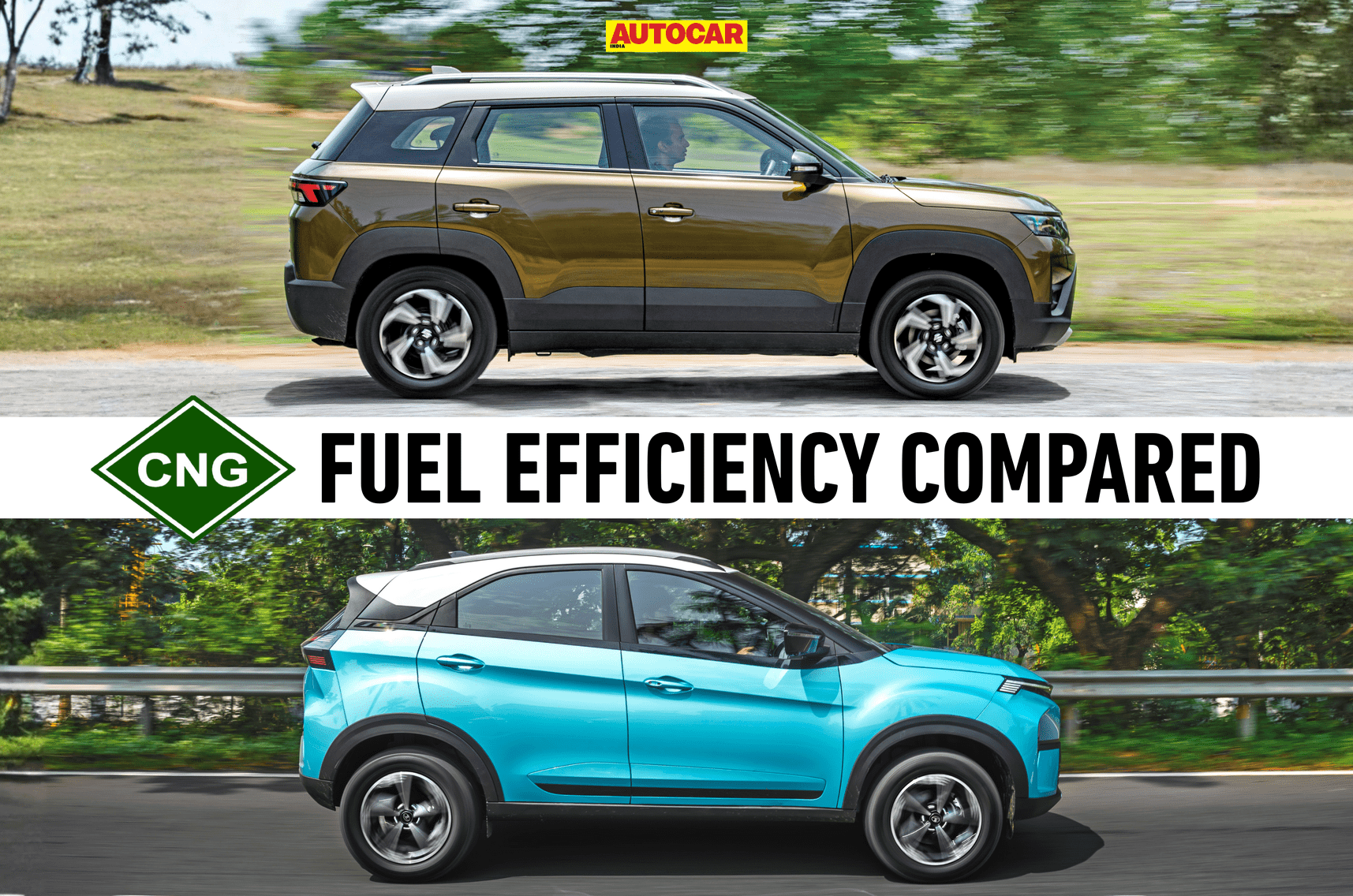
The Maruti Brezza and Tata Nexon are two of the few compact SUVs to offer a factory-fitted CNG kit. Both are also among the best-selling models for their respective brands, and since CNG cars are known to offer good mileage, it makes sense to compare these two and see which is more fuel-efficient in the real world. Keep reading to find out more.
Maruti Brezza CNG vs Tata Nexon CNG: Specs and price
Compact SUV
Brezza
Nexon
Engine
4 cyl, petrol-CNG
3 cyl, petrol-CNG
Turbocharged
No
Yes
Displacement (cc)
1,462
1,199
Power (hp)
101 (petrol), 88 (CNG)
120 (petrol), 100 (CNG)
Torque (Nm)
137 (petrol), 122 (CNG)
170
Transmission
5-speed manual
6-speed manual
Claimed CNG mileage (km/kg)
25.5
24
CNG tank (litres)
55
60
Petrol tank (litres)
48
44
Boot space (litres)
Not disclosed
321
Price range (Rs, lakh)
9.17-11.46
8.3-13.42
While the Brezza uses a four-cylinder naturally aspirated engine, the Nexon gets a three-cylinder turbocharged unit. Notably, no other compact SUV currently offers a CNG kit with a turbocharged engine. The Nexon has a clear performance advantage over the Brezza. In petrol guise, its 1.2-litre turbo-petrol engine produces 120hp and 170Nm, giving it a 19hp and 33Nm edge over the Brezza’s 1.5-litre naturally aspirated petrol engine, which develops 101hp and 137Nm.
In CNG mode too, the Nexon leads with 100hp and 170Nm, compared to the Brezza CNG’s 88hp and 122Nm. That gives the Nexon a 12hp and 48Nm advantage in CNG form. It also gets a 6-speed manual, compared with the Brezza’s 5-speed unit, and a larger 60-litre CNG tank (dual-cylinder setup). The Maruti, meanwhile, uses a more conventional cylinder arrangement.
The Brezza’s 1,462cc engine also crosses the 1,200cc threshold for the lower 18 percent GST slab, so it’s taxed at 40 percent. That shows up in pricing, too, with the Brezza’s entry price sitting Rs 95,000 above the Nexon’s. At the top end, though, the Tata is Rs 2.1 lakh pricier than the equivalent Brezza CNG variant.
Maruti Brezza CNG vs Tata Nexon CNG: Real-world mileage
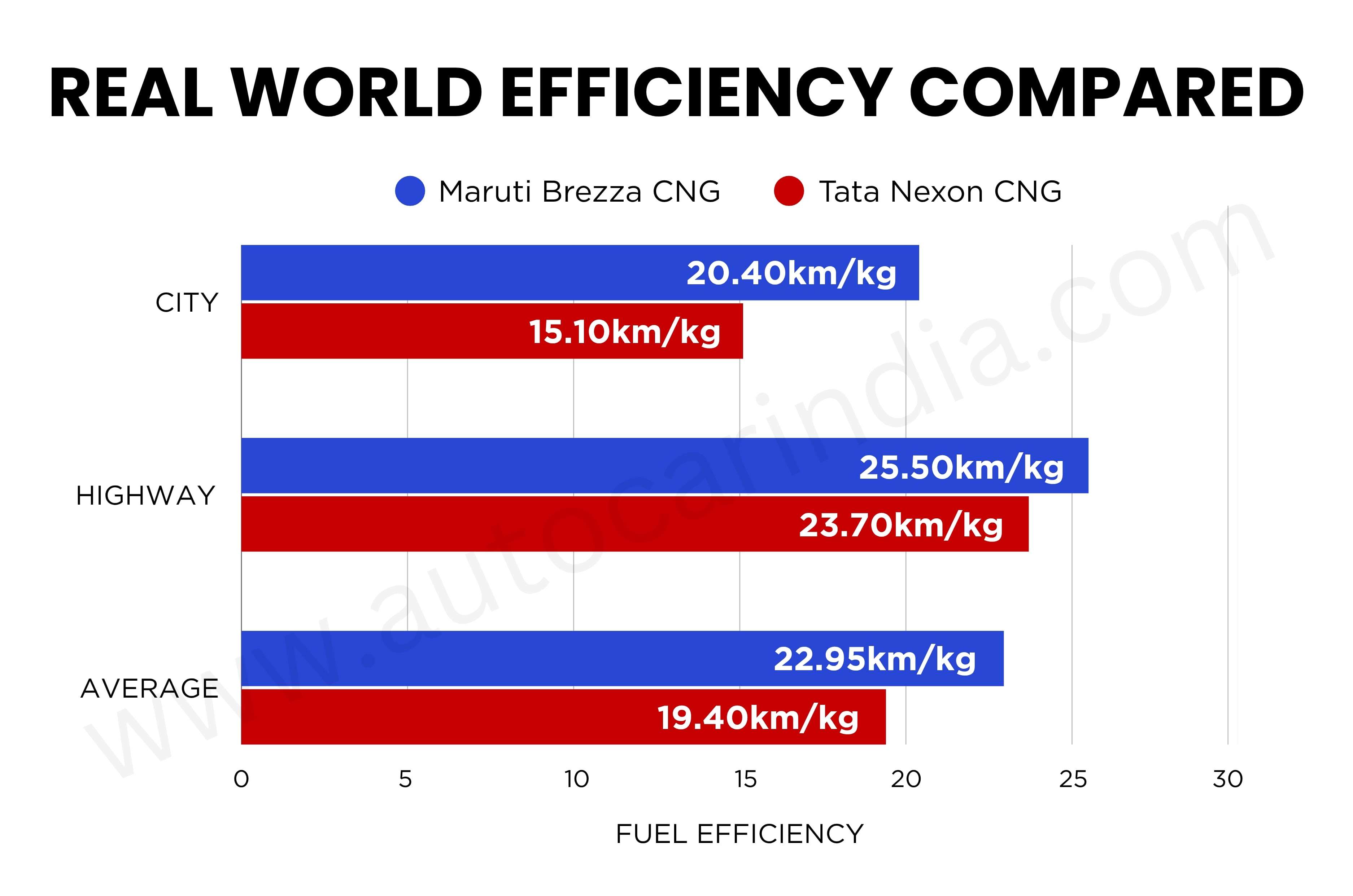
The Brezza CNG is clearly more efficient in real-world use than the Nexon CNG. In the city, it returns 5.3km/kg more than the Tata SUV. The Brezza maintains its lead on the highway as well, but the gap narrows to 1.8km/kg. As a result, the average figure also favours the Brezza, which is ahead by 3.55km/kg.
Part of the Brezza’s efficiency advantage comes from its much lighter kerb weight and a naturally aspirated setup. It should be noted that the Nexon’s CNG setup does not significantly affect drivability or performance in everyday use. It can also be started directly in CNG mode, and even the added weight of the kit – 120kg more than the petrol Nexon – does not make it feel breathless or strained.
Autocar India’s fuel efficiency testing
Before our real-world fuel efficiency tests, we fill our test cars’ tanks to the brim and maintain tyre pressures based on the manufacturer’s recommendations. These cars are driven in fixed city and highway loops in and around Navi Mumbai, and we maintain certain average speeds. Throughout the tests, there is only one person in each car, running the air conditioner and other electricals, such as the audio system, indicators and wipers, when required, just like a regular user would. Periodic driver swaps further neutralise variations in driver patterns. At the end of each cycle, we calculate efficiency by refilling the tanks to full.
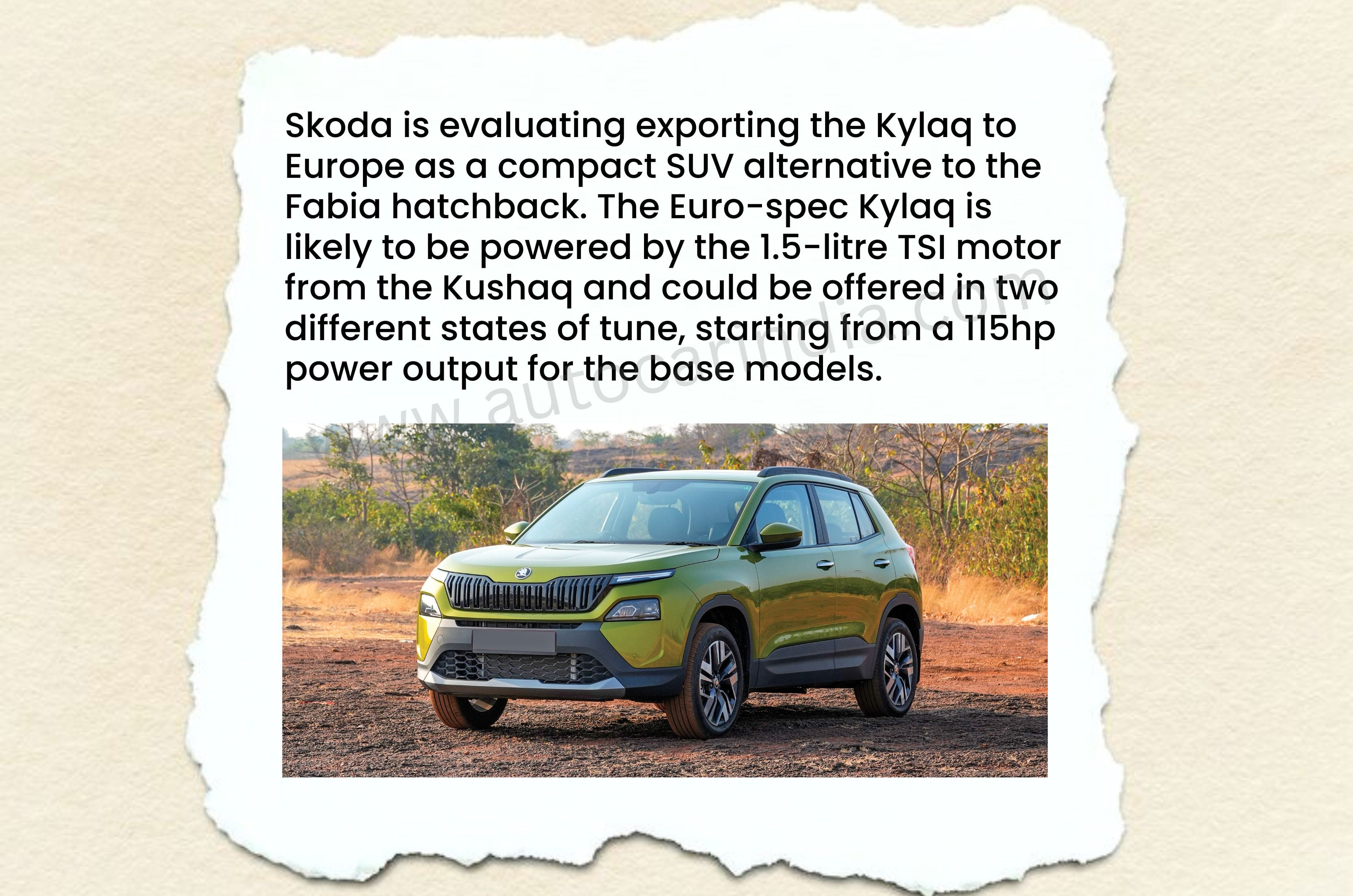
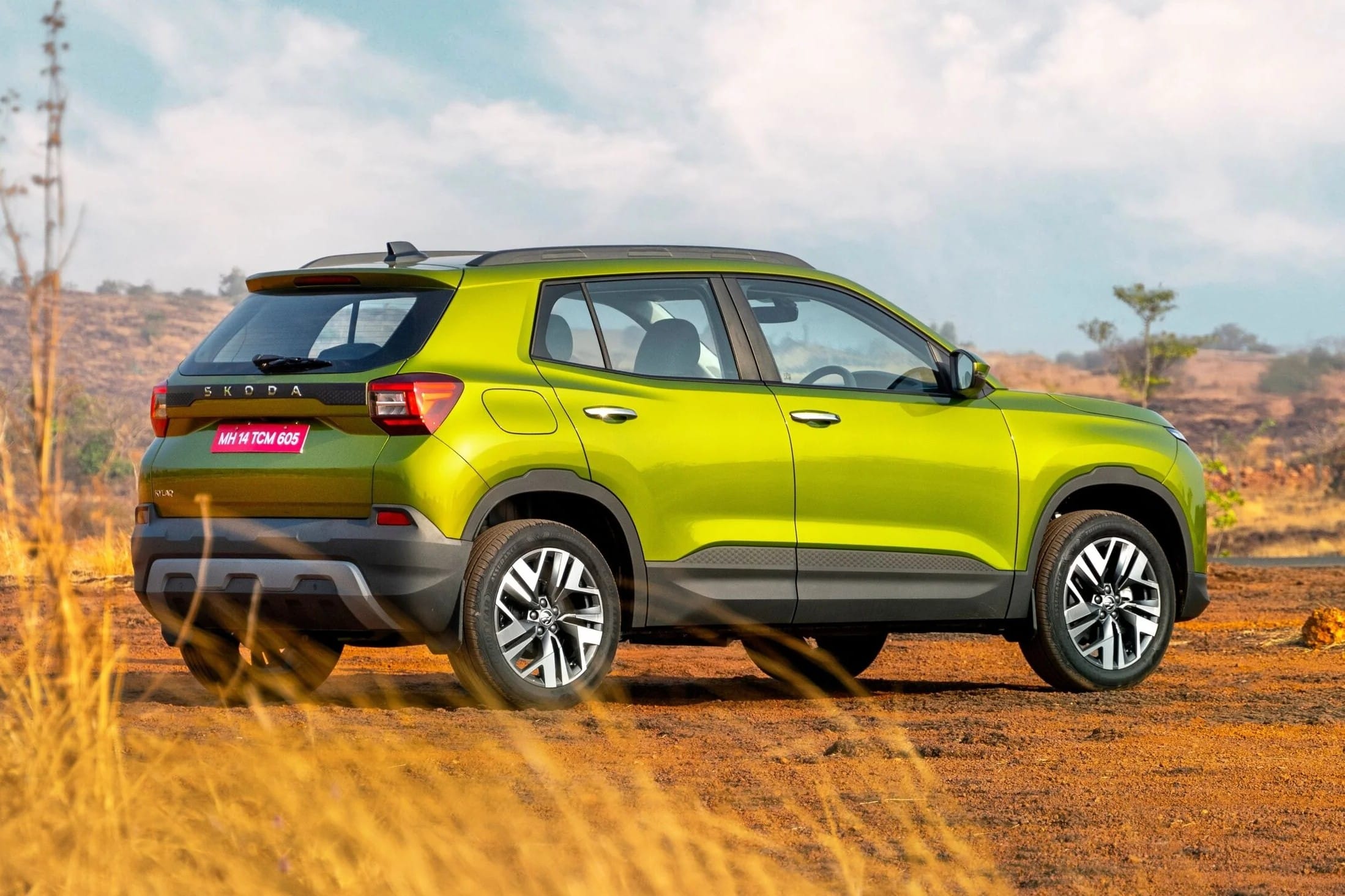
Skoda is considering exporting the made-in-India Kylaq to the European market as a crossover alternative to the Fabia hatchback. Launched here at the tail-end of 2024, the Kylaq is the third Skoda model to come out of Skoda-VW’s ‘India 2.0’ strategy and the Czech carmaker’s smallest SUV to date. While the Kylaq is designed specifically for the Indian market, Skoda feels the compact SUV carries enough pedigree and appeal for European customers.
Autocar India’s recent Pune to Prague drive, a 19,000km cross continent drive that covered several European countries, including the Czech Republic, the brand’s home country, established the Kylaq as a product that could blend in well in some of Skoda’s key markets. “We’re looking into a possibility or an opportunity to bring Kylaq to Europe, but there are a lot of barriers, a lot of homologation questions,” Skoda CEO Klaus Zellmer told us after the conclusion of the cross-continent Kylaq road trip.
1.0 TSI or 1.5 TSI for the Euro-spec Kylaq?
We reported about Kylaq’s export plans to Europe in June 2026 issue of the Autocar India magazine.
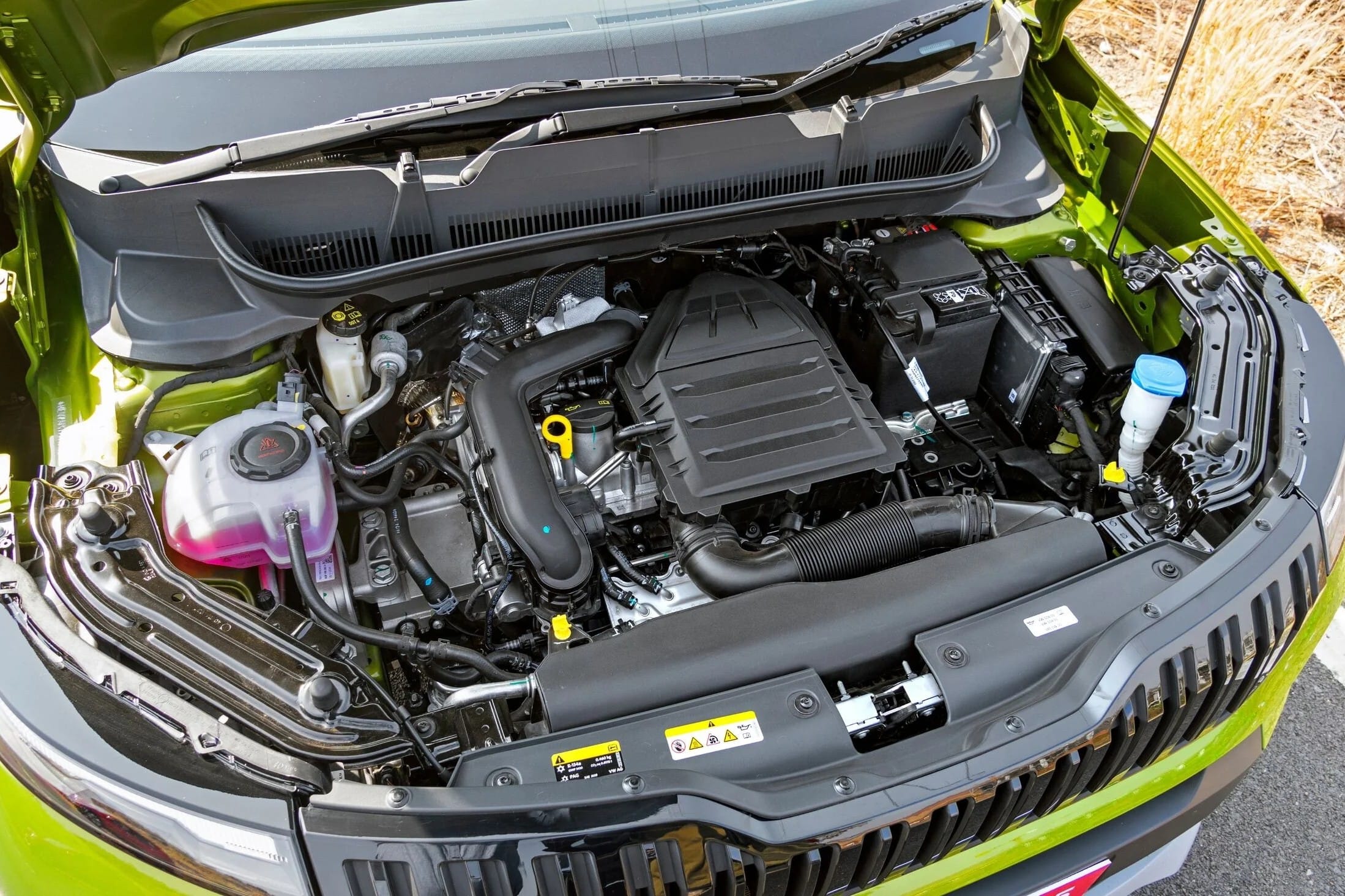
In India, the Kylaq is powered solely by the locally manufactured 115hp 1.0-litre 3-cyl direct-injection turbo-petrol engine (1.0 TSI), which can be had with either a 6-speed manual or 6-speed automatic. For Europe, however, Skoda might equip the Kylaq with the 1.5-litre 4-cyl direct-injection turbo-petrol mill (1.5 TSI) seen in the Slavia and Kushaq, paired to a 7-speed DCT.
The 1.5 TSI engine is used in Skoda’s other models and is already Euro 7 compliant making it the logical choice for export markets. However, from a cost perspective the 1.0 TSI is more attractive as it is a three-cylinder unit and is locally produced. However, the 1.0 TSI does not meet Euro 7 standards and upgrading it to the latest emission standards will call for significant upfront investment which will impact the overall cost of the Kylaq for exports.
If Skoda decides on the 1.5 TSI the export version of the Kylaq, it will likely be in a lower 115hp state of tune to help meet the Euro 7 targets. In fact, the Kylaq 1.5 TSI could be offered in two states of tune for the European market, but its not clear what the other power output of the engine would be.
Beyond emission regulations, the Kylaq would have to meet Europe’s safety, security and other homologation requirements that would again add to the cost of the vehicle.
India-EU FTA and weak rupee helps Kylaq’s export business case
The incoming India-EU FTA, in conjunction with the depreciating rupee against the euro, makes a strong case for exporting the Kylaq to Europe. Piyush Arora, the MD of Skoda Auto Volkswagen India Private Limited (SAVWIPL), said that the India-EU FTA will “open up opportunities” for SAVWIPL across all of its business verticals, including CBU imports, components, fully developing new models for India, and exporting cars to the European market.
A final decision has not been taken. However, a European programme would mark a significant step for Skoda Auto Volkswagen India by moving the country’s role beyond developing and manufacturing vehicles for India and other emerging markets to supplying a product to the carmaker’s home region.
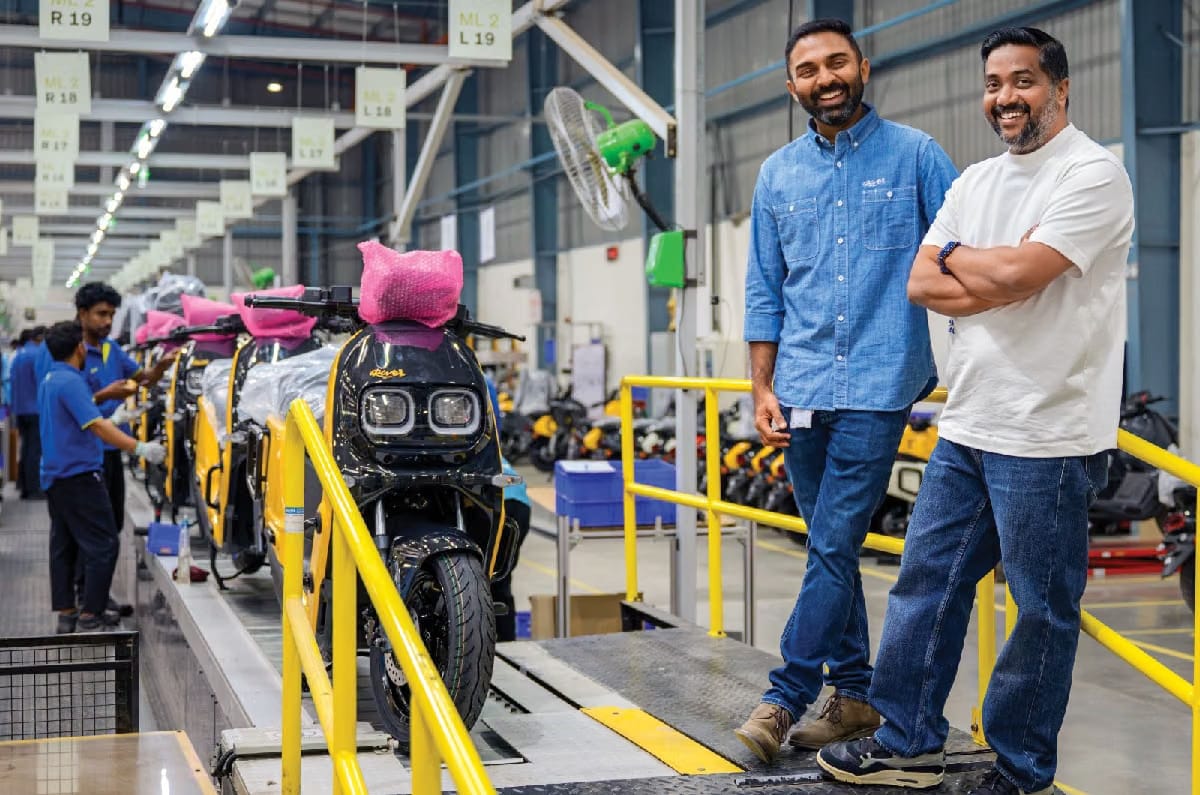
River Mobility has closed a $120 million (Rs 1,141 crore approximately) Series C funding round comprising equity and venture debt, marking one of the largest private fundraises in India’s electric two-wheeler sector. The company plans to use the capital to expand its manufacturing footprint, develop new products in the utility lifestyle segment and improve profitability.
$120 million Series C round closed with equity and venture debt components
Round led by Elev8 Venture Partners and Claypond Capital; existing backers also participated
Capital to fund new greenfield plant, product launches and margin improvement
River Mobility funding
First significant round from Indian institutional investors for the company
The equity portion of the round was led by Elev8 Venture Partners and Claypond Capital, with participation from Singularity AMC, Anicut Capital, 360 ONE Asset, JIF Capital and HDFC AMC – marking the first time River Mobility has attracted significant backing from Indian institutional investors. Venture debt came from Alteria Capital, Innoven Capital and Stride Ventures. Existing global backers Yamaha Motor Corporation, Al Futtaim Group and Mitsui & Co. also participated in the round.
River’s monthly retail sales have since grown to around 5,000-6,000 units, and the company recently rolled out its 50,000th unit from its Hoskote plant. It currently has over 75 stores across India, with a target of over 350 stores by March 2028. The company also manufactures the Yamaha EC-06 at the same facility under a partnership with Yamaha Motor Co.
The company says these funds will be directed towards capacity expansion at the existing Hoskote facility, the construction of a new greenfield plant, new product development and improvements to gross margins and EBITDA profitability.
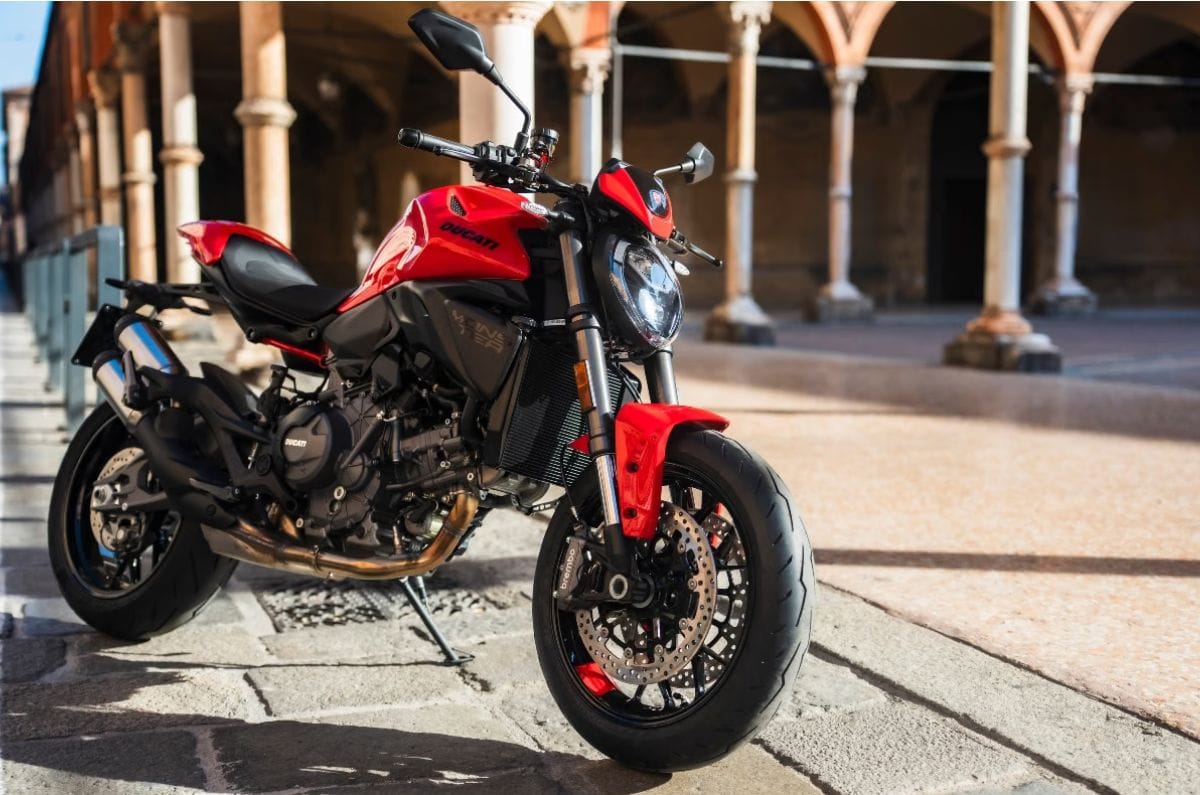
After patenting the design just a few weeks ago, Ducati is now all set to launch the Monster V2 in India. Compared to the outgoing model’s 937cc V-twin, the V2 is expected to have a smaller 890cc engine but with no change in power and ~2Nm less torque (91.1Nm vs 93Nm). The Monster V2 will also be 4kg lighter than the outgoing model. Other changes are to the chassis and a bigger tank design.
Gets a smaller 890cc V-twin shared with the Panigale V2 and other models
Features a new monocoque chassis
4kg lighter (wet weight, no fuel) than the outgoing model
Bringing the Monster’s hefty design back
Tank now looks bigger like Monsters of yesteryear, but capacity remains unchanged
The engine, although new to the Monster, is shared with other Ducatis like the Panigale V2, Streetfighter V2 and Multistrada V2. Even though the power figures are very similar to the outgoing Monster, peak power of 111hp is now available earlier in the rev range (9,000rpm vs 9,250rpm), however, peak torque now comes in later at 7,250rpm (vs 6,500rpm). Under the skin, there are further changes. The Monster V2 gets a monocoque chassis compared to the outgoing model’s aluminium frame. The tank also looks bigger now even though the capacity itself remains the same at 14-litres.
The other notable difference is the reduced weight. Coming in at 175kg (wet weight, no fuel), the Monster V2 will be 4kg lighter than the outgoing model. Currently, Ducati India has priced the Monster at Rs 13.84 lakh (ex-showroom), and we’ll have to wait for the prices for the Monster V2.