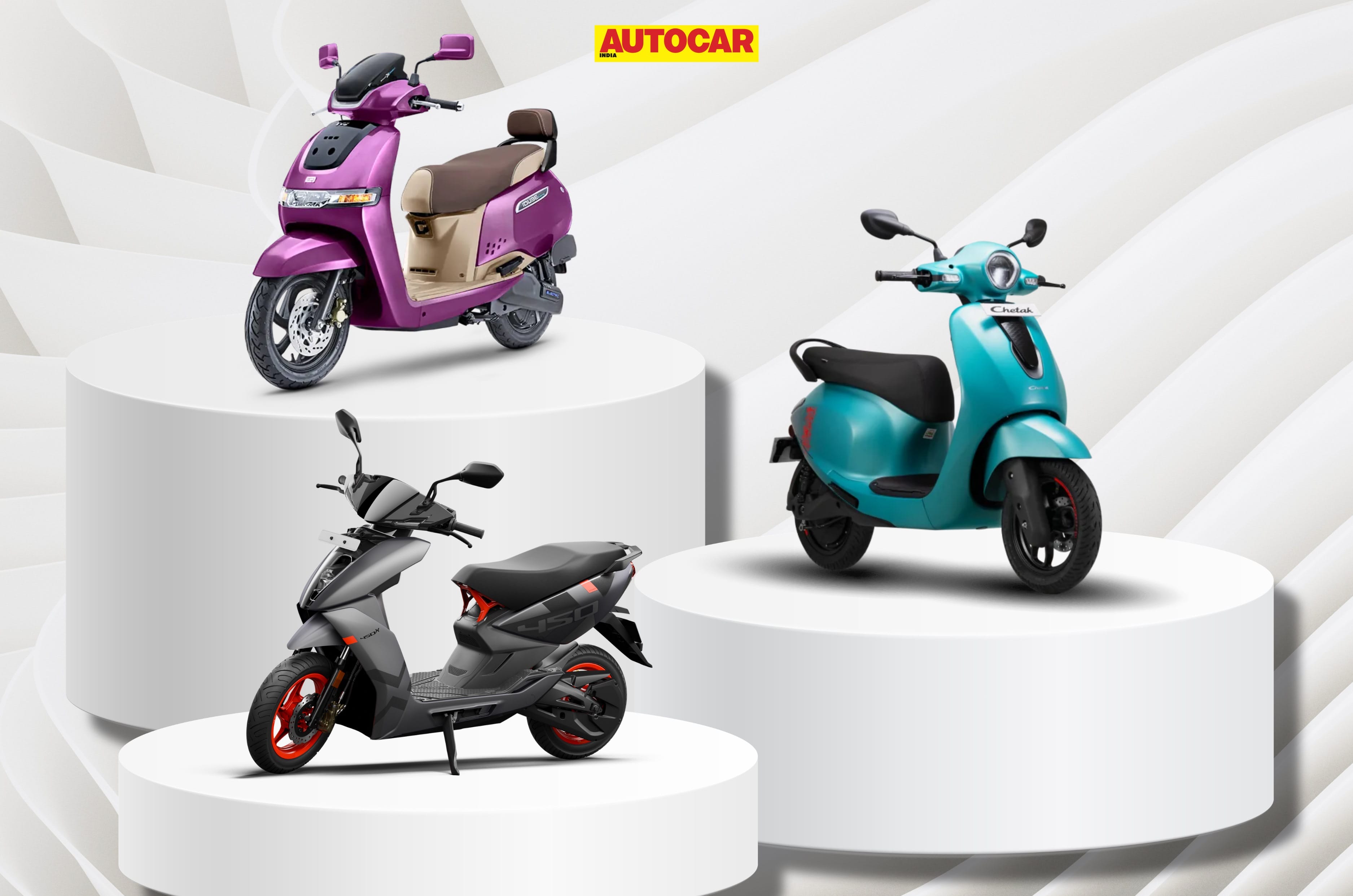
TVS posts record monthly EV sales as electric 2W segment hits new peak

July 2026 electric two-wheeler sales

India’s electric two-wheeler segment crossed the 2 lakh monthly sales mark for the first time, with retail figures of 2,04,266 units in July 2026 – beating the previous best of 1,99,411 units set in March this year. Cumulative sales for the first seven months of 2026 now stand at 11.7 lakh units, up 56 percent year-on-year, while the first four months of FY27 have delivered 7,29,573 units – a 73 percent jump over the same period last year.

  1. Electric two-wheeler sales cross 2 lakh units in a month for the first time
  2. TVS posts best-ever monthly sales of 55,477 units; market share rises to 27 percent
  3. Ola Electric is the only top-10 OEM to register a year-on-year decline

July 2026 electric two-wheeler sales: OEM breakdown

TVS Motor Co: 55,477 units

TVS Motor Company delivered a record 55,477 electric scooters in July – a 135 percent year-on-year increase and the brand’s highest-ever monthly figure, surpassing the previous best of 51,632 units in March. The result gives TVS a 27 percent market share, up from 22 percent a year ago. Cumulative FY27 sales of 1,86,034 units are already 52 percent of its full-year FY26 tally, putting it on course to cross 5.5 lakh annual sales for the first time. The iQube remains TVS’s highest-selling model, with the Orbiter seeing growing demand alongside it.

Bajaj Auto: 45,592 units

Bajaj Auto sold 45,592 Chetak scooters in July, marking a 122 percent year-on-year increase, and giving it a 22 percent market share, up from 19 percent a year ago. This was Bajaj’s second-highest monthly figure after March’s 47,751 units. Cumulative FY27 sales of 1,63,236 units are 54 percent of its full-year FY26 total. Bajaj Auto’s Joint MD Rakesh Sharma noted that the newly launched Chetak 2501 now accounts for approximately 12 percent of the Chetak portfolio.

Ather Energy: 30,323 units

Ather Energy delivered 30,323 units in July, up 70 percent year-on-year, consolidating its position as the third-largest electric two-wheeler maker in India. Cumulative FY27 sales of 1,18,983 units are already 47 percent of its FY26 total. 

In July, Ather also updated the battery chemistry of the 450 and Rizta ranges, with the Rizta now available in both LFP and NMC configurations. The brand will launch its first EL platform-based scooter – expected to be priced between Rs 1 lakh and Rs 1.25 lakh – at Ather Community Day on August 29.

Vida: 22,887 units

Vida posted its best-ever monthly sales of 22,887 units in July – a 111 percent year-on-year increase – surpassing its previous highs of 22,201 units in March and 21,893 units in June. Cumulative FY27 sales of 79,940 units are already 53 percent of its full-year FY26 total. The brand expanded its lineup in July with the VX2 Plus 4.4kWh at Rs 1.43 lakh and the new VX2 Go FB – a fixed-battery variant with a 3.1kWh pack priced at Rs 1.13 lakh.

Ola Electric: 14,105 units

Ola Electric was the only top-10 OEM to register a year-on-year decline in July, selling 14,105 units – down 24 percent from 18,449 units in July 2025. After three months of sequential growth through April, May and June, July also saw a 13 percent month-on-month drop. Ola’s market share has fallen sharply to 7 percent from 17 percent a year ago, when it ranked third overall.

Other notable performers

Greaves Electric Mobility delivered 10,125 units – up 137 percent year-on-year. River Mobility hit its highest-ever monthly sales with 5,951 units of the Indie, up 254 percent year-on-year, following the rollout of its 50,000th unit from its Hoskote plant. Bgauss Auto sold 5,518 units, up 213 percent year-on-year. Simple Energy sold 1,648 units, with the brand’s upcoming Simple Arrive family scooter set to launch on September 2. Lectrix Vehicles rounded out the top 10 with 1,397 units.

The top 10 OEMs combined accounted for 94 percent of all electric two-wheeler sales in July, with the remaining 6 percent approximately 180 other manufacturers.

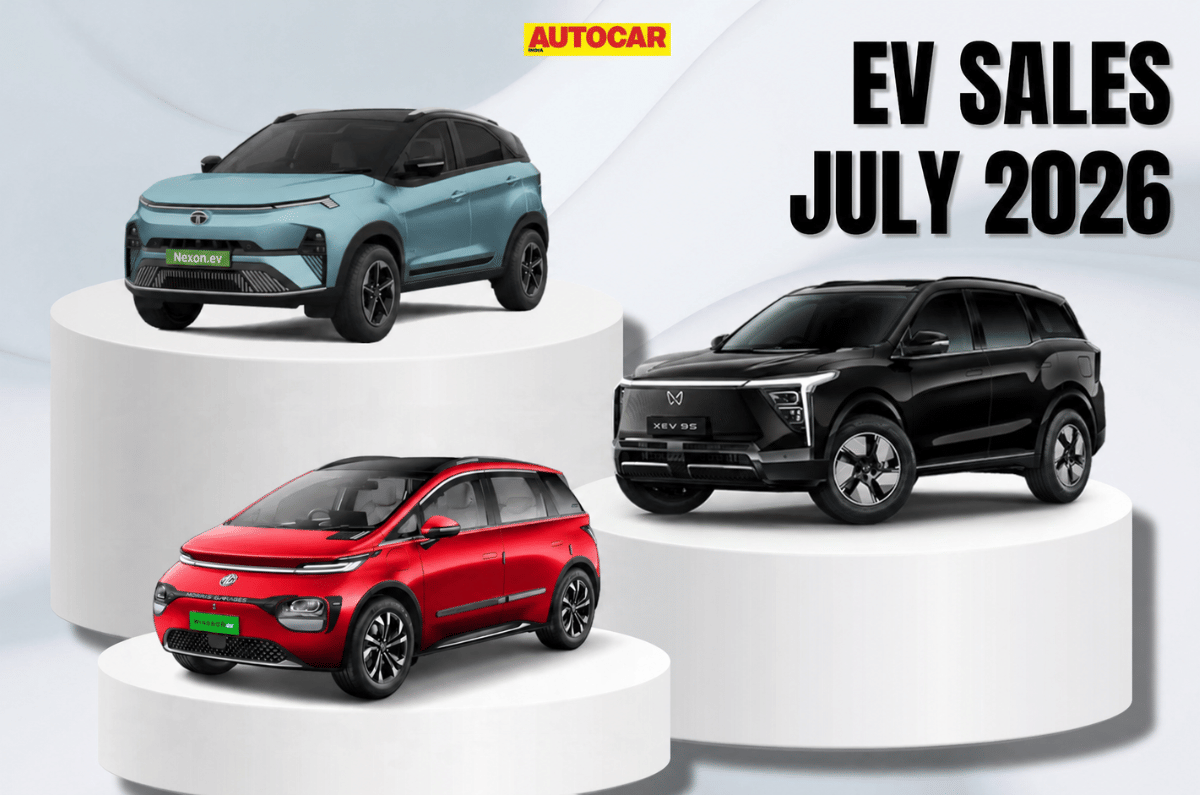
July 2026 EV sales: Monthly volumes cross 30,000 units for the second time

July EV sales

Retail sales of electric passenger vehicles breached the 30,000-unit mark for the second month in a row in July 2026. After a record 33,307 units in June, buyers took home a total of 32,609 EVs last month, up 83 percent year-on-year, as per Vahan data. Tata Motors recorded its highest-ever monthly EV sales, while Mahindra and Maruti Suzuki posted their second-highest monthly totals.

Tata Motors

July 2026: 13,578 units, up 102 percent YoY

Tata Motors, which recently expanded its EV portfolio with the launch of the Sierra EV, recorded its best-ever monthly retail sales of 13,578 units in July. This is 102 percent higher than July 2025 and 6 percent more than June 2026. The company also crossed the 40 percent EV market share mark after a long gap. Its 42 percent share in July is 4 percentage points higher than the 38 percent it held a year ago, despite growing competition.

July was also the second consecutive month that Tata sold more than 12,000 EVs, after 12,756 units in June. Cumulative sales between April and July stood at 46,697 units, up 108 percent YoY.

Mahindra 

July 2026: 7,677 units, up 125 percent YoY

Mahindra crossed the 7,000-unit mark for the second month in a row. It sold 7,677 electric SUVs in July, up 125 percent over July 2025, although this was 498 units fewer than June. The performance helped Mahindra increase its market share to 22 percent, up from 19 percent a year ago. The BE 6 and XEV 9e continue to see strong demand. The XEV 9S, Mahindra’s first three-row born-electric SUV, has further strengthened its EV line-up.

JSW MG Motor India

July 2026: 5,642 units, down 4 percent YoY

JSW MG Motor India sold 5,642 EVs in July, down 4 percent YoY and 9 percent lower than June 2026. Its market share stood at 16 percent, down sharply from 33 percent in July 2025. The Windsor EV continues to be MG’s best-selling model.

Maruti Suzuki 

July 2026: 1,590 units

Maruti Suzuki sold 1,590 e Vitaras in July. This was the fifth consecutive month of four-digit sales, following March, April and May. However, July sales were 20 percent lower than June, which remains the model’s best month so far. Until now, domestic sales of the e Vitara were limited because a larger share of production was allocated for exports. This is expected to change with the start of production at a new fourth manufacturing line at Maruti Suzuki’s Hansalpur, Gujarat plant. The expanded facility now builds the e Vitara, Fronx, Baleno and Swift.

Vinfast India

July 2026: 1,478 units

Vinfast ranked fifth among the country’s 18 electric passenger vehicle manufacturers. The Vietnamese carmaker recorded its highest-ever monthly sales in July with 1,478 units, surpassing its previous best of 1,448 units in June by 30 units, or 2 percent. This gave the company a 4 percent EV market share in July.

According to wholesales data, the VF Limo Green (for commercial use) is currently its best-selling model. In Q1 FY2027 (April-June 2026), SIAM wholesale data shows the Green Limo accounted for 2,746 units, or 46 percent of Vinfast India’s total sales of 6,001 units, well ahead of the VF7, VF6 and MPV7.

BYD India

July 2026: 742 units, up 47 percent YoY

BYD sold 742 EVs in July, up 47 percent over July 2025. However, sales were 20 percent lower than June 2026, which remains the company’s best monthly performance so far. On July 1, BYD increased prices of its EVs by 1-2 percent, marking its second price hike of the year after the one on May 1. The company’s current line-up includes the Atto 3 SUV, e-Max 7 MPV, Seal sedan and Sealion 7 SUV. BYD has also confirmed that it will launch the Seal U PHEV later this year.

Hyundai

July 2026: 565 units, down 21 percent YoY

Hyundai sold 565 EVs in July, down 21 percent compared to 719 units in July 2025. However, on a month-on-month basis, sales were up 51 percent from the 374 units sold in June 2026. At present, Hyundai’s EV portfolio in India consists of just two models: the Creta Electric and the Ioniq 5.

Kia India

July 2026: 464 units, up 614 percent YoY

Kia  ranked eighth with retail sales of 464 units in July. This is a 614 percent year-on-year increase over the low base of 65 units in July 2025. However, sales were 14 percent lower than 539 units in June 2026. Kia’s monthly sales have improved since the launch of the mass-market Carens Clavis EV MPV, which joined the much more expensive EV6 and EV9, both of which are imported as CBUs.

Toyota Kirloskar Motor

July 2026: 123 units

Toyota delivered 123 units of the Urban Cruiser Ebella in July. This placed the company 11th among the country’s electric passenger vehicle manufacturers. The Urban Cruiser Ebella is the badge-engineered version of the Maruti e Vitara, and it is currently available in a single E3 variant.

Carmaker July 2026July 2025YoY Change (in percent) 
Tata Motors 13,5786,712102
Mahindra 7,6773,416125
JSW MG Motor 5,6425,900-4
Maruti Suzuki 1,590––
Vinfast 1,478––
BYD 74250547
Hyundai 565719-21
Kia46465614
BMW36727036
Mercedes-Benz 16311542
Toyota123––
Tesla115––
Stellantis5168-25
Volvo484214
Porsche 68-25
Audi 01-100
Rolls-Royce 02-100
Jaguar Land Rover 00–
Total 32,60917,82383

Luxury electric carmakers sell record  units in July

Demand for luxury electric cars continued to grow in July 2026. Carmakers in this segment sold 699 EVs, up 60 percent year-on-year. However, sales were 17 percent lower than the record 847 units sold in June 2026. BMW and Mercedes-Benz continued to lead the luxury EV market, while Tesla India crossed the 100-unit mark for the first time with its highest-ever monthly sales.

BMW India 

BMW remained the leader in the luxury EV segment with 367 units. This is 36 percent higher than 270 units sold in July 2025, giving the brand a 52 percent segment share. However, sales were 29 percent lower than 517 units in June 2026. After topping the luxury EV segment in FY2026 with a record 3,898 units, BMW has sold 1,606 EVs between April and July, which is 41 percent of its FY2026 total.

Mercedes-Benz

Mercedes- Benz sold 163 EVs in July, up 42 percent from 115 units in July 2025. However, this was 33 percent lower than the 243 units sold in June 2026. The brand’s growth has been supported by the launch of the CLA electric sedan at the end of April.

Tesla

Tesla recorded its highest-ever monthly sales in India, selling 115 Model Ys in July. This is a 203 percent increase over 38 units sold in June 2026. Its luxury EV market share also rose sharply from 4 percent in June to 16 percent in July, allowing it to move ahead of Volvo Auto India. The strong growth follows Tesla India’s decision to reduce the price of the Model Y by Rs 9 lakh, bringing the starting price down to Rs 50.89 lakh, ex-showroom.

Volvo

Volvo, now ranked fourth in the luxury EV segment, sold 48 EVs in July. This is 14 percent higher than 42 units sold in July 2025 and 23 percent more than the 39 units sold in June 2026. The Swedish carmaker increased prices of its models by up to Rs 1 lakh from May 1, citing ongoing global supply chain challenges and fluctuations in foreign exchange rates. Volvo’s market share stood at 7 percent in July, down from 10 percent a year ago.

Porsche, Audi and Rolls-Royce 

Porsche sold 6 EVs in July. According to Vahan data, Audi, Rolls-Royce and JLR India did not sell a single EV during the month.

Overall, luxury EV makers accounted for 2.14 percent of the 32,609 electric passenger vehicles sold in July 2026, compared to 2.45 percent in July 2025 and 2.54 percent in June 2026.

Bajaj to update 125-160cc motorcycle range

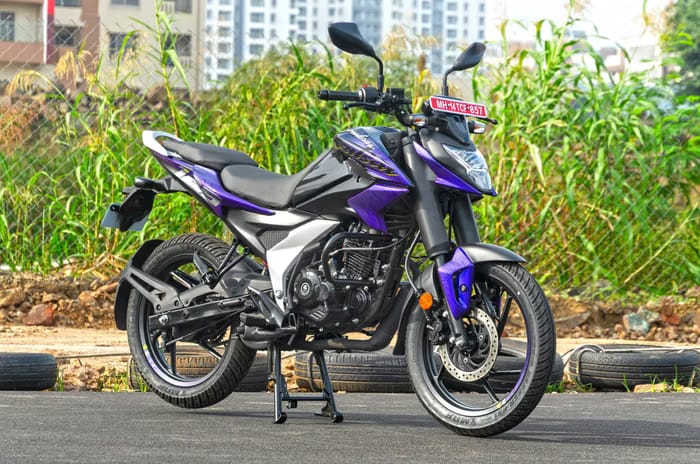
Pulsar N125

Bajaj Auto has announced plans to upgrade its 125-160cc motorcycle portfolio following a record first quarter performance, as the company looks to build on its momentum in one of India’s largest motorcycle segments. The company’s current 125-160cc lineup includes models under the Pulsar and Freedom brands, although Bajaj did not specify which models would be updated or when.

  1. Bajaj Auto to upgrade its 125-160cc motorcycle portfolio following strong Q1 FY27 performance
  2. Pulsar, Avenger and Dominar all posted double-digit year-on-year growth in the quarter
  3. Q1 FY27 revenue up 37 percent YoY to a record Rs 17,244 crore

Bajaj Auto Q1 FY27 and product plans: Key details

Sports segment grew around 50 percent; Pulsar range gained market share

In its Q1 FY27 earnings statement, Bajaj Auto said product interventions across the Pulsar range helped it gain market share in the sports segment during the quarter, with the segment as a whole growing by around 50 percent. The planned updates across the 125-160cc range are expected to further strengthen the company’s position in the segment. Bajaj Auto had previously outlined plans in its annual report to sharpen its focus on the domestic 125cc-plus motorcycle market, and the Pulsar 125 Classic – which has been spotted testing multiple times ahead of an expected festive season launch – appears to be among the products in the pipeline.

On the financial front, Q1 FY27 was a record quarter for the company. Revenue from operations rose 37 percent year-on-year to Rs 17,244 crore, profit after tax climbed 42 percent to Rs 2,983 crore, and EBITDA grew 45 percent to Rs 3,596 crore, resulting in an EBITDA margin of 20.9 percent. Total vehicle sales reached a record 1.44 million units, up 29 percent year-on-year, with domestic two-wheeler volumes rising 11 percent and exports surging 52 percent to their highest-ever quarterly level.

JSW could acquire majority stake in Volkswagen’s India business

JSW and VW

JSW Group is in advanced talks to acquire a stake in Skoda Auto Volkswagen India, with the proposed deal potentially giving the Sajjan Jindal-led conglomerate a majority holding in Volkswagen AG’s India business, according to a Bloomberg report.

  1. Terms of the deal are yet to be finalised
  2. Skoda Auto Volkswagen India held 2.34 percent market share in FY2026
  3. JSW already owns 35 percent of JSW MG Motor India

The report says the proposed investment would bring fresh capital into Skoda Auto Volkswagen India, which oversees the group’s Skoda, Volkswagen, Audi, alongside luxury and super-luxury marques like Porsche, Lamborghini, and Bentley brands in the country. Both sides are aiming to reach an agreement in the coming weeks, although the terms are not settled and a transaction may not follow, the report said.

Volkswagen declines to comment

A Volkswagen spokesperson did not confirm the discussions, saying only that the company regularly evaluates opportunities to support its strategy in India’s passenger vehicle market. Bloomberg added that the terms of the proposed transaction are still being negotiated and may change before any agreement is reached.

What the deal could mean

If completed, the deal would mark JSW Group’s second major investment in India’s passenger vehicle industry after acquiring a 35 percent stake in MG Motor India from SAIC in 2023. The joint venture, JSW MG Motor India, began operations in 2024.

For Volkswagen, the investment could strengthen its position in India, where Skoda Auto Volkswagen India accounted for 2.34 percent of passenger vehicle sales in FY2026, according to FADA data. By comparison, Kia India held a 5.94 percent share, while JSW MG Motor India accounted for 1.40 percent. The additional investment could also support the group’s future product and business plans in the country.

India remains a focus market for Volkswagen 

India has become an increasingly important market for Volkswagen as it reshapes its global operations. According to the Bloomberg report, the company is looking to strengthen its presence outside Europe following its withdrawal from Russia and its planned exit from China.

With inputs from Dhruv Dhaka

JSW could acquire majority stake in Volkswagen’s India business

JSW and Skoda VW

JSW Group is in advanced talks to acquire a stake in Skoda Auto Volkswagen India, with the proposed deal potentially giving the Sajjan Jindal-led conglomerate a majority holding in Volkswagen AG’s India business, according to a Bloomberg report.

  1. Terms of the deal are yet to be finalised
  2. Skoda Auto Volkswagen India held 2.34 percent market share in FY2026
  3. JSW already owns 35 percent of JSW MG Motor India

The report says the proposed investment would bring fresh capital into Skoda Auto Volkswagen India, which oversees the group’s Skoda, Volkswagen, Audi, alongside luxury and super-luxury marques like Porsche, Lamborghini, and Bentley brands in the country. Both sides are aiming to reach an agreement in the coming weeks, although the terms are not settled and a transaction may not follow, the report said.

Volkswagen declines to comment

A Volkswagen spokesperson did not confirm the discussions, saying only that the company regularly evaluates opportunities to support its strategy in India’s passenger vehicle market. Bloomberg added that the terms of the proposed transaction are still being negotiated and may change before any agreement is reached.

What the deal could mean

If completed, the deal would mark JSW Group’s second major investment in India’s passenger vehicle industry after acquiring a 35 percent stake in MG Motor India from SAIC in 2023. The joint venture, JSW MG Motor India, began operations in 2024.

For Volkswagen, the investment could strengthen its position in India, where Skoda Auto Volkswagen India accounted for 2.34 percent of passenger vehicle sales in FY2026, according to FADA data. By comparison, Kia India held a 5.94 percent share, while JSW MG Motor India accounted for 1.40 percent. The additional investment could also support the group’s future product and business plans in the country.

India remains a focus market for Volkswagen 

India has become an increasingly important market for Volkswagen as it reshapes its global operations. According to the Bloomberg report, the company is looking to strengthen its presence outside Europe following its withdrawal from Russia and its planned exit from China.

With inputs from Dhruv Dhaka

Scooter industry posts best-ever first-half sales in 2026

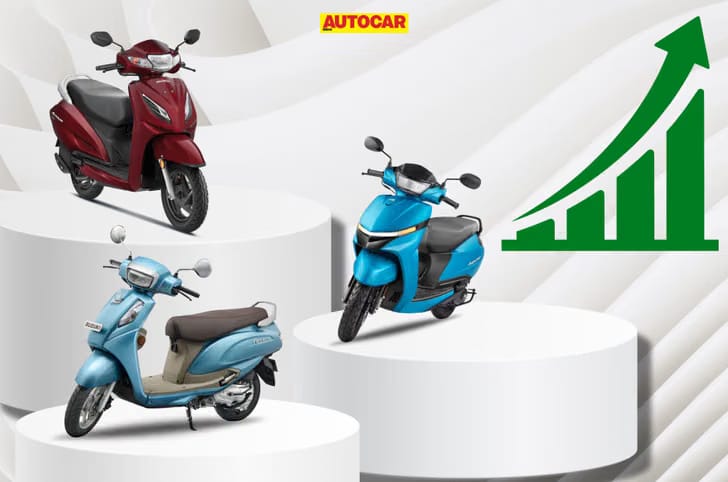
graphic showing the activa, jupiter, and access

India’s scooter industry has delivered its strongest-ever first-half (H1) performance, with wholesales of 44.2 lakh units – up 33 percent year on year (YoY) and 11 lakh units higher than in the same period of 2025. Monthly sales crossed the 7 lakh-unit mark in five of the six months, with April being the only exception. At this pace, the segment is on course to surpass 90 lakh annual units for the first time in a calendar year.

  1. Scooter wholesales reach 44.2 lakh units in H1 2026
  2. Segment on course to cross 90 lakh units in CY2026

India scooter sales H1 2026: OEM breakdown

Honda Motorcycle & Scooter India

16.2 lakh units

Market leader Honda maintained its position with 16.2 lakh scooter dispatches, up 32 percent year-on-year, giving it a 37 percent market share as the Activa and Dio continued to drive volumes. Honda’s electric scooter sales, comprising the Activa e: and QC1, contributed 2,100 units in the first half, down 4 percent year-on-year. Honda’s share of the scooter market has fallen significantly over the past decade, from 57 percent in FY2017 to 37 percent today, as TVS and other manufacturers have gained ground.

TVS Motor Co

12.6 lakh units

TVS dispatched 12.6 lakh scooters in H1 2026, up 32 percent year-on-year. Its ICE scooters, led by the Jupiter, NTorq and Zest, contributed 10.24 lakh units (up 26 percent), while the electric iQube and Orbiter added 2.41 lakh units (up 66 percent). EVs now account for 19 percent of TVS’s scooter sales, up from 15 percent a year ago.

Suzuki Motorcycle India

5.95 lakh units

Suzuki dispatched 5.95 lakh scooters, up 11 percent year-on-year, although its market share fell to 13 percent from 16 percent as the broader market expanded at a faster pace. The Access 125 remained the brand’s volume leader, ahead of the Burgman Street and Avenis. The e-Access contributed 3,390 wholesale units in H1 2026, while retail sales stood at 2,042 units.

Hero MotoCorp

3.46 lakh units

Hero MotoCorp posted the strongest growth among the larger manufacturers, with 3.46 lakh scooter dispatches – up 72 percent year-on-year. ICE scooters contributed 2.44 lakh units (up 54 percent), while the Vida electric range added 1.02 lakh units (up 136 percent). Hero’s EV penetration has risen sharply, with Vida now accounting for 30 percent of its scooter sales, compared to 21 percent in H1 2025.

Bajaj Auto

2.07 lakh units

Bajaj Auto dispatched 2.07 lakh scooters, up 53 percent year-on-year, of which 2.04 lakh were Chetak electric scooters and 2,850 were Yulu e-bikes. Bajaj’s overall scooter market share edged up to around 5 percent from 4 percent a year ago.

India Yamaha Motor

1.89 lakh units

Yamaha posted 39 percent growth with 1.89 lakh scooter dispatches, with the Fascino and RayZR accounting for 1.75 lakh units of that total. The Aerox grew 15 percent to 12,590 units. Yamaha also dispatched 678 EC-06 electric scooters between March and June, before launching the Aerox-E earlier this month.

Ather 

1.64 lakh units

Ather Energy dispatched 1.64 lakh scooters, up 67 percent year-on-year, taking its share of the overall scooter market to 4 percent from 3 percent a year ago. The Rizta remained the company’s key volume driver alongside the 450 range. Ather recently became the fourth Indian EV manufacturer to cross 7 lakh cumulative retail sales.

Other manufacturers

Piaggio Vehicles (Aprilia and Vespa) dispatched 19,162 units, up 27 percent year-on-year. River Mobility, which became a SIAM member during the year, dispatched 11,569 River Indie scooters in the April-June quarter alone, including its highest-ever monthly wholesale of 5,217 units in June.