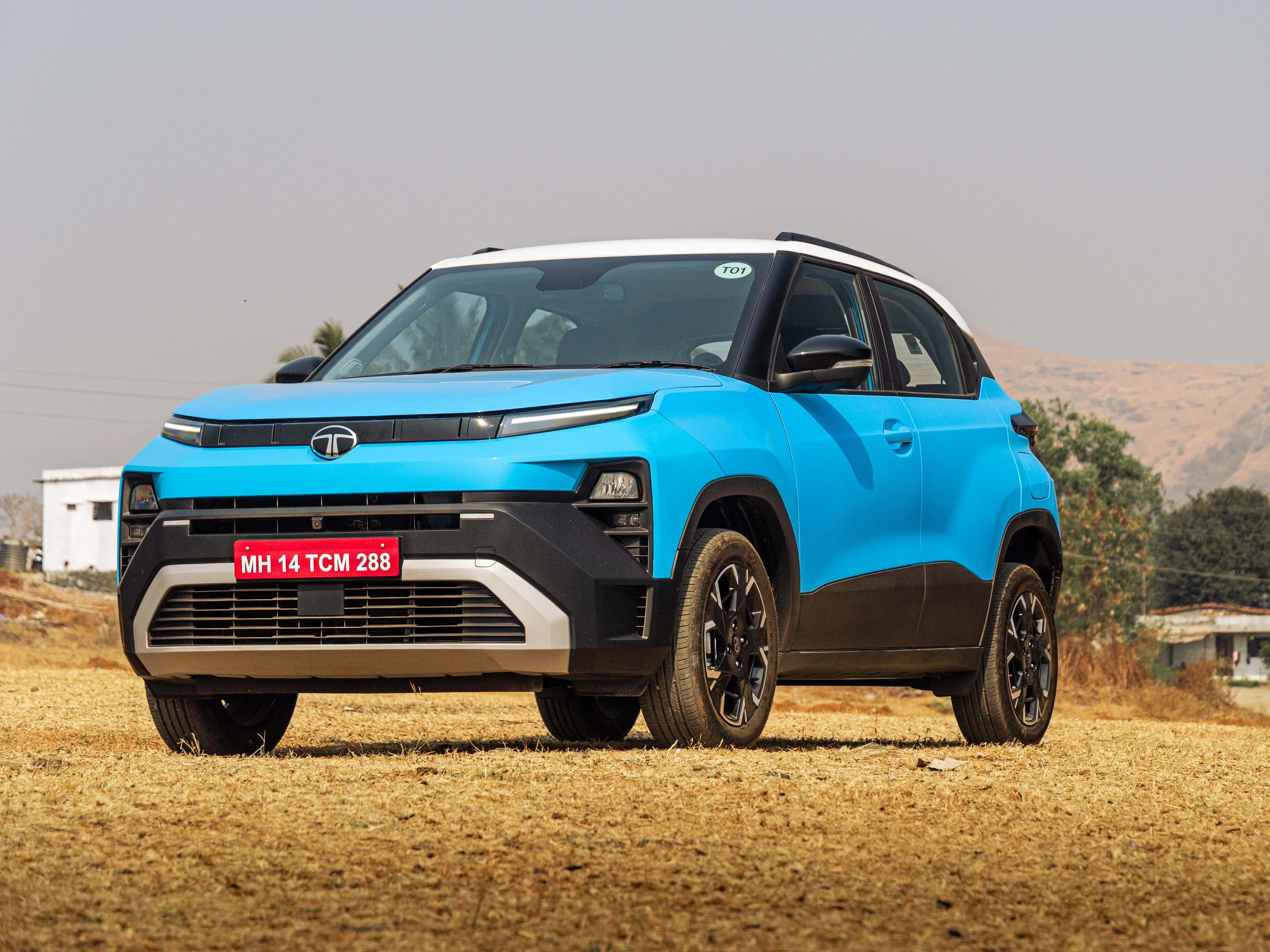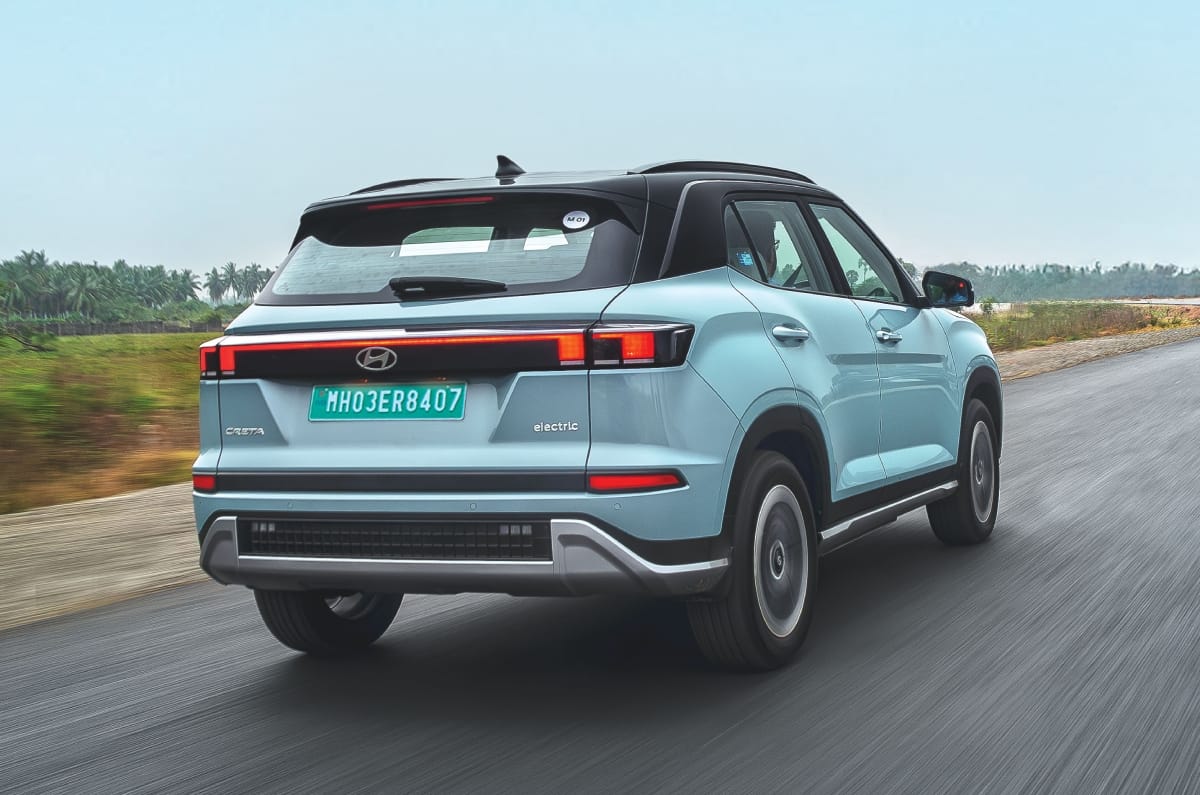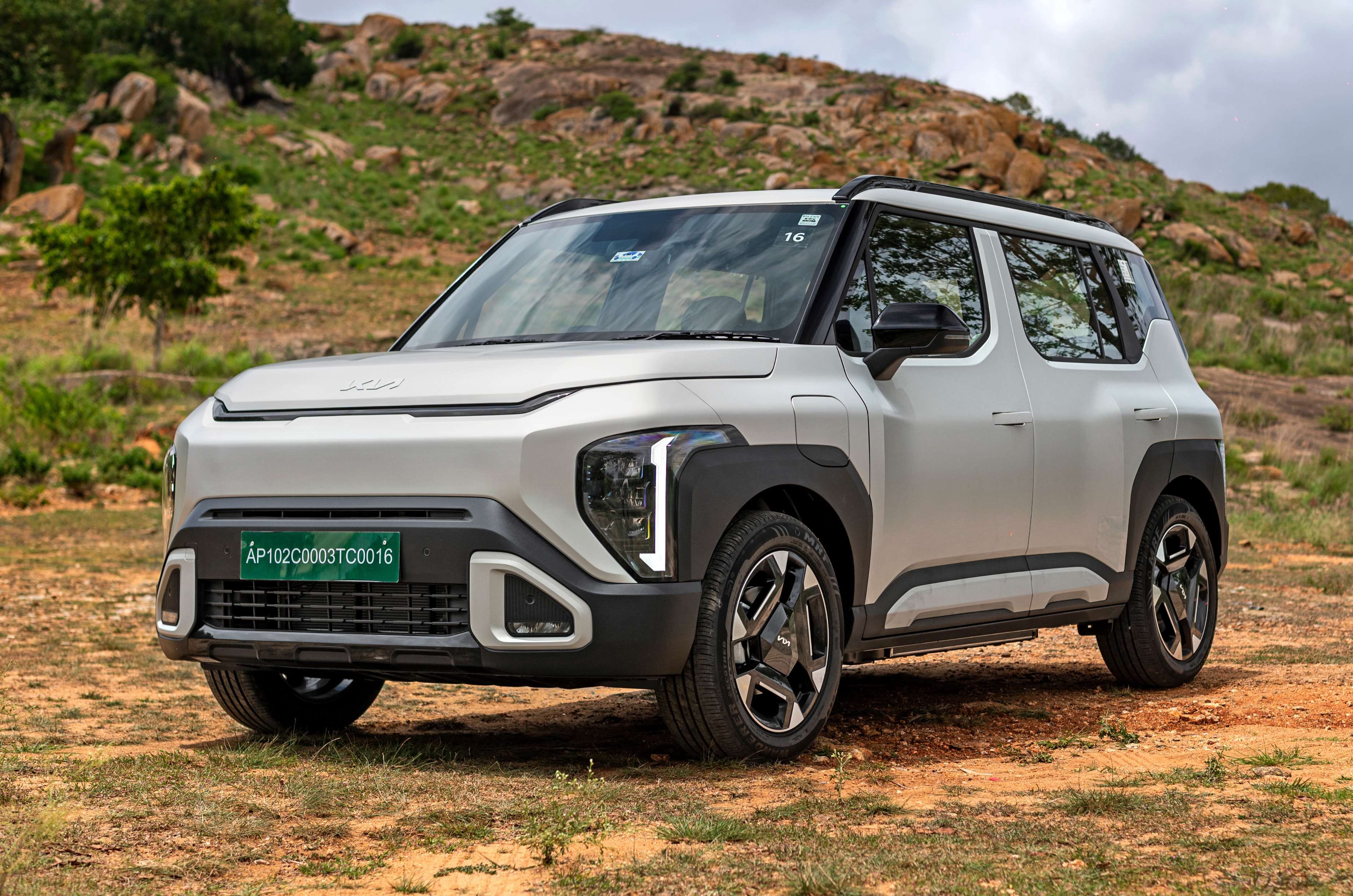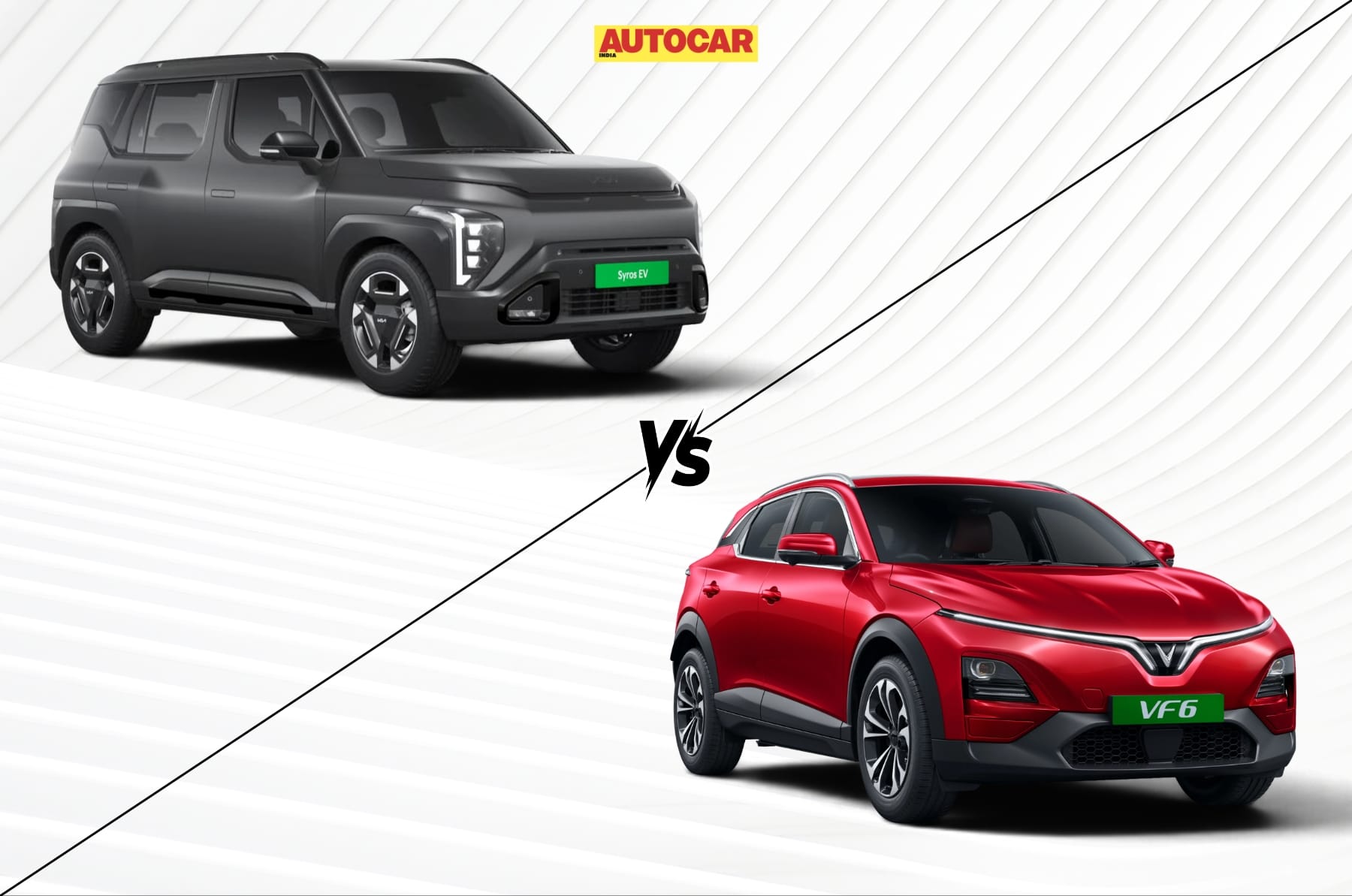
Kia Syros EV vs Vinfast VF6: Whose top trim offers more value?

Kia Syros EV vs Vinfast VF6

The Kia Syros EV and Vinfast VF6 are the most affordable electric vehicles from their respective brands. The premium Kia offering is sold in the compact SUV space, one below the VF6’s midsize SUV segment. So, can it match or even outdo the larger VF6 when it comes to specifications and features? We compare the Kia Syros EV X-Line ER and Vinfast VF6 Wind Infinity top-spec variants to find out.

Kia Syros EV X-Line ER vs Vinfast VF6 Wind Infinity: Dimensions


Syros EV

VF6

Length (mm)

3,995

4,241

Width (mm)

1,805

1,834

Height (mm)

1,670

1,615

Wheelbase (mm)

2,550

2,730

Ground clearance (mm)

197

190

Frunk (L)

16

No

Boot space (L)

390-465

423

Wheel size (in)

17

18

Clearly, the Vinfast VF6 is the larger SUV between the two. It is 246mm longer, 29mm wider and has a 180mm longer wheelbase than the Kia Syros EV. However, the Syros is 55mm taller and offers a 7mm higher ground clearance. It also gets a 16-litre frunk, a feature missing on the VF6. In terms of luggage space, the VF6 offers 423 litres of boot space, but the Syros EV can hold up to 465 litres when its sliding rear seats are pushed forward, although capacity drops to 390 litres with the seats in their rearmost position. The VF6 also rides on larger 18-inch alloy wheels, compared to the 17-inch units on the Syros EV.

Kia Syros EV X-Line ER vs Vinfast VF6 Wind Infinity: Powertrains


Syros EV

VF6

Battery size (kWh)

51.4

59.6

Electric motor setup

Single motor

Single motor

Drive layout

FWD

FWD

Power (hp)

171

204

Torque (Nm)

255

310

Claimed 0-100kph time (s)

8.1

8.9

ARAI range (km)

526

463

The two SUVs use a single-motor, front-wheel-drive setup, but the VF6 has the bigger 59.6kWh battery pack, compared to the Syros EV’s 51.4kWh unit. It also produces 33hp more power and 55Nm more torque. Despite this, the Syros EV is quicker, with a claimed 0-100kph time of 8.1 seconds, compared to the VF6’s 8.9 seconds. It also has a clear advantage in terms of claimed driving range, offering 526km on a single charge, which is 63km more than the VF6’s 463km, despite having a smaller battery pack.

Kia Syros EV X-Line ER vs Vinfast VF6 Wind Infinity: Charging speeds


Syros EV

VF6

AC charging (10-100 percent)

4.5 hrs (11kW unit)

Time not specified (7.2kW unit) 

DC fast charging (10-70 percent)

25 mins (100kW unit)

DC fast charging (10-80 percent)

39 mins (100kW unit)

Both the Syros EV and VF6 support 100kW DC fast charging. However, Kia claims a 39-minute charging time for a 10-80 percent top-up, while Vinfast’s claimed 25-minute figure is for the slightly lower 10-70 percent charging window. On the AC charging front, the Syros EV supports charging speeds of up to 11kW, taking 4.5 hours to charge from 10 to 100 percent. The VF6, meanwhile, supports up to a 7.2kW AC charger, although Vinfast has not yet revealed its charging time.

Kia Syros EV X-Line ER vs Vinfast VF6 Wind Infinity: Exterior features


Syros EV

VF6

Headlamps

LED

LED projector

Front fog lamps

LED

No

LED tail-lamps

Yes

Yes

Powered ORVMs

Yes

Yes

Alloy wheels

Yes

Yes

Flush door handles

Yes

No

Body cladding

Yes

Yes

Rear spoiler

Yes

Yes

Not a lot separates them when it comes to exterior features, with both offering LED tail-lamps, powered ORVMs, alloy wheels, body cladding and a rear spoiler. However, the VF6 comes with LED projector headlamps, while the Syros EV gets LEDs with reflectors. Another differentiation is that the Syros EV gets flush-fitting door handles, whereas the VF6 is equipped with conventional pull-type door handles.

Kia Syros EV X-Line ER vs Vinfast VF6 Wind Infinity: Interior features


Syros EV

VF6

Infotainment screen (in)

12.3

12.9

Digital driver’s display (in)

12.3

No

Climate control display (in)

5

No

Sunroof

Panoramic, openable

Panoramic, fixed

Wireless charger

Yes

Yes

Driver’s seat powered adjustment

4-way

8-way

Ventilated front seats

Yes

Yes

USB ports

2 Type C (f/r), including 1 100W (f)

2 Type A (f/r), 1 90W Type C (r)

Rear AC vents

Yes

Yes

Rear seat base ventilation

Yes

No

Climate control

Single zone

Dual zone

All window one touch up/down

Yes

Yes

Ambient lighting

Yes

Footwell only

Sound system

8-speaker Harmon Kardon

8 speakers

Apple CarPlay and Android Auto

Wireless

Wireless

Connected car tech

Yes

Yes

Rear sunshades

Yes

No

Rear centre armrest

Yes

Yes

Sliding, reclining rear seats

Yes

No

Speaking of interior features, both are well equipped and offer a wireless phone charger, ventilated front seats, connected car technology, one-touch up/down function for all windows, wireless Apple CarPlay and Android Auto and an 8-speaker sound system. The VF6 gets a slightly larger 12.9-inch infotainment screen, an 8-way power-adjustable driver’s seat and dual-zone climate control.

The Syros EV, meanwhile, stands out with a 12.3-inch digital driver’s display, a 5-inch climate control display, an openable panoramic sunroof, rear sunshades, rear seat base ventilation, and sliding and reclining rear seats. It also gets USB Type-C ports throughout the cabin, while the VF6 has Type-A ports at the front and rear, and only a single 90W Type-C port for rear passengers. Additionally, the Syros EV features a premium Harman Kardon sound system and more comprehensive ambient lighting (dashboard, doors and footwell area), whereas the VF6 offers just footwell lighting.

Kia Syros EV X-Line ER vs Vinfast VF6 Wind Infinity: Driving features


Syros EV

VF6

Drive modes

Eco, Normal, Sport

Eco, Normal, Sport

Household-style interior 3-pin socket

Yes

No

Regen braking

Yes

Yes

Paddleshifters for regen

Yes

No

Adaptive cruise control

Yes

Yes

Differences here are less, save for the Syros EV’s household-style 3-pin power socket to power certain electrical devices, along with steering-mounted paddle shifters to adjust the level of regenerative braking. Regen levels can be adjusted via the touchscreen on the VF6, but an internal V2L charging socket is absent here. Drive modes and adaptive cruise control are offered by both models.

Kia Syros EV X-Line ER vs Vinfast VF6 Wind Infinity: Safety features


Syros EV

VF6

Bharat NCAP rating

Yet to be tested

5 stars

Airbags

6

7

ABS with EBD

Yes

Yes

Electronic stability program

Yes

Yes

Hill-start assist

Yes

Yes

Tyre pressure monitoring system

Yes

Yes

360-degree camera

Yes

Yes

Front parking sensors

Yes

Yes

Electronic parking brake

Yes

Yes

Rain-sensing wipers

No

Yes

Auto-dimming IRVM

Yes

Yes

Isofix child seat anchors

Yes

Yes

Rear wiper, defogger

Yes

Yes

Disc brakes

Front, rear

Front, rear

Level 2 ADAS

Yes

Yes

Again, not much separates the them when it comes to safety kit. Both offer ABS with EBD, electronic stability control, hill-start assist, TPMS, a 360-degree camera, front parking sensors, an electronic parking brake, an auto-dimming IRVM, ISOFIX child seat anchors, front and rear disc brakes, and Level 2 ADAS. 

The VF6, however, gets seven airbags, one more than the Syros EV’s six, along with rain-sensing wipers. It has also secured a full 5-star Bharat NCAP safety rating. The Syros EV’s Bharat NCAP crash test rating, meanwhile, is yet to be revealed at the time of writing, but it is likely to score a 5-star rating like its ICE counterpart.

Kia Syros EV X-Line ER vs Vinfast VF6 Wind Infinity: Prices and verdict


Syros EV

VF6

Price (in Rs lakh)

20

19.99

There’s no doubt that both the Kia Syros EV and Vinfast VF6 are feature-rich electric SUVs. However, despite being positioned a segment below the VF6, the Syros EV makes a strong case for itself with its overall package. It offers several features aimed at pampering the rear seat passengers, including sliding and reclining seats with ventilation (seat base only), sunshades and an openable panoramic sunroof. While it has a smaller footprint than the VF6, we found in our review that the Syros EV still offers a spacious cabin, helped by its boxy design and good interior packaging.

The Syros EV also has an advantage when it comes to claimed driving range. Despite using a smaller battery pack, it offers a higher single charge range, an important factor for most EV buyers. While both SUVs are priced very close to each other at the top-end, the Syros EV is clearly on the expensive side for its segment. However, the overall package goes a long way towards justifying its price. Buyers can also reduce the upfront cost by quite a lot by opting for the battery as a service (BaaS) scheme with the electric Syros, though this option is not available with the VF6.

Another advantage for the Syros EV is Kia’s wider sales and service network across the country, along with its stronger brand recognition among buyers. Vinfast, on the other hand, is still new to the market, with a relatively limited sales and service network. This could also play an important role in the overall ownership experience.

July 2026 car sales: Tata holds slim lead over Mahindra

July 2026 car sales: Tata holds slim lead over Mahindra

July 2026 was a strong month for India’s passenger vehicle industry, with most carmakers reporting healthy month-on-month gains. Maruti Suzuki strengthened its lead at the top, with domestic passenger vehicle sales approaching the 2 lakh-unit mark, while Tata Motors retained second place, narrowly ahead of Mahindra. Hyundai rebounded strongly from a fire disruption at a supplier that affected June production to remain fourth, with Toyota rounding out the top five in the monthly sales.

July 2026 carmaker-wise sales in India

Carmaker

July 2026 sales

June 2026 sales

MoM change (%)

July 2025 sales

YoY change (%)

Maruti Suzuki

1,96,203

1,47,187

33.30

1,37,776

42.41

Tata

62,611

62,076

0.86

39,521

58.42

Mahindra

60,048

60,393

-0.57

49,871

20.41

Hyundai

54,210

39,635

36.77

43,966

23.30

Toyota

30,516

28,441

7.30

29,159

4.65

Kia

28,200

24,552

14.86

22,135

27.40

MG

8,158

7,568

7.80

6,687

22

Nissan

4,518

3,006

50.30

1,421

218

Maruti Suzuki July 2026 sales

Sales: 196,203 units, Change: 42.4 percent YoY

Maruti Suzuki retained its position as India’s largest carmaker in July, with domestic passenger vehicle sales rising to 196,203 units from 147,187 units in June. Utility vehicles, including the Brezza, Ertiga, e Vitara, Fronx, Grand Vitara, Invicto, Jimny, Victoris and XL6, contributed 78,851 units, while the compact and mid-size segment, led by the Baleno, Swift, Dzire and WagonR, remained the company’s largest volume driver with 90,822 units. Mini cars, comprising the Alto and S-Presso, added another 12,634 units.

Tata Motors July 2026 sales

Sales: 62,611 units, Change: 58 percent YoY

Tata Motors sold 62,611 passenger vehicles in the domestic market in July, marginally higher than the 62,076 units recorded in June, despite temporary production disruptions at its Sanand plant due to heavy rainfall and flooding. The Punch recorded its highest-ever monthly sales, reinforcing its position as one of the company’s best-selling SUVs, while Tata’s EV portfolio crossed 15,000 monthly wholesales for the first time.

Mahindra July 2026 sales

Sales: 60,048 units, Change: 20 percent YoY

Mahindra sold 60,048 SUVs in the domestic market in July, almost unchanged from the 60,393 units it sold in June. The expected launch of the updated Scorpio N in August could help boost sales and provide fresh momentum as the company heads into the festive season.

Hyundai July 2026 sales

Sales: 54,210 units, Change: 23.3 percent YoY

Hyundai recorded its highest-ever domestic sales for the month of July, selling 54,210 units, a sharp recovery from 39,635 units in June after a fire at a supplier’s facility disrupted production. The Creta led the growth with 18,088 units, its best monthly performance in CY26, while the i20 also posted its highest monthly sales in CY26 at 6,738 units, highlighting renewed momentum across both Hyundai’s SUV and hatchback portfolios.

Toyota July 2026 sales

Sales: 30,516 units, Change: 5 percent YoY

Toyota Kirloskar Motor reported domestic sales of 30,516 units in July, up from 28,441 units in June, with the Innova Hycross, Urban Cruiser Hyryder and Glanza continuing to drive volumes. Cumulative domestic dispatches for the January-July period rose 13 percent year-on-year to 233,854 units, while sales during the first four months of FY2027 (April-July) increased 8 percent to 128,746 units.

Kia July 2026 sales

Sales: 28,200 units, Change: 27.4 percent YoY

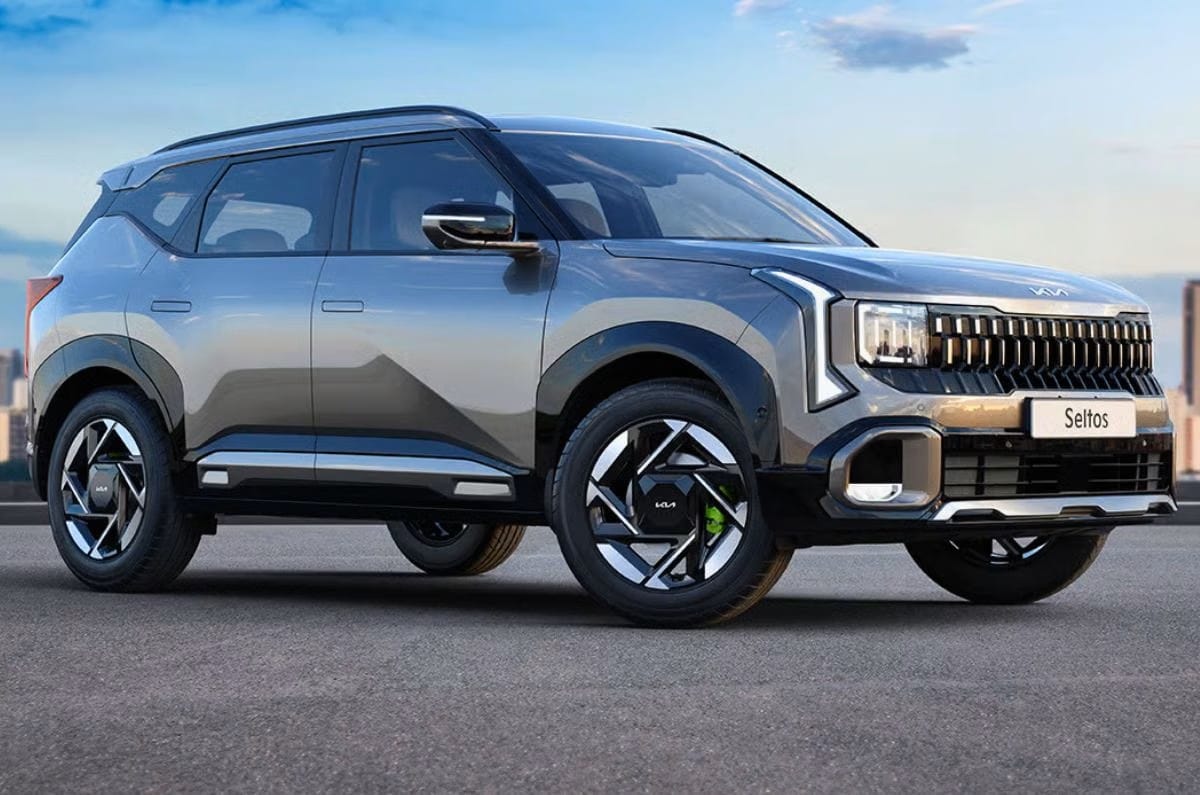
Kia recorded its highest-ever July wholesale volume, dispatching 28,200 units, up from 24,552 units in June. The Seltos remained Kia’s best-selling model, averaging more than 10,000 units a month since the start of the year, while the recently launched Syros EV has also garnered strong initial bookings.

MG July 2026 sales

Sales: 8,158 units, Change: 22 percent YoY

JSW MG Motor India recorded its highest-ever monthly wholesales for the second consecutive month in July, dispatching 8,158 units, up from 7,568 units in June. Electric vehicles accounted for more than 80 percent of total volumes, marking their strongest monthly performance yet.

Nissan July 2026 sales

Sales: 4,518 units, Change: 218 percent YoY

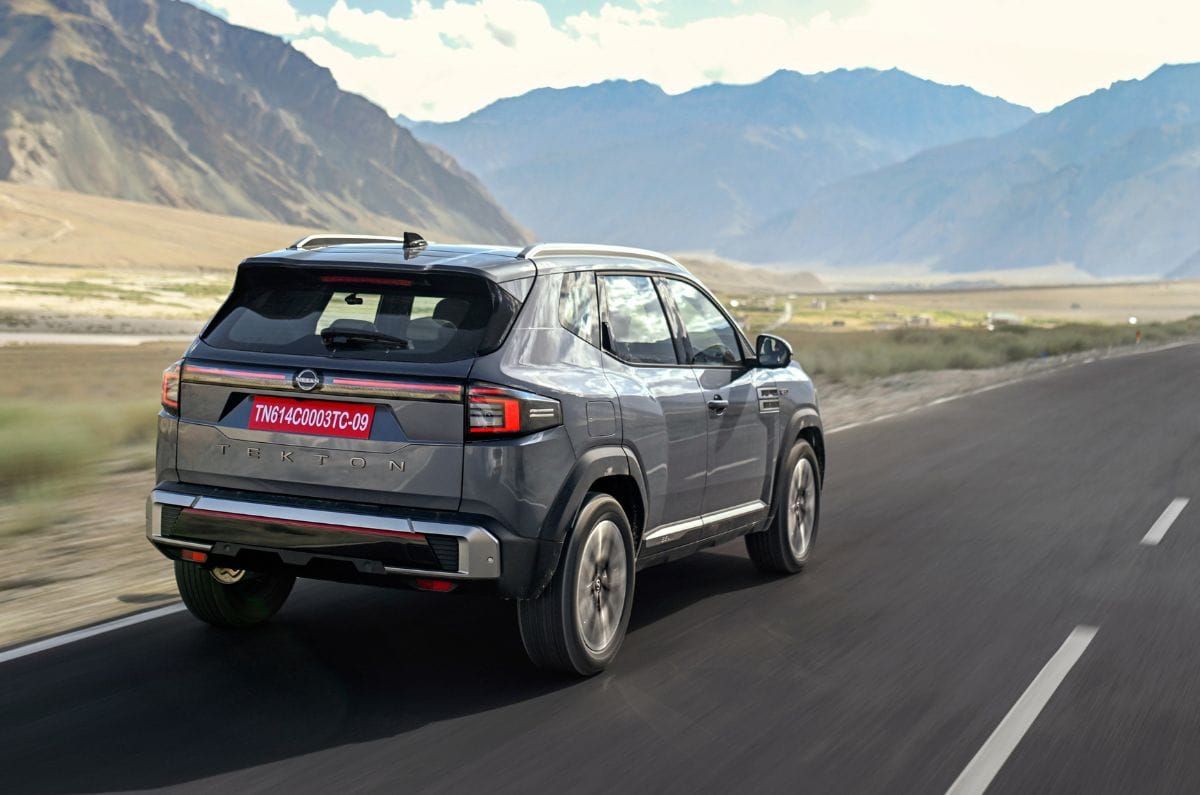
Nissan continued its growth momentum in July, with domestic wholesales rising 50 percent month-on-month to 4,518 units from 3,006 units in June. The increase was supported by the start of customer deliveries of the all-new Tekton, which commenced on July 20 after its debut on July 9, expanding Nissan’s India portfolio to three models alongside the Magnite and Gravite.

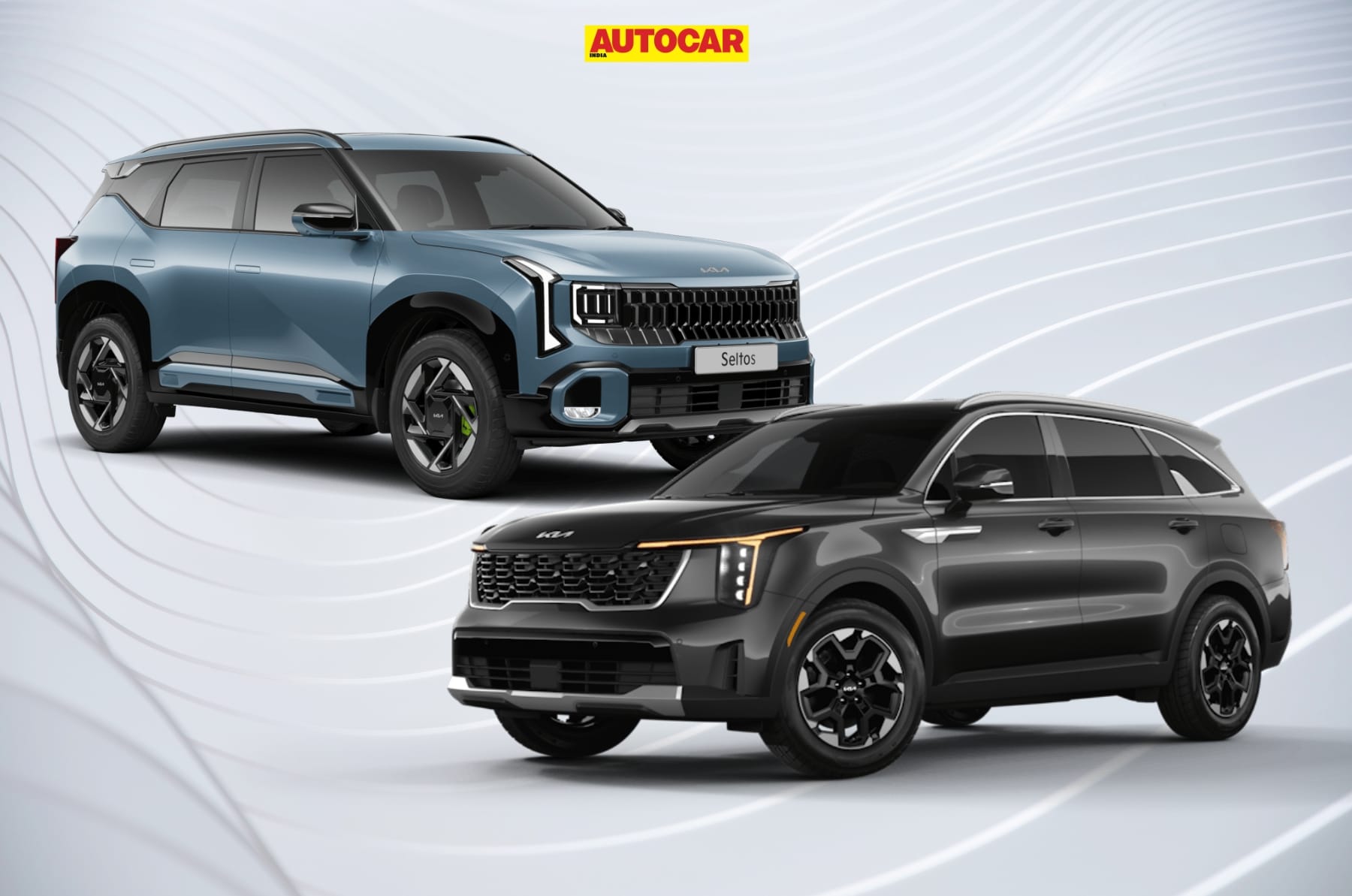
Kia India plans to electrify 8 out 10 models by 2030; CNG also on cards

Kia

Kia India has outlined its multi-powertrain strategy for the Indian market, confirming that hybrid powertrains and factory-fitted CNG models are under development. Speaking to our sister publication Autocar Professional, Kia India executive Atul Sood said the company will continue to invest across multiple powertrain technologies as it works towards having eight electrified models in its India lineup by 2030. “We’re looking at the complete gamut of technologies available. We want to give all options to our customers, so then we leave it to them to decide what they want to go in for,” Sood said.

  1. Factory-fitted CNG models under development
  2. Strong-hybrid planned for Sorento, Seltos, Carnival

Eight electrified models planned

Kia’s electrification roadmap includes both battery electric vehicles and strong hybrids. he company already sells four EVs in India – the EV6, EV9, Carens Clavis EV and the recently launched Syros EV in India, and has also confirmed that a strong-hybrid version of the Seltos is under development. Sood said Kia’s current priority is to localise the hybrid technology to make it more cost competitive, but did not specify a launch timeline. 

When asked about a fully electric Seltos, similar to Hyundai’s Creta Electric, Sood said the company is studying the possibility but has not taken a final decision.

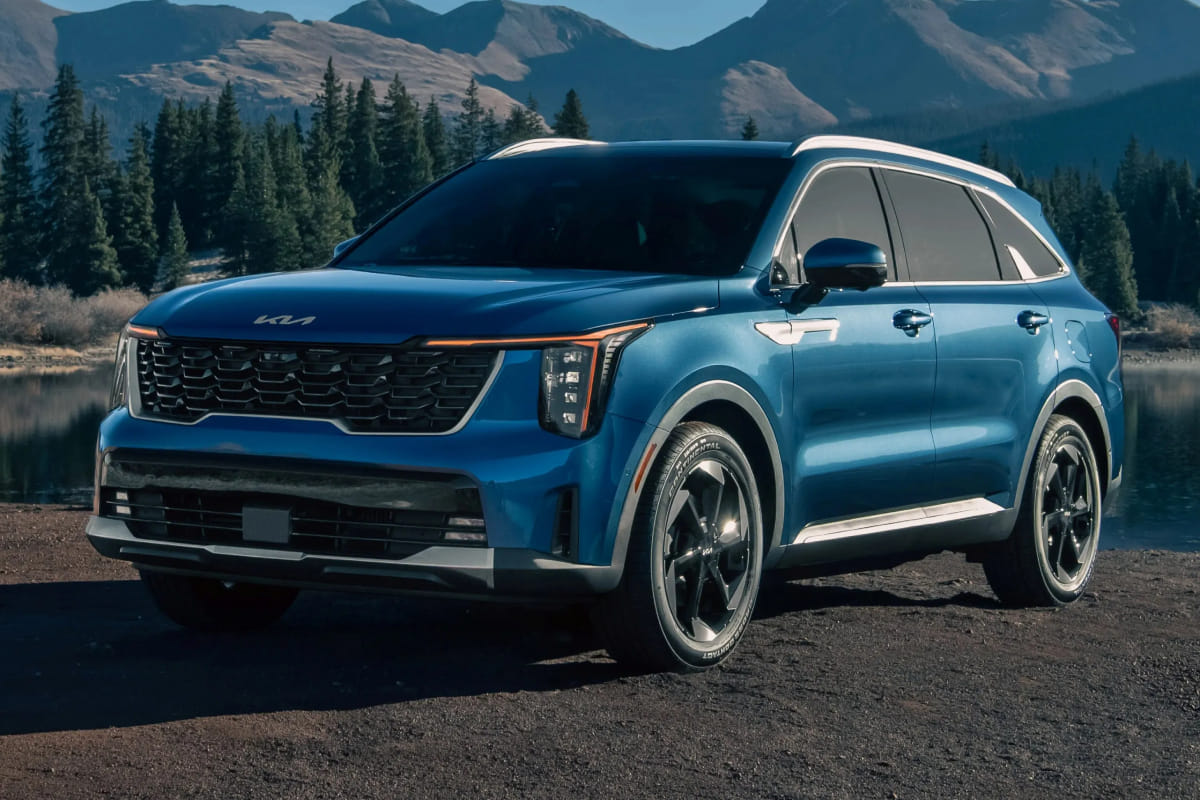
Aside from the Seltos, Kia is also preparing to introduce the Sorento in India in the coming months. Expected to be locally assembled, the three-row SUV is likely to become the brand’s first strong-hybrid model for the Indian market. According to our previous reporting, the Carnival is also expected to receive a strong-hybrid powertrain for India. 

With four EVs already on sale and hybrid powertrain planned for the Seltos, Sorento and Carnival, Kia would have seven electrified models in its lineup, suggesting that another model – likely from its compact SUV range, such as the Sonet or Syros, could also gain a hybrid powertrain to meet its target of eight electrified models by 2030.

Factory-fitted CNG models in the works

Kia has also confirmed that it is developing factory-fitted CNG models for India. At present, the brand does not offer any factory-fitted CNG vehicles, instead relying on dealer-installed retrofit kits for the Carens. However, Sood said engineering work towards factory-fitted CNG models is “strong work in progress”, although he did not provide a timeline for their introduction.

He added that Kia is evaluating the technology across multiple models in its lineup, rather than limiting it to MPVs, as it assesses demand across different vehicle segments.

Haryana waives road tax on EVs priced up to Rs 30 lakh

EV

The Haryana Cabinet has approved a 100 percent exemption on motor vehicle tax for new battery electric vehicles (BEVs) priced up to Rs 30 lakh (ex-showroom). EVs priced above Rs 30 lakh will now be eligible for a 50 percent exemption on motor vehicle tax, while the existing concession for CNG vehicles remains unchanged.

  1. 100 percent tax waiver for EVs priced up to Rs 30 lakh
  2. EVs above Rs 30 lakh to get a 50 percent tax exemption
  3. Existing 20 percent tax concession for CNG vehicles retained

Haryana EV tax waiver: what’s changed?

The revised policy marks a significant expansion of Haryana’s incentives for electric vehicles. Under the previous policy, battery electric vehicles were eligible for a 20 percent one-time exemption on motor vehicle tax. The latest decision increases this benefit to a full tax exemption for EVs priced up to Rs 30 lakh, while introducing a 50 percent exemption for models priced above the threshold.

The decision was approved by the Haryana Cabinet chaired by Chief Minister Nayab Singh Saini, and implements announcements made in the state’s 2026-27 Budget.

Most mass-market EVs to benefit

The revised tax structure is expected to cover the majority of mass-market electric cars sold in India, while extending a partial tax concession to premium EVs priced above Rs 30 lakh. The state government said the move is aimed at accelerating EV adoption and strengthening Haryana’s electric mobility policy.

CNG benefits unchanged; women buyers get additional rebate

Haryana will continue to offer the existing 20 percent one-time motor vehicle tax exemption for CNG vehicles, with no changes to the current policy.

Separately, the Cabinet has approved a 1 percent rebate on motor vehicle tax for new private vehicles priced up to Rs 20 lakh (ex-showroom) that are registered in the name of a woman.

Flex-fuel to remain a key part of Honda’s 2-wheeler India strategy

Flex-fuel to remain a key part of Honda's 2-wheeler India strategy

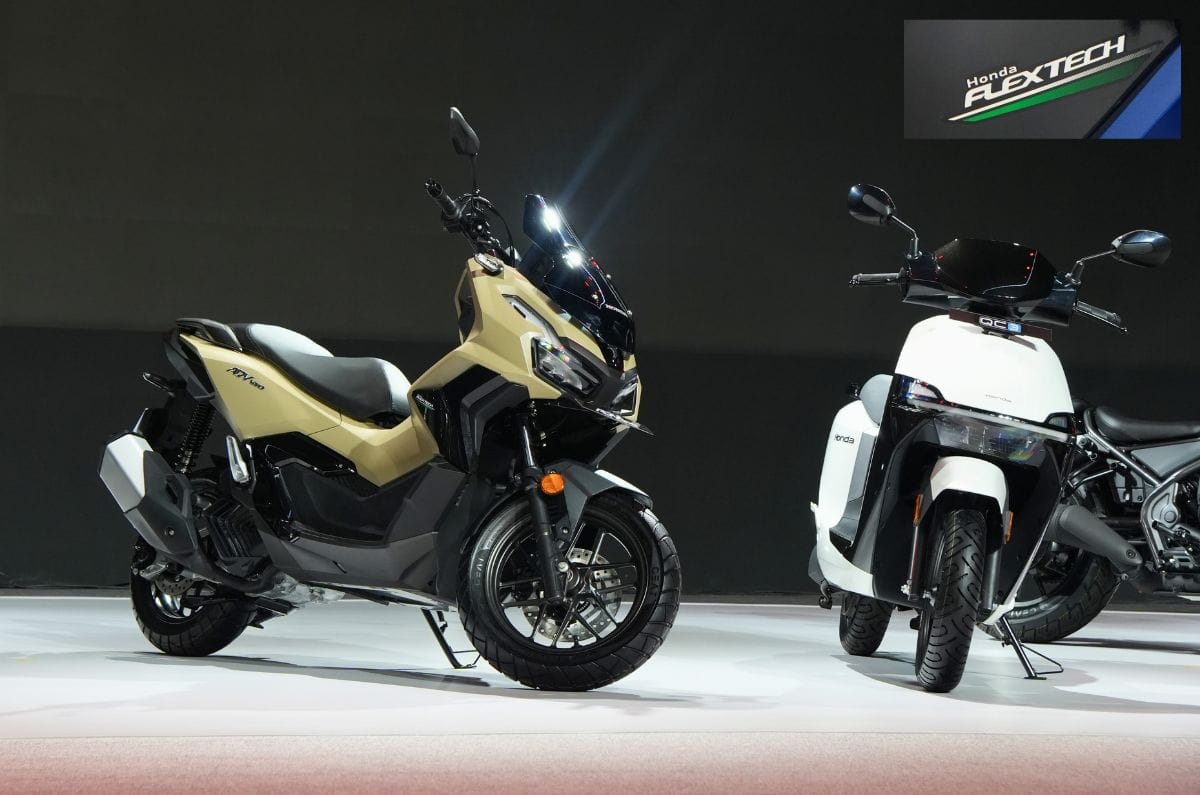
Alongside unveiling the E85 compliant ADV160, Honda Motorcycle & Scooter India has reiterated that flex-fuel technology will remain a key part of its long-term product strategy. The company says E85-compatible models will complement battery-electric vehicles under its multi-pathway approach to future mobility rather than replace them.

1. The future of Honda is multi-fuel and multi-pathway, says GM, product planning.
2. ADV160 is the first flex-fuel scooter to be showcased in India
3. Honda showcased an electric scooter, a roadster, two cruisers, and adventure motorcycle duo alongside the ADV160.

Honda’s multi-fuel pathway: What to expect?

The remarks come as India’s ethanol blending programme gathers pace

Our sister concern, Autocar Professional, got some insights on the Japanese marques product planning strategy. Speaking at the HMSI 2026 event, Krishnakumar, General Manager, Product Planning, Honda Motorcycle & Scooter India, said the company believes the future of mobility will be “multi-fuel, multi-pathway”, with different technologies catering to different customer needs and operating conditions.

“The future of mobility is multi-fuel, multi-pathway, and electric is one important part of that future,” he said while outlining Honda’s product strategy.

According to Honda, its flex-fuel journey began in 2009 with the introduction of the CG Titan Mix in Brazil, which the company describes as the world’s first production flex-fuel motorcycle. The experience gained from that programme has now been extended to products such as the ADV160.

Highlighting the company’s flex-fuel roadmap, Krishnakumar showcased the ADV160, an E85-compatible scooter capable of operating on any ethanol blend from E0 to E85. He said the system automatically adapts to the fuel blend, allowing the engine to optimise performance without any rider intervention. Notably, the ADV160 is also India’s first flex-fuel scooter to be showcased.

The ADV 160 comes powered by a 156.9 cc, liquid-cooled engine producing 16.3hp of power and 14.9 Nm of torque. Once launched, the ADV160 will rival the likes of the Hero Xoom 160 and Yamaha Aerox 155.

Flex Fuel And Electric: 

Honda used the event to underline that flex fuel is not being positioned as an alternative to electrification but as a complementary technology within its broader portfolio. Alongside the ADV160, the company showcased electric, roadster, cruiser, and adventure motorcycles, reinforcing its strategy of offering multiple powertrain solutions as customer requirements and infrastructure continue to evolve.

The remarks come as India’s ethanol blending programme gathers pace, with automakers and two-wheeler manufacturers increasingly evaluating flex-fuel technologies alongside battery-electric vehicles to support the country’s broader decarbonisation objectives.

With inputs from KIRAN MURALI AND MUKUL YUDHVEER SINGH
 

Mercedes-Benz CTO Jörg Burzer on India R&D and future product development

Mercedes-Benz CTO Jorg Burzer

Mercedes-Benz’s Research and Development centre in Bengaluru has evolved from a hardware-focused engineering hub into one of the company’s key global R&D centres, with teams working across software, ADAS, electric powertrains and physical vehicle development. In this interview, Jörg Burzer, Member of the Board and Chief Technology Officer, Development & Procurement at Mercedes-Benz Group AG, discusses the centre’s expanding capabilities, the role of AI in vehicle development, the future of autonomous driving, and why he believes every Mercedes-Benz has “a bit of India” in it.

A lot of global auto OEMs have large R&D centres in India. Beyond cost, what are the benefits of having such large setups in India

Yes, it’s not only cost; you see, the competence level is so high. If you look at our centre, we will be celebrating its 30th anniversary here in India, and over these years, it has only grown in size and capability. We started with hardware, but now it’s massively into software, infotainment and autonomous driving. The team in India is contributing heavily on ADAS, for instance, and we are working on Level 3 and Level 4 with the team in India. So, all in all, I would say it’s competence, speed and agility that are good here. 

Is the Mercedes development centre mainly a digital unit, or is physical development also being undertaken here?

Oh certainly, we have lots of hardware development. There are many test benches, and you’ll see lots of physical testing and development taking place here. Even beyond powertrain, there’s a lot of physical development taking place along with our vendors here too. And then, on electric vehicles, we’re working on the powertrains and batteries too. And yes, on the digital side, there’s lots of AI work, not just on the product, but also on process development. So yes, the centre is a full-scope R&D centre, a blend of the digital and physical. For example, we do a lot of work on the simulation of sheet metal forming and welding here. 

Besides engineering, does the India centre also do design and styling work for your products?

On the design side, at Mercedes, we have this philosophy that we are creating a global product, and so we have a global design. This might change a little bit – obviously, we are adapting our design, which might be enriched by certain market trends – but for us, it’s very important that it is a global design, so we have one design hat. So, our styling team is based in Germany, where we have our design centre, and that’s important for us to maintain the global approach. 

Software is today a leveller, even phone manufacturers can make a car today. Do you view this as a threat? 

I see this as an opportunity because, for instance, you can develop a software stack for ADAS, but at the end you have to apply it to hardware. One interesting bit, to my knowledge, is that we are the only OEM doing a Level 2++ ADAS with a combustion engine, otherwise you only see this on EVs. To do this in a combustion engine environment, you know, with things like a transmission, it’s more complicated, so that’s where our expertise in traditional technologies, along with our developments in software, has an advantage. And of course, we have tremendous respect for our competitors and we are seeing what they are doing, but for me, I think if you do this mix right, you will be at the forefront of development.

Past Mercedes cars stood for robust engineering. What do you think a Mercedes 10 years from now would be all about? 

Obviously there will be tech, but there will be more. I can give you a good example, one of the most important characteristics and values of a Mercedes-Benz is safety. We do plenty of crash tests every year for our cars that we launch, plus there’s a lot that we are doing with autonomous driving too, for instance, what we are doing with Nvidia. And here we have a lot of redundancy. We have a traditional software stack with massive amounts of info like what is a stop sign in every different market, for example. But there’s an end-to-end stack where the software is trained by the behaviour of the driver in traffic, but what we are doing is we have both stacks, so if the end-to-end system does not know what to do, then it can fall back to the classic system. So, we create a safety environment, where we know there is always a solution. 

On redundancy, what is your view of a wide sensor stack like radars, lidars and cameras, or is AI with cameras only fine? 

We are using AI, yes, but we have radars too. We have to use AI to create efficiency in the simulation and training, but you have to also think about the sensor set, and for me, I am convinced you have to have a multiple sensor set, not just one type. So, like on the S Class, we have multiple cameras, radars and ultrasonic sensors too. 

Does the India R&D centre develop products or platforms independently of headquarters, or is it more synergetic?  

For us, it’s very important that we do everything as a team. So, for me personally, it’s very important to have a global perspective in R&D because the innovations and technology solutions are so complex that you can only master them as a team. There are a lot of competencies, but there is not one single team in the world that can say, ‘I am the one that can create a platform.’ It’s always teamwork, and if you look at all industries, automotive engineering is the ultimate for teamwork. So for us, R&D is one big team. And with regards to the India centre, I love to say that in each and every Mercedes, there is a bit of India in it.
 

Government releases revised CAFE III draft

Cafe 3

The Ministry of Power has released a revised draft of the third phase of the Corporate Average Fuel Economy norms (CAFE III) for passenger vehicles, proposed to take effect from April 1, 2027. According to industry experts, the revised draft adopts a more balanced approach than the earlier proposal by relaxing the overall fuel efficiency targets. Public comments on the draft have been invited for 21 days before the rules are finalised.

  1. Fuel consumption target to tighten progressively until FY2032
  2. Manufacturers can trade compliance credits or buy them from the Bureau of Energy Efficiency

Under the proposal, manufacturers will have to submit fuel efficiency data under both the Modified Indian Driving Cycle (MIDC) and the Worldwide Harmonised Light Vehicles Test Procedure (WLTP). The ministry said a conversion factor between the two test cycles will be notified separately.

Proposed fuel efficiency targets

The draft proposes progressively stricter fuel efficiency targets over five years. The fleet-average target is proposed at 3.996 litres per 100km (94.76g CO₂/km) for FY2028, tightening to 3.327 litres per 100km (78.90g CO₂/km) by FY2032. According to industry experts, these targets are less stringent than those proposed in the earlier draft.

Credit trading mechanism retained

Manufacturers that exceed their prescribed fuel efficiency targets will continue to earn compliance credits, while those falling short will accumulate debits. These credits can either be traded with other manufacturers or purchased from the Bureau of Energy Efficiency (BEE).

The draft proposes a buyout price of Rs 2,500 per gCO₂/km for FY2028, increasing gradually to Rs 4,500 per gCO₂/km by FY2032.

The revised draft also finalises the technical criteria for claiming fuel-efficiency benefits from technologies such as start-stop systems, regenerative braking, tyre-pressure monitoring systems (TPMS), electric water pumps, high-efficiency air-conditioning systems and advanced glazing.

It also retains incentives for battery electric vehicles, plug-in hybrids, strong hybrids and flex-fuel vehicles through super credits and carbon neutrality factors.

Government releases revised CAFE III draft

Cafe 3

The Ministry of Power has released a revised draft of the Corporate Average Fuel Economy (CAFE III) norms for passenger vehicles, proposed to come into effect from April 1, 2027. According to industry experts, the revised draft adopts a more balanced approach than the earlier proposal by relaxing the overall fuel efficiency targets. Public comments on the draft have been invited for 21 days before the rules are finalised.

  1. Fuel consumption target to tighten progressively until FY2032
  2. Manufacturers can trade compliance credits or buy them from Bureau of Energy Efficiency

Under the proposal, manufacturers will have to submit fuel efficiency data under both the Modified Indian Driving Cycle (MIDC) and the Worldwide Harmonised Light Vehicles Test Procedure (WLTP). The Ministry said a conversion factor between the two test cycles will be notified separately.

Proposed fuel efficiency targets

The draft proposes progressively stricter fuel efficiency targets over five years. The fleet-average target is proposed at 3.996 litres per 100km (94.76g CO₂/km) for FY2028, tightening to 3.327 litres per 100km (78.90g CO₂/km) by FY2032. According to industry experts, these targets are less stringent than those proposed in the earlier draft.

Credit trading mechanism retained

Manufacturers that exceed their prescribed fuel efficiency targets will continue to earn compliance credits, while those that fall short will accumulate debits. These credits can either be traded with other manufacturers or purchased from the Bureau of Energy Efficiency (BEE).

The draft proposes a buyout price of Rs 2,500 per gCO₂/km for FY2028, increasing gradually to Rs 4,500 per gCO₂/km by FY2032.

The revised draft also finalises the technical criteria for claiming fuel-efficiency benefits from technologies such as start-stop systems, regenerative braking, tyre pressure monitoring systems (TPMS), electric water pumps, high-efficiency air-conditioning systems and advanced glazing.

It also retains incentives for battery electric vehicles, plug-in hybrids, strong hybrids and flex-fuel vehicles through super credits and carbon neutrality factors.

JSW MG to launch XEV 9S-rivalling electric SUV in August 2026

wuling eksion starlight mg scoop

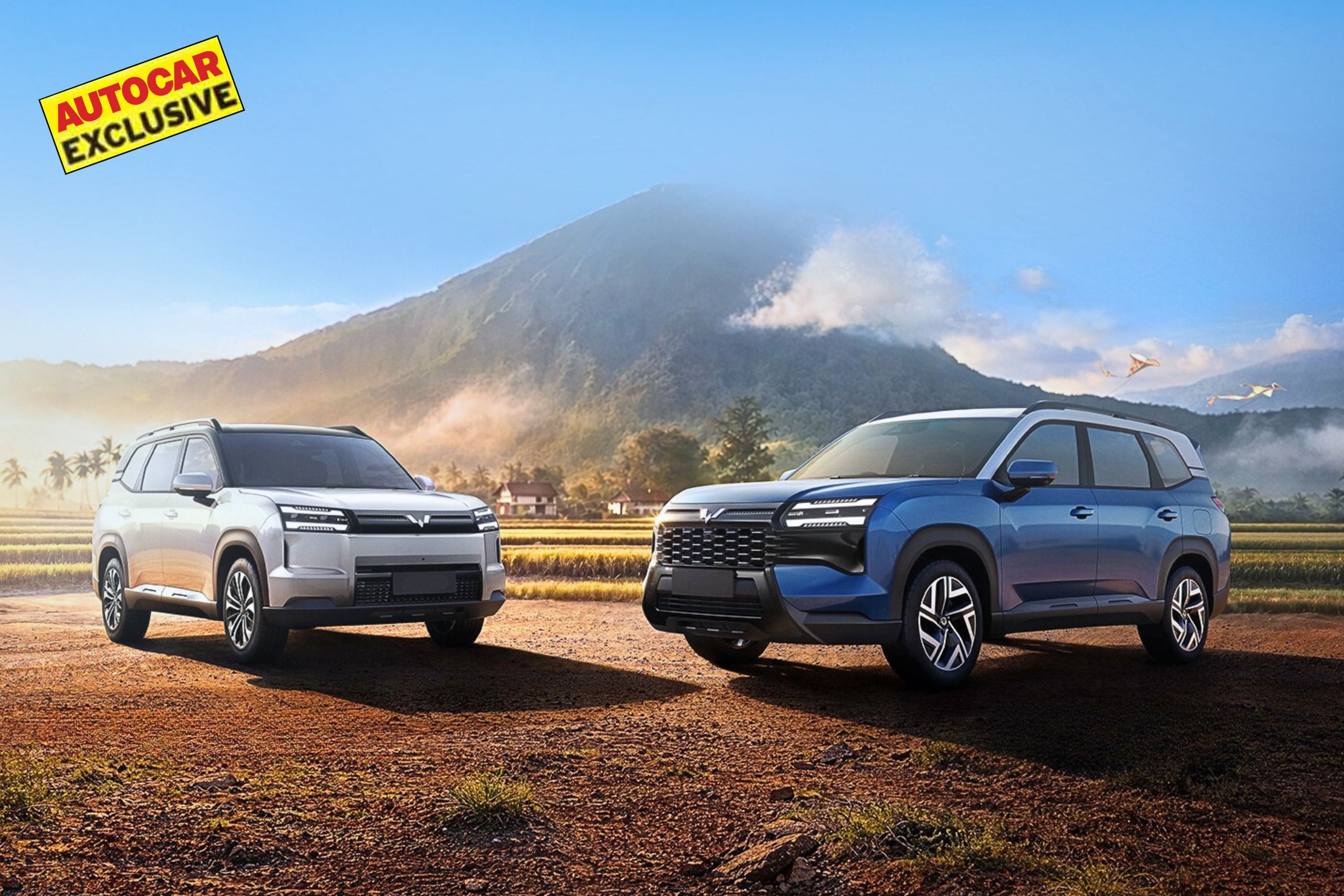
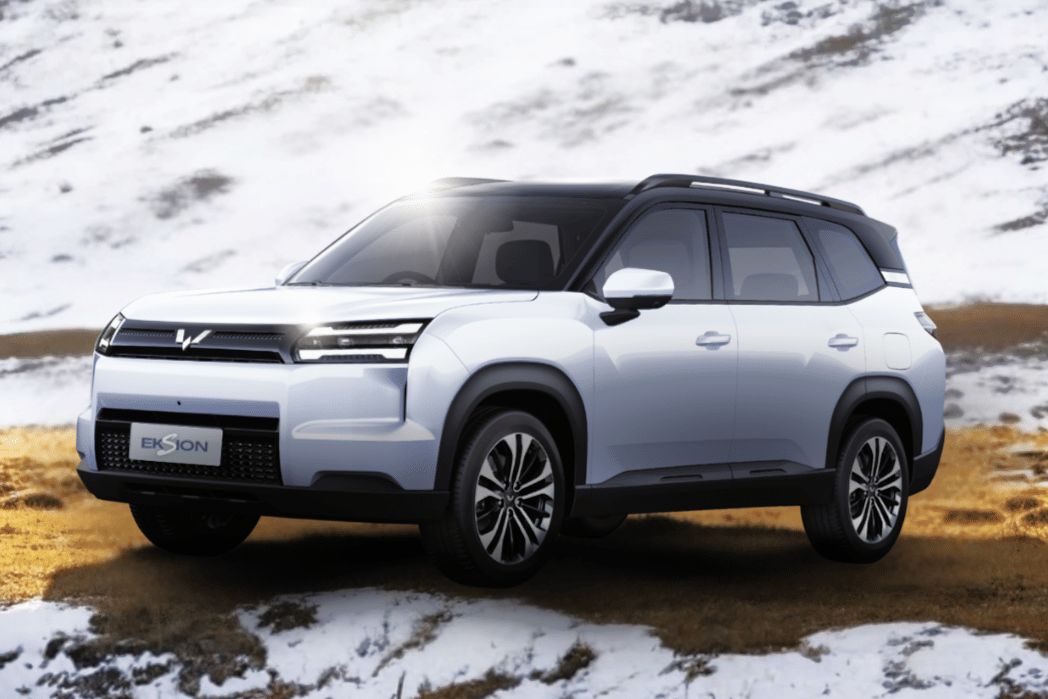
JSW MG unveiled its new ADAPT BEV/hybrid platform earlier today, and we can now confirm the first model to be based on it will be a Mahindra XEV 9S-rivaling EV that goes on sale next month. The model will have much in common with the Indonesia market Wuling Eksion. For those not in the know, Wuling is a sister brand to MG Motors and both come under the broader SAIC umbrella.

Sources tell us JSW MG is targeting keen pricing for its electric SUV, which could undercut the XEV 9S 70kWh that retails for Rs 25.8 lakh (ex-showroom).

MG Eksion-based electric SUV: Battery and range details

The JSW MG electric SUV will be offered with a 69kWh battery pack and an official range of around 600km. For reference, the XEV 9S is offered with three battery pack options – 59kWh (official range 521km), 70kWh (600km) and 79kWh (679km). The 70kWh battery pack is the sweet spot of the XEV 9S line-up and the one JSW MG would like to woo buyers away from.

Wuling Eksion EV. Image used for representation only.

The Eksion’s single motor produces 201hp and 310Nm versus the XEV 9S 70kWh’s 245hp and 380Nm figures. Also, while the Eksion sports a front motor, front wheel drive layout, the XEV 9S uses a rear motor, rear wheel drive arrangement.

MG Eksion-based electric SUV: Exterior and interior details

Measuring 4.7m in length, 1.85m in width and 1.7m in height, the Wuling Eksion closely matches the 4.7m long, 1.9m wide, and 1.7m tall XEV 9S in size. Also like the XEV 9S, the Eksion is offered in a 7 seat configuration which makes it an option of great interest for buyers with large families.

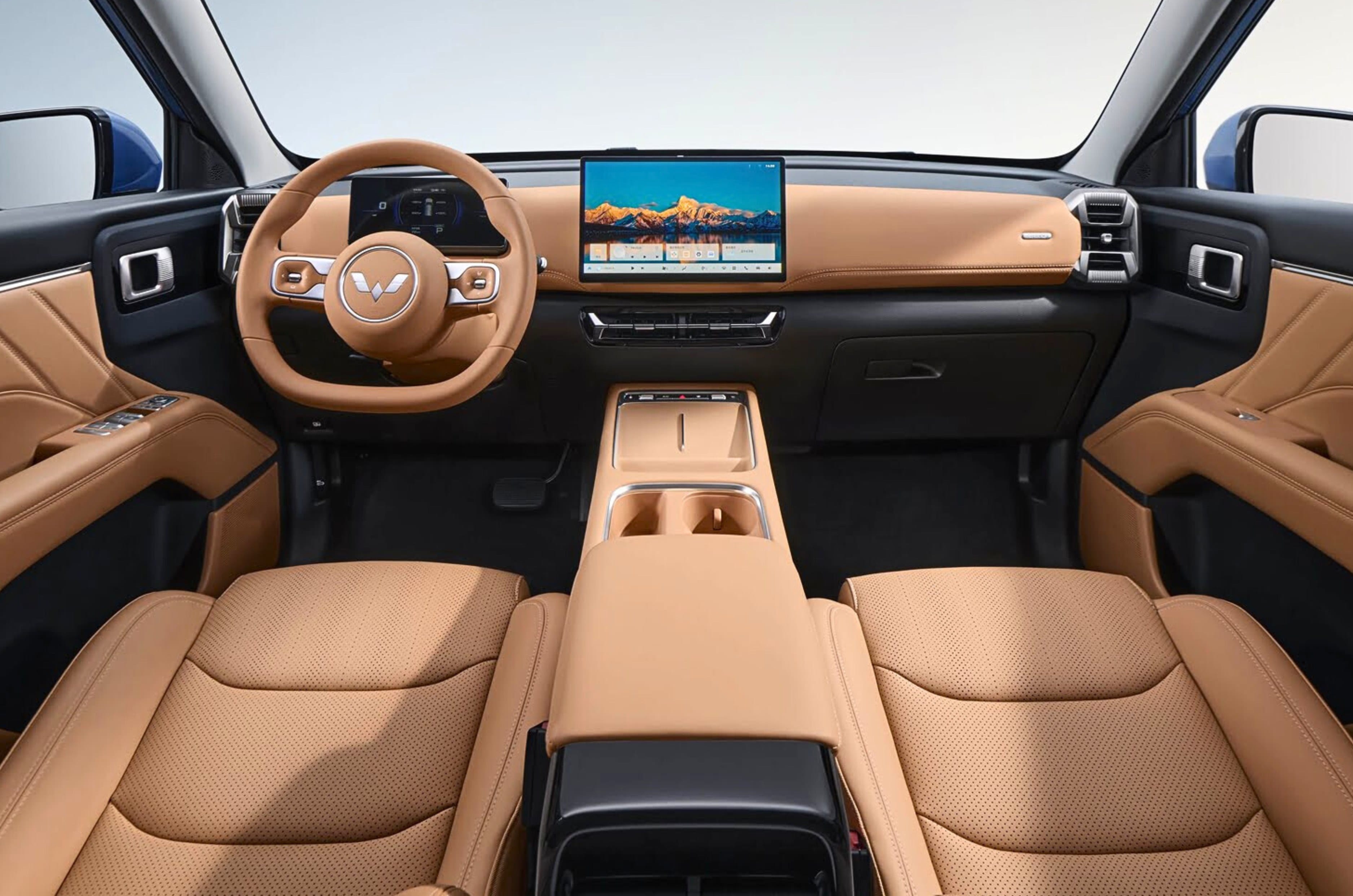
Wuling Eksion interior. Image used for representation only.

In look, the MG electric SUV will feature a boxy, upright stance and an upright tail. The interior features a minimalist design with a 12.8-inch touchscreen being the centrepiece of the dashboard. A digital instrument cluster, panoramic sunroof and powered tail gate are features expected on the model for India.

Eksion-based plug-in hybrid SUV to be pitched as MG’s XUV 7XO rival

JSW MG will keep the momentum going next year with the launch of a plug-in hybrid electric vehicle (PHEV) version of the SUV. While the basic shape will be shared with the BEV, the PHEV will sport some different styling elements.

The PHEV, which will be the second model off the ADAPT platform, pairs a 105hp/130Nm, 1.5-litre Atkinson cycle petrol engine and a 195hp/230Nm electric motor that’s powered by a 20.5kWh LFP battery. Wuling claims a 125km all-electric range and a combined range of over 1,000km for the Eksion PHEV.

Wuling Eksion PHEV. Image used for representation only.

JSW MG would be hoping Indian buyers see the PHEV as the best of both worlds – silent running and low costs of an EV with the freedom of a petrol engine. It is understood that JSW MG has large diesel-automatic SUVs in its crosshairs and is looking to price its PHEV SUV within Rs 1.5 lakh off the Mahindra XUV 7XO diesel-AT.    

EV and PHEV to be in focus

While the ADAPT platform supports battery electric, plug-in hybrid, range extender and strong hybrid powertrains, JSW MG will focus on BEVs and PHEVs to begin with. Speaking to Autocar India, Anurag Mehrotra – MD, JSW, MG Motor India – underlined while there is space for all powertrains “The BEV will continue to have the largest lion’s share of the pie. You will then have the plug-in hybrids, you will then have the (strong) hybrids. Range extender electric vehicles (REEVs) is a relatively new technology, so it is at a much smaller pie of the entire new energy vehicle market.”

Mehrotra also stressed the importance of a multi-powertrain approach from a consumer and manufacturer point of view. “We genuinely believe the answer to India’s electrification journey is not a single powertrain. It has to be multiple and this platform will give us the capital efficiency and at the same time the benefit to the consumer in terms of faster charging, longer range, better driving experience and all powertrains in a single platform.” Mehrotra said.

Ather Energy share Price: एथर एनर्जी का शेयर बना रॉकेट, आईपीओ के निवेशकों का पैसा 3 गुना हुआ

एथर एनर्जी के शेयर 15 जुलाई को बाजार खुलते ही रॉकेट बन गए। एक समय शेयर 9 फीसदी से ज्यादा चढ़ गए थे। हालांकि, बाद में तेजी थोड़ी कम पड़ गई। 11:40 बजे शेयर 8.65 फीसदी उछाल के साथ 1,306 रुपये पर चल रहा था। शेयरों में तेजी की वजह एक खबर है। हीरो मोटोकॉर्प का एथर एनर्जी में 1,000 करोड़ रुपये निवेश करने का प्लान है।

Ather Energy बेंगलुरु की कंपनी है, जो इलेक्ट्रिक टू-व्हीलर बनाती है। हीरो मोटोकॉर्प यह निवेश प्रिफरेंशियल इश्यू या कनवर्टिबल वारंट्स के जरिए करेगी। हीरो मोटोकॉर्प ने कहा है कि इस ट्रांजेक्शन के बाद उसकी शेयरहोल्डिंग प्रस्तावित सिक्योरिटीज इश्यूएंस की फाइनल प्राइसिंग और स्ट्रक्चर पर निर्भर करेगी। जरूरी एप्रूवल मिलने के 15 दिन के अंदर इस ट्रांजेक्शन के पूरा हो जाने की उम्मीद है।

एथर एनर्जी में इस साल जून के अंत में Hero MotoCorp की 29.5 फीसदी हिस्सेदारी थी। हीरो मोटोकॉर्प का दर्जा एथर एनर्जी के प्रमोटर का है। एथर एनर्जी भारत में इलेक्ट्रिक टू-व्हीलर बनाने वाली शुरुआती कंपनियों में से एक है। इसका मुकाबला TVS Motor और Bajaj Auto जैसी दिग्गज कंपनियों से है, जिन्होंने बड़े लेवल पर इलेक्ट्रिक टू-व्हीलर सेगमेंट में एंट्री की है। इसके अलावा ओला भी इलेक्ट्रिक टू-व्हीलर के मार्केट में है।

एथर एनर्जी का आईपीओ अप्रैल 2025 में आया था। कंपनी के शेयर 321 रुपये के इश्यू प्राइस के मुकाबले 328 रुपये पर लिस्ट हुए थे। कंपनी का शेयर 2026 में 60 फीसदी से ज्यादा चढ़ चुका है। यह इश्यू प्राइस से करीब 3 गुना हो चुका है। उधर, इलेक्ट्रिक टू-व्हीलर बनाने वाली ओला इलेक्ट्रिक का शेयर इश्यू प्राइस से करीब 48 फीसदी गिरा है।

एथर एनर्जी इलेक्ट्रिक स्कूटर्स की डिजाइनिंग, मैन्युफैक्चरिंग और बिक्री खुद करती है। इसका चार्जिंग नेटवर्क और बैटरी एनर्जी मैनेजमेंट सर्विसेज भी है। 31 मार्च, 2026 के अंत में कंपनी का टर्नओवर 3,671.76 करोड़ रुपये था। 14 जुलाई को कंपनी का शेयर 1,47 फीसदी चढ़कर 1,202 रुपये पर बंद हुआ था। ऑटो इंडस्ट्री के जानकारों का कहना है कि एथर एनर्जी ने इलेक्ट्रिक टू-व्हीलर्स के बाजार में अच्छी पैठ बना ली है।

15 जुलाई को शेयर बाजार में तेजी दिखी। निफ्टी 0.56 फीसदी यानी 132 अंक चढ़कर 24,185 अंक पर चल रहा था। सेंसेक्स 0.65 फीसदी यानी 500 अंक के उछाल के साथ 77,549 पर था। बैंक निफ्टी में भी 0.89 फीसदी की तेजी दिखी। 14 जुलाई को शेयर बाजार में गिरावट आई थी।