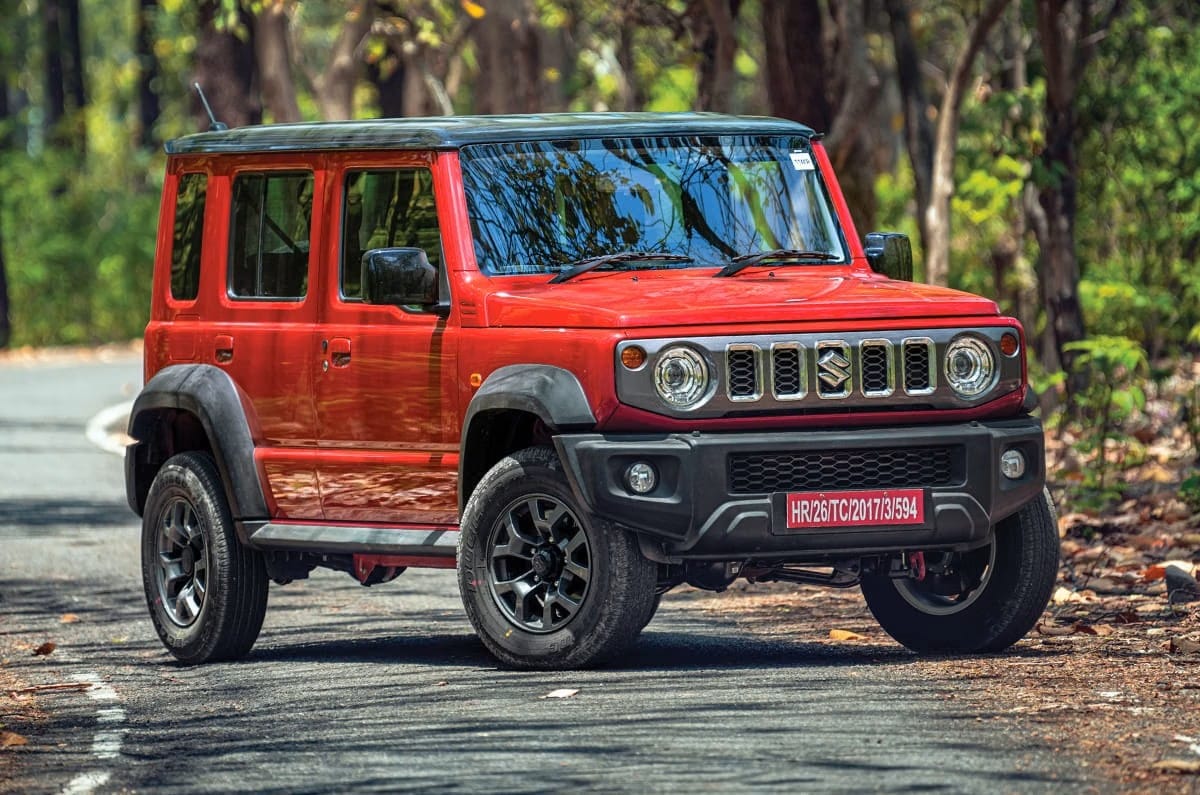
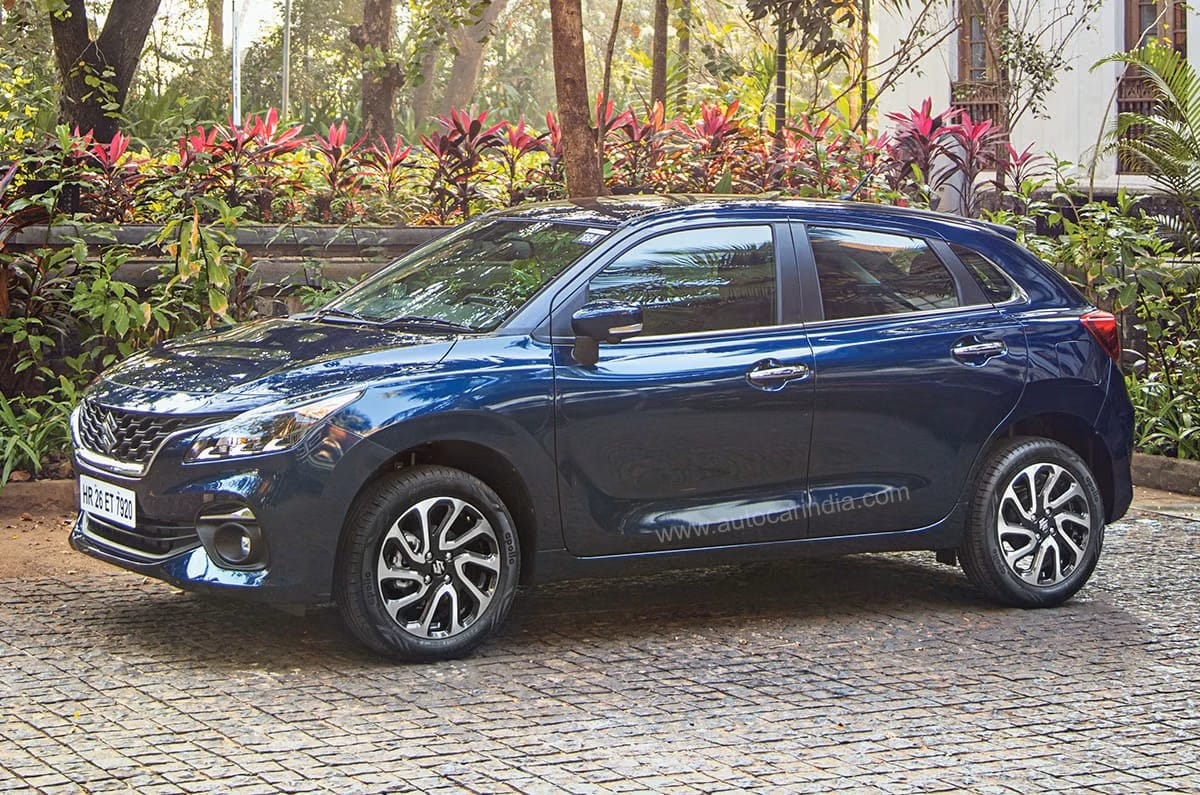
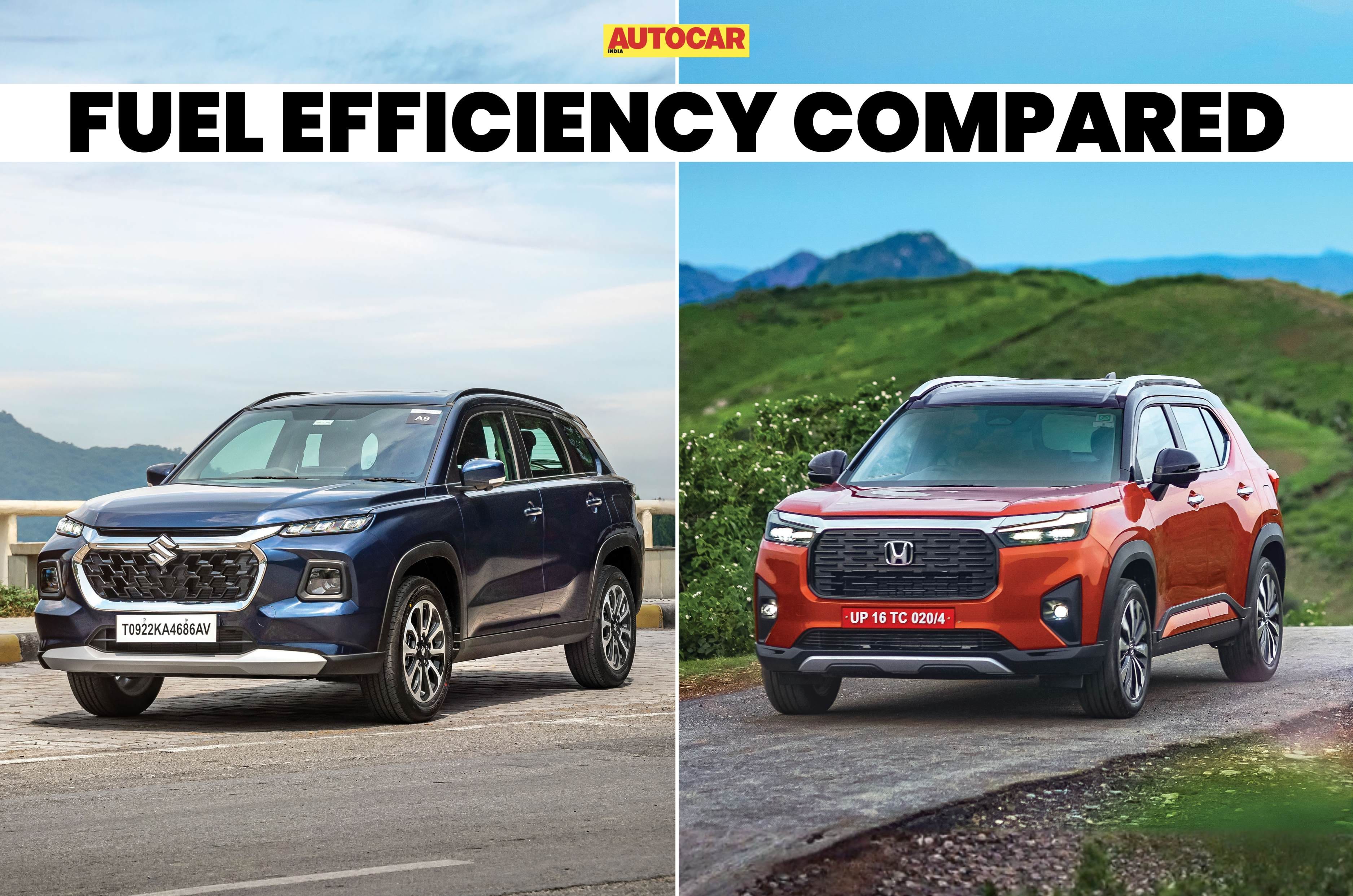
The Maruti Grand Vitara was launched in September 2022, while the Honda Elevate arrived a year later. Both compete in the mid-size SUV segment and offer naturally aspirated petrol engines with automatic gearbox options – a torque converter in the Grand Vitara and a continuously variable transmission (CVT) in the Elevate. But how do the two SUVs compare in terms of real-world fuel efficiency? Let’s find out.
Maruti Grand Vitara AT vs Honda Elevate CVT: Specs
Maruti Grand Vitara
Honda Elevate
Engine
4 cyl, naturally aspirated petrol
4 cyl, naturally aspirated petrol
Displacement (cc)
1462
1498
Power (hp)
103
121
Torque (Nm)
139
145
Transmission
6AT
CVT
Drive layout
Front wheel
Front wheel
Fuel tank (L)
45
40
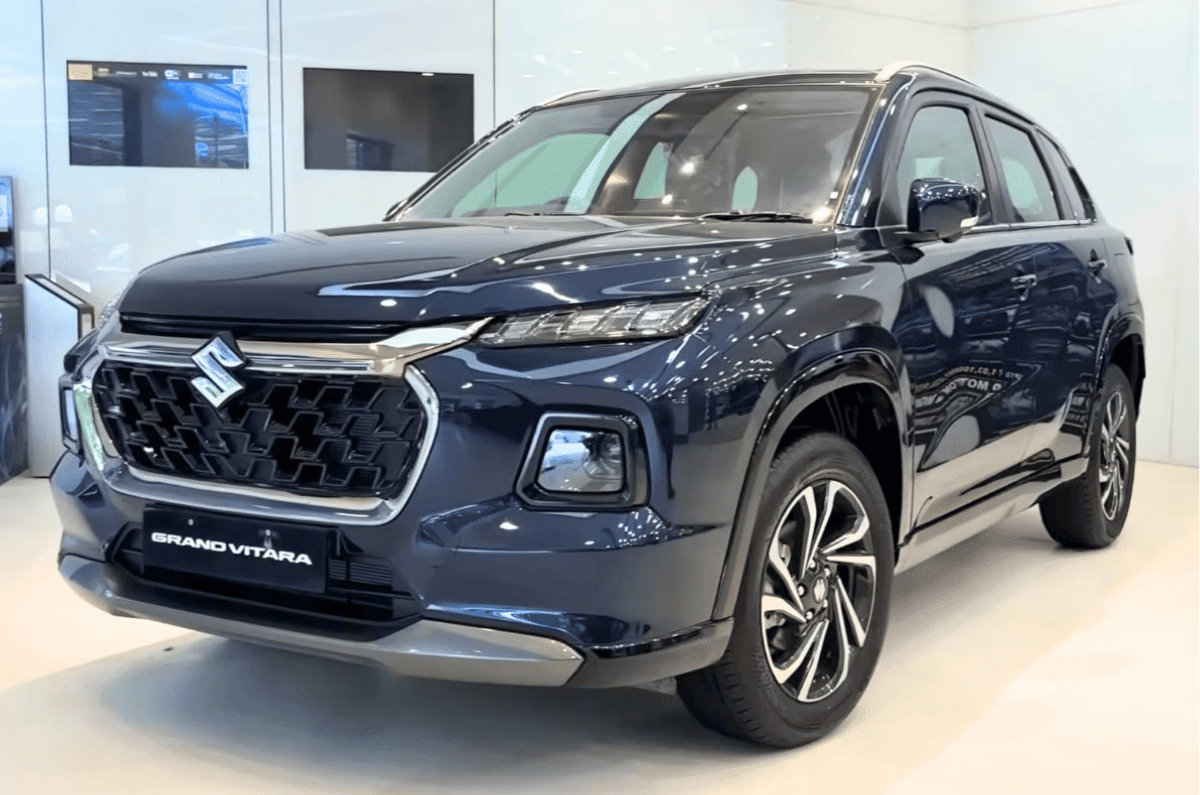
Both SUVs use naturally aspirated four-cylinder petrol engines, but the Honda Elevate makes more power and torque outputs. Its 1,498cc engine produces 121hp and 145Nm, giving it an advantage of 18hp and 6Nm over the Grand Vitara’s 1,462cc block, which makes 103hp and 139Nm. The Elevate is paired with a CVT automatic, while the Grand Vitara uses a 6-speed torque converter automatic. Notably, the Grand Vitara also gets a 12V integrated starter generator (assists the engine during acceleration and recharges the 6Ah Li-ion battery) and offers the choice of all-wheel drive layout with this engine-and-gearbox combination, whereas, the Elevate is front-wheel drive only. Maruti claws back some ground with a larger 45-litre fuel tank, which is 5 litres bigger than the Elevate’s 40-litre tank.
Maruti Grand Vitara AT vs Honda Elevate CVT: Real-world fuel efficiency
Maruti Grand Vitara
Honda Elevate
Tested city mileage (kpl)
11.60
8.60
Tested highway mileage (kpl)
15.30
13.10
Tested average mileage (kpl)
13.45
10.85
Tested range (km)
605
434
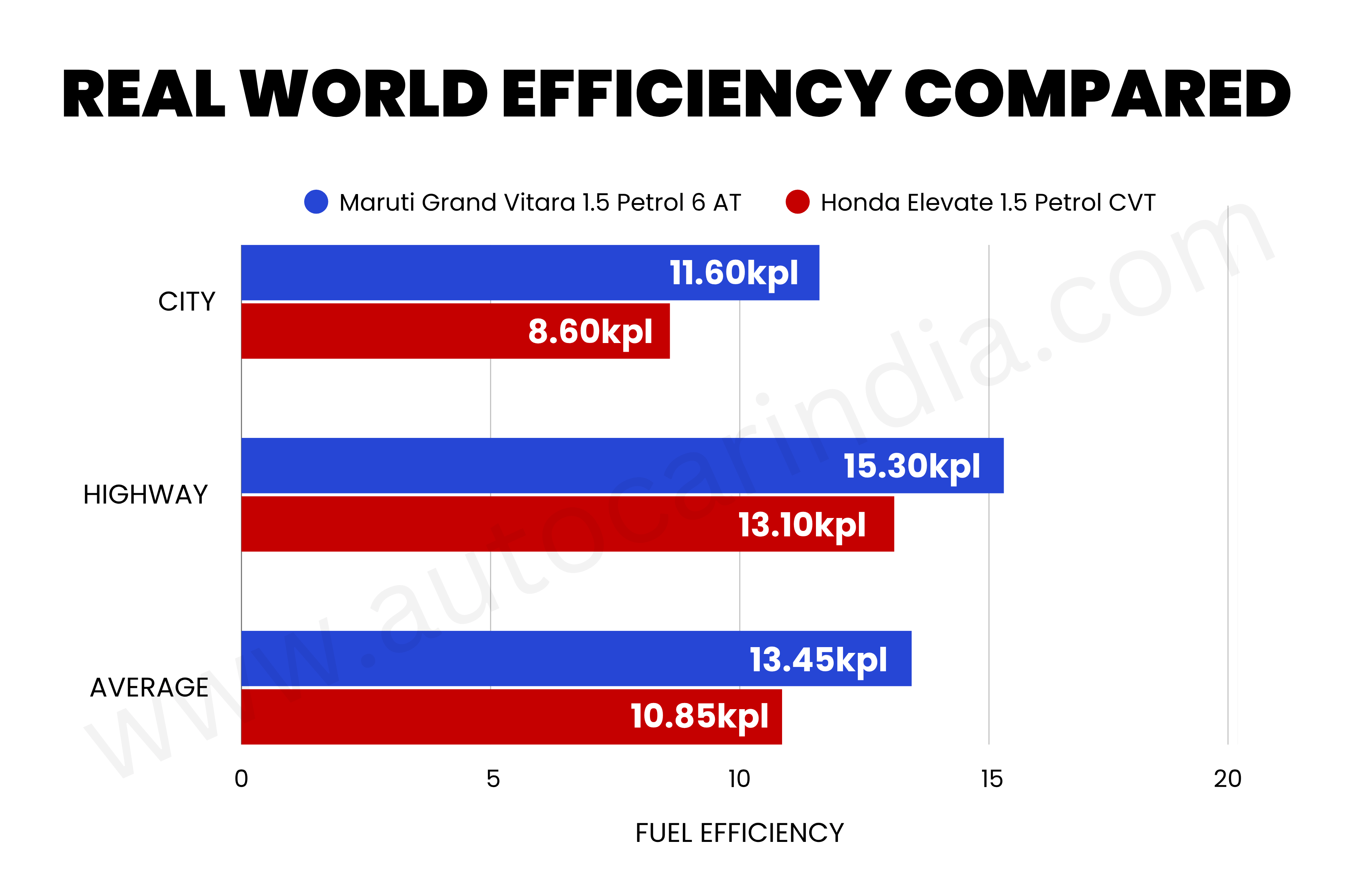
The Maruti Grand Vitara AT is more fuel efficient than the Honda Elevate CVT in both city and highway driving. In our tests, the Grand Vitara returned 11.60kpl in the city, which is 3kpl higher than the Elevate’s 8.60kpl. On the highway, the gap is smaller at 2.2kpl, with the Grand Vitara delivering 15.30kpl, compared to the Elevate’s 13.10kpl.
As a result, the Grand Vitara posted a tested average of 13.45kpl, while the Elevate managed 10.85kpl. Combined with its larger 45-litre fuel tank, the Grand Vitara also achieved a range of 605km, which is 171km more than the Elevate’s 434km.
Maruti Grand Vitara AT vs Honda Elevate CVT: Price
Maruti Grand Vitara
Honda Elevate
Price (Rs lakh)
13.45-18.58
13.43-16.78
The base automatic variants of both petrol SUVs are priced very close to each other. However, the price gap increases to Rs 1.8 lakh when you compare the top variants. One reason behind this is that the top-spec Alpha and Alpha (O) variants of the Grand Vitara come with an AWD system. Whereas, the front-wheel-drive Alpha and Alpha (O) AT variants are priced at Rs 16.55 lakh and Rs 16.74 lakh, respectively.
In conclusion, the Maruti Grand Vitara is the clear winner here, outperforming the Honda Elevate by a good margin. Buyers with a higher budget can also consider the Grand Vitara strong hybrid, which is even more frugal. In our real-world tests, it returned 22.08kpl.
Autocar India’s fuel efficiency testing
Before our real-world fuel efficiency tests, we fill our test cars’ tanks to the brim and maintain tyre pressures based on the manufacturer’s recommendations. These cars are driven in fixed city and highway loops in and around Navi Mumbai, and we maintain certain average speeds. Throughout the tests, there is only one person in each car, running the air conditioner and other electricals, such as the audio system, indicators and wipers, when required, just like a regular user would. Periodic driver swaps further neutralise variations in driver patterns. At the end of each cycle, we calculate efficiency by filling the tanks to full again.
Ex-showroom prices mentioned above are as of August 3, 2026.
अगर आप Samsung के फोन में दिलचस्पी रखते हैं तो, यह खबर आपके लिए अच्छी साबित हो सकती है। दरअसल, साउथ कोरिया की इस टेक कंपनी ने भारत में आज अपना Galaxy F70 Pro 5G लॉन्च कर दिया है। यह स्मार्टफोन Galaxy F70 लाइनअप का दूसरा मॉडल है। इससे पहले इस इस लाइनअप में Galaxy F70e 5G को लॉन्च किया गया था। Samsung ने इस हैंडसेट में AMOLED डिस्प्ले, Galaxy AI फीचर्स, 50MP का प्राइमरी कैमरा और 6000mAh की बैटरी दी है। अब आइए Samsung के इस नए 5G स्मार्टफोन के फीचर्स, स्पेसिफिकेशन और कीमत के बारे में डिटेल में जानते हैं।
Samsung Galaxy F70 Pro 5G के स्पेसिफिकेशन्स और फीचर्स
कोरियन कंपनी Samsung ने Galaxy F70 Pro 5G को 6.7-इंच के Full HD+ Super AMOLED डिस्प्ले के साथ पेश किया है, जिसमें 120Hz रिफ्रेश रेट और Corning Gorilla Glass Victus+ की सुरक्षा दी गई है। यह हैंडसेट Qualcomm के Snapdragon 6 Gen 3 चिपसेट पर चलता है और इसमें 8GB तक LPDDR5X RAM और 256GB UFS 3.1 स्टोरेज मिलता है।
कैमरे की बात करें तो, Samsung ने इस डिवाइस में Optical Image Stabilisation (OIS) वाला 50MP का प्राइमरी कैमरा दिया है, साथ ही इसमें 5MP का अल्ट्रा-वाइड कैमरा और 2MP का मैक्रो सेंसर भी है। वहीं, सेल्फी और वीडियो कॉल के लिए इसमें 12MP का फ्रंट कैमरा दिया गया है, जो HDR सपोर्ट के साथ आता है।
Galaxy F70 Pro 5G में कई Galaxy AI फीचर्स भी हैं, जैसे Circle to Search, Gemini वॉइस असिस्टेंट, AI वॉइस ट्रांसक्रिप्शन, Direct Voicemail और Now Bar। सॉफ्टवेयर की बात करें तो यह स्मार्टफोन Android 16 पर आधारित One UI 8.5 के साथ आता है। कंपनी का दावा है कि Galaxy F70 Pro 5G को 6 साल तक Android OS अपडेट और 6 साल तक सिक्योरिटी अपडेट मिलेंगे। इसके अलावा, पावर बैकअप के लिए फोन में 6000mAh की बड़ी बैटरी दी गई है, जो 45W वायर्ड फास्ट चार्जिंग को सपोर्ट करती है।
Samsung Galaxy F70 Pro 5G: भारत में कीमत, ऑफर और उपलब्धता
साउथ कोरिया की टेक कंपनी ने Galaxy F70 Pro 5G को 6GB + 128GB वेरिएंट के लिए ₹25,999 की शुरुआती कीमत पर लॉन्च किया है। वहीं, 8GB + 128GB मॉडल की कीमत ₹29,999 और 8GB + 256GB वर्जन की कीमत ₹34,999 रखी गई है। शुरुआती ऑफर के तहत, Samsung का कहना है कि इच्छुक ग्राहक इस स्मार्टफोन को ₹23,999 की प्रभावी शुरुआती कीमत पर खरीद सकते हैं। यह हैंडसेट Alpha Black और Aura Green कलर ऑप्शन में आता है। इसके साथ ही यह डिवाइस Samsung India ऑनलाइन स्टोर और Flipkart पर उपलब्ध होगा।
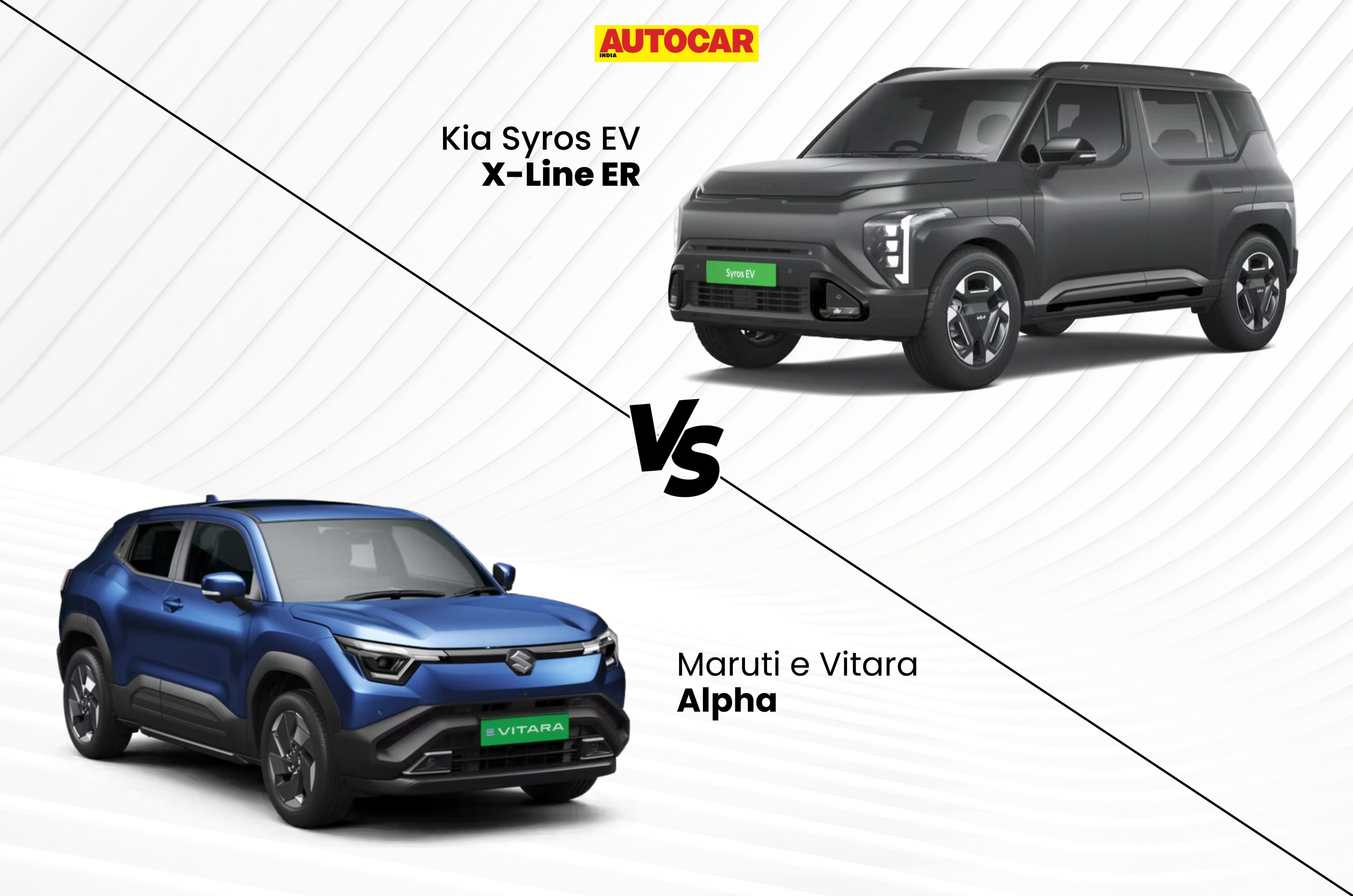
Kia India has officially launched its second mass-market electric car, the Syros EV. While the sub-4m Syros EV directly rivals the Tata Nexon EV and Mahindra XUV 3XO, the Kia’s pricing sees quite a bit of overlap with that of the Maruti Suzuki e Vitara, which is of a segment above. In fact, the top-spec trims of both electric SUVs are identically priced. Therefore, we compared the top-spec versions of the Syros EV and e Vitara on paper to determine which electric SUV offers more bang for your buck.
Kia Syros EV vs Maruti Suzuki e Vitara: Top trim dimensions
e Vitara is longer, but Syros EV is wider and taller
Kia Syros EV X-Line ER vs Maruti e Vitara Alpha dimensions
Syros EV
e Vitara
Length (mm)
3,995
4,275
Width (mm)
1,805
1,800
Height (mm)
1,670
1,640
Wheelbase (mm)
2,550
2,700
Frunk (litres)
16
–
Wheel size (inches)
17
18
Expectedly, the Syros EV is 280mm shorter overall (150mm shorter wheelbase) than the e Vitara, but interestingly, the Kia compact SUV is 5mm wider and 30mm taller. Neither Kia nor Maruti Suzuki quote precise boot space figures for their respective electric SUVs, but it’s worth noting that the Syros EV comes with a 16-litre frunk, while the e Vitara completely lacks storage space up front. However, the top-spec e Vitara does get larger alloy wheels than the equivalent Syros EV.
Kia Syros EV vs Maruti Suzuki e Vitara: Top trim powertrains
Syros EV is quicker, e Vitara claims higher range and has a bigger battery
Kia Syros EV X-Line ER vs Maruti e Vitara Alpha battery and range
Syros EV
e Vitara
Battery size (kWh)
51.4
61
Electric motor setup
Single motor, front
Single motor, front
Drive layout
FWD
FWD
Power (hp)
171
174
Torque (Nm)
255
193
Claimed 0-100kph time (seconds)
8.1
8.7
ARAI range (km)
526
543
The Syros EV’s battery pack is almost 10kWh smaller than that of the e Vitara, but the Kia is only 17km behind in terms of ARAI-claimed range. Both electric SUVs are front-wheel drive and make similar amounts of power, but the Syros EV edges ahead by a significant 62Nm in terms of torque output. This is partly why the Syros EV claims a 0.6sec quicker 0-100kph time than that of the e Vitara.
Kia Syros EV vs Maruti Suzuki e Vitara: Top trim charging speeds
Syros EV supports higher DC wattages
Kia Syros EV X-Line ER vs Maruti e Vitara Alpha charging times
Syros EV
e Vitara
Battery size (kWh)
51.4
61
7.4kW AC charging (10-100 percent)
–
9 hrs
11kW AC charging (10-100 percent)
8.9 hrs
–
DC fast charging (10-80 percent)
39 mins at 100kW
45 mins at 70kW
Kia and Maruti Suzuki quote AC charging speeds at different wattages, so the Syros EV and e Vitara can’t be directly compared on this front. However, it’s noteworthy that though the e Vitara has a larger battery than the Syros EV, the former takes roughly the same amount of time for a 10-100 percent charge at 7.4kW as the latter does at 11kW. Coming to DC charging, the Syros EV supports up to 100kW, while the e Vitara tops out at 70kW.
Kia Syros EV vs Maruti Suzuki e Vitara: Top trim exterior features
Syros EV gets puddle lamps, but e Vitara offers much greater choice in colours
Kia Syros EV X-Line ER vs Maruti e Vitara Alpha exterior features
Syros EV
e Vitara
LED projector headlamps
Yes (auto)
Yes (auto)
Front fog lamps
Yes
Yes
LED tail-lamps
Yes
Yes
Puddle lamps w/ logo projection
Yes
No
Roof rails
Yes
No
Powered ORVMs
Yes
Yes
Auto-folding ORVMs
Yes
Yes
Flush door handles
Yes
No
Body cladding
Yes
Yes
Rear spoiler
Yes
Yes
Colour options
2, monotone
10, monotone + dual-tone
Both electric SUVs are quite evenly matched in terms of exterior features, but the Syros EV takes the lead by way of roof rails and door-mounted puddle lamps that project the Kia logo. The Syros EV has flush door handles too, but some may appreciate the e Vitara’s conventional door handles more. Colours are a square win for the e Vitara, as it offers six monotone options and four dual-tone finishes. The Syros X-Line ER can be had in either Aurora Black Pearl or Matte Graphite, both of which are difficult to maintain. Buyers who want other colours have no option but to consider lower-spec Syros EV variants.
Kia Syros EV vs Maruti Suzuki e Vitara: Top trim interior features
Syros EV beats e Vitara with panoramic sunroof, cooled rear seat bases, and more
Kia Syros EV X-Line ER vs Maruti e Vitara Alpha interior features
Syros EV
e Vitara
Infotainment screen
12.3-inch
10.1-inch
Digital driver’s display
12.3-inch
10.25-inch
Climate control display
5-inch
–
Sunroof
Panoramic
Fixed single-pane
Wireless charger
Yes
Yes
Driver’s seat adjustment
4-way powered
10-way powered
Ventilated front seats
Yes
Yes
Rear seat base ventilation
Yes
No
Automatic climate control
Yes
Yes
Ambient lighting
Yes
Yes
Sound system
8-speaker Harmon Kardon
8-speaker Infinity
Apple CarPlay & Android Auto
Wireless
Wireless
Connected car tech
Yes
Yes
OTA updates
Yes
Yes
Rear sunshades
Yes
No
Rear centre armrest
Yes
Yes
Sliding, reclining rear seats
Yes
Yes
Even on the inside, the Syros EV’s feature set comes out on top. Over the e Vitara, the Syros EV packs larger infotainment and instrument displays, an additional screen for climate control settings, a panoramic sunroof, rear sunshades, and ventilation for the rear seat bases – this feature is not available even in electric SUVs a segment above the Syros EV. The e Vitara’s only advantage over the Syros EV is a greater gamut of electrical adjustment for the driver’s seat.
Kia Syros EV vs Maruti Suzuki e Vitara: Top trim driving features
Syros EV scores big on convenience by way of paddle shifters for regen modes
Kia Syros EV X-Line ER vs Maruti e Vitara Alpha driving features
Syros EV
e Vitara
Drive modes
Eco, Normal, Sport
Eco, Normal, Sport
Terrain modes
No
Snow
V2L function
Yes
No
Multi-level regen braking
Yes
Yes
Paddle shifters for regen
Yes
No
Cruise control
Adaptive
Adaptive
Both the Syros EV and e Vitara come with three drive modes and adaptive cruise control, but the Kia SUV inches forward thanks to vehicle-to-load (V2L) functionality, which lets you power external devices from the battery pack. The Syros EV also offers paddle shifters to cycle through the regenerative braking levels, while the e Vitara makes do with just a knob on the centre console. However, the e Vitara does offer a Snow terrain mode over the Syros EV.
Kia Syros EV vs Maruti Suzuki e Vitara: Top trim safety features
e Vitara wins thanks to an extra airbag, rain-sensing wipers, and 5-star BNCAP score
Kia Syros EV X-Line ER vs Maruti e Vitara Alpha safety features
Syros EV
e Vitara
Bharat NCAP rating
Yet to be tested
5 stars
Airbags
6
7
ABS with EBD
Yes
Yes
Electronic stability program
Yes
Yes
Follow-me-home headlamps
Yes
Yes
Hill hold control
Yes
Yes
TPMS
Yes
Yes
360-degree camera
Yes
Yes
Parking sensors
Front, rear, side
Front, rear
Electronic parking brake
Yes (w/ auto-hold)
Yes (w/ auto-hold)
Rain-sensing wipers
No
Yes
Auto-dimming IRVM
Yes
Yes
ISOFIX child seat anchors
Yes
Yes
Rear wiper, defogger
Yes
Yes
Disc brakes
Front, rear
Front, rear
Level 2 ADAS
Yes
Yes
Acoustic vehicle alert system
Yes
Yes
Coming to safety, the e Vitara finally scores a win. It’s the only one here to come with seven airbags and rain-sensing wipers, whereas the Syros EV sets itself apart with side parking sensors. The e Vitara also holds a 5-star crash safety rating from Bharat NCAP, while the Syros EV has not been tested yet. It’s worth noting, though, that the ICE-powered Syros was awarded 5 stars by Bharat NCAP, so a similar rating for the compact SUV’s electric derivative is very possible.
Kia Syros EV vs Maruti Suzuki e Vitara: Top trim prices
Syros EV for buyers seeking features, e Vitara for those who want a bigger car
Kia Syros EV X-Line ER vs Maruti e Vitara Alpha price comparison
Syros EV
e Vitara
Price (Rs, lakh)
20.00
19.99
As noted previously, there is next to no difference in the pricing of the Syros EV X-Line ER and e Vitara Alpha, which means the final decision comes down to your needs and preferences. If you want as many features as possible, are fine with a dark colour, and don’t mind smaller dimensions and funkier styling, the Syros EV X-Line ER is the one to go for. On the other hand, if you want the price you pay to be reflected in the size of the car, more choice in colours, more conventional looks, and are happy to forgo some features, you can consider the e Vitara.
It’s also worth noting that both the Syros EV and e Vitara can be purchased with battery-as-a-service (BaaS), which converts the cost of the battery into separate usage-based EMIs, thereby lowering the upfront cost. Kia has yet to reveal the BaaS price of the Syros EV X-Line ER, but the e Vitara Alpha costs Rs 14.49 lakh – Rs 5.5 lakh off the sticker price – with a Rs 4.39/km battery usage fee.
कॉमेडियन और कंटेंट क्रिएटर समय रैना एक बार फिर सोशल मीडिया पर चर्चा का केंद्र बन गए हैं। इस बार मामला उनके किसी कॉमेडी एक्ट का नहीं, बल्कि India’s Got Latent की कंटेस्टेंट साक्षी झा को लेकर दिए गए उनके रिएक्शन से जुड़ा है। सक्शी के एक बयान के बाद सोशल मीडिया पर उन्हें भारी आलोचना और ट्रोलिंग का सामना करना पड़ा। कई यूजर्स ने उनके विचारों पर सवाल उठाए, जबकि कुछ लोगों ने ऑनलाइन कमेंट्स की भाषा और बढ़ती नफरत को लेकर चिंता जताई।
इसी बीच समय रैना ने सामने आकर लोगों से अपील की कि मजाक और मीम्स तक बात ठीक है, लेकिन किसी व्यक्ति को लगातार निशाना बनाना सही नहीं है। उनके इस बयान के बाद सोशल मीडिया पर नई बहस शुरू हो गई है, जहां लोग आलोचना, अभिव्यक्ति की आजादी और ऑनलाइन व्यवहार की सीमाओं पर अपनी राय रख रहे हैं।
‘मीम बनाइए, लेकिन हद पार मत कीजिए‘
समय रैना ने अपनी इंस्टाग्राम स्टोरी के जरिए लोगों से कहा कि किसी भी वायरल कंटेंट के पीछे एक इंसान होता है। उन्होंने यूजर्स से अपील की कि मीम्स और मजाक तक बात ठीक है, लेकिन किसी को व्यक्तिगत रूप से निशाना बनाना सही नहीं है। उन्होंने कहा कि स्टेज पर आकर अपनी बात रखना आसान नहीं होता और लोगों को यह समझना चाहिए कि सामने वाला भी भावनाओं वाला इंसान है।
साक्षी झा के बयान पर हुआ था विवाद
दरअसल, India’s Got Latent के एक एपिसोड में साक्षी झा के कुछ कमेंट्स सोशल मीडिया पर तेजी से वायरल हुए थे। उनके विचारों को लेकर कई यूजर्स ने आलोचना की और कुछ लोगों ने उन्हें जमकर ट्रोल भी किया। जहां कुछ लोगों ने उनके बयान को गलत बताया, वहीं कई यूजर्स ने ऑनलाइन ट्रोलिंग और व्यक्तिगत हमलों की सीमा पर सवाल उठाए।
समय रैना के बयान के बाद इंटरनेट पर एक नई बहस शुरू हो गई। कुछ लोगों ने उनके संवेदनशील रवैये की तारीफ की और कहा कि किसी भी व्यक्ति को लगातार नफरत का सामना नहीं करना चाहिए। वहीं कुछ यूजर्स का मानना था कि सार्वजनिक मंच पर कही गई बातों की आलोचना होना भी जरूरी है और इसे सिर्फ ट्रोलिंग नहीं कहा जा सकता।
‘आलोचना और नफरत में फर्क होना चाहिए‘
सोशल मीडिया पर कई लोगों ने कहा कि किसी के विचारों से असहमति जताना गलत नहीं है, लेकिन व्यक्तिगत हमले और अपमान से बचना चाहिए। वहीं कुछ यूजर्स ने यह भी तर्क दिया कि अगर कोई व्यक्ति सार्वजनिक मंच पर बयान देता है तो उसे उसकी प्रतिक्रिया के लिए तैयार रहना चाहिए।
विवाद के बीच छिड़ी बड़ी बहस
साक्षी झा और समय रैना से जुड़ा यह मामला अब सिर्फ एक बयान तक सीमित नहीं रहा, बल्कि इंटरनेट पर अभिव्यक्ति की आजादी, आलोचना और ऑनलाइन व्यवहार की सीमाओं को लेकर बहस का मुद्दा बन गया है।
Conceived with no concessions to internal combustion propulsion, ‘born electrics’ were heralded as the future. Manufacturers poured millions into their development, and it is estimated that globally $1.2 trillion was committed to the entire EV ecosystem, $500 billion of which was from automakers.
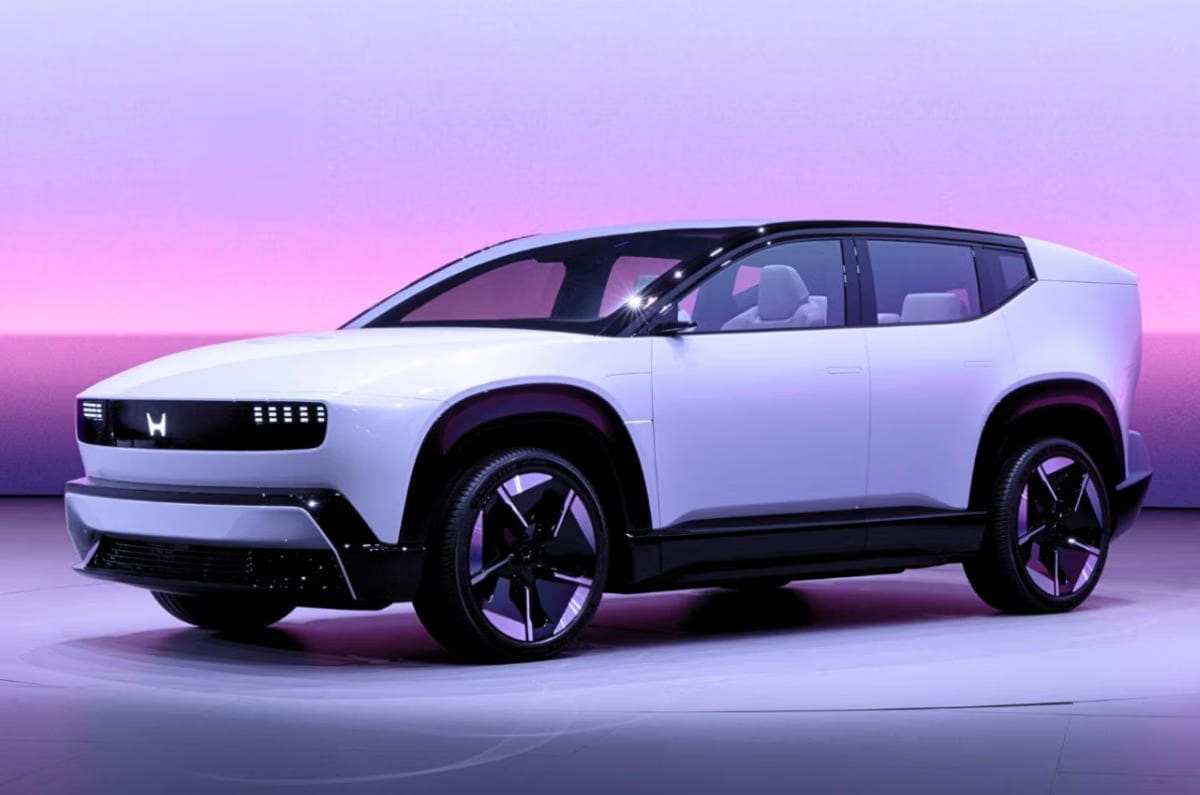
But with global EV sales well below projections, manufacturers are left with hard decisions. The Stellantis group, for instance, confirmed a $26 billion write-off over its EV projects, while Honda said its annual operating loss would be between 270-570 billion yen, due to losses associated with the reassessment of its electrification strategy. Earlier this year, the Japanese carmaker scrapped its much-hyped ‘0 Series’ EV project, though the made-in-India 0 Alpha SUV, which is said to use components from the Elevate, is still on track.
Honda has cancelled its 0 Series EV Project altogether
The write-offs and cancellations are understandable in the context of born-electrics, as while there have been many ICE-to-EV conversions, it’s a lot harder the other way around. Conceived with no engine and gearbox in mind, space to accommodate this bulky hardware is the first hurdle they need to clear. There’s also space needed for subsystems like driveshafts, fuel and exhaust systems which leads to the other complication of thermal management. Beyond the exhaust system, internal combustion engines have higher cooling requirements than EVs, and thus airflow management needs to be addressed.
Another challenge is crashworthiness. Again, having never had to hold an engine and gearbox, the crash structure of these cars was never designed with this massive mass in mind. These changes thus require time and expensive re-engineering.
However, tough as it is, some brands are looking at re-engineering born-EVs to use some form of internal combustion. The VW Group is one such example, as is homegrown automaker Mahindra. While it sold about 16,000 EVs in FY2026 – the bulk of them coming from its born-electric line-up – it needs higher volumes given the investments in their development. The Chinese, too, who were very quick with born-electrics, are looking at the ICE switch.
Ice Age 2.0
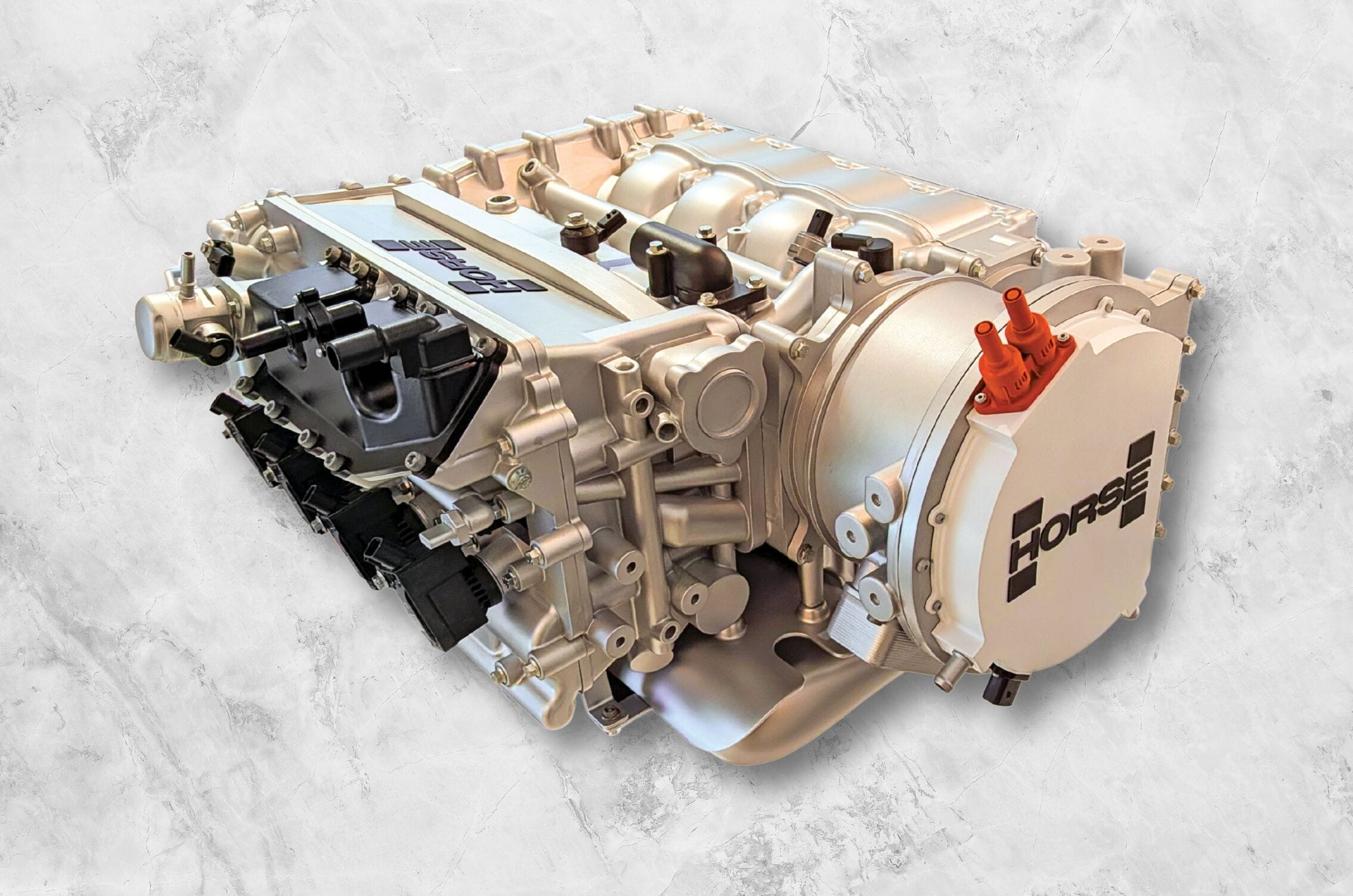
In this scenario, Horse Powertrain might hold the panacea – the C15 powertrain. Showcased at the Vienna Motor Symposium in April this year, the C15 unit is a compact, all-in-one powertrain designed to replace the electric drive unit of a born-electric and transform it into a range-extender hybrid. The integrated unit consists of a 1.5-litre, 4-cylinder engine, hybrid transmission, electric motor and the full suite of power electronics.
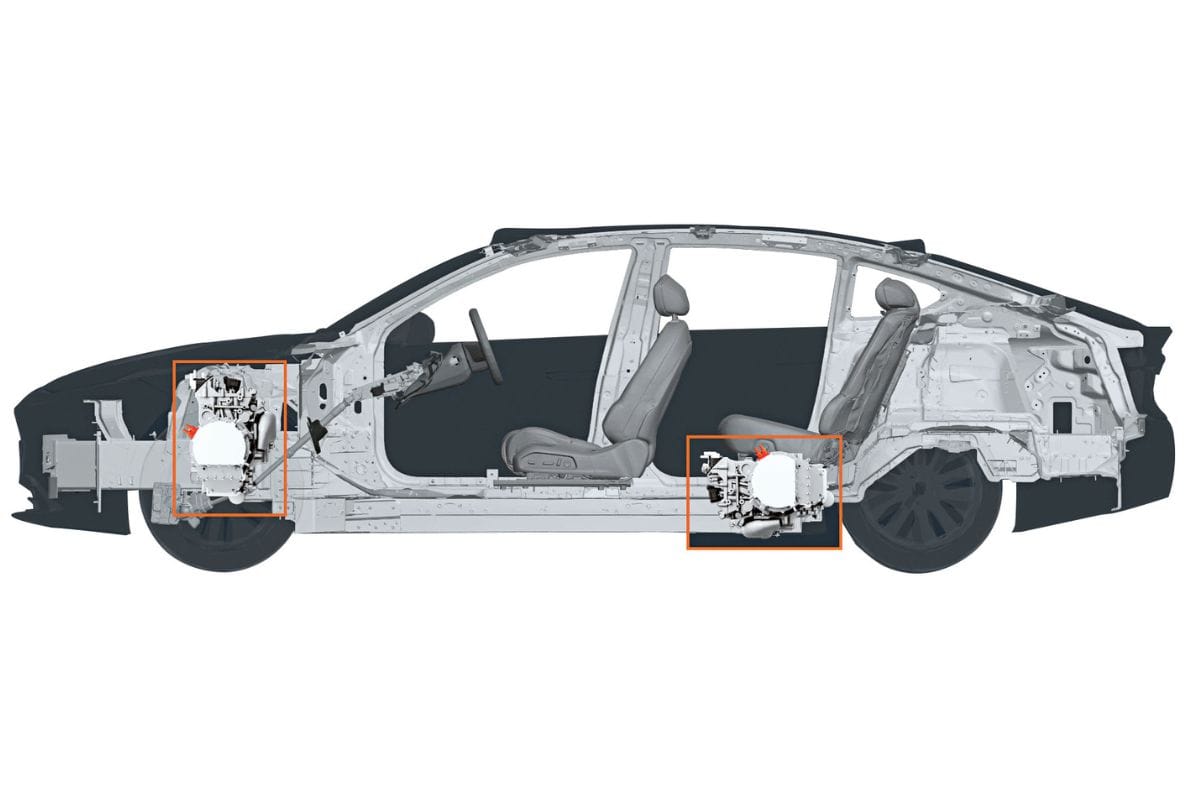
C15 powertrain can be installed at the front or rear and in either a vertical or horizontal orientation.
Furthermore, Horse says the unit is modular and can have further systems bolted on, depending on manufacturer requirements, like turbocharging or even a traditional gearbox, should direct-to-wheel drive be required. Adding to its flexibility, the engine can be packaged vertically or even horizontally, and the company says systems like lubrication are capable for either installation type. It can also be located at the front or rear of the vehicle, so as to warrant fewer modifications and re-engineering for a brand. 64 percent of its components are parts from existing powertrains, and this, Horse says, brings down the unit’s cost. So far, there’s no word on when it would come to market, but the brand says work is already underway, and the first model with the C15 unit should see the light of day by 2028.
On the face of it, converting a born-electric to ICE might seem like a retrograde step in the journey towards electrification. However, it’s clear this journey is far longer than previously thought, and a born-electric-to-ICE conversion will certainly help a manufacturer’s business viability in the immediate term. Furthermore, in this scenario of internal combustion living longer, hybridisation helps lowering fuel consumption and emissions. Thus, a retrograde step this might be, but one that can help build the future.
Q&A Jesus Frances Busto – Strategy & RAE Director, Horse Technologies
On the company structure
Horse Powertrain is a joint venture between Renault, Geely and Saudi Aramco, but we are an independent global powertrain supplier. So we can supply, work with, and integrate this (C15) with any manufacturer that is interested in it. It’s part of our new story at Horse Powertrain.
On the C15’s requirement
Brands have invested a lot into born-electric platforms, and many have even got the products ready and out into the market. But yes, they now would need to have an option to cope with this adoption towards EVs, and a hybrid with a range-extender setup is a good possibility for this.
On the C15’s specialities
The C15 solves the problem of space, and we have solved it not by miniaturisation, but with innovative redesign and repackaging. We can install this vertically or even horizontally, and when we do this, one of the points we have to solve is lubrication, so we have a scavenge function circulating oil through and through correctly.
On a market launch
As you would understand, we cannot disclose our clients at the moment or specific launch dates, but we are working with brands, and we should see this in the market by early 2028.
Honda Motorcycle & Scooter India (HMSI) is sharpening its focus on premium scooters and mid-capacity motorcycles. The strategy marks a significant evolution for Honda, whose India business has long been anchored by high-volume commuter products such as the Activa scooter and Shine motorcycle.
More premium products incoming
Localisation will be key to affordability
The company says this has been done to retain younger buyers whose purchasing decisions are increasingly driven by design, technology and global products rather than just affordability. “Today’s customers, especially Gen Z and Gen Alpha, expect easy access to information through their smartphones and the internet,” HMSI president and CEO Tsutsumu Otani told Autocar Professional in an interview.
“Customers today don’t just compare models available in India; they also explore products offered in Asia, Europe and the United States,” he added.
Otani also said that Honda’s objective is no longer confined to winning first-time buyers but also to ensuring customers continue to remain within the brand as their aspirations evolve.
“The most important thing is not just market share. The key question is how we can increase loyal Honda customers,” he said. “Selling a vehicle is a one-time transaction. If customers do not choose Honda again when they purchase their next vehicle, that is not a good outcome for us.”
Industry analysts say the shift comes as India’s two-wheeler market becomes increasingly segmented, with premium motorcycles, feature-rich scooters and electric two-wheelers emerging as the fastest-growing parts of the industry.
Honda plans to draw more extensively from its global portfolio while increasing localisation to make premium products commercially viable for India.
“For our premium and step-up models, HMSI intends to leverage Honda’s global portfolio. We are also preparing new models based on Honda’s global portfolio,” Otani said.
He added that localisation would remain central before introducing any global model in India, both to improve affordability and strengthen domestic manufacturing.
While Otani declined to identify future products, Autocar Professional understands Honda is developing several new programmes covering 125cc and 150cc motorcycles, scooters, electric scooters, and 350cc and 500cc motorcycles. Although individual products and launch schedules remain undisclosed, the pipeline is consistent with the company’s strategy of building a broader premium portfolio while retaining customers within the Honda brand.
Honda is also giving India a larger role in product development as it seeks to shorten development cycles and improve localisation.
“‘Made in India’ means the supply chain exists in India. So, we have already changed our R&D process as well,” Otani said.
Asked whether Honda was now ready to design and develop products specifically for India, he replied, “Yes.”
The company’s strategy extends beyond internal-combustion products. Honda currently has a limited presence in India’s electric two-wheeler market but plans to expand its EV portfolio as adoption accelerates.
Otani said the company remained cautious about the pace of electrification because charging infrastructure and customer usage patterns were still evolving.
“Our first priority is to closely monitor the EV market in India and understand how it is developing,” he said.
At the same time, Honda sees growing opportunities in premium scooters as buyers seek larger engines, more features and stronger styling without sacrificing everyday practicality.
Otani said the challenge would be to localise advanced components and powertrains sufficiently to offer premium products at prices acceptable to Indian consumers.
The broader strategy reflects Honda’s attempt to reposition itself for a market where younger buyers increasingly expect global products adapted for local conditions rather than stripped-down versions developed solely for affordability.
For Honda, the next phase of growth may depend less on expanding its share of commuter motorcycles and scooters and more on building a complete portfolio that keeps customers within the brand as they move into premium motorcycles, larger scooters and electric mobility.
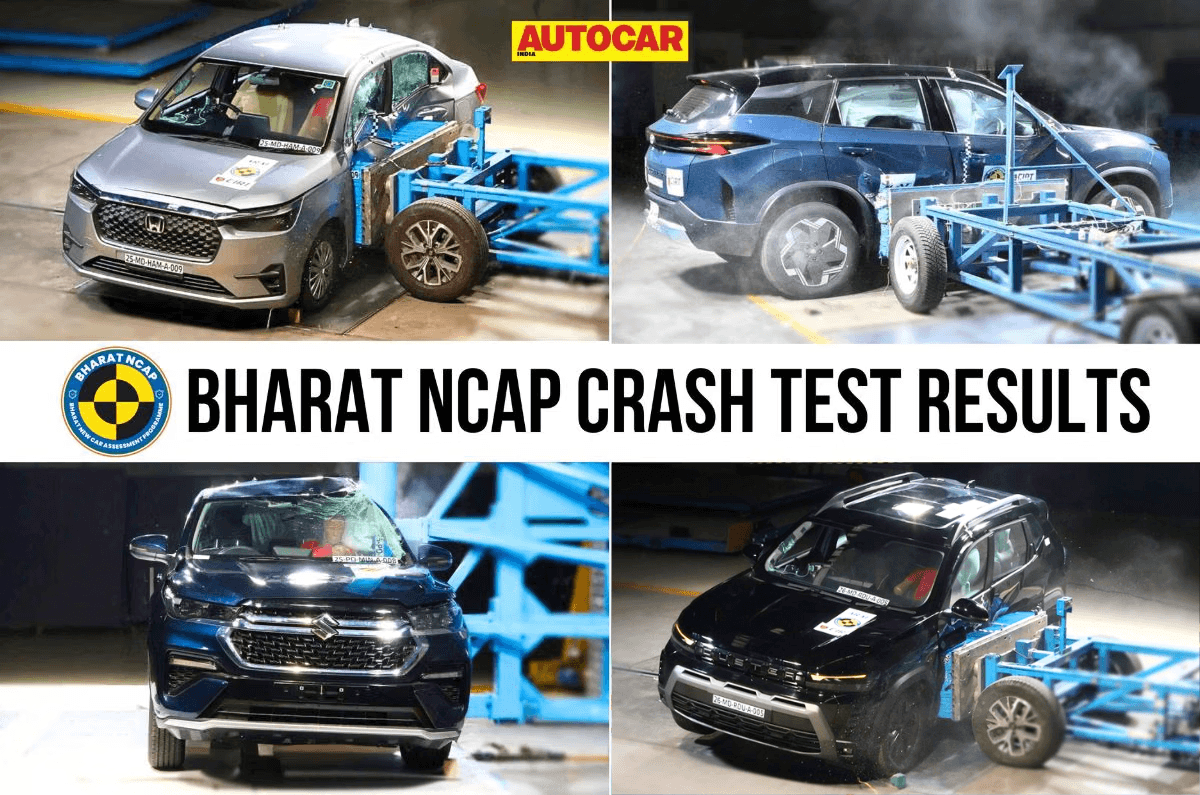
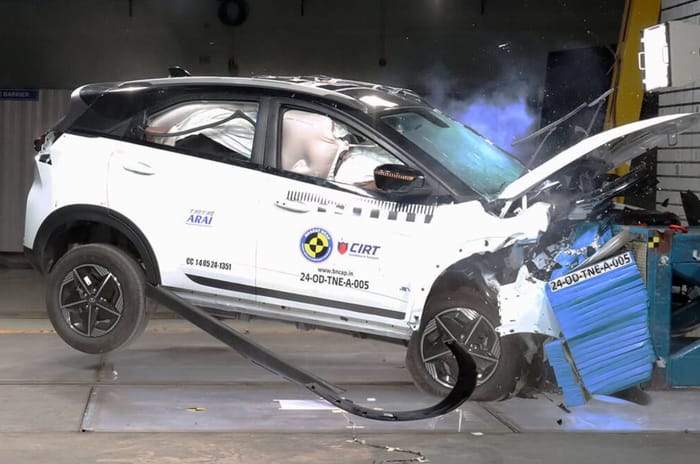
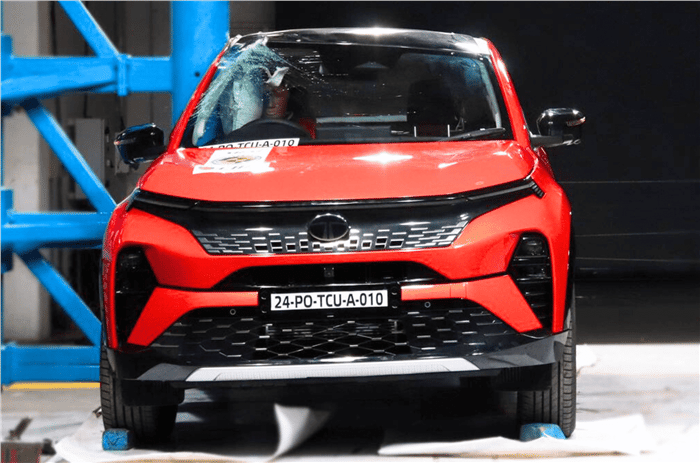
Introduced by the central government in 2023, the Bharat New Car Assessment Program (BNCAP) is responsible for conducting crash tests and awarding scores to cars sold in the country. The government hopes this will help buyers make more informed purchase decisions. Since its inception, Bharat NCAP has tested 31 vehicles, primarily SUVs. Below are the results detailing the crash safety performance of the models that are currently on sale.
1. Nissan Tekton
BNCAP rating: 5 stars
Crash-tested in June 2026 (representational image).
The Nissan Tekton is the latest model to be crash tested by Bharat NCAP, earning a full 5-star safety rating. The SUV scored 30.49 out of 32 points for adult occupant protection (AOP) and 45 out of 49 points for child occupant protection (COP). This 5-star rating applies to all variants of the Tekton. Standard safety features include six airbags, electronic stability control, hill start assist, a tyre pressure monitoring system, and three-point seatbelts for all occupants.
2. Renault Duster
BNCAP rating: 5 stars
Crash-tested in April 2026.
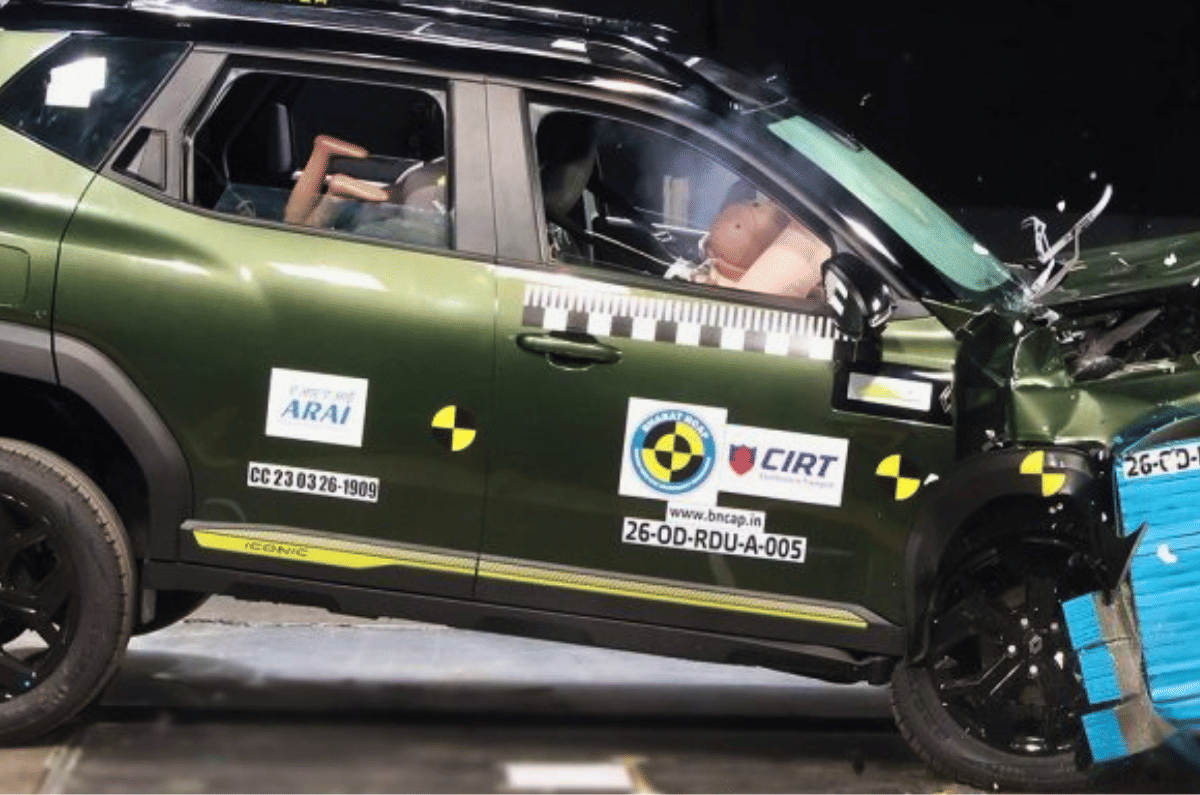
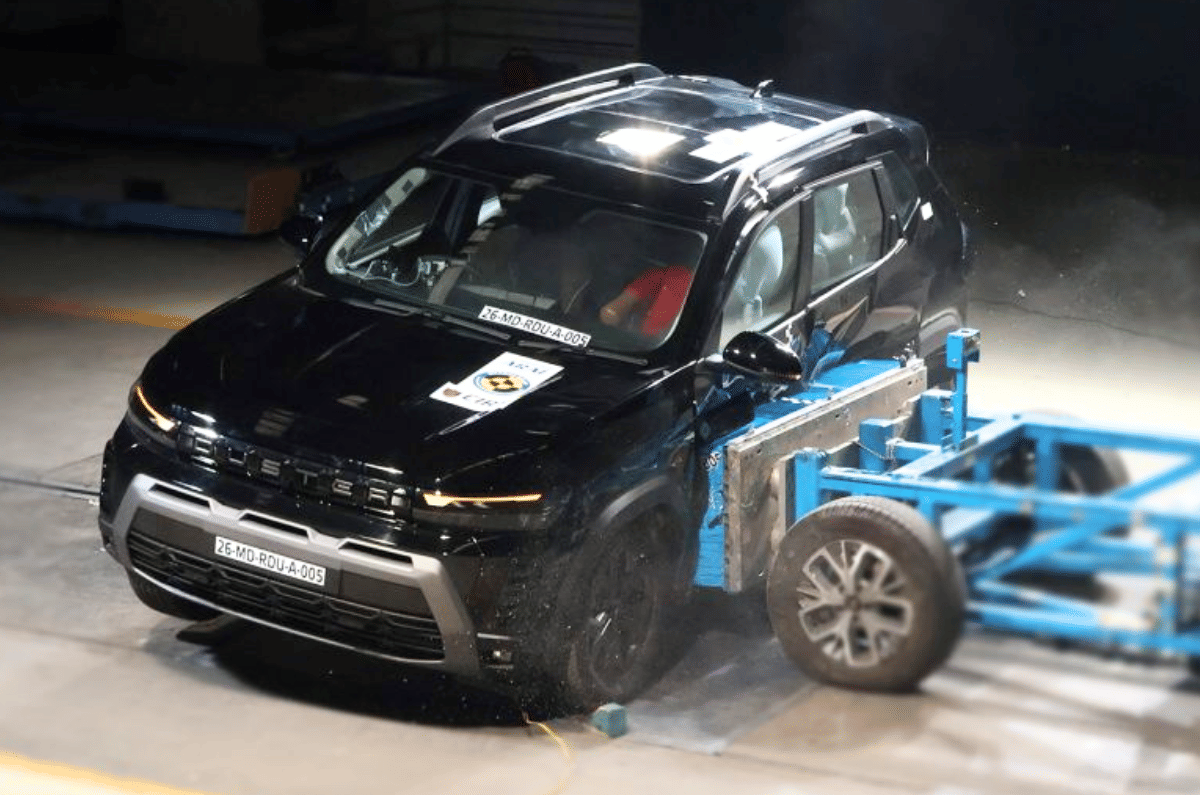
The Renault Duster was crash tested before its badge-engineered sibling, the Tekton, and both SUVs received identical BNCAP scores. All Duster variants feature 6 airbags, along with ABS, ESP, traction control and a tyre-pressure monitoring system.
3. Hyundai Venue
BNCAP rating: 5 stars
Crash-tested in March 2026.
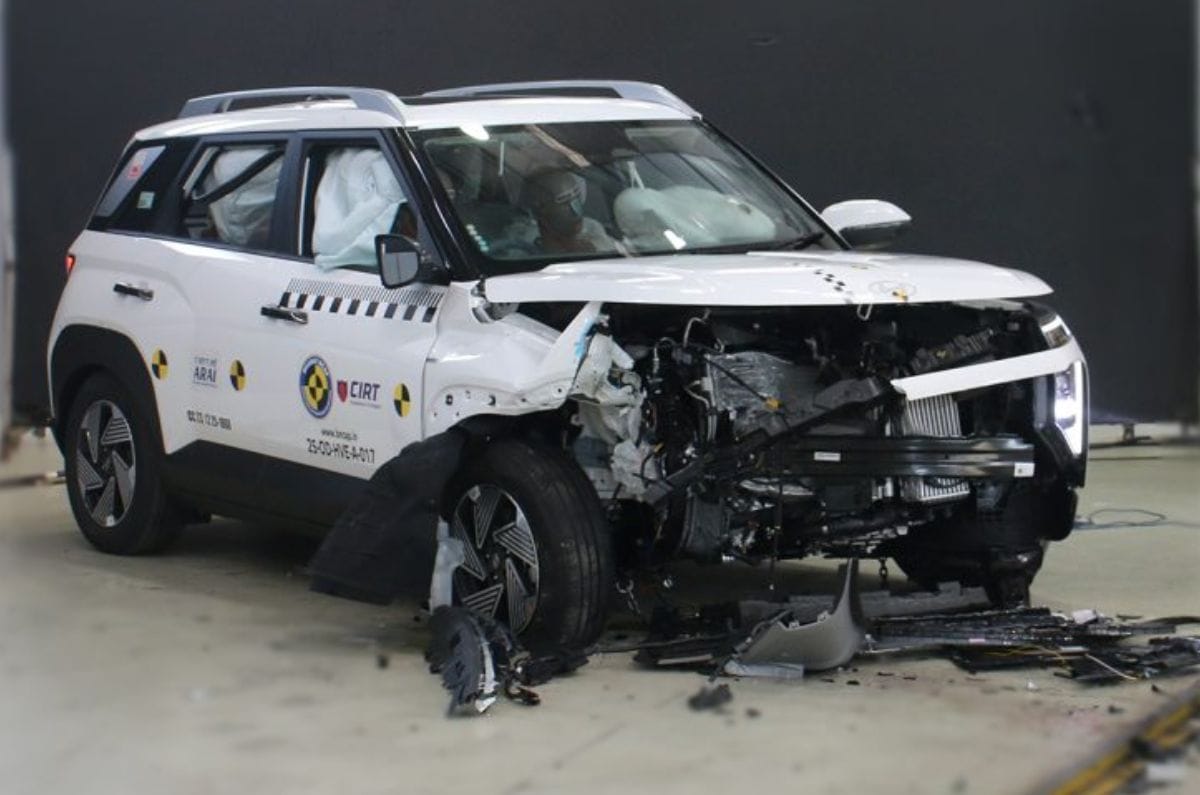
The Hyundai Venue has received a 5-star safety rating from Bharat NCAP, which tested its HX2 diesel-manual and HX10 diesel-automatic variants, but the ratings apply to the entire line-up, including the N Line version. The Venue scored 31.15 out of 32 points in AOP and 44.46 out of 49 in COP. The Hyundai Venue is equipped with 6 airbags, hill-start assist, a tyre-pressure monitoring system (TPMS), 3-point seatbelts with reminders for all seats, rear parking sensors and ISOFIX child-seat anchorages as standard.
4. Kia Seltos
BNCAP rating: 5 stars
Crash-tested in March 2026.
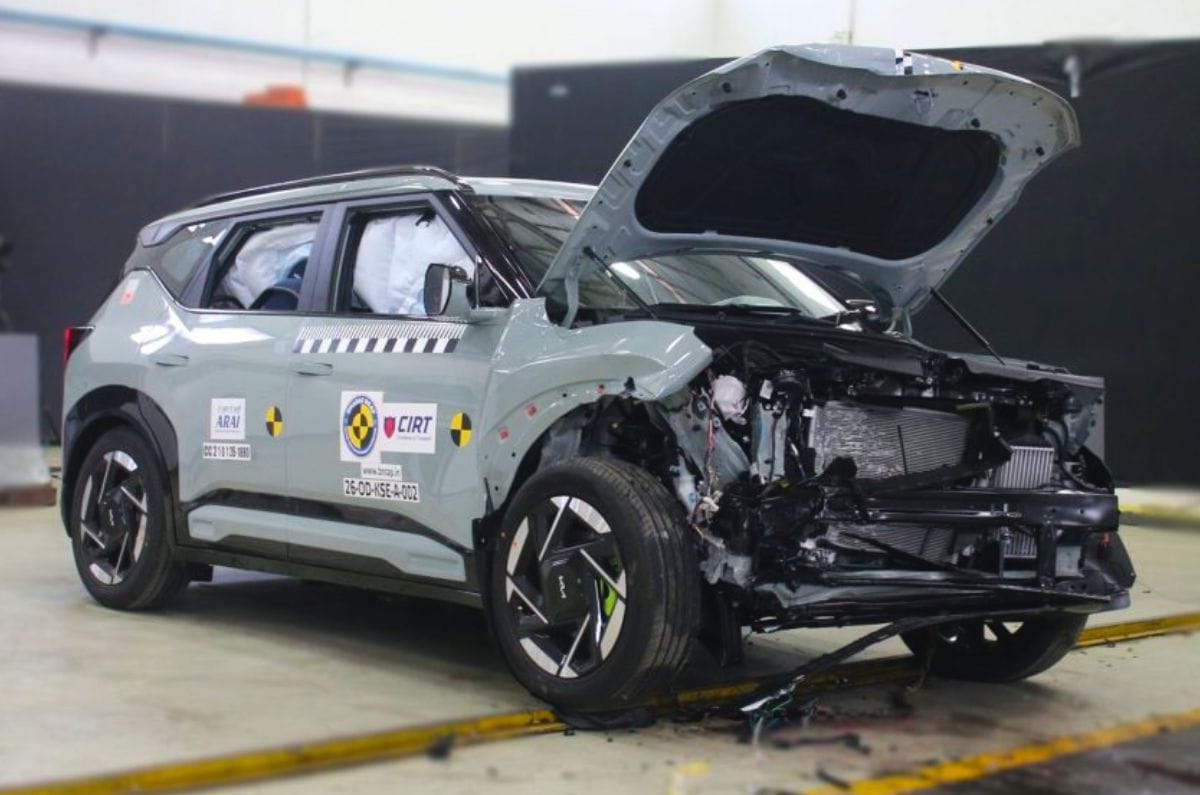
The Kia Seltos is the second car from the brand after the Syros to receive a 5-star safety rating in the Bharat NCAP crash tests. It scored 31.70 points in AOP and 45 in COP. Only the diesel-powered HTE(O) and GTX variants were tested, but the results apply to all variants of the Seltos. The standard safety kit on the Kia Seltos includes 6 airbags, TPMS, a rear parking camera with sensors, disc brakes on all wheels, hill-start and hill-descent control and ISOFIX child-seat anchorages.
5. Tata Sierra
BNCAP rating: 5 stars
Crash-tested in March 2026.
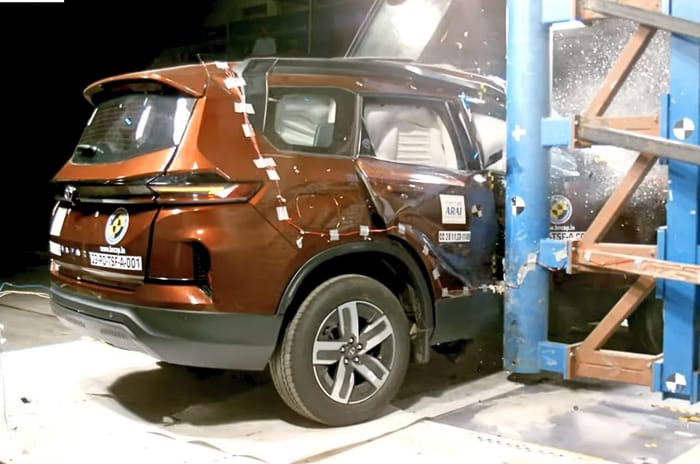
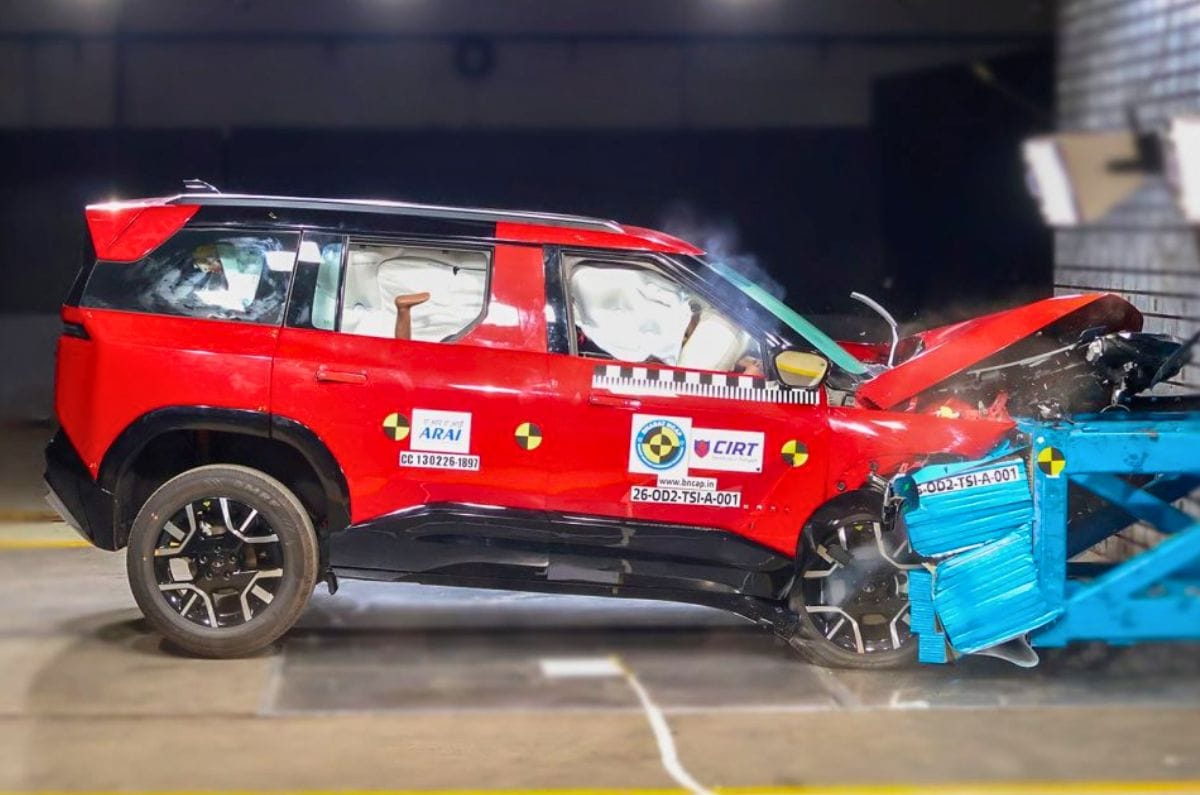
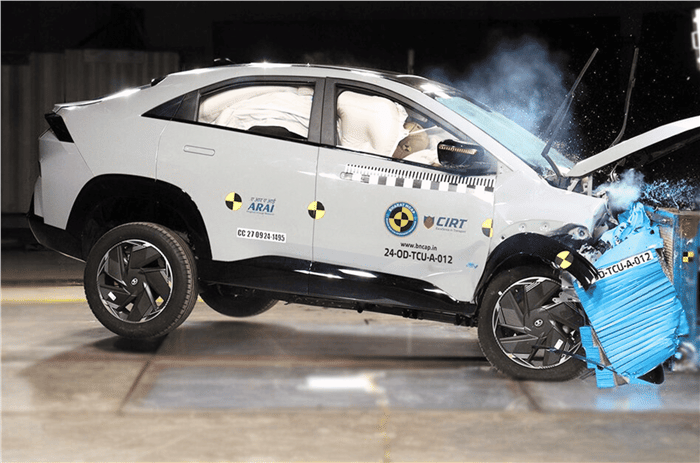
The Sierra is one of the latest Tata model on this list to receive a 5-star safety rating in both AOP and COP, securing 31.14 and 44.43 points, respectively. While BNCAP tested only the midsize SUV’s Adventure+ and Accomplished+ diesel variants, the ratings apply to its entire line-up. As standard, the Sierra gets 6 airbags, rear parking sensors, all-wheel disc brakes, ABS, EBD, ESC, traction control and more.
6. Vinfast VF7
BNCAP rating: 5 stars
Crash-tested in January 2026.
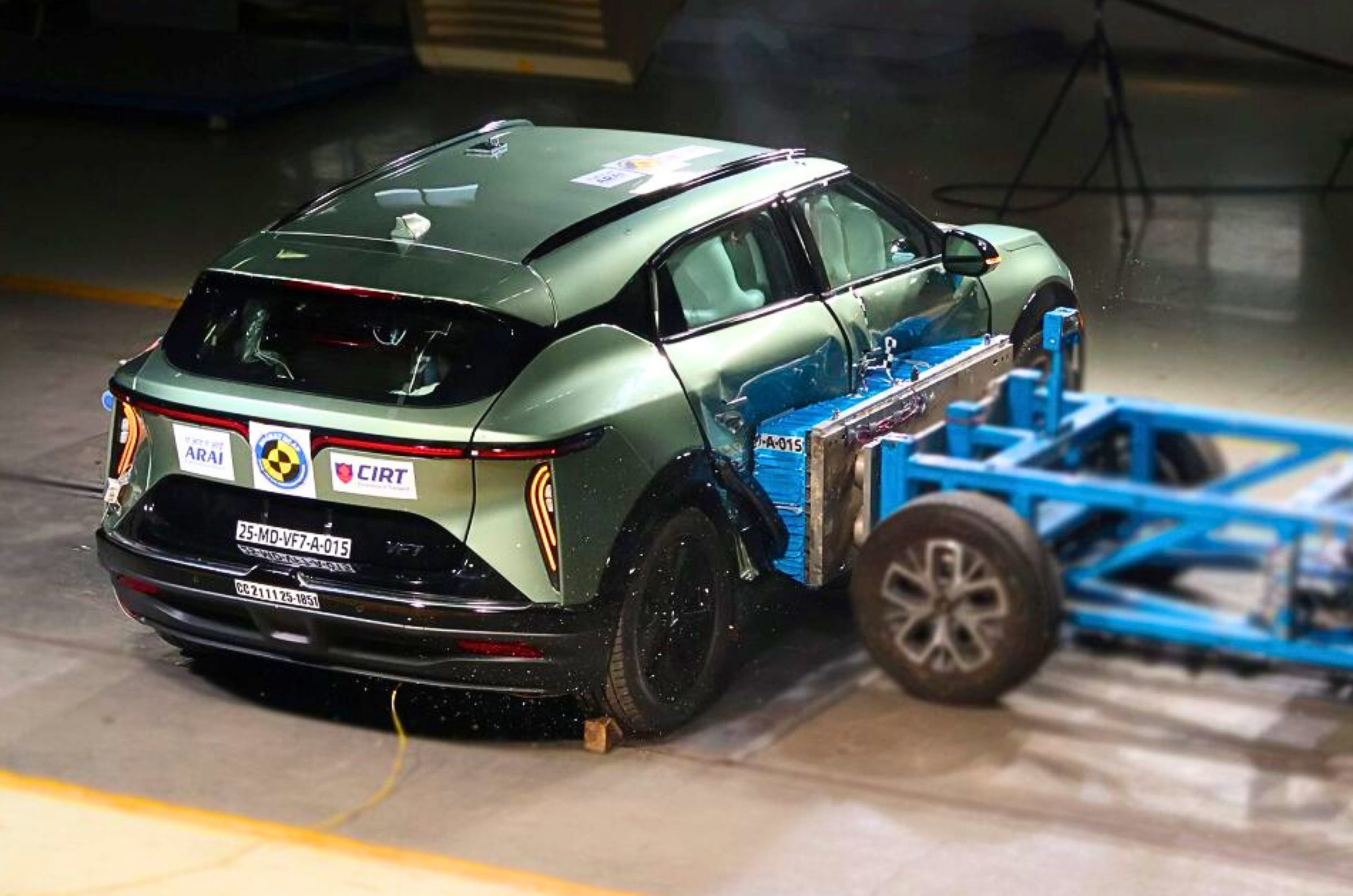
The Vinfast VF7, too, has secured a 5-star safety rating in both adult and child occupant protection, with 28.54 and 45.25 points, respectively. Though Bharat NCAP tested only the VF7 Wind and Sky variants, the rating applies to the entire range. The VF7 offers 7 airbags, ISOFIX anchors, ESC, and more as standard.
7. Vinfast VF6
BNCAP rating: 5 stars
Crash-tested in January 2026.
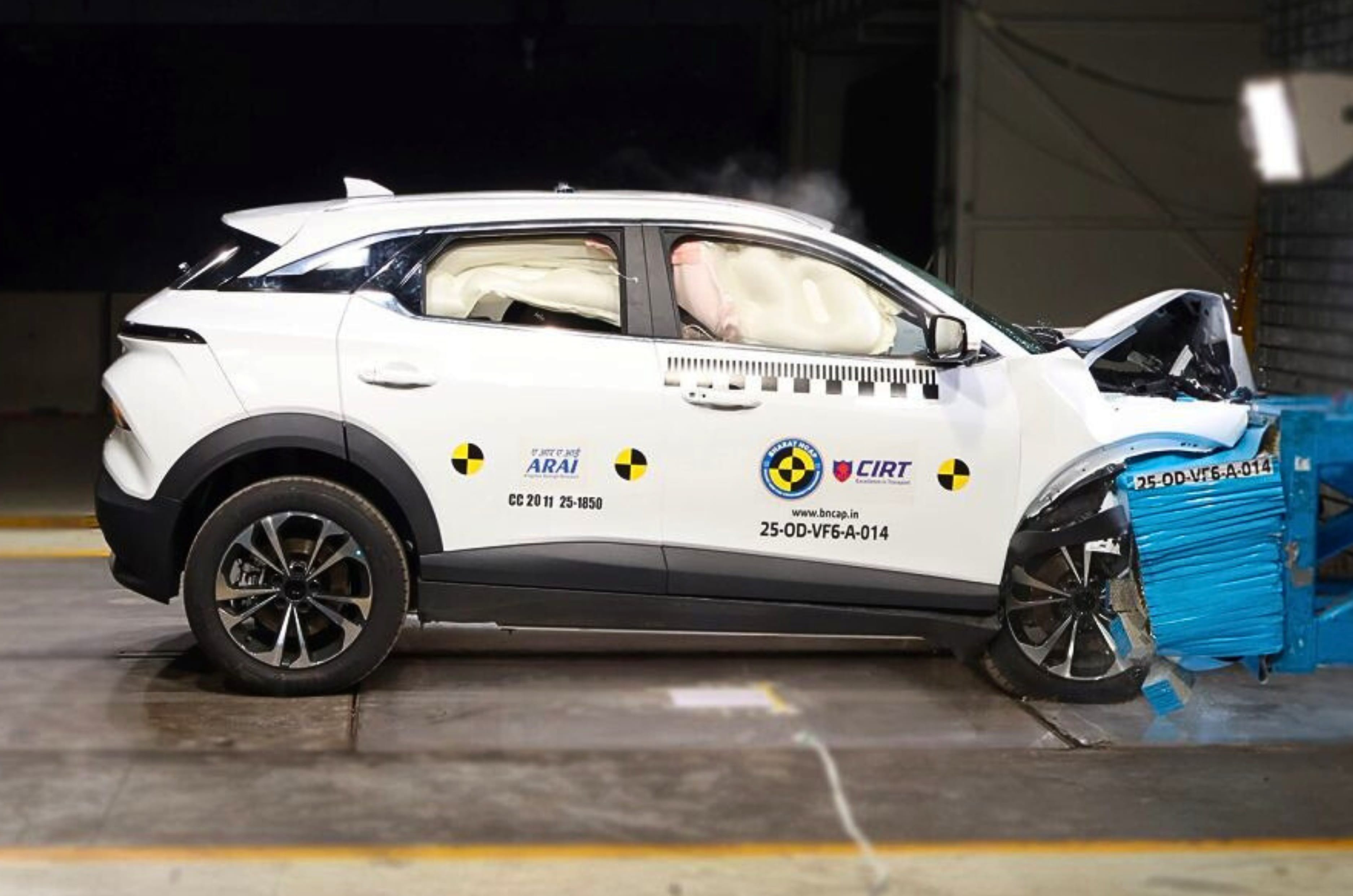
Also receiving a 5-star rating in both adult and child occupant protection, the Vinfast VF6 scored 27.13/32 in AOP and 44.41/49 in COP. Bharat NCAP tested all trims of the VF6 – Earth, Wind and Sky. As standard, the VF6 comes equipped with 7 airbags, including a driver knee airbag, and 3-point seat belts with reminders for all passengers, ESC and ISOFIX anchors for rear outboard seats.
8. Tata Punch
BNCAP rating: 5 stars
Crash-tested in January 2026.
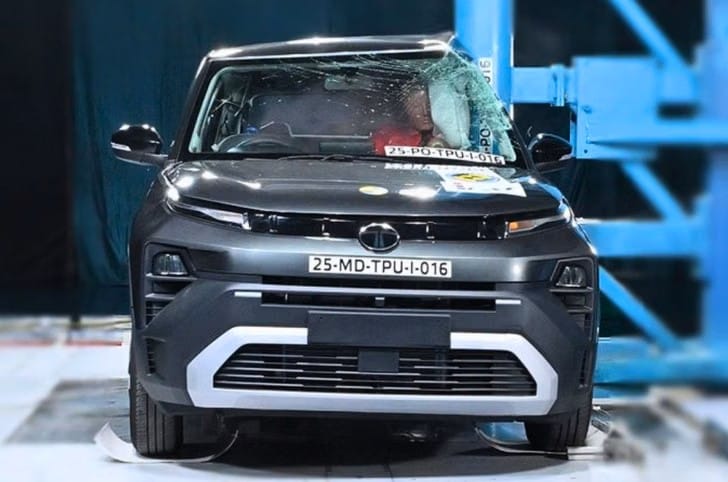
The Tata Punch, with 30.58 points in AOP and 45 points in COP, received a 5-star safety rating in both. The variants tested by Bharat NCAP were the Punch Pure+ CNG AMT and Accomplish CNG MT, but the rating applies to the entire line-up. The Punch’s safety suite features 6 airbags as standard, ESP, rear parking sensors, a tyre-pressure monitoring system, hill-hold and hill-descent control, ISOFIX child-seat anchorages, auto headlamps and rain-sensing wipers.
9. Maruti Suzuki e Vitara
BNCAP rating: 5 stars
Crash-tested in December 2025.
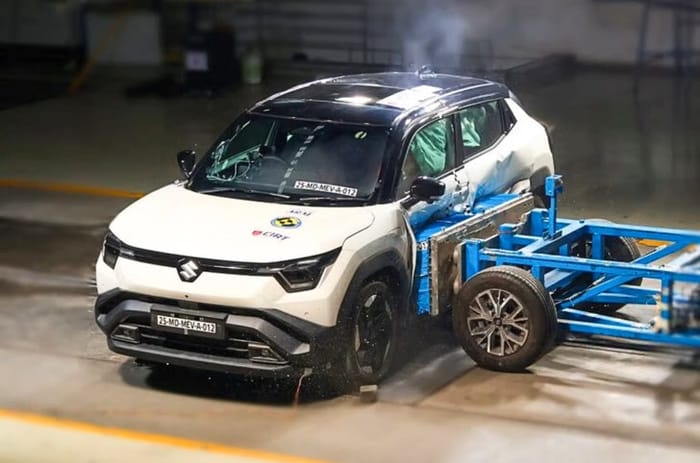
The Maruti Suzuki e Vitara has been awarded a 5-star rating in both AOP and COP, scoring 31.49/32 and 43/49, respectively. Bharat NCAP tested the top-spec Alpha variant with a 61kWh battery pack, and the rating applies to the entire range. Safety features of the e Vitara include 7 airbags, a tyre-pressure monitoring system (TPMS), a Level 2 ADAS suite with lane-keep assist, adaptive cruise control and AEB, rear disc brakes, ISOFIX mounts and a 360-degree camera.
10. Honda Amaze
BNCAP rating: 5 stars
Crash-tested in November 2025.
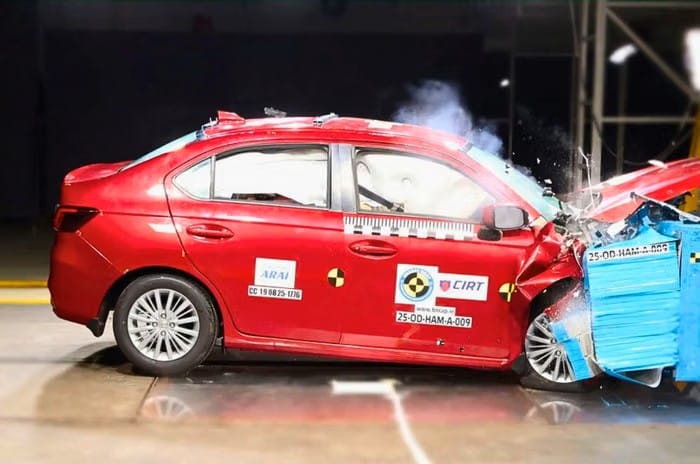
The third-gen Honda Amaze has been awarded a 5-star safety rating by Bharat NCAP, becoming the second sedan to be tested by the road safety organisation. The Amaze has secured 5 stars in AOP (28.33 out of 32 points) and 4 stars in COP (40.81/49 points). In terms of safety kit, all six variants are equipped with 6 airbags, ISOFIX child-seat anchors, ESC, ABS, rear parking sensors and seat belt reminders as standard.
11. Citroen Aircross
BNCAP rating: 5 stars
Crash-tested in September 2025.
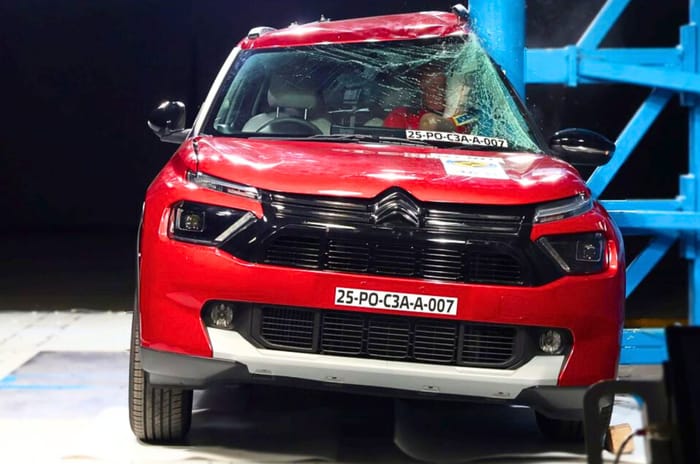
The Citroen Aircross, sold in 5- and 7-seat configurations, was awarded 5 stars in AOP and 4 stars in COP. Notably, the AOP and COP crash-safety test ratings are valid for the Aircross 5-seat version’s 1.2-litre petrol and turbo-petrol variants. The Aircross received an AOP score of 27.05/32 and a COP score of 40/49. As standard, the Aircross comes with safety features like 6 airbags, ISOFIX child-seat mounts, electronic stability control, TPMS and hill-hold assist.
12. Maruti Suzuki Invicto
BNCAP rating: 5 stars
Crash-tested in September 2025.
Like most cars on this list, the Maruti Invicto MPV scored a 5-star rating for both adult and child occupant protection. Maruti’s flagship MPV was awarded 30.43 out of 32 in AOP and 44.90 out of 49 in COP. These safety ratings are applicable to all variants, which have 6 airbags, ABS with EBD, rear disc brakes, and 3-point seatbelts for all passengers as standard. The top-spec Invicto Alpha+ variant adds a 360-degree camera, TPMS, rear defogger and an anti-theft security system.
13. Tata Altroz
BNCAP rating: 5 stars
Crash-tested in September 2025.
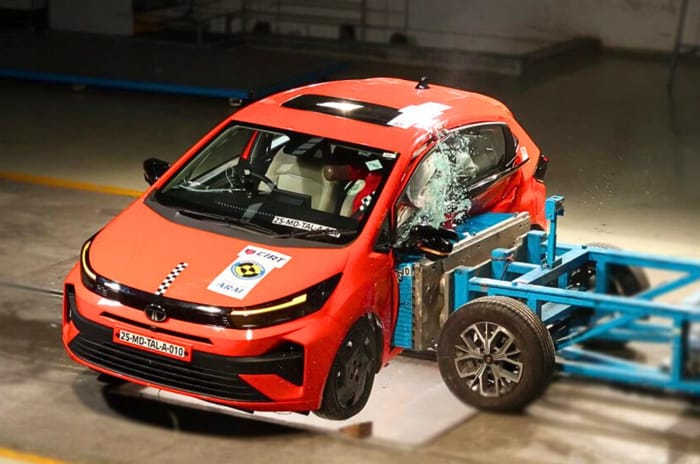
The Tata Altroz has scored a 5-star rating for both adult and child occupant protection. The premium Tata hatchback was awarded 29.65 points out of 32 in AOP and 44.90 out of 49 in COP. These safety ratings are applicable to all variants of the Altroz. Starting from the base model, the Altroz hatchback comes equipped with 6 airbags, ABS, ESC and 3-point seat belts for all passengers. Higher Altroz variants add a 360-degree camera, a blind-spot monitor and TPMS.
14. Maruti Suzuki Victoris
BNCAP rating: 5 stars
Crash-tested in September 2025.
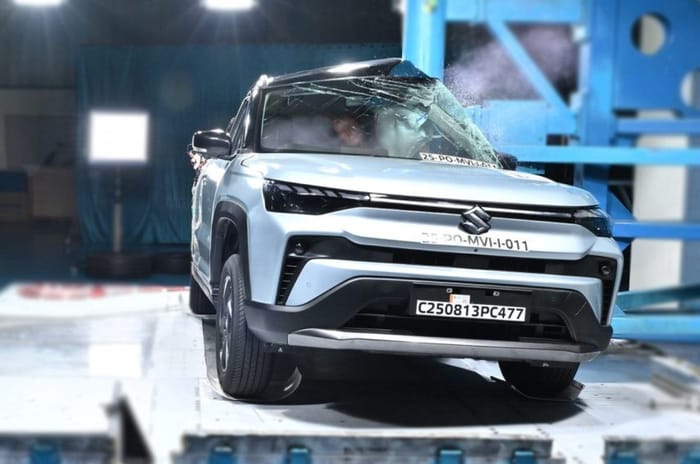
The Maruti Victoris got a 5-star safety rating in both adult and child occupant protection. The Maruti SUV secured 31.66 points out of 32 in AOP and 43 points out of 49 in COP. While BNCAP tested hybrid and petrol-AT variants of Victoris, the safety rating is applicable to the entire line-up. As standard, the Victoris comes equipped with 6 airbags, 3-point seat belts with reminders for all passengers, ESC and ISOFIX anchors for rear outboard seats. Top-spec trims even get a Level 2 ADAS suite.
15. Toyota Innova Hycross
BNCAP rating: 5 stars
Crash-tested in June 2025.
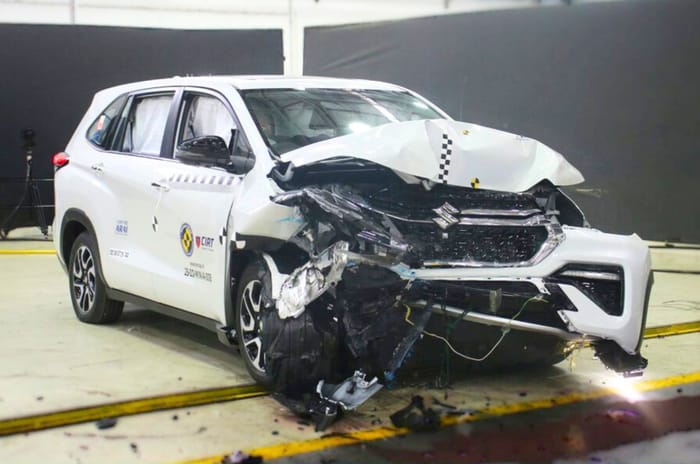
The Toyota Innova Hycross has a 5-star safety rating for both adult and child occupant protection, with 30.47/32 and 45/49 points, respectively. Bharat NCAP tested both petrol and hybrid variants, and the rating applies to the entire Innova Hycross range. As standard, the Innova Hycross comes equipped with 6 airbags, 3-point seat belts with reminders for all passengers, ESC and ISOFIX anchors; top-spec trim also gets an ADAS suite.
16. Tata Harrier EV
BNCAP rating: 5 stars
Crash-tested in June 2025.
The Tata Harrier EV has been rated 5 stars in both adult and child occupant protection, scoring a full 32 points in AOP and 45 out of 49 points in COP. It is only the second vehicle tested by BNCAP to secure maximum points in AOP, the other being the Mahindra XEV 9e. The Harrier EV comes with 6 airbags (7 on Fearless and Empowered), 3-point seat belts with reminders for all passengers, ESC and ISOFIX anchors as standard. Notably, it has slightly better AOP and COP scores than the combustion-powered Harrier, which also has a 5-star BNCAP rating.
17. Maruti Suzuki Dzire
BNCAP rating: 5 stars
Crash-tested in June 2025.
As the first sedan to be tested by Bharat NCAP, the Maruti Suzuki Dzire took home an impressive 5-star safety rating. The compact sedan scored 29.46 out of 32 points for AOP and 41.57 out of 49 points for COP. BNCAP tested the Dzire’s base LXI trim, which comes with standard safety equipment like 6 airbags, ESC, reverse parking sensors, hill-hold assist, and overspeed alerts, among other features, thereby extending the 5-star rating to all variants.
18. Maruti Suzuki Baleno
BNCAP rating: 4 stars
Crash-tested in June 2025.
Maruti Baleno scored four stars in BNCAP’s crash tests; this rating applies to the respective MT and AMT models of Zeta and Alpha variants. Out of 32 points, the AOP score for the Zeta and Alpha variants scored 26.52 points. The COP score was 34.81 for all variants. Standard safety features for the Baleno include 6 airbags, ABS with EBD, brake assist, ESC, hill-hold assist and 3-point seat belts with reminders for all passengers.
19. Tata Nexon EV
BNCAP rating: 5 stars
Crash-tested in April 2025.
The 30kWh and now-discontinued 40.5kWh variants of the Tata Nexon EV achieved a 5-star Bharat NCAP rating for both adult and child protection in May 2024, scoring 29.86/32 and 44.95/49 points, respectively. In April 2025, BNCAP also tested the current range-topping 45kWh variants of the Nexon EV, which received identical AOP and COP scores and, therefore, a 5-star rating. The standard safety features for the Nexon EV include ABS with EBD, 6 airbags, ESP, hill-hold control, ISOFIX child-seat anchor points, rear parking sensors, a rear camera and TPMS.
20. Kia Syros
BNCAP rating: 5 stars
Crash-tested in April 2025.
The Kia Syros compact SUV, with 30.21 out of 32 points in AOP and 44.42 out of 49 points in COP, secured 5-star ratings in both parameters. These ratings are applicable to the entire Syros petrol range. It should be noted that the Syros is Kia’s first SUV to get a 5-star safety rating in a crash test done by BNCAP or GNCAP. Although it uses the K1 platform as the Hyundai Grand i10 (which got 2 stars in the 2020 GNCAP), Kia achieved the top rating by using a reinforced K1 base and adding many hot-stamped parts to the body shell. The Syros offers ABS with EBD, TPMS and 6 airbags (with a passenger-side airbag cut-off switch) as standard safety features.
21. Skoda Kylaq
BNCAP rating: 5 stars
Crash-tested in January 2025.
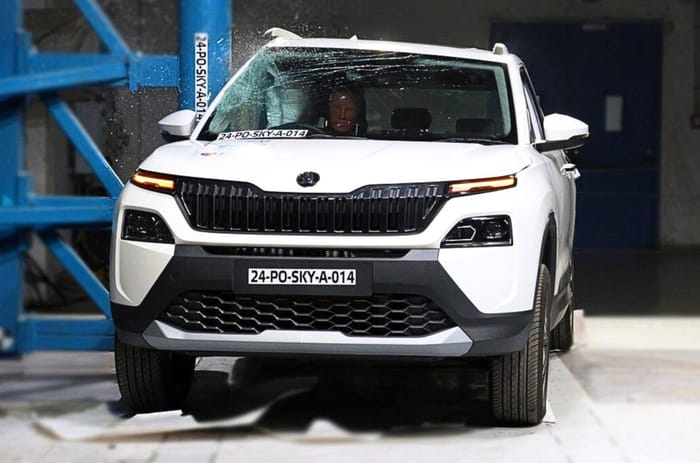
The Skoda Kylaq compact SUV also got a 5-star rating in both adult and child occupant protection in the BNCAP crash test. Skoda’s compact SUV scored 30.88 out of 32 in AOP and 45 out of 49 in COP. ESC, 6 airbags, 3-point seat belts with reminders for all passengers and ISOFIX anchors for rear outboard seats are some safety features available across its variants.
22. Mahindra XEV 9e
BNCAP rating: 5 stars
Crash-tested in January 2025.
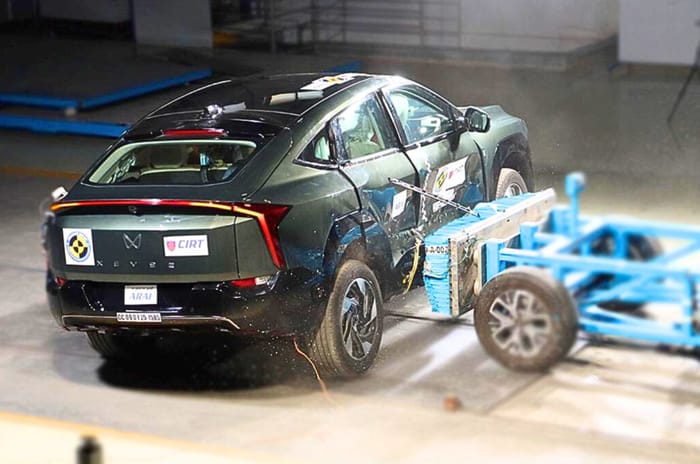
The Mahindra XEV 9e coupe-SUV was awarded a 5-star rating. The electric SUV scored a full 32 points in AOP and 45 out of 49 points in COP. The model tested by BNCAP was the top-spec XEV 9e Pack Three. Safety features like 6 airbags, ISOFIX anchors, rear disc brakes and tyre-pressure monitors are offered starting with the XEV 9e Pack One.
23. Mahindra BE 6
BNCAP rating: 5 stars
Crash-tested in January 2025.
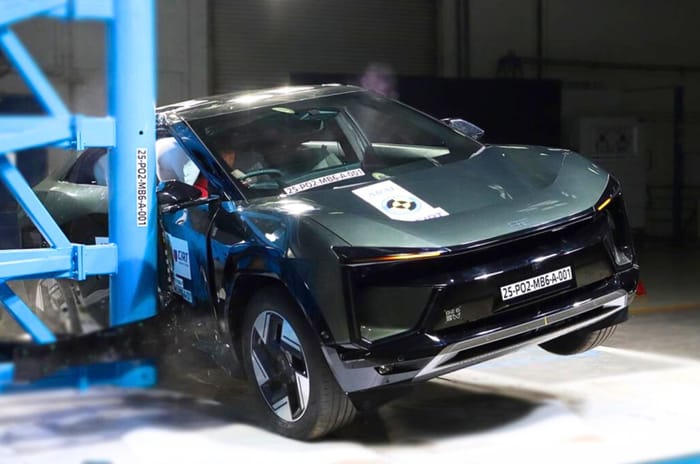
Another electric offering from the SUV specialist, the Mahindra BE 6, also scored a 5-star rating in both AOP and COP. In AOP, the EV received 31.97 points out of 32, and in COP, it got 45 points out of 49. Just like the XEV 9e, the BNCAP crash-tested the range-topping BE 6 Pack Three trim, but Mahindra claims that this rating applies to the base Pack One as well. In terms of standard safety equipment, the BE 6 comes with 6 airbags, a rear camera, parking sensors, TPMS and a driver drowsiness detection system.
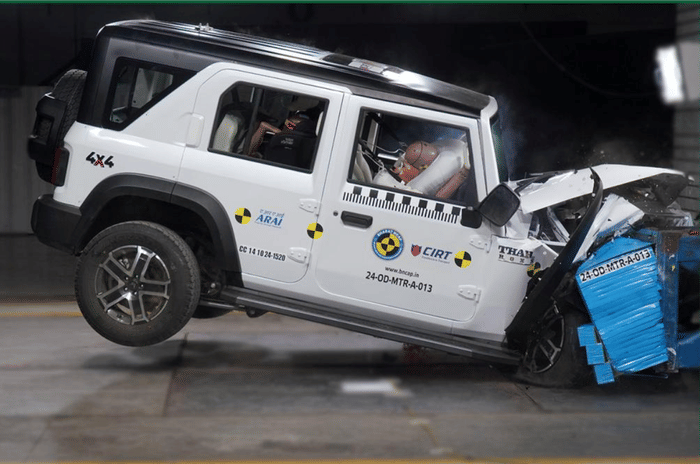
24. Mahindra Thar Roxx
BNCAP rating: 5 stars
Crash-tested in November 2024.
The 5-star rating for the Mahindra Thar Roxx consisted of AOP and COP scores of 31.09 and 45, respectively. This safety rating applies to all the variants of the 5-door SUV. The Thar Roxx complies with AIS-100 pedestrian protection norms for keeping the occupants as well as pedestrians safe when on the go. As standard, it features 6 airbags and a cut-off switch for the passenger-side airbag. Additionally, ISOFIX child-seat anchor points, all 3-point seatbelts with reminders and ESC are offered throughout the range. Like with the XUV 3XO, an ADAS suite is offered in the AX5L and AX7L variants.
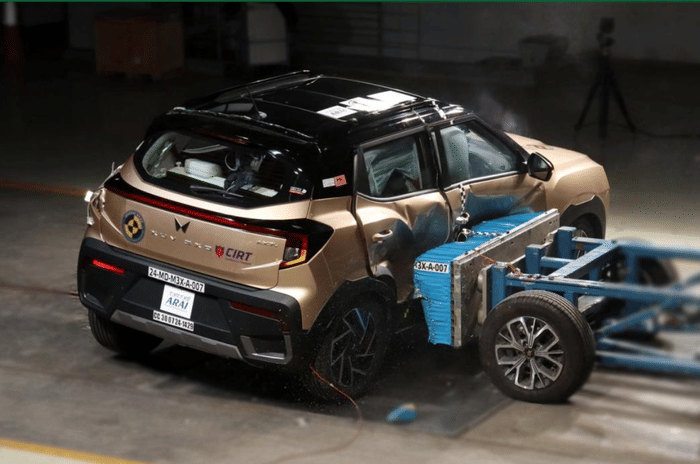
25. Mahindra XUV 3XO
BNCAP rating: 5 stars
Crash-tested in November 2024.
Next up, the Mahindra XUV 3XO continued the 5-star streak with scores of 29.36 in AOP and 43 in COP. BNCAP reported that the MX2 and AX7 L variants were sent by the homegrown brand for testing, but the results apply to the entire XUV 3XO line-up. Also, all trims of the subcompact SUV have 6 airbags, 3-point seatbelts with reminders, ESC, ISOFIX seats and a passenger-side airbag cut-off switch among the standard safety assist technologies. Level 2 ADAS suite, however, is reserved for the AX5 L and AX7 variants.
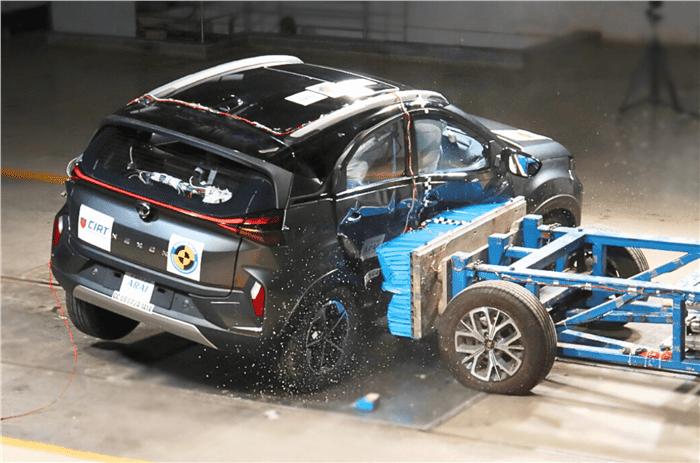
26. Tata Nexon
BNCAP rating: 5 stars
Crash-tested in October 2024.
The Tata Nexon secured a perfect 5-star rating for AOP and COP, scoring 29.41 and 43.83 points, respectively. Standard safety features include 6 airbags, ESC, ABS with EBD, ISOFIX child-seat anchor points, rear parking sensors and hill-hold control.
27. Tata Curvv
BNCAP rating: 5 stars
Crash-tested in October 2024.
The Tata Curvv’s crash-test result was revealed alongside the Nexon, and just like the compact SUV, the coupe-SUV scored 5 stars for both adult and child occupant protection. It secured 29.50 points for AOP and 43.66 points for COP. On the safety front, the Curvv gets ABS with EBD, ESC, 6 airbags, hill-hold control and ISOFIX child-seat anchor points as standard across the range.
28. Tata Curvv EV
BNCAP rating: 5 stars
Crash-tested in October 2024.
The Tata Curvv EV secured 5 stars for AOP and COP, scoring 30.81 and 44.83 points, respectively. It gets 6 airbags, ESP, all-wheel disc brakes, a rear camera and rear parking sensors as standard. Higher variants of the electric vehicle also get Level 2 ADAS, just like its ICE twin.
29. Citroen Basalt
BNCAP rating: 4 stars
Crash-tested in October 2024.
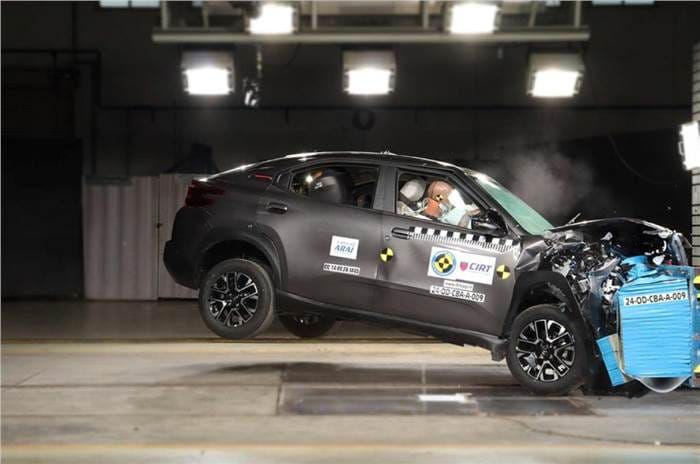
The Citroen Basalt was the first car from the brand to have been crash-tested by Bharat NCAP. The coupe-SUV managed to secure 4 stars for AOP (26.19/32) and 4 stars for COP (35.90/49). The Citroen offers the Basalt with 6 airbags, ESP, hill-hold, TPMS, a rearview camera, rear parking sensors and ISOFIX child-seat anchor points.
30. Tata Harrier
BNCAP rating: 5 stars
Crash-tested in December 2023 (representational image).
Tested in December 2023, the Tata Harrier SUV received a 5-star safety rating for both adult and child occupants’ safety, achieving an AOP score of 30.08 and a COP score of 44.54. Tata offers the Harrier with ABS and EBD, corner stability control, 6 airbags, ESP, hill-hold control, ISOFIX child-seat anchor points, traction control and rear parking sensors as standard.
31. Tata Safari
BNCAP rating: 5 stars
Crash-tested in December 2023.
The Tata Safari was also crash-tested in December 2023, securing a 5-star safety rating, matching the Harrier with an AOP score of 30.08 and a COP score of 44.54. As standard, the Tata Safari gets all-wheel disc brakes, 6 airbags, ABS with EBD, corner stability control, ESP, hill-hold control, ISOFIX child-seat anchor points, rear parking sensors, roll-over mitigation and traction control.
Alpha box office collection day 6: YRF की नई स्पाई थ्रिलर ‘ऐल्फा’ की किस्मत हर गुजरते दिन के साथ बदलती हुई लग रही है। फिल्म की शुरुआत अच्छी रही और ओपनिंग वीकेंड में इसने ठीक-ठाक कमाई की, लेकिन सोमवार को निराशाजनक प्रदर्शन किया। मंगलवार को इसमें चौंकाने वाली बढ़त देखी गई, जिससे उम्मीदें फिर जगीं, लेकिन बुधवार को यह फिर से लड़खड़ा गई। टिकट खिड़की पर इसका सफर उतार-चढ़ाव भरा रहा है। नतीजतन, आलिया भट्ट और शरवरी की यह फिल्म घरेलू बॉक्स ऑफिस पर अभी तक 50 करोड़ का आंकड़ा पार नहीं कर पाई है।
YRF स्पाईवर्स की पहली महिला-प्रधान स्पाई फ़िल्म की ओपनिंग वीकेंड जबरदस्त रही और इसने भारत में 34 करोड़ नेट की कमाई की। इसके बाद ‘ऐल्फा’ बॉक्स ऑफिस पर सोमवार का टेस्ट पास नहीं कर पाई। घरेलू कमाई में 70% की गिरावट आई और इसने भारत में सिर्फ ₹3.85 करोड़ नेट कमाए। मंगलवार को फिल्म की कमाई में 10% का उछाल आया।
इससे कई लोगों को उम्मीद जगी कि फ़िल्म भारत में लंबे समय तक अच्छा प्रदर्शन करेगी। हालांकि, बुधवार को असलियत सामने आ गई और फिल्म की कमाई में 30% की गिरावट दर्ज की गई। ट्रेड ट्रैकर Sacnilk के अनुसार, ‘ऐल्फा’ ने बुधवार को भारत में सिर्फ ₹2.85 करोड़ नेट कमाए, जिससे इसकी छह दिनों की घरेलू कमाई ₹44 करोड़ नेट से थोड़ी ज़्यादा हो गई।
यह फिल्म अब ‘राज़ी’ और ‘गंगूबाई काठियावाड़ी’ दोनों से पीछे रह गई है। ये दोनों फ़िल्में ‘ऐल्फा’ की कमाई के लिए बेंचमार्क मानी जा रही थीं। ऐसा नहीं लगता कि फ़िल्म अपने पहले हफ्ते के अंत तक ₹50 करोड़ का आंकड़ा पार कर पाएगी। ट्रेड जानकारों के मुताबिक, फ़िल्म को अपनी लागत निकालने (ब्रेक-ईवन) के लिए ही घरेलू स्तर पर ₹100 करोड़ नेट और दुनिया भर में ₹150 करोड़ ग्रॉस की कमाई करनी होगी। अगर ‘ऐल्फा’ को मुनाफा कमाना है, तो उसे अपने दूसरे वीकेंड में ज़बरदस्त उछाल दिखाना होगा। हालांकि, इस हफ्ते मल्टी-स्टारर कॉमेडी फिल्म ‘धमाल 4’ के रिलीज होने की वजह से ऐसा होने की संभावना कम ही है। अजय देवगन की यह फिल्म ‘अल्फा’ के कई शो छीन लेगी, जिससे फिल्म के आगे बढ़ने की गुंजाइश बहुत कम रह जाएगी।
YRF स्पाई यूनिवर्स का हिस्सा, ‘ऐल्फा’ को उदय चोपड़ा ने लिखा है और शिव रवैल ने डायरेक्ट किया है। इस फिल्म में बॉबी देओल और अनिल कपूर भी अहम किरदारों में हैं। इसमें ऋतिक रोशन का कैमियो भी है, जिसमें वे ‘वॉर’ फिल्मों वाले अपने किरदार में नजर आएंगे। फिल्म को मिले-जुले से लेकर नेगेटिव रिव्यू मिले। ज़्यादातर क्रिटिक्स ने फिल्म की कमजोर कहानी और मुख्य किरदारों को करने के लिए ज़्यादा कुछ न दिए जाने की आलोचना की। औसत रिव्यू का असर लोगों के बीच फ़िल्म की चर्चा पर पड़ा, जिससे पहले वीकेंड के बाद फ़िल्म की रफ़्तार धीमी पड़ गई।
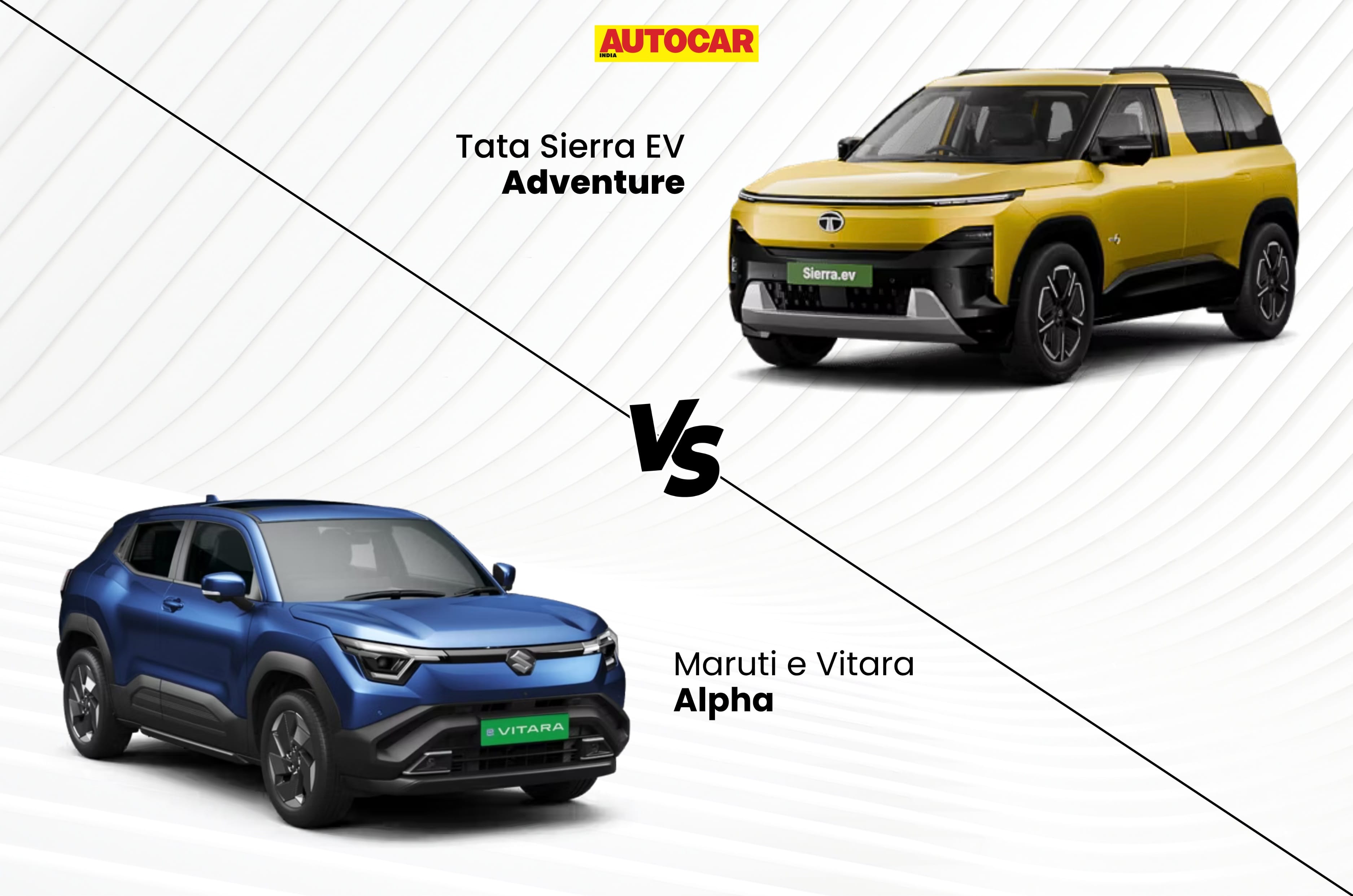
If you’re in the market for an electric midsize SUV priced around Rs 20 lakh, there are plenty of options to choose from. However, today we’ll be looking at the mid-spec Tata Sierra EV with the 63kWh battery, which starts at Rs 20.99 lakh, and the top-spec Maruti e Vitara with the 61kWh battery, priced at Rs 19.99 lakh. Let’s find out how these two midsize SUVs match up when pitted against each other in terms of their dimensions, technical specifications, features and price.
Explore full specs, features and a price breakdown in our Sierra EV vs e Vitara comparison.
Tata Sierra EV mid-spec vs Maruti e Vitara top-spec: Dimensions
Not only is the Tata EV the larger car here, it also has the bigger boot
Tata Sierra EV Adventure 63 vs Maruti e Vitara Alpha dimensions
Tata Sierra EV
Maruti e Vitara
Length (mm)
4,340
4,275
Width (mm)
1,841
1,800
Height (mm)
1,750
1,640
Wheelbase (mm)
2,730
2,700
Boot space (litres)
450
238
Frunk (litres)
55
–
Wheel size (inches)
18
18
Compared to the e Vitara, the Sierra EV is 65mm longer and has a 30mm longer wheelbase. It’s also 41mm wider and stands 110mm taller at the roof. Furthermore, the Sierra EV has the e Vitara beat in terms of luggage-carrying capacity too. Not only does the mid-spec Sierra EV feature a 55-litre frunk, which is missing altogether in the top-spec e Vitara, but the former’s primary boot is a full 212 litres bigger. While the top trim of the Sierra EV gets 19-inch wheels, the Adventure trim sticks to 18 inchers. However, all trims of the e Vitara come with 18-inch alloy wheels.
Tata Sierra EV mid-spec vs Maruti e Vitara top-spec: Exterior features
The mid-spec Sierra EV gets more modern design touches on the outside than the e Vitara
Tata Sierra EV Adventure 63 vs Maruti e Vitara Alpha exterior features
Tata Sierra EV
Maruti e Vitara
LED projector headlamps
Yes (auto)
Yes (auto)
Connected light bar
Yes
No
Front fog lamps
Yes
Yes
Cornering lights
Yes
No
Welcome lights
Yes
No
Powered ORVMs
Yes (with auto-fold function)
Yes (with auto-fold function)
Flush door handles
Yes
No
Body cladding
Yes
Yes
Rear spoiler
Yes
Yes
Compared to the muscular bodywork of the Maruti e Vitara, the Tata Sierra EV sports a more upright and chiselled form. Some of the highlights that the Sierra EV gets but are missing on the e Vitara include additional lighting elements (with suave features like ‘Welcome’ and cornering units), plus front & rear LED light bars. The e Vitara, on the other hand, gets traditional handles for the front doors – the rear units are integrated into the doors. The e Vitara’s body cladding looks quite aggressive, while that of the Sierra EV looks more urbane.
Tata Sierra EV mid-spec vs Maruti e Vitara top-spec: Interior features
Interior of the mid-trim Sierra EV offers a lot of premium-feeling yet useful amenities
Tata Sierra EV Adventure 63 vs Maruti e Vitara Alpha interior features
Tata Sierra EV
Maruti e Vitara
Infotainment screen
12.3-inch
10.1-inch
Digital driver’s display
10.25-inch
10.25-inch
Panoramic sunroof
Yes (voice assisted)
No (fixed single-pane)
Wireless charger
Yes
Yes
Driver’s seat adjustment
6-way manual
10-way powered
Co-driver’s seat adjustment
4-way manual
4-way manual
Thigh-support extender
Yes
No
‘Boss’ mode
Yes
No
Ventilated front seats
Yes
Yes
Automatic climate control
Yes (single-zone)
Yes (dual-zone)
Cooled glovebox
Yes
No
Ambient lighting
Yes
Yes
Audio system
12-speaker JBL Black
8-speaker Infinity
Dolby Atmos
Yes
No
Apple CarPlay & Android Auto
Yes (wireless)
Yes (wireless)
USB Type-C ports
Yes (4 ports)
Yes (4 ports)
Connected car tech
Yes
Yes
Voice assistant
Yes (multiple)
Yes
OTA updates
Yes
Yes
EV route planner
Yes
Yes
Gaming
Yes
No
Rear sunblinds
Yes
No
The interior feature set of the mid-spec Tata Sierra EV Adventure trim is more comprehensive than that of the top-spec Maruti e Vitara. Adding to its creature comforts is the extendable under-thigh support function for the front seats, a ‘boss’ mode to liberate more room at the back, a cooled glovebox, rear sunshades, plus a more premium audio system.
The Tata SUV also gets a large touchscreen, a voice-assisted panoramic sunroof, the brand’s new ‘AirConsole’ gaming system, and native and Amazon Alexa voice assistants. Furthermore, the Sierra EV comes with three 65-watt and one 15-watt Type-C chargers. The e Vitara also gets four USB ports, but they do not support such rapid charging rates.
Tata Sierra EV mid-spec vs Maruti e Vitara top-spec: Other features
Both cars are fairly comparable on this front
Tata Sierra EV Adventure 63 vs Maruti e Vitara Alpha other features
Tata Sierra EV
Maruti e Vitara
Drive modes
Yes (3)
Yes (3)
Terrain modes
Yes (4)
Yes (1)
V2V and V2L
Yes
No
AVAS
Yes
Yes
Where the Sierra EV gets vehicle-to-load (V2L) and vehicle-to-vehicle (V2V) functions, the e Vitara does not. The Maruti EV gets just the Snow terrain mode, while the Sierra EV offers Normal, Wet/Rain, Rough and Custom settings. Both cars feature AVAS, or Acoustic Vehicle Alerting System to alert other road users of their presence.
Tata Sierra EV mid-spec vs Maruti e Vitara top-spec: Safety features
The Tata EV packs a lot more safety nannies than the e Vitara
Tata Sierra EV Adventure 63 vs Maruti e Vitara Alpha safety features
Tata Sierra EV
Maruti e Vitara
Airbags
6
7
ABS with EBD
Yes
Yes
Electronic stability program
Yes
Yes
Hill-hold assist
Yes
Yes
Hill-descent control
Yes
Yes
TPMS
Yes
Yes
360-degree camera
Yes
Yes
Electronic parking brake
Yes (with auto-hold function)
Yes (with auto-hold function)
Auto-dimming IRVM
Yes
Yes
Rain-sensing wipers
Yes
Yes
Auto-dimming IRVM
Yes
Yes
ISOFIX
Yes
Yes
Rear wiper and defogger
Yes
Yes
All-wheel disc brakes
Yes
Yes
Level 2 ADAS
Yes
Yes
The Maruti e Vitara Alpha trim’s Level 2 ADAS (Advanced Driver Assistance Systems) includes adaptive cruise control, front collision warning, auto-emergency braking, blind-spot warning, rear cross-traffic alert, lane-departure warning with lane-departure prevention and adaptive high-beam assist. These are all safety equipment that the Sierra EV offers as well. However, the e Vitara comes with 7 airbags, while the Sierra EV gets the usual 6. Both models get surround-view cameras, front & rear parking sensors, an SOS calling function and an electronic parking brake with auto-hold.
Tata Sierra EV mid-spec vs Maruti e Vitara top-spec: Range and performance
While their battery capacities are comparable, the Sierra EV boasts a distinct power advantage
Tata Sierra EV Adventure 63 vs Maruti e Vitara Alpha range and performance
Tata Sierra EV
Maruti e Vitara
Battery size (kWh)
63
61
Electric motor setup
Single motor, rear
Single motor, front
Drive layout
RWD
FWD
Power (hp)
238
174
Torque (Nm)
315
193
Claimed 0-100kph
–
8.7 seconds
Claimed range (km)
535
543
AC charging
8.9 hrs at 7.2kW (10-100%)
9 hrs at 7.4kW (10-100%)
DC fast charging
25 mins at 110kW (20-80%)
45 mins at 70kW (10-80%)
In terms of battery size, the Sierra EV’s mid-spec variant possess a capacity advantage of 2kWh over the top-spec e Vitara. However, it’s the Maruti EV that manages more range – albeit the difference here is minimal. The Sierra EV’s rear-mounted electric motor is also punchier, offering 64hp and 122Nm more than the e Vitara’s peak output figures.
While both cars are equipped with a single electric motor, the Sierra’s unit powers the rear wheels instead of the front ones. This also means that the Sierra EV should be able to put its power down better than the front-wheel-drive e Vitara, especially on inclines or when the vehicle’s fully loaded. Tata Motors hasn’t specified the 0-100kph time of the mid-spec Sierra EV, but Maruti Suzuki claims that the top-spec e Vitara can do it in 8.7 seconds.
Both Sierra EV and e Vitara support similar AC charging speeds, thus requiring a comparable amount of time to go from 10-100 percent SoC. However, the Tata SUV is capable of accepting higher DC fast-charging rates, which allows it to reach 80 percent SoC ahead of the e Vitara. That said, the Maruti EV DC charging time accounts for the time taken for the battery to go from 10-80 percent, instead of the Sierra EV’s 20-80 percent.
Conclusion
The top-spec Maruti e Vitara Alpha variant is priced at Rs 20.00 lakh, while the mid-spec Tata Sierra EV 63 Adventure variant is priced at Rs 20.99 lakh. While the e Vitara offers 7 airbags and a little extra claimed range, the Sierra EV with the 63kWh battery pack and in the Adventure trim offers better value overall. It has more power, larger dimensions and a lengthy list of features – all of which make the Tata Sierra EV a better value-for-money buy here.
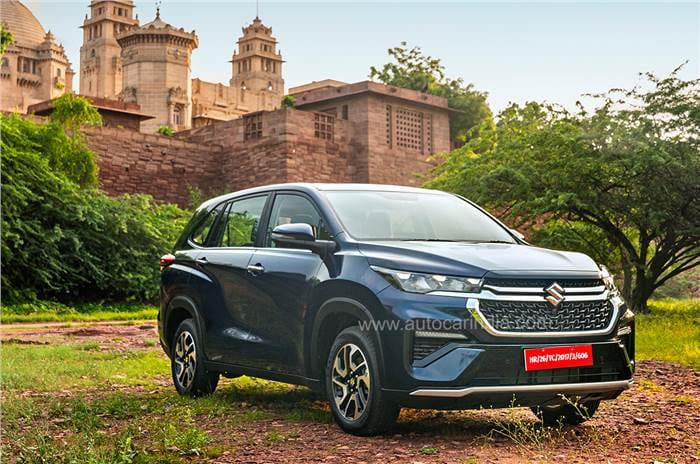
Maruti Suzuki is offering attractive offers across its premium Nexa range in July 2026. Depending on the model and variant, these include cash discounts, exchange or scrappage offers, corporate benefits and loyalty bonuses. Exchange and scrappage benefits cannot be claimed together. The loyalty bonus is available only to existing Maruti customers, and it can be combined only with the exchange bonus. Corporate benefits are exclusively offered to eligible organisations and approved finance partners.
Disclaimer: Discounts may vary by city and are subject to stock availability. Please check with your local dealer for the exact figures.
Maruti Invicto discounts in July 2026
Up to Rs 2.10 lakh
Every Maruti Invicto trim gets benefits of up to Rs 2.10 lakh this month, which is slightly lower than in June. These offers include a cash discount of up to Rs 50,000, exchange benefits of up to Rs 1 lakh, a Rs 50,000 loyalty bonus and a Rs 10,000 corporate benefit. The Invicto MPV is Maruti’s version of the Toyota Innova Hycross, and it is priced between Rs 24.97 lakh and Rs 28.60 lakh.
Maruti Grand Vitara discounts in July 2026
Up to Rs 95,000
The Maruti Grand Vitara gets benefits of up to Rs 95,000 in July. The Sigma petrol MT variant attracts the highest discounts of up to Rs 95,000, while the Delta petrol gets benefits of up to Rs 85,000. Buyers of the Zeta petrol and Alpha petrol variants get a Rs 25,000 cash discount along with a complimentary 5-year extended warranty (it cannot be exchanged for cash, and is non-transferable).
The strong hybrid variants are available with zero road tax benefit, a complimentary 5-year extended warranty, up to Rs 50,000 exchange bonus, Rs 30,000 upgrade loyalty bonus and a Rs 10,000 corporate benefit. The Delta CNG and Zeta CNG variants also come with total benefits of up to Rs 90,000. The Grand Vitara is priced between Rs 10.76 lakh and Rs 19.72 lakh.
Maruti Jimny discounts in July 2026
Up to Rs 45,000
Like last month, a cash discount of Rs 45,000 is available with all Maruti Jimny variants. The compact off-roader is priced between Rs 12.39 lakh and Rs 14.52 lakh.
Maruti XL6 discounts in July 2026
Up to Rs 45,000
Next, the Maruti XL6 gets offers going up to Rs 45,000 on both petrol and CNG variants. Thes comprise a cash discount of up to Rs 20,000 and a scrappage bonus of up to Rs 25,000. The XL6 is the 6-seat, more premium version of the Ertiga (sold via Arena outlets) and it is priced from Rs 11.57 lakh to Rs 14.52 lakh.
Maruti Baleno discounts in July 2026
Up to Rs 40,000
The Maruti Baleno is on sale with benefits of up to Rs 40,000 on petrol-manual variants and AMT variants. Meanwhile, the CNG variants attract benefits of up to Rs 35,000. The Baleno premium hatchback starts at Rs 5.99 lakh and goes up to Rs 9.17 lakh.
Maruti Fronx discounts in July 2026
Up to Rs 25,000
Lastly, the Maruti Fronx gets benefits of up to Rs 25,000 in July. The turbo-petrol variants are available with a Rs 10,000 cash discount and a Rs 15,000 scrappage bonus. Meanwhile, the naturally-aspirated petrol and CNG variants do not get a cash discount but are offered with a scrappage bonus of up to Rs 15,000. The Fronx price starts at Rs 6.85 lakh and tops out at Rs 11.84 lakh.
Ex-showroom prices mentioned above are as on July 8, 2026.








.jpg?w=700&c=0)
.jpg?w=700&c=0)
.jpg?w=700&c=0)
.jpg?w=700&c=0)
.jpg?w=700&c=0)
.png?w=700&c=0)