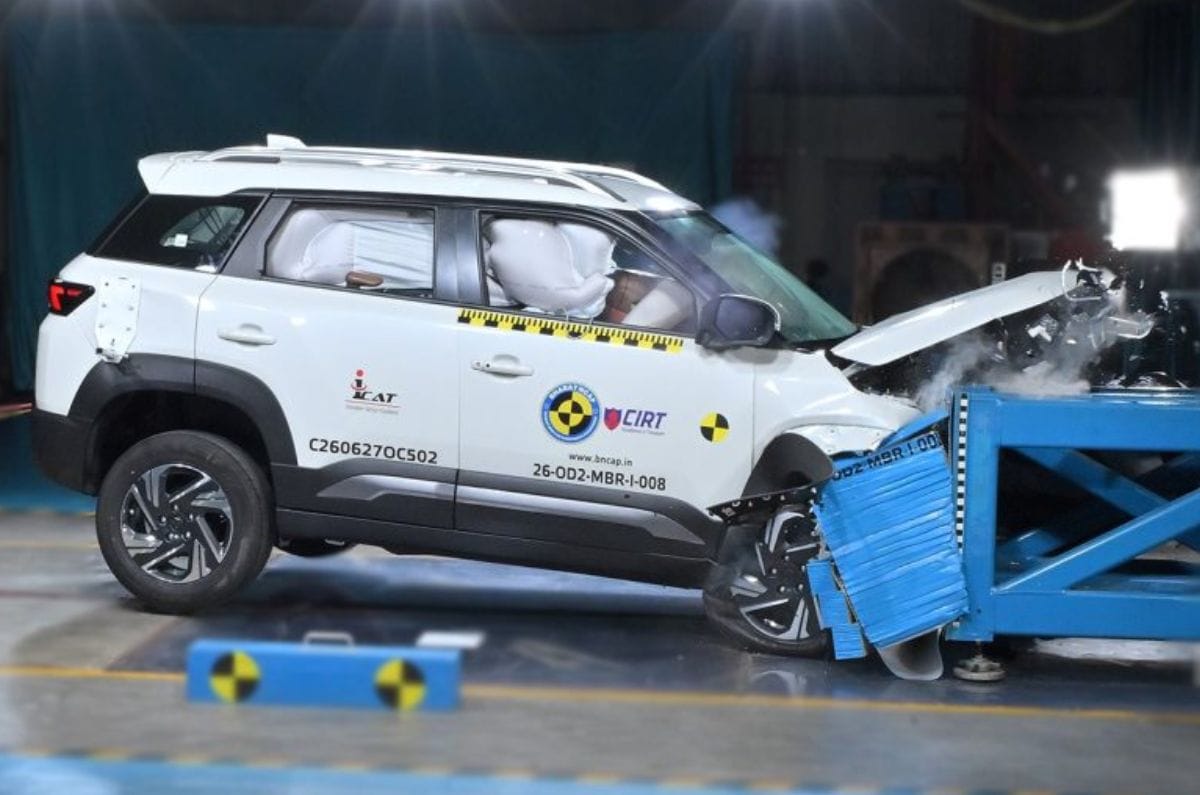
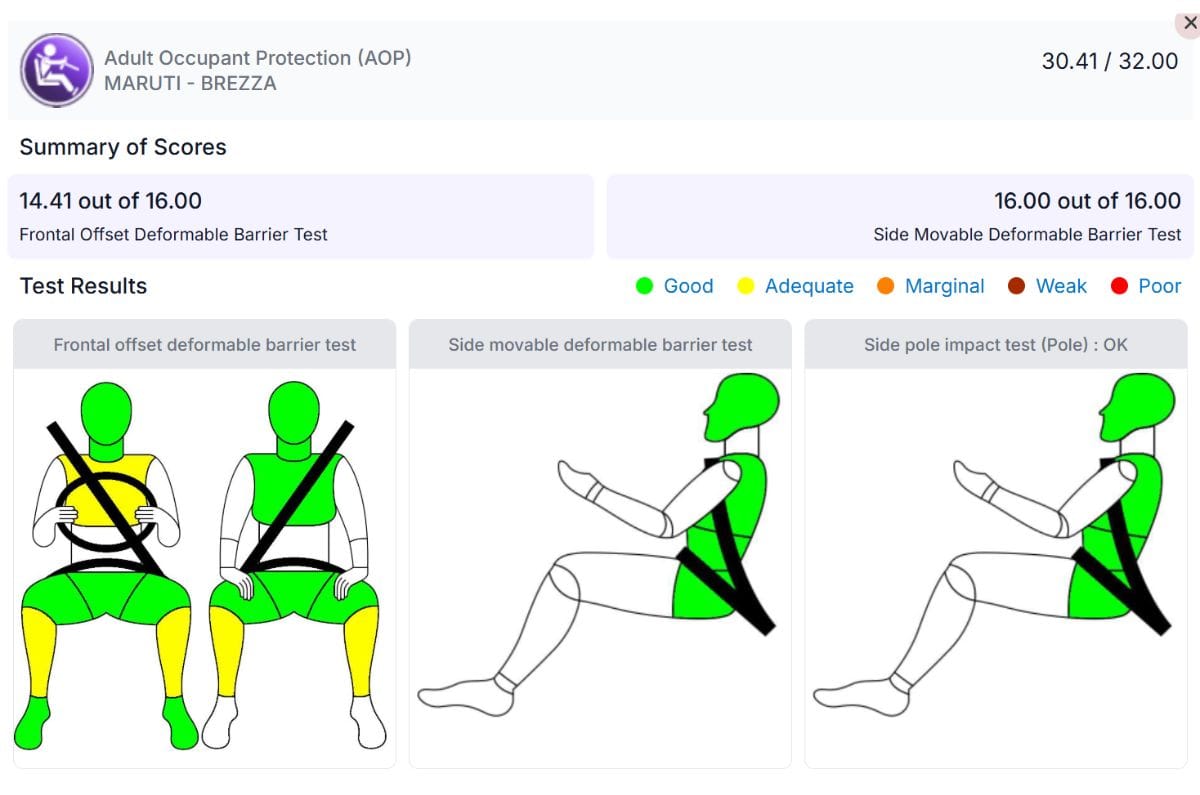
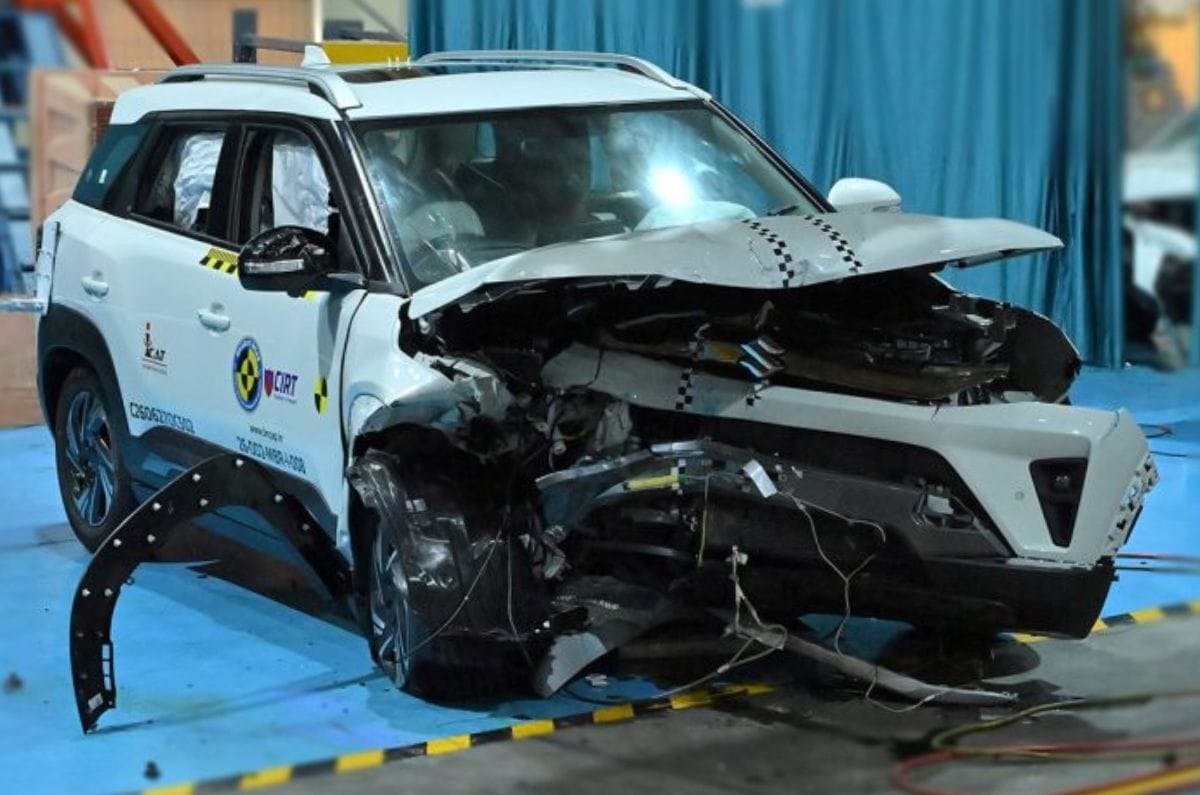
Bharat NCAP has released the crash test results of the 2026 Maruti Suzuki Brezza ahead of the compact SUV’s official launch tomorrow. The Brezza facelift has achieved a 5-star crash safety rating for both adult occupant protection (AOP) and child occupant protection (COP) tests, scoring 30.41/32 points and 43/49 points, respectively.
The ZXI+ 1.5L 6AT variant of the upcoming Brezza was tested
Test results apply to all variants of the Brezza facelift
In the frontal offset deformable barrier test, the driver’s head, neck, pelvis, thighs and feet received ‘good’ protection, while the chest and tibiae received ‘adequate’ protection. In the same test, all critical parts of the co-driver received ‘good’ protection, except the tibiae, which received ‘adequate’ protection.
In the side movable barrier and side pole impact tests, all critical parts of the passenger, including head, chest, abdomen and pelvis, received ‘good’ protection. In the side pole impact test (pole), it received a notable ‘OK’.
For the COP tests, child seats of both the 18-month-old and 3-year-old dummies were set to a rearward direction. The test results suggest that both dummies scored a full 8 out of 8 points in the frontal and 4 out of 4 in the side crash test.
Although the 2026 Maruti Brezza scored full points for the dynamic score (24 out of 24) and CRS installation score (12 out of 12), it lost 6 points in the vehicle assessment score. As a result, the compact SUV scored 43 out of 49 points in the overall child occupant protection tests.
For the crash test, the 2026 Brezza’s ZXI+ 1.5L 6AT variant was tested, but the results apply to all other variants as well. The tested variant, Bharat NCAP suggests, is equipped with 6 airbags, electronic stability control (ESC), seat belt reminders on all seats, seatbelt pretensioners on the front-row seats and ISOFIX child seat anchorages on the rear outboard seats.
Both products are likely to be locally manufactured although the extent of localised components is not yet clear.
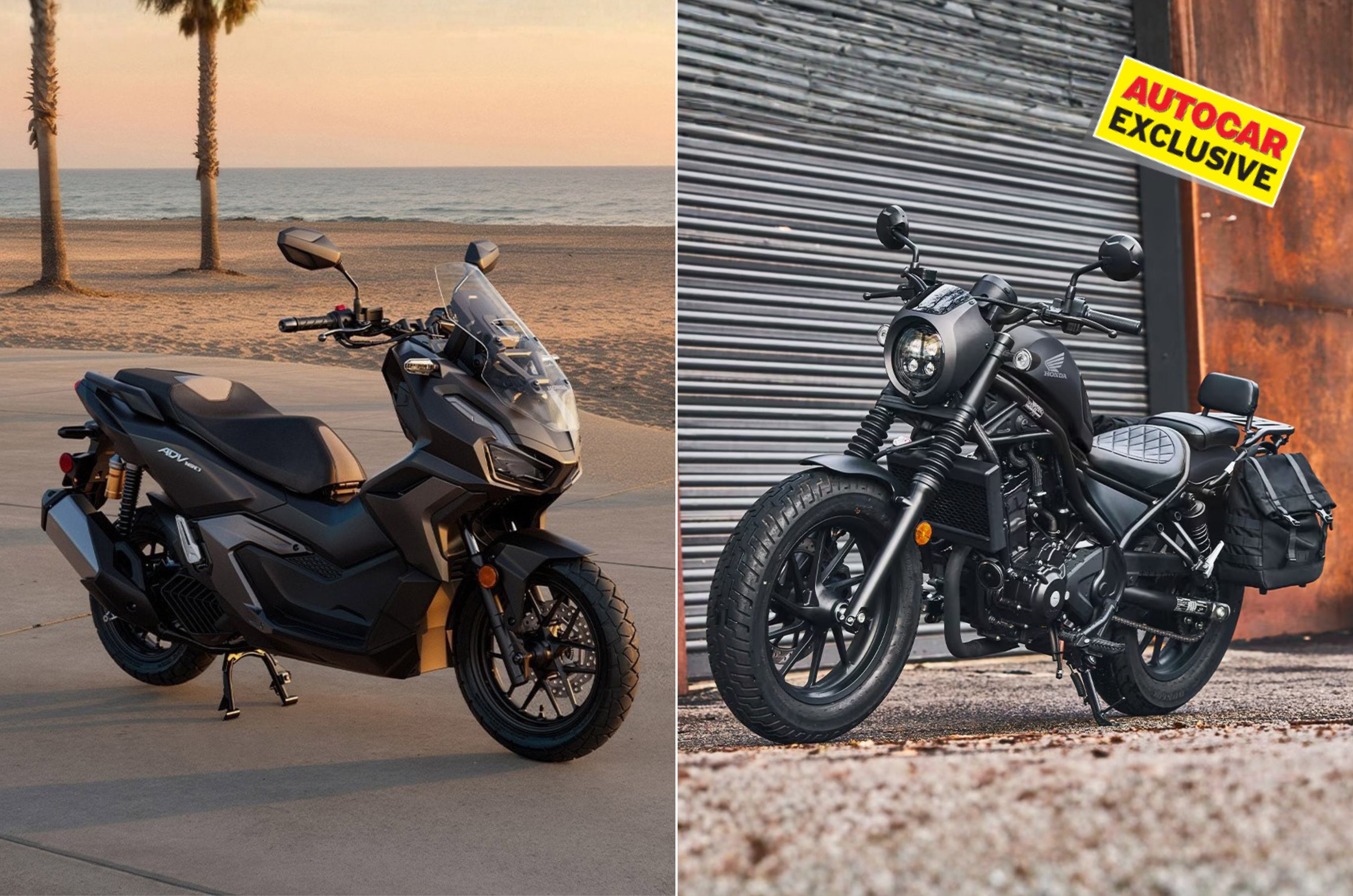
Rebel 300 and ADV 160 likely to be launched in India.
Competitive pricing expected considering that the models are under 350cc.
More new products could also be launched at the event.
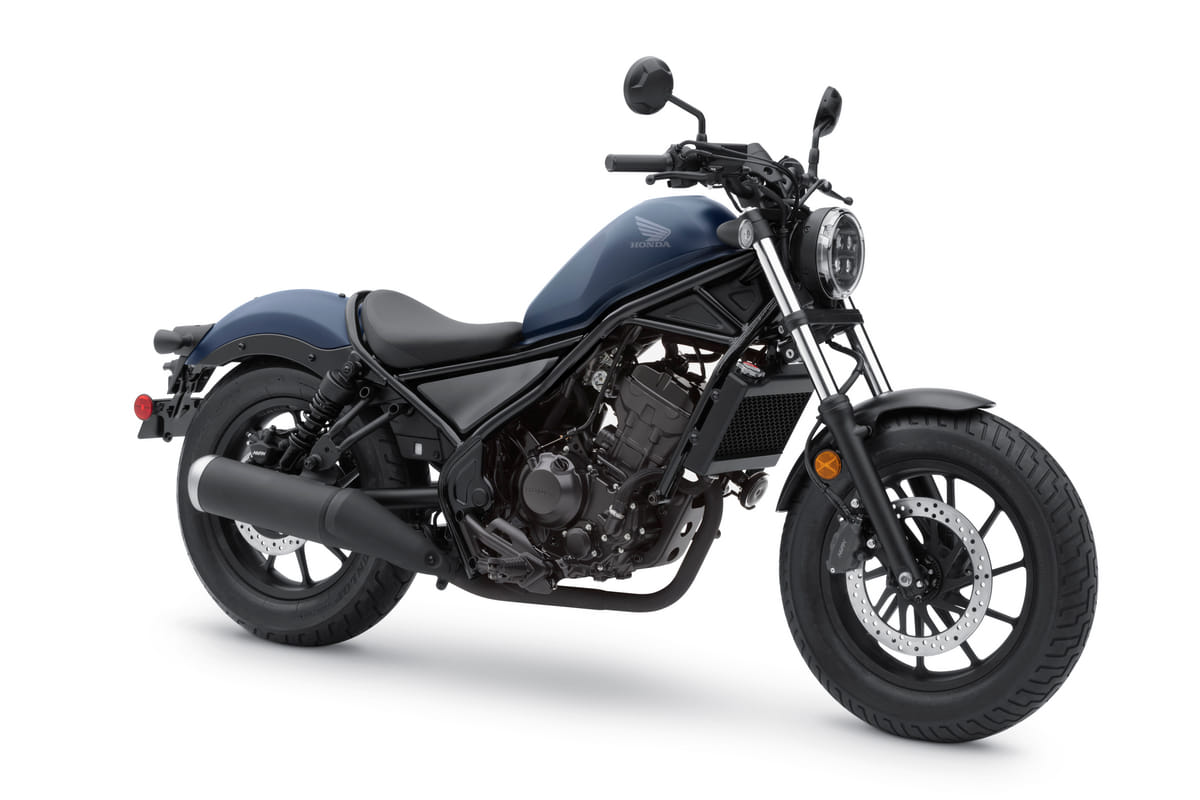
Rebel 300 Cruiser
The Rebel nameplate is not entirely new to India. Honda had previously introduced the Rebel 500 in the country as a CBU model, pricing it at Rs 5.12 lakh (ex-showroom). However, its premium price tag made it out of reach for many.
With local manufacturing expected for the Rebel 300, Honda could position it at a much more accessible price point, making it a stronger rival to other popular bikes in the market like the Royal Enfield Classic 350, Meteor 350 and Bullet 350.
The Rebel 300 makes use of a 286cc, liquid-cooled, single-cylinder engine making around 30 hp and 27.5Nm. It has an accessible 690mm seat height and a kerb weight of 165kg. Currently, in many international markets, the 2027 model features Honda’s E-Clutch system. It remains to be seen if this E-clutch model makes its way here or whether they use a more affordable system to keep costs in check – something that Tsutsumu Otani, managing director, president & CEO of HMSI told us the company was exploring for the Indian market.
This is the same engine that is used in the Honda CB300R which used to be on sale in India. Given the fact that that bike’s price was reduced to Rs 2.19 lakh (ex-showroom prices) after the GST rate reduction, Honda could also price the new Rebel 300 quite aggressively.
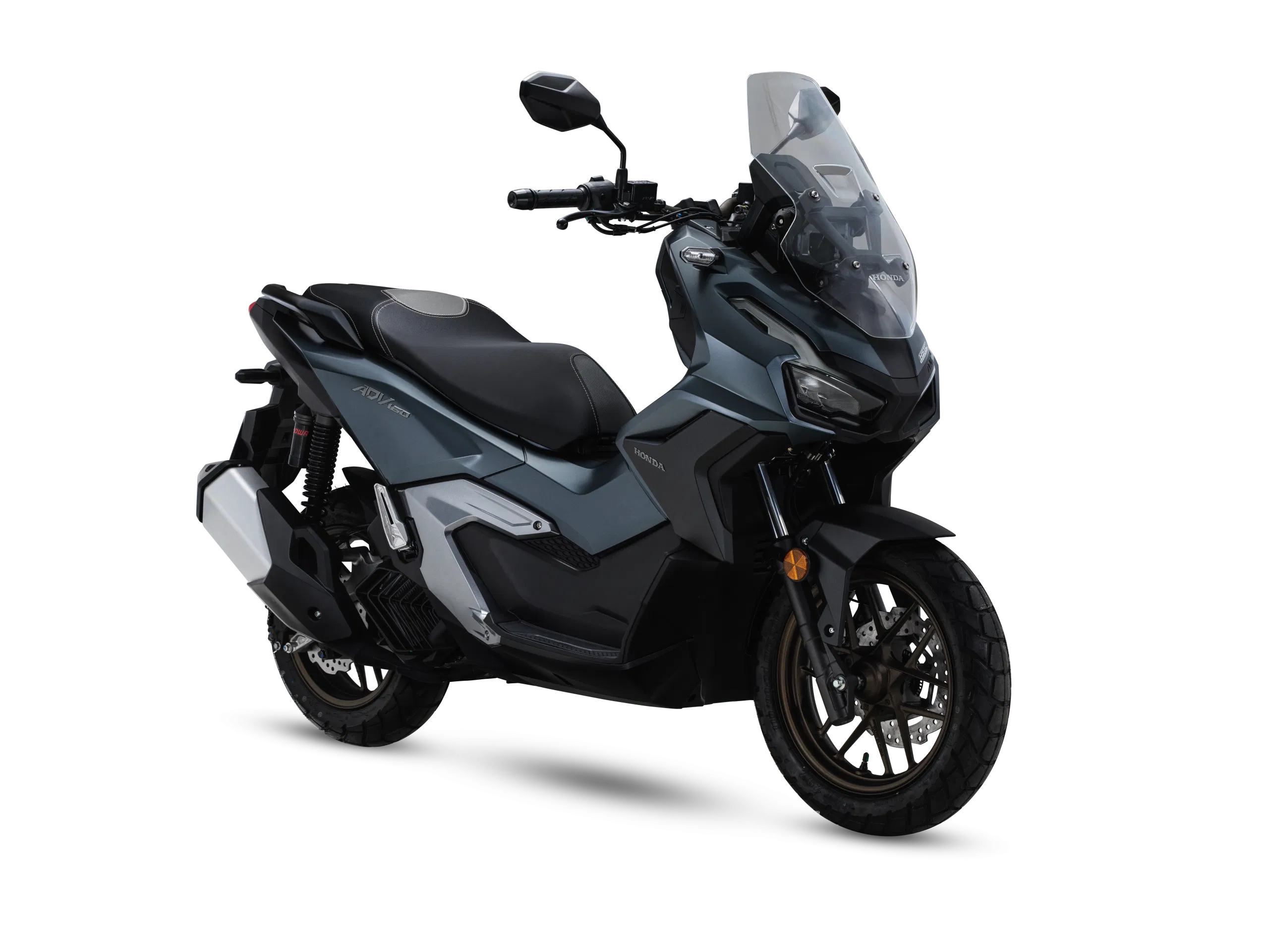
ADV 160 Maxi-Scooter
We first broke the news that Honda would bring the ADV 160 to India over a year back and the vehicle is now finally ready for launch. The new ADV 160 will sit at the top of Honda’s scooter range in India. The adventure-style maxi-scooter will likely be aimed at buyers looking for a more premium and performance oriented alternative to conventional commuter scooters. Pricing will be crucial, and it remains to be seen how aggressively Honda positions it in the market. It will go up against the likes of the Yamaha Aerox (Rs 1.45 lakh to Rs 1.48 lakh ex-showroom) and the Hero Xoom 160 (Rs 1.43 lakh ex-showroom).
Internationally, this scooter uses a 157cc, liquid cooled, single-cylinder engine making 16hp and 14.7Nm. It has a seat height of 780mm, a kerb weight of 134kg and 27-litres of underseat storage. The scooter also features an adjustable windscreen and single-channel ABS as standard.
Other Product Launches
While the Rebel 300 and ADV 160 are expected to be the main launches, Honda is expected to have a few more surprises planned for tomorrow’s event. The company has been expanding its premium motorcycle portfolio in India, so additional product launches in that category could be on the cards as well as a third EV following the QC1 and Activa e.
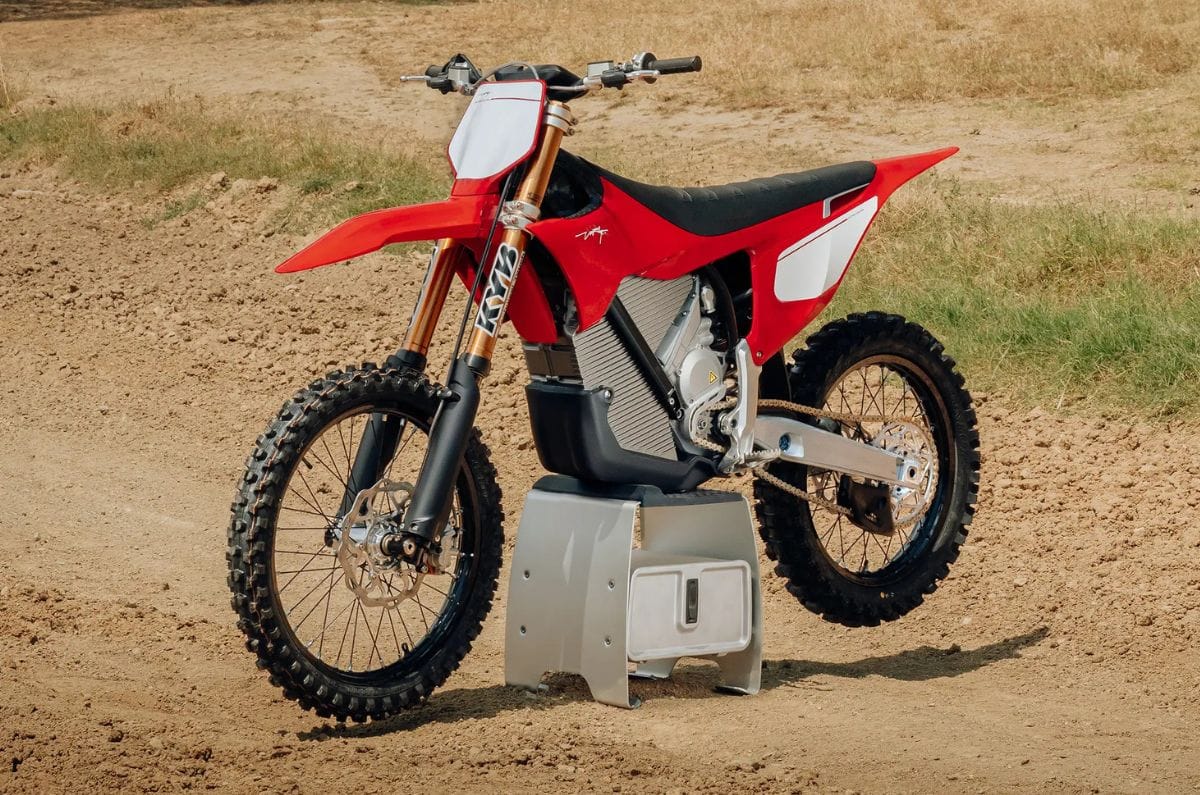
Stark Future has unveiled Factory Editions of its VARG MX and VARG EX electric off-road motorcycles. Limited to a total of 500 units worldwide, the special editions receive a host of chassis and component upgrades, headlined by a full KYB Factory A-Kit suspension setup, while the 80hp electric powertrain remains unchanged.
Limited to 200 VARG MX and 300 VARG EX Factory Editions worldwide
both motorcycles feature a KYB Factory A-Kit suspension setup
7.2kWh battery pack paired with an electric motor producing 80hp peak output remains unchanged
Stark VARG MX, EX Factory Edition: what’s new?
KYB Factory A-Kit suspension headlines the updates
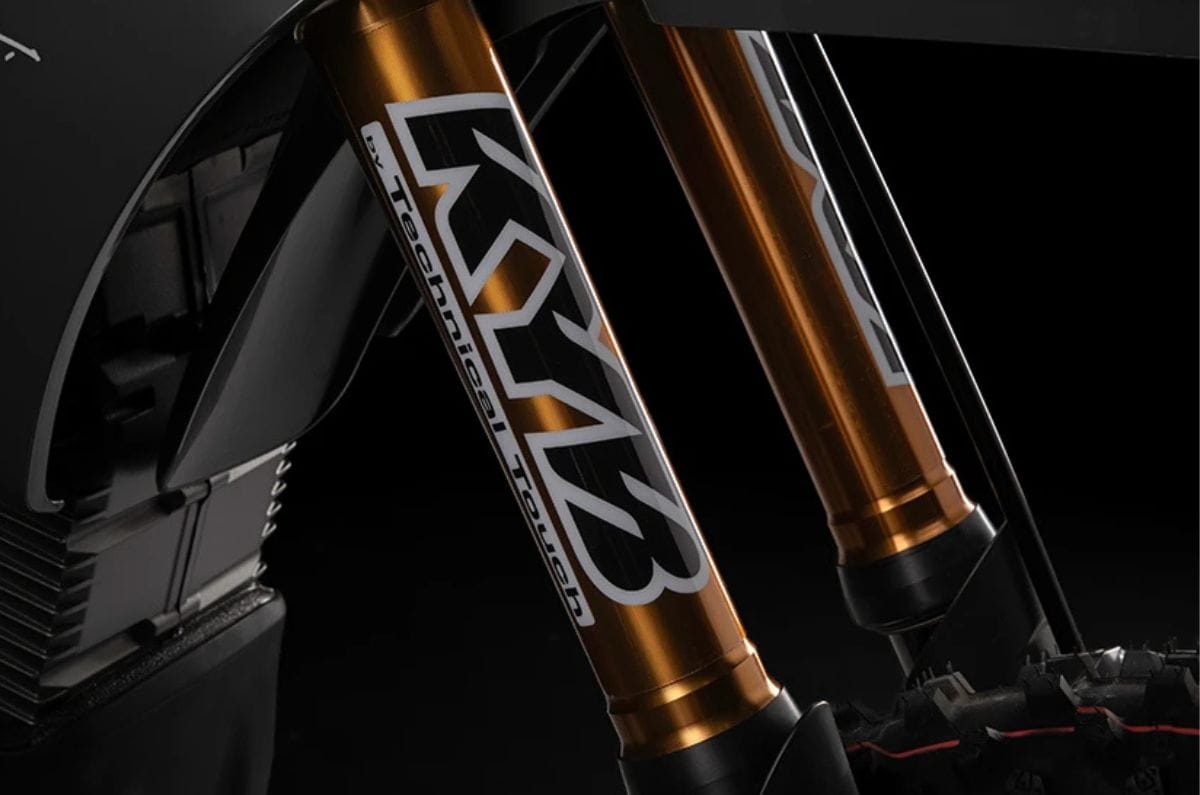
The biggest change on both motorcycles is the addition of a KYB Factory A-Kit suspension package. It comprises a 48mm closed-cartridge fork, a fully adjustable rear shock and an Xtrig preload adjuster, with the updates aimed at delivering improved feel and consistency over varied terrain.
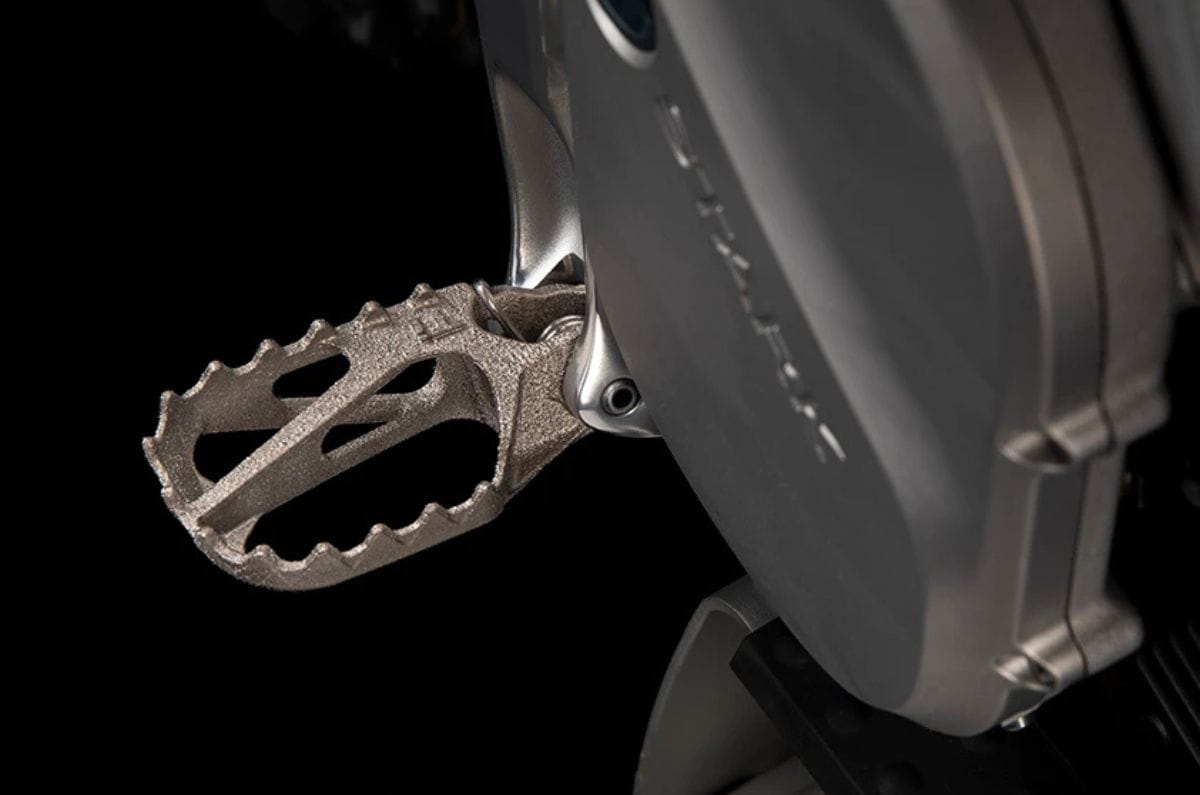
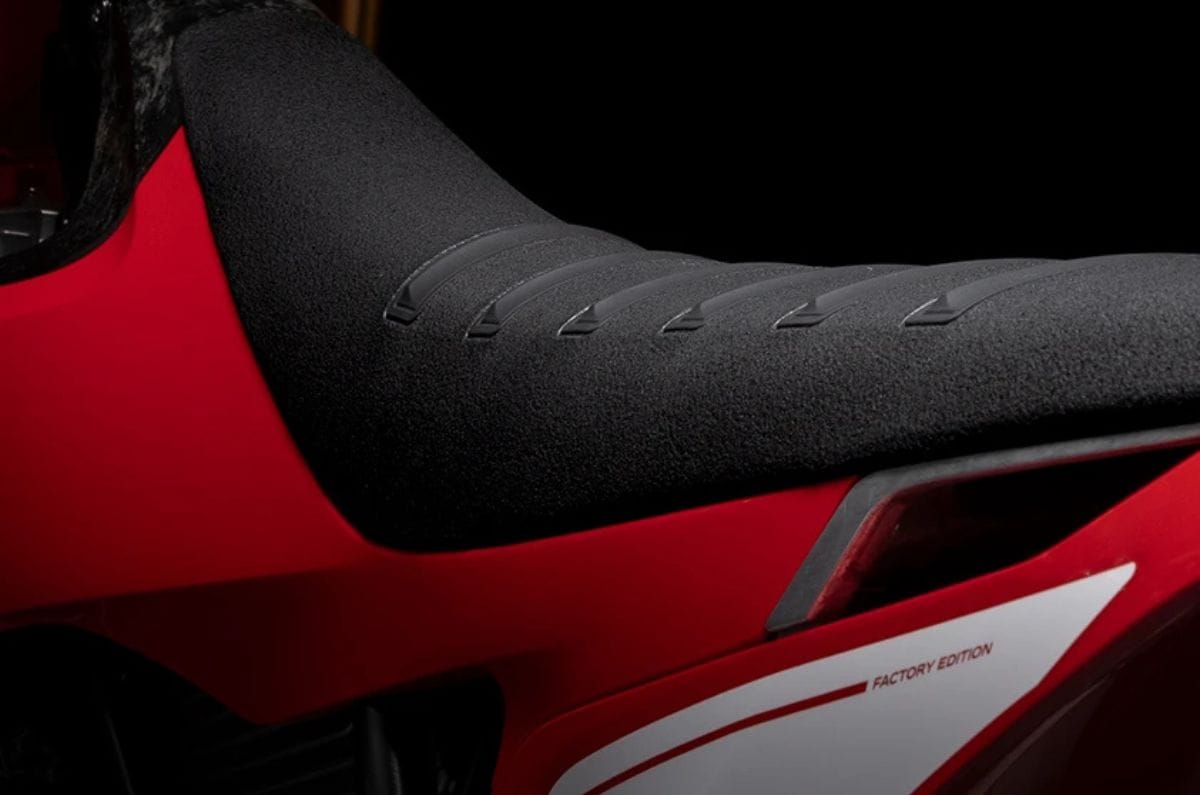
The Factory Editions also receive a number of hardware upgrades, including CNC-machined triple clamps, titanium footpegs, a titanium bolt kit – that contribute to a claimed weight savings of 1.1kg – a high-grip seat and an updated radiator fan holder. Stark has also added Dynamic Traction Control, integrated into the riding modes, while buyers in markets where regulations permit can opt for a hand-operated rear brake. Power continues to come from the brand’s 80hp electric motor paired with its 7.2kWh battery platform.
However, the torque number differs between the MX and EX models, where the former puts out 978Nm on the rear wheel whereas the latter produces 1036Nm of torque on the rear wheel. However, torque figures on EVs are not always directly comparable to ICE models, as Stark Future quotes torque at the wheel resulting in a significantly higher number, on paper, due to gear reduction.
The VARG MX Factory Edition is finished in an exclusive Stark Red colour scheme and rides on Dunlop MX34 tyres. The road-legal VARG EX Factory Edition, meanwhile, gets a Forest Grey finish, enduro-specific suspension settings, Dunlop Geomax EN91 tyres, handguards, and front and rear disc protection. Stark Future will build just 200 VARG MX Factory Editions and 300 VARG EX Factory Editions, making them the most exclusive versions of the VARG range to date.
The VARG MX Factory Edition is priced at USD 15,990 (approximately Rs 15.43 lakh), while the VARG EX Factory Edition costs USD 16,990 (approximately Rs 16.40 lakh), according to current exchange rates.
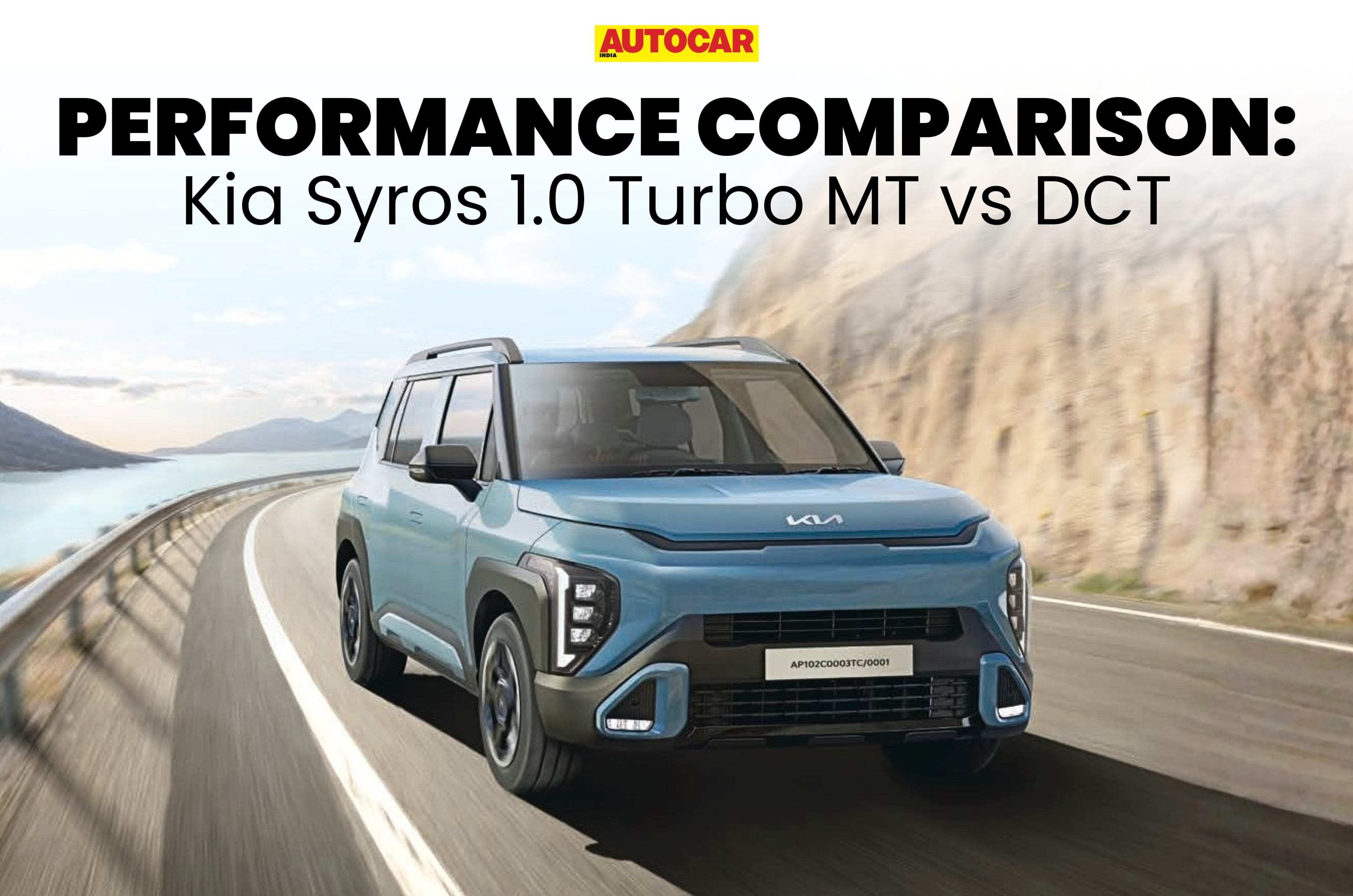
The Kia Syros is the Korean carmaker’s more premium compact SUV for the Indian market, positioned between the Sonet and the Seltos in the manufacturer’s lineup. It is available with a choice of turbo-petrol and diesel engines, with the 1.0-litre turbo-petrol being the most affordable turbocharged petrol offering from Kia in India. Buyers opting for this engine can choose between a 6-speed manual transmission and a 7-speed dual-clutch automatic (DCT). But which of these two powertrain options delivers better performance? Let’s find out.
Kia Syros 1.0L turbo-petrol MT vs DCT: Specifications and price
The Syros turbo MT’s top-end price is similar to the DCT’s starting price
Kia Syros 1.0L turbo-petrol MT vs DCT: Specifications and price
Syros 1.0TP MT
Syros 1.0TP DCT
Engine
3-cyl, turbo-petrol
3-cyl, turbo-petrol
Displacement (cc)
998
998
Power (hp)
120
120
Torque (Nm)
172
172
Gearbox
6-speed MT
7-speed DCT
Fuel tank capacity (litres)
45
45
Price range (Rs, lakh)
8.42-12.02
11.96-15
Both the manual and DCT versions of the Kia Syros’ 1.0-litre turbo-petrol engine have identical outputs of 120hp and 172Nm. A fuel tank capacity of 45 litres is also identical. The price, however, is the distinction, the top-spec manual HTK+ (O) variant costing just Rs 6,000 more than the entry-spec DCT HTK+ variant.
Kia Syros 1.0L turbo-petrol MT vs DCT: 0-100kph acceleration test
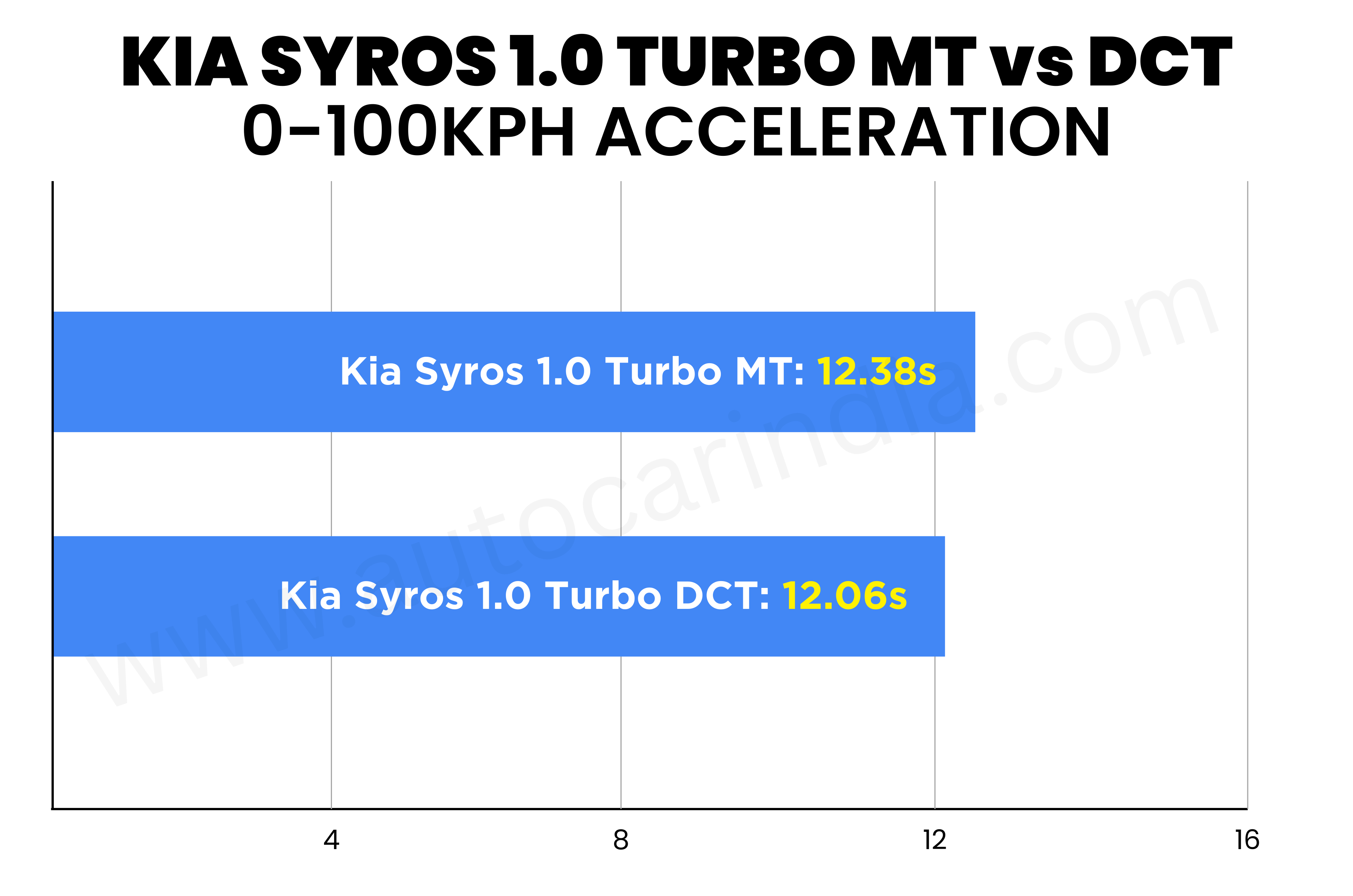
The DCT version starts slower, but clocks a quicker 0-100kph time
Kia Syros 1.0L turbo-petrol MT vs DCT: Acceleration from rest (in seconds)
Syros 1.0TP MT
Syros 1.0TP DCT
20kph
1.26
1.64
40kph
2.85
3.35
60kph
5.27
5.50
80kph
8.08
8.31
100kph
12.38
12.06
120kph
17.56
17.38
In our 0-100kph tests, the Syros turbo MT has better acceleration from the get-go. As the speeds increase, the DCT version catches up. In fact, the Syros turbo-DCT reaches 100kph 0.32 seconds faster than the Syros’ turbo-petrol manual. However, the difference is lessened to 0.18 seconds when both Syros versions reach 120kph.
In our real-world tests, we found that the Kia Syros’ 7-speed DCT offers smoothness over outright performance and is hence slow in comparison to the manual from the get-go. The manual, on the other hand, offers quicker outright acceleration as it allows the clutch to be ‘slipped’.
However, the DCT version has shorter gear ratios that help it stay longer in the optimum rev band. It also readily drops multiple gears with a more-than-normal throttle input, keeping the engine in its power band when quicker acceleration is needed, allowing it to accelerate quicker as speeds build up.
Kia Syros 1.0L turbo-petrol MT vs DCT: Rolling acceleration tests
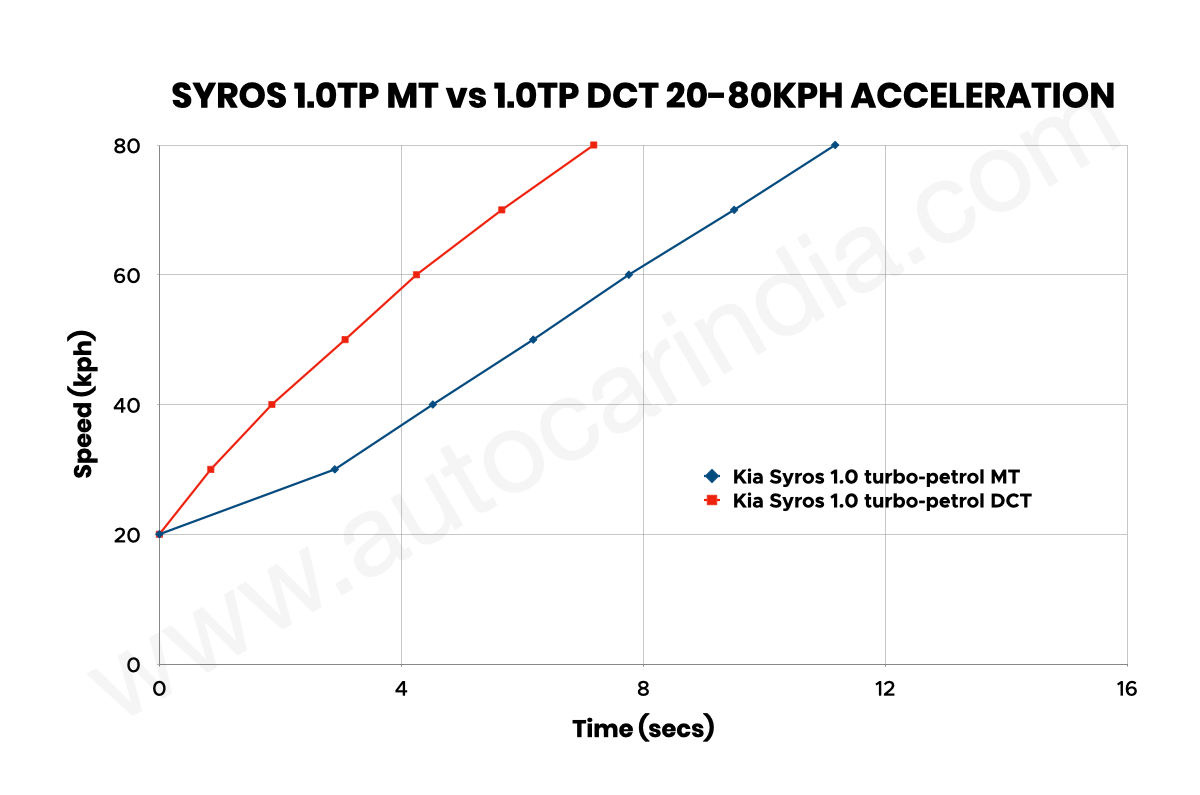
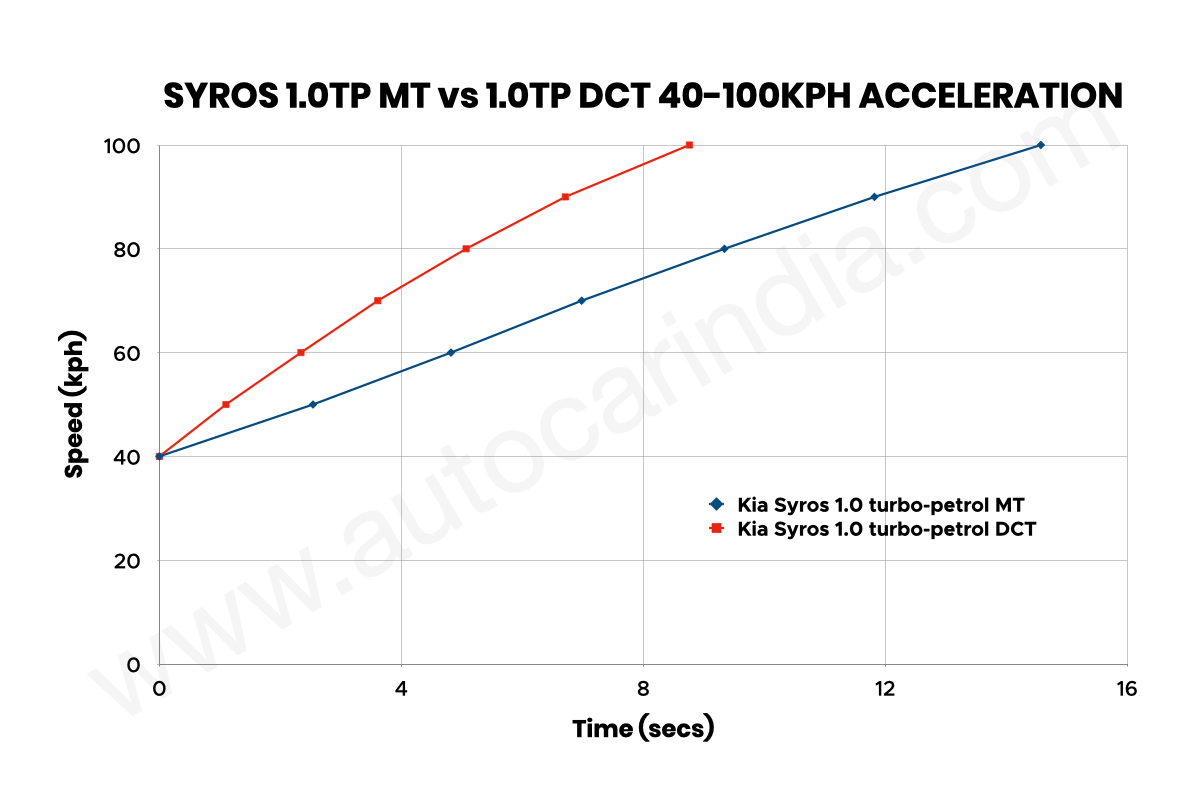
The Syros’ turbo-petrol DCT is a lot quicker than the manual in rolling tests
Kia Syros 1.0L turbo-petrol MT vs DCT: Rolling acceleration (in seconds)
Syros 1.0TP MT
Syros 1.0TP DCT
20-80kph (3rd gear)
11.17
7.18
40-100kph (4th gear)
14.57
8.76
The in-gear acceleration of the manual transmission is also slower than that of the DCT. In third gear, the Syros turbo-petrol DCT takes 3.99 seconds less to reach 80kph and 5.81 seconds less to reach 100kph in fourth gear.
Autocar India’s testing standards
Before we conduct our performance tests, we check and maintain tyre pressures based on the manufacturer’s recommendation and ensure the car has a full tank of fuel. The car is then tested in a controlled environment with two people on board, and the data is collected via highly accurate GPS-based timing equipment.
Royal Enfield has crossed the 3 lakh quarterly sales mark for only the second time in its history, dispatching 3,01,174 units in Q1 FY27 (April-June 2026). This represents a 32 percent increase over the 2,28,779 units sold in the same period last year.
Royal Enfield sells 3,01,174 units in Q1 FY27, up 32 percent YoY
Holds an 85 percent share of the 350cc segment and 97 percent of the 500-800cc segment
Royal Enfield Q1 FY27 sales: What the numbers show
The Classic 350, Hunter 350, Meteor 350 and Bullet 350 account for 93 percent of Royal Enfield’s sales
The first time Royal Enfield crossed the 3 lakh mark was in October-December 2025, when it dispatched 3,00,426 units during the festive season. The brand’s dominance of the 350cc segment remains overwhelming. Of the 3,01,174 motorcycles sold in Q1 FY27, 2,80,136 units came from just four models – the Classic 350, Bullet 350, Hunter 350 and Meteor 350. This gave Royal Enfield an 85 percent share of the segment’s total sales of 3,27,697 units, which itself grew 49 percent year-on-year.
Bajaj Auto was a distant second with a 7 percent share (23,844 units), followed by Honda with 6 percent (18,248 units) and TVS with 2 percent (5,410 units).
In the 350-500cc segment, the Guerrilla 450 and Himalayan 450 together sold 9,883 units, up 25 percent year-on-year, giving Royal Enfield a 59 percent share of the segment’s 16,707-unit total. In the 500-800cc category, Royal Enfield sold 11,155 units, down 9 percent year-on-year, but still commanded a dominant 97 percent share.
At its current Q1 run rate, Royal Enfield is on track to cross 12 lakh annual domestic sales for the first time in FY27, comfortably surpassing its FY26 record of 11,07,343 units.
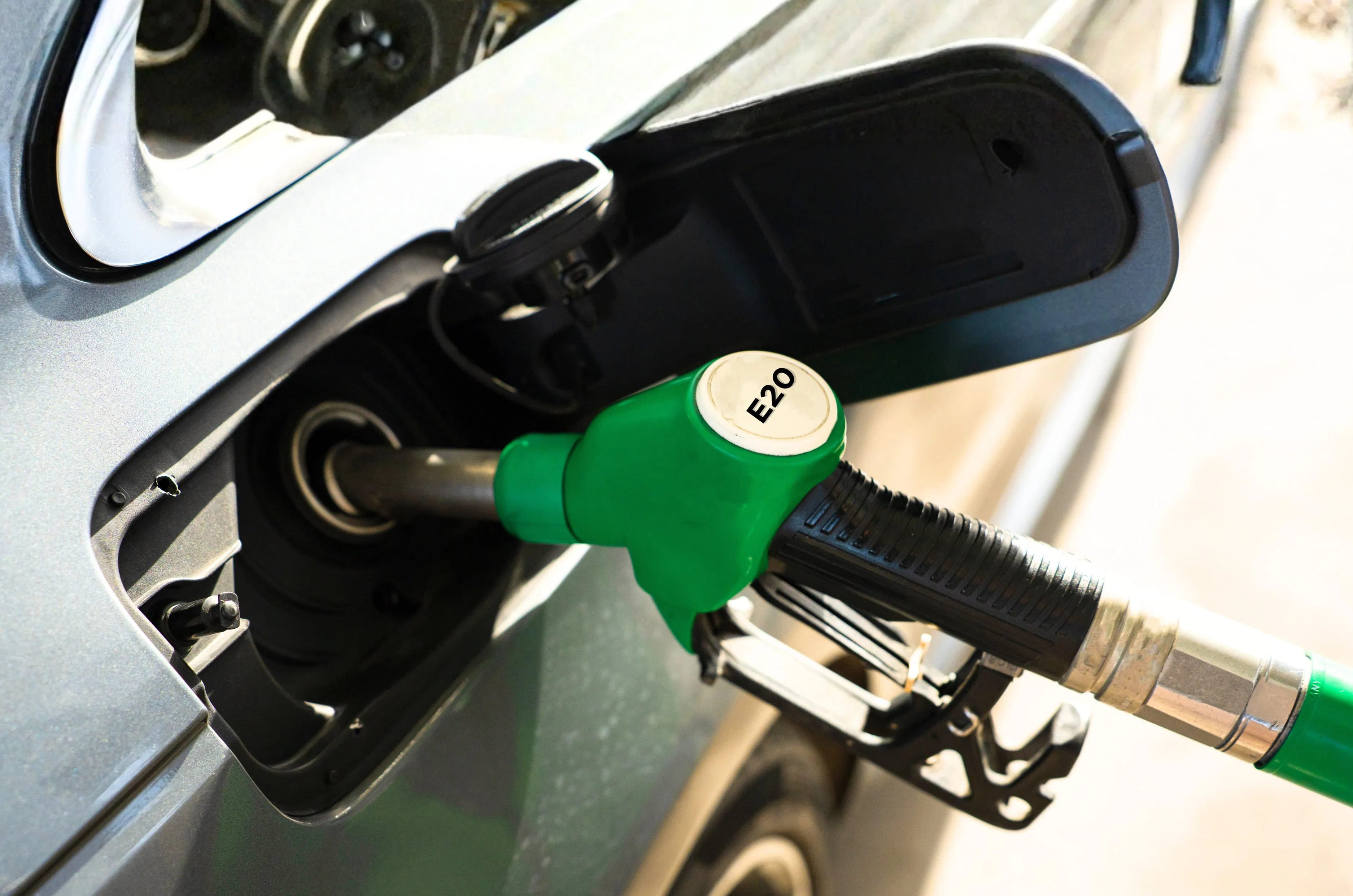
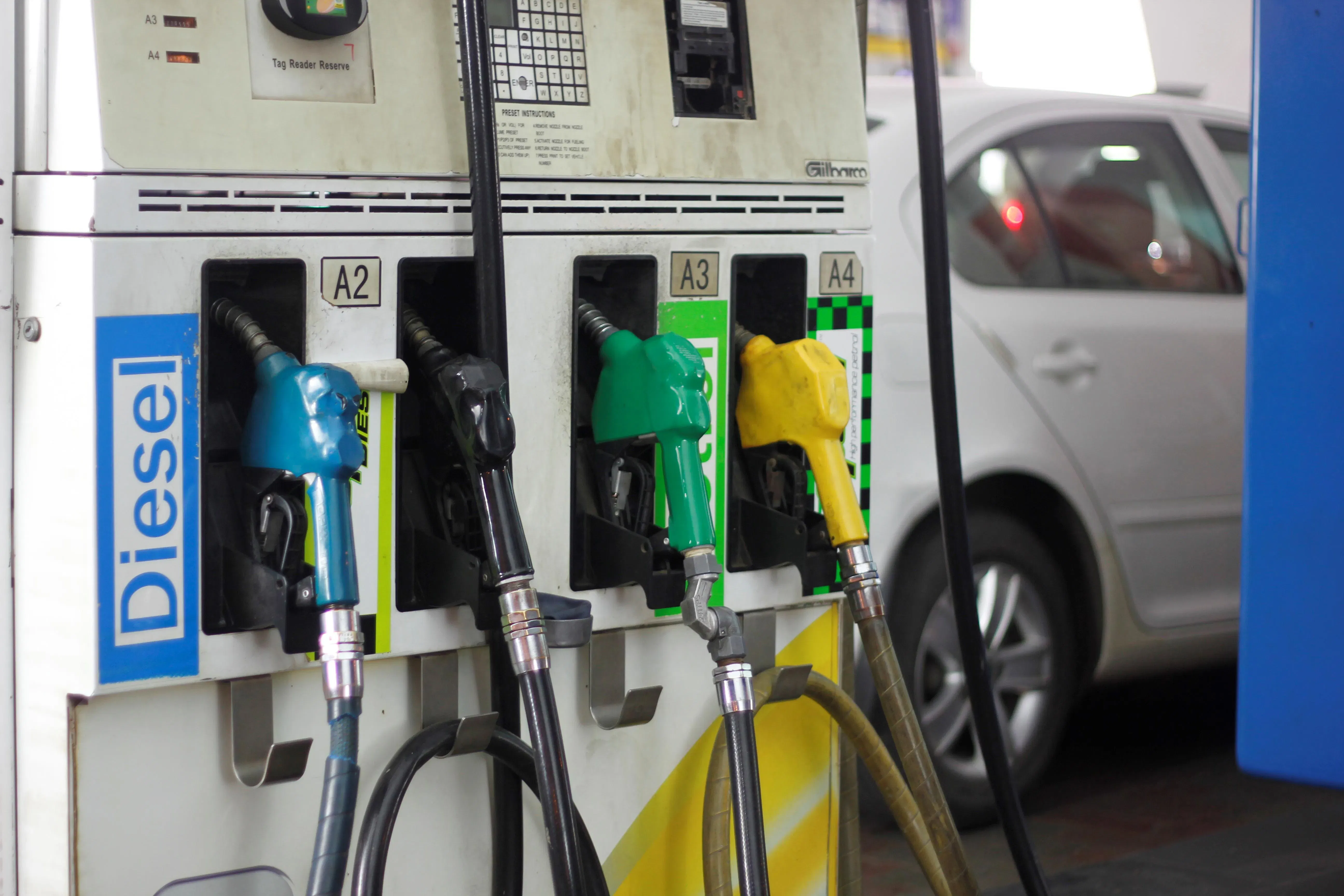
India completed the nationwide rollout of E20 petrol in April last year, making it the standard grade of petrol sold at fuel stations across the country. E20 contains 20 percent ethanol and 80 percent petrol, replacing the lower ethanol blends that were sold previously.
The transition has raised several questions among vehicle owners about compatibility, fuel efficiency, maintenance, warranties and long-term reliability. We separate the facts from the misconceptions and answer the key questions around E20.
1. What is E20 petrol and why has India switched to it?
E20 is fuel blended with 20 percent ethanol and 80 percent petrol. Ethanol is a biofuel produced from agricultural feedstocks such as sugarcane, maize and surplus food grains. India introduced the Ethanol Blended Petrol (EBP) Programme in 2003 with E5 petrol, and while the blended percentage kept varying for a while, it was eventually increased to E10 before completing the nationwide rollout of E20 in 2025, five years ahead of the planned implementation. According to the government, the programme aims to reduce dependence on imported crude oil, improve energy security, lower emissions and create an additional market for agricultural produce.
2. Can I use E20 fuel in my car or bike?
New petrol cars and two-wheelers sold in India today are compatible with E20 petrol. Under the government’s roadmap, vehicle manufacturers were required to make new petrol models manufactured from April 2023 compatible with E20.
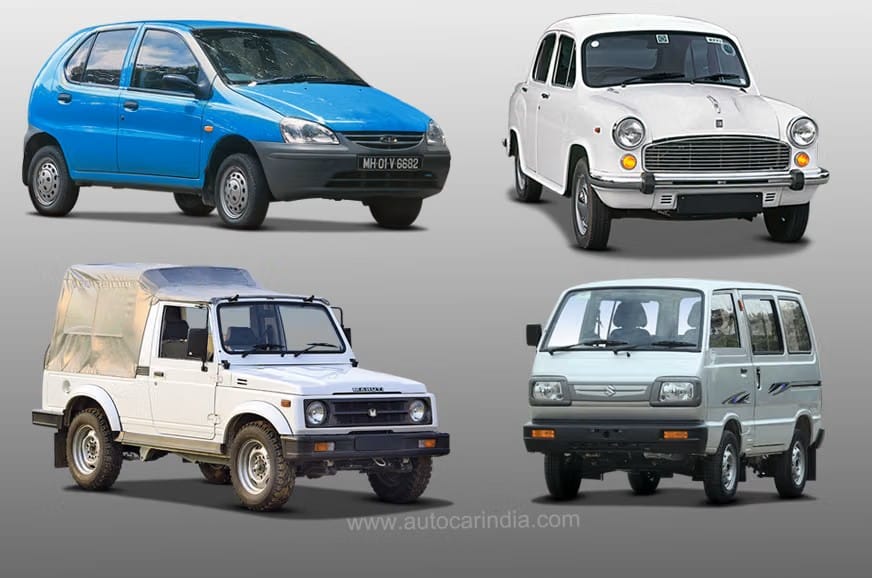
Vehicles manufactured before April 2023 were designed for lower ethanol blends, so compatibility may vary depending on the model and year of manufacturing. However, some brands state that they had E20 material compliance before 2023, for a list click here.
3. How do I know if my car is E20 compatible?
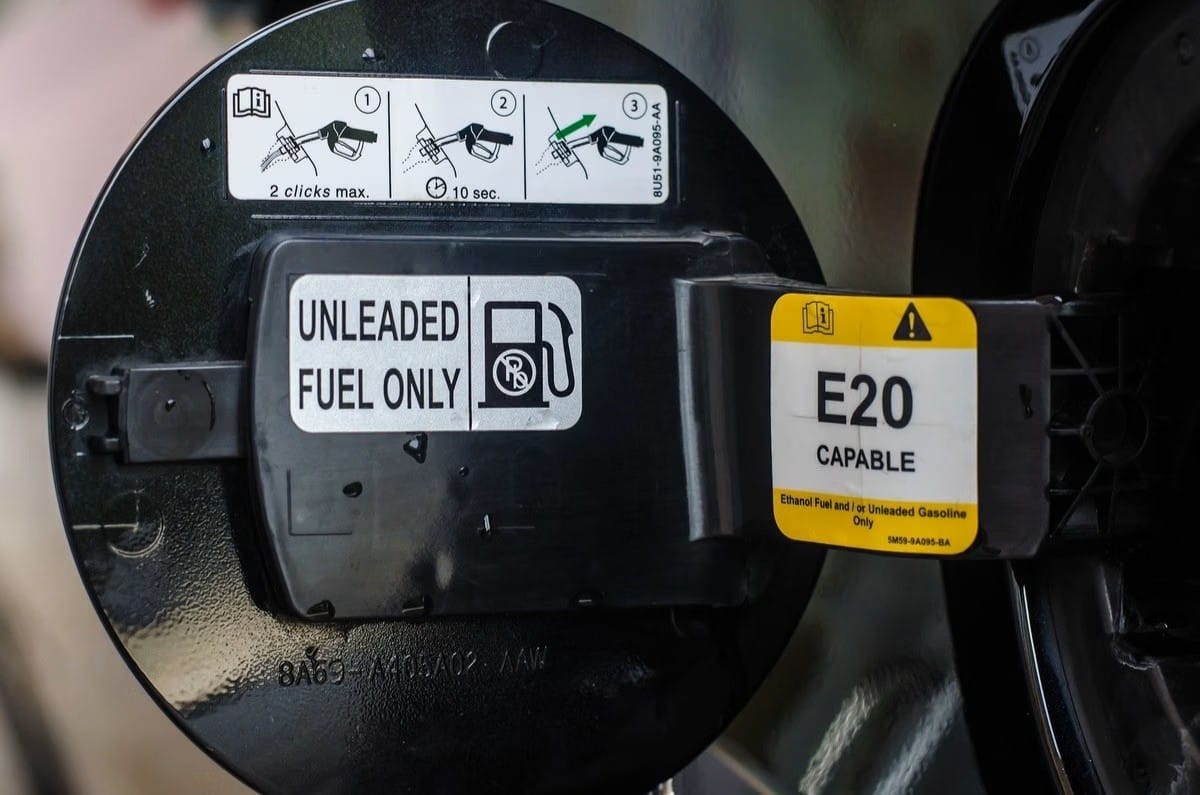
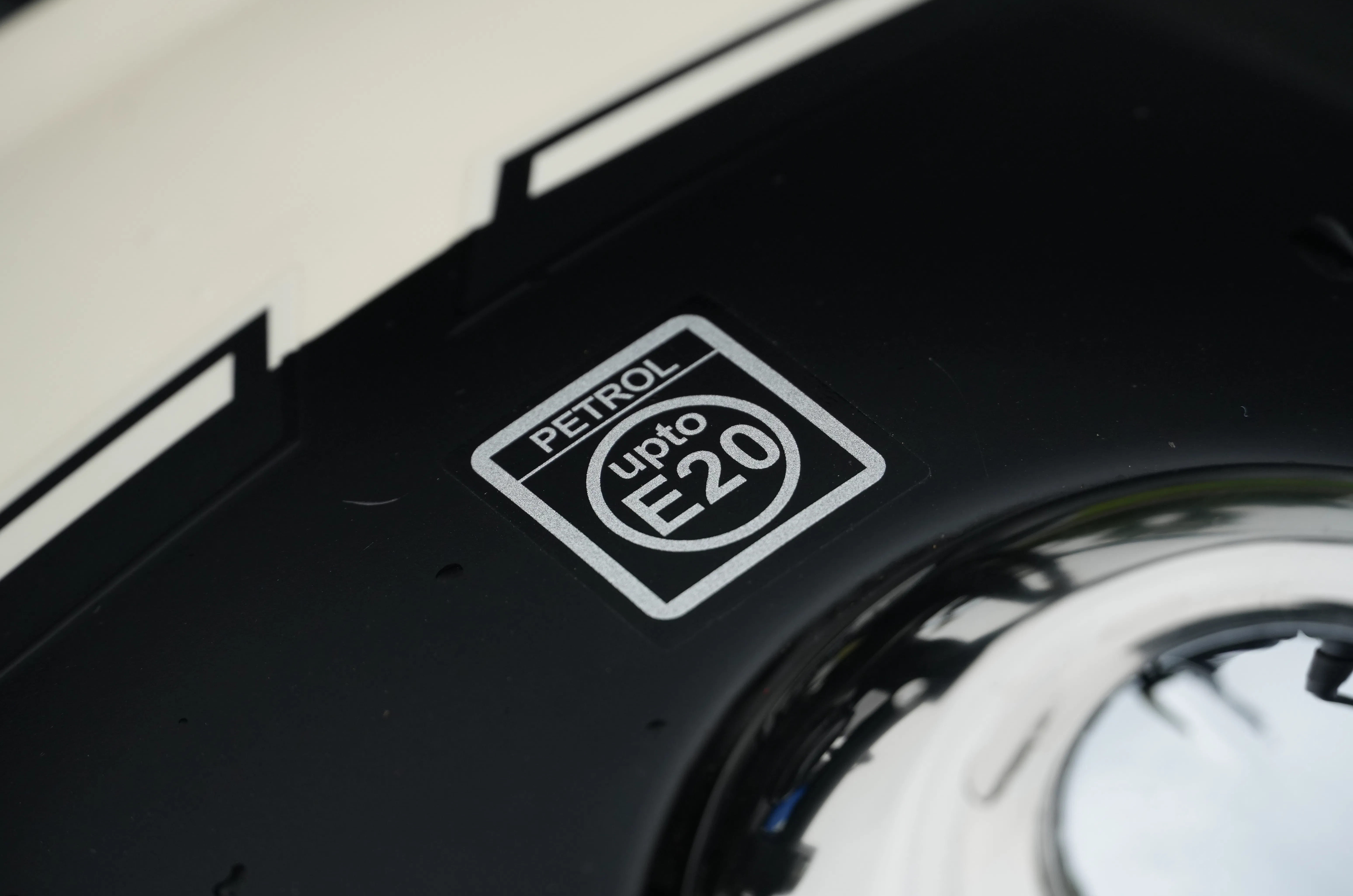
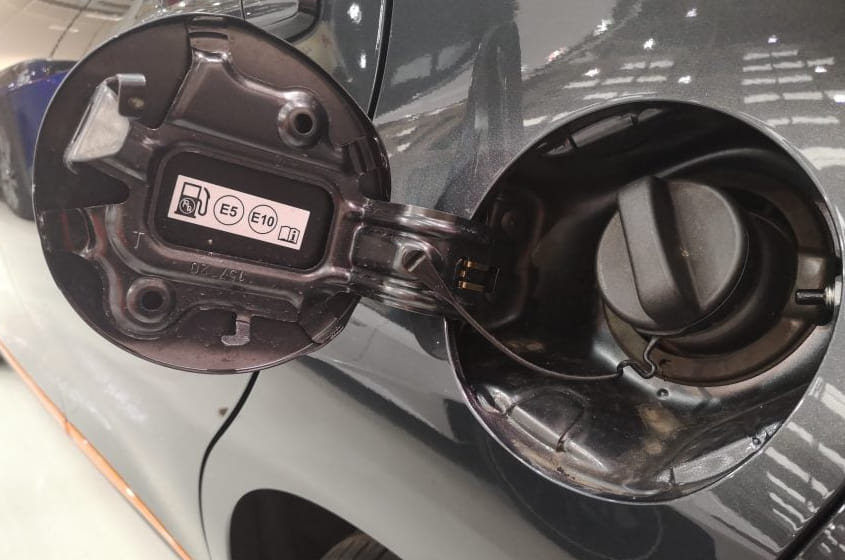
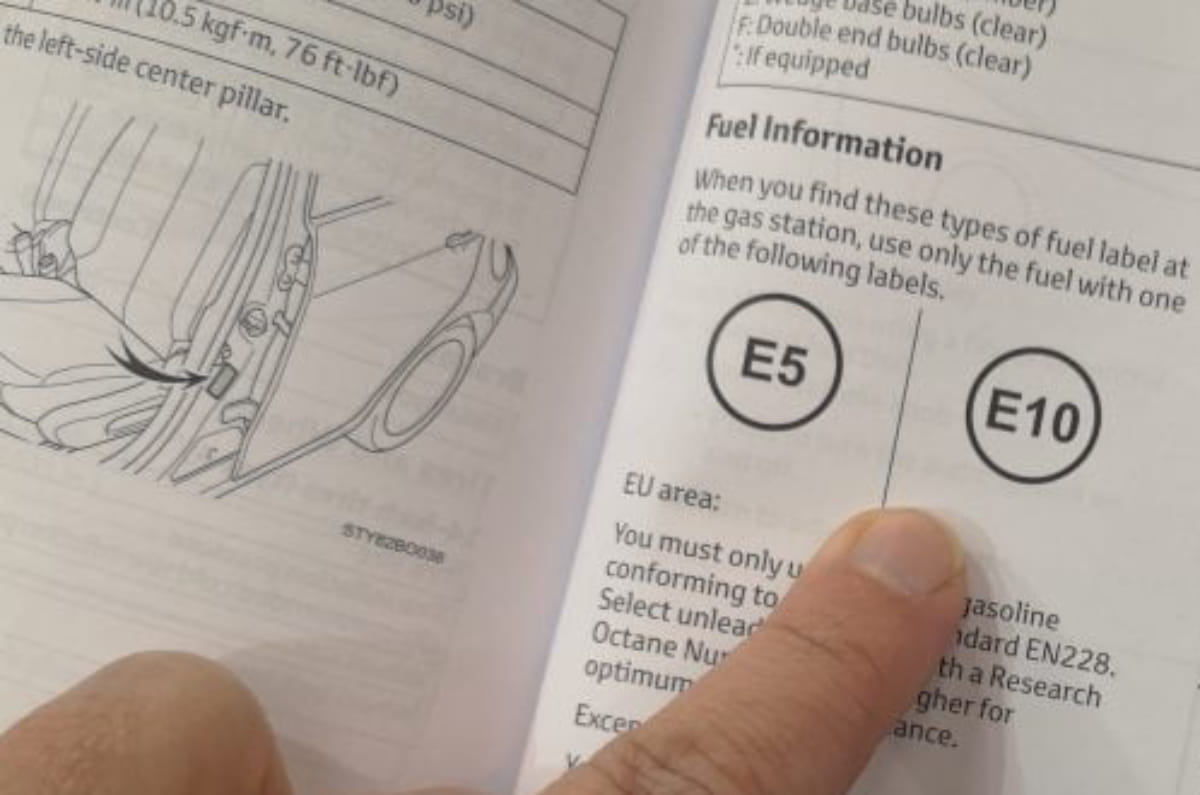
The easiest way is to check your vehicle’s fuel flap or the owner’s manual or contact the manufacturer’s authorised dealership. As part of the government’s E20 roadmap, manufacturers progressively introduced E20-compatible petrol vehicles from 2023 onwards. However, compatibility can vary depending on the model and year of manufacture, so owners should not assume that every petrol vehicle is fully E20-compatible.
4. Can E20 damage older engines or fuel-system components?
Concerns about E20 mainly relate to older vehicles that were not originally designed for higher ethanol blends. While ethanol has not been found to significantly directly affect metal fuel-system components, prolonged exposure to E20 can accelerate wear in some older rubber and plastic parts such as fuel hoses, seals, O-rings, gaskets and certain fuel pipes if they are made from materials that are not ethanol compatible.
Before approving E20, ARAI tested metals, elastomers and plastics commonly used in fuel systems. The study found no significant corrosion of metal components, but certain rubber compounds and plastics used in older vehicles showed greater deterioration than with E10 fuel. These findings prompted manufacturers to use ethanol-compatible materials in newer vehicles. Thus, owners of older vehicles should keep up with regular servicing and follow the manufacturer’s recommended maintenance schedule, increasing the inspection frequency if damage is suspected.
5. Does E20 reduce fuel efficiency?
Yes. E20 fuel generally returns lower fuel efficiency than petrol with a lower ethanol content because ethanol contains less energy than petrol. The exact reduction varies depending on the vehicle, engine and calibration.
E20 vs E10 mileage test results
Creta N Line
Dzire (BS 6)
Polo GT TSI
Dzire (BS 4)
Registration year
2024
2024
2017
2016
Average speed
17.8kph
20.25kph
18.0
19.3
Kpl on E20
10.59
14.24
9.13
9.8
Kpl on E10
12.12
14.81
9.63
11.19
Kpl variance
1.53
0.57
0.50
1.39
% variance
-12.62
-3.84
-5.19
-12.42
ARAI estimates a fuel efficiency drop of 1-6 percent with E20, while some manufacturers put it closer to 7-8 percent. In Autocar India’s real-world testing, both newer E20-compatible cars and older pre-E20 vehicles recorded a measurable drop in mileage when compared with an equivalent E10 blend. Among the newer cars, the Maruti Suzuki Dzire recorded a 3.8 percent drop, while the Hyundai Creta N Line saw a 12.6 percent decline.
Among older BS4-era cars, the Volkswagen Polo GT TSI posted a 5.2 percent drop, while the older Maruti Suzuki Dzire recorded a mileage drop of 12.4 percent.
The results also showed that there is no single figure applicable to every vehicle. Factors such as engine calibration and compression ratio all influence fuel efficiency, meaning some vehicles adapt better to E20 than others.
6. Does E20 improve performance or reduce emissions?
Octane rating test results
Fuel type
RON result
Regular E20 petrol
98.2 RON
XP95
98.8 RON
Yes, but not in a way that most motorists are likely to notice. E20 has a higher-octane rating than regular petrol, which improves resistance to engine knocking and can benefit engines designed to take advantage of higher-octane fuel.
The government says E20 aims to lower emissions by replacing a portion of petrol with domestically produced ethanol which is a renewable fuel. For most motorists, however, the most noticeable effect of switching to E20 is likely to be a small drop in mileage rather than a change in vehicle performance.
7. Is E20’s water contamination issue a real problem?
Image credit – Rushlane
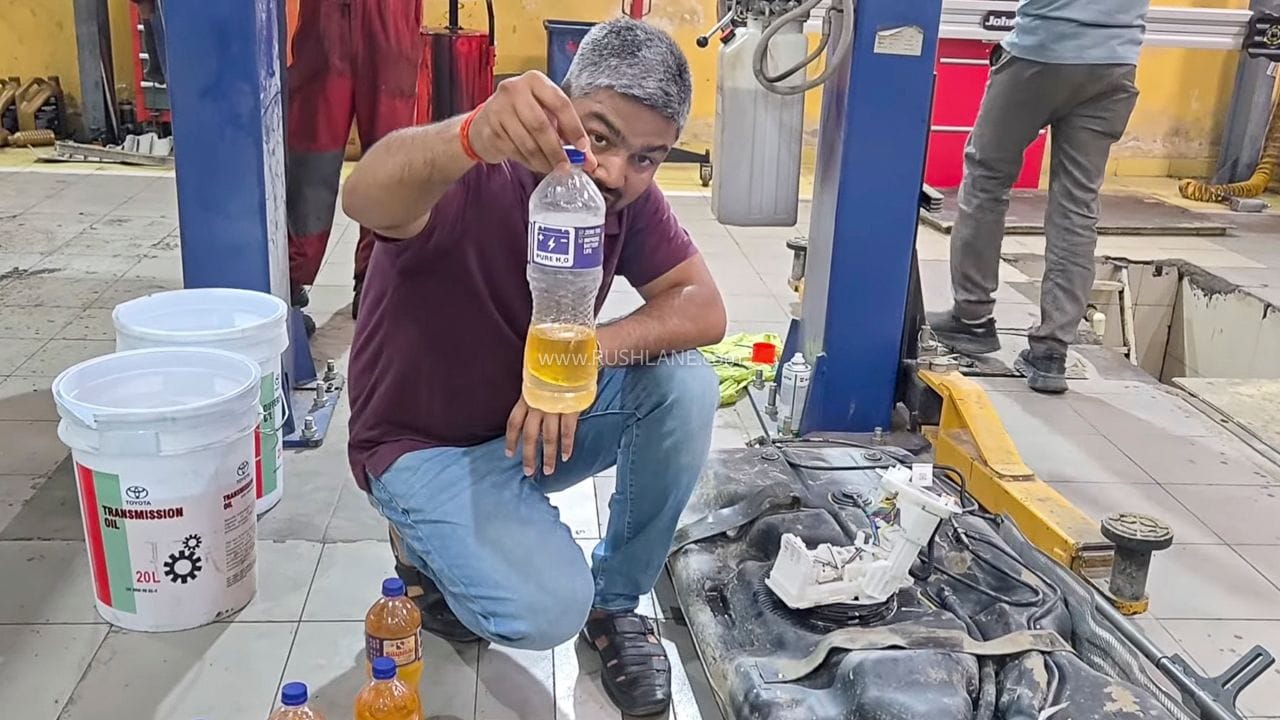
Ethanol is hygroscopic, meaning it has the capability to absorb moisture. As a result, E20 is more susceptible to water contamination if excess moisture enters the fuel during storage or handling. In severe cases, this can lead to phase separation, where the ethanol and water separate from the petrol, affecting fuel quality.
Some petrol pump operators have raised concerns that existing underground storage tanks, particularly during the monsoon or in coastal areas, could be more prone to moisture ingress, increasing the risk of phase separation. However, the government and the Federation of Automobile Dealers Associations (FADA) says that there is no evidence linking E20 itself to widespread fuel contamination or vehicle failures.
8. Will using E20 affect my vehicle’s warranty?
For most owners, no. Vehicle manufacturers have said that using E20 petrol will not affect the warranty of their vehicles, and valid warranties will continue to be honoured. The government, SIAM and several manufacturers have stated that vehicles continue to be covered under their standard warranty terms when fuelled with E20, for a full list click here. SIAM has also said that OEMs will honour the warranty committed to customers for E20 usage, and that insurance claims will remain unaffected.
9. Why isn’t E20 petrol cheaper than regular petrol?
Although E20 contains 20 percent ethanol, it is not cheaper than regular petrol because ethanol currently costs more to procure and blend than petrol under prevailing market conditions. The cost of ethanol procurement, tax, transportation, blending and distribution offsets any potential saving from replacing a portion of petrol with domestically produced ethanol.
Any savings from lower crude oil imports are realised at the national level rather than by consumers through lower pump prices.
10. Why can’t I still buy E10 or pure petrol?
Because by policy E20 is now India’s standard petrol. Following the nationwide rollout of the Ethanol Blending Programme, oil companies have standardised regular petrol and premium 95-octane petrol to an E20 blend. Maintaining parallel supplies of E10 and E20 would require separate storage, transportation and dispensing infrastructure, making nationwide distribution significantly more complex.
As a result, motorists can no longer choose between E10 and E20 at regular fuel stations. The only exception is 100-octane petrol, such as IndianOil XP100 and HP Power100, which remains effectively ethanol-free because it is a niche fuel sold in limited volumes. For most vehicle owners, however, E20 is now the only petrol available.
11. Is the government planning to increase ethanol blending beyond E20?
Not yet, but the groundwork has begun. While the government has said no decision has been taken to mandate petrol with more than 20 percent ethanol, it has begun preparing the regulatory framework for higher blends.
In May 2026, the Bureau of Indian Standards (BIS) notified fuel quality standards for E22, E25, E27 and E30 petrol, indicating that the government is laying the groundwork for future adoption. It has also proposed recognising E85 and E100 fuels under the Central Motor Vehicles Rules.
Separately, the government has tasked the Automotive Research Association of India (ARAI) with studying the impact of E25 petrol on existing E10- and E20-compatible vehicles, including its effect on fuel efficiency, durability, emissions and engine performance under long-term use.
However, any move beyond E20 will require extensive testing and consultation with vehicle manufacturers, fuel companies and research agencies to assess engine durability, emissions and fuel-system compatibility before it is introduced.
12. What should owners of older cars do now?
If your vehicle is not certified as E20-compatible, it does not necessarily mean it will experience immediate problems. However, owners should follow the manufacturer’s guidance, keep up with regular servicing and replace worn fuel-system components as required. It would also be prudent to increase the frequency of inspection of your vehicles fuel system to ensure there is no corrosive damage and catch it before it gets acute.
If you own a classic car, an older imported vehicle or a high-performance model designed for lower ethanol blends, using ethanol-free 100-octane petrol may be worth considering.
13. Can I convert my vehicle to run on E20 fuel?
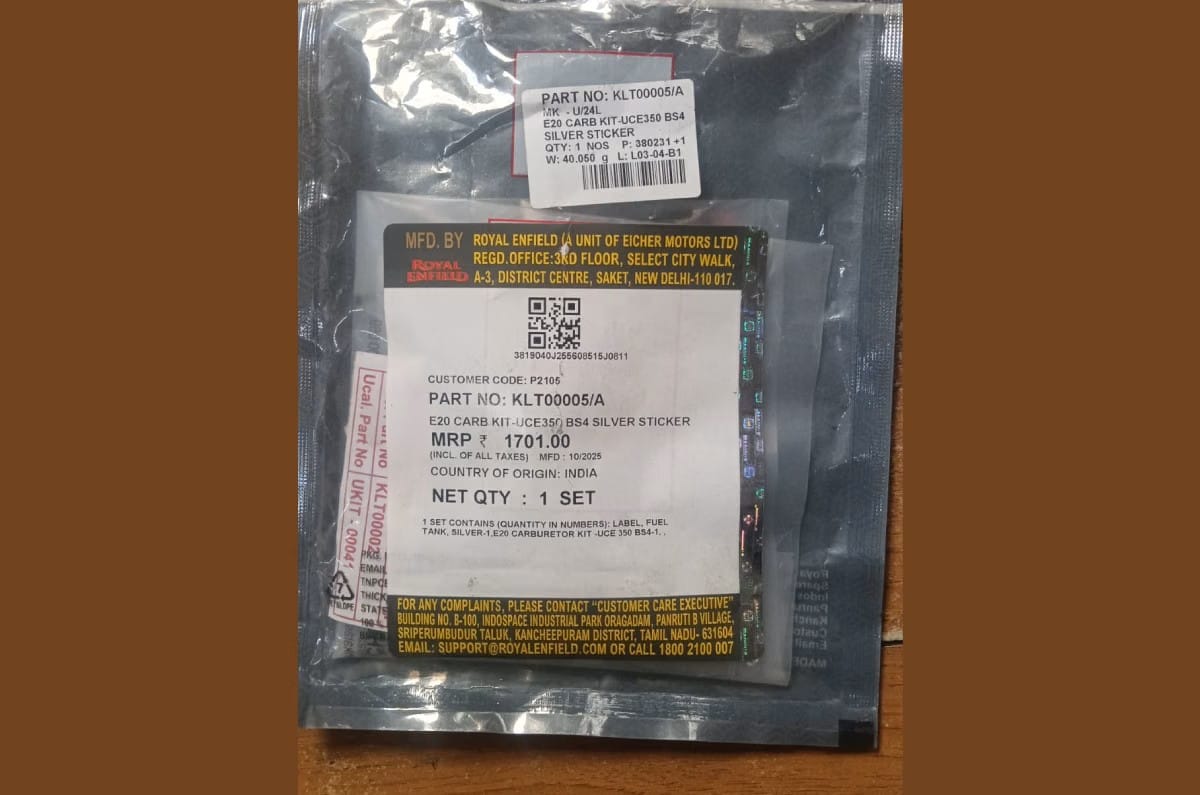
Yes, but official upgrade programmes are currently limited and while a few manufacturers, like Royal Enfield and Maruti Suzuki, had mentioned a plan for these earlier, they don’t have much to say for now. In a recent government press conference that aimed to quell the E20 backlash, Maruti stated that the kits are for R&D purpose only.
Theoretically, it’s possible to replace critical components susceptible to E20 damage with those designed to handle the fuel – especially if your vehicle is still in production – and if you feel the need to, you can go ahead and have parts like fuel lines, fuel pump and gaskets replaced but by your authorised workshops only.
So, should you be worried about E20 petrol?
Not worried, but alert. Modern petrol cars and bikes designed or updated for E20 are engineered to run on the fuel without major issues, and extensive testing by the government, research agencies and manufacturers found no evidence of widespread reliability concerns.That said, E20 is not without trade-offs. Most motorists should expect a small reduction in fuel efficiency.
For owners of older vehicles, it would be wise to pay closer attention to fuel-system maintenance.
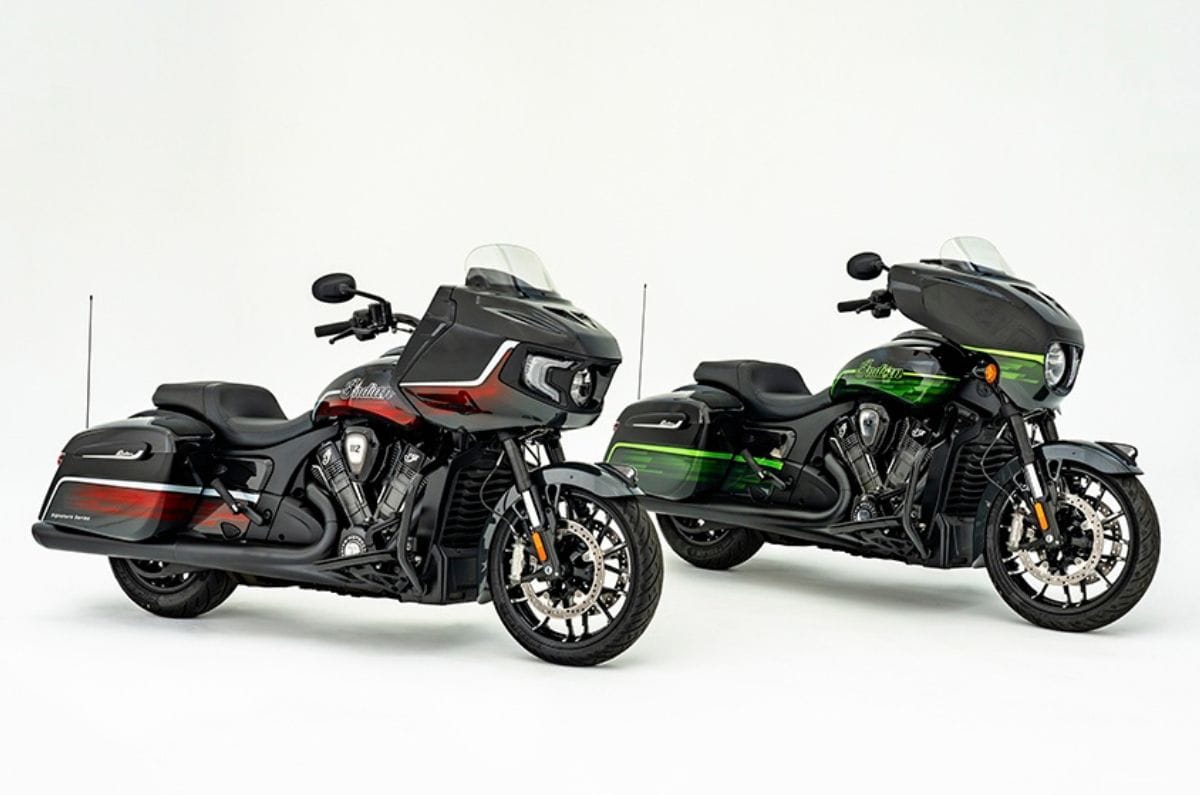
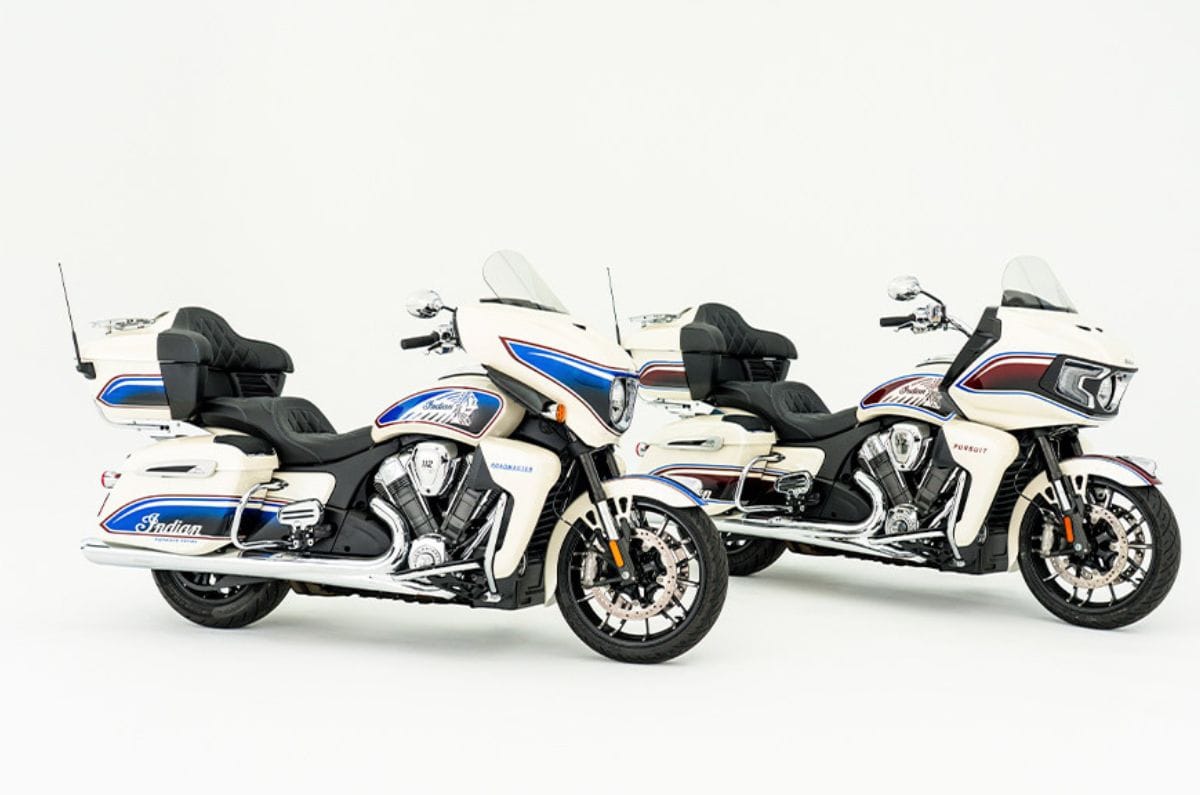
Indian Motorcycles has unveiled a range of motorcycles, dubbed as the Signature series, to commemorate the brand’s 125th anniversary. This special edition has been unveiled on the Challenger, Chieftain Powerplus, Pursuit, Roadmaster Powerplus and will be produced in limited numbers.
Indian Challenger and Chieftain Powerplus get a blacked-out finish
Pursuit and Roadmaster get a 6-speaker system
Powered by a 112ci engine that produces 126hp and 180Nm
The brand’s focus with the Signature Edition has been clear – to showcase its craftsmanship with special finishes curated for this series. The brand says it is a multi-layer paint process delivering rich contrast and depth.
Indian Challenger:
The Challenger comes in a special shade of Abyss Metallic that comes with a black base with red graphics. Additionally, the Challenger also comes with a blacked-out finish for the engine along with an upgraded 400W Powerband audio system, remote locking saddlebags, cruise control and an electronically adjustable wind-shield among other features.
The Challenger Signature Edition is powered by a 112ci, liquid-cooled, V-twin engine that puts out 126hp and 180Nm of torque, mated to a six-speed gearbox.
Indian Chieftain Powerplus:
The Chieftain Powerplus comes with a similar black-base but with green graphics and the same blacked-out finish across the motorcycle. It comes powered by the same 112ci, liquid-cooled, V-twin engine that produces 126hp and 180m of torque. Both the Challenger and Chieftain are quite similar underneath but mainly differ in their styling and handling characteristics.
Indian Pursuit and Roadmaster Powerplus:
Both these motorcycles are similar to the Challenger and Chieftain Powerplus, respectively, but come with more luggage space, courtesy of a top-box, and added features.
The Indian Pursuit and Roadmaster Powerplus come with a white base along with Revere Red and Vigilant Blue colour graphics that together make up the Indian ‘headdress logo’. These two motorcycles here come with a chrome finish as opposed to blacked-out finish on the Challenger and Chieftain Powerplus. In terms of features, the Powerband system comes with 6-speakers as opposed to 4-speakers on the Challenger and Chieftain Powerplus that have a total output of 600W.
Both motorcycles come powered by the same 112ci, liquid-cooled, V-twin engine that produces 126hp and 180m of torque, mated to a six-speed gearbox.
Indian says these motorcycles will be produced in ‘extremely limited’ numbers but hasn’t disclosed the production cap that has been set on them.
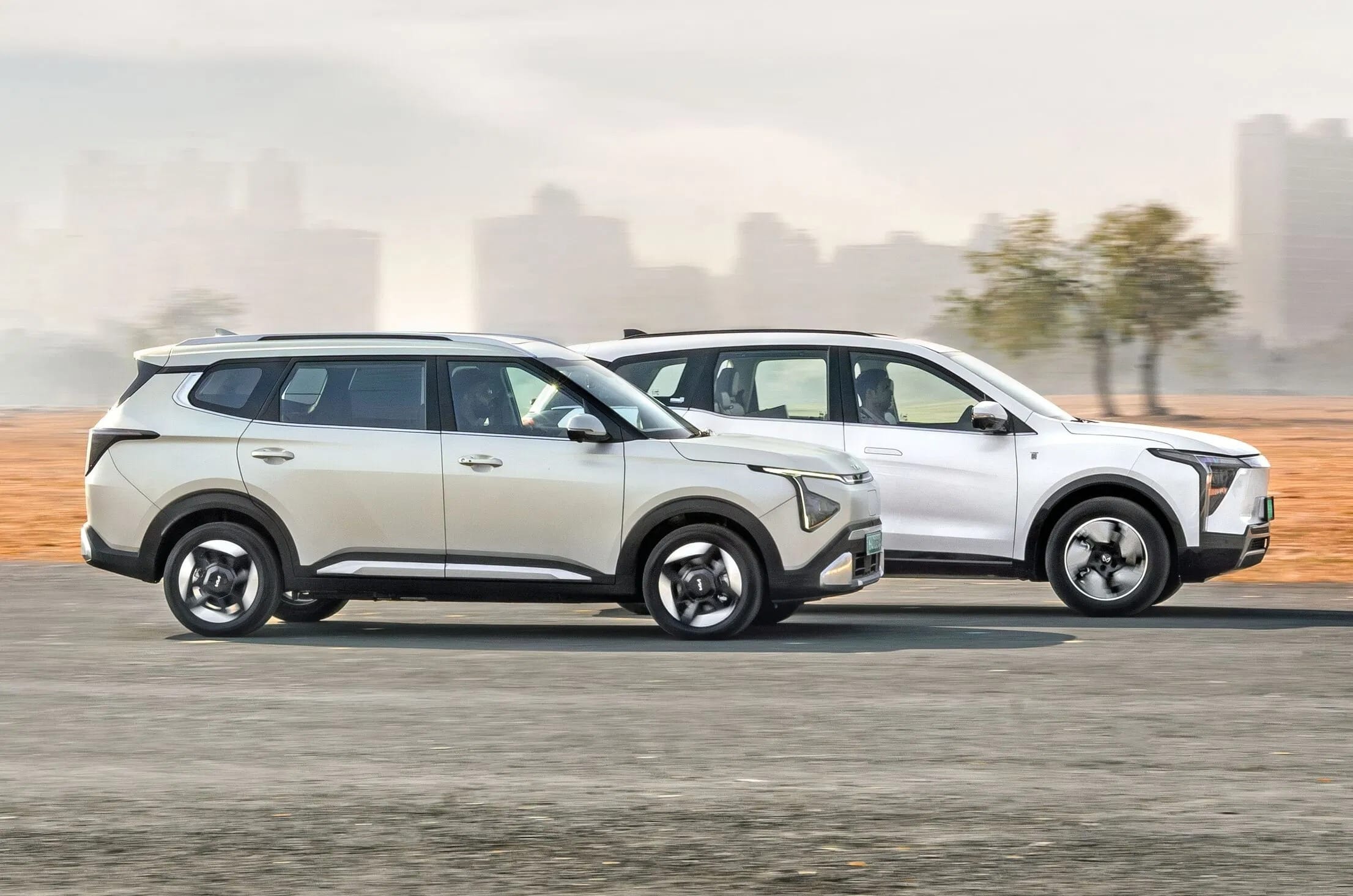
The Mahindra XEV 9S and the Kia Carens Clavis EV are two of the most affordable 3-row electric offerings in India. Priced under Rs 30 lakh, the XEV 9S and the Carens Clavis cater to similar buyers despite having different body types. But which EV offers the better performance, range and battery regeneration in the real world? Let us compare the top-spec variants of both EVs to find out.
Mahindra XEV 9S vs Kia Carens Clavis EV: Specifications, price
The XEV 9S is pricier, and its larger battery facilitates a higher claimed range
XEV 9S vs Carens Clavis EV: Regenerative braking test
XEV 9S Pack Three Above
Carens Clavis EV HTX+ ER
Battery size (kWh)
79
51.4
eMotor setup
Single motor, rear
Single motor, front
Power (hp)
286
171
Torque (Nm)
380
255
Claimed range (km)
679
490
Kerb weight (kg)
Over 2,200
1,725
Power-to-weight*
N/A
99.13
Torque-to-weight^
N/A
147.83
Price (Rs, lakh)
29.43
24.49
*Power-to-weight is hp per tonne
^Torque-to-weight is Nm per tonne
We tested the larger 79kWh battery variant of the Mahindra XEV 9S and the 51kWh battery version of the Kia Carens Clavis EV. Both 3-row EVs get a single-motor setup, but with a different configuration – the XEV 9S’ motor is mounted on the rear axle (RWD), while the Carens Clavis EV’s motor sits on the front axle (FWD). The XEV 9S is also the more powerful EV here, producing 115hp and 125Nm more than the Kia Carens Clavis EV, but it is also heavier. The XEV 9S’ larger battery also allows for a higher claimed range, 189km more than the Carens Clavis EV.
The tested Pack Three Above variant of the Mahindra XEV 9S asks for a premium of Rs 4.94 lakh over the Carens Clavis EV HTX+ ER variant.
Mahindra XEV 9S vs Kia Carens Clavis EV: Performance tests
The more powerful XEV 9S is also quicker despite its heavier mass
Mahindra XEV 9S vs Kia Carens Clavis EV: Performance tests
XEV 9S Pack Three Above
Carens Clavis EV HTX+ ER
Winner
0-100kph (sec)
7.54
8.44
XEV 9S
20-80kph (sec)
4.11
4.62
XEV 9S
40-80kph (sec)
4.74
5.6
XEV 9S
Quarter mile (sec)
15.67
16.36
XEV 9S
As mentioned earlier, the Mahindra XEV 9S is the more powerful 3-row car, and in the real world, it completes a 0-100kph run 0.9 seconds quicker than the Carens Clavis EV. 20-80kph and 40-80kph runs are 0.51 seconds and 0.86 seconds quicker on the XEV 9S.
Mahindra XEV 9S vs Kia Carens Clavis EV: Range, regen tests
Higher regen setting allows Carens Clavis EV to be more efficient than the XEV 9S
Mahindra XEV 9S vs Kia Carens Clavis EV: Regenerative braking tests (80-20 kph)
Regen mode
XEV 9S Pack Three Above
Carens Clavis EV HTX+ ER
Winner
One-pedal
120.82m / 8.5s
114.74m / 8.34s
Carens Clavis EV
High
162.46m / 11.79s
147.47m / 10.67s
Carens Clavis EV
Medium
215.8m / 15.59s
232.64m / 17.01s
XEV 9S
Low
341.03m / 24.52s
395.32m / 29.15s
XEV 9S
In our real-world tests, the Kia Carens Clavis EV showed stronger battery regeneration in the higher settings. The gap was most noticeable in the High (Level 3) mode, though it narrowed slightly in one-pedal driving. Combined with its lower kerb weight, this helped the Carens Clavis EV deliver better efficiency of 7.45 km/kWh in the city versus 6.05 km/kWh for the XEV 9S.
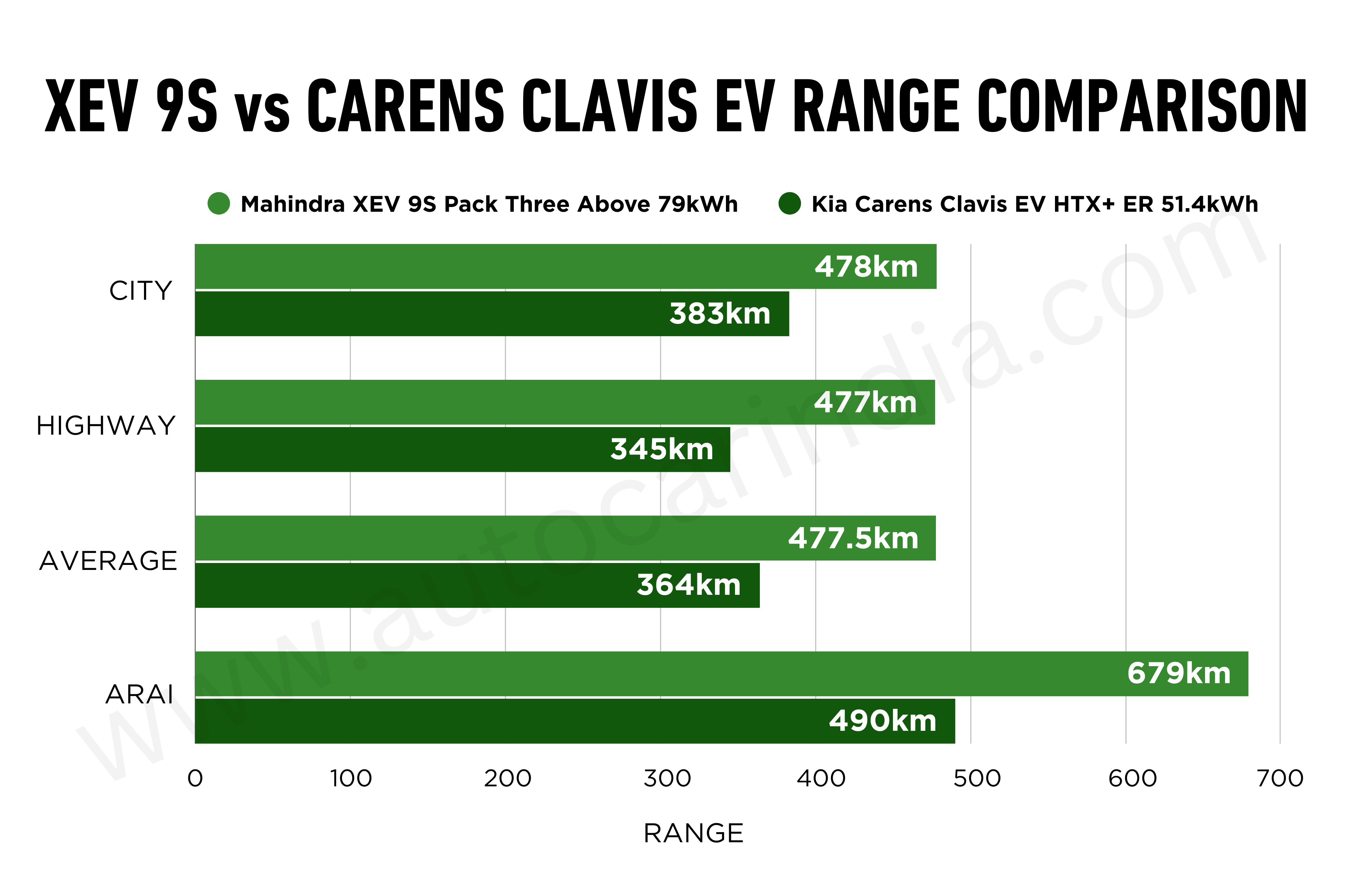
However, the XEV 9S has a much larger battery (about 54 percent), which gives it a clear range advantage. In city driving, it travelled 95 km further on a single charge.
The XEV 9S offered stronger deceleration in the medium and low regen settings. It stood out especially in the lowest setting (Level 1). On the highway, the XEV 9S maintained its efficiency at 6.05 km/kWh, while the Carens Clavis EV dropped to 6.71 km/kWh. This widened the real-world range gap even more, with the XEV 9S going about 113 km further than the Carens Clavis EV.
Mahindra XEV 9S vs Kia Carens Clavis EV: Verdict
The XEV 9S offers a holistic package that does not compensate performance for range
The XEV 9S, with a larger battery pack and a more powerful motor, offers a comprehensive package that does not lose out on range while offering great performance. On the other hand, the Kia Carens Clavis EV offers better efficiency, especially in the higher regen settings, helping it compensate for its smaller battery. This makes the Kia Carens Clavis EV a better choice for buyers looking for an urban EV, while for highway driving, the more balanced XEV 9S is recommended.
Autocar India’s regenerative testing standards
To test regenerative braking, we pre-select a level of regen braking and then completely lift off the throttle pedal and allow the car to decelerate till under 20kph. This procedure is then repeated for as many levels of regenerative braking the EV packs in. The deceleration rate, the distance covered and the time taken to go from 80-20kph are recorded on a GPS-based VBOX system.
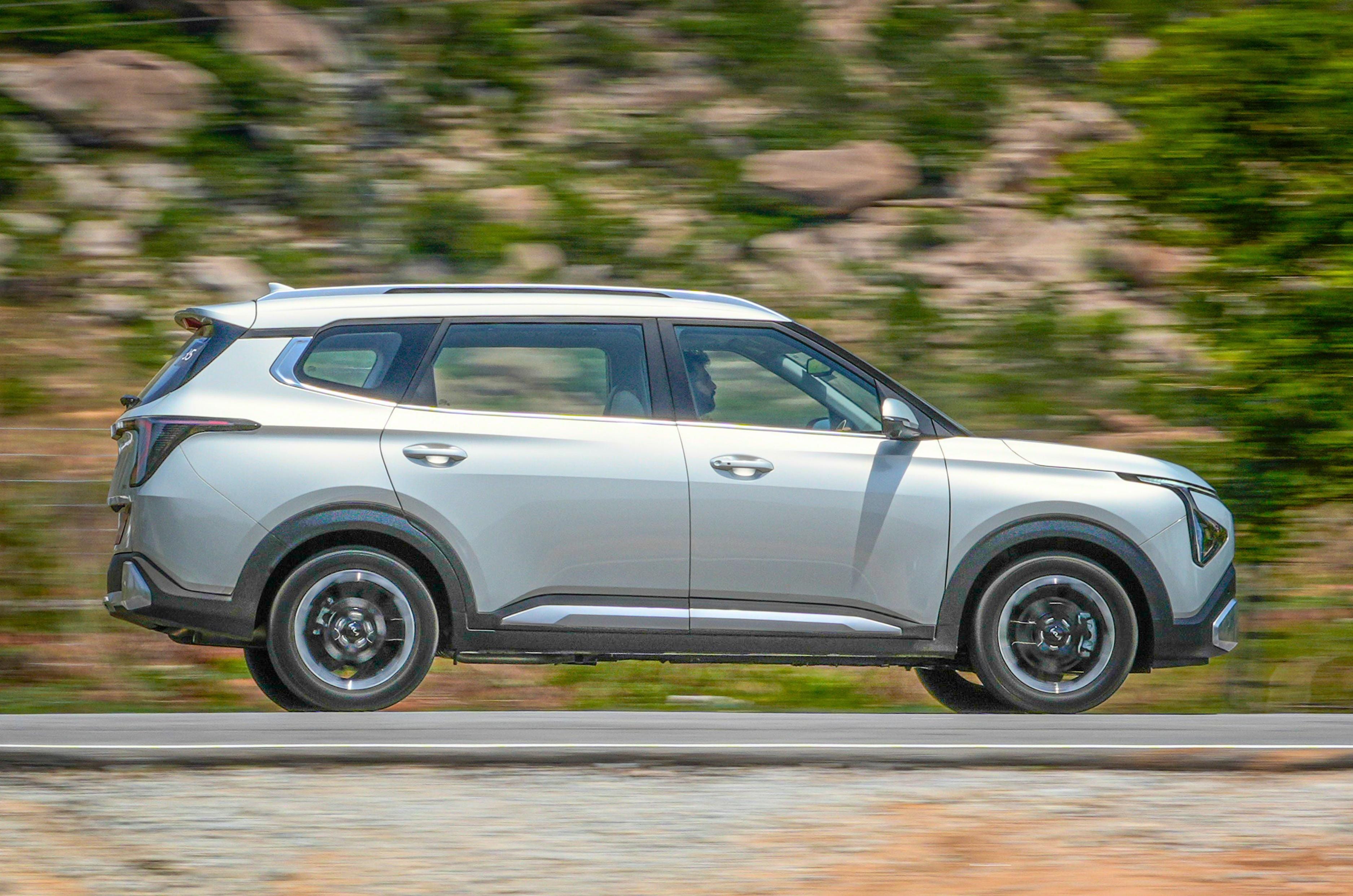
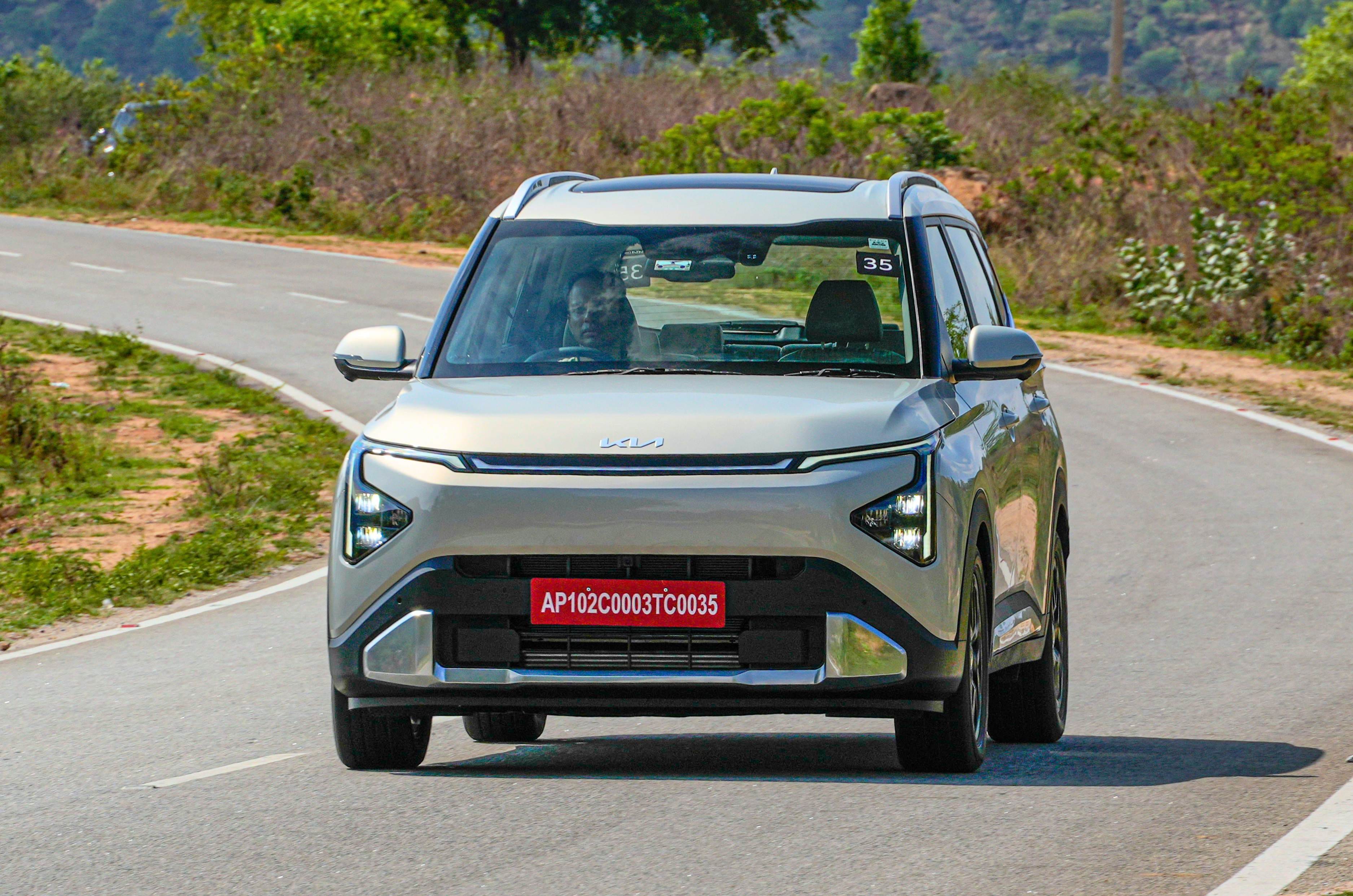
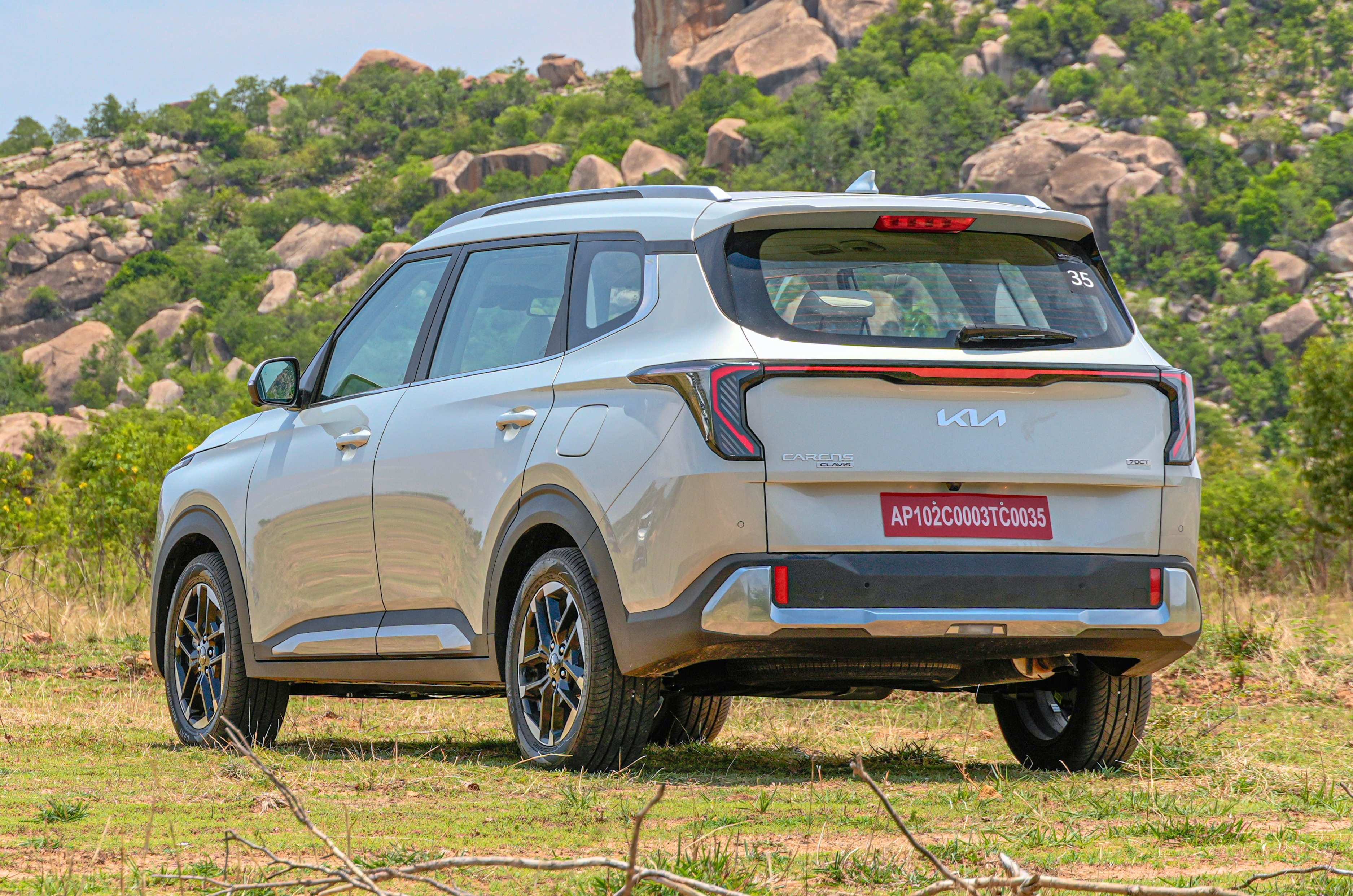
Kia is one of the few automakers in India that has three MPVs in its line-up, with the most popular one being the Carens Clavis. This is a segment that’s witnessed growth in the past couple of years, supporting the Korean brand’s focus on selling multiple MPVs. Built on the same K2 platform as the Carens, the Clavis is aimed at buyers who want more premium styling and feature set spread across more variants and trim levels. Here are some facts to keep in mind before a Carens Clavis.
Reasons to buy the Kia Carens Clavis
Spacious & well-equipped cabin
One of the strongest suits of the Carens Clavis is its tech-rich and practical interior
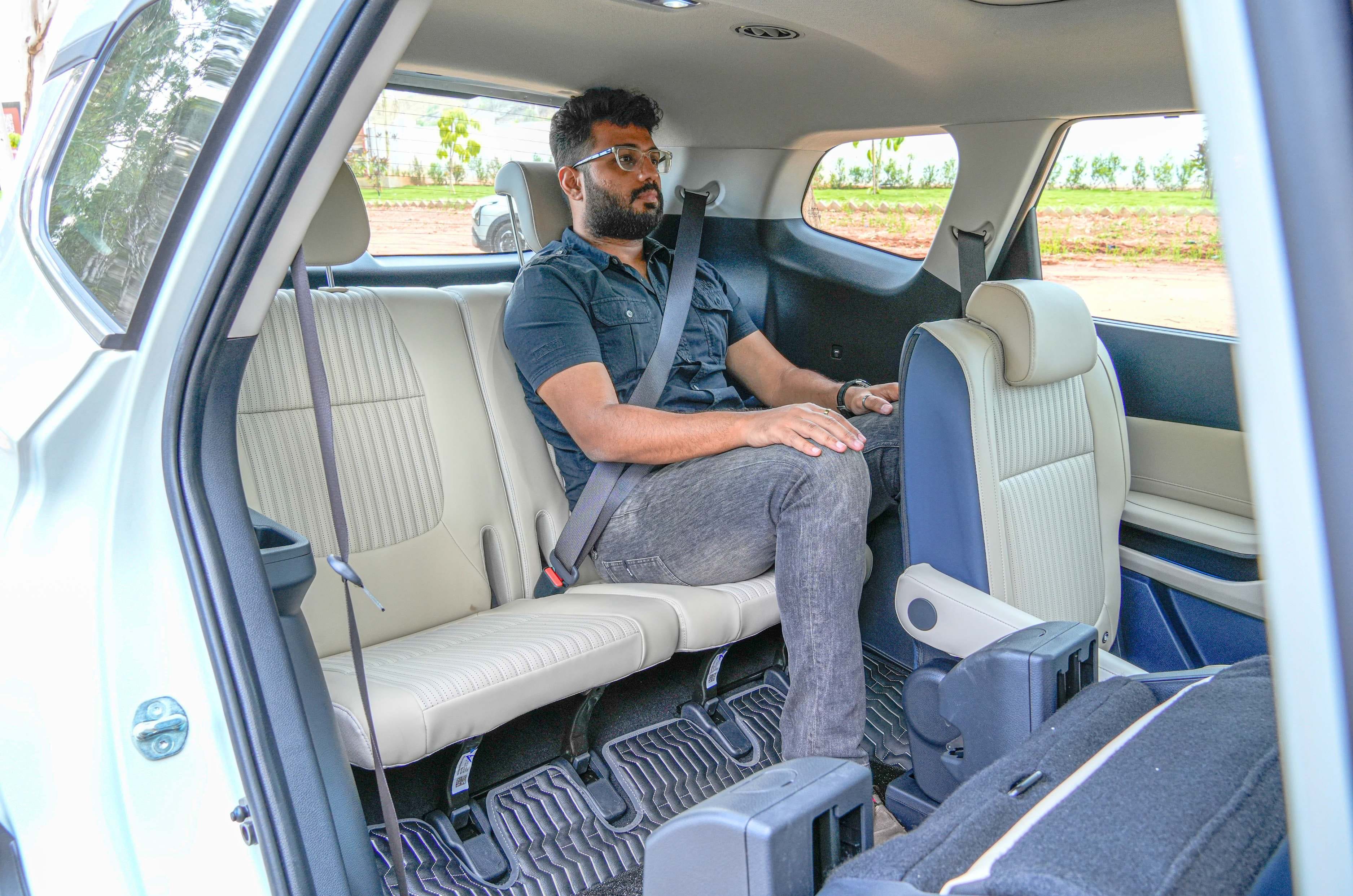
Whether you get the 6-seater or 7-seater version of the Kia Carens Clavis, space isn’t an issue. A one-touch tumble & fold feature means that getting into the third row is pretty straight-forward. This last row also has enough room to accommodate two adults without fuss while also providing dedicated AC vents, USB ports, headrests and three-point seatbelts. With 216 litres of boot space, you can easily store several soft bags.
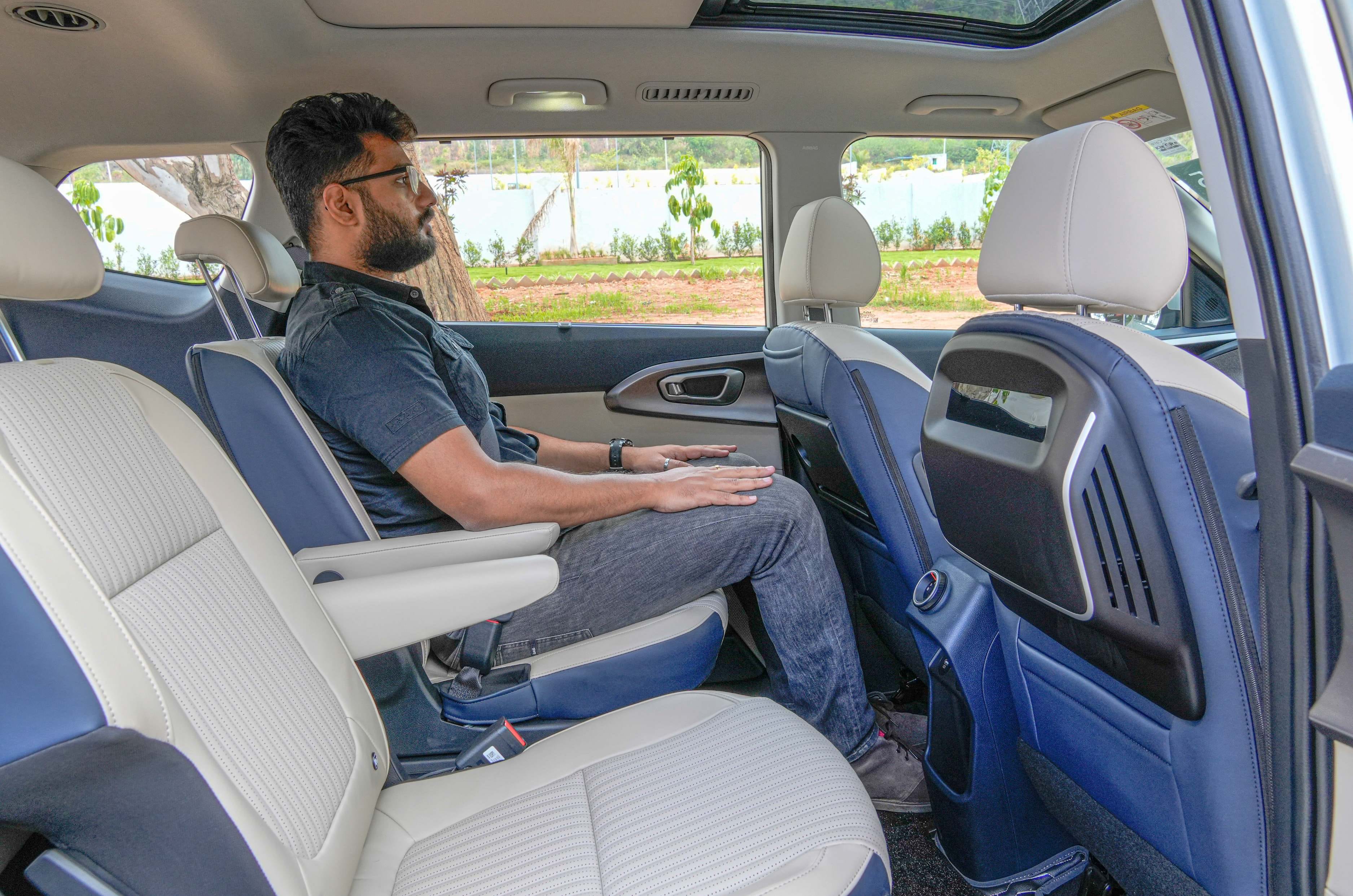
The 6-seater version gets captain seats for the second row that not only look premium but also get individual armrests for extra comfort. There’s no dearth of headroom and kneeroom for the middle-row occupants. Depending on the trim level, this row also benefits from the two-pane panoramic sunroof, blower control, sunblinds, tray table, and air purifier. A manually operated ‘boss’ mode liberates even more room for the occupant seated behind the co-driver’s seat. Passengers will have no trouble with ingress or egress as second-row accessibility is good.
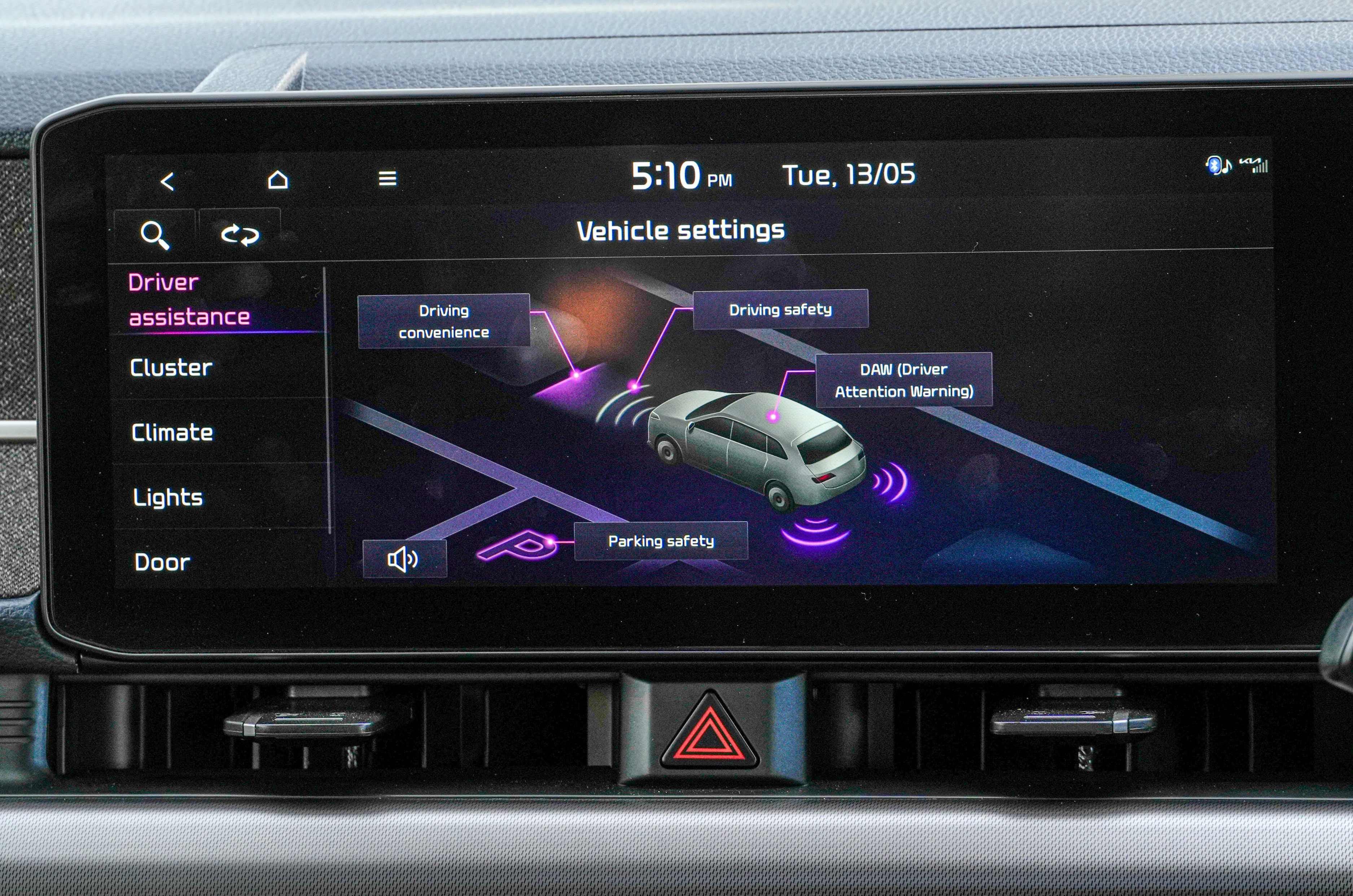
Practicality up front comes from ventilated seats, cooled cupholders and a wireless charger. The dual 12.3-inch screens are high-resolution units that enable a clean and smooth user experience. Some of the other feature highlights here include the 8-speaker Bose audio system, 64-colour ambient lighting system, leatherette upholstery, dashcam, and Level 2 ADAS (Advanced Driver-Assistance Systems). The latter is well-calibrated for our erratic road conditions, particularly functions such as blind-spot monitoring, lane-keeping assist and rear cross-traffic alert.
Powertrain options galore
The Carens Clavis is offered with three engine options four transmission choices
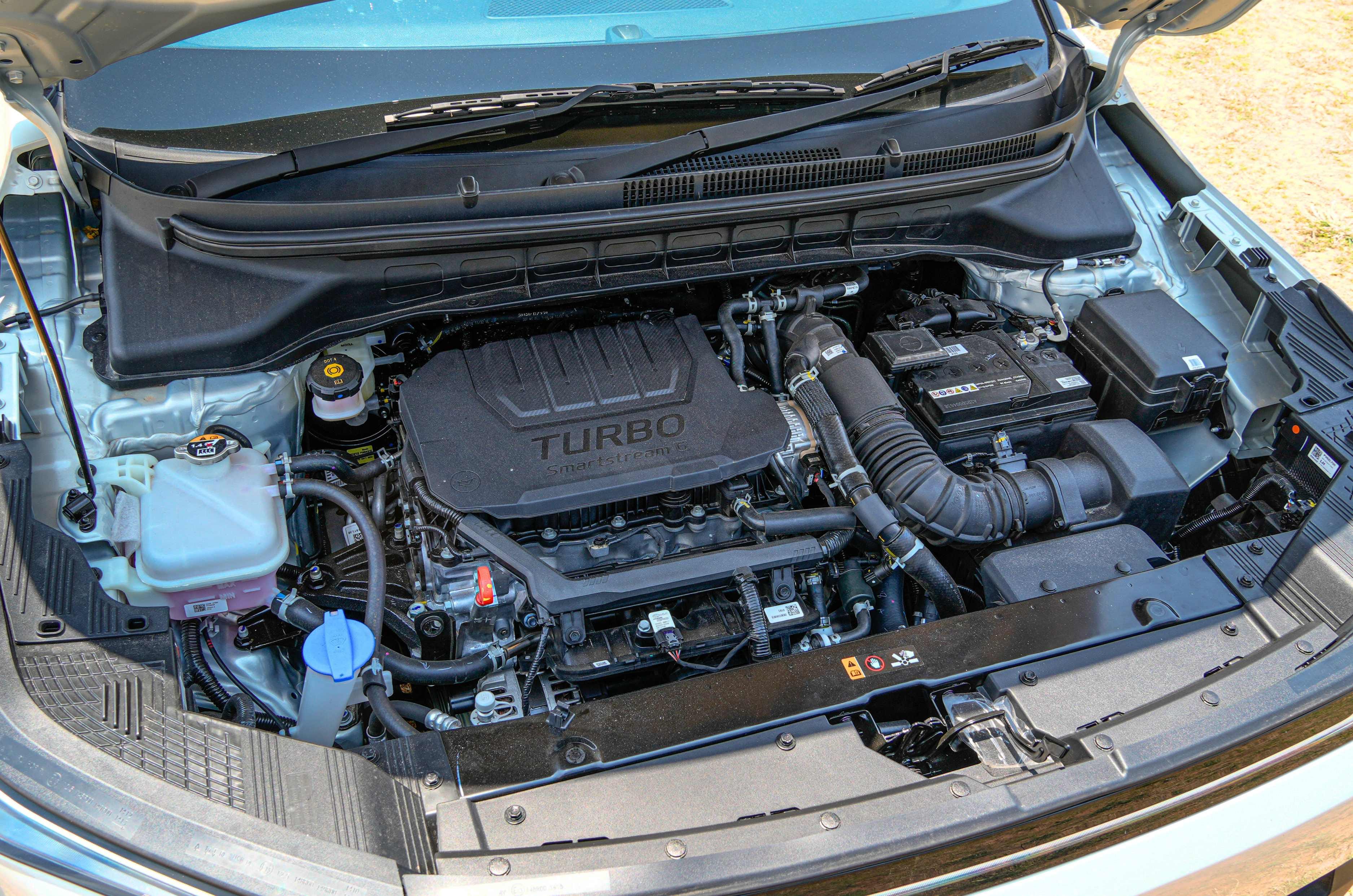
Under the bonnet of the Kia Carens Clavis can be one of three engines: a 1.5-litre naturally aspirated four-cylinder petrol, 1.5-litre direct-injected turbo-petrol, or a 1.5-litre four-cylinder turbo-diesel. A 6-speed manual gearbox is offered with all them. The turbo-petrol mill is also available with a 6-speed iMT (intelligent manual transmission) and a 7-speed DCT (dual-clutch automatic transmission). Meanwhile, the oil burner can be mated to a 6-speed AT (automatic transmission). The only diesel option in the segment, this Kia MPV’s 1.5-litre turbo-diesel engine can return 15-16kpl on highway runs.
Good ride and high-speed stability
This MPV rewards drivers with relaxed driving manners
The 17-inch wheels on the top-spec turbo-petrol variants allow for a pliant-enough ride, with the diesel variants featuring 16-inch rims actually feeling supple. Regardless of the wheel size, the Carens Clavis feels surefooted on the road, staying planted even as speeds rise. The bigger wheels make this MPV take corners decently compared to the variants with the smaller wheels, but this is only true if it’s driven sedately.
Reasons not to buy the Kia Carens Clavis
Not for enthusiastic drivers
Lacklustre powertrains and noticeable body-roll relegates this Kia to sedate driving roles
While the 1.5-litre turbo-petrol engine produces 160hp and 253Nm, it lacks excitement. Pushing it past 4,200rpm does not result in quicker gain of pace, but it instead leads to the engine’s coarse note nearing redline to enter the cabin. The 7-speed DCT, meanwhile, isn’t smooth in the city where it hesitates to shift between lower cogs – this is a gearbox that doesn’t like being rushed.
The Carens Clavis with the diesel engine and 6-speed AT is also good at cruising long distances at highway speeds. However, this oil burner could’ve done with more punch – the issue becoming really noticeable when driving on uphill slopes with a full house. With most of the weight being transferred to the rear, and this being a front-wheel drive (FWD) car, there isn’t enough oomph to pull the Carens Clavis up inclines with ease. This lack of power, combined with the slow downshifts of the automatic gearbox, means that quick overtakes will require some planning.
If you enjoy taking corners with enthusiasm, then the Carens Clavis isn’t for you. The body-roll is especially noticeable in the variants with the 16-inch wheels due to their smaller-section tyres. While the body-roll is less evident in the cars with the 17-inch wheels, taking a corner with any hint of aggressive will lead to body-roll.
Unintuitive touch-enabled buttons
This issue plagues the top trims of the Carens Clavis
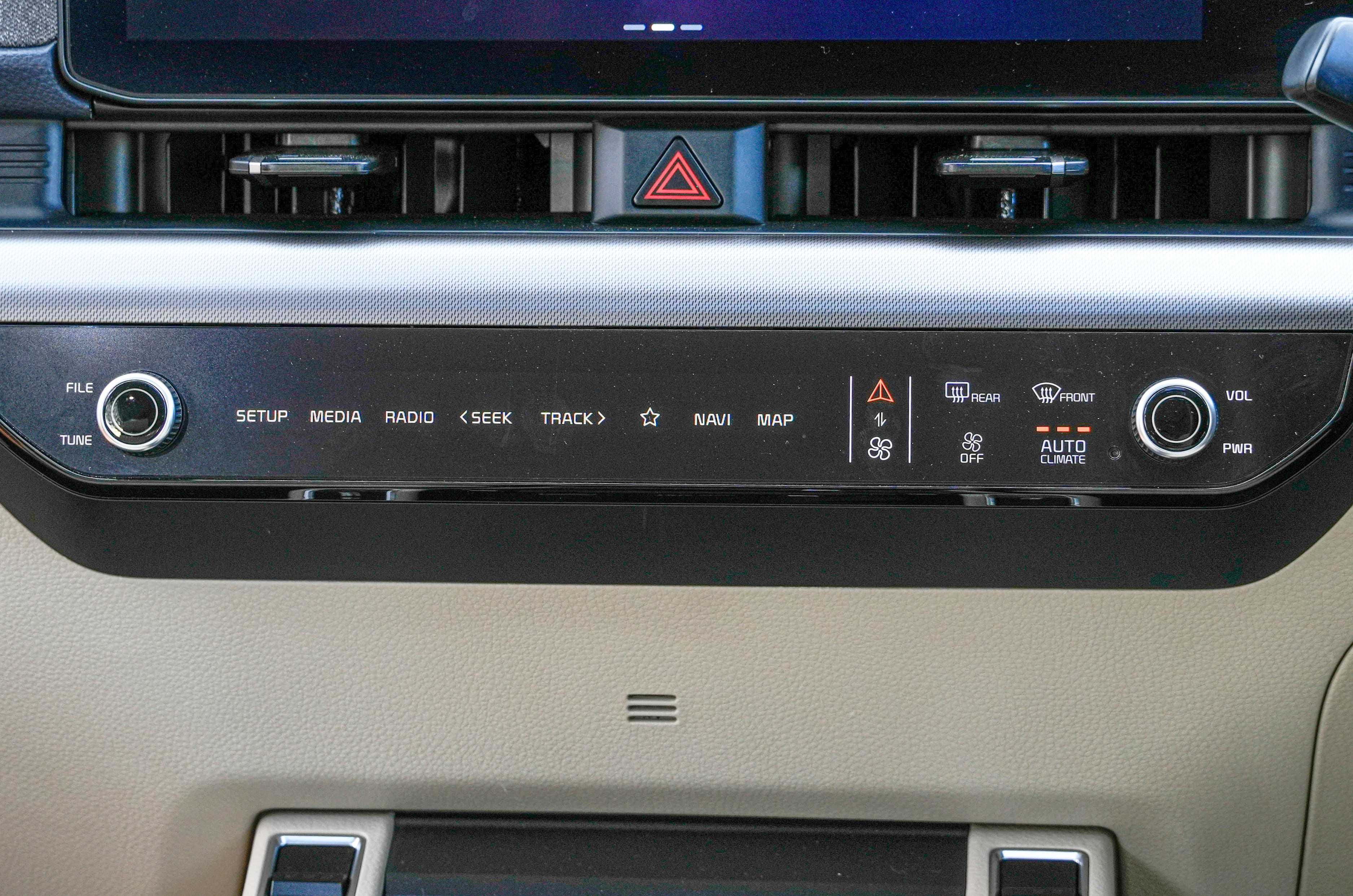
Top trims of the Kia Carens Clavis get a switchable, touch-sensitive panel to operate the car’s HVAC and infotainment systems. Not only is there an issue with reflections catching you out while trying to use this panel, but you could accidentally press the wrong button or control. This can be distracting whilst driving as you’ll have to look away from the road in order to use most of the controls on this panel. Meanwhile, lower trims get easy-to-use physical switchgear for these functions.
Gets pricey quickly
Top variants are far more expensive than rivals
The range-topping variants of the Kia Carens Clavis cost well over Rs 20 lakh, with even mid-spec variants priced north of Rs 15 lakh. When compared to rivals such as the Maruti Suzuki XL6, this makes the Caren Clavis up to Rs 7.14 lakh.