MY2025 Volkswagen Taigun gets up to Rs 3.5 lakh discount in September 2026

MY2025 Volkswagen Taigun gets up to Rs 3.5 lakh discount in September 2026
Taigun

Volkswagen is offering benefits on the Virtus, Taigun, Tiguan R-Line and Tayron in September 2026. The benefits vary by model, variant and model year, and comprise cash discounts, exchange or scrappage bonuses and loyalty benefits.

Disclaimer: Discounts vary from city to city and are subject to stock availability. Check with your local dealership for exact figures.

Volkswagen Tiguan R-Line discounts in September 2026

Up to Rs 6 lakh off

The Tiguan R-Line gets benefits of up to Rs 6 lakh in September 2026. These comprise a Rs 3.5 lakh cash discount, a Rs 2 lakh exchange bonus and a Rs 50,000 loyalty bonus. Customers opting for scrappage can get Rs 20,000 instead of the Rs 2 lakh exchange bonus.

Volkswagen Taigun discounts in September 2026

Up to Rs 3.5 lakh off
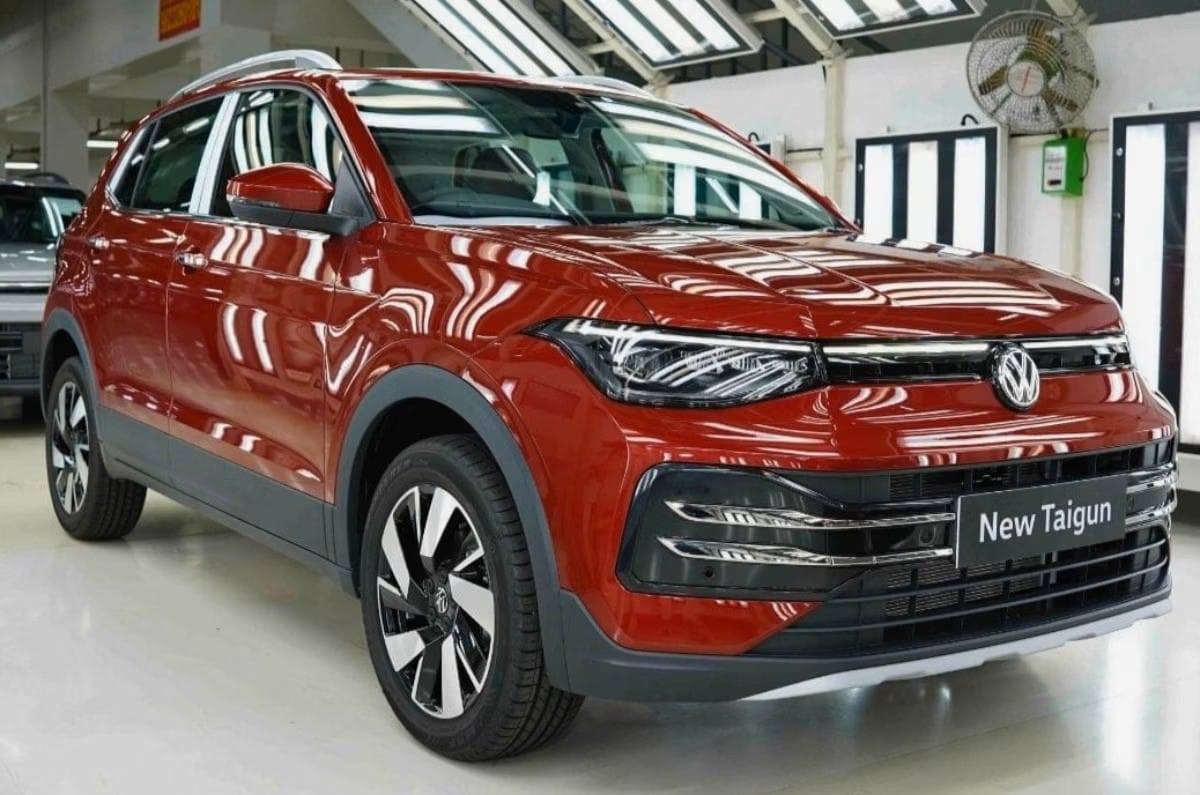
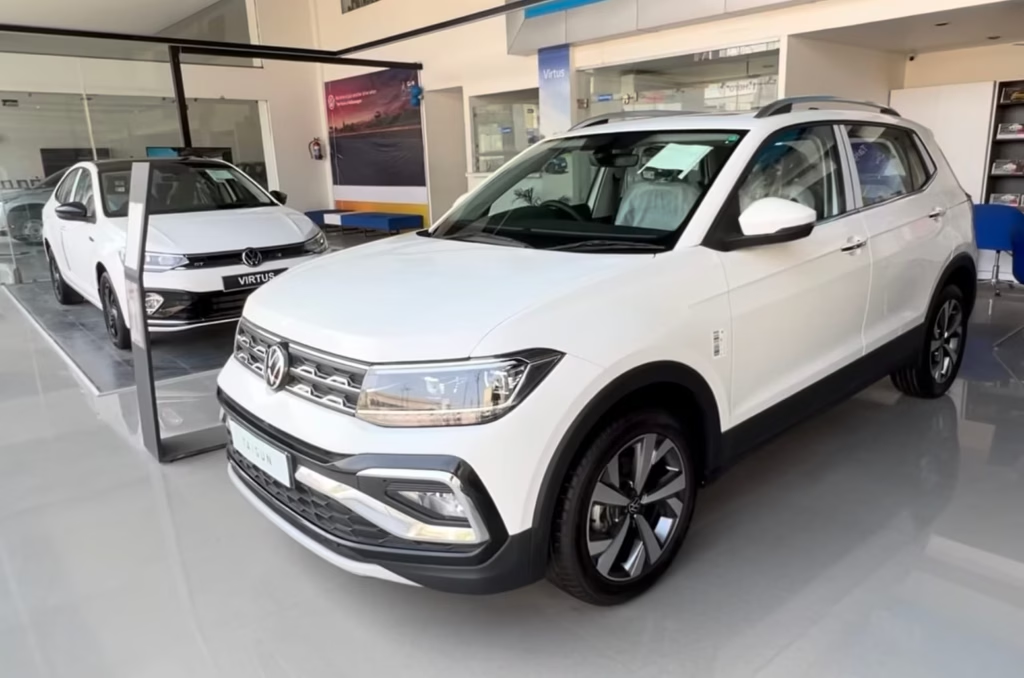
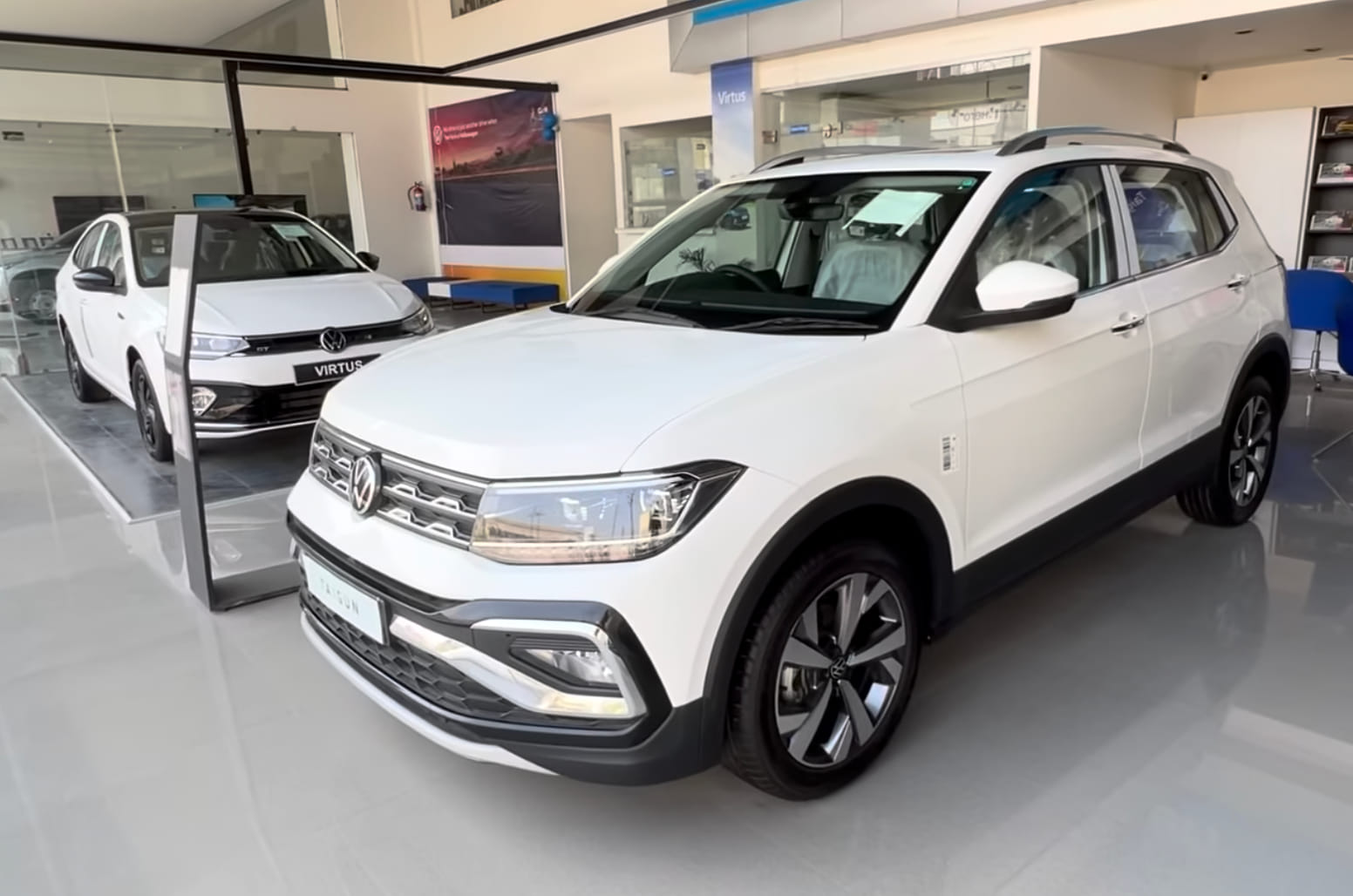
Volkswagen is offering different benefits on the outgoing Taigun and the updated Taigun this month. The outgoing Taigun gets higher benefits, with MY2025 cars getting a cash discount of up to Rs 2 lakh, along with Rs 1 lakh in liquidation support. MY2026 cars get a cash discount of up to Rs 1 lakh. Eligible buyers can also get a Rs 30,000 exchange bonus or a Rs 20,000 scrappage benefit, along with a Rs 20,000 loyalty benefit.

On the updated Taigun, cash discounts range from Rs 20,000 to Rs 25,000, depending on the variant. The GT Line gets Rs 20,000, while the Topline AT and GT Plus DSG Sport get Rs 25,000. A Rs 30,000 exchange bonus or a Rs 20,000 scrappage benefit, as well as a Rs 20,000 loyalty benefit, is also available on eligible variants.

The exchange and scrappage benefits cannot be combined, and customers can choose either a loyalty or a corporate benefit.

Volkswagen Virtus discounts in September 2026

Up to Rs 1.55 lakh off
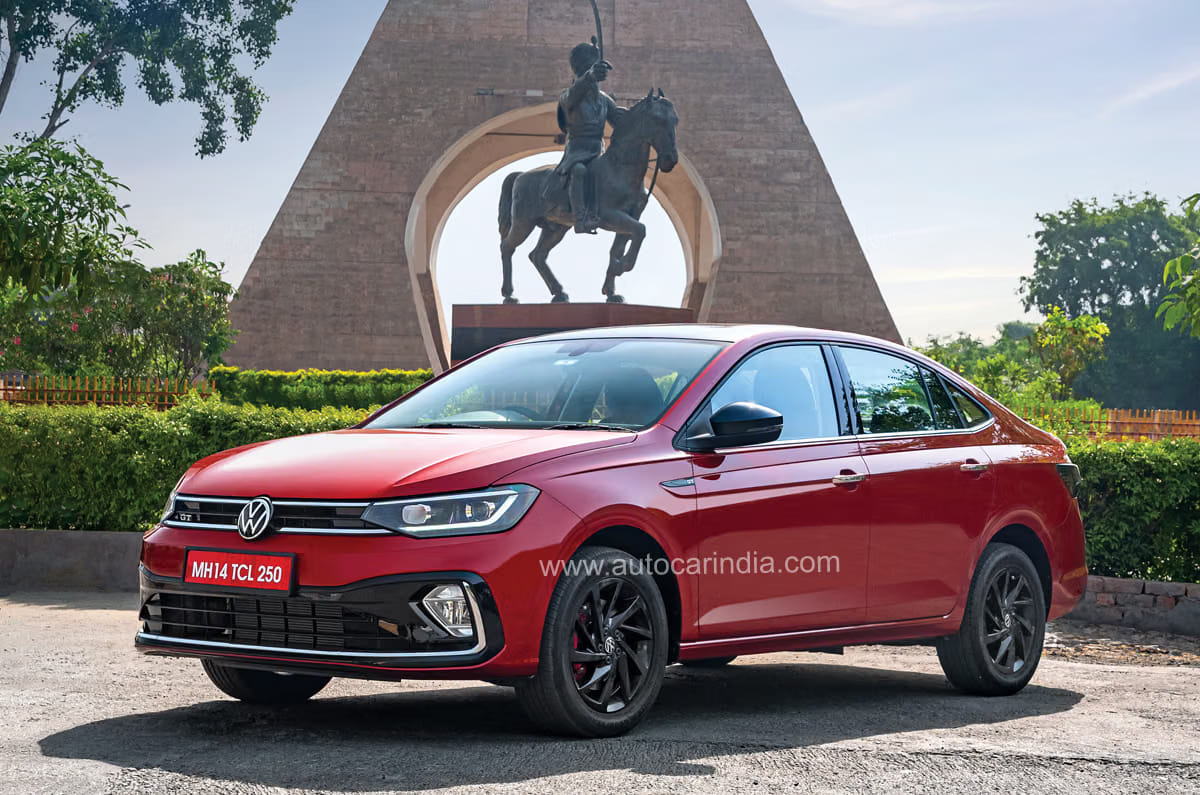
Volkswagen is offering different benefits on the Virtus, depending on the variant and model year this month. MY2025 cars get a cash discount of up to Rs 75,000, while MY2026 cars get up to Rs 50,000 off. Eligible buyers can also get a Rs 30,000 exchange bonus or a Rs 20,000 scrappage benefit, along with a Rs 50,000 loyalty benefit.

The highest benefit is available on the MY2025 Virtus Topline MT and AT, which get a Rs 75,000 cash discount, a Rs 30,000 exchange bonus and a Rs 50,000 loyalty benefit, taking the total to Rs 1.55 lakh. The MY2026 Topline variants get a Rs 50,000 cash discount, making the maximum benefit Rs 1.30 lakh when combined with the exchange and loyalty benefits.

Volkswagen Tayron discounts in September 2026

Up to Rs 1.5 lakh off
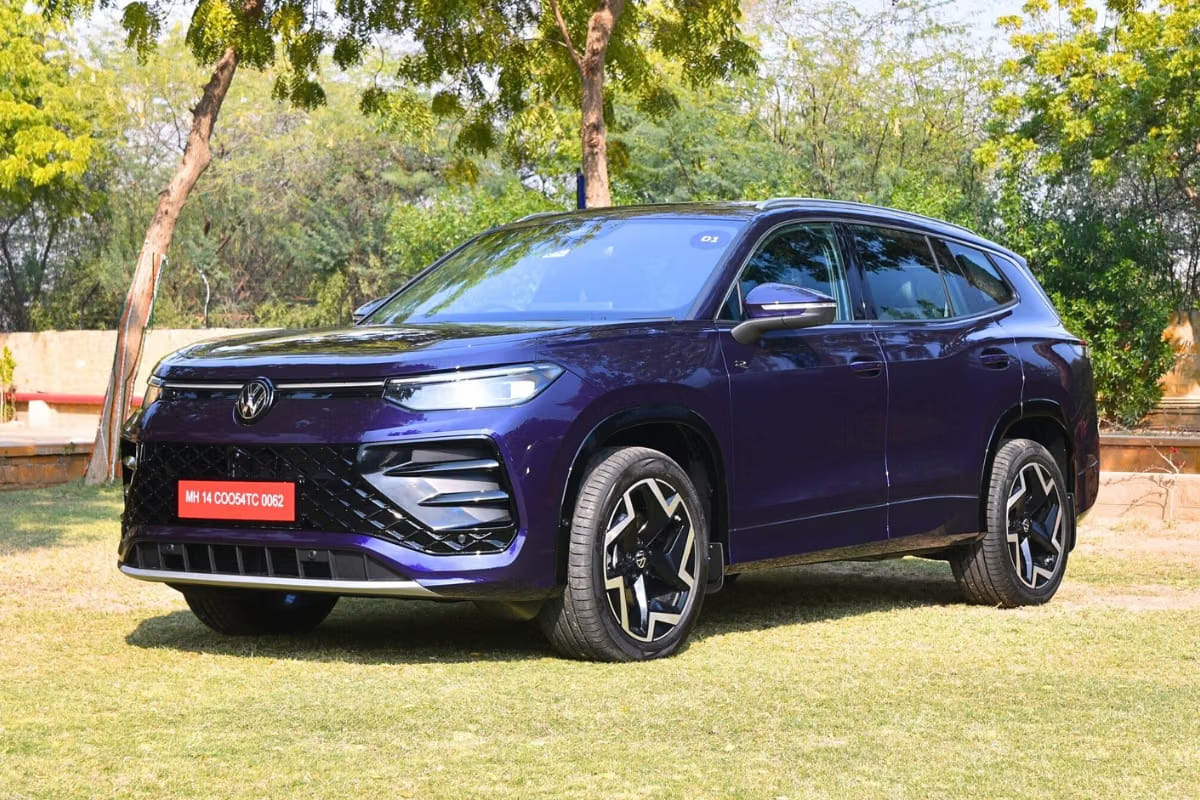
The Tayron, available in R-Line and Life variants, gets benefits of up to Rs 1.5 lakh. There is no cash discount, but buyers can get a Rs 1 lakh exchange bonus and a Rs 50,000 loyalty bonus. Alternatively, the exchange bonus can be replaced by a Rs 20,000 scrappage bonus.
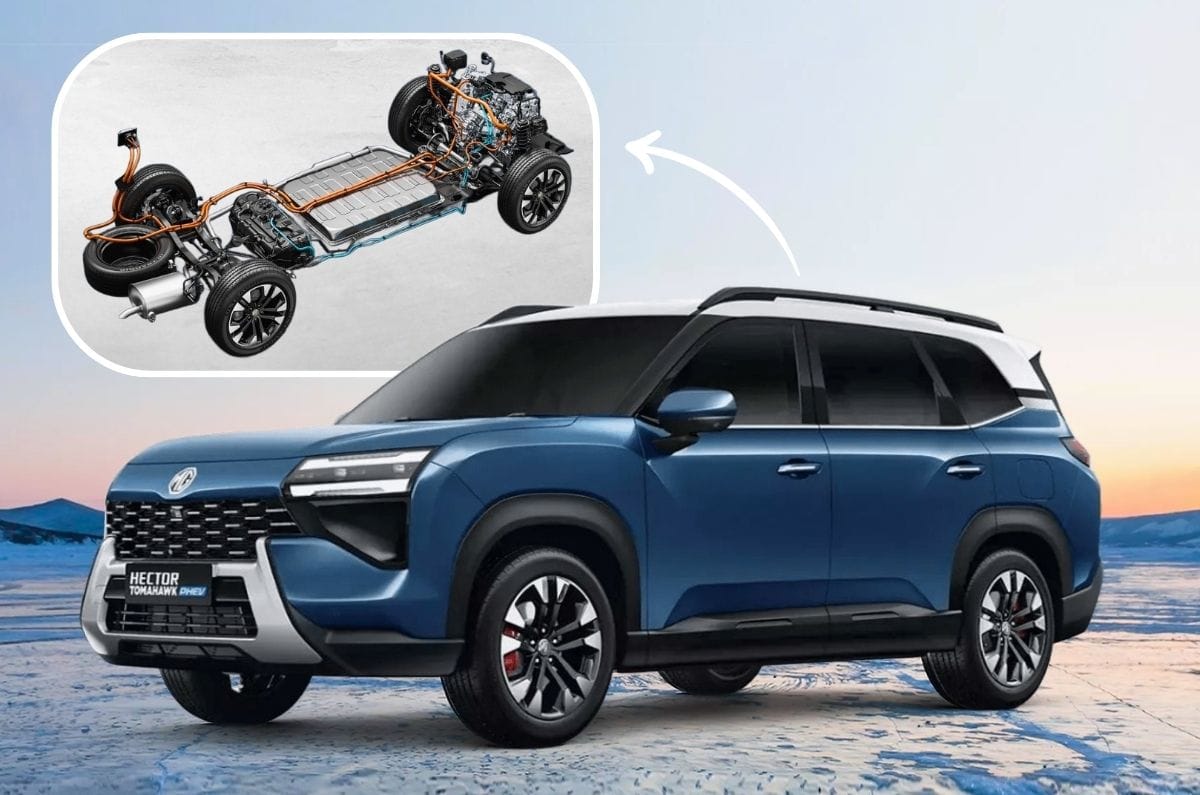
MG Hector Tomahawk PHEV powertrain explained

MG Hector Tomahawk PHEV powertrain explained

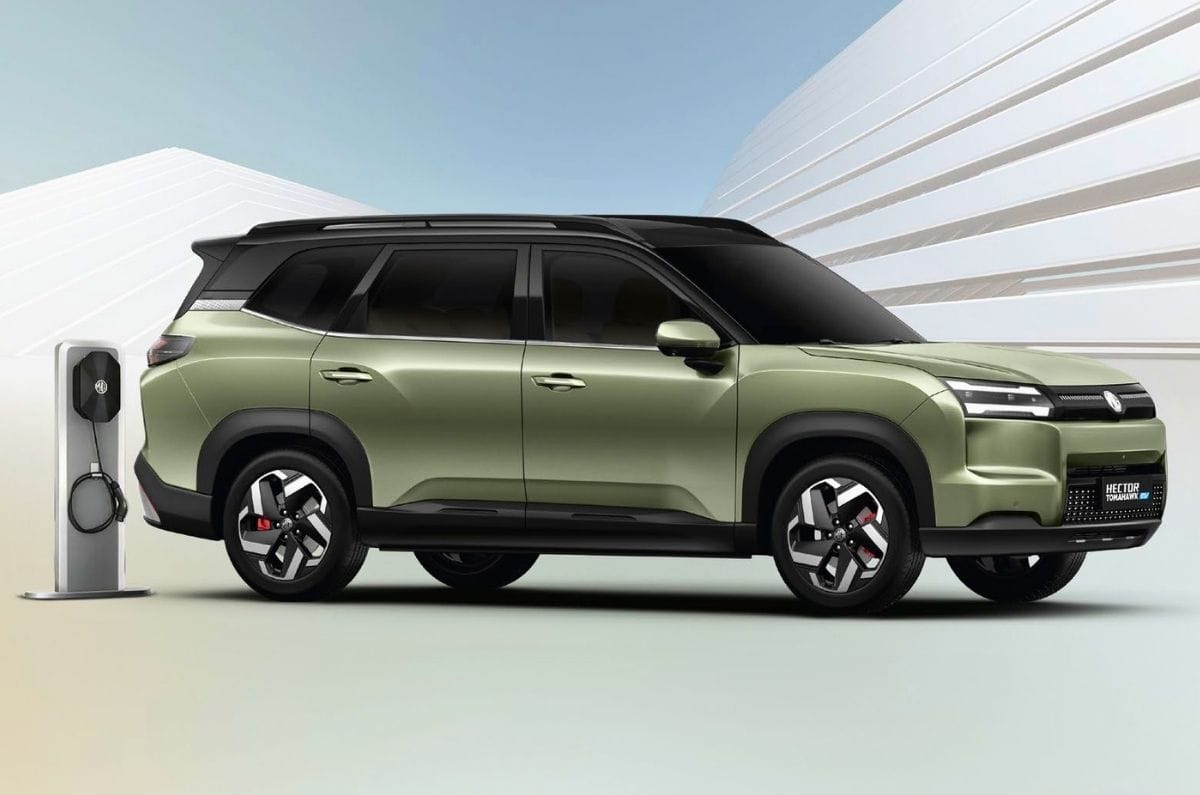
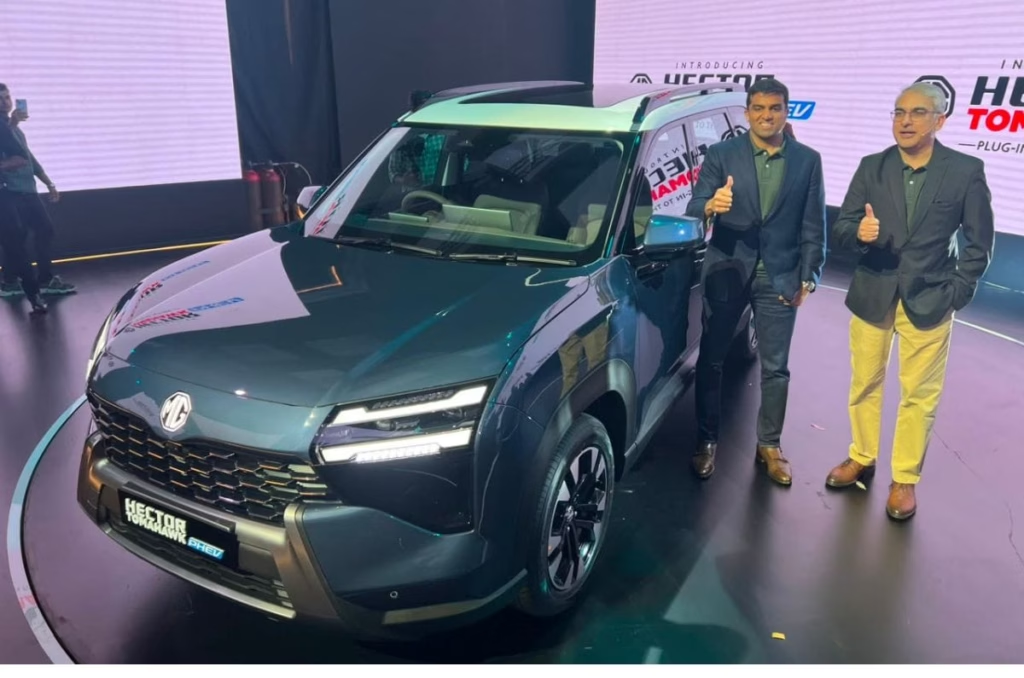
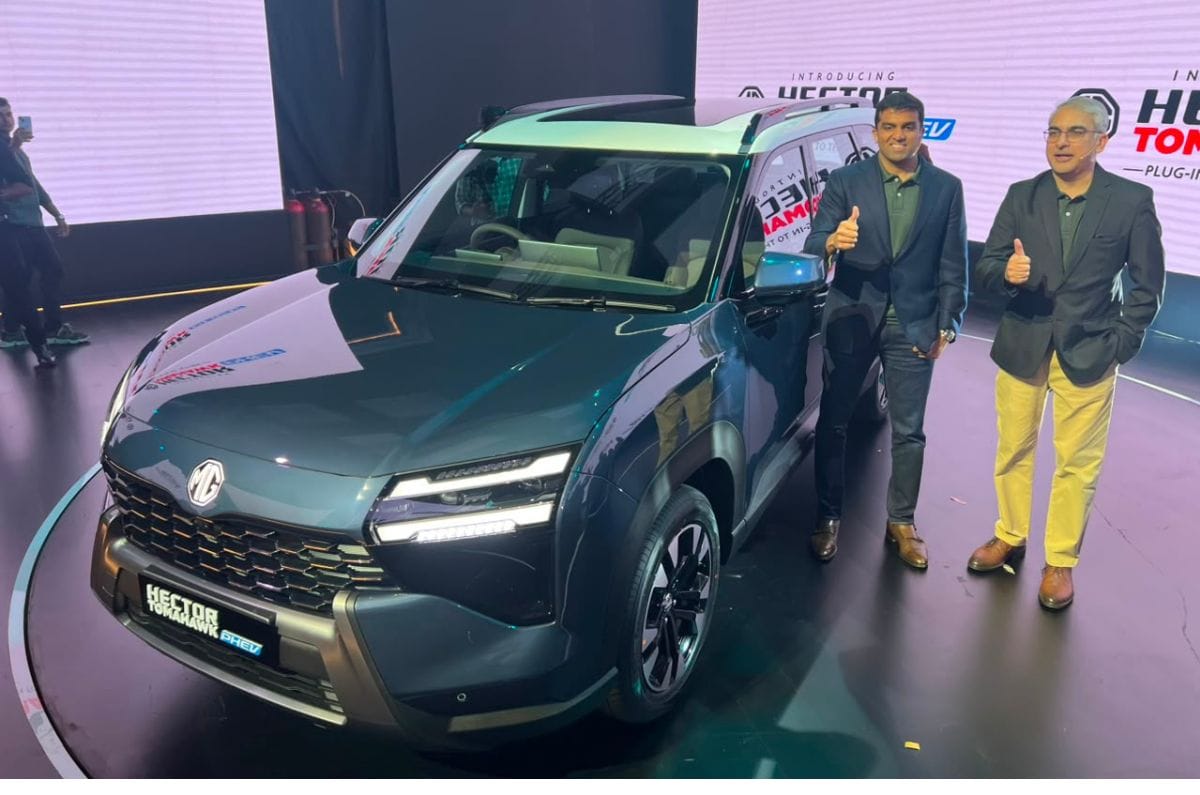
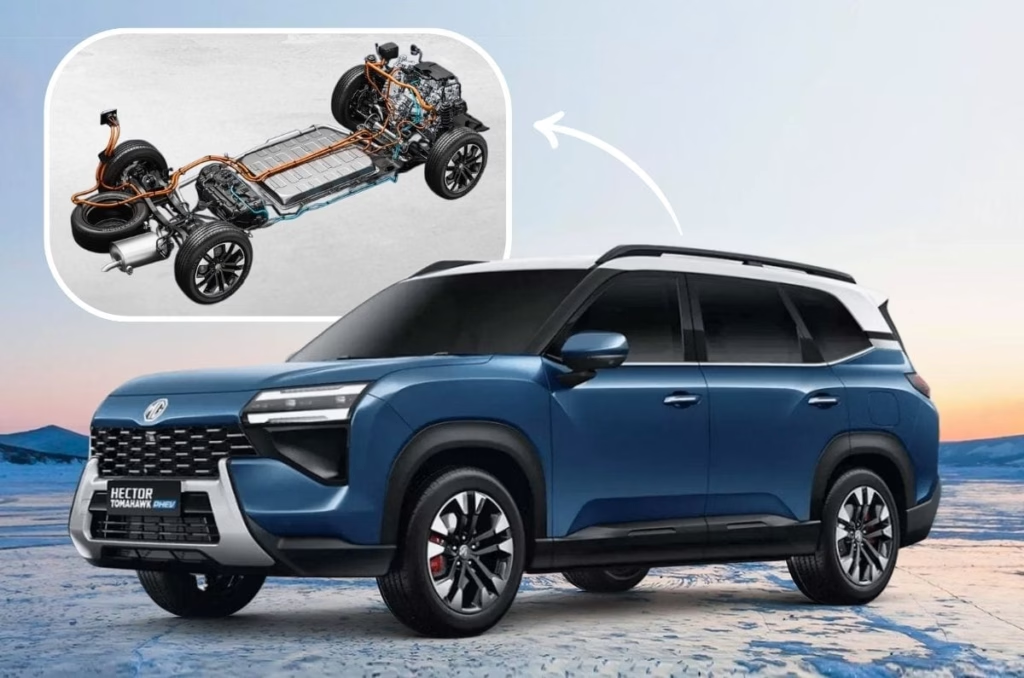
MG has introduced the Hector Tomahawk PHEV as India’s first mass-market plug-in hybrid, with prices ranging from Rs 25.70 lakh to Rs 27.80 lakh (ex-showroom). It combines a 1.5-litre petrol engine with a 20.5kWh battery and electric motor, allowing it to offer electric-only driving as well as the longer range of a petrol engine. But how does the Hector Tomahawk PHEV’s hybrid system work, and how does it differ from the strong-hybrid systems already offered by Maruti Suzuki, Toyota and Honda Let’s take a closer look. 

MG Hector Tomahawk PHEV powertrain: All you need to know

Gets an electric motor powered by a 20.5kWh battery and a 1.5-litre petrol engine

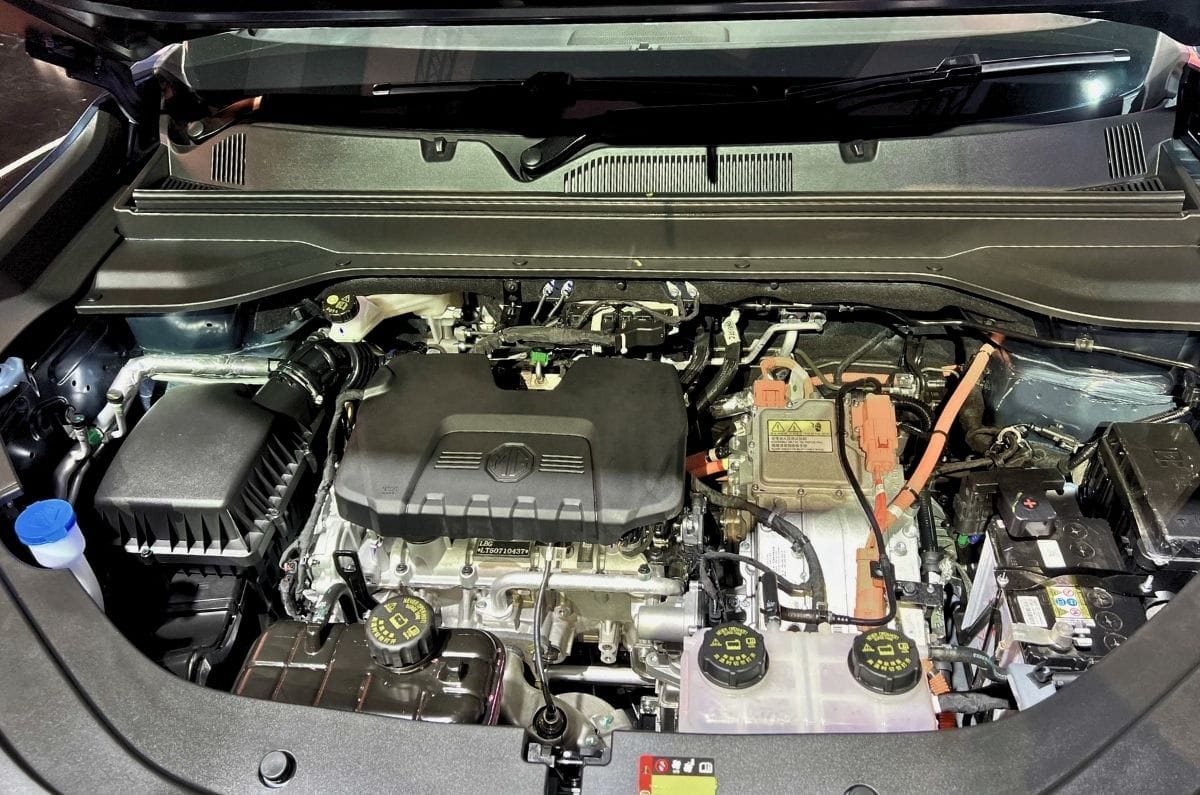
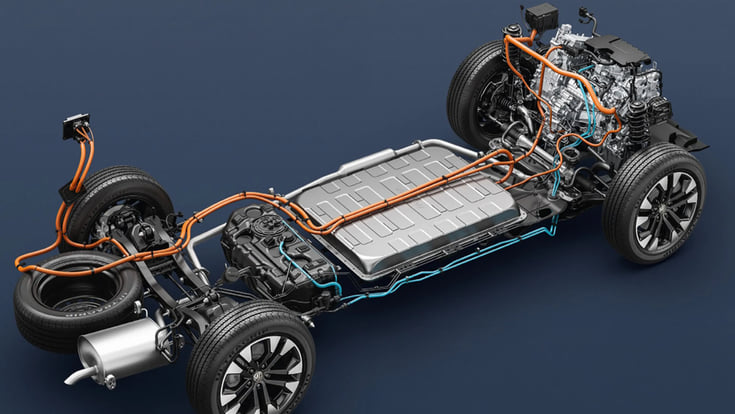
The Hector Tomahawk PHEV combines a 1.5-litre naturally aspirated petrol engine with a 20.5kWh battery and an electric motor. The petrol engine uses the Atkinson cycle and produces 102hp and 125Nm, while the permanent-magnet synchronous motor develops 201hp and 237Nm. The system sends a combined 198hp and 230Nm to the front wheels.

The petrol engine is paired with a Dedicated Hybrid Transmission (DHT) with an e-clutch, while the battery uses lithium iron phosphate (LFP) chemistry. Unlike a conventional hybrid, the Hector Tomahawk PHEV’s battery can be charged externally, allowing it to operate as an EV for more than 115km, according to MG, before the petrol engine kicks in.

How is the Hector Tomahawk PHEV different from a strong-hybrid powertrain?

Honda, Toyota and Maruti Suzuki offer strong-hybrid powertrains in models such as the City Hybrid, Urban Cruiser Hyryder, Innova Hycross, Grand Vitara, Victoris and Invicto. These systems also use an electric motor and battery, but their battery packs are charged through regenerative braking and the combustion engine rather than an external power source. They can drive the wheels on electric power for short periods but do not offer the extended electric driving capability of a plug-in hybrid.

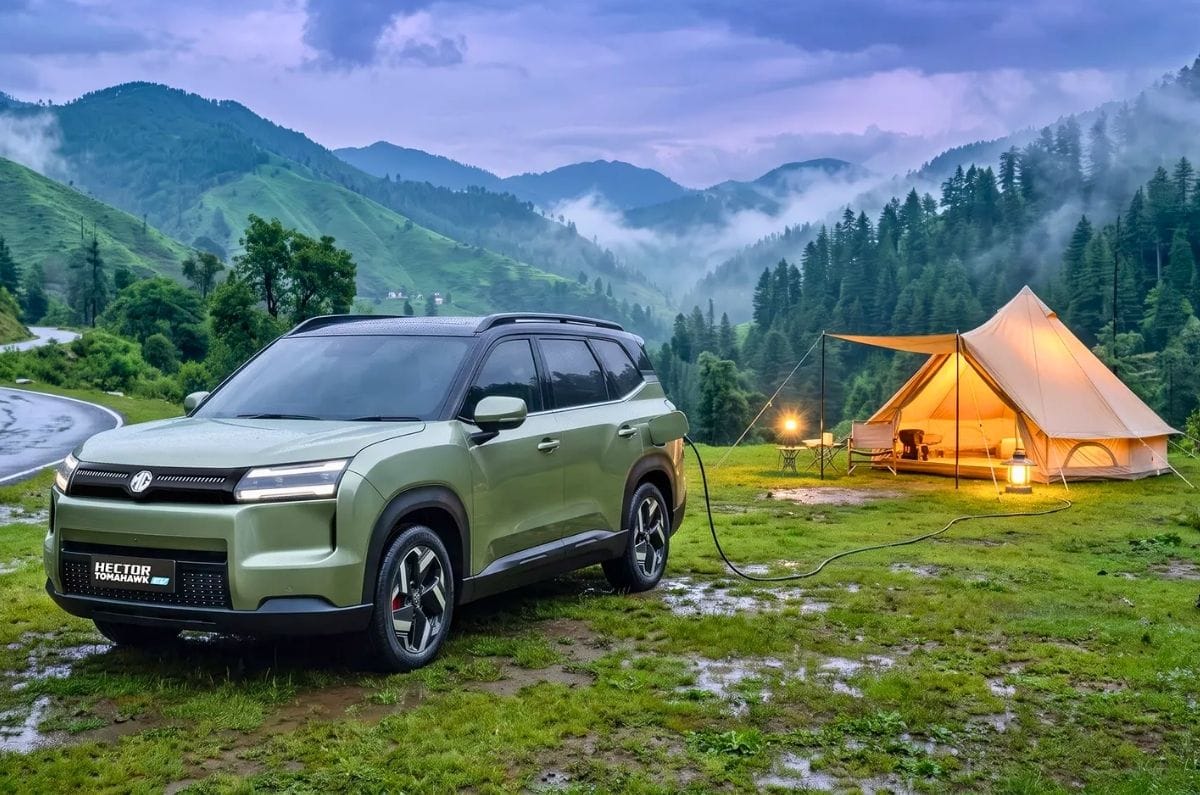
The Hector Tomahawk PHEV’s 20.5kWh battery can be charged from the grid, giving it a greater electric driving capability. It supports 25kW DC charging, which MG claims takes 35 minutes for a 30-80 percent charge. A 3.3kW AC charger is said to take 7.5 hours for a 10-100 percent charge.

MG claims a 43.2 percent thermal efficiency for the petrol engine and around 50kpl combined fuel efficiency. The company pegs the combined range with a fully charged battery and the 52-litre fuel tank brimmed at over 1,100km.

MG offers it with four primary drive modes

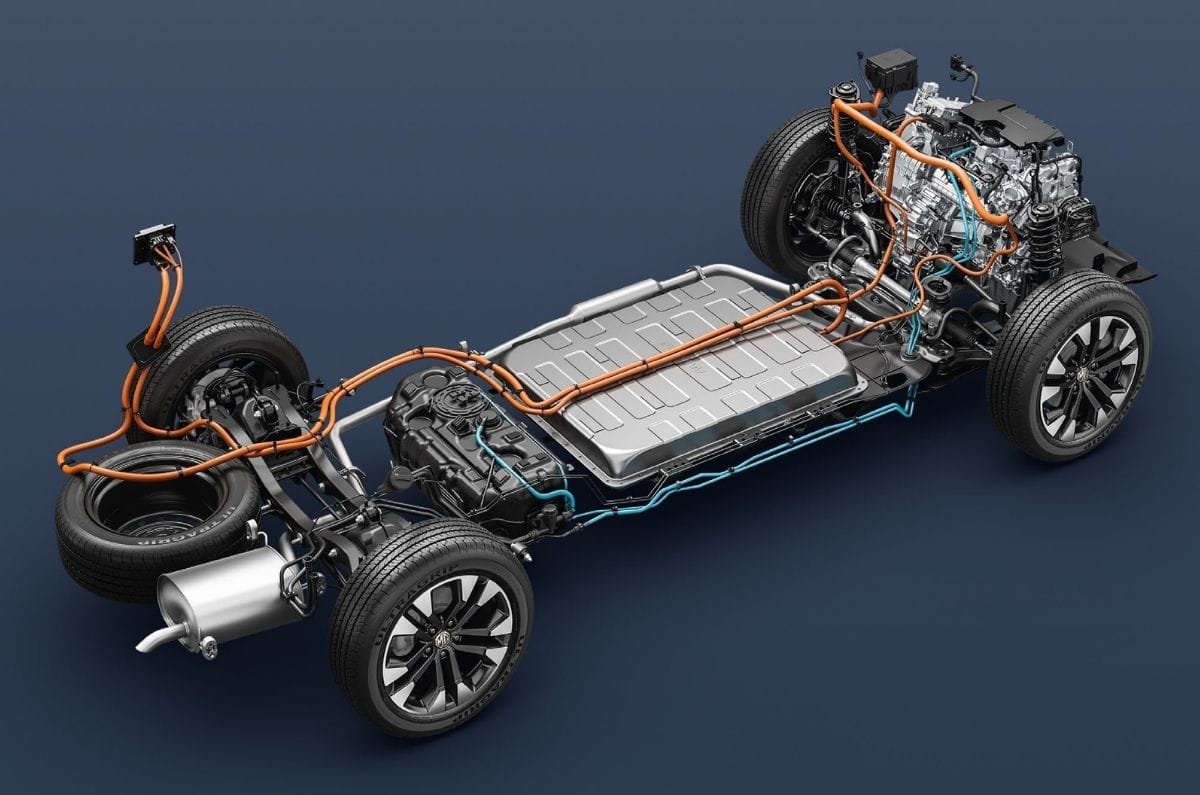
The MG Hector Tomahawk PHEV can operate in four primary drive modes: EV, Series Hybrid, Parallel Hybrid and Engine Direct. Each mode uses the petrol engine, electric motor and battery differently. Here is how each one works.

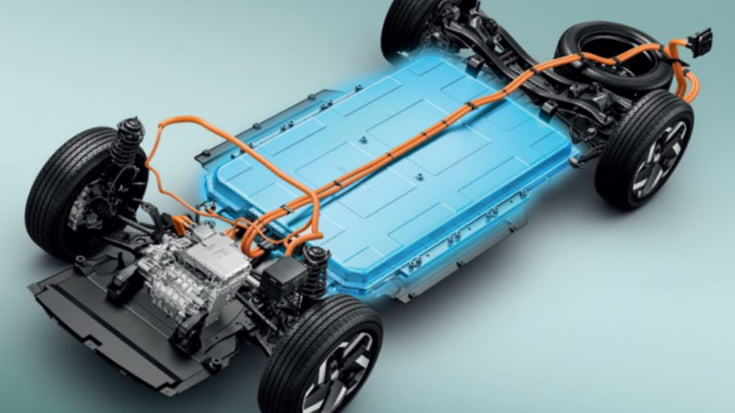
  • EV mode: The battery alone powers the electric motor, which drives the wheels. The petrol engine remains switched off, making this the mode used for electric-only driving.
  • Series Hybrid mode: The petrol engine runs as a generator to produce electricity. It recharges the battery pack, which powers the electric motor driving the front wheels. The engine therefore does not directly power the wheels in this mode.
  • Parallel Hybrid mode: Both the petrol engine and electric motor drive the wheels. This allows the powertrain to combine the engine’s output with electric assistance when higher performance is required.
  • Engine Direct drive mode: The petrol engine drives the wheels directly through the hybrid transmission, reducing energy conversion losses associated with generating electricity and then using the motor to drive the wheels. This mode is primarily suited for high-speed cruising.

However, MG is offering no way to change these drive modes manually. The automaker claims the system shuffles between the modes in just 0.1 seconds, depending on the Hector Tomahawk PHEV’s state of charge, speed, throttle input and road conditions.

MG Hector Tomahawk PHEV prices

Although it’s a plug-in hybrid, the Hector Tomahawk PHEV comes with a BaaS option

MG Hector Tomahawk PHEV prices (ex-showroom)

Trim

Non-BaaS prices

BaaS prices

Upfront cost saving

Exclusive

Rs 25.70 lakh

Rs 21.79 lakh + 3.2 per km

Rs 3.91 lakh

Essence

Rs 27.80 lakh 

Rs 23.89 lakh + 3.2 per km

Rs 3.91 lakh

Both the Exclusive and Essence trims get the same powertrain, but certain features differ. Interestingly, the Hector Tomahawk PHEV is being offered with a Battery-as-a-Service (BaaS) scheme, just like the manufacturer’s EVs. This scheme reduces the upfront cost by a significant Rs 3.91 lakh.

As mentioned earlier, the MG Hector Tomahawk PHEV is the sole plug-in hybrid in India, offering a more fuel-efficient alternative to three-row SUVs such as the Tata Safari and Mahindra XUV 7XO.

Prices are ex-showroom, India.

All you need to know about the MG Hector Tomahawk EV and PHEV

All you need to know about the MG Hector Tomahawk EV and PHEV

MG launched the Hector Tomahawk in India in both all-electric (EV) and plug-in hybrid (PHEV) versions, with prices starting from Rs 19.50 lakh and Rs 25.70 lakh, respectively. Both models are offered with a lot of new-age technology and have piqued the interest of enthusiasts. Here’s everything you need to know about the MG Hector Tomahawk EV and Hector Tomahawk PHEV. 

1. What are the exterior differences between the EV and PHEV?

Both versions get different grilles, front bumpers, and alloy wheels

EV
PHEV
 

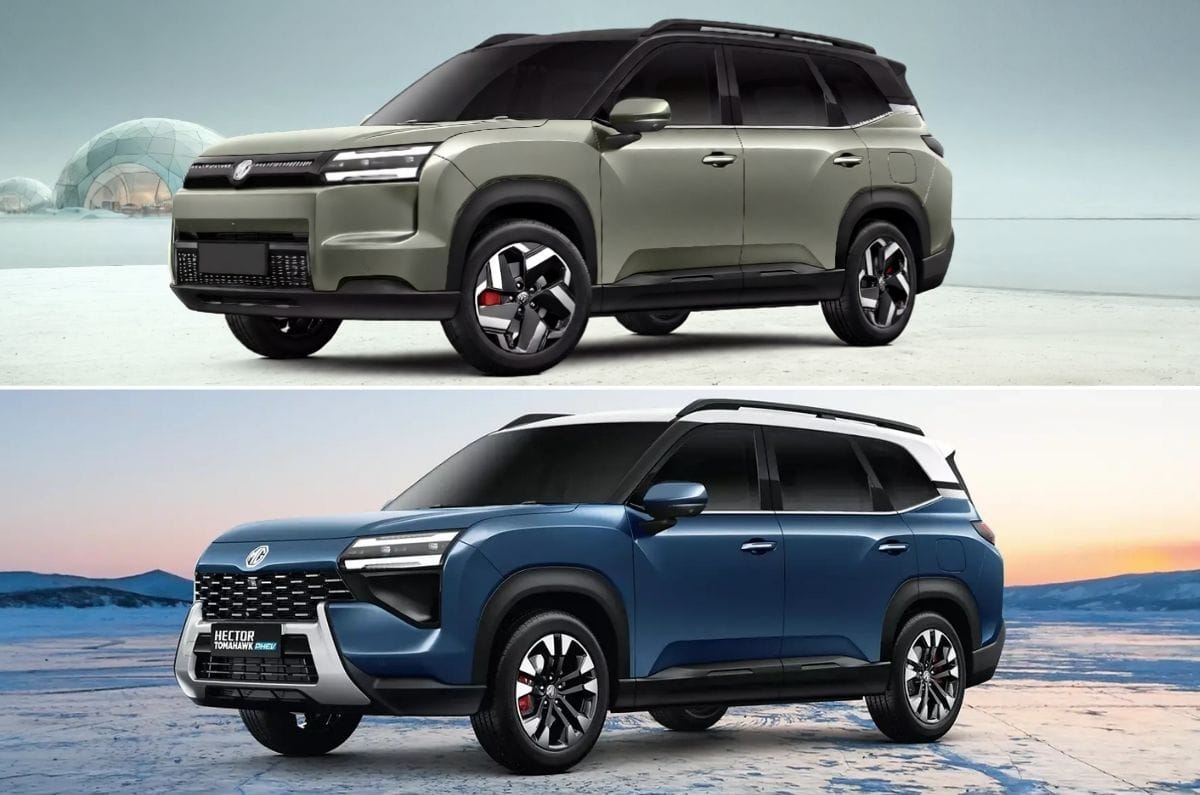
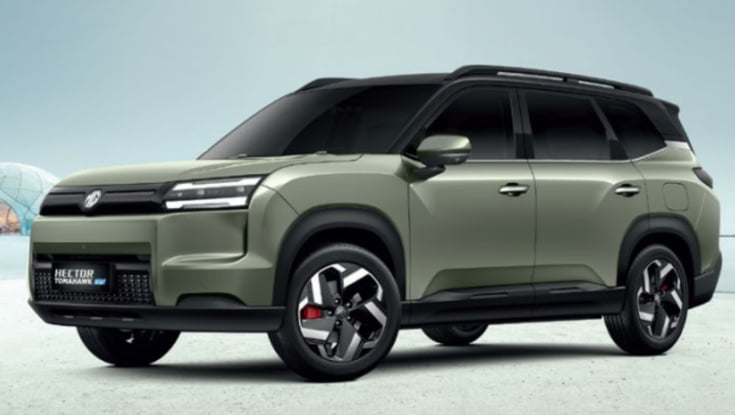
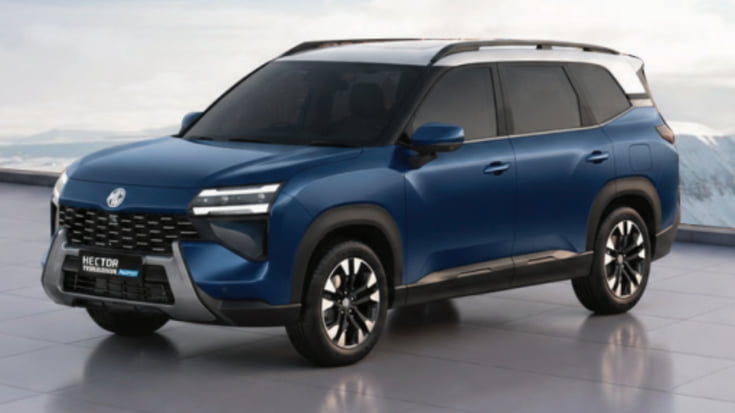
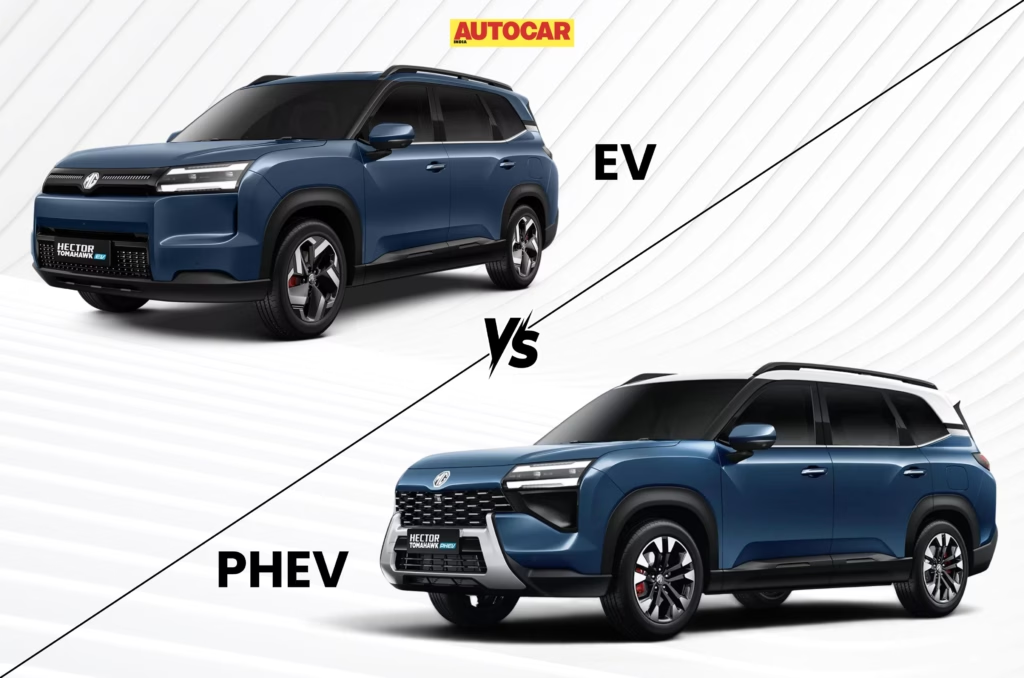
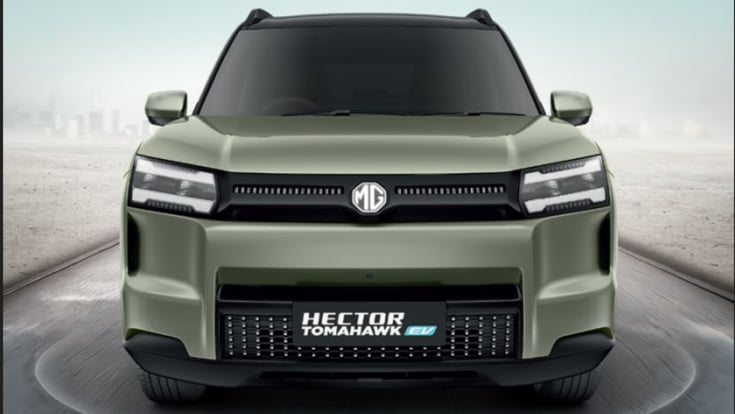
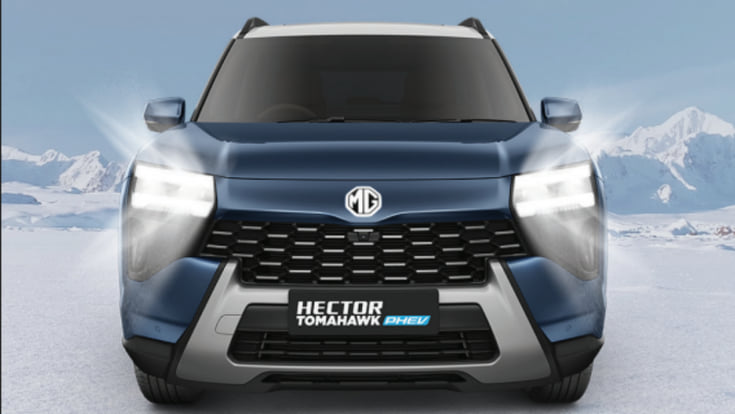
Both the Hector Tomahawk’s EV and PHEV versions have some design differences. While the EV gets a blanked-off gloss-black grille, the PHEV gets a functional grille with chrome inserts and black trims underneath the headlights. The front bumper design is also different, with the PHEV getting a silver bullbar-like element in the centre that the EV misses. The headlights and illuminated MG logo are, however, shared. 

Not much is different in the side profile, except for the 18-inch alloy designs and red callipers on the top-spec Hector Tomahawk PHEV. If you opt for a dual-tone shade, the EV will have a black roof, while the PHEV will have a white roof. The rear design, however, is identical for both versions of the SUV.

2. What are the interior differences between the EV and PHEV?

Save for a luggage cover and different cabin themes, everything else is the same

MG Hector Tomahawk EV gets a beige and black cabin theme.

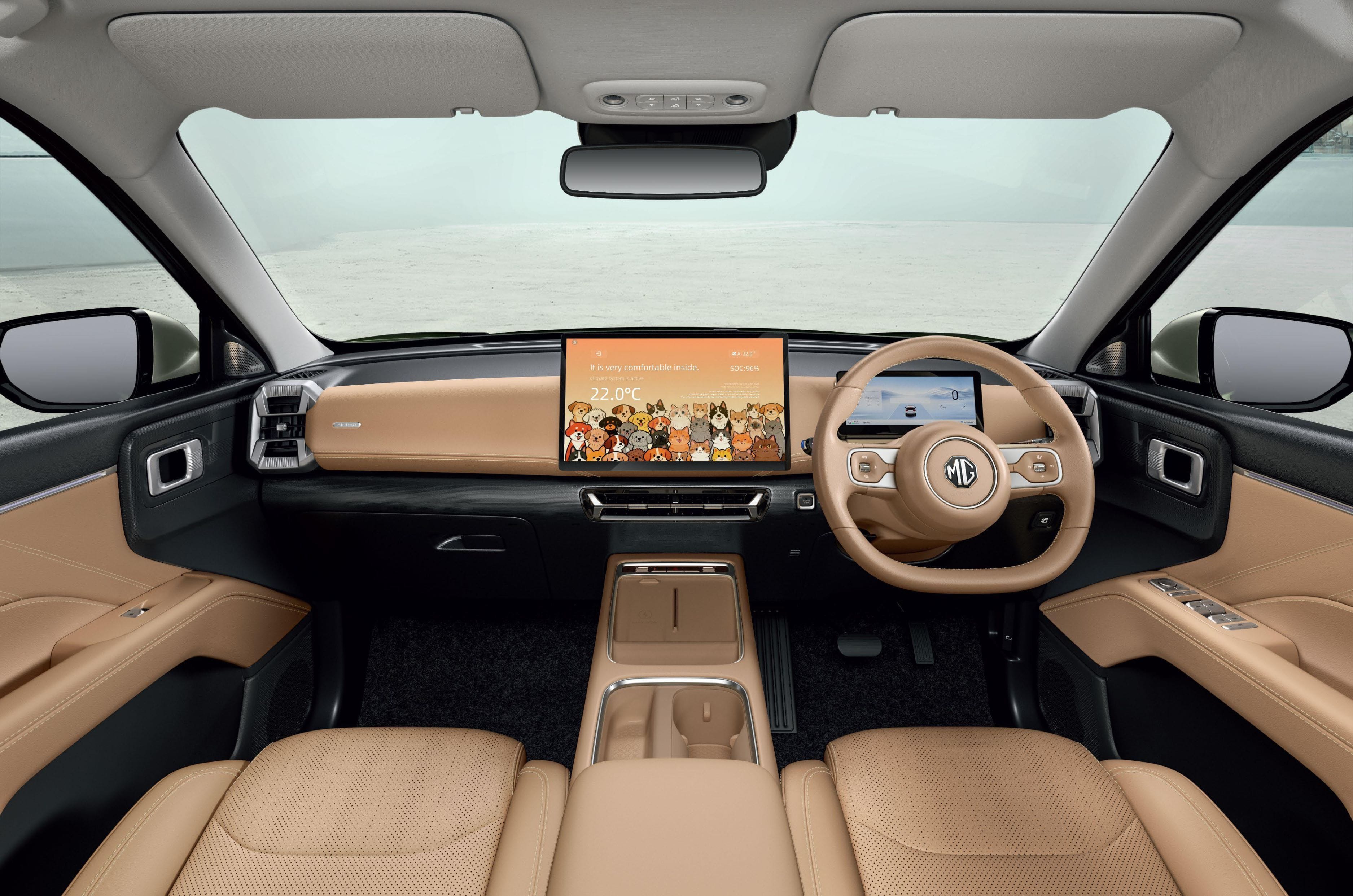
Save for a rolling luggage shade on the 5-seater variants of the EV, and a different cabin theme – brown and black on the EV and a darker brown and black on the PHEV – there is no visible difference. Everything else is the same, including the feature suite: a 15.6-inch touchscreen infotainment system, an 8.8-inch digital driver’s display, a 10-speaker Infinity sound system, a panoramic sunroof, powered and ventilated front seats with memory function for the driver’s seat, and a 50W fast wireless charger. 

MG Hector Tomahawk PHEV gets a brown and black cabin theme.

The safety suite is also identical in both Hector Tomahawk versions, which includes 6 airbags, a 360-degree camera with an under-bonnet view, Level 2 advanced driver assistance systems (ADAS) and a tyre pressure monitoring system (TPMS). 

3. What is the boot space on the MG Hector Tomahawk EV and PHEV?

EV and PHEV versions offer up to 610 litres and 192 litres of boot space, respectively

5-seater MG Hector Tomahawk EV’s boot space. 

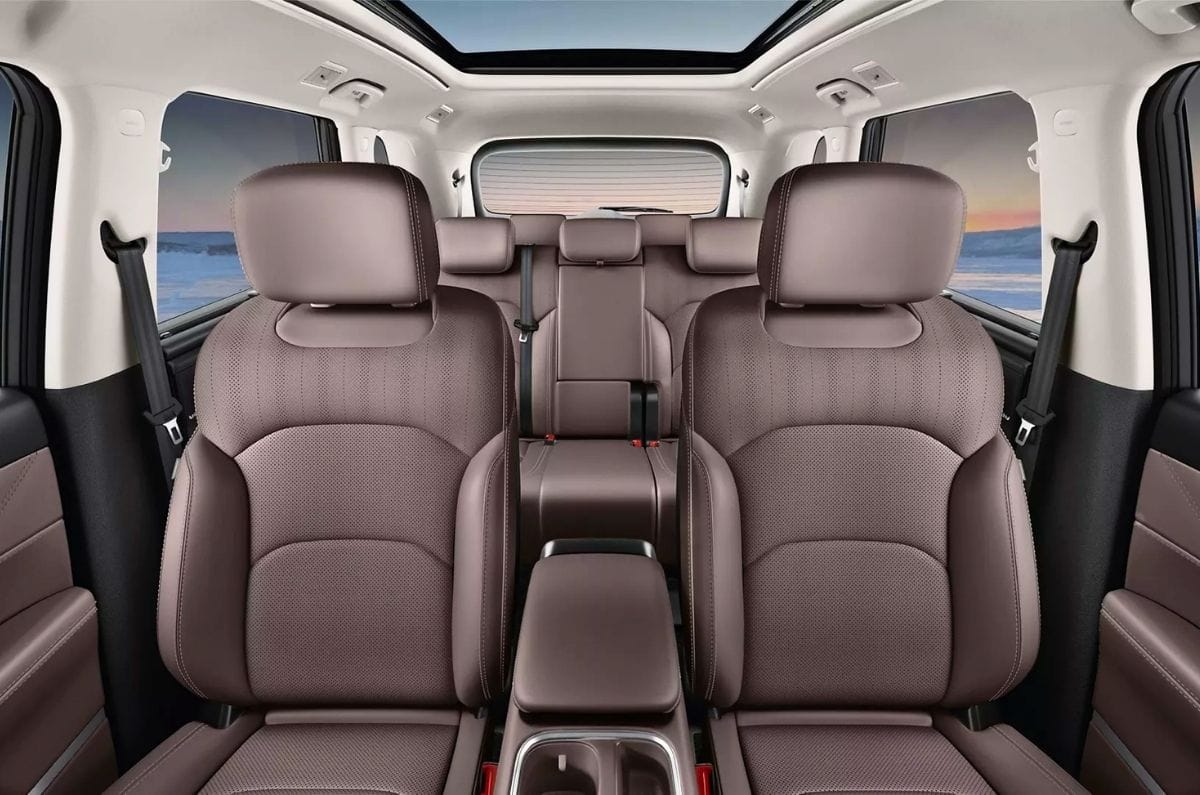
The MG Hector Tomahawk EV is offered in either a 5-seater or a 7-seater version. The 5-seater offers 610-litre boot space, with all rows up, which can be expanded to 1,053 litres by folding down the rear row. The 7-seater version offers a 192-litre boot space with all rows up,  and 528 litres when the third row is folded. 

The PHEV, offered only as a 7-seater, offers 192-litre boot space like the EV’s 7-seater version, expandable to 528 litres by folding the third row. Neither the EV nor the PHEV version of the Hector Tomahawk are offered with a frunk (storage space under the bonnet). 

4. What are the powertrain specifications of the MG Hector Tomahawk PHEV and EV?

PHEV gets a 1.5L engine and 20.5kWh battery; EV offers a 69.2kWh battery pack

The MG Hector Tomahawk PHEV gets a 1.5-litre naturally aspirated petrol engine and a 20.5kWh battery pack, offering a combined output of 198hp and 230Nm. The front-wheel-drive (FWD) SUV has an all-electric range of around 115km and a total range including the petrol engine of around 1,100km. 

The MG Hector Tomahawk EV, on the other hand, gets a 69.2kWh battery pack, mated to a front-axle-mounted electric motor producing 204hp and 310Nm. It has a claimed range of 517km.  

5. Can the Hector Tomahawk PHEV be charged at a public EV charging station?

It supports 25kW DC fast charging

Yes, being a plug-in hybrid (PHEV), the MG Hector Tomahawk PHEV supports 25kW DC fast charging. This can replenish the battery from 30 to 80 percent in 35 minutes, like a typical EV. MG is also offering it with a 3.3kW home charger, which can recharge the battery pack from 10 to 100 percent in 7.5 hours.

6. Are the MG Tomahawk EV and PHEV more affordable with BaaS?

BaaS reduces the EV’s and PHEV’s initial prices by up to Rs 6.01 lakh and 3.91 lakh, respectively 

MG Hector Tomahawk EV, PHEV BaaS vs non-BaaS prices (in Rs, lakh)


Without BaaS

With BaaS

Initial cost difference

EV

19.50 to 23.50

13.99 to 17.49*

Up to 6.01

PHEV

25.70 to 27.80

21.79 to 23.89^

3.91

*Battery subscription fee is Rs 4.9 per km per month

^Asks for a battery subscription fee of Rs 3.2 per km per month

The BaaS (Battery-as-a-Service) option reduces the upfront price of the MG Hector Tomahawk EV by Rs 6.01 lakh and the PHEV by Rs 3.91 lakh. However, you then pay a battery rental fee for every kilometre you drive: Rs 4.90 per km for the EV and Rs 3.20 per km for the PHEV. At these rates, the upfront savings from BaaS are effectively used up after around 1.22 lakh km. The break-even point is 1,22,653 km for the EV and 1,22,187 km for the PHEV.

In simple terms, if you expect to drive less than 1.22 lakh km over the entire ownership period, BaaS could be the more affordable option because of its lower initial cost. However, if you plan to drive more than 1.22 lakh km, buying the Hector Tomahawk with the battery included is likely to save you more money in the long run.

There is also another factor to consider. Under the BaaS plan, you do not own the battery, so your long-term costs depend on the rental agreement. If MG increases the per-kilometre fee or changes the contract in the future, your running costs could also increase. So, while BaaS would be more affordable for most buyers, purchasing the vehicle with the battery included may offer greater certainty in running cost calculations.

Prices are ex-showroom, India.

MG Hector Tomahawk EV vs PHEV: Differences explained

MG Hector Tomahawk EV vs PHEV: Differences explained
MG Hector Tomahawk EV vs PHEV

JSW MG Motor has launched the Hector Tomahawk with two electrified powertrains: a fully electric version and a plug-in hybrid. Although the two share the same basic dimensions and cabin design, there are several differences in their exterior detailing, equipment, seating configuration, battery and charging systems. Here’s how the two versions compare.

MG Hector Tomahawk EV vs PHEV: Price and variants

VariantSeatingEV price (ex-showroom)EV BaaS*PHEV price (ex-showroom)PHEV BaaS*
Excite7-seatRs 19.49 lakhRs 13.99 lakh
Exclusive7-seatRs 21.99 lakhRs 15.99 lakhRs 25.70 lakhRs 21.79 lakh
Essence7-seatRs 23.49 lakhRs 17.49 lakhRs 27.80 lakhRs 23.89 lakh
Essence5-seatRs 22.99 lakhRs 16.99 lakh

*For the EV, the battery rental is Rs 4.90 per km, while for the PHEV it is Rs 3.20 per km.

The Hector Tomahawk EV is priced from Rs 19.49 lakh to Rs 23.49 lakh (ex-showroom). It is available in Excite, Exclusive and Essence trims in the seven-seat configuration, while the five-seat version is offered only in the Essence trim at Rs 22.99 lakh.

The PHEV is positioned higher in the range, with prices starting at Rs 25.70 lakh for the Exclusive seven-seater and going up to Rs 27.80 lakh for the Essence seven-seater. Unlike the EV, however, a 5-seat configuration is not available here. 

MG Hector Tomahawk EV vs PHEV: Exterior

EV
PHEV


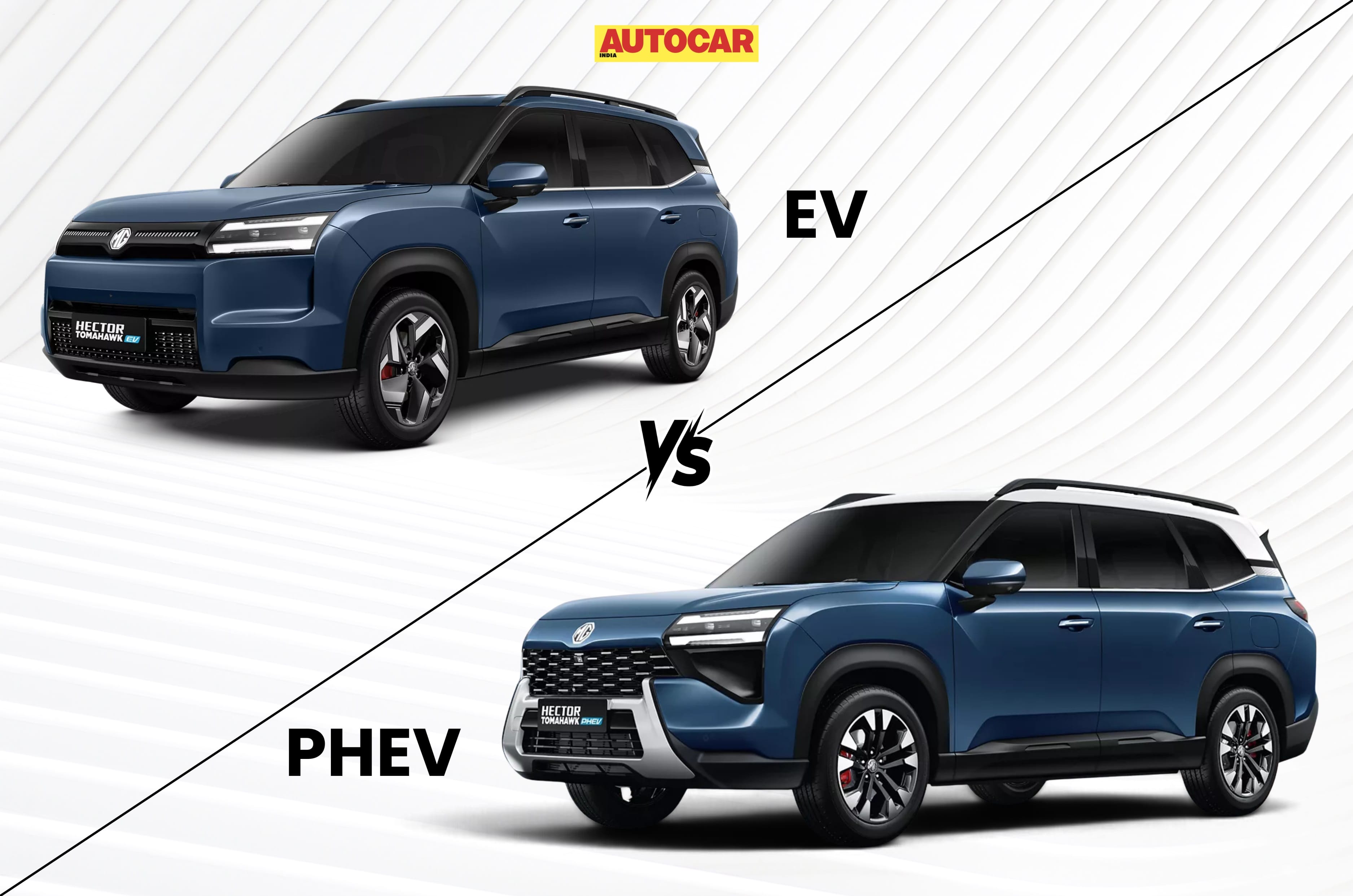
Both versions measure 4,745mm in length, 1,850mm in width and 1,770mm in height, with a 2,810mm wheelbase. They share the rectangular LED projector headlamps with LED DRLs and an illuminated MG logo, but the front-end treatment is completely different. 

The PHEV versions gets a conventional three-dimensional grille with chrome inserts, gloss-black elements below the headlamps and a chunky bull bar-like silver trim piece on the lower bumper. Meanwhile, the EV gets a closed-off fascia, lending it a more minimalistic look than the PHEV version. The PHEV also gets red brake callipers on the higher-spec version.

EV
PHEV


The two versions use different wheel designs for the 18-inch dual-tone alloys. There is also a difference in the dual-tone treatment. The EV gets a black roof, while the PHEV gets a white roof. Both, however, get roof rails, a powered tailgate and wraparound LED tail-lamps.

MG Hector Tomahawk EV vs PHEV: Interior

The two versions have the same basic cabin layout, but differ in colour. The EV gets a beige interior, while the PHEV gets a brown interior. Both get a panoramic sunroof, ventilated front seats, 256-color ambient lighting, wireless charging and an 8.8-inch digital driver’s display. The top versions of both get the 15.6-inch infotainment screen. Both versions also use a stalk-type drive selector, positioned behind the steering wheel.

The more significant difference is the seating configuration. The EV is available as a five- or seven-seater, while the PHEV is offered only as a seven-seater. The five-seat EV has 610 litres of boot space, expanding to 1,053 litres with the second row folded. The seven-seat EV offers 192 litres with all three rows in use and 528 litres with the third row folded. The PHEV, being seven-seat only, has 604 litres of boot space in the Exclusive and 579 litres in the Essence with the third row folded.

The EV also has a slightly different seating position because of its battery packaging, with occupants sitting in a more knees-up position than in the PHEV.

MG Hector Tomahawk EV vs PHEV: Powertrain

EV
PHEV


The Hector Tomahawk EV uses a 204hp electric motor that produces 310Nm. It is powered by a 69.2kWh battery and has a claimed MIDC range of 517km. The EV supports up to 90kW DC fast charging, with MG claiming a 30-80 percent charge time of around 35 minutes.

The PHEV combines a 1.5-litre naturally aspirated petrol engine, electric motor and 20.5kWh battery, with a dedicated hybrid transmission with an e-clutch. The powertrain produces a combined 198hp and 230Nm. MG claims an electric-only range of over 115km and around 40kpl combined fuel efficiency. A full tank of fuel and a fully charged battery can take it more than 1100km. 

The PHEV supports up to 25kW DC charging and is claimed to take around 35 minutes to charge from 30-80 percent. It can also be charged using a 3.3kW AC charger, which takes around 7.5 hours for a 10-100 percent charge.

The key difference is that the EV is powered solely by its battery and electric motor, while the PHEV combines a smaller battery and electric motor with a petrol engine, allowing it to operate on electric power or use the engine when required.

Which variant of the MG Hector Tomahawk PHEV should you buy?

Which variant of the MG Hector Tomahawk PHEV should you buy?

MG has launched the Hector Tomahawk PHEV as the first mass-market plug-in-hybrid (PHEV) car in India, priced from Rs 25.70 lakh (ex-showroom). It is offered in two trims: Exclusive and Essence, and like other MG cars, it is equipped with a plethora of modern-day features. If you are interested in the MG Hector Tomahawk PHEV, which variant should you choose? Let us find out.  

MG Hector Tomahawk PHEV powertrain options and prices

Both Hector Tomahawk PHEV variants get the same 1.5L engine and 20.5kWh battery

The MG Hector Tomahawk PHEV is offered with a 1.5-litre naturally aspirated petrol engine producing 102hp and 125Nm. It gets a 20.5kWh battery pack powering an electric motor producing 201hp and 237Nm. The battery pack has an indicative claimed range of 115km, and combined with the petrol engine, it could have a total range of around 1,100km. Both the Exclusive and Essence variants are offered with the same powertrain. 

MG Hector Tomahawk PHEV variant-wise BaaS, non-BaaS prices


Hector Tomahawk PHEV Exclusive

Hector Tomahawk PHEV Essence

Non-BaaS price

Rs 25.70 lakh

Rs 27.80 lakh 

BaaS price

Rs 21.79 lakh + Rs 3.2 per km*

Rs 23.89 lakh + Rs 3.2 per km*

*Rs 3.2 per km is charged as the battery rental fee for the battery-as-a-service (BaaS) scheme.

MG Hector Tomahawk PHEV variant-wise features

Exclusive

Price: Rs 25.70 lakh (or Rs 21.79 lakh + Rs 3.2 per km with BaaS)

  • Automatic LED projector headlights
  • LED taillights
  • LED DRLs
  • Rear LED fog lamps
  • Illuminated MG logo at the front
  • 18-inch alloy wheels
  • ORVM-mounted turn indicators
  • Glass antenna
  • Roof rails
  • Rear spoiler
  • Chrome finish on window beltline and door handles
  • Black body cladding on side and wheel arches
  • Brown and grey interior
  • Blue ambient lighting
  • 12.8-inch touchscreen infotainment system
  • 6-speaker sound system
  • Wireless Android Auto and Apple CarPlay support
  • 8.8-inch digital driver’s display
  • Panoramic sunroof
  • 6-way powered driver’s seat
  • 4-way powered co-driver’s seat
  • Ventilated front seats
  • Powered tailgate
  • 50W wireless phone charger
  • Leatherette seat upholstery
  • Leatherette materials on steering wheel and door pads
  • Drive modes: Eco, Normal, Sports, Custom
  • Rain-sensing wipers
  • PM2.5 air filter
  • Push-button start/stop
  • Powered ORVMs
  • Steering-mounted audio controls
  • Tilt and telescopic adjustable steering column
  • Cruise control
  • 2nd row features: 60:40 split, seat recline, one-touch tumble, centre armrest with cupholders
  • 3rd row features: 50:50 split
  • USB Type-A and Type-C chargers in 1st and 2nd rows
  • All four power windows with one-touch up/down and anti-pinch functions
  • Rear wiper and washer
  • Pet mode, Nap mode and Camp mode
  • Connected car technology
  • 6 airbags
  • 360-degree camera with under-bonnet and wheel views
  • Digital rearview monitor
  • Reverse parking sensors
  • All four disc brakes
  • Electronic parking brake with auto hold
  • TPMS
  • Front and rear defogger
  • ISOFIX child seat anchors
  • Hill hold control
  • Traction control
  • ESP
  • ABS+EBD


Essence (features over Exclusive)

Price: Rs 27.80 lakh (or Rs 23.89 lakh + Rs 3.2 per km with BaaS)

  • 15.6-inch touchscreen infotainment system
  • 10-speaker Infinity sound system
  • Rear window sunshades
  • Driver’s seat memory and welcome/exit retract functions
  • V2L, V2V and V2H charging support
  • Level-2 ADAS
  • Auto-dimming IRVM
  • Front parking sensors
  • 256-colour ambient lighting 
  • Red brake callipers
  • Sequential turn indicators

Which MG Hector Tomahawk PHEV variant should you buy?

We recommend the entry-spec Essence variant, as it is offered with a lot of modern-day features like a 12.8-inch touchscreen infotainment system, a panoramic sunroof, a powered tailgate and a 360-degree camera. It also costs Rs 2.10 lakh less than the top-spec Essence, making it the more value-for-money Hector Tomahawk PHEV variant. 

Prices are ex-showroom, India.

MG Hector Tomahawk PHEV launched at Rs 25.69 lakh

MG Hector Tomahawk PHEV launched at Rs 25.69 lakh
MG-Hector-Tomahawk-PHEV

JSW MG Motor India has launched the Hector Tomahawk PHEV at a price of Rs 25.69 lakh (ex-showroom) alongside the all-electric version of this brand-new SUV. This becomes the first mainstream plug-in hybrid SUV in our market. It is powered by a 1.5-litre, naturally aspirated petrol engine paired to a 20.5kWh battery for a claimed fuel economy of around 40kpl and an electric-only range of over 115km. MG claims that the Hector Tomahawk can deliver over 1100km of range with a full tank of fuel and a fully charged battery. Bookings for the Tomahawk PHEV have commenced today and deliveries will begin in November this year. 

Unlike the Hector Tomahawk EV that’s available in both 5- and 7-seater configurations, the PHEV is only available in a 7-seater configuration. MG is also offering the Tomahawk PHEV under the BaaS program, where prices start from Rs 21.79 lakh and Rs 3.20 is charged additionally on the battery rental. 

Tata cars to get pricier from September 1

Tata cars to get pricier from September 1
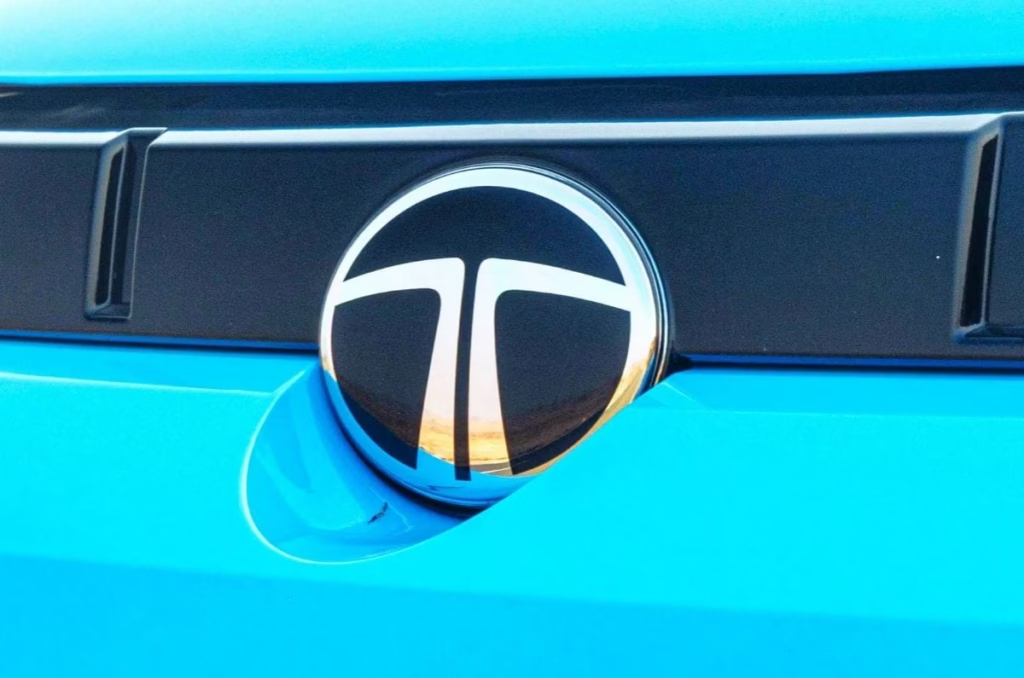
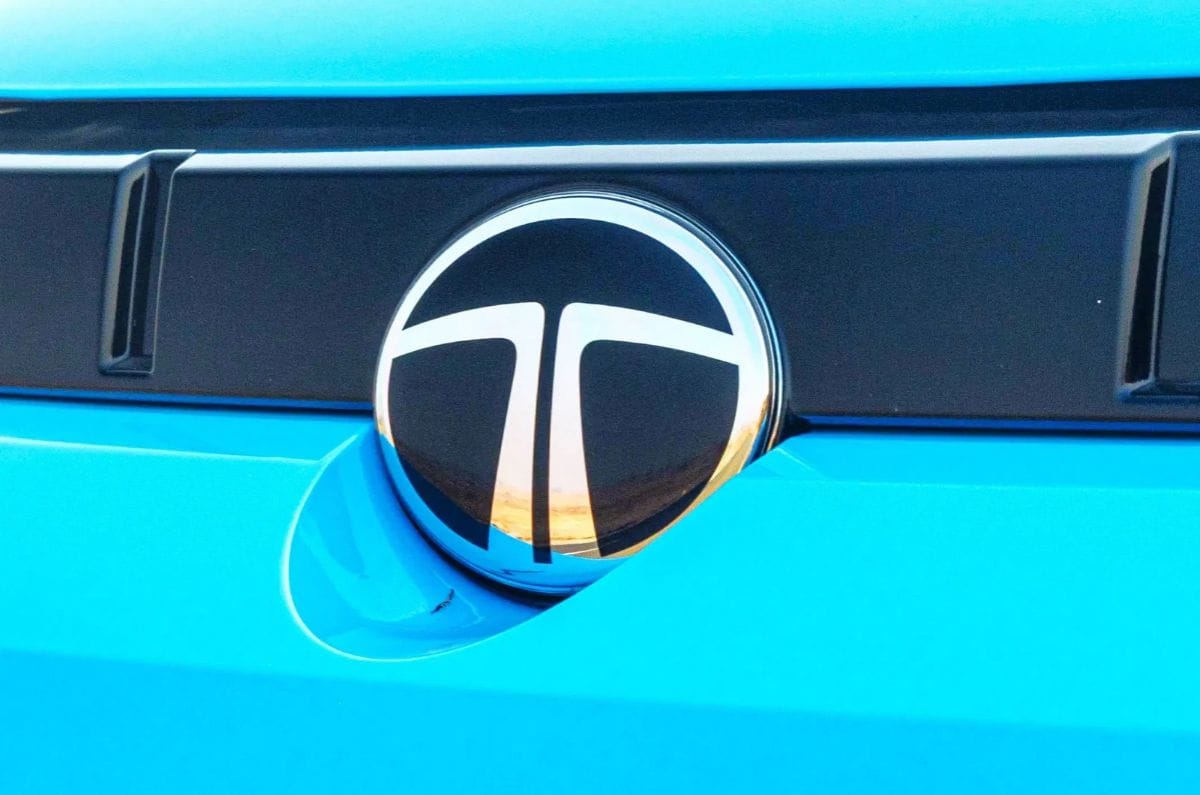
Tata Punch front logo

Tata cars are set to get pricier by up to Rs 25,000 from September 1, 2026. The exact price hike will vary depending on the model, but the Indian automaker cited continued inflationary pressures and rising input costs as some of the reasons behind its decision. Tata Motors stated that increasing the prices of its cars will help the company offset these challenges. Hyundai has also announced a price hike for September, with Mauruti Suzuki announcing a similar decision for August 2026.

  • Reasons include inflationary pressures and rising input costs
  • Foreign exchange volatility and high employee separation costs also cited

Tata Motors price hike in September 2026

The company said that it has been bearing the brunt of sustained inflation and input costs, but continuing to do so will begin impacting profits. One of the main culprits behind this has been the rising cost of EV batteries, becoming around 10 percent more expensive over a period of several months.

Other factors behind the September 2026 price hike include foreign exchange volatility and high employee separation costs, according to Tata Motors. The resultant hike is to affect the brand’s EV and ICE (internal combustion engine) models, with the exact model-wise breakup yet to be announced. However, prices of Tata SUVs are expected to go up across the board.

Mahindra XEV 9S 6-seat option launched at Rs 25.25 lakh

Mahindra XEV 9S 6-seat option launched at Rs 25.25 lakh
Mahindra XEV 9S Front Quarter Static

Mahindra has launched the 6-seat option of the XEV 9S, and prices start at Rs 25.25 lakh (ex-showroom). According to the Indian automaker, the captain seats for the second row are expected to offer a superior experience. The XEV 9S with the 6-seat option is available with the Pack Two Above, Pack Three and Pack Three Above trim levels.

MG Hector Tomahawk EV spied undisguised ahead of August 26 launch

MG Hector Tomahawk EV spied undisguised ahead of August 26 launch
MG Hector Tomahawk EV

JSW MG’s upcoming Hector Tomahawk has been spied undisguised on our roads ahead of its launch. The new model will be the first in the brand’s portfolio to be underpinned by the ADAPT (Advanced Drive Architecture Platform Technology) platform. The carmaker has teased the SUV previously, giving a glimpse of its design details and its 7-seat capacity.

  1. Hector Tomahawk to slot above the Hector in MG’s portfolio. 
  2. Likely to be powered by a 69.2kWh battery pack.
  3. Expected to be priced between Rs 18 lakh and Rs 25 lakh.

JSW MG Hector Tomahawk EV: What was spied?

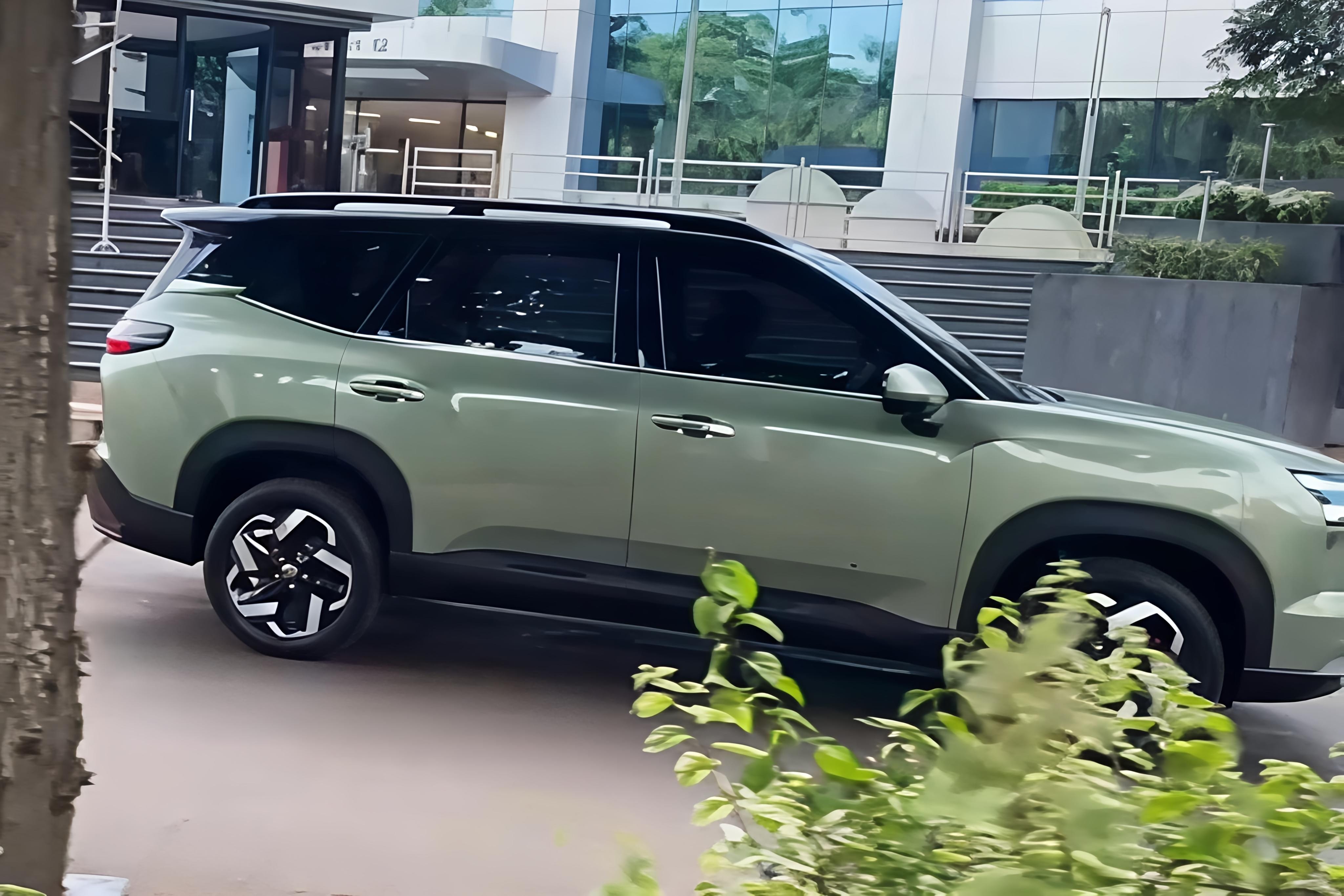
The undisguised test mule that was spied hinted at the Hector Tomahawk’s final design. The front end comes with LED headlamps with dual LED DRLs connected by a black trim that has two silver strips and the MG badge at the centre. Being an EV, it gets a blanked-off grille, with a rectangular air inlet lower down. The front bumper has a dual-tone design, with vertical air curtains on its sides. The bonnet has subtle ridges, while the car is finished in an olive green shade with a black roof and rails. 

In profile, the sides look clean with chrome door handles, and the window line, finished in chrome, gets an upward kink at the back. Additionally, there’s plenty of black cladding for the squared-off wheel arches and door sills extending toward the rear bumper. The large alloy wheels were spotted with a dual-tone design. While the rear end was not spotted, it will likely come with wraparound tail-lamps and a dual-tone finish for the bumper.  

JSW MG Hector Tomahawk EV: What to expect

The JSW MG Hector Tomahawk is based on the Wuling Eksion that’s sold in the Indonesian market. The former is expected to retain the latter’s dimensions of 4,745mm in length, 1,850mm in width, 1,755mm in height, and a wheelbase of 2,810mm.  A previous teaser of the model confirmed a beige colour theme for the Hector Tomahawk’s cabin. While the dashboard is yet to be revealed, it is expected to retain the Eksion’s minimalistic layout. This includes screens for the driver’s display and infotainment system, a two-spoke steering wheel and a centre console with cupholders and storage spaces. 

MG is yet to confirm the feature list it is expected to come with a powered tailgate, leatherette upholstery, powered and ventilated front seats, a 12.8-inch touch-infotainment head unit, an 8.8-inch digital driver’s display, a 50-watt wireless charger, automatic climate control with AC vents for the second and third rows, a 360-degree camera system, an electronic parking brake, six airbags, and an ADAS (Advanced Driver Assistance Systems) suite.

While exact powertrain specs of the Hector Tomahawk EV remain under wraps, the Eksion, for reference, is powered by a 69.2kWh LFP (Lithium Iron Phosphate) battery pack with a CLTC (China Light-Duty Vehicle Test Cycle) range of up to 530km. The battery is paired with a front-mounted motor delivering 201hp and 310Nm, and has a 160kph top speed.

As far as price is concerned, the MG Hector Tomahawk EV is expected to be priced between Rs 18 lakh and Rs 25 lakh. It will take on the likes of the Mahindra XEV 9S and the Kia Carens Clavis EV.

All prices are ex-showroom, India

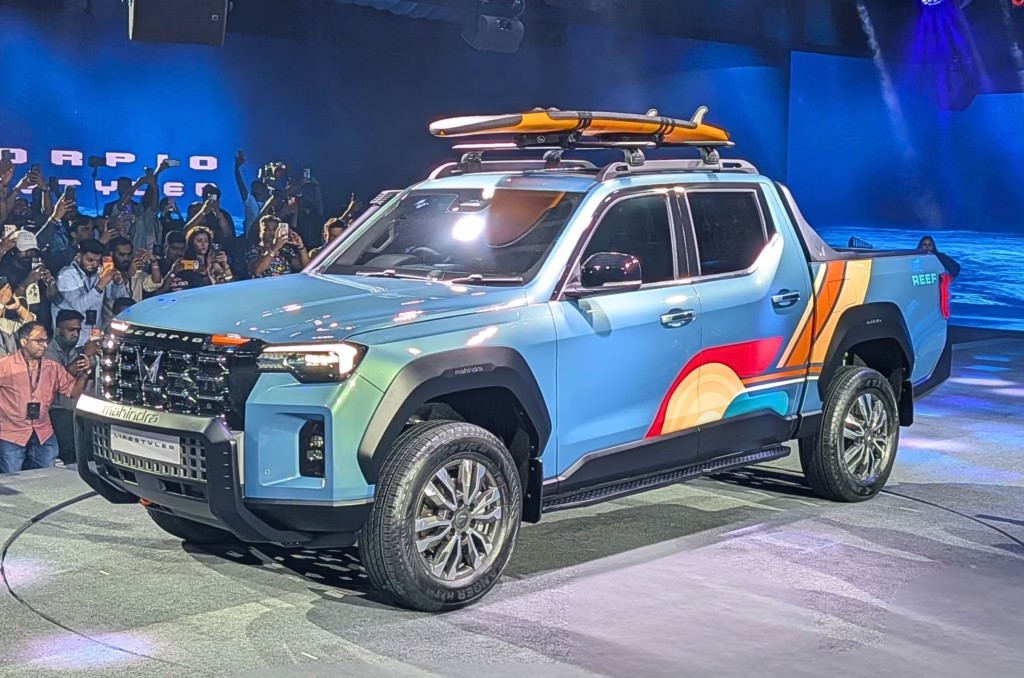
Mahindra Scorpio Lifestyler pickup truck unveiled

Mahindra Scorpio Lifestyler pickup truck unveiled
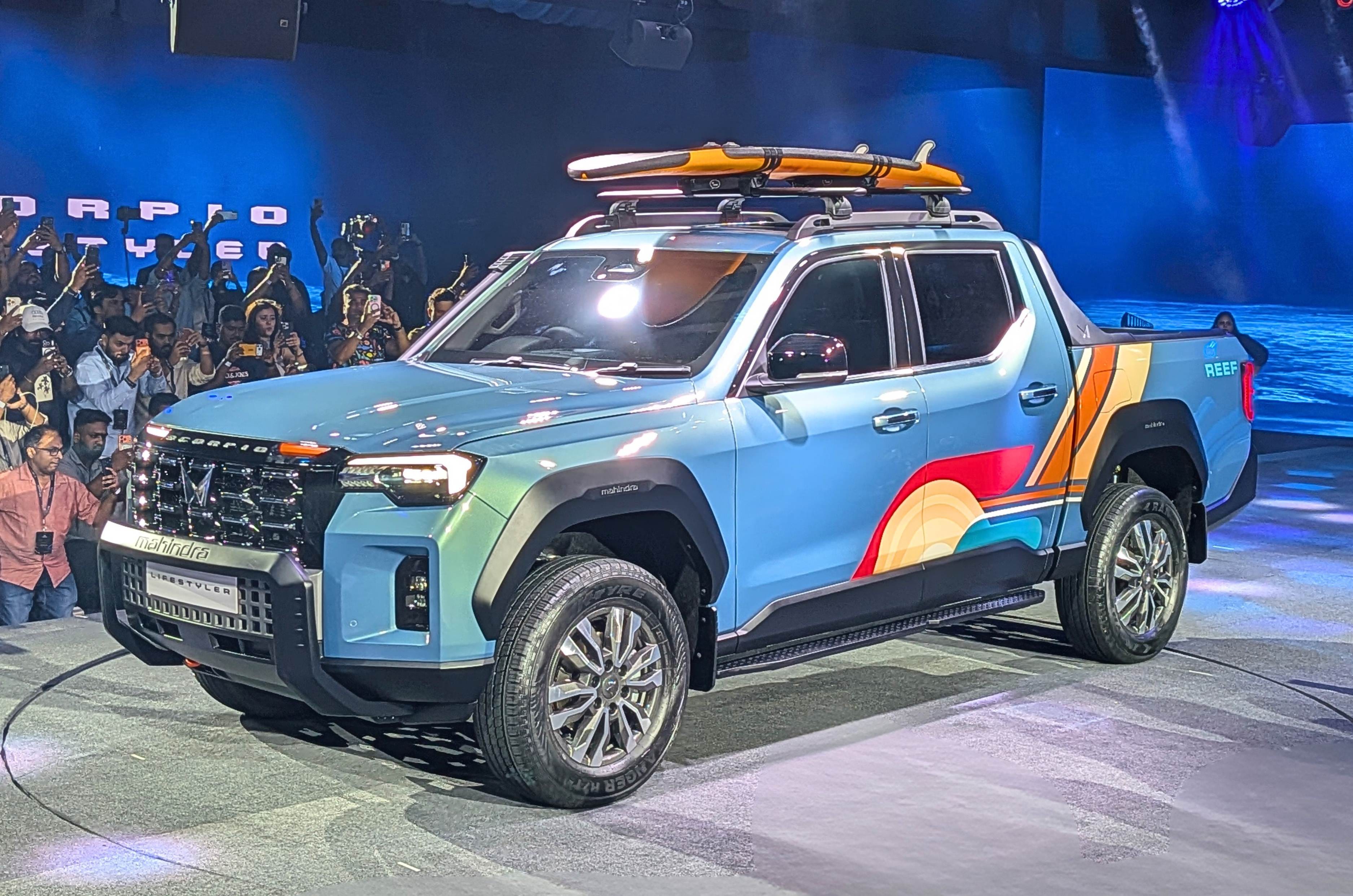
Mahindra Scorpio Lifestyler

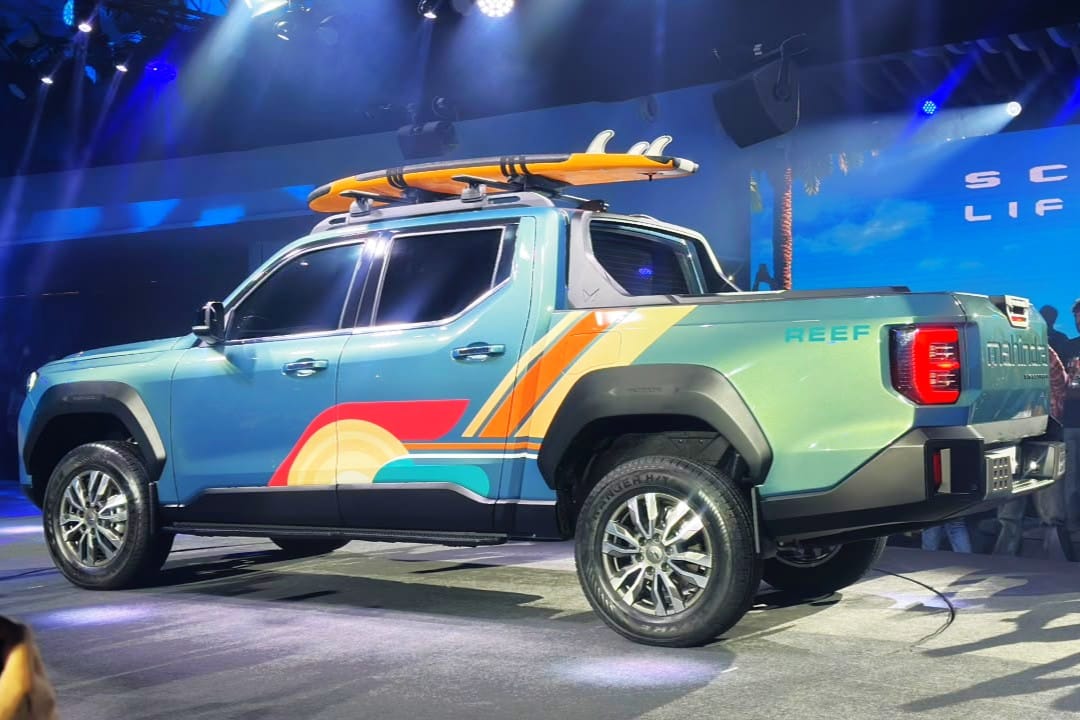
Mahindra has pulled the covers off its long-awaited lifestyle pickup truck based on the 2023 Global Pik Up concept, christening it the Scorpio Lifestyler. Underpinned by the same body-on-frame chassis as that of the Scorpio N, the Scorpio Lifestyler will butt heads with the Toyota Hilux and Isuzu D-Max V-Cross in India. The pickup truck will be sold in several global markets too, where it’ll drop the ‘Scorpio’ branding and just be known as the Lifestyler.

Prices for the Mahindra Scorpio Lifestyler are confirmed to start below Rs 19.79 lakh (ex-showroom) in India, with launch pegged by April 2027. The Scorpio Lifestyler would therefore undercut its rivals significantly, both of which start above Rs 25 lakh.

Mahindra Scorpio Lifestyler exterior design

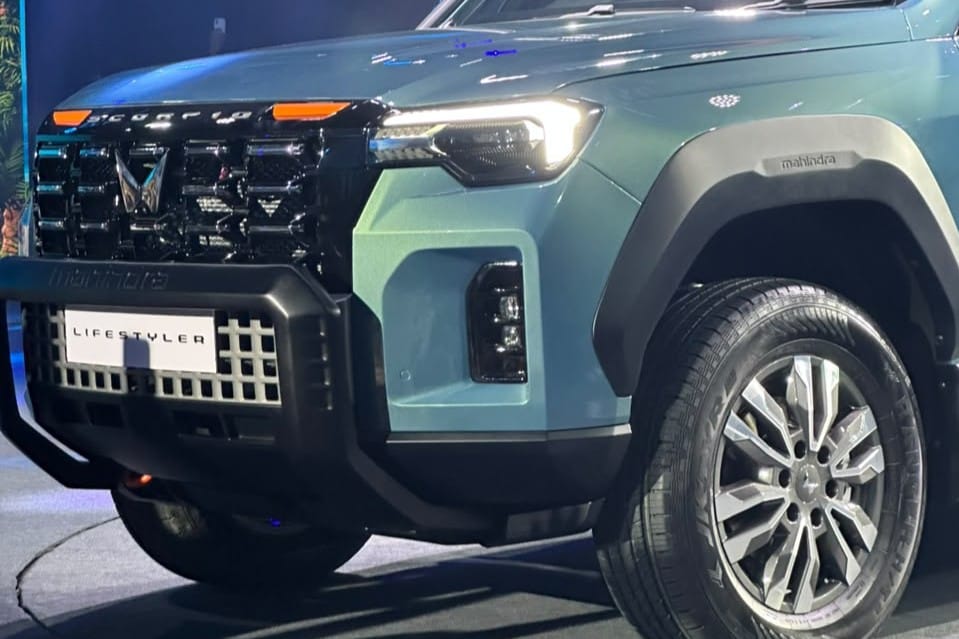
Up front, the Scorpio Lifestyler has high-set LED headlamps with L-shaped DRL signatures, a wide honeycomb-patterned grille with chrome accents, and a ‘Scorpio’ wordmark on the leading edge of the bonnet. Underneath, there’s a muscular skid plate bearing ‘Mahindra’ lettering, a meshed air dam, and vertically oriented LED fog lamps.

Over to the side, the Scorpio Lifestyler features a double-cab configuration, and gets dual-tone alloy wheels shod in off-road tyres, chunky side cladding, roof rails, and a kinked beltline. The rear end of the Scorpio Lifestyler is characterised by vertically oriented LED tail-lamps housing C-shaped DRLs, which flank a large ‘Mahindra’ wordmark molded into the bootlid. Below, the bumper looks similarly rugged to the one up front.

Mahindra Scorpio Lifestyler interior and features

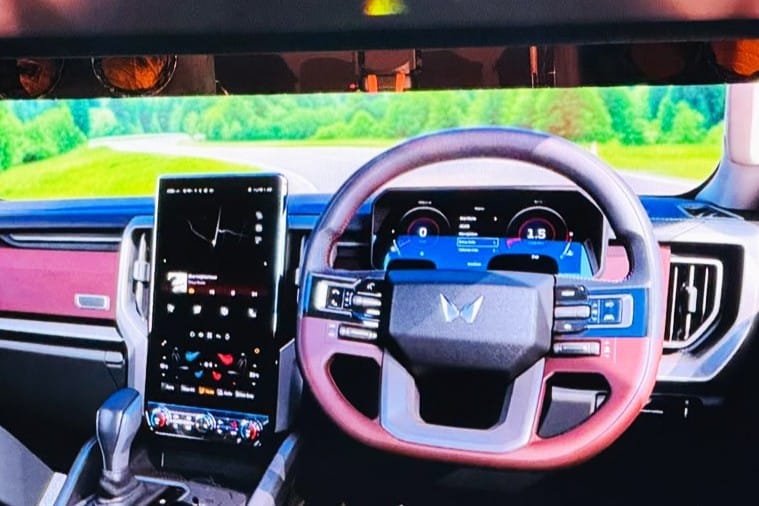
Inside, the Scorpio Lifestyler is much more upmarket than its rugged exterior suggests. The dashboard prominently sports a portrait-oriented infotainment touchscreen flanked by AC vents, below which there’s a climate control panel and various physical controls. Ahead of the driver sits a three-spoke steering wheel and a digital driver’s display, while the transmission tunnel features lots more physical controls. In terms of creature comforts, the Scorpio Lifestyler is likely to pack wireless Apple CarPlay and Android Auto, dual-zone climate control, connected car tech, terrain modes, and more.