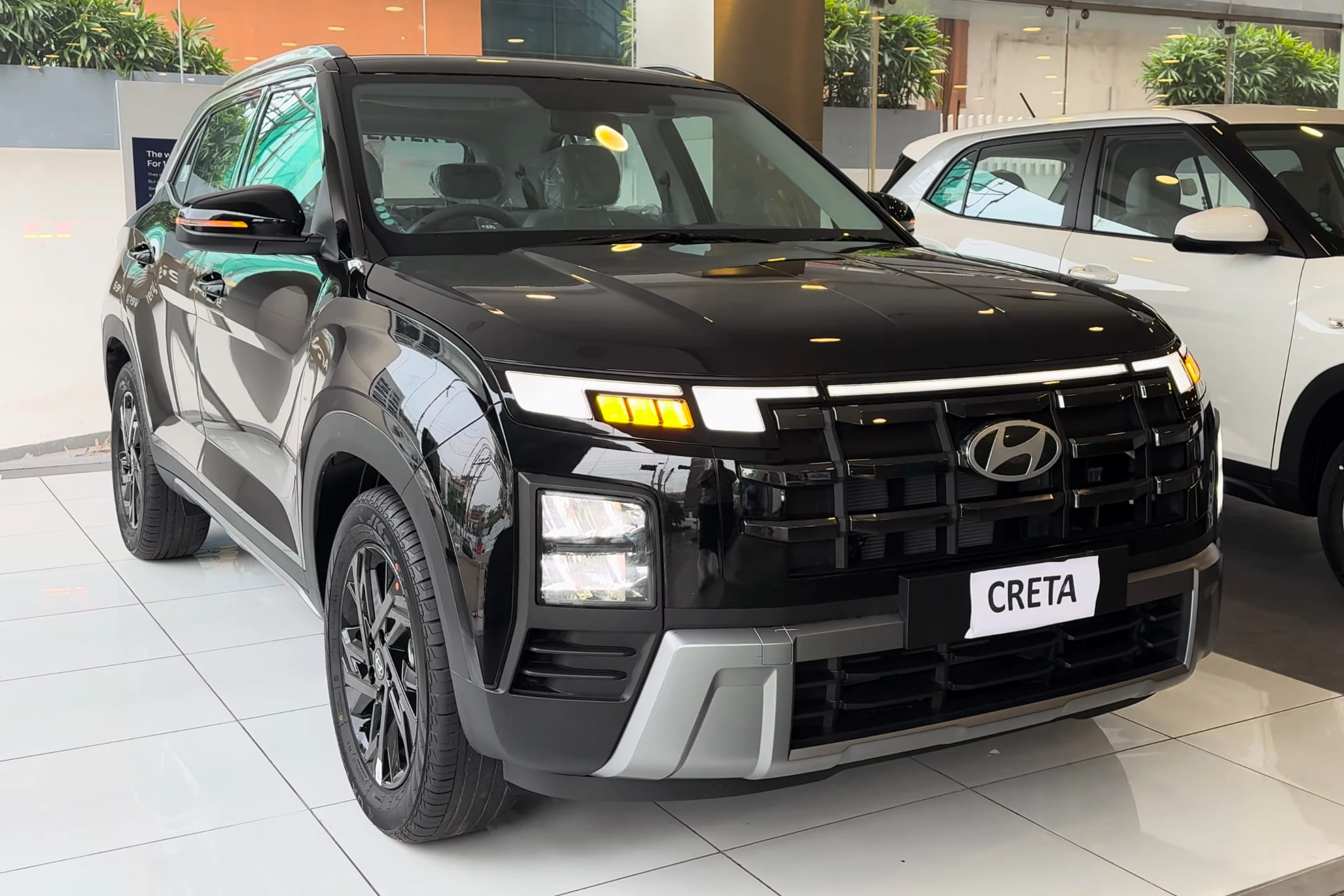
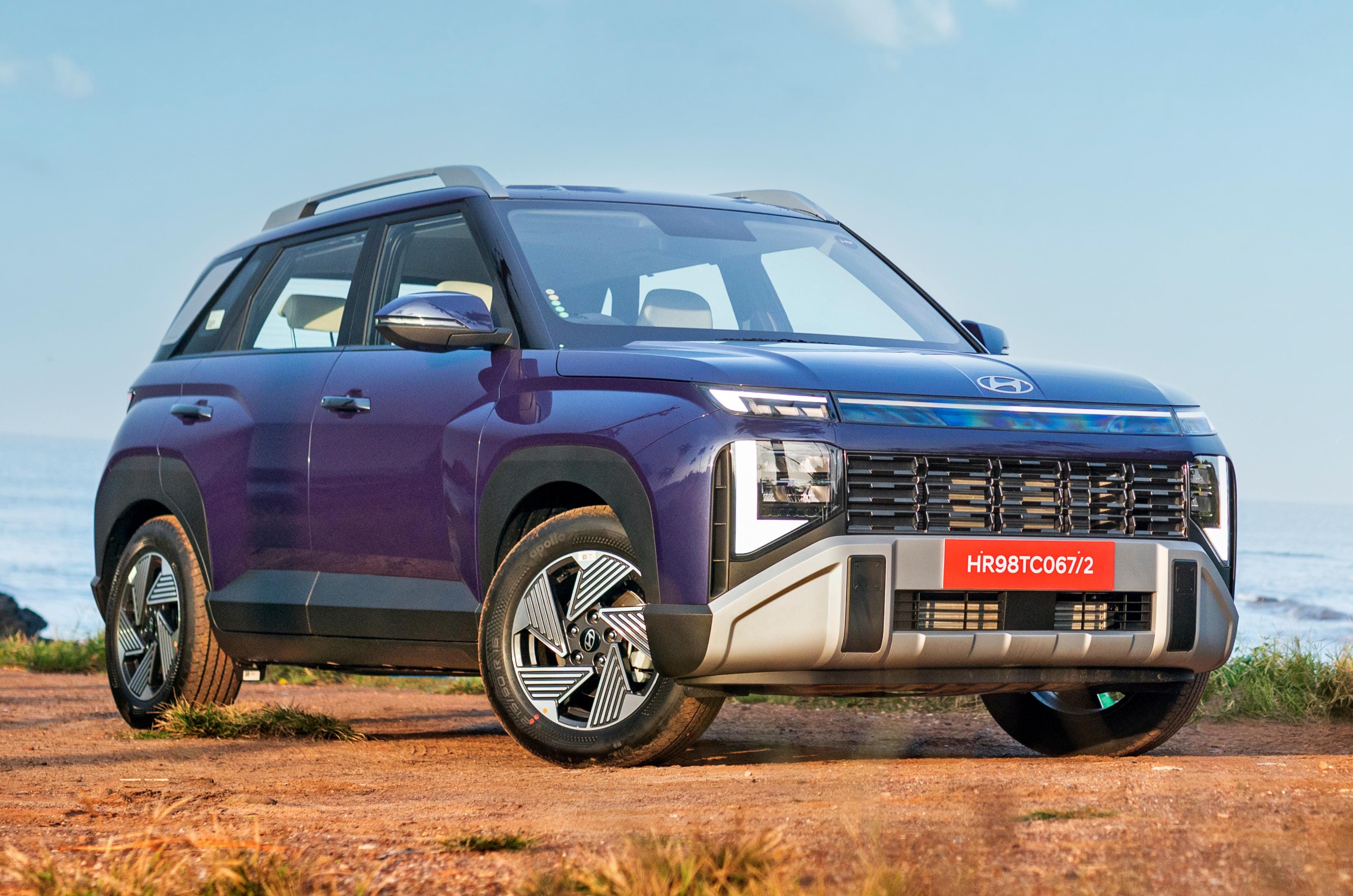
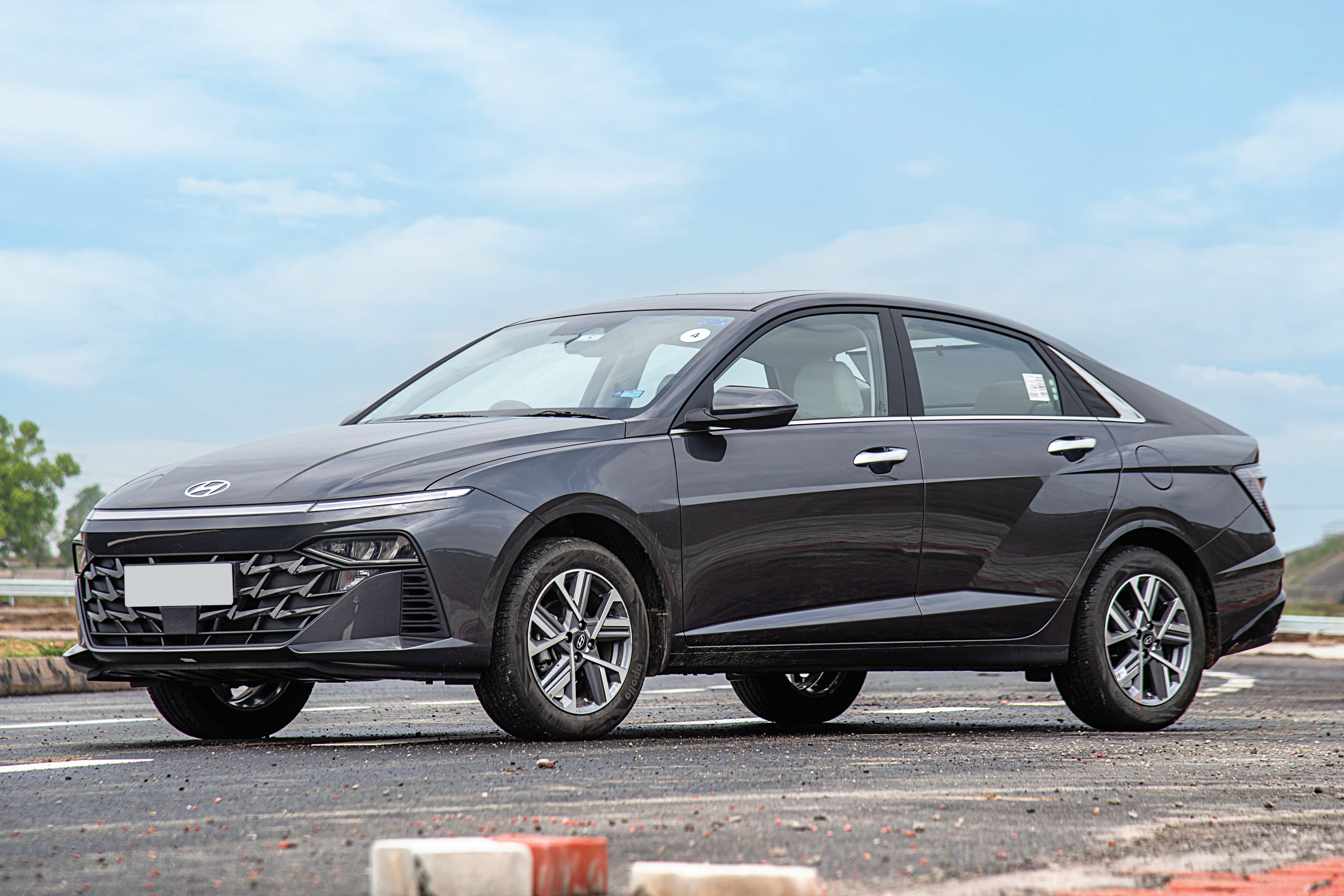
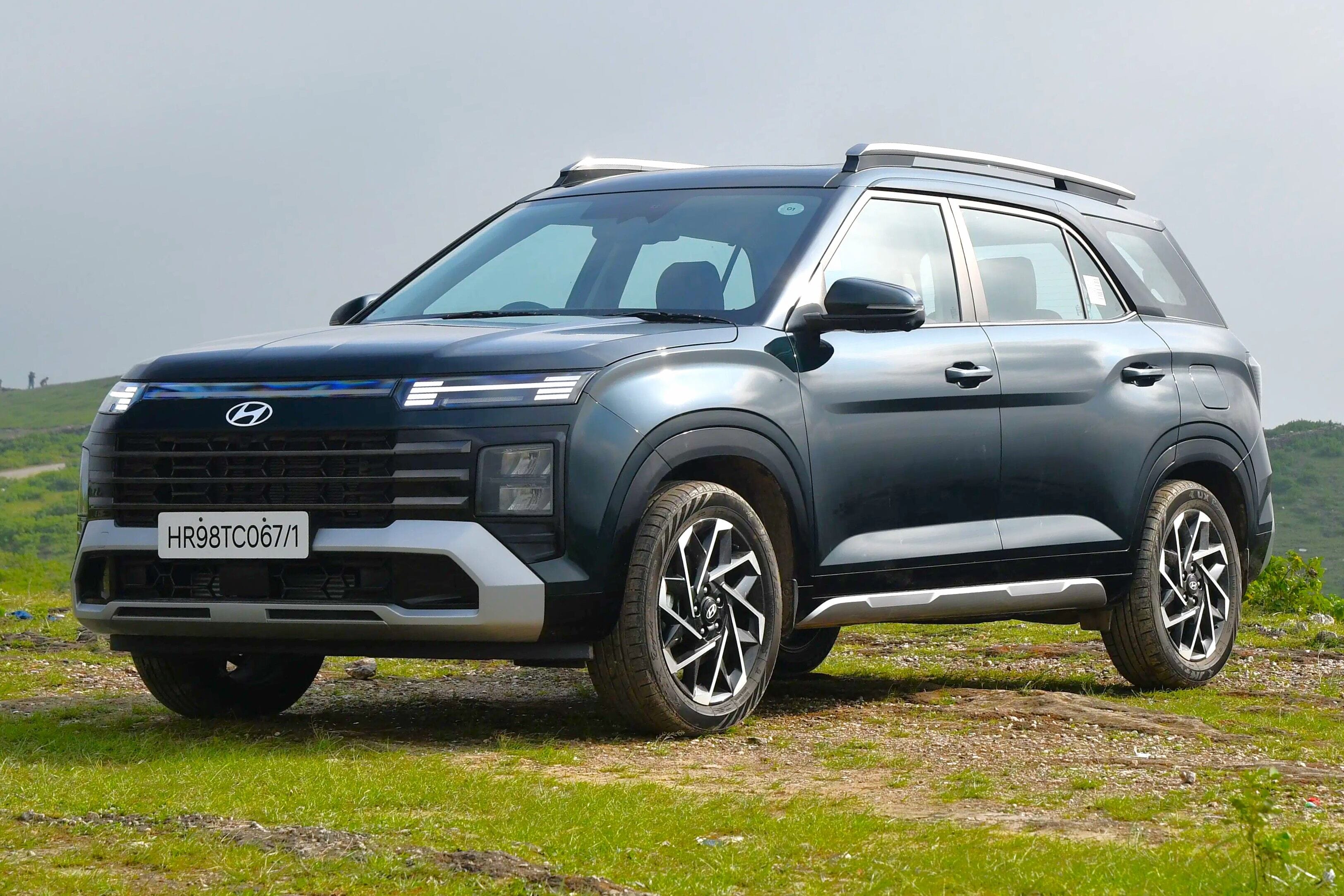
Hyundai India is offering compelling benefits on the Creta, Verna, Exter, Grand i10 Nios, Aura, Creta Electric, i20, Venue, and Alcazar this month. These benefits comprise cash discounts, scrappage/exchange bonuses, corporate offers, and additional upgrade incentives.
Disclaimer: Offers/benefits may vary by city and are subject to stock availability. Buyers are advised to check with their local dealer for exact figures.
Hyundai Creta discounts in August 2026
Up to Rs 1 lakh
The base E petrol trim of the Creta gets benefits of up to Rs 85,000 this month, while the SUV’s CVT variants are available at up to Rs 90,000 off. Benefits on all other Creta petrol and N Line variants total Rs 1 lakh in August. Meanwhile, buyers of any diesel Creta variant get a much lower benefit of up to Rs 10,000. The Hyundai Creta price (including N Line) starts at Rs 10.91 lakh and extends to Rs 19.95 lakh.
Hyundai Venue offers in August 2026
Up to Rs 5,000
Buyers looking to bring home a Venue this month don’t get much in the way of offers, with only a benefit of up to Rs 5,000 on all of the compact SUV’s variants. The Venue price range, including the N Line variants, is Rs 8 lakh to Rs 15.65 lakh.
Hyundai Exter offers in August 2026
Up to Rs 55,000
Though the Exter received an update earlier this year, units of the pre-facelift model continue to be available. The pre-facelift Exter’s EX and EX(O) trims (petrol and CNG) get a benefit of up to Rs 10,000 only, while all other variants can be had at up to Rs 55,000 off. As for the facelifted Exter, benefits stand at up to Rs 10,000 for the base HX2 variants, and up to Rs 50,000 for all other variants. Prices for the 2026 Exter start at Rs 5.81 lakh and extend to Rs 9.46 lakh.
Hyundai Verna discounts in August 2026
Up to Rs 95,000
CVT variants of the pre-facelift Verna sedan feature benefits of up to Rs 95,000, while all other variants get up to Rs 70,000 off. Those looking to purchase the updated Verna, on the other hand, can take advantage of up to Rs 65,000 in benefits across all variants. Prices for the 2026 Verna start at Rs 10.99 lakh and climb to Rs 18.26 lakh.
Hyundai Creta Electric discounts in August 2026
Up to Rs 50,000
All variants of the Creta’s EV derivative, the Creta Electric, are available with benefits of up Rs 50,000 in August, which is a fair bit lower than the maximum Rs 85,000 discount offered last month. Offered with 42kWh and 51.4kWh battery options, the Creta Electric is priced between Rs 18.03 lakh and Rs 23.67 lakh, exclusive of home charger and installation costs.
Hyundai Alcazar discounts in August 2026
Up to Rs 75,000
Much like last month, petrol variants of the Alcazar three-row SUV can be purchased with benefits ranging up to Rs 75,000. Meanwhile, diesel Alcazar variants get benefits of up to Rs 45,000. The Hyundai Alcazar price range is Rs 14.51 lakh to Rs 21.10 lakh.
Hyundai Grand i10 Nios discounts in August 2026
Up to Rs 70,000
Hyundai’s most affordable model in India, the Grand i10 Nios, gets up to Rs 25,000 in benefits for its base Era variant. All other petrol variants of the Grand i10 Nios sport much higher benefits of up to Rs 70,000. Lastly, all CNG variants of the hatchback are available at up to Rs 65,000 off. The Grand i10 Nios price starts at Rs 5.60 lakh and tops off at Rs 8.04 lakh.
Hyundai i20 offers in August 2026
Up to Rs 45,000
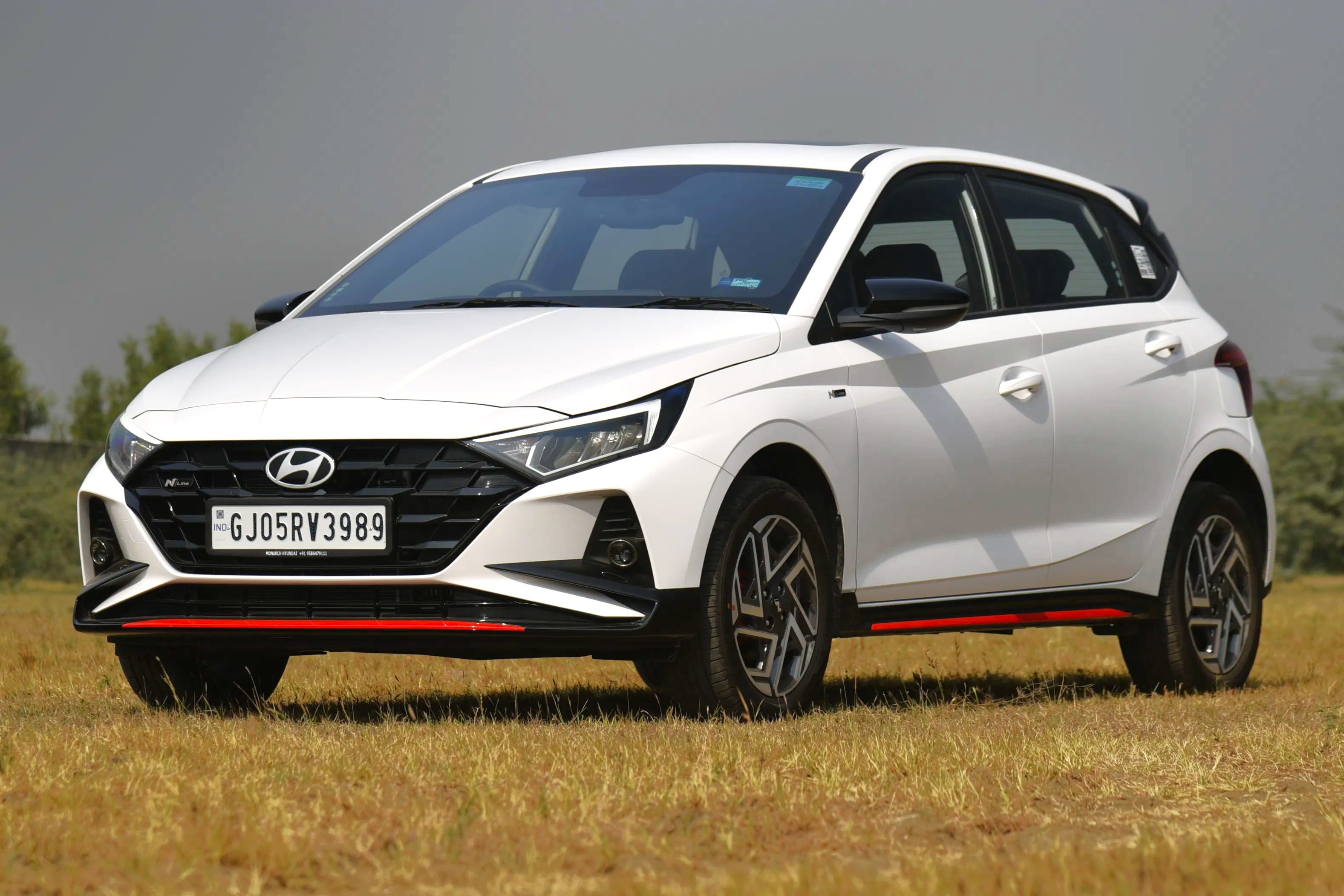
Aside from the base Era variant of the i20, which is available at up to Rs 25,000 off, all variants of the premium hatchback (including the sporty N Line versions) can be purchased with up to Rs 45,000 in benefits. Pricing for the standard and N Line variants of the i2 ranges from Rs 6 lakh to Rs 11.59 lakh.
Hyundai Aura offers in August 2026
Up to Rs 30,000
The S, SX, and Corporate CNG variants of the Aura compact sedan are available with benefits totalling Rs 30,000. Meanwhile, all other petrol variants of the Aura get benefits of up to Rs 20,000 this month. The Aura is priced from Rs 6 lakh to Rs 8.6 lakh.
Tata has revealed offers on its combustion-powered cars in August 2026. The Curvv gets the maximum benefits of up to Rs 1.25 lakh this year, and the Nexon, Sierra and Altroz carry offers of over Rs 55,000. The Harrier, Safari, and Tigor are also being offered with some benefits.
Note: The mentioned offers are applicable till August 31 and may vary by city, dealership and stock availability. Please check with your nearest Tata dealership for the exact figures.
Tata Curvv August 2026 offers
Benefits up to Rs 1.25 lakh
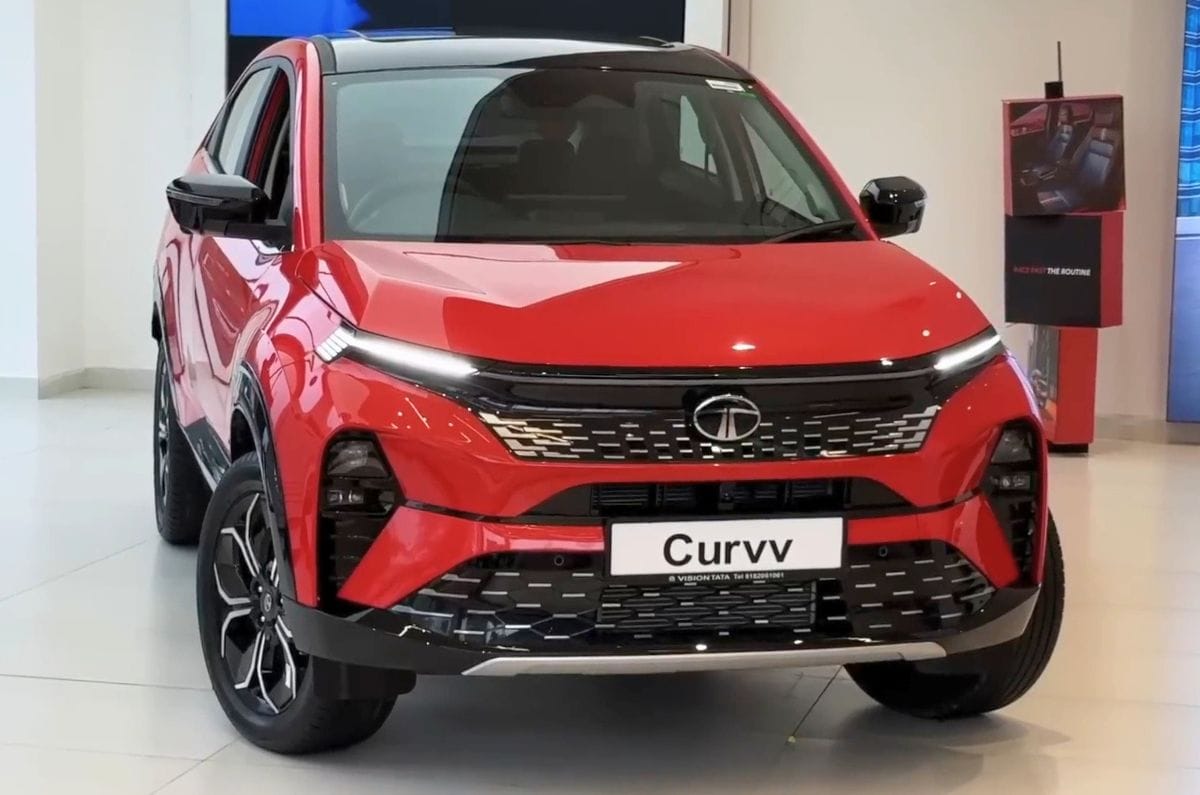
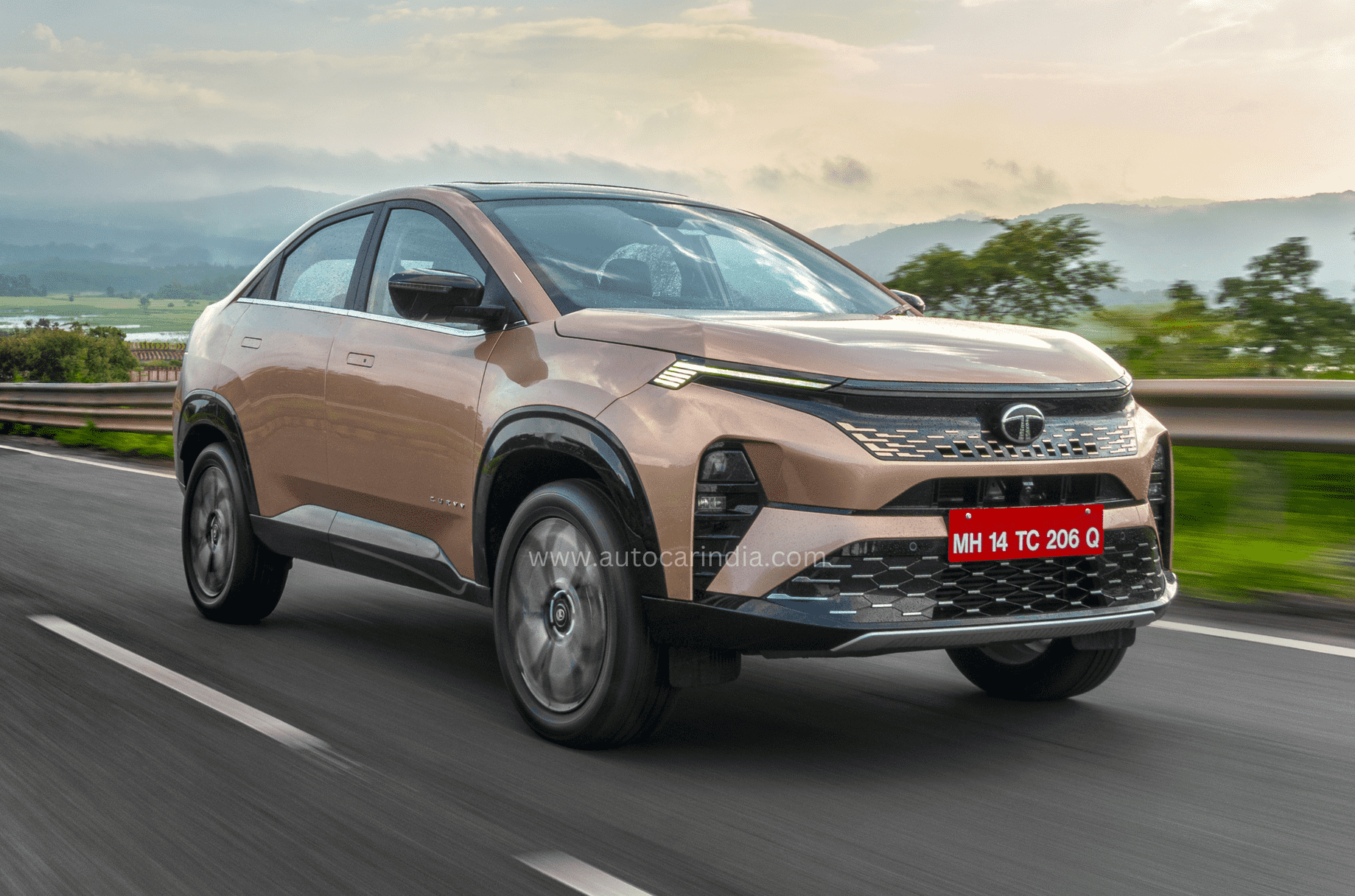
Select variants of the Tata Curvv are available with offers up to Rs 1.25 lakh in August 2026, which is the most for any Tata car in the month. The total benefits include discounts of up to Rs 30,000, loyalty bonus of up to Rs 40,000, and an option between a scrappage benefit of Rs 45,000 or an exchange bonus of Rs 40,000.
Tata Nexon August 2026 offers
Benefits up to Rs 75,000
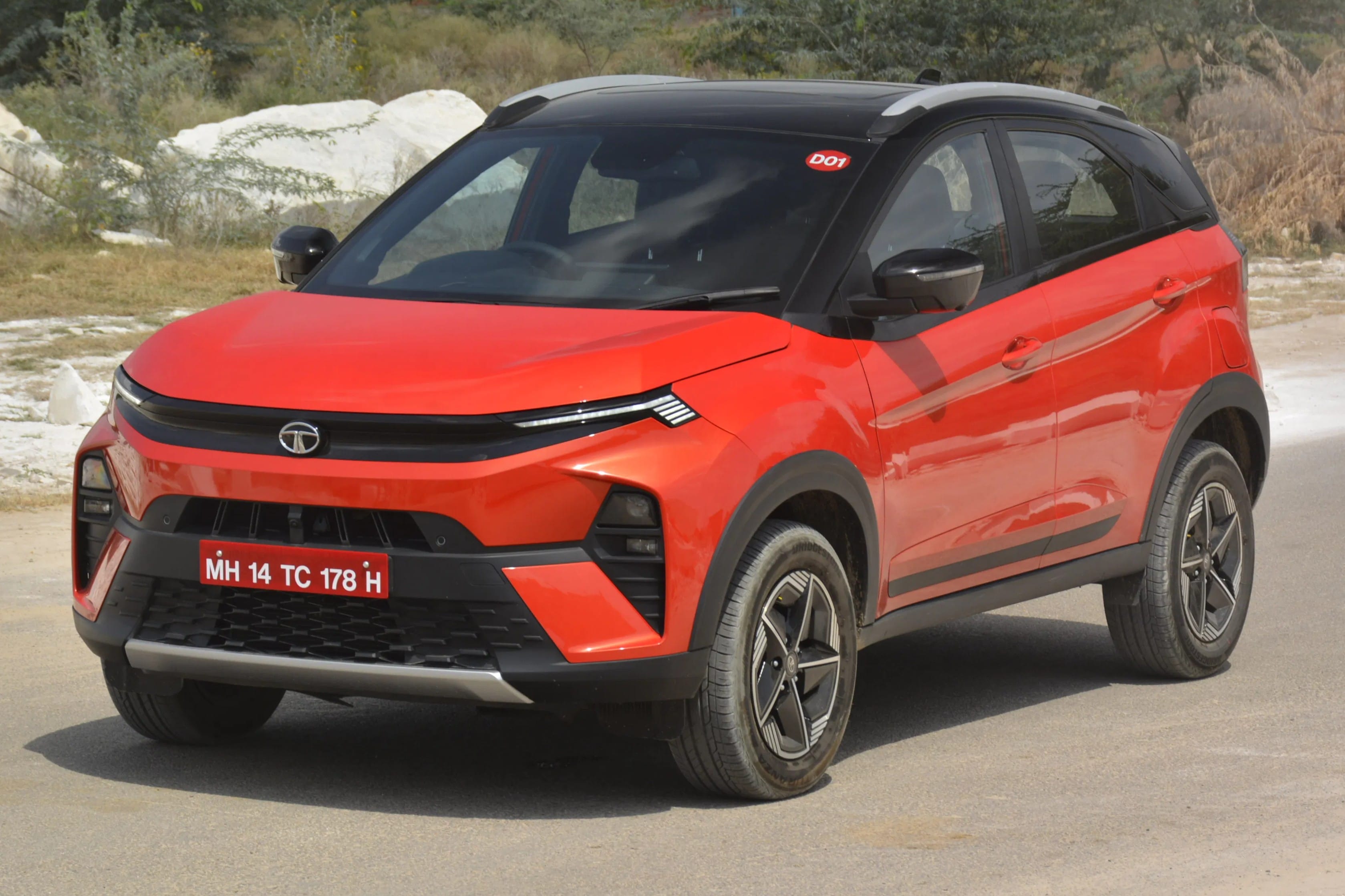
The Tata Nexon compact SUV is available with benefits up to Rs 75,000, including a cash discount of up to Rs 10,000, a scrappage benefit of up to Rs 20,000, and, like the Curvv, an option between a Rs 15,000 exchange benefit and Rs 25,000 scrappage bonus. A ‘Freedom’ offer of Rs 45,000 is also on offer. These benefits are for the petrol variants, while the CNG and diesel variants get offers of up to Rs 60,000 and Rs 20,000, respectively.
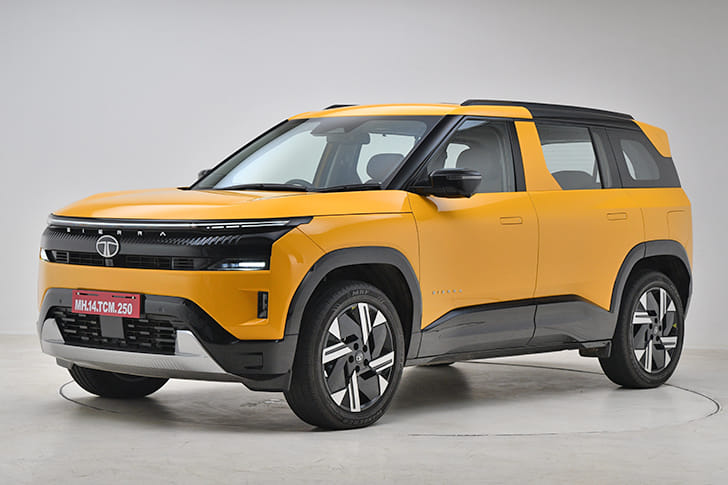
Tata Sierra August 2026 offers
Benefits up to Rs 60,000
Like the Safari and Harrier, the Tata Sierra’s diesel is the only version available with benefits in August 2026. It offers up to Rs 30,000 cash discount and a loyalty benefit of up to Rs 30,000. Tata is also offering a level-up bonus of Rs 30,000.
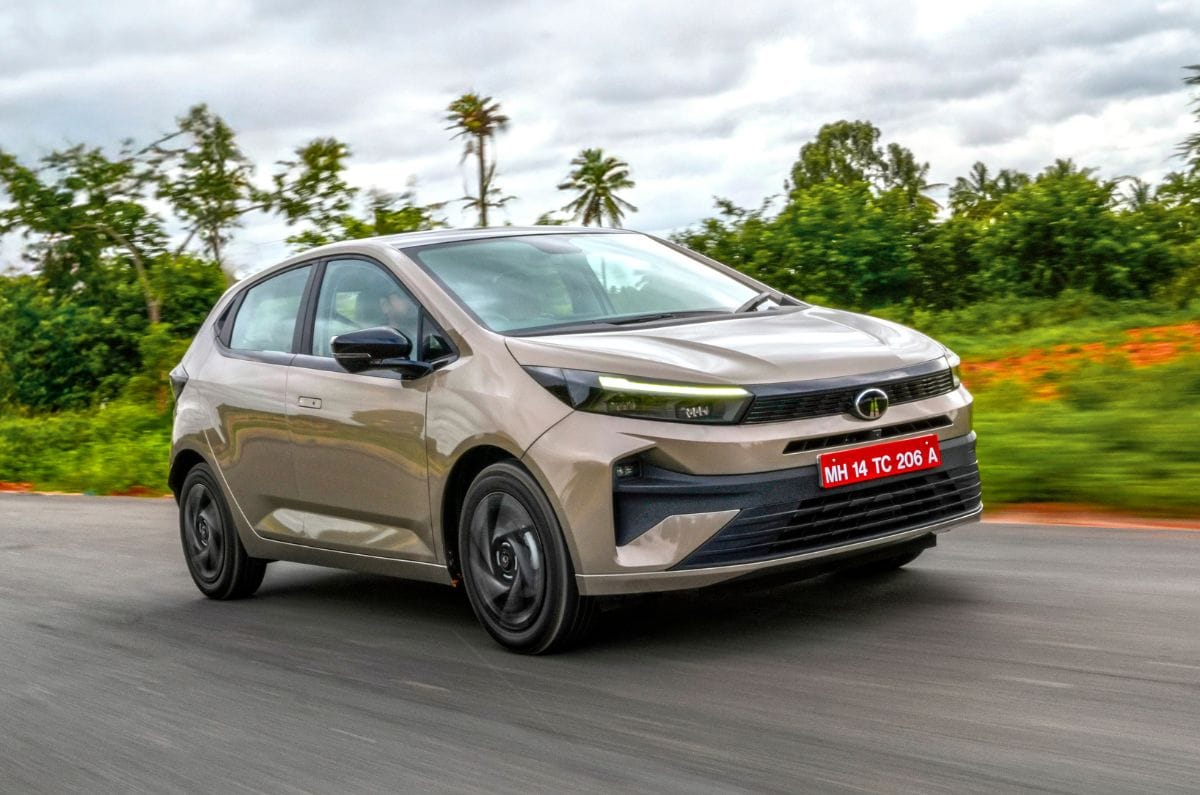
Tata Altroz August 2026 offers
Benefits up to Rs 55,000
In August 2026, the highest Altroz offers of up to Rs 55,000 are available on the CNG variants. This includes a cash discount of up to Rs 15,000, a Freedom offer up to Rs 20,000, and a choice between an exchange benefit of up to Rs 15,000 or a scrappage bonus of Rs 20,000. The petrol and diesel variants, on the other hand, get reduced offers up to Rs 35,000.
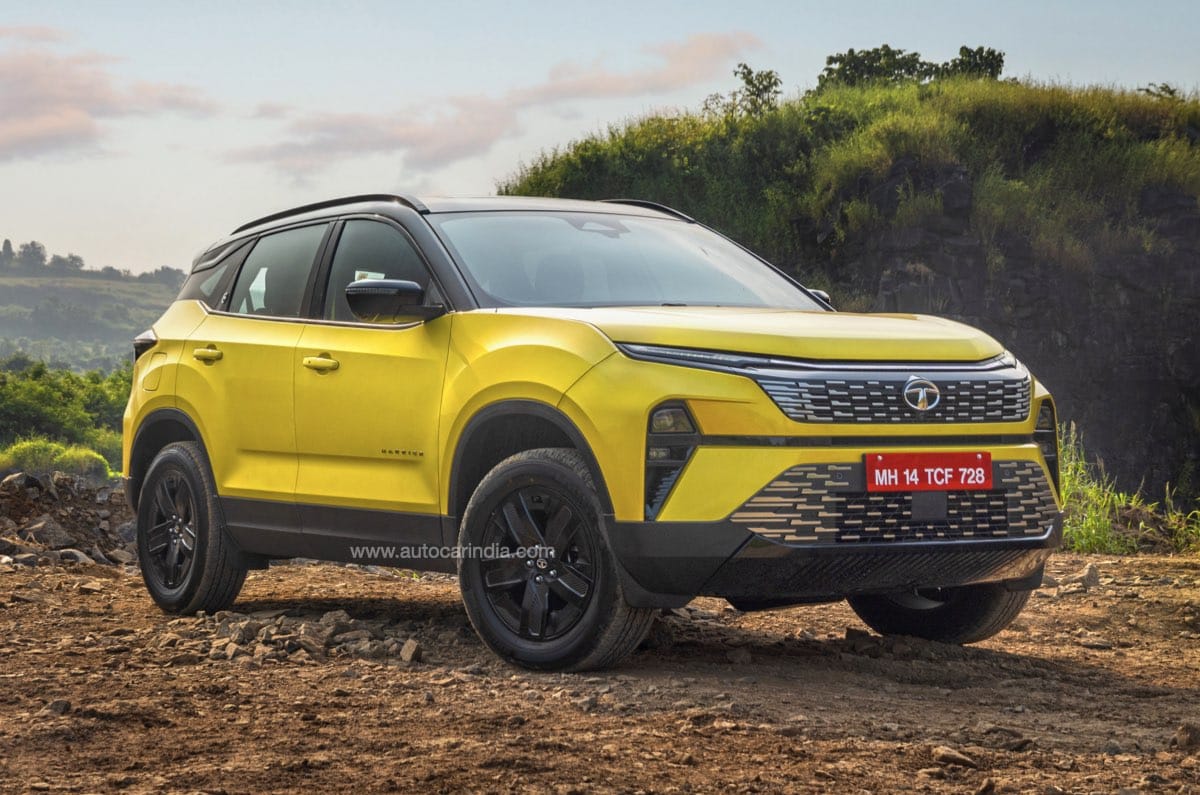
Tata Harrier, Safari August 2026 offers
Benefits up to Rs 45,000
Like the Sierra, Diesel variants of the Tata Harrier and Safari are available with identical offers of up to Rs 45,000 this August. These include a cash discount of up to Rs 10,000, and an option between exchange bonus and scrappage benefit of up to Rs 35,000.
Tata Tigor August 2026 offers
Benefits up to Rs 30,000
The Tata Tigor is available with offers of up to 30,000, including a cash discount of Rs 15,000, an exchange bonus of up to Rs 10,000 and a scrappage bonus of up to Rs 15,000. Only one between the exchange and scrappage benefit can be availed by a consumer.
While the 2026 Tata Tiago is not available with any offers, the remaining stock of the previous model is available with benefits of up to Rs 35,000.
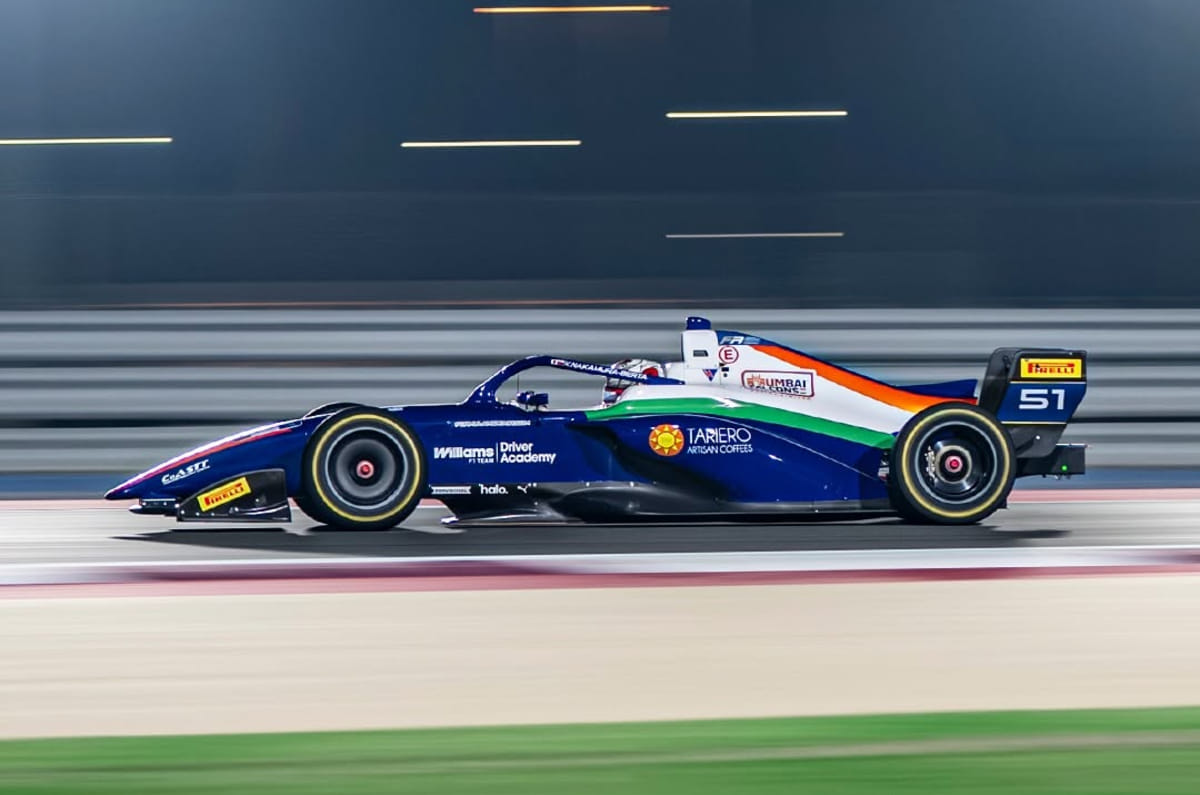
India’s first official F1-sanctioned sim racing competition is currently underway. Run by Mumbai Falcons, F1 Sim Racing India Open offers Indian fans and budding racers a different, and far more accessible entry point to motorsport. In fact, Mumbai Falcons already has plans in place to bridge the gap between sim and real-world racing, giving the best performing participants the chance to join its driver development programme.
Two categories: Junior and Senior
Finale to be held in Mumbai in November 2026
From sim racing to single seaters
Over the years, Mumbai Falcons has fielded teams in several international karting and Formula Regional championships. The team has played a crucial role in the junior careers of prominent drivers, including Kimi Antonelli, Oliver Bearman, Arvid Lindblad and Kush Maini.
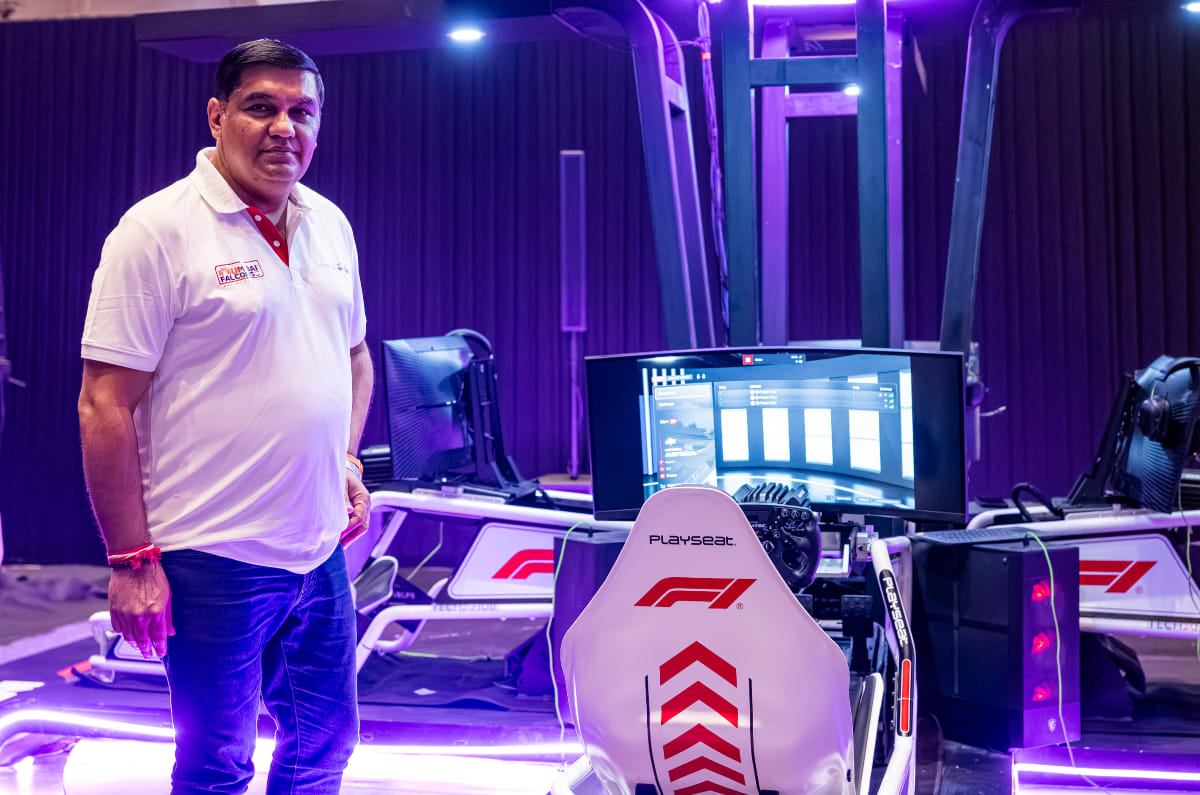
Speaking to Autocar India, Mumbai Falcons Racing Limited’s Managing Director Ameet Gadhoke explained that the idea for the F1 Sim Racing India Open stemmed from the team’s experience in single-seater racing. “I’ve seen how important sim racing was for [our drivers] before they went onto the track,” he stated.
The team isn’t treating sim racing as a separate category; instead, it forms a key part of Mumbai Falcons’ driver development pathway. The best performers in the F1 Sim Racing India Open will join the team’s ‘Agla Star’ programme, with the top 1,000 players earning the chance to train with 4-stroke karts. The top 100 from here will then move up to 2-stroke karts, and those who impress the most will then be trained to step up to single-seater racing.
“The idea is to find the Agla Star. We want a guy or girl to come from here and go into single seaters as fast as possible. We’re doing a talent hunt programme, we’re not [just] doing sim racing,” Gadhoke explained. “So for those who actually understand motorsport, but cannot afford it, this is the pathway. The idea is if this person is good, then we take him out of the group, put him in real karts and then go into single seaters.”
Mumbai Falcons Racing Limited’s Managing Director Ameet Gadhoke
Mumbai Falcons has also teamed up with several schools across India for this. As the team explained, the goal with this is “to introduce students to sim racing, motorsport technology and structured talent development opportunities at an early age”. As part of this initiative, partner schools will receive simulator infrastructure, training support and structured learning modules. Gadhoke says he’s targeting partnering with around 1,000 schools across 20 cities in India.
F1 also runs its own global sim racing championship, which often acts as a launchpad for wider opportunities in both sim racing, as well as motorsport in general. Gadhoke shared that Mumbai Falcons is also exploring representing India in this F1 Sim Racing World Championship.
F1 Sim Racing India entry fees, format
Open to both newcomers and experiences players, the F1 Sim Racing India open is divided into two categories – Junior (ages 10-14) and Senior (above 14 years old). Registrations are currently underway, with the F1 Standard package costing Rs 3,499, and the F1 Elite package costing Rs 4,999. While the former simply gives access to competition entry, the more expensive F1 Elite package also includes priority slot for the zonal qualifiers, a 30-minute tutorial, telemetry data, 10 percent discount for online coaching and 10 percent discount on merchandise.
The competition is divided into 10 zones across the country. Phase 1 includes online laps as well as Mumbai Falcons’ school programme. For this, all those who have registered can compete on the F1 25 game through rough Steam, PlayStation Network, Xbox Live or via an EA Play membership.
Participants can set their fastest lap times on one selected circuit within a 60-day window. Ranking is based on lap time, so the faster your lap, the higher your position. Participants can also continue trying to improve their lap times during the 60-day window. The top 5,000 juniors and 5,000 seniors from each zone will then make it to the Zonal stage. The 50 fastest juniors and 50 fastest seniors from each zone qualify for the national finals.
F1 Sim Racing India Open: Finals
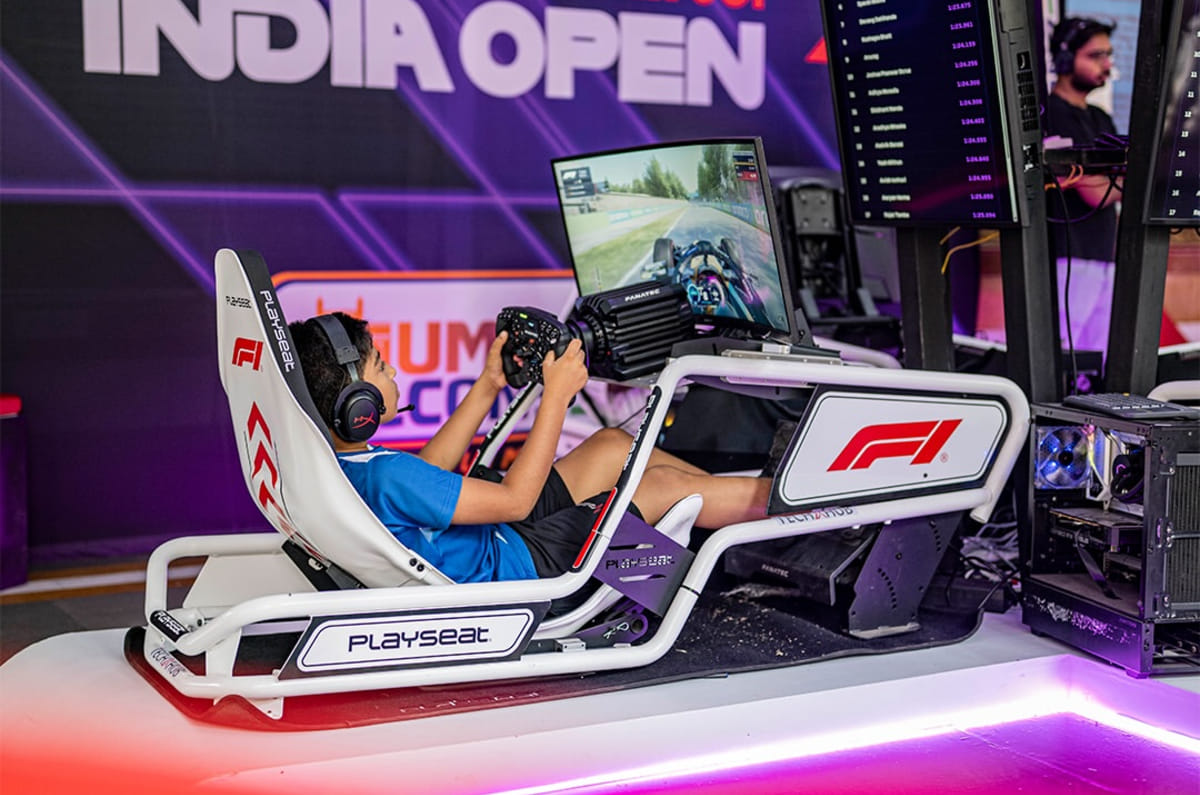
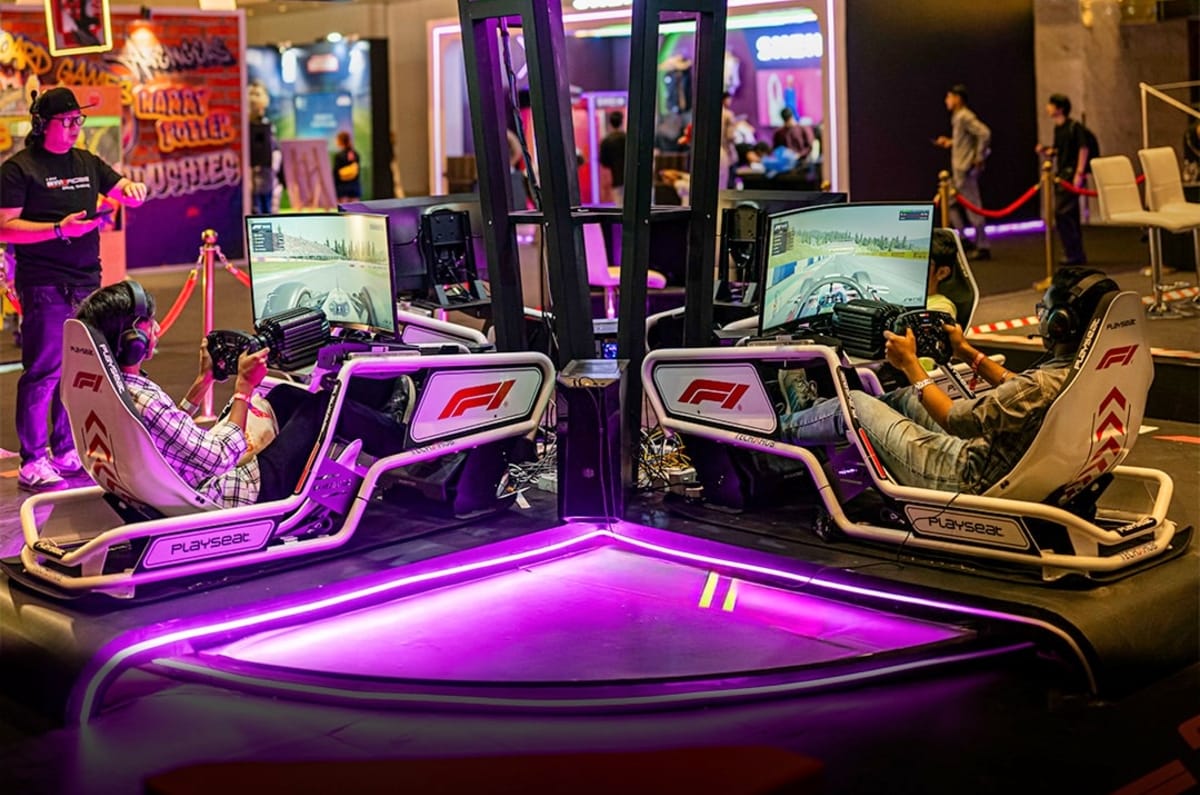
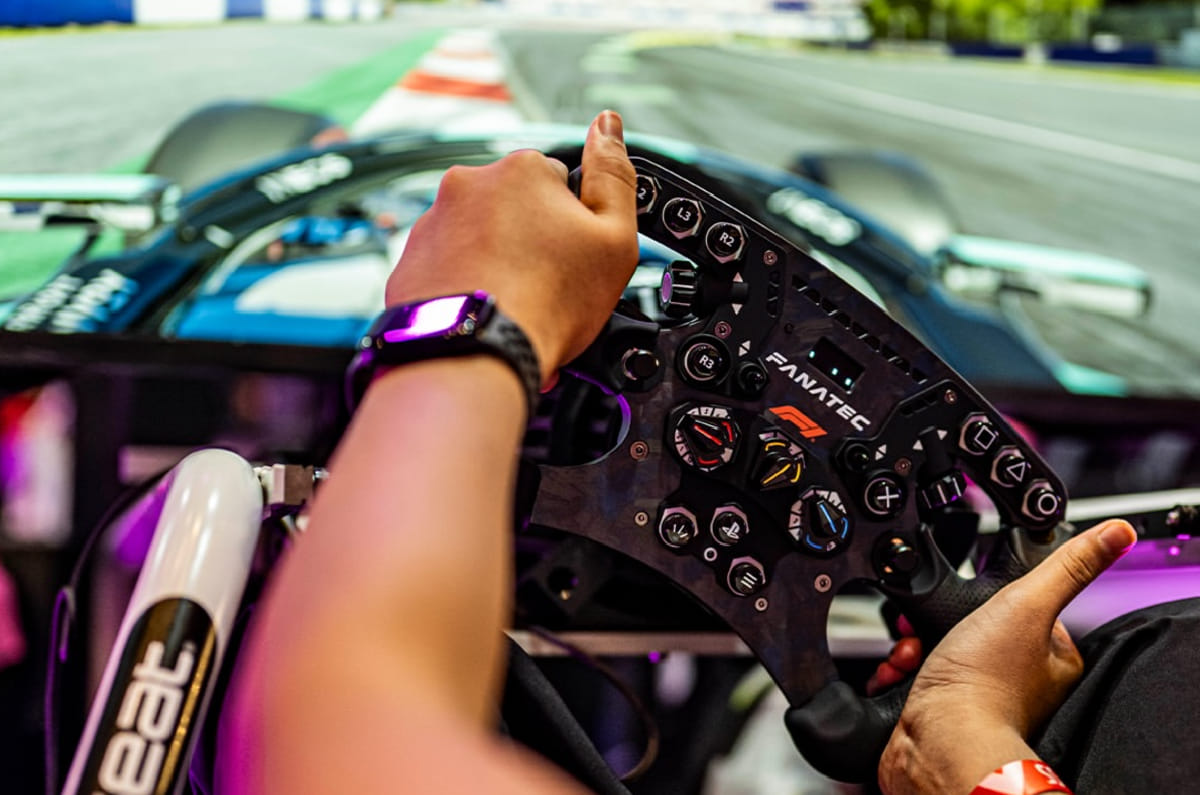
The national finals is slated to be held in Mumbai’s NSCI Dome in November 2026. Here, participants will compete in the Playseat Formula Intelligence F1 Edition cockpit, along with the Fanatec ClubSport Racing Wheel F1 system.
The top 30 from each category will progress to the last stage. The junior finalists will then compete across nine races, while the senior finalists will compete across 12 races. The Junior and Senior champion will each win Rs 1 crore.
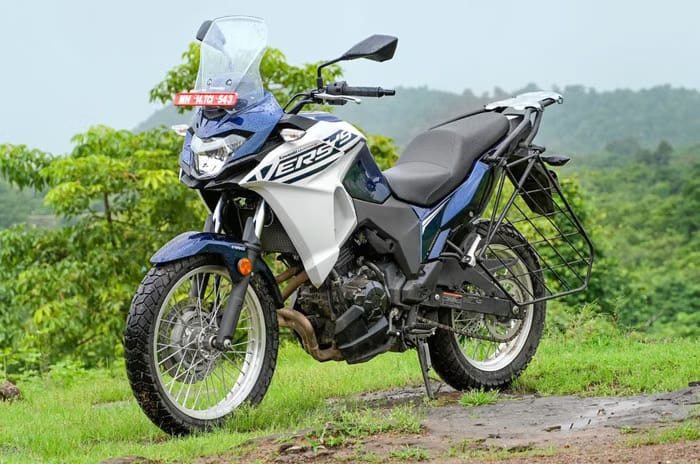
Kawasaki is continuing its offers on the Versys-X 300 through the end of July, with both the MY25 and MY26 models available with cash discounts and complimentary accessories. The two versions are mechanically identical and are both priced at Rs 3.49 lakh (ex-showroom, India).
MY25 Versys-X 300 gets a Rs 35,000 cash discount
MY26 Versys-X 300 gets a Rs 10,000 cash discount
Both bikes are powered by the same 296cc parallel-twin producing 40hp and 26Nm
Kawasaki Versys-X 300 July offers
The MY25 offers the more compelling overall deal
Both variants are also available with a choice of either a complimentary pannier set or a centre stand, with Kawasaki valuing the accessory benefit at up to Rs 46,000. The MY25 model, however, offers the stronger overall package, pairing the accessory benefit with a Rs 35,000 cash discount that brings its effective ex-showroom price down to Rs 3.14 lakh. The MY26 model receives a smaller Rs 10,000 cash discount, reducing its effective price to Rs 3.39 lakh.
The Versys-X 300 is powered by a 296cc parallel-twin engine producing 40hp and 26Nm, making it Kawasaki’s most accessible adventure motorcycle in India. The offers are valid until July 31, 2026. As always, we recommend contacting your nearest Kawasaki dealership to confirm stock availability and any additional offers they may have.
Kia India has rolled out appealing offers on a variety of models in its portfolio for the period of July 2026. Consumers can avail a range of benefits, including cash discounts, corporate offers, and either scrappage or exchange bonuses. Depending on the model and variant chosen, benefits of up to Rs 1.8 lakh can be had.
Disclaimer: Offers/benefits may vary by city and are subject to stock availability. Buyers are advised to check with their local dealer for exact figures.
Kia Carens Clavis EV offers in July 2026
Benefits of up to Rs 1.8 lakh
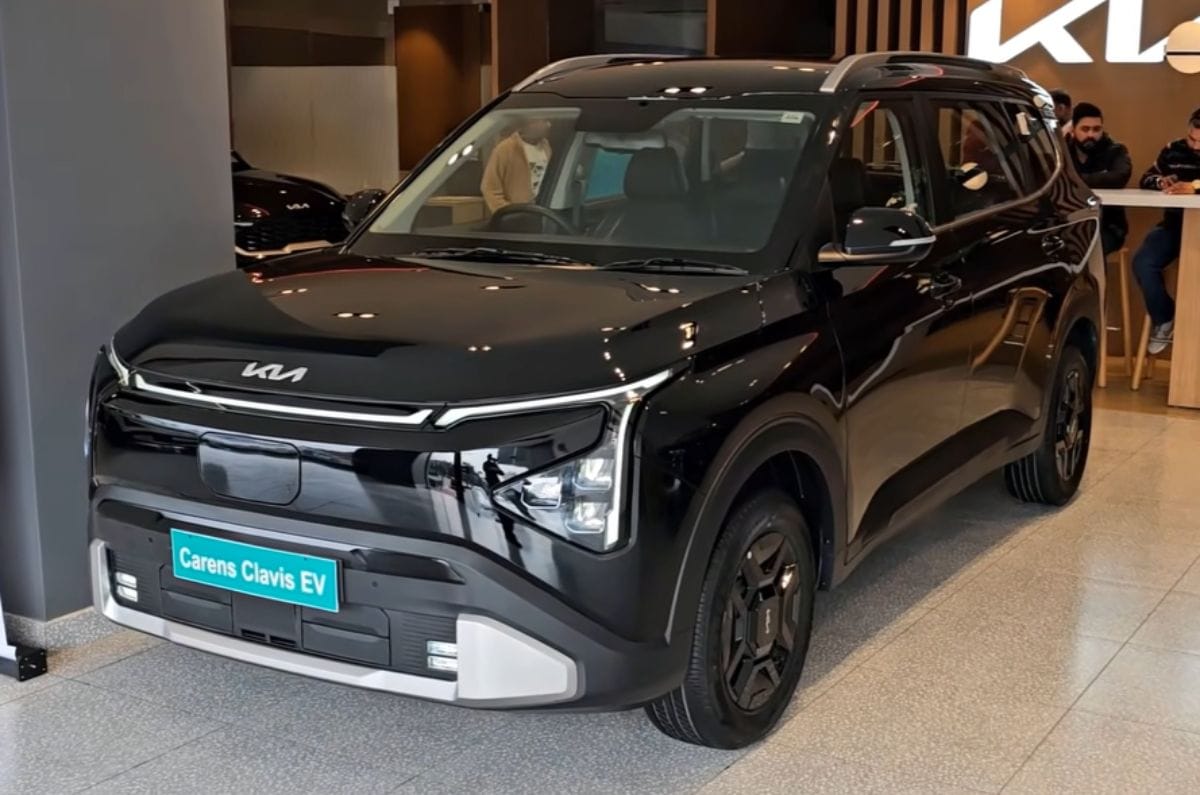
The Carens Clavis EV is available with benefits of up to Rs 1.8 lakh in July 2026. Benefits for MY26 models include a cash discount and loyalty benefit of Rs 20,000, a corporate discount of up to Rs 15,000, and either an exchange or scrappage bonus of Rs 20,000. MY25 versions of the Clavis EV get a cash discount of up to Rs 80,000, a loyalty offer of Rs 20,000, and either an exchange or scrappage bonus of up to Rs 75,000. With 42kWh and 51.4kWh battery packs on offer, and priced between Rs 18 lakh and Rs 25 lakh, it is currently the most affordable electric MPV in the market.
Kia Carnival offers in July 2026
Benefits of up to Rs 1.5 lakh
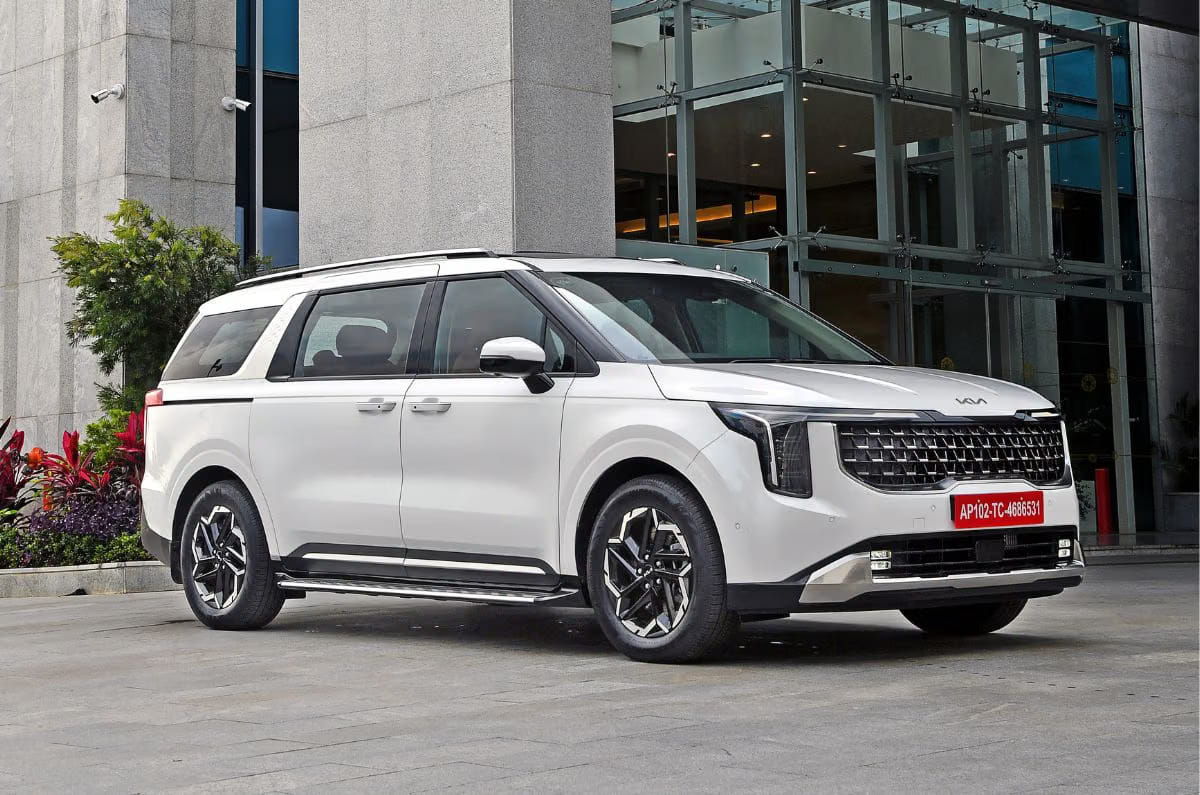
Kia’s most premium Carnival MPV receives benefits of up to Rs 1.5 lakh. For MY26 models, it includes either an exchange or scrappage bonus of up to Rs 1 lakh and a corporate offer of up to Rs 50,000. However, MY25 Carnivals only get a scrappage bonus of Rs 20,000. Powered by a diesel engine and sold in a single fully loaded variant, it is priced at Rs 59.7 lakh. It is a more affordable alternative to the likes of the MG M9 and Toyota Vellfire.
Kia Carens Clavis offers in July 2026
Benefits of up to Rs 1.2 lakh
The Carens Clavis MPV gets benefits of up to Rs 75,000. MY26 models get a cash discount of Rs 10,000, loyalty benefits of Rs 20,000, a corporate offer of up to Rs 15,000 and either an exchange or scrappage bonus of up to Rs 30,000. However, MY25 versions get up to Rs 70,000 cash discount, similar loyalty and exchange/scrappage benefits as MY26 versions, but miss out on corporate offers. Available in petrol, turbo-petrol and diesel engines, the Carens Clavis is priced between Rs 11.27 lakh and Rs 21.67 lakh and rivals the Maruti XL6.
Kia Syros offers in July 2026
Benefits of up to Rs 50,000
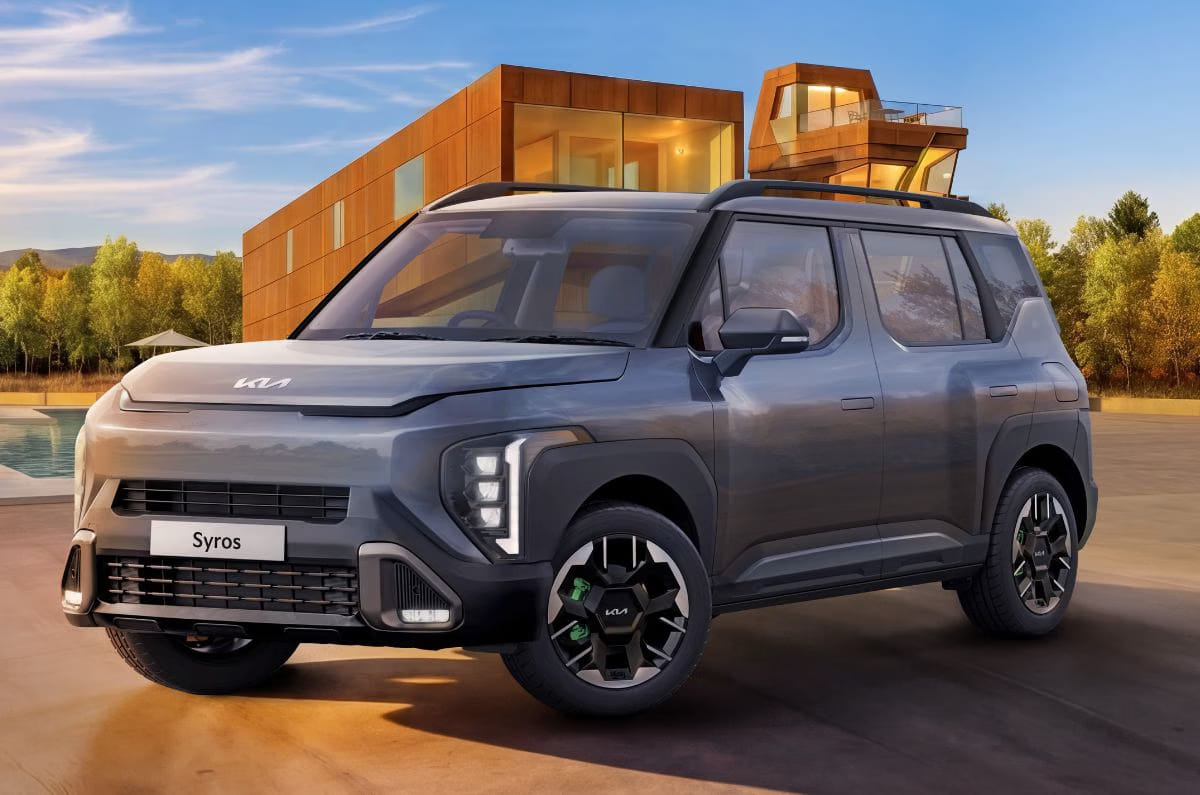
The Syros compact SUV is available with benefits of up to Rs 25,000. MY 26 versions get a cash discount of up to Rs 10,000, a corporate offer of up to Rs 15,000 and either an exchange or scrappage bonus of Rs 20,000. Meanwhile, the MY25 Syros gets either an exchange or scrappage offer of up to Rs 50,000. Priced from Rs 8.42 lakh to Rs 15.82 lakh, it is offered with either a turbo-petrol or diesel engine.
Kia Sonet offers in July 2026
Benefits of up to Rs 45,000
Kia’s most affordable model, the Sonet, is available with benefits up to Rs 45,000. For MY26 models, there’s a cash discount of up to Rs 10,000, a corporate offer of up to Rs 15,000, and either an exchange or scrappage offer of up to Rs 20,000. MY25 versions don’t get much benefit except for a scrappage bonus of Rs 15,000. The Sonet is offered with a choice of petrol, turbo-petrol and diesel engines. Priced from Rs 7.41 lakh to Rs 14.37 lakh, it takes on the likes of the Hyundai Venue, Tata Nexon, Skoda Kylaq and Mahindra XUV 3XO.
Kia Seltos offers in July 2026
Benefits of up to Rs 40,000
The Seltos mid-size SUV gets benefits of up to Rs 40,000. While the latest 2nd-gen version gets a scrappage and loyalty benefit of Rs 20,000 each. Offered with petrol, turbo-petrol and diesel engines, the Seltos is priced from Rs 10.99 lakh and goes all the way up to Rs 20 lakh. It is Kia’s answer to the mid-size SUV space, which consists of the Hyundai Creta, Tata Sierra, Renault Duster, Nissan Tekton, Maruti Victoris and Grand Vitara, Toyota Hyryder, Skoda Kushaq and Volkswagen Taigun.
Kia Carens offers in July 2026
Benefits of up to Rs 35,000
The Carens MPV gets the least benefits out of any Kia model here. MY26 models get a corporate offer of up to Rs 15,000 and either an exchange or scrappage bonus of up to Rs 20,000. But MY25 versions of the Carens only get a scrappage bonus of Rs 20,000. It is available in only one trim, powered by either a petrol or diesel engine, with a price range of Rs 11.02 lakh to Rs 12.88 lakh. Additionally, it’s the only Kia car to offer a dealer-level fit CNG kit with the petrol engine. The Carens is Kia’s alternative to the Maruti Ertiga and Toyota Rumion.
Renault has revealed July 2026 offers on its models, including the Kiger, Triber and Kwid. While the flagship Renault Duster is yet to witness any official offers, the maximum benefits are available on the Kiger. Let us take a look at the model-wise offer breakdown for all Renault models in India for the month of July 2026.
Note: The mentioned offers are applicable till July 31 and may vary by city, dealership and stock availability. Please check with your nearest Renault dealership for the exact figures.
Renault Kiger July 2026 offers
Benefits of up to Rs 1.25 lakh
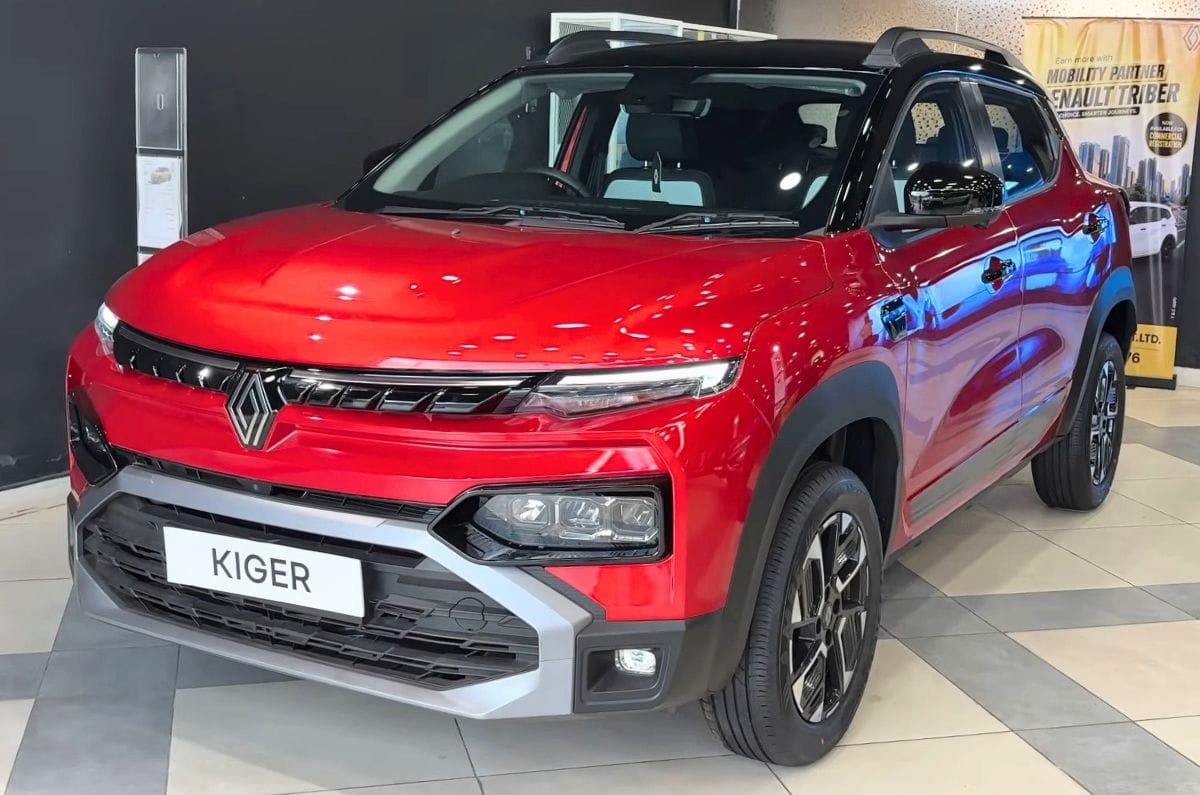
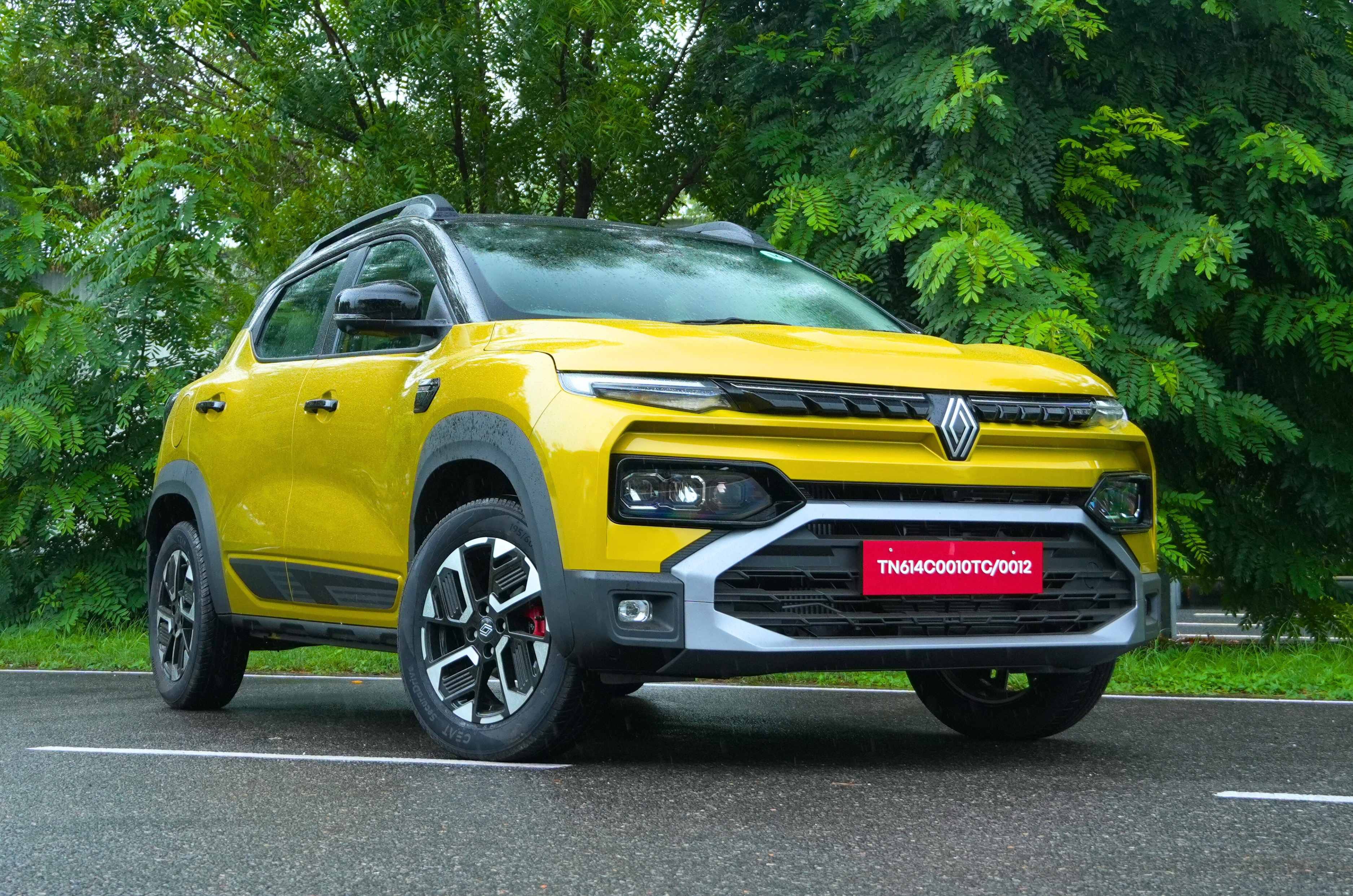
The Kiger carries the highest benefits of up to Rs 1.25 lakh for a Renault car in July 2026. The maximum benefits are available for customers based in Kerala: a cash discount of Rs 50,000, an exchange bonus of up to Rs 50,000, scrappage benefits of up to Rs 25,000, and loyalty benefits of up to Rs 18,000. In Gujarat, the cash discount and exchange benefits drop to Rs 30,000 and up to Rs 40,000, respectively. Customers from other states can avail a Rs 20,000 cash discount, exchange benefits of up to Rs 25,000, and scrappage, loyalty and referral benefits.
The Renault Kiger is priced from Rs 5.81 lakh to Rs 10.35 lakh, and it rivals compact SUVs like the Maruti Suzuki Brezza, Kia Sonet, Hyundai Venue, Skoda Kylaq and Tata Nexon.
Renault Triber July 2026 offers
Benefits of up to Rs 60,000
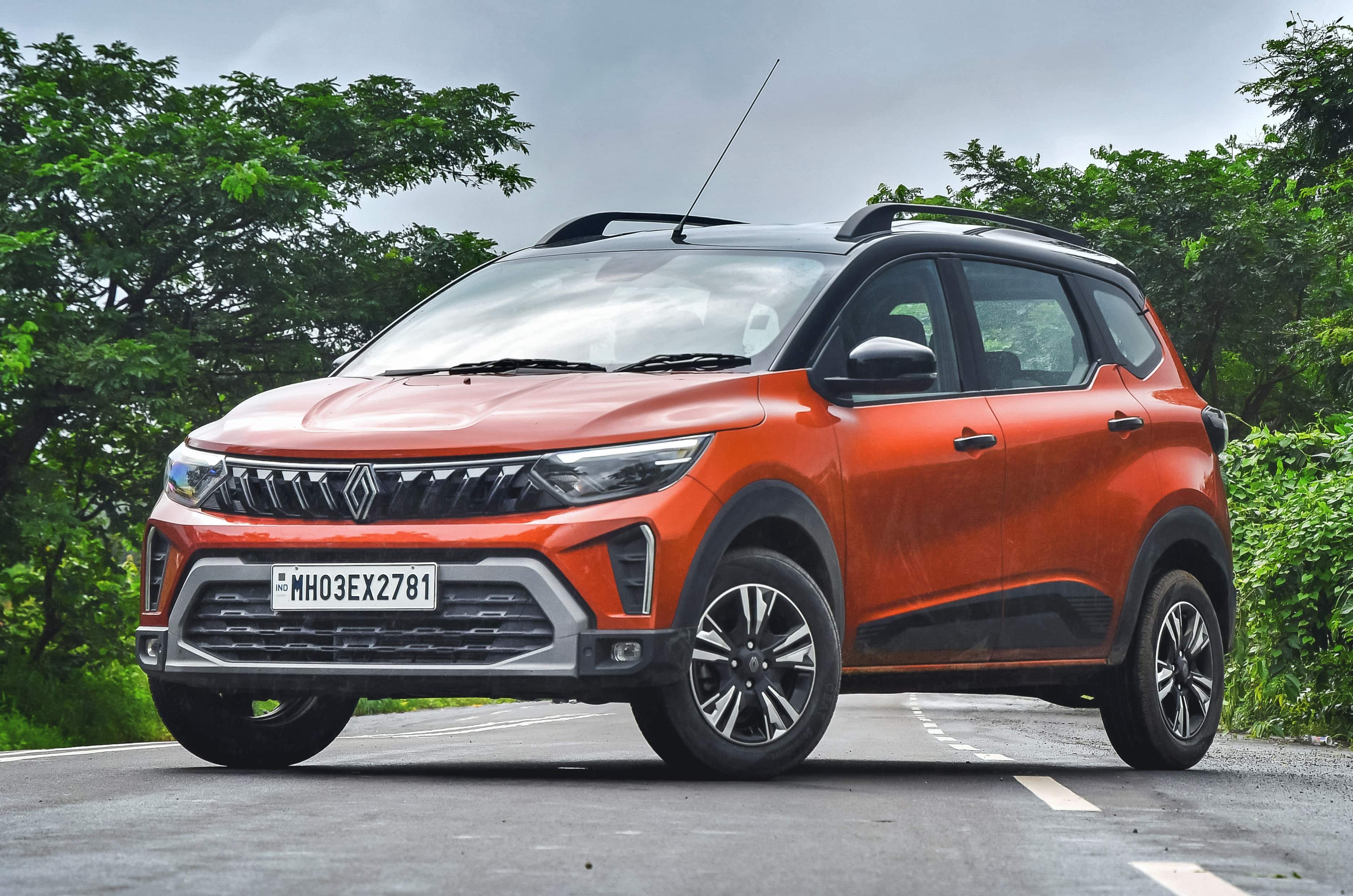
Like the Kiger, the highest offers of up to Rs 60,000 on select Triber variants are available for customers in Kerala. These include a cash discount of Rs 30,000 and an exchange benefit of up to Rs 30,000. Customers in Gujarat can avail offers of up to Rs 45,000, including a cash discount of Rs 25,000 and an exchange bonus of up to Rs 25,000. Customers from other states can avail benefits of up to Rs 30,000 only, including a cash discount of Rs 15,000 and an exchange bonus of Rs 15,000. Renault is also offering loyalty bonuses, corporate offers and rural benefits to eligible customers.
The Renault Triber is priced from Rs 5.81 lakh to Rs 8.48 lakh and locks horns with the Nissan Gravite, while being an affordable alternative to the larger Maruti Ertiga, Toyota Rumion and Kia Carens.
Renault Kwid July 2026 offers
Benefits of up to Rs 15,000
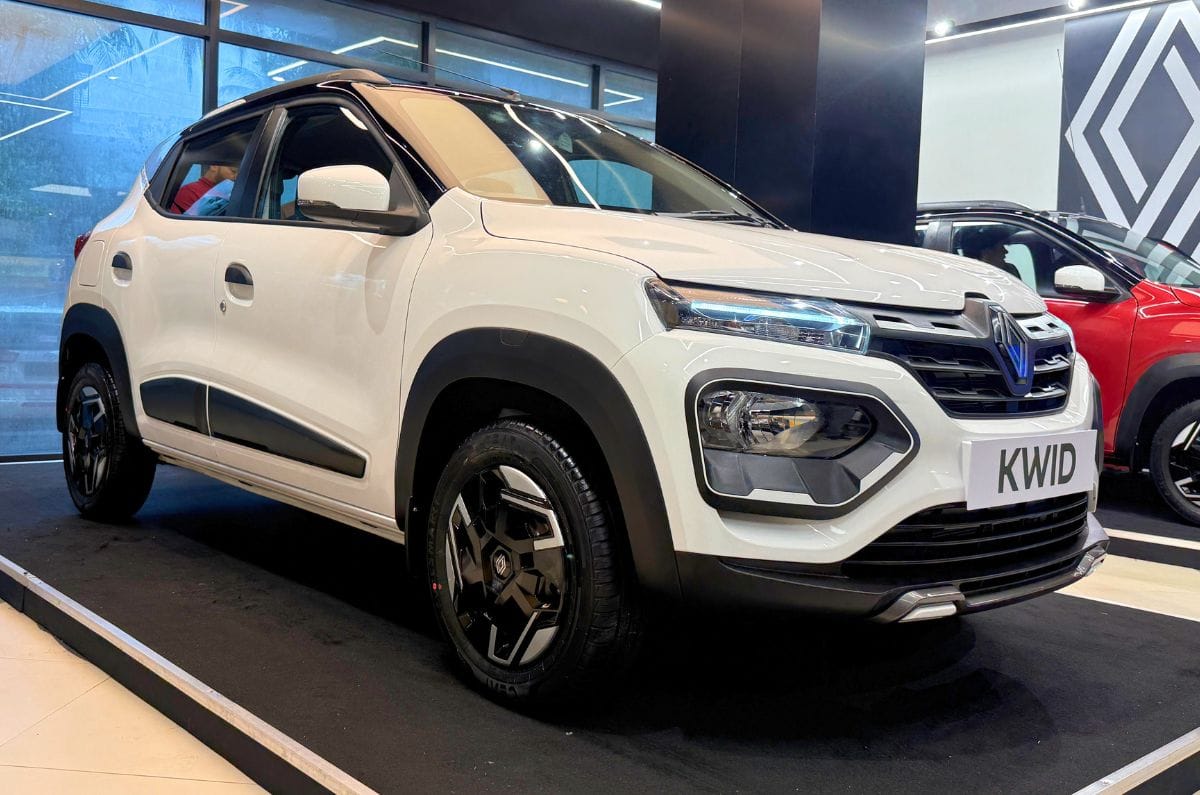
In July 2026, the 2026 Renault Kwid is available with cash discounts of up to Rs 15,000 across select Indian states, which do not include Kerala, Assam, Karnataka, Odisha, Uttarakhand, Telangana, Chhattisgarh, Arunachal Pradesh, and Andhra Pradesh. The older version of the Kwid is available with a cash discount of up to Rs 30,000, depending on the location.
The Renault Kwid is priced from Rs 4.53 lakh to Rs 5.61 lakh. It rivals the Maruti Suzuki Alto K10, Maruti Suzuki S-Presso and Tata Tiago.
The origin of the species. The very beginnings of the automobile. Where it all started. How it all started. What form the earliest cars took. What if you could experience all of this in one place, at the same time? Say hello to UMS Technologies, India’s smallest carmaker. Nestled in the heart of the bustling city of Coimbatore, where the manufacturing of machines is almost a religion, UMS tech not only recreates the past, it does so with exacting precision and a level of dedication that borders on obsession.
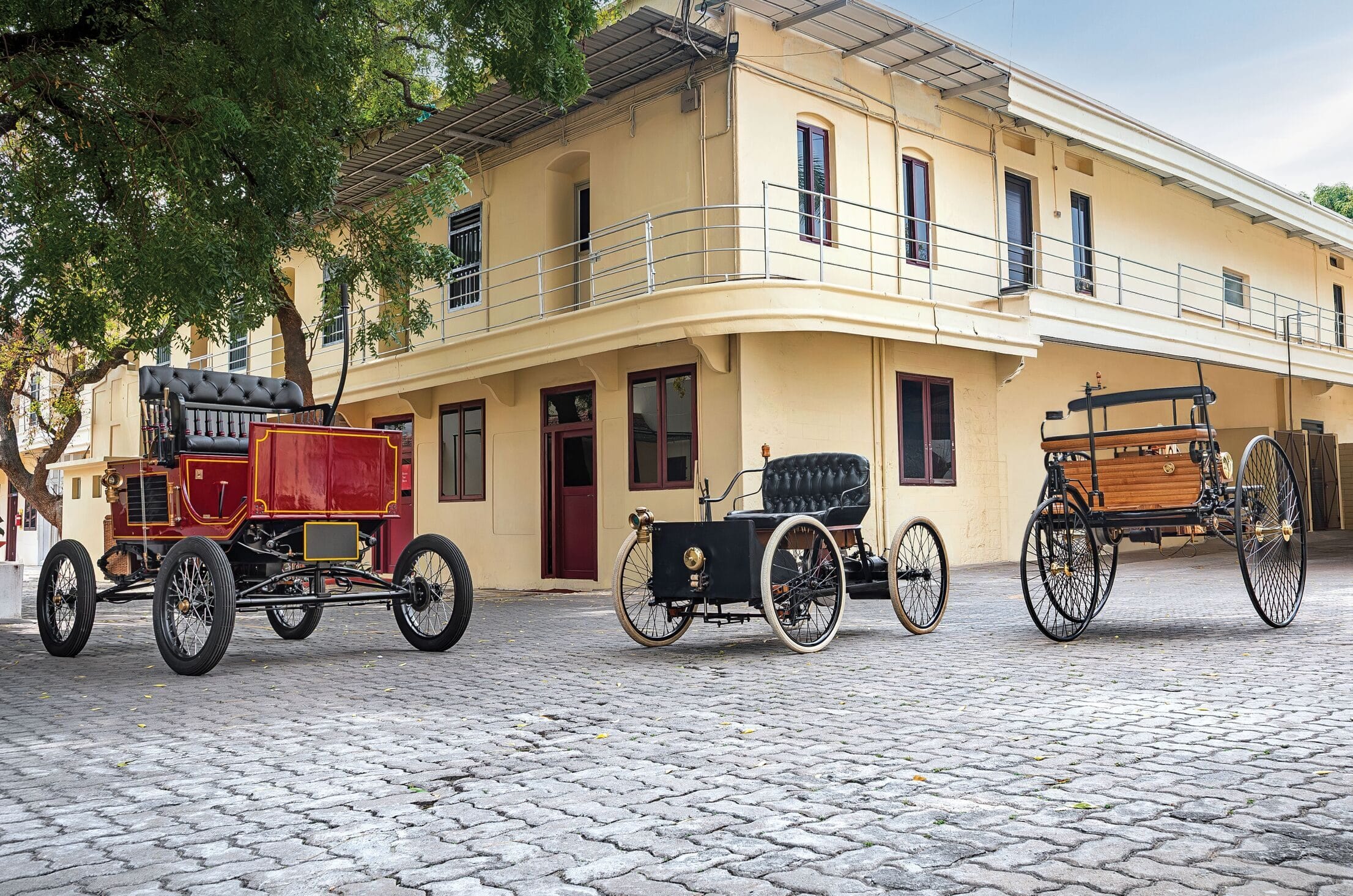
Walk onto the shop floor, just off main street Coimbatore, and you are greeted by finished versions of three icons – the 1899 Stanley Steamer, the 1896 Ford Quadricycle, and the 1886 Benz Patent-Motorwagen. Each is a faithful replica, crafted with painstaking detail, and together they tell the story of how the automobile was born. It feels like history is coming back to life.
Give me steam
The steam car is the most difficult to steer and can accelerate quickly for a prehistoric car.
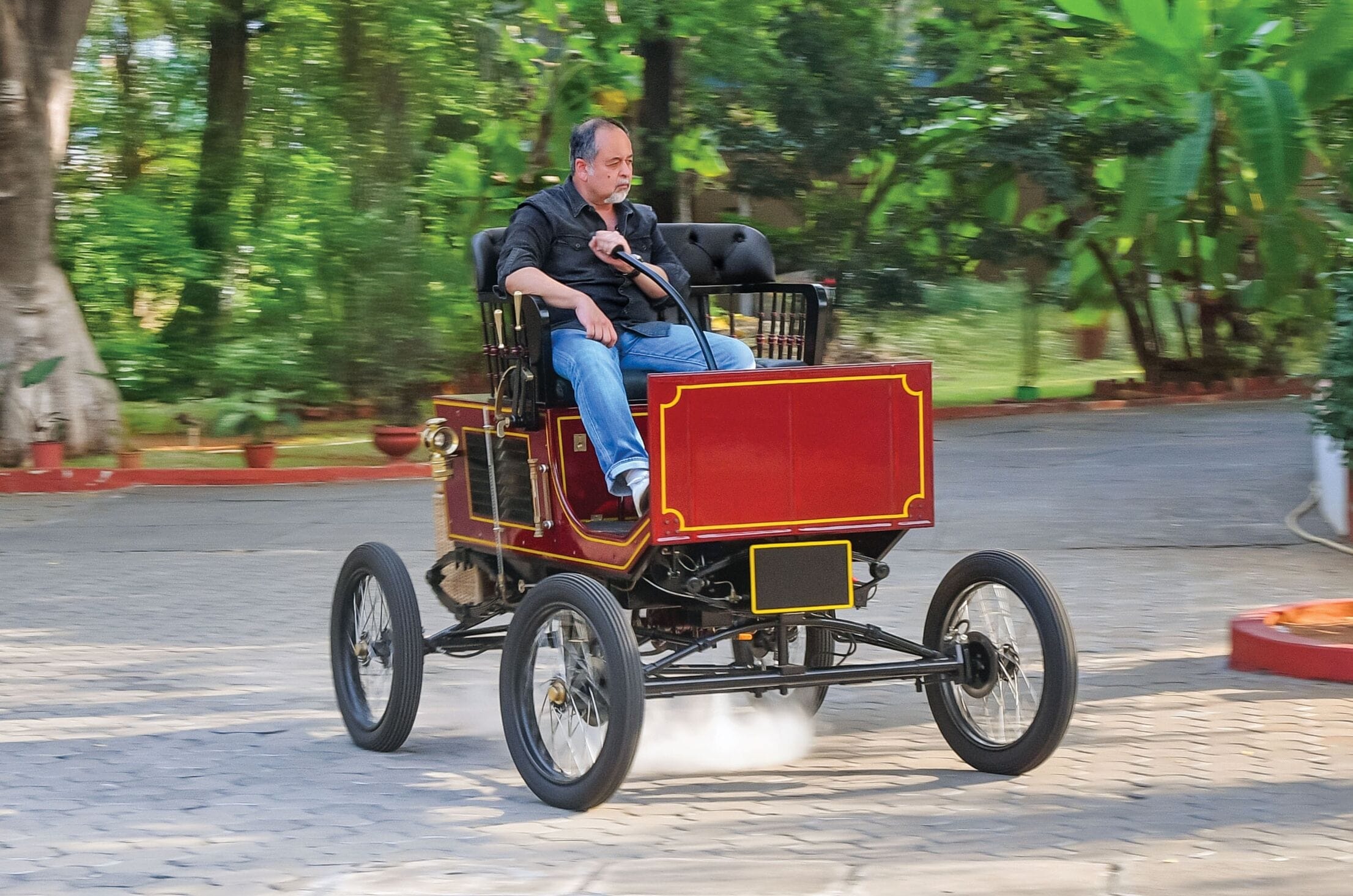
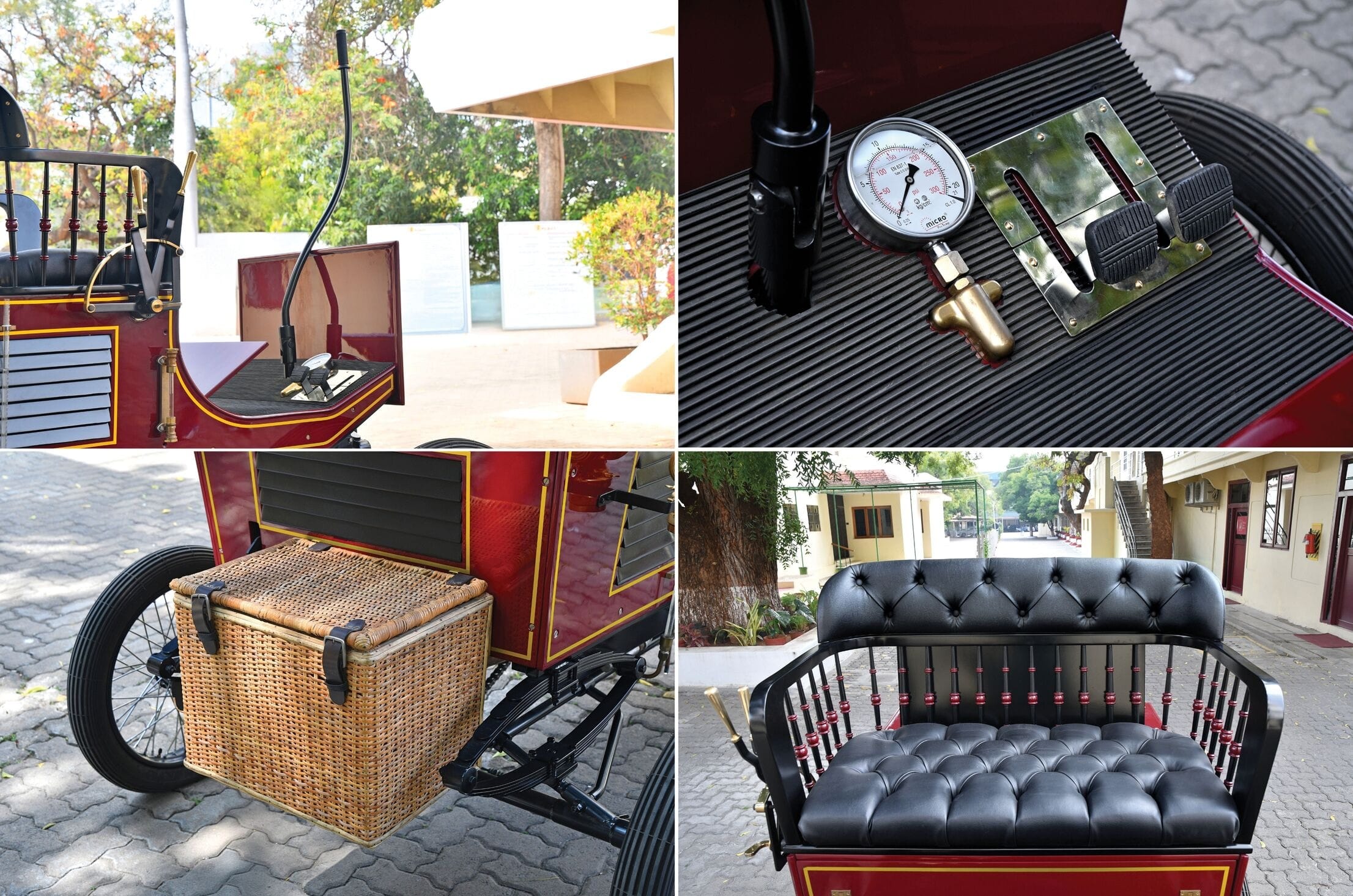
The Locomobile, or Stanley Steamer, is perhaps the most theatrical of the trio. Originally powered by naphtha and coal, it relied on steam pressure to drive its pistons. Did you know steam-powered cars predated petrol-powered cars by almost a century? The replica here, however, has been updated with a diesel burner. Pressure in the ‘boiler’ goes up to around 150-200 PSI, and a gauge on the dashboard (origin of the term) tells you when the car is ready to move. This takes a bit.
Clockwise from left: Levers select direction; Braking is via motorcycle discs; Seat feels like a comfy sofa; Diesel burner replaces coal.
Sidebar: steam-powered ships like aircraft carriers sometimes took 12-24 hours to build up a sufficient head of steam before they could start. In the car, once the needle climbs into range, a gentle push on the accelerator sends the vehicle chuffing forward with the rhythm of a steam train. The experience is surreal. Torque is abundant, acceleration is surprisingly brisk, and the soundtrack – a soft, mechanical chuffing – is delightfully addictive. Steering it, however, is a challenge. Without a wheel, only a rudimentary tiller guides the car, reminding me of why the steering rack was one of the most important innovations. Fun fact: none of the three cars here has a steering wheel. For safety, especially considering how quick it is when it builds up a head of steam, UMS Technologies has added motorcycle disc brakes.
Before the Model T
This was the car Henry Ford made before the Model T or even before the company’s formation in 1903.
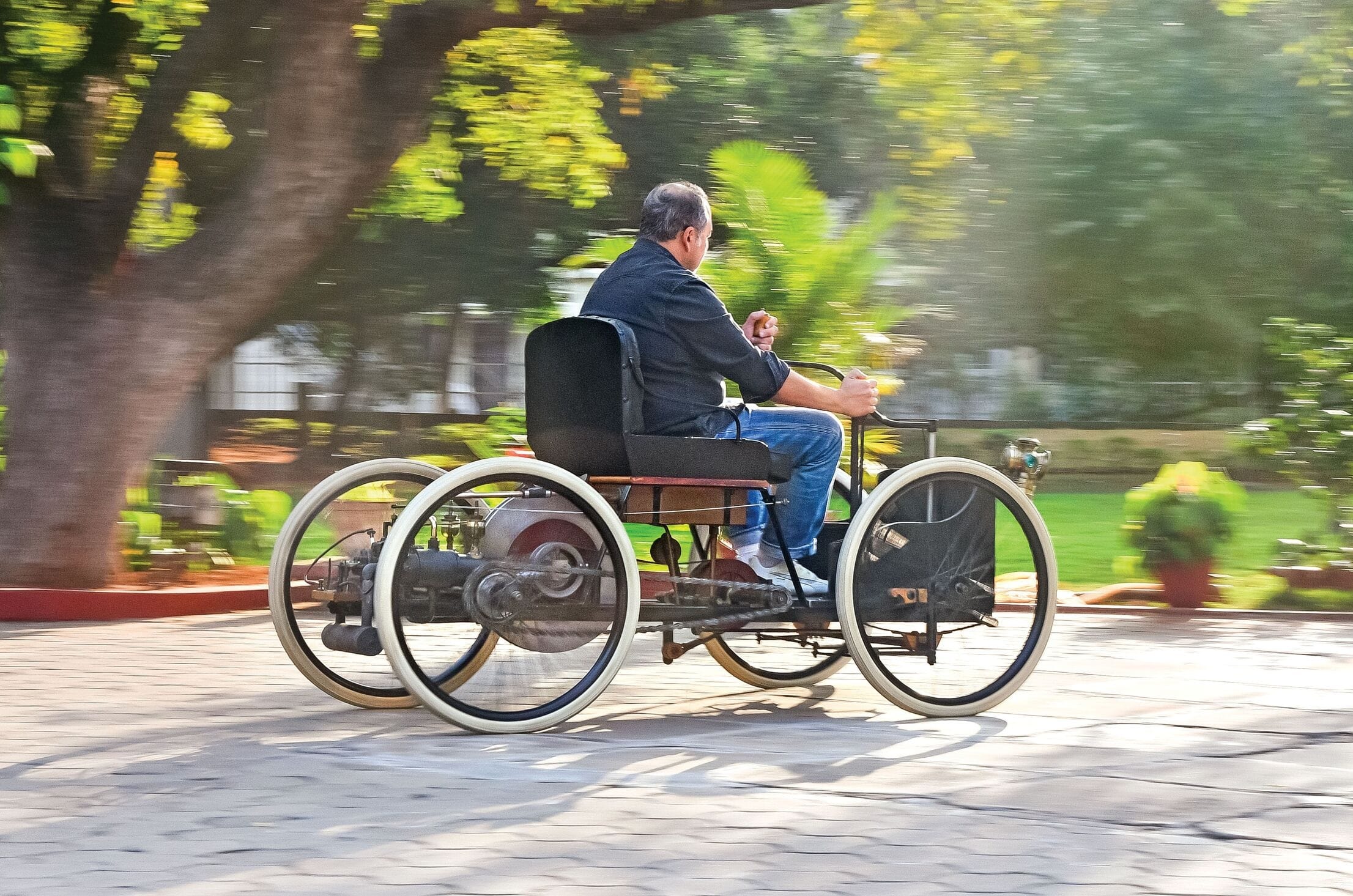
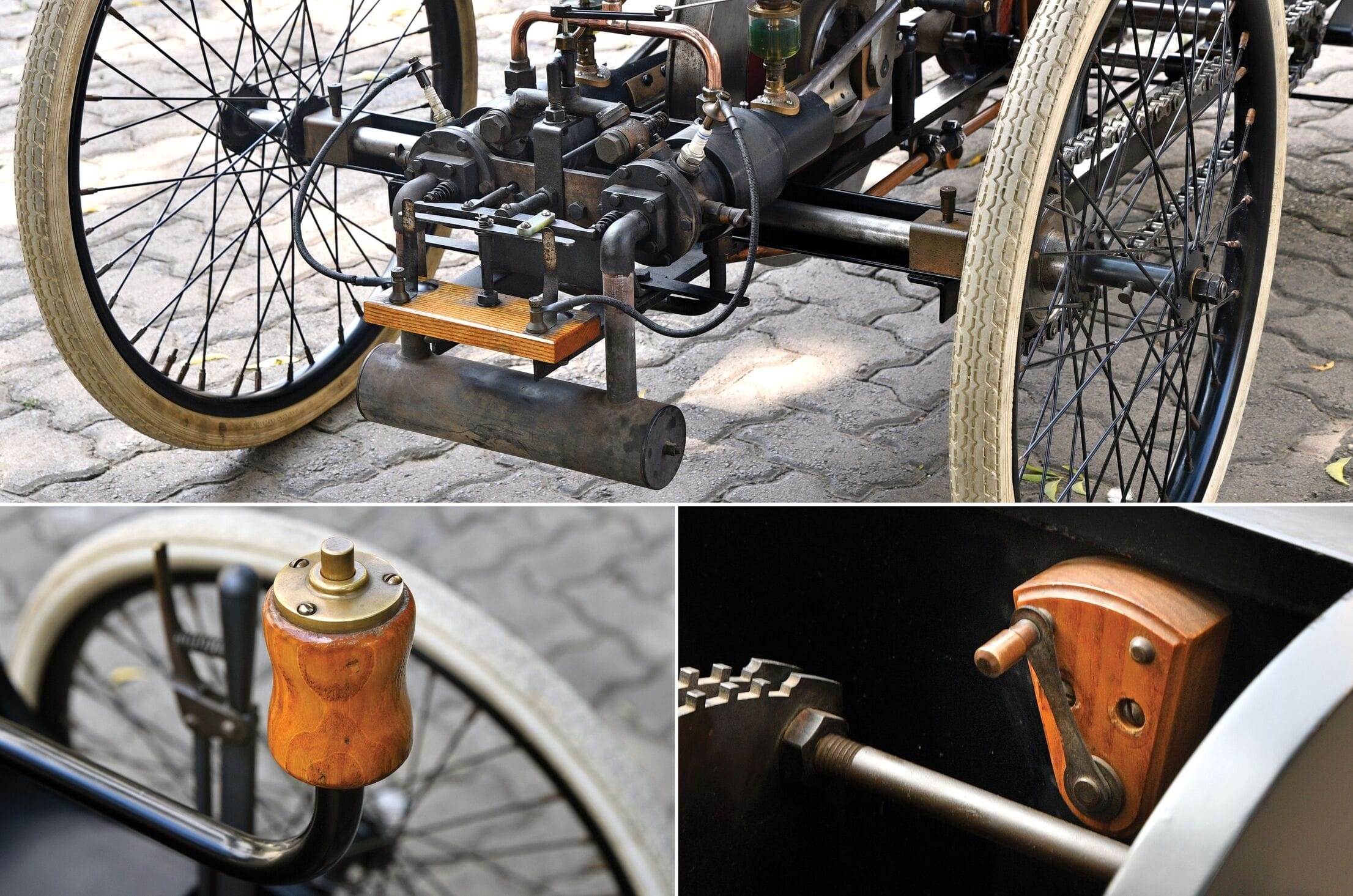
If the Stanley Steamer is theatrical, the Ford Quadricycle is a burst of youthful energy. Built in 1896, ten years after Karl Benz unveiled his Patent-Motorwagen, it was Henry Ford’s first car, created before he even founded the Ford Motor Company in 1903. The replica is faithful to the original, complete with its mid-mounted twin-cylinder engine and bulb-type rudimentary carburettors that mix the fuel and air. The pistons are exposed, with no sump for oil, so lubrication is handled by drip-feed systems. A brass tube connects the pistons to water tanks for cooling, while spark plugs, carburettor, tappets, and valves are all visible, making the engine look like a mechanical marvel, all the running bits visible and exposed.
Clockwise from top: Twin cylinders placed horizontally; Contact box switch to start the car; Steering knob has button for the bell.
Driving it is exhilarating. The twin cylinders give it a noticeable boost in speed. Steering is again by a tiller, while a lever operates the throttle, much like one on an aircraft; but in reverse. Pulling the lever back sends the car shooting forward, while pushing it forward slows it down! And yes, Ford even thought to add a horn, making this one of the first cars to have this safety feature. Something else that’s fascinating – this car runs on E100 or pure ethanol. However, there’s no blue roundel or Ford badge. This car came before the Ford Motor Company, remember.
Prime petroleum
It moves forward gingerly with a put-putting sound from the weak single-cylinder ‘engine’.
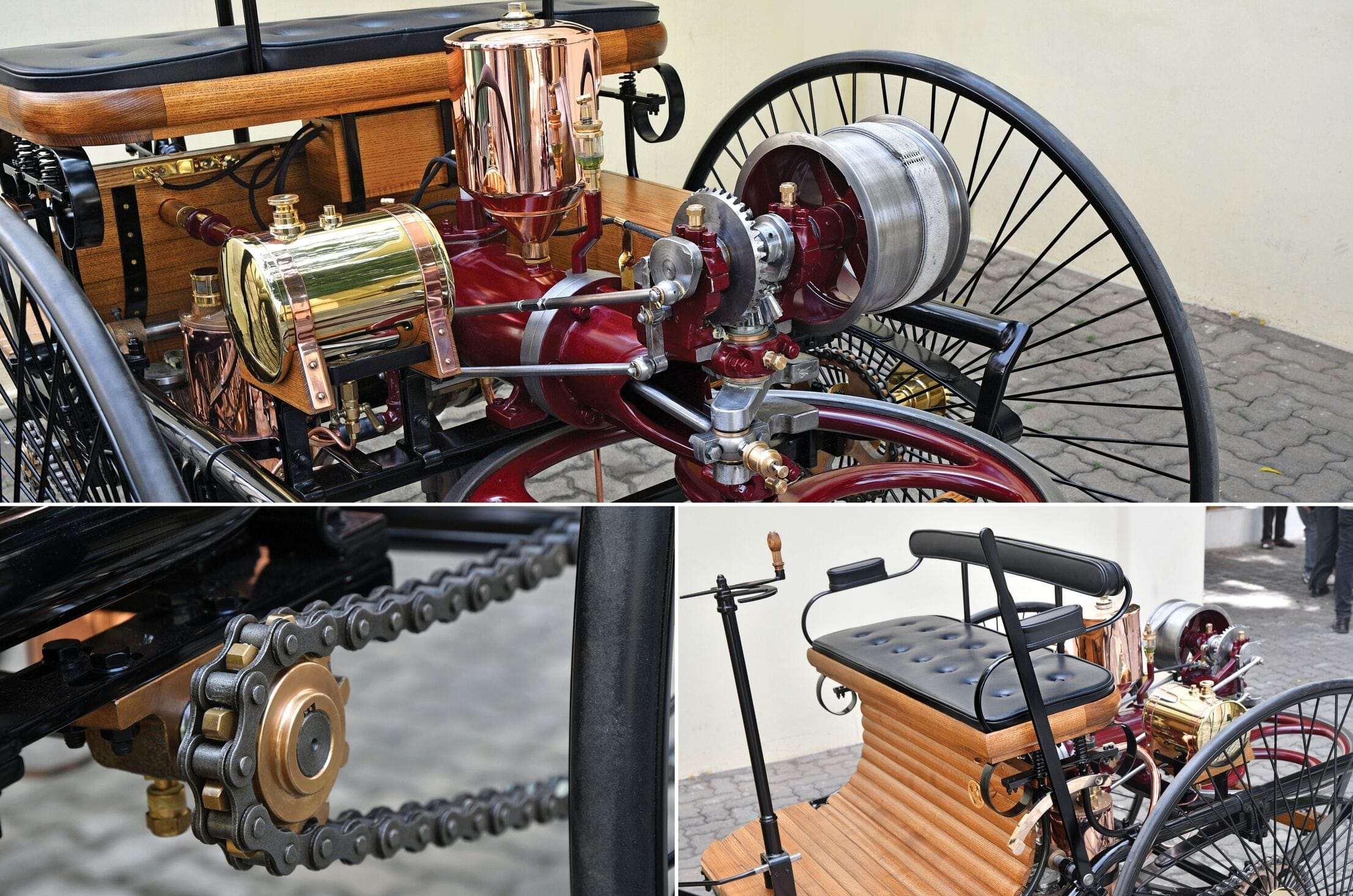
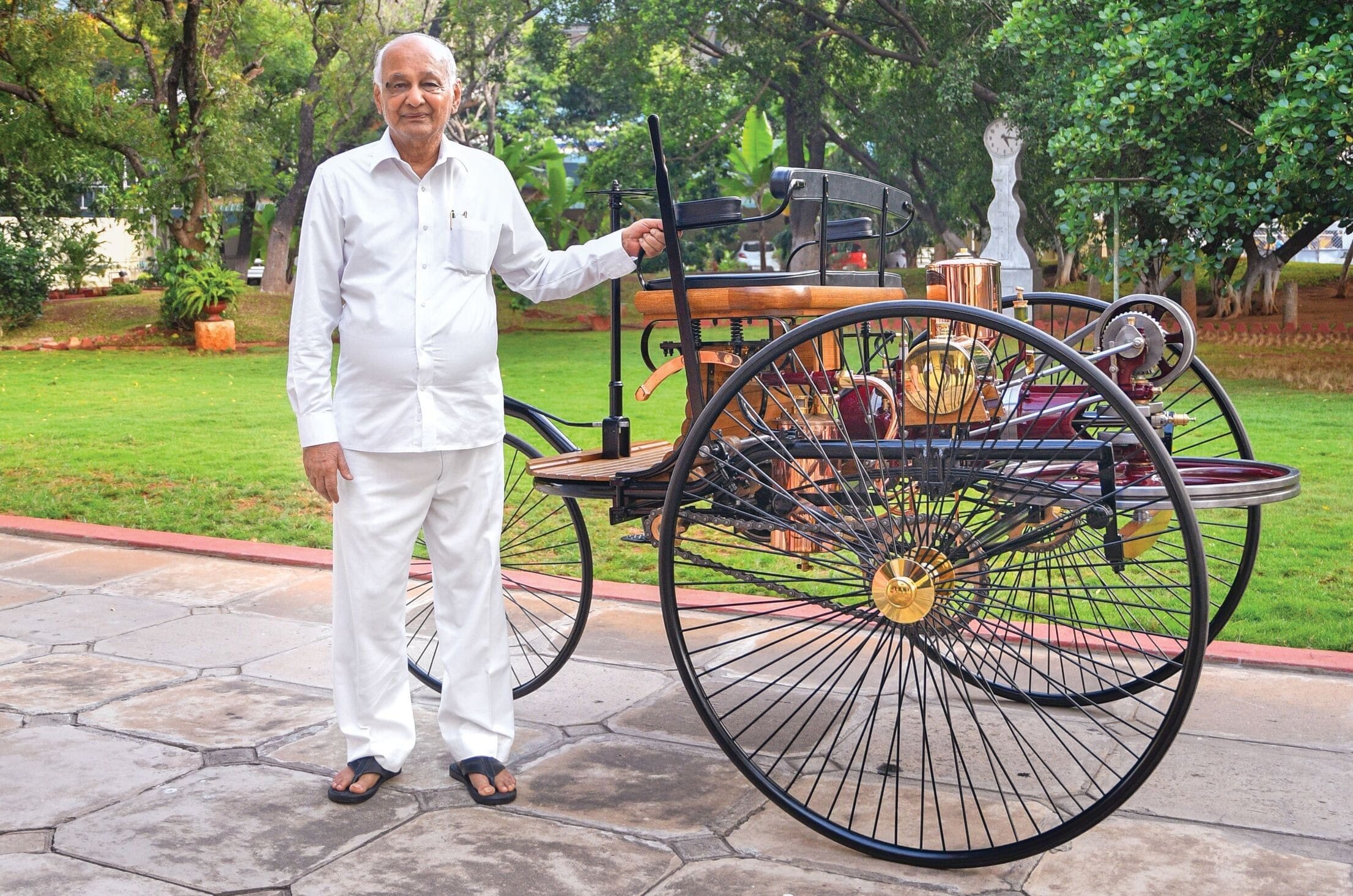
The Benz Patent-Motorwagen, however, is the granddaddy of them all. Widely regarded as the first petrol-powered car, it was unveiled in 1886 and changed the course of history. While steam vehicles had existed since the 1760s, Benz’s creation was revolutionary: a single-cylinder, horizontal piston engine mounted on a tricycle frame. The replica here is almost indistinguishable from the original. Austrian white ash has been imported for the woodwork, just as Benz used in Germany. Brass fittings, carburettors, pistons and connecting rods are all crafted in-house, from the same materials that were used on the original. Even the massive wheels with hard-rubber tyres are made at the factory in Coimbatore, cast and assembled with meticulous care, as we stand and watch.
Operating the Motorwagen is an exercise in patience. The wooden box houses the battery and electrics, while the crankshaft and piston lie horizontally. A pulley system drives the camshaft, with pushrods for intake and exhaust valves. The engine is started by spinning the horizontally placed ‘fly wheel’, and the car starts with a soft and faint put-put-put, white smoke softly escaping from the rear.
Clockwise from top: Brass canisters hold water, fuel; You steer with a tiller and use a long lever to accelerate, brake; Drive is via bicycle chain.
Sat high up, you control acceleration and braking with a single lever; push forward to accelerate or pull back to brake. On the road, it feels fragile and threatens to tip over at times. Unless you push the throttle open, even gentle slopes are a challenge. And then there’s some overrun, so you often need to pump the lever to give it a burst of power. In addition, the ride is harsh, the suspension rocks you and larger bumps simply toss you and threaten to flip the tricycle. But every chug of the piston, every few metres you cover remind you that this is where petrol motoring began.
Recreating history
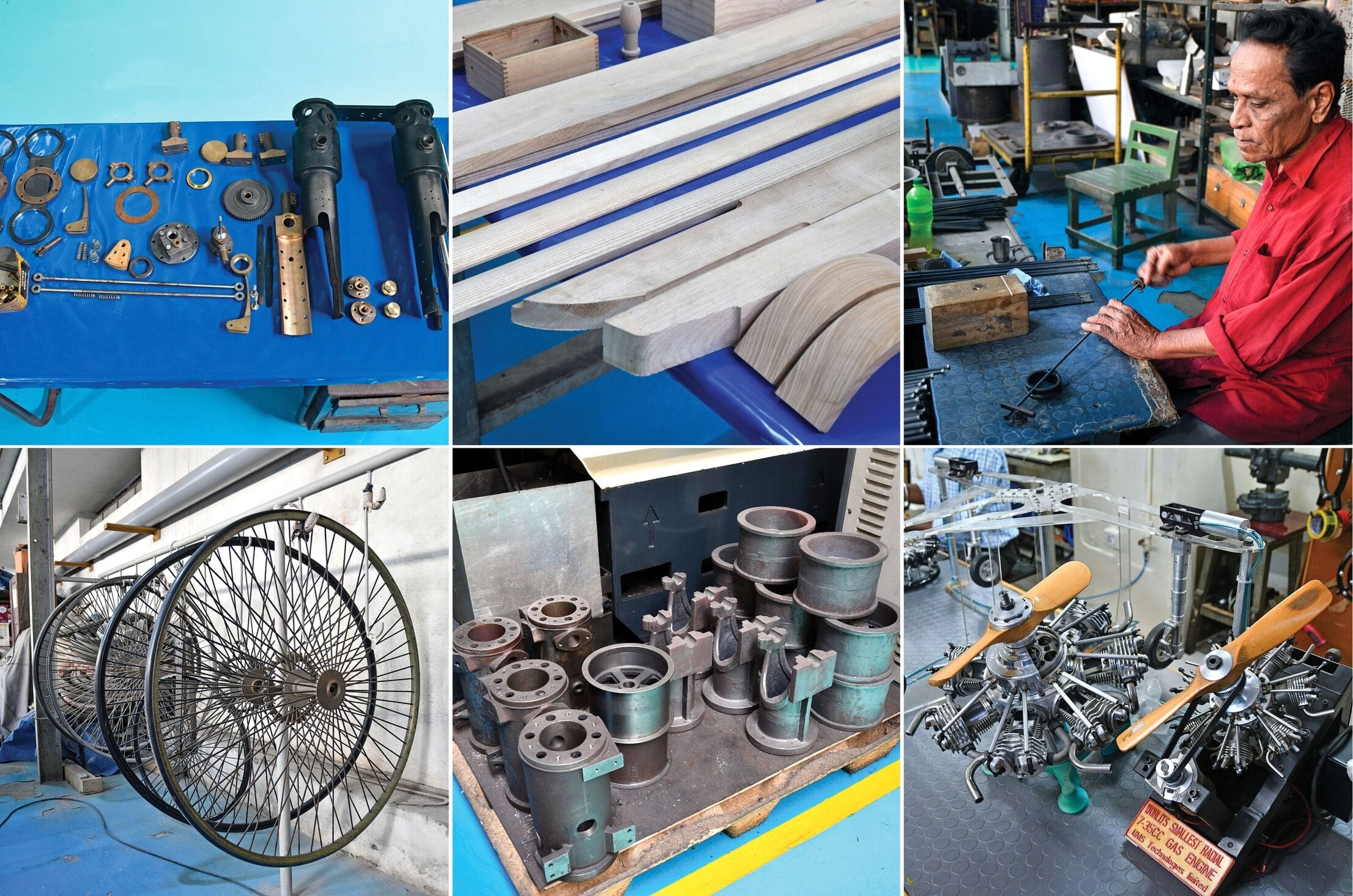
What makes these replicas remarkable is not just their historical accuracy, but the fact that they are built entirely in-house. UMS Technologies casts its own parts – cylinder heads, crankshafts, flywheels, carburettors – 20km away, then assembles them here. Brass, steel, gunmetal and Austrian ash are all shaped into components that mirror the originals. The workshop even uses a Carl Zeiss measuring machine to check tolerances on the Benz cylinder head – something Karl Benz himself could never have imagined in 1886. And the company doesn’t stop at cars. It also builds engines for drones and RC planes, ranging from single-cylinder 100cc units to seven-cylinder radial engines. Precision, craftsmanship and innovation coexist in this tiny factory, proving that scale is not a prerequisite for excellence. It even makes small turbine engines, complete with flames emitted from the rear and afterburners.
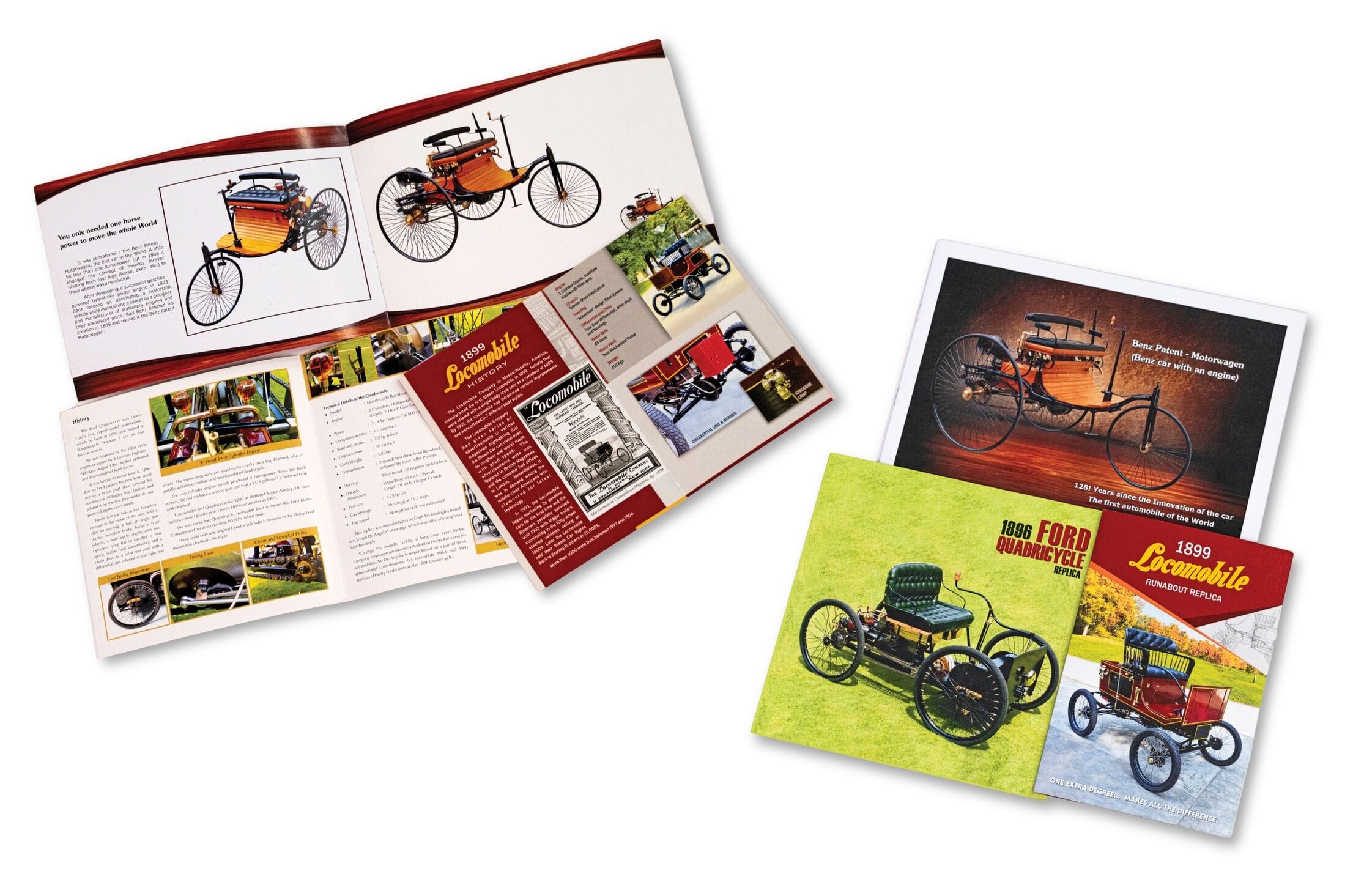
Each car gets its own brochure, as it should.
In an era dominated by SUVs, EVs and autonomous driving, why do these replicas matter? Because they remind us of where it all began. They show us the ingenuity of pioneers who built cars, they highlight the evolution of engineering, from steam to petrol, from tillers to steering wheels, from drip-feed lubrication to blade batteries.
India’s smallest carmaker has achieved something extraordinary. By recreating the Stanley Steamer, the Ford Quadricycle and the Benz Patent-Motorwagen, it has preserved the earliest DNA of the automobile and shown us what it must have been like to drive and be transported by these machines. Even better, if you want to own one of these, each of them is on sale.
Benz Motor Wagen
Stanley Steamer
Ford Quadricycle
Price*
Rs 22.10 lakh
Rs 19.50 lakh
Rs 15.60 lakh
Wheelbase
1,450mm
1,473mm
1,200mm
Power
0.68hp
3.5-5.5hp
3-4hp
Kerb weight
265kg
410kg
227kg
Top speed
16kph
40-48kph
28kph
*Domestic market discount 20-25 percent
No steering required
Driving these three, you get a sense of what the pioneering days of motoring must have been like. You sit exposed, as on a carriage, and looking at this set here, that’s what they really are – horseless carriages. In the Patent-Motorwagen, you pump the accelerator and brake repeatedly, coaxing the car up inclines and slowing it down with a wooden lever. It feels awkward at first, but soon you get the hang of it. The ride is rough, but the sense of history is overwhelming. In the Stanley Steamer, you wait five minutes for pressure to build, then glide forward with effortless torque. The chuffing soundtrack is addictive, and the acceleration surprisingly rapid. Steering with a tiller is tricky, but the experience is joyous. In the Ford Quadricycle, performance takes centre stage. The twin cylinders deliver speed, the ethanol tank nods to sustainability, and the bell-like horn adds a touch of practicality. It feels like the first step toward the modern automobile. Together, they offer a time jump into motoring’s infancy.
How these cars are made in India
All basic parts for the engines are cast or machined either in-house or by a local supplier; for the Benz, the same imported ash wood as the original is used; the spokes and big wheels are made by hand; cylinder and sleeve made to the same spec as the originals; UMS also makes cylinder radial engines for drones and model planes – a nine-cylinder radial and a turbine, among the many.
Interview with GD Gopal, UMS Technologies
Why build replicas of cars that are more than a century old?
Because they are the roots of motoring. Everyone knows the latest SUVs or EVs, but very few have seen where it all began. By recreating the Stanley Steamer, the Ford Quadricycle and the Benz Patent-Motorwagen, we’re preserving history in a way people can touch, feel and drive.
How difficult is it to manufacture these cars from scratch?
Extremely difficult. We cast our own cylinder heads, crankshafts and carburettors. Even the woodwork is done here using Austrian ash, just like the originals. Every part is measured, machined and finished by hand. It’s not about mass production; it’s about precision and authenticity.
What’s next?
We’ll keep building history. And maybe inspire the future too.
इनवेस्टर्स के निवेश के तरीके को लेकर अगर देश के दो सबसे बड़े इनवेस्टमेंट प्लेटफॉर्म्स के बीच बहस छिड़ जाए तो क्या होगा? हाल में सोशल मीडिया प्लेटफॉर्म एक्स पर ऐसा ही हुआ। डायरेक्ट और रेगुलेटर फंड्स से जुड़ी यह बहस काफी दिलचस्प हो गई। इसमें इनवेस्टर्स ने भी अपनी-अपनी राय व्यक्त की। आइए जानते हैं यह पूरा मामला क्या है।
नितिन कामत ने एक्स पर 9 जुलाई को पोस्ट शेयर किया
Zerodha के फाउंडर और सीईओ नितिन कामत ने सोशल मीडिया प्लेटफॉर्म X पर डायरेक्ट म्यूचुअल फंड के बारे में अपनी राय बताई। उन्होंने अपने ग्राहकों को फ्री-ऑफ कॉस्ट डायरेक्ट फंड ऑफर करने की पॉलिसी के बारे में बताया। उनके इस पोस्ट ने कई इनवेस्टर्स का ध्यान खींचा। कई इनवेस्टर्स और यूजर्स ने इसे Groww की हाल में लॉन्च प्राइम सर्विस पर तंज के रूप में लिया।
ग्रो के जवाब देते ही सोशल मीडिया पर नई बहस शुरू हो गई
Groww ने बाद में इसका जवाब दिया। उसने साफ किया कि उसकी नई सर्विस के बारे में गलतफहमी है। हालांकि, इससे डायरेक्ट और रेगुलर फंड्स के फायदे और नुकसान को लेकर सोशल मीडिया पर नई बहस शुरू हो गई। पहले यह जान लेना जरूरी है कि डायरेक्ट फंड और रेगुलर फंड में क्या फर्क है। म्यूचुअल फंड की स्कीम में इनवेस्टर्स दो तरह से निवेश कर सकते हैं-डायरेक्ट और रेगुलर। डायरेक्ट फंड में आप सीधे फंड हाउस के जरिए उसकी स्कीम में निवेश करते हैं। इसमें कोई ब्रोकर या डिस्ट्रिब्यूटर शामिल नहीं होता है।
डायरेक्ट और रेगुलर फंड्स के बीच के फर्क को समझें
म्यूचुअल फंड की किसी स्कीम में अगर आप डिस्ट्रिब्यूटर या ब्रोकर के जरिए निवेश करते हैं तो उसे रेगुलर फंड कहा जाता है। चूंकि रेगुलर फंड में निवेश डिस्ट्रिब्यूटर या ब्रोकर के जरिए होता है, जिससे इसमें उसका कमीशन शामिल होता है। आपके निवेश का कुछ हिस्सा उसके कमीशन पर खर्च होता है। डायरेक्ट फंड में आप सीधे फंड हाउस की स्कीम में निवेश करते हैं, जिससे इसमें किसी तरह का कमीशन नहीं होता है। आपके निवेश का पूरा पैसा फंड हाउस के पास जाता है, जिसे वह निवेश करता है।
कामत ने कस्टमर्स को किफायती सर्विस देने की पॉलिसी पर दिया जोर
कामत ने एक्स पर अपने पोस्ट में कहा कि जीरोधा का फोकस शुरू से ही निवेश को आसान और किफायती रखने पर रहा है। उन्होंने बताया कि 2010 में जब हमने डिस्काउंट ब्रोकरेज मॉडल शुरू किया था तब हमने छोटे-बड़े सभी ट्रेड के लिए एक समान फीस रखने का फैसला किया था। उन्होंने बताया कि जीरोधा अपने इनवेस्टमेंट प्लेटफॉर्म Coin के जरिए म्यूचुअल फंड के मामले में भी यही पॉलिसी अपनाती है।
When we started the discount brokerage (flat fee per trade) model in India in 2010, we decided to charge the same fee regardless of trade size. The logic was simple: if the effort to execute a trade is the same, why should customers pay differently? We applied the same logic to… pic.twitter.com/we0sogPJdY
उन्होंने कहा कि अगर कोई प्लेटफॉर्म निवेश के अमाउंट पर कोई फीस चार्ज करता है तो उसे खुद की सर्विस को लो-कॉस्ट या डिस्काउंट सर्विसेज नहीं बताना चाहिए। उन्होंने कहा कि बहरहाल CoinByZerodha इंडिया में डायरेक्ट म्यूचुअल फंड्स का सबसे बड़ा प्लेटफॉर्म है। इसका डायरेक्ट म्यूचुअल फंड का एसेट अंडर मैनेजमेंट 1.6 लाख करोड़ रुपये है। हमारे सभी कस्टमर्स ने कमीशन के रूप में हजारों करोड़ रुपये की सेविंग्स की है।
कामत ने डायरेक्ट फंड के फायदों के बारे में बताया
कामत ने यह भी कहा कि कई प्लेटफॉर्म्स ने तो शुरुआत डायरेक्ट म्यूचुअल फंड्स के साथ की थी, लेकिन बाद में उन्होंने अपनी पॉलिसी बदल दी। उन्होंने यह भी कहा कि जीरोधा ऐसा नहीं करेगी। हम कस्टमर्स को डायरेक्ट म्यूचुअल फंड्स फ्री ऑफर करते रहेंगे। उन्होंने डायरेक्ट फंड के फायदों के बारे में भी बताया। उन्होंने इसे एक उदाहरण के जरिए समझाने की कोशिश की।
डायरेक्ट और रेगुलर फंड के रिटर्न में आता है फर्क
उन्होंने कहा कि लंबी अवधि में कॉस्ट काफी मायने रखता है। उन्होंने डीएसपी लार्जकैप फंड में मंथली 5000 रुपये के सिप का उदाहरण दिया। इस स्कीम में एक समान अवधि में डायरेक्ट प्लान और रेगुलर प्लान में एक समान अमाउंट निवेश करने पर रिटर्न अलग-अलग आता है। डायरेक्ट प्लान में पैसा बढ़कर करीब 19.5 लाख रुपये हो जाता है, जबकि रेगुलर प्लान में यह 18.3 लाख रुपये रहता है। इस फर्क की वजह कमीशन है।
We’ve seen some confusion and some misinformation about Groww’s mutual fund offering. So let us be unambiguous.
Direct mutual funds are, and will remain, the heart of Groww. Over 1 crore investors have built more than ₹1.9 lakh crore of mutual fund investments on our platform,… https://t.co/GTzhpih7TL
ग्रो ने कहा कि डायरेक्ट फंड में निवेश की फ्री सर्विस जारी रहेगी
ग्रो ने उनके इस पोस्ट पर अपनी सफाई पेश की। उसने कहा कि म्यूचुअल फंड्स में निवेश को लेकर उसकी पॉलिसी नहीं बदली है। कंपनी ने कहा कि डायरेक्ट फंड अभी ग्रो के लिए सबसे अहम है और आगे भी रहेगा। 1 करोड़ से ज्यादा इनवेस्टर्स ने हमारे प्लेटफॉर्म के जरिए 1.9 लाख करोड़ रुपये का निवेश म्यूचुअल फंड्स में किए हैं। इससे ग्रो देश का सबसे बड़ा म्यूचुअल फंड प्लेटफॉर्म है। उसने साफ किया कि उसका MF Prime एक ऑप्शनल सर्विस है। इसे उन निवेशकों के लिए शुरू किया गया है जो अपने निवेश के प्रबंधन में अतिरिक्त सहायता चाहते हैं। इसका मतलब है कि उसकी बेसिक सर्विस फ्री बनी रहेगी।
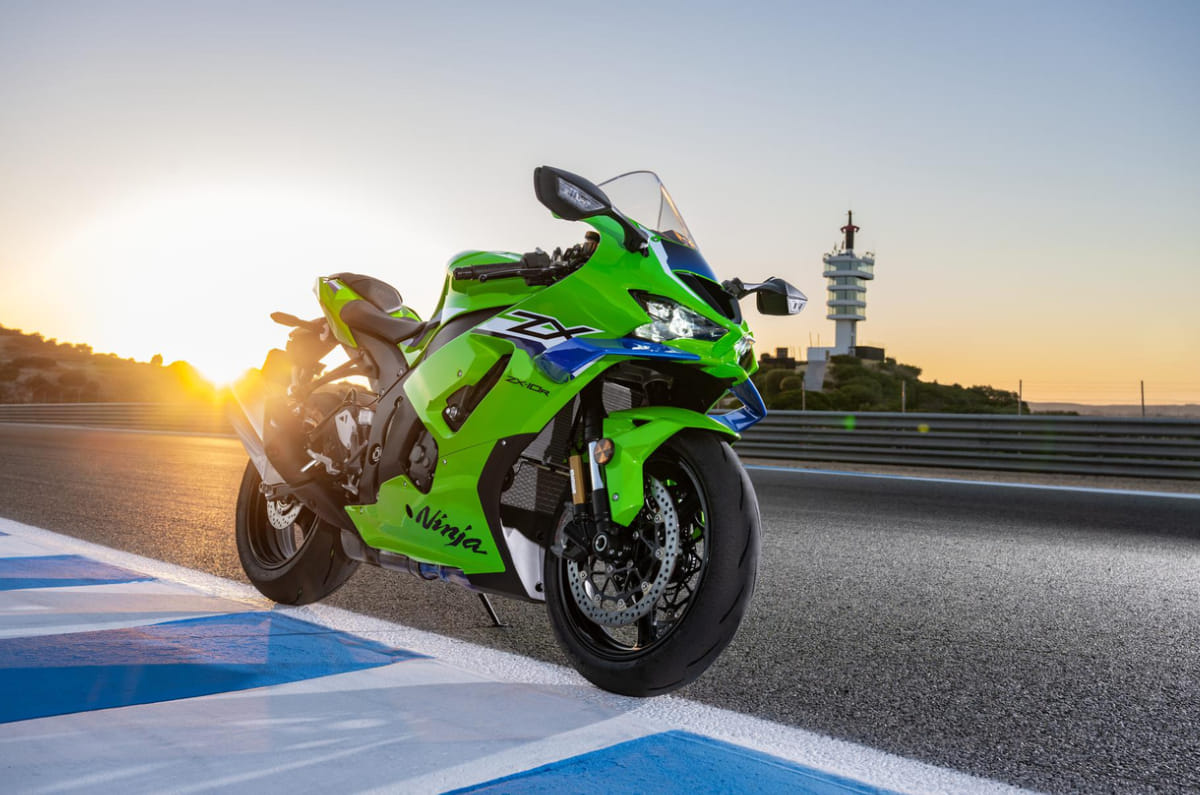
Kawasaki has extended its ongoing offers on three models in its Ninja lineup through the end of July. The benefits, covering the Ninja 1100 SX, ZX-6R and ZX-10R, have been announced via the company’s official social media channels.
ZX-10R effective ex-showroom price now Rs 17.90 lakh
ZX-6R gets a complimentary Öhlins steering damper worth Rs 83,000
Kawasaki Ninja July offers
The ZX-10R continues to receive the largest benefit
The Ninja ZX-10R continues to be offered with a straight Rs 2.89 lakh discount, bringing its effective ex-showroom price down to Rs 17.90 lakh. At that price, it remains one of the most competitively priced litre-class superbikes currently on sale in India.
The Ninja 1100 SX gets a complimentary pannier kit worth Rs 1.25 lakh, a meaningful addition for riders who plan to tour and would likely have opted for luggage anyway. Meanwhile, the ZX-6R is being offered with a complimentary Öhlins steering damper worth Rs 83,000.
The offers are valid until the end of July. We recommend contacting your nearest Kawasaki dealership to confirm stock availability and any additional offers that may be available.
Maruti Suzuki is offering attractive offers across its premium Nexa range in July 2026. Depending on the model and variant, these include cash discounts, exchange or scrappage offers, corporate benefits and loyalty bonuses. Exchange and scrappage benefits cannot be claimed together. The loyalty bonus is available only to existing Maruti customers, and it can be combined only with the exchange bonus. Corporate benefits are exclusively offered to eligible organisations and approved finance partners.
Disclaimer: Discounts may vary by city and are subject to stock availability. Please check with your local dealer for the exact figures.
Maruti Invicto discounts in July 2026
Up to Rs 2.10 lakh
Every Maruti Invicto trim gets benefits of up to Rs 2.10 lakh this month, which is slightly lower than in June. These offers include a cash discount of up to Rs 50,000, exchange benefits of up to Rs 1 lakh, a Rs 50,000 loyalty bonus and a Rs 10,000 corporate benefit. The Invicto MPV is Maruti’s version of the Toyota Innova Hycross, and it is priced between Rs 24.97 lakh and Rs 28.60 lakh.
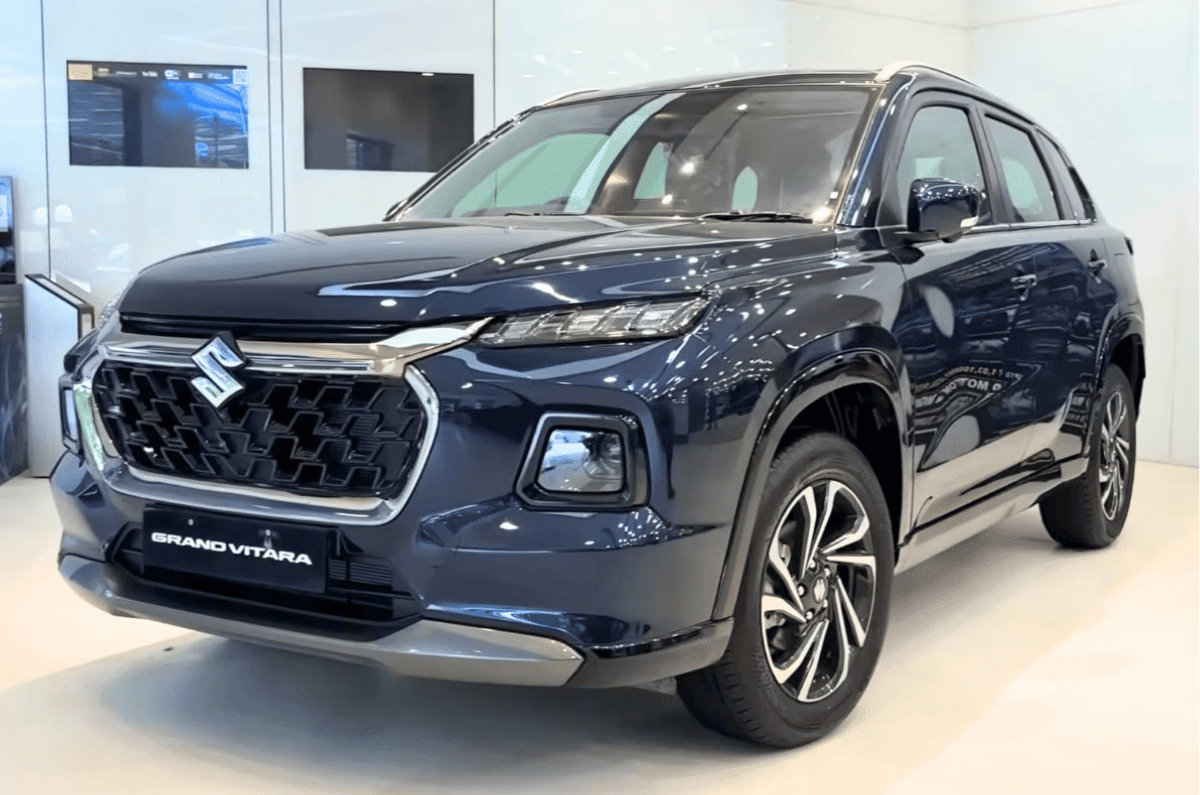
Maruti Grand Vitara discounts in July 2026
Up to Rs 95,000
The Maruti Grand Vitara gets benefits of up to Rs 95,000 in July. The Sigma petrol MT variant attracts the highest discounts of up to Rs 95,000, while the Delta petrol gets benefits of up to Rs 85,000. Buyers of the Zeta petrol and Alpha petrol variants get a Rs 25,000 cash discount along with a complimentary 5-year extended warranty (it cannot be exchanged for cash, and is non-transferable).
The strong hybrid variants are available with zero road tax benefit, a complimentary 5-year extended warranty, up to Rs 50,000 exchange bonus, Rs 30,000 upgrade loyalty bonus and a Rs 10,000 corporate benefit. The Delta CNG and Zeta CNG variants also come with total benefits of up to Rs 90,000. The Grand Vitara is priced between Rs 10.76 lakh and Rs 19.72 lakh.
Maruti Jimny discounts in July 2026
Up to Rs 45,000
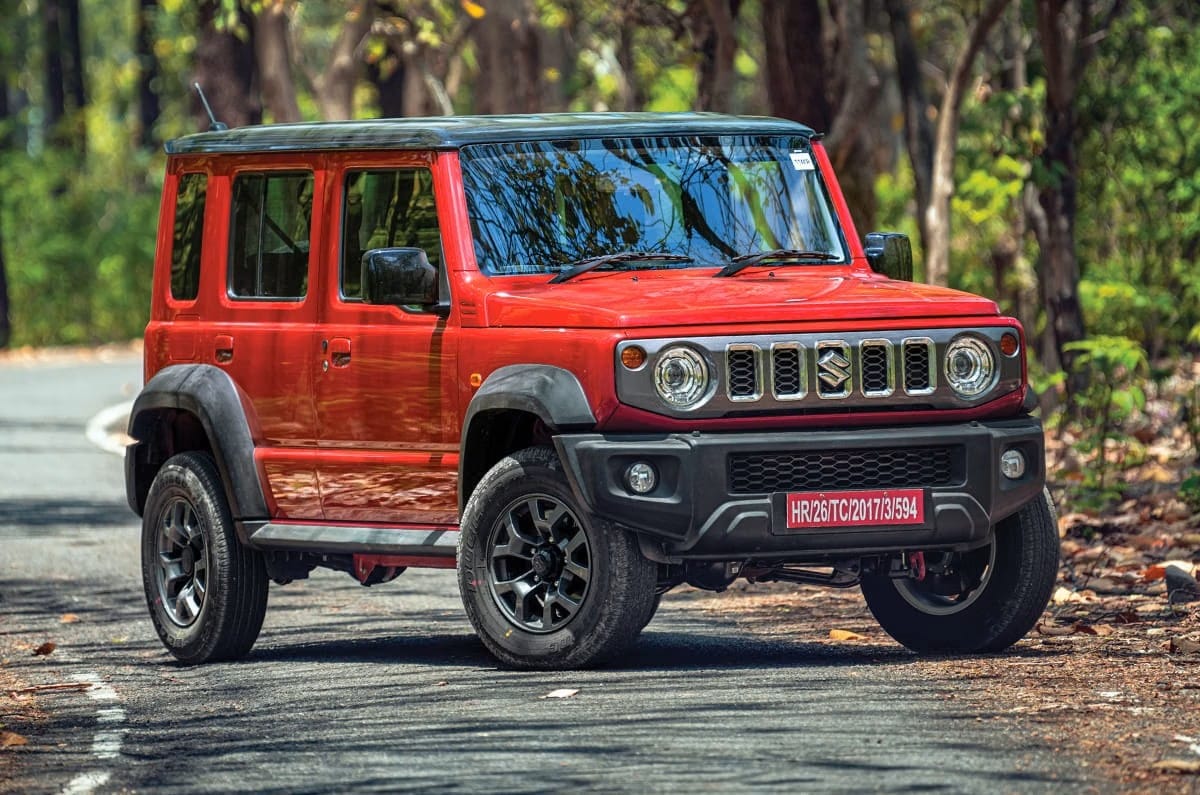
Like last month, a cash discount of Rs 45,000 is available with all Maruti Jimny variants. The compact off-roader is priced between Rs 12.39 lakh and Rs 14.52 lakh.
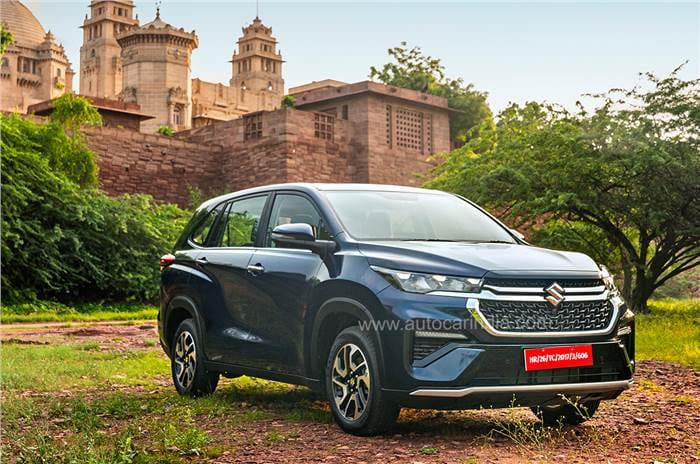
Maruti XL6 discounts in July 2026
Up to Rs 45,000
Next, the Maruti XL6 gets offers going up to Rs 45,000 on both petrol and CNG variants. Thes comprise a cash discount of up to Rs 20,000 and a scrappage bonus of up to Rs 25,000. The XL6 is the 6-seat, more premium version of the Ertiga (sold via Arena outlets) and it is priced from Rs 11.57 lakh to Rs 14.52 lakh.
Maruti Baleno discounts in July 2026
Up to Rs 40,000
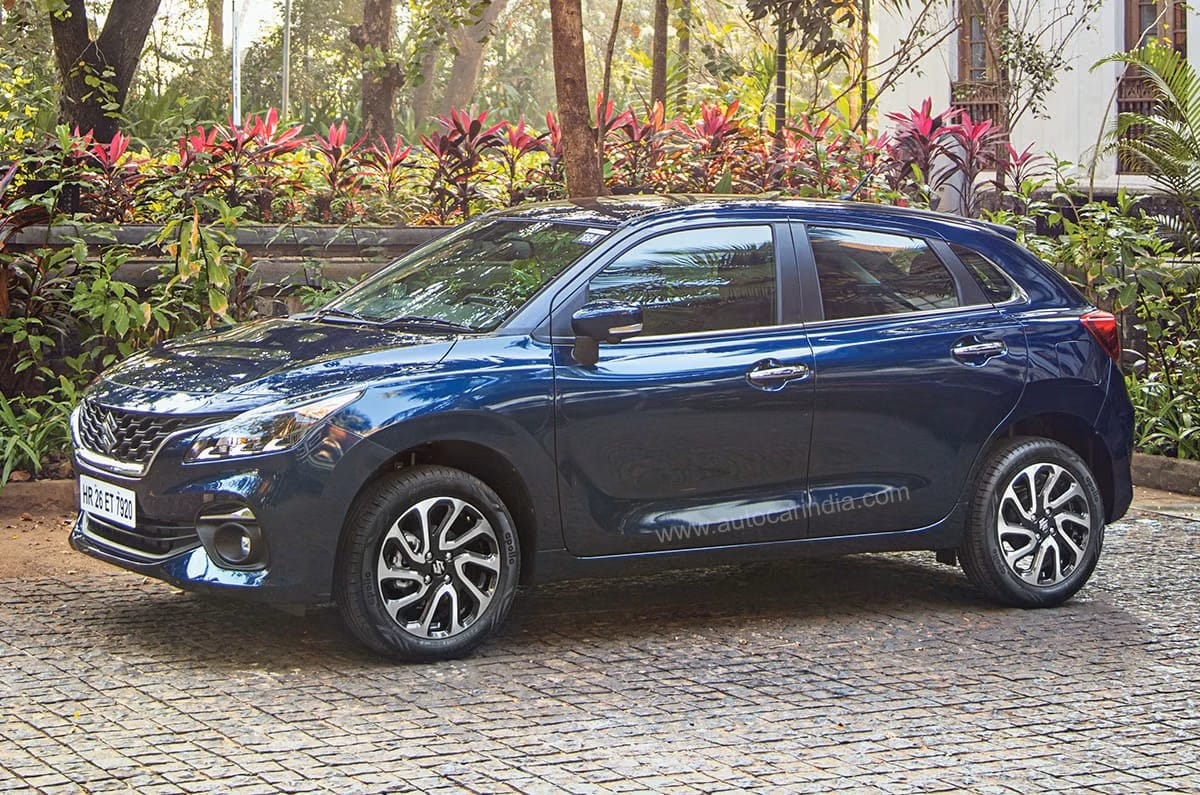
The Maruti Baleno is on sale with benefits of up to Rs 40,000 on petrol-manual variants and AMT variants. Meanwhile, the CNG variants attract benefits of up to Rs 35,000. The Baleno premium hatchback starts at Rs 5.99 lakh and goes up to Rs 9.17 lakh.
Maruti Fronx discounts in July 2026
Up to Rs 25,000
Lastly, the Maruti Fronx gets benefits of up to Rs 25,000 in July. The turbo-petrol variants are available with a Rs 10,000 cash discount and a Rs 15,000 scrappage bonus. Meanwhile, the naturally-aspirated petrol and CNG variants do not get a cash discount but are offered with a scrappage bonus of up to Rs 15,000. The Fronx price starts at Rs 6.85 lakh and tops out at Rs 11.84 lakh.
Ex-showroom prices mentioned above are as on July 8, 2026.