Autocar India completes Pune to Prague road trip in Skoda Kylaq

skoda kylaq p2p

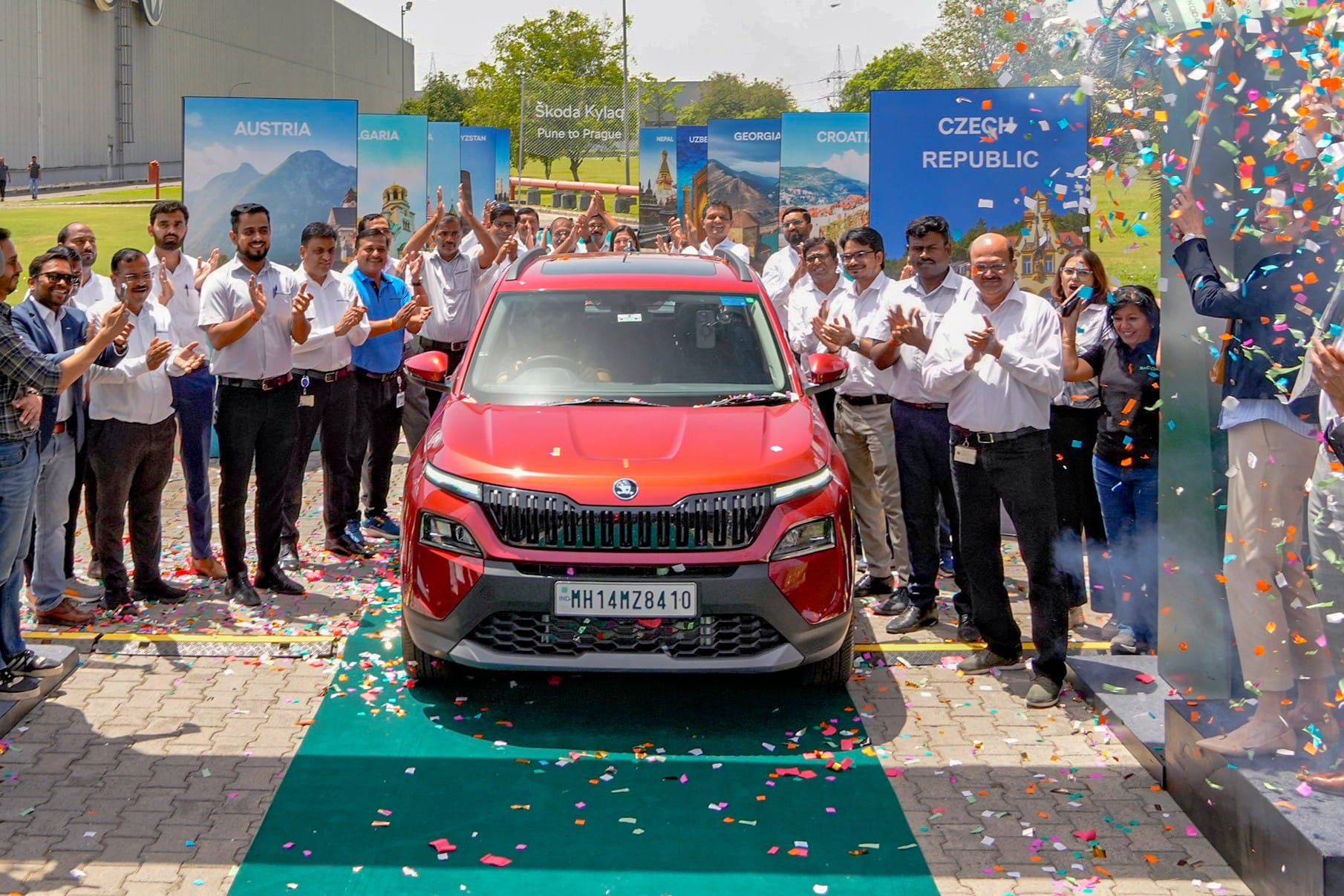
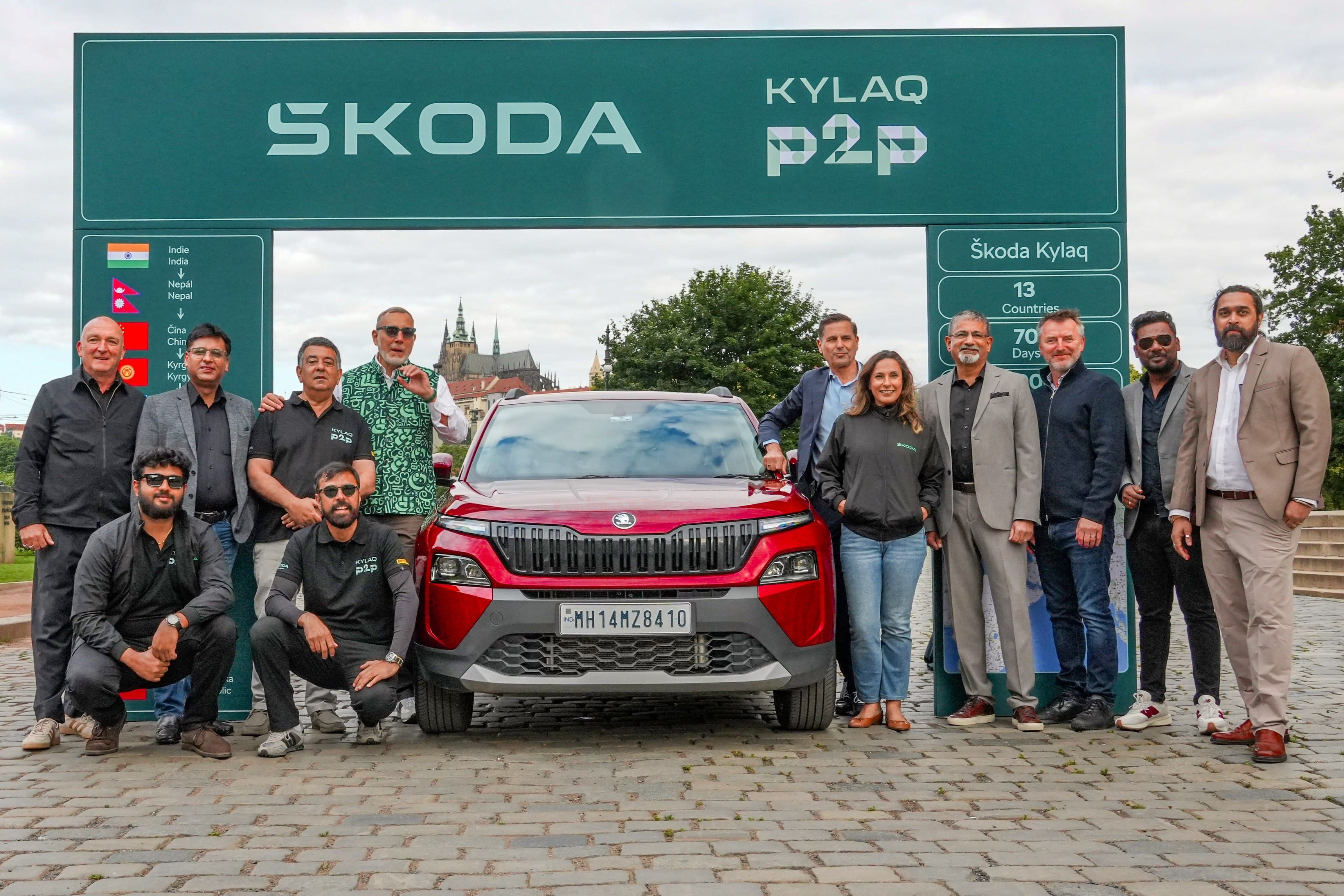
Autocar India, in collaboration with Skoda India, has completed the Pune-to-Prague (P2P) road trip in the Kylaq compact SUV. This is one of the longest overland expeditions ever undertaken in a made-in-India passenger vehicle, with the Kylaq covering 19,351km over a span of 70 days.

As the name suggests, P2P began at the Skoda Auto Volkswagen India manufacturing facility in Pune, and concluded in Prague – the home of the Czech carmaker – spanning two continents and 13 countries along the way.

Skoda Kylaq proves its engineering mettle in P2P

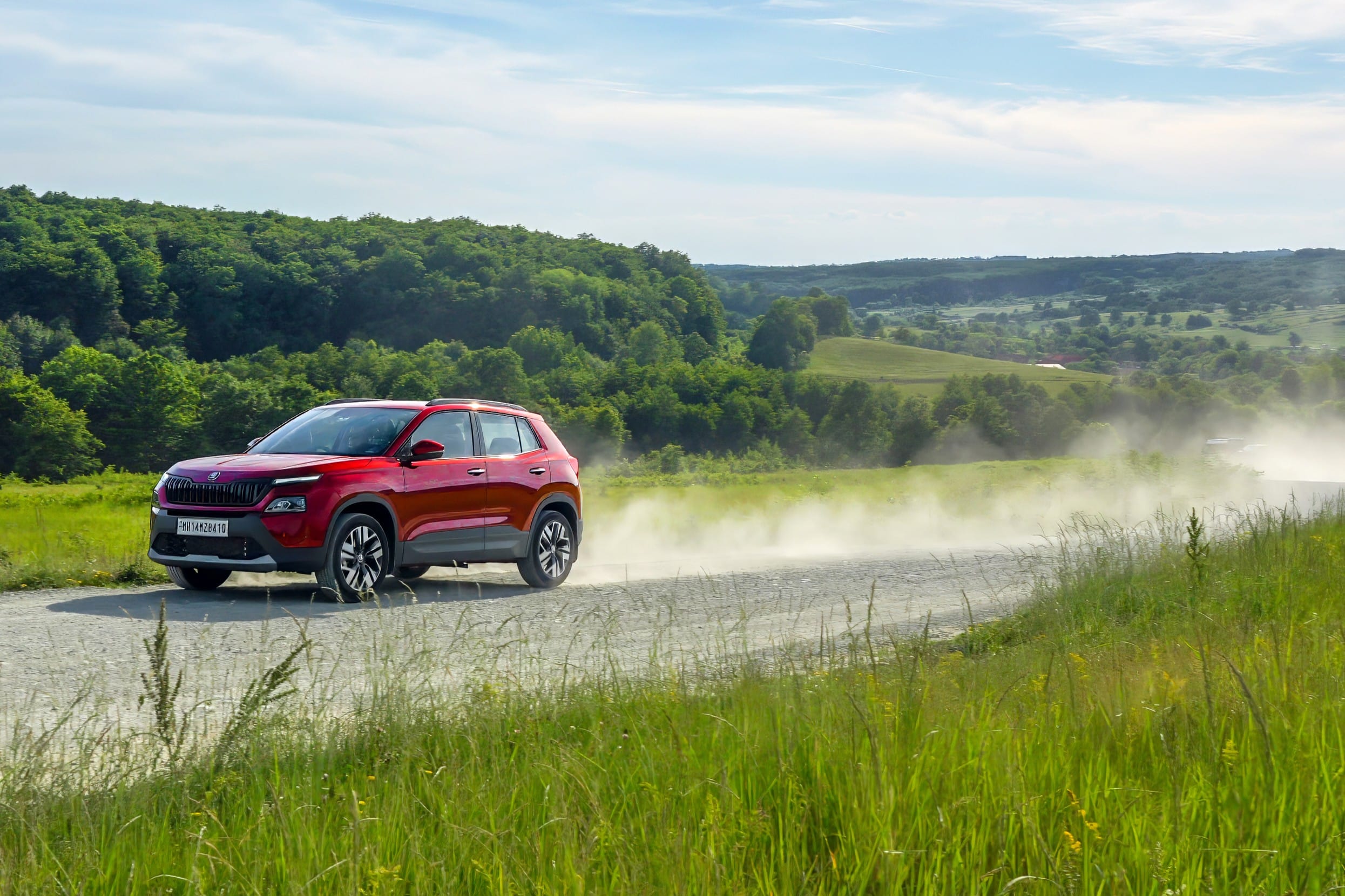
During the P2P road trip, the Kylaq experienced a smorgasbord of terrains and climates. Starting in Pune, the compact SUV travelled through Mumbai, Vadodara, Udaipur, Jaipur, Agra, Lucknow, and Gorakhpur, before crossing into Nepal. The journey then continued across the Tibetan Plateau in China, the ancient Silk Road through Kyrgyzstan, Uzbekistan, and Kazakhstan, before heading into Georgia, Türkiye, Bulgaria, Romania, Hungary, and Slovakia, eventually concluding in Prague.

Throughout the drive, the Kylaq encountered altitudes ranging from -154 metres to 5,364 metres above sea level, while temperatures varied between -12 deg-C and 43 deg-C. The Kylaq also tackled mountain passes, high-altitude plateaus, sweeping long-distance highways, and historic trade routes, exposing the compact SUV to diverse road, weather, and driving conditions. At the end, the Kylaq finished the journey with no issues – not even a puncture or a scratch.

Highlights during the Kylaq P2P trip included stumbling upon a classic car rally in Bratislava, checking out the Transylvanian Bran Castle in Bucharest, witnessing glowing hot air balloons at the crack of dawn in Cappadocia, crossing the Bosphorus bridge that connects Asia and Europe, barrelling down the arrow-straight roads of Kazakhstan, visiting the 17th-century Potala Palace in China, and so much more.

Commenting on the achievement, Ashish Gupta, brand director of Skoda India, said that the Kylaq P2P was a “powerful demonstration of what Indian engineering and manufacturing can achieve on the global stage.”

Used car study 2026: Mahindra XUV700 holds its value best among executive SUVs

Mahindra XUV700 resale value

Conducted in association with Spinny, India’s leading pre-owned car platform, the fourth edition of our Used Car Study analyses real-world resale values across a broad spectrum of vehicles sold in the Indian market to assess depreciation trends over a five-year ownership period. The study is based on actual transactional data shared by Spinny for vehicles sold between January 1 and August 31, 2025.

In this part of the resale value study series, we take a look at the executive SUV segment:

Executive SUVs resale value 

The Mahindra XUV700 has emerged as one of the strongest performers in the used car market, with all variants retaining value impressively well. Particularly noteworthy are the petrol variants, which display the flattest depreciation curves over a four-year period. In fact, one-year-old used examples are trading at only 15-16 percent below their average on-road prices, underlining the SUV’s exceptionally strong market demand.

By comparison, five-year-old examples of the Tata Harrier and MG Hector depreciate significantly more, with resale values falling to less than half of their original purchase prices. The Mahindra Scorpio N also holds better value than its rivals, and overall, the Mahindra SUVs display slower depreciation than their Tata counterparts. 

As per the study, the average selling price of a five-year-old executive SUV retailed through Spinny was Rs 12.6 lakh. Comparable figures for three-year-old and one-year-old executive SUVs were Rs 16.80 lakh and Rs 18.84 lakh, respectively. Average depreciation over the same periods worked out to 50 percent, 36.41 percent and 22.90 percent, respectively.

Autocar-Spinny resale value study methodology 

The analysis covers the average selling prices (ASPs) of vehicles retailed through Spinny’s network across nine cities – Delhi-NCR, Bengaluru, Hyderabad, Pune, Chennai, Mumbai, Lucknow, Ahmedabad and Kolkata.

For the purposes of this study, depreciation has been defined as the percentage difference between a vehicle’s original on-road price in its year of manufacture and its resale value in 2025. In instances where a model was offered with multiple engine options using the same fuel type, the data has been consolidated and averaged. Variant-wise differences have similarly been averaged out.

Discontinued models and powertrain options have been excluded. Additionally, premium vehicles priced above Rs 30 lakh, electric vehicles and certain low-volume models have not been included due to limited transaction data and insufficient sample sizes.

घर से निकला 13 किलो सोना, 9 किलो चांदी और 1.6 करोड़ कैश! यूपी में इस रिटायर ARTO के यहां छापा पड़ा तो हर कोई चौंका

उत्तर प्रदेश विजिलेंस विभाग ने आय से अधिक संपत्ति के मामले में आगरा में तैनात रहे पूर्व असिस्टेंट रीजनल ट्रांसपोर्ट ऑफिसर (ARTO) ललित कुमार के लखनऊ स्थित घर पर छापा मारा। तलाशी के दौरान अधिकारियों को 1.62 करोड़ रुपये नकद, 13 किलो सोना, 9 किलो चांदी और करीब 35 करोड़ रुपये की संपत्ति से जुड़े दस्तावेज मिले। आधिकारिक बयान के अनुसार, अदालत से सर्च वारंट मिलने के बाद विजिलेंस की टीम ने मंगलवार और बुधवार को ललित कुमार के घर की तलाशी ली।

जांच में पहले ही सामने आया था कि ललित कुमार ने अपनी वैध आय से कहीं ज्यादा संपत्ति बनाई है। इसके बाद उनके खिलाफ भ्रष्टाचार निवारण अधिनियम (Prevention of Corruption Act) के तहत मामला दर्ज किया गया था। राज्य सरकार के निर्देश पर इस मामले की जांच उत्तर प्रदेश विजिलेंस एस्टेब्लिशमेंट की लखनऊ सेक्टर टीम कर रही है।

घर में मिला 13 किलो सोना 

लखनऊ के अलीगंज स्थित चंद्रलोक कॉलोनी में ललित कुमार के घर की तलाशी के दौरान जांच अधिकारियों को घर के अलग-अलग हिस्सों में पैकेटों में छिपाकर रखे गए करीब 1.62 करोड़ रुपये नकद मिले। इसके अलावा टीम ने करीब 13 किलो सोना और 9 किलो चांदी भी बरामद की। सोना बार और गहनों के रूप में मिला, जबकि चांदी बार, बिस्कुट और गहनों के रूप में मिली। सरकार की ओर से अधिकृत वैल्यूअर ने बरामद सोने, चांदी और गहनों की कुल कीमत करीब 20 करोड़ रुपये आंकी है।

कई जगह घर 

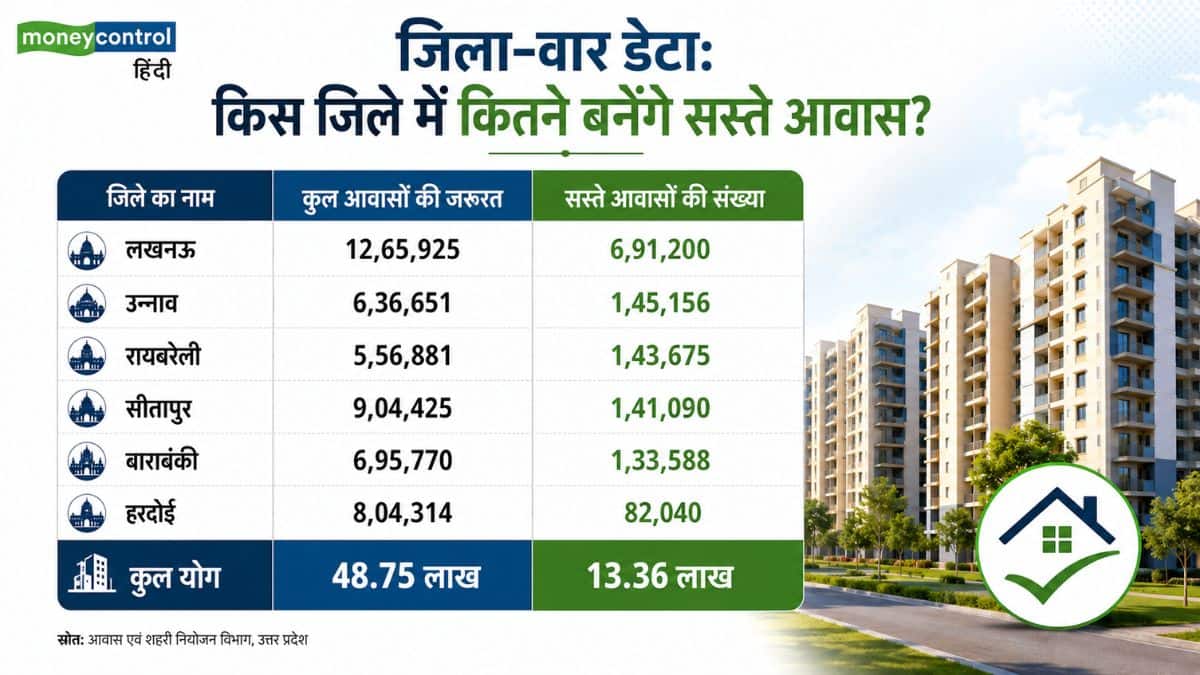
तलाशी के दौरान अधिकारियों को कई चल और अचल संपत्तियों से जुड़े दस्तावेज भी मिले। इनमें लखनऊ में कई मकान और प्लॉट, लखनऊ, बाराबंकी और रायबरेली में कृषि भूमि, साथ ही लखनऊ और नोएडा में फ्लैट बुकिंग के कागजात शामिल हैं। इन अचल संपत्तियों की अनुमानित कीमत करीब 13 करोड़ रुपये बताई गई है। जांच टीम को बैंक जमा, डाकघर की योजनाओं, म्यूचुअल फंड और फिक्स्ड डिपॉजिट (FD) में 1 करोड़ रुपये से अधिक के निवेश से जुड़े दस्तावेज भी मिले।

इसके अलावा घर से एक टोयोटा इनोवा, एक हुंडई i20 कार और एक रिवॉल्वर भी बरामद हुई। अधिकारियों ने जांच के दौरान घर में मौजूद महंगे फर्नीचर और अन्य कीमती सामान की भी सूची तैयार की है।

35 करोड़ की संपत्ति

उत्तर प्रदेश विजिलेंस एस्टेब्लिशमेंट के मुताबिक, छापेमारी के दौरान बरामद नकदी, सोना-चांदी, गहने, चल-अचल संपत्तियां और निवेश को मिलाकर कुल संपत्ति की कीमत करीब 35 करोड़ रुपये आंकी गई है। विभाग ने बताया कि तलाशी में मिली संदिग्ध और बेहिसाब संपत्ति की जांच की जा रही है। इसे चल रही जांच का हिस्सा बनाया गया है, जिसके बाद आगे की कानूनी कार्रवाई की जाएगी। बयान के अनुसार, इस सफल छापेमारी को अंजाम देने वाली लखनऊ सेक्टर की विजिलेंस टीम को उत्तर प्रदेश विजिलेंस एस्टेब्लिशमेंट के पुलिस महानिदेशक (DGP) और निदेशक ने 1 लाख रुपये का इनाम देने की घोषणा की है।

Used car study 2026: Kia Seltos holds its value best among midsize SUVs

Kia Seltos resale value

Conducted in association with Spinny, India’s leading pre-owned car platform, the fourth edition of our Used Car Study analyses real-world resale values across a broad spectrum of vehicles sold in the Indian market to assess depreciation trends over a five-year ownership period. The study is based on actual transactional data shared by Spinny for vehicles sold between January 1 and August 31, 2025.

In this part of the resale value study series, we take a look at the midsize SUV segment:

Midsize SUVs resale value 

*Average selling price (ASP) in Rs lakh

Over a five-year ownership period, the Kia Seltos petrol-automatic showcases the strongest residual performance in the midsize SUV category, retaining value better than most of its rivals. Notably, the Seltos considered here is the outgoing version – the new Seltos was only introduced in 2026. As for the Skoda-Volkswagen duo, the Taigun saw greater depreciation over a 4-year than the Kushaq. 

Despite being on sale only since 2023, the Honda Elevate has already demonstrated promising used market performance, with a notably flatter depreciation trend than expected for a relatively new entrant. In contrast, weaker demand for the MG Astor in the new car market appears to have impacted its resale values as well, with the petrol-automatic version showing the highest depreciation in the segment.

As per the study, the average selling price of a five-year-old midsize SUV retailed through Spinny was Rs 12 lakh. Comparable figures for three-year-old and one-year-old midsize SUVs were Rs 13.43 lakh and Rs 14.81 lakh, respectively. Average depreciation over the same periods worked out to 44 percent, 35.4 percent and 22.30 percent, respectively.

Autocar-Spinny resale value study methodology 

The analysis covers the average selling prices (ASPs) of vehicles retailed through Spinny’s network across nine cities – Delhi-NCR, Bengaluru, Hyderabad, Pune, Chennai, Mumbai, Lucknow, Ahmedabad and Kolkata.

For the purposes of this study, depreciation has been defined as the percentage difference between a vehicle’s original on-road price in its year of manufacture and its resale value in 2025. In instances where a model was offered with multiple engine options using the same fuel type, the data has been consolidated and averaged. Variant-wise differences have similarly been averaged out.

Discontinued models and powertrain options have been excluded. Additionally, premium vehicles priced above Rs 30 lakh, electric vehicles and certain low-volume models have not been included due to limited transaction data and insufficient sample sizes.

JSW MG Motor ties up with Spinny for used EV retail

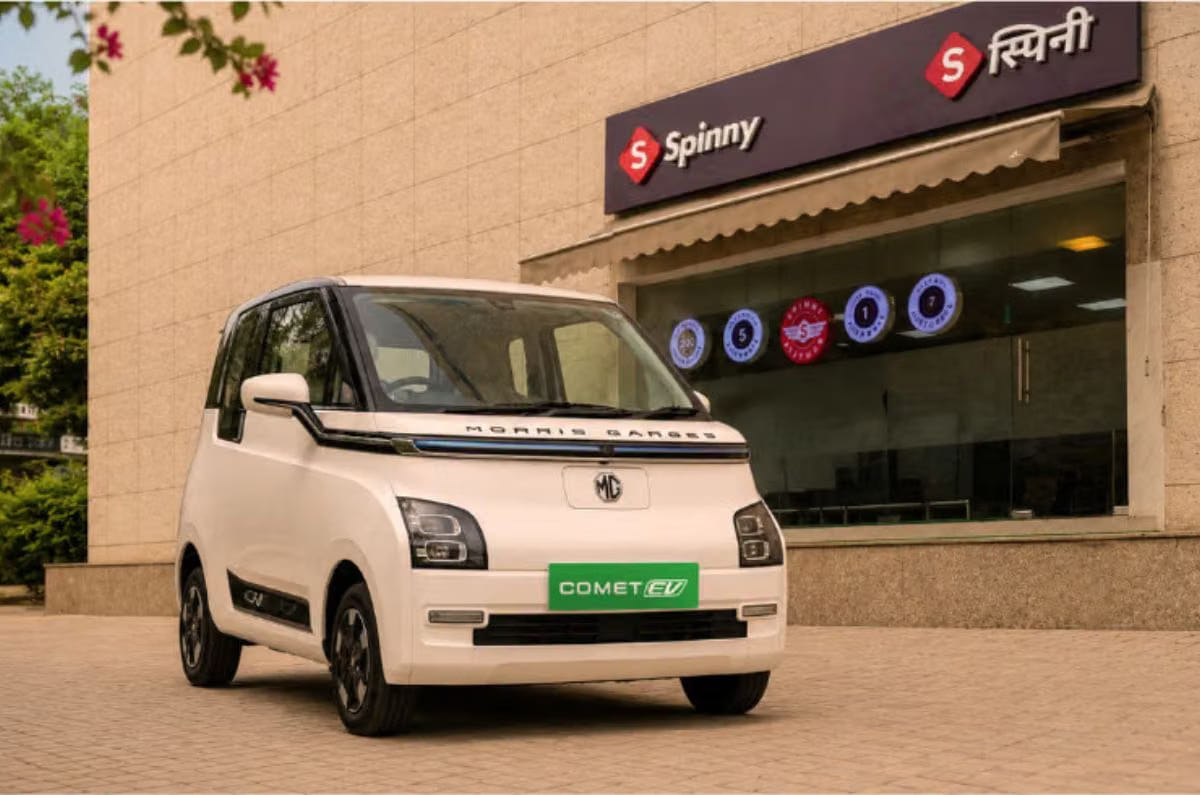
MG Comet front quarter static

Used car platform Spinny has finalised a commercial partnership with JSW MG Motor India to establish a structured secondary market ecosystem for pre-owned electric vehicles (EVs). The collaboration is designed to counter common barriers in secondary EV transactions, particularly consumer uncertainty surrounding real-time battery degradation, residual valuation transparency, and long-term diagnostic verification.

What does the partnership entail? 

Under the terms of the agreement, Spinny will introduce specialised EV evaluation protocols across its network, utilising technical inputs from JSW MG Motor India. The inspection framework focuses on standardised battery health assessment and certification processes intended to provide clearer valuation metrics for both buyers and sellers. The program will initially roll out across major urban centres, including Bengaluru, Chennai, Delhi NCR, Hyderabad, Kochi, Mumbai, Pune, Jaipur, Ahmedabad, Kolkata, Lucknow, Chandigarh, and Coimbatore.

The transaction pipeline allows consumers to list and purchase certified pre-owned MG electric models—such as the Comet EV, Windsor EV, and ZS EV—directly through Spinny’s digital platform and physical car hubs. Vehicles processed through this channel will feature a 200-point inspection check, OEM warranty continuity, fixed pricing assurance, and a five-day money-back window. The reconditioned units will undergo technical refurbishment at Spinny’s network of Integrated Restoration Centres, which are being upgraded with specialised EV diagnostic tooling and battery restoration workflows.

Vinay Raina, Chief Commercial Officer at JSW MG Motor India, stated that developing a reliable pre-owned framework is critical for the brand as it expands its new energy vehicle portfolio in the country. Niraj Singh, Founder and CEO of Spinny, noted that establishing structural transparency in battery diagnostics is essential to building secondary market transaction volume.

With inputs from Dev Vadchhedia 

Used car study 2026: Hyundai Venue holds its value best among compact SUVs

Hyundai Vanue resale value

Conducted in association with Spinny, India’s leading pre-owned car platform, the fourth edition of our Used Car Study analyses real-world resale values across a broad spectrum of vehicles sold in the Indian market to assess depreciation trends over a five-year ownership period. The study is based on actual transactional data shared by Spinny for vehicles sold between January 1 and August 31, 2025.

In this part of the resale value study series, we take a look at the compact SUV segment:

Compact SUV resale value 

In the compact SUV segment, the Hyundai Venue diesel-manual stands out for depreciating at the slowest rate, while the petrol variants depreciate much faster in the fourth and fifth years. Meanwhile, strong popularity of the Maruti Brezza in the new car market since the launch of its current-generation model in 2022 has translated into healthy used market demand and stable resale values.

On the contrary, both the Tata Nexon and Mahindra Thar exhibit relatively steeper depreciation over a five-year period. Notably, buyers looking at five-year-old diesel-powered Thar examples can now purchase one for nearly half of its original on-road price.

As per the study, the average selling price of a five-year-old compact SUV retailed through Spinny was Rs 9.70 lakh. Comparable figures for three-year-old and one-year-old compact SUVs were Rs 10.88 lakh and Rs 12.10 lakh, respectively. Average depreciation over the same periods worked out to 43.16 percent, 33.94 percent and 20.25 percent, respectively.

Autocar-Spinny resale value study methodology 

The analysis covers the average selling prices (ASPs) of vehicles retailed through Spinny’s network across nine cities – Delhi-NCR, Bengaluru, Hyderabad, Pune, Chennai, Mumbai, Lucknow, Ahmedabad and Kolkata.

For the purposes of this study, depreciation has been defined as the percentage difference between a vehicle’s original on-road price in its year of manufacture and its resale value in 2025. In instances where a model was offered with multiple engine options using the same fuel type, the data has been consolidated and averaged. Variant-wise differences have similarly been averaged out.

Discontinued models and powertrain options have been excluded. Additionally, premium vehicles priced above Rs 30 lakh, electric vehicles and certain low-volume models have not been included due to limited transaction data and insufficient sample sizes.

Used car study 2026: Tata Punch holds its value best among sub-compact SUVs

Tata Punch resale value

Conducted in association with Spinny, India’s leading pre-owned car platform, the fourth edition of our Used Car Study analyses real-world resale values across a broad spectrum of vehicles sold in the Indian market to assess depreciation trends over a five-year ownership period. The study is based on actual transactional data shared by Spinny for vehicles sold between January 1 and August 31, 2025.

In this part of the resale value study series, we take a look at the sub-compact SUV segment:

Sub-compact SUV resale value 

*Average selling price (ASP) in Rs lakh

The sub-compact SUV space has evolved rapidly since 2023 with the arrival of newer entrants such as the Hyundai Exter, Maruti Fronx, Toyota Taisor and Citroën C3. Due to limited used market data, the Toyota and Citroën models have been excluded from this analysis.

Among the remaining contenders, the Fronx appears to hold its value particularly well in the short term. However, over a longer ownership cycle, the Tata Punch demonstrates the flattest overall depreciation curve, outperforming rivals such as the Nissan Magnite and Renault Kiger. The latter two are quite evenly matched through the analysis period. 

As per the study, the average selling price of a five-year-old Tata Punch retailed through Spinny (the only car for which we have 5-year data in this segment) was Rs 4.74 lakh. Comparable figures for three-year-old and one-year-old sub-compact SUVs were Rs 6.86 lakh and Rs 7.63 lakh, respectively. Average depreciation for the third and fifth years worked out to 34.33 percent and 22.33 percent, respectively.

Autocar-Spinny resale value study methodology 

The analysis covers the average selling prices (ASPs) of vehicles retailed through Spinny’s network across nine cities – Delhi-NCR, Bengaluru, Hyderabad, Pune, Chennai, Mumbai, Lucknow, Ahmedabad and Kolkata.

For the purposes of this study, depreciation has been defined as the percentage difference between a vehicle’s original on-road price in its year of manufacture and its resale value in 2025. In instances where a model was offered with multiple engine options using the same fuel type, the data has been consolidated and averaged. Variant-wise differences have similarly been averaged out.

Discontinued models and powertrain options have been excluded. Additionally, premium vehicles priced above Rs 30 lakh, electric vehicles and certain low-volume models have not been included due to limited transaction data and insufficient sample sizes.

Used Car Study 2026: Hyundai Verna holds its value best among midsize sedans

Hyundai Verna resale value

Conducted in association with Spinny, India’s leading pre-owned car platform, the fourth edition of our Used Car Study analyses real-world resale values across a broad spectrum of vehicles sold in the Indian market to assess depreciation trends over a five-year ownership period. The study is based on actual transactional data shared by Spinny for vehicles sold between January 1 and August 31, 2025.

In this part of the resale value study series, we take a look at the midsize sedan segment:

Midsize sedan resale value 

*Average selling price (ASP) in Rs lakh

The Hyundai Verna petrol-manual displays the most stable depreciation curve among midsize sedans. Strong demand, modern styling and a well-rounded ownership experience appear to have positively influenced its used-market appeal. In contrast, five-year-old examples of the Honda City petrol-manual are currently trading at nearly half their original on-road prices. 

Between the two European rivals, the Volkswagen Virtus appears to retain value marginally better than the mechanically identical Skoda Slavia. Meanwhile, one-year-old and three-year-old examples of the now-discontinued Maruti Ciaz seem to hold its value relatively better than other midsize sedans of the same age.  

As per the study, the average selling price of a five-year-old midsize sedan retailed through Spinny was Rs 9.38 lakh. Comparable figures for three-year-old and one-year-old midsize sedans were Rs 11.25 lakh and Rs 12.95 lakh, respectively. Average depreciation over the same periods worked out to 43 percent, 34.8 percent and 24.8 percent, respectively.

Autocar-Spinny resale value study methodology 

The analysis covers the average selling prices (ASPs) of vehicles retailed through Spinny’s network across nine cities – Delhi-NCR, Bengaluru, Hyderabad, Pune, Chennai, Mumbai, Lucknow, Ahmedabad and Kolkata.

For the purposes of this study, depreciation has been defined as the percentage difference between a vehicle’s original on-road price in its year of manufacture and its resale value in 2025. In instances where a model was offered with multiple engine options using the same fuel type, the data has been consolidated and averaged. Variant-wise differences have similarly been averaged out.

Discontinued models and powertrain options have been excluded. Additionally, premium vehicles priced above Rs 30 lakh, electric vehicles and certain low-volume models have not been included due to limited transaction data and insufficient sample sizes.

Used Car Study 2026: Maruti Dzire holds its value best among compact sedans

Conducted in association with Spinny, India’s leading pre-owned car platform, the fourth edition of our Used Car Study analyses real-world resale values across a broad spectrum of vehicles sold in the Indian market in order to assess depreciation trends over a five-year ownership period. The study is based on actual transactional data shared by Spinny for vehicles sold between January 1 and August 31, 2025.

In this part of the resale value study series, we now take a look at the compact sedan segment:

Compact sedan resale value 

The Maruti Dzire continues to dominate the compact sedan segment in terms of resale value retention. Its immense popularity in the new car market directly translates to strong residuals in the used market, helping it maintain the lowest average depreciation.

Following closely behind is the Tata Tigor petrol-manual, although examples over two years old tend to record the lowest average resale prices in the category, making them attractive value propositions for budget-conscious used car buyers. Meanwhile, though the Honda Amaze depreciates more, its average prices are higher than the Dzire. 

As per the study, the average selling price of a five-year-old compact sedan retailed through Spinny was Rs 6.10 lakh. Comparable figures for three-year-old and one-year-old compact sedans were Rs 6.88 lakh and Rs 7.95 lakh, respectively. Average depreciation over the same periods worked out to 46.4 percent, 31.55 percent and 21.4 percent, respectively.

Autocar-Spinny resale value study methodology 

The analysis covers the average selling prices (ASPs) of vehicles retailed through Spinny’s network across nine cities – Delhi-NCR, Bengaluru, Hyderabad, Pune, Chennai, Mumbai, Lucknow, Ahmedabad and Kolkata.

For the purposes of this study, depreciation has been defined as the percentage difference between a vehicle’s original on-road price in its year of manufacture and its resale value in 2025. In instances where a model was offered with multiple engine options using the same fuel type, the data has been consolidated and averaged. Variant-wise differences have similarly been averaged out.

Discontinued models and powertrain options have been excluded. Additionally, premium vehicles priced above Rs 30 lakh, electric vehicles and certain low-volume models have not been included due to limited transaction data and insufficient sample sizes.

Used Car Study 2026: Maruti Dzire holds its value best among compact sedans

Maruti Dzire resale value

Conducted in association with Spinny, India’s leading pre-owned car platform, the fourth edition of our Used Car Study analyses real-world resale values across a broad spectrum of vehicles sold in the Indian market in order to assess depreciation trends over a five-year ownership period. The study is based on actual transactional data shared by Spinny for vehicles sold between January 1 and August 31, 2025.

In this part of the resale value study series, we now take a look at the compact sedan segment:

Compact sedan resale value 

The Maruti Dzire continues to dominate the compact sedan segment in terms of resale value retention. Its immense popularity in the new car market directly translates to strong residuals in the used market, helping it maintain the lowest average depreciation.

Following closely behind is the Tata Tigor petrol-manual, although examples over two years old tend to record the lowest average resale prices in the category, making them attractive value propositions for budget-conscious used car buyers. Meanwhile, though the Honda Amaze depreciates more, its average prices are higher than the Dzire. 

As per the study, the average selling price of a five-year-old compact sedan retailed through Spinny was Rs 6.10 lakh. Comparable figures for three-year-old and one-year-old compact sedans were Rs 6.88 lakh and Rs 7.95 lakh, respectively. Average depreciation over the same periods worked out to 46.4 percent, 31.55 percent and 21.4 percent, respectively.

Autocar-Spinny resale value study methodology 

The analysis covers the average selling prices (ASPs) of vehicles retailed through Spinny’s network across nine cities – Delhi-NCR, Bengaluru, Hyderabad, Pune, Chennai, Mumbai, Lucknow, Ahmedabad and Kolkata.

For the purposes of this study, depreciation has been defined as the percentage difference between a vehicle’s original on-road price in its year of manufacture and its resale value in 2025. In instances where a model was offered with multiple engine options using the same fuel type, the data has been consolidated and averaged. Variant-wise differences have similarly been averaged out.

Discontinued models and powertrain options have been excluded. Additionally, premium vehicles priced above Rs 30 lakh, electric vehicles and certain low-volume models have not been included due to limited transaction data and insufficient sample sizes.