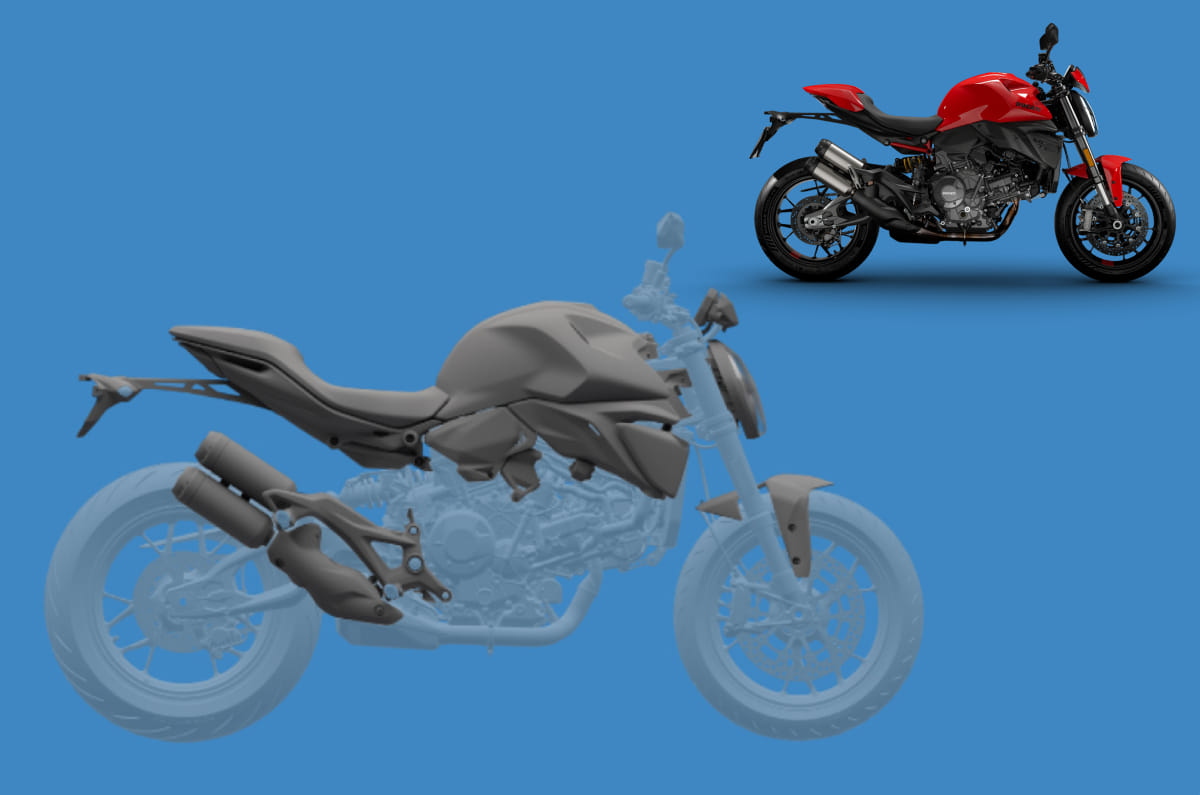
Ducati has filed a design patent in India for the updated Monster. The motorcycle was unveiled globally last October, and we had reported that an India launch was likely in 2026. The latest patent filing suggests Ducati is moving closer to introducing the updated Monster in our market.
890cc V2 engine shared with the Panigale V2, Streetfighter V2 and Multistrada V2
Current Monster priced at Rs 13.84 lakh (ex-showroom, India)
2026 Ducati Monster details
The updated Monster brings back the muscular fuel tank that defined earlier generations
The 2026 Monster marks a significant departure from its predecessor, particularly in terms of design. The previous model drew criticism for moving away from the Monster’s signature muscular fuel tank, and Ducati has addressed that by restoring the bike’s iconic proportions. The redesigned tank also incorporates vents reminiscent of the second-generation Monster. Elsewhere, the headlight has been revised with a circular daytime running lamp (DRL), while dynamic turn indicators are offered at both the front and rear.
Powering the updated Monster is Ducati’s new 890cc V2 engine, shared with the Panigale V2, Streetfighter V2 and Multistrada V2. In the Monster, it produces 111hp at 9,000rpm and 91.1Nm at 7,250rpm. The engine features a variable intake valve timing system for a broader torque spread and is paired with a 6-speed gearbox equipped with a bidirectional quickshifter. Another notable change is the switch away from Desmodromic valve actuation, allowing valve clearance inspection intervals to be extended to 45,000km.
The motorcycle continues with Ducati’s aluminium monocoque chassis, featuring a lightweight aluminium frame bolted directly to the cylinder heads and a technopolymer trellis-style subframe. Suspension duties are handled by a Showa USD fork and a preload-adjustable rear monoshock, while braking is managed by twin Brembo calipers gripping 320mm front discs. A new 5-inch TFT display also replaces the previous 4.2-inch unit.
Ducati already offers most of its global line-up in India, including the recently launched Multistrada V2, Streetfighter V2 S and Panigale V2 S. This latest patent filing suggests the updated Monster could be the next model to join the brand’s Indian portfolio.
Audi has unveiled the Q9, its new flagship and largest SUV yet, marking the first use of the ‘9’ designation. Positioned above the Q7 as the brand’s second three-row SUV, the Q9 is set to launch in India in the second quarter of 2027 and will be locally assembled in the country. Globally, it is manufactured at Audi’s Bratislava plant in Slovakia. It will compete with the likes of the BMW X7 and Mercedes-Benz GLS.
Offered in three trims globally: Advanced, S Line and SQ9
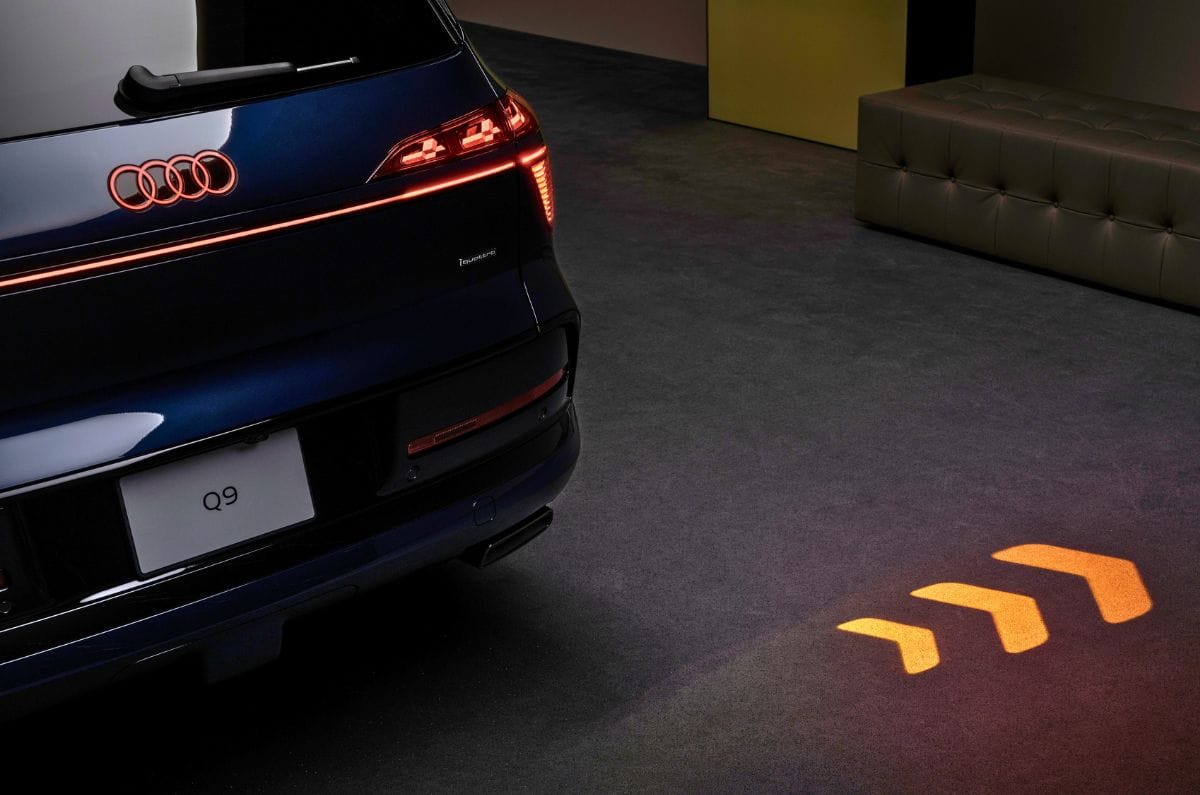
Gets Digital Matrix LED headlights, automatic doors, curved digital OLED taillights
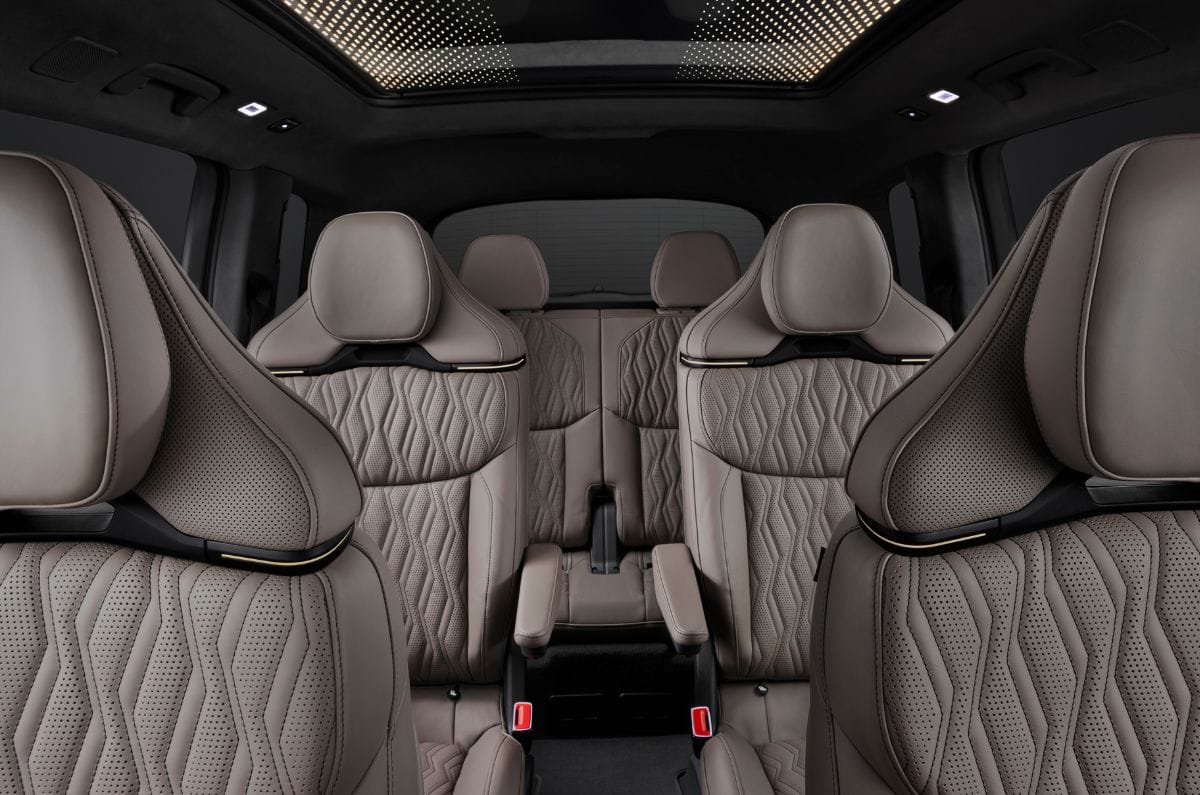
Features 7 seats as standard, while a 6-seater option is also offered at extra cost
The Audi Q9 is priced at 108,400 euros (around Rs 1.18 crore before taxes and duties), with international deliveries to commence in November 2026.
Audi Q9 SUV exterior design
Gets a plethora of exterior lighting features for improved safety
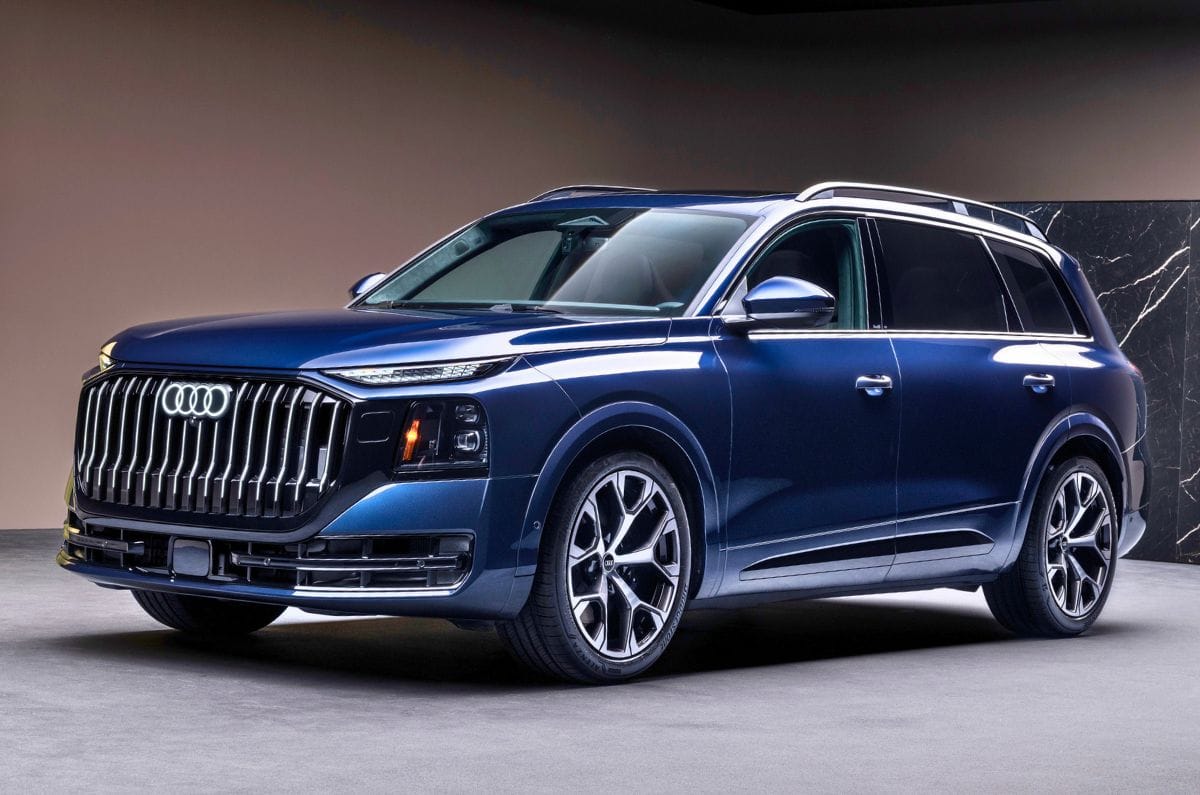
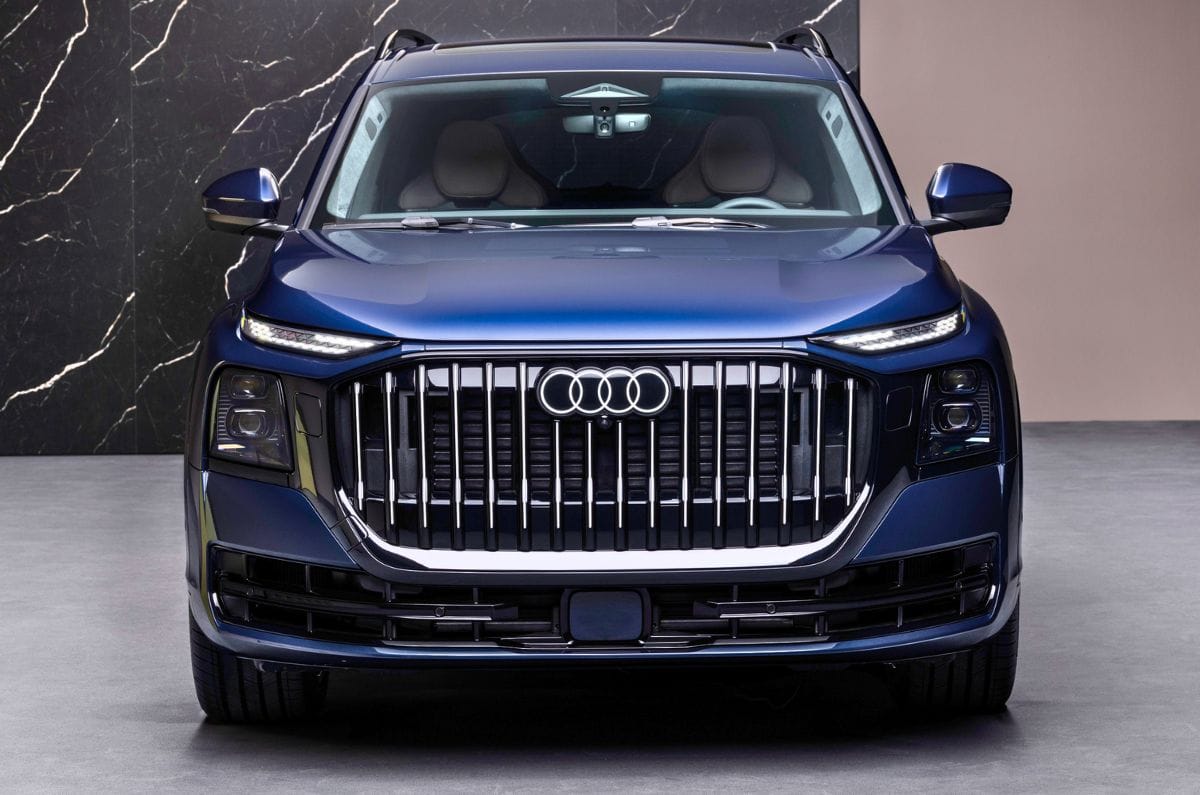
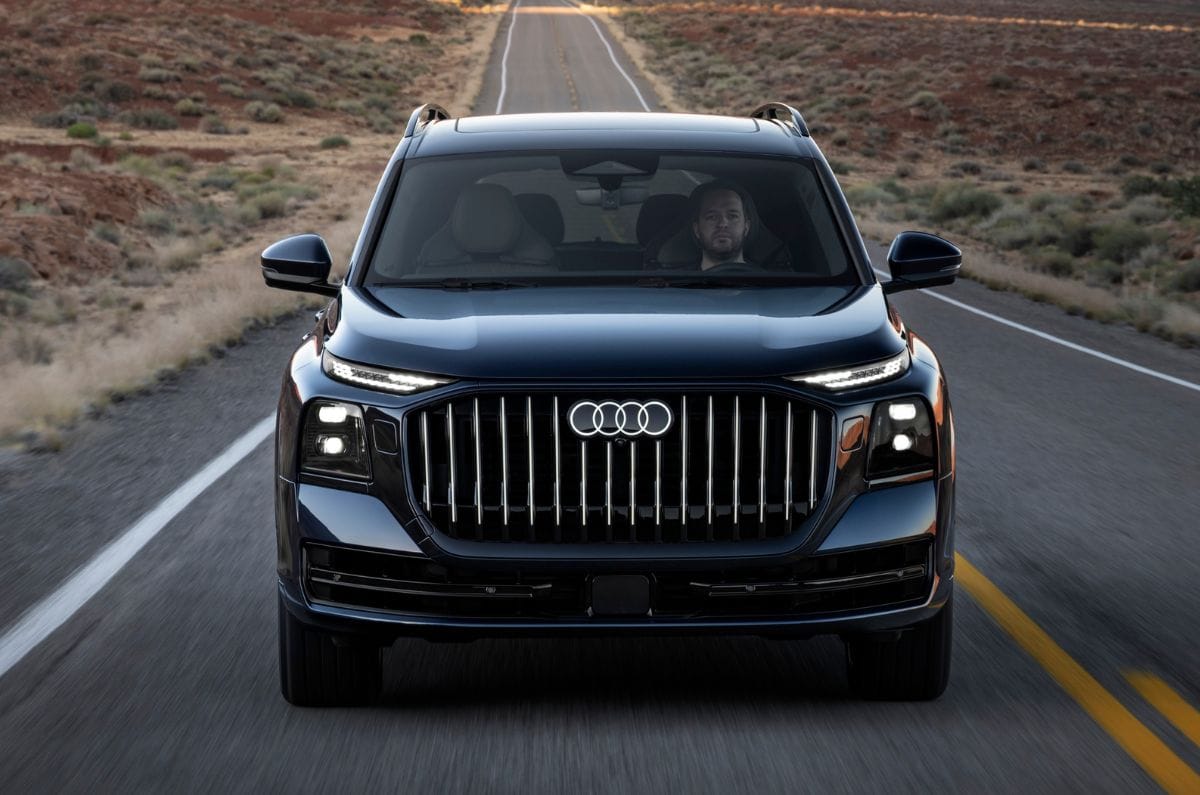
Up front, the Audi Q9 features a split-headlight setup with slim LED DRLs and Digital Matrix LED headlights. These incorporate micro-LED modules capable of projecting warning symbols onto the road surface, while the advanced turn signals project directional indicators onto the ground at night to improve visibility for other road users. The front fascia is dominated by a massive grille with illuminated vertical slats, giving it a distinct look compared to other Audi models. It also features an illuminated 2D Audi logo, while the bumper houses large air intakes and a centrally mounted radar sensor for the advanced driver assistance system (ADAS) suite.
In profile, the Audi Q9 adopts a clean and elegant design, with wheel sizes ranging from 20 to 23 inches. The 22- and 23-inch alloys come standard with acoustic foam inserts to reduce tyre noise, while black cladding around the wheel arches adds a rugged touch. The Q9 also features soft-closing automatic doors with collision-detection sensors. Grey brake callipers are standard, while red callipers are available as an option.
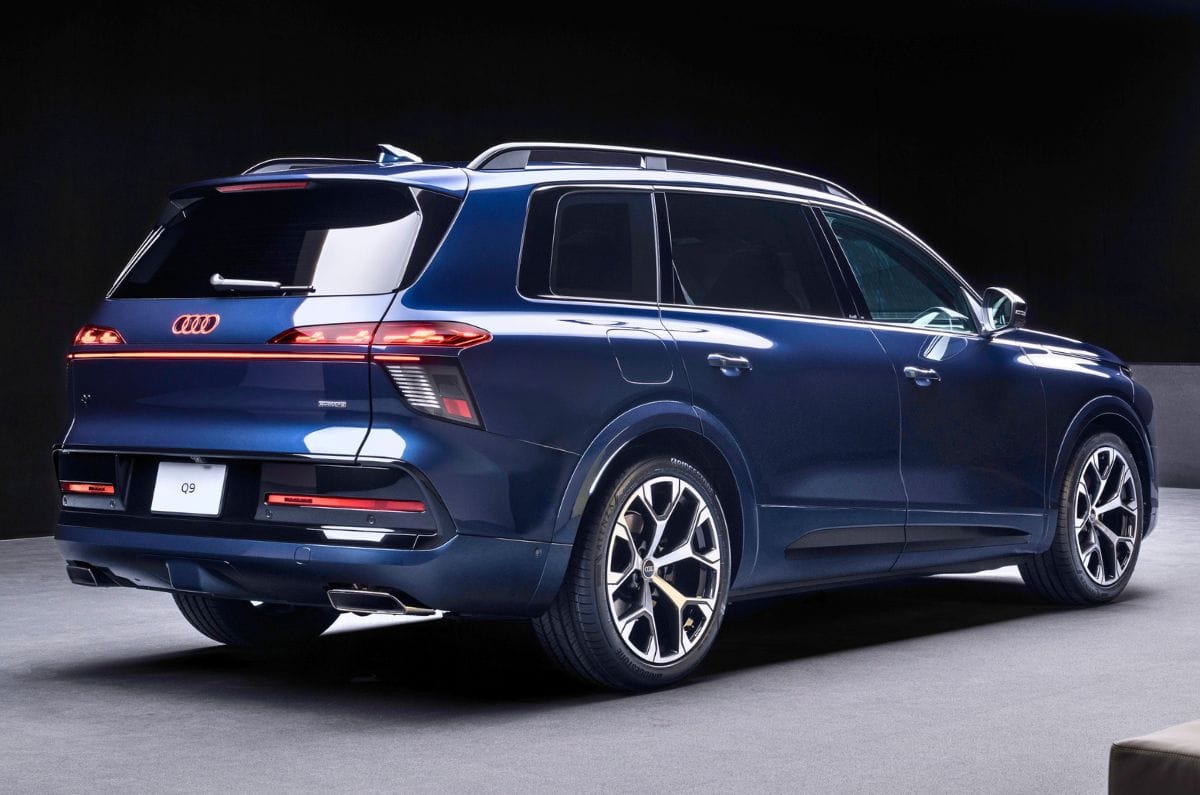
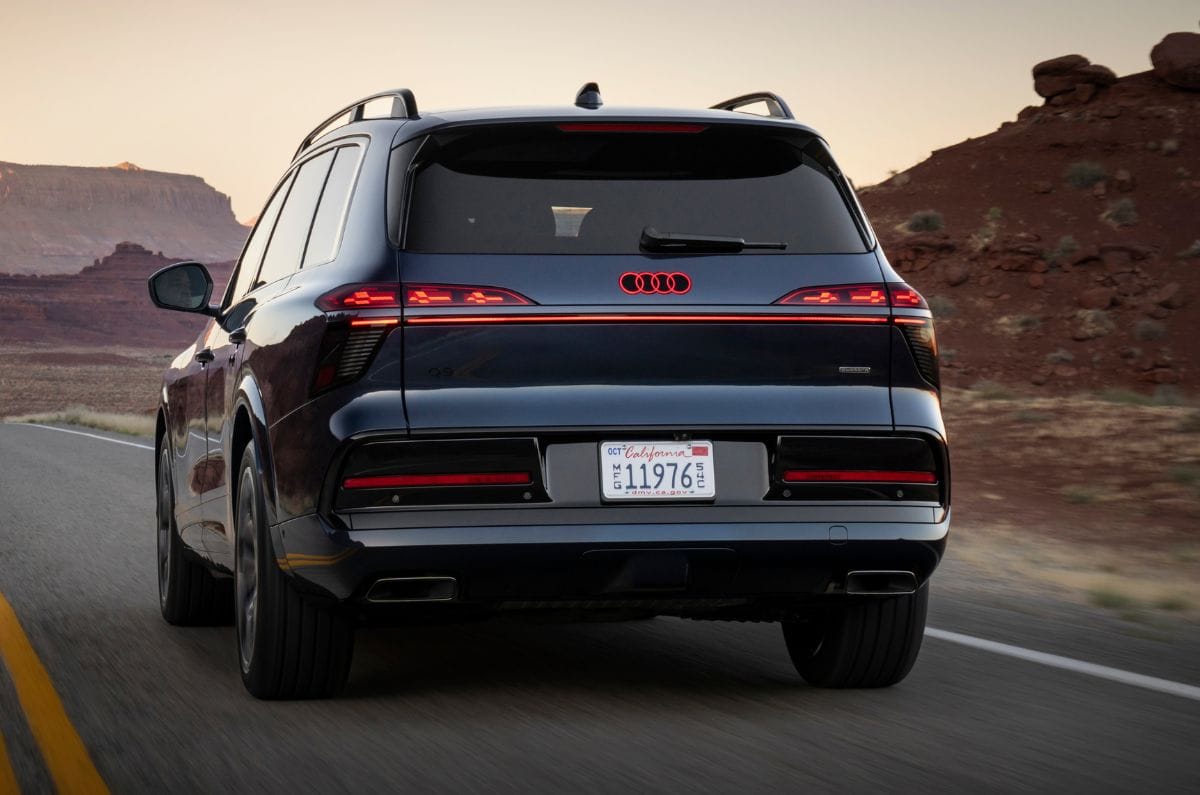
Audi is offering the Q9 with curved digital OLED taillights connected by a lighting strip featuring an illuminated Audi logo. The rear bumper’s black centre section and gloss-black surrounds create a bold contrast with the bodywork, while sharp creases and twin exhaust tips add to the SUV’s sporty character.
Here are the dimensions of the Audi Q9 SUV:
New Audi Q9 SUV dimensions
Length
5.31 metres
Width
2.21 metres
Height
1.81 metres
Wheelbase
3.14 metres
In the international market, Audi is selling the Q9 in standard ‘Advanced’, ‘S-Line’ and ‘SQ9’ avatars.
SQ9 gets a different design for the grille, bumpers and alloy wheels
Compared to the standard Q9, the SQ9 gets a sportier front-end design with a revised grille featuring silver L-shaped inserts that give it a more elegant appearance. The front bumper also features a honeycomb mesh pattern for the air intakes. It rides on a new set of alloy wheels and gets silver trim around the window line and rear quarter glass. At the rear, the overall design remains largely unchanged, but the SQ9 stands out with a silver-accented bumper and quad exhaust tips, with two outlets on either side.
Audi Q9 SUV interior design and features
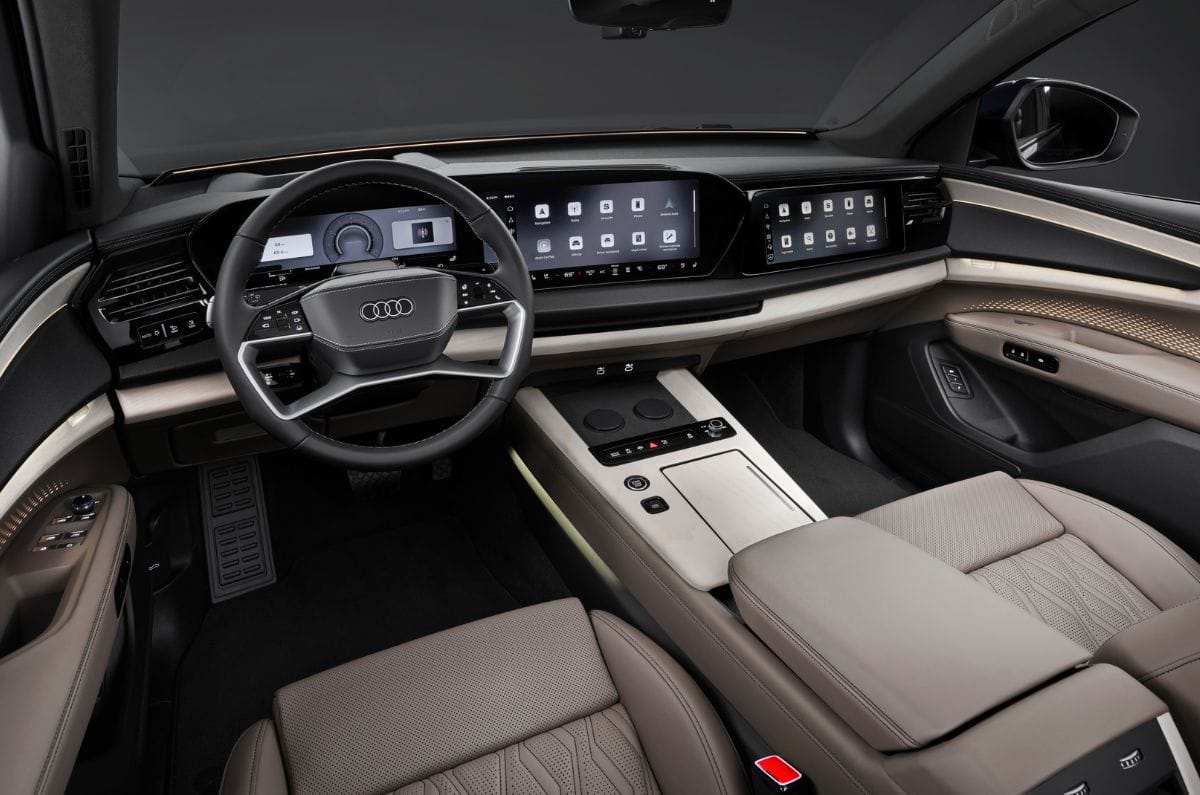
The SUV offers 7 seats and a triple-screen setup on the dashboard as standard
While the debut offers the first look at the Q9’s exterior, Audi had already revealed the interior in May. The Q9 is a three-row SUV offered as a seven-seater as standard, with an optional six-seat layout featuring captain’s chairs in the second row. Sport seats come standard in the front, and all three rows feature power-adjustable seats. The front seats also offer ventilation and massage functions, while the third row can be folded electronically via the infotainment system or controls in the boot.
To enhance the cabin’s luxurious appeal, Audi has incorporated extensive wooden trim across the dashboard and centre console. The dashboard features a three-screen layout, comprising a 12.3-inch digital driver’s display, a 14.5-inch driver-oriented infotainment touchscreen, and a 12.3-inch passenger display with a dedicated privacy mode. A new four-spoke steering wheel with a 2D Audi logo sits ahead of the driver, while the infotainment system runs on Android Automotive OS, allowing access to built-in apps without requiring a connected smartphone.
Gets a panoramic sunroof, 22-speaker sound system and Level-2 ADAS
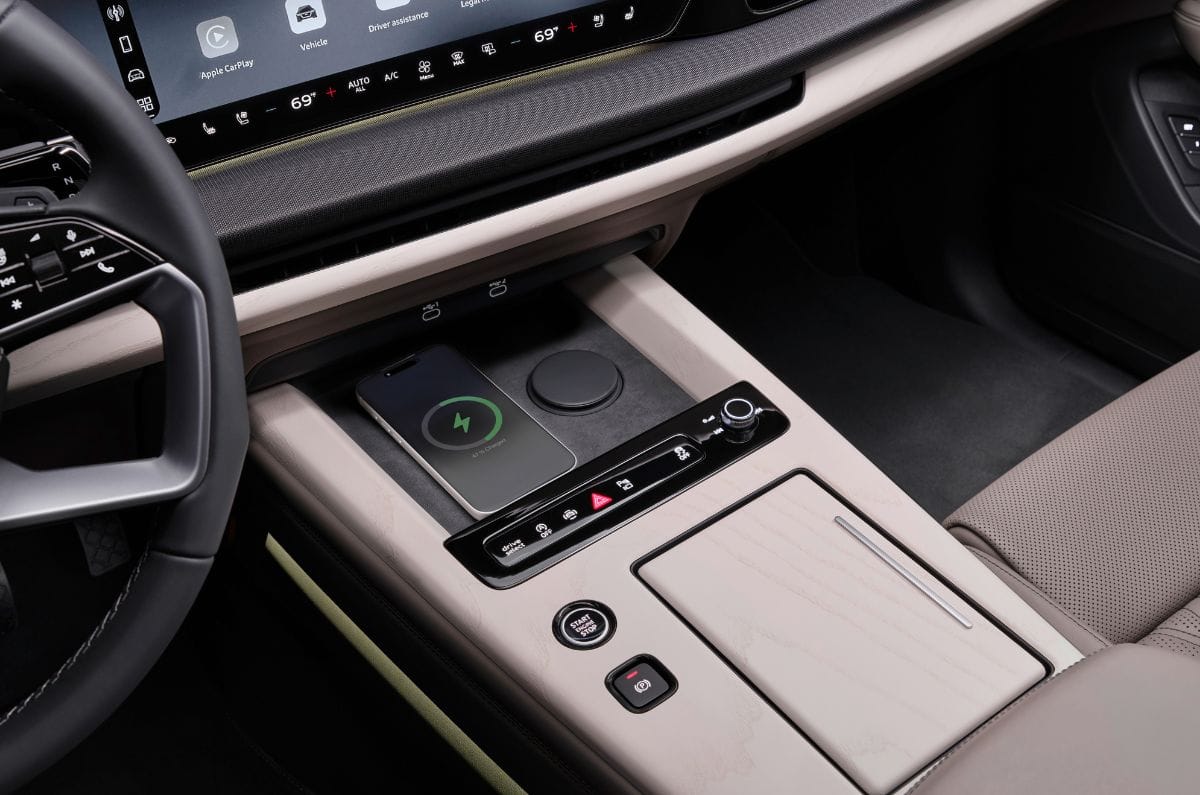
The Q9 also comes equipped with Audi’s largest panoramic sunroof to date, a 22-speaker Bang & Olufsen 4D sound system with front-seat headrest speakers and actuators, dual wireless phone chargers, and USB Type-C charging ports for all three rows. Optional features include heated door and centre armrests, along with a panoramic sunroof that offers switchable transparency and illuminated elements that sync with the ambient lighting.
On the safety front, the Q9 is equipped with a Level 2 advanced driver assistance system (ADAS), a 360-degree camera, automated parking assist, and front and rear parking sensors. It also features Adaptive Driving Assistant Plus, which enables partial automated driving on approved highways and Autobahn sections at speeds of up to 130kph. Audi says this is a first for any model in its lineup.
The SQ9 is offered with a different cabin theme and carbonfibre trims
Compared to the standard Q9’s beige and black interior theme, the SQ9 gets a sportier black-and-white cabin theme along with a three-spoke steering wheel featuring an ‘S’ badge. The wood trim is replaced with carbon fibre elements, further enhancing its performance-oriented character.
Audi Q9 SUV powertrain options
Offered with a 3L V6 diesel engine with standard Quattro system
While manufacturers are shying away from diesel engines, Audi is offering the Q9 in the German market with a 3.0-litre V6 diesel engine that produces 299hp and 630Nm. It is offered with an 8-speed Tiptronic automatic transmission and ‘Quattro’ all-wheel-drive (AWD) setup. This engine is paired with a mild-hybrid system, offering 24hp of additional power for “powerful starts and highly efficient driving”.
A detuned version producing 245hp and 500Nm, mated to the same Tiptronic transmission, ‘Quattro’ AWD and mild-hybrid system, will be offered in the European market.
Audi is offering the Q9 SUV with adaptive air suspension as standard. While this suspension system automatically adjusts based on the speed, load and driving conditions, it can be manually adjusted by up to 90mm via the drive select menu. The Q9 also features all-wheel steering to increase manoeuvrability at low speeds and improve stability as the speeds increase. For optimal stopping power, it gets lightweight composite disc brakes at both ends, with 400mm discs at the front and 350mm units at the rear.
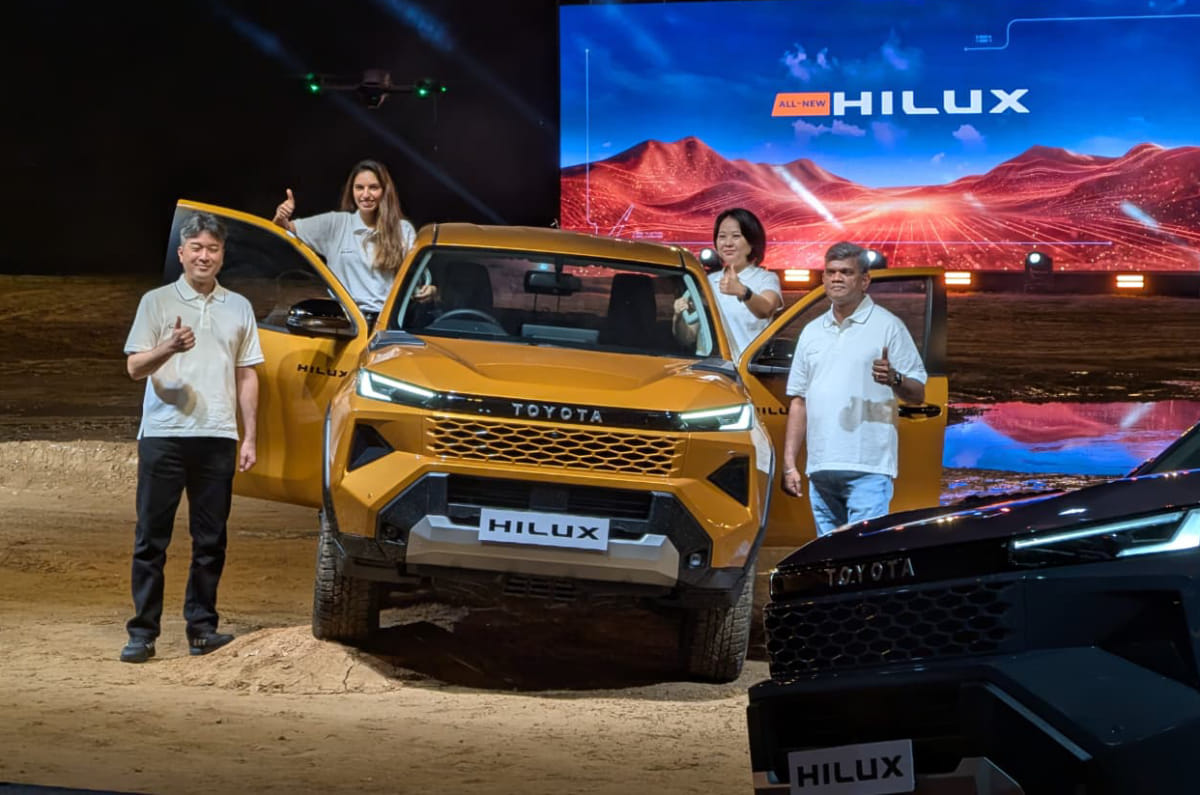
Toyota has launched the ninth-generation Hilux in India with prices ranging between Rs 31.99 lakh and Rs 36.69 lakh (ex-showroom). As a pick-up truck, the Toyota Hilux caters to a very niche audience, with the only other alternative in the market being the Isuzu D-Max V-Cross. This latest-gen model brings a contemporary design and a more feature-packed interior, but under the skin, the Hilux has remained largely unchanged from its predecessor.
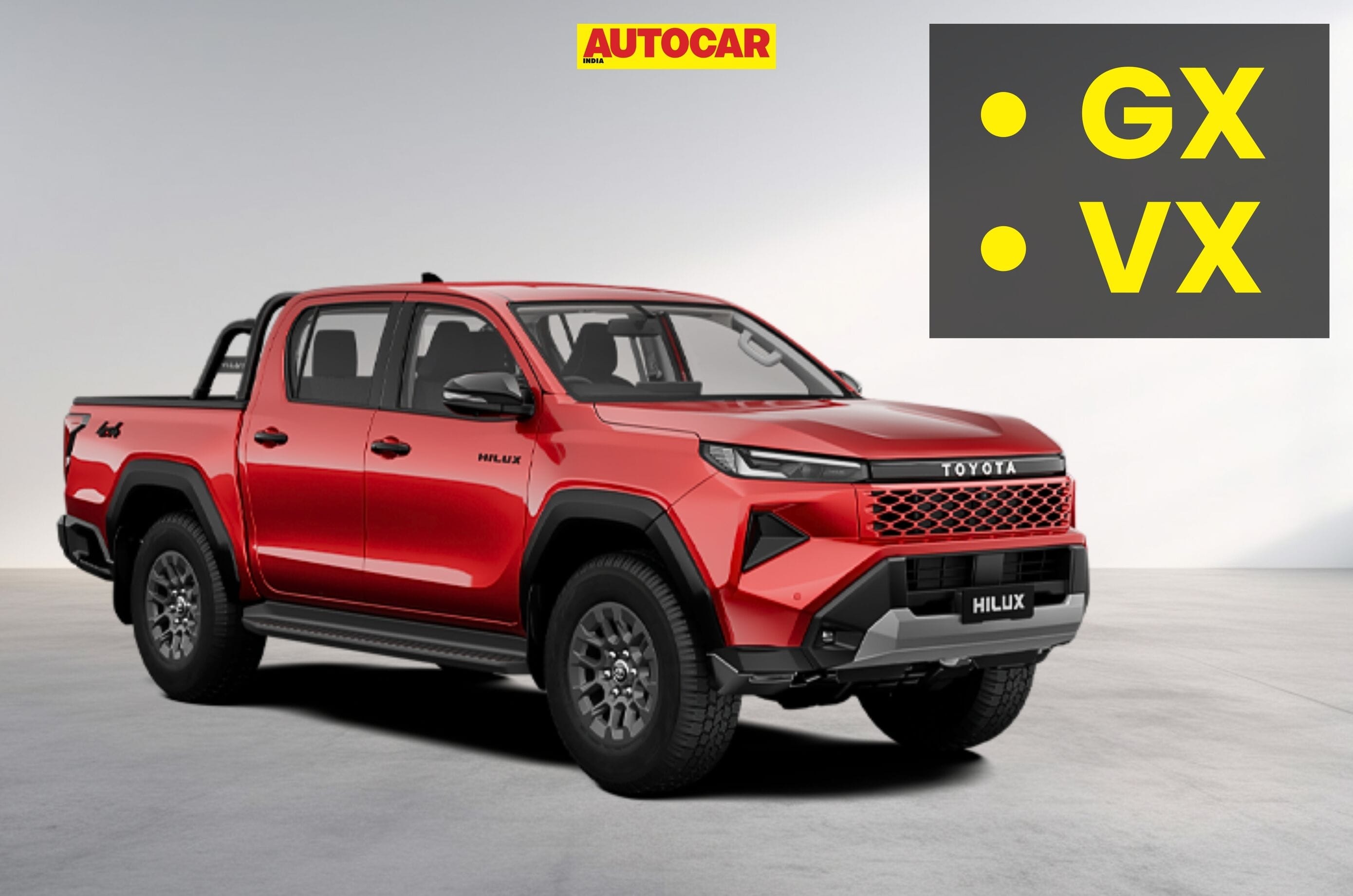
The new Toyota Hilux is available in two trims – GX and VX – with a single engine and gearbox combination, but with both 4×2 and 4×4 drive configurations. Here in this article, we are taking a close look at exactly what you get in each trim and which ones worth your money.
Toyota Hilux engine options, specifications
Under the hood, both trims of the Hilux feature a 2.8-litre, four-cylinder diesel engine that produces 240hp and 500Nm. A 6-speed torque converter automatic gearbox is standard across the range, but there’s no manual gearbox option like there was on its predecessor.
The base GX trim can be had in either 4×2 or 4×4 drive configurations, while the top VX trim comes solely in 4×4 configuration. Notably, this is the first time Toyota is offering the option of a 4×2 setup on the Hilux in India; the previous model came with 4×4 as standard.
Toyota Hilux exterior and interior colour options
Toyota is offering a total of six monotone colour options with the new Hilux, namely Sulphur Metallic, Platinum Pearl White Metallic, Attitude Black, Ash, Emotional Red and Super White – Sulphur Metallic and Attitude Black are only available on the top VX trim. The interior, irrespective of the trim, comes with an all-black finish for a rugged appeal.
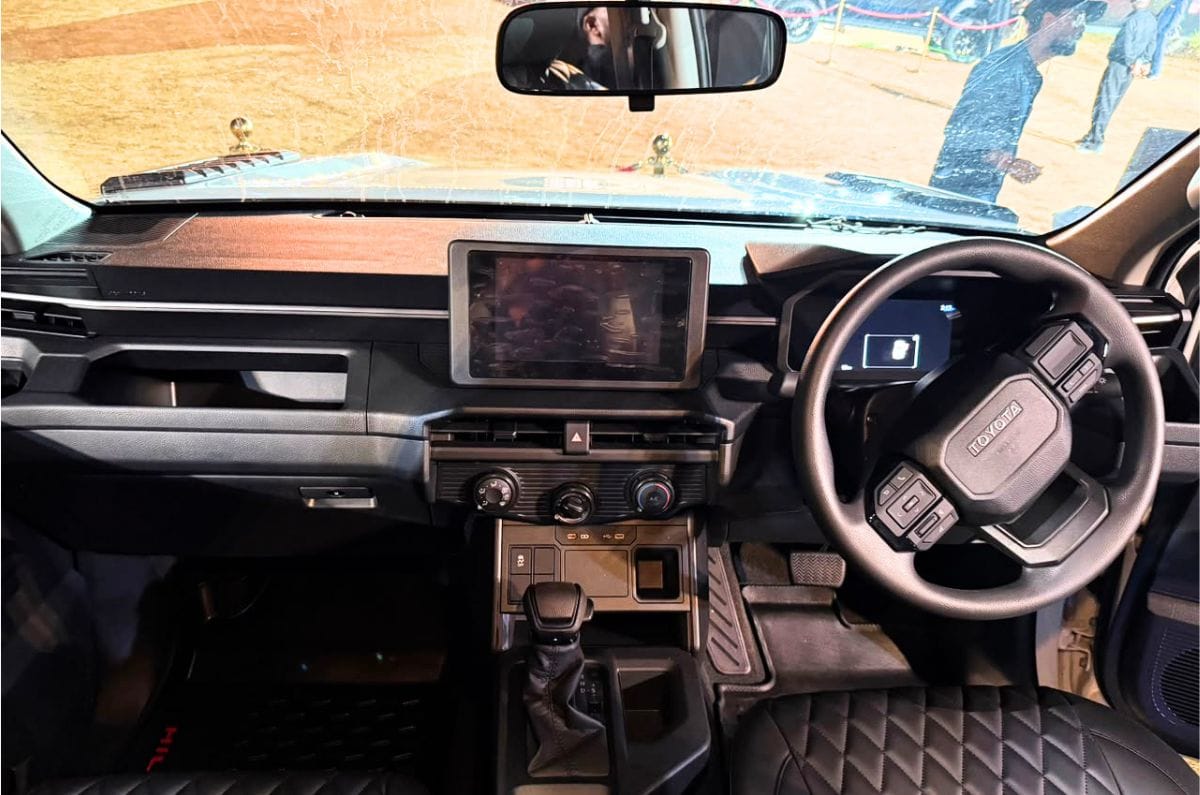
Hilux GX interior pictured here.
Now let’s take a closer look at exactly what features are available in each of the two trims:
Toyota Hilux variant-wise features explained
GX – 2.8 diesel AT 4×2/4×4
LED headlamps
Integrated side and rear bed steps
Electrically adjustable ORVMs
Rear fog lamps
Tailgate Assisted Rear Deck Door
Front and rear height adjustable headrests
6-way manually adjustable driver’s seat
4-way manually adjustable co-passenger seat
7.0-inch digital driver’s display
8.0-inch touchscreen infotainment
4-speaker audio system
Wired Apple CarPlay and Android Auto
Manual AC
Steering mounted controls
Front seats armrest
Tilt and telescopic steering adjust
7 Airbags
Vehicle stability control
Height adjustable front seat belts
3-point seatbelt with reminders for all seats
Rear parking camera
Day and Night inside IRVM
Electronic drive control – 2WD/4WD (4×4 variant only)
4WD with high and low range (4×4 variant only)
Electronic differential lock (4×4 variant only)
VX – 2.8 diesel AT 4×4
Features over and above GX
LED headlamps with welcome function
LED daytime running lamps
Puddle lamps
Hood ornament
Wheel arch cladding
Front and rear LED fog lamps
LED tail lamps
Auto-fold ORVMs
Sharkfin antenna
Soft-touch material on dashboard
Illuminated door scuff plates
Larger 12.3-inch touchscreen infotainment
8-speaker sound system
Wireless Apple CarPlay and Android Auto
Wireless charger
Drive modes (Eco, Normal and Sport)
Keyless entry and go
Cruise control
Rear centre armrest with cupholders
Connected car tech
PM 2.5 Air filter
TPMS
360-degree surround view camera
Hill descent control (4×4 variant only)
Multi-terrain select traction control (4×4 variant only)
2026 Toyota Hilux: which variant should you buy?
Between the GX and VX, we’d recommend opting for the fully-loaded VX trim with the 4×4 system as standard. The base GX trim misses out on several convenience features, which particularly stick out at this price point. Moreover, if you are considering buying a Hilux, its best to opt it with the 4×4 system which will allow you to exploit the full breath of potential that this pickup truck offers. The fact that the top trim is rather well priced, costing just Rs 70,000 more than its predecessor, further sweetens the deal.
Stocks to Watch: बुधवार 29 जुलाई के कारोबारी सत्र में कई शेयरों पर निवेशकों की खास नजर रहेगी। कुछ कंपनियों ने जून तिमाही के नतीजे जारी किए हैं। कुछ को बड़े ऑर्डर और अहम कॉरपोरेट अपडेट मिले हैं। इसके अलावा कई दिग्गज कंपनियां अपने तिमाही नतीजे भी घोषित करेंगी। ऐसे में इन 10 शेयरों में बड़ी हलचल देखने को मिल सकती है।
Larsen & Toubro
इंजीनियरिंग और इंफ्रास्ट्रक्चर कंपनी Larsen & Toubro का जून तिमाही का कंसोलिडेटेड मुनाफा सालाना आधार पर 14% बढ़कर 4,123 करोड़ रुपये रहा। यह बाजार के अनुमान से बेहतर रहा। कंपनी की आय 6.7% बढ़कर 67,942 करोड़ रुपये हो गई। हालांकि, EBITDA और EBITDA मार्जिन अनुमान से कमजोर रहे। वहीं, ऑर्डर इनफ्लो 14% बढ़कर 1.08 लाख करोड़ रुपये पहुंच गया।
LIC
सरकारी बीमा कंपनी LIC के बोर्ड ने दो बड़ी नियुक्तियों को मंजूरी दी है। वरदराजन मुथुवेंकटरामन को चीफ रिस्क ऑफिसर (CRO) बनाया गया है। वहीं, शतमन्यु श्रीवास्तव को कंपनी का नया चीफ फाइनेंशियल ऑफिसर (CFO) नियुक्त किया गया है।
Tata Capital
NBFC कंपनी Tata Capital ने जून तिमाही में मजबूत नतीजे पेश किए। कंपनी का शुद्ध मुनाफा 56% बढ़कर 1,547 करोड़ रुपये रहा। कुल आय 23% बढ़कर 4,455 करोड़ रुपये हो गई। वहीं, एसेट अंडर मैनेजमेंट (AUM) 22% बढ़कर 2.90 लाख करोड़ रुपये पर पहुंच गया।
Birlasoft
आईटी कंपनी Birlasoft का जून तिमाही का शुद्ध मुनाफा 51.2% बढ़कर 160.9 करोड़ रुपये रहा। कंपनी की आय 7.4% बढ़कर 1,379 करोड़ रुपये हो गई। EBITDA 40.4% बढ़ा, जबकि EBITDA मार्जिन 12.3% से बढ़कर 16.1% पर पहुंच गया।
DCM Shriram
एग्रीबिजनेस और केमिकल कंपनी DCM Shriram का जून तिमाही का शुद्ध मुनाफा 692.7 करोड़ रुपये रहा। पिछले साल यह 113.3 करोड़ रुपये था। कंपनी का रेवेन्यू 9.5% बढ़कर 3,785 करोड़ रुपये हो गया। EBITDA मार्जिन भी बढ़कर 8.9% पर पहुंच गया।
VST Industries
सिगरेट बनाने वाली कंपनी VST Industries के जून तिमाही के नतीजे कमजोर रहे। कंपनी का शुद्ध मुनाफा 24.5% घटकर 42 करोड़ रुपये रह गया। आय 14% घटकर 257 करोड़ रुपये रही। EBITDA और EBITDA मार्जिन में भी सालाना आधार पर गिरावट दर्ज की गई।
Paradeep Phosphates
फर्टिलाइजर कंपनी Paradeep Phosphates का जून तिमाही का शुद्ध मुनाफा 24% बढ़कर 393 करोड़ रुपये रहा। कंपनी का रेवेन्यू 36% बढ़कर 6,124 करोड़ रुपये हो गया। EBITDA में भी 24% की बढ़ोतरी हुई, हालांकि EBITDA मार्जिन घटकर 11.8% रह गया।
VST Industries
सिगरेट और तंबाकू उत्पाद बनाने वाली कंपनी VST Industries का जून तिमाही का शुद्ध मुनाफा सालाना आधार पर 24.5% घटकर 42 करोड़ रुपये रह गया। कंपनी का रेवेन्यू 14% गिरकर 257 करोड़ रुपये रहा। वहीं, EBITDA 35.5% घटा और EBITDA मार्जिन 25.8% से घटकर 19.3% पर आ गया।
RVNL
सरकारी रेलवे कंपनी RVNL को ईस्ट सेंट्रल रेलवे से 358.97 करोड़ रुपये का नया ऑर्डर मिला है। यह ऑर्डर समस्तीपुर मंडल के सीतामढ़ी-रक्सौल सेक्शन में रेलवे लाइन डबलिंग प्रोजेक्ट के लिए है। कंपनी को इस परियोजना का लेटर ऑफ एक्सेप्टेंस (LoA) मिला है।
Phoenix Mills
रियल एस्टेट कंपनी Phoenix Mills का जून तिमाही का शुद्ध मुनाफा 23.3% बढ़कर 296.9 करोड़ रुपये रहा। कंपनी की आय 12.8% बढ़कर 1,074.9 करोड़ रुपये हो गई। EBITDA और EBITDA मार्जिन दोनों में सालाना आधार पर सुधार देखने को मिला।
इन कंपनियों के तिमाही नतीजे आएंगे
बुधवार को कई बड़ी कंपनियां जून तिमाही के नतीजे जारी करेंगी। इनमें Accelya Solutions India, Acme Solar Holdings, Adani Enterprises, Adani Ports and Special Economic Zone, Asian Paints, Bajaj Housing Finance और Balkrishna Industries शामिल हैं।
Disclaimer: यहां मुहैया जानकारी सिर्फ सूचना के लिए दी जा रही है। यहां बताना जरूरी है कि मार्केट में निवेश बाजार जोखिमों के अधीन है। निवेशक के तौर पर पैसा लगाने से पहले हमेशा एक्सपर्ट से सलाह लें। मनीकंट्रोल की तरफ से किसी को भी पैसा लगाने की यहां कभी भी सलाह नहीं दी जाती है।
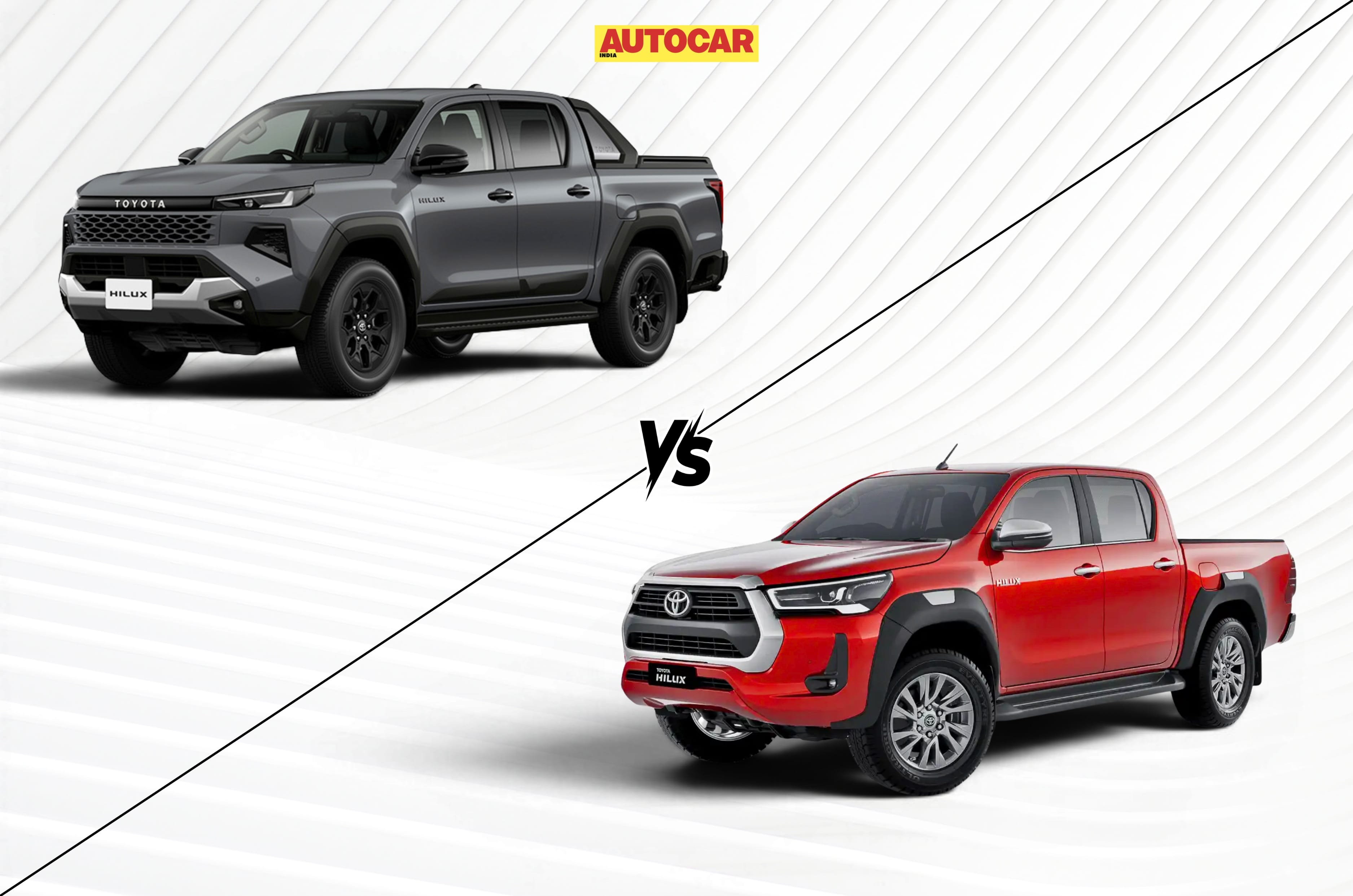
After a series of teasers, Toyota has finally launched the ninth-generation Hilux in India. Replacing the eighth-generation pickup truck that was launched in March 2022, the new model gets several design changes and feature upgrades. Here’s a detailed look at how the new Toyota Hilux compares with its predecessor.
Toyota Hilux new vs old: Exterior design
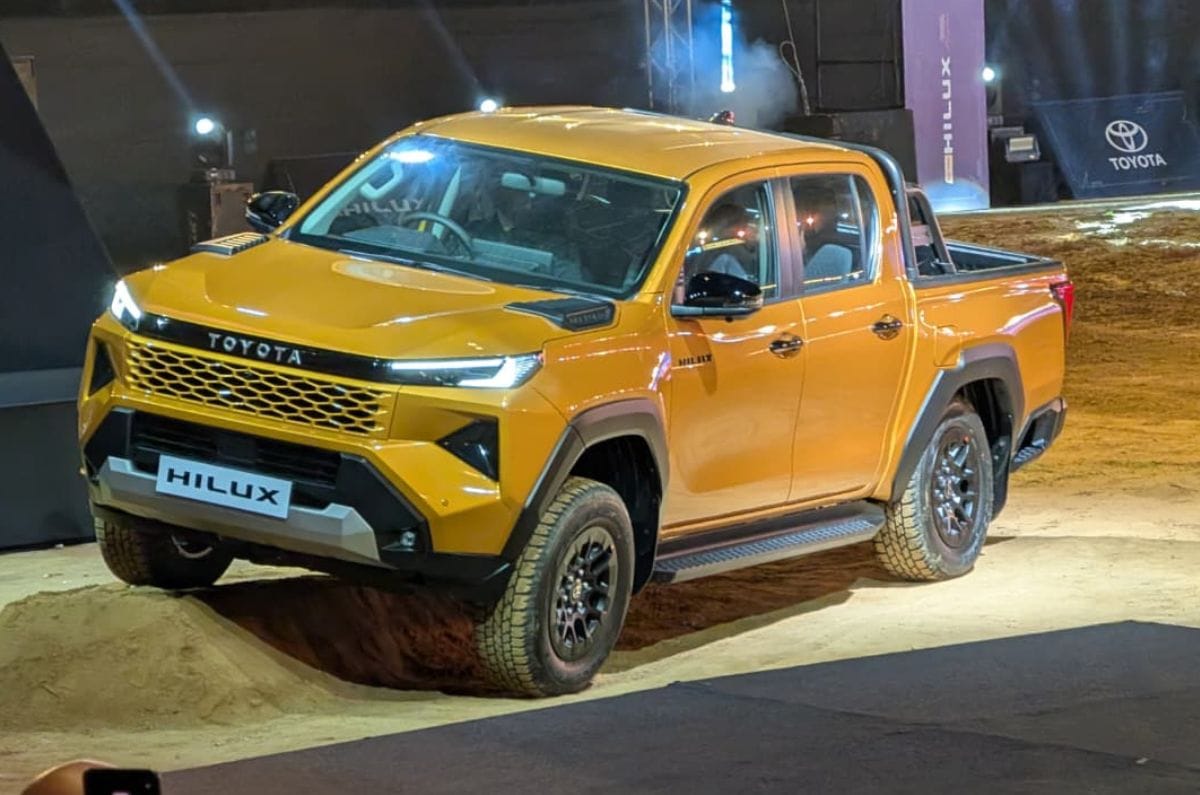
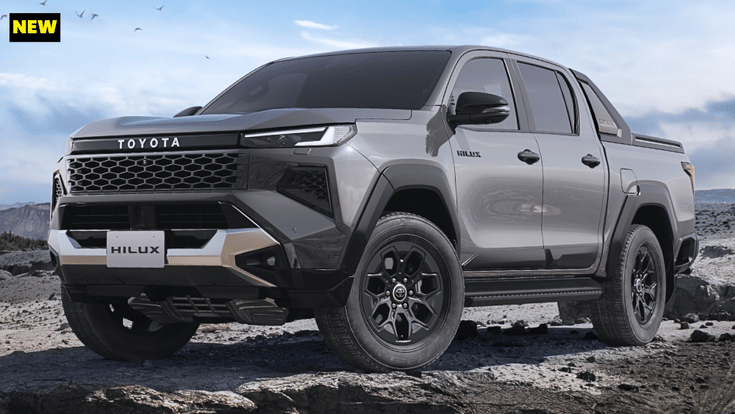
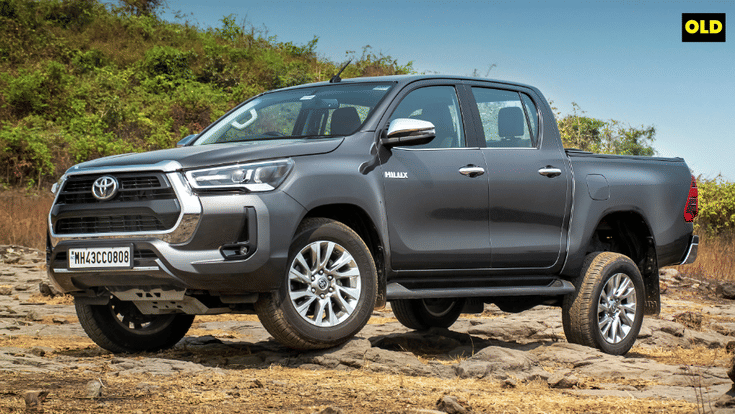
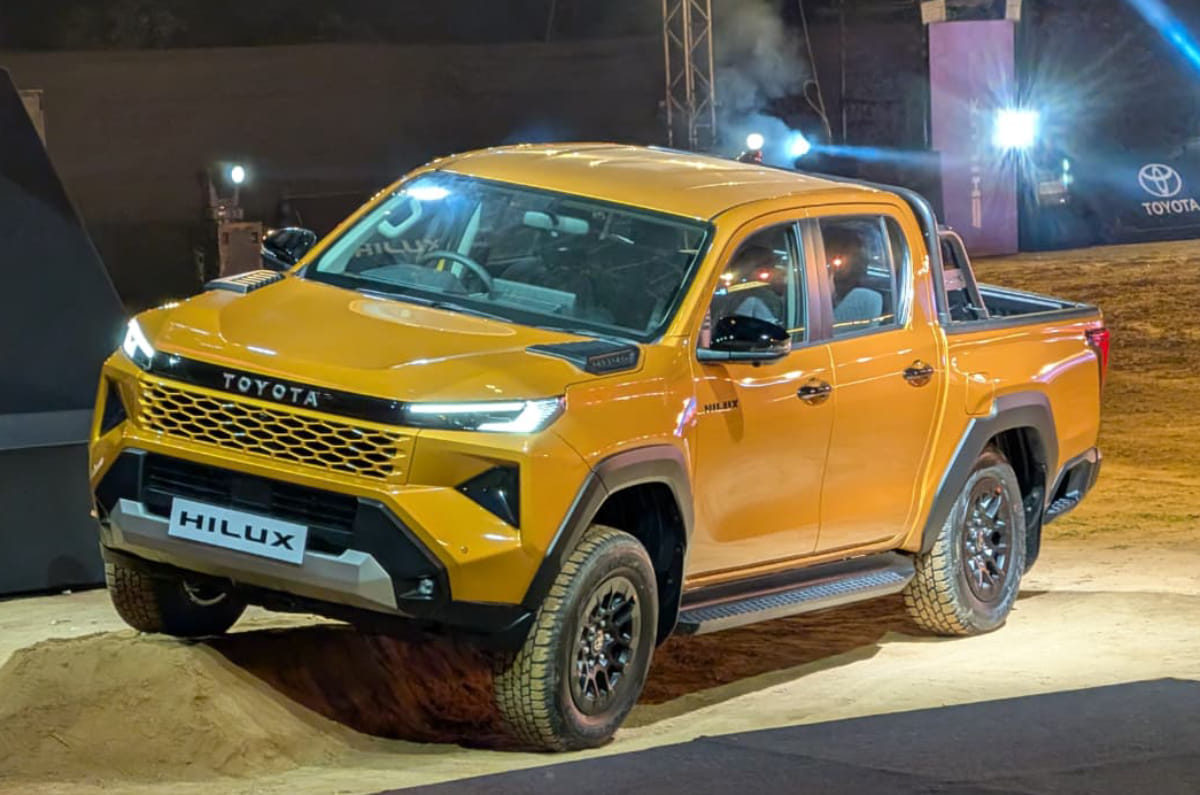
Compared to the outgoing Hilux, the the new model gets a sharper and more rugged design, drawing inspiration from the brand’s Tacoma pickup truck. At the front, it features slimmer LED headlights with integrated daytime running lamps, joined by a gloss-black strip with ‘TOYOTA’ lettering in the centre; the outgoing model opted for the Toyota logo.
The grille is now squarer and features a more angular honeycomb-mesh pattern. The bumper gets large black inserts on either side, while the lower section has a more aggressive design with pronounced creases, wide air intakes, a silver skid plate and LED fog lamps.
Its side profile is relatively cleaner than the front, and the ‘HILUX’ badges continue to be placed on the front doors. The alloy wheel size has gone down from 18 inches to 17 inches unchanged, and they have a new design and a blacked-out finish, instead of silver. The wheel arch cladding is slightly slimmer, and the outside rear-view mirrors and door handles are finished in black. Notably, there is a new small side step at the rear to get access to the truck bed.
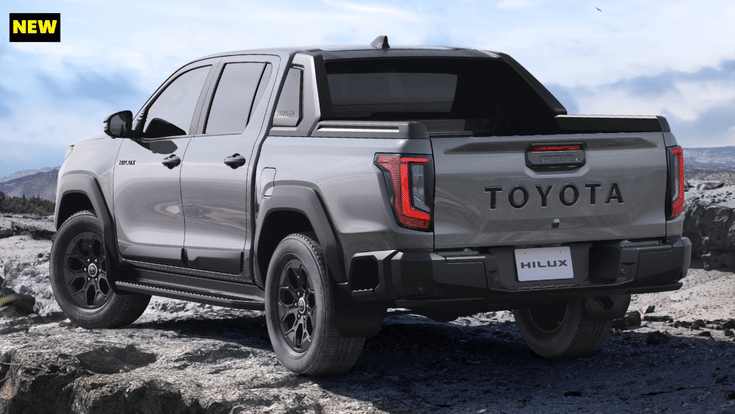
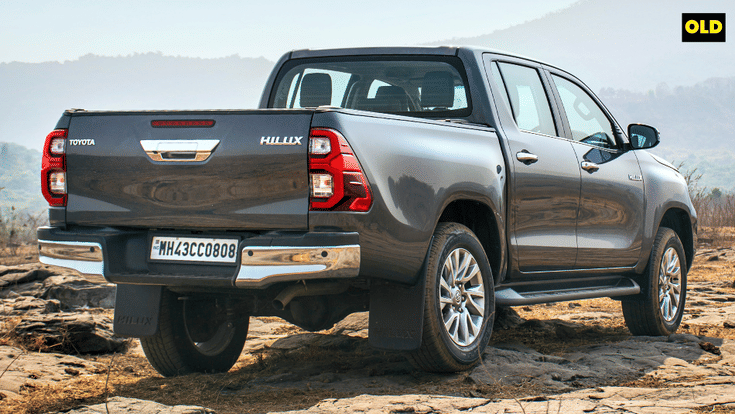
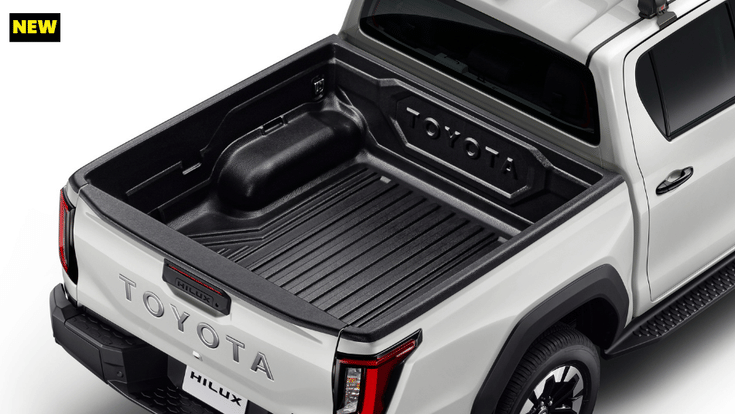
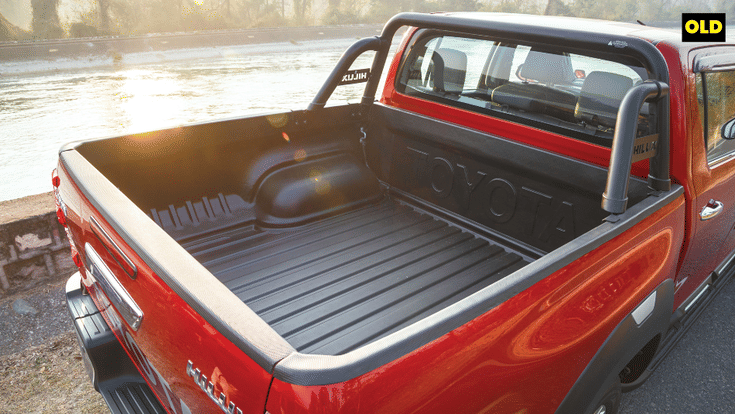
At the rear, the new Hilux opts for C-shaped LED tail-lights instead of the earlier model’s B-shaped units. Like at the front, the tailgate gets large ‘TOYOTA’ lettering. The tailgate handle is also finished in black, while the chunky rear bumper continues to feature an integrated step for easier access to the truck bed.
Toyota Hilux new vs old: Interior features
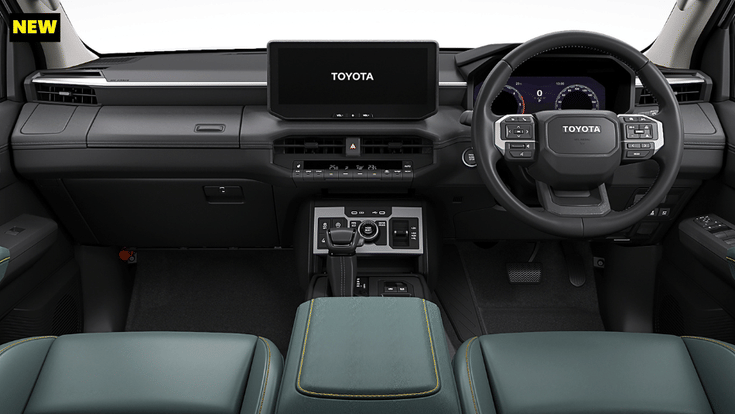
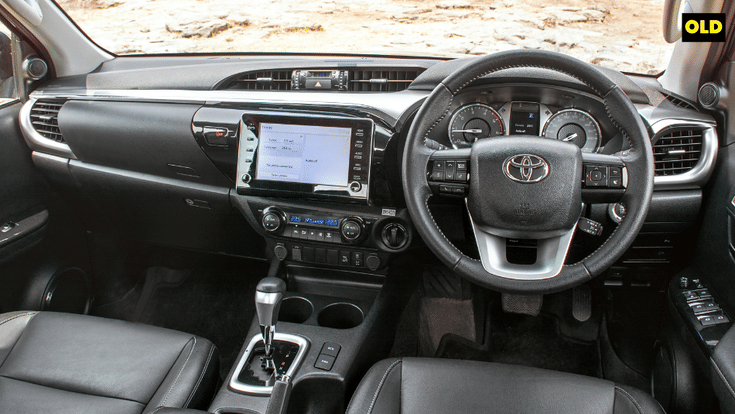
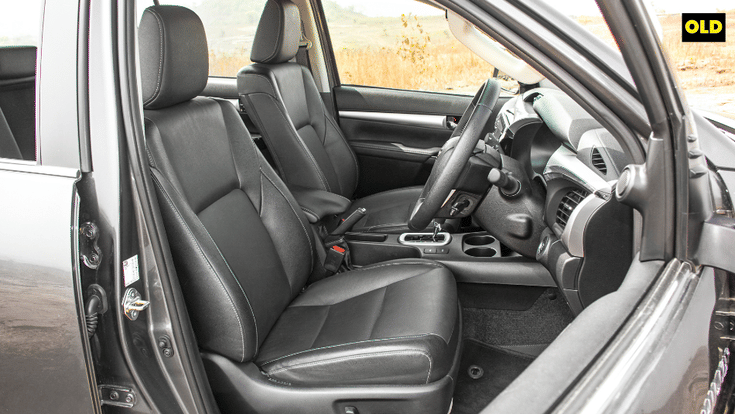
With a chunky 3-spoke steering wheel with physical buttons, a digital driver’s display and a 12.3-inch touchscreen infotainment system, the new Hilux has a more modern cabin than the outgoing model; the previous model had an analogue driver’s display and a smaller, 8-inch touchscreen unit. Thankfully, the new-gen Hilux offers a plethora of physical controls on the centre console. For controlling the climate inside the car, Toyota has used simple rotary dials, unlike the international-spec Hilux, which gets a more premium-looking horizontal row of buttons.
Some new features on the ninth-generation Toyota Hilux include a standard wireless charger, and wireless Apple CarPlay and Android Auto (on the top-spec trim). As before, safety features like 7 airbags, ABS and ISOFIX child seat mounts are on offer. An ADAS suite is still missing though.
Toyota Hilux new vs old: Powertrain
The new-gen model is based on the same IMV platform as the outgoing Hilux, and retains the 2.8-litre diesel engine that produces 204hp, 500Nm. Transmission duties are handled by a 6-speed torque-converter automatic, which is not standard across the range; a manual gearbox choice is no longer on offer. Also, both two-wheel drive and four-wheel drive options are on offer. However, the 48V mild hybrid system offered with the Hilux in some markets is not offered in India.
Toyota Hilux new vs old: Price
The outgoing Toyota Hilux was offered only with four-wheel drive, in manual and automatic forms, and was priced between Rs 35.3 lakh and Rs 36 lakh, ex-showroom. The new Hilux, however, is now available with both two-wheel drive and four-wheel drive options, widening its appeal. Prices range from Rs 31.99 lakh to Rs 36.69 lakh. Despite the updates the new Hilux brings along, Toyota has priced the new Hilux rather attractively.
Toyota has launched the ninth-generation Hilux in India, starting at Rs 31.99 lakh (ex-showroom). The new pickup gets a redesigned exterior and cabin, additional technology and features, while retaining the IMV body-on-frame platform and Double Cab body style offered on the outgoing model.
Gets bold ‘TOYOTA’ lettering, LED lighting and new 18-inch alloy wheels
Dual 12.3-inch displays and a 360-degree camera
2.8-litre diesel engine continues with automatic gearbox option
2026 Toyota Hilux exterior design
The new Hilux adopts a more upright front-end design with slim LED headlamps, a honeycomb-pattern grille and prominent ‘TOYOTA’ lettering replacing the conventional badge. On the front bumper are two quadrangle-shaped black air intakes on either side. Its lower section looks very aggressive with strong creases, wide air intakes, a silver skid plate and two LED fog lamps. In profile, the pickup gets black wheel arch cladding, roll bars, new 17-inch alloy wheels and a footboard for easier ingress and egress.
At the rear, the pickup gets vertically stacked LED tail-lamps with C-shaped DRL signatures, ‘TOYOTA’ lettering across the tailgate and a redesigned bumper with an integrated step for easier access to the cargo bed.
The 2026 Toyota Hilux is offered in 6 colors, Sulphur Metallic, Platinum Pearl White Metallic, Attitude Black, Ash, Emotional Red and Super White.
2026 Toyota Hilux interior and features
Inside, the Hilux gets an all-new dashboard with 12.3-inch digital instrument cluster and 12.3-inch touchscreen infotainment displays, along with a new three-spoke steering wheel bearing the Toyota lettermark. The customisable driver’s display offers four design themes, whilst the infotainment unit uses the Toyota Smart Connect system.
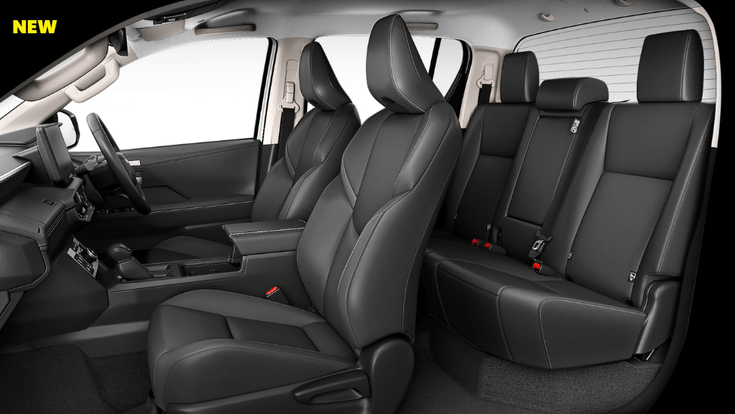
The cabin combines a mix of soft-touch leatherette and hard plastics, appearing equal parts contemporary and rugged. A welcome sight in the Hilux’s cabin is the abundance of physical controls for key functions, such as the climate control system and four-wheel-drive settings.
Feature highlights include wireless Apple CarPlay and Android Auto, wireless charging, dual-zone climate control, connected car technology, powered and ventilated front seats, multiple terrain modes, over-the-air (OTA) updates, a 360-degree camera and an ADAS suite.
2026 Toyota Hilux engine and gearbox
The Hilux continues with the familiar 2.8-litre four-cylinder diesel engine, which produces 204hp and 500Nm and is paired with a 6-speed torque-converter automatic. The Hilux is offered in 4×4 as well as 4×2 variants. There is no manual option available now, there was no 4×2 variants on offer before as well as it does not get the 48V ‘NeoDrive’ mild hybrid system, that was introduced with the Fortuner.
2026 Toyota Hilux price and rivals
Variant
Price (ex-showroom)
GX 4×2 AT
Rs 31.99 lakh
GX 4×4 AT
Rs 33.69 lakh
VX 4×4 AT
Rs 36.69 lakh
The 2025 Toyota Hilux is available in three variants, with prices ranging from Rs 31.99 lakh to Rs 36.69 lakh (ex-showroom). The entry-level GX 4×2 AT is priced at Rs 31.99 lakh, while the GX 4×4 AT sits in the middle of the range at Rs 33.69 lakh. The range-topping VX 4×4 AT is priced at Rs 36.69 lakh. The new Hilux continues to rival the Isuzu V-Cross in the lifestyle pickup segment.
Compared to the outgoing Hilux, which was priced between Rs 28.52 lakh and Rs 36 lakh (ex-showroom), the entry price has increased by Rs 3.47 lakh, while the range-topping variant costs Rs 69,000 more. Despite being a full generational update with a redesigned exterior and cabin and additional features, Toyota has kept the increase at the top end relatively modest.
बर्फ से ढके पहाड़ों में रहने वाला Snow Leopard सिर्फ एक खूबसूरत जानवर नहीं, बल्कि पूरे हिमालय के संतुलन के लिए बहुत ज़रूरी है। लेकिन Climate Change, कम होते प्राकृतिक आवास और इंसानों के साथ बढ़ते टकराव की वजह से आज इनका अस्तित्व खतरे में है।
ऐसे समय में खेनरब फुंत्सोग जैसे लोग हमें याद दिलाते हैं कि प्रकृति की रक्षा सिर्फ जंगलों में नहीं, बल्कि हमारी सोच से भी शुरू होती है। एक व्यक्ति का समर्पण कई बार उन ज़िंदगियों को बचा लेता है, जिनकी आवाज़ हम तक कभी पहुंच ही नहीं पाती।
अगर हम इंसान और वन्यजीव साथ मिलकर जीना सीख जाएं, तो आने वाली पीढ़ियां भी हिमालय की वादियों में Snow Leopard की दहाड़ सुन सकेंगी।
Toy Industry updates: वैश्विक बाजार में भारतीय खिलौनों का दबदबा तेजी से बढ़ रहा है। पिछले सात वर्षों में डोमेस्टिक मैन्युफैक्चरिंग और सरकार की प्रोत्साहन नीतियों के बल पर भारत के खिलौना उद्योग का परिदृश्य पूरी तरह बदल गया है। वर्ष 2018-19 की तुलना में वित्त वर्ष 2025-26 के दौरान भारत से खिलौनों के निर्यात में 89.1 प्रतिशत का बड़ा उछाल दर्ज किया गया है। वहीं दूसरी तरफ विदेशी खिलौनों पर निर्भरता कम हुई है और आयात में 37.5 फीसदी की भारी कमी देखने को मिली है। केंद्रीय वाणिज्य एवं उद्योग राज्य मंत्री जितिन प्रसाद ने आज लोकसभा में एक लिखित जवाब के जरिए इस सफलता का ब्योरा साझा किया। भारत अब खिलौने आयात करने वाले देश से उभरकर एक शुद्ध निर्यातक बन चुका है और अमेरिका, ब्रिटेन, नीदरलैंड्स तथा जर्मनी जैसे विकसित देशों को भारतीय खिलौने निर्यात किए जा रहे हैं।
सात वर्षों में बदला व्यापार का संतुलन
ट्रेडस्टैट आंकड़ों के मुताबिक वित्त वर्ष 2018-19 में भारत दुनिया भर से 371.7 मिलियन अमेरिकी डॉलर के खिलौने आयात करता था। हालांकि वित्त वर्ष 2025-26 में यह आंकड़ा घटकर 232.3 मिलियन डॉलर पर आ गया। वर्ष 2018-19 में भारत का खिलौना निर्यात 203.5 मिलियन अमेरिकी डॉलर था, जो 2025-26 में 89.1 फीसदी बढ़कर 384.7 मिलियन अमेरिकी डॉलर के स्तर पर पहुंच गया। यह बदलाव इस बात को दिखा रहा है कि देश में टॉय मैन्युफैक्चरिंग की क्षमताओं में तेजी से इजाफा हुआ है।
खिलौनों की गुणवत्ता और सुरक्षा में बड़ा सुधार
वर्ष 2018-19 में भारत आने वाले आयातित खिलौनों का एक बड़ा हिस्सा घटिया, असुरक्षित और नकली होता था। वर्ष 2019 में आयोजित एक मिस्ट्री शॉपिंग सर्वे के दौरान पाया गया था कि भारतीय बाजार में बिकने वाले सिर्फ 33 फीसदी खिलौने ही भारतीय मानक ब्यूरो (BIS) के गुणवत्ता मानकों पर खरे उतरते थे। इस स्थिति को सुधारने के लिए सरकार ने कड़े कदम उठाए। इसी का नतीजा है कि साल 2025 में बीआईएस द्वारा किए गए सर्वेक्षण में पाया गया कि अब देश में उपलब्ध 95 प्रतिशत खिलौने निर्धारित गुणवत्ता और सुरक्षा मानकों का पूरी तरह पालन कर रहे हैं।
टॉय बिज़ इंटरनेशनल 2026 में दिखा भारतीय ब्रांड्स का जलवा
टॉय एसोसिएशन ऑफ इंडिया द्वारा 4 से 7 जुलाई 2026 के दौरान नई दिल्ली स्थित भारत मंडपम में 17वीं टॉय बिज़ इंटरनेशनल B2B प्रदर्शनी का आयोजन किया गया। इस विशाल आयोजन में 400 भारतीय खिलौना ब्रांड्स, 40 से अधिक देशों के 100 अंतरराष्ट्रीय खरीदार और लगभग 30000 बिजनेस विजिटर्स शामिल हुए। इस प्रदर्शनी ने भारतीय निर्माताओं को वैश्विक खरीदारों, थोक विक्रेताओं, वितरकों और ई-कॉमर्स प्लेटफॉर्म्स के साथ व्यापारिक संबंध स्थापित करने का एक बड़ा मंच प्रदान किया। आपको बता दें कि अभी केंद्र सरकार की कोई अलग से खिलौना नीति नहीं है, लेकिन अलग अलग मंत्रालयों के संयुक्त प्रयासों से इस उद्योग को जबरदस्त गति मिली है।
सरकारी नीतियों और पहलों का मिला फायदा
खिलौना उद्योग की इस सफलता के पीछे सरकार की खास रणनीति रही है। 14 मंत्रालयों और विभागों के समन्वय से 21 एक्शन पॉइंट्स वाली राष्ट्रीय खिलौना कार्य योजना (NAPT) लागू की गई, जिसमें भारतीय संस्कृति व इतिहास पर आधारित खिलौनों के डिजाइन और स्वदेशी क्लस्टरों को प्राथमिकता दी गई। इसके साथ ही फरवरी 2020 में बेसिक कस्टम ड्यूटी को 20 प्रतिशत से बढ़ाकर 60 प्रतिशत और 2023 में 70 प्रतिशत किया गया जबकि बजट 2025-26 में इलेक्ट्रॉनिक खिलौनों के कलपुर्जों पर शुल्क 20 प्रतिशत संशोधित किया गया। 25 फरवरी 2020 को गुणवत्ता नियंत्रण आदेश (QCO) जारी कर 1 जनवरी 2021 से लागू किया गया जिसके तहत बीआईएस ने घरेलू निर्माताओं को 1800 से अधिक और विदेशी निर्माताओं को 50 से अधिक लाइसेंस जारी किए हैं।
नई शिक्षा नीति, क्लस्टर विकास और निर्यात प्रोत्साहन
नई शिक्षा नीति 2020 के तहत एनसीईआरटी ने ‘टॉय बेस्ड पेडागोजी’ पर हैंडबुक जारी की, जिसने पढ़ाई में स्वदेशी खिलौनों के इस्तेमाल को बढ़ावा दिया। एमएसएमई मंत्रालय ने स्फूर्ति योजना के तहत 18 खिलौना क्लस्टरों को मंजूरी दी और कपड़ा मंत्रालय 40 क्लस्टरों को डिजाइनिंग व टूलिंग सहायता प्रदान कर रहा है। इसके अलावा डीपीआईआईटी द्वारा 700 से अधिक खिलौना स्टार्टअप्स को मान्यता दी गई है और RoDTEP योजना के जरिए 2200 से अधिक निर्यातकों को वित्तीय सहायता मिली है। यूएई, ऑस्ट्रेलिया, ईएफटीए, ओमान, न्यूजीलैंड और यूके के साथ हुए मुक्त व्यापार समझौतों से भारतीय खिलौनों को वैश्विक बाजारों में शून्य-शुल्क पहुंच मिली है। इसने भारत को खिलौना निर्माण का वैश्विक केंद्र बना दिया है।
भारत का यूरोप दौरा और जिम्बाब्वे दौरे को मिलाकर 13 मैच खेले गए। इसमें से 10 मैच टी-20 के थे और 3 मैच वनडे के थे। कुल 13 मैचों में भारत ने 21 कैच ड्रॉप किए। इसमें से यूरोप (इंग्लैंड आयरलैंड दौरे पर खेले गए मैचों में) भारत ने 11 कैच ड्रॉप किए। वहीं जिम्बाब्वे दौरे पर टीम ने 3 टी-20 अंतरराष्ट्रीय मैचों में ही 10 कैच ड्रॉप किए। इसमें से 4 कैच अंतिम टी-20 अंतरराष्ट्रीय मैच में आए।
ऐसे में टीम के खराब फील्डिंग मानकों पर सुनील गावस्कर ने कहा है कि औसत फील्डर को टी-20 अंतरराष्ट्रीय मैचों में खेलने का कोई हक नहीं है। उन्होंने यह भी कहा कि कप्तान को उन्हें टीम से बाहर का रास्ता दिखाना चाहिए। ना कि यह सोचना चाहिए कि किसी तरह गेंद उन 3 से 4 खिलाड़ियों के पास ना जाए।
UK tour – 11 dropped catches.
Zimbabwe tour – 10 dropped catches.
Tour summary:
Matches – 13.
Catches taken – 47.
Catches Dropped – 21.
Catch efficiency – 69.1. pic.twitter.com/oQxkPULtKv
भारतीय टीम ने इन 13 मैचों में 47 कैच पकड़े हैं जिससे टीम का कैच प्रतिशत 69.1 है। गौरतलब है कि भारत को आयरलैंड के खिलाफ टी-20 अंतरराष्ट्रीय मैचों में 0-2 और फिर इंग्लैंड के खिलाफ 0-4 से हार का सामना करना पड़ा था। एकदिवसीय श्रृंखला में भी भारत को इंग्लैंड के हाथों 2-1 की हार झेलनी पड़ी थी। इसके बाद टीम ने हालांकि जिम्बाब्वे को में 3-0 से हराया।
भारतीय टीम की ग्राउंड फील्डिगं भी कई समय से आलोचनाओं के घेरे में है। यूरोप दौरा (इंग्लैंड आयरलैंड दौरे पर खेले गए मैचों में) कई बार यह देखने में आया कि टीम ने ना केवल आसान कैच छोड़े बल्कि आसान चौके भी दे दिए। वहीं इंग्लैंड और आयरलैंड के खिलाड़ियों ने ना केवल शानदार कैच पकड़े बल्कि ग्राउंड फील्डिंग भी उम्दा की।
AVERAGE FIELDERS DON'T DESERVE A PLACE IN TEAM INDIA
: Sunil Gavaskar has urged the BCCI & team management to drop players who are only average fielders, saying a captain should not have to hide three or four weak fielders on the ground.
इसके अलावा सुनील गावस्कर ने एकदिवसीय विश्वकप 2027 को ध्यान में रखकर भारतीय क्रिकेट कंट्रोल बोर्ड को सलाह भी दी है कि वह मैदान की सीमा को लंबा करें ताकि विदेशी दौरे और खासकर विश्वकप तक भारत बड़े मैदानों पर खेलने का आदि हो जाए। भारत को अब अगली एकदिवसीय श्रृंखला वेस्टइंडीज के खिलाफ अक्टूबर में खेलनी है।