





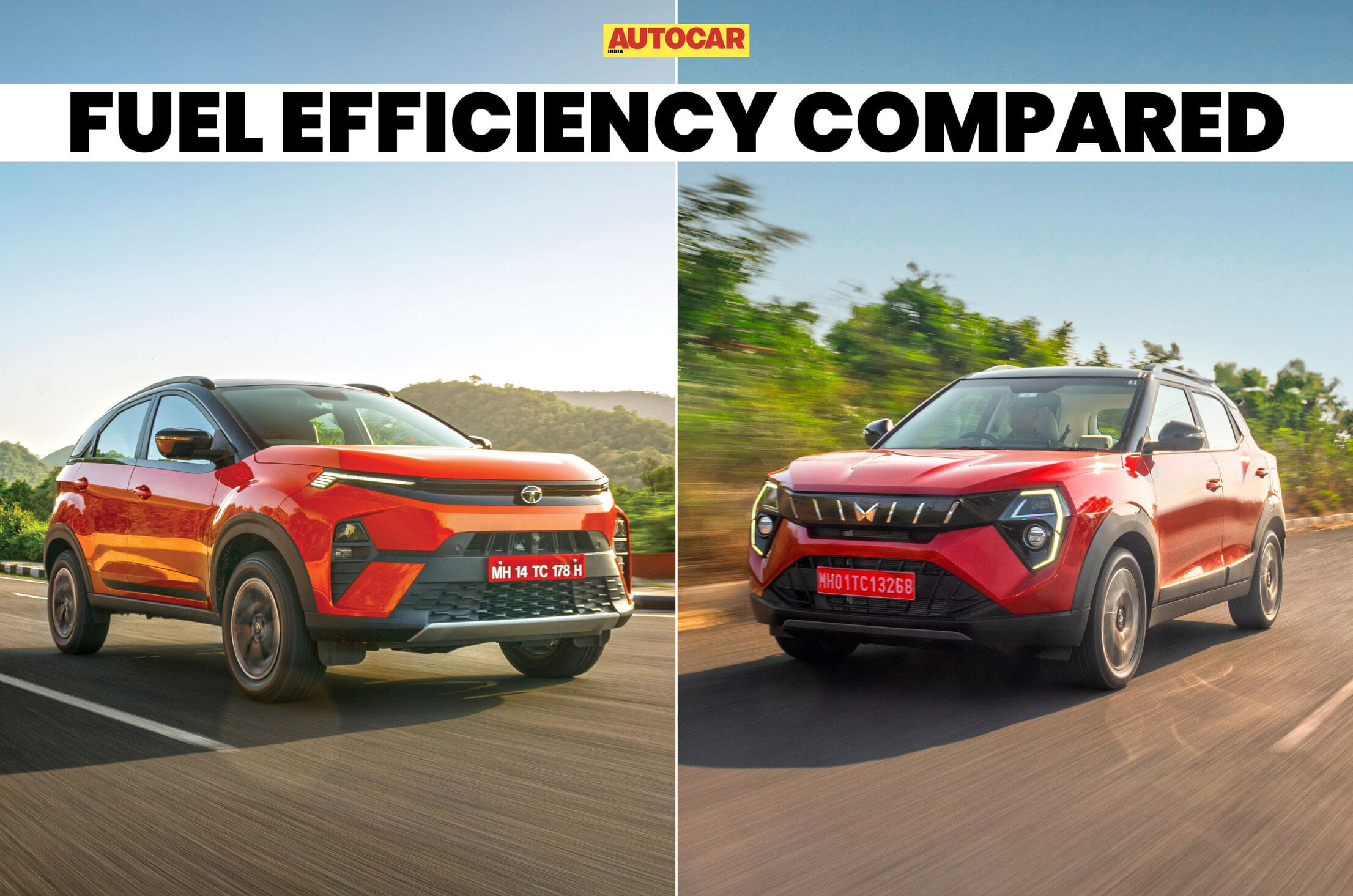
The Tata Nexon and Mahindra XUV 3XO offer buyers two types of turbo-petrol engines. All turbo-petrol versions of the Nexon use multi-point fuel injection (MPFI), with lower trims being mated to an AMT (automated manual transmission) gearbox, while higher trims use a dual-clutch automatic (DCT) gearbox. Meanwhile, all turbo-petrol versions of the XUV 3XO feature a 6-speed torque converter automatic transmission (AT), with gasoline direct injection (GDI) only reserved for the top-spec version. So, if you want the convenience of a proper automatic gearbox plus the performance associated with a turbo-petrol engine without sacrificing fuel economy, which of these two cars should you consider?
Explore full specs, features and a price breakdown in our Nexon vs XUV 3XO comparison.
Tata Nexon vs Mahindra XUV 3XO turbo-petrol automatic: Specifications
While torque spread is comparable in both, the XUV 3XO has a distinct power advantage
Tata Nexon vs Mahindra XUV 3XO automatic: Specifications | ||
| Tata Nexon | Mahindra XUV 3XO |
Engine | 3 cyl, petrol | 3 cyl, petrol |
Displacement (cc) | 1199 | 1197 |
Power (hp) | 120 (5,500rpm) | 131 (5,000rpm) |
Torque (Nm) | 170 (1,750-4,000rpm) | 230 (1,500-3750rpm) |
Gearbox | 7-speed DCT | 6-speed AT |
Fuel tank (litres) | 44 | 42 |
At first glance, the turbo-petrol engines powering the Nexon and XUV 3XO look identical, as both are three-cylinder units with a displacement of 1.2 litres. Since the GDI system typically allows a more complete combustion of fuel, it benefits include more power and better fuel economy over a similar-sized MPFI system.
The XUV 3XO’s direct injection turbo-petrol setup offers 11hp and 60Nm more than its equivalent Nexon version. However, peak torque of these engines is spread out over an identical range of 2,250rpm. The Tata SUV features a 7-speed dual-clutch automatic transmission (DCT), while the top-spec XUV 3XO petrol comes mated to a 6-speed torque converter automatic transmission (AT). Also, the fuel tank of the Tata SUV has a slightly higher capacity, by two litres.
Tata Nexon vs Mahindra XUV 3XO turbo-petrol automatic: Real-world fuel efficiency
Despite having the punchier engine, the XUV 3XO’s fuel economy is better than the Nexon
Tata Nexon vs Mahindra XUV 3XO automatic: Real-world mileage | ||
| Tata Nexon | Mahindra XUV 3XO |
Tested city mileage (kpl) | 7.70 | 9.89 |
Tested highway mileage (kpl) | 13.90 | 13.01 |
Tested average mileage (kpl) | 10.80 | 11.45 |
The Tata Nexon returned an average that was 0.65kpl poorer than the Mahindra XUV 3XO. Its low mileage of 7.70kpl in city conditions meant that, even with a higher fuel economy of 13.90kpl on the highway, the Nexon’s overall efficiency still lagged behind the XUV 3XO. The efficiency gains of the Nexon on the highway was helped by the extra ratio in its DCT. Compared to the XUV 3XO’s torque convert AT with six ratios, the Nexon’s 7-speed gearbox allows its engine to spin at a more leisurely speed as you pick up pace.
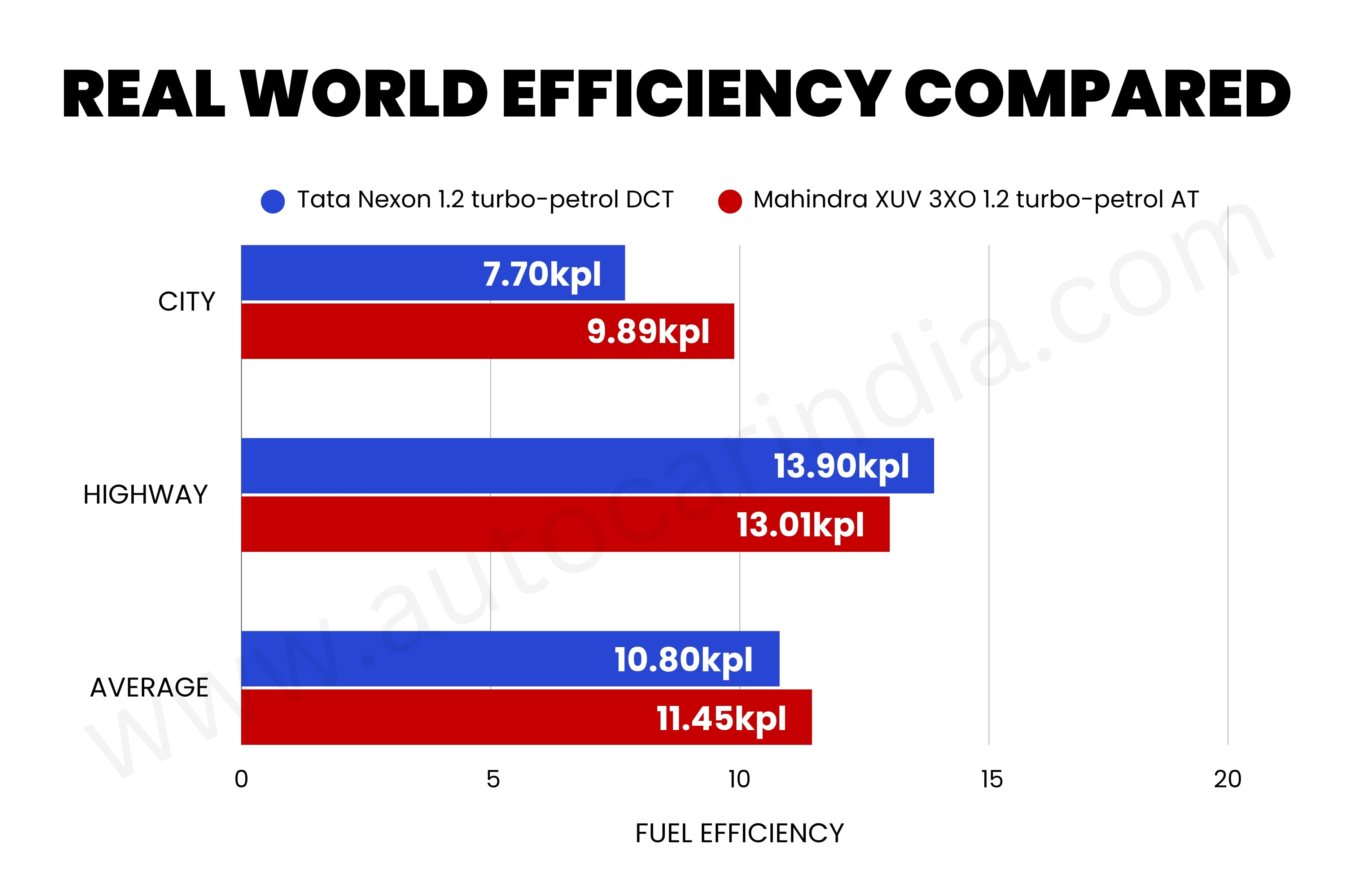
In the city, the XUV 3XO had a clear lead over the Nexon, achieving a real-world fuel economy that was higher by 2.19kpl. The Mahindra XUV 3XO’s direct fuel-injection technology allows petrol to be introduced into the engine in a highly measured and precise manner. This reduces fuel consumption and improves combustion when compared to a similarly sized but MPFI-equipped turbo-petrol engine, like in the Nexon.
Tata Nexon vs Mahindra XUV 3XO turbo-petrol automatic: Prices
Tata Nexon vs Mahindra XUV 3XO turbo-petrol automatic prices | ||
| Tata Nexon | Mahindra XUV 3XO |
Price range (in Rs, lakh) | 11.35-13.70 | 13.28-15.04 |
The turbo-petrol-automatic variants of both the Tata Nexon and Mahindra XUV 3XO are available in three trim levels. For cost-conscious buyers, the most affordable Nexon with this powertrain setup comes in Rs 1.93 lakh cheaper than a comparable XUV 3XO. This price delta continues to the mid-spec trim as well, where the Mahindra is pricier by Rs 79,000. At the top-end, the XUV 3XO’s turbo-petrol automatic variant costs Rs 1.34 lakh more than the equivalent Nexon. One of the reasons for the XUV 3XO’s higher price is is its direct-injection fuel system, which costs more than a comparable MPFI unit.
Autocar India’s fuel efficiency testing
Before our real-world fuel efficiency tests, we fill our test cars’ tanks to the brim and maintain tyre pressures based on the manufacturer’s recommendations. These cars are driven in fixed city and highway loops in and around Navi Mumbai, and we maintain certain average speeds. Throughout the tests, there is only one person in each car, running the air conditioner and other electricals, such as the audio system, indicators and wipers, when required, just like a regular user would. Periodic driver swaps further neutralise variations in driver patterns. At the end of each cycle, we calculate efficiency by filling the tanks to full again.
Prices are ex-showroom, India.
Also read
Tata Harrier vs MG Hector petrol automatic: Real world mileage compared
Tata Nexon vs Mahindra XUV 3XO: Real world diesel efficiency compared

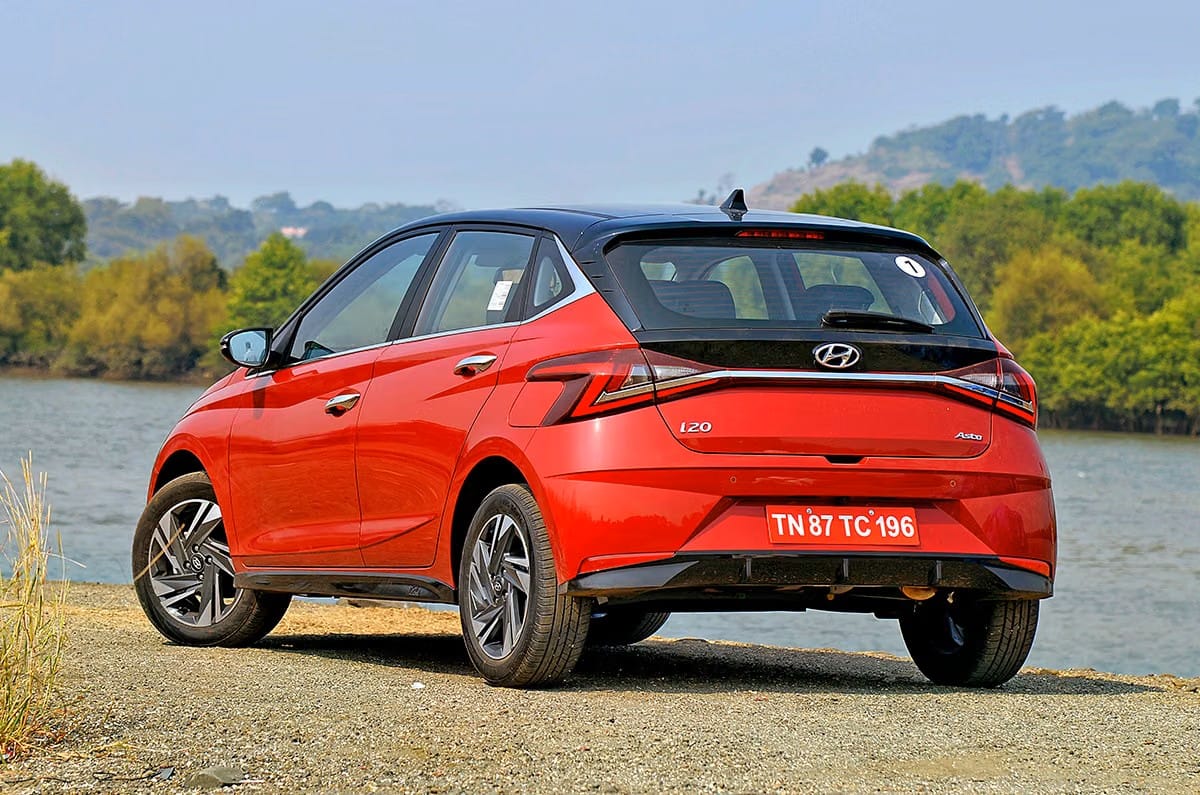
The Hyundai i20 has long been one of the benchmarks in the premium hatchback segment. Along with a spacious cabin, comfortable ride and a feature-rich interior, it offers buyers a choice of manual and automatic transmissions, while those seeking more performance can opt for the sportier i20 N Line. However, its premium pricing (Rs 6 lakh to Rs 11.59 lakh) means it faces stiff competition from both premium hatchbacks and similarly priced compact SUVs. Here’s a look at the Hyundai i20’s biggest strengths and weaknesses.
Pros
1. Spacious and comfortable cabin
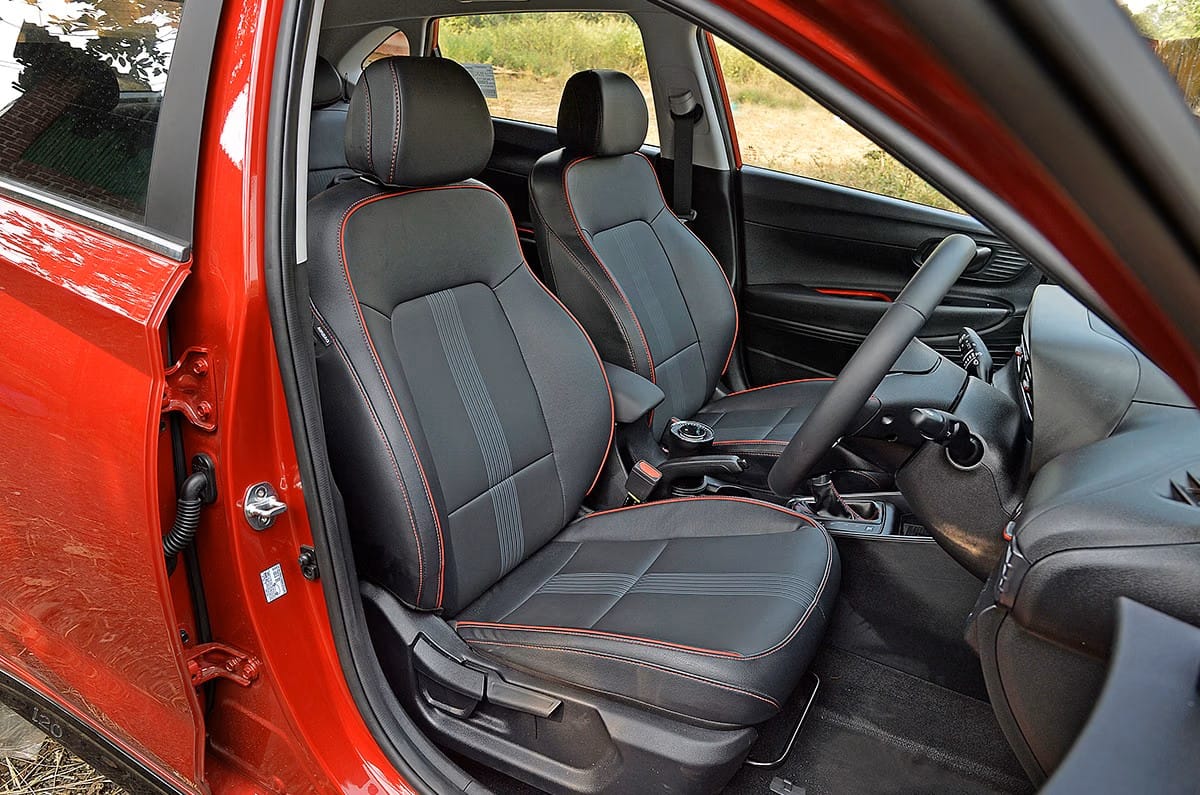
One of the i20’s biggest strengths is its cabin. It offers generous rear-seat space for a premium hatchback, with enough legroom and headroom to comfortably accommodate taller passengers. The front seats are supportive, the dashboard layout is intuitive, and the cabin feels airy thanks to its low-set dashboard. Practicality is another strong point, with a 311-litre boot that’s well suited to everyday use and weekend trips.
2. Well-equipped across the range
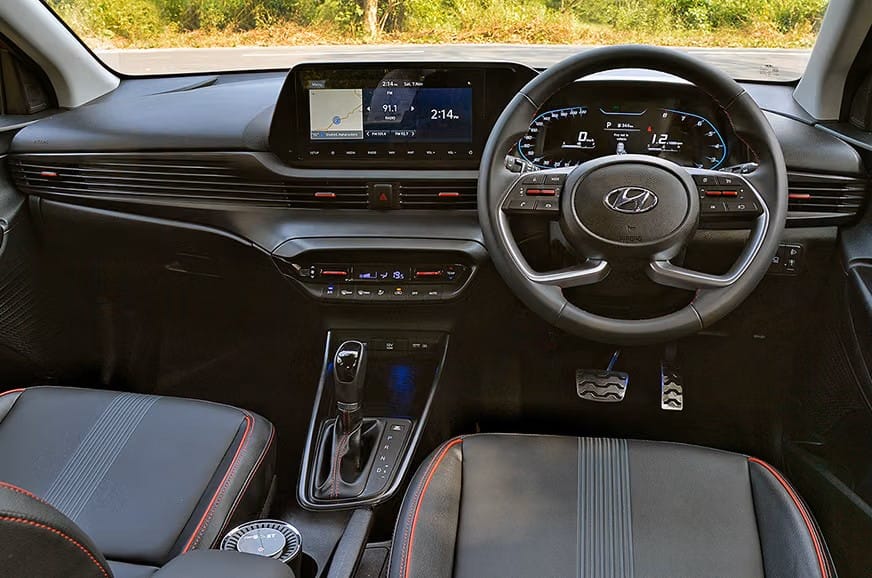
The i20 continues to offer one of the strongest feature lists in its class. Higher variants come with a 10.25-inch touchscreen infotainment system, a digital instrument cluster, connected car technology, a Bose sound system, wireless phone charging, automatic climate control, a sunroof and ambient lighting. Safety equipment is equally comprehensive, with six airbags, electronic stability control (ESC), a tyre-pressure monitoring system (TPMS) and Isofix child-seat mounts available on higher trims.
3. Comfortable ride and refined road manners
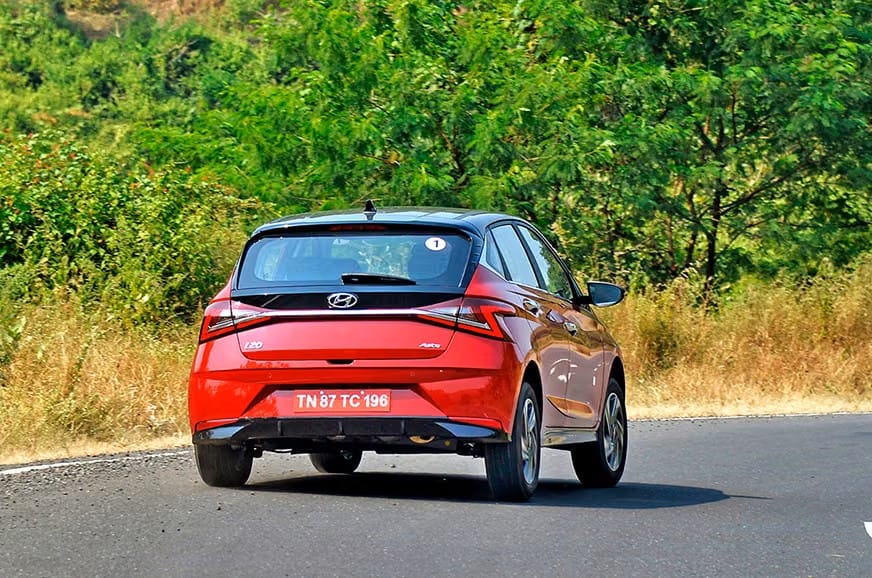
The i20 is tuned with comfort in mind. Its suspension absorbs broken roads well without feeling unsettled, while the light steering makes it easy to manoeuvre in the city. On the highway, the hatchback feels stable and composed, giving it a more mature driving experience than many of its rivals. Overall, it strikes a good balance between everyday comfort and confident handling.
Cons
1. Expensive for its segment
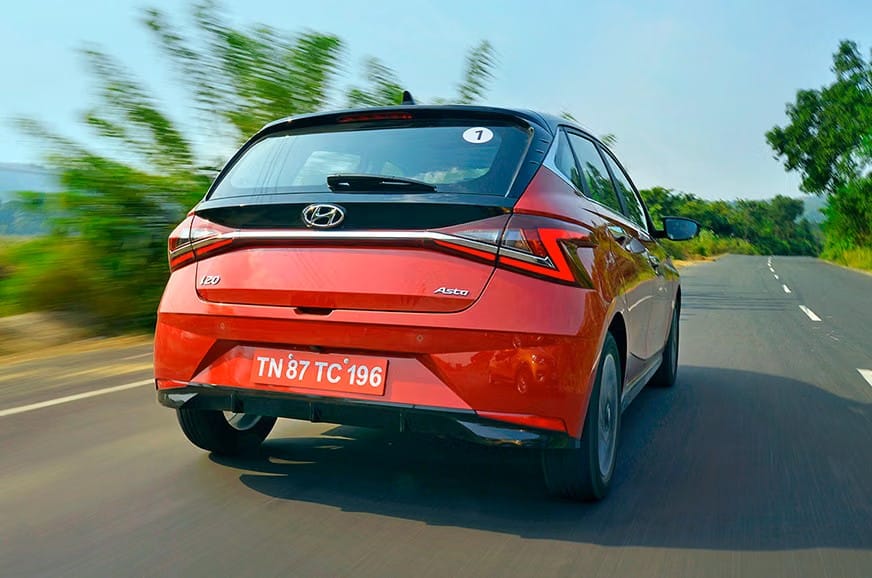
The i20 is among the most expensive premium hatchbacks on sale. While its cabin quality, comfort and equipment help justify the asking price, buyers shopping in this price bracket also have the option of several compact SUVs, which offer greater ground clearance and a stronger road presence for similar money.
2. The 1.2-litre petrol engine isn’t particularly peppy
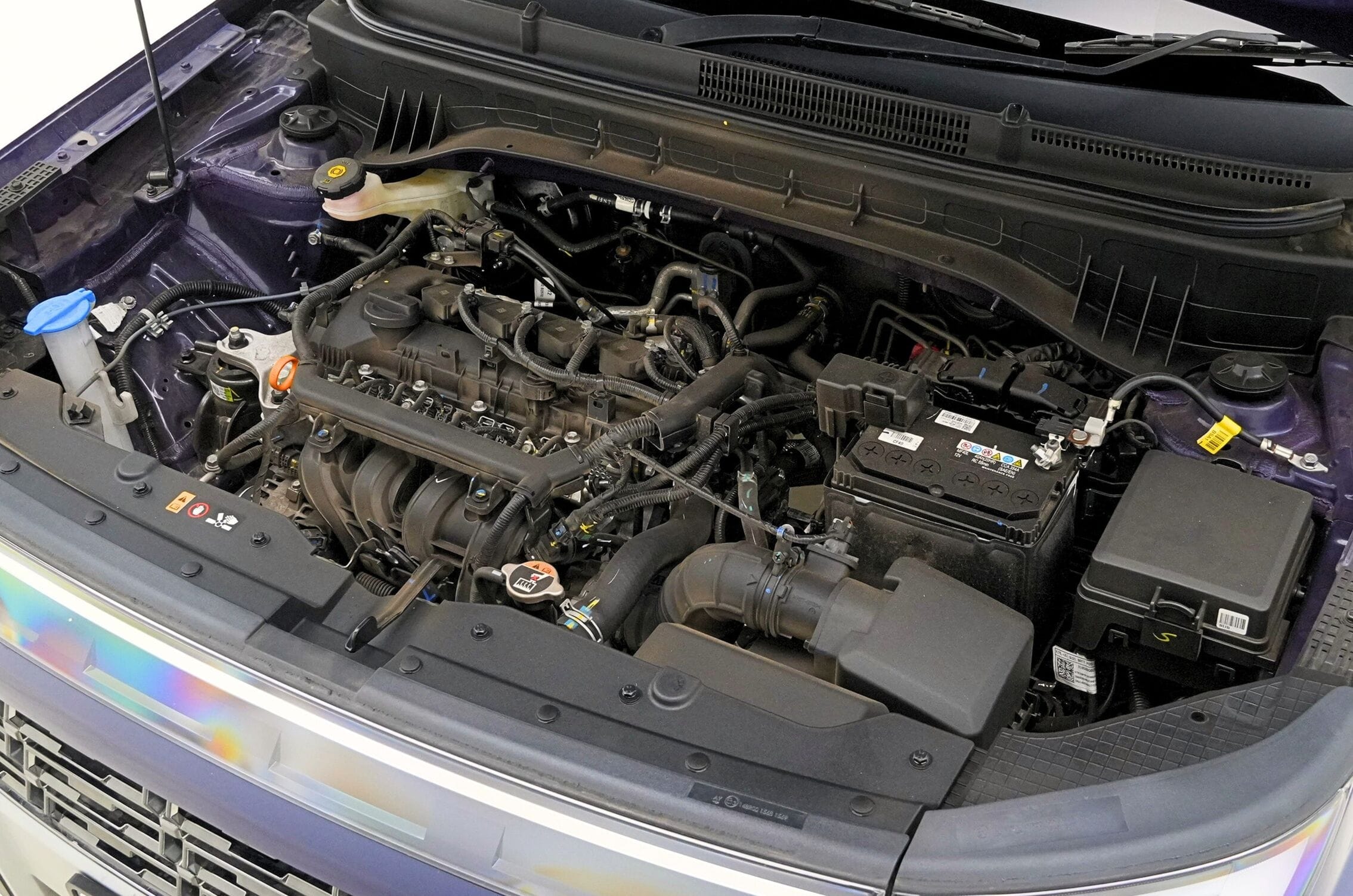
The naturally aspirated 1.2-litre petrol engine is smooth and refined, but it isn’t particularly strong at lower engine speeds. It often requires downshifts to gather pace in stop-start traffic or during overtaking manoeuvres, making it feel less effortless than some turbo-petrol rivals. Buyers looking for stronger performance may find the standard i20’s engine lacking. The i20 does come with a punchier 1.0-litre turbo-petrol engine on the N Line variants but for a much higher asking price.

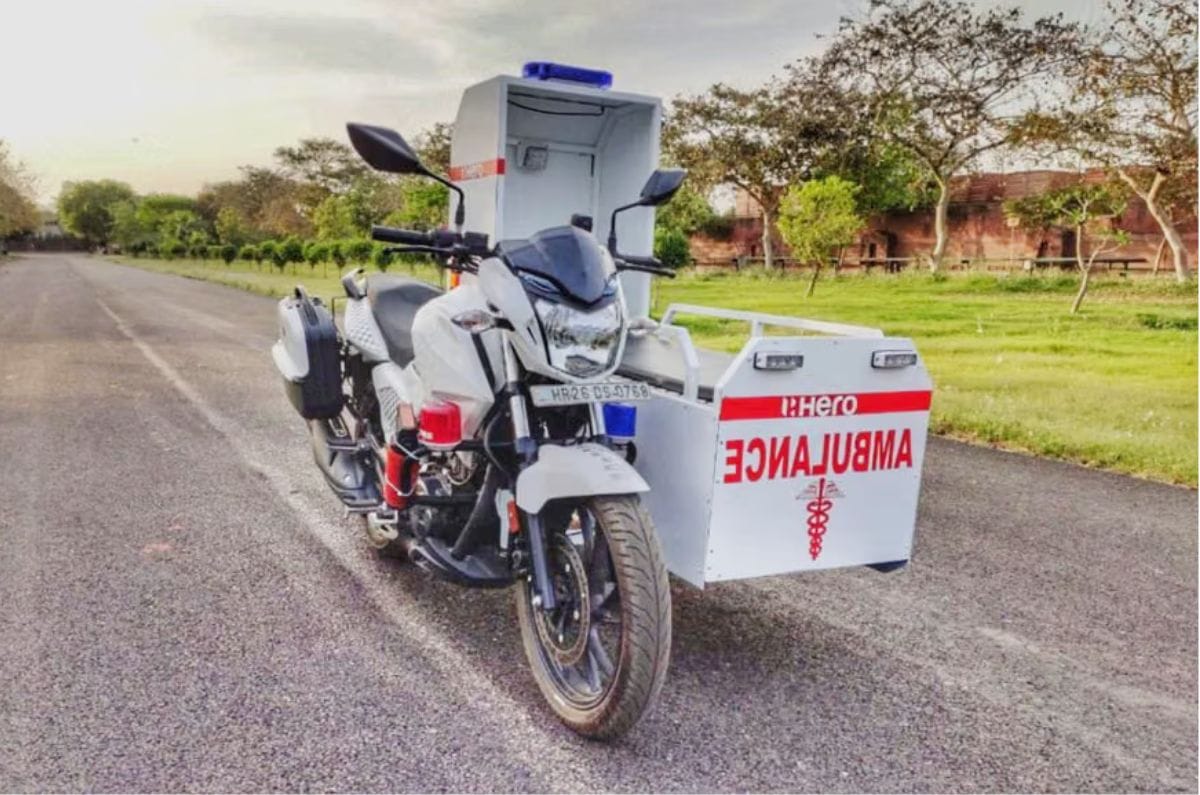
The Ministry of Road Transport and Highways (MoRTH) has proposed a new set of regulations for two-wheeled road ambulances, outlining dedicated safety, equipment and periodic fitness standards under the Central Motor Vehicles Rules, 1989.
- Two-wheeled ambulances to get dedicated fitness inspection norms
- Fitness certificate renewal proposed every two years
- Full AIS:209 compliance for new vehicles from October 1, 2027
What the draft rules propose
Under the draft amendments, two-wheeled road ambulances will undergo dedicated fitness inspections covering the structural integrity of the patient unit, tyres and wheels, emergency warning lights, stretcher mounting and locking mechanisms, patient restraint belts, stretcher loading systems and the presence of a valid fire extinguisher.
The proposal also fixes the validity of renewed fitness certificates for these vehicles at two years.
Compliance timeline
MoRTH has proposed that top-mounted warning lights on two-wheeled ambulances comply with AIS:209 (Part 1) from October 1, 2026. From October 1, 2027, all newly manufactured L2-category two-wheeled ambulances will have to meet the complete AIS:209 standard. These vehicles will also be allowed to operate only within areas notified by the respective state governments.

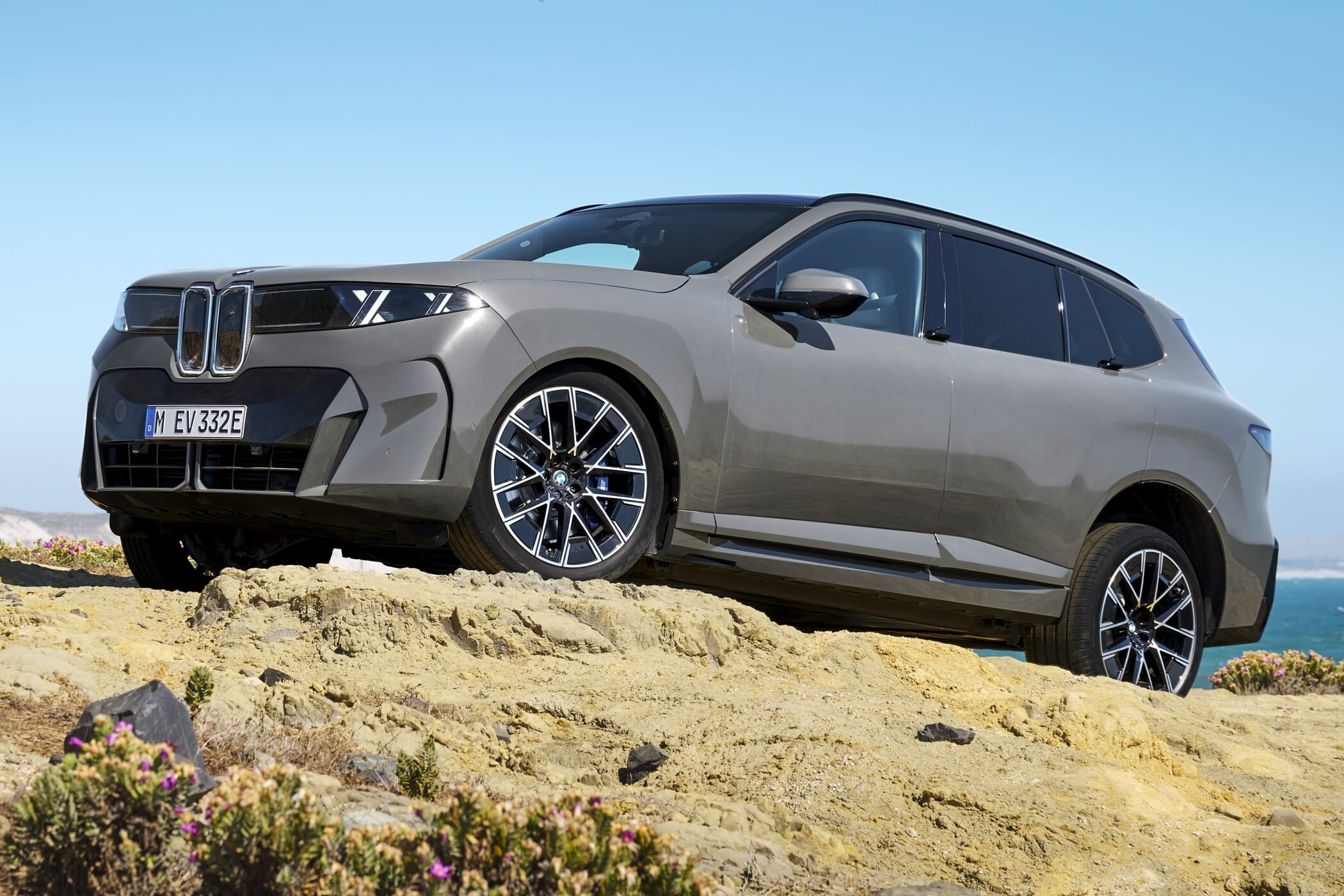
BMW’s luxury off-roader project, codenamed G74, has reportedly failed to receive final internal approval and is on hold due to changing global market conditions. The rugged luxury SUV was purported to be BMW’s rival to the Mercedes-Benz G-Class and Land Rover Defender, but it’s now uncertain whether it will ever reach production.
Market pressures prompt BMW to re-evaluate product portfolio
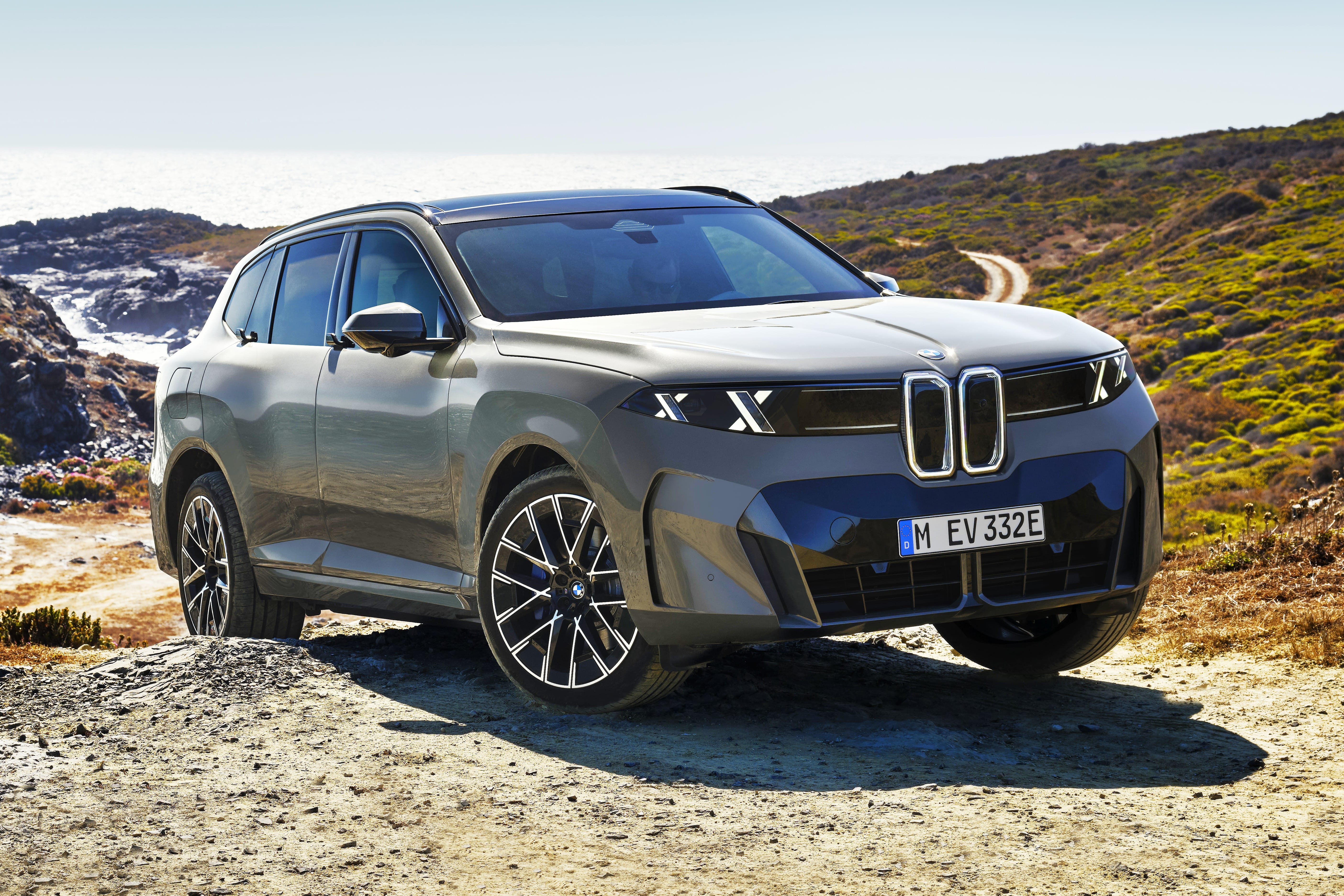
According to recent media reports, one of the reasons behind the G74 project’s halt is concern over the size of the luxury off-roader segment relative to the investment required to develop a dedicated model. BMW is also adopting a more disciplined approach to its model portfolio in light of increasing competition in markets like China, as well as tariffs, trade barriers, currency fluctuations, tightening emissions regulations in Europe, and broader geopolitical uncertainty.
Speaking after the company’s second-quarter financial results, CEO Milan Nedeljković said BMW is re-evaluating which technologies, model variants, and powertrains it will need in the coming years instead of assuming existing development programmes remain viable. “In all these areas, we are taking significant steps and increasing the pace. For example, we are once again reviewing which technologies, model variants and drivetrains we will need in the future. In addition, we are looking at where new partnerships could make economic and technological sense,” he noted.
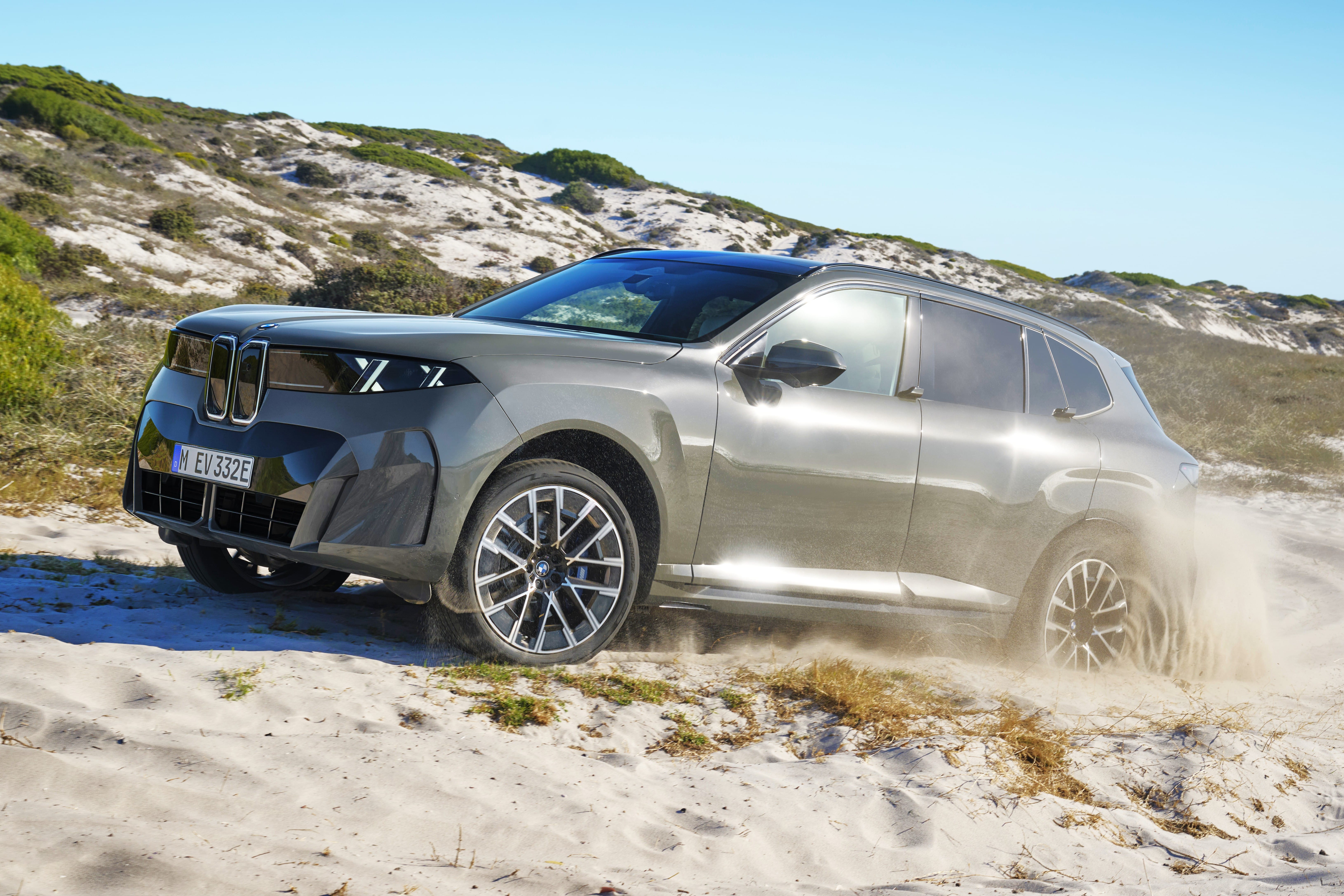
Nedeljković highlighted the rapid deterioration of market conditions in China as a key concern for the portfolio review. He said Chinese manufacturers are increasingly expanding into Europe, Latin America, and other global markets, creating additional competitive pressure. Although Nedeljković did not mention the G74 directly, insiders claim the off-road SUV has already become one of the first casualties of BMW’s ongoing product review.
The G74 was reportedly targeting a 2029 launch, and sources say BMW can still approve or cancel projects up to around 18 months before production begins. BMW has not officially confirmed the cancellation of the G74 yet, and since the project is currently on hold rather than permanently scrapped, there remains scope for it to return if market conditions improve.
Everything we know about the BMW G74 off-road SUV
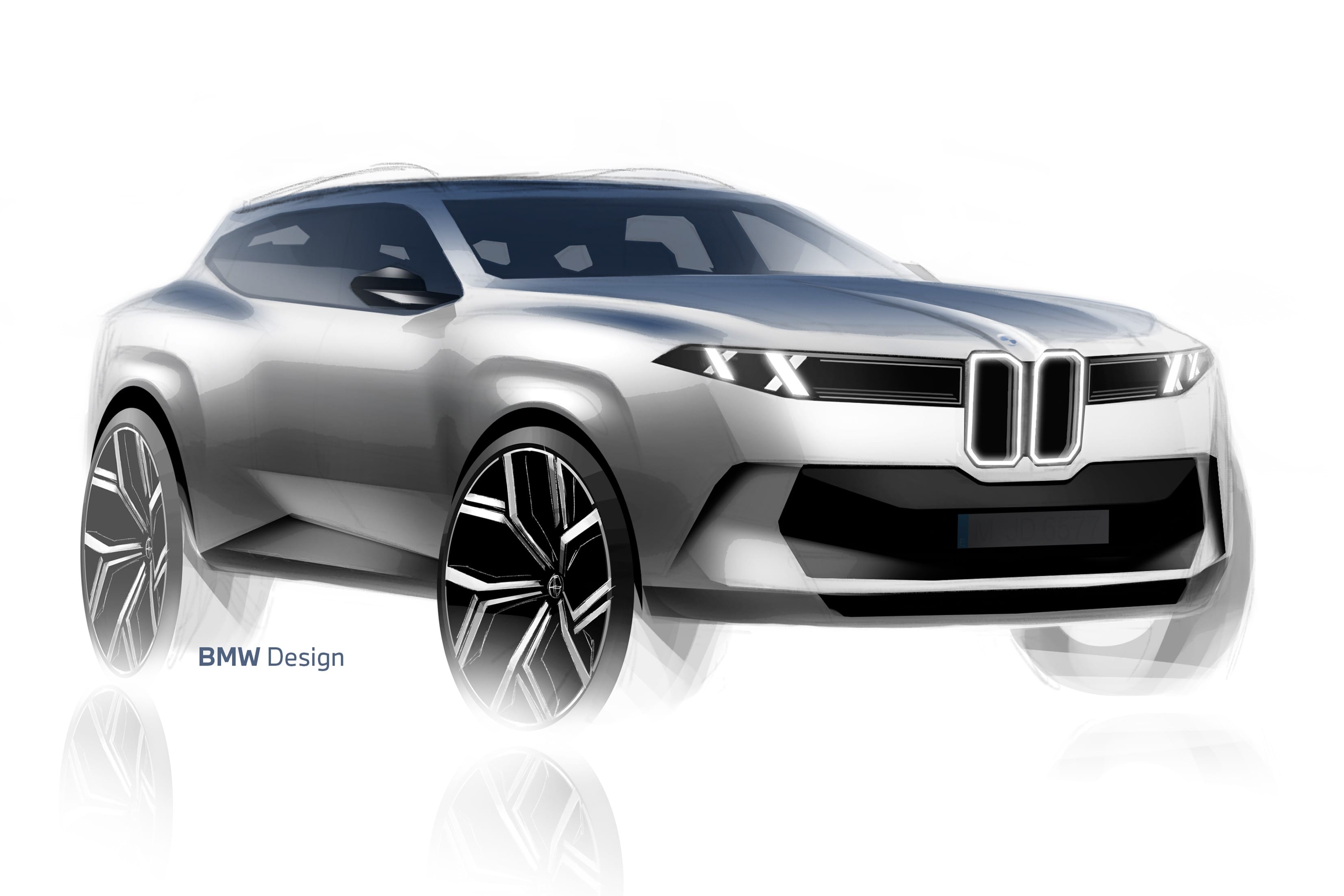
While BMW never officially confirmed the existence of the G74 project, reports over the past few years suggested the carmaker was developing a purpose-built off-road SUV to rival the G-Class and Defender. In reference to the luxury off-roader segment, a senior BMW manager told Autocar UK in 2025: “We’re aware of the market potential [of such a vehicle]. It’s more than just discussions. We have been planning this for a while. It will definitely need an internal combustion engine.” Earlier this year, BMW M boss Frank van Meel even added to the speculation by stating he ‘wouldn’t say no’ to an off-road SUV fettled by the performance division.
The G74 project was expected to be underpinned by a heavily-modified derivative of the existing CLAR platform, which also underpins the fifth-gen BMW X5. This would have allowed the G74 to be offered with multiple powertrain options, including plug-in hybrid and fully electric, and the SUV’s production was ostensibly planned for BMW’s Spartanburg plant in South Carolina.
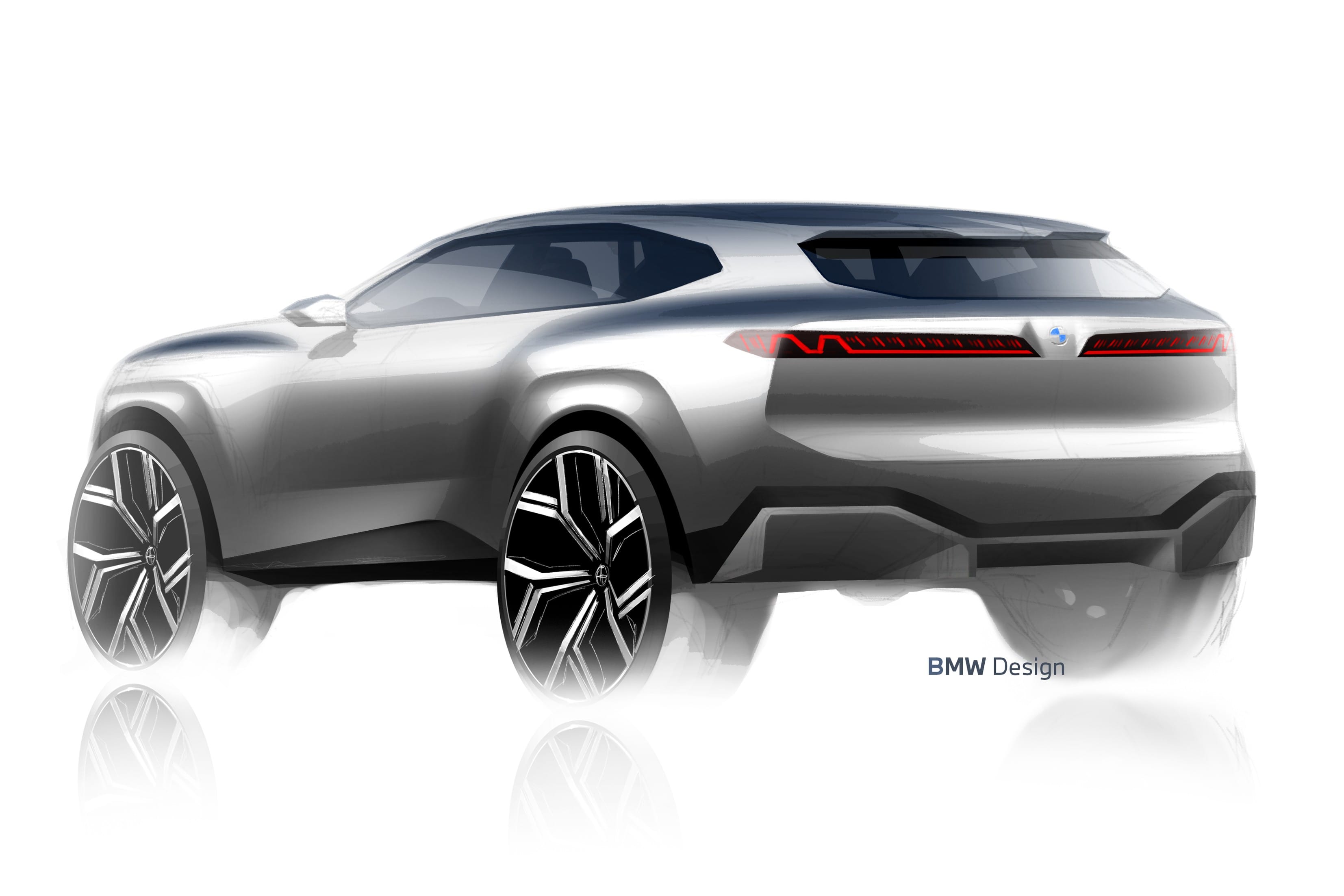
Reports suggest the BMW G74 was designed with a 7-seat layout in mind, while the exterior featured a rugged iteration of the Neue Klasse design language and a bootlid-mounted spare wheel. The SUV was even mooted to be christened the X8, and serve as a spiritual successor to the BMW XM, which is expected to be discontinued in 2028.

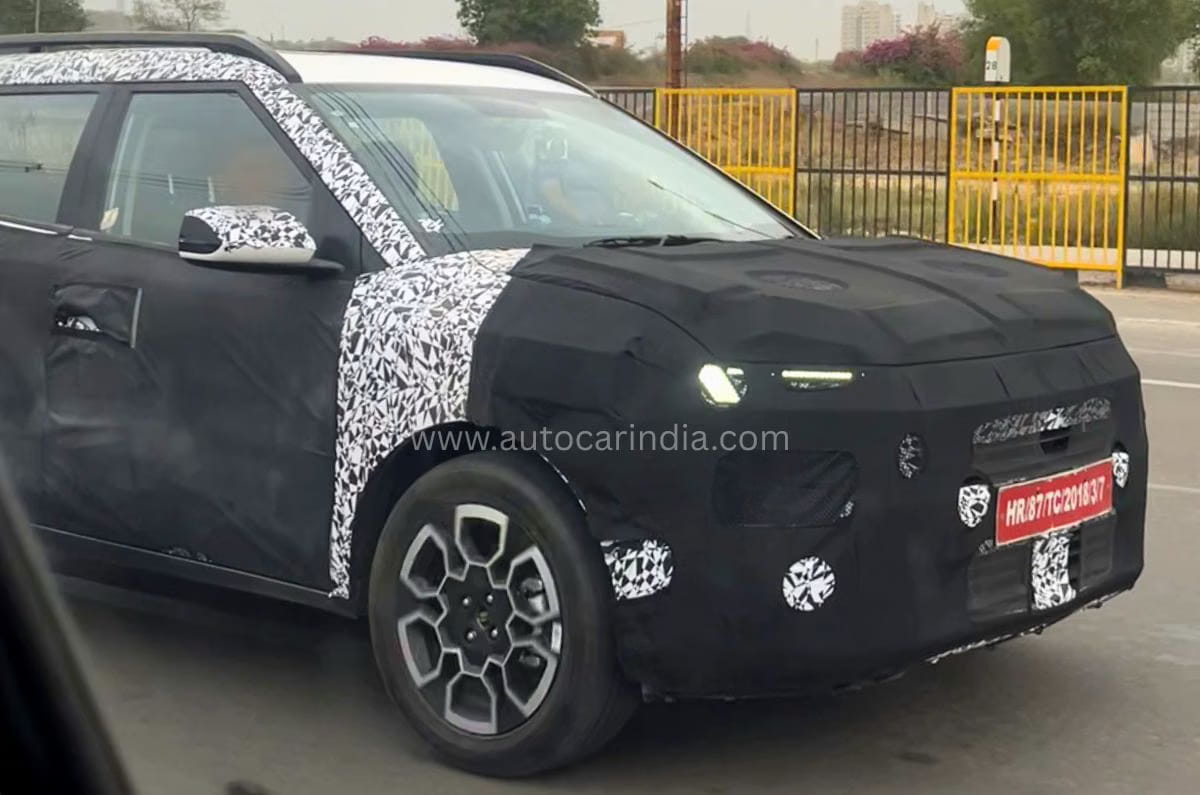
Tarun Garg, MD and CEO of Hyundai India, confirmed on the company’s Q1 FY27 earnings call that the brand will launch a new mid-size SUV during the festive season. Following this, the brand will also launch a new compact electric SUV within this fiscal year.
- New mid-size SUV likely to offer an underbody-mounted CNG kit.
- Compact electric SUV to sit on a new architecture and utilise Exide batteries.
New Hyundai mid-size SUV: What do we know so far?
To sit below the Creta and likely offer petrol and CNG powertrains
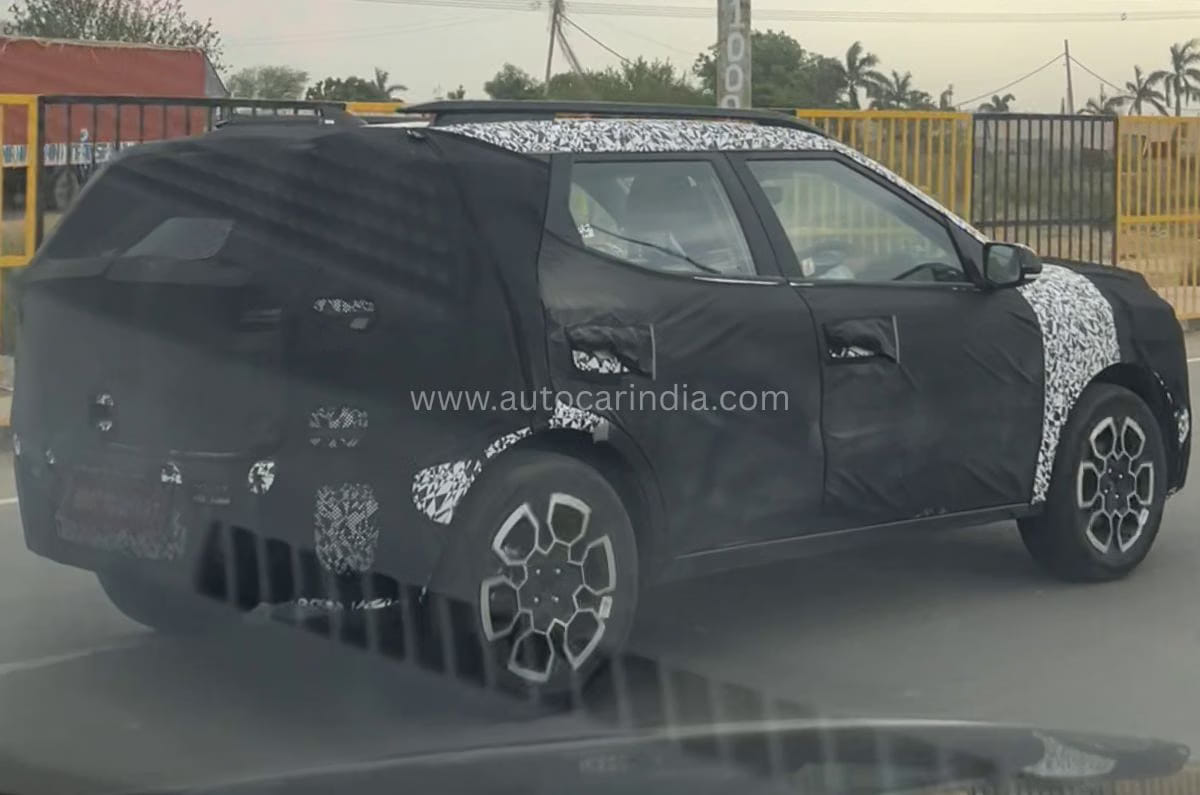
Before the next-generation Creta debuts in 2027, Hyundai will introduce another product in the mid-size SUV space during the festive season to strengthen its presence. This SUV (codename: Bc4i) will utilise the Bayon crossover’s platform that’s sold abroad. It will measure around 4.18 metres in length, suggesting that it would be positioned below the Creta.
Heavily camouflaged mules of this mid-size SUV have been spied abroad and on our roads, giving a glimpse of what it could look like. Prototypes were spotted with a crossover-esque design, roof rails, dual-tone alloys, split lamp design, rising windowline and all-wheel disc brakes. While the interior has not been spied yet, Hyundai is likely to load it up with features and advanced driver assistance systems (ADAS).
The model will be powered by a 1.5-litre naturally aspirated engine, our sources indicate. This engine already powers the Creta and can be paired with either a manual or CVT gearbox. Additionally, Hyundai is expected to pair a CNG kit with this engine, making it the first CNG-powered model above 4 metres in its lineup. The kit would be fitted to its underbody, like the Maruti Victoris, but also have a spare wheel, unlike the Maruti.
With a second contender in the mid-size SUV segment, Hyundai is taking a similar approach to Maruti Suzuki, which has the Victoris and Grand Vitara in this space. While this SUV will come with economical powertrains and occupy the lower rung, the new-gen Creta sitting above it will come with wider powertrain options, including a hybrid.
New Hyundai compact electric SUV: What to expect?
Expected to rival the likes of the Kia Syros EV, Tata Nexon EV, and Mahindra XUV 3XO EV
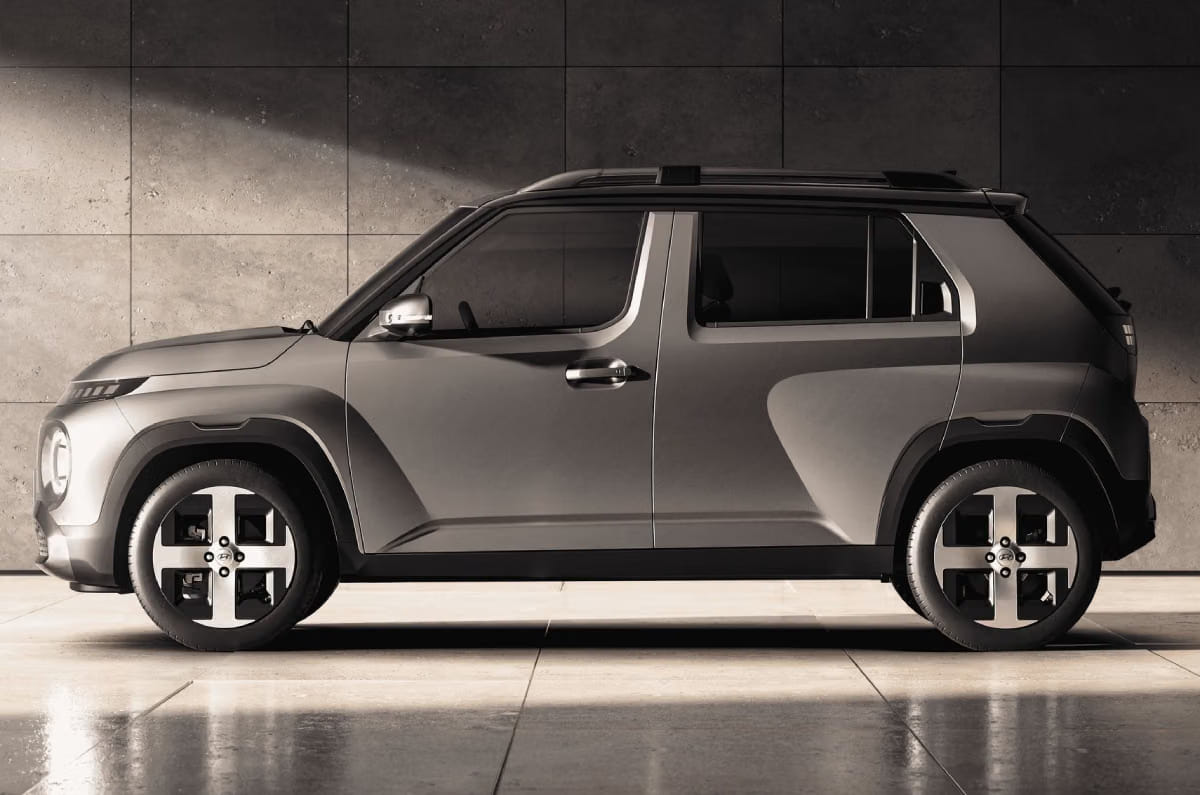
Following the mid-size SUVs’ launch, Hyundai will also introduce a challenger in the growing compact electric SUV space. The arrival of this SUV was first announced back in 2025, when the carmaker stated that it would be localised and “designed, engineered and built in India for Indian customers.”
During the earnings call, the brand confirmed that the EV would be built on a new architecture rather than being an EV counterpart of the Venue. Codenamed HE1i, it is expected to sit on the E-GMP (K) platform, which is also utilised by the Inster sold abroad. It will be produced at the carmaker’s Sriperumbudur facility in Tamil Nadu and use localised batteries from Exide. The eSUV will be offered in standard range and long range versions. While specifications are yet to be confirmed for this model, for reference, the Euro-spec Inster is offered with 42kWh (standard range) and 49kWh (long range) battery packs with WLTP ranges of 300km and 355km respectively.
With inputs from Mugdha Mishra

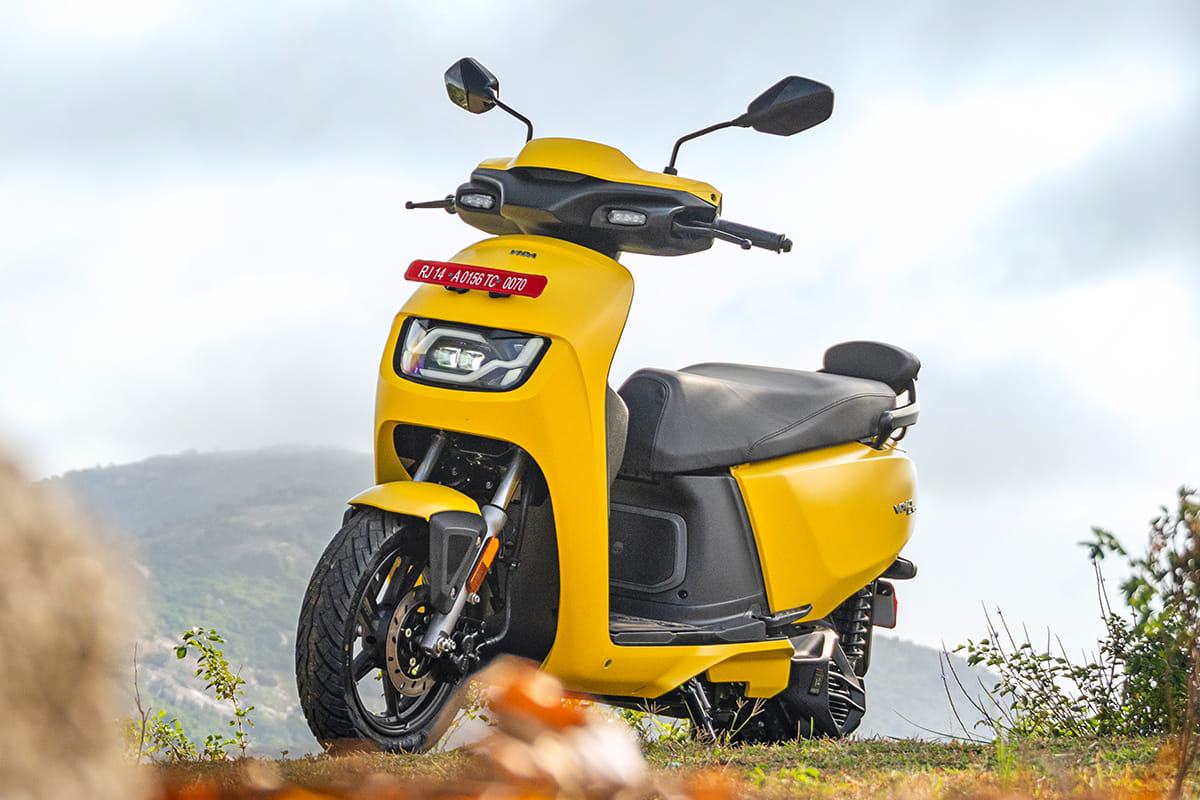
Hero MotoCorp’s electric mobility brand Vida has expanded its VX2 electric scooter range with the launch of the new Vida VX2 Go FB. Priced at Rs 1.13 lakh (ex-showroom, Delhi), the new variant sits alongside the existing removable-battery versions but instead uses a 3.1kWh fixed battery with direct-plug charging.
- Vida VX2 range now comprises of five battery pack options
- Comes with a 3.1kWh fixed battery pack
- Features a swingarm mounted motor with 6kW of peak output
Vida VX2 Go 3.1 FB : What’s new?
It has a claimed top-speed of 70kph
According to Vida, the addition is aimed at offering buyers more flexibility by allowing them to choose between fixed-battery and removable-battery charging solutions depending on their usage and home charging requirements.
The VX2 Go FB is powered by a 3.1kWh fixed battery that delivers an IDC-certified range of 128km. It uses the same 6kW swingarm-mounted electric motor, which gives the scooter a claimed top speed of 70kph. The scooter also supports DC fast charging, with Hero claiming a 0-80 percent charge time of 65 minutes.
Feature highlights include a 4.3-inch LCD instrument cluster with smartphone connectivity and turn-by-turn navigation, 27.2 litres of under-seat storage, and a long single-piece seat.
With the introduction of this fixed-battery variant at a price of Rs 1.13 lakh, the VX2 now spans across five variants with four battery pack options. The smallest battery is the 2.2kWh pack that has an IDC range of 93km, whereas the largest battery pack is the 4.4kWh one that delivers a claimed IDC range of 187km.

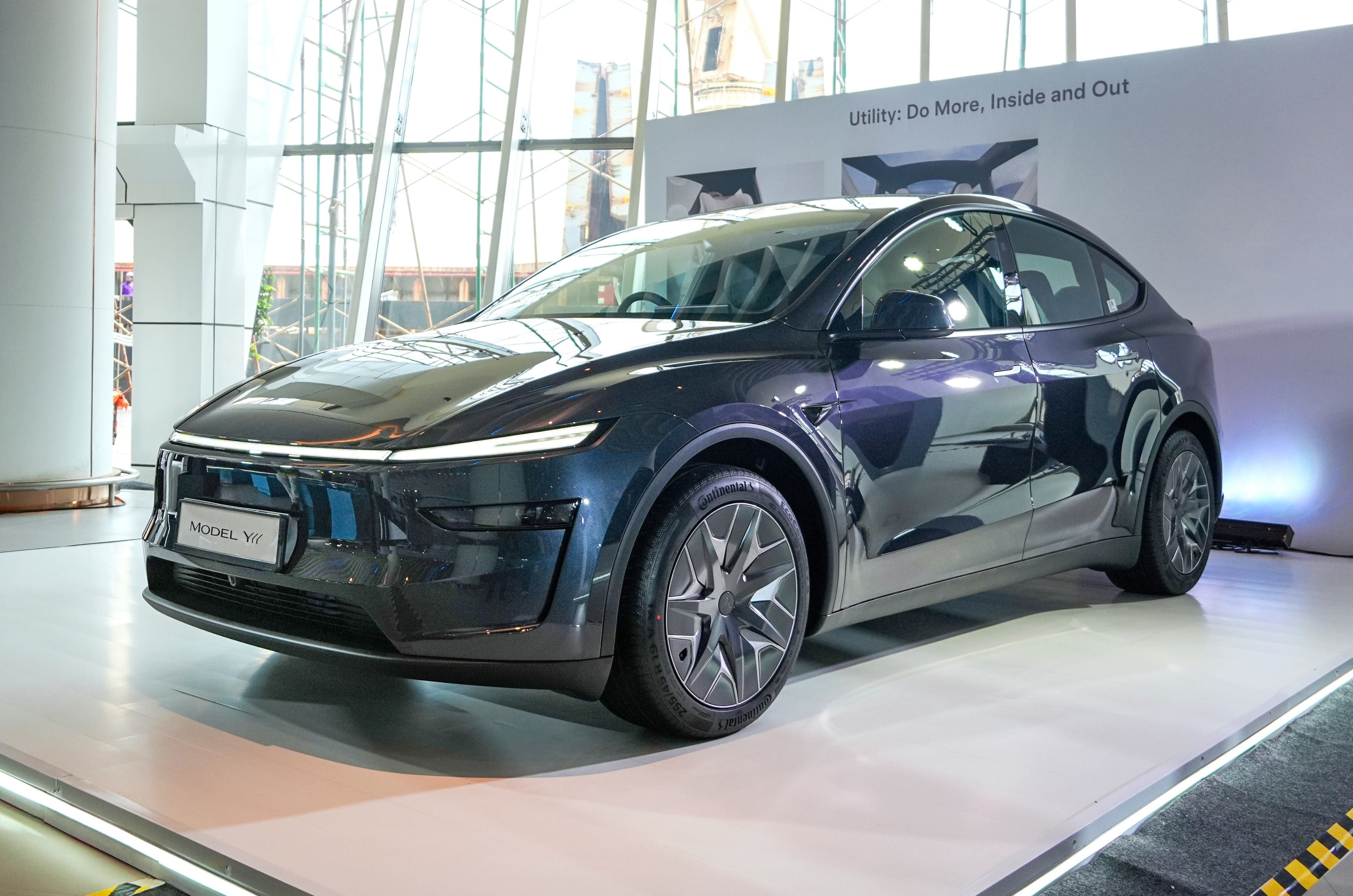
The Tesla Model Y is now available with new artificial intelligence features in India, the most significant being the Grok AI assistant. The new AI features, including Grok assistant integration, are pushed through an over-the-air (OTA) update at no additional cost and “bring conversational intelligence directly into the cabin of every Tesla Model Y in India”.
- Grok AI assistant can interact in Hindi, Marathi, Gujarati, Telugu, Tamil, and Kannada
- It can be accessed by saying “Hey Grok” or pushing the voice button on the steering wheel
Alongside the announcement of new AI features, Tesla has also announced the commencement of test drives for the Model Y Premium RWD variant across its dealerships in India.
Tesla Model Y with Grok AI assistance: All you need to know
Grok AI assistance allows for easier voice-enabled navigation and vehicle intelligence capabilities
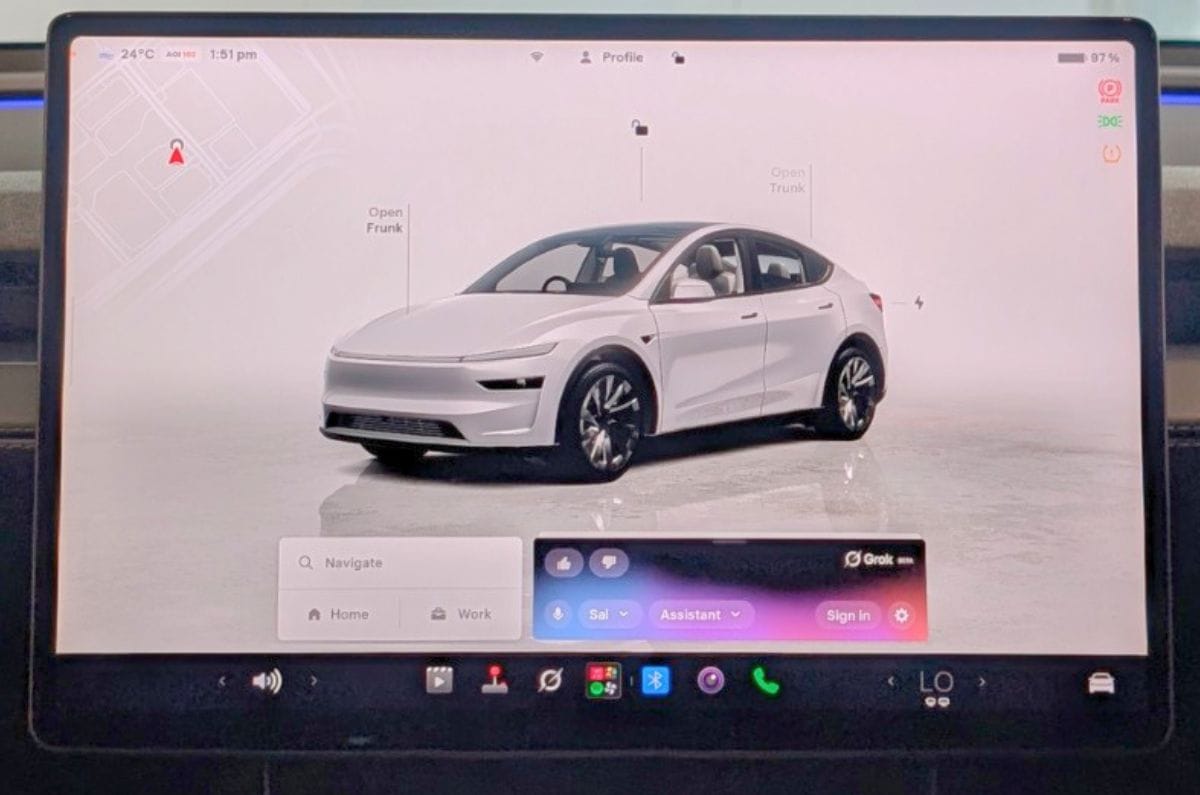
While the Grok AI assistant integration is new for Tesla cars in India, it has been offered internationally since 2025. The American manufacturer has now released the Summer 2026 update, which “enhances the Grok AI Assistant feature with new capabilities” and by which “automatic navigation has expanded beyond home and work to support any destination based on the driver’s personal habits and schedule”. All these features are now available to Model Y customers in India at no extra cost via an OTA update.
Tesla said that the Grok features can be accessed by saying “Hey Grok” or using the voice button on the steering wheel. The AI assistant can interact in multiple Indian languages, including Hindi, Marathi, Gujarati, Telugu, Tamil, and Kannada. Among all features, Tesla has highlighted that the new AI-based assistant would help plan multi-stop journeys with voice commands, locate nearby Tesla Superchargers, coffee shops, restaurants, hospitals, ATMs and toilets, and explain the various alerts and warnings that pop up on the screens. The Grok AI’s tone, language, and conversational style can be personalised to suit the customer’s preferences.
The Tesla Model Y is offered in India in two trims: a 5-seater Premium RWD and a 7-seater L Premium AWD, priced from Rs 50.89 lakh to Rs 61.99 lakh (ex-showroom, India). It rivals the Hyundai Ioniq 5, Kia EV6, and BYD Sealion 7 in India.

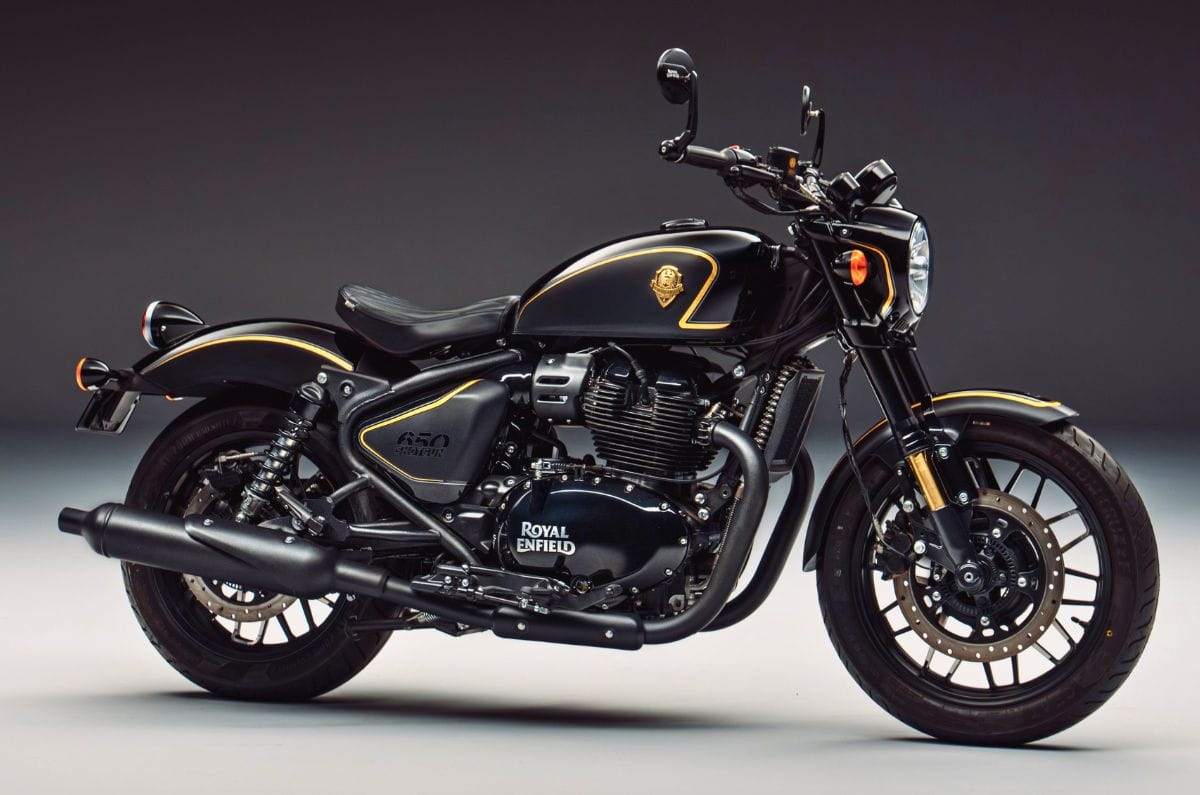
Royal Enfield has announced that its limited-edition Shotgun 650 X Rough Crafts has sold out globally, with the India allocation being booked within just three minutes of sales opening.
- India allocation sold out in just three minutes
- Only 100 examples were produced worldwide
- More than 9,000 enthusiasts registered interest globally
Royal Enfield Shotgun 650 X Rough Crafts
It remains mechanically identical to the stock bike
Developed in collaboration with Taiwanese custom motorcycle builder Winston Yeh of Rough Crafts, the special edition was limited to just 100 individually numbered motorcycles worldwide. Royal Enfield says more than 9,000 enthusiasts from across the globe had registered their interest in purchasing one, underlining the demand for the exclusive model.
While the company has confirmed that the India allocation sold out in three minutes, only 25 models of the 100 motorcycles were earmarked for India.
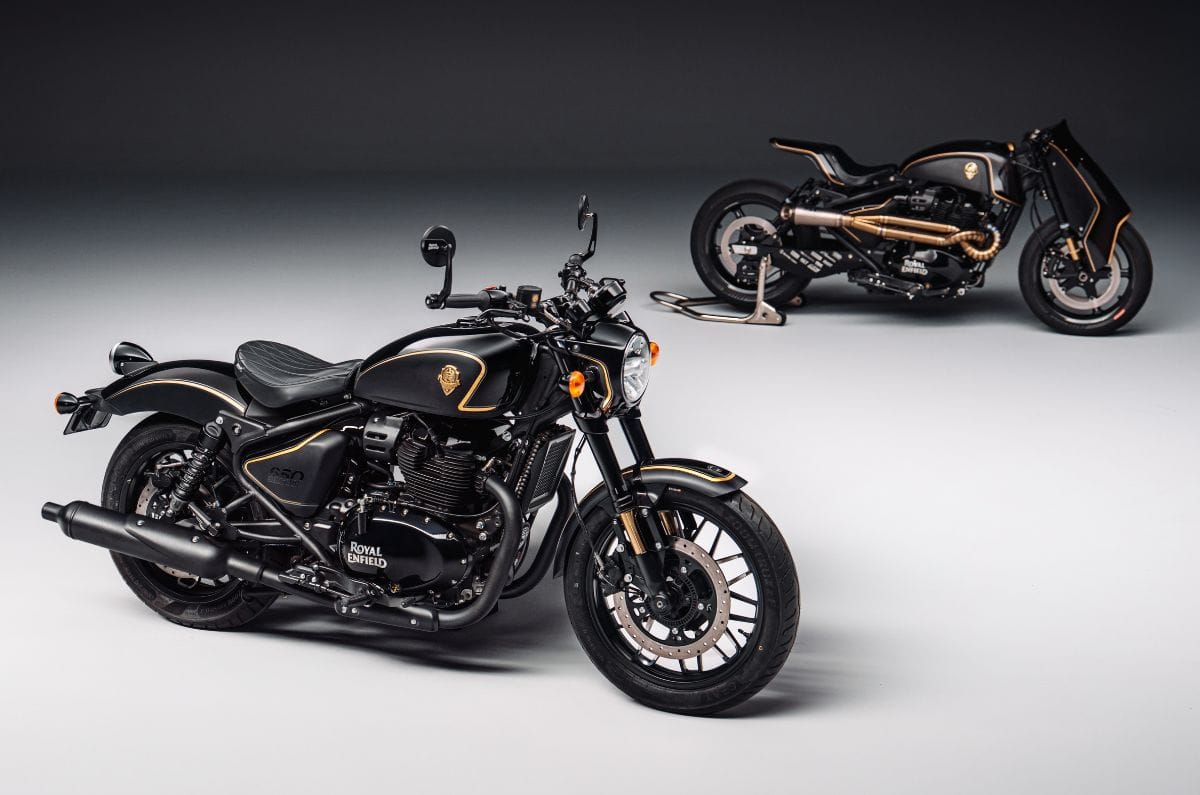
The Shotgun 650 X Rough Crafts is based on the standard Shotgun 650 but receives a bespoke design inspired by Yeh’s custom build. Finished in a combination of Gloss Jet Black and Matte Stealth Black, the motorcycle gets hand-applied gold leaf stripes with subtle grey accents, a cast brass Rough Crafts collaboration badge and individually numbered fuel tanks. Other exclusive touches include black bar-end mirrors, quilted leather seats, contrast-cut alloy wheels and gold-coloured fork tubes.
Mechanically, it remains unchanged and continues to be powered by the familiar 648cc, parallel-twin, air/oil-cooled engine producing 47hp and 52.3Nm, paired with a six-speed gearbox.