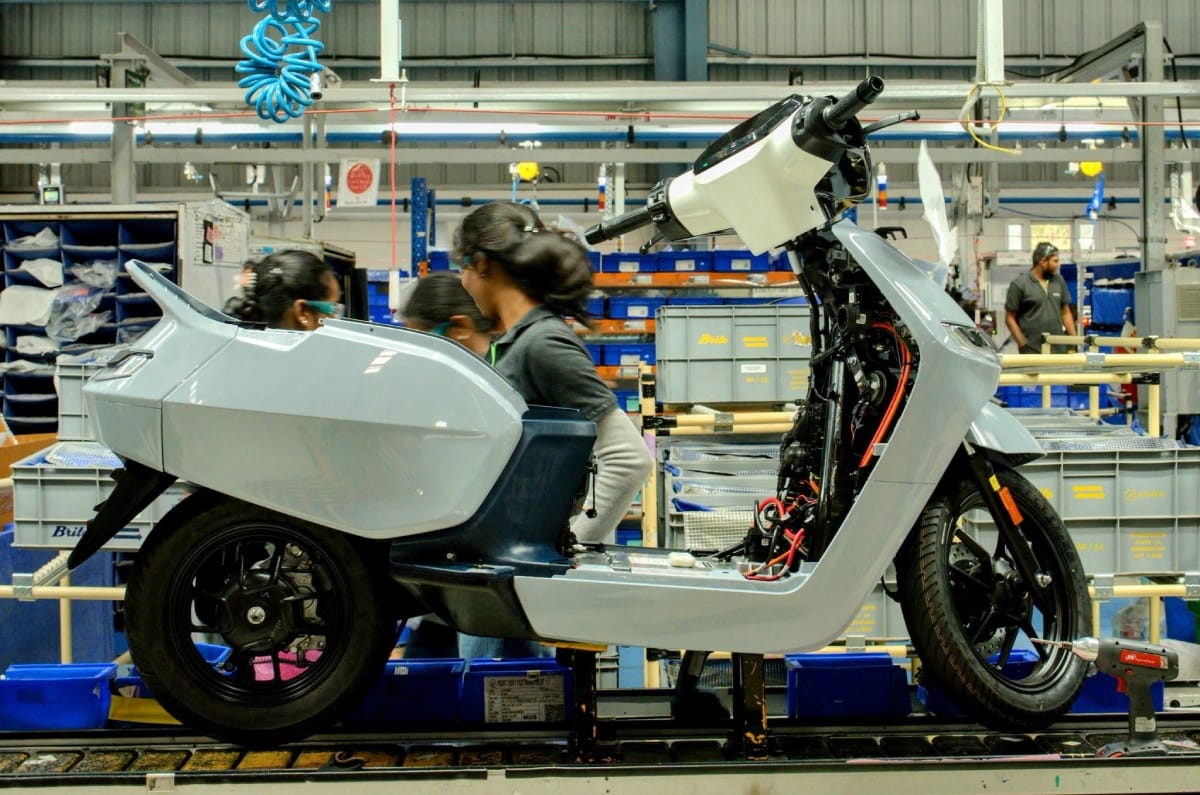
Ather Energy CEO Tarun Mehta has shared an image of the upcoming EL platform-based electric scooter on the assembly line, giving us a glimpse of what to expect ahead of its official launch at Ather Community Day on August 29, 2026.
Appears to have a metal body
Expected to be priced between Rs 1 lakh and Rs 1.25 lakh
Production version closely matches the EL01 concept and design patent filed last year
Ather EL platform scooter: What we know so far
Upcoming scooter confirmed for August 29 launch at Ather Community Day
From the assembly line image shared by Tarun Mehta, the production scooter retains the design language of the EL01 concept, featuring a handlebar-mounted headlight and a wide LED DRL on the front apron. Its overall silhouette also closely matches the design patent Ather filed last year. Notably, the scooter appears to feature a metal body, marking a departure from the polymer body panels used on Ather’s existing lineup.
The wheel setup is also visible in the image, with a 14-inch front wheel paired with what appears to be a 12-inch rear wheel. At Community Day 2025, Ather said the EL platform was developed using over 26 lakh kilometres of field data and is modular enough to underpin scooters across different sizes and use cases. The company also confirmed that the platform will support battery capacities ranging from 2kWh to 5kWh, along with a silent gear-drive motor, an onboard charger and extended service intervals.
The upcoming scooter is expected to be priced between Rs 1 lakh and Rs 1.25 lakh, marking Ather’s entry into the mainstream electric scooter segment. It is also expected to undercut the brand’s existing lineup, including the Rizta, which starts at Rs 1.21 lakh, and the 450 range, prices for which begin at Rs 1.28 lakh.
Writing on social media, Mehta said the August 29 event would feature “a bunch” of launches, suggesting additional products or services could be unveiled alongside the new scooter. Ather Community Day 2026 will be held on August 29, and we’ll bring you all the updates as they happen.
Kia India has outlined its multi-powertrain strategy for the Indian market, confirming that hybrid powertrains and factory-fitted CNG models are under development. Speaking to our sister publication Autocar Professional, Kia India executive Atul Sood said the company will continue to invest across multiple powertrain technologies as it works towards having eight electrified models in its India lineup by 2030. “We’re looking at the complete gamut of technologies available. We want to give all options to our customers, so then we leave it to them to decide what they want to go in for,” Sood said.
Factory-fitted CNG models under development
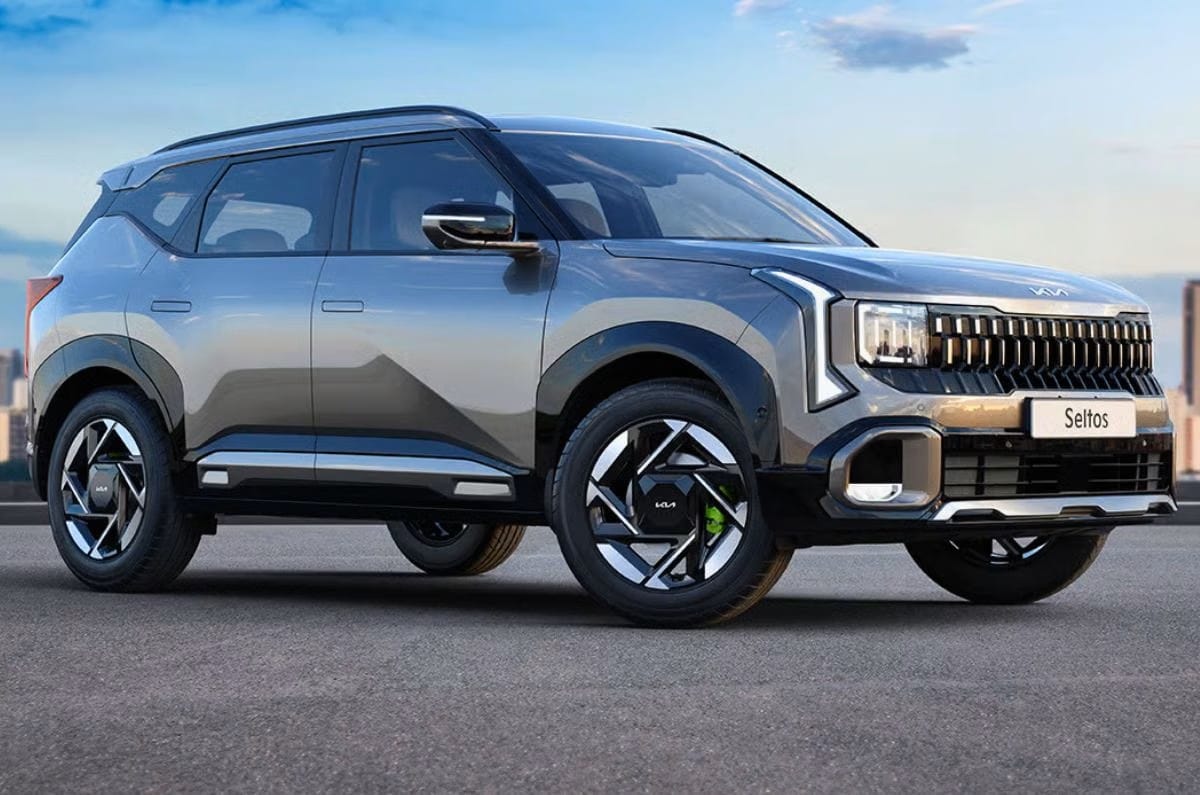
Strong-hybrid planned for Sorento, Seltos, Carnival
Eight electrified models planned
Kia’s electrification roadmap includes both battery electric vehicles and strong hybrids. he company already sells four EVs in India – the EV6, EV9, Carens Clavis EV and the recently launched Syros EV in India, and has also confirmed that a strong-hybrid version of the Seltos is under development. Sood said Kia’s current priority is to localise the hybrid technology to make it more cost competitive, but did not specify a launch timeline.
When asked about a fully electric Seltos, similar to Hyundai’s Creta Electric, Sood said the company is studying the possibility but has not taken a final decision.
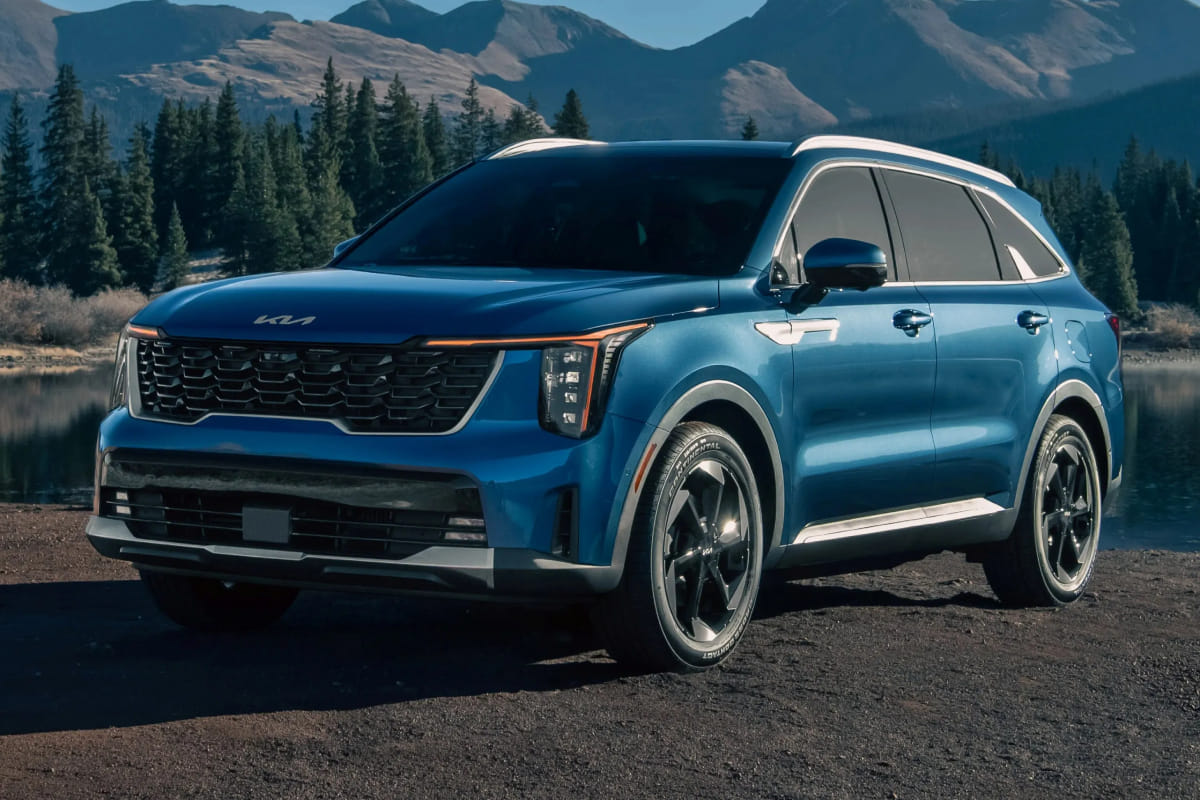
Aside from the Seltos, Kia is also preparing to introduce the Sorento in India in the coming months. Expected to be locally assembled, the three-row SUV is likely to become the brand’s first strong-hybrid model for the Indian market. According to our previous reporting, the Carnival is also expected to receive a strong-hybrid powertrain for India.
With four EVs already on sale and hybrid powertrain planned for the Seltos, Sorento and Carnival, Kia would have seven electrified models in its lineup, suggesting that another model – likely from its compact SUV range, such as the Sonet or Syros, could also gain a hybrid powertrain to meet its target of eight electrified models by 2030.
Factory-fitted CNG models in the works
Kia has also confirmed that it is developing factory-fitted CNG models for India. At present, the brand does not offer any factory-fitted CNG vehicles, instead relying on dealer-installed retrofit kits for the Carens. However, Sood said engineering work towards factory-fitted CNG models is “strong work in progress”, although he did not provide a timeline for their introduction.
He added that Kia is evaluating the technology across multiple models in its lineup, rather than limiting it to MPVs, as it assesses demand across different vehicle segments.
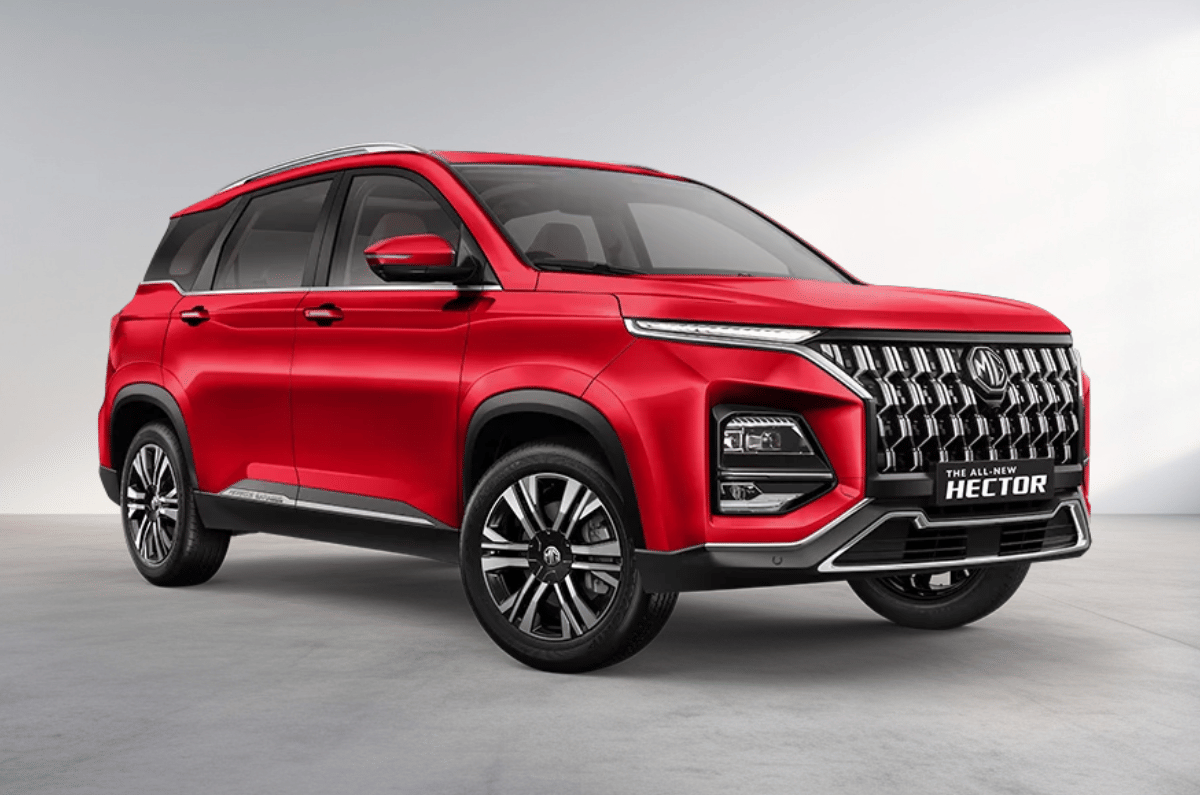
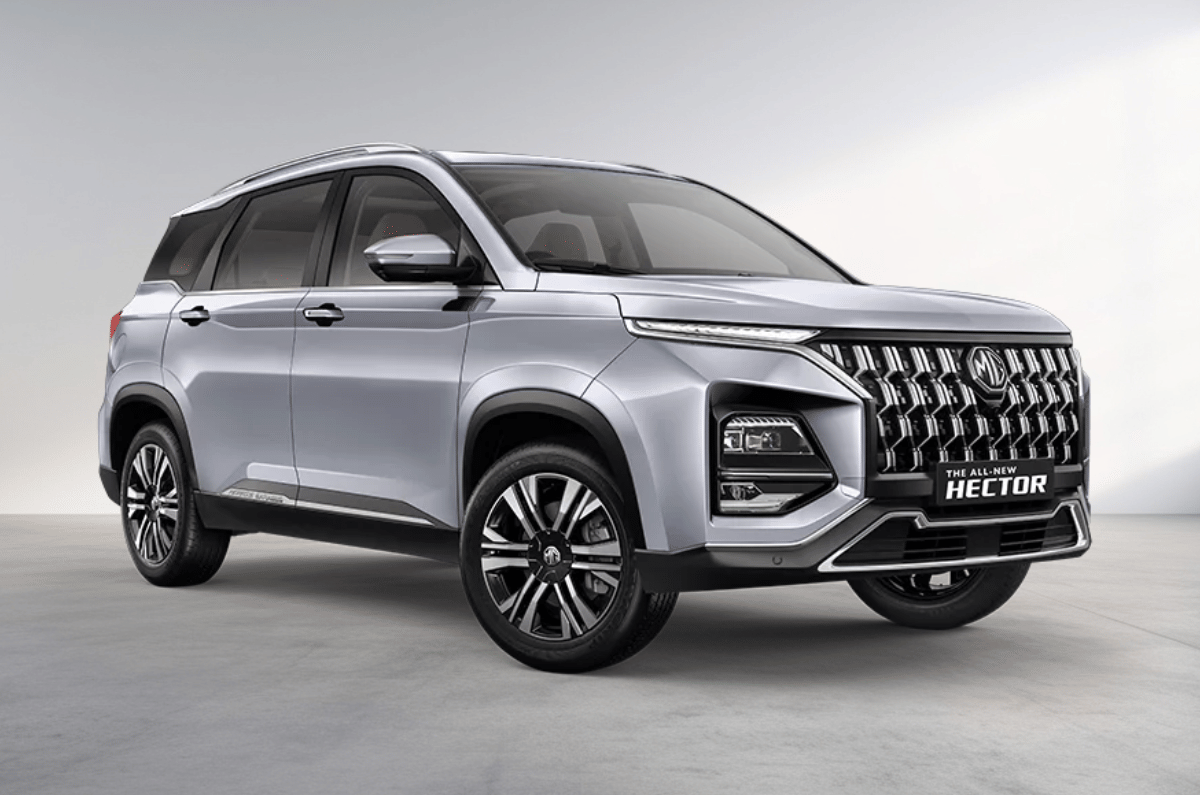
MG has revealed the facelifted Hector Plus diesel price, which costs Rs 20 lakh (ex-showroom). Notably, MG launched the Hector and Hector Plus facelifts in December 2025, but had only revealed the petrol variants’ prices at the time. Nearly seven months later, the manufacturer has brought back the 2.0-litre diesel engine, with a manual transmission.
2.0-litre diesel engine produces 170hp and 350Nm (same as before)
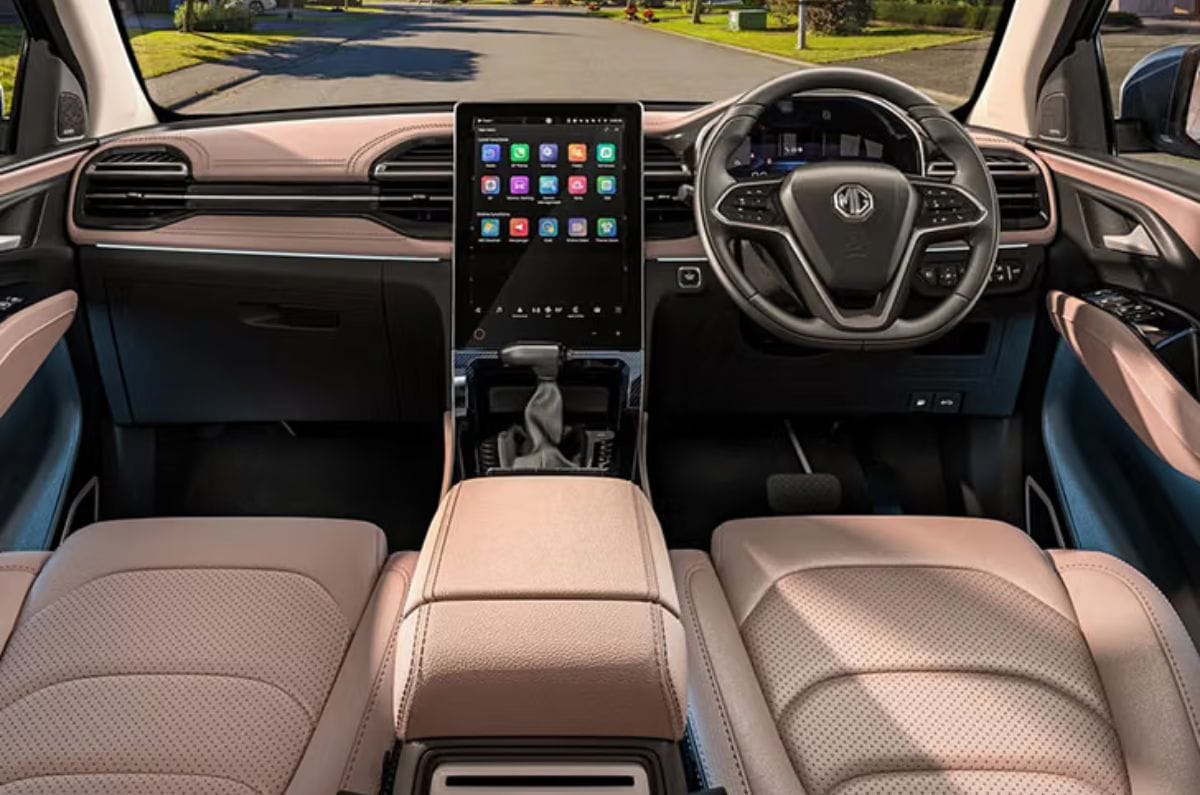
Gets 7-inch driver’s display, 14-inch infotainment, and powered front seats
Misses out on a powered tailgate, Level-2 ADAS, and a 360-degree camera
MG Hector Plus diesel: All you need to know
Gets the same 2.0-litre diesel engine as the pre-facelift model
With the facelift, MG has continued with the same 2.0-litre diesel engine producing 170hp and 350Nm. It is paired with a 6-speed manual transmission, and there is no automatic gearbox on offer. Interestingly, this diesel engine is the same as on the Tata Harrier and Safari, both of which also get a 6-speed torque-converter automatic gearbox.
The diesel-powered Hector Plus misses out on some features
For the diesel, MG has introduced a new Sharp Pro (O) trim, which sits below the top-spec Savvy Pro trim. It sports a dual-tone tan-and-black cabin theme and uses leatherette upholstery for the 7 seats, dashboard trims and door pads. The dashboard has a 14-inch touchscreen infotainment system in portrait layout orientation, an 8-inch digital driver’s display, and a 3-spoke steering wheel with physical buttons.
However, the Sharp Pro (O) misses out on a 360-degree camera, a powered tailgate, Level-2 advanced driver assistance systems (ADAS), and a PM2.5 air purifier.
It gets powered and ventilated front seats, a panoramic sunroof, a wireless phone charger, an 8-speaker Infinity sound system with a subwoofer and amplifier, and automatic climate control with dedicated vents on the 2nd and 3rd rows. Safety features include 6 airbags, a rear parking camera, an auto-dimming inside rearview mirror (IRVM), a rear wiper and washer, front and rear parking sensors, and a tyre pressure monitoring system (TPMS).
There are no visual exterior changes compared to the top-spec trim
On the outside, the one-below-top Sharp Pro (O) trim offers LED headlights, LED fog lamps, LED DRLs, 18-inch alloy wheels and connected LED taillights. It also gets powered outside rearview mirrors (ORVMs) and a rear wiper and washer.
Earlier, MG offered the diesel-powered Hector in multiple trims in both two-row and three-row seating configurations. Now, it is being offered in a single trim with three rows of seats, which has restricted the choice for buyers wanting the Hector diesel. Compared to the Hector, rivals like the Hyundai Alcazar, Mahindra XUV 7XO and Tata Safari offer a wider range of diesel variants and more choices to customers.
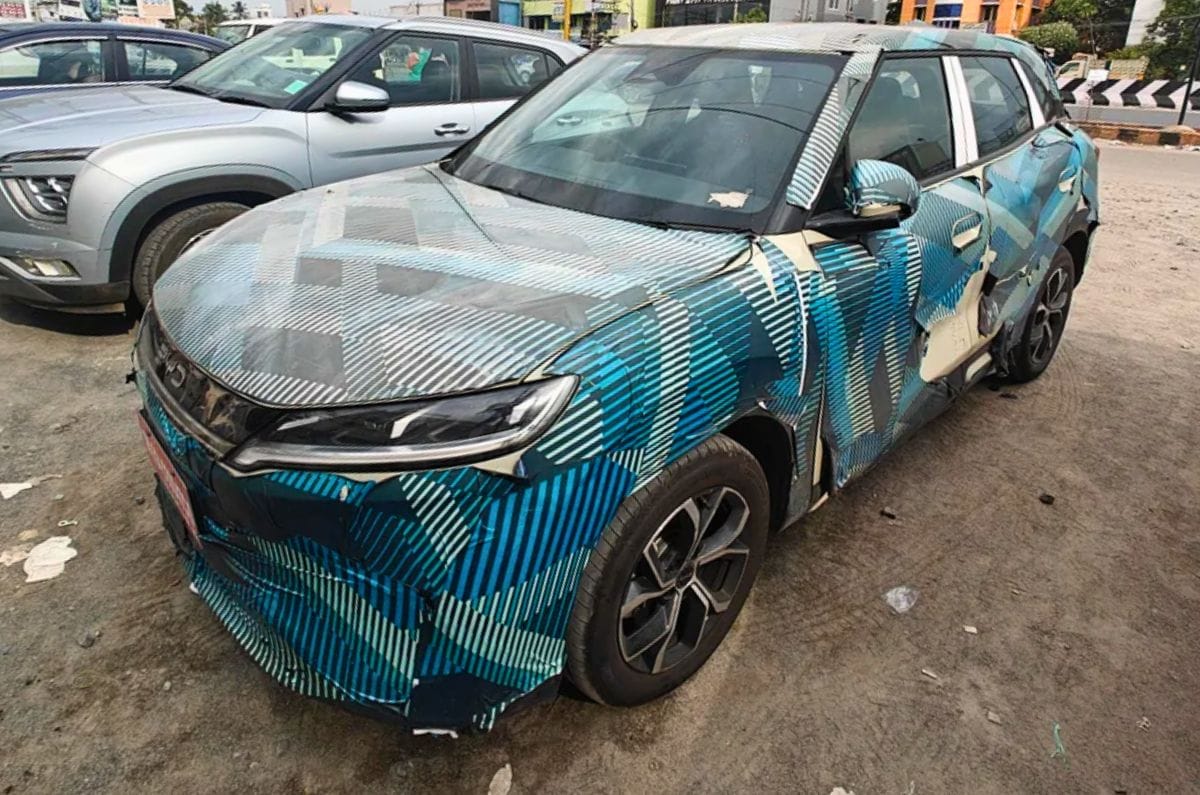
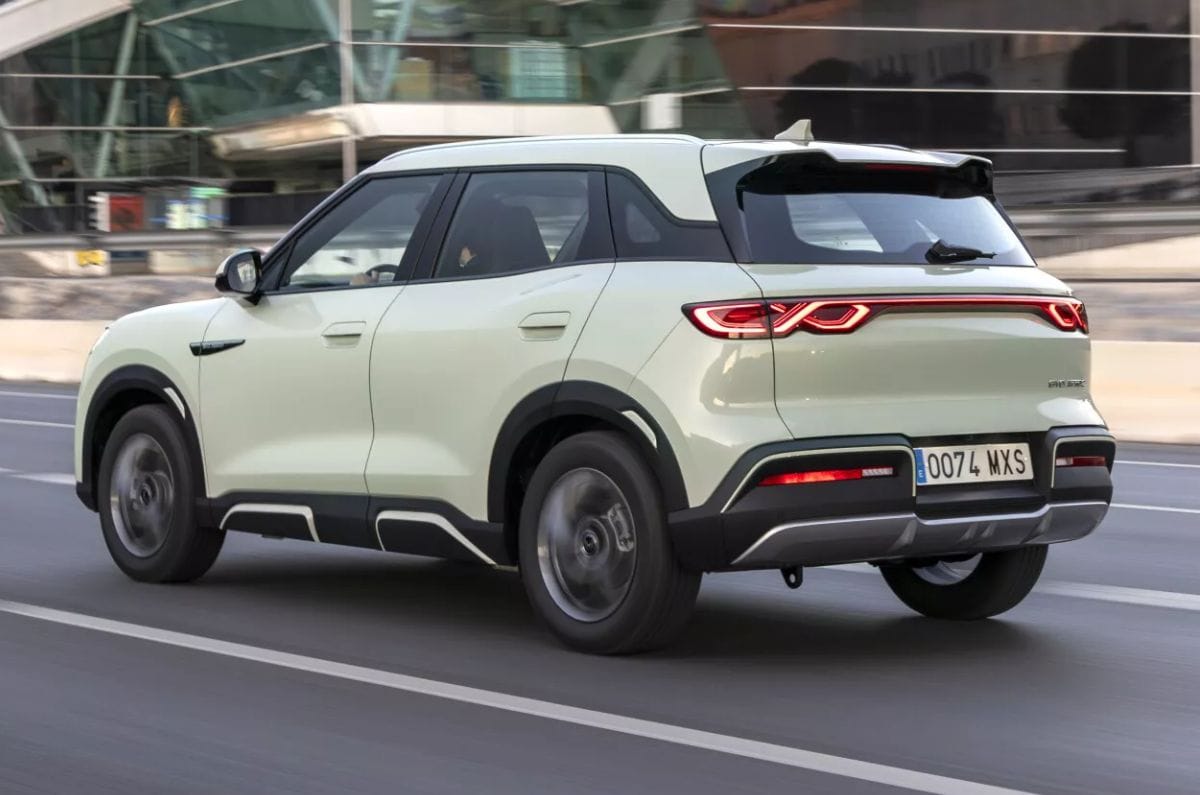
The BYD Atto 2 midsize SUV, expected to launch in India this year, has been spotted testing again. The spy shots reveal some exterior design elements of the upcoming Atto 2 similar to the internationally available model. The Atto 2 is offered in both EV and PHEV versions internationally.
Spy shots show the SUV’s front fascia and the side profile
Europe-spec EV gets up to 64.8kWh battery with 430km range
PHEV gets a 1.5L petrol engine and up to 18kWh battery
BYD Atto 2 spied: What was spotted?
Shows sleek LED headlights, alloy wheel design and a free-standing infotainment
Image source: @lostcheetos on r/CarsIndia
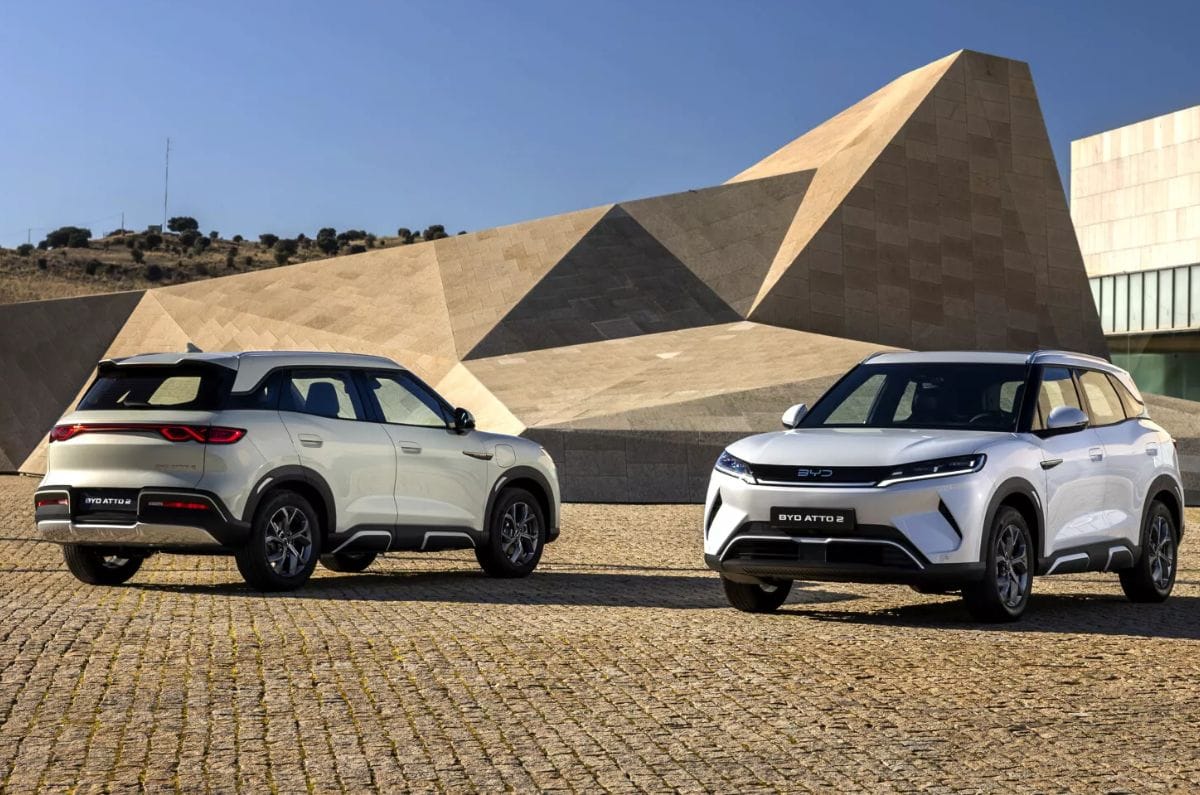
The spy shots show the Atto 2’s fascia and side profile, and although under camouflage, some design elements can be seen. These include the sleek headlights joined by a gloss-black trim with a BYD badge, the petal-shaped design elements on the alloys and the simple door handles. Keen-eyed viewers can also spot black cladding on the wheel arches and lower portion of the body. While the rear design is yet to be spied, it is expected to have connected LED taillights and a black bumper with some silver accents, like the international model.
A closer look inside the test mule reveals a camera-based ADAS sensor on the windscreen, a free-standing touchscreen infotainment system, and all-black upholstery on the seats.
Upcoming BYD Atto 2: Other details
The EV has a WLTP-claimed range of 430km, and the PHEV has a 1,000 km range
As mentioned earlier, the Atto 2 is offered in both all-electric (EV) and plug-in hybrid (PHEV) versions. In the European market, the Atto 2 EV is available with either a 45.1kWh or a 64.8kWh battery, with a WLTP-claimed range of up to 430km. Both battery versions are available with a front-axle-mounted (FWD) electric motor producing up to 201hp and 310Nm. BYD claims a 0-100kph time of 7.9 seconds and a top speed of 170kph.
International-spec BYD Atto 2 shown for representative purposes only.
The plug-in hybrid version, called the Atto 2 DM-i, is offered with a 97hp 1.5-litre 4-cylinder petrol engine and a choice of 7.8kWh or 18kWh battery mated with a 197hp front-axle-mounted (FWD) electric motor. The Atto 2 PHEV has a combined system output of up to 212hp and 300Nm and a total WLTP-claimed range of 1,000km.
Gets two interior themes and a minimalistic dashboard with two screens
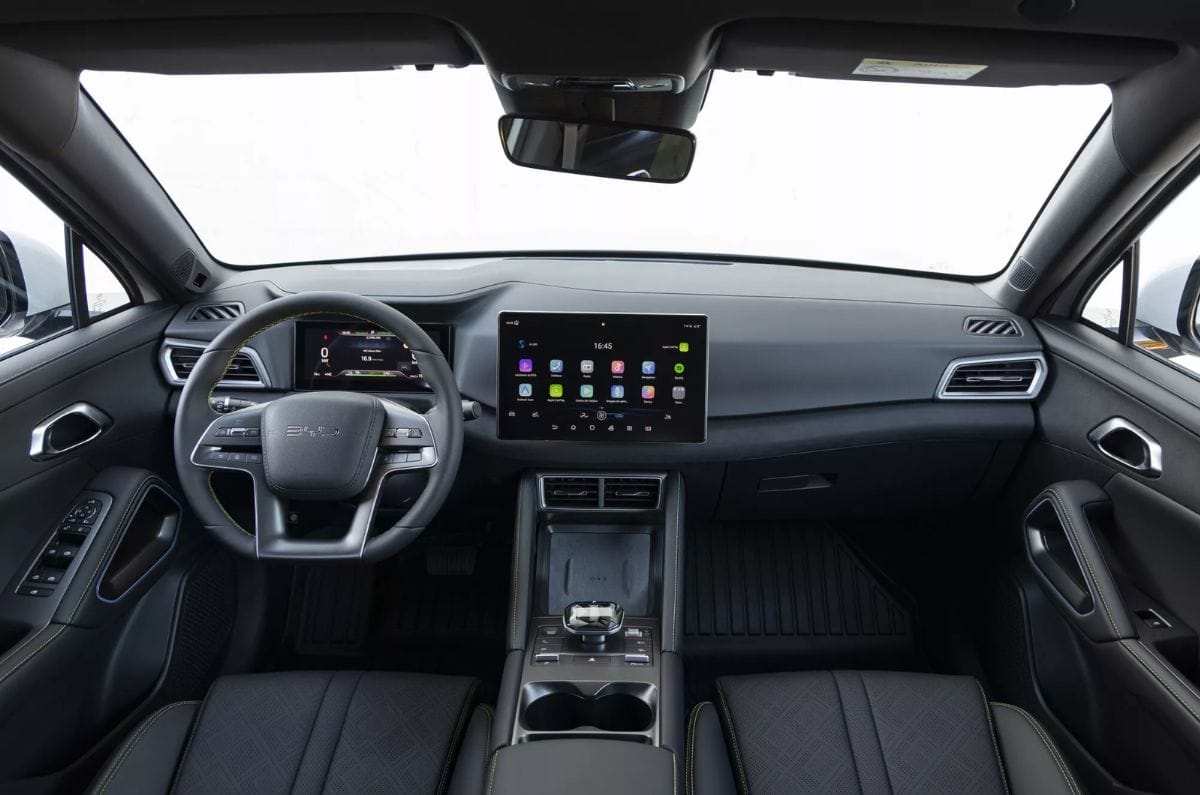
International-spec BYD Atto 2’s dashboard shown for representative purposes only.
The Atto 2’s cabin is identical for both the EV and PHEV versions, offered with either an all-black or a beige-and-black interior theme. The minimalistic dashboard features a free-standing 12.8-inch rotatable touchscreen infotainment system with integrated AC controls, an 8.8-inch digital driver’s display, and a chunky 3-spoke steering wheel with physical buttons. Features include a panoramic sunroof, 6-speaker audio system, a 50W wireless phone charger, a 360-degree camera, a vehicle-to-load (V2L) charging function, and front and rear parking sensors. The India-spec model could get a similar feature suite.
Currently, BYD sells only EVs in India. However, the manufacturer showcased its proprietary DM-i plug-in hybrid in June, revealing that the Seal U will launch as the first model with this powertrain by the end of 2026. So, it remains to be seen whether BYD expands its plug-in-hybrid plans to the Atto 2, or offers it in an electric-only guise in the country.
International-spec BYD Atto 2 shown for representative purposes only.
The BYD Atto 2 EV is expected to rival the Hyundai Creta Electric, Tata Sierra EV, Mahindra BE 6 and Maruti e Vitara. The Atto 2 PHEV will offer a more efficient option to the Hyundai Creta, Kia Seltos, Tata Sierra, Renault Duster, Nissan Tekton, Maruti Victoris and Grand Vitara, and MG Astor.
July was a stacked month for car launches in India. It was during these 31 days that we got models such as the Maruti Suzuki Brezza facelift, ninth-gen Toyota Hilux, Nissan Tekton and Honda ZR-V. It appears that August 2026 is set to be a fairly busy month for new car launches in India, too. Here are some cars that we know will be introduced next month, and some that could.
Mahindra Scorpio N facelift
Debut date: August 15, 2026
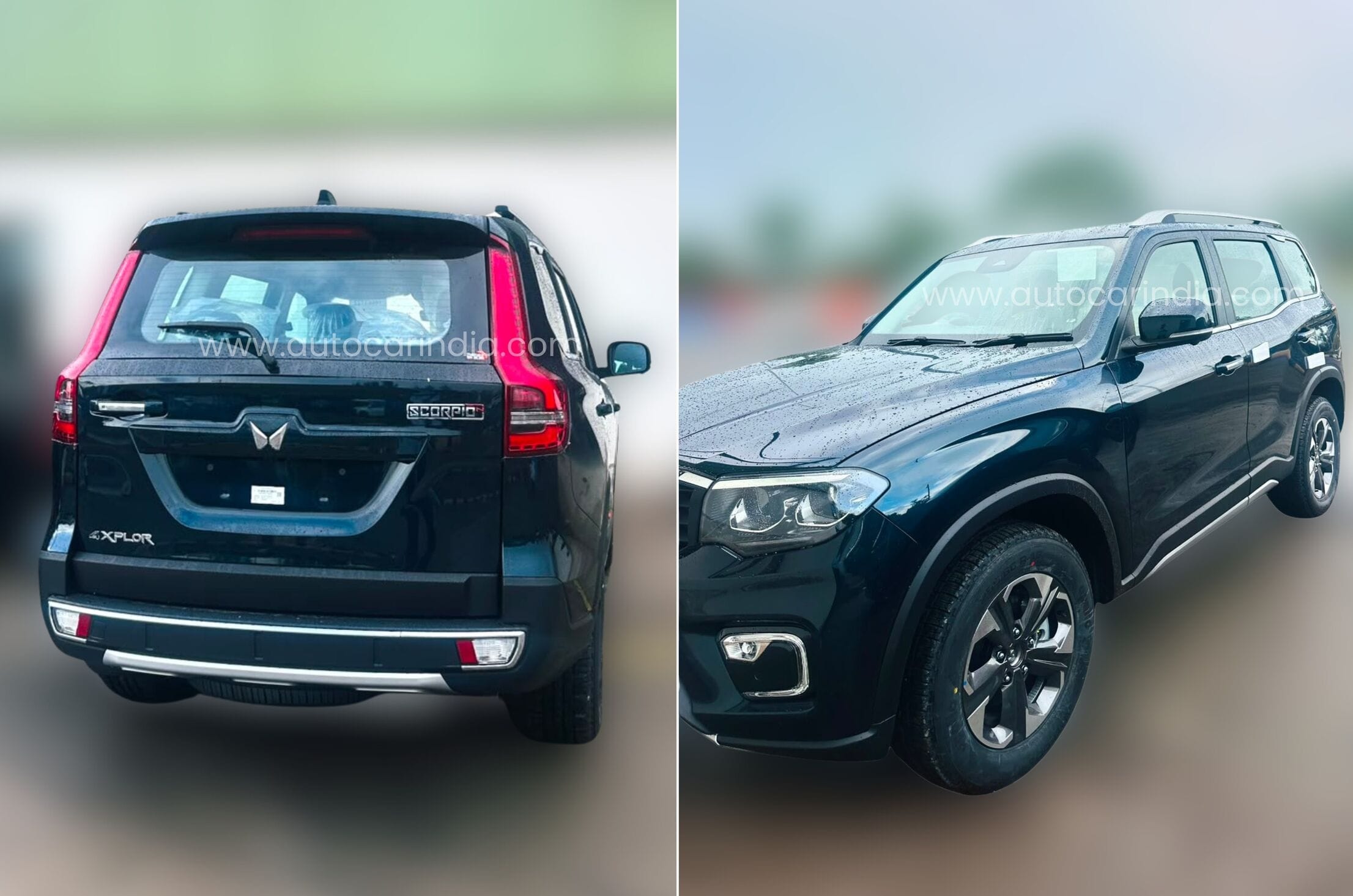
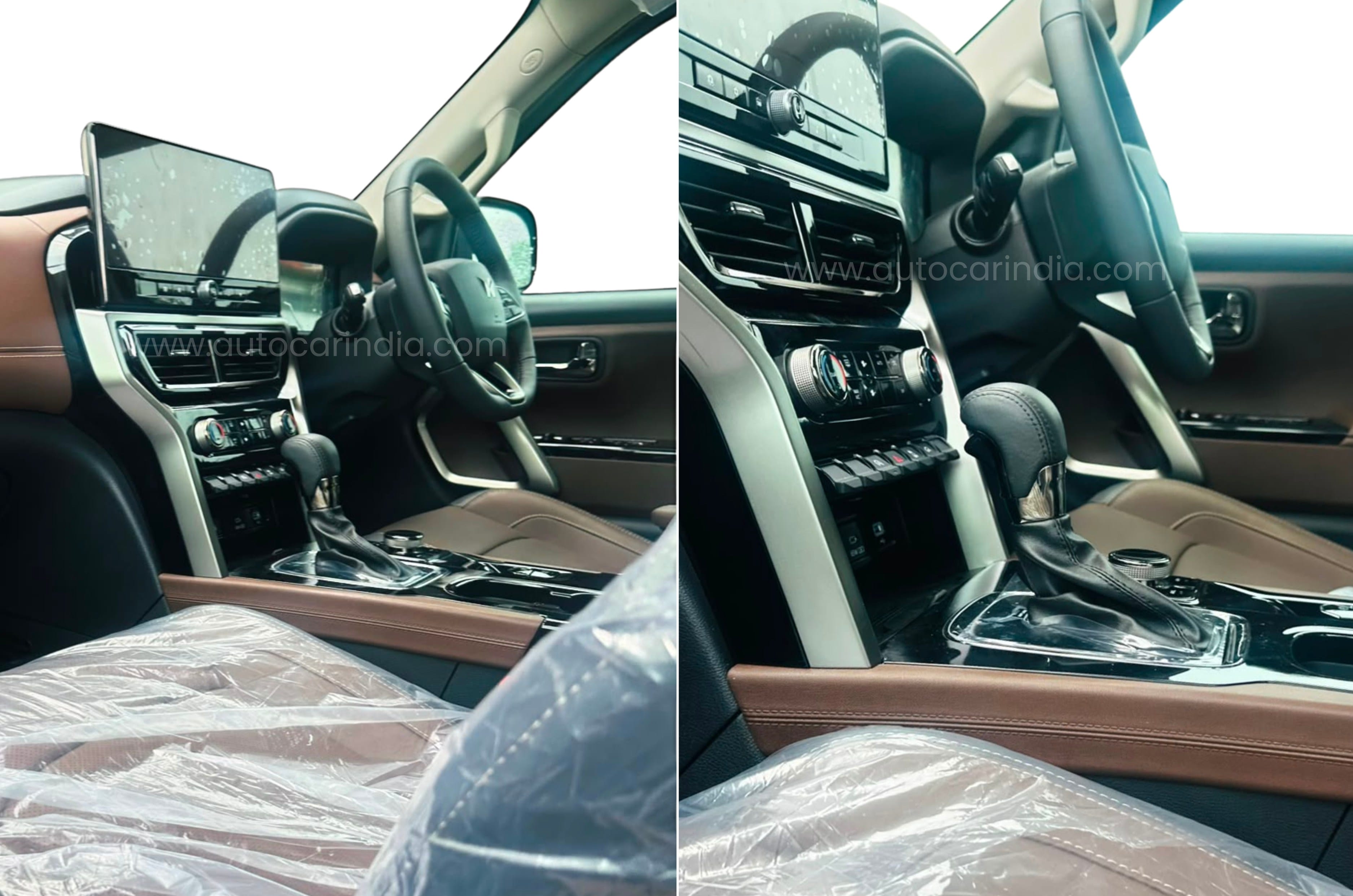
One of the cars that Mahindra could debut this Independence Day is the Scorpio N facelift. It’ll be mechanically unchanged over the outgoing model, but the exterior will now feature new two-tone alloy wheels. Unlike the exterior, there are more updates to the interior of the Scorpio N facelift.
Recently leaked images show a revised centre console with repositioned AC vents and a new tablet-style infotainment touchscreen mounted above. There’s also a new digital driver’s display visible in these spy shots. These screens look similar to the 10.25-inch units found on the Thar Roxx. These updates could push up the price of the Mahindra Scorpio N facelift, with the pre-facelift model currently priced from Rs 13.49 lakh to Rs 24.95 lakh.
Updated Mahindra BE 6
Debut date: August 15, 2026
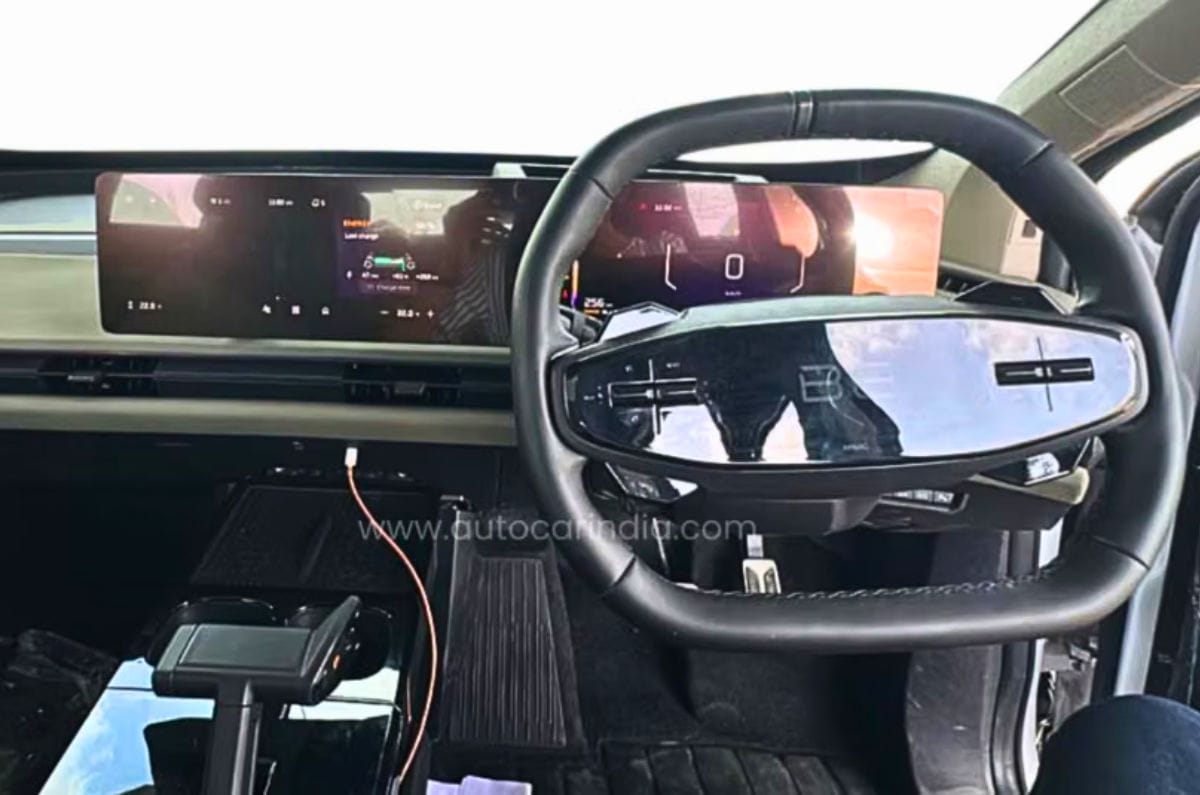
Another Mahindra car that could be introduced on August 15 is the updated BE 6. While the midsize EV is still relatively new in the market (launched in November 2024), Mahindra is expected to spec it up with a triple-screen setup as seen in the brand’s other models such as the XEV 9e, XEV 9S and also the combustion-powered XUV 7XO.
Another big change on the inside is the deletion of the distinctive halo design effect that separates the driver and front passenger in the outgoing model, as shown in this spy shot. Mahindra is also set to offer a new black-and-tan colour upholstery with the updated BE 6. The rest of the updated Mahindra BE 6 is unlikely to see major updates, though prices are likely to be revised upward. For reference, the EV is currently priced between Rs 18.90 lakh to Rs 26.90 lakh.
Near-production Mahindra Vision S
Debut date: August 15, 2026
Mahindra has been busy testing the Vision S prototype for a while now, and a public debut of its near-production version is expected this Independence Day. Note that the production-spec model is still sometime away from being launched, which is expected to happen in 2027. While the actual name of this new compact SUV remains under wraps, it’ll be slotted above the XUV 3XO in Mahindra’s line-up. The Vision S concept was underpinned by the Nu_IQ platform, meaning compatibility compatible with petrol, diesel, hybrid and fully electric powertrains.
Skoda Slavia facelift
Debut date: August 18, 2026
The Skoda Slavia was first launched in February 2022. Four-and-a-half years on, the Czech brand will be introducing the Slavia facelift come August 18, 2026. Changes on the outside of this updated midsize sedan include a new front grille with integrated LED elements and revised front and rear lights. The Slavia facelift is also expected to get mildly redesigned bumpers, a new design for the alloy wheels and front parking sensors.
The Skoda Slavia facelift could feature new cabin upholstery, and perhaps even the massage function for the rear seats as seen in the Kushaq facelift. This update could also bring a larger 10.25-inch digital driver’s display. While the 1.0-litre TSI and 1.5-litre TSI engines are to be carried over, the former is expected to be offered with a new 8-speed torque-converter automatic gearbox. All of these updates could raise prices, which currently range from Rs 10.00 lakh to Rs 18.19 lakh.
New MG EV, PHEV
Debut date: August 2026 (date unknown)
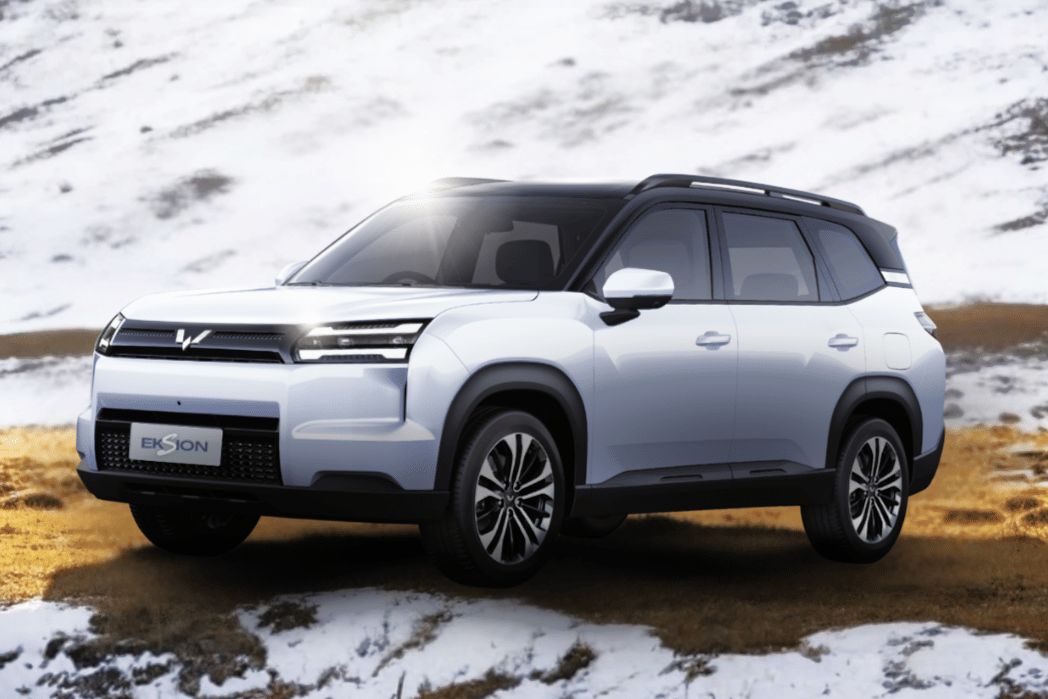
Based on the Chinese-market Wuling Eksion SUV, JSW MG is set to debut its India-spec all-electric and PHEV (plug-in hybrid vehicle) versions this August. The upcoming JSW MG SUV will be underpinned by the brand’s ADAPT (Advanced Drive Architecture Platform Technology) platform. The new Eksion-based electric SUV will rival the likes of the Mahindra XEV 9S, while the plug-in hybrid version is to take on the diesel-automatic variants of the Mahindra XUV 7XO and Tata Safari.
Wuling Eksion EV shown for representation purposes only.
The fully electric model will feature a 69kWh battery pack and a single, front-mounted electric motor generating 201hp and 310Nm. The upcoming EV’s official claimed range is around 600km. As for the new plug-in hybrid SUV, it combines a 1.5-litre Atkinson-cycle petrol engine, an electric motor and a 20.5kWh LFP battery pack. The latter produces up to 195hp and 230Nm, whilst the petrol engine makes 105hp and 130Nm of its own. For the Eksion PHEV version, Wuling claims an all-electric range of 125km and a combined range north of 1,000km.
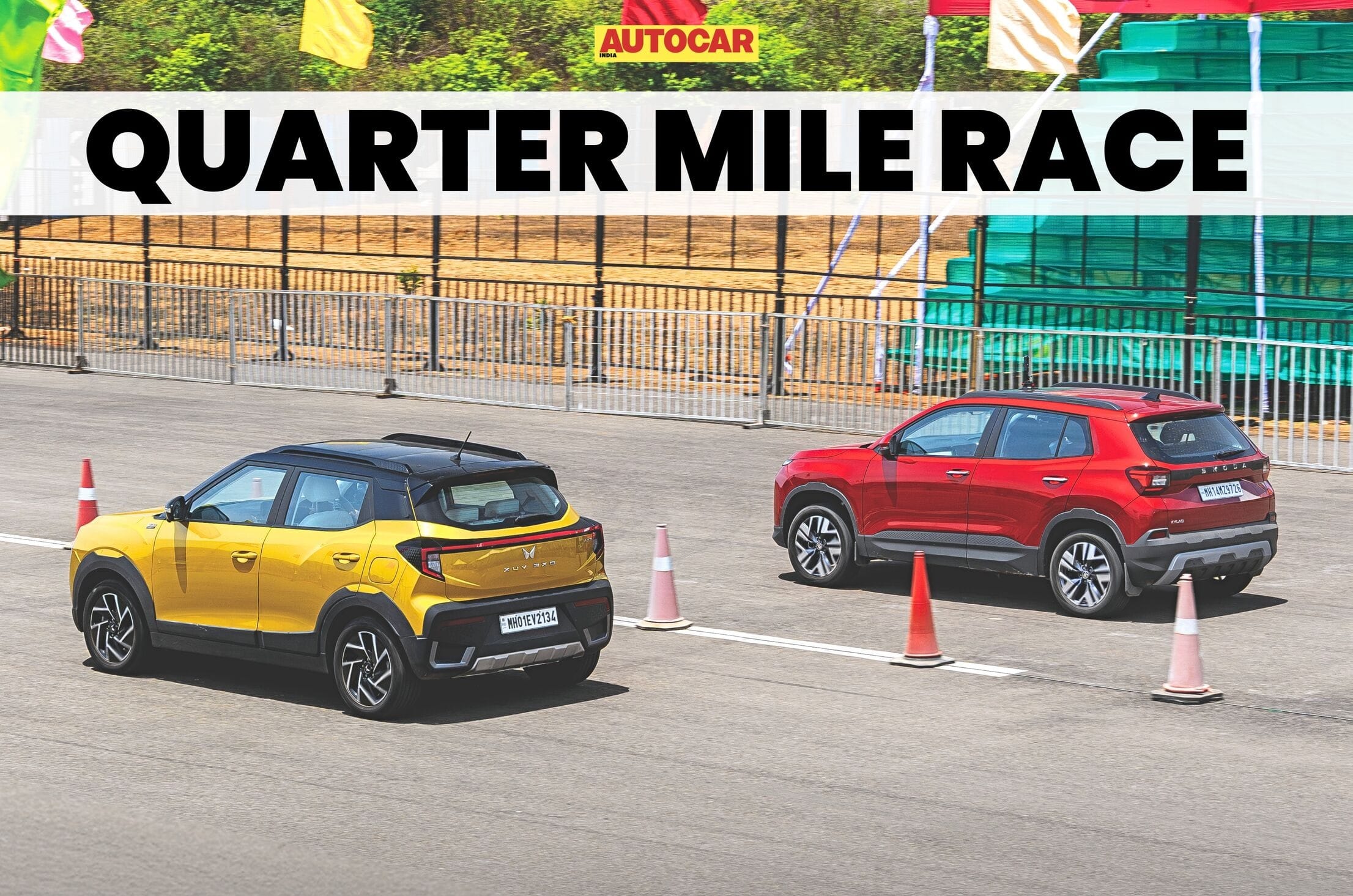
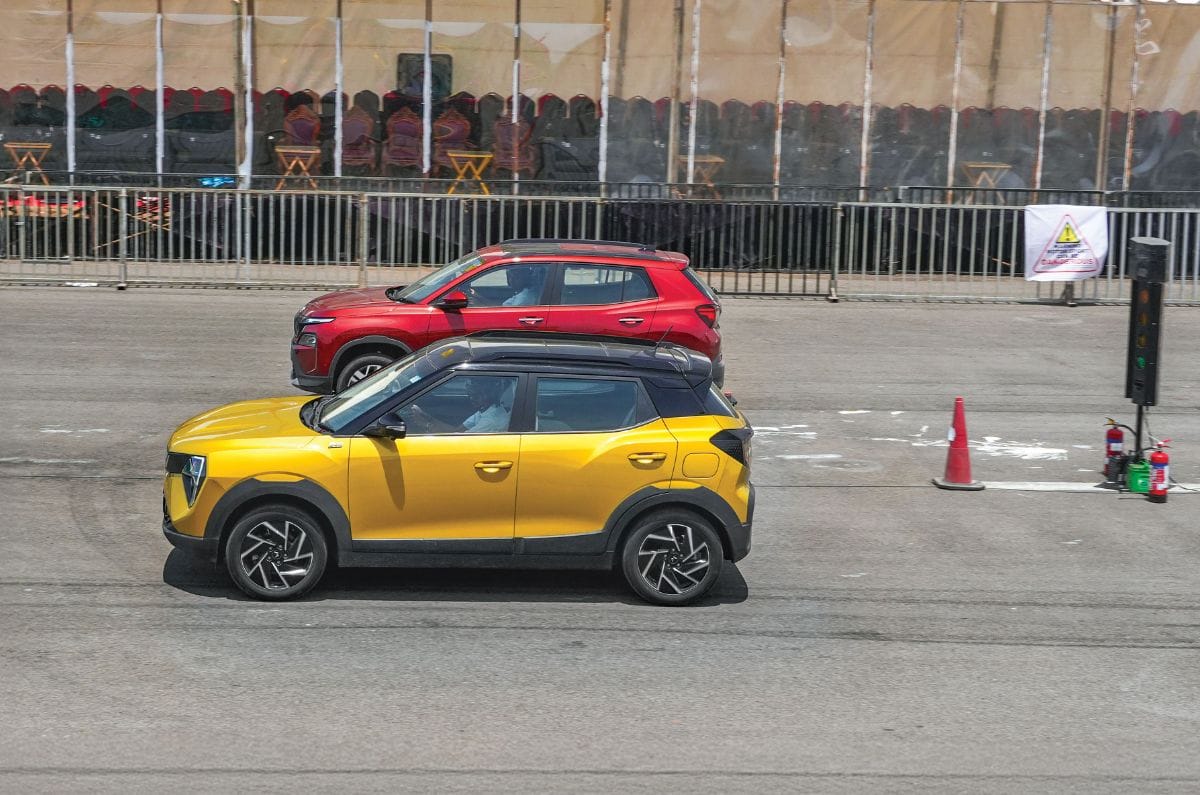
There’s no simpler way to compare one car’s performance to another than with a head-to-head quarter-mile race.In this edition of Autocar India’s quarter-mile racing series, we line up some exciting head-to-head contests, beginning with the compact SUV segment. We’ve brought together what are arguably the two most exciting offerings in this segment – the Skoda Kylaq and the Mahindra XUV 3XO – for a battle down the airstrip.
Skoda Kylaq vs Mahindra XUV 3XO specifications
Skoda Kylaq vs Mahindra XUV 3XO AT: Engine specifications
Skoda Kylaq TGDi AT
Mahindra XUV 3XO TGDi AT
Engine
3 cyls, turbo-petrol
3 cyls, turbo-petrol
Displacement (cc)
999
1197
Power (hp)
116
130
Torque (Nm)
178
230
Kerb weight (kg)
1,255
1,410
Power-to-weight (hp per tonne)
92.43
92.13
Torque-to-weight (Nm per tonne)
141.83
163
Gearbox
6-speed torque converter
6-speed torque converter
Both the Skoda Kylaq and the Mahindra XUV 3XO use 3-cylinder direct injection, turbo-petrol engines and 6-speed torque converter auto gearboxes. However, the latter has a slight advantage with bigger displacement, and likewise also produces more power and torque – 16hp and 52Nm more than the former. On the flip side, the XUV 3XO is 156kgs heavier. Will that have a bearing on the final results? Let’s find out.
Skoda Kylaq vs Mahindra XUV 3XOdrag race
In both races, the Mahindra got off the line better.
Skoda Kylaq vs Mahindra XUV 3XO AT: drag race times
Skoda Kylaq TGDi AT
Mahindra XUV 3XO TGDi AT
Race 1
18.21 seconds
17.23 seconds
Race 2
17.95 seconds
17.78 seconds
The Mahindra XUV 3XO is the most powerful compact SUV on sale currently, while the Skoda Kylaq is one of the most fun to drive. But on the drag strip, it pans out as you’d expect. With the XUV 3XO in its sportiest ‘Zoom’ drive mode, it launches without much drama and gets the jump on the Kylaq. And then, given its power advantage, it holds on to that lead till the finish line in Race 1, recording a time over half a second quicker than the Skoda.
In Race 2, both compact SUVs launch in sync, but the XUV 3XO yet again manages to pull a lead and stay in the lead till the finish line. Its time, however, was slower than in Race 1 because of a tiny bit of hesitation from the gearbox during launch, while the Kylaq improved on its timing from Race 1.
Autocar India’s testing standards
Before we conduct our performance tests, we check and maintain tyre pressures based on the manufacturer’s recommendation and ensure the car has a full tank of fuel. The car is then tested in a controlled environment, and the data is collected via highly accurate GPS-based timing equipment.
Bajaj Auto has confirmed a product announcement for August 12 in Pune. While the company has not revealed what it will unveil, the event is widely expected to mark the debut of the revamped Classic Pulsar range that Autocar India had exclusively reported on earlier this year.
Bajaj has announced a new Pulsar event for August 12
Refreshed Classic Pulsar range is expected to make its debut
Teaser silhouette also appears to hint at an updated Pulsar N160
August 12 debut confirmed
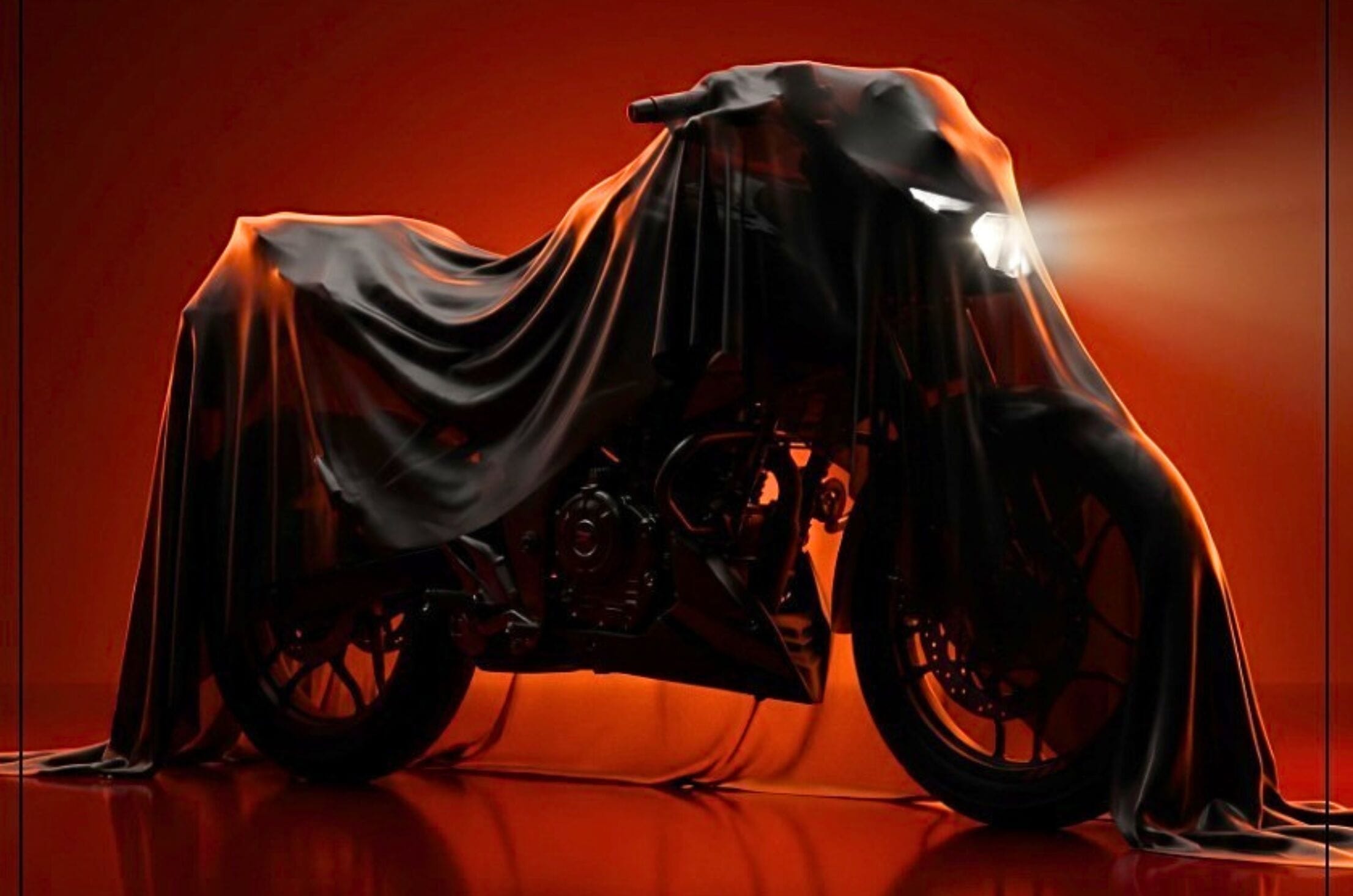
Bajaj Auto has sent out media invitations for an event scheduled on August 12. The invite carries the tagline “Pulsar. Definitely Daring.” and is accompanied by a teaser image of a motorcycle, although the company has stopped short of revealing the model.
Based on Autocar India’s earlier exclusive, the event is expected to see the debut of Bajaj’s all-new Classic Pulsar range. The company had confirmed to us that the iconic lineup would receive a comprehensive overhaul in 2026, making this one of the biggest updates to the brand in recent years.
Interestingly, the silhouette in the teaser appears to resemble the Pulsar N160, suggesting that the motorcycle could also receive updates and form part of the August 12 announcement.
What to expect from the new Classic Pulsars
As Autocar India had exclusively reported earlier, the next-generation Classic Pulsar range is expected to move to a new platform while retaining the familiar styling cues that have made the motorcycles instantly recognisable. The refreshed lineup is expected to be led by the Pulsar 125 and Pulsar 150, with updates likely to include revised styling, new features and under-the-skin changes.
While Bajaj has not confirmed the exact models that will be unveiled, the August 12 event is shaping up to be a significant one for the Pulsar brand. Alongside the expected arrival of the new-generation Classic Pulsars, the teaser also hints that the Pulsar N160 could receive an update.
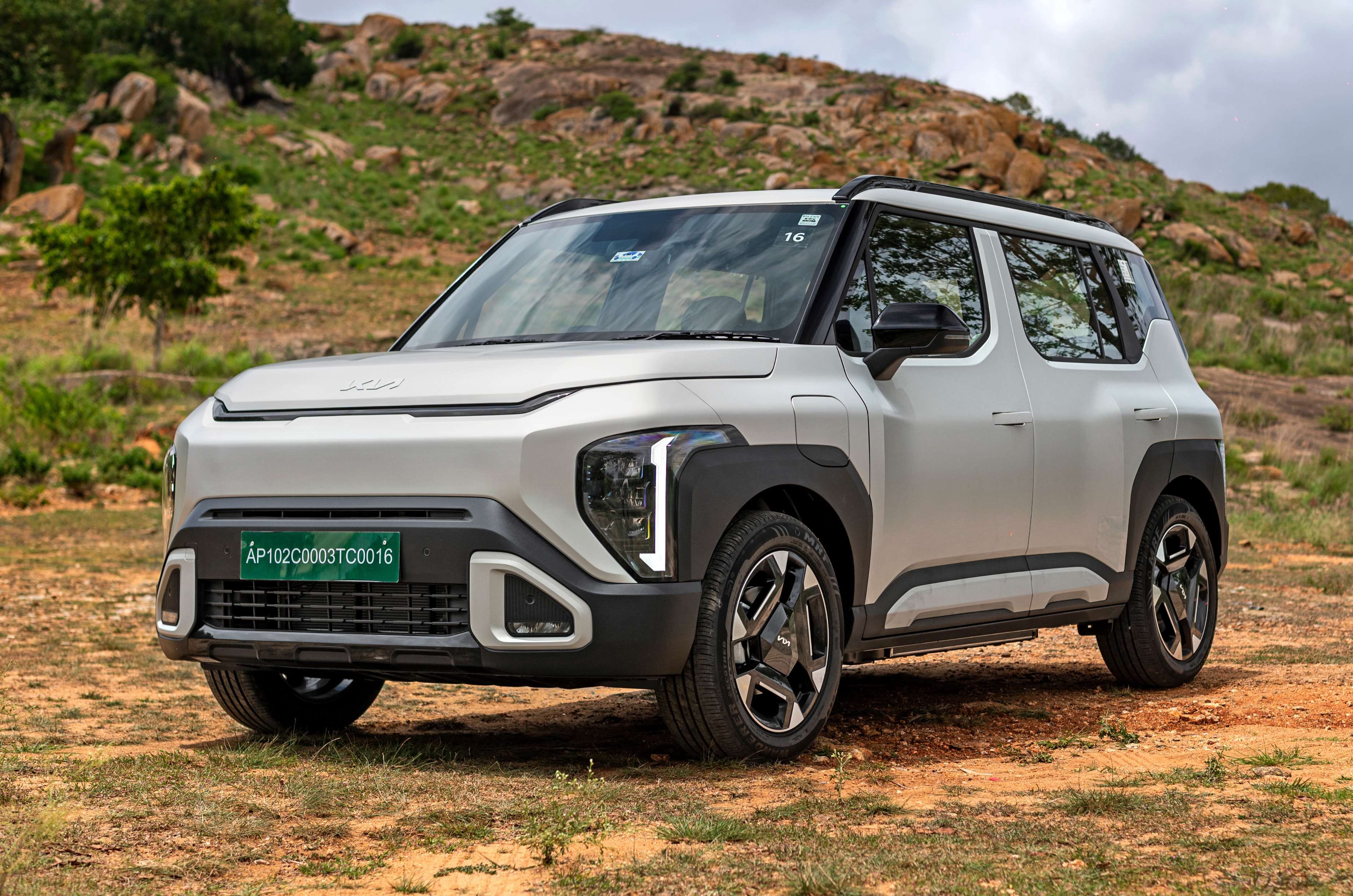
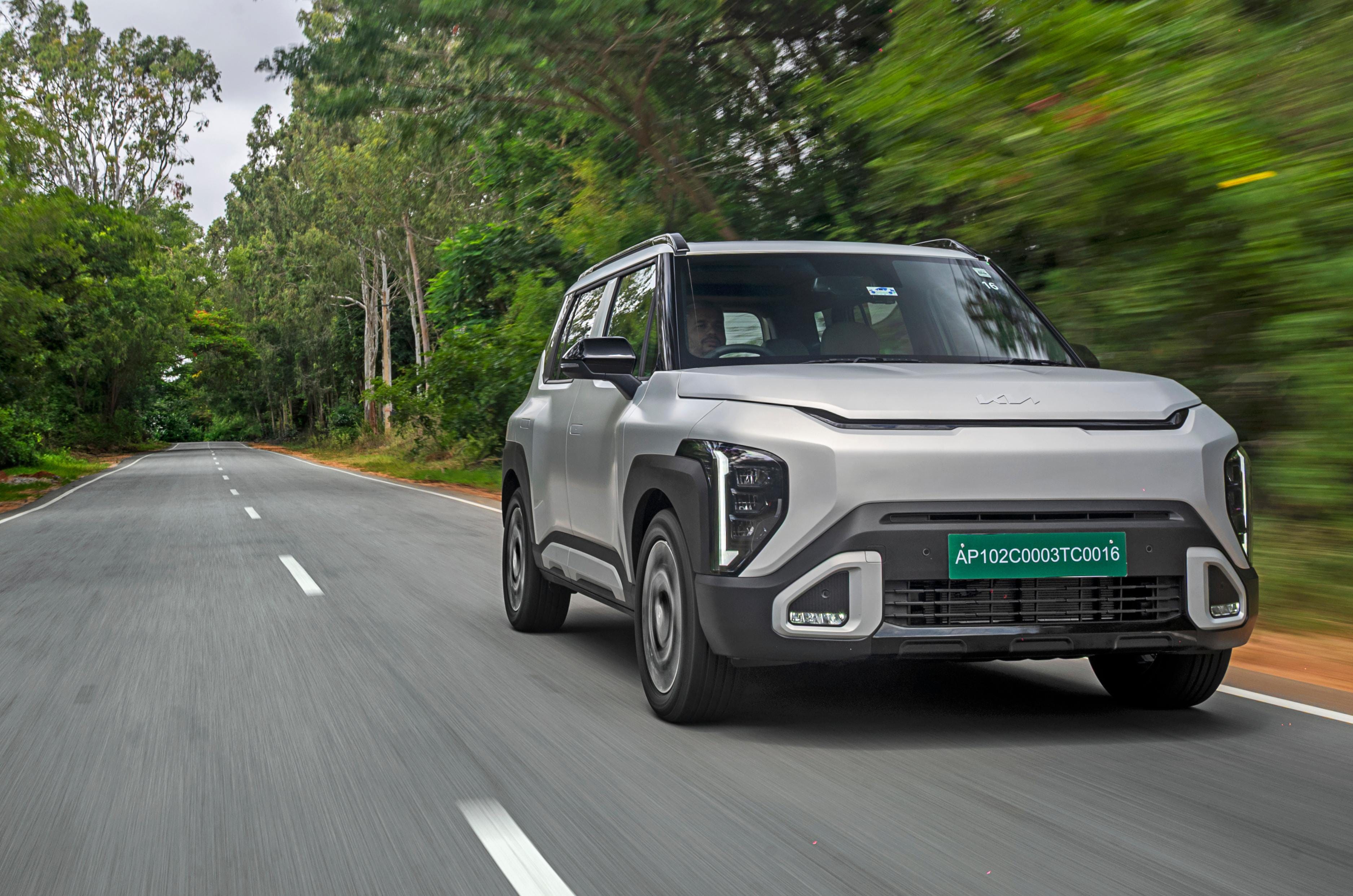
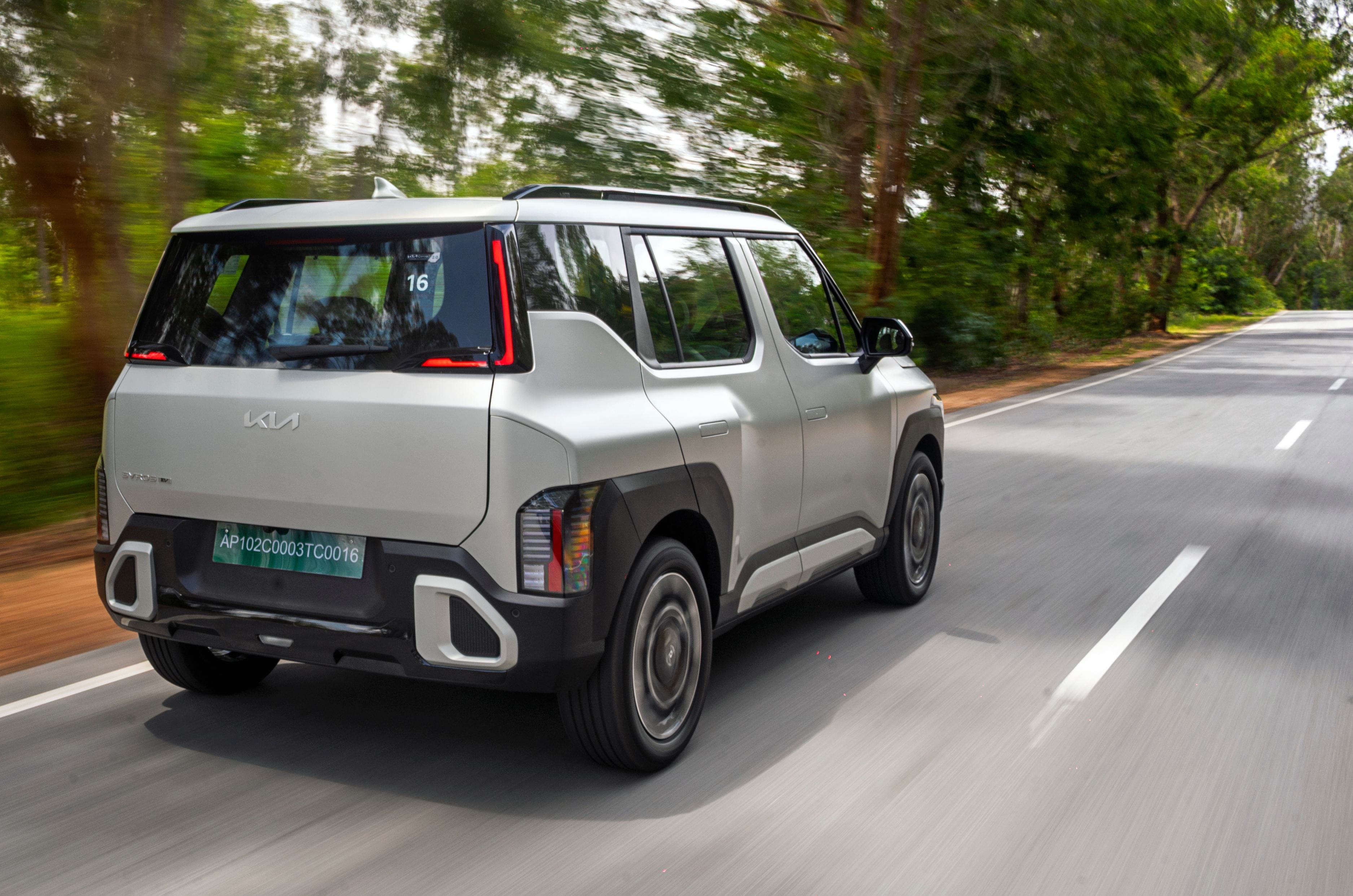
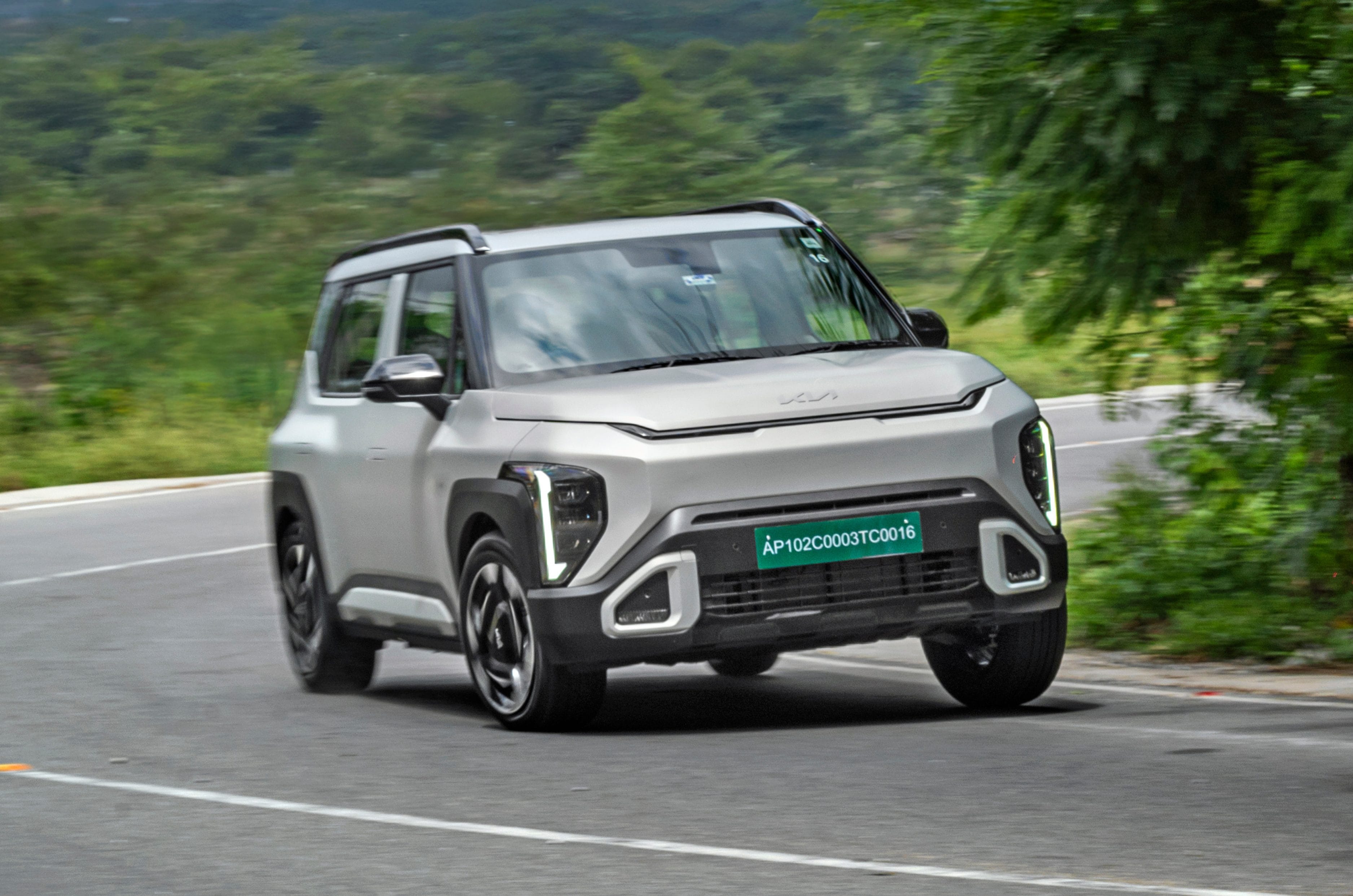
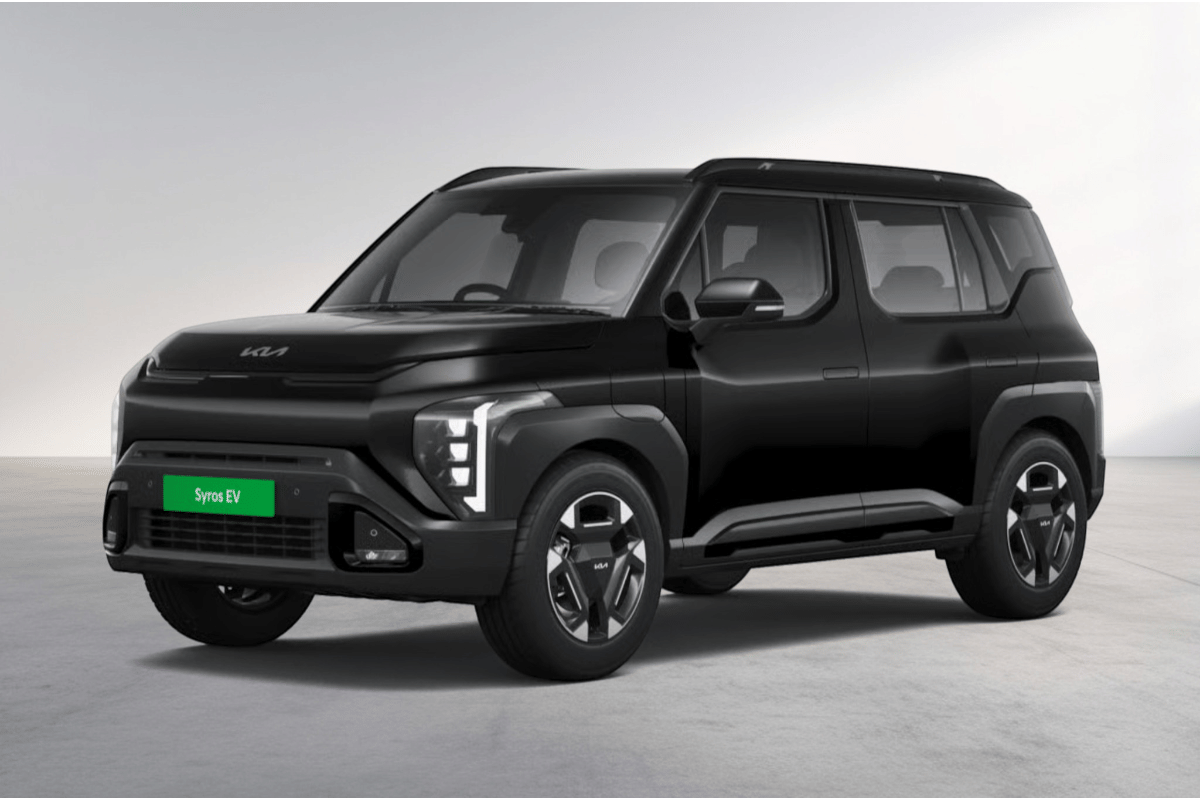
After the Carens Clavis EV, the Kia Syros EV is the carmaker’s second mass-market zero-emission vehicle in India. The electric Syros rivals the Mahindra XUV 3XO EV and the Tata Nexon EV, and we recently got behind the wheel to find out what it does well and where it falls short. If you are planning to bring this Kia EV home, here are three reasons to consider it and two reasons why you may want to think again.
Pros
Impressive performance and range
First, let’s discuss some numbers. The Kia Syros EV is offered with two battery pack options: 42kWh and 51.4kWh. Both power a front axle-mounted electric motor, producing 135hp with the smaller battery and 171hp with the larger unit. Torque remains the same at 255Nm for both versions.
We drove the 51.4kWh version, which Kia claims can sprint from 0-100kph in 8.1 seconds. In our experience, performance was brisk. The EV comes with Eco, Normal and Sport drive modes, and throttle response becomes a little sharper as you move through them. Initial response across modes is linear, though there is a strong shove as you press the throttle further. Even in Eco and Normal, overtaking is effortless, and there is rarely a need to switch to Sport for a quick pass.
The MIDC range is 526km for the 51.4kWh battery pack and 443km for the 42kWh unit. While our short drive wasn’t enough to verify these figures, the larger battery should comfortably deliver around 400km of real-world range on a single charge.
Spacious and practical cabin
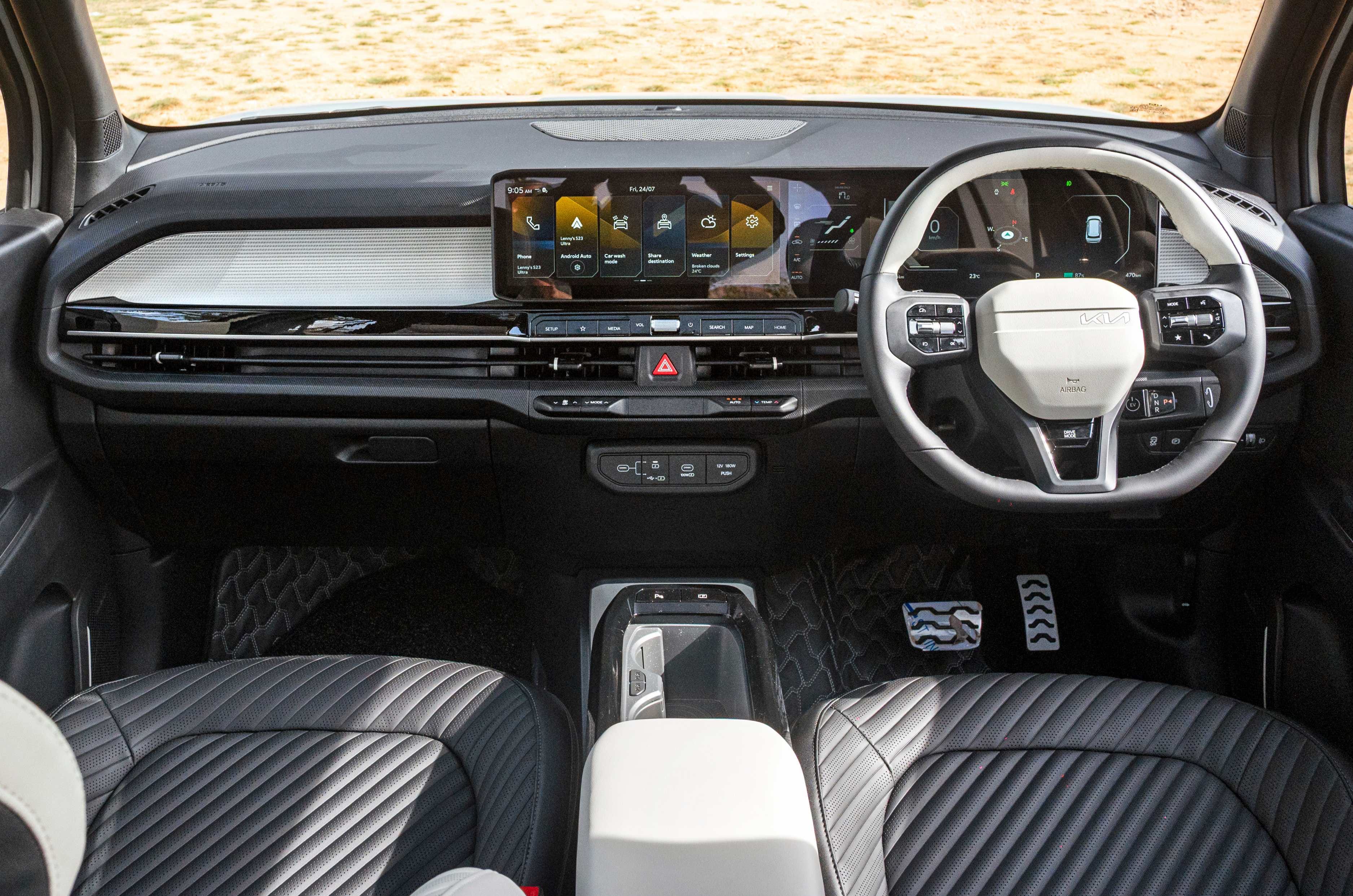
Like the ICE version, the Syros EV offers plenty of space for passengers. Since the drive selector is placed on the steering column, Kia has redesigned the centre console to create more storage space. Its upper section gets a small storage area below the armrest and two cup holders with a sliding cover. The console’s lower section offers a larger storage space for a bag, another cup holder and a wireless phone charger. Also, the front door pockets are large enough to hold a couple of bottles and an umbrella.
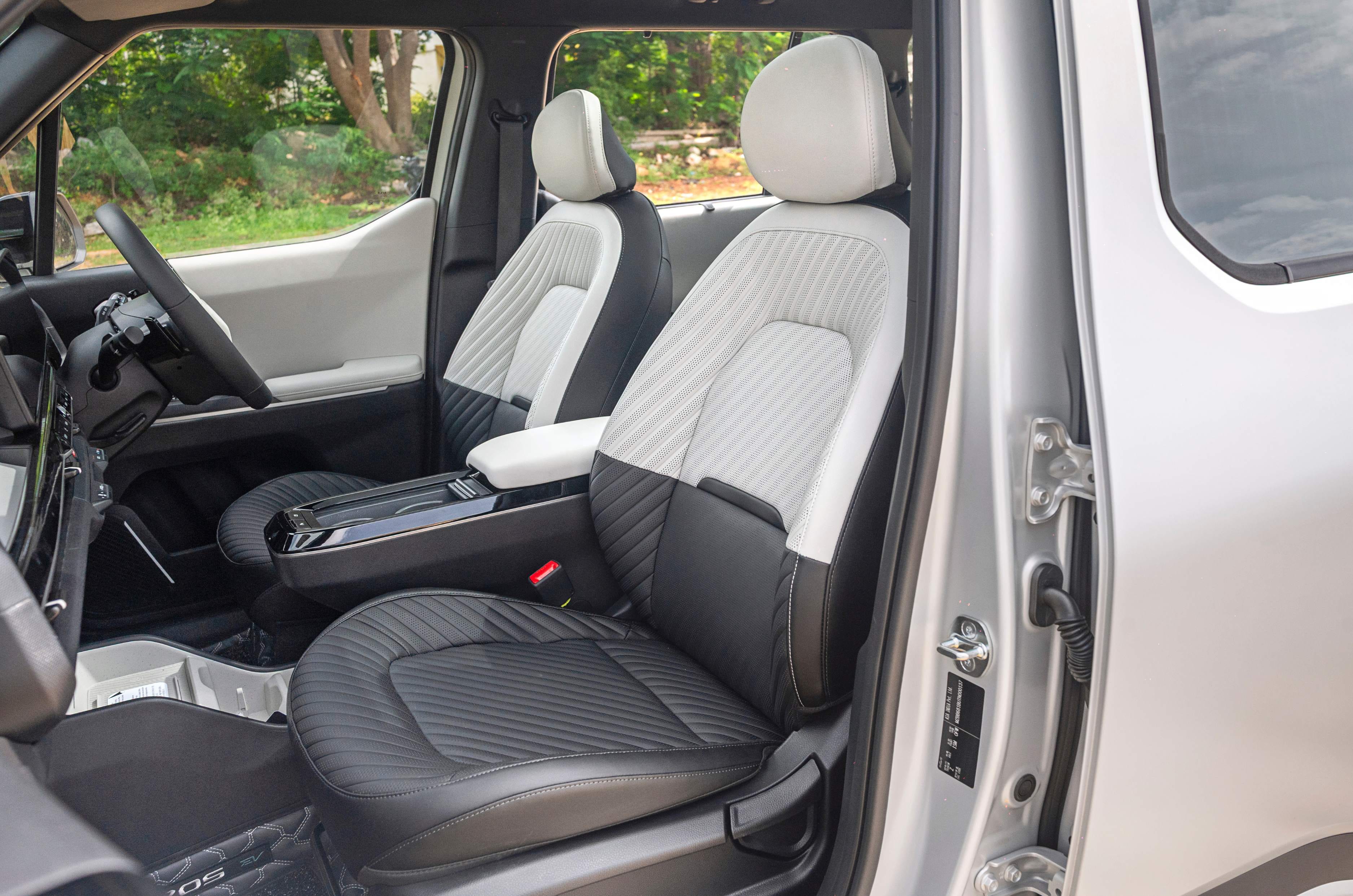
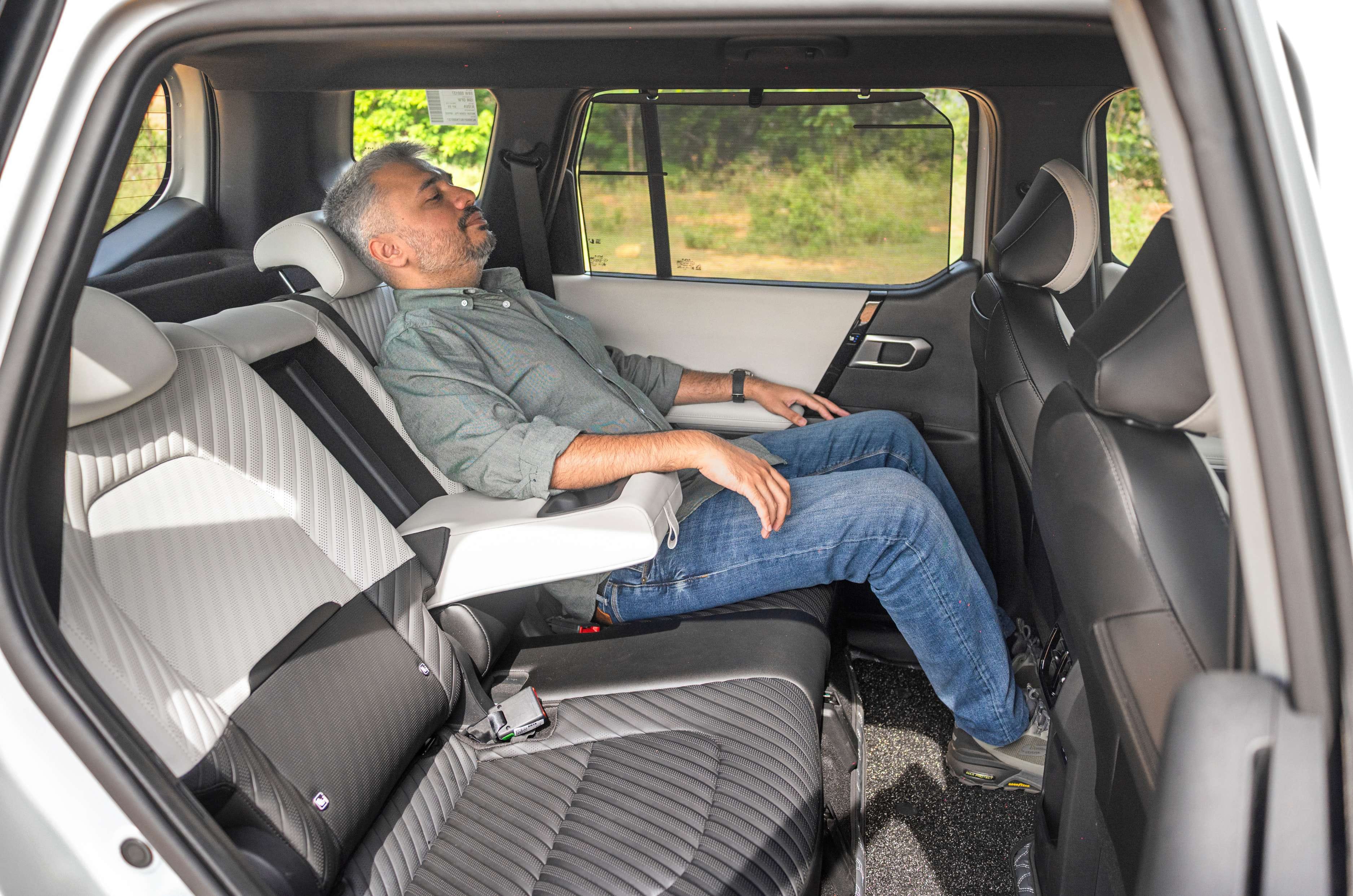
The front seats are comfortable and supportive, and the rear-seat space continues to be one of the compact SUV’s biggest strengths, with plenty of room all around. The battery pack raises the floor slightly, but sliding the rear bench backwards makes it much more comfortable. The EV’s flat floor is another advantage, and rear-seat ventilation (for the base) has been carried over from the ICE version.
The boot space remains unchanged at 390 litres with the rear seat pushed back and 465 litres with it slid forward. Rear seats can also be folded to carry larger items, and being an EV, it also offers a 16-litre frunk (front boot).
Feature-packed
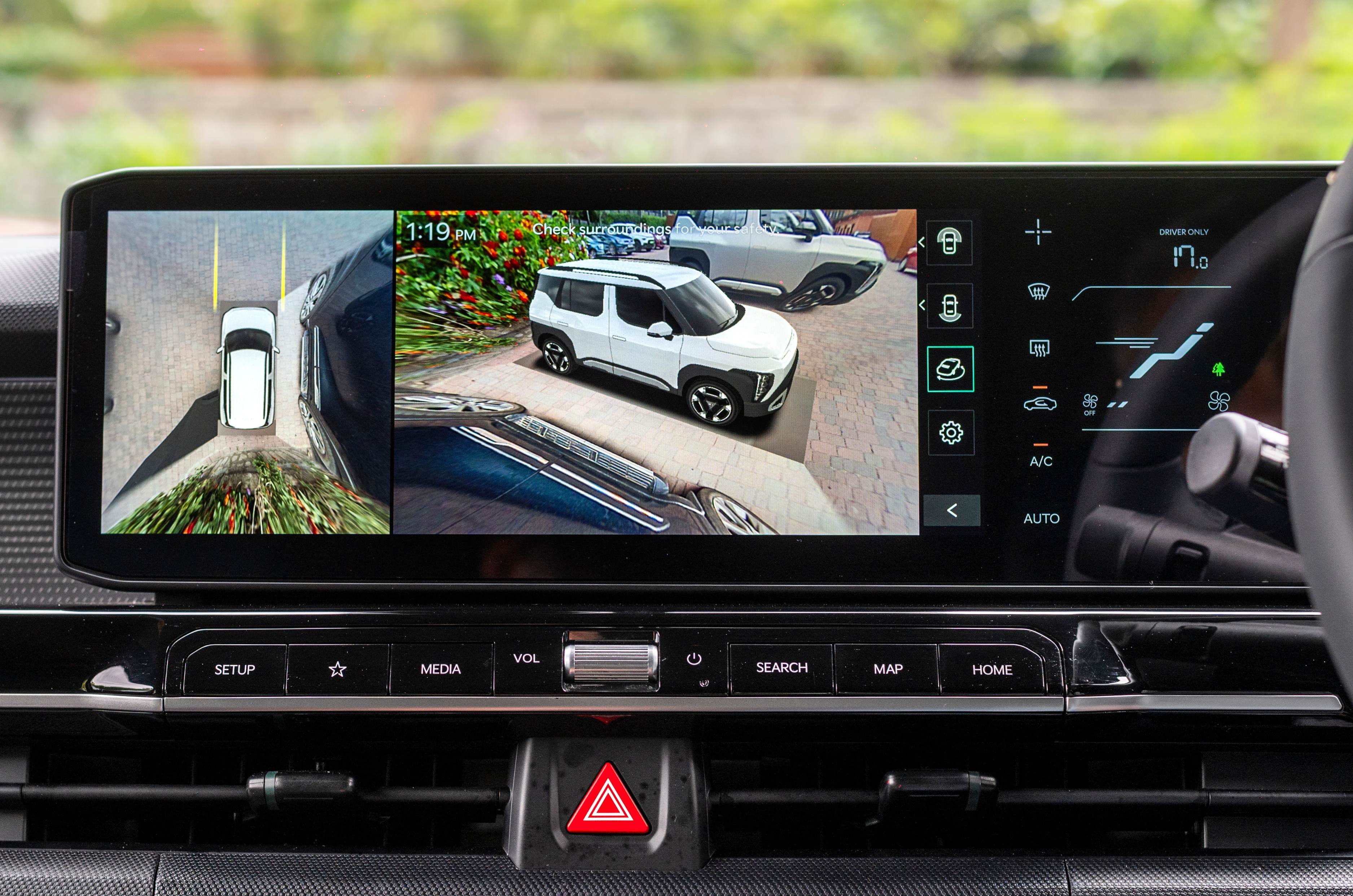
The EV gets Kia’s Trinity Panoramic Display, which includes two 12.3-inch screens for infotainment and the driver’s display, along with a 5-inch screen for the climate control. Wireless Android Auto and Apple CarPlay are offered, while the top trims also feature an eight-speaker Harman Kardon sound system. To pamper occupants at the back, AC vents and sunblinds are standard across the range. The household-style three-pin socket in the back seat is exclusive to the top-spec X-Line trim.
As for safety, the Syros EV comes with six airbags, all-wheel disc brakes, tyre-pressure monitoring and Isofix child-seat mounts as standard. The X-Line trim also gets a 360-degree camera and an ADAS (advanced driver assistance systems) suite with features such as adaptive cruise control with stop-and-go, lane-keep assist, forward and rear collision avoidance and a blind-spot camera. Notably, the ICE version no longer gets ADAS.
At the time of writing, the Syros EV has not yet received an official crash-safety rating. However, since the ICE version has already earned a 5-star Bharat NCAP crash-safety rating, the EV is expected to achieve a similar result.
Cons
Body roll through the corners
The ride on the Syros EV is slightly more absorbent than the ICE version, although there is still an underlying firmness. This helps keep the car stable, but because it is tall and narrow, there is noticeable body roll around the corners.
Pricey at the top end
The Kia Syros EV is priced from Rs 13.5 lakh for the 42kWh version, while the 51.4kWh Extended Range starts at Rs 17 lakh. The fully loaded X-Line trim is priced at Rs 20 lakh. At this price, it competes with the Tata Nexon EV (Rs 12.49 lakh-17.49 lakh) and Mahindra XUV 3XO EV (Rs 13.89 lakh-14.69 lakh) compact SUVs, as well as larger EVs such as the MG Windsor EV (Rs 14.7 lakh-19 lakh) and Maruti e Vitara (Rs 15.99 lakh-19.99 lakh).
Top-spec Kia Syros X-Line.
The 42kWh version does offer strong value for money, but the larger 51.4kWh Extended Range version is a tougher sell. It costs noticeably more than its direct rivals and even overlaps with higher-battery versions of the MG Windsor EV and Maruti e Vitara. While the Syros EV has several strengths, many buyers may want a bigger SUV for similar money. Kia’s Battery-as-a-Service (BaaS) scheme lowers the upfront purchase cost, but similar plans are also available with the MG and Maruti EVs.
Ex-showroom prices mentioned above are as of July 30, 2026.
The TVSRaider 125 Super Squad Edition lineup has been expanded with a new Doctor Doom-inspired variant, priced at Rs 95,320 (ex-showroom, Delhi). The latest addition brings a fresh Marvel-themed design to the 125cc commuter while retaining the same mechanical package as the standard Super Squad Edition.
Doctor Doom-inspired Super Squad Edition launched at Rs 95,320
New Spectral Green paint with character-themed graphics
No mechanical changes
TVS Raider 125 Doctor Doom Edition: what’s new?
Marvel-themed Super Squad lineup, comprising the Raider 125 and NTorq, have crossed the 5 lakh mark since its launch.
The new Doctor Doom Edition is finished in a Spectral Green paint scheme that features a multi-tone effect, shifting from green to brown under different lighting conditions. It also gets Doctor Doom-inspired graphics on the fuel tank and side panels, joining the existing Super Squad Edition range that includes Iron Man, Black Panther, Deadpool and Wolverine-themed motorcycles.
TVS says the launch builds on its Marvel collaboration, with the Super Squad portfolio across the Raider 125 and NTorq having crossed 5 lakh cumulative sales since its introduction.
Mechanically, the Doctor Doom Edition is identical to the existing Raider Super Squad models. It continues to use the 124.8cc, air- and oil-cooled, single-cylinder, three-valve engine producing 11.4hp and 11.7Nm. The motorcycle also retains features such as the connected reverse LCD display with over 85 connected functions and iGO Assist technology.
The Doctor Doom Edition is priced at Rs 95,320 (ex-showroom, Delhi), matching the price of the other TVS Raider 125 Super Squad Edition variants. It will be available at authorised TVS dealerships in the coming weeks.