Dividend Stocks: टाइटन से नेस्ले तक… इस हफ्ते 45 कंपनियां देंगी ₹75 तक का डिविडेंड, चेक करें पूरी लिस्ट

Dividend Stocks: अगले हफ्ते यानी 6 से 10 जुलाई के बीच शेयर बाजार में कई कंपनियों के कॉरपोरेट एक्शन पर निवेशकों की नजर रहेगी। कई बड़ी कंपनियों के शेयर एक्स-डिविडेंड (Ex-Dividend) पर ट्रेड करेंगे। अगर आप डिविडेंड का फायदा उठाना चाहते हैं, तो एक्स-डेट से पहले शेयर खरीदना होगा। तभी आप कंपनी की ओर से घोषित डिविडेंड पाने के हकदार होंगे।

सिर्फ डिविडेंड ही नहीं, अगले हफ्ते कुछ कंपनियों के शेयर बोनस इश्यू और स्टॉक स्प्लिट के लिए भी एक्स-डेट पर ट्रेड करेंगे। ऐसे में यह हफ्ता निवेशकों के लिए काफी अहम रहने वाला है।

6 जुलाई को किन शेयरों पर रहेगा फोकस?

6 जुलाई को चार कंपनियों के शेयर एक्स-डिविडेंड होंगे। DCM Shriram International अपने निवेशकों को 0.40 रुपये प्रति शेयर का फाइनल डिविडेंड देगी। DJ Mediaprint & Logistics ने 0.15 रुपये प्रति शेयर का फाइनल डिविडेंड घोषित किया है।

वहीं, Pilani Investment and Industries Corporation 9 रुपये प्रति शेयर का डिविडेंड देगी। Sundaram Finance ने 24 रुपये प्रति शेयर का फाइनल डिविडेंड घोषित किया है।

7 जुलाई को इन कंपनियों के शेयर एक्स-डिविडेंड

7 जुलाई को पांच कंपनियों के शेयर एक्स-डिविडेंड पर ट्रेड करेंगे। Cera Sanitaryware ने 75 रुपये प्रति शेयर का डिविडेंड घोषित किया है। Dodla Dairy और Sun Pharmaceutical Industries दोनों 5-5 रुपये प्रति शेयर का फाइनल डिविडेंड देंगी।

वहीं, JSW Steel ने 7.10 रुपये प्रति शेयर और LKP Securities ने 0.20 रुपये प्रति शेयर का फाइनल डिविडेंड घोषित किया है।

8 जुलाई को किन स्टॉक्स में मिलेगा डिविडेंड?

8 जुलाई को छह कंपनियां एक्स-डिविडेंड होंगी। इनमें Bliss GVS Pharma 1 रुपये, Hannah Joseph Hospital 2 रुपये, Kesar Terminals & Infrastructure 1.25 रुपये और Morarka Finance 1.50 रुपये प्रति शेयर का डिविडेंड देगी।

वहीं, Mphasis ने 62 रुपये प्रति शेयर और United Spirits ने 11 रुपये प्रति शेयर का डिविडेंड घोषित किया है।

9 जुलाई को इन शेयरों पर रहेगी नजर

9 जुलाई को चार कंपनियां एक्स-डिविडेंड होंगी। Harsha Engineers International 1.50 रुपये प्रति शेयर का फाइनल डिविडेंड देगी। RPG Life Sciences ने 24 रुपये प्रति शेयर, Sheela Foam ने 1 रुपये प्रति शेयर और Titan Company ने 15 रुपये प्रति शेयर का डिविडेंड घोषित किया है।

10 जुलाई को सबसे ज्यादा कंपनियां

10 जुलाई इस हफ्ते का सबसे व्यस्त दिन रहेगा। इस दिन 25 से ज्यादा कंपनियों के शेयर एक्स-डिविडेंड पर ट्रेड करेंगे। इनमें Apollo Tyres, Axis Bank, Birlasoft, CAMS, D-Link (India), Dr Reddy’s Laboratories, Geojit Financial, Hindalco, JK Cement, JSW Cement, Mahindra Logistics, Nestle India और Sobha जैसी कंपनियां शामिल हैं।

इन कंपनियों में D-Link (India) ने 20 रुपये प्रति शेयर का फाइनल डिविडेंड और 7.50 रुपये प्रति शेयर का स्पेशल डिविडेंड घोषित किया है। Nestle India अपने निवेशकों को 5 रुपये प्रति शेयर का फाइनल और 2 रुपये प्रति शेयर का स्पेशल डिविडेंड देगी।

इसके अलावा Axis Bank 1 रुपये, Hindalco Industries 5 रुपये, JK Cement 20 रुपये, Apollo Tyres 2.50 रुपये और Dr Reddy’s Laboratories 8 रुपये प्रति शेयर का डिविडेंड देगी।

बोनस इश्यू और स्टॉक स्प्लिट भी होंगे

अगले हफ्ते चार कंपनियों में बोनस इश्यू और स्टॉक स्प्लिट भी होने वाला है। Gujarat Inject Kerala का शेयर 8 जुलाई को 10 रुपये फेस वैल्यू से 1 रुपये फेस वैल्यू में स्टॉक स्प्लिट होगा। Goldiam International 10 जुलाई को 1:3 बोनस इश्यू के लिए एक्स-डेट पर ट्रेड करेगी।

वहीं, Hindusthan Insulators & Industries ने 2:1 बोनस इश्यू का ऐलान किया है। Mangalam Worldwide का शेयर भी 10 जुलाई को 10 रुपये फेस वैल्यू से 1 रुपये फेस वैल्यू में स्टॉक स्प्लिट होगा।

निवेशकों के लिए क्या है जरूरी?

अगर आप डिविडेंड, बोनस शेयर या स्टॉक स्प्लिट का फायदा उठाना चाहते हैं, तो संबंधित कंपनी के शेयर एक्स-डेट से पहले खरीदने होंगे। साथ ही, कंपनी की ओर से तय रिकॉर्ड डेट का भी ध्यान रखना जरूरी है। रिकॉर्ड डेट पर जिन निवेशकों के नाम कंपनी के रिकॉर्ड में होंगे, वही डिविडेंड, बोनस शेयर या स्टॉक स्प्लिट का लाभ पाने के पात्र होंगे।

IT Stocks: चॉइस इंस्टीट्यूशनल ने आईटी कंपनियों की रेटिंग-टारगेट घटाए, कहा- रिकवरी में लग सकता है वक्त

Disclaimer: मनीकंट्रोल.कॉम पर दिए गए सलाह या विचार एक्सपर्ट/ब्रोकरेज फर्म के अपने निजी विचार होते हैं। वेबसाइट या मैनेजमेंट इसके लिए उत्तरदायी नहीं है। यूजर्स को मनीकंट्रोल की सलाह है कि कोई भी निवेश निर्णय लेने से पहले हमेशा सर्टिफाइड एक्सपर्ट की सलाह लें।

Vaibhav Sooryavanshi: संजू की जगह वैभव सूर्यवंशी को चुने जाने पर भड़के संजय मांजरेकर, फैसले पर उठाए सवाल

IND vs ENG: भारत और इंग्लैंड के बीच 5 मैचों की टी20 सीरीज के दूसरे मुकाबले में इंग्लैंड ने भारत ने 4 विकेट से मात दी है। वहीं इंग्लैंड के खिलाफ मुकाबले में वैभव सूर्यवंशी ने अपना डेब्यू किया। वह भारत की ओर से सबसे कम उम्र में डेब्यू करने वाले खिलाड़ी बन गए। इससे पहले ये रिकॉर्ड क्रिकेट के दिग्गज खिलाड़ी सचिन तेंदुलकर के नाम था। वहीं पूर्व भारतीय क्रिकेटर संजय मांजरेकर ने इंग्लैंड के खिलाफ दूसरे टी20 मैच में संजू सैमसन की जगह 15 वर्षीय वैभव सूर्यवंशी को मौका देने के फैसले पर सवाल उठाए। उन्होंने कहा कि वैभव का अंतरराष्ट्रीय क्रिकेट में डेब्यू देखना खुशी की बात है, लेकिन अगर संजू पूरी तरह फिट थे तो उन्हें बाहर बैठाने का फैसला समझ से परे है।

पहले मैच में वैभव ने बनाए 14 रन

संजू सैमसन के बाहर होने की वजह चोट नहीं थी। मैच के बाद जब कप्तान श्रेयस अय्यर से इस फैसले के बारे में पूछा गया, तो उन्होंने माना कि टीम में जगह के लिए कड़ा मुकाबला है। संजू की जगह 15 वर्षीय वैभव सूर्यवंशी को मौका मिला, लेकिन अपने पहले अंतरराष्ट्रीय मैच में वह ज्यादा प्रभाव नहीं छोड़ सके और 10 गेंदों में 14 रन बनाकर आउट हो गए। ओल्ड ट्रैफर्ड की उछाल भरी पिच पर उन्हें बल्लेबाजी करने में मुश्किलों का सामना करना पड़ा।

संजय मांजरेकर ने फैसले पर उठाया सवाल

संजय मांजरेकर ने X पर लिखा, “वैभव सूर्यवंशी को भारत की जर्सी में खेलते देखना बेहद खुशी की बात है। लेकिन संजू सैमसन को बाहर क्यों किया गया? अगर ऐसा हुआ है तो यह हैरान करने वाला फैसला है। मुझे उम्मीद है कि वह चोटिल होंगे, क्योंकि अगर ऐसा नहीं है तो ये काफी अजीब चयन है। अगर टीम वैभव को मौका देना चाहती थी, तो उन्हें तीसरे नंबर पर भी बल्लेबाजी कराई जा सकती थी।”

कैसा था भारत-इंग्लैंड का मुकाबला

भारत और इंग्लैंड के बीच 5 मैचों की टी20 सीरीज का दूसरा मुकाबला 4 जुलाई को मैनचेस्टर के ओल्डट्रैफर्ड में खेला गया। मुकाबले में इंग्लैंड ने भारत को 4 विकेट से मात दी है। इस जीत के साथ इंग्लैंड की टीम 5 मैचों की सीरीज में 1-0 की बढ़त बना ली है। वहीं सीरीज का पहला मुकाबला बारिश की वजह से रद्द हो गया था। दूसरे टी-20 में पहले बल्लेबाजी करते हुए भारत ने 20 ओवर में 7 विकेट पर 190 रन बनाए। टारगेट का पीछा करने आई इंग्लैंड की टीम 19 ओवर में ही टारगेट हासिल कर लिया।

IT Stocks: चॉइस इंस्टीट्यूशनल ने आईटी कंपनियों की रेटिंग-टारगेट घटाए, कहा- रिकवरी में लग सकता है वक्त

IT Stocks: ब्रोकरेज फर्म Choice Institutional Equities का मानना है कि वित्त वर्ष 2027 की पहली तिमाही (Q1 FY27) भारतीय आईटी सेक्टर के लिए एक और कमजोर तिमाही साबित हो सकती है। ब्रोकरेज के मुताबिक, मांग में सुधार नहीं दिख रहा। उल्टा हालात और बिगड़े हैं। इससे साफ है कि जिस रिकवरी की उम्मीद थी, वह अब और आगे खिसक गई है।

ब्रोकरेज का कहना है कि वैश्विक आर्थिक अनिश्चितता अब भी बनी हुई है। कंपनियां नए फैसले लेने में समय लगा रही हैं। AI की वजह से प्रोडक्टिविटी बढ़ी है, लेकिन इसका असर रेवेन्यू पर दबाव के रूप में दिख रहा है। वहीं, भू-राजनीतिक तनाव भी बना हुआ है। इन सब वजहों से कंपनियां गैरजरूरी (Discretionary) खर्च कम कर रही हैं। इसका असर पूरे आईटी सेक्टर की ग्रोथ पर पड़ रहा है।

लार्जकैप और मिडकैप पर अनुमान

ब्रोकरेज का मानना है कि बड़ी आईटी कंपनियों की कॉन्स्टेंट करेंसी (CC) ग्रोथ तिमाही आधार पर सपाट रह सकती है। कुछ कंपनियों में हल्की गिरावट भी देखने को मिल सकती है।

वहीं, मिडकैप आईटी कंपनियां बेहतर प्रदर्शन कर सकती हैं। इसकी वजह नए डील्स का शुरू होना और बाजार हिस्सेदारी बढ़ना है।

कमाई के अनुमान में कटौती

Choice Institutional Equities का कहना है कि वित्त वर्ष 2027 की पहली छमाही की ग्रोथ पूरे साल के गाइडेंस के हिसाब से कमजोर दिख रही है। ऐसे में आने वाली तिमाहियों में कई कंपनियां अपने गाइडेंस में बदलाव कर सकती हैं। कमाई के अनुमान भी घटाए जा सकते हैं।

इसी वजह से ब्रोकरेज ने वित्त वर्ष 2027 और 2028 के लिए पूरे आईटी सेक्टर की कमाई के अनुमान में 0.1% से 16.7% तक की कटौती की है। साथ ही, कई कंपनियों के टारगेट प्राइस और वैल्यूएशन में भी 0% से 21.6% तक की कमी की गई है। इसकी वजह कमजोर मांग, AI की वजह से रेवेन्यू पर दबाव और बढ़ता एग्जीक्यूशन रिस्क है।

क्या अब आईटी शेयरों में खरीदारी का मौका है?

ब्रोकरेज का मानना है कि आईटी शेयरों में पहले ही अच्छी-खासी गिरावट आ चुकी है। इसलिए अब नीचे जाने की गुंजाइश सीमित दिखती है। हालांकि, सेक्टर में दोबारा तेज तेजी तभी आएगी, जब मांग में सुधार दिखे। कंपनियों की रेवेन्यू ग्रोथ तेज हो। साथ ही, GenAI से सिर्फ लागत घटाने के बजाय कमाई बढ़ने के भी साफ संकेत मिलें।

HCLTech : चॉइस इंस्टीट्यूशनल ने HCLTech की रेटिंग ‘Add’ से बढ़ाकर ‘Buy’ कर दी है। हालांकि, टारगेट प्राइस 1,500 रुपये से घटाकर 1,410 रुपये कर दिया गया है।

Mphasis : इसकी रेटिंग ‘Buy’ से घटाकर ‘Add’ कर दी गई है। कंपनी का नया टारगेट प्राइस 2,520 रुपये रखा गया है।

Persistent Systems : ब्रोकरेज ने Persistent Systems की रेटिंग घटाकर ‘Add’ कर दी है। कंपनी का नया टारगेट प्राइस 5,010 रुपये तय किया गया है।

Tech Mahindra : महिंद्रा ग्रुप की आईटी कंपनी की रेटिंग भी घटाकर ‘Add’ कर दी गई है। ब्रोकरेज ने शेयर का नया टारगेट प्राइस 1,600 रुपये रखा है।

Zensar Technologies : ब्रोकरेज ने Zensar Technologies की रेटिंग भी ‘Add’ कर दी है। कंपनी का नया टारगेट प्राइस 560 रुपये तय किया गया है।

TCS : चॉइस इंस्टीट्यूशनल ने टाटा ग्रुप की आईटी TCS पर ‘Buy’ रेटिंग बरकरार रखी है। हालांकि, टारगेट प्राइस घटाकर 2,625 रुपये कर दिया गया है।

Infosys : इस आईटी कंपनी पर भी ‘Buy’ रेटिंग बरकरार रखी गई है। ब्रोकरेज ने टारगेट प्राइस घटाकर 1,360 रुपये कर दिया है।

Happiest Minds : इस पर ब्रोकिंग फर्म ने ‘Buy’ रेटिंग कायम रखी है। कंपनी का नया टारगेट प्राइस 440 रुपये कर दिया गया है।

Coforge : चॉइस इंस्टीट्यूशनल ने Coforge पर ‘Buy’ रेटिंग बरकरार रखी है। कंपनी का टारगेट प्राइस 1,900 रुपये पर कायम रखा गया है।

Wipro : ब्रोकरेज ने Wipro पर ‘Add’ रेटिंग बरकरार रखी है। हालांकि, टारगेट प्राइस घटाकर 185 रुपये कर दिया गया है।

Stocks to Buy: ये 10 स्टॉक्स दे सकते हैं 43% तक रिटर्न, एक्सपर्ट्स ने दी खरीदने की सलाह

Disclaimer: मनीकंट्रोल.कॉम पर दिए गए सलाह या विचार एक्सपर्ट/ब्रोकरेज फर्म के अपने निजी विचार होते हैं। वेबसाइट या मैनेजमेंट इसके लिए उत्तरदायी नहीं है। यूजर्स को मनीकंट्रोल की सलाह है कि कोई भी निवेश निर्णय लेने से पहले हमेशा सर्टिफाइड एक्सपर्ट की सलाह लें।

Bugatti Mistral ‘Blanc Eternel’ image gallery

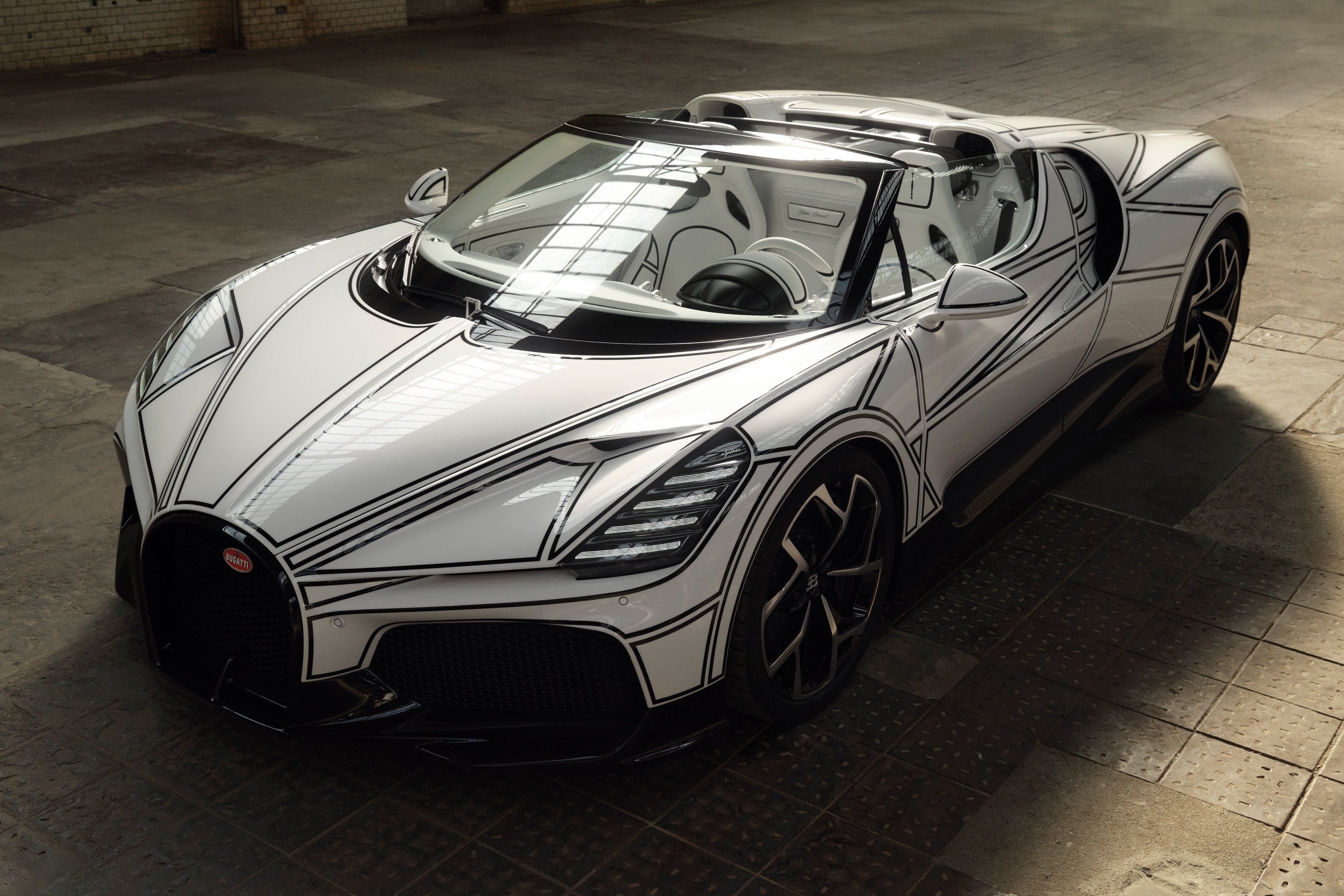
Bugatti Mistral Blanc Eternel front quarter static

Bugatti has unveiled another one-of-one Mistral. Called the ‘Blanc Eternel’ (Eternal White), it is a collaborative effort between Bugatti and Königliche Porzellan-Manufaktur Berlin, a porcelain manufacturer. It is the second time that the two companies have worked together, with the Veyron Grand Sport L’or Blanc unveiled 15 years ago. The Mistral Blanc Eternel also takes inspiration from porcelain. You get an all-white exterior with hand-painted fine black lines that map the underlying digital surface layout of the W16 Mistral, flowing across its bodywork. You get porcelain finishes for the interior parts, like speaker cover plate, two kneepad inlays, gear-shifter shells, centre-console armrest inlay and power window switches. Swipe to have a look at the Bugatti Mistral up close from various angles. 

MV Agusta Superveloce 1000 AGO image gallery

MV Agusta Superveloce 1000 AGO front three quarter

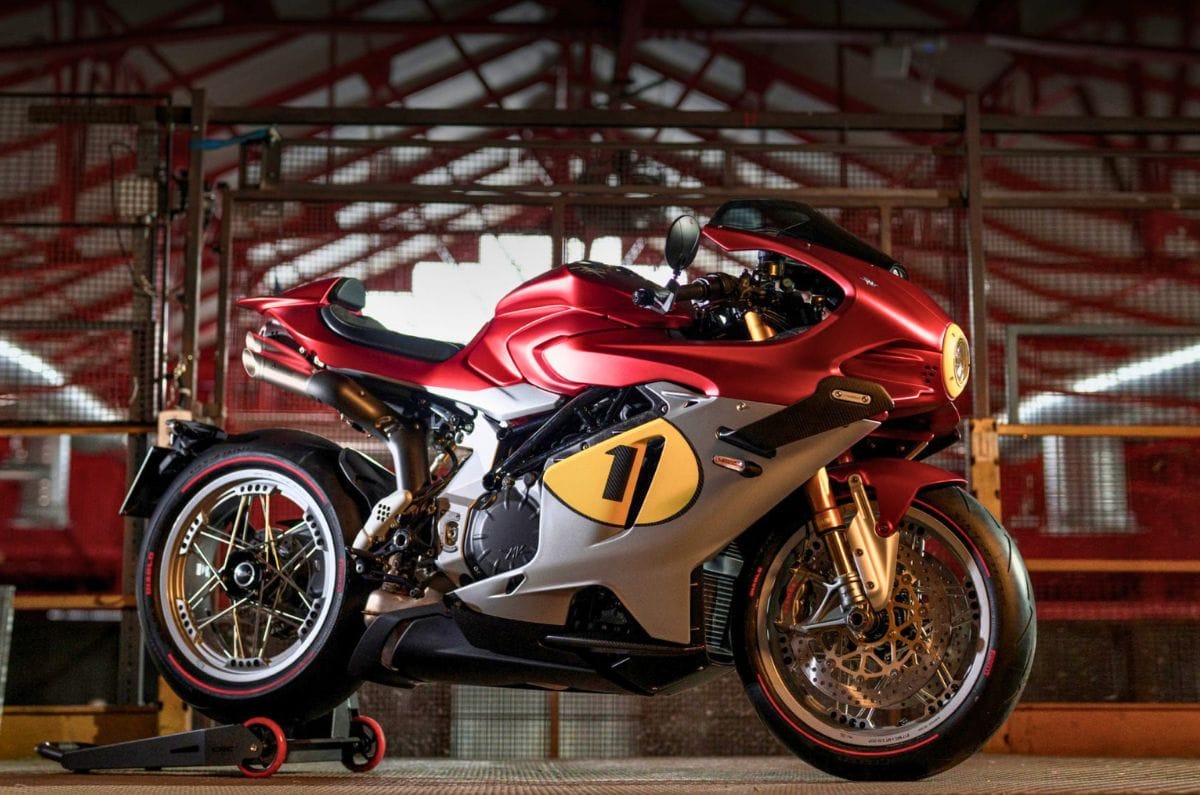
The MV Agusta Superveloce 1000 AGO is a limited-edition tribute to legendary racer Giacomo Agostini, celebrating both his 83rd birthday and MV Agusta’s 80th anniversary. Production is capped at 83 units, with bike number one reserved for Agostini himself. Based on the Superveloce 1000 Serie Oro, it is powered by a 998cc inline-four producing 208hp and 116.5Nm, paired with fully electronic Öhlins suspension, Brembo brakes and extensive carbon-fibre bodywork. Each motorcycle is personally signed by Agostini and features a gold plaque commemorating his 15 world titles, underlining its exclusivity and collector appeal.

Which variant of the 2026 Renault Kwid should you buy?

2026 Renault Kwid front quarter

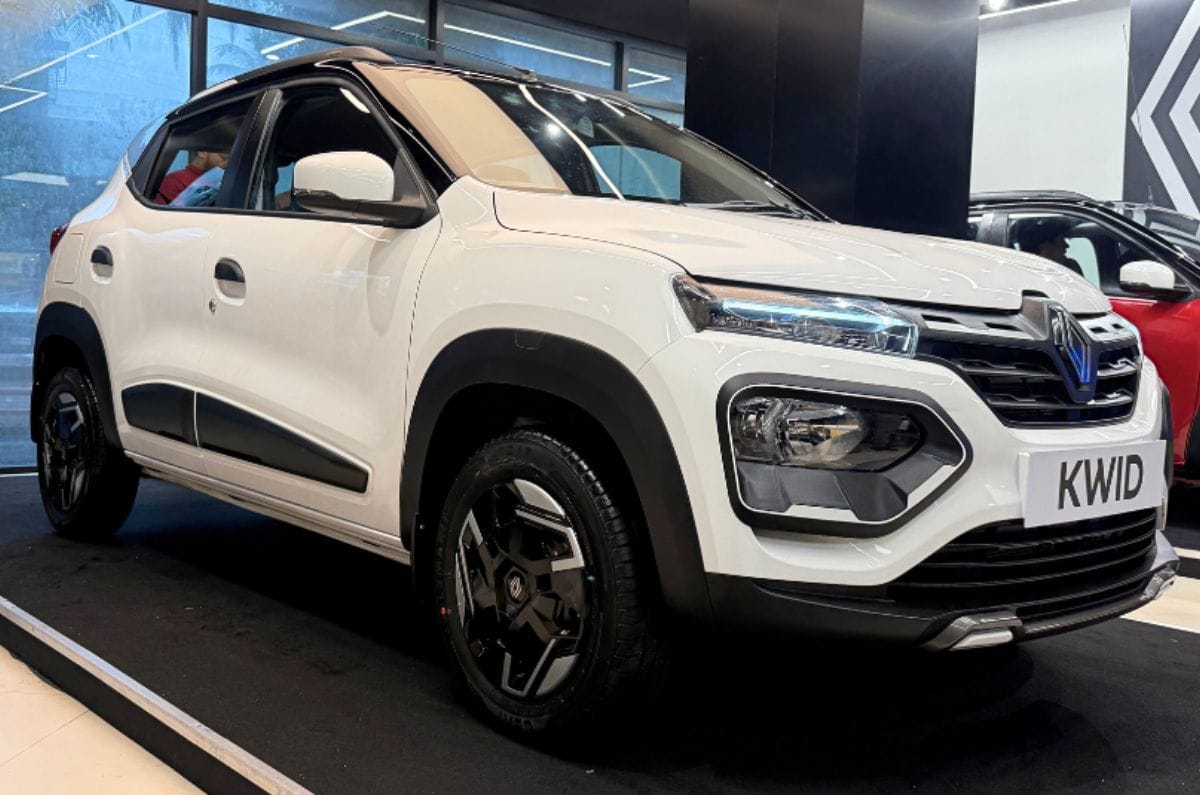
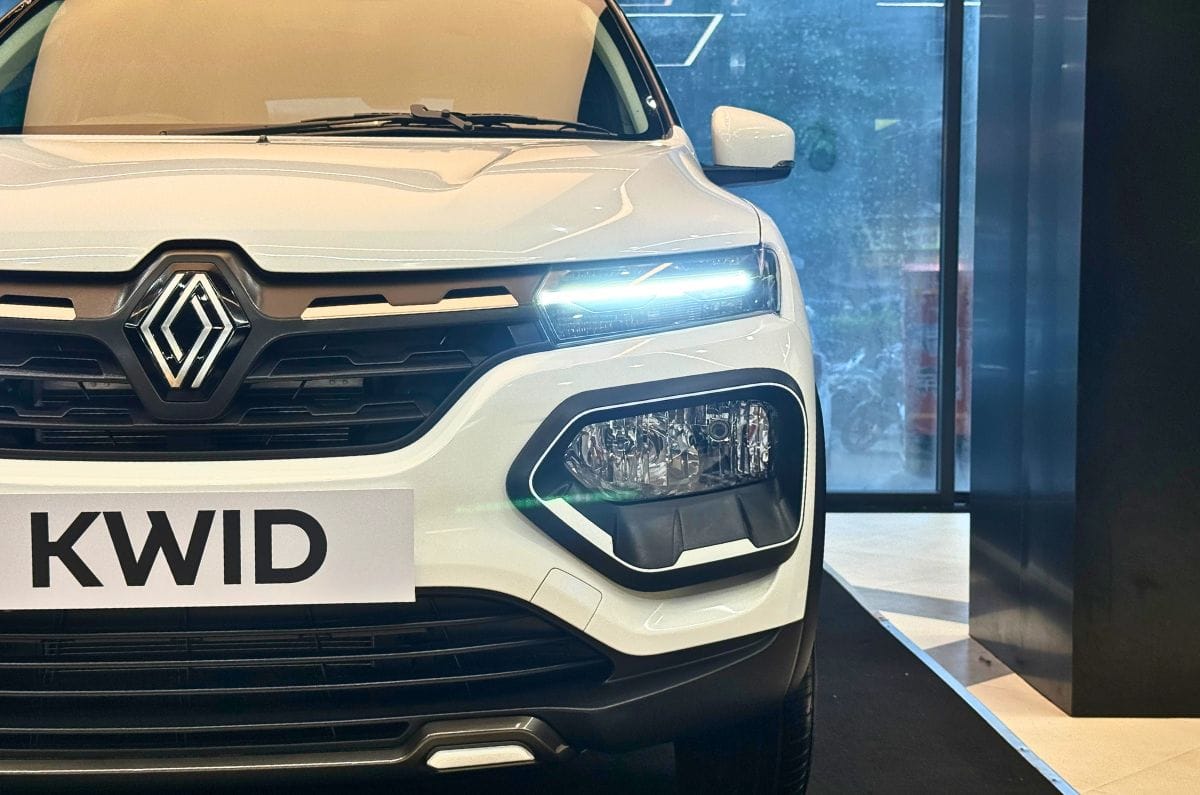
The most affordable model in Renault’s India line-up, the Kwid has undergone a minor lifecycle update for 2026. This brings with it a few styling tweaks over the pre-facelift model, but focusing primarily on the integration of the French brand’s latest logo. However, if you’re in the market for a new Renault Kwid, which variant should be you pick? Let’s find out.

2026 Renault Kwid powertrain options

Powertrain specifications

2026 Renault Kwid

Engine

1.0-litre naturally aspirated three-cylinder

Power

69hp

Torque

92.5Nm

Transmission

5-speed MT / 5-speed AMT

Drive configuration

Front-wheel drive

Fuel capacity

28 litres

The updated Kwid continues with the same three-cylinder petrol engine as its predecessor. This 1.0-litre naturally aspirated mill churns out 69hp at 5,500rpm and 92.5Nm at 4,250rpm. Customers get to choose from a 5-speed manual gearbox and a 5-speed automated manual transmission. Since the powertrain is also the same as in the pre-facelift car, the performance and fuel efficiency of the 2026 Kwid will be familiar too.

2026 Renault Kwid interior

2026 Renault Kwid variant-wise features

Evolution price: Rs 4.53 lakh – Rs 4.90 lakh

  • Body-coloured bumpers
  • 14-inch steel wheels with cover
  • LED daytime running lights (DRLs)
  • Door decals
  • Rear spoiler
  • Remote keyless entry
  • Fabric seat upholstery
  • Piano black and chrome inserts
  • Internally adjustable outer rearview mirrors (ORVMs)
  • Front power windows
  • LED monochrome instrument cluster
  • Manual AC
  • 8-inch touchscreen infotainment
  • Apple CarPlay and Android Auto
  • 2-speaker audio system
  • USB and AUX ports
  • 12V power socket
  • Dual airbags
  • ABS with EBD
  • Brake assist
  • Hill-start assist (AMT only)
  • Electronic stability programme
  • Traction control system
  • Tyre-pressure monitoring system
  • Rear parking sensors
  • Speed-sensing auto door lock/unlock
  • Rear-door child lock
  • 3-point seatbelts all around
  • Speed alert

Climber price: Rs 4.53 lakh – Rs 4.90 lakh

Features over Evolution

ORVM-integrated turn indicators

Door cladding

Dual-tone wheel cover

Two-tone paint

Faux front and rear skid plates

‘Climber’ branding on C-pillars

Chrome-plated inner door handles

Two-tone cabin trim

Rear power windows

Steering-mounted controls

Electrically adjustable ORVMs

Rear parcel tray

Side airbags

Reversing camera

Manually adjustable inner rearview mirror (IRVM)

2026 Renault Kwid prices

Price: Rs 4.53 lakh-5.61 lakh (ex-showroom)

There only two trim levels of the 2026 Renault Kwid on sale. The most affordable is the Evolution trim, whose manual and AMT variants are priced at Rs 4.53 lakh and Rs 4.90 lakh, respectively. The fully loaded Climber trim’s manual variant is priced at Rs 5.15 lakh, while the AMT variant costs Rs 5.61 lakh. Depending on the variant, prices have dropped by between Rs 10,000 and Rs 32,000 over the pre-facelift Kwid.

2026 Renault Kwid: Which variant should you buy?

The top-end Climber AMT variant offers everyday convenience and more safety features

2026 Renault Kwid LED DRLs

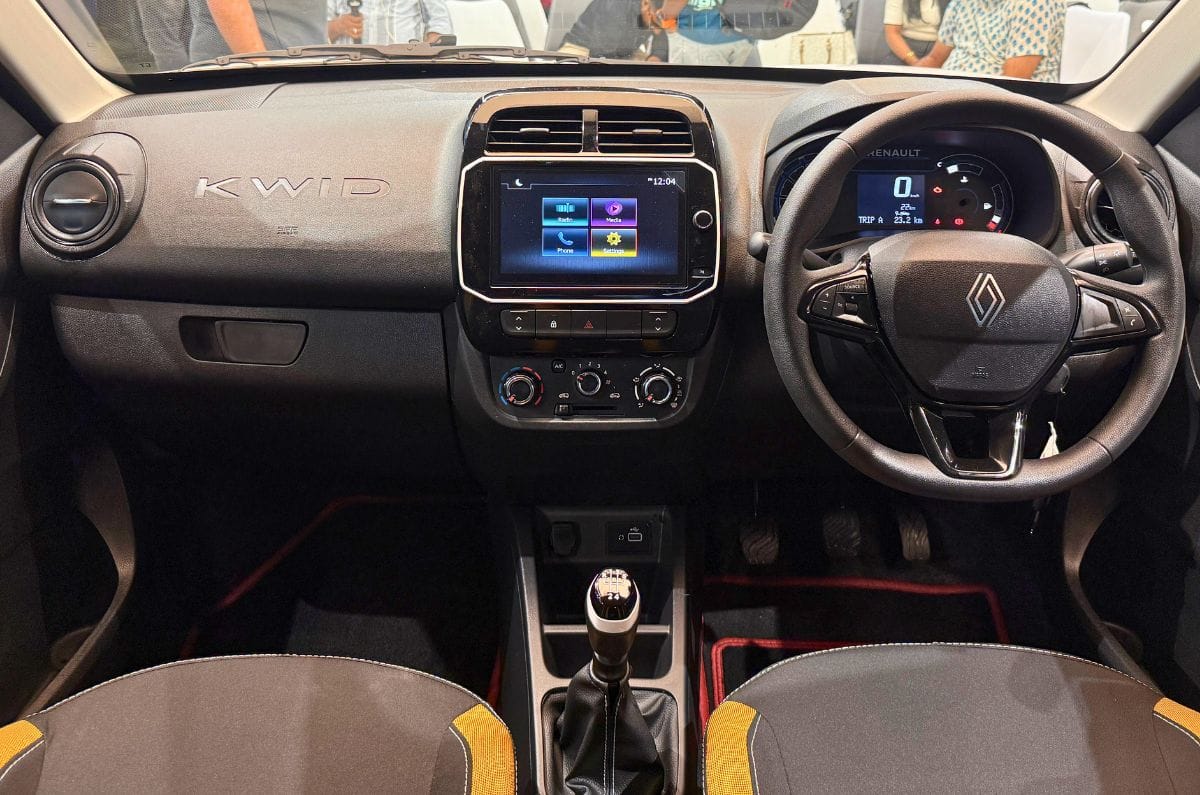
While the Kwid’s Climber MT variant costs Rs 1.08 lakh more than its Evolution counterpart, it offers more in the way of safety and everyday convenience tech. Not only does it get six airbags (instead of just two on the Evolution) and a rearview camera, but it also comes with a manually adjustable IRVM that will be handy when driving at night. The Climber also gets power windows for all occupants, steering-mounted audio controls, powered ORVMs and a rear parcel tray. Moreover, its upgraded exterior makes for a nicer-looking car overall. Paying extra for the AMT further adds hill-start assist and the general user-friendliness of an automatic gearbox.

Also read

Which Citroen eC3X variant should you buy?

Renault Kwid new vs old: Differences and similarities explained

Tata Harrier vs Hyundai Alcazar turbo-petrol AT real-world efficiency compared

Tata Harrier vs Hyundai Alcazar

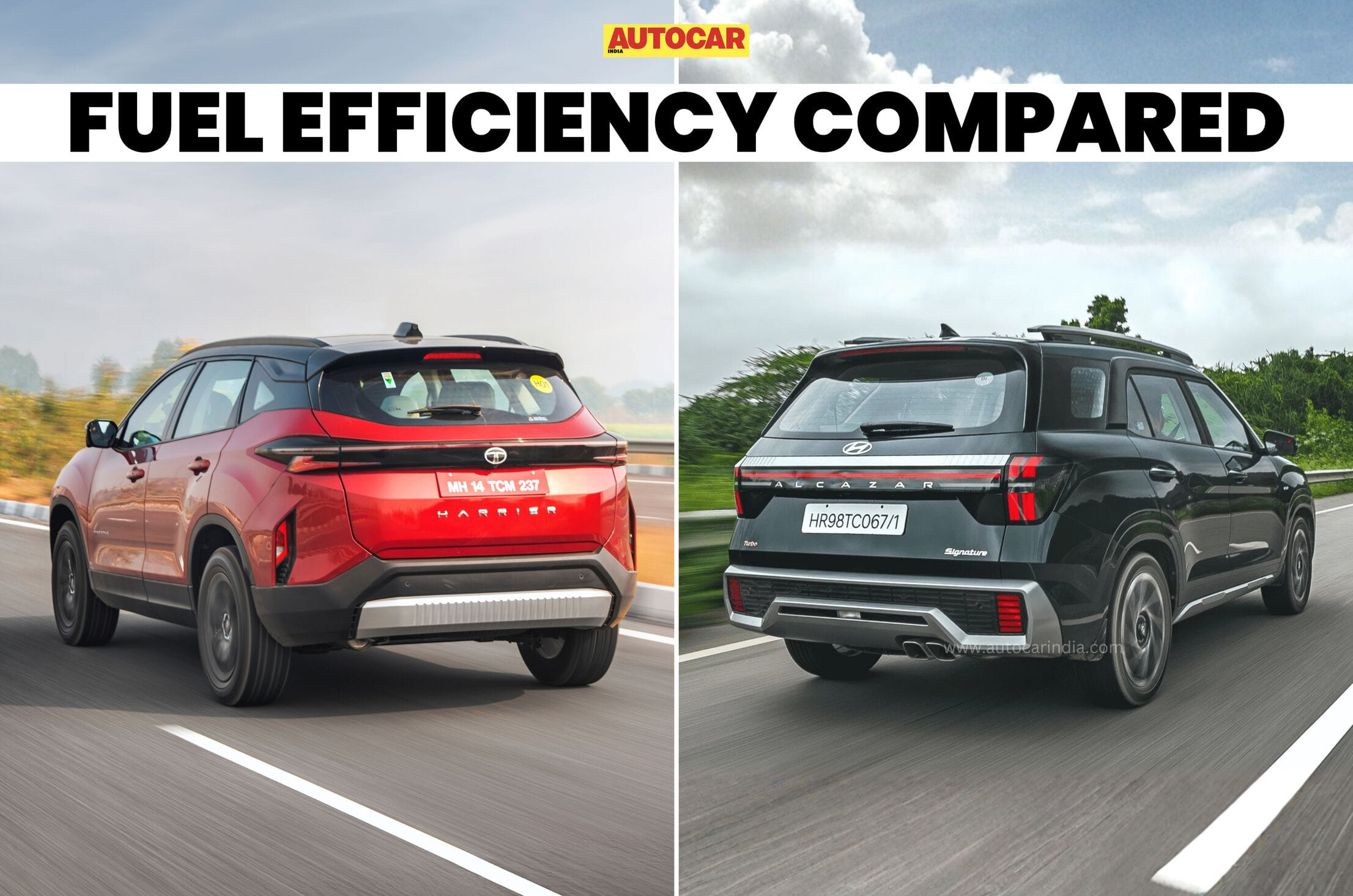
If you’re in the market for a premium midsize turbo-petrol SUV, the Tata Harrier and Hyundai Alcazar come across as solid options. While the former is a 5-seater, the latter gets an additional 2 seats. Though the SUVs aren’t direct rivals to each other, they come with 1.5-litre turbo-petrol engines and have overlapping price ranges. Here we’ve compared the real-world fuel efficiency figures of both SUVs in turbo-petrol automatic guise to determine the more frugal one.

Explore full specs, features and a  price breakdown in our Harrier vs Alcazar comparison

Tata Harrier vs Hyundai Alcazar turbo-petrol: Specification and price

Tata Harrier vs Hyundai Alcazar turbo-petrol: Specification and price 


Tata Harrier

Hyundai Alcazar

Engine

4 cyls, turbo-petrol

4 cyls, turbo-petrol

Displacement (cc)

1,498

1,482

Power (hp)

170

160

Torque (Nm)

280

253

Gearbox

6AT

7DCT

Fuel tank (litres)

50

50

Price range for turbo-petrol automatic (Rs lakh)

17.70 – 24.80

18.03 – 21.09

Both the Harrier and Alcazar turbo-petrol are powered by 1.5-litre units. While the former’s turbo-petrol unit is paired to a 6-speed torque converter, the latter utilises a 7-speed DCT. Compare their power figures, though, and it’s the Harrier coming across as the more powerful, developing an additional 10hp and 27Nm of torque. Fuel tanks on both SUVs have a 50-litre capacity.

Tata Harrier vs Hyundai Alcazar turbo-petrol: Real-world fuel efficiency

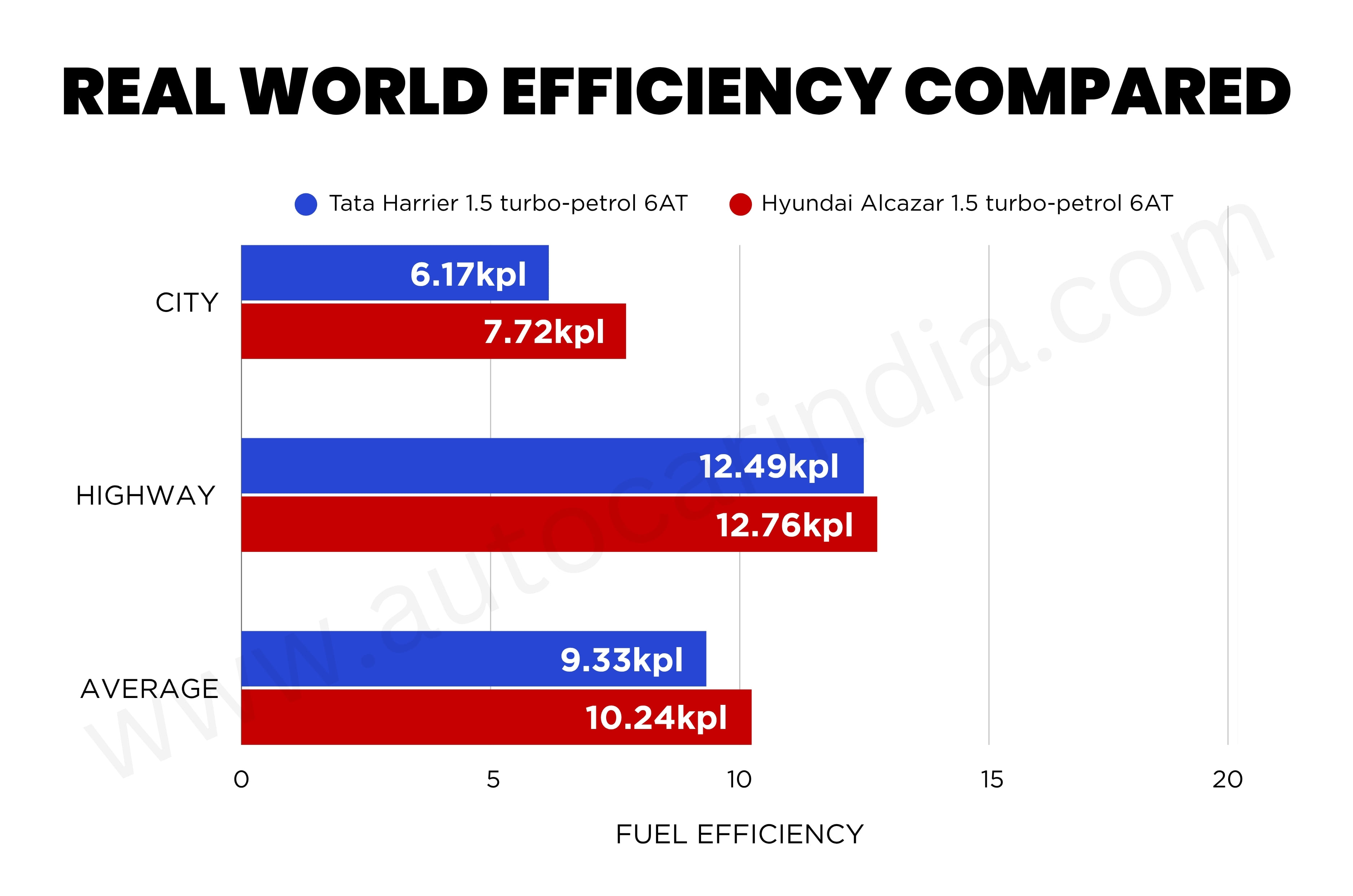
In our tests, the Alcazar outperformed the Harrier in overall efficiency by 0.91km. In the city, the Hyundai was 1.55kpl more efficient, while the gap was reduced to 0.29kpl on the highway. A reason for this could be the fact that the Alcazar gets an auto engine start/stop function, which the Harrier misses out on. Being the more frugal one here, the Alcazar also goes 512km on a single tank of fuel, while the Harrier goes 466.5km. 

Autocar India’s fuel-efficiency testing

Before our real-world fuel-efficiency tests, we fill our test cars’ tanks to the brim and maintain tyre pressures based on the manufacturer’s recommendations. These cars are driven in fixed city and highway loops in and around Navi Mumbai, and we maintain certain average speeds. Throughout the tests, there is only one person in each car, operating the air conditioner and other electricals, such as the audio system, indicators and wipers, when required, just like a regular user would. Periodic driver swaps further neutralise variations in driver patterns. At the end of each cycle, we calculate efficiency by filling the tanks to full again.

All prices are ex-showroom, India.

Mahindra BE6 vs Hyundai Creta Electric: The numbers tell an interesting story

Mahindra BE 6 vs Hyundai Creta Electric

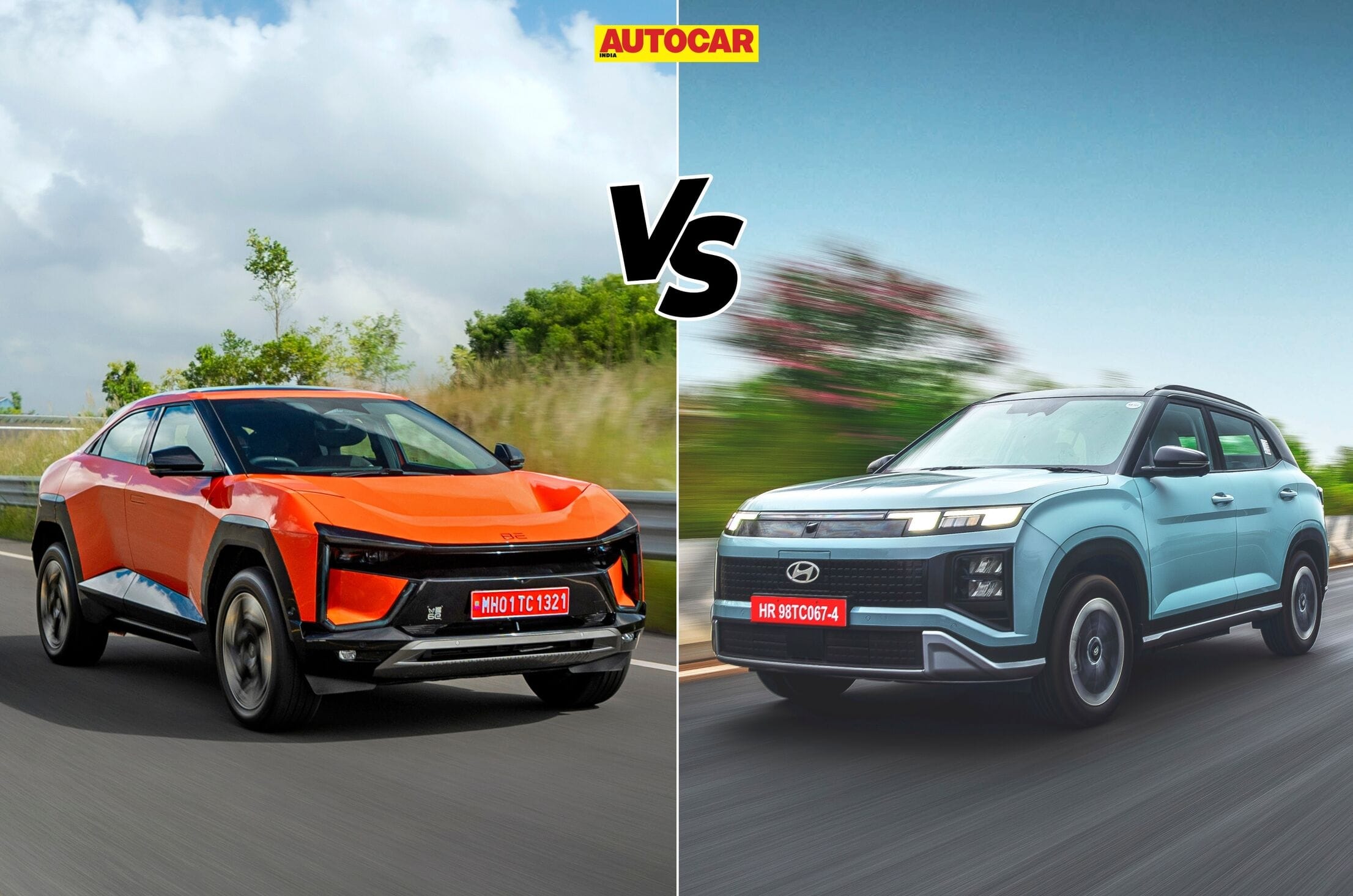
The Mahindra BE6 and Hyundai Creta Electric may occupy the same segment, but they have been engineered with very different priorities. The Creta Electric focuses on maximising efficiency, while the BE6 combines a significantly more powerful motor with a larger battery pack to deliver stronger performance and longer overall range. Our instrumented tests reveal how the two electric SUVs compare in the real world.

Real World Efficiency and Range

The Mahindra BE6 and Hyundai Creta Electric arrive at their range figures in different ways. While the BE6 relies on a larger battery pack to maximise outright range, the Creta Electric focuses on getting the most out of every kilowatt hour.

Real World Efficiency & Range

Test

Mahindra BE6

Hyundai Creta Electric

Winner

City efficiency (km/kWh)

5.55

9.45

Creta Electric

City range (km)

439

486

Creta Electric

Highway efficiency (km/kWh)

5.81

7.36

Creta Electric

Highway range (km)

459

379

BE6

Combined efficiency (km/kWh)

5.68

8.65

Creta Electric

Combined range (km)

449

432

BE6

The Creta Electric is clearly the more efficient SUV in urban conditions, returning an impressive 9.45km/kWh and an estimated 486km of city range. The BE6 manages 439km, highlighting the Hyundai’s focus on extracting maximum distance from its battery in stop start traffic.

On the highway, the Creta Electric continues to post the better efficiency figure at 7.36km/kWh. However, the BE6’s larger battery enables it to cover 459km on a charge compared to the Hyundai’s 379km, giving it a clear advantage on longer journeys.

Across our combined cycle, the Mahindra records a range of 449km, 17km ahead of the Creta Electric’s 432km. The results underline the different engineering approaches adopted by the two manufacturers. Hyundai prioritises energy efficiency, while Mahindra leverages a larger battery to deliver greater overall range.

Performance comparison

The performance figures also help explain the differences in efficiency. The BE6’s rear mounted electric motor produces substantially more power than the Creta Electric, resulting in quicker acceleration across every test.

Performance

Test

Mahindra BE6

Hyundai Creta Electric

Winner

0-100kph (sec)

7.14

8.04

BE6

20-80kph (sec)

4.03

4.55

BE6

40-100kph (sec)

4.48

5.23

BE6

Quarter mile (sec)

15.36

16.06

BE6

While a more powerful powertrain typically demands more energy, the larger battery pack ensures the BE6 still delivers the longer overall range. The Creta Electric, meanwhile, demonstrates just how efficiently its powertrain has been tuned, extracting more kilometres from every kilowatt hour without prioritising outright performance.

Regenerative braking

The Mahindra consistently delivers stronger regenerative braking, particularly in the higher settings where it sheds speed over a shorter distance than the Creta Electric. The difference is most noticeable in one pedal mode and High regeneration, while the Mid setting is almost identical between the two SUVs. Hyundai’s gentler calibration may feel more natural to drivers transitioning from an ICE car, whereas the BE6’s stronger regeneration is likely to appeal to those who prefer one pedal driving.

Regenerative Braking (80-20kph)

Mode

Mahindra BE6

Hyundai Creta Electric

Winner

One Pedal / i-Pedal

99.24m / 6.75s

106.42m / 7.75s

BE6

High

122.11m / 8.80s

138.70m / 10.32s

BE6

Mid

190.02m / 13.64s

190.43m / 14.05s

BE6

Low

299.47m / 21.23s

318.83m / 23.67s

BE6

Verdict

The Mahindra BE6 and Hyundai Creta Electric represent two distinct approaches to electric SUV engineering, and our tests show that both succeed in their respective goals.

The Hyundai Creta Electric is the efficiency benchmark, extracting more kilometres from every kWh in city, highway and combined driving. Its exceptional city range and smoother regenerative braking make it particularly well suited to buyers whose driving is predominantly urban.

The Mahindra BE6, on the other hand, takes a more performance-oriented approach. Its substantially more powerful motor delivers noticeably quicker acceleration, while the larger battery pack enables it to offer superior highway and overall driving range. It also features stronger regenerative braking, lending itself to a more engaging one pedal driving experience.

Ultimately, there is no outright winner here. If your priority is extracting the maximum distance from every unit of energy, the Creta Electric has the edge. However, if you value stronger performance, longer highway range and a more involving driving experience, the BE6 makes a compelling case.

Tata Sierra EV vs Mahindra BE 6: Whose top-spec trim offers better value?  

Tata Sierra EV vs Mahindra BE 6:

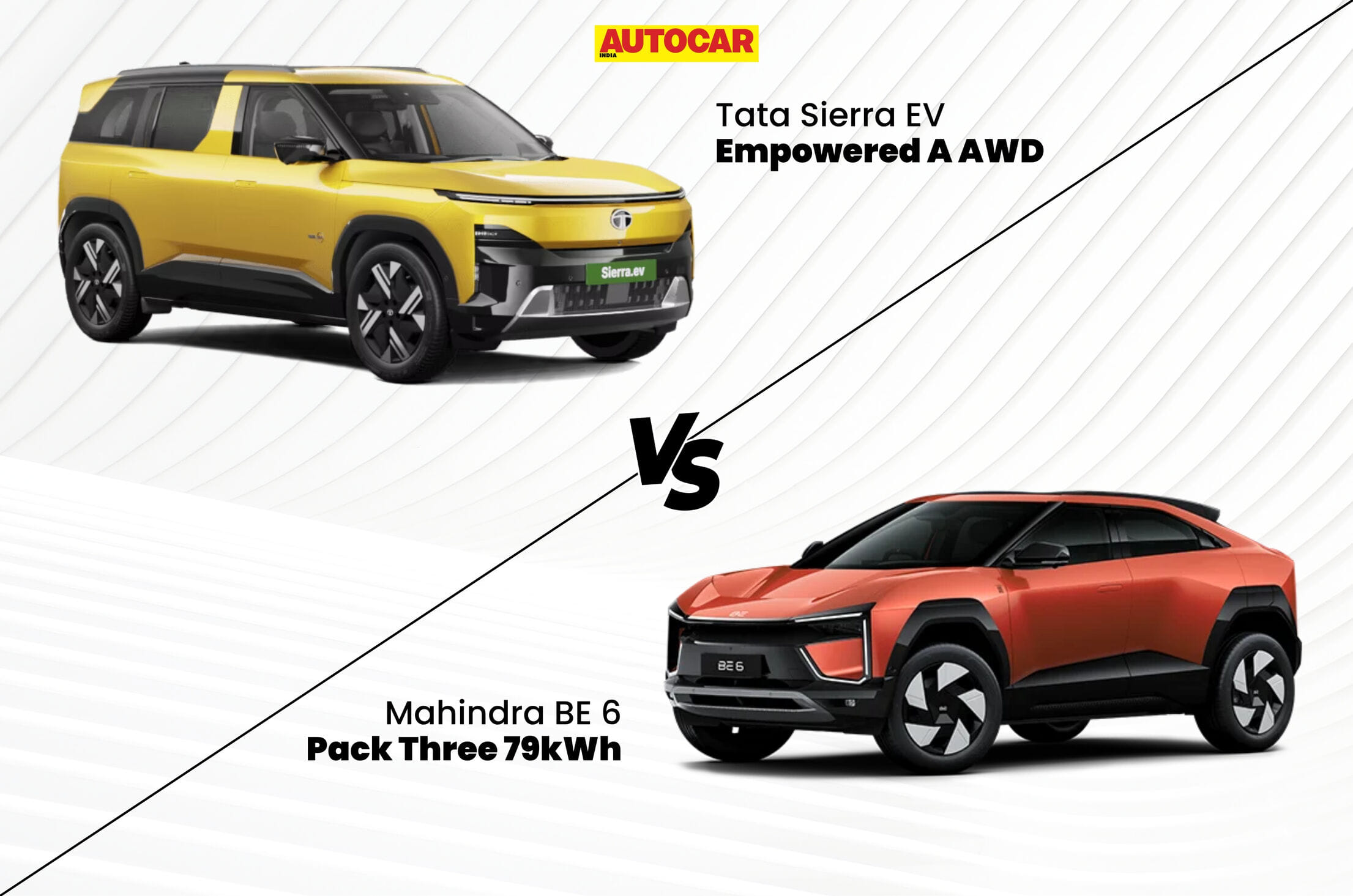
With the mid-size electric SUV space getting highly competitive over time, the Mahindra BE 6 comes as a popular option with its futuristic looks, large battery and powerful motor. With the Sierra EV’s arrival, Tata is aiming squarely for the BE 6. From dimensions and powertrains to features and price, we compare both eSUVs’ top-spec versions on paper to determine the better value proposition. Here, we’ve chosen the Empowered A trim of the Sierra EV and the Pack Three trim of the BE 6.

Explore full specs, features, and a price breakdown in our Sierra EV versus Mahindra BE 6 comparison.

Tata Sierra EV vs Mahindra BE 6: Dimensions

Tata Sierra EV vs Mahindra BE 6: Dimensions


Sierra EV

BE 6

Difference 

Length (mm)

4,340

4,371

-31 

Width (mm)

1,841

1,907

-66

Height (mm)

1,750

1,627

+123

Wheelbase (mm)

2,730

2,775

-45

Ground clearance (mm)

205

207

-2

Boot space (litres)

450

455

-5

Frunk space (litres)

35-55

45

+/-10

According to our mid-size eSUV specification comparison, the Sierra EV and the Mahindra BE 6 were among the largest models. While the Sierra EV is taller and has a larger frunk, the BE 6 is longer, wider, has a longer wheelbase, and slightly more ground clearance and boot. Overall, the BE 6 is larger, albeit marginally.

Tata Sierra EV vs Mahindra BE 6: Battery and range 

Tata Sierra EV vs Mahindra BE 6: Battery and range 


Sierra EV

Mahindra BE 6

Battery size (kWh)

75

79

Motor setup

RWD | AWD

RWD 

Power (hp)

209 | 140 (front) 240 (rear)

286

Torque (Nm)

315 | 504

380

ARAI range (km)

665 | 624

683

In top-specification guise, the Sierra EV and Mahindra BE 6 feature among the largest battery packs in the segment, with the latter being slightly bigger. But the Sierra more than makes up for it by being the only eSUV to have an AWD version. There’s also a single-motor RWD version offered on the Empowered A trim of the Sierra EV. While the BE 6’s single motor produces more power than the front and rear motors on the Sierra EV, the Sierra EV delivers 124Nm of additional torque in AWD guise. However, the BE 6 gets higher claimed range figures in comparison to the Sierra EV.

Tata Sierra EV vs Mahindra BE 6: Charging times 

Tata Sierra EV vs Mahindra BE 6: Charging times 


Sierra EV

Mahindra BE 6

Battery size (kWh)

75

79

AC charging output support (kW)

7.2

7.2, 11.2

DC charging output support (kW)

110, 120

180

AC charging time (hours)

8.9 | 10.5 (10-100%)

11.7, 8 (0-100%)

DC charging time (minutes)

25 | 26 (20-80%)

20 (20-80%)

As far as charging is concerned, the BE 6 supports faster AC and DC charging speeds compared to the Sierra EV. Only their DC charging speeds are comparable, with the Sierra EV’s time being up to 6 minutes slower than the BE 6’s.

Tata Sierra EV vs Mahindra BE 6: Exterior features

Tata Sierra EV vs Mahindra BE 6: Exterior features


Sierra EV

Mahindra BE 6

Headlights

Auto LED

Auto LED

Tail-lights

LED

LED

DRLs

Yes

Yes

Welcome/goodbye animation

Yes

Yes

Fog lamps

Front and rear

Front

Puddle lamps

Yes

No

Sequential indicators

Yes

Yes

Flush door handles

Yes

Yes

Rear spoiler

Yes 

Yes

Power-adjustable and folding ORVMs

Yes

Yes

Rain-sensing wipers

Yes

Yes

Rear wiper/washer

Yes

No

Shark-fin antenna

Yes

No

Colours

Monotone

Monotone

Wheels

19-inch

19-inch

On the outside, both the Sierra EV and BE 6 come with LED lighting, welcome and goodbye animations, sequential turn indicators, and the largest-in-segment 19-inch alloys. But the Sierra EV comes with rear fog lamps, puddle lamps, a rear wiper/ washer, and a shark fin antenna. However, the BE 6 gets motorised opening for the front flush door handles, while the Sierra EV’s flush door handles are manually operated.

Tata Sierra EV vs Mahindra BE 6: Interior features

Tata Sierra EV vs Mahindra BE 6: Interior features


Sierra EV

Mahindra BE 6

Infotainment screen

12.3-inch

12.3-inch

Driver’s display

10.25-inch

12.3-inch

Passenger display

12.3-inch

No

Head-up display

Yes

Yes

In-built navigation

Yes

No

Infotainment-based gaming console

Yes

No

In-car payments

Yes

No

Powered driver’s seat 

6-way

6-way

Front seat thigh support

Yes

No

Driver seat memory and welcome function

Yes

Yes

Powered front passenger seat

4-way

No

Cooled front seats

Yes

Yes

Reclining rear seats

Yes

Yes

Boss mode

Yes

No

Wireless Android Auto, Apple CarPlay

Yes

Yes

Audio system

12-speaker JBL Black

16-speaker Harman Kardon

Dolby Atmos

Yes

Yes

Sunroof

Openable panoramic

Fixed-glass panoramic

Rear AC vents

Yes

Yes

Climate control

Dual-zone

Dual-zone

Seat upholstery

Leatherette

Leatherette

Wireless phone charger

Yes

Yes

Ambient lighting

Yes

Yes

Front centre armrest

Yes

Yes

Rear centre armrest

Yes

Yes

USB ports

4x Type-C

4x Type-C

NFC-based key card

Yes

No

Powered tailgate

Yes

Yes

Air purifier

Yes

Yes

Connected car tech

Yes

Yes

Rear sunshades

Yes

No

OTA updates

Yes

Yes

While the BE 6 gets the larger digital driver’s display and more speakers than the Sierra EV, the latter, however, pips the former by offering an additional passenger display, built-in navigation, a powered front passenger seat, boss mode, and rear window sunshades. While the panoramic sunroof in the Sierra EV is openable, the BE 6 gets a fixed glass roof.

Tata Sierra EV vs Mahindra BE 6: Driving tech 

Tata Sierra EV vs Mahindra BE 6: Driving tech 


Sierra EV

BE 6

Boost mode

Yes

No

Drive modes

Normal, Eco, Sport

Default, Range, Everyday, Race

Terrain modes

Normal, Grass, Snow, Mud-ruts, Gravel, Sand, Rock Crawl, Custom

Snow

Off-road assist

Yes

No

Cruise Control

Adaptive

Adaptive

Drift mode

Yes

No

While drive modes and adaptive cruise control are present on both eSUVs, the Sierra EV’s AWD allows more adjustability to your drive. The BE 6 offers only snow mode, while the Sierra EV betters it with Normal, Grass, Snow, Mud-ruts, Gravel, Sand, Rock Crawl, and Custom terrain modes. Additionally, the Sierra EV also offers a drift mode and boost mode, with the latter surging power on demand. 

Tata Sierra EV vs Mahindra BE 6: Safety

Tata Sierra EV vs Mahindra BE 6: Safety


Sierra EV

BE 6

Airbags

6

6

ABS and EBD

Yes

Yes

ADAS

Level 2+

Level 2+

Automatic parking assist 

Yes

Yes

Camera setup

540-degree

360-degree

Parking sensors

Front and rear

Front and rear

Electric parking brake

Yes

Yes

Disc brakes

All-wheels

All-wheels

TPMS

Yes

Yes

IRVM

Auto-dimming

Auto-dimming

Hill-hold control

Yes

Yes

ESC

Yes

Yes

When it comes to safety features, the Sierra EV and BE 6 come loaded. Not only do both eSUVs cover the basics like 6 airbags, hill hold control, and ESC, but they are the segment’s only SUVs with Level 2+ ADAS and automatic parking assist. The latter feature also enables you to park/unpark your vehicle via your smartphone. But the Sierra EV nudges ahead minutely with additional cameras for the under-bonnet area on top of its 360-degree camera setup. 

Tata Sierra EV vs Mahindra BE 6: Price and verdict

Tata Sierra EV vs Mahindra BE 6: Price and verdict


Sierra EV AWD

Mahindra BE 6

Ex-showroom price (Rs lakh)

24.79 – 25.99

26.90

The Sierra EV is up to Rs 2.11 lakh cheaper than the BE 6 in top-spec guise, depending on the chosen variant. Between the two, it is the Sierra EV we recommend. While the BE 6 has larger dimensions and a higher claimed range, the Sierra EV brings more features and an AWD system, all while being more affordable at the same time, making it the better value proposition.

Kia India teases upcoming EV and Hybrid-powered model

Kia India teases upcoming EV and Hybrid-powered model

Kia India has shared a video online hinting at an upcoming all-electric model and a hybrid-powered model. The models will debut in the latter half of July 2026. According to the teasers and our previous reports, the electric model will most likely be the Syros EV, while the hybrid-powered model will be the Sorento. In fact, earlier this year, the carmaker had announced at its global investor day event that it would launch the Syros EV and Sorento Hybrid in India

Kia Syros EV and Sorento Hybrid: What to expect?

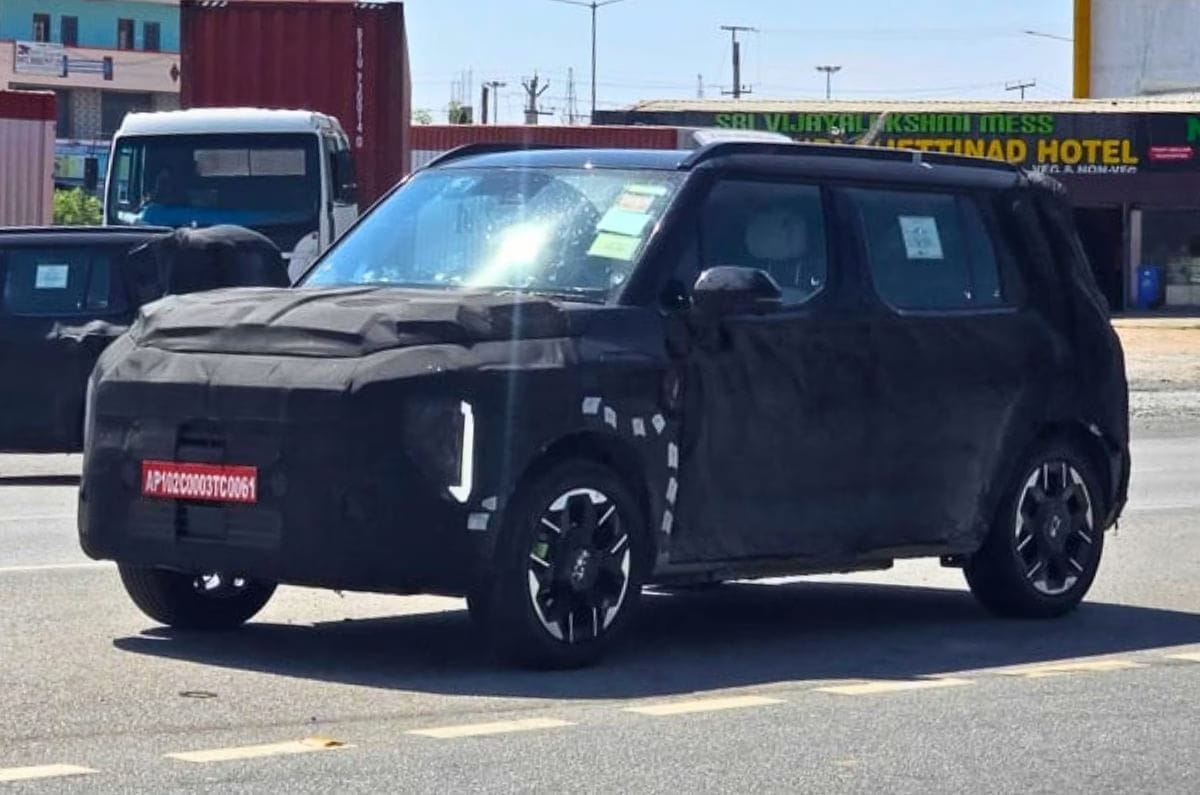
Image credit: @RasaCL via Reddit

The Syros EV will essentially be the electric counterpart to the ICE Syros and utilise its K1 platform. Test mules of the EV have been spied on our roads. Kia is likely to introduce EV-specific design changes to set it apart from the ICE-powered model and equip it with a long feature list. 

While powertrain specifications of the Syros EV remain unconfirmed, it is likely to utilise the globally sold Hyundai Inster EV’s battery packs. The Inster EV is available with 42kWh and 49kWh battery pack options and offers a claimed range of up to 369km. With an expected price ranging between Rs 15 lakh and Rs 20 lakh, it will take on the likes of the Tata Nexon EV, and the MG Windsor. Once launched, it will be the most affordable EV in Kia India’s lineup, as it will be positioned below the Carens Clavis EV.

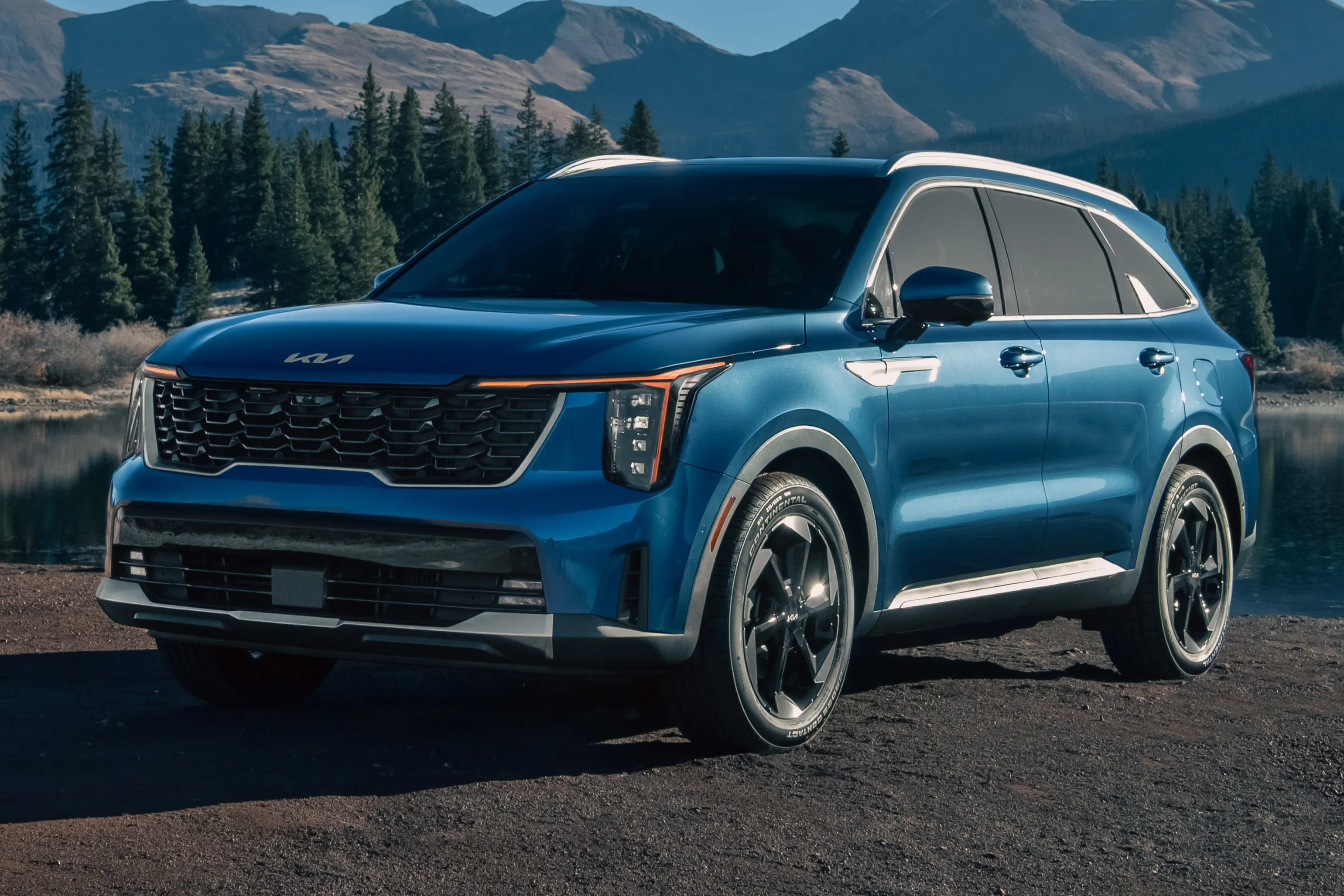
Global-spec Sorento used for representation.

The Sorento is a premium three-row SUV in Kia’s global car lineup. For India, though, the SUV we would get will utilise the global Sorento’s underpinnings, but it’s yet to be known if it bears the Sorento name and its top hat. We had previously reported that the SUV, codenamed MQ4i, was under development by the carmaker and would have a hybridised 1.5-litre petrol engine. While dimensions have not been confirmed, for context, the global-spec Sorento has a length and wheelbase of 4.8 metres and 2 metres, respectively. The Sorento Hybrid is expected to have an ex-showroom price of around Rs 30 lakh. Positioned above the Seltos, it will aim for the likes of the Mahindra XUV 7XO