लियोनेल मेसी, लिसैंड्रो मार्टिनेज और डिने बोर्गस के आत्मघाती गोल की मदद से अर्जेंटीना ने शुक्रवार को अतिरिक्त समय के बाद केप वर्डे पर 3-2 की नाटकीय जीत दर्ज करते हुए फीफा विश्व कप के राउंड ऑफ 16 में अपनी जगह पक्की की।
मैच की शुरुआत के पहले हॉफ में मेसी ने 29वें मिनट में गोल दागा अर्जेंटीना को 1-0 की बढ़त दिलाई हालांकि, दूसरे हाफ की शुरुआत में केप वर्डे के लिए डेरोय डुआर्टे ने 59वें मिनट में बराबरी का गोल कर स्कोर 1-1 कर दिया। दोनों टीमों के बीच 90 मिनट का खेल पूरा होने तक स्कोर बराबरी ही रहा। इसके बाद अतिरिक्त समय में लिसांद्रो मार्टिनेज ने 92वें मिनट में दूसरा गोल कर अर्जेंटीना को बढ़त दिला दी।
Argentina vs Cape Verde is the best game of this World Cup so far. What a game!
Every time you thought Argentina had won it, Cape Verde found a way back. If only the rest of the African teams had shown that same mentality pic.twitter.com/DGrVgEZRt8
— ????????????????????????????????????! (@UtdChulo) July 4, 2026
मार्टिनेज के गोल के बाद लगा अर्जेंटीना अब यह मैच आसानी से जीत लेगा, लेकिन 103वें मिनट में सिडनी लोप्स काब्रेल ने गोल दागकर स्कोर 2-2 से बराबर कर दिया। इसके बाद फिर 15 मिनट का अतिरिक्त समय लिया गया। अतिरिक्त समय में मेसी ने 111वें मिनट में कॉर्नर से गोल करने का प्रयास किया, लेकिन केप वर्डे के डिने बोर्गस ने आत्मघाती गोल कर अर्जेंटीना को 3-2 से बढ़त दिला दी।
केप वर्डे ने इसके बाद 116 और 120वें मिनट में गोल करने के प्रयास किए, लेकिन विफल रहे। अभी एक और नाटकीय मोड़ आना बाकी था जब एमिलियानो मार्टिनेज ने कैब्राल की फ्री किक को शानदार तरीके से रोककर अर्जेंटीना को जीत दिला दी।
Tyres are one of the most important parts of your motorcycle, and they dictate how it turns, stops, and behaves – especially when the road gets tricky. But beyond compound, grip and tread pattern, there’s another crucial distinction for two-wheelers – whether your tyres are tube-type or tubeless. While the car world has more or less completely moved away from tubed tyres, there is still a place for them on some types of motorcycles. Here’s a closer look at what separates tube and tubeless systems, and why it matters more than most riders realise.
So, what’s the difference?
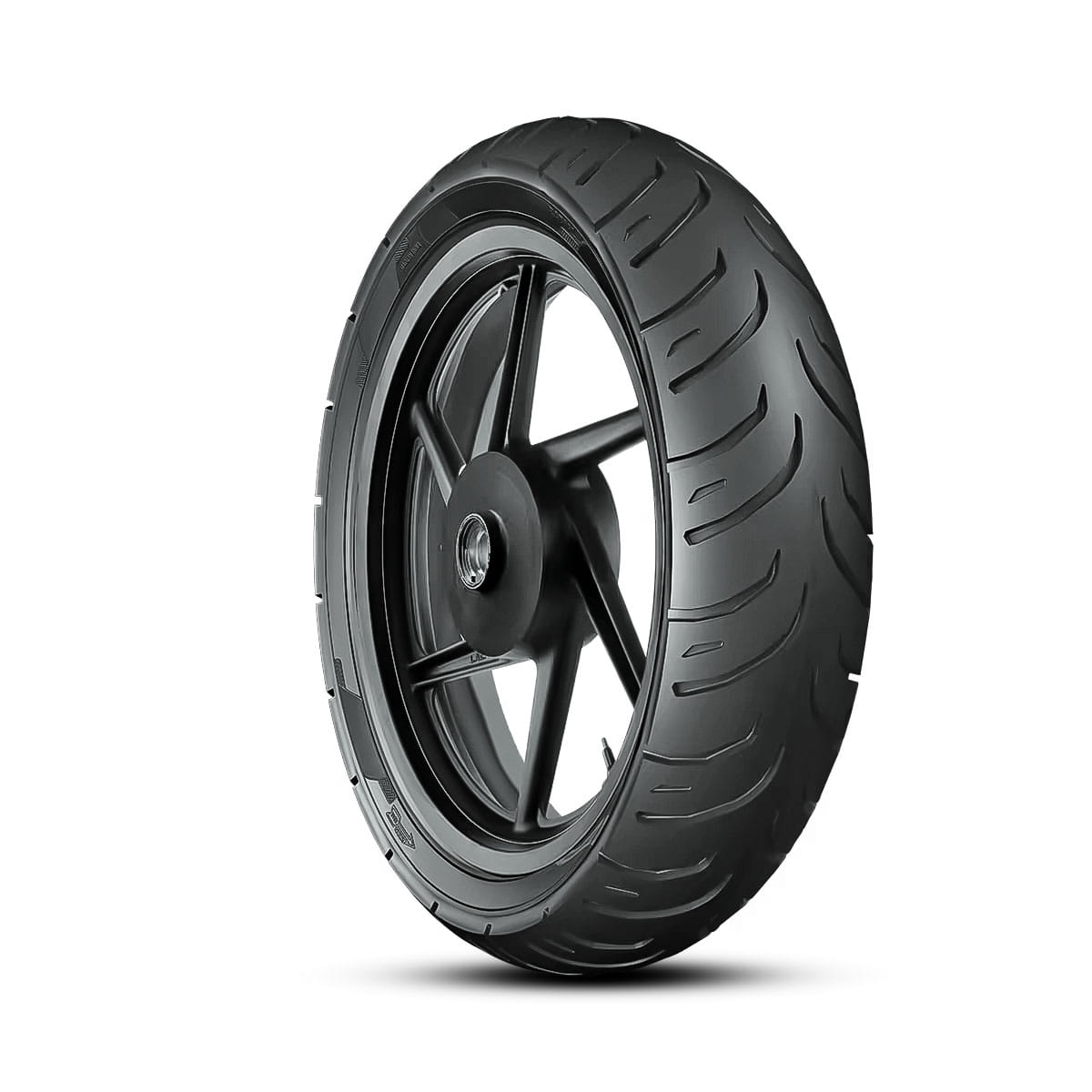
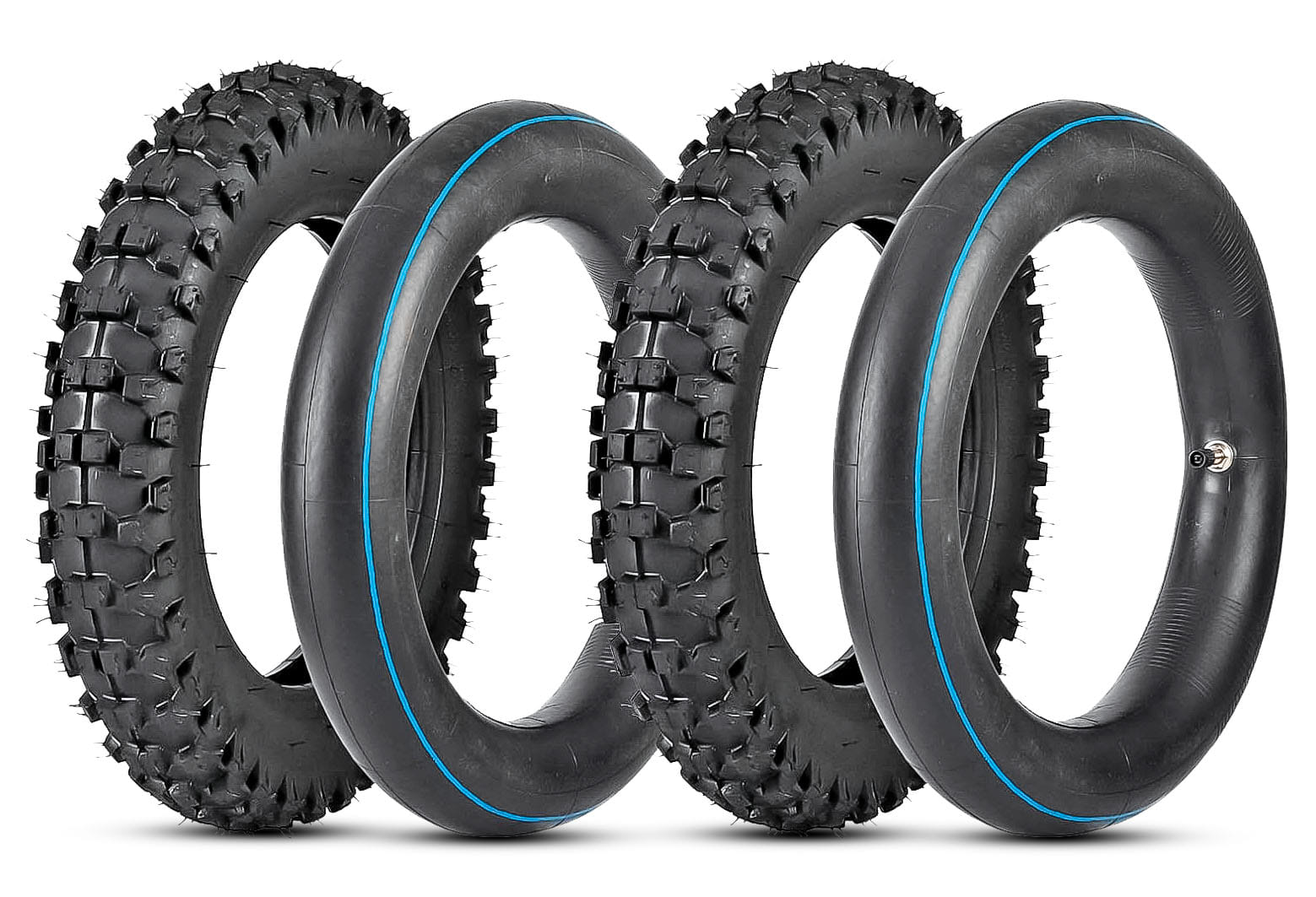
In a tube-type setup, the air sits inside an inflatable rubber tube, which is placed between the tyre and the rim. The tyre and rim are not airtight, as all the air is held inside of the tube, which has a filling valve. A tubeless tyre, on the other hand, seals directly against the rim, with no inner tube involved. The tyre and wheel rim form an airtight seal on their own, and the rim has the valve fitted to it.
Alloy wheels are designed to work without a tube, though they can accommodate a tube in case of rim damage that allows for air to leak.
Pros and Cons
For the most part, tubeless tyres are vastly more appealing, and it’s easy to see why they are fitted to most modern motorcycles. They’re safer in terms of resistance to high-speed blowouts and easier to fix in the event of a puncture. When a tubeless tyre is pierced by a sharp object, the air has to escape past the punctured object, which is most often held in place by the rubebr tyre. Thus, the air loss is slow, giving the rider time to react. With a tubed tyre, a puncture in the inner tube deflates the tube, which collapses inside, and air escapes quickly via the rim and valve hole. This isn’t ideal when you’re mid-corner, carrying high speeds, or in the middle of nowhere.
Tubeless tyres are also easier to repair, and most small punctures can be fixed with a puncture repair kit from the outside, with no need to remove the wheel or open up the tyre. They also run relatively cooler at speed; with no tube, there is less friction, which helps improve longevity. That said, tube-type tyres still have their place on certain motorcycles. The main reason for this is that tubes will still hold air in case the rim gets bent in off-road riding conditions, whereas tubeless tyres would completely deflate in such a situation. Finally, spoked rims that run tube tyres are more affordable than tubeless spoked rims that need to be specially designed to be airtight.
Tube tyres can be tedious to fix, but they are more durable off-road in cases of rim damage.
Why wheel construction matters
Now here’s where things get interesting, and your wheel design determines what tyre system you can use. Most modern road bikes come with cast alloy wheels, which are completely sealed and specifically designed for tubeless tyres. The inner wall of the rim includes a bead hump that helps keep the tyre seated even when air pressure drops, which is a crucial safety feature.
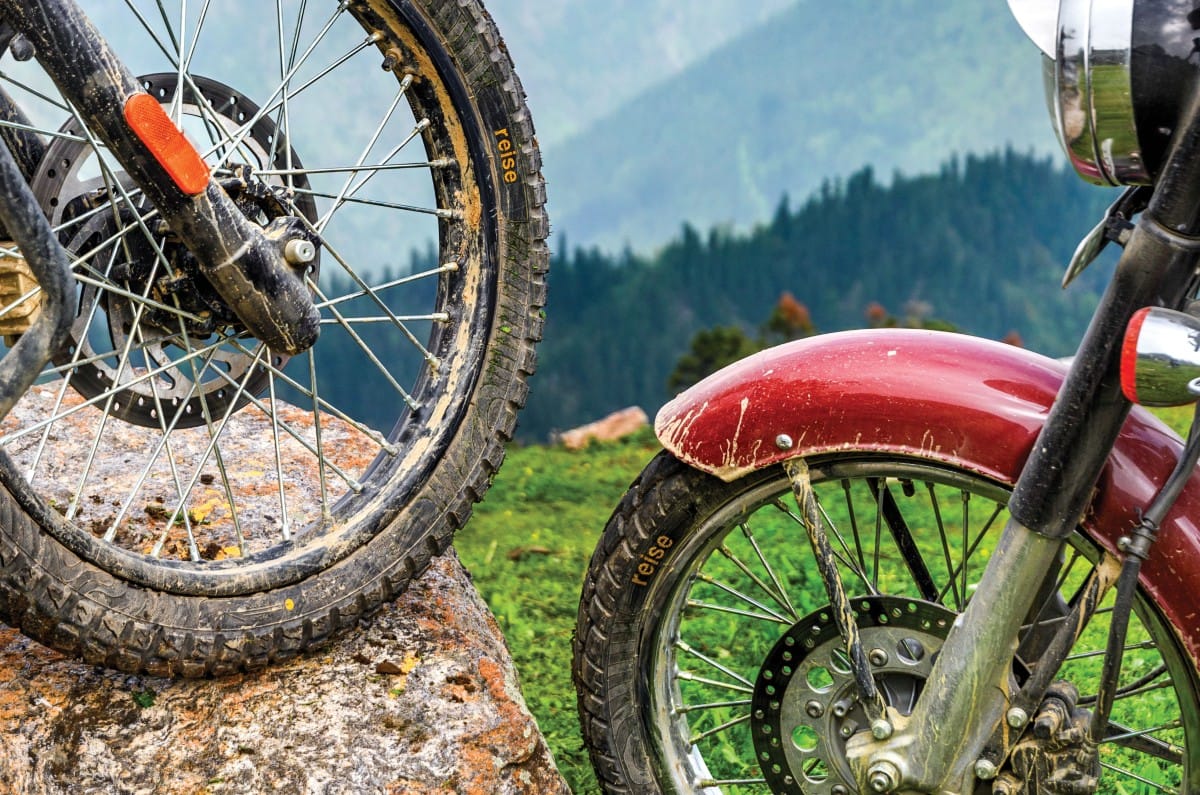
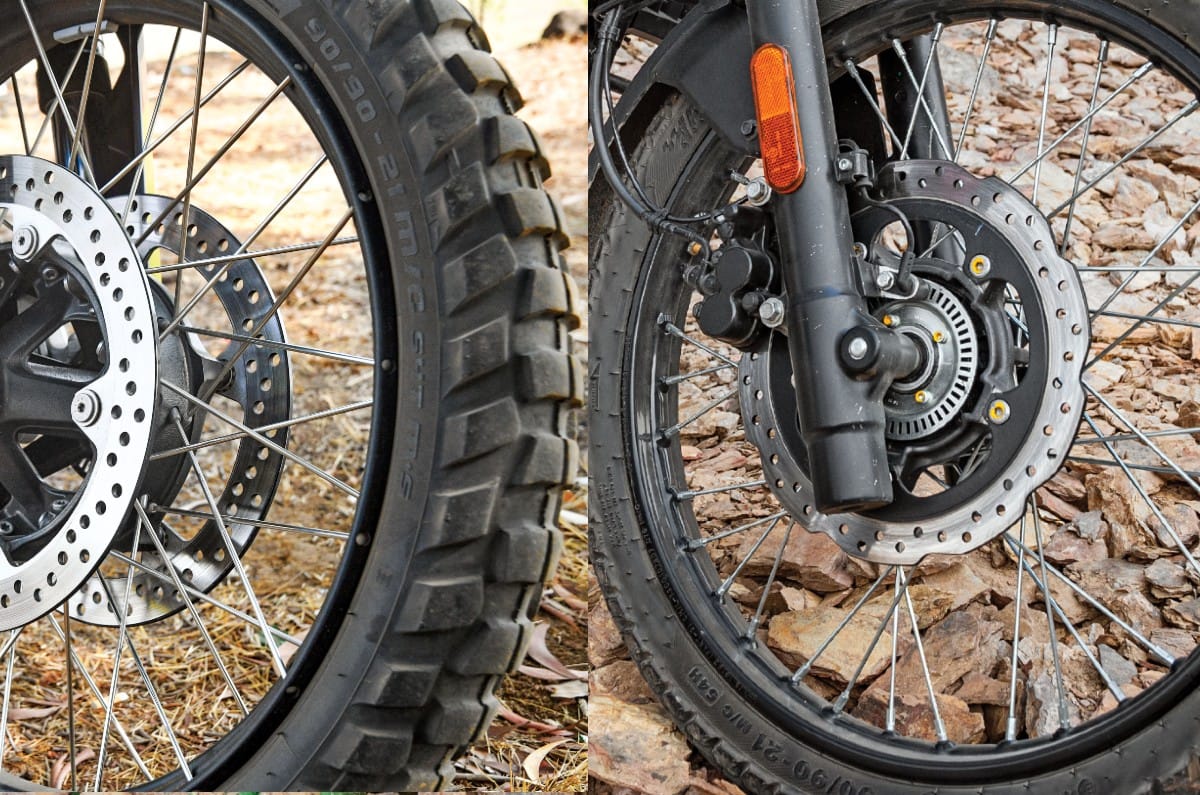
On the other hand, traditional wire-spoke wheels, like the ones you’ll find on classic motorcycles or serious off-roaders, can’t hold air on their own. The spokes are mounted through the rim, creating small gaps that let air escape. That’s why these wheels rely on an inner tube. There are exceptions, of course, and several premium adventure bikes use tubeless spoked wheels. But these are expensive solutions that either use a cross-laced design with outward-facing spokes that do not compromise the air seal, or a traditional spoked set-up but with a rubber seal lining the rim, and this is something manufacturers like KTM use – the first bike in India to get this is the latest KTM 390 Adventure.
There are aftermarket solutions to convert regular spoke wheels into tubeless using tapes or sealants. However, these solutions have a limited life and require meticulous installation.
Cross-Spoke Wheels vs Spoke Wheels
Which one should you run?
If your bike came with tubeless tyres, stick with them. It’s the safer, more convenient system, and offers better long-term usability for everyday road riding. If you ride a vintage motorcycle or something with traditional spokes, you’ll probably be using tube-type tyres. That’s perfectly fine, but just be aware that punctures are more time-consuming to deal with, and carry spare tubes if you’re far from home on a long road trip.
If you want to take on some serious off-road riding, tube tyres are the way to go. In this case, you’ll need to educate yourself on how to remove the wheel and fix a puncture in the middle of nowhere, because it’s a matter of when it happens, not if.
As you can see, both systems work well when used correctly and in the right setting. So pick the one that’s right for you and your riding conditions.
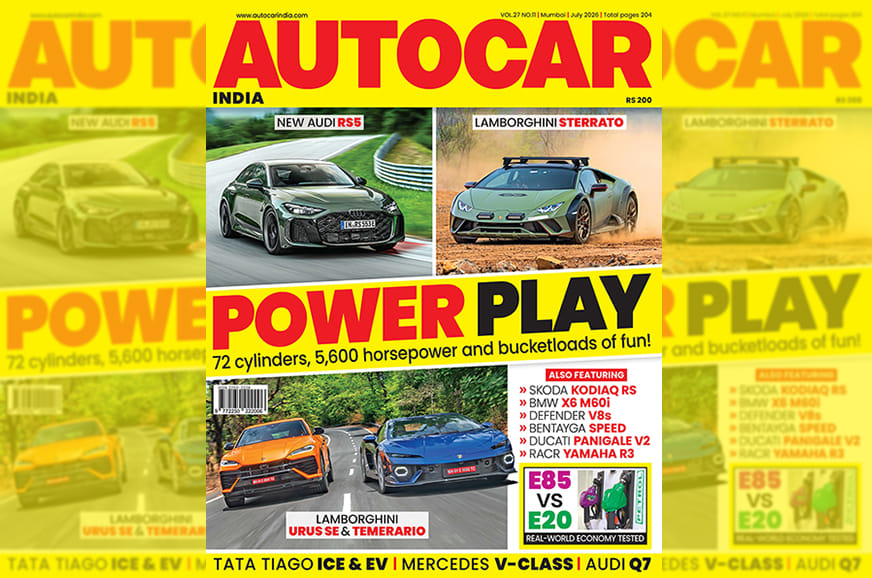
Our July 2026 issue is a celebration of the internal combustion engine in its finest form. The Lamborghini Temerario and Urus SE headline proceedings, both hybrid-powered but no less outrageous for it. We also drive the new Audi RS5 in Austria, road test all three versions of the Renault Duster, and drive the new Skoda Kodiaq RS. On two wheels, we ride the Hero Xoom 160, Royal Enfield Bullet 650 Twin and Ducati Panigale V2 S, and break down the economics of running an E85 vehicle.
Lamborghini Temerario and Urus SE: Cover Story
The Temerario and Urus SE represent Lamborghini’s hybrid future in two very extreme forms. Both pack twin-turbo V8s working in concert with electric motors, yet couldn’t be more different in character. We drive both the cars back-to-back to find out whether the Raging Bull still has its horns.
E85 vs E20 Fuel Test: Feature
India now has E85 pumps dispensing fuel that’s about Rs 20 per litre cheaper than E20. We test both blends back-to-back in the Suzuki Gixxer SF 250 FFV to find out how big the efficiency hit is, and whether E85 actually makes financial sense.
New Audi RS5: Drive
Audi Sport’s first performance PHEV has learnt from the mistakes of its rivals. Retaining the twin-turbo V6 rather than downsizing, adding a 130kW electric motor for 639hp total, and lavishing the chassis with updates, give an Audi something it has rarely had before – an instinct to oversteer. We drive it in Austria.
Tata Tiago Facelift: First Drive
Tata has given both the Tiago and Tiago EV comprehensive updates for 2026, with sharper styling, modernised cabins and a broader feature list. The updated EV gets faster charging and arrives up to Rs 1.15 lakh more affordable than before. Two familiar favourites, freshened up – but have the updates done enough?
Huracán Sterrato at Nanoli Speedway: Feature
Maharashtra’s first race resort is rising on the grounds of the Nanoli Stud Farm near Lonavala, and we got a rare opportunity to drive a Lamborghini Huracán Sterrato on the unfinished dirt track before the tarmac arrives. A lap of honour that will only ever happen once.
Skoda Kodiaq RS: First Drive
The Kodiaq gets the RS treatment for the first time in India, with 265hp, adaptive dampers, progressive steering and 20-inch wheels. It is a practical seven-seater with serious driver appeal, but does the price premium make sense?
Renault Duster: Road Test
We put all three versions of the new Duster – the 1.3 DCT, 1.3 MT, and 1.0 MT – through our exhaustive real-world performance and efficiency tests. The Duster impressed at its first drive, but how does it hold up when the numbers are in?
A Tale of Two V8s: Feature
Land Rover offers not one but two very different V8s in the Defender. Jaguar’s supercharged 5.0-litre AJ133 in the standard P425, and BMW’s twin-turbocharged 4.4-litre S68 in the Octa. We examine both to find out how, and why, they co-exist.
Royal Enfield Bullet 650 Twin: First Ride
The Bullet nameplate has been in continuous production for nearly a century, and the 650 Twin is the largest iteration yet. It shares its 648cc parallel-twin with the Classic 650, but brings its own character to the table. How does it justify its place in the range?
Ducati Panigale V2 S: Ride
The new Panigale V2 drops from 155hp to 120hp and sheds significant weight in the process. The result is a more accessible, friendlier and arguably more enjoyable track machine than its predecessor. We find out if a more sensible Panigale is still a great Panigale.
Le Mans 2026: Motorsport
Toyota returned to the top step of the Le Mans podium after three years, defeating BMW and Cadillac in a finish that was among the four closest in the race’s history. We have the full story from the 94th edition of the world’s greatest endurance race.
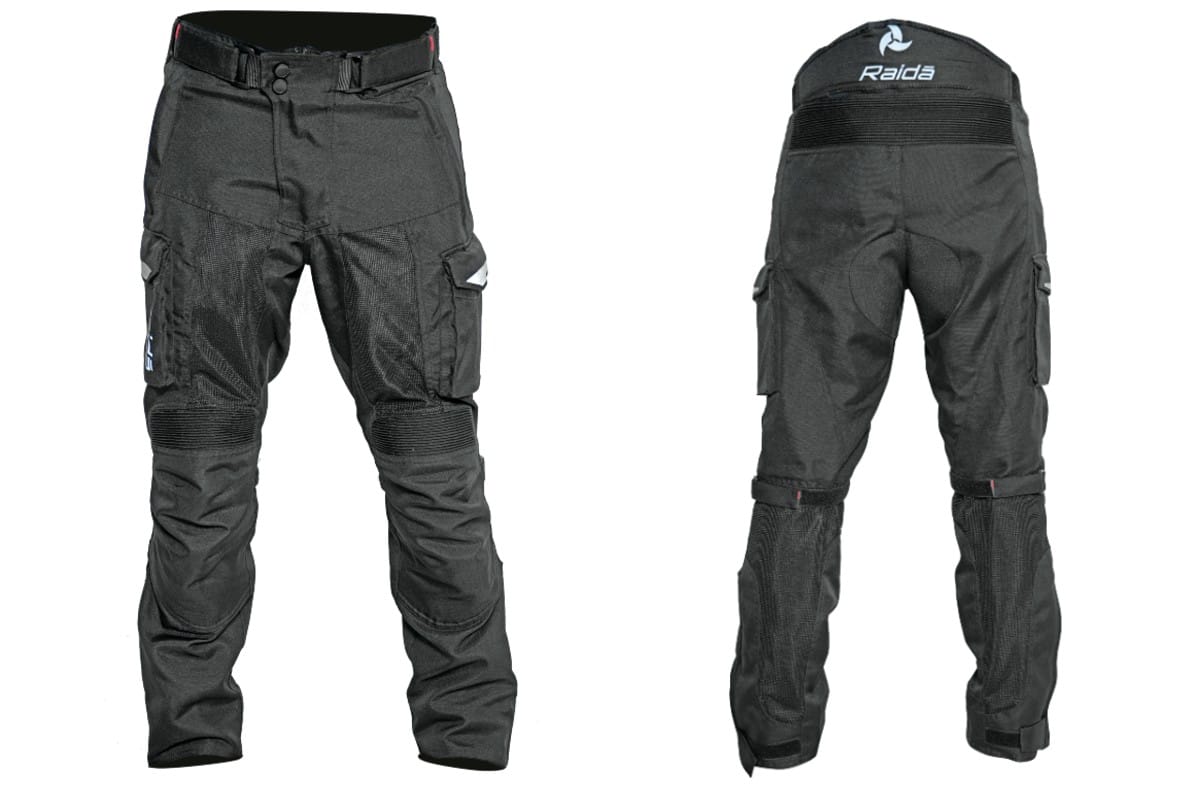
I have used a variety of riding pants, and a couple of months ago, the Raida Rover caught my attention. My routine consists of riding many different two wheelers, and the relaxed fit and cargo-style pockets seemed like something that would add more practicality to my everyday life.
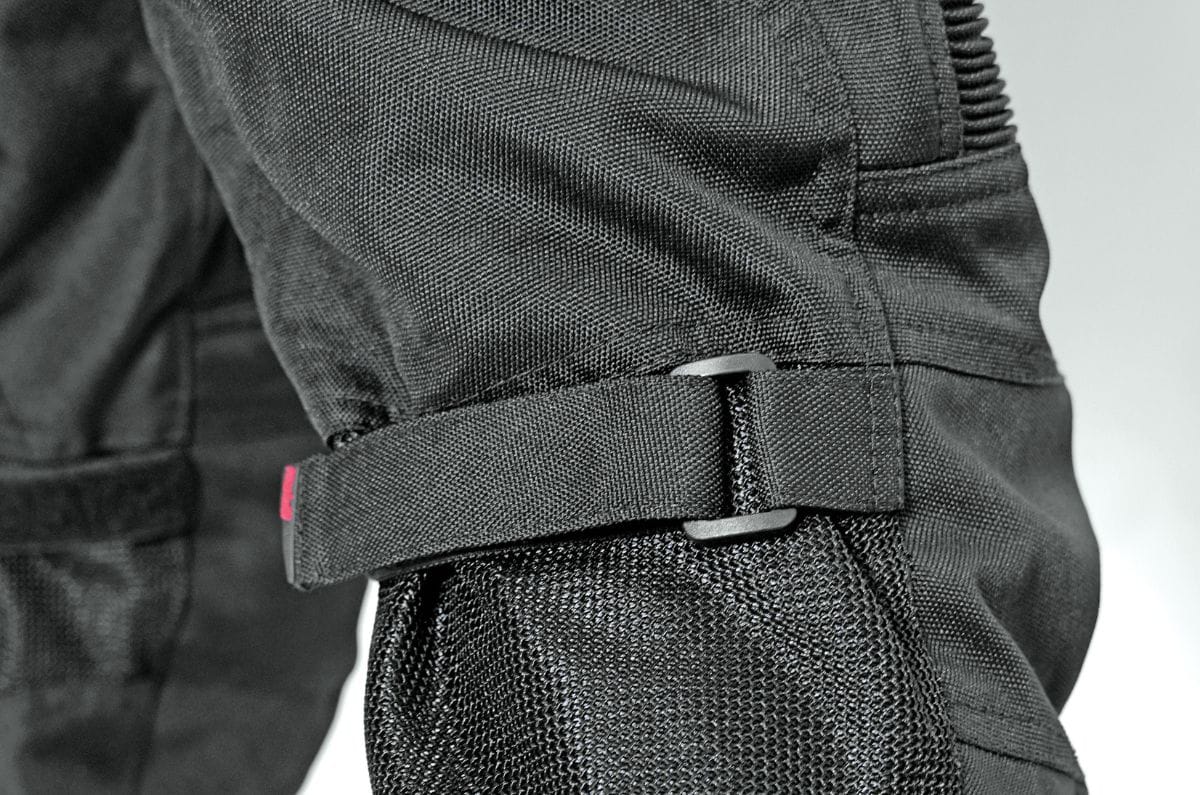
The pants are available in nine sizes ranging from XS to 5XL, and as with most brands, I opted for a size S. The fit was relaxed and breathable, and the Velcro adjustment straps at the waist, above the calf and at the ankles allowed me to fine-tune the fit according to my liking. The Raida Rover riding pants get CE Level 2 protection at the knees and hips. A thoughtful addition is a soft foam pad for the tailbone as well. While it isn’t a proper CE protector, it is nice to get at this price point.
Additionally, at no extra cost, the pants come with a base thermal liner and a rain liner for different riding scenarios. Constructed from a 600D polyurethane-coated polyester chassis with mesh panels running down the thighs and shins, these pants ensured good airflow during the gruelling, humid summer of Mumbai.
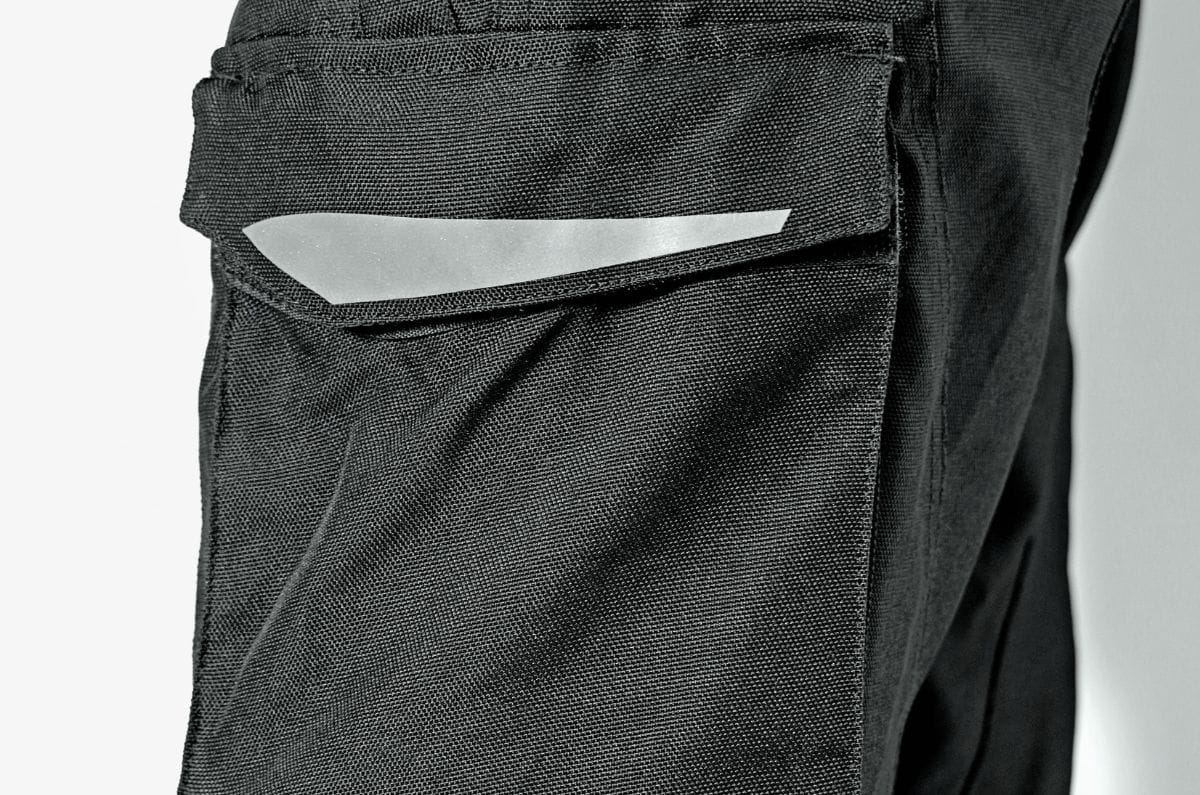
Cargo pockets with velcro closure.
From a practical perspective, the pants punch well above their weight class with a really comfortable fit, featuring expandable accordion stretch panels above the knees and across the lower back. In my time spent with these pants, I have used them on sporty bikes, ADVs, cruisers, and even scooters, making them quite a versatile pair. The storage layout is also smart, pairing zippered waterproof pockets with very easily accessible thigh cargo pockets that allowed me to store my phone, wallet, or keys. I have used the pants in the city, out on the highway, and even while riding off-road. They felt rugged in all situations, held up really well, and I also appreciate the quality of zippers used.
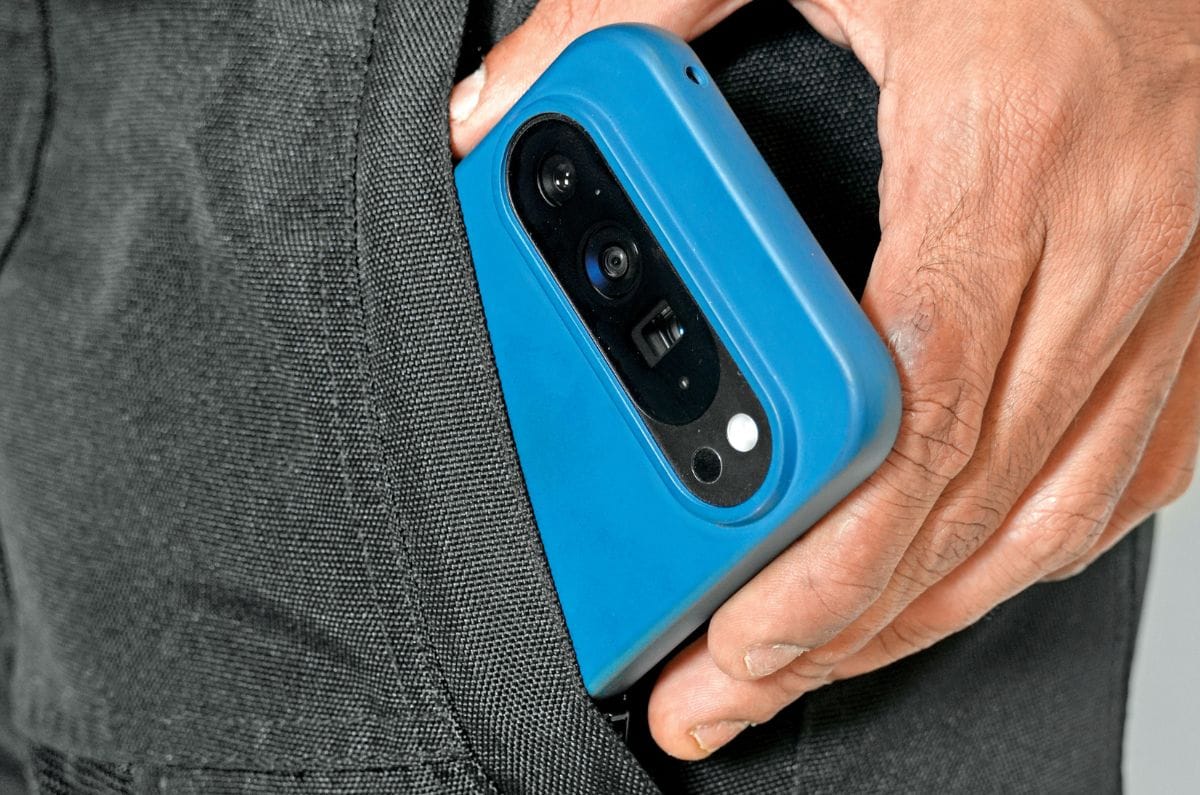
Zippered waterproof pockets.
Of course, with this aggressive price point, there are a few minor trade-offs, most notably in the overall coverage area of the knee armor inserts, which tend to be slightly narrower and less wrap-around than protectors found in some other brands. And because it has a relaxed fit, you have to make sure to adjust the velcro straps properly or the knee inserts will keep moving around.
Additionally, while the 600D textile fabric is adequate for touring, it misses out on materials with higher abrasion-resistance in high-impact areas, and that might be something that riders are looking for. That said, these minor gripes do little to diminish an otherwise outstanding package.
Adjustment velcro straps.
Priced at Rs 7,450, they are one of the most affordable touring pants in the Indian market, and as mentioned earlier, this price includes a thermal and rain liner as well. For anyone searching for reliable and practical riding pants that can be used in many different types of riding scenarios, the Raida Rover pants stand out with the value and real-world usability they offer.
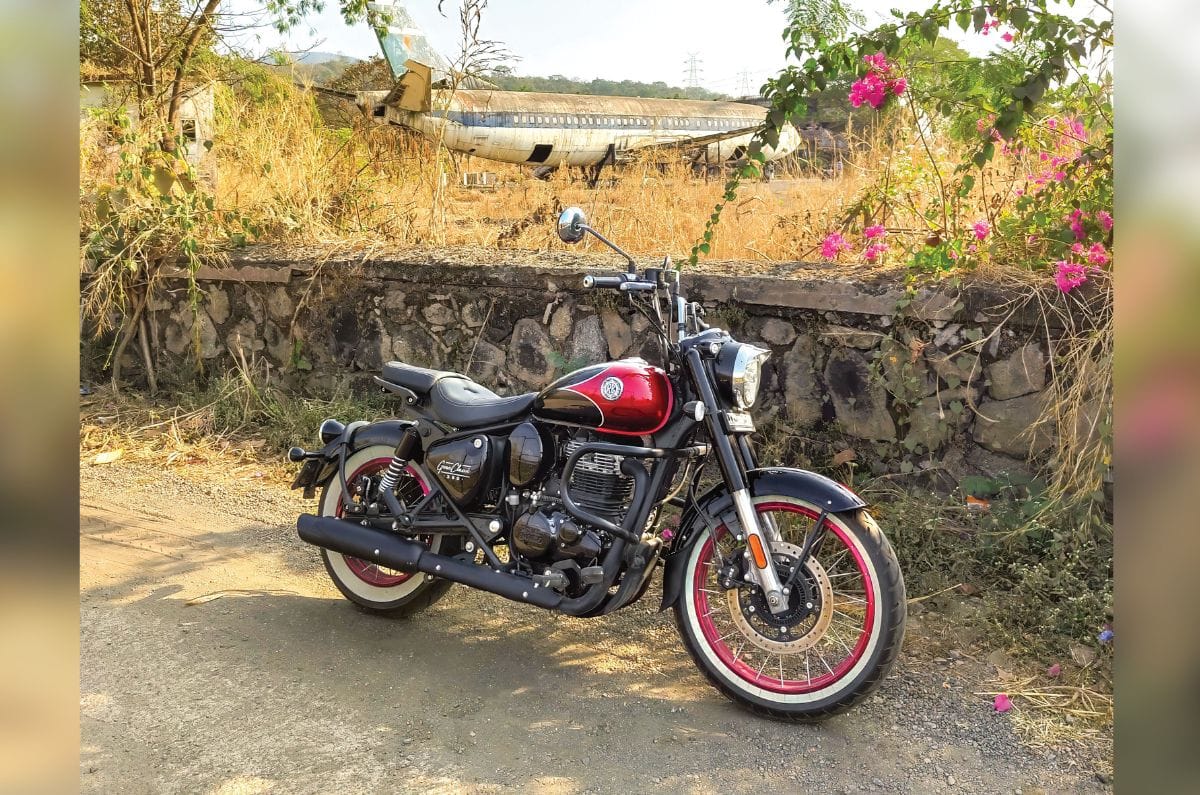
Even though the honeymoon period is over, I still very much love my Royal Enfield Goan Classic 350. But like any relationship, some cracks have begun to surface. Since I’ve brought it up, let’s talk about them.
One thing I complained about in my previous report continues to annoy me – the mirrors coming loose. While it was restricted to just the left one earlier, it has now plagued the right mirror too. It’s annoying, to say the least, and I’m considering using Loctite as a permanent solution. For now, I have to stop ever so often on my ride to tighten the mirror in place.
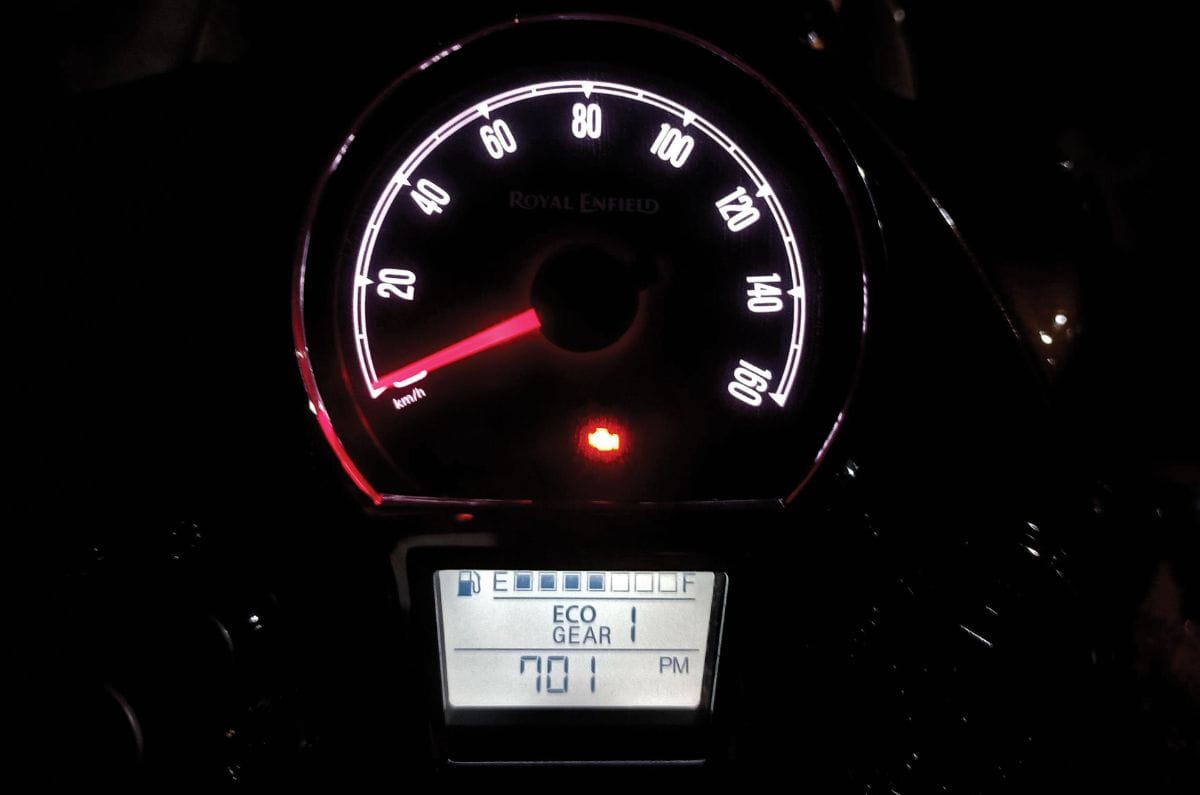
Two new irritants have cropped up too. First is the check engine light, which pops up intermittently. It hasn’t affected the bike in any way that I could tell, but I will get it checked at the next scheduled service.
Check engine light flashes intermittently; there’s no noticeable issue.
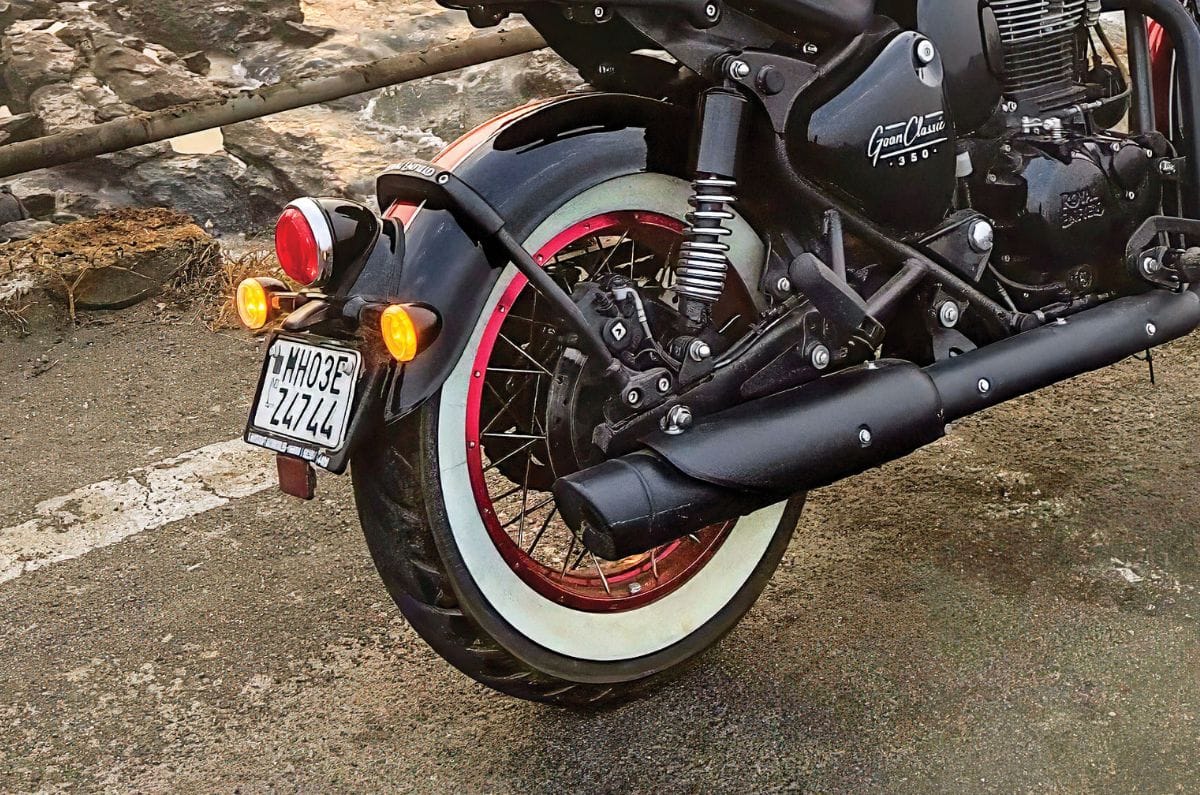
Then there is that stylish rear fender. It still looks super cool and gives the Goan its distinctive style, but of late, there is a creaking sound emerging from it every time I go through a rough patch of road. This is something I’ve read about online as well, and it’s another thing to get inspected at the service appointment.
Rear fender now makes a creaking sound when riding over bumps.
Other than that, it’s been pretty much smooth sailing. I bought a new car recently, which has been handling all of the commuting, so the Goan has been reserved as a weekend machine. Which explains the rather low mileage it has clocked. But if anything, it’s made me appreciate it more, and I now look forward to those weekend rides. The 350cc J-series engine continues to impress me – it’s smooth, characterful, has enough performance and just makes all the right sounds. The second service seems to have made it smoother still, and perhaps even slightly more efficient. I say ‘perhaps’, because I haven’t actually calculated the mileage; I just don’t feel like it matters on a lifestyle motorcycle like this.
Smooth and characterful 350cc J-series engine is an absolute gem.
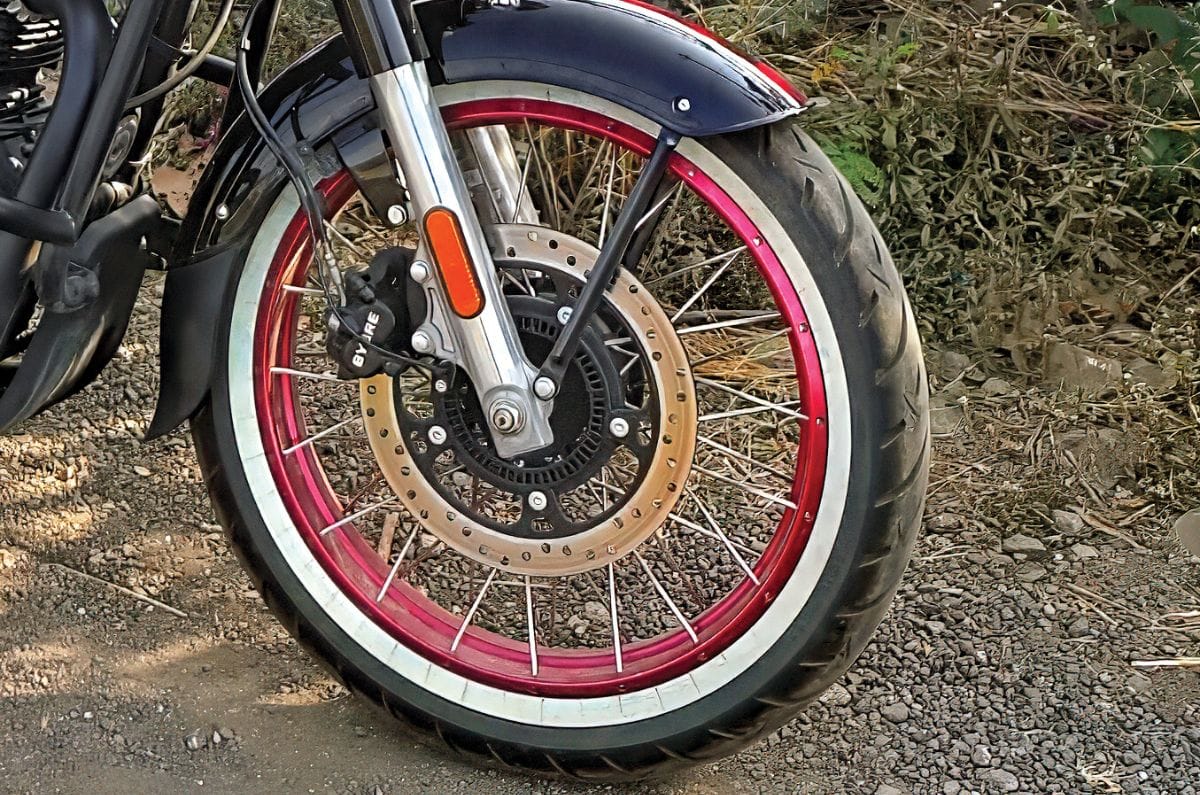
My weekend rides have also made me appreciate the tubeless spoke wheels. Not only do they look sexy in red with the white-wall tyres, but they’re hugely convenient too in the event of a puncture. I haven’t had one yet, but I have lived with a Classic 350, a Scram 411 and an Interceptor 650, all of which had tubed spoke wheels, and they’ve all suffered a puncture, which was a painstaking and time-consuming process to fix. So, it’s nice to have this peace of mind when you’re out on the open road.
Tubeless spoke wheels look amazing and give you peace of mind.
Of course, I still love the way it looks, and I don’t think I’ll ever get tired of just looking at it. It’s not pristine as it once was – there are scratches on the exhaust and mirrors, the number plate bracket is broken, and the lens cap for the rear-right indicator has popped off – but that’s just life in Mumbai for you.
With the monsoon approaching, the Goan’s going to be used even less now, but that’s not to say I won’t take it out at all. I look forward to seeing how it copes with Mumbai’s rains, especially the white-wall tyres, which have already begun turning brown.
Our July 2026 issue is a celebration of the internal combustion engine in its finest form. The Lamborghini Temerario and Urus SE headline proceedings – both hybrid-powered, but no less outrageous for it. We also drive the new Audi RS5 in Austria, road test all three versions of the Renault Duster, and drive the new Skoda Kodiaq RS. On two wheels, we ride the Hero Xoom 160, Royal Enfield Bullet 650 Twin and Ducati Panigale V2 S, and break down the economics of running an E85 vehicle.
Lamborghini Temerario and Urus SE: Cover story
The Temerario and Urus SE represent Lamborghini’s hybrid future in two very extreme forms. Both pack twin-turbo V8s working in concert with electric motors, yet couldn’t be more different in character. We drive both the cars back-to-back to find out whether the Raging Bull still has its horns.
E85 vs E20 fuel test: Feature
India now has E85 pumps dispensing fuel that’s about Rs 20 per litre cheaper than E20. We test both blends back-to-back in the Suzuki Gixxer SF 250 FFV to find out how big the efficiency hit is and whether E85 actually makes financial sense.
New Audi RS5: Drive
Audi Sport’s first performance PHEV has learnt from the mistakes of its rivals. The decision to retain the twin-turbo V6 rather than downsizing, add a 130kW electric motor for 639hp total and lavish the chassis with updates gives Audi something it has rarely had before – an instinct to oversteer. We drive it in Austria.
Tata Tiago Facelift: First Drive
Tata has given both the Tiago and Tiago EV comprehensive updates for 2026, with sharper styling, modernised cabins and a broader feature list. The updated EV gets faster charging and arrives up to Rs 1.15 lakh more affordable than before. Two familiar favourites, freshened up – but have the updates done enough?
Huracan Sterrato at Nanoli Speedway: Feature
Maharashtra’s first race resort is rising on the grounds of Nanoli Stud Farm near Lonavala, and we got a rare opportunity to drive a Lamborghini Huracan Sterrato on the unfinished dirt track before the tarmac arrives. A lap of honour that will only ever happen once.
Skoda Kodiaq RS: First Drive
The Kodiaq gets the RS treatment for the first time in India, with 265hp, adaptive dampers, progressive steering and 20-inch wheels. It is a practical seven-seater with serious driver appeal, but does the price premium make sense?
Renault Duster: Road Test
We put all three versions of the new Duster – the 1.3 DCT, 1.3 MT, and 1.0 MT – through our exhaustive real-world performance and efficiency tests. The Duster impressed at its first drive, but how does it hold up when the numbers are in?
A tale of two V8s: Feature
Land Rover offers not one but two very different V8s in the Defender. Jaguar’s supercharged 5.0-litre AJ133 in the standard P425, and BMW’s twin-turbocharged 4.4-litre S68 in the Octa. We examine both to find out how, and why, they co-exist.
Royal Enfield Bullet 650 Twin: First ride
The Bullet nameplate has been in continuous production for nearly a century, and the 650 Twin is the largest iteration yet. It shares its 648cc parallel-twin with the Classic 650, but brings its own character to the table. How does it justify its place in the range?
Ducati Panigale V2 S: Ride
The new Panigale V2 drops from 155hp to 120hp and sheds significant weight in the process. The result is a more accessible, friendlier and arguably more enjoyable track machine than its predecessor. We find out if a more sensible Panigale is still a great Panigale.
Le Mans 2026: Motorsport
Toyota returned to the top step of the Le Mans podium after three years, defeating BMW and Cadillac in a finish that was among the four closest in the race’s history. We have the full story from the 94th edition of the world’s greatest endurance race.
ओरेकल के पूर्व कर्मचारी प्रदीप कन्नन अपने करियर को कॉर्पोरेट भूमिका से एंटरप्रेन्योरशिप की ओर ले जाने का श्रेय अपने MBA को देते हैं। उनका कहना है कि इस डिग्री ने उन्हें ज़रूरी बिजनेस समझ और एक मजबूत आधार दिया, साथ ही उनकी सैलरी को भी ₹25,000 से बढ़ाकर ₹1 लाख प्रति माह कर दिया। आजकल मुफ्त में सीखने के कई आधुनिक साधन मौजूद होने के बावजूद, कन्नन इस बात पर ज़ोर देते हैं कि MBA का उनकी ज़िंदगी की दिशा और एंटरप्रेन्योरशिप के सफ़र पर एक खास असर रहा है।
क्या एक डिग्री आपके करियर की दिशा पूरी तरह बदल सकती है? ऐसे समय में जब AI, YouTube और पॉडकास्ट की वजह से बिज़नेस से जुड़ी जानकारी पहले से कहीं ज़्यादा आसानी से मिल रही है, कई लोग यह सवाल उठा रहे हैं कि क्या MBA में निवेश करना अब भी फ़ायदेमंद है।
Oracle बेंगलुरु के पूर्व कर्मचारी प्रदीप कन्नन के लिए, इसका जवाब उनके अपने अनुभव से मिलता है। X पर शेयर की गई एक पोस्ट में, उन्होंने बताया कि कैसे MBA ने न सिर्फ उनकी महीने की सैलरी 25,000 रुपये से बढ़ाकर 1 लाख रुपये कर दी, बल्कि उन्हें कॉर्पोरेट जिंदगी छोड़कर एंटरप्रेन्योर बनने का आत्मविश्वास और बिजनेस की समझ भी दी।
If I had not done my MBA, I would not have become an entrepreneur.
When I started my MBA in 2010, I had no business acumen.
I came from a tier 3 town in South India.
An MBA was my first chance to understand how businesses actually worked.
उन्होंने लिखा, “अगर मैंने MBA नहीं किया होता, तो मैं एंटरप्रेन्योर नहीं बन पाता। जब मैंने 2010 में MBA शुरू किया था, तब मुझे बिजनेस की कोई समझ नहीं थी। मैं दक्षिण भारत के एक टियर-3 शहर से आया था।”
कन्नन ने बताया कि MBA से उन्हें पहली बार असल में समझ आया कि बिजनेस कैसे काम करते हैं। बिजनेस स्कूल में जाने से पहले, उन्हें एंटरप्रेन्योरशिप या बिजनेस मैनेजमेंट के बारे में ज्यादा जानकारी नहीं थी। उन्होंने आगे कहा, “MBA मेरे लिए यह समझने का पहला मौका था कि बिजनेस असल में कैसे काम करते हैं। इसने मुझे एक ऐसा आधार दिया जो मैं कहीं और नहीं बना सकता था। मेरी सैलरी ₹25,000 प्रति माह से बढ़कर ₹1 लाख प्रति माह हो गई।”
हालांकि सैलरी में चार गुना बढ़ोतरी एक बड़ी उपलब्धि थी, लेकिन कन्नन का कहना है कि असली बदलाव उनकी सोच में आया। उन्होंने 2010 के सीखने के माहौल की तुलना आज उपलब्ध मौकों से भी की।
उन्होंने आगे कहा, “आज, 2026 में, आप लगभग सब कुछ ऑनलाइन सीख सकते हैं। AI आपको स्ट्रेटेजी सिखा सकता है। YouTube आपको फाइनेंस सिखा सकता है। पॉडकास्ट आपको मार्केटिंग सिखा सकते हैं। लेकिन 2010 में, ऐसी दुनिया नहीं थी। कई लोगों के लिए, MBA बस एक और डिग्री थी। मेरे लिए, इसने मेरी जिंदगी की दिशा बदल दी।”
News18 की रिपोर्ट के अनुसार, कन्नन ने कॉर्पोरेट सेक्टर में काम करना जारी रखा और फिर 2019 में एक अलग रास्ता चुनने का फैसला किया। उन्होंने अपनी नौकरी छोड़ दी और ‘द फालूदा शॉप’ (The Falooda Shop) शुरू किया, जो पारंपरिक भारतीय ड्रिंक्स से प्रेरित एक डेज़र्ट ब्रांड है।
जो एक छोटा सा बिज़नेस शुरू हुआ था, वह अब लगभग ₹9 करोड़ की वैल्यू वाले बिज़नेस में बदल गया है। यह ब्रांड अब भारत और दुबई में 18 से ज्यादा आउटलेट चलाता है, जहां कई तरह के फालूदा, मिल्कशेक और डेजर्ट मिलते हैं।
Market Outlook : 3 जुलाई को भारतीय इक्विटी इंडेक्स लगातार तीसरे सेशन में बढ़त के साथ बंद हुए और निफ्टी 24,250 के ऊपर टिके रहने में कामयाब रहा। कारोबारी सत्र के अंत में सेंसेक्स 261.79 अंक या 0.34 प्रतिशत बढ़कर 77,763.91 पर और निफ्टी 95.15 अंक या 0.39 प्रतिशत बढ़कर 24,270.85 पर बंद हुआ। आज लगभग 2182 शेयरों में बढ़त हुई,1879 शेयरों में गिरावट आई और 188 शेयरों में कोई बदलाव नहीं हुआ।
निफ्टी में सबसे ज़्यादा बढ़त वाले शेयरों में HCL टेक्नोलॉजीज,मैक्स हेल्थकेयर,बजाज फिनसर्व,अपोलो हॉस्पिटल्स और डॉ.रेड्डीज़ लैब्स शामिल रहे। जबकि, गिरावट वाले शेयरों में एक्सिस बैंक,M&M, SBI,L&T और टेक महिंद्रा शामिल रहे।
अलग-अलग सेक्टर का प्रदर्शन मिलाजुला रहा। निफ्टी रियल्टी सबसे ज़्यादा बढ़त वाला सेक्टर रहा,जिसमें 2 प्रतिशत की बढ़ोतरी हुई। इसके बाद निफ्टी IT(1.7 प्रतिशत),निफ्टी फार्मा (1.7 प्रतिशत)और निफ्टी मेटल (0.7 प्रतिशत) की बढ़त के साथ बंद हुए। दूसरी ओर निफ्टी PSU बैंक में सबसे ज़्यादा गिरावट (1.5 प्रतिशत) आई। इसके बाद निफ्टी एनर्जी (-1.30 प्रतिशत),निफ्टी ऑटो (-0.4 प्रतिशत),निफ्टी मीडिया (-0.4 प्रतिशत), निफ्टी कंज्यूमर ड्यूरेबल्स (-0.3 प्रतिशत) और निफ्टी बैंक (-0.16 प्रतिशत) का नंबर रहा।
निफ्टी मिडकैप इंडेक्स मामूली गिरावट के साथ बंद हुआ,जबकि स्मॉलकैप इंडेक्स बिना किसी बड़े बदलाव के सपाट स्तर पर बंद हुआ।
जियोजित इन्वेस्टमेंट्स के हेड ऑफ रिसर्च विनोद नायर का कहना है कि बीच-बीच में उतार-चढ़ाव और प्रॉफ़िट-बुकिंग के बावजूद,घरेलू बाजार बढ़त के साथ बंद हुए। बाजार को अच्छे ग्लोबल संकेतों से मदद मिली। US लेबर मार्केट के नरम आंकड़ों के बाद ब्याज दरों के माहौल में नरमी आने की उम्मीदें बढ़ीं हैं। भारत-जापान समिट के अच्छे नतीजों और IT सेक्टर में लगातार रिकवरी से भी बाजार का मूड बेहतर हुआ। घरेलू मोर्चे पर,कच्चे तेल की कीमतों में नरमी एक अहम पॉजिटिव फ़ैक्टर है। आगे चलकर बाजार का फोकस वित्त वर्ष 2027 के पहली तिमाही के नतीजों और कंपनियों के मैनेजमेंट की कमेंट्री पर रहेगा। मॉनसून पर भी बाजार की नजर रहेगी। आगे बाजार में गिरावट पर खरीदारी का रुख बने रहने की संभावना है।
निफ्टी व्यू
कोटक सिक्योरिटीज के VP टेक्निकल रिसर्च,अमोल अठावले का कहना है कि इस हफ्ते बेंचमार्क इंडेक्स में अच्छी बढ़त रही। निफ्टी 0.89 प्रतिशत ऊपर बंद हुआ है। जबकि सेंसेक्स में 663 अंकों की तेजी रही। सेक्टरों की बात करें तो रियल्टी इंडेक्स ने सबसे अच्छा प्रदर्शन किया और इसमें 7.20 प्रतिशत की बढ़त हुई,जबकि एनर्जी इंडेक्स में 1.40 प्रतिशत की गिरावट आई। टेक्निकल नज़रिए से देखें तो शॉर्ट-टर्म करेक्शन के बाद निफ्टी ने एक बार फिर 23,800 के आसपास सपोर्ट लिया और तेजी से ऊपर की ओर बढ़ा। वीकली चार्ट पर, इसने एक बुलिश कैंडल बनाया है और’हायर बॉटम’फॉर्मेशन भी बनाए रखा है,जो काफी हद तक पॉजिटिव संकेत है।
शॉर्ट-टर्म के लिए मार्केट का मिजाज पॉजिटिव है,लेकिन ट्रेडर्स के लिए सबसे अच्छी रणनीति गिरावट पर खरीदारी और तेज़ी पर बिकवाली की होगी। नीचे की तरफ,24,150-24,000 अहम सपोर्ट जोन होंगे। जबकि बुल्स के लिए 24,500-24,700 अहम रेजिस्टेंस एरिया होंगे। हालांकि,24,000 के नीचे जाने पर मार्केट का सेंटीमेंट बदल सकता है। 24,000 के नीचे गिरावट आने पर 23,800-23,750 के लेवल दोबारा टेस्ट हो सकते हैं।
बैंक निफ्टी व्यू
एलकेपी सिक्योरिटीज में तकनीकी विश्लेषक वत्सल भुवा का कहना है कि बैंक निफ्टी ने वीकली चार्ट पर एक छोटी कैंडलस्टिक बनाकर हफ़्ते की क्लोजिंग की। जबकि डेली चार्ट हालिया तेजी के बाद एक सीमित दायरे में उतार-चढ़ाव (रेंज-बाउंड कंसोलिडेशन) का संकेत दे रहा है। इस कंसोलिडेशन के बावजूद,मार्केट का ओवरऑल रुख बुलिश बना हुआ है। इंडेक्स अपने अहम मूविंग एवरेज से ऊपर ट्रेड कर रहा है। यह बड़ा पॉजिटिव संकेत है।
इंडेक्स के लिए तत्काल सपोर्ट 57,500–57,200 के लेवल पर हैं। जबकि रेजिस्टेंस 58,500–58,800 के आसपास दिख रहा है। अच्छे रिस्क-रिवॉर्ड रेश्यो के लिए ट्रेडर्स सपोर्ट जोन के पास गिरावट पर खरीदारी की रणनीति अपना सकते हैं। जब इंडेक्स रेजिस्टेंस जोन के पास पहुेचे तो प्रॉफ़िट बुकिंग करने की सलाह होगी।
अमोल अठावले का कहना है कि बैंक निफ्टी के लिए हायर बॉटम सपोर्ट 57,500 के आस-पास है। इस लेवल के ऊपर,पॉजिटिव मोमेंटम 58,700-59,000 की तरफ जारी रह सकता है। इसके विपरीत,57,500 के नीचे गिरावट आने पर अपट्रेंड कमजोर पड़ सकता है। इस लेवल के नीचे,ट्रेडर्स अपनी लॉन्ग पोजीशन से बाहर निकलना पसंद कर सकते हैं।
डिस्क्लेमर:मनीकंट्रोल.कॉम पर दिए गए विचार एक्सपर्ट के अपने निजी विचार होते हैं। वेबसाइट या मैनेजमेंट इसके लिए उत्तरदाई नहीं है। यूजर्स को मनी कंट्रोल की सलाह है कि कोई भी निवेश निर्णय लेने से पहले सर्टिफाइड एक्सपर्ट की सलाह लें।
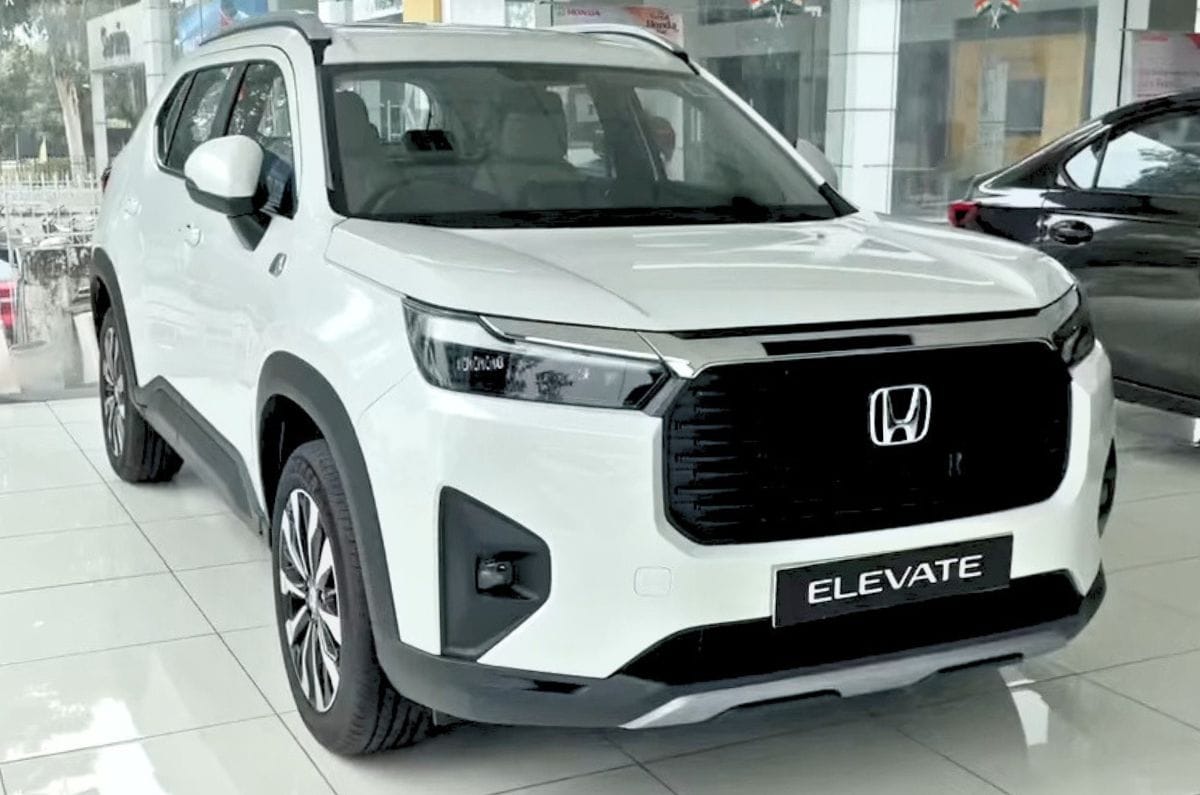
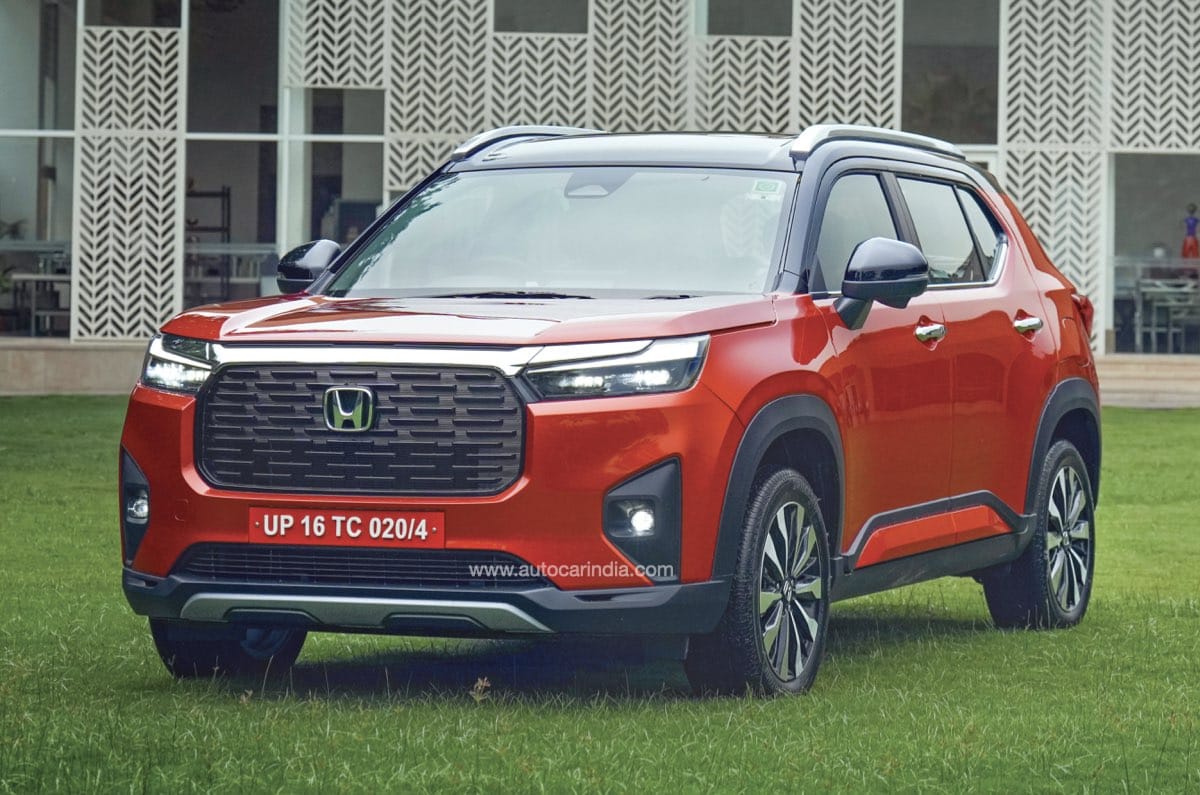
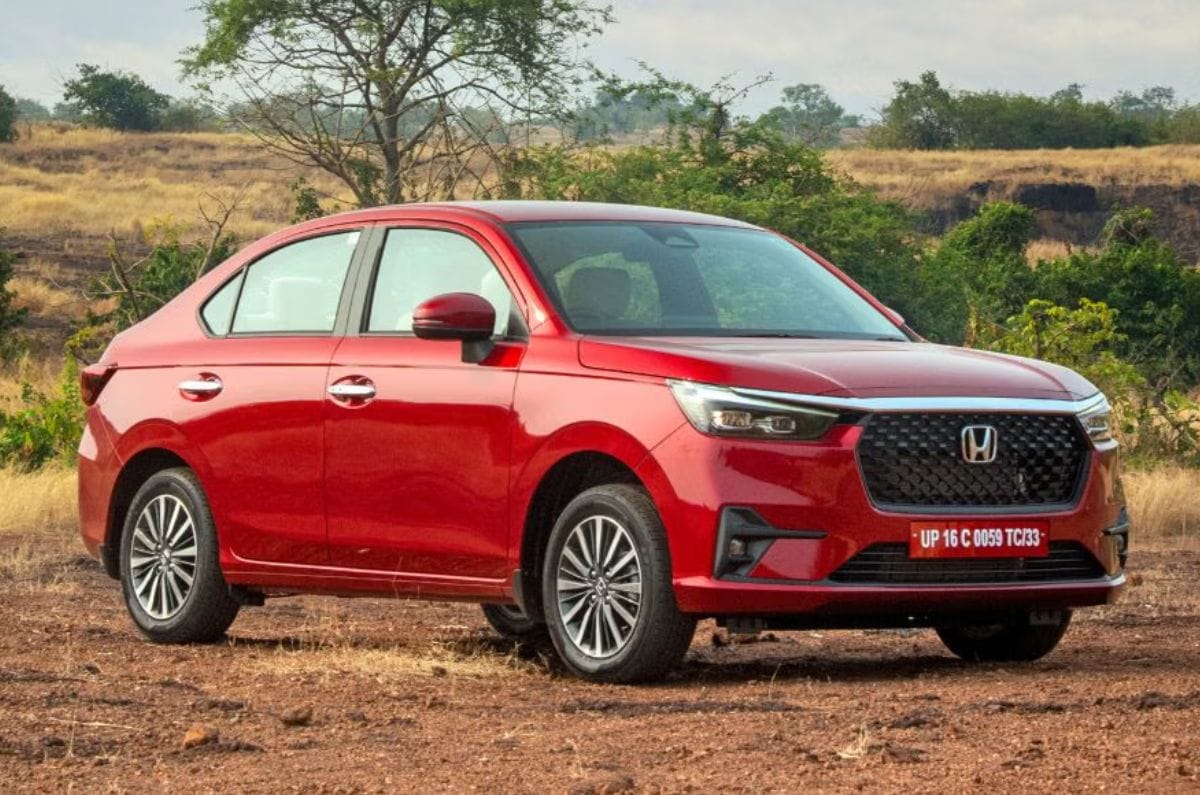
Honda has revealed the offers available with its models in July 2026. While the Elevate gets the maximum benefits this month, the Honda City, which received a facelift in June, carries no offers this month. Offers are available on the Honda Amaze’s second- and third-generation models too.
Note: All offers are valid till July 31, 2026 and may vary by city and stock availability. Please check with your nearest Honda dealership for the exact figures.
Honda Elevate July 2026 offers
Benefits up to Rs 2.15 lakh
The Elevate is available with benefits of up to Rs 2.15 lakh, the most for any Honda car in July 2026. This includes a cash discount of up to Rs 40,000, an exchange benefit of up to Rs 30,000, corporate offers and loyalty benefits. A 7-year extended warranty is also available at a discounted price. Prices of the Honda Elevate range from Rs 11.60 lakh to Rs 16.16 lakh, and it rivals the Hyundai Creta, Kia Seltos, Tata Sierra, Maruti Victoris, Maruti Grand Vitara and Renault Duster.
Honda Amaze July 2026 offers
Benefits up to Rs 67,000
The Amaze’s newer third-generation model is available with the highest benefits of up to Rs 67,000, which include a cash discount of Rs 15,000 and an exchange benefit of up to Rs 15,000. Like the Elevate, the 3rd-gen Amaze is available with some loyalty benefits and a 7-year extended warranty at a discounted price. The second-generation model, in contrast, carries benefits of up to Rs 58,000.
The second-gen Amaze is priced from Rs 6.98 lakh to Rs 7.80 lakh, while the 3rd-gen model is priced from Rs 7.51 lakh to Rs 10 lakh. Both generations of the Amaze lock horns with the Maruti Dzire, Tata Tigor and Hyundai Aura.
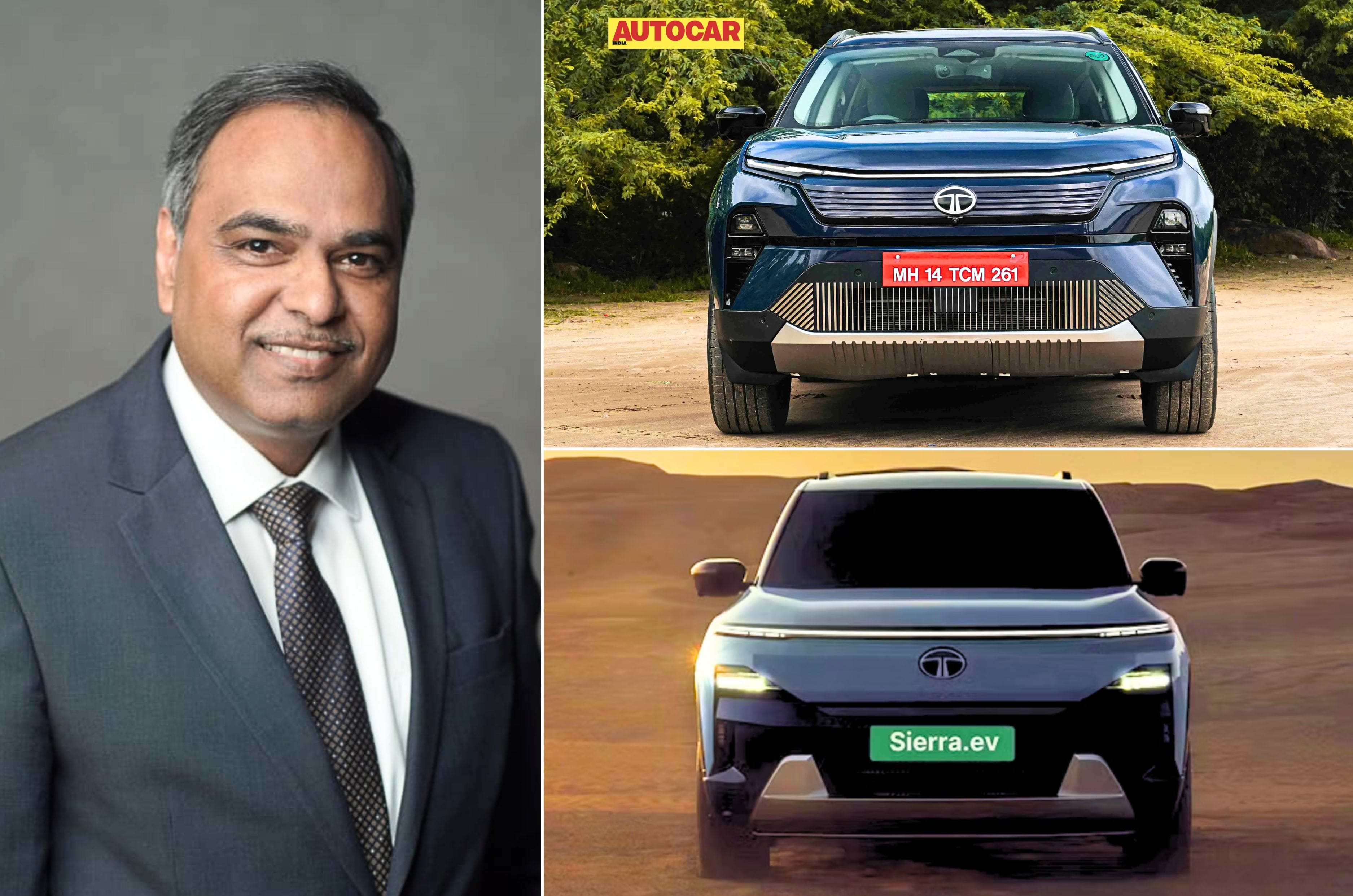
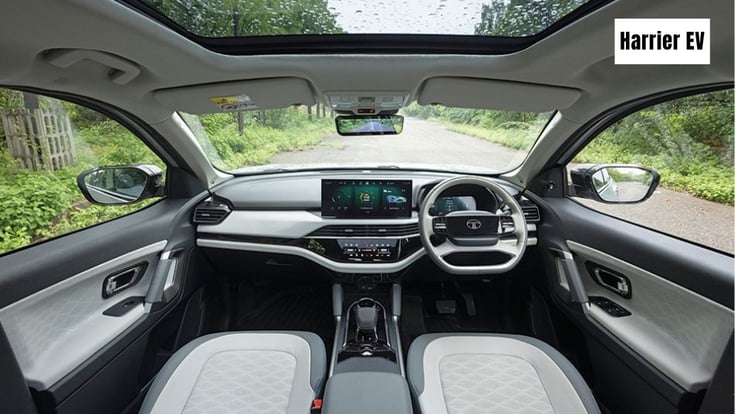
Until now, Tata Motors had maintained fairly distinct positioning of each model in its EV portfolio. However, with the new Sierra EV having a sizeable price overlap with the Curvv EV and the Harrier EV at the two ends of its price range, it begs the question is Tata Motors cannibalisation its own products? Shailesh Chandra, Managing Director and Chief Executive Officer of Tata Motors Passenger Vehicles, thinks not, as the company is banking on differences in size, design, cabin experience and vehicle character to mark out the individual models.
Tata Motors Plays Down Cannibalisation
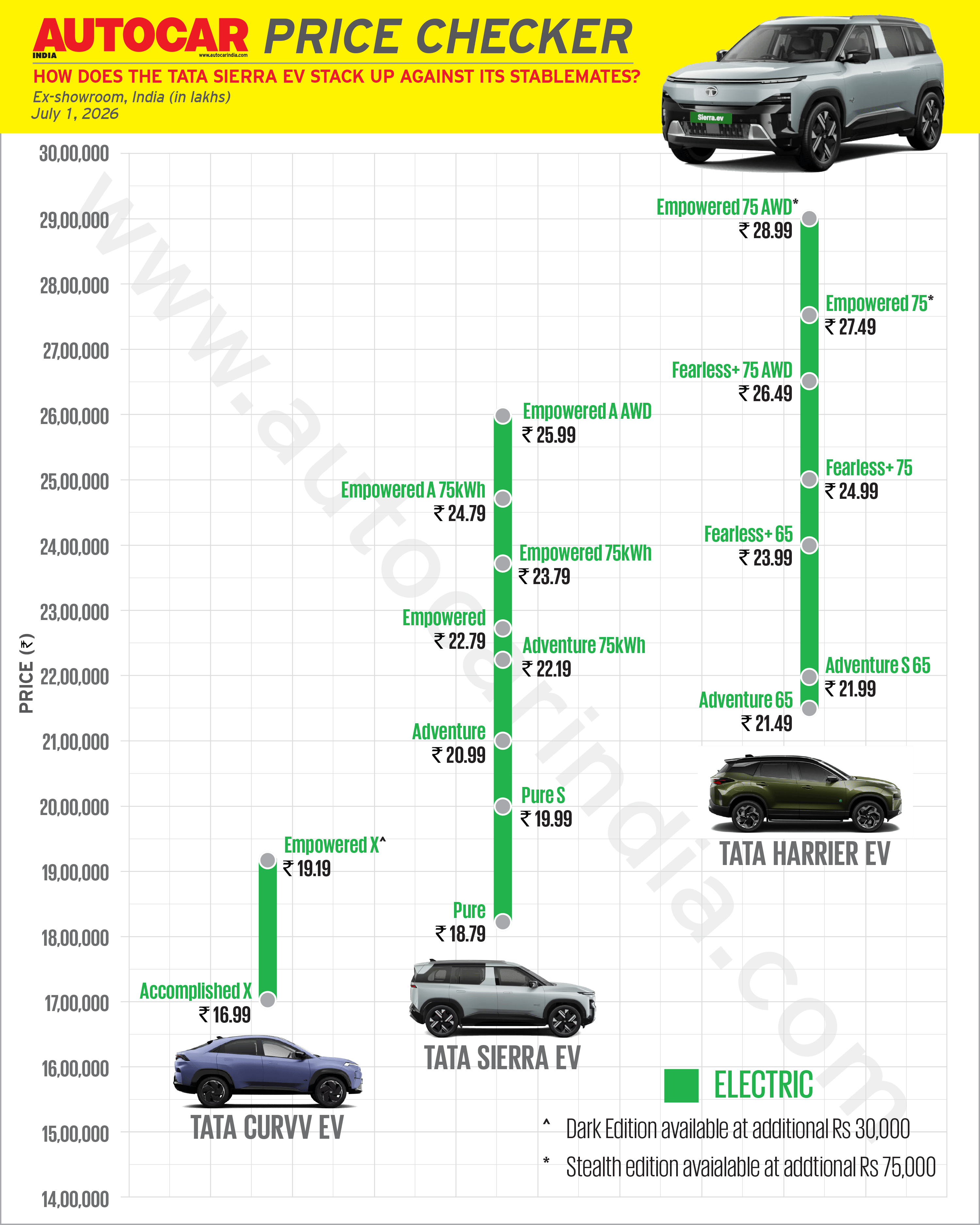
The Sierra EV is, in fact, very closely related to the Harrier EV, sharing similar battery capacities, common front and rear drive units, the thermal management system and also have broadly comparable performance. The former is priced between Rs 18.79 lakh and Rs 25.99 lakh, whereas the latter is priced between Rs 21.49 lakh and Rs 28.99 lakh.
According to Chandra, some movement between models within a broad portfolio was inevitable and is not the company’s primary concern. However, he said buyers do not evaluate models only through price and specifications. Their preferences are also shaped by styling, dimensions and their individual idea of what a model should represent.
“That’s why you see that the buyers of Harriers are very different than Sierra buyers, even in the ICE world,” Chandra said to our sister publication Autocar professional. “Somebody does not like boxy style. Somebody does not like dynamic style. So, first differentiation comes from there.”
Price overlap between Curvv, Sierra and Harrier EVs.
Chandra also said size plays a particularly important role in India, where buyers often expect the value of a higher-priced vehicle to be visibly reflected in its dimensions and road presence. Different price and accessibility points will further separate the vehicles, he added.
“It’s a combination of all this,” Chandra said. “There is clear separation of what you see in the ICE world also. Same will apply here.”
Any immediate cannibalisation may also be limited by Tata Motors’ supply constraints. “Harrier EV demand is twice of what we are supplying. It is a supply-driven issue,” said Chandra.
Shared constraints in battery-pack production, power electronics and other aggregates require Tata Motors to allocate components across its electric portfolio, he added. The company is working on capacity expansion and supplier debottlenecking to close the gap between demand and production.
Anand Kulkarni, Chief Product Officer at Tata Passenger Electric Mobility, further reiterated the differences between the two electric SUVs. “These products don’t necessarily compete with each other,” Kulkarni said. “They are enabled by a common underlying technology stack, but they are tuned completely differently and operate differently.”
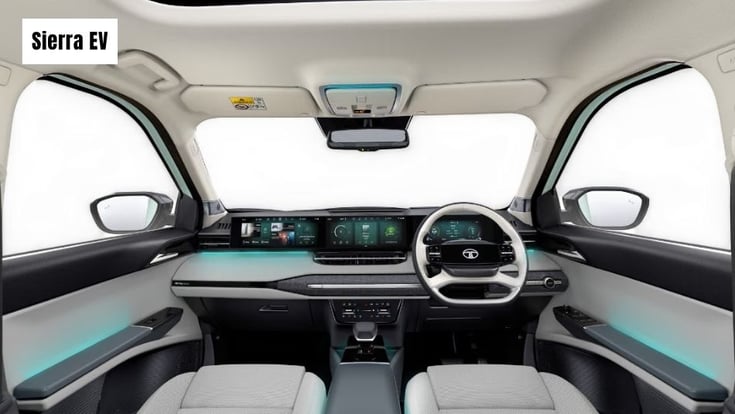
Kulkarni highlighted that the Sierra EV has a different cabin ambience from that of the Harrier EV. He compared this approach with the ICE versions of these SUVs, where they share the engine but deliver different driving and ownership experiences. “Just because two cars have a common engine, that does not make them a choice of one over the other,” he said.
Commonality gives scale and shared costs
Commonality allows Tata Motors to distribute engineering, supplier-development and localisation investments across more products. “A lot of technologies that we developed in Harrier EV allowed us to also give it in the Sierra EV,” added Chandra, alluding to the ADAS suite, automatic parking and vehicle summoning features, as well as the all-wheel-drive technology,
The Sierra.ev and Harrier.ev will test both sides of Tata Motors’ EV strategy. Shared engineering must deliver scale, localisation and development-cost benefits, while Tata hopes styling, size and positioning creates enough distinction to expand the company’s addressable market. Some cannibalisation may be unavoidable. The larger test is whether the two SUVs collectively attract more customers to Tata Motors than either model could have done on its own.