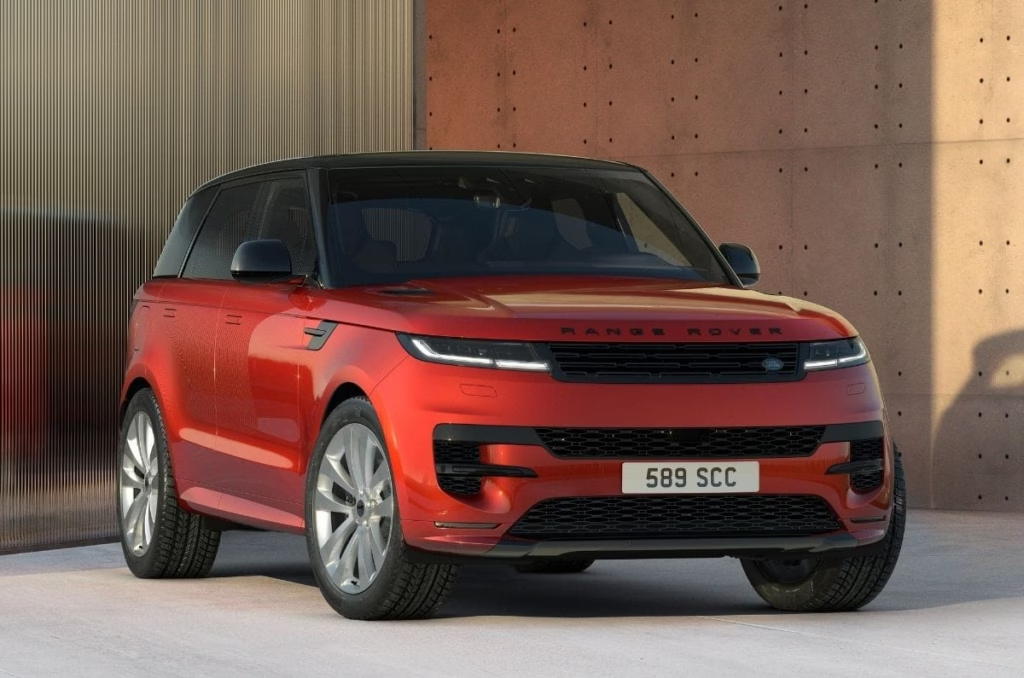
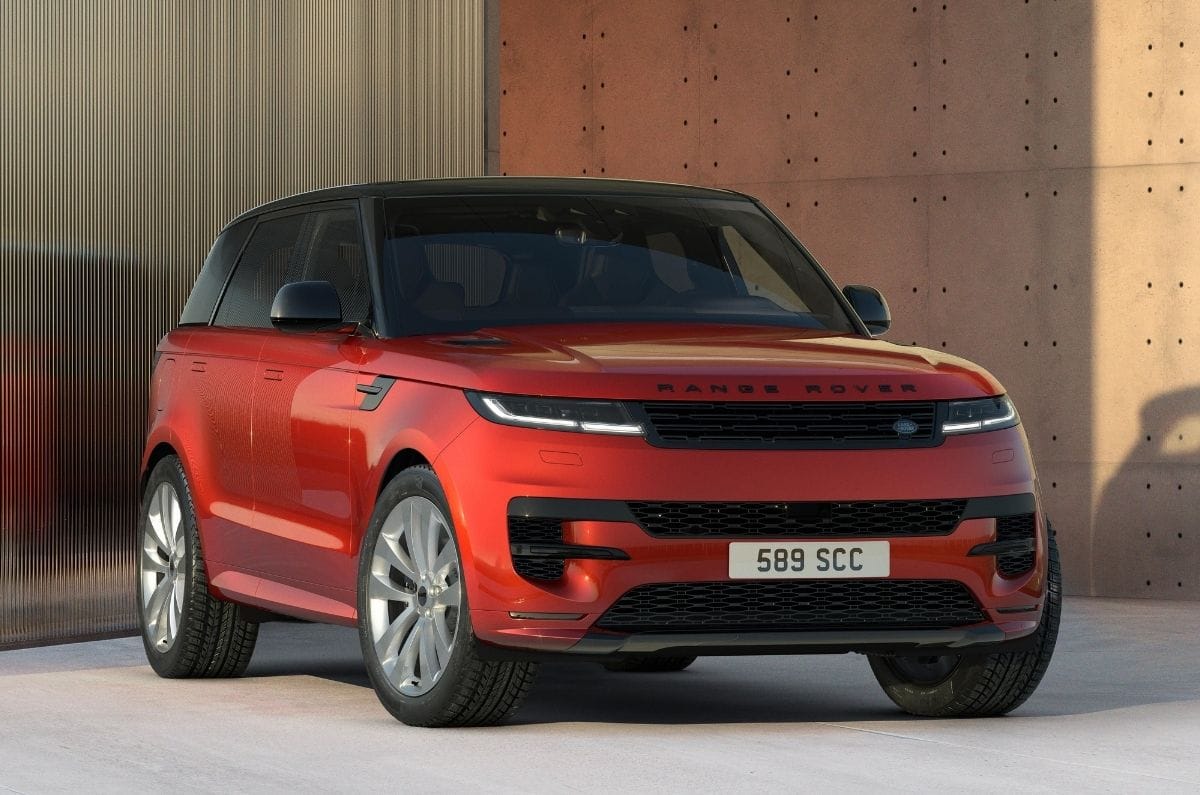
Jaguar Land Rover (JLR) has launched the Range Rover Sport Twenty Edition at Rs 1.90 crore (ex-showroom, India). This limited-run version borrows inspiration from the original Range Stormer concept showcased at the 2004 Detroit Motor Show, while combining various elements from the Range Rover Sport Autobiography and SV, according to the British luxury automaker. Deliveries of the Range Rover Sport Twenty Edition in India are to start from October 2026.
Sanguinello Orange inspired by the Stormer concept and Vesuvius Orange First Edition.
Features unique ‘TWENTY’ lettering and 23-inch wheels in optional Gloss Black.
Interior gets ‘TWENTY’ branding, Ebony Windsor seats, suede headlining and more.
Twin-turbo mild-hybrid V8 produces 537hp and 750Nm.
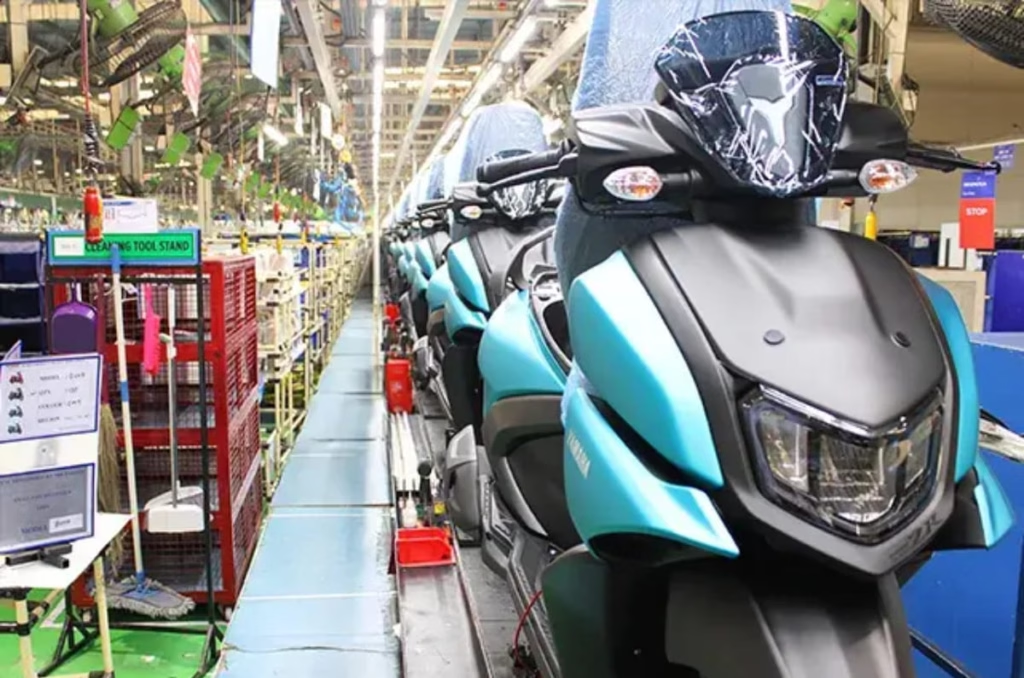
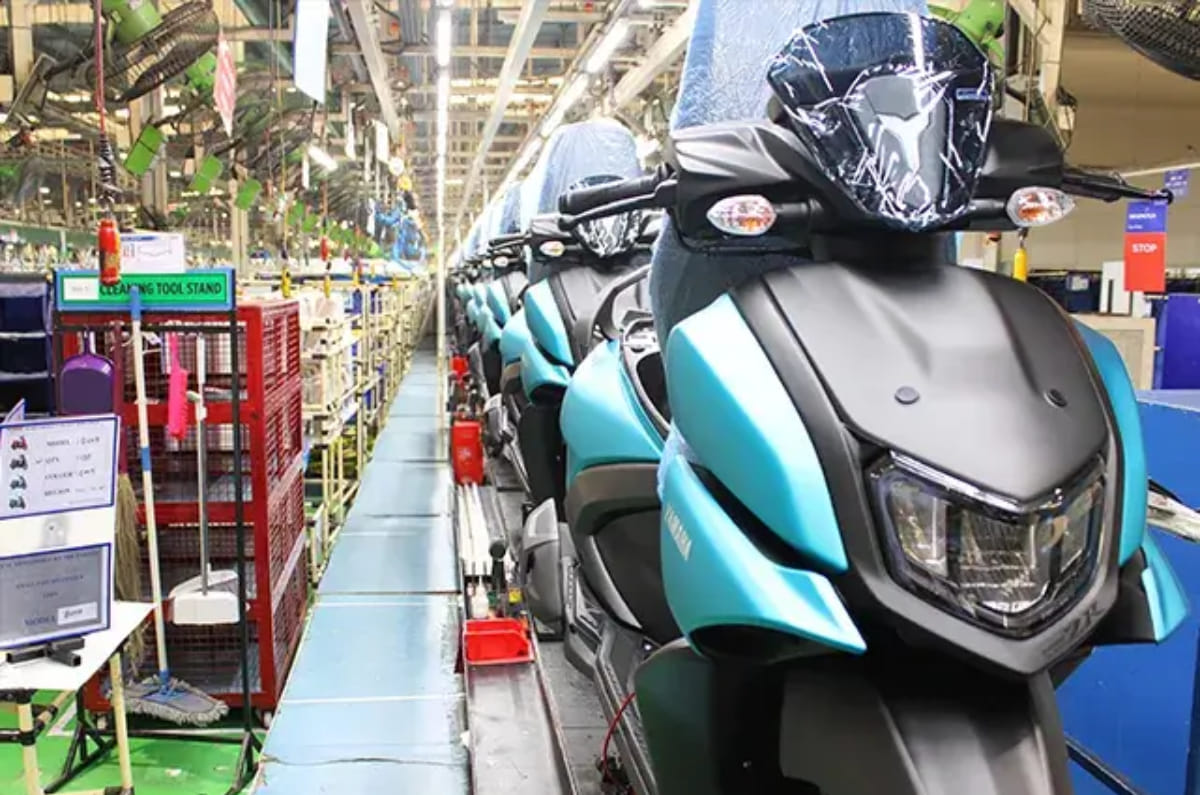
Yamaha Motor India has begun evaluating additional manufacturing capacity as it expects its existing 1.5 million unit annual output to be fully utilised within the next two to three years. The Japanese two-wheeler maker operates plants in Surajpur, Uttar Pradesh and Kanchipuram, Tamil Nadu, with a combined annual capacity of 1.5 million units, and is weighing whether to expand within its current footprint or invest at a new location.
Yamaha India’s 1.5 million unit annual capacity expected to be fully utilised within 2-3 years
Domestic sales up 41 percent to 4.1 lakh units in H1 2026
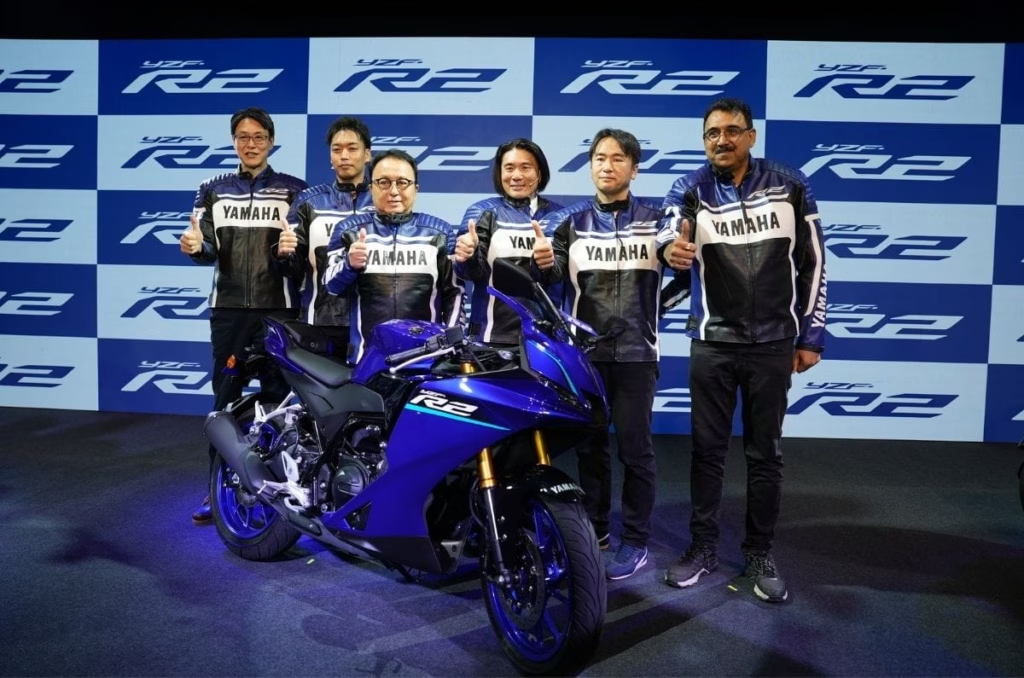
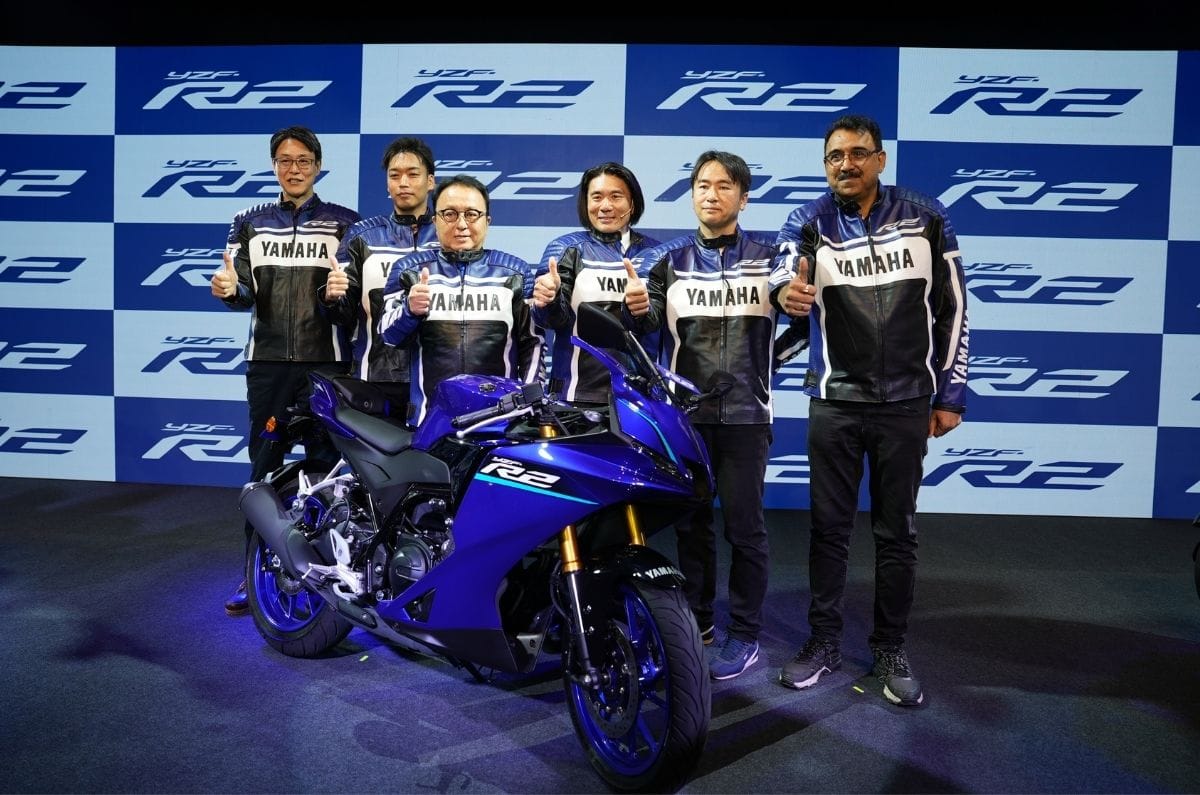
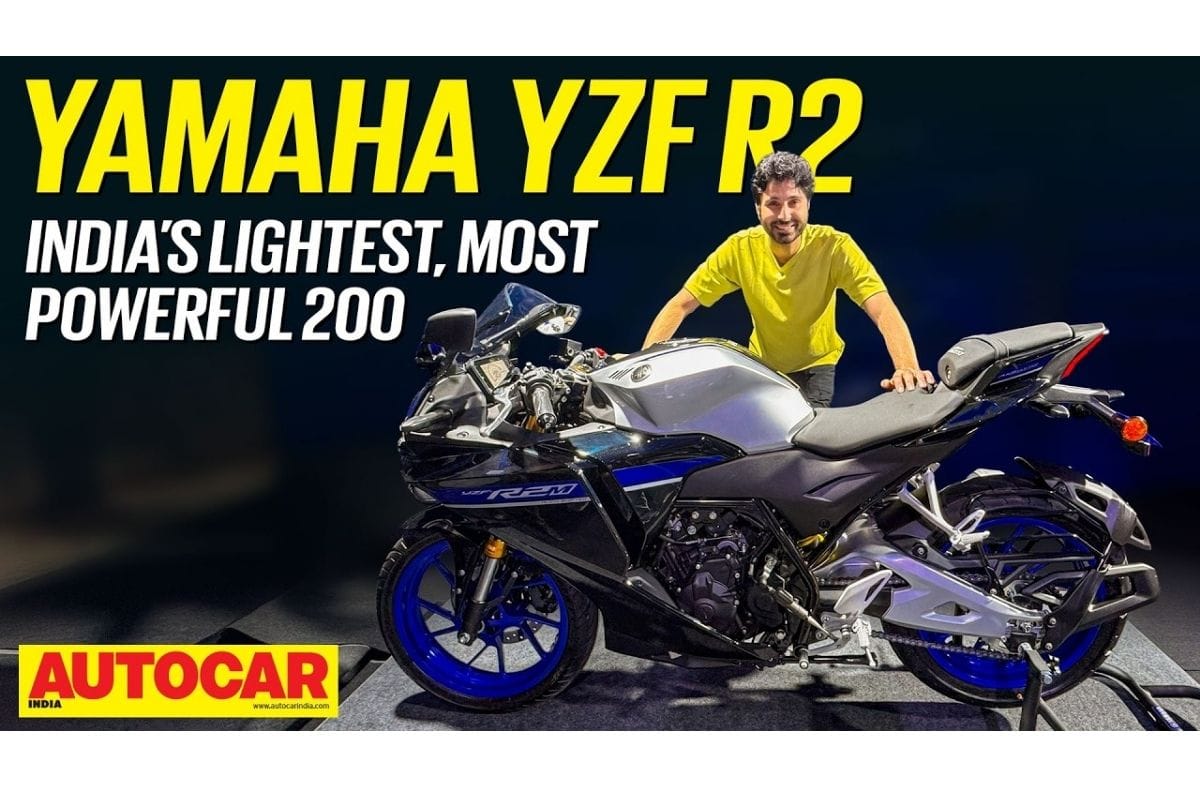
Annual sales target of 50,000 units set for the newly launched YZF-R2
Yamaha India capacity expansion: Key details
New plant requires 3-4 years of lead time; expansion within existing sites also being considered
Hajime Aota, Chairman of the Yamaha Motor India Group, said the company still has space to expand at its existing facilities, reducing the immediate pressure to acquire new land. The decision on expansion – whether at Surajpur, Kanchipuram or elsewhere – will depend on manufacturing processes, supplier allocation and longer-term domestic and export requirements. “At this moment, we have capability and we have space,” Aota said, while noting that planning for a new greenfield facility typically requires a lead time of three to four years.
Yamaha expects its total volumes (including exports) to exceed 1.1 million units in 2026, with domestic sales up 41 percent to 4.1 lakh units in the first half of the year. The company expects H2 volumes to be higher, supported by festive demand and new product launches. On the YZF-R2, which debuted yesterday at Rs 2.30 lakh, Yamaha has set an annual domestic sales target of 50,000 units.
Aota described India and Indonesia as Yamaha’s two biggest global growth engines, with India offering the stronger long-term growth opportunity. However, he noted that India must continue improving manufacturing productivity and technical capabilities to narrow the gap with Indonesia and expand its role in Yamaha’s global manufacturing network. The company employs approximately 10,000 people across its Indian operations and has invested over Rs 2,000 crore in research, development and manufacturing in India over the past eight to ten years. The quantum of investment required for the next phase of expansion has not been disclosed.
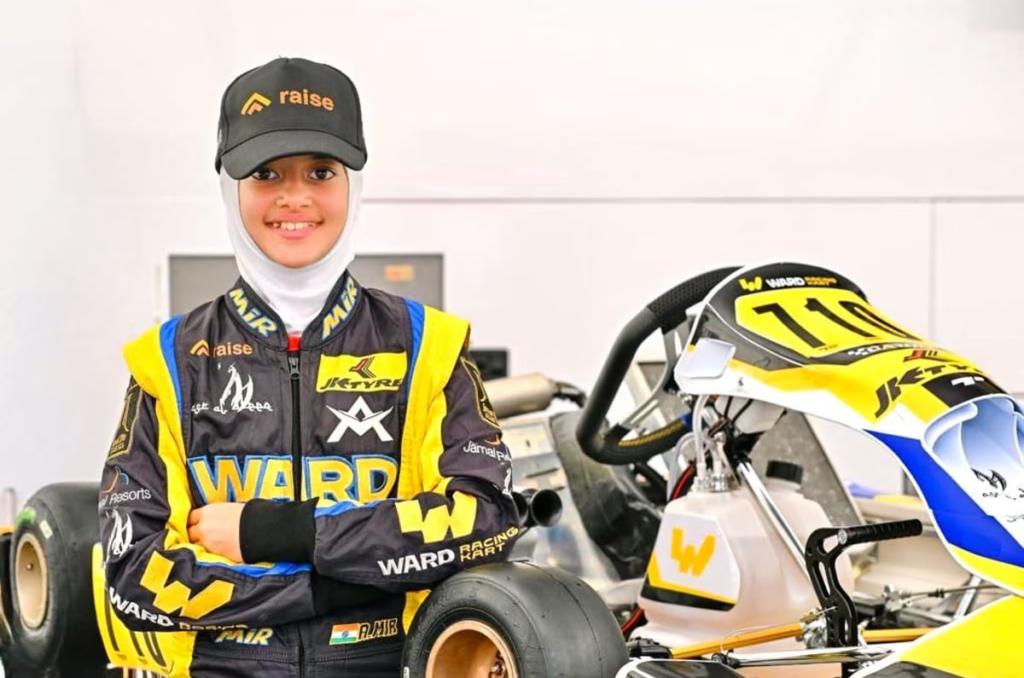
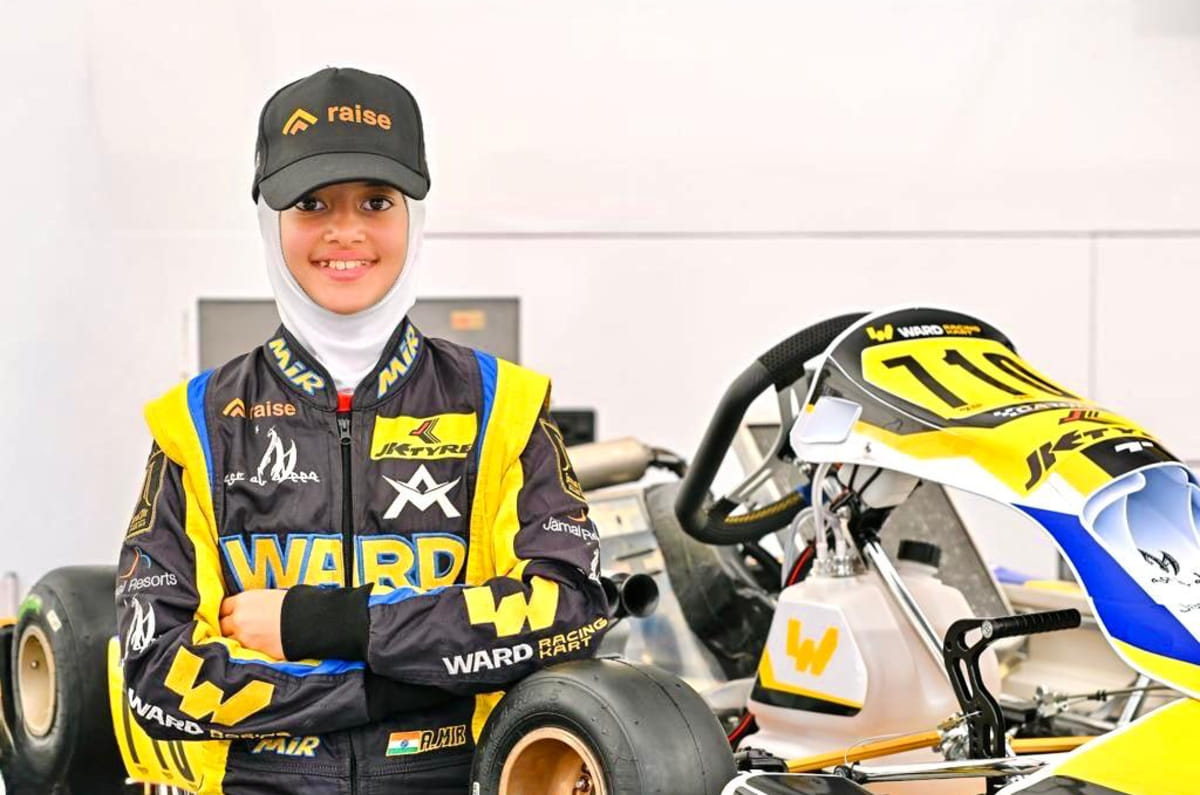
JK Tyre has signed 11-year-old Atiqa Mir as part of its driver development programme.
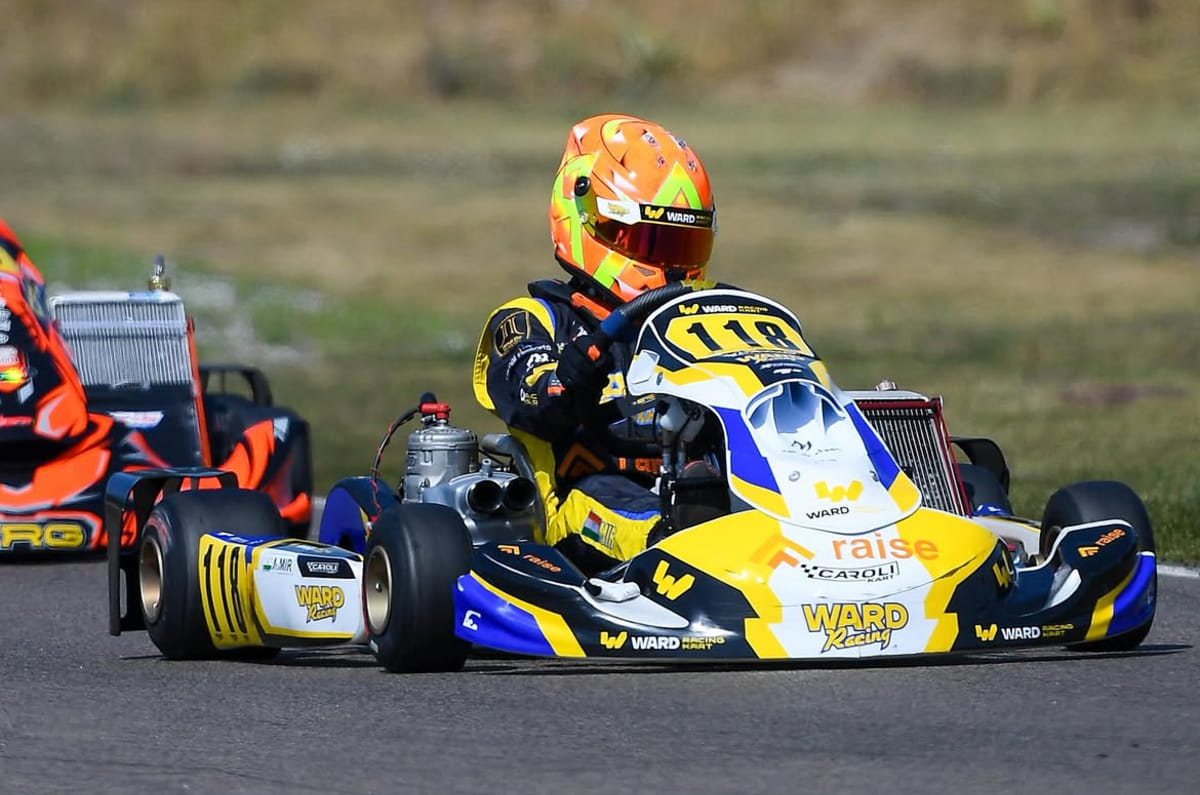
Over the past few years, Mir has emerged as one of India’s most promising young talents in the international karting scene. She’s currently competing in the WSK Final Cup karting series, with Round 1 underway at Italy’s Franciacorta Karting Track.
Mir is currently racing in the WSK Final Cup karting series
Top ranked female racer in the FIA International Karting’s OK N Junior class
JK Tyre signs Atiqa Mir
JK Tyre has been a key pillar of the motorsport community in India, especially with its national racing and karting championships. The company’s played a pivotal role in the junior careers of several prominent racers, including Narain Karthikeyan, Karun Chandhok and Kush Maini.
Its latest recruit, Atiqa Mir, has already made headlines through her achievements in various karting championships in Europe and the Middle East. Earlier this year, she became the first Indian to secure a podium in the European leg of the Champions of the Future Academy, before going on to deliver a dominant victory in Greece. She’s currently the top ranked female racer in the FIA International Karting’s OK N Junior class for drivers up to 14 years old.
At just nine years old, Mir was shortlisted for the Iron Dames Young Talents programme. Since then, she’s also become the first Indian and Asian racer selected for the F1 Academy’s Discover Your Drive programme.
“At JK Tyre, nurturing young talent has always been at the heart of our motorsport journey. Atiqa represents the next generation of Indian racing, and we are delighted to support her as she pursues excellence on the global stage. Her association also reflects our continued commitment to encouraging greater participation of women in motorsport and inspiring young girls to take up the sport,” said Anshuman Singhania, Managing Director, JK Tyre & Industries.
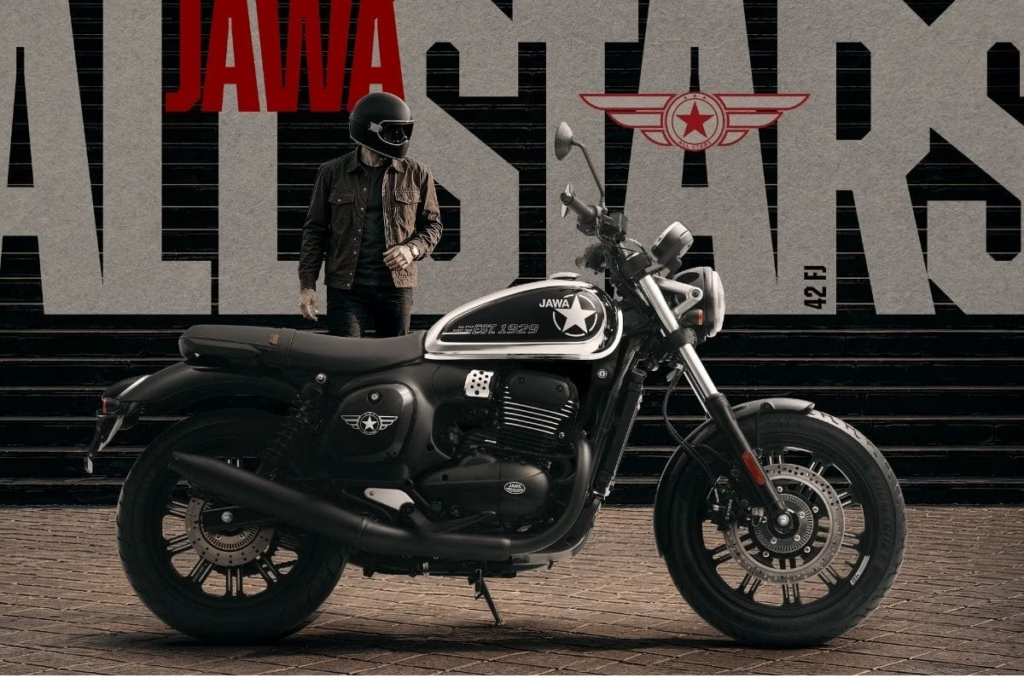
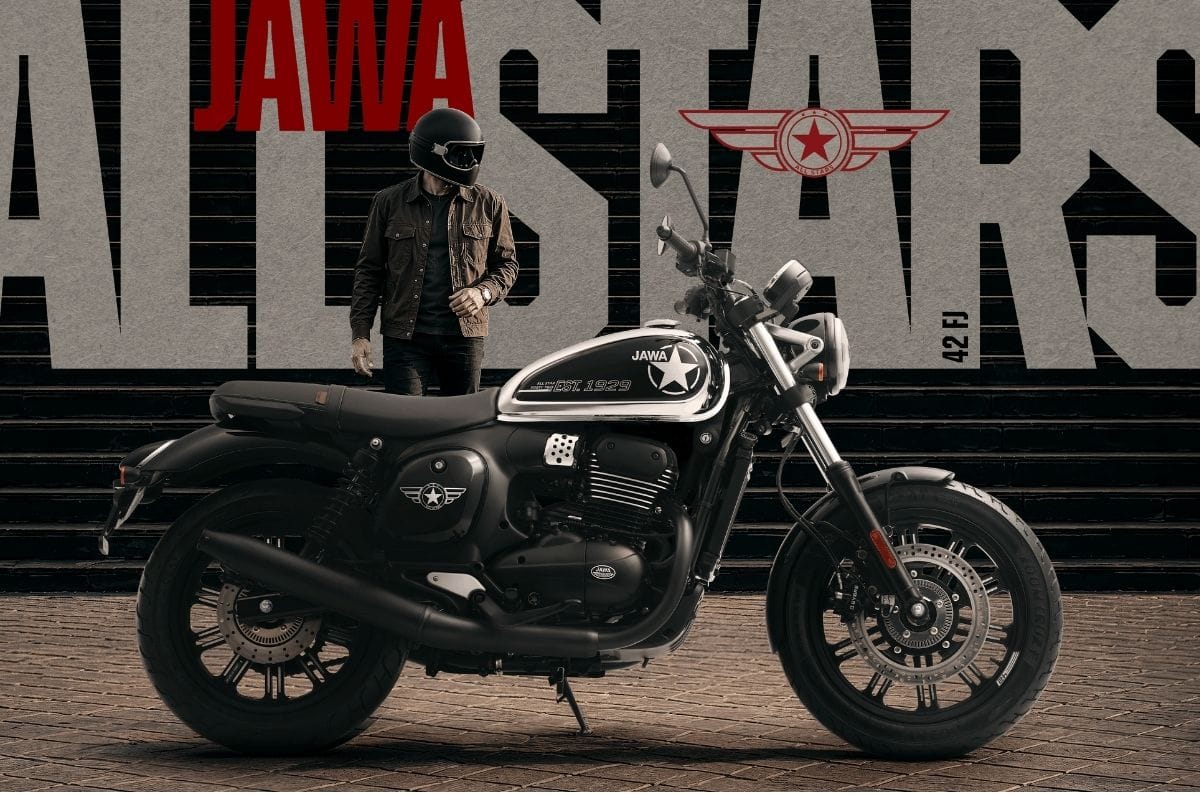
Jawa has launched the 42 FJ All Stars, a new range of its neo-classic roadster, with prices starting at Rs 2.02 lakh and going up to Rs 2.16 lakh (ex-showroom, New Delhi).
Paint schemes include Chrome and matte black options
The All Stars range is available in six colourways
334cc engine continues to produce 29.1hp and 29.6Nm
The All Stars range is available in six colourways – Chrome, Nebula Blue, Matte Black with Red Clad, Matte Black with Black Clad, Aurora Green and Red – all with a Star on either side of the tank. The Chrome version is the most expensive at Rs 2.16 lakh, while the Aurora Green and Red versions are priced at Rs 2.02 lakh. The 42 FJ All Stars is available at Jawa Yezdi dealerships across India.
The 42 FJ All Stars retains the 334cc, liquid-cooled, DOHC single-cylinder engine, which produces 29.17hp at 7,500rpm and 29.62Nm at 5,500rpm. The engine is paired with a six-speed gearbox.
The motorcycle continues with the 42 FJ’s distinctive brushed aluminium tank panels, along with a double-cradle frame, 41mm telescopic front fork and gas-charged twin rear shocks with five-step preload adjustment.
Yamaha is targeting annual sales of 50,000 units for the newly launched R2 in India as it looks to strengthen its position in the country’s premium motorcycle market. The target translates into a monthly run rate of more than 4,000 units, making the R2 an important volume contributor to Yamaha’s premium portfolio rather than a niche model positioned above the R15.
Yamaha R2 starts at Rs 2.30 lakh and is the most feature-packed 200cc motorcycle
India’s premium segment is growing faster than the broader two-wheeler segment
One third of Yamaha’s total sales came from premium motorcycles
R2 is expected to contribute 18 percent of total sales by 2026 end
Scooters account for 46 percent of Yamaha’s sales so far in 2026
The R2 will be manufactured in India and has been designed for domestic and international markets. Company executives said exports remain part of the R2 programme but will follow after the new model establishes itself in India. The R2 target comes as premium motorcycles grow considerably faster than the broader Indian two-wheeler market. Yamaha outpaced the overall market, with its first-half volumes rising 41 percent to 4.1 lakh units from 2.9 lakh a year earlier. This was nearly twice the 21 percent growth recorded by the broader domestic two-wheeler industry, which expanded to 1.06 crore units.
Premium motorcycles accounted for around one-third of Yamaha’s volumes during the period, while scooters contributed approximately 46 percent. The R2’s annual target translates into average monthly sales of about 4,167 units, or approximately 18 percent of Yamaha’s average monthly premium motorcycle volumes in the first half of 2026, underlining the model’s importance to the company’s growth plans.
Raw material costs may affect growth
The rising costs could lead to price hikes too!
The stronger volume outlook comes with pressure on profitability from rising raw-material costs, particularly aluminium. Hajime Aota, Chairman of Yamaha Motor India Group of Companies, said “I wish I did not have to do it,” referring to a possible further price increase. “But if I am going to sacrifice profitability, I may. That is where we are.”
Yamaha will have to balance higher input costs against the price sensitivity of the Indian market as it seeks to sustain growth through the festive season. The company is also expanding its premium retail network, particularly in Tier 1 and Tier 2 cities. It expects the Blue Square network to exceed 600 outlets by the end of 2026.
The R2 launch, network expansion and continued growth in premium motorcycles provide Yamaha with momentum for the second half. Reaching more than 11 lakh units in 2026 will also depend on export performance and the company’s ability to manage cost pressures without weakening domestic demand.
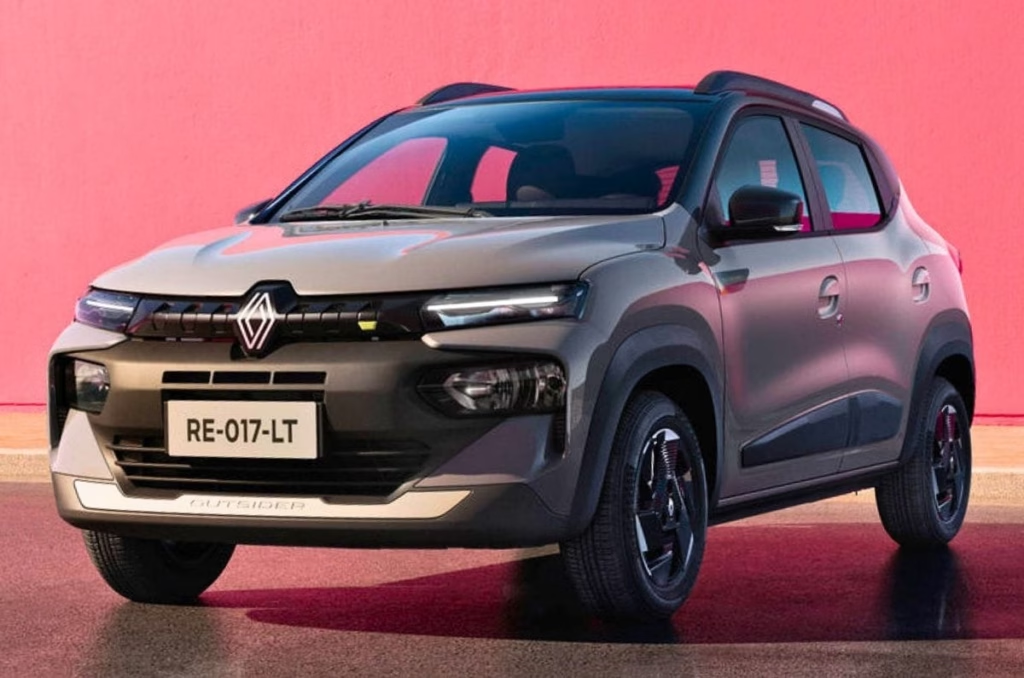
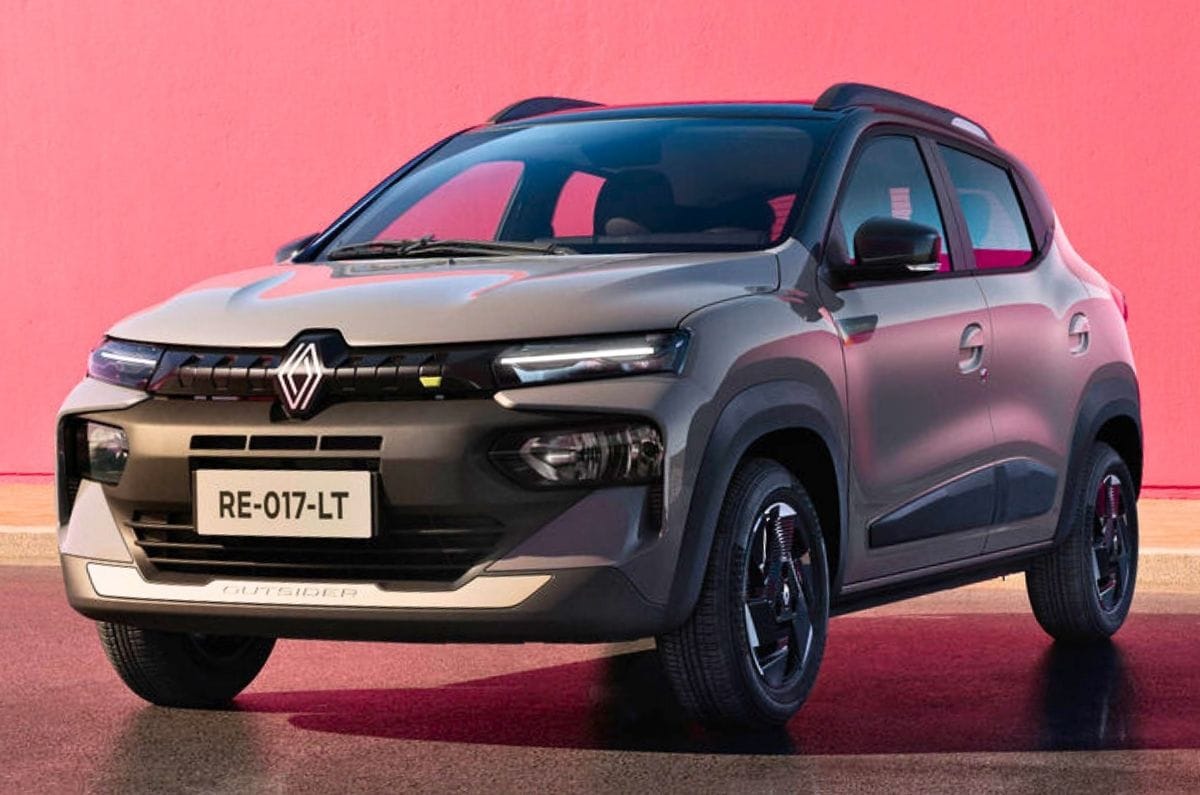
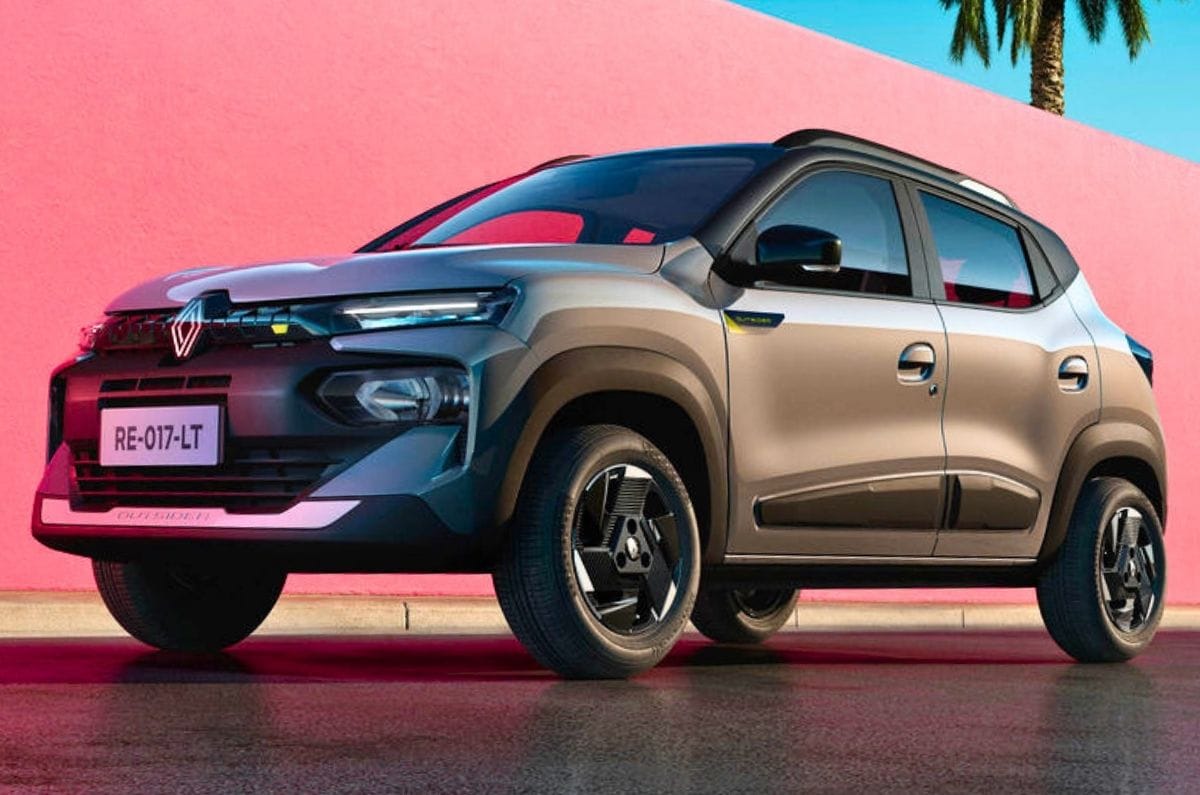
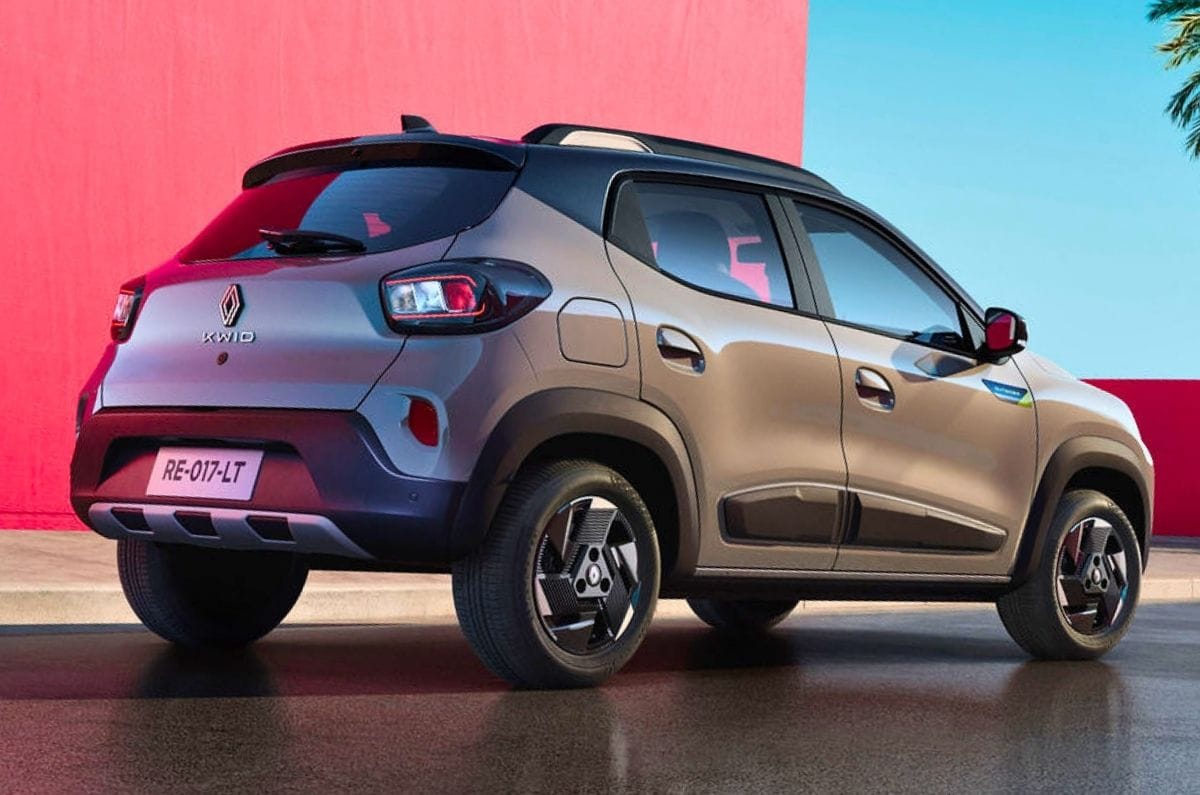
Renault has revealed the Kwid facelift for the Brazilian market, featuring subtle exterior design revisions and a completely revamped interior. The updated hatchback is available in three trims – Evolution, Techno, and Outsider.
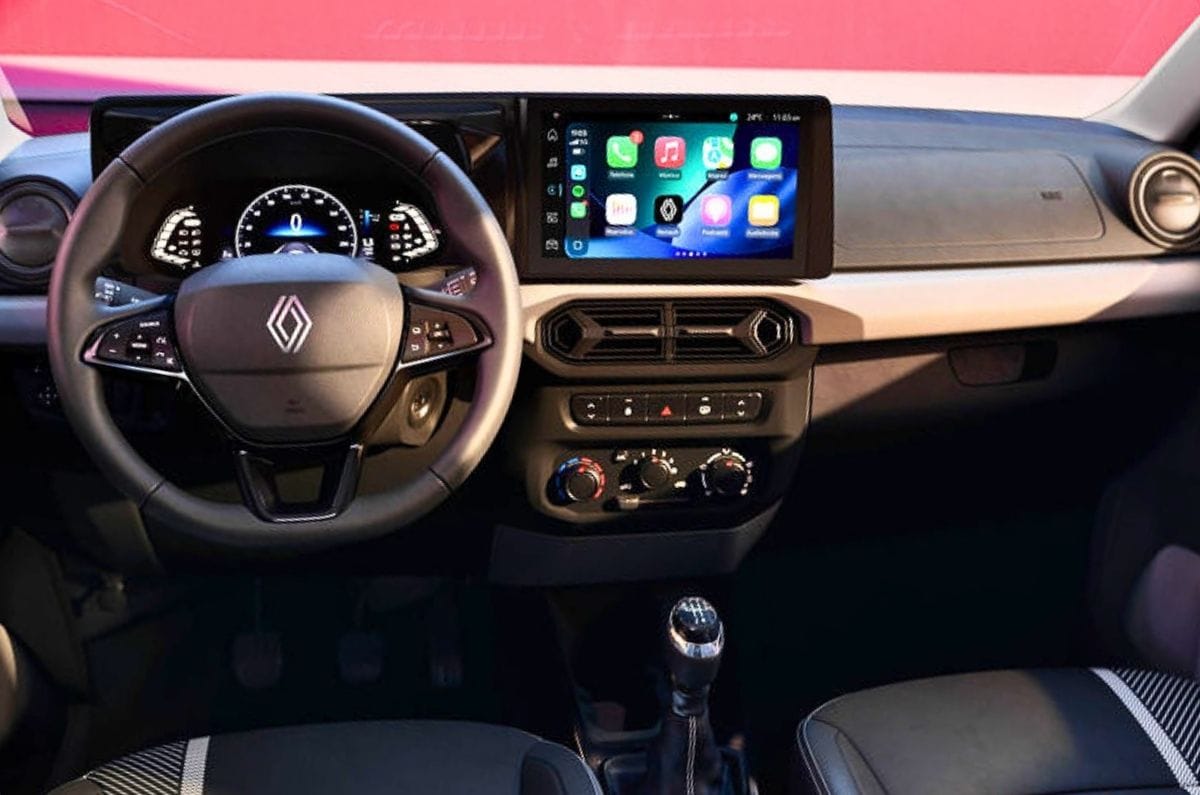
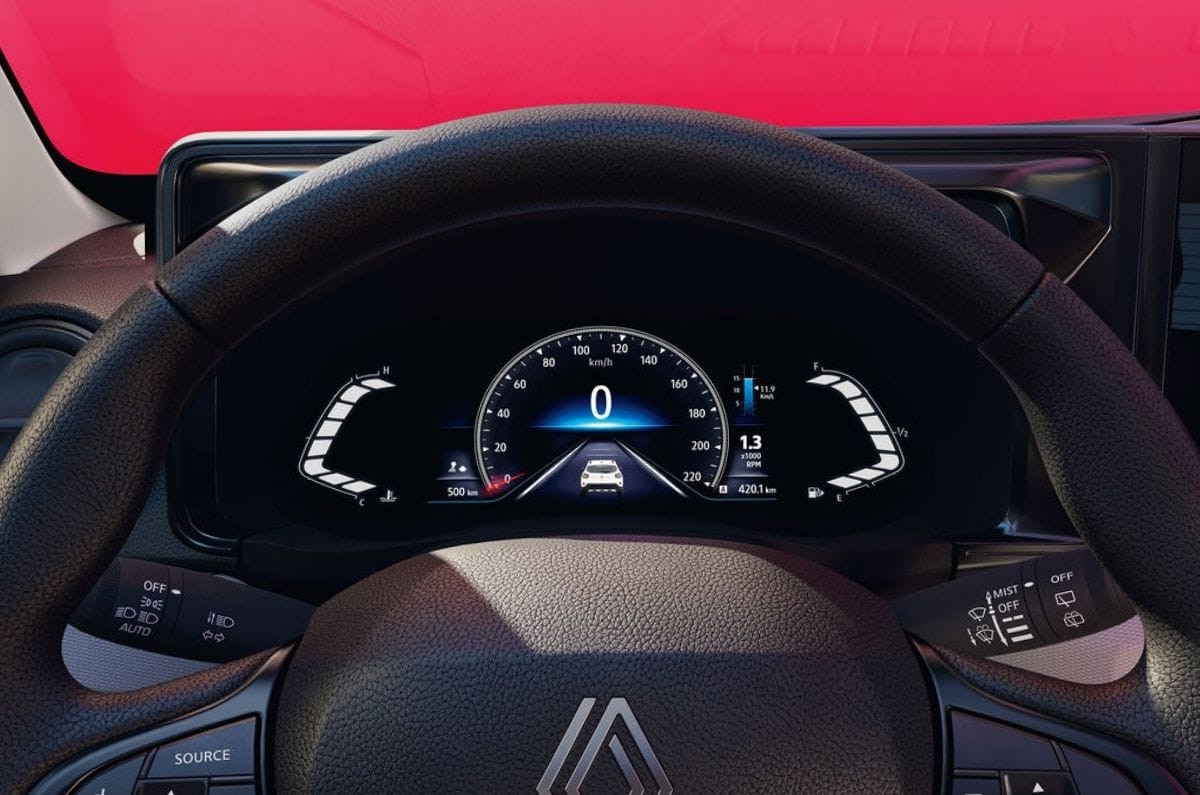
Gets a new 7-inch digital driver’s display and a 10.1-inch infotainment system
Has a cleaner-looking but hard plastic-only dashboard without the ‘Kwid’ inscription
Features a Kiger-like grille, 14-inch alloy wheels and redesigned taillight elements
Notably, the India-spec Kwid was also updated earlier this year, receiving new 3D badges, fresh wheel covers, and a Kiger-inspired steering wheel. However, compared to the India-spec model, the Brazil-spec Kwid gets more extensive updates as part of its facelift.
Brazil-spec Renault Kwid facelift: What are the changes?
Gets a revamped dashboard with two screens
The biggest update on the Brazil-spec Kwid is inside the cabin, which now features a cleaner-looking dashboard with two displays: a 7-inch digital driver’s display and a free-standing 10.1-inch touchscreen infotainment system. While the dashboard continues to use hard plastic, the overall design looks more premium than the India-spec Kwid, which gets a semi-digital driver’s display and a smaller 8-inch infotainment screen.
Other features include manual air conditioning, two Type-C USB charging ports, power-operated front windows, and electrically adjustable outside rearview mirrors. Safety equipment includes four airbags as standard, along with hill-start assist, a reverse parking camera with sensors, and a tyre pressure monitoring system. Most of these features are also available on the India-spec Kwid, although the top-spec Climber variant gets six airbags.
Gets a new grille, alloy wheels and LED taillight elements
At the front, the Brazil-spec Renault Kwid gets a new grille with vertical slats, similar to the Renault Kiger, along with a new 3D Renault logo. It also features LED DRL bars and halogen headlamps, similar to the India-spec model. The front bumper design is also more aggressive and features a lot of blackened elements.
In profile, the Brazil-spec Kwid gets 14-inch dual-tone alloy wheels, giving it a more upmarket appearance than the Indian model, which comes with 14-inch steel wheels with plastic covers. At the rear, the facelifted Kwid gets revised LED taillight elements, while the tailgate and bumper designs remain unchanged.
The Brazil-spec Kwid has the same 2,423mm wheelbase as the India-spec model, but offers a larger 290-litre boot, which is 11 litres more than the Indian version. Ground clearance stands at 185mm, identical to the India-spec Kwid.
Gets the same engine as the India-spec model, but only with MT
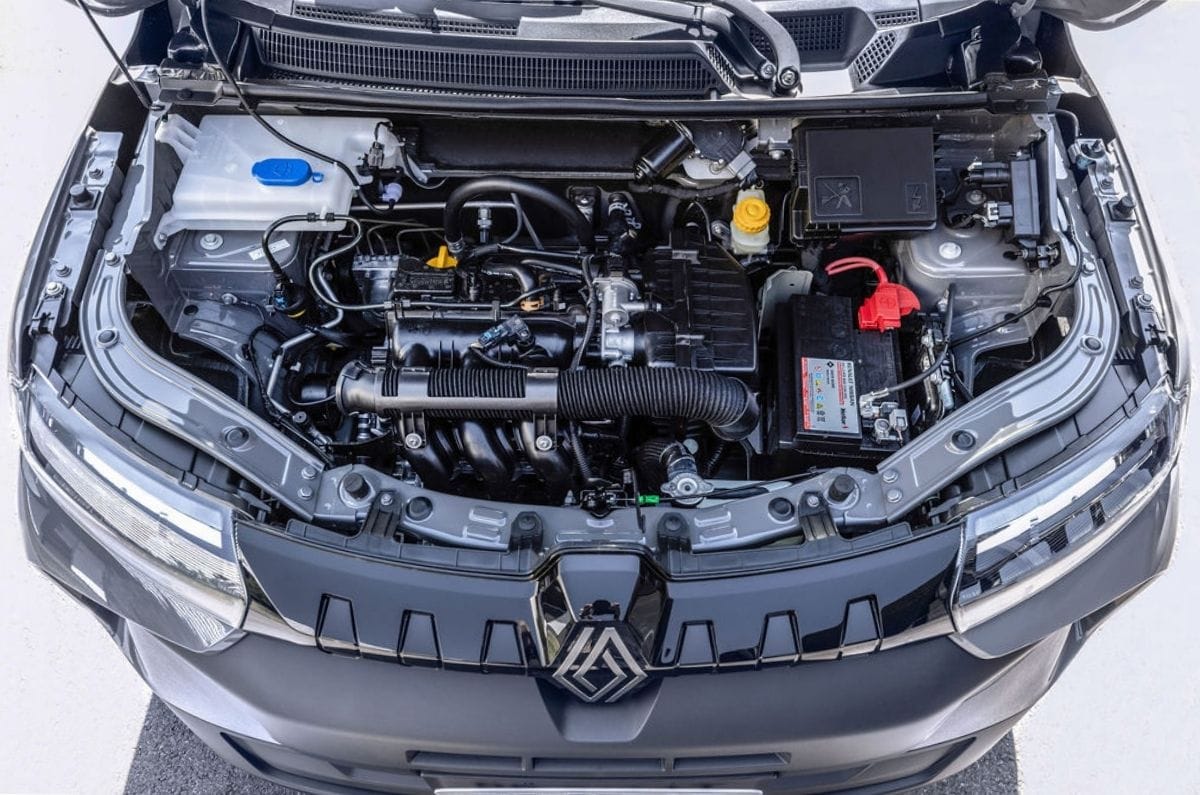
The Brazil-spec Renault Kwid is powered by a 1.0-litre 3-cylinder naturally aspirated petrol engine that produces 71hp and 98Nm with ethanol, and 68hp and 92Nm with petrol. This is the same engine as the one offered in the Indian model. However, the Brazil-spec Kwid gets a 5-speed manual transmission, while the Indian model also offers a 5-speed AMT option.
The Brazil-spec Renault Kwid facelift is unlikely to make its way to India, especially since the India-spec hatchback was updated just last month. Declining hatchback sales in the country are another factor that could discourage Renault from making a fresh investment to bring the Brazil-spec model here. The India-spec Renault Kwid is currently offered in two trims: Evolution and Climber, with prices ranging from Rs 4.53 lakh to Rs 5.61 lakh (ex-showroom).
Hero MotoCorp will invest up to Rs 1,758 crore to increase its stake in Ather Energy, taking its holding in the electric two-wheeler maker from 29.88 percent to approximately 32.8 percent on a fully diluted basis.
Hero MotoCorp will buy existing Ather shares worth up to Rs 1,758 crore
Its stake will rise from 29.88 percent to approximately 32.8 percent
The deal comes shortly after Hero’s separate Rs 1,000 crore investment in Ather
The investment was approved by Hero MotoCorp’s Committee of Directors on August 27 and will involve the purchase of existing Ather shares from an existing shareholder. This makes it a secondary transaction, rather than a fresh issue of equity by Ather. The deal will be funded entirely through cash and is expected to be completed by September 3, 2026. No government or regulatory approvals are required.
The latest investment comes shortly after Hero announced plans to invest up to Rs 1,000 crore in Ather through a preferential issue. Ather subsequently allotted Hero convertible warrants worth Rs 959.99 crore as part of that investment.
The two transactions are separate, with the earlier investment involving securities issued by Ather and the latest Rs 1,758 crore deal involving the purchase of existing shares. Taken together, Hero has committed up to around Rs 2,758 crore to Ather through the two transactions.
Hero has been an investor in Ather for several years and is already its largest shareholder. The latest investment will further strengthen its position in the company as Ather continues to expand its electric two-wheeler business and charging network across India.
Ather’s turnover has grown significantly over the past three financial years, rising from Rs 1,753.8 crore in FY2024 to Rs 2,255 crore in FY2025 and Rs 3,671.76 crore in FY2026.
The company designs, manufactures and sells electric two-wheelers and operates its own charging network with an open-source connector that’s shared with Vida. Ather’s portfolio includes the 450 range and Rizta, while its presence has expanded across the country. As for the brand’s immediate plans, Ather is slated to launch its first-model based on the EL platform tomorrow, at its community day, intended to slot in below the Rizta.