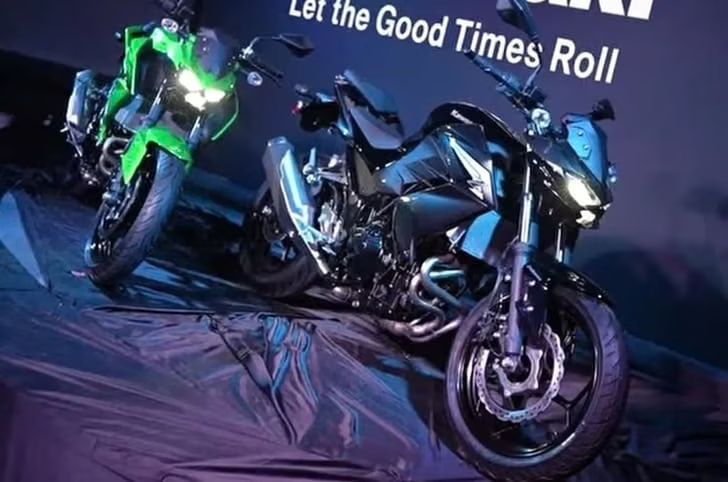
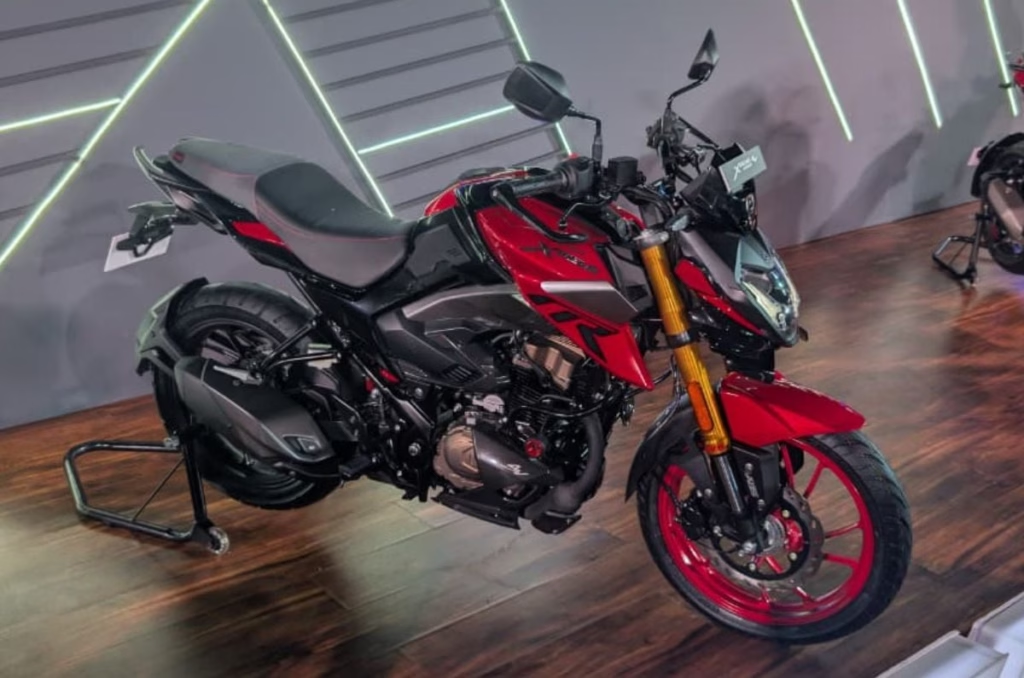
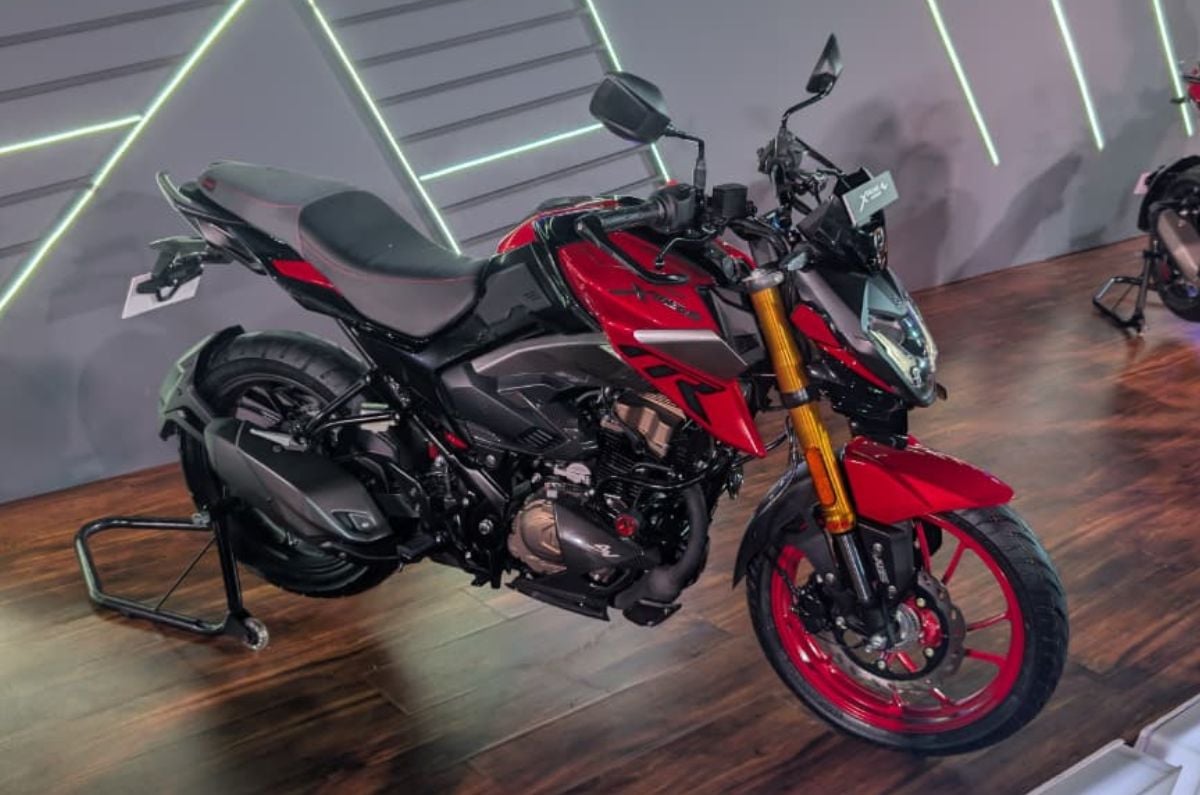
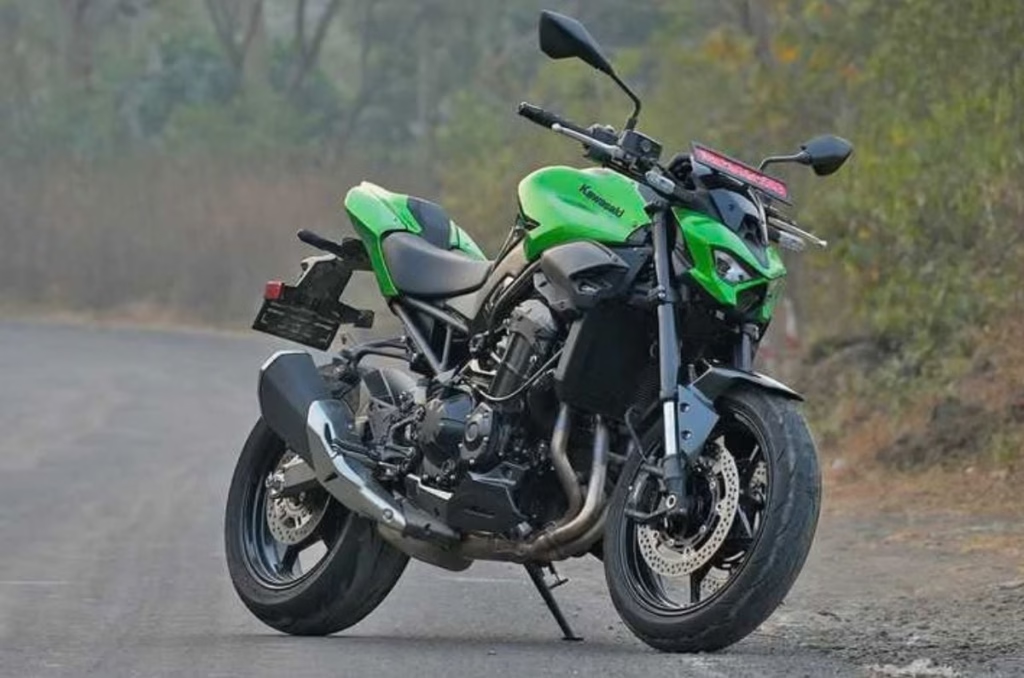
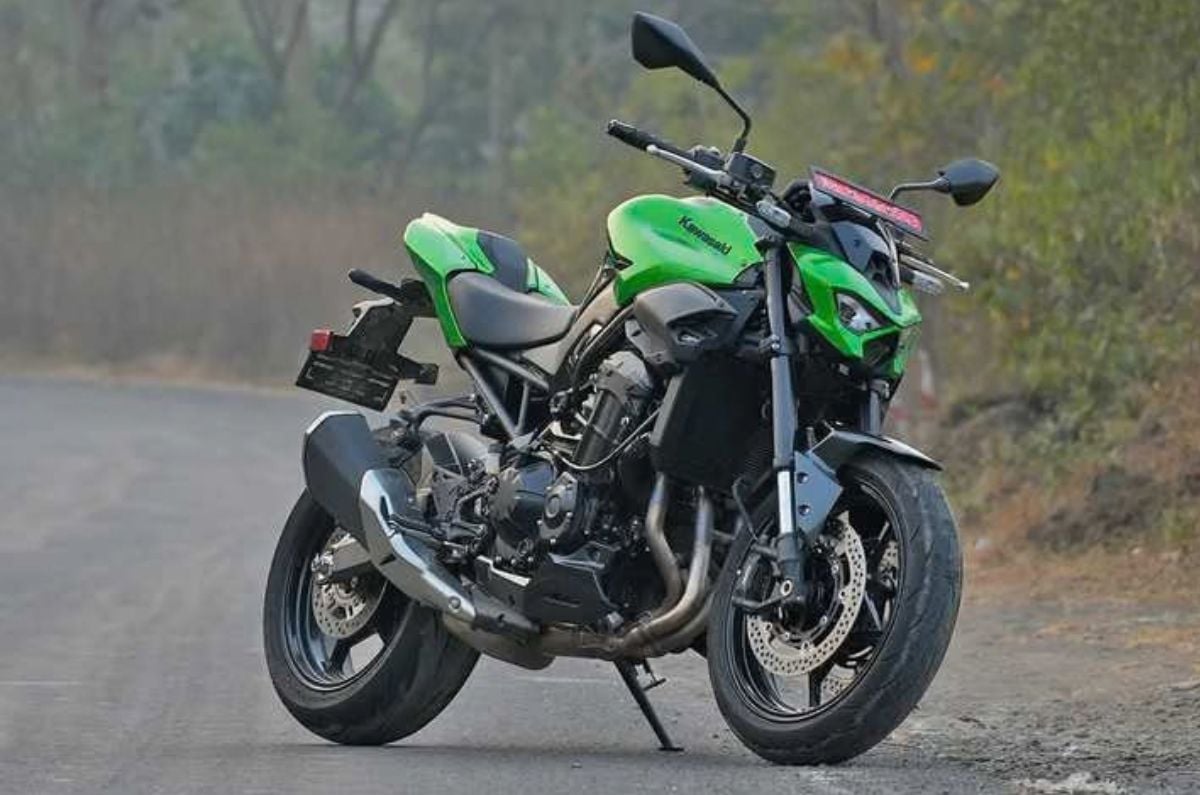
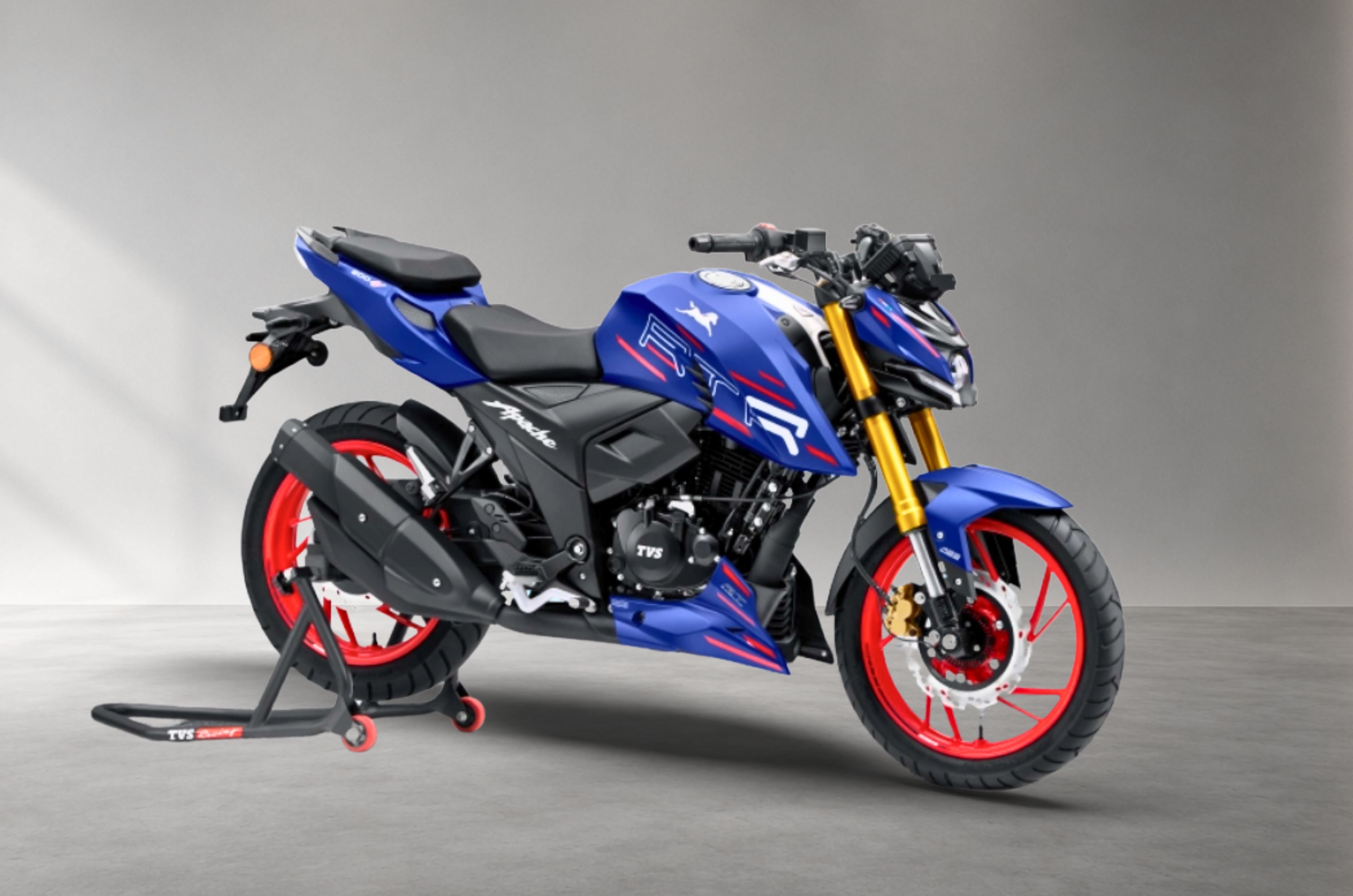
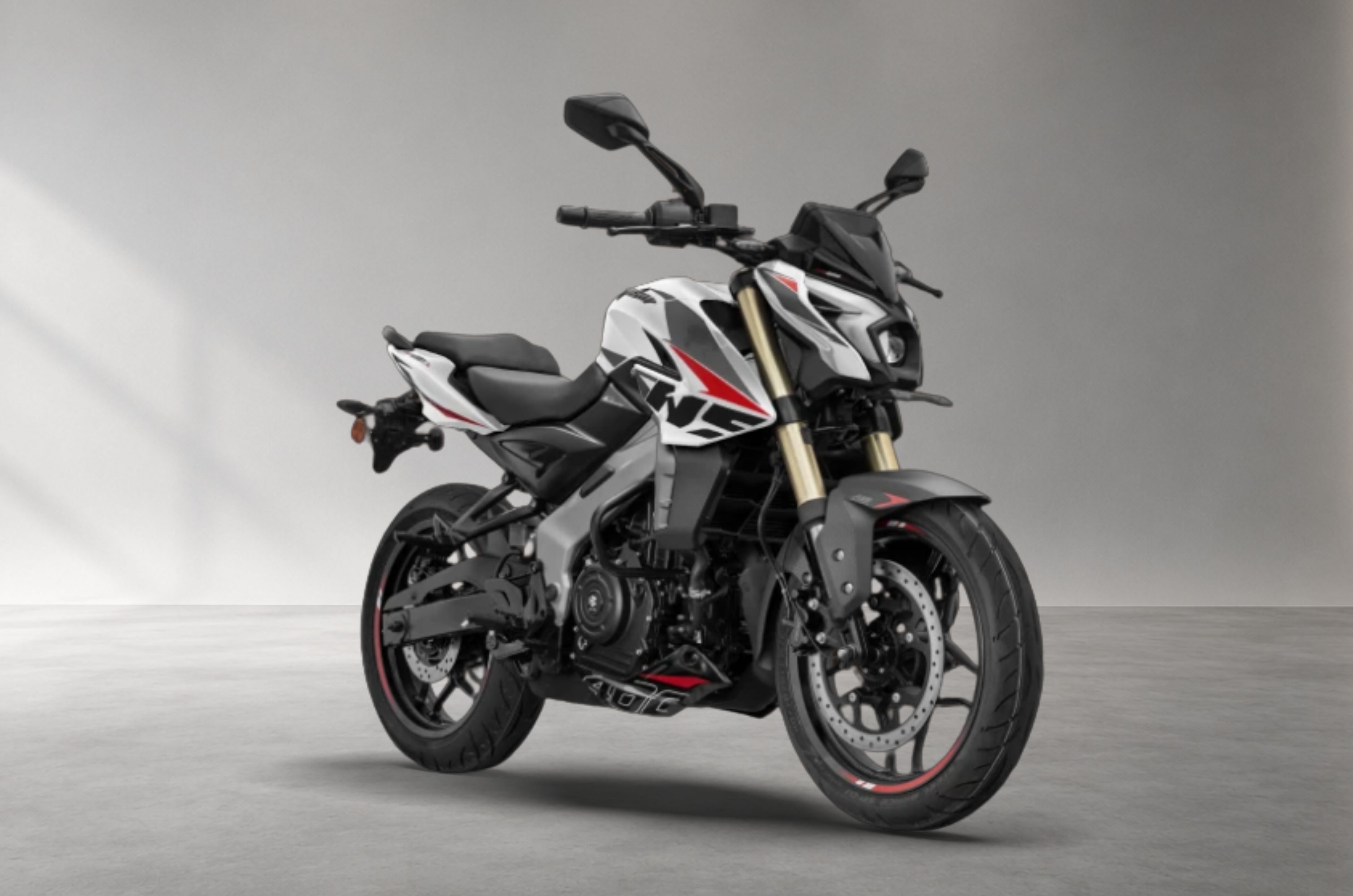
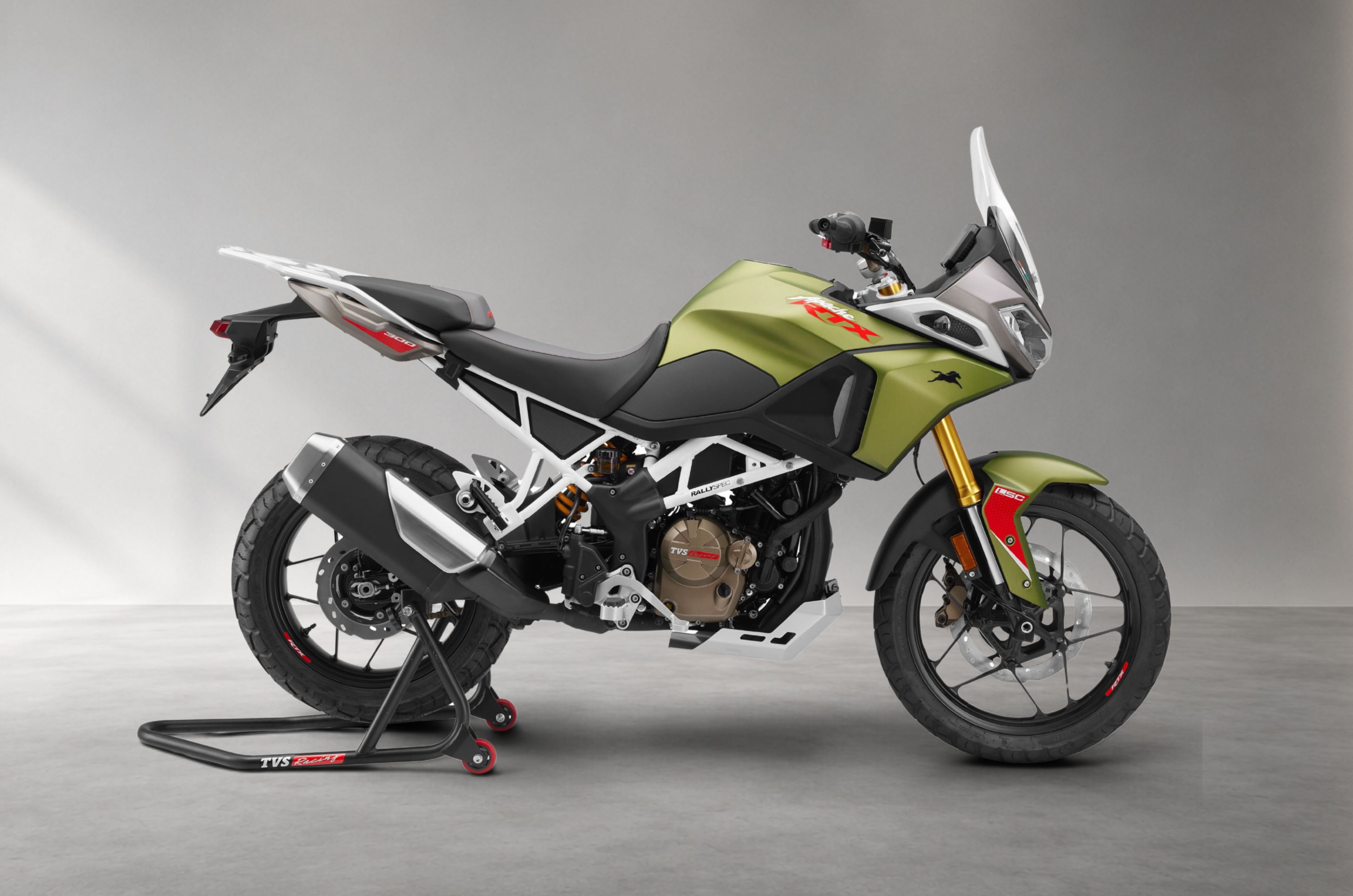
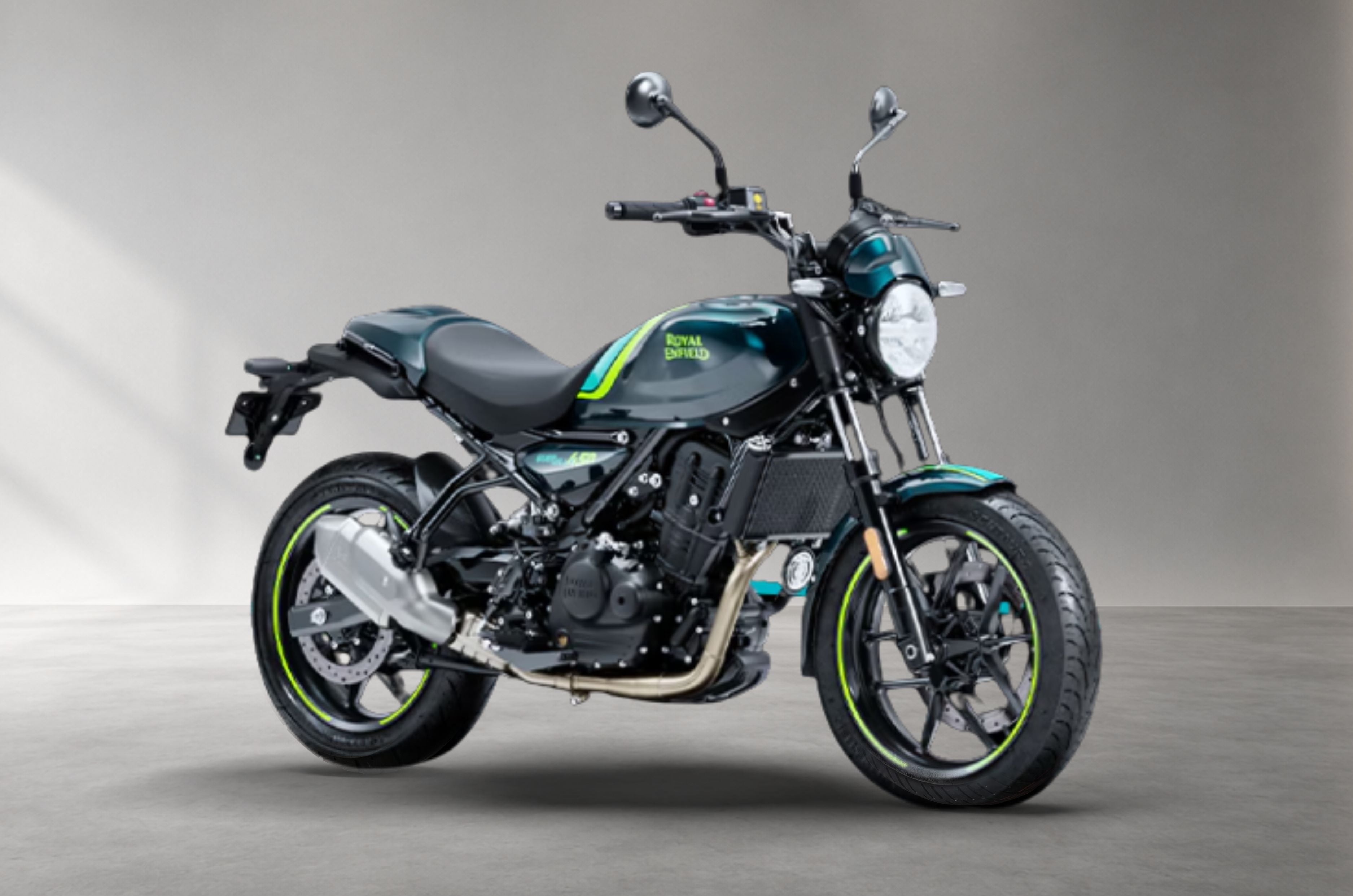
The Kawasaki Z300 is the Japanese brand’s new entry-level street naked, which will sit at the bottom of its Z lineup, drawing styling cues from the larger Z900. It is built on the same platform as the Ninja 300 and brings a parallel-twin engine to a segment largely dominated by single-cylinder bikes, going up against the KTM 390 Duke and TVS Apache RTR 310.
1. What engine does the Kawasaki Z300 use?
The Z300 is powered by a 296cc liquid-cooled parallel-twin engine producing 39hp and 26.1Nm of torque, paired with a six-speed gearbox. The engine is shared with the Ninja 300, but the Z300’s upright ergonomics, largely thanks to a wide, single-piece handlebar, should give it a more relaxed character than its faired sibling.
2. What features does the Kawasaki Z300 get?
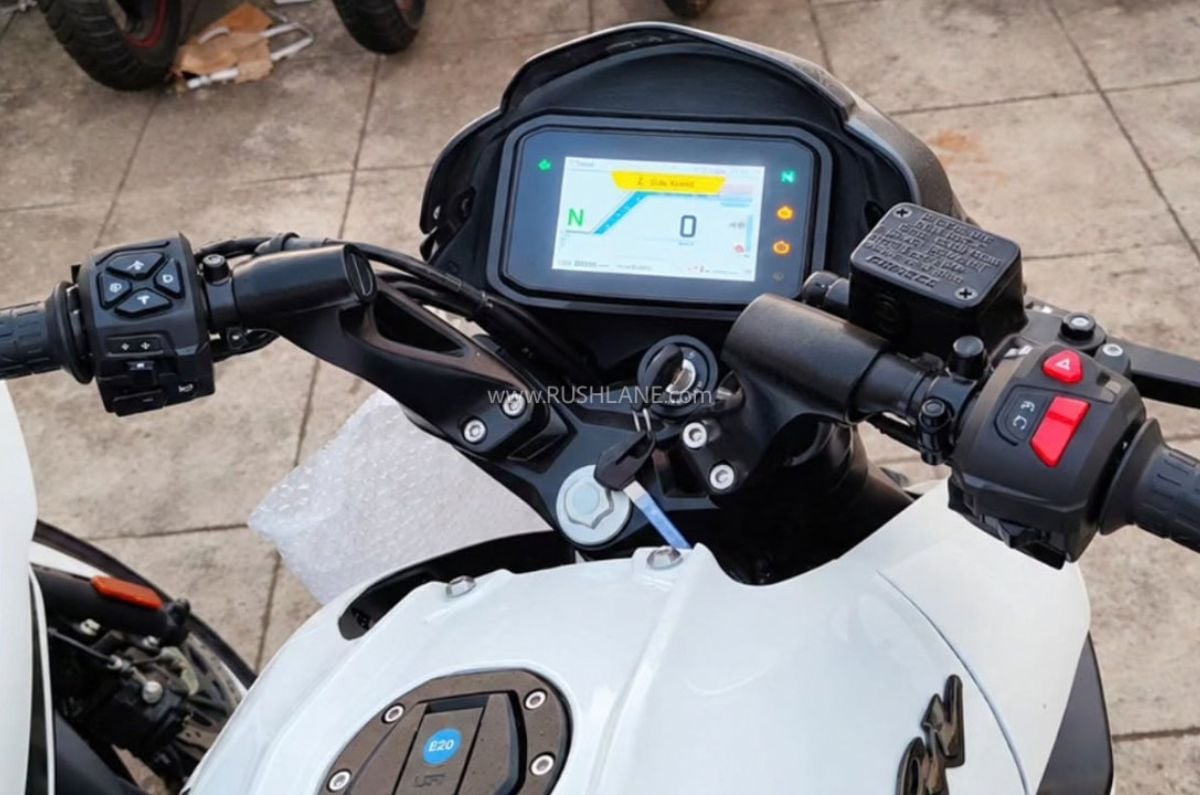
The Z300 gets a new instrument cluster with smartphone connectivity, which should be an upgrade over the dated yet charming analogue semi-digital console on the Ninja 300. During the launch livestream, we spotted more than one type of display. One appeared to be a negative LCD unit, while another had a white backlight and could be a TFT screen. This suggests the Z300 may be offered in multiple variants with different feature levels, but Kawasaki is yet to confirm the full variant breakdown.
3. What colours will the Kawasaki Z300 be available in?
The Kawasaki Z300 will be available in two colours at launch – Green and Black.
4. Which bikes will the Kawasaki Z300 rival?
The Z300’s closest rivals are the KTM 390 Duke and the TVS Apache RTR 310. Both are single-cylinder motorcycles with more performance-oriented chassis setups, although the Z300’s parallel-twin engine should give it an edge in refinement. The Z300 might not match them in terms of outright performance, but the Kawasaki badge and twin-cylinder engine give it a distinct proposition in this segment.
5. What is the Kawasaki Z300 price?
‘Kawasaki had scheduled a full price and specification reveal for October 20, but pricing is yet to be confirmed on the Kawasaki India website at the time of writing. For context, the faired Ninja 300 is currently listed at Rs 3.34 lakh (ex-showroom, India). The Z300 gets a new instrument cluster, at the very least, but also has less bodywork. A price in the range of Rs 3.20 lakh to Rs 3.50 lakh (ex-showroom) seems likely, but we’ll update this once Kawasaki confirms the official pricing.
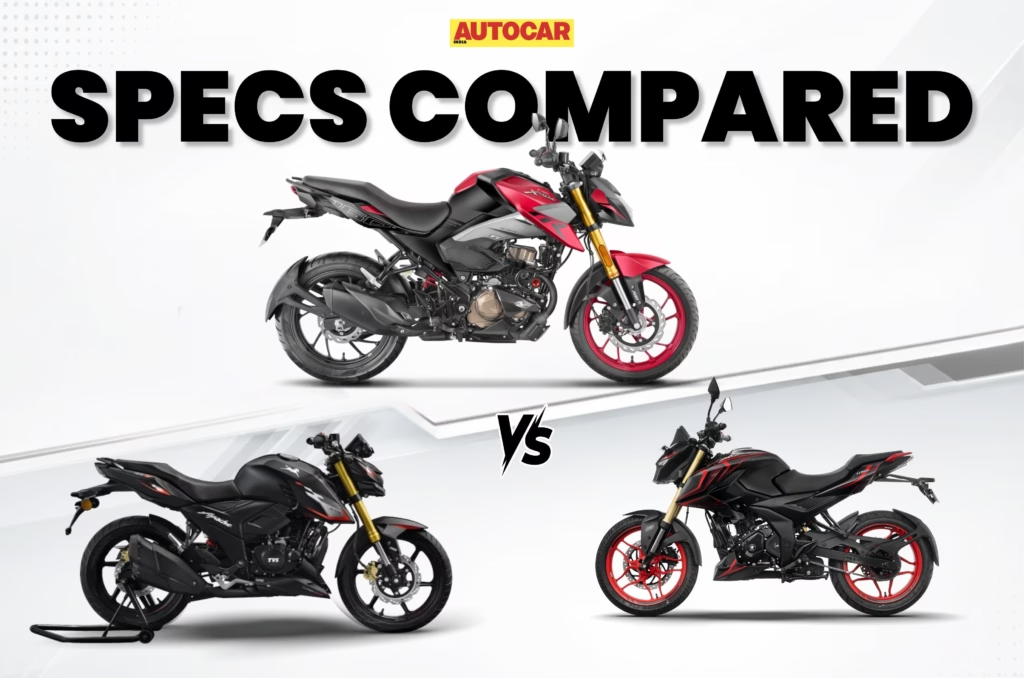
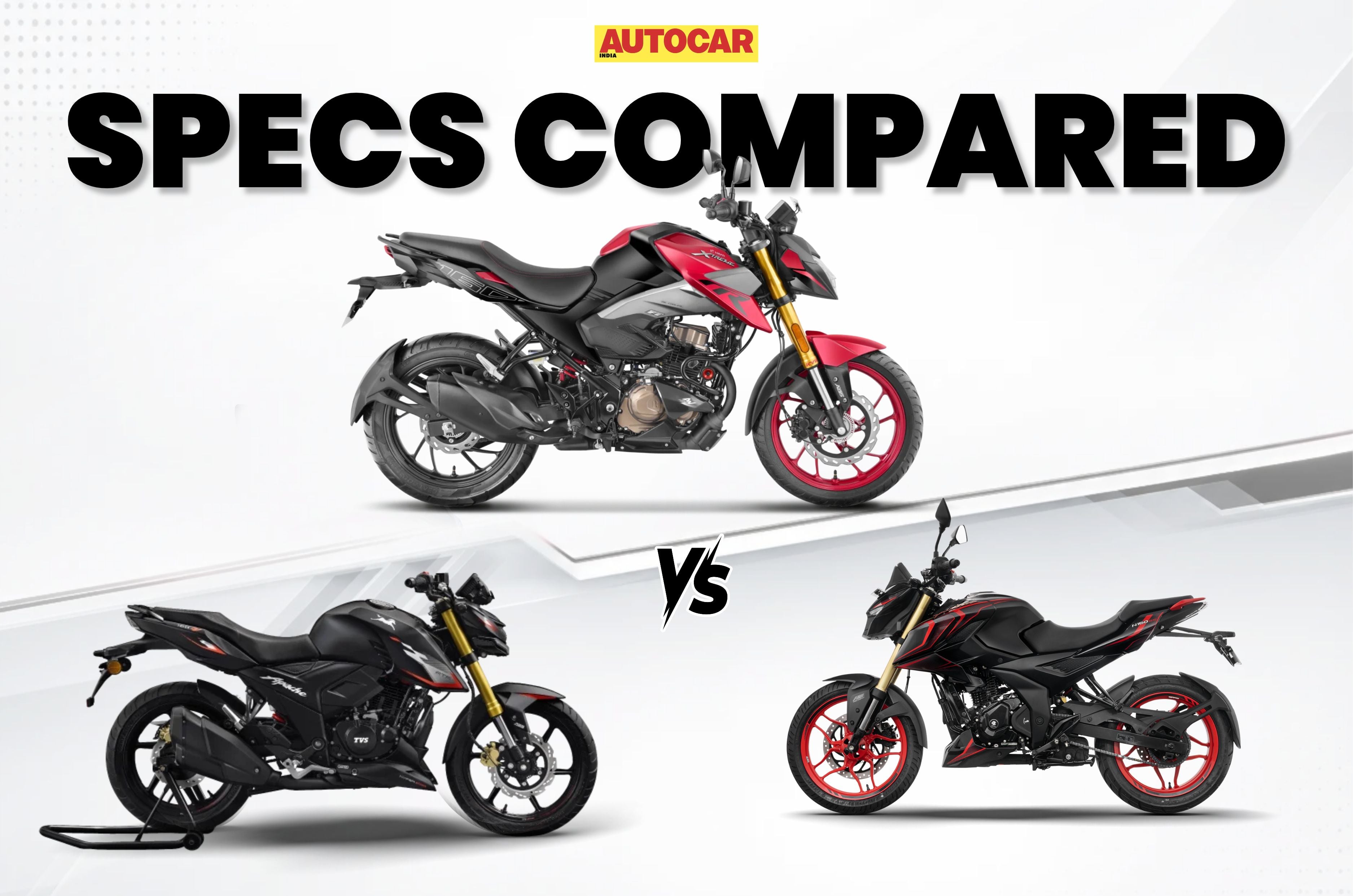
The 160cc segment was kickstarted and subsequently dominated by the TVS Apache RTR 160 and now, the RTR 160 4V is the manufacturer’s best-selling Apache, with the RTR 160 (2V) following in its footsteps. Bajaj has been attacking this duo with a trident of motorcycles, the N160, classic 150, and the NS160. In this fight, Hero’s offering the Xtreme 160R has taken a backseat all this while, but Hero’s looking to get in the front with the newly updated version of its street-naked motorcycle. Does it, really? Let’s see.
Hero Xtreme 160R 4V Carbon vs Rivals: Engine and output
Bajaj has the biggest engine with the most power
Hero Xtreme 160R 4V Carbon
TVS Apache RTR 160 4V
Bajaj Pulsar N160 SS
Engine
163.2cc, single-cylinder, oil-cooled
159.7cc, single-cylinder, oil-cooled
164.9cc, single-cylinder, oil-cooled
Power
17.1hp at 8,750rpm
17.6hp at 8,650rpm
18.5hp at 9,500rpm
Torque
14.6Nm at 6,500rpm
14.7Nm at 7,500rpm
14.4Nm at 8,000rpm
Transmission
5-speed
5-speed
5-speed
Power-to-weight ratio
114.77hp/tonne
120.21hp/tonne
122.52hp/tonne
Hero left the 163.2cc engine almost completely untouched, only raising the peak power output by a meagre 0.2hp compared to earlier. Bajaj’s upgrade to the N160 was more comprehensive than Hero and TVS, even though the other two motorcycles are chronologically newer. Said update has thus helped the N160 SS maintain the highest horsepower of the trio, though it comes in third with respect to torque.
However, the torque race is a very close one and thus unlikely to matter in real-world conditions. The noteworthy jump in power also helps Bajaj maintain a higher power-to-weight ratio, despite being the heaviest of the three motorcycles.
Hero Xtreme 160R 4V Carbon vs rivals: Dimensions and weight
Pulsar is the heaviest, but makes up for it
Hero Xtreme 160R 4V
TVS Apache RTR 160 4V
Bajaj Pulsar N160 SS
Fuel tank capacity
12 litres
12 litres
14 litres
Ground clearance
165mm
180mm
165mm
Kerb weight
149kg
146kg
151kg
Seat height
805mm
790mm
795mm
Wheelbase
1,329mm
1,357mm
1,348mm
None of these motorcycles received a generational change to the platform so the numbers largely remain the same as earlier. Starting off with the Xtreme 160R 4V, Hero has given it some additional features which has made it 1.5kg heavier than the previous Combat Edition and the seat height is a negligible 5mm taller too.
TVS added exactly two new features to the Apache so it remains exactly where it was before and is the motorcycle with the lowest seat height, while having the most amount of ground clearance. The Pulsar N160 is the heaviest of the lot, but also has two additional litres of fuel tank capacity, which is a factor in the additional weight. In this class, that translates to – at the very least – 80km of real-world range so that’s not a small advantage to the Bajaj.
Hero Xtreme 160R 4V Carbon vs Rivals: Tyres, brakes and suspension
Hero has a smaller rear brake and TVS has a narrower front tyre
Hero Xtreme 160R 4V
TVS Apache RTR 160 4V
Bajaj Pulsar N160 SS
Tyres (F, R)
100/80-17, 130/70R17
90/90-17, 130/70R17
100/80-17, 130/70R17
Brakes (F, R)
276mm disc, 220mm disc, dual-channel ABS
270mm disc, 240mm disc, dual-channel ABS
300mm disc, 230mm disc, dual-channel ABS
Suspension (F, R)
37mm USD fork, monoshock
37mm USD fork, monoshock
37mm USD fork, monoshock
Things continue to even out in this section but Bajaj makes a statement with the largest front disc rotor, which is actually from a class above. All three offer dual-channel ABS as standard on the top variants, and all have a lower variant with right-side-up (RSU) telescopic fork and single-channel ABS. Hero is the only manufacturer to offer a KYB, who is a suspension specialist, built fork but also has given the Xtreme 160R the smallest rear disc. TVS technically does have the smallest tyre of the three, but it’s not alarmingly small to imply handling issues.
Hero Xtreme 160R 4V Carbon vs Rivals: Features
Hero’s redemption attempt
This is the area Hero has caught up the most to the other two, after design. Though the Combat Edition added quite a bit to make the Xtreme 160R last year, the fight now feels even across the board, which is a great thing for you and me as consumers.
On the top Carbon variant, you get a 4.2-inch TFT display that goes toe-to-toe with the other two on this list. Xtreme 160R is the only motorcycle in this segment to give you cruise control and TVS, despite technically being the oldest platform of the lot, gives a tough fight to the other two. In terms of outright feature-set, the Bajaj still offers a higher number of features, such as an additional ride mode, document storage on the display and the likes, but TVS and Hero fight valiantly. The Hero still misses out on features such as, a slip-and-assist clutch, a dedicated mode to make low speed riding easier (Crawl mode on Bajaj, GTT on TVS) and Google Maps mirroring. So, if you’re looking for the most feature-loaded Hero, take a gander at the Xtreme 250R, which also got updated with quite a bit of features and is sitting in the segment above.
Hero Xtreme 160R 4V Carbon vs Rivals: Price
Carefully treading the affordable-line
Hero Xtreme 160R 4V
TVS Apache RTR 160 4V
Bajaj Pulsar N160 SS
Price (ex-showroom)
Rs 1.27-1.41 lakh
Rs 1.20-1.42 lakh
Rs 1.22-1.43 lakh
Hero is currently the most expensive of the three, especially if you’re looking to get the base variant; beyond that, digging further into the price difference will be splitting hairs, so look at the other sections to see if they help you make a choice. That being said, the 160cc segment in India is one of, if not, the most competitive one so whichever one you choose, you’re unlikely to make a truly bad one. See which motorcycle catches your eye the fastest and pulls your heart strings the hardest after the test ride, and you’ll probably know what you’re bringing home.
If you’re determined to live in the xtreme, er, extreme, Hero is currently taking bookings for the all-new Xtreme 160R 4V, whereas the other two motorcycles are already available in their respective showrooms. Unlike its bigger brother, the 160R 4V will be available in all Hero showrooms across the country – which is quite a large network. Deliveries for it are expected to begin in November.
The Xtreme 160R 4V has been Hero’s answer since 2023 to the Bajaj Pulsar NS160 and the TVS Apache RTR 160, although it hasn’t been as popular. Late last year, the brand launched a higher variant of it called the Combat Edition with cruise control, ride-by-wire and an updated negative LCD screen from the GlamourX 125 and now it’s taking that further with a refined design and TFT display. The bigger Xtreme 250R also sees some big improvements alongside its younger brother.
Retains the 164.32cc, oil-cooled engine; peak power has increased to 17.1hp
Top Carbon variant gets a TFT display
Standard costs Rs 1.27 lakh, Pro costs Rs 1.37 lakh and Carbon costs Rs 1.41 lakh
Hero Xtreme 160R 4V: What’s new?
Sharper design and a stronger feature set
Hero has started the updates with the design of the Xtreme 160R 4V. Compared to the previous Combat Edition, the entire silhouette has been sharpened and it’s most obvious in the fuel tank and the rear seat cowl. There are also new colours and variants on offer. The current base variant has been rechristened to Standard variant, the Combat Edition has become Pro, and a new top-variant called Carbon. Standard gets Firestorm Red and Pearl Black and Pro gets Pro Red and Pro Black. Carbon gets Carbon Red, Carbon Black, Carbon Grey and Abrax Orange.
Moving onto mechanical changes, all variants of the Xtreme 160R retain the 164.32cc, oil-cooled engine but peak power has marginally increased to 17.1hp (versus 16.9hp earlier) delivered 250rpm later in the rev range at 8,750rpm. Torque figures remain unchanged, 14.6Nm at 6,500rpm. However, Hero has separated the Standard variant from the other two quite significantly by way of features. It gets a telescopic front suspension and retains a mechanical throttle. While dual discs are also retained, it only has single-channel ABS and gets the LCD console from the Combat Edition, one of two things it shares with the Pro; the other being the design.
The Pro variant, except for the changes mentioned above, remains identical to the Combat Edition. Which means, ride-by-wire is standard with three ride modes (Rain, Road and Sports), as is cruise control. The front suspension on this one is a 37mm KYB USD fork and the rear is a monoshock that has adjustable preload. Dual-channel ABS is standard and the brake specifications remain the same too, 276mm front and 220mm rear. On the dimensions-front, seat height has gone up by a negligible 2mm to 805mm and the kerb weight by 1.5kg to 149kg.
The top Carbon variant is identical to Pro, except for its new TFT display. While the TFT display itself is shared with the Xpulse 210, Hero has changed the layout and design of it to better suit the Xtreme 160R’s sporty characteristics. There’s no difference in weight between the three variants.
With the updated design and additional features, the Hero Xtreme 160R 4V Standard comes in at Rs 1.27 lakh, Pro sits at Rs 1.37 lakh, a significant Rs 10,000 increase. Top Carbon costs Rs 1.41 lakh. Hero specifies all three variants’ prices as introductory. The current base variant costs Rs 1.35 lakh and the Combat Edition Rs 1.38 lakh; though we can’t compare the two base variants directly, the Combat edition has effectively become cheaper by Rs 1,000, with an updated design. The Haryana-based manufacturer says bookings are open today across all its showrooms in India and deliveries will begin from November, in time for the festive season.
Kawasaki has revealed the Z300, a new street-naked bike which could be based on the same platform as the Ninja 300. This motorcycle will effectively serve as the entry-level model in the brand’s Z lineup.
Similar silhouette like the bigger Z900
Bookings open on October 19
More details and price will be revealed on October 20
Kawasaki Z300 details
Could be powered by the 296cc parallel-twin as of the Ninja 300
At a recent event in Bangalore, Kawasaki showcased the Z300, which strongly resembles its larger sibling the Z900. The powertrain could be the 296cc parallel-twin engine, producing 39hp and 26.1Nm of torque, paired to a 6-speed gearbox. It features a wide, upright single-piece handlebar and relaxed ergonomics. Unlike the semi-digital unit on the Ninja 300, the new Z300 gets a TFT instrument cluster featuring smartphone connectivity and more. The new motorcycle will be available in two colour options: Green and Black.
After its initial appearance in Bangalore, an identical preview showcase will take place for Mumbai and Pune on October 18. Bookings commence on October 19, while technical specifications, variant details and price will go live on Kawasaki’s official website on October 20.
On Kawasaki India’s official website, the faired Ninja 300 carries an ex-showroom price of Rs 3.34 lakh. Because the naked streetfighter lacks the additional bodywork and considering the new electronics suites, Kawasaki is able to price the Z300 around the sub Rs 3 lakh mark. It will offer multi-cylinder refinement against rivals such as KTM 390 Duke and TVS Apache RTR 310.
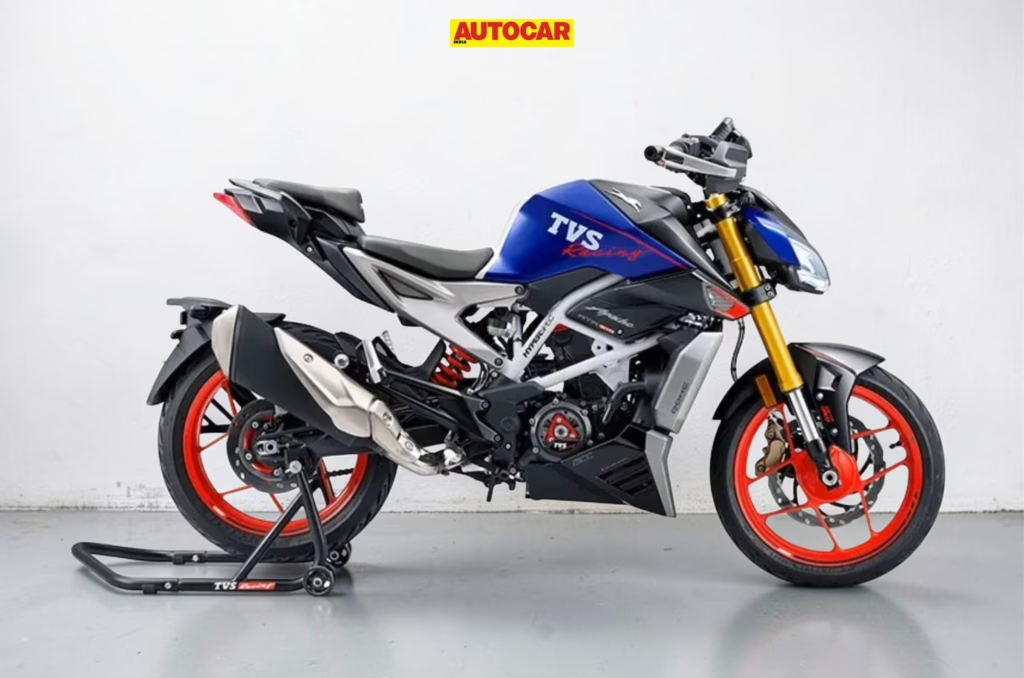
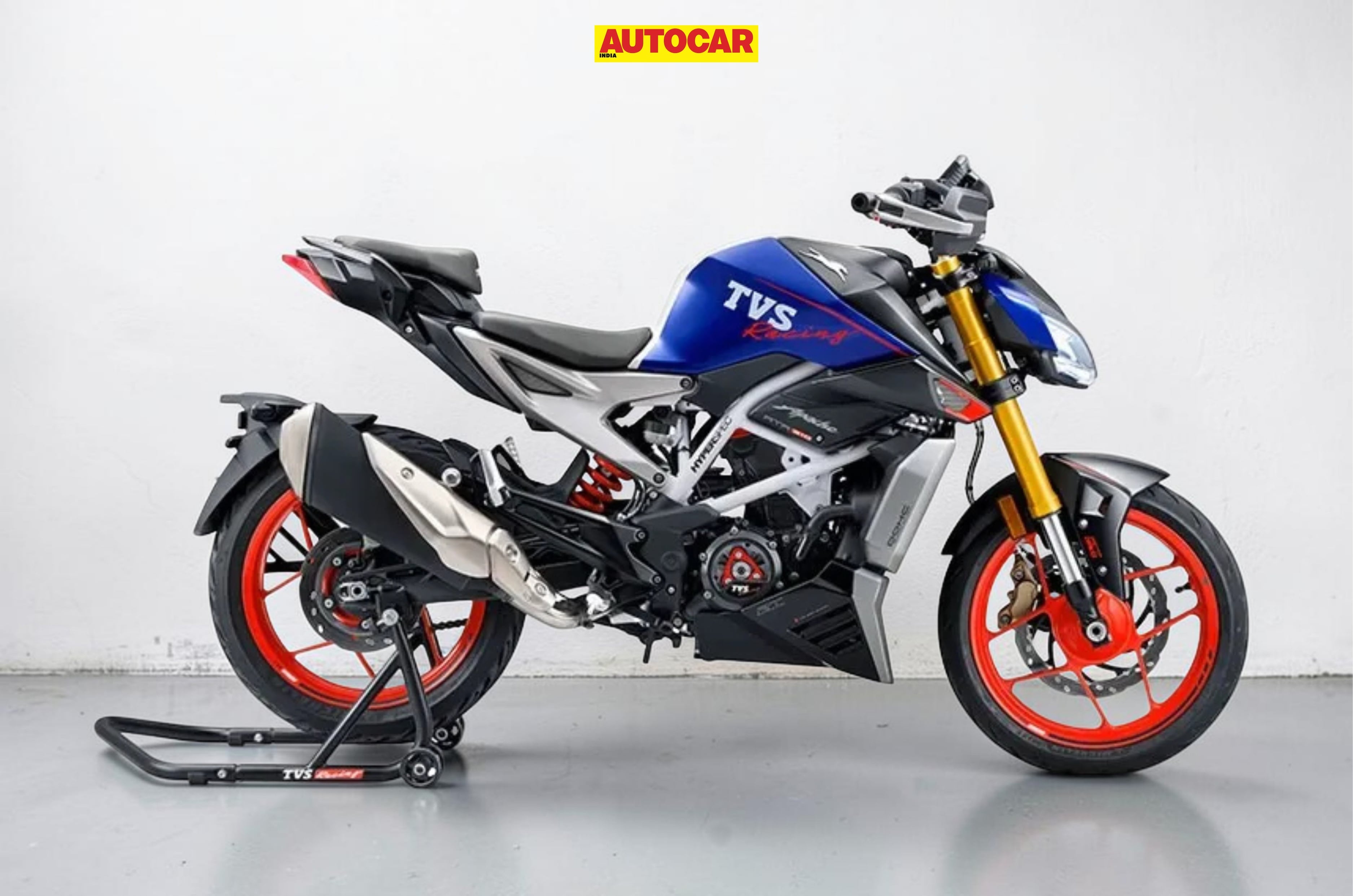
TVS has brought changes to its flagship streetfighter, the Apache RTR 310, just in time for the festive season. These revisions primarily focus on making the variant line-up simpler. Current prices range from Rs 2.3 lakh to Rs 2.97 lakh (ex-showroom, Delhi).
Top variant discontinued
Base now split into variants without quickshifter and with quickshifter
BTO variants remain on sale
2026 TVS Apache RTR 310: Variant changes
Sepang Blue colour, earlier reserved for BTO variants, now available on Base
Earlier, the 2026 RTR 310 was offered in Base (Rs 2.4 lakh), Top (Rs 2.57 lakh), BTO Dynamic Kit (Rs 2.75 lakh) and BTO Dynamic Pro Kit (Rs 2.85 lakh) variants. TVS has now discontinued the Top variant, and split the base variant into ‘Base without quickshifter’ and ‘Base’ with quickshifter. The prices now start at Rs 2.3 lakh for the Base without quickshifter variant, which is only available in the Arsenal Black colour.
As for the next step up, the Base variant is available in four colour options: Arsenal Black and Fury Yellow for Rs 2.47 lakh, Fiery Red for Rs 2.52 lakh and Sepang Blue for Rs 2.57 lakh. The Sepang Blue was previously available only on the BTO variants and now costs Rs 10,000 more than the base black and yellow colours. Other special editions that are also offered on the base variant include the Black Diamond Edition (Rs 2.49 lakh) and the range-topping Anniversary Edition (Rs 2.97 lakh). As for the BTO variants, prices may change depending on the kit and colour.
The rest of the motorcycle remains the same as before. It continues to be powered by the 312cc reverse-inclined single-cylinder liquid-cooled engine producing 35.6hp and 28.7Nm of torque, paired with a 6-speed gearbox. Depending on the variant, the equipment list comprises adjustable suspension, cornering traction control, cornering ABS, TPMS, cruise control, and more.
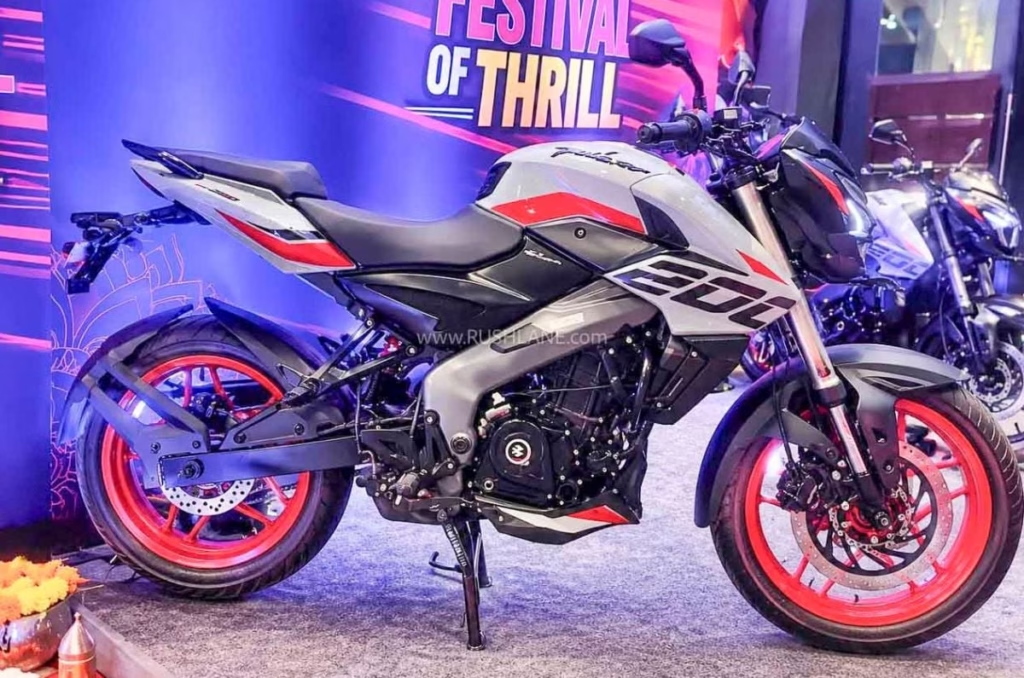
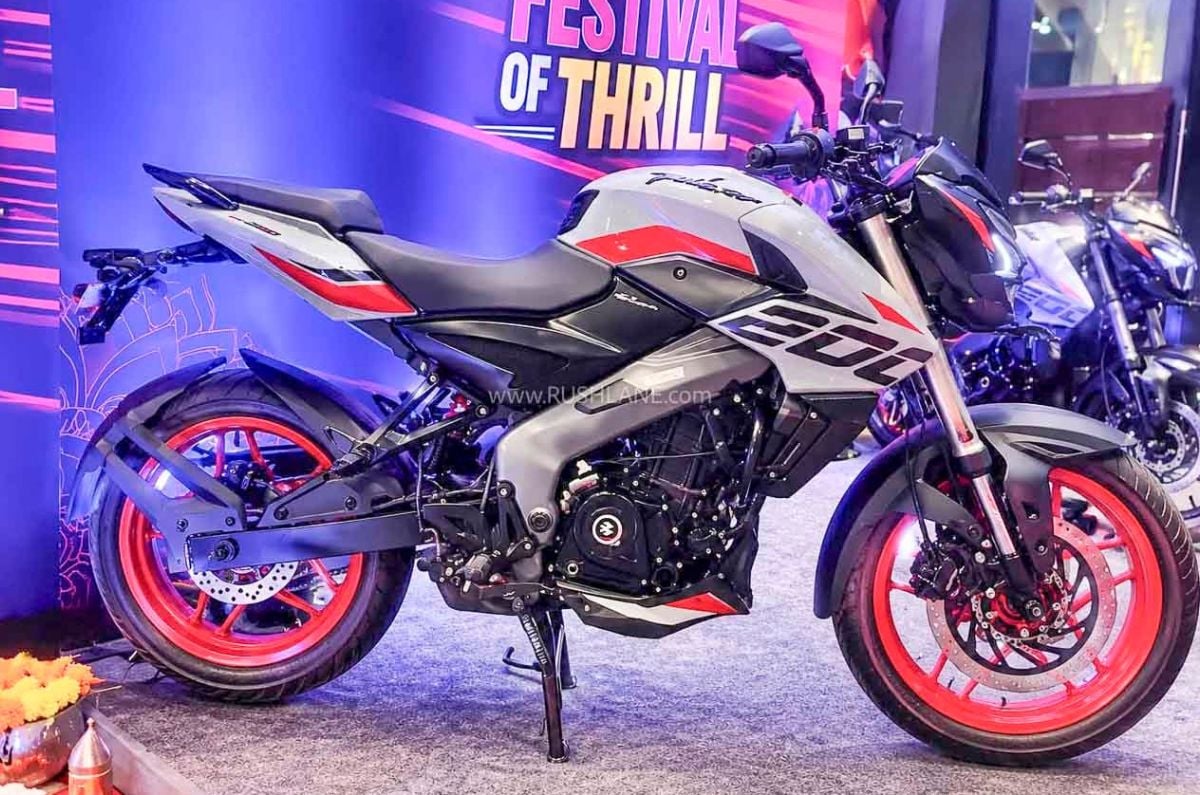
Bajaj continues to update its Pulsar line-up, and the latest one to see feature additions is the Pulsar NS200. While we had previously spotted the NS200 and the N250 with a new instrument cluster and WP USD front fork, the bike that has now reached dealerships doesn’t seem to have the latter feature.
Has a Quickshifter, 4 Ride Modes, Traction control, TFT instrument cluster
Now gets Radial tyres, Adjustable levers and USB Type-C charging
A New Nardo Grey colour, price expected to increase from current Rs 1.48 lakh
Bajaj Pulsar NS200: what’s new?
The 200cc engine now produces 25.5hp, 1hp bump
Having offered a bidirectional quickshifter, traction control and riding modes on the Pulsar NS400Z, Bajaj has now trickled these features down to the Pulsar NS200 as well. While the 37mm USD fork is carried over from before, radial tyres are a new addition to the motorcycle, though it remains unclear whether the bike features radial tyres at both ends or only the rear, there has been no official communication from the brand, hence the ambiguity.
There is also a slight bump in power as well, from 24.5hp of the current model to 25.5hp on the latest version. The 5-inch TFT instrument cluster with Google Maps mirroring, first introduced on the N160 SS, has also made its way here. Other listed features include USB Type-C charging, a hazard switch, a panic brake alert, and adjustable levers, though it remains unclear if the adjustability applies to both the clutch and brake levers.
For now, the announcement remains confined to the dealership level. The current USD-fork equipped Pulsar NS 200 is priced at Rs 1.48 lakh, which is on par with its chief rival, the TVS Apache RTR 200 4V (Rs 1.48 lakh to 1.49 lakh). However, given the additional features on the upcoming model, we can expect a price bump when Bajaj officially reveals it.
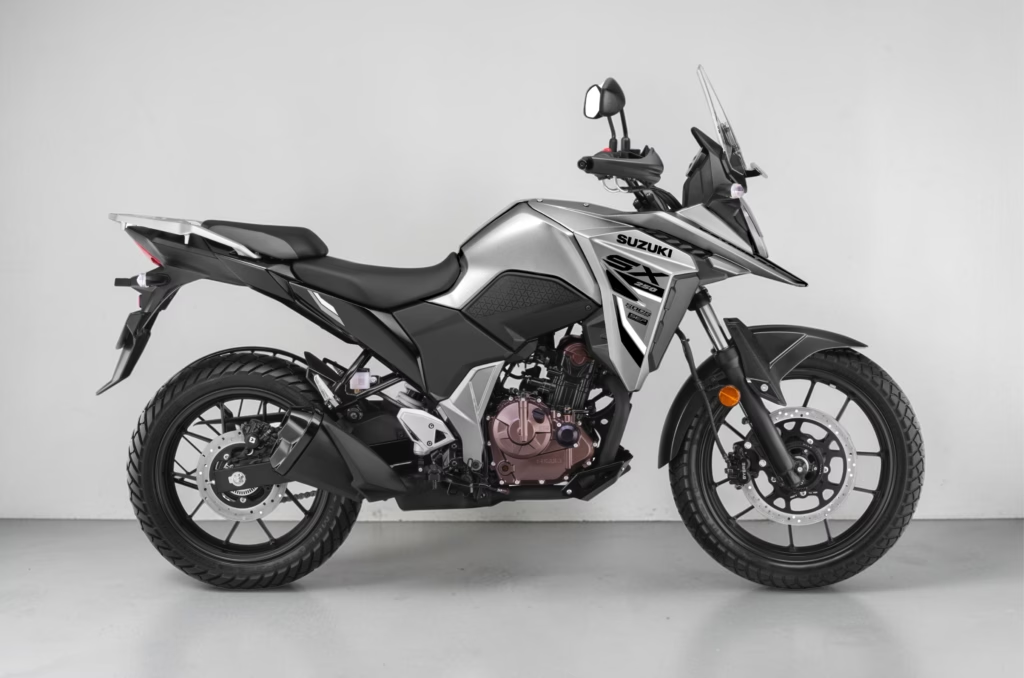
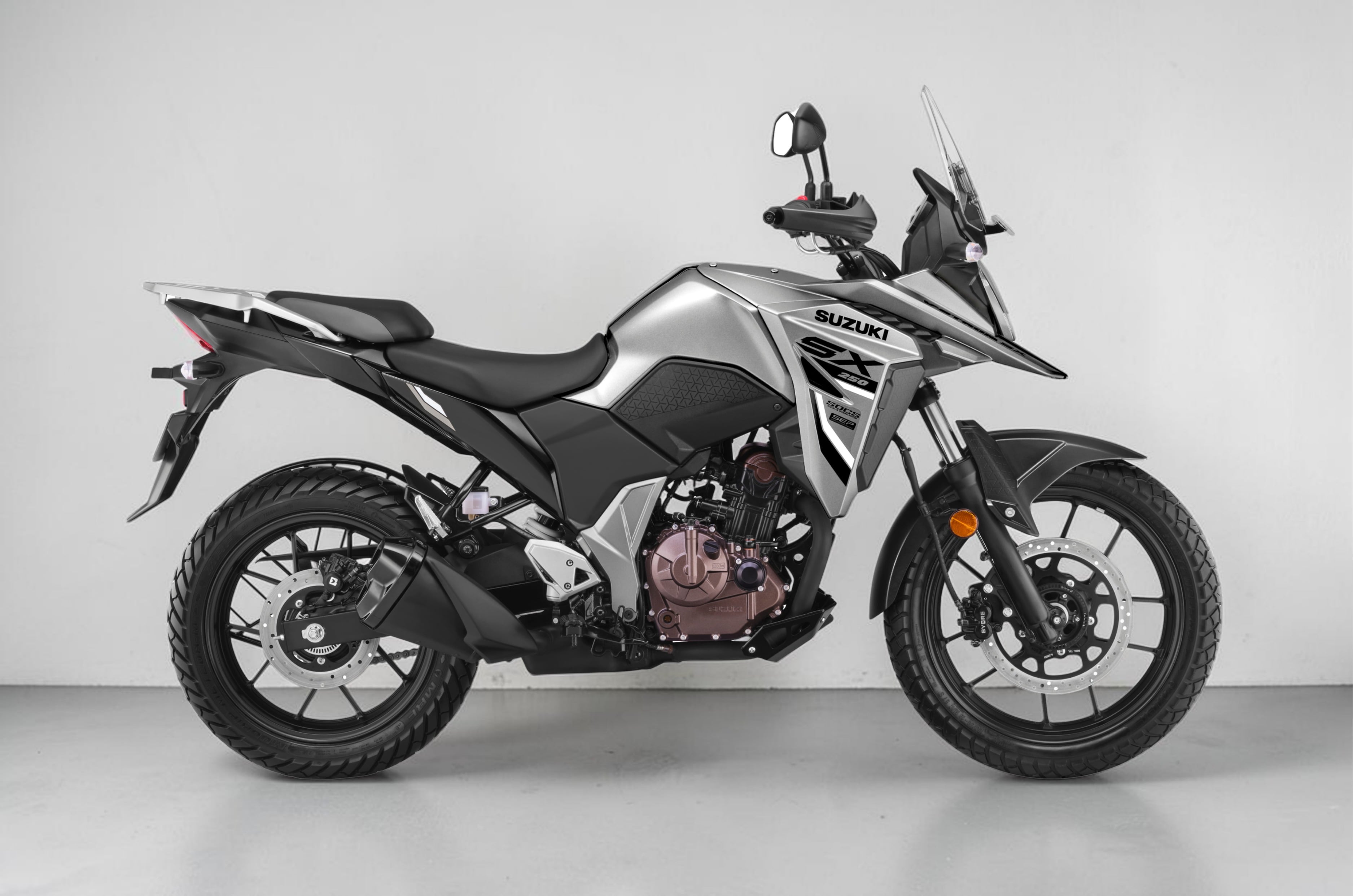
Suzuki has launched a new matte grey colour for the V-Strom SX at Rs 2.02 lakh (ex-showroom, Delhi), the same price as the other colours. The new colour sits alongside the other colour options of the motorcycle. Besides the new colour, the motorcycle remains mechanically unchanged.
Mechanically identical to the existing V-Strom SX
No change in price
Customers will receive a Rynox apparel voucher worth Rs 5,000
V-Strom SX gets a new colour but no changes otherwise
Uses the same 249cc engine and features
As mentioned above, the Suzuki V-Strom SX uses the same 249cc oil-cooled single-cylinder engine, which delivers 26.5hp at 9,000rpm and 22.2Nm of torque at 7,300rpm paired with a 6-speed gearbox. The design, features and pricing remain the same as the existing model. Suzuki is now also offering a Rynox apparel voucher worth Rs 5,000 to the V-Strom SX customers, subject to terms and conditions.
At this price point the V-Strom SX is now competing against other popular offerings in the adventure segment like the HeroXpulse 210 (Rs 1.68 lakh to Rs 1.77 lakh) and TVSApache RTX 300 (Rs 1.99 lakh to Rs 2.39 lakh). For those in the market for a simple Japanese machine with an air/oil-cooled engine in this displacement bracket, there’s also the new HondaXR300L (Rs 1.83 lakh) and XR300 Rally (Rs 2.08 lakh) which will be factored in, although the Hondas are far more off-road capable than the Suzuki.
Bajaj launched the very first Pulsar 150 all the way back in 2001. TVS first responded with the Apache 150 in 2005, and upped the ante with the 160 in 2006. Bajaj, for the Pulsar’s 25th anniversary, effectively rebuilt the Pulsar 150 from scratch, marking some of its biggest changes since the original. TVS responded to this by introducing a new top-variant for the Apache 160 2V with traction control. At the time of writing, the difference in prices between the two is less than the price of six litres of petrol. If you’re not sure which one of these street-nakeds is right for you, we can help with that.
Bajaj Pulsar 150 vs TVS Apache RTR 160 (2V): Engine and output
The older motorcycle is… better?
Bajaj Pulsar 150
TVS Apache RTR 160 (2V)
Engine
149.5cc, single-cylinder, oil-cooled
159.7cc, single-cylinder, air-cooled
Power
14hp at 8,000rpm
16.04hp at 8,750rpm
Torque
14.1Nm at 6,500rpm
13.85Nm at 7,000rpm
Transmission
5-speed
5-speed
Power-to-weight ratio
99.29hp/tonne
115.40hp/tonne
Despite being the older motorcycle of the two, it’s the Apache that has the upper hand in this area. It has the better number for all the metrics; although it delivers both peak power and peak torque higher up in the rev range compared to the Pulsar. The Apache’s power and torque figures vary according to the chosen ride mode, and for this comparison, we’ve taken the figures from the Sport mode, the most powerful one of the three on offer.
Bajaj Pulsar 150 vs TVS Apache RTR 160 (2V): Dimensions and weight
Pulsar gets a notably larger fuel tank
Bajaj Pulsar 150
TVS Apache RTR 160 (2V)
Fuel tank
15 litres
12 litres
Ground clearance
186mm
180mm
Seat height
795mm
790mm
Kerb weight
141kg
139kg
Wheelbase
1338mm
1300mm
With an all-new diamond frame, Bajaj was able to achieve a weight reduction of 9kg on the Pulsar 150 compared to the previous version. However, the Apache is still lighter by 2kg for its top-most variant. It’s also most accessible with a 5mm lower seat height. Do note that the lower seat height also translates to a 6mm lesser ground clearance, and the Pulsar gives you three extra litres of capacity on its fuel tank. In this segment, that translates to at least 120km, not an insignificant number.
Bajaj Pulsar 150 vs TVS Apache RTR 160 (2V): Tyres, brakes, and suspension
TVS (mostly) has the stronger ride package
Bajaj Pulsar 150
TVS Apache RTR 160 (2V)
Tyres (F,R)
80/100-17, 100/90-17
90/90-17, 120/70-17
Brakes (F,R)
260mm disc, 230mm disc; single-channel ABS
270mm disc, 240mm disc; dual-channel ABS
Suspension (F,R)
Telescopic fork, monoshock
Telescopic fork, twin-shock
Bajaj had reduced the rear tyre size on the Pulsar 150 with the new version; the older top variant (Split Seat) had a 120/80-17 size rear tyre. As things stand, the TVS gets the larger tyre on both ends. Do note that TVS gives a slightly smaller 110/80-17 rear tyre on the lower variant. The Apache also has larger disc sizes for its brakes, but both motorcycles get 130mm drum brakes on the lower variants. Apache is the only motorcycle to offer dual-channel ABS, even if it’s limited to the top-two variants. In this section, the Pulsar’s only real advantage is that its newer frame gives it a monoshock, whereas the TVS continues with a twin-shock.
Bajaj Pulsar 150 vs TVS Apache RTR 160 (2V): Features
Newer is better
This is where the Pulsar makes its strongest case to be your motorcycle of choice. The top variant of the Pulsar 150 now gets a 5-inch TFT screen (first debuted on the Pulsar N160 SS) with Google Maps mirroring support, an integrated starter-motor-generator (ISG) to enable silent starts as well as an auto stop/start system. The TVS makes its age very obvious with its LCD instrument cluster; however, it still has bluetooth on the higher variants and can connect to your smartphone for call and SMS alerts, just like the Bajaj.
Considering how long it’s been since TVS gave it a major upgrade though, it’s impressive how well the Apache holds up against the all-new Pulsar. To give you two examples, both companies offer their own solutions for making low speed riding easier (in stop-and-go traffic, for example); Bajaj calls its version Crawl Mode and TVS calls its version Glide Through Technology (GTT). Both also offer all LED lighting, a feature that reached the TVS later than Bajaj. However, only the Apache gets traction control.
Bajaj Pulsar 150 vs TVS Apache RTR 160 (2V): Price
Neck-and-neck
Bajaj Pulsar 150
TVS Apache RTR 160 (2V)
Price (ex-showroom, Delhi)
Rs 1,15,233-1,28,650 lakh
Rs 1,13,890-1,27,990 lakh
Bajaj has two variants of the Pulsar 150, with a lower variant replacing the TFT screen for an LCD one and losing out on the features that are associated with it. TVS, at the time of writing, offers seven variants for the Apache RTR 160, all separated by about Rs 3,000 difference. However, it’s the Apache that’s more affordable to purchase, even if the difference is just Rs 660. Hopefully, the other differences are enough to help you choose one over the other.
Navigation has been one of the major challenges for every aspiring motorcyclist. Unfortunately, major smartphone OS manufacturers don’t deem us profitable enough to solve it for us; but, our OEMs might have a smarter solution for that, by way of Google Maps mirroring. Today, you can buy a motorcycle for as low as Rs 1.04 lakh and still be able to navigate your way through your city, or wherever your heart takes you. Speaking of, let’s start with that very motorcycle.
All prices mentioned are ex-showroom, Delhi for the specific variant with Google Maps mirroring feature.
Bajaj Pulsar 125
Rs 1.04 lakh
Bajaj had comprehensively upgraded the classic Pulsar 125 with many changes and a whole slew of features, including Google Maps mirroring on the top-most Split Seat variant. Besides that, you get a 124.58cc engine with 12.1hp and 11.4Nm, a front disc brake, and three ride modes. A decent choice if you mostly commute in the city, but if you find yourself on the open roads on every chance you get, look at the bigger brother.
Bajaj Pulsar 150
Rs 1.29 lakh
Admittedly, Rs 25,000 isn’t a small step-up in this price range. However, besides retaining the same feature-set and silhouette, on the Pulsar 150 you get a larger 149.5cc engine with 14.1hp and 14.1Nm, which should make highway stints seem less stressful on you and the motorcycle; and saying that you have the Pulsar 150 has a better ring to it, but that’s a subjective opinion. If Bajaj isn’t your brand of choice, though, we have another Indian manufacturer known for pushing the envelope on features.
TVS Apache RTR 160 4V
Rs 1.41 lakh
TVS has made the Apache series synonymous with features over the past few years, so of course it responded to Bajaj upgrading the classic Pulsars. Its best-selling Apache RTR 160 4V now also has a TFT display that supports Google Maps mirroring. TVS, in its usual fashion, turns things up a notch by offering even more power from its 159.7cc engine (17.55hp and 14.73Nm) and a whole lot more features like dual-channel ABS, traction control, a slipper clutch, more premium design, etc., That’s quite a bit more for Rs 12,000 over the Pulsar 150 but if you wonder whether Bajaj has a similar offering, fret not.
Bajaj Pulsar N160 SS
Rs 1.43 lakh
This is the first motorcycle on which Bajaj debuted the new 5-inch TFT screen with Google Maps mirroring. It’s since been extended to other Pulsars. Over the Pulsar 150, the N160 SS offers a bigger 164.9cc engine with 18.5hp and 14.4Nm (directly sparring with the RTR 160 4V), ride-by-wire, traction control, one extra ride mode, a slipper clutch, and a more modern design that may suit your preferences better. The N160 SS also offers dual-channel ABS as standard. If you feel like you’re done with the 150-160cc class, the next upgrade is closer than you think.
TVS Apache RTR 200 4V
Rs 1.50 lakh
The Apache RTR 200 4V has now been relegated to getting the “et al” treatment from TVS so now it is almost too close to the RTR 160, one might say. However, it retains the bigger 197.75cc engine with close to 21hp and 17.25Nm. The only other feature that still remains exclusive to the 200 is the preload-adjustable USD fork that TVS brought back, with the recent update. Worth paying Rs 7,000 extra You decide, but if you are somehow not satisfied with the value on offer, the next motorcycle wears value-for-money as a badge of honour on its sleeve.
Bajaj Pulsar NS400Z
Rs 1.90 lakh
Bajaj’s downsized 349cc Pulsar NS400Z has gone down in price again, and the company gave it the same TFT unit as on the other Pulsars just two days ago; and we might see it in even more of their motorcycles soon. Anyway, the NS400Z gives you a steep jump in power with 40.6hp and 33Nm. It retains the feature-set from the N160 SS as-is with power and torque as its biggest differentiation from almost every other motorcycle on this list. If you’re in a phase of your life where you’re on long rides more often than commutes, you might prefer the next motorcycle more.
TVS Apache RTX 300
Rs 2.19 lakh
TVS’s first adventure tourer popularised the feature in question a year ago, offering it on the top and BTO variants. Compared to the NS400Z, you get a smaller 299.1cc engine with 36hp and 28.5Nm. However, the Apache RTX 300 is no slouch in features in any other way, matching the NS400Z on every feature on offer. If you’re an experienced motorcyclist who’d like to tune your ride more minutely, stepping up to the BTO variant at Rs 2.39 lakh might be worth it, considering it gives your adjustable suspension on both ends. If none of these sound exciting enough for you, maybe see if the last one does the trick.
Royal Enfield Guerrilla 450
Rs 2.51 lakh
Royal Enfield introduced a new 4-inch TFT display with the Himalayan 450 that could project Google Maps powered navigation onto it, making the Chennai-UK based manufacturer technically the first to have figured this solution out. If you didn’t know this already, pressing and holding the M button on your Guerrilla 450 (and the Himalayan and Bear 650) will change the dials to the ‘digital’ look. After that, connecting your smartphone to the Royal Enfield app and starting navigation will make the whole map show on your display.
Getting back to the Guerrilla 450 itself, it’s Royal Enfield’s take on a sport-naked. Similar to most motorcycles on this list, its primary purpose isn’t touring, but when has that ever stopped the determined? The Guerrilla also has a 450cc engine that doles out 40.02hp and 40Nm, making it the most powerful motorcycle on this list. It goes toe-to-toe with the other motorcycles in terms of the features on offer, although most of the additional price is for its extra power (and the 40 percent GST of course).
That concludes the list of motorcycles under Rs 3 lakh with Google Maps mirroring, for now. We expect Bajaj to extend the same TFT display to even more of their portfolio in the near future. TVS might respond to that in their own, unique way so this list is all but guaranteed to grow even more in the near future. It’s one more significant hurdle removed for a motorcyclist, and every meaningful step counts.
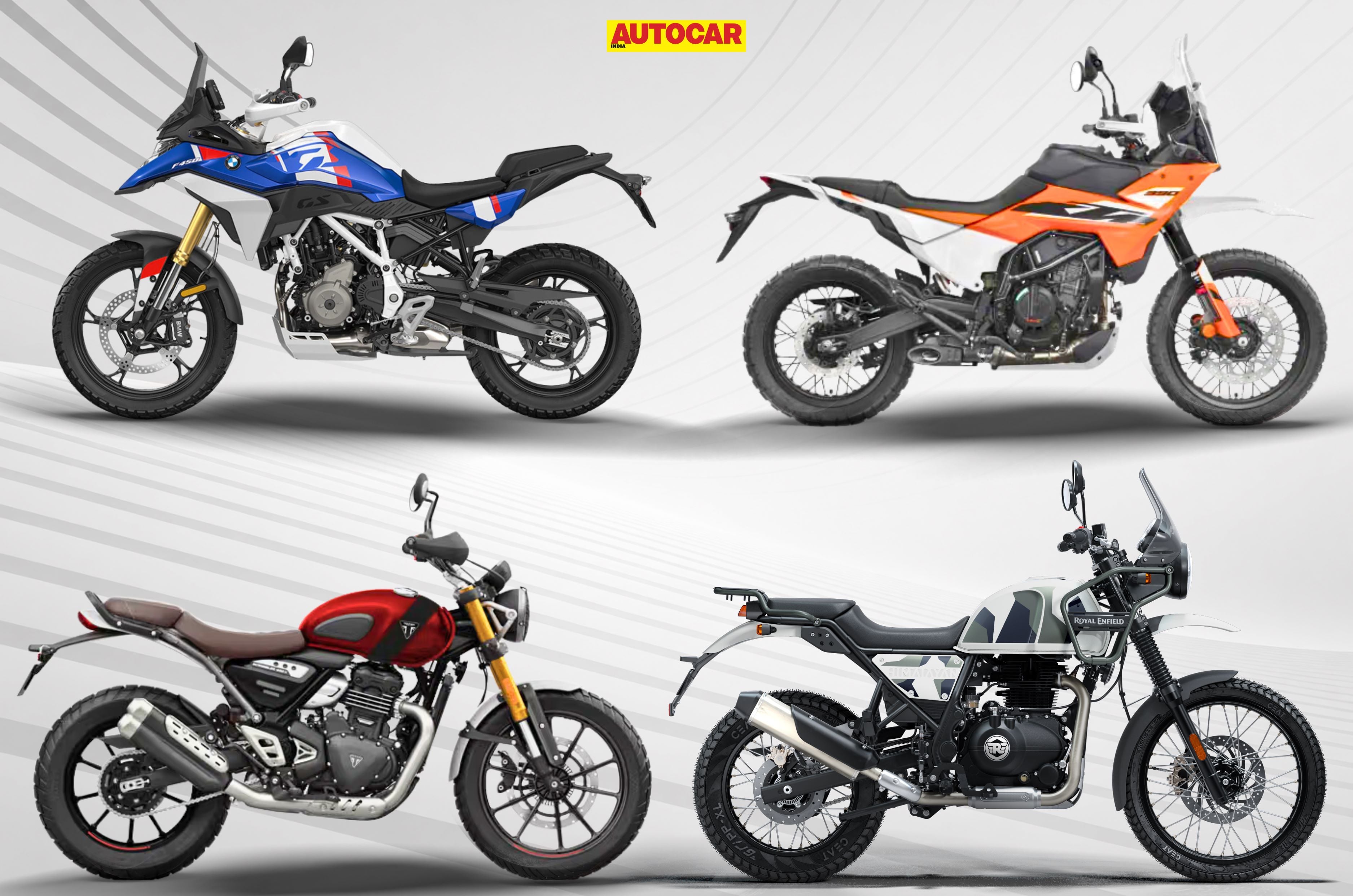
Ten years ago, Royal Enfield made adventure tourers mainstream with the original Himalayan 411 and the segment has slowly, but surely grown since. As with any other thing that gains popularity, this segment also has gained different kinds of options. On the one hand, we have the V-Strom that’s effectively a Gixxer 250 on stilts, and on the other, we have the KTM 390 Adventure S that looks to strike a fine balance between both adventure and touring capabilities. Admittedly, this can get a bit overwhelming, so here are all the adventure touring motorcycles you can buy in India right now between Rs 2-5 lakh.
All prices mentioned are ex-showroom, Delhi.
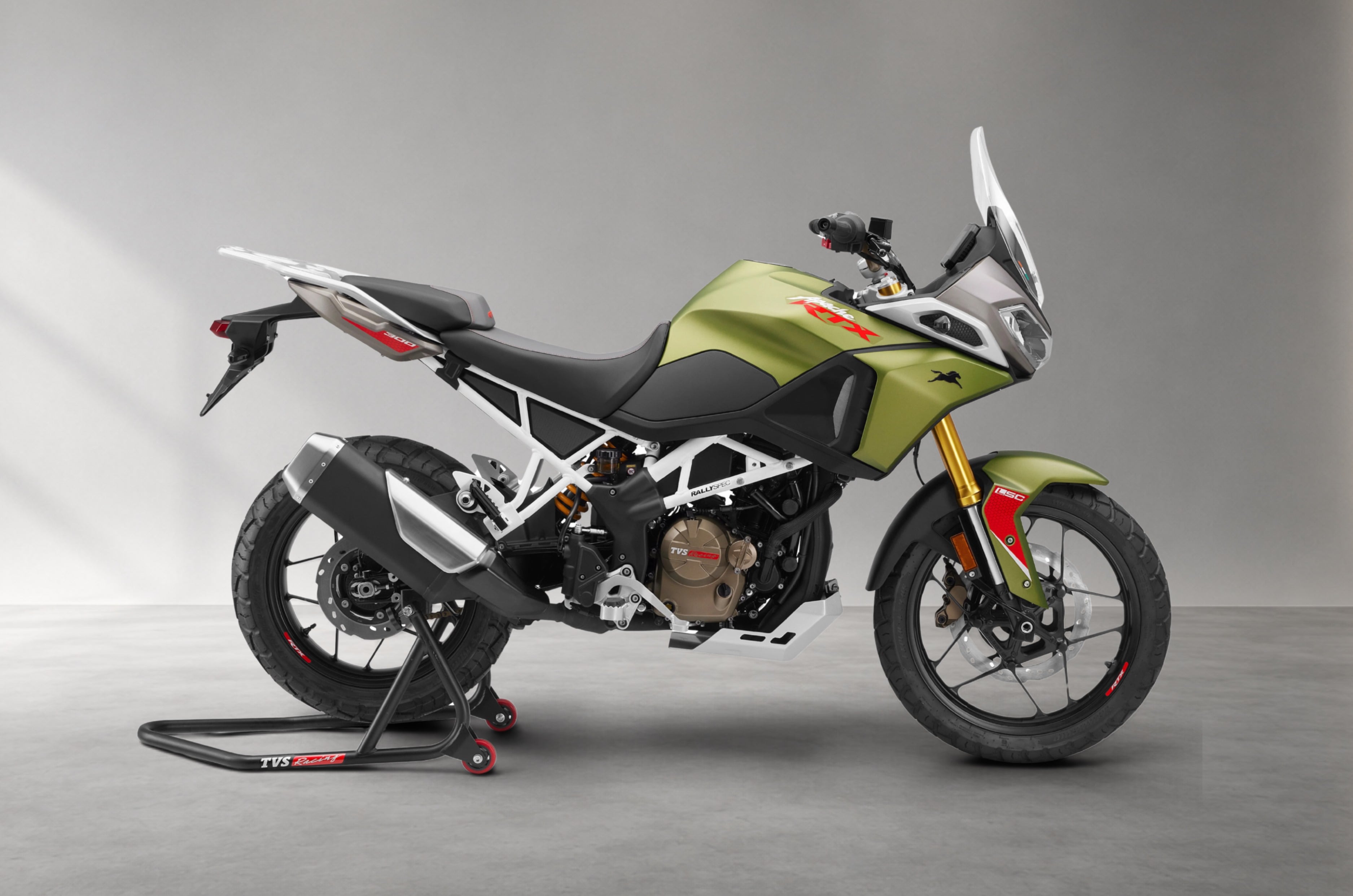
11. TVS Apache RTX 300
Starts at Rs 1.99 lakh
TVS is the most recent (new) entrant into the segment, with the Apache RTX 300 redefining how many features you can pack into on a relatively affordable budget. The RTX’s 299.1cc single-cylinder, liquid-cooled engine with 36hp and 28.1Nm of torque isn’t the most exciting but has the ability to keep going as long as you’re willing to, except for the oddly small 12.5-litre fuel tank. The TVS sticks to a 19/17 front/rear wheel setup and only comes with alloy rims.
TVS offers four ride modes and cruise control as standard with the higher variants stepping that up to a bi-directional quickshifter, traction control, and Google Maps mirroring on the 5-inch TFT screen. It also has a very good headlight as standard, and the top BTO variant adds adjustable suspension too, both aimed at increasing the sense of safety and comfort. The 835mm seat height and 180kg kerb weight combo might look daunting on paper, but they aren’t a big hindrance in practice.
The TVS Apache RTX 300 spans Rs 1.99 lakh for the Base variant and Rs 2.39 lakh for the BTO variant.
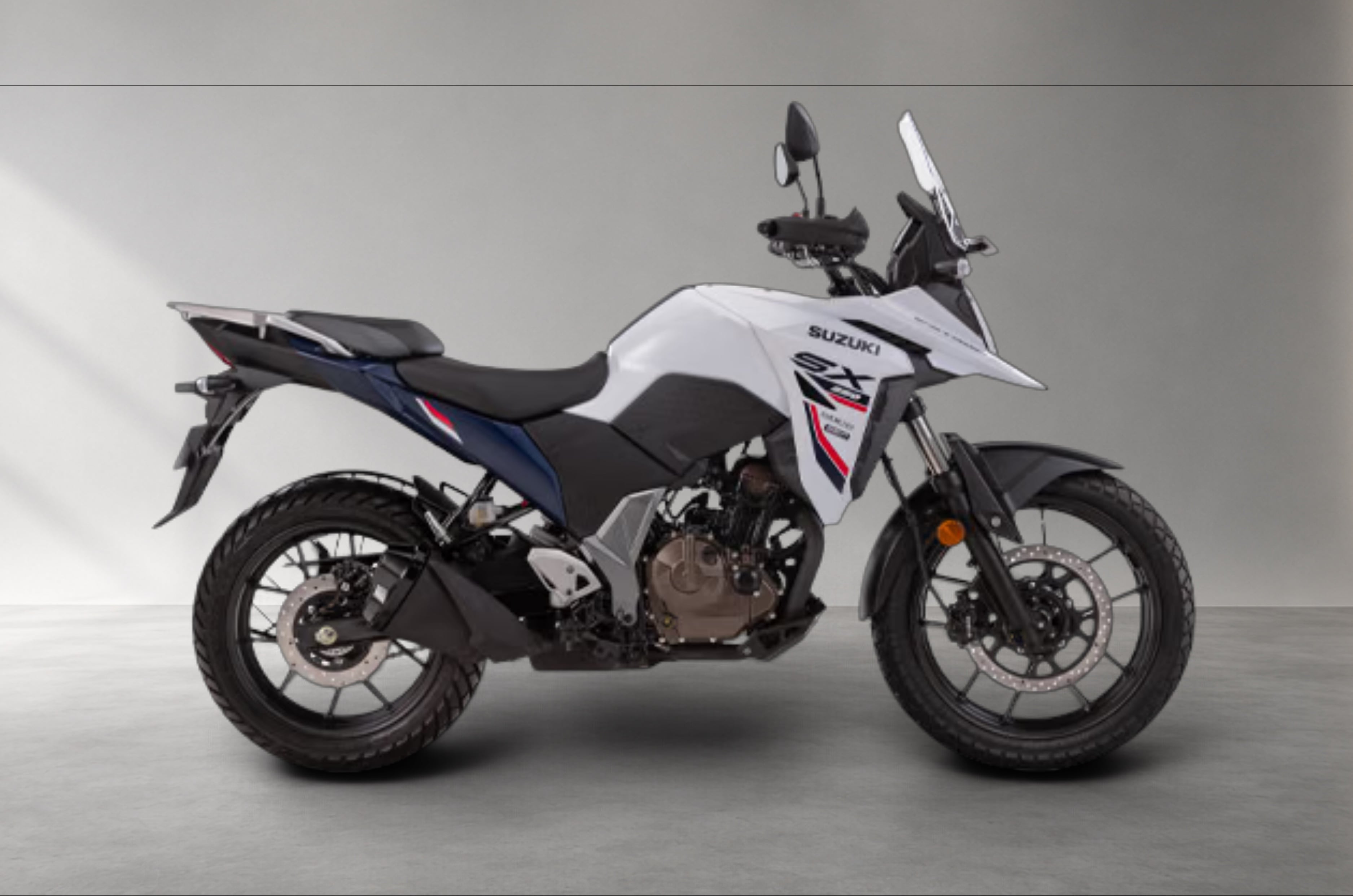
10. Suzuki V-Strom SX
Rs 2.01 lakh
Suzuki’s adventure tourer is mostly a tourer because it is a re-engineered Gixxer 250 with a taller stance. But, don’t let that stop you from considering it seriously because its 249cc engine with 26.5hp and 22.2Nm of torque has more than enough to make long days seem effortless. The 12-litre fuel tank capacity seems small on paper, but it is possible to make the Suzuki quite efficient. It has a 835mm seat height, but the 167kg kerb weight softens that blow.
As is typical for Japanese products in this class, the V-Strom SX is light on features, with dual-channel ABS the only rider aid on offer. However, it also makes a great case for reliability, helped further by Suzuki’s brand cachet. The Suzuki runs on 19/17 front/rear wheels and only gets alloy rims.
The Suzuki V-Strom SX has a single variant and costs Rs 2.01 lakh.
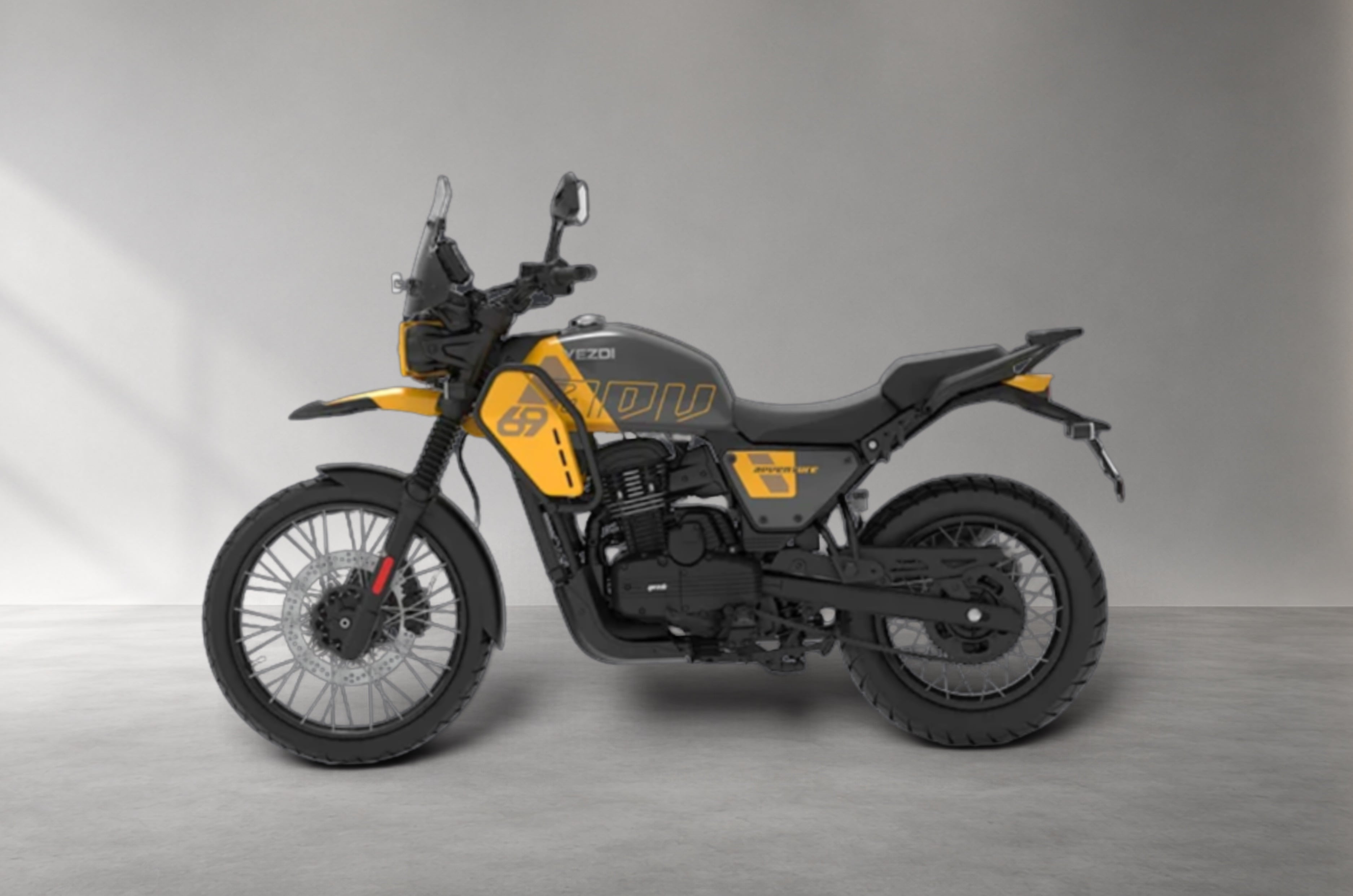
9. Yezdi Adventure
Starts at Rs 2.06 lakh
Classic Legends’ Yezdi had comprehensively upgraded their adventure tourer earlier this year. The 334cc engine is now liquid-cooled and makes 29.6hp and 29.8Nm of torque. The fuel tank capacity is a healthy 15.5 litres and the Yezdi Adventure has a 815mm seat height and weighs about 198kg.
Along with an updated design, the Adventure gained features like an asymmetrical dual headlamp, all LED lighting, three ABS modes, traction control and a rerouted exhaust for better heat management. Yezdi also offers tubeless, cross spoke wheels as accessories for Rs 20,000 extra, if you’d like to embrace the adventure look with the convenience of tubeless tyres. Standard fitments are 21/17 front/rear tubed, wire-spoke wheels.
The Yezdi Adventure starts at Rs 2.06 lakh for the base Nebula Blue White colour and goes up to Rs 2.13 lakh for the top Yellow Falcon colour.
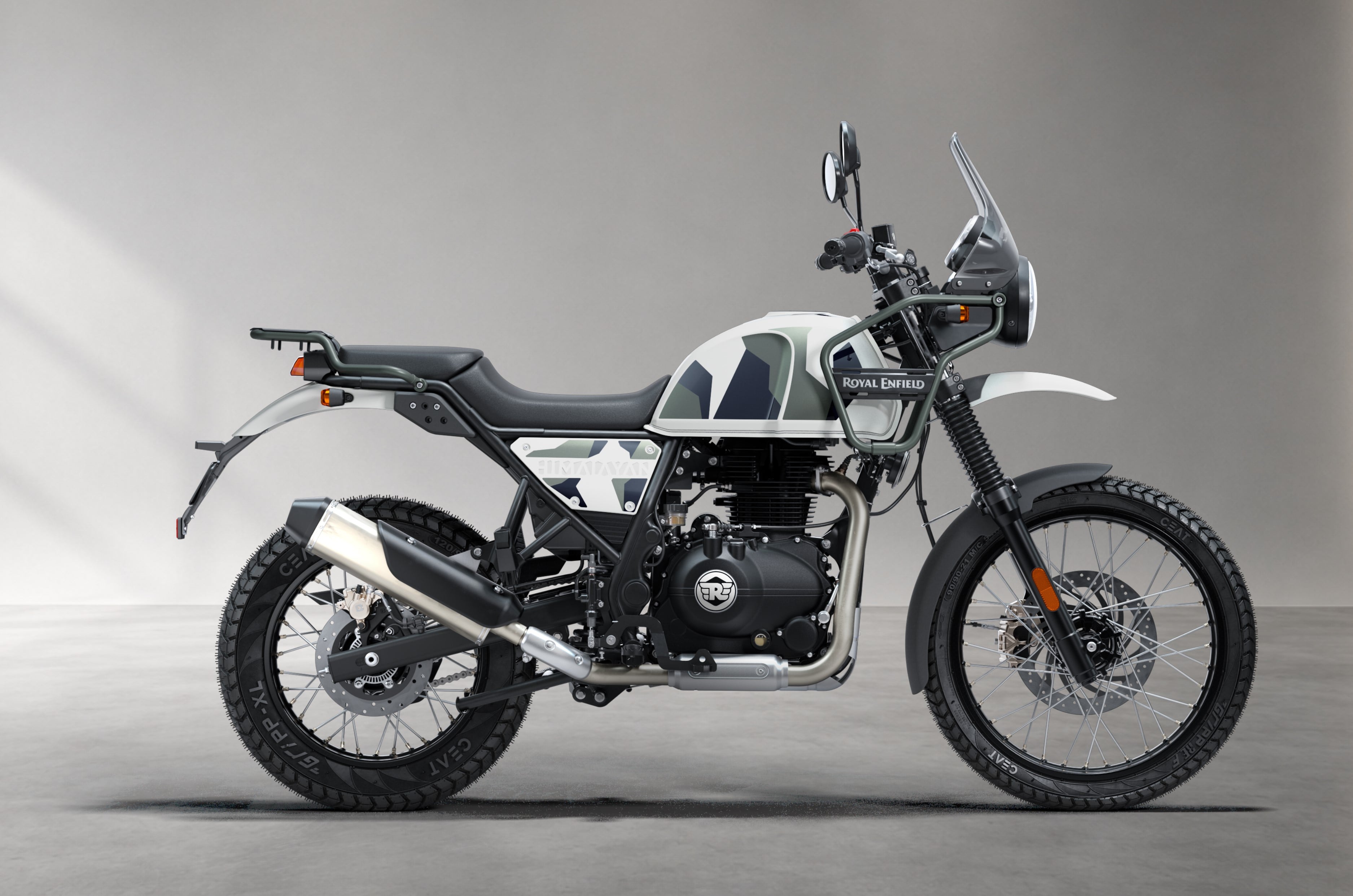
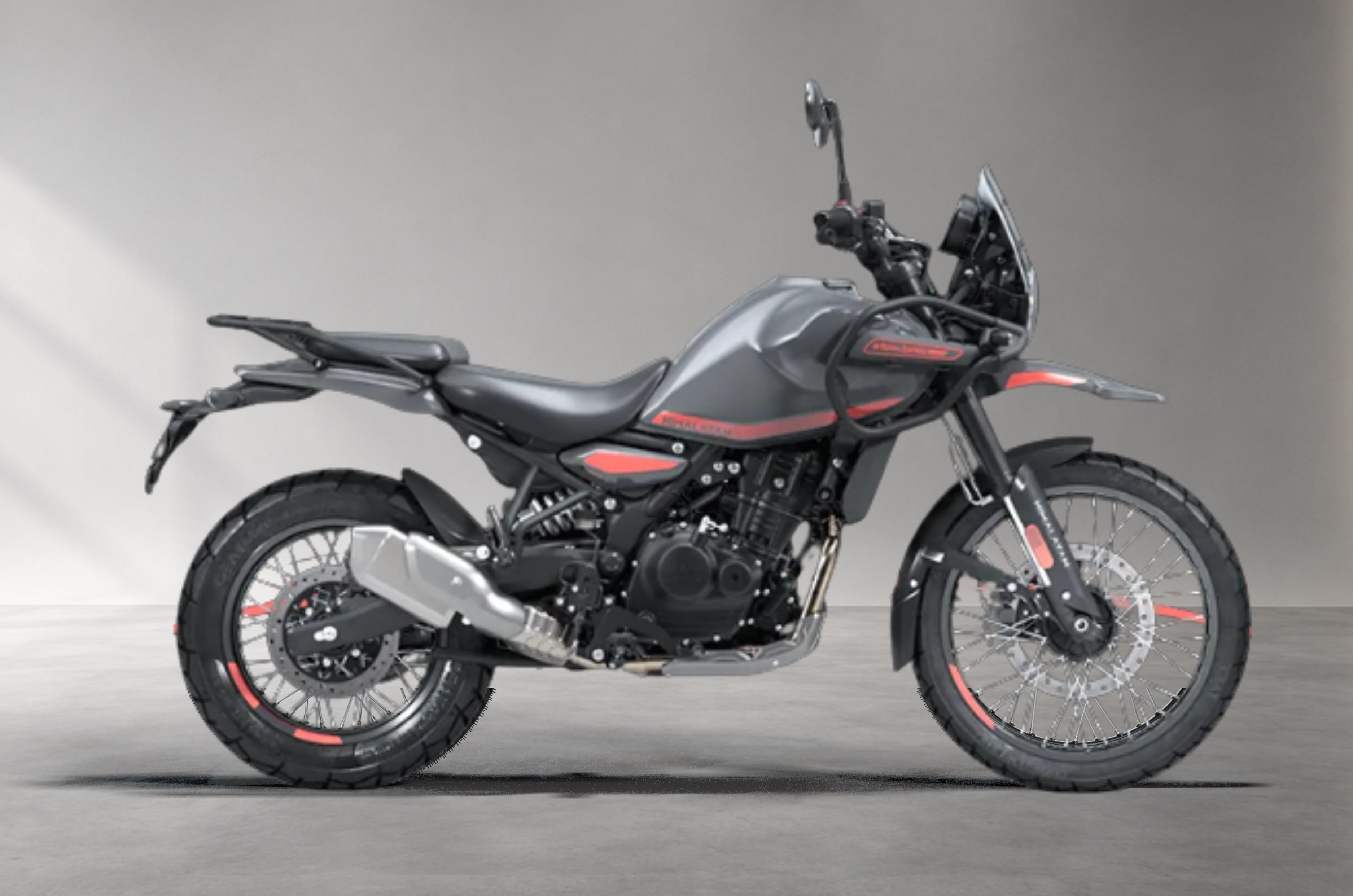
8. Royal Enfield Himalayan 440
Rs 2.29 lakh
Royal Enfield has resurrected the air/oil-cooled Himalayan 440 for 2026. The 443cc engine (shared with the Scram 440) makes 25.4hp and 34Nm of torque and the Himalayan stays true to its roots by only offering switchable dual-channel ABS and the Tripper navigation pod as notable features. The seat height remains at 800mm, as does the fuel tank capacity at 15 litres; which also means the weight remains unchanged at 199kg as well. Royal Enfield has stuck to a tubed 21/17 wheel setup on the Himalayan 440.
Most of the mentioned specifications, are common to the Scram 440. Its base variant starts lower at Rs 2.25 lakh for wire spoke rims, and the higher variant offers alloy rims at Rs 2.32 lakh.
Uncharacteristic for Royal Enfield, all three colours of the Himalayan 440 cost the same Rs 2.29 lakh.
7. KTM 250 Adventure
Rs 2.53 lakh
KTM’s entry-level adventure tourer is the 250 Adventure, which shares its engine with the 250 Duke and its platform with the bigger brothers. Its 249.07cc engine makes 31hp and 25Nm of torque. The fuel tank capacity is 14.5 litres, seat height is at 825mm, and kerb weight is 176kg.
Being the entry-level opinion, KTM has kept things simple in terms of features. It gets a bi-directional quickshift, a slip-and-assist clutch, and two ABS modes. For fancy features like ride modes, cruise control etc., you’ll have to step up the 390 Adventure with the 350cc engine (also on this list). The 250 Adventure runs on 19/17 front and rear wheels with alloy rims.
KTM offers a single variant for the 250 Adventure and has priced it at Rs 2.53 lakh.
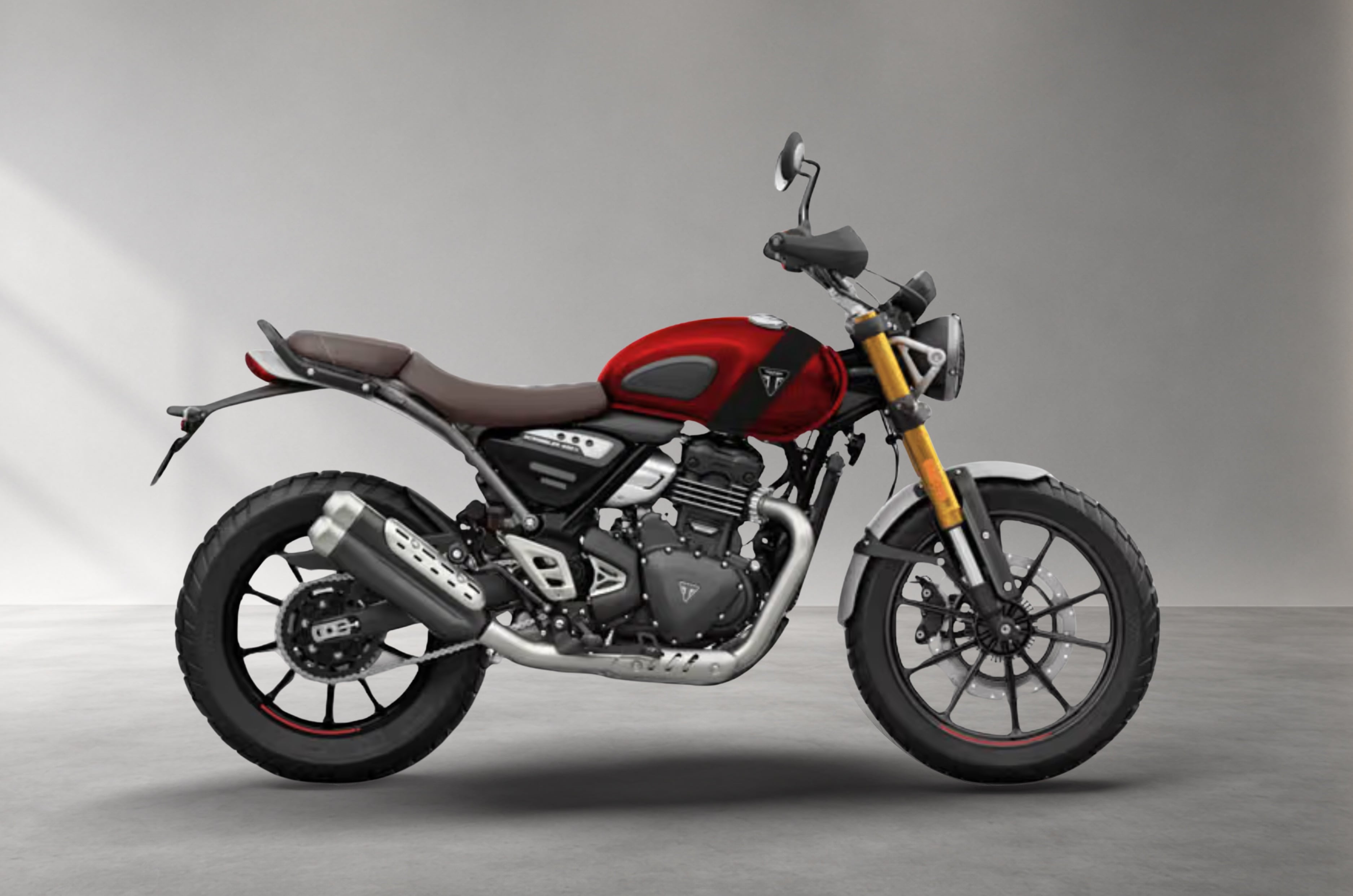
6. Triumph Scrambler 400 X
Rs 2.65 lakh
Technically, the Scrambler 400 X isn’t an adventure tourer, but in the absence of a Tiger 400 (so far), it is the closest Triumph (and Bajaj) offers to one in India. With the downsizing, the Scrambler’s 349cc liquid-cooled engine makes 37hp and 32Nm of torque. The Scrambler 400 X has a 13-litre fuel tank, seat height is at 835mm and kerb weight is 185kg.
The Scrambler offers switchable dual-channel ABS, a slip-and-assist clutch, and traction control as standard rider aids. It comes with 19/17 front/rear wheels and only offers alloy rims in the X guise.
Triumph Scrambler 400 X is priced at Rs 2.65 lakh, but if you want to turn up the ADV look, there’s also a Scrambler 400 XC with tubeless cross spoke wheels and more accessories as standard for Rs 2.99 lakh. However, for all intents and purposes, the X and XC are near-identical.
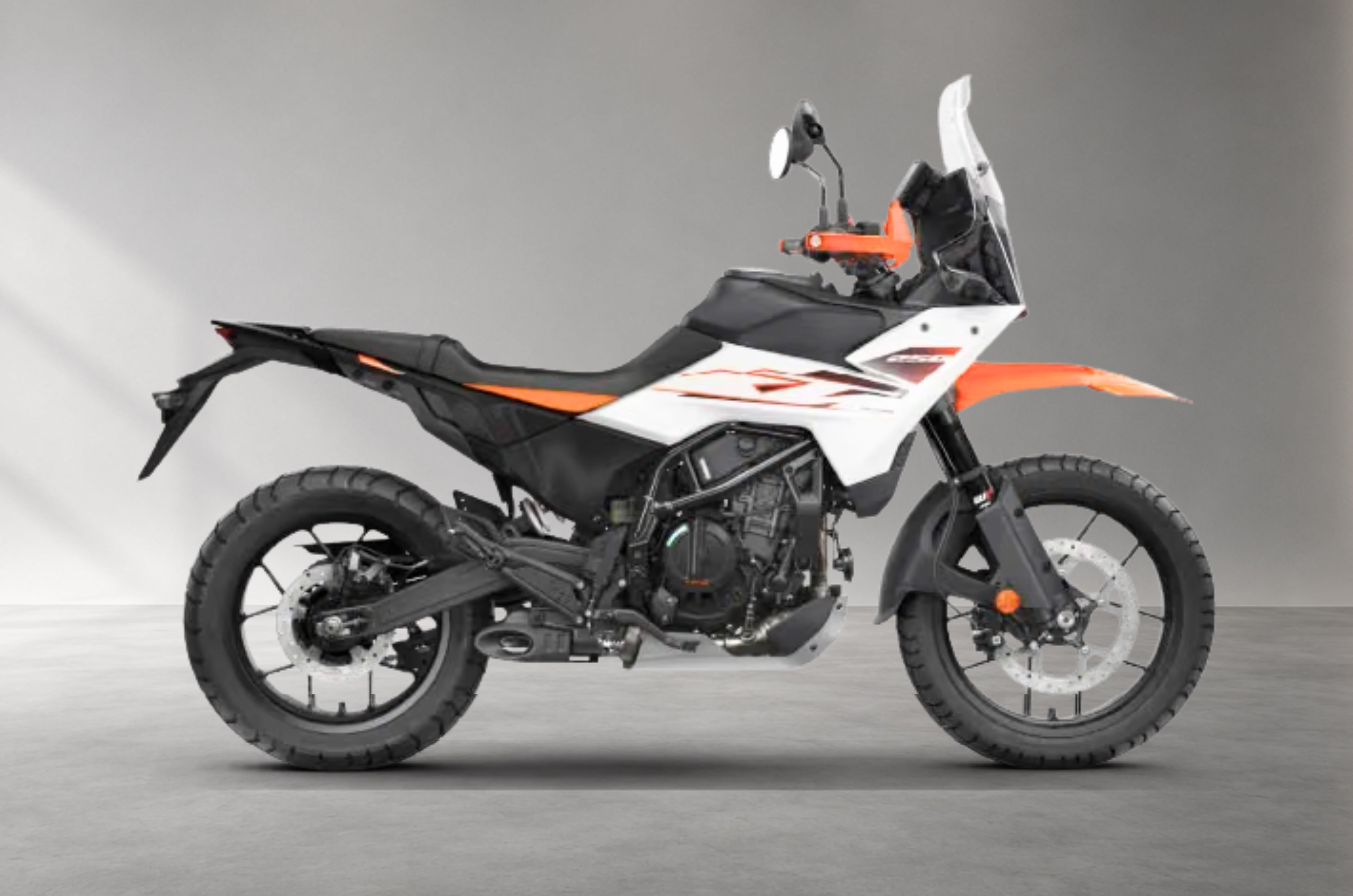
5. KTM 390 Adventure (350cc)
Rs 2.87 lakh
KTM’s downsizing brought down the 399cc Adventures into 349.32cc, with the smaller engine making 41.5hp and 33.5Nm of torque. In terms of specification, the 350cc Adventure is pretty middle ground with a 14.5-litre fuel tank, 181kg kerb weight and 825mm seat height.
Besides the RTX 300, this is the only other motorcycle on this list under 3 lakh to offer cruise control as standard. It gets three ride modes, a bi-directional quickshifter, traction control, a 5-inch TFT screen, among other things. This version of the Adventure comes exclusively with 19/17 front/rear wheels and alloy rims.
The KTM 390 Adventure has a single variant with two colours and is priced at Rs 2.87 lakh.
4. Royal Enfield Himalayan (450)
Starts at Rs 3.08 lakh
Royal Enfield’s Himalayan (450) gets quite a bit over its older/younger brother. Its engine is liquid-cooled (vs air-cooled on the 440) with 40.02hp and 40Nm of torque. Built on a completely new platform, the Himalayan 450 is three kilos lighter than the 440 at 196kg, and gets a markedly larger 17-litre fuel tank. The standard seat height ranges between 825-845mm, but it’s possible to drop that to 805mm with an accessory low seat.
On the features side too it offers a lot more than the 440, with a 4-inch TFT display with Google Maps powered navigation, two ride modes, and a slip-and-assist clutch. The Himalayan 450 comes with 21/17 front/rear wheels with tubed, wire-spoke rims as standard on the lower variants. However, on the top Mana Black variant Royal Enfield bundles tubeless, cross spoke rims as standard.
The Royal Enfield Himalayan starts at Rs 3.08 lakh for the base Kaza Brown colour and goes up to Rs 3.39 lakh for the Mana Black colour.
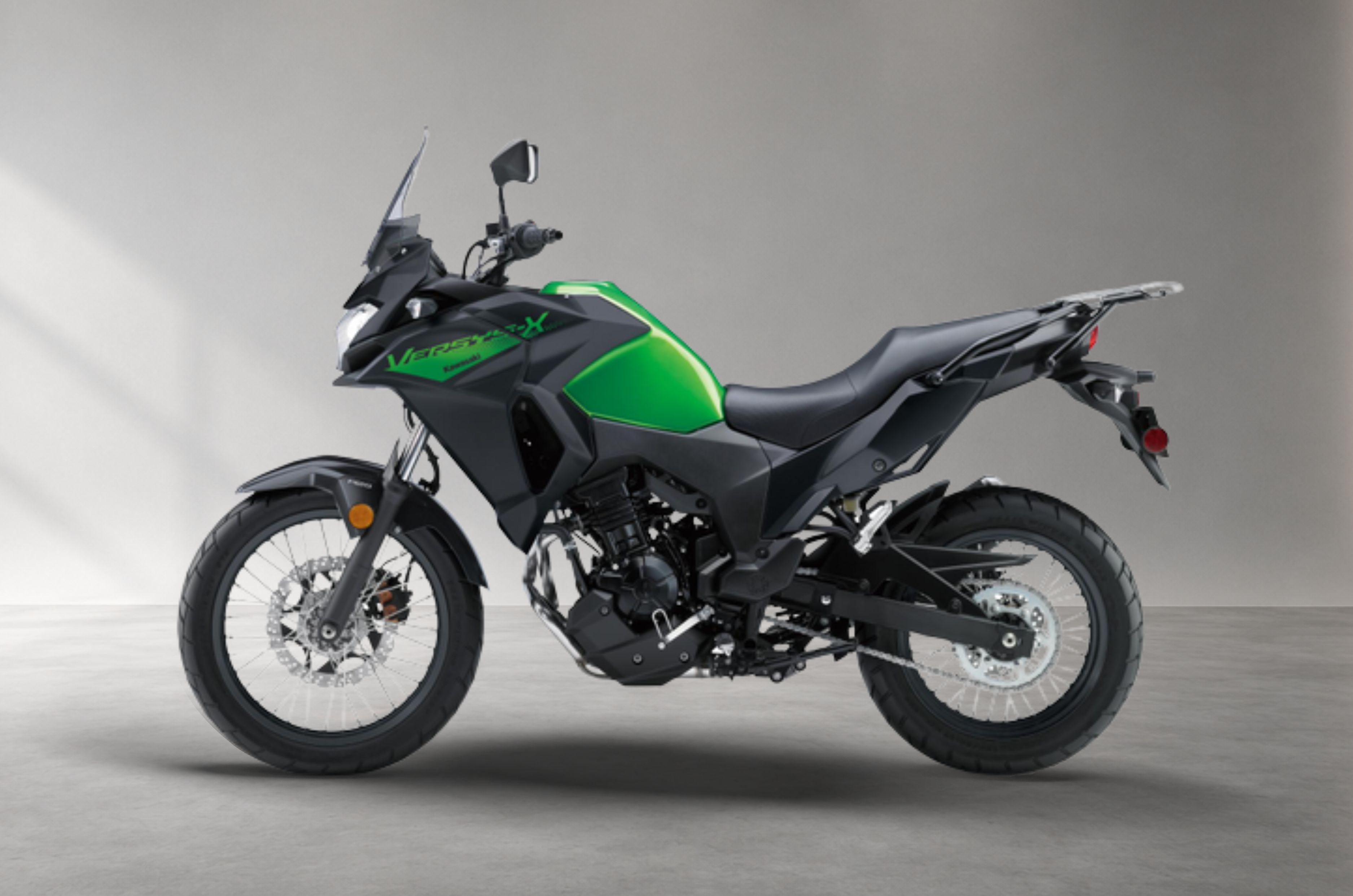
3. Kawasaki Versys-X 300
Rs 3.49 lakh
The Kawasaki Versys-X 300 is one of two twin-cylinder options in this list. Its 296cc parallel-twin makes 39hp and 26Nm of torque and it’s liquid-cooled as well. It might just be the most accessible motorcycle on this list with a 175kg kerb weight, and an 815mm seat height.
Similar to the V-Strom 250 SX, the Versys-X 300 also maintains a slim list of features, dual-channel ABS and a slip-and-assist clutch. It has a 17-litre fuel tank (only one here to match the Himalayan 450), and Kawasaki only offers it with 19/17 front/rear wheels with wire-spoke rims running tubed tyres.
The Kawasaki Versys-X 300 is offered in one variant in a single Green/Black colour at Rs 3.49 lakh.
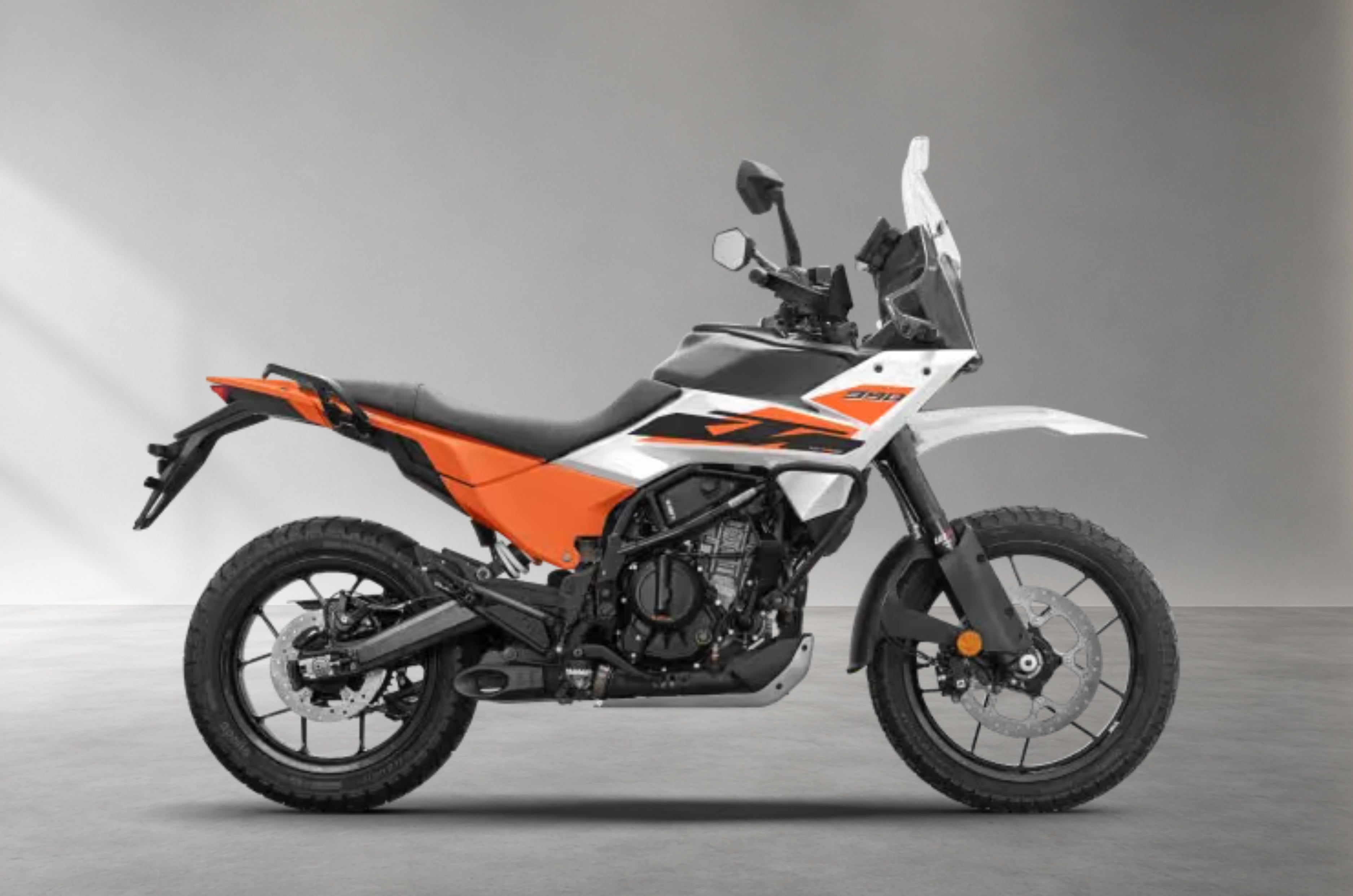
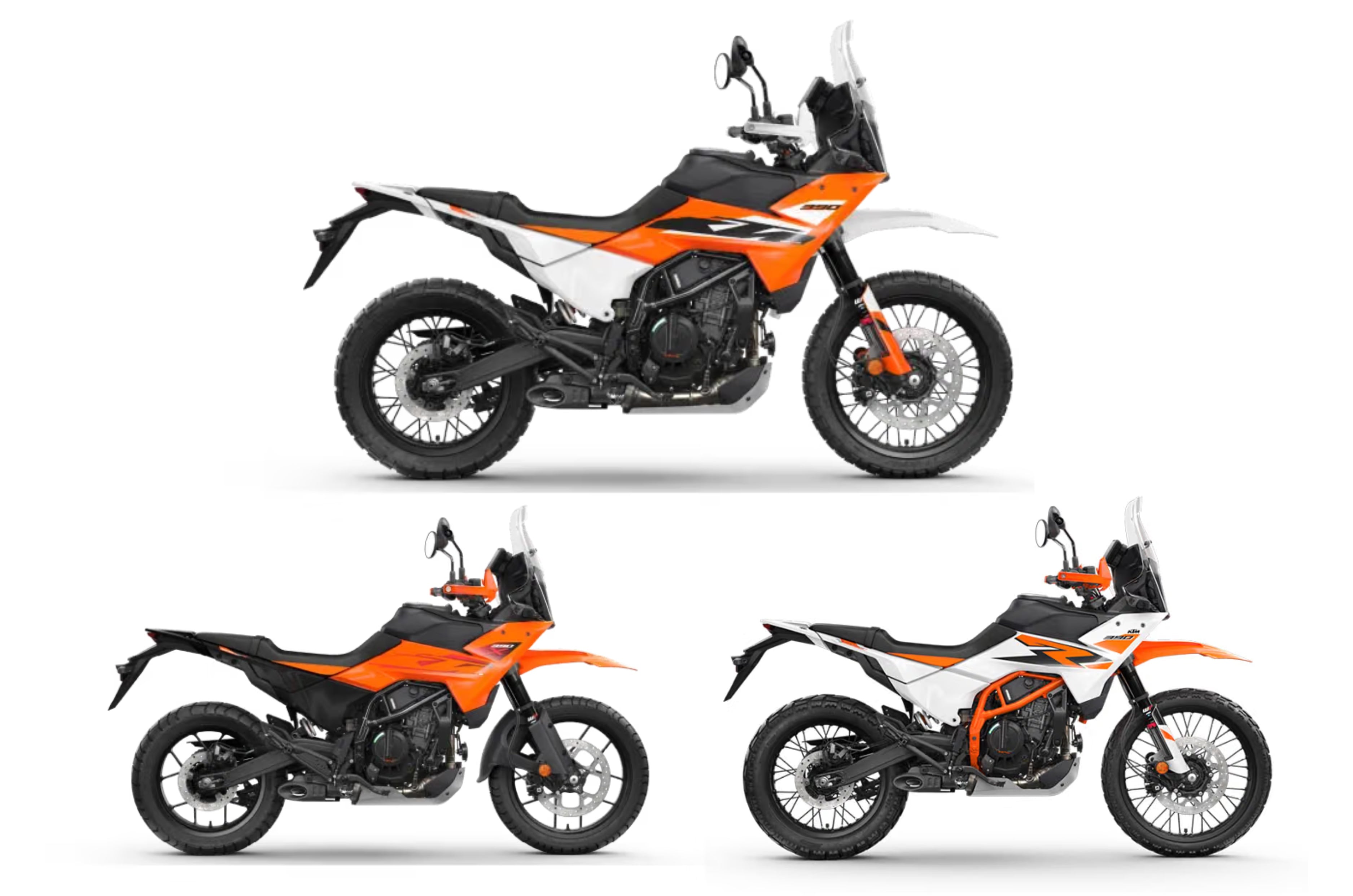
2. KTM 390 Adventure (S, X, R)
Starts at 3.50 lakh
These are the full scale 399cc engine versions of the KTM Adventure. They all make 46hp power and 39Nm of torque (4.5hp and 5.5Nm more than the 350cc engine). Fuel tank capacity is identical to the 350cc Adventure at 14.5 litres, as is the seat height at 825mm. However, the kerb weight varies across variants; the X weighs 181kg, S 182kg, and the R is the heaviest at 183kg.
The X gets an identical feature set as the 350cc Adventure, with the S stepping that up to adjustable front and rear suspension along with 21/17 front/rear wheels with tubeless spoke rims. The more off-road focussed R does not get the tubeless spoke rims, swaps the rear 17-inch wheel for an 18-inch one and runs on Mitas Enduro front and rear tyres.
The KTM 390 Adventure X is the most affordable of these three at Rs 3.45 lakh, with R taking a big step to Rs 3.86 lakh. The S is the most expensive of the bunch at Rs 4.04 lakh.
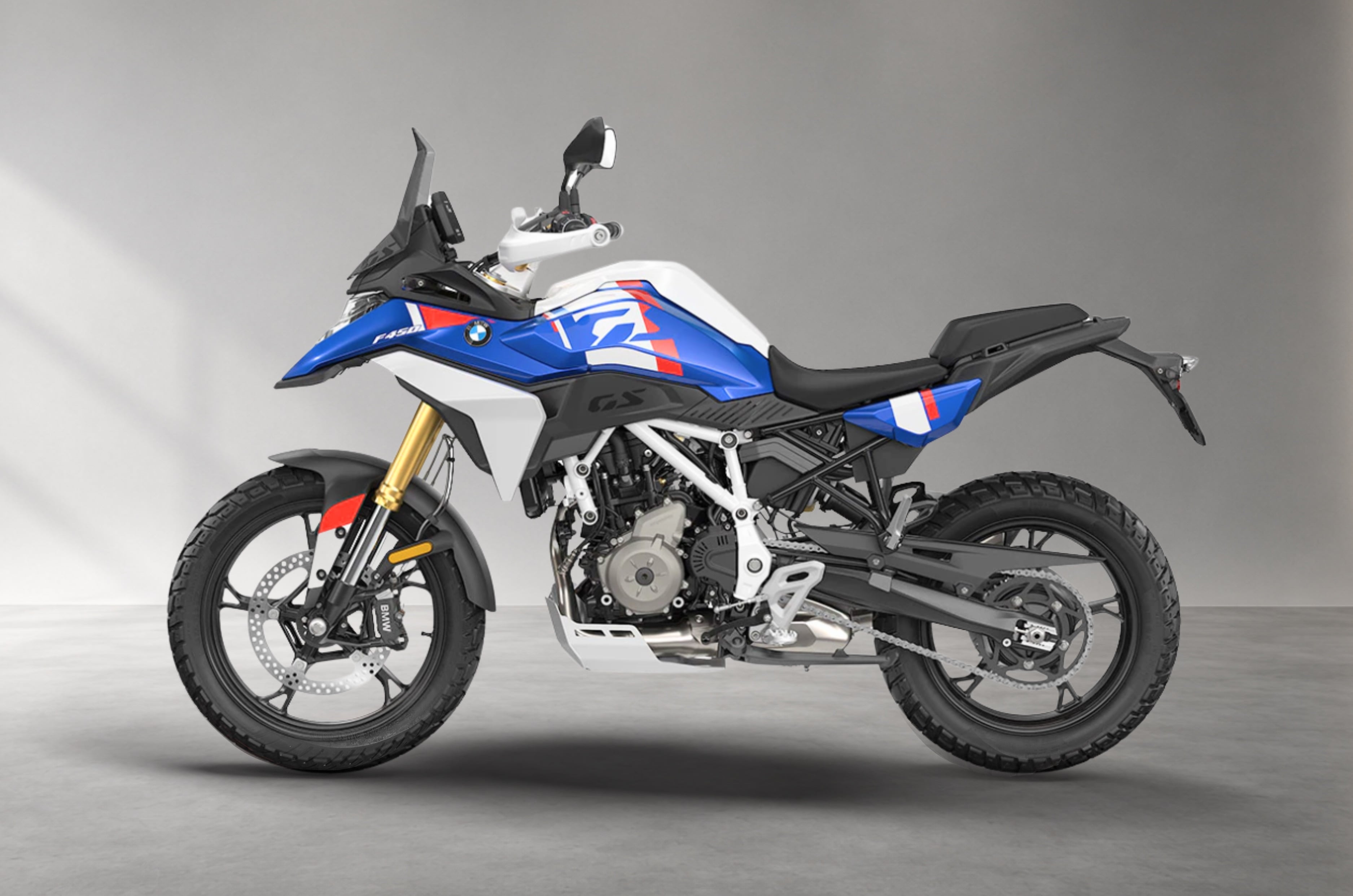
1. BMW F 450 GS
Starts at Rs 4.95 lakh
BMW launched the F 450 GS in April this year at Rs 4.70 lakh and increased the prices for the model recently. The motorcycle gets a 420cc parallel-twin engine with 48hp of power and 43Nm of torque. The fuel tank capacity is 14 litres and the kerb weight is second lightest at 178kg, but the standard seat height is 845mm (the tallest in this list!).
Standard features are an 6.5-inch TFT display, three ride modes, slip-and-assist clutch, traction control, ride modes, and heated grips. On the higher variants, BMW offers a bi-directional quickshifter, an integrated windshield, ERC (Easy Ride Clutch), and adjustable suspension.
The BMW F 450 GS starts at Rs 4.95 lakh for the Base variant, Rs 5.15 lakh for the Exclusive variant, and Rs 5.60 lakh for the top GS Trophy variant.