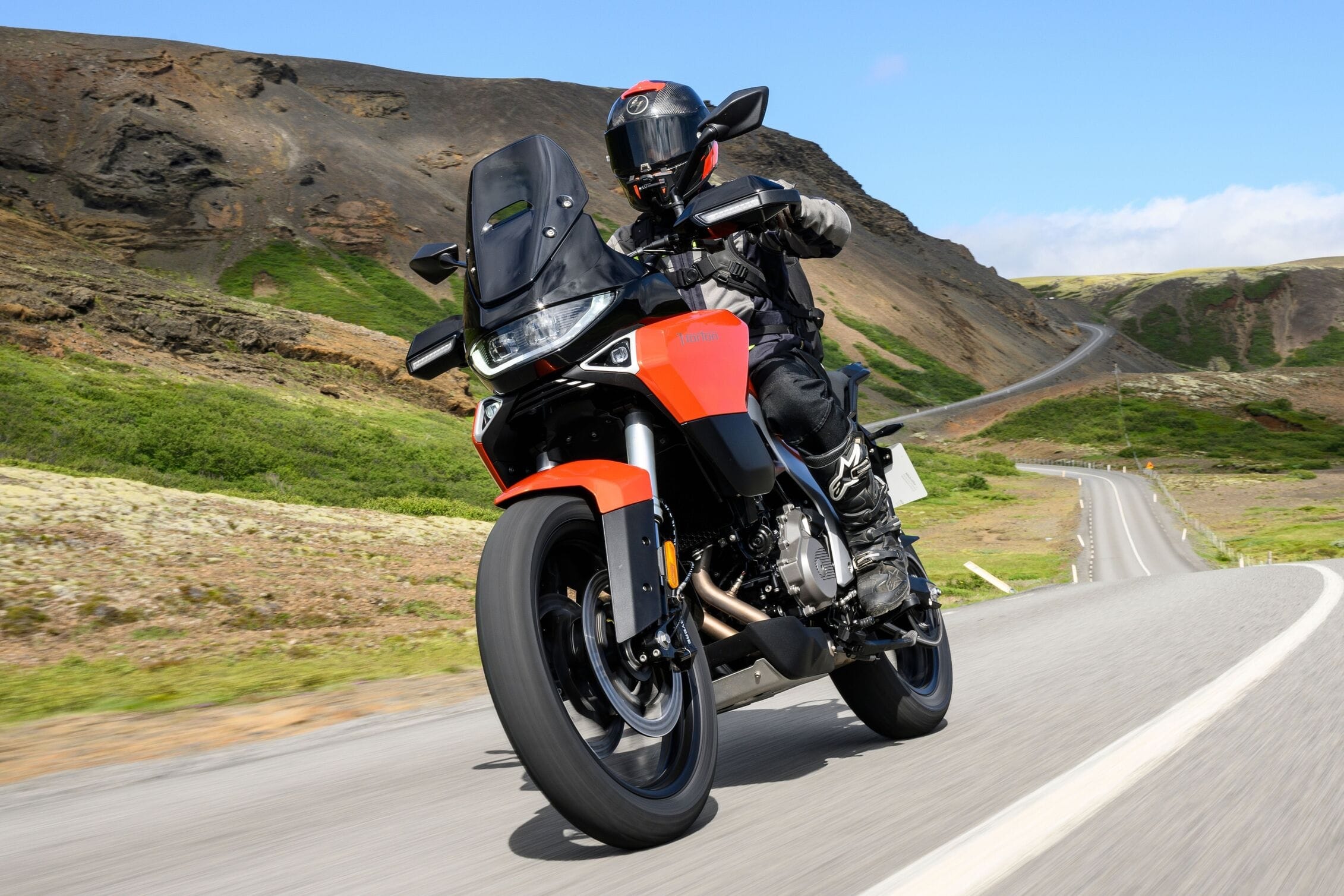
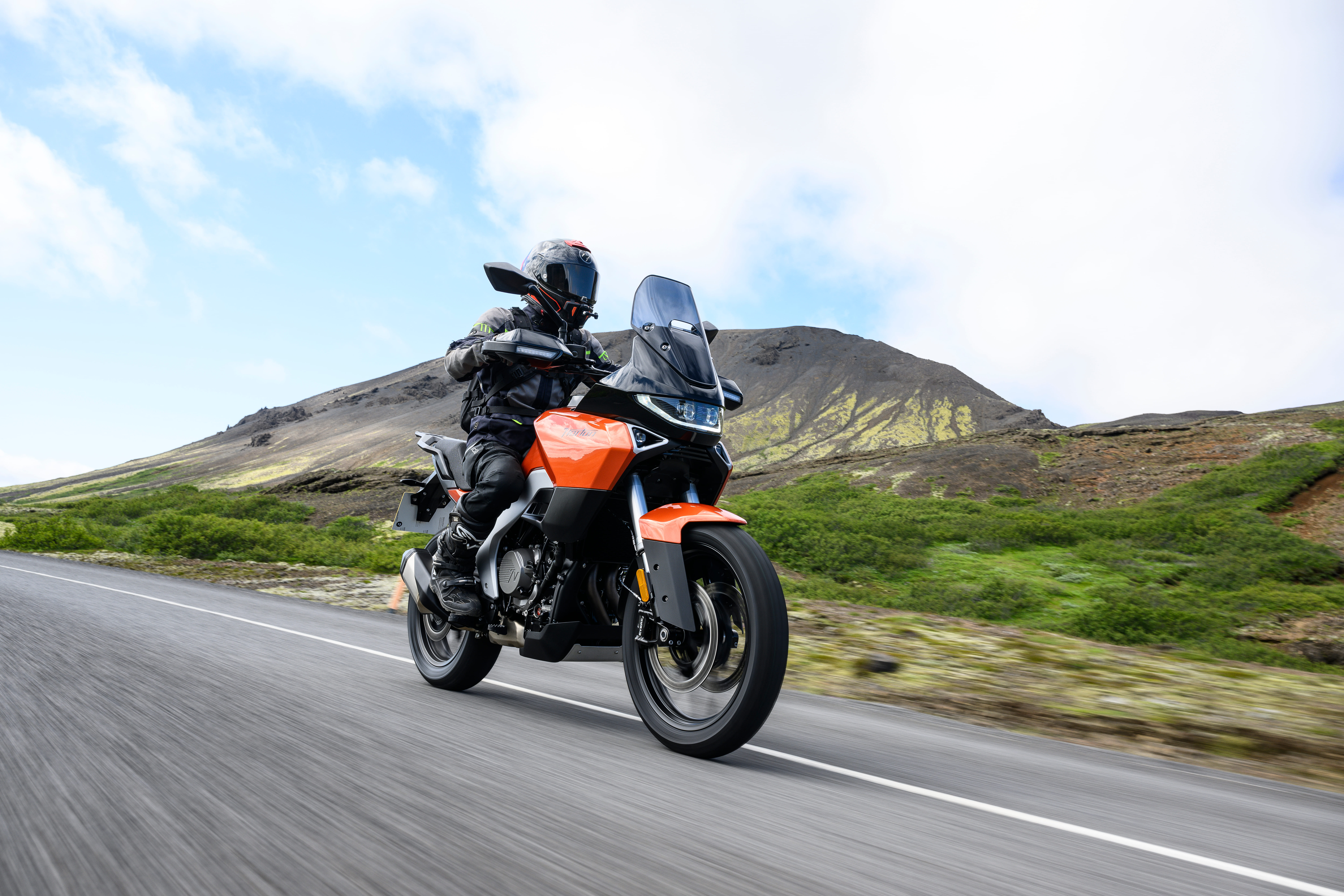
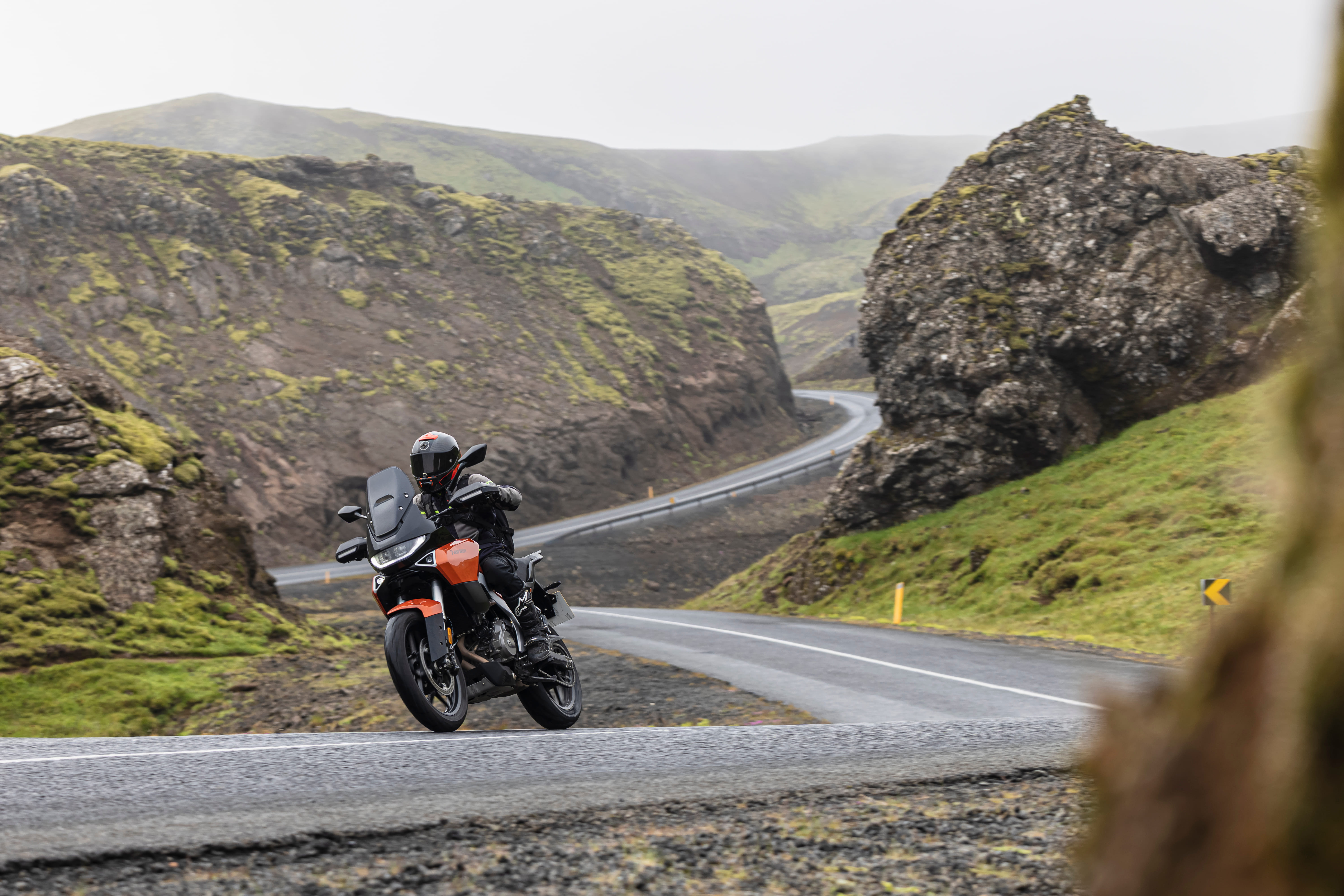
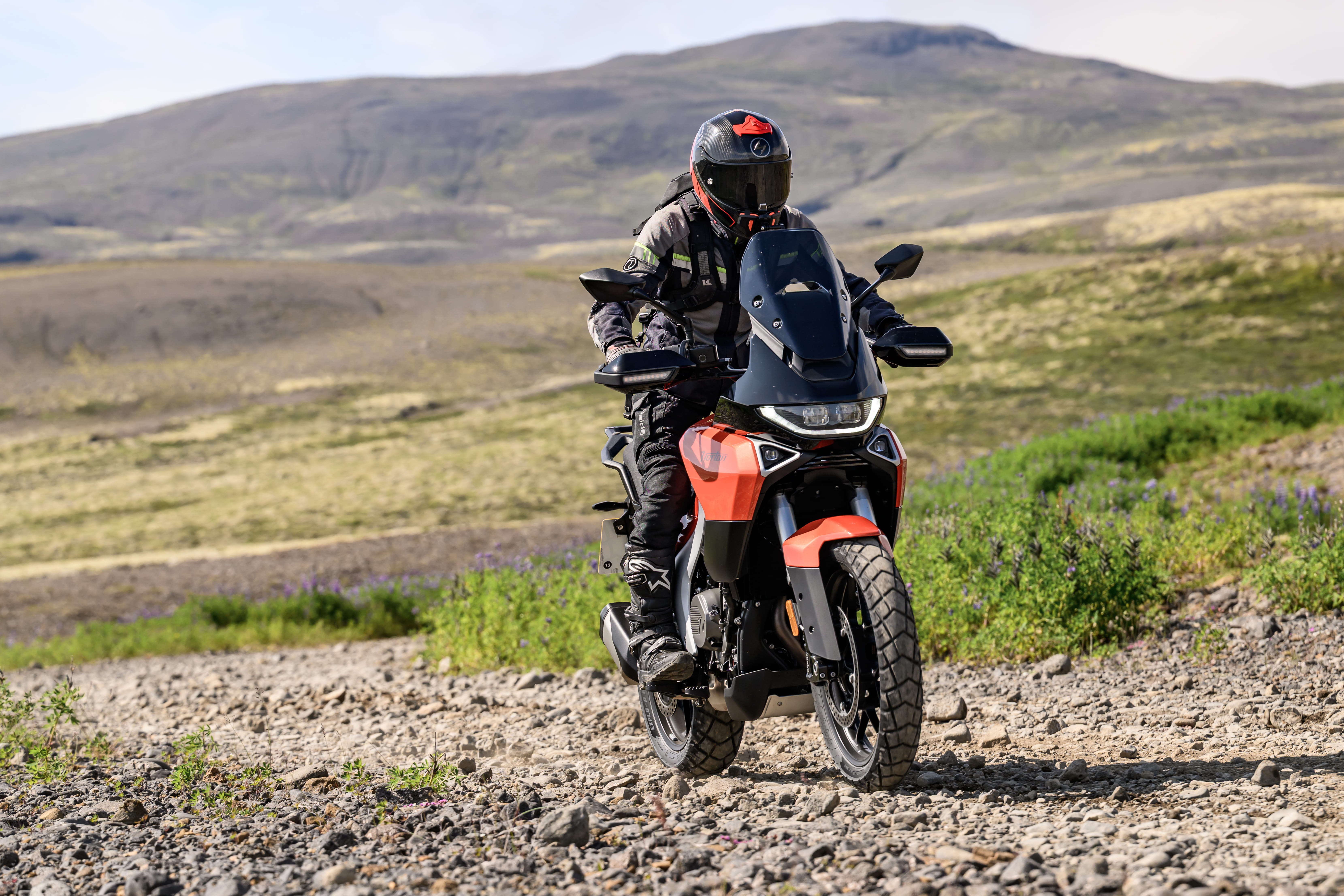
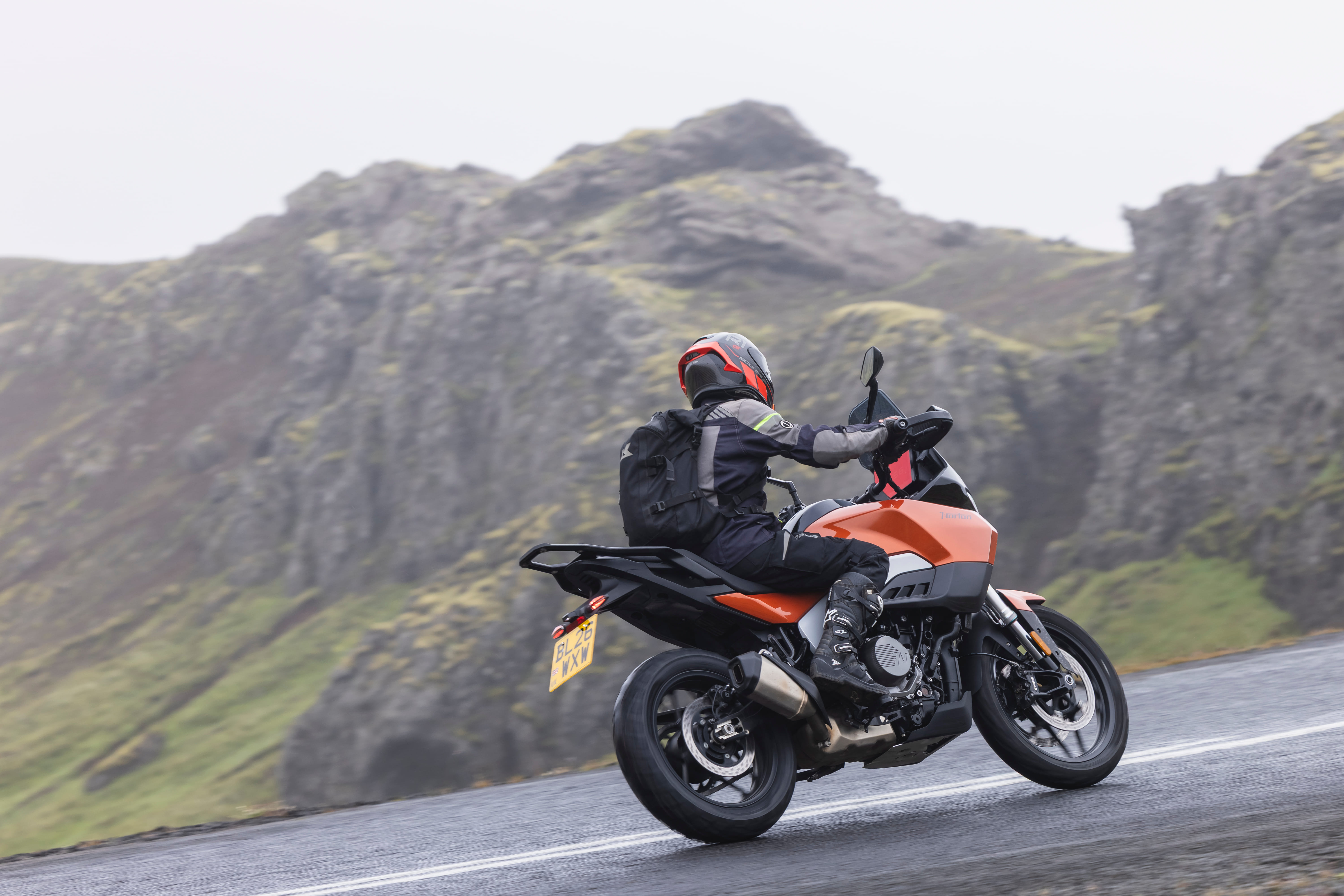
The Atlas is only the second motorcycle to emerge from the revived Norton under TVS ownership, following the Manx R. For this first ride, we got to ride the fully-loaded Apex variant, equipped with a 19-inch front and 17-inch rear alloy wheel, alongside a full suite of electronic rider aids. Over the course of nearly 200km, we rode across Iceland’s sweeping mountain roads before venturing onto gravel trails to understand where the Atlas fits in the competitive adventure-touring segment.
Design and Quality – 8/10
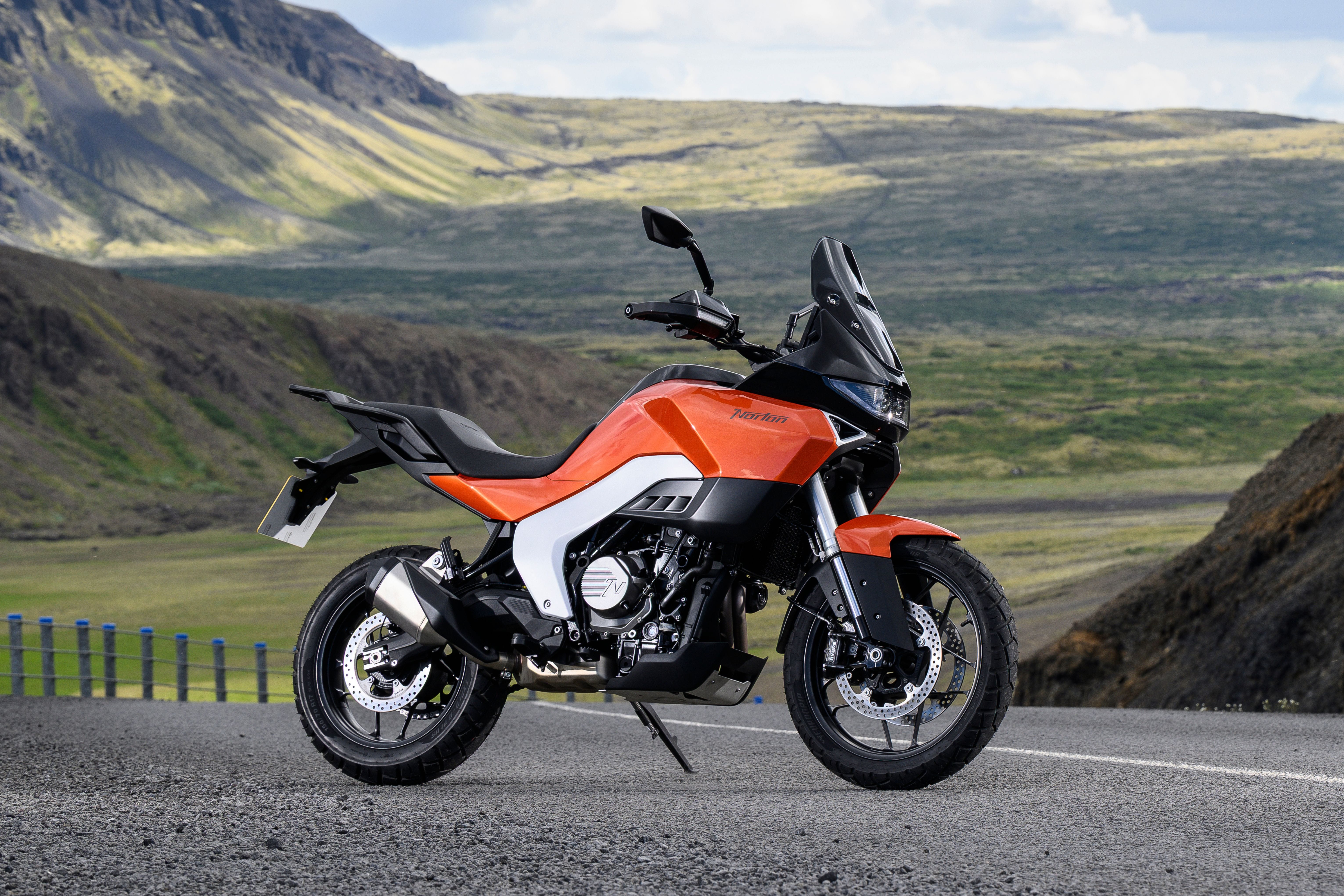
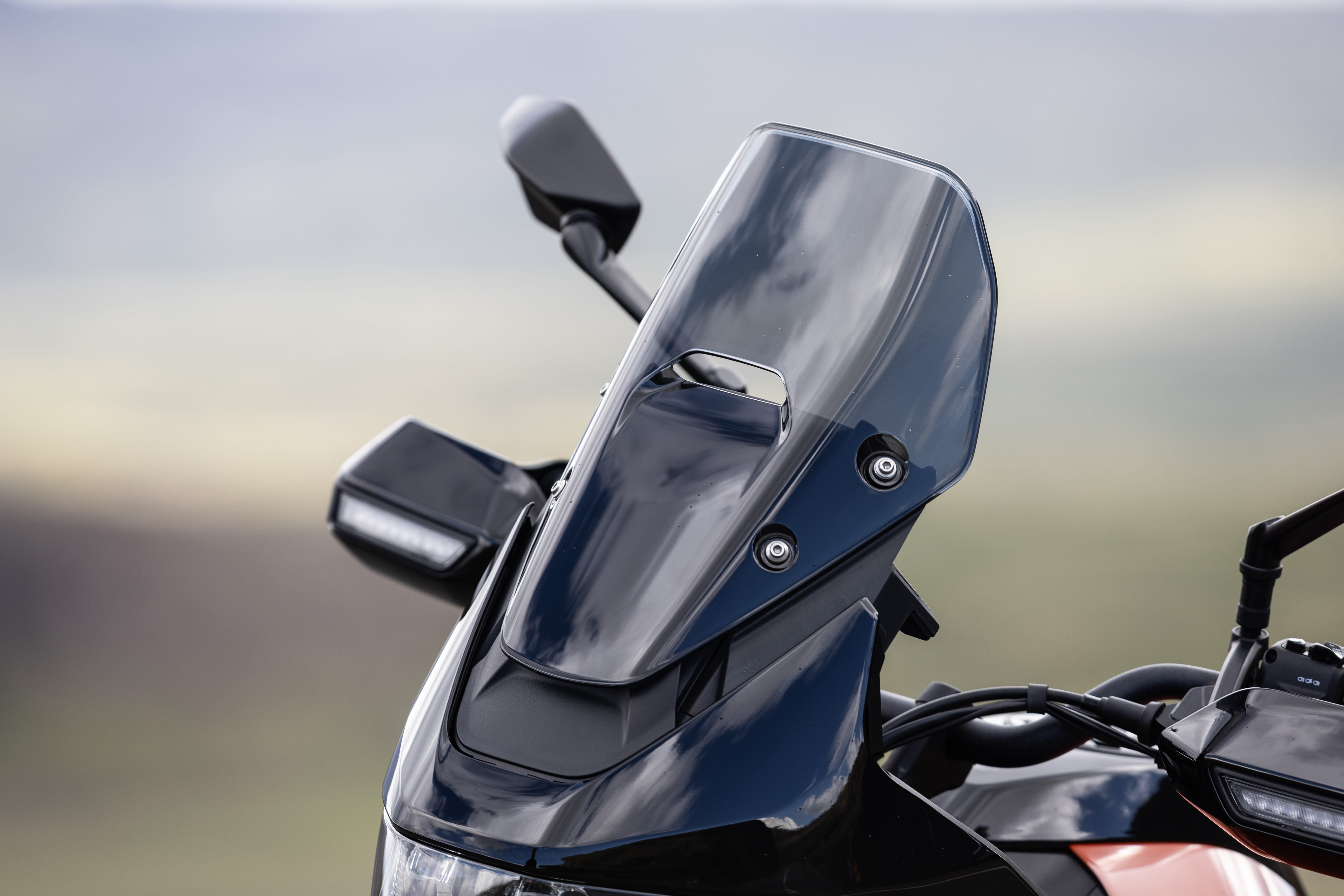
The Atlas follows the same flowing design philosophy as the Manx R, with clean bodywork and proportionate styling that looks better in person than it does in photographs. The front end is particularly distinctive. A unique LED headlamp sits at the centre, flanked by triangular cornering lights. The indicators are neatly integrated into the handguards, giving the bike a clean appearance, while an adjustable windscreen sits above. Adjusting it requires pressing buttons on either side simultaneously, which means you can only do so while stationary.
The 15.4-litre fuel tank appears well-sized for long-distance touring, and towards the rear there’s a practical luggage rack, tail-light integrated into the indicators, and a one-piece seat. The fit and finish leaves a positive impression with consistent panel gaps, good switchgear, and it is an overall well-built motorcycle.
Position and Comfort – 9/10
Despite its touring intentions, the Atlas strikes an interesting balance in terms of ergonomics. With an 845mm seat height, it certainly isn’t low. At 5ft 7in, I couldn’t completely flat-foot the motorcycle, although reaching the ground did not feel intimidating. More importantly, once seated, the riding position feels natural and commanding.
The wide, raised handlebar offers excellent leverage while keeping you upright during long hours in the saddle. Meanwhile, the footpegs are positioned slightly rearset compared to many adventure motorcycles. That gives the Atlas a subtly sporty riding position without compromising comfort, allowing you to enjoy curving mountain roads just as much as relaxed highway cruising.
The seat comfort was surely impressive and even after an entire day in the saddle, it remained supportive with no soreness. The Apex variant weighs 192kg without fuel, which translates to roughly 204kg with a full tank of fuel. You certainly notice the weight while manoeuvring at walking pace, but once on the go, the weight is not felt as much.
Performance – 9/10
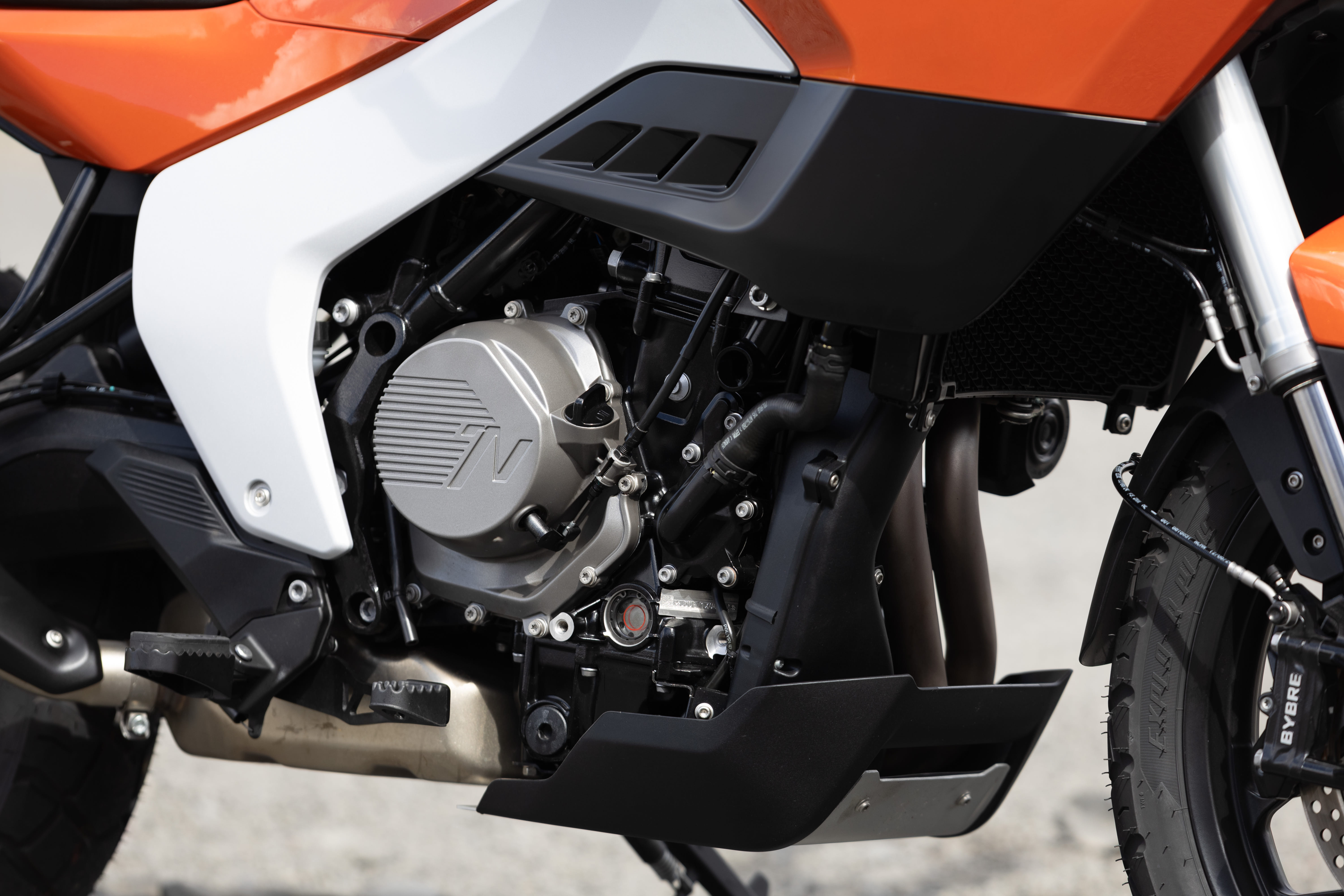
Powering the Atlas is an all-new 585cc parallel-twin engine producing 70hp and 57.5Nm. It features a 270 degree crankshaft, giving it a distinctive exhaust note and an engaging character. The cylinders are plasma-coated, which Norton says reduces friction, lowers weight and improves durability. Another interesting engineering detail is the removable cassette style six-speed gearbox, which can be serviced without moving or removing the engine.
Out on the road, the engine has strong low-end torque. Pulling away from a standstill requires little effort, and there is a healthy surge in the lower half of the rev range. Around 5,000rpm, the torque curve begins to flatten and the power delivery becomes progressively more linear towards the top end. It never felt intimidating, but was certainly entertaining.
Cruising refinement is equally impressive. The engine remains smooth for the most part, with only mild vibrations creeping through the motorcycle at higher revs. They’re noticeable, but never intrusive enough to spoil the riding experience.
The bike also gets a bi-directional quickshifter as standard. Downshifts are slick and seamless, but upshifts tell a slightly different story. At city speeds around 60kph it performs well, although at higher speeds it cuts power fractionally longer than expected, resulting in shifts that occasionally feel jerky.
Features and Safety – 9/10
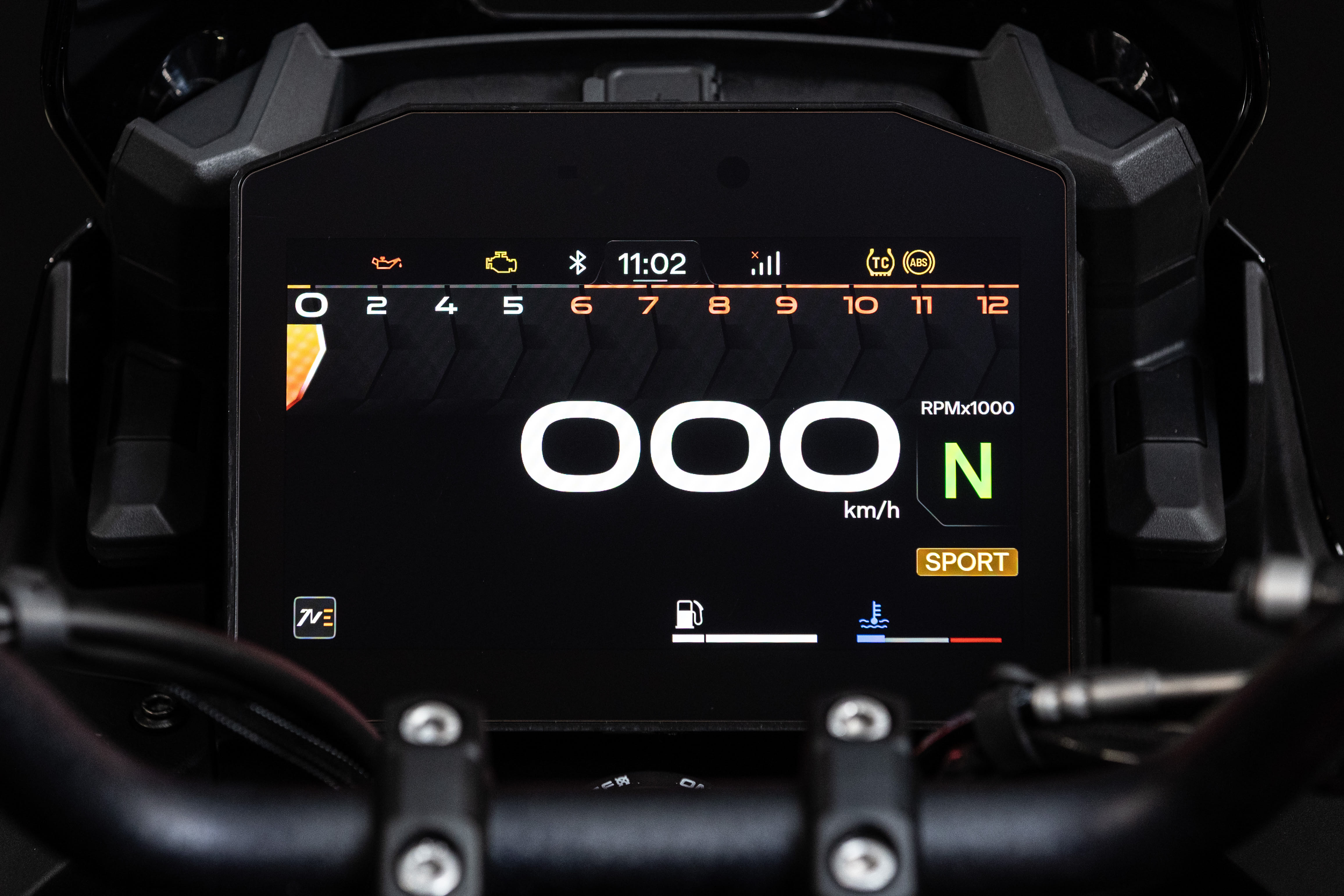
The Atlas Apex comes loaded with technology. It uses the same 8-inch TFT touchscreen similar to the unit seen on the Manx R. The display is bright, crisp and easy to read, while the touchscreen itself responds well to inputs. It is paired with a comprehensive electronics package including traction control, cornering ABS, cruise control, hill hold assist and heated grips. Given Iceland’s chilly weather, the heated grips proved to be helpful throughout the day, while cruise control made covering long stretches of open highway effortless.
Five riding modes are available, each altering throttle response, engine braking, traction control and ABS intervention. I spent most of my time in touring mode and it offered good throttle response that was perfectly suited to the flowing roads we spent most of the day riding. Sport mode noticeably reduces the intervention from both traction control and ABS, allowing a more spirited riding experience, while Enduro mode also tweaks the throttle response for loose surfaces and disengages rear ABS.
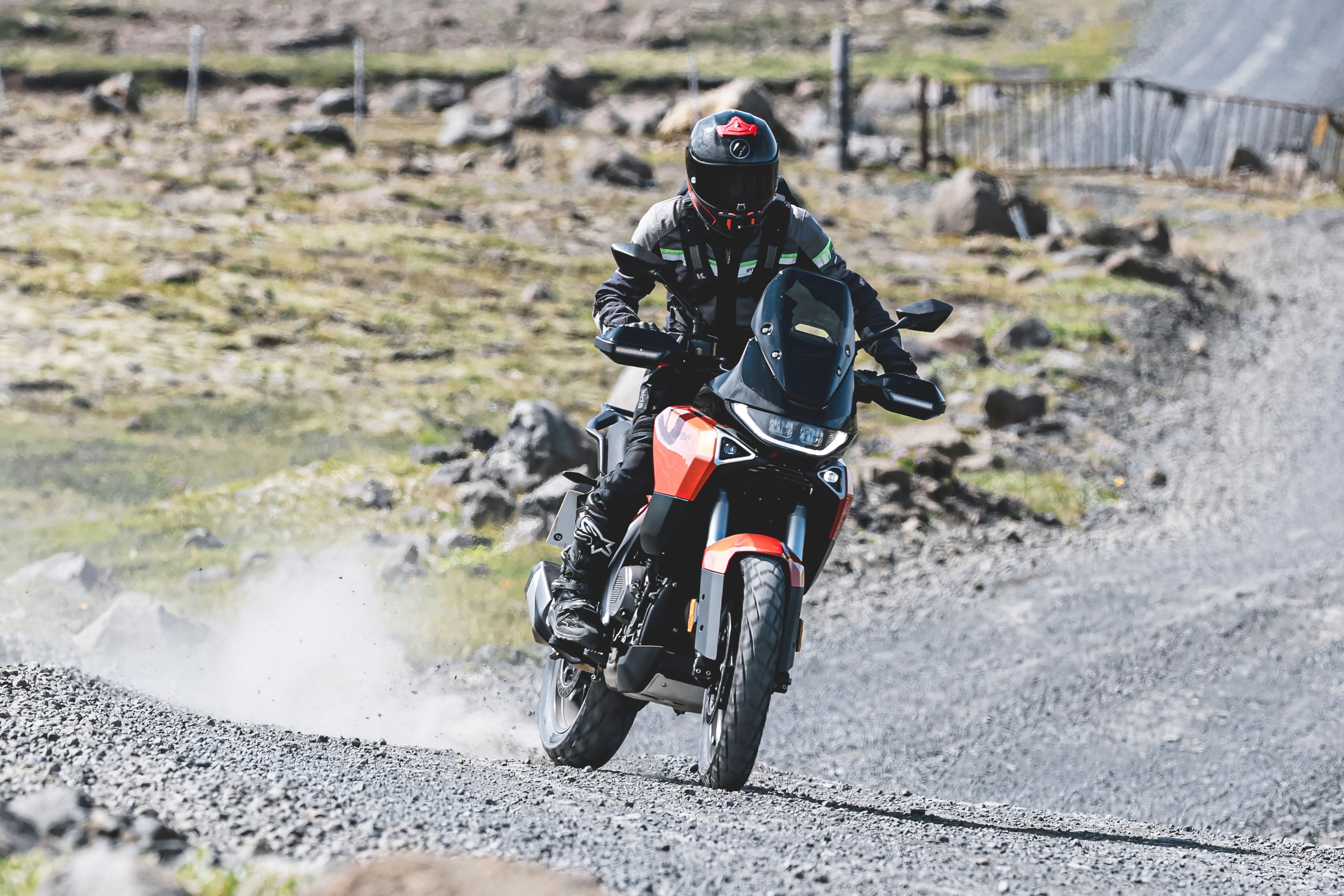
One feature that stood out was the slide control calibration in Enduro mode. On gravel roads, it allows enough rear-wheel movement to enjoy controlled slides without things getting risky. Adding to the practicality is a dedicated traction control button on the left switchgear, allowing riders to disable the system altogether without navigating through multiple menus.
There are, however, a couple of minor annoyances. The TFT display takes longer than expected to boot up after switching on the ignition. The keyless system also feels unnecessarily complicated, requiring you to press an unlock button on the key fob every single time before starting the bike. This was a small inconvenience that could become frustrating during long tours with frequent stops, but it is something that Norton could fix with a software update.
The adjustable windscreen also generates noticeable buffeting at higher speeds, although it is worth mentioning that Iceland’s notoriously strong crosswinds likely exaggerated the issue.
Ride and Handling – 8/10
Suspension duties are handled by a fully-adjustable, 43mm KYB upside-down fork up front and a KYB monoshock at the rear with remote preload adjustment. The remote preload adjuster is a welcome feature for touring, although its placement requires reaching deep inside the motorcycle to make adjustments. Suspension travel measures 180mm at both ends. The standard setup leans towards the firmer side, but that suits the motorcycle’s road-focused personality perfectly.
On sweeping mountain roads, the motorcycle feels composed. It changes direction with confidence, remains planted through long corners and inspires plenty of confidence at higher cruising speeds. The chassis remained stable despite battling strong crosswinds for much of the day. Even when exposed on wide, open stretches of road, the Atlas never felt nervous or unsettled.
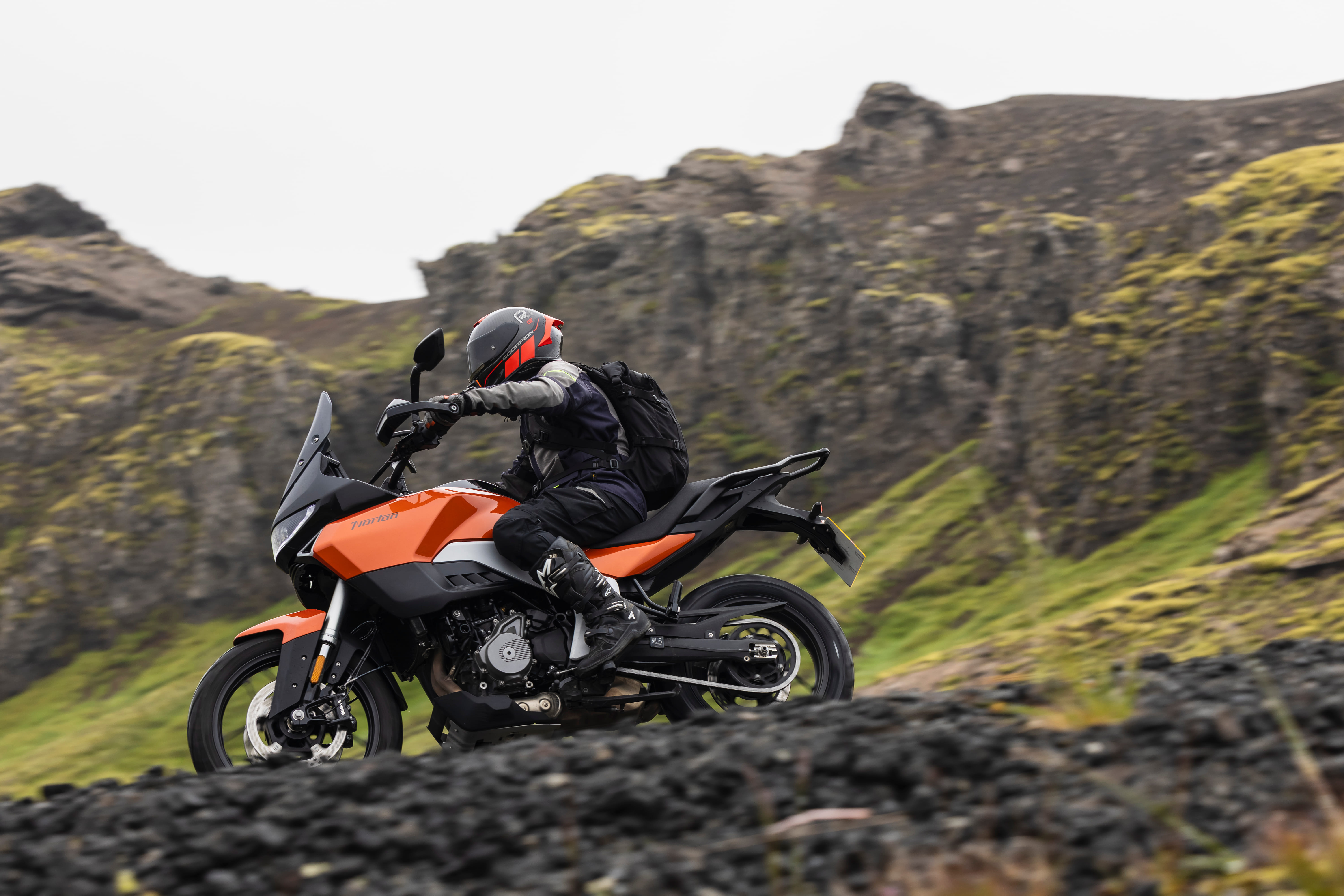
Although the Atlas carries adventure-bike styling, it is best viewed as a road-biased tourer that isn’t afraid of venturing off road. On flowing dirt roads, the motorcycle remained confidence inspiring, with the electronics working seamlessly in the background. Standing on the pegs felt natural, and the suspension dealt comfortably with smaller bumps and loose surfaces.
Over larger rocks and rougher terrain, however, the weight becomes more noticeable, while the suspension transmits sharper impacts than a dedicated off-road machine would. If your adventures regularly involve technical trails, there are better options available. But for riders whose definition of adventure includes the occasional gravel road between long stretches of tarmac, the Atlas feels perfectly at home.
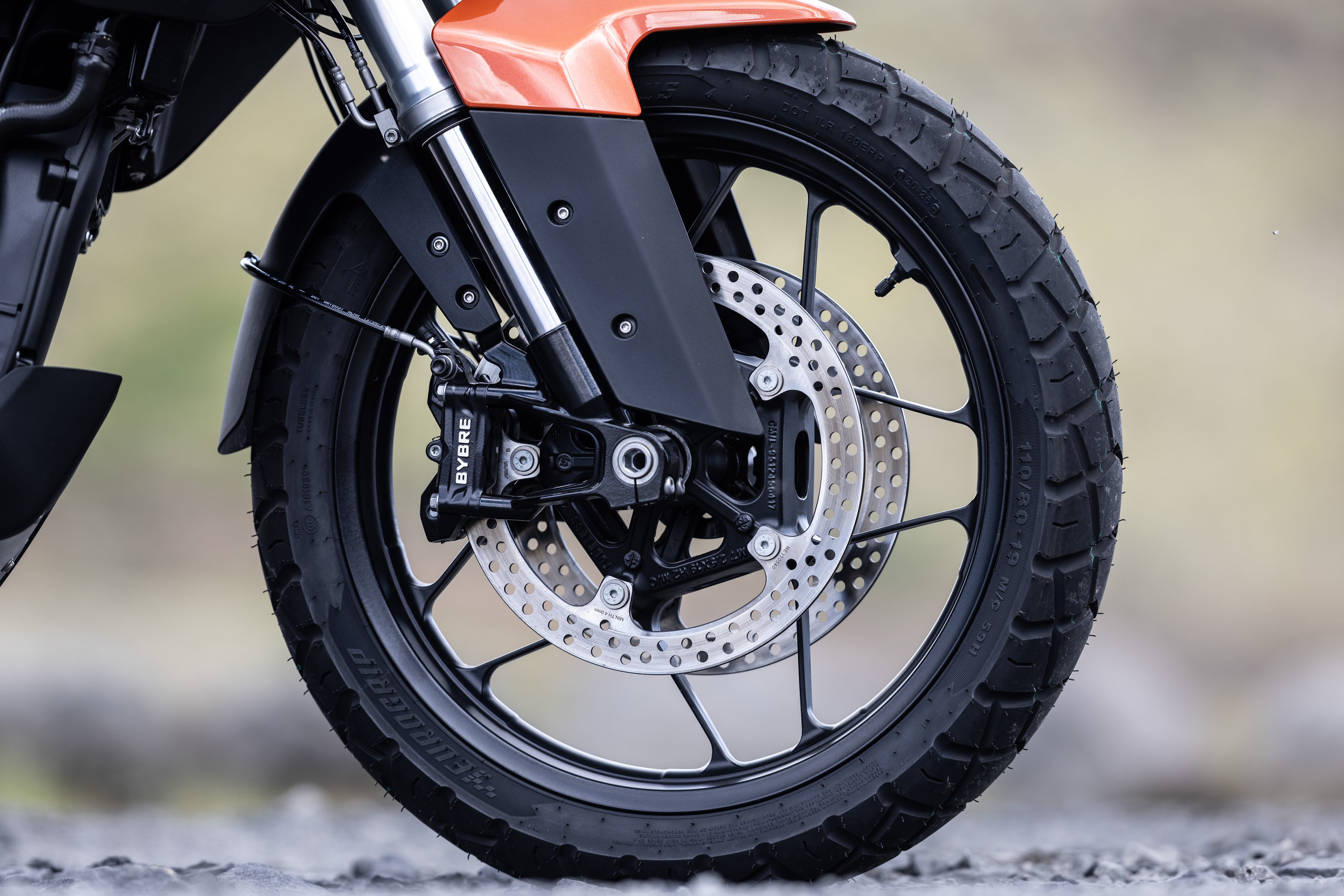
One component that consistently impressed throughout the ride was the set of dual-purpose Eurogrip Xplo-R Plus tyres. Whether attacking sweeping corners, riding through gravel or dealing with wet roads, they delivered excellent grip and confidence, even in the sub 10 degree cold we had at the start of the ride. The Atlas tipped into corners willingly, remained composed at speed and, even in the rain, never once felt nervous or unpredictable.
The braking system, unfortunately, wasn’t quite as convincing. On paper, it sounds promising, featuring twin front discs, ByBre calipers and steel-braided brake lines. Additionally, this variant also gets an electronically combined braking system. However, there is hardly any initial bite when first applying the brakes. Instead, the stopping power builds suddenly once the lever reaches roughly halfway through. While outright braking performance is strong, the abrupt transition makes smooth modulation difficult until you become familiar with the system. It is one area that requires further refinement.
Verdict – 9/10
The Norton Atlas did make a strong first impression. It blends handsome styling, premium build quality, engaging engine performance and a comprehensive electronics package into a motorcycle that feels genuinely capable of covering serious distances. It focuses on delivering an enjoyable touring experience while retaining enough off-road ability for occasional detours. Its few shortcomings like the slightly awkward quickshifter, unusual brake feel and some quirks with the keyless system are minor in the context of an otherwise polished package.
The biggest question, however, isn’t how it rides. It’s how much it will cost. With production set to take place in India under TVS, expectations are naturally high for competitive pricing. At 585cc, it has much more displacement than a 450cc bike, a little less than a 650cc and with 70hp of power, it is in a league of its own. But considering it is above 350cc, it will attract a 40 percent GST as well.
If Norton can bring the Atlas to India with a starting price between Rs 5 lakh and Rs 5.5 lakh (ex-showroom), it could be a successful product. Now, all that’s left is to see how it performs on our Indian roads.
Apple के अगले जनरेशन के फ्लैगशिप iPhone अब लॉन्च के करीब हैं और क्यूपर्टिनो की यह टेक कंपनी अपने सालाना सितंबर इवेंट में iPhone 18 Pro, iPhone 18 Pro Max और काफी चर्चा में रहे iPhone Fold को लॉन्च करने के लिए पूरी तरह तैयार है। हालांकि, इनका डिजाइन आपको पहले जैसा ही लग सकता है, लेकिन रिपोर्ट्स बताती हैं कि Apple परफॉर्मेंस, कैमरा, बैटरी लाइफ और कनेक्टिविटी के मामले में कुछ हार्डवेयर अपग्रेड की तैयारी कर रहा है। अब आइए जानते हैं iPhone 18 Pro के हालिया लीक से जुड़ी सभी जरूरी जानकारी के बारे में।
Apple iPhone 18 Pro के स्पेसिफिकेशन्स, डिजाइन और कैमरा
कई रिपोर्ट्स के मुताबिक, Apple इस बार Dynamic Island को पहले से छोटा कर सकता है। इसके लिए कंपनी Face ID सिस्टम के कुछ हिस्सों को डिस्प्ले के नीचे दे सकती है। अगर ऐसा होता है, तो यूजर्स को Face ID की सुविधा पहले की तरह मिलेगी, लेकिन स्क्रीन पर देखने के लिए ज्यादा स्पेस मिलेगा।
Apple के नए A20 Pro चिपसेट से परफॉर्मेंस में भी जबरदस्त बढ़ोतरी होने की उम्मीद है। बताया जा रहा है कि यह प्रोसेसर TSMC की 2nm प्रोसेस पर बनाया जा रहा है, जिससे iPhone पहले के मुकाबले ज्यादा तेज चलेगा और कम बैटरी खर्च करते हुए बेहतर परफॉर्मेंस देगा।
फोटोग्राफी की बात करें तो, iPhone 18 Pro के कैमरे में पिछले कई सालों का सबसे बड़ा बदलाव देखने को मिल सकता है। लीक्स के मुताबिक, इसमें 48MP Fusion कैमरा मिलेगा, जो वेरिएबल अपर्चर फीचर के साथ आ सकता है। यानी कैमरा अपने आप जरूरत के हिसाब से सेंसर तक पहुंचने वाली रोशनी को कम या ज्यादा कर सकेगा। इससे कम रोशनी में बेहतर फोटो, शानदार पोर्ट्रेट शॉट्स और बेहतर डेप्थ इफेक्ट मिलने की उम्मीद है।
रिपोर्ट्स में यह भी कहा गया है कि iPhone बनाने वाली कंपनी Camera Control बटन को आसान बना सकती है। इसके लिए कंपनी इसमें से टच-सेंसिटिव जेस्चर और हैप्टिक फीडबैक को हटाकर सिर्फ प्रेशर-सेंसिटिव (दबाव से काम करने वाले) कंट्रोल का इस्तेमाल कर सकती है। इससे कैमरे को कंट्रोल करना पहले से ज्यादा आसान हो सकता है।
कनेक्टिविटी के मामले में भी iPhone 18 Pro में कई नए अपग्रेड देखने को मिल सकते हैं। खबरों के मुताबिक, Apple इसमें अपना नया N2 वायरलेस चिप दे सकता है। वहीं, फोन में 6.3 इंच की डिस्प्ले पहले की तरह मिल सकती है, लेकिन इसमें बेहतर LTPO+ टेक्नोलॉजी होगी, जिससे बैटरी की खपत कम होगी और बैटरी बैकअप बेहतर मिलेगा।
फोन के डिजाइन को लेकर मिली-जुली खबरें हैं। Weibo पर जानकारी देने वाले ‘Fixed Focus Digital’ का दावा है कि iPhone 18 Pro और iPhone 18 Pro Max अपने पिछले मॉडल के मुकाबले लगभग 2mm मोटे हो सकते हैं, जिससे इनकी कुल मोटाई लगभग 10.75mm हो जाएगी। हालांकि, Macworld की रिपोर्ट के मुताबिक, फोन की बॉडी की मोटाई 8.75mm ही रह सकती है और सिर्फ कैमरा बंप बड़ा हो सकता है। इसलिए, फाइनल डिजाइन को लेकर अभी भी कुछ नहीं कहा जा सकता है।
Apple iPhone 18 Pro की कीमत और लॉन्च डेट (अनुमानित)
ब्लूमबर्ग के मार्क गुरमन के अनुसार, Apple का सालाना iPhone लॉन्च इवेंट 9 सितंबर, 2026 को होने की उम्मीद है और इसकी बिक्री 18 सितंबर से शुरू हो सकती है। रिपोर्ट्स से यह भी पता चलता है कि इस साल खरीदारों को ज्यादा कीमत चुकानी पड़ सकती है, क्योंकि टिम कुक की अगुवाई वाली कंपनी Pro मॉडल की कीमतों में लगभग 10,000 रुपये की बढ़ोतरी कर सकती है।
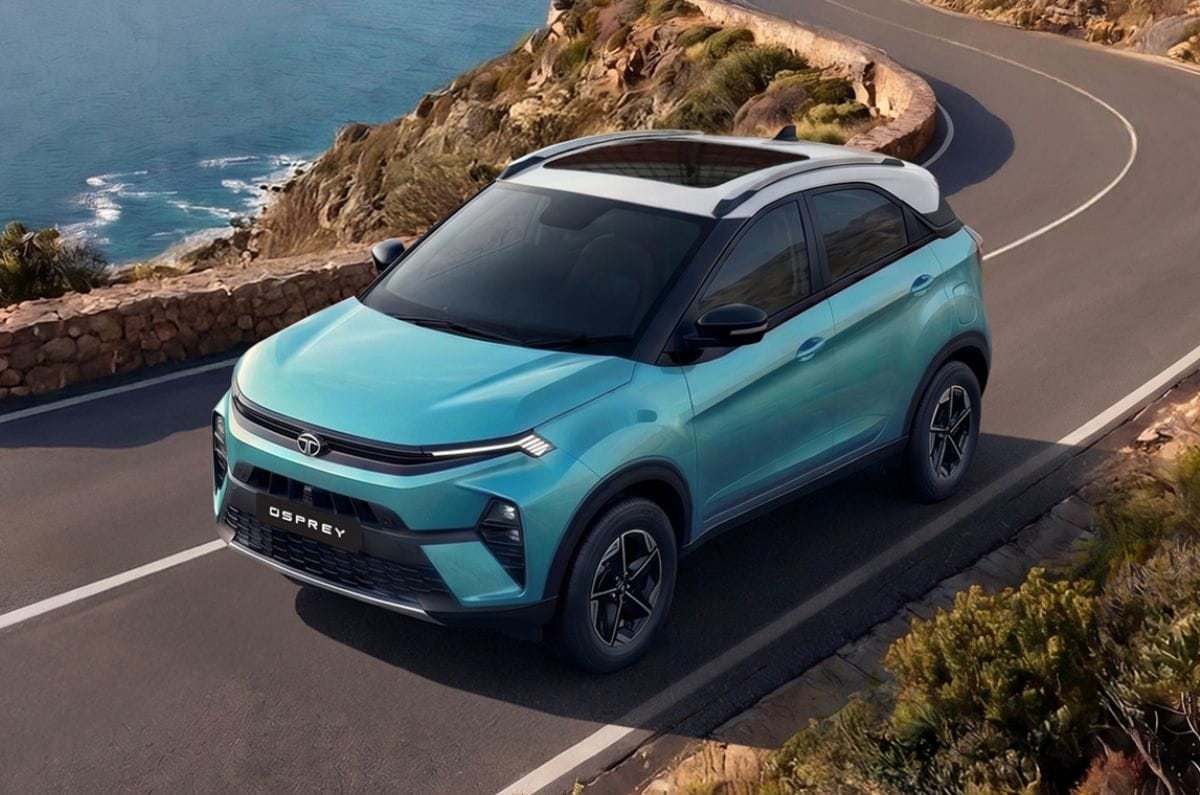
Tata Motors will be launching the Nexon in South Africa as the Osprey, sometime between July and September 2026. The Tata Osprey, known in India as the Nexon, will join the automaker’s South African portfolio that currently includes the combustion-powered Tiago, Punch, Curvv and Harrier. According to the Indian brand, the name has been inspired by a bird of prey that’s commonly found in several parts of South Africa.
South Africa-spec Nexon named after a bird of prey
Fifth Tata model in South Africa
All we know about the upcoming Tata Osprey
Tata Motors South Africa hasn’t given out much details on the upcoming Osprey’s. However, similar to the Nexon sold in India, the Tata Osprey will also be sold with a five-star NCAP safety rating. “South African customers increasingly demand vehicles that combine contemporary styling, technology, practicality and safety along with excellent value for money and the Tata Osprey delivers on all fronts,” said Jeff Allison, General Manager, Marketing and Product for Tata Motors Passenger Vehicles South Africa.
The powertrain options of the upcoming Osprey are undisclosed as of now. However, the combustion-powered Tata Nexon in India is offered with a 120hp 1.2-litre three-cylinder turbo-petrol engine and an 115hp 1.5-litre four-cylinder diesel mill. Depending on the trim level, gearbox options include a 5-speed manual, 6-speed manual, 5-speed AMT (automated manual transmission), or a 6-speed DCT (dual-clutch automatic transmission). No word if the brand is planning to launch the fully electric version of the Osprey.
On the features front, the Osprey could be available with dual 10.25-inch displays, automatic climate control, wireless Apple CarPlay & Android Auto, wireless charging, a panoramic sunroof, a JBL audio system and an ADAS (Advanced Driver Assistance Systems) suite. Considering the Nexon costs less than the Curvv in India, this is likely to be the case for the upcoming Osprey in the South African market as well. After re-entering the South African market in August 2025, Tata Motors has witnessed growth and customer demand in the country, the Indian automaker stated. “The introduction of the Tata Osprey marks another important milestone in our journey,” mentioned Allison.
अगर एक नई लीक रिपोर्ट पर भरोसा किया जाए तो OnePlus और Oppo के आने वाले दो फ्लैगशिप स्मार्टफोन्स भारत में लॉन्च नहीं हो सकते हैं। नई जानकारी के अनुसार, चीनी स्मार्टफोन बनाने वाली ये कंपनियां OnePlus 16 और Oppo Find X10 Ultra के लिए भारतीय बाजार को छोड़ सकती हैं, जबकि Oppo का एक और प्रीमियम डिवाइस 2027 में भारत आ सकता है। हालांकि, अभी तक दोनों कंपनियों ने इन दावों की आधिकारिक पुष्टि नहीं की है। इसलिए फिलहाल इन खबरों को सिर्फ एक लीक और संभावना के तौर पर ही देखा जाना चाहिए। अब चलिए जानते हैं इस ताजा लीक से जुड़ी सभी जानकारी।
OnePlus 16 और Oppo Find X10 Ultra शायद भारत में लॉन्च न हों
X पर टिपस्टर देबयन रॉय (@Gadgetsdata) के अनुसार, ऐसी अफवाहें हैं कि OnePlus 16 और Oppo Find X10 Ultra भारत में लॉन्च नहीं होंगे।
हालांकि, यह बात हैरान करने वाली लग सकती है, लेकिन पहले आई रिपोर्ट्स में कहा गया था कि चीनी स्मार्टफोन बनाने वाली कंपनी अपनी ग्लोबल स्ट्रैटेजी में बदलाव करने पर विचार कर रही थी। बाद में OnePlus ने साफ किया कि वह भारत में अपना कामकाज जारी रखेगी, जबकि नॉर्थ अमेरिका और यूरोप में नए प्रोडक्ट्स लॉन्च करना बंद कर देगी। इसलिए, OnePlus 16 के भारत में लॉन्च न होने की ताजा अफवाह अभी तक कन्फर्म नहीं हुई है।
इसी लीक में यह भी दावा किया गया है कि Oppo Find X10 Ultra की जगह Oppo Find X10 Pro Max साल 2027 में भारत में कंपनी का सबसे प्रीमियम फ्लैगशिप स्मार्टफोन बन सकता है।
Oppo Find X10 Pro Max के स्पेसिफिकेशन्स लीक हुए
लीक के अनुसार, Oppo Find X10 Pro Max में हाई रिफ्रेश रेट वाला 2K फ्लैट LTPO OLED डिस्प्ले होने की उम्मीद है। कैमरे की बात करें तो, इस डिवाइस में ऑप्टिकल इमेज स्टेबिलाइजेशन और बड़े 1/1.3-इंच सेंसर वाला 200MP का प्राइमरी कैमरा हो सकता है।
ऐसी भी चर्चा है कि इसके रियर कैमरा सेटअप में 200MP का अल्ट्रा-वाइड सेंसर, ऑप्टिकल इमेज स्टेबिलाइजेशन और टेलीमैक्रो सपोर्ट वाला 200MP का पेरिस्कोप टेलीफोटो कैमरा, और साथ ही 50MP का मल्टीस्पेक्ट्रल सेंसर शामिल होगा।
रिपोर्ट के अनुसार, Oppo Find X10 Pro Max में MediaTek Dimensity 9600 Pro चिपसेट दिया जा सकता है। इसके अलावा, फोन में 8000mAh से 9000mAh तक की बड़ी बैटरी मिलने की उम्मीद है। इस स्मार्टफोन में IP69 रेटिंग, अल्ट्रासोनिक इन-डिस्प्ले फिंगरप्रिंट सेंसर और एक खास Snap Key जैसे फीचर्स भी दिए जा सकते हैं।
वहीं, इससे पहले आई रिपोर्ट्स में दावा किया गया था कि OnePlus 16 को इस साल के अंत में चीन में लॉन्च किया जा सकता है। इसमें Qualcomm Snapdragon 8 Elite Gen 6 Pro प्रोसेसर, 185Hz डिस्प्ले, करीब 9000mAh की बैटरी और 200 मेगापिक्सल का टेलीफोटो कैमरा मिलने की उम्मीद है।
The Renault Duster impressed us at the first drive event with its muscular design, modern interior and ride and handling balance. We’ve now subjected all versions of the new Duster to our in-depth performance and efficiency testing to tell you how it stacks up against its established competition in the midsize SUV segment.
Renault Duster Exterior Design and Engineering – 9/10
Butch, muscular SUV has good road presence; India model based on RGMP platform
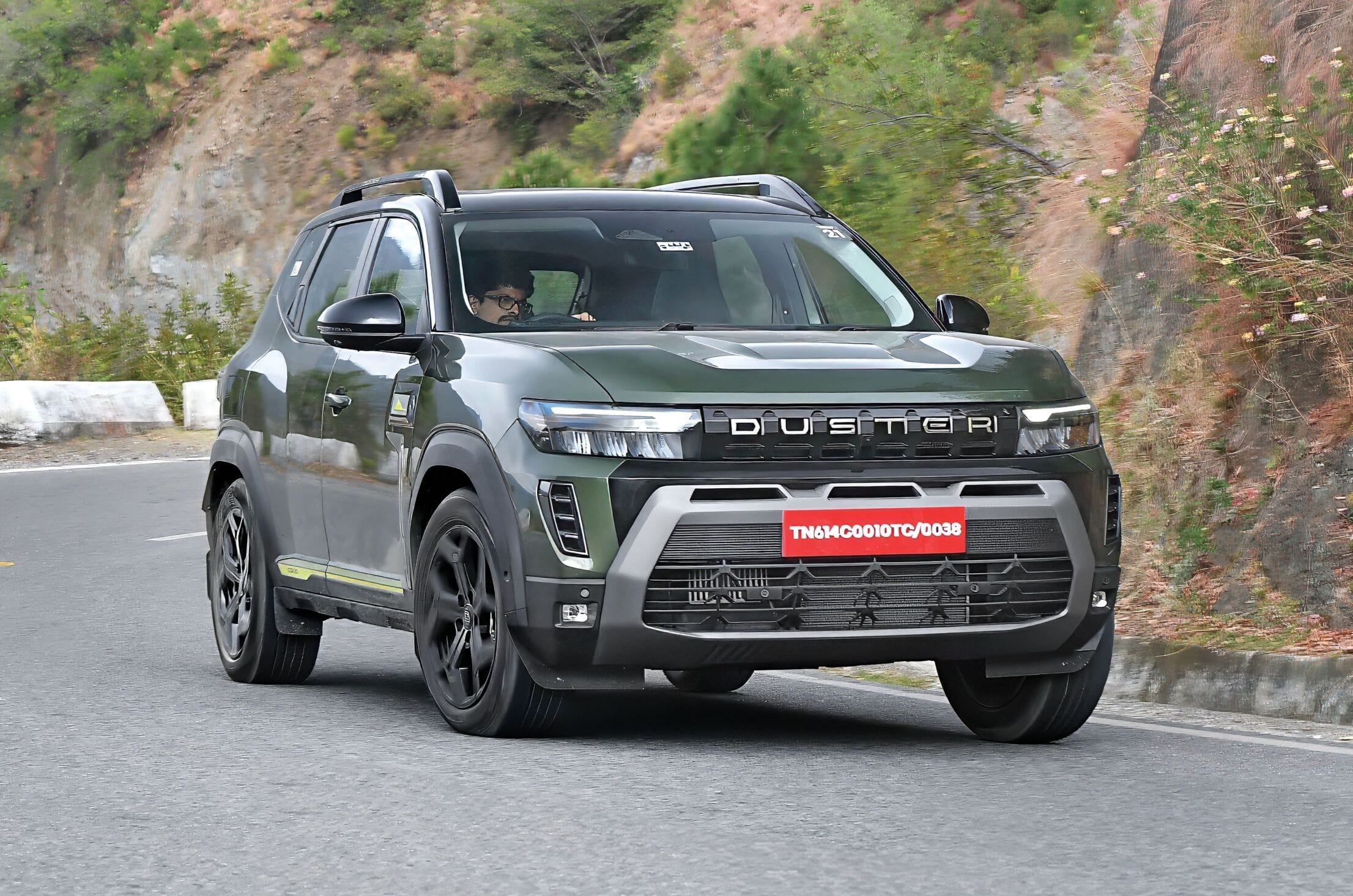
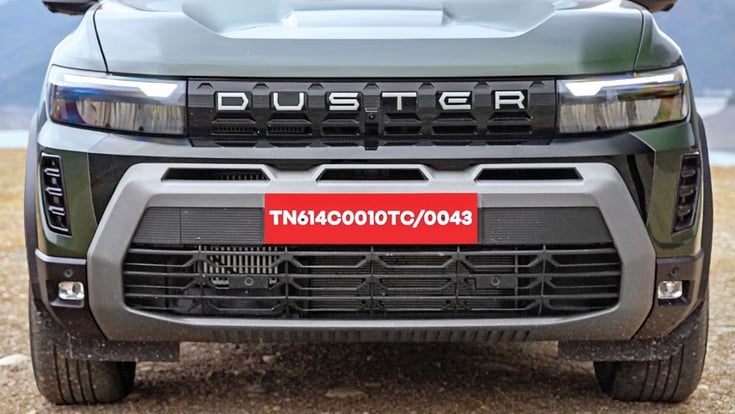
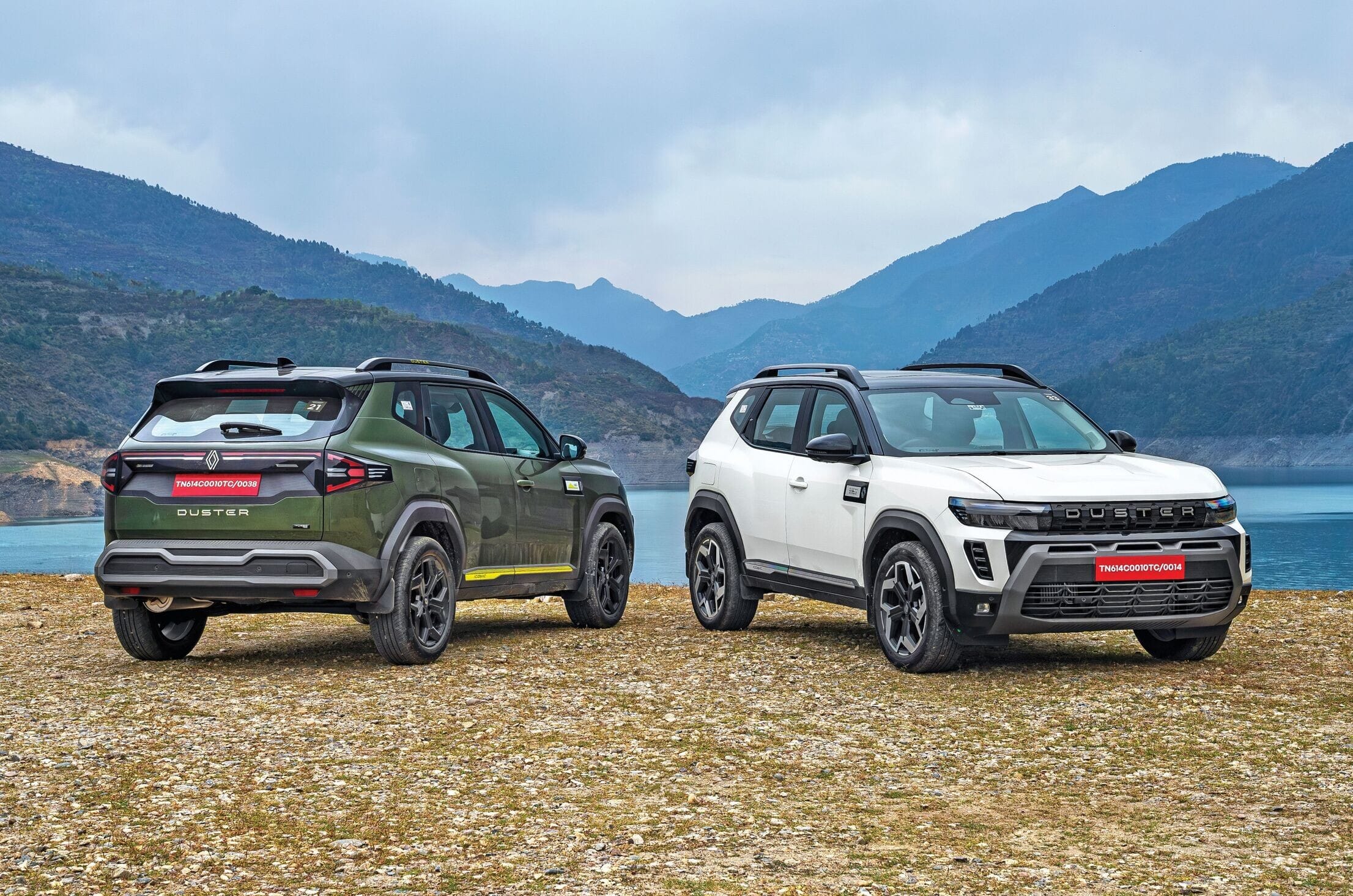
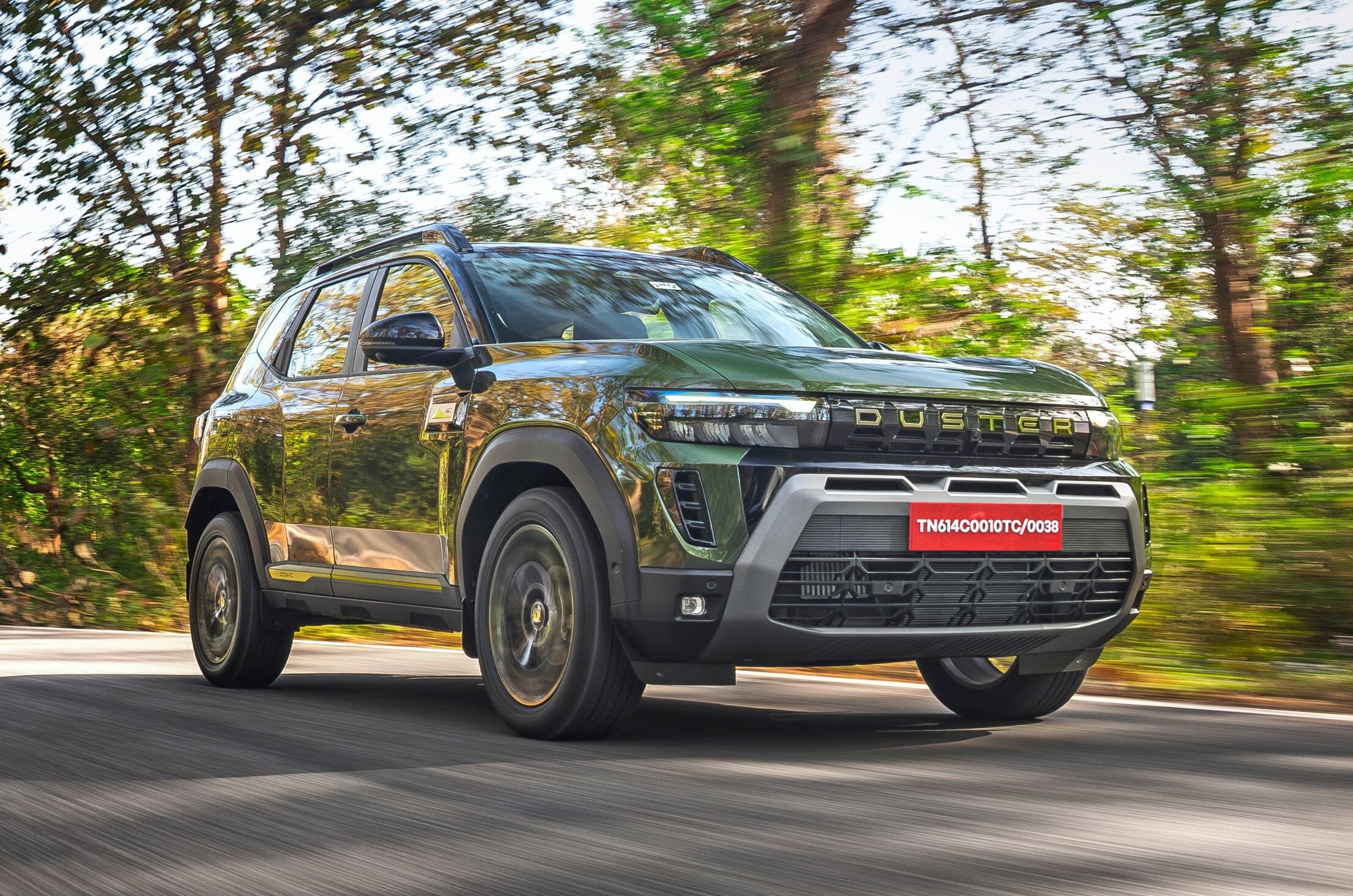
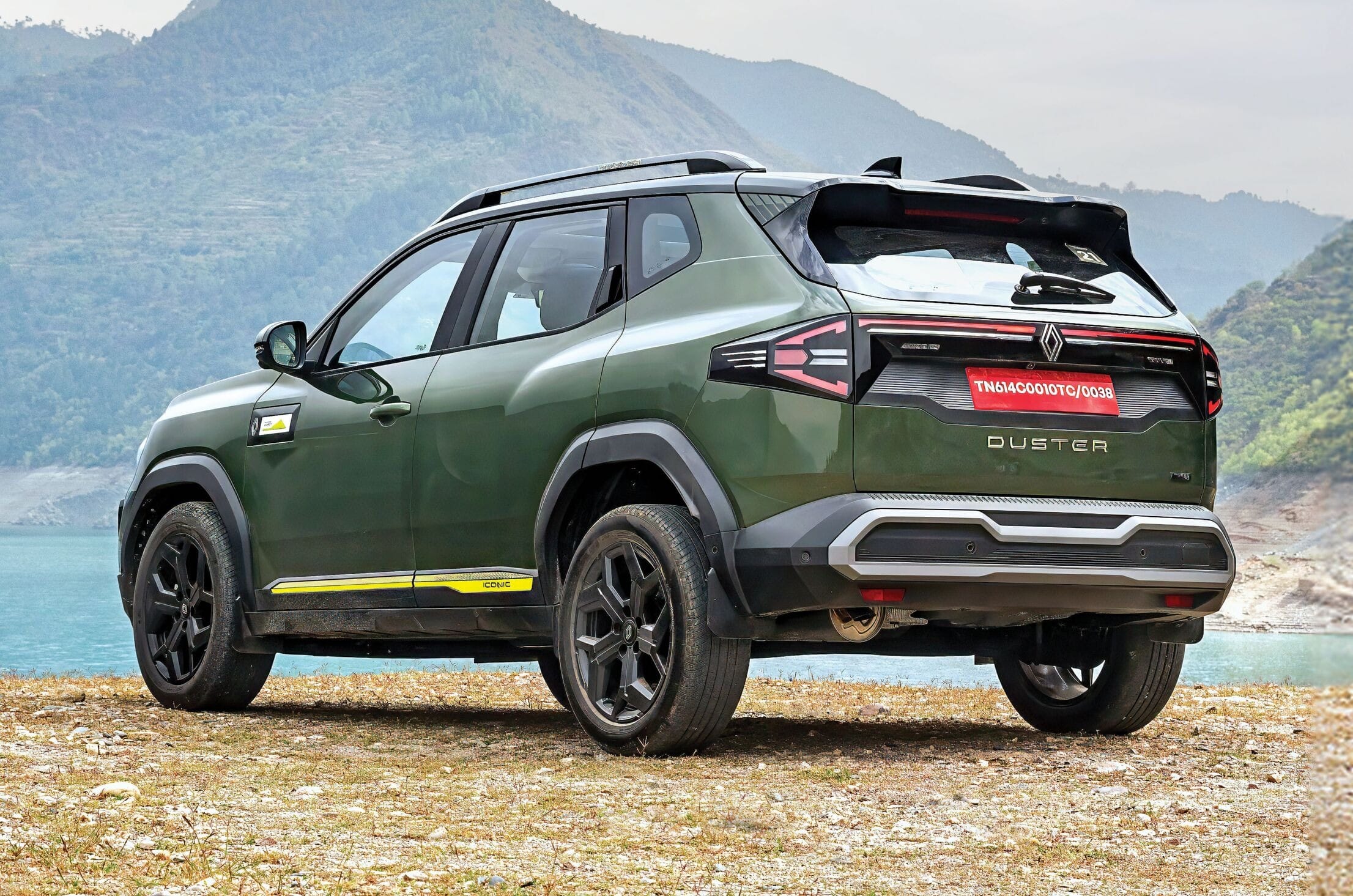
Renault has absolutely nailed the design of the new Duster. While it retains clear visual links to its predecessor, the styling feels thoroughly modern. Up front, large LED headlamps are paired with distinctive eyebrow-shaped DRLs that double as turn indicators, while the grille replaces the Renault logo with a prominent ‘Duster’ script, capitalising on the model’s strong brand recall. A protruding silver skid plate evokes memories of the original Duster, and pixel-style fog lamps, a sculpted bonnet and functional air curtains add further visual muscle.
Left to right: Proudly wears the Duster badging on the nose; 18-inch alloys look proportionate.
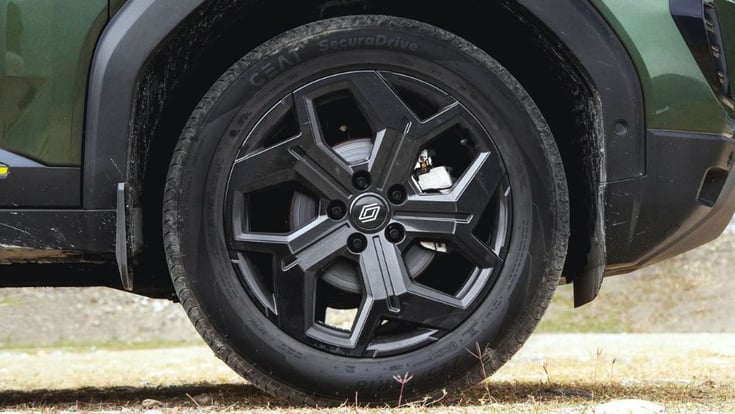
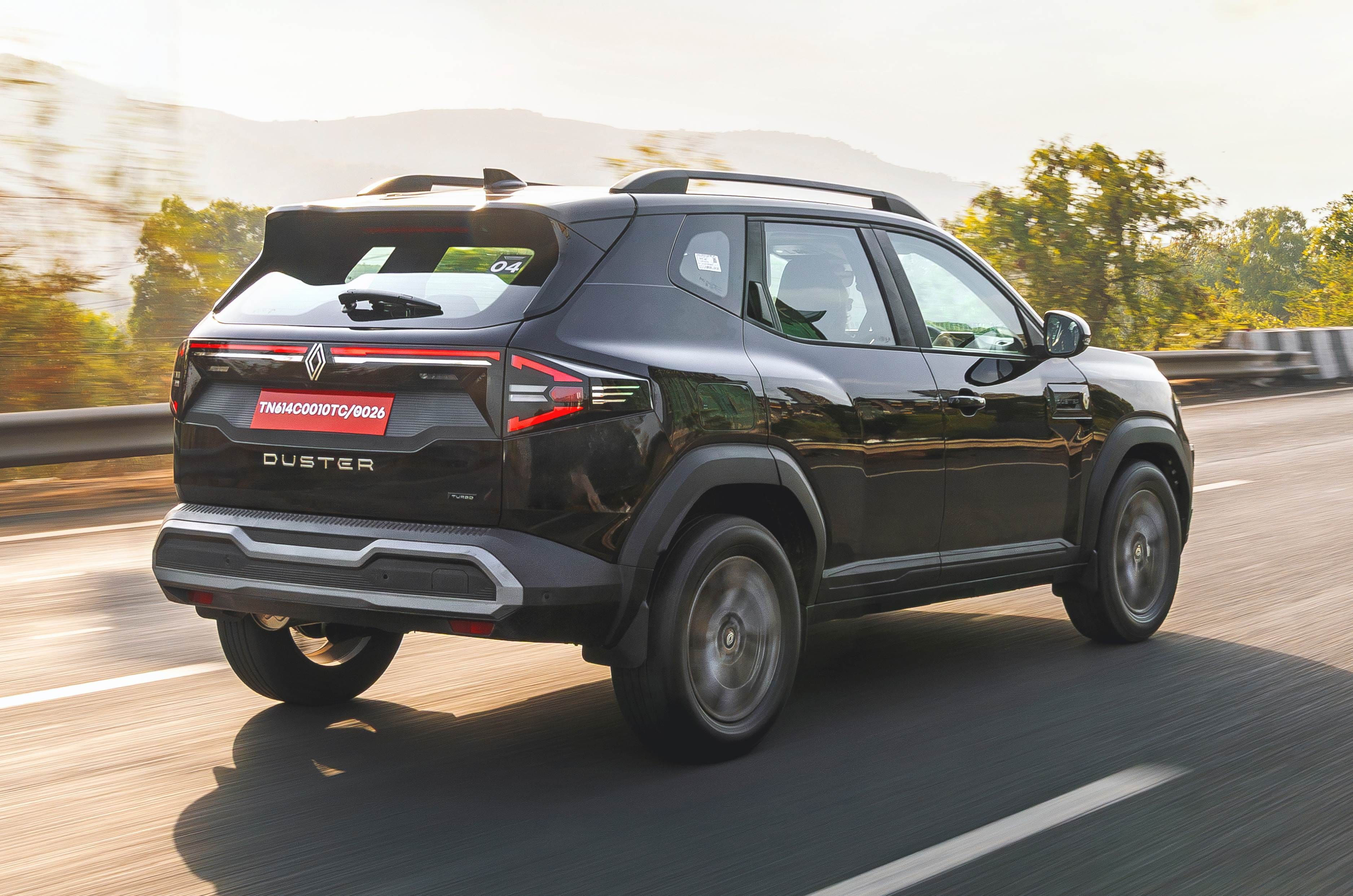
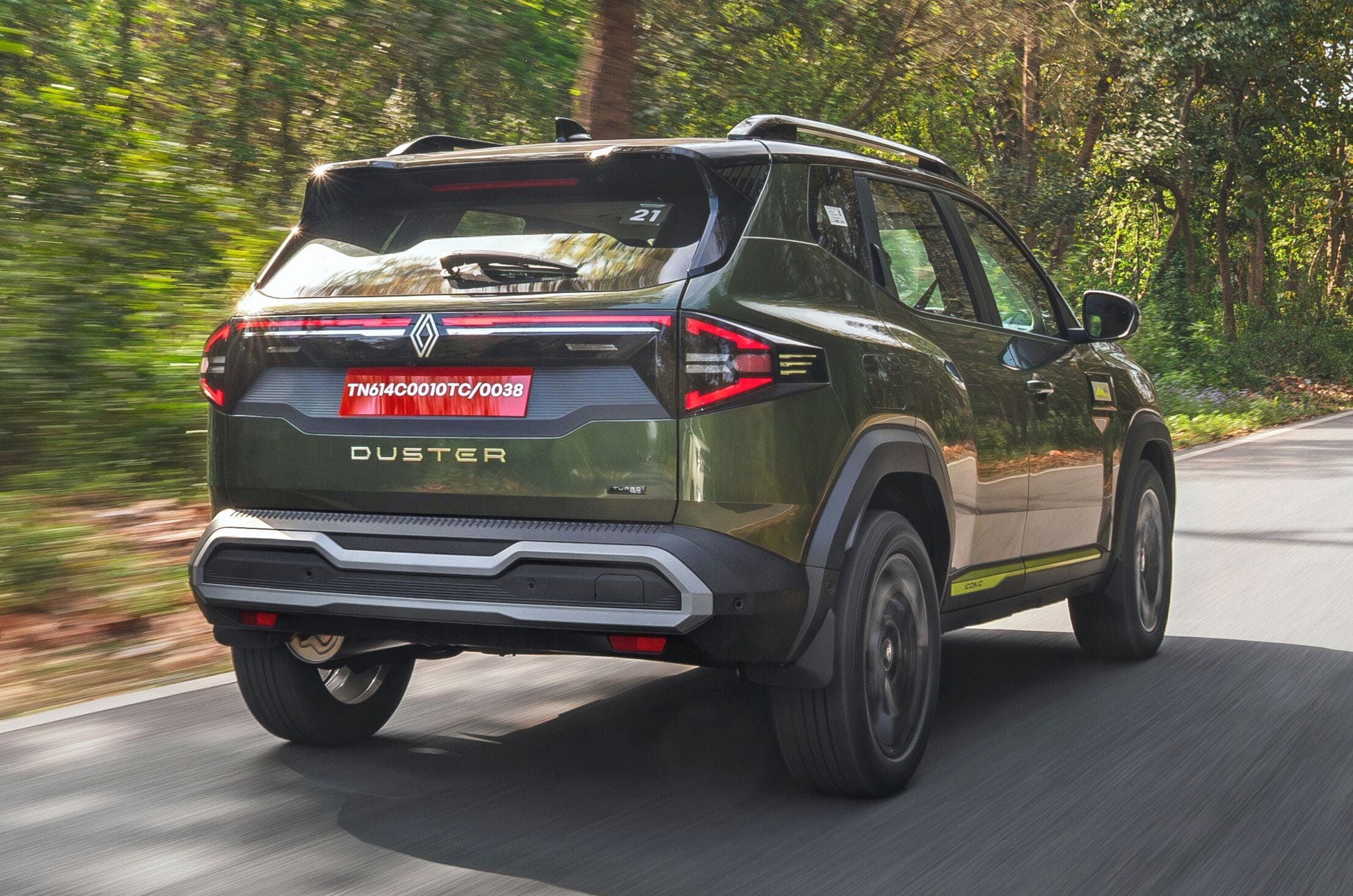
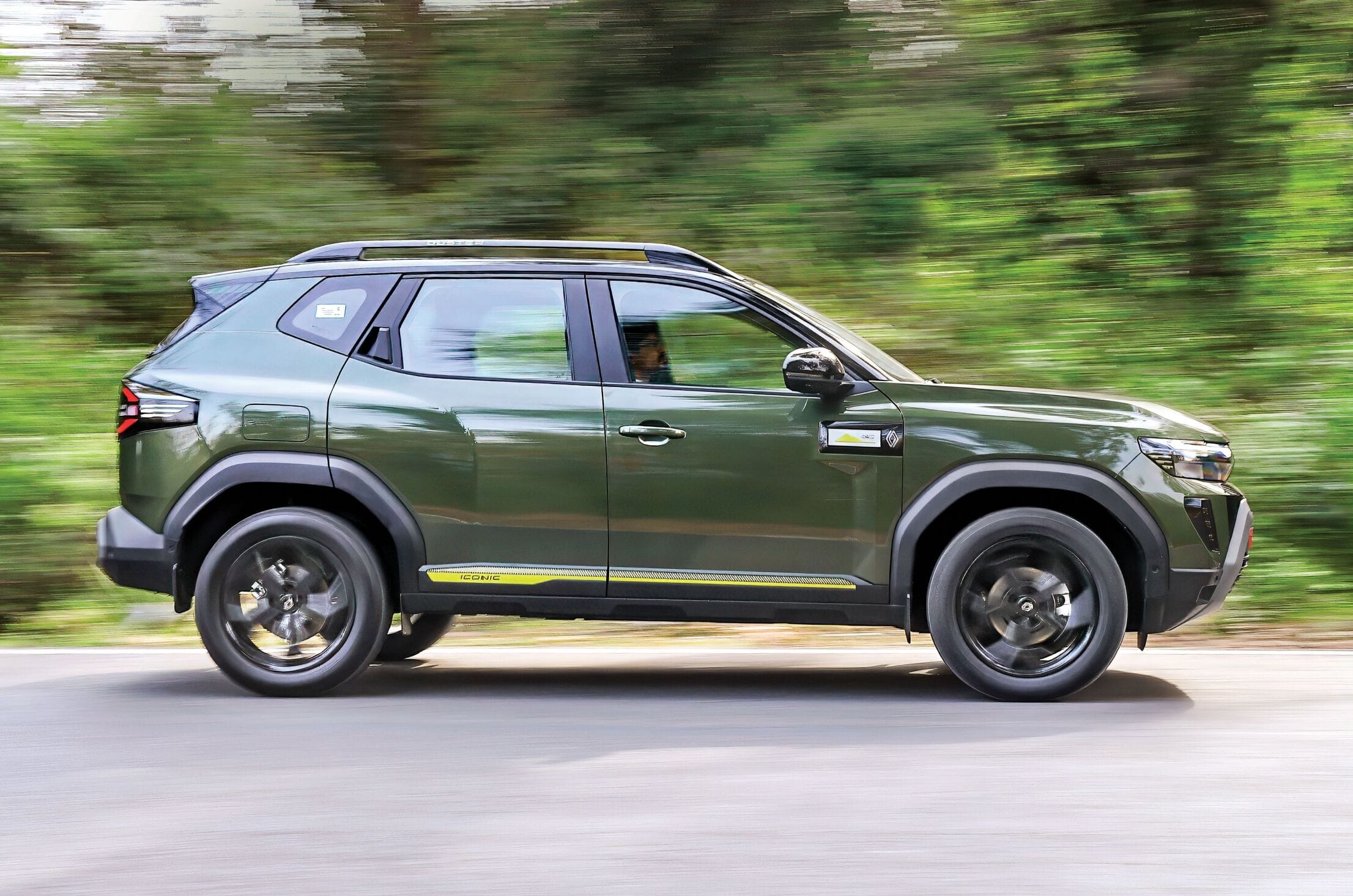
In profile, the Duster embraces a rugged SUV character with chunky black cladding, concealed rear door handles in the C-pillar and functional roof rails. It rides on striking 18-inch alloy wheels and offers 212mm of ground clearance. The rear design is relatively clean but features distinctive triangular tail-lamps connected by an LED light bar. A roof spoiler and contrasting silver insert in the bumper help enhance its stance. Overall, the Duster has considerable road presence. Colour options include Sunset Red, Pearl White, River Blue, Moonlight Silver, Stealth Black and Jade Mountain Green, while the Launch Edition adds neon-green accents and blacked-out alloys (pictured here).
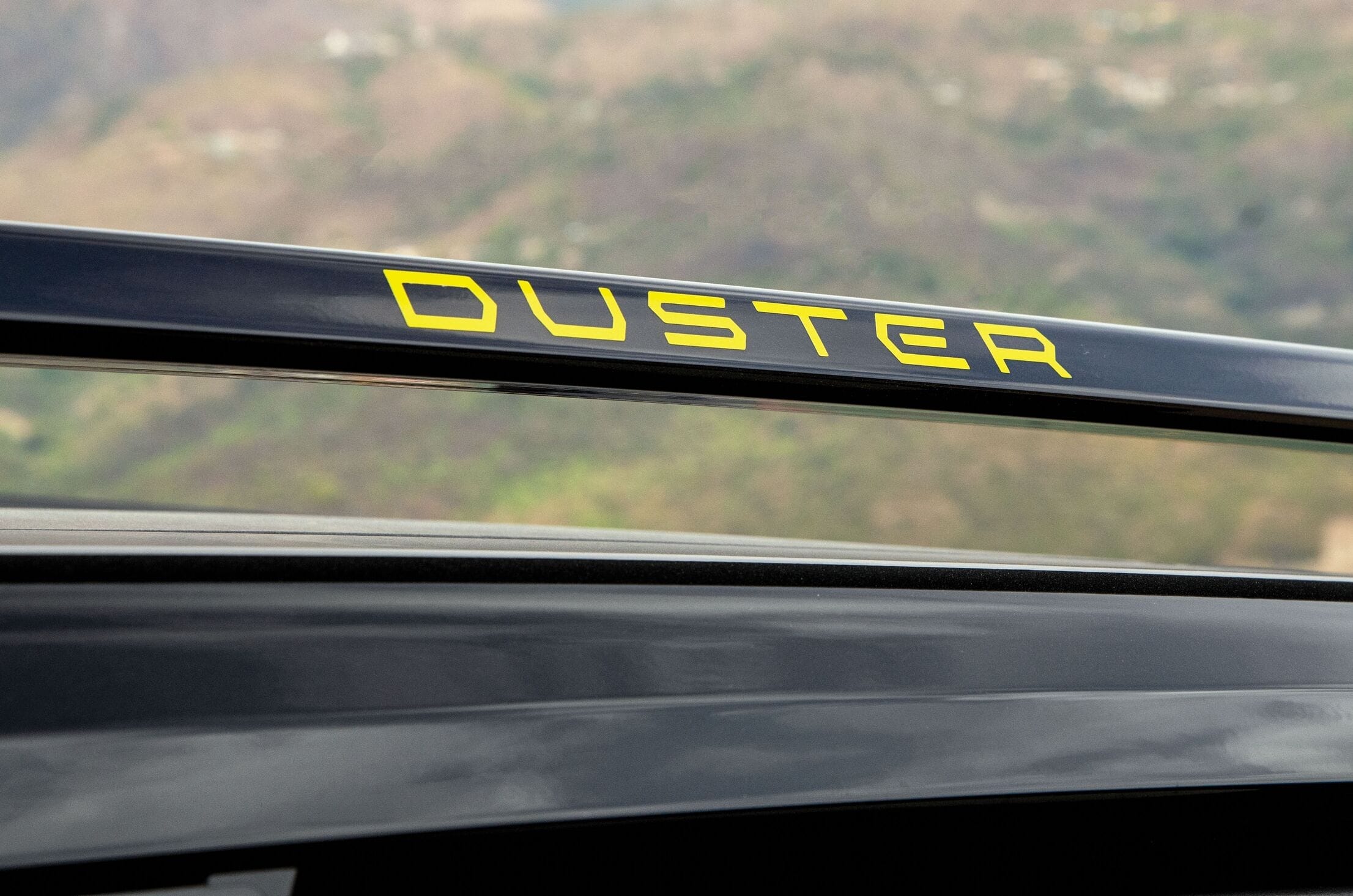
The roof rails are functional and have a rated 50 kg load-carrying capacity.
Meanwhile, the 1.0 range tops out at the mid-spec Techno trim, but Renault has done a very good job of not making it look like so. You still get the same butch and muscular styling, LED lights, roof rails and body cladding. The only prominent difference from the top trims is the alloy wheels, which are a size smaller at 17 inches and feature a slightly different design.
Unlike the global CMF-B-based model, the India-spec Duster sits on an updated RGMP platform.
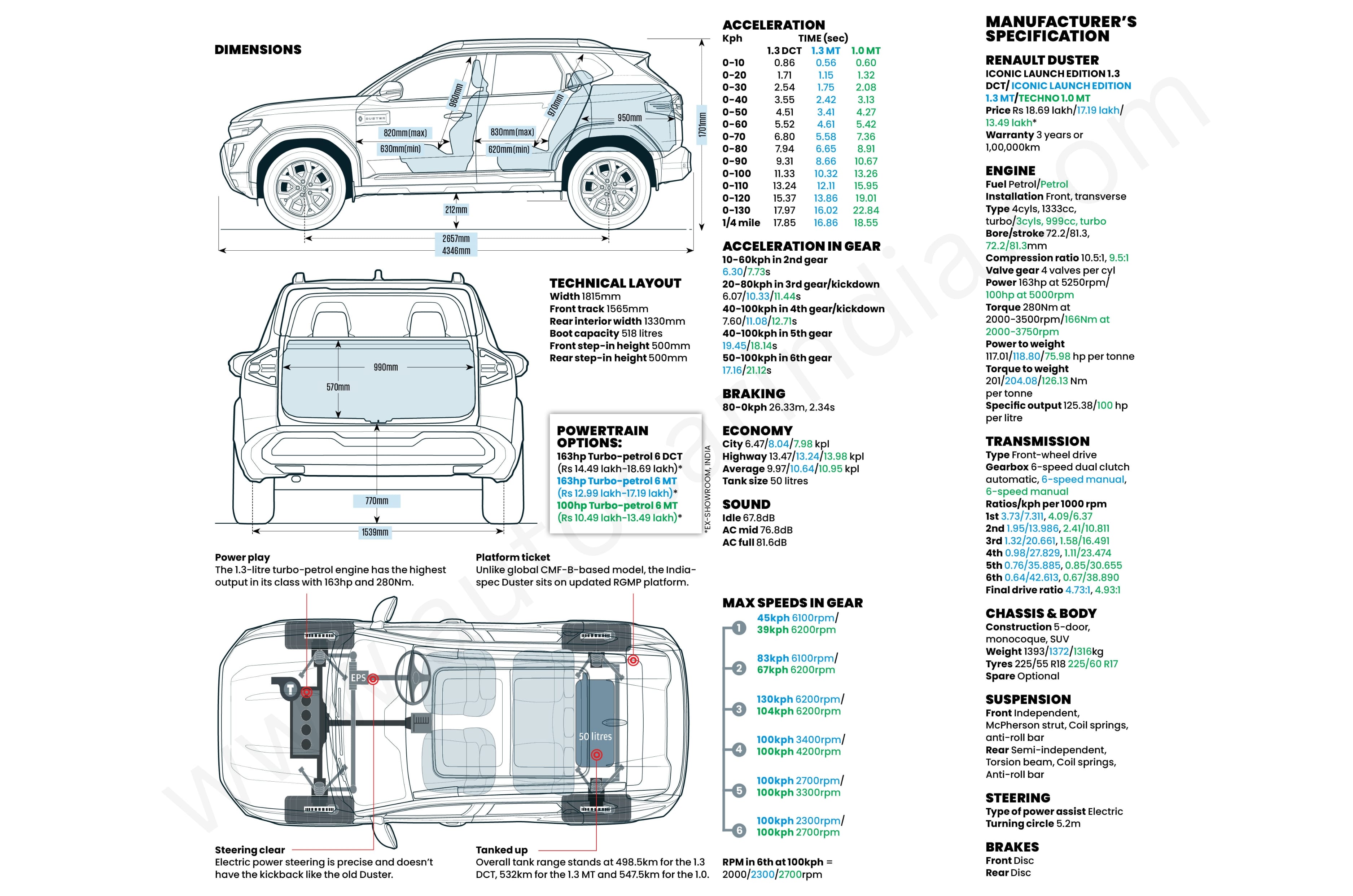
Unlike the European-spec Duster, which uses the CMF-B platform, the India model sits on an updated version of it, which Renault calls the Global Modular Platform (RGMP). It features a Google co-developed electronic architecture, and the platform is designed to accommodate a wide range of body styles and powertrains, including hybrids, CNG and full-electric derivatives. Interestingly, the cabin is around 40mm taller due to the addition of a panoramic sunroof, which necessitated a higher roofline to preserve cabin headroom. Ground clearance is slightly higher too, making the India car 50mm taller overall than the international model. Measuring 4,343mm long, 1,813mm wide and 1,659mm tall, with a 2,657mm wheelbase, the Duster sits squarely in the midsize SUV segment.
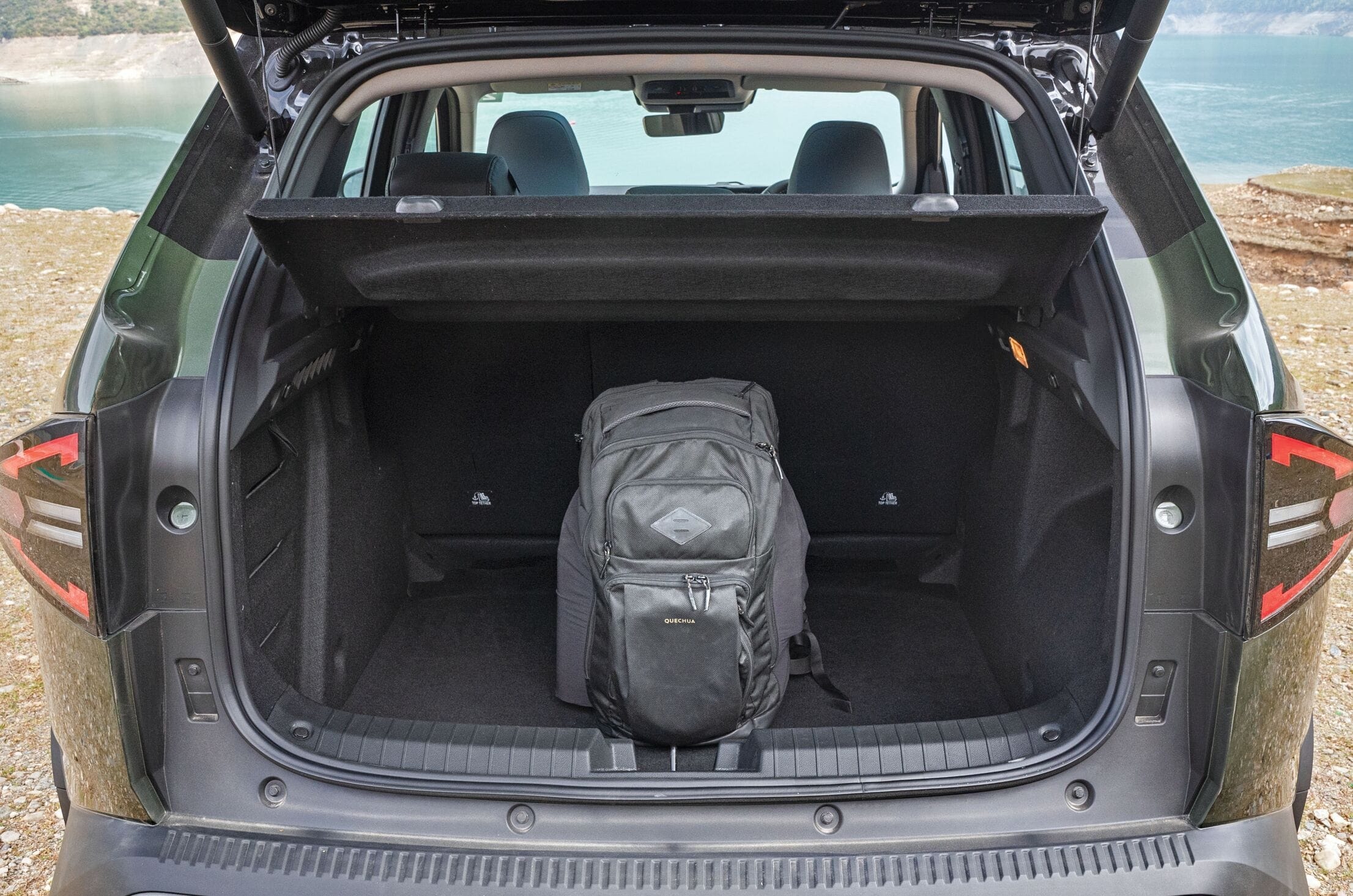
The Duster gets a segment-best 518-litre boot, though the loading lip is high.
The powered tailgate reveals a segment-leading 518-litre boot (700 litres up to the roof), although Renault only provides a puncture repair kit instead of a spare wheel as standard. Despite no AWD option, off-road credentials remain a key part of the Duster’s appeal, with 26.9-degree approach and 34.7-degree departure angles.
Renault Duster Interior Space, Comfort and Practicality – 8/10
Modern interior impresses with its design, but it isn’t as spacious as some rivals in the segment
Fit and finish of materials inside the cabin are good.
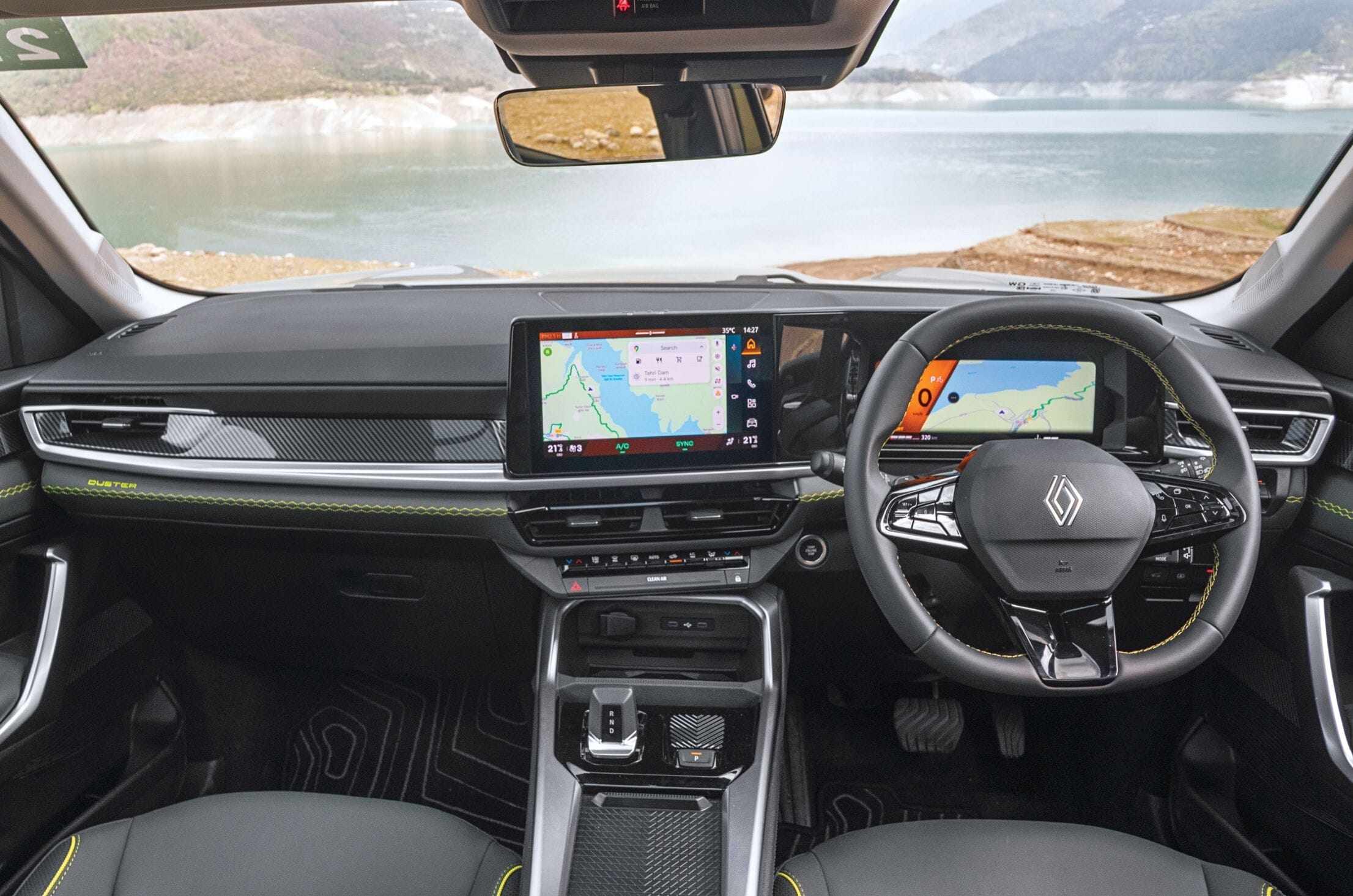
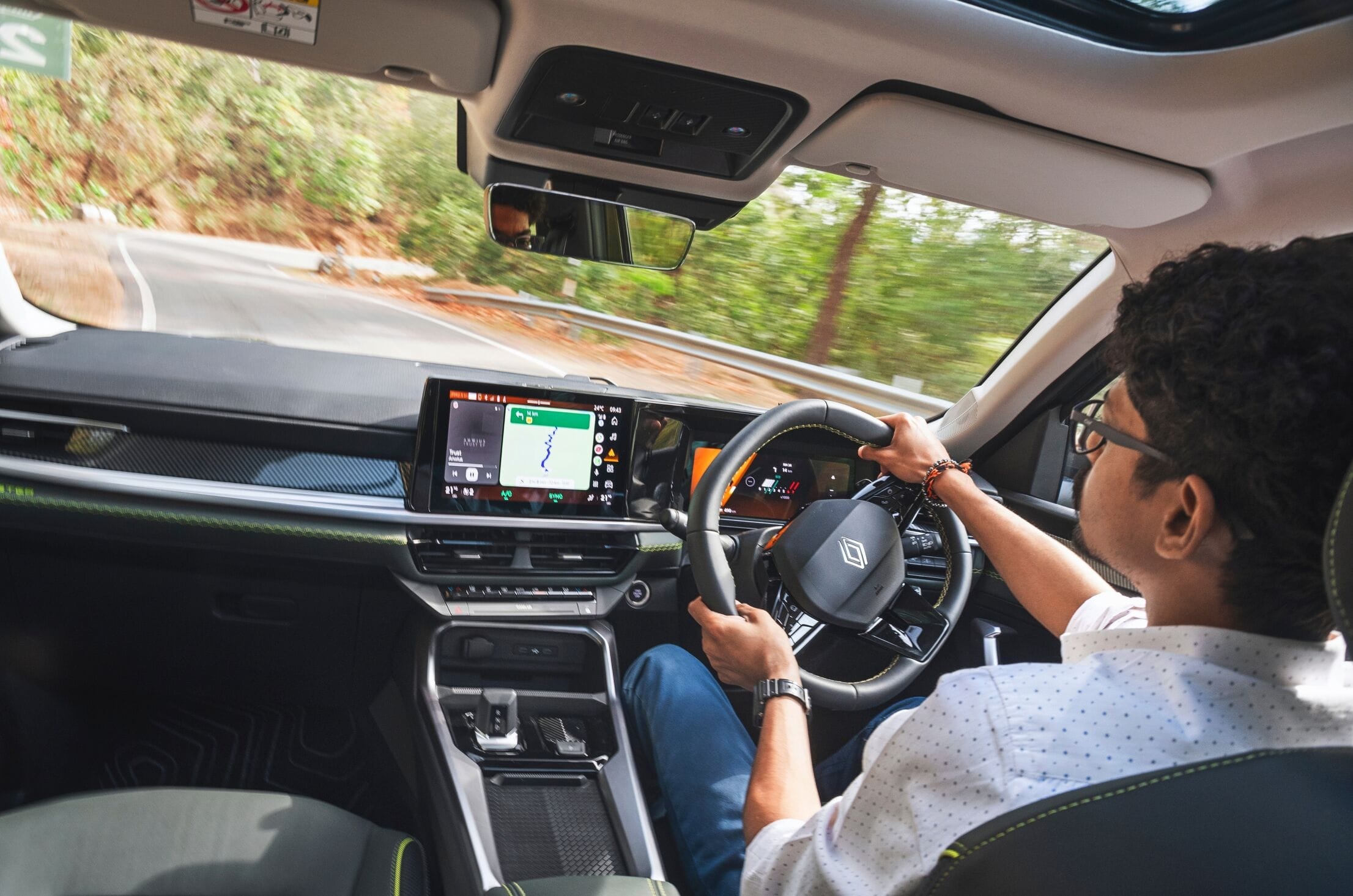
Inside, the dashboard features a twin-screen layout, with a mix of textured and soft-touch materials that lend the interior a premium feel. Silver accents, faux carbon-fibre trim and contrast green stitching add visual drama without making the cabin feel overly busy.
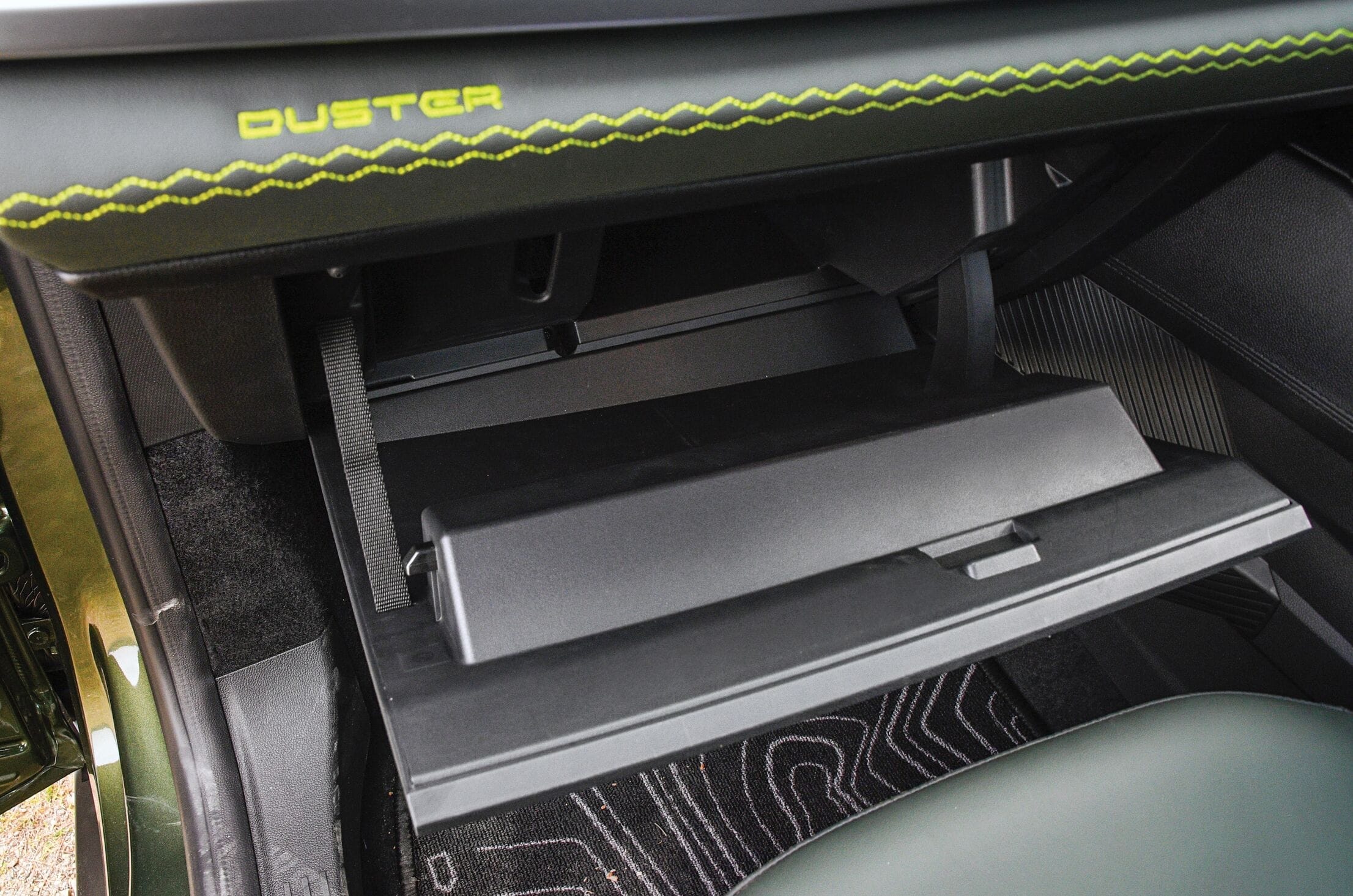
Glovebox is quite shallow and small on the whole.
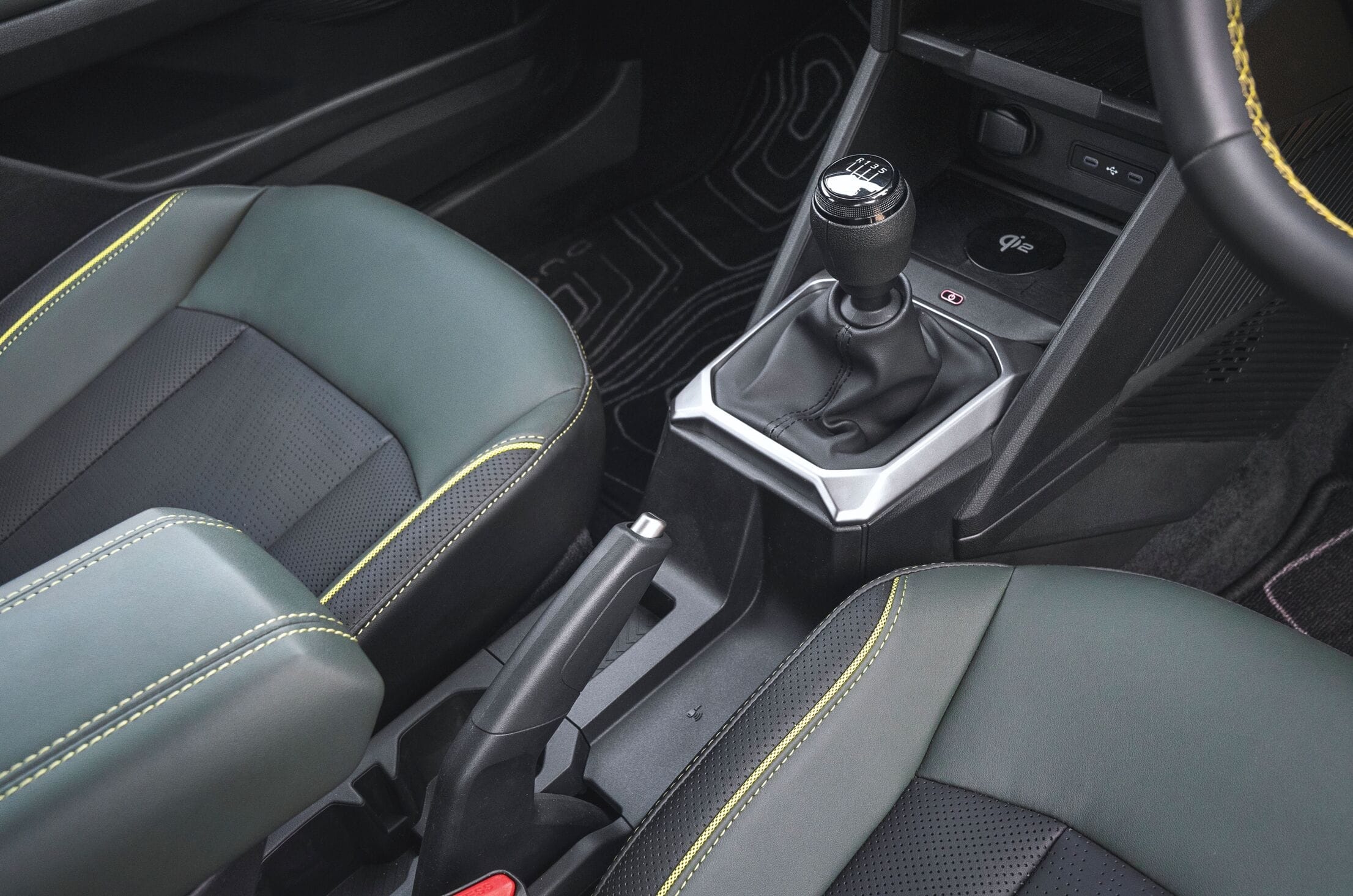
Crucially, Renault has resisted the temptation to digitise everything. The Duster strikes a sensible balance between touchscreen functions and physical controls, with a row of buttons and knobs for key functions, including the climate control system. Interestingly, the manual and automatic versions feature different centre console layouts. The automatic gets a raised console with a deep, cooled storage compartment, cup holders, a wireless charger and a stubby gear selector, while the manual features a lower-set console with a conventional handbrake and an additional storage shelf beneath the dashboard controls. The manual gear lever feels pleasingly tactile and well-engineered.
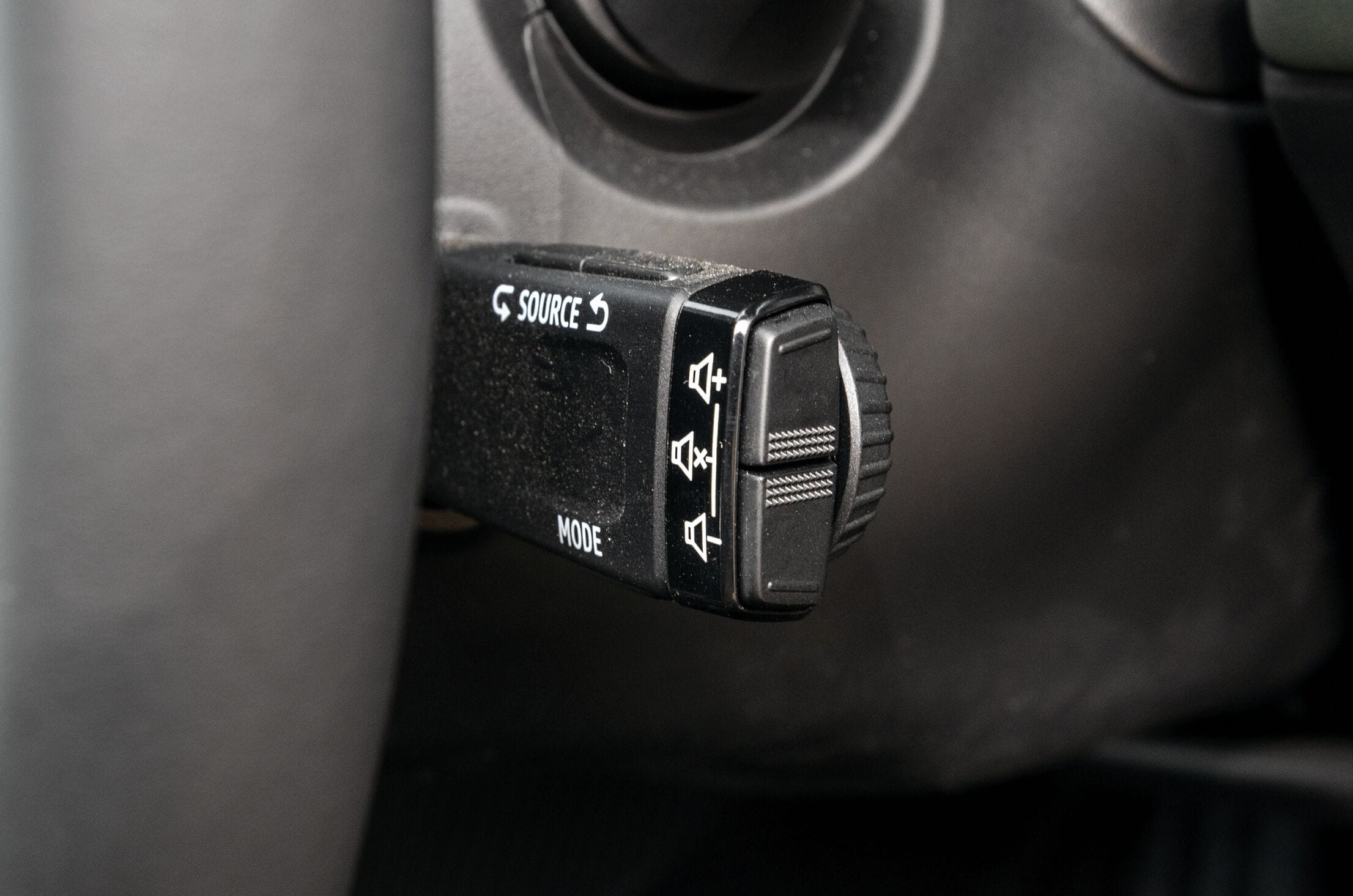
Audio controls are on a separate stalk behind the steering wheel; it takes some time getting used to.
Practicality is par for the course. The sliding front armrest incorporates a storage compartment, but the glovebox is on the smaller side, and the door pockets struggle to accommodate 1-litre bottles. The flat-bottom, flat-top steering wheel feels good to hold and houses controls for the instrument cluster and cruise control, while audio controls continue to sit on a separate stalk behind the wheel, a familiar Renault trait. What’s nice is that it features auto up/down for all windows from the base trim.
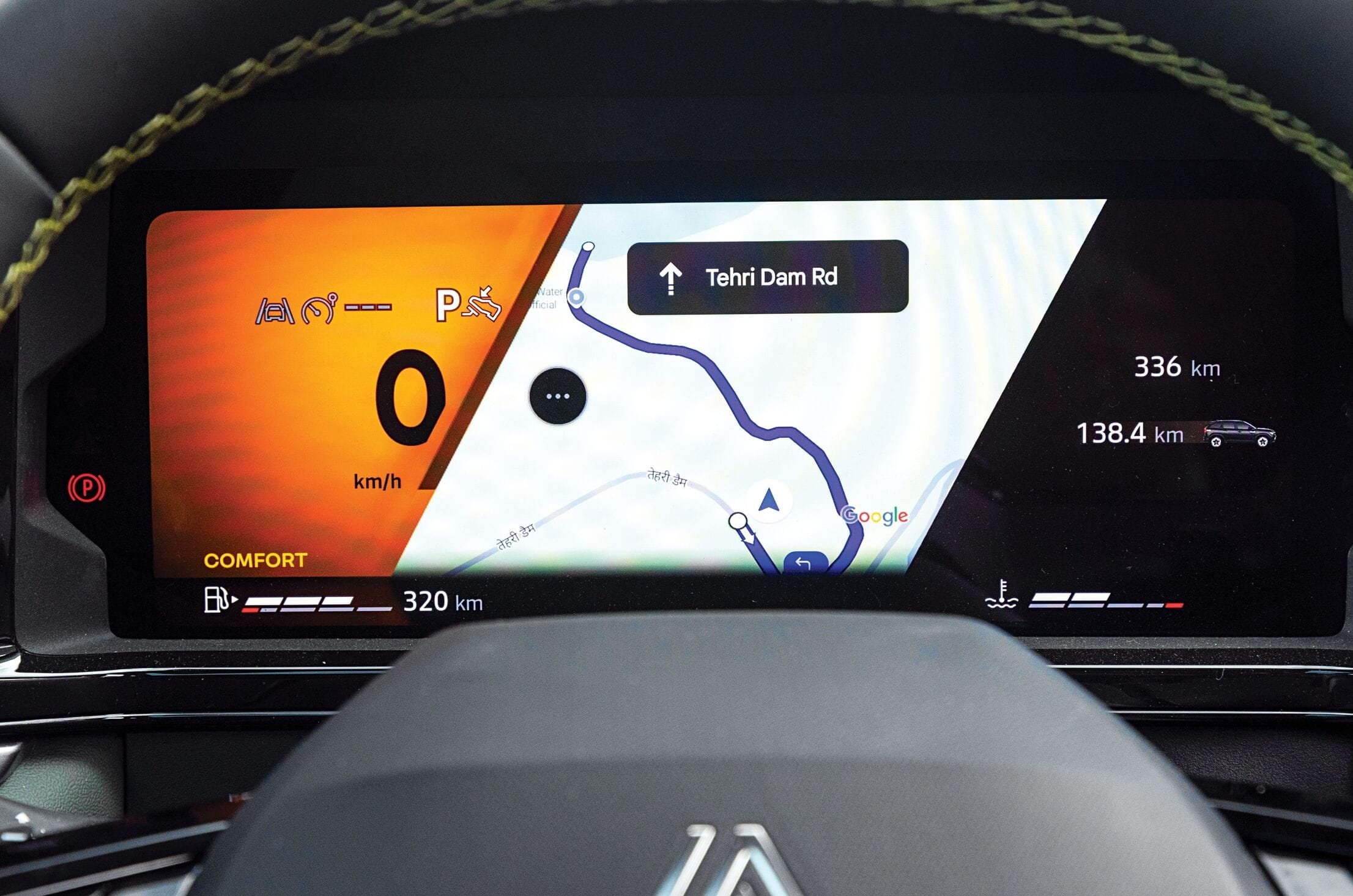
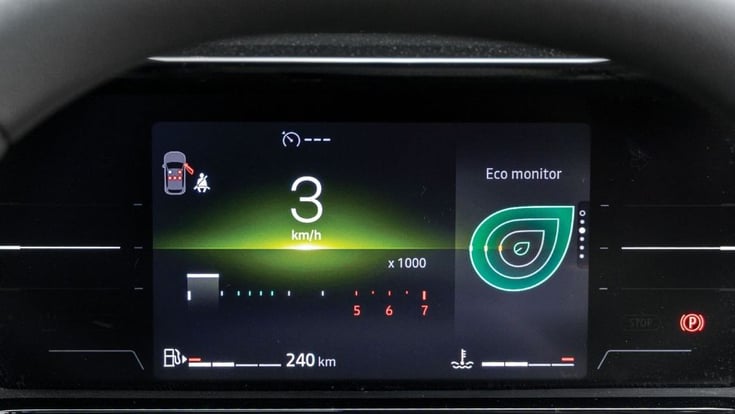
10.25-inch digital cluster has a split-screen function; some will miss classic round dials, though.
The digital instrument cluster is crisp, colourful and configurable, although some buyers will miss straightforward analogue dials. Less impressive is the key fob, shared with the Triber and Kiger, which feels very budget-oriented.
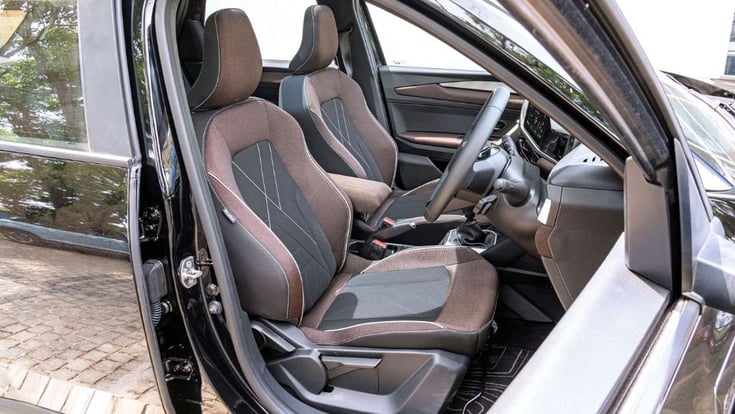
1.0 range gets a smaller 7-inch driver’s display and brown- black fabric seat upholstery.
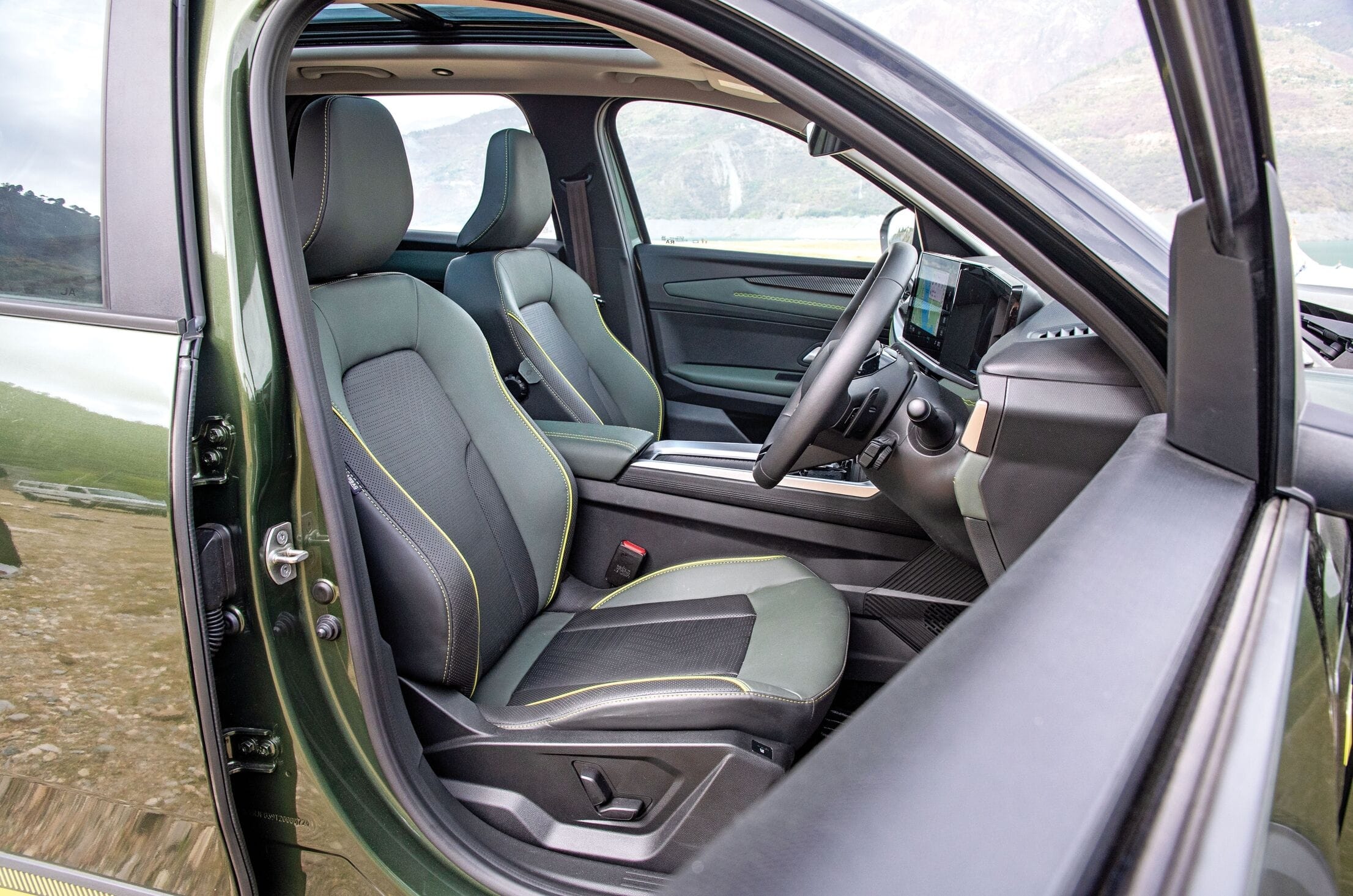
The dual-tone black-and-dark-green upholstery with neon-green stitching in the top-spec Iconic Launch Edition adds some character to the cabin. The Techno trim, meanwhile, which is where the 1.0 tops out, features brown-and-black seat upholstery with some different trim elements.
Front seats are well-padded, accommodating and ideal for long drives.
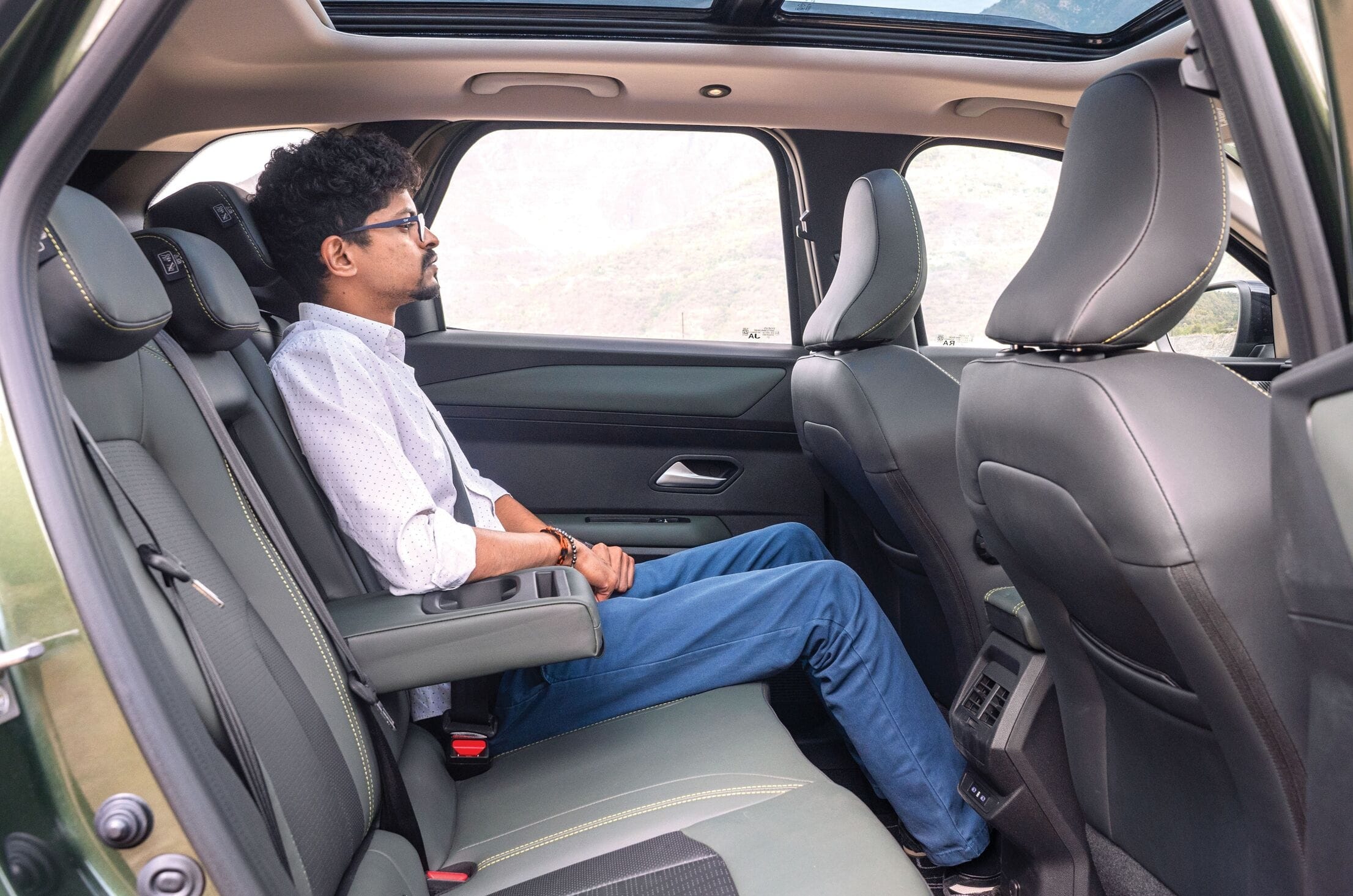
Up front, the seats are supportive and comfortable over long distances, and they feature electric adjustment and an effective ventilation function. Rear-seat comfort is good for two adults, with adequate knee room and good headroom. While a third passenger can be accommodated, limited shoulder room and the transmission tunnel make it a squeeze.
There’s good knee room and headroom on offer, but overall space is less than some rivals.
Rear occupants also get AC vents, charging ports and a centre armrest with cup holders. The large panoramic sunroof and expansive glass area help create an airy feel, although rear sun blinds are notably absent. One drawback is that the window line is considerably higher than before, meaning outward visibility isn’t quite as good as in the original Duster, which was renowned for its excellent all-round view out.
Renault Duster Features and Safety – 8/10
Top-spec comes very well-equipped, though features could’ve been better spread out
10.1-inch touchscreen is slick and high- resolution, but the UI isn’t as logical or straightforward as some rivals.
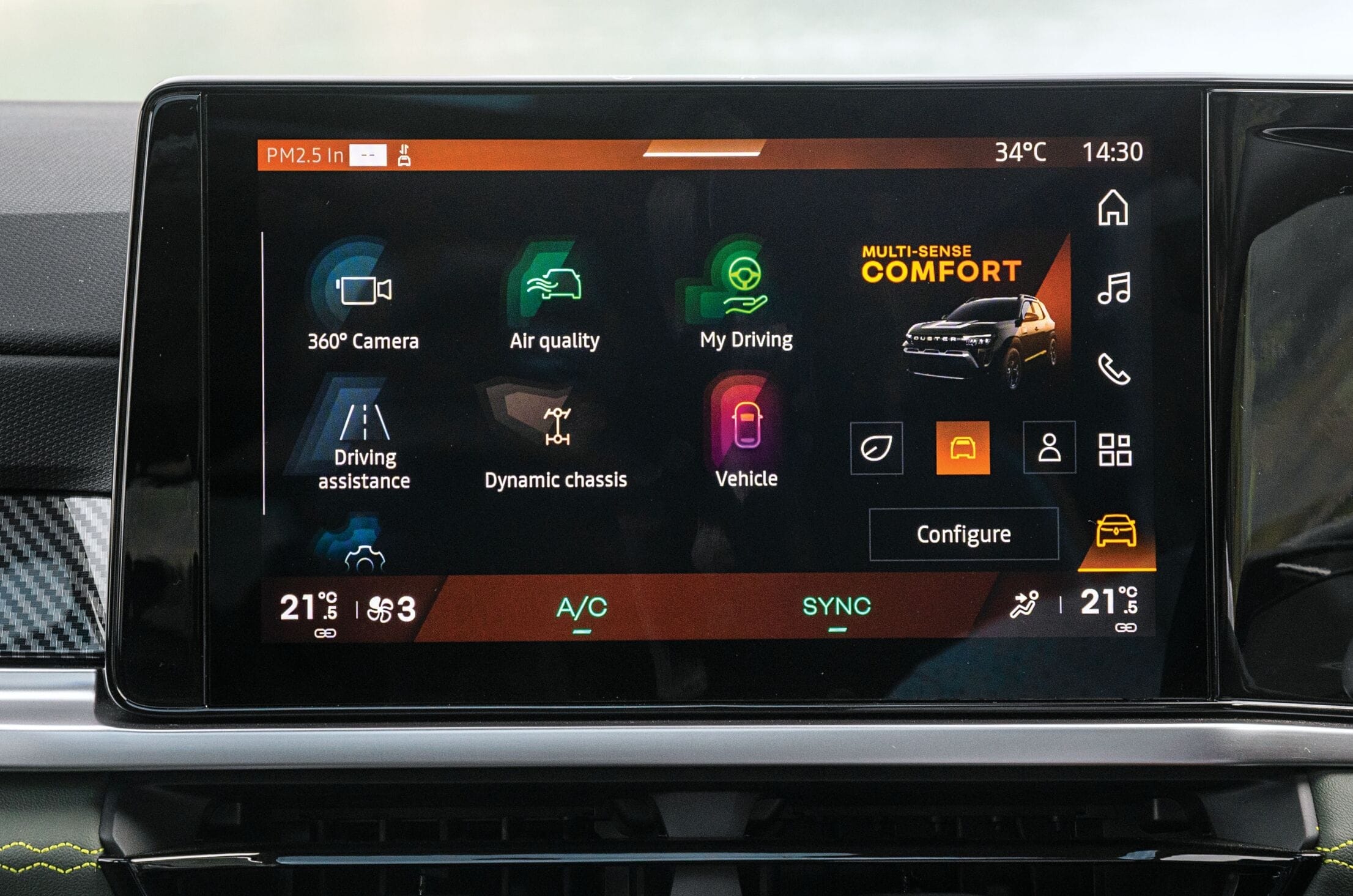
The Duster comes loaded with all the features expected of a midsize SUV. Its infotainment system supports wireless smartphone connectivity and impresses with crisp graphics and vibrant colours, matching the digital instrument cluster. However, the 10.1-inch touchscreen’s ratio makes it feel relatively slim.
The standout feature is the integration of Google services – Google Maps, Google Assistant and the Google Play Store, which are built into the system, and work seamlessly. The interface is slick and responsive, though it isn’t very intuitive to use, lacking the straightforward layout and menu structure seen in some rivals.
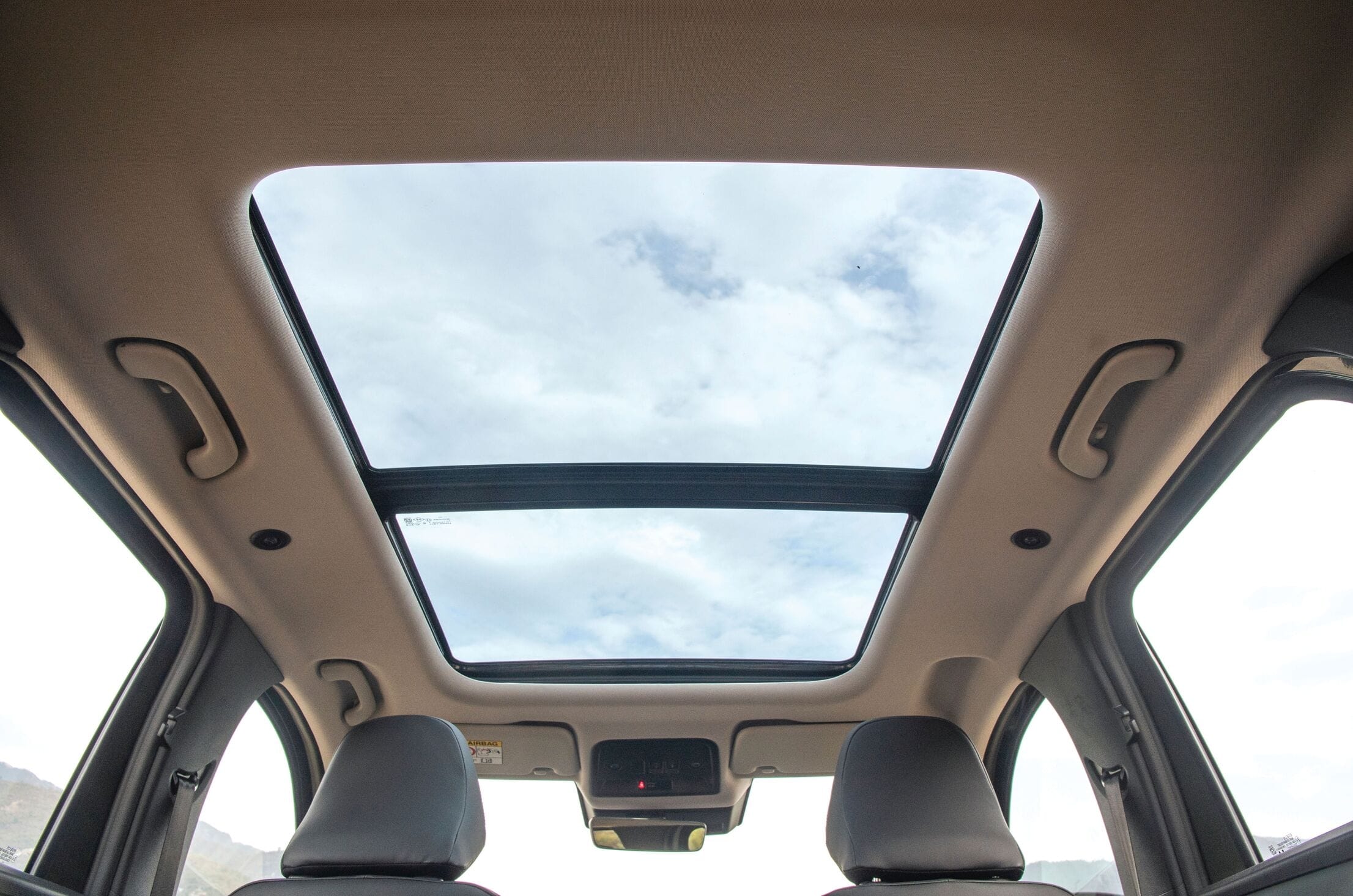
The large panoramic sunroof livens up the cabin without hampering headroom.
Equipment highlights include ventilated and powered front seats, a panoramic sunroof, wireless phone charging, a powered tailgate, dual-zone climate control, connected car technology, auto headlamps and wipers, and a 360-degree camera, although image quality could be sharper.
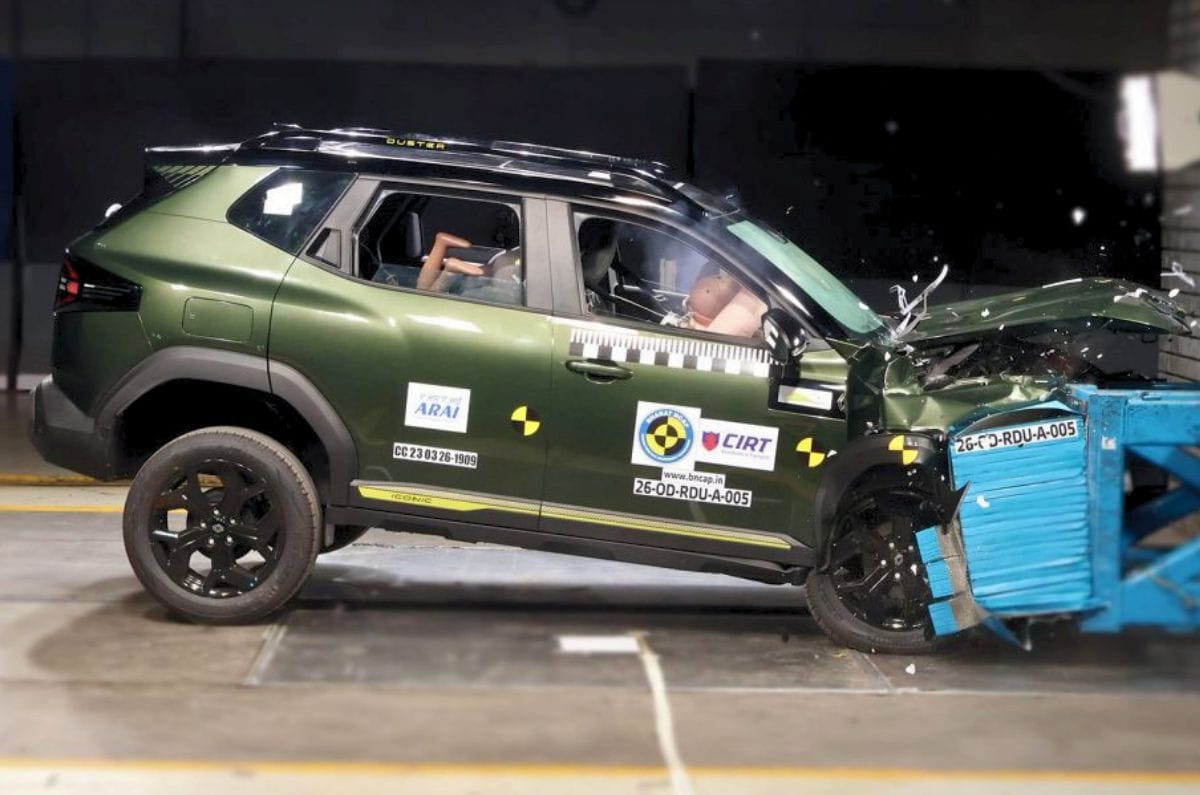
Safety equipment is comprehensive, with six airbags as standard, front and rear parking sensors, TPMS, an electronic parking brake on DCT variants, disc brakes all around, adjustable headrests and three-point seatbelts for all occupants. The Duster is also Renault India’s first model to feature Level 2 ADAS. During our drive, the system felt well calibrated and largely unobtrusive, though lane-keep assist was slightly overzealous. A dedicated button allows drivers to disable all ADAS functions without diving into touchscreen menus, which is a welcome touch. Commendably, Renault has also secured a full 5-star crash safety rating from Bharat NCAP for the SUV.
It scored 30.49/32 points for adult occupant protection and 45/49 points for child occupant protection.
Overall, the Duster is well equipped to compete with its rivals, though Renault could have distributed some premium features like ventilated seats more effectively across the range, particularly on mid-spec variants. As for the 1.0 range, the top-spec Techno is well specified with features like the same touchscreen, panoramic sunroof, powered tailgate and more.
Renault Duster equipment checklist
Auto LED headlamps
Yes
Alloy wheels
18-inch
Powered front seats
Yes
Ventilated seats
Yes
Panoramic sunroof
Yes
Ambient lighting
Yes
Touchscreen
10.1-inch
Android Auto/Apple CarPlay
Yes
Arkamys Kardon audio
Yes
ADAS
Level 2
Renault Duster Engine Refinement and Performance – 8/10
Both turbo-petrols are refined and have a strong midrange punch; DCT is the pick of the lot
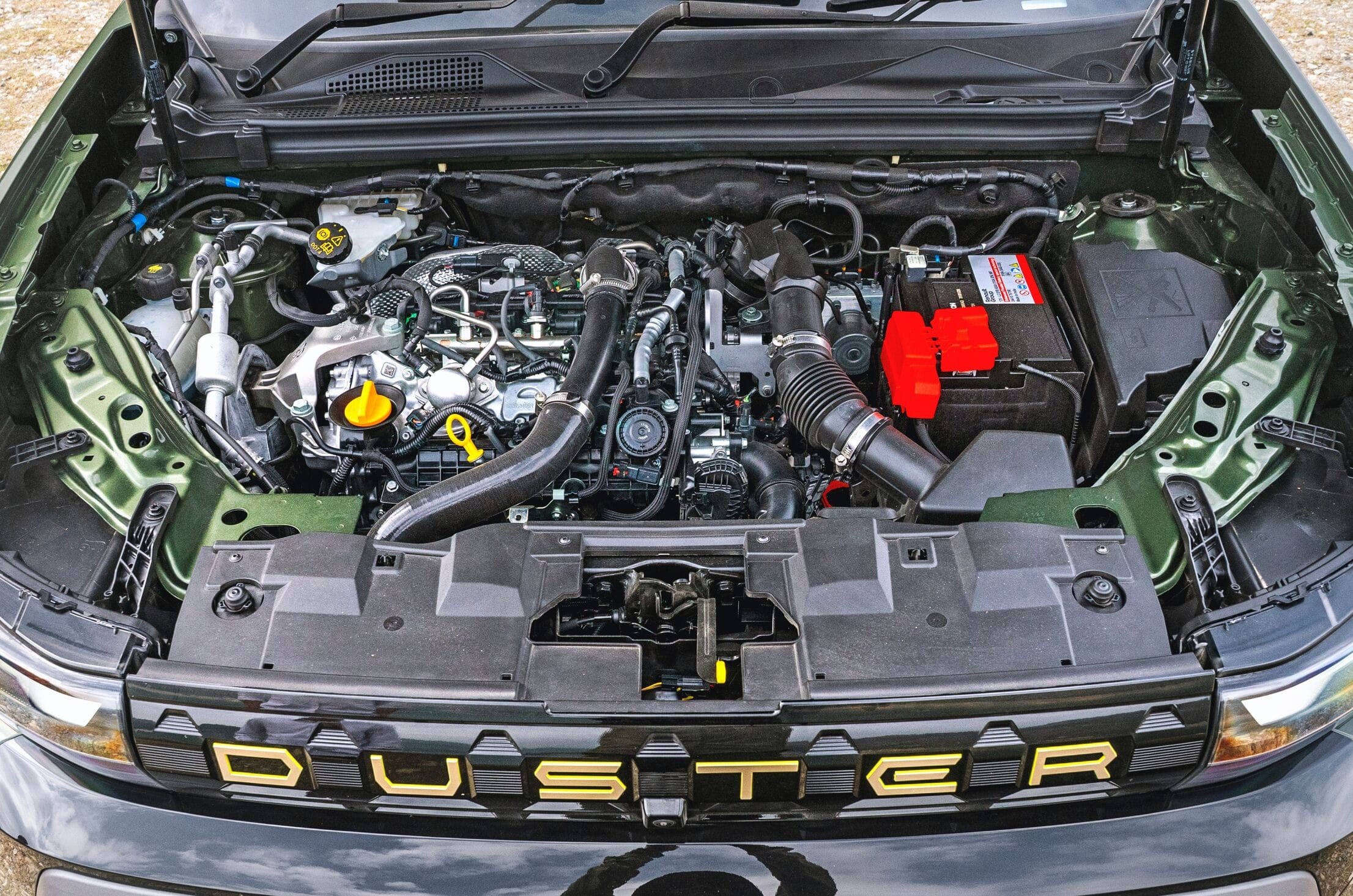
The Duster range starts with a 1.0-litre three-cylinder turbo-petrol producing 100hp and 166Nm, paired exclusively with a 6-speed manual gearbox. Then there’s a 1.3-litre four-cylinder turbo-petrol with a segment-leading 163hp and 280Nm, available with either a 6-speed manual or a 6-speed DCT automatic. We’ve tested all three versions of the Duster on sale currently.
Renault Duster powertrain specs
1.0TP MT
1.3 TP MT
1.3TP DCT
Installation
Front, transverse
Front, transverse
Front, transverse
Type
3 cyls, 999cc, turbo-petrol
4 cyls, 1333cc, turbo-petrol
4 cyls, 1333cc, turbo-petrol
Bore/ stroke (mm)
72.2/81.3
72.2/81.3
72.2/81.3
Compression ratio
9.5:1
10.5:1
10.5:1
Valve gear
4 valves per cyl
4 valves per cyl
4 valves per cyl
Power (hp)
100 at 5000rpm
163 at 5250rpm
163 at 5250rpm
Torque (Nm)
166 at 2000-3750rpm
280 at 2000-3500rpm
280 at 2000-3500rpm
Power to weight (hp per tonne)
75.98
118.80
117.01
Torque to weight (Nm per tonne)
126.13
244.17
244.17
Specific output (hp per ltr)
100
125.38
125.38
Drive layout
Front-wheel drive
Front-wheel drive
Front-wheel drive
Gearbox
6-speed manual
6-speed manual
6-speed dual-clutch automatic
A strong-hybrid powertrain will join the line-up later this year. It combines a 109hp 1.8-litre petrol engine with a 49hp electric motor and a 20hp hybrid starter generator, drawing power from a 1.4kWh battery. Total system output stands at 160hp and 172Nm. Notably, unlike the original, the new Duster isn’t available with a diesel engine or an AWD option.
Both engines are refined and have a strong midrange, but aren’t very fuel-efficient.
The 1.3-litre engine is impressively refined, with virtually no vibrations at idle and excellent smoothness throughout the rev range. Cabin insulation is equally impressive, keeping engine noise largely out of the cabin unless you’re extending it towards the redline. You do hear quite a bit of the turbo’s blow-off sound though. There is some turbo lag, followed by a noticeable surge in performance at around 2,500rpm, after which the engine delivers a strong and eager mid range.
The 1.3-litre turbo-petrol engine has the highest output in its class with 163hp and 280Nm.
Thanks to its wet clutch, the DCT allows for some slip, given that the lubrication manages wear as well as heat build-up. Thus, shifts prioritise smoothness over outright speed, feeling more like a conventional torque-converter automatic in city driving. This makes it exceptionally easy to live with in traffic, while responsive paddle shifters add an extra layer of engagement on a spirited drive. We recorded a 0-100kph time of 11.3 seconds, which is decent for the segment. However, the tall gearing does blunt low-speed responses somewhat.
Enthusiasts will naturally gravitate towards the manual. Driven on winding and open roads, it feels engaging and rewarding, with a light clutch and a precise shift action. However, turbo lag is more noticeable here than in the DCT, particularly when accelerating from slow speeds. This does make city drives somewhat cumbersome. Combined with the tall gearing, it often requires an extra downshift to keep the engine in its sweet spot.
Manual versions get a lower-set centre console with a manual handbrake.
The manual posted a 0-100kph time of 10.3sec, making it a whole second quicker than the DCT. Both versions feature Comfort and Eco drive modes, although the addition of a Sport mode would have better suited the Duster’s otherwise enthusiastic character.
The 1.0 entry-level engine is a familiar unit that also powers the Kiger. However, Renault has made tweaks, with torque increasing to 166Nm, up by 6Nm over the Kiger, while a 6-speed manual gearbox replaces the compact SUV’s 5-speed unit. There’s no automatic option, though, which does limit its appeal.
The Duster shares its 1.0-litre engine with the smaller Kiger.
Like most three-cylinder engines, there’s a noticeable thrum and some vibrations at idle, but things smoothen out considerably once on the move. Being a small-capacity turbocharged motor, there is some lag low down in the rev range. However, once past 2,000rpm – where peak torque arrives – the engine feels responsive and pulls cleanly towards the redline. Performance is more adequate than exciting. Around town, it keeps pace with traffic comfortably, and part-throttle responses are respectable. On highways and steep inclines, however, you’ll need to work the gearbox to extract the best from the engine, particularly when overtaking.
The clutch is light, making it easy to use in traffic, while the 6-speed gearbox offers a precise shift action. It isn’t the slickest unit around, though, and enthusiastic drivers will notice that shifts require a bit more effort than expected.
Renault Duster acceleration times
Speed (kph)
1.0TP MT time (sec)
1.3TP MT time (sec)
1.3TP DCT time (sec
0-10
0.60
0.56
0.86
0-20
1.32
1.15
1.71
0-30
2.08
1.75
2.54
0-40
3.13
2.42
3.55
0-50
4.27
3.41
4.51
0-60
5.42
4.61
5.52
0-70
7.36
5.58
6.80
0-80
8.91
6.65
7.94
0-90
10.67
8.66
9.31
0-100
13.26
10.32
11.33
0-110
15.95
12.11
13.24
0-120
19.01
13.86
15.37
0-130
22.84
16.02
17.97
1/4 mile
18.55
16.86
17.85
20-80 (rolling)
11.44
10.33
6.07
40-100 (rolling)
12.71
11.08
7.60
Renault Duster Fuel Efficiency – 6/10
Small-capacity turbo engines mean efficiency isn’t great
Renault Duster tested fuel efficiency (kpl)
1.0TP MT
1.3TP MT
1.3TP DCT
City
7.98
8.04
6.47
Highway
13.98
13.24
13.47
Average
10.95
10.64
9.97
Tank size (ltr)
50
50
50
The Duster 1.0 has a claimed ARAI fuel efficiency of 19.41kpl. In our real-world tests, it returned 7.92kpl in the city and 13.98kpl out on the highway, for an average of 10.95kpl. It packs in an Eco drive mode and auto start/stop tech, which help boost its efficiency. However, the ambient temperature during our test reached a soaring 40degC, which meant the AC was working hard to keep the cabin at our preset 22degC and the auto start/stop would only shut off the car for a brief time at traffic lights, which affected the efficiency.
Overall tank range stands at 498.5km for the 1.3 DCT, 532km for the 1.3 MT and 547.5km for the 1.0.
The 1.3 MT is the second most fuel-efficient version from the Duster range, returning 8.04kpl in the city and 13.24kpl on the highway for an average of 10.64kpl. The 1.3 has better efficiency than the 1.0 in the city owing to its taller gearing, which requires less frequent shifts. Meanwhile, as you’d expect, it’s the 1.3 DCT that’s the least fuel-efficient. It managed 6.47kpl in the city and 13.47kpl on the highway, for an average of 9.97kpl. Like with the 1.0, high ambient temperatures played a role in affecting its efficiency as well. Still, compared to its rivals, the Duster’s real-world efficiency is on the lower side.
Renault Duster Ride Comfort and Handling – 9/10
Feels solid and composed over all surfaces and is engaging to drive
Renault Duster suspension, steering, and brakes
Front suspension
Independent, McPherson strut, Coil springs, anti-roll bar
Rear suspension
Semi-independent, Torsion beam, Coil springs, Anti-roll bar
Steering type
Rack and pinion
Type of power assist
Electric
Turning circle
5.2m
Front brakes
Disc
Rear brakes
Disc
Ride comfort was one of the original Duster’s defining strengths, and thankfully, that trait has carried over to the new model. There’s a distinctly European firmness to the suspension setup, particularly at lower speeds, but comfort isn’t compromised. The Duster absorbs rough patches, sharp edges and large potholes with impressive composure, preventing harsh impacts from filtering into the cabin. Unlike the older model, there’s also very little steering kickback over rough surfaces.
Electric power steering is precise and doesn’t have the kickback like the old Duster.
Contributing to this pliant ride are the relatively tall sidewalls of the 225/55 R18 tyres, which add an extra layer of cushioning. In fact, the 1.0 variants may even feel a touch plusher owing to their smaller 17-inch wheel size, though the difference is barely perceptible. At highway speeds, the Duster feels equally accomplished, remaining stable and reassuringly planted.
If you stall the manual, it will automatically restart when you press the clutch pedal.
Anti-roll bars are present at the front, and uncharacteristically, Renault has utilised one at the rear too, integrating it within the twist-beam axle. Handling is enjoyable through corners, and body control is commendable. However, there is some roll when pushed hard, and it doesn’t feel quite as agile or as tightly tied down as some other European rivals. The steering is light but accurate, with enough feedback to inspire confidence on a twisty road. Steering modes are available on the 1.3 that add useful weight for more enthusiastic driving.
Renault Duster braking performance
80-0kph
26.33mtr, 2.34s
Renault Duster Price and Verdict – 8/10
Builds on its legacy of rugged styling and engaging drive with a very modern and well-equipped cabin
Renault Duster price (Rs lakh)
Techno 1.0 MT
13.49
Iconic Launch Edition 1.3 MT AT
17.19
Iconic Launch Edition 1.3DCT
18.69
The new Renault Duster is a well-rounded package that is well equipped to take on the congested midsize SUV space. It’s not without its shortcomings, though, as it would have benefitted from a bit more rear-seat space, better real-world efficiency, and the option of a diesel would have widened its appeal.
Offered in five trims: Authentic, Evolution, Techno, Techno+, and Iconic.
That aside, it stays true to its predecessor by offering a tough and solid feel, outstanding ride comfort and an engaging drive experience, while moving the game forward. The cabin feels properly modern, with all the new-age features; it’s got punchy turbo-petrol engine options, and it’s got the rugged styling to match. There’s even a strong hybrid on the way. Bottom line is, the Duster feels fresh, desirable and a proper match for the heavy hitters in its segment.
Poco जल्द ही भारत में अपने स्मार्टफोन लाइनअप में दो नए डिवाइस शामिल कर सकता है। हाल ही में आई एक लीक के अनुसार, Xiaomi का यह सब-ब्रांड आने वाले हफ्तों में देश में Poco M8 Power और Poco X8 लॉन्च कर सकता है। कहा जा रहा है कि ये दोनों हैंडसेट हाल ही में लॉन्च हुए Redmi Note 17 और Redmi Note 17 Pro के रीब्रांडेड वर्जन होंगे, जिनमें Poco की ब्रांडिंग के साथ वही पुराने हार्डवेयर देखने को मिलेंगे। हालांकि, कंपनी ने अभी तक लॉन्च की जानकारी नहीं दी है, लेकिन ताजा लीक से यह अंदाजा लग सकता है कि क्या उम्मीद की जा सकती है। यहां उन Poco स्मार्टफोन के बारे में सब कुछ बताया गया है जिनकी चर्चा हो रही है।
Poco M8 Power और Poco X8 की लॉन्च टाइमलाइन लीक
टिप्सटर योगेश बरार के अनुसार, चीनी स्मार्टफोन कंपनी Poco इस साल की मौजूदा तिमाही में Poco M8 Power और Poco X8 को भारत में लॉन्च कर सकती है। हालांकि, लॉन्च की सही तारीख का खुलासा नहीं हुआ है, लेकिन टाइमलाइन से पता चलता है कि ये स्मार्टफोन अगले कुछ हफ्तों या महीनों में लॉन्च हो सकते हैं।
लीक में यह भी दावा किया गया है कि ये दोनों मॉडल असल में Redmi Note 17 और Redmi Note 17 Pro के ही रीब्रांडेड वर्जन होंगे, जिन्हें हाल ही में चीन में लॉन्च किया गया है। बता दें कि Poco के लिए यह कोई नई रणनीति नहीं है, क्योंकि यह चीनी टेक कंपनी अक्सर कई ग्लोबल मार्केट में Redmi स्मार्टफोन को अलग-अलग नामों से लॉन्च करती रही है।
हालांकि, टिपस्टर ने यह भी संकेत दिया कि कीमत का अनुमान “खराब” है, जिससे पता चलता है कि भारत में मिलने वाले मॉडल की कीमत चीन में मौजूद Redmi मॉडल की तुलना में काफी ज्यादा हो सकती है।
POCO is alive again
2 new launches this quarter in India (both rebranded Note 17 series models)
माना जा रहा है कि Poco M8 Power का ज्यादातर हार्डवेयर Redmi Note 17 जैसा ही होगा। बता दें कि Redmi का यह डिवाइस इस महीने की शुरुआत में चीन में लॉन्च किया गया था, जिसकी शुरुआती कीमत 6GB RAM + 128GB स्टोरेज वाले वेरिएंट के लिए CNY 1,299 (लगभग 18,000 रुपये) थी।
रिपोर्ट्स के मुताबिक, यह फोन Qualcomm Snapdragon 4 Gen 4 चिपसेट पर चल सकता है और इसमें बड़ी 8,000mAh की बैटरी मिलने की उम्मीद है। इसके अलावा, यह भी कहा जा रहा है कि मार्केट के हिसाब से Poco M8 Power और Poco X8 में अलग-अलग Snapdragon चिपसेट हो सकते हैं, हालांकि अभी चिपसेट के बारे में कोई पक्की जानकारी नहीं है।
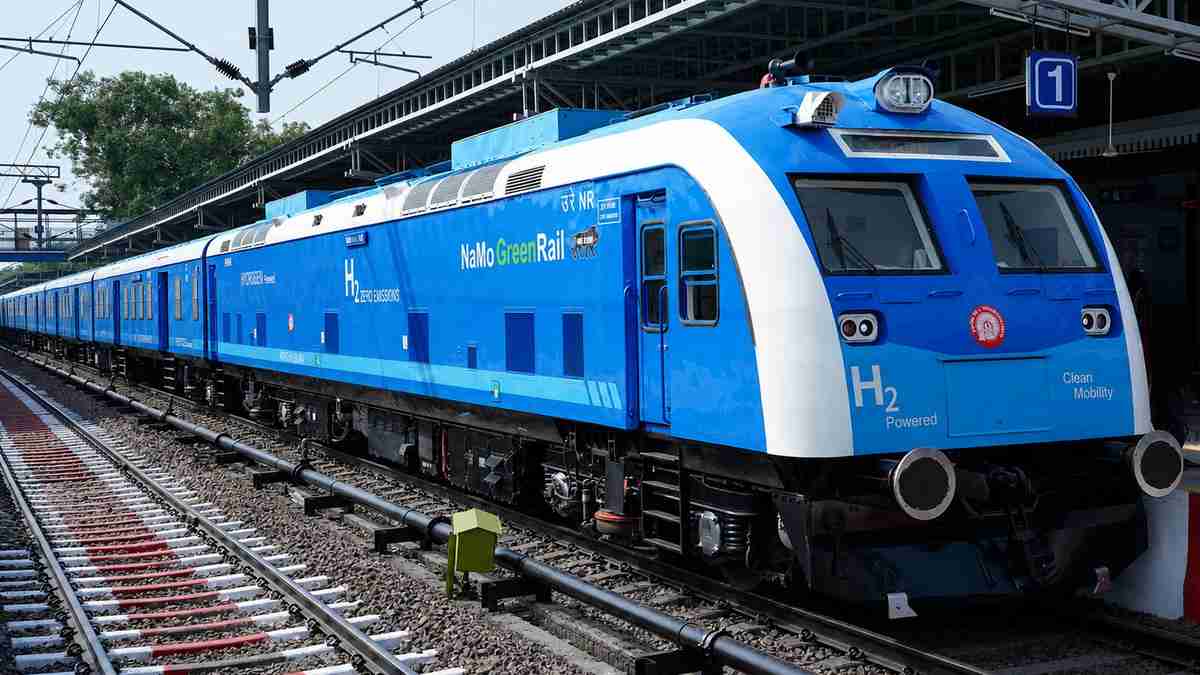
पीएम मोदी ने सोशल मीडिया साइट एक्स पर अपनी पोस्ट में कहा कि शुक्रवार को जींद से भारत की पहली हाइड्रोजन-संचालित ट्रेन को हरी झंडी दिखाई जाएगी, जो जींद और सोनीपत को जोड़ेगी। भारत उन चुनिंदा देशों के समूह में शामिल हो गया है जिनके पास ऐसी ट्रेनें हैं। यह रेलवे क्षेत्र में भारत द्वारा स्वच्छ तकनीक अपनाने की दिशा में एक बड़ा कदम साबित होगा।
From Jind tomorrow, India’s first hydrogen-powered train will be flagged off, which will connect Jind and Sonipat. India becomes one of the select group of nations that have such trains. This will go a long way in ensuring that India adopts clean technology in the railway sector.…
पूरी तरह स्वदेशी तकनीक पर आधारित इस हाईड्रोजन ट्रेन को भारत में ही डिजाइन किया गया और भारत में ही बनाया गया है। इस ट्रेन में 2 हाइड्रोजन ड्राइविंग पावर कार (DPC) और 8 ट्रेलर कोच लगे हैं। यह पहल भारतीय रेलवे को 'नेट जीरो' उत्सर्जन के लक्ष्य की ओर ले जाएगी।
जींद-सोनीपत रेलखंड पर चलने वाली इस ट्रेन में करीब 2600 यात्री पैसेंजर ट्रेनों की तरह सामान्य किराया देकर यात्रा कर सकेंगे। ये ट्रेन 14 स्टेशनों का सफर कराएगी। ट्रेन प्रतिदिन सुबह 7:40 बजे जींद से रवाना होकर 9:40 बजे सोनीपत पहुंचेगी। वापसी में सुबह 10:30 बजे सोनीपत से चलकर दोपहर एक बजे जींद पहुंचेगी। ट्रेन की अधिकतम गति 75 किलोमीटर प्रति घंटा रहेगी।
India takes a significant leap towards clean and sustainable transportation with its first Hydrogen Train. Combining indigenous technology, advanced safety systems and zero-emission operations.
Read more: https://t.co/oiK2FuFxNGpic.twitter.com/4iEfjzWW0d
— Ministry of Railways (@RailMinIndia) July 16, 2026
जींद में सबसे बड़ा हाइड्रोजन रिफ्यूलिंग सेंटर
इस ट्रेन के लिए रेलवे ने जींद में भारत का सबसे बड़ा हाइड्रोजन रिफ्यूलिंग सेंटर स्थापित किया है। यहीं पर कंप्रेस्ड हाइड्रोजन गैस को सुरक्षित रखा जाएगा और ट्रेन में भरा जाएगा। रिफ्यूलिंग के लिए हाइड्रोजन कंप्रेशन सिस्टम लगाया गया है।
कैसे हैं सुरक्षा के इंतजाम?
रेलवे ने हाइड्रोजन गैस के सुरक्षित उपयोग के लिए कई सुरक्षा उपाय किए हैं। हाइड्रोजन उत्पादन, भंडारण और रिफ्यूलिंग स्टेशन पर हाइड्रोजन लीक डिटेक्टर और फ्लेम डिटेक्टर लगाए गए हैं। हाइड्रोजन रिफ्यूलिंग सिस्टम की 24 घंटे निगरानी की जाएगी।
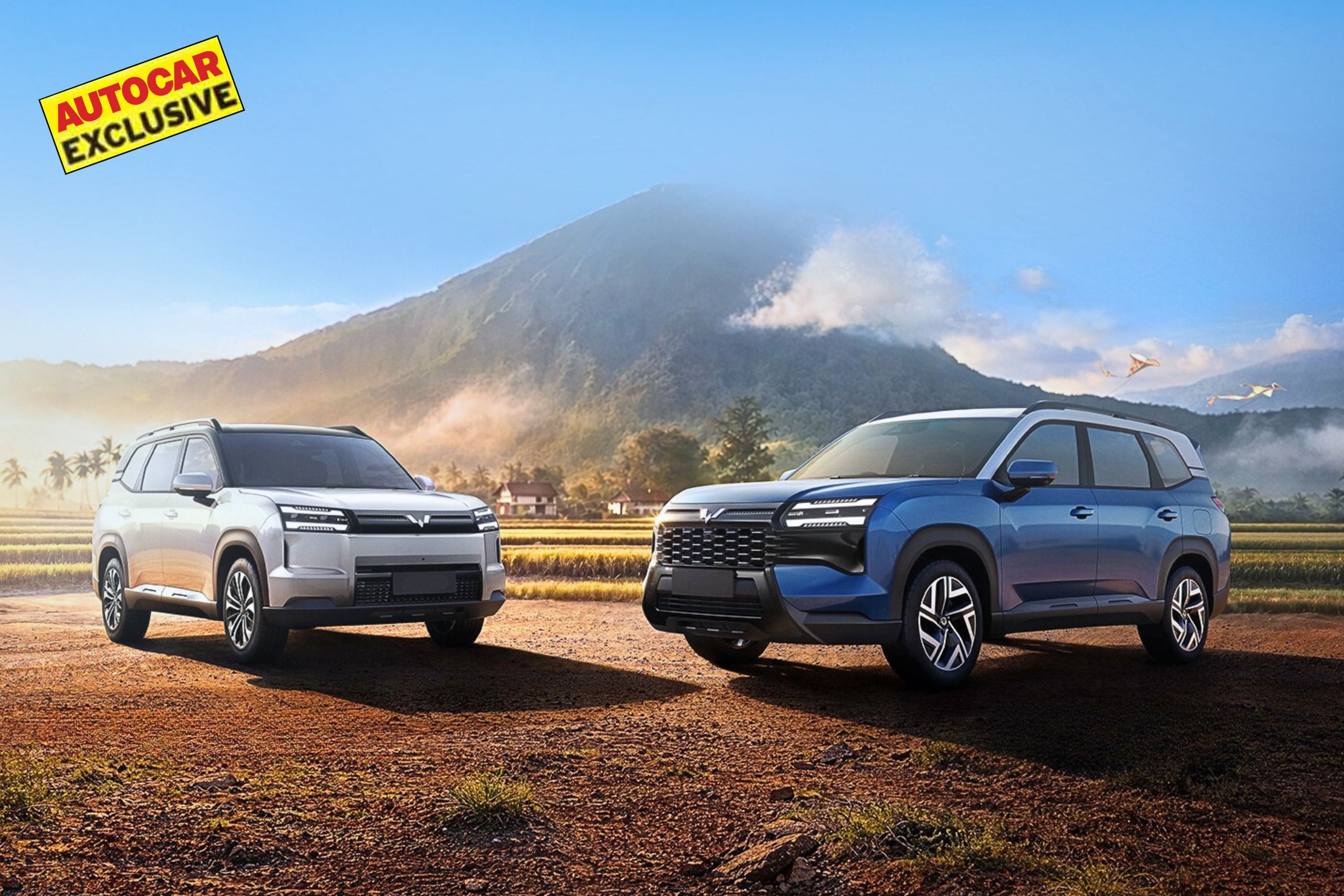
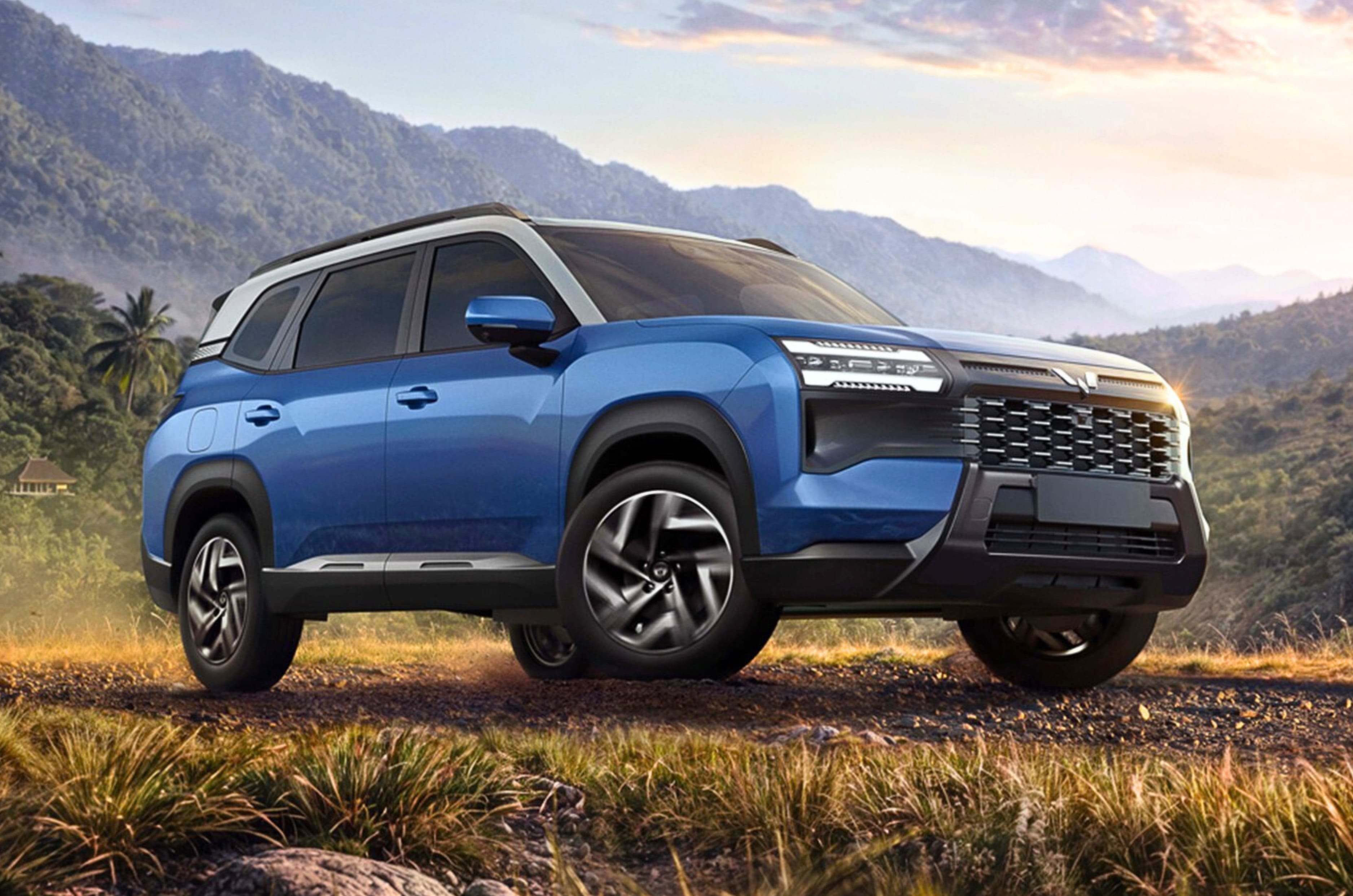
JSW MG unveiled its new ADAPT BEV/hybrid platform earlier today, and we can now confirm the first model to be based on it will be a Mahindra XEV 9S-rivaling EV that goes on sale next month. The model will have much in common with the Indonesia market Wuling Eksion. For those not in the know, Wuling is a sister brand to MG Motors and both come under the broader SAIC umbrella.
Sources tell us JSW MG is targeting keen pricing for its electric SUV, which could undercut the XEV 9S 70kWh that retails for Rs 25.8 lakh (ex-showroom).
MG Eksion-based electric SUV: Battery and range details
The JSW MG electric SUV will be offered with a 69kWh battery pack and an official range of around 600km. For reference, the XEV 9S is offered with three battery pack options – 59kWh (official range 521km), 70kWh (600km) and 79kWh (679km). The 70kWh battery pack is the sweet spot of the XEV 9S line-up and the one JSW MG would like to woo buyers away from.
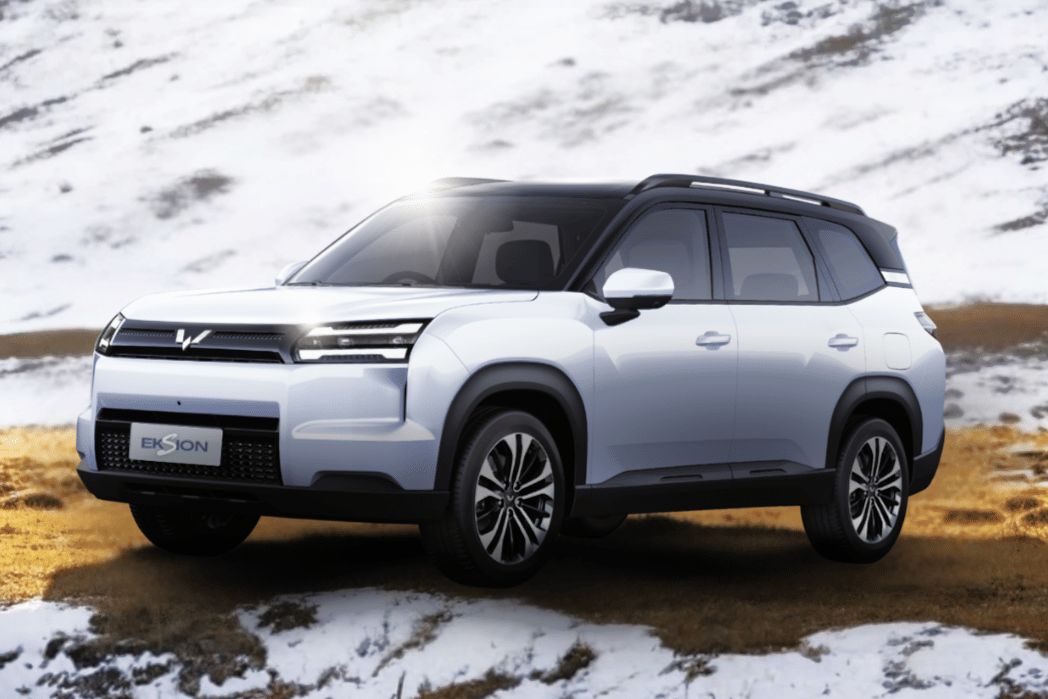
Wuling Eksion EV. Image used for representation only.
The Eksion’s single motor produces 201hp and 310Nm versus the XEV 9S 70kWh’s 245hp and 380Nm figures. Also, while the Eksion sports a front motor, front wheel drive layout, the XEV 9S uses a rear motor, rear wheel drive arrangement.
MG Eksion-based electric SUV: Exterior and interior details
Measuring 4.7m in length, 1.85m in width and 1.7m in height, the Wuling Eksion closely matches the 4.7m long, 1.9m wide, and 1.7m tall XEV 9S in size. Also like the XEV 9S, the Eksion is offered in a 7 seat configuration which makes it an option of great interest for buyers with large families.
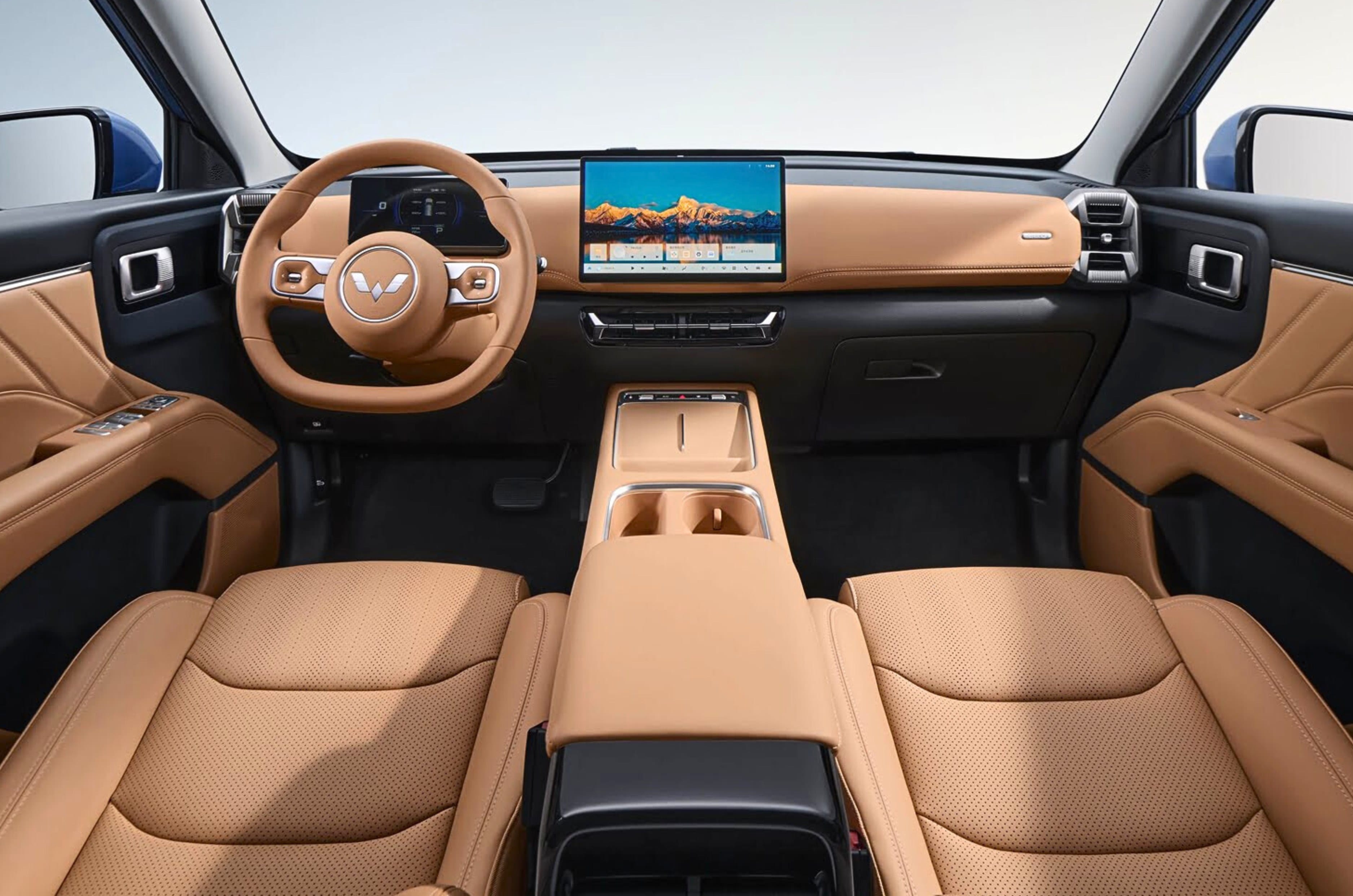
Wuling Eksion interior. Image used for representation only.
In look, the MG electric SUV will feature a boxy, upright stance and an upright tail. The interior features a minimalist design with a 12.8-inch touchscreen being the centrepiece of the dashboard. A digital instrument cluster, panoramic sunroof and powered tail gate are features expected on the model for India.
Eksion-based plug-in hybrid SUV to be pitched as MG’s XUV 7XO rival
JSW MG will keep the momentum going next year with the launch of a plug-in hybrid electric vehicle (PHEV) version of the SUV. While the basic shape will be shared with the BEV, the PHEV will sport some different styling elements.
The PHEV, which will be the second model off the ADAPT platform, pairs a 105hp/130Nm, 1.5-litre Atkinson cycle petrol engine and a 195hp/230Nm electric motor that’s powered by a 20.5kWh LFP battery. Wuling claims a 125km all-electric range and a combined range of over 1,000km for the Eksion PHEV.
Wuling Eksion PHEV. Image used for representation only.
JSW MG would be hoping Indian buyers see the PHEV as the best of both worlds – silent running and low costs of an EV with the freedom of a petrol engine. It is understood that JSW MG has large diesel-automatic SUVs in its crosshairs and is looking to price its PHEV SUV within Rs 1.5 lakh off the Mahindra XUV 7XO diesel-AT.
EV and PHEV to be in focus
While the ADAPT platform supports battery electric, plug-in hybrid, range extender and strong hybrid powertrains, JSW MG will focus on BEVs and PHEVs to begin with. Speaking to Autocar India, Anurag Mehrotra – MD, JSW, MG Motor India – underlined while there is space for all powertrains “The BEV will continue to have the largest lion’s share of the pie. You will then have the plug-in hybrids, you will then have the (strong) hybrids. Range extender electric vehicles (REEVs) is a relatively new technology, so it is at a much smaller pie of the entire new energy vehicle market.”
Mehrotra also stressed the importance of a multi-powertrain approach from a consumer and manufacturer point of view. “We genuinely believe the answer to India’s electrification journey is not a single powertrain. It has to be multiple and this platform will give us the capital efficiency and at the same time the benefit to the consumer in terms of faster charging, longer range, better driving experience and all powertrains in a single platform.” Mehrotra said.
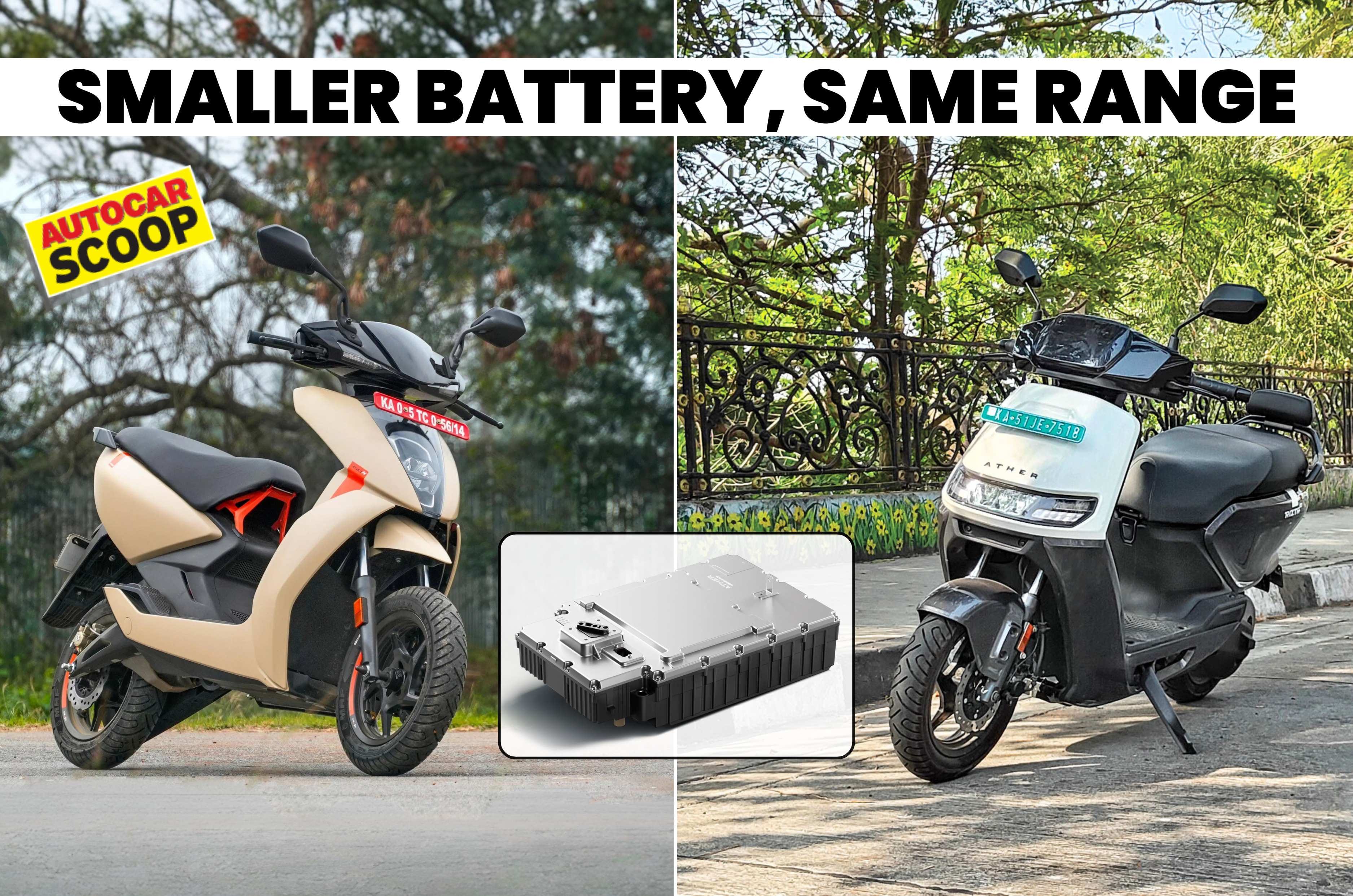
Ather Energy has implemented a small but crucial change to the battery capacity of both the 450 and Rizta and has also debuted an entirely new chemistry on the Rizta.
Rizta now comes with both LFP & NMC chemistries; 450 only gets NMC
Smaller battery packs, but no drop in range
Warranty and performance remain unaffected as do prices
Let’s first start with the Rizta because this model has seen a change to both its battery capacity as well as chemistry. Earlier, the Rizta used to ship with 2.9kWh and 3.7kWh NMC (Nickel Manganese Cobalt) battery packs. Now, Ather has revised the size of the packs to 2.7kWh and and 3.5kWh, respectively. The claimed IDC range of 123km for the smaller pack stays the same, but the bigger one sees a small increment, rising from a claimed 159km to 161km. This is very heartening to see as despite using fewer cells in the pack, Ather is able to eke out a little more range, which is a win-win situation for both the company as well as the consumer.
Another change, and this one is far more significant, Ather now also uses LFP (Lithium Ferrous Phosphate) chemistry battery packs on the Rizta. In most cases, LFP packs usually have lower energy density than equivalent NMC ones but Ather actually claims a small improvement in range despite using a smaller battery pack of the lower energy dense chemistry. A look at the table below will highlight the difference more clearly.
Model
Old battery / IDC range
New Battery / IDC range
Rizta
2.9kWh / 123km
2.7kWh / 123km
Rizta
3.7kWh / 159km
3.5kWh / 161km
An important thing to bear in mind is that the claimed performance, charging times and more importantly, battery warranty across all Ather e-scooters remain the same, no matter the size or chemistry of the battery pack powering it.
Another point to note is that Ather will continue to use NMC cells on the Rizta as well, so some scooters will come with LFP cells while others will be NMC. Customers won’t be able to opt for one of the other and which pack will be used will be based on supply.
Coming to the sporty 450 models, these continue to be offered exclusively with the relatively more energy-dense NMC batteries and this is primarily because its more powerful motor puts greater demands on the battery to deliver peak performance. While the battery capacity on the 450 models has dropped from 3.7kWh to 3.5kWh, IDC range stays unaffected at 161km. The smaller battery pack continues to have a capacity of 2.9kWh and its 126km (450X) / 122km (450S) IDC range remains unchanged.
Model
Old battery / IDC range
New Battery / IDC range
450S
3.7kWh / 161km
3.5kWh / 161km
450X
3.7kWh / 161km
3.5kWh / 161km
As battery technology evolves and Ather’s engineering division makes advances, the company has been able to extract the same amount of range from a smaller battery pack. This allows the company to reduce its input and production costs, and also creates security against disruptions in the supply chain which is currently a significant challenge for the EV industry.
While these changes will have no negative impact to the customer experience, the prices for the scooters remain the same as before.
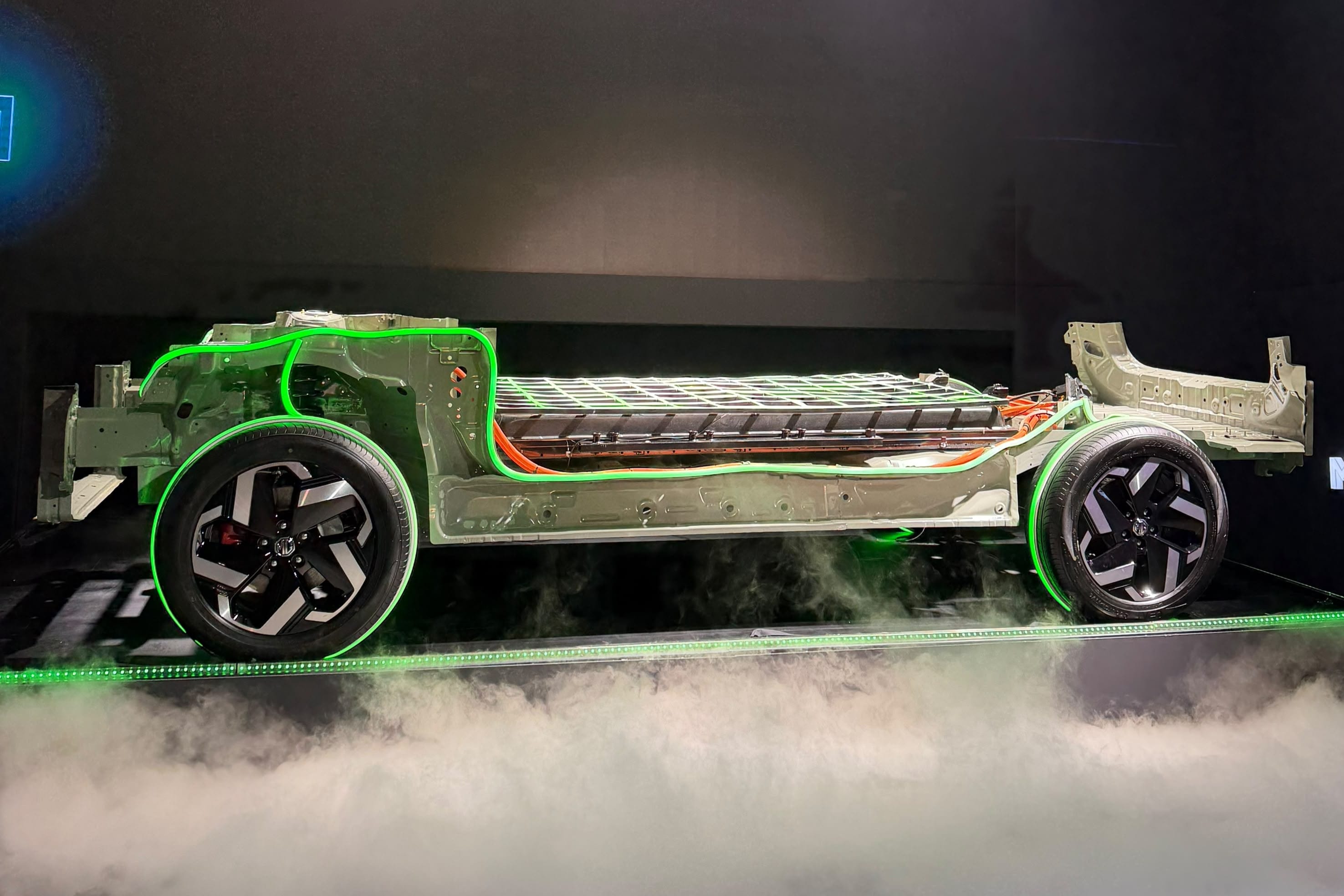
MG Motor India has provided the first look at its new platform, ADAPT. An acronym for ‘Advanced Drive Architecture Platform Technology’, this NEV (New Energy Vehicle) architecture will underpin MG India’s upcoming plug-in hybrid (PHEV), strong hybrid, range-extender hybrid, and EV models. There will seemingly be no pure-ICE offerings based on ADAPT.