First India-made Skoda EV expected in 2028

First India-made Skoda EV expected in 2028
India-made Skoda EV details

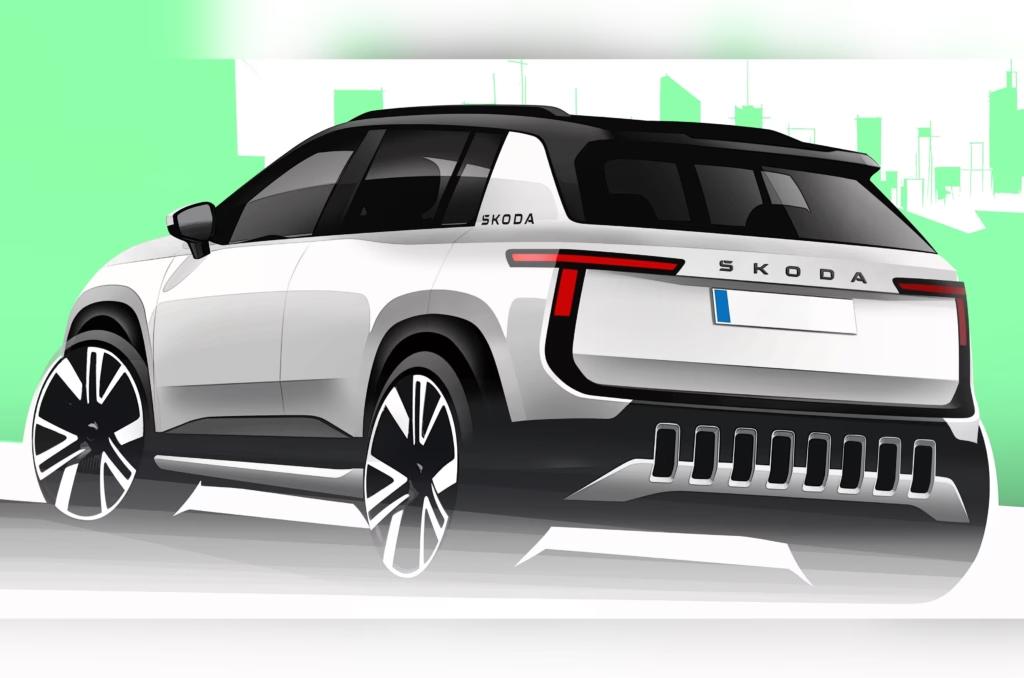
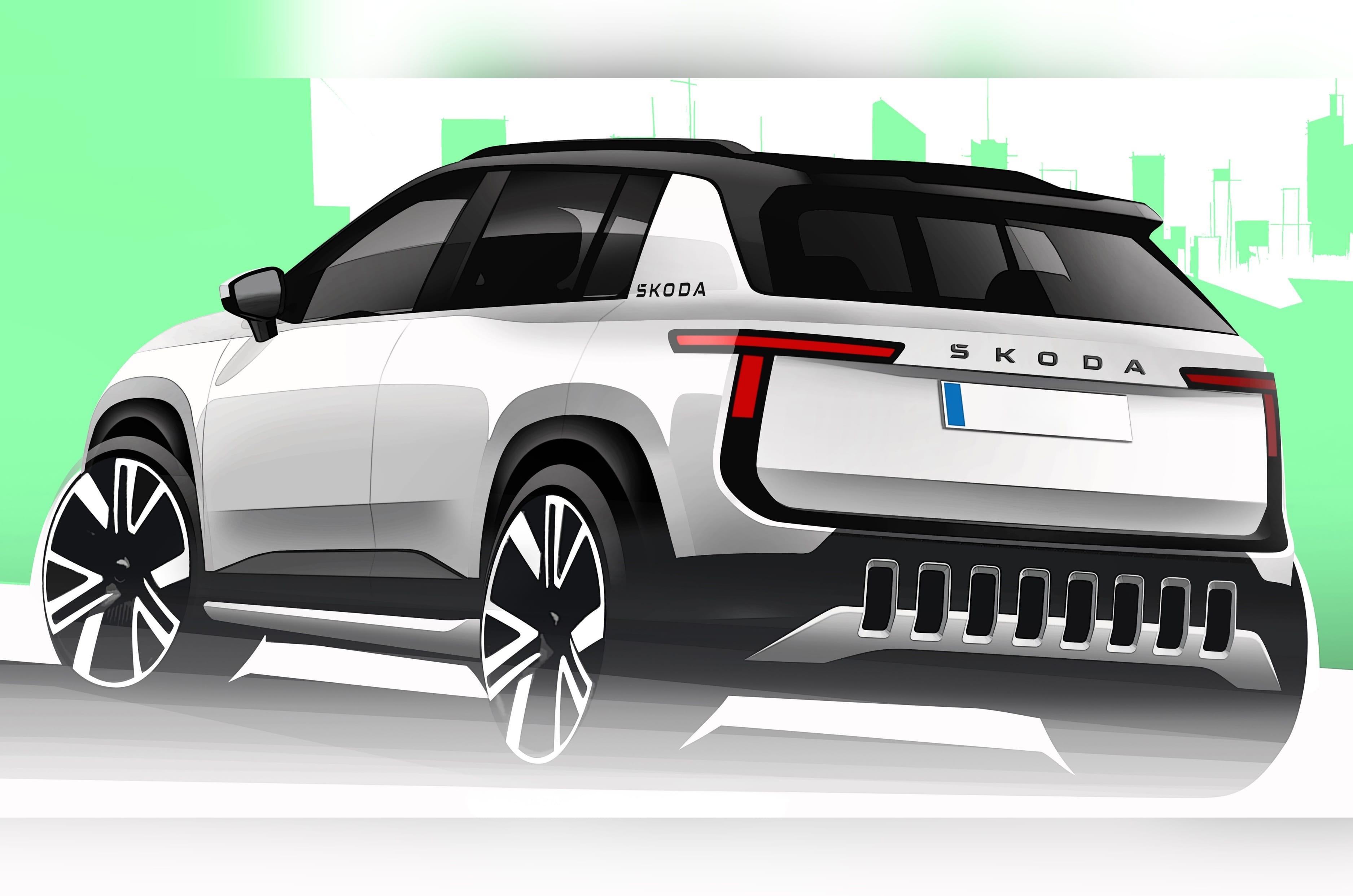
In a rapidly evolving and diversifying market like India, Skoda’s lineup has strictly been limited to just petrol models until now, with petrol itself shrinking and currently making up less than 50 percent of the overall market. The Czech carmaker is now finally looking to diversify, having announced an aggressive CNG plan, a return to diesel with the Superb and also EVs, but in limited batches of fully imported models. However, a locally made EV is still crucially missing from the lineup. Autocar India understands that this gap is expected to finally be addressed in 2028 with a locally produced EV.  

India-made Skoda EV details

Having announced a fresh barrage of products, Skoda has now moved on to what it is internally referring to as the India 3.0 programme. The programme is expected to support a CNG-powered Kylaq in 2027 and two locally manufactured battery electric vehicles starting in 2028 – the first will be a 5-seater, followed by a 7-seater at a later stage. 

“We know we have to do electric, so we are now thinking about what would be the best option for an electric car in India,” Martin Jahn, Skoda Auto board member for sales and marketing, told Autocar India on the sidelines of the updated Slavia’s launch. 

While Jahn did not disclose specific details about the EVs, as we’ve reported previously, the EV programme is likely to use an adaptation of the Volkswagen Group’s China Main Platform, or CMP. The version being developed for India is referred to as the India Main Platform, or IMP, and will be tailored to local costs and market requirements.

The group intends to leverage an existing electric architecture while localising the platform, battery system and key components. A high level of localisation will be essential to price the models competitively in India’s mainstream EV market. Speaking to Autocar India, Skoda India brand director Ashish Gupta also acknowledges saying, “The volume EVs are going to come when there is localisation, and that is something which we are working on heavily.” 

Where will the investment for the new EVs come from?

That’s the most important question, with new investment being key to designing, developing and engineering Skoda’s locally-made EVs. We understand the carmaker is close to finalising its next phase of investment in India. The company hasn’t officially disclosed the size or structure of the proposed investment, but sources say it could be around one billion euros. 

Skoda is examining different ways to fund and execute the EV programme, including bringing in a strategic partner. As previously reported, Skoda Auto Volkswagen India is in the final stages of discussions for an alliance with the JSW Group. The proposed structure is likely to give the Indian conglomerate a majority stake and bring in the much-needed capital for the EV programme.  

The discussions have yet to reach a formal conclusion, and the final structure and scope of the proposed alliance are still to be announced. Skoda Auto Volkswagen India is also examining other funding routes if the partnership does not materialise. 

With inputs from Hormazd Sorabjee
What to expect from Maruti Baleno facelift ahead of September 5 launch

What to expect from Maruti Baleno facelift ahead of September 5 launch
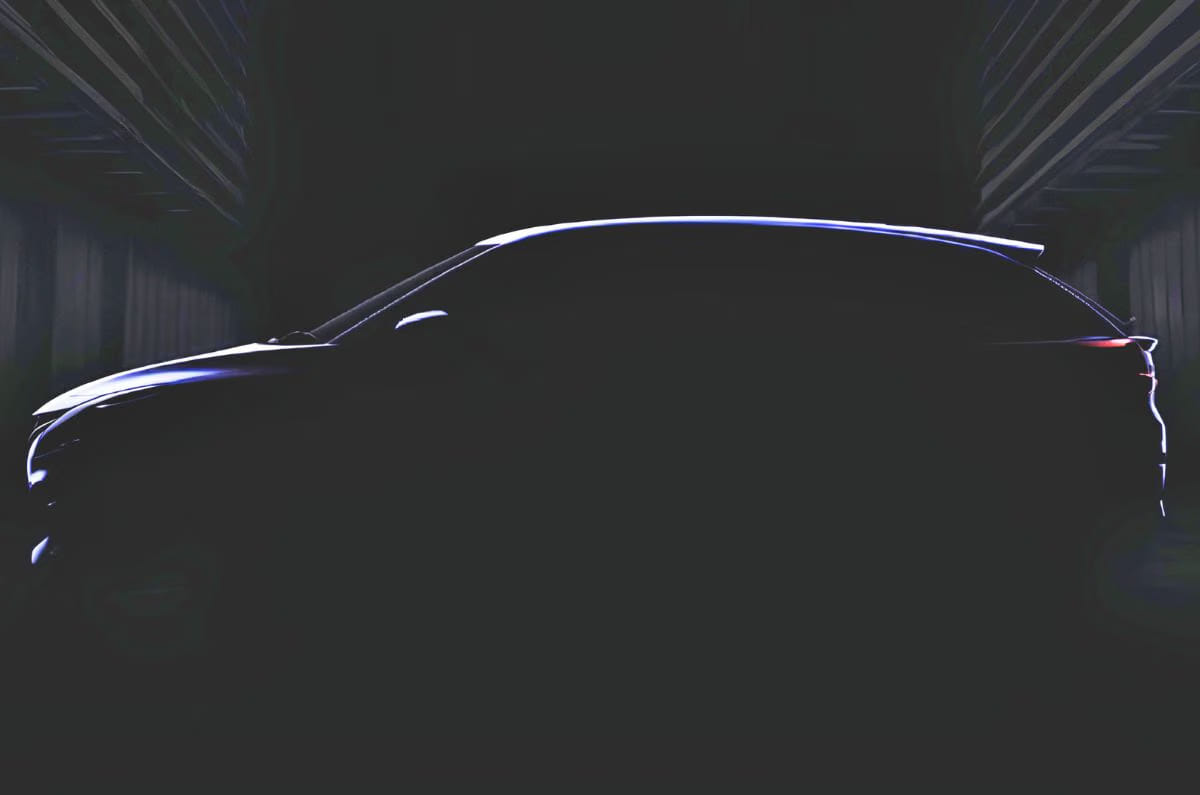
Maruti Baleno facelift silhouette

Maruti Suzuki is slated to launch the Baleno facelift on September 5, 2026. This will be the first update to the second-gen Baleno, which was introduced in 2022. Ahead of its arrival, here’s everything you can expect from the facelift of Maruti’s premium hatchback. 

1. What exterior updates are expected on the Maruti Baleno facelift?

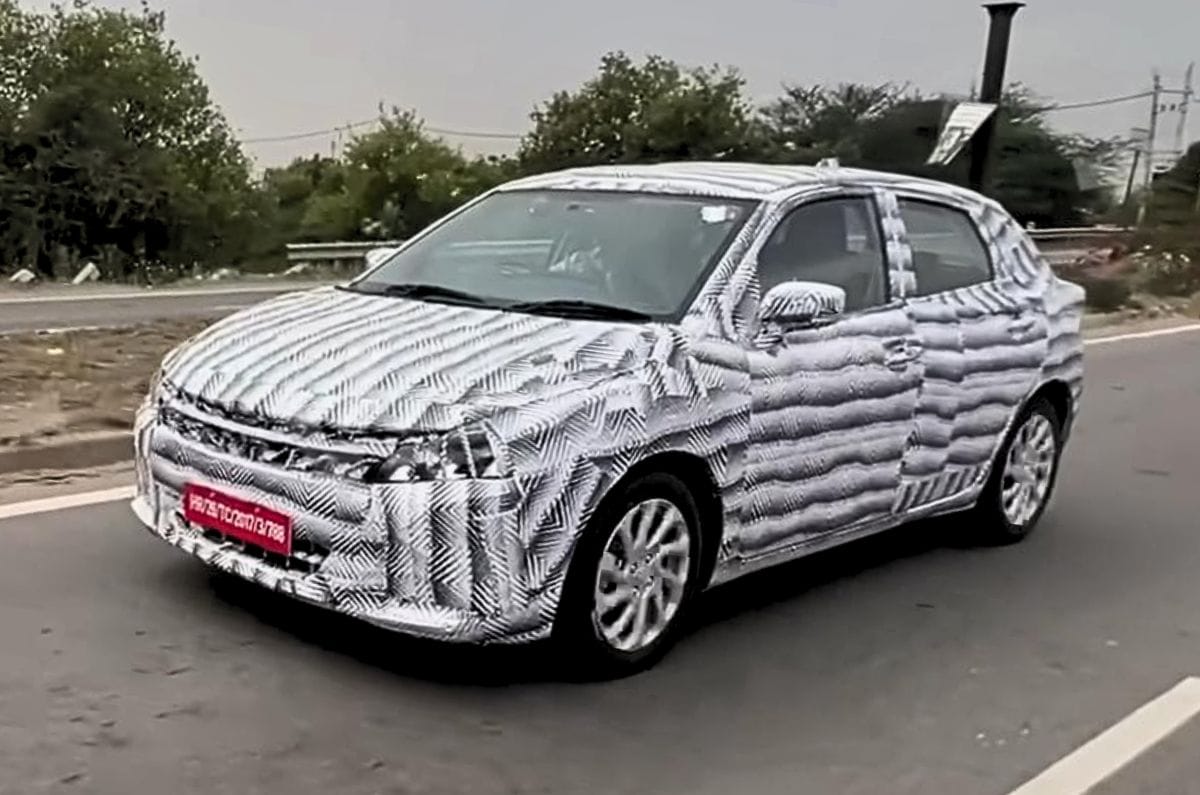
Credit: Harsh Vlogs via YouTube

Heavily camouflaged prototypes of the upcoming Baleno facelift have been spied previously on our roads. Test mules hint at what the Baleno facelift could get in terms of design. While the overall silhouette will remain the same, the facelift is likely to have revisions to the grille, bumpers, and alloy wheels. 

2. What interior updates are expected on the Maruti Baleno facelift?

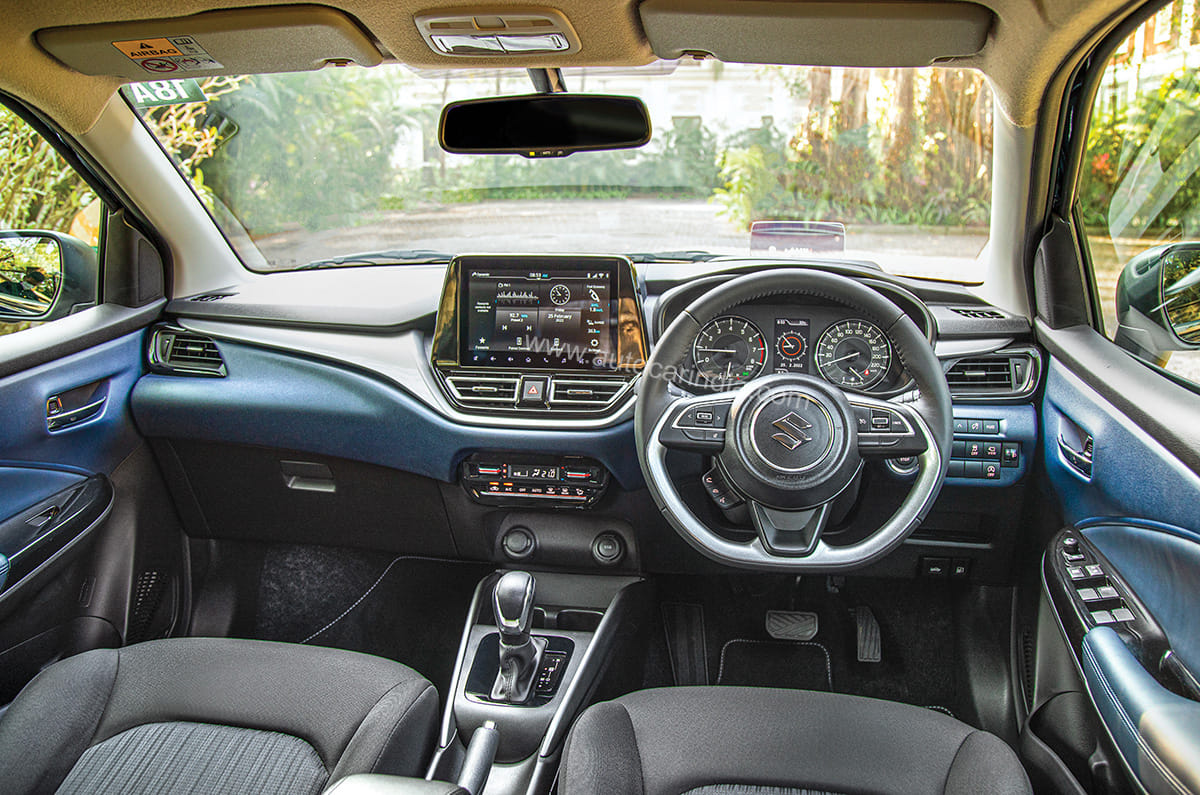
Current Maruti Baleno interior used for representation.

On the inside, the Baleno facelift is expected to retain the cabin layout of the current model. This includes a layered dashboard look with a freestanding infotainment system sitting atop the dash, trapezoidal AC vents, physical knobs for HVAC controls and a flat-bottom steering wheel. However, Maruti could introduce updated trim materials, seat upholstery and a new colour scheme.

3. What features will the Maruti Baleno facelift get?

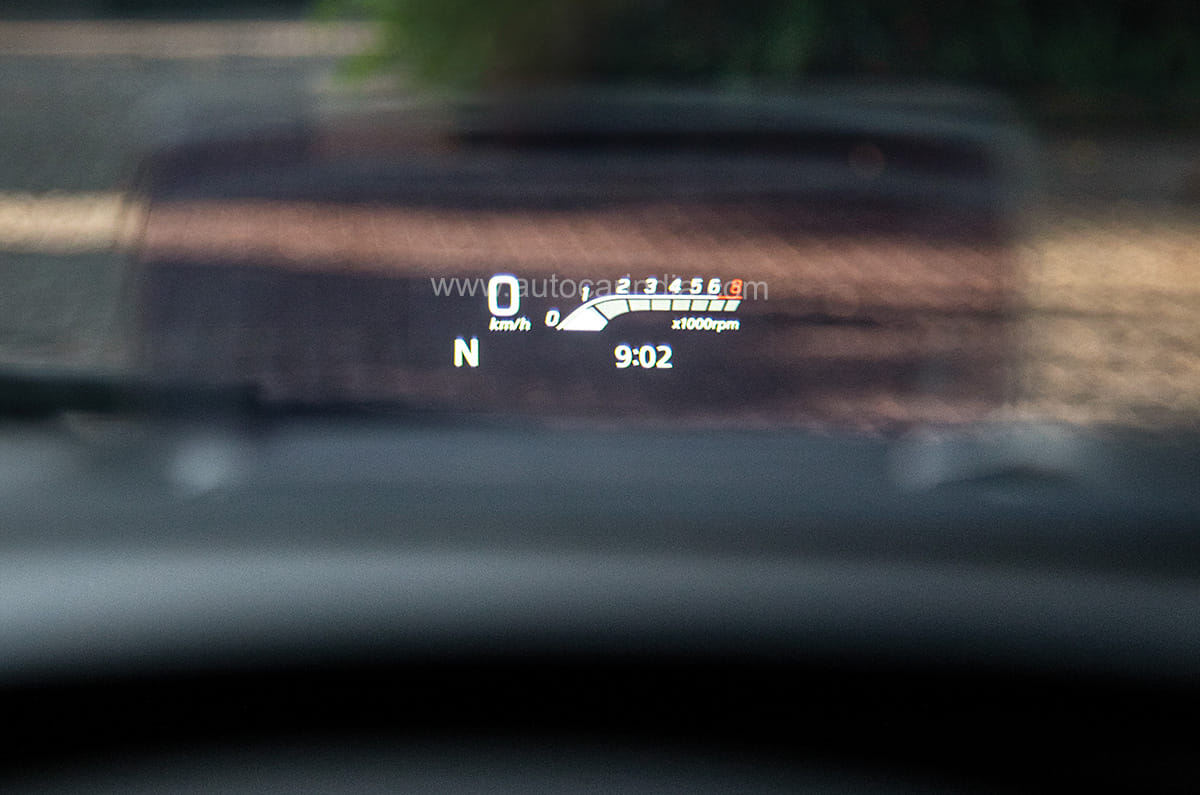
Current Baleno’s head-up display used for representation.

With the facelift, Maruti is expected to equip the Baleno with a single-pane sunroof and ambient lighting, features that rivals already offer. On the other hand, it will retain features from the current version, which include a 9-inch infotainment system with Apple CarPlay and Android Auto, a head-up display (HUD), 6-speaker Arkamys audio system, voice assistant, OTA updates, auto-dimming IRVM, keyless entry, automatic climate control, connected car tech and a 360-degree camera.
4. What powertrain options is the Maruti Baleno facelift expected to have?
Current Maruti Baleno 1.2-litre engine used for representation

The Maruti Baleno facelift is expected to retain the current version’s powertrain option. This includes a 1.2-litre naturally aspirated petrol engine developing 90hp and 113Nm paired to either a 5-speed manual or AMT gearbox. A factory-fitted CNG kit can be paired to this engine, which develops 78hp and 99Nm in CNG mode, and is paired solely with a 5-speed manual.

5. What is the expected price of the Maruti Baleno facelift?

Updates to the Baleno facelift are expected to make it slightly pricier than the current version. For reference, the Baleno currently has a price tag of Rs 5.99 lakh to Rs 9.48 lakh (ex-showroom). It will take on the likes of the Hyundai i20, Tata Altroz and the Toyota Glanza.

Tesla Model Y vs Mercedes CLA EV real-world range compared

Tesla Model Y vs Mercedes CLA EV real-world range compared

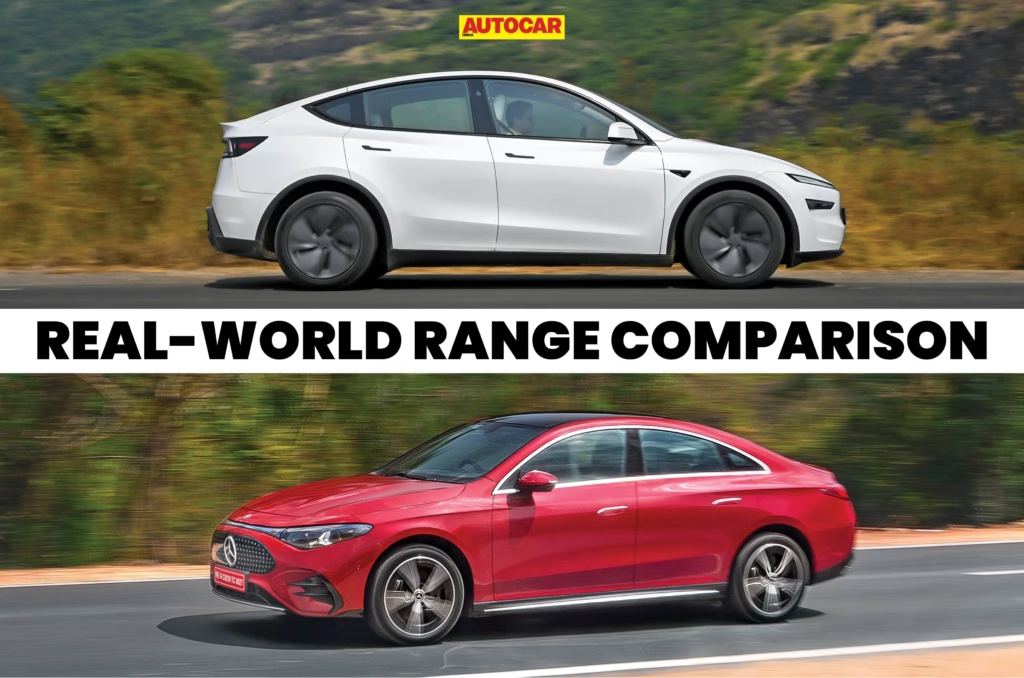
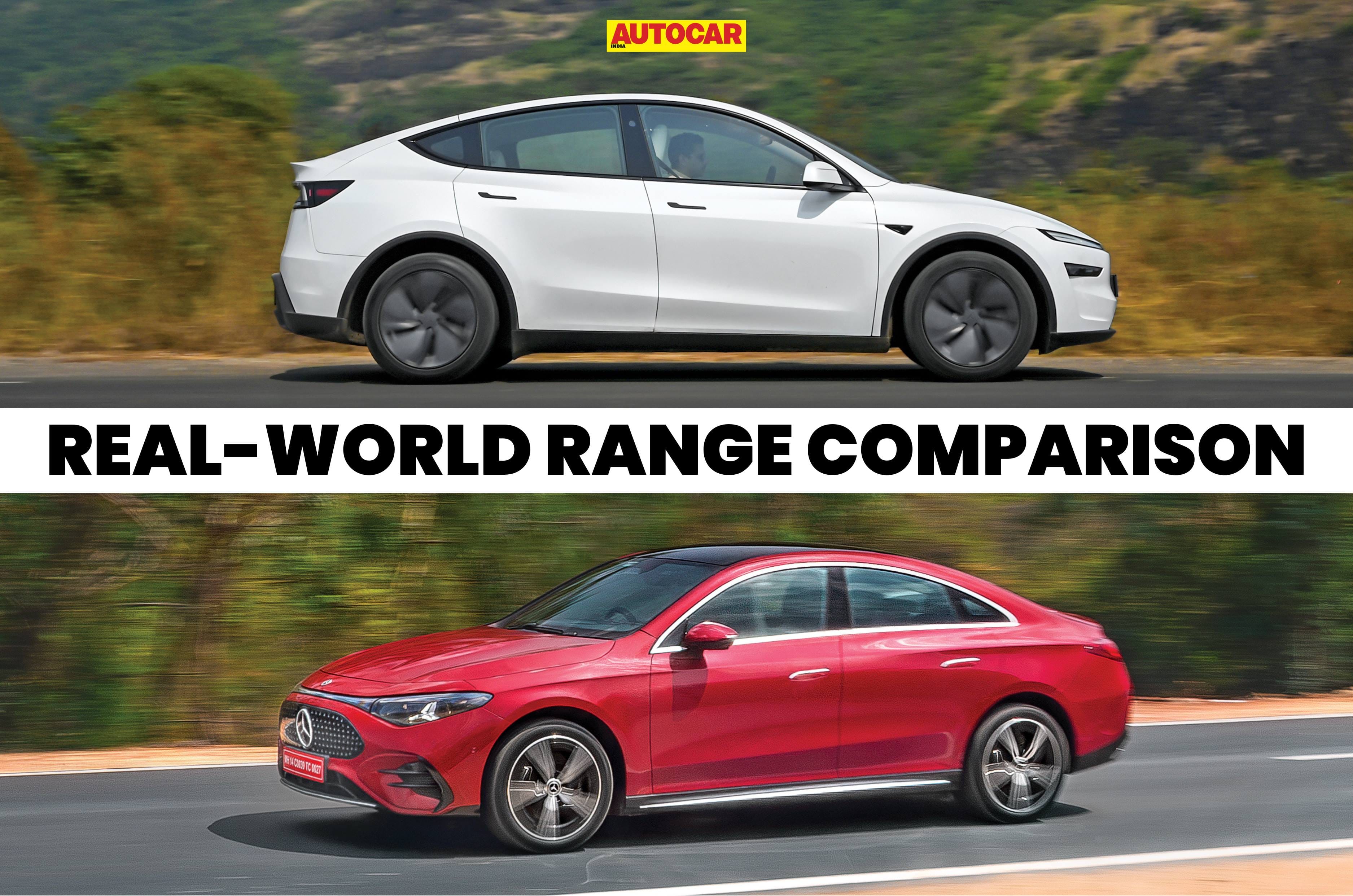
The Tesla Model Y and Mercedes-Benz CLA EV are two zero-emission offerings priced below Rs 65 lakh, but they take very different approaches. The Model Y is a crossover and Tesla’s only model on sale in India, while the CLA sedan is the entry point to Mercedes-Benz’s EV range. They also use different battery sizes and claim different ranges. We recently put both to our comprehensive range tests to see how they compare in the real world.

Tesla Model Y vs Mercedes CLA EV: Specifications, price

 Model Y PremiumCLA EV 250+ AMG Line
Battery size (kWh)6085
Power (hp)299272
Torque (Nm)420335
Drive layoutRWDRWD
Claimed range (km)500792
Kerb weight (kg)1,9282,055
Price (in Rs lakh)50.8960.50

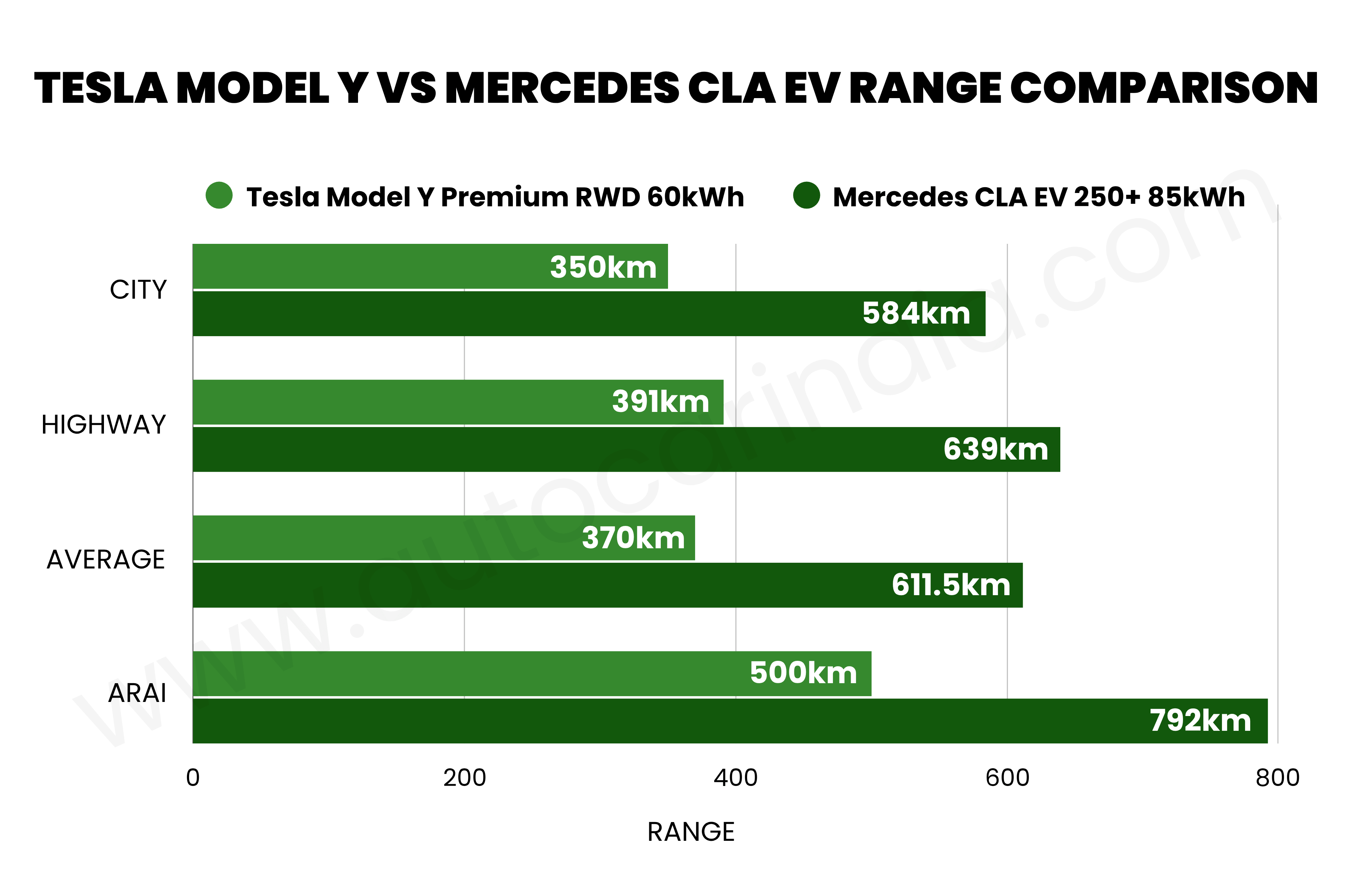
Both are rear-wheel-drive electric vehicles, but the CLA 250+ AMG Line has a much larger 85kWh battery compared to the Model Y Premium RWD’s 60kWh unit. This gives the CLA a claimed range of 792km, significantly higher than the Model Y’s 500km.

The Tesla, however, makes more power and torque at 299hp and 420Nm, compared with 272hp and 335Nm for the CLA. The Model Y is also lighter at 1,928kg versus 2,055kg for the CLA.

There is also a noticeable price difference. The Model Y Premium RWD costs Rs 50.89 lakh – Rs 9.61 lakh less than the CLA 250+ AMG Line, which is priced at Rs 60.50 lakh.

Tesla Model Y vs Mercedes CLA EV: Real-world range

 Model Y PremiumCLA EV 250+ AMG Line
City (km)350584
Highway (km)391639
Average (km)370611.5

Clearly, the CLA 250+, with its larger battery pack, has the upper hand in real-world range despite weighing more. In our tests, it managed 584km in the city and 639km on the highway, compared with 350km and 391km, respectively, for the Model Y. The two-speed gearbox, with its taller 5:1 second gear that enables greater efficiency at higher speeds, also contributed to the EV’s highway efficiency. This gives the CLA an average real-world range of 611.5km, which is 241.5km more than the Model Y’s 370km.

Its slightly lower drag coefficient of 0.21 versus 0.22 for the Model Y is also a contributor to its higher range. That said, a 0.22Cd figure is still excellent for a crossover.

Tesla Model Y vs Mercedes CLA EV real-world range compared

The Mercedes sedan also has stronger regenerative braking. In the strongest regen mode, the CLA EV slowed from 80kph to 20kph in 6.98 seconds, covering 96.36 metres. The Tesla Model Y took 8.28 seconds and needed 116.71 metres to cover the same speed reduction. One-pedal driving is available on both EVs.

Autocar India’s range testing

For our real-world range comparisons, we begin with each car’s battery fully charged and tyre pressures set as per the manufacturer’s recommendations. We drive the cars on a fixed loop covering both city and highway stretches while maintaining set average speeds. We then calculate the range based on the percentage of charge consumed. The AC is set to 22deg C in auto mode, and we use features such as the music system, lights and ventilated seats as needed, just as a regular user would. This approach ensures consistency and gives a clear idea of what to expect in actual conditions.

Ex-showroom prices mentioned above are as of August 20, 2026.

Verstappen commits to Red Bull F1 till 2030

Verstappen commits to Red Bull F1 till 2030
Max Verstappen Red Bull F1

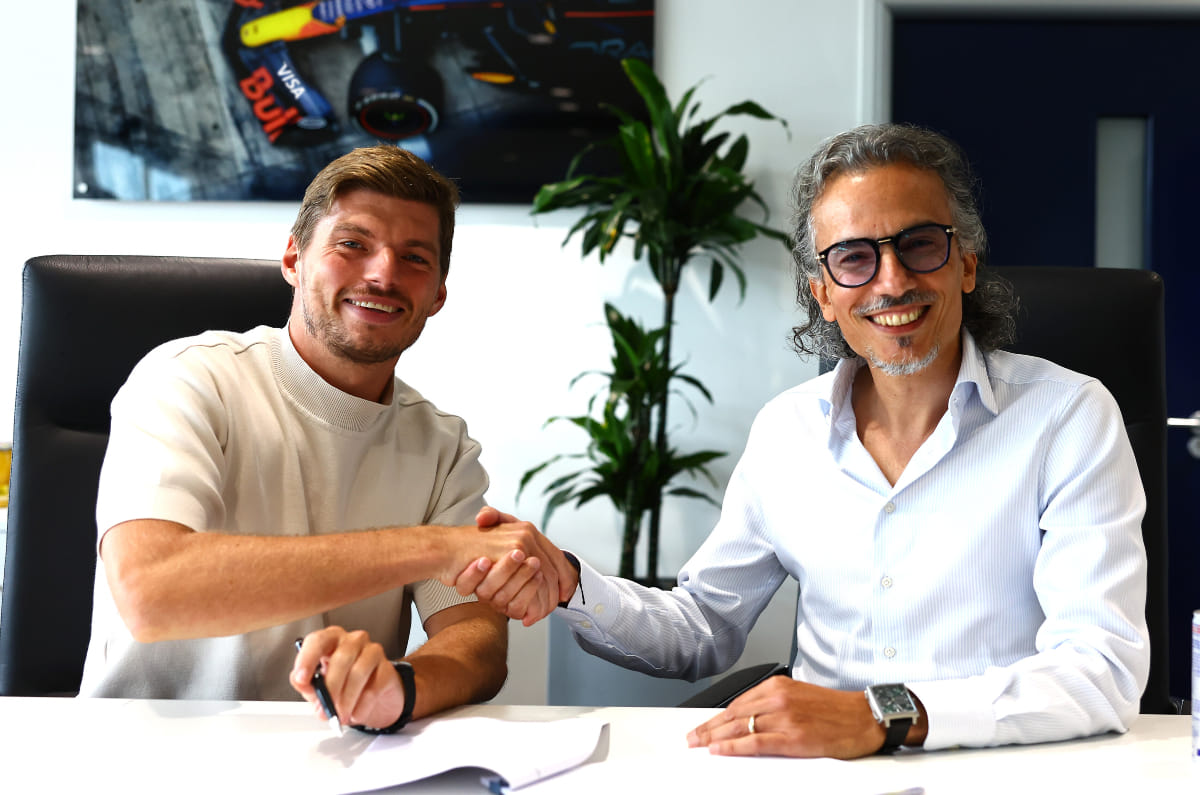
Max Verstappen has signed a multi-year contract extension with Red Bull Racing, ending long-standing speculation about his future in Formula 1. The four-time F1 world champion’s current contract already ran until 2028, albeit with performance-related clauses. The new deal will see him stay with Red Bull Racing until at least the end of the 2030 season.

“I am really pleased with the contract extension. We have the best people and I’m excited to keep working together with everyone to get back to the top again. This remains the ultimate goal that all of us have been working towards and will continue to pursue,” Verstappen said.

  1. Verstappen extends Red Bull contract by two years
  2. Dutchman has won 4 F1 drivers’ titles and 71 races with the team so far
Max Verstappen Laurent Mekies Red Bull F1

The Verstappen-Red Bull partnership has been one of the most successful in F1 history. Verstappen first joined the team back in 2026, following a mid-season promotion from the sister Toro Rosso team. Since then, he’s won four drivers’ titles and 71 races with Red Bull Racing. 

However, Verstappen has been a vocal critic of the new power unit regulations. Red Bull has also had its fair share of reliability and balance concerns this season, and the team’s management has changed significantly in the recent months. All of this has further fuelled speculation linking Verstappen to a potential switch to Mercedes or McLaren. But he’s put that speculation to rest on the eve of his home race at Zandvoort.

“I have always said it: The team [Red Bull Racing] is like a second family for me and I feel very at home. I came to the team hoping to be able to win races. What we went on to achieve together has been simply lovely and we have shared many incredible moments and won four World Championships. To continue this journey with the same team that I have been with my whole career is really special and something I have always wanted to do,” Verstappen stated.

“Getting to work with Laurent now for over a year has also been great, I see a clear vision he has for the team. Everyone in Milton Keynes believes in what we are building and I am looking forward to the next chapter, fighting for more victories and competing for championships as we continue to shape the future of this Team. To make this announcement during the last Grand Prix at Zandvoort is a great moment for me as well. Hopefully we can give the fans a special send-off for the final race.”

Red Bull Racing F1 team principal Laurent Mekies added, “Having Max continue with us and retaining the best driver on the grid is fantastic news for everyone at Red Bull, Oracle Red Bull Racing, as well as F1 and motorsport as a whole.”
 

Volvo EX90, ES90 India launch on October 12

Volvo EX90, ES90 India launch on October 12
volvo ex90 es90 india launch

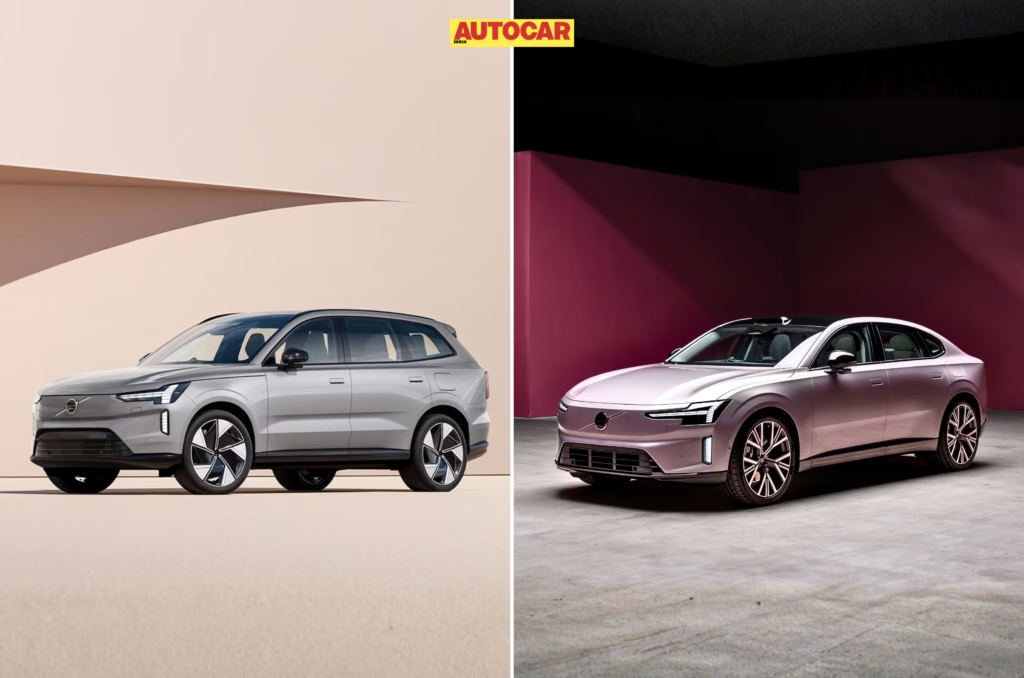
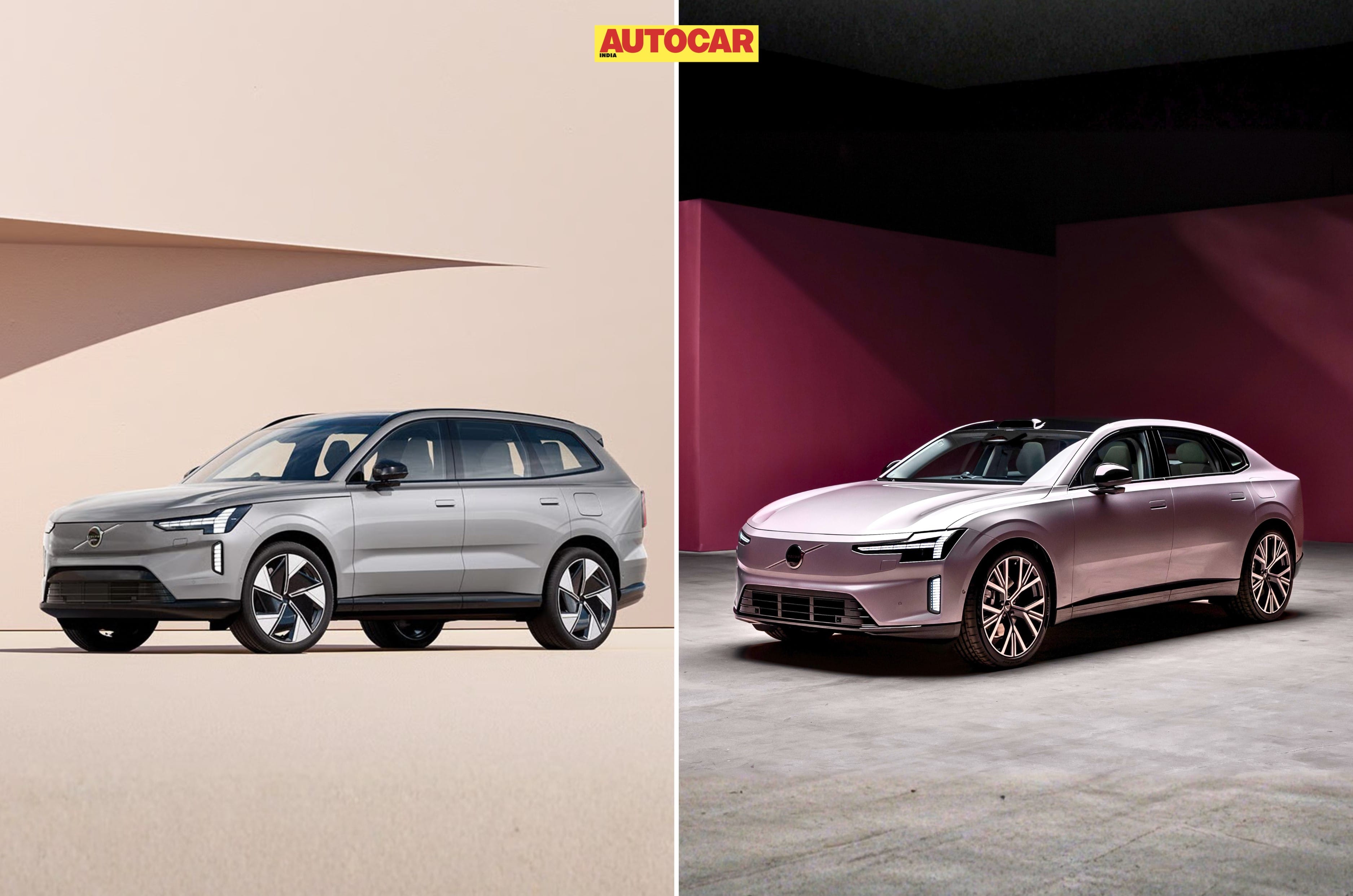
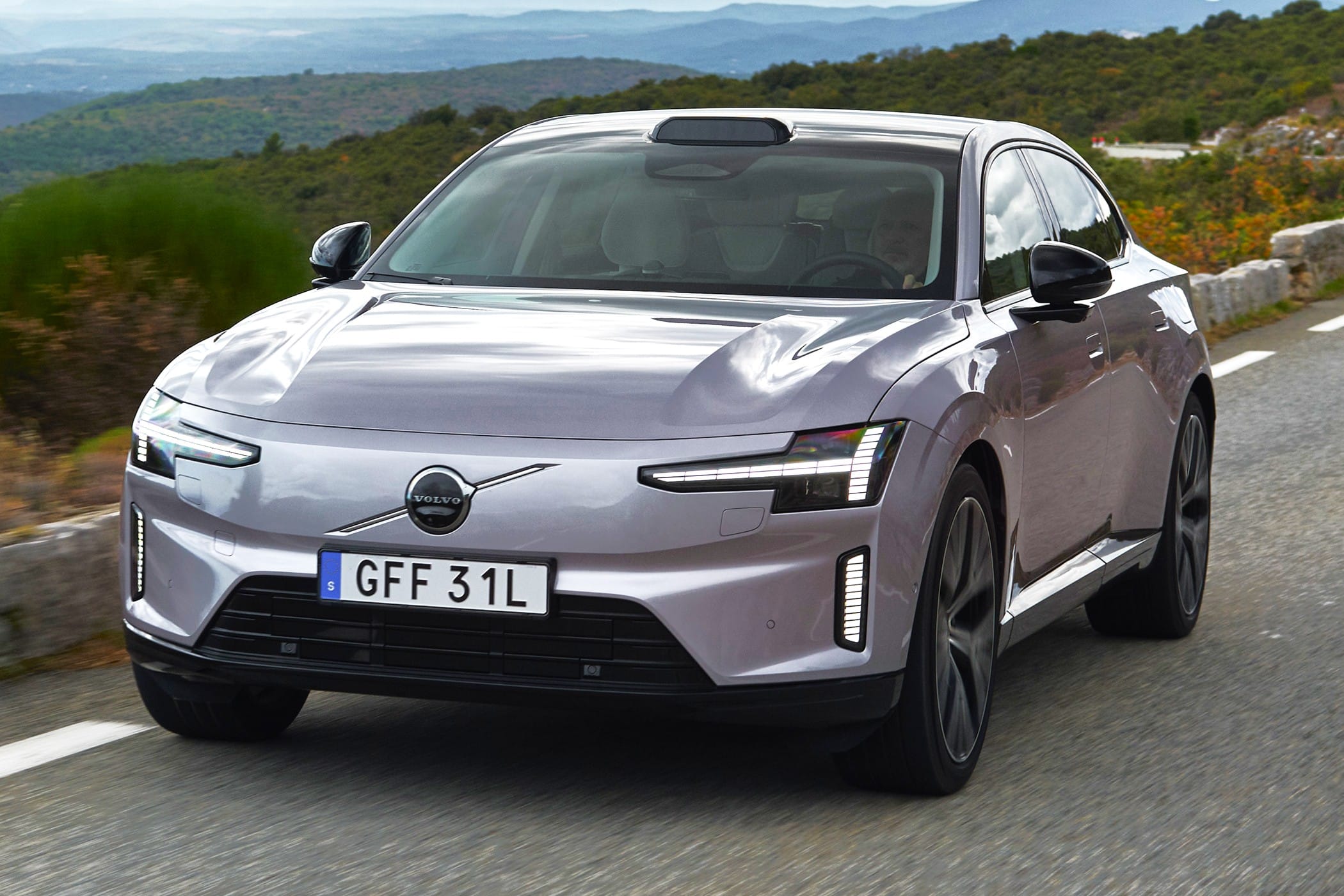
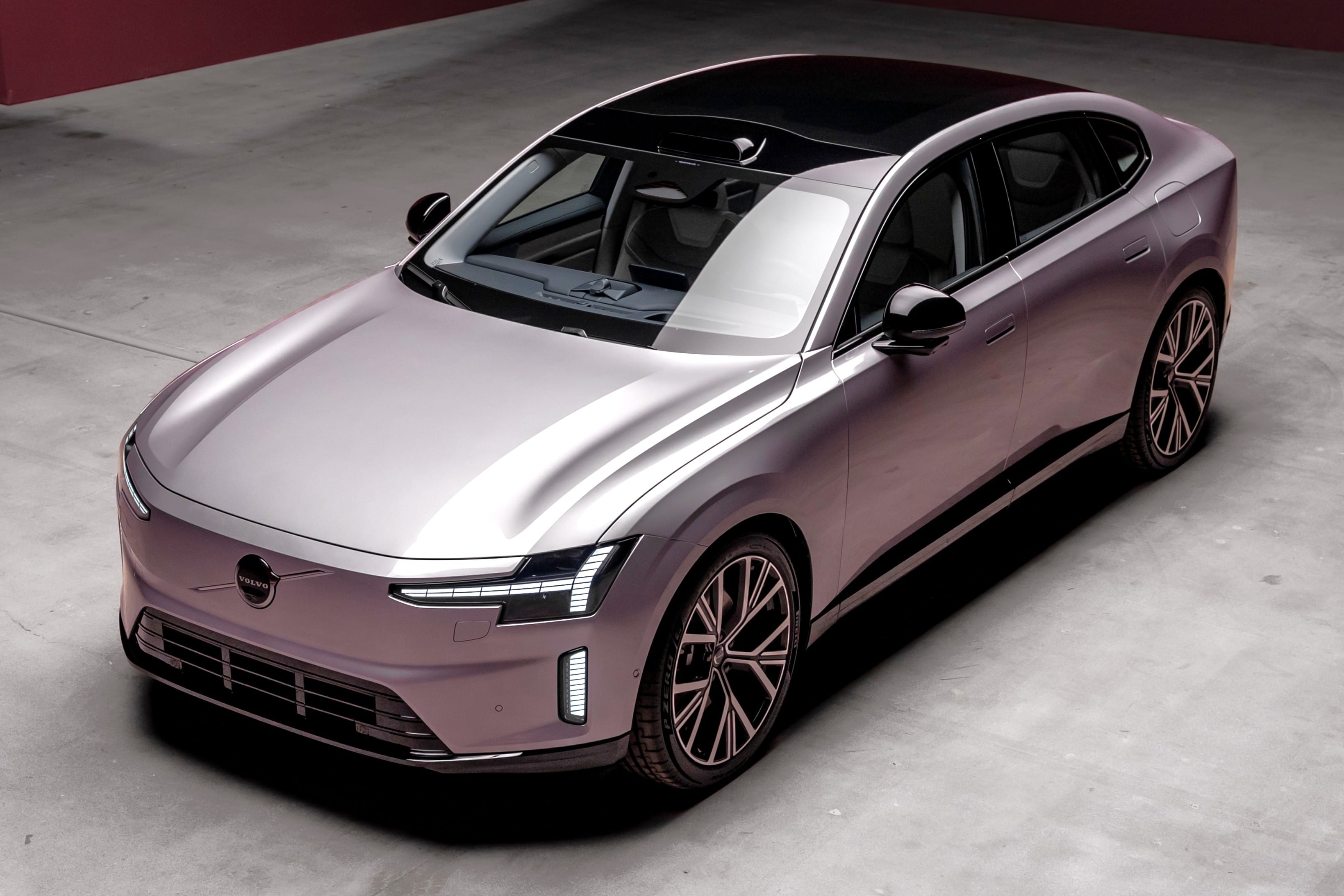
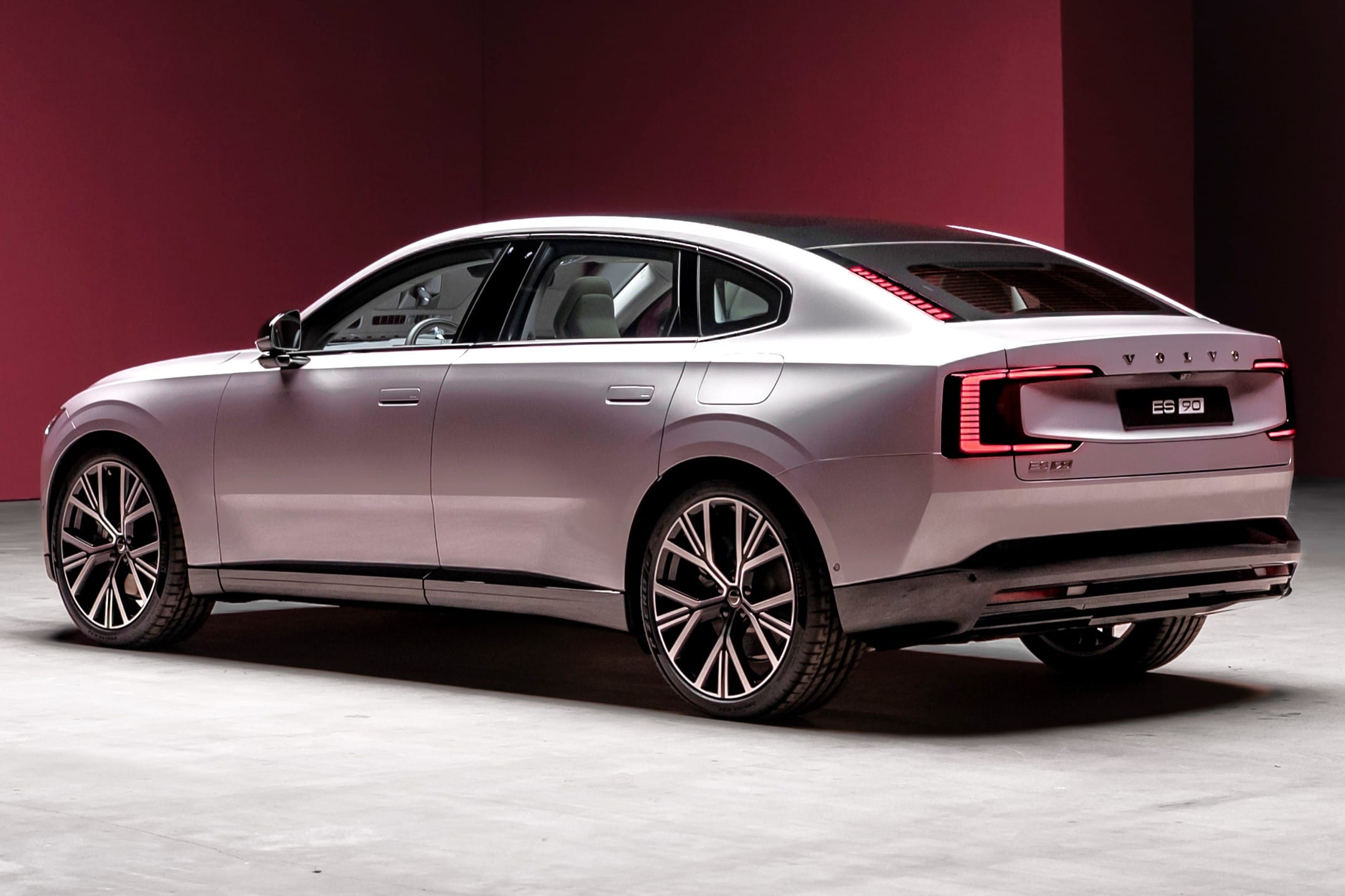
Volvo has confirmed that it will launch two new EVs, the EX90 SUV and the ES90 sedan, in India on October 12, 2026. The EX90 and ES90 will serve as Volvo’s flagship electric offerings for the Indian market. Notably, the ES90 will mark Volvo India’s return to the luxury sedan space, following the discontinuation of the S90 in June 2025. The EX90 is expected to rival the likes of the Mercedes-Benz EQS and Kia EV9, while the ES90 is likely to go up against the BMW i5.

Volvo EX90, ES90 battery and range

Identical 92kWh RWD and 106kWh AWD powertrains

The EX90 and ES90 are both underpinned by Volvo’s SPA2 platform, which features as 800V electrical architecture. In global markets, both EVs can be had in 92kWh (Single Motor) and 106kWh (Twin Motor) guises. In 92kWh spec, the EX90 and ES90 get a single rear-mounted motor (RWD) outputting 333hp and 480Nm. Meanwhile, the 106kWh battery option is split into Twin Motor and Twin Motor Performance variants, developing 456hp/670Nm and 680hp/870Nm, respectively.

For the EX90, 0-100kph comes up in a claimed 6.6 seconds for the 92kWh, 5.3 seconds for the 106kWh Twin Motor, and 4 seconds for the Twin Motor Performance. The ES90 Twin Motor is slightly slower from 0-100kph at 5.4 seconds, but mirrors the EX90 for the other variants.

As for WLTP range, the EX90 92kWh is rated at 565km, while the Twin Motor and Twin Motor Performance trims manage 608km and 602km, respectively. Meanwhile, the ES90’s WLTP range is certified at 664km for the 92kWh variant and 696km for the 106kWh versions.

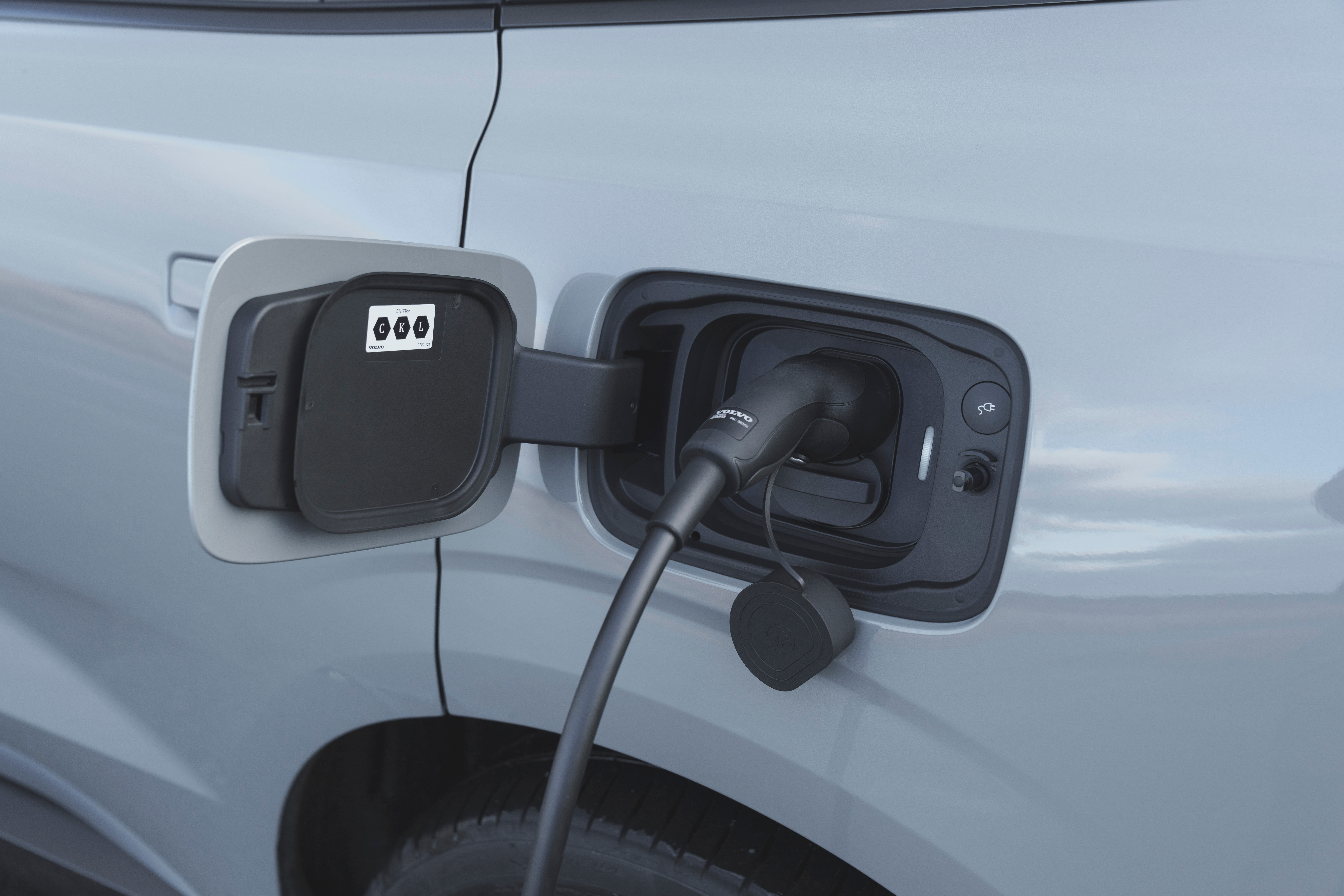
Coming to charging speeds, both the EX90 and ES90 can utilise up to 350kW DC charging, and take 22 minutes for a 10-80 percent charge across all variants.

Volvo EX90, ES90 exterior design

Look quite different compared to the XC90 and S90

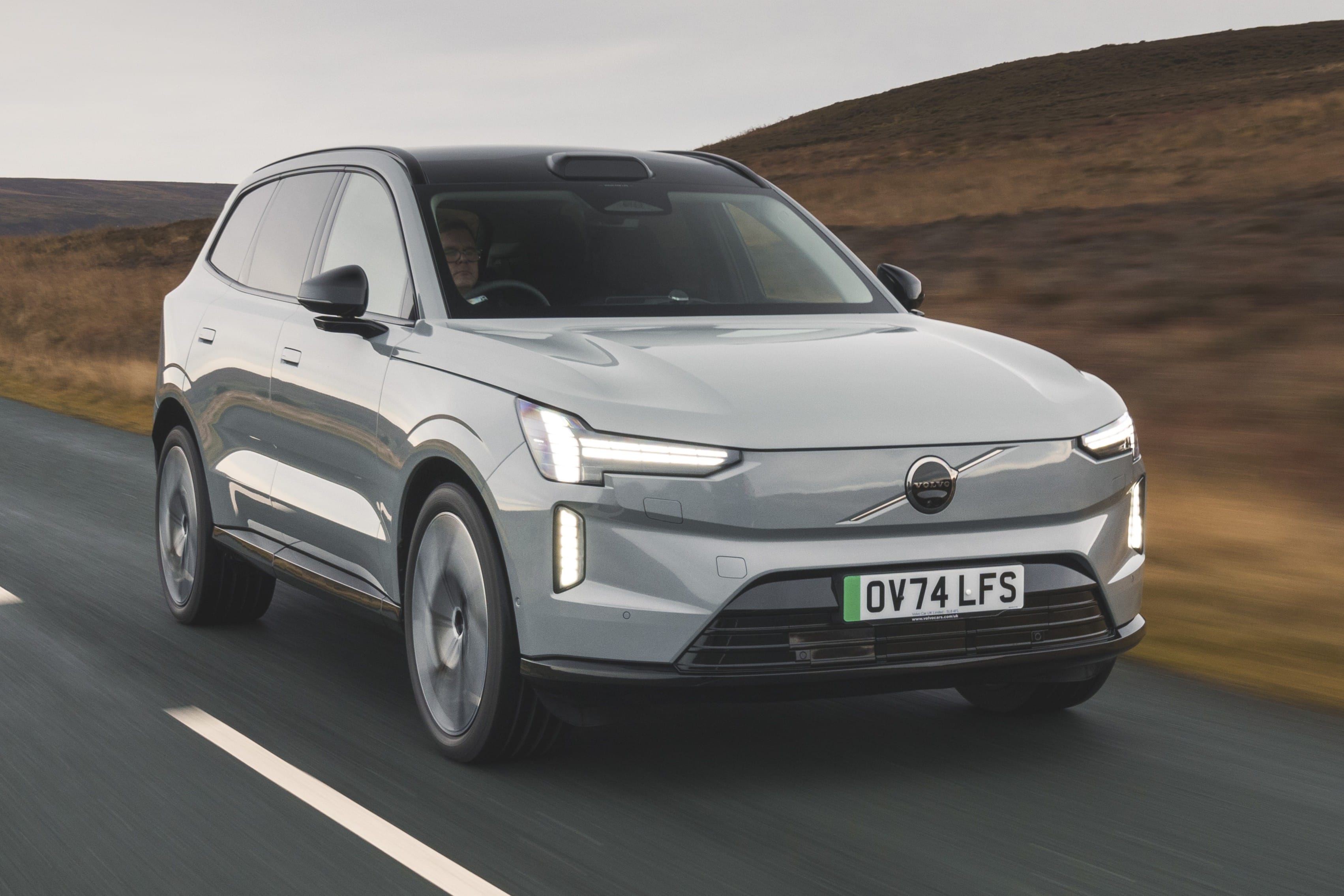
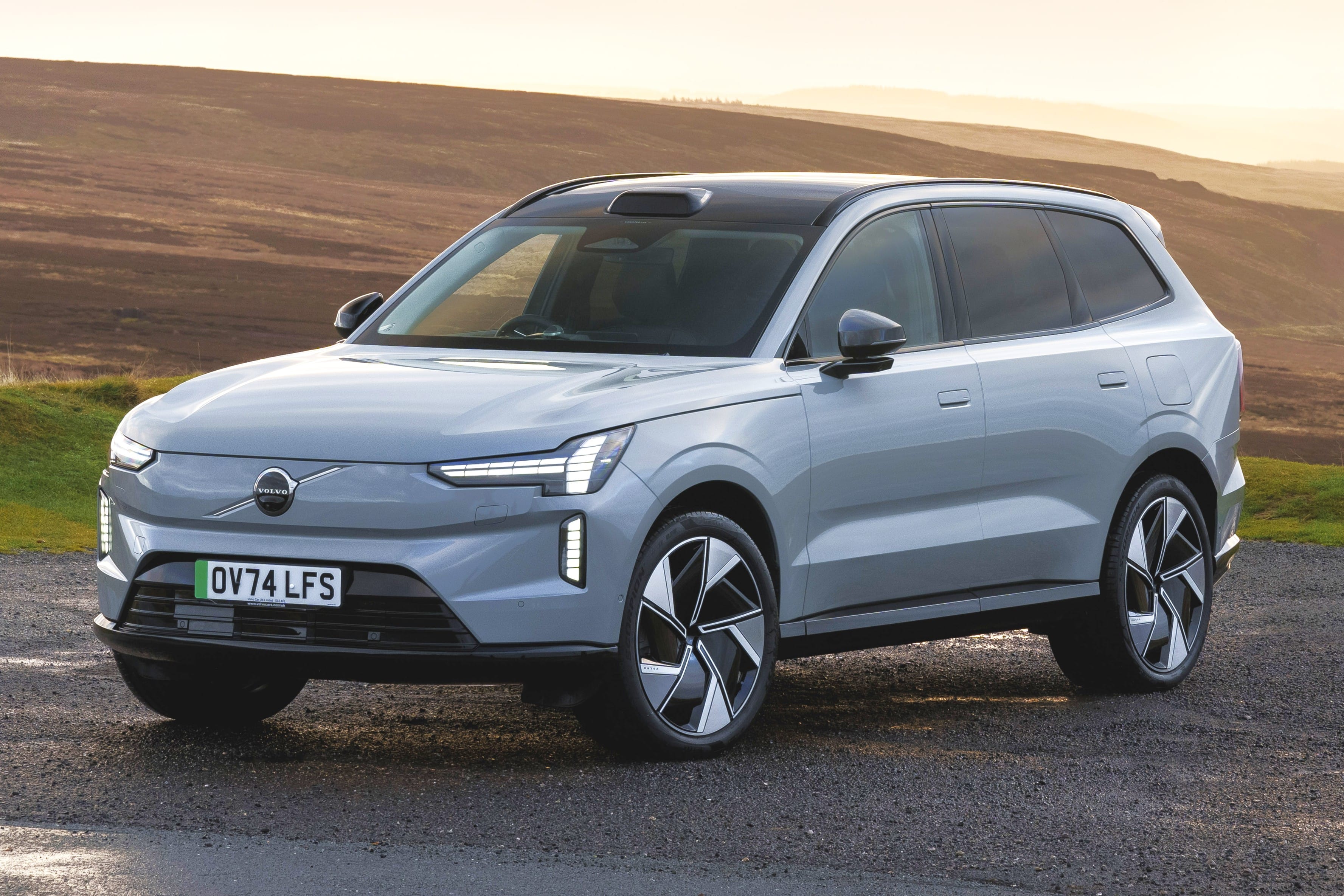
Measuring 5,037mm in length, 1,964mm in width, 1,744mm in height, and 2,985mm in wheelbase, the EX90 is dimensionally similar to the XC90, but sports a distinct design. Up front, the EX90 has sleeker T-shaped headlamps with pixel-like ‘Thor’s Hammer’ DRL signatures, below which sits a pair of slim vertically-arranged fog lamps. The Volvo badge is placed front and centre on the grille-less fascia, with a discreet air dam underneath. A LiDAR sensor can also be spotted on the leading edge of the roof.

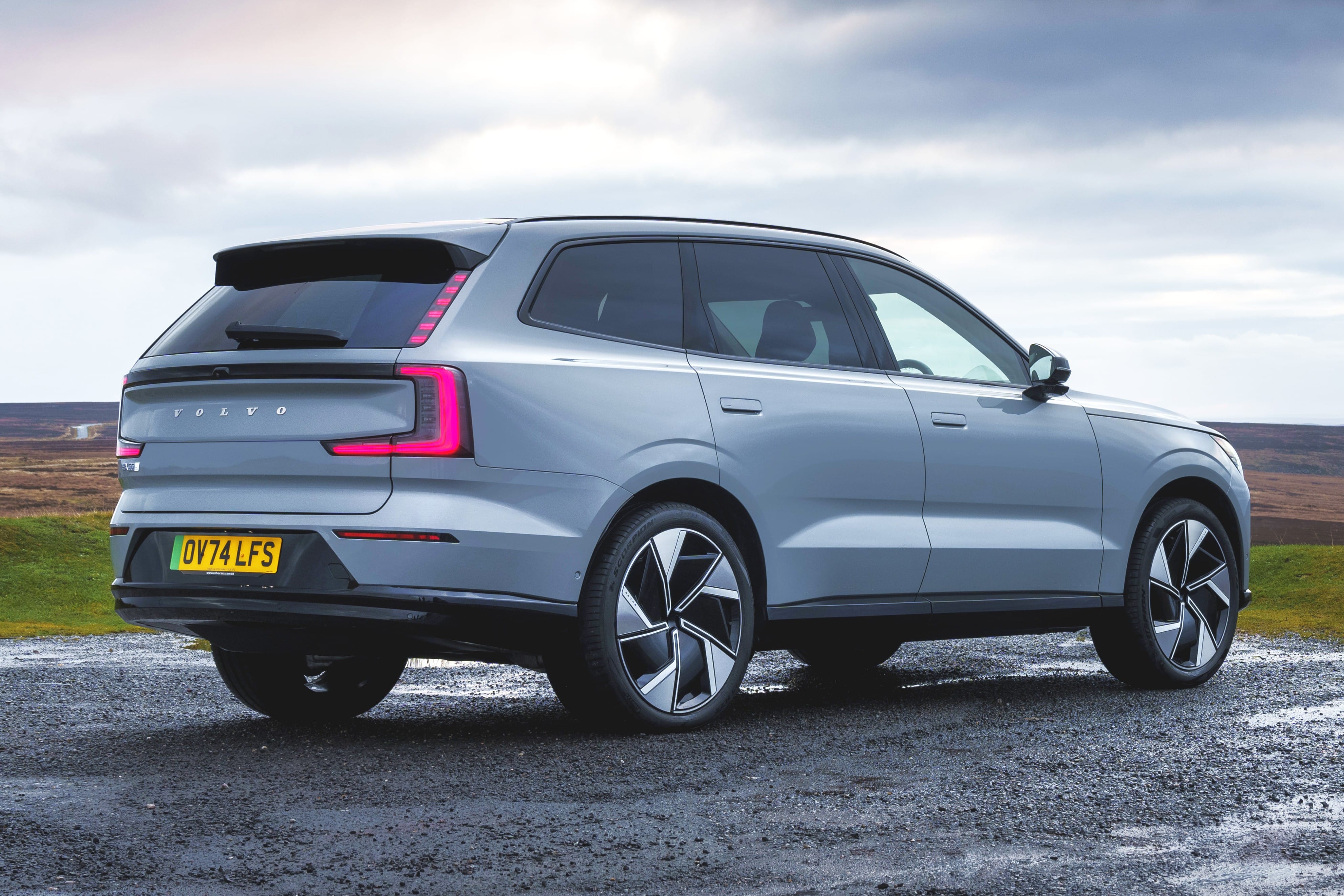
The side profile of the EX90 is cleanly-styled, with a prominent shoulder line and gently rising glass area, and there’s not much in the way of body cladding Volvo claims a drag coefficient of 0.29Cd. 20-inch alloy wheels are fitted as standard, with 21- and 22-inchers optionally available. Over to the rear, the EX90 gets C-shaped LED tail-lamps with an additional vertical row of brake lights flanking the rear windscreen. Other styling elements of note include a sizable roof spoiler and a Volvo wordmark on the bootlid.

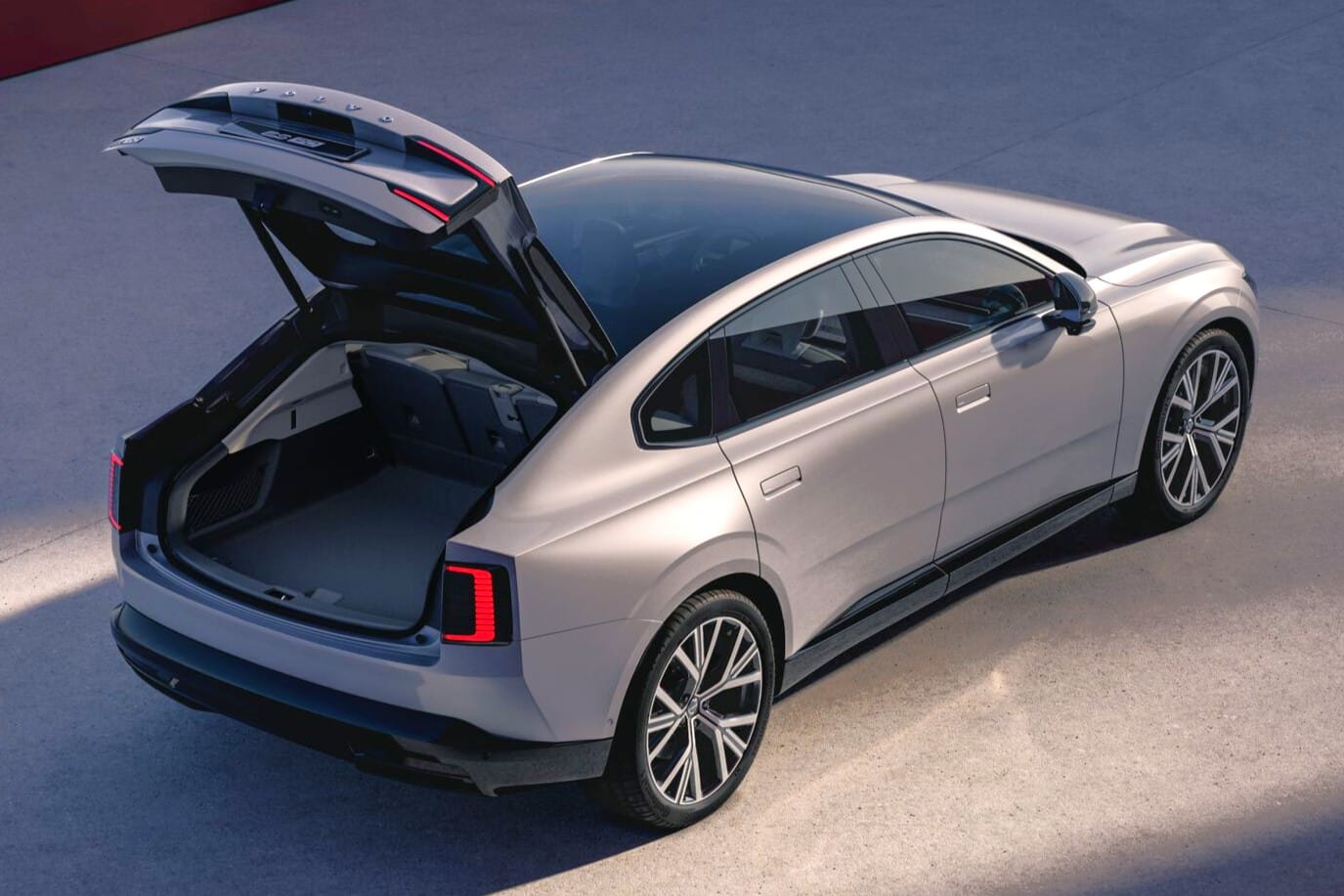
Coming to the ES90, it adopts very similar styling cues to the EX90, like the Thor’s Hammer DRLs, vertical fog lamps, grille-less fascia, brake lights around the rear windshield, Volvo wordmark on the bootlid, gloss black bumpers and skirts, and more. However, the ES90 sets itself apart with slightly reshaped headlamps and tail-lamps, different alloy wheel designs (sizes range from 20 to 22 inches), and of course, its sedan form factor.

Thanks to its more low-slung proportions, the ES90 sports a drag coefficient of 0.25, which makes it the most aerodynamic Volvo car to date.

Volvo EX90, ES90 interior and features

14.5-inch infotainment touchscreen sits front and centre on the dash

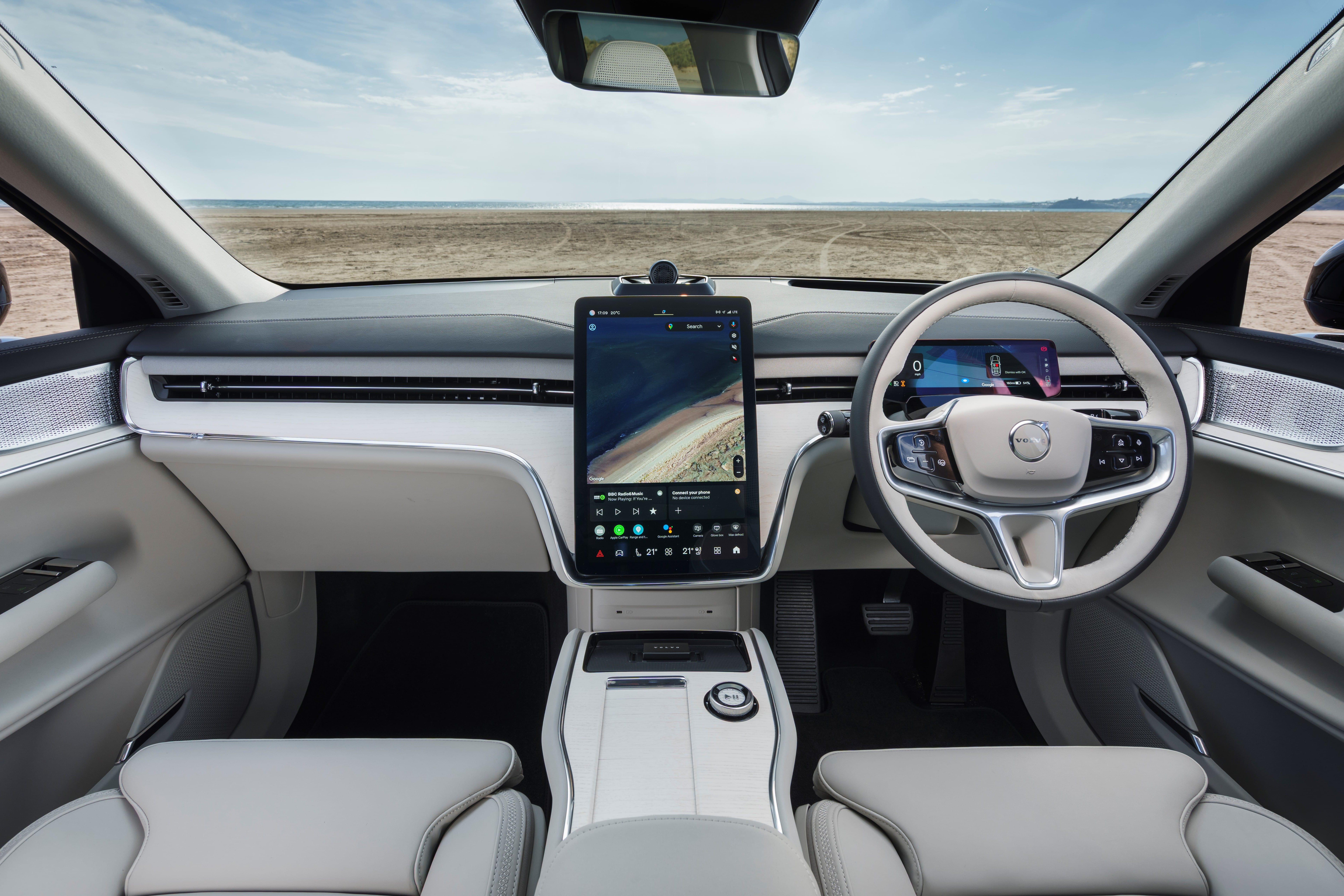
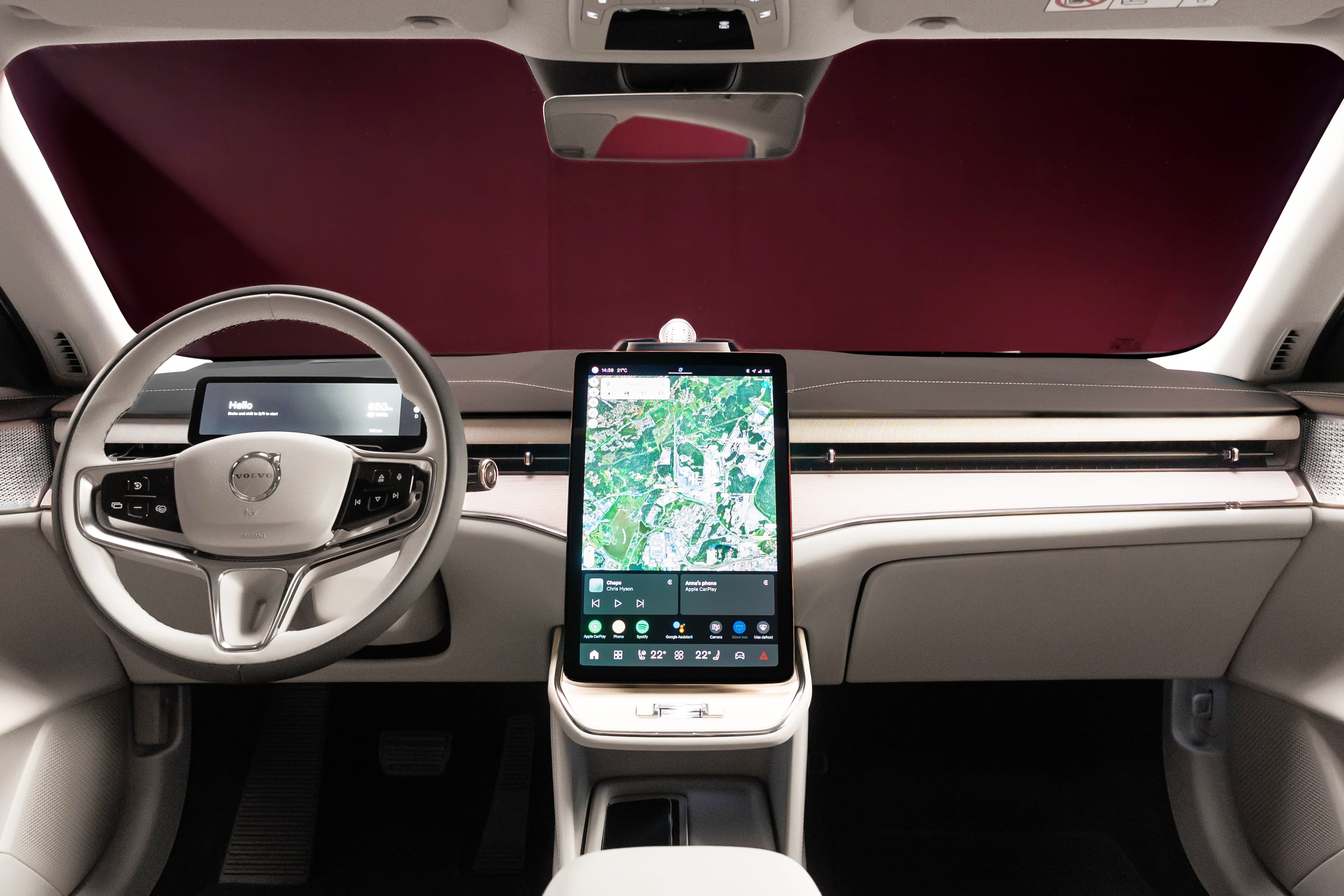
Inside, the EX90 and ES90 are very similar in terms of dashboard layout. Both get a minimalistic dashboard dominated by a 14.5-inch Google-based portrait touchscreen that incorporates much of the in-car functionality physical controls are few and far between. There’s also a floating centre console, a three-spoke steering wheel with a neat layered design, a slim 9-inch digital driver’s display, and a 13.2-inch heads-up display.

The area between the portrait screen and centre console, however, differs between the two. The EX90 has a split design with a more open cubby, whereas the ES90 has a more enclosed storage space with two buttons underneath the touchscreen.

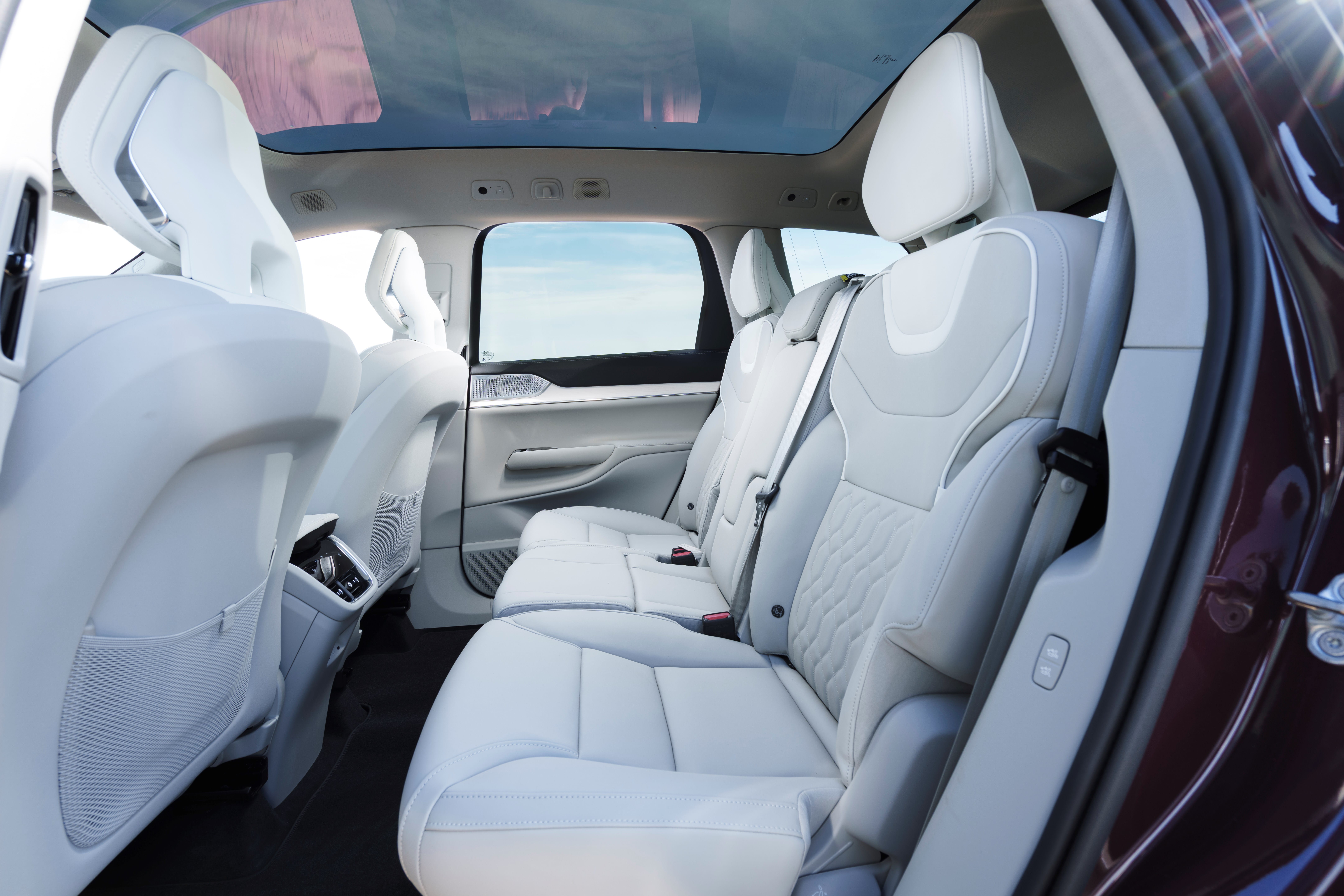
While the ES90 is a 5-seater, the EX90 is a 7-seater as standard, with certain variants offering a 6-seat configuration with captain’s chairs for the second row. In some markets, Volvo even offers a 4-seater version of the EX90 with a rear centre console that integrates a refrigerator, rivalling the likes of the Mercedes Maybach EQS SUV. Boot space is pegged at up to 384 litres with all three rows up for the EX90 and 424 litres for the ES90. The EX90 additionally gets a 45-litre frunk, while the ES90 features a 27-litre space.

As for creature comforts, both EVs pack a 5G connection to aid OTA updates, a digital key, ambient lighting, four-zone climate control, a cabin air purifier, a wireless charging pad, a 360-degree camera, powered front seats, a panoramic glass roof, a Bose sound system, connected car tech, auto park assist, Level-3 ADAS, V2L functionality, and lots more. The EX90 is touted to be Volvo’s safest car to date, holding 5-star crash safety ratings from Euro NCAP and NCAP. The ES90, however, is yet to be crash-tested by an NCAP agency.

Kawasaki confirms it is going to make a hydrogen powered horse

Kawasaki confirms it is going to make a hydrogen powered horse

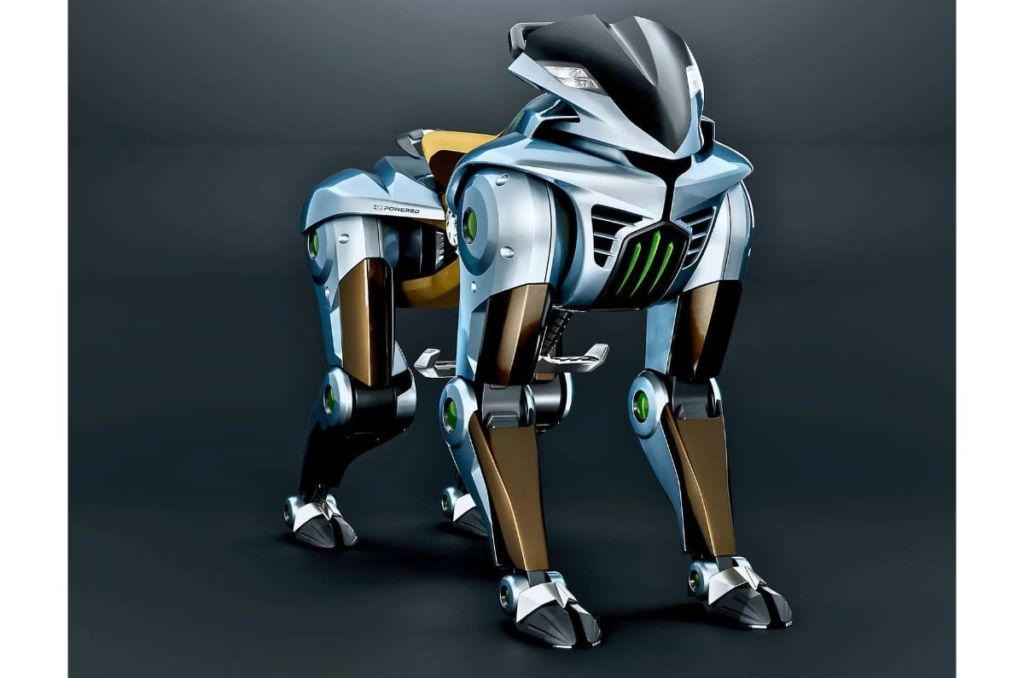
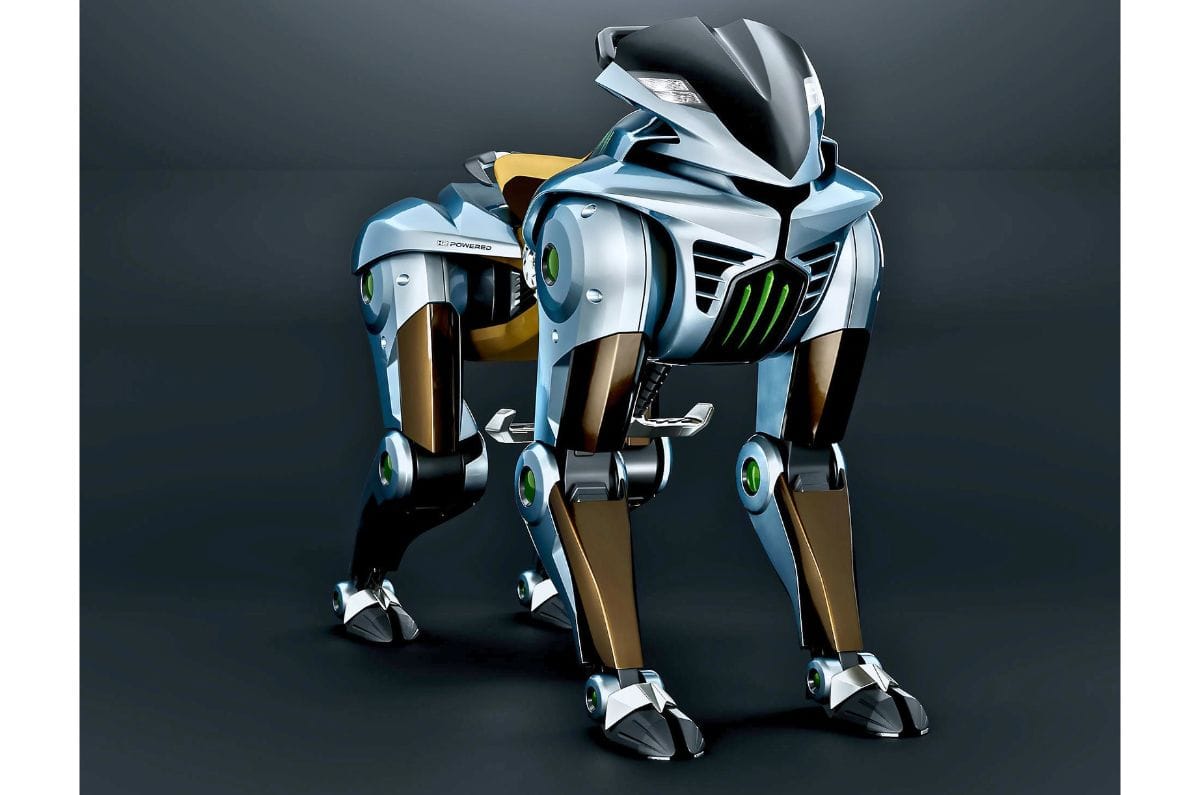
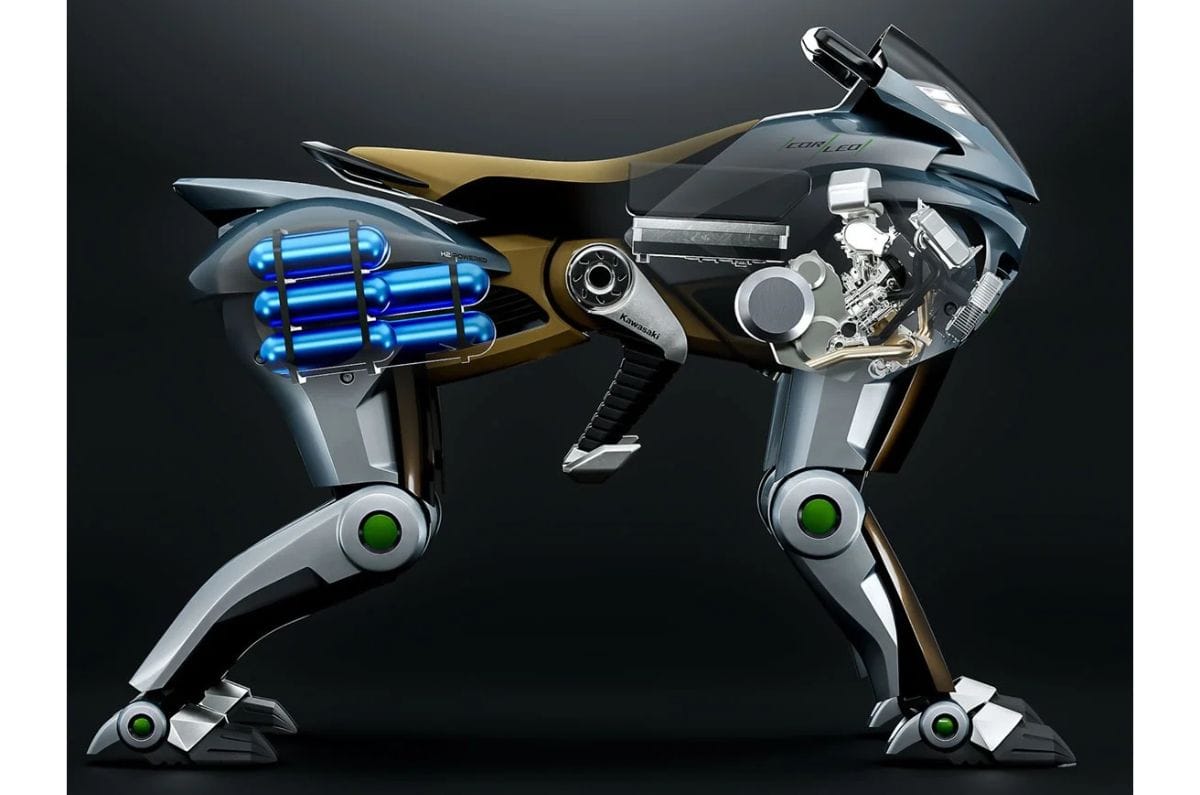
Kawasaki has begun development of the Corleo, a four-legged off-road mobility vehicle powered by hydrogen. While the Corleo isn’t a two-wheeler, it comes from one of the world’s biggest motorcycle manufacturers, a company that has never shied away from unconventional ideas. Kawasaki is targeting its use as an on-site mobility vm ehicle at Expo 2030 Riyadh in Saudi Arabia and is working towards commercialisation around 2035.

  1. Four-legged off-road mobility vehicle
  2. Uses a 150cc hydrogen engine to generate electricity
  3. Commercialization targeted around 2035

Kawasaki Corleo combines motorcycle and robotics technology

The Corleo was first unveiled as a concept at Expo 2025 Osaka. Kawasaki has since established a dedicated SAFE ADVENTURE Business Development Team to develop the vehicle towards commercialisation, with potential use at Expo 2030 Riyadh forming part of its plans.

The Corleo uses four independently controlled legs instead of conventional wheels. Its rear legs feature a swingarm mechanism derived from motorcycle technology, allowing them to move independently and absorb shocks while helping maintain the rider’s posture.

The vehicle is operated through the rider’s weight shifts, much like riding a horse. Stirrups and handholds detect these movements and feed the rider’s inputs into the vehicle’s control system. Kawasaki says the system is designed to help the Corleo negotiate difficult terrain, including mountainous areas and water crossings.

Corleo uses a 150cc hydrogen engine

Hydrogen is stored in canisters at the rear of the vehicle. A 150cc hydrogen engine generates electricity to power actuators in the four legs and the vehicle body. Kawasaki says the hydrogen storage canisters are designed to be swappable, allowing them to be replaced away from conventional refuelling infrastructure.

The Corleo’s control system also monitors the vehicle’s posture and movement, helping it respond to the terrain beneath its four legs. Kawasaki is developing the machine for use in environments where conventional wheeled mobility could be difficult.

Kawasaki plans Corleo riding simulator

Kawasaki is also developing a riding simulator for the Corleo, with completion targeted for 2027. The simulator will be used to evaluate the vehicle’s riding characteristics and operation, while Kawasaki is also exploring potential applications in gaming and esports.

Kawasaki is targeting commercialisation of the Corleo around 2035, although production specifications and pricing have not yet been announced. The company is continuing development as part of its SAFE ADVENTURE initiative, which also includes technology designed to assess factors such as weather, road-surface conditions and wildlife when determining safer routes.

Genesis reveals flagship GV90 EV as its most luxurious model yet

Genesis reveals flagship GV90 EV as its most luxurious model yet

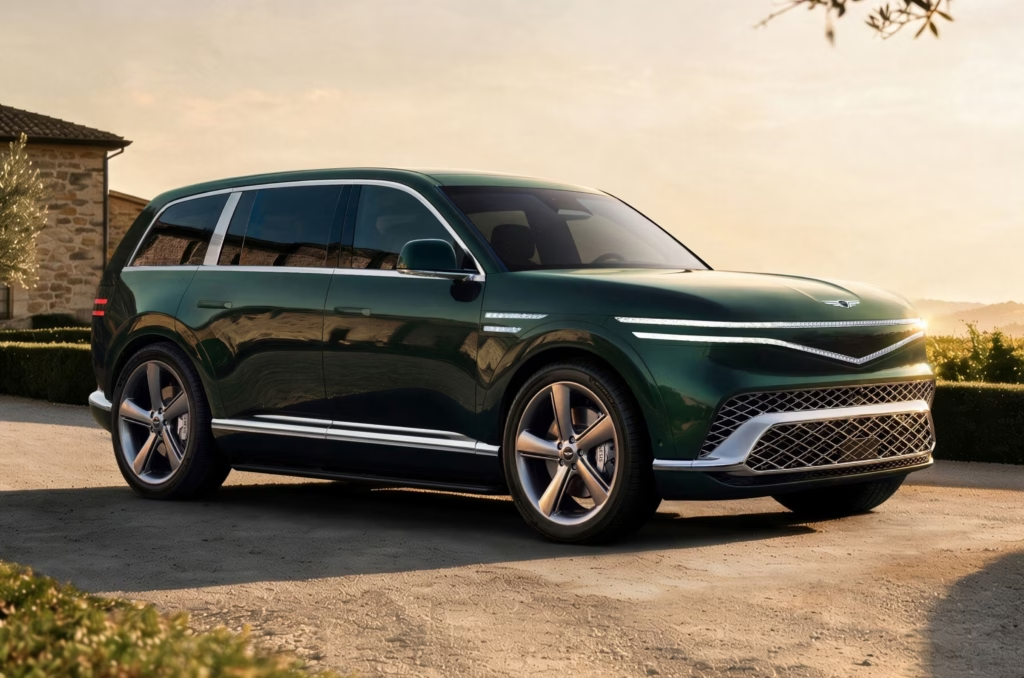
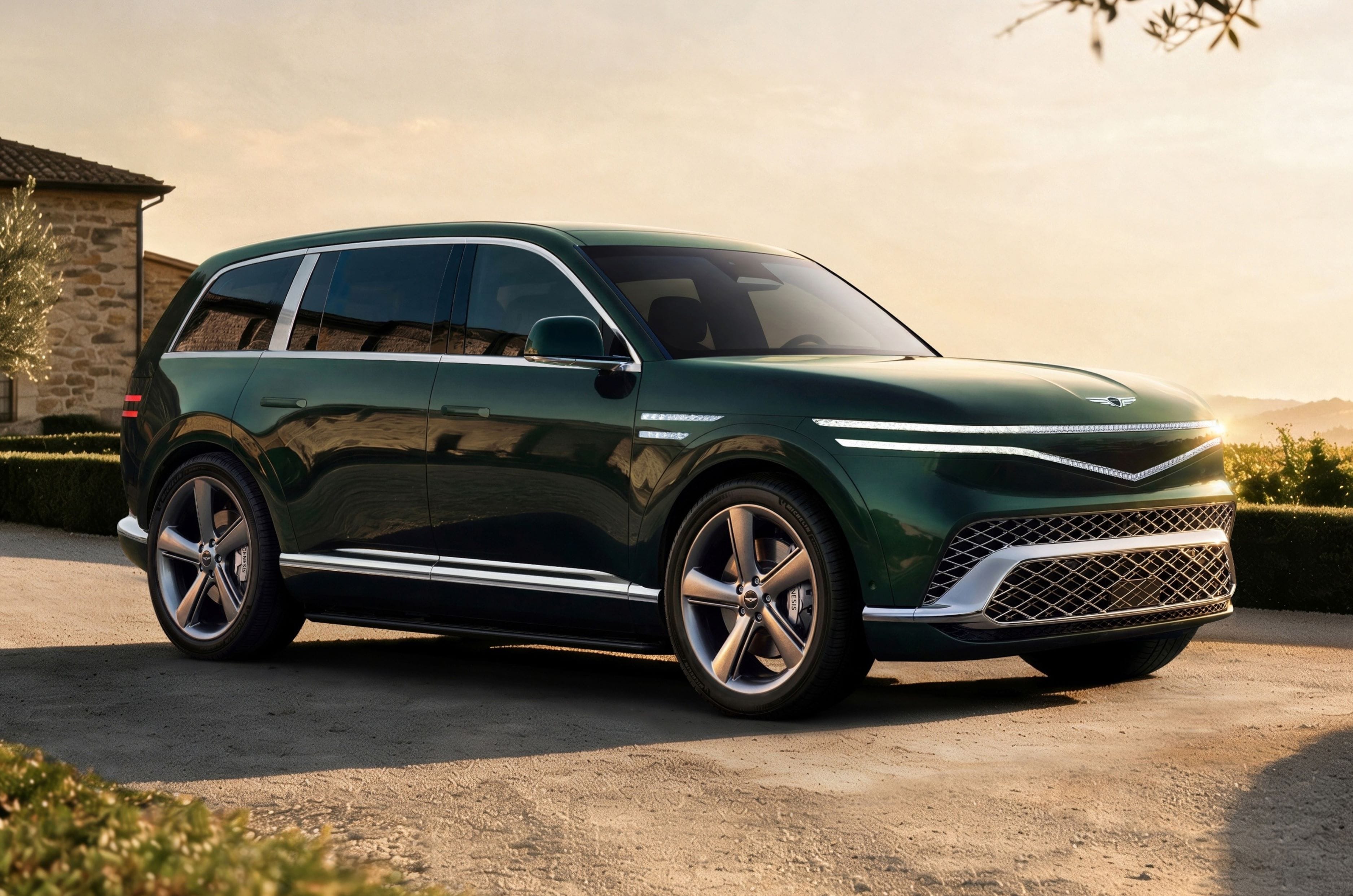
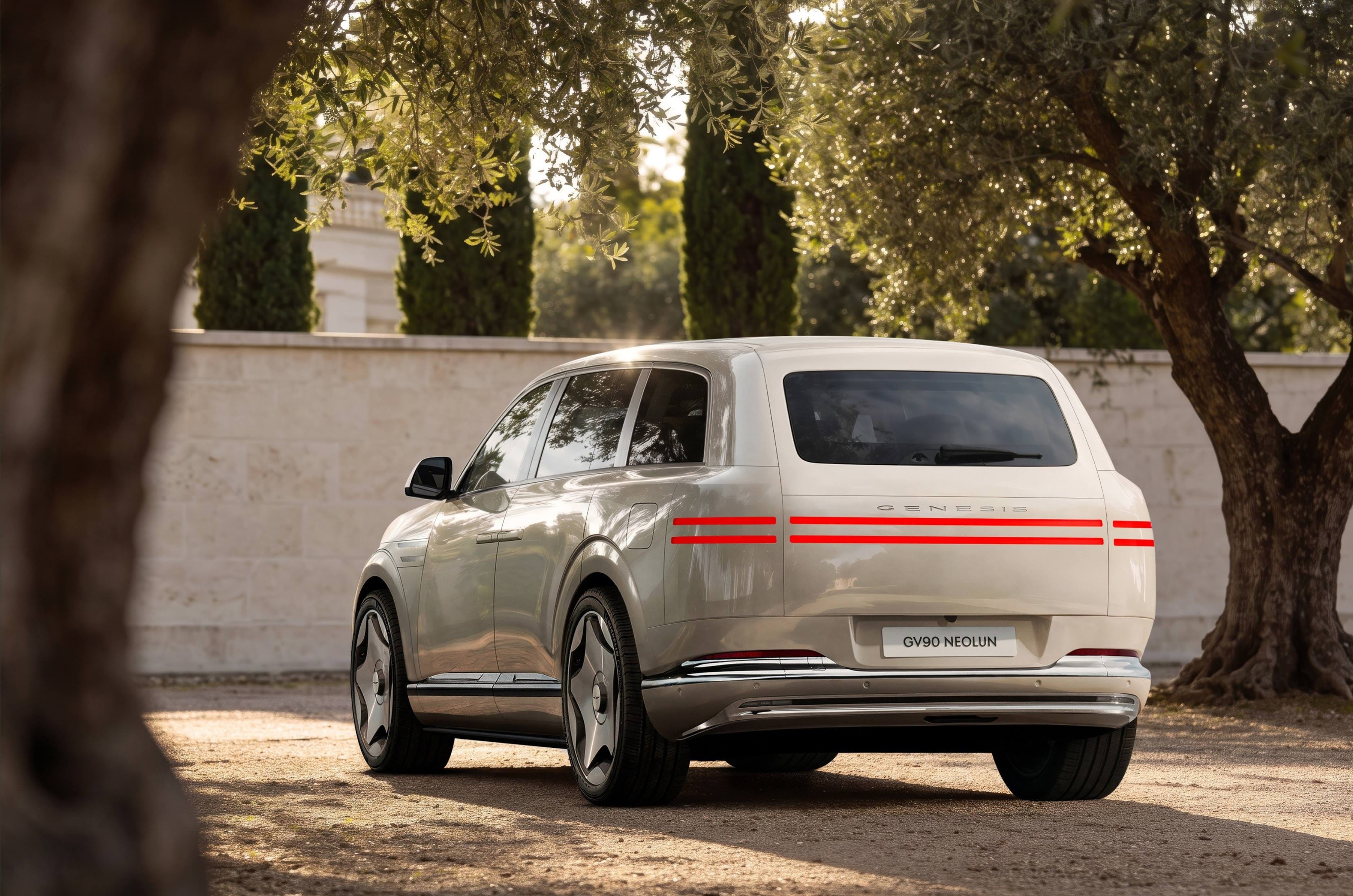
Genesis has revealed the GV90 EV as its new flagship SUV. Showcased in its production-ready avatar, the GV90 is the largest and most luxurious Genesis model to date. It is based on the 2024 Neolun Concept (Neolun translates to ‘New Moon’) and retains most of the concept’s exterior design, but sports a more polished cabin. It gets the largest-ever battery on any Hyundai model yet, and a dual-motor AWD setup.

  1. 5.3-metre length is closer to the Rolls-Royce Cullinan
  2. 123.5kWh battery offers around 500km range
  3. Dual-motor AWD setup produces 544hp, 800Nm
  4. 4-seater variant gets coach doors, hidden B-pillar

Genesis is offering the GV90 globally in two versions: the standard GV90 and the GV90 Neolun, with 7- and 4-seater layouts, respectively.

Genesis GV90 powertrain details

Producing 544hp and 800Nm, it is the most-powerful EV for the Hyundai group yet

The Genesis GV90 eSUV is offered with a 123.5kWh battery, the biggest ever for the larger Hyundai group, which offers around 500km range (as per the manufacturer’s internal testing). The battery powers dual electric motors, which deliver a combined output of 544hp and 800Nm, the most of any EV in the larger Hyundai group. The battery pack can be charged from 10-80 percent in 22 minutes using a 350kW DC fast charger. 

Each motor of the GV90 gets its own e-LSD (limited-slip differential), another first for the Hyundai group, through which “power is efficiently supplied to all four wheels during high-speed cornering for agile handling”. It also enhances the EV’s grip on snowy, rainy or uneven roads. The GV90 also gets multi-chamber air suspension that adjusts ride height to road conditions, and dual-valve adaptive dampers that soften or stiffen for a pliant ride in all situations. The EV gets rear-axle steering, enabling the rear wheels to turn up to five degrees.

Hyundai to hike prices from September 2026

Hyundai to hike prices from September 2026
Hyundai logo

In a regulatory filing, Hyundai Motor India announced that it will hike prices across its entire portfolio in September 2026. Models will see a price increase of up to 1 percent. The brand has cited “rising input and commodity costs, higher operational expenses and continuing geopolitical and macroeconomic uncertainties, among other factors” as reasons for the price increase.

  1. This marks Hyundai’s third price hike this year
  2. Prices to increase by up to 1 percent

Hyundai price hike in September 2026: Additional details 

While Hyundai has not revealed the revised prices for its models, it said the increase will vary by model and variant. Depending on that, one can expect a hike ranging from Rs 7,767 to Rs 23,672. Hyundai also said it continues to optimise costs and absorb cost escalations to mitigate impact on customers. “However, the persistence of these cost pressures has necessitated passing on a part of the increased costs to customers through this marginal price revision,” it said.

Below are the prices for locally built Hyundai models currently on sale in India:

Hyundai cars price list in September 2026

Model

Price range (in Rs lakh)

Grand i10 Nios

5.59-8.04

Aura

5.99-8.60

i20

5.99-11.74

Exter

5.80-9.46

Venue

7.99-15.64

Creta

10.90-19.95

Verna

10.99-18.26

Alcazar

14.50-21.25

Creta Electric

18.02-23.67

This is the third time this year that the Korean carmaker has implemented a price hike. The previous revisions happened in June and January.

Axor launches updated MX Carbon helmet at Rs 20,000

Axor launches updated MX Carbon helmet at Rs 20,000

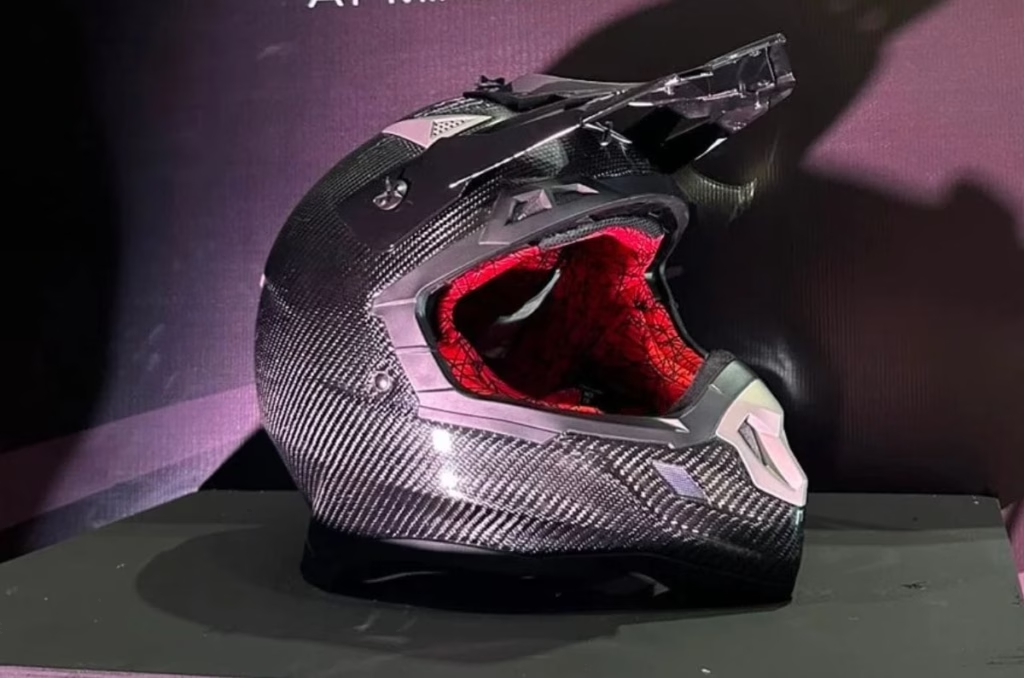
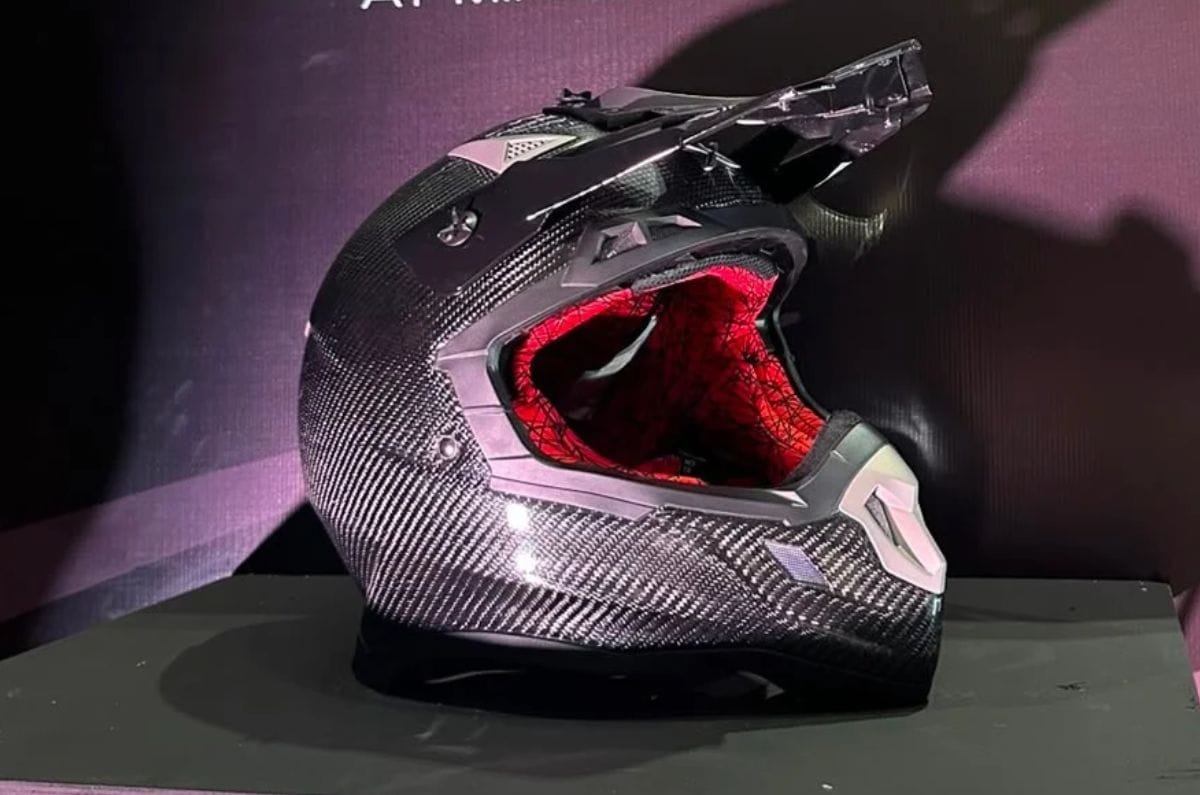
Indian riding gear manufacturer Axor has launched an updated MX Carbon helmet. Built on an improved shell technology from the previous MX Carbon, according to Axor this is the world’s lightest, triple certified helmet with ECE 22.06, ISI and DOT certifications.

  1. Available in three shell sizes
  2. Uses a tri-composite shell

Updated Axor MX Carbon has a lighter shell

Pre-orders are open now

The updated MX Carbon’s shell is made of a tri-composite (3K carbon fibre, aramid fibre, and aerospace-grade fibreglass) to achieve a lighter weight than before. Available in three shell sizes, the MX Carbon weighs 1,040g (±50g depending on the sizes) and is available in four sizes (M, L, XL, and 2XL). Axor also sells another off-road helmet, the Retro Moto X, but it’s not meant to rival the MX Carbon. The only other off-road helmet in its price range is the KYT Skyhawk. However, it is heavier (1,200g), more expensive (Rs 27,000). 

It also only gets ECE 22.05 rating, but does have ISI certification. The next closest competitor is the LS2 MX700 Subverter Evo but that’s not available for purchase anywhere. The helmet is manufactured in India and is available for pre-order now at Rs 20,060 with deliveries starting soon, making the MX Carbon Axor’s most expensive helmet at the moment.

3 reasons to buy the 2026 Mini Countryman C and 2 reasons not to

3 reasons to buy the 2026 Mini Countryman C and 2 reasons not to
2026 Mini Countryman C

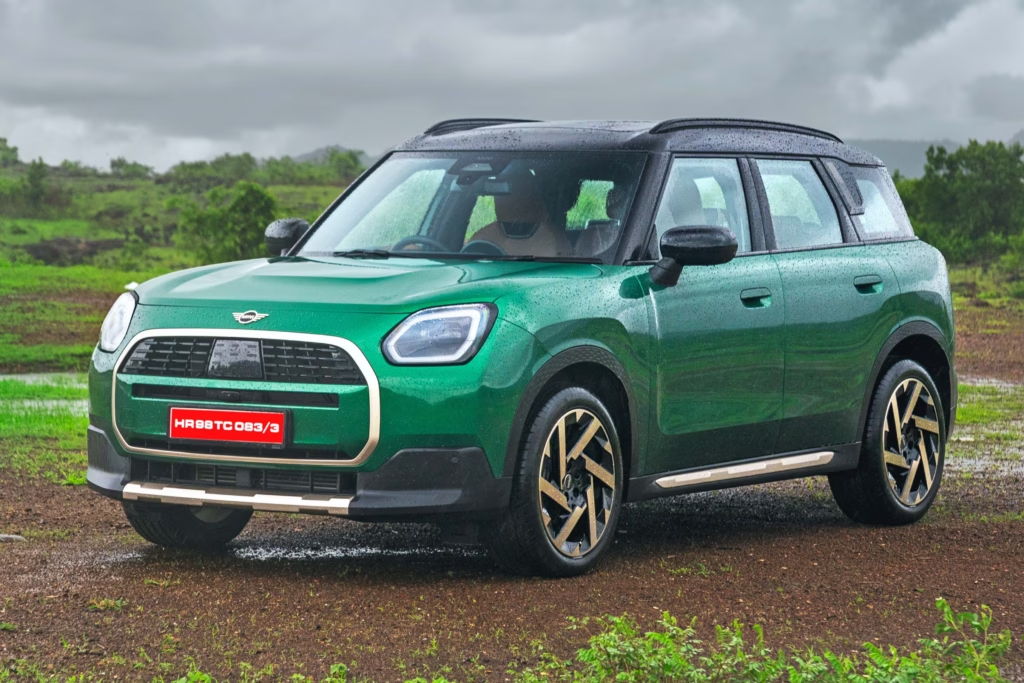
The third-generation Mini Countryman C is the most accessible version of the entry-level luxury SUV sold here, positioned below the JCW All4. Like any car, the Countryman C has its share of strengths and weaknesses. Here are three reasons to consider the Mini SUV, along with two reasons why you might want to look at the Mercedes-Benz GLA, Audi Q3 or BMW X1.

Funky yet premium look

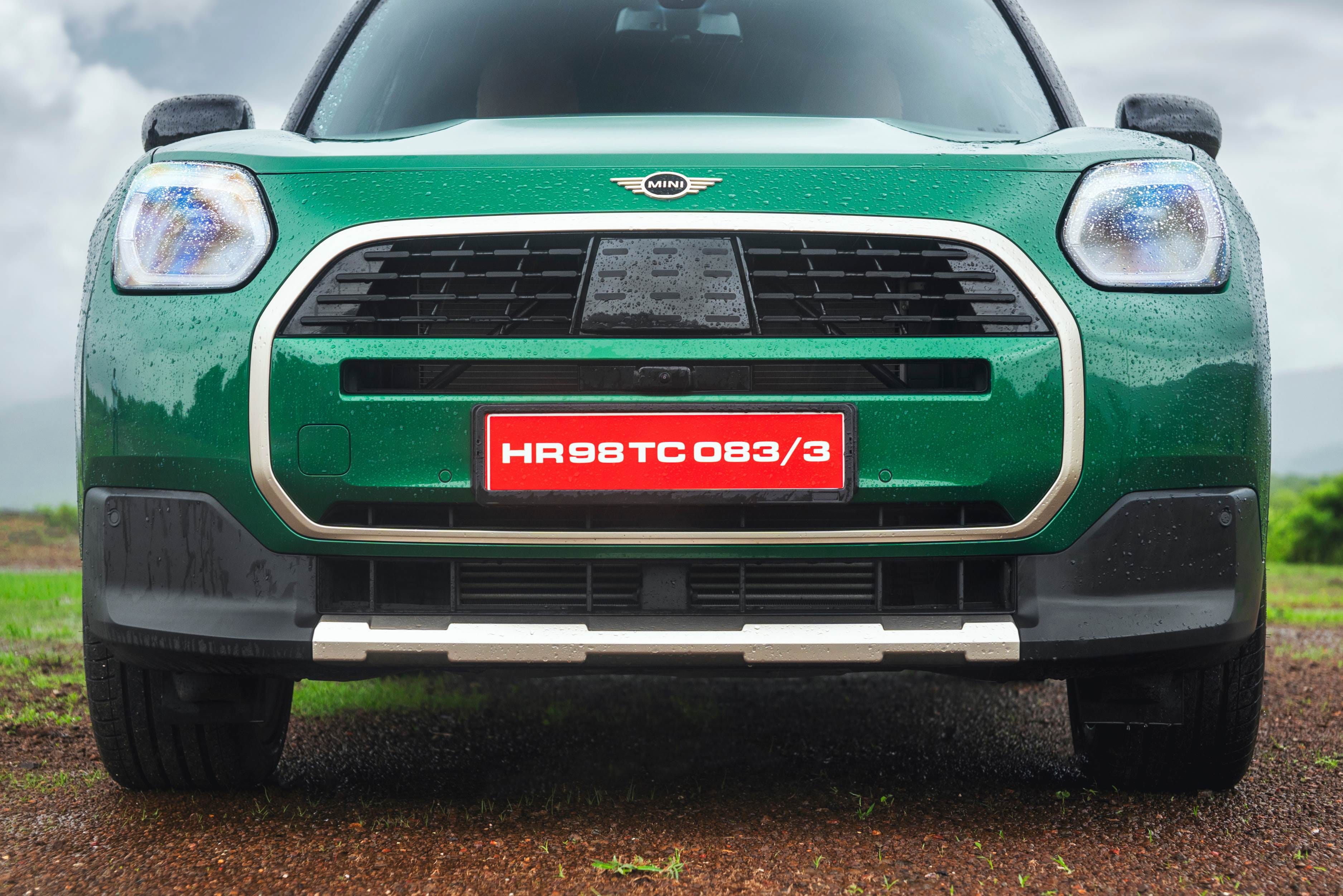
2026 Mini Countryman C front

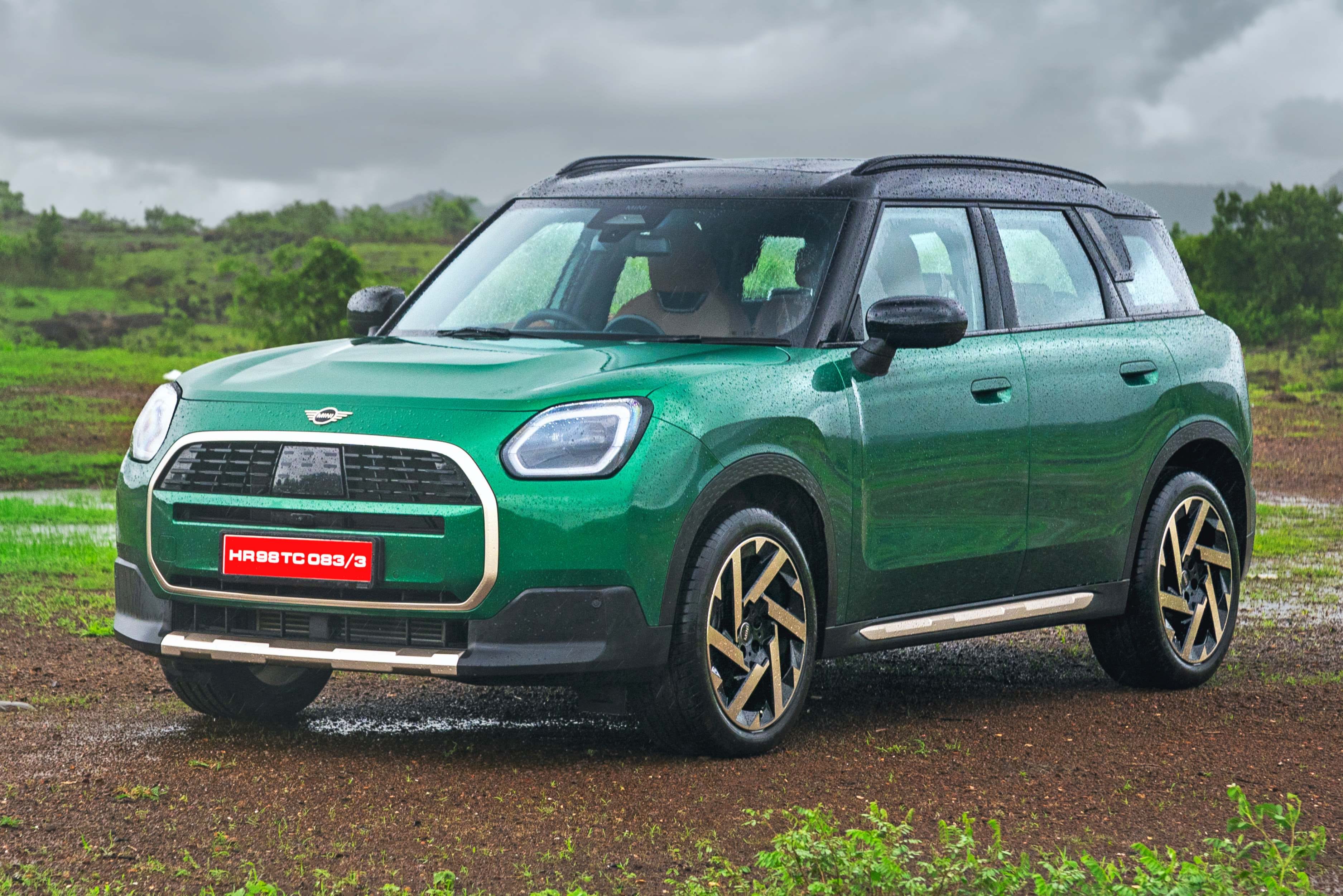
The new Countryman looks sharper, boxier and larger than before. It has grown in size and is now the tallest SUV in the segment while also offering the highest ground clearance. However, Mini has also made it look large, replacing the rounder styling of the earlier model with smaller, sharper and more angular details.

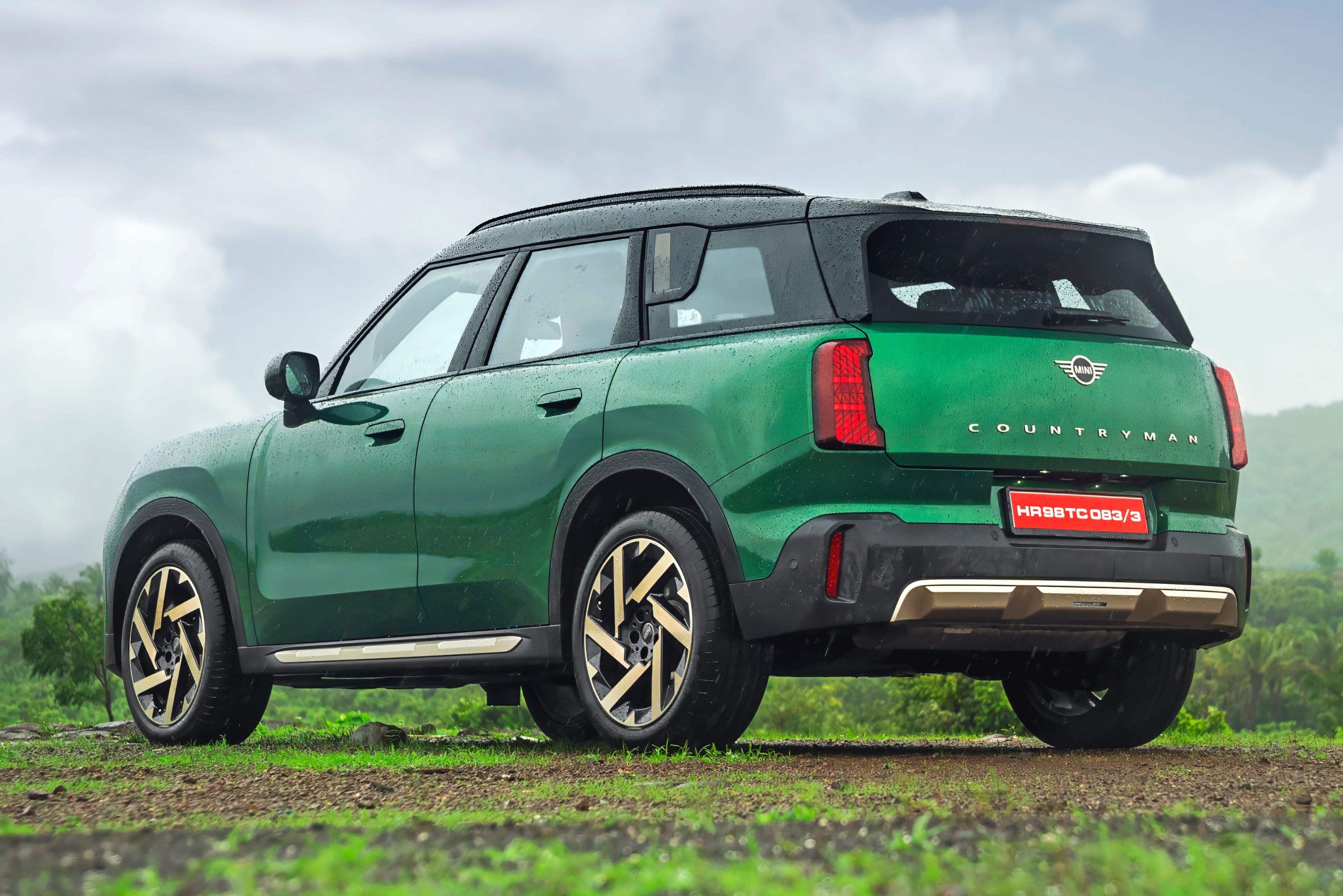
2026 Mini Countryman C rear

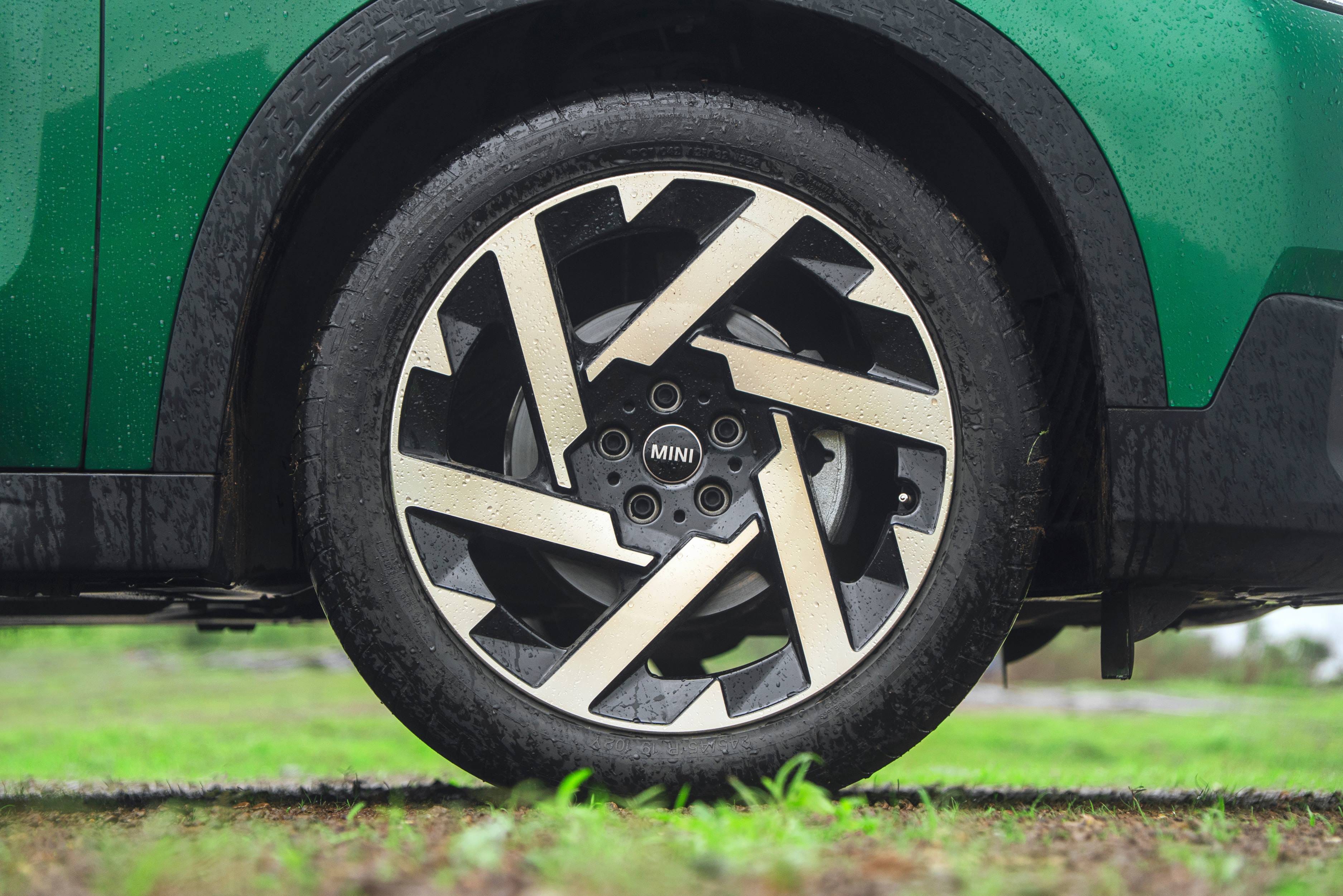
Even the headlights, grille and roofline now have a boxier design. From the rear, it is easily identifiable as a Mini, thanks to the contrast roof, ‘Countryman’ lettering on the tailgate and Union Jack-style tail-lamps. It also gets champagne-coloured accents, a contrast roof and large 19-inch dual-tone alloy wheels. There are five exterior colours to choose from, with more expressive shades than those usually seen on conventional luxury SUVs.

Loaded with features

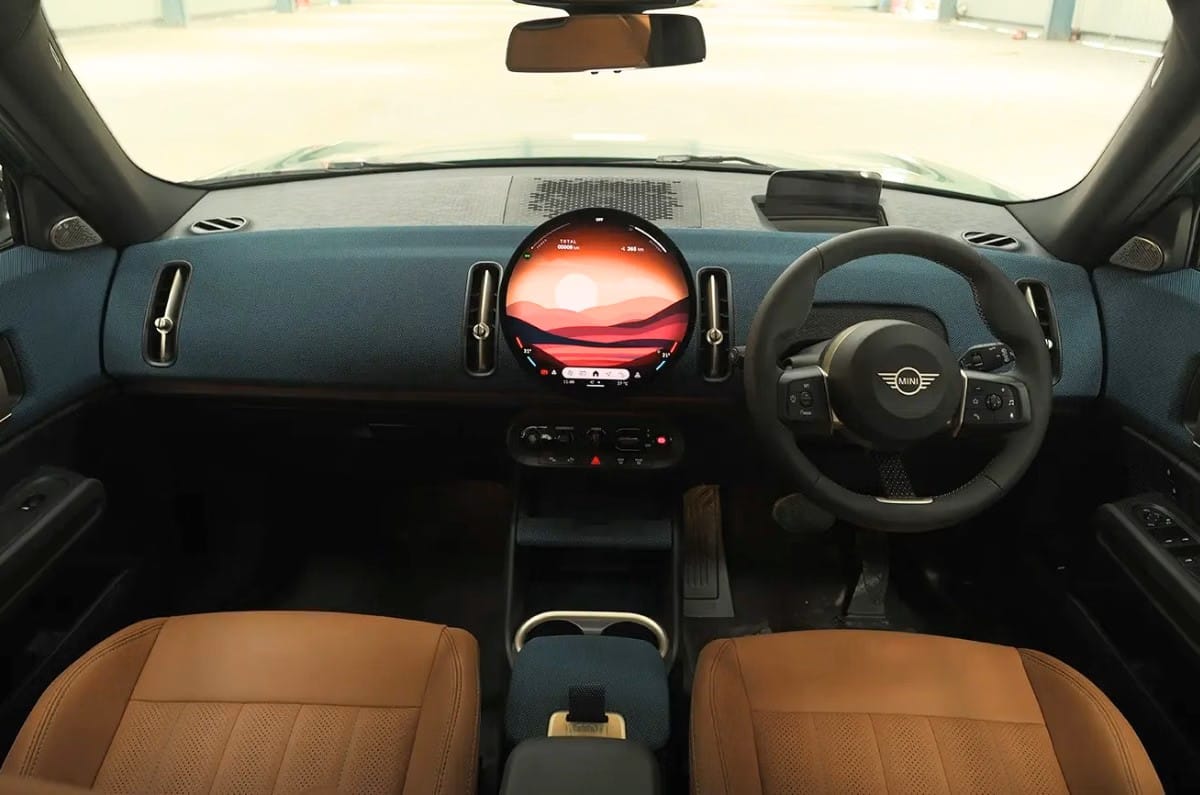
The Countryman C comes with a generous list of features, including wireless Apple CarPlay and Android Auto, powered front seats with memory and a massage function for the driver, a surround-view camera with auto park, a Harman Kardon sound system, a heated steering wheel, a panoramic sunroof, a head-up display, a voice assistant, wireless phone charging and a digital key.

Good space and practicality

2026 Mini Countryman C rear seat space

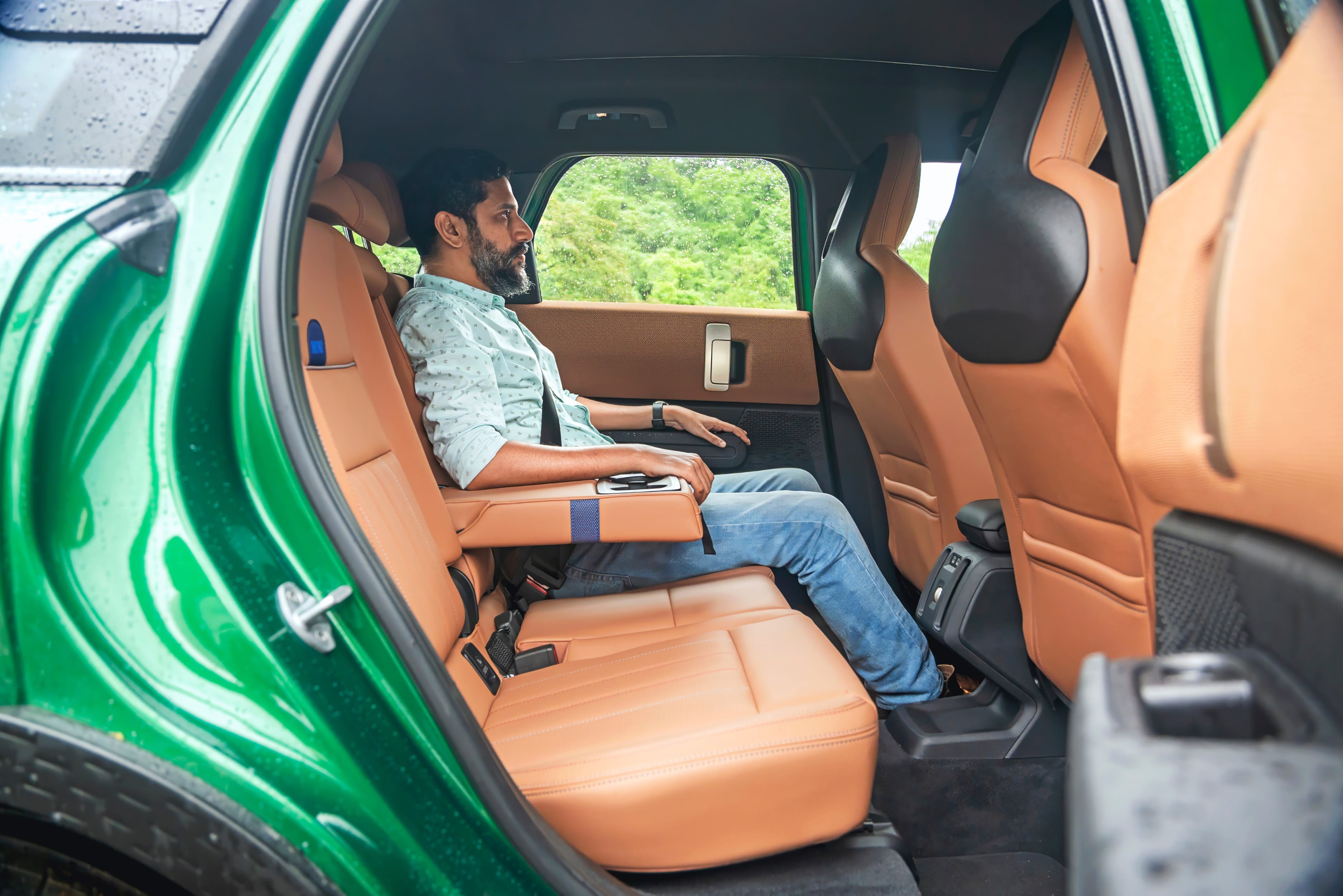
It feels roomier and more open than any previous Countryman, and it also has an advantage over some rivals in this area. Compared to the Countryman Electric, the Countryman C’s floor sits lower, making the seating position more comfortable. The large panoramic sunroof also makes the cabin feel brighter.

Boot space is another area where the Countryman C has an edge over the EV. Capacity has increased by 50 litres to 505 litres, and sliding the rear seats forward can free up even more space. It also comes with a space-saver spare wheel, which the EV does not get. 

Practicality has also been well thought out, with an open centre console, a covered storage box and a sliding armrest. The front seats are large and comfortable, while the high seating position gives a good view outside.

Reasons to avoid the 2026 Mini Countryman C

Engine, gearbox clunky at low speeds

The Experience Modes are also mostly cosmetic. Only Green (Eco) and Go Kart (Sport) modes change drive performance. Eco makes the powertrain calmer, while Go Kart makes it more responsive. There is no option to adjust individual settings, and ESC is switched off by default in Go Kart mode, with no option to turn it back on.

There are no paddleshifters either or any other way to change gears manually. The gearbox is generally quick and easy to work with, but at very low speeds, the powertrain suffers from turbo lag and gearbox hesitation.

Large wheels hurt ride quality

2026 Mini Countryman C alloy wheels

Yes, the 19-inch wheels look great, but they do affect the ride. They crash hard through potholes and even over some steeper speed breakers. That said, the suspension keeps the SUV controlled around corners with limited body roll despite being tuned to be more comfortable and compliant than the previous Countryman.