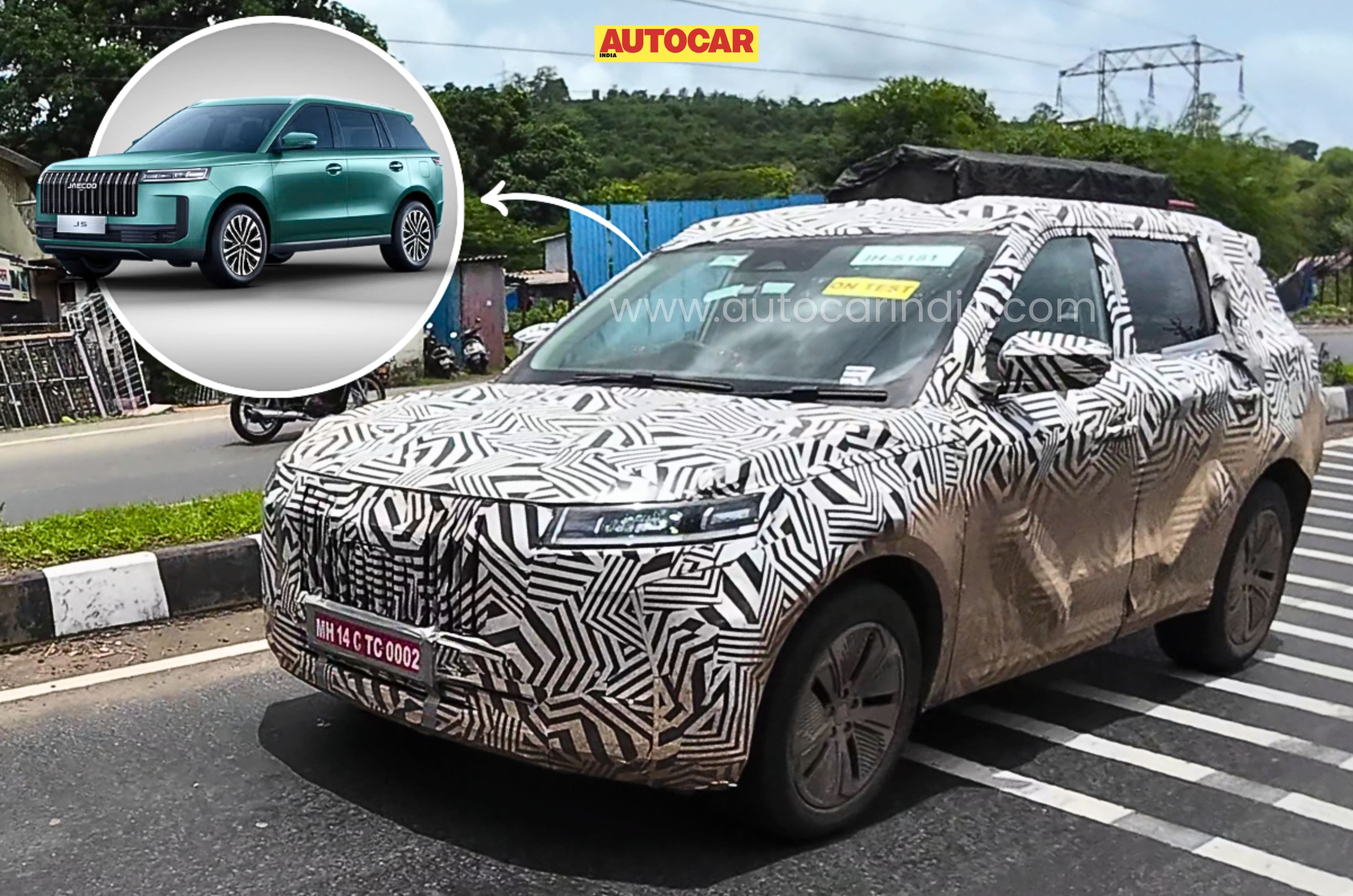
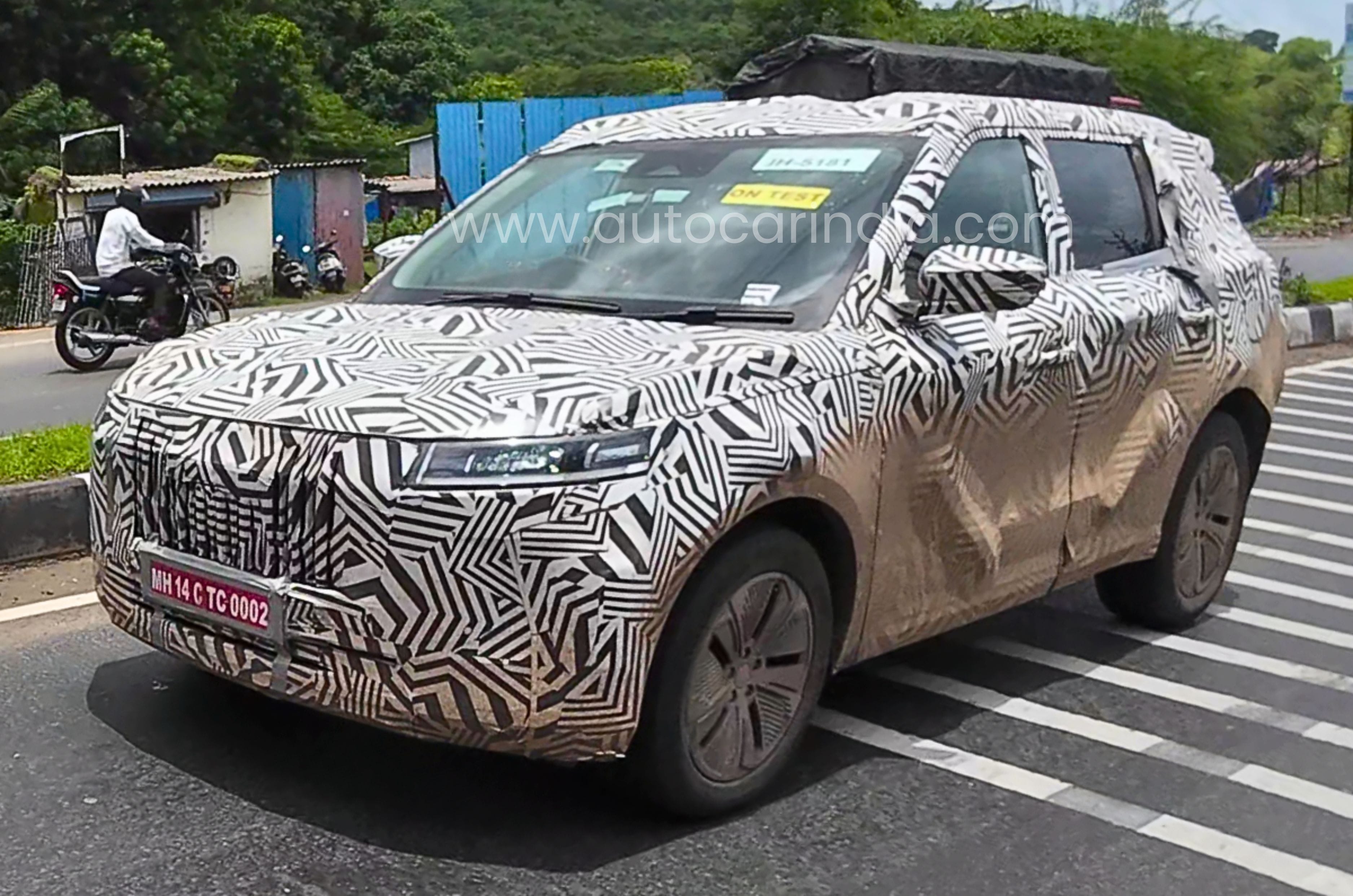
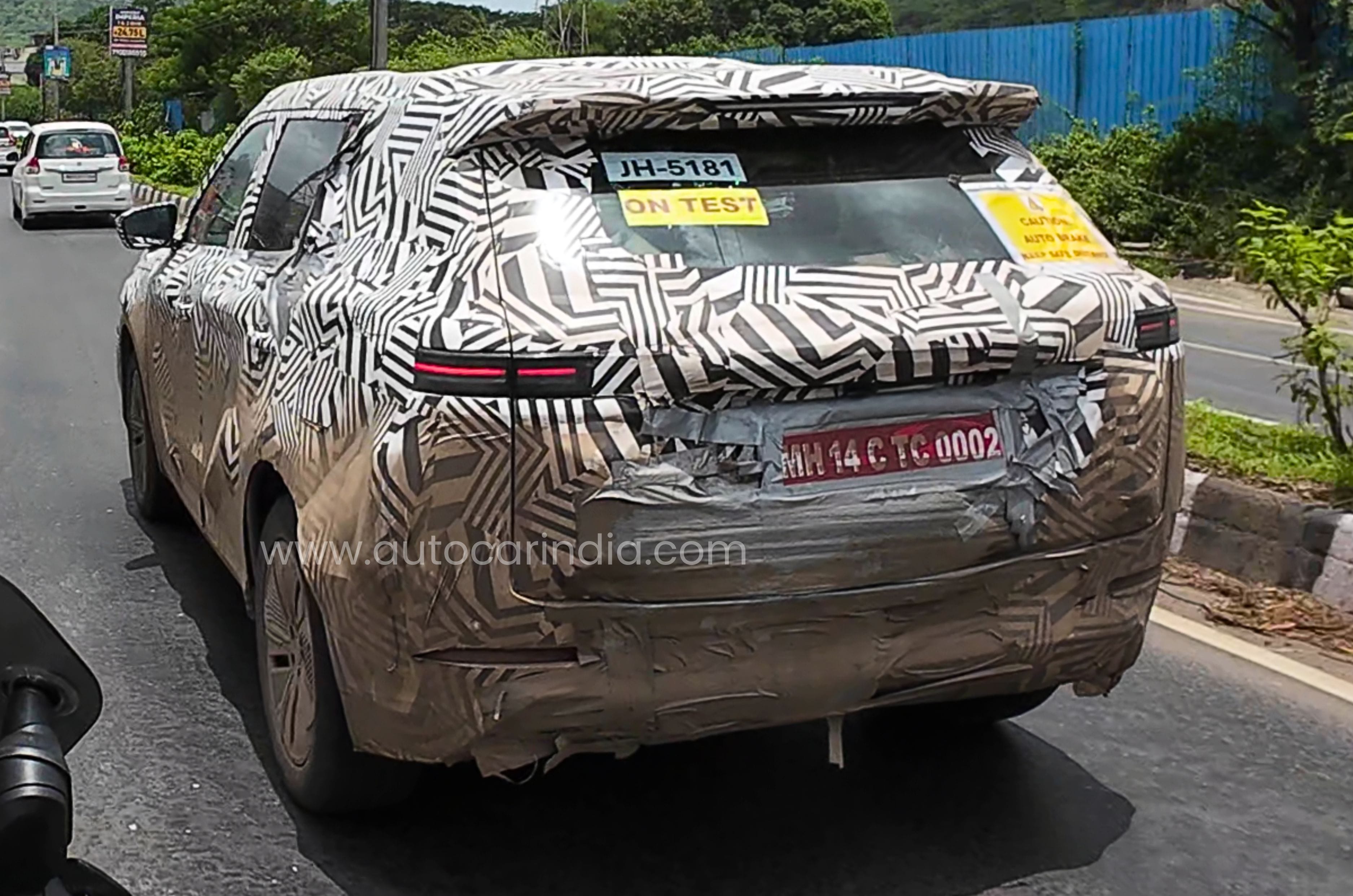
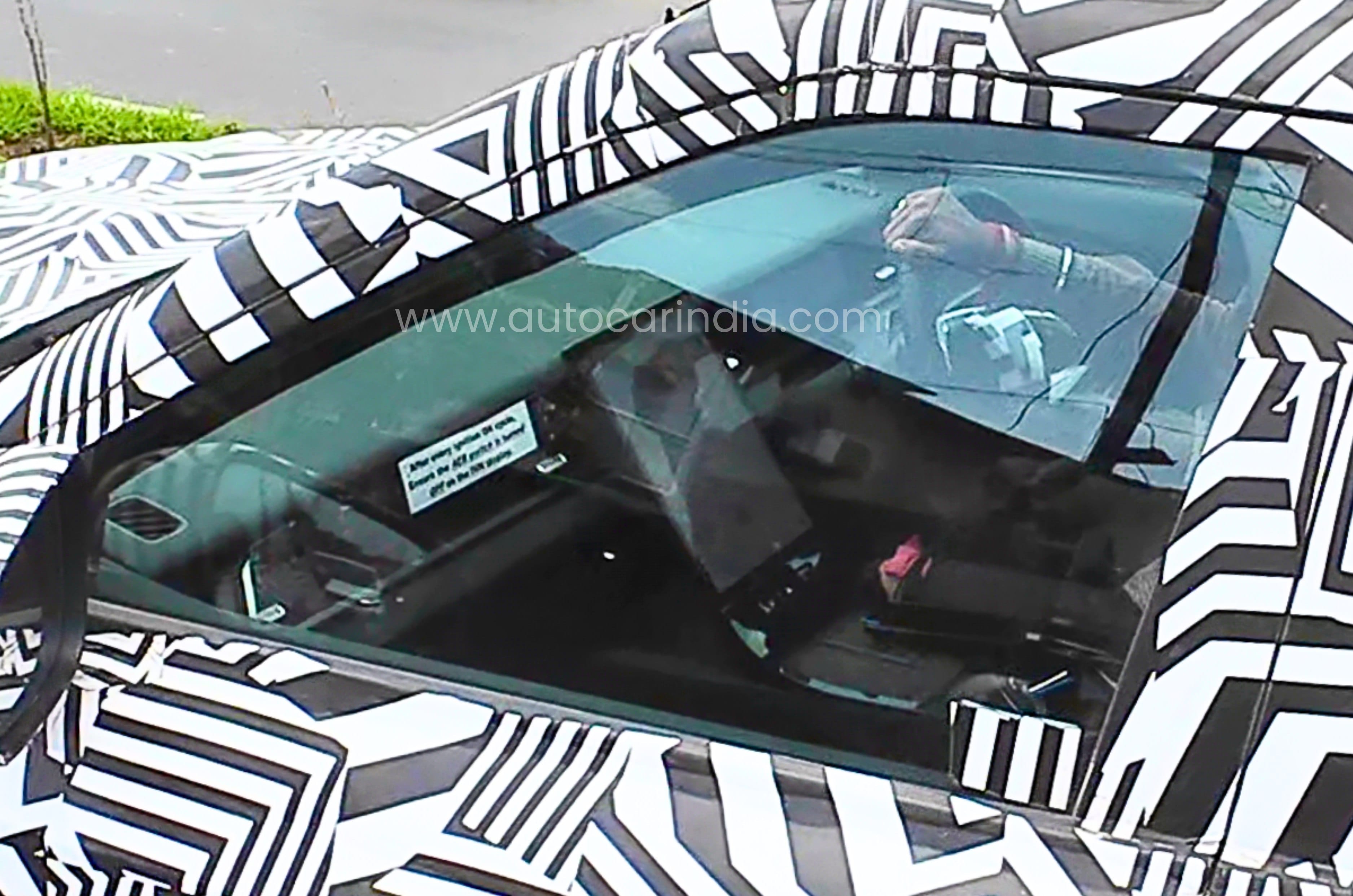
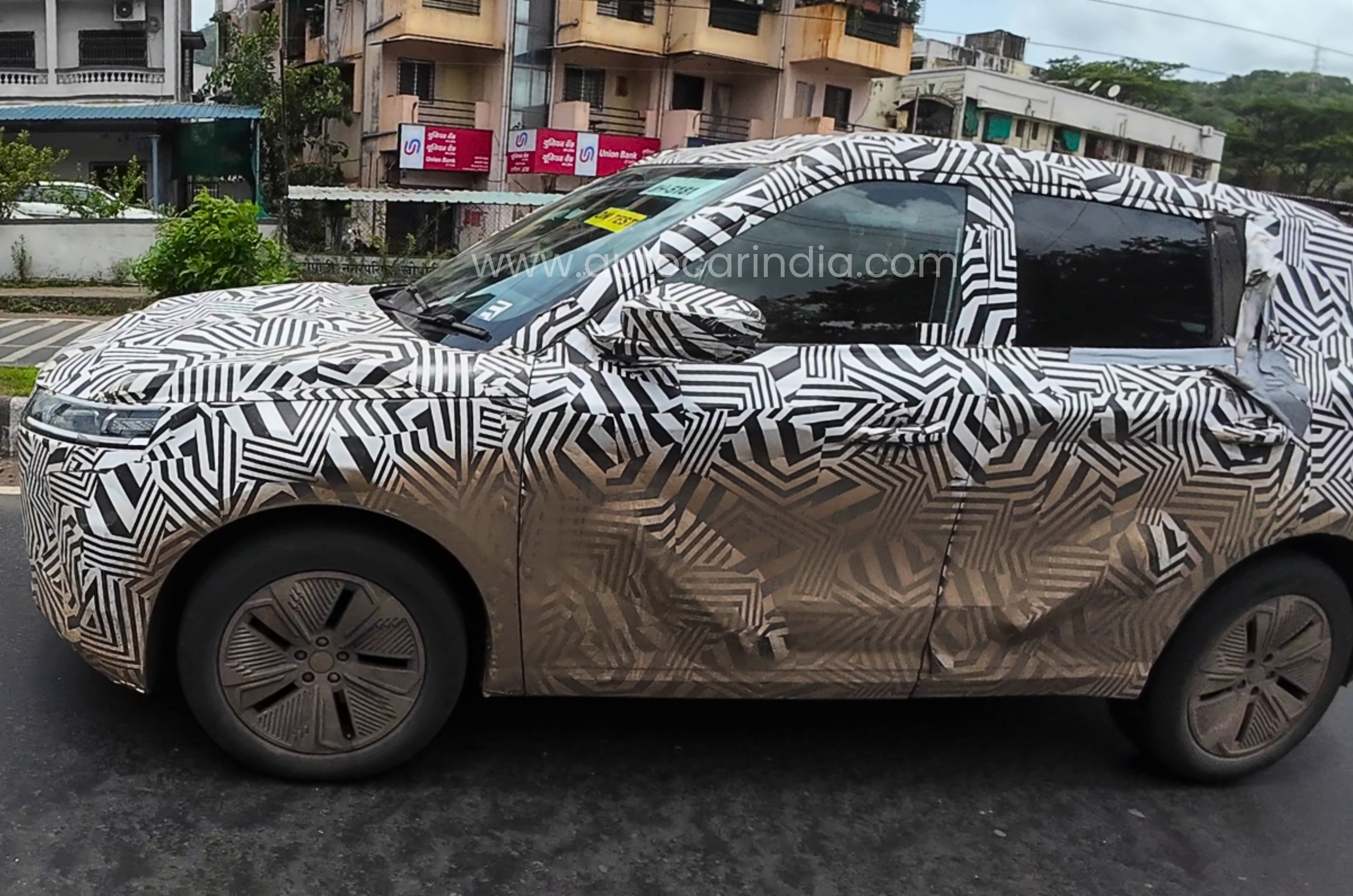
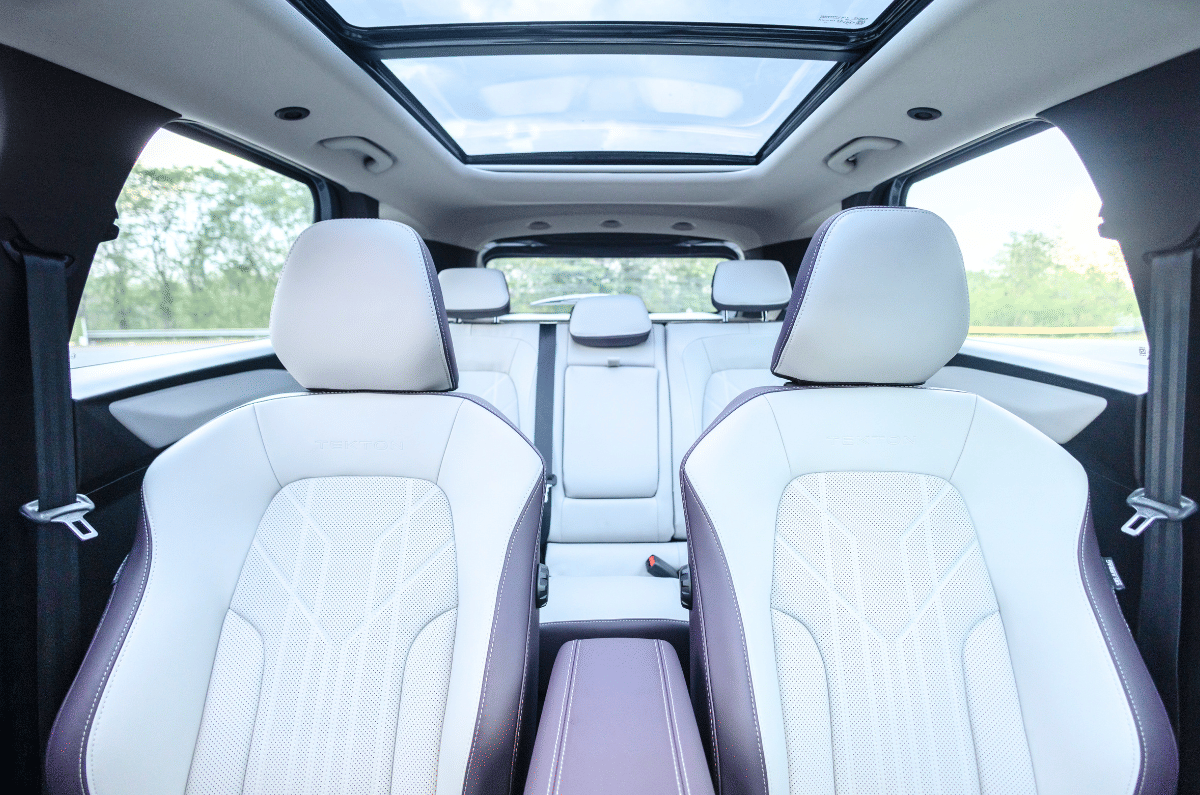
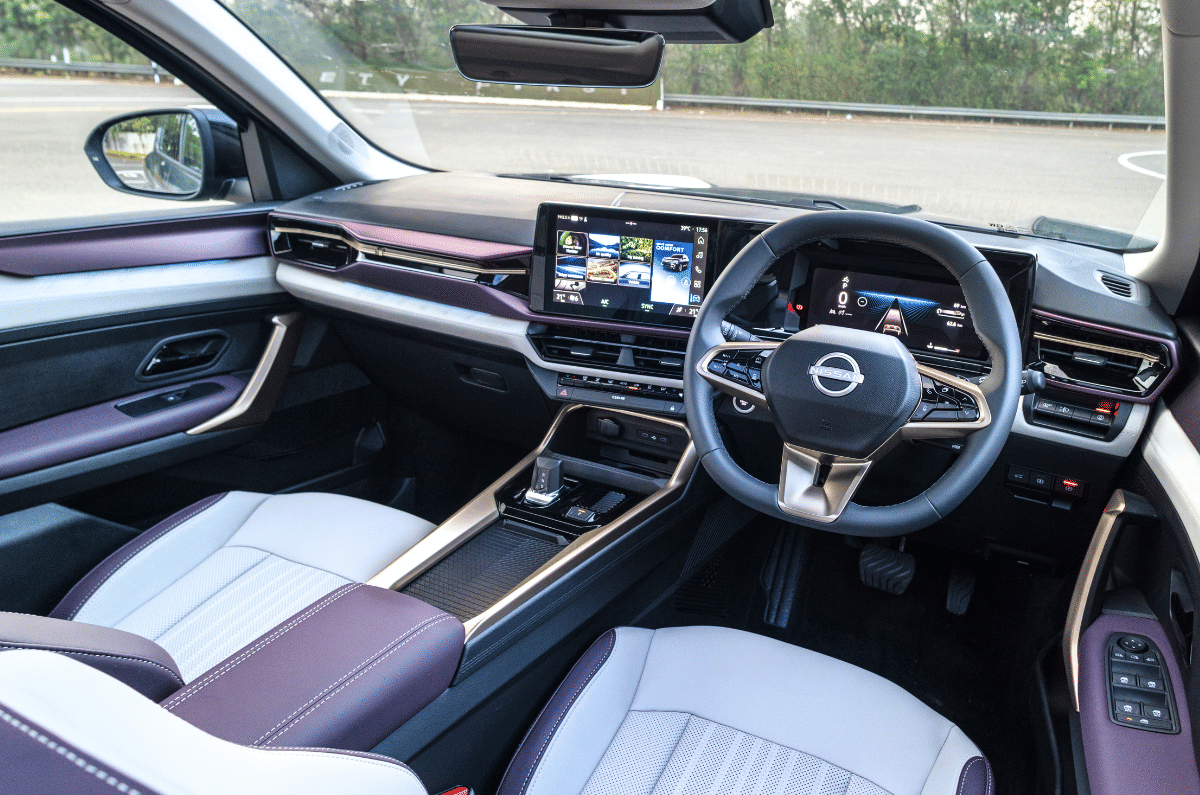
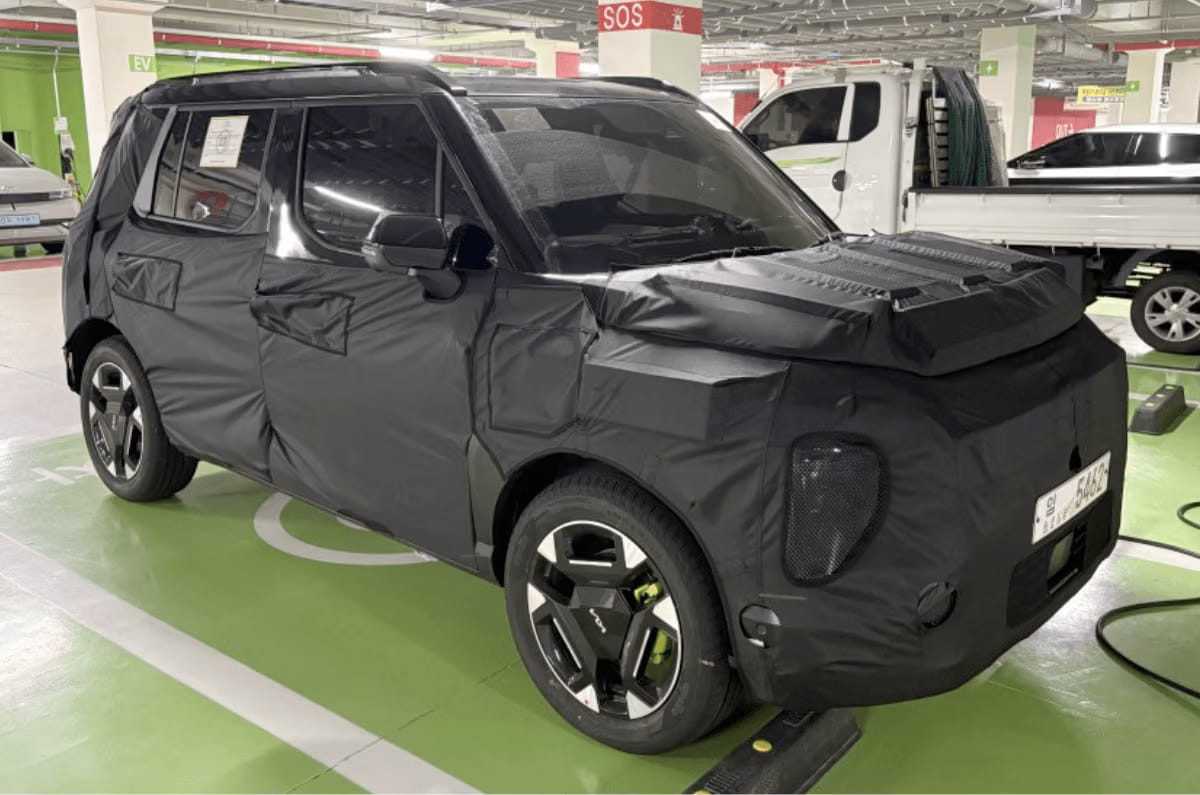
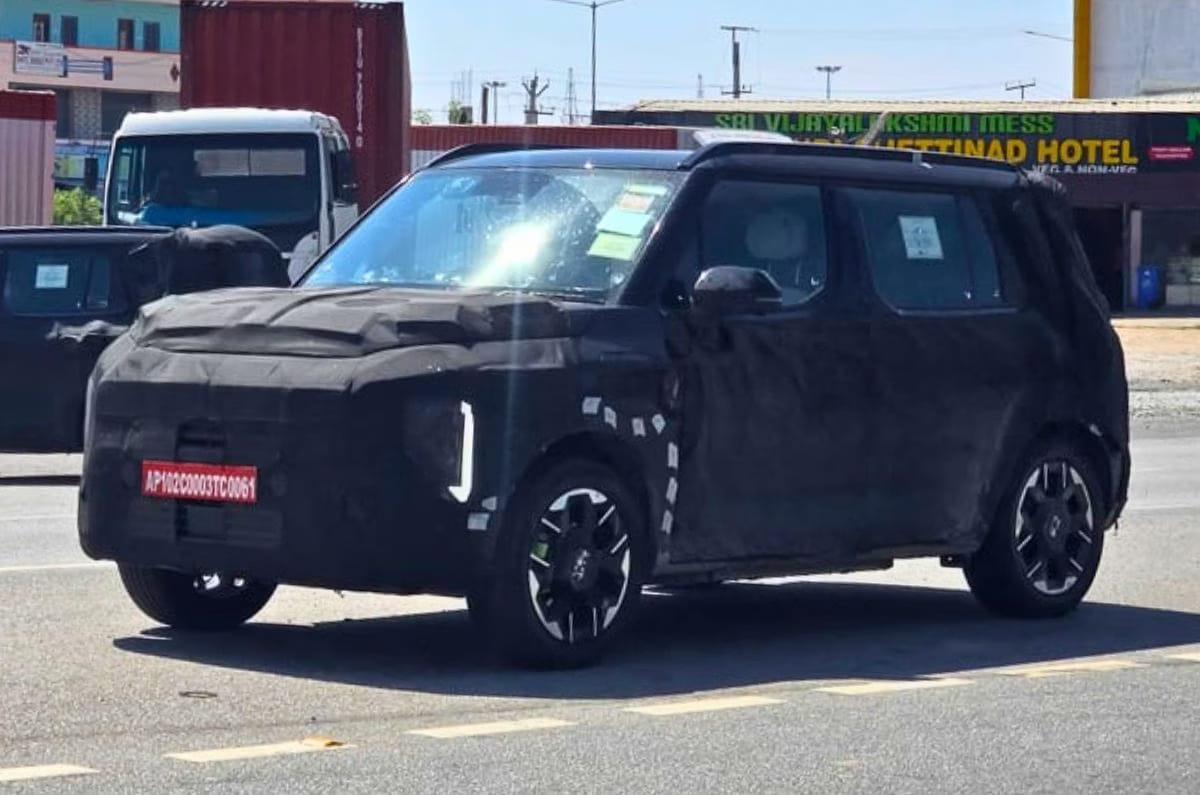
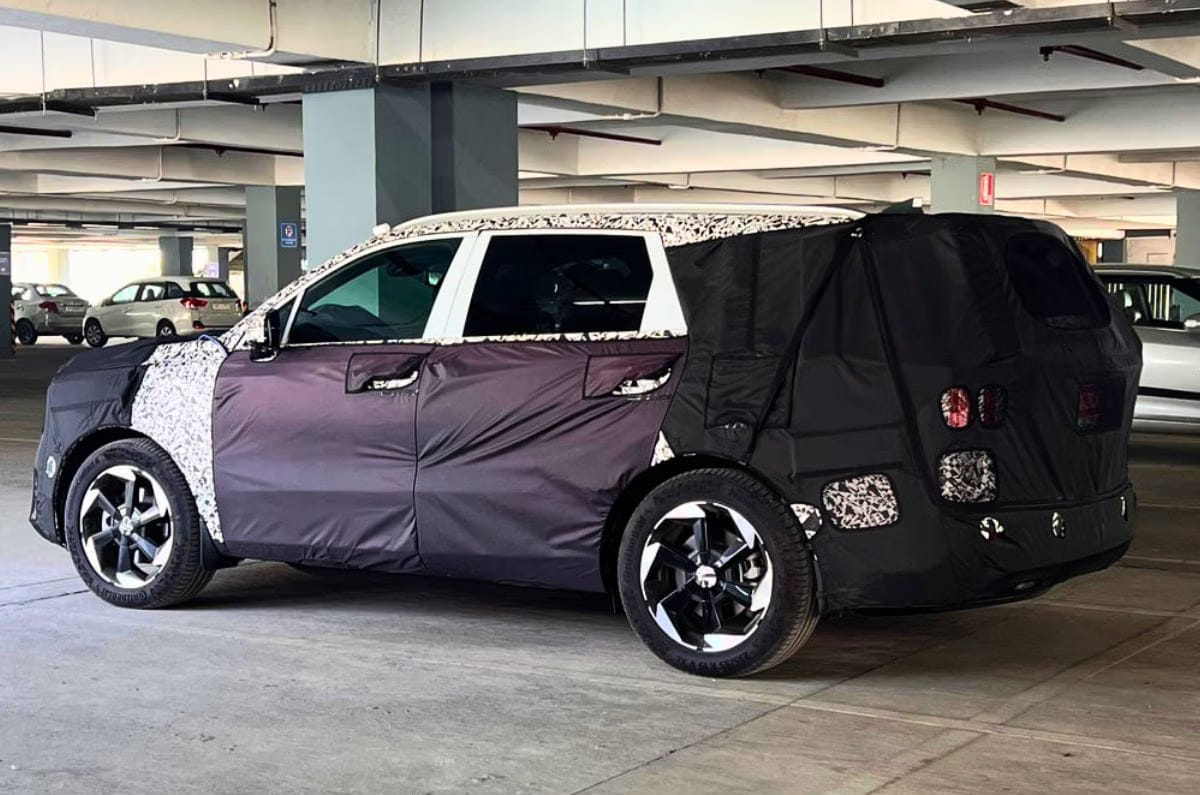
The Jaecoo J5 SUV has been spied testing in an ICE avatar for the first time in India. Interestingly, the latest spy shots suggest the Jaecoo J5 could launch in India with an ICE powertrain, whereas earlier sightings pointed to an all-electric (EV) version only. The new exterior and interior spy shots of the ICE-powered Jaecoo J5 reveal some visible differences from the EV version.
A functional grille, all-LED lighting and 18-inch alloy wheels can be seen
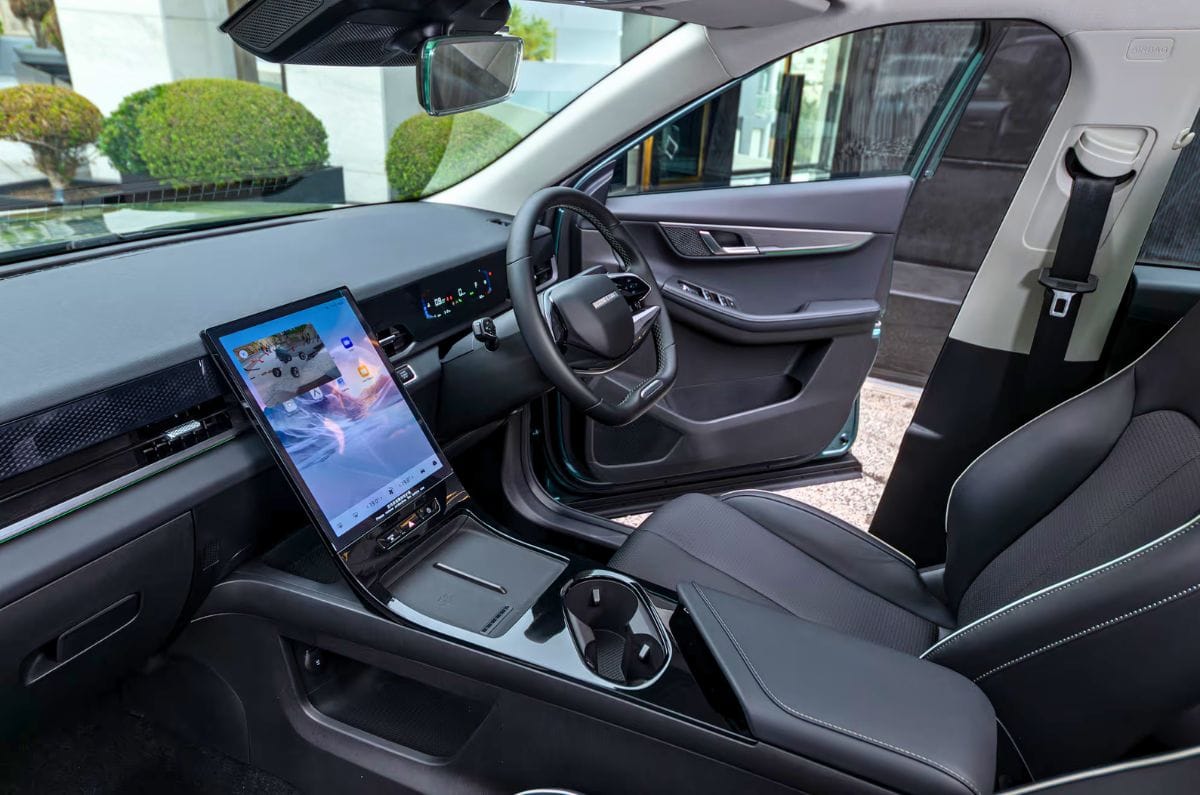
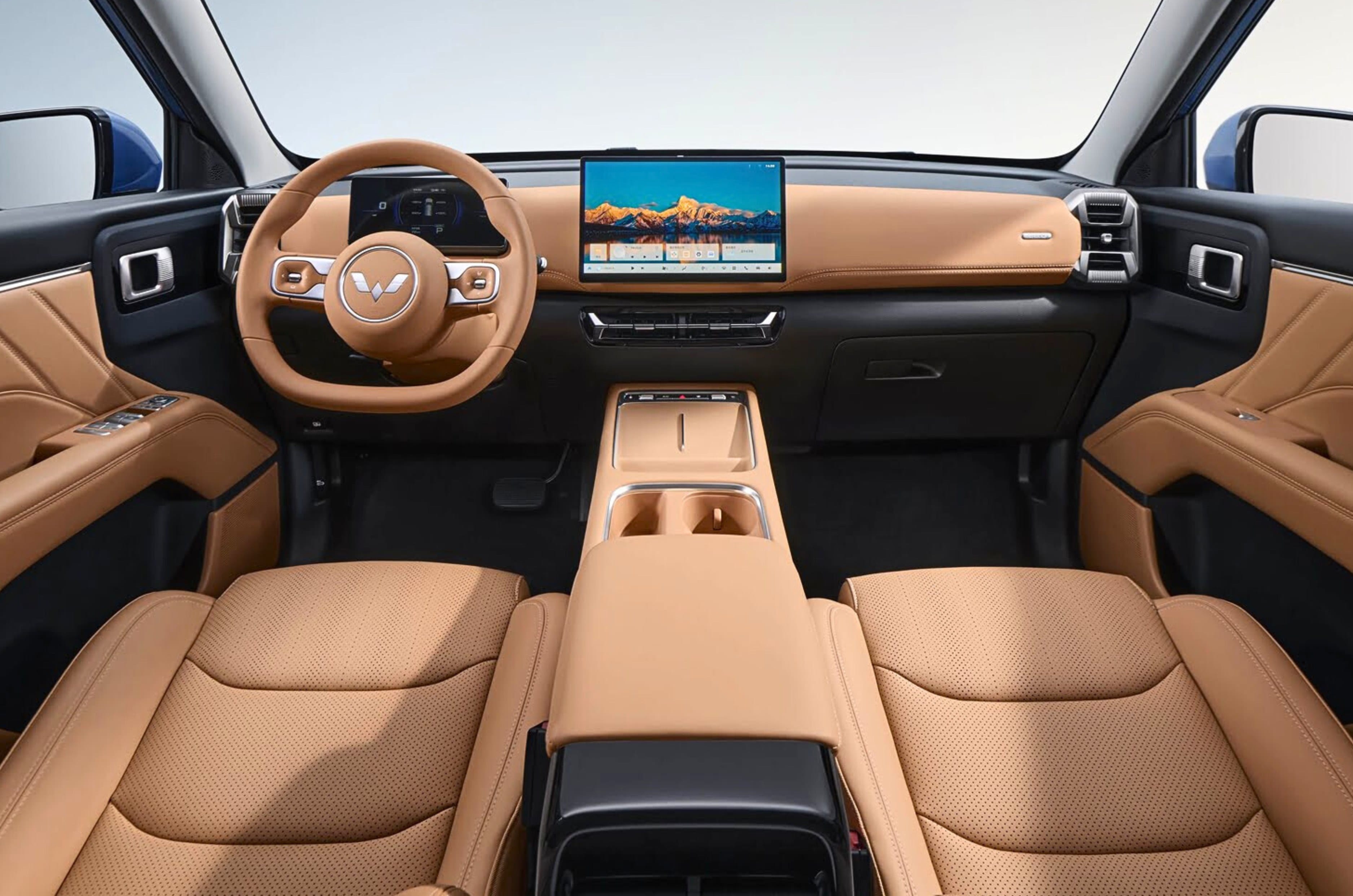
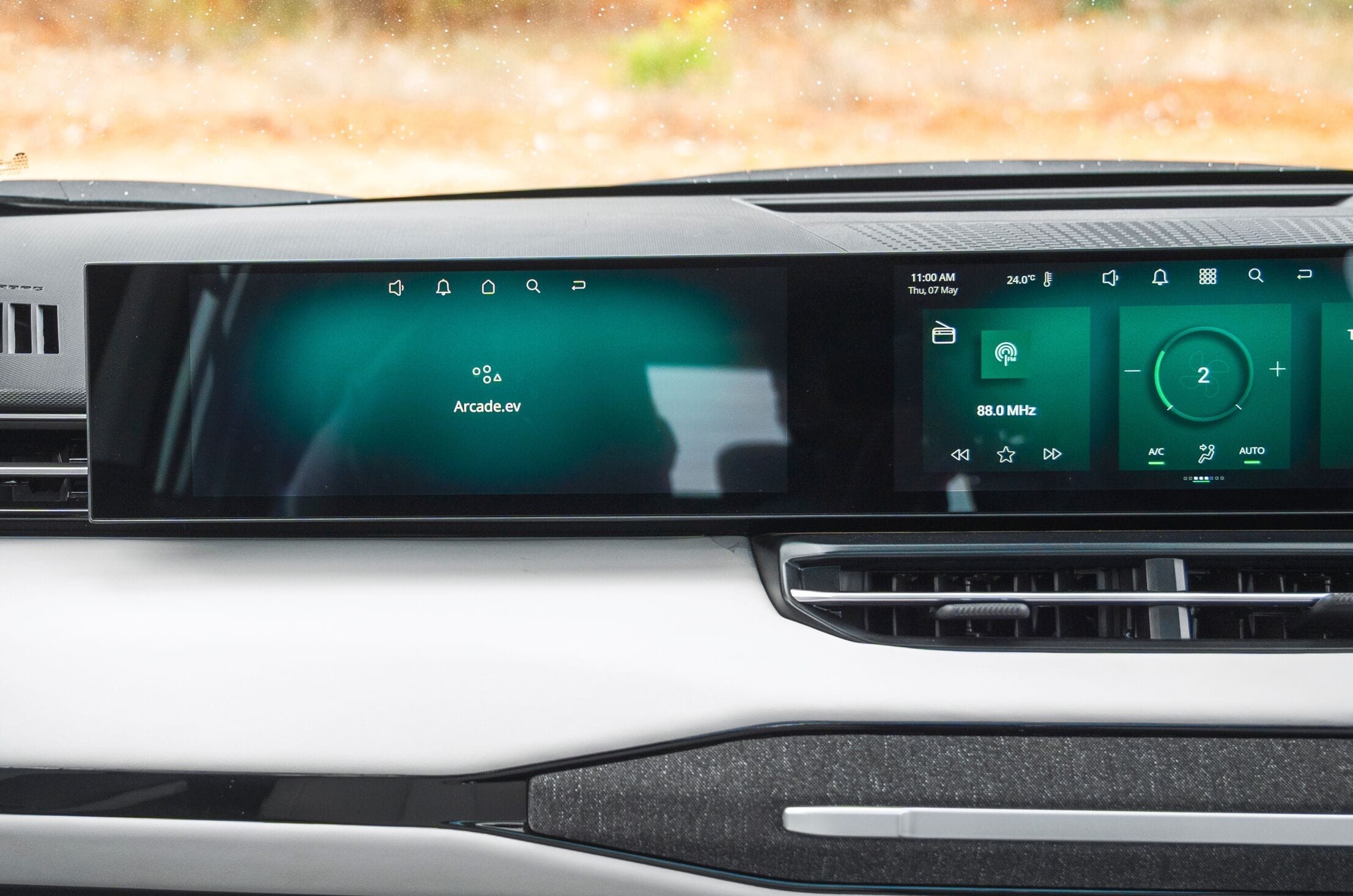
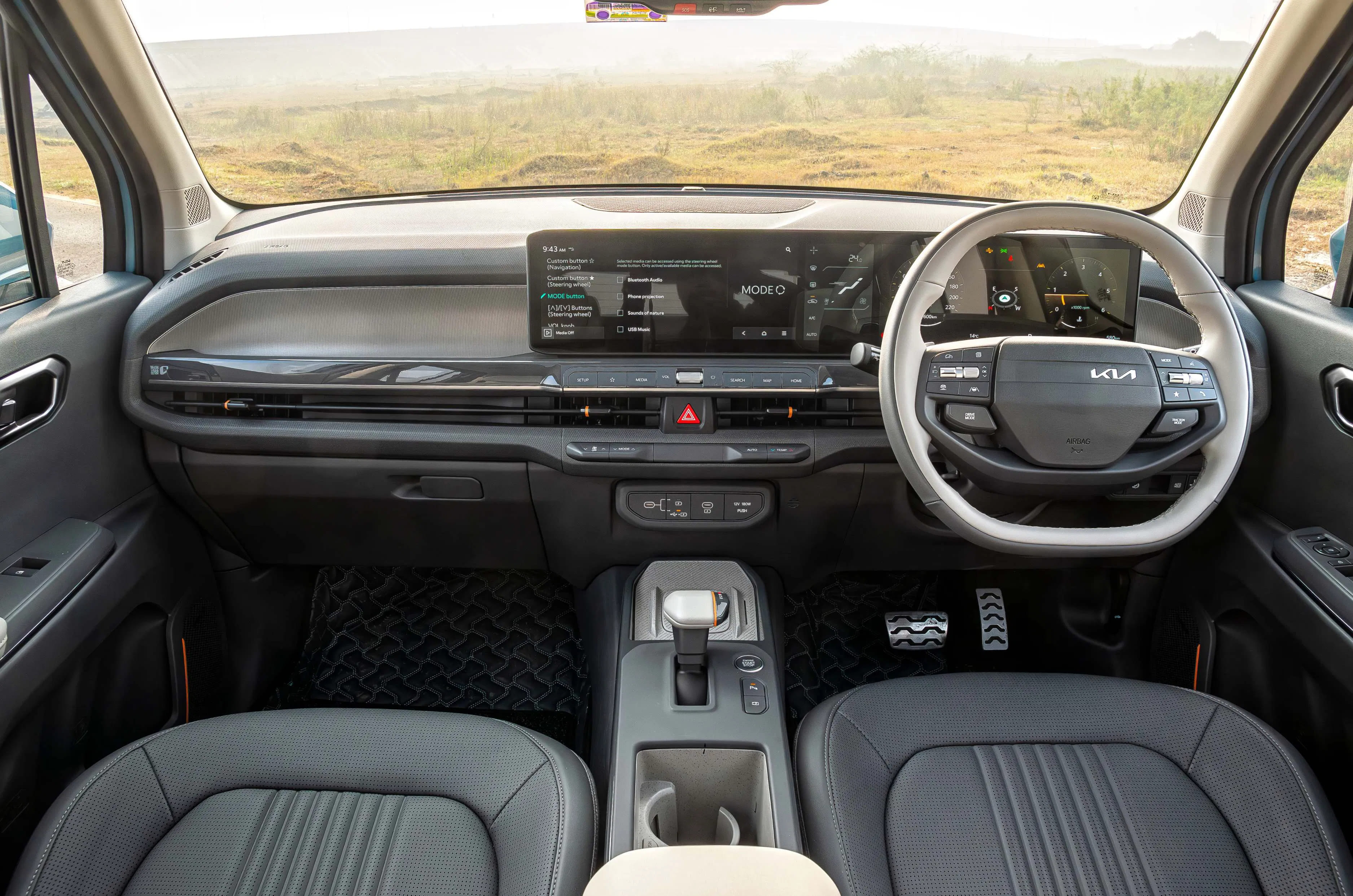
An all-black cabin with a vertically mounted infotainment system was spotted
Offered with a turbo-petrol and strong hybrid petrol internationally
In India, JSW Motors will launch its own standalone SUV based on the Jaecoo J5 under a technology and component licensing agreement with Chery, the Chinese automaker that owns the Jaecoo brand.
Jaecoo J5-based ICE SUV spied: What was spotted?
A functional grille with vertical slats confirms it is the ICE version of the Jaecoo J5
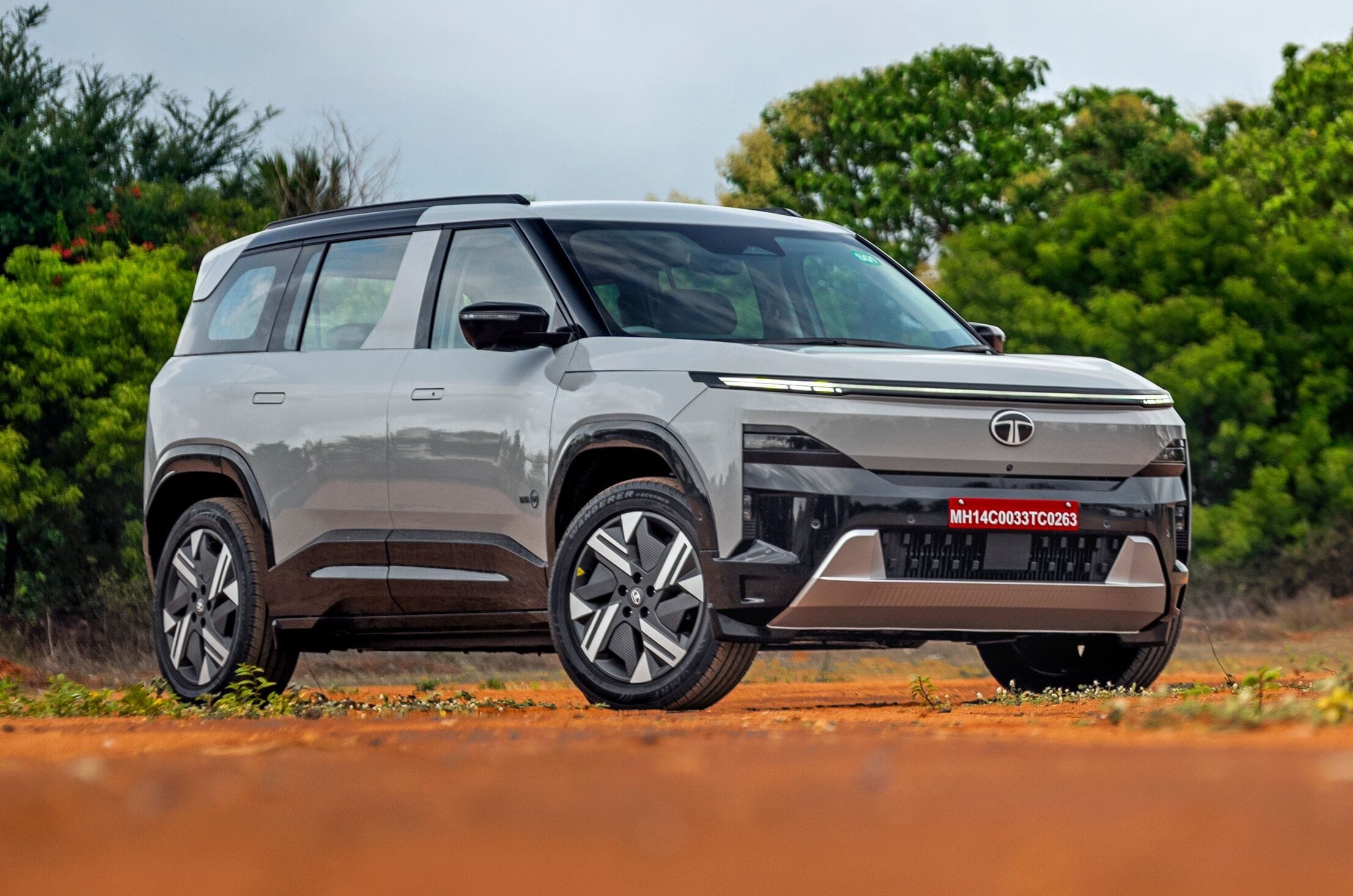
Although the Jaecoo J5-based SUV’s test mule is heavily camouflaged, a few design elements are visible. Among these is a functional grille with vertical slats, confirming it is the ICE version, as the EV features a blanked-off grille. The sleek LED headlights with LED DRL surrounds, however, are the same as those on the EV version. The bumper has a clean design, but it seems to miss out on the fog lamps offered with the international model.
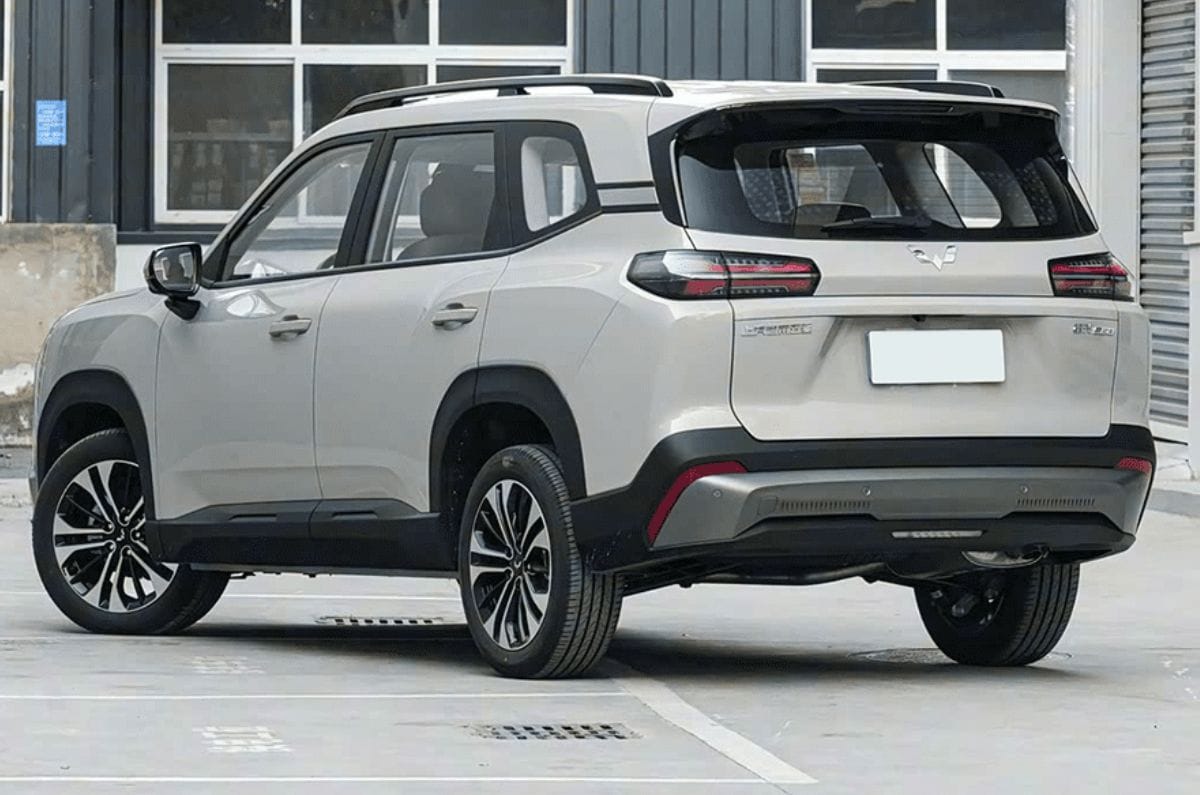
In profile, the international-spec model gets 18-inch wheels. At the rear, slim wraparound LED taillights can be spotted. On the international model, these taillights are joined by a black trim with ‘Jaecoo’ badging in the centre.
The interior design mimics that of the all-electric model
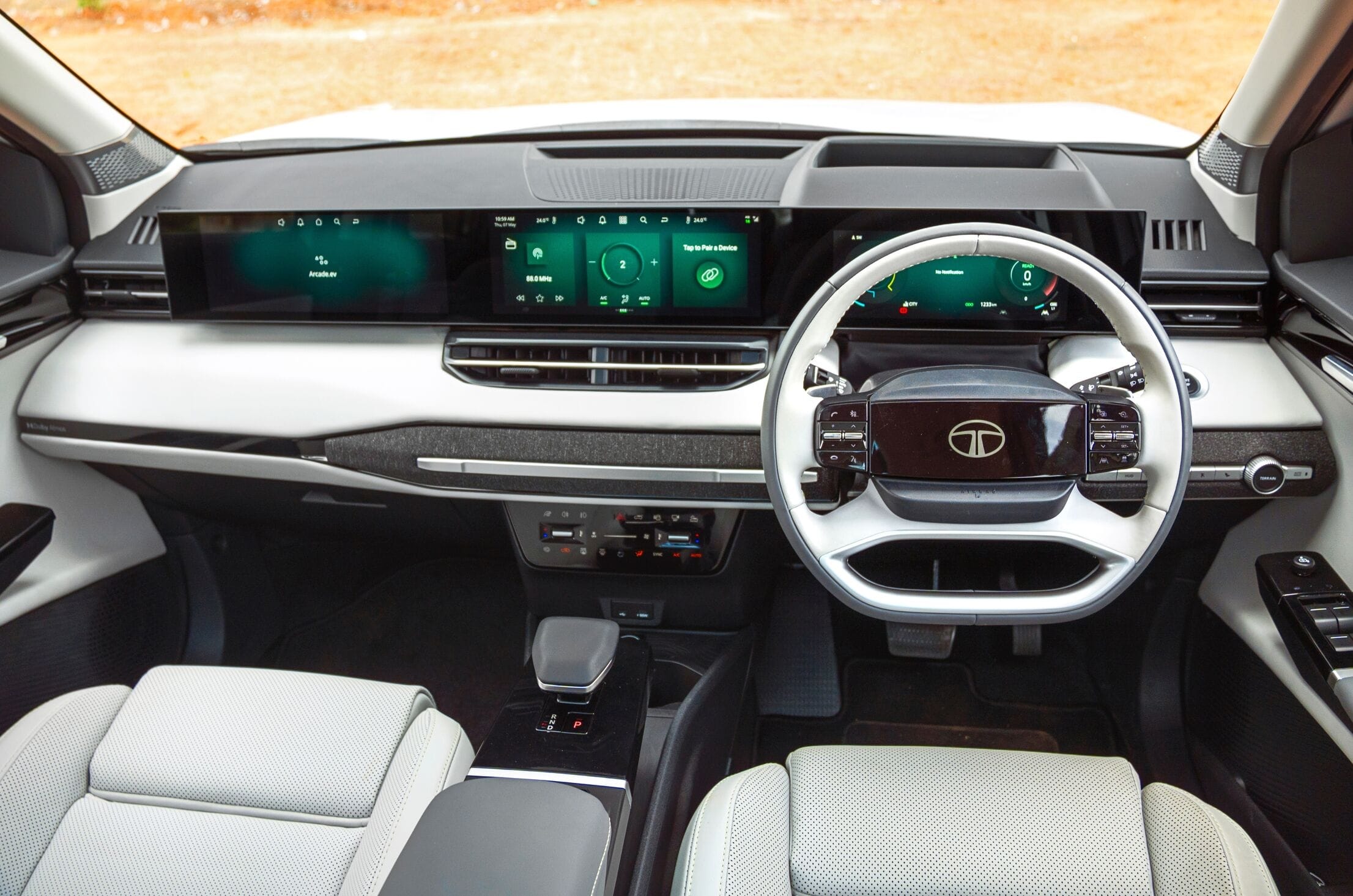
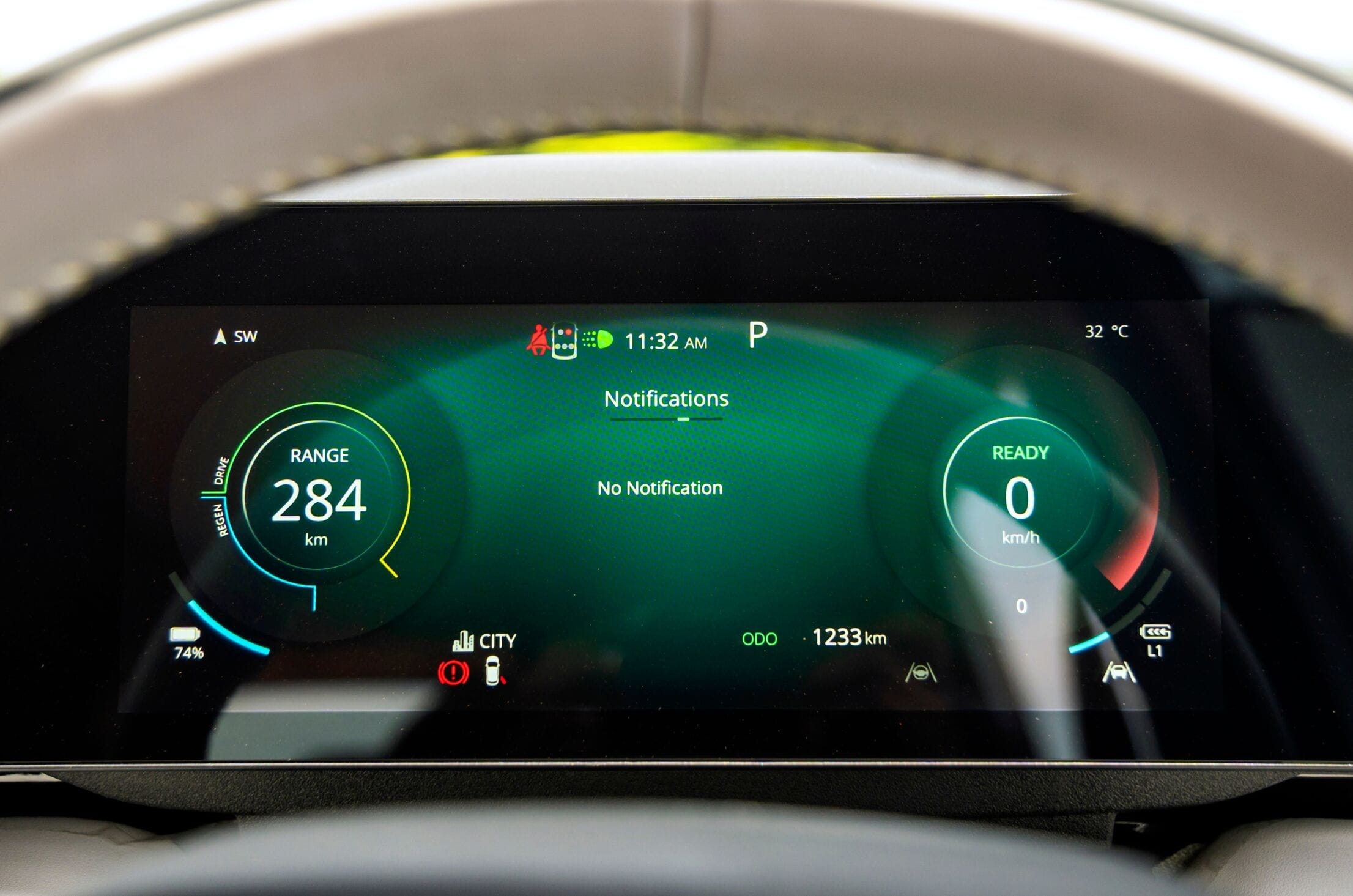
The spy shots also reveal a large vertically oriented infotainment system on the dashboard, likely the same as the international model’s 13.2-inch unit. The international model also gets an 8.8-inch driver’s display, a panoramic sunroof, an 8-speaker Sony sound system, dual-zone climate control, a powered tailgate and a wireless phone charger. It will be interesting to see what features are offered with the India-spec model sold by JSW Motors.
South Africa-spec Jaecoo J5 dashboard shown for representational purposes only.
In terms of safety, the international model gets 7 airbags, a 540-degree camera (surround-view camera with an under-bonnet view function), a tyre pressure monitoring system (TPMS) and an advanced driver assistance system (ADAS) suite.
Jaecoo J5-based ICE SUV: Expected powertrain
Offered with a turbo-petrol and a strong hybrid petrol engine internationally
Depending on the market, the ICE-powered Jaecoo J5 gets either a turbo-petrol or a strong-hybrid engine option. The 1.5-litre turbo-petrol produces up to 156hp and 275Nm, and is mated to either a 7-speed DCT or a CVT, depending on the market. It allows for a 0-100kph sprint time of 10.2 seconds
A strong-hybrid version has a 1.5-litre 4-cylinder turbo-petrol engine and an electric motor powered by a 1.83 kWh lithium-ion battery. Combined, this setup produces 224hp and 295Nm. It does a 0-100kph sprint in 7.9 seconds. Jaecoo claims a fuel efficiency of 18.9kpl, allowing a total range of around 1,000km. It will be interesting to see which powertrain option is offered with the India-spec model.
India launch timeline is yet to be revealed
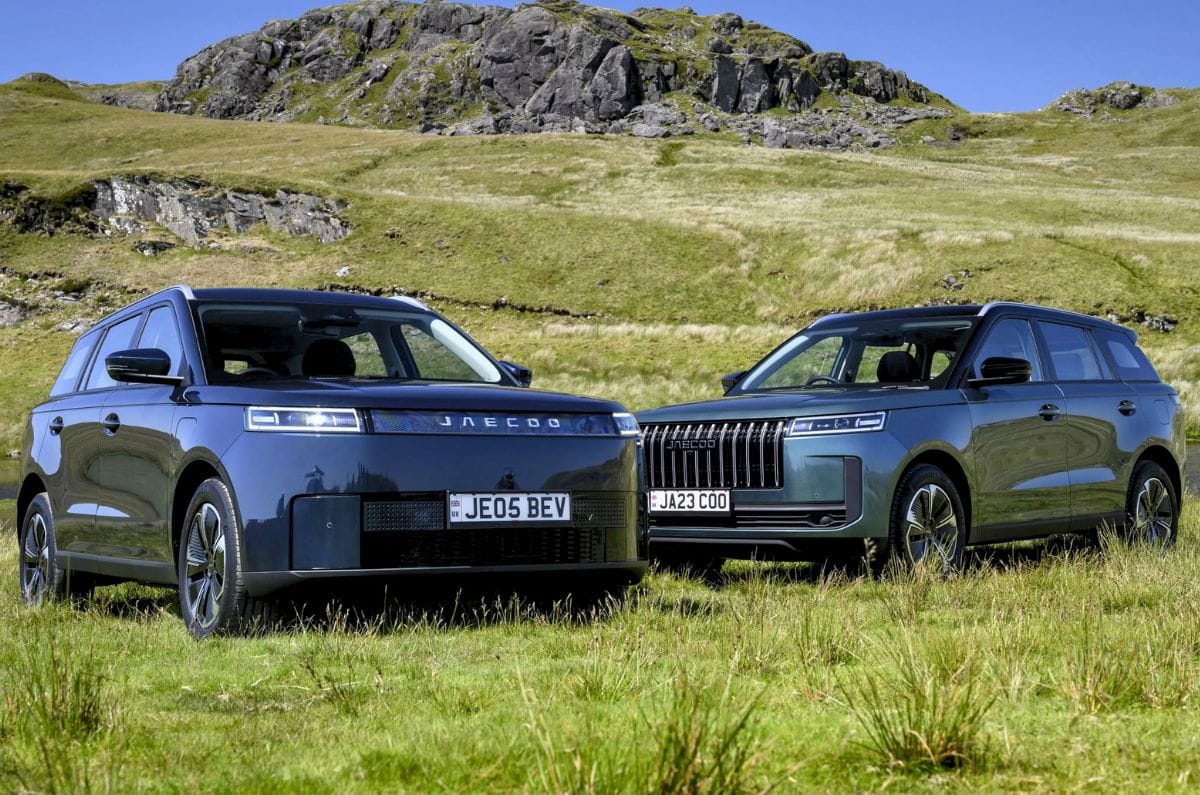
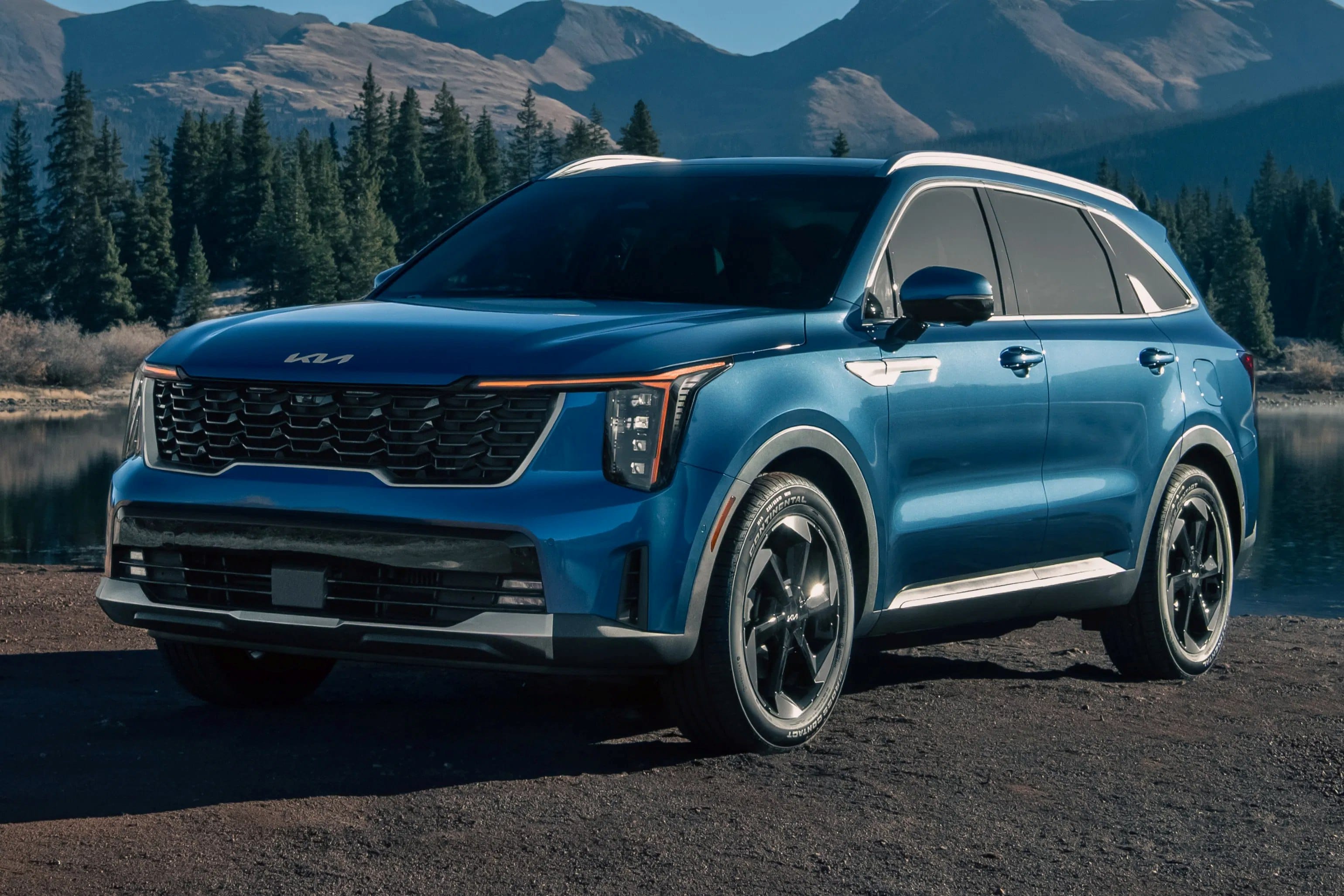
UK-spec Jaecoo J5’s EV (left) and ICE (right) versions shown for representational purposes only.
JSW Motors is expected to start its India operations with the Diwali launch of the Jetour T2-derived hybrid SUV, followed by launches of the SUVs derived from the Jaecoo J5 and iCaur V23. Upon launch, JSW Motors’ Jaecoo J5-based ICE SUV will lock horns with midsize SUVs such as the Hyundai Creta, Tata Sierra, Maruti Suzuki Victoris, Renault Duster and Nissan Tekton. The EV version will rival the Hyundai Creta Electric, Mahindra BE 6, Tata Sierra EV, Vinfast VF6 and Maruti Suzuki eVitara.
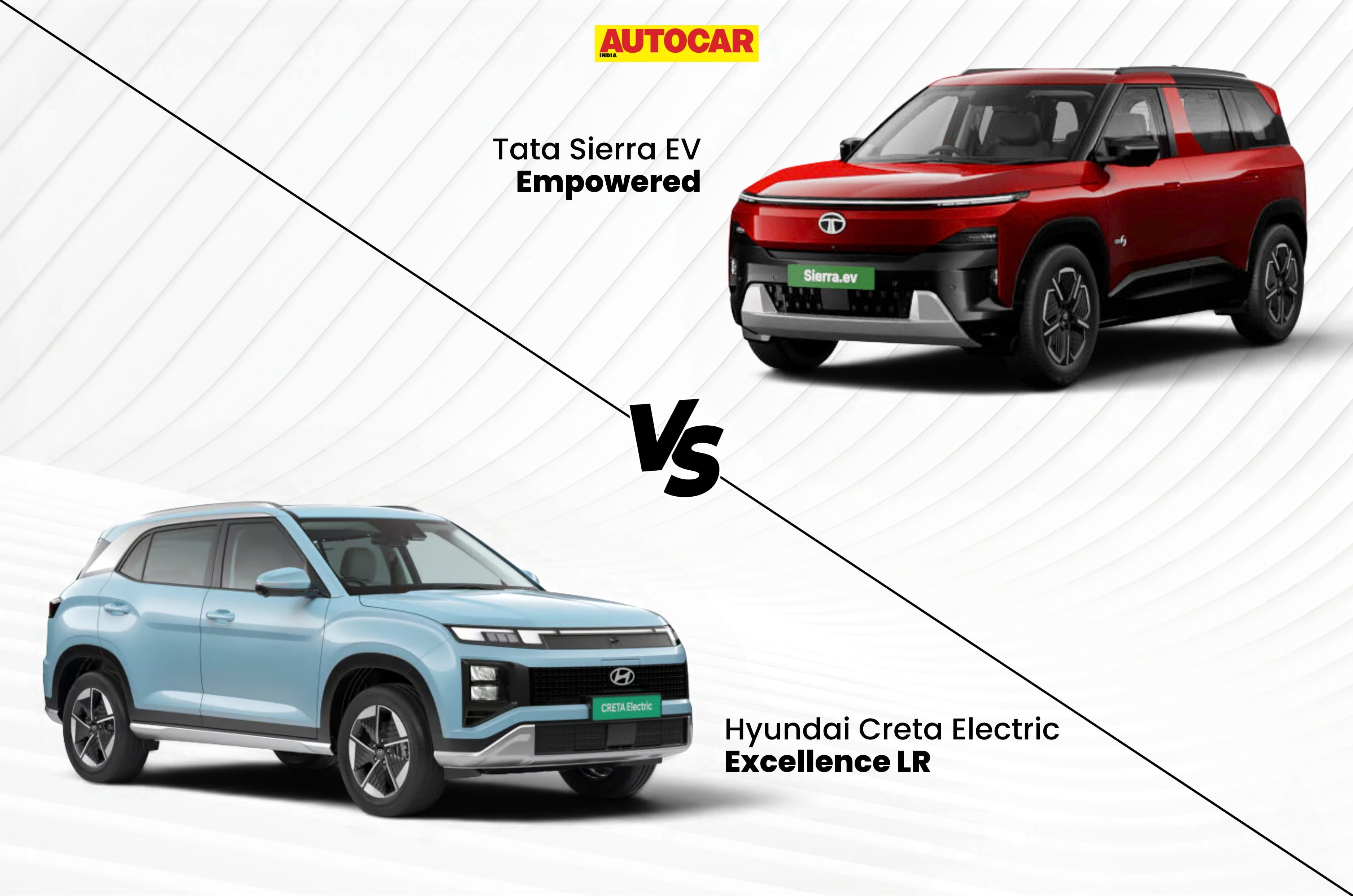
Both the Tata Sierra EV and Hyundai Creta Electric are available with two battery pack options. However, the lower variants of the Creta Electric feature a smaller 42kWh battery pack, so we’ll be looking at the 51.4kWh version here – the Creta’s top-spec Excellence LR (Long Range) variant is only offered with the larger battery pack. However, the Sierra EV’s Empowered trim offers buyers more flexibility as it’s available in 63kWh and 75kWh guises. The Sierra EV Empowered is priced from Rs 22.79 lakh to Rs 23.79 lakh, while the Creta Electric’s top-spec Excellence LR costs Rs 23.67 lakh. Let’s find out which midsize electric SUV is right for you.
Tata Sierra EV Empowered vs Hyundai Creta Electric Excellence LR: Dimensions
The Sierra is the bigger car here, but the Creta EV is just as long
Tata Sierra EV Empowered vs Hyundai Creta Electric Excellence LR dimensions
Tata Sierra EV
Hyundai Creta Electric
Length (mm)
4,340
4,340
Width (mm)
1,841
1,790
Height (mm)
1,750
1,655
Wheelbase (mm)
2,730
2,610
Boot space (litres)
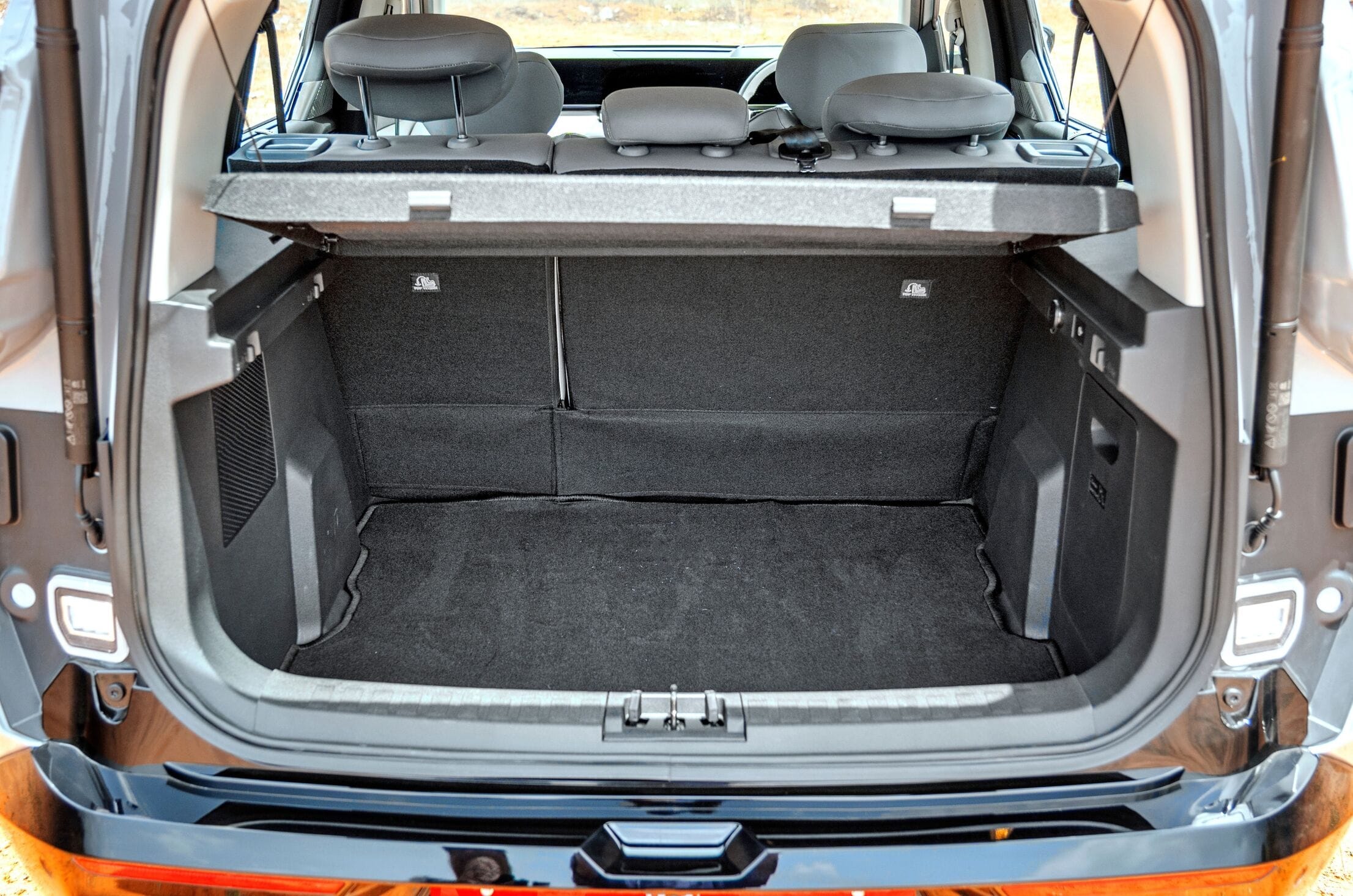
450
433
Frunk (litres)
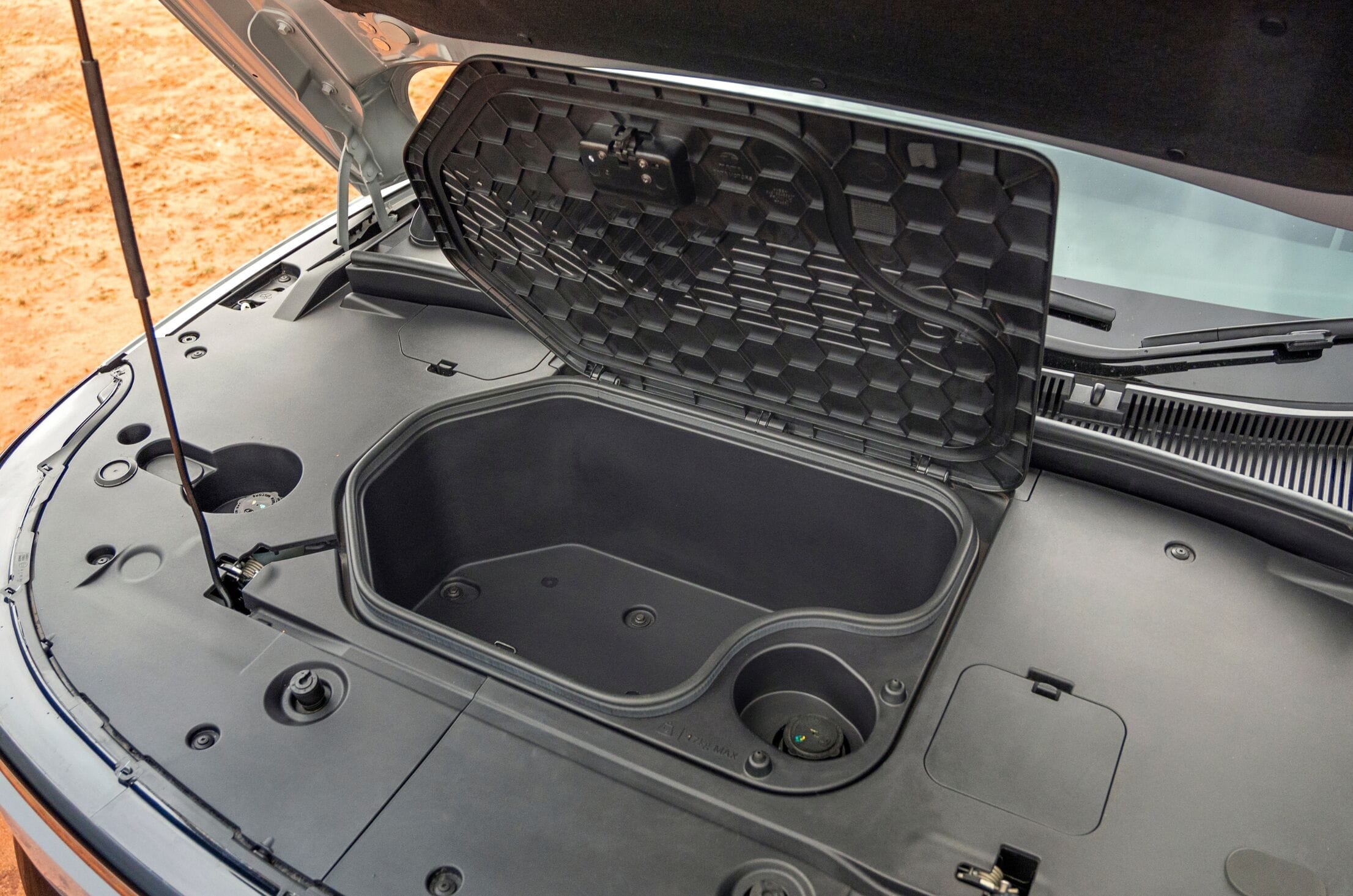
55
22
Wheel size (inches)
18
17
While the overall length of the Hyundai Creta Electric is identical to the Tata Sierra EV, the latter boasts 120mm longer wheelbase. The Sierra EV is 51mm wider and 95mm taller at the roof than its Hyundai rival. The range-topping Excellence LR variant of the Creta EV only gets 17-inch wheels, but the Empowered trim of the Tata SUV comes equipped with larger 18-inch rims. In terms of their luggage-carrying capacity as well, the Sierra EV has the bigger rear boot and frunk (front trunk).
Tata Sierra EV Empowered vs Hyundai Creta Electric Excellence LR: Powertrain
The rear-wheel drive Sierra gets two powertrain options and has the range advantage
Tata Sierra EV Empowered vs Hyundai Creta Electric Excellence LR powertrain options
Tata Sierra EV
Hyundai Creta Electric
Battery size (kWh)
63/75
51.4
Electric motor setup
Single, rear (RWD)
Single, front (FWD)
Power (hp)
238/209
171
Torque (Nm)
315
255
Claimed 0-100kph
–
7.9 seconds
Claimed range (km)
566/665
510
AC charging
Up to 10.5 hrs at 7.2kW (10-100%)
7.25 hrs at 7.4kW (10-100%)
DC fast charging
Up to 26 mins at 120kW (20-80%)
39 mins at 100kW (10-80%)
The Sierra EV in Empowered trim is offered with 63kWh and 75kWh battery packs. Even with the smaller battery option, the Sierra EV’s claimed range is 56km more than the top-spec Creta Electric’s. Bumping up to the top-spec, rear-wheel drive (RWD) 75kWh version of the Sierra EV means a claimed range of 665km – that’s 155km more than the top-spec Creta Electric.
The smaller battery size and a slightly faster AC charging speed means that the Creta Electric can be charged from 10-100 percent in 7 hours and 15 minutes, which is over 3 hours less than what the Sierra EV with the 75kWh battery pack requires. Meanwhile, the Sierra EV with the 63kWh battery takes under 9 hours to achieve the same SoC (state of charge). Both cars support DC fast charging of over 100kW, with the Sierra EV’s claimed charging time being based on 120kW DC charging.
The Sierra EV’s single electric motor powers its rear wheels, while that of the Creta Electric powers its front. While the punchier 63kWh version of the Tata SUV makes 67hp more than its Hyundai EV rival, even its lower-output 75kWh version makes more power (38hp more than the Creta Electric). The Sierra EV also has the torque advantage, developing 60Nm more than its Hyundai rival. While Tata Motors hasn’t published the claimed 0-100kph time of the mid-spec Sierra EV, it’s likely to be brisk.
Tata Sierra EV Empowered vs Hyundai Creta Electric Excellence LR: Exterior features
The Sierra EV’s Empowered trim adds more novelty features on the outside than its Hyundai rival
Tata Sierra EV Empowered vs Hyundai Creta Electric Excellence LR exterior features
Tata Sierra EV
Hyundai Creta Electric
LED projector headlamps
Yes (auto)
Yes (auto)
Connected light bar
Yes
Yes
Front fog lamps
Yes
No
Rear fog lamps
Yes
No
Cornering lights
Yes
No
Sequential turn signals
Yes
Yes
Welcome lights
Yes
Yes
Puddle lamps
Yes
Yes
Powered ORVMs
Yes (with auto-fold function)
Yes (with auto-fold function)
Flush door handles
Yes
No
Body cladding
Yes
Yes
Roof rails
Yes
Yes
Rear spoiler
Yes
Yes
Powered tailgate
Yes (gesture activated)
No
Colours
Mono-tone
Mono-tone and Dual-tone
The Empowered trim of the Sierra EV gets useful features such as a gesture-activated powered tailgate, front & rear fog lamps, and front cornering lights. While both cars gets a rear spoiler, the Sierra EV’s unit actually hides the rear wiper for a cleaner look. They also feature niceties like puddle lamps, welcome & good-bye light animations, and automatic LED headlamps. The Creta Electric sticks to conventional pull-type door handles, whilst the Tata SUV uses flush door handles. Hyundai offers dual-tone colour choices with the Creta Electric, but Tata Motors does not.
Tata Sierra EV Empowered vs Hyundai Creta Electric Excellence LR: Interior features
Both electric SUVs are fairly well-matched when it comes to interior convenience features
Tata Sierra EV Empowered vs Hyundai Creta Electric Excellence LR interior features
Tata Sierra EV
Hyundai Creta Electric
Infotainment screen
12.3-inch
10.25-inch
Digital driver’s display
10.25-inch
10.25-inch
Front passenger display
12.3-inch
No
Panoramic sunroof
Yes (voice assisted)
Yes (voice assisted)
Wireless charger
Yes
Yes
Driver’s seat adjustment
6-way powered
8-way powered
Co-driver’s seat adjustment
4-way manual
8-way powered
Thigh-support extender
Yes
No
‘Boss’ mode
Yes (manual)
Yes (powered)
Ventilated front seats
Yes
Yes
Leatherette upholstery
Yes
Yes
Rear split seats
Yes
Yes
Automatic climate control
Yes (dual-zone)
Yes (dual-zone)
Cooled glovebox
Yes
Yes
Cooled armrest storage
No
Yes (front)
Ambient lighting
Yes
Yes
Audio system
12-speaker JBL Black
8-speaker Bose
Dolby Atmos
Yes
No
Apple CarPlay & Android Auto
Yes (wireless)
Yes (wired)
USB Type-C ports
Yes (4 ports)
Yes (3 ports)
Connected car tech
Yes
Yes
Voice assistant
Yes (multiple)
Yes
OTA updates
Yes
Yes
EV route planner
Yes
No
Gaming
Yes
No
Rear sunblinds
Yes
Yes
Rear armrest
Yes (with cupholders)
Yes (with cupholders)
Rear tray tables
No
Yes
The Tata Sierra EV gets more speakers as part of its JBL Black audio system, along with Dolby Atmos and wireless Apple CarPlay & Android Auto. The Sierra offers more USB ports and Tata’s new ‘AirConsole’ gaming system with a high-definition front passenger screen. Other interior features exclusive to the Sierra EV include front thigh-support extenders for added comfort and a route planner to help minimise range anxiety.
The Hyundai Creta Electric doesn’t get a third screen and its dual digital displays are smaller than the Sierra’s. However, the Hyundai EV offers a powered ‘Boss’ function, a cooled compartment under the front armrest, tray tables with cupholders for rear passengers, and a leatherette-like eco-friendly material for the seats.
Tata Sierra EV Empowered vs Hyundai Creta Electric Excellence LR: Safety features
The fully loaded Creta EV comes with ADAS, which the Sierra EV lacks in its mid-spec trim
Tata Sierra EV Empowered vs Hyundai Creta Electric Excellence LR safety features
Tata Sierra EV
Hyundai Creta Electric
Airbags
6
6
ABS with EBD
Yes
Yes
Electronic stability program
Yes
Yes
Hill-hold assist
Yes
Yes
Hill-descent control
Yes
Yes
TPMS
Yes
Yes
Parking sensors
Yes (front & rear)
Yes (front & rear)
360-degree camera
Yes
Yes
Electronic parking brake
Yes (with auto-hold function)
Yes (with auto-hold function)
Auto-dimming IRVM
Yes
Yes
Rain-sensing wipers
Yes
Yes
Auto-dimming IRVM
Yes
Yes
ISOFIX
Yes
Yes
Rear wiper and defogger
Yes
Yes
All-wheel disc brakes
Yes
Yes
Level 2 ADAS
No
Yes
Both these cars come well-equipped with modern safety features. However, the Creta Electric adds Level 2 ADAS (Advanced Driver Assistance Systems), too. This ropes in nannies such as forward collision warning, blind-spot warning, lane-departure warning with lane-keeping assist, rear cross-traffic alert, high-beam assist, and adaptive cruise control with stop & go functionality.
Tata Sierra EV Empowered vs Hyundai Creta Electric Excellence LR: Other features
The Sierra EV is better equipped on this front too
Tata Sierra EV Empowered vs Hyundai Creta Electric Excellence LR other features
Tata Sierra EV
Hyundai Creta Electric
Drive modes
Yes (3)
Yes (3)
Terrain modes
Yes (4)
No
Single-pedal driving
No
Yes
V2V and V2L
Yes
Yes (V2L)
AVAS
Yes
Yes
Unlike the Sierra EV, the Hyundai Creta Electric gets a proper single-pedal driving mode. This makes driving it over long distances on the highway less tiresome while also helping improve range because of energy recuperation even without using the brake pedal. However, the Sierra EV supports both vehicle-to-load and vehicle-to-vehicle charging functions – the Creta Electric only supports the former. Both EVs come with an Acoustic Vehicle Alerting System (AVAS).
Conclusion
Tata Sierra EV Empowered vs Hyundai Creta Electric Excellence LR prices
Tata Sierra EV
Hyundai Creta Electric
Price range (In Rs, lakh)
22.79-23.79
23.67
If you want more cabin & luggage space, longer range & faster performance plus conveniences like a powered tailgate, wireless smartphone connectivity, multiple voice assistants, plus V2V and V2L functions, then the Tata Sierra EV will be a suitable pick. In case you don’t need the additional range offered by the 75kWh version, you can save Rs 1 lakh and go for the 63kWh version instead – it’s Rs 88,000 cheaper than the Creta Electric. However, prospective Sierra EV buyers should be aware of the inconsistencies in Tata’s service quality and vehicle fit & finish.
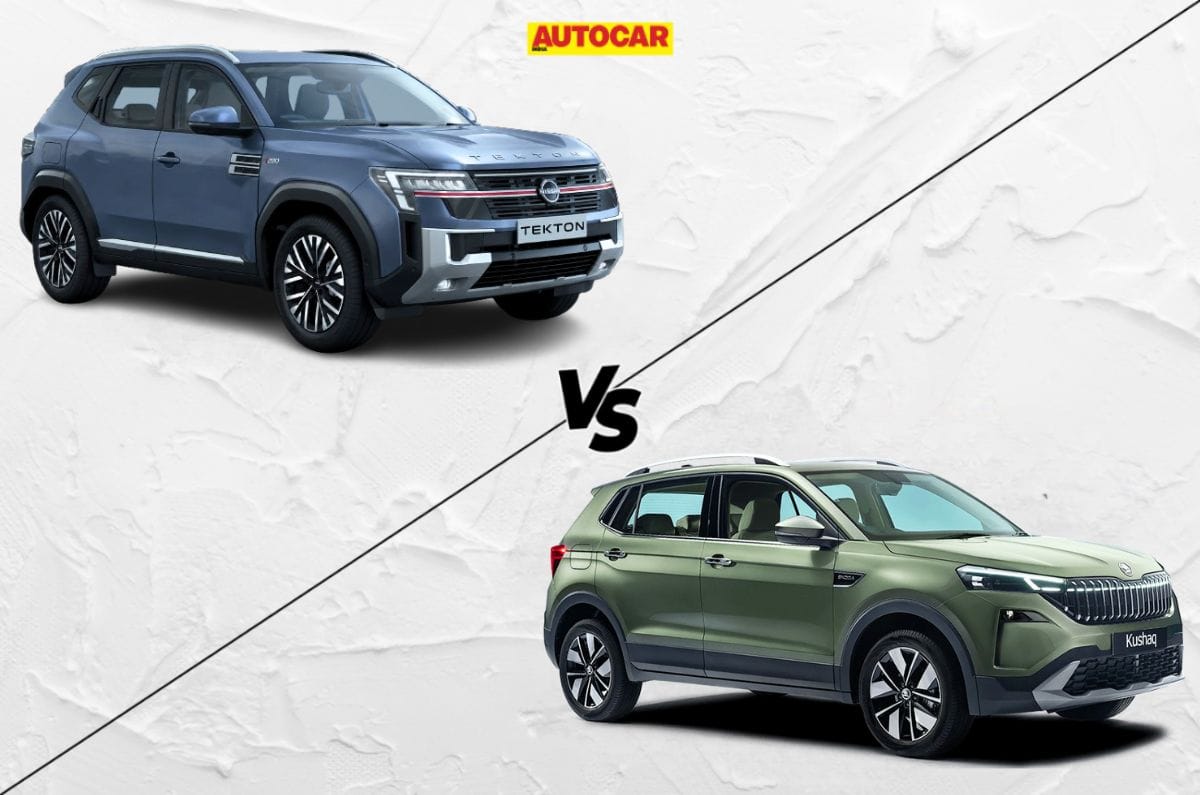
Nissan recently launched the Tekton midsize SUV in India. It is being offered in six trims: Visia, Visia+, Acenta, N-Connecta, Tekna, and Tekna+, with prices ranging from Rs 10.49 lakh to Rs 18.59 lakh (ex-showroom). The Skoda Kushaq is also offered at a similar top-end price. So, which top-spec model should you choose between the Tekton Tekna+ and Kushaq Prestige? Let us find out.
Nissan Tekton vs Skoda Kushaq: Dimensions
The Tekton is much larger than the Kushaq and offers a bigger boot
Nissan Tekton vs Duster: Dimensions and other specifications
Nissan Tekton
Skoda Kushaq
Difference
Length (mm)
4,349
4,229
+120
Width (mm)
1,815
1,760
+55
Height (mm)
1,674
1,612
+62
Wheelbase (mm)
2,657
2,651
+6
Ground clearance (mm)
212
188
+24
Boot space (litres)
518
385
+133
Although the Tekton and Kushaq have a similar wheelbase, the Tekton has larger proportions than the Kushaq and offers a bigger boot. The Tekton also has a 24mm higher ground clearance than the Kushaq.
Nissan Tekton Tekna+ vs Skoda Kushaq Prestige: Powertrain
Both top-spec trims are offered with two turbo-petrol engine options
Nissan Tekton Tekna+ vs Kushaq Prestige: Powertrain
Tekton Tekna+
Kushaq Prestige
Engine*
1.0L TP | 1.3L TP
1.0L TP | 1.5L TP
Power
100hp | 163hp
115hp | 150hp
Torque
160Nm | 280Nm
178Nm | 250Nm
Transmission
6MT | 6DCT
6MT, 8AT | 7DCT
Drivetrain^
FWD
FWD
*TP = Turbo-petrol
^FWD = Front-wheel-drive
Both the Nissan Tekton and the Skoda Kushaq offer two turbo-petrol engines with their respective top trims. Comparing the smaller engines, the Kushaq produces 15hp and 18Nm more than the Tekton, while also offering an automatic transmission option.
The Tekton’s 1.3-litre engine is, however, 13hp and 30Nm more potent than the Kushaq’s larger-capacity 1.5-litre engine. Both manufacturers, however, offer their top-spec trims with such an engine with a DCT only.
Nissan Tekton Tekna+ vs Skoda Kushaq Prestige: Exterior
The Tekton gets larger rims, and everything else is the same as the Kushaq
Nissan Tekton Tekna+ vs Kushaq Prestige: Exterior
Tekton Tekna+
Kushaq Prestige
Headlights
Auto LED
Auto LED
Taillights
Connected LED
Connected LED
DRLs
Connected LED
Segmented LED
Front fog lamps
LED
LED
Rear fog lamps
LED
LED
Puddle lamps
Yes
Yes
Wheels
18-inch
17-inch
Powered ORVMs
Yes
Yes
Roof rails
Yes
Yes
Colour
Mono, Dual tones
Mono, Dual tones
While both top-spec models get all-LED lighting, puddle lamps, powered outside rearview mirrors (ORVMs) and roof rails, the Tekton Tekna+ goes a step further with larger 18-inch alloy wheels compared to the 17-inch units on the Kushaq Prestige.
Nissan Tekton Tekna+ vs Skoda Kushaq Prestige: Interior
The Tekton gets a powered tailgate, but Kushaq offers massage rear seats
Nissan Tekton Tekna+ vs Kushaq Prestige: Interior and features
Tekton Tekna+
Kushaq Prestige
Driver’s display
10.25-inch
10.25-inch
Infotainment screen
10.1-inch
10.1-inch
Android Auto, Apple CarPlay
Wireless
Wireless
Audio system
6-speaker Akamys
7-speaker*
Sunroof
Panoramic
Panoramic
Climate control
Dual-zone
Automatic
Rear AC vents
Yes
Yes
Front seat adjustment
6-way powered
6-way powered
Front seat features
Ventilation
Ventilation
Rear seat features
None
Massage
Powered tailgate
Yes
No
Seat upholstery
Leatherette
Leatherette
Steering wheel adjustment
Tilt, telescopic
Tilt, telescopic
Wireless phone charger
Yes
Yes
Cruise control
Adaptive
Adaptive
*Kushaq’s sound system comprises 6 speakers, an amplifier and a subwoofer
The Kushaq is the only car in the midsize SUV segment to offer a massage function on the rear seats. Over the Tekton, it also offers more speakers. On the other hand, the Tekton Tekna+ is equipped with a powered tailgate and dual-zone AC, which are missing from the Kushaq Prestige. Everything else is the same, including the 10.25-inch driver’s display, 10.1-inch infotainment system, a panoramic sunroof, powered and ventilated front seats and a wireless phone charger.
Nissan Tekton Tekna+ vs Skoda Kushaq Prestige: Safety
The Tekton offers an ADAS suite, which is missing on the Kushaq
Nissan Tekton Tekna+ vs Kushaq Prestige: Safety features
Tekton Tekna+
Kushaq Prestige
Airbags
6
6
ADAS
Level 2
No
Camera setup
360-degree
360-degree
Parking sensors
Front and rear
Front and rear
Electronic parking brake
DCT variant only
DCT variant only
TPMS
Yes
Yes
IRVM
Auto-dimming
Auto-dimming
Rear wiper, washer
Yes
Yes
Rear defogger
Yes
Yes
Hill start assist
Yes
Yes
Hill descent control
DCT only
No
ESC
Yes
Yes
Traction control
Yes
Yes
Both top-spec variants of the Tekton and Kushaq offer similar features like 6 airbags, a 360-degree camera, front and rear parking sensors, an auto-dimming inside rearview mirror (IRVM), a rear wiper and washer. However, the Tekton offers a Level-2 advanced driver assistance system (ADAS) suite and hill descent control, both of which are missing on the Kushaq.
Nissan Tekton Tekna+ vs Skoda Kushaq Prestige: Price, verdict
Top-spec trims of both SUVs come at a similar price
Nissan Tekton Tekna+ vs Kushaq Prestige: Ex-showroom prices (Rs, lakh)
Tekton Tekna+
Kushaq Prestige
Price range
16.49-18.59
16.79-18.79
The starting price of the Nissan Tekton’s Tekna+ trim is Rs 30,000 less than that of the Kushaq Prestige. The top-end price of the Tekton is also Rs 20,000 less than that of the Kushaq. At this lower price point, the Tekton offers a powered tailgate, Level-2 ADAS, dual-zone AC and larger alloy wheels. It is also larger than the Kushaq and offers a larger boot, making it the better top-spec Tekton variant than the Kushaq Prestige.
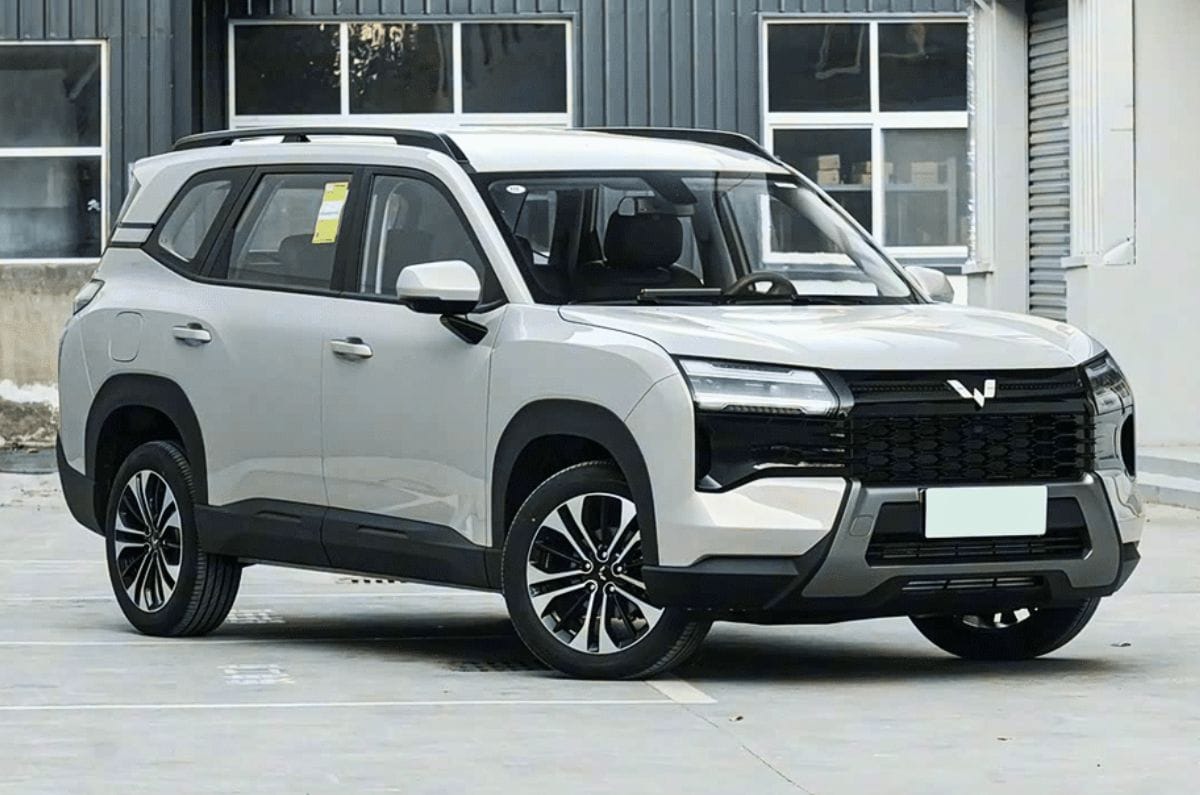
MG will reveal a ‘new energy vehicle’ technology in India on July 16, 2026. While additional details are awaited, it could be either a plug-in hybrid (PHEV) or an EV technology showcase. The unveiled powertrain is expected to be available with a rebadged version of the Wuling Starlight 560 SUV, whose design patent was filed in India in March. Codenamed ‘520’, the SUV will be offered as a PHEV and an EV. Here’s everything you need to know about it.
Indonesia-spec PHEV gets a 105hp 1.5L petrol engine and a 20.5kWh battery pack
The EV gets a 69.2kWh battery pack and a 530km claimed range
Has an upright design with all-LED lighting and 18-inch alloy wheels
Wuling Starlight 560-based MG ‘520’: All you need to know
Indonesia-spec PHEV offers over 1,000km, EV offers over 500km range
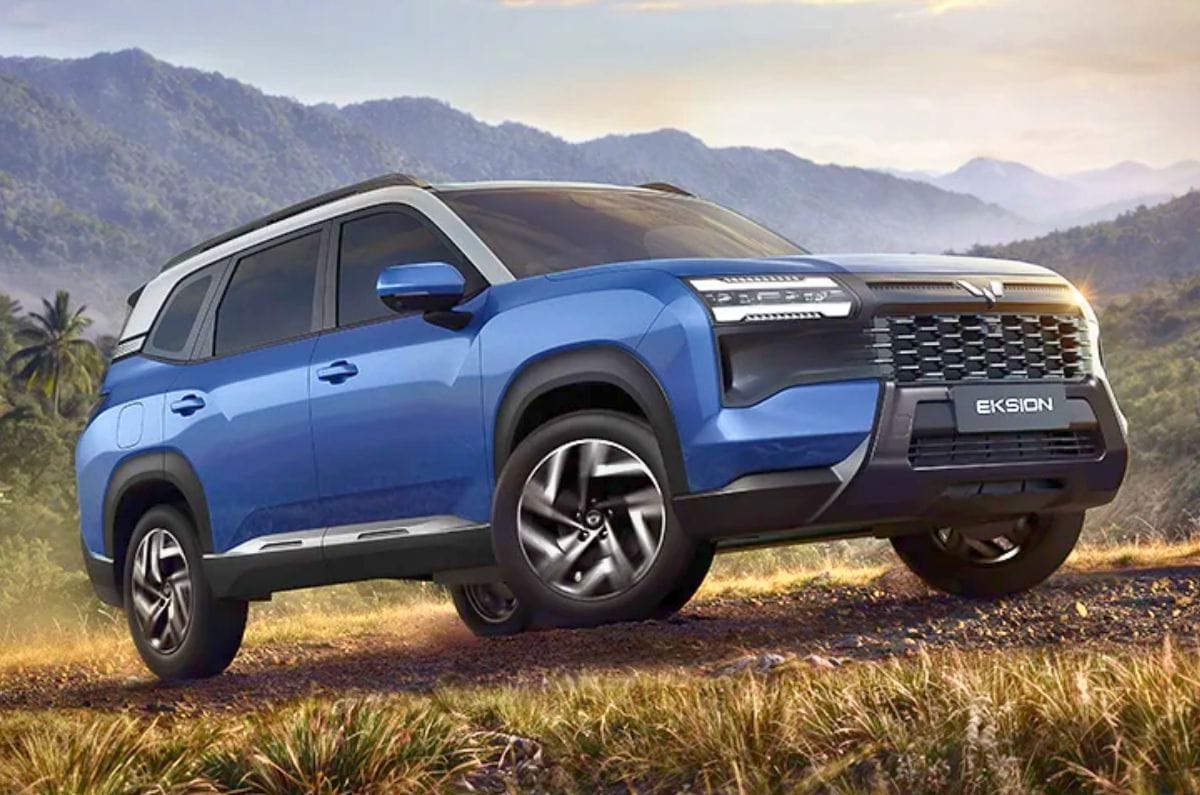
The Starlight 560 is sold as the ‘Eksion’ in the Indonesian market.
The Indonesia-spec model, called the Wuling Eksion, comes with a 105hp 1.5-litre petrol engine and a 20.5kWh battery pack. Its front-wheel-drive setup offers a combined output of 195hp and 230Nm, an all-electric range of 125km and a total range of over 1,000km.
The all-electric version, which gets a 69.2kWh battery pack and a 201hp front-axle-mounted (FWD) electric motor, has a CLTC-claimed range of 530km. It remains to be seen whether MG offers the same PHEV and EV powertrains in the India-spec ‘520’ SUV.
4.7-metre-long SUV has a rugged-looking design
The Wuling Starlight 560 is an upright SUV that measures 4,745mm in length, 1,850mm in width and 1,755mm in height. It has a 2,810mm wheelbase.
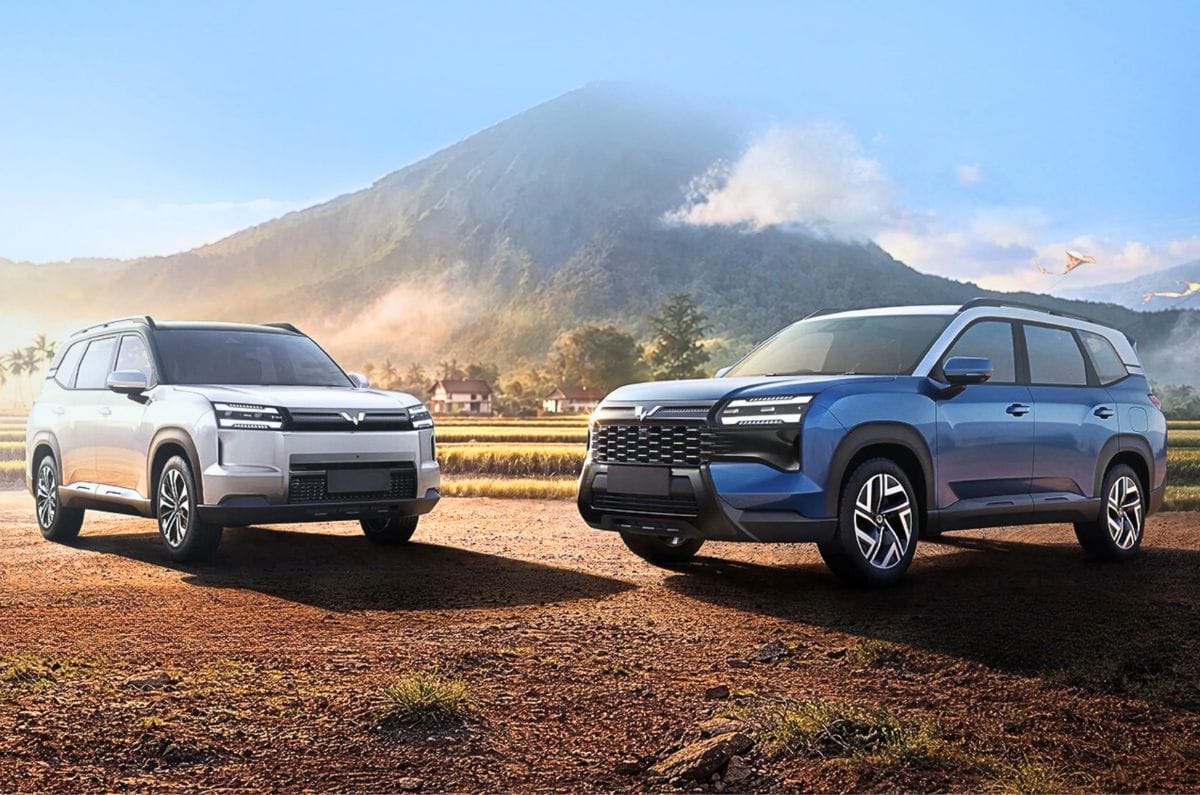
Wuling Starlight 560 versions: EV (left) and PHEV (right)
The PHEV’s fascia features a huge all-black grille, which is blanked off in the all-electric version. Both versions, however, get sleek headlamp housings featuring dual projector LED lights and two LED DRL strips. The front bumper has a rugged look thanks to the faux skid plate and black cladding on the lower portion.
In profile, the international-spec model gets 18-inch dual-tone alloy wheels, thick cladding over the wheel arches and roof rails. The rear design is simple, featuring wraparound LED tail-lights, an all-black bumper and a roof-mounted spoiler.
A minimalist dashboard and a well-rounded feature list
Inside, the Wuling Starlight 560 gets a dual-tone cabin and a minimalistic dashboard layout. There’s a 12.8-inch touchscreen infotainment system, an 8.8-inch digital driver’s display and a 2-spoke steering wheel with buttons for the infotainment functions and cruise control. The SUV can seat up to 7 occupants, and all the seats have leatherette upholstery.
Other features include powered and ventilated front-row seats, 6 speakers, a 50-watt wireless phone charger, a panoramic sunroof and automatic climate control with rear vents. On the safety front, the Starlight 560 gets 6 airbags, a tyre-pressure monitoring system (TPMS), hill-hold assist, an electronic parking brake and advanced driver assistance systems (ADAS). The India-spec model is expected to have a similar set of features.
While pricing details for the upcoming Starlight 560-based MG SUV are unknown, we expect it to be positioned competitively, much like other MG models. The PHEV version could serve as an alternative to the Mahindra XUV 7XO and Tata Safari, while the EV could rival the Mahindra XEV 9S.
If you’re considering bringing home a Sierra EV, here are three reasons why you should go through with it, and two reasons why you may want to think twice before signing the dotted line.
Pros
Loaded with features
Gets some additional goodies over the ICE Sierra
The Sierra EV retains the expansive equipment list of its ICE sibling, including a triple-screen layout (12.3-inch infotainment and passenger screens, 10.25-inch driver’s display), dual-zone climate control, a panoramic sunroof, Level 2 ADAS, a powered tailgate, a 360-degree camera, a wireless charging pad, a 12-speaker JBL Black sound system, ventilated front seats, a powered driver’s seat with memory and welcome functions, and more.
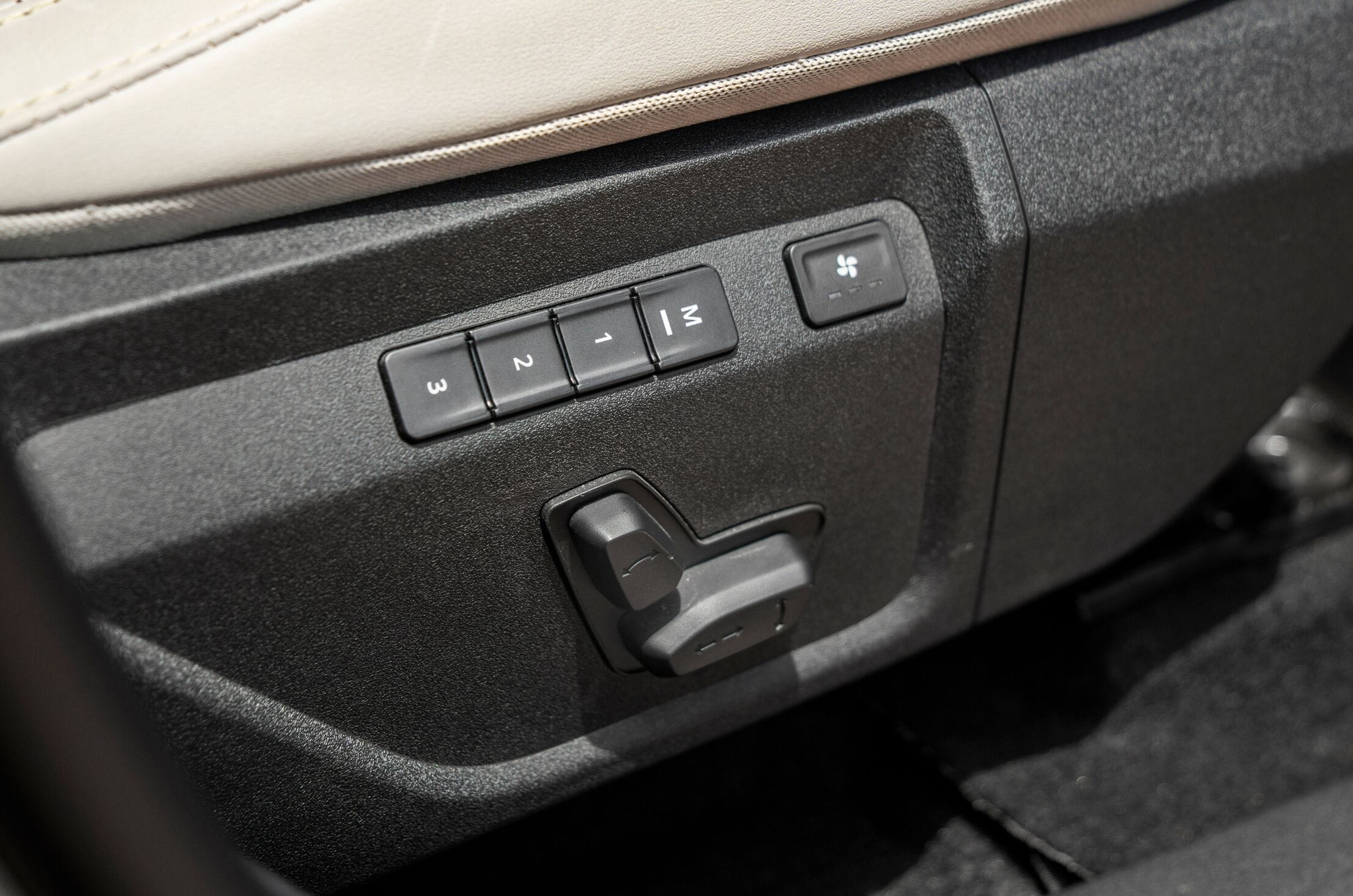
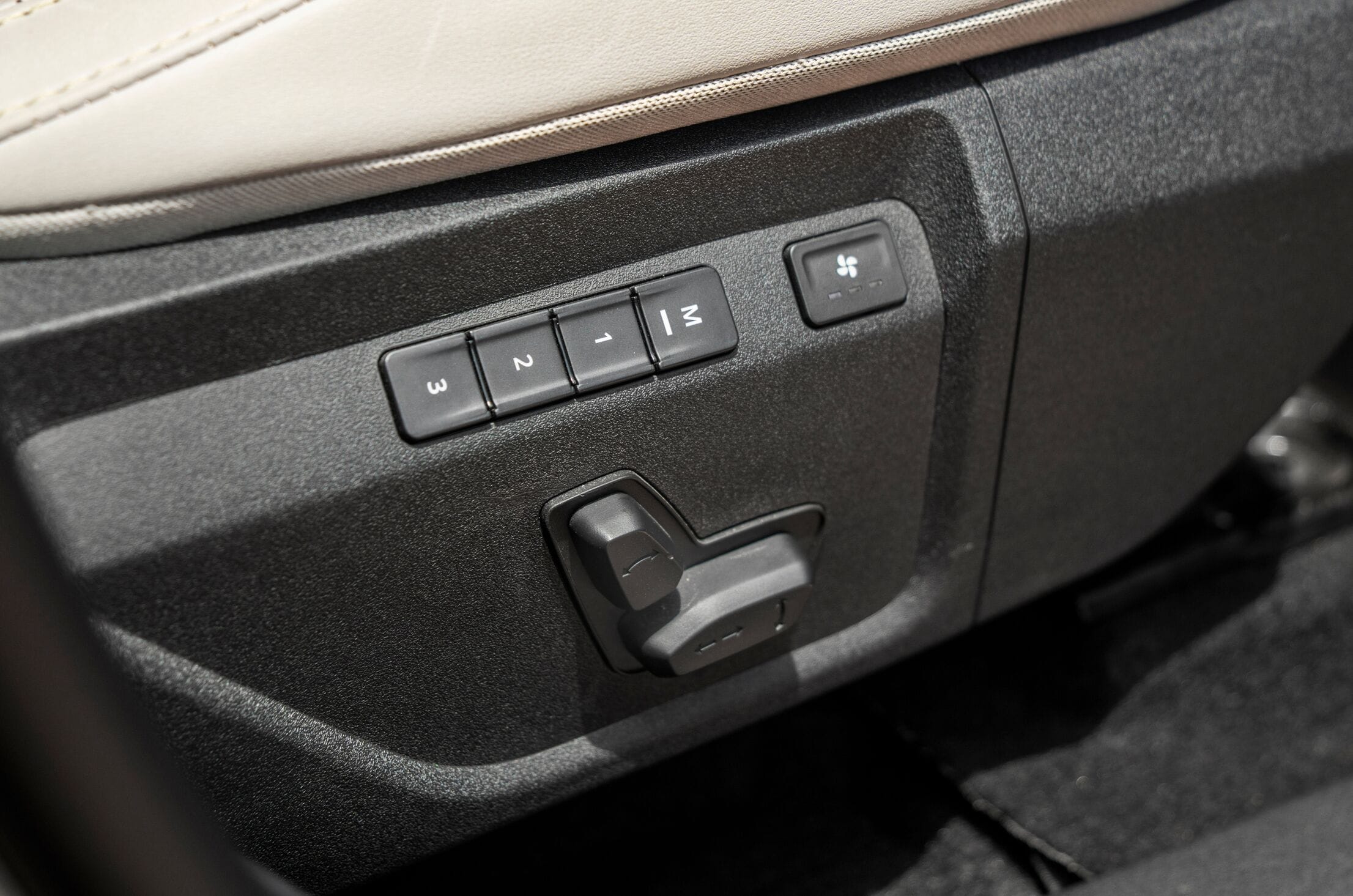
In typical Tata EV fashion, the Sierra EV even packs some bonus features over the ICE version, specifically a powered co-driver seat, an under-floor camera view, auto park assist, a summon mode, vehicle-to-load (V2L) and vehicle-to-vehicle (V2V) charging functions, and a heads-up display along with the triple-screen setup.
Excellent cabin space and practicality
Great for chauffeur-driven buyers
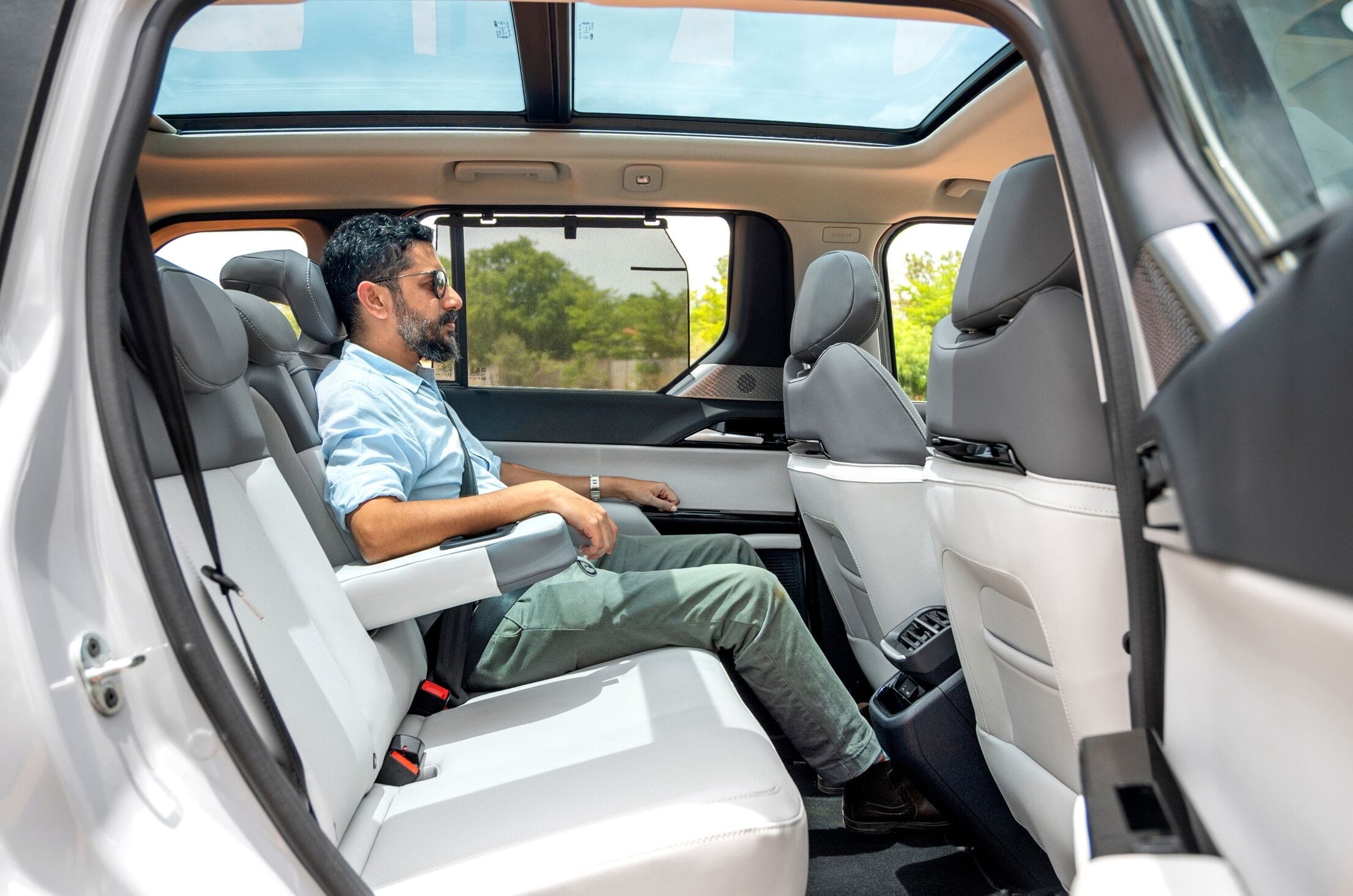
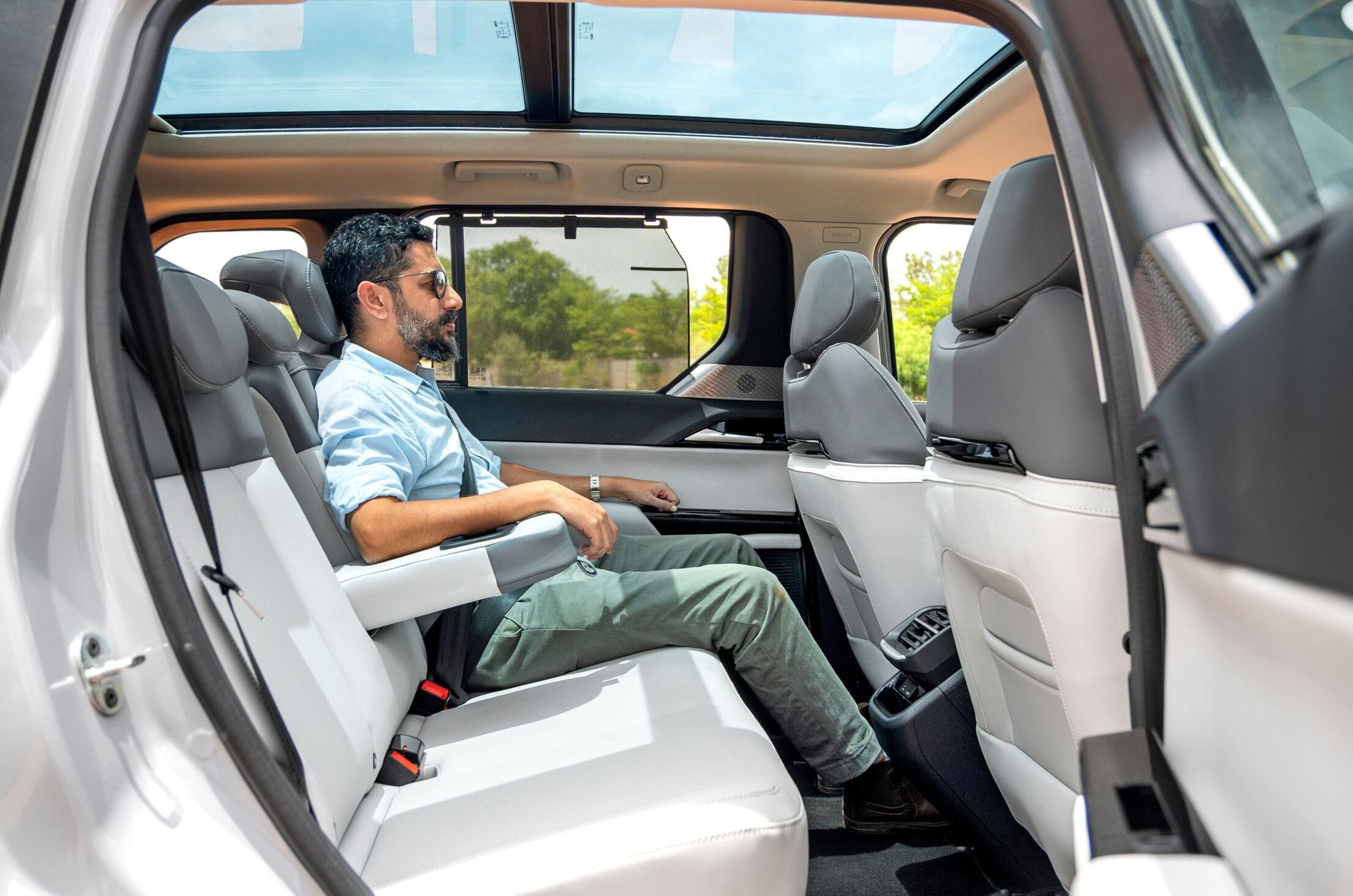
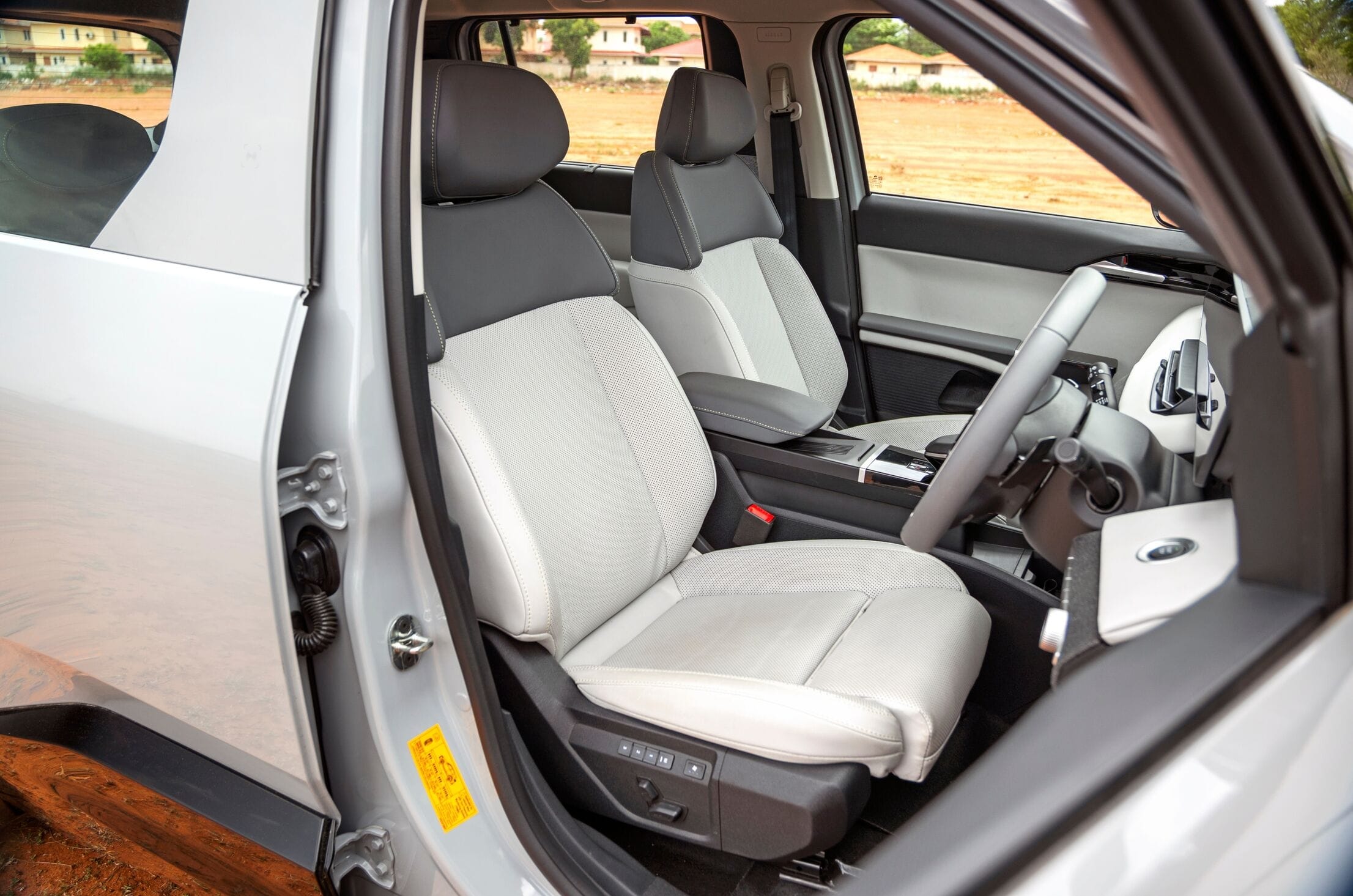
Dimensionally, the Sierra is very similar to its ICE counterpart, which means you get an incredibly roomy and lounge-like interior. Though the floor height has increased by less than an inch compared to that of the ICE Sierra, there’s nary a perceptible difference for occupants. The seats are very comfortable, there’s loads of rear legroom, and the bench even features a small amount of backrest recline.
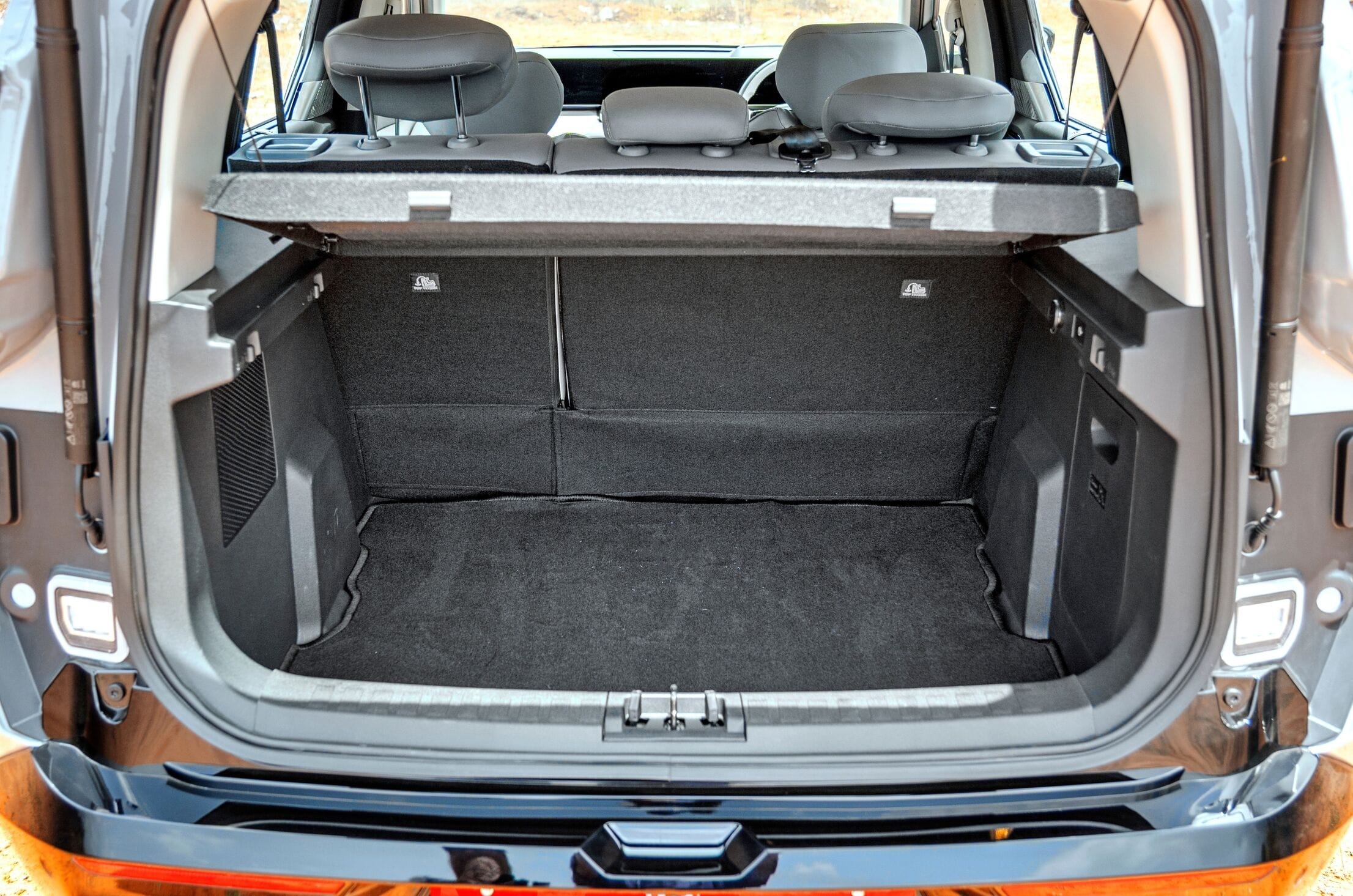
Despite the addition of a rear motor, the Sierra EV’s boot space matches the ICE version’s 622 litres. That’s measured up to the roof, though, and using the conventional method of measurement, which is up to the parcel tray, the Sierra EV should offer roughly 450 litres of boot space. You even get a frunk, which measures 55 litres in the RWD versions and 35 litres in the AWD variant.
Smooth and potent powertrains
Only one in its segment to offer AWD
The Sierra EV can be had with 63kWh and 75kWh battery options, both of which are powered by a 315Nm rear motor (RWD) as standard. In 63kWh RWD guise, the Sierra EV develops 238hp, while the 75kWh RWD versions make 209hp. The top-spec Sierra EV Empowered A 75kWh variant additionally packs a 140hp front motor to form an AWD layout, churning out a segment-best combined output of 306hp and 504Nm.
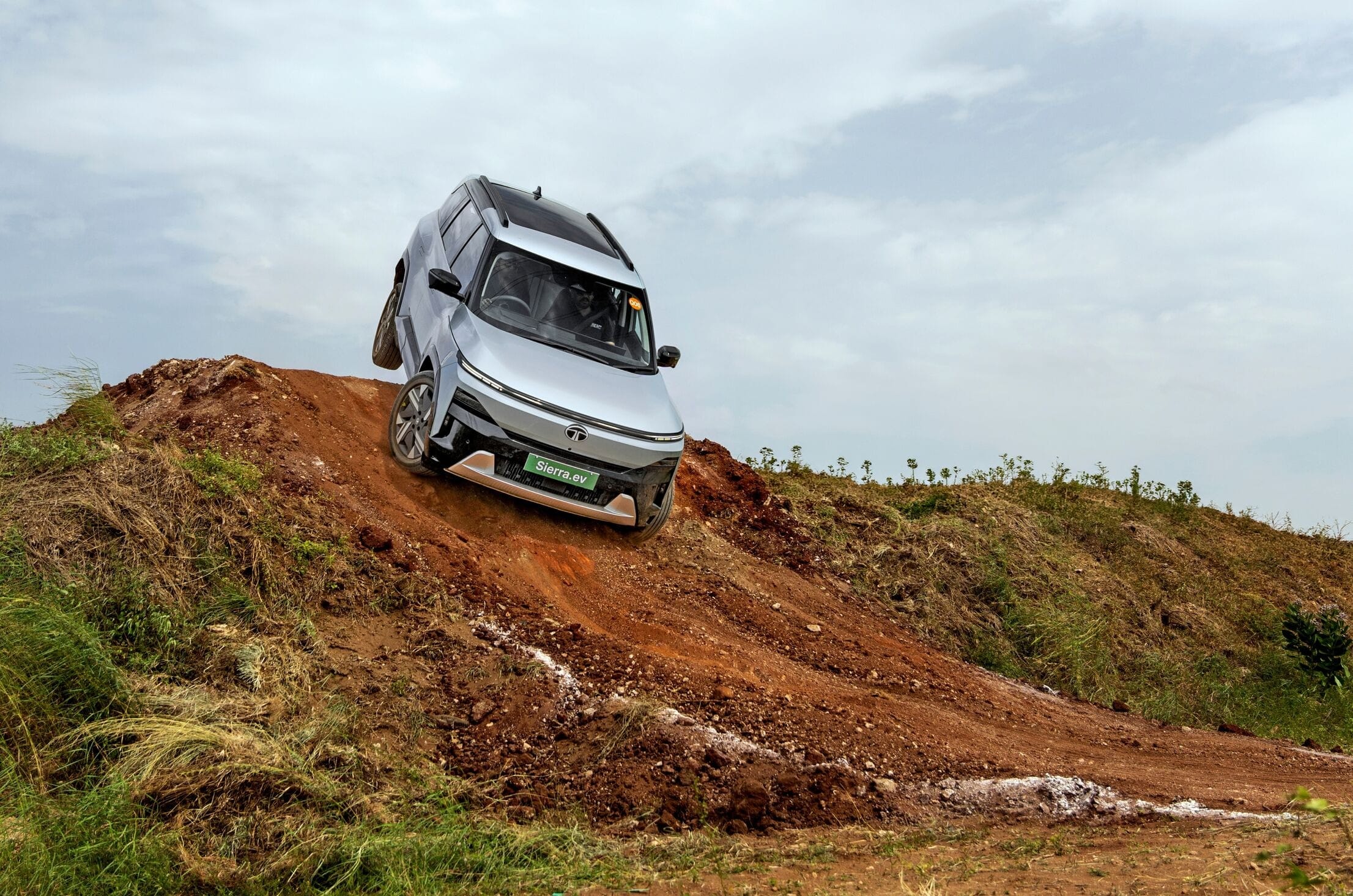
Performance is thereby a strong suit for the AWD Sierra EV, with a claimed 0-100kph time of 5.8 seconds. As we noted in our Sierra EV review, though, the SUV doesn’t feel neck-snappingly quick off the line. Power delivery is progressive and undramatic, which is fine considering the Sierra is, after all, a family SUV. On the curated off-road course we took the Sierra EV AWD on, it proved quite capable too.
As for range, the Sierra EV 75kWh RWD claims the highest ARAI figure of the range at 665km, followed by the 75kWh AWD version at 624km and then the 63kWh RWD version at 535km. These are quite competitive range figures when compared to the Sierra EV’s rivals.
Cons
Poor interior quality and ergonomics
Umbrella holders provided, but with no drain plugs
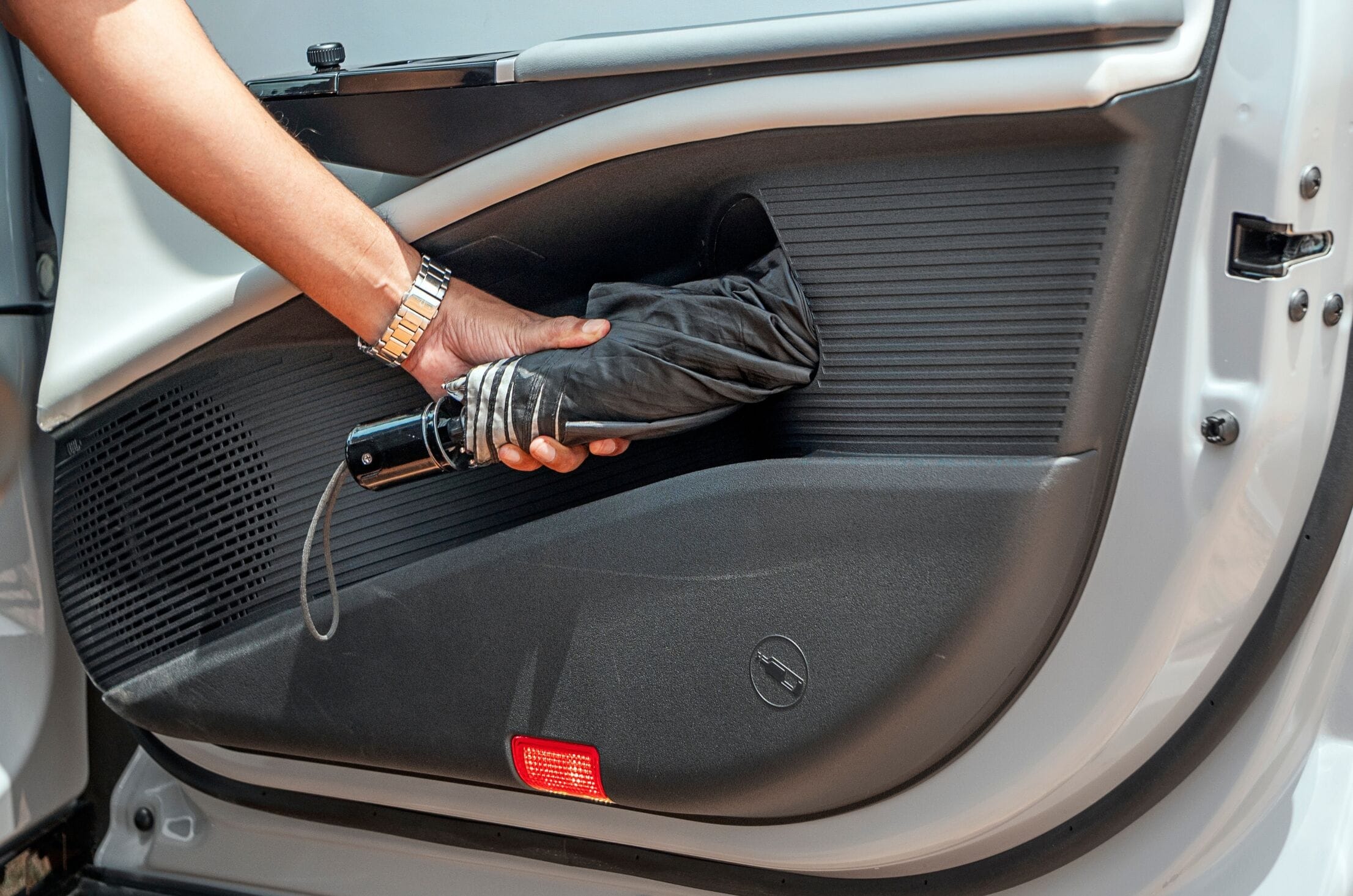
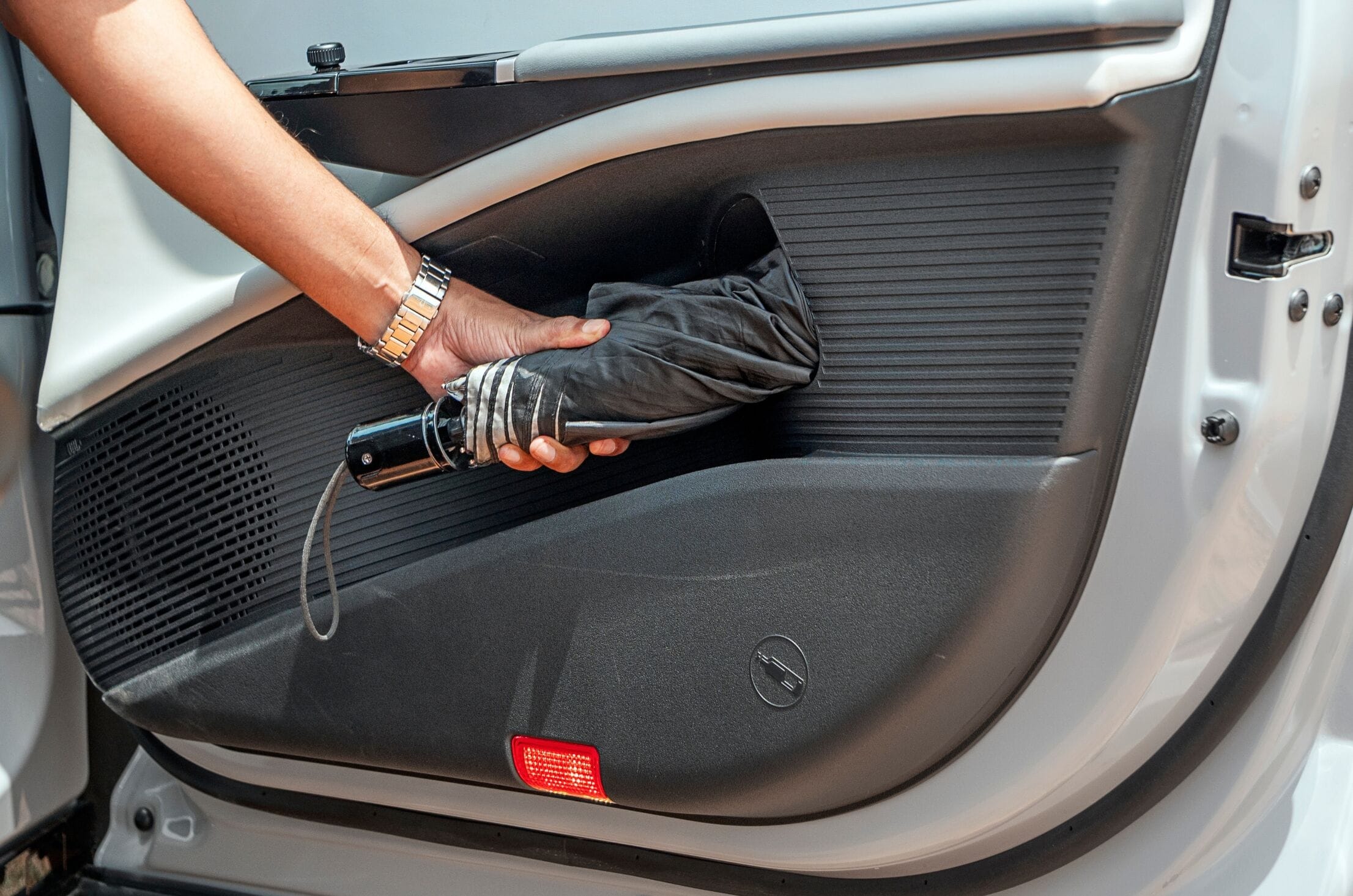
While Tata has upped its game in terms of interior fit and finish, we could still spot hard plastics, rough edges, crooked stitching, and misaligned panels in the Sierra EV. There are some interior design oddities, too, like wasted space below the pedestal-mounted drive selector, narrow and tough-to-reach armrest storage, tiny cupholders placed at the base of the dashboard, no drain plugs for the umbrella holders in the door cards, and conspicuous gaps next to the rear window sunblinds due to the L-shaped B-pillars.
No spare tyre on offer
Removed to accommodate battery pack
In an effort to accommodate the large battery pack, the Sierra EV sacrifices the underbody-mounted spare tyre of its ICE counterpart, offering only a puncture repair kit instead.
LOOK OUT FOR: Suspension rattles, Infotainment issues
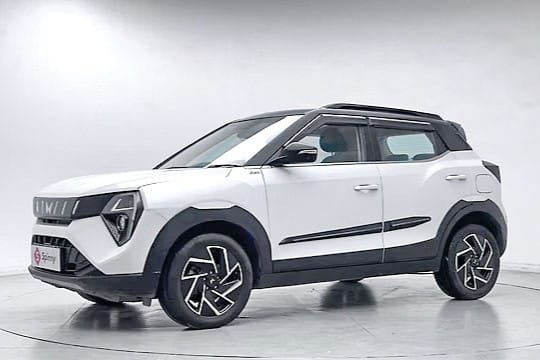
The Mahindra XUV 3XO was launched in 2024 as a replacement for the XUV300. But instead of a mild facelift, Mahindra went all out and gave the compact SUV an overhauled exterior, a thoroughly reworked interior, some segment-first features, a new class-leading petrol powertrain and a new name. Mahindra’s smallest offering stands out in the crowded compact SUV segment for its roomy and premium interior and many powertrain options, making it worth considering as a used buy. Here’s what to keep in mind.
Despite the redesigned exterior, the 3XO’s rear section still looks abruptly chopped off, though it doesn’t look as awkward as the XUV300’s. The front styling, too, is bold, distinctive and splits opinion. Inside, quality took a huge step up, with the 3XO’s interior feeling genuinely premium. It’s very good on space too, and can easily accommodate five adults, though the trade-off is one of the smallest boots in the segment.
Petrol, turbo-petrol, and diesel engines; up to 21.8kpl claimed mileage
Mahindra offers the XUV 3XO with three engine options – two petrols and one diesel. The range starts with a 111hp, 1.2-litre, MPFi, turbo-petrol engine that can be had with a 6-speed manual (ARAI-rated 18.89kpl fuel economy) or a 6-speed torque converter automatic (17.96kpl) option. Then there’s a 117hp, 1.5-litre diesel, which comes with a 6-speed manual (20.6kpl) and 6-speed AMT (21.2kpl). Meanwhile, the range topper is a 131hp, 1.2-litre direct-injection turbo-petrol unit, which is available with an Aisin-sourced 6-speed torque converter automatic (18.2kpl) and a 6-speed manual option (20.1kpl).
The diesel makes sense for high-mileage users or for those who do frequent road trips owing to its higher real-world efficiency. Enthusiasts will enjoy the 131hp turbo-petrol for its punchy character and the performance it packs in. However, for most users, the 111hp turbo-petrol will do the job just fine, as it has a good balance of performance, drivability and efficiency. What’s great is that every engine option can be had with an automatic gearbox option for greater convenience.
Mahindra XUV 3XO variants and features
Twin 10.25-inch screens, panoramic sunroof
At launch, there were nine trim lines on offer – MX1, MX2, MX2 Pro, MX3, MX3 Pro, AX5, AX5 L, AX7 and AX7 L. Mahindra later launched a mid-spec RevX trim for the XUV 3XO too. As for features, the top-spec AX7L gets all-LED lighting, a seven-speaker Harman Kardon audio system with a 380W amplifier, a 10.25-inch infotainment screen and driver’s display, panoramic sunroof, AdrenoX Connect connectivity suite, wireless Android Auto and Apple CarPlay, a wireless charger, rear AC vents, and more.
All variants get safety features like 6 airbags, rear disc brakes, ESP and ISOFIX anchors. Higher-spec versions get an electronic parking brake with auto-hold, hill-start and hill-descent assist, a 360-degree camera, a blind spot monitor and Level 2 ADAS. As always, the range-topping variant will give you the best experience given all that it packs in, but for most users, the mid-spec AX5 will also suffice, as it has a good balance of features.
XUV 3XO warranty details
The XUV 3XO is a reliable SUV, with problems few and far between, and it’s backed up by Mahindra’s widespread service network throughout the country. What’s nice is that it comes with a standard warranty of 3 years / 1,00,000km, which can be extended to a total of 5 years or 1,50,000km.
What to look out for in a used Mahindra XUV 3XO
Suspension rattles
Some owners have reported rattling or thudding sounds coming from the suspension when driven through rough patches or potholes. This is often linked to worn out lower control arms. Take a test drive and drive through a rough patch of road, and listen out for any thudding or rattling from the suspension. Many of the suspension components are covered under warranty too, so this is something to keep in mind.
Infotainment issues
Owners have faced issues with the XUV 3XO’s AdrenoX infotainment system like Apple CarPlay/Android Auto disconnections, screen freezing and the reverse camera display getting stuck on a black screen. Before purchasing, check that it functions smoothly, pairs up with your phone easily, and that the system’s software is up to date.
Braking trouble
Mahindra XUV 3XO owners have reported a few distinct brake issues, ranging from inconsistent, spongy brake pedal feel to hissing noises and overly sensitive Automatic Emergency Braking (AEB). Before purchasing, it’s worth getting the brakes checked by an authorised service center.
Second hand Mahindra XUV 3XO price and resale value
Rs 6 lakh-10 lakh
Being a new model that’s still on sale, the XUV 3XO commands good value in the resale market. With such a wide spread of trim levels and powertrain options, you’ll find used options across a wide price range, but refrain from spending over Rs 10 lakh. Look for an example with the extended warranty package, as that’ll give you added peace of mind.
We’ve said in the past, the Sierra is the best Tata model on sale currently, representing the best of the brand’s learnings over the years. We’ve also said Tata’s electric powertrains are better than the equivalent combustion engines on offer. So, combine the two, and it’s undoubtedly a winning formula. But with EV tech and customer expectations moving so rapidly these days, is that necessarily a foregone conclusion?
2026 Tata Sierra EV exterior design and engineering – 9/10
Retains the ICE version’s sharp looks and practicality while incorporating a large battery.
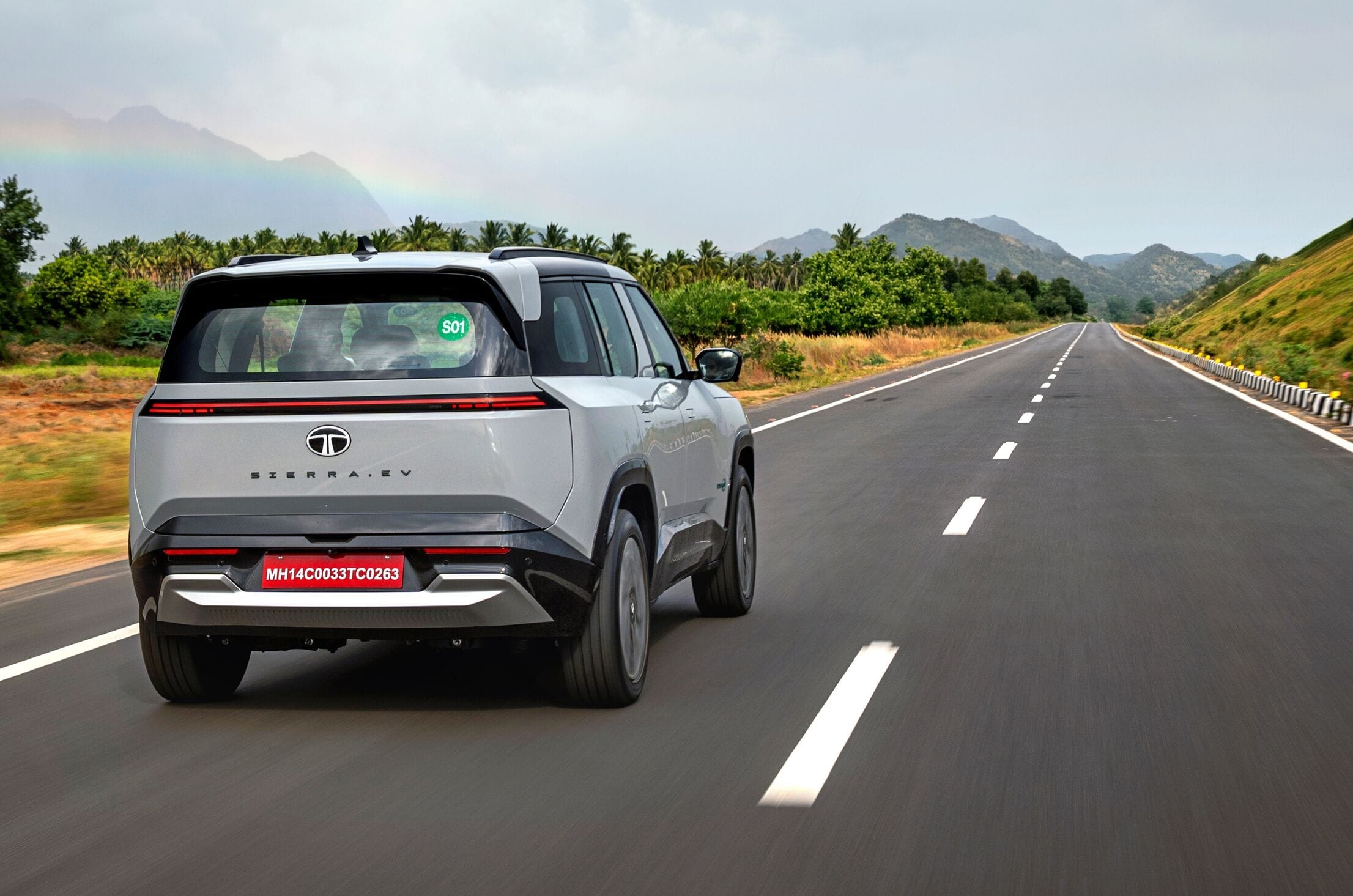
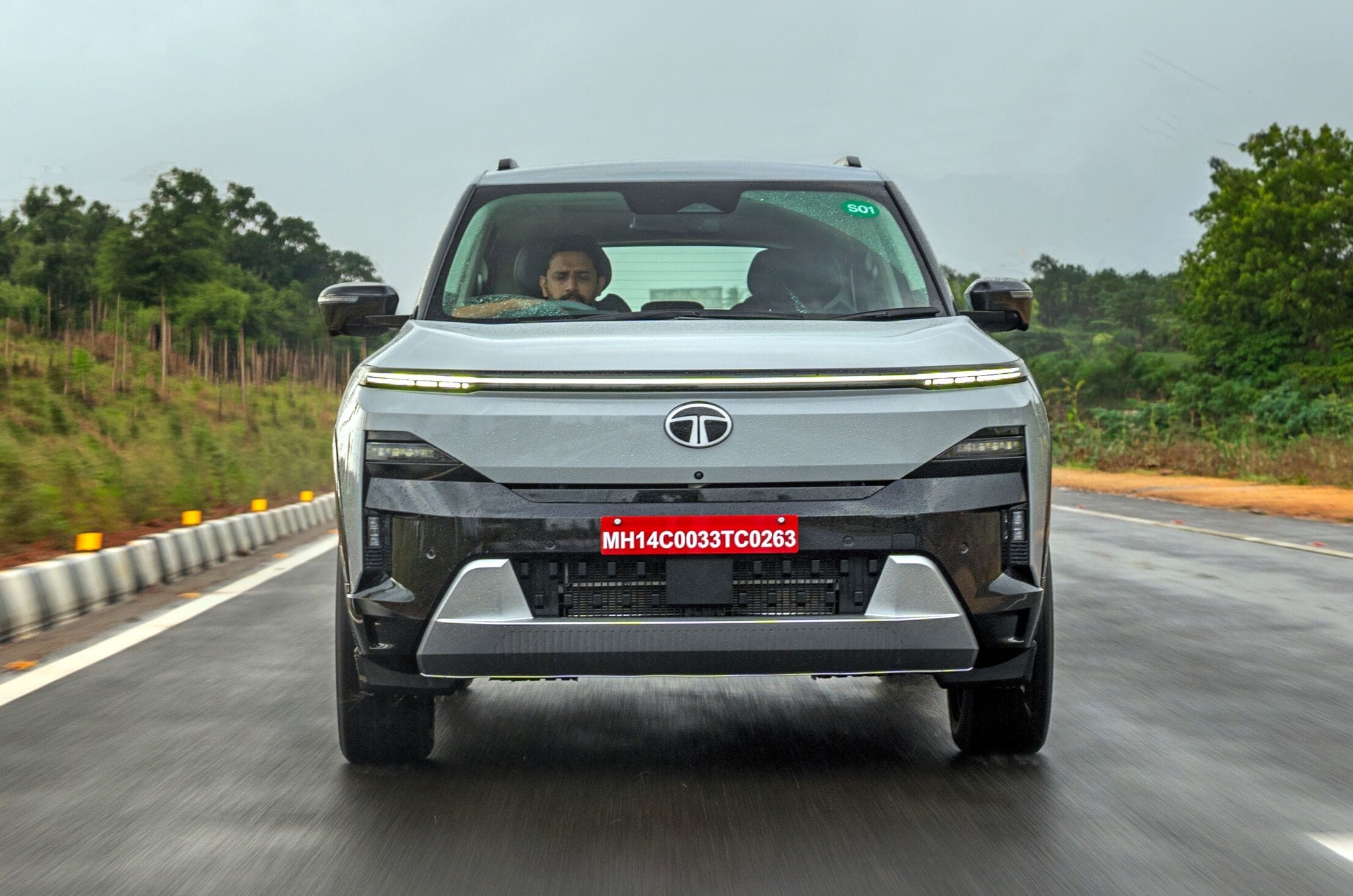
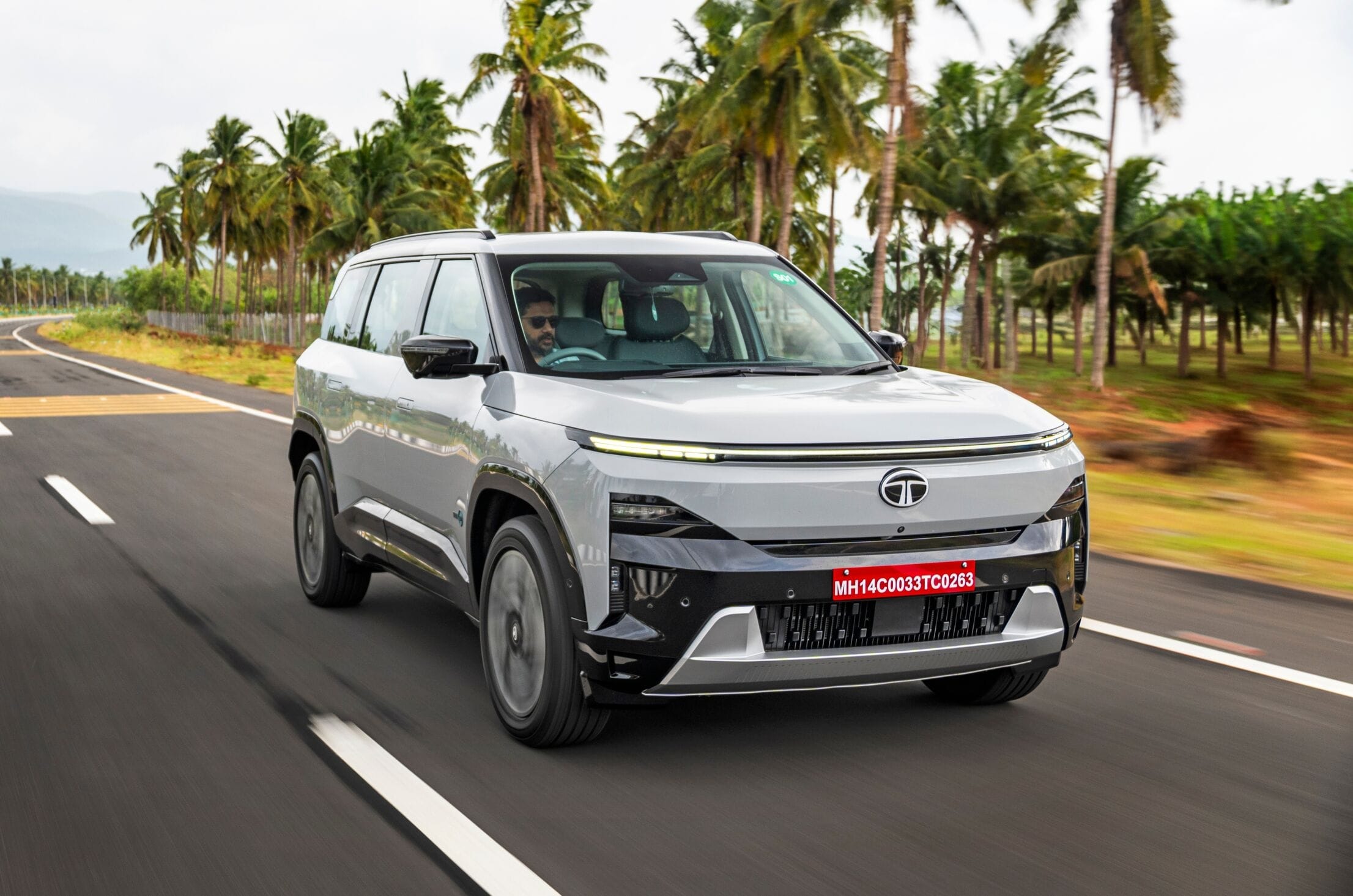
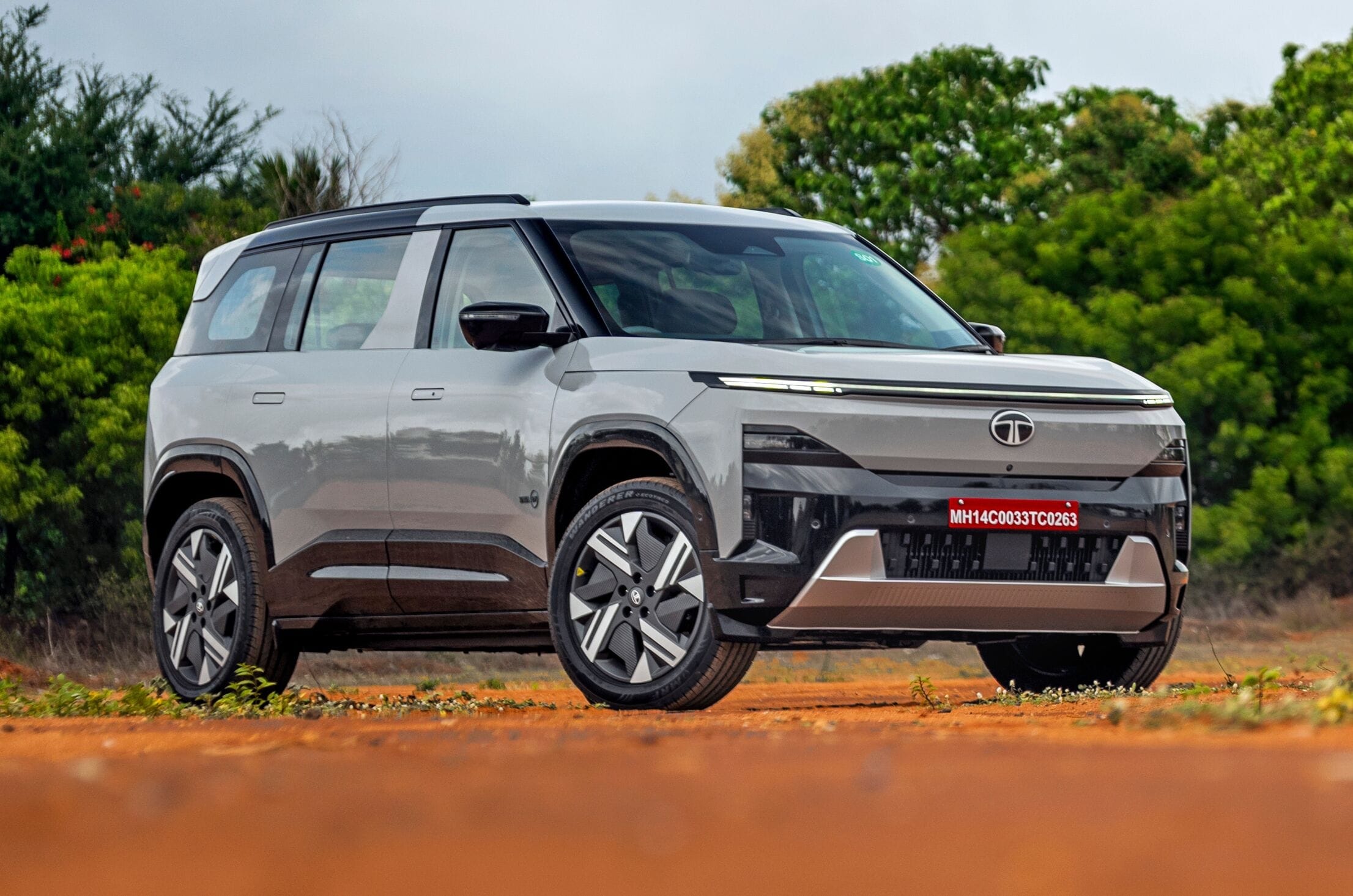
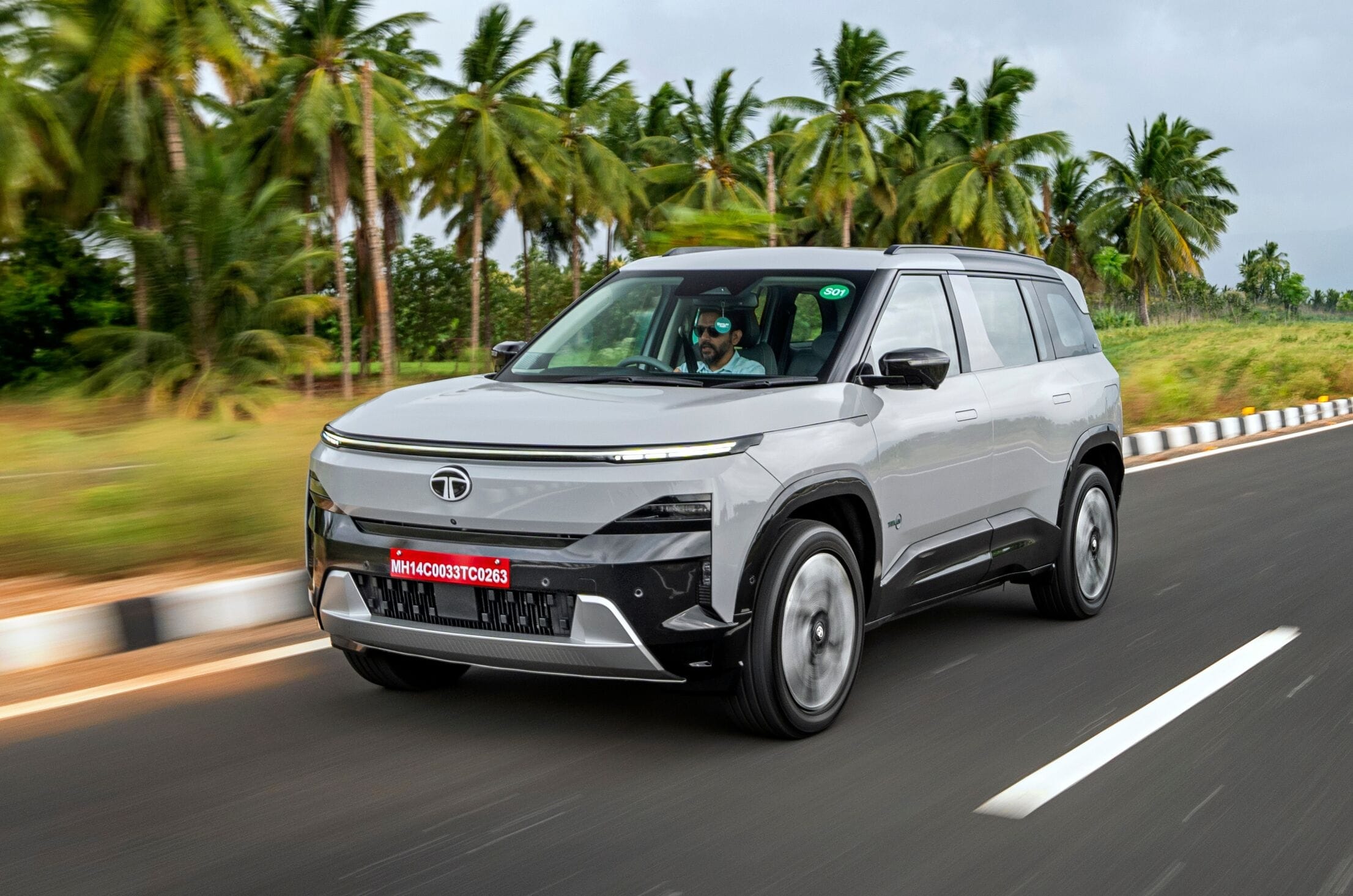
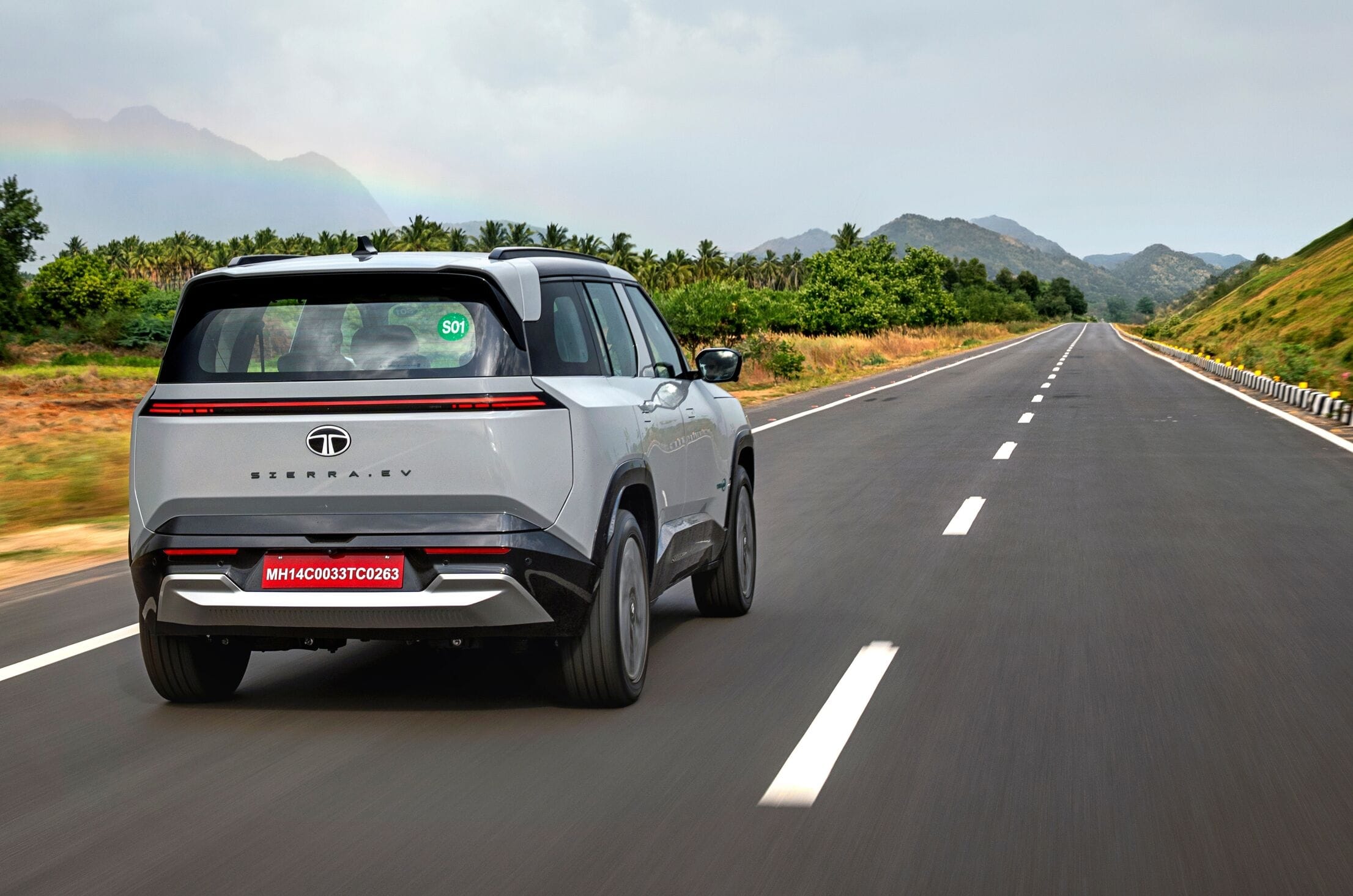
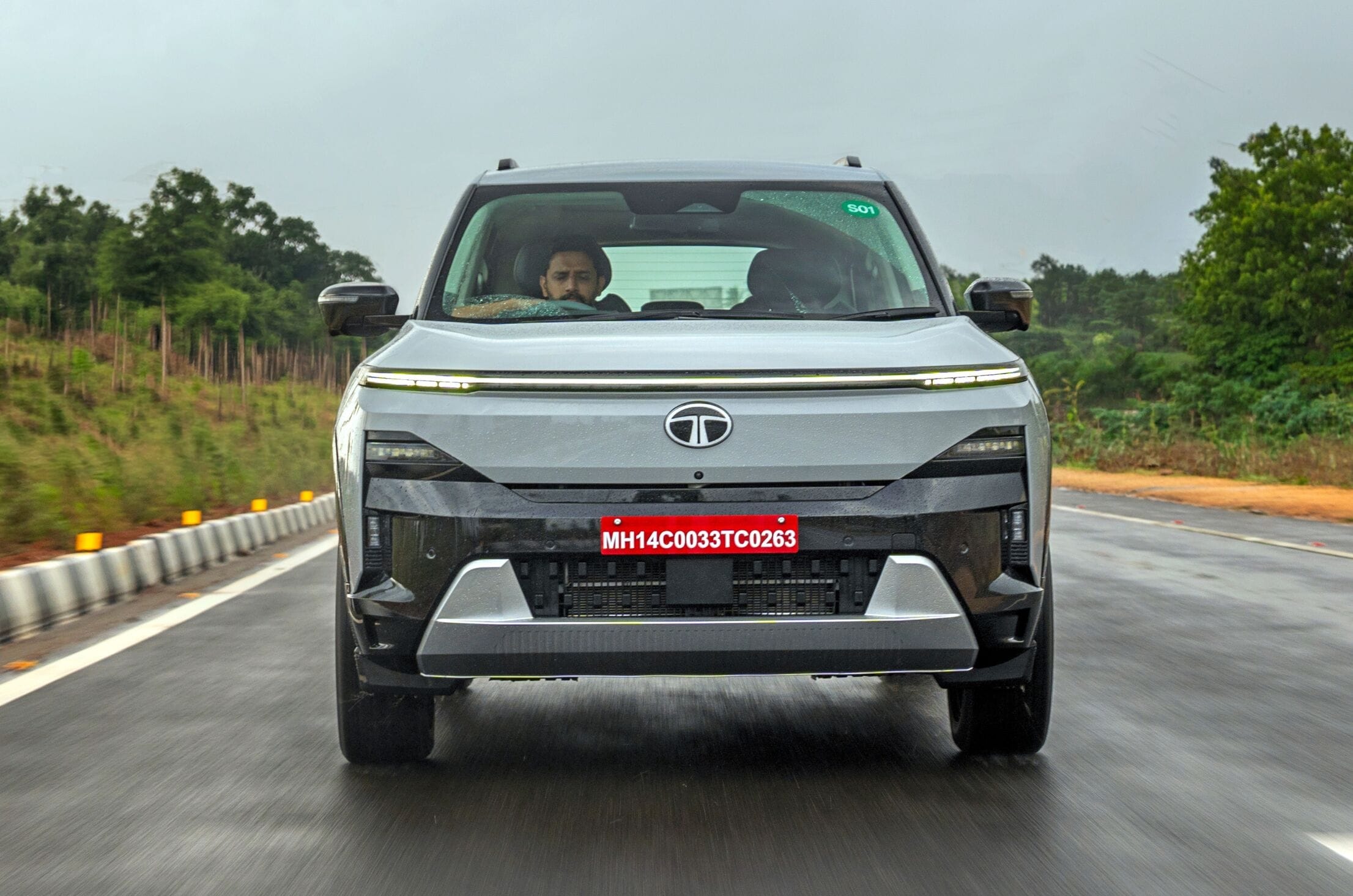
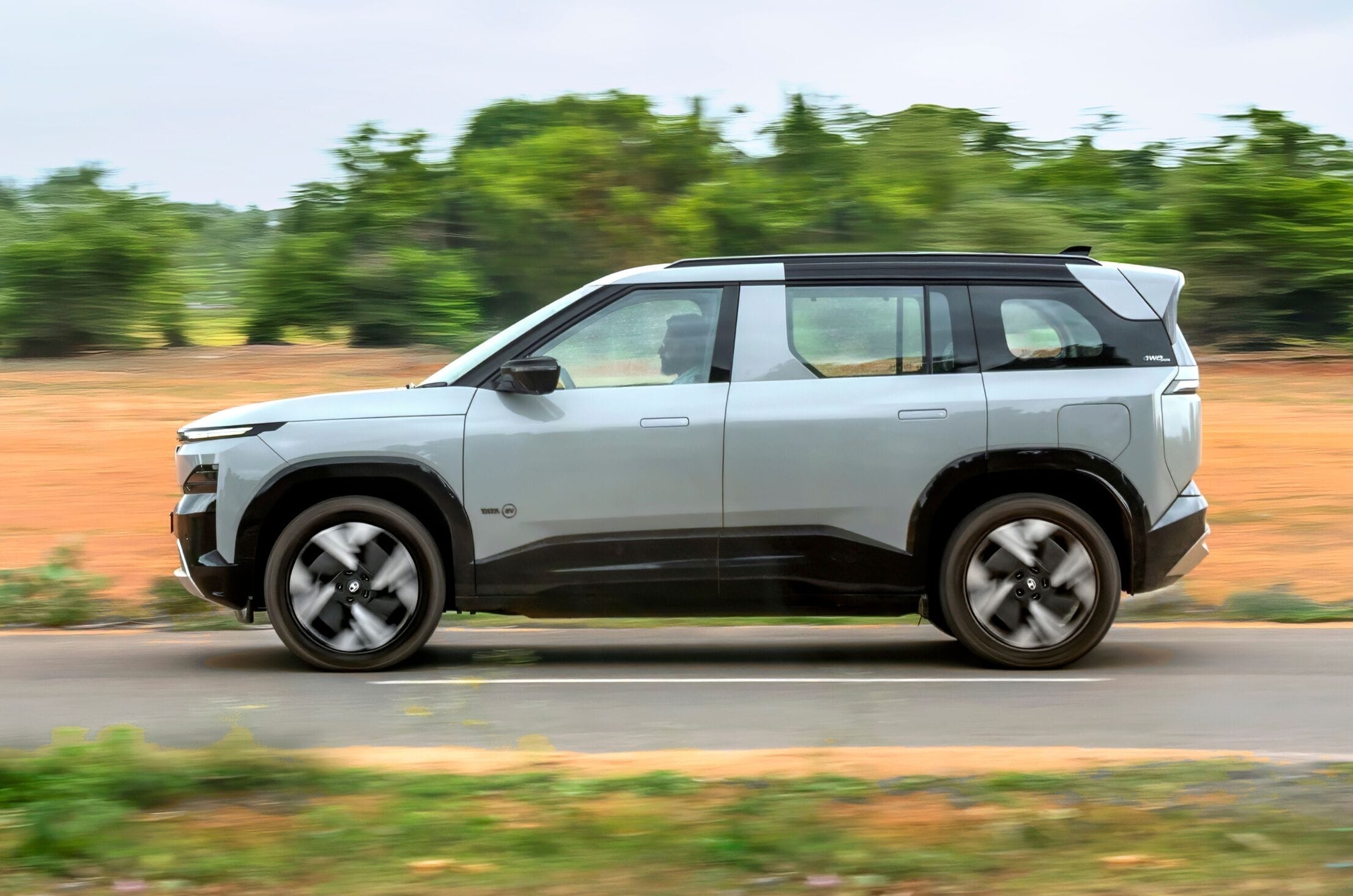
The new Sierra is a bold piece of design, and this has been carried over to – and perhaps even improved – on the electric version. It’s a welcome departure from the notion that all EVs need to be shaped like bars of soap for better aero efficiency. Instead, it is upright and boxy, albeit smoothed out just enough for air to flow over it a bit better.
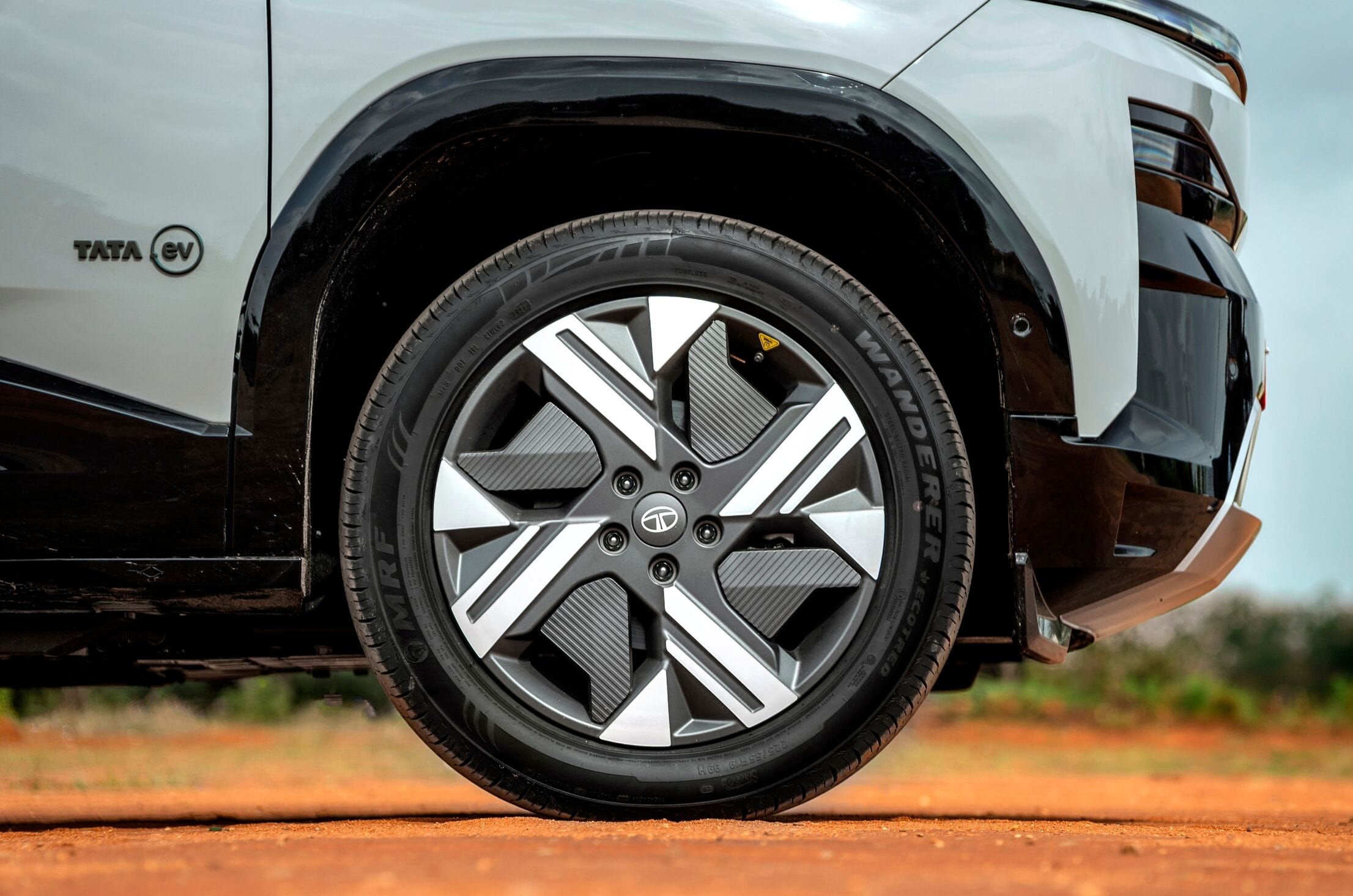
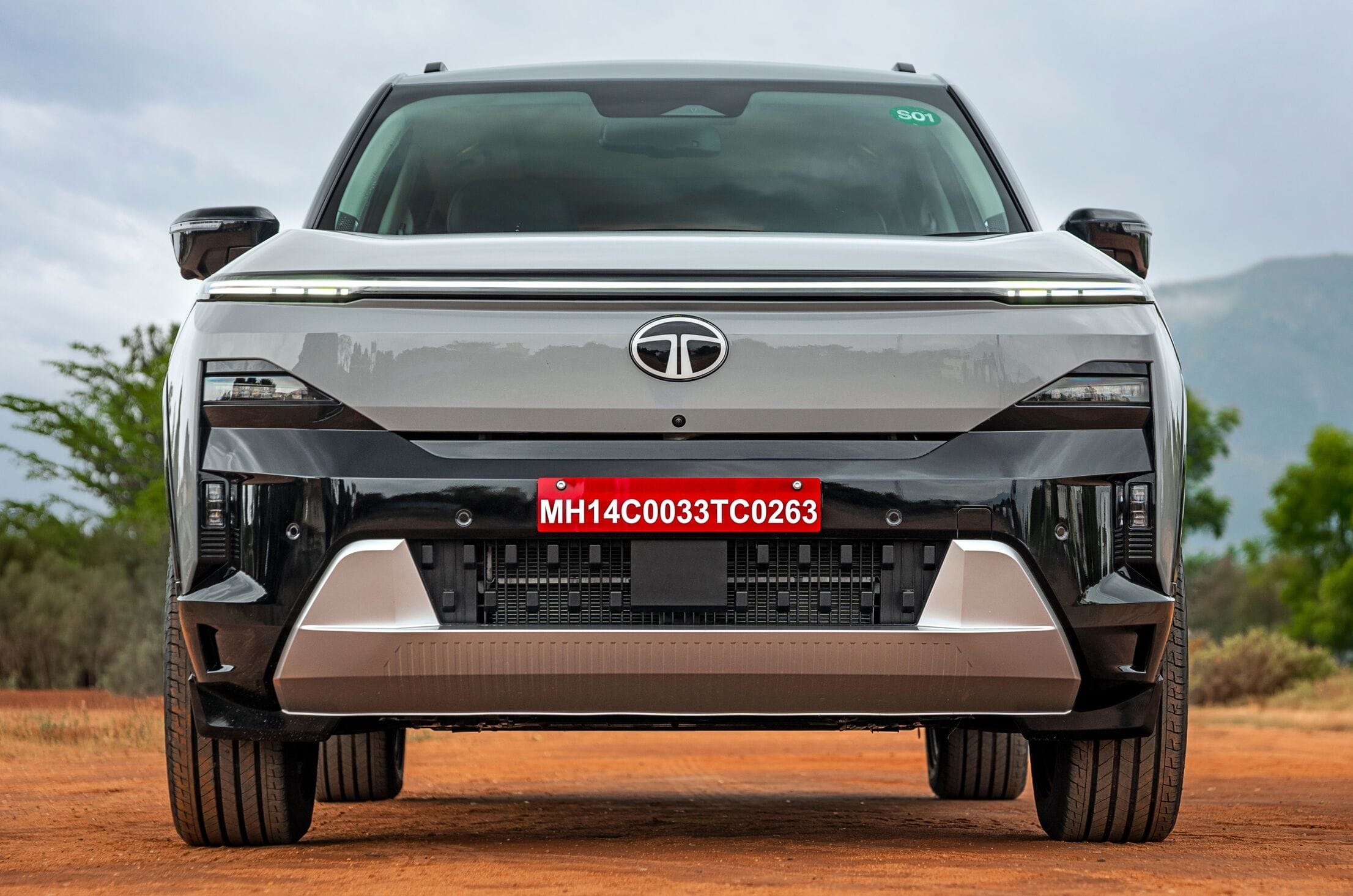
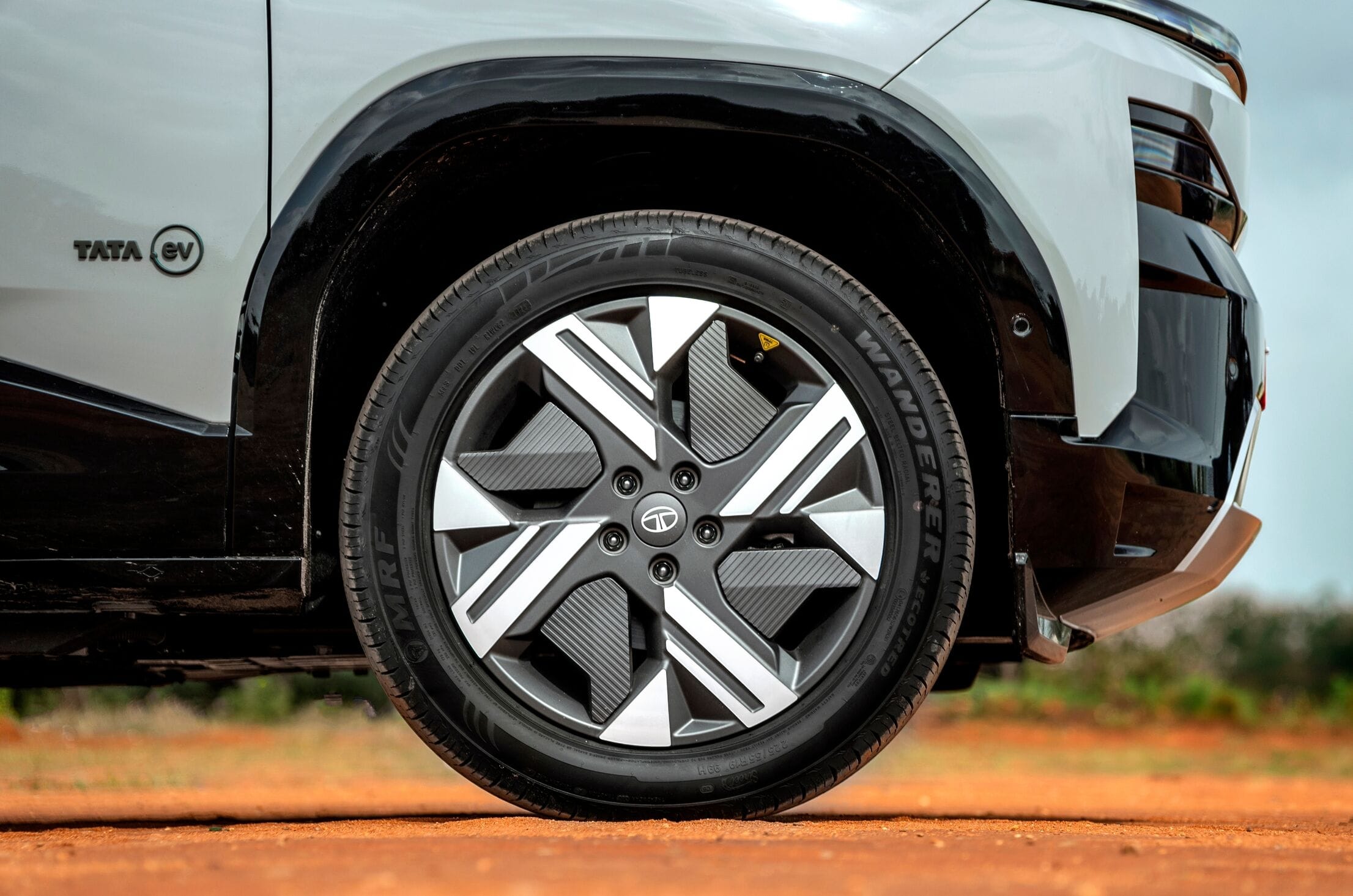
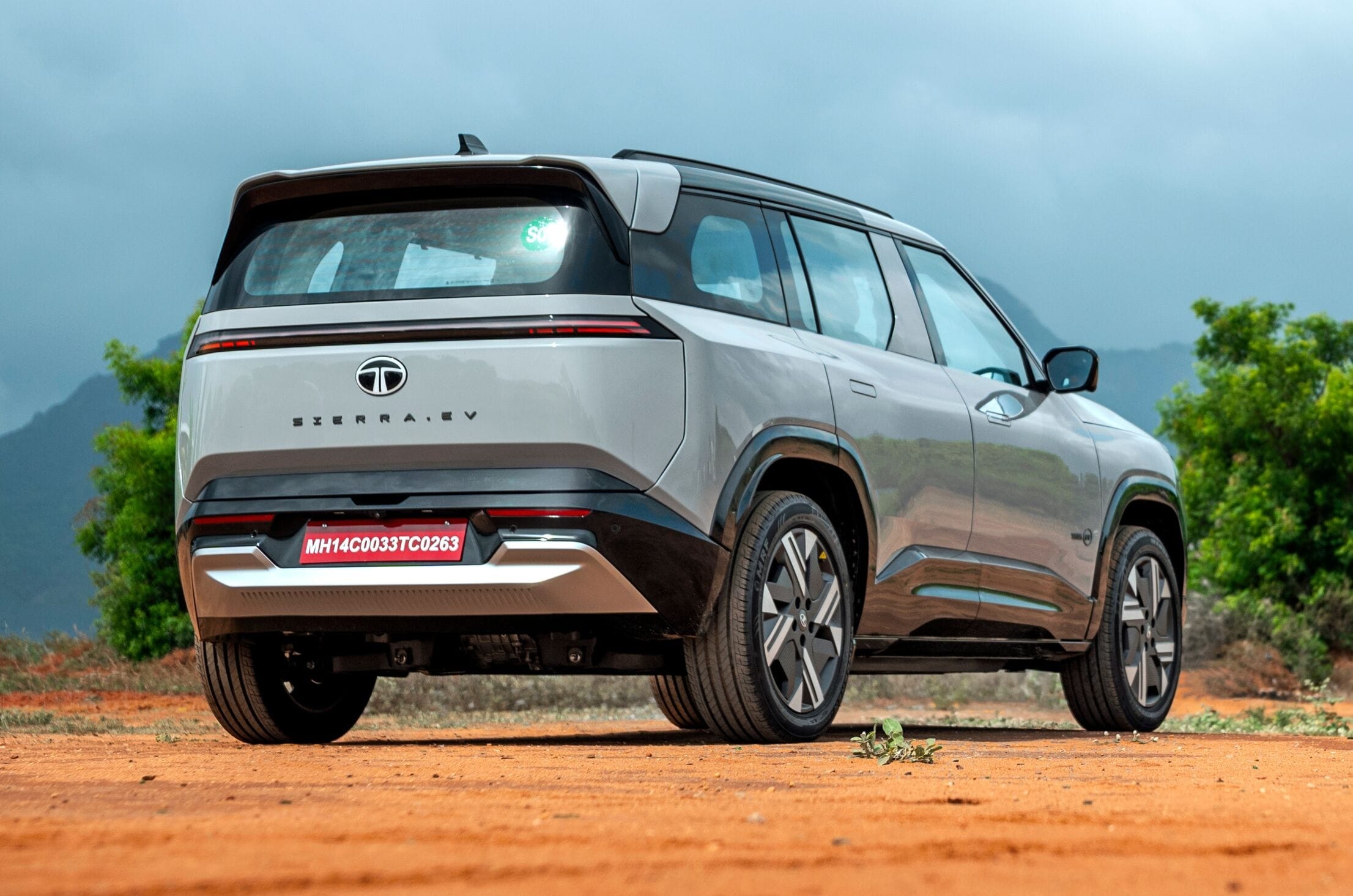
The difference is up front, where the gloss black surround for the headlamps found in the ICE version has been replaced by a body-coloured panel to give that EV-typical ‘grille-less’ look. For contrast, the gloss black treatment has been applied lower down in the bumper instead. Perhaps the wheels could have been more different – they are the same design as the ICE model, albeit in a matte finish rather than gloss. The badges now say ‘Sierra.ev’ on the sides and rear, and have a blue-coloured outer edge.
To the untrained eye, it might not immediately be apparent which version is which, but conversely, this is unmistakably a Sierra, and that is perhaps more important.
Little practicality has been lost in the move to electric; in fact, some has been gained. Almost as if to drive the point home that, despite the similar looks, this is a pure EV underneath, it gets a frunk that holds 55 litres in the single-motor models, and 35 litres in the dual-motor version. Good enough for the charging cable or small valuables you don’t want to keep in the main boot.
There’s also still 205mm of ground clearance, despite the battery pack, and thanks to its use of prismatic cells and C2P (cell to pack) packaging, it doesn’t weigh or impede on cabin and boot space as much as conventional batteries of similar capacity (like the ones in the Harrier EV).
2026 Tata Sierra EV interior space and comfort – 7/10
Superb space and comfort, though quality inconsistencies and ergonomic gaffes remain.
However, while boot space has been retained at a cavernous 622 litres (floor to roof), a casualty of the battery pack is the spare wheel, which was previously mounted under the body. You now only get a puncture repair kit.
There’s seemingly no compromise to space or comfort in the cabin in the move to electric power. Engineers say the floor height has gone up by less than an inch compared to the ICE Sierra, and in truth there is no perceptible difference when you’re sat in the back seat. It remains spacious and comfortable, and even gets a small amount of backrest recline. The awkward L-shaped B-pillar returns, leaving a conspicuous gap next to the sun blind that could have easily been avoided. As before, you get a gigantic sunroof on top-spec trims that lets in a lot of light.
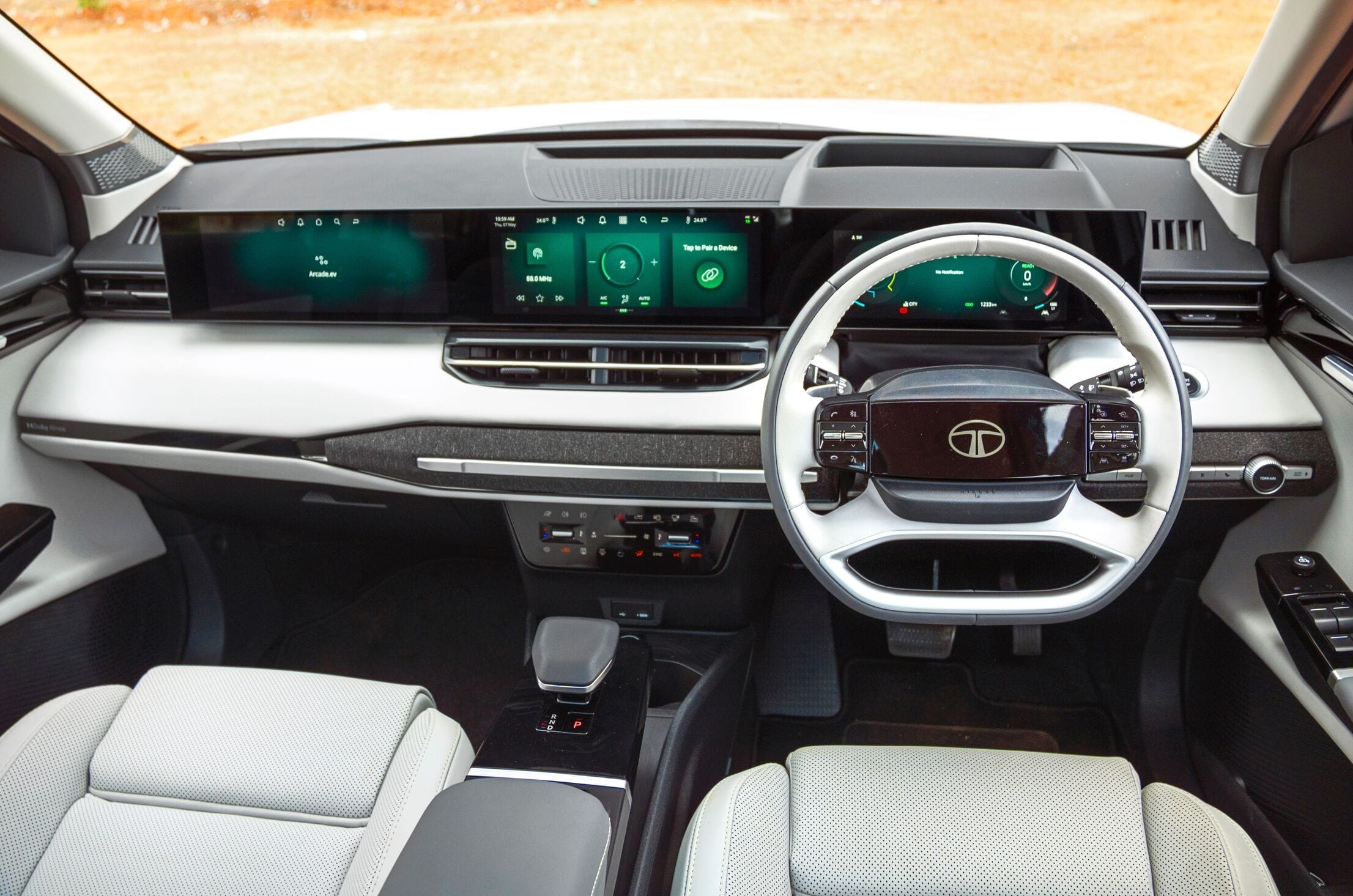
Up front, the lounge-like ambiance remains, with a cream-coloured, leatherette-bound dashboard and a textured fabric surface for the ‘sound bar’ central speaker. The three-screen stack adds a techy vibe to this atmosphere, and between the seats is a pedestal for the drive selector. The front seats are very comfortable and offer a good amount of shoulder support – something often overlooked in seat design.
For every soft surface and attractive trim piece, however, there is visible hard plastic, rough edges, crooked stitching and misaligned panel fit, which are an eyesore, especially at this price. And while the design is attractive, its execution could have been far better considered from a practicality and ergonomics standpoint. For example, the pedestal-mounted drive selector is set at a comfortable height, but wastes the space below it. Consequently, the storage box behind it is narrow, tall and harder to reach, while the cupholders are tiny and forced to the base of the dashboard. And while the inclusion of small umbrella holders in the door cards is a nice touch, there is no drain plug, so surplus water will collect in the door pockets. Good intentions; poor execution.
2026 Tata Sierra EV features and safety – 9/10
Packed to the gills with safety and tech, more so even than the ICE version.
Tata in the last few years has caught up to the features freight train that has the Indian car industry in a stranglehold. The Sierra EV is, thus, one of if not the best equipped in its segment, with every conceivable gizmo imaginable on the top-spec Empowered A variant. And as always, the EV gets a small edge on its ICE counterpart, which comes in the form of a powered front passenger seat, as well as an HUD alongside the three-screen layout (instead of either one or the other).
Those front seats are ventilated too, and the driver gets a memory function. There’s a full ADAS suite, drive modes, regen modes and terrain modes, the panoramic sunroof, dual-zone auto climate control, a 12-speaker JBL Black sound system with Dolby Atmos, an onboard air purifier, connected car tech and much, much more. There’s also a clever integration with Google Maps that predicts what the car’s SOC will be when you reach your destination, helping you plan better.
The screens are crisp and smooth in their animations, although as before, the 10.25-inch driver’s display feels a bit too cluttered; the HUD actually provides a cleaner and more focused driver display. And while Tata is not the first brand to do it, the passenger screen feels like a gimmick, more so now that there is a multiplayer gaming suite that lets all passengers connect their phones to the car and play from their own device.
While there hasn’t been a crash test of the EV specifically, the ICE Sierra scored a 5-star Bharat NCAP rating, which should feasibly carry forward to this car too. Apart from an extensive ADAS suite on the top trim, there are 6 airbags as standard, as well as several other safety features.
2026 Tata Sierra EV performance and refinement – 8/10
Dual-motor QWD version brings AWD to the segment and delivers class-best performance.
The Sierra EV can be had in one of three powertrain configurations – a 63kWh battery with a rear motor, a 75kWh battery with a rear motor, or the one we’ve got to test drive – the 75kWh battery with dual motors. This makes the Sierra the first to bring AWD to this segment and is, expectedly, the most potent version, with a class-leading output of 306hp and 504Nm. Despite weighing in at around 2.1 tonnes, the SUV can sprint to 100kph from a standstill in a claimed 5.8sec. However, while it is undoubtedly capable of that, it doesn’t feel neck-snappingly quick off the line. Instead, it is quite undramatic, and frankly that is fine in a family SUV such as this. It’s a smooth and refined powertrain, as we’ve come to expect from Tata Motors’ EVs over the years.
That said, it perhaps feels a bit too similar to older Tata EVs, considering this is a new-generation model. Where newer EVs now have greater responsiveness off the line, this one still has a small dead zone at the start of the pedal travel, after which power comes in abruptly, and this requires care in stop-go traffic. Thereafter, it’s delivered in a constant lump of torque, where others have managed to program in some sort of progression. A minor criticism, and it’s still a far better experience than any ICE powertrain, but the EV game has since moved on.
There are drive modes, though apart from a noticeable dullness in Eco mode, the rest – City, Sport and Boost – don’t feel too different from one another. Similarly, the regen modes – easily accessible using the steering-mounted paddles – don’t feel all that different from one another.
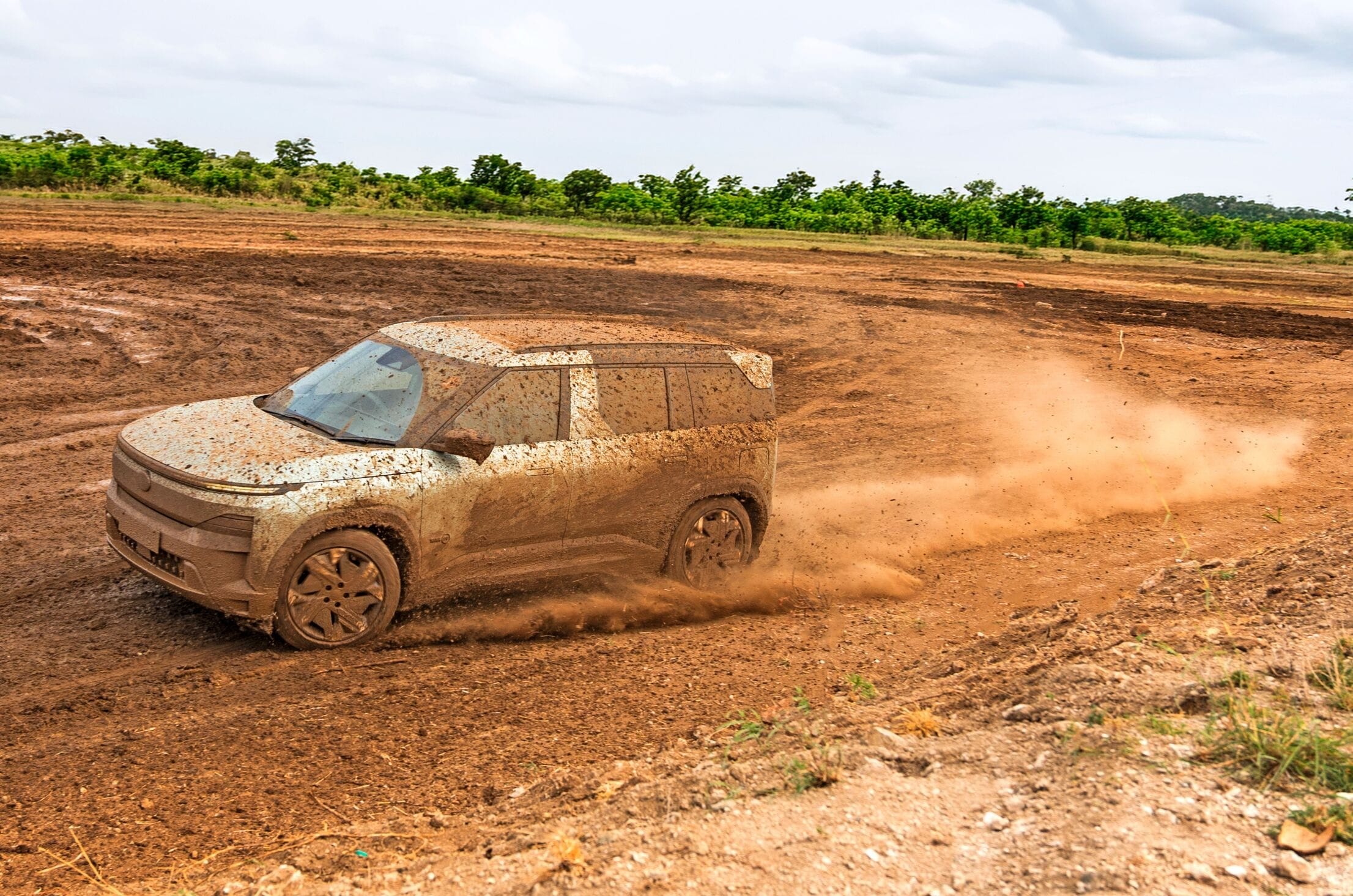
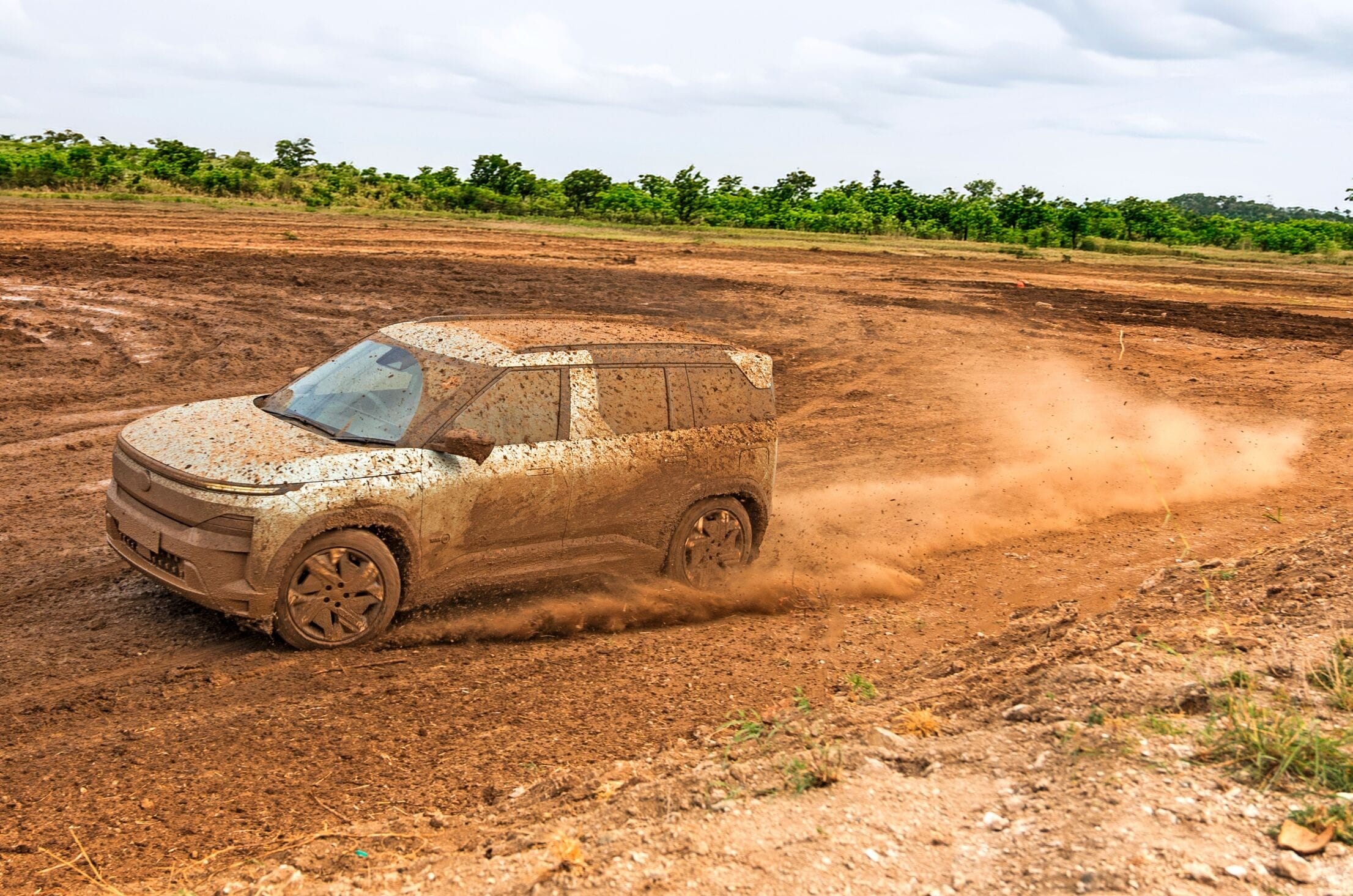
The Sierra EV QWD was rather impressive on the off-road course Tata Motors set up for it, which wasn’t the usual walk in the park, and had some pretty significant obstacles. Put it down to the short overhangs that improve approach and departure angles, or the responsiveness of the e-motors, but the result was surprisingly effortless. We didn’t even need to delve into the terrain modes for the most part, though there were instances where it would fumble shifting torque between the left and right wheels mid obstacle.
2026 Tata Sierra EV range and efficiency – 8/10
Big battery means big numbers, though a real-world test remains.
63kWh and 75kWh are among the bigger batteries offered in this segment, with only the Mahindra BE 6 offering a larger 78kWh unit. The Sierra’s smaller pack is rated at 565km on the MIDC, while the larger at 665km for the single motor and 624km for the dual motor. Tata itself says the MIDC rating won’t be achieved in real-world use, but that the larger battery can deliver upwards of 500km realistically.
When it comes to charging, on a 7.2kW AC charger, the 63kWh pack will take 8.9 hours to get from 10-100 percent, while the 75kWh pack will take 10.5 hours. On a 120kW DC charger, meanwhile, both will do a 20-80 percent top-up in about 26 minutes. At what rate the car actually accepts charge, however, remains to be seen. Tata offers a 15-year warranty on the battery of the Sierra EV, which is reassuring.
2026 Tata Sierra EV ride comfort and handling – 8/10
No compromise on comfort, despite added weight. Handles amicably too.
Tata SUVs have always been great in the dynamics department, and that continues here too. Despite the 19-inch wheels and the 2.1-tonne kerb weight, the Sierra EV can handle any manner of surface with equal composure and comfort. Put it down to the frequency dependent dampers (FDD) but no pothole is too big, nor surface too broken to upset the SUV.
It holds its line well at high speeds and lane change manoeuvres can be made with confidence and little effort. Similarly, at low speeds, the steering is light without feeling loose, letting you change direction easily even in traffic.
High-speed handling too is also pretty engaging, helped no doubt by its lower centre of gravity, and if you really wanted to, you could lean onto the Sierra EV quite hard. That said, it is a tall, high-riding vehicle, so an acceptable amount of body roll is present. The boxy profile, however, does result in some wind noise around the A-pillars at high speed, made more apparent by the silent powertrain.
2026 Tata Sierra EV price and verdict – 7/10
Overlaps with Curvv and Harrier, but feels the better EV than either of them.
It’s not much of a surprise that the Sierra EV is the best Tata you can buy right now, as it the latest product of the brand’s strategy of constant evolution and improvement. It’s not without its flaws, of course, but these feel less like huge deal breakers, and more like matters of finesse in manufacturing and calibration that Tata should take the time to address.
Apart from being a great EV, it’s also just a very good family car, offering space, comfort and the features Indian buyers now expect. The bigger problem for Tata could be where it fits between the Curvv and Harrier EVs, because there is some price overlap, and in our opinion, it surpasses them both overall. And while, at Rs 18.79 lakh to Rs 25.99 lakh, it is priced at the upper end of its segment, it does pack in a lot, and sits on par with the BE 6, which doesn’t have an AWD variant. Which of these two is better is a question for another time, but for now, the Sierra EV has the makings of a winner.
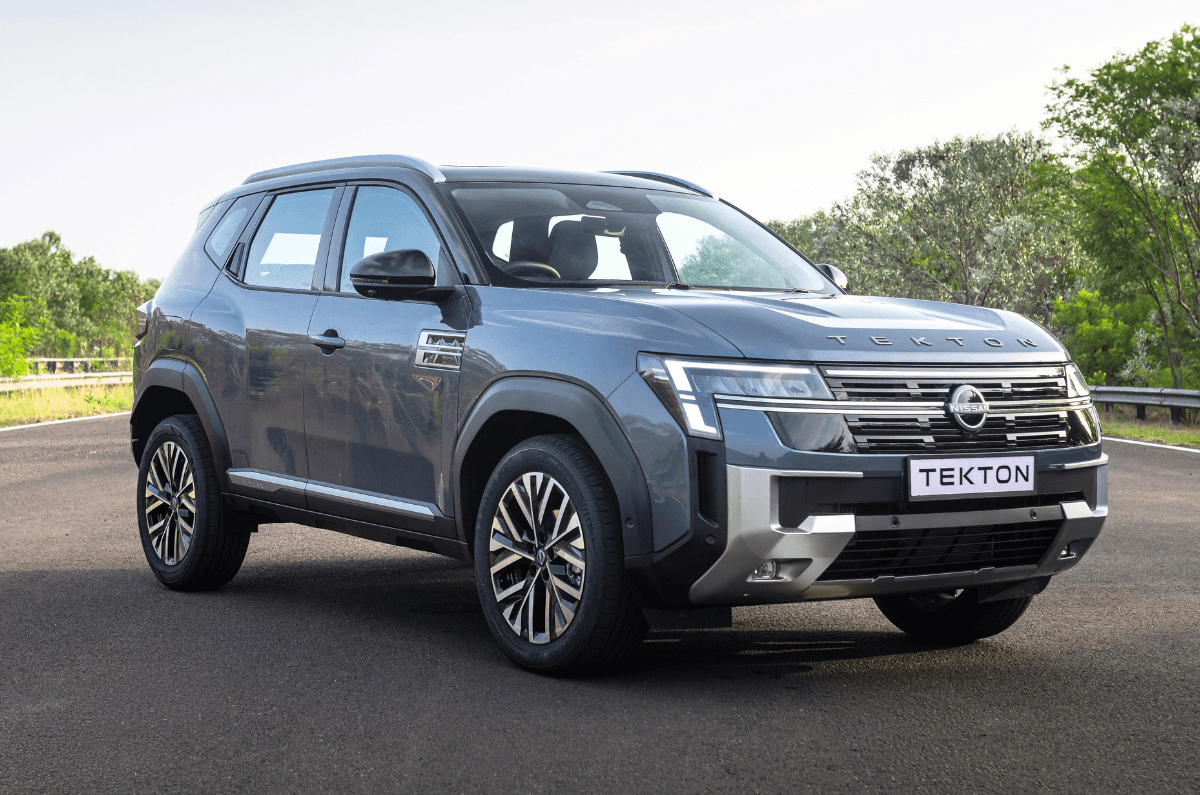
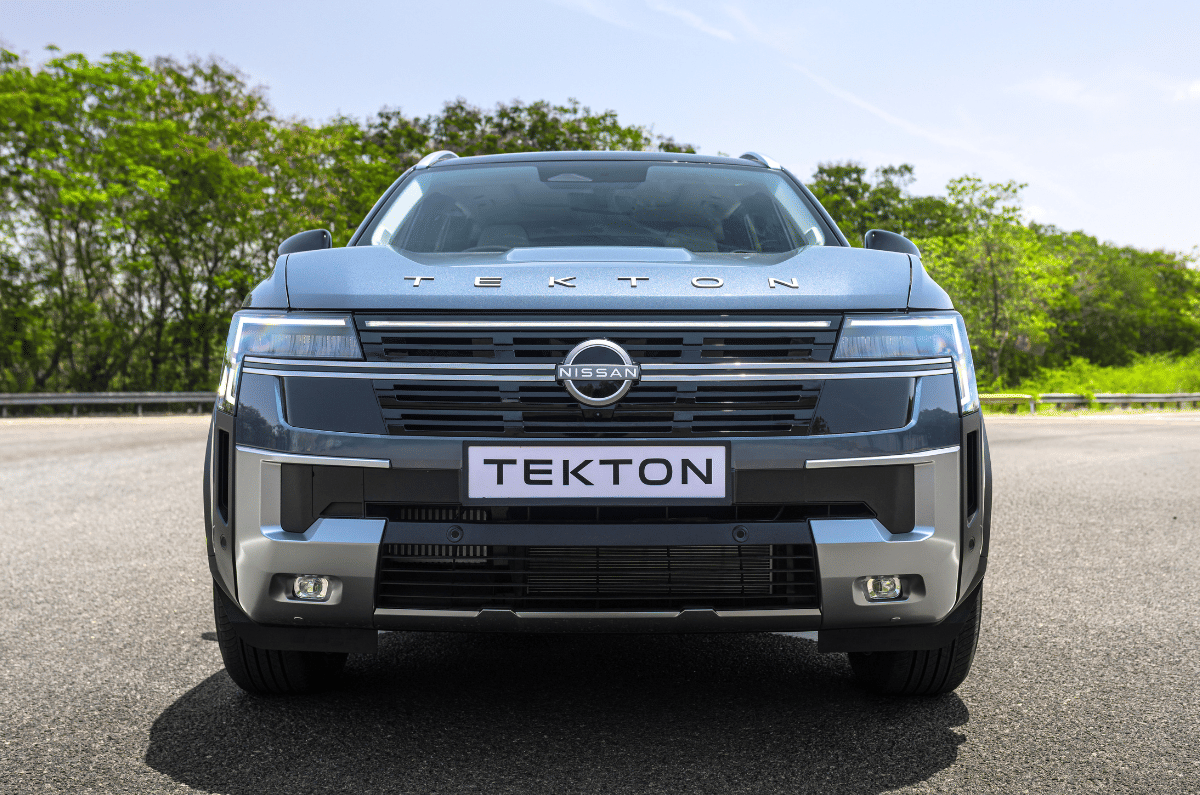
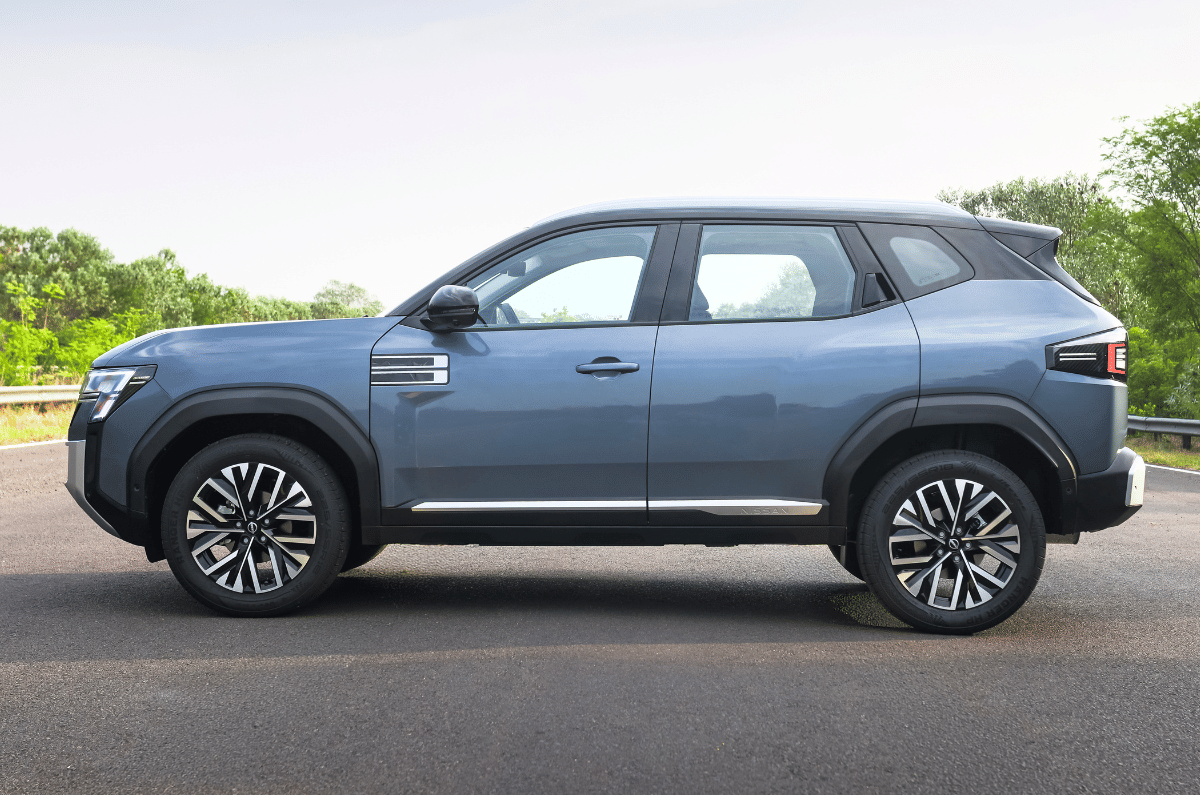
After several delays, Nissan has finally launched the Tekton in India. The SUV is the carmaker’s version of the Renault Duster, featuring a few design changes while sharing the same underpinnings. Competing with the likes of the Hyundai Creta, Kia Seltos, Tata Sierra, Maruti Grand Vitara and more, here’s everything you should know about Nissan’s new midsize SUV contender.
Is the Nissan Tekton pricier than the Renault Duster?
The Tekton range starts at Rs 10.49 lakh, ex-showroom, similar to the Duster. At the entry level, the Tekton is priced on par with the Duster and is among the most affordable midsize SUVs, with only the MG Astor and Citroen Aircross costing less. The Maruti Victoris follows with a premium of just Rs 1,000, while the Maruti Grand Vitara, Hyundai Creta, Kia Seltos, Tata Sierra, Skoda Kushaq, Volkswagen Taigun, Toyota Hyryder and Honda Elevate are all priced higher.
At the top end, the Tekton costs Rs 10,000 more than the Duster at Rs 18.59 lakh. Even then, it’s still cheaper than the Seltos, Creta, Sierra, Hyryder, Victoris, and Grand Vitara. The Aircross remains the most affordable midsize SUV by a wide margin.
When will the Nissan Tekton hybrid launch in India
As we have exclusively reported before, the Tekton will not be adding a hybrid powertrain option. Renault will be keeping the Horse Powertrain-derived strong hybrid system exclusive for the Duster, positioning it as a key competitive advantage in the increasingly crowded midsize SUV space.
The Tekton offers a choice between 100hp 1-litre and 163hp 1.3-litre turbo-petrol engine options. A 6-speed manual gearbox is standard, but an automatic gearbox, a 6-speed dual-clutch unit in this case, is offered with the more powerful mill only.
What is the fuel-efficiency of the Nissan Tekton?
Powertrain
Claimed fuel efficiency (kpl)
100hp 1L turbo-petrol 6MT
19.41
163hp 1.3L turbo-petrol 6MT
17.8
163hp 1.3L turbo-petrol 6DCT
18.5
Evidently, the 1.0-litre turbo-petrol paired with a manual gearbox delivers the highest efficiency at 19.41kpl in the line-up. The 1.3-litre turbo-petrol returns 18.5kpl with the dual-clutch automatic and 17.8kpl with the manual gearbox. Since the powertrains are shared between the Nissan and Renault badge-engineered SUVs, their claimed fuel-efficiency figures are similar.
Is the Nissan Tekton larger in overall size than its rivals?
The Tekton shares its height, wheelbase, ground clearance and wheel size options with the Duster. It is, however, 6mm longer and 2mm wider due to its different styling. Compared to its midsize SUV rivals, the Tekton is longer than the Sierra, Creta, Grand Vitara, Kushaq, Taigun, Elevate, Astor and Aircross. However, it falls short of the Seltos by 111mm, the Hyryder by 16mm and the Victoris by 11mm. When it comes to wheelbase, the Sierra leads the segment, followed by the Seltos, Aircross, and then the Tekton.
The Nissan SUV’s 212mm ground clearance is the second-highest in the segment after the Elevate. It also shares the largest 518-litre boot capacity in the segment with the Duster.
Does the Nissan Tekton have a spacious interior?
Its front seats are supportive and well-cushioned, and they also feature electric adjustment and ventilation. The rear seat is comfortable for two adults, while a third passenger can fit in. However, the limited shoulder room and the transmission hump make it less comfortable for three occupants over longer journeys.
At the rear, there’s enough kneeroom and plenty of headroom for six-footers. The large panoramic sunroof and windows make the cabin feel airy. Rear passengers also get a centre armrest with cup holders, dedicated AC vents and charging ports.
Which Nissan Tekton variant should you buy?
The N-Connecta trim, priced between Rs 13.69 lakh and Rs 16.49 lakh, ex-showroom, is our pick of the Tekton range. It packs a good mix of features, including a 10.25-inch digital instrument cluster, a panoramic sunroof, dual-zone climate control, 18-inch alloy wheels, wireless charger a six-speaker sound system and more. Buyers also get a choice between the two turbo-petrol engine options, along with their respective manual and automatic gearbox pairings.
Higher Tekton trims add features like Google integration for the touchscreen, ventilated front seats, MyNISSAN connected car tech, powered tailgate, 360-degree camera, Level 2 ADAS and more.
Kia has unofficially started bookings of the Syros EV for a token amount of Rs 25,000. It will be the second ICE-to-EV converted model in Kia India’s portfolio. Our dealer sources have hinted at a launch by the end of this month, along with its powertrain options.
Kia Syros EV: What do we know so far?
Our dealer sources have stated that the Kia Syros EV will offer the same battery packs as found on the Carens Clavis EV. This includes a 42kWh battery pack for the standard-range version and a larger 51.4kWh battery pack for the long-range versions. Additionally, they mentioned that ARAI-claimed ranges for the 42kWh and 51.4kWh versions would be about 420km and 520 km, respectively. The battery packs are expected to be paired to a front-mounted motor; however, power figures remain under wraps.
Image credit: @RasacL on Reddit
For its exterior, we were told that the Syros EV’s design would feature EV-specific design changes over its ICE counterpart, similar to how the Carens Clavis EV looks distinct from its ICE version. This could include a unique design for the alloy wheels, neon-green brake callipers, EV badging, and a slightly revised fascia. Heavily camouflaged test mules of the Syros EV have previously been spied on our roads.
As far as the interior is concerned, it could likely retain the ICE versions’ overall layout, but with a different colour scheme. Its feature set could mirror that of the ICE Syros, which gets 12.3-inch displays for the infotainment and digital driver’s screens, a 5-inch HVAC control display, a panoramic sunroof, a powered driver seat, ventilated front seats, rear seat base ventilation and more. It remains to be seen whether the Syros EV will get an ADAS suite, given that it was discontinued in the MY26 update for the ICE Syros.
Dealer sources also told us that the Syros EV is likely to have a price range of Rs 15 lakh to Rs 20 lakh (ex-showroom). Once launched, it will take on the likes of the Tata Nexon EV and the MG Windsor.
Kia has unofficially commenced pre-bookings for the Sorento for an amount of Rs 25,000, our dealer sources have confirmed. The new model will serve as the flagship ICE-powered SUV of Kia India’s lineup. While the Sorento is expected to debut later this month, our dealer sources have hinted at an October 2026 launch.
Kia Sorento: All that we know so far
Our dealer sources stated that a 1.6-litre strong-hybrid turbo-petrol engine would power the Sorento. While power figures remain under wraps, the UK-spec Sorento, for reference, gets a 1.6-litre strong-hybrid turbo-petrol engine that produces a combined 238hp and 380Nm of torque, and comes mated to a 6-speed torque converter automatic transmission. Depending on the market, the Sorento is offered in FWD or AWD configurations, and it remains to be seen what is brought to India.
Additionally, dealers mentioned that the SUV would offer 5,6, and 7-seater configurations. If that’s the case, it would be the segment’s only model to offer three seating configurations.
Kia Sorento: Additional details
The SUV was first spied on our roads in late 2025.
The global-spec Sorento is 4,815mm long, 1,900mm wide, 1,700mm tall and gets a 2,815mm wheelbase. Being a slightly older model, it does not get the carmaker’s latest ‘Opposite Unite’ design language, though it retains typical Kia design details like the ‘Tiger nose’ inspired grille, and gets roof rails, chrome surrounds for the side windows and dual-tone 19-inch alloy wheels. Heavily camouflaged mules of the SUV have been spied testing previously on our roads. Its interior comes well equipped with features like dual 12.3-inch displays for the instrument and infotainment displays, panoramic sunroof, front seat ventilation, powered driver seat level 2 ADAS, 360-degree camera and more.
The Sorento will be locally assembled in India. With an expected ex-showroom price of Rs 40 lakh to Rs 50 lakh, it will take on the likes of the Skoda Kodiaq and the Volkswagen Tyron.