Tata Sierra EV top-spec vs Harrier EV mid-spec: Features, specs compared

Tata Sierra EV top-spec vs Harrier EV mid-spec variants compared

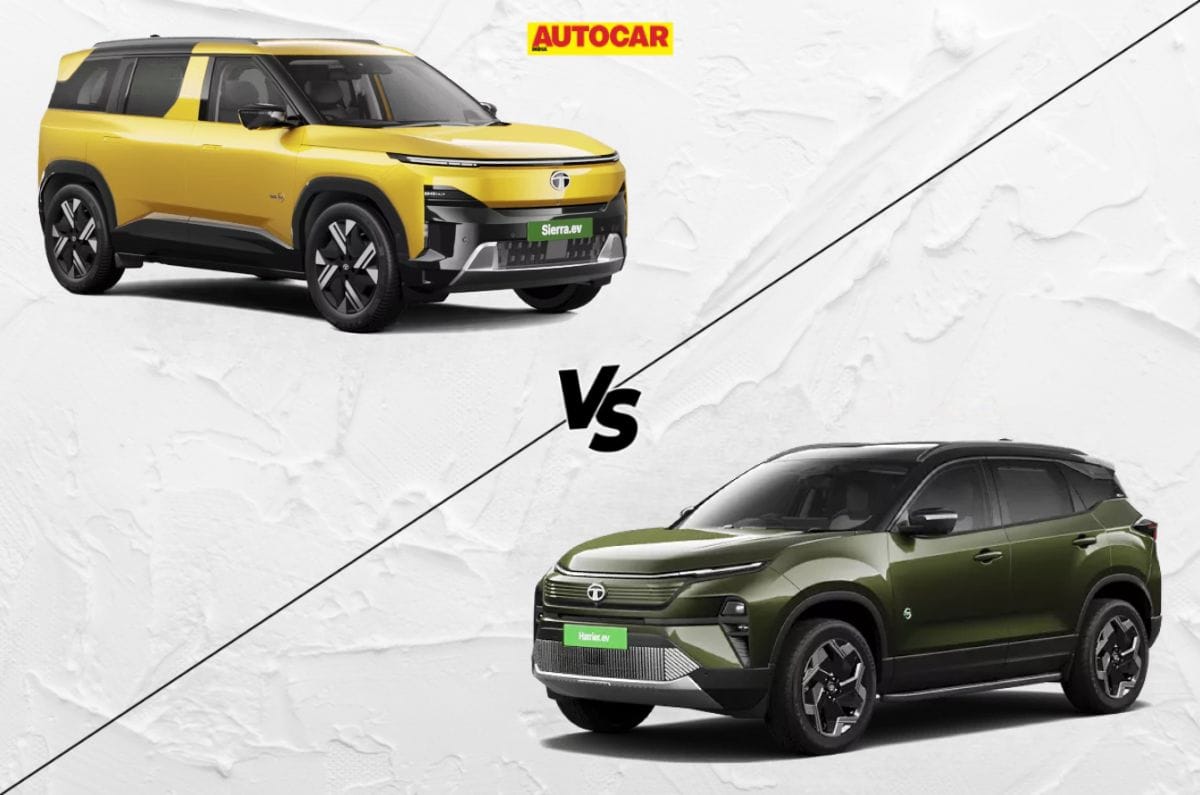
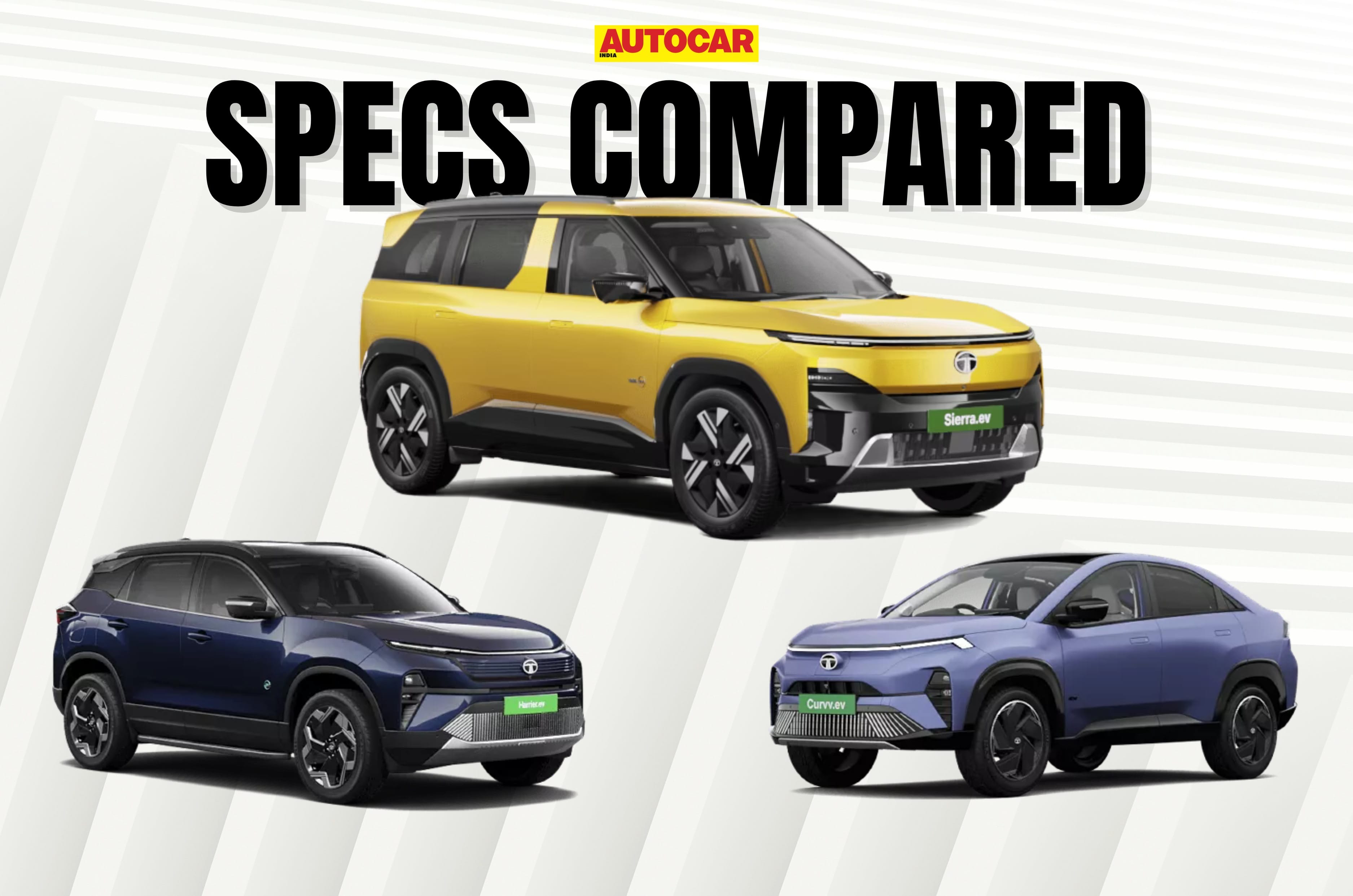
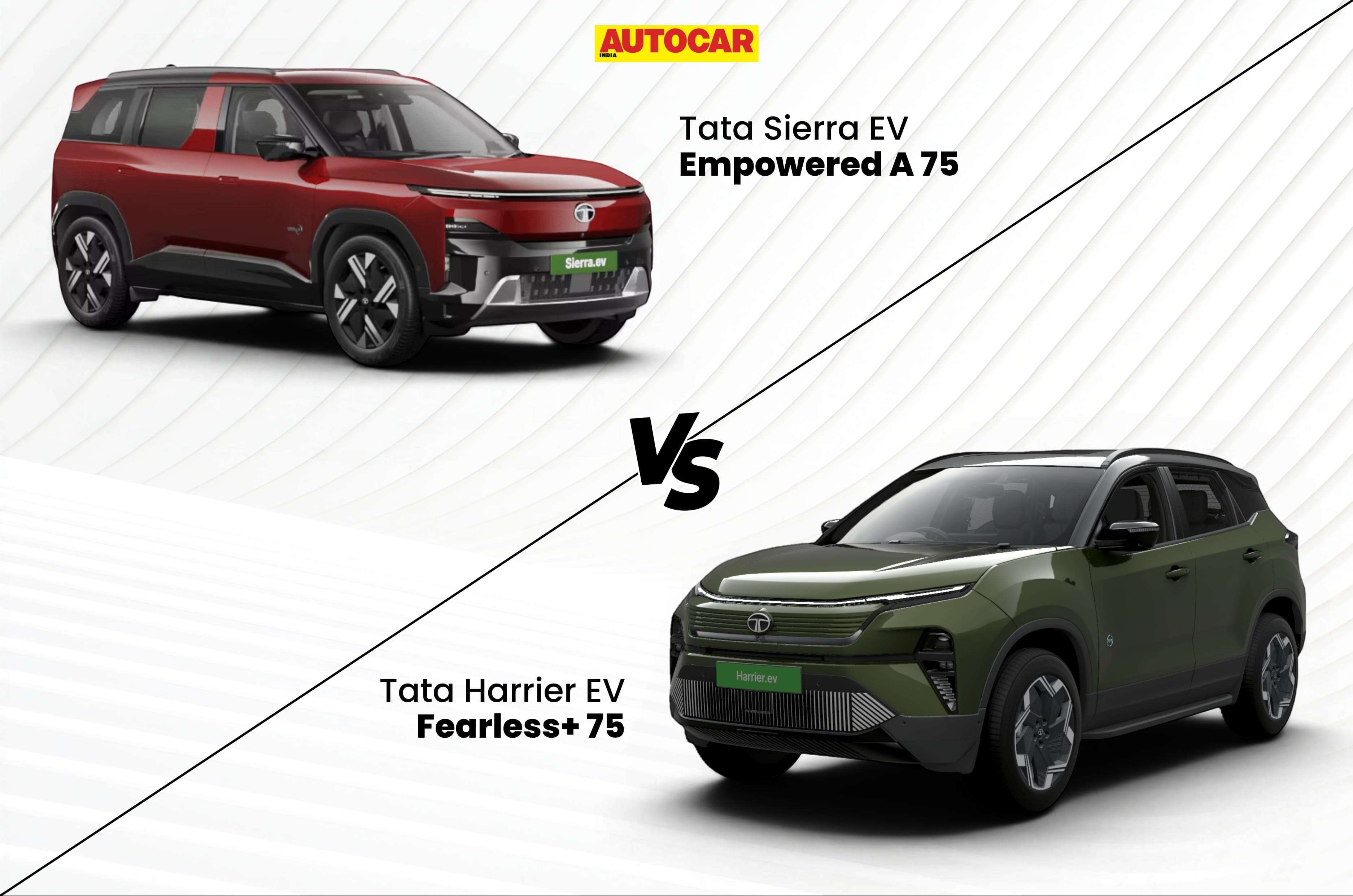
The recently launched Tata Sierra EV is positioned right below its larger sibling, the Harrier EV. However, there’s quite a lot of pricing overlap between the two Tata electric SUVs. To that end, we’ve compared the top-spec Sierra EV Empowered A 75 to the mid-spec Harrier EV Fearless+ 75 to find out which variant delivers better value on paper.

Explore full specs, features, and a price breakdown in our Sierra EV vs Harrier EV comparison.

Tata Sierra EV top-spec vs Harrier EV mid-spec: Dimensions

Harrier EV is longer and wider, but Sierra EV is taller and offers greater boot space

Tata Sierra EV Empowered A 75 vs Harrier EV Fearless+ 75 dimensions

 Sierra EVHarrier EV
Length (mm)4,3404,607
Width (mm)1,8411,922
Height (mm)1,7501,740
Wheelbase (mm)2,7302,741
Boot space (litres)622502
Frunk space (litres)55 (RWD) / 35 (AWD)67 (RWD) / 35 (AWD)
Wheel size (inches)1919

Expectedly, the Harrier EV is 267mm longer than the Sierra EV, but there’s only an 11mm difference between their wheelbases, suggesting that the smaller SUV doesn’t lose out on much interior space. While the Harrier EV is 81mm wider than the Sierra EV, the latter is 10mm taller. Wheel sizes are matched at 19 inches for both electric SUVs.

Interestingly, the Sierra EV offers 120 litres of additional boot space over the Harrier EV – it’s worth nothing that both SUVs’ boot capacity is measured up until the roof, as opposed to the conventional method, which is up to the parcel tray. In terms of frunk capacity, the RWD Harrier EV offers the bigger one, while their AWD versions are matched in this regard.

Tata Sierra EV top-spec vs Harrier EV mid-spec: Battery and range

Harrier EV offers more power, Sierra EV is quicker and claims higher range figures

Tata Sierra EV Empowered A 75 vs Harrier EV Fearless+ 75 powertrains

 Sierra EVHarrier EV
Battery size (kWh)7575
Motor setupSingle, rear / Dual, front and rearSingle, rear / Dual, front and rear
Power (hp)209 / 306238 / 313
Torque (Nm)315 / 504315 / 504
Drive layoutRWD / AWDRWD / AWD
Claimed 0-100kph time (seconds)5.8 (AWD)6.3 (AWD)
MIDC range (km)665 / 624627 / 622

Both the Sierra EV and Harrier EV get 75kWh battery packs, along with single-motor (RWD) and dual-motor (AWD) options. The Harrier EV edges ahead in terms of powertrain output, though the RWD versions of both SUVs feature identical torque figures. Despite the Sierra EV’s slightly lower output, its AWD variant is half a second quicker in the 0-100kph run compared to that of the Harrier EV – this is on account of the Sierra EV being smaller and lighter.

Similarly, MIDC-claimed range is a total victory for the Sierra EV as well. The Sierra EV AWD’s claimed range is 2km higher than that of the Harrier EV AWD, while the RWD version can travel 38km more on a single charge.

Tata Sierra EV top-spec vs Harrier EV mid-spec: Charging times

Both electric SUVs trade punches here

Tata Sierra EV Empowered A 75 vs Harrier EV Fearless+ 75 charging times and warranty details

 Sierra EVHarrier EV
AC charging time (10-100 percent)10.5hrs (7.2kW)10.7hrs (7.2kW)
DC charging time (20-80 percent)26mins (120kW)25mins (120kW)
Battery warrantyLifetime warranty and unlimited kilometresLifetime warranty and unlimited kilometres
Motor warranty8 years/1,60,000km (whichever is earlier)8 years/1,60,000km (whichever is earlier)
Vehicle warranty3 years/1,25,000km (whichever is earlier) 3 years/1,25,000km (whichever is earlier) 

Despite battery capacities being identical for both electric SUVs, the Harrier EV takes slightly longer to charge from 10-100 percent via a 7.2kW AC outlet. On the other hand, the Harrier EV is marginally quicker in a 20-80 percent top-up from a 120kW DC fast charger. Tata offers the same battery, motor, and vehicle warranties for the Harrier EV and Sierra EV, so buyers can rest easy on this front.

Tata Sierra EV top-spec vs Harrier EV mid-spec: Exterior features

Harrier EV additionally offers side step and charging indicator function for the front light bar

Tata Sierra EV Empowered A 75 vs Harrier EV Fearless+ 75 exterior features

 Sierra EVHarrier EV
HeadlampsAutomatic LEDAutomatic LED
Front light barLEDLED
Welcome/goodbye sequenceYesYes
Charging indicator in light barNoYes
Front fog lampsLEDLED
Cornering lampsYesYes
Tail-lampsLEDLED
Rear fog lampsYesYes
Sequential indicatorsYesYes
Side stepNoYes
Electrically adjustable ORVMs with auto-foldYesYes
Rear spoilerYesYes
Rear wiper and washerYesYes
Shark-fin antennaYesYes
Roof railsYesYes
Puddle lampsYesYes

Coming to exterior features, the Sierra EV and Harrier EV are near-identical. However, the Sierra EV does miss out on a charging indicator in the front light bar, with it instead being situated on the charging port. The Harrier EV additionally offers a side step too, which makes ingress and egress a tad easier.

Tata Sierra EV top-spec vs Harrier EV mid-spec: Interior features

Sierra EV is the only Tata electric car to offer a triple-screen setup

Tata Sierra EV Empowered A 75 vs Harrier EV Fearless+ 75 interior features

 Sierra EVHarrier EV
Touchscreen12.3 inches12.3 inches
Digital driver’s display10.25 inches10.25 inches
Passenger display12.3 inchesNo
Heads-up displayYesNo
Automatic climate controlDual-zoneDual-zone
Steering-mounted controlsYesYes
Ambient lightsYesYes
Panoramic sunroofYesYes
Powered driver seat6-way adjustment6-way adjustment
Driver seat functionsMemory and welcomeMemory and welcome
Powered co-driver seat4-way adjustment4-way adjustment
Ventilated front seatsYesYes
Boss modeYesNo
Sound system12-speaker JBL Black10-speaker JBL Black
Wireless charging padYesYes
Cabin air purifierYesYes
Powered windowsFront and rearFront and rear
Rear sunshadeYesYes
Rear AC ventsYesYes
Rear centre armrestYesYes
Connected car techYesYes
V2L, V2V functionalityYesYes

Despite its lower positioning, the Sierra EV pulls a clear lead over the Harrier EV in terms of cabin equipment. Features like a 12.3-inch passenger display, a 12-speaker JBL sound system, and a heads-up display are not offered even on the top-spec Harrier variant. In fact, the Sierra EV is the only electric Tata to come with a triple-screen setup at the moment.

Tata Sierra EV top-spec vs Harrier EV mid-spec: Driving features

Sierra EV comes with extra terrain mode and adaptive cruise control

Tata Sierra EV Empowered A 75 vs Harrier EV Fearless+ 75 driving features

 Sierra EVHarrier EV
Drive modesEco, City, SportEco, City, Sport
Battery regen modesYesYes
Terrain modesNormal, Wet, Rough, CustomNormal, Wet, Rough
Cruise controlAdaptive with stop/go functionsYes
Drift modeYesYes
Boost modeAWD onlyAWD only
Low-speed cruise controlAWD onlyAWD only
Extra terrain modes (AWD only)YesYes

Both the top-spec Sierra EV and mid-spec Harrier EV are very similar on the driving features front. However, the Sierra EV gets an additional ‘Custom’ terrain mode in the RWD version, as well as adaptive cruise control with stop and go functionality. The latter is much more convenient than the Harrier EV’s standard cruise control, as it can automatically adjust the speed based on proximity to nearby vehicles, and even come to a standstill and set off by itself. AWD versions of both SUVs get additional terrain modes too, namely Snow/Grass, Mud-Ruts, Sand, Rock Crawl, and Custom.

Tata Sierra EV top-spec vs Harrier EV mid-spec: Safety features

Harrier EV has 7 airbags and 5-star BNCAP rating, Sierra EV gets Level 2 ADAS and better camera setup

Tata Sierra EV Empowered A 75 vs Harrier EV Fearless+ 75 safety features

 Sierra EVHarrier EV
Bharat NCAP ratingYet to be tested5 stars
Airbags67
Level 2 ADASYesNo
Camera setup540-degreeRear only
Parking sensorsFront and rearFront and rear
Disc brakesFront and rearFront and rear
ABS with EBDYesYes
Electronic stability program (ESP)YesYes
TPMSYesYes
Electronic parking brake with auto-holdYesYes
Auto-dimming IRVMYesYes
Rain-sensing wipersYesYes
Rear defoggerYesYes
Driver drowsiness detectionNoYes
Acoustic vehicle alarm system (AVAS)YesYes

In the safety department, the Harrier EV holds some notable advantages, specifically a 5-star Bharat NCAP rating (the Sierra EV is yet to be tested, but will likely perform well too), 7 airbags, and driver drowsiness detection. The Sierra EV, though, trades punches with the Harrier EV thanks to safety features like Level 2 ADAS and a 540-degree camera (360-degree with underfloor view).

Tata Sierra EV top-spec vs Harrier EV mid-spec: Prices and verdict

Sierra EV is up to Rs 70,000 cheaper

Tata Sierra EV Empowered A 75 vs Harrier EV Fearless+ 75 price* (Rs, lakh)

 Sierra EVHarrier EVDifference
RWDRs 24.79 lakhRs 25.19 lakhRs 40,000
AWDRs 25.99 lakhRs 26.69 lakhRs 70,000

*Exclusive of home charger and installation, which costs Rs 49,000 extra.

The Sierra EV Empowered A 75 clearly emerges as the better option over the Harrier EV Fearless+ 75, as the smaller SUV offers considerably more comfort and convenience features, a larger boot, higher claimed range figures, similar powertrain outputs and charging speeds, and greater performance – all while being Rs 40,000-70,000 more affordable.

All prices are ex-showroom, India.

Tata Sierra EV vs Harrier EV: Whose top trim offers more value?

Tata Sierra EV vs Harrier EV: Whose top trim offers more value?

The Tata Sierra EV was recently launched as the manufacturer’s second all-electric offering with a dual-motor AWD choice. It is positioned between the Curvv EV and Harrier EV, the latter of which is also offered with an AWD option. So, between the Sierra EV and Harrier EV, whose top trim offers more features and better specifications? Let us find out.

Tata Sierra EV vs Harrier EV: Dimensions

Although smaller in size, the Sierra EV offers a larger boot and frunk

Tata Sierra EV vs Harrier EV dimensions and other specifications


Sierra EV 

Harrier EV

Difference

Length (mm)

4340

4607

-267

Width (mm)

1841

1922

-81

Height (mm)

1750

1740

+10

Wheelbase (mm)

2730

2741

-11

Ground clearance (mm)

205

Boot space (litres)

622

502

+120

Frunk space (litres)

55

35

+20

Number of seats

5

5

While the height and wheelbase of both the Sierra EV and Harrier EV are similar, the Harrier EV is longer and wider by a considerable margin. However, the Sierra EV offers a 120-litre larger boot space and a 20-litre larger frunk.

Notably, Tata has not revealed the official ground clearance figures of the Harrier EV, but it is likely to be similar to the Sierra EV’s 205mm ground clearance.

Tata Sierra EV vs Harrier EV: Powertrain

Both get similar battery packs, but the Harrier EV offers more potent electric motors

Tata Sierra EV vs Harrier EV: Powertrain specifications


Sierra EV RWD

Harrier EV RWD

Sierra EV AWD

Harrier EV AWD

Battery pack

75kWh

75kWh

75kWh

75kWh

eMotor configuration*

RWD

RWD

AWD

AWD

Power (hp)

209

238

140 (front), 209 (rear)

158 (front), 238 (rear)

Torque (Nm)

315

315

504

504

Claimed range (km)

665

627

624

622

*RWD = Rear-wheel-drive; AWD = All-wheel-drive

Top-spec trims of both the Sierra EV and the Harrier EV get identical 75kWh battery packs powering either a rear-axle-mounted (RWD) motor or dual electric motors (AWD). The Harrier EV RWD produces 29hp more than the Sierra EV RWD and has a higher claimed range.

With the AWD setup, the combined torque output of both SUVs is 504Nm, but their power outputs differ. The Harrier EV is the more powerful eSUV, its front and rear motors producing 18hp and 29 more than the Sierra EV, respectively.  The claimed range of both Tata EVs is similar too.

Notably, the Sierra EV’s lower variants are offered with a 63kWh battery with an RWD motor, and the Harrier EV is also available with a smaller 65kWh battery with an RWD setup.

Tata Sierra EV vs Harrier EV: Exterior

Both eSUVs offer identical exterior features

Tata Sierra EV vs Harrier EV: Exterior


Sierra EV Empowered A

Harrier EV Empowered

Headlights

Auto projector LED

Auto projector LED

Taillights

Connected LED

Connected LED

DRLs

Connected LED

Connected LED

Front fog lamps

LED, cornering function

LED, cornering function

Flush door handles

Yes

Yes

Wheels

19-inch alloy

19-inch alloy

Powered ORVMs

Yes

Yes

Roof rails

Yes

Yes

Sharkfin antenna

Yes

Yes

Colour

Monotone, Dual tone

Monotone, Dual tone

Exterior features on both the top-spec Sierra EV and Harrier EV are identical. These include an all-LED lighting setup, 19-inch rims, powered outside rearview mirrors (ORVMS) and roof rails.

Tata Sierra EV vs Harrier EV: Interior and features

Sierra EV offers three screens and more speakers, but misses out on boss mode

Tata Sierra EV vs Harrier EV: Interior and features


Sierra EV Empowered A

Harrier EV Empowered

Driver’s display

10.25-inch

10.25-inch

Infotainment screen

12.3-inch

14.5-inch

Passenger display

12.3-inch

Android Auto, Apple CarPlay

Yes, wireless

Yes, wireless

Audio system

12-speaker JBL

10-speaker JBL Black

On-board navigation

Yes

Yes 

Sunroof

Panoramic

Panoramic

Powered tailgate

Yes

Yes

Climate control

Dual-zone

Dual-zone

Air purifier

Yes

Yes

Seat upholstery

Leatherette

Leatherette

Steering wheel adjustment

Tilt, telescopic

Tilt, telescopic

Wireless phone charger

Yes

Yes

Driver seat adjustment

6-way powered

6-way powered

Driver’s seat features

Ventilation, memory, welcome 

Ventilation, memory, welcome 

Co-driver’s seat adjustment

4-way powered

4-way powered

Co-driver’s seat features

Ventilation

Ventilation

Rear seat features

Boss mode

Rear window sunshade

Yes

Yes

Head-up display (HUD)

Yes

No

Vehicle-to-load (V2L)

Yes

Yes

Vehicle-to-vehicle (V2V)

Yes

Yes

One of the Tata Sierra EV’s USPs is a triple-screen setup, which is not even offered on the pricier Harrier EV. Compared to the Harrier EV, the Sierra EV also gets 2 more speakers and a coloured HUD.

The flagship Harrier EV, however, offers a larger touchscreen infotainment system and powered boss mode on the co-driver’s seat, which are not available on the Sierra EV. Other features are identical to both eSUVs. 

Tata Sierra EV vs Harrier EV: Driving tech

Both electric SUVs are on par with each other in terms of driving tech

Tata Sierra EV vs Harrier EV: Driving technology


Sierra EV Empowered A

Harrier EV Empowered

Drive modes

Boost (AWD only), Eco, City, Sport

Boost (AWD only), Eco, City, Sport

RWD terrain modes

4

4

AWD terrain modes

6

6

Paddle shifters for regen

Yes

Yes

Cruise control

Adaptive

Adaptive

The Tata Sierra EV and Harrier EV share the same acti.ev+ platform, which is why they offer identical driving tech. These include 3 drive modes and up to 6 terrain modes (depending on the drivetrain).

Tata Sierra EV vs Harrier EV: Safety

Harrier EV gets an additional knee airbag and a digital IRVM

Tata Sierra EV vs Harrier EV: Safety features


Sierra EV Empowered A

Harrier EV Empowered

Airbags

6

7

ADAS

Level 2

Level 2

Camera setup

540-degree

540-degree

Parking sensors

Front and rear

Front and rear

Electronic parking brake

Yes

Yes

All-wheel disc brakes

Yes

Yes

TPMS

Yes

Yes

IRVM

Auto-dimming

Digital

Rear wiper, washer

Yes

Yes

Hill start assist

Yes

Yes

Hill descent control

Yes

Yes

ESC

Yes

Yes

Traction control

Yes

Yes

Over the Sierra EV, the top-spec Tata Harrier EV Empowered offer an additional knee airbag and a digital inside rearview mirror (IRVM). Other features, a 540-degree camera (with an under-bonnet view) and Level 2 ADAS, are identical on both EVs. 

Tata Sierra EV vs Harrier EV: Price and verdict

Sierra EV is around Rs 3 lakh more affordable than the Harrier EV

Sierra EV Empowered A vs Harrier EV Empowered ex-showroom price


Sierra EV Empowered A

Harrier EV Empowered

Difference

RWD price

Rs 24.79 lakh

Rs 27.69 lakh

– Rs 2.90 lakh

AWD price

Rs 25.99 lakh

Rs 29.19 lakh

– Rs 3.20 lakh

The top-spec Tata Harrier EV’s Empowered trim is around Rs 3 lakh pricier than the Sierra EV’s fully loaded Empowered A trim. Although the Harrier EV is larger, the Sierra EV offers more boot space and a higher claimed range with both RWD and AWD. Unlike the Harrier EV, it gets features like a dedicated screen for the co-driver and more speakers, while getting the same driving tech as the Harrier EV. Although it misses out on boss mode, an additional knee airbag and a digital IRVM, a Rs 3 lakh difference makes the Sierra EV a better value-for-money proposition.

Prices are ex-showroom, India.

Tata Sierra EV vs Mahindra BE 6: Whose top-spec trim offers better value?  

Tata Sierra EV vs Mahindra BE 6:

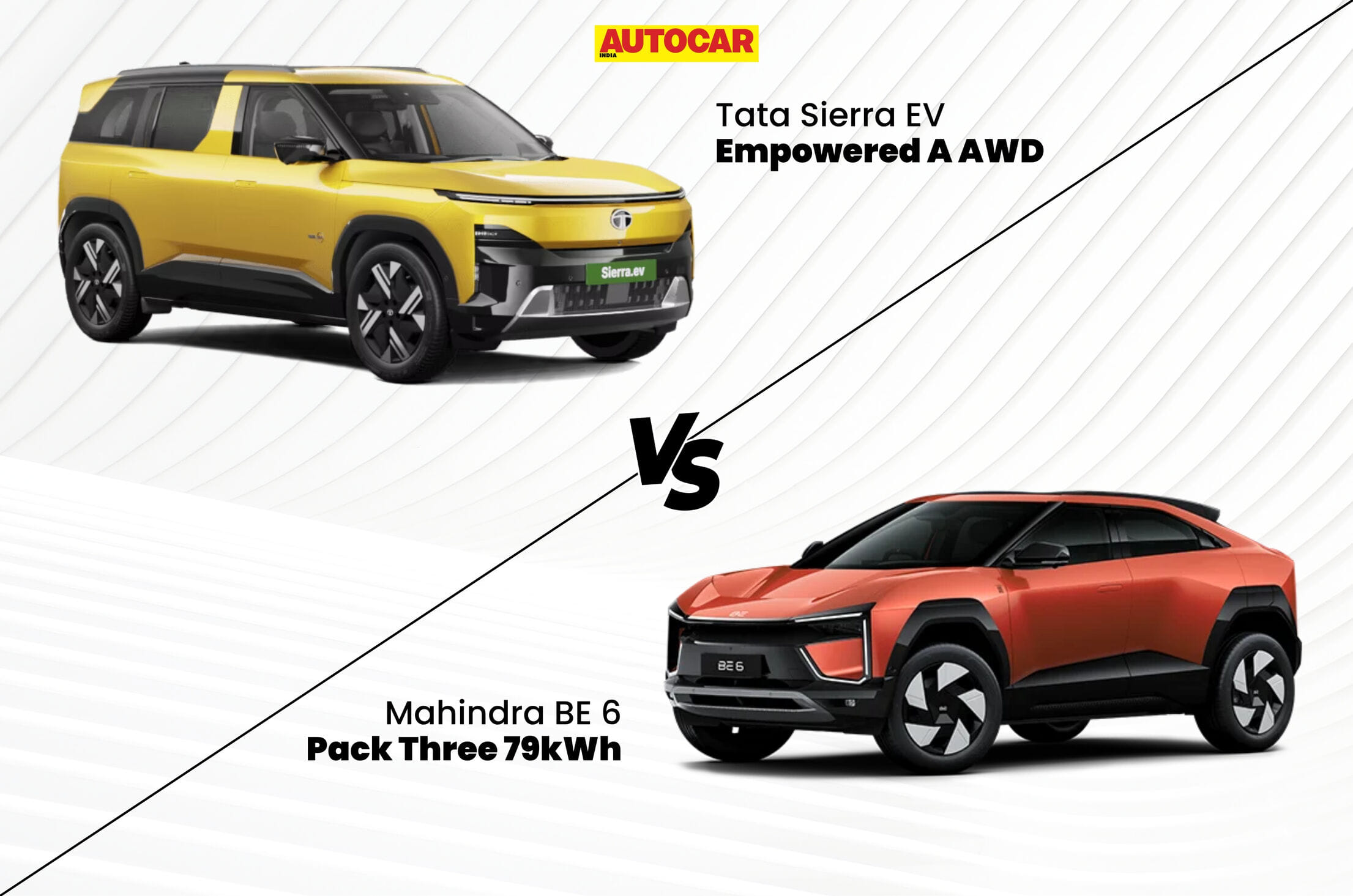
With the mid-size electric SUV space getting highly competitive over time, the Mahindra BE 6 comes as a popular option with its futuristic looks, large battery and powerful motor. With the Sierra EV’s arrival, Tata is aiming squarely for the BE 6. From dimensions and powertrains to features and price, we compare both eSUVs’ top-spec versions on paper to determine the better value proposition. Here, we’ve chosen the Empowered A trim of the Sierra EV and the Pack Three trim of the BE 6.

Explore full specs, features, and a price breakdown in our Sierra EV versus Mahindra BE 6 comparison.

Tata Sierra EV vs Mahindra BE 6: Dimensions

Tata Sierra EV vs Mahindra BE 6: Dimensions


Sierra EV

BE 6

Difference 

Length (mm)

4,340

4,371

-31 

Width (mm)

1,841

1,907

-66

Height (mm)

1,750

1,627

+123

Wheelbase (mm)

2,730

2,775

-45

Ground clearance (mm)

205

207

-2

Boot space (litres)

450

455

-5

Frunk space (litres)

35-55

45

+/-10

According to our mid-size eSUV specification comparison, the Sierra EV and the Mahindra BE 6 were among the largest models. While the Sierra EV is taller and has a larger frunk, the BE 6 is longer, wider, has a longer wheelbase, and slightly more ground clearance and boot. Overall, the BE 6 is larger, albeit marginally.

Tata Sierra EV vs Mahindra BE 6: Battery and range 

Tata Sierra EV vs Mahindra BE 6: Battery and range 


Sierra EV

Mahindra BE 6

Battery size (kWh)

75

79

Motor setup

RWD | AWD

RWD 

Power (hp)

209 | 140 (front) 240 (rear)

286

Torque (Nm)

315 | 504

380

ARAI range (km)

665 | 624

683

In top-specification guise, the Sierra EV and Mahindra BE 6 feature among the largest battery packs in the segment, with the latter being slightly bigger. But the Sierra more than makes up for it by being the only eSUV to have an AWD version. There’s also a single-motor RWD version offered on the Empowered A trim of the Sierra EV. While the BE 6’s single motor produces more power than the front and rear motors on the Sierra EV, the Sierra EV delivers 124Nm of additional torque in AWD guise. However, the BE 6 gets higher claimed range figures in comparison to the Sierra EV.

Tata Sierra EV vs Mahindra BE 6: Charging times 

Tata Sierra EV vs Mahindra BE 6: Charging times 


Sierra EV

Mahindra BE 6

Battery size (kWh)

75

79

AC charging output support (kW)

7.2

7.2, 11.2

DC charging output support (kW)

110, 120

180

AC charging time (hours)

8.9 | 10.5 (10-100%)

11.7, 8 (0-100%)

DC charging time (minutes)

25 | 26 (20-80%)

20 (20-80%)

As far as charging is concerned, the BE 6 supports faster AC and DC charging speeds compared to the Sierra EV. Only their DC charging speeds are comparable, with the Sierra EV’s time being up to 6 minutes slower than the BE 6’s.

Tata Sierra EV vs Mahindra BE 6: Exterior features

Tata Sierra EV vs Mahindra BE 6: Exterior features


Sierra EV

Mahindra BE 6

Headlights

Auto LED

Auto LED

Tail-lights

LED

LED

DRLs

Yes

Yes

Welcome/goodbye animation

Yes

Yes

Fog lamps

Front and rear

Front

Puddle lamps

Yes

No

Sequential indicators

Yes

Yes

Flush door handles

Yes

Yes

Rear spoiler

Yes 

Yes

Power-adjustable and folding ORVMs

Yes

Yes

Rain-sensing wipers

Yes

Yes

Rear wiper/washer

Yes

No

Shark-fin antenna

Yes

No

Colours

Monotone

Monotone

Wheels

19-inch

19-inch

On the outside, both the Sierra EV and BE 6 come with LED lighting, welcome and goodbye animations, sequential turn indicators, and the largest-in-segment 19-inch alloys. But the Sierra EV comes with rear fog lamps, puddle lamps, a rear wiper/ washer, and a shark fin antenna. However, the BE 6 gets motorised opening for the front flush door handles, while the Sierra EV’s flush door handles are manually operated.

Tata Sierra EV vs Mahindra BE 6: Interior features

Tata Sierra EV vs Mahindra BE 6: Interior features


Sierra EV

Mahindra BE 6

Infotainment screen

12.3-inch

12.3-inch

Driver’s display

10.25-inch

12.3-inch

Passenger display

12.3-inch

No

Head-up display

Yes

Yes

In-built navigation

Yes

No

Infotainment-based gaming console

Yes

No

In-car payments

Yes

No

Powered driver’s seat 

6-way

6-way

Front seat thigh support

Yes

No

Driver seat memory and welcome function

Yes

Yes

Powered front passenger seat

4-way

No

Cooled front seats

Yes

Yes

Reclining rear seats

Yes

Yes

Boss mode

Yes

No

Wireless Android Auto, Apple CarPlay

Yes

Yes

Audio system

12-speaker JBL Black

16-speaker Harman Kardon

Dolby Atmos

Yes

Yes

Sunroof

Openable panoramic

Fixed-glass panoramic

Rear AC vents

Yes

Yes

Climate control

Dual-zone

Dual-zone

Seat upholstery

Leatherette

Leatherette

Wireless phone charger

Yes

Yes

Ambient lighting

Yes

Yes

Front centre armrest

Yes

Yes

Rear centre armrest

Yes

Yes

USB ports

4x Type-C

4x Type-C

NFC-based key card

Yes

No

Powered tailgate

Yes

Yes

Air purifier

Yes

Yes

Connected car tech

Yes

Yes

Rear sunshades

Yes

No

OTA updates

Yes

Yes

While the BE 6 gets the larger digital driver’s display and more speakers than the Sierra EV, the latter, however, pips the former by offering an additional passenger display, built-in navigation, a powered front passenger seat, boss mode, and rear window sunshades. While the panoramic sunroof in the Sierra EV is openable, the BE 6 gets a fixed glass roof.

Tata Sierra EV vs Mahindra BE 6: Driving tech 

Tata Sierra EV vs Mahindra BE 6: Driving tech 


Sierra EV

BE 6

Boost mode

Yes

No

Drive modes

Normal, Eco, Sport

Default, Range, Everyday, Race

Terrain modes

Normal, Grass, Snow, Mud-ruts, Gravel, Sand, Rock Crawl, Custom

Snow

Off-road assist

Yes

No

Cruise Control

Adaptive

Adaptive

Drift mode

Yes

No

While drive modes and adaptive cruise control are present on both eSUVs, the Sierra EV’s AWD allows more adjustability to your drive. The BE 6 offers only snow mode, while the Sierra EV betters it with Normal, Grass, Snow, Mud-ruts, Gravel, Sand, Rock Crawl, and Custom terrain modes. Additionally, the Sierra EV also offers a drift mode and boost mode, with the latter surging power on demand. 

Tata Sierra EV vs Mahindra BE 6: Safety

Tata Sierra EV vs Mahindra BE 6: Safety


Sierra EV

BE 6

Airbags

6

6

ABS and EBD

Yes

Yes

ADAS

Level 2+

Level 2+

Automatic parking assist 

Yes

Yes

Camera setup

540-degree

360-degree

Parking sensors

Front and rear

Front and rear

Electric parking brake

Yes

Yes

Disc brakes

All-wheels

All-wheels

TPMS

Yes

Yes

IRVM

Auto-dimming

Auto-dimming

Hill-hold control

Yes

Yes

ESC

Yes

Yes

When it comes to safety features, the Sierra EV and BE 6 come loaded. Not only do both eSUVs cover the basics like 6 airbags, hill hold control, and ESC, but they are the segment’s only SUVs with Level 2+ ADAS and automatic parking assist. The latter feature also enables you to park/unpark your vehicle via your smartphone. But the Sierra EV nudges ahead minutely with additional cameras for the under-bonnet area on top of its 360-degree camera setup. 

Tata Sierra EV vs Mahindra BE 6: Price and verdict

Tata Sierra EV vs Mahindra BE 6: Price and verdict


Sierra EV AWD

Mahindra BE 6

Ex-showroom price (Rs lakh)

24.79 – 25.99

26.90

The Sierra EV is up to Rs 2.11 lakh cheaper than the BE 6 in top-spec guise, depending on the chosen variant. Between the two, it is the Sierra EV we recommend. While the BE 6 has larger dimensions and a higher claimed range, the Sierra EV brings more features and an AWD system, all while being more affordable at the same time, making it the better value proposition.

Design and size key differentiators between Sierra and Harrier EVs: Tata Motors

Sierra vs Harrier

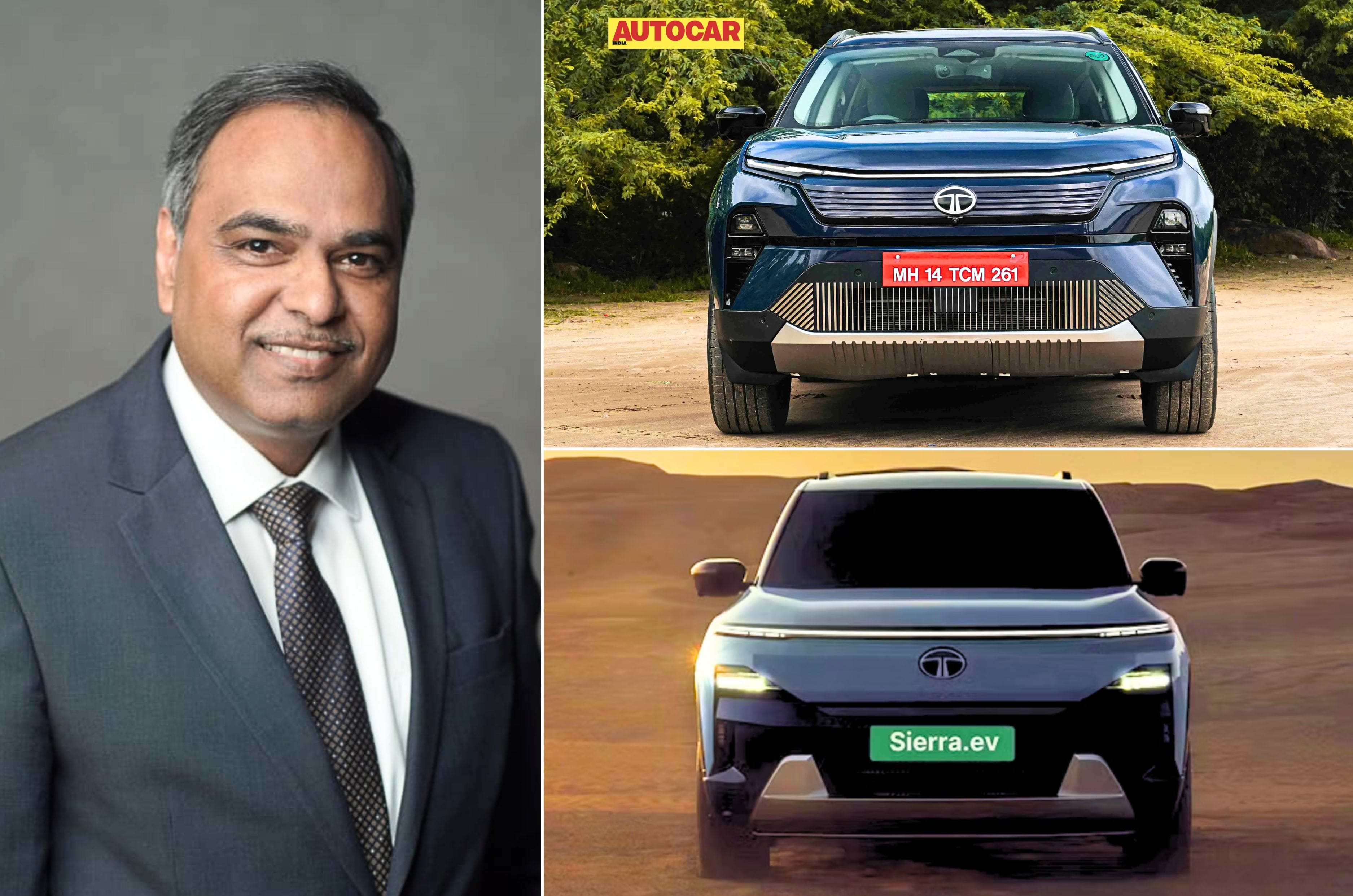
Until now, Tata Motors had maintained fairly distinct positioning of each model in its EV portfolio. However, with the new Sierra EV having a sizeable price overlap with the Curvv EV and the Harrier EV at the two ends of its price range, it begs the question is Tata Motors cannibalisation its own products? Shailesh Chandra, Managing Director and Chief Executive Officer of Tata Motors Passenger Vehicles, thinks not, as the company is banking on differences in size, design, cabin experience and vehicle character to mark out the individual models. 

Tata Motors Plays Down Cannibalisation

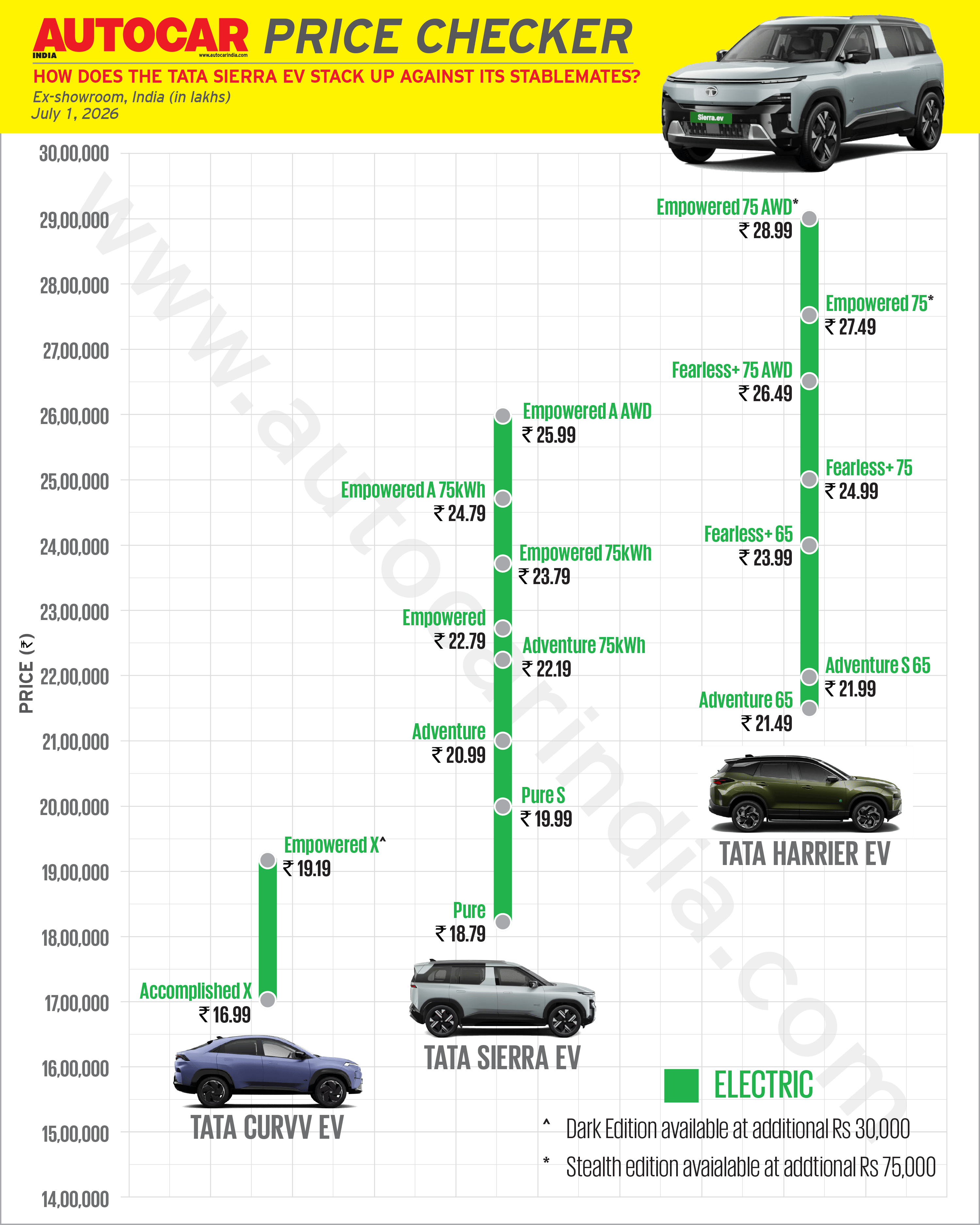
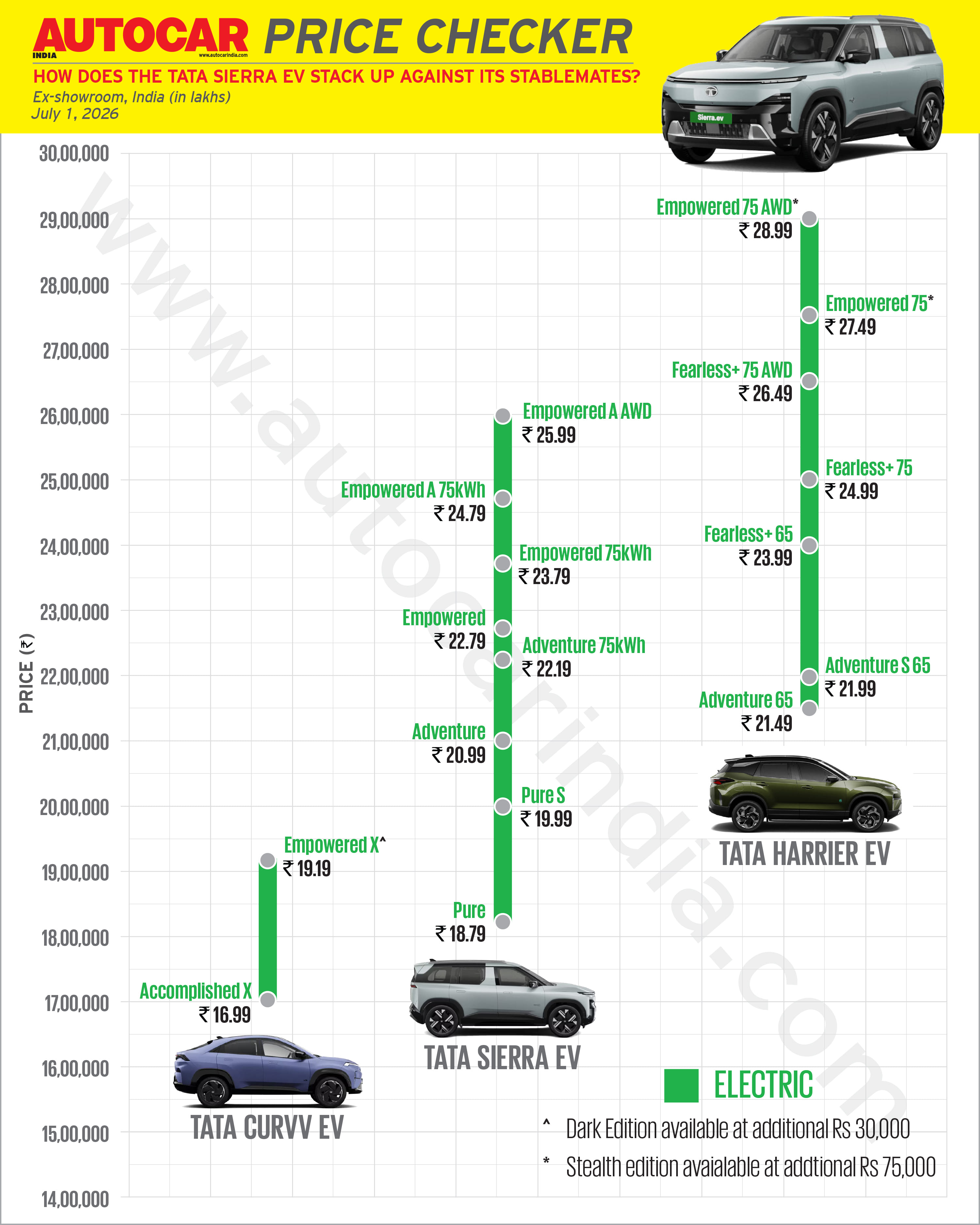
The Sierra EV is, in fact, very closely related to the Harrier EV, sharing similar battery capacities, common front and rear drive units, the thermal management system and also have broadly comparable performance. The former is priced between Rs 18.79 lakh and Rs 25.99 lakh, whereas the latter is priced between Rs 21.49 lakh and Rs 28.99 lakh.

According to Chandra, some movement between models within a broad portfolio was inevitable and is not the company’s primary concern. However, he said buyers do not evaluate models only through price and specifications. Their preferences are also shaped by styling, dimensions and their individual idea of what a model should represent.

“That’s why you see that the buyers of Harriers are very different than Sierra buyers, even in the ICE world,” Chandra said to our sister publication Autocar professional. “Somebody does not like boxy style. Somebody does not like dynamic style. So, first differentiation comes from there.”

Price overlap between Curvv, Sierra and Harrier EVs. 

Chandra also said size plays a particularly important role in India, where buyers often expect the value of a higher-priced vehicle to be visibly reflected in its dimensions and road presence. Different price and accessibility points will further separate the vehicles, he added.

“It’s a combination of all this,” Chandra said. “There is clear separation of what you see in the ICE world also. Same will apply here.”

Any immediate cannibalisation may also be limited by Tata Motors’ supply constraints. “Harrier EV demand is twice of what we are supplying. It is a supply-driven issue,” said Chandra. 

Shared constraints in battery-pack production, power electronics and other aggregates require Tata Motors to allocate components across its electric portfolio, he added. The company is working on capacity expansion and supplier debottlenecking to close the gap between demand and production.

Anand Kulkarni, Chief Product Officer at Tata Passenger Electric Mobility, further reiterated the differences between the two electric SUVs. “These products don’t necessarily compete with each other,” Kulkarni said. “They are enabled by a common underlying technology stack, but they are tuned completely differently and operate differently.”

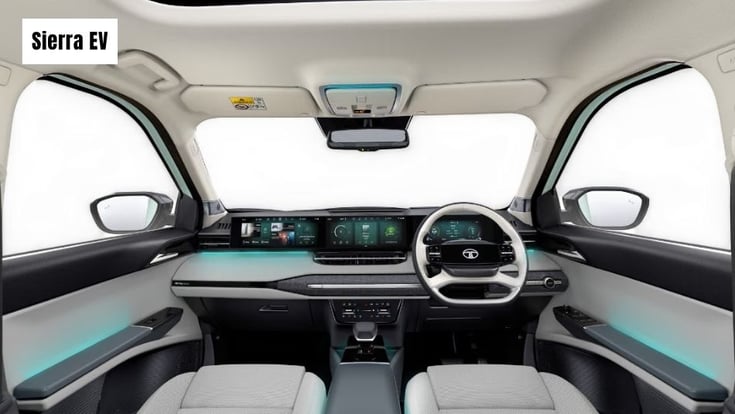
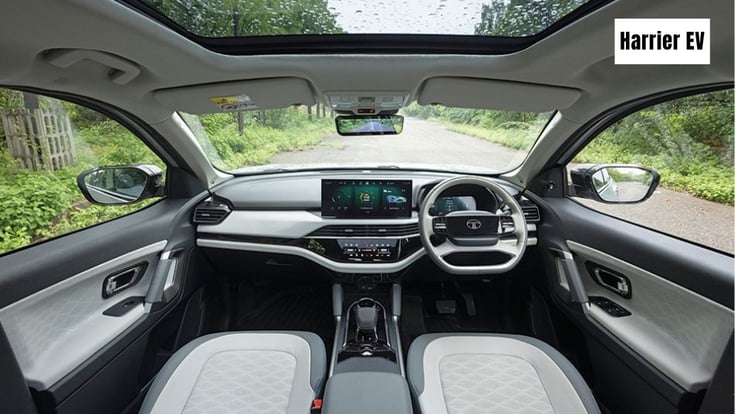
Tata Sierra EV interior
Tata Harrier EV interior


Kulkarni highlighted that the Sierra EV has a different cabin ambience from that of the Harrier EV. He compared this approach with the ICE versions of these SUVs, where they share the engine but deliver different driving and ownership experiences. “Just because two cars have a common engine, that does not make them a choice of one over the other,” he said.

Commonality gives scale and shared costs 

Commonality allows Tata Motors to distribute engineering, supplier-development and localisation investments across more products. “A lot of technologies that we developed in Harrier EV allowed us to also give it in the Sierra EV,” added Chandra, alluding to the ADAS suite, automatic parking and vehicle summoning features, as well as the all-wheel-drive technology,

The Sierra.ev and Harrier.ev will test both sides of Tata Motors’ EV strategy. Shared engineering must deliver scale, localisation and development-cost benefits, while Tata hopes styling, size and positioning creates enough distinction to expand the company’s addressable market. Some cannibalisation may be unavoidable. The larger test is whether the two SUVs collectively attract more customers to Tata Motors than either model could have done on its own.

With inputs from Saptarshi Mondal

BaaS मॉडल के साथ Hyundai की Creta Electric लॉन्च, कीमत में आई भारी गिरावट

Hyundai Creta Electric: अगर आप इलेक्ट्रिक SUV खरीदने की प्लानिंग कर रहे हैं, तो यह खबर आपके लिए फायदेमंद साबित हो सकती है। दरअसल, Hyundai Motor India Ltd ने Creta Electric के लिए ‘बैटरी-एज-ए-सर्विस’ (BaaS) ओनरशिप मॉडल पेश किया है। इस कदम से इलेक्ट्रिक SUV की शुरुआती कीमत, बैटरी की लागत को छोड़कर, रेगुलर ₹18.03 लाख से घटकर ₹10.99 लाख (एक्स-शोरूम) हो गई है।

इस नई व्यवस्था के तहत, खरीदारों के पास गाड़ी अलग से खरीदने और बैटरी के लिए EMI प्लान (जो ₹3.9 प्रति किलोमीटर से शुरू होगा) चुनने का विकल्प होगा, जिससे इलेक्ट्रिक गाड़ी खरीदने की शुरुआती लागत कम हो जाएगी।

Hyundai का मकसद EV को ज्यादा लोगों तक पहुंचाना है

यह कदम ऐसे समय में उठाया गया है जब ऑटो कंपनियां भारत में ग्राहकों के सामने आने वाली सबसे बड़ी समस्या यानी ज्यादा शुरुआती कीमत को कम करने के लिए अलग-अलग ओनरशिप मॉडल अपना रही हैं। बैटरी की कीमत को गाड़ी की कीमत से अलग करने से शुरुआती खरीद लागत कम हो जाती है, जबकि गाड़ी की लिस्ट कीमत पर कोई असर नहीं पड़ता। इससे इलेक्ट्रिक वाहन ज्यादा किफायती और आसान हो जाते हैं।

फॉर्च्यून इंडिया की रिपोर्ट के अनुसार, लॉन्च के मौके पर Hyundai Motor India Ltd के मैनेजिंग डायरेक्टर और CEO तरुण गर्ग ने कहा, “हुंडई क्रेटा इलेक्ट्रिक के लिए ‘बैटरी-एज-ए-सर्विस’ (BaaS) की शुरुआत भारत में इलेक्ट्रिक मोबिलिटी को आम लोगों तक पहुंचाने की दिशा में एक बड़ा बदलाव लाने वाला कदम है।”

उन्होंने कहा, शुरुआती कीमत को काफी कम करके और फ्लेक्सिबल बैटरी रेंटल प्लान देकर देकर, हम ज्यादा ग्राहकों को भरोसे के साथ EV अपनाने में मदद कर रहे हैं, जिससे वे हुंडई की भरोसेमंद तकनीक, सुरक्षा और इनोवेशन का लाभ उठा सकें।

क्रेटा इलेक्ट्रिक की कीमत अभी ₹18.02 लाख से ₹24.55 लाख (एक्स-शोरूम) के बीच है। यह दो बैटरी पैक ऑप्शन के साथ आती है: एक 42 kWh यूनिट जिसकी ड्राइविंग रेंज 420 km बताई गई है, और दूसरी 51.4 kWh यूनिट जिसकी रेंज 510 km बताई गई है। यह SUV DC फास्ट चार्जिंग को भी सपोर्ट करती है, जिससे बैटरी को लगभग 39 मिनट में 10% से 80% तक तेजी से चार्ज किया जा सकता है।

इस मॉडल की अन्य खूबियों में व्हीकल-टू-लोड (V2L) क्षमता, हुंडई स्मार्टसेंस लेवल 2 ADAS, डिजिटल की, सिंगल ड्राइव (i-पेडल), एक्टिव एयर फ्लैप्स और 8 साल/1.6 लाख km की बैटरी वारंटी शामिल हैं।

Hyundai भारत में EV इकोसिस्टम को मजबूत करने की योजना बना रही है

अपने प्रोडक्ट्स की रेंज बढ़ाने के साथ-साथ, हुंडई देश में EV चार्जिंग इंफ्रास्ट्रक्चर में भी निवेश कर रही है। फॉर्च्यून इंडिया की रिपोर्ट के अनुसार, कंपनी अगले सात सालों में लगभग 600 फास्ट पब्लिक EV चार्जिंग स्टेशन लगाने की योजना बना रही है। साथ ही, कंपनी ने पहले ही 183 जगहों पर इंफ्रास्ट्रक्चर तैयार कर लिया है, जिसमें 214 DC चार्जर और 399 चार्जिंग पॉइंट शामिल हैं।

यह भी पढ़ें: जून 2026 में ऑटो सेक्टर ने पकड़ी रफ्तार, PV से लेकर ट्रैक्टर तक की बिक्री में दिखी जबरदस्त ग्रोथ

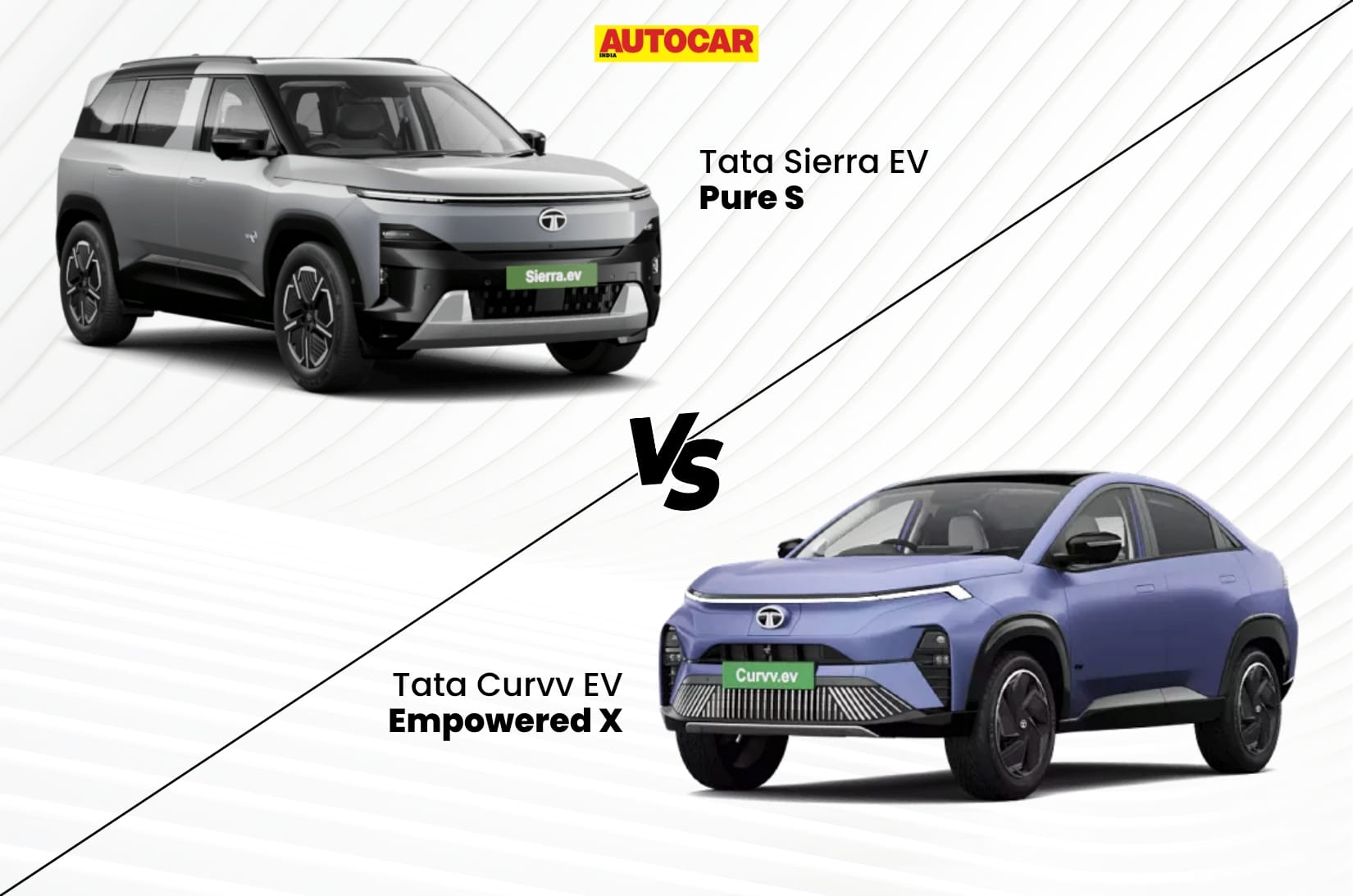
Tata Sierra EV vs Curvv EV: Which EV is better at Rs 20 lakh?

Tata Sierra EV vs Curvv EV: Which EV is better at Rs 20 lakh?

The Tata Sierra EV is the most recent all-electric offering in the manufacturer’s lineup, which is positioned between the Curvv EV and Harrier EV. The new Sierra EV is priced from Rs 18.79 lakh to Rs 25.99 lakh, while the Curvv EV’s prices range from Rs 16.99 lakh to Rs 19.19 lakh. So, if you have a budget of around Rs 20 lakh, should you go for the top-spec Curvv EV Empowered X or the similarly priced one-above-base Sierra EV Pure S variant? Let’s find out.

Tata Sierra EV Pure S vs Curvv EV Empowered X: Dimensions

Sierra EV has larger dimensions and offers additional boot space

Tata Sierra EV vs Curvv EV : Dimensions and other specifications


Sierra EV 

Curvv EV

Difference

Length (mm)

4340

4310

+30

Width (mm)

1841

1810

+31

Height (mm)

1750

1637

+113

Wheelbase (mm)

2730

2560

+170

Ground clearance (mm)

205

186

+19

Boot space (litres)

622

500

+122

Frunk space (litres)

55

11.6

+43.4

Number of seats

5

5

Both Tata EVs are offered with 5 seats, but the Sierra EV is larger than the Curvv EV in all respects. While the differences in height and width won’t matter much in the real world, the Sierra EV’s 113mm-taller height and 170mm-longer wheelbase are expected to translate into better cabin space than the Curvv EV. The Sierra EV also offers 19mm higher ground clearance, a 122-litre larger boot, and 40+ litres of additional frunk space, making it more practical than the Curvv EV. 

Tata Sierra EV Pure S vs Curvv EV Empowered X: Powertrain

Sierra EV Pure S packs a larger battery and a more potent electric motor

Tata Sierra EV Pure S vs Curvv EV Empowered X : Powertrain


Sierra EV Pure S

Curvv EV Empowered X

Battery pack

63kWh

55kWh

eMotor configuration*

RWD

FWD

Power

209hp

165hp

Torque

315Nm

215Nm

Claimed range

665km

502km

*RWD = Rear wheel drive, FWD = Front wheel drive

The Sierra EV’s Pure S variant has a slightly larger battery pack, enabling a whopping 163km higher claimed range compared to the Curvv EV’s Empowered X variant. Respective variants of both Tata EVs are offered with a single-motor setup, but with different layouts. Notably, the top-spec Sierra EV is also available with a dual-motor AWD system with a larger 75kWh battery, but at a much higher price point. The Curvv EV, however, is only offered in a FWD configuration with a 55kWh battery across its lineup.

Along with a larger battery, the Sierra EV 63kWh version is also offered with a more powerful motor, producing 44hp and 100Nm more than the Curvv EV.

Tata Sierra EV Pure S vs Curvv EV Empowered X: Exterior

Both EV variants offer similar exterior features

Tata Sierra EV Pure S vs Curvv EV Empowered X: Exterior


Sierra EV Pure S

Curvv EV Empowered X

Headlights

Auto projector LED

Auto projector LED

Tail-lights

Connected LED

Connected LED

DRLs

Connected LED

Connected LED

Front fog lamps

LED, cornering function

LED, cornering function

Flush door handles

Yes

Yes

Wheels

18-inch alloy

18-inch alloys

Powered ORVMs

Yes

Yes

Roof rails

Yes

No

Sharkfin antenna

Yes

Yes

Colour

Monotone

Monotone

Except for the missing roof rails on the Curvv EV, the exterior features on both the Tata Sierra EV Pure S and Curvv EV Empowered S are the same. Both EVs get all-LED lighting, flush-type door handles, 18-inch alloys and a shark-fin antenna.

Tata Sierra EV Pure S vs Curvv EV Empowered X: Interior, features

A powered driver’s seat and a powered tailgate are not offered with the Sierra EV Pure S 

Tata Sierra EV Pure S vs Curvv EV Empowered X: Interior and features


Sierra EV Pure S

Curvv EV Empowered X

Driver’s display

10.25-inch

10.25-inch 

Infotainment screen

12.3-inch

12.3-inch

Passenger display

No

No

Android Auto, Apple CarPlay

Yes, wireless

Yes, wireless

Audio system

8-speaker

9-speaker JBL*

On-board navigation

Yes

Yes

Sunroof

Panoramic

Panoramic

Powered tailgate

No

Yes, with gesture support

Climate control

Automatic

Automatic

Rear AC vents

Yes

Yes

Air purifier

PM2.5 filter only

Yes

Seat upholstery

Fabric

Leatherette

Steering wheel adjustment

Tilt, telescopic

Tilt

Wireless phone charger

Yes

Yes

Driver seat adjustment

Manual

6-way powered

Co-driver’s seat adjustment

Manual

Manual

Front seat features

Ventilation

Rear window sunshade

Yes

Yes

Vehicle-to-load (V2L)

Yes

Yes

Vehicle-to-vehicle (V2V)

Yes

Yes

*Curvv EV’s sound system includes JBL-sourced 8 speakers and a subwoofer

The top-spec Curvv EV Empowered X gets a few additional features over the lower-spec Sierra EV Pure S, including a powered driver’s seat with ventilation function, a powered tailgate, a subwoofer and leatherette seat upholstery. The Curvv EV also gets a full-blown air purifier, while the Sierra EV’s one-over-base Pure S trim offers only a PM2.5 air filter.

Other features like the 10.25-inch and 12.3-inch screens, a panoramic sunroof, a wireless phone charger, V2L and V2V charging support and auto climate control with rear vents are common to both EVs.

Tata Sierra EV Pure S vs Curvv EV Empowered X: Driving tech

The Curvv EV offers adaptive cruise control over the Sierra EV’s Pure S variant

Tata Sierra EV Pure S vs Curvv EV Empowered X: Driving technology


Sierra EV Pure S

Curvv EV Empowered X

Drive modes

Eco, City, Sport

Eco, City, Sport

Paddle shifters for regen

Yes

Yes

Cruise control

Yes

Adaptive

Both EV variants are offered with the same drive modes and paddle shifters to control the battery regeneration level. The difference, however, is that the top-spec Curvv EV gets adaptive cruise control, while the Sierra EV Pure S gets standard cruise control.

Tata Sierra EV Pure S vs Curvv EV Empowered X: Safety features

Curvv EV gets an ADAS suite and a 360-degree camera over Sierra EV Pure S

Tata Sierra EV Pure S vs Curvv EV Empowered X: Safety features


Sierra EV Pure S

Curvv EV Empowered X

Airbags

6

6

ADAS

No

Level 2

Camera setup

Rear

360-degree

Parking sensors

Front and rear

Front and rear

Electronic parking brake

Yes

Yes

All-wheel disc brakes

Yes

Yes

TPMS

Yes

Yes

IRVM

Manually-adjustable

Auto-dimming

Rear wiper, washer

Yes

No

Hill start assist

Yes

Yes

Hill descent control

Yes

Yes

ESC

Yes

Yes

Traction control

Yes

Yes

Safety features such as 6 airbags, front and rear parking sensors, a tyre pressure monitoring system (TPMS) and disc brakes on all wheels are common to both EVs. The top-spec Curvv EV Empowered X, however, goes a step further and offers a 360-degree camera, an auto-dimming inside rearview mirror, and a Level-2 advanced driver assistance system (ADAS). 

Tata Sierra EV Pure S vs Curvv EV Empowered X: Price, verdict

Sierra EV Pure S offers more claimed range but misses out on some premium features

Sierra EV Pure S vs Curvv EV Empowered X: ex-showroom price

Model variant

Price

Tata Sierra EV Pure S 63kWh

Rs 19.99 lakh

Tata Curvv EV Empowered X 55kWh

Rs 19.19 lakh

The lower-spec Tata Sierra EV is Rs 80,000 pricier than the top-spec Curvv EV Empowered X. However, at the higher price, the Sierra EV Pure S offers a larger battery pack with a higher claimed range. The Tata Sierra EV is also larger, which translates to better cabin space. Although it misses out on premium features like a powered driver’s seat, a powered tailgate, Level-2 ADAS and a 360-degree camera, it offers a decent feature suite. All of this makes the Sierra EV Pure S a better offering compared to the Curvv EV Empowered X. 

Prices are ex-showroom, India

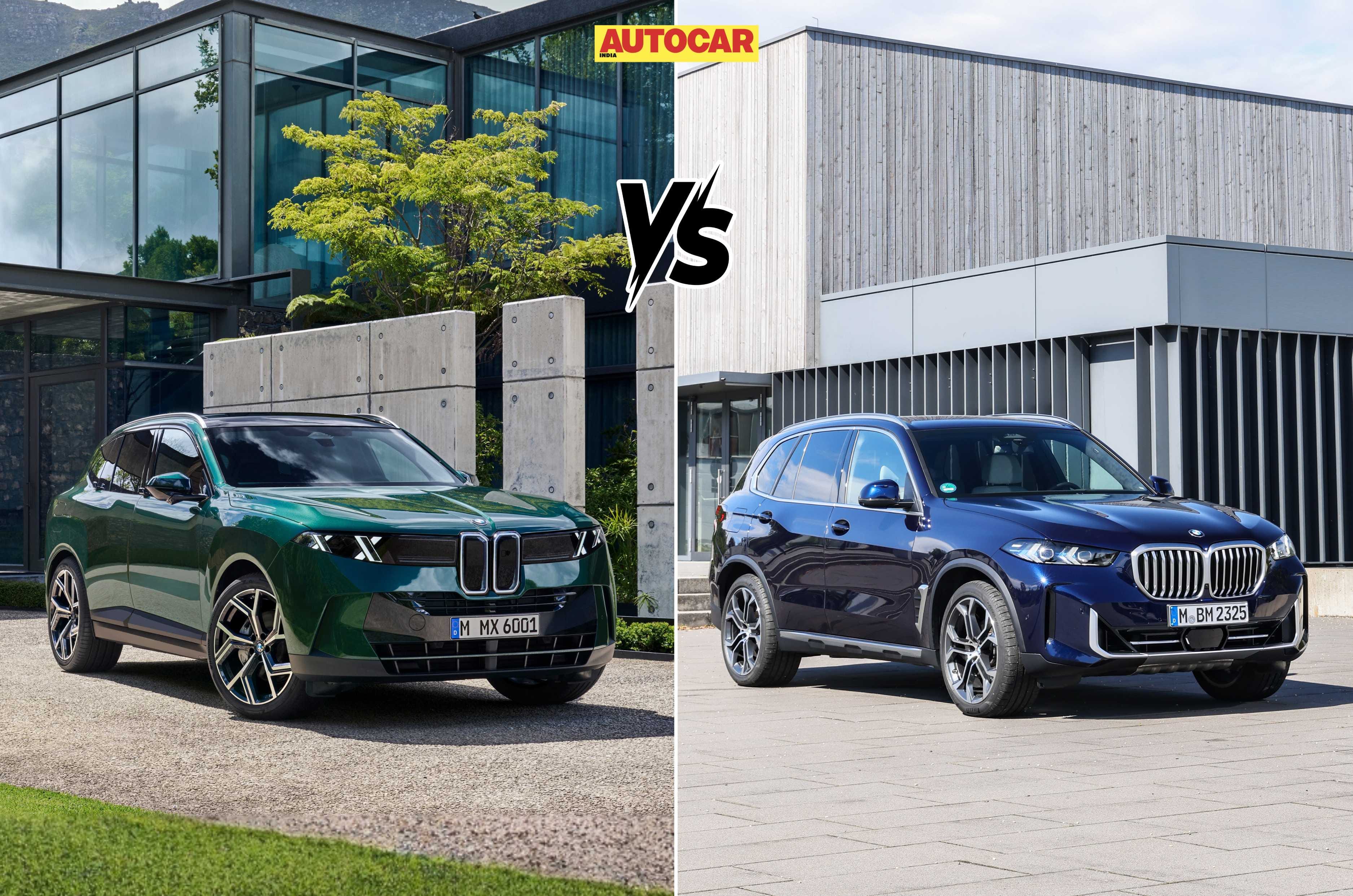
BMW X5 new vs old: Differences and similarities explained

BMW X5 New vs Old differences explained

The fourth generation of the BMW X5 arrived in the Indian market in May 2019, with a facelift arriving in July 2023. However, the German automaker will follow this up with the introduction of the new fifth-generation model in India later on. On June 30, 2026, BMW revealed this next-gen model on the global stage. The luxury SUV comes with a thoroughly revamped exterior and interior, along with an expanded feature set and powertrain options. Here are the main differences (and some similarities) between the previous-gen and new-gen BMW X5.

BMW X5 new vs old: Exterior design

Uses the Bavarian brand’s latest Neue Klasse-based design language

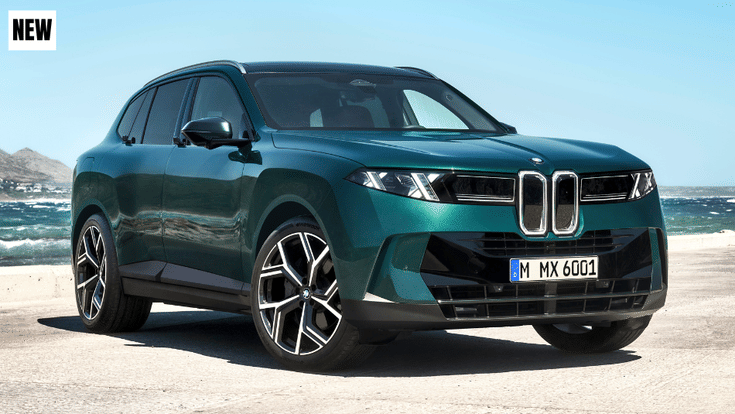
New-gen BMW X5 front quarter
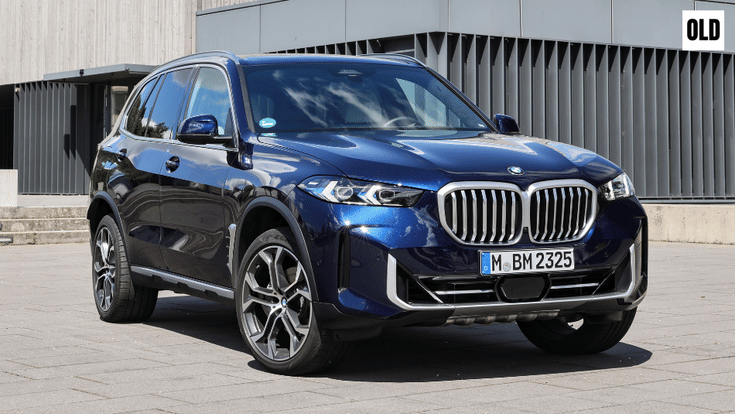
BMW X5 front quarter
 

The new BMW X5 sports a more chiselled exterior with an upright front fascia and a sculpted shoulder line. The brand’s signature ‘kidney grille’ is now slimmer and taller than before and is illuminated as well. Flanking this are single-unit LED headlamps with BMW’s new ‘double-X’ lighting signature, whilst the redesigned two-tone bumper integrates multiple air intakes.

New-gen BMW X5 side
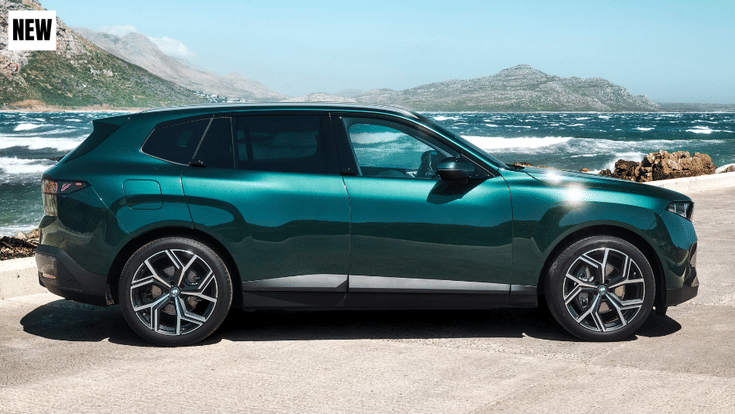
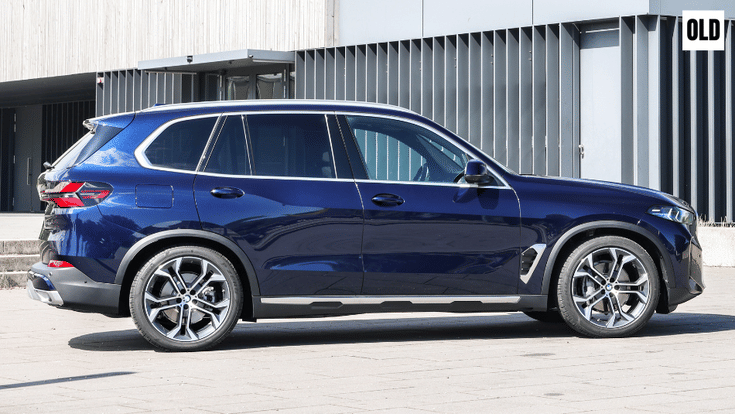
BMW X5 side
 

The chiselled side profile of the X5 features looks sleeker than before and gets new wheel designs ranging in size from 21 to 23 inches – the latter being a size larger than what was offered with the old X5. Other new exterior details include repositioned outer rearview mirrors (ORVMs) and new winglet-style door handles compared to the previous car’s pull-type units.

New-gen BMW X5 rear
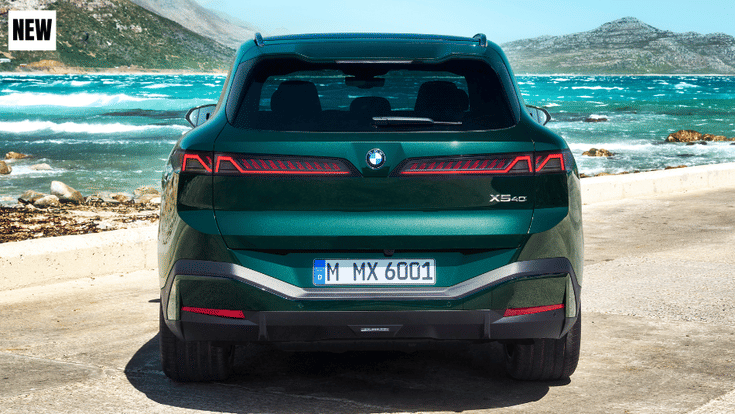
BMW X5 rear
 

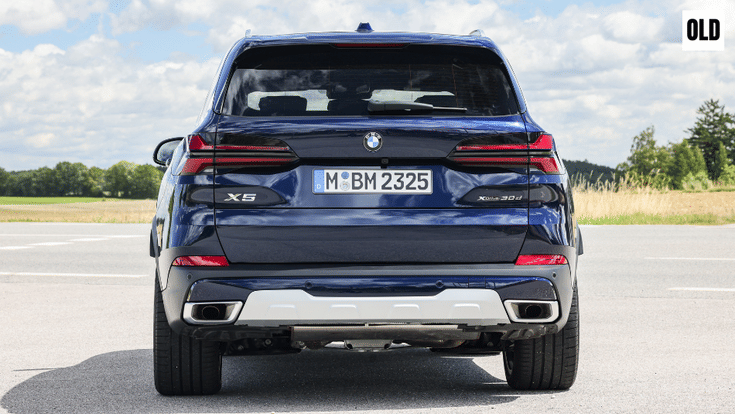
The restyled rear of the BMW X5 gets sleeker LED tail-lamps that extend further into the tailgate. The new back bumper has a more sculpted look than before, but the tailpipes are now hidden from view. Upgrading to one of the M Sport packages gets gloss-black elements alongside a sportier-looking front splitter, roof spoiler and rear diffuser.

New-gen BMW X5 boot
Old BMW X5 boot
 

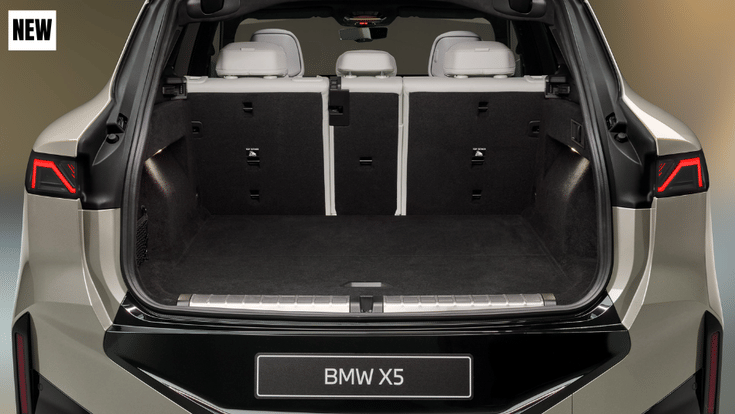
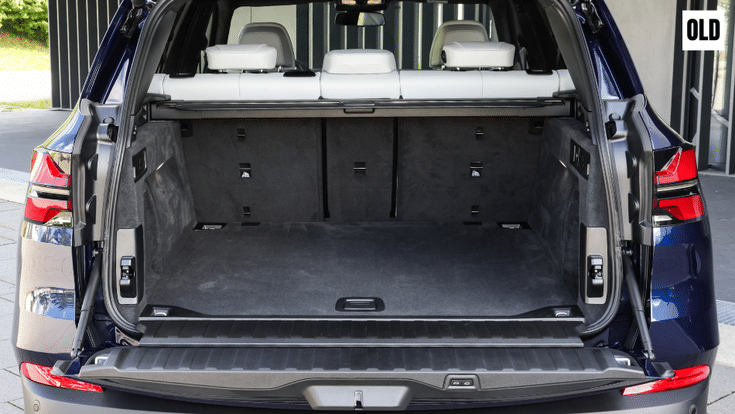
The new X5 is longer than the old one – both in terms of its overall length and wheelbase. Where the previous-gen X5 had a maximum boot capacity of 1,850 litres, the new-gen model takes that up to 2,047 litres. On the other hand, the X5 no longer gets the split-folding tailgate mechanism offered in the old model. It has been replaced by a traditional, single unit design.

BMW X5 new vs old: Interior design and features

The thoroughly updated interior looks more minimalistic and gets new design details

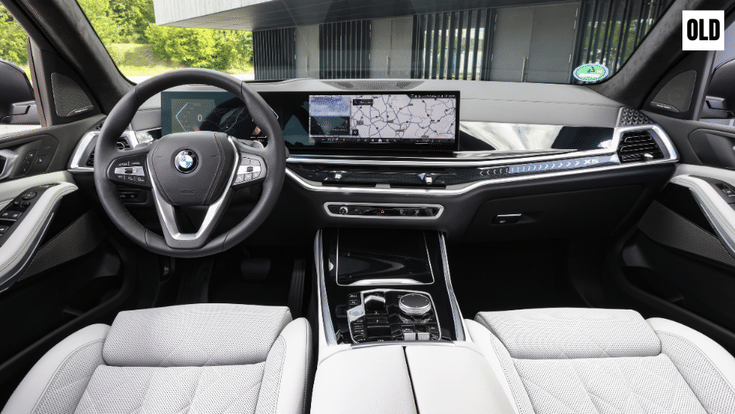
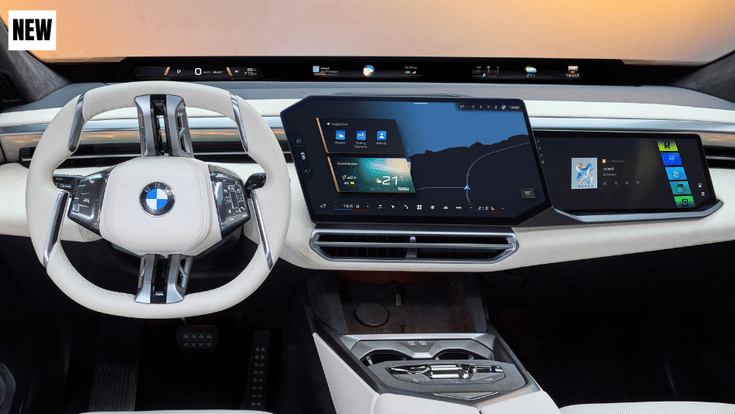
New-gen BMW X5 interior
Old BMW X5 interior
 

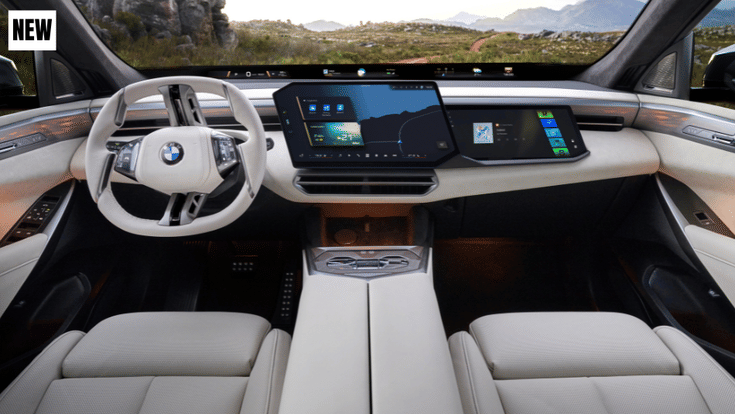
Inside the new-gen BMW X5 is a new door-to-door wrap-around design featuring metallic trim and new integrated LEDs. On the other hand, the previous-gen model’s interior sported a wedge-shaped, sloping dashboard. Taking centre stage on the dashboard is the uniquely shaped ‘Panoramic iDrive’ display measuring 17.9 inches diagonally – the old X5’s main screen measured up to 14.9 inches. Right next to the primary head unit is an optional 14.6-inch front passenger display, with the other side taken up by a new-designed steering wheel. The traditional instrument cluster of the previous-gen X5 has made way for a strip of smaller screens at the base of the windscreen called ‘Panoramic Vision’.

There are full-width climate control vents on the dashboard, with the centre vents placed below the main touchscreen. Meanwhile, the previous-gen X5 had a curved twin-screen setup and air vents with conventional direction toggles. The rotary drive selector for the iDrive is gone, while the toggle-type mechanism for drive selection has been integrated into a three-section unit on the centre console. Buttons from the dashboard have also been moved down to the centre console. Controls for the hazard lights and electronic parking brake are found here as well, along with a couple more buttons.

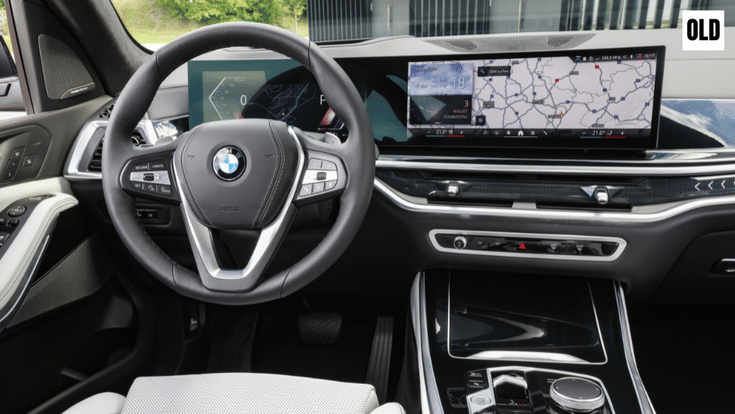
New-gen BMW X5 dashboard
Old BMW X5 dashboard
 

The infotainment unit uses the BMW’s new Operating System X software compared to the old car’s previous-gen iDrive software, which also featured the rotary iDrive controller. The X5’s premium audio system now supports Dolby Atmos, while the ADAS (Advanced Driver Assistance Systems) suite has also been updated. However, the new X5 will continue to be available with a head-up display, ventilated front seats with massaging functions, adaptive air suspension, and a panoramic sunroof. Of course, other safety nannies such as multiple airbags, electronic stability management and surround-view cameras will be offered with the new-gen X5 too.

BMW X5 new vs old: Powertrain options

The next-gen X5 can support fully electric and hydrogen powertrains as well

One of the biggest changes between the old and new BMW X5 is the latter’s compatibility with a variety of powertrain types. Its Neue Klasse platform means the X5 now supports battery electric (BEV) and hydrogen fuel-cell electric (FCEV) options. The latter has been co-developed with Toyota, and in the iX5 Hydrogen, output is a claimed 401hp.

BMW has updated the 3.0-litre inline-six turbo-petrol engine of the 40 and 40 xDrive variants of the X5. While they still get a 48V mild-hybrid system and direct fuel injection, the output has gone up to 394hp and 580Nm. The 8-speed automatic gearbox has been retained, though. The new X5’s plug-in hybrid (PHEV) version carries forward its 3.0-litre petrol engine and electric motor combination – output for the 50e xDrive is rated at 483hp and 700Nm.

Compared to the previous-gen model, the new-gen BMW X5 will be offered in a fully electric avatar. The new iX5 60 xDrive uses an 800V architecture, along with a 144kWh lithium-ion battery pack and two electric motors. The combined output is rated at 570hp and 804Nm, while claimed range is 700km. BMW’s sixth-gen eDrive technology supports charging rates of up to 460kW, which means 10-80 percent charge in a claimed 22 minutes.

Production of the fifth-gen BMW X5 will commence at the brand’s Spartanburg plant in the US in August 2026. The combustion-only variants are set to go on sale in late November 2026, followed by the plug-in hybrid and fully electric versions in early 2027.

Also read

3 reasons to buy the BMW X6 and 2 reasons not to

Tata Sierra EV prices and specs compared with Harrier EV, Curvv EV

Tata Sierra EV prices and specs compared with Harrier EV, Curvv EV

Tata Sierra EV prices and specs compared with Harrier EV and Curvv EV

Tata Motors launched the fully electric version of the Sierra on June 30, 2026. Spread across three distinct variants, the Sierra EV joins the automaker’s all-electric line-up and is slotted between the Curvv EV and Harrier EV. The Harrier EV and Sierra EV are in a similar price bracket, with clear price overlaps between some trim levels, with the top-spec Curvv EV coming in close proximity to the latter. Let’s now look at how these cars compare against one another.

Tata Sierra EV dimensions vs Harrier EV, Curvv EV

The frunk and wheel sizes of the Sierra EV and Harrier EV differ based on variants

Tata Sierra EV dimensions vs Harrier EV, Curvv EV


Tata Sierra EV

Tata Harrier EV

Tata Curvv EV

Length (mm)

4,340

4,607

4,310

Width (mm)

1,841

1,922

1,810

Height (mm)

1,750

1,740

1,637

Wheelbase (mm)

2,730

2,741

2,560

Boot space (litres)

450*

502

500

Frunk (litres)

55/35

67/35

Wheel size (inches)

18-19

18-19

18

The Sierra EV is a significant 267mm shorter than the Harrier EV but 30mm longer than the Curvv EV. It’s not only 31mm wider than the Curvv EV but also a noticeable 113mm taller. Not just that, the Sierra EV is slightly taller than the Harrier EV, too. The Sierra EV has a wheelbase that’s 170mm longer than the Curvv’s but falls short of the Harrier’s by 11mm.

The luggage-carrying capacity of the Harrier EV is more than that of the Sierra EV, owing to its size. While we’re yet to measure it, Tata claims that the Sierra EV’s boot is similar in size to its combustion-powered namesake, where it’s 450 litres. This means that the Sierra EV’s boot is smaller than that of the Curvv EV by 50 litres. The frunk capacity of the Sierra EV and Harrier EV change based on the variant chosen, with the lower ones sporting more capacity. While the Sierra and Harrier can be had with 18- or 19-inch wheels, the Curvv EV is only offered with 18-inch rims. 

Tata Sierra EV powertrain vs Harrier EV, Curvv EV

Sierra EV shares its dual-motor configuration, battery size and torque output with the Harrier EV

Tata Sierra EV powertrain vs Harrier EV, Curvv EV

Specifications

Curvv EV 55

Sierra EV

Harrier EV

Battery variant (kWh)

55

63 / 75 / 75 QWD

65 / 75 / 75 QWD

Front electric motor (hp)

167

NA / 140

NA / 158

Rear electric motor (hp)

NA

238 / 209 / 209

238 / 238 / 238

Combined torque (Nm)

215

315 / 315 / 504

315 / 315 / 504

Drive configuration

FWD

RWD / RWD / AWD

RWD / RWD / AWD

Claimed 0-100kph (sec)

8.6

5.8*

6.3*

Claimed range (km)

502

535 / 665 / 624

538 / 627 / 622

AC charging (7.2kW)

7.9 hrs (10-100%)

8.9-10.5 hrs (10-100%)

9.3-10.7 hrs (10-100%)

DC fast charging

40 mins at 70kW (10-80%)

25-26 mins at 120kW (20-80%)

25 mins at 120kW (20-80%)

*Claimed acceleration figures of the top-spec variants.

Both the Sierra and Harrier come in single-motor rear-wheel drive (RWD) and dual-motor all-wheel drive (AWD) versions. The entry-level variant of the Sierra and Harrier have identical outputs, with the torque remaining identical between all variants of these two SUVs. However, the mid-spec and top-spec Sierra’s rear motors make less power than their Harrier counterparts. Meanwhile, the Curvv EV is only offered with one powertrain option.

Since it’s likely less heavy than the larger Harrier, the Sierra EV QWD (Tata’s parlance for AWD) manages to finish the sprint from 0-100kph half-a-second quicker. It’s also 2.8 seconds quicker to 100kph than the single-motor front-wheel drive Curvv EV. The claimed range of the base- and top-spec Sierra EV are comparable to those of the Harrier EV, but the former’s mid-spec 75kWh RWD version has a slight range advantage.

Meanwhile, the Curvv EV’s claimed range is 122km shy of the Sierra EV’s. Both the Sierra and Harrier with the 75kWh battery option can accept DC fast-charging, taking the battery from 20-80 percent in about the same time. When plugged into a 7.2kW AC charger though, the Curvv’s smaller battery can be charged from 10-100 percent in a little over 7 hours. The Sierra EV needs about 1-3 hours extra to do the same, and the Harrier EV take a similar amount of time.

Tata Sierra EV features vs Harrier EV, Curvv EV

Among the top-spec variants of all three, the Sierra EV is the most feature-packed car here

Tata Sierra EV features vs Harrier EV, Curvv EV


Tata Curvv EV 55

Tata Sierra EV 75 QWD

Tata Harrier EV 75 QWD

Infotainment touchscreen

12.3-inch

12.3-inch

14.5-inch

Digital driver’s display

10.25-inch

10.25-inch

10.25-inch

Front passenger screen

No

12.3-inch

No

Voice-assisted sunroof

Panoramic

Panoramic

Panoramic

Multiple voice assistants

Yes

Yes

Yes

Powered seats

Yes (driver only)

Yes

Yes

Driver’s seat memory, welcome functions  

No

Yes

Yes

Ventilated front seats

Yes

Yes

Yes

‘Boss’ mode

No

Yes

Yes (powered)

Wireless Apple CarPlay & Android Auto

Yes

Yes

Yes

Automatic climate control

Single-zone

Dual-zone

Dual-zone

Audio system

9-speaker JBL

12-speaker JBL Black

10-speaker JBL Black

Dolby Atmos

No

Yes

Yes

Wireless charging

Yes

Yes

Yes

Rear sunblinds

Yes

Yes

Yes

Surround-view camera

Yes (360-degree)

Yes (540-degree)

Yes (540-degree)

EV route planner

No

Yes (Android Auto)

No

Arcade.ev suite

Yes

Yes

Yes

‘AirConsole’ in-car gaming

No

Yes

No

‘DrivePay’

No

Yes

Yes

LED ambient lighting

Yes (multi-colour)

Yes (multi-colour)

Yes (multi-colour)

Connected-car features

Yes

Yes

Yes

‘Summon’ mode

No

Yes

Yes

Level 2 ADAS

Yes

Yes

Yes

Auto headlamps

Yes

Yes

Yes

Rain-sensing wipers

No

Yes

Yes

HUD

No

Yes

No

Airbags

6

6

7

SOS

Yes

Yes

Yes

Hill-hold control

Yes

Yes

Yes

Hill-descent control

No

Yes

Yes

Regen modes

4

4

4

Paddle shifters

Yes

Yes

Yes

Terrain modes

No

6

6

Drive modes

3

4

4

Powered tailgate

Gesture activated

Gesture activated

Gesture activated

V2L, V2V

Yes

Yes

Yes

The Sierra EV gets a dedicated 12.3-inch infotainment screen for the front passenger, a JBL Black audio system with the most number of speakers, and a separate route planner meant currently for Android Auto users. It also comes with a new ‘AirConsole’ gaming feature, which syncs the user’s phone with the infotainment screen for playing games. Moreover, it’s only the Sierra EV that can be had with an augmented-reality head-up display (HUD).

The ‘Summon’ mode of the Sierra EV and Harrier EV allows the car to crawl out of parking spots using a key fob, while both models support Dolby Atmos and dual-zone climate control. Features like automatic headlamps & wipers, a driver’s seat with memory & welcome functions, 540-degree cameras, and hill-descent control are found on the Sierra EV as well as the Harrier EV. They also get 6 terrain modes: Normal, Grass/Snow, Mudruts/Gravel, Sand, Rock Crawl and Custom. However, the Harrier EV has 7 airbags and a larger primary touchscreen.

All three EVs come with four levels of regenerative braking, a gesture-activated tailgate, voice-activated panoramic sunroofs, and ventilated front seats. They also get Level 2 ADAS (Advanced Driver Assistance Systems) with adaptive cruise control and auto-emergency braking, plus vehicle-to-load (V2L) and vehicle-to-vehicle (V2V) functions. The Sierra EV has the most number of features here.

Prices of Tata Sierra EV vs Harrier EV, Curvv EV

Tata Sierra EV, Harrier EV, Curvv EV price checker

While the top-spec Empowered X trim of the Curvv EV comes closest to the base-spec Sierra EV, the latter is still fairly well-loaded. Moving on to the Sierra EV and Harrier EV, their mid-spec Adventure trims are fairly matched in terms of pricing. At the top end, there’s Rs 3 lakh separating the fully loaded Tata Sierra EV from its equivalent Harrier EV counterpart. Some of the extra cash spent on the Sierra EV goes towards features that are exclusive to it – like the augmented-reality head-up display and dedicated screen for the front passenger. On the other hand, the price difference between the base Sierra EV and Curvv EV is Rs 1.8 lakh, with that gap widening to Rs 6.8 lakh at the top end.

All prices are ex-showroom, India.
Also read

Which Tata Sierra EV variant should you buy?

BMW X6 vs rivals: Specifications and prices compared

Kia Seltos GTX(O), X-Line(O) variants launched at Rs 21.57 lakh

kia seltos

The Kia Seltos variant line-up has been expanded with two new trim levels: GTX(O) and X-Line(O). These pack additional safety kit and creature comforts over the previous top-spec trims of the Seltos, namely the GTX(A) and X-Line(A).

Kia Seltos GTX(O), X-Line(O) variant prices and details

Available only in turbo-petrol DCT and diesel AT guises

Both the Seltos GTX(O) and X-Line(O) can be had with only the automatic versions of the 160hp 1.5-litre turbo-petrol and the 116hp 1.5-litre diesel engines. The turbo-petrol is paired with a 7-speed dual-clutch automatic, while the diesel gets a 6-speed torque converter. Prices for the Seltos GTX(O) and X-Line(O) start at Rs 21.57 lakh.

GTX(O) and X-Line(O) get Level 2+ ADAS

The headliner of the Seltos GTX(O) and X-Line(O) trims is an expanded ‘Level 2+ ADAS’ suite. Compared to the Seltos GTX(A) and its 21-strong list of ADAS features, the GTX(O) adds seven more for a total of 28. The new Seltos ADAS features comprise Junction Crossing, Lane Change Oncoming, Lane Change Side, and Evasive Steering Assist functions for the frontal collision avoidance system, as well as navigation-based adaptive cruise control for corners and speed-limited zones, and highway driving assist.

Alongside the broadened ADAS suite, the Seltos GTX(O) packs a navigation functions for the 12.3-inch digital driver’s display, one-touch auto up/down for all windows, a heads-up display, built-in front and rear dashcams, rain-sensing wipers, and VR and navigation features in the Kia Connect mobile app.

Meanwhile, the Seltos X-Line(O) maintains feature parity with the GTX(O), but with cosmetic upgrades like an exclusive Matte Graphite exterior finish, a black-and-green interior theme, blacked-out exterior trim, and black 18-inch alloy wheels.

All prices are ex-showroom, India.

665KM रेंज, 5.8 सेकंड में 100kmph की रफ्तार! Tata Sierra EV हुई लॉन्च, जानें कीमत, फीचर्स और बैटरी की पूरी डिटेल

टाटा मोटर्स पैसेंजर व्हीकल्स ने भारत में अपनी नई Tata Sierra EV लॉन्च कर दी है। इसकी शुरुआती एक्स-शोरूम कीमत 18.79 लाख रुपये रखी गई है। इसके साथ ही टाटा की सबसे लोकप्रिय एसयूवी में से एक सिएरा अब पूरी तरह इलेक्ट्रिक रूप में भारतीय बाजार में लौट आई है। नई Tata Sierra EV कुल पांच वेरिएंट में उपलब्ध है। इसमें दो बैटरी पैक का विकल्प मिलता है। कंपनी का दावा है कि यह एक बार चार्ज करने पर 665 किलोमीटर तक (एमआईडीसी प्रमाणित) की ड्राइविंग रेंज देती है। इसके अलावा इसमें ऑल-व्हील ड्राइव (AWD) का विकल्प और बैटरी पर लाइफटाइम वारंटी भी दी गई है।

यह टाटा मोटर्स की सातवीं इलेक्ट्रिक कार है। इससे पहले कंपनी टियागो ईवी, टिगोर ईवी, पंच ईवी, नेक्सॉन ईवी, कर्व ईवी और हैरियर ईवी को बाजार में उतार चुकी है। Tata Sierra EV की बुकिंग आज से शुरू हो गई है, जबकि इसकी डिलीवरी 15 जुलाई से शुरू होगी। ग्राहक चाहें तो 49,000 रुपये अतिरिक्त देकर 7.2 किलोवॉट एसी फास्ट चार्जर का विकल्प भी ले सकते हैं।

Tata Sierra EV: कीमत और वेरिएंट

Tata Sierra EV को कंपनी ने पांच वेरिएंट में लॉन्च किया है। इनमें प्योर, प्योर एस, एडवेंचर, एम्पावर्ड और एम्पावर्ड ए शामिल हैं। इस इलेक्ट्रिक एसयूवी की शुरुआती एक्स-शोरूम कीमत 18.79 लाख रुपये है। वहीं, इसका सबसे टॉप मॉडल एम्पावर्ड ए (QWD) 25.99 लाख रुपये (एक्स-शोरूम) में उपलब्ध है। यह वेरिएंट सबसे ज्यादा फीचर्स और बेहतर परफॉर्मेंस के साथ आता है।

Tata Sierra EV: बैटरी, रेंज और चार्जिंग

Tata Sierra EV में दो बैटरी विकल्प दिए गए हैं। पहला 63 kWh और दूसरा 75 kWh बैटरी पैक है। कंपनी के मुताबिक, 75 kWh बैटरी एक बार फुल चार्ज होने पर 665 किलोमीटर तक (एमआईडीसी प्रमाणित) चल सकती है। वहीं, 63 kWh बैटरी की रेंज 565 किलोमीटर बताई गई है।

टाटा मोटर्स का कहना है कि रोजमर्रा के इस्तेमाल में 75 kWh बैटरी वाली सिएरा ईवी करीब 510 से 530 किलोमीटर तक चल सकती है। वहीं, 63 kWh बैटरी वाला मॉडल 440 से 460 किलोमीटर तक की वास्तविक ड्राइविंग रेंज देगा। इसके अलावा 75 kWh बैटरी के साथ आने वाला क्वाड-व्हील ड्राइव (QWD) मॉडल एक बार चार्ज करने पर 500 किलोमीटर से ज्यादा की रेंज देने का दावा करता है।

चार्जिंग की बात करें तो इसमें 120 kW डीसी फास्ट चार्जिंग, 7.2 kW एसी चार्जिंग और 3.3 kW एसी चार्जिंग का विकल्प मिलता है। 120 kW डीसी फास्ट चार्जर की मदद से बैटरी को सिर्फ 26 मिनट में 20% से 80% तक चार्ज किया जा सकता है। वहीं, कंपनी का दावा है कि 15 मिनट की फास्ट चार्जिंग में यह इलेक्ट्रिक एसयूवी 250 किलोमीटर से ज्यादा की ड्राइविंग रेंज दे सकती है।

इसके अलावा Tata Sierra EV में व्हीकल-टू-व्हीकल (V2V) और व्हीकल-टू-लोड (V2L) जैसी आधुनिक सुविधाएं भी दी गई हैं। इनकी मदद से जरूरत पड़ने पर कार से दूसरे इलेक्ट्रिक वाहन या अन्य इलेक्ट्रॉनिक उपकरणों को भी बिजली दी जा सकती है।

Tata Sierra EV: पावर और परफॉर्मेंस

Tata Sierra EV को कंपनी ने दो इलेक्ट्रिक मोटर विकल्पों के साथ पेश किया है। इसके रियर-व्हील ड्राइव (RWD) मॉडल में 175 kW की इलेक्ट्रिक मोटर दी गई है, जो 340 Nm का टॉर्क पैदा करती है। वहीं, इसके टॉप वेरिएंट में 103 kW की फ्रंट मोटर भी मिलती है। दोनों मोटरों के साथ यह एसयूवी ऑल-व्हील ड्राइव (AWD) सिस्टम से लैस हो जाती है, जिससे इसकी पकड़ और प्रदर्शन बेहतर हो जाता है। टाटा मोटर्स का दावा है कि सिएरा ईवी महज 5.8 सेकंड में 0 से 100 किलोमीटर प्रति घंटे की रफ्तार पकड़ सकती है। कंपनी के अनुसार, यह अब तक भारत में लॉन्च हुई सबसे तेज इलेक्ट्रिक एसयूवी है।

Tata Sierra EV: डिजाइन और फीचर्स

Tata Sierra EV का डिजाइन काफी हद तक सिएरा के पेट्रोल-डीजल (आईसीई) मॉडल जैसा है, लेकिन इसे इलेक्ट्रिक एसयूवी का आधुनिक लुक देने के लिए कई खास बदलाव किए गए हैं। इसमें आगे की तरफ पारंपरिक ग्रिल की जगह बंद फ्रंट पैनल दिया गया है, जो आज की ज्यादातर इलेक्ट्रिक कारों की पहचान बन चुका है। इसके अलावा कार के फ्रंट बंपर को भी नया डिजाइन दिया गया है, जिससे इसका लुक और ज्यादा आकर्षक दिखाई देता है। वहीं, पीछे की तरफ कार के डिजाइन में ज्यादा बदलाव नहीं किए गए हैं। इसका रियर लुक पेट्रोल-डीजल मॉडल जैसा ही रखा गया है, जिससे सिएरा की पहचान बरकरार रहती है।